WE’RE CIVILIZED!
This eBook is for the use of anyone anywhere at no cost and with almost
no restrictions whatsoever. You may copy it, give it away or re-use it
under the terms of the Project Gutenberg License included with this
eBook or online at http://www.gutenberg.org/license.
Title: We’re Civilized!
Author: Mark Clifton and Alex Apostolides
Release Date: December 13, 2011 [EBook #38287]
Language: English
Character set encoding: UTF-8
*** START OF THIS PROJECT GUTENBERG EBOOK WE’RE CIVILIZED! ***
Produced by Frank van Drogen, Greg Weeks, and the Online Distributed
Proofreading Team at http://www.pgdp.net.
WE’RE CIVILIZED!
By MARK CLIFTON and ALEX APOSTOLIDES
_Naturally, the superior race should win ... but superior by
which standards ... and whose?_
Illustrated by BALBALIS
The females and children worked among the lichen growth, picking off the
fattest, ripest leaves for their food and moisture, completing their arc
of the circle of symbiosis.
The males worked at the surface of the canals, or in open excavations.
Their wide, mutated hands chipped into the rock-hard clay, opening a
channel which was to be filled with sand and then sealed off with clay
on all sides and surface. That water might seep through the sand without
evaporation, without loss, from the poles to the equator of Mars—seep
unimpeded, so that moisture might reach the lichen plants of everyone,
so that none might thirst or hunger.
The seepage must flow. Not even buried in the dim racial memory had
there ever been one who took more than his share, for this would be like
the fingers of one hand stealing blood from the fingers of the other.
Among the Mars race there were many words for contentment, kinship of
each to all. There were words to express the ecstasy of watching the
eternal stars, by night and by day, through the thin blackish
atmosphere. There were words to express the joy of opening slitted
nostrils to breathe deeply in those protected places where the blowing
sands did not swirl, of opening folds of rubbery skin to catch the weak
rays of the distant Sun.
But there were no words for "mine" as separate from "yours." And there
was no urge to cry out, "Why am I here? What is the purpose of it all?"
Each had his purpose, serene, unquestioning. Each repaired or extended
the seepage canals so that others, unborn, might know the same joys and
ecstasies as they. The work was in itself a part of the total joy, and
they resisted it no more than healthy lungs resist clear, cool air.
So far back that even the concept of beginnings had been forgotten, the
interwoven fabric of their symbiotic interdependence seeped through
their lives as naturally as the precious water seeped through the canal
sands. As far back as that, they had achieved civilization.
Their kind of civilization.
————
Captain Griswold maintained an impassive face. (Let that, too, be a part
of the legend.) Without expression, he looked through the screen at the
red land flashing below the ship. But unconsciously he squared his
shoulders, breathed deeply, enjoying the virile pull of his uniform over
his expanding chest. Resolutely he pushed aside the vision of countless
generations of school children, yet to come, repeating the lesson
dutifully to their teachers.
"Captain Thomas H. Griswold took possession of Mars, June 14, 2018."
No, he must not allow any mood of vanity to spoil his own memories of
this moment. It was beside the point that his name would rank with the
great names of all times. Still, the history of the moment could not be
denied.
Lieutenant Atkinson’s voice broke through his preoccupation, and saved
him the immodest thought of wondering if perhaps his cap visor might not
be worn a little more rakishly to one side. He must father a custom,
something distinctive of those who had been to Mars—
"Another canal, sir."
Below them, a straight line of gray-green stretched to the horizon,
contrasting sharply with the red ferrous oxide of the landscape. An
entire planet of ferrous oxide—iron—steel for the already starving
technology of the Western Alliance. The captain felt a momentary
irritation that even this narrow swath displaced the precious iron ore.
Obviously these canals served no purpose. His ship had circled the
planet at its equator, and again from pole to pole. Canals everywhere,
but nothing else. Enough time and fuel had been wasted. They must land.
Obviously there was no intelligent life. But the history of the moment
must not be marred by any haste. There must be no question within the
books yet to be written. There must be no accredited voice of criticism
raised.
"My compliments to Mr. Berkeley," he said harshly to Lt. Atkinson, "and
would he kindly step to the control room?" He paused and added dryly,
"At his convenience."
Mister Berkeley, indeed. What was it they called the civilian—an
ethnologist? A fellow who was supposed to be an authority on races,
civilizations, mores and customs of groups. Well, the man was excess
baggage. There would be no races to contact here. A good thing, too.
These civilian experts with their theories—show them a tooth and they’ll
dream up a monster. Show them a fingernail paring and they’ll deduce a
civilization from it. Nonsense!
"You wanted to see me, Captain?" The voice was young, quiet, controlled.
————
Without haste, Captain Griswold turned and faced Berkeley. Not only a
theorist, but a young theorist. These super-bright young men with their
sharp blue eyes. A lot of learning and no knowledge. A lot of wisdom and
no common sense. He carefully controlled his voice, concealing his lack
of respect for the civilian.
"Well, Mr. Berkeley, we have quartered the globe. We have seen no
evidence of civilization."
"You discount the canals, Captain?" Berkeley asked, as if more from
curiosity than refutation.
"I must discount them," the captain answered decisively. "Over all the
planet we have seen no buildings, not even ruins, no evidence at all
that intelligence exists here."
"I consider straight lines, running half the length of a world, to be
evidence of something, sir." It was a flat statement, given without
emphasis.
Arguments! Arguments! Little men who have to inflate themselves into a
stature of importance—destroy the sacred history of the moment. But
quietly now. There must be no memory of petty conflict.
"Where are their buildings, Mr. Berkeley?" he asked with patient
tolerance. "Where are their factories? The smoke from their factories?
The highways? The transportation facilities? Where are the airplanes?
Even this thin air would support a fast jet. I do not require they have
spaceships, Mr. Berkeley, to concede them intelligence. I do not require
they be the equal of Man. I also have some scientific training. And my
training tells me I cannot recognize the existence of something where
there is no evidence at all."
"The canals," Berkeley answered. His voice also was controlled, for he,
too, knew the history of this moment. But his concern was not for his
own name in the history books. He knew only too well what its writers
did to individuals for the sake of expediency. His concern was that this
moment never be one of deep shame for Man. "Perhaps they have no
buildings, no factory smoke, because they don’t need them. Perhaps they
don’t have highways because they don’t want to go anywhere. Perhaps
their concept of living is completely unlike ours."
————
Griswold shrugged his shoulders. "We speak an entirely different
language, Mr. Berkeley."
"I’m afraid you’re right, Captain," Berkeley sighed. "And it might be a
tragic thing that we do. Remember, European man spoke a different
language from that of the American Indian, the Mayan, Polynesian,
African, Indonesian—" He broke off as if the list were endless. "I ask
only that we don’t hasten into the same errors all over again."
"We can’t hover here above the surface forever," Griswold said
irritably. "We have quartered the globe. The other experts are anxious
to land, so they can get to their work. We have made a search for your
civilization and we have not found it."
"I withdraw all objections to landing, Captain. You are entirely
correct. We must land."
The intercom on the wall squawked into life.
"Observation to Control. Observation to Control. Network of canals
forming a junction ahead."
"Prepare for landing, Lieutenant Atkinson," Griswold commanded sharply.
"At the junction." He turned and watched the screen. "There, Mr.
Berkeley, dead ahead. A dozen—at least a dozen of your canals joining at
one spot. Surely, if there were a civilization at all, you would find it
at such a spot." Slowly and carefully, he constructed the pages of
history. "I do not wish the implication ever to arise that this ship’s
commander, or any of its personnel, failed to cooperate in every way
with the scientific authorities aboard."
"I know that, Captain," Berkeley answered. "And I agree. The junction,
then."
————
The sigh of servo-mechanism, the flare of intolerably hot blue flame,
and the ship stood motionless above the junction of canals. Ponderously,
slowly, she settled; held aloft by the pillars of flame beneath her,
directly above the junction, fusing the sand in the canals to glass,
exploding their walls with steam. Within their warm and protected
burrows beside the canals, slitted nostrils closed, iris of eyes
contracted, fluted layers of skin opened and pulled tight, and opened
again convulsively in the reflexes of death.
There was a slight jar only as the ship settled to the ground, bathed in
the mushrooming flame.
"A good landing, Lieutenant," Captain Griswold complimented. "A good
landing, indeed."
His head came up and he watched the screen to see the landscape reappear
through the dust and steam.
"Prepare to disembark in approximately six hours, Lieutenant. The heat
should have subsided sufficiently by then. The ship’s officers, the
civ—er—scientific party, a complement of men. I will lead the way. You,
Lieutenant, will carry the flag and the necessary appurtenances to the
ceremony. We will hold it without delay."
Berkeley was watching the screen also. He wondered what the effect of
the landing heat would be on the canals. He wondered why it had been
considered necessary to land squarely on the junction; why Man always,
as if instinctively, does the most destructive thing he can.
He shrugged it away. Wherever they landed might have been the wrong
place.
————
Farther along the canals, where the heat had not reached, the Mars race
began to emerge from their protecting burrows. They had seen the meteor
hurtling downward, and it was part of their conditioning to seek their
burrows when any threatening phenomenon occurred.
Flaming meteors had fallen before, but never in the interlocked racial
mind was there memory of one which had fallen directly on a canal
junction. Within the fabric of their instinct, they sensed the fused
sand, the broken clay walls, the water boiling through the broken walls,
wasted. They sensed the waters on the other side of the barrier seeping
onward, leaving sand unfilled. Within the nerves of their own bodies
they felt the anticipated pangs of tendril roots searching down into the
sand for water, and not finding it.
The urgency came upon them, all within the region, to remove this
meteor; restore the canals as soon as the heat would permit. They began
to gather, circling the meteor, circling the scorched ground around it.
The urgency of getting at it before there was too much water lost drove
them in upon the hot ground.
The unaccustomed heat held them back. They milled uncertainly, in
increasing numbers, around the meteor.
————
Since Captain Griswold had not asked him to leave the control room
during landing operations, Berkeley still stood and watched the screen.
At the first appearance of the Mars race emerging from the soil, he
exclaimed in great excitement:
"There they are! There they are, Captain!"
Griswold came over and stood beside him, watching the screen. His eyes
widened.
"Horrible," he muttered in revulsion. The gorge arose in his throat and
stopped his speech for a moment. But history took possession of him
again. "I suppose we will get accustomed to their appearance in time,"
he conceded.
"They’re the builders, Captain. Wonderful!" Berkeley exulted. "Those
shovel-shaped forelimbs—they’re the builders!"
"Perhaps," Griswold agreed. "But in the way a mole or gopher—still, if
they were intelligent enough to be trained for mining operations—but
then you certainly cannot call these things intelligent, Mr. Berkeley."
"How do we know, Captain?"
But the Captain was looking about vainly for buildings, for factory
smoke, for highways.
"Lieutenant Atkinson!" he called.
"Yes, sir."
"Send an immediate order throughout the ship. The Mars things are not to
be molested." He glanced at Berkeley as he gave the order, and then
glanced away. "Double the complement of men on the landing party and see
that they are fully armed." Then back to Berkeley, "A good leader guards
against every contingency. But there will be no indiscriminate
slaughter. You may be assured of that. I am as anxious as you that Man—"
"Thank you, Captain," Berkeley answered. "And the planting of the flag?
The taking possession?"
"Well, now, Mr. Berkeley, what shall we do, now that we have seen
some—things? Go away? Leave an entire planet of iron ore to be claimed
later by Eastern Alliance? The enemy is not far behind us in their
technology, Mr. Berkeley."
He warmed to his theme, his head came up, his shoulders back.
"Suppose these things are intelligent. Suppose they do have feelings of
one kind or another. What would happen to them if the Eastern Alliance
laid claim to this planet? Under us, at least, they will have
protection. We will set aside reservations where they may live in peace.
Obviously they live in burrows in the ground; I see no buildings. Their
total food supply must be these miserable plants. What a miserable
existence they have now!
"We will change that. We will provide them with adequate food, the food
to fill their empty stomachs—if they have stomachs. We will clothe their
repulsive nakedness. If they have enough sense to learn, we will give
them the pride of self-employment in our mines and factories. We would
be less than human, Mr. Berkeley, if we did not acknowledge our duty."
The light of noble intention shone in his face. He was swept away with
his own eloquence.
"If," he finished, "we take care of the duty, the destiny will take care
of itself!"
That was very good. He hoped they would have the grace to quote him on
that. It was a fine summing up of his entire character.
Berkeley smiled a rueful smile. There was no stopping it. It was not a
matter of not planting the flag, not taking possession. The captain was
right. If not the Western Alliance, then certainly the Eastern Alliance.
His quarrel was not with the captain nor with the duty, but with the
destiny. The issue was not to be decided now. It had already been
decided—decided when the first apeman had crept into the tree nest of
another and stolen his mate.
Man takes. Whether it be by barbaric rapine, or reluctant acceptance of
duty through carefully contrived diplomacy, Man takes.
Berkeley turned and made his way out of the control room.
————
Outside, the soil shifted in its contortions of cooling. The wind
whispered dryly over the red landscape, sending up little swirls of
dust, eternally shifting it from one place to another. The soil was less
hot, and as it cooled, the Mars race pressed inward. Theirs was the
urgency to get at this meteor as quickly as possible, remove it, start
the water flowing once more.
"Observation reports ground cool enough for landing!" The magic words
seemed to sing into the control cabin.
"Summon all landing party," Captain Griswold commanded immediately.
The signal bells rang throughout the ship. The bell in the supercargo
cabin rang also. With the other scientists, Berkeley dressed in his
protecting suit, fitted the clear glassite oxygen helmet over his head,
fastened it. Together with the rest, he stood at the designated airlock
to await the captain’s coming.
And the captain did not keep them waiting. At precisely the right
moment, with only a flicker of a side glance at the photographic
equipment, the captain strode ahead of his officers to the airlock. The
sealing doors of the corridor behind them closed, shutting off the
entire party, making the corridor itself into a great airlock.
There was a long sigh, and the great beams of the locks moved
ponderously against their weight. There was the rush of air from the
corridor as the heavier pressure rushed out through the opening locks,
to equalize with the thin air of Mars. With the air rushed outward
fungus spores, virus, microbes; most of them to perish under the alien
conditions, but some to survive—and thrive.
The red light above the lock was blinking on-off-on-off. The officers,
the scientists, the armed men, watched the light intently. It blinked
off for the last time. The locks were open. The great ramp settled to
the ground.
————
In ordered, military file, the captain at their head, the landing party
passed down the corridor, through the locks, out upon the ramp beneath
the blue-black sky; and down to the red soil. Captain Griswold was the
first man to set foot on Mars, June 14, 2018. The photographers were
second.
Now the Mars race was moving closer to the ship, but the ground was
still too hot for their unprotected feet. The pressing need for removing
the meteor possessed them. The movement of the men disembarking from the
ship was to them no more than another unintelligible aspect of this
incredible meteor.
The sound of a bugle pierced the thin air, picked up by the loudspeaker
from the ship, reverberating through their helmets. The landing party
formed a semi-circle at the foot of the ramp.
Captain Griswold, his face as rigidly set as the marble statuary of him
to follow, reached out and took the flag from Lieutenant Atkinson. He
planted it firmly, without false motion, in the framework one of the men
had set upon the baked ground to receive it.
He pointed to the north, the south, the east, the west. He brought his
hands together, palms downward, arms fully out-stretched in front of
him. He spread his arms wide open and down, then back together and up;
completing a circle which encompassed all the planet. He held out his
right hand and received the scroll from Lieutenant Atkinson.
With a decisive gesture, not quite theatrical, he unfurled the scroll.
He read in a voice firm enough to impress all posterity:
"By virtue of authority invested in me from the Supreme Council of the
Western Alliance, the only true representatives of Earth and Man, I take
possession of all this planet in the name of our President, the Supreme
Council, the Western Alliance, Earth, and in the name of God."
————
The ground was cool enough now that their feet might bear it. The pain
was great, but it was lost in the greater pain of feeling the killing
obstruction the great meteor had brought to their canals. The Mars race
began to press inward, inexorably.
It was in the anticlimactic moment, following the possession ceremony,
when men milled around in uncertainty, that Lt. Atkinson saw the Mars
race had come closer and were still moving.
"The monsters!" he exclaimed in horror. "They’re attacking!"
Berkeley looked, and from the little gestures of movement out of his
long training he deduced their true motive.
"Not against us!" he cried. "The ship."
Perhaps his words were more unfortunate than his silence might have
been; for the ship was of greater concern to Captain Griswold than his
own person.
"Halt!" Griswold shouted toward the approaching Mars race. "Halt or I’ll
fire!"
The Mars race paid no heed. Slowly they came forward, each step on the
hot ground a torture, but a pain which could be borne. The greater
torture, the one they could not bear, was the ache to press against this
meteor, push it away, that they might dig the juncture clean again. As a
man whose breath is stopped fights frantically for air, concerned with
nothing else, so they felt the desperation of drying sands.
They came on.
"For the last time," Griswold shouted, "halt!" He made a motion with his
hands, as if to push them back, as if to convey his meaning by signs.
Involuntarily, then, his eyes sought those of Berkeley. A look of
pleading, helplessness. Berkeley met the glance and read the anxiety
there, the tragic unwillingness of the man to arouse posterity’s rage or
contempt.
It was a brief glance only from both men and it was over. Captain
Griswold’s head came up; his shoulders straightened in the face of the
oncoming monsters. They were close now, and coming closer. As always,
the experts were free with their advice when it was not needed. When the
chips were down, they could do no more than smirk and shrug a helpless
shoulder.
He gave the command, and now there was no uncertainty.
"Fire!"
————
The celebration was being held in the Great Stadium, the largest, most
costly structure that Man had ever built. It was a fitting structure for
the more important football games; and used on occasion, if they could
be fitted in without upsetting the schedule, for State affairs. Now the
stadium was filled to capacity, its floor churned by the careless feet
of the thousands upon thousands who had managed to obtain an entrance.
From the quarter-mile-high tiers of seats, from the floor of the
stadium, the shouts welled up, washing over the platform at the North
end.
"Griswold! Griswold!"
It was not yet time for history to assess the justice of the massacre.
The President raised his hand. The battery of video cameras picked up
each move.
"Our hopes, our fears, our hearts, our prayers rode through every
space-dark, star-flecked mile with these glorious pioneers." He turned
then to the captain. "For the people of Earth, _Admiral_ Griswold, this
medal. A new medal for a Guider of Destiny, Maker of Empire, Son of
Man!"
The voice faltered, stopped.
The crowd on the floor of the stadium was pressing outward from the
center, screaming in pain and terror. At the moment when the people
should be quiet, rapt in reverence, they were emptying the floor of the
stadium. But not willingly. They were being pressed back and out, as a
great weight pushes its way through water. Those who could move outward
no farther were crushed where they stood.
And then the ship appeared.
Hazy of outline, shimmering with impossible angles, seen by its glinting
fire of light rather than by its solid form, as if its reality were in
some other dimension and this only a projection, the ship appeared.
The President’s hand reached out and gripped Griswold’s shoulder as he
leaned back and back, trying to determine its vast height. A silence
then clutched the crowd—a terrified silence.
A full minute passed. Even on the platform, where all the pioneers of
Mars were assembled with Earth’s dignitaries, even there the people
cowered back away from this unseeable, unknowable horror.
But one man leaned forward instead, frantically studying the shimmering
outline of the ship. One man—Berkeley.
With the training of the ethnologist, a man who really can deduce an
entire civilization from mystifying data, he recognized the tremendous
import.
At the end of that minute, without warning, a group of figures hovered
in the air near the floor of the stadium.
————
Quickly, Berkeley’s eyes assessed their form, their color, the
increasing solidity of the humanoids. There are some movements, some
gestures, common to all things of intelligence—the pause, the
resolution, the lift of pride.
"No!" he screamed and started forward. "Oh, no! We’re civilized. We’re
intelligent!" He was pulled back, as in his terror he tried to leap from
the platform to get at the humanoids.
Held there, unable to move, he read the meaning of the actions of the
group hovering near the ship. One flashed a shining tentacle around, as
if to point to the stadium, the pitifully small spaceship on display,
the crowds of people.
The leader manifestly ignored him. He flowed forward a pace, his ovoid
head held high in pride and arrogance. He pointed a tentacle toward the
south end of the stadium, and a pillar of leaping flame arose; fed with
no fuel, never to cease its fire, the symbol of possession.
He pointed his tentacles to the north, the south, the east, the west. He
motioned with his tentacles, as if to encircle all of Earth.
He unfurled a scroll and began to read.
—MARK CLIFTON & ALEX APOSTOLIDES
_Transcribers note_: This etext was produced from Galaxy Science
Fiction August 1953. Extensive research did not uncover any
evidence that the U.S. copyright on this publication was
renewed.
*** END OF THIS PROJECT GUTENBERG EBOOK WE’RE CIVILIZED! ***
A Word from Project Gutenberg
We will update this book if we find any errors.
This book can be found under: http://www.gutenberg.org/ebooks/38287
Creating the works from public domain print editions means that no one
owns a United States copyright in these works, so the Foundation (and
you!) can copy and distribute it in the United States without permission
and without paying copyright royalties. Special rules, set forth in the
General Terms of Use part of this license, apply to copying and
distributing Project Gutenberg™ electronic works to protect the Project
Gutenberg™ concept and trademark. Project Gutenberg is a registered
trademark, and may not be used if you charge for the eBooks, unless you
receive specific permission. If you do not charge anything for copies of
this eBook, complying with the rules is very easy. You may use this
eBook for nearly any purpose such as creation of derivative works,
reports, performances and research. They may be modified and printed and
given away – you may do practically _anything_ with public domain
eBooks. Redistribution is subject to the trademark license, especially
commercial redistribution.
The Full Project Gutenberg License
_Please read this before you distribute or use this work._
To protect the Project Gutenberg™ mission of promoting the free
distribution of electronic works, by using or distributing this work (or
any other work associated in any way with the phrase “Project
Gutenberg”), you agree to comply with all the terms of the Full Project
Gutenberg™ License available with this file or online at
http://www.gutenberg.org/license.
Section 1. General Terms of Use & Redistributing Project Gutenberg™
electronic works
*1.A.* By reading or using any part of this Project Gutenberg™
electronic work, you indicate that you have read, understand, agree to
and accept all the terms of this license and intellectual property
(trademark/copyright) agreement. If you do not agree to abide by all the
terms of this agreement, you must cease using and return or destroy all
copies of Project Gutenberg™ electronic works in your possession. If you
paid a fee for obtaining a copy of or access to a Project Gutenberg™
electronic work and you do not agree to be bound by the terms of this
agreement, you may obtain a refund from the person or entity to whom you
paid the fee as set forth in paragraph 1.E.8.
*1.B.* “Project Gutenberg” is a registered trademark. It may only be
used on or associated in any way with an electronic work by people who
agree to be bound by the terms of this agreement. There are a few things
that you can do with most Project Gutenberg™ electronic works even
without complying with the full terms of this agreement. See paragraph
1.C below. There are a lot of things you can do with Project Gutenberg™
electronic works if you follow the terms of this agreement and help
preserve free future access to Project Gutenberg™ electronic works. See
paragraph 1.E below.
*1.C.* The Project Gutenberg Literary Archive Foundation (“the
Foundation” or PGLAF), owns a compilation copyright in the collection of
Project Gutenberg™ electronic works. Nearly all the individual works in
the collection are in the public domain in the United States. If an
individual work is in the public domain in the United States and you are
located in the United States, we do not claim a right to prevent you
from copying, distributing, performing, displaying or creating
derivative works based on the work as long as all references to Project
Gutenberg are removed. Of course, we hope that you will support the
Project Gutenberg™ mission of promoting free access to electronic works
by freely sharing Project Gutenberg™ works in compliance with the terms
of this agreement for keeping the Project Gutenberg™ name associated
with the work. You can easily comply with the terms of this agreement by
keeping this work in the same format with its attached full Project
Gutenberg™ License when you share it without charge with others.
*1.D.* The copyright laws of the place where you are located also govern
what you can do with this work. Copyright laws in most countries are in
a constant state of change. If you are outside the United States, check
the laws of your country in addition to the terms of this agreement
before downloading, copying, displaying, performing, distributing or
creating derivative works based on this work or any other Project
Gutenberg™ work. The Foundation makes no representations concerning the
copyright status of any work in any country outside the United States.
*1.E.* Unless you have removed all references to Project Gutenberg:
*1.E.1.* The following sentence, with active links to, or other
immediate access to, the full Project Gutenberg™ License must appear
prominently whenever any copy of a Project Gutenberg™ work (any work on
which the phrase “Project Gutenberg” appears, or with which the phrase
“Project Gutenberg” is associated) is accessed, displayed, performed,
viewed, copied or distributed:
This eBook is for the use of anyone anywhere at no cost and with
almost no restrictions whatsoever. You may copy it, give it away
or re-use it under the terms of the Project Gutenberg License
included with this eBook or online at http://www.gutenberg.org
*1.E.2.* If an individual Project Gutenberg™ electronic work is derived
from the public domain (does not contain a notice indicating that it is
posted with permission of the copyright holder), the work can be copied
and distributed to anyone in the United States without paying any fees
or charges. If you are redistributing or providing access to a work with
the phrase “Project Gutenberg” associated with or appearing on the work,
you must comply either with the requirements of paragraphs 1.E.1 through
1.E.7 or obtain permission for the use of the work and the Project
Gutenberg™ trademark as set forth in paragraphs 1.E.8 or 1.E.9.
*1.E.3.* If an individual Project Gutenberg™ electronic work is posted
with the permission of the copyright holder, your use and distribution
must comply with both paragraphs 1.E.1 through 1.E.7 and any additional
terms imposed by the copyright holder. Additional terms will be linked
to the Project Gutenberg™ License for all works posted with the
permission of the copyright holder found at the beginning of this work.
*1.E.4.* Do not unlink or detach or remove the full Project Gutenberg™
License terms from this work, or any files containing a part of this
work or any other work associated with Project Gutenberg™.
*1.E.5.* Do not copy, display, perform, distribute or redistribute this
electronic work, or any part of this electronic work, without
prominently displaying the sentence set forth in paragraph 1.E.1 with
active links or immediate access to the full terms of the Project
Gutenberg™ License.
*1.E.6.* You may convert to and distribute this work in any binary,
compressed, marked up, nonproprietary or proprietary form, including any
word processing or hypertext form. However, if you provide access to or
distribute copies of a Project Gutenberg™ work in a format other than
“Plain Vanilla ASCII” or other format used in the official version
posted on the official Project Gutenberg™ web site
(http://www.gutenberg.org), you must, at no additional cost, fee or
expense to the user, provide a copy, a means of exporting a copy, or a
means of obtaining a copy upon request, of the work in its original
“Plain Vanilla ASCII” or other form. Any alternate format must include
the full Project Gutenberg™ License as specified in paragraph 1.E.1.
*1.E.7.* Do not charge a fee for access to, viewing, displaying,
performing, copying or distributing any Project Gutenberg™ works unless
you comply with paragraph 1.E.8 or 1.E.9.
*1.E.8.* You may charge a reasonable fee for copies of or providing
access to or distributing Project Gutenberg™ electronic works provided
that
- You pay a royalty fee of 20% of the gross profits you derive from
the use of Project Gutenberg™ works calculated using the method you
already use to calculate your applicable taxes. The fee is owed to
the owner of the Project Gutenberg™ trademark, but he has agreed to
donate royalties under this paragraph to the Project Gutenberg
Literary Archive Foundation. Royalty payments must be paid within 60
days following each date on which you prepare (or are legally
required to prepare) your periodic tax returns. Royalty payments
should be clearly marked as such and sent to the Project Gutenberg
Literary Archive Foundation at the address specified in Section 4,
“Information about donations to the Project Gutenberg Literary
Archive Foundation.”
- You provide a full refund of any money paid by a user who notifies
you in writing (or by e-mail) within 30 days of receipt that s/he
does not agree to the terms of the full Project Gutenberg™ License.
You must require such a user to return or destroy all copies of the
works possessed in a physical medium and discontinue all use of and
all access to other copies of Project Gutenberg™ works.
- You provide, in accordance with paragraph 1.F.3, a full refund of
any money paid for a work or a replacement copy, if a defect in the
electronic work is discovered and reported to you within 90 days of
receipt of the work.
- You comply with all other terms of this agreement for free
distribution of Project Gutenberg™ works.
*1.E.9.* If you wish to charge a fee or distribute a Project Gutenberg™
electronic work or group of works on different terms than are set forth
in this agreement, you must obtain permission in writing from both the
Project Gutenberg Literary Archive Foundation and Michael Hart, the
owner of the Project Gutenberg™ trademark. Contact the Foundation as set
forth in Section 3. below.
*1.F.*
*1.F.1.* Project Gutenberg volunteers and employees expend considerable
effort to identify, do copyright research on, transcribe and proofread
public domain works in creating the Project Gutenberg™ collection.
Despite these efforts, Project Gutenberg™ electronic works, and the
medium on which they may be stored, may contain “Defects,” such as, but
not limited to, incomplete, inaccurate or corrupt data, transcription
errors, a copyright or other intellectual property infringement, a
defective or damaged disk or other medium, a computer virus, or computer
codes that damage or cannot be read by your equipment.
*1.F.2.* LIMITED WARRANTY, DISCLAIMER OF DAMAGES – Except for the “Right
of Replacement or Refund” described in paragraph 1.F.3, the Project
Gutenberg Literary Archive Foundation, the owner of the Project
Gutenberg™ trademark, and any other party distributing a Project
Gutenberg™ electronic work under this agreement, disclaim all liability
to you for damages, costs and expenses, including legal fees. YOU AGREE
THAT YOU HAVE NO REMEDIES FOR NEGLIGENCE, STRICT LIABILITY, BREACH OF
WARRANTY OR BREACH OF CONTRACT EXCEPT THOSE PROVIDED IN PARAGRAPH 1.F.3.
YOU AGREE THAT THE FOUNDATION, THE TRADEMARK OWNER, AND ANY DISTRIBUTOR
UNDER THIS AGREEMENT WILL NOT BE LIABLE TO YOU FOR ACTUAL, DIRECT,
INDIRECT, CONSEQUENTIAL, PUNITIVE OR INCIDENTAL DAMAGES EVEN IF YOU GIVE
NOTICE OF THE POSSIBILITY OF SUCH DAMAGE.
*1.F.3.* LIMITED RIGHT OF REPLACEMENT OR REFUND – If you discover a
defect in this electronic work within 90 days of receiving it, you can
receive a refund of the money (if any) you paid for it by sending a
written explanation to the person you received the work from. If you
received the work on a physical medium, you must return the medium with
your written explanation. The person or entity that provided you with
the defective work may elect to provide a replacement copy in lieu of a
refund. If you received the work electronically, the person or entity
providing it to you may choose to give you a second opportunity to
receive the work electronically in lieu of a refund. If the second copy
is also defective, you may demand a refund in writing without further
opportunities to fix the problem.
*1.F.4.* Except for the limited right of replacement or refund set forth
in paragraph 1.F.3, this work is provided to you ‘AS-IS,’ WITH NO OTHER
WARRANTIES OF ANY KIND, EXPRESS OR IMPLIED, INCLUDING BUT NOT LIMITED TO
WARRANTIES OF MERCHANTIBILITY OR FITNESS FOR ANY PURPOSE.
*1.F.5.* Some states do not allow disclaimers of certain implied
warranties or the exclusion or limitation of certain types of damages.
If any disclaimer or limitation set forth in this agreement violates the
law of the state applicable to this agreement, the agreement shall be
interpreted to make the maximum disclaimer or limitation permitted by
the applicable state law. The invalidity or unenforceability of any
provision of this agreement shall not void the remaining provisions.
*1.F.6.* INDEMNITY – You agree to indemnify and hold the Foundation, the
trademark owner, any agent or employee of the Foundation, anyone
providing copies of Project Gutenberg™ electronic works in accordance
with this agreement, and any volunteers associated with the production,
promotion and distribution of Project Gutenberg™ electronic works,
harmless from all liability, costs and expenses, including legal fees,
that arise directly or indirectly from any of the following which you do
or cause to occur: (a) distribution of this or any Project Gutenberg™
work, (b) alteration, modification, or additions or deletions to any
Project Gutenberg™ work, and (c) any Defect you cause.
Section 2. Information about the Mission of Project Gutenberg™
Project Gutenberg™ is synonymous with the free distribution of
electronic works in formats readable by the widest variety of computers
including obsolete, old, middle-aged and new computers. It exists
because of the efforts of hundreds of volunteers and donations from
people in all walks of life.
Volunteers and financial support to provide volunteers with the
assistance they need, is critical to reaching Project Gutenberg™’s goals
and ensuring that the Project Gutenberg™ collection will remain freely
available for generations to come. In 2001, the Project Gutenberg
Literary Archive Foundation was created to provide a secure and
permanent future for Project Gutenberg™ and future generations. To learn
more about the Project Gutenberg Literary Archive Foundation and how
your efforts and donations can help, see Sections 3 and 4 and the
Foundation web page at http://www.pglaf.org .
Section 3. Information about the Project Gutenberg Literary Archive
Foundation
The Project Gutenberg Literary Archive Foundation is a non profit
501(c)(3) educational corporation organized under the laws of the state
of Mississippi and granted tax exempt status by the Internal Revenue
Service. The Foundation’s EIN or federal tax identification number is
64-6221541. Its 501(c)(3) letter is posted at
http://www.gutenberg.org/fundraising/pglaf . Contributions to the
Project Gutenberg Literary Archive Foundation are tax deductible to the
full extent permitted by U.S. federal laws and your state’s laws.
The Foundation’s principal office is located at 4557 Melan Dr.
S. Fairbanks, AK, 99712., but its volunteers and employees are scattered
throughout numerous locations. Its business office is located at 809
North 1500 West, Salt Lake City, UT 84116, (801) 596-1887, email
[email protected]. Email contact links and up to date contact
information can be found at the Foundation’s web site and official page
at http://www.pglaf.org
For additional contact information:
Dr. Gregory B. Newby
Chief Executive and Director
[email protected]
Section 4. Information about Donations to the Project Gutenberg Literary
Archive Foundation
Project Gutenberg™ depends upon and cannot survive without wide spread
public support and donations to carry out its mission of increasing the
number of public domain and licensed works that can be freely
distributed in machine readable form accessible by the widest array of
equipment including outdated equipment. Many small donations ($1 to
$5,000) are particularly important to maintaining tax exempt status with
the IRS.
The Foundation is committed to complying with the laws regulating
charities and charitable donations in all 50 states of the United
States. Compliance requirements are not uniform and it takes a
considerable effort, much paperwork and many fees to meet and keep up
with these requirements. We do not solicit donations in locations where
we have not received written confirmation of compliance. To SEND
DONATIONS or determine the status of compliance for any particular state
visit http://www.gutenberg.org/fundraising/donate
While we cannot and do not solicit contributions from states where we
have not met the solicitation requirements, we know of no prohibition
against accepting unsolicited donations from donors in such states who
approach us with offers to donate.
International donations are gratefully accepted, but we cannot make any
statements concerning tax treatment of donations received from outside
the United States. U.S. laws alone swamp our small staff.
Please check the Project Gutenberg Web pages for current donation
methods and addresses. Donations are accepted in a number of other ways
including checks, online payments and credit card donations. To donate,
please visit: http://www.gutenberg.org/fundraising/donate
Section 5. General Information About Project Gutenberg™ electronic
works.
Professor Michael S. Hart is the originator of the Project Gutenberg™
concept of a library of electronic works that could be freely shared
with anyone. For thirty years, he produced and distributed Project
Gutenberg™ eBooks with only a loose network of volunteer support.
Project Gutenberg™ eBooks are often created from several printed
editions, all of which are confirmed as Public Domain in the U.S. unless
a copyright notice is included. Thus, we do not necessarily keep eBooks
in compliance with any particular paper edition.
Each eBook is in a subdirectory of the same number as the eBook’s eBook
number, often in several formats including plain vanilla ASCII,
compressed (zipped), HTML and others.
Corrected _editions_ of our eBooks replace the old file and take over
the old filename and etext number. The replaced older file is renamed.
_Versions_ based on separate sources are treated as new eBooks receiving
new filenames and etext numbers.
Most people start at our Web site which has the main PG search facility:
http://www.gutenberg.org
This Web site includes information about Project Gutenberg™, including
how to make donations to the Project Gutenberg Literary Archive
Foundation, how to help produce our new eBooks, and how to subscribe to
our email newsletter to hear about new eBooks.
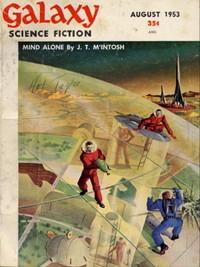
We're Civilized!
Subjects:
Download Formats:
Excerpt
This eBook is for the use of anyone anywhere at no cost and with almost
no restrictions whatsoever. You may copy it, give it away or re-use it
under the terms of the Project Gutenberg License included with this
eBook or online at http://www.gutenberg.org/license.
Read the Full Text
— End of We're Civilized! —
Book Information
- Title
- We're Civilized!
- Author(s)
- Clifton, Mark, Apostolides, Alex
- Language
- English
- Type
- Text
- Release Date
- December 13, 2011
- Word Count
- 7,190 words
- Library of Congress Classification
- PS
- Bookshelves
- Science Fiction, Browsing: Science-Fiction & Fantasy, Browsing: Fiction
- Rights
- Public domain in the USA.
Related Books
The crystal planetoids
by Coblentz, Stanton A. (Stanton Arthur)
English
441h 21m read

Famous stories from foreign countries
English
494h 26m read

Terror out of the past
by Gallun, Raymond Z., Gallun, Raymond Z. (Raymond Zinke)
English
247h 56m read
Corsairs of the cosmos
by Hamilton, Edmond
English
152h 39m read
The incredible slingshot bombs
by Williams, Robert Moore
English
96h 4m read
The young naval captain
by Stratemeyer, Edward
English
700h 5m read