Project Gutenberg's Volcanoes of the United States, by Steven R. Brantley
This eBook is for the use of anyone anywhere in the United States and most
other parts of the world at no cost and with almost no restrictions
whatsoever. You may copy it, give it away or re-use it under the terms of
the Project Gutenberg License included with this eBook or online at
www.gutenberg.org. If you are not located in the United States, you'll have
to check the laws of the country where you are located before using this ebook.
Title: Volcanoes of the United States
Author: Steven R. Brantley
Release Date: July 17, 2018 [EBook #57530]
Language: English
Character set encoding: UTF-8
*** START OF THIS PROJECT GUTENBERG EBOOK VOLCANOES OF THE UNITED STATES ***
Produced by Stephen Hutcheson and the Online Distributed
Proofreading Team at http://www.pgdp.net
Volcanoes of the
United States
by Steven R. Brantley
For sale by the US. Government Printing Office
Superintendent of Documents, Mail Stop: SSOP, Washington, DC 20402-9328
ISBN 0-16-045054-3
[Illustration: Mount Shasta, California, has erupted at least 10 times
in the past 3,400 years and at least 3 times in the past 750 years.
(_Photograph by Lyn Topinka._)]
Introduction
Few natural forces are as spectacular and threatening, or have played
such a dominant role in shaping the face of the Earth, as erupting
volcanoes. Volcanism has built some of the world’s greatest mountain
ranges, covered vast regions with _lava_ (molten rock at the Earth’s
surface), and triggered explosive eruptions whose size and power are
nearly impossible for us to imagine today. Fortunately, such calamitous
eruptions occur infrequently. Of the 50 or so volcanoes that erupt every
year, however, a few severely disrupt human activities. Between 1980 and
1990, volcanic activity killed at least 26,000 people and forced nearly
450,000 to flee from their homes.
Though few people in the United States may actually experience an
erupting volcano, the evidence for earlier volcanism is preserved in
many rocks of North America. Features seen in volcanic rocks only hours
old are also present in ancient volcanic rocks, both at the surface and
buried beneath younger deposits. A thick ash deposit sandwiched between
layers of sandstone in Nebraska, the massive granite peaks of the Sierra
Nevada mountain range, and a variety of volcanic layers found in eastern
Maine are but a few of the striking clues of past volcanism. With this
perspective, an erupting volcano is not only an exciting and awesome
spectacle in its own right but a window into a natural process that has
happened over and over again throughout Earth’s history.
The Earth’s crust, on which we live and depend, is in large part the
product of millions of once-active volcanoes and tremendous volumes of
_magma_ (molten rock below ground) that did not erupt but instead cooled
below the surface. Such persistent and widespread volcanism has resulted
in many valuable natural resources throughout the world. For example,
volcanic ash blown over thousands of square kilometers of land increases
soil fertility for forests and agriculture by adding nutrients and
acting as a mulch. Groundwater heated by large, still-hot magma bodies
can be tapped for geothermal energy. And over many thousands of years,
heated groundwater has concentrated valuable minerals, including copper,
tin, gold, and silver, into deposits that are mined throughout the
world.
The United States ranks third, behind Indonesia and Japan, in the number
of historically active volcanoes (that is, those for which we have
written accounts of eruptions). In addition, about 10 percent of the
more than 1,500 volcanoes that have erupted in the past 10,000 years are
located in the United States. Most of these volcanoes are found in the
Aleutian Islands, the Alaska Peninsula, the Hawaiian Islands, and the
Cascade Range of the Pacific Northwest; the remainder are widely
distributed in the western part of the Nation. A few U.S. volcanoes have
produced some of the largest and most dangerous types of eruptions in
this century, while several others have threatened to erupt.
[Illustration: Map of United States showing areas where active volcanoes
are located and shown later in more detail.]
ALASKA See page 24
UNITED STATES See page 16
HAWAIIAN ISLANDS See page 10
Scientists at the U.S. Geological Survey (USGS) engage in a variety of
research activities in order to reduce the loss of life and property
that can result from volcanic eruptions and to minimize the social and
economic turmoil that can result when volcanoes threaten to erupt. These
activities include studies of the physical processes before, during, and
after a volcanic eruption, assessments of volcano hazards, and public
outreach to translate scientific information about volcanoes into terms
that are meaningful to the public and public officials.
Monitoring volcanoes for signs of activity, another vital component, is
carried out by USGS earth scientists at three volcano observatories,
which were established to study active volcanoes in Hawaii (1912), the
Cascades (1980), and Alaska (1988). These researchers record
earthquakes, survey the surfaces of volcanoes, map volcanic rock
deposits, and analyze the chemistry of volcanic gas and fresh lava to
detect warning signs of impending activity and determine the most likely
type of activity that will affect areas around a volcano. During the
past 10 years, several warnings of eruptions were issued by the USGS and
monitoring of recently active volcanoes in the United States was
expanded. Predicting the time and size of volcanic eruptions, however,
remains a difficult challenge for scientists.
[Illustration: Scientist collects lava sample from lava flow entering
the sea on Kilauea Volcano. (_Photograph by J.D. Griggs._)]
[Illustration: Scientists conducting field studies on active volcanoes
in the United States.]
[Illustration: Field studies.]
[Illustration: Field studies.]
[Illustration: Field studies.]
Volcanoes and the Theory of Plate Tectonics
[Illustration: Major tectonic plates of the Earth.]
Only a few of the Earth’s active volcanoes are shown. (_Sketch by
Ellen Lougae._)
PLATES
EURASIAN
NORTH AMERICAN
JUAN DE FUCA
PHILIPPINE
CARIBBEAN
PACIFIC
COCOS
NAZCA
AUSTRALIAN
EURASIAN
ARABIAN
INDIAN
AFRICAN
SOUTH AMERICAN
SCOTIA
ANTARCTIC
EXPLANATION
Plate boundary
Active volcanoes
Volcanoes are not randomly distributed over the Earth’s surface. Most
are concentrated on the edges of continents, along island chains, or
beneath the sea forming long mountain ranges. More than half of the
world’s active volcanoes above sea level encircle the Pacific Ocean to
form the circum-Pacific “Ring of Fire.” In the past 25 years, scientists
have developed a theory—called plate tectonics—that explains the
locations of volcanoes and their relationship to other large-scale
geologic features.
According to this theory, the Earth’s surface is made up of a patchwork
of about a dozen large plates that move relative to one another at
speeds from less than one centimeter to about ten centimeters per year
(about the speed at which fingernails grow). These rigid plates, whose
average thickness is about 80 kilometers, are spreading apart, sliding
past each other, or colliding with each other in slow motion on top of
the Earth’s hot, pliable interior. Volcanoes tend to form where plates
collide or spread apart, but they can also grow in the middle of a
plate, as for example the Hawaiian volcanoes.
[Illustration: The boundary between the Pacific and Juan de Fuca Plates
is marked by a broad submarine mountain chain about 500 km long, known
as the Juan de Fuca Ridge. Young volcanoes, lava flows, and hot springs
were discovered in a broad valley less than 8 km wide along the crest of
the ridge in the 1970’s. The ocean floor is spreading apart and forming
new ocean crust along this valley or “rift” as hot magma from the
Earth’s interior is injected into the ridge and erupted at its top.
In the Pacific Northwest, the Juan de Fuca Plate plunges beneath the
North American Plate. As the denser plate of oceanic crust is forced
deep into the Earth’s interior beneath the continental plate, a process
known as subduction, it encounters high temperatures and pressures that
partially melt solid rock. Some of this newly formed magma rises toward
the Earth’s surface to erupt, forming a chain of volcanoes above the
subduction zone.]
PACIFIC PLATE
Juan de Fuca Ridge
JUAN DE FUCA PLATE
NORTH AMERICAN PLATE
Mt. Baker
Glacier Peak
Mt. Rainier
MAGMA
Magma Conduit
[Illustration: Located in the middle of the Pacific Plate, the volcanoes
of the Hawaiian Island chain are among the largest on Earth. The
volcanoes stretch 2,500 km across the north Pacific Ocean and become
progressively older to the northwest. Formed initially above a
relatively stationary “hot spot” in the Earth’s interior, each volcano
was rafted away from the hot spot as the Pacific Plate moves
northwestward at about 9 cm per year. The island of Hawaii consists of
the youngest volcanoes in the chain and is currently located over the
hot spot.]
HAWAII
NIIHAU
KAUAI
OAHU
MOLOKAI
LANAI
MAUI
KAHOOLAWE
PACIFIC PLATE
Oceanic Crust
Fixed “Hot Spot” Zone of magma formation extends to Kilauea & Mauna
Loa
Direction of place movement
Recent Eruptions From U.S. Volcanoes
Hawaiian volcanoes
Few places on Earth allow closer or more dramatic views of volcanic
activity than Mauna Loa and Kilauea volcanoes on the island of Hawaii.
Their frequent but usually non-explosive eruptions make them ideal for
scientific study. Kilauea’s eruptions are so intensely monitored that
scientists have assembled a detailed picture of the volcano’s magma
reservoir “plumbing” system and how it behaves before and during
eruptions. Studies of these volcanoes and the surrounding ocean floor
continue to improve our understanding of the geologic history of the
Hawaiian Island chain and the ability of scientists to determine
volcanic hazards that threaten island residents.
[Illustration: Hawaiian Volcanoes]
EXPLANATION
Volcano active during past 2,000 years
Potentially active volcano
Population centers
· 50,000 to 100,000
• 350,000 to 1,000,000
_PACIFIC OCEAN_
NIIHAU
KAUAI
OAHU
•Honolulu
MOLOKAI
MAUI
Haleakala
LANAI
KAHOOLAWE
HAWAII
Kohala
Mauna Kea
·Hilo
Hualalai
Mauna Loa
Kilauea
Lohi
Eruptions of Hawaiian volcanoes are typically non-explosive because of
the composition of the magma. Almost all of the magma erupted from
Hawaii’s volcanoes forms dark gray to black volcanic rock (called
_basalt_), generally in the form of lava flows and, less commonly, as
fragmented lava such as volcanic bombs, cinders, pumice, and ash. Basalt
magma is more fluid than the other types of magma (andesite, dacite, and
rhyolite). Consequently, expanding volcanic gases can escape from basalt
relatively easily and can propel lava high into the air, forming
brilliant fountains sometimes called “curtains of fire.”
Lava, whether erupted in high fountains or quietly pouring out, collects
to form flows that spread across the ground in thin broad sheets or in
narrow streams. The fluid nature of basalt magma allows it to travel
great distances from the _vent_ (the place where lava breaks ground) and
tends to build volcanoes in the shape of an inverted warrior shield,
with slopes less than about 10 degrees. Volcanoes with this kind of
profile are called _shield volcanoes_.
Hawaiian volcanoes erupt at their summit calderas and from their flanks
along linear rift zones that extend from the calderas. _Calderas_ are
large steep-walled depressions that form when a volcano’s summit region
collapses, usually after a large eruption empties or partly empties a
reservoir of magma beneath the volcano. _Rift zones_ are areas of
weakness within a volcano that extend from the surface to depths of
several kilometers. Magma that erupts from the flank of a volcano must
first flow underground through one of the volcano’s rift zones,
sometimes traveling more than 30 kilometers from the summit magma
reservoir before breaking the surface.
Mauna Loa.
Rising more than 9,000 meters from the seafloor, Mauna Loa is one of the
world’s largest active volcanoes; from its base below sea level to its
summit, Mauna Loa is taller than Mount Everest. It has erupted 15 times
since 1900, with eruptions lasting from less than 1 day to as many as
145 days.
The most recent eruption began before dawn on March 25, 1984. Brilliant
lava fountains lit the night-time sky as fissures opened across the
floor of the caldera. Within hours, the summit activity stopped and lava
began erupting from a series of vents along the northeast rift zone.
When the eruption stopped 3 weeks later, lava flows were only 6.5
kilometers from buildings in the city of Hilo. Mauna Loa erupts less
frequently than Kilauea, but it produces a much greater volume of lava
over a shorter period of time.
[Illustration: Lava fountains erupt from along Mauna Loa’s rift zone.
Fountains are about 25 meters high. (_Photograph by J.D. Griggs._)]
Kilauea Volcano.
Kilauea’s longest rift-zone eruption in historical time began on January
3, 1983. A row of lava fountains broke out from its east rift zone about
17 kilometers from the summit caldera; within a few months, the activity
settled down to a single vent. Powerful fountaining episodes hurled
molten rock 450 meters into the air and built a cone of lava fragments
that quickly became the tallest landmark on the rift zone.
The eruption changed style abruptly in July 1986 when lava broke out
through a new vent. Instead of regular episodes of high lava
fountaining, lava spilled continuously onto Kilauea’s surface. The
steady outpouring of lava formed a lake of molten rock that became
perched atop a small shield volcano. By June 1991, the shield was about
60 meters tall and 1,600 meters in diameter, and lava from the eruption
had covered 75 square kilometers of forest and grassland, added 120
hectares of new land to the island, and destroyed 179 homes.
[Illustration: Aerial view of Hawaii’s two most active volcanoes,
Kilauea and Mauna Loa. (_Photograph by J.D. Griggs._)]
Mauna Loa
Halemaumau Crater
Kilauea caldera
Although most of Kilauea’s historical rift eruptions were much briefer,
prolonged eruptive activity in the east rift zone from 1969 to 1974
formed a similar shield, Mauna Ulu (Hawaiian for “Growing Mountain”),
and an extensive lava field on the volcano’s south flank. The geologic
record shows that such large-volume eruptions from the rift zones and
the summit area, covering large parts of Kilauea’s surface, have
occurred many times in the recent past. In fact, about 90 percent of
Kilauea’s surface is covered with lava flows that are less than 1,100
years old.
[Illustration: The volcanic cone of Pu’u O’o, named after an extinct
Hawaiian bird, towers above an active lava lake (background).
(_Photograph by J.D. Griggs._)]
Most eruptions at Kilauea can be viewed at close range, but a few
historical eruptions were dangerously explosive. Fast-moving mixtures of
ash and gas, called _pyroclastic surges_, raced across the summit area
and into the southwest rift zone during an eruption in 1790. Footprints
preserved in a layer of ash 30 kilometers southwest of the summit
probably include those of a party of Hawaiian warriors and their
families who were crossing the volcano when the eruption struck. An
estimated 80 of the 250 people were killed by suffocating clouds
associated with the pyroclastic surges. A smaller explosive eruption in
1924 from Halemaumau Crater in Kilauea summit caldera, which killed a
photographer who was too close, hurled rocks weighing as much as 8 tons
as far as 1 kilometer.
[Illustration: Lava fountain erupting from Pu’u O’o cone. Forty-four
episodes of such fountaining between 1983 and 1986 built the cone 255
meters tall. (_Photograph by J.D. Griggs._)]
Cascade volcanoes
Volcanoes of the Cascade Range erupt far less frequently than Kilauea
and Mauna Loa, but they are more dangerous because of their violently
explosive behavior and their proximity to populated and cultivated areas
in Washington, Oregon, and California. The 1980 eruption of Mount St.
Helens in southwest Washington dramatically illustrated the type of
volcanic activity and destruction these volcanoes can produce.
Scientific studies of the eruption of Mount St. Helens and the eruptive
histories of other Cascade volcanoes continue to improve public
awareness and understanding of these potentially dangerous peaks.
In contrast to Kilauea, Cascade volcanoes erupt a variety of magma types
that generate a wide range of eruptive behavior and build steep-sided
cones known as _composite volcanoes_. In addition to basalt, andesite
and dacite magmas are common.
[Illustration: Cascade Volcanoes.]
EXPLANATION
Volcano active during past 2,000 years
Potentially active volcano
Area of potential volcanic activity
Population centers
40,000 to 100,000
100,000 to 350,000
350,000 to 1,000,000
Greater than 1,000,000
_PACIFIC OCEAN_
WASHINGTON
Mount Baker
Glacier Park
Seattle
Spokane
Mount Rainier
Mount St. Helens
Mount Adams
MONTANA
Great Falls
Billings
IDAHO
Boise
Craters of the Moon
OREGON
Portland
Mount Hood
Mount Jefferson
Three Sisters
Eugene
Newberry Crater
Crater Lake
WYOMING
Yellowstone
Casper
Cheyenne
CALIFORNIA
Medicine Lake
Mount Shasta
Lassen Peak
Clear Lake
Sacramento
San Francisco
Long Valley Caldera
Coso
Los Angeles
San Diego
NEVADA
Reno
Las Vegas
UTAH
Salt Lake City
COLORADO
Denver
ARIZONA
San Francisco Field
Phoenix
Tucson
NEW MEXICO
Albuquerque
Bandera Field
These magmas are so highly viscous, or sticky, that expanding volcanic
gases cannot easily escape from them. This causes a tremendous build-up
in pressure, often leading to extremely explosive eruptions. During such
eruptions, magma is shattered into tiny fragments (chiefly ash and
pumice) and ejected thousands of meters into the atmosphere or even the
stratosphere. Under the force of gravity, sometimes these fragments
sweep down a volcano’s flanks at speeds of more than 100 kilometers per
hour, mixing with air and volcanic gases to form _pyroclastic flows_.
Rock fragments can also mix with water in river valleys to form _lahars_
(volcanic debris flows and mudflows) that destroy everything in their
paths.
Andesite and dacite magmas also erupt to form lava flows. Because these
lavas are more viscous (“stickier”) than basalt, they tend to form
thicker flows that travel shorter distances from the vent; consequently,
andesite and dacite lavas typically build tall cones with steep slopes
of more than 20 degrees.
[Illustration: Mt. Hood, Oregon. Eruptions from the volcano about 1,800
and 200 years ago from the Crater Rock lava dome formed a broad apron of
rock debris on the volcano’s south side. (_Photograph by Lyn Topinka._)]
Mount Baker, Washington.
Eyewitness reports of small ashy plumes and active steam vents on Mount
Baker dating as far back as the mid-1800’s were clear evidence that the
ice-covered volcano had one of the most active geothermal systems among
Cascade volcanoes. When new fumaroles and unusually dark vapor plumes
appeared abruptly in March 1975, however, people in the Northwest became
concerned about an impending eruption and possible avalanches and lahars
from Sherman Crater, a vent just south of Mount Baker’s summit. Despite
a tenfold increase in the release of heat by the volcano during the next
12 months, which resulted in extensive changes to the ice cover in
Sherman Crater and produced minor releases of ash, no eruption occurred.
The thermal activity was not accompanied by earthquakes, which generally
precede most eruptions, and since 1976, the volcano has not showed
additional signs of activity.
[Illustration: Mount Baker viewed to the west. Increased fumarolic
activity occurred in Sherman Crater (left of summit) during the
mid-1970’s.]
The increased thermal activity between 1975 and 1976 prompted public
officials and Puget Power to temporarily close public access to the
popular Baker Lake recreation area and to lower the reservoir’s water
level by 10 meters. Significant avalanches of debris from the Sherman
Crater area could have swept directly into the reservoir, triggering a
disastrous wave that would have caused loss of life and damage to the
reservoir.
[Illustration: Mount Rainier towers 3,000 meters above the surrounding
valleys, all of which have been swept by lahars during the past 10,000
years. Future eruptions will probably trigger similar lahars.
(_Photograph by David Wieprecht._)]
Mount Rainier, Washington.
Mount Rainier has not produced a significant eruption in the past 500
years, but scientists consider it to be one of the most hazardous
volcanoes in the Cascades. Mount Rainier has 26 glaciers containing more
than five times as much snow and ice as all the other Cascade volcanoes
combined. If only a small part of this ice were melted by volcanic
activity, it would yield enough water to trigger enormous lahars.
Mount Rainier’s potential for generating destructive mudflows is
enhanced by its great height above surrounding valleys and its “soft”
interior. The volcano stands about 3,000 meters above river valleys
leading from its base. Volcanic heat and ground water have turned some
of the volcano’s originally hard lava into soft clay minerals, thereby
weakening its internal structure. These conditions make Mount Rainier
extremely susceptible to large landslides. Several have occurred in the
past few thousand years, one as recently as about 600 years ago. These
landslides, apparently containing great volumes of water, quickly turned
into lahars as they rushed down river valleys.
Mount St. Helens, Washington.
The catastrophic eruption on May 18, 1980, was preceded by 2 months of
intense activity that included more than 10,000 earthquakes, hundreds of
small _phreatic_ (steam-blast) explosions, and the outward growth of the
volcano’s entire north flank by more than 80 meters. A magnitude 5.1
earthquake struck beneath the volcano at 08:32 on May 18, setting in
motion the devastating eruption.
[Illustration: Mount St. Helens crater and lava dome viewed from the
north, 1990. Inset: Close view of lava dome with new lava extrusion on
top (snow-free part) from the south, 1986. (_Photographs by Lyn
Topinka._)]
Within seconds of the earthquake, the volcano’s bulging north flank slid
away in the largest landslide in recorded history, triggering a
destructive, lethal lateral blast of hot gas, steam, and rock debris
that swept across the landscape as fast as 1,100 kilometers per hour.
Temperatures within the blast reached as high as 300 degrees Celsius.
Snow and ice on the volcano melted, forming torrents of water and rock
debris that swept down river valleys leading from the volcano. Within
minutes, a massive plume of ash thrust 19 kilometers into the sky, where
the prevailing wind carried about 520 million tons of ash across 57,000
square kilometers of the Western United States.
[Illustration: Stand of timber in the process of being harvested was
instead knocked over by the lateral blast. An estimated 4 million board
feet of timber was destroyed. (_Photograph by H.H. Kieffer._)]
[Illustration: Small eruption of gas and ash from the lava dome caused
by violent release of volcanic gas or the geyser-like flashing of
superhot ground water to steam. (_Photograph by Dan Dzurisin._)]
[Illustration: Mount St. Helens towers above the chaotic landslide
deposit that fills a former valley to a depth of as much as 195 meters.
Note many small hills atop the landslide, called “hummocks” by
geologists. (_Photograph by Lyn Topinka._)]
The well-documented landslide at Mount St. Helens has helped geologists
to recognize more than 200 similar deposits at other volcanoes in the
world, including several other Cascade peaks. Geologists now realize
that large landslides from volcanoes are far more common than previously
thought—seventeen such volcanic landslides have occurred worldwide in
the past 400 years. Consequently, when scientists evaluate the types of
volcanic activity that may endanger people, giant landslides are now
included, in addition to other types of volcanic activity such as lava
flows, pyroclastic flows, lahars, and falling ash.
Following the 1980 explosive eruption, more than a dozen extrusions of
thick, pasty lava built a mound-shaped lava dome in the new crater. The
dome is about 1,100 meters in diameter and 250 meters tall.
[Illustration: Giant mushroom-shaped ash cloud of May 22, 1915, viewed
from 80 kilometers west of Lassen Peak. (_Photograph provided by
National Park Service._)]
Lassen Peak, California.
Long before the recent activity of Mount St. Helens, a series of
spectacular eruptions from Lassen Peak between 1914 and 1917
demonstrated the explosive potential of Cascade volcanoes. Small
phreatic explosions began on May 30, 1914, and were followed during the
next 12 months by more than 150 explosions that sent clouds of ash as
high as 3 kilometers above the peak. The activity changed character in
May 1915, when a lava flow was observed in the summit crater. A deep red
glow from the hot lava was visible at night 34 kilometers away. On May
19, an avalanche of hot rocks from the lava spilled onto snow and
triggered a lahar that extended more than 15 kilometers from the
volcano.
The most destructive explosion occurred on May 21, when a pyroclastic
flow devastated forests as far as 6.5 kilometers northeast of the summit
and lahars swept down several valleys radiating from the volcano. An
enormous ash plume rose more than 9 kilometers above the peak, and the
prevailing winds scattered the ash across Nevada as far as 500
kilometers to the east. Lassen Peak continued to produce smaller
eruptions until about the middle of 1917.
Alaskan volcanoes
The Alaska Peninsula and the Aleutian Islands have about 80 major
volcanic centers that consist of one or more volcanoes. Recent violent
eruptions have demonstrated that volcanic hazards do exist in some areas
of Alaska, even though it is sparsely populated. Alaskan volcanoes have
produced one or two eruptions per year since 1900. At least 20
catastrophic caldera-forming eruptions have occurred in the past 10,000
years; the awesome eruption of 1912 at Novarupta in the Katmai National
Monument is the most recent. Scientists are particularly concerned about
the volcanoes whose eruptions can affect the Cook Inlet region, where 60
percent of Alaska’s population lives.
[Illustration: Alaskan volcanoes.]
EXPLANATION
Volcano active during past 2,000 years
• Population center 100,000 to 350,000
ALASKA
Wrangell
Hayes
•Anchorage
Spurr
Redoubt
Iliamna
Akutan
Novarupta
Augustine
_Cook Inlet_
Trident
Bogoslof
Ukinrek
Martin
Mageik
Kagamil
Chiginagak
Ugashik-Peulik
Carlisle
Emmons Lake
Yantami
Kiska
Cerberus
Fisher
Dutton
Aniakchak
Veniaminof
Little Sitkin
Kasatochi
Amukta
Pyre
Pavlof
Isanotski
Westdahl
Shishaldin
Makushin
Gareloi
Vsevidof
Okmok
Tanaga
Korovin
Cleveland
Kanaga
Great Sitkin
Yunaska
[Illustration: Redoubt Volcano, Alaska, erupting on December 16, 1989.
(_Photograph by National Park Service._)]
Redoubt Volcano.
Redoubt Volcano erupted for the fourth time this century on December 14,
1989. Following several days of strong explosive activity, a series of
lava domes grew in Redoubt’s summit crater during the next four months.
Most of the domes were destroyed by explosions or collapsed down the
volcano’s north flank. Some of these events triggered small pyroclastic
flows that melted snow and ice on the volcano to form lahars in Drift
River Valley, which empties into Cook Inlet 35 kilometers away.
Ash produced by the eruptions severely affected air traffic enroute to
Anchorage, Alaska’s largest city and a major hub of domestic and
international commercial air traffic. Many domestic carriers suspended
service to Alaska following major explosive events, and several
international carriers temporarily rerouted flights around Alaska. On
December 15, a jetliner enroute to Japan encountered an ash cloud while
descending into Anchorage. The plane quickly lost power in all four
engines and lost 4,000 meters in altitude before the pilots were able to
restart the engines. The aircraft landed safely in Anchorage, but it
sustained more than $80 million in damage.
[Illustration: Lava dome in the summit crater of Redoubt Volcano, which
grew between April 21 and June 1990. (_Photograph by David Wieprecht._)]
Lahars generated during the eruption threatened an oil-storage facility
located on the banks of Drift River. Oil is pumped from more than a
dozen wells in Cook Inlet to the facility and then loaded onto tankers,
which dock just offshore. A lahar on January 2 flooded part of the
facility with nearly a meter of water, forcing its shutdown until
workers could restore power. This and subsequent lahars prompted the
Cook Inlet Pipeline Company to temporarily halt oil production from some
oil wells and reduce the amount of oil stored at the facility between
tanker loadings.
[Illustration: Rock from the lava dome of Redoubt Volcano deposited in a
river valley by a lahar during an eruption on January 8, 1990. When
found 6 days later, the temperature of the rock was still 145°C.
(_Photograph by C. Dan Miller._)]
[Illustration: Steam plume rises from lava dome atop Augustine Volcano
on April 30, 1986. (_Photograph by M.E. Yount._)]
Augustine Volcano.
One of the most active volcanoes in Cook Inlet is Augustine, whose
symmetrical cone rises 1,254 meters above the sea. Since Captain James
Cook discovered and named it in 1778, Augustine has erupted in 1812,
1883, 1935, 1963-64, 1976, and 1986. Curiously, the quiet intervals
between these eruptions apparently have shortened from 70 to 10 years.
Augustine’s 1986 eruption was similar to the pattern of events observed
in 1976. After eight months of earthquake activity beneath the volcano,
a violent explosion began on March 26. Billowing ash plumes rose more
than 10 kilometers above the vent, pyroclastic flows sped down the
volcano’s flanks into the sea, and ash spread throughout Cook Inlet. A
second stage began April 23, when lava began erupting near the volcano’s
summit and added about 25 meters to the top of the existing lava dome.
Small pyroclastic flows accompanied growth of the dome.
Scientists were worried that this eruption might trigger a giant
landslide from Augustine’s steep upper cone, which could enter the sea
to create a _tsunami_ (powerful seismic sea wave). At least 12
landslides are known to have occurred at Augustine. The most recent
slide took place at the onset of the 1883 eruption when a part of the
volcano’s summit collapsed into the sea. Within one hour, a tsunami as
high as 9 meters crashed ashore on the coast of the Kenai Peninsula 80
kilometers away. No one was killed and property damage was only minor
because the tsunami hit at low tide. Subsequent eruptions have rebuilt a
steep cone of overlapping lava domes similar to the cone that existed
just before the 1883 landslide.
[Illustration: Pyroclastic flow descending the upper flanks of Augustine
Volcano. (_Photograph by M.E. Yount._)]
Novarupta, Katmai National Monument.
The largest eruption in the world this century occurred in 1912 at
Novarupta on the Alaska Peninsula. An estimated 15 cubic kilometers of
magma was explosively erupted during 60 hours beginning on June 6—about
30 times the volume erupted by Mount St. Helens in 1980! The expulsion
of such a large volume of magma excavated a funnel-shaped vent 2
kilometers wide and triggered the collapse of Mount Katmai volcano 10
kilometers away to form a summit caldera 600 meters deep and about 3
kilometers across. Extrusion of the lava dome, called Novarupta, near
the center of the 1912 vent marked the end of the eruption.
Little was known about the spectacular effects of this great eruption
until 1916, when a scientific expedition sponsored by the National
Geographic Society visited the area. To their amazement, they found a
broad valley northwest of Novarupta marked by a flat plain of loose,
“sandy” ash material from which thousands of jets of steam were hissing.
The eruption had produced pyroclastic flows that swept about 21
kilometers down the upper Ukak River valley. The thickness of the
resulting pumice and ash deposits in the upper valley is not known but
may be as great as 200 meters. In 1916, the deposits were still hot
enough to boil water and form countless steaming fumaroles; hence the
expedition named this part of the Ukak River the “Valley of Ten Thousand
Smokes.”
Trident Volcano.
Eruptions of andesitic lava flows between 1953 and 1960 built a new cone
on Trident’s southwest flank, adding yet another to the volcano’s older
complex of three overlapping cones (hence the name Trident). A huge
cloud of rising ash was seen on February 15, 1953, in the direction of
Katmai National Monument; 3 days later clear weather permitted U.S. Navy
pilots to spot a blocky lava flow emerging from Trident’s southwest
flank. Slow extrusion of lava during the next 4 months built an
irregularly shaped lava dome about 1.5 kilometers long and 600 meters
tall. Trident continued to erupt intermittently through 1960, generating
three lava flows as long as 4.5 kilometers from the same vent and
numerous ash-producing explosive eruptions.
[Illustration: Novarupta lava dome, Mt. Katmai, and Trident Volcano,
Alaska. The dome is 380 meters in diameter and occupies a small part of
the vent from which about 15 cubic kilometers of magma was erupted in
1912 (dashed line marks approximate outline of vent). (_Copyrighted
photograph reprinted with permission, Aero Map US Inc., August 21,
1987._)]
[Illustration: Small steam plume rises from a cinder cone within the
summit caldera of Mount Veniaminof, Alaska. The large pit in the ice
formed when lava (dark area) flowed beneath the ice and melted it.
(_Photograph by M.E. Yount._)]
Mount Veniaminof.
Mount Veniaminof is a massive composite volcano with a summit caldera
about 8 kilometers in diameter. Since its formation about 3,700 years
ago, the caldera has filled with ice to a depth of at least 60 meters.
Between June 1983 and January 1984, a series of small explosions, lava
fountains, and lava flows erupted from a small cinder cone within the
caldera. The explosions hurled molten lava from the cinder cone, and
lava flows melted a pit about 1.5 kilometers in diameter in the ice near
the base of the volcano. Water from the melting ice formed a temporary
lake.
Mount Spurr.
The summit cone of Mount Spurr consists of a large lava dome built in
the center of a horseshoe-shaped crater formed earlier by a large
landslide. At the southern edge of this ancient crater is a younger,
more active cone known as Crater Peak. Scientists have determined that
Crater Peak is the source for at least 35 ash layers found in the Cook
Inlet area, all of which were erupted in the past 6,000 years. Until
recently, a warm turquoise-colored lake partially filled its crater.
A series of explosive eruptions from Crater Peak on June 27, 1992,
generated ash plumes as high as about 14 kilometers, small pyroclastic
flows that swept down the south and east sides of the cone, and small
lahars. The reawakening of Crater Peak followed nearly a year of
increased earthquake activity, which escalated further on June 26, less
than 1 day before its first eruption. Not all of the explosive episodes
were preceded by a change in seismicity beneath the volcano, a condition
that required scientists to maintain a 24-hour watch for extended
periods of time in order to issue sudden reports and warnings of
eruptive activity. The west side of Cook Inlet received a light to
moderate ashfall during the largest explosive episode on August 18;
Anchorage was blanketed with about 3 millimeters of ash, causing the
Anchorage International Airport to close for a few hours. During an
eruption at night on September 17, a spectacular display of lightning
and incandescent ballistics and pyroclastic flows were witnessed by
hunters who camped about 18 kilometers to the southeast; a faint glow
above Crater Peak was also visible from as far away as Anchorage.
[Illustration: Steaming Crater Peak, a satellite vent on the south side
of Mount Spurr volcano, produced three explosive eruptions in 1992.
(_Photograph by Cynthia Gardner._)]
[Illustration: Aerial view of the Mono-Inyo Craters Volcanic Chain,
California. Several eruptions occurred along both chains as recently as
about 550 to 600 years ago. (_Photograph by C. Dan Miller._)]
Mono Craters
Wilson Butte
Northern part of Inyo Volcanic Chain
Obsidian Dome
Glass Creek Dome
Restless calderas
The largest and most explosive volcanic eruptions eject tens to hundreds
of cubic kilometers of magma onto the Earth’s surface. When such a large
volume of magma is removed from beneath a volcano, the ground subsides
or collapses into the emptied space, to form a huge depression called a
caldera. Some calderas are more than 25 kilometers in diameter and
several kilometers deep.
Calderas are among the most spectacular and active volcanic features on
Earth. Earthquakes, ground cracks, uplift or subsidence of the ground,
and thermal activity such as hot springs, geysers, and boiling mud pots
are common at many calderas. Such activity is caused by complex
interactions among magma stored beneath a caldera, ground water, and the
regional build-up of stress in the large plates of the Earth’s crust.
Significant changes in the level of activity at some calderas are
common; these new activity levels can be intermittent, lasting for
months to years, or persistent over decades to centuries. Although most
caldera unrest does not lead to an eruption, the possibility of violent
explosive eruptions warrants detailed scientific study and monitoring of
some active calderas.
Recently, scientists have recognized volcanic unrest at two calderas in
the United States, Long Valley Caldera in eastern California and
Yellowstone Caldera in Yellowstone National Park, Wyoming. Whether
unrest at these calderas simply punctuates long periods of quiet or is
the early warning sign of future eruptions is an important but still
unanswered question.
[Illustration: Yellowstone River plummets through the famous Grand
Canyon of Yellowstone. Carved by the river, the “yellow” rocks of the
canyon are rhyolite lava flows that have been altered by hot water. The
lava flows were erupted after the most recent caldera-forming eruption
about 600,000 years ago.]
Long Valley Caldera, California.
Long Valley Caldera lies on the eastern front of the Sierra Nevada,
about 300 kilometers east of San Francisco. A huge explosive eruption
about 700,000 years ago formed the caldera and produced pyroclastic
flows that traveled 65 kilometers from the vent and covered an area of
about 1,500 square kilometers. Ash from the caldera-forming eruption
fell as far east as Nebraska. Within the past 40,000 years, eruptions
have been restricted to a linear zone of vents, including the Mono-Inyo
Craters Volcanic Chain, that extends about 50 kilometers north from the
northwest part of the caldera.
This volcanic chain consists of many vents that have erupted in the past
several thousand years. Eruptions from vents as recently as 550 years
ago produced lava flows, pyroclastic flows, and ash, all of rhyolitic
composition. Geologic mapping shows that some eruptions were preceded by
ground cracking, suggesting that the ground was pulled apart or
stretched as magma neared the surface.
[Illustration: Sketch of Long Valley Caldera and the Mono-Inyo Craters
Volcanic Chain in central California, viewed from the southeast.
(_Sketch by Tau Rho Alpha._)]
Sierra Nevada
Mono craters
Inyo craters
Mammoth Lakes
Resurgent dome
Long Valley Caldera
Three moderate earthquakes south of the caldera and one beneath the
caldera on May 25-26, 1980, marked the beginning of unrest that
continues into the 1990’s. Swarms of earthquakes beneath the caldera,
changes in several hot springs, and the formation of new springs have
occurred since 1980. Precise surveys have also shown that the central
part of the caldera has risen by more than 50 centimeters since 1975.
This unrest is probably related to the stretching (east-west extension)
of the Earth’s crust that is known to be occurring in the region around
the caldera, and it probably also involves the rise of magma beneath the
caldera. Scientists do not know if this unrest will lead to volcanic
activity, but the geologically recent eruptions along the Mono-Inyo
Craters Volcanic Chain suggest that future eruptions are possible.
[Illustration: South Inyo Crater, Long Valley Caldera, California.
Explosive eruptions formed the crater about 500 years ago. (_Photograph
by Steven R. Brantley._)]
Yellowstone Caldera, Yellowstone National Park, Wyoming.
Yellowstone Caldera is one of the largest and most active calderas in
the world. The spectacular geysers, boiling hot springs, and mud pots
that have made Yellowstone famous—and even the strikingly beautiful
Grand Canyon of Yellowstone through which the Yellowstone River
plunges—owe their existence to the tremendous volcanic forces that have
affected the region during the past 2 million years. Cataclysmic
eruptions 2.0, 1.3, and 0.6 million years ago ejected huge volumes of
rhyolite magma; each eruption formed a caldera and extensive layers of
thick pyroclastic-flow deposits. The youngest caldera is an elliptical
depression, nearly 80 kilometers long and 50 kilometers wide, that
occupies much of Yellowstone National Park. The caldera is buried by
several extensive rhyolite lava flows erupted between 75,000 and 150,000
years ago.
[Illustration: Map of most recent Yellowstone Caldera and its main
thermal features. After the caldera formed, many vents erupted thick
rhyolite lava flows, and the central part of the caldera was pushed
upward to form resurgent domes. The star marks the magnitude 7.5 Hebger
Lake earthquake.]
IDAHO
_Hebgen Lake_
West Yellowstone
MONTANA
Silver Gate
Gardiner
WYOMING
Yellowstone National Park
Mammoth
M 7.5 Aug. 18 1959
Norris Geyser Basin
Mud Pots
Old Faithful
West Thumb Geyser Basin
_Yellowstone Lake_
CALDERA RIM
COLORADO
Resurgent dome
The Earth’s crust beneath Yellowstone National Park is still restless.
Precise surveys have detected an area in the center of the caldera that
rose by as much as 86 centimeters between 1923 and 1984 and then
subsided slightly between 1985 and 1989. Scientists do not know the
cause of these ups and downs but hypothesize that they are related to
the addition or withdrawal of magma beneath the caldera, or to the
changing pressure of the hot ground water system above Yellowstone’s
large magma reservoir. Also, Yellowstone National Park and the area
immediately west of the Park are historically among the most seismically
active areas in the Rocky Mountains. Small-magnitude earthquakes are
common beneath the entire caldera, but most are located along the Hebgen
Lake fault zone that extends into the northwest part of the caldera. A
magnitude 7.5 earthquake occurred along this zone in 1959.
[Illustration: Castle Geyser erupting a column of hot water, Yellowstone
National Park. (_Photograph by Steven R. Brantley._)]
Active Volcanoes: Windows Into the Past
Molten rock has erupted onto the surface of the Earth throughout its
4.5-billion-year history. Although many of these ancient rocks were
removed by erosion, volcanic deposits can be found beneath younger rocks
in many parts of the United States. To a geologist, such long-lasting
volcanic rocks look like those formed by today’s active volcanoes. Many
ancient volcanic rocks, however, change somewhat with time, as they
become firmly consolidated, buried by younger deposits, and sometimes
folded and faulted by the continuous shifting of the Earth’s crust. Even
minerals of volcanic rocks may change, if after burial they encounter
high pressures and temperatures.
[Illustration: Columnar jointing in an ancient lava flow in the Blue
Ridge Mountains, Shenandoah National Park, Virginia. The flow that
contains the columns is one of an extensive series of lava flows, each
averaging about 200 feet thick, that poured over the land more than 570
million years ago. Columns form as cooling or shrinkage joints when a
hot lava flow cools quickly; the columns form perpendicular to the
cooling surface. These columns are about .5 meter in diameter.
(_Photograph by J.C. Reed, Jr._)]
Most active volcanoes are built on older volcanic deposits erupted from
ancient volcanoes, and visitors to the present-day volcanoes walk or
drive across these products of past volcanism. For example, anyone
driving across the Cascade Range, sunbathing at Waikiki, or fishing on
the Alaska Peninsula is there because old volcanic rocks form the
landscape.
One step further back in time from today’s active volcanoes are people
who picnic in the White Mountains of New Hampshire, enjoy the autumn
colors in the Blue Ridge of Shenandoah National Park, and hike in the
rugged Big Bend National Park of Texas. Many of the rocks in these areas
were formed by eruptions or by intrusion of magma into the Earth’s crust
many millions of years ago. Because volcanic activity has been so
important in shaping the Earth, watching active volcanoes today provides
a window through which we can glimpse and reconstruct the early volcanic
history of our planet.
As we increase our knowledge about volcanic processes, by studying
volcanoes erupting today as well as those that have lain dormant for
hundreds to thousands of years, we increase our ability to predict when
and how volcanoes will erupt. Accurate predictions, presented in terms
that are meaningful to public officials, will minimize the number of
lives lost and the social and economic upheaval that an eruption can
cause.
[Illustration: Thick layers of volcanic rocks form the Superstition
Mountains, located about 60 kilometers east of Phoenix, Arizona. The
consolidated deposits of pyroclastic flows, lava flows and domes, and
lahars in the Superstition Mountains and adjacent areas testify to a
period of intense volcanism about 17 to 25 million years ago in central
Arizona. (_Photograph by D.W. Peterson._)]
Glossary
Andesite A volcanic rock containing 53-63% silica with a
moderate viscosity when in a molten state.
Ash Fragments less than 2 millimeters in diameter of
lava or rock blasted into the air by volcanic
explosions.
Basalt A volcanic rock consisting of less than 53%
silica with a low viscosity when in a molten
state.
Caldera A large volcanic depression, commonly circular or
elliptical when seen from above.
Composite A steep-sided volcano composed of many layers of
volcano volcanic rocks, usually of high-viscosity lava
and fragmented debris such as lahar and
pyroclastic deposits.
Dacite A volcanic rock containing 63-68% silica with a
high viscosity when in a molten state.
Dome A steep-sided mound that forms when viscous lava
piles up near a volcanic vent. Domes are formed
by andesite, dacite, and rhyolite lavas.
Fumarole A vent that releases volcanic gases, including
water vapor (steam).
Lahar A flowing mixture of water and rock debris that
forms on the slopes of a volcano, sometimes
referred to as debris flow or mudflow. The term
comes from Indonesia.
Lava Molten rock that erupts from a vent or fissure;
see magma.
Magma Molten rock that contains dissolved gas and
crystals, formed deep within the Earth. When
magma reaches the surface, it is called lava.
Phreatic A type of volcanic explosion that occurs when
eruption water comes in contact with hot rocks or ash near
a volcanic vent, causing steam explosions.
Pumice A light-colored volcanic rock containing abundant
trapped gas bubbles formed by the explosive
eruption of magma. Because of its numerous gas
bubbles, pumice commonly floats on water.
Pyroclastic flow A hot, fast-moving and high-density mixture of
ash, pumice, rock fragments, and gas formed
during explosive eruptions.
Pyroclastic Same process as pyroclastic flow but of much
surge lower density.
Rhyolite A volcanic rock containing more than 68% silica
with a very high viscosity when in a molten state.
Shield volcano A volcano shaped like an inverted warrior’s
shield with long gentle slopes produced by
eruptions of low-viscosity basaltic lava.
Silica The molecule formed of silicon and oxygen (SiO₂)
that is the basic building block of volcanic
rocks and the most important factor controlling
the fluidity of magma. The higher a magma’s
silica content, the greater its viscosity or
“stickiness.”
Vent The opening at the Earth’s surface through which
volcanic materials (magma and gas) escape.
Volcano A vent in the surface of the Earth through which
magma erupts and also the landform that is
constructed by the erupted material.
Volcanic The downslope movement of soil, rock debris, and
landslide sometimes glacial ice, with or without water,
from the flank of a volcano.
[Illustration: Scientist surveying lava dome at Redoubt Volcano.
(_Photograph by G. McGimsey._)]
The metric units used in this publication can be converted to English
units by using the approximate conversions given below:
Length
1 kilometer 0.6 of a mile
1 meter 39.37 inches
1 centimeter 0.4 inch
1 millimeter 0.04 inch
Area
1 sq. kilometer 0.4 sq. mile
1 sq. meter 1.2 sq. yards
1 sq. centimeter 0.155 sq. inch
Temperature
To convert °Celsius to °Fahrenheit, multiply °C by 1.8 and
add 32.
To convert °Fahrenheit to °Celsius, subtract 32 from °F and
divide the result by 1.8.
Further Reading
Decker, Robert, and Decker, Barbara, 1989, Volcanoes: San Francisco,
Freeman, 285 p. (An information-packed introduction to the study of
volcanoes written in an easy-to-read style.)
Editors, 1982, Volcano: in the series Planet Earth, Alexandria,
Virginia, Time-Life Books, 176 p. (A well illustrated and readable
general survey of volcanoes and their activity.)
McClelland, Lindsay, Simkin, Tom, Summers, Marjorie, Nielsen, Elizabeth,
and Stein, T.C., editors, 1989, Global Volcanism 1975-1985: Englewood
Cliffs, New Jersey, Prentice-Hall, 656 p. (A full account of volcanism
on Earth based on eyewitness accounts from geologists and other
scientists, reporters, travelers, and other keen observers.)
Simkin, Tom, and Seibert, Lee, 1994, Volcanoes of the World (Second
edition): Stroudsburg, Pa., Hutchinson Ross, 233 p. (A comprehensive
regional directory of worldwide volcanic activity during the past 10,000
years; activity presented in table format.)
Tilling, R. I., 1982, Volcanoes: Reston, Virginia, U.S. Geological
Survey general-interest publication, 46 p. (A general introduction for
the nonspecialist to the study of volcanoes, with focus on the nature,
types, workings, products, and hazards of volcanoes.)
Tilling, R. I., 1984, Eruptions of Mount St. Helens: Past, present, and
future: Reston, Virginia, U.S. Geological Survey general-interest
publication, 46 p. (A nontechnical summary, illustrated by many color
photographs and diagrams, of the abundant scientific data available for
the volcano, with emphasis on the catastrophic eruption on May 18, 1980,
which caused the worst volcanic disaster in U.S. history.)
Tilling, R. I., 1987, Eruptions of Hawaiian volcanoes: Past, present,
and future: Reston, Virginia, U.S. Geological Survey general-interest
publication, 54 p. (A nontechnical summary, illustrated by color
photographs and drawings, of the eruption history, style, and products
of two of Hawaii’s active volcanoes, Kilauea and Mauna Loa.)
Wood, C. A., and Kienle, Jurgen, editors, 1990, Volcanoes of North
America—United States and Canada: Cambridge University Press, 354 p. (A
rich compilation of volcanoes and volcanic fields in North America that
were formed in the past 5 million years; includes more than 250 entries
prepared by leading experts in volcanology.)
U.S. Geological Survey
Information Services
P.O. Box 25286
Denver, CO 80225
U.S. GOVERNMENT PRINTING OFFICE: 1996 421-555
[Illustration: Front and back cover (clockwise from top photograph on
front) Augustine Volcano, Alaska, 1986.]
[Illustration: Mount St. Helens, Washington, 1980.]
[Illustration: Kilauea Volcano, Hawaii, 1983.]
[Illustration: Mount Spurr, Alaska, 1992.]
[Illustration: Mono-Inyo Craters Volcanic Chain inside Long Valley
Caldera, California.]
[Illustration: U. S. DEPARTMENT OF THE INTERIOR • MARCH 3, 1849]
As the Nation’s principal conservation agency, the Department of the
Interior has responsibility for most of our nationally owned public
lands and natural and cultural resources. This includes fostering sound
use of our land and water resources; protecting our fish, wildlife, and
biological diversity; preserving the environmental and cultural values
of our national parks and historical places; and providing for the
enjoyment of life through outdoor recreation The Department assesses our
energy and mineral resources and works to ensure that their development
is in the best interests of all our people by encouraging stewardship
and citizen participation in their care. The Department also has a major
responsibility for American Indian reservation communities and for
people who live in island territories under U S administration.
Transcriber’s Notes
--Retained publication information from the printed edition: this eBook
is public-domain in the country of publication.
--In the text versions only, text in italics is delimited by
_underscores_.
--In the ASCII version only, subscripted numbers are preceded by
underscore and delimited by brackets.
End of the Project Gutenberg EBook of Volcanoes of the United States, by
Steven R. Brantley
*** END OF THIS PROJECT GUTENBERG EBOOK VOLCANOES OF THE UNITED STATES ***
***** This file should be named 57530-0.txt or 57530-0.zip *****
This and all associated files of various formats will be found in:
http://www.gutenberg.org/5/7/5/3/57530/
Produced by Stephen Hutcheson and the Online Distributed
Proofreading Team at http://www.pgdp.net
Updated editions will replace the previous one--the old editions will
be renamed.
Creating the works from print editions not protected by U.S. copyright
law means that no one owns a United States copyright in these works,
so the Foundation (and you!) can copy and distribute it in the United
States without permission and without paying copyright
royalties. Special rules, set forth in the General Terms of Use part
of this license, apply to copying and distributing Project
Gutenberg-tm electronic works to protect the PROJECT GUTENBERG-tm
concept and trademark. Project Gutenberg is a registered trademark,
and may not be used if you charge for the eBooks, unless you receive
specific permission. If you do not charge anything for copies of this
eBook, complying with the rules is very easy. You may use this eBook
for nearly any purpose such as creation of derivative works, reports,
performances and research. They may be modified and printed and given
away--you may do practically ANYTHING in the United States with eBooks
not protected by U.S. copyright law. Redistribution is subject to the
trademark license, especially commercial redistribution.
START: FULL LICENSE
THE FULL PROJECT GUTENBERG LICENSE
PLEASE READ THIS BEFORE YOU DISTRIBUTE OR USE THIS WORK
To protect the Project Gutenberg-tm mission of promoting the free
distribution of electronic works, by using or distributing this work
(or any other work associated in any way with the phrase "Project
Gutenberg"), you agree to comply with all the terms of the Full
Project Gutenberg-tm License available with this file or online at
www.gutenberg.org/license.
Section 1. General Terms of Use and Redistributing Project
Gutenberg-tm electronic works
1.A. By reading or using any part of this Project Gutenberg-tm
electronic work, you indicate that you have read, understand, agree to
and accept all the terms of this license and intellectual property
(trademark/copyright) agreement. If you do not agree to abide by all
the terms of this agreement, you must cease using and return or
destroy all copies of Project Gutenberg-tm electronic works in your
possession. If you paid a fee for obtaining a copy of or access to a
Project Gutenberg-tm electronic work and you do not agree to be bound
by the terms of this agreement, you may obtain a refund from the
person or entity to whom you paid the fee as set forth in paragraph
1.E.8.
1.B. "Project Gutenberg" is a registered trademark. It may only be
used on or associated in any way with an electronic work by people who
agree to be bound by the terms of this agreement. There are a few
things that you can do with most Project Gutenberg-tm electronic works
even without complying with the full terms of this agreement. See
paragraph 1.C below. There are a lot of things you can do with Project
Gutenberg-tm electronic works if you follow the terms of this
agreement and help preserve free future access to Project Gutenberg-tm
electronic works. See paragraph 1.E below.
1.C. The Project Gutenberg Literary Archive Foundation ("the
Foundation" or PGLAF), owns a compilation copyright in the collection
of Project Gutenberg-tm electronic works. Nearly all the individual
works in the collection are in the public domain in the United
States. If an individual work is unprotected by copyright law in the
United States and you are located in the United States, we do not
claim a right to prevent you from copying, distributing, performing,
displaying or creating derivative works based on the work as long as
all references to Project Gutenberg are removed. Of course, we hope
that you will support the Project Gutenberg-tm mission of promoting
free access to electronic works by freely sharing Project Gutenberg-tm
works in compliance with the terms of this agreement for keeping the
Project Gutenberg-tm name associated with the work. You can easily
comply with the terms of this agreement by keeping this work in the
same format with its attached full Project Gutenberg-tm License when
you share it without charge with others.
1.D. The copyright laws of the place where you are located also govern
what you can do with this work. Copyright laws in most countries are
in a constant state of change. If you are outside the United States,
check the laws of your country in addition to the terms of this
agreement before downloading, copying, displaying, performing,
distributing or creating derivative works based on this work or any
other Project Gutenberg-tm work. The Foundation makes no
representations concerning the copyright status of any work in any
country outside the United States.
1.E. Unless you have removed all references to Project Gutenberg:
1.E.1. The following sentence, with active links to, or other
immediate access to, the full Project Gutenberg-tm License must appear
prominently whenever any copy of a Project Gutenberg-tm work (any work
on which the phrase "Project Gutenberg" appears, or with which the
phrase "Project Gutenberg" is associated) is accessed, displayed,
performed, viewed, copied or distributed:
This eBook is for the use of anyone anywhere in the United States and
most other parts of the world at no cost and with almost no
restrictions whatsoever. You may copy it, give it away or re-use it
under the terms of the Project Gutenberg License included with this
eBook or online at www.gutenberg.org. If you are not located in the
United States, you'll have to check the laws of the country where you
are located before using this ebook.
1.E.2. If an individual Project Gutenberg-tm electronic work is
derived from texts not protected by U.S. copyright law (does not
contain a notice indicating that it is posted with permission of the
copyright holder), the work can be copied and distributed to anyone in
the United States without paying any fees or charges. If you are
redistributing or providing access to a work with the phrase "Project
Gutenberg" associated with or appearing on the work, you must comply
either with the requirements of paragraphs 1.E.1 through 1.E.7 or
obtain permission for the use of the work and the Project Gutenberg-tm
trademark as set forth in paragraphs 1.E.8 or 1.E.9.
1.E.3. If an individual Project Gutenberg-tm electronic work is posted
with the permission of the copyright holder, your use and distribution
must comply with both paragraphs 1.E.1 through 1.E.7 and any
additional terms imposed by the copyright holder. Additional terms
will be linked to the Project Gutenberg-tm License for all works
posted with the permission of the copyright holder found at the
beginning of this work.
1.E.4. Do not unlink or detach or remove the full Project Gutenberg-tm
License terms from this work, or any files containing a part of this
work or any other work associated with Project Gutenberg-tm.
1.E.5. Do not copy, display, perform, distribute or redistribute this
electronic work, or any part of this electronic work, without
prominently displaying the sentence set forth in paragraph 1.E.1 with
active links or immediate access to the full terms of the Project
Gutenberg-tm License.
1.E.6. You may convert to and distribute this work in any binary,
compressed, marked up, nonproprietary or proprietary form, including
any word processing or hypertext form. However, if you provide access
to or distribute copies of a Project Gutenberg-tm work in a format
other than "Plain Vanilla ASCII" or other format used in the official
version posted on the official Project Gutenberg-tm web site
(www.gutenberg.org), you must, at no additional cost, fee or expense
to the user, provide a copy, a means of exporting a copy, or a means
of obtaining a copy upon request, of the work in its original "Plain
Vanilla ASCII" or other form. Any alternate format must include the
full Project Gutenberg-tm License as specified in paragraph 1.E.1.
1.E.7. Do not charge a fee for access to, viewing, displaying,
performing, copying or distributing any Project Gutenberg-tm works
unless you comply with paragraph 1.E.8 or 1.E.9.
1.E.8. You may charge a reasonable fee for copies of or providing
access to or distributing Project Gutenberg-tm electronic works
provided that
* You pay a royalty fee of 20% of the gross profits you derive from
the use of Project Gutenberg-tm works calculated using the method
you already use to calculate your applicable taxes. The fee is owed
to the owner of the Project Gutenberg-tm trademark, but he has
agreed to donate royalties under this paragraph to the Project
Gutenberg Literary Archive Foundation. Royalty payments must be paid
within 60 days following each date on which you prepare (or are
legally required to prepare) your periodic tax returns. Royalty
payments should be clearly marked as such and sent to the Project
Gutenberg Literary Archive Foundation at the address specified in
Section 4, "Information about donations to the Project Gutenberg
Literary Archive Foundation."
* You provide a full refund of any money paid by a user who notifies
you in writing (or by e-mail) within 30 days of receipt that s/he
does not agree to the terms of the full Project Gutenberg-tm
License. You must require such a user to return or destroy all
copies of the works possessed in a physical medium and discontinue
all use of and all access to other copies of Project Gutenberg-tm
works.
* You provide, in accordance with paragraph 1.F.3, a full refund of
any money paid for a work or a replacement copy, if a defect in the
electronic work is discovered and reported to you within 90 days of
receipt of the work.
* You comply with all other terms of this agreement for free
distribution of Project Gutenberg-tm works.
1.E.9. If you wish to charge a fee or distribute a Project
Gutenberg-tm electronic work or group of works on different terms than
are set forth in this agreement, you must obtain permission in writing
from both the Project Gutenberg Literary Archive Foundation and The
Project Gutenberg Trademark LLC, the owner of the Project Gutenberg-tm
trademark. Contact the Foundation as set forth in Section 3 below.
1.F.
1.F.1. Project Gutenberg volunteers and employees expend considerable
effort to identify, do copyright research on, transcribe and proofread
works not protected by U.S. copyright law in creating the Project
Gutenberg-tm collection. Despite these efforts, Project Gutenberg-tm
electronic works, and the medium on which they may be stored, may
contain "Defects," such as, but not limited to, incomplete, inaccurate
or corrupt data, transcription errors, a copyright or other
intellectual property infringement, a defective or damaged disk or
other medium, a computer virus, or computer codes that damage or
cannot be read by your equipment.
1.F.2. LIMITED WARRANTY, DISCLAIMER OF DAMAGES - Except for the "Right
of Replacement or Refund" described in paragraph 1.F.3, the Project
Gutenberg Literary Archive Foundation, the owner of the Project
Gutenberg-tm trademark, and any other party distributing a Project
Gutenberg-tm electronic work under this agreement, disclaim all
liability to you for damages, costs and expenses, including legal
fees. YOU AGREE THAT YOU HAVE NO REMEDIES FOR NEGLIGENCE, STRICT
LIABILITY, BREACH OF WARRANTY OR BREACH OF CONTRACT EXCEPT THOSE
PROVIDED IN PARAGRAPH 1.F.3. YOU AGREE THAT THE FOUNDATION, THE
TRADEMARK OWNER, AND ANY DISTRIBUTOR UNDER THIS AGREEMENT WILL NOT BE
LIABLE TO YOU FOR ACTUAL, DIRECT, INDIRECT, CONSEQUENTIAL, PUNITIVE OR
INCIDENTAL DAMAGES EVEN IF YOU GIVE NOTICE OF THE POSSIBILITY OF SUCH
DAMAGE.
1.F.3. LIMITED RIGHT OF REPLACEMENT OR REFUND - If you discover a
defect in this electronic work within 90 days of receiving it, you can
receive a refund of the money (if any) you paid for it by sending a
written explanation to the person you received the work from. If you
received the work on a physical medium, you must return the medium
with your written explanation. The person or entity that provided you
with the defective work may elect to provide a replacement copy in
lieu of a refund. If you received the work electronically, the person
or entity providing it to you may choose to give you a second
opportunity to receive the work electronically in lieu of a refund. If
the second copy is also defective, you may demand a refund in writing
without further opportunities to fix the problem.
1.F.4. Except for the limited right of replacement or refund set forth
in paragraph 1.F.3, this work is provided to you 'AS-IS', WITH NO
OTHER WARRANTIES OF ANY KIND, EXPRESS OR IMPLIED, INCLUDING BUT NOT
LIMITED TO WARRANTIES OF MERCHANTABILITY OR FITNESS FOR ANY PURPOSE.
1.F.5. Some states do not allow disclaimers of certain implied
warranties or the exclusion or limitation of certain types of
damages. If any disclaimer or limitation set forth in this agreement
violates the law of the state applicable to this agreement, the
agreement shall be interpreted to make the maximum disclaimer or
limitation permitted by the applicable state law. The invalidity or
unenforceability of any provision of this agreement shall not void the
remaining provisions.
1.F.6. INDEMNITY - You agree to indemnify and hold the Foundation, the
trademark owner, any agent or employee of the Foundation, anyone
providing copies of Project Gutenberg-tm electronic works in
accordance with this agreement, and any volunteers associated with the
production, promotion and distribution of Project Gutenberg-tm
electronic works, harmless from all liability, costs and expenses,
including legal fees, that arise directly or indirectly from any of
the following which you do or cause to occur: (a) distribution of this
or any Project Gutenberg-tm work, (b) alteration, modification, or
additions or deletions to any Project Gutenberg-tm work, and (c) any
Defect you cause.
Section 2. Information about the Mission of Project Gutenberg-tm
Project Gutenberg-tm is synonymous with the free distribution of
electronic works in formats readable by the widest variety of
computers including obsolete, old, middle-aged and new computers. It
exists because of the efforts of hundreds of volunteers and donations
from people in all walks of life.
Volunteers and financial support to provide volunteers with the
assistance they need are critical to reaching Project Gutenberg-tm's
goals and ensuring that the Project Gutenberg-tm collection will
remain freely available for generations to come. In 2001, the Project
Gutenberg Literary Archive Foundation was created to provide a secure
and permanent future for Project Gutenberg-tm and future
generations. To learn more about the Project Gutenberg Literary
Archive Foundation and how your efforts and donations can help, see
Sections 3 and 4 and the Foundation information page at
www.gutenberg.org
Section 3. Information about the Project Gutenberg Literary Archive Foundation
The Project Gutenberg Literary Archive Foundation is a non profit
501(c)(3) educational corporation organized under the laws of the
state of Mississippi and granted tax exempt status by the Internal
Revenue Service. The Foundation's EIN or federal tax identification
number is 64-6221541. Contributions to the Project Gutenberg Literary
Archive Foundation are tax deductible to the full extent permitted by
U.S. federal laws and your state's laws.
The Foundation's principal office is in Fairbanks, Alaska, with the
mailing address: PO Box 750175, Fairbanks, AK 99775, but its
volunteers and employees are scattered throughout numerous
locations. Its business office is located at 809 North 1500 West, Salt
Lake City, UT 84116, (801) 596-1887. Email contact links and up to
date contact information can be found at the Foundation's web site and
official page at www.gutenberg.org/contact
For additional contact information:
Dr. Gregory B. Newby
Chief Executive and Director
[email protected]
Section 4. Information about Donations to the Project Gutenberg
Literary Archive Foundation
Project Gutenberg-tm depends upon and cannot survive without wide
spread public support and donations to carry out its mission of
increasing the number of public domain and licensed works that can be
freely distributed in machine readable form accessible by the widest
array of equipment including outdated equipment. Many small donations
($1 to $5,000) are particularly important to maintaining tax exempt
status with the IRS.
The Foundation is committed to complying with the laws regulating
charities and charitable donations in all 50 states of the United
States. Compliance requirements are not uniform and it takes a
considerable effort, much paperwork and many fees to meet and keep up
with these requirements. We do not solicit donations in locations
where we have not received written confirmation of compliance. To SEND
DONATIONS or determine the status of compliance for any particular
state visit www.gutenberg.org/donate
While we cannot and do not solicit contributions from states where we
have not met the solicitation requirements, we know of no prohibition
against accepting unsolicited donations from donors in such states who
approach us with offers to donate.
International donations are gratefully accepted, but we cannot make
any statements concerning tax treatment of donations received from
outside the United States. U.S. laws alone swamp our small staff.
Please check the Project Gutenberg Web pages for current donation
methods and addresses. Donations are accepted in a number of other
ways including checks, online payments and credit card donations. To
donate, please visit: www.gutenberg.org/donate
Section 5. General Information About Project Gutenberg-tm electronic works.
Professor Michael S. Hart was the originator of the Project
Gutenberg-tm concept of a library of electronic works that could be
freely shared with anyone. For forty years, he produced and
distributed Project Gutenberg-tm eBooks with only a loose network of
volunteer support.
Project Gutenberg-tm eBooks are often created from several printed
editions, all of which are confirmed as not protected by copyright in
the U.S. unless a copyright notice is included. Thus, we do not
necessarily keep eBooks in compliance with any particular paper
edition.
Most people start at our Web site which has the main PG search
facility: www.gutenberg.org
This Web site includes information about Project Gutenberg-tm,
including how to make donations to the Project Gutenberg Literary
Archive Foundation, how to help produce our new eBooks, and how to
subscribe to our email newsletter to hear about new eBooks.
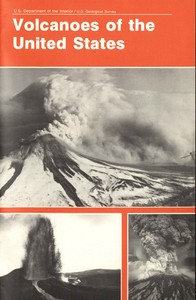
Volcanoes of the United States
Subjects:
Download Formats:
Excerpt
Project Gutenberg's Volcanoes of the United States, by Steven R. Brantley
This eBook is for the use of anyone anywhere in the United States and most
other parts of the world at no cost and with almost no restrictions
whatsoever. You may copy it, give it away or re-use it under the terms of
the Project Gutenberg License included with this eBook or online at
www.gutenberg.org. If you are not located in the United States, you'll have
to check the laws of the country where you are located...
Read the Full Text
— End of Volcanoes of the United States —
Book Information
- Title
- Volcanoes of the United States
- Author(s)
- Brantley, Steven R.
- Language
- English
- Type
- Text
- Release Date
- July 17, 2018
- Word Count
- 11,190 words
- Library of Congress Classification
- QE
- Bookshelves
- Browsing: Science - Earth/Agricultural/Farming, Browsing: Science - General
- Rights
- Public domain in the USA.