*** START OF THE PROJECT GUTENBERG EBOOK 40415 ***
TOWER'S
LITTLE
PRIMER,
FOR THE
YOUNGEST CLASS IN PRIMARY SCHOOLS.
[Illustration]
BY ANNA E. TOWER.
BOSTON:
BROWN, TAGGARD & CHASE.
1857.
Entered according to Act of Congress, in the year 1857, by
ANNA E. TOWER,
In the Clerk's Office of the District Court for the District of
Massachusetts.
ELECTROTYPED AT THE
BOSTON STEREOTYPE FOUNDRY.
PREFACE.
Teachers will observe that only a FEW LETTERS _at a time_ are given to
the pupil, and with them _words_ formed of those _few letters_. Thus
the alphabet as presented to a child in detached portions, and each
successive portion practically used in _words_ before the next is
learned.
This method is claimed as a peculiar feature of this book, except so
far as it is used in the "GRADUAL PRIMER."
The alphabets at the beginning of the book are for those who prefer to
teach in the old way, and for all to learn the old order of
arrangement.
No word is used in the book till it has first been given to the pupil
in a spelling lesson.
This book will be an easy introduction to the "GRADUAL PRIMER," the
First Reader of Tower's Series; also to his "PICTORIAL PRIMER;" and, in
short, to _any_ Series of readers.
It is especially designed for the LOWEST CLASS in the primary schools,
to encourage children by making their first step simple, easy,
attractive, and interesting.
JANUARY, 1857.
+---+---+---+---+
| a | b | c | d |
+---+---+---+---+
| e | f | g | h |
+---+---+---+---+
| i | j | k | l |
+---+---+---+---+
| m | n | o | p |
+---+---+---+---+
| q | r | s | t |
+---+---+---+---+
| u | v | w | x |
+---+---+---+---+
[Illustration]| y | z |[Illustration]
+---+---+
+-----+-----+----+-----+
| A a | B b | C c | D d |
+-----+-----+-----+-----+
| E e | F f | G g | H h |
+-----+-----+-----+-----+
| I i | J j | K k | L l |
+-----+-----+-----+-----+
| M m | N n | O o | P p |
+-----+-----+-----+-----+
| Q q | R r | S s | T t |
+-----+-----+-----+-----+
| U u | V v | W w | X x |
+-----+-----+-----+-----+
[Illustration]| Y y | Z z |[Illustration]
+-----+-----+
+---+---+---+---+
| A | B | C | D |
+---+---+---+---+
| E | F | G | H |
+---+---+---+---+
| I | J | K | L |
+---+---+---+---+
| M | N | O | P |
+---+---+---+---+
| Q | R | S | T |
+---+---+---+---+
| U | V | W | X |
+---+---+---+---+
[Illustration]| Y | Z |[Illustration]
+---+---+
[Illustration]
+---+ +---+ +---+
| e | | m | | w |
+---+ +---+ +---+
+---------+ +---------+
| m e, me | | w e, we |
+---------+ +---------+
+----+ +----+
| me | | we |
+----+ +----+
[Illustration]
+---+ +---+ +---+ +---+
| e | | b | | h | | y |
+---+ +---+ +---+ +---+
+---------+ +---------+
| h e, he | | b e, be |
+---------+ +---------+
+---------+
| y e, ye |
+---------+
+----+ +----+ +----+
| he | | be | | ye |
+----+ +----+ +----+
Me, we, he, be, ye.
[Illustration]
+---+ +---+ +---+ +---+
| I | | y | | b | | m |
+---+ +---+ +---+ +---+
+---------+ +---------+
| m y, my | | b y, by |
+---------+ +---------+
+---+ +----+ +----+
| I | | my | | by |
+---+ +----+ +----+
I, by, my.
[Illustration]
+---+ +---+ +---+
| l | | n | | o |
+---+ +---+ +---+
+---------+ +---------+
| n o, no | | l o, lo |
+---------+ +---------+
+---+ +----+ +----+
| O | | no | | lo |
+---+ +----+ +----+
O, lo, no, I, by, my.
[Illustration]
+---+ +---+ +---+
| o | | g | | s |
+---+ +---+ +---+
+---------+ +---------+
| g o, go | | s o, so |
+---------+ +---------+
+----+ +----+
| go | | so |
+----+ +----+
O no. Go so. I go so.
[Illustration]
+---+ +---+ +---+
| o | | d | | t |
+---+ +---+ +---+
+---------+ +---------+
| d o, do | | t o, to |
+---------+ +---------+
+----+ +----+
| do | | to |
+----+ +----+
I do, we do; I do so.
[Illustration]
+---+ +---+ +---+
| a | | m | | n |
+---+ +---+ +---+
+---------+ +---------+
| a m, am | | a n, an |
+---------+ +---------+
+----+ +----+
| am | | an |
+----+ +----+
Do we go? No; I am to go.
[Illustration]
+---+ +---+ +---+ +---+
| a | | s | | t | | x |
+---+ +---+ +---+ +---+
+---------+ +---------+
| a t, at | | a s, as |
+---------+ +---------+
+---------+
| a x, ax |
+---------+
+----+ +----+ +----+
| at | | as | | ax |
+----+ +----+ +----+
[Illustration]
+---+ +---+ +---+
| i | | n | | s |
+---+ +---+ +---+
+---------+ +---------+
| i n, in | | i s, is |
+---------+ +---------+
+----+ +----+
| in | | is |
+----+ +----+
Am I in? No. He is in.
[Illustration]
+---+ +---+ +---+
| i | | f | | t |
+---+ +---+ +---+
+---------+ +---------+
| i f, if | | i t, it |
+---------+ +---------+
+----+ +----+
| if | | it |
+----+ +----+
Is it he? It is he. It is in.
[Illustration]
+---+ +---+ +---+
| o | | n | | f |
+---+ +---+ +---+
+---------+ +---------+
| o n, on | | o f, of |
+---------+ +---------+
+----+ +----+
| on | | of |
+----+ +----+
I am on it, he is in it.
[Illustration]
+---+ +---+ +---+
| o | | r | | x |
+---+ +---+ +---+
+---------+ +---------+
| o r, or | | o x, ox |
+---------+ +---------+
+----+ +----+
| or | | ox |
+----+ +----+
It is an ox, he is my ox.
[Illustration]
+---+ +---+ +---+
| u | | p | | s |
+---+ +---+ +---+
+---------+ +---------+
| u p, up | | u s, us |
+---------+ +---------+
+----+ +----+
| up | | us |
+----+ +----+
Lo, it is up. He is up.
[Illustration]
+---+ +---+ +---+
| c | | v | | z |
+---+ +---+ +---+
+---+ +---+ +---+
| j | | k | | q |
+---+ +---+ +---+
Ye do go. We go so.
We do go on. We do so.
[Illustration]
+-----------+ +-----------+
| b ee, bee | | s ee, see |
+-----------+ +-----------+
+-----------+ +-----------+
| sh e, she | | th e, the |
+-----------+ +-----------+
+-----+ +-----+ +-----+ +-----+
| bee | | see | | she | | the |
+-----+ +-----+ +-----+ +-----+
It is a bee. See the bee.
+-----+-------+-------+-----+
| am | | an |
+-----+[Illustration] +----+
| at | | ax |
+-----+ +-----+
| if | | in |
+-----+ +-----+
| is | | it |
+-----+-------+-------+-----+
| of | on | or | ox |
+-----+-------+-------+-----+
| up | us | by | my |
+-----+-------+-------+-----+
| go | no | lo | so |
+-----+-------+-------+-----+
| be | he | me | we |
+-----+-------+-------+-----+
| ye | to | do | as |
+-----+-------+-------+-----+
| bee | see | the | she |
+-----+-------+-------+-----+
[Illustration]
+-----+-----+-----+
| her | run | can |
+-----+-----+-----+
I am on it. Ye go on. We go on. It is on. It is up. See me go on. She
is up. He is on. She is by me. I see it. See her go. I can see it run.
[Illustration]
+-----+-----+-----+
| cat | hen | egg |
+-----+-----+-----+
It is a hen. We can see the hen. A hen can eat. The hen can go. A hen
can see. She is up. See her go on. It is my hen. We can eat the egg of
a hen.
[Illustration]
+-----+-----+-----+
| boy | and | dog |
+-----+-----+-----+
The boy and his dog. It is my dog. See me and my dog. The dog is by me.
He can run, and so can I run. The dog can eat. I am to go, and my dog
is to go.
[Illustration]
+-----+-----+-----+
| man | bag | put |
+-----+-----+-----+
I see a man and a bag. He can put the bag in. The man can do it. I am
in. She is in. Put the bag in, so we can go on. Kate is in, and she is
to go. The man is to go.
+------+------+--------+-------+
| bind | will | things | all |
+------+------+--------+-------+
| him | flat | great | sit |
+------+------+--------+-------+
| not | hold | small | yet |
+------+------+--------+-------+
| old | feed | kind | how |
+------+------+--------+-------+
| wet | tree | loves | close |
+------+------+--------+-------+
| but | skin | home | draw |
+------+------+--------+-------+
| may | this | with | like |
+------+------+--------+-------+
| get | load | once | full |
+------+------+--------+-------+
| for | glad | more | good |
+------+------+--------+-------+
| sky | fly | side | now |
+------+------+--------+-------+
| put | way | who | get |
+------+------+--------+-------+
[Illustration]
+------+-----+------+
| doll | new | here |
+------+-----+------+
Here is a doll. It is a new doll. The new doll is for Kate. Can the
doll see? No, but we can see the doll. Kate is glad to get the new
doll.
[Illustration]
+------+-------+------+
| look | mouth | poor |
+------+-------+------+
Look at the cat. She has a bird in her mouth. She will eat the bird.
Poor bird! it can not fly now. See the cat run.
[Illustration]
+------+------+------+
| rain | line | fish |
+------+------+------+
Here is a man in the rain. He is by the tree. He will be wet to the
skin. I see his line, but I do not see a fish yet. Look at him! How
close he is now to the old tree.
[Illustration]
+-------+------+-----+
| skate | sled | ice |
+-------+------+-----+
Jane is on the ice. She can skate. Kate can not skate, but she may sit
on the sled. John can skate and draw her on the sled.
[Illustration]
+-------+-------+------+
| horse | white | ride |
+-------+-------+------+
See Grace ride on her white horse. It is good for her to ride. The dog
is glad to run by her side.
[Illustration]
+------+------+------+
| boat | pond | sail |
+------+------+------+
See the boat sail on the pond. It is a flat boat. I see a man sit on
the side. The boat is full.
[Illustration]
+-----+-------+------+
| rye | field | cart |
+-----+-------+------+
Here is Jane in a field; her dog is with her. The men load the cart
with rye. A man is on the cart.
[Illustration]
+-------+------+------+
| tries | does | calf |
+-------+------+------+
Look at the great boy; see him hold the calf. The small boy tries to
feed the calf, but the calf will not eat; he does not like this new
way. The calf is a great pet.
[Illustration]
+--------+------+-------+
| points | asks | gives |
+--------+------+-------+
Here is Kate once more. She points up to the sky, and asks if it is the
home of God, who is so good and kind to all, who loves us, and gives us
all things.
End of the Project Gutenberg EBook of Tower's Little Primer, by Anna Tower
*** END OF THE PROJECT GUTENBERG EBOOK 40415 ***
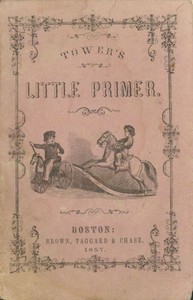
Tower's Little Primer, for the youngest class in primary school
Subjects:
Download Formats:
Excerpt
Entered according to Act of Congress, in the year 1857, by
In the Clerk's Office of the District Court for the District of
Massachusetts.
Teachers will observe that only a FEW LETTERS _at a time_ are given to
the pupil, and with them _words_ formed of those _few letters_. Thus
the alphabet as presented to a child in detached portions, and each
successive portion practically used in _words_ before the next is
learned.
This method is claimed as a peculiar feature of this book, except so...
Read the Full Text
— End of Tower's Little Primer, for the youngest class in primary school —
Book Information
- Title
- Tower's Little Primer, for the youngest class in primary school
- Author(s)
- Tower, Anna E.
- Language
- English
- Type
- Text
- Release Date
- August 5, 2012
- Word Count
- 1,706 words
- Library of Congress Classification
- PE
- Bookshelves
- Browsing: Children & Young Adult Reading, Browsing: Teaching & Education
- Rights
- Public domain in the USA.
Related Books
Cobwebs to catch flies
by Lovechild, Mrs.
English
179h 26m read
Bobby and Betty with the workers
by Dopp, Katharine Elizabeth
English
358h 34m read
The Haliburton primer
by Haliburton, M. W. (Margaret Winifred)
English
239h 13m read
The Tiddly Winks
by Smith, Laura Rountree
English
102h 55m read
The Summers readers: primer
by Summers, Maud
English
110h 12m read
The Summers readers: first reader
by Summers, Maud
English
177h 8m read