*** START OF THE PROJECT GUTENBERG EBOOK 75192 ***
[Illustration: THE HAT BLEW UP A TREE]
Three Little Trippertrots
On Their Travels
THE WONDERFUL THINGS THEY SAW
AND
THE WONDERFUL THINGS THEY DID
BY
HOWARD R. GARIS
AUTHOR OF “THREE LITTLE TRIPPERTROTS,” “THE BEDTIME STORIES,”
“UNCLE WIGGILY’S ADVENTURES,” ETC.
_ILLUSTRATED_
NEW YORK
GRAHAM & MATLACK
PUBLISHERS
THE TRIPPERTROT STORIES
BY HOWARD R. GARIS
Quarto. Illustrated. Price, per volume,
60 cents, postpaid
THREE LITTLE TRIPPERTROTS
How They Ran Away and How They Got Back Again
THREE LITTLE TRIPPERTROTS ON THEIR TRAVELS
The Wonderful Things They Saw and the Wonderful Things They Did
GRAHAM & MATLACK, Publishers, New York
COPYRIGHT, 1912, BY
GRAHAM & MATLACK
_Three Little Trippertrots on Their Travels_
PUBLISHERS’ NOTE
The stories of the Three Little Trippertrots, though never before
published, have been told to thousands of children, in a way, probably,
that no tales have ever before been related. They were read _over the
telephone_, nightly, to thousands of little folks, by means of the
system operated by the N. J. Telephone Herald Company. The stories so
delighted the children that the author has yielded to the request to
issue them in book form.
CONTENTS
ADVENTURE PAGE
I. THE TRIPPERTROTS AND THE LITTLE FAIRY 7
II. THE TRIPPERTROTS GO SAILING 18
III. THE TRIPPERTROTS AND THE TOY BALLOONS 29
IV. THE TRIPPERTROTS’ THANKSGIVING 36
V. THE TRIPPERTROTS IN A GROCERY WAGON 42
VI. THE TRIPPERTROTS AND THE POOR FAMILY 51
VII. THE TRIPPERTROTS AND THE GROCERY BOY 60
VIII. THE TRIPPERTROTS AND THE BASKET OF CLOTHES 67
IX. THE TRIPPERTROTS AND THE POSTMAN 76
X. THE TRIPPERTROTS AND THE MILKMAN 82
XI. THE TRIPPERTROTS AND THE LITTLE BABY 92
XII. THE TRIPPERTROTS AND THE BABY CARRIAGE 98
XIII. THE TRIPPERTROTS AND THE OLD MAN’S HAT 104
XIV. THE TRIPPERTROTS AND THE CHRISTMAS TREE 110
XV. THE TRIPPERTROTS AND THE TOY SHIP 119
XVI. THE TRIPPERTROTS AND THE MUSIC-BOX 128
XVII. THE TRIPPERTROTS’ CHRISTMAS 135
XVIII. THE TRIPPERTROTS AND THE HUNGRY FAMILY 144
XIX. THE TRIPPERTROTS AND THE ELEPHANT 150
XX. THE TRIPPERTROTS AND THE TWO-HUMPED CAMEL 156
Three Little Trippertrots on Their Travels.
ADVENTURE NUMBER ONE
THE TRIPPERTROTS AND THE LITTLE FAIRY
They were sitting around the fire after supper--Mary and Tommy and
Johnny Trippertrot, their papa and mamma, and the old fisherman. The
three children had just come home, after having had some wonderful
adventures, and they were rather tired.
“I don’t believe I’m ever going away again,” said Mary, who was older
than her two brothers. “Never again am I going away. Home is too nice.”
And she cuddled close up to her papa and mamma.
“Yes, it is nice,” replied Johnny. “I guess we won’t go away any more.”
“But we had good times, didn’t we?” asked Tommy, as he looked over at
the old fisherman, who was gazing at the fire as if wondering whether
or not he could catch anything in the flames. “We had lots of good
times.”
“Yes, you certainly did have lots of good times,” agreed the old
fisherman.
“There was the time we met Simple Simon, and the pieman, and Jiggily
Jig, the funny boy, who was always turning somersaults,” cried Mary.
“Yes, and there was the time we rode on the funny horses--the
sawhorse, the clothes-horse and the rocking-horse,” went on Tommy. “And
when we met the man with the dancing bears, and the man with the pink
cow, and the little lost girl, who wanted to be a boy, and whose name
was Jack. Remember that?”
“I guess I do,” replied Johnny. “And then there was the time we rode
in the train, and met the little old lady, and when the fireman put
out the blaze in our chimney, and then the false-face man! Oh, he was
jolly!”
“Wasn’t he!” exclaimed Mary. “But I’m glad we have you with us,” she
said to the old fisherman. “You are the only friend who came home with
us to stay.”
“I am glad I did,” returned the old fisherman.
And now I suppose I had better tell you, children, that the
Trippertrots were always running away, and getting lost, though they
didn’t mean to, and they came home again as soon as they could. On
their trips they met many strange people and animals, and I have told
the stories of them in the book before this, called, “Three Little
Trippertrots; How They Ran Away, and How They Got Back Again.” The
people whom the children spoke about, as they sat around the fire,
are all mentioned in that book. The Trippertrots, you know, lived
with their papa and mamma in a house in a big city, and there was a
nursemaid, named Suzette, who was supposed to look after them, although
she didn’t always do it, being so busy.
“It was very good of you to bring the children home,” said Mrs.
Trippertrot to the old fisherman. “Very kind of you, indeed.”
“Oh, it was a pleasure for me,” answered the fisherman, who had met the
children on their last adventure, and who had taken care of them. “We
had a nice ride home in the carriage.”
“And he caught a man’s tall hat by dangling a hammock-hook out of the
carriage window,” explained Mary Trippertrot.
“And a lady’s bonnet,” added Tommy.
“And a little girl’s loaf of bread,” said Johnny.
“But he gave them all back,” exclaimed Mary. “And, oh, Mr. Fisherman,
you promised to do some tricks for us,” she went on. “You really did,
and I think you might do some now, to amuse us. It isn’t quite bedtime.”
“Oh, yes, I’d love to see some funny tricks,” said Tommy. “Can you
make a rabbit come out of a hat, or take papa’s watch, and make a rice
pudding out of it?”
“Yes, please do that trick!” cried Johnny. “Wouldn’t it be funny to
see a rice pudding made from father’s watch? And could you leave the
tick-tick part in the pudding, Mr. Fisherman?”
“Hold on!” exclaimed Mr. Trippertrot, “I am not sure that I want my
watch made into a pudding. I need my watch to tell the time by, so I
can go to work in the morning.”
“Oh, don’t worry about that,” spoke the old fisherman, with a jolly
laugh. “Even if I should make a pudding of your watch, it would not
hurt it in the least, or stop it from tick-ticking. But I think I will
do some other trick. Mary,” he said, to the little Trippertrot girl,
“please let me take your hair ribbon.”
So Mary handed him her hair ribbon, and her curls fell down all about
her face, making it look very pretty in the light of the fire.
“Now, Johnny, you hold one end of this ribbon,” said the old fisherman,
and Johnny did so.
“And, Tommy, you take hold of the other end,” went on the nice old
fisherman, and there the two Trippertrot brothers stood, each one
having hold of Mary’s hair ribbon by the end.
“What kind of a trick is this going to be?” asked Mrs. Trippertrot.
“Well, I don’t rightly know myself,” said the old fisherman, “for
it never happens twice alike. Sometimes it comes out one way, and
sometimes another.”
“Oh, do you think you will make a rabbit come out of my hair ribbon?”
asked Mary, eagerly.
“I’d rather have an elephant,” said Tommy.
“Oh, an elephant would be too big to get in this house,” said Johnny.
“Besides, he might break through the floor, and fall into the cellar,
and we couldn’t get him out of the coal-bin.”
“That’s so,” said the fisherman. “Then I guess I’d better not make an
elephant. But now we must go on with the trick. Close your eyes, all of
you children, and I’ll say the magical words that will change the hair
ribbon into something wonderful.”
So Mary and Tommy and Johnny closed their eyes, and the old fisherman
waved his hands in the air. Then he recited this little verse. But
please don’t any of you children say it, or I can’t tell what might
happen. This is what the old fisherman said:
“A magic trick will now be done,
For children three, and two and one.
This ribbon must be folded tight,
And put away, far out of sight.
And then you all must patient wait,
Until the clock is striking eight,
Then look behind the parlor chair,
Perchance you’ll find a fairy there.”
“Oh, will we really find a fairy?” asked Mary, when the old fisherman
told Johnny and Tommy that they could open their eyes.
“You might,” said the old fisherman. “I never can tell what is going to
happen when I say that verse. Now the trick is working, so I advise you
all to go to bed.”
“But what about looking behind the parlor chair, when the clock is
striking eight?” asked Mary. “It’s nearly eight now, and mayn’t we stay
up until then, to see the finish of the trick?”
“Oh, I meant eight o’clock to-morrow morning,” said the old fisherman.
“Get up then, and look.”
So the children said good-night to the old fisherman, and they were
just trotting off to bed, when Mary exclaimed:
“Goodness gracious! We forgot to fold the hair ribbon tight. We must do
that, or there won’t be any trick.”
So she and her brothers folded the hair ribbon as tightly as they
could, and placed it far away under the big chair in the parlor, where
it was out of sight, just as the fisherman said must be done. Then the
Trippertrot children were soon fast asleep, and they could hardly wait
until eight o’clock the next morning to come, so they could see how the
trick worked.
“Where is the old fisherman?” cried Mary, as soon as she could run
downstairs when it was daylight again.
“Oh, he had to go away,” said her mamma.
“Then let’s go look, and see if the hair ribbon has changed into a
fairy,” suggested Tommy.
“No; Suzette says it isn’t eight o’clock yet,” objected Johnny. So they
ate their breakfast, and got ready for school, and then they sat down
and watched the clock until the hands should get to the place where it
would be time to look behind the parlor chair, to see what would be
hiding there.
“Now it’s time!” suddenly cried Mary, and she jumped up, and ran into
the parlor, followed by her brothers, just as soon as the clock began
to strike. The three children got there about the same time, but Mary
was the first to look under the chair. No sooner had she done so than
she screamed:
“Oh, my! Oh, dear! Look there!”
“What is it?” cried Johnny. “Has the hair ribbon turned into a doggie?”
“I wish it would turn into a camel with two humps on his back,” said
Tommy. “A camel isn’t too big for the house.”
“Oh, look!” cried Mary again. “The ribbon hasn’t gone away at all! But
look at that little animal sleeping on it!”
She pointed to something soft, and fuzzy, and furry, lying asleep on
the middle of her folded hair ribbon, which was on the floor under the
chair. And then Mary quickly hopped up on another chair.
“Why, it’s nothing but a little mousie!” said Tommy.
“A real, live mousie?” asked Johnny.
“Yes, that’s what it is,” said his brother, and at that Mary screamed,
and tried to jump on another chair, further away.
“What’s the matter?” asked Johnny. “A mouse can’t hurt girls.”
“But this is no trick!” cried Tommy. “That fisherman didn’t change that
hair ribbon into anything, and the mouse just came and slept on it
because he wanted to. I don’t like this.”
“Oh, boys, wait!” suddenly cried Mary. “I see it all now. This mouse is
a fairy. Yes, she really is. The fisherman made her come to sleep on
my hair ribbon. Oh, it’s just like in a story! I’m so glad. Probably
that mouse is a fairy princess in this shape until the magical spell is
broken, and she can turn into her real self again.”
“Oh, I don’t think so,” said Tommy.
“Me either,” spoke Johnny. “It’s just an ordinary mouse, like Suzette
catches in the trap.”
“It is not! It’s a fairy!” insisted Mary. “Aren’t you a fairy, little
mouse?” she asked, and she liked the mousie so that she got down off
the chair, and went close to the small creature.
“Squeak-squeak,” said the little mouse.
“There, it said ‘yes-yes,’” cried Mary.
“Well, I’m glad you understand mouse language,” said Tommy. “I don’t
believe that’s a fairy.”
“Well, it is,” said Mary, “and pretty soon some wonderful things will
begin to happen. You had better look out.”
And just then, if you will believe me, the little mouse ran out from
under the chair, just like the one that was under the queen’s throne.
And the mousie ran out of the parlor, into the hall, and out of the
front door, that happened to be open.
“Oh, the fairy is running away! We must run after her!” cried Mary. “It
would never do to have a fairy run away, and especially the first fairy
we have ever seen! Run, boys, run!”
So Tommy ran and Johnny ran, and Mary ran, and in another minute the
three little Trippertrots were running after the mouse--the fairy mouse
it was, I guess--for some wonderful things really happened because of
that same mousie. You see, the Trippertrots had now started on their
travels.
“There she goes--down the street!” cried Mary. “Keep after the fairy
mouse, Tommy and Johnny!”
So Tommy and Johnny and Mary kept on running, and they forgot that they
were never to go away again--in fact, they forgot about everything,
except that they were chasing the fairy mouse.
Faster and faster ran the mousie down the street, around the corner, in
and out among the legs and feet of the people, faster and faster. But
still the Trippertrots kept on after the little creature, running as
hard as they could run, until, all of a sudden, the mouse saw a hole in
a fence and ran through the hole, and when Mary and Tommy and Johnny
got there, why--there wasn’t any mouse to be seen.
“She--she’s gone!” cried Mary.
“Disappeared!” gasped Tommy, who could use big words, sometimes.
“Maybe she’s run home, and is sleeping under the chair again,”
suggested Johnny.
“Oh, then, we must go right back!” said Mary. “I want to get my hair
ribbon, and we must soon go to school, and I guess maybe the fairy
mouse is doing tricks now. Yes, let’s hurry back home, boys.”
“All right,” said Tommy and Johnny together, like twins, you know,
only they weren’t. Well, then a funny thing happened. The Trippertrot
children started to go home, but what do you think? They were lost!
They looked all around, but they didn’t know any of the streets, and
they didn’t see anybody whom they could ask where their house was, for
all the people had suddenly gone away.
“Oh, dear!” cried Mary. “It’s happened again.”
“What has?” asked Tommy.
[Illustration: _The Three Little Trippertrots Were Running After the
Mouse_]
“Why, we’re lost,” said Mary. “Can’t you see? We can’t find our way
home!”
“The fairy mouse did this,” said Johnny. “It’s all part of the game.
Wait, maybe she’ll come back, and change into a trolley car, and take
us home.”
And then, all of a sudden, it began to rain. Oh, my! How hard the drops
splashed down. The children looked to see if they could find the kind
fisherman, who might fish up an umbrella, or a pair of rubber boots, or
a raincoat for them, but he was not in sight. And Tommy looked to see
if the fairy mouse would come back, changed into an automobile, or a
trolley car, but nothing like that happened.
All at once, along the street came a newsboy, with a bundle of papers
under his arm. He didn’t seem to mind the rain, and he ran up to the
children, crying:
“Don’t worry, now. I’ll take care of you. Here, take some of my papers,
and hold them over your heads for umbrellas. Then you won’t get wet.
Come with me and I’ll take you home.”
Then he handed some papers to Mary, to Tommy, and to Johnny, who held
them over their heads like Japanese umbrellas, and they took hold of
each others’ hands and ran on. And the rain came down harder than ever,
and soon the streets were like little rivers of water.
“Don’t worry!” cried the newsboy. “I’ll look after you.”
“Oh, I think he must be the fairy mouse changed into a boy,” said Mary
to her brothers, and Tommy and Johnny nodded their heads, for they
thought the same thing.
And, then, all of a sudden, they saw a big wooden box floating down the
street, which was now filled with water.
“Oh, this is just the thing!” cried the newsboy. “Come on, little
ones,” and he ran toward the box. “We’ll go sailing!”
ADVENTURE NUMBER TWO
THE TRIPPERTROTS GO SAILING
The newsboy kindly helped the children to get in the box, first lifting
in Mary, and then Johnny, and then Tommy. Then he got in himself. And
all the while it kept on raining harder and harder.
“Oh, my!” cried Mary, as she sat down in a corner of the big box. “This
is terrible! Here we are lost again, and we don’t know where we are
going.”
“Ah, that is just the best part of it,” said the newsboy.
“Why do you say that?” asked Johnny.
“Because,” said the newsboy, “if you knew where you were going there
wouldn’t be any surprise when you got there. And you would know just
when you were going to get there, and what you were to do after you
arrived. Now it’s all different. We don’t know where we are going, and
we don’t know when we’ll get there, and we don’t know what we will do
when we get there--if we ever do. At least, I don’t,” he said, with a
smile. “Perhaps you children do.”
“No,” answered Mary, with a shake of her head. “I don’t.”
“And I don’t, either,” spoke Tommy.
“Nor I,” added Johnny.
“Oh, this is jolly fun!” cried the newsboy, and then the rain came down
harder than ever, and some of it splashed into the big box, which was
like a boat sailing along the watery street.
“Oh, dear!” cried Mary, “my dress will get all wet!”
“Oh, I should have thought of that before!” said the newsboy, for the
children had taken away the newspapers from over their heads. “Wait,
and I’ll make a top over the box. Then we will be as dry as if we were
in a house.”
So what do you think he did? He took a lot of his papers from inside
the pile under his arm, where they were pretty dry, and he laid them
over the open top of the drygoods box, and he fastened them down with
some pins, and then the rain didn’t come in any more, for there was a
paper roof over the box-ship.
“That’s fine!” exclaimed Mary. “Tell me, are you the fairy mousie,
changed into a boy?”
“No,” answered the boy, “I am not. What made you think so?”
“Well, because you think of doing things so quickly, you know. We
were chasing after the fairy mousie, that we found asleep on my hair
ribbon,” said Mary, “and that’s how we got lost.”
“Well, I’m sorry I’m not the fairy mousie,” said the newsboy, “but
perhaps I can help you find her. Now, do you happen to be hungry?”
“Well,” said Tommy, turning his head on one side, so as to let some
water run out of his ear, “we had breakfast a little while ago, but I
guess I _am_ hungry.”
“And so am I,” said Mary and Johnny.
“Then here is the very thing,” said the newsboy, and with that he
pulled some ginger cookies out of his pockets, and gave them to the
children--gave them the cookies, not his pockets, you understand.
“Don’t you want some yourself?” asked Mary, politely.
“Oh, bless you, no,” said the newsboy. “I never eat cookies. I’m too
big to eat cookies. I’ll chew on a bit of paper instead. Here is a
piece with a nice picture on it of a dish of ice-cream and some cake.
I’ll eat that bit of paper, and I won’t be hungry for ever so long.”
And, then, what do you think? Why, that funny newsboy ate the piece of
paper with the picture of the ice-cream and cake on it, and he wasn’t
hungry any more. But, of course, none of you must do that, as it’s only
allowed in fairy stories.
“Do you think we’ll ever get home?” asked Johnny, after a bit, when the
box had floated down the street for some distance.
“Wait a minute, and I’ll take a look,” said the newsboy, and he peeked
through a knot-hole in the side of the box. “Is your house a red one?”
he asked the children.
“No, it’s painted green,” said Mary.
“Then the one I saw isn’t it,” spoke the newsboy. “But we may come to
it pretty soon.” And then he looked out again, and asked: “Is your
house a pink one?”
“Why, no,” said Mary, in surprise, “I think I told you a little while
ago that it was painted green.”
“Oh, yes, so you did. Please excuse me,” said the newsboy. “Well, pink
is a very pretty color. Wouldn’t you like to live in a pink house?”
“Oh, how funny!” exclaimed Johnny. “We can’t live in any house but our
own, you know.”
“No more you can,” said the newsboy. “Well, perhaps we shall come up to
it very soon. Where is it?”
“Why, don’t you know?” asked Tommy.
“No, I thought you did,” said the boy. “All the children I ever saw
knew where they lived.”
“Oh, but we’re lost,” spoke Mary.
“And besides,” said Johnny, “we’re the Trippertrots. We never know
where we live; do we, Tommy?”
“No,” said Tommy, with a laugh.
“Well, it’s very strange,” went on the newsboy. “I’ll give one more
look, and then, maybe, I can see your house. I thought I could take you
home, but if you don’t know where you live I’m sure it’s going to be
quite a puzzle--quite a puzzle,” and he shook his head up and down, and
sideways.
Then the drygoods box-ship went sailing on and on down the street, and
the rain kept on raining down harder and harder, and the Trippertrots
went on faster and faster. Presently the newsboy said:
“Well, now I’ll take another look and see if I can find your house.” So
once more he looked out of the knot-hole in the drygoods box, and then
he asked Mary: “Could your house possibly be a purple one? I see a nice
purple one just ahead of us.”
“No, our house is green!” exclaimed Mary, as politely as she could. “I
told you that before.”
“Oh, so you did!” cried the newsboy. “How very careless of me to forget
so often. I don’t suppose you’d like to live in a purple house, would
you?” and he looked at Johnny and Tommy.
“I don’t think I would,” said Johnny.
“No, green is our color,” spoke Tommy.
“I was afraid so,” went on the newsboy, with a sigh. “Well, all I can
do is to float along with you until we get to a green house. Then
you’ll be home.”
“But it might be some other green house than ours,” said Mary. “Many
houses are painted green.”
“You don’t say so!” cried the newsboy. “I never thought of that. I
haven’t seen any green houses to-day, though, and maybe the first one
we come to will be yours. It’s very strange. I never thought there
would be so much trouble in finding the house of the Trippertrots. But
never mind. Have some more molasses cookies,” and he took a number of
them out of his pockets, and the children were very glad to get them,
for they were hungry again.
Then they sailed on some more, and some more, and they were wondering
if they would ever get home, and they began to wish that they hadn’t
chased out after the fairy mouse, for they had not been so far away
from home since the time they went on a train after seeing the pink cow.
And then, all at once, just as the drygoods box-ship was sailing around
the corner of the street, and the Trippertrot children and the newsboy
were down under the papers on top, so the rain wouldn’t get them--all
at once, I say--there was a bumpity-bump noise.
“What’s that?” cried Tommy.
“We’ve hit something,” said Mary.
“Yes, you’ve hit me!” exclaimed a voice, and then the big box suddenly
stopped, and a funny boy poked his head in the top through the
newspapers.
“We didn’t mean to hit you,” said Tommy, politely, “but our box went
very fast.”
“And we couldn’t see where we were going,” added Johnny.
“All except the newsboy, and he has to keep looking through the
knot-hole to see our green house,” explained Mary. “He might have seen
you, but he didn’t.”
“We’re very sorry if we hurt you, funny boy,” said the newsboy, sad
like.
“Oh, pray do not mention it,” said the boy who had stopped the
drygoods box, as it was floating down the street. “It was merely a
little bump on my nose.” Then he began to turn somersaults until he
had somersaulted through the papers on top, just as the circus man
jumps through a paper hoop, right inside the box where the Trippertrot
children were, and all of a sudden Mary cried out:
“Why, it’s Jiggily Jig, the funny boy!”
“Yes, of course it is!” cried Tommy and Johnny.
“Not the least doubt of it,” said Jiggily Jig, who was called that, you
remember, because he was always dancing a jig.
“But where did you leave Simple Simon?” asked Mary, for the last they
had seen of Jiggily Jig was when he was running off with Simple Simon,
after they had met the pieman coming from the circus.
“Oh, Simple Simon has gone to work for the pieman,” said Jiggily Jig.
“He had to have pie so often that his mother sent him there instead
of after water in a sieve. Now watch me,” and Jiggily Jig turned two
somersaults, one after another, and the drygoods box nearly upset, and
the rain came down harder than ever.
“Wait! Hold on!” cried the newsboy. “This will never do! Do you know
these children, Jiggily Jig?”
“To be sure I do,” answered the funny boy, “and I will take them home,
for they are lost. I know they are. They are always lost; aren’t you?”
and he looked at Mary and Tommy and Johnny.
“Yes,” said the Trippertrot children, in a chorus, “we are always lost.”
“But don’t worry, I will take you home,” said Jiggily Jig, with a jolly
laugh. “You are going the wrong way. This boat must be turned around,”
and with that he jumped out, and turned a somersault in the water,
turned the box around, jumped in again, and the rain came down harder
than ever.
“We’ll soon be home!” cried Jiggily Jig. “We’ll soon be at your green
house,” and then the wind began to blow, and Jiggily Jig made a sail
out of the newspapers, put it up on the edge of the box, with a piece
of wood for a mast, and away they went as fast as fast could be,
sailing in the drygoods box-ship.
All of a sudden, the wind began to blow harder than ever, and the
children were afraid that it might blow the sail off their little ship.
“Don’t worry about that,” said Jiggily Jig. “I made the sail good and
strong. It won’t blow away.”
“But hadn’t you better look?” suggested Mary. “It would be no fun to be
sailing along without a sail.”
“I will look, just to oblige you,” spoke the funny boy. “First I will
do a little dance in here, and then I will peek out to see if the sail
is all right.”
“Well, kindly do not step on my toes, and wake me up,” begged the
newsboy, speaking in his sleep, for he had stretched out on the bottom
of the box, and was slumbering.
“Not for this whole world, and part of the moon,” answered the funny
boy. So he did his little dance, being careful not to step on the
newsboy’s toes, and then Jiggily lifted up the papers, that were over
the top of the box, and looked out. Next he gave a cry:
“Oh, my!” he exclaimed.
“What is the matter?” asked Mary, quickly.
“Are we at our house?” inquired Tommy, hopefully.
“Far, far from it,” replied Jiggily Jig, sadly. “Look for yourselves,
children,” and he took all the paper covering off the top of the box,
for it had stopped raining.
“Oh!” gasped Mary, as she looked out.
“Oh! oh!” cried Tommy.
“Oh! oh! oh!” exclaimed Johnny.
And well they might be surprised, for their boat had been blown by the
wind far away from the city streets, where they had been sailing, and
now they were away out on a sort of lake, in a big green meadow. Off in
the distance were hills, with trees on them, and it was just like some
picture they had seen of a fairy boat sailing over a fairy lake.
“Oh, where are we?” asked Mary.
“I never saw this place before,” spoke Johnny.
“Nor I,” added Tommy.
“No matter where we are, it is a nice place,” went on Jiggily Jig.
“Wake up, newsboy, and see where we are. There is no more rain, and you
can’t get wet.”
So the newsboy stretched out his arms and his legs, and he opened his
mouth, and he opened his eyes, and then he was awake, and he stood up
to see what he could see.
“Oh, this is lovely!” he cried. “I always wanted to go out to the
country, and now I am here. This must be the country, for it isn’t the
city,” he added.
Then the box-ship sailed on farther and farther, over the lake in the
meadows, and the Trippertrots and the newsboy and Jiggily Jig looked
all about them, and were quite happy.
Suddenly the wind blew them right toward a little island, that was in
the middle of the lake.
“Let’s get out here, and pretend we’re camping in the woods,” suggested
Johnny.
“Oh, yes!” cried Mary and Tommy. So they all got out of the drygoods
box, and landed on the island. It was a nice island, with trees on, and
some dry wood piled up in a little cave near a place where there were
some flat stones.
“I know what let’s do,” proposed Tommy. “Let’s make a fireplace, and
cook a dinner, just as if we were shipwrecked sailors.”
“Oh, fine!” exclaimed Johnny.
“And I’ll wash the dishes,” said Mary.
“But we haven’t any dishes to wash,” spoke Tommy.
“And nothing to cook at the fire, or even put on the dishes, so there
is no use washing them,” added his brother, sorrowful like.
“That’s so,” agreed Mary. “But perhaps Jiggily Jig, or the newsboy, has
something we can cook.”
They both looked in their pockets, and the newsboy shook his head.
“I have nothing,” he said.
“Oh, but I have!” cried Jiggily. “I have found some apples. The pieman
gave them to me the other day. They will be fine to roast at the fire.”
Tommy and Johnny made the fire on the flat stones, taking care not
to burn themselves, and then, when there were some hot embers ready,
the apples were put down in front of them, on the warm stones, and
they began to roast--I mean the apples roasted, not the stones, you
understand.
“Oh, how lovely they smell!” exclaimed Mary, as Jiggily turned the
apples around with a sharp stick, so they wouldn’t burn.
“Yes, they will soon be ready to eat,” said the funny boy, and, surely
enough, they were.
“But what shall we do for forks?” asked Tommy.
“A pointed stick will do for a knife and a fork, too,” said the
newsboy. “I’ve often eaten that way. You just stick your roast apple on
the point of the stick, and eat it.”
“What, eat the stick?” asked Tommy.
“No, eat the apple,” said the newsboy, laughing.
“Well, the apples are roasted now, and you can eat them,” said Jiggily,
after a bit. So he whittled out a pointed stick for everybody, and
stuck an apple on each one, and soon the travelers were sitting about
the camp-fire, eating the apples, and very good they were, too. I wish
I had one right this minute, but I’m not allowed to, you know.
“Well, perhaps we had better start off again,” suggested Tommy, when
the apples were eaten. “We must soon get home, if we can.”
“All right,” said Jiggily.
“And we had better take some sticks, to use for oars, or paddles, or
to push ourselves along with, in case there is no wind to blow the
sail,” spoke Tommy. They all thought this was a good plan, so the three
Trippertrots, and the newsboy, and Jiggily each got a tree branch.
Well, they climbed into the box-ship again, and Jiggily pushed off from
the island, and away they went sailing once more. Then Jiggily and the
newsboy stretched out on the bottom of the box, where you couldn’t see
them unless you went up in a balloon, and they both went fast, fast to
sleep.
On and on sailed the drygoods box, over the pretty lake, over toward
the hills with trees on them, until finally Tommy said:
“Oh, let’s use our sticks to row with, and then we’ll go faster. There
isn’t much wind now, and we’re not going along very quickly. Let’s push
and row with the sticks.”
So they did that, and they went along very well. Only, they had
accidents. Sometimes Tommy’s hat would blow off into the water, and
he and Johnny would have to fish it out with their stick-oars. And
sometimes Johnny’s hat would blow off, and he and his brother would
have to reach for it.
And sometimes Tommy would reach for his own hat all alone, and
sometimes Johnny would have to fish up his own hat all alone, when
Tommy was attending to the sail. And so it went on; when it wasn’t one
thing it was another.
The newsboy and Jiggily Jig slept on, in the bottom of the box, and
they had a lovely time, with nothing to do. And the Trippertrots had
lots of fun, too, sailing away.
Sometimes it would rain, and they would put the papers over the top of
the box, and then the drops would stop coming down, and they could take
off the papers, stand up, and paddle again.
On and on they went, and once the newsboy awakened, and most
unexpectedly he found some more molasses cookies in his pocket, and he
gave all his friends some, and some he ate himself, and then he went to
sleep again--he and Jiggily.
Farther and farther they sailed--those Trippertrot children, until, all
of a sudden, Mary looked out from behind the newspaper sail, and she
exclaimed:
“Oh, here we are back in the streets of the city again! We are sailing
in the gutters, just as we were before.”
“Sure enough, so we are!” said Tommy, and they really were back where
they had been, before they got out on the little lake in the meadow.
Then the wind blew on the sail, and the box-ship went on and on,
through the rain, which came down pitter-patter again.
And a very funny thing happened soon after that.
ADVENTURE NUMBER THREE
THE TRIPPERTROTS AND THE TOY BALLOONS
“Oh, do you think you will ever find our house?” asked Mary, as she
sat down on the bottom of the box, and ate up the last crumbs of the
molasses cookies which the newsboy had given her and her brothers.
“Oh, I’m sure we will!” exclaimed Jiggily Jig, suddenly awakening.
“And will we be there soon?” asked Tommy.
“Very soon,” answered Jiggily Jig, trying to turn a somersault inside
the box. But there wasn’t room enough, and Jiggily stepped on the
newsboy’s toes.
“Ouch! Don’t do that, please!” cried the newsboy. “Please don’t step on
my toes.”
“Why, did I hurt you?” asked the funny boy.
“No, but you woke me up. I was asleep,” answered the newsboy. “As long
as you are captain of this box-ship I know everything will go along all
right, and you will get the Trippertrots home safely, so I am going to
sleep. But I can’t sleep if you turn somersaults in here, and step on
my toes. Nobody could sleep when their toes were being stepped on. I
leave it to you, now; could they, children?”
“I don’t hardly think they could,” said Mary, politely, for she did not
want to make Jiggily Jig feel badly.
“And I’m not sure, as no one ever stepped on my toes when I was
asleep,” said Tommy, “but I think it must be quite unpleasant.”
“There, you see how it is, Jiggily Jig!” exclaimed the newsboy. “I’m
quite right about it.”
“To be sure you are,” admitted Jiggily Jig. “I never thought of it that
way before. I’ll stop turning somersaults directly. But may I dance
a few jigs?” he asked, and he made a polite bow to Mary, and also to
Tommy and Johnny, and the newsboy.
“Do you really _have_ to dance?” the newsboy asked. “Because if you
don’t really _have_ to, it might be just as well not to. You might step
on my toes again.”
“Oh, yes, I have to dance,” said Jiggily Jig, “or else I would have to
change my name to Joggily Jog, and I wouldn’t like that at all. But
I’ll tell you what I’ll do. I’ll dance just a little bit, and I’ll take
good care not to step on anybody’s toes.”
So then and there, in the drygoods box-ship, Jiggily Jig danced a nice
dance, and as truly as I’m telling you, he didn’t step even on his own
toes. Oh, Jiggily was quite a wonderful boy!
And, all this while the box-ship, with the paper sail, was sailing down
the street, which was filled with water from the rain-storm. But none
of the rain came inside, because the newsboy had put more papers over
the top of the box to keep the wet outside.
“We don’t seem to be getting home very fast,” said Johnny, after a
while, “and I’m sure when we do get there, we’ll be late for school.”
“I’m afraid so, too,” said Mary.
“Never mind,” spoke Jiggily Jig. “You can tell the teacher all about
what happened to you, and how you went after the little fairy mouse,
and then how you went sailing. She will surely excuse you.”
“Maybe she will,” said Tommy. “But I wish we were home, because I
am hungry again. I wonder if the newsboy has any more cookies in his
pockets. I’m going to ask him.”
“Hush! Don’t do that,” said Mary, softly, “for he is asleep, and we
ought not to wake him up.”
“But I am hungry,” said Tommy.
“Wait, I think I can look in his pockets without making him wake up,”
spoke Jiggily Jig, and he did so. But, alas! there were no more cookies
to be had.
“Never mind,” said Mary, “we will soon be home.”
“Yes,” said Jiggily Jig, “I’ll look out of the knot-hole in the box,
and see if I can find your house.”
So Jiggily Jig did this, and all of a sudden he cried out:
“Oh, joy! Oh, joy! Oh, joy!” three times, just like that, he cried it.
“What! do you see our house?” asked Mary, and she was so excited that
she turned around and nearly stepped on the toes of the newsboy, who
was asleep--he was asleep, and his toes were, too, I guess, just as,
sometimes, your foot goes to sleep when you sit on it. “Do you see our
house?” asked Mary.
“No, but I can see that it has stopped raining again,” answered Jiggily
Jig. “Now we can sail along without having the newspapers over the top
of the box to keep out the water. I’m real glad of that.”
So he took the papers off the top of the box again and it sailed down
the street for quite a distance, with the wind blowing the paper sail
as nicely as could be, and the Trippertrot children thought they would
soon be home. You see, the newsboy’s papers had some wax on them, which
the kind honey-bees had put there, so the rain didn’t melt them.
“Will you please look again, Jiggily Jig,” asked Tommy, “and see if
you can find our house now? It’s painted green, you know.”
So Jiggily Jig looked out of the knot-hole in the side of the box, and
all at once he cried out:
“Oh, joy! I see something green. That must be your house. Get ready
now, the boat is going to land,” and he was so excited that he turned a
somersault without thinking, and came down on the toes of the sleeping
newsboy.
“Oh! Ouch! Oh, my!” cried the newsboy, as he woke up. “What has
happened?”
“I saw something green. It’s the house of the Trippertrots!” cried
Jiggily, as he danced a little jig. “Forgive me for stepping on your
toes,” he said to the newsboy, politely. “I was so excited that I could
not help it.”
“Oh, that is all right,” answered the newsboy, kindly. “As long as I
can be sure that these children get safely home I don’t much care what
happens. May I see the house?”
“Yes, look through this hole,” said Jiggily Jig, and he pointed to the
one in the side of the box. “You will see something green,” he went on,
“and that must be the home of the Trippertrots.”
“Oh, I don’t have to look through the hole,” said the newsboy. “As long
as the rain isn’t coming down any more, I can look out of the top of
the box, and I can see better.”
So he stood up, and looked at the green thing that Jiggily Jig had
seen, and then, all of a sudden, the newsboy cried out:
“Oh, dear! What a disappointment! Oh, dear!”
“Why, whatever is the matter?” asked Mary, surprised like.
“Oh, that isn’t your house at all,” went on the newsboy.
“Why, it’s green; isn’t it?” asked Jiggily Jig.
“Yes, it’s green,” said the newsboy.
“Well, the Trippertrot house is green,” answered Jiggily Jig.
“I know, but just you take a look at this,” invited the newsboy. “Why,
that green thing you saw was a man with a whole lot of toy, green
balloons, such as you see in the circus. And he is coming this way with
them.”
“Oh, goody!” cried Tommy Trippertrot, “maybe he will give us some, and
we can have a lot of fun with them.”
“Have you got any money?” asked Johnny.
“No,” said Tommy, sorrowfully, “I haven’t.”
“Then you can’t get any toy balloons,” spoke his brother.
“Perhaps Jiggily Jig, or the newsboy, would lend us a little money,
until we can get some of our own when we reach home,” said Mary.
“Yes,” spoke the newsboy. “I will lend you as much as you need.”
Then the man with the toy, green balloons came closer to the drygoods
box-ship, and he caught hold of it, and stopped it from sailing any
farther, and he sang this little song:
“Toy balloons! Oh, toy balloons!
They sail as high as silver moons!
If you a toy balloon will buy,
You may sail up into the sky.
Toy balloon! Oh, toy balloon!
Please to buy one very soon.”
“We would like to buy one,” said Mary, politely. “How much are they, if
you please?”
“They are a banana and two oranges apiece,” said the man.
“No, she means how much money do they cost,” explained Tommy.
“You can get them for ten cents in the circus,” said Johnny. “I know,
for my papa once bought me one.”
“Ah, but these are very different,” said the man. “They are colored
green, and they are much larger and stronger than the circus balloons.
Why, if I had enough green balloons I could lift an elephant with them.
That’s why I don’t sell them for money. I want a banana and two oranges
for each balloon.”
“Then we can’t have any,” said Mary, sorrowfully.
“Oh, yes, you can,” exclaimed Jiggily Jig. “I have just the very
thing.” Then he put his hands in his pockets, and pulled out a lot of
bananas and oranges. “I forgot I had them,” he said, with a laugh, as
he tossed them to the man.
Then the man gave Mary a big toy, green balloon, and he gave one to
Tommy, and one to Johnny. And then a very strange thing happened. All
at once Mary found herself rising up in the air. Up and up she floated,
for the balloon lifted her, just as an airship would have done.
“Oh! Oh!” she cried.
“Don’t get excited,” said the balloon man, kindly. “Hold on tight, and
you will soon be home. The balloons will take you there.”
Then Johnny and Tommy began to float up into the air also, holding
fast to the strings of their big toy balloons, and Mary held on to the
string of hers, too, and there the three little Trippertrots were,
sailing away just as if they were in airships.
And, down below them, looking up, was Jiggily Jig, and the newsboy, and
the toy balloon man, standing near the box-ship.
“Good-by!” called Jiggily Jig, waving his hand to the children. “I’ll
see you again soon.” Then the man and the newsboy waved their hands,
and Mary and Tommy and Johnny went floating softly off, blown by a
gentle wind.
“Oh, isn’t this the most surprising adventure!” exclaimed Mary.
“It’s jolly fun!” declared Tommy.
“I think so, too,” added Johnny. “It’s nicer to go home this way than
in a box-ship.”
So they floated on for quite some time.
ADVENTURE NUMBER FOUR
THE TRIPPERTROTS’ THANKSGIVING
“We must be careful to keep together,” said Mary to her brothers, as
they floated along, carried by the balloons. “It would be dreadful if
we lost each other.”
“Oh, we’re lost, anyhow,” said Tommy. “We’re always getting lost, it
seems to me.”
“Yes, that is so,” admitted Johnny, “but Mary is right. We must try to
keep together. I don’t want to float off all by myself alone.”
“And I guess I don’t, either,” said Tommy.
“But the funny part of it is that we can’t walk when we’re up in the
air this way,” said Mary. “If the wind happens to blow me away from you
boys, or if it blows you boys away from me, why, we can’t walk back
again.”
“How do you know?” asked Tommy, politely. “We haven’t tried it yet. I’m
going to see if I can walk in the air.”
And, would you ever believe it if I didn’t tell you? Why, that boy
Tommy just wiggled his feet, as if he was walking on the ground, you
know, and he kept tight hold of the string of the balloon, and my
goodness sakes alive and the pancake turner! There he was, walking
along, just as if he was on the sidewalk. Only it was ever so much
easier, you know.
“Oh, I can do it! I can do it!” cried Tommy, in delight. “You do it,
Mary and Johnny. Come up here where I am.”
“All right, wait for us,” spoke his sister. “Don’t get too far ahead,
or we might not be able to catch up to you.”
So Tommy stopped walking in the air, and then Mary and Johnny wiggled
their feet, and as true as I’m telling you, they, also, could move
along, the balloons holding them up as easily as an airship could have
done.
“Oh, this is great fun!” cried Johnny.
“Yes, let’s look down and see how high up we are,” said Tommy.
So Mary and Johnny and Tommy looked down, and surely enough, they were
almost as high as the church steeple. They were floating along over the
trees, and the roofs of the houses, and the people walking along in the
streets below them didn’t even know that the three little Trippertrots
were away up over their heads in the air.
“Oh, suppose we should ever fall!” exclaimed Mary, shivering like.
“Nonsense!” said Tommy. “You mustn’t suppose anything of the kind.”
“Especially as the man said these were very strong balloons,” put in
Johnny. “They can lift an elephant, and we’re not as heavy even as a
baby elephant.”
“No, I guess not,” said Mary. “But I am just wondering what will happen
when we get over our house, if we ever do. How are we going to get down
to see papa and mamma? It won’t be any fun for us to be up in the air,
and have them down on the ground, or in the house. Maybe we can talk to
them, but they can’t hold us in their arms and--and----”
“And they can’t reach up, and give us anything to eat,” exclaimed
Tommy, sorrowfully.
“Oh, yes, they can!” cried Johnny.
“How?” asked Tommy and Mary together, real excited like.
“Why, they can put up a ladder, and reach us that way, or we can go
down the ladder,” said the little Trippertrot boy.
“Yes, that’s so,” admitted Tommy. “I didn’t think of that. I wonder
when we will be home? We must keep looking down until we see our house.”
So the three children walked on, by wiggling their legs in the air, and
they looked down to see if they could pick out their green house, but
they couldn’t seem to find it.
And then, all of a sudden, there was a flutter of wings and a whole lot
of sparrows flew around them.
“Oh, see the birds!” cried Mary. “I guess they must take us for birds,
too. Oh, I wish I could fly!”
“Yes, it would be nice,” said Tommy.
“But this is almost as good as flying,” spoke Johnny. “Especially
when you wiggle your legs very fast. See, I can almost catch up to
the birds,” and he made his legs go as if he was running, and, surely
enough, he fairly whizzed through the air, and Mary and Tommy had to
run to catch up to him.
Then the sparrows flew away, and the children kept on floating over the
roofs of the houses, and they looked down at the people in the streets,
and they were wondering when they would be home, when, all at once,
Tommy cried:
“Oh, see that big bird flying along!”
Down below the Trippertrot children was a large bird, flapping its
broad wings.
“I guess that’s an eagle,” said Johnny, who had seen a picture of one
in his bird and animal book, once upon a time.
“I wish it would come up here closer, where we could see it,” spoke
Mary. “I like eagles.”
And then, all at once, the big bird opened its beak, and it cried out:
“Gobble-obble-obble!” just like that.
“Why!” exclaimed Tommy. “That’s not an eagle.”
“No, it’s a turkey gobbler,” said Johnny.
“And look!” cried Mary. “It’s flying right down toward that house with
the red roof.”
“Oh! Oh!” suddenly cried Tommy, wiggling his little fat legs. “I know
where we are now. That house with the red roof is ours.”
“But our house is painted green,” objected Mary.
“The sides of it are green, but the top is red,” said Tommy. “I know,
’cause when the men were painting our house the one who was on the roof
spilled some of his paint, and it fell on the end of my nose, and it
was red.”
“What was red, the paint or your nose?” asked Johnny.
“My nose was red after the red paint fell on it,” said Tommy. “That’s
how I know that the roof of our house is red.”
“But there are other red roofs besides ours,” spoke Mary.
“Oh, but there’s another reason why I know that is our house,” went on
Tommy.
“How?” asked Johnny.
“Because that turkey gobbler went in there. I heard Suzette, our
nursemaid, say this morning that we were going to have turkey for
Thanksgiving. To-day is Thanksgiving, and there goes the turkey into
a house with a red roof, and our house has a red roof, so that’s our
home. Oh, how glad I am! Come on, we must wiggle ourselves until we get
right over the top of it, and then we can call out, and papa and mamma
will come out with the step-ladder, and get us.”
So the children walked along through the air, holding to the strings of
their toy, green balloons, until they were right over their house. Then
they all cried out together, as loudly as they could:
“Papa! Mammal Here we are! Up in the air! Come and get us!”
A minute later Mr. and Mrs. Trippertrot ran out on the balcony over the
front porch and looked up. There they saw their children.
“Oh, my darlings!” cried their mamma, waving her hand to them. “I
thought I should never see you again! However did you get up there?”
“We got lost this morning, chasing after the fairy mouse,” said Mary,
“and the balloon man sold Jiggily Jig, the funny boy, these balloons,
and they took us up, and the turkey showed us which was our house, so
we’re home again.”
“I’m glad of it!” said their papa. “But why don’t you come down?”
“We can’t, the balloons hold us up,” said Johnny, and he and Tommy
tried to pull themselves down, but they couldn’t, because the balloons
were so strong.
“You must get a ladder and reach it up to us, and then we can let go of
the balloons, and walk down,” said Mary.
So Mr. Trippertrot was hurrying away to get the ladder when Suzette,
the maid, said:
“Oh, I know a better way than that. If Miss Mary has a pin she can just
make a little pin-hole in her balloon and also in Master Johnny’s and
Tommy’s, and let out a little of the gas from the green balloons, and
then the children will float safely down.”
“That is a good way,” said Mr. Trippertrot, so he called to Mary to do
that. Very carefully she made little holes in the three balloons, and,
in another minute, the Trippertrot children were safely down on the
balcony over the front porch of their house, and their papa and mamma
were hugging and kissing them.
“And you must never go away again,” said their mamma.
“We won’t,” said Mary.
“Is the Thanksgiving dinner ready?” asked Tommy.
“For we are very hungry,” spoke Johnny.
“It is nearly ready,” said Suzette.
And then, pretty soon, the Trippertrot family sat down to a fine
Thanksgiving dinner. There was turkey and cranberry sauce, and oysters,
and celery, and nuts, and cake, and oranges, and figs, and cookies, and
oh! ever so many things. I can’t remember half of them.
But the Trippertrots were careful not to eat too much, as that isn’t
proper, and, besides, it makes you ill. So they ate just enough, and
they had a fine time afterward playing many kinds of games.
And then--oh, well, I guess you had better look at the next story, to
see what happened afterward.
ADVENTURE NUMBER FIVE
THE TRIPPERTROTS IN A GROCERY WAGON
“Well, what game shall we play now?” asked Mary Trippertrot, of her
brothers Johnny and Tommy, when they had finished playing the one
called “Please Don’t Step on My Toes.” It was a game Mary made up
herself, and was very nice.
“Oh, I don’t know,” answered Tommy. “Suppose we play ‘Hide the Knitting
Needle’?”
“That’s no fun!” exclaimed Johnny. “Besides, some of us might get stuck
by the needle.”
“That’s so,” agreed Mary. “But what can we do?”
“Oh, I know!” cried Tommy. “We’ll play that nice old game of looking
out of the window and choosing things. We’ll let Mary have first
choice, and maybe she can get an automobile.”
“Oh, goodie!” exclaimed the little Trippertrot girl. “Then we can go
for a ride in it.”
“Oh, but mamma said we weren’t to go out of the house, unless something
special, extra-extraordinary happened,” spoke Tommy, “so we couldn’t go
out in your auto, Mary, even if you are lucky enough to get one.”
“But I only meant to take a _make-believe_ ride in a _make-believe_
auto,” explained the little girl. “Wouldn’t that be all right?”
“I guess it would,” said Johnny. “Anyhow, let’s go to the window, look
out, and see what things we can choose.”
So that is how the three little Trippertrots happened to be looking out
of the window. And, as truly as I’m telling you, the first thing that
came along was a great big red automobile, with large, fat wheels, like
sausages, and Mary cried:
“Oh, that’s mine! That’s mine!”
“Yes,” said Tommy, “and now let’s go for a make-believe ride in it.”
“Oh, but first let’s you and I choose something,” said Johnny to his
brother.
“There comes a horse and carriage,” said Tommy. “I’m going to choose
that for mine.”
“But you can’t take that in my auto,” said Mary. “It’s far too big.”
“So it is,” agreed Tommy. “Wait a minute, there comes a messenger boy
with a box of candy. I’ll choose that.”
“Which, the boy or the candy?” asked Johnny.
“The candy, of course!” exclaimed Tommy, with a laugh. “There might not
be room in the auto for the boy.”
“Well, you’d better be quick about what you’re going to choose,
Johnny!” called Mary, “for my red auto is moving along pretty fast,
and it may be out of our block before we get our ride in it. Hurry up,
Johnny.”
“Well, I’ll choose that fruit-stand across the street,” spoke Johnny.
“That’s nice,” said Mary. “We shan’t be hungry on our trip, anyhow,
with Tommy’s box of candy, and Johnny’s fruit-stand. Come on, now, get
in my auto.”
So the boys made-believe help their sister into the make-believe
auto, and they closed the doors and turned on the gasolene, and away
they went as fast as anything, if you will kindly believe me. Only, of
course, it was only make-believe, pretend riding, you know.
They went to New York, and a place called Osh-Kosh, and to
Mumbly-Bumbly and to Kalamazoo and even part way to the moon, but, of
course, all this while they were really only in the front room of their
house, peeping out of the window.
And then, all of a sudden, Mary looked, and she saw a grocery wagon
on the street, out in front, and the horse hitched to the wagon was
walking slowly along, and there was no one driving him.
“Look at that!” cried Mary. “That horse is running away.”
“I guess you mean he’s _walking_ away,” said Johnny. “He isn’t running.”
“Well, he’s going away, anyhow,” insisted Mary, “and the driver isn’t
there and the horse may bunk the wagon into something, and smash it,
and then the grocery man would lose a lot of money.”
“Well, what can we do about it?” asked Tommy.
“We might go out, and stop the horse from going away,” continued Mary,
“and then we could telephone to the man who owns it, to come and get it
from in front of our house.”
Johnny looked all around the room. So did Tommy. Their papa and mamma
weren’t there. Neither was the nursemaid.
“Do you think going out to stop the horse would be a special,
extra-extraordinary occasion?” asked Tommy, of Mary.
[Illustration: _“Whoa There, Horsie!” She Called_]
“Oh, yes,” she said, “I do. And I think if mamma was here she’d want
us to go out of the house to catch the walk-away grocery wagon and
horse.”
“Then we’ll do it,” decided Tommy. “Come on, Mary and Johnny!”
So out of the house the three little Trippertrots went after the
grocery wagon, and they never stopped to think that they might get lost
again. They wanted to do a kind act, you see, and I think it was very
nice of them; don’t you?
They ran after the walk-away horse, that was now some distance down the
street, and soon the Trippertrots had caught up to him.
“Whoa, horsie!” called Tommy.
“Yes, you must stop,” added Johnny, most politely.
“Because it’s wrong to run away, or even walk away,” said Mary. “We
came to catch you, so your master can find you. Otherwise, you might
get lost, you know.”
“Horses can’t get lost!” declared Tommy.
“They might, when they were little girl or boy horses,” said Mary. “I
should think a little horse could get lost, the same as we do, lots of
times. Whoa there, horsie!” she called, for the grocery horse was still
walking away.
“Well, perhaps ponies can get lost,” admitted Tommy, and just then the
grocery horse stood still, because the three Trippertrot children had
run out right in front of him. I think it was very brave of them; don’t
you?
The horse looked at the children, and the Trippertrots looked at the
horse, and then Mary said:
“Now we ought to tie him to a post, so he can’t get away any farther,
and then go telephone to the man. Otherwise, we might get lost
ourselves.”
“But we don’t know who owns the horse,” said Tommy.
“Yes, there is his name on the side of the wagon,” said Johnny, and,
surely enough, there was the grocery man’s name in big letters.
“What name do you think it is?” asked Mary, of her brothers.
“Oh, how funny of us!” exclaimed Tommy. “None of us can read, because
we’re only in the kindergarten class, so we can’t tell what the name is
on the wagon.”
“I can read!” cried Johnny. “I can read words like ‘cat’ and ‘dog.’”
“But I don’t think the grocery man’s name is either cat or dog,” spoke
Mary.
“Then what are we going to do?” asked Johnny.
“We can tie the horse to a post,” said Mary, “and then we can go home
and tell papa about it, and he can come and read the name for us.”
“That’s a good idea,” declared Tommy. “But what shall we use to tie the
horse to a post? Have you a piece of string in your pocket, Johnny?”
“Yes,” answered his brother, “I have.”
“Oh, you silly boys!” exclaimed Mary. “They don’t tie horses with
string. They use a leather strap. There must be one in the wagon. You
boys climb in and look.”
So Tommy and Johnny climbed up on the wagon step, and crawled back over
the seat, for the horse was kind and gentle, and stood very still,
looking up at the sky now and then, to see if it would rain, I guess.
“I can’t find any strap!” called Johnny, after a while.
“Nor I,” added Tommy. “There are a lot of groceries in the wagon, but
no strap.”
“Oh, I suppose I’ll have to look myself,” said Mary. So she climbed up
into the wagon where her brothers were. She looked in among the boxes
and baskets, and she had just found the strap, which was in among some
oranges, when, all at once, a queer thing happened. The horse suddenly
started to walk away again, pulling the wagon after him, and the
Trippertrot children were in the wagon. So, of course, the horse pulled
them, too.
“Oh!” cried Mary. “We’re having a ride!”
“That’s fine!” exclaimed Johnny.
“Oh, but we mustn’t!” shouted Tommy. “The horse is taking us away from
home, and mamma told us not to go! We must stop him!”
“That’s so,” admitted his brother.
“Whoa there! Whoa! Whoa!” called Mary to the horse. But the horse
wouldn’t stop, and kept on going, taking the Trippertrot children
farther and farther down the street.
“Oh, what shall we do?” asked Mary, of her brothers. “We will be lost
again.”
“I guess we will,” spoke Johnny, but he didn’t seem to mind it very
much.
“Can’t you pull on the lines and make the horse stop?” asked Tommy.
“The lines are too far out,” answered Johnny. “I might fall if I
reached for them.”
“Then call to some one--a policeman or anybody--and ask him to please
stop the horse,” suggested Mary. “Oh, boys! this time it isn’t our
fault that we’re running away; is it?”
“No, indeed,” answered Tommy. “But the horse isn’t running, he is only
walking. Maybe he’ll stop soon.”
“He’s running now,” suddenly exclaimed Johnny, and, surely enough, the
horse began to go faster and faster, giving the Trippertrots a nice
ride, but still taking them farther and farther away from home.
“Oh, we’re lost again!” cried Mary, as she and her brothers sat down
in the back of the wagon, in among the boxes and baskets of groceries.
“I wonder where we will end up?”
But none of the children seemed to know, so they just sat there in the
wagon.
ADVENTURE NUMBER SIX
THE TRIPPERTROTS AND THE POOR FAMILY
“Where do you suppose this horse is going?” asked Mary, of her
brothers, after a while.
“Home, I guess,” said Tommy.
“Do you mean to his home, or our home?” asked Johnny. “Because, if he
goes to our home, it’s all right, but if the horse goes to his own
home, why--why----”
“We’ll be lost again, that’s all,” said Tommy, simply.
“Oh, we’re lost now,” cried Mary, as she looked out of the front of the
wagon. “We’re on a strange street, that I never saw before, and I don’t
know how far from home.”
“Well, we’ll get back some time,” said Johnny, “so we don’t need to
worry about it. We always do get home, somehow or other, and perhaps
we’ll have another funny adventure, like being carried up into the air
by the balloons.”
“Oh, I wish we would!” exclaimed Tommy. “Anyhow, I’m hungry, and if an
adventure is going to happen I wish it would be one with something to
eat in it.”
“What! You don’t mean to say you are hungry so soon after our big
Thanksgiving-turkey-dinner, do you?” asked Mary Trippertrot.
“Yes, I--I guess I am,” said Tommy.
“And so am I!” exclaimed Johnny. “But I know where I can get something
to eat.”
“Where? Oh, tell me where!” cried Tommy, eagerly.
“Right in this wagon,” said Johnny. “It’s full of groceries, and we
can eat some of them. There are oranges, and I saw some nuts, and some
candy, and some crackers, and cheese and--and--oh, there is plenty to
eat.”
“But it isn’t ours,” objected Mary, quickly, “and we mustn’t take what
isn’t ours.”
“No, that’s so,” said Johnny, sadly.
“Oh, I know how we can fix it,” spoke Tommy. “We can take what we
want--not too much, of course--and we can keep account of it, and when
we find the man who owns the grocery wagon we can ask papa to pay him
for what we took. I’m sure he will.”
“Yes, I guess he will,” agreed Johnny.
“Besides,” added Mary, “the grocery man might give us some pennies for
stopping his horse from running away, and we could pay him back with
those.”
“Yes, only but we’re _not_ stopping his horse from running away,” said
Tommy, “for he _is_ running as fast as he can.”
And the horse was, but he was on a smooth asphalt street, and the wagon
went so easily that the children didn’t notice how very fast they were
going.
“I wonder if he wouldn’t stop if I asked him please to?” spoke Mary, as
she leaned over the seat.
“You might try,” suggested Johnny.
So Mary did.
“Oh, please, nice horsie, won’t you kindly stop running away with us?”
she asked, in her gentle voice. “We don’t want to get so far away from
home, and it will soon be dark. Please stop.”
But the horse only wiggled his ears backwards and forwards, switched
his tail to and fro, and kept on going.
“It’s no use!” exclaimed Tommy. “He won’t stop, and I’m going to eat.”
“So am I!” added Johnny.
“Then I suppose I may as well, also,” said Mary. “But we must remember
all that we take, so papa can pay the grocery man, or we can pay him,
if he gives us any pennies.”
So the children each took an orange, out of a basket that had a great
many in it, and they took some nuts, and a little candy, and some
grapes, and then Mary opened a big package and she cried out:
“Oh, boys! Look here!”
“What is it?” asked Johnny. “Is Jiggily Jig there?”
“No, but see! It’s a fine big turkey, all ready to put in the oven,”
said Mary.
“And look at the stalks of celery!” shouted Johnny, as he opened
another package.
“And see the bunches of white grapes!” exclaimed Tommy.
“Boys,” said Mary, solemnly, “I see what this is.”
“What is it?” asked Johnny.
“It is Somebody’s Thanksgiving dinner,” said Mary. “That is just what
it is. And, oh, I wonder whose it is? The horse is running away with
us, and with the dinner, and I suppose some one is hungry for it.”
“Well, I’m not hungry--not now,” remarked Johnny, as he ate another
orange.
“Nor I,” added Tommy, as he cracked some more nuts. “But I was a while
ago.”
“I’m not hungry, either,” said Mary; “but, boys, I just wish we could
find the family that needed this dinner.”
“Let’s look out along the street, and maybe we’ll see some one who is
hungry,” suggested Tommy. So they looked out, but they didn’t see
any one, not even a policeman. For it was still Thanksgiving Day, you
remember, and I suppose all the people were still in their houses,
perhaps sleeping after their dinners, or maybe they were at the
football game, or the theatre. Anyhow, there wasn’t a soul to be seen.
“We can’t ask any one,” said Mary, with a sigh. “There’s no one to ask.”
“Well, perhaps the horse knows where the dinner belongs, and he’ll go
there,” spoke Johnny. “He looked to me like a very smart horse.”
“And, maybe after he takes the dinner where it belongs, he’ll take us
back home,” went on Tommy.
“Oh, that would be lovely if he would,” exclaimed Mary.
So the children sat in the back of the grocery wagon, with the boxes
and baskets, and the horse kept going faster and faster on the asphalt
street, and the Trippertrots didn’t know where they would get to
finally, when, all at once, the horse turned off the asphalt, and began
pulling the wagon over the cobblestones.
Rattlety-bang! Rattlety-bang! it went, and the children were all shaken
up, and then, all at once, the horse stopped.
“Well, we’re somewhere!” exclaimed Mary. “I’m glad of it.”
“Yes, but I wonder where we are?” spoke Tommy.
“Can it be our house?” asked Johnny.
“No, there are no cobblestones in front of our house,” replied Mary,
quickly.
Johnny looked out of the front of the wagon. He saw a little house,
not very nice looking, for it was rather ragged, as if it needed a new
suit of clothes, and the chimney was almost falling off the roof, and
the fence in front was full of holes, and, altogether, it was a very
pretty sort of a house indeed.
“What is there?” asked Mary, of her brother.
“This is the place where the Thanksgiving dinner belongs, I guess,”
said Johnny. “The horse stopped here of his own accord, so it must be
the place.”
“Then, as long as the grocery boy isn’t here, we had better carry the
things in,” suggested Tommy. “We can make-believe we are the grocery
boys.”
“I can’t be a boy,” said Mary.
“No, you’ll have to be a grocery girl,” spoke Tommy. “But that will be
all right. I’ll take the turkey, ’cause I’m the strongest.”
“I wish Jiggily Jig, or Simple Simon, or the nice newsboy was here to
help us,” spoke Johnny.
“Oh, we can do it all right,” said his brother. And then, while
the kind horse stood very still, the three Trippertrots took
the Thanksgiving things out of the wagon, and marched up to the
shabby-looking house with them. Tommy put the big turkey down on the
step, and knocked at the door.
A poor-looking woman opened it, and behind her the Trippertrots could
see a whole lot of hungry-looking children. Oh! how very hungry they
were!
“Well, what is it, please?” asked the woman, as she looked at Tommy and
Johnny and Mary Trippertrot.
“If--if you please,” spoke Tommy, as he lifted up the big turkey to
her, “here is your Thanksgiving dinner.”
“My Thanksgiving dinner!” exclaimed the woman, and a few teardrops
came into her eyes, while Mary could hear the hungry children, who
were standing behind her, sort of gasping, and making their tongues
go around inside their mouths. “My Thanksgiving dinner!” said the
woman again. “Bless your dear little heart, I’m not going to have any
Thanksgiving dinner. We--we’re too poor!” she said. “There must be some
mistake. You are at the wrong house. Thanksgiving dinner! Why--why, I
haven’t had a real Thanksgiving dinner since I was a little girl,” and
she turned around to look at her poor little children standing behind
her.
“Well, you’re going to have one now,” said Mary Trippertrot. “This is
yours.”
“No, no!” exclaimed the woman. “You are at the wrong house.”
“It _can’t_ be the wrong house!” cried Johnny. “The grocery horse
stopped here himself, and I guess he knows where the dinner belongs.
Let’s take it in, Tommy and Mary.”
So into the house went the Trippertrots, carrying the Thanksgiving
dinner. Oh, what a dinner it was! There were oranges, and apples, and
nuts, and candy, and white grapes, and bread, and butter, and potatoes,
and the big turkey, of course; and celery, and cranberries, and some
cookies and cakes, and, oh! I couldn’t tell you what else there was!
The table was piled quite full.
“Are you sure it’s for us?” asked the poor woman. “I don’t think we
ought to keep it.”
“Oh--oh, mamma!” cried one of the poor little girls--and there
were about four boys and seven girls in that poor family--“oh,
mamma--don’t--don’t--_please_ don’t send it away. We are _so_ hungry.”
“Humph!” exclaimed Johnny, as he looked out of the window, “you can’t
send it away if you wanted to--not now.”
“Why not?” asked the woman.
[Illustration: _The Trippertrots Carrying the Thanksgiving Dinner_]
“Because the grocery horse has run away again,” answered Johnny. “I
guess he knew what he was doing when he left the dinner here, and now
he’s gone back home. So you can’t send the dinner away. You’ve got to
keep it.”
“Oh, bless your dear hearts, we will,” said the woman, and, oh! how
happy those children were--the poor ones I mean. But, of course, the
Trippertrots were happy, too, because they had done a kindness.
Then the poor woman began to cook the Thanksgiving dinner, and she put
the turkey in the oven to roast nice and brown, and the Trippertrots
were helping her when, all of a sudden, there came a loud knock on the
door of the house where the poor family lived.
“Ha! I wonder who that can be?” asked the poor woman.
“I guess it’s our papa come for us,” said Johnny.
“Who are you, and where do you live?” asked the poor woman.
“We are the Trippertrots, but we don’t know where we live, if you
please,” said Mary.
“Because we are lost--we are always getting lost,” added Tommy. “But
perhaps some one has come for us.”
So the poor woman went to the door, and there stood a boy with a white
apron on.
“Ah, I’ve found you at last!” he said, when he saw the Trippertrots.
“I’m the grocery boy and I’ve been looking all over for you and the
wagon.”
“We’re here, but the horse and wagon are gone,” replied Mary.
“Well, never mind,” said the grocery boy, as he waved his white apron.
“Come with me, if you please.”
ADVENTURE NUMBER SEVEN
THE TRIPPERTROTS AND THE GROCERY BOY
“Well, aren’t you coming with me?” asked the grocery boy, as Tommy
stood staring at him. As for Mary, she was looking in the oven, to see
if the turkey was cooking, and it was turning the loveliest brown color
you could imagine. And Johnny Trippertrot was playing spin tops with
one of the boys of the poor family. So, you see, Tommy was the only one
the grocery boy could look at, or talk to.
“Aren’t you children coming with me?” asked the grocery boy again,
after a bit.
“Where do you want us to go?” inquired Tommy.
“Why, anywhere you’d like to go,” replied the grocery boy.
“Oh, then can you take us home?” begged Mary, eagerly, as she opened
the oven door, and shut it again, and then the whole kitchen of the
poor family was filled with the nicest cooking-smell--just like
Christmas and Thanksgiving rolled into one, you know.
“Well, I guess I can take you home,” said the grocery boy. “But how did
you get so far away, and are you lost, as usual?”
“Yes, we are lost, the same as we always are,” replied Johnny, as he
gave the top to the poor boy to spin. “But we wouldn’t have been in
this trouble only the horse first walked away with us and then he ran.”
“What horse?” asked the grocery boy.
“The horse that drew us here, with the Thanksgiving dinner,” said
Johnny.
“It must have been your horse,” put in Mary. “You said you had been
looking for one, and I think this was yours. And I hope we delivered
the Thanksgiving dinner to the right place.”
“Oh, s’posin’ we haven’t!” gasped Johnny. “We’ll have to ask papa to
pay for it for us.”
Then Mary told how they had looked out of the window of their home, and
had seen the grocery horse walking away with no one on the seat to hold
on to the lines, and how they had gotten in the wagon and been drawn
along until they got to the house where the poor family lived.
“And,” said Mary, “we saw the Thanksgiving dinner in the wagon, and, as
the horse stopped here, we thought it belonged in this house. But if we
have make a mistake----”
“Oh, that would be terrible!” exclaimed Tommy.
“Indeed, it would!” said Johnny. And, at this thought, the poor
children, who had been sniffing the smell of the roast turkey, and who
had been looking at the nuts, and the cranberries, and the oysters, and
oranges, and candy, and grapes, and celery, and other good things that
the Trippertrot children had brought--at this thought, I say--fearing
that their nice dinner might be taken away, the poor children nearly
cried. And their mamma looked worried, too.
But you just wait and hear what the grocery boy said. He looked first
at Mary, and then at Johnny, and then at Tommy.
“It was no mistake at all,” said the grocery boy, as he waved his
white apron like a flag. “That dinner belonged just here, and here it
stays. The grocery man I work for is very kind, and he put up a big
Thanksgiving dinner, and told me to take it to some poor family. I
started out with it, but I saw a poor little doggie, with a tin can
tied to his tail.
“So I got out of my wagon to take off the can, and then my horse, that
was fastened to the grocery wagon, started off. It must have been then
that you children tried to stop him, and I’m much obliged to you. So
you see, the horse knew just where to stop, and the Thanksgiving dinner
stays right here.”
“Oh, I’m so glad!” cried the poor woman.
“And so are we,” said the poor children.
Then Mary Trippertrot looked in the oven again, and as soon as she
opened the stove door out came that nice smell once more, and really it
almost makes me hungry to tell you about it.
“Well, I guess it’s time we started away,” said the grocery boy, after
a while.
“Oh, yes, you are going to take us home; aren’t you?” asked Mary, as
she went up to him, and took hold of his hand, for he was a very nice,
kind, gentle grocery boy, and whenever he delivered eggs, he never
broke one, he was so careful.
“Yes, I’ll take you home,” he said to Mary and Johnny and Tommy. “Come
along.”
“Oh, must you really go?” asked the poor woman. “I wish, after you have
been so kind to us, that you could stay and have some of this lovely
turkey dinner.”
“Yes, do stay!” cried all the poor children together, like a lot of
twins, you know, only, of course, they weren’t.
“Oh, thank you,” said Mary, politely, “we have had our dinner, and
really we must get back home before dark, or mamma and papa will
worry about us. We shouldn’t have come out, only it was a special,
extra-extraordinary occasion, like the time of the dancing bears, and
the pink cow, otherwise we never would have come out.”
“Well, let’s start if we’re going to,” said Tommy. So they all said
good-by to the poor family, and went out into the street, Mary holding
the grocery boy’s right hand, and Tommy his left hand, and Johnny held
hold of Mary’s other hand, so they all had hold of hands, you see.
“Now which way had we better go?” asked the grocery boy, when they
stood out on the sidewalk.
“Oh, the shortest way,” said Mary. “We want to get home as soon as we
can.”
“Well, I think that would be a good plan,” spoke the grocery boy, “so
if you will show me the shortest way to your house, we’ll take it.”
“Why, don’t you know the shortest way?” asked Mary.
“No,” answered the grocery boy, “I can’t say that I do. You see, I
haven’t lived in this part of the city very long, and I don’t know
my way about very well. So you can easily see that I don’t know the
shortest way to your house.”
“Well, then, I suppose we will have to go the longest way home,” said
Tommy.
“It won’t matter so much,” went on his brother. “For if we go the
longest way we may meet with an adventure, and we might not if we went
the short way.”
“Oh, that would be fine!” exclaimed Mary. “Yes, grocery boy, please
take us home the longest way.”
The grocery boy took off his cap, and scratched first his nose, and
then his left ear. Then he waved his white apron like a flag, and he
seemed to be thinking very deeply, just as some children do when they
have to spell a hard word in school.
“Well, to tell you the truth, as I always do,” said the grocery boy,
“I don’t believe I even know which is the longest way to your house, to
say nothing of the shortest way.”
“That’s queer,” spoke Tommy. “What can we do?”
“Oh, I have it!” suddenly cried Mary. “He can take us home the middle
way. Don’t you remember the story of the three bears? The little bear
couldn’t sleep in the big bed, and the big bear couldn’t sleep in the
little bed, but the middle-sized bear could sleep in the middle-sized
bed, and so we can go home the middle way, if we can’t find the short
or long way.”
“Oh, fine!” exclaimed Tommy and Johnny together.
“How is that, grocery boy?” asked Mary, as she took a tighter hold of
his hand.
“It would be very nice, very nice, indeed,” said the grocery boy, “but
the truth of the matter is that I don’t know even the middle way to
your house. But, if you can tell me what street it’s on, I think I
could find it.”
“There we are again!” cried Tommy. “I wish we had thought to have tags
put on us, with our address, and then we wouldn’t get lost, or, if we
did, a postman could take us home.”
Then the three little Trippertrots looked worried, and, when the kind
grocery boy saw this, he said:
“Never mind, I’m sure I can find your house sooner or later. Come, we
will walk along, and look for it. Whoever sees it first will get a
penny.”
“Who will give it to us?” asked Johnny.
“I will, myself, out of my own pocket,” said the grocery boy. “See, I
have a bright, new penny,” and he showed it to the Trippertrots.
“Ah, but suppose _you_ see the house first?” asked Mary.
[Illustration: TOMMY, JOHNNY AND MARY BEGAN TO FLOAT UP INTO THE AIR]
“I won’t, I promise you,” said the grocery boy. “I will walk along
with my eyes shut, and you can lead me. Then some of you will be sure
to see the house first yourselves, and you can have the penny, whoever
is first.”
“But suppose we all see our house at the same time?” inquired Johnny.
Once more the grocery boy took off his cap, and scratched his nose and
ear. Then he again waved his apron like a flag, and said:
“Well, in that case, I will give you each a penny, as I happen to
have three,” and he showed them to the children. So they walked along
together, the grocery boy with his eyes shut, so he couldn’t see the
Trippertrot house first, while Mary and Tommy and Johnny were eagerly
watching for it.
In this way the children went along for some distance, but they
couldn’t find their house. They saw many wonderful things, however,
such as men and ladies riding around in automobiles, and some people
in trolley cars, and they saw a dog chasing a cat, and the cat ran up
a tree, and her tail was as big as two bananas. At last, however, Mary
said:
“Oh, dear, I don’t believe we’ll ever find our home this way. We ought
to have the old fisherman, or Jiggily Jig, or Simple Simon, or the
newsboy, to help us. We’ll never get home.”
“Oh, yes, we will,” said the grocery boy.
“Ah, I have an idea,” suddenly exclaimed Tommy. “The grocery wagon
horse knows where our house is, because he stopped in front of it. Do
you know where to find your horse, grocery boy?”
“Yes, I expect he is in the stable now,” was the answer.
“Then go get him, and he’ll take us home in the wagon,” said Tommy.
“The very thing. I’ll do it at once!” exclaimed the grocery boy. “You
stay right here until I come back, and I’ll soon have you home in your
own house, and I think the horse will know the shortest way, too.”
So the grocery boy started off to the stable, and the Trippertrot
children sat down on the front steps of a house to wait for him to come
back.
ADVENTURE NUMBER EIGHT
THE TRIPPERTROTS AND THE BASKET OF CLOTHES
“My, he is gone a terrible long time,” said Mary Trippertrot, after she
and her brothers had waited, and waited, and waited some more, for the
grocery boy to come back.
“Yes, perhaps he is lost himself, looking for the stable where his
horse is,” suggested Johnny.
“Oh, grocery boys can’t get lost,” declared Tommy. “They have to know
their way everywhere, so as to deliver groceries, and bread and butter
and--and--lots of things. They can’t get lost.”
“Yes, they can,” said Johnny. “Don’t you remember when we once moved in
a new house, and the grocery boy came with some groceries? Suzette told
him to put them down cellar. He went down the stairs with his basket,
and pretty soon we heard him hollering like anything. He was lost in
the cellar, all right, so that shows you grocery boys _can_ get lost.”
“Oh, I remember _that_ time,” said Mary, with a laugh. “The boy
hollered because Suzette forgot, and locked him in the cellar, and he
couldn’t get out.”
“Well, when you can’t get to where you want to go you’re lost,”
insisted Johnny, “so it’s the same thing. That grocery boy was lost,
and maybe this one is, who has gone after the horse to take us home.”
“Oh, I hope not,” said Mary, “for it’s getting late, and it will
soon be dark. I wish we were home. But we’ll wait here a little while
longer.”
So the three little Trippertrots sat on the house-steps and watched the
people walking along the street.
“Oh, dear!” exclaimed Tommy, at length, “everybody seems to have a
house but us. See, they are all hurrying home, and we have to stay
here.”
“Yes, let’s ask some of them to take us home, and not wait for the
grocery boy,” suggested Johnny.
“Oh, no, don’t do that,” begged Mary. “It will be just as it always is.
Folks will want to know where our house is, so they can take us to it,
and, of course, we can’t tell them, and they’ll lead us off, and we’ll
be lost more than ever. The best way will be to wait right here, until
the grocery boy comes back with the horse, and then we’ll get home,
for some horses know more than people, when it comes to taking lost
children home to their papa and mamma.”
“All right, then we’ll wait,” agreed Tommy and Johnny.
They sat on the steps for some little time longer, and, pretty soon,
along came a policeman swinging his club, and the brass buttons on his
coat sparkled just like diamonds in the sunshine.
“Ah, ha, children!” he exclaimed. “What are you doing here?”
“Don’t tell him we’re lost,” whispered Tommy to Mary. So the little
Trippertrot girl said:
“Oh, we are waiting here for the horse and wagon.” She meant the
grocery horse and wagon, you know.
“Very good,” said the policeman. “I hope it comes soon. But don’t go
away or you might be lost.” Then he walked on, swinging his club, and
Johnny laughed softly, and said:
“He doesn’t know we are lost already! But we will soon be at home.”
So they still sat there, and, by-and-by, a fireman came along. He had
been home to dinner, and now he was going back to the engine house, to
be ready to go to put out any fires that might happen to burn things.
The fireman saw the children and he smiled at them.
“Ah, little ones,” he said, “I see you are sitting on the stoop to get
the fresh air. That is right, but don’t go away, or you might get lost.”
Then the fireman hurried on to the engine house, and Tommy laughed very
softly and said:
“Ha, ha! He doesn’t know we are lost, either.”
And many other people passed by, and either spoke to the Trippertrot
children, or laughed at them, or smiled, and still Tommy and Mary and
Johnny sat on the steps waiting, and waiting, and waiting, for the
grocery boy to come back with the horse and wagon.
And then, somehow or other, before she knew it, Mary began to feel
sleepy.
“I will just close my eyes for a minute or two,” she said. “You boys
can make-believe you are out camping in the woods, and you can sit up
on guard, while I sleep.”
Well, Tommy and Johnny thought that would be fun, so they kept their
eyes very wide open, but nothing happened, and pretty soon they felt
sleepy, but they wouldn’t go to sleep, for they knew that soldiers
never slumbered while they were on guard.
Well, it was getting toward evening now, and it was becoming somewhat
cold, and still that grocery boy hadn’t come. You see, he was lost
himself, and he couldn’t find the stable where the horse was, and he
couldn’t find his way back to where the children were, and there they
waited, and waited, and waited.
And then something happened. All at once, along came a boy with a big
basket of clothes on a little wagon. Oh, it was a very large basket,
and a very small wagon, but it was quite strong, and the boy was also
quite strong, so he could pull it very easily. But, when he came to the
stoop where the children were, he sat down on the curbstone to rest.
And the basket of clothes was so big that he didn’t see the Trippertrot
children because they were behind it.
But Tommy and Johnny, who hadn’t gone to sleep, but who still sat
beside their sister Mary, they saw the basket of clothes. And they knew
Mary was very tired, for her head had fallen over on Tommy’s shoulder.
Then Tommy thought of something.
“I say, Johnny,” he exclaimed, “wouldn’t it be fine if we could put
Mary in the basket of clothes, so she could have a nice rest?”
“Hum! It would be nice if we could get in ourselves,” said Johnny,
“only but the boy wouldn’t let us, I guess.”
“Maybe he wouldn’t,” agreed Tommy, and just then, as truly as I’m
telling you, the boy who had the basket of clothes ran across the
street to look in a toy shop window; maybe he wanted to see if they
had anything he could buy for a penny. Anyhow, there was the basket
of clothes on the wagon, and there was no one near it except the
Trippertrots.
“Now’s our chance!” exclaimed Tommy. “Quick! We’ll put Mary in the
basket, and get in ourselves.”
“But what about when the grocery boy comes back with the horse for us?”
asked Johnny.
[Illustration: “_Tuck Me in Good, I’m So Tired and Sleepy_”]
“I don’t believe he’s coming back,” spoke his brother, “or else he’d
be here now. We might as well get in the clothes-basket and rest, and
see what happens after that.”
“All right,” agreed Johnny. So they lifted Mary up very gently, for she
was a little girl, and not very heavy, and they were strong boys, if
they were younger than their sister, and they carried her over toward
the basket of clothes.
“Good-night, mamma,” murmured Mary, who was only half awake. “Tuck me
in good, I’m so tired and sleepy.”
“She thinks she’s home,” whispered Tommy.
“Yes, we mustn’t wake her up,” said Johnny, also in a whisper. So, very
gently, they lifted off the sheet that was over the top of the clean,
ironed clothes, and they laid Mary down in among them. But first they
put some newspapers around her shoes so they wouldn’t dirty the towels
and pillow-cases, you know.
“Now let us get in ourselves,” said Johnny, and he and his brother
wrapped some newspapers around their shoes, and then they crawled in
the big basket of clothes beside their sister Mary. Then they pulled
the sheet up over them, and then--and then--and then--they were both
fast asleep almost as quickly as the pussy cat can wiggle its tail.
Fast asleep in the basket of clothes were the Trippertrots.
Then the boy, who had been pulling the basket on his wagon, came back
from across the street. He didn’t buy anything in the toy shop.
“Now I must take these clothes home,” he said to himself, as he began
to wheel them. And then, all of a sudden, he exclaimed: “My! How heavy
they are! I wonder what makes that? I guess it must be because I’m
going up hill. Never mind, I’ll soon have them where they belong, and
then I’ll get the money and take it home to mamma, and she’ll be happy.”
And, mind you, that boy never even dreamed that the three Trippertrot
children were in his basket of clothes. He kept on wheeling them along
the street, and once he slipped on a banana-skin, and almost fell down.
Almost, I say, but not quite. And once a dog barked at him, not in
earnest, only in fun, you know. And, all the while, the Trippertrots
were fast asleep.
They even dreamed, too, as they were being wheeled along in the basket.
Mary dreamed she was in a balloon, taking a trip through the air, and
Tommy dreamed he was on the tail of a kite, and Johnny dreamed that he
was bouncing up and down on a rocking-horse.
And, after a while, the boy who was pulling the basket of clothes on
his wagon came to a house. He stopped in front of it. The house was
painted green, and it had a red roof, only you couldn’t see that part
of it, unless you went up in a balloon.
“Well, I’m glad I’m here with the clothes,” said the boy. “Now I’ll
take them in and get my money.”
So he carried the basket of clothes up into the house. And there he
found great excitement going on. The telephone bell was ringing, and
there was a policeman there, and the nursemaid was running around
through all the rooms, and the lady and man were almost crying.
“My children! Oh, where are my children? They are lost!” cried the
lady. “Oh, have you seen my children?”
“No, I’m sorry to say I haven’t,” said the boy, and he really hadn’t,
you know. “But here are your clean clothes, Mrs. Trippertrot,” he went
on.
The lady took off the sheet from the basket of clothes and there she
saw Mary and Tommy and Johnny, all fast asleep.
“Oh, my darlings!” she exclaimed. “Here they are! Oh, you dear
washerwoman’s boy, to bring back my lost children!” And she hugged
him, and then Tommy and Mary and Johnny awakened, and there they were,
right in their own home. It was their own mamma’s basket of clothes
into which they had crawled, never even guessing it, and the boy, not
knowing it, had brought them safely home. The boy’s mamma was the
washerwoman for Mrs. Trippertrot, you see, and he always delivered the
clean clothes.
So there the Trippertrots were, but that wasn’t the last of their
adventures. No, indeed!
ADVENTURE NUMBER NINE
THE TRIPPERTROTS AND THE POSTMAN
The three little Trippertrots had not done any traveling for some days
now, and they were beginning to get a bit tired of staying in the house
so much. They were almost wishing something would happen.
One day they were in the front parlor of their home, looking out of the
window, for it was Saturday, I think, and they didn’t have to go to
kindergarten school. Suddenly the doorbell rang, and Mary said:
“Oh, I wonder who that is?”
“I’m going to look,” spoke Tommy.
“Mamma said we mustn’t do that,” said Mary. “It isn’t polite.”
“It sounds like company ringing the bell,” spoke Johnny. “And there
goes Suzette to answer it,” he added, as the nursemaid hurried down to
the hall to the front door.
“Oh, I remember now!” exclaimed Mary. “I saw mamma putting on her new
silk dress a while ago, so she must be going to have company. Come on,
boys, we’d better get out of the front room, for mamma doesn’t allow us
in there when she has visitors.”
“I know what we can do,” said Tommy, as he crawled under a big chair to
get his rubber ball, which had rolled there.
“What?” asked Mary, eagerly.
“We can go upstairs to our playroom,” went on her brother, “and then
we can look down in the street, and see whose carriage or automobile is
there. Then we’ll know what company mamma has, without looking out of
the windows down here.”
“That’s the very thing!” cried Johnny. “And maybe it’s some of those
ladies who play or sing in such high voices. We can hear them upstairs,
and it will be lots of fun.”
So the Trippertrot children started to go up to their playroom, and in
the hall they met Suzette.
“Where are you going?” the nursemaid asked them, as she paused on her
way to answer the bell.
“Just upstairs to look out of the window,” replied Mary.
“Very well, but don’t go away,” cautioned Suzette.
“No, not unless it’s a very special, extra-extraordinary occasion,”
answered Johnny.
Once they were upstairs they all ran to the window and looked down
into the street below. There, in front of their house, was a great
big automobile, all enclosed with glass windows, so the people in it
wouldn’t get cold. And the man who sat in front had on a big fur coat,
like a shaggy bear, so he wouldn’t get frosty.
“Oh, I know whose car that is!” cried Mary. “It belongs to Mrs.
Robertson Dudleyshire, and she doesn’t sing or play, so we can’t hear
her. It won’t be any fun at all. I wish we had something to do.”
“Wait, maybe she will do something funny, so we can hear it and laugh,”
proposed Tommy, so they waited until Mrs. Robertson Dudleyshire was
sitting in the parlor below them. They could hear her voice, a deep,
rumbling one, and they could hear their mother answering, but, as Mary
had said, there was “no fun,” and the Trippertrot children didn’t know
what to do.
“Hark! What’s that?” suddenly exclaimed Tommy, as he heard a loud
whistle out in the street. “Is that a policeman?”
“Oh! Maybe he’s chasing a dog, with a tin can tied to his tail?”
suggested Johnny.
“Why, you silly boys!” cried Mary. “That’s the postman’s whistle.
Perhaps he has some letters for us--maybe invitations to some party.
Let’s look out of the window.”
So they ran from the middle of the room, where they had been sitting
to listen to the rumble of Mrs. Robertson Dudleyshire’s voice, to the
front windows, and stuck their little noses flat against the panes of
glass, so they could look down to the street.
“Oh, dear! He isn’t coming to our house at all!” cried Mary, as the
letter-man passed by, with his bag over his shoulder. “He’s gone next
door.”
Once more the postman’s whistle sounded, and then Tommy, who was
watching him eagerly, hoping that perhaps there might, after all, be a
letter for the Trippertrot home, uttered a cry.
“See!” Tommy exclaimed. “The postman has dropped a letter from his bag,
and he doesn’t know it. He’s going right on.”
“Oh, we must tell him about it!” decided Mary. “Knock on the window,
boys, and call to him. He’ll understand.”
So Tommy and Johnny knocked on the pane of glass with their fingers,
and Mary helped them, but they couldn’t make noise enough so that the
postman could hear them. On he hurried, blowing his whistle, and he
never thought that he had lost a letter in the street.
“Raise the window and call to him!” said Mary.
So Tommy and Johnny tried to do this, but the window was stuck fast,
and they couldn’t open it. And all this time the postman was getting
farther and farther away.
“Well, we’ve got to do it!” sighed Mary, at last.
“Do what?” asked Tommy and Johnny together.
“We’ve got to run after the postman, and give him the letter he lost,”
said the little Trippertrot girl. “We’ve tried every way we knew to
make him hear us, but he didn’t. Now we’ve got to go out. It’s a
special, extra-extraordinary occasion, anyhow, I guess.”
“Shall we tell mamma we’re going?” asked Tommy.
“No, she wouldn’t want to be bothered, when she has company,” decided
Mary. “Besides, we’ll be right back. It’s only a step. Get your hats
and coats, boys, for it’s quite cold.”
“We’ll go down the back stairs,” suggested Tommy, when they were all
ready. “Then Suzette won’t see us, and ask questions about where we’re
going.”
So they did this, and soon they were running softly along the narrow
passageway at the side of the house, that led from the back stoop. Out
into the street they scampered and they eagerly looked toward the place
where they had seen the letter fall.
Surely enough, it was still there, and Tommy, running to it, eagerly
picked up the envelope.
“It’s a real one, all right,” he said, “for it’s got a postage stamp on
it, and really-truly writing, with ink.”
“Does it say who it is to?” asked Mary.
“It does, I guess,” answered her brother, “but I can’t read writing.”
“If we could, it would save us the trouble of running after the postman
and giving it to him,” spoke Johnny. “Where is he, anyhow?”
They looked up the street and down the street and all over, but they
couldn’t see the letter-man. I guess he had gone around the corner.
“Oh, what shall we do?” asked Mary. “We can’t keep the letter, and it
wouldn’t be right to take it home. Oh, I wish the postman hadn’t walked
so fast!”
“I know what we can do!” cried Tommy. “We can be the postman ourselves,
and take the letter where it belongs. We’ll ask the first person we
meet where the right house is, and we’ll go there. Then to-morrow we
can tell the postman, and he’ll be very glad the letter wasn’t lost.”
Johnny and Mary thought this a fine plan, so they walked along, and
pretty soon they met a man.
“If you please,” asked Tommy, “where does this letter belong?” and he
showed him the lost one.
“Ha! You are very little children to be out delivering letters,” said
the man. “Be careful you don’t get lost yourselves.”
“We won’t!” exclaimed the three little Trippertrots, like two twins,
and part of another one, you know. Then the man said that if they went
down to the corner, and turned to their right for about four houses
they would come to the one where the letter belonged, for the man had
read the address.
Then he gave the children each a penny, for he loved little ones, and
Mary and Tommy and Johnny walked on to deliver the letter for the
postman.
Well, as true as I’m telling you, instead of turning to the right when
they got to the corner, they turned to the left. Then, of course, when
they went to the fourth house the lady there said the letter didn’t
belong to her. So they tried the first house and the second and the
third and the fifth, up to over a dozen, on both sides of the street,
but they couldn’t find where that letter belonged.
“Oh, dear!” exclaimed Mary, when they had walked on for some distance
more. “I just knew this would happen.”
“What has happened?” asked Tommy. “We haven’t lost the letter.”
“No, but we’re lost ourselves,” went on Mary. “Do you boys know which
way to go home?”
“No,” answered Tommy, “I don’t.”
“Me either,” said Johnny. “We surely are lost again, and we have the
postman’s letter, and that’s lost, too.”
“Oh, we must be very careful of that letter,” said Mary. “We must keep
it safe. Here, Tommy, you had better let me carry it. Boys are such
careless creatures. I’ll put it in my pocket.”
“Huh! We’ve got more pockets than you have,” declared Johnny, but Mary
took the letter and put it in her coat pocket.
“Now we must decide what to do,” the little Trippertrot girl said. “It
will soon be night, and we ought to be home, but we can’t find where we
live. So let’s sit down on this doorstep, and maybe a policeman will
come along and take us back to papa and mamma.”
So down they sat on the cold stone steps, and they looked up and down
the street for a kind policeman, but they saw none. And they were--lost
again--with a lost letter. Oh, wasn’t it dreadful? But don’t worry.
I’ll help them all I can. You just wait for the next story and see what
happens.
ADVENTURE NUMBER TEN
THE TRIPPERTROTS AND THE MILKMAN
“Oh, dear!” exclaimed Mary Trippertrot, after a while, “if we didn’t
want a policeman one would be sure to come along, but when you do want
one, there never is any. I wonder what we had better do?”
“Well, I know what we _hadn’t_ better do,” spoke Tommy, her brother,
quickly.
“What is that?” asked Johnny, Mary’s other brother.
“We hadn’t better go any farther,” answered Tommy, “or else we’ll be
more lost than we are now.”
“We can’t be any _more_ lost,” replied Mary, quickly. “But I think we
had better stay here until something happens.”
“Well, I wish it would happen very soon,” said Tommy. “Oh, if only the
old fisherman, or Jiggily Jig, the funny boy, or even Simple Simon, or
the pieman, would come along now they might show us the way home.”
So they looked up and down the street, but they saw no one, and then,
all at once, they heard a jolly whistle.
“Oh, there’s the postman!” cried Mary, jumping up. “Now we can give him
back the letter he dropped out of his bag, and he will take us home.”
“But that doesn’t sound like the postman,” spoke Tommy.
“I don’t think so either,” added Johnny.
“Then I wonder who it can be?” asked Mary, for there was no letter-man
to be seen. “Who whistled? Is somebody playing a trick?”
“I did!” cried a jolly voice, and, just as true as I’m telling you,
out from behind a telegraph pole danced Jiggily Jig, the funny boy. “I
whistled,” he said, and then he turned two somersaults, one after the
other, and laughed in such a jolly way, that the Trippertrots didn’t in
the least mind being lost.
“Where did you come from?” asked Mary.
“From behind the telegraph pole,” answered Jiggily Jig.
“And where have you been?” inquired Tommy.
“Behind the telegraph pole,” said Jiggily Jig. “Oh, I was there
ever so long, watching you children, but I wasn’t sure you were the
Trippertrots, so I didn’t want to come out.”
“Where are you going?” asked Johnny.
“I’m going back behind the telegraph pole, when I do what I can for
you,” replied Jiggily Jig. “I live there, you know.”
“What, not behind a telegraph pole?” asked Mary. “You don’t mean to
tell me you live _there_!”
“Why not, I’d like to know?” asked Jiggily Jig. “People live in houses,
when telegraph poles are in _front_ of them, so why shouldn’t I live
_behind_ a telegraph pole? Come here, and I’ll show you.”
So tripping, and leaping, and dancing, and jumping, Jiggily Jig led the
Trippertrots to the telegraph pole, and there, as true as I’m telling
you, was the cutest little house you could imagine. It was made out
of a whole lot of little dolls’ houses built into one, and there was
a front porch, and steps with an upstairs to it, and a chimney on the
roof, and doors and windows, and everything that is found in a regular
house.
“Oh, how lovely!” cried Mary, in delight.
“Yes, it’s fine!” exclaimed Tommy and Johnny.
“Who made it?” asked Mary.
“I did,” replied Jiggily Jig, proudly. “I would ask you to come in, and
have lunch with me,” the funny boy went on, “but to tell you the truth,
as I always do, the house is only big enough for one to get in at a
time. So we would have to take turns going in to lunch.”
“Oh, we shouldn’t mind that!” said Tommy, quickly, for he was hungry.
“Not in the least,” added Johnny.
“And you could go in to lunch first,” went on Mary, for she was also
hungry.
“Oh, there’s no use thinking about it,” said Jiggily Jig, with a sigh,
“for, to tell you the truth again, there is nothing to eat for any of
us, so there is no manner of use going in.”
“Oh, that’s too bad!” exclaimed Tommy, and he was more hungry than
ever, and so were Mary and Johnny.
“Well, maybe I’ll have something by supper time, if you stay around
long enough,” went on Jiggily Jig. “But it seems to me that you are
rather sad. Is there anything I can do for you? Are you lost again?”
“Yes,” replied Mary, “we are. And this letter is lost, too,” and she
gave the funny boy the one the postman had dropped.
“Oh, that letter is an easy matter,” said Jiggily Jig. “First I will
take it to where it belongs, and then I will take you home.”
“But you don’t know where we live!” objected Mary. “You didn’t the last
time, you know.”
[Illustration: _So He Pulled on the Rope and Up Went the House_]
“I think I know this time,” spoke Jiggily Jig. “Wait until I look at
the writing on the letter,” and he squinted at it upside down.
“Why, you can’t read it that way, can you?” asked Tommy. “I can read
some letters in my picture book, but I couldn’t if I turned them upside
down.”
“Why, it’s easy if you know how to do it,” spoke Jiggily Jig. “To read
a thing upside down, you have only to stand on your head, like this,”
and then, as quickly as a cat can wash her face with her red tongue,
the funny boy gave a jump and there he was, standing on his head, and
reading the letter that way.
“Oh, ho!” he exclaimed. “Now I see where it belongs. I will soon take
it there, and soon take you home. Come along, little Trippertrots,” and
he started off up the street, holding Mary by the hand.
“Oh, but aren’t you going to lock your house that stands behind the
telegraph pole?” asked Mary. “Some one might get in while you are away.”
“No, I won’t bother to lock it,” said Jiggily, “but I have a better
plan. Here, watch me.” Then he took hold of a rope, that was fastened
around the chimney of his house, and the rope went up over the
telegraph wires, and came down on the other side. “I’ll just hoist my
house in the air,” said Jiggily Jig, “and then I’d like to see any one
get in.” So he pulled on the rope, and up went the house, swinging
and dangling in the air. Then Jiggily fastened the rope around the
telegraph pole, and left it there.
“I don’t think that’s a very good way,” said Tommy. “Some one might
come along, untie the rope, let your house down to the ground, and go
in it. Then you couldn’t get in when you came back.”
“Ah, I never thought of that,” said Jiggily. “Wait, I’ll fix that.” So
he took a piece of paper and he wrote on it a little message like this:
PLEASE DON’T LET MY HOUSE DOWN, OR GO IN IT.
“There, that will make it safe,” he said. “Now come along, little ones,
and we shall see what will happen next.”
So off down the street he led the Trippertrots, but it was rather hard
for them to keep up with Jiggily Jig, for he was either dancing, or
skipping, or turning somersaults the whole livelong time, and sometimes
he was out in the street, and sometimes on the sidewalk.
“Goodness!” thought Mary, “I hope we don’t meet any one who knows us,
or they’ll think we’ve gone out walking with a circus clown, though, of
course, Jiggily Jig is very nice.”
But Mary didn’t meet any of her friends. In fact, there seemed to be no
one on the street, not even a policeman--only the Trippertrot children
and Jiggily Jig.
“Are we anywhere near the house where the letter belongs, Jiggily?”
asked Mary, after a while.
“I don’t know, I’ll look,” answered the funny boy, and then he turned
the letter upside down again, and stood on his head to read the address
on the envelope. “Yes, we will be there pretty soon,” he said.
Then he and the Trippertrots went on some more, but they couldn’t go
very fast, for, every once in a while, Jiggily would forget where the
letter belonged, and he would turn it upside down, and stand on his
head to read it, and all this took time.
“Why don’t you hold it right side up when you read it? Then you won’t
have to stand on your head,” suggested Mary, who was getting tired and
hungry.
“That would be a good way, I guess,” answered the funny boy. “I’m glad
you spoke of it, for I would never have thought of it.”
After that they got along better, and pretty soon they came to a fine,
large house.
“I think this is where the letter belongs,” said Jiggily. “I’ll go in
and inquire, anyhow. The old fisherman lives here.”
“Oh, can we go in and see him?” cried all the Trippertrots together,
for they liked the funny old man.
“No, I’m sorry, but you can’t,” answered Jiggily. “He is busy fishing,
up in the bathtub, and he doesn’t want to be bothered. But if the
letter doesn’t belong here, he can tell me where to take it.”
“And can he tell you how to take us home?” asked Tommy.
“Oh, yes, surely. You wait here until I come back,” and with that
Jiggily went up the front steps and rang the bell. But he didn’t wait
for any one to come to the door, for, seeing a window on the porch
open, he just gave a somersault and went in that way.
“Oh, what a queer way to go in a house!” exclaimed Tommy, as he looked
at the window through which Jiggily Jig had vanished.
“Yes, I think it’s real jolly,” said Johnny.
“I don’t think it’s very polite,” remarked Mary, “but then I suppose
Jiggily means it all right. It’s just one of his funny ways. Oh, dear,
I wish he’d hurry out. Let’s sit down and wait. I wish we were home.”
Tommy and Johnny did, too, and they hadn’t been sitting there very
long, waiting for Jiggily, when, all at once, up drove a milk wagon,
and out jumped the milkman, with a whole lot of bottles of milk in a
little wire basket.
“Oh, you’re here, are you?” the milkman asked, of the Trippertrots,
with a jolly laugh.
“Yes, did you expect to see us?” inquired Mary, for she had never seen
that milkman before, that she could remember.
“Well, I generally expect to find you somewhere along where I drive,”
went on the milkman. “Your papa has told me about you, and how you run
away so much.”
“Oh, then, you know us!” exclaimed Tommy, in delight.
“To be sure I do,” was the milkman’s answer. “Why, I leave milk at your
house every morning. Of course I know you, and sooner or later I’ve
been expecting to find you.”
“That’s funny, we never saw you at our house,” said Johnny.
“No, but that’s because I come around so early in the morning, so your
papa can have cream in his coffee,” went on the milkman. “But what are
you doing here?”
Then the Trippertrots told him how they had run out to give the lost
letter to the postman, and how they had become lost themselves, and how
Jiggily Jig had started home with them, and how they had reached the
fisherman’s house.
“But he’s in there now with the letter, and he’s been gone some time,
and we’re tired,” sighed Mary.
“I know just how you feel,” said the kind milkman. “Well, I’ll soon
fix it all right. I’ll go in to leave the bottles of milk for the old
fisherman. He pours it in the bathtub, and fishes in it. Sometimes he
catches eels, and sometimes bits of cheese or butter. It doesn’t much
matter to him.
“But when I come out I’ll drive you home, and you won’t have to worry
any more. Now you go hop in my wagon, and I’ll be out very shortly.”
“And will you tell Jiggily Jig that we’re much obliged to him, and that
you’ll take us home?” asked Tommy.
“To be sure I will,” answered the milkman, and then he went around the
side of the house to leave the bottles of milk, while Mary and Johnny
and Tommy ran and got in the milk wagon, cuddling down in the straw
that was on the floor.
And, oh! how nice and warm and comfortable it was there.
“We’ll soon be home now,” said Mary, drowsily, for she was very tired.
“Yes,” said Tommy and Johnny together, and they, too, were very sleepy,
and, before you could count fifty backwards, the three Trippertrot
children were slumbering in the milk wagon.
ADVENTURE NUMBER ELEVEN
THE TRIPPERTROTS AND THE LITTLE BABY
All of a sudden Mary woke up. She looked out of the little door in the
wagon, and she saw houses and trees and telegraph poles moving quickly
by.
“My goodness!” exclaimed the little Trippertrot girl, “I wonder why
everything is going so fast?”
“What’s that?” politely asked Tommy, as he awakened, when he heard his
sister speaking. “What’s the matter, Mary?”
“Are we home yet?” asked Johnny, in his sleepy voice, and he cuddled
down farther into the warm straw.
“No, we’re not home, as far as I can see,” answered Mary, looking
out of the wagon again, “but everything is sailing past me so very
fast--trees, and houses and people and telegraph poles and----”
“Why, it’s us that are sailing!” cried Tommy, when he had taken a peep.
“It’s just like riding in a railroad train, when you look out of the
window, and you see everything flying past--horses and cows and sheep
and farms and fences and trees and telegraph poles and everything. We
are moving, Mary, and not the things on the street.”
“That’s right!” said Johnny, when he had peered out.
“Oh, my goodness!” cried Mary. “Then the milkman’s horse must be
running away with us, and the milkman isn’t here! Just take a look,
Tommy dear, and see if it isn’t so.”
So Tommy looked, and then he cried out:
“Say, I should think he _was_ running away! He’s going so fast that you
can’t notice his legs move.”
“Really?” asked Mary.
“Look for yourselves and see,” invited Tommy, so Mary and Johnny
looked, and, surely enough, the horse was running as fast as he could
along the street, pulling the milk wagon after him, and the three
Trippertrot children were inside, down in the warm straw.
“Oh, dear!” cried Mary. “How did it happen?”
“I don’t know,” answered Tommy. “Perhaps a little dog barked at the
horse, and he ran away.”
“Who ran, the horse or the dog?” asked Johnny.
“The horse, of course,” replied Tommy, “and he’s running away now.”
“And with us, too; he’s running away with us!” said Mary. “I wonder
where he’ll take us?”
“Maybe he’ll take us home,” spoke Tommy. “You know the milkman said he
left milk at our house every morning, before we were out of bed, and
maybe the horse knows where our house is. We’ll just stay in the wagon,
and see what happens.”
“Well, if the horse doesn’t bring us to our house, he may go to his own
stable,” said Johnny. “Then the milkman will come after him, and he’ll
find us, and he’ll take us home.”
“Oh, that will be nice,” said Mary. So the three Trippertrot children
stayed in the wagon, and the horse kept going on faster and faster, but
still it was very nice, for the street was smooth, and they didn’t get
shaken up the least bit.
And it was comfortable and warm and cozy down in the straw, and there
were lots of bottles. After a bit the children were hungry, so they
drank some of the milk.
“We’ll ask mamma or papa to pay the man for it,” said Tommy. “They
will, for they like us to drink it.”
All this time the horse was pulling the milk wagon farther and farther
away. The children kept peering out, but they couldn’t see any house
that looked like theirs, and they thought they must have come a long
distance from home.
All of a sudden the Trippertrots heard some one out in the street
crying:
“Whoa! Whoa there, horsie!”
Then the milkman’s horse stopped running, and the wagon, of course,
stopped also.
“Ha! I wonder who that can be?” asked Tommy.
“I’m going to look and see,” spoke Johnny, so out he peeped and then he
cried: “Why, it’s Simple Simon, and the pieman is with him.”
“Really?” asked Mary. “I wonder what they want?”
“We want some milk, if you please,” answered the pieman, putting his
head in through the milkman’s wagon window--not through the glass, you
understand, or he would have been cut, but through the open window. “I
would like some milk,” went on the nice pieman.
“What for?” asked Mary, who always liked to know the reason for
everything.
“I have to use it to make pies,” said the pieman. “I am going to make a
custard pie for Simple Simon, and I need milk.”
“Oh, yes, I have found my penny, though at first I thought I hadn’t
any,” said Simple Simon, “so I am going to buy a pie for little Jack
Horner, who sits in the corner. But it isn’t going to be a Christmas
pie, and there aren’t going to be any plums in it--only custard. And
you have to have milk for a custard pie.”
“Then you can take all you want, but you will have to pay the milkman,
because we have no money,” said Mary, and the pieman said he would, as
the milkman was a friend of his.
Then the Trippertrots each handed out a bottle of milk to the pieman,
and away the milkman’s horse galloped again, pulling the wagon after
him.
“I wonder what will happen next?” asked Mary, and hardly had she
spoken, than the horse stopped in front of a house that had a red
chimney on top, and green shutters on the windows.
“Oh, maybe this is our house!” cried Tommy.
“No, it isn’t,” said Mary, quickly, as she looked out of the wagon.
“We don’t live here at all. But since the horse stopped here, maybe he
means for us to get out. Perhaps we shall have another adventure here.”
“I’m a little tired of having adventures,” said Tommy. “I want to go
home.”
“So do I,” added his brother.
“Well, we’ll just see what is here,” suggested Mary, so they got out of
the milk wagon, and started to go up to the house, in front of which
the horse had stopped. As soon as they were out of the wagon, the horse
laid down in the street, and went to sleep.
“That’s good,” said Mary, when she saw this. “He won’t run away and
leave us, as the grocery wagon horse did.”
As the Trippertrot children were going up the steps of the house, to
see who lived there, they heard a baby crying. Oh, how sadly that baby
cried! and Mary and Tommy and Johnny knew the big tears must be running
down its face, for they were once babies themselves, and they knew what
happens when you cry.
“Poor little baby!” exclaimed Mary. “I wonder what’s the matter with
it?”
“Maybe a pin is sticking it,” suggested Tommy.
“Maybe it can’t find its rattlebox,” said Johnny.
And just then the door of the house opened, and out came a nice lady.
“I heard what you children said,” she exclaimed, “and the trouble with
my baby is that he is hungry.”
“Why don’t you give him something to eat, then?” asked Johnny.
“I do,” answered the lady. “I sent the nurse girl to the store for some
milk, but she has been gone an hour, and is not back yet, and my baby
is crying with hunger. I can’t see what keeps that girl.”
“Maybe she is lost, the same as we are,” said Mary.
“Oh, you poor little dears! Are you lost?” asked the nice lady. “Then
come right in the house and get warm.”
“And may we see the baby?” asked Mary, who loved little children.
“Oh, yes,” said the lady, so she took them into the parlor, where the
baby was lying in a cradle. Oh! it was the loveliest baby you can
imagine! It had such cute little hands and feet, and such blue eyes,
and it was all rosy and dimples, and it smelled just like talcum powder
perfume.
“Oh, isn’t it a dear!” exclaimed Mary.
“Wah! Wah! Wah!” cried the baby, all of a sudden, as it took hold of
Mary’s little finger.
“Poor little dear, he’s hungry, and I can’t see what keeps that nurse
girl who went for the milk,” said the lady. “Oh, where can I get
something to eat for my baby?”
“Why, we have a whole wagonful of milk!” cried Tommy.
[Illustration: “AND SUCH BEAUTIFUL PRESENTS,” MURMURED JOHNNY]
“Of course,” said Johnny. “It belongs to the milkman, but his horse ran
away with us.”
“And you can have all the milk you want for your baby,” went on Mary.
“Tommy, you and Johnny go and bring in some bottles, please.”
So the Trippertrot boys did this, and soon the lady had warmed some
milk for the baby, and then it wiggled its pink toes, and held tight
hold of Mary’s little finger, and drank the milk out of a bottle just
as any baby should.
“Oh, he’s too sweet and cute for anything!” cried the little
Trippertrot girl. “I wish he was mine.”
“Well, I can’t give up my baby,” said the nice lady, “but some day you
may come, and take him out in his carriage. But I am sorry to hear that
you are lost. Don’t you know where your home is?”
“No, we never do,” answered Tommy. “We’re the Trippertrots, you know.”
“Oh, yes, I’ve heard of you,” said the lady. “Well, perhaps I can think
of some way to send you home.”
And all of a sudden there was a noise out in the street, and Mary,
looking from the window, cried:
“There goes the milkman’s horse! He’s running away.”
And the next moment there was a knock on the door, and in came the old
fisherman who used to catch fish in the bathtub.
“Oh, how glad I am that I have found you,” said the old fisherman to
the children. “I have been looking all over for you. Now I will take
you home.” And then what do you think? He took his fishpole and began
fishing in the baby’s carriage!
ADVENTURE NUMBER TWELVE
THE TRIPPERTROTS AND THE BABY CARRIAGE
When the baby’s mamma saw the queer old fisherman fishing in the baby’s
carriage she cried out:
“Oh, you funny man! Why are you doing that?”
“Hush!” exclaimed Mary Trippertrot, in a whisper, “don’t disturb him,
please. He always fishes in strange places, and you should see the
queer things he catches.”
“Yes,” went on Tommy, “once he fished up an umbrella and a pair of
rubber boots from a little lake.”
“And a raincoat, and right after that it began to rain, and we put the
things on--that is, the boots and raincoat--and held the umbrella over
us, and we didn’t get wet, and we went to the house of the false-face
man,” said Johnny, almost out of breath.
“My! My! What queer children you are, and what odd adventures you must
have had,” said the baby’s mamma, while the baby lay in the crib and
drank the milk from the bottle.
“Oh, we are the Trippertrots, and we are always getting lost, and
having funny things happen to us,” said Mary. “This time we got lost
because we ran out after the postman, to give him back a letter he had
dropped, and Jiggly Jig found us, and then he went in a house, and the
milkman told us to get in his wagon.”
“Yes, and the milkman’s horse ran away with us, and here we are,”
finished Tommy, for by this time Mary was out of breath.
“And I wonder where the fisherman will take us?” spoke Johnny.
“He said he’d take us home,” replied Tommy. “Ah, he’s caught
something!” he cried, for at that moment the funny old fisherman, who
had not spoken since he began fishing, pulled up his hammock-hook and
line, and there, dangling on the end of it, was a baby’s pink knitted
sock.
“Ah, ha!” exclaimed the old fisherman. “I rather thought I would catch
something this time. This is better than a fish,” and making a low bow
he handed the baby’s sock to the baby’s mamma.
“Oh, where did you get it?” she asked.
“I fished it up out of the baby’s carriage,” said the old fisherman,
with a jolly laugh. “Perhaps I can catch something else if I try.”
“I wish you would,” said the lady. “I have been looking all over for my
baby’s pink socks, and I couldn’t find them. I never thought to look in
the carriage.”
“Perhaps I can fish up the other one,” said the old fisherman, and then
he sat down on the piano stool, and began dangling his hook and line in
the baby carriage again, while the baby drank milk from the bottle, and
the Trippertrot children and the lady looked at the fisherman. I forgot
to tell you that on the end of the fisherman’s line was a hammock-hook.
It wasn’t very sharp, and it couldn’t hurt any one, not even a baby’s
pink sock, you see.
“There, I think I have something!” cried the fisherman at last, as he
pulled up his line again. “The other sock!” he exclaimed, and there,
surely enough, dangling from the hammock-hook, was the second pink sock.
“Oh, how very kind of you!” cried the lady. “I wish you would always
stay here, and fish for the things that are lost. The baby loses so
many things, and then there’s the little dog--he hides things.”
“Oh, we have a dog!” cried Mary.
“His name is Fido!” said Tommy.
“And we have a cat named Ivy Vine,” added Johnny.
“How very nice,” said the lady, while the baby lay in the crib, looked
up at the ceiling and blinked his blue eyes. “I will show you our dog,”
went on the lady. “His name is Bony.”
“What a funny name!” exclaimed Mary. “Why do you call him that?”
“Because he is so fond of bones,” the lady said. Then she called:
“Here, Bony! Bony! Bony!” and in came running a little, fat poodle dog,
and he stood up on his hind legs, and wagged his tail, and then he
tried to get hold of Tommy’s shoe, to pull it off.
“Why does he do that?” the little Trippertrot boy wanted to know.
“I guess he thinks it’s something he can hide,” answered the lady.
“Bony is the greatest dog for hiding things! He carries off my
slippers, and my husband’s shoes, and all the baby’s rattleboxes, and
hides them in such funny places. Sometimes in the icebox, and sometimes
under the parlor chairs, and sometimes even down cellar in the coal-bin.
“That’s why I wish you could stay here and fish for the things that are
lost,” the lady said to the nice old fisherman.
“You are very kind,” he answered, with a low bow, “but I can’t stay. I
came after the Trippertrot children, to take them home. They’re lost,
you know.”
“Oh, yes, so we are, I nearly forgot,” spoke Mary.
“Are you sure you can find our house?” asked Tommy.
“I certainly can,” replied the fisherman, with another jolly laugh.
“But how are we going to get home?” asked Mary. “The milk wagon horse
has run away, and we can’t walk, because it is so far. What shall we
do?”
“That’s so,” agreed the fisherman, scratching his nose with the
hammock-hook that wasn’t sharp. “I could carry you on my back, one at a
time, I suppose. That is, I could carry Mary home first, and then come
back for Johnny or Tommy, and if I took Tommy next I could carry Johnny
last.”
“But we would be pretty late getting home, wouldn’t we?” asked Johnny.
“At least, I would be if you took me last.”
“That’s so,” agreed Mary. “Can’t you think of some other way, Mr.
Fisherman?”
“Hum!” he said. “If I only had an automobile now, or an airship, we
would be all right.”
“Or if we each had a toy green or red balloon, we could take hold of
them, and float home,” said Johnny.
“But we haven’t anything like that,” spoke Mary. “Oh, dear, it’s
dreadful to be lost! I wonder what we can do, and how you can take us
all home at once?”
“I have it!” suddenly cried the baby’s mamma. “Down in our cellar is a
great big baby carriage, that I had once when there were twins here,
but they are now big children, and don’t need the carriage. I’m sure it
would hold you three children very easily, and then the fisherman could
wheel you home in it.”
“That’s it!” exclaimed the fisherman. “The very thing! I will soon have
the Trippertrots home now, and I hope they never wander away again.”
“No, indeed, we never will!” they all promised at once. But you just
wait for some more stories about them, and see what happens. However,
now I must tell you about the baby carriage.
“Where did you say the carriage was?” asked the fisherman.
“Down cellar,” answered the lady. “I will get it for you.”
“Oh, no, don’t trouble yourself,” said the fisherman. “I will fish it
up,” and, surely enough, he stood at the head of the cellar steps,
dangled his line down, and soon he had hooked on to the carriage, and
lifted it up. It was a very big one, and would easily hold the three
little Trippertrots.
So they got into it, and the lady wrapped a warm blanket over them, and
they said good-by to her and to the cute, cunning little baby, and off
the old fisherman started with them, wheeling the carriage down the
front steps as easily as a kittie cat can lap up her milk.
“Come and see me some time, when you aren’t lost,” called the lady
after them, as she waved her hand out of the window.
“We will,” promised Mary and Tommy and Johnny Trippertrot.
Away they went, along the street, the old fisherman wheeling them
toward their home. The Trippertrots were tired and sleepy and hungry,
for they had been away for some time now.
All of a sudden, as the fisherman was wheeling them, a lady on the
street came up and stopped them.
“Oh, may I see the pretty babies in the carriage?” she asked. “I just
love babies!”
“These aren’t babies,” said the fisherman, “they are the lost
Trippertrot children, and I am taking them home. But you may look at
them.”
So the lady looked, and she leaned over to kiss Mary, and the fur thing
the lady wore around her neck tickled Tommy so that he sneezed three
times.
“How cute!” exclaimed the lady, as she walked away.
Then they went on a little farther, and pretty soon another lady cried
out:
“Oh, may I see the pretty babies in the carriage?”
“They aren’t babies--they are the lost Trippertrot children,” said the
old fisherman. “But you may see them.”
So this lady looked, and she kissed Mary, and the fur thing she wore on
her neck tickled Johnny so that he awakened from his sleep.
“Oh, I’m so sorry,” said the lady.
Then they went on some more, and a third lady said:
“Oh, may I just have one look at the pretty babies in the carriage?”
for she couldn’t see that they weren’t babies, because they were
covered up with the blanket, you know.
“These are the lost Trippertrot children,” said the old fisherman.
“They were lost, and I am taking them home, but if you will excuse me
saying so, I’ll never get there if all the ladies want to look at them.”
Then the third lady leaned over to kiss Tommy, and the feathers in her
hat tickled Mary so that she sneezed three times, and part of another
one.
“Goodness me!” exclaimed the lady.
“Now I am going to run home with you,” said the old fisherman, and soon
he was safe at the Trippertrot house, and my! how glad Mary and Tommy
and Johnny were to get back. Their papa and mamma hugged and kissed
them, and so did Suzette, the nursemaid, and the children said they
would never go away from home again.
But, oh, dear! Just read the next story and see what happened.
ADVENTURE NUMBER THIRTEEN
THE TRIPPERTROTS AND THE OLD MAN’S HAT
One very windy day the three little Trippertrots were up in the
playroom of their house, looking out of the window and wondering what
they could do to have a good time.
“Now I do hope you children will not run off anywhere to-day,” their
mamma had said to them as she went downtown to the five-and-ten-cent
store to buy a new fur coat--excuse me, I meant a dipper. “Please stay
in the house unless something special, extra-extraordinary happens.”
“Oh, yes, we will,” promised Mary; and Tommy and Johnny, her brothers,
promised the same thing.
Well, as they were looking out of the window of the playroom, they saw
a nice old gentleman crossing the street in front of their house. The
old man was going very slowly, because he had rheumatism, I guess, or
maybe the epizootic, when all at once, the wind, which was blowing very
hard, blew right up under his tall silk hat, and blew it off his head.
It almost blew off the hair on the old gentleman’s head, and if it had
not been fastened tightly there, something like that surely would have
happened.
“Oh, there goes his hat!” cried Tommy.
“And see how it rolls along the street!” exclaimed Johnny. “It’s almost
as good as a football,” and he laughed out loud.
“Oh, you shouldn’t laugh when any one is in trouble,” spoke Mary,
kindly.
“He can’t hear me,” answered Johnny. “Besides, I am really sorry for
him.”
“If you are sorry I should think you would go out and help him catch
his hat,” spoke Tommy. And truly, the hat of the old man was now
rolling swiftly along the street, where the wind blew it, and the old
gentleman was chasing after it--after his hat, I mean, not after the
wind. Oh, my goodness me, no, and a basket of onions besides!
“We are not to leave the house--mamma said so,” spoke Mary, firmly.
“But I think this is a special, extra-extraordinary occasion,” declared
Tommy. “Mamma would want us to go out and help catch the hat for the
old man if she were here. I’m sure she would, for she always likes us
to be kind to old people, and that gentleman can’t catch his hat all by
himself. He can’t run fast enough.”
“That’s right,” agreed Johnny. “See him run! Oh, see him run!”
And, surely enough, the old gentleman was running after his hat as
fast as anything. But, no matter how fast he ran, the wind blew his
hat still faster, and it rolled along just in front of him. Every once
in a while the old man would think he had the hat, and then the wind
would come in a sudden puff, and presto-chango! away the hat would roll
again, down the street.
“Oh, we ought to help him!” exclaimed Mary Trippertrot. “There is no
one else out in the street to do it.”
“Then I will!” cried Tommy. “I’m going to get his hat for him.”
“And so am I,” added Johnny. “Come on, Mary.”
Then they got ready to run out of doors to help the old man get back
his hat.
“Oh, dear, we really oughtn’t to go,” spoke Mary, “for we will
be sure to be lost, as we always are. But I can’t let you boys go
alone. I must be with you. I suppose this is one of those special,
extra-extraordinary occasions, and mamma won’t mind very much.”
So Mary Trippertrot and her brothers, Tommy and Johnny, slipped softly
down the front stairs, so Suzette, the nursemaid, wouldn’t see them,
and out of doors they went.
“Hurry up!” called Tommy, as he ran on ahead, “the old man is nearly
around the corner chasing his hat. We must help him, or his hat will be
spoiled.”
“That’s right!” said Mary, and away they raced, forgetting everything
that their mamma had told them about not going out of the house. But
they wanted to do a kindness, you see.
Pretty soon they turned around the corner, and there, down the street,
they saw the old man still chasing after his hat. The Trippertrot
children soon caught up to him.
“Well, what do you want, little ones?” the man asked, as he turned
around and saw them.
“If you please, sir,” said Mary, “we have come to help you chase your
hat.”
“Ha! That is very kind of you,” spoke the old man, in a most polite
voice. “I am sure I will get my hat now, with so many of us after it.
If only the wind didn’t blow so hard my hat would stop rolling along
the ground, and then I could get it alone. But I am glad you have
joined me. Come on, now, we’ll see if we can’t race after that hat.”
So on ran the Trippertrots, and on ran the nice old man, after his hat,
which the wind was making go faster and faster, just like when you roll
a hoop.
“Oh, I’m afraid my hat will be ruined!” cried the old man, as he saw
it roll into a puddle of water, and bounce out again. “And it is a nice
new hat, and inside the lining is a dollar bill that I was saving to
buy a Christmas present for my little grandson.”
“Oh, then we must surely get that hat!” said Mary, and she ran on
faster than ever, and Tommy and Johnny Trippertrot also ran faster, and
the old man ran as fast as he could.
“Look out!” suddenly cried Mary. “That automobile is going to run over
your hat, and if it does it will squash it flatter than a sheet of
paper.”
“So it will!” agreed the old man, as he looked up in time to see a big
automobile rushing along the street, and his hat was almost under the
fat wheels of the car.
“Hi, there, Mr. Auto Man! Stop your machine, if you please!” cried the
old man. “Don’t run over my hat!”
And the auto man stopped his car just in time--that is, almost in
time--for he just ran over a little part of the rim of the hat, and
broke off a small piece.
“Oh, that’s too bad!” exclaimed Mary, as she made a grab for the tall
silk hat, but she was just too late.
“Oh, never mind,” spoke the old man, as the hat went rolling on down
another street, just as Tom-Tom the piper’s son ran roaring down the
street after he took the pig, you know. “I can mend the broken place
with court-plaster, if only I can get my hat.”
“We’ll help you,” said Tommy, and then the Trippertrot children ran on
faster than ever after the old man’s hat.
But the hat was blown very hard by the wind, which didn’t seem to want
to let go of it. Once the hat was nearly blown under a big, heavy
wagon, and the wheels almost rolled over it. Then, a little later, some
horses almost stepped on it, and one horse thought it was something
good to eat, and was going to chew it, only his driver wouldn’t let him.
And then, all of a sudden, along came a trolley car, and this nearly
ran over the hat, only the motorman stopped his car in time. He even
got off, and tried to grab the hat, but the wind blew it on farther
still, for the breeze was very strong.
“Oh, hadn’t we better go back home?” asked Mary, when they had been
chasing the hat for some time. “We might get lost.”
“We’re lost now,” spoke Johnny, as he looked around, though he didn’t
stop running. “We’ve never been in this part of the city before.”
“Well, if we’re lost we can’t get any more lost than we are,” said
Mary. “We might as well keep on, and try to get the hat for the old
gentleman. I like him, as he looks so much like the kind fisherman.”
“All right,” agreed Tommy and Johnny, for they also liked the old
gentleman. So on they ran, after the old man who was chasing his hat.
Once the hat blew into the canal, and got all wet, and the next minute
it blew out and went almost under the wheels of a choo-choo locomotive,
but it rolled away just in time.
And then, all of a sudden, the wind gave a big puff, as if it was
blowing out a candle, and presto-chango! the hat blew up into a tree,
and there it stuck.
“Well, it’s fast, anyhow,” said the old man, who had almost no breath
left, after running so far.
“Yes, it can’t go any more, unless the tree blows with it,” spoke
Johnny.
“But how are you going to get it down?” asked Tommy.
“Oh, I know,” said Mary. “One of you boys must climb up the tree, or we
can borrow a step-ladder from the house next door, and use that.”
“Let me climb!” cried Johnny.
“No, let me,” said his brother.
“You may both climb up,” declared the old gentleman, with a laugh. “I
want my hat as quickly as I can get it, for I am catching cold.”
So up into the tree scrambled Johnny and Tommy, and soon they had the
old man’s hat safe. It was a little bit battered and torn, by bouncing
along so much, but that didn’t hurt it much. Then the old man put it on
his head.
All of a sudden Mary began to cry.
“Why, what is the matter?” asked the nice old man. “Are you hungry?”
“No, I am not hungry,” answered Mary, “but we are--lost!”
“And we don’t know our way home!” added Tommy, and he cried, too, but
only a little.
“And we’re always getting lost,” went on Johnny, as he started to cry a
tear or two. “We’re always getting lost, and this time it was because
we chased after your hat.”
“That is too bad,” said the old man. “And, as you have been so kind
to me I will be kind to you. Come along, I will take you back home. I
know where it is, because my hat blew off right in front of there. Come
along, Trippertrots.”
So he brushed the dust off his hat, and put it on his head--put on his
hat, I mean, not the dust--and then he took hold of Mary’s hand and
Johnny’s, and Johnny took hold of Tommy’s hand, and away they started
for the Trippertrot home.
ADVENTURE NUMBER FOURTEEN
THE TRIPPERTROTS AND THE CHRISTMAS TREE
For a while they walked on silently.
“Do you think you can find our house for us?” asked Mary, of the kind
old man, as she took a closer hold of his hand.
“Oh, I am sure I can,” he said. “It was right in front of your house
that the wind blew off my hat, so I won’t easily forget it.”
“Lots of people think they can take us home after we are lost,” said
Johnny, “but, somehow or other, they don’t do it.”
“Yes,” added Tommy Trippertrot. “There was Jiggily Jig, the funny boy,
who is always dancing, or turning somersaults, and there was the nice,
little old lady, and the man who had the pink cow, and the other man
who had the dancing bears, and the milkman, and the grocery boy, and
the fireman, and the old fisherman----”
“My, my!” exclaimed the old man whose hat had been blown off by the
wind. “Do you know as many people as all that?”
“Oh, yes, and more,” spoke Mary. “You see, we are always getting lost,
and every one is kind to us, so they start to take us home. But, just
as Johnny says, we never seem to get there, except, of course, once in
a while.”
“Or, if we do get home, we run out after something or other, and we’re
lost again,” said Tommy.
“Well, don’t worry, I’ll take you safely home,” said the man, as he
put his hat on his head real tightly, so the wind couldn’t blow it off
again.
And then he and the children walked along some more, and, all at once,
they came to a toy store. And, oh, what lovely things there were in
the windows; toy boats, and toy houses, and dolls, and doll carriages,
and toy automobiles, and steam engines that really went “choo-choo!”
And there were whirligigs, and clowns that you couldn’t make lie down
straight, no matter how you tried, for they always bobbed up again,
smiling at you just like the Cheshire cat in the story.
“Oh, what a lovely place!” cried Mary. “Let’s stop here a while, and
choose things.”
“Choose things; what do you mean?” asked the man.
“Oh,” said Johnny, “when we haven’t any money we look in the toy shop
windows, and we choose the things we’d like to have and make-believe
they’re ours. But we always let Mary have first choice, because she’s a
girl, you know.”
“That is very nice and polite of you,” said the man. “Boys should
always be kind to their sisters, and all other ladies. But since you
have no money, and as you have been very kind to help me get my hat,
I will take you in the toy shop and buy you each a toy, and you may
choose whatever you like, only this will be real, and not make-believe,
for you may take the toys home with you.”
“Oh, really?” inquired Mary, in delight.
“Do you mean truly?” asked Tommy, wonderingly.
“And really-truly and truly-really?” asked Johnny, for it was such a
strange thing that he wanted to be quite sure about it.
“Oh, yes, this is in earnest,” said the kind man, with a smile. “So
come in and pick out what toys you like best. It is near Christmas
time, and you can count this as one of your Christmas presents.”
“And may Mary have first choice?” asked Johnny.
“Surely,” said the man, and he was glad that Tommy and Johnny were so
kind to their little sister, but then they were most always that way,
and I hope you are, too; but of course you are, so I needn’t have said
that last part, need I?
And if the window of the toy shop was lovely, the inside of the shop
was more beautiful still. Oh! so many toys as there were! It was
just like the place where Santa Claus makes all the nice things for
the girls and boys. In fact, some of the toys had just come from the
workshop of dear old St. Nicholas himself.
“Well, what are you going to choose, Mary?” asked Tommy, of his sister,
when they had looked around a bit.
“I--I think I’ll have that nice big doll over there,” said the little
girl, after a while, when she had examined many things.
So the toy shop clerk gave Mary the big doll, and the man, whose hat
the Trippertrot children had run after, smiled and said:
“Now, Tommy, it’s your turn.”
“I’ll take that nice sailboat,” said Tommy Trippertrot, and the toy
shop clerk gave it to him.
“And now what will Johnny have?” asked the kind man.
“Oh, I’ll take that music-box, that plays such pretty tunes,” said
the other boy, for the toy shop clerk had wound the box up while the
children were looking around, and it played “Yankee Doodle,” and “Home,
Sweet Home,” and a funny tune called “Don’t Laugh When You Sneeze, and
Don’t Give the Cat Cheese.” Oh! that last is a very fine tune, indeed.
So the toy shop clerk gave Johnny the music-box, and then each of the
Trippertrot children had a nice toy, and the man, whose hat the wind
had blown off, paid for them, and he and the children went out in the
street again.
“Now I will surely take you home,” said the kind man. “We will go down
this street, and up another, and across a third, and along a fourth,
and then we will be there.”
So along they went, the children looking at their toys, and feeling
very happy that Christmas was so near at hand, when, all at once, they
heard some one singing around the corner. Then they heard a whistle,
and a voice cried:
“Oh, there are the Trippertrot children! How glad I am to see them.
Let me take them home, if you please, Mr. Man, for I am sure they are
lost,” and there stood Jiggily Jig, the funny boy, who was always
dancing.
“Yes, we are lost again,” said Mary Trippertrot, “but this gentleman
will take us home, for I am afraid you don’t know the way.”
“Well, perhaps I might get lost, too,” admitted Jiggily. “But, what
lovely toys you have! May I see them?”
“Yes, they are Christmas presents,” said Tommy, and then Mary showed
her new doll, and Tommy showed his ship, and Johnny showed his
music-box, and played a nice little dancing tune on it.
And, no sooner did the music start than Jiggily Jig began dancing, and
away down the street he danced, turning over and over in somersaults,
until he was out of sight.
“There, you see!” exclaimed Mary, “it’s a good thing we didn’t let him
take us home, or we’d never get there.”
“I think so myself,” said the man. Then he led them on a little
farther, and, pretty soon, they met the pieman, and Simple Simon was
with him, coming from the fair, and the pieman and Simple Simon wanted
to take the Trippertrot children home, but they said the hat man had
better do it.
And then they met the old fisherman, and the nice old lady, and the
pink-cow man, and the dancing-bear man, and each and every one wanted
to take the Trippertrot children home, but Mary and her brother said
they had rather go with the man whose hat the wind had blown off. So
they did, and pretty soon, what do you think?
In a little while the man came to a long, wide street, and he looked at
his watch, and said:
“Now I needn’t go any farther, for there is your house right down
there. Besides, I haven’t time. I have to catch a train.”
“Do you catch a train just like you catch a ball?” asked Tommy, who
wanted to know about lots of things.
“Well, yes,” said the man, with a laugh; “that is, you have to run to
catch a train, and sometimes you have to run to catch a ball, so it is
much the same thing. But, tell me, can you go home now, when your house
is in plain sight?”
“Oh, yes,” answered Mary, and Tommy and Johnny said the same thing, for
there, right down the street, they could see their house, and they knew
they could easily walk to it.
So they held their toys tightly under their arms, thanked the kind man,
said good-by to him, and walked toward their house. And just when they
were almost there, and when they could look ahead, and see Suzette, the
nursemaid, waving her hand to them, what should happen but that along
came a wagon, all loaded with Christmas trees.
[Illustration: _And Down They Sat Right on the Soft Branches_]
You know the kind--nice, tall, green trees, with soft, stickery
branches; and on Christmas morning presents grow on the trees, and if
the presents are too big they fall down, and you find them on the floor
under the tree. Oh, Christmas trees are very wonderful, indeed!
“Oh, see the Christmas trees!” cried Mary, as she and her brothers
stopped to look.
“Oh, aren’t they fine!” exclaimed Tommy. And then, all of a sudden, one
of the trees fell off the wagon.
“Quick! We must tell the driver man!” shouted Johnny. “He doesn’t know
he’s lost a tree.”
“Oh, maybe we can pick it up, and take it around to the front of the
wagon to him,” said Mary. So the three Trippertrot children ran up to
the tree. But, as it happened, the tree was fast to the wagon by a
rope, and when the horses kept on going, of course they pulled the tree
along the street with the wagon, like a boy hitching his sled on behind
the milkman’s sled.
And then, bless your hearts! just as Mary and Tommy and Johnny ran up
to the tree they all stumbled and fell, and down they sat right on the
soft branches, and they were being dragged along by the wagon.
“Mercy on us!” cried Suzette, the nursemaid, who was waiting for the
children, and who had seen what happened. “Mercy! There they go off
once more!”
Then she was so afraid that the children would be carried off, and lost
again, that she ran after the wagon and the moving Christmas tree. She
grabbed up Mary and her doll, and set the little girl on her feet. Then
she ran on a little more and grabbed up Johnny and his music-box, and
she set him on his feet, and then she grabbed up Tommy and his ship,
and set him on his feet, and then the nursemaid ran to the sidewalk
with the three children.
“My! That was a narrow escape!” she exclaimed, all out of breath. “You
might all have been lost again. Come into the house at once. Where have
you been? Your mamma is waiting for you.”
“Oh, we helped the man get back his hat, that the wind blew off,” said
Tommy.
“And just now we were going to tell the man about the Christmas tree
that slipped off his wagon,” said Mary.
“Only we didn’t, because we fell down,” spoke Johnny.
“Oh, I’ll tell the man,” said Suzette, the nursemaid. So she called
to the tree man, and he stopped his horses, got down, and put the
Christmas tree back on his wagon, and he was very thankful that he
hadn’t lost it.
Then Suzette took the Trippertrots safely into the house and they
thought they would never run away again. But, bless you! just wait and
see what happens in the next story.
ADVENTURE NUMBER FIFTEEN
THE TRIPPERTROTS AND THE TOY SHIP
Up in the nursery of their house the three little Trippertrots were
having a good time. Mary was playing with her doll that the kind man
had bought for her, and Tommy was playing with his toy ship, and Johnny
was playing with his music-box, making believe he was a hand-organ man.
Only, of course, he didn’t have any monkey, except a make-believe one.
“Now come on,” said Johnny, as he played a funny tune called: “If It
Should Snow or Hail or Rain, Just Get Aboard the Choo-Choo Train.” Yes,
Johnny played that tune, and then he called out: “Come on, now, Jacko,
climb up and get the pennies.”
“Why, who in the world are you talking to?” asked his sister Mary, as
she put her doll to bed in her crib.
“Why, I am talking to my monkey,” answered Johnny. “I am a hand-organ
man, and they all have monkeys to climb up the rainpipes on houses, or
else up the front stoop to get the pennies for the masters. My monkey
doesn’t want to climb, as he is a very little monkey. But I guess he
will soon learn.”
“I don’t see any monkey,” spoke Tommy, looking all around the playroom.
“Oh, he’s only a make-believe monkey, just as I am a make-believe
hand-organ man,” explained Johnny. “Only my music-box is real, of
course, and it plays real tunes. Listen!”
Then he played another one for his brother and sister, and they liked
it very much.
“I know what I am going to do,” said Johnny, when the tune was over.
“I’m going to put a cushion down on the floor, and then my little
make-believe monkey won’t be afraid to climb up, for if he falls he
won’t get hurt.”
“Why, how funny!” exclaimed Mary. “If he’s a make-believe monkey he
can’t fall, so what good will a cushion do him?”
“Oh, but I’m only going to put a make-believe, pretend cushion down
for him, so that part is all right,” went on Johnny, and then Mary and
Tommy both laughed, and so did Johnny.
They went on playing, Mary with her doll, and Tommy with his toy ship,
and Johnny with his music-box and his make-believe monkey. And he
pretended that a chair was a house, and he had lots of fun making the
make-believe monkey climb up the porch.
After a while Johnny got tired of this game, and Mary got tired of
playing with her doll.
“Oh, I wonder what we can do next?” asked the little Trippertrot girl.
“I know,” answered Tommy. “We can pretend that my ship is a real big
one, and we can go sailing all over the world. Where shall we go? Mary
can have first choice, because she is a girl.” And then Tommy put his
ship in the middle of the playroom floor, and the three children sat
around it, and made-believe they were on the deck of it. “Where shall
we go first, Mary?” asked her brother, politely.
“Oh, I think I’d like to go to the land where the figs grow,” said
Mary. “I just love figs.”
“So do I!” exclaimed Johnny. “And after that can we go to the land
where the oranges grow?”
“Yes,” answered Tommy. “And, after we come back from there, with a
whole shipload of oranges, we’ll go to the land of the peanuts, and
have a lovely party.”
Well, the Trippertrot children played this game for some time, and
then, all at once, they heard a pitter-patting out on the porch roof,
just as if some one was throwing beans down from the clouds.
“My! What’s that?” cried Tommy, jumping up and running to the window.
“Why, it’s raining--and what big drops!” exclaimed Mary. “It’s a
regular summer shower, and here it is pretty nearly Christmas.”
“Oh, let’s open the window a little way,” suggested Johnny, “and stick
our hands out to get wet. I like to feel the raindrops on me. It’s like
a shower bath, after you’ve been in bathing in the ocean.”
“But, if it’s cold, we must close the window right off again,”
said Mary, who was a wise little girl. “We mustn’t get the
sniffle-snuffles,” she said.
So the boys agreed to this, and then they opened the window to let the
rain splash on their hands. And it was a very nice, warm rain, so they
thought they wouldn’t get cold.
My! how those big drops did come down! Faster and faster they fell,
until there was a regular little pond in the tin gutter of the porch
roof.
“Oh, I have an idea!” suddenly cried Tommy. “I’m going to sail my toy
ship here on the roof. There is plenty of water, and then it can go on
a really-truly voyage.”
“Fine!” exclaimed Johnny.
“But don’t lean too far out,” cautioned Mary. So Tommy said he
wouldn’t, and he got his ship, and put it out on the porch roof, where
there was almost a whole bathtubful of water.
More rain came down, nice, warm rain, and the wind blew a little bit
and puffed out the sails of the toy ship, and then, all of a sudden,
before any one could stop it, that ship sailed right over the edge of
the porch roof, down and down in all the raindrops, and then the wind
came in a big, puffing, gusty gust, and lo and behold!
There was Tommy’s nice toy ship blown down to the street gutter, and
as the gutter was filled with water, the ship was sailing down it as
nicely as a little mouse can eat a bit of cheese. Really, it was, I’m
not fooling at all.
“Oh! oh! oh!” cried Mary, as she looked down at the toy ship sailing
away.
“Oh, me! Oh, my!” exclaimed Johnny.
“Oh, dear! Oh, dear!” gasped Tommy. “My ship! My ship! I’ll never see
it again.”
“Oh, yes, you will!” said Johnny.
“Why, will it sail back to me?” asked his brother.
“No, but we can go after it,” said Johnny. “We can put on our
raincoats, and our rubber boots, and take umbrellas and run down the
street until we find the ship.”
“Oh, but mamma wouldn’t like us to go out,” spoke Mary.
“Yes, she would,” said Tommy, eagerly. “This is a most special,
extra-extraordinary occasion, and I’ve just got to get my ship!”
[Illustration: _On Ran the Trippertrots, Faster and Faster._]
“Besides, it’s a nice, warm rain,” went on Johnny, “and if we do get a
little wet it won’t hurt us. I heard Suzette say she was going to
give us our baths to-night, and this may save her the trouble.”
“All right, if you boys go, I suppose I’ll have to go, too,” said Mary.
So they slipped down to the hall, got on their rubber boots, and,
taking their raincoats and umbrellas, they let themselves quietly out
of the front door without any one seeing them.
They didn’t mean to do what was naughty, you know, but they didn’t
think, and really Tommy wanted his toy ship very much. So down the
street they ran after it, through the rain, splashing in and out of
puddles, and not getting very wet at all, and anyhow, it was a very
warm rain, even if it was almost Christmas time.
“I see it! I see it!” suddenly cried Tommy, as they raced along.
“There’s my ship just ahead there.”
“Yes, I see the white sails,” said Mary.
“And I can see the little flag on it,” added Johnny. “Come on! Come on!”
On the Trippertrots ran, faster and faster through the rain, but the
toy ship went fast, too, for there was lots of water in the gutter
where it was sailing, and the wind was blowing quite hard.
On and on the three children raced, but still the toy ship kept ahead
of them. Down one street after another it sailed, and there was no one
on the sidewalks to tell the Trippertrots that they had better go back
home before they got lost, and they were almost lost now, if they had
only known it.
All of a sudden, as the ship was going along in the gutter, it happened
to strike against a stone, and that made it stop.
“Come on, we can get it now,” called Tommy, so he ran a little faster
through the rain, and this time he caught up to his nice little ship
and lifted it out of the water. “Ah, ha! Now I have you back again!” he
cried, in delight.
“Oh, but look!” cried Mary, turning slowly around.
“Why, what’s the matter?” asked Johnny.
“We are lost!” said the little Trippertrot girl. “I don’t see a single
house, or a tree, or a street that I know. We are certainly lost!”
“Well, don’t worry about it,” spoke Johnny, cheerfully. “We are always
getting lost, but we always get home again somehow. I think it’s nice
to be lost in the rain.”
“And I’m glad I’ve got my ship,” said Tommy.
The children didn’t exactly know what to do, but they stood there,
holding the umbrellas over them, and Tommy was clasping his ship under
his arm, when, all at once, out from behind a big tree, stepped a jolly
sailorman, with a wooden leg, and as soon as he saw the children he
began to sing this song:
“Oh, I’m a jolly-jolly sailorman,
I sail the ocean blue.
I’ve been in many, many, many lands,
But I’ve come back to you.
“So now we’ll sail, we’ll sail away again,
And o’er the seas we’ll roam.
And when we’ve sailed a million-billion miles
I’ll bring you all back home.”
“Ha! ha! How was that for a song, even if I have a wooden leg?” asked
the sailorman. “Wasn’t that pretty good?”
“It was very nice,” answered Mary, “but, if you please, sir, we don’t
want to sail a million-billion miles.”
“Why not?” asked the sailor. “I see you have your ship already with
you. Nothing is easier than to sail. There is plenty of water here.
Come, we’ll all get aboard,” and he took Tommy’s ship in his big hands,
very carefully.
“No, if you please,” spoke Tommy, “we can’t sail away, because mamma
doesn’t know we ran out.” And he told the sailorman how the ship had
come to be blown off the porch roof.
“And we got lost chasing after it,” explained Johnny.
“Oh, my! Oh, dear! Oh, me!” laughed the jolly sailorman. “That is just
fine! It’s too jolly for anything!”
“I don’t think it is--to be lost,” spoke Mary.
“Why, I’ll take you home,” said the sailorman. “That’s what I’m for--to
take the lost Trippertrots home. Come with me,” and he stumped off in
front of them, banging his wooden leg down on the sidewalk, and the
Trippertrots laughed because they were happy again.
Now to see what happens next.
ADVENTURE NUMBER SIXTEEN
THE TRIPPERTROTS AND THE MUSIC-BOX
As he walked along with the Trippertrots the nice sailorman became more
and more jolly every step he took, with his one wooden leg, and his one
regular kind of leg.
“And so you children chased after this toy ship, when it went floating
down the gutter, did you?” he asked.
“Yes,” answered Mary, and she told how they had been playing sail
Tommy’s little boat on the porch roof in the rain, when it was blown
off, just as I told you in the adventure before this.
“And so you got lost?” asked the sailorman.
“That’s the way it was,” replied Tommy; “but you will take us home,
won’t you?”
“To be sure I will,” answered the jolly sailorman, stumping along on
his wooden leg.
“But do you know where we live?” asked Mary.
“To be sure I do,” answered the sailorman, with another jolly laugh. “I
can easily find your house. Why, I have sailed all over the world, and
I have found countries where monkeys live in trees, and throw cocoanuts
at you, and countries where there is gold, and other countries where
there are diamonds, and I have even found countries where there
are little fairies, so it won’t be any trouble for me to find your
house--no trouble at all, I do assure you. On the contrary, it will be
a pleasure for me,” and then he whistled a jolly tune, and stumped
along on his wooden leg harder than ever.
[Illustration: “DID YOU SPEAK?” ASKED THE SAILOR OF THE ELEPHANT]
And all at once, as the jolly sailorman was whistling a jolly tune,
and singing a jolly song--all at once, I say--out from behind a big
box jumped Jiggily Jig, the funny boy. He turned a somersault, and he
didn’t mind the rain a bit, and when he was standing right side up
again he made a low bow to the sailorman and said:
“Well, I see you have found the Trippertrot children. Some one is
always finding them, for they are always getting lost. Don’t you want
me to take them home for you?”
“Oh, no, thank you just the same, Jiggily Jig!” exclaimed Mary. “Every
time you try to take us home we get lost worse than before. You
are very kind, and you mean all right, but we had rather the jolly
sailorman would take us home. Though you may come along, if you like.”
“Indeed, I will,” said Jiggily Jig, as he did a funny dance in
the middle of the sidewalk, then he walked along with the three
Trippertrots and the jolly sailor.
But they didn’t go along so fast now, because Jiggily Jig had to stop
every once in a while to turn a somersault, or do one of his funny
dances. But still they were in no hurry, and after a while, just as
true as I’m telling you, they came to where Tommy and Johnny and Mary
lived.
“Why, there’s our house!” exclaimed Johnny, in surprise.
“The very place!” added Tommy.
“How did you ever find it?” asked Mary.
“Oh, I told you I had sailed all over the world,” answered the jolly
sailor, “and to find just one house is as easy for me as eating pie.
Why, I once found a whole big city that was lost.”
“How could a whole city be lost?” asked Tommy.
“Well, the city wasn’t exactly lost,” explained the jolly sailor, “but
maybe we were. We were on a ship, just like Tommy’s, only bigger, away
out on the ocean, and we couldn’t find the city we wanted. It was very
foggy, you know. Then I got up out of bed, and I sniffed and I smelled,
and I says to the captain, says I, ‘I smell apple pies. They bake apple
pies in the city that we can’t find, and so I know we must be close to
it.’ And, sure enough, we were, for we hadn’t sailed on much farther
before we came to the lost city, and surely enough, everybody in it was
eating apple pies. So that’s how it was, and that’s how I found your
house for you.”
“Why, how funny!” exclaimed Mary. “Mamma was baking apple pies just
before we went out to chase after Tommy’s ship.”
“I knew it!” cried the jolly sailor. “I can smell apple pies a good way
off. So this is your house, eh? Well, now I will leave you.”
“Oh, no, you must come in!” said Tommy. “Mamma will want to thank you
for bringing us home. And so will Suzette, for if you hadn’t brought us
home, she would have had to go after us.”
“Yes, please do come in,” invited Mary. “And you, too, Jiggily Jig.” So
they all went in the Trippertrot house, and I can’t tell you how glad
Mrs. Trippertrot was to see her children back again, and so was Suzette
glad to see them.
They were also glad to see the jolly sailorman and Jiggily Jig, and
Mrs. Trippertrot at once went out to the kitchen and got some apple
pie, and some glasses of milk, and gave the children some, and the
jolly sailorman some, and also some to the funny dancing boy.
“Oh, I knew I smelled apple pie,” said the sailor, as he rubbed his
wooden leg with his napkin. “I can always tell when I smell apple pie.”
So the jolly sailorman and Jiggily Jig stayed at the Trippertrot house
that night, because it still rained very hard. And now I am going to
tell you what happened the next day. It was quite an adventure for the
Trippertrots.
The children were up in the playroom, showing their toys to the jolly
sailorman, and to Jiggily Jig. Mary showed her new doll, and Tommy his
toy ship, and then Johnny brought out his music-box, and played some
jolly tunes, and the sailor sang the jolly songs that went with them.
“We got these for Christmas presents, from the man whose hat we chased,
when the wind had blown it off,” explained Mary. “Of course it isn’t
Christmas yet, but it will be on Monday, and we children must ask papa
for some money, so we can buy some presents for our friends,” she said
to her two brothers.
“Oh, would you ask your papa for money to buy presents?” inquired the
jolly sailor, while Jiggily Jig was off in one corner of the room,
trying to stand on his head on a soft cushion.
“Why, how else would we get it, if we didn’t ask papa?” Tommy wanted to
know.
“Why, earn it, of course,” said the jolly sailorman. “Money that you
earn is the best kind of money in the world, and it buys the nicest
kinds of presents, except those you make for yourself. I would rather
have a Christmas present that some one made for me, than any other
kind, except a kind that some one bought with the money they had
earned.”
“But how can we earn money?” asked Tommy.
“Oh, there are lots of ways,” answered the jolly sailorman, just
as Jiggily Jig fell down from trying to stand on his ear. “But, of
course, your papa might not like you to do them, and that wouldn’t
be right. But I think I know of a way that he wouldn’t mind. You can
take Johnny’s music-box, and go out and play jolly tunes, and maybe
the people will give you pennies, and then you can buy some Christmas
presents; that will be better than if you got the money from your papa.”
“But will the people give money just to hear tunes on my music-box?”
asked Johnny.
“I think they will, especially if Jiggily Jig and I go along, to sing
and dance,” said the jolly sailorman.
“Oh, will you really do that?” asked Mary, clapping her hands.
“I will, really,” answered the sailor, as he stumped about on his
wooden leg, and helped Jiggily Jig get up, for the funny boy was all
tangled up in a sofa cushion, that he had stood on to try and turn a
new kind of somersault.
“Oh, then I’ll ask mamma if we can go,” said Johnny.
His mamma said they might, if the sailorman would take care that the
Trippertrot children weren’t lost, and so it was all arranged that they
were to start out the next day.
My, I can’t tell you how excited the three little Trippertrots were
that night! They could hardly sleep, waiting for next day to come, and
Jiggily Jig and the jolly sailorman stayed at the children’s house, in
order to be there early the next morning.
So they started out, and Mary took her doll along, and Tommy took his
toy ship with him. Of course, Johnny had his music-box, and oh! he
played the nicest tunes!
I wish I could play some of them for you, but I don’t know much about
music, except that I love it, just as much as you do. They went from
house to house, Johnny playing all the tunes in his music-box, and say,
I just wish you could have seen Jiggily Jig dance! It was as good as
going to the circus. Sometimes he would stand on one leg, and wave the
other in the air, and then, all of a sudden, he would bounce up, and
turn a double somersault, and then he would stand on his head, and all
the while Johnny would be playing tunes.
And then the jolly sailor! Well, say, he was too nice for anything!
And he sang jolly songs, all about the ocean blue, and sailing away to
distant lands, and about how storms came up, and made the sky dark, and
how the sunshine came out again. Oh! it was really very fine. And Mary
made-believe her doll danced, and Tommy pretended that his ship was
sailing over the ocean blue, and then----
Well, the people in the houses, and the children, too, just loved the
funny dances of Jiggily Jig, and the music that Johnny played, and the
songs the sailorman sang, and they tossed out lots and lots of pennies
to the Trippertrots.
“Oh, thank you! Thank you!” cried the children, as they picked them
up, and put them in their pockets. “Now we can buy lots of Christmas
presents.”
So they went on from street to street, playing and dancing and singing,
until, at last, along came the man who had the three trained dancing
bears--the big one, the middle-sized one, and the little one. And when
he heard what the Trippertrots were doing, he said:
“I’ll come with you, and let my bears dance when Johnny plays his
music-box, and perhaps we will get more pennies.”
So he did that, and, when the people saw the dancing bears, they threw
out more pennies than ever, until Johnny and Tommy and Mary had as many
as they could carry.
“Now I must take you back home again, so you won’t get lost,” said the
jolly sailorman, and so he did. Then he was going away again, but Mr.
Trippertrot asked him to stay and have his Christmas dinner with them,
and the sailor said he would.
They wanted Jiggily Jig to stay, too, but he said he had to eat his
Christmas dinner with Simple Simon and the pieman, and as for the
dancing-bear man, he said he would eat his meal with his pet bears, so
the sailorman was the only one who stayed with the Trippertrots.
And now you may read the story that starts on the next page, if you
like.
ADVENTURE NUMBER SEVENTEEN
THE TRIPPERTROTS’ CHRISTMAS
“Merry Christmas!” cried Mary Trippertrot, as she jumped out of bed on
Christmas morning.
“Merry, merry Christmas!” shouted Tommy.
“Very merry Christmas!” called Johnny.
“And ten thousand of the finest kinds of Christmas joy to everybody in
all the world!” cried the jolly old sailor with the wooden leg, as he
stumped down the stairs after the Trippertrot children, to see what
was on their tree, and what they had in their stockings. “Ten thousand
million of the merriest Christmas joys!” went on the jolly sailorman,
as he stumped along, for he couldn’t go quite as fast as could the
three children, you know.
But do you suppose that worried him? Not a bit of it! He was just as
jolly and happy and contented with his one regular leg, and his other
wooden leg, as if he had forty-’leven wooden legs, set with gold and
diamonds. So he stumped along.
Pretty soon, from the parlor where the children had gone, he heard
shouts and laughter, and the singing of songs, and the blowing on
horns and mouth-organs, and the banging on drums, and the playing of a
music-box, and then the children called again:
“Merry Christmas to everybody, and to papa and mamma especially, and
to Suzette, the nursemaid, and to the jolly sailorman, who brought us
home when we were lost!”
“Bless their hearts!” exclaimed the sailorman with the wooden leg, as
he stumped toward the parlor. “What a fine thing it is to be a child,
and to have Christmas! But there! I’m happy, too, for I have a wooden
leg, and it isn’t every one who has that.”
Then he went into the room where the Christmas tree was, all glowing
with colored lights, for it was still early morning, you know, and dark
yet. And the stockings were hung up, too, close by the fireplace, where
Santa Claus didn’t have much trouble to come down and fill them, and
they were filled, too, if you will kindly believe me.
And such a sight as the jolly sailor saw! There were the children
looking at their toys and picture books, and there stood Suzette, the
nursemaid, and Mr. and Mrs. Trippertrot, looking at the children, and
smiling to see them so happy.
“Well, what did you get, children?” asked the sailorman.
“Oh, what _didn’t_ we get!” gasped Tommy.
“Such a lovely Christmas!” said Mary, with a happy sigh.
“And such beautiful presents,” murmured Johnny, as he looked at a
little train of cars that ran by electricity, and the engine had a real
electric light in front, to scare pink or green cows off the track.
And Tommy was beating a drum, and walking around with a toy gun, making
believe he was a soldier.
And what do you think Mary was doing? Why, she was looking inside and
outside of the nicest doll house you could ever imagine. It had a real
chimney on top, and there was a bathtub, into which you could put real
water, to give a doll a bath, and there was a kitchen with real dishes
in it--only small ones, of course--and there was a parlor, with a tiny
piano in it, and a real rug on the floor. Oh, but Mary was the happy
girl!
And then, of course, there were presents for papa and mamma, and for
Suzette, and--there, if I nearly didn’t forget the jolly sailorman. But
Santa Claus didn’t forget him. The night before Christmas, Mary had
loaned him one of her stockings, and so had Tommy and Johnny, so there
were three stockings hanging up for the jolly sailorman. But he said
he ought only to hang up one, for his wooden leg never had a stocking
on it. However, they made him hang up all three, and now every one was
filled!
There was a nice knife for him, so he could whittle out ships for girls
and boys, and there was a warm scarf, to put around his neck, and warm
mittens, when he had to sail the ship in the cold, and a warm coat; not
all these in the stockings, you understand, of course, but on the floor
under them. And then there was some money, so he could buy a new wooden
leg when his old one wore out.
“Oh, but this is a fine Christmas!” cried the jolly sailorman, and he
danced a jig on one leg nearly as well as Jiggly Jig could on his two
legs. And the children laughed, and were happier than ever.
And, let me see, there’s something else I forgot. There were candies,
and nuts, and oranges, and white grapes, and figs, and oh! I can’t tell
you what else, for there was so much! And the sailorman was glad he had
stayed at the Trippertrots’ for Christmas.
“Well, now, after you have seen all your toys,” finally said Mrs.
Trippertrot, “you children must get dressed, and have breakfast. Then
you may play some more.”
And after breakfast what fun they had with the jolly sailorman! Oh, he
was the nicest sailor I have ever known. I wish you could see him, but
it’s not allowed, you know, and besides, he might knock some splinters
off his wooden leg if he came around to see you all, for there are so
many of you children.
Well, along in the afternoon of Christmas day, when the Trippertrots
had eaten turkey, and cranberry sauce, and lots of good things, they
were looking out of the window of their nursery-room, for they were a
little tired from playing with all their toys.
“Let’s play our choosing game again,” suggested Mary. “I choose the
first thing that comes along.”
“All right,” agreed Tommy and Johnny, and they stuck their little
stubby noses close against the window glass, as they could see out
better that way.
“And may I play your game, too?” asked the jolly sailorman.
“Of course,” answered Tommy and Johnny, “but we always let Mary have
first choice because she’s a girl, and that’s polite, you know.”
“Right you are, my hearties!” cried the sailor. And then Mary, looking
from the window, exclaimed:
“Oh, see what I got! I was to choose the first thing that came along,
and make-believe it was mine, and look! It’s a boy and a girl!”
And, as truly as I’m telling you, it was. Along down the street they
were slowly walking; a boy and a girl, holding hands, and they didn’t
look very happy, I’m sorry to say.
Their clothes were rather ragged, and the three little Trippertrots
could see that the boy’s shoes had big holes in them, where the snow
could come through, for there was snow on the ground, you know. And
the girl’s stockings had holes in them, where the wind could blow
through, and she had only a thin shawl over her head. And the boy had
no overcoat on, only a thin, little jacket.
[Illustration: _She Handed the Basket to the Poor Boy_]
“Oh, dear!” exclaimed Mary. “I--I don’t think I quite like what I
picked out. You--you may have ’em, Tommy. I’ll take next choice, and
maybe I’ll get a red automobile, and we can go for a make-believe ride.”
Before Tommy could answer, the sailorman said in a soft sort of voice:
“May I have that little boy and girl?--make-believe, you know; the same
as you play.”
“Oh, of course,” answered Mary. “You may have them.”
“But what are you going to do with them?” asked Johnny.
“I--I think I’m going to try to make them happy,” said the jolly
sailor, only his voice wasn’t quite so jolly now, though it was very
kind. “I don’t think they look very happy, do you? I don’t believe
they’ve had any Christmas at all,” and the sailorman’s voice was low
and gentle, and he blew his nose very hard, almost like a horn.
“I don’t believe they’ve had any Christmas, either!” exclaimed Mary.
“Nor I! Nor I!” added Tommy and Johnny.
“But I know what I’m going to do!” went on the little Trippertrot girl.
“I’m going down and get a whole basketful of good things to eat, and
I’m going to take some of my toys, and some of the music-box money, and
I’m going to give them to those poor children that I choose. I’m going
to make-believe keep ’em,” she said, to the sailorman, “and I’m going
to try to make ’em happy!”
“So am I!” cried Tommy. “So am I!” cried Johnny.
“I thought you would!” said the sailorman, and now his voice was as
happy again as heart could wish, and he was smiling, as he stumped all
around the room on his wooden leg.
And then the Trippertrot children, and the sailorman, filled a fine
big basket of good things to eat, and they put in some toys for the
girl and boy, and some money, and then they hurried out to give it to
them--the sailor stumping along behind, and blowing his nose like a
Christmas trumpet.
“Here!” cried Mary, as she handed the basket to the poor boy.
“What--what’s this for?” he asked.
“It’s for you!” exclaimed Mary. “For your Christmas--to make you happy!”
“For our Christmas! To make us happy!” repeated the girl, slowly. “Oh,
I--I didn’t think we’d ever have a Christmas--or be happy again.”
“Nor me,” said her brother. “Oh, how kind you are!”
“It was the jolly sailor who thought of it,” said Tommy.
“And we’re going home with you, and make you happier yet,” added
Johnny, and then, before the jolly sailorman could stop them, Mary had
seen a big red auto coming down the street.
“Here,” she cried, “we’ll all get into this. I know the man will let
us.” And, when the auto came rumbling up, Mary said to the man who was
steering it:
“Please take us, and this boy and girl, home to their house so we can
help them have Christmas.”
“Why, certainly I will,” said the man, kindly. Then he helped Mary and
Tommy and Johnny and the poor boy and girl into his auto, and he put in
the big basket of good things, and away they all went.
“Here! Here! Come back, if you please!” called the jolly sailor, trying
to stump along after them with his wooden leg. “You Trippertrots will
be lost again, sure pop!”
But Tommy and Mary and Johnny were so interested in going to make a
Christmas for the poor boy and girl, that they forgot the jolly sailor,
and never heard him calling to them. And they went on and on, farther
and farther away, and what happened when they got to the poor boy’s and
girl’s house I shall have to tell you in the next story.
ADVENTURE NUMBER EIGHTEEN
THE TRIPPERTROTS AND THE HUNGRY FAMILY
“Well, well!” exclaimed the sailor, as he stumped on along behind the
automobile, trying to catch it, but he couldn’t, of course. “Well,
well,” he said. “This is certainly very strange. I never saw such
odd children, always tripping and trotting off some place or other.
I wonder where they’ll land now? I must keep on after them, for it’s
partly my fault that they went to give a Christmas dinner to the poor
boy and girl, so I must bring them safely back home.”
Well, the automobile kept going faster and faster, for the kind man
in it had promised to take the children to where the poor boy and
girl lived, and he was doing it. And now I will start and tell you
what happened to the children, and then, later, I will tell you what
happened to the jolly old sailor.
“Do you live very far from here?” asked Tommy Trippertrot, of the poor
boy, as he helped him hold the big basket of turkey, and other good
things to eat.
“Oh, not very far,” replied the poor boy. “And we will soon be there,
if this auto keeps on going as fast as this.”
“Oh, I will surely do that,” said the man who owned it.
“And didn’t you really have any Christmas dinner?” asked Mary, of the
poor girl.
“Oh, my, no!” exclaimed the poor girl. “We haven’t had a Christmas
dinner in so long that I’ve forgotten how one tastes. Papa hasn’t any
work, you know, and mamma isn’t very well, and--and----”
“And we don’t have even ordinary every-day dinners very often!”
exclaimed the poor boy.
“Hush!” said his sister, softly; “you mustn’t tell all your troubles.”
“Well, aren’t we often hungry?” he asked. “You know we are!”
“Yes,” replied his sister, “but we’re going to have something to eat
_now_,” and she looked at the basket of good things that Mary and her
brothers had packed for them.
“Where do you want me to take you?” asked the auto man. “Do you know
where your house is?”
“Do you mean us, or them?” asked Tommy, as he looked at the poor boy
and girl.
“Because, if you mean us,” went on Johnny, “we don’t know where our
house is. We’re lost again, I can easily tell that.”
“How?” asked the man.
“Because we are always getting lost,” spoke Mary. “And, besides, we’ve
never been on this street before, or in this part of the city. Oh,
there’s no doubt of it--we’re lost, but we don’t care. It happens so
often that we’re used to it by this time.”
“Besides,” said Johnny, “some one is sure to come for us. Either the
old fisherman, or the pink-cow man, or Jiggily Jig, the funny boy, or
Simple Simon, or the pieman. Oh! some one will find us and take us
home.”
“Besides, there’s the jolly sailor,” remarked Mary.
“That’s so!” cried Johnny. “We forgot him. I wonder where he is?”
“You left him behind,” replied the poor boy. “I heard him calling
after us, but I thought he wanted to stop us from having a Christmas
dinner, or for going too fast, so I didn’t say anything.”
“Oh, the poor, jolly sailorman!” cried Mary. “I hope he is all right.”
“Oh, I guess he can take care of himself,” said the auto man, with a
smile. “But now can you tell me where you live?” he asked of the poor
boy and girl. “I do hope you aren’t lost.”
“No, indeed,” answered the poor girl. “We live away at the other end of
the city, and it’s not in a very nice place. If you don’t want to take
your auto there, you can stop at the corner, and we can walk the rest
of the way.”
“I guess my auto isn’t afraid of poor streets, as long as there aren’t
any tacks in them, to make holes in the tires,” spoke the man, with a
laugh.
Then they went on for quite some distance farther, and, all of a
sudden, the man cried out:
“Oh, look! What is that funny thing? It keeps jumping up and down, and
then turning over. What can it be?”
“Where?” asked all the children, as they looked around, and the man
pointed right ahead of his auto.
“Why, it’s Jiggily Jig!” exclaimed Mary, in surprise, as she saw the
funny boy doing his funny dance in the street and turning his funny
somersaults. “How in the world did he ever get here?”
“I danced all the way,” answered Jiggily Jig, as he heard Mary speak.
“I was paying a visit to Simple Simon, and the pieman, but they had
to go to the fair, to sell the pieman’s pieware, and so I went off
dancing by myself. But I’m very glad to meet you all again,” and he
made such funny little bows, and sang such a queer little song, and
was altogether so happy and jolly, that he was almost as good as the
sailor with the wooden leg, and the poor boy cried out:
“Oh, I wish we had some one jolly like that at our house.”
“Why, Jiggily will come; won’t you?” asked Mary. “Won’t you come and
help us make a jolly Christmas for these new friends of ours?” and she
pointed to the poor boy and girl.
“Of course I will!” answered Jiggily, quickly. “I’ll sing and dance and
turn somersaults. I can somersault all the way there, if you want me
to.”
“Oh, no, get into the auto,” invited the man, and soon Jiggily was
riding along with the others. And in a little while they came to the
place where the poor family lived. And it was also a very hungry
family, as well as very poor, for none of them had had anything to eat
that day, and the papa had no work to earn money, and the mamma was
sick, and there were some other children besides the poor boy and girl.
“Oh, mamma!” cried the poor girl, as she rushed into the house with the
big basket of good things to eat, which her brother helped carry, “we
have a Christmas dinner at last!”
“And real turkey,” said the boy, his eyes opening very big, as he
thought of the good things in the basket.
Well, I can’t tell you how pleased the poor, hungry family was at what
the Trippertrots had brought. They almost cried, they were so happy,
and then they began to eat, and Jiggily Jig did some of his funny
dances, and made them all laugh. Of course, he and Tommy, Mary and
Johnny, didn’t eat, because they had had their Christmas dinners that
day, and so weren’t hungry.
Then, all of a sudden, there was a noise outside, and the auto man
called:
“Well, good-by, I’m going!”
“Wait! You must take the Trippertrots home!” called the poor girl after
him.
“Oh, that would be of no use,” spoke Mary, quickly. “We don’t know
where we live, and it would take too much time riding around trying to
find our house.”
“But what will you do?” asked the poor man, who was the head of the
hungry family, as the auto puffed off.
“Oh, some one will be sure to come for us,” said Mary.
“That’s right,” agreed Tommy and Johnny, and they looked around the
room, where the hungry family lived. It wasn’t a very nice room, but it
was clean. And as for the hungry family, they weren’t hungry any more,
because they had eaten nearly all the things in the basket. It was like
when the Trippertrots took the Thanksgiving dinner to the poor family,
you know.
And, all of a sudden, ten cute, little, tiny mice peeked out from
a hole in the floor, and they made their whiskers go backward and
forward, and they sniffed with their sharp little noses, and their
bright eyes looked all around.
“Oh, aren’t they too dear for anything!” exclaimed Mary. “I wonder what
they want?”
“I guess they want to be fed, too,” spoke the poor boy. “They live in
this house, and they’re hungry, too. Nearly everybody around here is
hungry, I guess, the same as we were.”
“Well, we’ll give them some crumbs,” suggested Johnny, and the children
did this, and I just wish you could have seen the mice eat them up. It
was Christmas for them, too.
So Mary and Tommy and Johnny Trippertrot stayed all that afternoon at
the house of the hungry family, and they played games, and had a good
time. But still no one came for the runaways.
“I wonder if no one is ever coming?” said Mary. “We can’t stay here
forever.”
“I’m sure you’re welcome, as long as you like to stay,” said the poor
lady, kindly.
“But what has become of Jiggily Jig?” asked Johnny. “He might know his
way to our house by this time.”
“Jiggily Jig went dancing off after the auto,” said the poor man of the
hungry family.
“Then I don’t see what has happened to the jolly sailorman,” spoke
Mary. “He ought to be along soon.”
And now I am going to tell you what happened to him. As he was stumping
along on his wooden leg trying to catch up to the auto with the
Trippertrots in it, all of a sudden, he stepped into a mud-hole under
some snow, and his wooden leg went away down in, and he couldn’t get it
out again.
“Oh, dear! I’m stuck here, and I can’t keep on after Mary and Tommy and
Johnny,” he cried. “Oh, what bad luck!”
Then he tried harder and harder to get his wooden leg out of the hole,
but he couldn’t. He was stuck fast. So that’s the reason he couldn’t
go get the Trippertrots, for, you see, he knew he could find the place
where they were, as he was a sailor, and had sailed all over the world,
and could find any place. But the Trippertrots didn’t know why the
jolly sailor didn’t come.
ADVENTURE NUMBER NINETEEN
THE TRIPPERTROTS AND THE ELEPHANT
“Oh, dear! Oh, dear! Oh, me! Oh, my!” cried the jolly sailorman, as he
pulled and struggled and twisted this way and that, trying to get his
wooden leg loose. “Whatever shall I do?”
He looked all around to see if any one was coming to help him, but he
could see no one, for it was still Christmas day, you remember, and I
suppose most of the people were in their houses, sleeping after dinner,
and the children were playing with their toys, and even the policemen
must have had some presents to look at, for none of the officers were
around to help the jolly sailorman.
I suppose you wonder how he could be jolly when he was in such
trouble--his wooden leg stuck in the mud, and night coming on, when it
would soon be cold and dark. And then, too, he was worried about what
might happen to the Trippertrots, for he was sort of responsible for
their having run away this time.
But, in spite of all that, the sailorman was real jolly, even as he
pulled and tugged to get his wooden leg loose from the mud-hole. He
laughed and he joked, even though there was no one there to hear him,
and he even sang a little song that went something like this:
“Here I am, stuck hard and fast.
But surely I’ll get out at last.
And when I do I think I’ll take
And boil myself a chocolate cake!”
Then he whistled and sung the second verse, which tells about roasting
a lemon pie, and once more he cried out:
“Oh, dear, will I ever get out of here?”
“Why, yes, I think so,” said a pleasant voice behind him, and there
stood a great, big, kind elephant, with his trunk all packed ready
to take a journey, and there was no man with him, only just the big
elephant, all alone by himself.
“Did--did you speak?” asked the sailorman of the elephant, wondering
whether he was dreaming or not.
“Why, yes, I did,” answered the big animal. “Have you any objections?
For if you have----”
“Oh, no, not any, I do assure you,” spoke the sailor, quickly. “Only I
didn’t know that elephants could speak.”
“Neither did I until I tried,” said the elephant. “One seldom does know
what one can do until one tries. However, I’m glad I can speak, because
I want to help you, but there are two things I’d like to mention before
I do.”
“What are they?” asked the sailor. “Please ask them as quickly as you
can, for my wooden leg is freezing fast in the mud, and I fear I shall
never get loose in time to go get the Trippertrot children.”
“Well, my first question,” said the elephant, “is why did you sing
about boiling a chocolate cake? A cake is baked, never boiled, you
know.”
“Well,” said the sailor, “that just shows how little I _do_ know. I
never made a chocolate cake, though I am very fond of them, and I
supposed boiling them was as good as baking.”
“Never,” spoke the elephant through his long nose. “Never!”
“Well, what is your second question?” asked the jolly sailor, thinking
how strange it was for the big animal to talk.
“For my second question,” spoke the elephant, “I should like to know
how you could roast a lemon pie?”
“Well, I suppose I was wrong about that, too, just as I was about the
cake,” admitted the sailor.
“You were,” said the elephant, flagging his big ears, “but no matter.
You will know better next time you sing. Now I am going to help you out
of the mud.”
And with that, the big, kind elephant put his trunk around the sailor’s
wooden leg, close to where it was stuck in the mud, and he gave a long,
strong pull, that brave elephant did, and up came the wooden leg, not
a bit the worse from having been stuck in the mud, and the sailor was
able to stump around on it once more as well as ever.
“Ah, thank you very much,” the sailorman said to the elephant. “Now I
can go get the Trippertrot children.”
“And I’ll go with you!” exclaimed the elephant. “I will let you ride on
my back, and the children can ride there, too.”
“Oh, that will be fine,” cried the jolly sailor. “But how does it
happen that you are going about by yourself, and are not in the circus?
Especially on Christmas day.”
“That is easily explained,” said the elephant. “You see, I am so well
trained that the circus men trust me to go about all alone by myself. I
am a trick elephant, you know, and I go to houses and do tricks for the
people, and for the children. Shall I do some tricks for you?”
“One or two, if you please,” answered the sailor, “and then we must
start after those children, for it is growing late.”
So the elephant did the funny trick of standing on one leg, and waving
his trunk in the air, and then he stood up on the end of his trunk and
waved his four feet in the air, and that was really very good. Indeed
it was!
“Now get up on my back,” the elephant said to the sailor, “and away
we’ll go after those children, for I just love children.”
And then, as easily as the baby can cry when it’s hungry, or when a pin
sticks in it, which I hope never happens--as easily as that, I say--the
elephant lifted the sailor in his trunk, and set him upon his back.
Away they started, and that sailor knew just where to look for the
Trippertrot children, for he remembered which way the auto had gone
with the poor boy and girl, and, in a little while, there they
were--the sailor and the jolly elephant--oh, I mean the jolly sailor
and the elephant were at the house of the poor family.
They could hear laughter and shouting inside, and they knew the poor
people had been made happy by the Trippertrots. So the elephant tapped
on the door with his trunk, and my goodness sakes alive! How surprised
Tommy and Johnny and Mary were to see the big animal standing there,
with the jolly sailor on his back.
“Look! Look!” cried Mary.
“Oh, I wonder if it’s a real elephant?” asked Johnny.
“We must be dreaming!” exclaimed Tommy. “Here, Johnny, you pinch me,
and that will tell if I’m awake or not.”
So Johnny pinched Tommy and he pinched his brother’s leg harder than
he meant to, for Tommy cried “Ouch!” Then he knew he was awake, for he
could feel the pinch as quickly as anything.
“I guess it must be a real elephant,” said Mary.
“Well, if you have some real peanuts here I can eat them,” said the
elephant, speaking through his long nose. “And then you can be sure
about it.” And, as it happened, Johnny did have some peanuts in his
pocket, and he gave them to the elephant, who ate them, and that proved
that he was real, and not a dream.
“Come!” cried the jolly sailor, “I have come to take you home,
children. It is getting late, and your papa and mamma will be worried
about you, and so will Suzette, the nursemaid.”
“Oh, but can’t we look at the elephant a little while, before you take
him away?” asked the poor children.
“Yes,” kindly said the elephant, “I’ll stay a little while, and do some
of my tricks for you.” Then he explained how he suddenly found that he
could talk, and he liked it very much, and so he kept on doing it. I,
myself, don’t know how an elephant can talk, so, if you please, don’t
ask me why. But I know this one did it, just the same.
Then he did a lot of tricks, such as sitting down on the wash-bench,
and sucking a whole lot of water up his nose, and then squirting it out
again, like a fire engine. And he lifted all the children up together,
as they stood on a table, and he sat down on a very strong chair, and
rang the dinner bell, only, of course, everybody had had dinner, and so
they didn’t eat again. And then the elephant played a mouth-organ that
Tommy had given the poor boy--what do you think of that?--the elephant
played it by blowing on it through his trunk.
“Well, now it’s time to go home,” said the jolly sailor at last. So
they said good-by to the poor family, and Mary and Tommy and Johnny
promised to send them something more to eat, and some warm clothes to
wear, and the sailor said he would ask Mr. Trippertrot to get the poor
man some work--and he did, I’m glad to say.
“Up on my back!” cried the elephant, as he walked out of the poor
family’s house, for it was a very large house, you know, and had
once belonged to a rich family, so an elephant could easily get in
it through the wide doors. Then the elephant lifted Mary and Tommy
and Johnny up on his back, and then the sailor--the jolly sailor, you
know--and away they started through the night (for it was now dark) to
the Trippertrot home. The jolly sailor knew the way very well, and so
the children could enjoy themselves.
Then, all of a sudden, a man came running along. “Hold on there, Mr.
Elephant!” he called.
“What is the matter?” asked the elephant.
“Why, I guess you have forgotten that you are to do your tricks in my
theatre to-night,” said the man. “You must come with me, if you please.”
“So I must,” spoke the elephant. “I did forget. I can’t go along any
farther with you children just now.”
“But how are we ever to get home?” asked Mary, sorrowfully.
“Oh, don’t worry about that,” said the elephant, kindly. “I will send
my friend, the two-humped camel, along, and you can ride home on his
back--you and the sailor.”
So the elephant lifted them all down off his back with his trunk, and
when he had told them good-by, and promised to see them again, he went
off with the man to do his tricks in the theater, and the Trippertrots
and the jolly sailor were left standing in the street. And it got
darker and darker.
ADVENTURE NUMBER TWENTY
THE TRIPPERTROTS AND THE TWO-HUMPED CAMEL
“How long do you suppose it will be before the two-humped camel gets
here?” asked Mary, as she and her brothers waited in the street with
the jolly sailor.
“I hope the elephant sends him along pretty soon,” said Johnny.
“I think I see something coming,” answered Tommy, slowly, and then, all
of a sudden, they all heard a queer voice singing:
“I’m a great big two-humped camel,
From a sandy desert waste,
And I’m coming now to get you, dears,
With most particular haste.
“I’ll ride you far upon my back,
Between my fuzzy humps,
And try to step most softly o’er
The lumpy, bumpy-bumps.”
“Oh, I do believe that’s our camel!” cried Mary, in delight.
“I’m sure it is,” said Tommy.
“And I’m glad it is,” added Johnny, for now he was as hungry as his
brother, and wanted to get home to supper.
“Avast and belay there!” called the sailor, in his jolly voice.
“Are you the camel which the kind elephant was to send to take the
Trippertrots and me back home?”
“I am that very self-same individual and particular camel,” was the
answer, for, you see, the camel could talk just like the elephant,
only not so much through his nose. And then he came closer, and my!
how big and tall he was! and what a long, funny curve there was to his
neck. But what the children liked best of all was to see on his back,
between his humps, a little house, with long, soft, warm red curtains
all around it, and inside a red lamp was burning, and it looked just as
nice and warm and cosy as it could be.
“Oh, won’t we have fun going home in that!” cried Tommy.
“Won’t we just, though!” said Johnny, jumping up and down.
“Why, it’s just like a cabin in a ship,” the sailor declared. “This is
just fine!”
“Oh, but look how high up it is!” cried Mary. “I never can climb up
there--never--never! And there is no ladder!”
“Oh, don’t worry,” said the two-humped camel, kindly. “I will show you
how you can get in the little house on my back with no more trouble
than it is to wash your face. Are you all ready to start for home?”
“Oh, yes!” said all the Trippertrot children at once.
And then the camel gave a grunt, and he knelt down in the street, and
that made his back come quite low, and the little house with the red
lamp and the red curtains was near enough so that the jolly sailor
could lift up Mary and Tommy and Johnny into it.
“Now, hold fast!” cried the camel, “for it sort of jiggles one about,
when I get up off my knees. Hold fast.”
Inside the house were some benches, and a little table, and the
children and the sailor held fast to the benches. And it is a good
thing they did, or they might have fallen out, for the camel nearly
stood on his head when he got up off his knees.
“Now, here we go,” called the camel, and off he started for the
Trippertrot home, swinging along with big strides.
And then, all of a sudden, the children, who had drawn the curtains of
the little red house close together, so they couldn’t see outside--all
at once, I say, they heard some one shout:
“Hold on, stop, if you please! I’d like to come up there!”
“Shall I stop?” asked the camel, of the jolly sailorman, turning his
long neck around so he could look into the little house on his back.
“Well, who wants to come up here?” inquired Mary.
“If it’s Jiggily Jig, or the pieman, or Simple Simon, let them come,”
added Johnny.
“Especially if it’s the pieman,” spoke Tommy, “for I would love a pie
now.”
“It isn’t any of them,” said the camel, as he stopped and looked at the
person who had called to him. “It’s the old fisherman. Do you want him
to come up?”
“Oh, yes,” cried all the children at once, “and perhaps he can fish up
something for us to eat,” added Tommy, who was getting hungrier and
hungrier.
“Very well,” answered the camel, “come on up, Mr. Fisherman.”
“My! how nice and cosy it is here!” cried the old fisherman. “And how
glad I am to see you all! Isn’t it fine to ride on a camel?”
“It is,” agreed Johnny.
“And it would be nicer if we had something to eat,” put in Tommy.
“Well, we will soon be at your house,” spoke the camel, “but if you
can’t wait, why, perhaps the old fisherman can catch something for you.
He catches such odd things when he fishes.”
“Will you please try?” asked Mary, of the old fisherman.
“To be sure I will,” he said, kindly. So he took a piece of
clothes-line, and his hammock-hook, which wasn’t sharp enough to hurt
any one, and he dangled it out of the little house, over the side of
the camel. And then, all of a sudden, he pulled it up, and there, fast
to the hook, were a lot of nice pies.
“Here you are!” cried the old fisherman, as he passed the pies around.
“Oh, dear! Who took my pies? Who took my pies?” suddenly cried a voice
down on the ground.
“It’s the pieman, and Simple Simon is with him,” spoke the camel. “Your
hook went right into his basket of pies, old fisherman, and you hooked
up some.”
“Who took my pies? Who took my pies?” cried the pieman, once more.
“I did, for the Trippertrot children,” answered the old fisherman,
sticking his head out between the curtains of the little house. “Is
that all right?”
“Oh, yes, surely,” answered the pieman. “The Trippertrots can have all
my pies they want for nothing. Good-by, I have to go home to bake some
more. Good-by.”
So he and Simple Simon hurried away, and the Trippertrots and the jolly
sailor and the old fisherman in the little house on the camel’s back
ate the pies, and the camel ate some, too, and then he ran as fast as
anything, and in a little while he was at the Trippertrot house, and
the runaway children were safely home at last. And, oh! how glad their
papa and mamma and Suzette were to see them. And they thanked the old
fisherman, and the jolly sailor, and the camel, for taking such good
care of the little ones.
Then the two-humped camel went back to see the elephant do tricks in
the theatre.
And now I think I have told you enough stories of the three little
Trippertrots for this book, but if you should happen to want any more
I believe I can write them for you. Mind, I’m not saying for sure, but
I might, and if I do, they will be in the third book, which will be
called “Three Little Trippertrots and Their Winter Fun.” And I will
tell how they built a snow fort, how they went sliding down hill, how
they chased after an airship, and did many other queer things.
But, for a while, we will bid them good-by, for they are very tired
from their many Christmas adventures and must go to bed.
THE END
TRANSCRIBER’S NOTES:
Italicized text is surrounded by underscores: _italics_.
Obvious typographical errors have been corrected.
Inconsistencies in hyphenation have been standardized.
Archaic or variant spelling has been retained.
*** END OF THE PROJECT GUTENBERG EBOOK 75192 ***
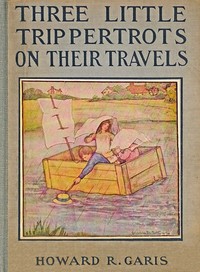
Three little Trippertrots on their travels
Subjects:
Download Formats:
Excerpt
THE WONDERFUL THINGS THEY SAW
AND
THE WONDERFUL THINGS THEY DID
AUTHOR OF “THREE LITTLE TRIPPERTROTS,” “THE BEDTIME STORIES,”
“UNCLE WIGGILY’S ADVENTURES,” ETC.
Quarto. Illustrated. Price, per volume,
60 cents, postpaid
The Wonderful Things They Saw and the Wonderful Things They Did
The stories of the Three Little Trippertrots, though never before
published, have been told to thousands of children, in a way, probably,
that no tales have ever before been related....
Read the Full Text
— End of Three little Trippertrots on their travels —
Book Information
- Title
- Three little Trippertrots on their travels
- Author(s)
- Garis, Howard Roger
- Language
- English
- Type
- Text
- Release Date
- January 24, 2025
- Word Count
- 38,873 words
- Library of Congress Classification
- PZ
- Bookshelves
- Browsing: Children & Young Adult Reading
- Rights
- Public domain in the USA.
Related Books
Maisie's merry Christmas
by Rhoades, Nina
English
1006h 44m read
Three little Trippertrots
by Garis, Howard Roger
English
630h 28m read

My friend Doggie; or, An only child
by Glasgow, G. R. (Geraldine Robertson)
English
34h 30m read
Fish preferred
by Wodehouse, P. G. (Pelham Grenville)
English
1315h 21m read
Dimple Dallas
by Blanchard, Amy Ella
English
588h 4m read
The eater of souls
by Kuttner, Henry
English
22h 19m read