*** START OF THE PROJECT GUTENBERG EBOOK 54196 ***
THE
PRACTICAL BOOK
OF ORIENTAL RUGS
FOURTH EDITION
THE
PRACTICAL BOOKS
OF HOME LIFE ENRICHMENT
_EACH PROFUSELY ILLUSTRATED,
HANDSOMELY BOUND.
Octavo. Cloth. In a slip case._
THE PRACTICAL BOOK
OF EARLY AMERICAN
ARTS AND CRAFTS
BY HAROLD DONALDSON EBERLEIN
AND ABBOT MCCLURE
THE PRACTICAL BOOK
OF ARCHITECTURE
BY C. MATLACK PRICE
THE PRACTICAL BOOK
OF ORIENTAL RUGS
BY DR. G. GRIFFIN LEWIS
NEW EDITION, REVISED AND ENLARGED
THE PRACTICAL BOOK OF
GARDEN ARCHITECTURE
BY PHEBE WESTCOTT HUMPHREYS
THE PRACTICAL BOOK
OF PERIOD FURNITURE
BY HAROLD DONALDSON EBERLEIN
AND ABBOT MCCLURE
THE PRACTICAL BOOK OF
OUTDOOR ROSE GROWING
BY GEORGE C. THOMAS, JR.
NEW REVISED EDITION
THE PRACTICAL BOOK OF
INTERIOR DECORATION
[Illustration: TEKKE BOKHARA RUG
Size 5'6" × 6'4"
PROPERTY OF MR. F. A. TURNER, BOSTON, MASS.
This piece is unusual in many ways. The background of old
ivory both in the borders and in the field; the old rose color of the
octagons; the difference in the number of border stripes and in the
designs of same on the sides and ends are all non-Turkoman features.
It is the only so called "white Bokhara" of which we have
any knowledge.]
THE
PRACTICAL BOOK
OF ORIENTAL RUGS
BY
DR. G. GRIFFIN LEWIS
WITH 20 ILLUSTRATIONS IN COLOR, 93 IN DOUBLETONE
70 DESIGNS IN LINE, CHART AND MAP
_NEW EDITION, REVISED AND ENLARGED_
[Illustration: logo]
PHILADELPHIA & LONDON
J. B. LIPPINCOTT COMPANY
COPYRIGHT, 1911, BY J. B. LIPPINCOTT COMPANY
COPYRIGHT, 1913, BY J. B. LIPPINCOTT COMPANY
PRINTED BY J. B. LIPPINCOTT COMPANY
AT THE WASHINGTON SQUARE PRESS
PHILADELPHIA, U.S.A.
PREFACE TO THE REVISED EDITION
It is most gratifying to both author and publishers that the first
edition of "The Practical Book of Oriental Rugs" has been so quickly
exhausted. Its rather remarkable sale, in spite of the fact that within
the past decade, no less than seven books on the subject have been
printed in English, proves that it is the practical part of the book
that appeals to the majority.
The second edition has been prepared with the same practical idea
paramount and quite a few new features have been introduced.
The color plates have been increased from ten to twenty; a chapter on
Chinese rugs has been inserted; descriptions of three more rugs have
been added and numerous changes and additions have been made to the text
in general.
PREFACE
Oriental rugs have become as much a necessity in our beautiful,
artistic homes as are the paintings on the walls and the various other
works of art. Their admirers are rapidly increasing, and with this
increased interest there is naturally an increased demand for more
reliable information regarding them.
The aim of the present writer has been practical--no such systematized
and tabulated information regarding each variety of rug in the market
has previously been attempted. The particulars on identification by
prominent characteristics and detail of weaving, the detailed chapter
on design, illustrated throughout with text cuts, thus enabling the
reader to identify the different varieties by their patterns; and the
price per square foot at which each variety is held by retail dealers,
are features new in rug literature. Instructions are also given for
the selection, purchase, care and cleaning of rugs, as well as for the
detection of fake antiques, aniline dyes, etc.
In furtherance of this practical idea the illustrations are not of
museum pieces and priceless specimens in the possession of wealthy
collectors, but of fine and attractive examples which with knowledge
and care can be bought in the open market to-day. These illustrations
will therefore be found of the greatest practical value to modern
purchasers. In the chapter on famous rugs some few specimens
illustrative of notable pieces have been added.
In brief, the author has hoped to provide within reasonable limits and
at a reasonable price a volume from which purchasers of Oriental rugs
can learn in a short time all that is necessary for their guidance,
and from which dealers and connoisseurs can with the greatest ease of
reference refresh their knowledge and determine points which may be in
question.
For many valuable hints the author wishes to acknowledge indebtedness
to the publications referred to in the bibliography; to Miss Lillian
Cole, of Sivas, Turkey; to Major P. M. Sykes, the English Consulate
General at Meshed, Persia; to B. A. Gupte, F. Z. S., Assistant Director
of Ethnography at the Indian Museum, Calcutta, India; to Prof. du
Bois-Reymond, of Shanghai, China; to Dr. John G. Wishard, of the
American Hospital at Teheran, Persia; to Miss Alice C. Bewer, of
the American Hospital at Aintab, Turkey; to Miss Annie T. Allen, of
Brousa, Turkey; to Mr. Charles C. Tracy, president of Anatolia College,
Morsovan, Turkey; to Mr. John Tyler, of Teheran, Persia; to Mr. E. L.
Harris, United States Consulate General of Smyrna, Turkey; to Dr. J.
Arthur Frank, Hamadan, Persia; and to Miss Kate G. Ainslie, of Morash,
Turkey.
For the use of some of the plates and photographs acknowledgment is
made to Mr. A. U. Dilley, of Boston, Mass.; to H. B. Claflin & Co., of
New York City; to Mr. Charles Quill Jones, of New York City; to Miss
Lillian Cole, of Sivas, Turkey; to Maj. P. M. Sykes, of Meshed, Persia;
to Maj. L. B. Lawton, of Seneca Falls, N. Y.; to the late William E.
Curtis, of Washington, D. C.; to _The Scientific American_ and to
_Good Housekeeping_ magazines; while thanks are due Mr. A. U. Dilley,
of Boston, Mass.; to Liberty & Co., of London; to the Simplicity Co.,
of Grand Rapids, Mich.; to the Tiffany Studios and to Nahigian Bros.,
of Chicago, Ill., for some of the colored plates, and to Clifford &
Lawton, of New York City, for the map of the Orient.
TABLE OF CONTENTS
PART I
PAGE
INTRODUCTION 17
Age of the weaving art; Biblical reference to the weaving
art; a fascinating study; the artistic worth and other
advantages of the Oriental products over the domestic;
annual importation.
I. COST AND TARIFF 25
Upon what depends the value; the various profits made;
transportation charges; export duties; import duties;
cost compared with that of domestic products; some
fabulous prices.
II. DEALERS AND AUCTIONS 31
Oriental shrewdness; when rugs are bought by the bale;
the auction a means of disposing of poor fabrics; fake
bidders.
III. ANTIQUES 35
The antique craze; why age enhances value; what constitutes
an antique; how to determine age; antiques in
the Orient; antiques in America; celebrated antiques;
American collectors; artificial aging.
IV. ADVICE TO BUYERS 43
Reliable dealers; difference between Oriental and domestic
products; how to examine rugs; making selections;
selection of rugs for certain rooms.
V. THE HYGIENE OF THE RUG 55
The hygienic condition of Oriental factories and homes;
condition of rugs when leaving the Orient; condition of
rugs when arriving in America; United States laws regarding
the disinfection of hides; the duties of retailers.
VI. THE CARE OF RUGS 63
Erroneous ideas regarding the wearing qualities of
Oriental rugs; treatment of rugs in the Orient compared
with that in America; how and when cleaned;
how and when washed; moths; how straightened; removal
of stains, etc.
VII. THE MATERIAL OF RUGS 69
Wool, goats' hair, camels' hair, cotton, silk, hemp;
preparation of the wool; spinning of the wool.
VIII. DYES AND DYERS 75
Secrets of the Eastern dye pots; vegetable dyes; aniline
dyes; Persian law against the use of aniline; the
process of dyeing; favorite colors of different rug-weaving
nations; how to distinguish between vegetable and
aniline dyes; symbolism of colors; the individual dyes
and how made.
IX. WEAVING AND WEAVERS 87
The present method compared with that of centuries
ago; Oriental method compared with the domestic;
pay of the weavers; the Eastern loom; the different
methods of weaving.
X. DESIGNS AND THEIR SYMBOLISM 97
Oriental vs. European designs; tribal patterns; the
migration of designs; characteristics of Persian designs;
characteristics of Turkish designs; characteristics of
Caucasian designs; characteristics of Turkoman designs;
dates and inscriptions; quotations from the
Koran; description and symbolism of designs alphabetically
arranged, with an illustration of each.
XI. THE IDENTIFICATION OF RUGS 147
A few characteristic features of certain rugs; table
showing the distinguishing features of all rugs; an
example.
PART II
XII. GENERAL CLASSIFICATION 161
How they receive their names; trade names; geographical
classification of all rugs.
XIII. PERSIAN CLASSIFICATION 169
Persian characteristics; the knot; the weavers; factories
in Persia; Persian rug provinces; description
of each Persian rug, as follows: Herez, Bakhshis,
Gorevan, Serapi, Kara Dagh, Kashan, Souj Bulak,
Tabriz, Bijar (Sarakhs, Lule), Kermanshah, Senna,
Feraghan (Iran), Hamadan, Ispahan (Iran), Joshaghan,
Saraband (Sarawan, Selvile), Saruk, Sultanabad
(Muskabad, Mahal, Savalan), Niris (Laristan),
Shiraz (Mecca), Herat, Khorasan, Meshed, Kirman,
Kurdistan.
XIV. TURKISH CLASSIFICATION 217
The rug-making districts of Turkey in Asia; annual
importation of Turkish rugs; Turkish weavers; the
knot; Turkish characteristics; the Kurds; description
of each Turkish rug, as follows: Kir Shehr, Oushak,
Karaman, Mujur, Konieh, Ladik, Yuruk, Ak Hissar
(Aksar), Anatolian, Bergama, Ghiordes, Kulah,
Makri, Meles (Carian), Smyrna (Aidin, Brousa),
Mosul.
XV. CAUCASIAN CLASSIFICATION 253
The country; the people; Caucasian characteristics;
description of each Caucasian rug, as follows: Daghestan,
Derbend, Kabistan (Kuban), Tchetchen
(Tzitzi, Chichi), Baku, Shemakha (Soumak, Kashmir),
Shirvan, Genghis (Turkman), Karabagh, Kazak.
XVI. TURKOMAN CLASSIFICATION 277
Turkoman territory; Turkoman characteristics; description
of each Turkoman rug, as follows: Khiva
Bokhara (Afghan), Beshir Bokhara, Tekke Bokhara,
Yomud (Yamut), Kasghar, Yarkand, Samarkand
(Malgaran).
XVII. BELUCHISTAN RUGS 295
The country; the people; Beluchistan characteristics;
description and cost of Beluchistan rugs.
XVIII. CHINESE RUGS 301
Slow to grow in public favor; exorbitant prices;
geographical classification; classification according to
designs; Chinese designs and their symbolism; the
materials; the colors.
XIX. GHILEEMS, SILKS, AND FELTS 311
How made; classification, characteristics, uses,
description of each kind.
_Silks_ 316
Classification, colors, cost, wearing qualities.
_Felts_ 318
How made; their use; cost.
XX. CLASSIFICATION ACCORDING TO THEIR INTENDED USE 321
_Prayer Rugs._ How used; the niche; designs; how classified;
prayer niche designs with key.
_Hearth Rugs, Grave Rugs, Dowry or Wedding Rugs,
Mosque Rugs, Bath Rugs, Pillow Cases, Sample Corners,
Saddle Bags, Floor Coverings, Runners, Hangings._
XXI. FAMOUS RUGS 331
Museum collections; private collections; the recent
Metropolitan Museum exhibit; age and how determined;
description and pictures of certain famous
rugs.
GLOSSARY 341
Giving all rug names and terms alphabetically arranged,
with the proper pronunciation and explanation.
BIBLIOGRAPHY 359
Giving an alphabetically arranged list of all rug literature
in the English language.
INDEX 363
LIST OF ILLUSTRATIONS
RUGS
COLORED PLATES
PAGE
Tekke Bokhara rug _Frontispiece_
Meshed prayer rug 22
Khorasan carpet 32
Saruk rug 40
Shiraz rug 52
Anatolian mat 60
Ghiordes prayer rug 66
Ladik prayer rug 74
Daghestan rug 84
Kazak rug 94
Kazak rug 144
Shirvan rug 158
Saruk rug 166
Kulah hearth rug 216
Shirvan rug 250
Beshir Bokhara prayer rug 274
Daghestan prayer rug 292
Chinese rug 300
Chinese rug 306
Chinese cushion rug 318
DOUBLETONES
The Metropolitan animal rug 26
Bergama prayer rug 46
Symbolic Persian silk (Tabriz) rug 48
Symbolic Persian silk rug 98
Semi-Persian rug (European designs) 100
Shiraz prayer rug 104
Hamadan rug 110
Feraghan rug 114
Kermanshah rug (modern) 118
Khiva prayer rug 120
Kir Shehr prayer rug 130
Konieh prayer rug 138
Tekke Bokhara strip 150
Tekke Bokhara saddle half 162
Herez carpet 172
Gorevan carpet 176
Serapi carpet 178
Kashan silk rug 180
Tabriz rug 182
Bijar rug 186
Senna rug 188
Feraghan rug 190
Hamadan rug 192
Ispahan rug 194
Saraband rug 198
Mahal carpet 202
Niris rug 204
Shiraz rug 206
Shiraz rug 208
Kirman prayer rug 210
Kirman rug 212
Kurdistan rug (Mina Khani design) 214
Kir Shehr prayer rug 220
Kir Shehr hearth rug 222
Konieh prayer rug 224
Maden (Mujur) prayer rug 226
Ladik prayer rug 228
Yuruk rug 230
Ak Hissar prayer rug 232
Bergama rug 236
Ghiordes prayer rug 238
Kulah prayer rug 240
Meles rug 242
Meles rug 244
Makri rug 246
Mosul rug 248
Daghestan rug 254
Daghestan prayer rug 256
Kabistan rug 258
Tchetchen or Chichi rug 260
Baku rug 262
Shemakha, Sumak or Cashmere rug 264
Shirvan rug 266
Genghis rug 268
Karabagh rug 270
Kazak rug (Palace design) 272
Khiva Bokhara rug 278
Beshir Bokhara rug 280
Tekke Bokhara rug 282
Tekke Bokhara (Princess Bokhara, Khatchlie) prayer rug 284
Yomud rug 286
Samarkand rug 290
Beluchistan rug 296
Senna Ghileem rug 312
Kurdish Ghileem rug 314
Merve Ghileem rug 316
Kurdish Ghileem rug 316
Saddle cloth, saddle bags and powder bag 324
Kirman saddle bags 326
Bijar sample corner 328
Ardebil Mosque carpet 330
Berlin Dragon and Phœnix rug 332
East Indian hunting rug 334
The Altman prayer rug 336
The Baker hunting rug 338
RUG MAKING, ETC.
A Persian rug merchant 38
Expert weaver and inspector 38
Spinning the wool 72
Persian dye pots 80
A Persian village 80
A Turkish loom 88
The Senna and Ghiordes knots 90
Youthful weavers 90
A Persian loom 92
A wooden comb 92
A Kurdish guard 124
The Emir of Bokhara and his ministers 134
Turkomans at home 134
Characteristic backs of rugs 152
Inspecting rugs at Ispahan 170
Persian villages near Hamadan 170
Turkomans 276
Having a pot of tea at Bokhara 288
A street in Samarkand 288
The rug caravan 376
DESIGNS
Angular hook 101
Barber-pole stripe 102
Bat 103
Beetle 103
Butterfly border design 104
Caucasian border design 105
Chichi border design 105
Chinese fret 106
Chinese cloud band 106
Comb 108
Crab border design 108
Greek cross 109
Fish bone border design 112
Galley border design 112
Georgian border design 112
Ghiordes border design 113
Herati border design 114
Herati field design 114
Knot of destiny 116
Kulah border design 116
Lamp 117
Lattice field 117
Link 118
Lotus 118
Lotus border design 119
Greek meander 119
Pole medallion 120
Mir or Saraband border design 120
Octagon 122
Palace or sunburst 122
Pear 123
Pear border design 124
Reciprocal saw-teeth 126
Reciprocal trefoil 126
Lily or Rhodian field design 126
Lily or Rhodian border design 126
Ribbon border design 127
Rooster 127
Rosette 128
S forms 129
Scorpion border design 129
Shirvan border design 130
Shou 131
Solomon's seal 131
Star 133
Swastika 134
T forms 134
Tae-kieh 135
Tarantula 135
Tekke border designs 135
Tekke field designs 135
Tomoye 136
Tortoise border designs 136
Tree designs 137
Wine-glass border designs 138
Winged disc 139
Y forms 139
Various forms of prayer-niche in rugs 322
NAMELESS DESIGNS
Persian border designs 140
Turkish border designs 141
Caucasian border designs 142
Turkoman border designs 143
Chinese border designs 143
Chinese field design 143
Kurdish field designs 143
Caucasian field design 143
Turkish field designs 143
Persian field designs 143
CHART
Showing the distinguishing features of the different rugs 156
MAP
The Orient At end of volume
INTRODUCTION
Just when the art of weaving originated is an uncertainty, but there
seems to be a consensus of opinion among archæologists in general that
it was in existence earlier than the 24th century before Christ. The
first people which we have been able with certainty to associate with
this art were the ancient Egyptians. Monuments of ancient Egypt and of
Mesopotamia bear witness that the products of the hand loom date a
considerable time prior to 2400 B.C., and on the tombs of Beni-Hassan
are depicted women weaving rugs on looms very much like those of the
Orient at the present time. From ancient literature we learn that the
palaces of the Pharaohs were ornamented with rugs; that the tomb of
Cyrus, founder of the ancient Persian monarchy, was covered with a
Babylonian carpet and that Cleopatra was carried into the presence of
Cæsar wrapped in a rug of the finest texture. Ovid vividly described the
weaver's loom. In Homer's Iliad we find these words: "Thus as he spoke
he led them in and placed on couches spread with purple carpets o'er."
The woman in the Proverbs of Solomon said, "I have woven my bed with
cords, I have covered it with painted tapestry from Egypt." Job said:
"My days are swifter than the weaver's shuttle and are spent without
hope." Other places in the Bible where reference is made to the art of
weaving are, Ex. 33, 35, Sam. 17, 7, and Isa. 38, 12. Besides Biblical
writers, Plautus, Scipio, Horace, Pliny and Josephus all speak of rugs.
The Egyptian carpets were not made of the same material and weave as are
the so-called Oriental rugs of to-day. The pile surface was not made by
tying small tufts of wool upon the warp thread. The Chinese seem to have
been the first to have made rugs in this way. Persia acquired the art
from Babylon many centuries before Christ, since which time she has held
the foremost place as a rug weaving nation.
There is no more fascinating study than that of Oriental rugs and there
are few hobbies that claim so absorbing a devotion. To the connoisseur
it proves a veritable enchantment: to the busy man a mental salvation.
He reads from his rugs the life history of both a bygone and a living
people. A fine rug ranks second to no other creation as a work of art
and although many of them are made by semi-barbaric people, they possess
rare artistic beauty of design and execution to which the master hand of
Time puts the finishing touches. Each masterpiece has its
individuality, no two being alike, although each may be true in general
to the family patterns, and therein consists their enchantment. The
longer you study them the more they fascinate. Is it strange then that
this wonderful reproduction of colors appeals to connoisseurs and art
lovers of every country?
Were some of the antique or even the modern pieces endowed with the gift
of speech what wonderfully interesting stories they could tell and yet
to the connoisseur the history, so to speak, of many of these gems of
the Eastern loom is plainly legible in their weave, designs and colors.
The family or tribal legends worked out in the patterns, the religious
or ethical meaning of the blended colors, the death of a weaver before
the completion of his work, which is afterwards taken up by another, the
toil and privation of which every rug is witness, are all matters of
interest only to the student.
Americans have been far behind Europeans in recognizing the artistic
worth and the many other advantages of the Oriental rug over any other
kind. Twenty-five years ago few American homes possessed even one. Since
then a marked change in public taste has taken place. All classes have
become interested and, according to their resources, have purchased them
in a manner characteristic of the American people, so that now some of
the choicest gems in existence have found a home in the United States.
To what extent this is true may be shown by the custom house statistics,
which prove that, even under a tariff of nearly 50 per cent., the annual
importation exceeds over five million dollars and New York City with the
possible exception of London has become the largest rug market of the
world. This importation will continue on even a larger scale until the
Orient is robbed of all its fabrics and the Persian rug will have become
a thing of the past.
Already the western demand has been so great that the dyes, materials
and quality of workmanship have greatly deteriorated and the Orientals
are even importing machine made rugs from Europe for their own use. It
therefore behooves us to cherish the Oriental rugs now in our
possession.
Both Europe and the United States are manufacturing artistic carpets of
a high degree of excellence, but they never have and never will be able
to produce any that will compare with those made in the East. They may
copy the designs and match the shades, to a certain extent, but they
lack the inspiration and the knack of blending, both of which are
combined in the Oriental product.
Only in a land where time is of little value and is not considered as an
equivalent to money, can such artistic perfection be brought about.
PART I
[Illustration: MESHED PRAYER RUG
Size 4' × 3'
FROM THE COLLECTION OF THE AUTHOR
Prayer rugs of this class are exceedingly rare. This is the only one
the author has ever seen. It is extremely fine in texture, having
twenty-eight Senna knots to the inch vertically and sixteen
horizontally, making four hundred and forty-eight knots to the square
inch, tied so closely that it is quite difficult to separate the pile
sufficiently to see the wool or warp threads. The central field
consists of the tree of life in dark blue with red, blue and pink
flowers upon a background of rich red.
The main border stripe carries the Herati design in dark blue and
dark red upon a pale blue ground on each side of which are narrow
strips of pink carrying alternate dots of red and blue.
(See page 209)]
COST AND TARIFF
The value of an Oriental rug cannot be gauged by measurement any more
than can that of a fine painting; it depends upon the number of knots to
the square inch, the fineness of the material, the richness and
stability of its colors, the amount of detail in design, its durability
and, last but not least, its age. None of these qualifications being at
sight apparent to the novice, he is unable to make a fair comparison of
prices, as frequently rugs which appear to him to be quite alike and
equally valuable may be far apart in actual worth.
When we consider that from the time a rug leaves the weavers' hands
until it reaches the final buyer there are at least from five to seven
profits to pay besides the government tariffs thereon, it is no wonder
that the prices at times seem exorbitant. The transportation charges
amount to about ten cents per square foot. The Turkish government
levies one per cent. export duty and the heavily protected United States
levies forty per cent. ad valorem and ten cents per square foot besides,
all of which alone adds over fifty per cent. to the original cost in
America, and yet should we estimate the work upon Oriental rugs by the
American standard of wages they would cost from ten to fifty times their
present prices.
To furnish a home with Oriental rugs is not as expensive as it would at
first seem. They can be bought piece by piece at intervals, as
circumstances warrant, and when a room is once provided for it is for
all time, whereas the carpet account is one that is never closed.
In the United States good, durable Eastern rugs may be bought for from
sixty cents to ten dollars per square foot, and in England for much
less. Extremely choice pieces may run up to the thousands. At the
Marquand sale in New York City in 1902, a fifteenth century Persian
rug (10-10 x 6-1) was sold for $36,000, nearly $550 a square foot. The
holy carpet of the Mosque at Ardebil, woven at Kashan in 1536 and now
owned by the South Kensington Museum, of London, is valued at $30,000.
The famous hunting rug, which was presented some years ago by the late
Ex-Governor Ames of Massachusetts to the Boston Museum of Fine Arts, is
said to have cost $35,000. The late Mr. Yerkes of New York City paid
$60,000 for his "Holy Carpet," the highest price ever paid for a rug.
Mr. J. P. Morgan recently paid $17,000 for one 20 x 15. Two years ago
H. C. Frick paid $160,000 for eight small Persians, $20,000 apiece.
Senator Clark's collection cost $3,000,000, H. O. Havemeyer's $250,000,
and O. H. Payne's $200,000.
[Illustration: THE METROPOLITAN ANIMAL RUG
BY COURTESY OF THE METROPOLITAN MUSEUM OF FINE ARTS
NEW YORK CITY
(See page 337)]
Everything considered, the difference in cost per square foot between
the average Oriental and the home product amounts to little in
comparison to the difference in endurance. If one uses the proper
judgment in selecting, his money is much better spent when invested in
the former than when invested in the latter. While the nap of the
domestic is worn down to the warp the Oriental has been improving in
color and sheen as well as in value. This is due to the fact that the
Eastern product is made of the softest of wool and treated with dyes
which have stood the test of centuries and which preserve the wool
instead of destroying it as do the aniline dyes.
In comparing the cost of furnishing a home with Oriental rugs or with
carpets one should further take into consideration the fact that with
carpets much unnecessary floor space must be covered which represents
so much waste money. Also the question of health involved in the use of
carpets is a very serious one. They retain dust and germs of all kinds
and are taken up and cleaned, as a rule, but once a year. With rugs the
room is much more easily kept clean and the furniture does not have to
be moved whenever sweeping time comes around.
DEALERS AND AUCTIONS
Few Europeans or Americans penetrate to the interior markets of the
East where home-made rugs find their first sale. Agents of some of
the large importers have been sent over to collect rugs from families
or small factories and the tales of Oriental shrewdness and trickery
which they bring back are many and varied. We have in this country
many honest, reliable foreign dealers, but occasionally one meets with
one of the class above referred to. In dealing with such people it is
safe never to bid more than half and never to give over two-thirds
of the price they ask you. Also never show special preference for
any particular piece, otherwise you will be charged more for it. No
dealer or authority may lay claim to infallibility, but few of these
people have any adequate knowledge of their stock and are, as a rule,
uncertain authorities, excepting in those fabrics which come from the
vicinity of the province in which they lived. They buy their stock
in large quantities, usually by the bale at so much a square foot,
and then mark each according to their judgment so as to make the
bale average up well and pay a good profit. So it is that an expert
may occasionally select a choice piece at a bargain while the novice
usually pays more than the actual worth. Every rug has three values,
first the art value depending upon its colors and designs, second the
collector's value depending upon its rarity, and third the utility
value depending upon its durability. No dealer can buy rugs on utility
value alone and he who sells Oriental rugs very cheap usually sells
very cheap rugs.
It might be well right here to state that when rugs are sold by the
bale the wholesaler usually places a few good ones in the bale for the
purpose of disposing of the poor ones. Dealers can always find an eager
market for good rugs, but poor ones often go begging, and in order to
dispose of them the auction is resorted to. They are put up under a
bright reflected light which shows them off to the best advantage; the
bidder is allowed no opportunity for a thorough examination and almost
invariably there are present several fake bidders. This you can prove
to your own satisfaction by attending some auction several days in
succession and you will see the same beautiful Tabriz bid off each time
at a ridiculously low price, while those that you actually see placed
into the hands of the deliveryman will average in price about the same
as similar rugs at a retail store.
[Illustration: KHORASAN CARPET
Size 14' × 10'
LOANED BY A. U. DILLEY & CO.
OWNER'S DESCRIPTION
An East Persian rug of especially heavy weave in robin egg blue, soft
red and cream.
Design: Serrated centre medallion, confined by broad blue corner
bands and seven border strips. A rug of elaborate conventionalized
floral decoration, with a modern rendition of Shah Abbas design in
border.
(See page 207)]
ANTIQUES
The passion for antiques in this country has in the past been so strong
that rugs showing signs of hard wear, with ragged edges and plenty of
holes, were quite as salable as those which were perfect in every
respect and the amateur collector of so-called "antiques" was usually an
easy victim. Of late, however, the antique craze seems to be dying out
and the average buyer of to-day will select a perfect modern fabric in
preference to an imperfect antique one.
There is no question that age is an important factor in the beauty of a
rug and that an antique in a state of good preservation is much more
valuable than a modern fabric, especially to the collector, to whom the
latter has little value. In order to be classed as an antique a rug
should be at least fifty years old, having been made before the
introduction of aniline dyes. An expert can determine the age by the
method of weaving, the material used, the color combination, and the
design, with more certainty than can the art connoisseur tell the age of
certain European pictures, to which he assigns dates by their
peculiarities in style. Every time a design is copied it undergoes some
slight change until, perhaps, the original design is lost. This
modification of designs also affords great assistance in determining
their age. In the Tiffany studios in New York City can be seen a series
of Feraghan rugs showing the change in design for several generations.
As a rule more knowledge concerning the age of a rug can be obtained
from the colors and the materials employed than from the designs. An
antique appears light and glossy when the nap runs from you, whereas it
will appear dark and rich but without lustre when viewed from the other
end. Such rugs are usually more or less shiny on the back and their
edges are either somewhat ragged or have been overcast anew.
With the exception of a few rare old pieces which may be found in the
palaces of rulers and certain noblemen, the Orient has been pretty well
stripped of its antiques. Mr. Charles Quill Jones, who has made three
trips through the Orient in search of old rugs, reports that region
nearly bare of gems. During his last sojourn in those parts he has
succeeded in collecting a considerable number of valuable pieces, but
his success may be attributed to the poverty and disruption of
households occasioned by the losses of the recent revolution in Persia.
As especially rare he writes of having secured five pieces which were
made during the reign of Shah Abbas in the 16th century. In England,
France, Germany, Russia, Austria, Poland, and especially Bavaria, there
are many fine old pieces, those of London, Paris, Berlin, Vienna, and
Budapest being particularly noteworthy. The Rothschild collection in
Paris contains many matchless pieces and the Ardebil Mosque carpet,
which is in the South Kensington Museum, London, is without doubt the
most famous piece of weaving in the world. According to the inscription
upon it, it was woven by Maksoud, the slave of the Holy Place of Kashan,
in 1536. It measures thirty-four feet by seventeen feet six inches and
contains 32,000,000 knots. No doubt there are more good genuine antiques
in Europe and America than in the entire Orient. They are to be found,
as a rule, in museums and in private collections. A number of really old
and very valuable pieces may be seen at the Metropolitan Museum of Fine
Arts in New York City. The Yerkes collection of Oriental rugs, which has
recently been disposed of at public sale by the American Art Galleries,
contained nothing but Polish fabrics and Persian carpets of royal
origin, made at some early date prior to the seventeenth century. Some
of the most prominent collectors of the United States are Mr. J.
Pierpont Morgan of New York City, who has one of the most valuable
collections in the world; Mr. H. C. Frick of Pittsburg, Pa., Miss A. L.
Pease of Hartford, Conn., Mr. C. F. Williams of Morristown, Pa., the
Hon. W. A. Clark and Mr. Benjamin Altman of New York City, Mr. Theodore
M. Davis of Newport, R. I., Mr. Frank Loftus, Mr. F. A. Turner and Mr.
L. A. Shortell of Boston; Mr. J. F. Ballard of St. Louis and Mr. P. A.
B. Widener of Elkins Park, Pa. The late Ex-Governor Ames of
Massachusetts was an enthusiastic collector and possessed many fine
pieces.
The late A. T. Sinclair of Allston, Mass., possessed over one hundred
and fifty antiques, which he himself collected over twenty years ago
from the various districts of Persia, Asia Minor, the Caucasus,
Turkestan, and Beluchistan. Many of these pieces are from one hundred
and fifty to two hundred and fifty years old and every one is a gem.
[Illustration: A PERSIAN RUG MERCHANT]
[Illustration: EXPERT WEAVER AND INSPECTOR]
With the exception of an occasional old Ghiordes, Kulah, Bergama or
Mosul, for which are asked fabulous prices, few antiques can now be
found for sale. It is on account of the enormous prices which antiques
bring that faked antiques have found their way into the market. Rugs may
be artificially aged but never without detriment to them. The aging
process is mostly done by cunning adepts in Persia or Constantinople
before they are exported, although in recent years the doctoring process
has been practised to quite an extent in the United States, and a large
portion of the undoctored rugs which reach these shores are soon
afterwards put through this process. The majority of dealers will tell
you that there is comparatively little sale for the undoctored pieces.
The chemically subdued tones and artificial sheen appeal to most people
who know little about Oriental rugs.
For toning down the bright colors they use chloride of lime, oxalic acid
or lemon juice; for giving them an old appearance they use coffee
grounds, and for the creation of an artificial sheen or lustre the rugs
are usually run between hot rollers after the application of glycerine
or paraffin wax; they are sometimes buried in the ground for a time, and
water color paints are frequently used to restore the color in spots
where the acid has acted too vigorously. Such rugs usually show a slight
tinge of pink in the white.
There is a class of modern rugs of good quality, good material, and
vegetable dyed, but with colors too bright for Occidental taste. Such
rugs are sometimes treated with water, acid, and alkali. The effect of
the acid is here neutralized by the alkali in such a way that the colors
are rendered more subdued and mellow in tone without resulting injury to
the material.
What the trade speaks of as a "washed" rug is not necessarily a
"doctored" one. There is a legitimate form of washing which is really
a finishing process and which does not injure the fabric. It merely
washes out the surplus color and sets the rest. The belief that only
aniline dyes will rub off when wet and that vegetable ones will not do
so is erroneous. If a rug is new and never has been washed the case is
quite the opposite. For the reader's own satisfaction, let him moisten
and rub a piece of domestic carpet. He will find that the aniline of
the latter fabric is comparatively fast, whereas, in a newly made
vegetable dyed Oriental, certain colors, especially the blues, reds and
greens, will wipe off to a certain extent. After this first washing
out, however, nothing other than a chemical will disturb the vegetable
color.
[Illustration: SARUK RUG
Size 14' × 10'
LOANED BY A. U. DILLEY & CO.
OWNER'S DESCRIPTION
The field: Three fawn and blue flower colored medallions and four
arabesques in a line arrangement on a rose-colored background, strewn
with garlands.
The border: One broad stripe, carrying elaborate floral sprays and
arabesques, separated by four elongated corner designs in blue.
An elegant combination of brilliant color and ornate floral design.
Cotton foundation and wool pile.
(See page 200)]
ADVICE TO BUYERS
No set of rules can be furnished which will fully protect purchasers
against deception. It is well, however, for one, before purchasing, to
acquire some knowledge of the characteristics of the most common
varieties as well as of the different means employed in examining them.
In the first place, avoid dealers who fail to mark their goods in plain
figures. Be on the safe side and go to a reliable house with an
established reputation. They will not ask you fancy prices. If it is in
a department store be sure you deal with some one who is regularly
connected with the Oriental rug department. You would never dream of
buying a piano of one who knows nothing of music. So many domestic rugs
copy Oriental patterns that many uninformed people cannot tell the
difference. The following are some of the characteristics of the Eastern
fabrics which are not possessed by the Western ones. First, they show
their whole pattern and color in detail on the back side; second, the
pile is composed of rows of distinctly tied knots, which are made
plainly visible by separating it; third, the sides are either overcast
with colored wool or have a narrow selvage; and fourth, the ends have
either a selvage or fringe or both.
In buying, first select what pleases you in size, color, and design,
then take time and go over it as thoroughly as a horseman would over a
horse which he contemplates buying. Lift it to test the weight. Oriental
rugs are much heavier in proportion to their size than are the
domestics. See if it lies straight and flat on the floor and has no
folds. Crookedness detracts much from its value. Take hold of the centre
and pull it up into a sort of cone shape. If compactly woven it will
stand alone just as a piece of good silk will. Examine the pile and see
whether it is long, short or worn in places down to the warp threads;
whether it lies down as in loosely woven rugs or stands up nearly
straight as in closely woven rugs; also note the number of knots to the
square inch and whether or not they are firmly tied. The wearing
qualities depend upon the length of the pile and the compactness of
weaving. Separate the pile, noting whether the wool is of the same color
but of a deeper shade near the knot than it is on the surface or if it
is of an entirely different color. Vegetable dyes usually fade to
lighter shades of the original color, while anilines fade to different
colors, one or another of the dyes used in combination entirely
disappearing at times and others remaining. This will also be
noticeable, to a certain extent, when one end of the fabric is turned
over and the two sides are compared. Two rugs may be almost exactly
alike in every respect excepting the dye, the one being worth ten to
fifteen times as much as the other.
A good way to test the material is to slightly burn its surface with a
match, thus producing a black spot. If the wool is good the singed part
can be brushed off without leaving the slightest trace of the burn. The
smell of the burnt wool will also easily be recognized. Ascertain the
relative strength of the material, making sure that the warp is the
heaviest and strongest, the pile next and the woof the lightest. If the
warp is lighter than the pile it will break easily or if the warp is
light and the weaving loose it will pucker. Rugs whose foundation
threads are dry and rotten from age are worthless. In such pieces the
woof threads, which are the lightest, will break in seams along the line
of the warp when slightly twisted.
Examine the selvage. It will often indicate the method of its
manufacture, showing whether it is closely or loosely woven, for the
selvage is a continuation of the groundwork of the rug itself. Also
notice the material, whether of hair, wool or cotton. Separate the pile
and examine the woof, noting the number of threads between each row of
knots. If possible pull one of them out. In the cheaper grade of rugs
you will often find two strands of cotton and one of wool twisted
together. Such rugs are very likely some time to bunch up, especially if
washed. See if the selvage or warp threads on the sides are broken in
places. If so it would be an unwise choice. Now turn the rug over and
view it from the back, noting whether repairs have been made and, if so,
to what extent. View it from the back with the light shining into the
pile to see if there are any moths. Pat it and knock out the dust. In
some instances you will be surprised how thoroughly impregnated it will
be with the dust of many lands and how much more attractive the colors
are after such a patting. Rub your hand over the surface with the nap.
If the wool is of a fine quality a feeling of electric smoothness will
result, such as is experienced when stroking the back of a cat in cold
weather.
Finally, before coming to a decision regarding its purchase, have it
sent to your home for a few days. There you can study it more leisurely
and may get an idea as to whether or not you would soon tire of the
designs or colors. While you have it there do not forget to take soap,
water and a stiff brush and scrub well some portion of it, selecting a
part where some bright color such as green, blue or red joins a white.
After the rug has thoroughly dried notice whether or not the white has
taken any of the other colors. If so, they are aniline.
[Illustration: BERGAMA PRAYER RUG
Size 3'8" × 2'7"
PROPERTY OF MR. GEORGE BAUSCH
(See page 237)]
A rather vulgar but very good way of telling whether a rug is doctored
or not is to wet it with saliva and rub it in well. If chemically
treated it will have a peculiar, disagreeable, pungent odor.
A fairly accurate way of determining the claim of the fabric to great
age is to draw out a woof thread and notice how difficult it is to
straighten it, even after days of soaking in water. Unless one is an
expert, he should refrain from relying upon his own judgment in buying a
rug for an antique.
It may be interesting to know the meaning of the tags and seals so
frequently found on rugs. The little square or nearly square cloth tag
that is so frequently attached at one corner to the under surface by two
wire clasps has on it the number given to that particular piece for the
convenience of the washer, the exporter, the importer and the custom
officials. The rug is recorded by its number instead of by its name to
avoid confusion and to save labor. The round lead seal which is
frequently attached to one corner of the rug by a flexible wire or a
string, especially among the larger pieces, is the importer's seal, on
one side of which will be found his initials. These also are of great
assistance to the custom officials.
Before closing this chapter a few words in regard to the selection of
rugs for certain rooms might be acceptable, though this is, to a large
extent, a matter of individual taste; yet in making a selection one
should have some consideration for the decorations and furniture of the
room in which the rugs are to be laid and they should harmonize with the
side walls, whether the harmony be one of analogy or of contrast. The
floor of a room is the base upon which the scheme of decoration is to be
built. Its covering should carry the strongest tones. If a single tint
is to be used the walls must take the next gradation and the ceiling the
last. These gradations must be far enough removed from each other in
depth of tone to be quite apparent but not to lose their relation.
Contrasting colors do not always harmonize. A safe rule to follow would
be to select a color with any of its complementary colors. For instance,
the primary colors are red, blue, and yellow. The complementary color of
red would be the color formed by the combination of the other two, which
in this case would be green composed of yellow and blue; therefore red
and green would form a harmony of contrast. Likewise red and blue make
violet, which would harmonize with yellow; red and yellow make orange,
which would harmonize with blue, etc.
[Illustration: SYMBOLIC PERSIAN SILK (TABRIZ) RUG
(See page 316)]
Light rooms of Louis XVI style would hardly look as well with bright,
rich colored rugs as they would with delicately tinted Kirmans, Saruks,
and Sennas. Nor would the latter styles look as well in a Dutch dining
room, finished in black oak, as would the rich, dark Bokharas and
Feraghans. Mission rooms also require the dark colored rugs. If the room
is pleasing in its proportion and one rug is used it should conform as
nearly in proportion as possible. If the room is too long for its width
select a rug which will more nearly cover the floor in width than it
will in length. A rug used in the centre of a room with considerable
floor area around it decreases the apparent size of the room. Long rugs
placed lengthwise of a room increase its apparent length, while short
rugs placed across a room decrease its apparent length, and rugs with
large patterns, like wall paper with large patterns, will dwarf the
whole apartment. The following ideas are merely offered as suggestions
without any pretension whatever to superiority of judgment.
For a VESTIBULE a long-naped mat, which corresponds in shape to the
vestibule and covers fully one-half of its surface, such for instance as
a Beluchistan or a Mosul. Appropriate shorter naped pieces may be found
among the Anatolians, Meles, Ladiks or Yuruks. As a rule the dark
colored ones are preferable.
HALL.--If the hall is a long, narrow one, use long runners which cover
fully two-thirds of its surface. Such may be found among the Mosuls,
Sarabands, Hamadans, Ispahans, Shirvans, and Genghis.
For a reception hall a Khiva Bokhara, a Yomud, a dark colored Mahal, or
several Kazaks or Karabaghs would look well if the woodwork is dark. If
the woodwork is light several light colored Caucasian or Persian pieces
such as the Daghestans, Kabistans, Sarabands, Hamadans, or Shiraz would
be appropriate.
RECEPTION ROOM.--A light colored Kermanshah, Tabriz, Saruk, Senna, or
Khorasan. Usually one large piece which covers from two-thirds to
three-fourths of the floor surface is the most desirable.
LIVING ROOM.--For this room, which is the most used of any in the home,
we should have the most durable rugs and as a rule a number of small or
medium sized pieces, which can be easily shifted from one position to
another, are preferable. Here, too, respect must be had for harmony with
the side walls, woodwork and furniture, as it is here that the family
spend most of their time and decorative discord would hardly add to
one's personal enjoyment. Many appropriate selections may be made from
the Feraghans, Ispahans, Sarabands, Shiraz, Mosuls, Daghestans,
Kabistans, and Beluchistans.
DINING ROOM.--Ordinarily nothing would be more appropriate than one of
the Herez or Sultanabad productions unless the room be one of the
Mission style, in which case a Khiva Bokhara would be most desirable.
Small pieces would not be suitable.
LIBRARY OR DEN.--One large or several small pieces, usually the dark
rich shades are preferable, such for instance as are found in the
Khivas, Yomuds, Kurdistans, Feraghans, Shiraz, Kazaks, Beluchistans or
Tekke Bokharas, the predominating color selected according to the
decorations of the room.
BATH ROOM.--One heavy long-piled, soft piece such as are some of the
Bijars or Mosuls in light colors.
BEDROOMS.--For chambers where colors rather than period styles are
dominant and where large rugs are never appropriate, prayer rugs like
those of the Kulah, Ghiordes, Ladik, Anatolian, or Daghestan varieties
are to be desired. Those with yellow as the predominating color blend
especially well with mahogany furniture if the walls are in buff or
yellow tones. The Nomad products are especially desirable for bedrooms
on account of the comfort which they afford. Being thick and soft the
sensation to the tread is luxurious. An occasional Anatolian, Ladik,
Bergama, Meles, or Bokhara mat placed before a dresser or a wash-stand;
a Shiraz pillow on the sofa; a Senna Ghileem thrown over a divan; a
Shiraz, Mosul, or Beluchistan saddle-bag on a Mission standard as a
receptacle for magazines; a silk rug as a table spread, etc., will all
add greatly to the Oriental effect.
[Illustration: SHIRAZ RUG
BY COURTESY OF NAHIGIAN BROS., CHICAGO, ILL.
This piece is typical of its class with the small tassels of wool on
the side edging; with the ornamental web and the braided warp threads
at each end, also the pole medallion and the numerous bird forms
throughout the field.
(See page 204)]
THE HYGIENE OF THE RUG
In all the literature on Oriental Rugs no mention has been made of
their sanitary condition when laid on the floors of our homes. In
response to a letter of inquiry, one of our American missionaries,
a young lady stationed at Sivas, Turkey in Asia, who very modestly
objects to the use of her name, so well explained the condition of
affairs that portions of her letter given verbatim will prove most
interesting. She says:
"In Sivas there are a number of rug factories in which are employed
many thousand little girls, ages ranging from four years upward. They
work from twelve to fourteen hours a day and I believe the largest
amount received by them is five piasters (less than twenty cents) and
the small girls receive ten to twenty paras (a cent or two). These
factories are hotbeds of tuberculosis and we have many of these cases
in our Mission Hospital. Of course this amount of money scarcely keeps
them in bread and in this underfed condition, working so long in ill
ventilated rooms, they quickly succumb to this disease. These girls
are all Armenians in that region. The Turks do not allow their women
and children to work in public places. The Armenians are going to
reap a sad harvest in the future in thus allowing the future wives
and mothers of their race to undermine their health working in these
factories. These rugs are all exported to Europe and America.
"No matter what part of the city you pass through this time of the year
you will see looms up in the different homes and most of the family,
especially the women and children, working on these rugs, and it is
very interesting to watch them and to see how skilful even the small
children grow in weaving these intricate patterns. Making rugs in the
homes is quite different from making them in the factories, for in the
summer at least they have plenty of fresh air.
"No doubt many rugs made in these homes are filled with germs of
contagious diseases, for they use no precautions here when they have
such diseases in the family, and usually the poor people only have
one room, and if a member of the family is stricken with smallpox or
scarlet fever the rest of the family continue to work on the rug often
in the same room."
Another correspondent from Marash, Turkey in Asia, says, "If you are
interested in humanity as well as in rugs, please put in a strong plea
against some of these factories which are employing children who can
scarcely speak. These little babies sit from morning till evening tying
and cutting knots in damp and poorly ventilated places. Is it a wonder
that diseases, especially tuberculosis, are developing rapidly among
them?"
A third correspondent says, "Often rugs upon which patients have died
from contagious diseases are sold without cleaning. In fact, they are
rarely cleaned."
Upon receipt of the above a letter of inquiry was at once sent to
the Treasury Department at Washington regarding the disinfection of
textiles from the Orient immediately upon their arrival into this
country, to which we were informed that "The Surgeon-General of the
Public Health and Marine Hospital Service stated that such rugs, if
originating in parts or places infected with quarantinable diseases,
would be required to be disinfected under the quarantine laws." This
sounds sensible, but when the rugs are sent from all parts of the
Orient to Constantinople, from whence they are shipped in bales to
the United States, pray how can the Surgeon-General discriminate? The
only safe way is for the government to have strict laws regarding
their immediate and thorough disinfection. We already have a law which
requires the disinfection of hides before they are shipped to this
country. It reads: "Officers of the customs are directed to treat hides
of neat cattle shipped to the United States without proper disinfection
as prohibited importations, and to refuse entry of such hides." Also,
"the disinfection of such hides in this country or storage of the same
in general order warehouses will not be permitted, for the reason that
the passage of diseased hides through the country or their storage with
other goods will tend to the dissemination of cattle disease in the
United States." (See Section 12 of the Tariff Act of August 5, 1909.)
Ex-President Taft once recommended a new department of public health
whose duty it would be to consider all matters relating to the health
of the nation. If his suggestions are carried out no doubt the question
of disinfecting Oriental imports will be satisfactorily disposed of.
Until then we should see to it that all Oriental rugs are at least
clean and free from dust before allowing them to be delivered in our
homes. The great majority of these rugs, when leaving the Orient, are
impregnated with dust from their adobe floors and, if free of this
dust, they have in all probability been pretty thoroughly cleaned by
some reliable importer or dealer, the majority of whom are beginning to
realize the importance of this procedure.
[Illustration: ANTIQUE ANATOLIAN MAT
Size 3'5" × 1'10"
FROM THE COLLECTION OF THE AUTHOR
Knot. Nine to the inch vertically and eight horizontally, making
seventy-two to the square inch.
This is a most unusual piece. It has a long nap, is tied with the
Turkish knot and in many respects resembles the Bergama while on the
back it has a distinctly Khorasan appearance. It is an old piece
with a most lustrous sheen and the colors are of the best, every one
being of exactly the same tint on the surface as it is down next to
the warp threads.
The prevailing color is a rich terra cotta with figures of lilies
in olive-green, old rose, blue and white. There are also a number of
six-petaled flowers in red, white and blue. In the centre there is a
diamond-shaped medallion with triangular corner pieces to match, all
of which are outlined in natural black wool. The nap is so cut as to
give the surface the characteristic hammered-brass appearance so
common in many of the antique Bergamas and the lustre is such as is
only found in the very old pieces.
(See page 234)]
THE CARE OF RUGS
There is a popular idea that an Oriental rug will never wear out and
that the harder it is used the more silky it will grow. This is an
erroneous idea and many rugs that would be almost priceless now are
beyond repair, having fallen into the hands of people who did not
appreciate them and give them the proper care. Oriental rugs cannot be
handled and beaten like the domestics without serious injury. In the
Orient they receive much better treatment than they do at our hands.
There they are never exposed to the glare of a strong light and are
never subjected to the contact of anything rougher than the bare feet.
The peculiar silkiness of the nap so much admired in old pieces is due
to the fact that the Oriental never treads on them with his shoes.
Large rugs, having a longer pile, resist more the wear and tear from
the shoes, but they must be handled with greater care than the small
ones, as, being heavier, the warp or woof threads are more liable to
break.
As a rule rugs should be cleaned every week or two. Never shake them
or hang them on a line, as the foundation threads may break, letting
the knots slip and spread apart. There are more rugs worn out in this
way than by actual service. Lay them face downward on the grass or on
a clean floor and gently beat them with something pliable like a piece
of rubber hose cut in strips. With a clean broom sweep the back, then
turning them over, sweep across the nap each way, then with the nap.
Brushing against the nap is most harmful, as it may loosen the knots
and force the dust and dirt into the texture. Finally dampen the broom
or, better still, dampen a clean white cloth in water to which a little
alcohol has been added, and wipe over the entire rug in the direction
in which the nap lies. The sweeping process keeps the end of the pile
clean and bright and gives it a silky, lustrous appearance. Sometimes
clean, dampened sawdust can be used and, in the winter time, nothing is
better than snow, which will clean and brighten them wonderfully.
Many rugs are improved by an occasional washing. It is usually
advisable to have some reliable man, who understands this work, to do
it for you, as it is quite a task and few homes have a suitable place
for it. A good concrete floor will answer nicely. With a stiff brush,
a cake of castile or wool soap and some warm water give the pile a
thorough scrubbing in every direction excepting against the nap. Rinse
with warm water, then with cold, turning the hose upon it for fifteen
or twenty minutes. Soft water is preferable if it can be obtained.
Finally, with a smooth stick or a wooden roller, squeeze the water
out by stroking it in the direction of the nap. This stroking process
should be continued for some time, after which the rug is spread out on
a roof face upward for several clear days.
Unless rugs are frequently moved or cleaned moths are sure to get into
them. Sweeping alone is not always sufficient to keep them out. For
this purpose the compressed air method is _par excellence_.
If you expect to close your home for several weeks or months do not
leave your rugs on the floor. After having all necessary repairs made,
have them thoroughly cleaned by the compressed air process, then place
them in canvas or strong paper bags, sealing them tightly. A large
rug may be wrapped with clean white paper, then with tar paper. It is
better to roll than to fold them, but if folded always see that the
pile is on the inside, else bad creases may be made in them which may
never come out. They should be stored in a dry, airy room, as they
readily absorb moisture.
When a rug shows a tendency to curl on the corners only, a very good
idea is to weight it down with tea lead which is folded in such a way
as to make a piece about four inches long, one inch wide and one-eighth
of an inch thick. This is inclosed in a cloth pocket which is sewed to
the under side of the rug at the corners so that its length lies in the
direction of the warp.
Many rugs that are crooked may easily be straightened by tacking them
face downward in the proper shape and wetting them. They should be kept
in that position until thoroughly dried and shrunken to the proper
shape. Obstinate and conspicuous stains may be removed by clipping the
discolored pile down flat to the warp, carefully pulling out the knots
from the back of the rug and having new ones inserted. This, however,
with all other extensive repairs, should be done by one especially
skilled in that line.
Considering the rapid increase in the price of good Oriental rugs
within the past few years we should appreciate and care for all the
fine examples which we already have in our possession.
[Illustration: GHIORDES PRAYER RUG
PROPERTY OF LIBERTY & CO., LONDON, ENGLAND.
The prayer niche, the cross panels and the main border stripe are all
characteristic of its class.
(See page 238)]
THE MATERIAL OF RUGS
The materials from which rugs are made, named in order of the ratio in
which they are used, are wool, goats' hair, camels' hair, cotton, silk,
and hemp.
WOOL.--The wool produced in the colder provinces is softer and better
than that produced in the warmer provinces. Likewise that produced at a
high altitude is superior to that from a lower altitude. The quality of
the pasturage plays a most important part in the quality of the wool.
For this reason no better wool is to be found anywhere in the world than
from the provinces of Khorasan and Kurdistan. Very often the sheep are
covered over with a sheet to protect and keep the wool in a clean,
lustrous condition. The quality of the wool also depends to no small
extent upon the age of the sheep from which it is taken, that from the
young lambs being softer and more pliable than that from the older
animals. The softest and most lustrous wool is that which is obtained by
combing the sheep in winter and is known as kurk. From this some of the
choicest prayer rugs are made.
GOATS' HAIR.--From the goats of some localities, especially in Asia
Minor and Turkestan, is obtained a soft down which is used to a large
extent in the manufacture of rugs. The straight hair of the goat is also
used. It is of a light brown color and, as it will not dye well, is
sometimes used without dyeing to produce brown grounds, as in some of
the Kurdistan products. It is quite commonly used as a selvage and
fringe in the Turkoman products. When wet it curls so tightly that it is
difficult to spin it, therefore it is not always washed. This accounts
for the strong odor which is especially noticeable in warm weather.
Mohair is obtained from the Angora goat of Asia Minor, while cashmere
consists of the soft under-wool of the Cashmere goat of Tibet.
CAMELS' HAIR.--In Eastern Persia, Afghanistan, and Beluchistan are
camels which produce a long woolly hair suitable for rug weaving which
is never dyed, is silky and soft, has phenomenal durability and is
used quite freely in the Hamadan, Mosul, and Beluchistan products. It
is more expensive than sheep's wool but has one great drawback in that
on the muggy days of summer it has a disagreeable odor. Most of the
alleged camels' hair of commerce is a goats' hair pure and simple.
COTTON.--The majority of the finer Persian rugs have cotton warp and
woof. It makes a much lighter, better and more compact foundation on
which to tie the pile, and a rug with such a foundation will hold its
shape much better. Seldom is cotton used for the pile excepting once in
a great while a Bokhara may be found with small portions of the white
worked in cotton.
SILK.--In the regions bordering on the Caspian Sea and in some parts
of China where silk is plentiful it is used to quite an extent in the
making of rugs, not only for the nap but frequently for the warp and
woof as well. It makes a beautiful fabric, but of course will not wear
like wool.
HEMP.--Hemp is seldom used in rug making for the reason that it rots
quickly after being wet and the entire fabric is soon gone.
PREPARATION OF THE WOOL.--After being sorted, the wool is taken to a
brook and washed thoroughly at intervals in the cold running water for
several times until all foreign matters are removed, leaving the animal
fat which gives it the soft, silky appearance. The results of washing
depend to a certain extent upon the quality of the water used in the
process, soft water giving much better results than does the hard.
After a thorough bleaching in the sun's rays it is placed in a stone
vessel, covered with a mixture of flour and starch, then pounded with
wooden mallets, after which it is again washed in running water for
several hours and again dried in the sun. Under this process it shrinks
in weight from forty to fifty per cent., and after being spun the yarn
is sold everywhere for the same price as twice the amount of the raw
material.
It is spun in three different ways. That which is intended for the warp
is spun tightly and of medium thickness, that for the woof rather fine,
and that for the pile heavy and loose.
There are so many different natural shades of wool that much of it
can be utilized in its natural color. The dyeing is always done in the
yarn, never in the loose fibres, and will be explained in the chapter
under Dyes.
[Illustration: SPINNING THE WOOL
COURTESY OF PUSHMAN BROS., CHICAGO]
[Illustration: LADIK PRAYER RUG
Size 7'2" × 4'
BY COURTESY OF NAHIGIAN BROS., CHICAGO, ILL.
OWNERS' DESCRIPTION.--These rare rugs, so renowned for their splendid
coloring, are well represented by this specimen. The very unusual
shade of green, the sacred color, the deep ivory, and the rich reds
and blues are blended into each other in an artistic manner.
In and above the "Mihrab" or niche will be noted the "Ubrech" or
pitcher, a most interesting design. It is from this "Ubrech" that
water is poured upon the hands of the Mohammedan as he makes his
ablutions. Wash basins are unknown in the Orient and no follower of
Mohammed will consent to wash in anything except running water.
So the "Ubrech" is almost as important as the prayer rug itself, and
the four reproductions on this rug emphasize to the devout
Mohammedan owner that cleanliness is next important to Godliness.
Rhodian lilies, with long stems and inverted in the frieze below the
"Mihrab" or niche, are an often noted feature of the Ladik prayer
rugs.
(See page 228)]
DYES AND DYERS
The secrets of the Eastern dye-pot are responsible for the unrivalled
beauty and durability of the Oriental rug. These secrets of extracting
coloring matter from roots, leaves, flowers, barks, and various other
vegetable and animal products by a process of boiling, fermenting,
etc., were guarded religiously and descended from father to son, many
of them having been lost as the family became extinct. Each dyer or
family of dyers has some peculiar and secret method of producing
certain shades.
Our great knowledge of chemistry has aided us little in our effort
to duplicate and produce certain colors which the Orientals produced
with the simplest ingredients and without any knowledge of chemistry
whatever. Every kind of plant from which dyestuff is obtained is a
product of geographic environment, the quality of which depends upon
certain conditions of climate and soil. For this reason those of one
locality may be superior to those of another. On the other hand it must
not be forgotten that there are many classes of vegetable dyes which
are not scientifically or honestly made.
After the wool has gone through the washing process and dried it is
dipped into one or more pots, according to the shade desired, for a
certain length of time, when, without being wrung out, it is hung up
over the dye-pot to drip and after being washed once more in cold
water it finally is spread out in the sun. Even when the same process
is followed each time it is seldom that two bunches of material dyed
have exactly the same shade, as the density of the dye and its shade
differs somewhat with each dip of wool from a previous pot. This
probably accounts in part for the innumerable shadings seen in the
rugs of certain localities. Formerly the dyers employed as mordants,
valonia, pomegranate rind, sumac, and the barks of certain trees, but
in some districts of late they use alum. This, with the lime solution
in which the wool is washed before dyeing to increase the brilliancy
of the dyes, makes the yarn brittle and lessens its wearing quality.
Most vegetable dyes fade, but they fade into softer and more pleasing
shades. The best colors for service are, as a rule, the blues, yellows,
and reds, all of which improve greatly with age. The browns are apt to
lose their lustre, while the blacks, which are really mineral, being
made by the action of vinegar on iron shavings, seem most corrosive
and gradually eat the wool. Many of the antiques you will find in a
splendid state of preservation with the exception of the black, which
has eaten the pile down to the warp threads. Natural colored black and
brown wools and brown camels' hair are frequently used and they are, of
course, durable.
There is no doubt that the increasing demand in this country for the
Eastern rug, together with the Russian influence in the Orient, tends
towards more hasty commercial methods of manufacture and is, to a great
extent, responsible for the introduction there of aniline dyes. The
coal tar products have been readily accepted by the Eastern dyers,
as they are cheaper, more easily used, and offer a greater number of
brilliant shades, all of which appeal very much to the Oriental taste.
The aniline dyes are more commonly used through Asia Minor and, to some
extent, in the Caucasus and even in Persia. In 1903 a law was enacted
by the Persian government forbidding the importation of chemical dyes
and seizing and destroying all fabrics in which they were used. It
was also decreed that a dyer found guilty of using them would have
his right hand cut off. The government has never been very strict
in enforcing this law, else there would be at the present time many
one-handed men in Persia.
As there is no such law in Asia Minor, fully seventy-five per cent.
of the rugs now imported from that country are aniline dyed. The
Kurdistan, Khorasan, and Kirman products, as well as those made by the
Nomads in the Fars district of Persia, have been particularly free from
outside influences and as a rule are honestly dyed.
The nomadic life of the Kurds in former times enabled them to gather
plants more easily and so they were able to obtain good vegetable dyes.
Now that they do not roam as much the result is, less vegetable and
more aniline dyes. Formerly also, the best wool only was used by the
Kurds for the making of rugs and the women chose only that which they
knew would take the colors well. Now the men sell the best part of the
wool and the women use what is left and press aniline dyes into service
to hide any possible defect.
Some of the coal tar products will resist light, water, and air even
better than many of the vegetable pigments, but the former have a
tendency to make the wool fibres more brittle so that they break
easily, while the latter preserve the wool and lengthen the life of the
fabric.
Each nation uses to a large extent its favorite color, thus the Persian
is partial to the dark greens and yellows, the Turk to the reds, and
the Armenian to the blues. Asia Minor and Persia being countries of
intense sunshine, in which the colors of the sky and land are most
pronounced, the neutral tints and hues make little impression on such
surroundings and are therefore little used. All the rug making people
use more or less yellow, blue, orange, red, ruby, and green, excepting
the Turk, who regards the latter as a sacred color and not to be
trodden on. He therefore seldom uses it in any but those of the prayer
design.
An expert can often distinguish between an aniline dyed rug and a
vegetable dyed one merely by feeling of it, as the coal tar product
robs the wool of its oil, making it stiffer, harder, and dryer. Another
way to differentiate is to examine some of the white which lies next to
some bright color like blue, red, orange, or green and see if it has
become tinted with the brighter color. If not, wet the two and after
they dry see if the white has taken any of the other color. If so it
is probably aniline. In the Orient they use a string of amber beads
with which to test the dyes. The beads are drawn over the surface of
the rug so that the colors reflect through them. If aniline they are
said to have a cloudy appearance, while if vegetable they have a clear
wavy appearance. If there is any knowledge imparted by this test it
certainly is only in the hands of the experienced. A vegetable dye will
fade into a lighter tone of itself, while in a chemical dye some one
of the colors used to make up the composite color will disappear. For
instance a blue, which has been used with yellow to make green, may
entirely disappear, leaving the yellow; thus in the aniline product the
surface will show the changed color and the original color will show
down next to the warp, while in the vegetable dyed product there will
simply be two shades of the same color.
Weavers frequently choose colors according to their symbolic
significance, so that they work into their rugs a sort of poetry which
only the initiated can read. Thus to the Persian, the Chinese, and the
Indian Mohammedan, white is an emblem of mourning; green is regarded by
the Mohammedan as a sacred color and denotes immortality; blue to the
Persian means air, while to the Mongolian it means authority and power;
black denotes sorrow, evil, and vice; red denotes joy, happiness, life,
truth, virtue, and sincerity; yellow is a Chinese color for royalty;
orange is the Buddhist and Mohammedan color for sorrow, and rose for
divine wisdom. The following is a list of some of the most common
Oriental colors with a short description of the sources from which they
are derived:
[Illustration: PERSIAN DYE POTS]
[Illustration: A PERSIAN VILLAGE]
RED.--The best and most lasting is the rich carmine known as Kermes
and consists of dried insects which live on a species of oak tree.
These insects are collected in the month of June and are killed by
being exposed to the vapors of acetic acid evolved by heating vinegar.
Kermes was known to have been used in Syria in the time of Moses, and
is probably the most lasting and most preservative of all dyestuffs.
Of late years, however, it has been to a large extent supplemented by
cochineal, which is more brilliant. Madder root, ground and boiled, is
the basis of a multitude of reds and is also noted for its fastness.
From it can be obtained many degrees of red from pink to intense
scarlet, but the shade most commonly used by the Persians of to-day
is obtained by combining madder with alum and grape juice. Although
cochineal is used considerably by Eastern dyers, it is really a modern
dye, being obtained from dried insects which are found on the cacti of
Mexico. It gives soft, beautiful reds, is absolutely fast and is very
expensive. With bichromate of potash it gives purple; with sulphuric
acid, crimson and scarlet, and with madder, cherry and various shades
of pink. One of the best, richest and most lasting vermilions was made
by a secret process from sheep's blood, but the secret has long since
been lost. In recent years many reds have had as a basis the dye woods,
such as Campeachy wood, Brazil wood, and others. They are sometimes
obtained from onion skins, ivy berries, beets, and other plants, but
these latter pigments are not as enduring as those previously mentioned.
BLUE.--Indigo dissolved in sulphuric acid, to which is added alum,
forms a basis of most blues and was used long before the Christian era.
It is obtained from the leaves of various specimens of Indigofera which
are cultivated largely in India. The deep Persian blue is obtained by
applying indigo over madder. It can be compounded with almost any other
dyeing material known and it is by this mixing process that beautiful
violets, porcelain blues and pinks are obtained. A superb dark blue
found in some of the antique Persian rugs has been in disuse for nearly
a half century. The secret of making it seems to have been lost and no
one has been able to reproduce it.
GREEN.--Indigo in combination with one of the yellows furnishes most of
the greens. With buckthorn it produces Chinese greens, both bright and
dull.
BROWN.--Browns are most frequently obtained by mixing madder with
yellow or by dyeing with madder over yellow. Valonia, catechu,
gall-nuts, and the green husks of walnuts also enter largely into the
making of browns.
YELLOW.--The principal yellows are obtained from the Persian berries,
from turmeric, from saffron and sumac roots. Persian berries give
a fast dull yellow. Turmeric is from the root of a plant growing
abundantly in East India and China and it gives a bright orange color.
Orange yellow is also obtained from henna and by combining madder and
turmeric. A light yellow is obtained from larkspur; a greenish yellow
from a fungus of the mulberry, and, of late years, a buff colored
yellow has been obtained from quercitron bark.
BLACK.--Black seems to be the only color which the rug makers of older
days were unable to produce from vegetable or animal sources. The
principal black used was that made from iron filings with vinegar and
pomegranate rind, but it destroyed the fibres of the wool. For this
reason very little black was used in the antique pieces excepting where
the fleece of black sheep could be obtained. Nowadays logwood, which
grows in Central America, is the essential basis of all blacks in
wool, although other colors are frequently used with it to modify or
intensify the shade.
PURPLE.--From very early times the Phœnicians were renowned for a
purple which they obtained from a shellfish found in the Ægean Sea,
but the secret of making it has long since become a lost art. A great
many shades of purple, heliotrope and lavender are obtained from the
different red dyes in combination with indigo and the dye woods as well
as from the bodies of marine insects and mollusks.
GRAY.--Gray is secured from Smyrna gall-nuts with copperas.
SALMON.--Salmon is obtained by mixing madder with valonia.
VIOLET.--Violet is frequently made from milk, sour grape juice, madder
and water.
[Illustration: DAGHESTAN RUG
Size 8' × 3'6"
FROM THE COLLECTION OF THE AUTHOR
Knot: Ghiordes. Seven to the inch horizontally and eight vertically,
making fifty-six to the square inch.
This rug illustrates the best Caucasian spirit in design and
workmanship. It is glorious in color and its combination of blues,
reds, yellows and greens belong to an age which is bygone in the
textile art of Caucasia.
The Georgian design in the outer border is a Caucasian characteristic
and especially of the Daghestans.
(See page 254)]
WEAVING AND WEAVERS
The method of weaving in the Orient to-day is practically the same as
it was one thousand years ago with the exception, perhaps, that there
are now fewer crooked fabrics woven than in the days gone by. Next to
the quality of the material from which it is made, and the dye with
which it is colored, the splendid durability of the Oriental rug is due
to the manner in which the pile is tied to the warp thread. It is so
secure that it is impossible to remove it by pulling either end of the
knot. This differs from the domestic method in which the pile is merely
drawn between the warp threads without tying or fastening. In the finer
fabrics of the East the knots are so close that it requires careful
examination to discover them except in very old rugs where the pile is
worn down, then the knot is distinctly seen.
In some parts of Persia the best artisans are men but in most other
sections the weavers are mostly women and children. The latter begin
working at the loom as early as four or five years of age and serve
an apprenticeship of two years, after which they receive a few pennies
a day. A skilful woman weaver will earn from three to six shillings a
week and they usually work from sunrise to sunset, week after week,
month after month, year after year. As a rule they have no education,
can neither read nor write, and have absolutely nothing else to do
but weave and gossip. Rug weaving proves a sort of an amusement and a
source of income; besides they take a great interest in the work and
the height of their ambition is to realize hope of royal recognition
for their superior workmanship.
Each rug is given in charge of a master weaver who usually gets one
anna (two cents) for every eleven hundred knots tied. He it is who
hires and pays the weavers and makes himself responsible for the
quality of the work done.
The girls, especially those of Asia Minor, frequently buy with their
earnings perforated gold coins with which to decorate themselves
by making them into necklaces or bracelets or by arranging them on
their headgear. These coins not only serve to make known their skill
as weavers, but also answer as dowries for their future husbands. A
skilful weaver can tie from twelve to fourteen knots a minute or from
seven to eight thousand knots a day. This would be equal to from
fourteen square inches to three square feet, according to the fineness
of the rug. For this she receives, on the average, nine cents a day.
For a rug 10 × 6 with 182 knots to the square inch, she would receive,
in rough figures, from $18.00 to $20.00, and the rug would sell in
Constantinople for no less than $75.00. If the women of the Orient are
ever emancipated we will have to pay much higher prices for Eastern
carpets than we do now.
[Illustration: A TURKISH LOOM]
The Eastern loom, which is the same to-day as it was a thousand years
ago, consists merely of four poles joined together by ropes according
to the size of the rug to be woven. On these the warp threads are
strung and kept at the proper tension by weights, which are attached to
one of the cross poles.
From one to six, or even more, weavers work on a rug at the same time,
according to its size. They sit cross-legged either on the floor or on
a raised frame, so that their work will be on a level with their knees.
Before them, as seen in the accompanying illustration, is fastened the
model which they are to follow or what is known as the "talim," a chart
which indicates the colors to be used and the number of knots to be
tied in each color. Like expert pianists their fingers seem to know
the pattern and much of the time their eyes are not even upon the work.
[Illustration: Showing the left and right Senna knots and the
Ghiordes knot both before and after the trimming of the pile.]
[Illustration: YOUTHFUL WEAVERS]
In many cases the head weaver sings these symbols for the benefit
of the other weavers. Among the Nomads the design is frequently kept
in the brain, or roughly drawn on paper or in the sand. If they have
another rug as a model they get the right design by simply counting on
the back the number of knots of every color in each row. Beginning at
the bottom and working towards the right, the wool yarn, which goes to
form the pile, is looped around the warp threads by the aid of blunt
pointed needles and then tied in such a way that by each knotting two
of the warp threads are bound. When the Turkish knot is used, these two
threads are bound side by side. When the Persian knot is used, if tied
tightly, one is bound in front of the other. This process is repeated
along the line with the proper colors required by the patterns and
after each row of knots one or more weft threads are passed through
between the warp threads and then beaten down with a sort of comb,
the teeth of which pass between the warp threads. The pile is then
trimmed off with the scissors to the desired length. The Caucasians and
Kurds, as a rule, leave a long pile, while the Turkomans and Persians
clip theirs quite short. Close trimming brings out more minutely the
color variations. The number of knots to the square inch is determined
by the closeness of the warp threads and the number of weft threads
thrown across after each row, also by the thickness of these threads.
The tighter and closer the knots are tied the more perpendicular the
pile and more durable the fabric. In coarse fabrics, like the Kazak,
there are usually four or five weft threads between each row of
knots. In such fabrics the rows of pile yarn overlap, thus giving it
ample opportunity to untwist and become more lustrous. This is why the
loosely woven, long naped rugs have more sheen than do the tightly
woven short naped ones. Uneven trimming of the pile or unskilled use of
the comb will produce unevenness in the completed rug.
[Illustration: A Wooden Comb.]
The fewer and the lighter the weft threads are, the more flexible is
the rug. The great depth of pile is also a good feature in certain
rugs, as the heavier the fabric is the better it will lie. Stronger
warp threads are usually put on each side to strengthen and give better
support to the weft and sometimes both warp and weft are dyed, either
in toto or at the ends only, in order to give a colored webbing to the
finished product.
[Illustration: A PERSIAN LOOM]
As a rule the nap of all rugs which are tied with the Ghiordes knot
runs directly towards one end, while those that are tied with the Senna
knot have a nap which runs towards one corner, right or left, according
to whether the right or left Senna knot is employed. Frequently rugs
are found with either the Ghiordes or the Senna knot where the nap runs
directly towards one side. This may be due to an untwisting of the pile
yarn or to the washing process, the washer in such cases having scraped
the water out towards the side of the rug instead of towards the end.
[Illustration: KAZAK RUG
PROPERTY OF MR. CHARLES SCHUBERT, CHICAGO, ILL.
PLATE LOANED BY THE SIMPLICITY CO., GRAND RAPIDS, MICH.
The field consists of a series of medallions in dark brown and green
upon a field of old rose. The main border stripe is rather foreign to
the rugs of this class, being more like those found in the Bergama
products. The next two important stripes carry the "crab design"
while all the four guard stripes carry the conventional "saw teeth."
That this piece has some age is quite evident from the condition of
its ends.
(See page 272)]
DESIGNS AND THEIR SYMBOLISM
The soul of the Oriental is in his design, which is invariably well
composed of skilfully conventionalized figures and superbly rich,
harmonious colorings of which one never tires, while that of the
European has a stiff set pattern which soon fails to attract.
The transmission of ancient patterns has been going on from century to
century, the old designs and colorings being copied by the weavers from
one generation to another and many of those used at the present time
are doubtless the same that were used in the time of Abraham.
Each district, tribe or family had its characteristic patterns and
color combinations which were regarded as its individual inheritance
and were never copied by other districts, tribes or families. So it
is possible for the expert to tell the locality from which an antique
rug came, but the source of the modern one is not quite as accurately
determined on account of the changes in designs brought about by
the influence of immigration, travel and conquest. A design may be
borrowed by a neighboring province and gradually undergo changes
according to the taste of the adopting people until its original form
is completely lost. The patterns have also become limited in number,
so that to-day the entire output of Persian fabrics comprises only
about thirty original designs, but of these the varieties of form,
arrangement and combination are very large. Turkey and India have even,
in some instances, adopted European designs. The Nomad products are
perhaps the freest of all from outside influences.
In the way of characterization we might state that the Persian designs
are usually floral, while the Turkish designs are for the most part
a mixture of the floral and the geometrical, the former being much
less natural than those of the Persians. Caucasian and Turkoman
designs are nearly always geometrical. Occasionally they are floral
but of a rectilineal nature and never connected with wavy lines as
in the Persian. The Kurdish designs are more like the Persian, while
the Chinese consist largely of dragons, monsters, and animals of all
sorts. It is curious to note how the Persians make many patterns out
of one design by employing various methods of coloring. Even when the
same colors are used there is always a great dissimilarity between the
different makes of the same design.
[Illustration: SYMBOLIC PERSIAN SILK RUG
LOANED BY H. B. CLAFLIN & CO.
(See page 316)]
Sir George Birdwood says, "Whatever their type of ornamentation may
be, a deep and complicated symbolism, originating in Babylon and
possibly India, pervades every denomination of Oriental carpets." The
geometrical figures, floral designs and the figures of animals and
beings all carry with them a mystical, poetical idea of religious
sentiment, the study of which, though difficult, is very fascinating
to one who has the ability to interpret them. It seems perfectly
natural that the Oriental who is so passionately devoted to symbols
should profusely weave them into his fabrics. The Turks, being orthodox
Mohammedans, never weave figures of animals, birds or human beings into
their rugs, as the teachings of the Koran forbid it lest it should lead
to idolatry. Neither do they, as a rule, make their rugs symmetrical,
their idea being to symbolize the fact that only Allah is perfect. The
Persians and Chinese, however, being more liberal, exercise greater
freedom in these respects, and in some of their old hunting rugs, of
which but few remain, are depicted animals of all kinds.
It seems strange to us that the weaver, who worked day after day for
months and sometimes for years on a single piece, seldom signed or
dated it. I have seldom seen the name of the weaver, of the place
of manufacture, or the date, on an antique rug. Many of the modern
commercial pieces are provided with dates to make them more attractive
to the buyer. Inscriptions, on the other hand, are frequently found in
rugs of all ages and are most frequently on the borders. As a rule they
are prayers or quotations from the Koran or poems from the writings of
some famous Persian poet and with but few exceptions are in the Arabic
language. The ability to read these inscriptions adds greatly to the
charm and interest of their possession.
The date, when present, will usually be found in one corner of the rug,
sometimes in the border on one side or end, and should be read from
left to right. If the spot is well worn and the figures are indistinct
turn the rug over and read on the back from right to left.
The following are the Arabic figures, of which there are numerous
modifications:
[Illustration: Arabic figures]
[Illustration: SEMI-PERSIAN RUG; DESIGN FURNISHED BY EUROPEAN
MANUFACTURERS
LOANED BY H. B. CLAFLIN & CO.
Even the novice can tell at a glance that this is not purely an
Oriental product; it so closely resembles the Domestic carpet.]
If we will but remember that the Mohammedan reckoning began on July
16, 622, A.D., when Mohammed made his pilgrimage to Mecca, and that the
Mohammedan year consists of thirty-three days less than ours, it will
be easy to find the year in our calendar corresponding to a given year
in the Mohammedan. The rule is to subtract from the Mohammedan year one
thirty-third of itself and add 622 to the remainder; thus, 1331 ÷ 33 =
40 (do nothing with the fraction), 1331-40 = 1291 + 622 = 1913.
The following is an alphabetically arranged list of the different
designs with descriptions and suggestive drawings of the same. For
that part referring to the Chinese and Indian mythology the author is
greatly indebted to Prof. Du Bois Reymond of Shanghai, China, and to
Mr. B. A. Gupte, F. Z. S., of Calcutta, India, respectively:
ALLIGATOR, see Kulah border design.
ALMOND, see Pear.
[Illustration: Angular hook.]
ANGULAR HOOK OR LATCH HOOK.--A modification of the Swastika and carries
the same meaning. It has been called the trade-mark of the Caucasian
rugs, in which it is almost invariably used; in fact, it is apparent
in nearly all of the Western Asia designs. With the Chinese the latch
hook stands for privacy. (See colored plate at p. 60, also doubletone
at p. 264.)
ANTHEMION OR HOM consists of an alternate bud and fir cone arrangement
with strong lateral markings. It is frequently used as a flower on the
sacred tree.
APPLE, see Silibik.
BALL AND CLAW.--Similar to that used on the legs of chairs and tables
of the 17th and 18th centuries.
BARBER-POLE STRIPE (a border design).--An alternate arrangement of
diagonal stripes of red and white or blue and white, found more or less
in the borders of rugs from all parts of the Orient, especially the
Caucasian products. Frequently the stripes carry some small decorative
pattern. (See colored plate at p. 158, also doubletones at pp. 204 and
254.)
[Illustration: Barber-pole stripe]
BASKET.--One of the Chinese Buddhist ornaments.
BAT.--A Chinese design which is symbolic of happiness. Found quite
commonly in the Chinese fabrics. Five bats often appear in the centre
of Chinese rugs and represent riches, longevity, health, love of virtue
and peaceful end.
[Illustration: Bat]
BEADS.--The rosary was anciently used to record time, and a circle,
being a line without termination, was the natural emblem of its
perpetual continuity; hence we find circles of beads upon the heads
of deities and enclosing the sacred symbols upon coins and other
ornaments. Beads are always carried by the Mohammedans to assist them
in their prayers. The Moslem rosary consists of ninety-nine beads, each
one designating one of the ninety-nine beautiful names of Allah.
BEE.--In China it is symbolic of many descendants. In India it has been
adopted from British associations and represents industry, but is not
regarded as an old symbol.
[Illustration: Beetle]
BEETLE OR SCARABÆUS.--A Chinese symbol of creation, resurrection or
new life. In India it is a symbol of royalty. Wings of the gold beetle
are used in decorating peacock feather fans and morchels or royal fly
flaps. As the blue beetle it represents one that lives on honey and is
portrayed near the form of a young lady whose lotus-like face it is
supposed to have mistaken for that flower.
BOAR.--In India a boar with a ball on its right tusk represents Vishnu
the Protector in his third incarnation when he lifted up and saved the
earth from being engulfed by the great flood (the deluge).
BOUQUET, see Pear.
BUTTERFLY.--The Chinese symbol of vanity. In India it was not used in
the older decoration, but in modern decoration it has the associations
of a flirt, owing to English environments. Butterfly forms are
frequently found in Chinese rugs intermingled with those of bats.
[Illustration: Butterfly ornament]
BOW KNOT.--As one of the emblems of Buddha it is used in Chinese and
Japanese ornament and is often found in the border of Chinese rugs.
Sometimes it partakes of a floral character in the Shiraz and Kirman
rugs and is very commonly found in the Shemakha weaving, where it is a
talismanic design.
[Illustration: SHIRAZ PRAYER RUG
Size 4'5" × 3'
PROPERTY OF MRS. WILLIS HOLDEN, SYRACUSE, N. Y.
(See page 206)]
CANOPY.--A Chinese Buddhist symbol.
CAUCASIAN BORDER DESIGN.--So called by the author because it is seldom
found in any but the Caucasian fabrics. It is a sort of an S-shaped
arrangement of the latch hook design. (See doubletones at pp. 254 and
256.)
[Illustration: Caucasian border design]
CHECKER BOARD.--An arrangement of squares of two or more different
colors similar to that of a checker board. Seldom found in any rugs
excepting the Bergama and Yomud.
CHICHI BORDER DESIGN.--Usually consists of an eight-petaled flower
arranged on the alternate steps of the Greek meander. It is seldom found
in any rugs but the Tchetchen. (See doubletone at p. 260.)
[Illustration: Chichi border design]
CHIN, see Pearl.
CHINESE CLOUD BAND, see Cloud, Chinese.
CHINESE FRET, GREEK FRET, GREEK KEY (a border design), suggested by
the overlapping of the sea waves. It is commonly found in the borders
of the Samarkand, Kashgar, Yarkand, Beluchistan, and nearly all of the
Chinese products. (See doubletones at pp. 264 and 296.)
[Illustration: Chinese fret. Greek fret.]
CIRCLE.--Quite commonly used in Chinese decoration, where it denotes
eternity, having no commencement and no end. In India it is considered
inauspicious. It is related that one of the Maharajahs of India
returned a costly landau to a British manufacturer because it had
circles of embroidered tape on its cushions.
CIRCLE OF HAPPINESS (see colored plates, pp. 306 and 318, and
doubletone at p. 290).--A circle or ovoid within which are usually
worked various Chinese designs, either floral or animal. Found in
nearly all classes of Chinese products.
CLAW AND BALL, see Ball and Claw.
CLOUD BAND, see Cloud, Chinese.
[Illustration: Chinese cloud design]
CLOUD, CHINESE, is one of the most famous of the Mongolian patterns,
although it is frequently found in Caucasian and Kurdish fabrics. It
is symbolic of immortality and represents the constellation of Ursa
Major, in which, by the Mongolian, the great Ruler was supposed to
reside. (See doubletone at p. 194 and color plate at p. 300.)
COAT OF ARMS, PERSIAN (see illustration on p. 169).--Consists of a
lion holding an uplifted sword in its right paw and the rising sun
dominating from its back. Persians from their earliest history have
worshipped the sun. The lion was added about eight hundred years ago,
it being the emblem of one of the Nomadic tribes who were conquered by
the Persians. The sword signifies the absolute power of the Persian
rulers. This emblem is used on their flag and coins as well as in
decoration.
COAT OF ARMS, RUSSIAN (see illustration on p. 253).--The Russian double
eagle is occasionally found in old Kazaks.
COAT OF ARMS, TURKISH (see illustration on p. 217).--Rudely represents
a left hand, originated, it is said, by a Sultan who sealed the treaty
of Ragusa with the imprint of his hand after dipping it in blood. It
now appears on the Turkish stamps, coins and many of their public
documents.
COBRA, see Serpent.
COCK, crowing, see Rooster.
[Illustration: Comb design]
COMB.--An emblem of the Mohammedan faith to remind the devout that
cleanliness is next to godliness. For this reason it appears in its
various forms near the niche of many prayer rugs, especially in the
Daghestans.
COMPASS.--Carried by the Mohammedans to determine the location so that
the niche of their prayer rugs might be pointed in the right direction,
towards Mecca.
CONCH SHELL.--A Chinese Buddhist symbol.
CONE, FIR, see Pear.
CORNUCOPIA.--Represented by a ram's horn filled with flowers and fruit.
It symbolizes peace and prosperity.
CRAB.--A border design having the appearance of a series of crabs with
their claws extended. Very common in the Caucasian fabrics, especially
the Kazaks. (See doubletone at p. 186.)
[Illustration: Crab design]
CRANE.--In India the crane is symbolic of a rogue, a cheat, a
false prophet, a religious hypocrite. Crane-like (bakavrata) means
hypocrisy. A poet addressing a crane said, "You stand on one leg like
a devotee performing austerities, but you can only cheat senseless
fishes. Your hypocrisy is well known to the learned; they are aware of
it."
CRESCENT.--In China the crescent is symbolic of coming events. In India
it signifies descent in the lunar line of kings of the warrior race
(Kehatriya) or it indicates Mohammedan faith. When used as a tattoo
mark it is associated with a little star below it and it means the
devoted love of Rohini (Venus) to the moon (who is masculine in Indian
mythology).
CROCODILE.--In Indian mythology, when drawn with a female figure seated
on it, it signifies the Goddess Ganga (personification of the river
Ganges); when drawn as holding an elephant in its tremendous jaws, it
shows distress and tenacity.
[Illustration: Cross design]
CROSS, GREEK (sometimes called the Square Cross).--A plain cross with
four equal arms. Most of the Eastern churches are built in the form
of this cross. The cross is never found in rugs that are woven by the
orthodox Mohammedans.
CROSS, SQUARE, see Cross, Greek.
CROW.--Chinese, harbinger of bad luck; Indian, an evil foreboder among
the Hindus and a good omen among the Mohammedans. It is said that Sir
Salar Jang, the late Minister of Hyderabad, always looked at a crow the
first thing in the morning and that one of his attendants was told oft
to stand with a crow in a cage facing his window.
CROWING COCK, see Rooster.
CROWN JEWEL, see Pear.
DAVID'S SHIELD, see Star, six-pointed.
DAVID'S SIGNET OR SHIELD, see Star, six-pointed.
DEER.--In China it is symbolic of longevity and success. In India a doe
is symbolic of love towards animals because of its association with
Shakuntala in the Lost Ring, a very popular drama by Kalidas.
DIAMOND.--Found in rugs of most every class, but more especially in
those of the Caucasus. As far as we are able to learn the diamond has
no special symbolic significance. (See doubletone at p. 110.)
DIAPER, see Lattice.
DISC, Winged, see Winged Globe or Disc.
DOG.--The dog is considered a sacred animal for the reason that one
preceded Mohammed the prophet, when he made his first triumphal entry
into Mecca.
[Illustration: HAMADAN RUG
Size 6'10" × 3'4"
PROPERTY OF MR. J. H. STANTON, AUBURN, N. Y.
(See page 194)]
DOVE.--Chinese, companionship; Indian, no significance except through
British associations for innocence.
DRAGON.--The Imperial Chinese dragon is represented with five claws
and no wings, also with scales like a crocodile. It is frequently
represented as either holding or looking towards a round object which
is said to represent a pearl. In India the dragon is the symbol for
death. The Japanese dragon has but three claws. (See color plate at p.
300, and doubletone at p. 332.)
DUCK.--In China the duck is the symbol of connubial felicity.
EAGLE.--In Indian Mythology, Garud, the Eagle of Heaven, is the charger
of Vishnu and the destroyer of venomous snakes.
EGG.--In China it is symbolic of productiveness, plenty. In India, an
egg with the figure of a babe inside of it indicates the universe.
ELEPHANT.--Chinese, high official rank; Indian, sign of royalty, as
kings possess them.
FEATHER, see Pear.
FERAGHAN, see Herati.
FIR CONE, see Pear.
FISH, see Herati.
FISH BONES.--Sometimes called Indian fish bone, suggests the skeleton
of a fish. It is sometimes arranged somewhat similar to the Herati.
(See doubletone at p. 284.)
[Illustration: Fish bones design]
FLAME, see Pear.
FLOWER OF HENNA, see Guli Henna.
FLOWER AND KNOP, see Knop and Flower.
FLY.--With the Chinese the fly is symbolic of worthlessness.
FOUR FLOWERS, see Roses, four.
FOUR ROSES, see Roses, four.
FRET, CHINESE, see Chinese fret.
FRET, GREEK, see Chinese fret.
[Illustration: Galley border design]
GALLEY (a border design).--Originated among the people who inhabit the
section of country between the shores of the Mediterranean, Black and
Caspian Seas.
[Illustration: Georgian border design]
GEORGIAN BORDER DESIGN.--Generally found in Caucasian fabrics,
especially the Daghestan and Shemakha, occasionally in the Saruk. There
are several forms of this design, the two most common ones being
herewith illustrated. (See color plate at p. 84 and doubletone at p.
266.)
[Illustration: Ghiordes border stripe]
GHIORDES BORDER STRIPE.--Several forms, the two most commonly used are
herewith illustrated, one being two rosettes one above the other, each
joined by a long, narrow stem to a leaf form on the right, while the
other has but half of a rosette, which is similarly joined to a leaf
form below. (See color plate at p. 84 and doubletone at p. 266.)
GOURD.--Chinese, receptacle of mysteries; Indian, when shaped like a
bowl it represents the drinking vessel of a Sanyasi or recluse.
GREEK CROSS, see Cross, Greek.
GREEK FRET (border design), see Chinese fret.
GREEK KEY, see Chinese fret.
GULI HENNA (see field design of illustration at p. 202).--Consists
of the small yellow henna flowers arranged in rows with floral forms
connecting them similarly in arrangements to the Herati design. It is
common in Persian rugs, especially old Feraghans.
HAND, see Coat of Arms, Turkish; also Pear.
HARE.--Chinese, in connection with the moon.
HENNA FLOWER, see Guli Henna.
[Illustration: Herati design]
[Illustration: Herati design]
HERATI.--Also known as the fish, twin fish and Feraghan designs.
Better known as the Herati. It originated in the old city of Herat.
It consists of a rosette between two lancet-shaped leaves which very
much resemble fish. On account of this resemblance it is often called
the fish pattern. It has been utilized with many modifications in
half of the rug-making sections of the Orient. It may be found in its
original form in many of the Persian fabrics, especially the Herat,
the Feraghan, the Khorasan, and the Senna. When in the body of the rug
it is generally arranged as a diaper, covering all or a considerable
portion of it. Sometimes it appears in combination with square or
diamond-shaped figures. The Herati border is found in a great many of
the Persian and in some of the Caucasian fabrics. (See color plate at
p. 22, and doubletones at pp. 114, 190 and 312.)
[Illustration: FERAGHAN RUG
(HERATI DESIGN)
Size 7'6" × 4'
LOANED BY MR. EDW. HOMMEL
(See page 192)]
HEXAGON.--Found in rugs of most every class, but more especially
in those of the Caucasus. It apparently has no special symbolic
significance.
HOG.--In China the hog is symbolic of depravity and imbecility.
HOM, see Anthemion.
HOOK, Angular, see Angular hook.
HOOK, Latch, see Angular hook.
HORSE SHOE.--Emblem of good luck. Frequently used in combination with
cloud forms.
HOUND.--Chinese, fidelity or loyalty.
HOUR-GLASS.--Formed by the joining of two triangles at their apices; is
symbolic of fire and water.
INDIAN FISH BONE, see Fish bone.
JEWEL, see Pear.
JUG.--In India the jug with the bust of a woman on the top represents
the sacred water of the Ganges.
KEY, GREEK, see Chinese fret.
KNOP AND FLOWER.--A closed bud alternating with a rosette or a
palmette. It is supposed to have had its origin in the Egyptian lotus.
It is used chiefly in border designs.
KNOT.--A Buddhist symbol.
[Illustration: Knot of destiny]
KNOT OF DESTINY.--Dates back to Solomon's time. It is one of the
Chinese Buddhist ornaments and is therefore quite commonly found in
the Samarkand, Yarkand, Kashgar, and the various Chinese products.
Also used more or less throughout the Caucasus and especially in the
Shemakha; in fact, it is present somewhere in most rugs of the latter
class, as a talismanic design. In some of the Persian fabrics it
partakes of a floral character.
KONIEH FIELD, see Rhodian.
KORAN is a sacred design and few rugs with it ever leave Persia.
[Illustration: Kulah border design]
KULAH BORDER DESIGN.--Claimed by some to have originally been intended
to represent an alligator. There are exceedingly few Kulah rugs that do
not show it and seldom is it seen in any other class of fabrics. (See
doubletone at p. 240.)
LAMP.--Crude figures of lamps, like miniature tea-pots, often hang from
the prayer niche of the Turkish prayer rugs, especially those of the
Konieh, Ghiordes, and Ladik varieties. They are usually of a floral
design and are generally accompanied by a column on either side which
is intended to represent the two huge altar candles of the mosque.
[Illustration: Lamp design]
LATCH HOOK, see Angular Hook.
LATTICE.--Also known as trellis, diaper, and network. These names
are applied to any design which is repeated in such a way as to form
a lattice arrangement. It is more or less common in all classes of
rugs, especially the Persians. A peculiar compact lattice pattern
known as the "mirror design" is frequently found in the Hamadans. (See
doubletone at p. 258.)
[Illustration: Lattice design]
LEAF, see Pear.
LEOPARD.--The Chinese symbol for ferocity.
LILY, see Rhodian.
LINK.--Link in Lozenge or Spiral is a combination of two triangles
with one side of each parallel with the other and sometimes joined
by a diagonal line. It is found in the borders of Asia Minor rugs,
also in the field of many Nomad productions. Especially common in the
Kurdistans and Shirvans.
[Illustration: Link]
LION.--Chinese, strength, power, authority; Indian, a lion's figure on
the arms of a chair indicates that it is a throne. A throne is called
"Sivasan," which means a lion seat. A lion is also one of the chargers
of the goddess Durga.
LOOP, see Pear.
[Illustration: Lotus design]
[Illustration: MODERN KERMANSHAH RUG
LOANED BY H. B. CLAFLIN & CO
(See page 188)]
LOTUS.--Very much resembles our pond lily with the exception that the
color is of a brilliant purple on the border petals with a heart of
deep orange and the stem stands high out of the water. It is commonly
found on the banks of the Nile and is the first flower to spring up
after the overflowing waters of that river have subsided. For this
reason and because it preserves its chaste beauty while growing from
such impure surroundings it has always figured among the Egyptians as
an emblem of immortality and purity. With the Chinese it is symbolic of
many descendants and in India it is especially sacred to the Buddhists
and is the national flower of that country. In ornament the lotus is
handled by many different nations, being used in both circular and
profile forms, figuring as flowers, wheels, medallions, etc.
[Illustration: Lotus design]
MAGPIE.--The Chinese harbinger of good luck.
MEANDER, GREEK (a border design).--Also known as the zigzag, the wave
crest, or the water motif. It consists of a series of diagonal lines at
regular intervals representing waves or running water. Found in nearly
all classes, especially the Caucasian.
[Illustration: Meander design]
MEDALLION.--A Mongolian element which no doubt originated from the
lotus. Found in most Chinese and many Persian rugs, especially
the Gorevans, Serapi, Hamadans, Kirmans, Shiraz, and Khorasans. A
modification known as the "pole medallion," in which the ends of the
design project out like a pole, is especially common to the rugs of
Hamadan and Shiraz. In the Chinese rugs the medallion is usually of the
form known as the Circle of Happiness. (See doubletones at pp. 180,
188, 192, and 222; also color plates at pp. 52 and 166.)
[Illustration: Medaillon design]
MINA KHANI (see field design of plates at pp. 214 and 296).--Named
after Mina Khan, one of the ancient rulers in Western Persia. It is
a combination of red, yellow, and parti-colored red and blue florals
joined by rhomboidal vines of olive green in such a manner as to form a
lattice arrangement. It is distinctly a Kurdish design, although it is
found frequently in the Persian fabrics, especially in those from the
province of Khorasan.
[Illustration: Mir design]
[Illustration: KHIVA BOKHARA PRAYER RUG
Size 4' × 2'6"
PROPERTY OF MR. L. A. SHORTELL, BOSTON, MASS.
(See page 280)]
MIR (a border design).--So called after the village where it is said to
have originated. It consists of small rectilinear flowers connected by
an undulating vine and is an almost universal design of the Sarabands.
Seldom seen in other fabrics. (See doubletone at p. 198.)
MIRROR DESIGN, see Trellis.
MONKEY.--Symbolic in China of high official rank.
MOSQUE DESIGN.--Found in many prayer rugs. It consists of a column on
each side of the prayer niche and a floral lamp hanging from the niche,
usually in a field of solid color such as dark red or blue.
MOUNTAINS are represented with from one to five peaks. Of Mongolian
origin, although they are occasionally found in some of the Caucasian,
Turkestan, and Persian fabrics. The ancient Mongolians believed that
the souls of the righteous mounted to heaven from the mountain tops and
for this reason they are revered.
NETWORK, see Lattice.
NICHE OR MIHRAB (see plate at p. 322).--The name applied to the pointed
design at one end of a prayer rug. It is supposed to imitate the form
of the Mihrab in the temple at Mecca. When a prayer rug is used the
niche is invariably pointed towards the holy city of Mecca.
OCTAGON.--Represents the eight directions of location and is found in
Turkoman, Chinese, and Caucasian products. It is characteristic of
the Turkestan rugs. (See doubletones at pp. 162, 264 and 278; also
frontispiece.)
[Illustration: Octagon]
OWL.--Chinese, a bird of ill-omen. In Eastern India the owl is
considered auspicious because it is the charger of Laxni, the Goddess
of Wealth, but in Western India it is considered an ominous bird.
OX.--Chinese, friend of man, agriculture; Indian, the charger of Shiva.
The sacred nature of the humped bull in India is well known.
PALACE OR SUNBURST.--Known by the latter name inasmuch as its shape
suggests the radii around the sun. A very common design in Kazaks and
Shirvans, especially the antiques. Never found in any but the Caucasian
products. (See doubletone at p. 272.)
[Illustration: Palace or sunburst]
PALMETTE.--A little cup-shaped object with fan-shaped leaves around it.
Believed by some to have had its derivation from the human hand with
all the digits extended; by others it is believed to have been derived
from the palm growth.
PANEL.--Supposed to have been intended to represent mosque windows.
They usually vary in number from one to three and are found in the
Shiraz more than in any other class. (See doubletone at p. 246.)
PARROT.--In India this bird is symbolized as a messenger of love.
PEACOCK.--Chinese, beauty; Indian, it is always auspicious because it
is the royal bird. Its feathers supply material for the morchel brushes
held by pages on each side of a Maharajah or king.
[Illustration: Pear design]
[Illustration: Pear design]
PEAR.--Also known as the cone, the palm leaf, the river loop, the
crown jewel, the seal, the almond, the feather, the bouquet, and the
flame. There is a vast difference of opinion as to the origin and
meaning of this motif. Some authorities claim it was intended for the
fir cone, which served as an emblem of immortality and was revered by
the ancients; some say it was intended for the palm leaf, which has
been handed down by the Greeks as a symbol of victory; others say it
was intended to represent a loop which the river Indus makes on a vast
plain in upper Cashmere as seen from the Mosque. By some it is said
to represent the crown jewels or chief ornament in the old Iranian
crown, which is a composite jewel of pear shape. A great many believe
it to represent an ancient seal which was made by the closed hand
after dipping it in human blood. Tradition tells us that the signing
of documents in such a manner was a custom well known in the East.
This design has also been called the almond, the feather, the bouquet,
and the flame on account of its fancied resemblance to these objects.
We have selected the name "pear" because the image it conveys is more
clearly recognized by the western mind. It is that which its shape most
suggests. The Pear design is common in many kinds of rugs, especially
in those of Persia and Kurdistan, but it varies greatly in varieties
of form and size. The large size is usually employed in the Caucasus
and Southern Persia, while the small size is used more frequently in
Central and Western Persia. In the Saraband, Shiraz, Herat, Khorasan,
and Senna, it frequently covers the whole field. In the two former
alternate rows usually have the stems of the pears turned in opposite
directions, while in the three latter the stems are usually turned in
the same direction. (See doubletones at pp. 198, 204, 208 and 262; also
color plate at p. 292.)
[Illustration: A KURDISH GUARD]
PEARL OR CHIN.--A Mongolian design. Frequently found in Chinese,
Tibetan, and Turkoman rugs. It stands for purity and is generally
associated with the dragon, which is supposed to be guarding it from
the grasp of the demons.
PEONY.--Symbol in China of wealth and official position.
PERSIAN COAT OF ARMS, see Coat of Arms, Persian.
PHŒNIX.--Chinese, prosperity, a bride. (See doubletone at p. 332.)
PINEAPPLE has furnished many designs. It is even claimed by some
authorities that the palmette of the famous Shah Abbas design was
originally suggested by the pineapple.
PINE TREE, see Tree.
POLE MEDALLION, see Medallion.
POMEGRANATE.--Many descendants. The pomegranate takes a prominent place
in Mohammedan art, especially in the Anatolian provinces. It is highly
regarded as a food and from its juice a delicious drink is made.
RAM, INDIAN.--If drawn with a four-headed figure riding it, it means
Mars.
RECIPROCAL SAW-TEETH is sometimes called by the Persians "sechrudisih,"
meaning teeth of the rat. Almost distinctive of Caucasian fabrics,
especially the Kazaks. Occasionally present in the Turkish and Turkoman
rugs also. (See doubletone at p. 242.)
[Illustration: Reciprocal saw-teeth design]
RECIPROCAL TREFOIL.--So named by European experts who claim it to be
an essential mark of the Polish carpets. Like the barber pole stripe
it is found in rugs of nearly all classes, but more especially the
Caucasians. Probably found more frequently in the Karabaghs than in any
other rug. (See color plate at p. 166.)
[Illustration: Reciprocal trefoil]
[Illustration: Rhodian or lily design]
RHODIAN OR LILY.--Composed of small flowers with three triangular
petals and a long stem. Has the appearance somewhat of a shamrock
leaf. It may be found in any of the Asia Minor rugs, especially in
the field of the Konieh and Ladik. In the former it is nearly always
present and for this reason is sometimes known as the Konieh design.
(See color plate at p. 60 and doubletones at pp. 138 and 236.)
RHOMBOID.--Common in rugs of most every country, but more especially in
those of the Caucasus. It carries no special symbolic significance.
RIBBON.--Representation of a twisted ribbon. Like the barber pole
stripe, the reciprocal trefoil, and the Greek meander, it is found in
nearly all classes of rugs. (See color plate at p. 145 and doubletone
at p. 130.)
[Illustration: Ribbon design]
RICE.--Sometimes referred to as the "grains of rice" pattern; consists
of pinkish brown colored spots sprinkled on a field of dull white.
Often arranged in a network. Found only in Samarkand and Chinese
products.
RIVER LOOP, see Pear.
[Illustration: Rooster]
ROOSTER.--The people of Shiraz personify the Devil in the form of a
rooster, which they weave in some of their choicest rugs in order to
avert the evil eye. Some forms of the "crowing cock," so called, are
easily confused with the Pear pattern.
ROSARY, see Beads.
ROSES, FOUR.--An ancient design appearing in many forms. Common in the
Kurdish products and it is thought by some to be a Kurdish form of the
tree of life. It appears in several different forms.
ROSETTE.--A floral-shaped design which is said to resemble the "Star
of Bethlehem," an early spring flower of Persia. It is much used in
border designs and it alternates with the palmette in forming the Shah
Abbas pattern. It also forms the design known as the Knop and Flower
by alternating with a closed bud. Some authorities claim that it
originated from the lotus.
[Illustration: Rosette design]
RUSSIAN COAT OR ARMS, see Coat of Arms, Russian.
S FORMS, especially repeated in the form of a border, are very common
in the Caucasian fabrics, especially in the Kabistans and Shirvans.
Also found to some extent in the Turkish and Persian weaves. (See
doubletone at p. 220.)
[Illustration: S forms]
SARABAND BORDER DESIGN, see Mir.
SARDAR.--Named after the Sardar Aziz Khan, who was at one time governor
of Azerbijan. This design consists of narrow leaf forms, which are
connected by vines and relieved by bold floral shapes. Quite commonly
used in modern fabrics, especially the large-sized ones.
SAW-TEETH, RECIPROCAL, see Reciprocal Saw-teeth.
SCARABÆUS, see Beetle.
SCEPTRE.--One of the most distinctive and famous of the Mongolian
patterns.
[Illustration: Scorpion or spider]
SCORPION OR SPIDER.--Chinese, viciousness, poison. In India it is
believed that if a scorpion creeps over the body it causes leprosy
and that if one bears the tattooed image of a scorpion he is free
from leprosy as well as from the bite of that insect. As a design it
is quite common in the borders of Caucasian fabrics, especially the
Shirvans.
SCROLL.--One of the distinctive Mongolian patterns which is said to
represent the sun. Found in the Turkestan, Chinese, and Tibetan fabrics.
SEAL, see Pear.
SEAL OF SOLOMON, see Solomon's Seal.
SERPENT.--In India it is inauspicious because it reminds one of death.
SHAH ABBAS (see border design in cut of Ispahan rug at p. 194).--Named
after the most revered of monarchs, who was born in 1586 and died
in 1628. It is one of the most beautiful of the ancient designs. It
consists of yellow, red, and blue flowers with connecting vines upon a
background of blue. The so-called Shah Abbas design of to-day has very
little resemblance to the ancient design. (See color plate at p. 32 and
doubletone at p. 194.)
SHAUL DESIGN, see Pear.
SHIELD OF DAVID, see Star, six-pointed.
[Illustration: Shirvan design]
SHIRVAN DESIGN is composed of a diamond figure, each side of which is
formed by a series of steps. Frequently the centre is filled with small
geometrical figures. This design is found more or less in the majority
of the Caucasian products, but more especially in the Shirvans.
[Illustration: KIR SHEHR PRAYER RUG
Size 3'10" × 5'5"
PROPERTY OF MR. J. H. STANTON, AUBURN, N. Y.
(See page 222)]
SHOU appears in many forms, but the three forms illustrated herewith
are the most common, not only in Chinese rugs but also as decoration in
old porcelain and as embroidered designs on silk.
[Illustration: Shou design]
SIGNET OF DAVID.--Based upon the equilateral triangle and from it have
originated many of the Turkish designs. See Star, six-pointed.
SILIBIK OR APPLE.--A Kurdish design which bears very little resemblance
to the fruit after which it is named. It is usually arranged in
perpendicular rows throughout the field.
SIXTEEN LUCKY SQUARES, see Knot of Destiny.
SNAKE, see Serpent.
SOLOMON'S SEAL.--Built on the right angle triangle and, like the Signet
of David, it is found in many of the Turkish and Caucasian fabrics and
to it scores of patterns may be traced.
[Illustration: Solomon's seal]
SPARROW.--In India it indicates bumper crops.
SPIDER, see Scorpion.
SPIRAL, see Link.
SQUARE.--Found in the rugs of nearly every class, but more especially
in those of the Caucasus. It apparently has no special symbolic
significance.
SQUARE CROSS, see Cross, Greek.
SQUIRREL.--In India it is sacred to Rana, the seventh incarnation of
Vishnu, because while his monkey army was building a bridge for him
to go over to Ceylon this little creature was seen repeatedly rolling
into the sand of the beach and washing the grains, which adhered to its
bushy coat, into the sea. Rana inquired why it took so much trouble
and the reply was that it was taking sand down to the sea to reclaim
the land or fill up the gap between Ceylon and India and to facilitate
the construction of the bridge. Rana was so pleased that he passed his
fingers coaxingly over its body and said that the sacred marks thus
produced on its back would protect it. The stripes on the squirrel's
back are still believed to be Rana's finger marks and no good Hindu,
therefore, will kill a squirrel. Its presence is auspicious, signifying
Divine protection.
STAR.--An emblem seen the world over in decoration, especially in
synagogues. It is common in the Caucasian and Turkoman products,
especially in the form of the elongated eight-pointed star. This
eight-pointed star in the centre of an octagon is said to have
represented the Deity of the ancient Medes. In all probability the
six-pointed star was an adaptation of the Shield of David. It is
supposed to have been symbolic of divinity. To it may be traced scores
of Turkish patterns. (See doubletone at p. 162 and color plate at p.
94.)
[Illustration: Star]
STORK.--Chinese, longevity. Indian--the Indian heron has been
associated with cunning and deceit. It is said that it stands on one
leg like an Indian ascetic as if it had been performing austerities,
but as soon as a fish comes within reach it pounces on it and devours
it. People who assume the garb of religious men and cheat others are
called (bak) storks, herons.
SUNBURST, see Palace.
SWAN.--In India the swan is the charger of Brahma.
SWASTIKA.--Derived from the Sanscrit word Svasti, which means good
pretence. It dates back three or four thousand years B.C. and has been
found in nearly all excavations of prehistoric times and among the
relics of primitive people all over the world. It has been known alike
to Ancient Greeks, Egyptians, Chinese, Japanese, East Indians, Aztecs,
mound builders, and the North and South American Indians, with all of
whom it has a similar meaning, viz., good luck and happiness. In India
it is drawn below the seats intended for bridegrooms, below the plates
containing food to be offered to gods and is tattooed on the arms. It
is drawn on the scalp at the thread ceremony and on the dorsum of the
feet on all auspicious ceremonies, such as marriages, etc. The usual
figure consists of four arms with the cross at right angles and the
arms pointing in the direction of motion of a clock's hand, although
it has been given different forms, as shown by the accompanying
illustrations. It is very commonly used as a rug design, especially
in the Chinese, Caucasian, Turkish, and Turkoman products. (See color
plate at p. 306 and doubletone at p. 290.)
[Illustration: Swastika]
T FORMS (a border design) figure largely in the decoration of Samarkand
and Chinese rugs. Similar to the Chinese fret.
[Illustration. T forms]
[Illustration: THE EMIR OF BOKHARA AND HIS MINISTERS]
[Illustration: TURKOMANS AT HOME]
TAE-KIEH OR YANG AND YIN is a circle separated by two semicircles
into comet-shaped halves. Distinctly a Chinese symbol and found in
Chinese, Tibetan, and Turkoman textiles. Used as a charm and found in
decorations on all sorts of articles.
[Illustration: Yang and Yin]
TARANTULA.--A design which has been so modified as to almost obscure
the resemblance. It is almost omnipresent in all of the Caucasian
fabrics, especially the Kazaks, Kabistans, and Shirvans. (See
doubletone at p. 248.)
[Illustration: Tarantula]
TEKKE BORDER DESIGNS.--Two forms, one a sort of a double T border, the
other a diagonal arrangement of the Indian fish bone. (See doubletones
at pp. 280 and 284.)
[Illustration: Tekke border design]
TEKKE FIELD DESIGN.--A repetition of a Y-shaped design. Found only in
the Tekke rugs, especially those of the prayer variety. (See doubletone
at p. 284.)
[Illustration: Tekke field design]
TOMOYE owes its origin to some ancient conception of elemental forces.
It has been adopted by Korea and Japan as a national and heraldic
crest. Frequently used in Mongolian ornament.
[Illustration: Tomoye]
TORTOISE OR TURTLE BORDER DESIGN.--A design in which the figure of the
tortoise is arrayed in a manner similar to that of the Herati border
design. In China the tortoise stands for longevity and immortality.
In India it is also auspicious inasmuch as it represents the second
incarnation of Vishnu where it supports the earth on its back. (See
doubletones at pp. 178 and 202.)
[Illustration: Tortoise of turtle border design]
TREE.--Sometimes called the tree of life. Always associated with
religious belief. It symbolizes Divine power and perpetual life. It
has furnished more different art motives than any other object and
is almost omnipresent in Persian prayer rugs. The palm signifies a
blessing or benediction, the weeping willow stands for death, and the
cypress, while being an emblem of mourning, in its perennial freshness
and the durability of its wood, is also a very practical symbol of
the life to come. It is an Oriental custom to plant cypress trees
on the graves of the dead, to place its twigs in the coffins of the
dead, and to use its branches to indicate the houses of mourning. (See
frontispiece and doubletone at p. 99.) In India the cocoanut palm
is considered "the tree of desire" or one that fulfils all desires.
Its stem serves as a pillar or beam, as a water conduit and as fuel;
its leaves supply mats for roofing the houses; its kernel supplies
oil; its shell makes water bowls, and the oil of the shell is used as
an external application in certain skin affections, etc. It is all
useful and supplies all the primitive wants and therefore was much
cultivated by the Rishis (Saints) of old, who called it "kalpa taru,"
literally the tree that supplies all desires. Its presence therefore is
auspicious. (See color plate at p. 22; also doubletones at pp. 48, 98,
210, 220, and 222.)
[Illustration: Tree]
TREFOIL, RECIPROCAL, see Reciprocal Trefoil.
TRELLIS, see Lattice.
TRIANGLE.--Scores of Turkish patterns may be traced from the triangle.
It is frequently found tattooed upon the body of the Turks as a
talisman. Frequently appears as a design in the Daghestans. In India
it represents mother earth and is very auspicious.
TURKISH COAT OF ARMS, see Coat of Arms, Turkish.
TURTLE, see Tortoise.
TWIN FISH, see Herati.
UMBRELLA.--A Buddhist symbol which is occasionally found in Chinese
rugs.
URN, see Vase.
VASE OR URN.--A Buddhist symbol occasionally found in Chinese
decoration. (See doubletone at pp. 210 and 212; also color plate at p.
22.)
VULTURE.--Indian, death.
WATER CREST, see Meander, Greek.
WHEEL.--A Buddhist symbol which is sacred to Vishnu, who holds it in
his hand. It also symbolizes the "wheel of the law." Found in Chinese
ornament.
[Illustration: Wine-glass border design]
WINE-GLASS BORDER.--A border which resembles a wine glass and is
especially common in the Caucasian textiles, particularly the Kazaks
and Shirvans. It appears in various forms, but the most common is the
one in combination with the fish-bone design. (See color plate at p.
292.)
[Illustration: KONIEH PRAYER RUG
Size 5'6" × 3'8"
PROPERTY OF DR. A. CLIFFORD MERCER, SYRACUSE, N. Y.
(See page 226)]
WINGED GLOBE OR DISC.--An Egyptian design consisting of a small ball,
on the sides of which are two asps with extended wings, expressing by
these extended wings the power of protection afforded by the Egyptian
government. Also an emblem of religious sincerity and appreciation of
benefits derived from God.
[Illustration: Winged globe]
WOLF.--Chinese, ingratitude, heartlessness. In India it is inauspicious
and is never drawn or embroidered on fabrics.
Y FORM (a border design).--One of the most famous of the Mongolian
patterns and figures largely in the decoration of Chinese rugs. See
also Tekke Field Design.
[Illustration: Y form]
YANG AND YIN, see Tae-kieh.
ZIGZAG, see Meander, Greek.
[Illustration: 1-18, Some nameless Persian border designs.]
[Illustration: 19-36, Some nameless Turkish border designs.]
[Illustration: 37-54, Some nameless Caucasian border designs.]
[Illustration: 55, 56, 57 Turkoman border designs.]
[Illustration: 58, 59 Chinese border designs.]
[Illustration: 60, A Chinese field design.]
[Illustration: 61, Kurdish field designs.]
[Illustration: 62, Caucasian field designs.]
[Illustration: 63, Turkish field designs.]
[Illustration: 64, Persian field designs.]
[Illustration: KAZAK RUG
Size 6'3" × 4'8"
PROPERTY OF S. F. HIPES, TRINIDAD, COL.
Knot: Ghiordes. Nine to the inch vertically and eight horizontally,
making seventy-two to the square inch.
One will seldom see a more beautiful and more glossy piece,
especially among the Caucasian fabrics, and neither the material nor
dyes can be excelled.
The black in the background is of natural black sheep's wool covered
with all sorts of animals, birds and symbols, most of which are in a
rich rose color. The main border stripe consists of the crab design
in subdued tones of yellow, blue and red with more or less white.
(See page 272)]
THE IDENTIFICATION OF RUGS
The one thing desired by those who are just beginning the study of
Oriental rugs is the ability to readily identify them. Realizing this,
the author has included a chapter on the identification of rugs which
contains many features new to rug literature and which, he trusts,
will greatly simplify and render easy the process of identification;
but it must be borne in mind that certain rugs are much more easily
distinguished than others and that at times even the connoisseur is
puzzled.
Oriental rugs are identified not alone by their designs and colors,
but by their material, texture and finish, therefore, there is given
first, a list of those which are distinguishable by their outstanding
or prominent characteristics; second, reproductions of the backs of
those rugs which are characteristic in their appearance, and third, an
exhaustive chart giving complete details as to weave, material, texture
and finish of each variety of rug.
The chapter on Design, which precedes this, is the most complete
consideration ever given to this detail of rug making, and its
numerous descriptions and drawings will enable the reader to identify,
with reasonable certainty, rugs by this feature alone.
The numerous pictures of the representative types of rugs will also
familiarize the readers with many distinguishing patterns, while the
chapters in Part II take up and gather together all of the various
features of each kind of rug upon the market, so arranged and described
that a clear and comprehensive idea of it will be formed in the mind of
the reader.
A FEW CHARACTERISTIC FEATURES OF CERTAIN RUGS
Named in the order of their importance and given to assist the reader in
differentiating, although few are absolute criterions.
HEREZ.--Characteristic angular ornamentation; shaded background
(see doubletone, page 172).
KARA DAGH.--The pile contains considerable natural colored camels'
hair.
TABRIZ.--Almost invariably a medallion centre (see doubletone,
page 182). Very frequently curl on the sides.
BIJAR.--Considerable camels' hair in the field.
KERMANSHAH.--Colors soft and light; sides overcast with dark wool.
SENNA.--Characteristic weave (see plate on weaves, page 152); pear
design and Herati field and border design very common; pole
medallion (see doubletone, page 188).
FERAGHAN.--Herati border and field design in the great majority
(see doubletones, pages 114 and 190).
HAMADAN.--Broad outside band of natural colored camels' hair; pole
medallion nearly always a prominent feature (see doubletones,
pages 110 and 192).
SARABAND (MIR).--The characteristic Saraband border stripe; field
consisting of the pear design in rows with the stems of alternate
rows turned in the opposite direction; light blue web (see
doubletone, page 198).
SARUK.--Overcast with silk or dark wool; Herati border designs;
intricate floral designs; frequently curled on the sides (see
color plate, page 166).
SULTANABAD.--Generally large scroll and floral pattern (see
doubletone of Mahal, page 202).
NIRIS.--Madder red predominates; pear pattern common.
SHIRAZ.--Sides overcast with wool of two colors; pole medallion a
prominent feature; little tassels of wool frequently along the
sides; strand of colored yarn in web (see color plate, page 52,
and doubletones, pages 206 and 208).
HERAT.--Herati border and field designs common; pear designs in
field with stems all turned in the same direction.
KHORASAN (MESHED).--Uneven distribution of woof threads (see plate
on weave, page 152). Two small pears resting their stems upon a
larger one is one of the common designs. Herati border and field
also common. Magenta a prominent color (see color plates, pages 22
and 32).
KIRMAN.--Bouquets and vases in design most frequent (see
doubletone, page 212).
KURDISTAN.--One or two strands of colored wool in web of one end;
overcast with yarn of different colors; shading of colors.
KIR SHEHR.---Many have several tufts of wool composed of all the
different colored yarns which are used in the body of the rug.
GHIORDES.--The fringe on the upper end, as a rule, instead of
being a continuation of the warp threads, is a separate piece
sewed on. It also usually has two cross panels, one above and one
below the prayer field (see color plate, page 66).
LADIK.--Wide red web striped with yellow or blue; figures large in
comparison to the size of the rug; magenta freely employed.
YURUK.--Border narrow in proportion to size of rug.
BERGAMA.--Designs generally broad and large in proportion to rug
(see doubletones, pages 46 and 236); frequently small tassels of
wool along the sides of the rug; several woof threads between each
row of knots and a wide web which frequently carries a design or
rosettes which are woven in.
KULAH.--The Kulah border design nearly always in one or more of
the stripes; the ends are generally dyed yellow; a large number of
narrow border stripes which are filled with minute designs,
usually the "fleck." A filled or partly filled centre field;
usually one cross panel (see doubletone, page 240).
MELES.--Field is frequently composed of perpendicular stripes of
yellow, red and blue with zigzag lines or peculiar angular designs
running through them (see doubletone, page 242).
MOSUL.--One or more strands of colored yarn run through the
selvage, usually red and blue.
DAGHESTAN.--Diagonal ornamentations of both field and border; all
spaces well filled with a small geometrical design (see color
plates, pages 84 and 292, also doubletones, pages 254 and 256).
DERBEND.--Yellow lavishly used; field likely to consist of a
repetition of designs in alternate colors.
TCHETCHEN.--The characteristic Tchetchen (Chichi) border design is
nearly always found (see doubletone, page 260).
BAKU.--Small strand of camels' hair crosses one end.
SHEMAKHA.--Pileless; loose shaggy yarn ends on the under side (see
plate of weaves at page 153).
GENGHIS.---Field often filled with the pear design, each row
alternating in color (see design on page 268).
KAZAK.--From two to six woof threads between each row of knots;
diagonal position of pile (see plate on weaves, page 152). Palace
design commonly employed. Bold figures and bright colors (see
doubletone, page 272).
[Illustration: TEKKE BOKHARA STRIP
Size 1'2" X 4'11"
PROPERTY OF THE AUTHOR
(See page 284)]
KHIVA.--Large detached octagon and diamond forms; goats' hair warp
(see doubletone, page 278).
TEKKE.--Small detached octagon and diamond forms (see doubletone,
page 282).
YOMUD.--Checker-board effect of selvage on the sides; strands of
colored wool in the web (see doubletone, page 286).
YARKAND.--Generally four strands of woof between each row of
knots.
SAMARKAND.--One or more "circles of happiness"; three or four woof
threads between each row of knots; lavish use of yellow and
Bokhara red; designs mostly Chinese (see doubletone, page 290).
BELUCHISTAN.--Sides frequently finished in horse hair; dark
subdued colors. If there is any white it is nearly always in one
of the border stripes (see doubletone, page 296).
By carefully consulting these characteristics and the chart of
distinguishing features it ought to be a comparatively easy matter to
take up almost any rug and name it after a few moments' reflection. To
illustrate, try your skill on the following description: Knot--Senna,
weave close and rows of knots very uneven; warp and woof both of undyed
cotton. Pile of very fine wool, short and upright; ends both have
narrow white webs through which runs a strand of parti-colored yarn.
There is also a fringe of loose warp ends. The sides are overcast with
silk. There is a diamond-shaped pole medallion upon a field which is
covered with a minute Herati design; the colors are subdued shades of
red, blue, green, yellow and old rose with more or less white.
After consulting the table of distinguishing features you will find
that the Senna knot excludes all Caucasian and Turkish fabrics; the
cotton warp and woof excludes all Turkoman fabrics excepting the
Kashgar and the Yarkand. The overcasting of the sides, as well as the
Herati design, excludes these two, therefore it must belong to the
Persian class. A great many of this class are tied with the Senna knot;
have cotton warp and woof; a short, upright wool pile and narrow webs
with loose warp ends, but only two are ever overcast with silk, namely
the Senna and the Saruk. Upon referring to the characteristic features
mentioned in the first part of this chapter (page 148) you will see
that the Herati design is common to both of these rugs, but that the
uneven weave, the pole medallion and the strand of colored yarn in the
web are all Senna features, therefore you have a Senna.
A thorough knowledge of designs and colors would have enabled you to
name the piece at first sight, as would also the character of the weave
in this particular instance.
Most of the prayer rugs may be accurately classified by consulting
the chart illustrating rug niches (page 322), while the distinguishing
characteristics of the different Ghileems may be found in the chapter
on Ghileems.
[Illustration: Characteristic Backs of Rugs]
[Illustration: CHARACTERISTIC BACKS OF RUGS]
ILLUSTRATIONS OF THE BACKS OF SOME RUGS SHOWING THEIR CHARACTERISTIC
WEAVES
The author has endeavored to include in this group of pictures one of
every rug which has a distinct characteristic weave. There are many
rugs, the weaves of which differ so minutely that their reproduction on
paper would be of no material help.
The details of each picture are of the same size as the rug from which
it was taken and each one is presented with the warp threads running up
and down. This idea of comparison would be even more valuable were it
possible to procure pictures of pieces only which have the same number
of knots to the square inch. A magnifying glass will aid materially in
bringing out the minute details.
NO. 1. KHORASAN.--Twelve knots to the inch vertically, and six
horizontally. This peculiar weave is due to the fact that several
rows of knots are tied with no woof thread to separate them; then
two or three strands of the woof are thrown in, one after the
other, followed by several more rows of knots. This method of
weaving is a Khorasan feature.
NO. 2. SENNA.--Eighteen Senna knots to the inch vertically, and
eighteen horizontally. Notice the closeness and irregularity of
the rows of knots. Contrast the appearance of this with that of
the Saruk (No. 3) which is tied with the same kind of knot and has
very nearly the same number to the square inch.
NO. 3. SARUK.--Fifteen Senna knots to the inch vertically, and
sixteen horizontally. One of the most closely and most
evenly woven of the Oriental fabrics. In this illustration the rows
of knots can easily be counted horizontally, but it is almost
impossible to count them vertically unless we follow the
stripe-like arrangement in the straight oblique outlines of some of
the designs.
NO. 4. KAZAK.--Six Ghiordes knots to the inch vertically, and nine
horizontally. Notice the wide spacing between each row. This is due
to the great number of woof threads between each row, a
characteristic of the Kazak. This cut beautifully illustrates the
appearance of the Ghiordes knot on the back. Note that each one has
two loops as compared with the one loop in the Senna knot, as
illustrated in No. 3.
NO. 5. SARABAND.--Ten Senna knots to the inch vertically and ten
horizontally. The white or light blue woof threads are distinctly
seen in each row, even in those which are closely woven. The
spaces between the rows vary a little in places, giving it an
appearance somewhat similar to the Khorasan weave.
NO. 6. DAGHESTAN.--Eight Ghiordes knots to the inch vertically,
and eight horizontally. This piece has the same number of knots to
the square inch as does the Chinese (No. 7), and, although of a
different kind, the appearance of the weave is quite similar.
NO. 7. CHINESE.--Nine knots to the inch vertically, and nine
horizontally. The spiral appearance of the colored rows of knots
and the white woof threads give it a look quite similar to that of
the Daghestan (No. 6).
NO. 8. MERVE GHILEEM.--Eight stitches to the inch. Compare the
difference in weave to that of the Kurdish ghileem (No. 9). The
colors of the latter are always at right angles to or with the
warp and woof threads, while that of the former is diagonal to the
warp and woof threads. This method of weaving gives the Merve
fewer and smaller open spaces.
NO. 9. KURDISH GHILEEM.--Notice the many open spaces, also the
loose yarn ends, a characteristic of this class of ghileems.
NO. 10. SHEMAKHA (coarse).--Eight stitches to the inch. Showing
the front of the rug in order to illustrate the Shemakha weave,
which is a flat weave and yet quite different from that of the
ghileems. Note its braided appearance.
NO. 11. SHEMAKHA (coarse).--Back of the same rug as shown in No.
10. Note the quantity of loose yarn ends.
NO. 12. SHEMAKHA (fine).--Ten stitches to the inch. Note the
difference in the number of loose yarn ends in this piece compared
with those in the coarsely woven fabrics (No. 11).
CHART SHOWING THE DISTINGUISHING FEATURES OF THE DIFFERENT RUGS
(left side)
Column Key
----------
A) Ghiordes J) Wool
B) Senna K) Cotton
C) Wool L) Goat's Hair
D) Cotton M) Camel's Hair
E) Goat's Hair N) Silk
F) Camel's Hair O) Linen
G) Silk P) Dyed
H) Linen Q) Extra Thr'ds
I) Dyed
+-------------+---------+------------------------------+-------------------------+
| | Knot | Warp | Woof |
+ +---------+------------------------------+-------------------------+
| | A | B | C | D | E |F| G |H| I | J | K |L|M|N|O| Q |R|
+-------------+----+----+----+----+----+-+-----+-+-----+----+----+-+-+-+-+-----+-+
|PERSIAN | | | | | | | | | | | | | | | | | |
| BAKHSHIS | O | R | | A | | | | | | | A | | | | | Ob | |
| GOREVAN | O | R | | A | | | | | | | A | | | | | Ob | |
| Serapi | O | R | | A | | | | | | | A | | | | | Ob | |
| KARA DAGH | A | | A | | | | | | R | R | | | | | | Or |R|
| | | | | | | | | | | | | | | | | | |
| KASHAN | A | | | R | | | O |O| | | R | | |O|O| | |
| SOUJ BULAK | A | | R | O | | | | | | R | O | | | | | | |
| TABRIZ | S | R | | R | | | O |O| | O | R | | | |O| | |
| | | | | | | | | | | | | | | | | | |
| | | | | | | | | | | | | | | | | | |
| BIJAR | A | | Ah | | | | | | | Rh | | |O| | | | |
| KERMANSHAH | S | R | | A | | | | | | | A | | | | | Ob | |
| SENNA | | A | | R | | | O |O| | O | R | | |O|O| | |
| FERAGHAN |Mo.O|An.A| | A | | | | | | S | R | | | | | O | |
| | |Mo.R| | | | | | | | | | | | | | | |
| | | | | | | | | | | | | | | | | | |
| HAMADAN | A | | | A | | | | | | O | R | |O| | | | |
| ISPAHAN | | A | | A | | | | | | | A | | | | | | |
| JOSHAGHAN | A | | A | | | | | | | A | | | | | | | |
| SARABAND |Mo.R|An.A| | A | | | | | | | A | | | | | Flb | |
| | |Mo.O| | | | | | | | | | | | | | | |
| SARUK | | A | | R | | | |O| | | R | | | |O| | |
| | | | | | | | | | | | | | | | | | |
| SULTANABAD | R | O | | A | | | | | | | A | | | | | | |
| MAHAL | R | O | | A | | | | | | | A | | | | | | |
| MUSKABAD | R | O | | A | | | | | | | A | | | | | | |
| NIRIS | A | | A | | | | | | | A | | | | | | | |
| SHIRAZ | F | R |An.A| |Mo.F| | | | | A | | | | | | R |F|
| | | |Mo.R| | | | | | | | | | | | | | |
| HERAT | R | S | O | R | | | An. | | | O | R | | | | | Rb | |
| | | | | | | | Rs | | | | | | | | | | |
| KHORASAN | | A | | A | | | | | | O | R | | | | | |A|
| MESHED | S | R | O | R | | | | | | R | O | | | | | | |
| KIRMAN | | A | | A | | | | | | R | O | | | | | | |
| KURDISTAN | A | | R | | O | | | | Rg | R | |O|O| | |Rborg| |
+-------------+----+----+----+----+----+-+-----+-+-----+----+----+-+-+-+-+-----+-+
|TURKISH | | | | | | | | | | | | | | | | | |
| KIR SHEHR | A | | A | | | | | | R | A | | | | | | R | |
| OUSHAK | A | | A | | | | | | R | A | | | | | | R | |
| | | | | | | | | | | | | | | | | | |
| KARAMAN | A | | Ac| | | | | | Rr | A | | | | | | Rr | |
| KONIEH | A | | A | | | | | | Rpc | A | | | | | | | |
| | | | | | | | | | | | | | | | | | |
| MUJUR | A | | A | | | | | | | A | | | | | | Ar | |
| LADIK | A | | A | | | | | | Rr | A | | | | | | R | |
| | | | | | | | | | | | | | | | | | |
| YURUK | A | | R | | O | | | | Rb | R | |O| | | | Rb | |
| | | | | | | | | | | | | | | | | | |
| AK HISSAR | A | | Ac| | | | | | | Ac | | | | | | | |
| | | | | | | | | | | | | | | | | | |
| ANATOLIAN | A | | A | | | | | | | A | | | | | | R | |
| BERGAMA | A | | A | | | | | | Rr | A | | | | | | Rw | |
| GHIORDES | A | |An.R|An.O| | |An. O| | | O | R | | | |S| | |
| | | |Mo.A| | | | | | | | | | | | | | |
| KULAH | A | | A | | | | | | |An.A|Mo.O| | | | | | |
| | | | | | | | | | |Mo.R| | | | | | | |
| | | | | | | | | | | | | | | | | | |
| | | | | | | | | | | | | | | | | | |
| MELES | A | | A | | | | | | R | O | R | | | | | | |
| | | | | | | | | | | | | | | | | | |
| MAKRI | A | | A | | | | | | | A | | | | | | | |
| SMYRNA | A | | Ac| | | | | | | Ac | | | | | | R | |
| MOSUL | A | | R | O | O | | | | Rd | Rc | O | | | | |Rgorb| |
+-------------+----+----+----+----+----+-+-----+-+-----+----+----+-+-+-+-+-----+-+
|CAUCASIAN | | | | | | | | | | | | | | | | | |
| DAGHESTAN | A | | R | O | | | | | Rg |An.R|Mo.R| | | | | F | |
| | | | | | | | | | |Mo.O|An.O| | | | | | |
| DERBEND | A | | R | | F | | | | Rb | A | | | | | | |R|
| KABISTAN | A | | R | O | | | | | | O | R | | | | | | |
| TCHETCHEN | A | | R | O | | | | | | A | | | | | | Rb | |
| BAKU | A | | R | O | |F| | | | O | R | | | | | | |
| SHEMAKHA | | | A | | | | | | | A | | | | | | | |
| SHIRVAN | A | | R | O | O | | | | Mo.b| R | O | | | | | | |
| | | | | | | | | | g or| | | | | | | | |
| | | | | | | | | | pc | | | | | | | | |
| GENGHIS | A | | R | | F | | | | b.g | A | | | | | | Fb,r|R|
| | | | | | | | | | or r| | | | | | | or g| |
| KARABAGH | A | | A | | | | | | | A | | | | | | Fr |R|
| | | | | | | | | | | | | | | | | | |
| KAZAK | A | | A | | | | | | | A | | | | | | Rr |R|
| | | | | | | | | | | | | | | | | or b| |
+-------------+----+----+----+----+----+-+-----+-+-----+----+----+-+-+-+-+-----+-+
|TURKOMAN | | | | | | | | | | | | | | | | | |
| KHIVA | | A | R | | F | | | | Rd | R | |F| | | |Rg or| |
| BESHIR | O | R | R | | O | | | | | R | |O| | | | d | |
| TEKKE | | A | A | | | | | | | A | | | | | |Rr or| |
| | | | | | | | | | | | | | | | | b | |
| YOMUD | O | R | R | | F | | | | Rb | R | |F| | | | Rr | |
| | | | | | | | | | | | | | | | | | |
| KASHGAR | | A | | A | | | | | | | A | | | | | | |
| YARKAND | | A | O | R | | | | | | O | R | | | | | |R|
| SAMARKAND | S | R | R | O | | | O | |Rb or| R | O | | |O| |Rb or|R|
| | | | | | | | | | y | | | | | | | y | |
+-------------+----+----+----+----+----+-+-----+-+-----+----+----+-+-+-+-+-----+-+
| BELUCHISTAN | | A | R | | O | | | | | A | | | | | | Rd | |
| | | | | | | | | | | | | | | | | | |
+-------------+----+----+----+----+----+-+-----+-+-----+----+----+-+-+-+-+-----+-+
| CHINESE | O | R | O | R | | | | | | R | O | | | | | Rd |R|
+-------------+----+----+----+----+----+-+-----+-+-----+----+----+-+-+-+-+-----+-+
CHART SHOWING THE DISTINGUISHING FEATURES OF THE DIFFERENT RUGS
(right side)
Column Key
----------
a) Wool j) Narrow Web r) Overcast
b) Cotton k) Wide Web s) Selvaged
c) Goat's Hair l) Hemmed Web
d) Camel's Hair m) Parti-colored Strands in Web
e) Silk n) Dyed Web
f) Short o) Loose Warp Ends
g) Medium p) Braided Warp Ends
h) Long q) Knotted Warp Ends
i) Texture
+--------------------------------------+--------------------------------+---------+
| Pile | Ends | Sides |
+----+-+----+---+-+----+----+----+-----+--+----+----+-+-----+----+-+----+----+----+
| a |b| c | d |e| f | g | h | i |j | k | l |m| n | o |p| q | r | s |
+----+-+----+---+-+----+----+----+-----+--+----+----+-+-----+----+-+----+----+----+
| | | | | | | | | | | | | | | | | | | |
| A | | | | | F | R | | C |A | | | | | R | | O | R | S |
| A | | | | | F | R | | C |A | | | | | R | | O | R | S |
| A | | | | | F | R | | C |A | | | | | R | | O | R | S |
| R | | | O | | O | R | | f |R | |R oe| | Rr | R | | | O | R |
| | | | | | | | | | | | | | | | | | | |
| R | | | |O| A | | | f |A | | | | | A | | | A | |
| A | | | | | O | R | |fl tu|R | | R | | |R oe| | | A | |
| A | | | | | A | | | fu |A | | O |O| | A | | |An.R|An.S|
| | | | | | | | | | | | | | | | | |Mo.O|Mo.R|
| | | | | | | | | | | | | | | | | | | |
| R | | | O | | | R | F | tu |A | |R oe| | |R oe| | | A | |
| A | | | | | R | O | | f |A | | | | | A | | | A | |
| A | | | | | A | | | fu |A | | |O| | A | | |A Fs| |
| R | | | F | |An.R|Mo.R| | |A | | O | | |A oe| | | A | |
| | | | | | | | | | | | | | | | | | | |
| | | | | | | | | | | | | | | | | | | |
| R | | |Fpa| | | R | F | | | |R oe| | |R oe| | F | A | |
| A | | | | | A | | | f |A | | | | | A | | | A | |
| A | | | | | O | R | | |A | | | | | A | | | A | |
| A | | | | | A | | | fu |A | | O | | Rlb |A oe| | | A | |
| | | | | | | | | | | | | | | | | | | |
| A | | | | | A | | | fu |A | | |O| | A | | | A | |
| | | | | | | | | | | | | | | | | | Fds| |
| A | | | | | O | R | | C |A | | | | | A | | | A | |
| A | | | | | O | R | | C |A | | | | | A | | | A | |
| A | | | | | O | R | | C |A | | | | | A | | | A | |
| A | | | | | R | O | | |O | R | | | | R | | | A | |
| A | | | | | R | F | | Rh | |A Em| | | Rr | A | | | A | |
| | | | | | | | | | | | | | | | | | Rpc| |
| A | | | | | O | R | | |A | | | | Rb | A | | | A | |
| | | | | | | | | | | | | | | | | | | |
| A | | | | | F | R | | fl |A | | | | | A | | | R | Oad|
| A | | | | | R | F | | fl |A | | | | | A | | | A | |
| A | | | | | A | | | fu |A | | | | | A | | | A | |
| R | | O | O | | | O | R | tu |A | |F oe|A| gorb|R oe| | R | iw| |
+----+-+----+---+-+----+----+----+-----+--+----+----+-+-----+----+-+----+----+----+
| | | | | | | | | | | | | | | | | | | |
| A | | | | | S | O | R | fl |A | | | | R | R |O| | R |O ad|
| A | | | | | | R | O | fl |R | | | |Rg or| R | | | R | O |
| | | | | | | | | | | | | | r | | | | | |
| A | | | | | | R | O | C |R | O | | | Rr | R | | | R | O |
| A | | | | | O |An.R|Mo.R| fl |A | | | | | A | | |Mo.R|An.R|
| | | | | | | | | | | | | | | | | |An.O|Mo.O|
| A | | | | | R | | | | | R | | | Rr | R | | | | A |
| A | | | | | R | O | | fl | | A | | | Rr | R | | | | A |
| | | | | | | | | | | | | | | | | | |w ad|
| R | | Fha| | | | R | O | fl |A | | | | Rb | F |R| | O | Rh|
| | | | | | | | | | | | | | | | | | Rgh| Rgh|
|Mo.R| |Mo.F| | | F | R | | fl |A | | | | | A | | | R | O |
| | |An.A| | | | | | | | | | | | | | | | |
| R | | O | | | | R | O | fl |O | R | | | Rw | O |R| | | Ah |
| A | | | | | | O | R | fl | | A | | | Rr | O |R| | | Aw |
| R |O| | | |Mo.A| |An.R| f |A | | | | |An.R| |Mo.R| |A ad|
| | | | | | | | | | | | | | |Mo.S| | | | s |
| R | | O | | |An.R| O |Mo.R| |A | | | | Ry | A | | |Mo.R|An.A|
| | | | | | | | | | | | | | | | | | | ad |
| | | | | | | | | | | | | | | | | | |Mo.O|
| A | | | | | R | O | O | |A | | | | | A | | | |A ad|
| | | | | | | | | | | | | | | | | | | ic|
| A | | | | | | O | R | |O | R | | | | R | | O | O | R |
| A | | | | | | R | F | fl |A | | | | | R | | | R | O |
| R | | F | O | | | R | F | fl |A | | O |R| |A oe|O| O | R | O |
+----+-+----+---+-+----+----+----+-----+--+----+----+-+-----+----+-+----+----+----+
| | | | | | | | | | | | | | | | | | | |
| A | | | | | O | R | | |A | | | | Rg | R | | R | O | R |
| | | | | | | | | | | | | | | | | | | |
| A | | | | | O | R | | |R | O | | | Rb | R | | R | R | O |
| A | | | | | R | O | | |A | | | | |R ic| |R iw| R | O |
| A | | | | | R | O | | |A | | | | Rb | R | | R | O | R |
| R | | O |Fpa| | F | R | | |A | | | | | R | | | R | O |
| p | | | | | | | | |R | | | | | R | | R | O | R |
| A | | | | | R | O | | |R | | | | Rb | R | | R | R | O |
| | | | | | | | | | | | | | | | | | | |
| | | | | | | | | | | | | | | | | | | |
| R | | O | | | F | R | O | |Rh| O | | |g. r.| | | R | O | Rh |
| | | | | | | | | | | | | |or b | | | | | |
| R | | | O | | O | R | | |A | | R | | Rr |R oe| | |Mo.R|An.R|
| | | | | | | | | | | | oe | |or b | | | |An O| |
| A | | | | | | O | R | fl |A | | O | | Rr |R oe| | O | O | R w|
| | | | | | | | | | | | oe | |or b | | | | | |
+----+-+----+---+-+----+----+----+-----+--+----+----+-+-----+----+-+----+----+----+
| | | | | | | | | | | | | | | | | | | |
| R | | O | | | F | R | | f |O | R | |R| Rd | A | | | | Ah |
| R | | O | | | | | | | | R | |R| Rr | R | | O | | A |
| R | | O | |O| R | O | | fu |F | R | | | Rd | A | | | R | O |
| | | | | | | | | | | | | | | | | | | |
| R | | O | | | F | R | | | | A | |R| Rr | A | | | | A |
| | | | | | | | | | | | | |or b | | | | | Rpc|
| R | | | |O| O | R | | |R | O | | | | A | | | |A ad|
| R | | | |O| O | R | | |R | O | | | | A | | | |A ad|
| R | | | |O| R | O | | C |O | R | | |Rb or| O |R| R |Mo.R|An.R|
| | | | | | | | | | | | | | y | | | |An.O|Mo.O|
+----+-+----+---+-+----+----+----+-----+--+----+----+-+-----+----+-+----+----+----+
| R | | F | O | | O | R | O | | | A | |F| Rd | | | |Mo.O|An.A|
| | | | | | | | | | | | | | | | | | |O hh|
+----+-+----+---+-+----+----+----+-----+--+----+----+-+-----+----+-+----+----+----+
| R | | | |O| F | R | | C |A | | | | | R | | |Mo.R|An.R|
+----+-+----+---+-+----+----+----+-----+--+----+----+-+-----+----+-+----+----+----+
Explanation of Symbols: A = always; R = as a rule; F = frequently;
O = occasionally; S = seldom; An. = antiques; Mo. = moderns; em =
embroidered; ad = added; c = coarse; f = fine; fl = fluffy; h =
heavy; t = thick; w = wide; u = upright; oe = one end; pa = part; p
= pileless; pc = parti-colored; g = gray; lb = light blue; y =
yellow; r = red; d = dark; b = brown; bl = black; ic = if cotton;
iw = if wool; gh = goats' hair; hh = horse hair; s = silk.
From the foregoing table the following facts may be advantageously
emphasized, viz: (1) Comparatively few rugs are tied with the
Senna knot, and these are mostly of the Persian and Turkoman
classes. (2) _All_ Persian and Caucasian rugs are tied with the
Ghiordes knot. (3) Most of the finest Persian rugs have cotton
warp and woof, and are tied with the Senna knot. (4) The Kurdistan
is the only one of the Persian classification which ever has a
dyed warp, but many of them have a dyed woof. (6) The Turkish and
Caucasian rugs, as a rule, have a wool warp and woof. (7) The
Persians nearly all have narrow webs, with the exception of the
Niris and the Shiraz, which have wide ones. (8) All Turkish rugs
have narrow webs, with the exception of the Karaman, the Ladik and
the Bergama, which have wide ones. (9) As a rule the Caucasians
have narrow webs, and the Turkoman have wide ones. (10) The
knotted warp ends are found especially among the Caucasian rugs.
(11) As a rule the Persians are overcast on the sides, and the
Turkish and Turkoman are selvaged, while the Caucasians are as
much one way as the other. (12) The length of the pile is of very
little assistance in classifying.
PART II
[Illustration: SHIRVAN RUG
PROPERTY OF LIBERTY & CO., LONDON, ENGLAND
Of a rather unusual color combination for a Caucasian product, drab,
light and dark blue being the only colors of much prominence. The
diamond medallions in the field and the barber pole stripe in the
border are found in rugs of nearly every class but more especially
in the Caucasian fabrics. Note the numerous small animal and bird
forms scattered throughout the field.
(See page 265)]
GENERAL CLASSIFICATION
In the general market are found over fifty different kinds of rugs,
most of which are named after the towns or districts in which they
are made, from which they are marketed, or after the people who make
them. There is generally also some slight difference in the weave, the
material, the color, the design or the finish, which gives each class
its distinguishing, technical character. Of late years, however, there
has been such an intermingling of races and transmission of ideas
from one country to another, that even the expert is often unable to
identify a rug with the place in which it was made.
There is occasionally a dealer who has many of his own names which he
uses to the extinction of all others and some of the names used in
Western countries would not be recognized in the countries from which
the rugs come. Under such circumstances classification becomes rather
difficult and it is not to be wondered at that authorities sometimes
disagree. Importers and dealers in Oriental rugs would find it greatly
to their advantage if they had a strict rug nomenclature based on
facts and if they discountenanced everything in the trade which tended
towards charlatanism or inspired distrust in the minds of buyers.
In the classification to follow we will consider rugs from a
geographical stand-point.
To begin, we will consider them in the following order: 1st, Persian;
2nd, Turkish; 3rd, Caucasian; 4th, Turkoman; 5th, Beluchistan; and 6th,
Chinese.
No reference will be made to Indian rugs for the reason that, outside
of the fact that they are made in India, they can nowadays hardly claim
a right to be classed as Oriental products, inasmuch as they are wholly
modern creations made merely upon a trade basis, often by machinery,
and after designs furnished by American and European designers.
[Illustration: BOKHARA CAMEL BAG HALF
Size 4' × 2'10"
PROPERTY OF MR. J. H. STANTON, AUBURN, N. Y.
(See page 284)]
{ Bakhshis
{ Herez { Gorevan
{ { Serapi (a)
{ Azerbijan { Kara Dagh (b)
{ { Kashan
{ { Souj-Bulak (c)
{ { Tabriz
{
{ { Bijar, Sarakhs, (d) Lule (e)
{ Ardelan { Kermanshah
{ { Senna (c)
{
{ { Feraghan (f)
{ { Hamadan
PERSIAN OR { { Ispahan
IRANIAN { Irak-Ajemi { Joshaghan (g)
{ { Saraband (h)
{ { Saruk
{ { Sultanabad { Mahal (i)
{ { Muskabad (i)
{
{ Farsistan or Fars { Niris, Laristan (j)
{ { Shiraz
{
{ { Herat (k)
{ Khorasan { Khorasan proper
{ { Meshed
{
{ Kirman { Kirman
{
{ Eastern Kurdistan { Kurdistan proper.
(a) After the village of Serab.
(b) Mountains.
(c) A Kurdish product, named after a city.
(d) More commonly called Sarakhs, after the city by that name,
which is situated on the border line between Persia and Turkestan
and within a few miles of Afghanistan. They are so called because
the people who make them formerly came from this district.
(e) A corruption of the Persian word "roules," which means a
pearl.
(f) A province.
(g) A district. Joshaghan is the English way of spelling it and
Djoshaghan the French way of spelling it.
(h) A corruption of the word "Sarawan," the name of a district in
Persia just south of Feraghan. The name has no connection whatever
with the "Saraband Dance."
(i) Terms used for the different grades of rugs from the
Sultanabad district.
(j) Laristan is a province in the Kirman district just south of
Niris.
(k) Named after the city of Herat, which is not situated in
Khorasan at all, but is across the Persian border in Afghanistan.
They take this name for two reasons: first, because they are woven
by people who formerly lived in Herat, but who, owing to political
disturbances, settled in Khorasan; and second, because they are
marketed at Herat.
{ Angora { Kir Shehr
{
{ Brousa { Oushak
{
{ { Karaman
{ { Konieh proper
{ Anatolian { Konieh { Mujur
{ { { Ladik (a)
{ { { Yuruk (b)
{ {
{ { { Ak-Hissar
{ { { Anatolian proper
{ { { Bergama
Turkish { { Smyrna { Ghiordes
{ { Kulah
{ { Meles (c)
{ { Makri
{ { Smyrna proper
{
{ Kurdistan { Mosul { Mosul proper
(a) A corruption of the word "Laodicea."
(b) The word "Yuruk" means mountaineer.
(c) A corruption of the word "Milassa."
{ Daghestan proper
{ Caucasia { Daghestan { Derbend
{ { Kabistan (a)
{ { Tchetchen, Chichi,
{ Tzitzi (b)
{
{ { Baku proper
CAUCASIAN { { Baku { Shemakha, Soumak (c)
{ { { Kashmir (d)
{ { { Shirvan (e)
{ {
{ Transcaucasia { Elizabethpol { Genghis, Ganja (f)
{ { Karabagh (e)
{
{ Erivan Kazak (g)
(a) Should be Kubistan or Kuban, as they are made at Kuba.
(b) Named after a tribe of people who inhabit the mountains north
of Daghestan.
(c) A corruption of the word "Shemakha."
(d) Sometimes called Kashmir from the resemblance of the under
side to that of Cashmere shawls.
(e) A province.
(f) Named after a tribe of Turkomans who live in the vicinity of
Elizabethpol. Sometimes called Ganja, after the ancient name of
Elizabethpol.
(g) Named after a tribe of Nomads inhabiting the hills around Lake
Goktcha.
{ Khiva Bokhara
{ Turkestan { Beshir Bokhara
{ { Tekke Bokhara (a)
{ { Yomud Bokhara (b)
TURKESTAN OR {
TURKOMAN { Eastern Turkestan { Kashgar
{ { Yarkand
{
{ Russian Turkestan { Samarkand
Beluchistan { Beluchistan proper (c)
(a) Made by the Tekke-Turkomans who inhabit the plains to the west
of the Oxus.
(b) The name of a tribe of Turkomans who inhabit the western end
of Turkestan.
(c) Although these rugs are made in a region far distant from
Turkestan, they are so similar to the Turkoman class that they are
classified as such by several authorities.
Genghis, of the Caucasian class, being made by a tribe of
Turkomans in the Caucasus and resembling closely the Turkoman
productions, are classified as such by several prominent writers.
[Illustration: SARUK RUG
Size 6' 4" × 4' 1"
FROM THE COLLECTION OF THE AUTHOR
Knot: Senna. Fourteen to the inch horizontally and seventeen to the
inch vertically, making two hundred and thirty-eight to the square
inch.
The design is characteristic but the colors are unusual for a Saruk.
There is a central pole medallion within another medallion. The
predominating color of the former is an old rose with figures in
light and dark blue, white and yellow, especially the latter. The
outside medallion has an old ivory background and is strewn with
beautiful undulating vines covered with flowers of various colors,
those at one end being principally in old rose while at the other end
a rich red seems to predominate. Each corner of the field outside of
the medallion has a rich blue background with scroll figures and
large flowers, differing considerably in color at the two ends. There
are four border strips, the outside one being of plain ivory. The
main border consists of alternate white and old rose floral forms
connected by a meandering line upon a dark blue background and on
both sides of this main border stripe is the reciprocal trefoil in
red, blue and white.
(See page 200)]
[Illustration: PERSIA]
THE PERSIAN CLASSIFICATION AND DESCRIPTION
From the earliest time to the present the Persian has excelled all
others in the designing of flowers and in color decoration, therefore
the Persian textiles have always shown complex floral designs and
harmonious arrangement of colors. Unlike the Turkish fabrics, they
almost invariably have a full straight fringe at each end which is
composed of loose warp threads.
In Persia both the Senna and the Ghiordes knots are used, and the
latter has been adopted in some localities where the former alone was
once in vogue.
The weavers of Persia are usually composed of women and children of
both sexes. The latter, however, do not take up the work at nearly so
early an age as they do in Asia Minor. In Persia they seldom begin
earlier than ten years of age, while in Asia Minor thousands of little
children from four to six years of age may be seen working at the loom.
The usual pay in Persia is fifteen tomans ($0.91) a year for the first
two years of their apprenticeship. This amounts to about $13.65 of our
money. After the expiration of two years they are paid at the rate of
one toman for every 30,000 stitches.
The Persian government has endeavored to uphold the quality of its rugs
in the face of demoralizing influences, but alas, Persia too is getting
the commercial spirit and aniline dyes are being smuggled into and
secretly used all over the country.
One correspondent in Teheran says, "Good rugs are hard to get and are
very expensive. There are quantities of the commercial variety, but
those can be bought in London as cheap as in Persia." During the recent
revolution quite a number of the palaces were sold out by their owners
at auction. At these sales the good rugs were quickly picked up at
fabulous prices by European residents in Teheran.
There are no rug factories in Persia, but there are several
establishments owned by foreigners, especially at Sultanabad and
Tabriz, where the wool is dyed and given out to the weavers to take
home and weave according to the designs and specifications furnished.
[Illustration: INSPECTING RUGS AT ISPAHAN]
[Illustration: PERSIAN VILLAGERS NEAR HAMADAN]
PERSIAN RUG PROVINCES
The following is a short description of the various Persian provinces
from which rugs come:
AZERBIJAN is the most northeastern province of Persia. It includes a
part of Ancient Armenia and its present population consists mostly
of Turks, with some Armenians and Kurds. Tabriz is the capital. Its
present output of rugs is very large.
ARDELAN is the province just south of Azerbijan. Its inhabitants are
mostly Kurds and its capital is Kermanshah.
IRAK AJEMI is the largest province of Persia. It practically occupies
the centre of the country. Its principal city is Teheran, which is the
present capital of Persia. Irak Ajemi has a larger output of rugs than
any other province of Persia.
FARSISTAN or FARS, as it is sometimes called, lies in the southern part
of Persia west of Kirman and south of Irak Ajemi. Shiraz is its capital
and it produces a wool which is not excelled, if equalled, by that of
any other country in the world.
KHORASAN is Persia's most southeastern province and, next to Irak
Ajemi, its largest one. It is sometimes called "The Land of the Sun,"
and is inhabited by Arabs, Turkomans, Kurds, Afghans, Baluches, and
Jews. The western portion is a desert. Meshed is the capital. It is
one of the last of the Persian provinces to be affected by outside
influences.
KIRMAN is the most southerly province of Persia and the least known.
Being so difficult of access, it is seldom visited by the traveller;
consequently its products are free from outside influence. It has for
its capital the city of the same name.
A complete description of each rug of the Persian class is given in
the following pages.
[Illustration: HEREZ CARPET
FROM THE COLLECTION OF MR. A. U. DILLEY]
HEREZ
A name applied to all carpets made in the mountainous district of Herez
and to some from Tabriz and Sultanabad. The different products of
this class are so similar in many respects that it is often difficult
and sometimes impossible for the expert to differentiate. There is a
great prevalence of Mongolian influence in their designs. Until quite
recently the Herez district was one of the few districts from which the
modern rugs were a decided improvement on the antique, but they have
deteriorated considerably of late. They are marketed at Tabriz.
THE EXAMPLE ILLUSTRATED
In exception to most of the Herez weaves this piece has no
medallion centre with corner pieces to match, but the style of the
floral motifs which fill the field is somewhat characteristic of
the region in Northern Persia where it is made. The Herez products
are extremely serviceable.
BAKHSHIS
WHY SO NAMED.--After the village by that name in the Herez district
where they are made.
KNOT.--Usually the Senna, sometimes the Ghiordes. Number vertically six
to fifteen; number horizontally five to twelve; number to the square
inch thirty to one hundred eighty.
WARP.--Always cotton.
WOOF.--Always cotton, sometimes dyed brown.
NAP.--Usually a good quality of wool, trimmed short, but rarely
lustrous.
SIDES.--Nearly always overcast with different colored yarns.
Occasionally finished flat.
ENDS.--Short fringe with loose warp threads at each end; occasionally
they are knotted.
BORDER.--Usually consists of two narrow and one wide central stripe.
The latter frequently carries the Herati design.
PREVAILING COLORS.--Different shades of red, blue, and green. Also
ivory, white, brown, old rose, and sometimes yellow.
DYES.--As a rule are good. Aniline dyes are found in many of the very
new pieces.
DESIGNS.--Usually the medallion centre with or without corners to
match. Characteristic angular ornamentation. Shah Abbas, Herati, and
Sardar designs frequently used.
COST.[A]--From $1.00 to $2.50 a square foot.
SIZES.--Six to ten by ten to twenty-six feet. Seldom in small sizes.
REMARKS.--Rather rare compared with the rest of the Herez products.
Among the most desirable of the large carpets. Until very recently they
have been perfectly free from outside influences.
GOREVAN
SYNONYMS.--Goerivan, Ghorevan.
WHY SO NAMED.--After a small village in the Herez district.
WHERE MADE.--Throughout the Herez district.
KNOT.--Usually the Senna, occasionally the Ghiordes. Number vertically
from eight to fifteen; number horizontally from six to twelve; number
to the square inch forty-eight to one hundred eighty.
WARP.--Always cotton.
WOOF.--Always cotton, sometimes dyed brown.
NAP.--A rather coarse wool, clipped short.
SIDES.--Usually overcast, as a rule with different colored wool, seldom
selvaged.
ENDS.--Always a short fringe with loose warp threads at each end.
Occasionally they are knotted.
BORDER.--From three to five border stripes, generally three, one wide
central stripe with a narrow one on each side. The central stripe
frequently carries the Herati design.
PREVAILING COLORS.--Blue, red, and green in all their shades; brown,
old ivory, terra cotta, and occasionally yellow.
DYES.--Of the best excepting in some of the new pieces.
DESIGNS.--Similar to those of the Bakhshis. A shaded background is a
characteristic feature.
COST.--From $1.25 to $3.50 a square foot.
SIZES.--Six to ten by ten to twenty-six. Seldom smaller than carpet
sizes.
REMARKS.--Excellent carpets to wear.
THE EXAMPLE ILLUSTRATED
Like most rugs of its class its field presents a medallion with
corners to match, all of which is covered with rectilineal flowers
and vines. Like most of the Herez products its main border carries
the tortoise design.
SERAPI
SYNONYMS.--Serab, Serabi, Sirab.
WHY SO NAMED.--After the village of Serab in the Herez district.
WHERE MADE.--Sometimes in the Herez district, sometimes on the looms of
Tabriz and sometimes on those of Sultanabad.
KNOT.--Usually the Senna, occasionally the Ghiordes. The finest ones
are tied with the Senna knot. Number vertically ten to eighteen; number
horizontally eight to twelve; making from eighty to two hundred sixteen
to the square inch.
[Illustration: GOREVAN CARPET
LOANED BY H. B. CLAFLIN & CO.]
WARP.--Always cotton.
WOOF.--Always cotton, sometimes dyed.
NAP.--Rather coarse but durable wool, which is generally clipped short.
SIDES.--Nearly always overcast, seldom selvaged.
ENDS.--Short fringe and loose warp threads at each end. Occasionally
knotted.
BORDER.--Similar to that of the Bakhshis and Gorevan. From three to
five border stripes, most usually three.
PREVAILING COLORS.--Similar to those of the Bakhshis and Gorevan but,
as a rule, somewhat brighter.
DYES.--Usually excellent.
DESIGNS.--Similar to those of the Gorevan, but there are usually more
floral elements added to the ground. Frequent inscriptions.
SIZES.--Eight to fifteen by ten to twenty-five. Very few runners and
seldom smaller than carpet sizes.
PRICES.--$1.50 to $4.00 per square foot.
REMARKS.--The best grade of the Herez products. Usually of a finer
weave and with more detail in design than the Gorevan.
THE EXAMPLE ILLUSTRATED
It is rather difficult to distinguish between the Serapi and the
Gorevan. The principal difference is one of quality, although the
former usually has more detail in design and usually more floral
elements added to the ground.
This carpet presents a peculiar medallion with four pear-shaped
offshoots upon a light ground which is strewn with many
rectilineal flowers and leaves. Like nearly all of the Herez
products it has three border stripes, one wide one with a narrow
one on each side. The former carries the tortoise border design
with an arrangement similar to the Herati border design and the
latter small flowers in profile alternating with buds.
KARA DAGH
WHY SO NAMED.--The words "Kara Dagh" mean Black Mountains, the name of
a range in the northern part of the Azerbijan province, where they are
woven by shepherd tribes of the most bigoted Shiah sect.
KNOT.--Ghiordes. Number vertically eight to fourteen; number
horizontally eight to eleven; number to square inch sixty-four to one
hundred fifty-four.
WARP.--Wool.
WOOF.--Natural brown or dyed wool. Usually extra woof threads.
NAP.--Wool of medium length, sometimes camels' hair.
SIDES.--Usually selvaged, occasionally overcast.
[Illustration: SERAPI CARPET
LOANED BY H. B. CLAFLIN & CO.]
ENDS.--One end selvaged and turned back, the other selvaged and
finished with a fringe of loose warp threads. The selvage is usually
dyed red.
BORDER.--Usually from three to six border stripes of more or less
floral character.
PREVAILING COLORS.--Similar to those of the Karabagh, but more
diversified. The ground contains considerable natural-colored camels'
hair.
DYES.--Usually good. Occasionally an aniline dyed one.
DESIGNS.--More of the Persian character than the Karabaghs, resembling
somewhat the rugs of Kurdistan. The field is usually covered with small
floral forms, which are thrown broadcast.
PRICES.--From $2.00 to $3.00 per square foot.
SIZES.--From three to four by five to seven feet. Runners two and
one-half by eight to fifteen.
REMARKS.--Seldom seen in the American market. They have kept pretty
well up to their original standard. In many respects they are similar
to the Karabagh, to which they are somewhat superior.
KASHAN
WHY SO NAMED.--After Kashan, a city of 30,000 inhabitants between
Teheran and Ispahan, where they are made. Kashan is the centre of the
silk rug industry in Persia and it was here that the famous Ardebil
carpet was woven.
KNOT.--Ghiordes. Number vertically twelve to thirty-five; number
horizontally ten to twenty; number to square inch one hundred fifty to
five hundred.
WARP.--Cotton, frequently silk or linen.
WOOF.--Cotton, frequently silk or linen.
NAP.--Fine short wool, frequently silk.
WEAVE.--As a rule very evenly and tightly woven.
SIDES.--Overcast with wool, sometimes with silk.
ENDS.--Short web with loose warp threads at each end.
BORDER.--From three to seven border stripes.
PREVAILING COLORS.--Dark blues, reds, and greens; rose, turquoise, deep
wine color, and ivory.
DYES.--Good.
DESIGNS.--Similar to those of the Saruk. Exclusively floral with many
connecting vines; medallions; no plain fields.
[Illustration: KASHAN SILK RUG
FROM THE COLLECTION OF MR. A. U. DILLEY]
SIZES.--Only carpet sizes.
PRICES.--From $2.00 to $10.00 a square foot.
REMARKS.--Among the antique Kashans are a number of old "Hunting
Carpets" with elaborate detail work showing in their design forests with
hunters and dogs pursuing animals of the chase.
THE EXAMPLE ILLUSTRATED
The Kashan silk rugs are as a class the best silk rugs made and
this particular one illustrates the best Persian spirit in design
and workmanship. Although not as finely woven as some, it has four
hundred and eighty-four knots to the square inch and it is made
exclusively of the best Persian silk.
SOUJ BULAK
WHY SO NAMED.--After Souj Bulak, the old Kurdish capital some distance
south of Tabriz, where they are made by the Kurds.
KNOT.--Ghiordes. Number vertically six to eight; number horizontally
eight to eleven; number to square inch forty-eight to eighty-eight.
WARP.--Double yarn of wool. Sometimes half cotton and half wool.
WOOF.--Double yarn of wool. Sometimes of wool and cotton.
NAP.--Best, soft, double-stranded wool.
WEAVE.--Closely and tightly woven, making the nap stand up straight.
SIDES.--Overcast like other Kurdish rugs.
ENDS.--One end has plain selvage, the other selvage and loose warp
threads like most Kurdish rugs.
BORDER.--From two to five border stripes.
PREVAILING COLORS.--Dark reds, blues, and browns; also white and yellow.
DYES.--Good.
DESIGNS.--Kurdish designs as a rule. The Herati pattern is frequently
employed.
SIZES.--Carpet sizes.
PRICES.--Rather rare. From $2.00 to $5.00 per square foot.
REMARKS.--Very compact, strong and serviceable.
TABRIZ
WHY SO NAMED.--After the city of Tabriz, the Persian capital, in the
neighborhood of which they are made.
KNOT.--Nearly always the Senna, occasionally Ghiordes. Number vertically
twelve to twenty-two; number horizontally ten to twenty; number to
square inch one hundred twenty to four hundred forty.
WARP.--Nearly always cotton. Silk in some extra fine specimens.
Occasionally linen.
[Illustration: TABRIZ RUG
LOANED BY H. B. CLAFLIN & CO.]
WOOF.--Cotton, sometimes wool or linen. Formerly dyed the predominating
color of the rug, but of late not dyed at all.
NAP.--Good wool, closely woven and closely trimmed.
SIDES.--The antiques are usually overcast, while the moderns are
generally selvaged.
ENDS.--Narrow web with loose warp threads at each end. Occasionally
trimmed. Frequently several strands of colored wool run through the web.
BORDER.--Generally five to eight border stripes; one wide one with an
equal number of narrow ones on either side of it.
PREVAILING COLORS.--Bright blues, reds, and browns; ivory is frequently
the predominating color of the field.
DYES.--Usually good. Some of the modern pieces have aniline dyes. The
blues, reds, and browns are especially likely to be aniline.
DESIGNS.--Nearly always a medallion with field covered with intricate
floral designs. Frequently verses from the Koran or of Persian poets are
found in the borders. Tree of life patterns are frequent and a
heart-shaped lamp often hangs from the niche in the prayer rugs. Seldom
are figures of birds, animals, or human beings used.
SIZES.--All sizes, from mats to large carpets.
COST.--From $3.00 to $10.00 per square foot.
REMARKS.--The modern ones are too regular and exact in pattern and show
European influences. They are so firm and closely woven that they are
stiff and non-flexible.
With the Kirman the Tabriz shares the reputation of having the most
graceful floral designs. They are purely Persian and have suffered
little from outside influence. Many of them are so closely woven that
they are apt to curl on the edges.
THE EXAMPLE ILLUSTRATED
This particular piece is a good example of the average design with
its floral medallion and many border stripes.
BIJAR
SYNONYMS.--Sarakhs, Lule.
WHY SO NAMED.--After a town in Western Persia in the province of
Kurdistan. Sometimes called Sarakhs because they are made by tribesmen
who came from the old city by that name and settled around Bijar.
KNOT.--Ghiordes. Number vertically six to ten; number horizontally eight
to twelve; number to the square inch forty-eight to one hundred twenty.
WARP.--Heavy wool.
WOOF.--Heavy wool, occasionally camels' hair.
NAP.--Heavy lustrous wool. The field is often of camels' hair.
SIDES.--Overcast.
ENDS.--Selvaged, sometimes a fringe woven on. The web of one end is
frequently turned back and hemmed.
BORDER.--Usually from two to four border stripes.
PREVAILING COLORS.--Field frequently the natural color of the camel.
Rich reds, blues, and greens; also white, old ivory, and yellow.
DYES.--Usually good except in some of the modern pieces.
DESIGNS.--Generally floral, often medallion centre with elaborate corner
pieces. Inscriptions frequent. Patterns irregular. Modern ones inclined
to be rectilinear. Antiques frequently have figures of birds, animals,
and human beings.
COST.--$1.50 to $4.00 per square foot.
SIZES.--Modern ones in carpet size; antiques three to five by five to
eight.
REMARKS.--The antiques are very rare and the modern ones are much
inferior. Many of them are so thick and heavy that they cannot be folded
but must be rolled up.
THE EXAMPLE ILLUSTRATED
Maj. L. B. Lawton's Description.--A complete rug in rare design.
Usually such rarities are cut up so as to show the breaks in
pattern, and fortunate collectors get one fraction. The soft colors
in this are unusual even in Bijar.
See also illustration on page 328.
KERMANSHAH (MODERN)
WHY SO NAMED.--After the city of Kermanshah from which they are shipped,
it being a great caravan centre.
WHERE MADE.--In the vicinity of Tabriz and of Sultanabad.
KNOT.--Nearly always the Senna, seldom the Ghiordes. Number vertically
eight to sixteen; number horizontally eight to twelve; number to the
square inch sixty-four to one hundred ninety-two.
[Illustration: BIJAR RUG
Size 3'9" × 2'9"
PROPERTY OF MISS EMILY DAVIS, BUFFALO, N. Y.]
WARP.--Always cotton.
WOOF.--Always cotton, occasionally dyed brown.
NAP.--The choicest, lustrous wool, closely woven and usually cut short.
ENDS.--Narrow web with loose warp threads at each end.
SIDES.--Overcast with dark wool.
BORDERS.--From three to five border stripes, most frequently five, one
wide with two narrow ones on each side.
PREVAILING COLORS.--Soft shades of pinks, greens, or blues on a field of
old ivory.
DYES.--In many the dyes are good, but are toned down with acids, while
in others anilines are used.
DESIGNS.--Delicate, artistic and intricate floral designs. Central
medallion and corner panels frequent.
SIZES.--All sizes, from mats to carpets as large as thirty-five to
fifty-five feet.
COST.--$1.75 to $6.00 per square foot.
REMARKS.--There is as much difference between the modern and the
antique Kermanshahs as there is between any two kinds of the Persian
class. The former are made at Tabriz or Sultanabad under European
supervision, are almost invariably doctored and can be had in
abundance, while the latter were made by the mountaineers along the
Turkish border, are of the best material, dyes and workmanship and are
rarely seen in the market.
THE EXAMPLE ILLUSTRATED
Like most of its class it consists of artistic and intricate floral
designs with a central medallion and graceful border stripes. In
many Kermanshahs, as in this piece, the pear motif is frequently
employed. See illustration at page 118.
SENNA
SYNONYMS.--Sehna, Sinne, Senneh.
WHY SO NAMED.--After the city of Senna in the vicinity of which they
are made.
KNOT.--Senna always. Not equalled in number of knots by any other rug.
Number vertically ten to thirty; number horizontally ten to thirty-two;
number to the square inch one hundred to nine hundred sixty. Some
antiques have as high as one thousand to the square inch.
WARP.--Cotton, sometimes silk or linen.
WOOF.--Cotton, sometimes wool, silk or linen.
NAP.--Finest silky wool, very closely cut.
SIDES.--Overcast with red cotton or silk.
ENDS.--Always a narrow web at each end, with a fringe of loose warp
threads. Frequently one or two strands of colored yarn run through the
web at one end.
[Illustration: SENNA RUG
(HERATI DESIGN)
OWNED BY H. B. CLAFLIN & CO.]
BORDER.--From two to seven border stripes, most frequently three, a
wide one with a narrow one on either side, the former usually filled
with rosettes which are connected by a wavy line. Sometimes it will
carry the Herati design. The ground color of the main stripe is almost
invariably bright red or yellow.
PREVAILING COLORS.--Usually subdued shades of red, blue, green, yellow,
and pink; ivory, gold, sapphire, rose, and peach blow beautifully
blended. The modern ones are too bright.
DYES.--Many of the modern ones are aniline dyed.
DESIGNS.--Palm leaf throughout the field is a common design. Also a
central diamond or medallion frequently of the pole variety. Sometimes
centre field is covered with flowers. A diaper arrangement of the Pear
or Herati design is the most common.
SIZES.--Usually of medium size, four to five by six to eight; seldom
larger. Saddle bags two and one-half to three by four feet; mats two
feet by one foot.
COST.--From $2.00 to $6.00 a square foot.
REMARKS.--Excel in fineness of weave, but edges are likely to curl and
pucker, consequently they do not lie well and are too thin to wear well.
THE EXAMPLE ILLUSTRATED
Like this piece most of the Sennas present the serrated
diamond-shaped pole medallion with the Herati design. They
frequently have the Herati border also, though this piece has not.
FERAGHAN
SYNONYM.--Sometimes erroneously called Iran, which means Persian.
WHY SO NAMED.--Because they are made on the plains of Feraghan, west of
the line of travel between Teheran and Ispahan.
KNOT.--All antiques are tied with the Senna knot. Some of the modern
ones are tied with the Ghiordes knot. Number vertically, antiques eight
to fourteen, moderns six to fourteen; number horizontally, antiques
eight to eighteen, moderns five to twelve; number to square inch,
antiques sixty-four to two hundred fifty-two, moderns thirty to one
hundred sixty-eight.
WARP.--Always cotton.
WOOF.--Nearly always cotton, sometimes dyed.
NAP.--Usually of good wool, frequently of camels' hair.
SIDES.--Overcast, usually with black wool.
ENDS.--Narrow selvage hemmed over at one end, with a selvage and loose
warp threads at the other end.
[Illustration: FERAGHAN RUG
(HERATI DESIGN)
PROPERTY OF THE TIFFANY STUDIOS, NEW YORK CITY]
BORDER.--From three to nine border stripes, which usually carry
small floral designs. Herati border is the most common and is almost
characteristic. Usually one wide border stripe with a background of
green and from one to four narrow border stripes on each side of it.
PREVAILING COLORS.--Green usually forms the background of the main
border. The field is usually dark blue, soft red or ivory. Yellow is
used considerably in the modern ones.
DYES.--Splendid in the antiques. Of inferior quality in the moderns.
DESIGNS.--Herati field the most common. Occasionally the Guli Hinnai is
employed. Sometimes a centre of plain red medallions. There may be a
repetition of some small figures throughout the field. All animal and
bird designs in the Feraghans are represented as in motion.
SIZES.--Usually small sizes, three to four by four to six. Occasionally
carpet sizes. Antiques mostly oblong.
PRICES.--Antiques $2.50 to $10.00 per square foot. Moderns $1.00 to
$2.50.
REMARKS.--They rank among the best fabrics of Persia, but of late years
have fallen to the joblot level. The antiques are soft, durable and
heavy, but are scarce.
THE EXAMPLE ILLUSTRATED
OWNER'S DESCRIPTION.--The typical Feraghan rendering of the Herati
pattern is here illustrated in which the dark blue field and green
main border carry the Persian variant of the Herati design, which
is popularly known as the "fish pattern," and which is copied with
more or less accuracy all through central Persia.
HOMMEL RUG (page 114).--Knot: Ghiordes; number to the inch,
vertically nine; horizontally seven; to the square inch,
sixty-three.
The field, like that of the majority of Feraghans, is covered with
the Herati design. The background is of black and the figures are
red, blue, green, pink, yellow and white.
The main border stripe carries eight-petaled flowers of various
colors, connected by the fish-bone motif upon a ground of white.
On either side of this is a flower and vine design in various
colors, the inner one on a ground of old rose and the outer one on
a ground of dark brown. The inner and outer border stripes carry
the reciprocal saw-teeth; the former in blue and red and the
latter in green and red.
The nap is about three-quarters of an inch in length and is
exceedingly glossy.
HAMADAN
SYNONYMS.--Hamadieh, Hamadie.
WHY SO NAMED.--After the city of Hamadan, in the vicinity of which
they are made. Hamadan is the capital of the province of Irak Ajemi in
western Persia and has a population of 35,000.
KNOT.--Ghiordes. Number vertically seven to ten; number horizontally
seven to ten; number to square inch forty-nine to one hundred.
WARP.--Antiques always cotton.
WOOF.--Usually considerable camels' hair in natural color. Cotton or
wool.
[Illustration: HAMADAN RUG
PROPERTY OF MR. A. U. DILLEY]
NAP.--Usually good wool or camels' hair of medium length.
WEAVE.--Antiques fine. Moderns coarse.
SIDES.--Overcast.
ENDS.--Fringe at one end and hemmed web at the other.
BORDER.--Three to six border stripes, usually four. The characteristic
feature is a broad outside band of camels' hair. The Herati border
design is frequently used.
PREVAILING COLORS.--The natural camels' hair brown prevails with soft
delicate reds, pinks, blues, and greens.
DYES.--Of the best in the antiques, but generally poor in the modern
fabrics.
DESIGNS.--Pole medallion is almost universal. Field is usually filled
with floral designs or a trellis arrangement. Antiques resemble animal
skins.
SIZES.--Antiques come in all sizes. Moderns two to four by four to six
and runners two to four by eight to thirty.
PRICES.--$1.00 to $3.00 per square foot. Antiques rare and expensive.
REMARKS.--The modern ones are poor. The antiques are handsome and
durable.
THE EXAMPLES ILLUSTRATED
This piece, like most of its class, has a nap which consists
principally of natural-colored camels' hair, as is manifested in
the central field and outer border. Like most Hamadans it also has
a pole medallion in the centre of the field with corners to match.
The weaver has adopted the Kurdish method of shading the field with
camels' hair of different shades. The principal border stripe
consists of alternate rosette and fish-bone motifs on each side of
which there are small floral forms alternating in direction and
connected by meandering vines.
STANTON RUG (page 110).--Like most of its class, this piece has a
pile which consists mostly of undyed camels' hair. The colors,
designs and border stripes are characteristic features, especially
the motives in the outer border stripe, which are found in no other
product. This piece has an unusually long nap, which not only adds
to its wearing quality, but makes it lie better on the floor.
ISPAHAN
SYNONYM.--Isfayan. Sometimes, like the Feraghan, it is called Iran.
WHY SO NAMED.--After the city of Ispahan, the former capital of Persia,
where they were made by expert weavers in the employ of the nobility at
Ispahan, Teheran, and Saruk during the period of highest art.
KNOT.--Senna. Number vertically ten to twenty; number horizontally eight
to fifteen; number to the square inch eighty to three hundred.
WARP.--Cotton.
WOOF.--Cotton.
NAP.--Best, soft, glossy wool.
WEAVE.--Usually close and even.
SIDES.--Overcast.
ENDS.--Narrow web with loose warp ends.
[Illustration: ISPAHAN RUG
(SHAH ABBAS DESIGN)
BY COURTESY OF THE METROPOLITAN MUSEUM OF NEW YORK CITY]
BORDER.--From three to five border stripes, usually three, one wide
one between two narrow ones. The wide stripe is commonly of yellow,
wine red, and green, especially in those made in the 16th century. The
Herati design was frequently employed.
PREVAILING COLORS.--Deep reds, blues, and greens. Beautiful crimson.
Deep wine colors known as Ispahan red. Field generally of deep red or
blue.
DYES.--The best.
Designs.--Very artistic. Rich in floral and animal decoration of the
finest Persian type. Large palmette and rich floral patterns connected
by vines and serrated leaves arranged similarly to the Herati pattern.
Cypress cones and various tree forms. The Shah Abbas design was freely
employed.
SIZES.--Generally long and narrow (runners). Seldom small.
PRICES.--The antiques bring fabulous prices. Fragments have sold in
recent years for $300 to $1000, and many carpets have brought from
$15,000 to $25,000.
REMARKS.--Extremely rare. Almost impossible to secure a genuine
specimen. The Saruks are the Ispahans of the present day. The antiques
are examples of the most perfect weaving skill. Many of the so-called
Ispahans of the 16th and 17th centuries were really productions of
Herat.
THE EXAMPLE ILLUSTRATED
In this choice old piece of the sixteenth century the Shah Abbas
design, one of the most beautiful of all ancient designs, is used
freely in the field and in the main border stripe. The fir tree and
the cloud band are also freely employed in the field, the latter
showing the Mongolian influence which was quite prominent in many
of the fifteenth and sixteenth century pieces.
JOSHAGHAN
SYNONYMS.--Djoshaghan, Djushaghan, Youraghan.
WHY SO NAMED.--After the Persian village and the district of Joshaghan,
where they are made.
KNOT.--Ghiordes. Number vertically eight to twenty; number horizontally
eight to twenty: number to square inch sixty-four to four hundred.
WARP.--Wool.
WOOF.--Wool.
NAP.--Fine wool of medium length.
SIDES.--Overcast.
ENDS.--A thin narrow web with loose warp threads at each end.
BORDER.--Usually three border stripes, one wide with a narrow one on
either side. The wider stripe generally has for the ground color a
lighter tone of the same color which predominates in the field.
PREVAILING COLORS.--Soft-toned colors similar to those of the Hamadan.
Ground is usually red.
DYES.--Splendid in the antiques.
DESIGNS.--Generally a sort of scroll carried throughout the margin
of the field and forming medallions. A common design is a series of
crosses with angular ends and adorned with floral figures; also the
eight-pointed star between every four crosses arranged into a lattice.
There are usually many four-and six-petaled roses.
SIZES.--Usually large, seven to nine by ten to fourteen.
PRICES.--$2.00 to $5.00 per square foot.
REMARKS.--Antiques excellent. Among the best Persian carpets. They
resemble somewhat the Saraband. Not very common in the United States.
SARABAND
SYNONYMS.--Serebend, Sarawan. The finest ones are sometimes called Mir
Saraband and the coarsest ones are frequently called Selvile.
WHY SO NAMED.--A corruption of the word Sarawan, which is the name of a
mountainous district south of Feraghan, where they are made.
KNOT.--Antiques are always tied with the Senna knot. Some of the modern
ones are tied with the Ghiordes knot. Number vertically seven to
fourteen; number horizontally eight to twelve; number to square inch
fifty-six to one hundred eighty-eight.
WARP.--Always cotton.
WOOF.--Always cotton, sometimes dyed. All good Mir Sarabands have a
blue woof thread.
NAP.--Usually even, short cut, silky wool.
SIDES.--Overcast, usually with a dark red wool.
ENDS.--One end usually has a narrow web and short fringe of loose warp
threads, while the other is generally a narrow web which is frequently
turned over and hemmed. Frequently several strands of colored wool run
through the web, as in the Kurdish productions.
BORDER.--Usually from four to twelve border stripes, the principal
one of which is from three to four inches wide with an ivory white
background and a vine design running through it, at each turn of which
is a leaf similar in shape to that in the Herati pattern. The vine
design is nearly always present and characterizes the Saraband border
from all others. The smaller border stripes are generally filled
by various well-known designs, such as the reciprocal trefoil, the
barber-pole stripe, the Greek meander, etc.
PREVAILING COLORS.--The field is generally of a dark blue or a rich
red. In antiques it is often of a pink or rose shade. The main border
stripe is frequently of old ivory or red, while the other border
stripes vary, most of them as a rule being the same color as that which
predominates in the field.
[Illustration: SARABAND RUG
Size 3' 4" × 5'
PROPERTY OF MRS. THOMAS E. MATTHEWS, MT. CLEMENS, MICH.]
DYES.--As a rule are excellent. In the modern products some of these
colors are liable to be aniline, especially the greens.
DESIGNS.--The field is almost invariably covered with the pear design
arranged in rows, the stems of each successive row running in the
opposite direction. This is nearly always the case and with the
exception of the Shiraz it seems to distinguish the field from that
of other rugs such as the Khorasan products, where the same design is
frequently used but where the stems usually run in the same direction.
The Mir Saraband sometimes has a Herati centre.
SIZES.--Three to five by four to nine, three to nine by twelve to
twenty-four.
PRICES.--$2.00 to $6.00 per square foot.
REMARKS.--Sarabands are usually firm in texture, lie well, never grow
monotonous, and, on the whole, are most satisfactory.
THE EXAMPLE ILLUSTRATED
This piece beautifully illustrates the most common Saraband
designs. The field is covered with rows of the pear motif upon a
background of rich dark red. The main border stripe carries the
characteristic Saraband border design upon a background of old
ivory. The woof is dyed light blue, which shows in the webbing at
each end.
SARUK
SYNONYMS.--Sarouk, Sarook.
WHY SO NAMED.--After Saruk, a small village in the Feraghan district,
from whence they come.
KNOT.--Always the Senna and usually as many to the square inch as any
rug excepting the Senna. Number vertically eight to twenty-two; number
horizontally six to twenty; number to square inch forty-eight to four
hundred forty.
WARP.--As a rule cotton, occasionally linen.
WOOF.--As a rule cotton, occasionally linen.
NAP.--Fine silky wool cut short.
WEAVE.--Close and hard.
SIDES.--Overcast with dark wool or silk. They frequently curl on
account of the tightness of the weave.
ENDS.--Narrow web and loose warp threads at each end.
BORDER.--Three to five border stripes, usually three. Generally the
Herati border, occasionally the modern form of the Shah Abbas border
design.
PREVAILING COLORS.--Usually dark seal browns, greens, and reds.
Generally a field of ivory, blue or red.
DYES.--Generally good except in some of the modern pieces.
DESIGNS.--There is always a medallion. Flowers freely introduced. Often
queer-shaped floral figures.
SIZES.--Three to five by five to twenty feet. Usually oblong.
PRICES.--$2.50 to $6.00 per square foot.
REMARKS.--Sometimes called the "Modern Ispahan."
THE EXAMPLES ILLUSTRATED
Two plates in color of Saruks are given--at pages 40 and 166, with
description accompanying each.
SULTANABAD
SYNONYMS.--Classed as Muskabad, Mahal and Savalan, according to grade.
WHY SO NAMED.--Muskabad is named after the village by that name
and Savalan after a range of mountains in the northern part of the
Sultanabad district, while Mahal is but a trade name.
WHERE MADE.--In the Sultanabad district, which is the centre of rug
weaving under European control.
KNOT.--Generally the Ghiordes, sometimes the Senna. Number vertically
five to eight; number horizontally six to fourteen; number to square
inch thirty to one hundred twelve.
WARP.--Cotton.
WOOF.--Cotton.
NAP.--Good quality of wool, usually of medium length.
SIDES.--Overcast.
ENDS.--Short web and loose warp threads of medium length.
BORDER.--Usually three border stripes, one wide one with a narrow one on
either side. The Herati border design is the most frequent.
PREVAILING COLORS.--Bright reds, browns, blues, pinks, and greens with
white.
DYES.--A large percentage are aniline dyed.
DESIGNS.--Usually large scrolls and floral patterns. The Herati design
is quite common.
SIZES.--Carpet sizes only, eight to fifteen by ten to twenty.
PRICES.--From $1.00 to $3.00 a square foot.
REMARKS.--Those with good dyes are quite satisfactory, but at the
present time most of the products of Sultanabad are purely commercial
products.
THE EXAMPLE ILLUSTRATED
This piece most beautifully shows in its field the Guli Henna
design, which is so commonly employed in the Sultanabad products.
NIRIS
SYNONYMS.--Laristan, Luristan.
WHY SO NAMED.--After the salt lake Niris in the province of Laristan,
where they are made by the hillmen who inhabit the uplands of that
section.
[Illustration: MAHAL CARPET
(GULI HENNA DESIGN)
LOANED BY MR. A. U. DILLEY]
KNOT.--Ghiordes. Number vertically eight to twelve; number horizontally
five to eight; number to the square inch forty to ninety-six.
WARP.--Best stout wool.
WOOF.--Best stout wool.
NAP.--Best wool of short or medium length.
WEAVE.--Not so closely woven as the best Shiraz, which they very much
resemble.
SIDES.--Overcast.
ENDS.--A checked selvage at each end with a short fringe of warp, like
the Shiraz.
BORDER.--Generally from three to five border stripes, some of which are
quite elaborate. The barber-pole stripe is commonly used, but generally
consists of several colors instead of only two as in the Caucasian
fabrics.
PREVAILING COLORS.--Usually rather crude. Madder red predominates.
DYES.--As a rule good.
DESIGNS.--The pear pattern is commonly employed and when used it
suggests the crown jewel, being an assemblage of points rather than of
lines and more minutely worked out than are the smaller forms so common
to the Saraband. No regularity of design, but quite similar to the
Shiraz. Often a pronounced striped effect. Alternating rows of
geometrical and floral designs.
PRICES.--From $1.50 to $3.00 per square foot.
REMARKS.--Strong and durable. Few reach America. They seem more like
products of Turkestan than of Southern Persia.
THE EXAMPLE ILLUSTRATED
This particular design consisting of rows of pears with stems of
alternate rows turned in the opposite direction is quite common in
rugs of this class. The main border stripe in this piece also
consists of the pear motif on each side of which is a barber-pole
stripe.
SHIRAZ
SYNONYM.--Mecca, so called because they were so frequently taken by the
shriners to the holy city of Mecca.
WHY SO NAMED.--After the city of Shiraz, where they are made.
KNOT.--Generally the Senna, sometimes the Ghiordes. Number vertically
seven to sixteen; number horizontally six to twelve; number to square
inch forty-two to one hundred ninety-six.
WARP.--Generally heavy wool, sometimes goats' hair in the moderns, and
frequently more than two woof threads between each row of knots.
WOOF.--Always wool, frequently dyed.
NAP.--Lustrous, soft, short wool.
WEAVE.--Rather loosely woven as a rule.
[Illustration: NIRIS (LARISTAN) RUG
PROPERTY OF MR. FREDERIC P. WARFIELD, NEW YORK CITY]
SIDES.--Overcast or braided with wool of two or more colors. Little
tassels of wool frequently project from the overcasting on the sides.
ENDS.--Web of medium width at each end which is often dyed red, white,
and blue, or a plain red selvage with rows of colored yarns running
through it.
BORDER.--From two to seven border stripes, some of which frequently
carry a vine to which are attached oval-shaped flowers in alternate red
and blue. The barber-pole stripe is frequently employed.
PREVAILING COLORS.--Rich colors like wine, autumn foliage, the plumage
of birds, deep rich blues, reds, yellows, greens; usually dark blue
field.
DYES.--Good.
DESIGNS.--Pole medallions almost universal. Has as a rule more figures
of birds and animals than any other class of rugs. Pear pattern very
common. The centre field is frequently filled with diagonal stripes.
Flowers scattered throughout the field.
SIZES.--Usually medium, four to five by six to eight. Also carpet sizes.
Saddle bags are very common.
PRICES.--$1.25 to $3.00 per square foot.
REMARKS.--They seldom lie well. They are often crooked and puffed up.
The Bergama is the only other rug made with tassels along the sides.
THE EXAMPLES ILLUSTRATED
The field carries an unusual double arrangement of the pear motif,
alternating with small tree forms. The outside border consists of
small bird forms, each alternate row facing in the opposite
direction. Note the elaborate webbing at each end. (See also page
104.) Prayer rugs of this class are exceedingly rare, in fact they
are seldom seen in this country. This one is a gem, but has lost
its principal Shiraz character in that the sides have been
reovercast with wool of one color instead of with two or more
colors, as it originally was. Another very unusual feature is the
absence of two of the border stripes on the lower end. (See also
color plate at page 52 and doubletone at page 208.)
HERAT
SYNONYMS.--Herati, Heratee.
WHY SO NAMED.--Probably so named because the Herati design, which is
characteristic of the rug, originated in the city of Herat.
BY WHOM MADE.--It is also said that the weavers of these rugs were
originally from Herat.
WHERE MADE.--In the province of Khorasan.
KNOT.--Usually the Ghiordes. Number vertically six to twelve; number
horizontally eight to twelve; number to square inch forty-eight to one
hundred forty-four.
WARP.--Cotton. Silk in some of the antiques.
WOOF.--Usually cotton, sometimes wool. As a rule dyed brown.
NAP.--Soft, glossy wool of medium length.
WEAVE.--Very closely woven.
SIDES.--Overcast.
[Illustration: SHIRAZ RUG
Size 3'6" × 4'8"
PROPERTY OF MR. J. H. STANTON, AUBURN, N. Y.]
ENDS.--Narrow web with loose warp threads at each end.
BORDER.--Usually from three to seven border stripes. The Herati design
is common. Green is usually the background of the main border stripe.
PREVAILING COLORS.--Brilliant reds, greens, blues, and yellows, also
ivory. Often a purplish pink cast.
DYES.--Unsurpassed.
DESIGNS.--Similar to those of the Feraghan. Most always the Herati
design, the leaves of which are generally shaded on one side.
Occasionally the pear pattern with the stems all facing in one
direction. Once in a while a medallion centre.
SIZES.--Seldom small. Medium sizes are most common. Some runners and
occasionally a saddle bag.
PRICES.--$2.00 to $5.00 per square foot.
REMARKS.--Durable and heavy. Resemble the Khorasan in most respects.
Aiyin and Kayin are names sometimes given to a coarse form of Herat.
Many of the Herats of the 16th and 17th centuries are now erroneously
called Ispahans.
KHORASAN
WHY SO NAMED.--After the most northeastern province of Persia from which
they come.
KNOT.--Senna. Number vertically eight to fifteen; number horizontally
ten to twenty-five; number to square inch eighty to three hundred
seventy-five.
WARP.--Always white cotton.
WOOF.--Usually cotton, occasionally wool.
NAP.--Fine wool of varying lengths.
WEAVE.--Characteristic, there being four or more rows of knots with no
weft threads between, then several weft threads, etc., giving a peculiar
look to the back of the rug and when it is bent the knots are shown in
groups.
SIDES.--Usually overcast. Occasionally an added selvage.
ENDS.--Fringe of loose warp threads at each end.
BORDER.--Usually from three to seven border stripes, most frequently
three, one wide one and two narrow ones. Some have as many as sixteen.
The Herati border design is common.
PREVAILING COLORS.--Magenta is a prominent color; reds, blues, greens,
pinks, and white. Usually a background of rich red, blue, or white.
DYES.--Antiques all good. Modern pieces are usually poor.
DESIGNS.--Pear designs common. Animals and birds frequently depicted.
The Herati design is the most frequently seen. Medallion centre with
corners to match. Two small pears resting their stems upon a larger one
is a design also commonly used. The field is often plain.
[Illustration: SHIRAZ RUG
LOANED BY MR. A. U. DILLEY
(See page 206)]
SIZES.--All sizes but mostly large, seven to fifteen by ten to
twenty-five feet.
PRICES.--$1.50 to $3.50 per square foot.
REMARKS.--Antiques durable, pliable, and soft. Especially suitable for
living rooms, libraries, and halls. Modern ones are good in every
respect excepting the dyes.
THE EXAMPLE ILLUSTRATED
For description see tissue accompanying color plate at page 32.
MESHED
SYNONYMS.--Mashhed, Meshad.
WHY SO NAMED.--After Meshed, the capital of Khorasan, where they are
made.
KNOT.--Usually the Senna, seldom the Ghiordes. Number vertically nine to
twenty; number horizontally eight to twelve; number to square inch
seventy-two to two hundred forty.
WARP.--Nearly always cotton, seldom wool.
WOOF.--Usually wool, frequently cotton.
NAP.--Soft, silky, even wool of varying lengths.
WEAVE.--Characteristic with its uneven distribution of woof threads,
even more so than in the Khorasan proper.
SIDES.--Overcast with wool.
ENDS.--Short web with loose warp threads at each end.
BORDER.--From three to seven border stripes. The Herati design very
common.
PREVAILING COLORS.--The antiques have soft, subdued shades of blue,
green, and pink, also ivory, while the modern ones have rather bright
shades of the same colors.
DYES.--In the antiques good. In the moderns poor.
DESIGNS.--Similar to those of the Khorasan proper. The pear design
predominates. The Herati is common. Animals and birds are frequently
represented. Medallion centre common.
SIZES.--All sizes from three to ten by four to twenty feet or even
larger.
PRICES.--$2.00 to $4.00 per square foot.
REMARKS.--Similar in design to the Khorasan proper, but usually of a
finer grade. Also heavier and more durable.
THE EXAMPLE ILLUSTRATED
A color plate of this beautiful rug may be seen on page 22. Its
description is given on the accompanying tissue.
[Illustration: KIRMAN PRAYER RUG
Size 6' × 4'
PROPERTY OF MRS. E. N. TRUMP, SYRACUSE, N. Y.]
KIRMAN
SYNONYM.--Kerman.
WHY SO NAMED.--After the province and city of Kirman from which they
come.
BY WHOM MADE.--By the wandering tribes of Afghars.
KNOT.--Always Senna. Number vertically ten to twenty-four; number
horizontally eight to twenty; number to square inch eighty to four
hundred eighty.
WARP.--Cotton always.
WOOF.--Usually wool, frequently cotton.
NAP.--Fine silky and durable wool.
WEAVE.--Very fine and close.
SIDES.--Overcast.
ENDS.--Narrow web with fringe at each end.
BORDER.--Three to eight border stripes, usually three, one wide one with
a narrow one on either side. Frequently there is a narrow strip of plain
rose color all around the outer edge.
PREVAILING COLORS.--Light, soft, delicate blue, green, rose, old gold,
and fawn.
DYES of the best.
DESIGNS.--Tree of life, birds, fruit, bouquets, vases; more naturalistic
and less geometrical than any other Oriental rugs. Frequently a
medallion centre.
SIZES.--All sizes from mats to carpets.
PRICES.--From $2.00 to $5.00 per square foot.
REMARKS.--Genuine Kirmans are rather scarce because of the remoteness of
the district from the centres of trade. They are not to be compared with
the Kermanshahs or the Turkish Kirmans. The latter are coarse, modern,
commercial products. Kirman rugs are soft and durable.
THE EXAMPLES ILLUSTRATED
HOLMES RUG (page 212).--The field design, consisting of rows of
vases filled with red roses, is quite common to this class of rugs,
but the border is rather unusual, being a mixture of Persian and
Chinese motifs.
TRUMP RUG (page 210).--A masterpiece both in workmanship and
design. In the prayer field is the Tree of Life resting in a large
urn. Note the medallion with Arabic inscriptions.
KIRMAN SADDLE BAG (page 326).--The field is filled with the
ordinary Kirman rendition of the rose. On one end of the Ghileem
part is a piece of leather put there by the proud owner to prevent
it from wearing by friction on the donkey's neck. Underneath will
be found the original girdle and buckle.
KURDISTAN PROPER
WHY SO NAMED.--After the country in which they are made. A province
occupying the eastern part of Turkey in Asia and the western part of
Persia.
By Whom Made.--BY THE NOMADIC TRIBES WHO live in the mountains of
Kurdistan.
[Illustration: KIRMAN RUG
PROPERTY OF MRS. C. B. HOLMES, WATERBURY, CONN.]
KNOT.--Always the Ghiordes. Number vertically six to eight; number
horizontally six to ten; number to square inch thirty-six to eighty.
WARP.--Dark twisted wool or goats' hair. Usually gray.
WOOF.--As a rule wool, sometimes goats' or camels' hair. Usually several
woof threads between each row of knots.
NAP.--Usually good heavy gray wool which is cut long; sometimes goats'
hair, camels' hair, or kurk.
WEAVE.--Generally good, the knots being well tied.
SIDES.--Always overcast, frequently with different colored wools, most
frequently brown.
ENDS.--Usually a thick narrow selvage with knotted fringe or loose warp
ends. Nearly always one or two lines of colored wool run through the
selvage. This is a Kurdish characteristic and is a distinguishing
feature. Often the web of one end is turned back and hemmed.
BORDER.--From two to nine border stripes, usually from three to four,
one wide one with one or two narrow ones on each side. The main border
stripe usually carries designs in profile.
PREVAILING COLORS.--Usually dark rich reds, greens, blues, yellows,
pinks, and terra cotta, beautifully varied. The shading of colors is
also a Kurdish characteristic.
DYES.--Usually of the best. The Kurds have clung to the old colors more
than any of the other rug-making people.
DESIGNS.--Generally wild, irregular figures of various sizes scattered
carelessly and the intervals filled with small indistinct figures.
Lattice designs with each division filled with floral forms. The Herati
and the pear designs are occasionally used.
SIZES.--Seldom large. From four to five by seven to eight feet and
occasionally in carpet sizes.
PRICES.--Usually from $0.75 to $3.00 per square foot. The prayer rugs
are rare and expensive.
REMARKS.--Freest of all from outside influences. Hard when new but most
durable and satisfactory. In fact it is the best moderate priced rug now
on the market.
THE EXAMPLE ILLUSTRATED
OWNER'S DESCRIPTION.--Upon a rich blue ground the Mina Khani design
is accurately wrought, and the five-petaled Henna blossoms are
symmetrically placed in their customary relation to the dark red,
blue and golden yellow floral rosette forms distributed over the
field. Three rather narrow borders surround the field, the middle
one of which is yellow. The inner and outer borders carry tawny
colors and small patterns.
[Illustration: KURDISTAN RUG
(MINA KHANI DESIGN)
PROPERTY OF THE TIFFANY STUDIOS, NEW YORK CITY]
THE TURKISH CLASSIFICATION
[Illustration: KULAH HEARTH RUG
Size, 7'2" × 4'4"
BY COURTESY OF NAHIGIAN BROS., CHICAGO, ILL.
OWNERS' DESCRIPTION.--No rug of any type that has come to our notice
has had a color tone that was so subdued and mellow as this rug.
The artist who conceived and created this masterpiece seems to have
woven into it a suggestion of his dreamy nature. He used shades where
others would have used colors and the result is a beautiful study in
browns.
The points at both ends of the field indicate its use as a hearth rug
or family rug, an heirloom about which one generation after another
gathered and told and retold the tales of their ancestors. It is such
rugs as this that were the sanctuary in that turbulent land; strangers
were far from safe, and especially members of some opposing tribe, but
let them once gain access to the tent in which was spread the hearth
rug, and let them place foot upon it, and they became at once the
guest of not only the chief but his whole tribe, and the entire tribe
was pledged to their safe keeping until they had been safely sped upon
their way.
The narrow ribbon stripes on the border of this rug, with the small
floral conceits woven throughout them, are typical of the old Kulahs.
(See page 239)]
[Illustration: TURKEY]
THE TURKISH CLASSIFICATION
The term "Turkey" includes all portions of Asia Minor, the principal
rug-weaving districts of which are Anatolia and Kurdistan.
The annual importations of rugs into the United States alone from Asia
Minor amount to from $2,500,000 to $3,000,000, most of which are shipped
directly from Constantinople. In many parts of Asia Minor, especially in
Oushak, Smyrna, Ghiordes, Kulah, and Sivas, nearly every home has a
loom, some two or three, and in many places factories have been
established by European and American capitalists; the weavers are almost
all Armenian women and children, the latter ranging from four to
thirteen years of age. Moslem women and children will not work in
factories. As a rule these people earn barely enough to clothe and feed
themselves, but those who have been able to lay by anything generally
invest their earnings in carpets, as people of other countries often do
in diamonds and precious stones, handing them down from generation to
generation and selling one when hard pressed for money, so that the
tourist is often surprised to find in the homes a collection of very
valuable rugs.
The Ghiordes knot is used exclusively and both warp and woof are always
of wool or goats' hair. Fully four-fifths of the present output are
aniline dyed. The weave is coarser and the nap longer than in the
Persian class and many of them are crooked.
The designs, which vary little, are more geometrical than are those of
the Caucasians. The Turks never weave figures of birds, animals and
human beings, as their religion forbids it. Those with a cross are
always Armenian, as the Turks do not decorate with the cross, while
those with the prayer niche are always Turkish, as the Armenians never
pray on their rugs. Green, the sacred color of the Mohammedans, is
seldom used except in the prayer rugs or those designed for mosques.
Most of the large Turkish carpets are modern and are made near Smyrna.
Many of the modern fabrics bear no relation to antiques of the same
name.
The southern part of Armenia is called Kurdistan. It is inhabited by
wandering, warlike tribes of Nomads, who pasture their flocks in the
southern plains in the winter and go to the mountain districts in the
summer time.
The Kurds possess the skill of shading their colors, but this they have
abandoned of late. They also scatter small bits of color through a space
otherwise unoccupied. Red is their favorite color.
On the following pages is given a detailed description of the various
Turkish rugs.
KIR SHEHR
SYNONYMS.--Kirit Shehr, Kirshehir, Kirshcher.
WHY SO NAMED.--After a town of that name in Turkey just southeast of
Smyrna, where they are made.
KNOT.--Ghiordes. Number vertically seven to twelve; number horizontally
six to ten; number to square inch forty-two to one hundred twenty.
WARP.--Wool, dyed the predominating color of the rug.
WOOF.--Wool, dyed the predominating color of the rug.
NAP.--Long, fluffy wool.
SIDES.--Colored selvage, sometimes added.
ENDS.--A colored web of various lengths at each end, also a fringe of
loose or braided warp ends. Some of the smaller mats have on these webs
several parti-colored tufts composed of all the different colored yarns
which are used in the body of the rug.
BORDER.--From five to eight border stripes, most frequently five, the
main stripe carrying the most pretentious form of ornamentation.
PREVAILING COLORS.--Brilliant reds, blues, and greens, especially the
latter, of which there are phenomenal shades skilfully blended.
[Illustration: KIR SHEHR PRAYER RUG
PROPERTY OF E. B. GUILE, UTICA, N. Y.]
DYES.--As a rule splendid.
DESIGNS.--Attempted Persian designs. Prayer design with one cross panel
at the bottom instead of at the top as in the Kulah.
SIZES.--Medium sizes only, two and one-half to four by four to six feet.
PRICES.--From $1.50 to $2.50 per square foot.
REMARKS.--They are very scarce in the United States. They resemble the
Bergama and are thick and durable.
THE EXAMPLES ILLUSTRATED
OWNER'S DESCRIPTION.--Ghiordes knot, 7 horizontal by 10 vertical.
An unusual specimen of Kir Shehr in prayer design, marked by a
radical departure from the accepted type of prayer arch formation
peculiar to this weave. The flatness of the arch and the
multiplicity of borders and stripes suggest Kula influence. The
outer border, on ivory, has a conventionalized floral design,
green, yellow and pale blue flower devices on waving vine tracery.
Two medium stripes in different red values enclose the second
border, which carries the S device in lavender and blue on black.
The inner border displays the carnation in blue, lavender and red
on canary. The prayer field is flat and non-serrate at top, border
outlined in an ancient Kir Shehr motif in red and ash white on
light blue. About the mihrab is an arrangement of carnations, while
the top of arch and on outer side of field are more pinks and a
small shrub device. The field is in shades of rose, the softened
end result of an original magenta, and carries three plateaus
superposed, each sustaining four trees; two bearing fruits outlined
against soft green foliage, and the other two, coniferæ. Between
each outer pair of trees is a little temple. Above and below in the
field are curious devices evidently picturing some presumably
sacred edifice. This rug bears evidence of age and use, while the
chromatic ensemble is soft and refined. Technically, it has a two
strand yellow selvage; two red wool weft threads between each row
of knots, and a two strand cream wool warp. Both ends are finished
with a short, light brown web and plain, long fringe.
SIEGEL RUG.--This piece is similar to one exhibited in the Berlin
museum under the name of Kir Shehr, although it has some
characteristics of other Anatolian products, such as the Kulah, the
Konieh and the Meles. Having only the photograph to assist us in
the classification, we are obliged to accept that of the Berlin
connoisseur.
STANTON RUG (page 130).--The small border stripes in this piece
are Kulah in character, while the main stripe is found more or
less in all the Anatolian products, especially the Ghiordes.
OUSHAK
WHY SO NAMED.--After the city of Oushak, one of the greatest rug markets
of Asia Minor, on account of its railroad connection with the
Mediterranean seaboard.
BY WHOM MADE.--Mostly by Greek Mohammedans who reside in the vicinity of
Oushak.
KNOT.--Ghiordes. Number vertically four to eight; number horizontally
four to ten; number to square inch sixteen to eighty.
WARP.--Wool of the same grade as that in the pile. It is generally dyed
the predominating color of the rug.
WOOF.--Wool, same as that used for the warp and pile, and it also is
dyed.
[Illustration: KIR SHEHR HEARTH RUG
PROPERTY OF MR. HENRY SIEGEL, BOSTON, MASS.]
NAP.--Good wool of varying lengths.
WEAVE.--Loosely woven.
SIDES.--No rule.
ENDS.--No rule; most frequently a short green or red web with loose warp
threads.
BORDER.--No rule; usually three border stripes, one wide one with a
narrow one on each side.
PREVAILING COLORS.--Usually bright reds, greens, blues, browns, and
yellows, with more or less white.
DYES.--Aniline mostly.
DESIGNS.--No rule. Generally large medallions and geometrical figures.
Some are patterned after the Persians and some after the Turkish
designs, but the great majority are European.
SIZES.--Mostly carpet sizes from ten to twenty-five by fifteen to fifty
feet. Usually nearly square.
PRICES.--$0.75 to $2.00 per square foot.
REMARKS.--There are several varieties which in order of excellence are
named Gulistan, Enile, Kerman, Yaprak and Sparta.
KARAMAN
SYNONYM.--Kaba Karaman.
WHY SO NAMED.--After the town of Karaman, southeast of Konieh, where
they are made by Nomadic tribes of Turkoman descent. The word "Kaba"
means coarse.
KNOT.--Ghiordes. Number vertically four to six; number horizontally four
to eight; number to square inch ten to forty-eight.
WARP.--Coarse wool. Usually dyed red.
WOOF.--Always coarse wool. Usually dyed red.
NAP.--Of medium or long, coarse wool.
WEAVE.--Very loosely woven.
SIDES.--Usually overcast, sometimes selvaged.
ENDS.--No special rule. Frequently short web with loose warp threads.
BORDER.--Usually from three to five border stripes; one wide one with
one or two narrow ones on either side.
PREVAILING COLORS.--Usually a great deal of white with dark reds, blues,
greens, and yellows.
DYES.--Good in antiques, poor in the moderns.
DESIGNS.--Rather bold Caucasian designs.
SIZES.--Most of those which come to America are small.
PRICES.--Very cheap, from $0.50 to $1.50 per square foot.
REMARKS.--Coarse and unattractive but rather durable.
[Illustration: KONIEH PRAYER RUG
Size 5'3" × 3'10"
LOANED BY MAJOR L. B. LAWTON, U. S. ARMY]
KONIEH
SYNONYM.--Koniah.
WHY SO NAMED.--After the city of Konieh (the ancient Iconium), capital
of the province of the same name, where rug weaving is an important
industry.
KNOT.--Ghiordes. Number vertically eight to twelve; number horizontally
seven to ten; number to square inch fifty-six to one hundred twenty.
WARP.--Fine wool in the antiques; coarse wool in the moderns; frequently
dyed.
WOOF.--Fine wool in the antiques; coarse wool in the moderns.
NAP.--Fine selected wool of medium length.
WEAVE.--Antiques evenly and tightly woven; moderns loose and irregular
in weave.
SIDES.--Antiques usually selvaged, moderns usually overcast.
ENDS.--Web and selvage, sometimes fringe of loose warp ends.
BORDER.--As a rule there are from three to four border stripes, one wide
one and two or three narrow ones.
PREVAILING COLORS.--Antiques have soft shades of blue, red, and yellow.
No rule in the moderns. Often there are two colors in one yarn.
DYES.--Splendid in the antiques. Some of the modern ones are aniline
dyed.
DESIGNS.--Rather crude. Generally plain centre. Prayer design common.
SIZES.--Three to five by four to seven. Also mats.
PRICES.--Antiques rare; from $2.00 to $10.00 per square foot. Moderns
from $1.00 to $2.25 per square foot.
REMARKS.--The modern pieces are large and thick. They resemble the
Oushak carpets. Some of them are of sterling texture and good color and
design, while others are very coarse and cheap in every way.
THE EXAMPLES ILLUSTRATED
MAJ. L. B. LAWTON'S DESCRIPTION.--A most unique and rare specimen
of an obscure Anatolian weave. Good Koniehs are quite as scarce as
good Kulahs or Ghiordes, are less known and have therefore less
demand. The right and left Rhodian lilies are green, the centre one
is azure--all on rose pink. The space above shades from Nile green
to sea green. Main border is golden buff. This old rug is as thick
as a Kazak. For softness of tone it rivals the most delicate silk
rug.
MERCER RUG (page 138).--This is a rug of considerable age, and a
very fine specimen of its kind. The center is in soft tints of
undyed wool, while the peacock blues of the field above the niche
are almost metallic in their brilliancy and lustre. The delicate
form of the Rhodian lily is used with much nicety of feeling
throughout the border and to break the mass of the centre.
(Owner's description.)
[Illustration: MADEN PRAYER RUG
Size 4'5" × 3'3"
PROPERTY OF DR. E. B. GUILE, UTICA, N. Y.]
MUJUR
SYNONYM.--Maden.
WHY SO NAMED.--After the city of Mujur in the Kir Shehr district of the
Province of Konieh, from which they come.
KNOT.--Always the Ghiordes.
WARP.--Always the wool.
WOOF.--Wool, dyed red.
NAP.--Short wool.
BORDERS.--Usually three border stripes, one wide one, with a narrow one
on either side. The main stripe usually carries floral forms arranged in
square or diamond shaped medallions. The reciprocal saw teeth design is
frequently employed.
ENDS.--Usually a wide red web with or without short knotted warp ends.
SIDES.--Finished with a three or four corded selvage.
PREVAILING COLORS.--Red, green, blue, cream, and yellow.
DESIGNS.--This class of rug nearly always comes in the prayer form.
There is generally a cross panel above the prayer niche and the field
is, as a rule, filled with designs.
SIZES.--From two and a half to five feet wide by four to seven long.
PRICES.--Rather high on account of their scarcity. From $2.00 to $10.00
a square foot.
REMARKS.--This class of rugs is so rare that it is not mentioned by any
of the American or English authors.
THE EXAMPLE ILLUSTRATED
OWNER'S DESCRIPTION.--This rug comes from the town of Maden, in the
Kir Shehr district of Konieh province. Mudjar, a better known rug
producing town, is within twenty miles. It has the remarkable wool
and dye qualities that make the production of Kir Shehr. This rug
is so very bright that the assertion that it is fifty to
seventy-five years old might be disputed, but the unequal color
erosion, the remarkable bald shine of the back, and the well marked
thinning of the pile where the knees of the devotee rested while at
his devotion, evidence its antiquity. The panel of lavender above
the prayer arch is notable, as is the pigeon blood ruby of the
field. While this rug has evidently done duty for many years, it
was probably folded away after use at prayer, and given little
exposure to sunlight.
LADIK
WHY SO NAMED.--A corruption of the word Laodicea, the name of a most
primitive old town of 500 population in the midst of a mound of ruins
near Konieh, where they are made.
KNOT.--Ghiordes. Number vertically eight to twelve; number horizontally
eight to fourteen; number to square inch sixty-four to one hundred
sixty-eight.
[Illustration: LADIK PRAYER RUG
Size 5'10" × 3'11"
PROPERTY OF COLONEL GEORGE G. BRIGGS, GRAND RAPIDS,
MICH.]
WARP.--Always wool, generally of a fine texture and dyed the
predominating color of the rug.
WOOF.--Always wool and usually dyed the predominating color of the rug.
NAP.--In the antiques the finest, selected, lustrous wool, which is
generally cut short. In the moderns a coarse wool of loose texture.
WEAVE.--Antiques closely and evenly woven. Moderns loosely woven.
SIDES.--A fairly wide colored selvage, made by weaving the woof threads
upon three or four of the outside warp threads. Sometimes the selvage is
added.
ENDS.--Usually a two-or three-inch red web at each end, which is
frequently striped with yellow or blue. A fringe formed by the loose
warp ends.
BORDER.--From three to five border stripes, generally three, one wide
one with a narrow one on each side. The main border stripe in many of
the oldest specimens has the Rhodian lily design alternating with the
rosette.
PREVAILING COLORS.--Subdued rich colors. Usually greens, reds, blues,
and yellows, with more or less old ivory or white. Magenta is very
frequently employed.
DYES.--Good, as a rule.
DESIGNS.--Prayer design most frequent. The pattern is so characteristic
as to be unmistakable. Figures are usually bold and large in comparison
to the size of the rug. The prayer niche always contains five tree-like
branches alternately capped with a floral and a geometrical design. A
mosque lamp usually hangs from the niche.
SIZES.--Prayer rug sizes and mats similar to the so-called "Anatolian"
mats.
PRICES.--From $1.75 to $3.50 per square foot.
REMARKS.--Not many modern ones. They somewhat resemble the Bergama, but
are somewhat brighter and heavier.
THE EXAMPLE ILLUSTRATED
MAJ. L. B. LAWTON'S DESCRIPTION.--Choice antique Ladiks are
considerably rarer than either Kulahs or Ghiordes. Many collectors
owning all other Anatolians have never seen a Ladik. This weave
almost invariably shows the Rhodian lilies both above and below the
niche. The specimen here shown has a rich red field doubly hooked
with gold; spaces above and below are gentian blue, main border is
yellow. This latter color has until recently been in disfavor with
American collectors; but the French and German critics have always
shown a great liking for yellow, and it is now coming into its own
in America.
See also color plate at page 74.
[Illustration: YURUK RUG
Size 4'2" × 6'3"
PROPERTY OF MR. F. A. TURNER, BOSTON, MASS.]
YURUK
SYNONYMS.--Yurouk, Yaruk.
WHY SO NAMED.--The word "Yuruk" means mountaineer, and the rugs are so
named because they are woven by the mountaineers who wander with their
flocks on the southern and middle ranges of Anatolia.
KNOT.--Ghiordes. Number vertically six to twelve; number horizontally
seven to ten; number to square inch fifty-six to one hundred twenty.
WARP.--Brown wool or goats' hair. Frequently dyed.
WOOF.--Brown wool or goats' hair. Frequently dyed.
NAP.--Fine, long, fluffy, lustrous wool, sometimes mixed with goats'
hair.
WEAVE.--Loosely woven as a rule.
SIDES.--Selvaged with goats' hair or overcast with colored yarns.
ENDS.--Narrow colored webs with warp ends braided.
BORDER.--Usually two or three stripes, which are, as a rule, rather
narrow in proportion to the size of the rug.
PREVAILING COLORS.--Brilliant dark colors. Browns and blues seem to
predominate.
DYES.--Generally good.
DESIGNS.--Large, irregular, rude geometrical designs, somewhat similar
to those of the Kazak. The latch hook is frequently employed.
SIZES.--Usually small.
PRICES.--From $1.50 to $3.00 per square foot.
REMARKS.--Antiques glossy and rare. The modern ones are invariably
crooked and lack symmetry, but wear well. In many respects they resemble
the Kazaks.
THE EXAMPLE ILLUSTRATED
In design this piece is more Caucasian than Turkish. The main
border design is similar to those so frequently found in the old
Shirvans. Note the letter S, borders, the tarantulas and the
swastikas.
AK HISSAR
SYNONYMS.--Akhissar, Aksar, Axar.
WHY SO NAMED.--After a town by that name lying in the mountains less
than one hundred miles north of Smyrna, where they are made.
KNOT.--Ghiordes. Number vertically four to eight; number horizontally
four to ten; number to square inch sixteen to eighty.
WARP.--Coarse wool.
WOOF.--Coarse wool.
=Nap.=--Thick wool and mohair.
WEAVE.--Loosely woven.
[Illustration: AK HISSAR PRAYER RUG
Size 5'9" × 3'7"
PROPERTY OF COLONEL GEORGE G. BRIGGS, GRAND RAPIDS,
MICH.]
SIDES.--Usually overcast, occasionally selvaged.
ENDS.--Narrow web at each end with loose warp threads.
BORDER.--Similar to those of the Ghiordes.
PREVAILING COLORS.--Mostly dark green, red, and blue, with some white.
DYES.--Like most of the Turkish rugs, the moderns are apt to be
chemically dyed.
DESIGNS.--Similar to those of the Ghiordes and Oushak.
SIZES.--From four to six by six to eight feet.
PRICES.--Usually cheap.
REMARKS.--Similar to the modern Ghiordes. Very few reach the United
States.
THE EXAMPLE ILLUSTRATED
MAJ. L. B. LAWTON'S DESCRIPTION.--A typical specimen, showing
double and single latch hooks in the niche. The eight borders might
cause a beginner to name the rug Kulah, except for the reason that
Kulahs are paler in tone and usually much larger, and decidedly
thinner. A good Ak Hissar is intrinsically worth as much as a Kulah
of same quality, but, being less rare, may be had for about ten per
centum of the cost of a Kulah. This Ak Hissar is a study in rose
and green; the niche is rose, the oblong field is green; inside
border is canary, next is black; other borders alternate rose and
ivory. The pattern above the niche is a Ghiordes conceit, as is the
main border.
ANATOLIAN PROPER
SYNONYM.--Yesteklik, a name frequently applied to the mats.
WHY SO NAMED.--After the country of Anatolia, which is another name for
Asia Minor.
WHERE MADE.--Most of them come from the province of Angora and Konieh.
The so-called Anatolian mats come from all parts of Anatolia.
KNOT.--Always Ghiordes. Number vertically six to fifteen; number
horizontally six to ten; number to square inch thirty-six to one hundred
fifty.
WARP.--Always wool.
WOOF.--Always wool, which is usually dyed.
NAP.--Usually a long, shaggy, soft wool. Sometimes mohair.
WEAVE.--Very good as a rule, but apt to be somewhat irregular.
SIDES.--Always selvaged.
ENDS.--Nearly always a wide red webbing with loose warp threads at each
end.
BORDER.--From one to six border stripes, most usually three.
PREVAILING COLORS.--Rich reds, yellows, greens, and blues, with more or
less white.
DYES.--Good in the antiques. Few modern pieces that are not aniline
dyed.
DESIGNS.--Usually bold geometrical designs. Every sort of a device both
curved and rectilineal. The latch hook is especially common. The prayer
rugs are patterned somewhat after the Ghiordes and Ladik.
SIZES.--From one to four by one and one-half to six feet. Seldom larger.
PRICES.--From $0.25 to $3.00 per square foot.
REMARKS.--Frequently crooked. Attractive on account of their oddity.
Very serviceable. Some of the antique Anatolians are made in sections
and afterwards sewed together.
THE EXAMPLE ILLUSTRATED
See color plate at page 60 with accompanying description.
BERGAMA
SYNONYMS.--Bergamo, Pergamo.
WHY SO NAMED.--A corruption of the word Pergamo, which is the name of a
small village of 3000 inhabitants, about forty miles northeast of
Smyrna, where they are made.
KNOT.--Ghiordes. Number vertically ten to fourteen; number horizontally
six to twelve; number to square inch sixty to one hundred sixty-eight.
WARP.--Always dyed wool, usually of a splendid quality.
WOOF.--Always dyed wool.
NAP.--The best soft, silky wool, usually quite long.
WEAVE.--Frequently several woof threads between each row of knots.
SIDES.--Usually broad red selvaged sides, made by weaving the woof
threads upon three or four outside warp threads. Frequently have small
tassels of wool along the sides. The only rug that has these excepting
the Shiraz.
ENDS.--Rather broad web with braided fringe at each end. The web often
carries a woven design or blue stripes. Until recently the Bergama was
the only rug which sometimes had rosettes woven on the webbing. Nowadays
an occasional Anatolian may be found with this feature.
BORDER.--From three to five border stripes, usually three. They are
generally wide with flowers in profile.
PREVAILING COLORS.--Red, green, blue, yellow, ivory, and orange. Rather
dark.
DYES.--Nearly always of the best.
DESIGNS.--The Bergama designs are somewhat characteristic. The Bergama
weavers are inventors of patterns rather than copyists. Medallions
frequent, with a well covered field. Sometimes the checker-board
pattern. Figures generally bold and large in proportion to size of the
rug.
[Illustration: BERGAMA RUG
PROPERTY OF A. U. DILLEY & CO.]
SIZES.--Usually nearly square. One and one-half to four by two to six
feet. Antiques usually run smaller than the modern ones.
PRICES.--Rather high. From $2.00 to $10.00 per square foot.
REMARKS.--Very scarce.
THE EXAMPLES ILLUSTRATED
BERGAMA RUG.--The unusual medallion in this piece is characteristic
of the Bergama only. In its centre is the octagon and eight-pointed
star of the Medes, a motif which is found more or less in nearly
all classes of rugs, but in none more frequently than in the
Bergama.
The main border stripe is composed of lily blossoms in profile and
in full.
* * * * *
BERGAMA PRAYER RUG (see page 46).--Knot: Ghiordes. Number to the
inch, horizontally seven; vertically seven; to the square inch,
seventy-seven.
Bergama prayer rugs are not often seen in this country and this
particular piece is a very uncommon and choice one. The designs
are unusual, the colors the best and the nap has the
hammered-brass appearance so common in many of the old Bergamas.
The prayer field is of a beautiful terracotta; the space just
above the niche is in light and dark blue; the panels carry most
peculiar geometrical designs in white, yellow, blue and brown, the
upper one on a ground of terracotta and the lower one on a ground
of old rose. The main border stripe carries a variety of nameless
geometrical designs in red, yellow, blue, brown and drab upon a
white background. The outer border stripe consists of an
eight-petaled flower alternating with a motif which might have
been intended for the wine glass, so frequently found in the
Caucasian fabrics.
GHIORDES
SYNONYMS.--Ghiordez, Gurdiz, Guerdi, Yourdez, Yurdi, and many others.
WHY SO NAMED.--After the city of Ghiordes, fifty miles north of Smyrna,
where they are made. It is the ancient Gordium from which was named the
Gordian knot that Alexander the Great cut.
KNOT.--Always the Ghiordes knot. Number vertically eight to fourteen;
number horizontally eight to twelve; number to square inch sixty-four to
one hundred sixty-eight.
WARP.--Usually wool, antiques occasionally cotton or silk.
WOOF.--Usually cotton, occasionally wool or linen.
NAP.--Short, fine, lustreless wool, occasionally cotton. It has the
shortest nap of any of the Turkish rugs. Seldom acquires sheen.
SIDES.--Frequently finished with an added silk selvage in pale colors.
ENDS.--The fringe on the upper end, as a rule, instead of being a
continuation of the warp threads, is a separate piece sewed on.
BORDER.--From three to ten border stripes, usually one wide and one with
from one to four narrower ones on each side. A favorite arrangement is
to alternate light and dark border stripes.
[Illustration: GHIORDES PRAYER RUG
PROPERTY OF THE TIFFANY STUDIOS, NEW YORK CITY]
PREVAILING COLORS.--Light blues, yellows, reds, and greens. Usually
considerable white or ivory.
DYES.--Of the best.
DESIGNS.--A great majority of them are of the prayer designs. Usually
with a centre of solid color and two cross panels, one at each end of
the field.
SIZES.--Usually prayer rug sizes. Modern ones run larger than the
antiques.
PRICES.--Antiques exceedingly high.
REMARKS.--Antiques are among the best, while the modern ones are among
the poorest.
THE EXAMPLE ILLUSTRATED
OWNER'S DESCRIPTION.--The field of this old Ghiordes rug is of jade
green, edged with small flower forms in cream, canary color, and
brown. The high prayer niche penetrates the light blue space in
which is a most symmetrical and formal arrangement of a leaf worked
in light green, brown and red. The outer and inner border stripes
carry the Ghiordes "Tarantula" design, and in the main border the
design is squared off in tile fashion, a stiff leaf in light blue
filling one-half the square and two red blossoms with yellow
centres the other half. The stems are wrought in dark brown. See
also color plate, page 66.
KULAH
SYNONYMS.--Koula, Coula.
WHY SO NAMED.--After the town of Kulah, which is southeast of Ghiordium
and east of Smyrna, in the vicinity of which they are made.
KNOT.--Ghiordes. Number vertically eight to twelve; number horizontally
eight to fourteen; number to square inch sixty-four to one hundred
sixty-eight.
WARP.--Always fine wool.
WOOF.--Usually fine wool. Moderns occasionally of cotton.
NAP.--Fine, short, silky wool in the antiques, mohair in some of the
modern ones.
WEAVE.--Generally close, well tied knots.
SIDES.--Antiques always selvaged, moderns usually overcast and
occasionally selvaged.
ENDS.--Narrow web with loose warp ends. Generally dyed yellow.
BORDER.--From seven to fourteen border stripes, having as a rule more
than any other class of rugs. Usually one wide stripe with a
multiplication of peculiarly marked small ones, which alternate in
colors and carry minute designs. A distinguishing feature is the
so-called "Kulah" border stripe, which consists of the repetition of a
figure which somewhat resembles an alligator and is quite Chinese in
character.
PREVAILING COLORS.--In the antiques, red, blue, golden brown, and yellow
are the prevailing colors. The modern ones have a purplish tint instead
of crimson.
[Illustration: KULAH PRAYER RUG
PROPERTY OF THE TIFFANY STUDIOS, NEW YORK CITY]
DYES.--In the antiques the dyes are of the best. Anilines are frequently
used in the modern product.
DESIGNS.--The great majority of the Kulah rugs are of the prayer
variety. The inner field is frequently filled, or partly filled, with
small floral patterns. A figure resembling the Shamrock is quite common.
Usually one panel above the prayer field, whereas the Ghiordes generally
has two panels: one above and one below the prayer field.
SIZES.--Antiques from three and one-half to five by five to seven feet.
Moderns all sizes from mats to carpets.
PRICES.--Antiques costly, from $5.00 to $20.00 per square foot. Modern
ones cheap, from $1.50 to $4.00.
REMARKS.--So similar to the Ghiordes that it is sometimes difficult to
differentiate. Of the modern ones the better grades are made by the
Christians, while the poorer grades are made by the Mohammedans. The
distinguishing features of the Kulah are first its characteristic border
stripes, second the filled or partly filled centre field, while in the
Ghiordes the centre field is generally of a solid color, and third, the
single panel, while the Ghiordes generally has two panels.
THE EXAMPLE ILLUSTRATED
OWNER'S DESCRIPTION.--The coloring in this rug has a gem-like
brilliancy combined with great refinement. The field is of deep
rich blue, and the flower forms that rest upon it are of soft
canary and azure. Seven borders alternately of tan and blue
surround the field and carry the "fleck" design commonly found in
borders of this style. Occasional touches of blood red are also
distinctive features of these Kulah fabrics.
MELES
SYNONYMS.--Melhaz, Melace, Milas, Carian, Karian.
WHY SO NAMED.--A corruption of the word Milassa, the name of a town a
few miles southwest of Smyrna, where they are marketed.
WHERE MADE.--In some of the seacoast towns south of Smyrna and on many
of the scattered islands in the Gulf of Makri.
KNOT.--Ghiordes. Number vertically five to ten; number horizontally four
to nine; number to square inch twenty to ninety.
WARP.--Wool, often colored at the end.
WOOF.--Cotton or wool, most frequently the former.
NAP.--Coarse, loose, lustrous wool, generally cut short.
SIDES.--Selvaged. This selvage is formed by the woof threads when they
are wool and added on when the woof threads are cotton.
ENDS.--Web of varying length at each end with fringe of loose warp
threads.
[Illustration: ANTIQUE MELES RUG
Size 6' × 4'
PROPERTY OF MRS. LIEBER WHITTIC]
BORDER.--Generally six or more border stripes; the wider one usually
carries flowers in profile.
PREVAILING COLORS.--The antiques are noted for their rich golden yellow
combined with blues, reds, and greens.
DYES.--Generally good. Some of the modern pieces are dyed with brilliant
chemical dyes.
DESIGNS.--Mostly Caucasian in character. The latch hook is prominent.
Besides the usual prayer designs, perpendicular stripes of yellow, red,
and blue, with zigzag lines running through them, are characteristic
designs of the Meles. Many small detached figures.
SIZES.--Usually small and almost square. Three to four by four to five
feet.
PRICES.--Antiques are rare and few of the modern pieces reach the United
States. From $1.50 to $3.00 per square foot.
REMARKS.--They are similar to the so-called Anatolian, but are lighter
in color and woven better. In some respects they resemble the Bergama.
Getting scarce as few new ones are woven.
THE EXAMPLES ILLUSTRATED
OWNER'S DESCRIPTION.--This rug comes from a city of great antiquity
in Southwestern Asia Minor, near the coast, opposite the island of
Rhodes.
The design and coloring are archaic in simplicity and suggest the
interests of a people dwelling by the sea. Observe the turtle
figures interspersed between the curves of vine in the panels;
also the fin-like appearance of the leaf-forms attached to the
vine, the line of fish-hook heads bordering the panels and wave
design on either side of same. The striped character of the field
is a feature to be noted in this rug, also the introduction of an
exceptional design in the fourth stripe.
The border is seen to be very inconspicuous and of remarkably few
stripes for a product of the Anatolian country. The simple nature
of the small detached floral forms indicates an early origin,
before the enriching influence of the Persian invasion.
Brilliant colors were chosen for use in the rug, though of such
mellow tone as to be in excellent, subdued harmony. The
predominating colors are golden canary-yellow, madder red, and
green, with blue, violet and white as secondary tones.
The shades in which these colors appear are quite indescribable,
doubtless on account of careless methods of dyeing or the chances
of home-made mixtures. Thus the green is of a bluish cast, the
blue is mottled with lighter shades (a well-known characteristic
of this variety of rug) and the violet, which, as the most typical
and exclusive of Meles colors, should be pure in tone, is of dingy
look, apparently having succeeded brown in the dye-pot.
All the colors have remained absolutely fast, despite the long
exposure of time. The kaleidoscopic effect which has been noted as
a quality in many old Meles rug patterns, may be easily detected
in this specimen.
STANTON RUG.--A much finer weave than the average rug of this
class and a very attractive design. Note the peculiar shape of the
field which is notched in instead of out, as in the majority of
hearth rugs. The yellow and the plum colors in the main border
stripe are seldom found in any other class of rugs.
[Illustration: MELES RUG
Size 3'3" × 4'7"
PROPERTY OF MR. J. H. STANTON, AUBURN, N.Y.]
MAKRI
SYNONYM.--Megri.
WHY SO NAMED.--After the Gulf of Makri.
WHERE MADE.--On the islands in the Gulf of Makri and in the towns along
its coast.
KNOT.--Always the Ghiordes. Number vertically four to eight; number
horizontally four to eight; number to the square inch sixteen to
sixty-four.
WEAVE.--Quite similar to that of the Meles, but a trifle coarser.
WARP.--White or gray wool.
WOOF.--White or gray wool.
NAP.--Of long wool, usually from 3/8 to 3/4 of an inch long.
SIDES.--Usually finished with a three or four corded selvage.
ENDS.--A wide web through which generally run blue and red stripes with
or without a knotted mesh and loose warp ends.
BORDERS.--Usually three stripes, the designs of which are, as a rule,
less floral in character than are those of the Meles.
PREVAILING COLORS.--Quite similar to those employed in the Meles,
especially the yellows, reds, blues and plum color. Unlike the Meles,
they usually carry green.
DESIGNS.--A sort of a mixture of the Meles and Caucasian designs. The
field is most frequently composed of two or three panels which very much
resemble those of cathedral windows.
SIZES.--From three and a half to four and a half feet wide by five to
seven feet long.
PRICES.--As they are seldom found in the market it is difficult to place
any stated value on them.
REMARKS.--One of the rarest rugs in existence.
THE EXAMPLE ILLUSTRATED
The weave, the tawny yellow and the motives in the right hand panel
are typically Meles; the motives in the left hand panel are more
like those found in the Bergama products; and the cross panel at
the upper end of the field is a Kulah or Ghiordes feature. The wide
web at either end with the varicolored stripes is a feature quite
foreign to the Anatolian products.
SMYRNA
WHY SO NAMED.--Because they are marketed at Smyrna. Smyrna itself is not
a centre of rug weaving, but these rugs come from the towns of the
western provinces of Turkey in Asia, namely, Aidin and Brousa.
[Illustration: MAKRI RUG
Size 3'11" x 5'10"
PROPERTY OF MR. J. H. STANTON, AUBURN, N. Y.]
KNOT.--Ghiordes. Number vertically four to eight; number horizontally
four to ten; number to square inch sixteen to eighty.
WARP.--Coarse wool.
WOOF.--Coarse wool, generally dyed.
NAP.--Loosely woven.
WEAVE.--Loosely woven and carelessly tied.
SIDES.--No rule, most frequently short web with loose warp ends.
BORDER.--No rule; generally three border stripes, one wide one with a
narrow one on each side.
PREVAILING COLORS.--No rule. Bright reds, blues, and greens are commonly
employed.
DYES.--Generally chemical.
DESIGNS.--Anything and everything, largely European and seldom artistic.
SIZES.--Carpet sizes only.
PRICES.--From $1.00 to $1.50 per square foot.
REMARKS.--No antiques. The modern ones are purely commercial creations.
MOSUL
SYNONYMS.--Mousoul, Moussoul.
WHY SO NAMED.--After the town of that name in Mesopotamia, where they
are marketed. They are made by the Kurds who inhabit the mountainous
districts north of Mosul around Lake Van.
KNOT.--Ghiordes. Number vertically six to eight; number horizontally six
to ten; number to square inch thirty-six to eighty.
WARP.--Usually coarse, dark wool or goats' hair. Occasionally cotton.
WOOF.--Usually coarse, dyed wool.
NAP.--Excellent, long, lustrous wool, camels' or goats' hair.
WEAVE.--Some closely and tightly woven, but the majority are rather
loosely woven.
SIDES.--Corded edges overcast with dark wool. Frequently overcast with
wool of different colors after the Kurdish fashion. Occasionally
selvaged.
ENDS.--At each end a narrow selvage with one or more stripes of colored
yarn running through, usually red and blue. As a rule one of these
selvages is turned over and hemmed, while the other is finished with
braided warp threads which are knotted at the ends.
BORDER.--From three to six border stripes, usually three, which are
separated by lines of dark blue or brown. Frequently there is
considerable camels' hair in the border. The Saraband pattern is
sometimes copied.
PREVAILING COLORS.--Usually dark, rich blues, yellows, greens, reds, and
browns. The browns and yellows predominate as a rule. These colors are
shaded as only the Kurds know how.
[Illustration: MOSUL RUG
Size 4' × 7'2"
PROPERTY OF MRS. LIEBER WHITTIC]
DYES.--As a rule excellent except in a small proportion of the modern
pieces.
DESIGNS.--A multitude of designs which are usually rather striking in
character. Probably patterned more after the Persian designs than any
others. The Saraband and the Herati patterns are frequently used.
Medallions filled with the pear or other small designs.
SIZES.--Usually three to four by four to seven feet, runners from two to
four by eight to twenty feet. Saddle bags.
PRICES.--Among the best moderate priced rugs. From $1.00 to $2.00 per
square foot.
REMARKS.--Best in the market for very hard service. Quite thick and
heavy and generally lie well.
THE EXAMPLE ILLUSTRATED
OWNER'S DESCRIPTION.--This type of rug comes from the largest
rug-producing centre of Eastern Asia Minor. The specimen shown
illustrates the Mosul at its best, as to closeness of weave, length
of pile, symmetry of design and richness of coloring.
The superb lustre of the wool, comparable only to a silk plush,
and the great softness of the long pile--features which have made
famous the rugs from this region--are here conspicuous.
In shape and design also the specimen is typical. The field is
composed of diamond-shaped sections outlined in black and
decorated with the conventionalized tarantula. By placing these
sections diagonally a latticed effect is produced.
The usual border plan of three stripes, two narrow ones separated
by a broader, appears here. The narrow stripes are in the familiar
flower-and-vine design, the broad stripe in a formal arrangement of
rosette and hour-glass, all conforming to the geometrical and
rectangular lines of Turkish design.
The color scheme of the piece is remarkable for its harmony. The
dominant color is wine, introduced in many beautifully blended
shades, and relieved with correspondingly soft tones of old blue
and green, the whole illuminated with well-arranged bands of
white.
[Illustration: SHIRVAN RUG
Size 7'3" × 4'
FROM THE COLLECTION OF THE AUTHOR
Knot: Ghiordes. Seven to the inch horizontally and nine vertically,
making sixty-three to the square inch.
A splendid specimen of Caucasian weaving, being a perfect gem for
color, quality and sheen, although in design it differs somewhat from
the ordinary Shirvan.
The field is covered with octagons each of which contains an
eight-petaled flower, no two of which are alike in color. Upon close
inspection it is noticeable that the ends of some of the petals are
finished in a color entirely different from that of the rest of the
petal.
Between the octagons are strewn various floral, pear and goat forms
and the weaver has indulged in the Kurdish trick of shading the
background, which shows no less than three distinct shades of green.
The main border stripe consists of a meandering vine with a leaf form
at each turn and on each side of this is a narrow stripe carrying the
Greek meander, the outer one on a field of yellow and the inner one
on a field of red.
This is a very old piece with dyes equal to those found in any part
of the Orient, even in olden times, and although the colors are
rather pronounced they are very pleasing to the eye.
(See page 265)]
[Illustration: RUSSIA]
THE CAUCASIAN CLASSIFICATION
Caucasia and Transcaucasia form an isthmus connecting Europe and Asia.
It is bounded on the west by the Black Sea and on the east by the
Caspian Sea and it has an area of about 166,500 square miles, with a
population of nearly ten million. It was once Persian territory, but was
acquired by Russia in 1813. Nowhere in the world is there such a mixture
of races and languages, the number of dialects being estimated at about
seventy. The carpets of the Caucasians are in coloring and in design
identical with those of Ancient Assyria and Babylon and they have
preserved their original characteristics, but alas, not their original
dyes, for here too the coal-tar products have been well received by
these wild mountaineers.
The Caucasian rugs are characterized by their prominent borders and
their purely geometrical patterns with sharp outlines. Both warp and
woof are usually of wool excepting in some of the Kabistans and Shirvans
and, as a rule, the ends are finished with loose or braided warp
threads. The predominating colors are the blues and yellows. They are
seldom made in large sizes. Some of the most characteristic designs are
the eight-pointed star of the Medes, the six-pointed star of the
Mohammedans, the triangle, the diamond, the latch hook, the barber-pole
stripe, the tarantula, the swastika, the reciprocal trefoil, the
link-in-lozenge and the tree of life.
DAGHESTAN
WHY SO NAMED.--Daghestan means "mountain land" and is the name of a
district in Caucasian Russia on the Caspian Sea. It has a population of
600,000.
KNOT.--Ghiordes. Number vertically ten to fifteen; number horizontally
eight to fourteen; number to square inch eighty to two hundred ten.
WARP.--Usually wool, being as a rule a dark brown or natural color in
the antiques and white or gray in the moderns. Some of the moderns have
a combination of cotton and wool. The warp threads may be composed of
one strand of cotton and one of wool in such a way as to cause a
puckering of the fabric, especially after it has been wet.
[Illustration: DAGHESTAN RUG
OWNED BY A. U. DILLEY & CO.]
WOOF.--In the moderns nearly always cotton. In the antiques usually
white or gray wool or a mixture of the two.
NAP.--Fine silky wool cut short.
WEAVE.--As a rule finely and closely woven.
SIDES.--Selvaged or overcast with colored wool.
ENDS.--A narrow selvage with loose or knotted warp threads at each end.
BORDER.--Three or more border stripes, usually three, carrying small
figures and separated by narrow stripes of solid colors. The main border
stripe most frequently has a cream colored ground. The lobster, the
crab, the reciprocal trefoil, the reciprocal saw-teeth, the wine glass,
the barber-pole stripe, and the Georgian border designs are frequently
employed.
PREVAILING COLORS.--The central ground is usually ivory with figures in
the different tints of red, blue, green, and yellow.
DYES.--In the antiques all good. Some of the moderns are aniline dyed.
DESIGNS.--The same patterns are employed as were in vogue centuries ago.
Diagonal ornamentation of both border and field is frequently employed
as in many of the Kabistans. Floral forms seldom used. The centre is
never plain, but is always filled with small geometrical figures. The
tarantula, the swastika, the link, S forms, octagon, eight-pointed star,
and the latch hook variations are common. The Greek cross is almost
omnipresent.
SIZES.--From two and one-half to seven by four to ten feet.
PRICES.--Antiques rare; moderns cheap, from $1.00 to $3.00 per square
foot.
REMARKS.--Frequently crooked. The Shirvan and Kabistans are often sold
as Daghestans.
THE EXAMPLES ILLUSTRATED
COLOR PLATES
with accompanying descriptions at pages 84 and 292.
DOUBLETONES
DAGHESTAN RUG (page 254)
Like most rugs of its class this piece consists wholly of
geometrical devices such as the latch hook, star, octagon,
barber-pole stripe, etc., all spaces being filled with designs of
various sizes. Each motif consists of three eight-pointed star
forms, one within another. The second and third borders are purely
Caucasian and represent a twig with two leaves and a flower. This
motif is seldom found in any but the Caucasian fabrics.
DAGHESTAN PRAYER RUG (see page 256)
The most common form of Daghestan prayer rug with its Caucasian
niche and lattice field, each square of which is filled with a
peculiar rectilineal floral form. All of the border designs are
characteristically Caucasian.
[Illustration: DAGHESTAN PRAYER RUG
PROPERTY OF H. B. CLAFLIN & CO.
(Description on page 256)]
DERBEND
SYNONYM.--Derbent.
WHY SO NAMED.--Derbend, meaning "a fortified gate," is the name of the
chief city and capital of the province of Daghestan, in the neighborhood
of which these rugs are made by the Tartars and Turkomans.
KNOT.--Ghiordes. Number vertically eight to twelve; number horizontally
five to ten; number to square inch forty to one hundred twenty.
WARP.--Brown wool or goats' hair.
WOOF.--Good wool. Usually more than two woof threads between each row of
knots.
NAP.--Good, soft, thick, long, lustrous wool.
WEAVE.--Very good, but not as close as that of the Daghestans.
SIDES.--Generally overcast. Occasionally selvaged.
ENDS.--Like the Daghestans, a short web with knotted fringe at each end.
Sometimes the web is wide as in the Turkoman products.
BORDER.--From two to four border stripes, carrying large geometrical
patterns separated by narrow stripes of plain color.
PREVAILING COLORS.--Fewer colors than the Daghestans. Usually a field
of blue or red. Yellow is lavishly employed.
DYES.--Generally good.
DESIGNS.--Similar to those of the Daghestans and Kabistans, but of a
coarser nature and purely geometric, the latch hook and the
eight-pointed star devices being the most common. The field usually
consists of a repetition of the designs in alternate colors.
PRICES.--From $0.50 to $2.50 per square foot.
REMARKS.--Rather rare. Of little artistic value.
KABISTAN
SYNONYMS.--Cabistan, Kuban.
WHY SO NAMED.--After the district of Kuba, which lies southwest of
Daghestan near the Caspian Sea, where they are made.
KNOT.--Ghiordes. Number vertically ten to sixteen; number horizontally
eight to fourteen; number to square inch eighty to two hundred
twenty-four.
WARP.--Sometimes cotton, sometimes wool. They differ from the Daghestans
in that the latter always have wool warp.
WOOF.--Usually cotton. Occasionally wool.
NAP.--Short wool, closely clipped, seldom lustrous.
[Illustration: KABISTAN RUG
LOANED BY H. B. CLAFLIN & CO.]
WEAVE.--Closely woven, equal to the Daghestan in that respect.
SIDES.--Nearly always overcast with cotton threads or selvaged with
cotton. Some of the modern ones are finished with a cording.
ENDS.--Narrow web with loose or twisted warp threads.
BORDER.--From three to five border stripes. The carnation in profile is
one of the most commonly employed border designs.
PREVAILING COLORS.--Rich but not brilliant reds, greens, blues, and
yellows, with considerable white.
DYES.--Like all other Caucasian rugs many of the modern ones are more or
less chemically dyed.
DESIGNS.--Similar to the Shirvan. The floral forms are usually connected
by meander lines, in which respect they differ from those of the
Shirvan. An attempt to render geometrical ornament in a floral manner.
Small conventional flowers thrown broadcast. The tarantula, the
swastika, the link, S forms, diamonds, stars, birds, and animals are all
introduced. A field of large rectilineal pear designs arranged in
diagonal rows is common.
SIZES.--Usually oblong. Can be had in larger sizes than the Daghestan.
From two and one-half to five by five to twenty feet.
PRICES.--From $1.00 to $3.00 per square foot.
REMARKS.--Often sold for the Daghestan. The most durable of the moderate
priced rugs. They are thin and flexible and lie well.
THE EXAMPLE ILLUSTRATED
The field is filled with four peculiar oblong medallions and
geometrical devices of various kinds, such as the Greek key,
diamonds, crosses, etc. All of the border designs are
characteristically Caucasian.
TCHETCHEN
SYNONYMS.--Tzitzi, Chichi.
WHY SO NAMED.--The name of a powerful tribe of wandering mountaineers
who inhabit the mountains in the northwestern part of Daghestan and who
weave them.
KNOT.--Ghiordes. Number vertically six to ten; number horizontally five
to ten; number to square inch thirty to one hundred.
WARP.--Usually fine wool, occasionally cotton.
WOOF.--Fine wool. Frequently dyed brown.
NAP.--Fine wool, closely clipped.
WEAVE.--Usually well woven but looser than the Daghestan.
SIDES.--Narrow colored selvage, usually of extra yarns. Sometimes
overcast.
ENDS.--Web of varying widths at each end with a fringe of loose warp
ends.
[Illustration: TCHETCHEN OR CHICHI RUG
Size 5'8" × 3'11"
Property of Maj. L. B. Lawton, Seneca Falls, N. Y.]
BORDER.--From three to six border stripes carrying a combination of
floral and geometrical designs. The so-called Chichi border design is
nearly always present.
PREVAILING COLORS.--Usually dark colors with considerable dark blue and
white.
DYES.--As a rule good.
DESIGNS.--Rather indefinite. Usually a mixture of the Caucasian and
Persian designs repeated over the field so as to form a trellis.
Diamond-shaped figures, rosettes, trefoils, and tarantula forms. Field
rather narrow in comparison with the borders.
SIZES.--Nearly square, four to five by five to six feet.
PRICES.--From $0.75 to $2.50 per square foot.
REMARKS.--Resemble the Shirvan in texture, for which they are frequently
sold.
THE EXAMPLE ILLUSTRATED
MAJ. L. B. LAWTON'S DESCRIPTION.--A typical specimen of this weave,
with the many small Chinese figures in blue. A star border, an
interlocking border and a wide basket border. This specimen is
unusual in being lighter toned in the ground.
BAKU
WHY SO NAMED.--After the city of Baku, a seaport on the Caspian in the
district of Shirvan, from whence they are shipped.
KNOT.--Ghiordes. Number vertically eight to sixteen; number horizontally
eight to twelve; number to square inch sixty-four to one hundred
ninety-two.
WARP.--Cotton or wool. Frequently camels' hair.
WOOF.--Usually cotton. Sometimes wool.
NAP.--Wool with more or less camels' or goats' hair, cut short.
WEAVE.--Generally closely woven and well tied.
SIDES.--Usually overcast, occasionally selvaged.
ENDS.--A small streak of camels' hair is usually thrown across one end.
This is one of the characteristic Baku features.
BORDER.--From three to six border stripes, most frequently three, one
wide one with a narrow one on either side.
PREVAILING COLORS.--Similar to those of the Daghestan.
DYES.--Generally good.
DESIGNS.--The large-sized pear pattern is perhaps the most common. It is
generally of a rectilineal nature. Frequently there is a central
medallion with corners to match.
SIZES.--From three to seven by four to nine feet. The length is
generally double or more than the width.
[Illustration: BAKU RUG
PROPERTY OF A. U. DILLEY & CO.]
PRICES.--Rather high priced on account of their scarcity; $1.50 to $4.00
per square foot.
REMARKS.--Not very common in the United States.
THE EXAMPLE ILLUSTRATED
The design of this piece, the large pear motif with central
serrated medallion and corner pieces to match, is the most common
one employed in the Baku district. In contrast to the Persian
rendition of the pear design those in the Baku are larger and more
rectilineal. Like the Saraband the stems point in the opposite
direction in alternate rows. All of the border stripes are purely
Caucasian, the central one being a form of latch hook border.
SHEMAKHA
SYNONYMS.--Soumak, Sumak, Kashmir, Cashmere.
WHY SO NAMED.--After the city of Shemakha, the capital and principal
commercial city of the ancient Khanate of Shirvan, which was ceded to
Persia in 1813. Soumak is a corruption of the word Shemakha. Sometimes
called Kashmir or Cashmere on account of the resemblance of the weave to
that of the Cashmere shawl.
BY WHOM MADE.--By the Nomadic tribes of Shirvan.
STITCHES.--In antiques ten to twelve rows of stitches to the inch. In
moderns seven is the average.
WARP.--Always wool. Usually white in the antiques and coarse grayish
brown in the moderns.
WOOF.--Always wool.
WEAVE.--Woven in the same primitive fashion as of old. The only pileless
Oriental rug besides the Ghileems. The different colored woof threads
are twisted over and under the warp threads by means of a needle in such
a way that each stitch is made diagonally, taking in two of the warp
threads and leaving every alternate row of stitches to face in the
opposite direction after the herring-bone pattern. On the under side the
shaggy ends of the colored woof threads are left loose. They never have
any lustre.
SIDES.--Usually overcast in dark wool, sometimes selvaged.
ENDS.--A long fringe at both ends formed by the loose warp ends. Usually
white in the antiques and grayish brown in the moderns.
BORDER.--From two to five border stripes, usually four, the main one
carrying a zigzag design. The Georgian border design is common, as is
also the Chinese fret.
PREVAILING COLORS.--Light and dark blue, green, yellow, red, orange,
black, and white. The field is most frequently of dark blue or red.
DYES.--Good in antiques and poor in moderns.
[Illustration: SHEMAKHA, SUMAK OR CASHMERE RUG
Size 6'2" × 4'9"
Property of Mr. H. J. Gaylord, Syracuse, N. Y.]
DESIGNS.--Similar to those of the Daghestan and Shirvan and have
remained unchanged for centuries. All designs are outlined in black
and the Mongolian influence is quite perceptible, the knot of destiny,
mountains, etc., being very frequently used, together with the usual
Caucasian designs such as the latch hook, octagon, and various other
geometrical devices. Animals are frequently portrayed.
SIZES.--From three to seven by four to twelve feet. Seldom larger than
seven by ten. Antiques were not made in carpet sizes.
PRICES.--From $0.75 to $1.75 per square foot.
REMARKS.--Durable, but they lack animation compared with other rugs.
THE EXAMPLE ILLUSTRATED
Unlike other classes, the Shemakha has no pile but has a flat
stitch made by winding the dyed woof thread around the warp yarn.
This piece is one of the finest, having thirteen stitches to the
inch. Like in most rugs of its class, the designs are typically
Caucasian, among which are freely interspersed plenty of
eight-pointed stars, swastikas and knots of destiny. The latter
motif is nearly always present in this variety.
SHIRVAN
WHY SO NAMED.--After the district of Shirvan, south of Daghestan and
extending from the Caspian Sea to the river Kur. Marketed at Baku, the
trade centre of the district.
BY WHOM MADE.--Woven by the Lesgie tribes.
KNOT.--Ghiordes. Number vertically six to twelve; number horizontally
five to nine; number to square inch thirty to one hundred eight.
WARP.--Generally white or gray wool or a mixture of the two in the
antiques, while the moderns are of brown or white wool or a mixture of
the two. Sometimes the warp is of cotton or goats' hair.
WOOF.--Usually wool in the antiques. In modern pieces, usually of wool,
occasionally of cotton and sometimes cotton and wool strands will be
twisted together in such a manner as to cause more or less puckering of
the fabric, especially after same has been wet.
NAP.--Wool, cut short.
WEAVE.--Cheaply and roughly woven.
SIDES.--Overcast or selvaged.
ENDS.--Usually both ends are finished alike with a short web and an
extra large fringe of loose or knotted warp threads.
BORDER.--Three to five border stripes, generally four, one wide one and
several narrow ones. As a rule they carry small designs either of a
Caucasian or Persian character. The latch hook, the tarantula, the
scorpion, and the wine glass designs are common.
PREVAILING COLORS.--Quiet tints of red, blue, yellow, and salmon, with
considerable white.
DYES.--Moderns very apt to be chemical.
DESIGNS.--Quite similar to those of the Daghestan and Kabistan, but more
inclined to imitate the Persian designs without the connecting vine or
meander effect and inclined to be rather large in proportion to the size
of the rug. The tarantula, the swastika, the link, the S form, and the
palace patterns are commonly employed.
[Illustration: SHIRVAN RUG
Size 5'6" × 3'6"
PROPERTY OF DR. E. B. GUILE, UTICA, N. Y.]
SIZES.--From three to five by four to seven feet. No carpet sizes.
PRICES.--Among the cheapest of the Caucasian products. From $0.50 to
$2.00 per square foot.
REMARKS.--Moderns made only to sell.
THE EXAMPLES ILLUSTRATED
COLOR PLATES
with accompanying description at pages 158 and 250.
DOUBLETONE
OWNER'S DESCRIPTION.--Unusually fine for Shirvan. This rug is in
the century class. The three borders are not often seen, but are
characteristic of the older rugs of the Daghestan district. The
glory of this rug is in the marvelous centre. At first sight one
might think of the famous "rose" Kirmans. The treatment of the
roses, lilies, peonies, etc., merit more than a passing glance. No
weaver could possibly show greater fidelity to nature in the
shading of leaf and petal than did the now forgotten factor of this
unusual rug. The erosion of time has given the surface an
appearance of brocade velvet. Casual examination would indicate a
green background, but in reality it is black, the profusion of
green being an intricate and realistic arrangement of leaves.
GENGHIS
SYNONYMS.--Guenja, Guendja, Guenges, Turkman.
WHY SO NAMED.--Authorities differ greatly as to the origin of the name.
Some say that the proper name should be Guenja, which was the ancient
name of Elizabethpol, from whence they came. Others insist they should
be called Genghis, which is the name of the tribe of Nomads living in
the vicinity of Elizabethpol who weave them.
KNOT.--Ghiordes. Number vertically six to ten; number horizontally five
to eight; number to square inch thirty to eighty.
WARP.--A three-strand thread of brown wool or goats' hair.
WOOF.--Gray or brown wool, frequently dyed. Generally several woof
threads between each row of knots.
NAP.--Usually rather long wool or goats' hair. Of a much finer quality
in the antiques.
WEAVE.--As a rule coarsely woven.
SIDES.--Selvaged or overcast, with different colored wool, most
frequently the former.
ENDS.--Web with small knotted fringe on one or both ends. Sometimes the
web is wide as in the Turkoman rugs.
BORDER.--From two to five border stripes, most frequently three, one
wide one with a narrow one on each side, all carrying geometrical
designs.
PREVAILING COLORS.--Similar to those of the Kazaks. Usually considerable
white with rather bright red, light and dark blue.
[Illustration: GENGHIS RUNNER
Size 8'9" × 2'8"
PROPERTY OF THE AUTHOR]
DYES.--Apt to be inferior.
DESIGNS.--Similar to those of the Kazaks and Karabaghs. Geometrical as a
rule, sometimes flowers and vines. The pear is frequently employed,
usually in alternate rows of red and blue. Birds and animals.
SIZES.--Seldom square, mostly runners three to five by four to nineteen
feet.
PRICES.--The lowest priced Caucasian rug as a rule. From $0.50 to $2.00
per square foot.
REMARKS.--Durable. Often sold as Karabaghs.
THE EXAMPLE ILLUSTRATED
KNOT: Ghiordes. Nine to the inch vertically and seven horizontally,
making sixty-three to the square inch.
This is a very old piece. Note that the outer border appears in
the ends and is lacking on the sides, having been cut off on
account of its worn-out condition.
The field is covered with the pear design in alternating rows of
light and dark colors upon a rich red ground. The inner border
carries the Greek meander in red and white upon a blue ground,
while the main stripe is filled with the octagon and the
eight-pointed star of the Medes in different colors upon a white
ground. The third border, which remains on the ends only, carries
the Greek meander in blue and white upon a red ground. Both warp
and woof are of wool.
KARABAGH
SYNONYM.--Carabagh.
WHY SO NAMED.--After Karabagh, the name of a province in Transcaucasia
just across the Persian border north of Tabriz, where they are made.
KNOT.--Ghiordes. Number vertically six to twelve; number horizontally
five to ten; number to square inch thirty to one hundred twenty.
WARP.--Coarse white or brown wool.
WOOF.--Coarse wool, sometimes dyed. Generally several strands between
each row of knots.
NAP.--Long, heavy wool or camels' hair.
WEAVE.--Coarsely woven and carelessly knotted.
SIDES.--Antiques usually selvaged. Moderns nearly always overcast with
colored wool.
ENDS.--Short webs, one of which is generally turned back and hemmed. The
other end has a fringe of loose or twisted warp threads.
BORDER.--From two to fourteen border stripes with a large range of
geometrical designs. The reciprocal trefoil is especially common.
Frequently a border of camels' hair.
PREVAILING COLORS.--More subdued in antiques than in the moderns.
Magenta is used lavishly. Strong reds, yellows, and blues, with
considerable white.
DYES.--Nearly all of the modern pieces are chemically dyed.
[Illustration: KARABAGH RUG
Size 5' × 3'3"
PROPERTY OF DR. E. B. GUILE, UTICA, N. Y.]
DESIGNS.--Similar to the Kazaks, only a trifle more Persian in
character, that is, more Persian floral forms are introduced. Sometimes
the field is plain, sometimes it is filled with some tree patterns or
with numerous floral and geometrical figures. In some of the antiques
the field is covered with black and tan spots, giving it the appearance
of a leopard's skin, which no doubt it was intended to represent.
SIZES.--Two to six by four to eight feet. Usually small. Never in carpet
sizes.
PRICES.--Antiques rare and rather costly. Moderns among the cheapest of
the Oriental weave. From $0.50 to $1.50 per square foot.
REMARKS.--One of the most inferior products of the Eastern loom, but
artistic. Have deteriorated considerably of late years.
THE EXAMPLE ILLUSTRATED
OWNER'S DESCRIPTION.--An exceptional Karabagh. The design shows
evident attempt at Persian elaboration, this weave being about the
only Caucasian that shows such tendency. The floral display in the
centre; the beautiful old ivory of the corner pieces, and the
exquisite canary, coral and blue of the three borders, evidence
that the artisan that wrought this fabric had thoroughly mastered
the harmony of color. The blacks in this piece have gone fully down
to the knot. Such Karabaghs have not been made for a hundred years.
KAZAK
SYNONYM.--Small Kazaks are called Kazakdjie.
WHY SO NAMED.--A corruption of the word Cossack.
WHERE MADE.--In the Transcaucasian district of Erivan, near Mt. Ararat,
where Russia, Persia, and Turkey meet.
BY WHOM MADE.--By the Cossack Nomads, whose origin seems to be unknown.
They were probably related to the Cossacks of Russia.
KNOT.--Ghiordes. Number vertically six to twelve; number horizontally
six to ten; number to square inch thirty-six to one hundred twenty.
Fewer than any of the other Caucasian fabrics.
WARP.--Always wool.
WOOF.--Nearly always wool, usually dyed. A characteristic feature is
the number of woof threads between each row of knots, usually four or
more.
NAP.--Fine lustrous wool, which is usually cut long. The great number
of woof threads causes the nap to lie so that the side of the yarn is
exposed more than the ends.
SIDES.--Usually a wide selvage in colored wool. Occasionally overcast.
[Illustration: KAZAK RUG
(PALACE DESIGN)
PROPERTY OF MR. FREDERIC P. WARFIELD, NEW YORK CITY]
ENDS.--Usually a short colored selvage at each end, one of which is
sometimes turned back and hemmed. A fringe of knotted or braided warp
ends. When braided the ends of the rug are apt to be drawn and twisted
so that it does not lie well.
BORDER.--From three to four border stripes, usually three. The crab,
wine glass, reciprocal saw-teeth, reciprocal trefoil, tarantula, and
latch hook variations are common.
PREVAILING COLORS.--Rather bright shades of red, green, yellow, brown,
and rose, with more or less ivory or white. These colors are more
subdued in the antiques.
DYES.--Poor in some of the modern pieces.
DESIGNS.--Similar to those of the Shirvan and Genghis. Bold geometrical
figures which are characteristic of the people who weave them. The
tarantula, diamond, palm, animals, and human beings are profusely
portrayed. The Greek cross is almost always present and the Russian
coat of arms common.
SIZES.--Small and medium, three to six by five to eight feet. Usually
square or nearly so.
PRICES.--Antiques few and valuable. The moderns are among the cheapest
of the Oriental products. From $0.75 to $2.00 per square foot.
REMARKS.--As a rule thick and heavy though soft and durable.
THE EXAMPLES ILLUSTRATED
COLOR PLATES
with accompanying descriptions at pages 94 and 144.
DOUBLETONE (page 272)
The field design is known as the Palace or Sunburst. It is common
in the Kazaks and Shirvans, but never used in any other rugs. This
piece shows the most common form of Kazak with the Palace design in
the centre and the Crab border, on each side of which is the
reciprocal saw-teeth.
[Illustration: BESHIR BOKHARA PRAYER RUG
PROPERTY OF LIBERTY & CO., LONDON, ENGLAND
Quite dissimilar to any other form of prayer rug although the niche
resembles very closely that of the Meles. The designs are unlike
those used in the other Turkoman products and the color combination
is quite pleasing. This piece is evidently of some age as the woof
threads in the lower end are gone, leaving a fringe of loose warp
threads instead of a variegated webbing as on the other end.
(See page 280)]
THE TURKOMAN CLASSIFICATION
[Illustration: TURKOMANS]
The territory from which the so-called "Turkoman" rugs come is that part
of Central Asia consisting of Turkestan, Eastern Turkestan and Russian
Turkestan lying north of Persia and Afghanistan and west of the Caspian
Sea.
It comprises thousands upon thousands of square miles and is inhabited
by numerous rug-making tribes of Nomads. The distinguishing marks of the
Turkoman products are their wide web, their octagon and medallion
designs and their old traditional colors of predominating red with
patches of white, brown, and green. The dyes are usually fast and the
knot is always Persian with the exception of an occasional Yomud or
Samarkand, which may be tied with the Turkish knot. The rugs of Eastern
and Russian Turkestan are really Chinese, but geographically should be
classed with the other Turkoman products. Having been in the past less
accessible they are now found in relative abundance and are therefore
the least costly.
KHIVA BOKHARA
SYNONYM.--Afghan.
WHY SO NAMED.--After the city of Khiva, in the province of Bokhara, from
the vicinity of which they come. The name Afghan is sometimes used
because some of the inhabitants of northern Afghanistan contribute to
the supply.
BY WHOM MADE.--By the Kirzig tribe of Nomads living in the province of
Bokhara and in Northern Afghanistan.
KNOT.--Senna. Number vertically seven to twelve; number horizontally six
to eight; number to square inch forty-two to ninety-six.
WARP.--Dark wool or goats' hair.
WOOF.--Black or gray wool or goats' hair.
NAP.--Fine lustrous wool or goats' hair of various lengths.
WEAVE.--Loosely tied so that on the back it has the appearance of the
Ghiordes knot.
SIDES.--Usually a wide selvage of black or dark brown goats' hair,
sometimes containing as many as seven cords.
ENDS.--Wide selvage at each end in plain red or striped with blue lines.
The long, shaggy fringe of the loose goats' hair warp is a
characteristic feature.
[Illustration: KHIVA BOKHARA (AFGHAN) CARPET
PROPERTY OF PROF. DELMAR HAWKINS]
BORDER.--From two to four narrow border stripes, usually three.
PREVAILING COLORS.--A lavish use of the Turkoman reds in the field with
designs in blue, orange, brown, green, and white.
DYES.--Good in the antiques. Nearly all of the new pieces are chemically
dyed.
DESIGNS.--The octagon is almost universally employed and is quartered by
alternating colors. Animal forms are seldom seen. The prayer form is
also seldom found.
PRICES.--$1.25 to $2.00 per square foot.
SIZES.--They are the largest of the Turkoman rugs, being nearly always
in carpet sizes and almost square, six to nine by eight to eleven feet.
REMARKS.--One of the best inexpensive rugs on the market. Coarser and
heavier than the other Turkoman products and in damp weather they are
liable to have more or less of the smell of goats. The Khiva is about
the only antique carpet now on the market.
THE EXAMPLES ILLUSTRATED
KNOT: Senna. Ten to the inch vertically and seven horizontally,
making seventy to the square inch; unusually close for a rug of
this class.
This piece is of an unusually fine grade with a long nap and
beautiful colors. The field, like that of nearly all Khivas, is
filled with conventional octagon and diamond forms with a small
eight-pointed star between each.
SHORTELL RUG (page 120).--Prayer rugs of this particular class are
extremely rare and the peculiar prayer niche in this one is
certainly most unique and unusual. Note the hands in the two upper
corners of the field. It is on these that the worshipper is
supposed to place his hands while prostrating himself in the act of
prayer.
BESHIR
WHY SO NAMED.--After the words "Bech Schehr," meaning "Five Villages,"
being woven in five adjoining villages west of Khiva on the shores of
the Amour Daria River in Turkestan.
KNOT.--Either the Senna or the Ghiordes, usually the former. Number
vertically five to ten; number horizontally six to twelve; number to the
square inch thirty to one hundred twenty.
WARP.--Wool or goat's hair.
WOOF.--Wool or goat's hair.
NAP.--Wool.
BORDERS.--Few stripes and narrow in proportion to the size of the rug.
The designs are usually Tekke in character. The reciprocal saw teeth
design is a feature.
ENDS.--A fairly wide web which is usually dyed red through which
generally pass blue stripes or strands of colored yarn. Knotted or loose
warp ends.
SIDES.--A three or four corded selvage.
[Illustration: BESHIR BOKHARA RUG
PROPERTY OF MR. L. A. SHORTELL, BOSTON, MASS.]
PREVAILING COLORS.--The free use of yellow is characteristic. Browns,
brownish reds and blue with very little white, as a rule.
DESIGNS.--Those of the border are Tekke in character while those of the
field are usually composed of tree motifs arranged in strips with
alternating colored background. Caucasian and Mongol designs are
commonly employed. Occasionally the field is filled with Chinese cloud
bands.
SIZES.--From three to eight feet in width by five to twelve feet in
length.
PRICES.--From $1.75 to $5.00 a square foot.
REMARKS.--One of the rarest of the Turkoman products. Most of those
brought to this country are antiques.
THE EXAMPLE ILLUSTRATED
OWNER'S DESCRIPTION.--This rug differs from the Bokhara commonly
seen, as it has the Tree of Life pattern drawn in the conventional
form of the Bokhara weavers, but very artistically done, the wool
used being the very best, very silky, and the selvage is finished
in a very workmanlike manner. It was a skilful weaver who made this
rug and it probably was his masterpiece. See also color plate at
page 274.
TEKKE BOKHARA
WHY SO NAMED.--Because they are made by the Tekke Turkoman tribes of
Nomads, one of the most numerous and powerful of the Turkoman tribes,
who inhabit the country extending to Afghanistan on the south and
Khorasan on the west.
KNOT.--Senna. Number vertically eight to twenty-eight; number
horizontally five to twenty-five; number to square inch forty to four
hundred.
WARP.--Splendid wool.
WOOF.--Wool, dyed red or brown.
NAP.--Splendid soft, velvety, closely clipped wool. Sometimes some
goats' hair or silk.
WEAVE.--Renowned for its close texture.
SIDES.--Overcast in wool which is dyed the predominating color of the
rug. Occasionally selvaged.
ENDS.--A web from ten to twelve inches in width at each end which is
colored the same as the body of the rug. This is finished with a fringe
of loose warp ends. Sometimes there are twisted ropes at one end,
showing that it was intended for hanging. This is especially common in
the prayer Tekke.
BORDER.--One to five border stripes, usually three.
[Illustration: TEKKE BOKHARA RUG
BY COURTESY NAHIGIAN BROS., CHICAGO, ILL.]
DESIGNS.--Elongated octagon forms arranged in rows alternating with
rows of diamond forms with straight lines connecting the centres of the
octagon, each of which is divided into four equal parts. In the centre
of each octagon is frequently found the eight-pointed star. Sometimes
the field is covered with octagon or the diamond forms alone without the
alternate arrangement. In the prayer rug the field is covered with
little candlestick patterns and divided into four sections by a large
cross, the arms of which carry designs similar to those found in the
border stripes.
PREVAILING COLORS.--Ground usually of a rich dark mahogany red with
designs in blue, green, orange, old rose, wine, and pink, with more or
less white or cream.
DYES.--Usually good. Of late years some aniline has been used.
PRICES.--The antiques are rather scarce and are of good value. From
$2.00 to $5.00 per square foot.
SIZES.--Mats to carpet size. Two to eight by three to eighteen feet. The
prayer rugs are nearly square, from four to four and one-half by five
feet.
REMARKS.--Their durability is phenomenal. The modern pieces are vastly
inferior to the antiques. The prayer rugs differ so greatly from the
others of their class that they might almost be arranged under a
separate heading, in fact they are separately classed by some
authorities under the name of Hardjli or Princess Bokhara. The
Armenians call them Khatchlie Bokhara for the reason that the bands that
divide the field into four sections form a cross, and the word
"khatchlie" in the Armenian language means a cross. This class of rugs
is growing rapidly scarce.
THE EXAMPLES ILLUSTRATED
Page 284. This is the prayer Tekke, the so-called Hardjli,
Khatchlie or Princess Bokhara. The Greek cross divides the field
into quarters, each one of which is filled with rows of candle
sticks. The niche, the "Tekke border design" and the "Indian fish
bone" are here employed as in most prayer rugs of the class.
Page 282. In design this piece is quite characteristic of its
class. The octagon is invariably present, sometimes alone,
sometimes in an alternate arrangement with diamond forms or with
smaller octagons as in this example. Here the smaller octagons
only are quartered. The peculiar arrangement of the "fish bone"
design, the wide web and the loose warp threads at each end are
also characteristic features.
Page 150. KNOT: Senna. Number to the inch horizontally sixteen,
vertically eighteen, to the square inch two hundred eighty-eight.
The predominating color throughout is a beautiful terracotta. The
four diamond forms through the centre are filled with geometrical
figures in buff and terracotta upon a dark blue ground. Of the
semi-diamond forms the first and third upper and the second lower
have an old ivory background, while the second upper and the first
and third lower have a background of a most beautiful buff shade.
The figures on all of these are in blue, terracotta and white. The
first and third border stripes carry an S form on the top and
bottom, while on the sides they carry a form of barber-pole
stripe, all upon a dark blue background. The main border stripe
carries a peculiar rectilineal eight-petaled flower in different
colors upon an old ivory background; the loose yarn ends hanging
alternate in red and blue every four inches. The color combination
and sheen of this piece are unexcelled.
STANTON RUG (page 162).--The predominating dark mahogany color and
long thick nap, together with a touch of blue in the octagons,
makes this piece most attractive. See also frontispiece.
[Illustration: TEKKE BOKHARA PRAYER RUG
(PRINCESS BOKHARA, KHATCHLIE)
BY COURTESY OF NAHIGIAN BROS., CHICAGO, ILL.]
YOMUD
SYNONYMS.--Yamoud, Yamut. Sometimes called yellow or brown Bokhara.
WHY SO NAMED.--After a tribe of Nomadic Turkomans by that name who dwell
in the western part of Turkestan on the plains along the shores of the
Caspian.
KNOT.--Either the Senna or the Ghiordes. Number vertically eight to
fifteen; number horizontally seven to twelve; number to square inch
fifty-six to one hundred eighty.
WARP.--Brown wool or goats' hair.
WOOF.--Good wool of medium length or goats' hair. Frequently dyed red.
NAP.--Fine wool of medium length or goats' hair.
SIDES.--A coarse selvage of two cords which are colored in alternate
squares of red and blue, red and brown, or two shades of red, giving it
a checker-board effect.
ENDS.--A wide web at each end in plain red or with blue stripes.
Frequently stripes of colored wool are worked into the web with
apparently as much care and skill as that given to the body of the rug.
Finished with a fringe of loose warp threads which are occasionally
twisted at irregular intervals.
BORDER.--There are usually three border stripes, one medium sized one
with a narrow one on each side. The barber-pole stripe, the reciprocal
saw-teeth, and the latch hook variations are the predominating border
designs.
PREVAILING COLORS.--Ground almost invariably of a rich brownish red
which is softer and deeper in tone than that of the Khivas and Tekkes.
Figures in drab, blue, green, and yellow.
DYES.--Usually the best.
DESIGNS.--The tribal patterns show great individuality and combine the
Turkoman octagon with many of the Caucasian designs. A common
arrangement is that of octagons and elongated diamond forms in alternate
rows with plenty of latch hook variations. Very frequently the field is
covered with the diamond forms alone.
PRICES.--From $0.75 to $2.50 per square foot.
SIZES.--Seldom smaller than five by eight or larger than eight by eleven
feet.
REMARKS.--They resemble the Bokharas in some respects and the Caucasian
products in others. About the only antique, in carpet sizes, now found
in the market.
THE EXAMPLE ILLUSTRATED
MAJ. L. B. LAWTON'S DESCRIPTION.--This weave is the rarest of the
Turkomans. So rare is it that Mr. Mumford in his article in the
_Century Magazine_, January, 1910, states that to his knowledge no
bales of antique Yomuds had been imported for seven years. Nearly
all Yomuds have the cross pattern, are usually deeper in tone than
their cousins the prayer Bokharas, and lack the little niche.
Yomuds are silkier than prayer Bokharas, and have the color of the
Delaware grape. This specimen has an unique pattern as a panel
across the end, otherwise it is typical. Yomuds adhere more closely
to their type than do any other weave.
[Illustration: YOMUD RUG
Size 5'7" × 4'4"
PROPERTY OF COLONEL GEORGE G. BRIGGS, GRAND RAPIDS,
MICH.]
KASHGAR
WHY SO NAMED.--After the city of Kashgar, a city of Eastern Turkestan
which enjoys a great caravan trade and is one of the richest markets in
Central Asia.
KNOT.--Senna. Number vertically five to nine; number horizontally four
to seven; number to square inch twenty to sixty-three.
WARP.--Coarse cotton.
WOOF.--Four-stranded cotton.
NAP.--Wool of medium length, frequently part silk.
WEAVE.--Coarse and poorly tied.
SIDES.--An added yarn selvage.
ENDS.--Selvage of varying lengths with a fringe of loose warp threads at
each end.
BORDER.--Chinese in character. Swastika border common.
PREVAILING COLORS.--Usually strong yellow, blue, red, pink, green, and
orange with white or old ivory. Pale terracotta is common.
DYES.--Good as a rule.
DESIGNS.--Chinese in character. Generally fretted grounds or trellis
covered with figures of bats, butterflies, cranes, dragons, fish, and
trees. The knot of destiny is very commonly employed.
PRICES.--$1.00 to $3.00 per square foot.
SIZES.--From three to six by six to twelve feet.
REMARKS.--Not very many found in the markets.
YARKAND
WHY SO NAMED.--After a city of that name in Eastern Turkestan, in the
vicinity of which they are made.
KNOT.--Senna. Number vertically five to nine; number horizontally four
to seven; number to square inch twenty to sixty-three.
WARP.--Coarse wool or cotton.
WOOF.--Coarse wool or cotton. Generally four strands between each row of
knots.
NAP.--Coarse wool of medium length, sometimes more or less silk.
SIDES.--A selvage of two cords.
ENDS.--Web of varying lengths with loose warp threads at each end.
BORDER.--Usually three border stripes, one of medium width with a narrow
one on each side.
[Illustration: HAVING A POT OF TEA AT BOKHARA]
[Illustration: A STREET IN SAMARKAND]
As a rule the borders are small in proportion to the size of the rug.
The swastika border design is commonly employed.
PREVAILING COLORS.--Resemble those of the Bokhara with a field of rich
brownish reds. Sometimes the field is of tan color. The designs may be
in blue, red, green, yellow, pink, and terracotta.
DESIGNS.--Resemble those of the Bokhara and Kashgar. Fretted grounds
with figures of animals, dragons, bats, butterflies, circles, and
octagons. A common design is the arrangement of four dragons in the form
of a swastika.
PRICES.--$0.75 to $2.50 per square foot.
SIZES.--From three to six by six to twelve feet.
REMARKS.--Quite similar to the Kashgar. The modern ones are not
attractive.
SAMARKAND
SYNONYM.--The trade name of "Malgaran" is given to an inferior grade.
WHY SO NAMED.--After the city of Samarkand, a city of Western Turkestan
in the valley of Zarab-Shan, one hundred miles east of Bokhara, which
was once the centre of learning in Asia, having had several universities
there.
WHERE MADE.--In the vicinity of Samarkand.
KNOT.--Nearly always the Senna, seldom the Ghiordes. Number vertically
five to seven; number horizontally six to ten; number to square inch
thirty to seventy.
WARP.--Wool, cotton or silk, usually dyed blue or yellow.
WOOF.--In the antiques cotton or wool. In the moderns cotton. Like the
Kazaks there are three or four woof threads between each row of knots.
NAP.--Good, heavy, loose, lustrous wool. Sometimes silk or a mixture of
silk and wool.
WEAVE.--Loosely woven.
SIDES.--Antiques have a narrow selvage added sometimes with two colors
like the Yomuds. Modern pieces are overcast.
ENDS.--Similar to those of the Turkoman products. Wide web with fringe
of loose or twisted warp threads.
BORDER.--From three to five border stripes, usually three. The inner
border usually carries the Greek meander, the outer one floral designs
and the middle one figures corresponding to the central designs. The
undulating vine and lotus pattern are frequently used.
PREVAILING COLORS.--Field usually blue, red, or golden brown. Bokhara
reds and yellows are lavishly used.
[Illustration: SAMARKAND RUG
PROPERTY OF MR. A. U. DILLEY]
DYES.--Of the best.
DESIGNS.--There are usually five medallions (circles of happiness), one
at each corner of the field and one in the centre bearing some dragons,
animal, or floral forms. Very little trace of Persian, Turkish, or
Caucasian influence; Mongolian characteristics predominate with some
trace of Turkoman. Chinese fret, swastika, dragon, fish, and floral
forms.
SIZES.--From three to nine by nine to fifteen feet.
PRICES.--Antiques rare and costly, moderns from $1.00 to $2.50 per
square foot.
REMARKS.--The moderns are much inferior to the antiques. They are
suitable for library and hall use.
THE EXAMPLE ILLUSTRATED
Although made in Russian Turkestan, Samarkand weavings are Chinese
in every respect.
This particular piece displays three round medallions or circles
of happiness, also butterflies and various Chinese plant forms.
The first and third border stripes are composed of one of the
Chinese lotus bud border designs, while the central stripe
consists of the swastika fret.
[Illustration: DAGHESTAN PRAYER RUG
Size, 4'8" × 4'2".
BY COURTESY OF NAHIGIAN BROS., CHICAGO, ILL.
OWNERS' DESCRIPTION.--In all the rugs that we have imported from the
Caucasian provinces we do not recollect having seen one with a finer
texture than this Daghestan. It has as many knots to the square inch
as the finest Kashan rugs, which, as is well understood, are the
finest products of the Persian looms.
The "barber pole" stripes in the border, the reciprocal Van Dyke
design, and the "wine glass" figure in the widest border are all
characteristic designs found in Caucasian rugs. Even the niche is
similar to other Daghestan prayer rugs. But we see at once Persian
influences in the field of the rug.
The "flame" design as it is called here, which is in reality a
variation of the familiar "river loop" or "El-Ayassi" pattern, and
which is distinctly a Persian figure, is here used throughout the
field. As if to emphasize the theory that the flame, which the early
Persians worshipped, is represented by this design, each individual
figure is made to give off rays of light and warmth.
Another interesting and noticeable feature in this rug is that while
in Persian fabrics like the Sereband, where this or a very similar
design is used, the figures are almost all exactly alike, whereas here
they differ considerably and no two are alike in detail.
(See page 254)]
THE BELUCHISTAN RUGS
Beluchistan is a vast, wild and mountainous country extending from
Kirman to India and from Afghanistan to the South Arabian Sea, partly
under Persian rule and partly under the protection of Great Britain. It
has an area of about 146,000 square miles with but 800,000 population.
The capital, Kelat, has a population of 15,000. The inhabitants are
principally Nomad tribes of primitive habits and of the Mohammedan
faith. The rugs of Beluchistan are taken way across Afghanistan to
Bokhara to be marketed. On this account and also because of their great
likeness to the Turkoman products they are classified as such by several
prominent writers. Like the latter they invariably have a wide web at
each end, usually with a woven design. The colors and designs are
similar to those of the Turkoman class and the dyes are good, but
nowadays unwashed ones are extremely scarce.
BELUCHISTAN
SYNONYMS.--Balooch, Baloochee, Bilooz, Bilouche, etc. Sometimes wrongly
called "Blue Bokhara."
BY WHOM MADE.--By the Nomadic tribes of Beluchistan and by Beluches
residing in Afghanistan and Eastern Persia.
KNOT.--Always Senna. Number vertically six to ten; number horizontally
five to twelve; number to square inch thirty to one hundred twenty.
WARP.--Usually wool, frequently goats' hair.
WOOF.--Always dark wool.
NAP.--Fine, long, compact, lustrous wool, goats' and camels' hair.
SIDES.--Overcast or selvaged, usually with goats' or horses' hair.
ENDS.--Wide ornamented selvage with loose or twisted warp ends. Often a
row of colored yarns run through the web.
BORDER.--From three to four border stripes, usually one wide one and two
narrow ones.
PREVAILING COLORS.--Usually dark reds and dark browns with a sprinkling
of white. Tan is frequently employed in the field and is generally the
undyed camel's hair.
[Illustration: BELUCHISTAN RUG
Size 6'8" × 3'4"
(Without the webbing, which is one foot long at each
end)
(MINA KHANI DESIGN)
FROM THE COLLECTION OF THE AUTHOR]
DESIGNS.--Geometrical devices, hexagons, octagons, etc. Occasionally
stiff floral patterns.
SIZES.--Mostly small, two to seven by three to eleven feet.
COST.--From $1.00 to $2.50 per square foot.
REMARKS.--One of the last rugs to be affected by outside influences.
Although scarcely any chemical dyes are used, the "doctoring" process
has been adopted so that nowadays an unwashed Beluchistan is a scarce
article. The modern ones are inferior to the antiques, although all wear
well.
THE EXAMPLE ILLUSTRATED
KNOT: Senna. Eight to the inch vertically and thirteen
horizontally, making one hundred eight to the square inch. The
centre field of dark blue is covered with the Mina Khani design,
which, being a Kurdish design, is seldom found in Beluchistan
products. The two narrow border stripes in white are of the Greek
key design upon a background of dark brown, while the main border
stripe consists of rectilineal vines and flowers arranged similarly
to the Herati border design upon a varying background of light and
dark Turkoman red. The webbing at each end is covered with fine
designs and stripes and in several places are talismanic tufts of
wool.
CHINESE RUGS
[Illustration: CHINESE RUG
Size, 23' × 24'
BY COURTESY OF COSTIKYAN & CO., NEW YORK CITY.
Presented by the late Mr. J. Pierpont Morgan to the Metropolitan
Museum of Art, New York City. A very unique and beautiful piece. It
is one of the most celebrated and costly rugs in America. The cloud
bands and the five clawed Chinese dragons are framed in by the Chinese
fret.
(See page 301)]
CHINA
CHINESE RUGS.
It is practically within the last decade or so that the artistic merits
of the Chinese rugs have been fully appreciated. Previous to that time
they were promptly laid aside to make place for the other Oriental
weaves. A few wise connoisseurs were in the meantime securing all the
choice pieces available and some have made themselves independently
wealthy by their sagacious forethought. At the present time Chinese rugs
are eagerly sought and treasured more than those of any other class,
good ones bringing fabulous prices.
To illustrate the rapid advance in the value of choice pieces the writer
will relate one incident out of many similar ones which to his knowledge
have occurred.
About eighteen years ago a wealthy horseman of Central New York died
leaving a stable which, together with its furnishings, was worth many
thousands of dollars. Sometime after his death the furnishings were sold
at public auction. Among the articles thus disposed of was a Chinese rug
10 × 12 which was bid in by a New York man for $150.00. Two years ago it
was resold for $25,000.
Excluding those of recent make, Chinese rugs are of good workmanship and
honest dyes, the weavers being little influenced by modern ideas,
consequently they are durable and, on account of their original
Mongolian designs, can easily be distinguished from the other Oriental
products. Unfortunately, on account of the growing scarcity of wool in
China and on account of foreign invasion, the rug industry seems to be
dying out.
The classification of Chinese rugs is a difficult matter, in fact
anything like an accurate classification is impossible even for a
connoisseur for they cannot be assigned to the different provinces by
the finish of their sides and ends as are the other Oriental weaves, but
the classification must depend mostly upon the colors, materials and
workmanship, which were in vogue at certain periods, as well as the
effect of time upon these colors and materials.
Those which reach our own shores are generally divided into three
classes according to the districts from which they came, namely, Pekin,
Tientsin and Thibet, the latter being practically Chinese although not
geographically so. The above are named in order of their excellence, the
finest pieces, as a rule, coming from northern China.
Unlike other Oriental textiles those of China may be interestingly
classified according to the symbolism of their designs, thus we may have
the longevity rug in which are depicted the crane, the stork, the deer,
or the tortoise, all of which are symbols of longevity. The literary rug
is decorated with books, ink stands, pencils, brushes, scrolls, and
sceptres. The bat, the gourd, the circle of happiness, and the shou
denote happiness; the dragon, the lion, the phœnix, and the sword
authority and power; the swastika, the knot of destiny, the swallow, and
the magpie are symbols of good luck, while in the religious rugs are
found the rosary, the incense burner and various altar implements.
The Chinese weaver is fond of filling every available space with objects
with which he comes in daily contact, thus among the animate things may
be mentioned butterflies, dogs, doves, ducks and swans. Among the
inanimate things are vases, chess boards, jars, stands, baskets, wheels,
ribbons, shells, pots and plates, while among the flowers are the peony,
the primrose, the peach, the magnolia and tea blossom, the lotus, the
orchid, the chrysanthemum, the sun flower and the aster.
There are seven designs, which on account of the great frequency with
which they are used, are worthy of special mention. Named in order of
their employment, they are the circle of happiness, the Chinese fret,
the swastika, the butterfly, the bat, the shou, and the dragon.
The circle of happiness which is found in nearly all classes of Chinese
rugs is a circle or ovoid within which are worked various Mongolian
designs. The Chinese, or Greek fret, as it is sometimes called, is a
border design suggested by the overlapping of the sea waves and is found
in fully two-thirds of the Chinese products. The swastika needs little
explanation other than the statement that for centuries it has
symbolized good luck to many tribes in distant parts of the world.
Butterflies, symbols of vanity, are frequently found intermingled with
flowers or bats, the latter being symbolic of happiness. The shou, which
stands for prosperity, has nearly a hundred different forms, many of
which are similar in shape to the Egyptian scarab. The dragon, the
Chinese symbol for sovereignty, always has five claws, unlike the
Japanese dragon, which has but three. It is frequently represented as
holding or looking towards a round object, the so-called "chin" or
jewel.
The materials from which the Chinese make their rugs are practically the
same as are used in the other rug making countries with perhaps the
exception that the wool varies more in quality, being on an average
considerably coarser than that of Persia or Anatolia. The Chinese also
employ considerable hair, which in appearance very much resembles that
of a cow. Rugs made of this hair are known as Yak rugs.
Chinese weaving differs little from that of other parts of the Orient.
Both the Senna and the Ghiordes knots are employed, most frequently the
former, but the appearance is different on account of the size and
looseness of the warp and pile yarn, which, in many instances, makes it
impossible for the weaver to tie over eight to ten knots to the square
inch. During the early part of the eighteenth century, designs were
frequently made to stand out in relief by cutting somewhat shorter the
wool around them.
Chinese designs are characteristic and interesting, being similar to
those found in the old Chinese porcelains. As a rule they are simple,
with little detail and are outlined with a contrasting color. No family
or tribal designs are employed as in the other rug making countries.
Each rug being usually the work of one weaver, both in design and
execution, it is frequently symbolic of his creed.
During the 16th and 17th centuries the majority of Chinese rugs had a
field of solid color or were covered with the trellis design. They also
had but few narrow border stripes, either in plain colors or carrying
simple geometric designs, but about the middle of the 18th century, they
began to show Persian influence, floral patterns being adopted
especially for the borders.
Like the designs, the colors employed by the weavers are quite similar
to those used in the old porcelains. As a rule, they are dull, warm and
harmonious, but few shades being used in the same piece.
The colors and shades most frequently used in Chinese rugs, named in
order of their employment, are dark blue, yellow, light blue, apricot,
ivory white, dark brown, cream, old red, tan, fawn, robin's egg blue,
green, fruit red, persimmon red, ash white, sapphire blue, peach blow,
salmon pink, brownish red, brick red, greenish yellow, turquoise blue,
copper pink, and black.
[Illustration: ANTIQUE CHINESE RUG
Size 3'6" × 5'6"
PROPERTY OF A. U. DILLEY & CO.
OWNER'S DESCRIPTION
Color: Blue and gold.
Field: Elaborate peony leaf and flower decoration.
Border: Intricate swastika-fret motive.
Date: 1790.]
The different shades are of considerable assistance to the connoisseur
in estimating the age of a rug, for instance, robin's egg blue, golden
brown, and tan were mostly in vogue during the 17th century, and during
that period, green and lemon citron, greenish and reddish yellows were
never employed.
THE EXAMPLES ILLUSTRATED
Three color plates of these attractive rugs are given, with
accompanying descriptions (see pages 300, 306 and 318).
GHILEEMS, SILKS, AND FELTS
GHILEEMS
Also spelled Gileem, Gilim, Khilim, Kilim, Killim. A pileless rug which
is made by binding a dyed weft thread around the warp threads by means
of a shuttle or needle, making the fabric alike on both sides and
leaving open spaces between the warp threads where the changes of color
are made. This is the primitive mode of weaving and requires much more
skill than does the pile method. Ghileems are woven at the present day
more than ever all over the Caucasus, Anatolia, Kurdistan, Persia, and
in some parts of Turkestan. Those which are found in the Western markets
come mostly from Cæsarea, Senna, Shirvan, Kurdistan, and Merve.
As a rule each variety adopts the designs and colors which are in vogue
in the particular locality from which they come, but frequently the
border stripes do not extend around the whole fabric as is almost
invariably the rule with the pile carpets. By the Oriental the Ghileems
have been used as floor coverings from the earliest times; by the
Occidental they are used almost exclusively as portières, couch covers,
and table spreads. As a rule, they are sold in the Orient by weight,
and, like most of the other textiles, have of late years not been
extremely free from outside influences.
SENNA GHILEEM
Senna Ghileem is the finest quality of Ghileem produced, being much
finer in texture than any of the other Ghileems. As a rule they have
small intricate patterns, with an opening at each change of color, in
fact they are exact duplicates of the Senna pile rugs in design and have
the same finish on the sides and ends. The Herati design is commonly
used in the field but seldom in the border. In sizes they vary from
three and one-half to four and one-half by five and one-half to seven
feet, seldom larger or smaller.
THE EXAMPLE ILLUSTRATED
The main border stripe carries a meandering vine with a pear-shaped
leaf at each turn and on either side of it is a narrow stripe
consisting of floral forms which are connected by leaves arranged
in the form of a meander.
ANATOLIAN GHILEEM
Anatolian Ghileems are, as a rule, light in weight and coarse in
texture, with many open spaces and with bold geometrical Turkish designs
and bright colors. They are made of good wool and are finished with a
fringe at each end. As a rule they can be distinguished by their prayer
niche or by a seam through the centre, the larger sizes, which do not
come in the prayer design, usually being made by sewing two long, narrow
pieces together.
[Illustration: SENNA GHILEEM
(HERATI DESIGN)
PROPERTY OF A. U. DILLEY & CO.]
KIS GHILEEM
Kis Ghileem, which means "girl rug," are Turkish Ghileems made by the
Mohammedan girls for their suitors, it being a Turkish custom for a
girl, as soon as she becomes engaged, to weave one of these rugs to
present to her future husband in order to show the quality of her
handiwork; therefore, being judged to a certain extent by the grade of
her weaving, she naturally does her best. For this reason many of the
so-called Kis Ghileems are of excellent workmanship. They carry typical
Turkish designs and are finished with a fringe at each end. In size they
vary from two and one-half to seven by four to fifteen feet, the smaller
sizes usually being of the prayer style, while the larger ones are made
of two parts sewed together, little care being taken to make the
patterns of the two pieces match well. Frequently we will find small
tufts of wool, beads or a lock of the weaver's hair attached to the warp
threads as a talisman.
SHIRVAN GHILEEM
Shirvan Ghileems are always recognized by their designs, which are like
those of no other Ghileem, being composed of numerous stripes running
across the whole width of the rug and covered with geometrical devices
similar to those of the Daghestan. These stripes are from eight to
twelve inches wide with narrow plain blue, green, or red stripes
between. They are nearly always woven in one piece and of good wool, but
are heavy and coarse, with large openwork spaces. In size they vary from
three to eight by six to twelve feet, the average being five by nine
feet.
KURDISH GHILEEM
Kurdish Ghileems, like other Kurdish rugs, rank among the best of their
class, being made of the finest of wool and closely woven. They usually
consist of two or more pieces sewed together or joined by embroidered
geometrical designs and many yarn ends are left loose on the under side,
giving a shaggy appearance like the under side of the Shemakha rugs. In
this respect they are unlike any of the other Ghileems. The colors are
as a rule subdued, dark shades of crimson, blue, yellow, and green, with
more or less black and white. The prayer design is frequent, with a
niche like that of the Ghiordes. The ends are finished with a web upon
which an attractive design is woven or through which runs a
parti-colored thread similar to that in other Kurdish rugs. The antiques
are very scarce. In sizes they vary from four to six by seven to twelve
feet.
[Illustration: KURDISH GHILEEM
BY COURTESY OF NAHIGIAN BROS., CHICAGO, ILL.]
THE EXAMPLE ILLUSTRATED
This is one of two strips which were originally sewed together like
many of the Ghileems of this class. The predominating colors are
green, red, dark brown and white. Each end is finished with a short
web and braided warp threads. It also has many loose yarn ends on
the back side, which is a characteristic feature of the Kurdish
Ghileems.
MERVE GHILEEM
Merve Ghileems are made in the vicinity of Merve, in the Turkoman
district. They differ from all other Ghileems in that the colors are
divided diagonally instead of vertically or horizontally with the warp
or woof threads. For this reason no open spaces are left. The colors are
few and subdued, white especially being seldom used, and in design they
are most modest, the field as a rule being divided transversely into
three or four parts by ornate line patterns resembling in some respects
the Kurdish Ghileems. They frequently come in prayer form with designs
less striking than those of the Kurdish Ghileems and strongly resembling
those of the Beluchistan. Some are of great size.
THE EXAMPLE ILLUSTRATED
One of two strips which were originally sewed together. Like many
of its class the field of this piece is divided transversely into a
number of stripes, each about a foot wide. Each stripe is of a
different color, being tan, green, white and brown, and the whole
field is covered with a trellis of serrated latch hook designs in
red, the divisions of which contain diamond forms in different
colors. There is a short web at each end, one with loose warp
threads and the other knotted.
SILK RUGS
Silk rugs were first made in China and afterwards in Anatolia and
Northern Persia, where silk is produced in great quantities. They were
formerly made for mosques, for royalty, or for very rich people, expert
weavers being hired for the occasion and the material being furnished by
the one who ordered the work done.
Fine silk rugs are unsurpassed in beauty, rich, exquisite coloring, and
rare sheen, but they have never been practical as floor coverings;
first, because they require such luxurious surroundings, and second,
because the wearing quality of silk does not compare with that of wool.
The genuine Persian silk rugs are getting scarce and almost priceless.
Strange as it may seem, few of these pieces have been sought by either
the museums or collectors of America.
[Illustration: MERVE GHILEEM
Size 10' × 2'8"
KURDISH GHILEEM
Size 15'4" × 2'6"
PROPERTY OF MR. JOSEPH SHEHADI]
Those made at Kashan in Northern Persia are the best of the present day
products. As a rule they are made entirely of silk having a narrow web
and a fringe of loose warp threads at each end and with beautiful shades
of red, rose, turquoise, old ivory, and green.
In Persia they sell for from $10.00 to $15.00 per square foot and in the
United States for from $15.00 to several hundred dollars a square foot.
A much cheaper and a purely commercial product comes from Kaisarieh or
Cæsarea, in Asia Minor. These, as a rule, have a cotton warp and weft
and are copied after the old Persian and Ghiordes designs, especially
the so-called "Mosque design" with the hanging lamp. These rugs are
undesirable in color, dyes and workmanship and are invariably worth much
less than the prices asked for them. The great majority of them can be
detected by the direction in which the pile runs, it being inclined
towards the top instead of towards the bottom.
It is easy to go astray in the purchase of silk rugs on account of the
numerous mercerized and wool silk imitations, many of them not even
being hand-tied but machine made.
FELT RUGS
Felt rugs are made to a certain extent in nearly every part of Persia,
but chiefly at Ispahan, Astrabad, and Yezd. They are made of wool,
goats' hair or camels' hair or of a combination of two or all of these
substances, according to the color desired. As no dyes are employed and
the finished product is the same in color as that of the materials used,
they are usually gray, white or buff, most frequently the latter. The
material is matted together by being pounded, occasionally sprinkled
with water in which rapeseed-oil cakes have been soaked for a long time,
and then pounded more until it becomes compact and solid. The finished
product varies in thickness from three-quarters of an inch to three
inches and is as soft and pliable as cloth, but too heavy for
exportation, consequently few come to Western markets. In the Orient
they are used as floor coverings on top of which ordinary pile carpets
are placed. In this country they have been used in bedrooms, also as a
covering for dining tables, and as silence cloths, but they will not
stand the wear of chairs and are an easy mark for moths. They can be
purchased for from $7.00 to $10.00 per yard.
[Illustration: ANTIQUE CHINESE CUSHION RUG
Size 2'2" × 2'2"
FROM THE COLLECTION OF THE AUTHOR
KNOT: Senna. Eight to the inch horizontally and six vertically,
making only forty-eight to the square inch, but the pile wool is
so fluffy that it has the appearance of being quite closely woven.
This piece is undoubtedly a very old one. It has a long silky pile
with deep Chinese blue ground, displaying a central medallion of
floral forms, frets and swastikas woven in soft red, yellow, drab
and white. Also corner motifs in similar colors, all of which is
framed by three harmonious borders, an inner band consisting of
white dots on a blue background; the main border stripe composed
of graceful floral scrolls and blossoms in yellow, light blue,
drab, red and white on a blue ground, and the other border of plain
blue.
(See page 301)]
CLASSIFICATION ACCORDING TO THEIR INTENDED USE
PRAYER RUGS (NAMAZLIK)
In all ages fine rugs have been used for religious purposes by the
faithful followers of the prophet. Every Mohammedan has his prayer rug,
more or less valuable according to his means, which he always carries
with him and upon which he prostrates himself five times a day when the
appointed hour for prayer arrives.
By means of a small compass he spreads his rug so that the mihrab or
niche points towards Mecca, where Mohammed's body lies. Then after
removing all jewelry and money from his person, in order to appear
before God in the most abject humility, he combs his beard, produces a
rosary of ninety-nine beads and a dried cake of earth which came from
Mecca. These he places just under the niche and then, resting his head
on the earth with his hands outstretched on either side, he performs his
devotions.
The mihrab or niche on which the worshipper places his head represents
the door of a mosque and reminds those who use it of the sacred mosque
at Mecca.
Occasionally prayer rugs will be found with three or more niches,
especially among the Caucasian products. These are intended for children
or for family worship. Others may have instead of a prayer niche, three
small medallions, one each for the hands and one to receive the
forehead.
For convenience the prayer rug is of small size, usually from two and
one-half to four by four to six feet. Those intended for personal use
frequently have the name of the owner on and are of the very best
workmanship. Combs and other objects used in the act of worship are
frequently depicted in or near the prayer niche.
The prayer niche takes various forms in different kinds of rugs, seldom
more than one class having the same form. As a rule that of the Persians
is formed by curved lines, while all others are formed by straight
lines, those of both the Persian and Turkish classes being pointed,
while those of the Caucasian and Turkoman classes may either be pointed
or flat at the top, usually the latter.
In differentiating between these different classes we are assisted not
only by the shape of the mihrab, but also by the various field designs,
such for instance as the panels above and below the prayer field, the
lanterns or pendants which hang from the centre of the niche, etc.
[Illustration: VARIOUS FORMS OF THE PRAYER-NICHE IN RUGS
1. Persian
2. Persian
3. Persian and Konieh
4. Meshed and Saruk
5. Tabriz
6. Kirman
7. Kirman
8. Kirman and Kulah
9. Herez and Kulah
10. Kulah
11. Kulah
12. Kulah
13. Kulah
14. Ghiordes
15. Ghiordes
16. Ghiordes
17. Ghiordes
18. Anatolian
19. Anatolian
20. Konieh
21. Konieh and Meles
22. Ladik
23. Ladik
24. Kaisariyeh
25. Bergama, Genghis, Daghestan, Bokhara
26. Bergama
27. Meles
28. Meles
29. Daghestan and Kazak
30. Kazak and Beluchistan ]
SINGLE PANELS.--When only one panel is used it is invariably above the
prayer field. The Kulah nearly always has but one, the Anatolian
generally, and the Ghiordes seldom.
DOUBLE PANELS.--The Ghiordes nearly always has two, the Bergama
generally, and the Kulah seldom.
HANGING PENDANTS are always present in the Kaisarieh, frequently in the
Ghiordes, and seldom in the Kulah.
PILLARS are always present in the Kaisarieh, frequently in the Kulah,
and only occasionally in the Ghiordes.
PLAIN PRAYER FIELDS (excepting the lamp) are most frequent in the
Turkish rugs.
FILLED PRAYER FIELDS are invariably present in the Caucasian and
Turkoman rugs and generally in the Persians.
HEARTH RUGS (ODJAKLIK)
Hearth rugs may be distinguished by the shape of their field, each end
of which resembles the niche of the prayer rugs belonging to the same
class. They are usually from three and one-half to four by five to
seven feet and are very precious to the family, who always spread them
before the fire upon the arrival of a guest, and once a fugitive,
fleeing from his enemies, enters a tent and sets his foot upon the
hearth rug, the owner and his people were bound to defend him.
GRAVE RUGS (TURBEHLIK)
Grave rugs are usually the combined handiwork of all the members of the
household and, in accordance with an ancient custom, are used to cover
the dead before interment and the grave after interment, having
practically the same import as flowers do with us. They are usually
woven in sombre tints to express grief and in light colors to denote
resurrection. The cypress tree, which is symbolic of sorrow, is usually
the leading feature of the design and there are generally some
inscriptions from the Koran.
DOWRY OR WEDDING RUGS (KIS GHILEEM)
Dowry or wedding rugs are woven by the Eastern maiden for her dowry.
They are usually small in size and are seldom seen in America, as they
are always greatly prized by the Oriental. A more definite description
of them will be found under the heading of Ghileems.
[Illustration: SADDLE CLOTH, SADDLE BAGS AND POWDER BAG]
MOSQUE OR MECCA RUGS
Mosque or Mecca rugs are sometimes called Tribute rugs. The wealthy
Mohammedan rulers vied with each other in taking with them on their
pilgrimage to Mecca rugs of the finest materials and choicest designs
for presentation to the mosque, the whole interior of which was usually
hung with carpets, beautiful and costly beyond description. Many of
these so-called mosque rugs were of the Shiraz class. It is still the
custom in some parts of the Orient to give rugs to the mosque as thank
offerings for special blessings received and frequently the Mohammedan
bequeaths a rug when he dies to the mosque where he worshipped.
BATH RUGS (HAMMANLIK)
Bath rugs are usually about three feet square and have a peculiar lustre
due to their frequent contact with soap and water. One of these bath
rugs is usually presented to the bride by her parents on her wedding
day.
PILLOW CASES (YESTEKLIK)
Pillow cases are known in the United States as Anatolian mats and are
described as such in the chapter on Turkish Classification.
SAMPLE CORNERS
Sample corners are mats about two feet square and are woven for the
purpose of showing the variation of border, color, and design to some
wealthy ruler who wishes a carpet woven. They are afterwards used in the
weaver's family and seldom reach the market. (See p. 328.)
SADDLE BAGS (HEHBELIK)
Saddle bags always come in pieces of varying widths, according to the
kind of animal for which they are intended. Those intended for donkeys
usually run from one to one and one-half by one and one-half to two
feet, while those intended for horses or camels usually run from one and
one-half to two and one-half by five to six feet or more. Those from
Persia and Anatolia are usually small and nearly square, while those
from Bokhara and Beluchistan are usually large and oblong. These saddle
bags are quite appropriate for bachelor apartments, artists' studios, or
smoking rooms and are sometimes used on a suitable standard as a
newspaper or magazine receptacle. (See illustration at p. 326.)
[Illustration: A CONVENIENT PERIODICAL HOLDER
(See page 212)]
SADDLE COVER (SEMERLIK)
Saddle covers are used by the wealthy class. They are nearly square,
ranging from two and one-half to three by four to four and one-half
feet, and have an opening at one end for the pommel of the saddle to
pass through. The finest ones are from Senna.
FLOOR COVERINGS
Sedjadeh is the Persian name applied to those of the larger size, while
Hali is the name applied to those of medium size. Oriental carpets are
of modern make with very few exceptions, most of them being just as well
made as were the antiques, although they show considerable deterioration
in dyes. Those which are commonly found in the Western market are the
Feraghans, Gorevans, Hamadans, Kermanshahs, Khorasans, Kirmans,
Kurdistans, Sarabands, Sennas, Sultanabads, and Tabriz among the
Persians; the Kazaks and Shemakhas among the Caucasians; the Gulistans,
Oushaks, and Smyrnas among the Turkish; and the Khivas and Yomuds among
the Turkoman. Large rugs cost more per square foot, as a rule, than the
small ones, as their size makes heavier construction imperative and
increases the difficulty of weaving as well as the amount of yarn
required.
RUNNERS (KENNAR)
Runners properly belong to this class, as they are used in the Orient
mostly to lay along the sides of a room. In this country they have been
found extremely convenient as hall rugs.
HANGINGS (BERDELIK)
To this class belong all of the silk rugs as well as many of the
delicately colored and extremely light fabrics, especially those that
picture gardens and portraits or have on them quotations from the Koran.
Ghileems may also be classed under this head.
[Illustration: A BIJAR SAMPLE CORNER
(Showing colors, designs and different borders)
PROPERTY OF COL. A. S. LUDLOW, WANKESHA, WIS.]
FAMOUS RUGS
[Illustration: THE ARDEBIL MOSQUE CARPET
(See page 333)]
The interest in the very old weavings is not as manifest in the American
cities as in many of the European cities, such for instance as Vienna,
London, Paris, and Berlin. This is due to several reasons. In the first
place, Europe began the importation of Oriental textiles many years
before the United States did. In the second place, most of the choice
pieces in the United States belong to private individuals instead of to
museums, consequently they are seldom, if ever, seen by the public. In
the third place, many of the European cities, especially London and
Vienna, have given a number of public exhibitions of old rugs, while the
recent exhibit at the Metropolitan Museum of Fine Arts in New York City
was the first one ever held in the United States. At this exhibit there
were forty-seven pieces of the 14th, 15th, 16th, 17th and 18th
centuries, pieces that would compare favorably with those of any
country, all owned by private collectors in the Eastern States.
Great credit is due Dr. Wm. R. Valentiner and his assistants for the
promotion and successful management of this exhibition. Let us hope
that it is but the beginning of a series of such exhibits which will
stimulate a more formal interest and desire to know more about these
wonderful products of the Eastern loom.
The age of old rugs can be at least as accurately determined as the age
of old paintings and in many cases even more so. According to Dr.
Valentiner the so-called Polanaise and Ispahan rugs belong to the 17th
century and the Persian animal or hunting rugs belong to the 16th
century, while the so-called dragon rugs belong to the 15th century.
Many of the rugs from Armenia and the eastern part of Asia Minor date
back as far as the 13th and 14th centuries.
Every old rug has its individual character manifest by its designs,
colors, weave, and material, all of which are peculiar to the time when
it was made or the locality in which it was made, so that it can be
located and dated with greater accuracy than would be supposed.
Many early rugs were used for decorative purposes in the pictures of the
early Italian and Flemish painters.
[Illustration: BERLIN DRAGON AND PHŒNIX RUG
(See page 334)]
According to recognized authorities the so-called Polish carpets were
not woven in Poland at all, but were products of Persia, and the
so-called Ispahan rugs were not made at Ispahan or even in Persia, but
came from the city of Herat in Western Afghanistan. Of the former
several hundred are still in existence, the best of which are in the
European courts and museums, about forty being in the United States,
while nearly every collection contains one or more of the Herats.
THE ARDEBIL CARPET.--Without a doubt the most famous Oriental carpet now
known is the mosque carpet of Ardebil owned by the South Kensington
Museum in London.
It is a Persian masterpiece and was made in 1536 by one Maksoud for the
Ardebil Mosque. In size it is thirty-four and one-half by seventeen and
one-half feet and contains in the neighborhood of 32,000,000 knots,
about 530 to the square inch, and was purchased by the South Kensington
Museum for $12,500, although, if put up at auction to-day, it would
doubtless bring many times that sum. The ground is of a rich blue and is
covered with the most intricate of old Persian floral designs. It has a
central medallion in pale yellow with corners to match. There are three
border stripes, one wide one with a narrow one on either side of it. The
ground of the outer stripe is of a tawny yellow with small floral
designs; the ground of the inner stripe is cream colored and that of
the main stripe is of a rich brown with round and elongated panels
alternating and surrounded by a profusion of floral lines. Within these
panels are to be found in Arabic the following inscription: "I have no
refuge in the world other than thy threshold; My head has no protection
other than this porch way; The work of the slave of the Holy place,
Maksoud of Kashan." In the year 942 (which corresponds to A.D. 1536.)[B]
THE DRAGON AND PHŒNIX RUG of the Kaiser Frederich Museum, Berlin, is a
Central Asia Minor weave of the 14th century and is probably the oldest
existing rug that has been identified with the representation of a
similar fabric in a painting. It was purchased for the Berlin museum by
Dr. Bode, from a church in Central Italy on account of its resemblance
to a rug in the fresco painting representing the "Marriage of the
Foundlings," one of the series painted by Domenico di Bartolo in Spedale
di Santa Maria della Scala in Senna about 1440.
In design it represents a dragon and a phœnix in deadly combat.
[Illustration: EAST INDIAN HUNTING RUG
IN THE BOSTON MUSEUM OF FINE ARTS
BY COURTESY OF MR. SIDNEY N. DEANE
(See page 335)]
THE AUSTRIAN ROYAL HUNTING CARPET.--Next in prominence to the Ardebil
Carpet comes the Royal Hunting Carpet of the Austrian Imperial and Royal
Court, which is said to have been presented by Peter the Great. It is a
Persian rug of great antiquity and shows Chinese influence in the
design, which includes elaborately woven horsemen in pursuit of deer and
other animals and winged gods in contest with lions and buffaloes.
THE INDIAN HUNTING RUG of the Boston Museum of Fine Arts is perhaps the
most noted of the forty-seven pieces which were in the recent
Metropolitan exhibit. It was made in India about 1640, is eight feet
three inches long by five feet three inches wide and contains about
three hundred and sixty knots to the square inch. Its predominating
color is red. In the upper left-hand corner are a couple of buildings in
which are seated in Oriental style several individuals. Below these
buildings are several deer, a chained leopard in a cart drawn by a
bullock, hunters, a winged elephant, tigers, and goats, all of which are
interspersed with floral and tree forms. There are three border stripes,
the centre one of which is the wider and carries leaf-shaped panels
containing faces. Each one of these panels is separated by a bird and
small floral forms upon a cream-colored ground. The two narrow stripes
carry designs in light and dark blue, pink and red. This rug was
purchased at $35,000 by the late Governor Ames of Massachusetts and
presented to the Boston Museum of Fine Arts.
THE ALTMAN PRAYER RUG, owned by Mr. Benjamin Altman of New York City,
was made in North Persia about 1580. It is similar to one which was in
the Yerkes sale and to another one which was shown at the recent Munich
exhibition of Mohammedan art. It has beautiful floral designs with
arabesques and Chinese motifs in deep shades of red, blue, and yellow,
many of the designs being worked with light yellow or silver thread in
the ghileem style. The Mihrab is the Persian style, from which hangs a
mosque lamp which is covered with red, yellow, and pink flowers on a
green ground. The lower part of the field is covered with various floral
and tree forms in yellow with pink blossoms. There are two border
stripes. The inner one has a yellow ground, the lower part of which is
covered with arabesques and the upper part with Arabic inscriptions in
blue which read "May the Blessing of God rest upon them all. There is no
God but Allah (the true God); Mohammed is the prophet of God. Ali is the
saint of God. God the exalted one says: Verily God and His angel shower
their blessings upon the prophet. Oh ye faithful send your blessings
with Him, as well as offer your salutations unto Him." The outer border
has a blue ground upon which are rounded octagons and oblong panels in
gray, the latter containing inscriptions from the Koran in black. Size
five feet five inches by three feet three inches.
[Illustration: THE ALTMAN PRAYER RUG
BY COURTESY OF MR. BENJAMIN ALTMAN]
THE METROPOLITAN ANIMAL RUG (see illustration at p. 26), from the
Ardebil Mosque, was made in Northern Persia about 1530. It was purchased
by the Metropolitan Museum of Art from the Yerkes collection. On a
claret colored ground are the repeated figures of a lion, a jackal, and
a spotted deer in deadly combat. There are also running boars amid a
profusion of flowers. There are three border stripes, a wide one with a
narrow one on either side. The former is filled with arabesques and
cloud bands in blue and pink on a ground of dark blue. The inner stripe
carries a green design on a yellow ground and the outer stripes carry a
floral design on a red ground. In size it is ten feet eleven inches long
by five feet ten inches wide and has in the neighborhood of four hundred
knots to the square inch.
THE BAKER HUNTING RUG (see illustration at page 338), owned by Mr.
George F. Baker of New York City, is also one of the four famous mosque
rugs of Ardebil. It was woven about the middle of the 16th century; it
is about fourteen by six feet and contains upwards of five hundred knots
to the square inch. It is a harmonious blending of red, blue, green,
pink, brown, old rose, cream, white, and silver, the predominating color
of the field being a dark red. It has three central medallions, one
large one and a smaller one just above and below it, with a quarter
segment of a cusped circle in each corner of the field to match.
Intermediate spaces are filled with flowering branches, fish and
animals, the latter being worked with silver thread in the ghileem
stitch. There is one wide border stripe with a narrow one on either
side. The former has a back of cream and carries alternately round and
oblong medallions which contain verses from the Koran in silver.
[Illustration: THE BAKER HUNTING RUG
BY COURTESY OF MR. GEORGE F. BAKER
(See page 337)]
GLOSSARY[C]
ABRASHES. The name applied to an irregularity in weaving in which
the color of the groundwork in a rug is suddenly changed, giving it
the appearance of having changed weavers' hands at that part. This
is a Kurdish characteristic.
AFGHAN (Ăf-găn), see Khiva.
AFGHANISTAN (Ăf-găn' ĭs-tăn). Bounded on the north by Turkestan,
on the south by Beluchistan, on the west by Persia, and on the
east by India. It covers about 215,444 square miles and has a
population of nearly five millions. It is generally mountainous
and the climate is severe, being hot and dry in the summer and
cold and stormy in the winter. The government is an hereditary
absolute monarchy of an Oriental despotic type.
AINE. A Persian word meaning an oasis or fountain. It is sometimes
used by retailers, but is not a specific trade name.
AK HISSAR (Ä-khis-sär'), Akhissar, Aksar, Axar. A city of Western
Anatolia, near Smyrna, with a population of 12,000. The meaning of
the name is "White Fortress." For description of the so-called
Akhissar rug, see Turkish classification.
AKSAR, see Ak Hissar.
ANATOLIA (Ăn-ä-tō' liä). Another name for Asia Minor.
ANGORA (Ăn-gō' rä). Name of a province and a city, the latter
being the capital of the former with a population of 28,000. The
province is noted for the so-called Angora goats.
ARDEBIL (Är-dĕ-bēl'). Name of a Persian town on the west shore of
the Caspian Sea in the Azerbijan province. It is from here that
the celebrated Ardebil carpet, which is now in the South
Kensington Museum, came.
ARDELAN (Är-de-län'). A province in Western Persia in the Kurdish
district. It furnishes the highest grade of rugs.
ARMENIA (Är-mē'nĭ-ä) is situated partly in Transcaucasia, partly
in Persia, and partly in Turkey in Asia. On the west it is
bounded by the Black Sea, Asia Minor, and the Taurus Mountains;
on the south by Mesopotamia, and on the east by Persia, while on
the north it extends almost to the Caucasian Mountains. It is a
mountainous country and gives rise to nearly all of the great
rivers of Western Asia. It is a country of special interest to
the world inasmuch as it is supposed to have been "the cradle of
the human race," the Garden of Eden, in all probability, having
been located among its mountains near the head of the river
Euphrates, and it also contains the celebrated Mount Masis,
better known as Ararat, upon which the Ark of Noah rested when
the waters of the great flood subsided. It has an area of more
than 70,000 square miles, but the population is less than two and
one-half millions.
ASIA MINOR. That part of Turkey in Asia bounded on the east by
Kurdistan and Persia, on the west by the Mediterranean Sea, on the
north by the Black Sea, and on the south by Arabia, the
Mediterranean and Red Seas. It is sometimes known as Anatolia.
ASKABAD (Äs-kä-bäd'). A town in Persia peopled by wandering
Turkoman tribes who make numerous rugs of the usual Persian
variety. A name sometimes used by retailers, but it has no
commercial meaning. The Tekke rugs are usually marketed at
Askabad.
AXAR, see Ak Hissar.
AZERBIJAN (Äz-er-bĭ-jän'), Azerbiajan, Aserbaijan. An agricultural
province in Northwestern Persia, bordering on Lake Urumiah, of
which Tabriz is the principal city. It covers 40,000 square miles
and has a population of 1,000,000. Many fine rugs come from this
province.
BAGDAD (Băg'dăd). The name implies "Abode of Peace." The name of a
province and a city of Mesopotamia on the Tigris. The province
covers 54,503 square miles and has a population of 850,000. The
city has a population of 145,000 and is a market for the products
of Western Persia.
BAKHSHIS, Bakshaish. A small village east of Tabriz in the Herez
district. A great rug centre for the so-called Herez rugs. See
Persian classification.
BAKSHAISH, see Bakhshis.
BAKU (Bä-kö'). The name signifies "Place of the Winds." A province
and a city. The former covers an area of 15,095 square miles and
has a population of 790,000. The latter is a port on the Caspian
Sea in the heart of the Russian petroleum district with a
population of 112,000. Many Caucasian rugs are marketed here. For
description of the so-called Baku rugs, see Caucasian
classification.
BELUCHISTAN (Be-lōō' chĭs-tăn), Baluchistan, Beloochistan,
Belloch. A mountainous and desert country bounded by Persia on the
west, Afghanistan on the north, India on the east, and the Arabian
Sea on the south. It has an area of about 130,000 square miles and
has a population of about 800,000. For description of the
Beluchistan rug, see page 296.
BERGAMA (Bēr'gä-mä), Bergamo, Berghama, Pergamo. A city in
Anatolia, forty miles north of Smyrna. Pergamo was the ancient
name. For description of the so-called Bergama rug, see Turkish
classification.
BIJAR (Be-zhär'). A town in Western Persia in the province of
Kurdistan. The Bijar rug is sometimes known as the Sarakhs or
Lule.
BIRJAND. The so-called Birjand rugs are woven in the village of
Daraksh, about fifty miles northeast of Birjand.
BOKHARA (Bō-khä' rä). Meaning "Treasury of Science." A city of
Russian Turkestan. It is the capital of the khanate by the same
name. This province has an area of 142,000 square miles with a
population of less than half. For description of Bokhara rugs, see
Turkoman classification.
BROUSA (Brö' sä), Brusa. A city in the northern part of Anatolia
near the sea of Marmora. It is the capital of the province by the
same name and has a population of 76,000.
CABISTAN, see Kabistan.
CÆSAREA, see Kaisariyeh.
CARABAGH, see Karabagh.
CARIAN, see Meles.
CASHMERE, see Shemakha.
CATECHU (Kăt' ē-chū). A dry, brown, astringent extract, obtained
by decoction and evaporation from the acacia catechu. From it a
brown dye is frequently obtained.
CAUCASUS (Kä-kā' sŭs). An isthmus joining Europe and Asia. It is
bounded on the west by the Black Sea, and on the east by the
Caspian Sea. The Caucasian Mountains extend through it from its
northwestern to its southeastern extremity, dividing it into two
parts, Caucasia proper to the north and Transcaucasia to the
south. It has an area of over 180,000 square miles and the
population is over nine million.
CHICHI, see Tchetchen.
CIRCASSIAN (Ser-kash-an), see Tcherkess.
CYRUS. Founder of the ancient Persian monarchy.
DAGHESTAN (Dä' gĕs-tăn). A district in Russian Caucasia on the
Caspian Sea, north of Baku. It covers 11,352 square miles and has
a population of 587,000. For description of the so-called
Daghestan rug, see Caucasian classification.
DEMIRDJI (Dā-mēr' jĭ). Means "ironsmith" or "blacksmith." A city
of Anatolia.
DERBEND (Dĕr-bĕnt'), Derbent, meaning "a fortified gate." A city
in the province of Daghestan on the Caspian Sea. The inhabitants
are mostly Tartar. For description of Derbend rugs, see Caucasian
classification.
DJIDJUM, see Ghileem.
DJIJUM, see Ghileem.
DJOSHAGHAN, see Joshaghan.
ELIZABETHPOL. Name of a province and a fortified city, the latter
of which was formerly known as Ganga.
ENILE, Inely. One of the better type of rugs woven at Oushak.
FARS (Färs), see Farsistan.
FARSISTAN or FARS (Fär-sĭs-tăn'). A province in Northwestern
Persia with a population of 1,700,000, composed mostly of the
wandering Arabs and Kashkais, who make high-class rugs of the
softest and best dyed wool. Shiraz is the leading town.
FERAIDAN. A Persian district ruled by Ispahan. The rugs made there
are woven in imitation of the Feraghan quality.
FERAGHAN (Fēr' ä-hän). A district in Persia near Sultanabad. For
description of the so-called Feraghan rugs, see Persian
classification.
GANGA. A Caucasian city ninety miles southeast of Tiflis. Now
known as Elizabethpol.
GAROUS. A district in Persia producing a good quality of rugs.
GENGHIS (Jĕn' gĭs), Guenja, Ganga, Guenje, Guendjie. The name of a
tribe of Nomads living in the vicinity of Elizabethpol.
GHILEEM, Khilim, Killim, Kilim (Kēē'-lŭm). Names given to a
napless rug which is woven in nearly all of the Oriental
rug-weaving countries. A full description may be found in the
chapter on Ghileems, page 311.
GUENJA, see Genghis.
GULESTAN. Meaning "The Rose Garden," name applied to one of the
better type of rugs woven at Oushak.
HAMADAN (Hä-mä-dän'), Hamadie, Hamidieh. A city in Northwestern
Persia, southwest of Sultanabad, with a population of 35,000. It
is the ancient Ekbatana where Esther and Mordecai were buried. For
description of Hamadan rugs, see Persian classification.
HAMIDEH, see Hamadan.
HARDJLI, or Princess Bokhara. The name given to a rug made by the
Tekke Turkomans. It usually consists of a design of a cross
inclosed in a square.
HERAT (Hĕr-ät') is the capital of Afghanistan, on the Persian
border, and its principal trade is with Meshed. For description of
Herat rugs, see Persian classification.
HEREZ (Hė' rēēs), Heriz, Heres. A mountainous district in
Northwestern Persia. For description of Herez rugs, see Persian
classification.
INELY, see Enile.
IRAK AJEMI (E-räk' äj' ě-mē). The largest province in Persia. It
is situated in the central part of the country, its largest city
being Teheran, the Persian capital.
IRAN (E' răn). The Persian name for Persia. A name commonly and
wrongfully given to rugs, excepting in referring to Persian rugs
in general.
ISPAHAN (Ǐs' pä-hän), meaning "Place of Horses." A city of 80,000
inhabitants in the commercial heart of Persia. At one time it was
its capital. For description of Ispahan rugs, see Persian
classification.
JEJIUM, see Ghileem.
JELIUM, see Ghileem.
JHELUM, see Ghileem.
JOOSHAGHAN, see Joshaghan.
JOSHAGHAN, Jooshaghan. A district in Persia, south of Feraghan.
For description of Joshaghan rugs, see Persian classification.
KABA-KARAMAN, see Karaman.
KABISTAN (Kăb' ĭs-tăn), Cabistan. The name given to rugs woven
near Kuba on the shores of the Caspian Sea.
KAISARIYEH, Kaisarieh, Kaiseriyeh. The Cæsarea of the Bible. An
Anatolian city of 72,000 population, about one hundred and sixty
miles southeast of Angora. An important rug market.
KARAMAN (Kă-rä-män'). A town in Turkey, southeast of Konieh. The
name Kaba-Karaman is frequently applied to a class of rugs from
this town. The meaning of the prefix Kaba is "coarse." For
description of Karaman rugs, see Turkish classification.
KARABAGH (Kă-rä-bä'), Carabagh, Shemakinski, "Country of the Sun."
A province in the southern part of Transcaucasia, just north of
Tabriz. For description of Karabagh rugs, see Caucasian
classification.
KARA DAGH (Kă-rä-dä). Meaning "Black Mountains," mountains in
Persia, north of Tabriz.
KARAJAH DAGH (Kă-rä-jä' dä). One of the principal rug-making
districts of Turkey in Asia.
KASHAN (Kă'chăn). City of Persia with 30,000 inhabitants. Located
half way between Teheran and Ispahan. For description of Kashan
rugs, see Persian classification.
KASHMIR, see Shemakha.
KAZAK (Kä-zăk'), Kazack. A corruption of the word Cossack. Kazak
rugs are made by the Russian Cossack tribes in Transcaucasia near
Mt. Ararat. For description of these rugs, see Caucasian
classification.
KERMAN, see Kirman.
KARMANSHAH (Kěr-män-shä'), Kirmanshah. A city of mud houses in the
Ardelan district of Western Persia. It has a population of some
40,000 and is a centre of commerce, but no rugs are woven there.
The so-called Kermanshah rugs come from Tabriz. For description of
these rugs, see Persian classification.
KERMES. An insect found upon oak trees about the Mediterranean
from which a rich, fast carmine dye is obtained.
KER SHEHR, see Kir Shehr.
KHILIM, see Ghileem.
KHIVA (Kē'vä). A principality or khanate in Turkestan. It covers
23,166 square miles and has a population of 800,000. Khiva Bokhara
is the proper name for the so-called Afghan rugs, as these rugs
are woven mostly by the Nomadic tribe of Khiva. For a description
of these rugs, see Turkestan classification.
KHORASAN (Kō' rä-sän). A large province in the northern corner of
Persia, of which Meshed is the capital. For description of
Khorasan rugs, see Persian classification.
KILIM, see Ghileem.
KILLIM, see Ghileem.
KIRMAN (Kǐr' män). Name of a city and a province in Southeastern
Persia. The latter has an area of over 63,000 square miles, has
600,000 population, and is largely a desert. For a description of
the so-called Kirman rugs, see Persian classification.
KIRMANSHAH, see Kermanshah.
KIR SHEHR (Kǐr Shěhr'), Ker Shehr, Keer Shehr, Keer Sherir. A
Turkish town in the province of Angora, just over the Konieh
border. For description of the so-called Kir Shehr rugs, see
Turkish classification.
KIS, meaning "A girl." Kis Ghileem is the name applied to dowry
rugs woven by young girls.
KIZ, see Kis.
KONIAH, see Konieh.
KONIEH (Kō' ně-ä). The ancient Iconium. A city of Anatolia with a
population of 44,000. Capital of province by the same name which
covers 39,681 square miles and has a population of 1,088,000. For
description of the so-called Konieh rugs, see Turkish
classification.
KOULAH, see Kulah.
KOULTUK, see Zangen.
KUBA (Kōō' bä). Name of a village and a district in Transcaucasia
under the Baku government. Kabistan rugs are woven here.
KULAH (Kōō' lä), Koulah. A city in Turkey, west of Oushak. For
description of the so-called Kulah rugs, see Turkish
classification.
KURD (Kōōrd). An inhabitant of Kurdistan.
KURDISTAN (Kōōr' dǐs-tän). A region occupying the eastern part of
Turkey in Asia, and the western part of Persia. It has an area of
about 74,000 square miles and a population of 3,000,000.
KURK. A very soft wool obtained by combing the sheep in winter.
KUTAYAH, Kutaria, Kutaya, Kutchia (Ko-ti-ya). A city of Anatolia
in the Province of Brousa, about sixty miles north of Oushak, with
a population of 22,000.
LADIK (Lä-däk), Ladic, Laodicea, Latakia. Name of a rug made in
the ancient village of Laodicea in Anatolia, northeast of Konieh.
See Turkish classification.
LAODICEA (Lā-od-i-cē' ä), Latakia. An ancient village of Anatolia,
northeast of Konieh, with a population of 22,000. The so-called
Ladik rug comes from here.
LARISTAN (Lär-ǐs-tän'), see Niris. A mountainous province in
Western Persia.
LULE (Lū' lā). A corruption of the Persian word "roulez," meaning
"jewel." A term frequently applied to Bijar rugs.
LURISTAN, see Laristan.
MADDER. A dye made from the root of the "rubia tinctorum." From it
are made a multitude of reds.
MAHAL (Mä' häl). A name given to a class of rugs from Sultanabad.
See Persian classification.
MAKSOUD. The name of the weaver of the celebrated Ardebil carpet,
which is in the South Kensington Museum.
MECCA, or MEKKA (Měk' kä), "The Heart of Islam." The holy city of
the Mohammedans containing the Caaba, visited annually by
multitudes of pilgrims. It has a population of 60,000. The name is
frequently applied by retailers to Shiraz rugs.
MELACE, see Meles.
MELES (Mē' lăs). The name given to rugs produced in the Smyrna
district. A corruption of the word Milassa, a small town about one
hundred miles south of Smyrna. See Turkish classification.
MESHED (Mesh-hed'), Meshad. Capital of the province of Khorasan in
Northeastern Persia with a population of 70,000. For description
of the so-called Meshed rugs, see Persian classification.
MESOPOTAMIA. Consists of that triangular portion of the
southeastern part of Turkey in Asia which lies between the Tigris
and the Euphrates. It has an area of 131,000 square miles and a
population of only six million.
MILASSA. A town in Anatolia on the coast, about one hundred miles
south of Smyrna.
MIR (Mǐr). A village in the district of Sarawan, where it is said
that the Mir or Mir Saraband design originated.
MISKABAD, see Mushkabad.
MOSUL, Mossoul, Mousoul. A city of Mesopotamia on the Tigris.
Kurdish tribes market their rugs here. For a description of the
so-called Mosul rug, see Turkish classification.
MUSHKABAD (Mus-ka-bad), Miskabad. A name given to a class of
Sultanabad products. See Persian classification.
NIRIS, Laristan, Luristan. Name applied to rugs made by the
hillmen in the uplands around the salt lake of Niris in Laristan.
See Persian classification.
OUCHAK, see Oushak.
OUSHAK (Oō'shäk), Oocuak, Ushak. A city of Anatolia, in the
province of Aidin, about one hundred miles east of Smyrna.
It has a population of 100,000 and is one of the greatest rug
centres in Anatolia. For description of the so-called Oushak rugs,
see Turkish classification.
PARA (Pā-rä'). Piece of Turkish money equivalent to about one mill
of American money.
PERGAMON (Pĕr' gä-mon), Pergamos. The name of the ancient Greek
Kingdom in the northeastern part of Asia Minor, which is now known
as Bergama.
PERSIA. A kingdom of Southwestern Asia occupying the western half
of the Iranian plateau, which rises to the height of from six to
eight thousand feet between the valleys of the Indus and the
Tigris. It has an area of more than a million square miles and a
population of over eight million inhabitants. The capital is
Teheran.
PIASTER (Pǐ-ăs' tẽr). A piece of Turkish money equal to less than
four cents of our money.
PRINCESS BOKHARA, see Hardjli.
ROULEZ. Persian word meaning "jewel." See Lule.
SAMARKAND (Săm' är-känd), Samarcand, "The Head of Islam." Name of
province and city in Russian Turkestan. The former with an area of
26,627 square miles, and a population of 858,000; the latter is a
very interesting city with a population of 55,000. For description
of the so-called Samarkand rugs, see Turkestan classification.
SARABAND (Săr' ä-bănd), Serebend, Selville. Names given to a class
of rugs woven at Sarawan, a district in Persia just south of
Feraghan. See Persian classification.
SARAK, see Sarakhs.
SARAKHS (Sä-räks'). A frontier town of 10,000 inhabitants in the
northeastern corner of Persia on the Tijend River. See Bijar.
SARAWAN (Să' rä-wän). A district of Persia just south of Feraghan.
See Saraband.
SAROUK, see Saruk.
SARUK (Sä-rōōk'), Sarouk. A village in the district of Feraghan,
not far from Sultanabad. See Persian classification.
SAVALAN (Să' vä-län). The name of a mountain in Azerbijan
province. A name often given in the American market to products of
Sultanabad. For description of the so-called Savalan rugs, see
Sultanabad, under the Persian classification.
SEDJEDES, means a small rug.
SEHNA, see Senna.
SELVILLE, see Saraband.
SENNA (Sěn' nä), Sehna, Sinneh, Sinn. A city in Western Persia
just north of Hamadan. Here rugs are made which are quite
different from those made anywhere else in the Orient. See Persian
classification.
SERAB, see Sirab.
SERAPI (Sě-răp' ě), Serab, Sirab. Name applied to some of the
Herez rugs. See Persian classification.
SERABAND, see Saraband.
SHAH ABBAS (Sha-Abbas). A popular Persian ruler of the 16th
century. His name has been given to a favorite design which
originated during his reign.
SHAROKH, see Bijar.
SHEMAKHA (Shē' mä-kä), Shemka, Shemaka, Cashmere, Kashmir, Soumak.
All names given to a class of pileless rugs which are woven by the
Nomadic tribes of Shirvan, near the town of Shemakha, a
manufacturing town of the Baku district, Transcaucasia, with a
population of 20,000. See Caucasian classification.
SHERAZ, see Shiraz.
SHIRAZ (Shē-răz'). A manufacturing and commercial town in the Fars
district with a population of 32,000. It was the former capital of
Persia. Shiraz rugs are sometimes erroneously called Mecca rugs.
See Persian classification.
SHIRVAN (Shǐr' văn). The name of a city and a khanate in Russian
Caucasia, just west of the Caspian Sea and along the southern
slope of the Caucasian Mountains. Shirvan rugs are woven here. See
Caucasian classification.
SINNA, see Senna.
SIBAB (Sǐ-räb'), Serab. A village in the Herez district in
Northern Persia. Serapi, a name applied to some of the Herez
products, is a corruption of the name Sirab.
SIVAS (Sē-väs'), The name of a city and a province in Northern
Asia Minor, south of the Black Sea; the former with a population
of 43,000 and the latter with a population of 1,087,000 and an
area of 24,240 square miles.
SMYRNA (Směr' nä). Province and city of Eastern Anatolia. The
former has an area of 20,844 square miles and a population of
1,397,000. The city has a population of 201,000 and is an
important rug market, but not a centre of weaving. For description
of so-called Smyrna rugs, see Turkish classification.
SOUMAK, see Shemakha.
SOUJ BULAK (Souge Bū' läk). The name of an old Kurdish capital on
the border south of Tabriz. For a description of the so-called
Souj Bulak rug, see Persian classification.
SULTANABAD (Sǔl-tān' ä-bäd). A city in Persia about one hundred
and sixty miles east of Kermanshah. It has a population of 25,000
and is the centre of rug weaving under European control. Rugs from
this district are known as Sultanabad, Savalan, Muskabad, and
Mahal. See Persian classification.
TABRIZ (Tă-brěěz'), Tabreez, "Pinnacle of Islam." A commercial
city of the province of Azerbijan in the northwest corner of
Persia. It is an important centre of rug weaving, and has a
population of 180,000. For a description of the so-called Tabriz
rug, see Persian classification.
TALIM. A drawn or painted copy used by weavers indicating the
pattern which they are to weave.
TCHECHEN, see Tchetchen.
TCHERKESS, or Circassia. A province in Northwestern Caucasia on
the Black Sea, once peopled by a tribe which has become almost
extinct.
TCHETCHEN, Tchechen, Tzitzi, Chichi. A tribe of wandering
shepherds who inhabit the mountains north of Daghestan. They make
a good quality of rugs. See Caucasian classification.
TEHERAN (Tē' hē-rän), "The Pure." The present capital of Persia,
with a population of 160,000 in summer and 250,000 in winter.
TEKKE BOKHARA (Tē' kä Bō-khä' rä). The name of a rug woven by the
Tekke Turkoman tribes who inhabit the country along the
Transcaspian Railroad from Askabad to Merv. See Turkestan
classification.
TIFLIS. The capital of Transcaucasia, next to Constantinople, is
the greatest rug market in the world, especially for the Caucasian
products. It has a population of 161,000, mostly Armenians,
Georgians, and Russians. It is said that more than seventy
languages are spoken here.
TJOSHAGHAN, see Joshaghan.
TOMAN (Tō' mān). A piece of Turkish money equivalent to about
$0.91 of our money.
TRANSCAUCASIA. That part of Russian Caucasia south of the
Caucasian Mountains.
TURKESTAN is an immense territory lying east of the Caspian. It is
bounded on the south by Persia, Afghanistan, and China, on the
east by China, and on the north by Asiatic Russia. It is divided
into Russian Turkestan on the north with an area of 257,134 square
miles and a population of nearly four millions; Eastern or Chinese
Turkestan with an area of 550,579 and a population of 1,200,000;
and Turkestan proper on the south, which also belongs to Russia.
The rug centres are Samarkand of the northern district, Kashgar,
Yarkand, and Khotan of the eastern district, and Bokhara and Khiva
of the southern district.
TURKEY IN ASIA. Comprises Anatolia, Syria, the coast of Arabia
bordering on the Red Sea, Armenia, and Mesopotamia. A medley of
races and religions.
TURKOMAN (Tǔrk' ō-măn). Rugs from Turkestan proper and generally
grouped under the name Turkoman.
TURKMAN, see Genghis.
TZITZI. A corruption of the word Tchetchen.
VALONIA. The husk of a certain kind of acorn which is used for
dyeing.
YAMUD, see Yomud.
YARKAND (Yär' kănd). A city of Eastern Turkestan. An important
trade centre with a population of 60,000. For description of the
so-called Yarkand rug, see Turkestan classification.
YEZD (Yäzd), "City of Light." Capital of the province by the same
name with a population of 55,000.
YOMUD (Yä'mǔd), Yamud, Yamund, Yamut, Yamund. Names
applied to a class of rugs which are woven just east of the
Caspian Sea by the Yomud Turkomans. See Turkestan classification.
YOURAGHAN, see Joshaghan.
YOURDEZ, see Ghiordes.
YURUK (Yū-rūk'), Youruck, Yourouk. The word means mountaineer.
Also the name given to a class of rugs woven by a certain mountain
shepherd tribe of Anatolia. See Turkish classification.
ZANJAN (Zăn-jān'). A town in the northwest corner
of the province of Irak Ajemi, Persia. Rugs from this vicinity are
called either Zangan or Koultuk.
BIBLIOGRAPHY
_Architectural Record_, March, 1909, "Old Chinese Rugs."
BENJAMIN, SAMUEL GREEN WHEELER. "Persia and the Persians" (_a_).
BENJAMIN, SAMUEL GREEN WHEELER. "Oriental Rugs," _Cosmopolitan_,
Feb., 1893.
BERATY, PHILLIPE. "Chefs-D'œuvre of the Industrial Arts" (_b_).
BIRDWOOD, SIR GEORGE. "The Termless Antiquity of Integral Identity
of the Oriental Manufacture of Sumptuary Carpets" (_c_).
BIRDWOOD, SIR GEORGE. "The Antiquity of Oriental Carpets,"
_Journal of Royal Society of Arts_, vol. lvi, Nov. 6, 1908.
BODE, DR. WM. BERLIN. "Decorative Animal Figures in Old Oriental
Carpets" (_c_).
BODE, WM. "Knüpfteppiche."
BOUVRE, PAULINE. "The Story of the Rug," _New England Magazine_,
Mar., 1906.
BULLER, W. "Oriental Carpets," _Art Journal_, 34, 141.
CHURCHILL, SIDNEY T. A. "The Carpet Industry in Persia," A
Monograph (_c_).
CLARK, C. PURDON. "Oriental Carpets," A Monograph (_c_).
CLARKLIN, FRANKLIN. "The Quest of the Magic Carpet," _Everybody's
Magazine_, Feb., 1908.
CLIFFORD, C. R. "Rugs of the Orient" (_d_).
CLIFFORD AND LAWTON. "The Rug Primer" (_d_).
COLE, ALLEN S. "The Egyptian Tapestry," _Journal of Royal Society
of Arts_, Sept. 6, 1889.
CRISP, ADA. "Illusions Concerning Oriental Rugs," _Good
Housekeeping_, Jan., 1907.
CURTIS, JESSIE K. "Oriental Rugs, Their Designs and Symbolism,"
_The Craftsman_, June, 1904.
CUTLER, MARTHA. "Rugs, What to Buy and How," _Harper's Bazaar_,
Oct., 1906.
DUNN, ELIZA. "Rugs in Their Native Land" (_e_).
ELLWANGER, G. H. "The Craft of the Weaver," _The Book Buyer_,
Jan., 1901.
ELLWANGER, W. D. "The Oriental Rug" (_e_).
GLAZIER, R. "A Manual of Historic Ornament" (_b_).
_Godey's Magazine_, 54, 231, 1837, "The Carpet and Its History"
(_g_).
_Good Works_, 45, 147, 1904, "Persian Carpets" (_g_).
GRIFFITT, J. R. G. "Turkey Carpets and Their Manufacture" (_h_).
GURDJI, V. "Oriental Rug Weaving" (_i_).
_Harper's Weekly_, March 14, 1908. "Chinese Rug Makers" (_g_).
HERRINGHAM, CHRISTINA J. "Oriental Rugs," _Burlington Magazine_,
vol. viii, p. 35; vol. xiv, pp. 28, 84, 143, 147, 218, and 292;
vol. xv, p. 93.
HOLT, ROSA BELLE. "Rugs, Oriental and Occidental" (_j_).
HOWE, SAMUEL. "Rugs, Their Character and Functions," _Country Life
in America_, Jan., 1906.
HUMPHRIES, SIDNEY. "Oriental Carpets, Runners and Rugs; Some
Jacquard Reproductions" (_k_).
HUNTER, GEO. LELAND. "Animals in Oriental Rugs," _House
Beautiful_, Sept., 1907.
Hunter, Geo. Leland. "The Truth About 'Doctored' Rugs," _Country
Life in America_, July, 1906.
HUNTER, GEO. LELAND. "The Use of Oriental Rugs in the Country
House," _Country Life in America_, May, 1906.
LANGTON, MARY BEACH. "How to Know Oriental Rugs" (_b_).
LARKIN, T. J. "A Collection of Antique Chinese Rugs."
MARQUIS, W. G. "Oriental Rugs," _Brush and Pencil_, Sept., 1901.
MICHEAL, WM. H. "Rug Making in India," _Daily Consular and Trade
Reports_, July 23, 1908.
MUKERJI, N. G. "Carpet Weaving in Bengal," A Monograph.
MUMFORD, J. K. "Oriental Rugs," _Nation_, 1908.
MUMFORD, J. K. "Oriental Rugs" (_f_).
MUMFORD, J. K. "The Oriental Rug Problem," _Harper's Bazaar_, Nov.
18, 1889.
NAHIGIAN BROS. "Oriental Rugs in the Home," A Monograph.
_Nation_, Sept. 27, 1906. "The Disappearing Eastern Rug" (_g_).
NEUGEBAUER and ORENDIO. "Handbuch der Orientalischen Teppichkunde"
(_u_).
NEWTON, G. W. "More Anent the Oriental Rug," _Brush and Pencil_,
16, 227.
PRESBREY, FRANK. "To the Orient in Search of Rugs" (_l_).
PUSHMAN, G. T. "Art Panels from the Hand Looms of the Orient"
(_m_).
REIDPATH, ROBERT J. "Something About Oriental Rugs not Generally
Known," Pamphlet.
RICHARDS, CALVIN. "Tapestries for the Floor," _House Beautiful_.
RIPLEY, MARY CHURCHILL. "The Oriental Rug Book" (_n_).
RIPLEY, MARY CHURCHILL. "Antique Chinese Rugs" (_o_).
ROBINSON, VINCENT. "Eastern Carpets," A Monograph (_c_).
ROBINSON, VINCENT. "Eastern Art Carpets," _Journal of Society of
Arts_, March, 1906.
RUSSELL, EDWARD. "A Lesson in Rugs," _Good Housekeeping_, Oct.,
1908.
SAMUELSON, H. K. "Oriental Rugs," _House Beautiful_.
_Saturday Review_, 53, 808. "Persian Carpets" (_g_).
_Saturday Review_, 54, 289. "Eastern Carpets" (_g_).
_Scientific American_, Jan. 6, 1906. "Interesting Facts Concerning
the Carpet Industry of Persia" (_g_).
_Scientific American_, Supplement, Jan. 27, 1906. "Artificial
Versus Natural Dyes" (_g_).
_Scientific American_, Supplement, Apr. 25, 1903. "The Rug
Industry of the Caucasus and of the Transcaspian Countries" (_g_).
_Scientific American_, Supplement, Sept. 28, 1901. "Oriental Rug
Weaving" (_g_).
STERLING, ADA. "Concerning Rugs," _Harper's Bazaar_, Nov., 1903.
STOECKEL, J. M. "Modern Turkey Carpets," A Monograph (_c_).
STURGESS, DINAH. "Fine Rugs," _Overland Monthly_, July, 1900.
STURGESS, DINAH. "Carpets," _Nation_, 2, 363.
SYKES, ELLA C. "Through Persia in a Side Saddle" (_q_).
TOWLE, MARY K. "Concerning Oriental Rugs," _New England Magazine_,
May, 1904.
UNITED STATES COMMERCE, _Special Consular Reports_, vol. i, p.
307. "Report on Carpet Manufacture in Foreign Countries," 1890.
VERBECK, LOUIS A. "How to Tell an Oriental Rug from a Domestic,"
_Country Life in America_, Oct., 1907.
WILLS, C. J. "The Land of the Lion and Sun, or Modern Persia"
(_r_).
WINTERS, LAWRENCE. "Rugs and Carpets from the Orient" (_s_).
WISHARD, JOHN G. "Twenty Years in Persia" (_t_).
WRIGHT, LELAND. "How to Take Care of Oriental Rugs," _House
Beautiful_.
(_a_) Published by Ticknor and Co., Boston, Mass.
(_b_) Published by D. Appleton & Co., New York City.
(_c_) Published by the Royal Austrian Museum, 1892.
(_d_) Published by Clifford & Lawton, New York City.
(_e_) Published by Dodd, Mead & Co., New York City.
(_f_) Published by Chas. Scribner's Sons, New York City.
(_g_) Author not mentioned.
(_h_) Published by Cardinal and Hartford, London.
(_i_) Published by F. Tennyson Neely Co., New York City.
(_j_) Published by A. C. McClurg & Co., Chicago, Ill.
(_k_) Published by A. and C. Black, London.
(_l_) Published by T. Fisher Unwin, London.
(_m_) Published by R. R. Donnelly & Sons Co., Chicago, Ill.
(_n_) Published by Frederick A. Stokes & Co., New York City.
(_o_) Published by the Tiffany Studios, New York City.
(_p_) Number unknown.
(_q_) Published by J. B. Lippincott Company, Philadelphia.
(_r_) Published by Macmillan & Co., London.
(_s_) Published by H. B. Claflin & Co., New York City.
(_t_) Published by Fleming H. Revell Co., London and New York
City.
(_u_) Published by Karl W. Hiersemann, Berlin.
INDEX
A
Abrashes in design, 341
Acid for bleaching, 39
Advice to buyers, 43
Afghan rugs, see Khiva Bokhara, 278
Afghanistan, 341
Age of rugs, how told, 36, 332
Age of weaving art, 17
Aging of rugs artificially, 39
Ak Hissar (city), 341
Ak Hissar rugs (description), 232
Ak Hissar rugs (illustration), 232
Alcohol in design, 64
Alligator in design, see Kulah border design, 116
Almond in design, see Pear, 123
Altman collection of rugs, 38
Altman prayer rug (illustration), 336
Alum used in dyeing, 76
Amber beads for testing dyes, 79
Ames collection of rugs, 27, 38
Anatolia (country), 217
Anatolian Ghileems (description), 312
Anatolian rugs, 50, 52, 323, 325
Anatolian rugs (description), 234
Anatolian rugs (illustration), 60
Angora (province and city), 341
Angular hook in design, 101
Aniline dyes, 27, 40, 44, 77, 78, 170
Aniline dyes, effect on the wool, 78
Aniline dyes, how detected, 44, 45, 47, 79, 80
Aniline dyes in the Orient, 77, 78
Aniline dyed rugs, 218
Animals in design, 99
Anthemion design, 102
Antique rugs, 35, 36, 37, 38, 331, 332
Antique rugs, Cost of, 26, 39
Antique rugs, Craze for, 35
Antique rugs, Exhibition of, 331
Antique rugs, how told, 35, 47
Antique rug, What constitutes an, 35, 36, 47
Apple in design, see Silibik, 131
Arabic figures and letters in design, 100
Ardebil (town), 341
Ardebil mosque carpet, 26, 37, 333
Ardebil mosque carpet (description), 333
Ardebil mosque carpet (illustration), 330
Ardelan (province), 171
Armenia, 218, 342
Armenians, 56, 217, 218
Artificial aging, 39
Asia Minor, 342
Askabad, 342
Auctions, 31, 32
Austria, Antiques in, 37
Austrian royal hunting carpet, 335
Azerbijan (province), 171
B
Backs of rugs (characteristic), 153
Bagdad (province and city), 343
Baker hunting rug (description), 337
Baker hunting rug (illustration), 338
Bakhshis (village), 343
Bakhshis rugs (description), 173
Baku (province and city), 343
Baku rugs, 150
Baku rugs (characteristics), 150
Baku rugs (description), 261
Baku rugs (illustration), 262
Bale, Rugs bought by the, 31, 32
Ball and claw design, 102
Ballard collection of rugs, 38
Barber pole stripe design, 102
Basket in design, 102
Bat in design, 103
Bath rooms, Rugs suitable for, 51
Bath rugs, 325
Bavaria, Antiques in, 37
Beads in design, 103
Beating of rugs, 63
Bed rooms, Rugs suitable for, 51
Bee in design, 103
Beetle in design, 103
Beets used in making dyes, 82
Beluchistan (country), 295, 343
Beluchistan rugs, 50, 51, 52, 70, 106, 326
Beluchistan rugs (characteristics), 151, 295
Beluchistan rugs (description), 296
Beluchistan rugs (illustration), 296
Bergama rugs, 38, 52, 105, 323
Bergama rugs (characteristics), 150
Bergama rugs (description), 235
Bergama rugs (illustration), 46, 236
Berlin, Antiques in, 37
Berlin dragon and phœnix rug (illustration), 332
Beshir Bokhara rugs (description), 280
Beshir Bokhara rugs (illustration), 274, 280
Bibliography, 359
Bijar (town), 343
Bijar rugs, 51
Bijar rugs (characteristics), 148
Bijar rugs (description), 185
Bijar rugs (illustration), 186, 328
Black (color), 76, 77, 80, 83
Blue (color), 80, 82
Boar in design, 104
Bokhara (city), 343
Bokhara, Beshir (description), 280
Bokhara, Beshir (illustration), 274, 280
Bokhara, Camel Bag Half (illustration), 162
Bokhara, Emir of (illustration), 134
Bokhara, Khiva, 50, 51, 52, 327
Bokhara, Khiva (characteristics), 151
Bokhara, Khiva (description), 278
Bokhara, Khiva (illustration), 278
Bokhara, Tekke, 51
Bokhara, Tekke (characteristics), 151
Bokhara, Tekke (description), 281
Bokhara, Tekke (illustration), 282
Bokhara, Yomud, 50, 51, 105, 327
Bokhara, Yomud (characteristics), 151
Bokhara, Yomud (description), 285
Bokhara, Yomud (illustration), 286
Boquet in design, see Pear, 123
Boston hunting rug, 26, 335
Boston hunting rug (illustration), 334
Bow knot in design, 104
Brazil wood used in dyeing, 82
Brown (color), 76, 77, 83
Brushing rugs, 164
Buckthorn used in dyeing, 83
Budapest, Antiques in, 37
Butterfly in design, 104, 304
Buyers, Advice to, 43
Buying rugs by the bale, 31, 32
C
Camels' hair, 70, 77
Campeachy wood used in dyeing, 82
Canopy in design, 105
Care of rugs, 63
Carmine (color), 81
Cashmere goat, 70
Cashmere rug, see Shemaka, 263
Catechu used in dyeing, 83
Caucasia, 253, 344
Caucasian design, 98
Caucasian border design, 105
Caucasian classification, 165, 253
Caucasian rugs (characteristics), 253, 254
Change in design, 36
Characteristics of different rugs, 147, 148, 149, 150, 151
Chart of distinguishing features, 156
Checker board in design, 105
Chemically treated rugs, 39
Chichi rugs (see Tchetchen), 260
Chichi border design, 105
Children as weavers, 55, 56, 57
Chinese Cloud band design, see Cloud, 105
Chinese colors, 306, 307
Chinese designs, 98, 303, 304, 305
Chinese fret, 105, 304
Chinese materials, 305
Chinese rugs, 106, 112, 301
Chinese rugs (characteristics), 154
Chinese rugs, Classification of, 302, 303
Chinese rugs (description), 303, 304
Chinese rugs, Growing scarcity of, 301
Chinese rugs (illustrations), 300, 306, 318
Chinese rugs, Increased value of, 301
Chinese rugs of the 16th and 17th centuries, 306
Chinese rugs, Weave of, 154
Chinese weavers, 18, 303
Chinese weaving, 154, 305
Circle of happiness in design, 106, 304
Circle in design, 106
Clark collection of rugs, 27, 38
Classification of rugs according to intended use, 321
Classification of rugs, Caucasian, 165, 253
Classification of rugs, Chinese 302
Classification of rugs, General 161
Classification of rugs, Geographical, 162
Classification of rugs, Persian, 163, 169
Classification of rugs, Turkish, 164, 217
Classification of rugs, Turkoman, 165, 277
Claw and Ball in design, see Ball and Claw, 102
Cleaning of rugs, 63, 64, 65
Cloud band in design,--see Cloud, Chinese, 106
Coat of arms, Chinese (illustration), 301
Coat of arms, Persian, 107
Coat of arms, Persian (illustration), 169
Coat of arms, Russian, 107
Coat of arms, Russian (illustration), 253
Coat of arms, Turkish, 107
Coat of arms, Turkish (illustration), 217
Cochineal used in dyeing, 81
Cock in design, see Rooster, 127
Coffee grounds used for aging rugs, 39
Collection of Rugs, American, 27, 37, 38
Colors, Fast, 40
Colors, Harmony of, 48
Colors of different nations, 79
Colors employed in Chinese rugs, 306, 307
Comb in design, 108
Commercial methods of rug making, 77
Compass in design, 108
Compressed air for cleaning rugs, 65
Conch shell in design, 108
Cone in design, see Pear, 123
Contagious diseases in the Orient, 56, 57
Constantinople, 217
Convenience of Oriental rugs, 28
Cornucopia in design, 108
Cost of Oriental rugs, 25, 26, 27, 174
Cotton employed in making rugs, 71
Crab in design, 108
Crane in design, 108
Crescent in design, 109
Crimson (color), 82
Crocodile in design, 109
Crooked rugs, 44, 46, 87
Cross, Greek, in design, 109
Crow in design, 110
Crown jewel in design, see Pear, 123
Curling of rugs, 66
Custom house statistics, 20
Cypress tree, see Tree, 136, 137
Cyrus (ancient ruler), 344
D
Daghestan (district), 344
Daghestan rugs, 50, 51, 112, 138
Daghestan rugs (characteristics), 150
Daghestan rugs (description), 254
Daghestan rugs (illustrations), 84, 254, 256, 292
Daghestan rugs, Weave of, 154
Dates in design, 100
David's shield in design, see Star, six pointed, 132
Davis collection of rugs, 38
Dealers and auctions, 31
Dealers, Foreign, 31, 43
Dealers' profits, 25, 32
Dealers, Reliable, 43
Decoration of rooms, 48
Deer in design, 110
Demirdji (city), 344
Den, Rugs suitable for a, 51
Department stores, 43
Derbend (city), 344
Derbend rugs (characteristics), 150
Derbend rugs (description), 257
Designs, Animals in, 99
Designs, Caucasian, 98
Designs, Change in, 36, 97
Designs, Chinese, 98, 303, 304, 305
Designs, Dates in, 100
Designs, European, 98
Designs, Floral, 98
Designs, Geometrical, 99
Designs, Humans in, 99
Designs, Indian, 98
Designs, Inscriptions in, 100
Designs, Names in, 100
Designs, Persian, 98, 169
Designs, Symbolism of, 99
Designs, Transmission of, 97
Designs, Tribal or family, 97
Designs, Turkish, 98
Designs, Turkoman, 98
Diamond in design, 110
Diaper design, see Lattice design, 117
Dining room, Rugs suitable for, 51
Disc, Winged, in design, see winged globe, 139
Disinfection of rugs, 57, 58
Distinguishing features of rugs (chart), 156
Doctored rugs, 39, 40
Doctoring rugs, Method of, 39, 40, 47
Domestic rugs, 43
Dog in design, 110
Dove in design, 111
Dowry rugs, 324
Dragon in design, 111, 305
Dragon and Phœnix rug (illustration), 332
Duck in design, 111
Durability of Oriental rugs, 87
Dust in rugs, 46, 59
Dutch rooms, Rugs suitable for, 49
Duty on rugs, 26
Dye pots (illustration), 80
Dye stuff, 75
Dyeing, Method of, 76
Dyeing of wool, 72
Dyeing, Secrets of, 75
Dyes and Dyers, 73
Dyes, Aniline, 40, 44, 170
Dyes, Fading of aniline, 76, 80
Dyes, Testing of, 40, 44, 46, 47
Dyes, vegetable 40, 44, 75, 76, 78
E
Eagle in design, 111
Eastern rug markets, 31
East India rug (illustration), 334
Egg in design, 111
Egyptian carpets, 18
Elephant in design, 111
England, Antiques in, 37
European designs, 98
Exhibitions of Oriental rugs, 331, 332
Exorbitant prices for rugs, 26, 27
F
Factories, Rug, 55, 57, 170, 217
Fading of rugs, 76
Famous rugs, 331
Farsistan (province), 171
Fast colors, 40
Favorite colors of different nations, 79
Feather in design, see Pear, 123
Felt rugs, 318
Feraghan (district), 345
Feraghan design, see Herati design, 114
Feraghan rugs, 49, 50, 51
Feraghan rugs (characteristics), 149
Feraghan rugs (description), 190
Feraghan rugs (illustration), 114, 190
Figures in design, 100
Fir cone in design, see Pear, 123
Fish in design, 111
Fish bone in design, 112
Flame in design, see Pear, 123
Floor coverings, 327
Floral designs, 98
Flower of Henna in design, see Guli Henna, 113
Flower and Knop design, see Knop and Flower, 215
Fly in design, 112
Folding of rugs, 65
Foreign rug dealers, 31
Four flower design, see Roses, Four, 128
Four roses in design, see Roses, Four, 128
France, Antiques in, 37
Fret, Chinese or Greek, see Chinese fret, 105, 304
Frick collection of rugs, 27, 38
G
Gall nuts used in dyeing, 83, 84
Galley in design, 112
Ganga (city), 345
Genghis (tribe), 345
Genghis rugs, 50, 166
Genghis rugs (characteristics), 150
Genghis rugs (description), 267
Genghis rugs (illustration), 268
Geometrical designs, 99
Georgian border design, 112
Germany, Antiques in, 37
Ghileems, 311
Ghileems (description), 311
Ghileems, Anatolian, 312
Ghileems, Kurdish (characteristics), 154
Ghileems, Kurdish (description), 314
Ghileems, Kurdish (illustration), 314, 316
Ghileems, Kurdish, Weave of, 154
Ghileems, Merve (characteristic), 154
Ghileems, Merve (description), 315
Ghileems Merve (illustration), 316
Ghileems, Merve, Weave of, 154
Ghileems, Senna, 52
Ghileems, Senna (description), 312
Ghileems, Senna (illustration), 312
Ghileems, Shirvan (description), 314
Ghiordes border stripe, 113
Ghiordes knot, 169
Ghiordes rugs, 38, 52, 113, 117, 323
Ghiordes rugs (characteristics), 149
Ghiordes rugs (description), 238
Ghiordes rugs (illustration), 66, 238
Glossary, 341
Glycerine used in rugs, 39
Goats' hair, 70
Gorevan rugs, 120, 327
Gorevan rugs (description), 175
Gorevan rugs (illustration), 176
Gourd in design, 113
Grape juice used in dyeing, 84
Grave rugs, 324
Gray (color), 84
Greek cross in design, see Cross, Greek, 109
Greek fret, see Chinese fret, 105, 304
Greek key, see Chinese fret, 105, 304
Greek meander in design, see Meander, Greek, 119
Green (color), 79, 80, 83, 218
Guli Henna design, 113
H
Hair used in rugs, 305
Hall, Rugs suitable for, 50
Hamadan (city), 345
Hamadan rugs, 50, 70, 120, 327
Hamadan rugs (characteristics), 149
Hamadan rugs (description), 192
Hamadan rugs (illustration), 110, 192
Hand in design, see coat of arms, Turkish, also Pear, 107, 123
Hanging rugs, 63, 64
Hangings, 328
Hardjli Rugs, 283
Harmony of colors, 48
Havemeyer collection of rugs, 27
Hearth rugs, 323
Heliotrope (color), 84
Henna flower in design, see Guli Henna design, 113
Herat (city), 346
Herat rugs, 114, 125
Herat rugs (characteristics), 149
Herat rugs (description), 206
Herati design, 114
Herez (district), 346
Herez rugs, 51
Herez rugs (characteristics), 148
Herez rugs (description), 173
Herez rugs (illustration), 172
Hexagon in design, 115
Hog in design, 115
Holy carpet, Yerkes, 27
Hom in design, see Anthemion, 102
Home looms, 56
Hook, Angular, see Angular hook, 101
Hook, Latch, see Angular hook, 101
Horse shoe in design, 115
Hound in design, 115
Hour glass in design, 115
Human beings in design, 99
Hygiene of Oriental rugs, 28
I
Identification of rugs, 147
Importation of Oriental rugs, 20, 217
Indian designs, 98
Indian fish bone design, see Fish bone, 112
Indian hunting rug, 26, 335
Indian rugs, 162
Indigo used in dyeing, 82, 84
Inscriptions in design, 100
Inspecting rugs at Ispahan (illustration), 170
Introduction, 17
Irak Ajemi (province), 171
Iron filings used in dyeing, 83
Ispahan (city), 346
Ispahan rugs, 50, 51, 332, 333
Ispahan rugs (description), 194
Ispahan rugs (illustration), 194
Ivy berries used in dyeing, 82
J
Jewel in design, see Pear, 123
Jones, Mr. Quill, 36
Joshaghan (district), 346
Jug in design, 115
K
Kabistan rugs, 50, 51, 128, 135
Kabistan rugs (description), 258
Kabistan rugs (illustration), 258
Karabagh (province), 347
Karabagh rugs, 50, 126
Karabagh rugs (characteristics), 126
Karabagh rugs (description), 269
Karabagh rugs (illustration), 270
Kara Dagh (mountains), 347
Kara Dagh rugs (characteristics), 148
Kara Dagh rugs (description), 178
Karaman (town), 347
Karaman rugs (description), 223
Kashan city, 347
Kashan rugs (description), 180
Kashan rugs (illustration), 180
Kashgar rugs (characteristics), 152
Kashgar rugs (description), 287
Kazak rugs, 50, 51, 108, 122, 126, 135, 138, 154, 327
Kazak rugs (characteristics), 150, 154
Kazak rugs (description), 272
Kazak rugs (illustration), 94, 144, 272
Kazak rugs, Weave of, 154
Kermanshah (city), 347
Kermanshah rugs 50, 327
Kermanshah rugs (characteristics), 148
Kermanshah rugs (description), 186
Kermanshah rugs (illustration), 118
Kermes used in dyeing, 81
Key, Greek, see Chinese fret, 105, 304
Khilims, see Ghileems, 311
Khiva (principality), 348
Kiva Bokhara rugs, 50, 51, 327
Khiva Bokhara rugs (characteristics), 151
Khiva Bokhara rugs (description), 278
Khiva Bokhara rugs (illustration), 120, 278
Khorasan (province), 172, 348
Khorasan rugs, 50, 78, 114, 120, 125, 153, 327
Khorasan rugs (characteristics), 149
Khorasan rugs (description), 207
Khorasan rugs (illustration), 32
Khorasan rugs, Weave of, 153
Kilims, see Ghileems, 311
Kirman (city and province), 172, 348
Kirman rugs, 49, 104, 120, 327
Kirman rugs (characteristics), 149
Kirman rugs (description), 211
Kirman rugs (illustrations), 210, 212
Kir Shehr (town), 348
Kir Shehr rugs (characteristics), 149
Kir Shehr rugs (description), 220
Kir Shehr rugs (illustration), 130, 220, 222
Kis Ghileem, 313, 324
Knop and flower design, 115
Knot in design, 104, 116
Knot of destiny design, 116
Knot, Persian or Senna, 91, 93, 169
Knot, Turkish or Ghiordes, 91, 93, 169
Knots used in weaving (illustration), 90
Konieh (city), 348
Konieh field design, see Rhodian, 126
Konieh rugs, 117, 127
Konieh rugs (description), 225
Konieh rugs (illustration), 138, 224
Koran, 99, 100, 116
Kulah border design, 150
Kulah (city), 349
Kulah rugs, 38, 52, 323
Kulah rugs (characteristics), 150
Kulah rugs (description), 239
Kulah rugs (illustrated), 216, 240
Kurdish ghileems, 314
Kurdish ghileems (illustration), 314, 316
Kurdish ghileems, Weave of, 154
Kurdish guard (illustration), 124
Kurdish weavers, 219
Kurdistan (country), 349
Kurdistan rugs, 51, 327
Kurdistan rugs (characteristics), 149
Kurdistan rugs (description), 212
Kurdistan rugs (illustration), 214
Kurds, 78
Kurk, 70
L
Ladik rugs, 50, 52, 117, 127
Ladik rugs (characteristics), 150
Ladik rugs (description), 228
Ladik rugs (illustration), 74, 228
Laodicea (village), 349
Large patterns in rugs, 49
Laristan (province), 349
Latch hook in design, see angular hook, 101
Lattice design, 117
Lavender (color), 84
Law against use of aniline dyes, 77
Leaf in design, see Pear, 123
Leopard in design, 117
Lemon juice used on rugs, 39
Library, Rugs suitable for, 51
Lily in design, see Rhodian, 126
Lime used on rugs, 76
Link in design, 118
Lion in design, 118
Living room, Rugs suitable for, 50
Loftus collection of rugs, 38
Logwood used in dyeing, 84
London, Antiques in, 37
Long rugs, 49
Loom, Eastern, 89
Loom, Persian (illustration), 92
Looms in homes, 56
Loom, Turkish (illustration), 88
Loop in design, see Pear, 123
Lotus in design, 118
M
Madder used in dyeing, 81, 83, 84
Maden rug (description), 227
Maden rug (illustration), 226
Magpie in design, 119
Mahal rugs, 50
Mahal rugs (description), 201
Mahal rugs (illustration), 202
Mahogany furniture, Rugs suitable with, 52
Makri rugs (description), 245
Makri rugs (illustration), 246
Maksoud, 37
Marquand sale of antique rugs, 26
Material of rugs, 45, 69
Material of Chinese rugs, 305
Materials, Testing, 45
Meander, Greek, in design, 119
Mecca rugs, 325
Medallion in design, 120
Meles rugs, 50, 52
Meles rugs (characteristics), 150
Meles rugs (description), 242
Meles rugs (illustrations), 242, 244
Merchant, Persian rug (illustration), 38
Merve ghileem (characteristic), 154
Merve ghileem (description), 315
Merve ghileem (illustration), 316
Merve ghileem, weave of, 154
Meshed (city), 350
Meshed rugs (characteristics), 149
Meshed rugs (description), 209
Meshed rugs (illustration), 22
Metropolitan animal rug (illustration), 26
Metropolitan exhibition of antiques, 37, 331
Mihrab, 121
Milassa (town), 350
Mina Khani design, 120
Mina Khani design (illustrated), 214
Mir design, 120
Mirror design, see Lattice design, 117
Mission rooms, Rugs suitable for, 49, 51
Mohair, 70
Mohammedan calendar, 100, 101
Monkey in design, 121
Mordants used in dyeing, 76
Morgan collection of rugs, 27, 38
Mosque design, 121, 317
Mosque rugs, 325
Mosul (city), 350
Mosul rugs, 38, 50, 51, 52, 70
Mosul rugs (characteristics), 150
Mosul rugs (description), 247
Mosul rugs (illustrated), 248
Mountains in design, 121
Mulberry fungus used in dyeing, 83
Mujur rugs (description), 227
N
Names of weavers in design, 100
Names of rugs, how derived, 161, 162
Nap, Direction of the, 93
Network in design, see Lattice design, 117
Niche, Prayer, 121
Niche, Prayer (illustrated), 322
Niris rugs (characteristics), 149
Niris rugs (description), 202
Niris rugs (illustration), 204
Nomad rugs, 52
Nomads, 78
Nomenclature of rugs, 162
Numerals in design, 100
O
Octagon in design, 122
Odor in rugs, 71
Onion skins used in dyeing, 82
Orange (color), 80, 83
Oriental rugs, Characteristics of, 43
Oriental shrewdness, 31
Oriental versus domestic rugs, 27
Oushak (city), 350
Oushak rugs (description), 222
Owl in design, 122
Ox in design, 122
Oxalic acid used for doctoring rugs, 39
P
Paint used on rugs, 39
Palace design, 122
Palace design (illustrated), 272
Palm in design, see Pear, 123
Palmette design, 122
Palm tree, see Tree, 136, 137
Panel in design, 123, 323
Paraffin used on rugs, 39
Paris, Antiques in, 37
Parrot in design, 123
Pay of weavers, 55, 170
Payne collection of rugs, 27
Peacock in design, 123
Pear in design, 115, 123, 124, 125
Pearl in design, 125
Pease collection of rugs, 38
Pekin rugs, 303
Pendants, Hanging, 323
Peony in design, 125
Pergamon (country), 351
Persia, 351
Persian berries used in dyeing, 83
Persian coat of arms, see Coat of arms, Persian, 107
Persian classification, 162
Persian designs, 98, 169
Persian dye pots (illustration), 80
Persian knot, 169
Persian rug provinces, 171
Persian village (illustration), 80
Persian weavers, 169, 170
Phœnix in design, 125
Piaster (coin), 351
Pile of a rug, 44, 91, 92
Pillow cases, 325
Pineapple in design, 125
Pine tree in design, 125
Pink (color), 82
Poems in design, 100
Polanaise rugs, 332
Pole medallion in design, see Medallion, 120
Polish rugs, 332
Pomegranate in design, 125
Powder bag (illustration), 324
Prayers of Mohammedans, 100
Prayer niches (illustration), 322
Prayer rugs, 321
Prayer rugs, Classification of 152
Profits on rugs, 25
Purple (color), 84
R
Ram in design, 126
Reception hall, Rugs suitable for, 50
Reception room, Rugs suitable for, 50
Reciprocal saw teeth in design, 126
Reciprocal trefoil in design, 126
Red (color), 76, 80, 81, 82
Reliable rug dealers, 43
Rhodian design, 126
Rhomboid in design, 127
Ribbon in design, 127
Rice in design, 127
River loop in design, see Pear, 123
Room decorations, 48
Rooms, Rugs suitable for certain, 48
Rooster in design, 127
Rosary, Mohammedan, see Beads, 103
Rose (color), 81
Roses Four, in design, 128
Rosette in design, 128
Rothschild collection of rugs, 37
Rug exhibitions, 331
Rug factories in the Orient, 55, 57, 170, 217
Rug nomenclature, 162
Runners, 328
Russia, Antiques in, 37
Russia, coat of arms, see Coat of arms, Russian, 107
S
Saddlebags, 52, 326
Saddle bag (illustrated), 324, 326
Saddlecloth, 327
Saddle cloth (illustrated), 324
Salmon (color), 84
Samarkand (province and city), 351
Samarkand rugs, 106, 116, 134
Samarkand rugs (characteristics), 151
Samarkand rugs (description), 289
Samarkand rugs (illustration), 290
Samarkand, Street in (illustration), 288
Sample corners, 326
Sample corner (illustration), 328
Saraband border design, see Mir design, 120
Saraband dance, 164
Saraband rugs, 50, 51, 125, 154, 327
Saraband rugs (characteristics), 149
Saraband rugs (description), 197
Saraband rugs (illustration), 198
Saraband, Weave of, 154
Sarak rug, see Bijar, 185
Sarakhs (town), 351
Sarawan (district), 351
Sardar design, 129
Saruk (village), 352
Saruk rug, 49, 50, 112, 152, 153
Saruk rugs (characteristics), 149
Saruk rugs (description), 200
Saruk rugs (illustration), 40, 166
Saruk rugs, weave of, 153
Saw-teeth, Reciprocal, in design, see Reciprocal, 126
Scarabæus in design, see Beetle 103
Scarlet (color), 81, 82
Sceptre in design, 129
Scorpion in design, 129
Scroll in design, 130
Seals on rugs, 47
Secrets of dyeing, 75
Selection of rugs for rooms, 48
Selvage of rugs, 45
Semi-Persian rug (illustrated), 100
Senna (city), 352
Senna ghileems, 312
Senna ghileems (characteristics), 312
Senna ghileems (description), 312
Senna ghileems (illustration), 312
Senna knot, 169
Senna rugs, 49, 50, 114, 125, 153, 327
Senna rugs (characteristics), 148, 151, 152
Senna rugs (description), 188
Senna rugs (illustration), 188
Senna, Weave of, 153
Serapi rugs (description), 178
Serapi rugs (illustration), 178
Serpent in design, 130
Shah Abbas (ruler), 352
Shah Abbas design, 37, 130
Shawl design, see Pear, 123
Sheen, 39, 63, 92
Sheep's blood used in dyeing, 82
Shemakha (town), 352
Shemakha rugs, 112, 155, 327
Shemakha rugs (characteristic), 155
Shemakha rugs (description), 263
Shemakha rugs (illustrations), 264
Shemakha rugs, Weave of, 155
Shiraz (town), 352
Shiraz rugs, 50, 51, 52, 104, 120, 125, 127, 325, 326
Shiraz rugs (characteristics), 149
Shiraz rugs (description), 204
Shiraz rugs (illustrations), 52, 104, 206, 208
Shirvan (city), 353
Shirvan design, 130
Shirvan rugs, 50, 118, 122, 128, 131, 135, 139
Shirvan rugs (description), 265
Shirvan rugs (illustration), 158
Shirvan ghileems (description), 314
Shirvan ghileems (illustrated), 250
Short rugs, 49
Shortell collection, 38
Shou design, 131, 304, 305
Signet of David in Design, 131
Silibik design, 131
Silk, 71
Silk rugs, 316
Sinclair collection, 38
Sirab (village), 353
Sixteen lucky squares in design, see Knot of destiny, 116
Smyrna (province and city), 353
Smyrna rugs, 327
Smyrna rugs (description), 246
Snake in design, see serpent, 130
Snow for cleaning rugs, 64
Solomon's seal in Design, 131
Souj Bulak (city), 353
Souj Bulak rugs (description), 181
Sparrow in design, 131
Spider in design, see Scorpion, 129
Spinning the wool (illustration), 72
Square in design, 132
Squirrel in design, 132
Stains on rugs, 66
Star in design, 132, 133
Storing rugs, 65
Stork in design, 133
Sultanabad (city), 353
Sultanabad rugs, 327
Sultanabad rugs (characteristics), 149
Sultanabad rugs (description), 201
Sumac used for dyeing, 76
Sumak rugs see Shemakha, 263
Sunburst design, see Palace design, 122, 133
Swan in design, 133
Swastika in design, 133, 134, 304
Symbolism of designs, 99, 303
Symbolic Persian silk rug (illustration), 48, 98
Symmetry of Oriental rugs, 99
T
T, forms in design, 134
Tabriz (city), 353
Tabriz rugs, 50, 327
Tabriz rugs (characteristics), 148
Tabriz rugs (description), 182
Tabriz rugs (illustration), 182
Tae-kieh design, 135
Tags and seals on rugs, Purpose of, 47
Talim, 354
Tarantula in design, 135
Tariff on rugs, 20, 25, 26
Tcherkess (province), 354
Tchetchen (tribe), 354
Tchetchen rugs (characteristics), 150
Tchetchen rugs (description), 260
Tchetchen rugs (illustration), 260
Teheran (city), 354
Tekke border design, 135
Tekke field design, 135
Tekke Bokhara rugs, 51, 135
Tekke Bokhara rugs (characteristics), 151
Tekke Bokhara rugs (description), 281
Tekke Bokhara rugs (illustrations), frontispiece, 150, 162, 282, 284
Testing of dyes, 79
Testing of materials, 45
Thibet rugs, 303
Tientsin rugs, 303
Tiflis (city), 354
Toman (coin), 354
Tomoye design, 136
Tortoise in design, 136
Transcaucasia, 253
Transportation charges on rugs, 25
Tree in design, 135, 137
Trefoil in design, see Reciprocal trefoil, 126
Trellis in design (see Lattice), 117
Triangle in design, 137
Tribal or Family designs, 97
Tuberculosis in the Orient, 55, 57
Turkey in Asia, 355
Turkish classification, 164
Turkish coat of arms, 107
Turkish designs, 98
Turkish exportation of rugs, 217
Turkish or Ghiordes knot, 169
Turkish weavers, 217
Turkestan, 277, 354
Turkoman classification, 165
Turkoman designs, 98
Turkoman rugs, 277
Turkoman rugs (characteristics), 277
Turner collection of rugs, 38
Turtle border design, 136
Turtle in design, see tortoise, 136
Twin fish design, see Herati, 114
U
Umbrella in design, 138
Urn in design, see Vase, 138
V
Valonia used in dyeing, 76, 83, 84
Value of rugs, 25, 32
Vegetable dyes, 40, 44, 75, 76, 78
Vermilion (color), 82
Vestibule, Rugs suitable for, 49
Violet (color), 84
Vulture in design, 138
W
Walnut husks used in dyeing, 83
Warp, 45, 92
Washed rugs, 40, 64, 93
Washing, Legitimate, 40
Washing of rugs, 64, 65
Wearing qualities of rugs, 63
Weavers, 55, 87, 89, 91, 170, 217, 218
Weavers, Chinese, 18, 303
Weavers, Diseases among, 55, 56, 57
Weavers, Expert (illustration), 38
Weavers, Kurdish, 219
Weavers, Pay of, 55, 88, 89, 90, 170
Weavers, Persian, 18, 91, 169
Weavers, Turkish, 217
Weavers, Turkoman, 91
Weavers, Youthful, 55, 57
Weavers, Youthful (illustration), 90
Weaving, Age of, 17
Weaving, Biblical reference to, 17
Weaving, Chinese, 305
Weaving, Methods of, 89, 90, 91
Wedding rugs, 324
Weight of rugs, 44
Widener collection of rugs, 38
Williams collection of rugs, 38
Willow tree in design, see Tree, 136
Wine glass border design, 138
Winged globe in design, 139
Wolf in design, 139
Woof, 92
Wool, 69
Wool, Preparation of, 71
Y
Y form in design, 139
Yak rugs, 305
Yang and Yin design (see Tae-kieh), 135
Yarkand (city), 355
Yarkand rugs (characteristics), 151
Yarkand rugs (description), 288
Yellow (color), 76, 80, 83
Yerkes collection of rugs, 37
Yezd (city), 355
Yomud (tribe), 355
Yomud Bokhara rugs, 50, 51, 105, 327
Yomud Bokhara rugs (characteristics), 151
Yomud Bokhara rugs (description), 285
Yomud Bokhara rugs (illustration), 286
Yuruk, 355
Yuruk rugs, 50
Yuruk rugs (characteristics), 150
Yuruk rugs (description), 231
Yuruk rugs (illustration), 230
Z
Zanjan (town), 355
Zigzag design, see Meander, Greek, 119
[Illustration: THE RUG CARAVAN]
FOOTNOTES:
[A] The retail prices given in this book with the description
of each rug refer only to the different grades of such pieces which are
ordinarily found in the market and in no way allude to antiques, upon
which it would be impossible to set a fixed value.
[B] In 1892 Robson & Sons, of London, published a monograph on
the Ardebil mosque carpet by Edward Stebbing, who describes it ably.
[C] In the Turkish and Persian languages the vowels are
frequently silent and the characters do not stand for single consonants,
but represent combinations of sounds as in short-hand, so that the same
word is spelled in a great variety of ways when it is translated into
English; therefore, the result is rather misleading, and each person
must, to a certain extent, interpret the phonetic spelling to suit
himself.
Transcriber's Notes:
Combined left sides (pg. 223a and 223c)
and right sides (pg. 223b and 223d) for better readability.
Tried to reduce width of table(s) on pages 223a - 223d.
Obvious typographical errors have been silently corrected, but other
variations in spelling and punctuation remain unchanged.
End of the Project Gutenberg EBook of The Practical Book of Oriental Rugs, by
George Griffin Lewis
*** END OF THE PROJECT GUTENBERG EBOOK 54196 ***
The Practical Book of Oriental Rugs
Subjects:
Download Formats:
Excerpt
THE
PRACTICAL BOOK
OF ORIENTAL RUGS
THE
PRACTICAL BOOKS
OF HOME LIFE ENRICHMENT
_EACH PROFUSELY ILLUSTRATED,
HANDSOMELY BOUND.
Octavo. Cloth. In a slip case._
THE PRACTICAL BOOK
OF EARLY AMERICAN
ARTS AND CRAFTS
BY HAROLD DONALDSON EBERLEIN...
Read the Full Text
— End of The Practical Book of Oriental Rugs —
Book Information
- Title
- The Practical Book of Oriental Rugs
- Author(s)
- Lewis, G. Griffin (George Griffin)
- Language
- English
- Type
- Text
- Release Date
- February 19, 2017
- Word Count
- 64,787 words
- Library of Congress Classification
- NK
- Bookshelves
- Browsing: Art & Photography, Browsing: Culture/Civilization/Society
- Rights
- Public domain in the USA.
Related Books
The Mentor: Chinese Rugs, Vol. 4, Num. 2, Serial No. 102, March 1, 1916
by Mumford, John Kimberly
English
163h 33m read
Oriental Rugs, Antique and Modern
by Hawley, W. A. (Walter Augustus)
English
2123h 7m read
The Oriental Rug - A Monograph on Eastern Rugs and Carpets, Saddle-Bags, Mats & Pillows, with a Consideration of Kinds and Classes, Types, Borders, Figures, Dyes, Symbols, etc. Together with Some Practical Advice to Collectors.
by Ellwanger, William De Lancey
English
346h 23m read
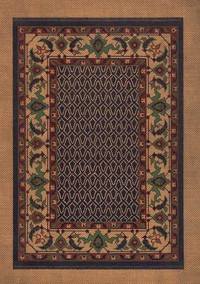
Rugs: Oriental and Occidental, Antique & Modern - A Handbook for Ready Reference
by Holt, Rosa Belle
English
607h 46m read