Project Gutenberg's The Padre Island Story, by Loraine Daly and Pat Reumert
This eBook is for the use of anyone anywhere in the United States and most
other parts of the world at no cost and with almost no restrictions
whatsoever. You may copy it, give it away or re-use it under the terms of
the Project Gutenberg License included with this eBook or online at
www.gutenberg.org. If you are not located in the United States, you'll have
to check the laws of the country where you are located before using this ebook.
Title: The Padre Island Story
Author: Loraine Daly
Pat Reumert
Release Date: May 8, 2018 [EBook #57118]
Language: English
Character set encoding: UTF-8
*** START OF THIS PROJECT GUTENBERG EBOOK THE PADRE ISLAND STORY ***
Produced by Stephen Hutcheson and the Online Distributed
Proofreading Team at http://www.pgdp.net
_The
PADRE ISLAND
STORY_
_by
LORAINE DALY and PAT REUMERT_
THE NAYLOR COMPANY
_Book Publishers of the Southwest_
SAN ANTONIO, TEXAS
4th Printing
_Copyright ©, 1962, by Loraine Daly and Pat Reumert_
_This Book or Parts Thereof Must Not Be Reproduced Without Written
Permission Except For Customary Privileges Granted To The Press And
Other Reviewing Agencies_
_All Rights Reserved
Library of Congress Catalog Card No. 62-13061
Printed in the United States of America_
_Dedicated To:_
_The parents of Loraine Daly and the dear friends of Pat Reumert. We
fondly remember how, as children, we tested their tolerance, shared
their affection, and grew up under the warmth of the old-fashioned story
book variety of their family life._
_Acknowledgements_
We wish to thank the United States Fish and Wildlife Service, the Texas
Game and Fish Commission, and the Rio Grande Valley Chamber of Commerce
for furnishing photographs.
In our research we were aptly guided by Vernon Smylie of Corpus Christi,
Texas. We wish to thank him not only for help, but for the source
material he made available.
_Contents_
Acknowledgments vii
Introduction xi
First Picture Section Between xii and 1
The Lusty Past of Lady Padre 1
Glittering Graveyard 7
Tropical Ladyfinger 15
Airy Wanderers 17
Bountiful Borderland 23
Matadors and Promenaders 37
Fun Calendar 41
Second Picture Section Between 44 and 45
Playfolk and Sportsmen 45
Padre’s Promise 49
Bibliography 51
_Introduction_
As you read the following pages, we hope you can feel a bit of the
primitive, swashbuckling history of Padre Island. Where once roamed
savages, cavaliers, pirates, soldiers and pioneers, there now rises—out
of the sand dunes—an isle which every man has pictured for himself.
Tropical birds, sea shell treasures and exotic driftwood are cradled
among the gleaming white sand dunes. Once in awhile the shifting sands
reveal to the lucky hunter an old money cache or relic of a bygone
civilization.
Padre Beach, located at the southern tip of the island, is a resort
oasis of modern architecture. A National Seashore Park is being
considered to preserve the virgin beauty of the center portion of the
island. Multi-million dollar causeways stretch majestically over
shimmering Laguna Madre to connect the island at both ends to the Texas
mainland.
The world famous tropical Rio Grande Valley is Padre’s luxurious
neighbor, preening its giant sized fruit trees and breath-taking
jungle-like flowers and palms. The civic and industrial richness of the
Valley overflow into Padre to revitalize the growth and development of
its beaches.
Around the corner from Padre, bordering the Valley, is the gay flavor of
Mexico. Visits to the border towns are gala occasions, with little or no
red tape. Dollars meet their usual welcome.
Opposite the northern tip of Padre Island is the booming city of Corpus
Christi, one of the country’s most beautiful coastal towns. On the
mainland, beside the long stretch of the island, Texas presents its most
historical and natural points of interest.
To playfolk who want year-round resort recreation; to hunters and
fishermen or to treasure hunters and those interested in legends and
wildlife; to retirement seekers and pioneers, and to easy-livers, the
following pages will delineate the past, present and future of Padre
Island and its hinterland.
_Loraine Daly_
_Pat Reumert_
First Picture Section
[Illustration: Water skiing off Padre Island]
[Illustration: Padre driftwood takes many weird shapes]
[Illustration: Driftwood’s beauties are many and varied]
[Illustration: Padre’s white sand dunes contrast with Gulf waters]
[Illustration: “Cactus garden” in the Lower Rio Grande Valley (Ken
Snyder Photo)]
[Illustration: Shipwreck! Boilers and wreckage from the _Nicaragua_]
[Illustration: Earthen oven used by missionaries—Mission, Texas]
[Illustration: Mier Bell tolled disaster—1842 (Ken Snyder Photo)]
[Illustration: Ruins of the Patrick Dunn Ranch]
[Illustration: Rio Grande R.R. Locomotive (Ken Snyder Photo)]
[Illustration: Port Isabel lighthouse]
[Illustration: Century-old church—Weslaco]
[Illustration: Spanish dagger (Holbrook Photo)]
[Illustration: Grapefruit cluster (Ken Snyder Photo)]
[Illustration: Palms make roads a majestic panorama]
[Illustration: (uncaptioned)]
_The Lusty Past of Lady Padre_
The ghostly etchings of past eras, traced in the mysterious sands of
Padre, are a lusty view for the hardiest. Here thrived humanity at its
most intense pitch. Adventure, somehow, often seeks islands in which to
ferment. Here were wars, savages dueling with royalty, romances of
Indian princesses, pirates’ revenge, blood-soaked buried treasures,
conquerors’ defeats, resting places of high-spirited explorers, refuges
for thieves, scoundrels, and for idealists. Their secrets nap beneath
the rhythmic shifting sands.
Padre intruded into history in the 1500’s, when one of the earliest
explorers, and certainly one of the earliest winter tourists, Alonso
Olvarez de Piñeda, set foot on its coast to open the door to the New
World. Next in the parade of travellers was Cabeza de Vaca, who stepped
ashore at the southern tip of the island. La Salle and De Soto also
briefly touched Padre, and even Cortez (and Drake, in later history)
explored the island on the way to conquest.
Fierce Indians were first masters of the island. Relics of their
primitive way of life have been retrieved and sent to museums throughout
the country. Chief among the Indians were the terrible Karankawas, a
cannibal tribe who ravaged the island at the turn of the nineteenth
century. Jarring against the soft setting of aquamarine seas, white
sands, and pink skies, they shot giant redfish with wildly decorated
bows and arrows. They sliced their brown bodies deep into the seas,
seeking food and, with glittering knives, often battling sharks. They
shouted blood-tingling chants to the accompaniment of shell drums,
flutes, and stone-filled gourds. To this pagan music, the painted and
feathered “Kronks” danced into the whirl of three day orgies.
The woeful tale of the “Flight of the Three Hundred,” to be dealt with
in detail in the following chapter, reveals the plight of satin-clad
cavaliers and ladies on Padre, who failed to conquer the challenge of
savages and sun. Among them was Doña Juana Ponce de León, whose beauty
caused men to search for the Fountain of Youth. Under the relentless
sun, these castaways fled from the cannibalistic Kronks into the sand
dunes of Padre, buying their lives by leaving their richly brocaded
garments behind them to delay and bribe their savage pursuers. One by
one they dropped, withered, into the white sands, brought down by fever,
hunger, thirst and arrows.
Pirate Jean Lafitte, hero of the War of 1812, and scoundrel of the seas,
held court over his renegade colony of outlaws on Padre, and added more
legend to the notorious past of Lady Padre. During his reign, he amassed
a fortune by preying on Spanish treasure ships. Many a sea adventurer
met his death on the shores of Padre because of the treachery and
cunning of these devious shipwreckers. These scoundrels would set up
lights on the island to confuse the seamen’s course and lure the ships
into shallow waters nearby. The vessels would run aground or become
wrecked, and the pirates would steal their cargo. Lafitte and his one
thousand followers finally settled on Galveston Island. One day he
sailed away with a handpicked crew and was never heard of again. It is
said that many of the most solid, respectable family trees, just a
stone’s throw from Padre Island, sprouted from the buccaneers left
behind.
One of the first white men to actually lay claim to the island was a
Catholic priest, Padre Nicolás Balli, who obtained sovereign right to it
from the Spanish crown about 1800. He came to Padre to convert the
Indians to Christianity. Father Balli then established a mission and
ranch near the center of the island, calling his settlement “Rancho
Santa Cruz.” In 1827, to substantiate Father Balli’s claim, the island
was surveyed with braided rawhide cords. Padre Island became his
namesake. Earlier the island had been called Isla Blanca (White Island),
although the northern end was also called Isla de Corpus Christi, and
the southern end San Carlos de las Malaguitas. The good Father,
unfortunately, had little luck in converting the Indians. The last of
the family to which Padre Balli belonged left the island in 1844.
For three years the island remained deserted, until still another
episode in its colorful history unfolded with the wrecking of the
three-masted schooner of the illustrious Singer family, of sewing
machine fame. Captain of the ship was John Singer, brother of the
founder of the Singer Sewing Machine Company. John Singer then built a
house, brought cattle from the mainland, and raised a family at Rancho
Santa Cruz, the same site used earlier by Father Balli. It is
interesting to note that here, on Padre Island, was used the first
sewing machine in Texas, for Singer’s wife was sent one as a gift from
her husband’s brother. John Singer reigned over the Rancho Santa Cruz
village and cattle ranch until the Civil War, when, because of his
Unionist sympathies, Singer was forced to leave.
The United States flag appeared over the island when Captain Ben
McCulloch of the Texas Rangers galloped down the interminable beach.
Often in the course of history Padre’s sands have felt the footsteps of
soldiers, for wars have figured generously in her past. Padre’s hard
sandy beach road served perfectly for the movement of troops. General
Zachary Taylor’s troops marched down the long slender isle and used it
as a camping ground during the United States-Mexican War in 1846, as
later did the Federal troops during the Civil War. General Sheridan blew
apart the Singer Ranch on his way to give impetus to the French
withdrawal from Mexico. As the Imperialists left Mexico, Carlotta’s
faithful Belgians sought refuge here on the island.
One of the most colorful figures to appear on the scene at Padre was the
self-styled “Duke of Padre Island,” Patrick F. Dunn (Don Patricio, as
his bronzed cowpokes called him). Beginning in 1879 he raised cattle on
his leased, sprawling dunes and the sandy beach until well into the
1900’s. Out of valuable mahogany which floated ashore, he built his
famous cowpens, which are still standing, forty miles down the island,
and used yet at roundup time. For his ranch headquarters he used
salvaged material from shipwrecks. Steamer refrigerator hinges served as
his door hinges, and his chairs were from wrecked steamers.
The southern part of the island was finally acquired through the
doggedness of devoted Texan John L. Tompkins, who travelled throughout
the United States securing titles from stockholders of a defunct
corporation. Tompkins learned that title to the turbulent historical
island had even changed hands in high-stake poker games.
Like a shimmering mirror, Padre Island has reflected its own flamboyant
growth, from savages and cavaliers, buccaneers and privateers, priests
and soldiers, to a rapidly growing resort and recreational area.
[Illustration: (uncaptioned)]
_Glittering Graveyard_
Lying under the warm sands of Padre Island, and beneath the waters of
her coastline, lies the testimony of the island’s turbulent dwellers.
Beachcombers still frequently uncover these evidences. Relics of past
civilizations have been laid bare by Gulf storms.
Dispatched to Spain by Cortez of Mexico in the summer of 1553, a fleet
of twenty treasure ships, laden with gold, silver and gems stolen from
Aztec shrines, sailed from Vera Cruz, Mexico, with about two thousand
persons aboard. Among them were those mentioned earlier in the ill-fated
“Flight of the Three Hundred.” The ships sailed head-on into a hurricane
off the Bahamas. Three were sunk, several were able to skirt the storm,
but thirteen of the vessels, with approximately three hundred aboard,
fled to the west and went aground on Padre Island. Most of the
passengers made it safely to the beach, only to be met by the ferocious
Karankawas. Without supplies, they fled southward, hoping to safely
reach Tampico, Mexico. For awhile they were able to buy their lives and
much needed time by bribing the savages with their beautiful garments.
Unhappily, however, many met death from arrows, starvation or illness.
Only a few survivors reached Port Isabel, and only one person, a priest,
reached Tampico. Another survivor, Francisco Vasquez, sustained himself
after discovering that fresh water could be found on Padre by digging
only a shallow hole in the island sand. Vasquez directed a salvage fleet
of Yucatecan Indian divers to the site of the wrecks some months later.
All but one ship was found, and it was known to be loaded with Spanish
doubloons and bars of gold.
In December, 1904, A. H. Meuly claims to have found the ship and marked
the spot. When he returned, his markers were gone. He reported he found
a deposit of gold, worth an estimated million dollars, in the skeleton
of an old galleon thirty-five miles from Corpus Christi Pass. He
believed the hull to be the remains of Cortez’s vessel.
Devil’s elbow, a strange curve in Padre Island’s shore-line which faces
the Gulf, is so-named because as early as the sixteenth century it had
become the grounding point for many an ill-fated, floundering vessel.
These ships often carried large amounts of money, in the form of gold
and silver coins. When the wooden kegs carrying the coins rotted, the
money was washed ashore. (It is an intriguing point—and undeniable
fact—that due to the prevailing water currents sunken objects in the
Gulf have a tendency to wash ashore on Padre Island.)
In 1811, a Spanish ship with half a million dollars in its stronghold
was sunk by Lafitte. In 1873, the steamer _S. L. Lee_ sank off Brazos
Santiago Pass with a hundred thousand dollars aboard. The following year
the _Little Fleeta_ carried twenty thousand dollars down with her. In
1875, at least three vessels, the _Texas Ranger_, _Ida Lewis_, and
_Reine des Mers_, were lost off Padre with almost half a million known
to have been in their holds. The _Clara Woodhouse_ carried eighty
thousand dollars to the bottom with her, while the _Maria Theresa_
foundered off Padre Island with a hundred thousand dollars in the
Captain’s cabin.
Waiting for some lucky finder, the bulk of this treasure still lies
imprisoned in sand dunes and the purple depths of the island’s coast.
The _Nicaragua_, which went aground on Padre, never to be budged again,
forty miles north of Padre Beach on the night of October 16, 1912, is
still clearly visible.
It is generally agreed there are still many large caches buried on the
island. Some were secretly stashed away by pirates, smugglers and other
outlaws who used the island as a rendezvous and safe hiding place. Padre
was distinguished as a pirates’ summer hangout. Pirates’ earrings and
noserings have been recovered from the sand.
Lafitte is said to have buried a fortune in gold, here on Padre, beneath
a millstone with the inscribed command “Dig Deeper!” Several years ago a
treasure hunting party, with a chart pinpointing a Spanish dagger plant
and three brass spikes, began their search for the Lafitte treasure.
Spanish dagger plants they found by the thousands but no brass spikes,
and hence the cache is still waiting to be uncovered.
Lafitte dug Port Isabel’s first water well to replenish his ships with
sweet water. He, too, had discovered that fresh water could be found
under the sand hills around Laguna Madre. The Lafitte wells are now an
interesting tourist attraction.
Old English and Spanish gold and silver coins, dating back as far as the
1600’s, have been unearthed, as have stacks of dollars in rusty cans,
and jewelry consisting of rings, brooches, earscrews, bracelets and
necklaces. Many of these treasures have been purchased by museums.
Respectable people, as well as robbers of the sea, often used Mother
Earth as a safe hiding place. The owner of a buried cache often met
death at the hands of Indians without having revealed to anyone the
location of his valuables.
Money Hill is a sand dune reputed to be filled with a fortune of old
coins, silver, gold and jewelry, hidden by John Singer. Some say that
the real Money Hill is near Padre Beach, others say at the north end of
Padre Island, and still others hold that it is on neighboring Mustang
Island. One version has it that Singer and his young son rowed six miles
up Laguna Madre from their Rancho Santa Cruz home, now referred to as
“Lost City,” to bury the fortune in a dune marked by two small oak
trees. Regardless of which story you care to accept, the Money Hill
containing the Singer fortune never has been found.
When the Singer family and their ranch hands fled during the Civil War,
it was said they buried eighty-five thousand dollars in a screwtop jar
along with Mrs. Singer’s emerald necklace, under the foundation of the
ranch home. This, too, has never been found, although Lost City itself
was discovered in 1931 by Charles Hardin and a treasure hunting party.
Here is his story:
I was walking across Padre Island one morning from the Gulf beach
toward the Laguna, when I saw two sword handles in the sand. The
blades were crossed, and the rust had welded them together. One of
them had the initials “J. H.” inscribed on the handle. We started
digging around. Everywhere we looked we found items of interest. They
were real tokens of the past.
Several English and Spanish coins and a wealth of silverware were found
by Hardin’s group. When the silverware was sent to New York, examined
and traced, it was found to be made of coin silver by a firm that had
gone out of business in 1800. Just a few inches under the sand was
unearthed a blacksmith’s shop, a graveyard, and campaign buttons from
Taylor’s Army.
Hardin explains for future treasure hunters, that although he knows the
surface has changed, he is certain that the spot can easily be located
again. His directions are, “Start at the jetty on the southmost tip of
Padre Island, and drive up the Gulf beach exactly twenty-six miles. Then
walk a little less than one-eighth of a mile, about two hundred yards,
back up into the dunes.”
Lost City was not a city as such, but the site of various settlements
that were established over the centuries by different inhabitants. Old
Padre Balli, you will recall, established his Santa Cruz Ranch here.
Here it was also that General Taylor camped on his way to the Mexican
War. John Singer used it as his home site, and cattle rancher Patrick
Dunn also used Lost City as his headquarters.
In 1958, Charles Hardin participated in the rediscovery of Lost City
with Frank Tolbert, a Dallas newspaperman. Hardin was then sixty-eight
years old. They uncovered the foundations of Lost City, which were
composed of monster mahogany timbers fastened together with ancient
ships’ iron hardware. They found a pirate-style pistol and other parts
of eighteenth and nineteenth century firearms, and the head of a
tomahawk. Still a mystery, however, is the eighty-five thousand dollar
fortune buried in the huge screw-top jar of Singer’s.
Five great ocean currents meet off the coast of Padre Island to toss
back onto the white shores many interesting objects from the sea. Some
of the mellowed rare woods, eagerly sought by collectors, are giant
mahogany, or Spanish cedar logs, cypress, cottonwood, walnut, bamboo,
gum and teak. An interesting driftwood museum has been started at Padre
Beach. Coconuts, probably from the West Indies, are found at times by
the thousands.
Not long ago, a man idly kicked a can along the sandy beach and, after a
few moments, tiring of his sport, kicked it aside. The man behind him
picked up the can and found it contained three hundred dollars worth of
old coins. A woman, noticing an oddly designed box, opened it and
discovered it was full of jewels. One hunter received eight hundred
dollars for two silver bars and an interesting old one hundred-fifty
foot chain, of the type used on ocean going vessels of years long past.
These hard-packed sands have yielded some shells of such importance that
they are now in the Smithsonian Institute. Many shells are merrily
named: sea pearls, sea hearts, starfish, sea pansies, sea biscuits,
sharp eyes, baby’s foot, jingle shells, angel wings, periwinkles and
sand dollars (round and flat as a coin). When a sand dollar is dried and
opened, you behold five tiny structures which perfectly resemble flying
seagulls. The main shell banks, Big Shell and Little Shell, are twelve
miles apart. They are oceans of tiny marine shells deposited along the
beach. Big Shell differs only in that it is made up of larger shells.
Driving is very tricky business in this area.
A steel rod to thrust into the heart of Padre is weapon enough to reward
the hunter with his own intimate glimpse of its vibrant past. The rod
may only produce the false alarm sound of a buried coconut, or, maybe,
it will discover the glittering loot of one who never returned.
[Illustration: (uncaptioned)]
_Tropical Ladyfinger_
Padre Island, the slim white ladyfinger of the Texas coastline,
stretches for one hundred-ten miles, from sparkling Corpus Christi to
historic Brazos Santiago (Arms of St. James) Pass. Laguna Madre (Mother
Bay), a beautiful natural bay, separates the mile wide island from the
Texas coast mainland. Cradled in the Gulf breezes, Padre’s picturesque
terrain beckons to pleasure seekers to taste its temperate climate.
Mile after mile of rolling sand dunes, which appear to be a miniature
mountain range, are covered with unusual tropical vegetation. Down the
center is a somewhat level plain, with another range of dunes flanking
the western side of the island, which overlooks the placid Laguna Madre.
Shining shell banks jewel the endless miles of white, hard sand beaches.
In this virgin wilderness small rainbow clusters of wildflowers bend to
the tropical Gulf breezes. Sweeping across the azure skies fly the wild
birds, occasionally diving into the limpid waters to catch the silver
betrayal of a luckless fish.
Padre is bordered on the north by Mustang Island; on the south by Brazos
Island. Many small islands dot the adjacent Laguna such as Little Bird
Island, Big Bird Island, Dead Man’s Island, and Shamrock Island.
The five great ocean currents, mentioned earlier, meet at what is known
as the Devil’s Elbow off the center shore of Padre Island. The
prevailing wind is from the southeast eleven months of the year, and
from the northwest during the month of December. Normally, the Padre
Island area has six light frosts a year. Its year round temperature
averages 74.5°; water temperature is 69.2°; daily breeze, nine miles per
hour. It lies in the general longitude of Florida.
Padre Island is an ideal winter haven for birds ... and tourists.
[Illustration: (uncaptioned)]
_Airy Wanderers_
Great migrations of birds darken the sky on their way to Padre Island
and the surrounding winter refuge area. Here you can watch stately,
elegantly attired families; noisy, rollicking, irresponsible marauders;
lovely, comical, natives and foreigners. Most of those that inhabit the
Laguna Madre area are members of the wading tribe; dainty snowy egrets,
graceful black and white stilts, dignified blue herons, reddish egrets,
clownish Louisiana herons, fat, bell-mouthed pelicans, laughing gulls.
More than a hundred different species may be seen here during the course
of a year.
Snowy egrets dine delicately on small fish; stilts, in their tuxedo
dress, are endlessly predatory. Great blue herons that stand knee deep,
statuesque and immobile for hours, suddenly slash out their javelin-like
beaks to come up with a silvery mullet. Louisiana herons dart
ridiculously across the shallows. Along the shoreline scamper the
kildeers, while a reddish egret seems to dance off his enthusiasm to
ballet tunes. Formations of white pelicans chase tiny fish across the
shallow water. It is surprising to see the apparently awkward brown
pelicans dive like efficient machines. West Indian Negroes claim they
have seen these birds seize fish six or eight feet under water. Soaring
with what seems like a single wingbeat against the sky, the gulls and
terns, airy wanderers all, shed their earthbound clumsiness to
marvelously graceful flight.
During May, June and July, the serious business of housekeeping begins.
The birds begin to prepare for nesting to put on gaudy plumage or
handsome wedding garments. They temporarily abandon the heavens. With
noisy disharmony, they act out one of nature’s greatest dramas, the
perpetuation of the species. On Padre itself, and on small nearby
islands in the Laguna, as well as in certain areas along the coast of
the mainland, they nest side by side and squawk and squabble as they
raise their young.
One’s first sight of such a nesting place is a vivid experience. On the
sand and shell of the beach lie the speckled eggs of shearwaters and
terns. In the low-growing brush are nests of ibis, egrets, spoonbills
and herons. Pelicans pick the more open portions of the islands to hatch
their young in nests that are little more than flattened places in the
grass. When flying into these areas in a small plane, as research
workers often do, birds retreat in stampedes.
Green Island, nearby and lushly overgrown with forests of ebony and
cactus, lures birds that ride the winds for hundreds, or even thousands
of miles; flamingos from Bermuda, yellow-billed tropic birds from the
Antilles come to visit. Most frequent visitors are great black-winged
fliers known as frigate birds. These pirates (who are too lazy to hunt
their own food), force, with buffeting wings, the gulls to disgorge fish
in their craws, seizing the prey while still airborne.
Among Padre’s most interesting birds is the small contingent of falcons
that stops on or near the island instead of continuing with the mass
migration to South America. These big handsome duck hawks, with
bluish-grey feathers narrowly banded in black, are said to have a
cruising speed of fifty miles an hour. In the downward swoop to strike
their quarry, known as a “stoop,” they have been clocked by pilots at
speeds close to two hundred miles an hour. Many sportsmen feel it is
more humane to hunt with trained falcons than guns, since the game is
either killed instantly or escapes unharmed. The fact that it was not
generally known falcons winter on Padre Island until recently made them
comparatively safe, but their numbers are rapidly diminishing now that
they are being molested.
Hundreds of thousands of redheads and canvasbacks, both diving ducks,
spend the cooler months around the Atascosa Wildlife Refuge. They arrive
about the middle of August. Blue-winged teal, or pintails, arrive in
October. By November first there will be a quarter of a million ducks;
sometimes two million birds in all are on the refuge at one time.
Flights of ten thousand ducks in one flock are not uncommon. Visitors
say several small islands, which are favorite breeding places, can
hardly be walked upon for fear of crushing nests, eggs, and young birds.
Echelons of geese and whole hosts of many waterfowl varieties end their
winter migration here. Wood ducks, the most beautiful and gentle of all,
nest in the trees. Rare and almost extinct whooping cranes, huge and
stately, come from Canada to spend winter months in nearby marshy areas.
At the last count there were only about thirty-six of them left.
“Mr. Paisano” is the most colorful and interesting bird to inhabit the
tip of Texas. He is the plucky little roadrunner, who looks as though he
were assembled from spare parts. Imagine, if possible, a long striped
snake on two legs, a feather duster on his head and another trailing
behind. He is about two feet tall, with a tail as long as its body, a
ridiculous crest, stubby wings, rarely used and blue, mocking eyes,
circled with yellow rings and shaded with eyelashes a movie star might
envy. He is famous for his cocky self-assured air.
Lore has it that the roadrunners surround a rattlesnake with a fence of
cactus while the reptile sleeps. When the fence is completed, the snake
is aroused. He frantically slashes at the fence, becoming so entangled
and bedeviled by spines that he falls an easy victim. Some Mexicans, who
named the bird Mr. Paisano, believe it to be good luck if he crosses the
path from left to right, and bad luck if he crosses in the opposite
direction.
For ages Laguna Madre has sheltered myriad varieties of fish and
shellfish, providing bounteous banquets for wildlife frequenting her
shores.
Among the animals native to Padre are ’possum, jackrabbits, ground
squirrels and pocket gophers. The days of the Padre coyote are limited
due to encroaching civilization. People along the border swear the
coyotes are fish eaters, also, and use their tails for fishing.
Once the colorful little Padre coyotes claimed top billing in a widely
publicized coyote hunt. Accompanied by newspapermen and cameramen, under
the direction of Dr. J. A. Jockaday of Port Isabel, five hundred men
planned the hunt with the precision of military strategy. It piqued
public interest like a Hollywood premiere. The coyotes were to be driven
into an amphitheater to meet their destiny. The coyotes, however,
outwitted their predators and only twenty-six were killed.
All along the beach, pale colored and square shelled, are the ghost
crabs, skuttling across the sands, returning to their holes when danger
threatens.
With a little time to leisurely explore, one can roam the island and
peek into intimate secrets of Padre’s wildlife.
[Illustration: (uncaptioned)]
_Bountiful Borderland_
Padre Island itself is easily accessible by car, train, plane, boat or
bus. Flying in, one can land at Brownsville International Airport (at
the south), Corpus Christi Airport (at the north), Padre Beach Airport
at Port Isabel, near the southern point of the Island.
Three causeways are now in use and another is being planned. At Corpus
Christi, one may reach the island over the scenic Nueces County
Causeway. From Port Isabel to the island, one mounts the three million
dollar, two and one-half mile long Queen Isabella Causeway. Oldest of
the three causeways is a wooden one which hops along the chain of
islands from the mainland city of Aransas Pass, the Mustang Island
community of Port Aransas, famous fishing haven. The fourth causeway is
being planned to cross the Laguna Madre from Port Mansfield.
In the not too distant future, a scenic paved, multi-million dollar
highway, reaching the full length of Padre Island, is in prospect.
Travel from the northern end to the southern end of Padre is recommended
on the mainland United States Highway 77 southward toward Brownsville,
and then along Texas Highway 100 to Port Isabel and over the Queen
Isabella Causeway to the island.
The Padre Island beach facing the Gulf provides a beautiful scenic drive
during normal tides at both the north and south ends. It is impossible,
however, to drive the full length of the island because of a channel
near the center that divides the island into two parts.
“Where the wind blows, the oil flows, the cotton grows, and it never
snows,” is the colorful slogan of CORPUS CHRISTI, famous for its booming
industry, beautiful Ocean Circle Drive, airfields, and mansion-studded
beaches. A United States Naval Air Station, one of the largest in the
world, is here, as are Del Mar College and the University of Corpus
Christi.
As a cultural center, Corpus Christi frequently assumes a Parisian air
when writers and artists convene in this sunny city. The CORPUS CHRISTI
JUNIOR MUSEUM is fun for children. Here for the children is a colorful
collection of Indian relics and Padre Island shells. There are also many
other fine museums.
Only an hour’s drive from Corpus Christi is the ARANSAS NATIONAL
WILDLIFE REFUGE at Austwell, which offers sights of the nation’s
wildlife in its own habitat; birds and game abound. Even the whooping
crane sleeps here during the months from November to April.
ROCKPORT and FULTON BEACH, in the Corpus Christi area, are famous resort
cities, aristocratically adorned with lovely wind-bent oak trees. In
nearby GOOSE ISLAND STATE PARK is a MARINE LABORATORY and AQUARIUM.
The Annual Tarpon Rodeo has made nearby PORT ARANSAS famous, and
visitors have been introduced to its fine restaurants, noted for their
seafood.
Leaving Corpus Christi, Highway 77 cuts through Kingsville, headquarters
of the fabulous KING RANCH of nearly a million acres, where roam
eighty-five thousand head of cattle. The acquisition of this huge
acreage was begun in 1853 by Richard King, one of the early steamboat
captains who navigated the Rio Grande. Here was developed the only breed
of cattle originated in the Western Hemisphere—the King Ranch Santa
Gertrudis breed. Inside the fifteen hundred miles of fencing are some
three hundred windmills. The ranch is famous, also, for breeding
thoroughbred horses, two of which, Assault and Middleground, have been
Kentucky Derby winners. The Texas College of Arts and Industries, one of
Texas’ finest, is in Kingsville, too.
Settlement of the lush Rio Grande Valley was first undertaken in the
late eighteenth century, when the Count of Sierra Gorda, Escondon,
brought settlers into this then semi-desert region of the Rio Grande
delta. These were the first Europeans to attempt permanent settlement in
the region. In 1767 Spain confirmed their endeavors.
From then until well into the nineteenth century, the Valley was left
pretty much alone. It was the spreading empires of the cattle barons
that brought the next burst of activity. In 1872 the Rio Grande
Railroad, a rambling, narrow-gauge line, was completed from Port Isabel
to Brownsville, and promptly put most of the river steamboats out of
business, although steamers were used to take goods to Mier as late as
1886.
The coming of the main railroad from the North—the International and
Great Northern—really opened the Valley up to its present prosperity.
This was in 1904, and ever since the Valley has been prospering. Port
Isabel became a deep water port in 1930; Brownsville followed. Harlingen
was made a port with the lengthening of the Intracoastal Canal in 1951.
Poised at the entrance to the Lower Rio Grande Valley is RAYMONDVILLE,
and the nearby LA SAL VIEJA, a great salt lake, which for the most of
two centuries provided salt for South Texas and northern Mexico. From
Raymondville it is only a twenty minute drive to the Gulf of Mexico at
PORT MANSFIELD.
Next are HARLINGEN and SAN BENITO, two palm-studded cities, situated
side by side, frilled with tropical plants and fruits. Plush motels,
lavish restaurants, reminiscent of Las Vegas with dazzling neon finery,
dramatize the wide, sparkling, clean streets. The warm winter season is
entertaining with its fiestas and cultural festivities. In San Benito a
beautiful wide _resaca_ (Spanish for old river bed) is one of the
largest and most picturesque left by the Rio Grande in its meandering
around. Besides being the home of the Valley cotton industry, tremendous
canning plants are located in this area. Every February the Municipal
Golf Course is the scene of the nationally famous “Life Begins at Forty”
invitational tournament.
Once this beautiful valley setting was a tangle of thorny mesquite and
cactus, but irrigation has turned it into a productive tropical
resortland. The slogan of the Valley is “land of fruit, flowers and
funshine.” Amid nature’s lavish display of grapefruit, oranges, lemons,
limes, tangerines and tangelos, solemnly sit weathered old missions. Art
here often takes the form of the weird figurine shapes of cactus
huddling near the ground or jutting against the sky.
About two-thirds of the people in the Lower Rio Grande Valley are of
Latin-American descent. As a result, the Valley is bilingual. Even stop
signs read “stop” and “alto.” Noted for their friendliness, the populace
of the Valley (at this writing) is numbered around a half million.
At the scene of the first shots fired in the Mexican War sits
BROWNSVILLE, largest city in the Valley, named after Fort Brown, a
military establishment that was earlier named Fort Taylor. Here are
battle sites marking places where General Zachary Taylor defeated the
Mexicans during his victorious march through the Valley. Just outside
the city is Palmetto, a site that has the distinction of being the
actual last battleground of the Civil War, when three hundred
Confederates stationed at Fort Brown defeated seventeen hundred
Federalists who tried to capture the cotton stored in Brownsville
warehouses. This was six weeks after the surrender of Lee at Appomattox;
due to poor communications of the time news of the surrender had not
reached Texas. Now Fort Brown serves as Texas Southmost College. The old
buildings and breastworks of the fort still remain.
A gentler history of Brownsville can be experienced in the STILLMAN
HOUSE, built by the city’s founder over a hundred years ago and now
carefully restored. In the patio of the Brownsville Chamber of Commerce
sits a little locomotive, relic of the RIO GRANDE RAILROAD, first in
South Texas. The CHURCH OF THE IMMACULATE CONCEPTION has survived here
since 1850. Nearby, also, is the convent INCARNATE WORD, where the first
nuns came in 1860. A state marker identifies the site. Brownsville’s
high-brows leisurely nested in the OLD VIVIER OPERA HOUSE, scene of
culture and recreation until 1916.
In Brownsville, the old-world charm of the Spaniards, the exotic
traditions of the Indians, the youth and industry of the Americans are
blended and mingled into a unique and colorful culture. Under Spanish
architecture one hears soft Castilian spoken. The strong influence of
ancient Mexican-Indian cultures survives in the rich-hued dresses of the
local women, colorful comic wear, quaint customs, and many spicy border
dishes. Exquisite inns with modern facades nestle in lush vegetation.
The PORT OF BROWNSVILLE, western terminus of the Intracoastal Canal,
serves as an outlet to world markets for the South Texas and northern
Mexico area.
A short distance from Brownsville is SANTA MARIA, recalling the days of
its importance when river boats were the principal means of
transportation along the Rio Grande. Now it is interesting because of
the lovely little church built in 1880 by the Oblate Fathers.
Close to LOS FRESNOS, a farming community, is BAYVIEW, where live
industrialists, writers, artists, and retired executives. Luxurious
estates dot a twenty-two mile stretch of a beautiful _resaca_. The Los
Fresnos Charity Horse Show, with its international flavor, is held in
mid-June.
Over the golden Queen Isabella Causeway, across from Padre Beach on
Padre Island, reigns PORT ISABEL, explored by Spaniards in the early
sixteenth century. Before 1800 it was settled as a fishing resort
community. Its old lighthouse, built in 1852, has been preserved as a
state park in the center of the city—probably the smallest state park in
Texas. This historic structure was built to guide ships coming in from
the Gulf of Mexico through Brazos Santiago Pass. Port Isabel still
serves as a port for ships from the seven seas. Ocean going vessels
constantly ply through Brazos Santiago Pass. Succulent shrimp is the
commercial life of Port Isabel, which is often referred to as the
“Shrimp Capital Of The World.” Around the clock the shrimpers unload
their valuable cargo. The city is also home of the Texas International
Fishing Tournament held in August. At one time Port Isabel was designed
to become a modern Venice, with channels dredged through it which may
still be seen.
Turning left from Brownsville, one winds through the Lower Rio Grande
Valley, where groves of Texas’ famed delicacy, pink grapefruit, and
hugely clustered oranges and lemons provide tempting and fragrant scenes
along the highway. Also, in this tropical valley, and with little
coaxing, papayas, bananas, avocados, cantaloupes, mangos, and
strawberries flourish. In many of the citrus groves signs invite
tourists to pick fruit at bargain prices, such as a dollar per bushel,
while the rest of the nation is still trying to ward off the assaults of
winter.
Here is a seventy-mile stretch of palm-lined Highway 83, framed in
tropical splendor, which runs from Brownsville at the east end of the
Valley to its west end, through an almost unbroken chain of cities,
including La Feria, Mercedes, Weslaco, Donna, Alamo, San Juan, Pharr,
McAllen, and Mission. The first stop down this main street is LA FERIA,
a pleasant residential community. Then on to MERCEDES, home of the Rio
Grande Valley Livestock Show and World Championship Rodeo. It, also, is
a friendly city endowed with an abundance of flowers, where Sunrise Hill
Memorial Bowl holds, for the whole Valley, sunrise Easter services in
its amphitheatre. Next to Mercedes is WESLACO, central point of the
Lower Rio Grande Valley and a city of modern urban charm. DONNA is the
home of the South Texas Sheep and Land Exposition held during the winter
months. A townsite which has been moved away from the Rio Grande after
the disastrous flood of 1909, it is a city of many new civic buildings.
Like a pendant in the string of Valley pearls, presides ALAMO (meaning
cottonwood tree in Spanish), a city of bougainvillaea, poinsettias, and
lush tropical greenery.
Just across the street is SAN JUAN, site of the beautiful NUESTRA SENORA
DE SAN JUAN church, completed in 1954. Its exquisite altar was a gift
from Spain.
“’Tain’t far to Pharr from anywhar,” is the inadequate slogan for PHARR,
home of the Valley Vegetable Show, held each December. Many fruit and
vegetable processing plants are here. Eleven miles southeast is the
SANTA ANA NATIONAL WILDLIFE REFUGE, with two inland lakes maintained for
waterfowl and wildlife. Some of the two hundred eighty-eight species
which have been sighted in it are considered quite rare. It is a
veritable tropical jungle, with ebony trees said to be the largest in
the United States.
Next comes McALLEN, “City of Palms,” favorite of the tourists, and the
oil and gas center of the Valley. The city is built on one of the
richest natural gas deposits in Texas. Only eight miles from the border,
McAllen is often called one of the gateways to Old Mexico.
MISSION, named after LOMITA MISSION, is the setting for the Texas Citrus
Fiesta, a celebration glorifying the citrus industry of the state.
Lomita Mission is a small chapel built in 1849. Three miles west of
Mission is BENTSEN STATE PARK, which gives one an idea of how the Valley
looked a half century ago—before dense brush growth gave way to
irrigated farms. For many years William Jennings Bryan, the
silver-tongued orator, was a nearby resident. The BRYAN HOME is two
miles north of Mission.
Westward, from Mission to Rio Grande City, is a Hollywood western
setting, with shrines dotting the hilltops. At the entrance to the town
is Fort Ringold, famed military establishment which served as a station
for Robert E. Lee, Ulysses S. Grant, Zachary Taylor, Stonewall Jackson,
Jefferson Davis and John Pershing. Built as a cavalry post in 1847,
today Fort Ringold is the campus of the Rio Grande City High School.
Near Rio Grande City stands OUR LADY OF LOURDES, a replica of the world
famous shrine as it exists in the Pyrenees Mountains of southern France.
ROMA, founded in 1768 as a townsite, bears such a striking resemblance
to towns in the interior of Mexico that it was used as a location for
the filming of the movie _Viva Zapata_. It is a sleepy little village
perched on a bluff overlooking the Rio Grande, some one hundred miles
upstream from the Padre Beach area of Padre Island. The towering church
and other local buildings are constructed of adobe brick and stone. Its
surrounding hills abound in geological and botanical rarities: garnets,
turquoise, agates. Petrified wood and fossils may be gathered along with
many unique varieties of cactus—including the ceremonial “peyote.”
Roma opens the door to FALCON DAM, built jointly by the United States
and Mexico to impound the excess waters of the Rio Grande. The dam can
be crossed into Mexico without cost or formality.
NUEVO GUERRERO (meaning New Guerrero in Spanish), the Mexican community
across the dam, has an interesting story of its own. Old Guerrero, which
it replaced, founded a century and a half ago, was one of the original
five Escandon colonies inundated by the Falcon Dam reservoir. The
Mexican government then built a new town for its residents, complete
with homes, shops, schools, etc. The city resembles a house of mirrors;
each home looks like every other home. Stores and public buildings are
the same.
OLD ZAPATA had the same history, but the United States government
provided the funds, letting the residents rebuild to each one’s fancy.
Thus, the growth of the two communities has been along quite different
lines.
A little north of the Valley main street is EDINBURG, with a school
district of nine hundred and forty-five square miles! This is the county
seat of Hidalgo County and the home of Pan-American College. Each
September the Whitewing Dove Fiesta is held.
Many millions of trees shade the Valley. Belle of them all is the Royal
Poinciana, a gorgeous, flowering tree with deep red blossoms. More than
fifteen varieties of palm trees thrive here, ranging from the three or
four foot ornamental palmetto to the stately date and the majestic one
hundred foot tall Royal Palms. To plant a palm is to insure a share in
eternity, since palms are said to live forever.
Dozens of varieties of fruit and vegetables abound in the silt enriched
sandy loam of the Valley. When the citrus orchards are in bloom, the
entire region is scented with a delicate perfume-like aroma. Tropical
hues are picked up in the native growth and transferred to everyday
dress, making all a harmonious whole.
The Valley, actually the delta of the Rio Grande, is young. Falcon Dam,
calculated to wipe out the threat of drought and to insure an ample
water supply downstream, is attracting new industry. The Valley welcomes
the stranger with delight. Most families were strangers, too, twenty or
thirty years ago.
[Illustration: (uncaptioned)]
_Matadors and Promenaders_
It’s like having your cake and eating it, too! Residents and tourists on
Padre Island and in the Valley can enjoy the indulgences of modern life
in growing cities. Yet, if they want to take a step into the past to
arrest the tempo of contemporary living, they can cross the border into
Mexico’s picturesque towns and villages. These border towns are the
gateways to the great Mexican cities of Monterrey, Saltillo,
Guadalajara, Mexico City and other interior points. Visits to the border
cities are uncomplicated by red tape. Short stops are necessary at
customs offices at both sides of the river.
Across the Rio Grande from Brownsville is one of the largest border
towns, MATAMOROS, a wealthy metropolis of one hundred thousand people.
Here, there is a beautiful modern residential section. THE FRENCH OPERA
HOUSE was built a century ago at the whim of Empress Carlotta, during
the French occupation of Mexico. The unusual floor was constructed to be
tilted so all could see the stage, or levelled when the building served
as a ballroom. As one moves off the International Bridge at Matamoros,
the elaborate mansions of the Mexican cotton and oil barons dominate the
landscape with their architectural blends of ultra modern and
traditional Spanish design. Hundreds of curio shops invite the tourists
to buy anything from a live goat to a five hundred dollar pair of boots.
As in many Mexican cities, the life of the community throbs around the
market place, which is afire with color. There is always activity, with
strolling musicians and romantic couples. Higher than any of the other
buildings, the ancient cathedrals tower mystically over the town’s
gaiety. In Matamoros are diversions distinctly different from any of
those in the United States; exciting cockfights, famous matadors
performing in the Plaza de Toros; there are concerts, attractive night
clubs with excellent entertainment, restaurants serving wildgame
dinners. A menu, in some of the border night clubs, for a tab of about
two dollars per person, includes venison, cabrito (young goat), quail,
wild duck, white-wing dove, guacamole salad, beans, fried rice and hot
peppers. Then there are traditional promenades of young people in the
plaza too. An afternoon at a bullfight is an unforgettable mixture of
tradition and fearful thrills as matadors of Mexico and Spain compare
thrusts.
PROGRESSO AND NUEVO PROGRESSO are immediately south of the Valley cities
of Mercedes and Weslaco. Here cafes and curio shops beckon the tourists.
A few miles to the south the city of RIO BRAVO, with its dirt streets
and primitive peoples, offers a glimpse into a way of life that is
rapidly vanishing.
REYNOSA is situated across the river at a point opposite McAllen, and is
noted for its gay night life. From here the visitor may visit romantic
Monterrey, Mexico, just three hours away over a modern paved highway. In
Reynosa’s central market places are examples of native crafts from all
parts of Mexico; famous ceramics of Guadalajara and Puebla, painted
gourd bowls and fantastic masks from Michoacan, beautiful hand-woven
serapes and stoles and beautifully wrought guitars and other musical
instruments from the little villages in the highly isolated wooded
areas. On Sundays and special holidays bullfights are also staged.
This prosperous, bustling Mexican city was founded in 1749. Its famous
Anzalduas Canal, large as a river, runs through the city parallel to the
Rio Grande. Although its old cathedrals and plazas remain unchanged,
Reynosa has been one of Mexico’s fastest growing cities since the
discovery of oil in the area.
The historic towns of CAMARGO and MIER slumber on the south bank of the
Rio Grande across from Rio Grande City and Roma. Mier was founded in
1763 and was the site of the famous “black bean episode of the Mier
Expedition.” An American party of one hundred and seventy invaded Mexico
and were captured by two thousand Mexicans on Christmas Eve, 1842. A
drawing was held among the prisoners. Those drawing white beans were
spared by order of the Mexican commander. The one in ten who drew a
black bean faced the firing squad. The battle-scarred Mier church has an
altar and ceiling of carved wood imported many years ago from Spain.
In five locations modern bridges take the tourist into the old world
enchantment of another civilization.
[Illustration: (uncaptioned)]
_Fun Calendar_
The holiday spirit, like the tropical warmth, never really seems to
leave Padre Island and the Rio Grande Valley. All year long there is
something going on that creates crowds, costumes, parades and a spirit
of excitement and fun. “Come, be gay with us,” the slogan of
Brownsville’s Charro Days sums up the fun calendar.
A colorful pageant called BUCCANEER DAYS is held annually in the spring
in Corpus Christi. Visitors and natives are requested to dress in pirate
costumes. Spectacular events include a parade of floats, water pageant,
bathing beauty review, fashion shows, street dances, a square dance
festival, and a huge show at Buccaneer Stadium with a treasure chest of
prizes.
In Brownsville, CHARRO DAYS, the four day pre-Lenten festival in the
Mexican tradition, features parades, street dances and colorful displays
of merchandise. This whirl of color in motion combines the cultural
elements of both Mexico and Texas. Here the population of Brownsville
and Matamoros, meet attired in costumes of Latin America. Thousands of
charmingly attired children steal the show in the children’s parade.
MEXICAN INDEPENDENCE DAY, the across-the-border celebration on September
sixteenth, includes serenades in the plaza, street dances, parties and
elaborate fireworks, parades, imaginative decorations, games, colored
lanterns, and great glowing crepe paper globes filled with smoke that
are released to float over the city. At the Charro rodeo the cowboys
demonstrate their fine horsemanship and courage in the competitions.
Bullfights are staged on special holidays. Tourists from all parts of
the nation come to watch the beautiful girls and handsome boys
participate in the courtship promenade known as the _serenata_, the
young ladies walking clockwise and the young men counterclockwise.
January brings the CITRUS FIESTA to Mission, Texas, which offers a
highly unusual fashion show, golf tournament, coronation parade and a
Queen’s ball. The models wear costumes fashioned from products of the
Valley, such as bougainvillaea blossoms and orange peels. The effect is
surprisingly beautiful.
The TURISTA FIESTA in Harlingen features high school bands parading from
both sides of the border, fashion shows, miniature golf and shuffleboard
tournaments, fishing competition, beauty contests, crowning of a queen
and king, and barbecue for everybody. Also in Harlingen is the
nationally famous “LIFE BEGINS AT FORTY” invitational golf tournament,
held on the Municipal Golf Course every February. It offers a full week
of entertainment, with trips to Padre Island and Mexico. Of course,
players are limited to those over forty. In June, Harlingen holds the
COTTON FESTIVAL when the nation’s first bale is harvested usually in the
Mission area.
At Mercedes, the RIO GRANDE VALLEY LIVESTOCK SHOW AND WORLD CHAMPIONSHIP
RODEO every March offers stars from the entertainment world, big names
from the rodeo circuit, marching bands, and an opportunity to view prize
cattle and livestock of all kinds. The Future Farmers of America play a
big role in this show.
At Port Isabel, the BLESSING OF THE SHRIMP FLEET ceremony is held each
summer during the SHRIMP FIESTA, when the participants in the
multi-million dollar industry pause to pay tribute to the men who earn
their livelihood from the sea. After the serious theme of the blessing
of the fleet, a water parade of shrimp trawlers in holiday attire
initiates the gaiety of the fiesta. This blessing dates back to earliest
Christian times, and has long been an important rite to the shrimpers.
At this time the TEXAS INTERNATIONAL FISHING TOURNAMENT offers three
full days of competitive fishing.
The WESLACO BIRTHDAY PARTY, held in early September, marks the
anniversary of the city’s founding. A feature is Tourist Day, with
special attractions planned to appeal to winter tourists.
In Pharr, the VALLEY VEGETABLE SHOW in December draws travelers from all
over the country to see the unbelievably oversized, early ripening
displays of colorful vegetables.
Many smaller festivals keep things lively during the year. At Edinburg
BRONCO DAYS are held in November and PAN AMERICAN DAYS in the spring. An
ONION FESTIVAL is held in Raymondville. At McAllen a FOURTH OF JULY
celebration always closes with a gala bullfight in Reynosa, Mexico. At
Los Fresnos an annual fiesta includes a full scale SOCIETY HORSE SHOW
held in midsummer, which draws entries and visitors from all over the
United States.
Second Picture Section
[Illustration: Citrus Queen wears dress of citrus products]
[Illustration: Cotton-picking! Corpus Christi area]
[Illustration: Boating in a _resaca_]
[Illustration: The Old Salt Lake—_La Sal Vieja_ (Struby Photo)]
[Illustration: The Stillman House, Brownsville]
[Illustration: Wild turkey, Rio Grande Valley]
[Illustration: Mother coyote feeds her young (Kalmbach Photo)]
[Illustration: Whooping Crane—fast becoming extinct]
[Illustration: Waterfowl are plentiful off Padre]
[Illustration: Bullfight]
[Illustration: Charro Days mean music]
[Illustration: Charro Days street scene]
[Illustration: Everybody gets in on Charro Days]
[Illustration: Corpus Christi skyline from the waterfront]
[Illustration: Queen Isabella Causeway]
[Illustration: Padre Island waters have big fish, the beaches
beauty]
[Illustration: Hidalgo bridge to Reynosa (Struby Photo)]
[Illustration: Ships at dock, Port Brownsville]
[Illustration: Mr. Padre Island himself: John L. Tompkins]
[Illustration: Treasure during Buccaneer Days]
[Illustration: (uncaptioned)]
_Playfolk and Sportsmen_
On Padre Island, and in the surrounding Rio Grande Valley, are many and
varied forms of recreation. Between Padre and the Texas coast lie the
teeming waters of the famous Laguna Madre, where many varieties of fish
await to challenge the fisherman. Whether he prefers fishing in the bay,
from the jetties, surf fishing or deep sea fishing, this area provides
many thrilling catches for the sportsman.
Boats may be chartered for personal use or an individual may join one of
the party-boats that make daily runs. Twenty miles out of Port Isabel,
for instance, the red snapper catch is so well assured that many
skippers don’t charge if their guests fail to return with some.
Laguna Madre is a natural spawning ground for many varieties of fish,
such as trout, flounder, redfish, croaker, whiting, sheephead, snook,
drum, ladyfish, and the jackcravelle, who loves to break rods, tear up
reels and take lures away.
Already two hundred and seventy-two varieties of salt water fish have
been pulled from the waters around Padre, and more than eight hundred
varieties are believed to exist within convenient boating distance.
Thirty-eight varieties of game fish alone are contained in the
surrounding waters.
For the fisherman who prefers a lure, advice from Padre Island is,
“Fish, like men, are attracted by an extra bit of finery; those little
frills that transform the ordinary into a ravishing dish so delectable
that they can’t be ignored. Flirt with the fish; doll up your hook.
Sheath a common hook in the latest styles of feather, set it off with
just the right touch of glittering metal, and often the fish just can’t
resist it. A pork rind, one of the most widely used baits, can be added
to a spoon with devastating effect. It improves the action of the
wobbling spoon and will often produce strikes when nothing seems to do
the trick.”
One of the most interesting natural features of the Padre Island area is
its proximity to the only truly deep area in the entire Gulf of Mexico,
Sigsbee’s Deep. There can be little doubt that the nearness of this
enormous body of deep blue water is a direct factor in creating the mild
weather conditions and bountiful marine life in the area.
Skin diving is rapidly growing in popularity as a sport at Padre.
Favorite targets for the spear fishermen off Padre Island are ling,
jewfish, snapper, redfish, trout, flounder, mackerel and sheepshead.
Divers bring to light some of the secrets of the Gulf floor—as well as
tackle boxes and debris from wrecked ships.
Although fishing is year round, excellent hunting is seasonal. During
the fall and winter, Laguna Madre and nearby inland waters are filled
with migratory waterfowl. Yours for the bagging are redhead, pintail,
canvasback, teal and blue-bill ducks, Canadian and white-front geese,
mourning doves and whitewing doves, and bobwhites.
Deer and javelina, sometimes known as the peccary, are easily hunted on
one and two day camping trips in the Rio Grande Valley.
For the simpler sports, hikers can enjoy a trip down the hard-packed
sand beach of Padre or explore the thousands of sand dunes. Treasure
hunting is also a funtime sport.
Camping out doesn’t necessitate any quantity of stream-lined equipment.
Most of the time one can sleep under the stars with no fear of rain or
cold weather. The broad expanse of room provides plenty of activity for
children, while adults may relax and enjoy the sea breezes.
Artists frequently dot the beach to catch the vivid colors on their
canvasses, so inspiring is the natural beauty of sea and sand.
Romping in the Gulf is considered safe because of long reaches of
shallow water. The towns of the Valley offer golfing, auto races,
horseback riding, wrestling, bowling, roller skating and swimming in the
modern resort hotel and motel pools. Each year a Walkathon is held on
Padre Island, in which the contestants must restrict their gait to a
walk in covering the distance of the length of the island. Organized
treasure hunts, fishing and golf tournaments, add to the island’s fun
facilities.
ISLA BLANCA PARK, on the southernmost section of the island, has ample
room and facilities including beach cabañas, bathhouse and sundeck, many
provisions for recreation, and a picturesque seaside restaurant. An
elaborate FUNORAMA for the children features a train ride with
streamlined diesel models.
Because of the good nature of the weather, most of the water sports are
enjoyed the year round.
[Illustration: (uncaptioned)]
_Padre’s Promise_
There seems to be little doubt that Padre Island will quickly take its
place as one of the nation’s outstanding recreational spots. With only
three semitropical beach areas in the United States, the southern parts
of Florida, California, and Texas, Padre is the largest and last
undeveloped warm water beach area left. On Valentine’s Day, 1954, the
beautiful Queen Isabella Causeway opened at the southern tip of the
island.
The climate is as good as Miami’s, and it is blessed with one of the
finest white sand beaches in the world. Laguna Madre is a natural water
sports basin, and the deep sea fishing in the Gulf of Mexico is already
world famous.
Padre Island’s principal developer, John L. Tompkins, whose grandfather
marched down Padre with Taylor’s army during the Mexican War in 1846, is
known locally as “Mr. Padre Island,” and has focused international
attention on the area’s resort possibilities.
When Padre Island’s future as a National Seashore Park began to be
considered in Congress, a popular song, called “Come with me to Padre
Island,” was dedicated to the island. It was composed and recorded by
your author, Loraine Daly of San Antonio, Texas, and Carl Johnson of
Dallas, Texas. It served to introduce this little-known tropical island
to many who were not acquainted with it.
Envisioned in the island’s near-term future are a marina, a king-sized
aquarium—where the public can view marine life—and an oceanographic
laboratory.
Brownsville, which neighbors the southern tip of Padre, has long been
known as the gateway to Latin America. None of us can deny the
significance of having one of our brightest resort areas right at the
doorstep of the entrance to our country.
_Bibliography_
Ferguson, Harvey, _Rio Grande_, A. A. Knopf, New York, 1933.
Gilpin, Laura, _The Rio Grande_, Duell, Sloan and Pearce, New York,
1949.
Hockaday, J. A., Article in the Port Isabel _Press_, June 26, 1959.
Hogner, Dorothy Childs, _South to Padre_, Lothrop, Lee and Shepard, New
York, 1936.
Horgan, Paul, _Great River: The Rio Grande in North American History_,
Rinehart, New York, 1917.
Kelsey, Anna Marietta, _Through the Years_, The Naylor Company, San
Antonio, 1952.
Lewis, Tracy Hammond, _Along the Rio Grande_, Lewis, New York, 1916.
Lott, Virgil N., _People and Plots on the Rio Grande_, The Naylor
Company, San Antonio, 1957.
McKenna, Verna Jackson, _Old Point Isabel Lighthouse_, Harlingen, Texas,
1956.
Pierce, Frank Cushman, _A Brief History of the Rio Grande Valley_,
George Banks, Menasha, Wisconsin, 1917.
Purcell, Anita, Ed., _Frontier Mexico: 1875-1894 (The Letters of William
L. Purcell)_, The Naylor Company, San Antonio, 1962.
Reese, Pauline, _The History of Padre Island_, Master’s Thesis, Texas
College of Arts and Industries, Kingsville, Texas.
Stambaugh, J., _The Lower Rio Grande Valley of Texas_, The Naylor
Company, San Antonio, 1954.
_Writer’s Round Table—Padre Island_, The Naylor Company, San Antonio,
1950.
[Illustration: Endpapers]
Transcriber’s Notes
—Retained publication information from the printed edition: this eBook
is public-domain in the country of publication.
—Silently corrected a few palpable typos.
—In the text versions only, text in italics is delimited by
_underscores_.
End of the Project Gutenberg EBook of The Padre Island Story, by
Loraine Daly and Pat Reumert
*** END OF THIS PROJECT GUTENBERG EBOOK THE PADRE ISLAND STORY ***
***** This file should be named 57118-0.txt or 57118-0.zip *****
This and all associated files of various formats will be found in:
http://www.gutenberg.org/5/7/1/1/57118/
Produced by Stephen Hutcheson and the Online Distributed
Proofreading Team at http://www.pgdp.net
Updated editions will replace the previous one--the old editions will
be renamed.
Creating the works from print editions not protected by U.S. copyright
law means that no one owns a United States copyright in these works,
so the Foundation (and you!) can copy and distribute it in the United
States without permission and without paying copyright
royalties. Special rules, set forth in the General Terms of Use part
of this license, apply to copying and distributing Project
Gutenberg-tm electronic works to protect the PROJECT GUTENBERG-tm
concept and trademark. Project Gutenberg is a registered trademark,
and may not be used if you charge for the eBooks, unless you receive
specific permission. If you do not charge anything for copies of this
eBook, complying with the rules is very easy. You may use this eBook
for nearly any purpose such as creation of derivative works, reports,
performances and research. They may be modified and printed and given
away--you may do practically ANYTHING in the United States with eBooks
not protected by U.S. copyright law. Redistribution is subject to the
trademark license, especially commercial redistribution.
START: FULL LICENSE
THE FULL PROJECT GUTENBERG LICENSE
PLEASE READ THIS BEFORE YOU DISTRIBUTE OR USE THIS WORK
To protect the Project Gutenberg-tm mission of promoting the free
distribution of electronic works, by using or distributing this work
(or any other work associated in any way with the phrase "Project
Gutenberg"), you agree to comply with all the terms of the Full
Project Gutenberg-tm License available with this file or online at
www.gutenberg.org/license.
Section 1. General Terms of Use and Redistributing Project
Gutenberg-tm electronic works
1.A. By reading or using any part of this Project Gutenberg-tm
electronic work, you indicate that you have read, understand, agree to
and accept all the terms of this license and intellectual property
(trademark/copyright) agreement. If you do not agree to abide by all
the terms of this agreement, you must cease using and return or
destroy all copies of Project Gutenberg-tm electronic works in your
possession. If you paid a fee for obtaining a copy of or access to a
Project Gutenberg-tm electronic work and you do not agree to be bound
by the terms of this agreement, you may obtain a refund from the
person or entity to whom you paid the fee as set forth in paragraph
1.E.8.
1.B. "Project Gutenberg" is a registered trademark. It may only be
used on or associated in any way with an electronic work by people who
agree to be bound by the terms of this agreement. There are a few
things that you can do with most Project Gutenberg-tm electronic works
even without complying with the full terms of this agreement. See
paragraph 1.C below. There are a lot of things you can do with Project
Gutenberg-tm electronic works if you follow the terms of this
agreement and help preserve free future access to Project Gutenberg-tm
electronic works. See paragraph 1.E below.
1.C. The Project Gutenberg Literary Archive Foundation ("the
Foundation" or PGLAF), owns a compilation copyright in the collection
of Project Gutenberg-tm electronic works. Nearly all the individual
works in the collection are in the public domain in the United
States. If an individual work is unprotected by copyright law in the
United States and you are located in the United States, we do not
claim a right to prevent you from copying, distributing, performing,
displaying or creating derivative works based on the work as long as
all references to Project Gutenberg are removed. Of course, we hope
that you will support the Project Gutenberg-tm mission of promoting
free access to electronic works by freely sharing Project Gutenberg-tm
works in compliance with the terms of this agreement for keeping the
Project Gutenberg-tm name associated with the work. You can easily
comply with the terms of this agreement by keeping this work in the
same format with its attached full Project Gutenberg-tm License when
you share it without charge with others.
1.D. The copyright laws of the place where you are located also govern
what you can do with this work. Copyright laws in most countries are
in a constant state of change. If you are outside the United States,
check the laws of your country in addition to the terms of this
agreement before downloading, copying, displaying, performing,
distributing or creating derivative works based on this work or any
other Project Gutenberg-tm work. The Foundation makes no
representations concerning the copyright status of any work in any
country outside the United States.
1.E. Unless you have removed all references to Project Gutenberg:
1.E.1. The following sentence, with active links to, or other
immediate access to, the full Project Gutenberg-tm License must appear
prominently whenever any copy of a Project Gutenberg-tm work (any work
on which the phrase "Project Gutenberg" appears, or with which the
phrase "Project Gutenberg" is associated) is accessed, displayed,
performed, viewed, copied or distributed:
This eBook is for the use of anyone anywhere in the United States and
most other parts of the world at no cost and with almost no
restrictions whatsoever. You may copy it, give it away or re-use it
under the terms of the Project Gutenberg License included with this
eBook or online at www.gutenberg.org. If you are not located in the
United States, you'll have to check the laws of the country where you
are located before using this ebook.
1.E.2. If an individual Project Gutenberg-tm electronic work is
derived from texts not protected by U.S. copyright law (does not
contain a notice indicating that it is posted with permission of the
copyright holder), the work can be copied and distributed to anyone in
the United States without paying any fees or charges. If you are
redistributing or providing access to a work with the phrase "Project
Gutenberg" associated with or appearing on the work, you must comply
either with the requirements of paragraphs 1.E.1 through 1.E.7 or
obtain permission for the use of the work and the Project Gutenberg-tm
trademark as set forth in paragraphs 1.E.8 or 1.E.9.
1.E.3. If an individual Project Gutenberg-tm electronic work is posted
with the permission of the copyright holder, your use and distribution
must comply with both paragraphs 1.E.1 through 1.E.7 and any
additional terms imposed by the copyright holder. Additional terms
will be linked to the Project Gutenberg-tm License for all works
posted with the permission of the copyright holder found at the
beginning of this work.
1.E.4. Do not unlink or detach or remove the full Project Gutenberg-tm
License terms from this work, or any files containing a part of this
work or any other work associated with Project Gutenberg-tm.
1.E.5. Do not copy, display, perform, distribute or redistribute this
electronic work, or any part of this electronic work, without
prominently displaying the sentence set forth in paragraph 1.E.1 with
active links or immediate access to the full terms of the Project
Gutenberg-tm License.
1.E.6. You may convert to and distribute this work in any binary,
compressed, marked up, nonproprietary or proprietary form, including
any word processing or hypertext form. However, if you provide access
to or distribute copies of a Project Gutenberg-tm work in a format
other than "Plain Vanilla ASCII" or other format used in the official
version posted on the official Project Gutenberg-tm web site
(www.gutenberg.org), you must, at no additional cost, fee or expense
to the user, provide a copy, a means of exporting a copy, or a means
of obtaining a copy upon request, of the work in its original "Plain
Vanilla ASCII" or other form. Any alternate format must include the
full Project Gutenberg-tm License as specified in paragraph 1.E.1.
1.E.7. Do not charge a fee for access to, viewing, displaying,
performing, copying or distributing any Project Gutenberg-tm works
unless you comply with paragraph 1.E.8 or 1.E.9.
1.E.8. You may charge a reasonable fee for copies of or providing
access to or distributing Project Gutenberg-tm electronic works
provided that
* You pay a royalty fee of 20% of the gross profits you derive from
the use of Project Gutenberg-tm works calculated using the method
you already use to calculate your applicable taxes. The fee is owed
to the owner of the Project Gutenberg-tm trademark, but he has
agreed to donate royalties under this paragraph to the Project
Gutenberg Literary Archive Foundation. Royalty payments must be paid
within 60 days following each date on which you prepare (or are
legally required to prepare) your periodic tax returns. Royalty
payments should be clearly marked as such and sent to the Project
Gutenberg Literary Archive Foundation at the address specified in
Section 4, "Information about donations to the Project Gutenberg
Literary Archive Foundation."
* You provide a full refund of any money paid by a user who notifies
you in writing (or by e-mail) within 30 days of receipt that s/he
does not agree to the terms of the full Project Gutenberg-tm
License. You must require such a user to return or destroy all
copies of the works possessed in a physical medium and discontinue
all use of and all access to other copies of Project Gutenberg-tm
works.
* You provide, in accordance with paragraph 1.F.3, a full refund of
any money paid for a work or a replacement copy, if a defect in the
electronic work is discovered and reported to you within 90 days of
receipt of the work.
* You comply with all other terms of this agreement for free
distribution of Project Gutenberg-tm works.
1.E.9. If you wish to charge a fee or distribute a Project
Gutenberg-tm electronic work or group of works on different terms than
are set forth in this agreement, you must obtain permission in writing
from both the Project Gutenberg Literary Archive Foundation and The
Project Gutenberg Trademark LLC, the owner of the Project Gutenberg-tm
trademark. Contact the Foundation as set forth in Section 3 below.
1.F.
1.F.1. Project Gutenberg volunteers and employees expend considerable
effort to identify, do copyright research on, transcribe and proofread
works not protected by U.S. copyright law in creating the Project
Gutenberg-tm collection. Despite these efforts, Project Gutenberg-tm
electronic works, and the medium on which they may be stored, may
contain "Defects," such as, but not limited to, incomplete, inaccurate
or corrupt data, transcription errors, a copyright or other
intellectual property infringement, a defective or damaged disk or
other medium, a computer virus, or computer codes that damage or
cannot be read by your equipment.
1.F.2. LIMITED WARRANTY, DISCLAIMER OF DAMAGES - Except for the "Right
of Replacement or Refund" described in paragraph 1.F.3, the Project
Gutenberg Literary Archive Foundation, the owner of the Project
Gutenberg-tm trademark, and any other party distributing a Project
Gutenberg-tm electronic work under this agreement, disclaim all
liability to you for damages, costs and expenses, including legal
fees. YOU AGREE THAT YOU HAVE NO REMEDIES FOR NEGLIGENCE, STRICT
LIABILITY, BREACH OF WARRANTY OR BREACH OF CONTRACT EXCEPT THOSE
PROVIDED IN PARAGRAPH 1.F.3. YOU AGREE THAT THE FOUNDATION, THE
TRADEMARK OWNER, AND ANY DISTRIBUTOR UNDER THIS AGREEMENT WILL NOT BE
LIABLE TO YOU FOR ACTUAL, DIRECT, INDIRECT, CONSEQUENTIAL, PUNITIVE OR
INCIDENTAL DAMAGES EVEN IF YOU GIVE NOTICE OF THE POSSIBILITY OF SUCH
DAMAGE.
1.F.3. LIMITED RIGHT OF REPLACEMENT OR REFUND - If you discover a
defect in this electronic work within 90 days of receiving it, you can
receive a refund of the money (if any) you paid for it by sending a
written explanation to the person you received the work from. If you
received the work on a physical medium, you must return the medium
with your written explanation. The person or entity that provided you
with the defective work may elect to provide a replacement copy in
lieu of a refund. If you received the work electronically, the person
or entity providing it to you may choose to give you a second
opportunity to receive the work electronically in lieu of a refund. If
the second copy is also defective, you may demand a refund in writing
without further opportunities to fix the problem.
1.F.4. Except for the limited right of replacement or refund set forth
in paragraph 1.F.3, this work is provided to you 'AS-IS', WITH NO
OTHER WARRANTIES OF ANY KIND, EXPRESS OR IMPLIED, INCLUDING BUT NOT
LIMITED TO WARRANTIES OF MERCHANTABILITY OR FITNESS FOR ANY PURPOSE.
1.F.5. Some states do not allow disclaimers of certain implied
warranties or the exclusion or limitation of certain types of
damages. If any disclaimer or limitation set forth in this agreement
violates the law of the state applicable to this agreement, the
agreement shall be interpreted to make the maximum disclaimer or
limitation permitted by the applicable state law. The invalidity or
unenforceability of any provision of this agreement shall not void the
remaining provisions.
1.F.6. INDEMNITY - You agree to indemnify and hold the Foundation, the
trademark owner, any agent or employee of the Foundation, anyone
providing copies of Project Gutenberg-tm electronic works in
accordance with this agreement, and any volunteers associated with the
production, promotion and distribution of Project Gutenberg-tm
electronic works, harmless from all liability, costs and expenses,
including legal fees, that arise directly or indirectly from any of
the following which you do or cause to occur: (a) distribution of this
or any Project Gutenberg-tm work, (b) alteration, modification, or
additions or deletions to any Project Gutenberg-tm work, and (c) any
Defect you cause.
Section 2. Information about the Mission of Project Gutenberg-tm
Project Gutenberg-tm is synonymous with the free distribution of
electronic works in formats readable by the widest variety of
computers including obsolete, old, middle-aged and new computers. It
exists because of the efforts of hundreds of volunteers and donations
from people in all walks of life.
Volunteers and financial support to provide volunteers with the
assistance they need are critical to reaching Project Gutenberg-tm's
goals and ensuring that the Project Gutenberg-tm collection will
remain freely available for generations to come. In 2001, the Project
Gutenberg Literary Archive Foundation was created to provide a secure
and permanent future for Project Gutenberg-tm and future
generations. To learn more about the Project Gutenberg Literary
Archive Foundation and how your efforts and donations can help, see
Sections 3 and 4 and the Foundation information page at
www.gutenberg.org
Section 3. Information about the Project Gutenberg Literary Archive Foundation
The Project Gutenberg Literary Archive Foundation is a non profit
501(c)(3) educational corporation organized under the laws of the
state of Mississippi and granted tax exempt status by the Internal
Revenue Service. The Foundation's EIN or federal tax identification
number is 64-6221541. Contributions to the Project Gutenberg Literary
Archive Foundation are tax deductible to the full extent permitted by
U.S. federal laws and your state's laws.
The Foundation's principal office is in Fairbanks, Alaska, with the
mailing address: PO Box 750175, Fairbanks, AK 99775, but its
volunteers and employees are scattered throughout numerous
locations. Its business office is located at 809 North 1500 West, Salt
Lake City, UT 84116, (801) 596-1887. Email contact links and up to
date contact information can be found at the Foundation's web site and
official page at www.gutenberg.org/contact
For additional contact information:
Dr. Gregory B. Newby
Chief Executive and Director
[email protected]
Section 4. Information about Donations to the Project Gutenberg
Literary Archive Foundation
Project Gutenberg-tm depends upon and cannot survive without wide
spread public support and donations to carry out its mission of
increasing the number of public domain and licensed works that can be
freely distributed in machine readable form accessible by the widest
array of equipment including outdated equipment. Many small donations
($1 to $5,000) are particularly important to maintaining tax exempt
status with the IRS.
The Foundation is committed to complying with the laws regulating
charities and charitable donations in all 50 states of the United
States. Compliance requirements are not uniform and it takes a
considerable effort, much paperwork and many fees to meet and keep up
with these requirements. We do not solicit donations in locations
where we have not received written confirmation of compliance. To SEND
DONATIONS or determine the status of compliance for any particular
state visit www.gutenberg.org/donate
While we cannot and do not solicit contributions from states where we
have not met the solicitation requirements, we know of no prohibition
against accepting unsolicited donations from donors in such states who
approach us with offers to donate.
International donations are gratefully accepted, but we cannot make
any statements concerning tax treatment of donations received from
outside the United States. U.S. laws alone swamp our small staff.
Please check the Project Gutenberg Web pages for current donation
methods and addresses. Donations are accepted in a number of other
ways including checks, online payments and credit card donations. To
donate, please visit: www.gutenberg.org/donate
Section 5. General Information About Project Gutenberg-tm electronic works.
Professor Michael S. Hart was the originator of the Project
Gutenberg-tm concept of a library of electronic works that could be
freely shared with anyone. For forty years, he produced and
distributed Project Gutenberg-tm eBooks with only a loose network of
volunteer support.
Project Gutenberg-tm eBooks are often created from several printed
editions, all of which are confirmed as not protected by copyright in
the U.S. unless a copyright notice is included. Thus, we do not
necessarily keep eBooks in compliance with any particular paper
edition.
Most people start at our Web site which has the main PG search
facility: www.gutenberg.org
This Web site includes information about Project Gutenberg-tm,
including how to make donations to the Project Gutenberg Literary
Archive Foundation, how to help produce our new eBooks, and how to
subscribe to our email newsletter to hear about new eBooks.
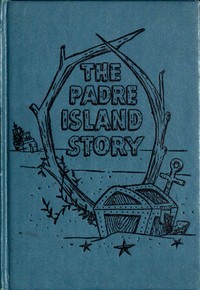
The Padre Island Story
Subjects:
Download Formats:
Excerpt
Project Gutenberg's The Padre Island Story, by Loraine Daly and Pat Reumert
This eBook is for the use of anyone anywhere in the United States and most
other parts of the world at no cost and with almost no restrictions
whatsoever. You may copy it, give it away or re-use it under the terms of
the Project Gutenberg License included with this eBook or online at
www.gutenberg.org. If you are not located in the United States, you'll have
to check the laws of the country where you are located...
Read the Full Text
— End of The Padre Island Story —
Book Information
- Title
- The Padre Island Story
- Author(s)
- Daly, Loraine, Reumert, Pat
- Language
- English
- Type
- Text
- Release Date
- May 8, 2018
- Word Count
- 13,579 words
- Library of Congress Classification
- F350.5
- Bookshelves
- Browsing: History - American, Browsing: Travel & Geography
- Rights
- Public domain in the USA.
Related Books

Reconstruction in Louisiana after 1868
by Lonn, Ella
English
496h 26m read

Social life in old New Orleans
by Ripley, Eliza
English
1140h 52m read
Captain Bill McDonald, Texas Ranger: A Story of Frontier Reform
by Paine, Albert Bigelow
English
1822h 26m read
Six Years with the Texas Rangers, 1875 to 1881
by Gillett, James B.
English
1197h 40m read

The Valley of Democracy
by Nicholson, Meredith
English
994h 28m read
Conservation Archaeology of the Richland/Chambers Dam and Reservoir
by Moir, Randall W., Raab, L. Mark
English
136h 6m read