*** START OF THE PROJECT GUTENBERG EBOOK 74695 ***
THE OLD HOUSE
AND OTHER STORIES
The Old House
And Other Stories
by
Blanche Sellers Ortmann
[Illustration]
Published
By the Author
CHICAGO -- MDCCCCX
_Copyright, 1910,_
_By Blanche Sellers Ortmann_
_These stories were written for little Rosanne, with the
hope that they may turn her thoughts to the soul in nature, and teach
her to love the simplicities in life by keeping her in step with its
great scheme, and to recognize and answer the good in all. For through
nature and its works the soul of man will reach God._
“_Tante Blanche._”
THE STORIES
Page
The Old House 11
The Boxwood Flats 21
Bar-Gee 31
The Soul of a Violin 43
The Story of the Goldfish 51
THE OLD HOUSE
[Illustration]
THE OLD HOUSE
For a hundred years the old House has been weathering the mountain
storms or basking in the lovely Virginia sunshine, proud of the fact
that its red bricks were made on the place, from the red clay which
lies so plentiful all about it, coloring the hilltops and making the
roads look like red ribbons tying the mountains to the valleys. The
blinds, great green eyelids, reflect the life of the inmates, in the
morning spreading wide in a spirit of up-and-about-ness, during the
afternoon nap time drowsily shutting in the cool rooms, at sundown
opening again for the afternoon tea and visiting hour. The whole
House, with its air of quiet dignity and breeding, seems to say: “Why
rush or hurry? There is time for all.”
Bless its old heart, if we could count years as it can, we too might
be peaceful and restful. But our lives are so short, we come and go so
fast, no wonder at times the old House seems looking down on us with
sadness; for surely the graveyard in the meadow near by tells the story
of man’s short existence. The happy, merry people whose voices once
made the walls of the old House ring rest there under the myrtle and
boxwood, watched over by the nightingale and whip-poor-will. The old
headstones, moss and ivy covered, lean down toward their dead lovingly,
as though wishing to get nearer to them.
But what must the old House think, now that it has telephones on each
floor, and flaring gas where soft candlelight used to flicker, making
exaggerated shadows on the low ceilings. And horror of horrors, a
rushing, snorting whirlwind of an automobile rushes up to the old horse
block! Ghosts of horsemen can fairly be seen riding hurriedly in every
direction, indignant at such intrusion, while the red brick walk, with
its border of boxwood, scorns the noisy intruder with its brass lamps
all a-shining, and tells of the days when the stately coach with its
load of pretty maids and matrons all a-flutter passed by on its weekly
trip to town. Now with this new, swiftly-moving, malodorous machine,
the trip is made daily, and who can say if the maids be pretty or
not, so much like animated sacks of wool do they look in their cloaks,
hoods, and goggles.
It is in the evening, when the crescent moon hangs low, that the old
House talks to the oaks, living over the days when it held its first
young couple, rejoicing with them at the stork’s coming, caring for
the little ones as they toddle about the great white-pillared porches,
which shade them from too much sun, watching them grow into manhood
and womanhood, and finally sending the sons to war with pride and
high hope, though deploring the cruel and unnecessary strife between
brothers that should have been settled without bloodshed. Because of
the spirit of dissension still harbored in the hearts of our people,
for many years the South has been crippled and disheartened and North
and South have been divided. Time alone can heal these differences and
make us one again.
This the old House foresaw, and it opened wide its portals to welcome
a Northern family. Being all-wise, it knew that all men are brothers
and that between them, God’s finest handiwork, there should be no
dissension. This should be left for the dwellers of the under-worlds,
that are not so high on the ladder of life as is man.
Never does the old House hold its head quite so high as when the
pink-coated horsemen gather with their hounds and thoroughbreds for a
cross-country run. Returning to the hunt breakfast, they are greeted
with the hospitable groaning of the table laden with the weight of its
goodies--great Virginia hams, freshly roasted and melting under the
knife; the Brunswick stew, for which the housewife has been preparing
many days, sending negroes to hunt squirrels and to select the special
corn and tomatoes that go to the making of the world’s best breakfast
dish; and from the kitchen at the end of the gallery, steaming hot
beaten biscuits to be eaten with gold-sweet butter. The mint juleps
are drunk beside crackling fires, and “sport” and “good cheer” are
the watchwords. The old House looks down approvingly on the happy
company, for it has come into its own, sheltering in these later days
kind, cheery people that respect its past glories and love its present
homelike spirit, for to them its every stick and stone spell Home.
We drink your health, dear old House. May the future hold as much for
you as the past. May you continue to sleep peacefully under the oaks,
dreaming happy dreams, and understanding life as only one of your great
age can.
[Illustration]
THE BOXWOOD FLATS
[Illustration]
THE BOXWOOD FLATS
I look up from my book and the cool corner of the veranda, conscious
of a very busy, noisy life in the great boxwood trees at either side
of the brick walk. For many bird families live among the comfortable,
shady branches; and I am reminded of a tenement house in the East End,
as all the bird families are large and the making of their living is
uppermost in their little heads.
The robins have the top flat, the thrushes the first floor up, and
the noisy catbirds the ground floor. If by any chance Father Robin
enters the Thrush apartment, there is a dreadful fuss. The families
in the other flats all take a hand in reproving the gentleman for his
carelessness, and it takes many minutes ere all is peaceful and quiet
again.
The green opening or door of the robin flat is large and much worn,
for the husky baby robins eat their weight in worms each day, and keep
their loving parents more than busy coming and going with their bills
full of goodies. The catbird has time to sit on his doorstep and sing
to his little wife in modest gown of Quaker gray, encouraging her to
stay on her nest. He himself darts off only to return with a titbit
in the shape of a fat fly for her enjoyment. The thrush family are
very well behaved, minding their own business, but always keeping a
jealous eye upon Minnie, my Scotch terrier. Whenever she walks across
the lawn in the direction of the flats, they dart down in front of her
nose with a cry half of fear and half of play. They always fly away
from the nest, flopping on the ground as if hurt, to attract the dog’s
attention, and leading her by stratagem to the farther end of the
garden. Then, with a tantalizing chirp, they fly back to their nest.
When the shadows grow long, the proud parents take the little ones
out for a lesson in flying. How patient they are with the clumsy
fluff-balls that cling to the lower branches and squeal, fearing to
let go and trust the half-grown wings. The parents, in a near-by tree,
coax and shame them into trying, until they drop off one limb and flop
feebly to the next. This is the hour my dog is locked up, for otherwise
great would be the tragedy, the little fluff-balls are so very
helpless.
I am certain the mother and father birds know I take this precaution,
for they repay me in song, and become exceedingly tame, allowing me
to peep into their nests without fear, and answering my call as would
a trained canary. Often they fly down near my head and accompany me
on my walk through the garden. Their little beady eyes notice my
every motion, and they show off by bullying and chasing the hedge
sparrows we meet in our walk, seeming to say: “Get out of our way,
you disrespectful birds. Don’t you see the Mistress out for a walk?”
The poor little hedge sparrows hurry and scurry to the nearest tree,
cocking their tiny heads to one side, as if saying: “Why all this
excitement? She’s not so much!”
The Japanese mimosa tree is in blossom and so is the trumpet vine,
both of which attract the humming bird in his coat of many colors. His
beautiful wings, with their rapid motion, glisten in the sunlight like
miniature rainbows. When you are favored with a peep into his nest, you
think it a strange place to keep quinine pills, for the resemblance
between these and the little eggs is very striking, both having
the same shape, size, and color. I dislike to think of this lovely
dream-like bird as one of the most bloodthirsty of the feathered tribe,
but a fight between two humming birds always means death to one, for
their long bills are as sharp as darning needles, and they are expert
fencers.
Idling in my easy chair, I listen to the love-making of a pair of doves
that live high up in the tree at the end of the veranda. They never
seem to tire of love or the telling of it. They are so busy making love
that they have not had time to build a substantial nest, and after each
storm I look with fear at their loosely put together home. Love, it is
said, makes the world go round, and it must likewise be love that keeps
the doves’ nest in the tree, for there seems to be nothing else that is
doing so.
The early evening is the swallows’ play time. They dart and chase one
another around the house top, fairly shrieking with delight. And when
the moon rises, the plaintive call of the whip-poor-will comes up
from the glen. He is a solitary fellow, never coming near the house,
although I feel he serves with the nightingale as a night watchman.
I find myself growing sleepy, and as I glance over to the Boxwood
Flats, it is apparent that for hours the occupants have been asleep,
dreaming of the early worm and of the happy sunshine that to-morrow
holds for them.
Good night, my friends. May there be another day for us to meet and
enjoy ourselves. We are all a part of the great scheme, each a cog in
the wheel of Destiny. Man is prying into the secrets of your lives and
habits, endeavoring to solve the mystery of your migratory flight.
Where did you obtain the knowledge of the compass which enables you,
after a journey of hundreds of miles, to find the very tree that last
year held your nest? And where do you keep the speed that makes it
possible for you to travel a mile a minute? Can it be you have found
an air current that encircles the globe, carrying you to any part of
the earth you desire to reach? Thus far you have guarded well your
secret from the naturalists.
Mayhap, my Boxwood Flatters, you will confide in me, if I promise not
to raise your rent.
[Illustration]
BAR-GEE
[Illustration]
BAR-GEE
I am only a horse but if men could understand all the joy of being a
thoroughbred with a record of 1:21, they would not say so pityingly
that horses have almost human intelligence, for in possessing horse
sense we have a gift that is just as great.
The first years of my colthood were spent under a trainer’s eye. As
the months passed, he developed in my growing limbs the speed that was
my birthright. Coming as I do from a long line of aristocrats, my name
was entered early for the Great American Derby. When that day came, my
heart was so full of the spirit of the race, I surprised myself as
well as my trainers. Then followed three years of a hard professional
career, all that time being spent on the flat and on the steeplechase
track. I traveled from city to city, making and breaking records, until
my health failed, and I was sold to a kindly gentleman who rode me in
the city parks. It was humiliating at times to have to run with the
ordinary park hacks one meets on the bridle paths; but for my master’s
sake, for my master was always good to me, I would hold back and try to
make it “sporty” coming in at the finish.
One day my feet fairly danced with joy, for again I was to be trained
for a real race to be held at one of the country clubs. My trainer and
I would go to the parks early, before the police were on duty, for
they didn’t seem to know the difference between a sporty run and a
flighty-headed runaway. My legs were bandaged to keep them in condition
under the extraordinary work and strain, and as I looked back over my
flanks, they seemed daily to grow in muscle and shapeliness with the
vigorous exercise. Each muscle and nerve quivered, anxious to show what
it was capable of doing.
At last the long looked for day came. The grand stand was full of
people, and as my master patted my neck and smoothed down my slender
legs, picking up each hoof to look into it for trouble, he whispered
into my ear, “Good luck, Bar-Gee, old boy! Go in and win, and show them
what a good horse can do.”
I found it hard to keep all four feet on the ground at once, my heart
was so light and happy, and I fear I gave some little trouble at
the post, the old plugs were so slow in coming up. My racing blood
urged me to be off. Every drop of it was dancing and crying for the
sport. At last the starting wire flew up, and we were off. I stretched
myself very close to the ground, making no false moves, and the earth
danced away under my flying feet. My jockey clung to the snaffle and
never used the whip. I could hear the other horses coming after me,
breathing and snorting, their jockeys all using whips and spurs. By
this time I had but one thought--to keep in the lead and to win, win,
win! As we turned the half-mile post my jockey put his whip on me. This
angered me, for I was only waiting to come a little nearer the field
so the finish would be more brilliant before my master. I knew he had
sugar in his pocket. We pulled into the home stretch, and my hoofs
fairly sang on the turf. The people in the grand stand jumped to their
feet and cheered as I came under the wire just twenty feet ahead of
second. It took me a quarter of a mile beyond that to stop, for once
my instinct for racing was aroused, the blood of my ancestors asserted
itself, and I hated knowing it was all over.
Wreaths of flowers were hung around my neck, and I was walked up and
down in front of the judges and the grand stand. I wanted so to get to
my master and talk it all over with him, with my nose in his loving
hand. I was so glad I had won the big silver cup I even allowed his
women folk to talk baby talk to me, which is, of course, foolish--and
besides, I hadn’t forgotten the sugar.
During that autumn I was shipped down to my master’s estate in
Virginia, where the horses are all trained for fox hunting and not for
speed. I enjoyed a few runs, but the hunters do not know what this
sport is; their game evidently is not to see how fast they can go or
how high they can jump, but how close they can keep to the dogs without
stepping on them. It always makes me angry to be held in, so I do not
make good as a hunter. Moreover, I have developed a cough, which makes
it hard for me to breathe, and being infectious, compels me to spend my
days alone in an open field.
I frequently have friendly chats over the fence with the other horses,
but it is unsafe to have us together. I must confess my heart is sad
when my master rides by on his big hunter. I hate that horse, and if my
heels could reach him, he would not put on such airs and lord it over
me. Of course I am not jealous, for I know my master loves me, and I
often hear him giving orders for my comfort; but I am never taken out
now. My cough is growing worse, and I feel I am getting old.
One night there was great excitement because a drunken negro had
stolen me and sold me for twelve dollars. Think of the indignity! My
blue-blooded ancestors must have turned in their graves or stood on
their hind legs with indignation if they knew it. I was taken many
miles away and shut up in a lot surrounded by a five-rail fence. When
I was left alone, I jumped the fence and started for home. The going
was hard, as I was impatient to get home again, and my cough had made
me feeble. I wanted so to stop and rest by the cool roadside where the
grass looked fresh and green, but I did not dare, for I knew I should
be missed. At last I saw the Blue Ridge Farm stables. How good they
looked to me! I had just strength enough to whinny to my friends in the
paddock as I trotted into the stable, tired, but happy and contented.
Now I am living on the best of the land, and as I rest under the big
chestnut tree in the paddock, my thoughts run back to the days when my
jockey slept in my stall to keep me safe from foul play. I see myself,
blanketed, ready to appear before the judges, and impatiently waiting
while my jockey is weighing in. The grand stand is gay with music and
flags. The light saddle is tossed across my back. A race is before me.
Ah! those were the happiest moments of my life.
The races are all run now--all but one, and that will be the run over
to the Happy Hunting Ground. I hope when the last wire flies up, I
shall be brave and full of hope, and go in as a thoroughbred should.
[Illustration]
THE SOUL OF A VIOLIN
[Illustration]
THE SOUL OF A VIOLIN
Stradivarius was at work in his dingy workshop, putting his very heart
into the violin he was making. The wood had come from the North and
was well seasoned. It seemed to throb and pulsate with life under his
hands, reflecting and answering every sound that floated in through
the open window. When the violin was finished, Stradivarius placed the
instrument in its oil bath as tenderly as a young mother bathes her
new-born babe. The red-brown varnish spread on smoothly, filling every
pore of the wood without stiffening the vibrations that were to sound
through the world for centuries, and under loving fingers tell in a
volume of tone the heart story of each successive owner of the violin.
* * * * *
Here I have been for years, hanging in my green bag from a rusty nail
in the attic, forgotten and neglected by man, my only friends and
companions the fairies that come and dance in the moonlight on the
attic floor. It was they who told me of the happy bride that awaited
her bridegroom’s coming in the quiet old house beneath me. One day I
was taken out into the sunshine and told I was to play at her wedding.
I put my best into the tones that greeted the bride when she entered
the church, and I think tears of happiness fell as she passed along the
dim, cool aisle to meet her lover.
The old church chimed out its wedding bells, and my sides nearly burst
with joy sending back the merry sounds. That night I had much to tell
the fairies, for again I was in my green bag on my rusty nail in the
peaceful, musty attic.
* * * * *
Again, after many years, I have been awakened. A sad-faced old lady
took me out of my bag and put me into the hands of a youth, saying:
“This, my son, is the violin that was played at my wedding.” I breathed
a sigh of gratitude, for his touch was a caress, and I saw the soul of
my old master looking through his eyes. And joy of joys, when he pulled
his bow across my strings, I sent up a prayer of thankfulness that we
were together again. My dear, dear master that created me and made me
laugh when he was merry, and cry when he was sad! All the long years
of waiting were forgotten as the youth tucked me under his arm and
descended the creaky old stairs. Never again shall I be neglected, but
shall live in light and sunshine, vibrating happiness in this world,
and foretelling the wonders and beauties of the world to come, where
there are no green bags, no rusty nails or long, tiresome intervals of
waiting for my master’s hand to play upon my finger board and make my
sounding posts dance with joy.
My master’s soul told me of his journeys to other planets, and of his
longing to return to earth to fulfill all his dreams and do the good he
had left undone, and how with my help he now hoped to reach the heart
of man. Together we would inspire the youth to play the songs of love
and happiness, and the plaintive song of sorrow that would show the way
to the higher life, to the soul, to God.
Thus we journey together on the crest of melody’s wave, reaching the
highest as well as the most lowly, for where is the soul dumb to the
language of music, and not the better for the understanding of it? We
have borrowed the youth’s hand and heart to express a message from
another world, bringing hope to the hopeless, love to the lonely, and
peace and quiet to the restless.
[Illustration]
THE STORY OF THE GOLDFISH
[Illustration]
THE STORY OF THE GOLDFISH
Many thousand years ago two goldfish lived in the fountain of an Indian
princess. The marble court was a mass of color with its great pots of
marigolds bathed in sunshine. Lord and Lady Goldfish had everything
they could wish for. Their carved alabaster basin-home was known far
and wide in birdland, for nowhere could one get such a gloriously
cool bath in the early dawn as in the courtyard with its pavement of
many-colored marbles. But, with all this, His Lordship had discontent
and envy in his heart. He envied the birds their flight through the
air. He envied the Princess her green jade bracelets, that reflected
the sun, the sky, and the water, and so spent his hours in a state of
unrest. But his little wife lived her life happily content, performing
all her duties and fulfilling her destiny as ordained, and at the end
passing on to a higher stage, working that out, then passing on to
higher and still higher stages, until at last she became a human soul
in the form of a happy little child.
One day the child was taken very ill, and this brought sadness to many
hearts. Her illness was long and painful and made her too weak for
play, so for hours she lay watching a pretty goldfish swimming in his
bowl. During the long, dreary days and nights His Lordship (for it was
none other) told her of his presence, and repented of his discontent
and envy, for it kept him always in the same stage. He never improved
or advanced, but each reincarnation came back to learn the same lesson.
One long night, as the little child lay wakeful, full of pain and
suffering, she remembered him. Away back in her mind she saw the Indian
garden and the slender, dusky Princess in her dainty robes and tinkling
silver anklets, the happy birds, the marigolds, and the china-blue
sky. Her heart was filled with pity for His Lordship, and during the
still of the night her beautiful white soul imparted to him a knowledge
of the folly of his ways, and pointed out the path of progress to
happiness. When morning came, it brought peace to the pain-racked
body, for the soul had flown to a higher and better world. And as
the morning sun flooded the room with its golden light, a kindly ray
fell on His Lordship floating on the surface of the water, his pretty
tail and fins all limp. He too had passed on, making his first upward
advance in the long chain of lives toward the perfect soul that was
awaiting him.
[Illustration]
_Five hundred copies of this little book have been privately printed
for BLANCHE SELLERS ORTMANN and a few of her friends in the month of
November, Nineteen hundred ten_
_PRINTED
AT THE
RAND
McNALLY
PRESS
CHICAGO_
*** END OF THE PROJECT GUTENBERG EBOOK 74695 ***
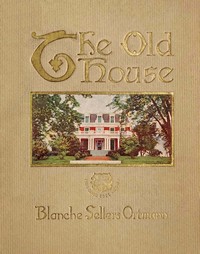
The old house, and other stories
Subjects:
Download Formats:
Excerpt
_Copyright, 1910,_
_By Blanche Sellers Ortmann_
_These stories were written for little Rosanne, with the
hope that they may turn her thoughts to the soul in nature, and teach
her to love the simplicities in life by keeping her in step with its
great scheme, and to recognize and answer the good in all. For through
nature and its works the soul of man will reach God._
For a hundred years the old House has been weathering the mountain
storms or basking in the lovely Virginia sunshine,...
Read the Full Text
— End of The old house, and other stories —
Book Information
- Title
- The old house, and other stories
- Author(s)
- Ortman, Blanche Sellers
- Language
- English
- Type
- Text
- Release Date
- November 7, 2024
- Word Count
- 4,357 words
- Library of Congress Classification
- PZ
- Bookshelves
- Browsing: Nature/Gardening/Animals, Browsing: Fiction
- Rights
- Public domain in the USA.
Related Books
Binney the beaver, and other stories
by Guernsey, Lucy Ellen
English
204h 17m read
No talent, and Phil's pansies
by Guernsey, Lucy Ellen
English
500 hours read

The school-girls' treasury
by Guernsey, Lucy Ellen
English
464h 1m read
Edwin, the young rabbit fancier, and other stories
by Anonymous
English
162h 22m read
Railroad building, and other stories
by Pansy
English
217h 3m read
Fanciful tales
by Stockton, Frank R.
English
569h 36m read