The Project Gutenberg EBook of The Mayas, the Sources of Their History /
Dr. Le Plongeon in Yucatan, His Account o, by Stephen Salisbury, Jr.
This eBook is for the use of anyone anywhere at no cost and with
almost no restrictions whatsoever. You may copy it, give it away or
re-use it under the terms of the Project Gutenberg License included
with this eBook or online at www.gutenberg.org
Title: The Mayas, the Sources of Their History / Dr. Le Plongeon in Yucatan, His Account of Discoveries
Author: Stephen Salisbury, Jr.
Release Date: August 18, 2009 [EBook #29723]
Language: English
Character set encoding: UTF-8
*** START OF THIS PROJECT GUTENBERG EBOOK MAYA, SOURCES OF HISTORY ***
Produced by Julia Miller and the Online Distributed
Proofreading Team at https://www.pgdp.net (This file was
produced from images generously made available by The
Internet Archive/American Libraries.)
Transcriber’s Note
Obvious typographical errors have been corrected. A list of changes is
found at the end of the text. Inconsistency in spelling and hyphenation
has been maintained. A list of inconsistently spelled and hyphenated
words is found at the end of the text. The use of accents on foreign
words and the capitalization of titles in foreign languages is not
consistent. This text maintains the original usage. Use of italics on
titles of cited words is not consistent. This text maintains the
original usage.
The following less-common characters are used in this version of the
book. If they do not display correctly, please try changing your font.
† Dagger
‡ Double dagger
Ɔ Capital open O
ŏ Lower-case o with breve
ē Lower-case e with macron
œ oe ligature
[Illustration: Plano de Yucatan 1848]
THE MAYAS,
THE SOURCES OF THEIR HISTORY.
DR. LE PLONGEON IN YUCATAN,
HIS ACCOUNT OF DISCOVERIES.
BY STEPHEN SALISBURY, JR.
FROM PROCEEDINGS OF THE AMERICAN ANTIQUARIAN SOCIETY, OF
APRIL 26, 1876, AND APRIL 25, 1877.
PRIVATELY PRINTED.
WORCESTER:
PRESS OF CHARLES HAMILTON.
1877.
[Inscribed to Mip Sargent,]
_WITH THE RESPECTS OF THE WRITER._
CONTENTS.
THE MAYAS AND THE SOURCES OF THEIR HISTORY, _Page_ 3
DR. LE PLONGEON IN YUCATAN, “ 53
ILLUSTRATIONS.
MAP OF YUCATAN, FRONTISPIECE.
LOCALITY OF DISCOVERIES AT CHICHEN-ITZA, _Page_ 58
STATUE EXHUMED AT CHICHEN-ITZA, “ 62
RELICS FOUND WITH THE STATUE, “ 74
THE MAYAS
AND THE SOURCES OF THEIR HISTORY.
[Proceedings of American Antiquarian Society, April 26, 1876.]
The most comprehensive and accurate map of Yucatan is that which has
been copied for this pamphlet. In the several volumes of travel,
descriptive of Maya ruins, are to be found plans more or less complete,
intended to illustrate special journeys, but they are only partial in
their treatment of this interesting country. The _Plano de Yucatan_,
herewith presented--the work of Sr. Dn. Santiago Nigra de San
Martin--was published in 1848, and has now become extremely rare. It is
valuable to the student, for it designates localities abounding in
ruins--those not yet critically explored, as well as those which have
been more thoroughly investigated--by a peculiar mark, thus [rectangular
box], and it also shows roads and paths used in transportation and
communication. Since its publication political changes have caused the
division of the Peninsula into the States of Yucatan and Campeachy,
which change of boundaries has called for the preparation of a new and
improved map. Such an one is now being engraved at Paris and will soon
be issued in this country. It is the joint production of Sr. Dn. Joaquin
Hubbe and Sr. Dn. Andres Aznar Pérez, revised by Dr. C. Hermann Berendt.
The early history of the central portions of the western hemisphere has
particularly attracted the attention of European archæologists, and
those of France have already formed learned societies engaged
specifically in scientific and antiquarian investigations in Spanish
America. It is to the French that credit for the initiative in this most
interesting field of inquiry is especially due, presenting an example
which can not fail to be productive of good results in animating the
enthusiasm of all engaged in similar studies.
The Société Américaine de France (an association, like our own, having
the study of American Antiquities as a principal object, and likely to
become prominent in this field of inquiry), has already been briefly
mentioned by our Librarian; but the reception of the _Annuaire_ for
1873, and a statement of the present condition of the Society in the
_Journal des Orientalistes_ of February 5, 1876, gives occasion for a
more extended notice. The Society was founded in 1857; and among those
most active in its creation were M. Brasseur de Bourbourg, M. Léon de
Rosny, and M. Alfred Maury. The objects of the association, as
officially set forth, were, first, the publication of the works and
collections of M. Aubin, the learned founder of a theory of American
Archæology, which it was hoped would throw much light upon the
hieroglyphical history of Mexico before the conquest;[4-*] second, the
publication of grammars and dictionaries of the native languages of
America; third, the foundation of professorships of History,
Archæology, and American Languages; and fourth, the creation, outside of
Paris, of four Museums like the Museum of Saint Germain, under the
auspices of such municipalities as encourage their foundation, as
follows:
A.--Musée mexicaine.
B.--Musée péruvienne et de l’Amérique du Sud.
C.--Musée ethnographique de l’Amérique du Nord.
D.--Musée des Antilles.
The list of members contains the names of distinguished archæologists in
Europe, and a foreign membership already numerous; and it is
contemplated to add to this list persons interested in kindred studies
from all parts of the civilized world. The publications of the Society,
and those made under its auspices, comprehend, among others, _Essai sur
le déchiffrement de l’Ecriture hiératique de l’Amérique Centrale_, by M.
Léon de Rosny, President of the Society, 1 vol. in folio, with numerous
plates: This work treats critically the much controverted question of
the signification of Maya characters, and furnishes a key for their
interpretation.[5-*] Also, _Chronologie hiéroglyphico phonétique des
Rois Aztéques de 1352 à 1522, retrouvée dans diverses mappes américaines
antiques, expliquée et précédée d’une introduction sur l’Écriture
mexicaine_, by M. Edouard Madier de Montjau. The archæology of the two
Americas, and the ethnography of their native tribes, their languages,
manuscripts, ruins, tombs and monuments, fall within the scope of the
Society, which it is their aim to make the school and common centre of
all students of American pre-Columbian history. M. Émile Burnouf, an
eminent archæologist, is the Secretary. The _Archives_ for 1875 contain
an article on the philology of the Mexican languages, by M. Aubin; an
account of a recent voyage to the regions the least known of Mexico and
Arizona, by M. Ch. Schoebel; the last written communication of M. de
Waldeck, the senior among travellers; an article by M. Brasseur de
Bourbourg, upon the language of the Wabi of Tehuantepec; and an essay by
M. de Montjau, entitled _Sur quelques manuscripts figuratifs mexicains_,
in which the translation of one of these manuscripts, by M. Ramirez of
Mexico, is examined critically, and a different version is offered. The
author arrives at the startling conclusion, that we have thus far taken
for veritable Mexican manuscripts, many which were written by the
Spaniards, or by their order, and which do not express the sentiments of
the Indians. Members of this Society, also, took an active part in the
deliberations of the _Congrès international des Américanistes_, which
was held at Nancy in 1875.
It was a maxim of the late Emperor Napoléon III., that France could go
to war for an idea. The Spanish as discoverers were actuated by the love
of gold, and the desire of extending the knowledge and influence of
christianity, prominently by promoting the temporal and spiritual power
of the mother church. In their minds the cross and the flag of Spain
were inseparably connected. The French, however, claim to be ready to
explore, investigate and study, for science and the discovery of truth
alone. In addition to the _Commission Scientifique du Mexique_ of 1862,
which was undertaken under the auspices of the French government, and
which failed to accomplish all that was hoped, the Emperor Maximilian I.
of Mexico projected a scientific exploration of the ruins of Yucatan
during his brief reign, while he was sustained by the assistance of the
French. The tragic death of this monarch prevented the execution of his
plans; but his character, and his efforts for the improvement of Mexico,
earned for this accomplished but unfortunate prince the gratitude and
respect of students of antiquity, and even of Mexicans who were
politically opposed to him.[7-*]
The attention of scholars and students of American Antiquities is
particularly turned to Central America, because in that country ruins of
a former civilization, and phonetic and figurative inscriptions, still
exist and await an interpretation. In Central America are to be found a
great variety of ruins of a higher order of architecture than any
existing in America north of the Equator. Humboldt speaks of these
remains in the following language: “The architectural remains found in
the peninsula of Yucatan testify more than those of Palenque to an
astonishing degree of civilization. They are situated between Valladolid
Mérida and Campeachy.”[7-†] Prescott says of this region, “If the
remains on the Mexican soil are so scanty, they multiply as we descend
the southeastern slope of the Cordilleras, traverse the rich valleys of
Oaxaca, and penetrate the forests of Chiapas and Yucatan. In the midst
of these lonely regions, we meet with the ruins recently discovered of
several eastern cities--Mitla, Palenque, and Itzalana or Uxmal,--which
argue a higher civilization than anything yet found on the American
Continent.”[8-*]
The earliest account in detail--as far as we know--of Mayan ruins,
situated in the States of Chiapas and Yucatan, is presented in the
narrative of Captain Antonio del Rio, in 1787, entitled _Description of
an ancient city near Palenque_. His investigation was undertaken by
order of the authorities of Guatemala, and the publication in Europe of
its results was made in 1822. In the course of his account he says, “a
Franciscan, Thomas de Soza, of Mérida, happening to be at Palenque, June
21, 1787, states that twenty leagues from the city of Mérida, southward,
between Muna, Ticul and Noxcacab, are the remains of some stone
edifices. One of them, very large, has withstood the ravages of time,
and still exists in good preservation. The natives give it the name of
Oxmutal. It stands on an eminence twenty yards in height, and measures
two hundred yards on each façade. The apartments, the exterior corridor,
the pillars with figures in medio relievo, decorated with serpents and
lizards, and formed with stucco, besides which are statues of men with
palms in their hands, in the act of beating drums and dancing, resemble
in every respect those observable at Palenque.”[8-†] After speaking of
the existence of many other ruins in Yucatan, he says he does not
consider a description necessary, because the identity of the ancient
inhabitants of Yucatan and Palenque is proved, in his opinion, by the
strange resemblance of their customs, buildings, and acquaintance with
the arts, whereof such vestiges are discernible in those monuments which
the current of time has not yet swept away.
The ruins of Yucatan, those of the state of Chiapas and of the Island of
Cozumel, are very splendid remains, and they are all of them situated in
a region where the Maya language is still spoken, substantially as at
the time of the Spanish discovery.[9-*]
Don Manuel Orosco y Berra, says of the Indian inhabitants, “their
revengeful and tenacious character makes of the Mayas an exceptional
people. In the other parts of Mexico the conquerors have imposed their
language upon the conquered, and obliged them gradually to forget their
native language. In Yucatan, on the contrary, they have preserved their
language with such tenacity, that they have succeeded to a certain point
in making their conquerors accept it. Pretending to be ignorant of the
Spanish, although they comprehend it, they never speak but in the Maya
language, obeying only orders made in that language, so that it is
really the dominant language of the peninsula, with the only exception
of a part of the district of Campeachy.”[9-†]
In Cogolludo’s Historia de Yucatan, the similarity of ruins throughout
this territory is thus alluded to: “The incontestable analogy which
exists between the edifices of Palenque and the ruins of Yucatan places
the latter under the same origin, although the visible progress of art
which is apparent assigns different epochs for their construction.”[10-*]
So we have numerous authorities for the opinion, that the ruins in Chiapas
and Yucatan were built by the same or by a kindred people, though at
different periods of time, and that the language which prevails among the
Indian population of that region at the present day, is the same which was
used by their ancestors at the time of the conquest.
Captain Dupaix, who visited Yucatan in 1805, wrote a description of the
ruins existing there, which was published in 1834; but it was reserved
for M. Frédéric de Waldeck to call the attention of the European world
to the magnificent remains of the Maya country, in his _Voyage
pittoresque et archaeologique dans la province de Yucatan, pendant des
années 1834-1836_, Folio, with plates, Paris, 1838. This learned
centenarian became a member of the Antiquarian Society in 1839, and his
death was noticed at the last meeting. Following him came the celebrated
Eastern traveller, John L. Stephens, whose interesting account of his
two visits to that country in 1840 and 1841, entitled _Incidents of
travel in Central America, Chiapas and Yucatan_, in two volumes, and
Incidents of travel in Yucatan, in two volumes, is too familiar to
require particular notice at this point. It may not be uninteresting to
record the fact, that Mr. Stephens’ voyages and explorations in Yucatan
were made after the suggestion and with the advice of Hon. John R.
Bartlett, of Providence, R. I., a member of this Society, who obtained
for this traveller the copy of Waldeck’s work which he used in his
journeyings. Désiré Charnay, a French traveller, published in 1863 an
account entitled _Cités et Ruines Américaines_, accompanied by a
valuable folio Atlas of plates.
The writer of this report passed the winter of 1861 at Mérida, the
capital of the Province of Yucatan, as the guest of Don David Casares,
his classmate, and was received into his father’s family with a kindness
and an attentive hospitality which only those who know the warmth and
sincerity of tropical courtesy can appreciate.[11-*] The father, Don
Manuel Casares, was a native of Spain, who had resided in Cuba and in
the United States. He was a gentleman of the old school, who, in the
first part of his life in Yucatan, had devoted himself to teaching, as
principal of a high school in the city of Mérida, but was then occupied
in the management of a large plantation, upon which he resided most of
the year, though his family lived in the city. He was possessed of
great energy and much general information, and could speak English with
ease and correctness. Being highly respected in the community, he was a
man of weight and influence, the more in that he kept aloof from all
political cabals, in which respect his conduct was quite exceptional.
The Abbé Brasseur de Bourbourg, in his _Histoire des nations civilizées
du Mexique_, acknowledges the valuable assistance furnished him by Señor
Casares, whom he describes as a learned Yucateco and ancient deputy to
Mexico.[12-*]
Perhaps some of the impressions received, during a five months’ visit,
will be pardoned if introduced in this report. Yucatan is a province of
Mexico, very isolated and but little known. It is isolated, from its
geographical position, surrounded as it is on three sides by the waters
of the Gulf of Mexico and the Atlantic Ocean; and it is but little
known, because its commerce is insignificant, and its communication with
other countries, and even with Mexico, is infrequent. It has few ports.
Approach to the coast can only be accomplished in lighters or small
boats; while ships are obliged to lie off at anchor, on account of the
shallowness of the water covering the banks of sand, which stretch in
broad belts around the peninsula. The country is of a limestone
formation, and is only slightly elevated above the sea. Its general
character is level, but in certain districts there are table lands; and
a mountain range runs north-easterly to the town of Maxcanu, and thence
extends south-westerly to near the centre of the State. The soil is
generally of but little depth, but is exceedingly fertile.
There are no rivers in the northern part of the province, and only the
rivers Champoton, and the Uzumacinta with its branches, in the
south-western portion; but there are several small lakes in the centre
of Yucatan, and a large number of artificial ponds in the central and
southern districts. The scarcity of water is the one great natural
difficulty to be surmounted in most parts of the country; but a supply
can commonly be obtained by digging wells, though often at so great a
depth that the cost is formidable. The result is that the number of
wells is small, and in the cities of Mérida and Campeachy rain water is
frequently stored in large cisterns for domestic purposes. From the
existence of cenotes or ponds with an inexhaustible supply of water at
the bottom of caves, and because water can be reached by digging and
blasting, though with great effort and expense, the theory prevails in
Yucatan that their territory lies above a great underground lake, which
offers a source of supply in those sections where lakes, rivers and
springs, are entirely unknown.
A very healthful tropical climate prevails, and the year is divided into
the wet and the dry season, the former beginning in June and lasting
until October, the latter covering the remaining portions of the year.
During the dry season of 1861-2, the thermometer ranged from 75° to 78°
in December and January, and from 78° to 82° in February, March and
April. Early in the dry season vegetation is luxuriant, the crops are
ripening, and the country is covered with verdure; but as the season
progresses the continued drouth, which is almost uninterrupted, produces
the same effect upon the external aspect of the fields and woods as a
northern winter. Most of the trees lose their leaves, the herbage dries
up, and the roads become covered with a thick dust. During
exceptionally dry seasons thousands of cattle perish from the entire
lack of subsistence, first having exhausted the herbage and then the
leaves and shrubbery.
The population of the peninsula is now about 502,731, four-fifths of
which are Indians and Mestizos or half-breeds. The general business of
the country is agricultural, and the territory is divided into landed
estates or farms, called haciendas, which are devoted to the breeding of
cattle, and to raising jenniken or Sisal hemp, and corn. Cotton and
sugar are also products, but not to an extent to admit of exportation.
Some of the plantations are very large, covering an area of six or seven
miles square, and employing hundreds of Indians as laborers.
Farm houses upon the larger estates are built of stone and lime, covered
with cement, and generally occupy a central position, with private roads
diverging from them. These houses, which are often very imposing and
palatial, are intended only for the residence of the owners of the
estate and their major-domos or superintendents. The huts for the Indian
laborers are in close proximity to the residence of the proprietor, upon
the roads which lead to it, and are generally constructed in an oval
form with upright poles, held together by withes of bark; and they are
covered inside and out with a coating of clay. The roofs are pointed,
and also made with poles, and thatched with straw. They have no
chimneys, and the smoke finds its way out from various openings
purposely left. The huts have no flooring, are larger than the common
wigwams of the northern Indians, and ordinarily contain but a single
room. The cattle yards of the estate, called corrals, immediately join
the residence of the proprietor, and are supplied with water by
artificial pumping. All the horses and cattle are branded, and roam at
will over the estates, (which are not fenced, except for the protection
of special crops), and resort daily to the yards to obtain water. This
keeps the herds together. The Indian laborers are also obliged to rely
entirely upon the common well of the estate for their supply of water.
The Indians of Yucatan are subject to a system of péonage, differing but
little from slavery. The proprietor of an estate gives each family a
hut, and a small portion of land to cultivate for its own use, and the
right to draw water from the common well, and in return requires the
labor of the male Indians one day in each week under superintendence. An
account is kept with each Indian, in which all extra labor is credited,
and he is charged for supplies furnished. Thus the Indian becomes
indebted to his employer, and is held upon the estate by that bond.
While perfectly free to leave his master if he can pay this debt, he
rarely succeeds in obtaining a release. No right of corporal punishment
is allowed by law, but whipping is practiced upon most of the estates.
The highways throughout the country are numerous, but generally are
rough, and there is but little regular communication between the various
towns. From the cities of Mérida and Campeachy, public conveyances leave
at stated times for some of the more important towns; but travellers to
other points are obliged to depend on private transportation. A railroad
from Mérida to the port of Progreso, a distance of sixteen miles, was in
process of being built, but the writer is not aware of its completion.
The peninsula is now divided into the States of Yucatan, with a
population of 282,634, with Mérida for a capital, and Campeachy, with a
population of 80,366, which has the city of Campeachy as its capital.
The government is similar to our state governments, but is liable to be
controlled by military interference. The States are dependent upon the
central government at Mexico, and send deputies to represent them in the
congress of the Republic. In the south-western part of the country there
is a district very little known, which is inhabited by Indians who have
escaped from the control of the whites and are called Sublevados. These
revolted Indians, whose number is estimated at 139,731, carry on a
barbarous war, and make an annual invasion into the frontier towns,
killing the whites and such Indians as will not join their fortunes.
With this exception, the safety of life and property is amply protected,
and seems to be secured, not so much by the severity of the laws, as by
the peaceful character of the inhabitants of all races. The trade of the
country, except local traffic, is carried on by water. Regular steam
communication occurs monthly between New York and Progreso, the port of
Mérida, via Havana, and occasionally barques freighted with corn, hides,
hemp and other products of the country, and also carrying a small number
of passengers, leave its ports for Havana, Vera Cruz and the United
States. Freight and passengers along the coast are transported in flat
bottomed canoes. Occasional consignments of freight and merchandise
arrive by ship from France, Spain and other distant ports.
The cities of Mérida and Campeachy are much like Havana in general
appearance. The former has a population of 23,500, is the residence of
the Governor, and contains the public buildings of the State, the
cathedral--an imposing edifice,--the Bishop’s palace, an ecclesiastical
college, fifteen churches, a hospital, jail and theatre. The streets are
wide and are laid out at right angles. The houses, which are generally
of one story, are large, and built of stone laid in mortar or cement;
and they are constructed in the Moorish style, with interior court yards
surrounded with corridors, upon which the various apartments open. The
windows are destitute of glass, but have strong wooden shutters; and
those upon the public streets often project like bow windows, and are
protected by heavy iron gratings. The inhabitants are exceedingly
hospitable, and there is much cultivated society in both Mérida and
Campeachy. As the business of the country is chiefly agricultural, many
of the residents in the cities own haciendas in the country, where they
entertain large parties of friends at the celebration of a religious
festival on their plantations, or in the immediate neighborhood. The
people are much given to amusements, and the serious duties of life are
often obliged to yield to the enjoyments of the hour. The Catholic
religion prevails exclusively, and has a very strong hold upon the
population, both white and Indian, and the religious services of the
church are performed with great ceremony, business of all kinds being
suspended during their observance.
The aboriginal ruins, to which so much attention has been directed, are
scattered in groups through the whole peninsula. Mérida is built upon
the location of the ancient town Tihoo, and the materials of the Indian
town were used in its construction. Sculptured stones, which formed the
ornamental finish of Indian buildings, are to be seen in the walls of
the modern houses.[18-*] An artificial hill, called “El Castillo,” was
formerly the site of an Indian temple, and is curious as the only mound
remaining of all those existing at the time of the foundation of the
Spanish city. This mound is almost the only trace of Indian workmanship,
in that immediate locality, which has not been removed or utilized in
later constructions.[18-†] It appears that a large part of the
building material throughout the province was taken from aboriginal
edifices, and the great number of stone churches of considerable size,
which have been built in all the small towns in that country, is proof
of the abundance of this material.
The ruins of Uxmal, said to be the most numerous and imposing of any in
the province, were visited by the writer in company with a party of
sixteen gentlemen from Mérida, of whom two only had seen them before.
The expedition was arranged out of courtesy to the visitor, and was
performed on horseback. The direct distance was not more than sixty
miles in a southerly direction, but the excursion was so managed as to
occupy more than a week, during which time the hospitality of the
haciendas along the route was depended upon for shelter and
entertainment. Some of the plantations visited were of great extent, and
among others, that called Guayalké was especially noticeable for its
size, and also for the beauty and elegance of the farm house of the
estate, which was constructed entirely of stone, and was truly palatial
in its proportions. This building is fully described by Mr.
Stephens.[19-*] The works of this writer form an excellent hand-book for
the traveller. His descriptions are truthful, and the drawings by Mr.
Catherwood are accurate, and convey a correct idea of the general
appearance of ruins, and of points of interest which were visited; and
the personal narrative offers a great variety of information, which
could only be gathered by a traveller of much experience in the study of
antiquities. Such at least is the opinion of the people of that country.
His works are there quoted as high authority respecting localities which
he visited and described; and modern Mexican philologists and
antiquaries refer to Stephens’ works and illustrations with confidence
in his representations, and with respect and deference for his opinions
and inferences.[19-†]
At various points along the route, portions of ruined edifices were seen
but not explored. The ruins of Uxmal are distant about a mile from the
hacienda buildings, and extend as far as the eye can reach. They belong
to Don Simon Peon, a gentleman who, though he does not reside there, has
so much regard for their preservation that he will not allow the ruins
to be removed or interfered with for the improvement of the estate, in
which respect he is an exception to many of the planters. Here it may be
remarked, that the inhabitants generally show little interest in the
antiquities of their country, and no public effort is made to preserve
them. The ruins which yet remain undisturbed have escaped destruction,
in most instances, only because their materials have not been required
in constructing modern buildings. Much of the country is thinly
inhabited, and parts of it are heavily wooded. It is there that the
remains of a prior civilization have best escaped the hand of man, more
to be dreaded than the ravages of time.
The stone edifices of Uxmal are numerous, and are generally placed upon
artificial elevations; they are not crowded together, but are scattered
about singly and in groups over a large extent of territory. The most
conspicuous is an artificial pyramidal mound, upon the top of which is a
stone building two stories in height, supposed to have been used as a
sacrificial temple. One side of this mound is perpendicular; the
opposite side is approached by a flight of stone steps. The building on
the top, and the steps by which the ascent is made are in good
preservation. Some of the large buildings are of magnificent
proportions, and are much decorated with bas reliefs of human figures
and faces in stone, and with other stone ornaments. The writer does not
recollect seeing any stucco ornamentation at this place, though such
material is used elsewhere. What are popularly called “House of the
Governor” and “House of the Nuns,” are especially remarkable for their
wonderful preservation; so that from a little distance they appear
perfect and entire, except at one or two points which look as if struck
by artillery. The rooms in the ruins are of various sizes, and many of
them could be made habitable with little labor, on removing the rubbish
which has found its way into them.
The impression received from an inspection of the ruins of Uxmal was,
that they had been used as public buildings, and residences of officers,
priests and high dignitaries. Both Stephens and Prescott are of the
opinion that some of the ruins in this territory were built and occupied
by the direct ancestors of the Indians, who now remain as slaves upon
the soil where once they ruled as lords.[21-*] The antiquity of other
remains evidently goes back to an earlier epoch, and antedates the
arrival of the Spaniards. If the Indians of the time of the conquest
occupied huts like those of the Indians of to-day, it is not strange
that all vestiges of their dwellings should have disappeared. Mr.
Stephens gives an interesting notice of the first formal conveyance of
the property of Uxmal, made by the Spanish government in 1673, which was
shown him by the present owner, in which the fact that the Indians,
then, worshipped idols in some of the existing edifices on that estate,
is mentioned. Another legal instrument, in 1688, describes the livery of
seizin in the following words, “In virtue of the power and authority by
which the same title is given to me by the said governor, and complying
with its terms, I took by the hands the said Lorenzo de Evia, and he
walked with me all over Uxmal and its buildings, opened and shut some
doors that had several rooms (connected), cut within the space several
trees, picked up fallen stones and threw them down, drew water from one
of the aguadas (artificial ponds) of the said place of Uxmal, and
performed other acts of possession.”[21-†] These facts are interesting
as indicating actual or recent occupation; and a careful investigation
of documents relating to the various estates, of which the greater part
are said to be written in the Maya language, might throw light upon the
history of particular localities.
The Maya Indians are shorter and stouter, and have a more delicate
exterior than the North American Savages. Their hands and feet are
small, and the outlines of their figures are graceful. They are capable
of enduring great fatigue, and the privation of food and drink, and bear
exposure to the tropical sun for hours with no covering for the head,
without being in the least affected. Their bearing evinces entire
subjection and abasement, and they shun and distrust the whites. They do
not manifest the cheerfulness of the negro slave, but maintain an
expression of indifference, and are destitute of all curiosity or
ambition. These peculiarities are doubtless the results of the treatment
they have received for generations. The half-breeds, or Mestizos, prefer
to associate with the whites rather than with the Indians; and as a rule
all the domestic service throughout the country is performed by that
class. Mestizos often hold the position of major-domos, or
superintendents of estates, but Indians of pure blood are seldom
employed in any position of trust or confidence. They are punctilious in
their observance of the forms and ceremonies of the Catholic religion,
and a numerous priesthood is maintained largely by the contributions of
this race. The control exercised by the clergy is very powerful, and
their assistance is always sought by the whites in cases of controversy.
The Indians are indolent and fond of spectacles, and the church offers
them an opportunity of celebrating many feast days, of which they do not
fail to avail themselves.
When visiting the large estate of Chactun, belonging to Don José
Dominguez, thirty miles south-west of Mérida, at a sugar rancho called
Orkintok, the writer saw a large ruin similar to that called the “House
of the Nuns” at Uxmal. It was a building of a quadrangular shape, with
apartments opening on an interior court in the centre of the quadrangle.
The building was in good preservation, and some of the rooms were used
as depositories for corn. The visiting party breakfasted in one of the
larger apartments. From this hacienda an excursion was made to Maxcanu,
to visit an artificial mound, which had a passage into the interior,
with an arched stone ceiling and retaining walls.[23-*] This passage was
upon a level with the base of the mound, and branched at right angles
into other passages for hundreds of feet. Nothing appeared in these
passages to indicate their purpose. The labyrinth was visited by the
light of candles and torches, and the precaution of using a line of
cords was taken to secure a certainty of egress. A thorough exploration
was prevented by the obstructions of the _débris_ of the fallen roof.
Other artificial mounds encountered elsewhere had depressions upon the
top, doubtless caused by the falling in of interior passages or
apartments. There is no account of the excavation of Yucatan mounds for
historical purposes, though Cogolludo says there were other mounds
existing at Mérida in 1542, besides “El grande de los Kues,” which,
certainly, have now disappeared; but no account of their construction
has come down to us.[23-†] The same author also says, that, with the
stone constructions of the Indian city churches and houses were built,
besides the convent and church of the Mejorada, and also the church of
the Franciscans, and that there was still more material left for others
which they desired to build.[24-*] It is then, certainly, a plausible
supposition that the great mounds were many of them constructed with
passages like that at Orkintok, and that they have furnished from their
interiors worked and squared stones, which were used in the construction
of the modern city of Mérida by the Spanish conquerors.
When the Spanish first invaded Mexico and Yucatan they brought with them
a small number of horses, which animals were entirely unknown to the
natives, and were made useful not only as cavalry but also in creating a
superstitious reverence for the conquerors, since the Indians at first
regarded the horse as endowed with divine attributes. Cortez in his
expedition from the city of Mexico to Honduras in 1524, passed through
the State of Chiapas near the ruins called Palenque,--of which ancient
city, however, no mention is made in the accounts of that
expedition,--and rested at an Indian town situated upon an island in
Lake Peten in Guatemala. This island was then the property of an
emigrant tribe of Maya Indians; and Bernal Diaz, the historian of the
expedition, says, that “its houses and lofty teocallis glistened in the
sun, so that it might be seen for a distance of two leagues.” According
to Prescott, “Cortez on his departure left among this friendly people
one of his horses, which had been disabled by an injury in the foot. The
Indians felt a reverence for the animal, as in some way connected with
the mysterious power of the white men. When their visitors had gone they
offered flowers to the horse, and as it is said, prepared for him many
savory messes of poultry, such as they would have administered to their
own sick. Under this extraordinary diet the poor animal pined away and
died. The affrighted Indians raised his effigy in stone, and placing it
upon one of their teocallis, did homage to it as to a deity.”[25-*] At
the hacienda of Don Manuel Casares called Xuyum, fifteen miles
north-east from Mérida, a number of cerros, or mounds, and the ruins of
several small stone structures built on artificial elevations, were
pointed out to the writer; and his attention was called to two
sculptured heads of horses which lay upon the ground in the neighborhood
of some ruined buildings. They were of the size of life, and
represented, cut from solid limestone, the heads and necks of horses
with the mane clipped, so that it stood up from the ridge of their necks
like the mane of the zebra. The workmanship of the figures was artistic,
and the inference made at the time was, that these figures had served as
bas reliefs on ruins in that vicinity. On mentioning the fact of the
existence of these figures to Dr. Carl Hermann Berendt, who was about to
revisit Yucatan, in 1869, he manifested much interest in regard to them,
and expressed his intention to visit this plantation when he should be
in Mérida. But later inquiries have failed to discover any further trace
of these figures. Dr. Berendt had never seen any representation of
horses upon ruins in Central America, and considered the existence of
the sculptures the more noteworthy, from the fact that horses were
unknown to the natives till the time of the Spanish discovery. The
writer supposes that these figures were sculptured by Indians after the
conquest, and that they were used as decorations upon buildings erected
at the same time and by the same hands.
At the town of Izamal, and also at Zilam, the writer saw gigantic
artificial mounds, with stone steps leading up to a broad level space on
the top. There are no remains of structures on these elevations, but it
seems probable that the space was once occupied by buildings. At Izamal,
which was traditionally the sacred city of the Mayas, a human face in
stucco is still attached to the perpendicular side of one of the smaller
cerros or mounds. The face is of gigantic size, and can be seen from a
long distance. It may have been a representation of Zamna, the founder
of Mayan civilization in Yucatan, to whose worship that city was
especially dedicated.
From this slight glance at the remains in the Mayan territory we are led
to say a few words about their history. In the absence of all authentic
accounts, the traditions of the Mayas, and the writings of Spanish
chroniclers and ecclesiastics, offer the only material for our object.
M. L’Abbé Brasseur de Bourbourg, the learned French traveller and
Archæologist, in his _Histoire des Nations Civilisées du Mexique et de
l’Amérique Centrale durant les siècles antérieurs à Christophe Columb_,
has given a very voluminous and interesting account of Mayan history
prior to the arrival of Europeans. It was collected by a careful study
of Spanish and Mayan manuscripts, and will serve at least to open the
way for further investigation to those who do not agree with its
inferences and conclusions. The well known industry and enthusiasm of
this scholar have contributed very largely to encourage the study of
American Archæology in Europe, and his name has been most prominently
associated with the later efforts of the French in the scientific study
of Mexican antiquities. A brief notice of some of the marked epochs of
Mayan history, as he presents them, will not perhaps be out of place in
this connection.
Modern investigations, in accord with the most ancient traditions, make
Tobasco and the mouths of the Tobasco river, and the Uzumacinta, the
first cradle of civilization in Central America. At the epoch of the
Spanish invasion, these regions, and the interior provinces which
bordered on them, were inhabited by a great number of Indian tribes.
There was a time when the major part of the population of that region
spoke a common language, and this language was either the Tzendale,
spoken to-day by a great number of the Indians in the State of Chiapas,
or more likely the Maya, the only language of the peninsula of Yucatan.
When the Spaniards first appeared, the native population already
occupied the peninsula, and a great part of the interior region of that
portion of the continent. Learned Indians have stated, that they heard
traditionally from their ancestors, that at first the country was
peopled by a race which came from the east, and that their God had
delivered them from the pursuit of certain others, in opening to them a
way of escape by means of the sea. According to tradition, Votan, a
priestly ruler, came to Yucatan many centuries before the Christian era,
and established his first residence at Nachan, now popularly called
Palenque. The astonishment of the natives at the coming of Votan was as
great as the sensation produced later at the appearance of the
Spaniards. Among the cities which recognized Votan as founder, Mayapan
occupied a foremost rank and became the capital of the Yucatan
peninsula; a title which it lost and recovered at various times, and
kept until very near to the date of the arrival of the Spaniards. The
ruins of Mayapan are situated in the centre of the province, about
twenty-four miles from those of Uxmal. Mayapan, Tulha--situated upon a
branch of the Tobasco river,--and Palenque, are considered the most
ancient cities of Central America.
Zamna however was revered by the Mayas as their greatest lawgiver, and
as the most active organizer of their powerful kingdom. He was a ruler
of the same race as Votan, and his arrival took place a few years after
the building of Palenque. The first enclosure of Mayapan surrounded only
the official and sacred buildings, but later this city was much
extended, so that it became one of the largest of ancient America. Zamna
is said to have reigned many years, and to have introduced arts and
sciences which enriched his kingdom. He was buried at Izamal, which
became a shrine where multitudes of pilgrims rendered homage to this
benefactor of their country. Here was established an oracle, famous
throughout that whole region, which was also resorted to for the cure of
diseases.
Mayan chronology fixes the year 258 of the Christian era as the date
when the Tutul-Xius, a princely family from Tulha, left Guatemala and
appeared in Yucatan. They conciliated the good will of the king of
Mayapan and rendered themselves vassals of the crown of Maya. The
Tutul-Xius founded Mani and also Tihoo, afterwards the modern city of
Mérida. The divinity most worshipped at Tihoo was Baklum-Chaam, the
Priapus of the Mayas, and the great temple erected as a sanctuary to
this god was but little inferior to the temple of Izamal. It bore the
title “_Yahan-Kuna_,” most beautiful temple. A letter from Father
Bienvenida to Philip II., speaks of this city in these terms, “The city
is 30 leagues in the interior, and is called Mérida, which name it
takes on account of the beautiful buildings which it contains, because
in the whole extent of country which has been discovered, not one so
beautiful has been met with. The buildings are finely constructed of
hammered stone, laid without cement, and are 30 feet in height. On the
summit of these edifices are four apartments, divided into cells like
those of the monks, which are twenty feet long and ten feet wide. The
posts of the doors are of a single stone, and the roof is vaulted. The
priests have established a convent of St. Francis in the part which has
been discovered. It is proper that what has served for the worship of
the demon should be transformed into a temple for the service of
God.”[29-*]
Later in history a prince named Cukulcan arrived from the west and
established himself at Chichen-Itza. Owing to quarrels in the Mayan
territory, he was asked to take the supreme government of the empire,
with Mayapan as the capital city. By his management the government was
divided into three absolute sovereignties, which upon occasion might act
together and form one. The seven succeeding sovereigns of Mayapan
embellished and improved the country, and it was very prosperous. At
this time the city of Uxmal, governed by one of the Tutul-Xius, began to
rival the city of Mayapan in extent of territory and in the number of
its vassals. The towns of Noxcacab, Kabah, Bocal and Nŏhpat were
among its dependencies.
The date of the foundation of Uxmal has been fixed at A. D. 864. At this
epoch, great avenues paved with stone, were constructed, the most
remarkable of which appeared to have been that which extends from the
interior to the shores of the sea opposite Cozumel, upon the North-East
coast, and the highway which led to Izamal constructed for the
convenience of pilgrims. A long peace then reigned between the princes
of the several principal cities, which was brought to an end by an
alliance formed against the King of Mayapan. The rulers of Chichen and
Uxmal dared openly to condemn the conduct of the king of Mayapan,
because he had employed hirelings to protect himself against his own
people, who were provoked by his tyrannical exactions, and had
transferred his residence to Kimpech, upon which town and neighborhood,
alone, he bestowed his royal favors. His people were especially outraged
by the introduction of slavery, which had been hitherto unknown to them.
A change of rulers at Mayapan failed to allay the troubles in the
empire, and by a conspiracy of the independent princes, the new tyrant
of Mayapan was deposed, and he was defeated in a three days battle at
the city of Mayapan. The palace was taken, and the king and his family
were brutally murdered. The city was then given to the flames and was
left a vast and desolate heap of ruins.
Then one of the Tutul-Xius, prince of Uxmal, on his return, was crowned
and received the title of supreme monarch of the Mayas. This king
governed the country with great wisdom, extending his protection over
the foreign mercenaries of the former tyrant, and offering them an
asylum not far from Uxmal, where are now the remains of the towns
Pockboc, Sakbache and Lebna. It is believed that the city of Mayapan was
then rebuilt, and existed shorn of some of its former greatness, but
later it was again the cause of dissension in the kingdom, and was again
destroyed. This event is said to have occurred in A. D. 1464. Peace then
reigned in Yucatan for more than twenty years, and there was a period of
great abundance and prosperity. At the end of this time the country was
subjected to a series of disasters. Hurricanes occurred, doing
incalculable damage; plagues followed with great destruction of life;
and thus began the depopulation of the peninsula. Then the Spaniards
arrived, and the existence of Indian power in Yucatan came to an end.
The foregoing is necessarily an abridged, hastily written, and very
imperfect sketch of some of the more prominent facts connected with the
supposed early history of Mayan civilization, which have been brought
together with care, labor, and great elaboration, by the Abbé Brasseur
de Bourbourg. Much of this history is accepted as correct from the
weight of the authorities which support and corroborate it, but the
whole subject is still an open one in the opinion of scholars and
archæologists.
The learned Abbé is now no more, but the record of his labors exists in
his published works, and in the impulse which he gave to archæological
investigations. We receive the first notice of his death from Mr. Hubert
Howe Bancroft, who pays the following eloquent tribute to his memory:
“Brasseur de Bourbourg devoted his life to the study of American
primitive history. In actual knowledge pertaining to his chosen
subjects, no man ever equalled or approached him. Besides being an
indefatigable student, he was an elegant writer. In the last decade of
his life, he conceived a new and complicated theory respecting the
origin of the American people, or rather the origin of Europeans and
Asiatics from America, made known to the world in his ‘_Quatre
Lettres_.’ His attempted translation of the manuscript _Troano_ was made
in support of this theory. By reason of the extraordinary nature of the
views expressed, and the author’s well-known tendency to build
magnificent structures on a slight foundation, his later writings were
received, for the most part by critics utterly incompetent to understand
them, with a sneer, or what seems to have grieved the writer more, in
silence. Now that the great Americanist is dead, while it is not likely
that his theories will ever be received, his zeal in the cause of
antiquarian science, and the many valuable works from his pen will be
better appreciated. It will be long ere another shall undertake, with
equal devotion and ability, the well nigh hopeless task.”[32-*]
Among the historical records relating to the aborigines of Spanish
America, there is none more valuable than the manuscript of Diego de
Landa--Second Bishop of Yucatan, in 1573,--which was discovered and
published by M. de Bourbourg. It contains an account of the manners and
customs of the Maya Indians, a description of some of their chief towns;
and more important than all besides, it furnishes an alphabet, which is
the most probable key that is known to us for reading the hieroglyphics
which are found upon many of the Yucatan ruins. The alphabet, though
imperfect in itself, may at some future time explain, not only the
inscriptions, but also the manuscripts of this ancient period. Although
an attempt of its discoverer, to make use of the alphabet for
interpreting the characters of the manuscript _Troano_, has failed to
satisfy scholars, its study still engages the attention of other learned
archæologists and antiquaries.
Bishop Landa gives the following description of Mayan manuscripts or
books: “They wrote their books on a large, highly decorated leaf,
doubled in folds and enclosed between two boards, and they wrote on both
sides in columns corresponding to the folds. The paper they made of the
roots of a tree, and gave it a white varnish on which one could write
well. This art was known by certain men of high rank, and because of
their knowledge of it they were much esteemed, but they did not practice
the art in public. This people also used certain characters or letters,
with which they wrote in their books of their antiquities and their
sciences: and by means of these, and of figures, and by certain signs in
their figures, they understood their writings, and made them understood,
and taught them. We found among them a great number of books of these
letters of theirs, and because they contained nothing which had not
superstitions and falsities of the devil, we burned them all; at which
they were exceedingly sorrowful and troubled.”[33-*]
In Cogolludo’s Historia de Yucatan, there is an account of a destruction
of Indian antiquities by Bishop Landa, called an auto-dä-fē, of which
we give a translation: “This Bishop, who has passed for an illustrious
saint among the priests of this province, was still an extravagant
fanatic, and so hard hearted that he became cruel. One of the heaviest
accusations against him, which his apologists could not deny or justify,
was the famous auto-dä-fē, in which he proceeded in a most arbitrary
and despotic manner. Father Landa destroyed many precious memorials,
which to-day might throw a brilliant light over our ancient history,
still enveloped in an almost impenetrable chaos until the period of the
conquest. Landa saw in books that he could not comprehend, cabalistic
signs, and invocations to the devil. From notes in a letter written by
the Yucatan Jesuit, Domingo Rodriguez, in 1805, we offer the following
enumeration of the articles destroyed and burned.
5000 Idols, of distinct forms and dimensions.
13 Great stones, that had served as altars.
22 Small stones, of various forms.
27 Rolls of signs and hieroglyphics, on deer skins.
197 Vases, of all dimensions and figures.
Other precious curiosities are spoken of, but we have no description of
them.”[34-*]
Captain Antonio del Rio gives an account of another destruction of Mayan
antiquities, at Huegetan: “The Bishop of Chiapas, Don Francisco Nunez de
la Vega, in his _Diocesan Constitution_, printed at Rome in 1702, says,
that the treasure consisted of some large earthen vases of one piece,
closed with covers of the same material, on which were represented in
stone the figures of the ancient pagans whose names are in the calendar,
with some _chalchihuitls_, which are solid hard stones of a green color,
and other superstitious figures, together with historical works of
Indian origin. These were taken from a cave and given up, when they
were publicly burned in the square Huegetan, on our visit to that
province in 1691.”[35-*]
Prescott also mentions the destruction of manuscripts and other works of
art in Mexico: “The first Arch-Bishop of Mexico, Don Juan de Zumarraga,
a name that should be as immortal as that of Omar, collected these
paintings from every quarter, especially from Tescuco, the most
cultivated capital of Anahuac, and the great depository of the national
archives. He then caused them to be piled up in a mountain heap, as it
was called by the Spanish writers themselves, in the market place of
Tlatelolco, and reduced them all to ashes.”[35-†]
It is not then to be wondered at, that so few original Mayan manuscripts
have escaped and are preserved, when such a spirit of destruction
animated the Spanish priests at the time of the conquest. Mr. Hubert
Howe Bancroft, whom we are happy to recognize as a member of this
Society, in a systematic and exhaustive treatment of the history and
present condition of the Indians of the Pacific States, has presented a
great amount of valuable information, much of which has never before
been offered to the public; and in his wide view, he comprehends
important observations on Central American antiquities. He gives this
account of existing ancient Maya manuscripts or books. “Of the
aboriginal Maya manuscripts, three specimens only, so far as I know,
have been preserved. These are the _Mexican Manuscript No. 2_, of the
Imperial Library at Paris; the _Dresden Codex_, and the _Manuscript
Troano_. Of the first, we only know of its existence, and the
similarity of its characters to those of the other two, and of the
sculptured tablets. The _Dresden Codex_ is preserved in the Royal
Library of Dresden. The _Manuscript Troano_ was found about the year
1865, in Madrid, by the Abbé Brasseur de Bourbourg. Its name comes from
that of its possessor in Madrid, Sr. Tro y Ortolano, and nothing
whatever is known of its origin. The original is written on a strip of
_maguey_ paper, about fourteen feet long, and nine inches wide, the
surface of which is covered with a whitish varnish, on which the figures
are painted in black, red, blue and brown. It is folded fan-like into
thirty-five folds, presenting when shut much the appearance of a modern
large octavo volume; The hieroglyphics cover both sides of the paper,
and the writing is consequently divided into seventy pages, each about
five by nine inches, having been apparently executed after the paper was
folded, so that the folding does not interfere with the written
matter.”[36-*]
It is probable that early manuscripts, as well as others of less
antiquity than the above mentioned, but of great historical importance,
yet remain buried among the archives of the many churches and convents
of Yucatan; and it is also true that a systematic search for them has
never been prosecuted. A thorough examination of ecclesiastical and
antiquarian collections in that country, would be a service to the
students of archæology which ought not to be longer deferred.
The discovery of the continent of America was made near this Peninsula,
and the accounts of early Spanish voyagers contain meagre but still
valuable descriptions of the country, as it appeared at the time it was
first visited by Europeans. It may be interesting to call to mind some
of the circumstances connected with their voyages, and with the first
settlement of Yucatan by the Spaniards, and also to notice briefly some
of the difficulties met with in obtaining a foot-hold in the new world.
Columbus on his fourth and last voyage, in 1502, left the Southern coast
of Cuba, and sailing in a South-westerly direction reached Guanaja, an
island now called Bonacca, one of a group thirty miles distant from
Honduras, and the shores of the western continent. From this island he
sailed southward as far as Panama, and thence returned to Cuba on his
way to Spain, after passing six months on the Northern coasts of Panama.
In 1506 two of Columbus’ companions, De Solis and Pinzon, were again in
the Gulf of Honduras, and examined the coast westward as far as the Gulf
of Dulce, still looking for a passage to the Indian Ocean. Hence they
sailed northward, and discovered a great part of Yucatan, though that
country was not then explored, nor was any landing made.
The first actual exploration was made by Francisco Hernandez de Cordova
in 1517, who landed on the Island Las Mugeres. Here he found stone
towers, and chapels thatched with straw, in which were arranged in order
several idols resembling women--whence the name which the Island
received. The Spaniards were astonished to see, for the first time in
the new world, stone edifices of architectural beauty, and also to
perceive the dress of the natives, who wore shirts and cloaks of white
and colored cotton, with head-dresses of feathers, and were ornamented
with ear drops and jewels of gold and silver. From this island,
Hernandez went to Cape Catoche, which he named from the answer given
him by some of the natives, who, when asked what town it was, answered,
“Cotohe,” that is, a house. A little farther on the Spaniards asked the
name of a large town near by. The natives answered “Tectatan,”
“Tectatan,” which means “I do not understand,” and the Spaniards thought
that this was the name, and have ever since given to the country the
corrupted name Yucatan. Hernandez then went to Campeachy, called Kimpech
by the natives. He landed, and the chief of the town and himself
embraced each other, and he received as presents cloaks, feathers, large
shells, and sea crayfish set in gold and silver, together with
partridges, turtle doves, goslings, cocks, hares, stags and other
animals, which were good to eat, and bread made from Indian corn, and an
abundance of tropical fruits. There was in this place a square stone
tower with steps, on the top of which there was an idol, which had at
its side two cruel animals, represented as if they were desirous of
devouring it. There was also a great serpent forty-seven feet long, cut
in stone, devouring a lion as broad as an ox. This idol was besmeared
with human blood. Champoton was next visited, where the Spaniards were
received in a hostile manner, and were defeated by the natives, who
killed twenty, wounded fifty, and made two prisoners, whom they
afterwards sacrificed. Cordova then returned to Cuba, and reported the
discovery of Yucatan, showed the various utensils in gold and silver
which he had taken from the temple at Kimpech, and declared the wonders
of a country whose culture, edifices and inhabitants, were so different
from all he had previously seen; but he stated that it was necessary to
conquer the natives in order to obtain gold, and the riches which were
in their possession.
Neither Kimpech nor Champoton were under Mexican rule, but there was
frequent traffic between the Mayas and the subjects of the empire of
Anahuac. Diégo Vélasquez de Leon was at that time governor of Cuba, and
he planned another expedition into the rich country just discovered.
Four ships, equipped and placed under the command of Juan de Grijalva,
sailed, in 1518, and first stopped at the Island of Cozumel, which was
then famous with the Yucatan Indians, by reason of an annual pilgrimage
of which its temples were the object. In their progress along the coast,
the navigators saw many small edifices, which they took for towers, but
which were nothing less than altars or teocallis, erected to the gods of
the sea, protectors of the pilgrims. On the fifth day a pyramid came in
view, on the summit of which there was what appeared to be a tower. It
was one of the temples, whose elegant and symmetrical shape made a
profound impression upon all. Near by they saw a great number of Indians
making much noise with drums. Grijalva waited for the morrow before
disembarking, and then setting his forces in battle array, marched
towards the temple, where on arriving he planted the standard of
Castile. Within the sanctuary he found several idols, and the traces of
sacrifice. The chaplain of the fleet celebrated mass before the
astonished natives. It was the first time that this rite had been
performed on the new continent, and the Indians assisted in respectful
silence, although they comprehended nothing of the ceremonies. When the
priest had descended from the altar, the Indians allowed the strangers
peaceably to visit their houses, and brought them an abundance of food
of all kinds. Grijalva then sailed along the coast of Yucatan. The
astonishment of the Spaniards at the aspect of the elegant buildings,
whose construction gave them a high idea of the civilization of the
country, increased as they advanced. The architecture appeared to them
much superior to anything they had hitherto met with in the new world,
and they cried out with their commander that they had found a New Spain,
which name has remained, and from Yucatan has been applied to the
neighboring regions in that part of the American continent. Grijalva
found the cities and villages of the South-western coast like those he
had already seen, and the natives resembled those of the north and east
in dress and manners. But at Champoton the Indians were, as before,
hostile, and were ready to use their arms to repel peaceful advances as
well as aggressions. The Spaniards succeeded however, after a bloody
struggle, in gaining possession of Champoton and putting the Indians to
flight. Thence Grijalva went southward to the river Tobasco, and held an
interview with the Lord of Centla, who cordially received him, and
presents were mutually exchanged.
Still the native nobles were not slow in showing that they were troubled
at the presence of the strangers. Many times they indicated with the
finger the Western country, and repeated with emphasis the word, at that
time mysterious to Europeans, Culhua, signifying Mexico. The fleet then
sailed northward, exploring the coast of Mexico as far as Vera Cruz,
visiting several maritime towns. Francisco de Montejo, afterwards so
celebrated in Yucatan history, was the first European to place his foot
upon the soil of Mexico. Here, Grijalva’s intercourse with the natives
was of the most friendly description, and a system of barter was
established, by which in exchange for articles of Spanish manufacture,
pieces of native gold, a variety of golden ornaments enriched with
precious stones, and a quantity of cotton mantles and other garments,
were obtained. Intending to prosecute his discoveries further, Grijalva
despatched these objects to Vélasquez at Cuba, in a ship commanded by
Pedro de Alvarado, who also took charge of the sick and wounded of the
expedition. Grijalva himself then ascended the Mexican coast as far as
Panuco (the present Tampico), whence he returned to Cuba. By this
expedition the external form of Yucatan was exactly ascertained, and the
existence of the more powerful and extensive empire of Mexico was made
known.
Upon the arrival of Alvarado at Cuba, bringing wonderful accounts of his
discoveries in Yucatan and Mexico, together with the valuable
curiosities he had obtained in that country, Vélasquez was greatly
pleased with the results of the expedition; but was still considerably
disappointed that Grijalva had neglected one of the chief purposes of
his voyage, namely, that of founding a colony in the newly discovered
country. Another expedition was resolved on for the purpose of
establishing a permanent foot-hold in the new territory, and the command
was intrusted to Hernando Cortez. This renowned captain sailed from
Havana, February 19, 1519, with a fleet of nine vessels, which were to
rendezvous at the Island of Cozumel. On landing, Cortez pursued a
pacific course towards the natives, but endeavored to substitute the
Roman Catholic religion for the idolatrous rites which prevailed in the
several temples of that sacred Island. He found it easier to induce the
natives to accept new images than to give up those which they had
hitherto worshipped. After charging the Indians to observe the religious
ceremonies which he had prescribed, and receiving a promise of
compliance with his wishes, Cortez again sailed and doubled cape
Catoche, following the contour of the gulf as far south as the river
Tobasco. Here, disembarking, notwithstanding the objections of the
Indians, he took possession of Centla, a town remarkable for its extent
and population, and a centre of trade with the neighboring empire of
Mexico, whence were obtained much tribute and riches. After remaining
there long enough to engage in a sanguinary battle, which ended in a
decisive victory for the Spaniards, Cortez reëmbarked and went forward
to his famous conquest of Mexico.
From the time when Cortez left the river Tobasco, his mind was fixed
upon the attractions of the more distant land of Mexico, and not upon
the prosecution of further discoveries upon the Western shores of
Yucatan; and until 1524, for a period of more than five years, this
peninsula remained unnoticed by the Spaniards. Then Cortez left Mexico,
which he had already subjugated, for a journey of discovery to Honduras,
and for the purpose of calling to account, for insubordination and
usurpation of authority, Cristoval de Olid, whom he had previously sent
to that region from Vera Cruz. He received from the princes of Xicalanco
and Tobasco maps and charts, giving the natural features of the country,
and the limits of the various States. His march lay through the Southern
boundaries of the great Mayan empire. Great were the privations of this
overland march, which passed through a desolate and uninhabited region,
and near the ruins of Palenque, but none of the historians of the
expedition take notice of the remains. When Cortez finally arrived at
Nito, a town on the border of Honduras, he received tidings of the death
of Cristoval de Olid, and that his coming would be hailed with joy by
the Spanish troops stationed there, who were now without a leader. From
the arrival of Cortez at Nito, the association of his name with the
province of Yucatan is at an end, and the further history of that
peninsula was developed by those who afterwards undertook the conquest
of that country.
Francisco de Montejo was a native of Salamanca, in Spain, of noble
descent and considerable wealth. He had been among the first attracted
to the new world, and accompanied the expedition of Grijalva to Yucatan
in 1518, and that of Cortez in 1519. By Cortez this captain was twice
sent to Spain from Mexico, with despatches and presents for the Emperor,
Charles V. In the year 1527, Montejo solicited the government of
Yucatan, in order to conquer and pacificate that country, and received
permission to conquer and people the islands of Yucatan and Cozumel, at
his own cost. He was to exercise the office of Governor and Captain
General for life, with the title of Adelantado, which latter office at
his death should descend to his heirs and successors forever. Montejo
disposed of his hereditary property, and with the money thus raised
embarked with about four hundred troops, exclusive of sailors, and set
sail from Spain for the conquest of Yucatan. Landing at Cozumel, and
afterwards at some point on the North-eastern coast of the peninsula,
Montejo met with determined resistance from the natives; and a battle
took place at Aké, in which one hundred and fifty Spaniards were killed,
and nearly all the remainder were wounded, or worn out with fatigue.
Fortunately, the Indians did not follow the retreating survivors into
their entrenchments, or they would have exterminated the Spaniards. The
remnants of this force next appeared at Campeachy, where they
established a precarious settlement, and were at last obliged to
withdraw, so that in 1535 not a Spaniard remained in Yucatan.
Don Francisco de Montejo, son of the Adelantado, was sent by his father
from Tobasco, in 1537, to attempt again the conquest of Yucatan. He made
a settlement at Champoton, and after two years of the most disheartening
experiences at this place, a better fortune opened to the Spaniards. The
veteran Montejo made over to his son all the powers given to him by the
Emperor, together with the title of Adelantado; and the new governor
established himself at Kimpech in 1540, where he founded a city, calling
it San Francisco de Campeachy. From thence an expedition went northward
to the Indian town Tihoo, and a settlement was made, which was attacked
by an immense body of natives. The small band of Spaniards, a little
more than two hundred in all, were successful in holding their ground,
and, turning the tide of battle, pursued their retreating foes, and
inflicted upon them great slaughter. The Indians were completely routed,
and never again rallied for a general battle. The conquerors founded the
present city of Mérida on the site of the Indian town, with all legal
formalities, in January, 1542.[44-*]
But though conquered the Indians were not subjugated. They cherished an
inveterate hatred of the Spaniards, which manifested itself on every
possible occasion, and it required the utmost watchfulness and energy
to suppress the insurrections which from time to time broke out; and the
complete pacification of Yucatan was not secured before the year 1547.
Hon. Lewis H. Morgan, in an interesting article in the North American
Review, entitled “_Montezuma’s Dinner_,” makes the statement that
“American aboriginal history is based upon a misconception of Indian
life which has remained substantially unquestioned to the present hour.”
He considers that the accounts of Spanish writers were filled with
extravagancies, exaggerations and absurdities, and that the grand
terminology of the old world, created under despotic and monarchial
institutions, was drawn upon to explain the social and political
condition of the Indian races. He states, that while “the histories of
Spanish America may be trusted in whatever relates to the acts of the
Spaniards, and to the acts and personal characteristics of the Indians;
in whatever relates to Indian society and government, their social
relations and plan of life, they are wholly worthless, because they
learned nothing and knew nothing of either.” On the other hand, we are
told that “Indian society could be explained as completely, and
understood as perfectly, as the civilized society of Europe or America,
by finding its exact organization.”[45-*] Mr. Morgan proposes to
accomplish this result by the study of the manners and customs of Indian
races whose histories are better known. In the familiar habits of the
Iroquois, and their practice as to communism of living, and the
construction of their dwellings, Mr. Morgan finds the key to all the
palatial edifices encountered by Cortez on his invasion of Mexico: and
he wishes to include, also, the magnificent remains in the Mayan
territory. He would have us believe, that the highly ornamental stone
structures of Uxmal, Chichen-Itza, and Palenque, were but joint tenement
houses, which should be studied with attention to the usages of Indian
tribes of which we have a more certain record, and not from
contemporaneous historical accounts of eye witnesses.
In answer to Mr. Morgan’s line of argument, it may be said, that the
agreement of early voyagers and chroniclers, of whom there is so large a
number, as to the main facts, is strong evidence that their impressions,
as stated, were founded upon what they saw, and not on pictures of the
imagination. Moreover, the existing undecyphered manuscripts, together
with the hieroglyphical and symbolical inscriptions upon buildings,
traced in characters similar to those found in aboriginal manuscripts,
prove that there was a literature among the Mayan and Aztec races, which
places them in a grade of civilization far above that of communistic
Indian tribes of which we have any record. More than all, the manuscript
of Bishop Landa, an eye witness of expiring Mayan civilization, with its
detailed account of the political and social relations of the Indians of
that country, is strong testimony to the correctness of the generally
accepted theories regarding their social and political systems. The
truthfulness of Bishop Landa’s account is attested by its conformity to
other accounts, and to the customs and usages of the Yucatan Indians of
to-day, as described by recent travellers. We are obliged to consider
the argument of Mr. Morgan insufficient to destroy the common opinions
of three centuries and a half, in so far as relates to the Maya
Indians.
Mr. Morgan also says that “the Aztecs had no structures comparable with
those of Yucatan.” If the only grounds for this statement are, that
almost no ruins now remain in that country, and that the early accounts
of Spanish writers, of what they themselves saw, are considered, by him,
untrustworthy, the weight of probability seems, to the writer of this
paper, on the contrary, to lie in quite the other direction. When Cortez
left Havana, in 1519, he visited Cozumel, famous for its beautiful
temples, and Centla, and certain other towns in Central America, on his
way to Mexico. Having thus seen the wonderful structures of Central
America, is it not strange, that the historians of that expedition, and
Cortez himself, should be filled with wonder and amazement at what they
found in Mexico, to a degree that disposed them to give a much more
particular account of the Aztec palaces than of Yucatan buildings, if
they were inferior to them in point of architecture? Mexico has since
that time been more populous than Yucatan, and its ruins have naturally
disappeared more rapidly in the construction of modern buildings; but
the records of its former civilization exist in the accounts of the
discoverers, and in the numerous relics of antiquity contained in the
museums of Mexico, and scattered about in the archæological collections
of Europe and America. The celebrated calendar stone found buried in the
_Plaza Mayor_ of Mexico, and now preserved in that city, demonstrates
the astronomical advancement of the Aztecs in an incontrovertible
manner, and that monument alone would establish their advanced position.
The observations and conclusions of a traveller and archæologist of
large experience, as to the condition of Central America at the time of
its discovery and settlement by the Spaniards, are contained in the
valuable monograph of Dr. C. Hermann Berendt, the discoverer of the site
of ancient Centla, who having made a special study of the antiquities of
that country in five expeditions, each of several years duration, is
entitled to special consideration as one who knows whereof he
speaketh.[48-*] This writer, while he concedes the insufficiency of
consulting the records of Spanish writers alone, thinks that archæology
and linguistics will at length furnish us the means of reading these
records with positive results, as well as help us to a better
understanding of the early history of this continent. He says “Central
America was once the centre, or rather the only theatre of a truly
American, that is to say, indigenous, development and civilization. It
was suggested by Humboldt half a century ago, that more light on this
subject is likely to be elicited, through the examination and comparison
of what palpably remains of the ancient nations, than from dubious
traditions, or a still more precarious speculation. And such palpable
remains we have, in their antiquities and in their languages. Thus
linguistic science has begun to invade the field of American ethnology:
and let it not be forgotten that this science is as little bound, as it
is qualified, to perform the whole task alone: archæology must lend a
helping hand. We must have museums, in which the plastic remains of the
ancient American civilizations, either original, or in faithful
imitations, shall, in as large numbers as possible, be collected, and
duly grouped and labelled, according to the place and circumstances of
their discovery.”
The plan for the study of Mayan and Central American ethnology, as
indicated by Dr. Berendt, seems to agree most fully with the views
entertained by some of the later writers in the publications of the
Société Américaine de France, and may be thus stated in brief. _First_,
The Study of Native Languages. _Second_, The Study of the Antiquities
themselves. _Third_, The formation of Museums, where materials for
archæological research may be brought together, and made accessible and
available. From the study of aboriginal American history in this
practical way, the most satisfactory results can not fail to be reached.
In this brief hour, it would be impossible to describe and elucidate
this interesting subject, if the ability were not wanting; but it may be
accepted as a welcome service, that draws the attention of this Society
to an important field, which the Société Américaine de France, and other
European archæologists, are regarding with increased interest.
FOOTNOTES:
[4-*] M. L’Abbé Brasseur de Bourbourg, in his _Histoire des nations
civilisées du Mexique_ (Paris, 1859, vol. I. Preface), speaks of M.
Aubin as the translator of the manuscript “_Historia Tulteca_,” as the
author of the _Mémoire sur l’écriture figurative et la peinture
didactique des anciens Mexicains_, in which he reconstructed the system
of Mexican figurative writing almost entirely, and as the present owner
of what remains of the celebrated Boturini collection, and of many other
historical treasures, gathered in his various travels.
[5-*] “In the Congress of Americanists held last July at Nancy, France,
M. Léon de Rosny delivered a masterly address on the Maya hieroglyphics.
He critically analyzed the attempts at decypherment by Brasseur de
Bourbourg and H. de Charency. The Bishop de Landa first discovered a
clue to their meaning. He made out seventy-one signs, which number Rosny
has increased to one hundred and thirty-two. Rosny has also determined
the order in which they should be read, as a rule from left to right,
but in exceptional cases from right to left.”--[The Popular Science
Monthly, New York, May, 1876, pp. 118-119.]
[7-*] _Geographia de las lenguas y carta ethnografica de Mexico._ By M.
Orosco y Berra, Mexico, 1864. Introduction p. X. _La Situation actual de
la Raza indigena de México._ By Don Francisco Pimentel, Mexico, 1864,
Dedication.
[7-†] Views of Nature, page 131.
[8-*] Conquest of Mexico, New York, 1843, vol. III., page 404.
[8-†] Description of an ancient city near Palenque, page 6.
[9-*] _Quadro descriptivo y comparativo de las lenguas indígenas de
México_, by Francisco Pimentel, Mexico, 1865, p. 3. “The Maya is also
still the spoken language of the Island of Carmen, the town of Monte
Christo in Tobasco, and Palenque in Chiapas. With so much tenacity have
the Indians preserved this language that to-day they speak no other, so
that the whites find themselves obliged to learn it in order to make
themselves understood.”
[9-†] _Geographia de las Lenguas, y Carta ethnographica de México_, by
Manuel Orosco y Berra, México, 1864, p. 156.
[10-*] _Los trés siglos de la dominacion Espanola en Yucatan._ By Fr.
Diego Lopez de Cogolludo,--Madrid, 1688.--Mérida, 1845, Lib. IV.,
Appendix A.
[11-*] The family of Don Manuel Casares consisted of his wife--a very
active and estimable lady,--three sons and six daughters. Of the sons,
the two eldest, David and Primitivo, were educated in the United States.
David Casares graduated with honor at Harvard College, and after a three
years course at the _Ecole centrale des Arts et Manufactures_, in Paris,
he passed a creditable examination for his degree. He was first
employed, on his return to his own country, as Professor of Mathematics
in the College of Minerva, a Jesuit College of Mérida, but is now
occupied in managing the plantation of his father, who died in 1864.
Primitivo, the second son, studied mechanics and engineering at the
scientific school in Cambridge, and employed himself in several machine
shops and foundries in Worcester and Lowell, to prepare himself to
introduce the use of machinery in his native country. He returned to his
home in company with the writer, but died a year after, stricken down by
fever, brought on by over-work while superintending the erection of
machinery, upon one of the estates in the neighborhood of Mérida. Both
these men were great favorites in Cambridge and Jamaica Plain, where
they resided, and are well remembered for their attractive and
interesting qualities. The writer became acquainted with many of the
prominent families of Mérida and Campeachy, from whom he received
hospitable courtesies and attentions; but it would here be out of place
to acknowledge personal obligations.
[12-*] _Histoire des nations civilizées du Mexique_, by M. L’Abbé
Brasseur de Bourbourg, vol. II., page 578.
[18-*] _Historia de Yucatan._ By Cogolludo. Mérida, 1845. Lib. III.,
cap. VII.
[18-†] Ibid. Lib. IV., cap. XII.
[19-*] Travels in Cent. Am., Chiapas and Yucatan. By J. L. Stephens. New
York, 1858. vol. II., page 403.
[19-†] _Geographia de las Lenguas y Carta Ethnographica de México._ By
Manuel Orozco y Berra, México, 1864, p. 100. Ibid. p. 115. _Quadro
descriptivo y comparativo de las Lenguas indígenas de México._ By D.
Francisco Pimentel. México, 1865. Tom. 11, p. 36.
[21-*] Incidents of Travel in Yucatan, Stephens, vol. II., page 445.
History of the Conquest of Mexico, Prescott, vol. III., page 370.
[21-†] Incidents of Travel in Yucatan, vol. I., page 323.
[23-*] Incidents of Travel in Yucatan, Stephens, vol. I., page 212.
[23-†] _Historia de Yucatan._ Cogolludo. Lib. III., Cap. XI.
[24-*] _Historia de Yucatan._ Cogolludo. Lib. III., Cap. VII.
[25-*] History of the Conquest of Mexico. Prescott, Vol. III., page 294.
[29-*] _Collection des Mémoires sur l’Amérique, Recueil des Pièces sur
le Mexique trad., par Ternaux-Compans_, p. 307.
[32-*] The Native Races of the Pacific States of North America. By
Hubert H. Bancroft. San Francisco, 1875. Vol. II., page 780.
[33-*] _Relation des choses de Yucatan._ By Diego de Landa, Paris, 1864,
pp. 44, 316.
[34-*] _Historia de Yucatan._ Cogolludo. Lib. VI. Appendix A, 1.
[35-*] Description of an ancient city near Palenque. Page 32.
[35-†] Prescott’s Conquest of Mexico. Vol. I., page 101.
[36-*] The Native Races of the Pacific States. By Hubert Howe Bancroft.
Vol. II., page 771.
[44-*] _Historia de Yucatan._ Cogolludo. Lib. III, cap. VII.
[45-*] North American Review. Boston, April, 1876. No. 251, page 265.
[48-*] Remarks on the centres of ancient civilization in Central
America, and their geographical distribution. Address before the
American Geographical Society, by Dr. C. Hermann Berendt. New York,
1876.
DR. LE PLONGEON IN YUCATAN.
HIS ACCOUNT OF DISCOVERIES.
DR. LE PLONGEON IN YUCATAN.
THE DISCOVERY OF A STATUE CALLED CHAC-MOOL, AND THE COMMUNICATIONS
OF DR. AUGUSTUS LE PLONGEON CONCERNING EXPLORATIONS IN THE YUCATAN
PENINSULA.
[Proceedings of the American Antiquarian Society, April 25, 1877.]
The most perfect remains of a high degree of early civilization on this
continent are to be found in ruins in the central portions of America.
Proofs of the extraordinary advancement of the inhabitants of those
regions, in architecture and art, at an early period, are not derived
alone or principally from the accounts of Spanish voyagers and
chroniclers, which agree substantially in the statements of their
observations, but much more from the well-preserved ruins of numerous
beautiful buildings, constructed of stone, many of them ornamented with
bas-reliefs and hieroglyphics. In Mexico, about which Spanish historians
of the time of Cortez and after, have written with more particularity,
the vestiges of the civilization of the 16th or previous centuries have,
in a great measure, been obliterated by the more complete and
destructive subjugation suffered at the hands of the conquerors, and by
the continuous occupation of the acquired provinces. Probably the early
constructions of the Mexicans were not generally composed of so durable
materials as those of the neighboring peninsula. Without discussing this
point, the fact remains that Yucatan, together with much of the
territory of Guatemala, Chiapas, and Tabasco, is strewn with ruins of a
character which command the admiration and challenge the investigation
of antiquaries. Waldeck, Stephens, Charnay, and Brasseur de Bourbourg,
have brought these wonders of an extinct civilization to the knowledge
of the world. Since their investigations have ceased, and until
recently, but little has been done in this field. In 1873, however, Dr.
Augustus Le Plongeon, a native of the island of Jersey, of French
parentage, together with his wife, Mrs. Alice Dixon Le Plongeon, an
English lady, attracted by the wealth of opportunity offered to them for
archæological study in Yucatan, visited that country, and have been and
are still actively engaged in exploring its ruins, photographing and
taking plans of the buildings, and in making excavations, which have
resulted in securing to the scientific world, a masterpiece of antique
sculpture differing essentially from all specimens known to exist of
American aboriginal art.
Dr. Le Plongeon is an enthusiast in his chosen career, that of an
archæologist and an explorer. Without the energy and strong imagination
he has displayed, he would not, alone and unassisted, have braved the
dangers and privations of a prolonged residence in the wilds, surrounded
by perils from exposure to a tropical climate, and from the dangerous
proximity of hostile savages. All that can be learned of the life of
this investigator is, that he was educated at Paris, and in 1849 went to
California as an engineer, and there laid out the town of Marysville.
Then he visited Peru, and travelled with Mr. Squire and took photographs
of ruins. He came to New York in 1871, with three valuable paintings,
which he had procured in Peru, two of them said to be Murillo’s, and the
other the work of Juan del Castillo, Murillo’s first master. A long
account of these pictures appears in the “New York Evening Mail” of
March 2, 1871. He took them to England in the same year, and is said to
have sold them to the British Museum. Since his residence in Yucatan,
both the Doctor and Mrs. Le Plongeon have been engaged in archæological
studies and explorations among the ruins of Chichen-Itza, Uxmal, and
Aké, and they have also visited other ruins in the eastern part of
Yucatan, together with those of the once famous islands of Cozumel and
Mugeres, and have there pursued the same system of investigation. They
are at present at Belize, British Honduras, where this explorer is
awaiting a reply to his appeal, as an American citizen, to our Minister
at Mexico for redress for the loss of the statue which he had
discovered, and which has been removed by the government to Mexico,
without his knowledge or consent, to be there placed in the National
Museum. The writer is in possession of many of Dr. Le Plongeon’s letters
and communications, all of them in English, and very interesting to
antiquarian students. It is regretted that the shortness of time since
receiving the more important of these documents will prevent doing
justice to the very elaborate and extended material which is at hand;
but it is with the hope that interest and coöperation may be awakened in
Dr. Le Plongeon and his labors, that this crude and unsatisfactory
statement, and imperfect and hasty reference to his letters, is
presented.
The conspicuous results of Dr. Le Plongeon’s active and successful
labors in the archæological field, about which there can be no
controversy, are the wonderful statue which he has disinterred at
Chichen-Itza, and a series of 137 photographic views of Yucatan ruins,
sculptures and hieroglyphics. All of the photographs are similar to
those which appear in heliotype, diminished in size, as illustrations of
this paper. They consist of portraits of Dr. Le Plongeon and of his
wife; 8 photographs of specimen sculpture--among them pictures of men
with long beards; 7 photographs of the ruins of Aké, showing the
arrangement of so-called _Katuns_--the Maya method of chronology; 12
photographs of Yucatan Indians; 60 photographs of the ruins of Uxmal;
and 48 photographs of the ruins of Chichen-Itza, including twelve views
relating to the discovery of a statue called Chac-Mool. These pictures,
and the relics found in the excavation from which the statue was
exhumed, as well as the discovered statue, are valuable acquisitions,
and establish a strong claim to the gratitude of the scientific world.
Besides these articles, the original head and feet of a female idol in
plaster, from the Island of Mugeres, have been discovered by Dr. Le
Plongeon, which have not yet been brought to public notice. Of this
antique figure Dr. Le Plongeon says, in a letter to the writer: “Whilst
at Mugeres Island I had the good fortune to find the statue of one of
the priestesses of the shrine of the Maya Venus, whose ruins stand at
the southernmost end of the island, on the very brink of the cliff. It
was entire, but the men, not knowing how to handle this object, when
first disinterred broke it to pieces. I was only able to save the face
and feet. They are full of interest, not only artistically speaking, but
also historically, inasmuch as they seem to prove the ancient relations
that existed between the people of Mayapan and the inhabitants of the
west coast of Africa. The teeth, like those of Chac-Mool, are filed like
a saw. This was the custom among persons of high rank in Mayapan, as it
is even to-day with some of the African tribes, whilst the sandals are
exact representations of those found on the feet of the _Guanches_, the
early inhabitants of the Canary Islands, whose mummies are yet
occasionally met with in the caves of Teneriffe and the other isles of
the group. These relics, I am certain, are the last of high art to be
found on the Island of Mugeres. The sea is fast eating the base of the
promontory where stands the shrine. Part of it has already fallen into
the sea, and in a few years not a stone will remain to indicate the
place where stood this altar.”
The photographs relating to the discovery of the statue of Chac-Mool are
found in a series of twelve pictures, herewith presented in the plates
which follow. It is upon this discovery, as will be seen from his
_Mexican Memorial_, that Dr. Le Plongeon has relied more than upon any
other result of his labors, for fame and remuneration. The statue was
exhumed, according to the account in the _Mexican Memorial_, in
consequence of interpretations of certain mural tablets and
hieroglyphics, which the discoverer and his able coadjutor, Mrs. Le
Plongeon, found in the building shown in the pictures 1 and 2 on the
opposite page, upon the south-east wall of the so-called
Gymnasium,[58-*] which Dr. Le Plongeon says was erected by the queen of
Itza, to the memory of Chac-Mool, her husband. As may be seen from a
careful inspection of the picture, the stone building is decorated by a
belt of tigers, with an ornament separating them, which may have been
the “totem.”
[Illustration: _Decorated Building at Chichen-Itza, Yucatan, and the
external appearance of the place whence the Statue was exhumed by Dr.
Augustus Le Plongeon._
DESCRIPTION OF PLATE.
1. Represents the building at the southern extremity of the eastern wall
of the so-called Gymnasium described by Stephens--Travels in Yucatan,
vol. II., page 308. It is supposed by Dr. Le Plongeon to have been a
monument to the chieftain Chac-Mool.
2. This picture shows the upper portion of the same edifice, in which
were found “the mural paintings, bas-reliefs and other signs,” which
gave a clue to the discovery of the statue.
3. Shows probably the locality where the statue was excavated. The same
sculptured slabs that appear in picture 8 in the foreground on the
right, are seen resting against a mound, in their supposed original
position, and serve to indicate the identity of the localities. In the
rear of the slabs is probably the heap of stones forming the pedestal
for the stone figure of a tiger spoken of in the “_Mexican Memorial_.”
4. This is probably another view in the immediate neighborhood. Among
the scattered debris is the sculptured head of a serpent, with open
jaws.
5. Represents the sculptured slabs, which are seen also in pictures 3, 6
and 8. They are of unequal width, but the length and thickness was
probably the same in each.
6. Another view of the sculptured slabs. The first shows a bird of prey;
this is apparently a tiger. Both of them hold in their grasp objects of
a similar character.
NOTE. Several of these pictures are described in the _Mexican Memorial_,
but are there differently numbered.]
The exact spot whence this statue was exhumed cannot be certainly
stated, though among the plates which represent the discovery are two
which may reasonably be supposed to exhibit the locality. One of
these pictures shows the sculptured slabs which may have decorated the
mound where the excavation was made, and which again appear on the side
of the opening through which the statue is seen emerging. The slabs are
elaborately wrought, and represent, the one a tiger holding something in
his paw, and the other a bird of prey, with talons similarly employed.
During the early portion of his residence and explorations at
Chichen-Itza, Dr. Le Plongeon was assisted by Government troops, who
acted as a guard against hostile Indians--_sublivados_[59-*]--as these
ruins lie outside the limits of territory considered safe for
occupation; and though this protection was soon withdrawn, and the
discoverer was obliged to rely solely upon arms furnished to his
laborers, still he was not disheartened by the dangers of his
undertaking, nor dissuaded by the appeals of his friends from
persevering in his labors.
The first object discovered at this place, as will be learned from the
_Mexican Memorial_, was a long stone, half interred among the others,
which proved to be the base of a sculptured reclining tiger, of much
the same size, proportions and execution as the statue of Chac-Mool, as
is apparent from a photograph of the tiger in the general collection.
The head, of human form, which was wanting, was afterwards found at some
distance, in a pile of carved stones. The next objects that appeared
were the bas-reliefs, presumably those pictured in 3, 5, 6 and 8. The
mound of stones where the excavation was made was, according to Dr. Le
Plongeon, the pedestal that supported the effigy of the tiger. Work was
commenced at the top of the heap of stones, which were rudely thrown
together, rendering the labor difficult and dangerous. An excavation was
made measuring 7 meters in depth, which was protected by a trestle-work,
and at this depth a rough calcareous stone urn was secured which
contained a little dust, and upon it a coarse earthen cover. This was
near the head of the statue, which then appeared. The work of liberating
the statue required a deepening of the trench 1-1/2 meters more. A
picture in heliotype copied from a series of six photographs, showing
the various positions assumed by the figure during the process of
excavation, can be consulted upon the second page following. This work
of art was raised by Dr. Le Plongeon, with the assistance of his wife
and ten Indian laborers, by his own ingenuity, and without other
engineering apparatus than he had contrived from the trees and vines,
making use also of the bark, from which he constructed ropes. Dr. Le
Plongeon, in a private letter to the writer, says, “The statue is carved
out of a single block of beautifully white and homogeneous limestone. It
is naked, and the peculiar ornament suspended by a ribbon tied on the
back of the neck, that is seen on the chest, is the distinctive mark of
high rank. This same ornament is seen on the chests of all the
personages who were entitled to carry three feathers on their heads. The
band that composes the head-dress was formed of pieces of an octagonal
shape, joined together, and is fastened by ribbons also on the back of
the head. The figure had bracelets and garters of feathers, and the
sandals, quite different from those used by the present inhabitants of
the country, were tied to the feet and legs, and resemble those found on
the mummies of the _Guanehes_, the ancient inhabitants of the Canary
Islands. There were no ear laps, but square tablets appear in place of
the ears, on which are hieroglyphics giving the name, condition, &c.,
&c., of the personage represented by the statue. It is not an idol, but
a true portrait of a man who has lived an earthly life. I have seen him
represented in battle, in councils, and in court receptions. I am well
acquainted with his life, and the manner of his death. The scientific
world owes much to Mrs. Le Plongeon for the restoration of the mural
paintings where his history and the customs of his people are portrayed;
and where Stephens has been unable to see more than a few figures, she
has discovered the history of a people and of their leaders.”
“The name, Chac Mool, or Balam, and the names of his two brothers,
_Huuncay_ and _Aac_, the latter the builder of the ‘House of the
Governor’ at Uxmal, are not given by us at random. They are written on
the monuments where represented, written in characters just as
intelligible to my wife and myself, as this paper is to you in latin
letters. Every person represented on these monuments is known to us by
name, since either over the head or at the feet, the name is written. We
have tracings of the mural paintings as seen on the walls of the inner
chamber of the monument raised by the queen of Itza to the memory of her
husband, Chac-Mool. Stephens mistook it for a shrine where the winners
at the games of ball were wont to make offerings to the presiding idol.
In your paper you have copied part of his description of that monument.
But the statue of Chac-Mool was not exhumed in it as you assert, but
four hundred yards from it, in the midst of the forest. No traveller or
writer has ever indicated the place where it lay buried, and it is by
deciphering the meaning of some hieroglyphics and mural paintings,
that we came to a knowledge of the place. The building with tigers and
shields was simply a monument dedicated to his memory.”
[Illustration: _Statue at Chichen-Itza, Yucatan, in process of
exhumation by Dr. Augustus Le Plongeon, showing the engineering process
by which it was accomplished._
DESCRIPTION OF PLATE.
7. Represents the statue of Chac-Mool uncovered at the depth of 8
meters. At the sides are seen the frame-work “of trunks of trees of 2 to
2-1/2 inches in diameter, secured with vines.” The inclined plane on
which it was drawn to the surface is visible, as are some of the ten
Indian laborers, in working costume.
8. The statue has now been drawn to the upper part of the inclined
plane. The ropes of habin bark are attached to the figure. Near the
sculptured slabs at the right, already shown in 3, 5 and 6, Mrs. Le
Plongeon appears seated.
9. Shows the capstan that served to raise the statue, the size of which
is apparent by comparison with the figure of the Indian near it.
10. Apparently the same locality as 4. The method of moving the statue
over the fragments of sculpture and other impediments is shown.
11. The size and appearance of the statue, “half as large again as the
natural size,” is here distinctly pictured, together with Dr. Le
Plongeon standing in the rear of his discovery. The head-dress,
trappings and sandals are clearly defined.
12. The statue is seen on the rude wagon on which it had been
transported to Pisté, a distance of 3 or 4 miles. In the rear is seen
the stone church of Pisté, surmounted by a cross, described in
_Charnay’s Cités et Ruines Américaines_, page 336, and by Dr. Le
Plongeon, in the _Mexican Memorial_. Nearly all the small towns have
similar Churches, built from the ruins of Indian buildings. It is
probable that some of the choicest works of art, too large to be easily
destroyed, were put out of sight in the construction of these edifices
by the fanatical conquerors of the 16th century.
NOTE. The numbers of the pictures do not agree with those in the
_Mexican Memorial_.]
It appears that Dr. Le Plongeon, on his arrival in Yucatan, in 1873,
first visited Uxmal, where he made explorations and took photographs. He
then prepared himself to undertake the more difficult and dangerous
visit to Chichen-Itza. While there, the discovery of the statue,
Chac-Mool, was made, and it was excavated in the manner described by the
discoverer in the last pages of the _Mexican Memorial_. Dr. Le Plongeon
had formed a design of sending the statue and certain bas-reliefs,
together with plans and photographs, to the Centennial Exhibition, and
had prepared these articles for removal, when a sudden revolution
occasioned the disarming of his Indian laborers, who for some time had
served for a protection, and all further operations were suspended, as
longer residence in that exposed region without arms was sheer madness.
It was at that time that Dr. Le Plongeon wrote the following Memorial to
the Mexican President, Senor Don Sebastian Lerdo de Tejada, which is
given nearly entire, as it makes a statement of his claims and wishes,
and contains very important information concerning the discovery of the
statue, and gives an idea of his method of exploration.
The account here given of experiences resulting in a discovery so
surprising, must interest even those sceptical in regard to the progress
in art of the American aborigines; and it must also be remembered that,
almost without exception, late as well as early travellers in this
region have become enthusiastic and imaginative when brought into
contact with these monuments of a measureless past,[63-*]--none of them
more so, perhaps, than Brasseur de Bourbourg, whose works nevertheless
contain a mine of most valuable information aside from hypotheses.
Accompanying the Memorial, a set of photographs, some of them similar to
those copied in heliotype, was sent to Mexico for the information of the
President, but the numbers in the last pages of that paper, referring to
the special set of photographs, do not correspond to the pictures
presented here, as there were no means of verifying the subjects, except
from the descriptions.
NOTE.--It will be observed that Dr. Le Plongeon’s spelling of the
word _Chac-Mool_, differs from that adopted by the writer in
deference to prevailing usage in Yucatan. The discoverer always
spells the word _Chaacmol_, although in the long letter to the
writer, on the subject of Maya antiquities, introduced at the close
of this paper, the more usual spelling has been adopted by the
printer, contrary to the text of Dr. Le Plongeon.
MEMORIAL PRESENTED TO THE MEXICAN GOVERNMENT, AND AFTERWARDS
PUBLISHED IN THE OFFICIAL JOURNAL OF YUCATAN, APRIL 19 AND 21,
1876.
_To the President of the Mexican Republic_,
SENOR DON SEBASTIAN LERDO DE TEJADA.
Sir:
I, AUGUSTUS LE PLONGEON, Doctor in Medicine, member of the Academy
of Sciences of the State of California, of the Microscopical
Society of San Francisco, of the Philological Society of New York,
corresponding member of the Geographical and Statistical Society of
Mexico; and of various other scientific societies of Europe, of the
United States of America, and of South America; citizen of the
United States of America; resident at present in Mérida, Capital of
the State of Yucatan, to you, with due respect, say: Since the year
1861 I am dedicated to the iconology of American antiquities, with
the object of publishing a work that may make known to the world
the precious archæological treasures that the regions of the
so-called new world enclose, nearly unknown to the wise men of
Europe, and even to those of America itself, and thus follow the
perigrinations of the human race upon the planet that we inhabit.
With so important an object, I visited the different countries of
the American Continent, where I could gather the necessary
information to carry through my work, already commenced, and in
part published, “The Vestiges of the human race in the American
Continent since the most remote times.”
The New York Tribune published part of my discourse before the
Geographical Society of New York, on the “Vestiges of Antiquity,”
in its Lecture Sheet No. 8 of 1873.
After traversing the Peruvian Andes, the Glaciers of Bolivia, and
the Deserts of the North and North-East part of the Mexican
Republic, in search of the dwellings of their primitive
inhabitants, I resolved to visit Yucatan, in order to examine at
leisure the imposing ruins that cover its soil, and whose imperfect
descriptions I had read in Stephens, Waldeck, Charnay, Brasseur de
Bourbourg, and others.
The atmospheric action, the inclemencies of the weather, and more
than all, the exuberant vegetation, aided by the impious and
destructive hand of ignorant iconoclasts, have destroyed and
destroy incessantly these _opera magna_ of an enlightened and
civilized generation that passed from the theatre of the world some
twelve thousand years ago, if the stones, in their eloquent
muteness, do not deceive. And unless the few treasures that yet
remain, in a state of more or less perfect preservation, be
gathered and saved, they will before long disappear completely, and
with them the last traces of the high civilization, the artistic
and scientific culture attained by the architects and other artists
that worked and raised them, under the protection of enlightened
potentates, lovers of all that was grand, and of everything that
could glorify their country.
The results of my investigations, although made in territories
forbidden to the whites, and even to pacific Indians obedient to
Mexican authority; surrounded by constant dangers, amid forests,
where, besides the wild beasts, the fierce Indians of
Chan-Santa-Cruz lay in ambush for me; suffering the pangs of
hunger, in company with my young wife Alice Dixon Le Plongeon, have
surpassed my most flattering hopes. To-day I can assert, without
boasting, that the discoveries of my wife and myself place us in
advance of the travellers and archæologists who have occupied
themselves with American antiquities.
Returning however to civilization with the hope of making known to
the scientific world the fruit of our labors, I am sorry to find
myself detained by prohibitive laws that I was ignorant of, and
which prevent me from presenting the unmistakable proofs of the
high civilization and the grandeur, of ancient America; of this old
Continent of Professor Agassiz and other modern geologists and
archæologists.
These laws, sanctioned by an exclusive and retrogressive
government, have not been revoked up to the present time by the
enlightened, progressive and wise government that rules the
destinies of the Mexican Republic, and they are a barrier that
henceforth will impede the investigation of scientific men, among
the ruins of Yucatan and Mexico. It is in effect a strange fact,
that while autocratic governments, like those of Turkey, Greece,
and Persia, do not interpose difficulties--that of Turkey to Dr.
Henry Schliemann, after discovering the site of the celebrated Troy
and the treasures of King Priam, to his carrying his _findings_ and
presenting them to the civilized world; that of Greece to General
Cesnola’s disposing in New York of his collection of Phœnician
antiquities (the only one in the world), found in the tombs of the
Island of Cyprus. Nor did even that of Persia think of preventing
Mr. George Smith, after he had disinterred from among the ruins of
Nineveh, the year before last, the libraries of the kings of
Assyria, from carrying the precious volumes to the British Museum,
where they are to be found to-day. I alone, a free citizen of a
Republic, the friend of Mexico, after spending my fortune and time,
see myself obliged to abandon, in the midst of the forests, the
best and most perfect works of art of the sculptor, up to the
present time known in America, because the government of this
Nation reclaims as its own, objects found in the midst of forests,
at great depths below the surface of the earth, and of whose
existence it was not only ignorant, but was even unsuspicious.
The photographs of these objects, and of the places where they were
found, are all that, with plans, and tracings of most interesting
mural paintings, I can now present: and that after so many
expenses, cares, and dangers, unless you, Mr. President,
considering the historical importance of my discoveries and works,
as an illustrious man, a lover of progress, and the glory of his
country, in the name of the nation authorize me to carry my
_findings_ and photographs, plans and tracings, to that great
concourse of all nations to which America has just invited every
people of the earth, and which will be opened shortly in
Philadelphia; and with them the material proofs of my assertion
that America is the cradle of the actual civilization of the world.
Leaving New York on the 29th of July, 1873, we, Mrs. Le Plongeon
and myself, arrived, on the 6th of August, at Progreso. We remained
in Mérida from that date, studying the customs of the country,
acquiring friends, and preparing to fulfil the mission that had
brought us to Yucatan, (viz: the study of its ruins), until the 6th
of November, 1874. At that epoch the epidemic of small-pox, that
has made such ravages in Mérida, and is yet active in the interior
villages of the Peninsula, began to develop itself. Senor D.
Liborio Irigoyen, then Governor, knowing that I was about to visit
the towns of the east, to seek among their inhabitants the
traditions of the past, if they yet existed, or at least among
their customs some of those of the primitive dwellers of those
lands, begged me to scatter among them the vaccine, to ward off, as
much as possible, the terrible scourge that threatened them. I
accepted the commission, and to the best of my power I have
complied with it, without any remuneration whatever. After
examining the principal cities of the east of the State--Tunkas,
Cenotillo, Espita and Tizimin--gathering notes upon their commerce,
the occupations of their inhabitants, the productions of the
places, etc., etc., remaining in them more or less time, we finally
arrived at Valladolid on the 20th of May, 1875. This city, that
was at one time among the most important of the State, is seen
to-day almost reduced to ruins by the invasions of the Indians of
Chan-Santa-Cruz. It is situated on the frontier of the enemy’s
country, some twelve leagues from the celebrated ruins of
Chichen-Itza--the objective point of my journey to these regions.
During my perigrinations through the east, I had, more than once,
opportunity to observe the profound terror that the inhabitants, as
well _meztizos_ and Indians as the whites, have, not without
reason, of their fierce neighbors.
In view of the dangers that awaited us, I thought proper to write
to my good friend, General Don Guillermo Palomino, sub-inspector of
the military posts of Yucatan; so that, without prejudice to the
service, he should give orders to the commander of the post of
Pisté, distant one league from the ruins of Chichen, to succor us
in case we should need his aid.
General Palomino, understanding the importance of my undertaking,
interested himself in the result. He wrote to Don Filipe Diaz,
chief of the military line of the east, so that he should give
orders to his subaltern, the commander of the advance-post of
Pisté, that in case of necessity he should furnish my wife and
myself the protection we might need while in Chichen.
After many delays, owing now to one thing, now to another, but more
particularly to the alarming reports that the Indians, or at least
their emissaries and spies, prowled about the neighborhood, we at
last started on the march in the direction of Pisté on the 21st of
September, 1875.
Colonel Diaz was about to visit the posts under his command. This
gentleman, as much to respect the orders of his superior as to give
me a proof of his appreciation of my person, resolved to accompany
us to Chichen with part of his forces. He did so, leaving
Valladolid protected by a company of his battalion, and another of
the 18th regiment of the line which at the time was stationed in
that city. Arrived at the village of Ɔitas, we learned that the
old footpath, the only one that had ever existed between this point
and Pisté, four leagues distant, was entirely closed up,
impassable, consequently, for horsemen.
Colonel Don José Coronado, who, from esteem, had also wished to
accompany us, offered to go forward with a part of the company, and
some Indians, to re-open the road, and make it ready. His offer
accepted, he departed, and a few days later we were able to
continue our march to Pisté, not meeting in the transit other
annoyance than the roughness of the road, the roots and tree trunks
that had obstructed it having been removed.
So, on the 27th of September, after a tedious march of six hours in
the thicket, we reached the advance-post of Pisté.
Pisté, ten years ago, was a pretty village, built amid forests,
around a senote of thermal waters, surrounded by most fertile
lands, which the industrious dwellers cultivated. Suddenly, on a
certain Sunday (election day), when they were entertained at the
polls, the ominous war-cry of the Indians of Chan-Santa-Cruz fell
upon their ears. Few were the villagers that, taking refuge in the
bush, escaped the terrible _machete_ of their enemies. Of this
village only the name remains. Its houses roofless, their walls
crumbled, are scarcely seen beneath the thick green carpet of
convolvulus, and cowage (mecuna). These overspread them with their
leaves and beautiful petals, as if to hide the blood that once
stained them, and cause to be forgotten the scenes of butchery they
witnessed. The church alone, sad and melancholy, without doors, its
sanctuaries silent, its floor paved with the burial slabs of the
victims, surrounded by parapets, yet stands in the midst of the
ruined abodes of those who used to gather under its roof; it is
to-day converted into a fortress. The few soldiers of the post are
the only human beings that inhabit these deserts for many leagues
around; its old walls, its belfry, widowed of its bells, are all
that indicates to the traveller that Pisté once was there.
After resting, we continued our march to Chichen, whose grand
pyramid of 22 meters 50 centimeters high, with its nine _andenes_,
could be seen from afar amidst the sea of vegetation that
surrounded it, as a solitary lighthouse in the midst of the ocean.
Night had already fallen when we reached the _Casa principal_ of
the _hacienda of Chichen_, that Colonel Coronado had had cleaned to
receive us.
At dawn on the following day, 28th, Colonel Diaz caused parapets to
be raised and the house to be fortified. He placed his advance
sentinels and made all necessary arrangements to avoid a surprise
from the Indians, and to resist them in case of attack. For my part
I immediately commenced work. From the descriptions made by the
travellers who had preceded me and that I had read, I believed
fifteen days or three weeks would be sufficient for me to
investigate all the ruins. But on the 12th of October, Colonel Diaz
having received notice that the Indians were probably preparing an
attack, sent to bring me from the ruins, to communicate to me the
news that he had to march immediately. I had really scarcely
commenced my studies, notwithstanding I had worked every day from
sunrise to sunset, so many and so important were the monuments
that, very superficially, my predecessors had visited.
I resolved to remain with my wife, and continue our investigations
until they should be completed, in spite of the dangers that
surrounded us. I made known my unalterable resolution to Colonel
Diaz, asking him only to arm a few of the Indians that remained
with me, for I did not wish even a single soldier of the post of
Pisté to accompany me. Leaving my instruments of geodesy and
photography at the ruins, I made the church of Pisté my
head-quarters, where we went every night to sleep, returning always
at daylight to Chichen, one league distant.
It would be too long to give here the details of my work and
investigations. Enough to say, that from the 28th of September,
1875, when I began to study the monuments, up to the 5th of
January, 1876, when, learning of the prohibitive laws I have
already mentioned, and that on account of the better requirements
of the service I was to disarm my men, I interrupted my works; that
is to say, in one hundred days I have made scrupulously exact plans
of the principal edifices, discovering that their architects made
use, in those remote times, of the metrical measure with its
divisions. I have made five hundred stereoscopic views, from which
I have selected eighty, equal to those that accompany this writing;
I have discovered hieroglyphics which I have caused to reappear
intact, and taken photographs of some that are said to be a
prophecy of the establishment of the electric telegraph between
_Saci_ (Valladolid of to-day), and _Ho_ (Mérida); I have restored
mural paintings of great merit for the drawing, and for the history
they reveal; I have taken exact tracings of the same which form a
collection of twenty plates, some nearly one meter long; I have
discovered bas-reliefs which have nothing to envy in the
bas-reliefs of Assyria and Babylon; and, guided by my
interpretations of the ornaments, paintings, &c., &c., of the most
interesting building in Chichen (historically speaking), I have
found amidst the forest, eight meters under the soil, a statue of
Chaacmol, of calcareous stone, one meter, fifty-five centimeters
long, one meter, fifteen centimeters in height, and eighty
centimeters wide, weighing fifty kilos, or more; and this I
extracted without other machine than that invented by me, and
manufactured from trunks of trees with the _machete_ of my Indians.
I have opened two leagues of carriage road to carry my findings to
civilization; and finally I have built a rustic cart in which to
bring the statue to the high road that leads from Ɔitas to
Mérida. This statue, Mr. President, the only one of its kind in the
world, shows positively that the ancient inhabitants of America
have made, in the arts of drawing and sculpture, advances, equal at
least to those made by the Assyrian, Chaldean and Egyptian artists.
I will pause a moment to give you an idea of my works that concern
said statue, and soon bring to an end this writing. Guided, as I
have just said, by my interpretations of the mural paintings,
bas-reliefs, and other signs that I found in the monument raised to
the memory of the Chief Chaacmol, by his wife, the Queen of
Chichen, by which the stones speak to those who can understand
them, I directed my steps, inspired perhaps also by the instinct of
the archæologist, to a dense part of the thicket. Only one Indian,
Desiderio Kansal, from the neighborhood of Sisal-Valladolid,
accompanied me. With his _machete_ he opened a path among the
weeds, vines and bushes, and I reached the place I sought. It was a
shapeless heap of rough stones. Around it were sculptured pieces
and bas-reliefs delicately executed. After cutting down the bush,
and clearing the spot, it presented the aspect which the plates No.
1 and 2 represent. A long stone, half interred among the others,
attracted my attention. Scraping away the earth from around it,
with the _machete_ and the hand, the effigy of a reclining tiger
soon appeared; plate No. 3 represents it. But the head was wanting.
This, of human form, I had the happiness to find, some meters
distant, among a pile of other carved stones.
My interpretations had been correct; everything I saw proved it to
me. I at once concentrated all my attention at this spot. Hunting
among the débris, I came across the bas-reliefs seen in plates 4,
2, and 5, which confirmed my conclusions. This pile of stones had
been in times past the pedestal that supported the effigy of the
dying tiger with a human head, which the Toltecs had thrown down
when they invaded Chichen, at the beginning of the Christian era.
With great exertion, aided by levers, my ten men again put these
bas-reliefs in the place they anciently occupied, and which plate
No. 1 shows.
Resolved to make an excavation at this spot, I commenced my work at
the upper part of the heap. I was not long in comprehending the
difficulty of the task. The pedestal, as in all the later monuments
which were raised in Chichen, was of loose stones, without mortar,
without cement of any kind. For one stone that was removed, a
hundred fell. The work was hence extremely dangerous. I possessed
no tools, nor machines of any description. I resorted to the
_machete_ of my Indians, the trees of the forest, and the vines
that entwine their trunks. I formed a frame-work to prevent the
falling of the stones.
This frame-work appears in plates 6, 7 and 8. It is composed of
trunks of trees of two to two-and-a-half inches in diameter,
secured with vines. In this way I was able to make an excavation
two meters, fifty centimeters square, to a depth of seven meters. I
then found a rough sort of urn of calcareous stone; it contained a
little dust, and upon it the cover of a coarse earthen pot, painted
with yellow ochre. (This cover has since been broken). It was
placed near the head of the statue, and the upper part, with the
three feathers that adorn it, appeared among loose stones, placed
around it with great care. Colonel D. Daniel Traconis, who had that
day come to visit, and bring me a few very welcome provisions, was
present when it was discovered. I continued the work with
precaution, and had the satisfaction, after excavating
one-and-a-half meters more, to see the entire statue appear.
Contemplating this admirable specimen of ancient art, seeing the
beauty of the carving of its expressive face, I was filled with
admiration! Henceforth the American artists could enter into
competition with those of Assyria and Egypt! But, on considering
its enormous weight, its colossal form (it is half as large again
as the natural size), I felt myself overwhelmed with dismay. How to
raise it from the profound bed where it had been deposited, five
thousand years ago, by its friends and the artificers, who with
excessive care raised the pedestal around it! I had no machines,
not even ropes. Only ten Indians accompanied me. The enterprise
was difficult; but when man wishes, he conquers difficulties, and
smooths all obstacles.
After some sleepless nights (the idea of being unable to present my
discoveries to the world did not let me rest), I resolved to open
the pedestal on the east side, form an inclined plane, construct a
capstan, make ropes with the bark of the _habin_ (a tree that grows
in these woods), and extract, by these means, my gem from the place
where it lay.
Plate 6 represents the opening made, and the inclined plane, the
lower part of which only reaches to the shoulder of the statue,
which is seen in the bottom of the excavation. Its depth is known
by comparing the height of the Indian standing near the statue, and
the one who is placed at a third part of the inclined plane.
Plate No. 7 represents the statue of Chaacmol at the moment of its
arrival at the upper part of the plane on the surface of the earth;
the cables of the _habin_ bark which served to extract it; the
construction of the capstan; and the profundity of the excavation.
Plate No. 8 represents the capstan that served me to raise the
statue, the size of which you may know, Sr. President, comparing it
with your servant and the Indians who aided at the work. The trunk
of a tree, with two hollowed stones, were the fundamental pieces of
the machine. These rings of stone were secured to the trunk with
vines. Two forked poles, whose extremities rest at each side of the
excavation, and the forked sticks tied up to the superior ring
embracing it, served as _arc-boutant_ in the direction where the
greatest force was to be applied. A tree-trunk, with its fork,
served as a fulcrum around which was wound the cable of bark. A
pole placed in the fork served as lever. It is with the aid of this
rustic capstan that my ten men were able to raise the heavy mass to
the surface in half an hour.
But my works were not to end there. True, the statue was on the
surface of the earth, but it was surrounded by débris, by ponderous
stones, and trunks of trees. Its weight was enormous compared with
the strength of my few men. These on the other hand worked by
halves. They always had the ear attentive to catch the least sound
that was perceived in the bush. The people of Crecencio Poot might
fall upon us at any moment, and exterminate us. True, we had
sentinels, but the forest is thick and immense, and those of
Chan-Santa-Cruz make their way through it with great facility.
Open roads there were none, not even to carry the statue of
Chaacmol to civilization if I had the means of transport.
Well, then, I had resolved that, cost what it might, the world
should know my statue--my statue, that was to establish my fame
forever among the scientific circles of the civilized world. I had
to carry it, but, alas! I calculated without the prohibitive
laws.... Sr. President, to-day, with grief I write it, it is buried
in the forests, where my wife and myself have concealed it. Perhaps
the world will only know it by my photographs, for I have yet to
open three long leagues of road to conduct it to Ɔitas, and the
moment is already approaching when the doors of the American
Exhibition will open.
With all that, I have faith in the justice, intelligence, and
patriotism of the men who rule the destinies of the Mexican
Republic.
Will the man who, to place his country at the height of other
civilized nations, has known how to improvise, in less than three
months, an astronomical commission, and send it to Japan to observe
the transit of Venus, will he permit, I ask, the greatest discovery
ever made in American archæology, to remain lost and unknown to the
scientific men, to the artists, to the travellers, to the choicest
of the nations that are soon to gather at Philadelphia? No! I do
not believe it! I do not wish to, I cannot believe it!
These difficulties, I had conquered! Plate No. 9 proves how, having
found the means of raising the statue from the depth of its
pedestal, I knew also how to make it pass over the débris that
impeded its progress. My few men armed with levers were able to
carry it where there was a rustic cart made by me with a _machete_.
With rollers and levers I was able to carry it over the sculptured
stones, its companions, that seemed to oppose its departure. But
with rollers and levers alone I could not take it to Pisté, four
kilometers distant, much less to Ɔitas, distant from Pisté
sixteen kilometers; it needed a cart and that cart a road.
Sr. President, the cart has been made, the road has been opened
without any expense to the State. In fifteen days the statue
arrived at Pisté, as proved by plate 11. Senor D. Daniel Traconis,
his wife and their young son, who had come to visit us, witnessed
the triumphal entrance of the Itza Chieftain Chaacmol, at Pisté,
the first resting place on the road that leads from Chichen to
Philadelphia. I have opened more than three kilometers of good cart
road of five to six meters in width, from Pisté toward Ɔitas; but
for reasons that it is out of place to refer to here, and which I
have not been able up to the present time to alter, for they do not
depend on me, I have seen myself compelled to hurriedly abandon my
works on the 6th of the present month of January.
I have come with all speed to Mérida, from which place I direct to
you the present writing; but until now, having to contend against
inertia, I have obtained nothing.
In view of the preceding relation, and finding myself in
disposition to make, before the scientific world, all the
explanations, amplifications and reports, that may be desired, upon
the grand discoveries that I have made in my investigations in the
ruins of Chichen;--among others, the existence of long-bearded men
among the inhabitants of the Peninsula 12,000 years ago, plate
12;--I conclude, asking you, Sr. President, to be pleased to
concede to me:--
1st. To carry the statues of Chaacmol, and some bas-reliefs that
have relation to the story of that Chieftain, and are represented
in the plates 4 and 5, together with my mural tracings, plans and
photographs, to the approaching Exposition of Philadelphia.
2nd. To name me one of the members of the Mexican Commission to
that Exposition, for I am the only person who can give the
information and explanations that may make known the celebrated
monuments of Chichen-Itza, and the importance that they have in the
prehistoric history of the human race in America.
3rd. To authorize my work and investigations in the ruins of
Yucatan, where I hope to make other discoveries equally and even,
perhaps, more important, than those made by me up to the present
date, ordering that the aid of armed force be afforded me for my
protection and that of my wife, whenever our investigations are
made in places where life is endangered by hostile Indians.
4th. That among the objects which the Mexican nation have to send
to the Exposition of Philadelphia, a place be reserved to me,
sufficient for the statues, bas-reliefs, drawings, photographs and
plans that have caused this petition.
5th. That in consequence of the short time that remains before the
opening of said Exposition, and the amount that yet remains for me
to do, particularly the opening of a cart road of 13 kilometers in
a thick forest in a country where all resources are wanting, you
may have the goodness to consider this petition at your earliest
convenience, which grace I doubt not to obtain from the illustrious
Chief Magistrate of the Nation to whom I have the honor of
subscribing myself.
AUG^{TUS} LE PLONGEON, M. D.
MÉRIDA, January 27, 1876.
NOTE. The references to plates in this paper do not agree with the
numbers on the helioscopic illustrations.
Before leaving Chichen-Itza, at about the date of the above _Memorial_,
the statue, as has been already stated, was concealed in the forest near
the town of Pisté, carefully protected from the weather by Dr. and Mrs.
Le Plongeon, and an answer from the Mexican Government was eagerly
awaited. After long delay, a simple refusal to allow the statue to be
exported was the only reply. Dr. Le Plongeon then prepared his
photographs and a small collection of relics for shipment to the United
States, to be offered at the Centennial Exhibition of 1876. These
interesting offerings were accompanied by a letter to the President of
the Centennial Commission, recounting the great disappointment of not
being able to send the statue, but entreating a careful consideration of
the pictures. The letter was dated Mérida, August 30, 1876. By
unfortunate delays and misunderstandings, the articles above mentioned
never reached their destination, and in March of the present year were
purchased by the writer.
The relics are interesting specimens of pottery and of the ornaments or
weapons that were found with the statue, whose excavation has been
described by the discoverer himself. The Jade Points and Flints are very
carefully wrought, and suggest rather the idea of selection as symbols
than of ordinary warlike implements. A portion or all of the articles
mentioned, together with ashes, were found in a stone urn, and are shown
on the opposite page.[74-*]
[Illustration: _Relics found in the excavation with the Statue exhumed
by Dr. Augustus Le Plongeon at Chichen-Itza, Yucatan, together with
specimens of axes and spear heads from Cozumel._
DESCRIPTION OF PLATE.
A picture of the relics found by Dr. Le Plongeon with the statue which
he exhumed at Chichen-Itza. They were intended for exhibition at
Philadelphia, together with the photographs which have been mentioned,
but failed in reaching their destination. It is not supposed that the
above were the only or the most valuable of the curiosities found in
connection with the statue.
The three pieces of pottery bear the original labels, “_From the
Mausoleum of the chieftain Chaac-mol (tiger,) Chichen-Itza. At least
5000 years old. Augustus Le Plongeon, M. D._” They were found near the
head of the statue. The dish on the left stands on three short legs,
perforated so that an object might be suspended from it, and the larger
dish has similar legs, without perforation. The bowl at the right is
decorated with tracings and other embellishments.
Below are axes and flint spears from the Island of Cozumel. Next follow
fossil shells, collected by Mrs. Alice Le Plongeon from an excavation at
Chichen-Itza, which may be useful in a scientific point of view.
The Jade Points are beautiful specimens, and may have been used for
ceremonial purposes. The arrow-heads are of flint, very carefully
finished, and have minute grooves at the base. These also apparently
were not intended for practical uses. A portion, or all of the above
articles, except the Cozumel flints, were enclosed in the stone urn
spoken of by Dr. Le Plongeon in his _Mexican Memorial_.]
Mérida, the capital of the State of Yucatan, has an institution
called _El Museo Yucateco_, founded in 1871, under the direction of Sr.
Dn. Crecencio Carillo Ancona, and it is now managed by Sr. Dn. Juan Peon
Contreras. In its collections are pieces of antique sculpture in stone,
plaster casts and pottery taken from ancient graves, manuscripts in the
Maya language and in the Spanish, rare imprints and works relating to
the peninsula. These, together with objects of natural history and
samples of the various woods of the country, and a cabinet of
curiosities, form a museum that promises to create and encourage a love
of antiquarian research among the people, a labor which has been the
province of the Museo Nacional in the city of Mexico. But it does not
appear that explorations have as yet been attempted. The connection
which this institution has with the statue discovered by Dr. Le Plongeon
arises from the fact that in February, 1877, a commission was despatched
to the neighborhood of the town of Pisté by the Governor of Yucatan,
under the orders of Sr. Dn. Juan Peon Contreras, Director of the Museo
Yucateco, and after an absence of a month, returned, bringing the statue
concealed there by Dr. Le Plongeon, in triumph to Mérida. The commission
was accompanied by a military force for protection, and the progress of
the returning expedition was the occasion of a grand reception in the
town of Izamal, where poems and addresses were made, which are preserved
in a pamphlet of 27 pages. An account of its arrival at Mérida, on March
1, is given in the _Periödico Oficial_ of the day following. The
entrance of the statue was greeted by a procession composed of
officials, societies, and children of the public schools. The streets
were filled with spectators, and addresses were made and poems were
recited. The following is a quotation from this article:--
“The Statue of Chac-Mool measures a little more than 9 feet in
length. Its beautiful head is turned to one side in a menacing
attitude, and it has a face of ferocious appearance. It is cut from
a stone almost as hard as granite. Seated upon a pedestal, with its
arms crossed upon the abdomen, it appears as if about to raise
itself in order to execute a cruel and bloody threat. This precious
object of antiquity is worthy of the study of thoughtful men.
History and archæology in their grave and profound investigations
will certainly discover some day the secret which surrounds all the
precious monuments which occupy the expanse of our rich soil, an
evident proof of the ancient civilization of the Mayas, now
attracting the attention of the Old World. The entrance of the
Statue of Chac-Mool into the Capital will form an epoch in the
annals of Yucatan history, and its remembrance will be accompanied
by that of the worthy Governor under whose administration our
Museum has been enriched with so invaluable a gift.”
The reception, judging from the article in the journal above quoted,
must have been imposing. It was the intention of the authorities to
place the statue in the Yucatan Museum, but this purpose was defeated by
its removal to Mexico, by a government steamer, in the month of April,
to enrich the National Museum of that city.
All the above proceedings took place without the consent, and contrary
to the wishes, of Dr. Le Plongeon, who at that time was absent from
Mérida, in the Island of Cozumel, and was therefore unable to offer
opposition.
In order to furnish further testimony to the high estimation in which
the statue of Chac-Mool is held in Yucatan, the following notice,
offered to the writer for publication, by Sr. Dn. Juan Peon Contreras,
director of the museum referred to above, and which afterward appeared
in _El Pensamiento_, of Mérida, of date Aug. 12, is inserted entire:--
OFFICIAL STATEMENT OF THE DIRECTOR OF THE MUSEO YUCATECO.
_To Sr. D. AUGUSTIN DEL RIO_,
_Provisional Governor of the State of Yucatan._
A short historical notice of the stone image “Chac-Mool,”
discovered in the celebrated ruins of Chichen-Itza, by the learned
Archæologist, Mr. Le Plongeon, to be preserved in the National
Museum of Mexico, for which place it is destined.
MÉRIDA, 1877.
There exist, in the deserts of Yucatan, at about 36 leagues--108
miles--from Mérida, some very notable monumental ruins, known by
the name of Chichen-Itza, whose origin is lost in the night of
time. Their situation, in the hostile section of revolutionary
Indians (_Sublivados_), caused them to be very little visited
until, to the general astonishment, an American traveller, the wise
archæologist and Doctor, Mr. Augustus Le Plongeon, in company with
his young and most intelligent wife, fixed his residence among them
for some months towards the end of 1874. They both gave themselves
up with eagerness to making excellent photographic views of what
was there worthy of notice, to be sent to the ministry of
protection, the depository which the law provides in order to
obtain the rights of ownership. They did not limit themselves to
this work. The illustrious Doctor and his wife, worthy of
admiration on many accounts, supported with patient heroism the
sufferings and risks of that very forlorn neighborhood, and passed
their days in producing exact plans, and transferring to paper the
wall paintings that are still preserved upon some of the edifices,
such as _Akabsib_--(dark writings).
There came a day on which one, endowed like the visitor, had by
abstruse archæological reasoning, and by his meditation, determined
the place, and, striking the spot with his foot, he said, “Here it
is, here it will be found.” The language of this man--better said,
of this genius--will appear exaggerated. It can be decided when he
has succeeded in bringing to light the interesting work which he is
writing about his scientific investigations in the ruins of
Yucatan. Let us finish this short preamble, and occupy ourselves
with the excavation of the statue.
Chac-Mool is a Maya word which means tiger. So the discoverer
desired to name it, who reserved to himself the reasons for which
he gave it this name. He discovered a stone base, oblong, somewhat
imperfect, that measured 9 Spanish inches in thickness, by 5 feet
3-1/2 inches in length, and 2 feet 10 inches in width. Above it
reposed in a single piece of stone the colossal image whose weight
amounted to about 3,500 lbs. Its imposing and majestic attitude,
and the insignia which adorned it, leads to the supposition that it
was some notable leader of the time, a king, or perhaps a noble of
those regions. Such deductions were hazarded as suppositions. The
discoverer supposed it buried by its kindred and subjects more than
12,000 years ago. The reasons shall I attempt to give? It was
reached at 8 meters in depth, not far from the manorial castle of
Chichen, to which the approach is by a staircase of 90 steps, which
are visible from the four cardinal points. According to the above
discoverer there existed a kind of mausoleum or monument--erected
to the memory of the ruler, Chac-Mool, by the queen, his
wife--until it was destroyed at the time of the invasion of
Chichen-Itza by the Nahuas or Toltecs, at the end of the second
century of the Christian era. Even now is preserved at a short
distance from the place where was exhumed the statue of Chac-Mool,
a statue of stone representing a tiger, also above a quadrilateral
base, which once had a human head, and which it is presumed
surmounted the monument before the time of its destruction.
Employing a protection of limbs and trunks of trees, and providing
a capstan with ropes made from the bark of the grapevine, by force
of perseverance the learned Le Plongeon was able to land upon the
surface of the soil the most noteworthy archæological treasure
which has been discovered to this day in Yucatan.
Ignorant of the laws of the country, this American traveller
thought that he might at once call himself the proprietor of the
statue, and succeeded in bringing it, in 15 days, as far as the
uninhabited town of Pisté, two miles from the ruins, upon a wagon
constructed for the purpose, hiding it in the neighborhood of the
above town, while he informed himself about his supposed rights.
The indefatigable traveller came to Mérida, where, in the meantime
the Government of the State asserted that the statue was the
general property of the nation and not that of the discoverer.
Leaving for a better opportunity the questions relative to it, Dr.
Le Plongeon occupied himself in visiting other ruins, busying
himself between the Island of Cozumel and that of Mugeres, until
peace should be established in the State, and the Sr. General
Guerra should be nominated Provisional Governor.
At the suggestion of the subscriber the Governor allowed the
transportation of this statue to the Museo Yucateco, and the
Director of the Museo, in compliance with his duty, counting upon
the assistance of an armed force necessary for an expedition of
such a dangerous character, left this capital February 1, 1877, to
the end of securing the preservation of an object so important to
the ancient history of the country. Overcoming the thousand
difficulties that presented themselves in opening a road of 6
leagues that was known to the birds alone, over a surface covered
with mounds and inequalities, he constructed a new wagon on which
the colossal statue was dragged along by more than 150 Indians, in
turn, who, in their fanatical superstition, asserted that, during
the late hours of the night there came from the mouth of the figure
the words “_Conex! Conex!_” which signifies in their language, “Let
us go! Let us go!”
Upon the 26th of the same month and year, the historical and
monumental city of Izamal received with enthusiastic demonstrations
the statue of the king Chac-Mool. Brilliant compositions referring
to it were read, which, in a printed form, will accompany it for
the archives of the Museo National. When it arrived at Mérida it
had a no less lively reception on the morning of the 1st of March,
1877.
A little later it was received into the Museo Yucateco upon the
same rustic wagon on which it had traversed the 6 leagues of almost
inaccessible country from Pisté to Ɔitas, from where begins the
broad road. It was intended to surround it with a wooden fence
upon which should be engraved this inscription in golden letters:--
“CHAC-MOOL
The discovery of the wise archæologist, Mr. Le Plongeon, in the
ruins of Chichen-Itza.
General Protasio Guerra being Governor of the State of Yucatan. It
was brought to the Museo Yucateco on the 1st of March, 1877, by
Juan Peon Contreras, Director of the Museum.”
Still later, at the decision of the Governor of the State, Sr. D.
Augustin del Rio, its transfer to the National Museum of Mexico was
permitted, where so notable an archæological monument will show to
better advantage, leaving in its place a copy in plaster, made by a
skilful Yucatan artist.
The Director of the Museo Yucateco,
JUAN PEON CONTRERAS.
MÉRIDA, 1877.
NOTE. The unexpected arrival and early return to Vera Cruz of the
national war steamer Libertad, which conducted the recovered statue
to the Department of State, gave no time in which a copy of it
could be taken in this capital, the Government of the State
reserving the right to ask of the President of the Republic, who
resides in Mexico, to send such a copy to the Museo Yucateco, as a
just compensation.
PEON CONTRERAS.
_April_ 6, 1877.
After the defeat of Dr. Le Plongeon’s cherished hopes of exhibiting his
statue at Philadelphia, this traveller passed his time in investigations
among the islands of the east coast of the Peninsula, particularly those
of Mugeres and Cozumel. His observations there--as well as much
additional information regarding the architecture of Chichen-Itza and
Uxmal, and his deductions therefrom--are contained in a communication to
the Minister of the United States at Mexico, and are here given in
abstract, as throwing light upon the discoveries that have been made,
and the inferences which have been drawn from them.
This appeal contains a statement of the wrongs suffered by Dr. Le
Plongeon in being prevented from removing his statue and other
discoveries from the country; and also a demand for redress and
compensation, as an American citizen, for the seizure and appropriation,
in the first instance by the government of Yucatan, and afterwards by
the supreme government at Mexico, of the work of art which he had
brought to light. This statement, with the correspondence which
accompanies it, is intended also to be offered to the consideration of
the President of the United States for such action as may be considered
proper in the premises.
The extracts made are those only which relate to the investigations of
Dr. Le Plongeon in the course of his travels; for although great
sympathy is due him for his misfortunes and disappointments, a legal
statement of his wrongs cannot be discussed in this paper.
EXTRACTS FROM A COMMUNICATION OF DR. LE PLONGEON TO THE HONORABLE
JOHN W. FOSTER, MINISTER OF THE UNITED STATES AT MEXICO, DATED
ISLAND OF COZUMEL, MAY 1, 1877.
Chichen-Itza is situated in the territories occupied by subjects of
Don Crecencio Poot, Chief of Chan-Santa-Cruz. In 1847, this chief
and others refused to acknowledge any longer their allegiance to
the Mexican Government, and seceded, declaring war to the knife to
the white inhabitants of Yucatan. Since that time they have
conquered a portion of that State, and hold peaceful possession of
the best towns. They have destroyed the principal cities of the
east and south. These are now reduced to mere villages with few
inhabitants. The churches in ruins, mostly converted into
fortresses, the houses abandoned by their dwellers, invaded by rank
vegetation, a refuge for bats, owls, and other prowling animals,
are crumbling to the ground every day more and more, no one daring
to make repairs, lest the Indians should burn and destroy them
again. For leagues around the country is deserted. Only a few
venturesome spirits have plucked up heart to establish farms where
the soil is the richest. They cultivate them with armed servants,
so great is their dread of their fierce enemies.
Three miles from Pisté, one of the most advanced posts on the
eastern frontier, and beyond the military lines, stand the ruins of
Chichen Itza. There lay buried, since probably 5000 years, that
superb statue, together with other most precious relics, at eight
meters under ground, amidst thick forests, unknown to the whole
world, not only to the modern, but also to the comparatively
ancient, for it has escaped destruction from the hands of the
natives. A people, starting from the vicinity of Palenque, invaded
all the regions west and south of what, in our days, is called the
Yucatan Peninsula, arriving at Bacalar. From that place, following
the coast, they ravaged the eastern part of the country, and at or
about the beginning of the Christian era laid siege to the _cities
of the holy and wise men_ (Itzaes), the seat of a very advanced
civilization, where arts, sciences and religion flourished. After a
weary and protracted defence, and many hard-fought battles, the
beautiful capital fell at last into the power of the invaders.
There, in the impulse of their ignorance, in the heat of their
wrath, they destroyed many objects of art. They vented their rage
most particularly on the effigies and portraits of the ancient
kings and rulers of the vanquished, when and where they could find
them, decapitating most and breaking a great many of the beautiful
statues wrought by their subjects in their honor, as mementoes by
which they remembered and venerated their memories. Chaacmol, whose
hiding place they ignored, as they did that of his elder brother,
_Huuncay_, whose statue is still where his friends deposited it, 12
meters under the surface of the ground, escaped the fury of the
enraged iconoclasts. Not so, however, the effigies and emblems that
adorned and surmounted the monuments raised to perpetuate the
remembrance of their most beneficent government, and the love they
professed for their people. Even these monuments themselves were
afterwards disgraced, being used as places for histrionic
performances.
The places of concealment of these and other most precious relics,
amongst them probably the libraries of the _H-Menes_ or learned and
wise men, yet to be excavated, were revealed to my wife and myself
on deciphering some hieroglyphics, mural paintings and bas-reliefs.
On the 5th of January, 1876, I conducted the statue of Chaacmol on
the road to Ɔitas, and at about a quarter of a mile from Pisté,
that is to say, far enough to put it out of the reach of mischief
from the soldiers of the post, I placed it in a thicket about 50
yards from the road. There, with the help of Mrs. Le Plongeon, I
wrapped it in oil-cloth, and carefully built over it a thatched
roof, in order to protect it from the inclemencies of the
atmosphere. Leaving it surrounded by a brush fence, we carefully
closed the boughs on the passage that led from the road to the
place of concealment, so that a casual traveller, ignorant of the
existence of such an object, would not even suspect it. Many a day
our only meal has consisted of a hard Indian cake and a bit of
garlic and water.
The queen of Itza is represented under the effigy of an _ara_,
eating a human heart, on several bas-reliefs that adorned the
monuments she raised to the beloved of her own heart, Chaacmol. The
scene of his death is impressively portrayed on the walls which the
queen caused to be raised to the memory of her husband, in the two
exquisite rooms, the ruins of which are yet to be seen upon the
south end of the east wall of the gymnasium. Those rooms were a
shrine indeed, but a shrine where the conjugal love of the queen
alone worshipped the memory of her departed lover. She adorned the
outer walls with his effigies, his totem-tiger, and his shield and
coat of arms between tiger and tiger. Whilst on an admirably
polished stucco that covers the stones in the interior of the rooms
she had his deeds, his and her own life in fact, with the customs
of the time, painted in beautiful life-like designs, superbly drawn
and sweetly colored. The history of the twin brothers is there
faithfully portrayed. There is also a life-like likeness, painted
in brilliant colors, of Chaacmol. Unhappily such precious works of
art have been much defaced, more than by time, by the impious hands
of ignorant and vain fools, who have thought their names of greater
interest to the world than the most remarkable drawings on which
they have inscribed them.
Chaacmol is there represented full of wrath, the hand clinched in
an altercation with his younger brother, _Aac_. This latter, after
cowardly murdering the friend of his infancy with thrusts of his
lance--one under his right shoulder blade, another in his left
lung, near the region of the heart, and the third in the lumbar
region--fled to Uxmal in order to escape the vengeance of the
queen, who cherished their young chieftain who had led them so many
times to victory. At their head he had conquered all the
surrounding nations. Their kings and rulers had come from afar to
lay their sceptres and their hearts at the feet of their pretty and
charming queen. Even white and long bearded men had made her
presents and offered her their tributes and homage. He had raised
the fame of their beautiful capital far above that of any other
cities in Mayapan and Xibalba. He had opened the country to the
commerce of the whole world, and merchants of Asia and Africa would
bring their wares and receive in exchange the produce of their
factories and of their lands. In a word, he had made Chichen a
great metropolis in whose temples pilgrims from all parts came to
worship and even offer their own persons as a sacrifice to the
Almighty. There also came the wise men of the world to consult the
_H-Menes_, whose convent, together with their astronomical
observatory, may be seen at a short distance from the government
palace and museum. This curious story, yet unknown to the world,
was revealed to my wife and myself, as the work of restoring the
paintings advanced step by step, and also from the careful study of
the bas-reliefs which adorn the room at the base of the monument.
You can see photographs of these bas-reliefs in the album I
forwarded to the Ministry of Public Instruction. We have also in
our possession the whole collection of tracings of the paintings in
the funeral chamber.
Motul is a pretty town of 4000 inhabitants, situated about 10
leagues from Mérida. Having never suffered from the Indians it
presents quite a thriving appearance. Its productions consist
principally in the making henequen bags and the raising of cattle.
At the time of the Spanish conquest it was the site of an important
settlement, if we may judge from the number of mounds and other
edifices scattered in its vicinity. All are in a very ruinous
condition, having been demolished to obtain materials for the
buildings of the modern village and the construction of fences. It
was among these ruins that, for the first time in Yucatan, I gazed
upon the incontestable proofs that the worship of the phallus had
once been in vogue among some of the inhabitants of the Peninsula.
I discovered emblems of that worship, so common with the natives of
Hindostan and Egypt and other parts of the world, on the Eastern
side of a very ruinous pyramid, raised on a plot of ground, in the
outskirts of this village. Since then, I have often met with these
emblems of the religious rites of the Nahuas and Caras, and whilst
as at Uxmal, they stare at the traveller from every ornament of the
buildings and are to be found in every court-yard and public place,
it is a remarkable fact that they are to be met with nowhere in the
edifices of Chichen-Itza.
There can be no possible doubt that different races or rather
nations practicing distinct religious rites inhabited the country
at different epochs and destroyed each other by war. So at the time
of the arrival of the Spaniards the monuments of Chichen-Itza were
in ruins and were looked upon with awe, wonder and respect, by the
inhabitants of the country, when the city of Uxmal was thickly
peopled. There cannot be any reasonable doubt that the Nahuas, the
invaders and destroyers of the Itza metropolis, introduced the
phallic worship into Yucatan. The monuments of Uxmal do not date
from so remote an antiquity as those of Chichen, notwithstanding
that Uxmal was a large city when Chichen was at the height of its
glory. Some of its most ancient edifices have been enclosed with
new walls and ornamentation to suit the taste and fancy of the
conquerors. These inner edifices belong to a very ancient period,
and among the débris I have found the head of a bear exquisitely
sculptured out of a block of marble. It is in an unfinished state.
When did bears inhabit the peninsula? Strange to say, the Maya does
not furnish the name for the bear. Yet one-third of this tongue is
pure Greek. Who brought the dialect of Homer to America? Or who
took to Greece that of the Mayas? Greek is the offspring of
Sanscrit. Is Maya? or are they coeval? A clue for ethnologists to
follow the migrations of the human family on this old continent.
Did the bearded men whose portraits are carved on the massive
pillars of the fortress at Chichen-Itza, belong to the Mayan
nations? The Maya language is not devoid of words from the
Assyrian.
We made up our minds to visit Aké, the place where the Spaniards
escaping from Chichen took refuge in the first days of the
conquest. The land where these ruins stand forms a part of the
hacienda of Aké. It belongs to Don Bernardo Peon, one of the
wealthiest men of the country, but on account of the insalubrity of
the climate it is to-day well nigh abandoned. Only a few Indian
servants, living in a constant dread of the paludean fevers that
decimate their families, remained to take care of the scanty herds
of cattle and horses which form now the whole wealth of the farm.
In the first days of March we arrived at the gate of the
farm-house. The Majordomo had received orders to put himself and
his men at our disposal. The ruined farm-house lies at the foot of
a cyclopean structure. From the veranda, rising majestically in
bold relief against the sky, is to be seen the most interesting and
best preserved monument of Aké, composed of three platforms
superposed. They terminate in an immense esplanade crowned by three
rows of 12 columns each. These columns, formed of huge square
stones roughly hewn, and piled one above the other to a height of 4
meters, are the _Katuns_ that served to record certain epochs in
the history of the nation, and indicate in this case an antiquity
of at least 5760 years. The monuments of Aké are peculiar, and the
only specimens of their kind to be found among these ruined cities.
They are evidently the handiwork of a herculean and uncouth
race--the enormous height of each step in the staircase proves
it--of that race of giants whose great bones and large skulls are
now and then disinterred, and whose towering forms, surmounted by
heads disproportionately small, we have seen pictured on the walls
of Chichen-Itza. They recalled forcibly to our minds the antique
_Guanches_, the ancient inhabitants of the Canary Islands, whose
gigantic mummies are yet found in the sepulchral caverns of
Teneriffe, and whose peculiar sandals with red straps so closely
resemble those seen on the feet of Chaacmol. The edifices of Aké
are composed of large blocks of stone, generally square, often
oblong in shape, superposed, and held together merely by their
enormous weight, without the aid of mortar or cement of any sort.
We did not tarry in this strange city more than eight days. The
malaria of the place very seriously affected the health of my wife,
and obliged us to hasten back to Tixkokob. We brought with us the
photograph views, and plans of the principal buildings, regretting
not to perfect our work by a complete survey of the whole of them,
scattered as they are over a large extent of ground.
Our investigations in Uxmal revealed to our minds some interesting
facts in the lives of the three brothers of the tradition. In
Chichen we discovered the place of concealment of the two brothers
_Huuncay_ and _Chaacmol_. That of the third brother, _Aac_, was not
to be found. Yet I was certain it must exist somewhere. Many
persons who are not acquainted with the customs and religious
beliefs of those ancient people have questioned me on the strange
idea of burying such beautiful objects of art at so great a depth,
yet the reason is very simple. The nations that inhabited the whole
of Central America--the Mayas, the Nahuas, the Caras or
Carians--had, with the Siamese even of to-day, and the Egyptians of
old, many notions in common concerning the immortality of the soul,
and its existence after its earthly mission was accomplished. They
believed that the sentient and intelligent principle, _pixan_,
which inhabits the body, survived the death of that body, and was
bound to return to earth, and live other and many mundane
existences; but that between each separate existence that _pixan_
went to a place of delight, _Caan_, where it enjoyed all sorts of
bliss for a proportionate time, and as a reward for the good
actions it had done while on earth. Passing to a place of
punishment, _Metnal_, it suffered all kinds of evils during also a
certain time in atonement for its sins. Then it was to return and
live again among men. But as the material body was perishable, they
made effigies in perfect resemblance to it. These were sometimes of
wood, sometimes of clay, and sometimes of stone, according to the
wealth or social position of the individual; and after burning the
body, the ashes were enclosed in the statue or in urns that they
placed near by. Around and beside these were arranged the weapons
and the ornaments used by the deceased, if a warrior; the tools of
his trade; if a mechanic; and books, if a priest or learned man, in
order that they should find them at hand when the _pixan_ should
come back and animate the statue or image.
To return to our investigations at Uxmal. On examining the
ornaments on the cornice of the Eastern front of the monument known
as “The House of the Governor,” I was struck with their similarity
to those which adorn the most ancient edifice of Chichen and whose
construction, I judge, dates back 12,000 years. But what most
particularly called my attention were the hieroglyphics that
surrounded a sitting figure placed over the main entrance in the
centre of the building. There were plainly to me the names of
_Huuncay_ and _Chaacmol_, and on both sides of the figure, now
headless, the name of the individual it was intended to represent,
_Aac_, the younger brother and murderer. And on the North-west
corner of the second terrace was his private residence, a very
elegant structure of a most simple and graceful architecture,
ornamented with his totem. I afterwards found a pillar written with
his name in hieroglyphics and a bust of marble very much defaced.
Around the neck is a collar or necklace sustaining a medallion with
his name. In the figure that adorns the façade of the palace he is
represented sitting, and under his feet are to be seen the bodies
of three personages, two men and one woman, flayed. Unhappily these
also have been mutilated by the hand of time or of iconoclasts.
They are headless, but I entertain no doubt as to whom they were
intended to represent, _Huuncay_, _Chaacmol_ and the queen, his
wife. It is worthy of notice that while the phallic emblems are to
be seen in great profusion in every other building at Uxmal, there
is not a single trace of them in or on the “House of the Governor,”
or its appurtenances.
Yucatan being in a state of political effervescence, we determined
to visit the islands of Mugeres and Cozumel, on the East coast of
Yucatan, taking our chance of falling into the hands of the Indians
and being murdered.
Accordingly, on the 20th of October, 1876, we embarked on board the
“Viri,” a small coasting sloop, and with the mists of the evening,
the houses of Progreso faded from our view and were lost in the
haze of the horizon. Contrary winds retarded our journey and
obliged us to cast anchor near shore every night. It was not until
after ten tiresome days that we, at last, saw the dim outline of
Mugeres island rise slowly over the waves. As we drew near, the
tall and slender forms of the cocoa trees, gracefully waving their
caps of green foliage with the breeze, while their roots seemed to
spring from the blue waters of the ocean, indicated the spot where
the village houses lay on the shore under their umbrage. Seen at a
distance, the spot presents quite a romantic aspect. The island is
a mere rock, elevated only a few feet above the level of the sea,
six miles long and about one-half a mile wide in its widest parts.
In some places it is scarcely 200 steps across. The population
consists of 500 souls, more or less. Its principal industry is
fishing. For Indian corn and beans--the staple articles of food
throughout Yucatan--they depend altogether on the main land;
vegetables of any kind are an unknown luxury, notwithstanding there
are some patches of good vegetable land in the central part. The
island possesses a beautiful and safe harbor; at one time it was
the haven where the pirates that infested the West Indian seas were
wont to seek rest from their hazardous calling. Their names are to
be seen to-day rudely carved on the _sapote_ beams that form the
lintels of the doorways of the antique shrine whose ruins crown the
southernmost point of the island.
It is to this shrine of the Maya Venus that as far down as the
Spanish conquest, pilgrims repaired yearly to offer their prayers
and votive presents to propitiate that divinity. Cogolludo tells us
that it was on her altar that the priest who accompanied the
adventurers who first landed at the island, after destroying the
effigies of the Goddess and of her companions and replacing them by
a picture of the Virgin Mary, celebrated mass for the first time on
those coasts in presence of a throng of astonished natives. They
gave to the island the name of Mugeres (women). I was told that
formerly many of the votive offerings had been disinterred from the
sand in front of the building. The soil at that place is profusely
strewn with fragments of images wrought in clay, representing
portions of the human body. I was myself so fortunate as to fall in
with the head of a priestess, a beautiful piece of workmanship,
moulded according to the most exact proportions of Grecian art. It
had formed part of a brazier that had served to burn perfumes on
the altar near which I found it. I happened to use part of that
vase to hold some live coals, and notwithstanding the many years
that had elapsed since it had last served, a most sweet odor arose
and filled the small building.
I had read in Cogolludo that in olden times, on the main land,
opposite to the island of Mugeres, was the city of _Ekab_. I was
desirous of visiting its ruins, but no one could indicate their
exact position. They did not even know of the name. They spoke of
Meco, of Nisucté, of Kankun, of extensive ruins of buildings in
that place, where they provide themselves with hewn stones. After
much delay I was able to obtain a boat and men. We set sail for
Meco, the nearest place situated on another island close to the
shores of the main land. There I found a ruined edifice surrounded
by a wall forming an inclosure, adorned with rows of small columns.
In the centre of the inclosure an altar. The edifice, composed of
two rooms, is built on a graduated pyramid composed of seven
_andenes_. This building is without a doubt an ancient temple. We
next visited Nisucté. There we found the same sort of monuments but
built on a large scale. These places have merely been shrines
visited by the pilgrims on their way to and from the altar of
Venus. The main point of importance gained in visiting these ruins
was that this whole coast had been inhabited by a race of dwarfs
and that these edifices were their work. We had seen their
portraits carved on the pillars of the fortress at Chichen-Itza. We
had seen also their pictures among the several paintings. We had
heard of the Indian tradition, very current among the natives, that
many of the monuments of Yucatan had been constructed by the
_Alux-ob_. But not until we visited these places and entered their
houses, did we become satisfied of the fact of their existence that
till then we had considered a myth. Kankun, where the ruins of
numerous houses cover a great extent of ground, must have been the
real site of _Ekab_. The dwarfish inhabitants of these cities must
have been a very tolerant sort of people in religious matters,
since in the same temple, nay on the very same altar, we have found
side by side the phallic emblems with the image of _Kukulcan_.
Our explorations in that part of the country were at an end. We
were beginning to grow tired of our fish diet, and looked with
anxiety for an opportunity to continue our voyage to the island of
Cozumel. This island, called by the ancient Mayas _Cozmil_ (place
for swallows), was the rendezvous of Indian pilgrims who flocked
thither every year to pay homage at the numerous temples, the ruins
of which are to be found in the thick forests that now cover it.
The expected opportunity offering we reached the village of San
Miguel February 3, 1877. Cozumel is a beautiful island of about 45
miles in length and 12 in breadth. The fertility of its soil is
evinced by the luxuriant growth of the thick and impenetrable
forests of valuable timber that have sprung up since its
abandonment by its former inhabitants and which serve either for
purposes of building or ornamentation. Cocoa-nuts, plantains,
bananas, pineapples, ananas and other tropical fruits grow
abundantly. Vanilla, yams, sweet potatoes and vegetables of all
kinds can be produced in plenty, while honey and wax, the work of
wild harmless bees, and copal are gathered on the trees. The
tobacco, which is to-day the article that engrosses the mind and
monopolizes the attention of the planters, is of a superior
quality, emulating the Cuban production. On the other hand the
thickets are alive with pheasants, quail, pigeons, wild pigs and
other descriptions of game. The waters swarm with the most
excellent fish and innumerable turtles sport in the lagoons, while
curlews, snipe, ducks and other aquatic fowls flock on their
shores; and not the least of the gifts with which the munificent
hand of nature has so bountifully endowed this delicious oasis of
the ocean is its delightful and soft, yet invigorating, climate,
that makes well nigh useless the art of the physician.
At some epoch it is evident that the whole island was under
cultivation, which is proved by the stone fences that divide it
into small parcels or farms like a checker-board. The island, like
the whole of the Yucatan peninsula, has evidently been upraised
from the bottom of the sea by the action of volcanic fires, and the
thin coating of arable loam of surprising fertility which covers a
substratum of calcareous stones, is the result of the accumulation
of detriti, mixed with the residuum of animal and vegetable life of
thousands of years. The greater part of this island is as yet
archæologically unexplored. I have no doubt that thorough
explorations in the depths of its forests and of the caves would
bring to light very interesting relics, which would repay the
trouble and expense. Rough and rude as is the construction of the
monuments of the island, the architecture possesses the same
character as that of the more elaborate edifices on the main land.
The same design of entablature, with some little difference in the
cornice, the same triangular arch, the same shaped rooms--long and
narrow, but all on a miniature scale. They seem more like dolls’
houses than dwellings for man. One of the best preserved of these
singular buildings was visited, and two other constructions,
consisting of independent and separate arches, the only ones we
ever met with in our rambles in Yucatan. The edifice formed at one
time, with the two triumphal arches, part of a series of
constructions now completely ruined. It was a temple composed, as
are all structures of the kind, of two apartments, a front or
ante-chamber, and the sanctuary or holy of holies. In this case the
ante-chamber measures 59 inches in width by 2 yards and 33 inches
in length, its height being 2 yards and 30 inches from the floor to
the apex of the triangular arch that serves as ceiling. The
sanctuary is entered through a doorway 1 yard high and 18 inches
wide, and is narrower than the front apartments, measuring only 34
inches across. The whole edifice is externally 3 yards high, 4
yards 29 inches long and 4 yards wide. If we judge of the stature
of the builders by the size of the building, we may really imagine
this to have been the kingdom of Liliput, visited by Gulliver. The
triumphal arches present the same proportions as the temple I have
just described, which is by no means the earliest archaic
structure. Old people are not wanting who pretend to have seen
these _Alux-ob_, whom they describe as reaching the extraordinary
stature of 2 feet. They tell us of their habits and
mischievousness, tales which forcibly recall to our minds the
legends of “the little people” so credited among all classes of
society in Ireland. There can be no reasonable doubt but that a
very diminutive race of men, but little advanced in the arts of
civilization, dwelt on these islands and along the eastern coast
of Yucatan, and that many of the edifices, the ruins of which are
to be seen in that part of the country, are the works of their
hands, as the tradition has it.
The attempt has been made in the previous pages to bring the discoveries
of Dr. Le Plongeon and his own account of his labors and inferences into
such a form that they may be easily considered by those competent to
determine their importance and bearing. The value of the statue called
Chac-Mool, as an archæological treasure, cannot be questioned. It is the
only remaining human figure of a high type of art, finished “in the
round” known to have been discovered in America since the occupation of
Maya territory in the 16th century.
The idols of Copan have expressive human countenances,[89-*] though they
are distorted in order to inspire awe and fear in the beholder, but no
attempt was there made to depict the graceful proportions of the nude
figure. They stand perpendicularly, carved from solid blocks of stone,
and are from 10 to 15 feet in height. The figures upon them are
bas-reliefs, occupying generally only 2/3 of the length of the front,
while the back of the block is a straight surface and is covered with
emblems and hieroglyphics. The sculptures of Palenque[89-†] have many
of them much artistic beauty, but they are all of them attached figures,
as it is believed are also the beautiful statues of Nineveh.[89-‡]
Even the slightest touching makes a figure “in relief.” This statue from
Chichen-Itza has all the appearance of being intended as the likeness of
a man, and much skill is shown in the delineation of the proportions. It
is entirely detached, and reposes upon a base carved from the same block
of stone as the figure, which gives it a higher rank in sculpture than
any other in America, of which we have ocular proof at this day. It is a
noteworthy circumstance in the controversy regarding the seizure of the
statue by the Yucatan Government, and afterwards by that of Mexico,
that no doubt in regard to its authenticity, so far as is known to the
writer, has been expressed on the part of those who would naturally be
the best judges of objects found in their own country. Among the Le
Plongeon photographs of sculptures from Uxmal is a head in demi-relief,
which resembles in the lineaments of the face those of this statue so
much as to offer a striking likeness, and this agrees with the theory of
the intimate connection of Chichen-Itza and Uxmal, adopted in the
communication to Hon. J. W. Foster.
Diego de Landa, second Bishop of Yucatan, in his account of that country
written in 1566, speaks of two similar statues observed by him at the
same locality, Chichen-Itza, which place he speaks of as famous for its
ruins.[90-*] His description is: “I found there sculptured lions, vases,
and other objects, fashioned with so much skill that no one would be
tempted to declare that that people made them without instruments of
metal. There I found also two men sculptured, each made of a single
stone, and girded according to the usage of the Indians. They held their
heads in a peculiar manner, and had ear-rings in their ears, as the
Indians wear them, and a point formed a projection behind the neck,
which entered a deep hole in the neck, and thus adorned the statue was
complete.” He also speaks of the practice of burying articles used by
the dead with their ashes,[90-†] and he says: “As regards Seigneurs
and people of superior condition, they burn their remains, and deposit
their ashes in large urns. They then build temples over them, as one
sees was anciently done, by what is found at Izamal.”[90-‡]
The statue discovered seems to resemble those spoken of by Landa in all
the peculiarities mentioned. He also refers to the custom among the
women of filing the teeth like a saw, which was considered by them to be
ornamental.[90-§]
A remark to Dr. Le Plongeon about the statues above described drew from
him the following statement: “We have seen the remnants of the statues
you referred to as mentioned by Landa; some one has broken them to
pieces.” He also speaks of the resemblance of the statue he discovered
to those of ancient Egypt, from the careful finish of the head and the
lesser degree of attention bestowed on the other parts of the body.
Dr. Le Plongeon has stated in the first of the three communications
contained in this paper, that from his interpretation of mural paintings
and hieroglyphics in the building upon the South-East wall of the
Gymnasium at Chichen-Itza, he was induced to make the excavation which
resulted in his discovery. Elsewhere we learn that in the same building,
and also on the tablets about the ears of the statue, he was able to
read the name Chac-Mool, &c., &c. (Chaac or Chac in Maya means
chieftain, Mol or Mool means paw of an animal.) He says that the names
he gives, “were written on the monuments where represented, written in
characters just as intelligible to my wife and myself, as this paper is
to you in latin letters. Every personage represented on these monuments
is known by name, since either over the head or at the feet the name is
written.” He also states that he knows where the ancient books of the
_H-Menes_ lie buried, as well as other statues. The discovery of one of
these hidden books would be a service of priceless value.
A perusal of the communications contained in this paper lead to the
impression that their writer accepts many of the theories advanced by
Brasseur de Bourbourg, that he is a believer in the interpretations of
Landa, and that he thinks he has been able to establish a system which
enables him to read Maya inscriptions.
Dr. Le Plongeon has been accompanied and assisted in all his labors by
his accomplished wife, and he has frequently stated that a great part of
the credit for the results achieved is due to her intelligent judgment
and skilful execution. His last date is from Belize, British Honduras,
September 1. In that letter he announces the preparation of a paper for
the Royal Geographical Society of London, in which he says he shall give
his researches _in extenso_.
After four years of toil and exposure to danger, and after a large
expenditure of money paid for services in opening roads, clearing ruins,
and making excavations, Dr. Le Plongeon finds himself deprived of all
the material results of his labors and sacrifices which could secure him
an adequate return. We hope that he may soon receive just and
satisfactory treatment from the government, and a fitting recognition
and remuneration from the scientific world.
In judging of the subject here presented, the reader will bear in mind
that facts substantiated should not be rejected, even if the theories
founded on them advance beyond the light of present information.
* * * * *
In August, Dr. Le Plongeon sent the following letter with the request
that it should be published in a form which would allow of its
presentation to the _Congrès International des Américanistes_, which
would be held at Luxembourg in the month of September. It was printed in
the Boston Daily Advertiser, in the issues of Sept. 3d and 4th, and is
now repeated in the same type in this connection. The spelling of the
name Chac-Mool in the letter was changed by the writer from that
employed in the text by Dr. Le Plongeon, which is invariably _Chaacmol_;
a liberty taken in consequence of the unanimous preference in favor of
the spelling Chac-Mool shown in all the written or printed articles from
Yucatan relating to this discovery, which have come to our observation.
Copies of the letter were sent to Luxembourg, and also to the Bureau of
the Société des Américanistes at Paris.
LETTER FROM DR. LE PLONGEON.
ISLAND OF COZUMEL, YUCATAN,}
June 15, 1877. }
_Stephen Salisbury, jr., esq., Worcester, Mass.:_--
Dear Sir,-- ... The London Times of Wednesday, January 3, 1877,
contains views on the projected congress of the so-called
Americanists, that is expected to be held at Luxembourg in
September next. Was the writing intended for a damper? If so, it
did not miss its aim. It must have frozen to the very core the
enthusiasm of the many dreamers and speculators on the prehistoric
nations that inhabited this western continent. As for me, I felt
its chill even under the burning rays of the tropical sun of
Yucatan, notwithstanding I am, or ought to be, well inured to them
during the four years that my wife and myself are rambling among
the ruined cities of the Mayas.
True, I am but a cool searcher of the stupendous monuments of the
mighty races that are no more, but have left the history of their
passage on earth written on the stones of the palaces of their
rulers, upon the temples of their gods. The glowing fires of
enthusiasm do not overheat my imagination, even if the handiwork of
the ancient artists and architects--if the science of the Itza
_H-Menes_--wise men, fill my heart with a surprise akin to
admiration. Since four years we ask the stones to disclose the
secrets they conceal. The portraits of the ancient kings, those of
the men with long beards, who seem to have held high offices among
these people, have become familiarized with us, and we with them.
At times they appear to our eyes to be not quite devoid of life,
not entirely deaf to our voice. Not unfrequently the meaning of
some sculpture, of some character, of some painting,--till then
obscure, unintelligible, puzzling,--all of a sudden becomes clear,
easy to understand, full of meaning.
Many a strange story of human greatness and pride, of human, petty
and degrading passions, weakness and imperfections, has thus been
divulged to us;--while we were also told of the customs of the
people; of the scientific acquirements of the _H-Menes_; of the
religious rites observed by the _kins_ (priests); of their
impostures, and of the superstition they inculcated to the masses;
of the communication held by the merchants of Chichen with the
traders from Asia and Africa; of the politeness of courtiers and
gracefulness of the queen; of the refinement of the court; of the
funeral ceremonies, and of the ways they disposed of the dead; of
the terrible invasions of barbarous Nahua tribes; of the
destruction, at their hands, of the beautiful metropolis
Chichen-Itza, the centre of civilization, the emporium of the
countries comprised between the eastern shores of Mayapan and the
western of Xibalba; of the subsequent decadence of the nations; of
their internal strife during long ages. For here, in reckoning
time, we must not count by centuries but millenaries. We do not, in
thus speaking, indulge in conjectures--for, verily, the study of
the walls leaves no room for supposition to him who quietly
investigates and compares.
How far Mrs. Le Plongeon and myself have been able to interpret the
mural paintings, bas-reliefs, sculptures and hieroglyphics, the
results of our labors show. (Some of them have been lately
published in the “Illustration Hispano-Americana” of Madrid.) The
excavating of the magnificent statue of the Itza king, Chac-Mool,
buried about five thousand years ago by his wife, the queen of
Chichen, at eight metres under ground (that statue has just been
wrenched from our hands by the Mexican government, without even an
apology, but the photographs may be seen at the residence of Mr.
Henry Dixon, No. 112 Albany street, Regent park, London, and the
engravings of it in the “Ilustracion Hispano-Americana”); the
knowledge of the place where lies that of Huuncay, the elder
brother of Chac-Mool, interred at twelve metres under the
surface--of the site where the _H-Menes_ hid their libraries
containing the history of their nation--the knowledge and sciences
they had attained, would of itself be an answer to Professor
Mommsen’s ridiculous assertion, that we are anxious to find what
_cannot be known_, or what would be _useless_ if discovered. It is
not the place here to refute the learned professor’s sayings; nor
is it worth while. Yet I should like to know if he would refuse as
_useless_ the treasures of King Priam because made of gold that
belongs to the archaic times--what gold does not? Or, if he would
turn up his nose at the wealth of Agamemnon because he knows that
the gold and precious stones that compose it were wrought by
artificers who lived four thousand years ago, should Dr. Schliemann
feel inclined to offer them to him. What says Mr. Mommsen?
Besides my discovery of the statues, bas-reliefs, etc., etc., which
would be worth many thousands of pounds sterling to--if the Mexican
government did not rob them from--the discoverers, the study of the
works of generations that have preceded us affords me the pleasure
of following the tracks of the human mind through the long vista of
ages to discover that its pretended progress and development are
all imaginary, at least on earth. I have been unable to the present
day to trace it. I really see no difference between the civilized
man of today and the civilized man of five thousand years ago. I do
not perceive that the human mind is endowed in our times with
powers superior to those it possessed in ages gone by, but clearly
discern that these powers are directed in different channels. Will
Professor Mommsen pretend that this is also _useless_ after being
found? Man today is the same as man was when these monuments, which
cause the wonder of the modern traveller, were reared. Is he not
influenced by the same instincts, the same wants, the same
aspirations, the same mental and physical diseases?
I consider mankind alike to the waters of the ocean; their surface
is ever changing, while in their depths is the same eternal,
unchangeable stillness and calm. So man superficially. He reflects
the images of times and circumstances. His intellect develops and
expands only according to the necessities of the moment and place.
As the waves, he cannot pass the boundaries assigned to him by the
unseen, impenetrable Power to which all things are subservient. He
is irresistibly impulsed toward his inevitable goal--the grave.
There, as far as he positively knows, all his powers are silenced.
But from there also he sees springing new forms of life that have
to fulfil, in their turn, their destiny in the great laboratory of
creation. The exploration of the monuments of past generations, all
bearing the peculiarities, the idiosyncracies of the builders, has
convinced me that the energies of human mind and intellect are the
same in all times. They come forth in proportion to the
requirements of the part they are to represent in the great drama
of life, the means in the stupendous mechanism of the universe
being always perfectly and wisely adapted to the ends. It is
therefore absurd to judge of mental attainments of man in different
epochs and circumstances by comparison with our actual
civilization. For me the teachings of archæology are these:
“Tempora mutantur, mores etiam in illis; sicut ante homini etiam
manent anima et mens.”
Alchemists have gone out of fashion, thank God! Would that the old
sort of antiquaries, who lose their time, and cause others to lose
theirs also, in discussing idle speculations, might follow suit.
History requires facts,--these facts, proofs. These proofs are not
to be found in the few works of the travellers that have hastily
visited the monuments that strew the soil of Central America,
Mexico and Peru, and given of them descriptions more or less
accurate--very often erroneous--with appreciations always affected
by their individual prejudices. The customs and attainments of all
sorts of the nations that have lived on the western continent,
before it was America, must be studied in view of the monuments
they have left; or of the photographs, tracings of mural paintings,
etc., etc., which are as good as the originals themselves. Not even
the writings of the chroniclers of the time of the Spanish conquest
can be implicitly relied upon. The writers on the one hand were in
all cases blinded by their religious fanaticism; in many by their
ignorance; on the other, the people who inhabited the country at
the time of the arrival of the conquerors were not the builders of
the ancient monuments. Many of these were then in ruins and looked
upon by the inhabitants, as they are today, with respect and awe.
True, many of the habits and customs of the ancients, to a certain
extent, existed yet among them; but disfigured, distorted by time,
and the new modes of thinking and living introduced by the
invaders; while, strange to say, the language remained unaltered.
Even today, in many places in Yucatan the descendants of the
Spanish conquerors have forgotten the native tongue of their sires,
and only speak _Maya_, the idiom of the vanquished. Traditions,
religious rites, superstitious practices, dances, were handed down
from generation to generation. But, as the sciences were of old the
privilege of the few, the colleges and temples of learning having
been destroyed at the downfall of Chichen, the knowledge was
imparted by the fathers to their sons, under the seal of the utmost
secrecy. Through the long vista of generations, notwithstanding the
few books that existed at the time of the conquest, and were in
great part destroyed by Bishop Landa and other fanatical monks, the
learning of the _H-Menes_ became adulterated in passing from mouth
to mouth, merely committed to memory, and was at last lost and
changed into the many ridiculous notions and strange practices said
to have been consigned afterward to these writings.
Withal the knowledge of reading those books was retained by some of
the descendants of the _H-Menes_. I would not take upon myself to
assert positively that some of the inhabitants of Peten--the place
where the Itzas took refuge at the beginning of the Christian era
after the destruction of their city--are not still in possession of
the secret. At all events, I was told that people who could read
the Maya _pic-huun_ (books), and to whom the deciphering of the
_Uooh_ (letters) and the figurative characters was known, existed
as far back as forty years ago, but kept their knowledge a secret,
lest they should be persecuted by the priests as wizards and their
precious volume wrenched from them and destroyed. The Indians hold
them yet in great veneration. I am ready to give full credit to
this assertion, for during my rambles and explorations in Peru and
Bolivia I was repeatedly informed that people existed ensconced in
remote nooks of the Andes, who could interpret the _quippus_
(string writing) and yet made use of them to register their family
records, keep account of their droves of llamas and other
property.
I will not speak here at length of the monuments of Peru, that
during eight years I have diligently explored; for, with but few
exceptions, they dwindle into insignificance when compared with the
majestic structures reared by the Mayas, the Caras, or Carians, and
other nations of Central America, and become, therefore, devoid of
interest in point of architecture and antiquity; excepting,
however, the ruins of Tiahuanaco, that were already ruins at the
time of the foundation of the Incas’ empire, in the eleventh
century of our era, and so old that the memory of the builders was
lost in the abysm of time. The Indians used to say that these were
the work of giants who lived _before the sun shone in the heavens_.
It is well known that the Incas had no writing characters or
hieroglyphics. The monuments raised by their hands do not afford
any clew to their history. Dumb walls merely, their mutism leaves
large scope to imagination, and one may conjecture any but the
right thing. Of the historical records of that powerful but
short-lived dynasty we have nothing left but the few imperfect and
rotten _quippus_ which are occasionally disinterred from the
_huacas_.
If we desire to know anything about the civil laws and policy, the
religious rites and ceremonies of the Incas, their scanty
scientific attainments, and their very few and rude artistic
attempts, we are obliged to recur to the “Comentarios reales” of
Garcilasso de la Vega, to the _Décadas_ of Herrera, to Zarata and
other writers of the time of the conquest of Peru by Francisco
Pizarro. None of them--Montesinos excepted--try to shed any light
on the origin of _Manco-Ceapac_ and that of his sister and wife,
_Mama-Oello_, nor on the state of the country before their arrival
at Cuzco.
I have been most happy in my researches into the history of this
founder of the Inca dynasty, whom many consider a mere mythical
being. In the library of the British Museum I came across an old
Spanish manuscript, written by a Jesuit father, A. Anilla, under,
as he asserts, the dictation of a certain _Catári_, an
ex-_quippucamayoe_,--archive-keeper.
Writing now from memory, far away from my books, notes, plans,
etc., etc., left for safe-keeping in the hands of a friend in
Merida, I do not remember the number of the catalogue. But it is
easy to look for “_Las vidas de los hombres ilustres de la compania
de Jesus en las Provincias del Peru_,” where I have read of the
origin of Manco-Ceapac, of his wanderings from the sea coasts to
those of the lake of Titicaca, and hence through the country till
at last he arrived at the village of Cuzco, where he was kindly
received by the inhabitants and established himself. This MS. also
speaks of the history of his ancestors, of their arrival at Tumbes
after leaving their homes in the countries of the north in search
of some lost relatives, of their slow progress toward the South,
and the vain inquiries about their friends, etc., etc. Now that I
have studied part of the history of the Mayas and become acquainted
with their customs, as pictured in the mural paintings that adorn
the walls of the inner room of the monument raised to the memory of
Chac-Mool by the Queen of Itza, his wife, on the south end of the
east wall of the gymnasium, at Chichen (the tracings of these
paintings are in our power), and also in the traditions and customs
of their descendants, by comparing them with those of the Quichuas,
I cannot but believe that Manco’s ancestors emigrated from Xibalba
or Mayapan, carrying with them the notions of the mother country,
which they inculcated to their sons and grandsons, and introduced
them among the tribes that submitted to their sway.
Let it be remembered that the Quichua was not the mother-tongue of
the Incas, who in court spoke a language unknown to the common
people. They, for political motives, and particularly to destroy
the feuds that existed between the inhabitants of the different
provinces of their vast dominions, ordered the Quichua to be taught
to and learned by everybody, and to be regarded as the tongue of
_Ttahuantinsuyu_. Their subjects, from however distant parts of the
empire could then also understand each other, and came with time to
consider themselves as members of the same family.
I have bestowed some attention upon the study of the Quichua. Not
being acquainted with the dialects of the Aryan nations previous
to their separation, I would not pretend to impugn the grand
discovery of Mr. Lopez. But I can positively assert that
expressions are not wanting in the Peruvian tongue that bear as
strong a family resemblance to the dialects spoken in the Sandwich
Islands and Tahiti, where I resided a few months, as the ruins of
Tiahuanaco to those of Easter Island, that are composed of stones
not to be found today in that place. When I visited it I was struck
with the perfect similitude of the structures found there and the
colossal statues, which forcibly recalled to my mind those said by
Pinelo to have existed in Tiahuanaco even at the time of the
Spanish conquest. This similarity in the buildings and language of
the people separated by such obstacles as the deep water of the
Pacific, hundreds of miles apart, cannot be attributed to a mere
casual coincidence. To my mind it plainly shows that communications
at some epoch or other have existed between these countries. On
this particular point I have a theory of my own, which I think I
can sustain by plausible facts, not speculative; but this is not
the place to indulge in theories. I will, therefore, refrain from
intruding mine on your readers. On the other hand, they are welcome
to see it in the discourse I have pronounced before the American
Geographical Society of New York in January, 1873, which has been
published in the New York Tribune, lecture sheet No. 8.
The Quichua contains also many words that seem closely allied to
the dialects spoken by the nations inhabiting the regions called
today Central America and the Maya tongue. It would not be
surprising that some colony emigrating from these countries should
have reached the beautiful valley of Cuzco, and established
themselves in it, in times so remote that we have no tradition even
of the event. It is well known that the Quichua was the language of
the inhabitants of the valley of Cuzco exclusively before it became
generalized in _Ttahuantinsuyu_, and it is today the place where it
is spoken with more perfection and purity.
In answer to the question, if man came from the older (?) world of
Asia,--and if so how, there are several points to consider, and not
the least important relates to the relative antiquity of the
continents. You are well aware that geologists, naturalists and
other scientists are not wanting who, with the late Professor
Agassiz, sustain that this western continent is as old, if not
older, than Asia and Europe, or Africa. Leaving this question to be
settled by him who may accomplish it, I will repeat here what I
have sustained long ago: that the American races are autochthonous,
and have had many thousand years ago relations with the inhabitants
of the other parts of the earth just as we have them today. This
fact I can prove by the mural paintings and bas-reliefs, and more
than all by the portraits of men with long beards that are to be
seen in Chichen Itza, not to speak of the Maya tongue, which
contains expressions from nearly every language spoken in olden
times (to this point I will recur hereafter), and also by the small
statues of tumbaya (a mixture of silver and copper) found in the
huacas of Chimu, near Trujillo on the Peruvian coast, and by those
of the valley of Chincha.
These statues, which seem to belong to a very ancient date,
generally represent a man seated cross-legged on the back of a
turtle. The head is shaved, except the top, where the hair is left
to grow, and is plaited Chinese fashion. Not unfrequently the arms
are extended, the hands rest upon pillars inscribed with characters
much resembling Chinese. I have had one of these curious objects
long in my possession. Notwithstanding being much worn by time and
the salts contained in the earth, it was one of the most perfect I
have seen. It was found in the valley of Chincha. I showed it one
day to a learned Chinaman, and was quite amused in watching his
face while he examined the image. His features betrayed so vividly
the different emotions that preyed upon his mind,--curiosity,
surprise, awe, superstitious fear. I asked him if he understood the
characters engraved on the pillars? “Yes,” said he, “these are the
ancient letters used in China before the invention of those in
usage today. That”--pointing to the image he had replaced, with
signs of respect and veneration, on the table--“is very old; very
great thing,--only very wise men and saints are allowed to touch
it.” After much ado and coaxing, he at last told me, in a voice as
full of reverence as a Brahmin would in uttering the sacred word
O-A-UM, that the meaning of the inscription was _Fo_.
Some families of Indians, that live in the remote _bolsones_ (small
valleys of the Andes), sport even today a cue as the inhabitants of
the Celestial empire, and the people in Eten, a small village near
Piura, speak a language unknown to their neighbors, and are said to
easily hold converse with the coolies of the vicinage. When and how
did this intercourse exist, is rather difficult to answer. I am
even timorous to insinuate it, lest the believers in the chronology
of the Bible, who make the world a little more than 5800 years old,
should come down upon me, and, after pouring upon my humble self
their most damning anathemas, consign me, at the dictates of their
sectarian charity, to that place over the door of which Dante
read,--
Perme si vá tra la perduta gente.
* * * * *
Lasciate ogni speranza voi ch’ entrate.
And yet mine is not the fault if reason tells me that the climate
of Tiahuanaco, situated near the shores of the lake of Titicaca,
13,500 feet above the sea, must not have always been what it is
now, otherwise the ground around it, and for many miles barren,
would not have been able to support the population of a large city.
Today it produces merely a few _ocas_ (a kind of small potato that
is preserved frozen), and yields scanty crops of maize and beans.
Tiahuanaco _may_, at some distant period, have enjoyed the
privilege of being a seaport. Nothing opposes this supposition. On
one hand, it is a well-known fact that, owing to the conical motion
of the earth, the waters retreat continually from the western
coasts of America, which rise at a certain known ratio every
century. On the other hand, the bank of oysters and other marine
shells and debris, found on the slopes of the Andes to near their
summits, obviously indicate that at some time or other the sea has
covered them.
When was that? I will leave to sectarians to compute, lest the
reckoning should carry us back to that time when the space between
Tiahuanaco and Easter Island was dry land, and the valleys and
plains now lying under the waters of the Pacific swarmed with
industrious, intelligent human beings, were strewn with cities and
villas, yielded luxuriant crops to the inhabitants, and the figure
should show that people lived there before the creation of the
world. I recoil with horror at the mere idea of being even
suspected of insinuating such an heretical doctrine.
But if the builders of the strange structures on Easter Island have
had, then, communications with the rearers of Tiahuanaco by _land_,
then we may easily account for the many coincidences which exist
between the laws, religious rites, sciences,--astronomical and
others,--customs, monuments, languages, and even dresses, of the
inhabitants of this Western continent, and those of Asia and
Africa. Hence the similarity of many Asiatic and American notions.
Hence, also, the generalized idea of a deluge among men, whose
traditions remount to the time when the waters that covered the
plains of America, Europe, Africa and Asia left their beds, invaded
the portions of the globe they now occupy, and destroyed their
inhabitants.
Since that time, when, of course, all communications were cut
between the few individuals that escaped the cataclysm by taking
refuge on the highlands, their intercourse has been renewed at
different and very remote epochs--a fact that I can easily prove.
But, why should we lose ourselves in the mazes of supposition,
where we run a fair chance of wandering astray, when we may recur
to the monuments of Yucatan? These are unimpeachable witnesses that
the Peninsula was inhabited by civilized people many thousand years
ago, even before the time ascribed by the Mosaic records to the
creation.
Among the ruins of Aké, a city unique in Yucatan for its strange
architecture, evidently built by giants, whose bones are now and
then disinterred, a city that was inhabited at the time of the
conquest, and where the Spaniards retreated for safety after the
defeat they suffered at the hands of the dwellers of the country
near the ruins of Chichen-Itza, is to be seen an immense building
composed of three superposed platforms. The upper one forms a
terrace supporting three rows of twelve columns. Each column is
composed of eight large square stones, piled one upon the other,
without cement, to a height of four metres, and indicate a lapse of
160 years in the life of the nation. These stones are, or were,
called _Katun_. Every twenty years, amid the rejoicings of the
people, another stone was added to those already piled up, and a
new era or epoch was recorded in the history and life of the
people. After seven of these stones had thus been placed--that is
to say, after a lapse of 140 years--they began the _Ahau-Katun_, or
King Katun, when a small stone was added every four years on one of
the corners of the uppermost, and at the end of the twenty years of
the _Ahau-Katun_, with great ceremonies and feasting, the crowning
stone was placed upon the supporting small ones. (The photographs
of this monument can be seen at the house of Mr. H. Dixon.) Now, as
I have said, we have thirty-six columns composed of eight stones,
each representing a period of twenty years, which would give us a
total of 5760 years since the first Katun was placed on the terrace
to the time when the city was abandoned, shortly after the Spanish
conquest.
On the northeast of the great pyramid at Chichen-Itza, at a short
distance from this monument, can be seen the graduated pyramid that
once upon a time supported the main temple of the city dedicated to
_Kukulcan_ (the winged serpent), the protecting divinity of the
place. On three sides the structure is surrounded by a massive wall
about five metres high and eight wide on the top. On that wall are
to be seen the columns of the Katuns. The rank vegetation has
invaded every part of the building, and thrown many of the columns
to the ground. I began to clear the trees from the pyramid, but was
unable to finish work because of the disarming of my workmen, owing
to a revolution that a certain Teodosio Canto had initiated against
the government of Yucatan. I counted as many as one hundred and
twenty columns, but got tired of pushing my way through the nearly
impenetrable thicket, where I could see many more among the shrubs.
Those I counted would give an aggregate of 19,200 years,--quite a
respectable old age, even for the life of a nation. This is plainly
corroborated by the other means of reckoning the antiquity of the
monuments,--such as the wear of the stones by meteorological
influences, or the thickness of the stratum of the rich loam, the
result of the decay of vegetable life, accumulated on the roofs and
terraces of the buildings, not to speak of their position
respecting the pole-star and the declination of the magnetic
needle.
The architecture of the Mayas is unlike that of any other people of
what is called the Old World. It resembles only itself. And,
notwithstanding that Mayapan, from the most remote times, was
visited by travellers from Asia and Africa, by the wise and learned
men who came from abroad to consult the _H-Menes_; notwithstanding,
also, the invasion of the Nahuas and the visitation of the
pilgrims, the Maya art of building remained peculiar and unchanged,
and their language was adopted by their conquerors. The Nahuas,
after destroying the city of the wise men, established themselves
in Uxmal, on account of its strategic position, in the midst of a
plain inclosed by hills easily defended. To embellish that city,
where dwelt the foes of Chichen, they copied the complex
ornamentation of the most ancient building of that metropolis,--the
palace and museum,--disdaining the chastity, the simplicity, the
beautiful and tasteful elegance of the monuments of the latter
period. These, of graceful and airy proportions, are utterly devoid
of the profusion and complexity of ornamentation and design that
overload the palaces and temples of Uxmal. When gazing on the
structures of that city, and comparing them with those of Chichen,
it seemed that I was contemplating a low-born, illiterate man, on
whom Fortune, in one of her strange freaks, has smiled, and who
imagines that by bedecking himself with gaudy habiliments and
shining jewelry he acquires knowledge and importance. All in Uxmal
proclaims the decadency of art, the relaxation of morals, the
depravity of customs, the lewdness of the inhabitants. In Chichen
they represent the life-giving power of the universe under the
emblems of the Sun and Kukulcan. In Uxmal they worshipped the
phallus, which is to be seen everywhere, in the courts, in the
ornaments of the temples, in the residences of the priests and
priestesses, in all the monuments except the house of the governor,
built by Aac, the younger brother and assassin of Chac-Mool.
The edifices of Uxmal are evidently constructed with less art and
knowledge than those of Chichen. The latter remain whole and nearly
intact, except in those places where the hand of man has been busy;
the former have suffered much from the inclemencies of the
atmosphere, and from the ignorance and vandalistic propensities of
the visitors. I have been present at the destruction of magnificent
walls where the ruins stand. Some prefer to destroy these relics of
past ages, rather than to pick up with more ease the stones that
strew the soil in every direction.
The ornaments of temples and palaces are mostly composed of
hieroglyphics, highly adorned, of the emblems of religious rites,
of statues of great men and priests, surrounded by many
embellishments. In Uxmal the columns are representations of the
phallus-worship of the Nahuas. In Chichen the base is formed by the
head of Kukulcan, the shaft by the body of the serpent, with its
feathers beautifully carved to the very chapter. On the chapters of
the columns that support the portico, at the entrance of the castle
in Chichen-Itza, may be seen the carved figures of long-bearded
men, with upraised hands, in the act of worshipping sacred trees.
They forcibly recall to the mind the same worship in Assyria, as
seen on the slabs found by Layard in the ruins of Nineveh, now in
the Assyrian gallery of the British Museum. No one can form an
exact idea of the monuments of Mayapan by reading mere
descriptions. It is necessary to either examine the buildings
themselves (and this is not quite devoid of danger, since the most
interesting are situated in territories forbidden to white men,
and occupied by the hostile Indians of Chan-Santa-Cruz, who since
1849 wage war to the knife on the inhabitants of Yucatan, and have
devastated the greatest part of that State), or to study my
magnificent collection of photographs where they are most
faithfully portrayed; that can be done with more ease, without
running the risk of losing one’s life.
It is said that the deciphering of the American hieroglyphics is a
rather desperate enterprise, because we have no Rosetta stone with
a bilingual inscription. I humbly beg to differ from that opinion;
at least as regards the inscriptions on the walls of the monuments
of Mayapan. In the first instance, the same language, with but few
alterations, that was used by the builders of these edifices is
today commonly spoken by the inhabitants of Yucatan and Peten, and
we have books, grammars and dictionaries compiled by the Franciscan
friars in the first years of the conquest, translated in Spanish,
French and English. We do not, therefore, require an American
Rosetta stone to be discovered. Secondly, if it is undeniable that
Bishop Landa consigned to the flames all the books of the Mayas
that happened to fall into his hands, it is also true that by a
singular freak he preserved us, in great part at least, the Maya
alphabet in his work, “Las Cosas de Yucatan,” discovered by
Brasseur de Bourbourg in the national library of Madrid. The
Americanists owe much to the researches of the abbé. I consider his
works as deserving a better reception than they have ever had from
the scientific world at large. It is true that he is no respecter
of Mosaic chronology,--and who can be in presence of the monuments
of Central America? Reason commands, and we must submit to evidence
and truth! I have carefully compared the characters of said
manuscript with those engraved upon the stones in Chichen, which I
photographed, and found them alike. Some on the frontispieces of
the palaces and temples differ, it is true, but do not our
ornamented capital letters from the small? Their deciphering may
give a little more trouble.
The Mayas, besides using their alphabet, employed at the same time
a kind of pictorial writing, something not unlike our _rebus_. They
also would record domestic and public life-customs, religious
worship and ceremonies, funeral rites, court receptions, battles,
etc., etc., just as we do in our paintings and engravings,
portraying them with superior art and perfect knowledge of drawing
and colors, which also had their accepted and acknowledged meaning.
These we have already partly deciphered, and now understand.
I have said it was my firm conviction that among the inhabitants of
Peten--nay, perchance, also, of Chan-Santa-Cruz--some one may be
found who is still possessed of the knowledge of reading the
ancient _Pic-huun_. But the Indians are anything but communicative,
and they are at all times unwilling to reveal to the white men
whatever may have been imparted to them by their fathers. To keep
these things a secret they consider a sacred duty. They even refuse
to make known the medicinal properties of certain plants, while
they are willing, provided they feel a liking for you, or are asked
by a person whom they respect or love, to apply these plants,
prepared by them, to heal the bite of a rattlesnake, tarantula, or
any of the many venomous animals that abound in their forests.
During the many years that I have been among the Indians of all
parts of America,--now with the civilized, now amidst those that
inhabit the woods far away from the commerce of people,--strange to
say, reciprocal sympathy and good feeling have always existed
between us; they have invariably ceased to consider me a stranger.
This singular attractive feeling has often caused them to open
their hearts; and to it I owe the knowledge of many curious facts
and traditions that otherwise I should never have known. This
unknown power did not fail me in Espita, a pretty little town in
the eastern part of Yucatan, where I received from a very old
Indian not only the intelligence that forty years ago men still
existed who could read the ancient Maya writing, but also a clue to
decipher the inscriptions on the buildings.
Conversing with some friends in Espita about the ancient remains to
be found in that vicinity, they offered to show me one of the most
interesting relics of olden times. A few days later they ushered
into my presence a venerable old Indian. His hairs were gray, his
eyes blue with age. The late curate of the place, Senor Dominguez,
who departed this life at the respectable age of ninety, was wont
to say that he had, since a child, and as long as he could
remember, always known Mariano Chablé, the same old man. They give
him 150 years at least; yet he enjoys perfect health; still works
at his trade (he is a potter); is in perfect possession of his
mental faculties, and of an unerring memory. Having lost his wife,
of about the same age as himself, but a short time before my
interview with him, he complained of feeling lonely, and thought
that as soon as the year of mourning was over he would take another
wife to himself. It was a Sunday morning that we met for the first
time. He had been to church, assisted at mass. There the
recollection of his departed life-companion had assailed him and
filled his old heart with sadness,--and he had called to his relief
another acquaintance--rum--to help him to dispel his sorrow. Sundry
draughts had made him quite talkative. He was in the right
condition to open his bosom to a sympathizing friend,--so I was to
him already. The libation I offered with him to the _manes_ of his
regretted mate unsealed his lips. After a few desultory questions,
with the object of testing his memory and intelligence, with great
caution I began to inquire about the points I had more at heart--to
wit, to gather all possible information and traditions upon the
ruins of Chichen-Itza I was about to visit. The old man spoke only
Maya; and my friend Cipriano Rivas, well versed in that language,
was my interpreter, not being myself sufficiently proficient in it
to hold a long conversation.
“Father,” said I, “have you ever been in Chichen? Do you know
anything about the big houses that are said to exist there?”
“I have never been in Chichen, and of my own knowledge know nothing
of those big houses; but remember what the old men used to say
about them when I was young.”
“And what was that, pray. Will you tell me?”
“Oh yes! I had a friend in _Saci_ (Valladolid today),--he died
forty years ago or so,--a very, very old man. His name was Manuel
Alayon. He used to tell us all about these enchanted houses. He had
a book that none but he could read, which contained many things
about them. We used to gather at his house at night to listen to
the reading of that book.”
“Where is the book now, father?”
“Don’t know. Alayon died. No one ever knew what became of the
sacred book. Afterwards came the insurrection of the Indians, and
the old friends also died.”
“Do you remember what the book said?”
“Now, one of the things comes to my mind. It said that there was a
very old house called the _Akab-sib_, and in that house a writing,
which recited that _a day would come when the inhabitants of Saci
would converse with those of Ho [Merida] by means of a cord, that
would be stretched by people not belonging to the country_.”
When I heard this, the idea occurred to me that the old fellow was
quietly having his little bit of fun at my expense. In order to be
sure of it I inquired:--
“What do you say, father? How can that be? Do you imagine how
people forty leagues apart can converse by means of a cord?”
But when my interlocutor answered that he could not either know or
imagine how that could be done, and particularly when my friends
assured me that Chablé had no idea of the electric telegraph, I
then became convinced of his good faith, and began to ponder on the
strange disclosure we had just listened to. The old man soon rose
to take his departure, and I invited him to call again, when he had
not been to church and consoled himself with his spiritual friend,
in order that I might be able to take his portrait. He repeated his
visit a few days later, as requested. I took his portrait, and
asked him again about the monuments of Chichen. But, alas! that day
his lips were sealed, or his memory failed, or his Indian secrecy
had returned. He knew nothing of them; had never been there; did
not remember what the old men said of the enchanted houses when he
was young, except that the place had been enchanted for many, many
years, and that it was not good to sleep near them, because the
_Xlab-pak-yum_, the lord of the old walls, would be angry at the
intrusion, and chastise the offender by disease and death within
the year.
Some months later I arrived at Chichen. The revelation of the old
man recurred vividly to my mind. I immediately went in quest of the
building he had mentioned--the _Akab-sib_. [This name literally
means--_Akab_, dark, mysterious; _sib_, to write. But we believe
that anciently it was called _Alcab-sib_; that is, _Alcab_, to run
in a hurry; _sib_, to write.] We had some trouble in finding it,
concealed and confounded as it was among the tall trees of the
forest, its roof supporting a dense thicket. We visited its
eighteen rooms in search of the precious inscription, and at length
discovered it on the lintel of an inner doorway in the room
situated at the south end of the edifice. The dust of ages was
thick upon it and so concealed the characters as to make them
well-nigh invisible. With care I washed the slab, then with black
crayon darkened its surface until the intaglio letters appeared in
white on a dark background. (The photographs of this inscription
can be seen at Mr. H. Dixon’s.)
While thus employed Mrs. Le Plongeon stood by my side, studying the
characters as they gradually appeared more and more distinct. To
our astonishment we soon discovered the cord mentioned by Chablé.
It started from the mouth of a face (which represents the people of
Saci), situated near the right-hand upper corner of the slab, then
runs through its whole length in a slanting direction and
terminates at the ear of another head (the inhabitants of Ho). The
inclined direction of the cord or line indicates the topographical
position of the respective cities--Saci (Valladolid)--being more
elevated above the level of the sea than Ho (Merida). But imagine
now our amazement at noticing the strange fact that the mode of
communication that Chablé ignored was ... by means of electric
currents! Yes, of electricity! This fact is plainly indicated by
the four zigzag lines, representing the lightning, coming from the
four cardinal points and converging toward a centre near the upper
or starting station, and also by the solitary zigzag seen about
the middle of the cord--following its direction--indicating a
half-way station. Then the electric telegraph, that we consider
_the discovery par excellence_ of the nineteenth century, was known
of the ancient Itza sages 5000 or 10,000 years ago. Ah, _Nihil
novum sub solem!_ And in that slab we have a clue to the
deciphering of the Maya inscriptions,--an American Rosetta stone.
I will now say a few words of that language that has survived
unaltered through the vicissitudes of the nations that spoke it
thousands of years ago, and is yet the general tongue in
Yucatan--the Maya. There can be no doubt that this is one of the
most ancient languages on earth. It was used by a people that lived
at least 6000 years ago, as proved by the Katuns, to record the
history of their rulers, the dogmas of their religion, on the walls
of their palaces, on the façades of their temples.
In a lecture delivered last year before the American Geographical
Society of New York, Dr. C. H. Berendt has shown that the Maya was
spoken, with its different dialects, by the inhabitants of Mayapan
and Xibalba and the other nations of Central America south of
Anahuac. He ought to be a good authority on the subject, having
dedicated some years in Yucatan to its study.
The Maya, containing words from almost every language, ancient or
modern, is well worth the attention of philologists. And since, as
Professor Max Muller said, philology is the shining light that is
to illuminate the darkness of ethnology, besides the portraits of
the bearded men discovered by me in Chichen, those of the princes
and priests, and the beautiful statue of Chac-Mool, which serve to
determine the different types, may be a guide to discover whence
man and civilization came to America, if the American races can be
proved not to be autochthonous. Notwithstanding a few guttural
sounds, the Maya is soft, pliant, rich in diction and expression;
even every shade of thought may be expressed.
* * * * *
Whence, then, are the Maya language and the Mayas? I should like to
learn from the Americanists who are soon to congregate in
Luxembourg.
AUGUSTUS LE PLONGEON, M.D.
NOTE. The omission (as indicated) at the close of Dr. Le Plongeon’s
letter is a repetition of what he has previously stated in other
communications, in regard to the many foreign words found in the
Maya language, and that the Greek is there largely represented.
Then the question arises, who brought this language to Mayapan? He
continues: “The customs, religion, architecture of this country,
have nothing in common with those of Greece. Who carried the Maya
to the country of Helen? Was it the Caras or Carians, who have left
traces of their existence in many countries of America? They are
the most ancient navigators known. They roved the seas long before
the Phœnicians. They landed on the North-East coasts of Africa,
thence they entered the Mediterranean, where they became dreaded as
pirates, and afterwards established themselves on the shores of
Asia Minor. Whence came they? What was their origin? Nobody knows.
They spoke a language unknown to the Greeks, who laughed at the way
they pronounced their own idiom. Were they emigrants from this
Western continent? Was not the tunic of white linen, _that required
no fastening_, used by the Ionian women, according to Herodotus,
the same as the _uipil_ of the Maya females of to-day even,
introduced by them among the inhabitants of some of the
Mediterranean isles?”
* * * * *
The latest information about the statue exhumed at Chichen Itza must be
discouraging to those solicitous for the careful conservation of this
work of art. _La Revista de Mérida_ of May 31, 1877, has this quotation
from a Mexican newspaper:--
“A SHAMEFUL FACT.”
“LA PATRIA _has the following paragraph copied from the_ EPOCA,
_which ought to attract the attention of all interested. ‘The
notable statue of Chac-Mool, which was received in the capital of
Yucatan with so great demonstrations of jubilee, and with
unaccustomed pomp, has remained in our city since its arrival, some
days ago, abandoned in a small square, afar off and dirty, where
the small boys of the neighborhood amuse themselves by pelting it.
If Sr. Dn. Augustin del Rio had known the little value that would
have been placed upon his gift, it is certain that he would have
guarded there [at Yucatan] his king and his records, about which no
one here concerns himself.’_”
How much of the above unfavorable criticism on the neglect of this
archæological treasure by the central government, is due to the
political bias of the source of this information, cannot be determined.
We can, however, protest against any want of appreciation of a monument
of past history in this manner lost to the State of Yucatan and to the
discoverer, Dr. Le Plongeon, by the arbitrary exercise of official
authority.
FOOTNOTES:
[58-*] Stephens’ Travels in Yucatan, Vol. II., page 303.
[59-*] The hostile Indians (_sublivados_) so often spoken of by Dr. Le
Plongeon in his communications, are a body of revolted natives,
variously estimated at from 50,000 to 140,000. They are called Indians
of _Chan-Santa-Cruz_, from the name of their chief town, in the
south-eastern part of the peninsula. During political troubles in 1847,
a formidable rising of Indians against the whites took place in Yucatan,
which has not yet been subdued. Nearly every year the frontier towns and
plantations bordering upon the territory of these rebels, suffer from
their attacks; their inhabitants are slain and their property is
destroyed. So formidable is this enemy that at one time their soldiers,
said to be supplied with English arms, advanced to within 15 miles of
the city of Mérida. As matters stand to-day, about two-fifths of the
territory of the state is in their power, and a large number of the best
plantations in the peninsula are deserted.
A friend, Sr. Dn. Andres Aznar Pérez, of Mérida, a gentleman of large
public spirit and much knowledge of this subject, informs the writer
that “the principal Indian leaders in the revolution of 1847, were the
cruel Cicilio Chi’, and Jacinto Pat, the latter assassinated for his
sympathy with the whites. Crecencio Poot (spoken of by Dr. Le Plongeon),
is one of their later leaders. I am well convinced that the revolt of
our Indians will never be brought to an end by force, as has been thus
far pretended. I call this unfortunate race noble, and well it deserves
the title if we follow dispassionately the sufferings it has had to
endure from the remote times of the conquest until the present, with
habits so moderate, so frugal, so mild, that only the inhuman treatment
of civil as well as religious authorities has been able to exasperate
them. Theirs have been always the sufferings, the labors--never the
enjoyments--that accompany enlightenment and healthy morality.” An
extended and unprejudiced account of this rebellion has just been
published at Mérida, called “_Historia de las Revoluciones de Yucatan_,”
by Sr. D. Serapio Baqueiro, in two volumes, which covers a period from
1840 to 1864. For years a constant military surveillance of the main
avenues of approach from the eastern and south-eastern sections of the
state has been maintained at a great expense to the government without
affording adequate protection against periodical hostile incursions.
[63-*] This idea was better expressed by our learned associate, Mr.
Haven, in Proceedings of this Society, No. 55, page 56, in commenting
upon the works of Brasseur de Bourbourg.
[74-*] See Relacion de las Cosas de Yucatan, de Diego de Landa. By
L’Abbé Brasseur de Bourbourg. Paris, 1864, page 327.
[89-*] Stephens’ Travels in Central America, Chiapas and Yucatan, vol.
I., page 158.
[89-†] Id. vol. II., page 349.
[89-‡] Encyclopædia Britannica. Boston, 1859: _Article_ Sculpture.
[90-*] Relacion de las Cosas de Yucatan, de Diego de Landa. By L. Abbé
Brasseur de Bourbourg. Paris, 1864, page 347.
[90-†] Id. 197.
[90-‡] Id. 199.
[90-§] Id. 183.
Transcriber’s Note
The following typographical errors were corrected:
Page Error
7 of this region. changed to of this region,
11 Cités et Ruines Americaines changed to Cités et Ruines Américaines
14 a thick dust changed to a thick dust.
21 a guadas changed to aguadas
Fn. 29-* sur le Méxique changed to sur le Mexique
57 discovery of the statute changed to discovery of the statue
58 1 Represents changed to 1. Represents
58 3 Shows changed to 3. Shows
58 5 Represents changed to 5. Represents
Ill. 1 LePlongeon changed to Le Plongeon
62 7 Represents changed to 7. Represents
62 9 Shows changed to 9. Shows
62 10 Apparently changed to 10. Apparently
Ill. 2 LePlongeon changed to Le Plongeon
71 Plate No 7 changed to Plate No. 7
74 was dated Méri a, changed to was dated Mérida
77 oblong. changed to oblong,
79 wise archæologist. changed to wise archæologist,
88 munificient changed to munificent
91 upon the the changed to upon the
93 rambling mong changed to rambling among
94 respect a d changed to respect and
95 Bisop Landa changed to Bishop Landa
96 particularly to destory changed to particularly to destroy
96 that the Quichua, changed to that the Quichua
96 valley if Cuzco changed to valley of Cuzco
99 nclemencies changed to inclemencies
99 buildings th mselves changed to buildings themselves
100 commerce of people. changed to commerce of people,
101 Do you rember changed to Do you remember
The following words were inconsistently spelled and hyphenated:
3d / 3rd
&tc / etc.
cenote / senote
Chaac-mol / Chaacmol / Chac-Mool / Chac Mool
Cukulcan / Kukulcan
débris / debris
l’Ecriture / l’Écriture
Mérida / Merida
north-east / northeast
Orosco / Orozco
Señor / Senor
south-eastern / southeastern
Tabasco / Tobasco
to-day / today
End of the Project Gutenberg EBook of The Mayas, the Sources of Their
History / Dr. Le Plongeon in Yu, by Stephen Salisbury, Jr.
*** END OF THIS PROJECT GUTENBERG EBOOK MAYA, SOURCES OF HISTORY ***
***** This file should be named 29723-0.txt or 29723-0.zip *****
This and all associated files of various formats will be found in:
https://www.gutenberg.org/2/9/7/2/29723/
Produced by Julia Miller and the Online Distributed
Proofreading Team at https://www.pgdp.net (This file was
produced from images generously made available by The
Internet Archive/American Libraries.)
Updated editions will replace the previous one--the old editions
will be renamed.
Creating the works from public domain print editions means that no
one owns a United States copyright in these works, so the Foundation
(and you!) can copy and distribute it in the United States without
permission and without paying copyright royalties. Special rules,
set forth in the General Terms of Use part of this license, apply to
copying and distributing Project Gutenberg-tm electronic works to
protect the PROJECT GUTENBERG-tm concept and trademark. Project
Gutenberg is a registered trademark, and may not be used if you
charge for the eBooks, unless you receive specific permission. If you
do not charge anything for copies of this eBook, complying with the
rules is very easy. You may use this eBook for nearly any purpose
such as creation of derivative works, reports, performances and
research. They may be modified and printed and given away--you may do
practically ANYTHING with public domain eBooks. Redistribution is
subject to the trademark license, especially commercial
redistribution.
*** START: FULL LICENSE ***
THE FULL PROJECT GUTENBERG LICENSE
PLEASE READ THIS BEFORE YOU DISTRIBUTE OR USE THIS WORK
To protect the Project Gutenberg-tm mission of promoting the free
distribution of electronic works, by using or distributing this work
(or any other work associated in any way with the phrase "Project
Gutenberg"), you agree to comply with all the terms of the Full Project
Gutenberg-tm License (available with this file or online at
https://gutenberg.org/license).
Section 1. General Terms of Use and Redistributing Project Gutenberg-tm
electronic works
1.A. By reading or using any part of this Project Gutenberg-tm
electronic work, you indicate that you have read, understand, agree to
and accept all the terms of this license and intellectual property
(trademark/copyright) agreement. If you do not agree to abide by all
the terms of this agreement, you must cease using and return or destroy
all copies of Project Gutenberg-tm electronic works in your possession.
If you paid a fee for obtaining a copy of or access to a Project
Gutenberg-tm electronic work and you do not agree to be bound by the
terms of this agreement, you may obtain a refund from the person or
entity to whom you paid the fee as set forth in paragraph 1.E.8.
1.B. "Project Gutenberg" is a registered trademark. It may only be
used on or associated in any way with an electronic work by people who
agree to be bound by the terms of this agreement. There are a few
things that you can do with most Project Gutenberg-tm electronic works
even without complying with the full terms of this agreement. See
paragraph 1.C below. There are a lot of things you can do with Project
Gutenberg-tm electronic works if you follow the terms of this agreement
and help preserve free future access to Project Gutenberg-tm electronic
works. See paragraph 1.E below.
1.C. The Project Gutenberg Literary Archive Foundation ("the Foundation"
or PGLAF), owns a compilation copyright in the collection of Project
Gutenberg-tm electronic works. Nearly all the individual works in the
collection are in the public domain in the United States. If an
individual work is in the public domain in the United States and you are
located in the United States, we do not claim a right to prevent you from
copying, distributing, performing, displaying or creating derivative
works based on the work as long as all references to Project Gutenberg
are removed. Of course, we hope that you will support the Project
Gutenberg-tm mission of promoting free access to electronic works by
freely sharing Project Gutenberg-tm works in compliance with the terms of
this agreement for keeping the Project Gutenberg-tm name associated with
the work. You can easily comply with the terms of this agreement by
keeping this work in the same format with its attached full Project
Gutenberg-tm License when you share it without charge with others.
1.D. The copyright laws of the place where you are located also govern
what you can do with this work. Copyright laws in most countries are in
a constant state of change. If you are outside the United States, check
the laws of your country in addition to the terms of this agreement
before downloading, copying, displaying, performing, distributing or
creating derivative works based on this work or any other Project
Gutenberg-tm work. The Foundation makes no representations concerning
the copyright status of any work in any country outside the United
States.
1.E. Unless you have removed all references to Project Gutenberg:
1.E.1. The following sentence, with active links to, or other immediate
access to, the full Project Gutenberg-tm License must appear prominently
whenever any copy of a Project Gutenberg-tm work (any work on which the
phrase "Project Gutenberg" appears, or with which the phrase "Project
Gutenberg" is associated) is accessed, displayed, performed, viewed,
copied or distributed:
This eBook is for the use of anyone anywhere at no cost and with
almost no restrictions whatsoever. You may copy it, give it away or
re-use it under the terms of the Project Gutenberg License included
with this eBook or online at www.gutenberg.org
1.E.2. If an individual Project Gutenberg-tm electronic work is derived
from the public domain (does not contain a notice indicating that it is
posted with permission of the copyright holder), the work can be copied
and distributed to anyone in the United States without paying any fees
or charges. If you are redistributing or providing access to a work
with the phrase "Project Gutenberg" associated with or appearing on the
work, you must comply either with the requirements of paragraphs 1.E.1
through 1.E.7 or obtain permission for the use of the work and the
Project Gutenberg-tm trademark as set forth in paragraphs 1.E.8 or
1.E.9.
1.E.3. If an individual Project Gutenberg-tm electronic work is posted
with the permission of the copyright holder, your use and distribution
must comply with both paragraphs 1.E.1 through 1.E.7 and any additional
terms imposed by the copyright holder. Additional terms will be linked
to the Project Gutenberg-tm License for all works posted with the
permission of the copyright holder found at the beginning of this work.
1.E.4. Do not unlink or detach or remove the full Project Gutenberg-tm
License terms from this work, or any files containing a part of this
work or any other work associated with Project Gutenberg-tm.
1.E.5. Do not copy, display, perform, distribute or redistribute this
electronic work, or any part of this electronic work, without
prominently displaying the sentence set forth in paragraph 1.E.1 with
active links or immediate access to the full terms of the Project
Gutenberg-tm License.
1.E.6. You may convert to and distribute this work in any binary,
compressed, marked up, nonproprietary or proprietary form, including any
word processing or hypertext form. However, if you provide access to or
distribute copies of a Project Gutenberg-tm work in a format other than
"Plain Vanilla ASCII" or other format used in the official version
posted on the official Project Gutenberg-tm web site (www.gutenberg.org),
you must, at no additional cost, fee or expense to the user, provide a
copy, a means of exporting a copy, or a means of obtaining a copy upon
request, of the work in its original "Plain Vanilla ASCII" or other
form. Any alternate format must include the full Project Gutenberg-tm
License as specified in paragraph 1.E.1.
1.E.7. Do not charge a fee for access to, viewing, displaying,
performing, copying or distributing any Project Gutenberg-tm works
unless you comply with paragraph 1.E.8 or 1.E.9.
1.E.8. You may charge a reasonable fee for copies of or providing
access to or distributing Project Gutenberg-tm electronic works provided
that
- You pay a royalty fee of 20% of the gross profits you derive from
the use of Project Gutenberg-tm works calculated using the method
you already use to calculate your applicable taxes. The fee is
owed to the owner of the Project Gutenberg-tm trademark, but he
has agreed to donate royalties under this paragraph to the
Project Gutenberg Literary Archive Foundation. Royalty payments
must be paid within 60 days following each date on which you
prepare (or are legally required to prepare) your periodic tax
returns. Royalty payments should be clearly marked as such and
sent to the Project Gutenberg Literary Archive Foundation at the
address specified in Section 4, "Information about donations to
the Project Gutenberg Literary Archive Foundation."
- You provide a full refund of any money paid by a user who notifies
you in writing (or by e-mail) within 30 days of receipt that s/he
does not agree to the terms of the full Project Gutenberg-tm
License. You must require such a user to return or
destroy all copies of the works possessed in a physical medium
and discontinue all use of and all access to other copies of
Project Gutenberg-tm works.
- You provide, in accordance with paragraph 1.F.3, a full refund of any
money paid for a work or a replacement copy, if a defect in the
electronic work is discovered and reported to you within 90 days
of receipt of the work.
- You comply with all other terms of this agreement for free
distribution of Project Gutenberg-tm works.
1.E.9. If you wish to charge a fee or distribute a Project Gutenberg-tm
electronic work or group of works on different terms than are set
forth in this agreement, you must obtain permission in writing from
both the Project Gutenberg Literary Archive Foundation and Michael
Hart, the owner of the Project Gutenberg-tm trademark. Contact the
Foundation as set forth in Section 3 below.
1.F.
1.F.1. Project Gutenberg volunteers and employees expend considerable
effort to identify, do copyright research on, transcribe and proofread
public domain works in creating the Project Gutenberg-tm
collection. Despite these efforts, Project Gutenberg-tm electronic
works, and the medium on which they may be stored, may contain
"Defects," such as, but not limited to, incomplete, inaccurate or
corrupt data, transcription errors, a copyright or other intellectual
property infringement, a defective or damaged disk or other medium, a
computer virus, or computer codes that damage or cannot be read by
your equipment.
1.F.2. LIMITED WARRANTY, DISCLAIMER OF DAMAGES - Except for the "Right
of Replacement or Refund" described in paragraph 1.F.3, the Project
Gutenberg Literary Archive Foundation, the owner of the Project
Gutenberg-tm trademark, and any other party distributing a Project
Gutenberg-tm electronic work under this agreement, disclaim all
liability to you for damages, costs and expenses, including legal
fees. YOU AGREE THAT YOU HAVE NO REMEDIES FOR NEGLIGENCE, STRICT
LIABILITY, BREACH OF WARRANTY OR BREACH OF CONTRACT EXCEPT THOSE
PROVIDED IN PARAGRAPH F3. YOU AGREE THAT THE FOUNDATION, THE
TRADEMARK OWNER, AND ANY DISTRIBUTOR UNDER THIS AGREEMENT WILL NOT BE
LIABLE TO YOU FOR ACTUAL, DIRECT, INDIRECT, CONSEQUENTIAL, PUNITIVE OR
INCIDENTAL DAMAGES EVEN IF YOU GIVE NOTICE OF THE POSSIBILITY OF SUCH
DAMAGE.
1.F.3. LIMITED RIGHT OF REPLACEMENT OR REFUND - If you discover a
defect in this electronic work within 90 days of receiving it, you can
receive a refund of the money (if any) you paid for it by sending a
written explanation to the person you received the work from. If you
received the work on a physical medium, you must return the medium with
your written explanation. The person or entity that provided you with
the defective work may elect to provide a replacement copy in lieu of a
refund. If you received the work electronically, the person or entity
providing it to you may choose to give you a second opportunity to
receive the work electronically in lieu of a refund. If the second copy
is also defective, you may demand a refund in writing without further
opportunities to fix the problem.
1.F.4. Except for the limited right of replacement or refund set forth
in paragraph 1.F.3, this work is provided to you 'AS-IS' WITH NO OTHER
WARRANTIES OF ANY KIND, EXPRESS OR IMPLIED, INCLUDING BUT NOT LIMITED TO
WARRANTIES OF MERCHANTIBILITY OR FITNESS FOR ANY PURPOSE.
1.F.5. Some states do not allow disclaimers of certain implied
warranties or the exclusion or limitation of certain types of damages.
If any disclaimer or limitation set forth in this agreement violates the
law of the state applicable to this agreement, the agreement shall be
interpreted to make the maximum disclaimer or limitation permitted by
the applicable state law. The invalidity or unenforceability of any
provision of this agreement shall not void the remaining provisions.
1.F.6. INDEMNITY - You agree to indemnify and hold the Foundation, the
trademark owner, any agent or employee of the Foundation, anyone
providing copies of Project Gutenberg-tm electronic works in accordance
with this agreement, and any volunteers associated with the production,
promotion and distribution of Project Gutenberg-tm electronic works,
harmless from all liability, costs and expenses, including legal fees,
that arise directly or indirectly from any of the following which you do
or cause to occur: (a) distribution of this or any Project Gutenberg-tm
work, (b) alteration, modification, or additions or deletions to any
Project Gutenberg-tm work, and (c) any Defect you cause.
Section 2. Information about the Mission of Project Gutenberg-tm
Project Gutenberg-tm is synonymous with the free distribution of
electronic works in formats readable by the widest variety of computers
including obsolete, old, middle-aged and new computers. It exists
because of the efforts of hundreds of volunteers and donations from
people in all walks of life.
Volunteers and financial support to provide volunteers with the
assistance they need are critical to reaching Project Gutenberg-tm's
goals and ensuring that the Project Gutenberg-tm collection will
remain freely available for generations to come. In 2001, the Project
Gutenberg Literary Archive Foundation was created to provide a secure
and permanent future for Project Gutenberg-tm and future generations.
To learn more about the Project Gutenberg Literary Archive Foundation
and how your efforts and donations can help, see Sections 3 and 4
and the Foundation web page at https://www.pglaf.org.
Section 3. Information about the Project Gutenberg Literary Archive
Foundation
The Project Gutenberg Literary Archive Foundation is a non profit
501(c)(3) educational corporation organized under the laws of the
state of Mississippi and granted tax exempt status by the Internal
Revenue Service. The Foundation's EIN or federal tax identification
number is 64-6221541. Its 501(c)(3) letter is posted at
https://pglaf.org/fundraising. Contributions to the Project Gutenberg
Literary Archive Foundation are tax deductible to the full extent
permitted by U.S. federal laws and your state's laws.
The Foundation's principal office is located at 4557 Melan Dr. S.
Fairbanks, AK, 99712., but its volunteers and employees are scattered
throughout numerous locations. Its business office is located at
809 North 1500 West, Salt Lake City, UT 84116, (801) 596-1887, email
[email protected]. Email contact links and up to date contact
information can be found at the Foundation's web site and official
page at https://pglaf.org
For additional contact information:
Dr. Gregory B. Newby
Chief Executive and Director
[email protected]
Section 4. Information about Donations to the Project Gutenberg
Literary Archive Foundation
Project Gutenberg-tm depends upon and cannot survive without wide
spread public support and donations to carry out its mission of
increasing the number of public domain and licensed works that can be
freely distributed in machine readable form accessible by the widest
array of equipment including outdated equipment. Many small donations
($1 to $5,000) are particularly important to maintaining tax exempt
status with the IRS.
The Foundation is committed to complying with the laws regulating
charities and charitable donations in all 50 states of the United
States. Compliance requirements are not uniform and it takes a
considerable effort, much paperwork and many fees to meet and keep up
with these requirements. We do not solicit donations in locations
where we have not received written confirmation of compliance. To
SEND DONATIONS or determine the status of compliance for any
particular state visit https://pglaf.org
While we cannot and do not solicit contributions from states where we
have not met the solicitation requirements, we know of no prohibition
against accepting unsolicited donations from donors in such states who
approach us with offers to donate.
International donations are gratefully accepted, but we cannot make
any statements concerning tax treatment of donations received from
outside the United States. U.S. laws alone swamp our small staff.
Please check the Project Gutenberg Web pages for current donation
methods and addresses. Donations are accepted in a number of other
ways including including checks, online payments and credit card
donations. To donate, please visit: https://pglaf.org/donate
Section 5. General Information About Project Gutenberg-tm electronic
works.
Professor Michael S. Hart was the originator of the Project Gutenberg-tm
concept of a library of electronic works that could be freely shared
with anyone. For thirty years, he produced and distributed Project
Gutenberg-tm eBooks with only a loose network of volunteer support.
Project Gutenberg-tm eBooks are often created from several printed
editions, all of which are confirmed as Public Domain in the U.S.
unless a copyright notice is included. Thus, we do not necessarily
keep eBooks in compliance with any particular paper edition.
Most people start at our Web site which has the main PG search facility:
https://www.gutenberg.org
This Web site includes information about Project Gutenberg-tm,
including how to make donations to the Project Gutenberg Literary
Archive Foundation, how to help produce our new eBooks, and how to
subscribe to our email newsletter to hear about new eBooks.
The Mayas, the Sources of Their History - Dr. Le Plongeon in Yucatan, His Account of Discoveries
Download Formats:
Excerpt
The Project Gutenberg EBook of The Mayas, the Sources of Their History /
Dr. Le Plongeon in Yucatan, His Account o, by Stephen Salisbury, Jr.
This eBook is for the use of anyone anywhere at no cost and with
almost no restrictions whatsoever. You may copy it, give it away or
re-use it under the terms of the Project Gutenberg License included
with this eBook or online at www.gutenberg.org
Title: The Mayas, the Sources of Their History / Dr. Le Plongeon in Yucatan, His Account of Discoveries
Read the Full Text
— End of The Mayas, the Sources of Their History - Dr. Le Plongeon in Yucatan, His Account of Discoveries —
Book Information
- Title
- The Mayas, the Sources of Their History - Dr. Le Plongeon in Yucatan, His Account of Discoveries
- Author(s)
- Salisbury, Stephen
- Language
- English
- Type
- Text
- Release Date
- August 18, 2009
- Word Count
- 42,593 words
- Library of Congress Classification
- F1401
- Bookshelves
- Browsing: History - American, Browsing: History - General
- Rights
- Public domain in the USA.
Related Books
Sacred Mysteries Among the Mayas and the Quiches, 11,500 Years Ago - Their relation to the sacred mysteries of Egypt, Greece, Chaldea and India. Free Masonry in times anterior to the Temple of Solomon.
by Le Plongeon, Augustus
English
702h 20m read
Rambles in Yucatan; or, Notes of Travel Through the Peninsula - Including a Visit to the Remarkable Ruins of Chi-Chen, Kabah, Zayi, and Uxmal. 2nd ed
by Norman, Benjamin Moore
English
1480h 25m read
The Maya Indians of Southern Yucatan and Northern British Honduras
by Gann, Thomas William Francis
English
970h 50m read
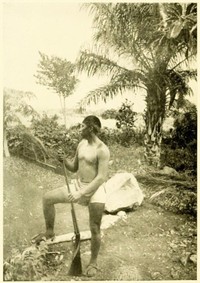
The American Egypt: A Record of Travel in Yucatan
by Arnold, Channing, Frost, Frederick J. Tabor
English
2649h 31m read
Commentary Upon the Maya-Tzental Perez Codex - with a Concluding Note Upon the Linguistic Problem of the Maya Glyphs
by Gates, William
English
426h 30m read
The Maya Chronicles - Brinton's Library Of Aboriginal American Literature, Number 1
English
991h 55m read