The Project Gutenberg EBook of The Identification of the Writer of the
Anonymous Letter to Lord Monteagle in 1605, by William Parker and Francis Tresham and William Vavasour
This eBook is for the use of anyone anywhere at no cost and with
almost no restrictions whatsoever. You may copy it, give it away or
re-use it under the terms of the Project Gutenberg License included
with this eBook or online at www.gutenberg.org
Title: The Identification of the Writer of the Anonymous Letter to Lord Monteagle in 1605
Author: William Parker
Francis Tresham
William Vavasour
Release Date: August 24, 2009 [EBook #29777]
Language: English
Character set encoding: ISO-8859-1
*** START OF THIS PROJECT GUTENBERG EBOOK ANONYMOUS LETTER ***
Produced by Robert Cicconetti, Jane Hyland and the Online
Distributed Proofreading Team at http://www.pgdp.net (This
file was produced from images generously made available
by The Internet Archive/Canadian Libraries)
THE IDENTIFICATION OF
THE WRITER OF THE
ANONYMOUS LETTER TO
LORD MONTEAGLE IN 1605
"A strange letter, from a strange hand,
by a strange messenger; without date to
it, name at it, and (I had almost said)
sense in it. A letter which, even when it
was opened, was still sealed, such the
affected obscurity therein."
FULLER'S _Church History_, x. 32.
LONDON: SIMPKIN, MARSHALL,
HAMILTON, KENT & CO., LTD.
1916
[Transcriber's note:
[***] denotes an asterism, that is, a triangle comprising three asterices.
A carat symbol ^ indicates that the ensuing letters of the word are
superscript letters.]
PREFACE
One of the great mysteries of English history is the anonymous letter to
Lord Monteagle, warning him not to attend the opening of Parliament,
appointed for the Fifth of November, 1605, which is popularly supposed
to have led to the discovery of the Gunpowder Plot. The writer's
identity was carefully concealed by the Government at the time; the
intention being, as explained by Lord Salisbury, "to leave the further
judgment indefinite" regarding it. The official statements are,
therefore, as unsatisfactory as might be expected in a matter that, for
State reasons, has not been straightforwardly related. The letter,
however, remaining and in fair preservation, there was always the
possibility of the handwriting being identified; and this, after the
lapse of over three hundred years, is now accomplished.
CONTENTS
PAGE
PREFACE v
SECTION
I. HISTORICAL ANALYSIS 1
II. THE OFFICIAL STORY OF THE LETTER 5
III. IDENTIFICATION OF THE HANDWRITING 9
IV. THE ATTORNEY-GENERAL'S OPINION OF VAVASOUR'S GUILT 19
V. FRANCIS TRESHAM'S CONFIDENCE WHEN IN THE TOWER 24
VI. THE VAVASOURS AS DEPENDANTS OF THE TRESHAM FAMILY 25
LIST OF FACSIMILES
1. The anonymous letter as delivered to Lord Monteagle, October 26,
1605, warning him not to attend the opening of Parliament
appointed for the Fifth of November (From the original letter in
the Museum of the Public Record Office) _Frontispiece_
2. A page of the MS. entitled "A Treatise against Lying," etc.,
formerly belonging to Francis Tresham, of which the handwriting
was attributed by his brother, William Tresham, to William
Vavasour. Now in the Bodleian Library. (Laud MSS. 655,
folio 44) [1]
3. William Vavasour's handwriting in the letter to the Earl of
Salisbury, dictated and signed by Francis Tresham when dying in
the Tower, December 22, 1605 ("State Papers, Domestic," James I.,
ccxvi. 211) [1]
Stated by Vavasour to have been written by Mrs. Tresham.
On March 24, 1605-6, he confessed that he wrote it and signed
a note to it to that effect.
4. William Vavasour's handwriting in his _untrue_ statement, written in
the presence of the Lieutenant of the Tower, that No. 3 was
written by Mrs. Tresham. Dated March 23, 1605-6 ("State
Papers, Domestic," James I., ccxvi. 207) [1]
[***]To avoid detection of his falsehood, he writes a hand
quite different from his ordinary writing in Nos. 2 and 3, thus
producing a hand which is in itself identical with his former
disguised writing as seen in the anonymous letter (No. 1).
5. George Vavasour's handwriting on the last leaf, which he renewed
for Francis Tresham, of the MS. entitled "A Treatise against
Lying," etc. (Laud MSS. 655, folio 61) _To face page 26_
The Identification of the Writer of the Anonymous Letter to Lord
Monteagle
I
HISTORICAL ANALYSIS
Francis Tresham, of Rushton, in Northamptonshire, has recently
(September 11, 1605) succeeded his father, Sir Thomas Tresham (a great
sufferer for the Roman Catholic religion), in an inheritance of at least
five thousand a year, in present money; after having, as he says, spent
most of his time overburdened with debts and wants, and resolves within
himself to spend his days quietly. His first cousin, Robert Catesby,
being hard-up with funds exhausted in financing the scheme known as the
Gunpowder Plot, seeing in Tresham the chance of obtaining a further
supply (though previously distrusting him), induces him, in the
interests of their religion, to join the conspiracy, of which he thus
becomes the thirteenth, and last, sworn conspirator (October 14, 1605).
Catesby is careful to impose the oath of secrecy before fully disclosing
the plot; of which Tresham, on hearing, entirely disapproves, and
endeavours to dissuade his cousin from, or even to defer it; meanwhile
offering him the use of his own purse if he will do so. Finding he
cannot prevail with him, he is very urgent that the Lords Monteagle and
Stourton, particularly the former, may be warned, each having married
Tresham's sisters; but Catesby can give no definite assurance. Tresham
then intends, as he says, to get the conspirators shipped away, and to
inform the Government by some unknown, or anonymous, means.
Tresham has a serving-man named William Vavasour, who attended Sir
Thomas Tresham, and who, with his elder brother, George Vavasour (whose
education Tresham has particularly encouraged), and their sister Muriel
(gentlewoman to Lady Monteagle who is the daughter of "Muriel" Lady
Tresham) are favoured dependants of the Tresham family, being the
children of an old and much valued Catholic servant. Both George and
William are confidentially employed by Tresham as amanuenses, in
transcribing religious, or treasonable, treatises of the time.
Lord Monteagle unexpectedly orders a supper to be prepared (October 26,
1605) at his house at Hoxton (belonging to his brother-in-law Tresham),
and where he has not been for some months. As he is about to go to
supper, a letter is handed to him by his footman, to whom it has been
given in the street by "an unknown man of a reasonable tall personage,"
who knows that he will find him at so unfrequented a residence.
Monteagle opens the letter, which is anonymous, pretends he cannot
understand it, and shows it to his secretary, Thomas Ward, who, he is
aware, is familiar with some of the conspirators; whom Ward, the next
evening, tells of the receipt of the letter, which Monteagle at once
takes to Whitehall, about three miles away, where he finds the Earl of
Salisbury (Principal Secretary of State) with other lords of the Council
together assembled, "ready for supper." The Government censor, or
suppress, the name of the place where the letter was delivered. The
conspirators and the Jesuit priests, who are involved in the plot
through the confessional, at once suspect Tresham; and Catesby and
Winter directly charge him with having betrayed them, which he denies,
while urging them to escape to France, and giving them money for the
purpose. Although Tresham is a sworn conspirator, he alone remains
behind and at large, after Fawkes's arrest (November 4-5, 1605), and
flight of the others into the country, and offers his services to the
Government. A week later he is taken to the Tower, where being ill, his
wife and serving-man, William Vavasour, and a maid servant constantly
attend him; an indulgence _never under any circumstances_ permitted to
anyone who was really a prisoner and upon a capital charge there.
Becoming worse, he dictates a letter for Vavasour to write to Lord
Salisbury, retracting a statement that he has been induced to make
respecting Father Garnet, and dies (December 23, 1605). This letter, or
dying statement, being misunderstood, is considered to be so incredible
that the writing is particularly inquired into. Vavasour thereupon, in
the presence of the Lieutenant of the Tower, writes an _untrue_
statement (consequently using a hand quite different from his ordinary
writing and, _in itself, identical with the writing of the anonymous
letter_), asserting that his master's dying statement was written by
Mrs. Tresham (though in every way proper for Vavasour to have written),
which she at once repudiates and says that Vavasour wrote it. He is then
examined in the Tower by Chief Justice Popham and Attorney-General Coke,
when he confesses that he wrote the dying statement at his master's
dictation; and had denied it "for fear." Fear of what? In case the
writing should bring into question some other and less innocent letter
written by him for his master.
Upon Tresham's death in the Tower, the Lieutenant writes to Salisbury
(December 23, 1605) of the "marvellous" confidence shown by Tresham and
his friends that had he survived, they feared not the course of justice.
Later, having left no male issue, his inheritance passes to his brother,
who is described as of Rushton, when created a baronet on the
institution of that Order by James the First, the very king whom the
plotters intended to destroy; and although a baronetcy at that time was
merely a monetary distinction or transaction, _some_ discrimination was
no doubt made in the bestowal or disposal of that dignity, which
probably would not have been conferred upon Catesby's son, who was then
living, even if he had been able to afford it after the forfeiture of
his family inheritance.
The Attorney-General, at Father Garnet's trial (March 28, 1606),
pronounces Vavasour as being, in his opinion, "deeply guilty" in the
treason; yet he is not even brought to trial, while other serving-men
are tried and executed; although Lord Salisbury expressly declares that
he will esteem his life unworthily given him, when he shall be found
slack in bringing to prosecution and execution ALL who are in any way
concerned in the treason; and his exertions in the matter are accounted
to be so successful, that he is rewarded with the Order of the Garter.
Francis Tresham's inheritance remains in the family; and his
serving-man, the "deeply guilty" William Vavasour, goes free.
FOOTNOTES:
[Footnote 1: _These facsimiles are issued separately in order to
facilitate comparison._]
II
THE OFFICIAL STORY OF THE LETTER
The authentic, or rather the official, story of the delivery of the
letter, as published by the Government at the time, states that on
Saturday, October 26, 1605, Lord Monteagle "being in his own lodging,
ready to go to supper, at seven o'clock[2] at night, one of his footmen
(whom he had sent on an errand over the street) was met by an unknown
man, of a reasonable tall personage, who delivered him a letter,
charging him to put it in my lord his master's hands; which my lord no
sooner received, but that having broken it open, and perceiving the same
to be of an unknown and somewhat unlegible hand, and without either date
or subscription, called one of his men[3] to help him to read it. But no
sooner did he conceive the strange contents thereof, although he was
somewhat perplexed what construction to make of it (as whether of a
matter of consequence, as indeed it was, or whether some foolish devised
pasquil, by some of his enemies to scare him from his attendance at the
Parliament), yet did he, as a most dutiful and loyal subject, conclude
not to conceal it, whatever might come of it, whereupon notwithstanding
the lateness and darkness of the night in that season of the year, he
presently repaired to his Majesty's palace at Whitehall, and there
delivered the same to the Earl of Salisbury, his Majesty's principal
Secretary."
Neither the official version nor any State paper mentions the place
where the letter was delivered, which in such a mysterious matter would
be the first inquiry. "Own lodging" at that time signified a person's
house. Hoxton is generally stated to have been the place of delivery,[4]
which was then a single street in the outlying suburb on the great north
road; at a house which Monteagle is known[5] to have occupied, belonging
to his brother-in-law, Francis Tresham; and this ownership may have been
Salisbury's reason for not naming it, which so curious an omission seems
to imply. The letter is as follows:
"My Lord out of the loue i beare[6]; to some of youere frends i haue
a caer of youer preseruacion therfor i would aduyse yowe as yowe
tender youer lyf to deuyse some excuse to shift of youer attendance
at this parleament for god and man hathe concurred to punishe the
wickednes of this tyme and thinke not slightlye of this
aduertisement but retyre youre self into youre contri wheare yowe
maye expect the euent in safti for thowghe theare be no apparance of
anni stir yet i saye they shall receyue a terrible blowe this
parleament and yet they shall not sei who hurts them this cowncel is
not to be contemned because it maye do yowe good and can do yowe no
harme for the dangere[7] is passed as soon as yowe have burnt the
letter and i hope god will give yowe the grace to make good use of
it to whose holy proteccion I commend yowe."
(Addressed) "To the ryght honorable
the lord Monteagle."
It was the opinion of the other conspirators, as well as of the Jesuit
priests who became involved in the plot through the confessional, that
the warning letter originated with Francis Tresham, whose sister was
Lady Monteagle, and another sister had married Lord Stourton; and
Tresham had been most earnest with Catesby that those two lords,
particularly Monteagle, should be warned. In each instance, Catesby was
careful to impose the oath and engage the faith of the conspirator,
before disclosing the plot; and Tresham, the thirteenth and last, sworn
conspirator, on hearing the particulars, entirely disapproved of the
conspiracy, from which he tried to dissuade Catesby, offering him the
use of his own purse if he would even defer it.[8] Tresham could indeed
have desired nothing less than to become involved in such a matter. His
father had recently died, and he had succeeded to a considerable
property,[9] which alone induced his first cousin Catesby to bring him
into the plot. As Tresham wrote when in the Tower:[10] "I thank God I am
owner of such a fortune as is able to afford me what I desire, the
comfort whereof is so much the sweeter unto me, as I have spent most of
my time overburthened with debts and wants, and had resolved within
myself to spend my days quietly."[11] He acknowledged that his
intentions with regard to the other conspirators were "to ship them away
that they might have no means left them to contrive any more ... then to
have taken a course to have given the State advertisement by some
unknown means."[11] He was consequently the only conspirator who
remained behind and at large after Fawkes was taken and the others had
fled. There can be no reasonable doubt that Tresham, though not the
writer, was the sender of the letter; and upon this hypothesis all
investigators must go, as there is none other at all likely.
FOOTNOTES:
[Footnote 2: Salisbury, in his letter to Sir Charles Cornwallis,
Ambassador at Madrid (November 9), gives the hour as six o'clock.]
[Footnote 3: This was his secretary, Thomas Ward, who was known to
Monteagle as a friend of some of the conspirators (as Monteagle himself
was), and one of whom, Ward, the next morning told of the receipt of the
letter. "As a plan concocted by Monteagle and Tresham to stop the plot,
and at the same time to secure the escape of their guilty friends, the
little comedy at Hoxton was admirably concocted" ("What Gunpowder Plot
was," by S.R. Gardiner, D.C.L., 1897, p. 124).]
[Footnote 4: Father John Gerard (1564-1637) gives particulars of the
delivery of the letter at Hoxton in his contemporary "Narrative of the
Gunpowder Plot," published in 1872.]
[Footnote 5: "Calendar of Tresham Papers," p. 132.]
[Footnote 6: The word "yowe" (you), here cancelled in the original,
indicates the writer's first thoughts, and, no doubt, his real meaning.]
[Footnote 7: Various attempts have been made to explain the nature of
the danger alluded to, which the King and Salisbury at the time, and
others since, have understood as in allusion to the danger of the plot.
Jardine describes it as "mere nonsense" ("Gunpowder Plot," 1835, p. 73).
But the meaning clearly is the danger of the letter being discovered.
The counsel may do him good, and can do him no harm, except through the
danger of keeping the letter, which being burnt, the danger is past.
There is no allusion intended to the danger of the plot, as that, unlike
the danger of the discovery of the letter, could not be affected by
burning the letter.]
[Footnote 8: Tresham's statement made when in the Tower ("State Papers,
Domestic," James I., xvi. 63).]
[Footnote 9: The rental of the Rushton Hall estate alone, as given in
the "Return of Owners of Lands" in 1873, is £5,044 yearly. The Tresham
family also owned property at Hoxton and elsewhere.]
[Footnote 10: He died in the Tower six weeks after writing that letter,
aged thirty-seven.]
[Footnote 11: "State Papers, Domestic," James I., xvi., 63.]
III
IDENTIFICATION OF THE HANDWRITING
The style of handwriting of the letter, as seen in the facsimile, is not
in this writer's opinion, from a familiarity of thirty years with old
scripts, apart from the disguise, the hand that an educated person would
write at the time, but is essentially a commonplace and, no doubt
intentionally, rather slovenly style of handwriting. The use of small
"i's" for the first person seems, in view of modern usage, to suggest an
illiterate writer; but educated writers, even the King,[12] then
occasionally lapsed into using them. In the letter, however, they are
consistently and may have been purposely used, to avert suspicion from
being the work of an educated person; though an illiterate appearance
would rather cause such a letter (if genuine) to be disregarded, than to
deter a nobleman from attending the opening of Parliament, for which
leave or licence was required.
The handwriting has been variously ascribed, but the direction of this
inquiry is indicated by the incautious admission made by Sir Edward
Coke, the Attorney-General at the trial, respecting the real manner in
which the plot was discovered. Salisbury's careful instructions to the
Attorney-General for the trial are with the State papers, in which he
says: "Next, you must in any case, when you speak of the letter which
was the first ground of discovery, absolutely disclaim that any of
these" (the conspirators) "wrote it, though you leave the further
judgment indefinite who else it should be."[13]
Salisbury thus, in effect, requires Coke by absolutely disclaiming that
any of the conspirators wrote (he does not say "sent") the letter to
Monteagle, and by which alone the treason was discovered, to declare in
Court, as upon the authority of the Government, that therefore none of
the conspirators divulged the plot; which, in any case, could be true
only so far as the disclosure to the Government was concerned. Coke,
however, for some reason--perhaps because he was not fully in
Salisbury's confidence respecting the letter--describes the real manner
of the discovery, according to his own knowledge. Towards the close of
his speech for the prosecution, he said: "The last consideration is
concerning the admirable discovery of this treason, which was by one of
themselves who had taken the oath and sacrament, as hath been said
against his own will;[14] the means by a dark and doubtful letter to my
Lord Monteagle." This, together with Salisbury's statement that none of
the conspirators wrote the letter, shows that the divulging of the plot
preceded the sending of the letter,[15] which was not, therefore, as is
popularly supposed, the means by which the plot was discovered, except
to the general public.
Hitherto those who have attempted this identification have invariably
sought amongst such as are likely to have written the letter for a
handwriting _resembling the disguised writing_, which seems a strange
method of investigation, as surely the object of a disguised hand[16]
would be to make the general appearance as unlike the writer's ordinary
hand as possible? The writing being in a set and rather large character,
such is the style they have sought for and found, but in a much more
refined hand and without arriving at any satisfactory result.
It seems, however, reasonable to suspect that this set and rather large
character may be what principally constitutes the disguise, and that the
writer's ordinary hand would be different. The manner in which the lines
are forced upwards at the right side, shows that the writer has had
difficulty in maintaining the large, set, regular character which would
push an unpractised hand in that direction.
Among the more prominent peculiarities, as seen in the facsimile (No.
1), the writer invariably uses the long "s" as an initial letter in the
ten examples that occur, even when the letter is not a capital. Such
consistent use was usual in legal but not in private hands, though
within a word the long "s" was very common. The "t's" are peculiar;
being made with a twist or short line at foot, crossed midway projecting
from each side, while a stroke is put on the top as a disguised, or
elaborated touch. The "w's" finish with a side loop. Some of the "g's"
show flat tops; the cypher portion being commenced from the left side
with a stroke along the top. The tails of the "y's" are brought forward.
The "hanger" portion of the "h's" invariably drags below the line which,
though not unusual, again indicates in the numerous examples that occur
the writer's habit; while an unusually broad quill has been used to
further the disguise.[17]
After the plot was discovered, Fawkes arrested, and the other
conspirators had escaped into the country, Tresham remained in London
and even offered his services to the Government. A week later he was
taken to the Tower where, being ill, his wife also came, and he was
attended by his serving-man, William Vavasour, and his maid, Joan Syer.
He was induced "to avoid ill-usage," to say that he thought Father
Garnet, against whom the Government desired to obtain evidence, had
written a letter in furtherance of what was known as the Spanish
Treason, in 1602. Six weeks later, his illness becoming dangerous, he
dictated to his man Vavasour a letter to Lord Salisbury, retracting his
statement respecting Garnet, as being more than he really knew;
declaring upon his salvation that he had not seen him "in sixteen years
before," clearly meaning before the Spanish Treason in 1602, which is
the entire subject of his letter and the fact; and not, as the
Government misunderstood him to mean, before the then time of writing in
1605. This statement, written by Vavasour (Fascimile No. 3), was signed
by Tresham, who asked his wife to deliver it personally to Lord
Salisbury, and within three hours died:[18]
"I being sent for before yo^r Lordships in the Tow^r, you told me y^t
(that) it was Confessed by Mr Winter, y^t he went upon some
imploym^{ts} in ye Queens time into Spayne & y^t yo^r L. did nominate
to me out of his Confession all the partyes names y^t were acquainted
therew^{th} _namely 4 besides himselfe_[19] & yet sayd y^t ther were
some left for me to name. I desired yo^r L. y^t I might not answere
therunto bycause it was a matter y^t was done in the Queens time and
since I had my pardon.
"Yo^r Lordships wold not accept of y^t answere, _but sayd y^t I should
be made to speake therunto. And I might thanke my self If I had beene
worse used than I had beene since my Coming to the howse_[19] I told
yo^r Lords^p (_to avoyde ill usage_)[19] y^t I thought Mr. Walley[20]
was p'cured to write his letter for the furthering of this Jeorney. Now
my LL. having bethoughte myselfe of this businesse (being to weake to
use my owne hand in writing this) w^{ch} I do deliver here upon my
salvacon to be trew as near as I can call to mynde, desiring y^t my
form'r Confession may be called in & y^t this may stand for truthe. It
was more than I knew y^t Mr. Walley[20] was used herein, & to give your
Lords'p p'ofe besids my oathe, I had not seene him in sixteene yere
before, nor never had messuadge[21] nor letter from him & to this
purpose I desired Mr. Leiftenant to lett me see my Confession who told
me I should not unlesse I wold inlarge it w^{ch} he did p'ceive I had
no meaning to doe.
(Signed) Francis Tresame.
"24 m'ch 1605 [-6].
This noate was of my owne
hand writing
By me Willia' Vavasore."
Tresham's statement being misunderstood to mean that he had not seen
Garnet for sixteen years,[22] while the Government knew from Tresham
himself[23] that he had recently been in Garnet's company, was
considered such awful perjury to commit when dying as to be incredible.
Coke wrote to Salisbury: "It is true that no man may judge in this case,
for _inter pontem et fontem_ he might find grace; but it is the most
fearful example that I ever knew of to be made so evident as now this
is." Salisbury at the trial said: "Mr. Tresham in his lifetime accused
you, Garnet, before the lords, yet now upon his salvation, he under his
hand did excuse you, being at the very point of death, saying he had not
seen you _in sixteen years_, which matter, I assure you, before you were
taken shook me very much. But, thanks be to God, since the coming of the
King, I have known so much of your doctrine and practices, that
hereafter they shall not much trouble me." The writing of Tresham's
dying statement was, therefore, particularly, inquired into, and
Vavasour had to make a written statement respecting his knowledge of it;
evidently for comparison of the handwriting. This appears to have so
alarmed him that in his statement (Fascimile No. 4), written in the
presence of Sir William Waad, Lieutenant of the Tower, he asserted that
the dying statement was written by Mrs. Tresham, at her husband's
dictation:
"I do rememb' y^t my m^r did cause my m^{res} to write a note wherto he
did did (_sic_) bid the mayd and me beare witnes y^t he did set his
hand unto it, but it was not reade at y^t time but since m^{res}
Tressa' did reede it to me and sayd it was y^t noate y^t my m^r did
bid us beare witnesse and she comaunded me to carye a letter to S^r
Waulter Cope and to desire him to deliver the noate inclosed to my
Lorde of Salsburye and further my m^r did say y^t he cold not write
him selfe bycause he was not able but he did sett his hande unto it
as before I have sayd and this was done some day before his death.
"(Signed) By me William Vavasor.
"23. March 1605 [-6].
Taken before us:
(Signed) W. Waad.
Willus Lane."
If for any reason Vavasour did not desire his writing to be brought into
question, there could be no harm, beyond his falsehood, in naming Mrs.
Tresham as the writer of that letter, as neither could possibly be
blamed for writing such a statement for his master. The question arises,
whether Vavasour would have ventured upon an untrue statement, except
through panic, unless feeling sure of Mrs. Tresham's support? As Mrs.
Tresham throughout made no attempt to conceal the truth for Vavasour,
she may have been unaware of any reason for diverting inquiry from
himself respecting letters written for his master. Even if Mrs. Tresham
had been willing to connive at his falsehood, she could not have done
so; as Salisbury, being convinced that she not only wrote but composed
her husband's dying statement and induced him to sign to shield Father
Garnet, was so incensed against her that he declined to see her,[24] or
even to receive her husband's statement, when she tried to deliver it.
She was therefore obliged, in view of possible consequences to herself,
to own[25] that Vavasour wrote the statement at her husband's dictation.
Vavasour was then examined in the Tower by Chief Justice Popham and by
Coke, when he confessed[26] that he wrote the dying statement at his
master's dictation, and had denied it through fear, which could only
arise from having written some other and less innocent letter for him.
Vavasour, when writing his untrue statement, would avoid using his
ordinary handwriting, as already appearing in the letter in question
(No. 3), which he had ascribed to Mrs. Tresham. He, therefore, disguises
his writing, so far as having to write off-hand and under the
observation of the Lieutenant of the Tower and an attendant Justice,
with the consciousness that he is writing what is false, and while
having to be careful not to reproduce his former disguised hand, as seen
in the anonymous letter, permits him; and the hand thus produced betrays
him as the writer of that letter, with which the writing is, in itself,
identical. The long "s" is invariably used for a word commencing with
that letter, even when not a capital; there are the same peculiar "t's,"
though in a less disguised or elaborated form than those of the
anonymous letter, but there they clearly are; the "w's" have no side
loops, but in Vavasour's note at foot of No. 3 a conspicuous example is
seen; there are no "g's";[27] the "y's" are particularly noticeable,
being in two varieties: Vavasour's ordinary "y," of which the tail is
tucked back; in the other, the tail is brought forward; and no one can
fail to see that the latter are by the same hand as those in the letter;
the "hangers" of the "h's" invariably drag below the line; and
generally, the writing may throughout be detected as by the same hand
that wrote the anonymous letter.
The best specimen of Vavasour's handwriting, although not so useful as
No. 4 for identification purposes, is in the MS. entitled "A Treatise
against Lying," etc., identified by William Tresham as having been
transcribed by Vavasour for Francis Tresham, which is now in the
Bodleian Library (Facsimile No. 2). To anyone familiar with the
handwriting of the period, Vavasour's writing is the usual law-writer's
or copyist's hand, such as appears in conveyances and deeds of the
time,[28] and is not the style of hand that an educated person would
then write. Each initial "s" is of the long form; each "w" has a side
loop; the "g's" are flat-topped; and the "h's" come below the line, etc.
Tresham's dying statement (No. 3) appears to be in a similar but
smaller[29] and less carefully written hand. Vavasour wrote a neat,
small hand, which, when disguising, the probability is that he would
attempt an opposite style. If it were not for the testimony of the
Lieutenant of the Tower, that the untrue statement (No. 4) was actually
written in his presence by Vavasour, the writing would not, from the
general appearance, readily be recognized as by the same hand that wrote
Tresham's dying statement (No. 3), and so acknowledged by Vavasour. This
shows that he was naturally clever in disguising his hand, hence his
employment by Tresham in writing the anonymous letter to Lord Monteagle.
* * * * *
Upon the evidence of the handwriting alone, William Vavasour was the
writer of that letter.[30]
FOOTNOTES:
[Footnote 12: In the "Correspondence of James I. with Sir Robert Cecil"
(published by the Camden Society in 1861), both the King and the Earl of
Northumberland occasionally use them (pp. 64, 70, etc.). The latter also
uses them in his general correspondence.]
[Footnote 13: "State Papers, Domestic," James I., xix. 94.]
[Footnote 14: Tresham was throughout the only unwilling conspirator, but
he did not take the oath sacramentally, only seven or eight of the
thirteen conspirators did so.]
[Footnote 15: "No wise man could think my lord (Monteagle) to be so weak
as to take any alarm to absent himself from Parliament upon such a loose
advertisement" (Letter from Salisbury to Cornwallis, November 9).]
[Footnote 16: Salisbury, in his letter to Cornwallis, particularly
describes the writing as being "in a hand disguised," and he, like
Monteagle, would know not only the writer, but how the letter came to be
written.]
[Footnote 17: In an expert examination of handwriting, the angle at
which the pen is held, as indicated by the long strokes, and the spacing
between the lines which a writer naturally uses, have also to be
considered--being the basis of handwriting, the first movements that are
made in learning to write, and become each writer's characteristics in
those respects. In each specimen of William Vavasour's handwriting,
including the anonymous letter, the long strokes are generally at the
same angle, and the spacing between the lines (except in No. 3) is
throughout generally similar, while his brother George's hand is in each
respect quite different.]
[Footnote 18: "He died this night, about two of the clock after
midnight, with very great pain; for though his spirits were much spent
and his body dead, a-lay above two hours in departing" (Lieutenant of
the Tower to Salisbury, December 23, 1605, "State Papers, Domestic,"
James I., xvii. 56). Tresham's death, being so opportune for Monteagle,
if not for Salisbury, has been attributed to poisoning; but Stowe's
"Annals" (1615, p. 880) states it to have been occasioned by strangury,
though giving the date of his death incorrectly as November 22. Ten
years later a subsequent Lieutenant of the Tower was executed for
poisoning a State prisoner.]
[Footnote 19: The portion printed in italics was underlined by Coke for
_omission_ when the statement was read at the trial. The "4 besides
himself," having reference to Monteagle, was therefore suppressed; the
other suppressions in the statement were made for obvious and unfair
reasons.]
[Footnote 20: "Walley" was one of Father Garnet's aliases.]
[Footnote 21: This is very suggestive of a law-writer's spelling of
"message" (messuage and tenement).]
[Footnote 22: When Garnet returned from Rome in 1585, as Superior of the
Jesuits in England, he made the Treshams' acquaintance, being a
prominent Roman Catholic family, when Francis was eighteen. Garnet was
not their confessor, and the acquaintance had dropped for at least
sixteen years before the Spanish Treason in 1602. Garnet's statement,
made (March 23, 1605-6) after Tresham's death, is: "I knew him about 18
years ago, but since discontinued my acquaintance until the time between
his trouble in my lord of Essex's tumult and the Queen's death"
(1602-3). Garnet would have neither motive nor inclination to shield
Tresham, whose betrayal of the plot had brought Garnet to the Tower. He
might otherwise have discerned Tresham's real meaning in his statement
of "sixteen years before," which the contemporary Jesuit Father Gerard
correctly interprets as before 1602 in his narrative of the plot. It was
not Garnet's complicity in the Spanish Treason in the previous reign
(for which he had his pardon) that the Government cared about, and that
so shook Salisbury, but simply Tresham's dying statement being
misunderstood to mean that he had not seen Garnet for the past sixteen
years, which is all that the present writer is concerned with.]
[Footnote 23: "State Papers, Domestic," James I., xvi. 62.]
[Footnote 24: So he said at the trial: "She came to see me, but I spared
either to speak with her or hear her." But Mrs. Tresham in her
examination said that, "in respect of her sorrow and heaviness," she
"was enforced to send it"; and in her note enclosing the dying statement
to Sir Walter Cope for delivery, she wrote: "My sorrows are such that I
am altogether unfit to come abroad; wherefore I would entreat you to
deliver it yourself unto my lord, that I may have my husband's desire
fulfilled therein" ("State Papers, Domestic," James I., ccxvi. 211).]
[Footnote 25: Examination of Mrs. Tresham (_ibid._, ccxvi. 209).]
[Footnote 26: Examination of William Vavasour (_ibid._, ccxvi. 207).]
[Footnote 27: Vavasour, in his authentic and ordinary writing, used
flat-topped "g's," as seen in the anonymous letter, as well as in No. 2,
ascribed to him.]
[Footnote 28: The deed of Robert Catesby's marriage settlement with
Katherine, eldest daughter of Sir Thomas Leigh, of Stoneleigh (1592), in
the possession of T.W. Whitmore-Jones; Esq., of Chastleton House, Oxon,
is in a similar legal hand, with precisely the same peculiarities of
"s," "g," "w," "h," etc. A law-writer's hand to-day is in a
"copper-plate" style, which, although most suitable for the purpose, is
not the kind of hand that an educated person would write whose business
was not copying, and there was then a similar distinction between them.]
[Footnote 29: Apparently owing to restrictions of space and paper.]
[Footnote 30: The original letter is framed and exhibited upon a
pedestal in the Museum of the Public Record Office. The facsimile has,
therefore, had to be made from a negative taken of the letter as seen
through glass, while the other facsimiles have the advantage of being
made from negatives taken of documents unglazed.]
IV
THE ATTORNEY-GENERAL'S OPINION OF VAVASOUR'S GUILT
The Attorney-General in his speech for the prosecution at Father
Garnet's trial (March 28, 1606), as given in the official report,
alluding to Tresham's dying statement, said: "Upon his death-bed he
commanded Vavasour his man, _whom I think deeply guilty in this
treason_, to write a letter to the Earl of Salisbury."
Henry Garnet's trial was purposely held at the City Guildhall, instead
of Westminster Hall, the usual trial place where the conspirators had
been tried, in order to make the occasion as imposing, and his case as
exemplary, as possible, on account of his position as Superior of the
Jesuits in England.[31] The King was privately present, and there was a
most distinguished assembly of ambassadors, nobility, and others.
Before this audience, the Attorney-General, whose opinion determines or
considerably influences a prosecution for high treason, states in Court
that a person who is not even present nor arraigned is in his opinion
"deeply guilty" in the most infamous treason ever attempted, and for
which the conspirators had already been executed: so "heinous, horrible
and damnable"[32] was it considered, that the authorities had even
proposed to devise some specially severe form of torture for the
perpetrators to undergo, in addition to the usual terrible penalty for
high treason.[33]
Coke, who it will be remembered was the most eminent counsel and the
greatest jurist of the time, however desirous he would be of bringing to
light everything connected with such a treason upon the occasion, would
scarcely, as legally representing the Crown in his capacity of the
King's Attorney-General, express so extremely damaging an opinion
without sufficient reason. There is something in his mind concerning
Vavasour,[34] respecting whom he is not satisfied; and it can only be
Vavasour's having written, not the letter to Salisbury--as that could
not possibly implicate him, nor render him "deeply guilty" in a treason
_which had been discovered and ended six weeks before the letter to
Salisbury was written_--but that other and most treasonable letter to
Monteagle, for there was nothing else against him in the matter.[35]
Coke evidently knows, or suspects, that Vavasour wrote the warning
letter; and he cannot understand why he is not brought to trial.[36] He
therefore expresses his opinion of Vavasour's guilt as strongly as
possible, and even describes him with what for an Attorney-General in
ordinary circumstances would be a singular redundancy of legal
expression, as being "deeply guilty" in the treason.[37] No one would
know better than the Attorney-General that in high treason itself the
law makes no distinction whatever of degrees of guilt, nor can there
even be an accessory: once participant, whatever the part played may be,
all alike are principals.
Coke's statement in Court has been officially in print for over three
hundred years, yet no investigator seems to have noticed it and so have
been led to inquire what was done to Vavasour?--by which alone a clue
might have been obtained to the writer of the letter.[38] Although
Vavasour was publicly stated by the Attorney-General to be "deeply
guilty" in a treason of which Salisbury wrote: "I shall esteem my life
unworthily given me when I shall be found slack in searching to the
bottom of the dregs of this foul poison, or lack resolution to further
to my small power the prosecution and execution of ALL those whose
hearts and hands can appear foul in this savage practise"[39]--yet he
was not even brought to trial, while other serving-men were tried and
executed.[40]
It is questionable whether Salisbury, unless agreeing with Coke's
opinion of Vavasour's guilt, would have allowed the allusion to appear
in the official report of the trial, prepared by himself and sanctioned
by the King;[41] as, if innocent of the treason, an intolerable
injustice would have been done to Vavasour by the publication, which
probably neither the King nor Salisbury would have permitted, in making
a senseless attack upon the reputation of an innocent man, who would
certainly have protested.
Without, however, assuming too advanced ideas of justice for the time,
it is unlikely that so capable a person as Salisbury appears to have
been,[42] could fail to perceive that the publication of the
Attorney-General's opinion of Vavasour's guilt must, in the absence of
any prosecution, call attention to Vavasour, and thus furnish a clue to
the writer of the letter. Salisbury, though generally fair-minded, might
not trouble himself about Vavasour's reputation, but he would about his
own, which would be affected by his failure, after his strongly
expressed determination, in bringing to justice ALL who were concerned
in such a treason; and this would still apply, even if Coke's published
allusion to Vavasour's guilt was merely counsel's rhetoric. Coke,
however, at the moment when making that allusion, was not declaiming
upon the treason, but simply stating a fact about Tresham, with the King
listening; and in alluding to Vavasour, he expresses what is in his
mind--"_whom I think deeply guilty in this treason_": evidently his
deliberate opinion, which he would have every opportunity of forming,
as, with the exception of Salisbury and the conspirators, he would know
more of the workings of the plot than anyone. Salisbury's chief concern,
apparently, was at all costs to keep Vavasour silent, which he did;
while his anxiety "to leave the further judgment indefinite" respecting
the writer of the letter, plainly shows that the matter would not bear
inquiry.
* * * * *
The only possible conclusion, therefore, is that Vavasour wrote the
anonymous letter to Lord Monteagle, which the identity of the
handwriting absolutely confirms.
FOOTNOTES:
[Footnote 31: "My Sovereign determined that your trial should be in this
honourable assembly. For who is Garnet that he should be called hither,
or we should trouble ourselves in this Court with him? which I protest
were sufficient for the greatest Cardinal in Rome, if in this case he
should be tried. No, Mr. Garnet, it is not for your cause that you are
called hither, but to testify to the world the foulness of your fact,
the errors of your religion," etc. Lord Salisbury's Speech at the Trial.
(Gerard). When at the trial, rebuking Garnet for untruthfulness in his
previous examination before the Council, Salisbury said: "You stiffly
denied it upon your soul, reiterating it with so many detestable
execrations, _as our hair stood upright_" (Jardine).]
[Footnote 32: The Act for the Attainder of the Conspirators ("Statutes
of the Realm," 3 James I., c. 2). Coke himself characterized the treason
at the trial as "beyond all examples, whether in fact or fiction, even
of the tragic poets who did beat their wits to represent the most
fearful and horrible murders." And in the prayer to be used in the
Anniversary Service for the Fifth of November it is described as having
been attempted "in a most barbarous and savage manner, beyond the
examples of former ages. From this unnatural conspiracy, not our merit,
but Thy mercy; not our foresight, but Thy providence, delivered us,"
etc.]
[Footnote 33: In the previous century, in a case where a more severe
penalty was desired to be inflicted, the offender was, by Act of
Parliament, publicly _boiled alive_ ("Statutes of the Realm," 22 Henry
VIII., c. 9).]
[Footnote 34: Coke worked hard for some months in thoroughly preparing
the evidence for the trial, so that little would escape him. As he wrote
to Salisbury: "If your lordship knew what pains have been taken herein,
your lordship would pity the old attorney" (Hatfield MSS.).]
[Footnote 35: Vavasour's falsehood respecting Mrs. Tresham had nothing
to do with the treason. Coke seems to mention Vavasour's guilt as if
antecedent to the writing of the letter to Salisbury.]
[Footnote 36: This work is merely the identification of the writer of
the anonymous letter only, and makes no attempt to answer the much more
difficult question of what the arrangement was between Salisbury and
Monteagle, or between Monteagle and Tresham, respecting the sending of
the letter; but with regard to Coke, it is unlikely, from what is known
of their intercourse and their frequent differences in court, that he
would be admitted to any particular confidence with Salisbury in the
matter.]
[Footnote 37: Vavasour's concealment of guilty knowledge as the writer
of the warning letter would probably be only misprision of treason,
unless Coke knew or suspected that he was directly concerned in the
treason.]
[Footnote 38: The present writer does not owe the identification to that
clue, which was not met with until after Vavasour had been identified as
the writer of the letter.]
[Footnote 39: Letter to the Earl of Dunfermline, Lord Chancellor of
Scotland. December 1, 1605 ("State Papers, Domestic," James I., xvii.
2). Salisbury was created K.G. with almost regal pomp for his services
in the matter. "Tuesday the 20th of May (1606), at Windsor, were
installed Knights of the Garter, Robert, Earl of Salisbury, who set
forward from his house in the Strand, being almost as honourably
accompanied and with as great train of lords, knights, gentlemen, and
officers of the Court, with others besides his peculiar servants very
richly attired, and bravely mounted, as was the King when he rid in
state through London" (Stowe's "Annals," 1615, p. 883).]
[Footnote 40: Bates, Catesby's serving-man, at London; others in the
country.]
[Footnote 41: Although known as the "King's book," the report of the
trial was evidently compiled by Salisbury and corrected by the King.]
[Footnote 42: Salisbury's statesmanship is evinced by the advice he
wrote to James (I.) when King of Scotland, and impatiently awaiting
Queen Elizabeth's demise: "Your best approach towards your greatest end,
is by your Majesty's clear and temperate courses, to secure the heart of
the highest, to whose sex and quality nothing is so improper as either
needless expostulations, or over much curiosity in her own actions. The
first showing unquietness in yourself; the second challenging some
untimely interest in hers; both which, as they are best forborne when
there is no cause, so be it far from me (if there shall be cause), to
persuade you to receive wrongs and be silent" ("Secret Correspondence,"
Camden Society, 1860, p. 7).]
V
FRANCIS TRESHAM'S CONFIDENCE WHEN IN THE TOWER
Upon Tresham's death in the Tower (December 23, 1605), the Lieutenant
wrote to Salisbury: "I find his friends were marvellous confident if he
had escaped this sickness, and have given out in this place that they
feared not the course of justice."[43] As the late Dr. Gardiner
observed: "This confidence they could only have derived from himself,
and it could only have been founded on one ground."
Had Tresham's committal to the Tower been otherwise than a mere
formality, or "a farce," neither his wife nor his servants would under
any circumstances have been permitted to attend or even see him whatever
the state of his health might have been; and had he survived, nothing
serious would have been done to him,[44] any more than was done to his
"deeply guilty" servant Vavasour.
Tresham, though dreading, as he said, "the infamous brand of an
accuser,"[45] was as evidently the Informer to the Government, either
directly or indirectly through Monteagle, as his servant Vavasour was
the writer of the letter.
FOOTNOTES:
[Footnote 43: "State Papers, Domestic," James I., xvii. 58.]
[Footnote 44: He left no male issue, and was succeeded in the family
property by his next brother Lewis, who was created a baronet June 29,
1611, one of the second batch of baronets made on the institution of
that Order the previous May 22 by James I.]
[Footnote 45: "State Papers, Domestic," James I., xvi. 63.]
VI
THE VAVASOURS AS DEPENDANTS OF THE TRESHAM FAMILY
The Tresham Papers[46] contain much information respecting the Vavasours
as dependants of that family. Sir Thomas Tresham had a bailiff or
collector, named Thomas Vavasour, an old and much valued Catholic
servant,[47] who had, with perhaps other children, two sons, George and
William, and a daughter, Muriel. George, who had been educated, was in
June, 1596, sent up by his father with a letter to Sir Thomas, then in
town, in order that he might be entered at one of the Inns of Court, as
Sir Thomas might advise: "Mr. Francis Tresham has encouraged him in this
kind of study and the cost already bestowed must not be lost. He knows
he has nothing else to trust to but his learning, nor does he seem so
fit for anything else."[48] He was accordingly admitted to the Inner
Temple in November of that year,[49] where Lewis Tresham (Sir Thomas's
second son) had been admitted the previous November, and to whom there
is an allusion of George Vavasour acting as tutor.[50] William Vavasour,
the other son, was servant to Sir Thomas, and though not so educated as
his brother George, was not a livery-servant or footman,[51] but appears
to have held a similar or superior position with Sir Thomas, to that
which Bates, who kept his own man,[52] held with Catesby, a kind of
secretary-valet of the time.[53] After Sir Thomas's death he served his
eldest son Francis Tresham in the same capacity; while the sister Muriel
Vavasour, who bore the same (then uncommon) Christian name as Lady
Tresham, and may have been her god-daughter, became "gentlewoman without
livery" at £5 yearly[54] to Lady Monteagle, who was Lady Tresham's
daughter. Both George Vavasour and his brother William were
confidentially employed by Francis Tresham as amanuenses, where secrecy
was necessary in transcribing religious or political treatises, such as
were then circulated amongst Roman Catholics, and, being treasonable,
dared not be printed.
On December 1, 1605, the Attorney-General, while investigating the
conspiracy, obtained two MS. volumes which had been found in George
Vavasour's chambers in the Inner Temple. One, officially described as a
"quarto" volume, though an octavo (8-1/4 x 5-3/4), entitled
"A Treatise against Lying,"[55] was stated by George Vavasour, on
examination[56] to have been lent him by Francis Tresham to copy,[57]
and the copy he had made was contained in the folio, the other MS.
found. He denied any knowledge of the handwriting in the "quarto"
volume, except that he had recopied the last page (61), in order to
replace a torn leaf, bearing in Latin the Imprimatur of George
Blackwell, Archpriest of the English Jesuits. William Tresham (Francis
Tresham's youngest brother), on being examined by Coke, said that he
thought the "quarto" MS. was in William Vavasour's handwriting, who was
formerly his father's servant, and since serving his eldest brother in
the Tower.[58] William Tresham may have seen Vavasour so employed at
home and would know his writing; while George Vavasour might not wish to
bring his brother into question. The folio MS. has disappeared, but the
"quarto" copy, as ascribed to William Vavasour, is now with Archbishop
Laud's MSS. (No. 655) in the Bodleian Library, and was published in
1851.
[Illustration: FACSIMILE No. 1.
The anonymous letter as delivered to Lord Monteagle, October 26, 1605,
warning him not to attend the opening of Parliament appointed for the
Fifth of November. (From the original letter in the Museum of the Public
Record Office.)]
[Illustration: FACSIMILE No. 2.
A page of the MS. intitled "A Treatise against Lying, &c.", formerly
belonging to Francis Tresham, of which the handwriting was attributed by
his brother, William Tresham, to William Vavasour. Now in the Bodleian
Library. (Laud MSS. 655, folio 44.)]
[Illustration: FACSIMILE No. 3.
William Vavasour's handwriting in the letter to the Earl of Salisbury,
dictated and signed by Francis Tresham, when dying in the Tower.
December 22, 1605. (State Papers, Domestic. James I. ccxvi. 211.)
Stated by Vavasour to have been written by Mrs. Tresham. On March 24,
1605-6, he confessed that he wrote it, and signed a note to it to that
effect.]
[Illustration: FACSIMILE No. 4.
William Vavasour's handwriting in his _untrue_ statement written in the
presence of the Lieutenant of the Tower, that No. 3 was written by Mrs.
Tresham. Dated March 23, 1605-6. (State Papers, Domestic. James I.
ccxvi. 207.)
[***]To avoid detection of his falsehood, he writes a hand quite
different from his ordinary writing in Nos. 2 and 3, thus producing a
hand which is in itself identical with his former disguised writing as
seen in the anonymous letter (No. 1).]
[Illustration: FACSIMILE No. 5.
George Vavasour's handwriting on the last leaf, which he renewed for
Francis Tresham, of the MS. intitled "A Treatise against Lying, &c."
(Laud MSS. 655, folio 61.)]
George Vavasour's handwriting upon the last leaf of the MS. (Facsimile
No. 5) shows a much more refined and educated hand than his brother's,
from which the writing is in every respect different. A small "s" is
invariably used in commencing a word with that letter; the "t's " are
quite different; the "w" finishes with an inner, not an outer loop; the
"g's" have no flat tops; and the "hangers" of the "h's" do not descend
below the line. The writing is evidently an educated hand for the time,
and cannot readily be imagined as using small "i's" for the first
person, such as are used in, and seem to accord so well with, the much
less educated handwriting of the warning letter.
* * * * *
WILLIAM VAVASOUR, the Tresham family serving-man, is thus not only
conclusively proved to have written the anonymous letter to Lord
Monteagle, but most probably was also the "unknown man of a reasonable
tall personage" who is so quaintly described in the Government story as
having delivered the letter.
FOOTNOTES:
[Footnote 46: Calendared by the Historical MSS. Commission. "Report on
MSS. in various Collections, vol. iii., 1904. The MSS. of T.B.
Clarke-Thornhill, Esq., of Rushton Hall, by Mrs. R.C. Lomas." These
important family papers were preserved and discovered in a curious
manner. In 1828, when making alterations at Rushton Hall, on removing a
partition wall, they were found with some theological books in a large
bundle wrapped in a sheet, which had been built into a recess in the
wall. As the papers, commencing in 1576, with a few of earlier date, end
in November, 1605, they were probably thus hidden away on Tresham's
arrest.]
[Footnote 47: "Calendar," p. 59.]
[Footnote 48: _Ibid._, p. 89.]
[Footnote 49: "Students admitted to the Inner Temple, 1547-1660"
(1877).]
[Footnote 50: "Calendar of Tresham Papers," p. 90.]
[Footnote 51: His name does not appear in the list of Sir Thomas's ten
livery servants as retained while the establishment was at Hoxton before
Monteagle's tenancy, of which the accounts are with the Tresham Papers.
Under the stable charges is the keep of a horse for Thomas Vavasour, the
father (_ibid._, pp. 47, 50).]
[Footnote 52: "Examination of Christopher Story, Thomas Bates's man"
("State Papers, Domestic," James I., xvi. 28, 1).]
[Footnote 53: It will be remembered that Salisbury in the official story
describes Ward, who was Monteagle's secretary, as "one of his men."]
[Footnote 54: Each of the other female attendants and servants, even
"Mawdlyn the Frenchwoman" at £10 yearly, have a livery ("Calendar of
Tresham Papers," p. 50).]
[Footnote 55: The manuscript was originally entitled "A Treatise upon
Equivocation," which was altered by Father Garnet into "A treatise
against Lying & fraudule't dissimulatio'. Newly overseen by ye Authour &
published for the defence of Innocency, & for the Instructio' of
Ignora'ts." It purports to show when equivocation may "lawfully" be
used, and may have been compiled by Garnet, as the title-page and the
annotations throughout are in his handwriting. The folio manuscript by
George Vavasour was evidently a fair copy of the revised "quarto," and
Tresham's reason for having it made.]
[Footnote 56: "Examination of George Vavasour, of the Inner Temple,
Gent., December 9, 1605" ("State Papers, Domestic," James I., ccxvi.
151).]
[Footnote 57: He also confessed having transcribed the treatise "De
Officio Principis Christiani" (Further examination, December 13, 1605,
_ibid._, ccxvi. 155). Coke alluded to these manuscripts at the trial as
"certain heretical, damnable and treasonable books discovered." He said:
"There is in Tresham's book, 'De Officio Principis,' an easier and more
expedite way than all these to fetch the crown off the head of any king
christened whatsoever, which is this that: '_Princeps indulgendo
hæreticis, amittit regnum._'--If any prince shall but tolerate or favour
heretics, he loseth his kingdom." This shows the confidential nature of
the Vavasours' employment as amanuenses by Tresham in such matters.]
[Footnote 58: Examination of William Tresham, December 9, 1605 ("State
Papers, Domestic," James I., xvii. 23).]
THE END
PRINTED BY
BILLING AND SONS, LIMITED,
GUILDFORD, ENGLAND
End of the Project Gutenberg EBook of The Identification of the Writer of
the Anonymous Letter to Lord Monteagle in 1605, by William Parker and Francis Tresham and William Vavasour
*** END OF THIS PROJECT GUTENBERG EBOOK ANONYMOUS LETTER ***
***** This file should be named 29777-8.txt or 29777-8.zip *****
This and all associated files of various formats will be found in:
http://www.gutenberg.org/2/9/7/7/29777/
Produced by Robert Cicconetti, Jane Hyland and the Online
Distributed Proofreading Team at http://www.pgdp.net (This
file was produced from images generously made available
by The Internet Archive/Canadian Libraries)
Updated editions will replace the previous one--the old editions
will be renamed.
Creating the works from public domain print editions means that no
one owns a United States copyright in these works, so the Foundation
(and you!) can copy and distribute it in the United States without
permission and without paying copyright royalties. Special rules,
set forth in the General Terms of Use part of this license, apply to
copying and distributing Project Gutenberg-tm electronic works to
protect the PROJECT GUTENBERG-tm concept and trademark. Project
Gutenberg is a registered trademark, and may not be used if you
charge for the eBooks, unless you receive specific permission. If you
do not charge anything for copies of this eBook, complying with the
rules is very easy. You may use this eBook for nearly any purpose
such as creation of derivative works, reports, performances and
research. They may be modified and printed and given away--you may do
practically ANYTHING with public domain eBooks. Redistribution is
subject to the trademark license, especially commercial
redistribution.
*** START: FULL LICENSE ***
THE FULL PROJECT GUTENBERG LICENSE
PLEASE READ THIS BEFORE YOU DISTRIBUTE OR USE THIS WORK
To protect the Project Gutenberg-tm mission of promoting the free
distribution of electronic works, by using or distributing this work
(or any other work associated in any way with the phrase "Project
Gutenberg"), you agree to comply with all the terms of the Full Project
Gutenberg-tm License (available with this file or online at
http://gutenberg.org/license).
Section 1. General Terms of Use and Redistributing Project Gutenberg-tm
electronic works
1.A. By reading or using any part of this Project Gutenberg-tm
electronic work, you indicate that you have read, understand, agree to
and accept all the terms of this license and intellectual property
(trademark/copyright) agreement. If you do not agree to abide by all
the terms of this agreement, you must cease using and return or destroy
all copies of Project Gutenberg-tm electronic works in your possession.
If you paid a fee for obtaining a copy of or access to a Project
Gutenberg-tm electronic work and you do not agree to be bound by the
terms of this agreement, you may obtain a refund from the person or
entity to whom you paid the fee as set forth in paragraph 1.E.8.
1.B. "Project Gutenberg" is a registered trademark. It may only be
used on or associated in any way with an electronic work by people who
agree to be bound by the terms of this agreement. There are a few
things that you can do with most Project Gutenberg-tm electronic works
even without complying with the full terms of this agreement. See
paragraph 1.C below. There are a lot of things you can do with Project
Gutenberg-tm electronic works if you follow the terms of this agreement
and help preserve free future access to Project Gutenberg-tm electronic
works. See paragraph 1.E below.
1.C. The Project Gutenberg Literary Archive Foundation ("the Foundation"
or PGLAF), owns a compilation copyright in the collection of Project
Gutenberg-tm electronic works. Nearly all the individual works in the
collection are in the public domain in the United States. If an
individual work is in the public domain in the United States and you are
located in the United States, we do not claim a right to prevent you from
copying, distributing, performing, displaying or creating derivative
works based on the work as long as all references to Project Gutenberg
are removed. Of course, we hope that you will support the Project
Gutenberg-tm mission of promoting free access to electronic works by
freely sharing Project Gutenberg-tm works in compliance with the terms of
this agreement for keeping the Project Gutenberg-tm name associated with
the work. You can easily comply with the terms of this agreement by
keeping this work in the same format with its attached full Project
Gutenberg-tm License when you share it without charge with others.
1.D. The copyright laws of the place where you are located also govern
what you can do with this work. Copyright laws in most countries are in
a constant state of change. If you are outside the United States, check
the laws of your country in addition to the terms of this agreement
before downloading, copying, displaying, performing, distributing or
creating derivative works based on this work or any other Project
Gutenberg-tm work. The Foundation makes no representations concerning
the copyright status of any work in any country outside the United
States.
1.E. Unless you have removed all references to Project Gutenberg:
1.E.1. The following sentence, with active links to, or other immediate
access to, the full Project Gutenberg-tm License must appear prominently
whenever any copy of a Project Gutenberg-tm work (any work on which the
phrase "Project Gutenberg" appears, or with which the phrase "Project
Gutenberg" is associated) is accessed, displayed, performed, viewed,
copied or distributed:
This eBook is for the use of anyone anywhere at no cost and with
almost no restrictions whatsoever. You may copy it, give it away or
re-use it under the terms of the Project Gutenberg License included
with this eBook or online at www.gutenberg.org
1.E.2. If an individual Project Gutenberg-tm electronic work is derived
from the public domain (does not contain a notice indicating that it is
posted with permission of the copyright holder), the work can be copied
and distributed to anyone in the United States without paying any fees
or charges. If you are redistributing or providing access to a work
with the phrase "Project Gutenberg" associated with or appearing on the
work, you must comply either with the requirements of paragraphs 1.E.1
through 1.E.7 or obtain permission for the use of the work and the
Project Gutenberg-tm trademark as set forth in paragraphs 1.E.8 or
1.E.9.
1.E.3. If an individual Project Gutenberg-tm electronic work is posted
with the permission of the copyright holder, your use and distribution
must comply with both paragraphs 1.E.1 through 1.E.7 and any additional
terms imposed by the copyright holder. Additional terms will be linked
to the Project Gutenberg-tm License for all works posted with the
permission of the copyright holder found at the beginning of this work.
1.E.4. Do not unlink or detach or remove the full Project Gutenberg-tm
License terms from this work, or any files containing a part of this
work or any other work associated with Project Gutenberg-tm.
1.E.5. Do not copy, display, perform, distribute or redistribute this
electronic work, or any part of this electronic work, without
prominently displaying the sentence set forth in paragraph 1.E.1 with
active links or immediate access to the full terms of the Project
Gutenberg-tm License.
1.E.6. You may convert to and distribute this work in any binary,
compressed, marked up, nonproprietary or proprietary form, including any
word processing or hypertext form. However, if you provide access to or
distribute copies of a Project Gutenberg-tm work in a format other than
"Plain Vanilla ASCII" or other format used in the official version
posted on the official Project Gutenberg-tm web site (www.gutenberg.org),
you must, at no additional cost, fee or expense to the user, provide a
copy, a means of exporting a copy, or a means of obtaining a copy upon
request, of the work in its original "Plain Vanilla ASCII" or other
form. Any alternate format must include the full Project Gutenberg-tm
License as specified in paragraph 1.E.1.
1.E.7. Do not charge a fee for access to, viewing, displaying,
performing, copying or distributing any Project Gutenberg-tm works
unless you comply with paragraph 1.E.8 or 1.E.9.
1.E.8. You may charge a reasonable fee for copies of or providing
access to or distributing Project Gutenberg-tm electronic works provided
that
- You pay a royalty fee of 20% of the gross profits you derive from
the use of Project Gutenberg-tm works calculated using the method
you already use to calculate your applicable taxes. The fee is
owed to the owner of the Project Gutenberg-tm trademark, but he
has agreed to donate royalties under this paragraph to the
Project Gutenberg Literary Archive Foundation. Royalty payments
must be paid within 60 days following each date on which you
prepare (or are legally required to prepare) your periodic tax
returns. Royalty payments should be clearly marked as such and
sent to the Project Gutenberg Literary Archive Foundation at the
address specified in Section 4, "Information about donations to
the Project Gutenberg Literary Archive Foundation."
- You provide a full refund of any money paid by a user who notifies
you in writing (or by e-mail) within 30 days of receipt that s/he
does not agree to the terms of the full Project Gutenberg-tm
License. You must require such a user to return or
destroy all copies of the works possessed in a physical medium
and discontinue all use of and all access to other copies of
Project Gutenberg-tm works.
- You provide, in accordance with paragraph 1.F.3, a full refund of any
money paid for a work or a replacement copy, if a defect in the
electronic work is discovered and reported to you within 90 days
of receipt of the work.
- You comply with all other terms of this agreement for free
distribution of Project Gutenberg-tm works.
1.E.9. If you wish to charge a fee or distribute a Project Gutenberg-tm
electronic work or group of works on different terms than are set
forth in this agreement, you must obtain permission in writing from
both the Project Gutenberg Literary Archive Foundation and Michael
Hart, the owner of the Project Gutenberg-tm trademark. Contact the
Foundation as set forth in Section 3 below.
1.F.
1.F.1. Project Gutenberg volunteers and employees expend considerable
effort to identify, do copyright research on, transcribe and proofread
public domain works in creating the Project Gutenberg-tm
collection. Despite these efforts, Project Gutenberg-tm electronic
works, and the medium on which they may be stored, may contain
"Defects," such as, but not limited to, incomplete, inaccurate or
corrupt data, transcription errors, a copyright or other intellectual
property infringement, a defective or damaged disk or other medium, a
computer virus, or computer codes that damage or cannot be read by
your equipment.
1.F.2. LIMITED WARRANTY, DISCLAIMER OF DAMAGES - Except for the "Right
of Replacement or Refund" described in paragraph 1.F.3, the Project
Gutenberg Literary Archive Foundation, the owner of the Project
Gutenberg-tm trademark, and any other party distributing a Project
Gutenberg-tm electronic work under this agreement, disclaim all
liability to you for damages, costs and expenses, including legal
fees. YOU AGREE THAT YOU HAVE NO REMEDIES FOR NEGLIGENCE, STRICT
LIABILITY, BREACH OF WARRANTY OR BREACH OF CONTRACT EXCEPT THOSE
PROVIDED IN PARAGRAPH F3. YOU AGREE THAT THE FOUNDATION, THE
TRADEMARK OWNER, AND ANY DISTRIBUTOR UNDER THIS AGREEMENT WILL NOT BE
LIABLE TO YOU FOR ACTUAL, DIRECT, INDIRECT, CONSEQUENTIAL, PUNITIVE OR
INCIDENTAL DAMAGES EVEN IF YOU GIVE NOTICE OF THE POSSIBILITY OF SUCH
DAMAGE.
1.F.3. LIMITED RIGHT OF REPLACEMENT OR REFUND - If you discover a
defect in this electronic work within 90 days of receiving it, you can
receive a refund of the money (if any) you paid for it by sending a
written explanation to the person you received the work from. If you
received the work on a physical medium, you must return the medium with
your written explanation. The person or entity that provided you with
the defective work may elect to provide a replacement copy in lieu of a
refund. If you received the work electronically, the person or entity
providing it to you may choose to give you a second opportunity to
receive the work electronically in lieu of a refund. If the second copy
is also defective, you may demand a refund in writing without further
opportunities to fix the problem.
1.F.4. Except for the limited right of replacement or refund set forth
in paragraph 1.F.3, this work is provided to you 'AS-IS' WITH NO OTHER
WARRANTIES OF ANY KIND, EXPRESS OR IMPLIED, INCLUDING BUT NOT LIMITED TO
WARRANTIES OF MERCHANTIBILITY OR FITNESS FOR ANY PURPOSE.
1.F.5. Some states do not allow disclaimers of certain implied
warranties or the exclusion or limitation of certain types of damages.
If any disclaimer or limitation set forth in this agreement violates the
law of the state applicable to this agreement, the agreement shall be
interpreted to make the maximum disclaimer or limitation permitted by
the applicable state law. The invalidity or unenforceability of any
provision of this agreement shall not void the remaining provisions.
1.F.6. INDEMNITY - You agree to indemnify and hold the Foundation, the
trademark owner, any agent or employee of the Foundation, anyone
providing copies of Project Gutenberg-tm electronic works in accordance
with this agreement, and any volunteers associated with the production,
promotion and distribution of Project Gutenberg-tm electronic works,
harmless from all liability, costs and expenses, including legal fees,
that arise directly or indirectly from any of the following which you do
or cause to occur: (a) distribution of this or any Project Gutenberg-tm
work, (b) alteration, modification, or additions or deletions to any
Project Gutenberg-tm work, and (c) any Defect you cause.
Section 2. Information about the Mission of Project Gutenberg-tm
Project Gutenberg-tm is synonymous with the free distribution of
electronic works in formats readable by the widest variety of computers
including obsolete, old, middle-aged and new computers. It exists
because of the efforts of hundreds of volunteers and donations from
people in all walks of life.
Volunteers and financial support to provide volunteers with the
assistance they need, are critical to reaching Project Gutenberg-tm's
goals and ensuring that the Project Gutenberg-tm collection will
remain freely available for generations to come. In 2001, the Project
Gutenberg Literary Archive Foundation was created to provide a secure
and permanent future for Project Gutenberg-tm and future generations.
To learn more about the Project Gutenberg Literary Archive Foundation
and how your efforts and donations can help, see Sections 3 and 4
and the Foundation web page at http://www.pglaf.org.
Section 3. Information about the Project Gutenberg Literary Archive
Foundation
The Project Gutenberg Literary Archive Foundation is a non profit
501(c)(3) educational corporation organized under the laws of the
state of Mississippi and granted tax exempt status by the Internal
Revenue Service. The Foundation's EIN or federal tax identification
number is 64-6221541. Its 501(c)(3) letter is posted at
http://pglaf.org/fundraising. Contributions to the Project Gutenberg
Literary Archive Foundation are tax deductible to the full extent
permitted by U.S. federal laws and your state's laws.
The Foundation's principal office is located at 4557 Melan Dr. S.
Fairbanks, AK, 99712., but its volunteers and employees are scattered
throughout numerous locations. Its business office is located at
809 North 1500 West, Salt Lake City, UT 84116, (801) 596-1887, email
[email protected]. Email contact links and up to date contact
information can be found at the Foundation's web site and official
page at http://pglaf.org
For additional contact information:
Dr. Gregory B. Newby
Chief Executive and Director
[email protected]
Section 4. Information about Donations to the Project Gutenberg
Literary Archive Foundation
Project Gutenberg-tm depends upon and cannot survive without wide
spread public support and donations to carry out its mission of
increasing the number of public domain and licensed works that can be
freely distributed in machine readable form accessible by the widest
array of equipment including outdated equipment. Many small donations
($1 to $5,000) are particularly important to maintaining tax exempt
status with the IRS.
The Foundation is committed to complying with the laws regulating
charities and charitable donations in all 50 states of the United
States. Compliance requirements are not uniform and it takes a
considerable effort, much paperwork and many fees to meet and keep up
with these requirements. We do not solicit donations in locations
where we have not received written confirmation of compliance. To
SEND DONATIONS or determine the status of compliance for any
particular state visit http://pglaf.org
While we cannot and do not solicit contributions from states where we
have not met the solicitation requirements, we know of no prohibition
against accepting unsolicited donations from donors in such states who
approach us with offers to donate.
International donations are gratefully accepted, but we cannot make
any statements concerning tax treatment of donations received from
outside the United States. U.S. laws alone swamp our small staff.
Please check the Project Gutenberg Web pages for current donation
methods and addresses. Donations are accepted in a number of other
ways including checks, online payments and credit card donations.
To donate, please visit: http://pglaf.org/donate
Section 5. General Information About Project Gutenberg-tm electronic
works.
Professor Michael S. Hart is the originator of the Project Gutenberg-tm
concept of a library of electronic works that could be freely shared
with anyone. For thirty years, he produced and distributed Project
Gutenberg-tm eBooks with only a loose network of volunteer support.
Project Gutenberg-tm eBooks are often created from several printed
editions, all of which are confirmed as Public Domain in the U.S.
unless a copyright notice is included. Thus, we do not necessarily
keep eBooks in compliance with any particular paper edition.
Most people start at our Web site which has the main PG search facility:
http://www.gutenberg.org
This Web site includes information about Project Gutenberg-tm,
including how to make donations to the Project Gutenberg Literary
Archive Foundation, how to help produce our new eBooks, and how to
subscribe to our email newsletter to hear about new eBooks.
The Identification of the Writer of the Anonymous Letter to Lord Monteagle in 1605
Download Formats:
Excerpt
The Project Gutenberg EBook of The Identification of the Writer of the
Anonymous Letter to Lord Monteagle in 1605, by William Parker and Francis Tresham and William Vavasour
This eBook is for the use of anyone anywhere at no cost and with
almost no restrictions whatsoever. You may copy it, give it away or
re-use it under the terms of the Project Gutenberg License included
with this eBook or online at www.gutenberg.org
Title: The Identification of the Writer of the Anonymous Letter to...
Read the Full Text
— End of The Identification of the Writer of the Anonymous Letter to Lord Monteagle in 1605 —
Book Information
- Title
- The Identification of the Writer of the Anonymous Letter to Lord Monteagle in 1605
- Author(s)
- Monteagle, William Parker, Baron, Morgan, George Blacker
- Language
- English
- Type
- Text
- Release Date
- August 24, 2009
- Word Count
- 12,463 words
- Library of Congress Classification
- DA
- Bookshelves
- Browsing: History - European, Browsing: History - General
- Rights
- Public domain in the USA.
Related Books
A Sermon Preach'd upon the Occasion of the Anniversary Thanksgiving of the Fifth of November, 1706 - at the Church of Kensington
by Hough, Nathaniel
English
132h 50m read
The Gunpowder Plot and Lord Mounteagle's Letter, Being a Proof, with Moral Certitude, of the Authorship of the Document - Together with Some Account of the Whole Thirteen Gunpowder Conspirators, Including Guy Fawkes
by Spink, Henry
English
2113h 37m read
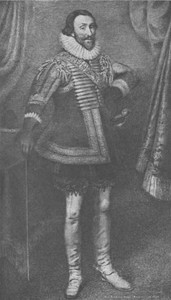
The Life of a Conspirator - Being a Biography of Sir Everard Digby by One of His Descendants
by Longueville, Thomas
English
1718h 18m read
What was the Gunpowder Plot? The Traditional Story Tested by Original Evidence
by Gerard, John
English
1314h 47m read
What Gunpowder Plot Was
by Gardiner, Samuel Rawson
English
1247h 18m read
Guy Fawkes; Or, A Complete History Of The Gunpowder Treason, A.D. 1605
by Lathbury, Thomas
English
770h 40m read