The Project Gutenberg eBook of The heathery; vol. 2, by Henry C.
Andrews
This eBook is for the use of anyone anywhere in the United States and
most other parts of the world at no cost and with almost no restrictions
whatsoever. You may copy it, give it away or re-use it under the terms
of the Project Gutenberg License included with this eBook or online at
www.gutenberg.org. If you are not located in the United States, you
will have to check the laws of the country where you are located before
using this eBook.
Title: The heathery; vol. 2
Author: Henry C. Andrews
Release Date: February 20, 2023 [eBook #70078]
Language: English
Produced by: Chuck Greif and the Online Distributed Proofreading Team at
https://www.pgdp.net (This file was produced from images
generously made available by Biodiversity Heritage
Library.)
*** START OF THE PROJECT GUTENBERG EBOOK THE HEATHERY; VOL. 2 ***
THE
HEATHERY;
OR A
MONOGRAPH
OF
THE GENUS ERICA:
CONTAINING
COLOURED ENGRAVINGS,
WITH
LATIN AND ENGLISH DESCRIPTIONS, DISSECTIONS, ETC.
OF ALL
THE KNOWN SPECIES OF THAT EXTENSIVE AND DISTINGUISHED
TRIBE OF PLANTS.
BY H. C. ANDREWS.
IN SIX VOLUMES.
VOL. II.
SECOND EDITION, CORRECTED AND ENLARGED.
LONDON:
HENRY G. BOHN, YORK STREET, COVENT GARDEN.
1845.
DISSERTATION continued.
The unabating ardour that still prevails in the science of botany, and
rather increases than diminishes, renders it almost impossible (from the
extreme minutiæ annexed to this elegant tribe) for the pencil of the
artist to keep pace with the numerous importations from the Cape (at
present the sole emporium of the genus Erica): the limits of the genus
it is impossible at present to prescribe, but by the termination of the
next Volume we have no doubt of being able to ascertain, in some
measure, its extent. The Author’s intention is therefore to figure
(first) all the most elegant and desirable of the genus, including many
very beautiful varieties, of recent introduction, that far surpass those
from which they derive their name; reserving, as a dernier ressort, the
most uninteresting and least attractive, to subjoin at the termination
of the genus, as necessary links in the chain of this extensive family.
The great difficulty attending the cultivation of many of the species,
so generally complained of, can only be surmounted by great care and
attention to keep them from the partial damps and fogs so prevalent in
this island. Among the most tender and difficult to preserve, and which
require the most care are the E. obbata, E. retorta, E. ampullacea, E.
Aitonia., E. Jasminiflora, E. vestita alba, and E. Massonia; the last of
which is perhaps the most tender, owing most likely to the closeness of
the leaves, joined with the soft hairs that surround them, which is a
great encourager of secreted damps: this, assisted by the great
succulence that pervades the upper part of the plant, and its rather
abrupt commencement from the wood, renders it so difficult to be
preserved. They should by no means be intermixed with other plants, but
kept in a house entirely appropriated to them, and so arranged that the
air may have as free an egress and regress as possible to them all; as
undoubtedly the mixing of them with plants whose foliage is so much
larger, although it may produce a pleasing contrast, must exclude the
free approach of the atmosphere, to which they are so much exposed in
their native clime, and to which the nearest approximation must
certainly be most congenial.
ERICA ardens.
DESCRIPTIO.
Antheræ cristatæ, inclusæ. Flores laterales, sæpe ternati, cernui;
pedunculis longissimis. Corolla sub-globosa, ignea, lucida. Folia
ternata, subulata, patentia, et reflexa. Caulis fruticosus, sub-pedalis,
flexuosus, ramulis erectis, patentibusque.
DESCRIPTION.
Tips crested, within the blossom. Flowers lateral, chiefly in threes,
nodding; with very long peduncles. Blossom somewhat globular, of a fiery
colour, and shining. Leaves by threes, awl-shaped, spreading, and
reflexed. Stem shrubby, near a foot high, flexuose, with branches erect
and spreading.
* * * * *
Native of the Cape of Good Hope.
In bloom from April till June.
REFERENCE.
1. The empalement magnified.
2. The chives and pointal.
3. A chive magnified.
4. The seed-bud and pointal, summit magnified.
5. Seed-bud magnified.
[Illustration]
ERICA australis.
DESCRIPTIO.
Antheræ cristatæ, inclusæ. Flores terminales in ramulis numerosis,
quaterni, pedunculis brevibus. Perianthium duplex. Corolla
cylindraceo-urceolata, odorata, pallide purpurea. Folia quaterna,
obtusa, curvata, subtus sulcata. Caulis erectus, fruticosus, ramosus,
bipedalis. Rami et ramuli filiformes.
DESCRIPTION.
Tips crested, within the blossom. Flowers terminate the numerous small
branches by fours. The footstalks are short. Cup double. Blossom
cylindrically pitcher-shaped, sweet-scented, and of a pale purple.
Leaves by fours, blunt, curved, and furrowed beneath. Stem upright,
shrubby, and branching, two feet high. The large and smaller branches
are thread-shaped.
* * * * *
Native of Portugal.
In bloom from March till July.
REFERENCE.
1. A leaf magnified.
2. The empalement magnified.
3. A blossom.
4. The chives spread open, one tip magnified.
5. The seed-bud and pointal, summit magnified.
[Illustration]
ERICA baccans.
DESCRIPTIO.
Antheræ cristatæ, inclusæ. Flores terminales, subquaterni, umbellati,
nutantes. Pedunculi longi, purpurei, bracteis tribus instructi. Corolla
globosa, purpurea, ima quadrata; laciniis æqualibus, erectis. Folia
quaterna, glauca, incurvata, subtus sulcata. Caulis fruticosus, erectus,
sesquipedalis, ramosissimus. Rami erecti, torti.
DESCRIPTION.
Tips crested, within the blossom. Flowers grow at the ends of the
branches, mostly by fours, in bunches, and nodding. The footstalks are
long, and purple, having three floral leaves. Blossom globular, purple,
and squared at the base: the segments of the border are equal and
upright. Leaves by fours, of a whitish green, turned inwards, and
furrowed beneath. Stem shrubby, upright, a foot and a half high, very
branching. The branches are upright, and twisted.
* * * * *
Native of the Cape of Good Hope.
In bloom from April till July.
REFERENCE.
1. The empalement and floral leaves magnified,
2. The chives spread open, one tip magnified.
3. Seed-bud and pointal magnified.
[Illustration]
ERICA bicolor.
DESCRIPTIO.
Antheræ muticæ, inclusæ. Flores in ramulis terminales, in fasciculis
trifloris. Corolla uncialis, inferne rubra, purpurea, superne viridis.
Folia ternata, obtuse subulata, paululum incurvata, villosa. Caulis
bipedalis, flexuoso-erectus, ramis paucioribus, ramulis numerosis
erectis pubescentibus.
DESCRIPTION.
Tips beardless, within the blossom. Flowers terminate the small branches
in three-flowered bunches. Blossom an inch long, the lower part red
purple, the upper part green. Leaves in threes, obtusely awl-shaped, a
little incurved, and covered with soft hairs. Stem two feet high,
flexuosely upright, with few large branches, and numerous erect downy
small ones.
* * * * *
Native of the Cape of Good Hope.
In bloom from February till April.
REFERENCE.
1. The empalement magnified.
2. The chives and pointal, one tip magnified.
3. Seed-bud and pointal, summit magnified.
4. Seed-bud magnified.
[Illustration]
ERICA campanulata.
DESCRIPTIO.
Antheræ muticæ, inclusæ. Flores terminales, sub-solitarii, cernui.
Corolla globosa, campanulata, lutea. Folia quaterna, linearia, angusta,
glabra, erecta. Caulis fruticosus, pedalis, ramosus. Rami et ramuli
filiformes, virgati, glabri.
DESCRIPTION.
Tips beardless, within the blossom. Flowers grow nearly solitary at the
end of the small branches, hanging down. Blossom globularly bell-shaped,
and yellow. Leaves by fours, linear, narrow, smooth and upright. Stem
shrubby, a foot high, branching. The large and small branches are
thread-shaped, twiggy, and smooth.
* * * * *
Native of the Cape of Good Hope.
In bloom from June till August.
REFERENCE.
1. The empalement magnified.
2. A blossom.
3. The chives and pointal, one tip magnified.
4. Seed-bud and pointal magnified.
[Illustration]
ERICA capitata.
DESCRIPTIO.
Antheræ muticæ, sub-inclusæ. Flores in extremis ramulis terminales, bini
vel terni. Calyx hirtus, adpressus, luteo-viridis. Pedunculi brevissimi.
Corolla sub-globosa, alba, lanata, in sinu calycis fere recondita. Folia
terna, linearia, obtusa, pilosa. Caulis erectus. Rami filiformes,
villosi; ramuli numerosi, tomentosi.
DESCRIPTION.
Tips beardless, nearly within the blossom. Flowers grow at the extremity
of the small branches, by twos or threes. Cup harshly haired, pressed to
the blossom, and of a yellow-green colour. Footstalks very short.
Blossom nearly globular, white, and woolly, almost hid within the cup.
Leaves by threes, linear, blunt, and hairy. Stem upright. Branches
thread-shaped and hairy; small branches numerous, and downy.
* * * * *
Native of the Cape of Good Hope.
In bloom from July till October.
REFERENCE.
1. The empalement and blossom.
2. A blossom.
3. The empalement magnified.
4. The chives and pointal, one tip magnified.
[Illustration]
ERICA coccinea.
DESCRIPTIO.
Antheræ muticæ, sub-inclusæ. Flores in summitate ramorum verticillati,
conferti. Pedunculi brevissimi, bracteis calyciformibus. Corolla
clavata, curvata, sanguinea. Folia sena, acuta, sub-glauca. Caulis
erectus, pedalis. Rami verticillati, erecto-patentes, raro ramulosi.
DESCRIPTION.
Tips beardless, just within the blossom. Flowers grow in close whorls at
the top of the branches. The footstalks are very short, the floral
leaves appearing like a second cup. Blossom club-shaped, curved, and of
a blood colour. Leaves by sixes, sharp-pointed, and of a blueish green.
Stem upright, a foot high. The branches grow in whorls, upright and
spreading, seldom branching.
* * * * *
Native of the Cape of Good Hope.
In bloom from August till December.
REFERENCE.
1. The empalement magnified.
2. The chives spread open, one tip magnified.
3. The shaft and its summit magnified.
[Illustration]
ERICA concinna.
DESCRIPTIO.
Antheræ muticæ, inclusæ. Flores in medio ramorum fasciculati,
terminales, umbellati, umbellis 3--10-floris. Pedunculi brevissimi.
Corolla sub-cylindrica, carnea, pubescens. Folia sub-sena, glabra,
linearia, patentia. Caulis erectus, fruticosus, tripedalis, pyramidatus,
glaber. Rami pauci, erecti. Ramuli verticillati, sub-simplices,
erecto-patentes.
DESCRIPTION.
Tips beardless, within the blossom. Flowers grow bundled about the
middle of the branches, terminal, in umbels of 3 to 10 flowers in each
umbel. Footstalks very short. Blossom nearly cylindrical,
flesh-coloured, and downy. Leaves mostly by sixes, smooth, linear, and
spreading. Stem upright, shrubby, three feet high, pyramidical, smooth.
Branches few, erect. Small branches whorled, nearly simple, and between
upright and spreading.
* * * * *
Native of the Cape of Good Hope.
In bloom from October till December.
REFERENCE.
1. The empalement and floral leaves magnified.
2. The chives and pointal, one tip magnified.
3. The seed-bud and pointal, summit magnified.
4. Seed-bud magnified.
[Illustration]
ERICA conferta.
DESCRIPTIO.
Antheræ muticæ, sub-inclusæ. Flores terminales in apice ramulorum,
confertissimi, capitati, plurimi, sæpe duodecim. Pedunculi brevissimi.
Corolla globosa, alba. Folia quaterna, subulata, mucronata; seniora
retrofracta; juniora erecta. Caulis erectus, simplex, robustus,
bipedalis. Ramuli breves, horizontales, verticillati.
DESCRIPTION.
Tips beardless, just within the blossom. Flowers terminal, crowded very
close together at the ends of the small branches in heads, numerous,
often twelve. The footstalks are short. Blossom globular, smooth, and
white. Leaves by fours, awl-shaped, and sharp-pointed; the old ones
appearing broken back, the younger ones upright. Stem upright, simple,
and stout, two feet high. Branches short, horizontal, and growing in
whorls.
* * * * *
Native of the Cape of Good Hope.
In bloom from October till February.
REFERENCE.
1. A blossom.
2. The empalement magnified.
3. The seed-bud, chives, and pointal, magnified.
[Illustration]
ERICA cylindrica.
DESCRIPTIO.
Antheræ aristatæ, inclusæ. Flores fasciculati, terminales, in ramulis
lateralibus, terni et quaterni. Pedunculi brevissimi. Corolla
cylindrica, uncialis, læte fusco-aurantia. Folia quaterna, erecta,
linearia. Caulis fruticosus, erectus, bipedalis, ramulis
sub-simplicibus.
DESCRIPTION.
Tips bearded, within the blossom. Flowers bundled in the lateral
branches by threes and fours. Footstalks very short. Blossom
cylindrical, an inch long, of a bright brown orange colour. Leaves by
fours, upright, and linear. Stem shrubby, upright, and two feet high;
the small branches nearly simple.
* * * * *
Native of the Cape of Good Hope.
In bloom from April till July.
REFERENCE.
1. The empalement.
2. The chives and pointal, one tip magnified.
3. Seed-bud and pointal, summit magnified.
4. Seed-bud magnified.
[Illustration]
ERICA Eriocephala.
DESCRIPTIO.
Antheræ muticæ, exertæ. Flores, in ramulorum apice, umbellati, seu
capitati, copiosi. Corolla urceolata, alba, tenuissime alba lana tecta,
foliolis calycis vestita, lanugine albicante densissime obsitis. Folia
terna, pubescentia, obtusa. Caulis erectus, spithameus. Rami et ramuli
numerosissimi, pilosi.
DESCRIPTION.
Tips beardless, without the blossom. Flowers grow at the ends of the
small branches in umbels or heads, very abundant. Blossom pitcher-shaped
and white, slightly covered with white wool, clothed with the leaflets
of the cup, which are thickly covered with a whitish wool. Leaves by
threes, covered with soft hair, and obtuse. Stem upright, a span high.
The large and small branches are very numerous, and hairy.
* * * * *
Native of the Cape of Good Hope.
In bloom from May till August.
REFERENCE.
1. A leaf magnified.
2. The empalement and floral leaves magnified.
3. The chives spread open, one tip magnified.
4. The seed-bud and pointal, summit magnified.
5. Seed-bud magnified.
[Illustration]
ERICA fastigiata.
DESCRIPTIO.
Antheræ muticæ, inclusæ. Flores terminales, quaterni, fastigiati,
subsessiles. Calyx duplex; exterior triphyllus, adpressus, marginibus
membranaceis, serrulatis. Corolla alba, pellucida, ad basin inflata.
Folia quaterna, linearia, glabra. Caulis fruticosus, pedalis, flexuosus;
ramulis numerosis.
DESCRIPTION.
Tips beardless, within the blossom. Flowers terminal, in fours, nearly
sessile, forming level-topt bunches. Empalement double; the outer one
three-leaved and pressed to the inner; the margins skinny and
serrulated. Blossom white, pellucid, and swelled at the base. Leaves by
fours, linear, and smooth. Stem shrubby, a foot high, flexuose; the
branches numerous.
* * * * *
Native of the Cape of Good Hope.
In bloom from December till May.
REFERENCE.
1. The empalement.
2. The chives and pointal, one tip magnified.
3. The seed-bud and pointal, summit magnified.
4. Seed-bud magnified.
[Illustration]
ERICA fimbriata.
DESCRIPTIO.
Antheræ basi bicornutæ, inclusæ. Flores in extremis ramulis terminales,
terni et ultra, cernuo-patentes; pedunculis brevibus, bracteis tribus
fimbriatis, adpressis. Corolla sub-globosa, rubro-purpurea; laciniis
semi-orbiculatis, æqualibus, patentibus. Folia terna et quaterna,
erecto-patentia, obtusa, carinata, serrulata. Caulis fruticosus,
semipedalis; ramis filiformibus, flexuosis.
DESCRIPTION.
Tips two-horned at the base, and within. Flowers grow at the extremity
of the smaller branches in threes or more, between nodding and
spreading. The footstalks are short, with three fringed floral leaves
pressed to the cup. Blossom nearly globular, of a red purple: the
segments form a half round, are equal and spreading. Leaves by threes
and fours, between erect and spreading, obtuse, keeled, and slightly
sawed. Stem shrubby, half a foot high. The branches are thread-shaped
and pliant.
* * * * *
Native of the Cape of Good Hope.
In bloom from March till June.
REFERENCE.
1. A leaf magnified.
2. The under side of the same magnified.
3. A blossom.
4. Flowers of a white and purple variety.
5. The empalement and floral leaves magnified.
6. Seed-bud, chives and pointal, magnified.
[Illustration]
ERICA flava.
DESCRIPTIO.
Antheræ muticæ, sub-inclusæ. Flores numerosi, sub-congesti infra apices
ramorum, nutantes. Corolla ovata, costata, læte lutea. Folia ternata,
sub-erecta, dein patentia. Caulis fruticosus, sub-erectus, cortice
fulvo. Rami distantes, pauci, simplices, sub-erecti.
DESCRIPTION.
Tips beardless, just within the blossom. Flowers numerous, rather
crowded beneath the tips of the branches, nodding. Blossom egg-shaped,
ribbed, and of a bright yellow. Leaves by threes, nearly upright, then
spreading. Stem shrubby, nearly upright, with a brown bark. Branches
distant, few, simple, and nearly erect.
* * * * *
Native of the Cape of Good Hope.
In bloom from Autumn till Spring.
REFERENCE.
1. The empalement and floral leaves.
2. The chives and pointal, one tip magnified.
3. The seed-bud and pointal, summit magnified.
4. Seed-bud magnified.
[Illustration]
ERICA flexuosa.
DESCRIPTIO.
Antheræ muticæ, exertæ, rubræ. Flores in ultimis ramulis terminales,
sub-terni. Bracteæ albidæ, juxta basin calycis sitæ. Corolla minuta,
sub-campanulata, albida; oris laciniis adpressis. Folia terna, linearia,
glabra. Caulis fruticosus, pedalis. Rami flexuosi, inferne nudi.
DESCRIPTION.
Tips beardless, red, and without the blossom. The flowers terminate the
ends of the small branches, mostly by threes. The floral leaves are
white, and placed close to the cup. Blossom small, nearly bell-shaped,
and white: the segments of the mouth are pressed to the threads. Leaves
by threes, linear, and smooth. Stem shrubby, a foot high. The branches
grow zigzag, and are naked at the lower part.
* * * * *
Native of the Cape of Good Hope.
In bloom from April till July.
REFERENCE.
1. The empalement and floral leaves magnified.
2. A blossom.
3. The chives and pointal, one tip magnified.
4. Seed-bud and pointal magnified.
[Illustration]
ERICA glutinosa.
DESCRIPTIO.
Antheræ muticæ, inclusæ. Flores horizontales, verticillis confertis.
Corolla cylindrica, pollicaris, pallide-lutea, costata, glutinosissima,
nitida. Folia sena, linearia, acuminata, glabra, læviter sulcata. Caulis
bipedalis. Rami simplices, longi, raro ramulosi.
DESCRIPTION.
Tips beardless, within the blossom. The flowers grow horizontally in
crowded whorls. Blossom cylindrical, an inch long, of a pale yellow,
ribbed, very clammy, and shining. Leaves by sixes, linear, pointed,
smooth, and slightly furrowed. Stem two feet high. The branches are
simple, long, and seldom branched.
* * * * *
Native of the Cape of Good Hope.
In bloom from September till March.
REFERENCE.
1. The empalement and floral leaves magnified.
2. The chives and pointal.
3. The same spread open, one tip magnified.
4. The seed-bud and pointal, summit magnified.
[Illustration]
ERICA glutinosa, _minor_.
DESCRIPTIO.
Antheræ muticæ, inclusæ. Flores sub apicibus ramorum, conferti,
verticillato-horizontales. Pedunculi breves, bracteis tribus, viscosis,
calyci adpressis. Corolla cylindrica, semiuncialis, pallide viridis,
glutinosissima, nitida, et costata. Folia sena, linearia, acuminata,
patentia. Caulis erectus, sesquipedalis; rami simplices, longi,
verticillati.
DESCRIPTION.
Tips beardless, within the blossom. Flowers grow near the ends of the
branches, pressed together in horizontal whorls. The footstalks are
short, having three floral leaves, which are clammy, and pressed to the
cup. Blossom cylindrical, half an inch long, of a pale green, very
clammy, shining, and ribbed. Leaves by sixes, linear, pointed, and
spreading. Stalk erect, a foot and a half high. Branches simple, long,
whorled.
* * * * *
Native of the Cape of Good Hope.
In bloom from November till April.
REFERENCE.
1. The empalement and floral leaves.
2. The chives detached, one tip magnified.
3. Seed-bud and pointal, summit magnified.
4. Seed-bud magnified.
[Illustration]
ERICA gracilis.
DESCRIPTIO.
Antheræ basi bicornes, inclusæ. Flores plerumque quaterni, in capitulis
terminalibus, pedunculis capillaribus. Corolla parva, sub-globosa, læte
purpurea, ore paululum contracta. Folia quaterna, linearia, tenuia,
glabra, erecta. Caulis fruticosus, sesquipedalis; ramulis filiformibus,
per-gracilibus, numerosis.
DESCRIPTION.
Tips two-horned at the base, within the blossom. Flowers chiefly in
fours, in terminal heads with capillary foot stalks. Blossom small,
rather globose, bright purple, a little contracted at the mouth. Leaves
by fours, linear, thin, smooth and erect. Stem shrubby, a foot and a
half high. Branches thread-shaped, very slender, and numerous.
* * * * *
Native of the Cape of Good Hope.
In bloom from February till May, and again from August till October.
REFERENCE.
1. The empalement magnified.
2. The chives and pointal, one tip magnified.
3. Seed-bud and pointal, summit magnified.
4. Seed-bud magnified.
[Illustration]
ERICA hispida.
DESCRIPTIO.
Antheræ muticæ, sub-exertæ. Flores in ramulis terminales, racemosi,
sub-nutantes. Corolla sub-globosa, incarnata; laciniis limbi erectis,
parvulis, obtusis. Folia quaterna, linearia, obtusa, hispidiora. Caulis
erectus, pedalis. Rami et ramuli numerosi, rigidi, hispidi.
DESCRIPTION.
Tips beardless, just without the blossom. Flowers grow at the ends of
the branches in bunches, a little drooping. Blossom nearly globular, and
flesh-coloured; the segments of the border upright, very small, and
blunt. Leaves by fours, linear, blunt, and harshly hairy. Stem upright,
a foot high. The large and small branches are numerous, harsh, and
hairy.
* * * * *
Native of the Cape of Good Hope.
In bloom from August till November.
REFERENCE.
1. A leaf magnified.
2. The empalement magnified.
3. The chives spread open, one tip magnified.
4. Seed-bud and pointal, summit magnified.
5. The seed-bud magnified.
[Illustration]
ERICA horizontal.
DESCRIPTIO.
Antheræ muticæ, exertæ. Flores in ultimis ramulis, plerumque terni, et
cernui. Pedunculi breves, bracteis tribus spathulatis, imbricatis.
Corolla ovata, basi alba, apice atro-fusca. Folia quaterna, obtusa,
linearia, glabra, horizontalia. Caulis erectus, subpedalis, ramosus.
Rami et ramuli virgati.
DESCRIPTION.
Tips beardless, without the blossom. Flowers grow at the ends of the
smaller branches, mostly by threes, and nodding. Footstalks short, and
furnished with three spatula-shaped, tiled floral leaves. Blossom
egg-shaped, white at the base, and of a dark brown towards the point.
Leaves by fours, obtuse, linear and smooth; standing out horizontally.
Stem upright, near a foot high, and branching. The large and small
branches are twiggy.
* * * * *
Native of the Cape of Good Hope.
In bloom from July till November.
REFERENCE.
1. The Empalement magnified.
2. A blossom, natural size.
3. The same magnified.
4. Seed-bud, chives, and pointal magnified.
[Illustration]
ERICA lateralis.
DESCRIPTIO.
Antheræ cristatæ, inclusæ. Flores ad apices ramorum ramulorumque
umbellati, cernui, secundi, purpurei. Pedunculi longi, colorati. Corolla
sub-campanulata, ad basin plana, purpurea: laciniis limbi obtusis,
sub-erectis. Folia quaterna, linearia, obtusa, erecta. Caulis
fruticosus, erectus, pedalis, ramosus. Rami et ramuli virgati.
DESCRIPTION.
Tips crested, within the blossom. Flowers grow in umbels at the ends of
the larger and smaller branches, nodding, all pointing one way, purple.
The footstalks are long, and coloured. Blossom nearly bell-shaped, the
lower part flat and purple. The segments of the border are obtuse, and
nearly erect. Leaves by fours, linear, blunt, and upright. Stem shrubby,
upright, a foot high, and branching. The smaller and larger branches are
twiggy.
* * * * *
Native of the Cape of Good Hope.
In bloom from August till December.
REFERENCE.
1. The empalement magnified.
2. A blossom.
3. The chives spread open, one tip magnified.
4. Seed-bud and pointal, magnified.
[Illustration]
ERICA latifolia.
DESCRIPTIO.
Antheræ muticæ, exertæ. Flores in medio ramorum, spicati, umbellati
sub-terni ex axillis foliorum, cernui. Corolla sub-globosa, glabra,
læte-rubra, ore arctata, limbo erecto, minuto. Folia terna, latissima,
acuminate ovata, supra pilis vestita, subtus albida, margine revoluta.
Caulis fruticosus, flexuosus, pedalis, ramosus.
DESCRIPTION.
Tips beardless, without the blossom. Flowers in the middle of the
branches, in spikes, from the insertion of the leaves in umbels of
threes, hanging down. Blossom nearly globular, smooth, and of a bright
red, mouth narrowed, border upright and small. Leaves by threes, very
broad, pointedly egg-shaped, clothed on the upper surface with hairs,
whitish beneath, and rolled back at the edge. Stem shrubby, flexuose, a
foot high, and branching.
* * * * *
Native of the Cape of Good Hope.
In bloom from May till August.
REFERENCE.
1. A leaf shown from the underside.
2. Upper surface of the same, magnified.
3. The empalement magnified.
4. Seed-bud, chives and pointal, magnified.
5. Seed-bud magnified.
[Illustration]
ERICA laxa.
DESCRIPTIO.
Antheræ cristatæ, inclusæ. Flores parvi, sæpius ternati, in fasciculis
terminalibus et lateralibus. Pedunculi brevissimi. Calyx duplex,
coloratus, imbricatus. Corolla urceolata, superne rosea, laciniis
patulis. Folia ternata, erecta, obtusa, minutim ciliata, subtus sulcata.
Caulis fraticosus, ramosus. Rami obsolete verticillati, graciles,
flexuosi, cortice ferrugineo-fusco.
DESCRIPTIONS.
Tips crested, within the blossom. Flowers small, chiefly in threes, in
terminal and lateral branches. Footstalks very short. Empalement double,
coloured, and tiled. Blossom pitcher-shaped, rose-coloured above, with
slightly spreading segments. Leaves in threes, upright, blunt, minutely
ciliated, and furrowed beneath. Stem shrubby, branching. Branches
obscurely whorled, slender, and flexuose, with a rusty brown bark.
* * * * *
Native of the Cape of Good Hope.
In bloom from September till February.
REFERENCE.
1. A leaf magnified.
2. The empalement magnified.
3. A blossom.
4. The chives and pointal, one tip magnified.
5. Seed-bud and pointal, summit magnified.
[Illustration]
ERICA Leea.
DESCRIPTIO.
Antheræ muticæ, sub-inclusæ. Flores supra medium ramorum, verticillati.
Pedunculi breves, bracteis tribus, ad basin calycis, instructi. Corolla
quadrata, costata, luteo-aurantia. Folia terna vel sena, rigida, obtusa,
subtus sulcata, linearia, crassa. Caulis erectus, scaber, quatuor-vel
quinque-pedalis. Rami laxi, simplices, longi.
DESCRIPTION.
Tips beardless, and just within the blossom. Flowers grow just above the
middle of the branches, in whorls. The footstalks are short, with three
floral leaves close to the cup. Blossom four-sided, ribbed, and of a
yellowish orange colour. Leaves from three to six, harsh and blunt,
furrowed beneath, linear and thick. Stem upright, rough, four or five
feet high. Branches are loose, simple, and long.
* * * * *
Native of the Cape of Good Hope.
In bloom from August till January.
REFERENCE.
1. The empalement and floral leaves magnified.
2. The chives spread open, one tip magnified.
3. Seed-bud and pointal, summit magnified.
[Illustration]
ERICA Linnæa.
DESCRIPTIO.
Antheræ muticæ, inclusæ. Flores in ramulis terminales, racemum formantes
longum, densissimum. Corolla clavata, alba, diaphana, pilosa, ad basin
purpurea; laciniis obtusis, erectis. Folia terna, linearia, villosa,
obtusa. Caulis fruticosus, erectus. Ramuli numerosi, brevissimi, pilosi.
DESCRIPTION.
Tips beardless, within the blossom. Flowers terminate the smaller
branches, making a long close bunch. Blossom club-shaped, white,
transparent, and hairy, of a purple colour at the base; the segments of
the mouth are blunt, and upright. Leaves by threes, linear, and villose.
Stem shrubby, upright. Small branches numerous, very short, and hairy.
* * * * *
Native of the Cape of Good Hope.
In bloom from March till June.
REFERENCE.
1. The empalement magnified.
2. The chives and pointal.
3. The same spread open, one tip magnified.
4. Seed-bud and pointal, summit magnified.
[Illustration]
ERICA Nivenia.
DESCRIPTIO.
Antheræ basi bicornutæ, exertæ. Flores terminales, umbellati, pedunculis
longissimis. Corolla purpurea, sub-turbinata, costata, fauce parum
arctata; laciniis revolutis. Folia terna, lato-linearia, obtusa, margine
pilis longissimis obsita, subtus sulcata, patentia. Suffrutex pygmæus,
ramosus. Rami et ramuli divaricati, patentes.
DESCRIPTION.
Tips two-horned at the base, without the blossom. Flowers terminate the
branches in umbels, with very long footstalks. Blossom purple, nearly
top-shaped, ribbed, a little contracted at the mouth; the segments
rolled back. Leaves by threes, broadly linear, blunt, and beset with
long hairs at the edges, furrowed beneath, and spreading. It is a dwarf
shrub, and very branching. The large and small branches are straggling
and spreading.
* * * * *
Native of the Cape of Good Hope.
In bloom from February till June.
REFERENCE.
1. A leaf shown from the underside magnified.
2. The empalement and floral leaves magnified.
3. The chives and pointal, one tip magnified.
4. Seed-bud and pointal magnified.
[Illustration]
ERICA palustris.
DESCRIPTIO.
Antheræ muticæ, inclusæ. Flores terminales, in ramulis lateralibus,
plerumque terni, numerosi. Corolla sub-cylindrica, seu potius
angustissime campanulata, pubescens, incarnata; laciniis patulis,
albidis. Folia quaterna, linearia, obtusa, et pubescentia. Caulis
tenuis. Rami tenues et divaricati, ramulis numerosis brevibus.
DESCRIPTION.
Tips beardless, within the blossom. Flowers terminal, on the small
lateral branches, mostly by threes, numerous. Blossom nearly
cylindrical, or rather very narrowly bell-shaped, downy, and
flesh-coloured; the segments of the border are spreading, and white.
Leaves by fours, linear, blunt, and downy. Stem slender. Branches
slender and divaricating, with numerous short branches.
* * * * *
Native of the Cape of Good Hope.
In bloom from May till October.
REFERENCE.
1. A Leaf magnified.
2. The empalement magnified.
3. The chives and pointal, one tip magnified.
4. Seed-bud and pointal, summit magnified.
[Illustration]
ERICA Petiveriana.
DESCRIPTIO.
Antheræ muticæ, exertæ, longissimæ. Flores, bini vel terni, terminant
ramulos in medio ramorum. Pedunculi brevissimi. Bracteæ calyciformes.
Corolla clavata, curvata, lutea, ad basin grossa quadrifida. Oris
laciniæ incurvæ, adpressæ. Folia terna, linearia, obtusa. Caulis
strictissimus, ramulis brevibus frequentissimis.
DESCRIPTION.
Tips beardless, without the blossom, and very long. Flowers terminate
the small branches about the middle of the large ones, by twos and
threes. Foot-stalks very short. The floral leaves seem to form part of
the cup. Blossom club-shaped, curved, yellow, swelled and quadrified at
the base. The segments of the mouth are bent inwards, and pressed to the
filaments. Leaves by threes, linear, and blunt. Stem very upright, with
numerous short branches.
* * * * *
Native of the Cape of Good Hope.
In bloom from April till June.
REFERENCE.
1. The empalement and floral leaves magnified.
2. A blossom divested of its empalement.
3. The chives spread, one tip magnified.
4. Seed-bud and pointal, summit magnified.
[Illustration]
ERICA Petiveriana, _aurantia_.
DESCRIPTIO.
Antheræ muticæ, exertæ, longissimæ. Flores subterni, ramulos
terminantes, incurvati, penduli. Pedunculi brevissimi. Corolla clavata,
aurantia; laciniis limbi ovatis, erectis, inflatis, incurvatis. Folia
terna, linearia, obtusa, patentia. Caulis erectus, sesquipedalis. Rami
tecti ramulis, terni.
DESCRIPTION.
Tips beardless, without the blossom, and very long. Flowers mostly by
threes, terminating the small branches, turned inwards, and hanging
down. Footstalks very short. Blossom club-shaped and orange-coloured.
Segments of the border are egg-shaped, upright, swelled out, and
incurved. Leaves by threes, linear, blunt, and spreading. Stem upright,
a foot and a half high. Branches covered by smaller branches, and
growing by threes.
* * * * *
Native of the Cape of Good Hope.
In bloom from March till May.
REFERENCE.
1. The empalement and floral leaves magnified.
2. The chives detached, one tip magnified.
3. Seed-bud and pointal, summit magnified.
[Illustration]
ERICA Petiveriana, _hirsuta_.
DESCRIPTIO.
Antheræ muticæ, exertæ, longissimæ. Flores terminales in ramulis
lateralibus, sub-terni, penduli, incurvi, pedunculis brevibus. Corolla
clavata, incurva, uncialis, læte et lucide rubra, basi tumida,
quadrifida. Folia ternata, subulata, hirsuta. Caulis erectus,
sesquipedalis, inferne ramulis numerosis instructus.
DESCRIPTION.
Tips beardless, without the blossom, and very long. Flowers terminal on
the small lateral branches, mostly by threes, pendulous, and incurved,
with short footstalks. Blossom club-shaped, incurved, an inch long, of a
bright shining red, swelled and quadrifid at the base. Leaves by threes,
awl-shaped, and hairy. Stem upright, a foot and a half high, and
furnished downwards with numerous small branches.
* * * * *
Native of the Cape of Good Hope.
In bloom from January till April.
REFERENCE.
1. The under-side of a leaf magnified.
2. The empalement and floral leaves magnified.
3. A blossom detached from the empalement.
4. The chives spread open, one tip magnified.
5. Seed-bud and pointal, summit magnified.
[Illustration]
ERICA purpurea.
DESCRIPTIO.
Antheræ muticæ, exertæ. Flores verticillati, sub-terminales. Corolla
tubulosa, purpurea, nitida, ad basin incurvata, apicem versus sensim
dilatata. Folia sena, linearia, patentia, supra plana, subtus revoluta,
acuta, rigida. Caulis fruticosus, erectus, bipedalis, ad basin
simplicissimus, dein verticillatim ramosus, ramis simplicibus,
adscendentibus.
DESCRIPTION.
Tips beardless, without the blossom. Flowers grow in whorls, nearly at
the top of the branches. Blossom tubular, purple, and shining, incurved
at the base, and gradually widening towards the mouth. Leaves by sixes,
linear, and spreading, plain on their upper, and rolled back on their
under surface, sharp-pointed, and rigid. Stem shrubby, upright, two feet
high, quite entire at the base, then throws out a number of simple
ascending branches.
* * * * *
Native of the Cape of Good Hope.
In bloom from July till December.
REFERENCE.
1. The empalement magnified.
2. The chives and pointal, one tip magnified.
3. The seed-bud and pointal, summit magnified.
[Illustration]
ERICA rosea.
DESCRIPTIO.
Antheræ muticæ, inclusæ. Flores 2-3-nati, fere laterales, nutantes.
Corolla cylindrica, paululum curvata, uncialis, læte rosea; laciniis
erectis. Folia plerumque quina vel sena, erecta, setacea, conferta.
Caulis fruticosus, bipedalis; ramis ramulisque erectis, et sæpe
alternis.
DESCRIPTION.
Tips beardless, and within the blossom. Flowers grow in twos and threes,
nearly lateral, and nodding. Blossom cylindrical, slightly curved, an
inch long, and of a bright rose-colour: the segments are upright. Leaves
chiefly in fives or sixes, upright, bristle-shaped, and crowded. Stem
shrubby, two feet high. The branches and branchlets are upright, and
often alternate.
* * * * *
Native of the Cape of Good Hope.
In bloom from June till October.
REFERENCE.
1. The empalement and floral leaves magnified.
2. The chives and pointal, one tip magnified.
3. Seed-bud and pointal, summit magnified.
[Illustration]
ERICA Sebana, _aurantia_.
DESCRIPTIO.
Antheræ muticæ, exertæ, longissimæ. Flores terni, in apice ramulorum,
dependentes. Perianthium duplex, imbricatum, membranaceum. Corolla
clavata, incurvata, aurea; laciniis limbi obtusis, incurvis. Folia
terna, linearia, arcuata, conferta. Caulis robustus, erectus, pedalis.
Rami pauci, tecti ramulis confertis brevissimis.
DESCRIPTION.
Tips beardless, without the blossom, and very long. Flowers by threes,
at the ends of the small branches, hanging down. Cup double, tiled and
skinny. Blossom club-shaped, turned inwards, and orange-coloured;
segments of the mouth are blunt, and turned inwards. Leaves by threes,
linear, arched, and crowded together. Stem sturdy, upright, a foot high.
Branches few, covered by little branches crowded together.
* * * * *
Native of the Cape of Good Hope.
In bloom from July till November.
REFERENCE.
1. The empalement magnified.
2. The chives and pointal, one tip magnified.
3. Seed-bud and pointal, summit magnified.
4. Seed-bud magnified.
[Illustration]
ERICA Sebana, _lutea_.
DESCRIPTIO.
Antheræ muticæ, exertæ, longissimæ. Flores terni, in apice ramulorum,
penduli. Pedunculi brevissimi. Corolla conica, lutea, laciniis limbi
obtusis, erectis. Folia terna, linearia, curvata. Caulis erectus,
bipedalis, laxus. Rami pauci, ramulis numerosis.
DESCRIPTION.
Tips beardless, without the blossom, and very long. Flowers by threes,
linear, hanging down at the ends of the smaller branches. Footstalks
very short. Blossom conical and yellow; segments of the border blunt,
and upright. Leaves by threes, linear, and curved. Stem upright, two
feet high, and weak. The large branches are few, the smaller ones are
numerous.
* * * * *
Native of the Cape of Good Hope.
In bloom from August till January.
REFERENCE.
1. Empalement magnified.
2. Chives and pointal, one tip magnified.
3. Seed-bud and pointal, summit magnified.
4. Seed-bud magnified.
[Illustration]
ERICA Sebana, _viridis_.
DESCRIPTIO.
Antheræ muticæ, exertæ, longissimæ. Flores terni, in apice ramulorum
brevissimorum, cernui. Corolla conica, pallide-viridis, laciniis limbi
obtusis, rectis. Perianthium duplex, imbricatum, membranaceum. Folia
terna, linearia, arcuata, conferta, sub-trigona. Caulis robustus,
erectus, pedalis. Rami pauci, ramulis numerosis.
DESCRIPTION.
Tips beardless, without the blossom, and very long. Flowers by threes,
from the ends of the shorter branches hanging down. Blossom conical, and
of a pale green. The segments of the border are blunt, and straight. Cup
double, tiled and skinny. Leaves by threes, linear, arched, crowded, and
nearly three-sided. Stem sturdy, upright, a foot high. Large branches
few, smaller ones numerous.
* * * * *
Native of the Cape of Good Hope.
In bloom from March till May.
REFERENCE.
1. The empalement magnified.
2. The chives and pointal.
3. The seed-bud and pointal, summit magnified.
4. The seed-bud magnified.
[Illustration]
ERICA sessiliflora.
DESCRIPTIO.
Antheræ aristatæ, inclusæ. Flores sub apice ramorum densissime spicati,
sessiles, horizontaliter siti. Perianthium duplex: exterius triphyllum;
interius tetraphyllum; foliolis obcordatis, concavis, persistentibus.
Corolla clavata, albo-virescens, sesqui-pollicaris. Folia quaterna,
subulata, glabra, acuta. Caulis strictissimus, rigidus, bipedalis. Rami
pauci. Ramuli verticillati, plurimi.
DESCRIPTION.
Tips bearded, within the blossom. Flowers grow near the ends of the
branches, in very close spikes, without footstalks, and horizontally.
Cup double; the outer one three-leaved, the inner one four-leaved.
Leaflets inversely heart-shaped, concave, and remaining. Blossom
club-shaped, of a whitish green, an inch and a half long. Leaves by
fours, awl-shaped, smooth, and pointed. Stem very upright and stiff, two
feet high. Branches few. The smaller branches are numerous, and grow in
whorls.
* * * * *
Native of the Cape of Good Hope.
In bloom from August till October.
REFERENCE.
1. The empalement magnified.
2. The chives spread open, one tip magnified.
3. Seed-bud and pointal, summit magnified.
4. Seed-bud magnified.
[Illustration]
ERICA setacea.
DESCRIPTIO.
Antheræ basi bicornes, inclusæ. Flores in ultimis ramulis terminales,
sub-terni, spicati. Corolla urceolata, glabra, sub-albida, parva. Folia
terna, linearia, obtusa, supra sub-scabrida, margine setacea, revoluta.
Caulis, rami, et ramuli, filiformes, flexuosi, tenuissime scabri,
villosi.
DESCRIPTION.
Tips two-horned at the base, within the blossom. Flowers grow mostly by
threes at the extremity of the small branches, forming a spike. Blossom
pitcher-shaped, smooth, whitish, and small. Leaves by threes, linear,
blunt, roughish on the upper side, bristly, and rolled back at the edge.
Stem, branches and small branches thread-shaped, bending, slightly rough
and hairy.
* * * * *
Native of the Cape of Good Hope.
In bloom from February till April.
REFERENCE.
1. The underside of a leaf magnified.
2. The empalement magnified.
3. The chives and pointal.
4. A chive magnified.
5. Seed-bud and pointal magnified.
[Illustration]
ERICA sexfaria.
DESCRIPTIO.
Antheræ basi bicornutæ, exertæ, atro-purpureæ. Flores in ramulorum apice
terni, sessiles, nitidi. Perianthium duplex, exterius triphyllum.
Corolla ovata, glabra, membranacea, alba. Folia terna, trigona, obtusa,
patentiuscula, sexfaria. Caulis erectus, sub-pedalis. Ramuli simplices,
sub-verticillati.
DESCRIPTION.
Tips two-horned at the base, without the blossom, and of a dark purple.
Flowers grow in threes at the ends of the small branches, sitting close,
and shining. Cup double, the outer one three-leaved. Blossom egg-shaped,
smooth, skinny, and white. Leaves by threes, three-sided, blunt, rather
spreading, and forming six angles. Stem upright, near a foot high. The
small branches are simple, and grow nearly in whorls.
* * * * *
Native of the Cape of Good Hope.
In bloom from March till July.
REFERENCE.
1. The empalement magnified.
2. A blossom.
3. The chives magnified.
4. Seed-bud and pointal magnified.
[Illustration]
ERICA Solandra.
DESCRIPTIO.
Antheræ cristatæ, inclusæ. Flores terminales, capitatim aggregati,
parvuli. Corolla parva, obsolete campanulata, incarnata; calyce
subulato, hispido. Folia quaterna, parva, obtusa, valde hispida, erecta;
seniora patentia, et recurva. Caulis suffrutescens, semipedalis,
flexuosus, valde ramosus.
DESCRIPTION.
Tips crested, within the blossom. Flowers terminal, in crowded heads,
and small. Blossom small, obscurely bell-shaped, and flesh-coloured. The
cup is awl-shaped, and hispid. Leaves by fours, small, obtuse, very
hispid, and upright. The older ones are spreading and bent back. Stem
shrubbyish, half a foot high, flexuose, and very much branched.
* * * * *
Native of the Cape of Good Hope.
In bloom nearly all the year.
REFERENCE.
1. The under side of a leaf magnified.
2. The empalement magnified.
3. A blossom.
4. The seed-bud, chives and pointal, magnified.
[Illustration]
ERICA spuria.
DESCRIPTIO.
Antheræ muticæ, inclusæ. Flores in apicibus ramulorum, sub-quaterni.
Pedunculi brevissimi, bracteis tribus minutis instructi. Corolla
sub-cylindrica, pollicaris, læte purpurea; laciniis sub-ovatis, acutis,
revolutis. Folia quaterna, linearia, sub-ciliata, subtus sulcata. Caulis
fruticosus, pedalis, ramosus. Ramuli frequentissimi.
DESCRIPTION.
Tips beardless, within the blossom. Flowers grow at the ends of the
small branches, mostly by fours. The footstalks are very short, with
three very small floral leaves. Blossom nearly cylindrical, an inch
long, and of a bright purple. Segments of the border are nearly
egg-shaped, sharp-pointed, and rolled back. Leaves by fours, linear,
slightly haired, and furrowed beneath. Stem shrubby, a foot high, and
branching. The small branches are numerous.
* * * * *
Native of the Cape of Good Hope.
In bloom from April till August.
REFERENCE.
1. The empalement and floral leaves magnified.
2. The chives detached from the pointal, one tip magnified.
3. The seed-bud and pointal, summit magnified.
[Illustration]
ERICA squamosa.
DESCRIPTIO.
Antheræ cristatæ, inclusæ. Flores terminales, umbellati, terni vel seni
in singulâ umbellâ, cernui. Calyx squamosus, ovatus, carinatus,
albicans. Corolla globosa, purpurea; laciniis æqualibus, patentibus.
Folia quaterna, glabra, obtusa, subtus sulcata, margine serrulata.
Caulis fruticosus, erectus, sesquipedalis, ramosus.
DESCRIPTION.
Tips crested, within the blossom. Flowers terminate the branches in
umbels of from 3 to 6 in each umbel, nodding. Cup scaly, ovate, keeled,
and whitish. Blossom globular, and purple; the segments are equal and
spreading. Leaves by fours, smooth, obtuse, furrowed beneath, and
slightly sawed at their edges. Stem shrubby, upright, a foot and a half
high, and branching.
* * * * *
Native of the Cape of Good Hope.
In bloom from April till July.
REFERENCE.
1. The empalement and floral leaves magnified.
2. A blossom.
3. The chives and pointal, one tip magnified.
4. The seed-bud and pointal, summit magnified.
5. A branch with the involucrum of the flowers.
[Illustration]
ERICA stricta.
DESCRIPTIO.
Antheræ cristatæ, inclusæ. Flores terminales, umbellati, cernui: umbellæ
6-ad 12-floræ. Corolla sub-ovata, glabra, purpurea, ore arctata;
laciniis minutis, reflexis. Folia quaterna, glabra, obtusa,
horizontaliter patentia. Caulis erectus, fruticosus, sesquipedalis. Rami
erecti, rigidi; ramulis verticillatis.
DESCRIPTION.
Tips crested, and within the blossom. Flowers terminate the branches in
umbels, nodding. Umbels from 6 to 12 flowers. Blossom nearly egg-shaped,
smooth, and purple; narrowed at the mouth, with the segments small and
reflexed. Leaves by fours, smooth, blunt, and horizontally spreading.
Stem upright, shrubby, a foot and a half high. Branches upright, and
strict; the small branches in whorls.
* * * * *
Native of Portugal.
In bloom from August till November.
REFERENCE.
1. The empalement magnified.
2. The chives and pointal, one tip magnified.
3. Seed-bud and pointal, summit magnified.
4. Seed-bud magnified.
[Illustration]
ERICA taxifolia.
DESCRIPTIO.
Antheræ muticæ, inclusæ. Flores in apicibus ramulorum umbellati,
numerosi, erecti. Perianthium tetraphyllum, foliolis ovatis, mucronatis,
concavis, membranaceis. Corolla ventricosa, ore arctata, carnea,
laciniis patentibus. Folia terna, trigona, glabra, rigida, mucronata.
Caulis fruticosus, erectus, sub-pedalis, ramosissimus.
DESCRIPTION.
Tips beardless, within the blossom. Flowers grow at the ends of the
small branches in umbels, numerous and upright. Cup four-leaved;
leaflets egg-shaped, pointed, concave, and skinny. Blossom swelled at
the base, narrowed at the mouth, and flesh-coloured; segments spreading.
Leaves by threes, three-sided, smooth, harsh, and pointed. Stern
shrubby, upright, near a foot high, and very branching.
* * * * *
Native of the Cape of Good Hope.
In bloom from August till November.
REFERENCE.
1. The empalement magnified.
2. A blossom divested of its empalement.
3. The chives and pointal, one tip magnified.
4. Seed-bud magnified.
[Illustration]
ERICA tenella.
DESCRIPTIO.
Antheræ bicornutæ, inclusæ. Flores in ramulis terminales, congesti,
capitati, numerosi, sub-erecti. Corolla ventricosa, parva,
pallide-purpurea, ore parum arctata. Folia quaterna, tenuia, linearia,
glabra. Caulis spithamæus, erectus, fruticosus. Rami filiformes,
virgati, patentes.
DESCRIPTION.
Tips two-horned, and within the blossom. Flowers terminate the branches
in clustered small heads, are very numerous, and grow nearly upright.
Blossom bellied, small, of a pale purple, the mouth a little narrowed.
Leaves by fours, are thin, linear, and smooth. Stem a span high, upright
and shrubby. The branches, are thread-shaped, and spreading.
* * * * *
Native of the Cape of Good Hope.
In bloom from October till March.
REFERENCE.
1. The empalement magnified.
2. The chives and pointal, one tip magnified.
3. Seed-bud and pointal magnified.
[Illustration]
ERICA tetragona.
DESCRIPTIO.
Antheræ muticæ, inclusæ. Flores in axillis foliorum, plerumque terni,
erecti, conferti, cum odore cucumis. Corolla urceolata, lutea,
tetragona, concava, ore arctata; laciniis æqualibus, acuminatis,
patentibus, et reflexis. Folia terna, trigona, linearia, glabra. Caulis
fruticosus, virgatus, sub-pedalis, ramosus, gracilis. Rami filiformes et
patentes.
DESCRIPTION.
Tips beardless, within the blossom. Flowers grow from the axillæ of the
leaves, mostly by threes, upright, crowded together, and smell like a
cucumber. Blossom pitcher-shaped, yellow, four-sided, and concave,
narrowed towards the mouth, the segments of which are equal,
sharp-pointed, spreading, and reflexed. Leaves by threes, three-sided,
linear and smooth. Stem shrubby, twiggy, and nearly a foot high,
branching and slender. The branches are thread-shaped and spreading.
* * * * *
Native of the Cape of Good Hope.
In bloom from July till September.
REFERENCE.
1. An umbel of flowers.
2. The empalement magnified.
3. A blossom magnified.
4. The chives and pointal, one tip magnified.
5. Seed-bud and pointal, summit magnified.
[Illustration]
ERICA vestita, _fulgida_.
DESCRIPTIO.
Antheræ muticæ, sub-exertæ. Flores supra medium ramorum, conferti,
numerosi; pedunculis brevibus. Corolla uncialis et ultra, clavata, læte
et saturate rubra. Folia plerumque sena, linearia, deorsum in petiolos
capillares attenuata, et inde tremula. Caulis fruticosus, tripedalis,
ramosus; ramis plerumque erectis, sub-simplicibus.
DESCRIPTION.
Tips beardless, just without the blossom. Flowers above the middle of
the branches, crowded and numerous. The footstalks are short. Blossoms
above an inch long, club-shaped, and of a deep bright red colour. Leaves
mostly by sixes, linear, attenuated downwards into capillary footstalks,
and thence tremulous. Stem shrubby, three feet high, branching. The
branches are mostly upright, and simple.
* * * * *
Native of the Cape of Good Hope.
In bloom from June till September.
REFERENCE.
1. The empalement and floral leaves magnified.
2. The chives and pointal, one tip magnified.
3. The seed-bud and pointal, summit magnified.
[Illustration]
ERICA vestita, _incarnata_.
DESCRIPTIO.
Antheræ muticæ, inclusæ. Flores aggregatim verticillati, supra medium
ramulorum. Pedunculi breves, bracteis tribus foliiformibus instructi.
Corolla clavata, uncialis, basin versus albicans, superne læte rosea.
Folia sena, septena, vel octona, erecta, aggregata, linearia, in
petiolos capillares deorsum attenuata, et inde pereleganter tremulosa.
Caulis erectus, bipedalis; ramis simplicibus.
DESCRIPTION.
Tips beardless, within the blossom. Flowers grow in crowded whorls,
above the middle of the branches. Footstalks short, and furnished with
three leaf-shaped floral leaves. Blossom club-shaped, an inch long,
whitish towards the base, and upwards of a bright rose colour. Leaves by
sixes, sevens, or eights, upright, crowded, linear, attenuated downwards
into capillary footstalks, and thence elegantly tremulous. Stem upright,
two feet high; with simple branches.
* * * * *
Native of the Cape of Good Hope.
In bloom from May till August.
REFERENCE.
1. The empalement and floral leaves magnified.
2. The chives and pointal, one tip magnified.
3. The seed-bud and pointal, summit magnified.
4. Seed-bud magnified.
[Illustration]
ERICA vestita, _rosea_.
DESCRIPTIO.
Antheræ muticæ, sub-exertæ. Flores aggregatim verticillati apices versus
ramorum robustiorum, patentes. Corolla clavata, per-rosea, uncialis et
ultra. Folia plerumque octona, conferta, linearia, obtusa, deorsum in
petiolos capillares attenuata, et inde eleganter tremula. Caulis
erectus, ramis longis, simplicibus, foliosis.
DESCRIPTION.
Tips beardless, just without the blossom. Flowers crowdedly whorled near
the ends of the stoutest branches, and spreading. Blossom club-shaped,
of a deep rose colour, above an inch long. Leaves chiefly in eights,
crowded, linear, and blunt, attenuated downwards into capillary
footstalks, and thence elegantly tremulous. Stem upright, with the
branches long, simple and leafy.
* * * * *
Native of the Cape of Good Hope.
In bloom from July till October.
REFERENCE.
1. The empalement magnified.
2. The chives and pointal, one tip magnified.
3. Seed-bud and pointal, summit magnified.
4. Seed-bud magnified.
[Illustration]
ERICA umbellata.
DESCRIPTIO.
Antheræ muticæ, exertæ. Flores umbellati, terminales, tres ad decem in
singulâ umbellâ. Calyx duplex, adpressus; exterior triphyllus, et minor.
Corolla globoso-conica, pallide rubro-purpurea, laciniis erectis. Folia
ternata, parva, linearia, obtusa. Caulis fruticosus, flexuoso-erectus;
ramulis filiformibus, patulis.
DESCRIPTION.
Tips beardless, without the blossom. Flowers umbelled and terminal, from
three to ten in each umbel. Empalement double, pressed to the blossom;
the outer one three-leaved, and smaller. Blossom globosely cone-shaped,
of a pale red purple, with the segments erect. Leaves in threes, small,
linear, and blunt. Stem shrubby, flexuosely erect; the branches
thread-shaped, and a little spreading.
* * * * *
Native of Portugal.
In bloom from April till July.
REFERENCE.
1. The empalement magnified.
2. The seed-bud, chives, and pointal, magnified.
3. Seed-bud and pointal, summit magnified.
4. The seed-bud magnified.
[Illustration]
ERICA Walkeria, _rubra_.
DESCRIPTIO.
Antheræ muticæ, inclusæ. Flores quaterni, ad apices ramulorum
terminales, in capitulis sessilibus. Corolla ovato-conica, lævigata,
nitida, saturate carnea; laciniis sub-ovatis, patentibus. Folia
quaterna, patula, linearia, glabra, nitida. Caulis fruticosus, pedalis,
erectus. Rami sæpe sub-fasciculati, patuli.
DESCRIPTION.
Tips beardless, within the blossom. Flowers in fours, terminal on the
lesser branches, in little sessile heads. Blossom ovately cone-shaped,
smooth, shining, and of a deep flesh-colour. The segments are nearly
ovate, and spreading. Leaves by fours, rather spreading, linear, smooth,
and shining. Stem shrubby, a foot high, upright. The branches are often
a little bundled and spreading.
* * * * *
Native of the Cape of Good Hope.
In bloom from February till June.
REFERENCE.
1. The empalement and floral leaves magnified.
2. The chives detached, one tip magnified.
3. The seed-bud and pointal, summit magnified.
4. Seed-bud magnified.
[Illustration]
ALPHABETICAL INDEX
TO THE
FIGURES IN VOL. II.
51. Erica ardens.
52. australis.
53. baccans.
54. bicolor.
55. campanulata.
56. capitata.
57. coccinea.
58. concinna.
59. conferta.
60. cylindrica.
61. eriocephala.
62. fastigiata.
63. fimbriata.
64. flava.
65. flexuosa.
66. glutinosa.
67. α minor.
68. gracilis.
69. hispida.
70. horizontalis.
71. lateralis.
72. latifolia.
73. laxa.
74. Leea.
75. Linnæa.
76. Nivenia.
77. palustris.
78. Petiveriana,
79. α aurantia.
80. β hirsuta.
81. purpurea.
82. rosea.
83. Sebana, _aurantia_.
84. β lutea.
85. γ viridis.
86. sessiliflora.
87. setacea.
88. sexfaria.
89. Solandra.
90. spuria.
91. squamosa.
92. stricta.
93. taxifolia.
94. tenella.
95. tetragona.
96. vestita, _fulgida_.
97. β incarnata.
98. γ rosea.
99. umbellata.
100. Walkeria, _rubra_.
*** END OF THE PROJECT GUTENBERG EBOOK THE HEATHERY; VOL. 2 ***
Updated editions will replace the previous one--the old editions will
be renamed.
Creating the works from print editions not protected by U.S. copyright
law means that no one owns a United States copyright in these works,
so the Foundation (and you!) can copy and distribute it in the
United States without permission and without paying copyright
royalties. Special rules, set forth in the General Terms of Use part
of this license, apply to copying and distributing Project
Gutenberg™ electronic works to protect the PROJECT GUTENBERG™
concept and trademark. Project Gutenberg is a registered trademark,
and may not be used if you charge for an eBook, except by following
the terms of the trademark license, including paying royalties for use
of the Project Gutenberg trademark. If you do not charge anything for
copies of this eBook, complying with the trademark license is very
easy. You may use this eBook for nearly any purpose such as creation
of derivative works, reports, performances and research. Project
Gutenberg eBooks may be modified and printed and given away--you may
do practically ANYTHING in the United States with eBooks not protected
by U.S. copyright law. Redistribution is subject to the trademark
license, especially commercial redistribution.
START: FULL LICENSE
THE FULL PROJECT GUTENBERG LICENSE
PLEASE READ THIS BEFORE YOU DISTRIBUTE OR USE THIS WORK
To protect the Project Gutenberg™ mission of promoting the free
distribution of electronic works, by using or distributing this work
(or any other work associated in any way with the phrase “Project
Gutenberg”), you agree to comply with all the terms of the Full
Project Gutenberg™ License available with this file or online at
www.gutenberg.org/license.
Section 1. General Terms of Use and Redistributing Project
Gutenberg™ electronic works
1.A. By reading or using any part of this Project Gutenberg™
electronic work, you indicate that you have read, understand, agree to
and accept all the terms of this license and intellectual property
(trademark/copyright) agreement. If you do not agree to abide by all
the terms of this agreement, you must cease using and return or
destroy all copies of Project Gutenberg™ electronic works in your
possession. If you paid a fee for obtaining a copy of or access to a
Project Gutenberg™ electronic work and you do not agree to be bound
by the terms of this agreement, you may obtain a refund from the
person or entity to whom you paid the fee as set forth in paragraph
1.E.8.
1.B. “Project Gutenberg” is a registered trademark. It may only be
used on or associated in any way with an electronic work by people who
agree to be bound by the terms of this agreement. There are a few
things that you can do with most Project Gutenberg™ electronic works
even without complying with the full terms of this agreement. See
paragraph 1.C below. There are a lot of things you can do with Project
Gutenberg™ electronic works if you follow the terms of this
agreement and help preserve free future access to Project Gutenberg™
electronic works. See paragraph 1.E below.
1.C. The Project Gutenberg Literary Archive Foundation (“the
Foundation” or PGLAF), owns a compilation copyright in the collection
of Project Gutenberg™ electronic works. Nearly all the individual
works in the collection are in the public domain in the United
States. If an individual work is unprotected by copyright law in the
United States and you are located in the United States, we do not
claim a right to prevent you from copying, distributing, performing,
displaying or creating derivative works based on the work as long as
all references to Project Gutenberg are removed. Of course, we hope
that you will support the Project Gutenberg™ mission of promoting
free access to electronic works by freely sharing Project Gutenberg™
works in compliance with the terms of this agreement for keeping the
Project Gutenberg™ name associated with the work. You can easily
comply with the terms of this agreement by keeping this work in the
same format with its attached full Project Gutenberg™ License when
you share it without charge with others.
1.D. The copyright laws of the place where you are located also govern
what you can do with this work. Copyright laws in most countries are
in a constant state of change. If you are outside the United States,
check the laws of your country in addition to the terms of this
agreement before downloading, copying, displaying, performing,
distributing or creating derivative works based on this work or any
other Project Gutenberg™ work. The Foundation makes no
representations concerning the copyright status of any work in any
country other than the United States.
1.E. Unless you have removed all references to Project Gutenberg:
1.E.1. The following sentence, with active links to, or other
immediate access to, the full Project Gutenberg™ License must appear
prominently whenever any copy of a Project Gutenberg™ work (any work
on which the phrase “Project Gutenberg” appears, or with which the
phrase “Project Gutenberg” is associated) is accessed, displayed,
performed, viewed, copied or distributed:
This eBook is for the use of anyone anywhere in the United States and
most other parts of the world at no cost and with almost no
restrictions whatsoever. You may copy it, give it away or re-use it
under the terms of the Project Gutenberg License included with this
eBook or online at www.gutenberg.org. If you are not located in the
United States, you will have to check the laws of the country where
you are located before using this eBook.
1.E.2. If an individual Project Gutenberg™ electronic work is
derived from texts not protected by U.S. copyright law (does not
contain a notice indicating that it is posted with permission of the
copyright holder), the work can be copied and distributed to anyone in
the United States without paying any fees or charges. If you are
redistributing or providing access to a work with the phrase “Project
Gutenberg” associated with or appearing on the work, you must comply
either with the requirements of paragraphs 1.E.1 through 1.E.7 or
obtain permission for the use of the work and the Project Gutenberg™
trademark as set forth in paragraphs 1.E.8 or 1.E.9.
1.E.3. If an individual Project Gutenberg™ electronic work is posted
with the permission of the copyright holder, your use and distribution
must comply with both paragraphs 1.E.1 through 1.E.7 and any
additional terms imposed by the copyright holder. Additional terms
will be linked to the Project Gutenberg™ License for all works
posted with the permission of the copyright holder found at the
beginning of this work.
1.E.4. Do not unlink or detach or remove the full Project Gutenberg™
License terms from this work, or any files containing a part of this
work or any other work associated with Project Gutenberg™.
1.E.5. Do not copy, display, perform, distribute or redistribute this
electronic work, or any part of this electronic work, without
prominently displaying the sentence set forth in paragraph 1.E.1 with
active links or immediate access to the full terms of the Project
Gutenberg™ License.
1.E.6. You may convert to and distribute this work in any binary,
compressed, marked up, nonproprietary or proprietary form, including
any word processing or hypertext form. However, if you provide access
to or distribute copies of a Project Gutenberg™ work in a format
other than “Plain Vanilla ASCII” or other format used in the official
version posted on the official Project Gutenberg™ website
(www.gutenberg.org), you must, at no additional cost, fee or expense
to the user, provide a copy, a means of exporting a copy, or a means
of obtaining a copy upon request, of the work in its original “Plain
Vanilla ASCII” or other form. Any alternate format must include the
full Project Gutenberg™ License as specified in paragraph 1.E.1.
1.E.7. Do not charge a fee for access to, viewing, displaying,
performing, copying or distributing any Project Gutenberg™ works
unless you comply with paragraph 1.E.8 or 1.E.9.
1.E.8. You may charge a reasonable fee for copies of or providing
access to or distributing Project Gutenberg™ electronic works
provided that:
• You pay a royalty fee of 20% of the gross profits you derive from
the use of Project Gutenberg™ works calculated using the method
you already use to calculate your applicable taxes. The fee is owed
to the owner of the Project Gutenberg™ trademark, but he has
agreed to donate royalties under this paragraph to the Project
Gutenberg Literary Archive Foundation. Royalty payments must be paid
within 60 days following each date on which you prepare (or are
legally required to prepare) your periodic tax returns. Royalty
payments should be clearly marked as such and sent to the Project
Gutenberg Literary Archive Foundation at the address specified in
Section 4, “Information about donations to the Project Gutenberg
Literary Archive Foundation.”
• You provide a full refund of any money paid by a user who notifies
you in writing (or by e-mail) within 30 days of receipt that s/he
does not agree to the terms of the full Project Gutenberg™
License. You must require such a user to return or destroy all
copies of the works possessed in a physical medium and discontinue
all use of and all access to other copies of Project Gutenberg™
works.
• You provide, in accordance with paragraph 1.F.3, a full refund of
any money paid for a work or a replacement copy, if a defect in the
electronic work is discovered and reported to you within 90 days of
receipt of the work.
• You comply with all other terms of this agreement for free
distribution of Project Gutenberg™ works.
1.E.9. If you wish to charge a fee or distribute a Project
Gutenberg™ electronic work or group of works on different terms than
are set forth in this agreement, you must obtain permission in writing
from the Project Gutenberg Literary Archive Foundation, the manager of
the Project Gutenberg™ trademark. Contact the Foundation as set
forth in Section 3 below.
1.F.
1.F.1. Project Gutenberg volunteers and employees expend considerable
effort to identify, do copyright research on, transcribe and proofread
works not protected by U.S. copyright law in creating the Project
Gutenberg™ collection. Despite these efforts, Project Gutenberg™
electronic works, and the medium on which they may be stored, may
contain “Defects,” such as, but not limited to, incomplete, inaccurate
or corrupt data, transcription errors, a copyright or other
intellectual property infringement, a defective or damaged disk or
other medium, a computer virus, or computer codes that damage or
cannot be read by your equipment.
1.F.2. LIMITED WARRANTY, DISCLAIMER OF DAMAGES - Except for the “Right
of Replacement or Refund” described in paragraph 1.F.3, the Project
Gutenberg Literary Archive Foundation, the owner of the Project
Gutenberg™ trademark, and any other party distributing a Project
Gutenberg™ electronic work under this agreement, disclaim all
liability to you for damages, costs and expenses, including legal
fees. YOU AGREE THAT YOU HAVE NO REMEDIES FOR NEGLIGENCE, STRICT
LIABILITY, BREACH OF WARRANTY OR BREACH OF CONTRACT EXCEPT THOSE
PROVIDED IN PARAGRAPH 1.F.3. YOU AGREE THAT THE FOUNDATION, THE
TRADEMARK OWNER, AND ANY DISTRIBUTOR UNDER THIS AGREEMENT WILL NOT BE
LIABLE TO YOU FOR ACTUAL, DIRECT, INDIRECT, CONSEQUENTIAL, PUNITIVE OR
INCIDENTAL DAMAGES EVEN IF YOU GIVE NOTICE OF THE POSSIBILITY OF SUCH
DAMAGE.
1.F.3. LIMITED RIGHT OF REPLACEMENT OR REFUND - If you discover a
defect in this electronic work within 90 days of receiving it, you can
receive a refund of the money (if any) you paid for it by sending a
written explanation to the person you received the work from. If you
received the work on a physical medium, you must return the medium
with your written explanation. The person or entity that provided you
with the defective work may elect to provide a replacement copy in
lieu of a refund. If you received the work electronically, the person
or entity providing it to you may choose to give you a second
opportunity to receive the work electronically in lieu of a refund. If
the second copy is also defective, you may demand a refund in writing
without further opportunities to fix the problem.
1.F.4. Except for the limited right of replacement or refund set forth
in paragraph 1.F.3, this work is provided to you “AS-IS”, WITH NO
OTHER WARRANTIES OF ANY KIND, EXPRESS OR IMPLIED, INCLUDING BUT NOT
LIMITED TO WARRANTIES OF MERCHANTABILITY OR FITNESS FOR ANY PURPOSE.
1.F.5. Some states do not allow disclaimers of certain implied
warranties or the exclusion or limitation of certain types of
damages. If any disclaimer or limitation set forth in this agreement
violates the law of the state applicable to this agreement, the
agreement shall be interpreted to make the maximum disclaimer or
limitation permitted by the applicable state law. The invalidity or
unenforceability of any provision of this agreement shall not void the
remaining provisions.
1.F.6. INDEMNITY - You agree to indemnify and hold the Foundation, the
trademark owner, any agent or employee of the Foundation, anyone
providing copies of Project Gutenberg™ electronic works in
accordance with this agreement, and any volunteers associated with the
production, promotion and distribution of Project Gutenberg™
electronic works, harmless from all liability, costs and expenses,
including legal fees, that arise directly or indirectly from any of
the following which you do or cause to occur: (a) distribution of this
or any Project Gutenberg™ work, (b) alteration, modification, or
additions or deletions to any Project Gutenberg™ work, and (c) any
Defect you cause.
Section 2. Information about the Mission of Project Gutenberg™
Project Gutenberg™ is synonymous with the free distribution of
electronic works in formats readable by the widest variety of
computers including obsolete, old, middle-aged and new computers. It
exists because of the efforts of hundreds of volunteers and donations
from people in all walks of life.
Volunteers and financial support to provide volunteers with the
assistance they need are critical to reaching Project Gutenberg™'s
goals and ensuring that the Project Gutenberg™ collection will
remain freely available for generations to come. In 2001, the Project
Gutenberg Literary Archive Foundation was created to provide a secure
and permanent future for Project Gutenberg™ and future
generations. To learn more about the Project Gutenberg Literary
Archive Foundation and how your efforts and donations can help, see
Sections 3 and 4 and the Foundation information page at
www.gutenberg.org
Section 3. Information about the Project Gutenberg Literary
Archive Foundation
The Project Gutenberg Literary Archive Foundation is a non-profit
501(c)(3) educational corporation organized under the laws of the
state of Mississippi and granted tax exempt status by the Internal
Revenue Service. The Foundation's EIN or federal tax identification
number is 64-6221541. Contributions to the Project Gutenberg Literary
Archive Foundation are tax deductible to the full extent permitted by
U.S. federal laws and your state's laws.
The Foundation's business office is located at 809 North 1500 West,
Salt Lake City, UT 84116, (801) 596-1887. Email contact links and up
to date contact information can be found at the Foundation's website
and official page at www.gutenberg.org/contact
Section 4. Information about Donations to the Project Gutenberg
Literary Archive Foundation
Project Gutenberg™ depends upon and cannot survive without
widespread public support and donations to carry out its mission of
increasing the number of public domain and licensed works that can be
freely distributed in machine-readable form accessible by the widest
array of equipment including outdated equipment. Many small donations
($1 to $5,000) are particularly important to maintaining tax exempt
status with the IRS.
The Foundation is committed to complying with the laws regulating
charities and charitable donations in all 50 states of the United
States. Compliance requirements are not uniform and it takes a
considerable effort, much paperwork and many fees to meet and keep up
with these requirements. We do not solicit donations in locations
where we have not received written confirmation of compliance. To SEND
DONATIONS or determine the status of compliance for any particular
state visit www.gutenberg.org/donate
While we cannot and do not solicit contributions from states where we
have not met the solicitation requirements, we know of no prohibition
against accepting unsolicited donations from donors in such states who
approach us with offers to donate.
International donations are gratefully accepted, but we cannot make
any statements concerning tax treatment of donations received from
outside the United States. U.S. laws alone swamp our small staff.
Please check the Project Gutenberg web pages for current donation
methods and addresses. Donations are accepted in a number of other
ways including checks, online payments and credit card donations. To
donate, please visit: www.gutenberg.org/donate
Section 5. General Information About Project Gutenberg™ electronic works
Professor Michael S. Hart was the originator of the Project
Gutenberg™ concept of a library of electronic works that could be
freely shared with anyone. For forty years, he produced and
distributed Project Gutenberg™ eBooks with only a loose network of
volunteer support.
Project Gutenberg™ eBooks are often created from several printed
editions, all of which are confirmed as not protected by copyright in
the U.S. unless a copyright notice is included. Thus, we do not
necessarily keep eBooks in compliance with any particular paper
edition.
Most people start at our website which has the main PG search
facility: www.gutenberg.org
This website includes information about Project Gutenberg™,
including how to make donations to the Project Gutenberg Literary
Archive Foundation, how to help produce our new eBooks, and how to
subscribe to our email newsletter to hear about new eBooks.
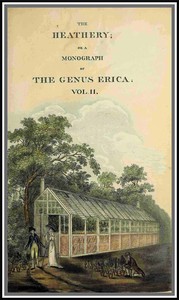
The heathery; or, A monograph of the genus Erica. vol. 2
Subjects:
Download Formats:
Excerpt
The Project Gutenberg eBook of The heathery; vol. 2, by Henry C.
Andrews
This eBook is for the use of anyone anywhere in the United States and
most other parts of the world at no cost and with almost no restrictions
whatsoever. You may copy it, give it away or re-use it under the terms
of the Project Gutenberg License included with this eBook or online at
www.gutenberg.org. If you are not located in the United States, you
will have to check the laws of the country where you are located...
Read the Full Text
— End of The heathery; or, A monograph of the genus Erica. vol. 2 —
Book Information
- Title
- The heathery; or, A monograph of the genus Erica. vol. 2
- Author(s)
- Andrews, Henry Cranke, active 1799-1828
- Language
- English
- Type
- Text
- Release Date
- February 19, 2023
- Word Count
- 10,271 words
- Library of Congress Classification
- QK
- Bookshelves
- Browsing: Nature/Gardening/Animals, Browsing: Science - General
- Rights
- Public domain in the USA.
Related Books
![Cover of The botanist's repository for new and rare plants; vol. 09 [of 10]](https://www.gutenberg.org/cache/epub/74978/pg74978.cover.medium.jpg)
The botanist's repository for new and rare plants; vol. 09 [of 10]
by Andrews, Henry Cranke, active 1799-1828
English
301h 21m read
![Cover of The botanist's repository for new and rare plants; vol. 08 [of 10]](https://www.gutenberg.org/cache/epub/73396/pg73396.cover.medium.jpg)
The botanist's repository for new and rare plants; vol. 08 [of 10]
by Andrews, Henry Cranke, active 1799-1828
English
288h 53m read
![Cover of The botanist's repository for new and rare plants; vol. 07 [of 10]](https://www.gutenberg.org/cache/epub/73371/pg73371.cover.medium.jpg)
The botanist's repository for new and rare plants; vol. 07 [of 10]
by Andrews, Henry Cranke, active 1799-1828
English
341h 15m read
![Cover of The botanist's repository for new and rare plants; vol. 06 [of 10]](https://www.gutenberg.org/cache/epub/73363/pg73363.cover.medium.jpg)
The botanist's repository for new and rare plants; vol. 06 [of 10]
by Andrews, Henry Cranke, active 1799-1828
English
394h 26m read
![Cover of The botanist's repository for new and rare plants; vol. 05 [of 10]](https://www.gutenberg.org/cache/epub/73359/pg73359.cover.medium.jpg)
The botanist's repository for new and rare plants; vol. 05 [of 10]
by Andrews, Henry Cranke, active 1799-1828
English
422h 26m read
![Cover of The botanist's repository for new and rare plants; vol. 03 & 04 [of 10]](https://www.gutenberg.org/cache/epub/72911/pg72911.cover.medium.jpg)
The botanist's repository for new and rare plants; vol. 03 & 04 [of 10]
by Andrews, Henry Cranke, active 1799-1828
English
853h 34m read