*** START OF THE PROJECT GUTENBERG EBOOK 75021 ***
[Illustration: THE ARGONAUT’S SOLILOQUY.
See page 342.]
THE ARGONAUTS
OF CALIFORNIA
BEING THE REMINISCENCES
OF SCENES AND INCIDENTS THAT OCCURRED IN
CALIFORNIA IN EARLY MINING DAYS
BY
A PIONEER
_And believing that it will be of some historical value as well
as of interest generally to know the names of those who
were the first to venture forth in the search of gold, and
by whose energy and labor the foundations of a great state
were laid, and also a general prosperity created throughout
the entire country, I have therefore prefixed to the
work the names of those that I have been able to obtain,
numbering about 35,000, and including among them the
names of several thousand who are now living in the
various States of the Union._
TEXT AND ILLUSTRATIONS DRAWN FROM LIFE
BY C. W. HASKINS.
PUBLISHED FOR THE AUTHOR, BY
FORDS, HOWARD & HULBERT
NEW YORK
1890
Entered according to Act of Congress, in the year 1889, by
C. W. HASKINS,
In the Office of the Librarian of Congress at Washington, D. C.
R. PIERCE & CO., PRINTERS, 53 LAFAYETTE PLACE, N. Y.
TO THE
SURVIVING MEMBERS OF THE
ADVANCE GUARD
OF GOLD HUNTERS,
THE CALIFORNIA PIONEERS
AND THEIR DESCENDANTS,
WHO ARE NOW LIVING THROUGHOUT THE
UNITED STATES,
THIS BOOK
IS MOST RESPECTFULLY DEDICATED
BY THE
AUTHOR.
PREFACE.
While residing in the village of Kingston, located upon the Cœur
D’Alene River in the silver mining regions of northern Idaho during the
winter of ’87-’88, and being compelled to remain within doors during
the winter in consequence of the great depth of snow and intense cold,
in order to pass away the time I amused myself by writing an account
of scenes and incidents that occurred in California in early days in
the mining regions, and which came under my observation. These events
are written entirely from memory, but I have endeavored to give as near
as possible the correct date of the events and incidents mentioned, as
well as their location and names with all of which I was familiar. As
to the the correct description of scenes and events, I ask the remnant
of that band of sturdy Argonauts who laid the foundation of a great
State to bear me witness.
C. W. HASKINS.
Index to the Names of the Forty-niners.
Members of the various Pioneer Associations in the U. S.
who are now living, Page 360
Forty-niners residing in various parts of the Union who
do not belong to any Association, “ 385
Survivors of Col. Stevenson’s Regiment, “ 394
Forty-niners now living in the Atlantic States, “ 395
Forty-niners who went over-land to California, “ 395
Forty-niners who sailed from City of N. Y., “ 414
Forty-niners who sailed from the States of Massachusetts,
Rhode Island and Connecticut, “ 453
Forty-niners who sailed from New Orleans, Philadelphia,
Baltimore and other Southern ports, “ 476
From various Eastern ports, “ 495
LIST OF ILLUSTRATIONS.
Frontispiece.
“Hello, Bill!”
The Start for California.
Brazilian Music.
The Swell at Cape Horn.
An Able Seaman.
Forty-niners at the Hotel in Lima.
The Operatic Shark.
The Prolific Topmast.
The Calm.
Neptune’s Orchestra.
The Bullwhacker.
“Ye Done it Weel.”
The Dandy Miners.
Smoked Out.
The Frisky Flapjack.
Hangtown in ’49.
“None in Mine.”
The Industrious Prospectors.
“I Shust Nose It!”
Bulling the Mine.
“Ther, Ther, T, other One.”
The Ducks Take Water.
Dutch Charley.
Dan Boone and the Bear.
The First Rat in Hangtown.
Rats in Sacramento City.
The First Young Lady in the Mines.
The Spartan Mother.
The Boys Aloft.
Emigration of ’50.
The Howly Fragment.
The Argonaut and His Mule.
The Steamboat Runners.
The Miners’ Meeting.
On His Trail.
“I’v Shtruck it, Thin.”
The Sailor Boy.
The Chap Who Insulted a Lady.
The Claim Jumper.
The Art of Self-defense.
Didn’t Believe in Compromise.
The Disgusted Speculator.
“Write Often, Boys.”
The Jack Tars on the Hill.
The Geological Lecture.
Old Nick’s Grand Entrée.
A California Cyclone.
Only Two Days in the Mines.
A Simile.
Female Influence Illustrated.
Not Ready to Go.
The Voice of Old Dick.
Big George and the Road Agent.
“There She Comes, Boys!”
Miners’ Comfort.
“Dis am a Free Kentry, Massa.”
Coasting in Idaho.
Law and Order Triumph’s.
Charley, the Female Stage Driver.
Hank Monk in Time for Lunch.
The Picket Guard.
The Gambler’s Charity.
The Road Agent Outwitted.
From Fry-pan to the Fire.
A Newcomer.
Force of Habit.
The Deserted Camp.
Syd’s Last Prospect.
Skunked.
Ruined Castles.
Meeting of the Old-timers.
An Unexpected Festival.
The Gold-saving Machine.
Tex Gives Satisfaction.
Not Raising Mutiny but Sugar.
It’l Be Our Turn Next.
Bob the Fiddler.
The Power of Music.
Old-timers in the Hall.
Phantoms of the Old timers.
Sam Plunket and the Indians.
The Bear in a Quandary.
The Power of Beauty.
The Bean-pot Comet.
Dick Arnold to the Rescue.
The Brave Policeman.
A New Motor.
The Plum-duff.
Donkey Instinct.
Tex and the Alcalde.$1’49 Mosquitoes.
The Bear and the Prospector.
Sharpshooters.
Discovery of the Old River Beds.
Lost in the Mountains.
Nature’s Lullaby.
Discovery of Red Hill Gold.
Bob Lost a Fortune.
The Surprise.
Curiosity Satisfied.
Mining Ground Transformed.
“Is it Me Agint?”
“No More Frontier in Ourn!”
Not that Kind of Bird.
The Tarantula in the Boot.
The Boston Boy and His Bugle.
Found His Brother.
Kanakas at Work.
The Flight of Time.
The Miller Taking Toll.
Yank Revisiting Old Scenes.
Coasting in Idaho.
Town of Wallace.
A Flush Hand.
The Mississippians.
The Return East.
“Good Morning, William.”
CONTENTS.
CHAPTER I--The News. Looking Forward. The Start.
CHAPTER II--Arrival at St. Catherina. American Pluck. The Four Brave
Tourists.
CHAPTER III--A Gale. The Ocean Swell. Cape Horn. The Magellan Cloud.
The Native Tradition.
CHAPTER IV--Arrival in Callao. The Relics of the Earthquake. The
Frolic with the English Officers. Target Shooting. The Calm. Water
Spouts. The Shark.
CHAPTER V--The Arrival in San Francisco. Gold Machines. Going to the
Mines. The Bullwhacker. Arrival in Hangtown. The View from the Hill.
CHAPTER VI--Business in the Mines. The Various Mining Camps.
Physicians in Camp. Dr. Rankin. Coloma. Process of Mining. The ’49
Emigration. Sauerkraut. Female Influence Illustrated.
CHAPTER VII--The Kanakas. The Dry Diggings Deserted. Admission of the
State. Scarcity of Reading Matter. The Cost of Letter Postage. The
Ingenious Bartender. Prices of Drinks. Celebrating the Fourth of July.
Hard Characters.
CHAPTER VIII--Climatic Changes. Appearance of Familiar Herbs. Rats.
The true Theory. Fall Emigration. The Johnson Cut Off. The Target. The
First Young Lady. A Spartan Mother. The Boys Up a Tree.
CHAPTER IX--Sickness in the Mines. Earthquakes. The Steamboat Men.
A Miners’ Meeting. Lucky Bill. Kit Carson. The Financial Condition
of the Miners. Australian Mike and His Tin Can. Portuguese Jo. The
Divining-rod.
CHAPTER X--Where the Rich Placers were Found. Miners’ Superstition.
The Blue Clay Deposit. Gold Machines.
CHAPTER XI--The Indian War. A Change in the Social Conditions. The
Desperado. The Sailors. The Mines Worked Out.
CHAPTER XII--Mining Speculators. The Lost Brother. Gambling. A
Generous Gambler. An Important Discovery. Beginning of Fruit Culture
and Wine Manufacture in California. The First Church Organization in
the Mining Regions. “Old Nick” and His Animals. “Old Syd.”
CHAPTER XIII--Emigration of$1’51. Churches Erected. Mines Deserted.
The Chinese Miners. Hill, River and Quartz Mining. Nature Frowns.
The Course of Events Change. Fruit Raising. Prospecting. On the
Homestretch.
CHAPTER XIV--The Discovery of Silver in Nevada. The Stage Road. Hank
Monk. Road Agents. The Parson. The Stool Pigeon. Spirits. The Boys Who
Captured the Thief. A Young Dick Turpin. The Irishman and the Road
Agent.
CHAPTER XV--Where are the Pioneers? The Overland Stage. Pony Express.
The Sound of War. A Wet Winter. The Hotel on the Road. The Railroad.
CHAPTER XVI--The Forty-niner. Syd at the North Pole. The Homes of the
Old-timers. The Remains of the Cabins of the Forty-niners. Panning out
the Old Cabins.
CHAPTER XVII--Meeting of the Old Timers. The Buckeye Tunnel. The
Best as It is. Bozer Who Got Skunked. The Hydraulic Miner. Mike’s
Explanation.
CHAPTER XVIII--Why are so Many of the Old-timers so Poor? The
Uncertainty of Mining. Tex and Barton Lee. Tex and the Hound. Tex on
Board the Steamer. Tex at Golgona.
CHAPTER XIX--Tennessee’s Letter from Tex. The War in Chili Gulch.
Sam Brown and the Chap with the Mild Blue Eyes. Sam Brown and the
Policeman. Old Kentuck and Sleepy Ben.
CHAPTER XX--Yank Visits the Old Mining Camp. Yank Seated Upon the
Boulder. The First Loaf of Bread. The Bean-pot Comet. How Julius
Sailed Up the River. Jeff’s Plum Duff. The Stone Statue. The Old Miner
Who was Robbed on Board the Steamer. The Cœur d’Alene Mines. Coasting.
CHAPTER XXI--Their Names Unknown. The Types of Men in the Mines. Pike
Illustration of Missouri Character. Bob the Fiddler. The Power of
Music Illustrated. John Kelley the Musician. Joe Bowers. Jeff Visits
Pioneer Hall. Old Miners in San Francisco.
CHAPTER XXII--Pioneer Hall. Old Mike Explains. Something Wrong. The
Business of Mining. Mike’s Philosophy. Yank at the Bay. The Expressman
and the Broom Pedler. Lucky Bill and the Gamblers. Sam Plunket the
Arkansas Beauty.
CHAPTER XXIII--Bill Burnes Lynching the Colored Man. Dick Arnold.
The Mining Regions. The Old-timers Disperse. The Phantoms of the
Forty-niners. Forty Years have Passed. The Argonaut’s Soliloquy. The
Great Changes. The Flight of Time. The Number of Pioneers Now Living.
CHAPTER XXIV--“Good Morning, William.” The Return. Great Changes.
THE ARGONAUTS OF CALIFORNIA.
CHAPTER I.
THE NEWS--LOOKING FORWARD--THE START.
In the winter of ’48 I resided in New Bedford, Mass. I had a chum.
What boy has not? My chum’s name was Bill. He had been absent from New
Bedford for a few months, and on meeting him, a few days after his
return, I greeted him with:
[Illustration: “HELLO, BILL!”]
“Hello, Bill! Have you heard the news?”
“No; what is it?”
“Well; while you were away, the news came that a man in California,
named Marshall, has made the discovery that there’s lots of GOLD out
there. He found a big chunk of it where he was at work.”
“You don’t say so! What’s he going to do with it; did he say?”
“That has nothing to do with the case. There’s the greatest excitement
here, you ever heard of. Not only here, but all over the country, on
account of the discovery. Thousands of men are getting ready to go out
there. A lot of ships down at the wharves are being fitted out for the
voyage, and they are going to take passengers cheap. Now what do you
say to going along?”
Bill did not seem to enthuse nearly as much as the occasion would
warrant, for said he,
“Well, now; I don’t see what reasons you can give for supposing that
there’s more gold there, simply because this man found a chunk of it.”
“But, Bill,” said I, with undampened ardor; “don’t you understand the
scientific nature of it? Isn’t it likely that there must be lots more
of it scattered about? Besides, the volcanic character of the country
is very favorable for that kind of a product, you know.”
Bill smiled skeptically, and gave me the benefit of his geological
knowledge as follows:
“Oh, yes, I know. The gold is thrown out from the bowels of the earth,
where it’s manufactured, by the volcanoes and scattered about on the
tops of the mountains. Then along come the earthquakes and shake it
down among the grass roots and bushes in the valleys, where you expect
to scrape it up by the bushel.”
“Oh, well, it may prove to be, as you say, a wild goose chase, after
all; but there’s a ship, now at the wharf, right from San Francisco,
and one of the sailors, who seems to be a real honest chap, told me
that the country was chock full of gold. He said that after they had
hoisted up the anchor to start home he scraped the mud off the anchor
and washed more than five pounds out of it--”
“Of what--mud?”
“No, of GOLD; REAL GOLD!”
“Oh, pshaw! Do you believe that yarn?”
“Why, of course I do! Sailors are noted for their veracity.”
“Nothing of the kind. They have the reputation of being the biggest
liars on earth; especially when out on the water and the wind blows
hard.”
Still true to my colors, I protested, “That’s impossible.”
“No, ’tis not, for if you were sailing a ship out at sea and the wind
blew real hard, you’d lie too.”
Bill’s levity fell upon unappreciative soil. I was too much in earnest,
and resumed:
“I’m bound to go out there, Bill, if I don’t pick more than a hatful of
gold in a day. There’s nothing like trying, you know. But what’s the
use of going after gold, you say? Well, now, isn’t that what we are all
after, and nearly crazy to get? And, isn’t it easier to go to a country
where you can scrape it up from the ground or pick it out from among
the grass by the bucketful, than it is to toil and sweat and worry
through a long life here?”
I cannot now remember whether Bill was just a little cynical, or simply
echoed the opinions of some of the wiseacres of that day when he
parried my query with,
“There’s plenty of money in the country now, and more is unnecessary.
What are you going to do with it all?”
“That’s a singular idea,” I answered. “Do you suppose it’s possible to
have too much money in the country? Such old, puritanical notions about
money are ridiculous. You and I haven’t too much and we could use a
few millions to good advantage, if we had them. And if it should prove
true that lots of gold can be found in California, you’ll live to see
this country step to the front among nations in wealth, prosperity and
enterprise.”
In my ardor I had risen to unwonted heights of eloquence.
Bill thought that there was enough enterprise in the country, already.
I assured him that when we began to send gold back from California in
ton lots, the various enterprises would boom to an extent never before
witnessed in the world.
Bill had, however, taken the negative side of the issue and fired
another broadside at me:
“Yes, but Jo, aren’t you going it a little too fast in anticipating
such big things? For my part, I don’t believe that there’s enough gold
in all of California to do all that. ’Twould take bushels of it, you
know.”
Upon confirmation of the news of the discovery of gold in California,
all was commotion in the various seaports of the Atlantic coast.
Vessels of all sizes and descriptions, from the small, 50 ton fishing
smack, that would be compelled to crawl along near the shore, up to
the noble clipper ship, that was able to contend with the elements
in mid-ocean, were fitted up with conveniences for passengers in
greatest haste. Many vessels sailed early in the year of ’49 for the
Eldorado. It was not, however, until the spring that the grand stampede
commenced. By April 1, in ’49, 50,000 good, able-bodied men, and a few
women, all desirous of bettering their condition and acquiring wealth
in a much easier and quicker method than by the old-fashioned, slow and
plodding methods of their ancestors, were upon their way to the other
side of the continent, willing to encounter the danger from Indians
or starvation, whilst an equal number preferred to risk the dangers
of a journey by sea to the land of gold. In company with about one
hundred others, we took passage in the clipper ship “America,” Capt.
C. P. Seabury, from the port of New Bedford, Mass. On the morning of
the 1st of April, the fact was announced that all must be on board at
10 A.M. The anchor was raised from its muddy bed below;
the sails were unfurled to the breeze; the bow of our boat swung round
a bit and pointed out toward the billows in the big ocean beyond. We
bade farewell to friends who accompanied us out to the light-house;
and, with hearty wishes from them that we might meet with the greatest
success in our venturesome undertaking, sailed out upon the broad ocean
in the direction of Cape Horn. We watched the green hills, with which
we had been familiar from early childhood, as they vanished from sight
below the horizon, and wondered then if ’twas so ordained by the powers
above, that we would soon be enabled to return again to these familiar
scenes of our boyhood days with our pockets lined with tin (and some of
us still continue in the same business, at the old stand, of wondering).
Our passengers, being unaccustomed to the situation, soon felt very
peculiar sensations produced by the motions of the vessel. We sought
the entrance to the basement, into which we managed to make our way in
an oblique kind of a style, and retired to our sleeping apartments,
there to remain until we deemed it safe to again climb out upon the
roof of the vessel.
We were satisfied in a few days that we were very fortunate in our
selection of a vessel for the voyage, for we found that she was a
strong, staunch one; a fast goer, with a good crew and commanded by an
expert seaman, who understood his business. Fortunately for
[Illustration: THE START.]
us, perhaps, we had as passengers a number of old veteran (retired) sea
captains, who were always very ready and willing, without remuneration,
to give our captain all necessary advice, at such times when, in their
opinion, he needed it. When, in their opinion, there was danger of
the ship sailing too fast, they would advise him to take down some
of the big sails; or, again, when the wind was too high, they would
become aware at once of the danger of the ship running under, front end
foremost, and at such times they would advise the captain to stop her.
Under such conditions, where there were many men of experience keeping
their weather eyes open for emergencies, it is evident that we, the
passengers, felt perfectly secure from danger, and could sleep without
fear.
During the voyage we amused ourselves, no doubt, in the same manner
as passengers of vessels usually do, by various games. There were an
assortment of musical instruments, and card playing was an amusement
much in vogue; but a few of the younger passengers of a sporting
tendency, would bet upon the speed of the ship and the number of miles
we would sail upon the succeeding day. Some of the older ones, however,
of a more elevated character, who were above such petty amusements,
would practice at leap-frog upon deck during pleasant weather. When
the weather was otherwise they would pass their time below, in betting
with each other upon the number of plums they would be able to find
in their respective rations of duff, and many were enabled to enjoy
double rations at the table in consequence. In the opinion of many of
the older passengers, one very important fact had been overlooked in
our great haste to start for the golden shores of California, and that
was, the failure to make suitable provision for the storage of gold
dust. This was, indeed, an oversight, for nothing had been provided
suitable for the purpose. It therefore taxed the ingenuity of the
older ones, and many were the devices proposed. One very ingenious and
sanguine individual commenced the manufacture of leather pouches from
old boot-legs or from pieces of canvas, maintaining that these would be
found the most convenient. Another insisted that good, strong, stone
ale bottles were far superior for stowing the finer grades of dust,
and such was his faith in them that he had actually brought two or
three dozen with him. But where is the limit to genius or the faculty
of adaptation to conditions, for if no other person had appeared upon
the stage with a superior device for the purpose, the inventors of the
boot-leg pouch and of the ale bottle devices would have divided the
honors between them for their ingenuity. The possession of an older
head with greater experience, however, suggested that although leather
pouches and beer bottles might answer very well, they would probably
be found very inconvenient to handle on account of the great specific
gravity of gold. He therefore suggested that the best way to pack the
gold dust, and the best means of handling it, would be to put it into
empty pork barrels, for these could be rolled with ease and of course
would be more convenient for shipping. The greater portion of the
passengers saw at once the superior advantages of the pork-barrel idea,
and resolved to adopt that method.
One old gentleman spent his time in the construction of a dredging
machine for raising the sand from the river beds, and for extracting
the big nuggets from among the rocks at the bottom; whilst another
one busied himself in making sheet-iron scoops, to which long poles
were to be attached. His idea was to take his station under the shade
of a tree, upon the river bank, scoop up the rich golden sands and
extract the gold from it upon dry land, without the danger of being sun
struck or wetting his feet. Many of the more intelligent ones among
our passengers kept a daily record of scenes and incidents during our
voyage; but so much of this class of literature has been heretofore
brought before the public that a report from any of them would not be
of much interest at this time.
CHAPTER II.
ARRIVAL AT ST. CATHERINA--AMERICAN PLUCK--THE FOUR BRAVE TOURISTS.
It having been decided by the Captain of our vessel, at the request
of many of the passengers, that we visit some port upon the coast of
Brazil, upon consulting the sailing directions of Lieut. Maury, it was
found that in order to do so it was necessary to first visit the coast
of Africa, to take advantage of the trade winds. The ship’s course was
therefore directed towards the Continent of Africa, at which portion
of our planet we arrived in good time; and ’twas not until we found
that the dust from that continent was accumulating upon our clothing
and other articles on ship board, that our Captain concluded we were
near enough to the African coast. Our good ship was, therefore, turned
around and the bow pointed towards South America. With a fair wind we
crossed the ocean again, and on the 20th of May sailed into the port of
St. Catherina and dropped anchor under the guns of the fortification
located on the summit of a hill near the town.
We found lying at anchor here the steamer “Senator,” on her way
to California, as well as two or three other vessels loaded with
passengers from the United States for the same destination. An incident
in which the passengers of these vessels took a very prominent part
occurred a few days previous to our arrival, and is worth relating, as
it illustrates the type of American character which constituted the
advance guard of the California pioneers, and proves that the Americans
will submit to no indignity from a foreign race, if they possess the
power and means of resenting it.
A young man, a passenger of one of the vessels, was assassinated by
a native, but for what reason was not known, although supposed to be
from jealousy. The Americans demanded the arrest and punishment of
the assassin, but no attention was paid to the demand, and no efforts
were made for the murderer’s arrest, since he had slain only an
“Americano.” It may be of some interest to those of the human family
who have adopted the great American Eagle as their emblem, to know
that at this period in their history--40 years ago--when iron clads
were unthought of and monitors unknown, this nation of people were not
held in very high esteem by the various governments and peoples of the
South American continent, for the reason that their ports were but
very seldom visited by our ships of war, only upon certain isolated
occasions, when the American sloop of war “St. Marys,” or some craft
of similar dimensions, would put into these Southern ports. For this
reason, they seemed to be impressed with the idea that, in comparison
with England, with the monster ships of war with which they were all
familiar, the United States were of little consequence and small
potatoes generally. As a consequence, a demand for the arrest for the
murderer of the young American was treated with contempt; but they were
dealing now with the passengers of three or four ships who were on
their way to California--a crowd of Americans who were determined to
have the culprit arrested and punished at all hazards. The Governor of
the province, beginning to be alarmed by their demonstrations, for they
had threatened to capture the fortress upon the hill and to bombard the
town, despatched messengers instantly to the Emperor at Rio Janeiro for
assistance, believing, no doubt, that it was the intention of these
vile “Americanos” to capture the entire country and annex it to the
United States. This idea arose from the fact, as we heard related,
that the passengers from one ship did actually enter the fortress and
unfolded to the breeze the stars and stripes from the flag-staff, and
some one, for fun or accident, had with a piece of charcoal put in an
additional star which, of course, represented Brazil. But peace was
soon restored; the Governor had the culprit arrested, and after a fair
trial he was shot in the presence of those who demanded his execution;
and in a few days the ships sailed upon their course for California
with passengers satisfied and contented.
We found, a short distance in the interior, a man with his family
from the State of Vermont, who had emigrated here to live in ease and
comfort upon the spontaneous productions of the soil, which consist of
oranges, bananas and other tropical fruits. He stated that he had been
induced to make his home in this tropical country by an acquaintance
who was a seafaring man, and had often visited this portion of the
earth. Through representations of the beauty of the country and the
little labor and exertion required to live in ease and comfort, he had
been persuaded into coming here.
“The first year was pleasant indeed,” said he; “and often when we were
conversing upon the pleasures of such a life free from toil and care,
we wondered why the greater portion of those who dwelt in the far
northern New England States, amidst the snows and rains of their severe
winters, toiling and striving for the necessaries of life, did not come
to this earthly paradise. These were our thoughts and feelings during
the first year; but, after a residence of three years in this beautiful
country, with its warm sunny skies and its luxuriant vegetation,
despite these advantages, we have been forced to the conclusion that,
although the natives of the country were adapted by nature to such
conditions of existence, an American never would be. Why, sir, I can
take more solid enjoyment and comfort in one year among the rugged
hills and rocks of old Vermont, where the maxim is work or starve, than
it would be possible to find here in a lifetime, and I intend returning
to that country again just as soon as opportunity offers.”
It was here at St. Catherina, also, that we saw for the first time in
our lives diamonds in their rough state when taken from the river beds,
and which, to all appearances, are ordinary quartz pebbles, such as
are often seen upon the sea-shore. In their original state when first
formed in nature’s subterranean laboratory, they are crystallized with
proper facets and angles; but being subsequently deposited in the beds
of running streams, in process of time are worn to a smooth surface by
friction amongst the gravel of the river. These gems possess but little
value until much time and considerable labor is expended in again
restoring the worn out facets and angles. So far as known they serve
but one purpose in their rough state, and that is to illustrate the
fact that although a man may be very careless in his style of dress,
paying no regard to the latest fashion and even with his top-coat in
rags, yet he may be a real nice sort of a man for all that; a gem of
the first water beneath a rough coating. Experience illustrates the
fact that this is often the case, and for this reason it would be as
well before driving the tramp from out the back yard to search beneath
his rags for the gem that may possibly be there, or for anything else
of value that may be concealed.
We saw, also, a specimen of the diamond miner, a few of them having
just arrived from the mines, hundreds of miles away to the West, in
the interior, to dispose of the diamonds to the merchants in the town.
One of them explained to us the manner of finding the valuable gem:
the process being similar, in some respects, to the methods adopted in
California in mining for gold in the river-beds. By the use of wing
dams, the stream is turned, and, after shovelling the sand and gravel
from the bed rock, search is then made for what are termed pot holes
in the hard bed rock, in the bottom of which is found the diamond, or
at least it should be there, but unfortunately this is not always the
case, as all miners can testify to with sorrow.
A few miles inland was the border of the great Brazilian forest that
we had often read of in our school-boy days, and which, at this point,
approaches to within a few miles of the coast. We were informed that
a few miles within this dark forest could be found a small lake about
two miles in circumference, and that it was filled with a great variety
of creeping ferocious reptiles, such as alligators, crocodiles, huge
water snakes and water lizards. Upon its surface, also could be seen
water fowl of all kinds, and upon the branches of trees surrounding
it a great variety of birds, with the gayest plumage, could be found.
Frolicking amidst the tall grass upon its banks would be seen a variety
of wild animals, including beautiful specimens of the frolicsome
Brazilian tiger. A number of us determined to enter this dense
forest and investigate the beauties of this wonderful lake and its
surroundings; but we were warned by the natives that it was a dangerous
undertaking, unless we procured a suitable guide, as it was very dark
and dismal within the forest; and furthermore, that the trails formed
by the animals were so tortuous and crooked, that there was danger of
getting lost. To our inexperienced minds, an undertaking of this nature
offered irresistible fascinations, for we were of a nation that knew
no fear, and the national characteristic being to satisfy curiosity,
let the consequences be what they may, why should we fear? Were we not
armed with the latest discovery that the inventive genius of a Yankee
could devise as a protection? Perhaps the animals in the forest had
not, as yet, been made aware of the fact; but would they not crouch in
abject fear when we entered the dark trails of the vast forest to see
each of us carrying in his hand a Smith & Wesson, duplex patent, double
back action, revolver, vulgarly styled a “pepper-box”? Well, I should
say they would, and so we thought. Armed with this style of weapon,
one pleasant morning four of us (the bravest ones) determined to enter
the forest and beard the tiger in his lair. A native kindly volunteered
to leave his daily toil, and, for a small fee, guide us to the entrance
of the forest. We examined our weapons, drew a long breath, and in
single file, walked in the narrow trail for a short distance into the
dark abyss: then stopped, drew another long breath, and marched out
again. Not because we had any fear for our individual selves, but for
each other, for each didn’t like to see the other torn into a mass of
shoe strings by an enraged tiger.
“What was that awful roaring away in there, do you reckon?” asked one.
“Oh,” says another. “That noise was miles away. I ain’t afraid, so
let’s try it again.”
After discharging a few shots at imaginary beasts, as a fair warning
to others away in the forest that were not imaginary, we again entered
the dark trail and proceeded cautiously onward. The monkeys among the
branches over our heads would follow us, and occasionally approach near
enough to endeavor to snatch our hats from our heads. We had proceeded
in this manner for about a mile, when a Cape Cod chap, who was in the
van, suddenly came to a stop, at the same time exclaiming in a very
emphatic manner, “Go back! go back, quick!” We all pressed forward,
however, anxious to see the cause of the alarm, and we saw it. A few
straggling rays of the sun had forced their way through the thick
foliage above, and illuminated a small patch of the trail of about
two feet in extent, and lying in this sunny spot could be discerned
the head of an enormous serpent. The body was there too, of course,
but being among the bushes it was not visible. We cared nothing for
the body, but it was the ferocious looking head that startled us. Its
eyes assumed all the colors of the rainbow. Four pairs of very severe
eyes were concentrated upon the eyes of the monster, which seemed to
realize the situation, and from a feeling of bashfulness at being gazed
upon by strangers, or, perhaps, having caught sight of our weapons,
and recognized the brand, from an instinct of coming danger closed its
eyes. With optics partially closed, its countenance assumed a very
amiable expression; but a slight movement from one of us caused it to
again raise its eyes, and made one, at least, of us wish that he hadn’t
come.
“Oh pshaw!” remarked a Boston chap, who had attended high school some,
“let’s go ahead anyhow. You remember that Plato, or some other fellow,
said that courage was one of the virtues, or something of the kind. Now
let us prove that we are virtuous young men. We will turn his right
flank, and get to his rear easy enough.”
“Oh, git out,” said the Cape Cod chap; “them form of animals hain’t
got any right nor left flank at all; nor rear end neither, ’cause
their bodies come to a point on the fur end.” Just at this moment,
the monster made a forward movement and we retired in a rather hasty
manner, leaving the serpent to enjoy its sun bath.
But the reader would ask, since we were so well provided with weapons,
why in the name of Cæsar didn’t we massacre the brute at once, and go
on. It must have been from fear that we did not, and so it was. We were
fearful of shooting each other, for we had practiced so little with our
weapons that it had not as yet been positively decided whether or not
we should aim right at an animal that we desired to massacre, or in the
opposite direction. One of the young men who had practiced considerably
during the voyage shooting at the big waves, and was always positive
that he hit them, somewhere, volunteered to test his skill upon the
serpent, but for fear that the noise might make it angry and cause it
to bite some of us, he was prevented.
As we emerged from the forest, our ears were assailed with a most
unearthly screeching, that seemed to come from the open country beyond
the forest. We concluded, at once, that some ferocious monster had by
accident got out of the woods, and was unable to find its way back
again. We examined our weapons, determined to sell our lives at the
highest price, spot cash, and marched manfully in the direction of our
vessel.
The Cape Cod lad remarked, as we hurried onward, that the screeching
reminded him of a political caucus in his native town, and “the
cheerman was a-tryin’ to call ther meetin’ to order.” Upon reaching
a slight elevation, we saw, in the road ahead of us, a cart drawn by
a pair of oxen, and it was from this that the noise proceeded. We
concluded, at once, that the cart contained wild animals that were
perhaps being shipped to New York for Mr. Barnum; but upon nearer
approach we found, to our astonishment and disgust, that the terrible
Brazilian melody was caused by the wheels upon the axles, which in this
country are never greased.
[Illustration: THE MUSICAL OX-CART.]
We suggested to the driver, by certain signs, that they ought to be
greased, and that it was an evidence of barbarism, and would not be
tolerated in any civilized country. “Oh no,” he replied, “Americanos no
sabe. Wheels no sing: bullocks no go.”
Well, ’tis no wonder they go; anything would go from such a noise, and
never return. An army of Kansas grasshoppers would go into the regions
above and never again return to earth. The terrible screeching was
heard also on board of the ship, and it even suggested to our Captain
that we ought to go too, and that ten days was long enough to remain in
any country where they didn’t grease their cart wheels, and we went.
After taking on board a good supply of tropical fruits of various
kinds, with bananas in greatest abundance, which were suspended to the
ship’s rigging in all convenient places until she had the appearance
of a banana plantation going on an excursion, we sailed again out upon
the broad ocean and laid our course for Cape Horn, where we expected to
arrive by the middle of June.
CHAPTER III.
A GALE--THE OCEAN SWELL--CAPE HORN--THE MAGELLAN CLOUD--THE NATIVE
TRADITION.
As is very often the case in relation to human affairs, fate decreed
otherwise, and in plain, unmistakable language we heard whispered by
the gale which we encountered as it roared through the ship’s rigging,
“Go slow! go slow!” And we did. About three hundred miles from the
land off the mouth of the La Platte we encountered what all of the old
salts, as well as the young, fresh ones, declared to be the heaviest
gale that it was ever our misfortune to encounter. It came from off
the coast, and of course was favorable for us; but there was a little
too much of it. The sea was smooth, for such was the velocity and
force of the gale that when a billow attempted to assert its rights
and raised its head above the general sea level, it was instantly
blown off, leaving in its place but a mass of white and seething foam.
In this manner, with our noble ship lying to with the lee rail under
water, we remained for thirteen days. To cook was impossible, for the
reason that, at the angle at which our galley stove cut the horizon,
nothing would stay in the dinner pot, and we were obliged therefore to
eat off-hand and at random whatever we could get. It was now getting
monotonous, and to add to our troubles the Captain would not grant us
permission to go on shore, and it even seemed to hurt his feelings when
we asked him.
On the evening of the thirteenth, the Captain, deprived of his
accustomed rations of plum duff and soft tack, determined upon the
tactics which he should adopt the following day if the gale did not
abate and that was to run before the gale. This course was strongly
objected to by the veteran skippers on board, who claimed that it would
be a most dangerous proceeding and would never be adopted by anyone
but a young and inexperienced commander. They had, as they explained,
roamed the seas over from infancy and were well aware of the danger
of running before a gale of such huge dimensions as we were then
experiencing. They therefore strongly protested against it and assured
the Captain that in case he did adopt that plan he must be responsible
for all damages if the ship should run under and sink away down to the
bottom in the cold sea, which they were most positive would be the case.
The Captain, however, after lying all night on the edge of his bunk
determined, notwithstanding their protestations, early the next morning
to make a break for liberty. With a firm step and with salt water in
his larboard eye, he ascended to the deck and soon the command was
heard above the roar of the tempest: “All hands on deck!”
In a few minutes every man of us was at his post as soon as we could
find it, and when the order was given to the sailors who were holding
fast to the wheel to let her go, they did, and it flew around in a most
spiteful manner, as if conscious of its freedom. The bows of the ship
swung around with the gale and we went flying amidst the foam upon the
rough surface of the sea at a rate of speed nearly equal to a railroad
train, and in a few hours were again upon our way with a fair wind and
under full sail in the direction of Cape Horn.
“Well, well!” exclaimed one of the veteran skippers, who had predicted
all kinds of disasters to the inexperienced Captain, as a consequence
of his rash proceeding, and who was now standing near the gangway
holding in his hand a well-filled carpet-bag, and with a look of
disgust and disappointment in his expectations stamped upon his
weather-beaten countenance: “Yer come outer that gale in good seaman
style; but if yer had only took my advice yer’d done it more ’n a week
ago.”
We arrived at Cape Horn on the 4th of July, and with a fair wind sailed
around the dangerous point and entered the waters of the Pacific
Ocean. This being our national holiday, we dressed up our vessel in
appropriate attire, and with various instruments of music, the firing
of guns and pistols, celebrated the day in true Yankee style, to the
great astonishment of the seagulls, as well as the immense flock of
birds of various kinds that arose into the air from the clefts and
caverns of the massive rocks of the coast.
Just previous to our arrival at Cape Horn, much surprise had been
expressed by many of us at the unusual heavy swell of the sea or of the
huge billows we encountered, but had been invariably reminded by the
aged veteran seaman on board:
“Oh, pshaw! these are nothing but ripples compared to what you will see
when you reach Cape Horn. You just wait, and blast me eyes, but you
will see them down there as high as the main mast.”
[Illustration: A CAPE HORN SWELL.]
The consequence was that we waited. We now turned our attention to the
heavy swells for which we had patiently waited, and found them nearly
as represented, for they were immense, and to take a view of them from
the cabin window at the stern of the ship required considerable nerve,
as it really seemed, when the stern was away down in the trough between
the great rollers, that nothing short of a miracle could raise the ship
quick enough to prevent the hugh billows from rolling over her. We
found, however, upon experimenting with a long rope on deck, by shaking
it up and down from one end, that in a similar manner the great billows
do not move forward upon the surface of the ocean, as they have every
appearance of doing, to the utter destruction of every object which
they come into contact with, but that they simply rise and fall. It is
this continual rise and fall of the water on the surface of the ocean
that gives it the appearance of rolling onward in the form of huge
billows.
The traditions of the native Patagonians tell us that centuries ago
a race of giants existed upon the extreme end of the South American
continent; but whether that was their place of residence, or that they
were there only upon a picnic excursion, is not definitely known.
It unfortunately happened, however, that while there this great
convulsion occurred, which separated the extreme end of the continent
from the main land; and to their great astonishment, when aroused
from their slumbers early one morning, they found themselves situated
upon a high commanding eminence, at a distance from the main land,
and entirely surrounded by water. To wade through the cold Southern
sea to the main land again was out of the question, for they had come
totally unprepared for such an emergency, having left their rubber
boots at home. They were, however, giants, and knew their strength.
Breaking the high mountain upon which they stood into fragments of
suitable size they hurled them into the sea beyond, and using them
for stepping-stones, regained the said continent without accident, or
wetting a single foot. This is said to be the origin of those extreme
Southern islands which they named Terra del Fuego.
The end of the continent was by this convulsion broken apart, and
through this break the waters of the oceans found their way, forming
a very convenient channel for small vessels to avoid the dangers of
the Cape in passing from one ocean to the other. This channel was
discovered by Magellan.
To the extreme southern point of the solid islands of rocks is given
the name Cape Horn, around which it is difficult and dangerous to pass
in consequence of the prevailing winds, which blow almost constantly
from the west. It is at this point, also, that a good view is had of
what is called the Magellan Cloud, not so named because Mr. Magellan
first discovered it, but from the fact that the strait which he did
discover, whether by accident or otherwise, is located immediately
beneath it. At night, this cloud has the appearance of a mass of
luminous vapor floating in space above, and such is its immense
distance from our planet, that no telescope has as yet been constructed
with power sufficient to enable our astronomers to determine its
true character; or whether it is, as it appears, a mass of luminous
vapor, or a cluster of celestial bodies like our own universe. Now,
is it not possible that this is another universe similar to our own,
located in distant space, and in company with thousands of other
similar collections of celestial bodies which are scattered throughout
infinite space, all moving in one general direction, and governed and
controlled by the same ruling power? This is possible, and that each
universe is separate and distinct from all others there is no doubt,
and that to those who are dwelling upon the various planets of which
they are composed, our own universe presents a similar appearance is
very probable. In viewing these distant collections of celestial bodies
in the firmament above, they may be very properly compared to swarms of
gnats which we often witness sporting in the sunshine.
With a fair wind, we laid our course for the port of Callao, in Peru.
A few days followed of fair wind which seemed to increase in violence
as we proceeded, until it had assumed the proportions of a very
respectable gale, termed in Nevada a “gentle zephyr.” It was during the
continuance of this gale that a little incident occurred which may not
be of much interest to seafaring men, and one of ordinary occurrence;
but to those who do not go down upon the sea in ships it may be of
some interest, since it illustrates the nature and character of the
requisites of an able seaman and commander. During the gale, a block or
shieve upon the end of the main yard was torn from its lashings, and
fell upon the deck. The ship was luffed up into the wind: the great
seas broke over the bows, and the mainsail threshed about in a terrible
manner in its frantic efforts to free itself from its lashings, and
to keep company with the gale. It was absolutely necessary that that
block should again be placed and securely lashed upon the end of the
yard, of which fact all the officers of the ship were well aware; but
where was the sailor who had the courage to go out upon the end of
that yard, when, as the ship rolled, the extreme end where the block
was to be lashed was out of sight, became buried in the white foam of
the huge billows? The Captain ordered no one to perform the dangerous
duty, but asked the first mate, who was holding fast upon the rigging
near, if any man would volunteer to do it? The mate, who was naturally
of a modest and quiet disposition, raised his eyes aloft to the yard,
then to the surging billows below, thought of his loved ones at home,
and very modestly declined, with thanks. The second mate, a big, burly
seaman, turned his port eye toward the chief mate, concluded that he
had a level head, and concurred for similar reasons. Our Captain,
finding that no one on board of the ship was willing to perform the
dangerous duty, remarked that he should then be compelled to do it
himself. Taking the huge block, slung to his shoulder, he mounted aloft
out upon the yard, where he succeeded in lashing it securely in its
place, although not without a great deal of trouble and danger. The
ship swung off again before the gale, and all danger was past.
[Illustration: AN ABLE COMMANDER.]
CHAPTER IV.
ARRIVAL IN CALLAO--THE RELICS OF THE EARTHQUAKE--THE FROLIC WITH THE
ENGLISH OFFICERS--TARGET SHOOTING--THE CALM--WATER SPOUTS--THE SHARK.
The ship’s course was now directed towards the port of Callao, Peru,
where we arrived about the 10th of August. We remained in this port
about eight days, visiting in the meantime the beautiful city of Lima
located at the foot of the mountains, a few miles inland, and a portion
of the earth where a rain-storm is unknown.
We found that the chief and principal amusements here at this time
consisted in cock and bull fighting; the grand arena, with its gorgeous
trappings, being situated adjacent to and under the shadow of the
principal cathedral of the city.
In the town of Callao we saw the ruins of the old city which was
partially submerged by an earthquake in 1765, at which time a ship
being at anchor in the harbor was carried by the returning tidal wave
about five miles inland, where the old hull was deposited and could be
plainly seen. At ebb tide, the tiled roofs of many old buildings can
yet be seen upon the sandy beach; but the greater portion, however,
of the submerged town lies in deep water, above which vessels in the
harbor ride at anchor.
A little incident which occurred here in the city of Lima upon the
day previous to our arrival, as we heard related is perhaps worth
recording. Upon our arrival in the port of Callao, we found lying at
anchor there, the U. S. sloop of war “St. Mary,” as well as the English
man-of-war “Asia,” and an English sloop of war, the name of which I
have forgotten. There was also in port a ship from Norfolk, Va., having
on board as passengers about forty young men from Richmond and other
Southern cities on their way to California. There was a feeling of
jealousy existing among the English officers and these young Southern
bloods in the city of Lima, from the fact that the latter seemed to
attract more attention
[Illustration: THE ARGONAUTS AT LIMA.]
from the ladies of Castilian blood. The English officers were
determined to revenge themselves, and they endeavored to do it, and to
further show their contempt for Americans generally in a despicable
manner. The latter, upon one occasion, concluded to have a regular
champagne dinner, and engaged for the purpose the large dining-room
of the only American hotel in the city, which they arranged to occupy
at 2 P.M. of the day appointed. The English officers,
to the number of thirty, having been informed of the intention of the
Americans, found now their opportunity for revenge by taking possession
of the dining-room at the appointed time, and locking the doors, thus
interfering with the arrangements. Unfortunately for them, however,
they had never fully understood the real nature of American pluck, as
one of the English officers was afterwards ready and willing to admit.
At the appointed time the Americans met at the hotel, but only to
find the doors to the dining-room locked and the room occupied by the
English officers. After a short consultation, a tall, fine-looking
specimen of one of the F. F. V’s knocked upon the door, demanding
instant admission, but, of course, was refused. Two minutes was then
allowed, and in case of refusal they were informed that the door
would be broken in. “Do so, at your peril,” came from the inside;
and almost instantly the door went in with a crash, and the tall
Virginian, stepping inside to the head of the table, seized a bottle
of wine and threw it with full force, striking the center of the table
beyond, and bounding to the wall upon the opposite end of the room.
At the same time, thirty or forty Americans, well prepared, filed in
and took their stations behind the English officers, who leaped to
their feet, and with their short swords flourishing above their heads
demanded instant satisfaction for the insult. They were informed by
the leader of the opposite party that it was the latter who demanded
satisfaction, and that the former must instantly leave the room, or
the Americans would enforce the demand. After some loud talking and
threats from the leaders of both sides had been indulged in, a more
quiet and subdued tone was used; mutual explanations followed; suitable
apologies were given, and a general hand-shaking followed. Swords were
sheathed, and fortunately the danger of a conflict was averted; seats,
as well as an additional supply of champagne and other refreshments,
were ordered. The Americans were very cordially invited to partake of
the festivities, which invitation they accepted, and peace and harmony
prevailed.
One effect of this incident, was a greater respect for the American
people, or at least that portion of them who were at present in the
harbor of Callao; for, upon the day following the incident, the
passengers of the American ships were very cordially invited on
board of H. M. ship of war the “Asia,” and were received in the most
hospitable manner. Furthermore, through the influence of her commander,
a few passengers of one of the American ships who were detected in the
act of smuggling on shore a quantity of tobacco, were released upon
promising to do so no more.
Going on shore one day, we found on the sandy beach three or four
English officers who were practicing target-shooting. The target was
a board twelve or fourteen inches square, and placed at a distance
of one-hundred yards. They were practicing with the English sporting
rifles, some of them being fixed up in a beautiful style and ornamented
with silver. These rifles were fired from a rest, and with this
advantage even, the target was hit but twice out of five shots. One of
our boys remarked to them that he had an old U. S. musket on board of
the ship, and offered to wager that he could put four balls out of five
into the target, off hand. One of the Englishmen asserted that that
was a huge joke “ye know”; but requested our passenger to bring it on
shore and prove his assertion, which he proceeded to do. There was much
merriment among them when he returned, bringing with him an old style
Springfield rifle, or Jæger, as they were usually called; but when this
youth, off-hand, put four balls out of five into the target, their
merriment subsided, and in fact they were astonished. They asked many
questions, and when informed that the U. S. army was armed with this
sort of thing they marveled greatly, and desired permission to take it
on board of H. M. ship of war for inspection, which they did, remarking
upon its return that it was an ugly looking thing; but “by Jove, the
way it shoots is simply marvelous, ye know!”
One of the officers asked the young man if all the U. S. soldiers were
as expert with the use of the gun as he was, and he replied that he
had just been expelled from the army for one year, in consequence of
being the poorest shot in his regiment, which was Co. Y. of the 287th
regiment of light infantry, stationed at Fortress Monroe; but that he
was allowed one year for practice, and if at the expiration of that
time he could do the regulation shot according to Scott’s Manual of
Tactics, he would be re-admitted into the Army. When asked what the
regulation shot was, he replied that every soldier was required to be
able to put four balls out of five into a four-inch ring, off-hand, at
a distance of half a mile when ordered, and no postponement on account
of the weather.
“My hies,” was the only answer.
Having laid in a good supply of fruit, etc., we sailed out again upon
the broad ocean toward the land of gold. From this port we cannot,
however, take a direct course for California, in consequence of the
irregularity of the winds along the coast. We are therefore compelled
to test the maxim that the longest way around is in some cases the
nearest way home, and for such reasons our good ship is headed in the
direction of Japan until we reach longitude about 140° W., from which
point upon the equator, in consequence of the prevailing winds, the
course can be laid direct for the port of San Francisco.
One of the greatest pleasures of a long tedious sea voyage is in
speaking with other ships, bound for different ports of the world,
and when the condition of the sea and weather permits, it is usual to
exchange courtesies by giving the latest news, the destination of your
ship, and occasionally visiting each other. Many, of course, were the
questions asked by the commanders of other ships upon seeing so many
passengers on ship-board, in that portion of the sea, not having heard
of the wonderful gold discovery. One commander, in particular, hailing
from Valparaiso and bound for Cork, who had passed several ships loaded
with passengers, very earnestly inquired if we Yankees were on our way
to found a new empire somewhere among the islands of the Pacific ocean,
or if we were only the rear guard of Alexander’s army searching for new
worlds to conquer. We, however, satisfied his curiosity by informing
him that we were neither one nor the other, but simply Pilgrims going
in search of the new Jerusalem supposed to be somewhere in California.
We had now a fair wind until near the equator, where it then left us,
and there fell a great calm upon the waters.
It is in these latitudes that the conditions are most favorable for
the formation of the water-spout, for it is here where the winds are
variable, and where dead calms of long duration are the rule, and
nature’s forces find the breeding grounds for the marine cyclones--it
is here that the germs of the Kansas cyclones are found, in their
original purity, free from dust, old fence-rails, hay, or ox-carts;
the upright columns being filled only with pure sea water, drawn up
from the surface of the ocean. We saw many of them in all stages of
growth, from the newly-formed, which was just able to move along in an
upright position, staggering and swaying from side to side like a child
just learning to walk, up to the monster columns which possessed the
power to elevate into the regions above anything with which it came in
contact, from a clam-shell to a man-of-war. Five were seen in one day,
and one of the largest of them seemed inclined to pay us a visit; but
being aware of the fact, we made all necessary preparations to give it
a warm reception. It changed its course, from an instinct of danger no
doubt, which was the general opinion, from the fact that an old seaman
declared positively that if you discharge a cannon-ball into this
column of water, it will instantly burst, as the proper circulation
is destroyed. For the same reasons also, as the veteran salt and able
seaman declared, it was even possible sometimes to frighten one of them
to death by running out of the port-hole a Quaker gun, and he said that
he had seen several burst in that way. It was the most economical way,
as it saved a lot of powder; but of course the rest of us old salts
didn’t believe all he said about it.
We found that upon the occurrence of any event during the voyage, this
old salt could refer to a similar event within his experience that
would discount anything we had seen. For instance, during the calm he
remarked that,
“This calm was nothing to what he experienced at a certain time on the
coast of Chili.”
“Why,” said he, “the calm lasted nearly two months, the surface of the
ocean became stagnant, turned green, and smelled like bilge water, and
you could see dead fish of all kinds, and even dead whales floating
about.”
During the gale which occurred upon the Atlantic also, he remarked:
“Oh, pshaw! this is nothing to what I have seen. Why, I was bound once
up the Mediterranean Sea, when we encountered a gale that threw our
ship upon her beam ends, and we laid in that position for nearly six
weeks. It blew away our main-topmast, and the last we saw of it, ’twas
going away south toward Africa; and maybe you won’t believe it, my
lads, but five years afterwards ’twas found in the great desert partly
buried in the sand, where it fell. The cross trees had sprouted, and a
fine cluster of white oak trees had grown up from it, more than sixty
feet high, and they made a beautiful shade for the camels to rest
under when they were cruising around the desert.”
[Illustration: THE PROLIFIC TOPMAST.]
I have stated at this time that the conditions are favorable for
water-spouts, as will be further explained. The formation of a
water-spout is only possible when there exists a calm upon the waters,
and in consequence of the heat of the sun being reflected from the
smooth surface of the ocean, the atmosphere becomes greatly rarefied,
and ascends to higher regions. The result is that at this point a
partial vacuum is produced, and the atmosphere from all points rushes
in to equalize the unbalanced condition. A hollow cylinder is formed
of atmospheric currents, which revolves with great velocity. A partial
vacuum within this is the result, and up within which the water from
the surface of the ocean rises, falling again in great showers of
rain. But one great mystery attending not only the water-spout upon
the ocean, but also the cyclone upon land, is the fact of their motion
forward in any direction, for since they are only produced under
conditions of a calm, it is difficult to determine by what force they
are caused to move in any direction, with such velocity as is often
witnessed. I observed that in a few cases, the smaller water-spouts did
not move in any particular direction, but seemed to wander about as
though undecided what course to take; while again another, but a few
miles distant to the east, would be going in a northerly direction, and
another one at the same time to the westward was taking a southerly
course at the rate of three or four miles an hour.
That a water-spout should be able to move at all in any direction,
during a dead calm upon the ocean, when at the same time our ship was
as it were, stationary is not only a mystery, but also very aggravating
to those who are from necessity compelled to remain on board of her and
suffer the intense heat, and at the same time be at the mercy of these
wandering, revolving tramps that are liable at any time to make you a
visit without any special invitation, and without any power whatever on
your part to avoid them.
The mystery of their forward movements lies in the fact that, at
some point the atmosphere is more highly rarified than at others,
and the water-spout will therefore move in the direction of the
least resistance, being impelled forward towards that point by the
atmosphere, the tendency of which is to restore the equilibrium.
They will, consequently, move with a velocity corresponding to such
unbalanced conditions to any given point.
Oh, the annoyance of a calm at sea, especially under such circumstances
as when a crowd of anxious gold seekers are cooped up unable to do
as, or go where they please, and all anxious to be filling their
bottles and pouches from Uncle Sam’s golden fountains. Fretting and
worrying could, however, avail nothing. We must gracefully submit to
the inevitable, and pray for a strong breeze from the Southwest (the
praying for which didn’t amount to much, for reasons not necessary to
explain here). There was one amusement which we were inabled to enjoy
to our heart’s content,
[Illustration: THE CALM.]
in consequence of the calm and passive condition of Nature’s forces,
and this was bathing in Neptune’s immense bath-tub, the Pacific Ocean.
At all hours of the day, many would be seen enjoying the luxury of a
bath in the warm and placid waters. The sensation of plunging headlong,
or diving from the ship’s rail into the fathomless depths is, for the
first time, anything but pleasant, for upon the shady side of our
ship we could see below the surface a great distance. We found, upon
throwing overboard an old tin plate, or any bright object, that we
could keep it in sight for several minutes, until it had descended for
the distance of one-eighth of a mile at least, or even much further.
With this idea in mind, when standing upon the rail, all ready for a
dive into this dark and bottomless abyss, one can readily imagine the
peculiar sensations produced and the thoughts that flit across the
mind at the moment. What if some miraculous event should occur upon
diving into the deep sea, or some wonderful changes in Nature’s laws
take place reversing perhaps the laws of gravitation, which should
make the waters lighter and organic substances heavier! Then just
imagine one’s self sinking down, down into the unfathomable waters and
continuing upon the downward course, among the huge monsters who make
their habitations amid the rocks and cliffs at the bottom! But after a
few trials this sensation wears away, for we find that it is impossible
to descend but a short distance below the surface, and that whether we
will or not, we must ascend again without delay.
For two or three days, a number of our passengers indulged in this
luxury of bathing, and would have continued doing so during the calm;
but all things have an ending, and sea-bathing is no exception to the
rule. The diversion was brought to an end by an incident which is worth
mentioning. We had a passenger on board who, but a few years before,
when on a voyage in the Indian Ocean, lost one of his legs in appeasing
the appetite of a shark, while enjoying the luxury of a sea-bath. This
young man, whose name was Measury, from Salem, Mass., acted in the
capacity of sergeant at arms for us, and would allow no one to dive
from the ship until well satisfied that there were no sharks in the
immediate vicinity. This fact he would ascertain by throwing overboard
any bright object, such as a tin cup or plate, for if there were any
sharks within a reasonable distance, say one or two miles, they would
be attracted towards the vessel, and could be plainly seen swimming
back and forth under the ship’s keel--waiting, not like Micawber,
for something to turn up, but for some unfortunate sailor to tumble
overboard. If no sharks made their appearance below the ship in the
space of half an hour, it was presumed that the coast was clear, and by
the gate-keeper’s consent, over we would go.
We had been in bathing one day, and nearly all of us had climbed
aboard, when our sergeant at arms, who was seated as usual upon the
ship’s rail upon the shady side, where he could obtain a good view of
the ship’s keel, was heard to cry out to those who were yet in the
water, but who were, however, near the ship, and just upon the point of
climbing on board.
“Quick! quick boys, for God’s sake! A shark! A shark!”
Upon looking over the side, we saw an enormous shark beneath the keel.
He spied the last man who was in the water, and darted towards him. The
man, however, had reached the ladder, and was soon out of danger. The
shark, turning upon its back with open mouth, darted towards him, but
was too late, for just at this time its career was ended. The captain
who was in the cabin, heard the cry of shark, and having been a short
time before sailing engaged in whale-fishing, was prepared for such an
emergency. Seizing his favorite weapon, which was a harpoon all ready
for use, and to which was attached a long wooden pole, suspended from
ropes over head in a convenient place, he jumped upon the rail, and
as the shark’s head with open mouth projected above the water with a
true aim darted the harpoon into its body. The huge fish was hoisted on
board, and found upon measurement to be about fifteen feet in length.
What a mouth, when opened! I was reminded of it years afterwards, in
passing a Mendicino Co. saw-mill, with its gang of saws all in a row,
ready for business. This incident ended our pleasures of sea-bathing.
But now was the old salt’s opportunity to spin a yarn that would
discount anything in the shark line, and he made the most of it. Seated
upon the fore hatch, toward evening, and after taking a fresh quid he
sailed in:
“Well, well! me lads, that’s a big shark; but I can tell about one that
discounts him. ’Twas when I was sailing on an English packet ship in
the Indian Ocean, bound for the East Indies. We had an opera company on
board, bound for Calcutta.
“We were running along one day with a stiff breeze, and the
[Illustration: THE OPERATIC SHARK.]
passengers were all enjoying themselves up on deck, when all at
once there was a cry of man overboard. An old gentleman, one of the
musicians, was seated on the lee rail a readin’, when the ship give a
lurch, and away he went over the side. His son was standing near at
hand, and hauling off his coat, over the side he went, to rescue his
father. The ship was brought up into the wind; a boat was lowered, and
blast my eyes if we didn’t cruise about in our ship’s wake for more
than four hours to get a sight of the old gentleman and his son. But
we searched in vain, for they had gone; only, we couldn’t tell how,
just then. We did though, pretty soon; for a few days after we saw a
big shark following in our wake. He was a regular man-eater, and we
knew from the antics he was cutting up, that he had swallowed the old
musician and his son sure enough, and was huntin’ for the balance of
the opera company. Why, shipmates, the shark would jest promenade
around ship, standing upon his tail; then he would balance fore and aft
on his head, and go through the figures of a quadrille in good style.
One of the opera boys said that the old musician was a tough customer,
and maybe the shark had the colic. Another one thought that maybe he
had been chasin’ a French ship, and had swallowed a French dancin’
master who had fell overboard. But we soon found out all about it, for
it happened that the shark came nearer to the ship than he intended
to, and one of the crew threw a harpoon into him, and we histed him
on deck to have a look at him. Jest as we were gettin’ ready to throw
him overboard again, one of the opera boys says ‘hush! what’s that
strange noise comin’ from inside of him?’ Well, we all heard it, and to
satisfy our curiosity we cut him open, and maybe, shipmates, you won’t
believe me when I tell you what we seen. But right in there was the old
musician, sittin’ at a pianner and playin’ the Fisher’s Hornpipe, and
laying in a hammock overhead was his son, beatin’ time on a base drum.”
There is consolation in the thought that, under whatever circumstances
we may be placed that are of an unpleasant nature, all things, states
and conditions have an ending. In the operations of Nature’s forces,
man, by his ingenuity, can direct them for his use, but cannot control.
During a gale of wind, for instance, the ship, by means of the sails
and rudder, can be changed or altered in her course, and at such a time
how insignificant man appears in comparison with the force and power
of the elements, which are far beyond his absolute control! Yet, even
when the elements are in active motion, they can be made serviceable by
using the proper means; but when Nature’s forces are entirely passive
and the elements are at rest, it is then that man is made conscious of
his utter insignificance, especially if he is on board of a sailing
vessel which is floating about at random upon the ocean in a dead calm.
At such a time he has no control whatever over the elements above,
or of the waters below, and the vessel drifts at random in whatever
direction the currents are flowing. She rises and falls with the swell
of the ocean, and her sails are continually flapping against the mast
as an encouragement to her patience, or as a means of quieting her
anxiety. The bows, also, exhibit their intense anxiety by swinging
around the circle like a chained bear, in the vain endeavor to break
away from the influence of such unpleasant conditions; but the only
object on board which does not conform to the random motions of the
vessel, and remained, fortunately for us, constant to the forces which
gave it value, was the needle in the binnacle.
The end was near, however, for upon the morning of the 14th day, away
off in the distance, toward the west, was discovered a cat’s paw, a
ripple upon the water, crawling silently but surely towards us upon
the surface of the waters. It crawled carefully up the side of the
ship, up into the rigging; and the great sails, which had been idly
flapping for many days against the mast, now feel the effects of its
magic influence, and, swelling with pride, endeavor to move the ship
forward upon her course. The wheel, also, which for several days
had been neglected and alone, lazily swinging from one side to the
other, nodding and blinking beneath the scorching rays of the sun,
was now aroused from its slumbers by the strong arm of a sailor, and,
responding to his efforts, the bows of the ship swing gracefully around
upon our course for the entrance to the Golden Gate with a fair wind,
which increased with such force in a few hours that it was evident we
had not only received the benefit of a cat’s paw, but that the whole
animal had crawled on board, tail and all.
Late in the afternoon of September 19th, we arrived at the entrance to
the Golden Gate, but only to find the sea enveloped in a dense fog,
and the entrance through which we were in hope of passing at once,
hidden from our view. The only resource was, in seaman’s phraseology,
“to lay off” and on until morning, which we did in safety, although
not without escaping in an almost miraculous manner from the greatest
danger. The incident is worth relating, as it shows how it is possible,
after having sailed so many thousands of miles in safety, upon arriving
at your destination to meet with disaster through the ignorance of
an incompetent seaman. It was the second mate’s watch on deck, the
burly-headed seaman previously mentioned. About 11 P.M.,
as the Captain was about turning in for the night, the second mate
called down the gang-way for the Captain. When asked what was wanted,
he replied that right ahead, seen through the fog, was a square-rigged
vessel. The Captain answered:
“Well, you know your business, of course.”
Almost instantly afterwards he again shouted:
“Captain, come quick! we are close aboard of her!”
The latter leaped from his bunk, and was upon deck in an instant, and
saw at once the nationality and character of the square-rigged craft,
looming up in a dense fog, immediately over our bow. He ordered the
wheel hard a port, and the old ship swung readily around in the foam
and swash, and within less than half a ship’s length of one of the
great rocks of the Faralone Islands. In less than one minute more we
would have crashed into, run afoul of, and knocked from its foundation
into the deep sea beyond, one of the grandest structures of the whole
group, but the presence of mind of our Captain saved it from utter
destruction, as well as a few score of badly scared gold hunters. Upon
the morning of the 20th, we sailed in through the Golden Gate, coming
at anchor in front of the tented city of San Francisco, having made the
passage from our native city to this place in the space of five months
and seventeen days.
CHAPTER V.
THE ARRIVAL IN SAN FRANCISCO--GOLD MACHINES--GOING TO THE MINES--THE
BULLWHACKER--ARRIVAL IN HANGTOWN--THE VIEW FROM THE HILL.
The city presented the appearance of a vast army encampment, and it was
evident that the advance guard of Alexander’s army had arrived sure
enough, and had conquered what they sought. In the contemplation of the
scene as we saw it from the roof of the cook’s galley, we found deep
consolation in the thought that in case the future would prove that we
had travelled so many thousands of miles in search for gold, only to
find upon our arrival that we had been badly sold, we were not alone
at any rate. There was a grim satisfaction, therefore, in viewing the
great number of vessels at anchor in the harbor from the various ports
of the world, that had brought to the coast thousands of others for the
same purpose.
Our voyage being ended upon our arrival in California, it is now, after
upwards of forty years have passed since we sailed in through the
Golden Gate, of some interest to know what has become of the passengers
and crew of the old ship, and in fact of the ship also. The ship, after
returning again to New Bedford, was fitted out for a whaling voyage
and lost, I think in an ice pack in the Arctic Ocean. Captain Seabury,
after serving for several years as master of a China steamer in the
employ of the Pacific Mail Co., and also upon the Atlantic coast from
New York to Aspinwall, a few years since retired from active service,
and now lives in ease and comfort at his home in New Bedford. Of the
passengers, there are but three of us at present remaining upon the
Pacific Coast. Many of them died here. The greater portion of them
returned to their Eastern homes; but a few of them are now left, and
of all that number of gold hunters, not one of them succeeded in his
anticipations of filling a pork barrel with the precious metal and but
a small portion of them in filling an old boot-leg, or a beer-bottle,
with the same.
It is necessary to explain here, that the ingenuity of many mechanics
in the far-off Atlantic States had been exercised in the construction
of various devices for the extraction of gold from the sand and soil
which were, unfortunately, mixed with it. Our passengers, having full
faith in their great value and efficacy, had brought quite a number
of such machines with them. They were of all varieties and patterns;
made of copper, iron, zinc and brass. Some of them were to be worked
by a crank; others, more pretentious, having two cranks; whilst
another patent gold washer, more economical and efficient, worked
with a treadle. One variety was upright, requiring the miner to stand
while using it. Still another, the inventor of which being of a more
benevolent and humane temperament, was arranged in such a manner that
the poor tired miner could sit in his arm-chair and take his comfort as
he worked it.
One machine requires special mention. It was in the shape of a huge
fanning mill, with sieves properly arranged for assorting the gold
ready for bottling. All chunks too large for the bottle would be
consigned to the pork barrel. This immense machine which, during our
passage, excited the envy and jealously of all who had not the means
and opportunity of securing a similar one, required of course the
services of a hired man to turn the crank, whilst the proprietor would
be busily engaged in shovelling in the pay dirt and pumping water; the
greater portion of the time, however, being required, as was firmly
believed in the corking of the bottles and fitting heads to the pork
barrels. This machine was owned by a Mr. Allen, from Cambridge, Mass.,
who brought with him from that renowned head-center of learning, a
colored servant who was to manage and control the crank portion of the
invaluable institution; and so sanguine were all passengers in regard
to the nature and value of the various machines for the purposes of
saving, or for the extraction of gold, that apparently nothing but
actual trial could convince them to the contrary.
Their faith in all kinds of mining machinery was put to the test sooner
than expected; for upon landing, we found lying upon the sand and
half buried in the mud, hundreds of similar machines, bearing silent
witness at once to the value of our gold-saving machinery, without the
necessity of a trial. Of course ours were also deposited carefully and
tenderly upon the sandy beach, from where, in a short time, they were
washed into deep water, making amusement for the shrimps, clams, and
crabs, which were no doubt under the impression that some unfortunate
Italian vessel, with a cargo of hand-organs, had foundered in the
locality. It was reported soon after, that the crew of a Dutch vessel
that passed near Rincon Rock close by one dark and foggy night, saw
distinctly a group of sea nymphs seated upon it, and that each one of
them was engaged in turning the crank of what appeared to be some kind
of a musical instrument. Old Neptune was seen standing in their midst
as leader of the orchestra, keeping time with his sluice fork.
We saw scattered around among the bushes near the shore, also, a great
number of trunks, chests, and valises of all sizes, and the most of
them containing clothing of all descriptions, in many cases of value.
These had all been thrown aside as useless encumbrances by their
owners, who had started for the mines, being unable to pay the extra
freight charged upon them.
We found that no wharves had yet been constructed, and the tide being
out, it was somewhat difficult to land without wallowing through a
short distance of very dark mud.
One of the sights which attracted our attention was a newly-constructed
sidewalk, commencing at the building at that time occupied by Simmons,
Hutchinson & Co., and extending in the direction of Adams & Co’s.
express office, for a distance of about seventy-five yards, I think. In
any other portion of the earth except California, this sidewalk would
have been considered a very extravagant piece of work, hardly excelled
by the golden pavements in the new Jerusalem. The first portion of the
walk was constructed of Chilean flour, in one hundred pound sacks, and
which in one place had been pressed down nearly out of sight in the
soft mud. Then followed a long row of large cooking stoves, over which
it was necessary to carefully pick your way, as some of the covers had
been accidentally thrown off. Beyond these again, and which completed
the walk, was a double row of boxes of tobacco, of large size. Although
this style of walk may seem very extravagant, even to an old pioneer,
yet at that time sacks of Chilean flour, cooking stoves, tobacco, and
pianos were the cheapest materials to be found, for lumber was in the
greatest demand, selling in some instances at $600 per M., whilst the
former articles, in consequence of the great supply, were of little
value.
[Illustration: NEPTUNE’S ORCHESTRA.]
The town presented a strange scene. There were but few buildings; but
the surrounding hills were covered with tents scattered promiscuously
about, without regard to method or order.
Business of all kinds was lively, and although coin was scarce, yet
gold dust answered every purpose.
Gambling houses and bar-rooms were numerous for the accommodation of
citizens; but the former, for the accomodation, more especially, of the
miners, who were daily arriving from the mines, and who could be seen
coming from the landing place toward Adams & Co.’s express office with
their sacks of gold dust, to be sold or forwarded to their friends in
the East. Many, however, were forced to return again to the mines in a
few days, after having struck bedrock in one of the gambling houses, in
their curiosity to discover upon which end of the tiger its tail was
hung; and they generally made the discovery.
We found the cost of living in the city very high, although certain
articles, as flour, for instance, were plentiful and cheap. Meals at
the restaurants were from one to two dollars. One of our passengers had
about 80 pounds of sweet potatoes, which he sold readily for one dollar
per pound, and also a few orangers which he sold for one dollar each.
The following bill of fare gives an idea of the cost of living:
BILL OF FARE.--WARD HOUSE.
* * * * *
RUSSEL & MYERS PROPRIETORS.
_San Francisco, Thursday, October 27, 1849._
SOUP.
Ox Tail, $1 00
FISH.
Baked Trout, White and Anchovy Sauce, $1 50
ROAST.
Beef, $1 00
Lamb, stuffed, 1 00
Mutton Stuffed, $1 00
Pork, Apple Sauce, 1 25
BOILED.
Leg Mutton, Caper Sauce, $1 25
Corned Beef and Cabbage, $1 25
Ham, $1 00
ENTREES.
Curried Sausages, _a mie_ $1 00
Beef, stewed with Onions 1 25
Tenderloin Lamb, Green Peas 1 25
Venison, Port Wine Sauce 1 50
Stewed Kidney, Sauce de Champagne 1 25
EXTRAS.
Fresh California Eggs, each $1 00
GAME.
Curlew, roast or boiled to order $3 00
VEGETABLES.
Sweet Potatoes, baked $0 50
Irish do boiled 0 50
Irish Potatoes, mashed $0 50
Cabbage 0 50
Squash $0 50
PASTRY.
Bread Pudding $0 75
Mince Pie 0 75
Apple Pie 0 75
Brandy Peach 2 00
Rum Omelette $2 00
Jelly do 2 00
Cheese 0 50
Stewed Prunes 0 75
An observation of the crowds of persons continually arriving in
great numbers and crowding into the new city proved them to be men
of an active and energetic character, who had come for a certain
specific purpose, and were determined to accomplish it by all possible
legitimate means; but varied, of course, as to the manner, or methods
of accomplishment. We found that a portion only of those who entered
the Golden Gate had any desire to extract their share of gold from the
mines, but were content to remain in San Francisco, believing that the
flow of gold to the City would enable them to gather in a fair pro rata
of it in some business enterprise.
The monotony of a long and tedious sea voyage being now at an end, the
real business, or the object contemplated in making such a voyage now
commenced. We have entered upon new scenes, and a change of condition,
with all of its strange events and varying incidents.
A company of us--twenty-three in number--came for the special purpose
of mining, and all preparations for the proper working of such an
enterprise had been made previous to sailing. We had purchased all
necessary tools and instruments for the purpose in view. For these
reasons, we did not linger in San Francisco longer than was necessary;
but began immediately the work of putting together the materials of a
large scow, or barge, which we had brought with us.
Upon this, when complete, we placed our effects, and with a fair wind
and tide in our favor, started on our journey towards Sacramento City,
at which place we arrived upon the fourth day out from San Francisco.
At this place, after making a proper division of our provisions,
tools, and instruments, we dissolved co-partnership as a company,
each and every one going to such a mining district as best suited his
inclination, or at which place, in his opinion, were to be found the
richest mines. We learned here that rich gold mines had been discovered
in several places besides Coloma, the point of original discovery by
Marshall. Among them were Hangtown, Greenwood, Kelsey, Georgetown,
and Mormon Island. The latter mining camp, located upon the American
River about twenty miles east of Sacramento City, was the spot where
our ex-Senator, John Connors, first engaged in the mining industry in
August, ’49. Further north were Auburn and numerous bars upon the South
and Middle forks of the American River, as well as other good mining
localities in a southern direction. Sacramento City being the point
of departure for all mining localities so far discovered, presented
a very lively scene, and almost daily could be seen long strings of
men on their way to the mines, carrying upon their backs their roll
of blankets, on the top of which would be fastened certain cooking
utensils and other conveniences. After selling off all stock, utensils,
scow, tent and other things belonging to the company which could not
be divided, we made a division of proceeds, and then every man was for
himself.
Two others and myself formed a company, and after deciding upon
the mining camp which we should visit, we employed a Pike county
bullwhacker who agreed to deliver us and our effects in Hangtown for a
certain consideration, payment invariably in advance. We accepted the
offer, and in a few hours were on our way to Hangtown.
Captain Pike, as we christened him, had full control of his craft,
being captain, cook, and all hands; running into port and camping when
and wherever he pleased. He was a tall, powerful man, and carried an ox
gad, which was about twelve feet in length, and large in proportion, to
which was attached a lash made of raw-hide, long and large enough for a
ship’s back-stay. With this he would urge
[Illustration: THE ASTONISHED BULLWHACKER.]
his cattle forward by whacking it over their backs occasionally when
they were very tired; but, in general, this was unnecessary, for
the crack of it, which made a report like a gun, was a sufficient
inducement for them to hurry up. This rare breed of bullwhackers has
now become almost entirely extinct in California. More gentle, as well
as more humane, means of driving cattle have been introduced from the
far east, and it may not be out of place here to illustrate this by an
incident which occurred only a few months later.
A bullwhacker, with his four yoke of cattle, was driving up over the
hill from Hangtown, on his way to Sacramento City. The hill was long
and in some places quite steep, and the road was very crooked, winding
among and around the trees. On the side of the hill was a log cabin in
which were living a company of miners from the State of Vermont. The
ox driver stopped in front of the cabin for a rest, and the Vermonters
laughed at and ridiculed his method of driving cattle with such a
monster whip, used in such a cruel manner; but Pike said that:
“Them air cattle couldn’t be driv any other way.”
One of the boys, however, made a bet with him that he would, by the
use of a little switch only, sit in the empty wagon and drive his team
to the top of the hill, without accident or running against the trees.
Pike accepted the bet, and with the rest of them got into the wagon.
The Yank, as Pike called him, cut a light switch, and after getting
the oxen well started under way, took his seat upon the front of the
wagon, and in that manner drove them to the top of the hill without any
trouble whatever, to the great astonishment of the bullwhacker, as well
as to the cattle too, no doubt.
“Well,” says Pike, “if that don’t beat anything I ever heerd tell on. I
hev seen um drive a heap of cattle in old Missouri, but never seen it
done with a little baby gad like that before. Blamed if I don’t try it
myself; you Yanks beat thunder.”
I have neglected to mention that, before leaving Sacramento for the
mines, many who had been up there were now returning on their way
home again, if they could get there, being disappointed in their
expectations, and declaring that it was all a fraud, but little
gold being found anyhow, and then only, as one of them told me
confidentially, after you had to dig away down in the hard ground three
or four feet to find it. This, of course, was not very encouraging
news for men who had sailed around Cape Horn, and then to find that it
was all a fraud; but we started on, however, as before stated, for the
mines.
We passed many on their way down who had become discouraged and
homesick. Among them were two or three acquaintances of mine who had
been into the mines about two weeks, and were now returning to the
East. They explained the state of affairs, saying that there was but
little gold to be found, and that it required very hard and laborious
work in the hot sun to get it, and very dirty work, too, as it was
away down out of sight in the mud. They, therefore, advised all
acquaintances whom they met to return with them.
We concluded, however, to continue on and see with our own eyes what
the chances were, and if these men who were on the way home had really
spoken the truth. It required many years to find this out; and if the
great majority of miners who are now mining, and others who mined many
long years, were asked their opinion in relation to it, they would be
unanimous in their conclusion that these men did come near telling the
truth, although unconscious of the fact at the time.
It seems to have been the opinion of many who came into California soon
after the discovery of gold, that the rich metal was to be found upon
the surface of the ground, and that it could be very easily scraped up
and cleaned from the dirt. Consequently, there was much disappointment
upon finding that it was necessary to dig in the mud and water for it.
When engaged in mining, soon after, near the road many emigrants who
had crossed the plains with their ox teams would stop alongside of the
road and watch the process of mining. Upon one occasion an emigrant
inquired:
“Wall, now, and is thet the way you fellers hes to do to get the derned
stuff?”
When informed that such was the method necessary to get it, he remarked:
“Yas; well, then, I don’t keer for none in mine. Gee haw, buck, jest go
lang thar!”
And for this reason hundreds passed through the mining region to the
valleys below.
About noon of the fourth day from Sacramento we crossed over the hill,
from the summit of which the town, with its log cabins and tents, was
visible below. We descended to near the foot of the hill, where we
unloaded our effects among a cluster of pines. From this point we had
a full view of the creek and portions of the various ravines, where we
saw hundreds of busy men hard at work with pick and shovel. From the
busy scene a spectator, who was unaware of the object of this laborious
work, would imagine that an army had encamped in the locality and were
at work in the trenches.
[Illustration: “DON’T WANT NONE IN MINE.”]
My native town was well represented, there being at this time about
three hundred there from New Bedford who had sailed around
[Illustration: THE DANDY MINERS.]
the Horn. I found many acquaintances among them, and all appeared to
be cheerful and confident of success in their new business. I should
judge, after looking about and among the various flats, creeks, ravines
and gulches for a few days, that at this time there were about four
thousand persons altogether in town and in the immediate vicinity, but
only about half of them, however, were engaged in mining. The latter
class was composed, at this early day, almost entirely of citizens of
the United States, although there were a few from other countries, and
all kinds of trades and professions were represented.
Here at work in the mud and water, with his gold spectacles and kid
gloves, was a lawyer. Near him was a physician with his pants in his
boots, sporting a plug hat. Here could be found clerks, bankers,
storekeepers, barbers, hotel waiters, sea captains and mates,
hotel-keepers and congressmen, nearly all from the New England States,
who had come around Cape Horn to seek their fortunes.
Upon a slight elevation two well-dressed men were hard at work; they
were lawyers from the city of New York, and were styled the dandy
miners; they continued mining for several months and succeeded in
making a very respectable fortune.
Upon the arrival of the first gold seekers in the summer and fall of
’49 houses were, of course, unnecessary. Those who were fortunate
enough to be the owners of tents occupied them, but the greater portion
made their camps in the shade of the trees. As winter drew near,
however, it was evident that other means of shelter would be necessary,
consequently log cabins were constructed around among the ravines and
gulches in all suitable localities convenient to a spring of water.
Wood for fuel was, of course, plenty. Lumber for building purposes was
scarce and very dear. All household furniture, such as chairs, tables,
etc., was constructed in the most primitive style, often from old
barrels and boxes when convenient.
Much ingenuity was displayed by various ones in the construction of
these household necessities, but more especially in the case of chairs.
The miner’s easy chair, which he loved to take his comfort in after the
work of the day was over, was usually made from an empty flour barrel,
being cut out in the proper manner and made with rockers. Some, who
possessed more aristocratic tendencies, would have these chairs lined
and stuffed in good style, and they were pronounced very comfortable
and equal to anything that could be bought in New York or Boston.
One remarkable fact was noticed at this early day in relation to the
habits of the forty-niners, when we take into consideration their
isolated condition, away from the influences of civilized society, and
that was in the observance of the Sabbath, for, as a general rule, all
Eastern men especially were true to their early training, and rested
from their labor, or rather from their mining labors. It was upon this
day that all mending and washing was done, and other little necessary
household duties attended to, for it must be remembered that the
washwoman had not put in an appearance yet, but she was, however, on
the way.
[Illustration: THE MINERS AT HOME.]
On Sunday afternoons the clothes lines would be seen filled with a
great assortment of woolen goods, socks, etc., the one thing needful to
give all the appearance of a more advanced condition of civilization,
however, was wanting, viz.: the “biled shirt,” which came later, and
was contemporaneous with woman.
[Illustration: THE BOSTON BOY’S BUGLE.]
As before mentioned, the chief amusement upon Sunday afternoons with
the great majority was in lounging around the various saloons and
gambling-houses; but to many, however, this part of the day was devoted
to visiting the cabins of each other. There were many good singers to
be found among the ravines and gulches, and upon pleasant moonlight
evenings could be heard the notes of “Ben Bolt” from the boys who
occupied the cabin on the hill above, while from another cabin in the
ravine could be heard the refrain of “Do They Miss Me at Home,” or
“Sweet Home.” Some, also, could be heard singing the songs we used
to hear of, “Life on the Ocean Wave,” “The Last Rose of Summer,” or,
perhaps, “Old Dan Tucker,” all to be concluded by the singing of “Old
Hundred,” “Siloam,” and “Coronation,” and other tunes of a similar
character.
There were also many good musicians to be found among the miners. Many
of them had brought their instruments with them, and often at night
could be heard echoing from the ravines and cañons the sounds of the
fiddle, flute, accordeon and clarionet. One young man from Boston had
brought with him his favorite instrument, the bugle, and when perched
above upon the summit of a hill overlooking the town upon pleasant
moonlight evenings, the strains of “Oft in the Stilly Night,” “The
Emigrant’s Lament,” or the martial strains of “The Red, White and
Blue,” or “The Star Spangled Banner,” from his bugle, would be heard
echoing far and near, among the ravines and gulches, and hailed by all
with the greatest delight.
CHAPTER VI.
BUSINESS IN THE MINES--THE VARIOUS MINING CAMPS--PHYSICIANS
IN CAMP--DR. RANKIN--COLOMA--PROCESS OF MINING--THE ’49
EMIGRATION--SAUERKRAUT--FEMALE INFLUENCE ILLUSTRATED.
We found on arriving in Hangtown quite a number of business houses,
stocked with a very good assortment of provisions and nearly all other
articles for miner’s use. The merchants, as well as I can remember,
were Thomas & Young; W. T. Coleman; Sayward & Thorndike; Judge Russel;
Mr. Job; Judge Daniells; C. Williams, while a short distance above upon
the bank of the creek were the stores of Frost, Brewster & Price, and
just below town was the store of the Governor.
There were three hotels in town: one large log-cabin, used for a hotel,
was called the Eldorado, and owned by Mr. Eltsner; another one was kept
by J. Adams, and the third by Col. Backus. The most numerous business
houses in town were, however, the saloons and gambling houses.
At Cold Springs, a few miles below Hangtown, was located a mining camp,
at this time consisting of a cluster of tents used for saloons and for
gambling houses, and one provision store, owned by Burgess & Hill.
On the road towards Coloma, at the mining camp called Kelsy, named
after the man who discovered the placer mines here, were also two
stores with the usual complement of saloons. At Coloma, which is
situated upon the South Fork of the American River, we found a number
of stores and saloons, whilst just below this camp were the old saw
mill and tail race, where Marshall found the nugget of gold which
has been the means of revolutionizing society and changing social
conditions among us, as well as settling up the whole Pacific coast in
so short a space of time.
Across the river could also be seen at this time, the name of John T.
Little in large letters, on the side of an extensive warehouse. This,
with other various signs, informed the mining community that here could
be found all kinds of mining supplies, and that the highest price was
paid for gold dust. Following the road past Mr. Little’s store, up over
the mountain towards the middle fork of the American River, we found
several camps where rich mines had been discovered. At Coloma down
towards the old mill was the store of Shannon & Cady, and near to this
were the stores of Perkins & Co., Tailor & Co., and also the gun and
ammunition store of F. Beckhart. Of the business men, there are now
living Thomas & Young, W. T. Coleman, Mr. Darlington, who is at the
present time in business at Placerville; Mr. Thorndike; Judge Russell:
Mr. Caples, Mr. Price, and I think, Mr. Brewster, all of Hangtown. Mr.
J. T. Little and Mr. Beckhart are both residing at the present time
also in San Francisco, and no doubt many of the early business men are
yet living in the East, or in some remote corner of the earth.
Of the physicians who were residing in the mining regions at this
early day, a number of them are yet living; and as far as I know these
are Dr. Bacon of Coloma; Dr. Clark, who is now residing at Stockton;
Dr. Worthen, and I was informed that Dr. Ober is at the present time
living east of the Rockies. We found also in the town five or six
physicians, among the most prominent of whom were Dr. Wakefield, Dr.
Kunkler, Dr. Ober, and Dr. Worthen, who is at the present time engaged
in his profession and residing in the same old locality. There were Dr.
Rankin, also, who had an extensive practice, and Dr. Clark.
In connection with Dr. Rankin, an amusing incident which occurred
in the fall of ’49 may not be out of place here. The doctor was a
Southerner by birth, and one of the old school, as his style of dress,
which consisted of a white fur plug hat, blue coat with brass buttons,
a buff-colored vest with trowsers to match, indicated. Upon certain
occasions he sported a frill shirt front as well. Dressed in this
style, he went one day astride his favorite Bucephalus, to visit a
patient a few miles from town. It had been raining recently, and the
road upon which he was travelling was house deep with soft yellow mud.
He passed on his way a tall, large, raw-boned Scotchman, carrying upon
his shoulder a sack of flour, and as he passed the pedestrian the
doctor remarked that wallowing through the deep mud with a load like
that must be tough work.
“Well,” retorted the Scotchman, “and that’s me ain business; and hed I
ye doon here, me mon, I wad wallow ye in the mud, too.”
[Illustration: HE DONE IT WEEL.]
“You would, would you,” says the doctor, at the same time leaping from
his horse, and landing knee-deep in the mud alongside of the Scotchman.
The latter laid down his burden upon a log, and seizing the doctor
by the nape of the neck and seat of his pants, he raised him up and
dropped him in the deepest part of a mud-hole. The doctor wasn’t long
in getting out, and mounting his horse was soon on his way home,
remarking to the valiant Scot as he turned to leave:
“Well, now, Scotty, you done that weel.”
“It was about sixteen years afterwards that the doctor was sitting
in the bar-room of the What Cheer House, in Sacramento City, and
in company with a few others, talking of old times. During the
conversation he related how the tall Scotchman had rolled him in the
yellow mud, and how he looked as though he had been run through a
miner’s ground sluice. Sitting tipped back in a chair at the side of
the room was an old farmer, half asleep, but listening very attentively
to the reminiscences of old times. When the doctor commenced relating
the incident as above, the old farmer raised upon his feet, and at the
conclusion stepped up, and placing his hand upon the Doctor’s shoulder,
remarked:
“Yas, doc’, and ye told me, ye remember, that I doon it weel, too.”
Of course the doctor was somewhat astonished, as well as pleased also,
to meet his old antagonist, and again acknowledge once more that he
doon it weel at any rate.
Handshaking and the usual refreshments followed, as a matter of course.
The town, or village, of Coloma, is situated upon the south branch of
the American River; it was here that gold was first found by Marshall;
the old mill where he worked is still standing. Mr. Marshall resided
here during his life, living in a small cabin upon the side hill, a
portion of which he had planted with vines and fruit trees. The first
mining, of course, was done here, and this location constituted the
germ or nucleus from which radiated all other mining localities, for
it was from this point that the prospectors started out in various
directions in the search for other mines. Some of the prospectors took
a southerly course and found the rich deposits among the ravines of
what is now called Hangtown creek. Others found Kelsey’s, Spanish dry
diggings, and further north they ran afoul of Georgetown and Greenwood,
each locality deriving its name, when found, from some circumstance,
event, or from the name of the finder. By the time of the arrival
of the first gold seekers, who came via Cape Horn, hundreds of new
locations had been made and named around the immediate vicinity of
Coloma, and by the 1st of December, ’49 the country had been traveled
over and prospected, from Coloma to the Slanislau River on the south,
and up to the Yuba River on the north, and valuable mines found for
over a hundred miles in both directions.
Before commencing the business of mining, our little company concluded
first to build a residence, which we constructed of logs in the
regulation style, with chimney in the rear, the front door opposite,
and after stowing away pots, pans and kettles in their proper places,
putting up bunks with all the necessary arrangements of curtains,
out-riggers, etc., a few more blows with the hammer here and there made
us master of the situation, or of the castle, at least.
After finishing our residence, we started in to the business of mining,
for which we had traveled nearly half way around the globe. In a large
ravine near at hand, called Oregon Ravine, as it was first found by
a man from that State, we determined to make our first effort. There
were at work in the same locality about two hundred others. The method
of mining was of the most primitive character. The dirt would be dug
down to the bed-rock and thrown to one side, as the dirt and gravel
in immediate contact with the bed-rock, including the surface of the
latter also, was all that was considered of any value. This was put
into sacks and packed upon our backs down to the creek, where the gold
was separated from it by panning. Many, however, would spread their
pay dirt upon the ground, and when it was thoroughly dry would winnow
it out by pouring it from the pan to the ground, the wind, when strong
enough, answering a very good purpose. This was the style of mining as
practiced by the Mexicans and also the Chileans, but it was a very slow
process, and would only pay when no water could be found.
From the hill above, it was a strange sight to see men of all classes
and from every State in the Union thus clustered together upon one spot
in common, and all inspired with the one desire, i. e., to dig gold.
All hard at work in the mud and water, with pick and shovel, each one
determined to do his level best to get all he could in the shortest
time possible.
Over in that ravine yonder is a crowd of Yankees from Maine and
Vermont, with a leavening of a few Missourians and Kentuckians. In
that large ravine to the right are three or four hundred hard-working,
earnest, gold seekers from Massachusetts and New
[Illustration: HANGTOWN IN ’49.]
York, and from Connecticut and Ohio, as well as a few from Georgia,
Arkansas and Old Virginia. Upon that extensive flat below, the great
crowd at work is of a more cosmopolitan character, being composed of
men from all States in nearly equal proportions. But few are noticed at
present hailing from the Southern States, except those of a sporting
character, who will be found among the saloons and gambling houses.
Among these, a few of the old style Southern politicians, who are
dressed in regulation blue dress-coat, with its great brass buttons,
and a white plug hat, can be seen daily promenading around from place
to place, with the crooked cane hanging upon the arm. The emigration
across the plains in the fall of 1849 was estimated to be about 25,000.
But a small proportion of them, however, remained in the mining
regions. The greater number of them being farmers, passed through to
make their homes in the valleys below.
Much has been said and written in relation to the arrival of the
first young ladies in the mines; but the very first young ladies who
made their appearance in the mining regions of California arrived at
this time. They were the daughters of Mrs. Stuart, from the State of
Illinois. Their father died during the journey across the plains. They
arrived in Hangtown about the middle of September, returning again to
their Eastern homes sometime during the summer or autumn of ’50.
There were many women and children in the emigration of this season,
and in consequence of the scarcity of feed for the teams, many of them
were compelled to trudge along through the sandy desert and over the
steep and rough mountain roads, for hundreds of miles.
One family to arrive at this time was that of Dr. Kunkler, with
his wife and son, who was about six years of age, and an incident
in relation to them is worthy of record. An accident happened to
the doctor through which he was unable to travel on foot, and was
consequently obliged to ride in the wagon. They were traveling
with an ox-team, and for this reason, the accident to him was very
unfortunate, since it was absolutely necessary for one of the party
to walk alongside of the team for a part of the time, especially when
traveling among the hills. Mrs. Kunkler was a French lady, and born in
the city of Paris. She was of slight build, delicate in appearance, and
unaccustomed to such hardships; but it was now absolutely necessary
that she should take charge of the ox team, for a time at least. All
emigrants who cross the plains are well aware that this is a very
difficult duty to perform, even for a man. To attend to and hunt the
cattle, cook and wait upon the sick and the children also, and to make
ready for a start again--all of this the delicate French lady attended
to in good style, and walked alongside of her team (for over 800 miles)
which she managed like a veteran, arriving in Hangtown in August, ’49,
in the best of health and spirits.
[Illustration: “DIS AM A FREE KENTRY, MASSA.”]
The doctor and his wife have both crossed to the other side; but the
son, having inherited the profession of the father, practiced in
San Francisco until a short time ago, when he also joined the great
majority.
Quite a number of slaves from Tennessee and Kentucky were brought
across the plains during this year, and were taken into the mines by
their masters. This kind of mining by slave labor did not, however,
prove a success, and was soon abandoned. One man from Tennessee,
brought his slaves, three in number, into Hangtown and located in a
small gulch near Spanish Ravine. The claim which they worked was rich,
and the master was happy, although his happiness was of short duration,
for he was very much astonished at the close of one very pleasant day,
when, as he went to take possession of the gold dust which had been
washed out during the day, he was politely informed by his rebellious
subjects to “Jess take his hands off from dat ar gold dust, as it
belonged to dem.”
He was further informed that “Dey was now in a free country and slaves
no mor’; but if Massa was willin’ to come in and work with em on sheers
he could do so.”
He endeavored to reason with the boys, but in vain. He told them that
he would appeal to the law, which he finally did; but with no better
success, and he returned in disgust to Tennessee leaving his slaves
masters of the field, as well as of themselves.
Two slaves worked in the Spring of ’50 in Log Cabin Ravine, now Bedford
ave. They were from the city of Louisville, Ky., and owned by a very
prominent physician at that place. The doctor had furnished his two
slaves with a good team and all necessary supplies, and had sent them
forth to earn their freedom, the agreement being that when they had
forwarded to him the sum of twenty-three hundred dollars in gold, the
master in return would send them their “freedom papers.” They were
informed that they were free men, and it was unnecessary to send money
to purchase their freedom; but they were firm in their purpose to do
just as they had agreed with their master, and since he had trusted in
their word they should not disappoint him, and they did not. The money
was sent to their master through Adams & Co.’s Express, and in due time
they received their papers. In a few months afterwards they forwarded
to their late master the sum of eight hundred dollars also, as the
price of their sister’s freedom, and in the fall of ’50 she met her
brothers in Hangtown with her papers of deliverance in her pocket.
There were no cradles or toms at this time in the mines, for the reason
that there was no water; but with the first rains, cradles made their
appearance, and towards Spring long toms were used, but regular sluices
did not come into use until a year later. The first hole that we dug
after having measured off and staked our claims, fifteen feet square to
each man, in accordance with the miners’ law, gave us the gold very
fine, and by the advice of a few veteran miners who had followed the
business off and on for nearly eight days, we moved to other vacant
spots nearer to the center of the ravine (Oregon Ravine), where we
found the gold much coarser and easier to save. It was the custom for
miners to get out to work as early in the morning as possible, usually
about eight o’clock, and we quit work about four P.M.
This gave us sufficient time to finish our evening meal, and to dress
up, ready for a long evening, lounging through the various gambling
houses and seeing the sights in town, which, however, at this early
day were not to be compared in number or in gorgeousness with those of
a year later. The chief pleasure, however, among us was in visiting
the cabins of each other, and listening to the old yarns from the
seafaring men, or in tasting of some of their favorite dishes, which
they had learned to manufacture out on the ocean; such for instance
as “dundefunk,” “lobsconce,” and a variety of others; to hear the
various opinions expressed upon the subject of cooking. It gave us the
impression that cooking was one of the fine arts, and that the only
object in life or the chief aim in existence was to eat. Of course
we, the novices in the art, soon became quite expert in the chemical
combination necessary for dundefunk, lobsconce, hard and soft tack,
etc., and in a short time were able to boast of our dexterity, also, in
whirling a flapjack up through the chimney and catching it again in our
frying pan, right side up, by holding the latter out doors on the other
side of the house.
It was customary, also, among many of the miners to play all kinds of
practical jokes upon each other, and one amusement, in particular, was
to place a flat stone, or board, upon the top of a chimney, and then
to be near at hand in the morning when the victims were trying to cook
their breakfast amidst the smoke, occasionally coming to the door with
the tears streaming down their cheeks, swearing until all nature around
looked blue. They would assert that some “infernal sea cook” had come
in the night and stolen the draught, or had turned the chimney “tother
end up.” It didn’t take long, however, to discover the cause, and then
the remark was “that Nantucket sea cook of a Tom Ferney done it,” they
knew.
It is necessary to explain here, as it may be the means of giving
a wrong impression in relation to the habits of the old-timers, to
elucidate what is meant by the boys dressing up after the day’s work
[Illustration: SMOKED OUT.]
was done. In all civilized societies the expression “to dress up”
signifies to change, or to alter one’s general appearance by the
donning of “a biled shirt,” store clothes and a plug hat, perhaps.
There was no necessity, however, in the mines for being very particular
about the style. It is true that at this time there would be found
occasionally one who would shave or trim up his whiskers and even don
a fancy necktie, but he was looked upon with suspicion. His ancestors
were sporting men, probably, and he had inherited the tendency. There
was not, in the opinion of these old-timers, any necessity or use in
dressing up in “store clothes” or “biled shirts.” The “dress up,”
therefore, to which I had reference, consisted of washing the face and
hands, taking a fresh cud of fine cut (Mrs. Miller’s brand), or donning
a clay pipe, well stocked.
All of my readers, perhaps, have during their lives many times read
of or heard discussed the old worn-out subject of “female influence,”
but it is but very seldom that any of us are enabled to see the effect
of the _absence_ of woman so practically illustrated as it was in the
mines. For the first two years, or up to the arrival of the emigration
from across the plains in the fall of ’50, the condition of the mining
population, especially their carelessness in regard to appearances,
mode of life, and habits in general, showed conclusively that man,
when alone, and deprived of that influence which the presence of woman
only can produce, would in a short time degenerate into a savage and
barbarous state.
At this time, also, there was but little necessity for law, except to
restrain the vicious element among the few Mexican horse-thieves, who
had found their way into the mining regions, but this class, Judge
Lynch dealt with in a very summary style, and they soon became scarce.
No standing army or armed force of policemen were required to protect
the rights of the forty-niners, for they were, as a general rule, a
class who respected law and order, as well as the rights of others,
and illustrated the fact that among a class of men who are disposed to
do what is right, with no desire to injure or trespass upon the rights
of others, no law for their government or control is really necessary.
It is very true, however, that in the cases of many who had occupied
high positions in church organizations in the East, upon finding
themselves thus placed, afar from all restraint and church influences,
did reveal their true nature by falling from grace and practicing
habits that were strictly prohibited by ecclesiastical law. Yet these
were the exceptions, only; not the rule. We were, of course, under the
jurisdiction of the U. S. Government; but no laws could be put into
force or executed as no officers had been appointed for the purpose.
We elected, however, an Alcalde, according to the Mexican custom, who
decided all cases occurring in relation to the disputes among miners.
All cases of a criminal nature were decided by a committee of the
whole, a jury for the purpose being chosen from the mining community,
and all criminals being granted a fair and impartial trial.
But a change soon took place in our political affairs, for upon
November 13th, 1849, the constitution of the Territory was adopted, and
Peter H. Burnett was elected our first Governor.
The election to vote upon the adoption of the constitution and for
Governor in this portion of the mining region was held in the hotel
of Col. Bachus, Hangtown, and the border element was very strongly
opposed to the whole business, claiming that we did not require law and
order, constitution or Governor either; that we were getting along well
enough without them; if the Yanks undertook to play any sich nonsense
they would be sorry for it; they made some show of resistance, but
when they saw that the Yanks were in dead earnest, and had come to the
place of voting well armed and prepared to maintain law and order, they
very reluctantly departed in disgust and the constitution was adopted
unanimously.
The first persons hung in California subsequent to the gold discovery,
were two Mexicans and an American. They were hung for horse stealing
and robbery during the fall of ’48, in Hangtown, and it was from this
fact that the mining camp derived its name, and although the camp
has enjoyed the unenviable reputation of being the place where many
murderers and horse-thieves have been kindly laid to rest by the
citizens, in committees of the whole, yet only one other individual
was ever hung by the citizens of the place, and that was Irish Dick, a
young gambler, who was executed in the fall of ’50 for murder. A jury,
composed of miners, was chosen; he was granted a fair trial, declared
guilty, and sentenced to be hung from the old oak tree which stood upon
the side of the hill across the creek, at 2 P.M. of the
same day. He requested permission to leap from the limb of the tree,
head foremost; but this favor, of course, could not be granted since it
did not conform to the law, and would be a very barbarous proceeding,
as well as a bad precedent to establish, for in some parts of the
country the trees were very small.
The first rainstorm in the fall of ’49 occurred October 13th. It
was a shower lasting but a few hours, and continuing in this manner
throughout the winter months with light showers, but enough, however,
for the working of cradles; and now was inaugurated the process of
mining in a more business-like and profitable manner.
[Illustration: LAW AND ORDER TRIUMPHANT.]
Claims, which by the panning process yielded daily but an ounce or so,
now gave down, by the use of the cradle, from one to ten ounces, and in
some cases even double the last amount. The richest part of any ravine
or gulch, was, of course, near the center, or where the water course
had deposited the greatest quantity, consequently the first miners
would confine their work chiefly to such portions of a ravine, and
those who came after would work nearer the banks, where the gold was
usually finer and much lighter. By the use of this machine very high
wages could be made from gravel, which would not pay to pan.
As winter approached, emigrants who had come by steamer and across
the Isthmus of Panama, as well as “around the Horn,” now commenced to
arrive in great numbers, and not being satisfied with the prospects
of the camp scattered about in various directions over the country in
the search for new mines. Soon other towns and camps were started;
some very rich and valuable placer mines being discovered in the
vicinity of Hangtown. Great excitement prevailed, and at this period
of its history Hangtown contained almost as large a population as the
chief city of the country, San Francisco, and a year later Eldorado
was called the banner county. The winter following passed without the
occurrence of any events in this portion of the country worth relating.
The rains were light, with but little snow, and the weather warm.
Towards spring news was received that rich mines had been found farther
north. From this fact it was concluded that all the gold had originally
been washed down from the north by floods or brought down by glacial
action; consequently, the mines would be richer as you advanced toward
the North Pole. This belief was almost universal among the mining
classes, and some were so sanguine that such would prove to be the
case, that one miner offered to bet, “that if yer’d only go fur enough
to the north yer’d find ther gold all coined and sacked up, ready for
shipping.” Great preparations were therefore made for leaving the old
worked-out mining regions in the central portions of the State, and
towards the spring of ’50 the stampede commenced for the Yuba, Bear
River, and other rich mining camps at the north.
CHAPTER VII.
THE KANAKAS--THE DRY DIGGIN’S DESERTED--ADMISSION OF THE
STATE--SCARCITY OF READING MATTER--THE COST OF LETTER POSTAGE--THE
INGENIOUS BARTENDER--PRICES OF DRINKS--CELEBRATING THE FOURTH OF
JULY--HARD CHARACTERS.
[Illustration: KANAKAS MINING ON THE RIVER.]
Early in the Spring of ’50, a number of Kanakas from the Sandwich
Islands came up into the mines; but being of an amphibious nature, they
concluded to prospect the bed of the South Fork of the American River.
They found a depression in the bed of this river some fifty yards
in length and about fifteen feet deep. After a little prospecting,
they concluded that there was enough gold in that cavity to satisfy
them, and they proceeded to work the same in the most primitive
style. They procured a number of empty kegs to which rocks and ropes
were attached. These were sunk at the most favorable points, and the
Kanakas, by diving down, would shovel the sand into them. They were
hauled up and the sand was washed in cradles in the usual manner. But
this deep cavity, like many others upon the various rivers, contained
but little gold, as was afterwards discovered by a company that
bought out the Kanakas, for upon pumping out the water by the use of
water-wheels, not enough gold was found to pay the expense of working
it.
The fact that the deep holes and depressions found in the river beds
of California contained but little gold was a singular discovery, and
an unaccountable phenomenon to the miners, for, owing to the great
specific gravity of gold, it should always settle to the lowest places,
and it is upon this principle that the miner is enabled to make use
of the cradle and sluices for the saving of gold. For such reasons it
was hard to explain why the greatest quantities should be found on
the higher riffles in our river beds and the less amount in the deep
cavities. The only explanation of this phenomenon, in my opinion, is
that these deep depressions found in the river beds were scooped out by
glacial action after the gold had been deposited there.
About the middle of April in the spring of ’50, the central mining
regions were almost entirely deserted. All business had ceased, and
within a radius of ten miles, where hundreds of miners were hard
at work but two or three months before, not more than six or eight
remained. In the creek, for a distance of four miles from the upper
part of Hangtown, to the village of Cold Springs, a distance of about
five miles, but four miners were at work, all doing well, and two
of them to my knowledge, were washing out daily from six to fifteen
ounces. All hands had struck out for better diggings. Did they find
them? A few, perhaps, but the greater portion of them, who returned to
their old mines in autumn, and found their claims occupied by others,
concluded that they rather missed it. The rains being over by the last
of April, mining with cradles through the summer season was impossible,
except in a few localities. In some cases dirt was conveyed by ox teams
and other means of transportation to where it could be washed, and
other miners again would throw up their pay dirt on the bank, ready for
washing in the fall.
During the summer, an excitement was occasioned by the wish and desire
of all Eastern men, or Yankees (for at that time all persons from
any point east of the Mississippi River and north of the Ohio were
called “Yanks” by all those who came from States west of it), for the
admission of the State into the Union. And the State was admitted into
the Union on September 9th, 1850. From this day, everything seemed to
undergo an entire change, and instead now of being a resident thousands
of miles from home in a foreign land, we had by an act of Congress been
transferred, as if by magic, into our own country, under the protection
of the Stars and Stripes. Officers were now elected, and the machinery
of a State Government put into motion. Posters could be found tacked
upon the trees, stating that certain candidates for the various offices
would honor our town by exhorting from a stump, or from the top of a
whiskey barrel, upon the topics of the day, and what they would do if
elected. Other candidates followed in proper time and order.
I forgot to mention that towards spring, in consequence of the bad
conditions of the roads to Sacramento City, the prices of all eatables
advanced to fabulous figures: flour at one time selling at $1 per lb.,
molasses and vinegar $2 a bottle, potatoes $1.50 per lb., and other
provisions in proportion. An Ames’ shovel was worth at this time $16,
and a good pair of heavy boots from $40 to $50; but, with the opening
of spring all was changed, and provisions were as cheap as in any other
portion of the State.
The principal and chief article of food at this early day was the
Chilean bean, and such was its value that in times of scarcity, as
is related by some writer who witnessed the incident very probably,
a miner seated upon a huge nugget of gold, offered the trifling sum
of $25,000 for a dish of pork and beans. This fact, however, has been
denied by those who ought to know.
The following bill of fare will give an idea of the cost of living in
the mining region at this period:
ELDORADO HOTEL,
_Hangtown, January, 1850._
M. ELSTNER, PROPRIETOR.
SOUP.
Bean $1 00
Ox-tail (Short) 1 50
ROAST.
Beef, wild, (prime cut) 1 50
“ Up along 1 00
“ a la mode (plain) 1 00
“ with one potato (fair size) 1 25
“ Tame, from Arkansas 1 50
VEGETABLES.
Baked Beans, plain 75
“ Greased 1 00
Two potatoes (medium size) 50
“ “ peeled 75
ENTREES.
Sauer Kraut 1 00
Bacon, fried 1 00
“ stuffed 1 50
Hash, Low Grade 75
“ 18 carats 1 00
GAME.
Cod Fish Balls, pr. Pair 75
Grizzly Roast 1 00
“ Fried 75
Jackass Rabbit (Whole) 1 50
PASTRY.
Rice Pudding, Plain 75
“ with Molasses 1 00
“ with Brandy Peaches 2 00
Square Meal, with Dessert 3 00
_Payable in Advance._
_Gold Scales on the end of Bar._
Books, papers and reading matter of any description were very scarce
articles in the mines at this early day, with the exception, perhaps,
of a few Bibles which were brought around Cape Horn. An acquaintance,
who occupied a log cabin near, informed me that the only book he was
able to find was an old Farmer’s Almanac, for which he paid $1.00, and,
said he,
“I read that almanac through and through, forwards and backwards,
sideways and upside down, and by spring had acquired such a knowledge
of astronomical science, that I could locate the signs of the Zodiac
blindfolded, stand on my head and calculate an eclipse, foretell
the condition of the weather for more than ten years ahead, and
prognosticate the value of the popcorn, baked peanut, and chewing gum
crops for the whole time.”
Towards the spring of ’50 a little event occurred here in this
[Illustration: “THERE SHE COMES, BOYS!”]
town for which it never as yet has received due credit or mention.
It was nothing more nor less than the organization of a temperance
society, and the first in the mining regions, at least, if not in
the State. Money was contributed, and a canvas house was erected
with a seating capacity for two hundred persons. Mr. Quereau, a
prominent lawyer, was chosen as the President, and Mr. A. W. Bee as
Vice-President. The Executive Committee consisted of G. Wheeler, F.
A. Bee and three others. Meetings were held two evenings a week, upon
which occasions old veterans in the business would enlighten the
audience upon the evils of intemperance in general, as well as the
horrors and dangers which would result from frequent use of the vile
compounds sold in the mining regions for pure liquor. But all things
have an ending, and temperance societies are no exception to the
general rule. In the autumn of ’50, the greater portion of the active
members of the society had departed for other mining camps, and it was
finally abandoned for want of patronage.
For the first six months after our arrival in the mines it was hardly
possible to get a letter from our friends at home, the only chance
being to send to San Francisco by some person who was going down on
business or for pleasure. At such times the cost of a letter ranged
all the way from $1 to $2, and even in some cases as high as $3 each,
for the reason that the one who was willing to do the favor was
oftentimes obliged to buy a convenient position near the post-office
window in San Francisco rather than take his place in line, and be
compelled to remain in the city longer than was necessary. But upon the
establishment of regular mail facilities into the mines, in the spring
of ’50, there was a change--we received our mails regularly, and within
four days after the arrival of the steamer at ’Frisco. Upon the day of
the arrival of the mail, eager crowds of miners would gather in front
of the office, and watch for the appearance of the stage as it came
into view over the top of Hangtown Hill, and “there she comes!” would
be the cry from a hundred throats, as it first made its appearance. As
the boys received their letters from Molly, Polly and “Sary Anne,” they
would take a seat upon some convenient old box or barrel, and eagerly
devour the contents, and the nature of the news, whether good or bad,
could be easily seen in their countenances.
“There,” said Bob Hewitt, as he drew his coat sleeve across his eyes,
after having read his letter while sitting upon a stump in the street,
“that’s just my infernal luck!”
“Why, what’s the matter now, Bob?” his friends inquired.
“Matter! why I have just got the news that I have lost a fortune down
in old Kentuck.”
“How is that?” they inquired.
“Well boys, don’t you remember that little red-headed cuss who worked
with me over in the big canon last winter?”
“Oh yes.”
“Well, he went home on a visit and I sent a lot of specimens and
presents by him to my gal, and I’ll be doll garned if he didn’t tell
her that I was dead and married her himself, the little cuss, and she
had a fortune too. Oh!”
[Illustration: AN UNGRATEFUL PARD.]
A regular post-office was soon established with T. Nugent as our first
postmaster, and, if I am not mistaken. I think it was Mr. Nugent who
first gave to the camp the name of Placerville sometime during the
spring of ’51, although it continued to be known and called Hangtown
for three or four years afterwards, by the mining community.
At this early day, there was but very little coin, either of gold or
silver, in use in the mining regions, and gold dust was invariably used
for all business purposes. It was customary in all business places,
stores, hotels, and bar-rooms, as well as in the barber shops, to have
upon the counter, or other convenient place, a pair of gold scales
for weighing the gold dust, with the proper weights for weighing any
desired amount, from the price of a drink of whiskey to a sack of
flour, the value of gold dust being estimated at $16.00 per ounce, or
$.80 to the penny-weight, as its standard value for the purchase of
all commodities. In the use of fine gold dust in this manner much was
scattered and lost; but in some of the saloons the ingenious barkeepers
would take the precaution to cover the floor below the scales with
cloth or zinc, and by this means increase their regular salary to some
extent. Of one in particular it was said that in handling sacks of
gold dust, although he was generally very careful, yet at such a time
it was often observed that his hand had a remarkable way of trembling
violently. The consequence was that the cloth upon the floor below the
scales panned out monthly an average of about $100, which would have
been entirely lost but for the wise forethought of the bartender. One
of the barkeepers in a prominent saloon remarked that by the judicious
handling of the buckskin sack, and with a tight floor behind the
counter it was an easy job to realize $300 per month, and, furthermore,
that he could even improve upon that, when he felt real well.
The price of drinks at the bar in the mining regions, at this time
and during the winter of ’49 and ’50, were 3/4 pennyweight or about
$.50 for a single, and one pennyweight (heavy) for two drinks; but
it was not until the fall of ’50 that drinks fell to the regulation
price of $.25 (fancy drinks extra), which price was maintained for
several years. At this early day, nothing could be purchased for a
less sum of gold dust, or coin, than $.25, and it was not until ’54
that the little innocent but insignificant dime came into circulation,
which was followed a few years later by the diminutive 5-cent piece
and the nickel, which will in their turn, no doubt, be accompanied by
the 1-cent coin, as our civilization advances to higher conditions of
development. Much has been stated in regard to the habits of the early
miners, of their intemperance and manner of spending their money; but
this is all a mistake, for they were as a general rule industrious and
temperate in their habits, and in fact more so in my opinion, than any
other subsequent emigration. The first
[Illustration: THE SYDNEY DUCKS TAKE WATER.]
temperance organization in our State was organized by these same
forty-niners.
It must not be supposed that a residence in California on the part
of the natives of the Eastern States, would cause them to forget
the habits of their fathers, and pass over in silence or without
recognizing, the day upon which all Americans give full expression to
their patriotism. Among us were very many who were born and raised
under the shadow of old Bunker Hill; consequently, it was absolutely
necessary that we do honer to the day by celebrating it in the usual
manner, a knowledge of which we had acquired in early boyhood. Stumps
and old logs were charged with the powder; guns and pistols were
brought into service, and upon the morning of the 4th they told the
tale, belching forth the glad news, echoing through the hills that
liberty and freedom had perched upon our banner, and that the 4th of
July had arrived in California, and was going to remain with us. A
military company was formed, commanded by “Squire Bob” (Ed. Otis, of
Boston), and with colors flying, marched to the tune of “Yankee Doodle”
and other appropriate military airs, performed upon drum and fife
around through the town, and when, late in the evening, we retired to
our cabins, we felt that we had done our share in the celebration of
the day, and although so far from our homes, in a strange land, yet
we had not lost nor sacrificed, in our desire for gold, one jot of
our respect for the old flag or love for our country. I should have
mentioned that at 10 A.M., exercises were held in the
large tent used for a temperance hall, which consisted in singing the
patriotic songs “Red, White and Blue,” “The Star Spangled Banner,” and
others of a similar nature, followed by an oration delivered by Mr.
Quereau.
It is probably well known that the news of the gold discovery in
California reached the Australian Colonies early in ’49, and the
consequence was that large numbers of the colonists made their way
here immediately, and among them were a great many ex-convicts. This
class went into the mines, and in ’49 and ’50 there were a large number
of them around Hangtown and in the immediate vicinity. When these
Sydney ducks (as they were entitled) were informed that a 4th of July
oration was to be delivered in Hangtown, they protested against it,
and made certain threats that in case any allusion should be made to
England that was at all disrespectful, the orator should suffer the
consequences. Mr. Quereau, however, nothing daunted, mounted the
platform, and, taking a large horse-pistol from under his coat, he
laid it upon the table before him, and delivered his oration in grand
style, taking very good care not to forget old England, and he was not
very particular in the choice of his language in relation to the events
which occurred during our struggle for Independence. But there was no
interruption from the Sydney ducks, and it was well for them that they
kept good order during its delivery, for notwithstanding a disagreement
among the residents of the extreme Eastern and Western portions of the
Union, each one held an individual, undivided interest in 4th of July,
and any attempt on the part of these Sydney ducks to prevent or to
interfere in any manner with the regulation 4th of July oration would
have been fatal to them.
[Illustration: CURIOSITY SATISFIED.]
During the continuation of the celebration upon the evening of the 4th,
a slight accident occurred, although not of a very serious nature, yet
very unsatisfactory to an inquisitive mind. Dr. Ruddock found amongst
a pile of rubbish a keg, in the bottom of which was a quantity of wet
powder. The Doctor was curious to know whether it would explode, and
the only way to find out was to try it, and he did. Placing the keg
upon the ground in a suitable position, he stepped back a few paces
from it, and with a shot-gun fired a charge into the keg, and his
curiosity was satisfied. He concluded the celebration of the day in a
very heroic manner, but remarked when his friends, Luke Richardson,
Hale Moore and Dr. Marshall were painting and oiling his badly scorched
countenance, that he thought he had finished up the festivities of the
day very creditably. Said he:
“I had no idea that the darned old keg would kick back in that way;
but anyhow my experiment was a complete success, and that’s some
satisfaction.”
Fresh beef was now very plentiful and cheap in all the mining
districts, and droves of wild Spanish cattle could be seen wending
their way over the hills and among cañons, destined for the various
settlements. It required, usually, quite a large number of Mexican
cattle men, or Vaqueros, to drive a small drove of these wild cattle
from Lower California to the mining regions, to prevent their
stampeding, which they will often do when becoming frightened. Some
curious scenes and narrow escapes of the miners among the ravines were
often witnessed, one in particular more comical than serious, however.
Upon the arrival into the lower part of the town of a small drove of
this species of beeves, they became frightened, and the usual stampede
and scattering among ravines and gulches in all directions was the
result. A miner was seated upon his stool, washing with his cradle.
On the other side of him was the pit from which he was digging his
pay dirt. This pit was about twelve feet square and about six feet in
depth. Hearing a noise in the rear he turned his head, and saw very
near him a wild steer, with the long regulation horns and with blood
in its eye. He had no time to run, but leaped over his cradle and into
the bottom of his pit. The steer, not to be foiled, followed in his
track over the cradle and into the pit with the miner. They faced each
other for a moment, and it was difficult to tell which was the most
frightened, the steer or the miner. The latter scrambled out as soon as
possible, and the steer was secured. This was the only instance ever
known of a miner’s claim being jumped by a wild steer.
About this time a storekeeper in town found among a load of provisions
hauled from Sacramento City, a barrel of provisions of some kind, which
from all appearances and smell was so badly damaged as to be unfit for
use. It was therefore consigned to the
[Illustration: BULLING THE MINE.]
rubbish heap in the rear of the store, where it was soon covered up
with empty barrels and boxes. The proprietor noticed that certain
emigrants from the Fatherland would be seen occasionally prowling
around the back yard, apparently having lost something. But little
attention, however, was paid to them, and one day a burly Dutchman came
into the store, tired, covered with dust, and said:
“I vants me some von dot, for I vas walked more as den miles.”
The storekeeper remarked that he couldn’t tell what “dot” was.
“Vell, den, I shows you vat I want. You shust come mit me.”
The storekeeper followed him to the rear of the store, and the
Dutchman, pointing to the rubbish heap, remarked that “some of dot in
dere vas vat he wanted.”
The boxes and barrels being removed, the barrel of rotten meats was
exposed to view, and he was informed that the contents were unfit to
eat.
“Ach, mein Gott! I knows better as dot. You shust bust em in, und I
shows you.”
The storekeeper, to satisfy him, with an axe “busted em in,” and found
to his astonishment that instead of its being a barrel of rotten hams,
it was, in fact, a barrel of good, old-fashioned sauerkraut of mature
age made in Holland having been brought around Cape Horn in some ship.
When the storekeeper inquired of the man how in the world he knew what
was in that barrel, with a toss of his shaggy head and with a vigorous
sniff he replied:
“Vell, den, I shust nose it!”
This sauerkraut sold readily at a fabulous price, $1 per pound being
considered very reasonable. The odor of it had been wafted by the winds
though the various ravines and gulches among the hills, and soon was
scented by the Dutch miners from afar, who came from all directions to
indulge in the odoriferous compound brought from the Fatherland.
Up to this time, quietness and peace had reigned and but few quarrels
had occurred among the residents of the country, and, as far as I know,
no one had been shot. Neither had there been any robberies committed,
for there was no necessity of it since all had the opportunity of
engaging in, what was at that period in the history of the country,
a very profitable business. Locks upon doors were unnecessary, and
articles of value, as well as the gold dust in the cradle, could be
left upon the claim in perfect safety. It was from
[Illustration: “I SHOST NOSE IT VEN.”]
this fact that originated the old, worn-out term of “honest miner.”
Many strange characters crossed the plains at this season; but a very
few, however, came with the intention of mining or of making a living
by manual labor at all, the great majority of them being bar-room
loafers and gamblers. They all succeeded, however, in making a living
by the use of their capital, which consisted principally of their wits.
“Old Pike” was a character common in the gold regions, and specimens
of this genus could be found in every mining camp. They were generally
advanced in years, good natured, and afforded no little amusement to
the miners.
The back-woods fiddler, usually from Arkansas, was also a character
seen in every mining town, and his chief business was to seat himself
upon an old box or barrel by the saloon door, and give to the miners
who congregated in the town after the work of the day was over a
specimen of Arkansas music, such as the real genuine “Arkansas
Traveler,” with all its variations. By this means he was enabled, at
any rate, to sample the various liquors at the bar, which answered also
for victuals and clothing.
Another singular character in the mines was the genus generally
designated as “Dutch Charley.” They were Hollanders by birth, and
sailors by occupation, and singularly enough they were almost
invariably the most fortunate miners in the camps in early times. Their
claims were rich, and they enjoyed their affluence to the highest
degree, for it was no uncommon sight to see one of these “Dutch
Charlies” parading in town, on a Sunday, with a huge gold watch in each
vest pocket and with an immense chain suspended around his neck and
waist, with the ends reaching near to his knees. These chains were made
from gold nuggets, which were fastened together with copper wire. But
the career of this genus was short, and as the rich ravines were worked
out many of them became very poor and hardly able to make a living, the
majority finally returning again to the sea.
The circus must not be forgotten, for in any quarter of the globe where
an audience can be scraped together will be found the circus. The
first to make its appearance in this part of the mining regions was
Costello’s. It was, I think, in the Autumn of ’50. He had the usual
complement of horses and riders, with the clown as a chief feature,
without which the circus would be a very tame affair. The tent was
usually crowded of an evening with men and women principally, for the
small boy who crawls in under the canvas had not as yet put in an
appearance in the mining regions, being a later production, and only
coming upon the scene as population increased and society was elevated
to higher conditions.
[Illustration: DUTCH CHARLEY.]
In the first settlement of the mining regions, game of all kinds was
very plentiful, but as the country became more thickly populated, the
deer and other game remained higher up in the mountains. Quail and
jack rabbits are even at this late day very plentiful. Lions, as well
as lynx and wild cat, are often encountered by the prospector, but are
generally great cowards, and therefore harmless. The grizzly bears, the
king of beasts of this region, which were often seen by the miners,
have emigrated to new pastures. It was unsafe to encounter one of these
animals unless well armed. Good runners and good climbers they were no
respecters of persons, and would attack a lawyer, doctor, or even a
minister of the gospel as readily as a common miner, and enjoy it just
as much. The tarantulas also, were very numerous at this time, and a
dangerous insect to frolic with unless there was a mutual understanding
at the start. Many were bitten by them, and in a few cases the bites
proved fatal. Upon camping out amongst the tall grass, it was found
to be a very wise precaution to first turn your boots wrong side out
before putting them on in the morning.
[Illustration: TURN YOUR BOOTS.]
The grizzly is of all animals the hardest to kill, and for this reason
many hunters were very seriously injured and killed by them. A miner,
who was at work near town, came running in one morning with the news
that he had just seen a big grizzly in the brush behind his cabin. It
took but a short time for the old Kentucky hunting sport, Dan Boone, a
descendant of the original Daniel, to collect together other lovers of
bear hunting, who, armed with the long barrelled Kentucky rifles, were
soon on their way in search of his silver-tipped majesty. They found
his trail, and followed it
[Illustration: TOO MUCH FOR THE BEAR.]
for some distance down the big cañon, until they finally lost it among
the brush and rocks. They then went to the summit of a low hill to
await future developments, but they didn’t have long to wait, for
the bear in the meantime had struck their trail, and was looking for
them. The animal was soon seen near the foot of the hill, forcing its
way through the thick underbrush towards them. Boone was in command
for the occasion, and arranged his men in line ready for the word of
command, and in a few minutes the great animal came into full view
out of the brush and distant from them about 50 yards. Then came the
order to fire, and the report of nine rifles echoed among the ravines
and cañons. The bear stopped, looked up towards the hunters, shook his
head with a savage growl, and continued to move upward toward their
works. Boone ordered them to load hastily, and at the word every man
to fire and then everyone for himself. When the bear had come within
twenty yards of the line, the order was given to fire; but running was
unnecessary, for the bear rolled over from the weight of lead. When
skinned, eleven rifle balls were found in its body. A miner in Shasta
County towards the spring of ’50, while out prospecting, was met upon
a narrow trail by a fine healthy specimen of a grizzly, and it seemed
determined to salute the astonished miner with an affectionate and
loving embrace; the latter resisted vigorously the loving advances of
the brute, and by a great display of courage and activity did succeed
in saving his life, but not without receiving serious injury, his
face being badly torn and one of his eyes entirely destroyed. As the
country became more thickly settled, the rattlesnake, the scorpion, and
the tarantula, as well as all other dangerous and venomous animals,
followed in the trail of the coyote, wild cat, deer, and the grizzly,
for new pastures far away from the haunts of men, the range of
six-shooters, patent breech loaders, long range 42 calibre, whiskey,
and the influence of civilization, generally.
[Illustration: THE PROSPECTOR AND THE BEAR.]
CHAPTER VIII.
CLIMATIC CHANGES--APPEARANCE OF FAMILIAR HERBS--RATS--THE TRUE
THEORY--FALL EMIGRATION--THE JOHNSON CUT OFF--THE TARGET--THE FIRST
YOUNG LADY--A SPARTAN MOTHER--THE BOYS UP A TREE.
It was often maintained by older heads, even at this time as well as
subsequently, that climatic changes followed emigration to any or all
parts of the world, and that various plants also would follow in their
trail; but why was this? Whatever the theory may be, we found the fact
one of verity in our experience in California. Can we ever forget the
old-fashioned herb bag of our boyhood days suspended from the rafters
in the garret, which we used to take delight in pelting with corn cobs
and other convenient missiles, and which contained the precious herbs
and medical plants that our grandmothers had carefully collected,
dried and stowed away for future use? We surely can never forget our
unpleasant familiarity with a portion of the contents of these same
bags, when suffering from those same complaints with which “grandma”
so assiduously and successfully coped! Now, had the grandmothers who
crossed the plains to make their homes upon this side of the continent
brought with them the ancient herb bag? More than likely was it, that
from this bag, suspended from the hoops that formed the covering of
the wagons, the seeds were scattered along the highways and byways;
for here in this far-distant land where never before were they seen
or known, could the familiar plants be discerned, sprouting into life
among the ravines and gulleys. For instance, here was the horehound,
the motherwort, the spearmint and the entire family of mints, including
of course the mint julep, and following later, the U. S. Mint. The
wild parsnip, the wild turnip and the catnip (including also in the
list a great variety of other nips found at the bar), were additional
evidences of the influence of civilization, upon the Fauna, Flora and
herbaceous productions of new settlements. The old fashioned mullein
stalk, with which we were all familiar in our boyhood days, delayed its
appearance in California, at least in the mining regions, until about
the year ’58, at which late date it came in the following authentic
manner:
A Mrs. Coates, a resident of Reservoir Hill, Eldorado County, requested
a friend in the State of Wisconsin to send her a package of the cherry
tomato seeds. The friend complied, and the seeds were received in
due time and planted. They thrived exceedingly, attaining immense
proportions far above the diminutive turnip and radish plants around
them; but it was found, alas, as they raised their heads above the
garden fence that the cherry tomato was only a mullein stalk. They
were allowed to mature from curiosity, and the seeds being blown into
the water ditch near at hand the plants became profusely scattered
throughout this portion of the mining regions. In referring again to
the appearance of the plants before mentioned seeming to follow upon
the trail of emigration, it is proper to mention here a mysterious
phenomenon which was observed afterwards in the appearance of new
varieties and species of plants, found in the mining regions wherever
the surface soil had been disturbed, or where the dirt and gravel from
below had been thrown upon the surface and exposed to the action of
the sun and atmosphere. On these piles of dirt, sand or gravel, new
species of plants would be often found that had not previously been
seen in the locality. This phenomenon has for many years been reasoned
upon, by not only the mining class, but by many able scientific men as
well, in relation to the new species or plants, that spring forth from
the soil and gravel that have been drawn up from great depths below
the earth’s surface. Many theories have been advanced in explanation
of the phenomena, and by many scientific men it is maintained that the
seeds of such plants have been lying in a dormant state for centuries,
perhaps, below the surface; but could not germinate until exposed to
the sun or atmosphere. We find upon visiting again the mining regions
where we worked in early days, that the hills and ravines in many
places where originally there stood here and there an oak, are now
covered by a thrifty growth of pine trees, many of them now nearly 40
years of age and of great size. The question, therefore, arises as to
what caused these young pines to start from the ground after the miner
had commenced his labor of extracting the gold.
Why had they not started previous to the discovery of gold; if mining
among the ravines and hills changed the conditions which were necessary
to make the coming of the young pine possible, what then were the
conditions, and what was the nature and cause of the change? In the
investigation of this phenomenon, I found one fact well demonstrated,
and that is that these young pines spring into life from the ground
only in those localities where oak trees had been standing, and which
had been cut and removed from the ground. It was upon this now vacant
ground that the young pines came forth in such numbers, and so thickly,
as though the pine nuts had been sown in the same manner as grain
would have been. From this fact, it is evident that the removing of
the oak is the condition or the change required to bring them forth;
but yet the question still remains unanswered. I found many localities
now covered with this thick growth of pines that formerly but a few
only of the oaks had occupied (and in some cases they were at least
150 feet apart), so it could not have been, as has been maintained,
that it was owing to their shading the ground that the young pines
had not before sprung up. Some scientists who have written upon
this subject maintain that the seeds of the pine are scattered just
beneath the surface of the ground; but, owing to the shade of the oak,
they cannot germinate, and lie there dormant for hundreds of years,
perhaps, until the conditions become favorable for their growth. My
interpretation of this phenomenon is, that this soil is natural to the
pine, or in other words the proper elements which bring into existence
this species of vegetation, as the pine tree, are indigenous to the
soil, for the reason, no doubt, that all of these barren places were
in some pre-historic age, covered with pines: but in consequence of
unusual dry season or by fire had become destroyed. Then again the
question arises, that since the oaks are not natural to the soil in
these locations, how then came they there? This can be explained by
the fact that the natives who inhabit these regions subsist upon the
acorns to some extent, and by them are scattered among the hills
throughout the country; they become imbedded in a short time beneath
the surface, germinate, and grow into great oaks. An accidental
production, therefore, not natural to the soil, but which extract from
it certain important elements necessary for the growth of the pine,
and the latter, as a consequence, cannot spring into life until the
former are removed. In other words, it may be stated that since the
existence of any form of life, whether vegetable or animal, can only be
possible when the conditions are favorable for such an existence, it is
therefore very evident that the growth of the oak tree upon this soil
changes, in some peculiar manner, those conditions which are necessary
for the growth of the pine; consequently, the latter cannot have an
existence until the conditions are rendered favorable by the removal of
the former. That such is the true theory has been well demonstrated,
in my opinion, in a few instances here in California in the case of
the wild oats, when a field of wheat has been transformed or changed
into the former. Wild oats being indigenous to the soil, or, in other
words, the proper elements being contained within the soil necessary
to produce this variety of cereal will under certain conditions, for
instance, such as plowing, cultivation, or in stirring of the loose
soil, spring forth spontaneously without the necessity of previously
sowing the seed, and thus preventing the germination of the wheat. This
singular phenomenon has occurred upon three separate occasions here to
my knowledge, and is, as far as my knowledge extends, a phenomenon that
has never been known to occur in any other country except upon a much
smaller scale.
But the question might very properly be asked, Since these pines are
indigenous to the soil, and await the time when all proper conditions
are favorable for their growth, why do they not come forth and cover
the ground previous to the growth of the oak, as well as after the
latter has been removed?
The only explanation of this in my opinion is, so far as it is possible
to understand the phenomenon, that the presence of the oak growing
upon the heretofore barren sod, makes the conditions in some peculiar
manner favorable for the germination of the pine, by transferring such
elements from the atmosphere to the soil as are favorable for it, or
otherwise extracting from the soil certain elements which are obnoxious
to its growth, and for such reasons, therefore, upon the removal of the
oak the young pines make their appearance; at any rate the phenomenon
exists, whether the above explanation is the true one or not.
There also was soon seen the old faithful family house-dog, who had
followed patiently and wearily through sandy deserts and over mountains
the train of his master to find a new and a more pleasant
[Illustration: THE FIRST RAT IN THE MINES.]
home upon the Pacific slope; but up to the spring of ’50 not a single
cat, or “Kitty,” was seen in this part of the mining regions. Many
started with the trains but died before reaching here. In the fall of
’50 many were occasionally seen, having been brought from Oregon and
the lower part of California. Domestic animals will, like the herb, and
for similar reasons (if any one can explain what they are), follow in
the trail of advancing civilization, for here now, at this early day,
when we have only scarcely arrived, and have hardly had time to get
squared around and get located, or to look about us, we find among us
the familiar plants, the faithful house-dog, the occupant of the hearth
corner--the cat, and now but one thing, or but one more animal, is
wanting to complete the complement needed to give all the appearance of
an Eastern home which we have deserted, perhaps forever, and that is
the affectionate and the docile rat. Oh, where is the rat! why has he
so long delayed!
“He is here! here he is! hello, boys, boys, quick! he has come at last!”
A rush and a commotion in the street outside gave evidence of some
tragic event which had occurred, or was about to take place. Men were
running from all directions; some with guns, pistols and weapons of
various descriptions and calibre, from a bean blower to a mountain
howitzer, and all appeared to be concentrating their forces toward a
certain grocery store, in front of which were a number of men who were
hopping, stamping, and jumping around upon a pile of straw. All were
evidently in the last stages of “jimjams,” for they all swore that
they had seen a big rat, while others again, who seemed more quiet and
composed, maintained that, although they hadn’t seen him, yet they were
positive that they smelled him. Yes, it was true, for soon its body was
found in the straw, horribly mangled, so much so that its countenance
was unrecognizable, but its tail was, and that told the tale of its
species. It had sponged its way up from San Francisco in the straw of a
crockery crate, and thus ended the career of the first rat that arrived
in Hangtown, on or about March 1, 1850.
The arrival of every ship into San Francisco brought its full
complement of rats from various parts of the world. The consequence
was that, by the fall of ’50, the chief towns near and convenient to
San Francisco were overrun with this species of animal. During a walk
through the principal street in Sacramento in the evening, after the
business of the day was over, they could be seen in swarms, and in
some localities it was even difficult to walk along without stepping
upon the innocent creatures. On one sidewalk in particular, in J
street, I think, upon which were piled sacks of grain and produce
of various kinds, could be seen rats by the thousands, of all sizes
and nationalities, crawling in among, through, and over these sacks
in every direction; through tunnels, down shafts and drifts, in true
miner’s style, and from their sleek, healthy
[Illustration: RATS.]
appearance they had evidently struck it. They were different in
nationality, which was evident from their choice in the selection of
food; for instance, in among a pile of sacks containing cabbages, were
the Dutch species of rats, brought over in some ship from Holland.
There was no mistaking their birthplace, for scraps of Bologna
sausage were scattered about, and the scent of Limberger cheese was
perceptible. Upon a pile of sacks containing corn, was seen a number
of very healthy corpulent chaps who appeared to be engaged in debating
some important question. They were probably of English stock, and were
holding a debate upon the corn laws. Upon a pile of sacks which were
filled with wheat, was seen a large number of rats of all sizes and
descriptions: some with long tails, some with short, and some with no
tails at all. They appeared to be engaged in a fierce warfare over
some very important question, and were scratching, biting, pulling
and hauling each other around in a most vicious manner. A closer
observation evidenced the fact that these were the true American
species, and were wheat brokers “on ’change.” There was no mistaking
the nationality of those rats prospecting among the stack of potato
sacks beyond, for standing erect upon the top of it, in a very striking
attitude, with its paws up in Yankee Sullivan style, was a huge rat,
its long tail carelessly thrown over an immense potato in front of it,
and in imagination we heard it remark to its companions around it:
“Now, me lads, bring on the b’ys who’d be afther jest treading on me
foine tail, thin!”
A pile of mats containing rice was honored by the presence of a lot
of Chinese rats. The style of eating, and the manner of handling the
chop-sticks was an evidence of this fact.
The time was now near at hand when the semi-civilized conditions under
which the earlier emigrants had been living, were to be changed; for
there was quite a large emigration on its way from Missouri, Texas and
other States west of the Mississippi, and among them were some of the
most desperate characters of the frontier. The first arrivals of the
emigrants created no little degree of excitement among the younger
portion of the community, especially from the fact that it was learned
that a number of young ladies were on their way to the mining regions,
and would probably pass through the town. About this time, which I
think was in August, ’50, quite a large number of miners were at work
in and near the creek, along
[Illustration: THE FIRST YOUNG LADY.]
the margin of which was the regular emigrant road, following the course
of the creek for nearly two miles.
It was late in the afternoon of one pleasant day that the news was
passed along down the creek, from the miners above to others below,
that a train was coming in which a very pretty young lady was the chief
attraction. A dust cloud was soon seen away above, showing that the
train was near at hand, and the miners left their work and arranged
themselves near the road. As the train approached, the young lady
was seen in advance riding the old family gray mare, and apparently
unconscious of the sensation which she was the innocent cause of
producing among that crowd of unwashed, uncombed and unshaven miners.
She was, as all would swear to, a very pretty girl from the State of
Kentucky; the daughter of a colonel who was a veteran of the Mexican
war. Of course, it would never answer for ladies who had been traveling
over mountains and sandy deserts for three or four months, to appear
again in a civilized community in traveling costume, so a halt had been
made previous to their entry, a few miles above, and toilets properly
arranged. The young lady was dressed plainly but neatly in a common
blue calico dress, with a yoke attachment at the top, heavy flounces
around the bottom cut bias style, but no paniers to speak of. She wore
a broad-brimmed Leghorn, milk-maid style of a straw hat, and a broad,
black velvet ribbon around her neck.
The other members of the family had not been so particular and looked
just like all other emigrants. The wagon contained, of course, the
aged parents, with the usual complement of tow-heads found among all
emigrant trains.
The remarks made by the various miners as the young lady passed along
upon the old gray mare were very amusing. One youth remarked that,
“Them eyes of her’n are jest exactly like my Mary Jane’s,” and another
one says, “Now that nose and chin and her hair, too, is exactly like
my Marthy’s down in Kennebunk.” “But ain’t she lovely, though?” asked
another, and so on, each one remarking how much she resembled and
reminded him of some one often thought of away across the continent.
One young man had the audacity to remark, in the hearing of them all,
that “That young Kentucky gal wern’t half so good looking as his
Matilda Jane down in Jersey,” and they gave the youth to understand
that they would have a settlement with him for expressing such an
opinion. But the next morning, on coming out to work, they found two
stakes driven upon this young man’s claim, and on one was an old
sun-bonnet, while on the other was fastened a young lady’s slipper. He
had evidently purloined these from the wagon during the silent watches
of the night, knowing them to be the property of the young lady from
Kentucky. Under such circumstances it was evident that he had repented
of his rashness, and he was freely forgiven upon the condition that he
would make a division of the plunder, which he did.
The train went into camp near town, and after the day’s work was
done, many of the younger boys lounged around in the vicinity of the
strangers’ camp to get a sight of the pretty Kentucky girl.
While she was engaged in frying pancakes for the evening meal, a young,
sandy-haired miner proposed to purchase one of them from her. She said
that they were not for sale, but that she would give him one with
pleasure, which she did by dropping it hot from the pan into his hand,
and he returned the compliment by dropping into her hand a very pretty
gold specimen, which she refused to accept. Upon a little persuasion
from the modest youth she changed her mind, however, and slipped it
into her pocket.
The emigrants continued straggling in, some on foot and alone, and
others in trains drawn by horses, mules or oxen. The variety of
vehicles was legion, as some had two wheels and others four; while
one man, a tall, sandy-haired Scotchman, rolled along over the dusty
road, over mountains, through rocky cañons and across the barren desert
from St. Jo, in a carriage with but one wheel, to wit, only a common
wheel-barrow.
The emigrants of this year suffered terribly in consequence of the
scarcity of grass for animals, for which reason many cattle died, and
the emigrants were compelled to finish their journey for hundreds of
miles on foot. There were numerous deaths from exhaustion, starvation
and disease. After their arrival in town, however, many died from
over-eating, and in some cases it was necessary to restrain them by
main force from gorging themselves while at the dinner table.
Four young men in town procured horses, and, loading them with
provisions cooked ready for use, started out to feed the starving
emigrants. A few miles from town they encountered an ox team which was
standing in the road. The driver, a large, powerful man, was seated
in the road in the dirt and dust in front of them gnawing, or rather
sucking, a small piece of pork rind, and in the covered wagon was found
the wife and mother, with two or three children, engaged in a similar
on occupation. It was the last of their supplies, and upon which they
had subsisted for the previous two days. The young men, therefore,
furnished them with the necessary supplies at once.
[Illustration: EMIGRATION OF ’50.]
A few miles further on they saw ahead of them, in the road, a man
covered with dust and dirt and hatless, running at full speed towards
them. They discovered that he was an emigrant, and that starvation had,
doubtless, made him partially insane. He was pursued and caught, and
after being fed he recovered sufficiently to be able to give his name.
He stated that a few miles back upon the road he had passed a woman,
with her husband, who was sick in the wagon, and with three or four
young children.
“The woman,” he said, “was frying over the fire a few little cakes, and
I asked if she would give me one as I was starving. She said that she
would to save my life, but that those four little cakes were the last
that she had to divide among six of them. I told her that if that was
the case I would not rob her.”
And from that time he stated that he seemed to lose all consciousness.
[Illustration: WHAT’S UP.]
By the afternoon of the second day out upon their charitable mission
the young men had distributed their supplies among the suffering, and
camped for the night at a spring near the road. Towards evening, as
they were sitting by their camp fire, they observed away across on the
opposite side of a steep cañon, an animal of some kind, but owing to
the distance could not tell whether it was a horse, cow or bear. They
fired several shots with their rifles in that direction, but without
effect.
It was about daylight the next morning when they were aroused from a
sound sleep by a terrible noise and stampede among their horses. Upon
investigation was discovered, at a short distance through the darkness,
the form of some animal which had very much the appearance of a huge
bear, as they had often seen portrayed in their picture books when
boys. They concluded not to investigate any further at present, but
vied with each other to see who could climb up a tree the quickest. The
grizzly, for such it proved to be, was the strange animal seen upon
the flat across the cañon, and which they had been using for a target.
Instigated by a similar feeling, presumably, and with an intense desire
to see who the, to it, strange animals were upon the hill, it had
traveled up around the head of the cañon, a distance of about twelve
miles, to satisfy its curiosity and to see what was up, which it soon
found, on looking up among the limbs of a big pine tree.
After devouring everything in sight that was eatable, as well, also,
as many things which were not so much so, the grizzly cast its eyes up
towards the boys, and with a knowing wink hoped they would come that
way often to practice target shooting, and departed.
The third night out, and on their way home, they camped at what was
then called “Leek Springs,” on the regular emigrant road. They picketed
their horses as usual before retiring for the night, but found, to
their astonishment in the morning, that the trusty steeds had been
stolen. After tracking the animals for a few miles, they saw among the
tall grass a large band of horses, well guarded by mounted Mexicans,
which had been stolen from the emigrants for the two previous years.
Upon arriving in town the facts were reported and an expedition started
immediately to capture the thieves, but too late, as the marauders were
on their way to Lower California, led by the noted bandit Joaquin, it
was supposed.
A two-wheeled, covered cart, drawn by a very diminutive yoke of oxen,
which passed through the town at this time created much amusement. It
was under the management of a stately Pike County dame. She was about
fifty years of age, with long ringlets dangling from the sides of her
head, and was dressed in the latest and most approved style of bloomer
costume. As this stately dame marched with a dignified and majestic
tread alongside of her team, carrying upon her shoulder the usual
regulation Missouri ox gad, she presented a fine appearance, and as old
Mike (a venerable Greek) remarked:
“Be jabers, thin, she reminds me of a Spartan mither with her chariot,
do yez see, searching upon the faild of battle for the bodies of her
brave b’ys!”
It was, however, a fair illustration of what it is even possible for a
woman to accomplish when she takes a notion.
[Illustration: THE SPARTAN MOTHER.]
The road across the Sierra Nevada range of mountains, over which the
emigrants were obliged to travel, in order to pass through Hangtown,
was called the old Tremont trail, and was a very rough road; crossing
deep cañons and rocky points, but a man by the name of Jack Johnson who
was accustomed to mountain travel and famous for opening new trails and
“cut offs,” succeeded in the fall of ’49, or spring of ’50 rather, in
finding a much better, as well as a shorter trail, which the emigration
of following years took advantage of. It was used for many years, and
universally known as the “Johnson Cut off,” and, by the way, it was
supposed to save about thirty miles of travel.
Some eighteen or twenty years subsequent to the finding of this trail,
Mr. Johnson had occasion to stop over night in Placerville, at the
Cary House, and occupied a room in the second story. He was tired and
restless, and awakening in the night, not knowing where he was, and
seeing before him what he supposed was an open door, which was in fact
a French window opening to the floor, he walked out of this window,
falling to the ground below, and breaking an arm in the fall. An old
timer who was present, the next day with a piece of chalk wrote upon a
board, placing the latter against the building beneath the window:
THE JOHNSON CUT OFF.
But the old timer was many years behind the time for such a joke to be
understood and appreciated; for nearly twenty years had passed, and
the history of “Johnson’s Cut off” had long since been forgotten, or
remembered only as a tradition; and all those who saw the sign, with a
couple of exceptions, asked what it meant. Becoming conscious at length
that even here, too, time was putting in its work, with a sad heart he
removed the board from its position, remarking to another old timer
near him:
“Dan! the time alas, is drawing near when the boy will inquire of his
father:
“‘Pa, what is an old forty-niner, anyhow? The school-teacher gave the
conundrum to-day, for us to guess.’”
“The father referring to Mark Twain; ‘Phœnix,’ the Argonauts of
California,’ and numerous other ancient records will answer, that many
long years ago, a few adventurers from the Eastern States hearing
that here upon the Western Slope the discovery of the ancient site of
Paradise had been made, and that remnants of the richly paved streets
of the New Jerusalem had also been found scattered over the country,
ventured forth in quest of this earthly Eden. They brought with them
in their ships all the various tools, implements, and devices for
collecting together the scattered remnants of the holy pavement, and
tradition states also, as well as from the fact that amidst the debris
and ruins of an old edifice of some description in San Francisco was
found many years since a huge bear carved in stone, confirming the
tradition that this was the site of an edifice erected by this race
of people (the Forty-niners) and used as a place of resort for social
gatherings, and as a means of keeping in remembrance those early days
and perpetuating the names of the most prominent of those who took a
part. And the inquisitive boy would probably ask:
“‘Are the names of any of these yet remembered, Pa?’
[Illustration: THE ARGONAUT AND HIS MULE.]
“‘Yes, but only one that I now remember of,’ the father would answer;
for it was the tradition that at that early period of time, a mule
was often seen wandering among the hills and cañons, going in various
directions, but without any apparent desire on the part of the frank
and energetic looking Argonaut upon its back to go anywhere in
particular, only so he got there on time. ‘Tradition, my son, further
tells us that this rider’s name was Pixley, and that he was probably
hunting for some office.’”
“‘Well,’ the boy asks, ‘did he find it, Pa?’
“‘Tradition tells us that he did later--a printing office.’
“‘Well, Pa,’ the boy will again ask; ‘the name of the man who first
found the gold was known, wasn’t it?’
[Illustration: THE CHIEF COOK.]
“‘Yes, so it was supposed for many long years, and they even erected
a monument in Colomo to perpetuate his memory; but alas for the
uncertainty of all human knowledge, an eccentric and ingenious
individual who made cyphers and oughts his study, made the discovery by
a peculiar combination of them, that the first person who discovered
gold here in California was not a man, but a woman, who was engaged as
chief cook for one of the Indian chiefs, and that she found it in the
dinner pot. While cooking for her royal master a Shanghai chicken, the
old chief noticed that it had a very yellow, sickly appearance, and
remarked:
“‘Not muchee bellie good, alle same sick.’
“‘And the cook, in searching for the cause, found a small fragment of
pavement imbedded in its gizzard. Holding it aloft with a triumphant
grin, she exclaimed to her royal lord and master:
“‘Oh! go way wid ye now, ye ould hathen. Do yez moind this now? For
shure, and ’tis mesilf that’s the first one to place me oi squarely
upon the likes of this; a bit of the howly pavement and pure vargin
gould. It is now, do yez moind?’
“‘And this simple incident, my son, was the first foundation in the
structure of this great and glorious empire, California, where it was
your good fortune to first see the light of day.’
“‘Well, it was funny, wasn’t it, Pa? for the books tell us that one
empire in the olden times was saved by a goose, and here is another one
founded by a Shanghai rooster.’
“Daniel, let us enter in yonder open doorway, lean upon the bar, and
weep.”
They immediately did forthwith enter therein; and leaning sadly upon
the bar, did--smile.
CHAPTER IX.
SICKNESS IN THE MINES--EARTHQUAKES--THE STEAMBOAT MEN--A MINERS’
MEETING--LUCKY BILL--KIT CARSON--THE FINANCIAL CONDITION OF THE
MINERS--AUSTRALIAN MIKE AND HIS TIN CAN--PORTUGUESE JO--THE
DIVINING-ROD.
Much sickness prevailed among the mining classes, caused, as was
generally believed, by the very unhealthy climate; but which, in
fact, can be better attributed to their habits, mode of life, and
intemperance in eating as well as in drinking. Typhoid and bilious
fevers were the usual complaints, from which many died. One fact
was remarkable in relation to those who suffered from the various
diseases at this time, which was that those among whom the sickness
and mortality were greatest were, as a general rule, the most robust
and able-bodied men. The explanation doubtless is that the healthy,
strong and able-bodied men were more careless in their habits and mode
of life; placed less restraint upon their appetites, and therefore
suffered the consequences. Those, on the other hand, of a weaker
physique were more careful of their habits, took better care of
themselves, and therefore suffered but little from disease, proving the
possibility that even the invalid, under proper conditions and in the
use of his reasoning faculties, may be long-lived.
At this period, also, great numbers returned to their Eastern homes,
believing this to be the most unhealthy climate of any portion of
the continent, and one where no Northern or Eastern man could dwell
in safety, in consequence of the duration of the long, dry seasons
which in some years continued for a space of eight and ten months (as
we were informed), when not a cloud obscured the sun or not a drop
of rain fell. It was also feared that the necessaries of life could
not be raised from the soil. For this reason it was thought that any
interference with the communication by water between this and the East
or other portions of the earth would cause great inconvenience and
suffering among the residents of the mining regions. But one of the
greatest dangers which, as we were informed, we would be compelled to
encounter in this new and unsettled country, and from which there was
no possible escape, was the destructive earthquake. The Indians told us
that they were so frequent some years that the hills and mountains were
in almost constant motion. The squaws, they asserted, took advantage
of the fact by suspending their papooses from stakes driven into the
ground, and the gentle swaying of the hills during the continuance of
the earthquakes would rock the latter to sleep.
[Illustration: THE PAPOOSE LULLABY.]
That diseases should prevail at this time seems paradoxical, for great
additions had been made during the past few months to the medical
fraternity, in this portion of the mining regions, at least, by the
arrival of Drs. Ruddock, Chamberlain, Baker, Smith, Harvey, Cook,
Keane, Burnham, Hall, Van Vleck, Marshal, Titus, Childs, Foster,
Shober, and a few others whose names I have forgotten. These, in
conjunction with those of an earlier date of arrival, constituted a
formidable array of medical talent that was competent to battle with
and to resist the destructive effects of all diseases. They failed in
many cases, however; but whether owing to the very unhealthy nature
of the climate, or want of skill in the fraternity, would be perhaps
difficult to decide.
A story is told in relation to one of these physicians, and is worth
relating, from the fact that one of the principal actors is, at the
present time, a resident of San Francisco, and can be seen occasionally
around the wharves, or on board of one of the various steamers,
although his occupation is gone and the Colonel has outlived his
usefulness.
Dr. Ruddock had built a house upon Stony Point, and was about getting
ready to move into it, when he found one evening, to his astonishment,
that a company of emigrants, which had just arrived from St. Louis,
had jumped his premises and refused to give up possession. They were
five in number and were steamboat runners from St. Louis. Complaint was
made to Mr. Wallace, the Justice, and Alex. Hunter, the Constable was
ordered to eject them. Returning to the office again in a few minutes
he reported that the parties who had jumped the Doctor’s house didn’t
eject “worth a cuss.” He was then authorized to raise a posse for the
purpose, which he did, but only to be laughed at by the house jumpers,
and he was forced under the circumstances to make a similar report
to headquarters, and furthermore that they positively declared that
“there wasn’t Yanks enough in Hangtown to drive them out, either.” But
it happened just at this crisis that Col. Rogers, our recently elected
sheriff, rode into town, and was made acquainted with the trouble, and
requested by the Judge to raise a posse and drive the intruders out.
The Sheriff remarked that he would attend to the little affair at once,
but that he considered himself posse enough for the business. Upon his
arrival at the house he found the door fastened, and upon demanding
admission he was ordered off, and he went off--about four feet--when he
returned again with full force against the door which gave way with a
crash, and he followed it into the room.
As he entered he saw standing near the door a number of rifles.
Seizing one of these, he cocked it, and aiming it at the nearest man
he demanded an instant evacuation of the premises, which followed
immediately in the easiest and quickest manner possible, without regard
to order, method or manner of going, their chief desire being
[Illustration: THE STEAMBOAT RUNNERS.]
to get out. The windows in the rear being more convenient and easy
of exit, the five steamboat runners, with the valiant Colonel in the
rear, tumbled out in the quickest manner possible, under a full head of
steam, with a velocity of about two miles per minute, and were not able
to pull up until they had reached the next landing, a few miles below
town.
I have before mentioned that there were very many hard characters who
came into the mines at this season. Among them were the famous and
notorious Pike County Missourians, many of whom, however, were men of
good character. A greater portion of them, it is true, were just the
reverse, a reputation which they enjoyed for many years; so that to
charge a man with being from Pike County was an insult to be resented.
Many of this class engaged in mining if they could by any means get
possession of a good-paying claim without the necessity of hunting for
it. The consequence was that a goodly number of them were occasionally
injured through their taking possession of claims which they had no
right to, and miners’ meetings were frequently called to drive these
claim jumpers from misappropriated ground.
Two young men discovered a rich lead upon a low divide near the head
of Big Cañon, a few miles from town, and upon going out to work
one morning they found that four of these claim jumpers had taken
possession of their ground and had removed their stakes, placing
their own instead. The young men called a miners’ meeting, and the
day following about fifty miners answered the call, and organized
by electing a chairman. After due investigation it was decided that
these young men owned the ground in dispute, and that the jumpers
must pull up their stakes and vacate. The jumpers, however, made no
defense, remarking only after the decision was rendered against them,
that they would like to see the man who would pull up their stakes,
at the same time drawing their weapons. There was a young man present
as a spectator who had not taken any part in the meeting, although
interested in the proceedings. This young man drew his gun, and
stepping out from the crowd said to the jumpers:
“You would like to see the man who will pull up your stakes? Well, you
can,” at the same time pulling them up and throwing them to one side,
and placing the young men in possession of their claim.
This young man was Dave Buell, who was afterwards elected as the County
Sheriff.
[Illustration: A MINER’S MEETING.]
The Autumn rains commenced about the first of November, raining,
however, but slightly during the fall and winter of ’50 and ’51, and
being the most remarkable winter ever experienced either before or
after, in that section. The only rain of any consequence fell in the
month of April following. Miners, who had thrown up piles of dirt, were
badly disappointed in not being able to wash it, and gold mining was
voted a fraud. Nothing occurred during the winter to break the monotony
of events, and Hangtown and vicinity were again nearly deserted. News
from the North and South of the discovery of rich river mining, as well
as new placer mining, continued to be received, showing that the mining
region was gradually being extended to nearly the whole length of the
State, although but a few miles in breadth. One other fact, also, was
being well demonstrated, and that was that although millions of dollars
were being washed from the river bars and dry diggings in the mining
regions, yet the greater portion of it, through regular as well as
irregular business channels, was being concentrated in the hands of the
business men in San Francisco; the miners, as a class, retaining but a
small proportion of their earnings, and in many cases barely sufficient
to sustain life.
The gambling fraternity became now in the fall and winter of ’50 more
numerous, and were in full blast in our heretofore rather quiet and
orderly town.
Fighting was a pastime, and shooting, upon the slightest provocation,
was one of the chief amusements.
The miners lost large amounts of gold dust at the gambling tables,
and in the endeavor to get even still continued to lose. The noted
thimble-rigger, “Lucky Bill,” and the three-card monte sharpers of St.
Louis were on the top round of glory, robbing the honest miners who
from curiosity put up their money to know how the thing was done, and
they always found out.
This man, “Lucky Bill,” alias Wm. Thornton, was a gambler by
profession, born and raised in the city of St. Louis. Although a man
of very bad character, yet there is placed to his credit on the great
register certain acts of a charitable nature that could hardly be
expected from such an individual. He was always ready to assist the
needy, and when money was required for the unfortunate had been known
to contribute hundreds of dollars at a single time. He was hung by
a vigilance committee in Carson Valley a few years later for being
implicated in a murder and cattle stealing scrape.
In his address to the spectators around the place of his execution,
he stated that he could blame no one for the course they had taken
in condemning him to suffer death, for he well knew that he really
deserved it, but, continued he:
“How could anything else be expected of a man who was raised and
brought up by his parents among the criminal class found in the slums
and back alleys of all large cities, or more particularly in St. Louis,
where I was born. If I had been raised in a different manner I should,
no doubt, have been a far better man.”
In conclusion, he advised his son, who was present, to avoid bad
company, to keep away from saloons, and to live an honest and
industrious life.
His address illustrates very aptly the force of habits acquired by
association in early life, as well as such inherited conditions which
are natural to the individual; they form a part of him, and, under
ordinary circumstances, cannot be avoided or overcome.
Sunday was a general holiday for the miners, and early upon this day
they could be seen, dressed in store clothes, when fortunate enough to
have any, coming from the various gulches and ravines towards the town
to see the sights and amusements to be found in the saloons and in the
street.
The amusements upon the street consisted principally of horse racing,
running, jumping, wrestling, an occasional fight, as well as shooting
at targets with rifle and pistol. One of the best shots with the rifle
was a descendant of Daniel Boone, of Kentucky, who was remarkably
expert. Kit Carson, who also had recently arrived, would display his
dexterity with the pistol in shooting through the hub of a wagon wheel
as it was being rolled across the street, a piece of paper having been
pasted over the hub previously. Gambling was, of course, indulged in to
a great extent by many miners, some of them losing the result of their
whole week’s work, in some cases amounting to hundreds of dollars. The
man who dealt the three-card French monte game was a great attraction,
for his simple game looked or seemed “so innocent and aisy to bate,
does yez see now,” said an Irish miner; but this was only apparent,
as all those who attempted to beat the game became convinced, for it
was soon found that the game was a regular swindling operation, being
afterwards abolished entirely by the miners, and the dealer driven from
town.
A miner on Sunday, for amusement bet on a certain card, throwing down
his purse of gold, which contained about $800. Singularly enough
he won; the dealer, however, discovering the mistake he had made,
attempted to change the card. Failing to do so without detection, he
flatly refused to pay the bet. A short consultation among the miners
decided as to how he should be served. A rope was thrown around his
neck, and fifteen minutes allowed him in which to “pungle down the
dust.” He called upon his brother gamblers to come to his assistance,
which they were inclined to do, but they were very politely informed
by the miners, that after settling with the monte dealer, it was the
intention to hang a few of them also, if they did not leave town within
two hours. The monte dealer concluded that he had struck a hard crowd,
paid the bet and vanished. A few of the other gamblers departed also,
but returned again, however, in a few days.
It is proper and but just that I should mention here the vast
improvement in the make-up and general appearance of the great majority
of the mining class since the arrival of the fall emigration of ’50.
Sunday would find them dressed in their “biled shirts” and “store
clothes,” with hair and whiskers well trimmed and faces shaved, and
occasionally a stove-pipe hat would make its appearance. The appearance
of the tile was seldom repeated, however, for the trouble of forcing
it up over the face again where it had been jammed down by some vile
scoundrel, “just for fun you know,” and of again putting it into proper
shape, took away all pleasure in wearing it. The fact is, the miners
who had been living for the past year away from those conditions which
civilized society creates, had not as yet arrived at that point again,
or to that advanced condition where the style of a plug hat would be
appreciated; consequently, the man who was ignorant of this fact, and
had the audacity to appear in the streets with such an absurd head
gear, had to suffer the consequences.
It may at this point in the history of mining be of some interest to
know the financial condition of those who had been engaged in the
business for the past year. As before stated, many returned to their
Eastern homes in the spring, a few of them with a considerable amount
of gold dust, and some having as much as $10,000 and even $15,000, but
in very many cases with barely sufficient to pay their way. A few,
again, who had succeeded in securing a fair amount, would engage in
business in some one of the mining camps, or in Sacramento City or San
Francisco, whilst others would buy land in some portion of the State
and engage in the stock business. But those miners who remained in this
portion of the mining region were, as a general rule, those who had not
acquired a sufficient amount to satisfy them, and therefore determined
to remain until they did. Others again, desired very much to return to
their families, but not having the means were compelled to remain.
There were a few persons here who had accumulated a large amount of
dust, and one man by the name of Harper, who never was known to wear a
hat, a Scotchman by birth, is said to have accumulated about $75,000.
Another one from Australia, but an Irishman by birth, who arrived in
the mines early in the spring of
[Illustration: ONLY TWO DAYS IN THE MINES.]
’49, is said to have been a very lucky miner, as the saying goes, and
had about $60,000 which he had put into empty oyster cans and hidden
around in various places, to which fact hangs a tale.
Several instances had occurred where persons had come into the mines
and by a streak of good fortune been successful, or in other words had
“struck it rich,” and returned home again in a very short time. Among
this number of very lucky ones, were two young men who had just arrived
from their homes in the East. On the second day of their arrival in
Hangtown, they were directed by an aquaintance to the big cañon a
short distance north of town as being a good place to commence their
operations, they dug a ditch down the side hill from the main ditch,
in order to run the water into their sluices; and while at work a tin
can was found in their sluices, which had been washed out from the
loose soil above near the roots of an old oak tree, and had by the
force of the water rolled down into the sluice. Upon examination, they
found it full of gold dust and their work was done in California. They
had found what they had come for, and the next morning were aboard
the stage bound for San Francisco, with $15,000 worth of gold dust to
divide between them. Australian Mike lived very near the spot, and
the next day discovered his loss. An officer in pursuit of the young
chaps arrived in San Francisco about two hours only, which however was
enough, after the steamer had left the wharf for Panama, on which they
had taken passage. Old Mike did’nt seem to care much for the loss, and
all he said was: “Be jabers, thin, I hev a plinty more handy, do ye
moind?”
People at the East often asked the question, and wondered why it was
that so many returned again to their homes without having succeeded in
making but very little in the gold mines, while others returned with
fortunes. This seemed strange, and was often attributed to bad habits,
intemperance or laziness, which, of course, was true in many cases but
not in all, by any means. It is very true that the industrious man
who worked early and late would, from the nature of things, be more
successful than those who did the reverse or worked but seldom; and
although this rule will apply to all human affairs in general, yet
the mining industry in early days was, to some extent, at least, an
exception to the accepted rule, for, as observation shows us, it was
not the hardest-working man, or the most industrious, who succeeded
best in striking the richest placers,
[Illustration: WHO ARE THE SUCCESSFUL PROSPECTORS.]
but in very many instances fortune favored those who did the least
work. In the ordinary affairs of life those only will prosper or
succeed in the business in which they are engaged, who are well
qualified, and who possess the qualities and habits necessary for
its success--that is to say, possessing a reasonable amount of
intelligence, economy, industry, and proper caution; but in mining,
these qualities are, so far as the finding and extraction of the gold
is concerned, of very little value, as was often illustrated in early
mining days.
I do not include, however, in this class those who were too lazy to
make an effort to find a paying mine, for the country was full of this
class of men, and they could be seen tramping about among the numerous
hills and gulches with their tools, hunting for some pleasant spot to
work, and they would generally find it under the shade of a tree. It
was this class of men who depended upon their more industrious friends
for a living, and who were always ready to maintain that mining in
early days was a mere question of luck.
Very often the most ignorant, idle and shiftless lout, would stumble
by accident upon a very rich gold deposit. The colored individual, and
the sailor too, who had run away from his ship, as well as many others
of like ilk, had just as good an opportunity, and were as competent
to find a valuable gold deposit, as the most highly educated college
student or scientific geologist. In mining, but little judgment was
required, and a little experience, which was soon acquired, brought all
upon an equal footing. If gold had been scattered equally and uniformly
throughout the land, then only those would be the most successful who
were the most industrious; but this was not the case, however, for
’twas scattered all over only in spots, and it was the dropping upon
these spots by accident that determined the success of the individual.
It was often the case that persons were hard at work realizing daily
but a few dollars, whilst a few feet away others were making perhaps
hundreds of dollars per diem, and many again who to my knowledge were
quite industrious barely made a living. That a few made large sums,
whilst others again made but little, must therefore be attributed to
their good fortune, or to their having, from chance conditions, located
their claim and worked upon the right spot. In my opinion no other
explanation can be given, or why a few were enabled to make large sums
while others, equally industrious, realized but little.
[Illustration: THE LUCKY STAR.]
For instance a sailor, who had just arrived from San Francisco, having
deserted from his ship, strolled along up the creek one day where two
miners were hard at work, and he stood silently watching them for a
few minutes. Then transferring his cud of tobacco across from port to
starboard, he remarked, in a coarse salt-water, tone of voice:
“Well shipmates, what’s the show for a fellow here, anyhow?”
They pointed out a vacant spot of ground a short distance above (near
what is now called Cedar Ravine) and borrowing the necessary tools,
Jack was soon at hard work.
Towards evening he returned again, and said that he didn’t know
anything about the blasted bed rock, gold, or anything else, and wanted
the shipmates to go and take a look at the blasted thing. They went to
his claim and found it about five feet long and about three feet in
width and four feet in depth. Near the center it was about six inches
deeper, and in this depression, which was very rich, they washed out
with their cradles for Jack in two hours about $3,500. He was only
two days in the mines, for of course he returned to San Francisco
immediately to enjoy himself.
Quite a number of similar instances might be given in elucidation of
the fact as I have explained it, and if you wish for good luck in
mining, always put in your time right where gold is, and nowhere else.
Another instance in illustration of the fact that Dame Fortune is
impartial in the distribution of her favors was that of Portuguese
Joe, a sailor who came up into the mines from San Francisco early in
the spring of ’50. After working around for a few weeks in various
localities with but poor success, he concluded to do a little
prospecting in some less frequented locality. Purchasing a diminutive
donkey, he packed the animal with all necessary tools and supplies
and wandered forth. It was not long, however, before he returned to
purchase further supplies, and it was surmised from the size and weight
of his sack that he had struck it rich. But where? Not a word could
be gotten from him, however. He was followed a number of times, but,
suspecting it, would go miles out of his way upon his return to deceive
them. But Yankee ingenuity could not be foiled by a Portuguese sailor;
and one dark night, when he had started to his camp upon the donkey,
two old miners followed his trail. The donkey and its rider suspected
this, and consequently traveled nearly all night around among the
hills, through rocky ravines and dark cañons, but only to find to their
great astonishment, when, as they slid down the side of a steep hill
near the dawn of day and landed upon a small bar upon the South Fork of
the American River, that closely following them and sliding down the
deep descent in their rear, were the two old miners.
[Illustration: ON HIS TRAIL.]
Well, Joe was a good-natured fellow, and was rather glad of their
company, for the bar was very rich and large enough for all. They
found, on investigation, upon the richest part of the bar the sand and
gravel was only from six inches to a foot in depth, and that the gold
was coarse and easily found in the crevices of the slate bed rock,
and from this time forward it was called “Portuguese Joe’s Bar.” How
much this Portuguese sailor took from his bar was never exactly known,
although it was estimated to be about $60,000; nor of his ultimate
end, for, alas, his was a sad ending, and of the incidents, being an
eye-witness, I have at this late day a very vivid recollection.
During one of his frequent visits into Hangtown, astride of his
diminutive donkey with his feet dangling upon the ground, for he was
a very tall man, upon passing along through the noisy street, for it
was Sunday, the affectionate animal, either from accident or fun, very
suddenly elevated that portion of his anatomy abaft the saddle, and
the rider was thrown forward upon the cold ground. Assisting him again
to his feet, a bystander, in a very careless although innocent manner
without the least design to injure or desire to harm anyone, remarked
that Joe reminded him very much of Cæsar, since both had been placed
under similar circumstances. Upon being asked why, in the hearing of
Joe, he answered that they both fell by a brute ass (Brutus). Joe gazed
sadly upon the thoughtless miscreant to see if he was in dead earnest
or only intended it as a joke, and being satisfied that it was no joke,
he strode sadly astride of his beast which he sat down upon, turned his
head toward the setting sun and departed never to return again.
This vile attempt to destroy the peace and happiness of a fellow-being
in the eyes of the miners was equivalent to manslaughter, and a jury
being immediately formed the culprit was arraigned before the bar (in
the nearest saloon), received his sentence, the fine being very heavy,
as the jury was numerous and very dry.
But what became of Portuguese Joe was never known. It is said that
away off in Europe, amidst the dense forest in the German Empire was
occasionally seen by the superstitious peasants the phantom of a
donkey, and riding on his back a tall, dark and sad-eyed rider, going
in the direction of Rome; and they positively assert that after he
had passed they could distinctly hear the gentle breeze, as it moved
slightly among the trees, sadly murmur. Oh, Cæsar! Oh, Cæsar! This
in all probability was Portuguese Joe from Hangtown, Eldorado County,
California, who, not having previously heard of Cæsar’s accident, was
doubtless on his way to see if the latter was much hurt by his fall.
The location of the right spot to dig is the great problem to solve
in mining, and many devices were, adopted for the purpose, among
them being the divining-rod, frequently used by our associates from
the Faderland. One German had established an office, and in his
prospectus agreed to furnish, for a consideration, the exact location
where gold deposits could be found; but upon trial, to his vexation
and astonishment, found that it was useless. A newcomer engaged his
services, and the spot was located near the banks of a ravine near by.
The bed rock was slate and very hard, but the German fakir stated that
down under the rock was a great deposit of gold, and he only charged
the verdant youth the sum of $25 for the valuable information. After
spending much time and money, as well as a great deal of hard work, in
penetrating the slate bed to the distance of about thirty feet, the
project was abandoned, and the German, with his rod of divination, also
abandoned the mines in disgust. These fabulous instruments, usually
made of sticks cut from a witch-hazel bush in our own country, in
Germany are made of whalebone, and to one which I saw was fastened a
small vial containing quicksilver, in which was found a piece of paper
upon which was written in some foreign language certain mythical words
and signs, evidently from the Bible, meaning, I suppose, “excavate and
ye shall find,” or an extract from Job, “Watch the pot and it will
never bile,” or something similar.
CHAPTER X.
WHERE THE RICH PLACERS WERE FOUND--MINERS’ SUPERSTITION--THE BLUE CLAY
DEPOSIT--GOLD MACHINES.
It might be of some interest to those who engage in mining, as well
as for others, to know where were found the richest gold deposits by
the first miners, or, rather, what were considered as the richest
ravines or cañons, in the central portion of the mining regions or
dry diggings, as they were called. Previous to the arrival of the
emigration of ’49, those who happened to be in the country, as well
as the Mormon element which rushed into the mines from Salt Lake upon
hearing of the gold discovery, and those also who came from Oregon,
made their way immediately to the vicinity of Coloma, where gold
was first discovered. But little placer mining was found in this
vicinity, and the gold seekers wandered off in various directions. In
the vicinity of Georgetown and Kelsey, rich mines among the hills and
ravines were found, the dry diggings around Hangtown being discovered
about March 1 by parties from Oregon. The first discovery was made in
Hangtown Creek, near the mouth of Cedar Ravine, the latter being the
first ravine worked, and found to be very rich, yielding upwards of
$1,000,000. The next discovery was in Bedford Avenue, at that time
called “Log Cabin Ravine,” and a large amount of gold was taken from
it by the two Winslow brothers, who first discovered it, and also by a
Mr. Rider who took home with him about $25,000. From this ravine had
been taken altogether, as near as can be determined, about $250,000.
The richest portion of the creek was from a point below the mouth of
Cedar Ravine down to a point near the foundry. Below this again but
very little gold was found. In ascending the creek, good wages were
made above Cedar Ravine, and a few very good deposits were found nearly
up to the store of Dr. Price. From that point up, but little gold was
ever found, although a few spots paid fair wages. The creek was worked
in ’49 and up to the autumn of ’51 by the usual process of sinking of
holes and cradling the gravel upon the bed rock. Spots in the creek,
especially in the rear of the court house, were found to be very
rich, and a piece of ground in the rear of Adam’s Hotel (afterwards
the Mount Joy Hotel) was worked in ’49 and up to the spring of ’50 by
Fish Brothers and Co., from which they realized, as they stated, about
$20,000.
Just below Adams’ Hotel was a round tent used as a saloon and gambling
house by Tom Ashton, in the winter of ’49. Immediately in the rear of
this tent, a man by the name of Wiley, in the spring of ’50, from one
pan of white clay washed out the sum of $1,400. A singular fact noticed
and commented upon in ’49 was, that from about this point in the creek
down, but very little gold was ever found. The cause of this was not
discovered until near the spring of ’50, when it was found that the
original creek which deposited the gold made a turn at this point,
running down under the buildings and crossing the street about opposite
the grocery store belonging to A. W. Bee, continued down through town
on the opposite side of the street, being confined in its course to
a narrow channel until reaching nearly to the Cary House. From this
point, no regular channel was ever found; but the gold was found
scattered over the flats below. This flat was worked principally during
’49 and the summer of ’50. The old channel running through and under
the town has all been worked with pan and cradle, and found to be very
rich in places; and would pay well with sluices, but not in my opinion
half as well as many imagine, for there is no gold to speak of in the
main street, except perhaps a very narrow spot on the Plaza, where the
old creek crossed.
The amount of gold extracted from the creek altogether, including the
flat below, as near as I was able to judge, was about $800,000. It was
generally known how much miners were realizing from their claims, yet
there were certain ones who kept it a secret, these generally being
those who had the richest mines. Emigrant Ravine paid fair wages nearly
up to the head of it, and a few smaller ravines emptying into it, also
paid well. Going north from town across the Big Cañon to Poverty Point
and its vicinity, many rich ravines were found; but the richest gold
deposit was reserved for the miners of ’50. This was the celebrated
Red Hill, of decomposed quartz deposit lead, found upon the apex of a
slate ledge crossing three different ravines, and running down towards
the Big Cañon. This lead was about an eight of a mile in length, and
in some places only about three inches in width; yet over $250,000 was
taken from it. The very richest ravine that was discovered up to this
time, the spring of ’51, around Hangtown, was the Oregon Ravine. This
ravine was first discovered by two men from Oregon named Yocum. They
first worked a narrow strip up through the ravine about three feet in
width, and were at work at the time of our arrival in Hangtown, about
the 1st of October. We had consequently an opportunity of forming some
idea of its richness. Their method of working was of the most primitive
kind. One would with pick and shovel remove the dirt from the surface
to near the bed rock, which was about three feet in depth, and the
other, with an old knife or a sharp stick in one hand, would stir up
the dirt, and as the bright pieces of gold showed themselves, would
pick them up and drop them into a tin cup, which he constantly carried
in the other hand.
This was their slow method of working, and although they realized a
fortune by this process, they did not glean as much as they should have
done. How much these two men realized was never known, for they were
very cautious; but it was supposed that they took home with them about
$100,000 each.
Old man Harper, who also worked in this ravine, was said to have made
out $60,000; several others also, have made large profits here. They
all left for home in the fall of ’49.
Soon after my arrival, there were at least 200 men at work in this
ravine, and all doing well, for the ravine was wide and paid richly
from bank to bank. Dr. Ober was very successful, and as he passed along
down at night among the miners who were at work below him, with a
smiling countenance showed his tin cup in which he carried his gold. I
found that about $150 was his average day’s work. In my opinion, Oregon
Ravine yielded at least $1,000,000 if not more, and considering its
size was the richest one in this portion of the country.
In Spanish Ravine also was found a rich lead which continued up for a
short distance from its mouth, and which was worked out in the summer
of ’49. As we go to the east a few very rich spots were round near
Smith’s Flat, one small ravine in particular near the Emigrant Road,
and only thirty yards in length, yielded about $13,000. At the small
town of Newtown, which was located about six miles nearly due east of
Placerville, and upon the eastern edge of the gold-bearing district,
from a small ravine, during the winter of ’49, was taken by a company
of four men the sum of $64,000.
Weaver Creek upon the south was also very rich in many places, all
included, however, in a distance of about four miles. Many small
ravines emptying into it were also found to be very rich. Of the many
cañons in the County of Eldorado, which were prospected and worked
in the winter of ’49-’50, there was but one which was noted for its
mineral wealth. This was Georgetown Cañon, from which it was estimated
that fully $2,000,000 were taken up to the spring of ’53. Whether
this is a correct estimate or not I cannot say, although this was the
estimate of a miner who worked there for about two years, and returned
to the East in the autumn of ’52 with about $20,000 as his portion of
it.
There were also numerous small ravines emptying into all of these
larger ones and the cañon which contributed their quota to the general
fund, besides numerous flats, slides and benches, which however, were
worked at a later day. The Big Cañon, two miles north of town, was in
some portions of it very rich, and a few places were worked in ’49; but
the greater portion, or rather the richer portion of it, near the head,
was worked with toms, in the spring and winter of ’50-’51. The cañons
lying at the east of this were not very rich, although one portion of
White Rock Cañon worked in the winter of ’49-’50 by O’Brien, Grayson,
Stuart and Dayton, was very rich. The South Fork of the American River,
as well as the numerous bars upon it, was not noted for its paying
qualities, although some few rich deposits were found. Upon Kanaka Bar
a rich lead was discovered, which yielded many thousands. One beautiful
nugget was found upon this bar which was valued at $1,010; but by far
the richest bar upon the whole river was that belonging to Portuguese
Joe, from which he realized a fortune.
As we advance to the north we find that a few rich places were
discovered around Coloma, at Kelsey’s, Spanish Flat, Greenwood Camp,
and in the vicinity of Georgetown.
Early in ’49 the country and rivers as far north as the Yuba River was
examined and prospected, a few of the bars upon the latter being worked
and found to be very rich.
Fortunes were realized from Spanish, Murderers’, Big and Michigan Bars,
where Ex-Governor Stanford had his little store in ’52, the germ from
which sprang the Great Overland Railroad.
In one respect Eldorado County differed from nearly all other mining
counties in the State, or even upon the Coast, as the gold was more
evenly scattered and the mines, as a general rule, were more shallow
and much more easily worked. For these reasons they paid better for the
time expended in working them, though naturally worked out much quicker.
In consequence of the first discovery of gold having been made in
Eldorado County the first mining was confined to this portion of the
mining regions, and for this reason also the yield of gold during the
first two years subsequent to its discovery was greater than from any
part of the State, the amount realized from the county up to the spring
of ’51 having been estimated at $20,000,000.
As we advance to the north we find that the gold deposits in the
ravines and cañons are much deeper, and although gold upon the bed
rock can be had in great quantities, being in some cases taken out
by the pound, yet the net profits are very small, owing to the great
expense in working. For instance, in Cœur d’Alene gold mining region
the gravel upon some of the richest creek bottoms is from 20 to 30
feet in depth, while upon the bed rock there are rich deposits from
which very coarse gold and nuggets have been taken by the pound. Yet
the great disadvantage and expense of working many of these places in
consequence of the amount of water to contend with, as well as the want
of sufficient fall of same, make them unprofitable.
In the Caribou County, creeks were discovered of fabulous richness, yet
such is the depth of gravel, in some cases upwards of 60 feet, that the
expense of working in many instances exceeded the income.
We find, also, as we proceed to the north, that the ancient river beds
are of greater extent and much richer, the mountains also being higher
and more rugged. The placer mining, on the other hand, is confined to
a smaller area, gold being found only in a few of the principal, or
larger, creeks and ravines.
It is evident, therefore, from this fact, as well as from the general
appearance of the hills, that those natural forces, such as volcanic
and glacial action, which wore away the high mountain peaks to their
present altitude, and which broke down the ancient river channels
throughout the central portion of the mining regions, were of much
greater force and of longer duration. And it is for this reason,
also, that we find the washed gravel and particles of gold which they
contained scattered over a larger area of country upon the surface.
It was the general opinion among the early miners that where placer
mines existed would also be found rich quartz ledges, and where rich
quartz ledges are found there must, for similar reasons, be good placer
mining. This is true only of the central portion of the mining regions,
where the quartz ledges have been thrown down and broken up, and is
not true of other sections, for we find farther north, among the high
cliffs and rugged peaks which have not been worn down by these natural
forces, quartz ledges containing free gold, in many cases of great
value. Yet no free gold, or at least but very little, can be found
among the ravines or cañons below them.
It has been often said that the early miners were a very superstitious
lot of men and firm believers in luck, even more so than any others;
but this is a great mistake, for observation shows us that all grades
and races of men are afflicted to a greater or less extent with this
peculiar mania of belief in the efficacy of signs which give warning
of coming dangers, as well as prognosticate good luck or a change
in conditions. Those who are believers in this mysterious change in
circumstances termed luck are close observers of such signs, and before
commencing their operations or enterprises will first consult the
oracle to see if the signs are favorable.
Among the mining classes in early days, the Germans were firm believers
in the potency of signs, although many Americans and those of other
nationalities were not far behind them, the main difference between
them being that the former had no hesitation in acknowledging such a
belief.
In early mining days it was generally believed that success in mining
was entirely owing to luck, and this is the common belief at present
among portions of the mining classes, as well as those engaged in other
kinds of business. For this reason the so-called signs are intently
observed, which will indicate what the future or result of any work or
enterprise is to be. From the observation of others, as well as our
own experiences in the operation of many of these omens, it is very
conclusively shown that in many cases such circumstances do occur, or
such effects result, as were previously suggested by the signs; but
reason teaches us that there can be no possible connection between the
mere fact of a dream, or of the occurrence of any certain events and
any subsequent effects. As a consequence such future effects can have
no other explanation than that of coincidence, although we must admit
that the future events very often constitute a mysterious phenomenon.
Many instances might be mentioned as an evidence of this, while again
numerous cases of a similar nature could be brought forth as reliable
evidence of exactly the reverse. Of this latter class of effects the
believer in lucky signs takes no note, since they are of a negative
character, and have, therefore, no value.
An acquaintance of mine was realizing from his ravine claim about
$20 daily, and upon his way to his cabin one evening he picked up a
horseshoe which he took to his quarters and hung upon a nail, with the
remark that his claim in future was “just agoin’ to pungle”; and sure
enough, for about two weeks following it did “pungle” at the average of
$50 per diem.
A short time after another miner, a near neighbor, found, upon his way
home from work, two horseshoes, which were hung up in his cabin for
luck, and strange as it may seem, instead of his claim increasing in
its daily pay, in a few days it ceased paying entirely. Of course, the
only explanation for this phenomenon, as one of his friends told him,
was that in finding two horseshoes he overdid the business, for one
offset the other. Another acquaintance accounted for the catastrophe
by saying that very probably one of the shoes was a mule shoe, and
consequently all good luck was kicked out.
Another miner, upon commencing his work one morning, said that during
the night previous he had dreams of finding a hen’s nest containing a
number of eggs, and was told that such a dream was surely a sign of
good luck. Singularly enough, for three or four days afterwards his
claim gave down far better than it ever had done before.
A few mornings subsequent, another miner at work near by reported a
similar dream, and he also received his reward by an increase in daily
pay. But a short time afterwards another miner in the same ravine, who
was making upon his claim an average daily profit of $14, reported
one morning that he dreamt the night before of finding a hen’s nest
from which he took nearly a peck of eggs. It is to be feared that he
too overdid it, as the sign for him was an entire failure. He found at
night that the lead upon which he had been at work had run out, and he
could average but two dollars per day, and was consequently forced to
abandon his claim. Many explanations were given for the sign having
gone back on him, with a peck of eggs behind it, too, but were all
unsatisfactory with one exception, this being the only reasonable one,
that by the law of coincidences it could hardly be possible that such
effects should occur three times in succession, notwithstanding the
favorable nature of the signs.
Many cases could be mentioned of miners who had first discovered the
new moon over the right shoulder, and, if future prospects and events
were favorable, would always be sure to mention the fact of having seen
the new moon in the proper manner, while others who saw the new moon
in a similar manner were, for certain reasons, very careful to never
mention the circumstance.
It was not expected, of course, that the most intelligent miners would
acknowledge a belief in such signs, and they were always ready to
ridicule any one who did. One of the old miners in particular, who
ridiculed the superstitious notion, would always close his eyes when
leaving his cabin, so his partner said, and not open them till he got
into the road, and faced in the right direction in order to catch the
moon in the proper position over his right shoulder.
A miner who had some trouble with another one about the right to use a
certain stream of water, the case being then in court, stated to his
acquaintances upon the day of the trial that he dreamt the night before
of killing a large snake. A German acquaintance informed him that he
would surely win his case, and he did.
Another miner subsequently had a similar dispute about the right to
a certain claim, and, dreaming of killing a big snake a short time
previous to the trial, success in winning his suit was assured him, and
he did; but in working his claim it was found to be of no value.
Hundreds of similar instances might be cited to show that these
so-called lucky strikes, as foretold by dreams or signs, are simply
coincidences, and no other explanation, in my opinion, is possible.
It is, of course, well understood that gold mining in general has
reference to the method or process of getting money, or of acquiring
wealth in an easy as well as in a very rapid manner, without the
necessity of toiling through a long series of years for the purpose,
and it was this idea that brought many thousands into the mining
regions of California. But coming here and finding, alas, that
even to dig gold direct from the soil required labor, patience and
perseverance, as well as an indefinite space of time, and even then
with uncertain results, was the cause of hundreds returning immediately
to their Eastern homes, or, at any rate, of leaving the mining regions
in disgust upon making the unpleasant discovery that gold was not to
be scraped from the surface of the ground, but that it was away down
out of sight, badly mixed up with the dirt, mud and water. For these
reasons, thousands who crossed the sandy plains, or who came by water
to the gold mines, were sadly disappointed.
In order to find a gold deposit or lead which would pay for working, it
was, of course, necessary to travel around with pick, pan and shovel
among the ravines, flats and gulches; and when what seemed a favorable
spot was found, a hole of suitable dimensions had to be dug, and the
dirt upon the bed rock panned to determine the value of the claim, or
whether it would pay to be worked.
After the central portions of these ravines had been worked in ’49 and
’50 it was then, of course, necessary to prospect in deeper ground,
near the banks, or in the flats and gulches.
Of the great number who prospected subsequently to ’49 but a very
small portion found claims that paid them for their trouble, while
hundreds barely made a living. This was not, however, on account of
the mines having become exhausted, but can be attributed to their
manner of working, or prospecting. It was a common sight to see many
tramping around among the hills, carrying their picks and shovels
on their shoulders, in search of a suitable spot where they could
strike it rich, but where the soil was not too deep, and this class of
prospectors could very seldom find a claim worth working; for if they
even ventured to sink a hole, it was generally of such a size that
no idea could be formed of the nature of the bed rock or of what it
contained.
As an illustration: Two miners on their way to work one morning
encountered a tall, middle-aged man, sitting by the road-side
lamenting his sad fate. He said that he had left his family upon his
little farm in the State of Illinois, and had come to try gold mining,
but couldn’t find enough to enable him to live, and was very anxious
to return home again. He said that he had dug and prospected in many
places, but could find nothing. He led the way to a ravine near at
hand that he had been at work in for quite a spell, he said, “but
thar warn’t nuthin’ thar,” and we found that he had started to sink a
number of holes. They were about four feet across upon the surface of
the ground, but contracted as they approached the bed rock, coming to
a point finally. He was asked if this was his method of working in his
farming operations. “Wall, I reckon not, but thot it mought do here.”
Upon suggesting to him the necessity when sinking a hole of keeping its
full size to the bed rock, especially in a ravine of that character, he
concluded to act according to the advice, and sure enough he found that
he had run across a very fair claim, from which he succeeded in getting
gold enough to take him back again to his Eastern home.
Another man dug a hole in a shallow ravine, the ground being only about
three feet in depth; he found that the bed rock was descending towards
the center of the ravine. He dug another hole adjoining, and discovered
that the bed rock inclined towards the first, the channel being between
the two, and the place where gold would be found if there were any
there. He did not, however make a connection between the two holes, as
he ought to have done, as he was told by an old miner who passed that
way; but left the wall about six inches in thickness between them. The
consequence was that the aforesaid old miner who had given him the
advice was passing the place a few days afterwards, and, finding that
it had not been acted upon, commenced to investigate that six-inch
wall, and discovered a very rich lead from which he took in a few days
about $1,000.
It may be as well to explain here the general nature and character of
the gold deposits found up to this time. These deposits consisted of
such as were found among washed, or quartz gravel, and were confined to
the hills or gravel claims; as well as in rivers, creeks and in such
ravines where the gold was deposited by the action of water, there
were what were termed benches also. These were formed by a breakdown
from the original river beds, and usually contained beds of gravel
found upon the side of the hill below the level of the ancient beds, in
slides which were formed by the sliding down of a portion of a hill. In
all ravines, creeks and gulches also, the gold found was what is termed
washed gold, showing evidence of having been at some time amongst the
gravel of a running stream. Upon the various flats, the gold was of
a similar character and found with quartz gravel, showing that these
flats had at one time formed the bed of some creek or running stream.
There were some peculiar gold deposits again that differed entirely
in their nature, and had an altogether different origin. The former
deposits alluded to as being in rivers, creeks, ravines, gulches,
flats, slides and benches, were all supplied from the beds of ancient
water courses, which had been in course of time broken up and thrown
down, the gravel washed and scattered by the action of water to where
it is now found. Among the red hills in the mining regions are found
what are termed “red hill leads.” The gold in these is rough with sharp
edges, and has never been in contact with gravel or running water. The
leads are generally very narrow, in some cases being not more than an
inch in width, and are found almost invariably in small, narrow and dry
ravines; and upon the hills above and in the vicinity will be found
quartz ledges which indicate their origin.
Among these leads, quartz in a partially decayed state will often be
encountered with the appearance of having been at some time in contact
with great heat. It is very evident therefore, that these streaks of
gold, or leads, were deposited subsequent to the great convulsions
which broke up the ancient river cañons, and still remain in their
original position as when melted from the quartz ledges, which were
broken up and distributed in this manner among the ravines. There are
also found among the ravines large deposits of clay of various colors;
but as a general thing, either blue, red or yellow. Very rich deposits
are often discovered mixed with or beneath this clay.
The fact that rich gold deposits oftentimes existed beneath these
beds of clay was discovered in the spring of ’50. Three or four young
men, who had just arrived in the mines, prospected a piece of ground
located at the junction of two ravines, in what is now known as Clay
Ravine, just below the Pacific Quartz Mill, near Hangtown. They found,
upon sinking a shaft about eight feet in depth, a bed of blue clay.
It was dry and hard. Presuming, therefore, that it was bed rock, they
abandoned the place. A young man residing near, named Williamson, and
an Irishman, by the way, from curiosity concluded to sink down through
this blue clay to see what was underneath. The miners who were at work
in Oregon Ravine, a short distance below, heard him yelling out at the
top of his voice:
[Illustration: STHRUCK IT.]
“Say b’ys, jest come now an’ see phwat I hev found under this clay, be
jabers!”
Upon going up to the claim, we saw on the ground a hard solid chunk of
clay, about the size of a water-bucket, taken from the bed rock, and
the under surface was one mass of gold. It was taken to the Express
Office, pounded up and found to contain $1,500; but how much he got
from his claim was unknown.
I have before explained that the chief and only machine used for the
washing of pay dirt were the cradles, toms and sluices, although other
kinds of machines were often brought into the mines for which it was
claimed that they were of superior character, and warranted to save
more gold than any other kind. They were, however, in nearly all cases,
invented or constructed by persons who had little knowledge of gold
mining, and were, therefore, ignorant of what was really needed, it
being the general impression among them that gold existed among the
dirt in great quantities, and that some superior process was necessary
to separate it. All miners of any experience are well aware of the
fact that the great difficulty or drawback to gold or placer mining,
is not so much how to save the gold, but how or where to find the dirt
or gravel that contains gold enough to pay for the working. That is
the main question in mining, and the manner of washing or saving the
gold is of course a secondary consideration. When the richest placers
were worked out by the use of a pan and cradle, and it became necessary
to wash a much greater amount of dirt, the “tom” came into use, and
answered a good purpose for a time. But the time soon arrived when a
tom was found to be inadequate for the emergency, for the reason that
it was necessary to wash still larger quantities of dirt or gravel, and
to accomplish this the sluices were used; they, in their turn to be
superseded by the hydraulic pipe, by which large bodies of earth and
gravel could be washed with good profit that could not be made to pay
by the sluicing process, and which again in its turn will be superseded
by some peculiar electric process, by which means whole mountains will
be melted, and the liquid gold will flow out from the bottom of the
huge furnace in pipes arranged for the purpose.
There are at present in California, as well as in Oregon, large bodies
of black and common river sand containing gold in paying quantities,
only awaiting the ingenuity of some mechanic or miner to invent a quick
process for separating it, as no means or method is at present known
whereby this can be accomplished with any profit.
Upon the Columbia River, for a distance of at least 150 miles, there
are numerous sand bars that contain gold in paying quantities if any
process can be devised for separating it. Many efforts have been made,
and many ingenious mechanics have taxed their brains in the vain
attempt to solve the problem. A company is now engaged upon one of the
sand bars near the head waters of the Columbia in experimenting with
electricity in the attempt to separate the fine float gold from the
sand. If this proves to be a success, the sand bars upon the Columbia
will be valuable mining properly.
CHAPTER XI.
THE INDIAN WAR--A CHANGE IN THE SOCIAL CONDITIONS--THE DESPERADO--THE
SAILORS--THE MINES WORKED OUT.
It was during this season that an event of the greatest importance
to the State and to the mining interest occurred. I refer to the
subjugation of the Digger tribe of Indians, a warlike and savage race,
who seemed determined to exterminate, if possible, the American race of
gold hunters; that is to say, in the opinion of the business portion
of the community who had something to sell. These Indians were in many
cases very badly treated and abused, and many had been killed for mere
sport by the border-ruffian element from the East. The consequence, a
very natural one, was that in a spirit of revenge they resented such
outrages by taking the lives of a few of those who abused them. But
this was deemed a sufficient cause for a war of extermination, and a
demand was made upon the Government for assistance. No regulars were
necessary, for the “Irregulars,” who were ever ready to volunteer when
an Indian is to be butchered, were numerous.
A small army was soon formed, commanded by Col. William Rogers, and
when all was ready, or nearly so, they marched for the front, if it
could be found. A fine spot for the purpose was discovered near at
hand, but a little out of range of the arrows. They went into camp and
waited for something to turn up. If any attempt was made by the Indians
to charge upon their works, reinforcements were sent for at once, and
a change of base ordered immediately. Such was the nature of this
ferocious, warlike regiment of Irregulars, however, that a change of
conditions was absolutely necessary.
The Indians were hidden behind the rocks upon the opposite side of
Brush Cañon, a few miles above the town, and, unconscious of danger,
were with their families engaged in various amusements. The older
members were seated around in groups discussing the current events
of the day, and indulging in reminiscences of the happy springtide of
youth when engaging in the pleasures of the chase after grasshoppers,
when the Colonel of the Irregulars, from a high commanding position,
the top of a stump, took a view of the situation with his field glass,
leaped to the soil below and ordered a charge at once.
The poor Indians, taken by surprise, fought with valor, disputing the
ground inch by inch; but, being overpowered by numbers, and it being
also nearly lunch time, they very precipitately vamoosed the ranch, and
the United States Government of America remained master of the field.
The ambulance train was ordered up, and the dead and wounded were
carefully handled when found. But one Irregular, however, lost his life
during the conflict, this unfortunate being Mr. W. McKinney, of Cold
Springs.
The opinion among the troops, however, was general, to the effect that
the Indian department suffered terribly, and that large numbers of
them had passed over to the happy hunting ground, and were, probably,
already engaged in chasing grasshoppers in the spirit land; but after
the smoke of battle had been drifted through and the ground sluiced
away, but one old squaw, with her papoose, were found in a ditch asleep.
The Grand Army of the Sierras captured all that was to be found in the
deserted Indian camp, the spoils consisting of an old pack saddle, a
jack knife with two blades, and one woolen shirt. These were taken
into town, and, under orders from the Government, sold at auction to
the highest bidder, the proceeds going into the Treasury and thrown in
among the surplus.
This terrible and devastating uprising was thus squelched, and the
Indians said they would do so no more, and they never did. The great
conflict which was participated in and decided by the valor of
undisciplined Irregulars, not only saved the entire country from utter
destruction, but, in addition, demonstrated the fact to the interest
of all concerned in mining, that the black sand which had heretofore
been thrown aside as valueless was in reality worth $1 per pound,
avoirdupois, in the following manner:
Powder for the grand army being scarce, an enterprising and shrewd
storekeeper in the town, who furnished certain supplies, substituted
kegs of the aforementioned sand in its place, and it was said that in
consequence of the great similarity of appearance, neither the grand
army, the Indians, nor Uncle Sam, ever knew the difference.
For further particulars and details please refer to the history of
the great conflict, as I do not wish to trespass too much upon such
incidents as are matters of historical record.
I desire, however, to mention a few facts in relation to this race of
Indians, for, in my opinion and judging from appearances, they are very
probably the ancestors of the great Mongolian race, and that the latter
descended from them. Of course, this was some time ago, and it may be
possible that it is just the other way, although it matters not which
party made the descent first, or which did the degenerating part of
the business. That the Indians have retained the old original dialect,
however, is an evidence of a very close relationship, which the most
skeptical must acknowledge.
Previous to the great battle which decided the destiny of the race and
the safety of the country, and when the grand old eagle, with prophetic
eye soared from aloft and, sailing majestically across the rocky
cañon, flapped its wings with joy from the top of the great American
banner suspended from a pile of sage brush, the Colonel in command had
dispatched an officer, in full regimentals, to demand the immediate
surrender of all goods and chattels which were contraband of war. This
meant, of course, all squaws and papooses which were in arms. The reply
told the tale of their descent at once.
“You Melican man heap allee samee fool. You no foolee me muchee. You
sabe squaw? You no takee, you wantee. You come catche.”
The officer explained that his object was only to cover them with the
old flag to protect them from the cold weather, as there was every
indication of rain.
Quite a change in social conditions was now taking place. Balls and
dances were more frequent, and the mining regions began to assume the
appearance of civilized communities. To our Eastern friends it was of
course a conundrum how women could live with safety here in the mines
of California, in the midst of such a crowd of cow boys and frontier
desperadoes. It did seem rather strange, but the reason why women
could not only reside here in perfect safety, but could travel about
the country free from insult and molestation as well, I will give an
illustration of:
[Illustration: THE WOMEN MUST BE PROTECTED.]
Soon after the arrival of the fall emigration of ’50, a very pretty
young married woman, wife of a Mr. Herrick, the hotel-keeper, could
frequently be seen riding a pony around among the hills. On one
occasion she was met upon the road a few miles from town by one of this
class of men who offered her an insult. She was not long in reaching
town and reporting the fact, and almost as quickly as I have stated
it he had a rope around his neck, while the other end was thrown over
the limb of a tree, but upon promising faithfully that he would never
do such a thing again, or never insult another woman in California,
he was allowed to depart. An insult to a woman was by these rough
miners considered a worse crime than robbery or murder, and punished
accordingly, and for this reason a woman could travel alone and
unattended anywhere among the mining regions in the early days.
The presence of woman not only illustrated the influence of changed
social conditions, but also the effect upon civilization in general;
for previous to her coming, as I have before mentioned, there was
among all, or at least the greater portion, a total disregard for
appearances, and a visit to the miner’s cabin would show that his mode
of life and household arrangements were sadly in need of repair. Under
woman’s influence, the old cabin was put into proper shape; a washboard
and tub stand by the door; the dishes are regularly washed and arranged
carefully upon the shelf, and the yard in front of the house has been
cleared of old hats, boots and either rubbish--showing by the changed
appearance of the old castle and its surroundings the effect of this
magical influence, tending toward higher conditions of civilization.
You see yonder a large cabin; it has recently undergone a complete
transformation. You observe that a new addition has been put on for the
convenience of cooking arrangements; in front of the house, which was
formerly littered with tin cans and piles of rubbish, all is now smooth
and clean. A pretty fence now surrounds the house, and if you approach
closer you will observe a sweet-pea vine and a morning-glory running
up around the window, fastened with pieces of cotton twine, and in
the corners of the yard, and along by the fence, you will also notice
growing bushes of certain varieties of roses.
The door opens and thence comes the pilgrim chap. But he does not
look like the same boy at all. Can it be he? That “biled shirt” and
those store clothes and shining boots have changed him somewhat in
appearance. But why this change? What is the matter with him, you ask.
Walk with me towards the house. Do you hear that strange sound? ’Tis
not the wail of a hyena or of a catamount from yonder mountain, but the
wail of an infant in the direction of the house. That is what’s the
matter. That rocking motion you hear is not made by a miner’s cradle,
but the other kind, and in it is a very valuable nugget, a ten-pounder
that the pilgrim has just struck, and 24 carets fine. And now don’t
you think that it is the presence of woman that tends to elevate
mankind, or you old forty-niners in particular, to higher conditions of
civilization?
“I reckon,” say each and all of us.
The desperadoes and border ruffians from Texas and Missouri were
now quite numerous. Many robberies were committed and some shooting
participated in occasionally. There were also many of this class
inclined to jump claims, when it was possible to do so without danger,
and, as one of them expressed it who had jumped a claim belonging to a
young man who had just gone to his cabin for
[Illustration: WOMAN’S INFLUENCE.]
[Illustration: THE CLAIM JUMPER.]
lunch, “All Hades couldn’t drive me off either.” He was dressed
in a kind of masquerade costume, and a gambler by profession from
some interior town in Missouri. He wore a white fur plug hat; blue
swallow-tail coat with brass buttons, and around his waist a broad belt
containing weapons enough for a whole regiment. But wait; a large,
powerfully built man was walking very leisurely toward the claim,
followed by the young man, its owner. The big fellow, C. Marple, who
was from Philadelphia, in a very mild and persuasive tone of voice
requested the U. S. arsenal to kindly leave the claim; but placing
his hand upon the most convenient weapon the claim jumper refused.
Mr. Marple, in a very polite manner, stepped towards him, and taking
him by the collar kindly assisted him to leave, which he did without
any further trouble; proving the well known fact that the greater the
scoundrel, the greater the coward,
[Illustration: THE ART OF SELF-DEFENCE.]
and requiring a great number of weapons, therefore, to convince others
of his bravery.
A desperado by the name of Burns, the same who afterwards assisted in
the capture of the noted bandit, Joaquin, came across the plains this
season, and could be seen visiting and lounging around the various
bar-rooms, carrying a miniature U. S. arsenal around his waist. Having
one day a dispute with this same Mr. Marple in relation to some
trifling matter, he grasped the handle of his favorite weapon, but the
unfrightened Yank, shoving his clenched fist in close proximity to the
desperado’s left eye, playfully remarked:
“Yes, draw your weapon, and I’ll bet drinks for the crowd that I knock
you down before you can cock it.”
Burns eyed the huge fist, concluded that he would like its appearance
better at a distance, put up his weapon, and treated the crowd. One of
these brave frontier ruffians made his stopping place and home at a
way station, or bar-room, located upon the emigrant road a few miles
from Hangtown, and was very frequently in the habit of accosting miners
and strangers who had occasion to stop at the place, in a very rough
and barbarous manner. He would draw a weapon, and ask if they had said
their prayers and were ready to die, getting, of course, his whiskey
free as a compromise, upon condition of putting up his weapons. Upon
one occasion, however, he struck a costumer, a regular old-fashioned,
Jacksonian Democrat from Kentucky, who did not believe in compromising.
As the latter stood at the bar enjoying his beverage, the border
ruffian approached him with an immense bowie knife raised above his
head, and inquired if the stranger had said his prayers that morning,
at the same time making a motion as if to strike. The old Kentuckian
remarked that he had not, as he had done all his praying in his younger
days, and enough, he reckoned, to last him the rest of his life, at the
same time drawing his pistol from his belt, and sending a ball crashing
through the brain of the desperado. No inquest, as the coroner did not
think it was necessary.
This class of desperadoes was now becoming quite numerous in the mining
regions, and caused much trouble and annoyance. But they must not be
confounded with, nor be included in, what in more modern times are
denominated as cow-boys; for the latter are a later invention, and as a
rule of a higher order, although there may be many desperate characters
among them. Yet the great majority
[Illustration: NO COMPROMISE.]
of cow-boys are respectable as compared with the border ruffians of
forty years ago. The term desperado, as I am informed, is derived from
the Sanscrit, or some other tongue: desper signifying to “git” and ado
being an abbreviation of the word adieu; in border dialect meaning
“Farewell, I’m off.” The individual who made the application, even if
it was many years ago, knew who he had reference to; for if ever there
was a man who felt inclined to “git” and to tender an affectionate
farewell, it is one of these old-style border ruffians or desperadoes,
when, chancing to be alone, he meets some one with whom he is not on
good speaking terms, the sight of whose clenched fist strikes terror
into his soul.
[Illustration: A SIMILE.]
They resemble the hyena very much, for when in numbers they are brave,
ferocious and warlike, and will at such times attack anything that
has legs, from an old milk-stool to a yearling calf, or anything that
walks, from a congressman to the walking-beam of a steamboat; but when
alone and he scents danger from afar, although encased in armor and
with an arsenal suspended to his waist, yet at such a time he resembles
very much the appearance of a little dog running up the road with a big
tin kettle tied to his tail, while from a rear view all that can be
seen is the hardware.
[Illustration: THE NEW COMER.]
[Illustration: DISCOVERY OF THE RED HILL GOLD.]
As the spring of ’51 approached, the opinion became general that the
mines of California were very nearly worked out, or rather that portion
of them which was thought to be worth working, and consequently many
left the mining regions in the dry diggings and went up to the various
rivers, north or south, others again returning to their Eastern homes.
Owing to the great specific gravity of gold, and being ignorant, also,
of the reasons why gold was almost invariably associated with running
streams, for at this time quartz was unknown and hill gravel mining
was not a possible conception, it was supposed that gold would always
be found only in the lowest places. The time soon arrived, however,
when all old miners, in this mining region at least, were to learn
something new in relation to mining, and discover that the richest
deposits were not in the lowest places by any means, but in the hills
above, in the beds of other, older rivers, and also among the quartz,
which is called the mother of gold, since it is only in this rock that
gold is found in its original state. To illustrate: Some miners were at
work with their cradles in what is called Emigrant Ravine, and about
two miles above town. It was a hot, sultry day, and a stranger, with
his pick and pan for prospecting, inquired of them if there was a place
where he could start in to work. One of the miners, for a joke, pointed
towards an oak tree near the ravine upon a little rise of ground, and
remarked:
[Illustration: THE TARS ON THE HILL.]
“Yes, there by that tree is the finest place to work that I know of.”
The prospector took a view of the ground, and, believing the old miner
to be in earnest, commenced to work. It was deep; the ground was dry
and hard, but, by perseverance and hard work, in about two days he
found the bed rock eight or ten feet below the surface, and from the
bottom of this hole he cradled out more gold in a week than the company
of astonished miners who had fooled him had obtained in their whole
season’s work. In this manner it was soon fully demonstrated that
gold was universally scattered all over, in spots, in no one place in
particular, but wherever you could find it.
A short time subsequent to this a colored man, in walking along the
trail at the foot of a steep hill, picked up a small piece of gold. Its
edges were sharp, and from all appearances it had never been in running
water; but the question was, where did this come from, and there lay
the mystery. Not from the ravine, and certainly not from the steep
side hill; but at any rate the colored man, from curiosity, dug a hole
upon the steep side hill. He found no gravel, but saw that the soil
upon the bed rock was a deep crimson color, and that, scattered around
among this blood red earth was to be found coarse gold. This had never
been in contact with water, but had been deposited by heat or chemical
action, and was the first discovery in this section of the rich, red
hill gold deposits.
It was in the spring of ’50 that four sailors, who had deserted from
their ship in San Francisco, took a cruise up among the mines, as they
remarked:
“Jest to see how the land lay.”
They cruised about for several days, hardly knowing what to do or even
how to do it, and during one of their daily excursions they found
themselves near the head of a small ravine, and a very steep one, which
emptied down into the big cañon. It was a pleasant spot, and one of
them remarked:
“Well now, me lads, let’s drop anchor here; pipe all hands, pass the
grog, and make the blarsted dirt fly.”
So one of them volunteered to commence operations by measuring off a
spot about the size of the forehatch, and then commenced work with his
pick and shovel to break out the cargo, until he struck bottom, as he
remarked. A number of miners at work in the ravine below watched the
operations of the Jack Tars, and were very much amused to see them
sinking a hole away up at the top of a hill. The soil was not deep, and
the tars, by taking a turn about at the helm, were soon down to the bed
rock, upon which they found the dirt and gravel of a very pretty red
color. Filling a pan they took it to the ravine below, where one of the
old miners kindly offered to wash it for them, although he remarked
that it was hardly necessary, for gold never could have got away up
there at the top of the hill. But upon washing it, they found to their
astonishment that there was gold “away up there on the hill,” and a
considerable lot of it too, as the amount in the pan indicated, for it
contained about $20. The jolly Tars procured cradles and the necessary
tools, and started in to work, at which they continued some three
months, during which time they extracted about $20,000, as was stated
by Adams & Co.’s agent soon after they left. The ravine was afterwards
known as the “Sailor Boy’s Ravine,” being about one and a half miles
from Hangtown and near the trail to the American River.
[Illustration: DISCOVERY OF THE OLD RIVER BEDS.]
It was late in the winter or fall of ’49, that the discovery by W.
Salmon and his comrades that gold existed in the hills in the vicinity
of Georgetown was made, and that many of them contained beds of gravel
which were rich in gold, this fact being well demonstrated by the
discovery in Forest Hill, a few months later.
[Illustration: UNCLE BEN ON GEOLOGY.]
Upon the discovery of hill diggings, mining assumed another form, for
instead of the mines being worked out, which was the general opinion,
we were only beginning to learn where to find the precious metal. The
first hill diggings in Eldorado County were discovered near Upper
Hangtown, early in the spring of ’51, by the Aiken brothers, who worked
a small ravine located on the side of Indian Hill. When working near
the upper end of the ravine their pay dirt left them, and, instead of
a slate bed rock, they now found that it had changed to what appeared
to be of the nature of sandstone. This, however, proved to be, upon
examination, cement, under which, upon working through it, they found
a deposit of rich gravel resting upon a slate foundation, and pitching
into the hill. Other hills in the vicinity were soon found to be
similar in character, cement capped, containing ancient river beds rich
in gold.
The discovery of these ancient river beds, among a portion of the
miners created quite a discussion as to their origin and the period,
in geological eras, when this ancient river system was destroyed,
and by what forces. Many of the discussions between these veteran,
self-taught, geological expounders were interesting, as well as
instructive, each one, of course, having a theory of his own which
must be the only reasonable interpretation. One of the most prominent
of these students of nature was an old gentleman from the State of
Wisconsin, Uncle Ben Coats, and to listen to one of his geological
lectures, under the shade of an aged oak, surrounded by a crowd of
miners who were all anxious to be informed as to the facts of the case,
was decidedly instructive and interesting--a scene, too, reminding one
of Socrates or Aristotle lecturing to his pupils in the shady groves of
Athens. We, the miners, soon became proficient in the use of the words
tertiary, pliocene, carboniferous, spirituous, and gaseous eras or
epochs, retaining even to the present time a very vivid recollection of
them, but more especially of the two latter epochs.
CHAPTER XII.
MINING SPECULATORS--THE LOST BROTHER--GAMBLING--A GENEROUS GAMBLER--AN
IMPORTANT DISCOVERY--BEGINNING OF FRUIT CULTURE AND WINE MANUFACTURE
IN CALIFORNIA--THE FIRST CHURCH ORGANIZATION IN THE MINING
REGIONS--“OLD NICK” AND HIS ANIMALS--“OLD SYD.”
Many persons were now continually ruining into the mines, and
stupendous frauds were being perpetrated upon them in the sale of
mining claims.
One very enterprising individual who had drifted into the low red hill
or slide in the hope of finding a lead, being disappointed, loaded his
shot-gun with gold dust, and discharged it into various places. Upon
finding a newcomer who desired to purchase, he was requested to take
a pan and prospect for himself, which the victim would often do with
remarkable success. He, however, saw the joke after he had bought the
mine, and procuring a shot-gun played the same game on some other chap;
and I’m not sure, but I think that their descendants have inherited
the same habit, and are yet shooting and selling old claims. One sale
of a mining claim is worth mentioning. It was a rich piece of ground
in the lower part of Hangtown, and located on a rich lead. A chap who
had been hard at work for nearly ten days stripping the top dirt from
his claim, about fifteen feet square and ten feet deep, prospecting a
pan of dirt in one corner and finding nothing, concluded to sell it,
if possible. Presently along came three or four young men who had just
arrived, and he proposed to sell it to them, explaining that there
was good pay a little deeper. They paid him his price--one hundred
and fifty dollars--and early next morning started in to work. By 3
P.M. they were down to bed rock in various places, and
water being handy they washed a pan just for curiosity.
The seller of the claim, who lingered around to see how badly he had
fooled them, was, when he saw them wash out pan after pan,
[Illustration: SHARP SHOOTERS.]
containing from ten dollars to twenty dollars, fifty dollars, and one
hundred dollars to a pan, the most disgusted man in California. He
tried to buy it back, and offered five hundred dollars for it. They
took out in about five days nearly $7,000, and this was their first
mining venture.
The winter of ’50-51 as before stated was a very dry one, and there
was hardly water enough to run a tom. Consequently the summer of ’51
was very dry, and the dry diggings throughout the country were almost
entirely deserted. This season saw large amounts of gold dust taken
from the river beds of the Yuba, Feather and Bear Rivers, as well as
in the various forks of the American, and also in the streams in the
central and lower portions of the State. Small towns were now being
started in the various mining districts. School-houses and churches
were conspicuous among all, and the country was now, more than ever,
assuming the appearance of civilization, to the great disgust of the
border-ruffian element, one of whom was heard to remark:
“That ef these Yanks didn’t stop with that ar’ nonsense of fooling away
their time with school an’ prayin’ shebangs, the whole country would go
to h--l.” But time has since proved that he lied.
The emigration of this fall was larger than that of the year previous
and was that of a better class, consisting principally of families,
many of whom were from States east of the Mississippi.
A bulletin board, or, rather, a book for registering the names of the
newly-arrived emigrants in order that friends and acquaintances could
learn of their destination and location, was put up. Many amusing
incidents occurred in the search for those who had previously arrived.
A young man, having just arrived, made inquiries among the various
barrooms and hotels for his brother, who had, as he was informed by
the bulletin board, come across the plains this season. The young man
was from Ohio, and his older brother had left home some twelve or
fifteen years previous. The new arrival, therefore, was very anxious to
find his brother. The train with which the young man had just arrived
was under the control of a man from New Orleans called the Colonel,
his real name not being known by any one upon the train. In making
inquiries in one of the barrooms, with the hope of finding some one who
could give him the required information in regard to his brother, a
gentleman from New Orleans, who was present, remarked:
[Illustration: THE DISGUSTED SPECULATOR.]
“Why, the man you’re inquiring for, the Colonel, is here in town, and I
saw him not ten minutes ago over there in that drug store.”
[Illustration: FOUND HIS BROTHER.]
The young man went over and saw the Colonel, with whom he had crossed
the plains, in the store, and of course mentioned the reasons for his
coming in as directed.
“Well,” said the Colonel, “what was your brother’s name?”
“His name was William B. Richards.”
“Well,” rejoined the Colonel, “that is my name.”
Sure enough, this Colonel with whom he had crossed the plains was the
long-lost brother!
It was the habit, or custom rather, in early days to give to each man a
certain nickname by which he was usually known, his real name being, as
a general rule, unknown, or even unasked for. “Whar air you from?” was
the main question and the information most desired, and usually decided
his nickname.
Here were “Old Pike,” “Big and Little Pike,” “Old Kentuck,” “Texas
Jack,” “Texas Jim,” “Old Arkansas”; if Scotch, he was “Sandy,” or
“Scotty”; if from the East, “Little or Big Yank,” and their mining
locations would in some cases, also decide their names. There were
“French Flat Pete,” “Sandy Hill Mike,” “Poverty Point Jim,” _ad
infinitum_.
On one occasion, a young miner returned to his Eastern home for a
visit, and one day, while visiting at some family acquaintances with
his parents at a distance, upon looking over some daguerrotypes lying
on the tables, he remarked that one of them resembled very much a young
man with whom he had worked, and who was at present living in the same
place, Mocklmne Hill, in a cabin near his. He could not tell the name,
but he went by the name of Jack, and one day, being in his cabin, saw
a book upon the table, and found upon looking at it, that it was the
“Pilgrims Progress,” on the fly leaf of which was written the name of
Elizabeth Andrews.
“Oh, Oh!” said a young lady present, “that is my brother, John Andrews,
and we haven’t heard from him for nearly 15 years, and were afraid that
some accident had happened to him somewhere.”
After the commencement of the rainy season, in the fall of ’51, the
river miners flocked into the placer mining districts. Other arrivals
from across the waters, soon swelled the population in all of the
various mining camps. Gambling in all of its various forms became again
the principal amusement. Barrooms and gambling-houses vied with each
other in furnishing their patrons with the finest and loudest music,
and bands could be heard playing in all of them during the greater
portion of the evening, and until the wee sma’ hours of the morning.
The professionals were as a general rule Southerners by birth, hailing
from New Orleans, Louisville, Memphis, Richmond and St. Louis; whilst
only occasionally would be found a sport claiming Boston or New York
as his birthplace. Many of this class were men of good education and
abilities, and many of them descendants of respectable families as
well. They had been accustomed from childhood to associate with this
class in their native cities, and therefore inherited or acquired
the gambling trait of character. It is of course well understood that
all men who gamble for money are necessarily very bad characters; but
the professional gambler of early days formed, in many instances, an
exception to this general rule, and should not be confounded with the
lower ten-cent ante poker gambler found bumming and loafing around
the gambling places of to-day. Among this former class were as many
good, honest and square-dealing men as could generally be found among
those engaged in any other business, and they were, as a rule, more
charitable, being always ready to contribute their share, and a little
more too, towards assisting those who were in distress.
A lady with two daughters arrived in the mines late in the autumn of
’49, her husband having died on the plains during the journey. They
were in a very destitute condition and among strangers in a strange
land, without a single acquaintance in the State, as far as they knew.
Her great desire was to return to their Eastern home, and to enable
them to do so newly-found friends used every effort, endeavoring, among
the miners and business men of the town, to raise sufficient money for
the purpose; but not enough money, however, could be collected. Some
one mentioned the circumstance in one of the gambling houses, and one
gambler, Lucky Bill, whose sad fate I have before mentioned, who was
present, remarked:
“Well, if Mrs. S. wishes to return East again with her daughters, she
shall go.”
Taking his hat around among the gamblers in the various houses, he
raised in one hour about $1,500, which was sent to her, and in a few
days the family went on its way rejoicing.
The winter of ’51-’52 was a very damp one, and mining throughout the
entire region was carried on very extensively with toms, long and
short, and towards spring sluices came into use, which enabled the
miner to wash large quantities of dirt that would not pay by any
other process. The greatest activity prevailed among all classes, and
fortunes were realized by many. Among the arrivals during this year
from the East, were many who had previously been in the mines and
returned home; some to remain, while many had been to visit parents,
wives and families as well, also in some few cases with the intention
to return with a partner. Among the
[Illustration: THE GAMBLER’S CHARITY.]
latter class was a young man from Philadelphia, who had been absent
from his loved one nearly two years. During the first year after
parting he had written to her by every steamer; but, for some reason,
for several months previous to revisiting his home he had neglected to
correspond, not dreaming of the effect which such neglect sometimes
produces upon the female mind. Upon arriving in his native city he
hastened at once to the home of his adored one, knocked upon the door,
and the mother of his darling Maggie, answering the call, invite him in
with the greatest pleasure. Maggie is called; she enters the room, and
the negligent miner goes for her, but hold! with a wave of the hand,
she exclaims:
“Joseph, away, away! I thought you were dead, and I’m a married woman
now.”
Joe’s advice to all young men upon his return to California was: “Boys,
write often! Write often!”
During the winter, many ditches had been dug, bringing water from the
mountain streams into the various mining districts, thus enabling the
miners to work ravines, slides and benches, which never before had been
worked. This extended the area of mining ground, and from this time
forth it was possible to work nearly all gold-bearing soil.
In the spring of ’52, many who had succeeded in accumulating a
sufficient amount of gold turned their attention to the cultivation
of land, and to stock-raising in other portions of the State; and
throughout the summer, ranches were pre-empted and located in many of
the lower counties, for the very important discovery had now been made
that a portion of California, at least, contained land suitable for
agriculture. Up to this time, however, but very few people came with
the intention of remaining, the principal purpose being to acquire a
sufficient amount of gold, and then to return as soon as possible to
their Eastern homes. But to thousands this quick return home was a
delusion and a snare; for just how to return, or how to acquire the
necessary means for so doing, was a conundrum that they endeavored to
solve, but in many instances were finally compelled to give up.
Many left wives and families in the East, expecting to meet them again
in a short time; but from sickness, misfortune, and poor luck, as well
as in consequence of bad habits, the years rolled on, and they became
weaned from their loved ones at home, who
[Illustration: WRITE OFTEN, BOYS!]
were finally forgotten. In one instance, a man from an Eastern State,
leaving a wife and several daughters to care for themselves, arrived
here in ’50. He soon forgot his family in the East, but after a few
years, being very unsuccessful in his mining and business matters, and
hearing that his daughters had made wealthy marriages, concluded to
surprise them with a visit. As the result proved, he was himself the
most surprised man in that section of the country, for none of them
knew him and would not even recognize him, a daughter saying that as he
had never written nor sent them one dollar to assist them, therefore
he could not be their father, and they kindly bade him farewell. He
returned to California a sadder, but a more single man.
[Illustration: THE SURPRISE.]
Previous to the discovery of the old river channels in the hills, it
was the almost universal opinion, I think, that the mines would in a
very few years be entirely worked out, and all would be compelled to
return to their Eastern homes; but by the discovery of the hill gravel
mining, the time necessary to accomplish this in was of course extended
to a later day, and taken in connection, also, with the fact of the
other very important discoveries, that good land was found in some of
the other counties, it looked very reasonable to suppose that it would
be possible to live here, and establish permanent homes in California.
It was not until about three years later that this opinion became
prevalent, and hundreds of families throughout the mining regions came
to the conclusion that this might prove to be a pretty good country to
live in after all.
Steamers were now making regular trips, bringing letters from home and
friends semi-monthly. Besides, ships were continually arriving laden
with all the necessaries of life, as well as its conveniences, and
ladies could appear in the streets of the small, inferior mining towns
sporting the latest styles of dress, hats and crinoline attachments,
similar to those in the streets of New York or Boston, and what more
could they desire? Wages were high in all of the towns and cities;
provisions and groceries were reasonable in price, and the whole
country assumed the air of a continuation of conditions of general
prosperity of a more permanent character. The discovery was further
made that, although malaria and mosquitoes were prevalent in certain
portions of the country near the river margins, and also in the
vicinity of certain flats covered by stagnant waters, and that fleas
in swarms infested its chief city, yet the country in general was a
very healthy one, the fleas being confined to their native soil and not
allowed to scatter around over the State much.
The diverting of the water from mountain streams by means of flumes
and ditches for mining purposes, changed entirely the character and
general appearance of the mining regions, for the eye was soon greeted
with the appearance of gardens scattered around among the hills, as
well as in various camps. Cabbages raised their shaggy heads in their
beds, adjacent to the bed of violets and daisies. Radishes, turnips
and horse-radish, etc., could be found profusely scattered here and
there, surrounded with rose-bushes, dahlias and the high, lofty and
aristocratic sunflower. Beautiful cottages, surrounded with blooming
gardens, could be seen dotting the sides and gentle slopes of the hills
in the environments of the various mining towns, all denoting the fact
of changed conditions, and telling in plain language that now we have
come to stay. These changed conditions were not, however, confined to
any one particular section of the country, but to all of the mineral
regions that at this time were being worked, which included the central
counties of the State, as well also as the chief towns and cities. All
received the impulse of the change, and moved forward in their course
toward a higher improvement of conditions.
With these changes came, also, from the far East, many who had
previously returned to their Eastern homes, under the impression
when they left that a total collapse here of all mining and business
interests generally was a question of but a few short years, and being
formed of that material peculiar to the pioneer, too proud to beg their
way, would, therefore, be compelled to remain and make their future
dwelling places in company with the Indians, amid the ruins of the once
thrifty but now deserted mining villages. Many of these men returned,
bringing their families with them also, satisfied that they found at
last a suitable spot upon the face of the earth for a home, safe from
the freezing blizzard and the destructive cyclone; and a country, too,
where at night, after the toil of the day is over and all have retired
to rest, and sweet, refreshing sleep is desired, the mercury in the
tube of the thermometer hanging by the door, which has been through the
day pretty well up towards the nineties, does not reverse the natural
order of things as it does in the East, and continue climbing up during
the night, forgetting to fall. On the contrary, here it conforms with
the natural law, and gently descends from its lofty elevation of the
day, evidencing a more agreeable temperature, necessary to sweet and
refreshing slumber.
These things, and many other facts of a similar nature, brought to our
State emigrants not only from the East, but from all other countries
of the globe, who desired to live under such favorable conditions, and
in a short time there could be found in the mining regions, as well
as in the chief towns and cities, representatives from almost every
nation. But a very small proportion, however, of those who came into
the mountains in the year ’53 engaged in the business of mining, for
previous to this time the very important discovery had been made that,
by the use of water for irrigation, the soil could be rendered highly
productive, and all kinds of fruits could be raised in the red and
apparently barren soil. The German population commenced the cultivation
of the grape vine, and from this point in the history of California can
be dated the inception of the fruit and wine industries of the Pacific
Slope, which in a few years swelled to immense proportions. The little
valleys and level places, suitable for orchards and vineyards, were
readily located, and everything indicated the fact that all had become
convinced that this was the promised land, for which they had so long
been searching.
It must not be supposed that the gold seekers from the Eastern side
of the Continent, in their earnest desire to improve their financial
condition, should entirely overlook their spiritual welfare; and that
they did not forget their early training was evident from the fact that
in the spring of ’51 a church was organized, and a suitable building
erected near the mouth of Cedar Ravine, where services were held upon
the Sabbath. The Rev. Mr. Owens was the first minister to officiate,
and it was stated that this was the first church organization in the
mining regions. The discovery was soon made, that although we had a
church and a very respectable congregation, containing quite a number
of ladies and a few children, yet there was something else wanting,
something that had been associated in our minds from infancy in
connection with a church, and this was a bell. The question therefore
at once suggested itself as to how we could reasonably expect success
in spiritual matters without a bell. Upon the supposition that this
would be an impossibility, a committee was appointed, and money was
raised for the purchase of one.
After much inquiry, the committee succeeded in purchasing in San
Francisco an old ship’s bell. This upon its arrival was hailed with
hearty cheers, and elevated in due time to its lofty perch upon the
roof of the church. The sound of it could be heard for many miles
around, reverberating among the ravines and cañons, telling to the
miners far and near, in the plainest tones and in unmistakable
language, that the holy Sabbath day had not only found its way across
the barren desert and the mountain ranges, but had come to stay, and
they must not forget it.
All persons are, perhaps, aware that the peculiar tone of a bell which
we have often been accustomed to hear, and are therefore familiar with,
can very easily be distinguished from the tones of another, even after
the lapse of many years. Near the head of the Big Cañon, about two
miles from the town, was a cabin occupied by three or four men who had
followed the sea, and upon the first Sabbath morning when the bell was
rung the sound of it reached the ears of the sailor boys; and one of
them rushing from the cabin door exclaimed:
“Blast me eyes, shipmates, if thet aint ole Dick’s voice” (the name
given to the bell on shipboard), “and I’ll jest bet a tar bucket agin
an ole soldier, that the Capt’in of the ship has been on a spree, lost
his bearin’s, and is a sailin’ up Hangtown Creek, and a comin’ to
anchor off the town. We’ll scrub decks, trim sails, make all taut, me
lads, and take a cruise down that way, and hev a talk with ole Dick.”
[Illustration: “THE VOICE OF OLD DICK.”]
Jack was informed upon reaching town that the bell upon the church,
sure enough, was formerly used upon the ship “Staffordshire.”
“Yas” says Jack; “I wud know that bell in any part o’ the world. For
twelve years Dick and I sailed together the seas over, from the China
Sea up through the Mediterranean, and the Indian Ocean; an’ we could
all understan’ Dick’s language when he talked to us. It was Dick who
tole us when the plum duff and ole horse was ready fur us to stow away
in our lockers. When ’twas our watch below, an’ also late at night,
when ’twas our watch on deck, we wud hear ole Dick sing out, ‘Aye,
below there, me hearties! Rouse out, ye lubbers, an’ come on deck,’
an’ we always obeyed his orders.’ Well, me lads, ’tis quite a change
fur ole Dick from the deck of a ship tossin’ about on the ocean, to
the roof of a church up in Hangtown; but he’ll do his duty faithfully
an’ if the land lubbers will be as quick to come on deck for prayers
when he talks to ’em on a Sunday mornin,’ as the lubbers in the ship’s
fo’cas’le were, they’ll all sail through life in safety with a fair
wind. An’ then, when their voyage is ended, and Dick tells them that
tis their watch below, they can slip their cables from this world
without fear, sail over to the other side, an’ find a safe harbor in
the next.”
About thirty-eight years have now passed since the old ship’s bell
first made its appearance in the mining regions. It served its purpose
well for a short time upon the roof of the church, in calling together
the miners for prayers on Sunday mornings; but an increase in number
of the congregation demanded a larger edifice. A larger bell was
therefore deemed necessary, and Dick was transferred to the roof of the
school-house on the hill, from which his voice can yet be heard, with
the same cheerful tone calling upon the children to come and prepare
themselves to take a part in the active duties of life.
The school was for a long time under the instruction of Mr. Cyrus
Bartlett, of New Bedford, Mass.
In the fall of ’51, no little excitement was created in the town,
by the entrance of a person whose name was Ben Nickerson, but who
was generally known, however, as “Old Nick.” He brought into the
mines with him a rather superannuated specimen of a grizzly, with a
diminutive donkey as an accompaniment, and the posters upon the fences
conveyed the valuable information that on the hill in the rear of the
Court House, within an inclosure erected for the express purpose, at
2 P.M. daily, Sundays unexcepted, would be witnessed
a most terrific combat between these two ferocious animals: tickets
$1, to be had at the door; reserved seats for ladies and children at
half price. To the credit of the ladies in the mining regions, it
may be as well to mention that none ever visited old Nick, nor his
inhuman exhibition. Occasionally the programme would be changed by
the substitution of a wild Spanish bull, in place of the donkey. In a
short time, however, public sentiment revolted against the inhuman
exhibition, and the citizens, en masse, tore down the structure.
[Illustration: OLD NICK’S GRAND ENTREE.]
Many old-timers will remember Syd Ketchum, of Hangtown. He was full of
his jokes, and was rightly named, for it was his greatest delight to
“ketch ’um” (the boys) occasionally. One afternoon he took his station
in the middle of the street in front of the Empire saloon, and casting
his eyes upward seemed to be gazing
[Illustration: THE CYCLONE.]
at some extraordinary object in the heavens. In a few minutes he was
surrounded by others who were anxious to see what he was gazing at
so earnestly, and among these was Anderson, the actor, who took his
station in front of Syd, and gazed intently and long in the same
direction. Finally, he turned to Syd and asked what he saw.
“Oh, nothing,” was the answer as he walked away.
Anderson, with his hands jammed in his pockets, stood in the same spot
and watched the joker until the latter was out of sight, and remarked,
as he turned to enter the saloon again:
“Well, I’ll be durned.”
“It was but a few days after this that Syd, rushing into the Belle
Union gaming house out of breath, exclaimed:
“Horrible, horrible. The Coloma stage, with a full load of passengers,
has just run off the Coloma street bridge.”
“Of course there was a great rush on the part of the crowd to the
corner below for the purpose of witnessing the horrible accident, and
among them was Anderson, the actor, in the lead. Upon their arrival at
the corner they saw the stage, with its load of passengers, on its way
up Coloma street, and it at once occurred to them that the stage never
could have gotten across the bridge without running off at the further
end of it.
“Well,” says Anderson, “durned if I don’t get even with old Syd, if I
have to live in Hangtown the rest of my life.”
He watched his opportunity and it soon came.
It was late in the fall and raining. In the large gambling house called
the Trio Hall, sitting around a great sheet iron stove one afternoon
were a number of men enjoying themselves, and among them was Syd.
All at once the front door was violently opened and in rushed Anderson,
the actor. He was hatless, and, from all appearances, was in the full
enjoyment of a full-fledged case of “jimjams.” He stepped to the stove
and with his foot kicked open the door, at the same time drawing from
under his coat a large powder horn, which he threw into the stove,
exclaiming:
“Let’s all go together, boys.”
A few minutes afterwards Syd, with a few others, ventured to look into
the door, and there stood the actor with his hat upon his head, who,
with a pleasant smile, inquired of Syd if the stage had run off the
bridge again.
[Illustration: NOT PREPARED TO GO.]
Some one asked Syd how he got out. He said that at times he was at
the top, and sometimes they were five or six deep and he was at the
bottom of the pile, but he managed, by rolling, tumbling and crawling
occasionally, with a hop, skip and a jump, to get outside before the
stove blew up, and acknowledged that Anderson had got even.
Soon after the hanging of Irish Dick in the fall of ’50, the question
of hanging a culprit in that promiscuous manner was objected to by
many, and Syd opposed it strongly upon the grounds that, as a general
rule, the hardest characters in the camp would be the first to pull on
the rope and cry “Hang him!” as was the case when Dick was hung, the
majority of those who were the most eager to hang him being men of the
lowest class.
Syd claimed that if a man were to run through the town, followed by
others who cried “Hang him! Hang him!” this crowd of ignorant barroom
loafers would join in the chase and hang the man, if they caught him,
without asking any question, and simply upon general principles and
from the excitement of the occasion. To prove this it was agreed that
a young man present should run down the street, a few others should
follow in his wake and cry “Hang him!” The young man started as agreed
upon, and before he reached the corner of Coloma street a dozen barroom
loafers had caught him, and with a rope around his neck were using him
in a very rough manner. No doubt they would have injured him severely,
even if they had not hung him, but for the interference of Syd and
others, who explained the joke as well as the object in playing it.
CHAPTER XIII.
EMIGRATION OF ’51--CHURCHES ERECTED--MINES DESERTED--THE CHINESE
MINERS--HILL, RIVER AND QUARTZ MINING--NATURE FROWNS--THE COURSE OF
EVENTS CHANGE--FRUIT RAISING--PROSPECTING--ON THE HOME STRETCH.
In the fall of ’51 there was a very heavy emigration across the plains,
from the Western States principally, which I heard estimated at 25,000,
but whether it was as much as this I cannot say. Great numbers, also,
who had traveled by water during the fall and winter of ’51, came up
into the mining regions, and the estimate was made that in Eldorado
County alone there were in the spring of ’52 fully 30,000 persons,
while in the mining regions there were nearly 100,000. Of this number
only a small proportion engaged in the business of mining, the great
majority consisting of business men including saloon-keepers, idlers,
loafers, and a large number of sporting men. From observation, I should
judge that less than one-tenth of those who came into the mining
regions up to this time engaged in the business of mining.
It was during the spring of this year that the first newspaper, called
the _Eldorado News_, was started in the mining regions by Harmon &
Springer. It changed hands in ’52, I think, its name being altered to
that of _The Mountain Democrat_, under the management of Gilwicks &
Phillips.
It was the intention of many up to this time (about ’52 and ’53) to
return home after a few years; but now the time had arrived when
orchards were blooming upon the hillsides, and the grapevines could
be seen bending under their luscious burdens, the prevalent question
appearing to be, Why not stay and make our homes here? The society
in the mining regions, as was doubtless the case in the towns and
cities, was somewhat mixed, and at first social conditions were rather
strained, owing, of course, to the difference in the manners and
customs of the natives of the different States and countries from
which they had emigrated. This state of affairs did not last long,
however, and society soon adapted itself to such changed conditions,
and continued upon a more favorable basis. Churches were erected
in all the chief mining towns by the various denominations; school
districts were formed at an earlier day, and school-houses were erected
throughout the mining counties, not only in the chief towns, but also
in all of the various mining camps that contained children enough to
start one.
In the dry seasons of ’50-’53, when water was scarce in the placer
mining districts, large numbers proceeded to prospect the beds of other
rivers, both north and south, finding that almost every stream, from
the Klamath, Trinity and Scott rivers of the North, to the Stanislaus
and other rivers of the South, contained gold in paying quantities.
Dams, ditches, tail races, wing dams and flumes were built at the most
available points in the various rivers, and immense fortunes were
realized by a few persons. River mining partakes of the same nature and
character as other mining, and although the exact location was known
in the river where the rich deposits were to be found, yet the trouble
and expense, as well as the uncertainty and risk in getting it, offset
to a great extent the value of the amount acquired; for, in some cases,
miners were compelled to dam and flue three and even four years in
succession before being able to get to work among the pay gravel in the
river bed.
Frequent losses were entailed in consequence of the breaking away
of dams, caused by rains in the mountains above coming upon them
unexpectedly and carrying away flumes, tools, etc., just as everything
was about ready for commencing the work of washing the pay dirt.
Gold mining, under favorable conditions is of a pleasing and exciting
nature, and for this reason has great attraction for many; but such is
the great uncertainty of success of this method of acquiring wealth,
that although fully $50,000,000 of gold was being annually extracted
from the mines and put into circulation, yet, strange and paradoxical
as it may seem, a few years demonstrated the fact that the class who
extracted the gold from the soil in the dry diggings, from tunnels in
the old, ancient river beds, as well as from the present water courses,
were the very ones who had, or who retained in their possession, the
least amount. It would be natural to suppose, from the nature of
things, that those who dug the gold should hold or retain in their
possession by far the greater portion of it; the reverse, however, was
the case, and in a short time the miners, as a class, were the poorest
persons in the State. A few, of course, had acquired fortunes, but
thousands who had, but a short time previously been in possession,
of good paying claims were now barely able to make a living. It is a
mooted question as to why this was, and in what respects the business
of gold mining differed from any other occupation.
The true explanation of this paradox, in my opinion, can be traced to
the great expense attendant upon the business, and to the fact that the
outgo continues at all times, while little or nothing is coming in; an
important factor being also an excessive freedom in the use of gold,
for a miner who has a paying mine does not practice habits of economy;
he does not know how, and if he ever did it has slipped his memory.
As the ravines, gulches and small creeks were now worked out, or at
that point when they ceased to pay sufficient to warrant working,
they were entirely abandoned. This gave to the mining regions a very
desolate appearance; for in certain locations or districts where but
a short time previous all was life and animation, and the clatter of
the shovels upon the tom iron, the rush of water and gravel through
the long sluices, and the laughter and jollity of the miners at work,
evidencing the fact that fair wages were being made, could be heard,
now the scene was changed and all was desolate and deserted. The
numerous old cabins scattered around among the hills were silent, and
tenantless, too; the old chimneys in some places were falling to the
ground, and young pine trees were showing themselves among the ruins.
But again the scene changes; for now the Asiatic hordes, who had
learned of the great wealth to be acquired here in so easy a manner,
were on their way to honor the State with their company, and they
soon flocked into the mining regions in swarms, well satisfied to
work over the old abandoned claims left and deserted by others. They
were welcomed by the mining community with open arms, as it was soon
discovered that the Chinese would not preempt, or locate any new mining
grounds, desiring only to buy at a fair price the old worked-out
claims which had been abandoned. Here was the grand opportunity of the
miner to re-locate and sell to the Mongolian emigrant these old mining
claims; and well did these disciples of Confucius merit the title of
scavengers of the mining regions, for many of the old claims which
had been abandoned as worthless, were not so in fact, as it was soon
discovered that from many of them the Chinese miners were taking out
large amounts of gold.
The Chinese method of working a mining claim differed very materially
from our own, being of a more systematic character. It was their
practice to commence and take everything clean as they went, leaving
not an inch of ground behind them unworked. They are very slow workers
as compared with other races, but sure and steady, illustrating by
their success in working these old claims the truth of the old adage
that it is the steady mill that grinds the corn. So thorough was their
work, that it would be entirely useless and a waste of time to work
over any mining grounds that have been previously worked by a Chinese
company, for they got it all.
Some attempts to prevent the ingress of the Chinese into the mining
regions by levying or enforcing the previously adopted “Foreign Miners’
Tax,” were made; but this they paid without a murmur, and in many cases
two or three times over, for it was often the custom of some to go
among them with fictitious papers, and collect their taxes in advance
of the regularly licensed collector.
In the summers of ’53-’54, those who still continued in the occupation
of mining, turned their attention chiefly to river and hill mining,
returning to the rivers in the dry season and to their hill claims
in the fall, after the rivers had risen, and rendered such mining
impracticable. Tunnels were run into the old river channels in all
directions; with varying success, however, some being a perfect
failure, whilst from others fortunes were realized. Among the richest
of these were the forest hill claims, where was found the celebrated
blue gravel lead, this being discovered principally amid the ancient
river beds, in the central and northern mining regions of the State,
but small sections of it ever having been found through the southern
portions. These hill claims were very extensive, and many throughout
the mining regions, upon which work was commenced nearly thirty-eight
years ago, are yet being worked with success. The same manner of
working as originally, by drifting, is still in vogue, although the
gravel, instead of being washed as it was at that time, is now crushed
in mills in the same manner as quartz, and with greater profit. Many
of these old abandoned hill claims, from which the gravel had been
previously drifted, were afterwards washed away by the hydraulic
process, with good success.
This process of mining commenced, I think, in some of the mines in the
spring of ’52, and such was found to be the great advantage of the
method, and the facility with which whole hills could be removed from
their foundations and carefully and evenly deposited among the farms
in the low counties, leaving, of course, the gold behind, that it came
into general use throughout the mining regions wherever sufficient fall
and water could be obtained. Old abandoned mines were by this process
made very remunerative, as was the case also with many ravines and
flats which could be washed to advantage, without regard to the rights
of those who had fenced in and improved their garden spots with fruit
trees, vines and flower-beds.
It was the general opinion of the great majority of the mining classes,
from about the year ’51, that this was exclusively a mining country;
that it was fit for nothing else, and that no man had a right to
question this opinion, or to build upon, or to fence in, any portion of
the soil for any other purpose whatsoever for his own individual use,
that a miner was bound to respect. This idea yet exists in the minds of
many, or at least of that portion who are engaged in hydraulic mining,
for in their opinion the business of mining, being the first and
original industry of the country, must have precedence over all other
kinds of business, and of course this priority gives them the right to
fill up, cover up, and destroy the property of the farmers below who
were foolish enough to get in the way.
It was some time during the early spring of ’52, that mining men and
geologists turned their attention to the various quartz ledges which
were found projecting above the surface of the ground among the hills,
many of which, upon examination, proved to be very rich in gold.
The opinion soon became general, and a well-demonstrated fact, that
all gold found among the ravines, flats, hills and river beds, came
originally from these same quartz ledges, and that locked within the
solid quartz, in the finest of particles, was its original condition.
In consequence of volcanic eruptions and glacial action the hills and
ledges had, in course of ages, been broken up and worn away to their
present elevation, the gold therefrom having been scattered by the
force of the rushing waters among the ravines and river beds, where it
is now found.
In ’53 the erection of quartz mills commenced, and soon the crash and
rattle of their stamps could be heard echoing among the hills and
cañons. In the first excitement of quartz mining, mills were erected
upon all ledges which showed the least appearance of containing gold,
but it was soon discovered that the greater portion of them did not
pay expenses. The consequence was, it is safe to say, that hundreds of
mills were idle in a year hence, and the valuable machinery was left to
rust and decay. In the case, however, of many of these old abandoned
ledges, further prospecting at lower depth proved them to be of value,
and many of them at the present time are being worked with profit,
owing to the improved methods of saving the gold.
It has been said that gold mining was not a legitimate business, and
that the intense desire for gold created unnatural conditions. But
observation and experience show us that the happiness of the human
family, as well as the grade of civilization to which it is possible
to attain, depends upon the quantity of gold which it is possible to
acquire, and its proper use. Without gold in what would life consist?
What would be its chief aim and consideration? Why, there wouldn’t
be any aim at all, for there wouldn’t be any target worth the aiming
at. It was the desire to possess this precious metal that prompted
thousands of us to undertake such a long, wearisome, and dangerous
journey around those gigantic obstructions at the extreme end of the
continent, as well as a tedious journey across the barren deserts. It
is this desire, also, or incentive, which builds our great cities,
our great manufacturing industries, as well as our railroads and
steamships; proving conclusively, in my opinion, that the individual
who first invented and threw to the breeze the old saying that money
makes the mare go understood the whole business.
But why should gold in such vast quantities be scattered here upon
the western portion of our continent, and why was Nature so partial
in the distribution of her favors? Was it accidental, the effect
of chance conditions, or was it designed for some special purpose?
The latter is the more reasonable, and therefore the more probable,
theory, for observation shows us that Nature frowns upon unbalanced
conditions, and that here, upon the western slope of the continent,
lying silent and deserted, was an earthly paradise, unthought of, and
as yet unknown except by a few, while at the East vast numbers were
settling and making their homes amid the snowbanks and blizzards of
an Arctic climate, totally unconscious of what the conditions were
at the far West, beneath the setting sun. Under such conditions it
is very easy to understand why Nature frowns. It is very true, as we
had been previously informed, and rightly too, that Westward the Star
of Empire takes its way; yet, by the natural process of settlement
it would have required hundreds of years, perhaps, to colonize and
to settle up this portion of our continent, and properly balance the
conditions of increased population. It was for this purpose, no doubt,
that the knowledge of the existence of gold upon the western portion
of our continent was reserved for the Anglo-Saxon race, who understood
its real value and knew how to use it as an incentive for the proper
adjustment of unbalanced conditions; and we have come as the pioneers
of an advancing civilization, intending to grow up with the country
and to use our best endeavors (by all legitimate means) to restore the
equilibrium by an increase in population.
The hills, rivers and ravines still continued to give forth their
valuable treasure; but one fact was very evident, and that was that but
a very small proportion of it remained in the mining regions. There
was a continuous current of gold flowing into the chief city by the
sea, and but a very small portion of it returning to the miners, who
by their labor extracted it from the earth. Business men, also, among
the various mining camps in the gold regions, who had succeeded in
accumulating a reasonable amount, followed in the wake of this current
to the big city, there to use and spend their earnings, and none, or at
least but a very few, seemed willing to continue to live in and improve
that portion of the country where they had won success.
The continuous flow of gold concentrated, therefore, in the hands of
comparatively few men, and San Francisco became the head-center for
all comers who desired to secure a portion of the golden stream. And
now the city which, but a few years previous, was a mere cluster of
sand-hills, began to assume the form and appearance of a great city, or
the foundation upon which a metropolis was to be built.
Throughout the dry or placer mining regions, numerous towns and
villages had grown up which in a few years assumed conditions of
considerable importance under the impression that such mining would be
of a more lasting and permanent character. It required but a few years,
however, to demonstrate the fact that such mining was of a transient
nature; the gold in the ravines, gulches, flats and benches, as well
as in the small and shallow creeks, was soon extracted, what was left
by the American miner in his hasty and careless method of working
being subsequently thoroughly cleaned out by the Chinese miners. These
sections being now almost entirely deserted by the miners, the business
men and families in the towns and villages were forced to abandon them,
their homes and property soon falling into decay.
A journey through these deserted and now silent villages, which but a
few short years previous were full of life and animation, presents to
the mind a scene which can only be paralleled by the New Zealander of
the future, sitting upon the ruins of London Bridge, speculating upon
the vicissitudes and the uncertainties of human affairs, especially
in gold mining, and further illustrates the fact that although it is
gold itself that forms the great incentive for building up our towns
and cities, yet the precious metal does not possess the power to built
up, or improve, the portions of the country in which it is found;
but seemingly produces a contrary effect. It was for these reasons,
that upon the placer mines being worked out, the various towns and
villages soon went to decay; the country presenting a very desolate and
deserted appearance. This desolation would have increased as the mines
became exhausted, and in course of time the whole mining region would
have been silent and deserted, but for the important discovery having
been made that the abandoned mining regions possessed a value for
agricultural purposes far superior, of a more permanent character, and
of greater value to the human family in general than the gold beneath
the surface. To this cause can be attributed the change in the course
of events, as well as the character of the country, and which also
will in time be the means of transforming the now silent and deserted
portions of the mining regions into populous and thriving settlements.
As the various mines became exhausted of their wealth, and the once
prosperous villages were abandoned and left to decay, the gambling
classes, and the gentlemen of elegant leisure were also
[Illustration: MINING GROUND TRANSFORMED.]
forced to leave for other more populous sections--the greater portion
of them following the golden current to the head-centers of population,
_i. e._, the great cities below. Many, however, abandoned their
calling, and becoming desperate engaged in the business of mining. A
few, however, turned their attention to what in their opinion seemed
the most remunerative, and most in accordance with their natures: they
became travelling stage agents, upon the various routes throughout
the mining regions; inspecting the various coaches which they met in
lonesome out-of-way places. When found to be overloaded with a larger
amount or weight of precious metal than the law allows in such cases,
these vehicles would be relieved of the surplus, and in many cases a
little more besides. The greater number of this gentry were, however,
in course of time captured through the vigilance of certain well-known
and energetic detectives, such as J. Hume and a few others.
In a few short years the placer diggings were almost entirely
exhausted, and, as before mentioned, the annual yield of gold had been
somewhat reduced in consequence; but the yield from the ancient river
beds will, no doubt, remain a constant quantity for many long years,
until they also become exhausted, or the profits becoming too small
will lead to their abandonment, and ultimately fall into the hands of
the Mongolian race, which will, doubtless, continue working them for
the next three hundred years at least. Quartz mining, however, is of
a different nature, and in consequence of the great number of ledges
throughout the State, as well as the great depth in which gold-bearing
quartz has been found, many ages will be required to entirely exhaust
them, amounting doubtless to hundreds of years, or as long, perhaps, as
gold is used for the purposes of exchange.
After a residence here among the hills of the mining regions of
six or seven years’ duration, we had acquired a knowledge of the
peculiarities of the climate of the country, the time of the changes of
its seasons from wet to dry, and vice versa, and we found that there
was no uniformity in the various changes, and no possible manner of
foretelling what the following winter or its nature would be; whether
it would be a wet or a dry one, or what the nature of the following
dry season was to be. No two seasons were alike, but differed in many
respects from all preceding ones. The Indians, however, pretended to
have discovered a means of forecasting the nature of the following
winters, but they missed it occasionally. It was also claimed that the
squirrels were endowed with foresight, and would lay in a winter’s
supply accordingly. These, too, missed it occasionally, from which fact
it was evident, as the oldest inhabitant was forced to admit upon his
dying bed, that no sure means of prognosticating the future condition
of the weather in California were possible.
The rains commenced in the mining regions usually about the last of
October, and continued at intervals throughout the season until on or
about April 10th, and occasionally, with a few light showers thrown in
as good measure, up to the 20th. These rainy seasons throughout the
central portion of the mining regions were usually warm and pleasant,
with but very little snow and ice, and, with the exception of a few
days towards the last of December, mining could be continued throughout
the year. The dry seasons, in some localities, were very hot for a
short time during July and August, but the nights, however, in the
hottest of weather were invariably cool.
The orchards and vineyards were about this time coming into bearing,
demonstrating the fact that the soil was well adapted to fruit growing.
Many of the ravines and flats, from which the soil had previously been
washed away in the search for gold, were by means of brush dams again
filled up to a proper level by the muddy streams from mining claims
higher up, and converted into rich garden spots, giving an appearance
similar to the older, settled portions of our country. It soon became
apparent that fruit raising could be made remunerative, and hundreds
of miners throughout the central portions of the mining regions turned
their attention to this new and profitable industry. Orchards and
vineyards in a few short years could be found blooming upon every
available point where water for irrigation could be obtained; upon
flats, benches and slides, and even in some cases upon the tops of the
highest hills, for up here the soil was of a lighter character and
better adapted to the vine than that of lower and colder localities.
The long, dry summer seasons here are well adapted to fruit raising,
and it was soon found that tropical fruits would mature and ripen in
certain well-protected localities, such, for instance, as the orange,
lemon and fig.
Various flowering plants, also, which in much lower latitudes of the
Atlantic slope can only be raised in hot-houses, are here an ordinary
garden plant, and but very seldom injured by the frosts of spring.
The long, dry summers and cloudless skies are to the new comers an
agreeable contrast with those at the East, and for a few years are
very enjoyable, but in time become monotonous to those who were born
and raised under less favorable conditions in colder climates, many
becoming wearied at the continuance of such a long and cloudless
atmosphere, which in some seasons embraces a period of eight to ten
months. They seem to pine for other conditions, where heavy rains,
hailstorms and cyclones are frequent and break the monotony of the
scene. This desire for a change is a disease, the remedy for which is
well known, for many who have returned to their Eastern homes to be
cured have again wended their way to California, perfectly convalescent
after spending one short year away, satisfied and content and willing
to endure the tedious monotony of eight long months beneath the
cloudless skies here, rather than to risk an unequal contest with the
blizzards and cyclones of an Eastern winter.
The mining classes are usually of a restless nature and ready to wander
forth at any time in search of new fields, and will, as it has been
proved in the earlier experiences of Gold Bluff, Salmon and the Snake
River excitement, as well as in the more recent discoveries of Frazer
River, British Columbia and Montana, abandon ranches and good paying
mines, carried away by the anticipation of finding away yonder rich
mines and better pay than can be found nearer home. But the greater
portion eventually return, satisfied that small wages at home are
better than searching among the mountain ranges of other sections
of the country for uncertainties. In the course of some eight years
from the first discovery of gold in California, the entire country,
extending from Arizona and New Mexico on the south, up through the
British possessions to the Alaska line on the north, and as far as the
Black Hills at the east, were traveled over and prospected by various
companies of miners who were in search of another Eldorado. Although
many rich localities were discovered from which a great amount of
gold was extracted, yet the mines were spotted, the gold generally
at a great depth and confined to a few gulches or ravines only,
demonstrating the fact that no other portion of the earth’s surface, at
least upon our own continent, will ever be discovered where the gold is
[Illustration: THE DESERTED CAMP.]
distributed so uniformly over the surface among the numerous ravines,
rivers and gulches, and in such immense quantities, as was found to be
the case in California. In fact, I doubt the existence of a similar
deposit and of such an extent, anywhere upon the earth’s surface.
Neither has there been so far discovered anywhere upon the Pacific
Coast mining districts that contain within their limits such a vast
number of quartz ledges bearing free gold in paying quantities, as can
be found in the mining regions of California at the present time.
I have stated that the majority of the residents of California, at
least in the mining regions, had now become well satisfied with
their adopted home, and intended to remain; but there were a few,
nevertheless, who still pined for their Eastern home, for various
reasons. For instance.
I chanced to meet a family one day upon the emigrant road, evidently
upon their return journey. It was during the spring of ’57. The family
was composed of an old man and his wife, the former driving a yoke of
cattle hitched to a regular emigrant wagon covered, and with all the
trimmings usually found in connection with an emigrant team. It was so
unusual to see a team of this description headed for the East that,
from curiosity, I inquired of them whither they were bound:
“Wall, stranger,” the old man replied, “me an’ the ole woman air
a-gwine away from hyar. We air on the homestretch to ole Missouri agin,
whar we cum frum nigh on ter ten years ago.”
He explained further, that many years before he and his wife had become
imbued with a desire to retire to some secluded place, to live in
solitude away from the noise and confusion of society, and where, as he
said:
“We cud jest enj’y outsels, an’ raise lots o’ chickens without
interferin’ with anybody.”
So they moved away out West, and made their home in solitude upon the
frontier.
“Wall stranger that wus a rale quiet place out thar fur a spell; but
jest as soon as they diskivered gold out’n California, the jig were up,
fer all them chaps, who wus a-goin’ thar, come right along my way, and
just shoved that air frontier of ourn right along ahead of ’em t’ards
the West. So one mornin’ Nancy ses to me, ses she, ‘Hiram! Hiram! ef we
air a-gwine to enj’y a solitude along with a frontier
[Illustration: NO MORE FRONTIER IN OURN.]
we mus’ git away from hyer, t’ards the West, and git a leetle ahead of
all them fellers.’ ‘Thet’s so Nancy,’ ses I, ‘an’ ef you back pu ther
duds, I’ll call ther chickens, hitch up ther team an’ load ther wagin,
and we’ll git ahead on ’em and diskiver another frontier somewhar.’
But durn my buttons, stranger, we’ve been tryin’ to git a leetle ahead
on ’em ever sence. But ’taint no use. We thot we hed struck a frontier
in Californy agin’ fur sartin, when we fust got thar; but one mornin’
arter we hed hed a long wet spell, the fust thing I seen when I got up
wus a steamboat right in ther back-yard. So ses I, ‘Nancy, Nancy, hyer
they air jest a comin’ agin’. So we loaded our traps in the wagin, and
went over ther mountains whar the ocean is, an’ we jest thot that we
hed got it now fur shure; fur hyer was a sort o’ a nat’ral frontier
that wouldn’t stan’ any pushin’. So we ontied the chickens an’ got
ready, kind o’ hum like, when one mornin’ we heerd the awflest n’ise,
and wen we went out, durned if thar wern’t a saw-mill right back of
our chicken house, an’ they were jest buildin’ ’nother one ’cross the
creek, and some ships was a-sailin’ along in frum ther ocean to load up
ther lumber. Now Nancy never did like saw-mills. Sed she’d rather hear
it thunder enny day, ’cause the sawin’ n’ise sets her teeth on aidge
so. On’y she haint got a nat’ral tooth in her hed annyhow.”
“Well,” said I, “where did you go next?”
“Wall,” the old lady replied, “we thot we mought try it further north
fur a spell, so we moseyed ’long up thru Oregin, an’ ’way off up inter
Idyho; whar we foun’ a frontier at las’, fur sartin. An’ I reckon
’twill stay that fur a spell, too. We stayed on’t a hull year, but had
to git off on’t agin on ’count of ther chickens.”
I asked her the reason.
“Oh, shucks,” she replied, “a sawmill was nothin’ t’ ther racket up
thar, an’ I’ll tell ye how it wuz. Yer see, in ther winter ’tis tornal
cold, an’ ther roosters couldn’t crow, fur yer see jest as they ’gun to
crow it all fruz harder’n a icicle, so jest soon’s spring’s thaw cum
on, why all their crowin’s thet wuz fruz in ther winter ’gun t’ chirp,
and sich a crowin’ time ye never heerd in all yer born days. An’ fur
mor’n two weeks me nur Hiram didn’t sleep blessed wink. Well, stranger,
we jist packed up agin, and thot we’d try the southern kintry, ’mong
th’ cactuses in th’ sandy desert down in Aryzony. Frum ther looks o’
things down thar we thot mebbe we’d be ’way frum ’em all and hev the
frontier all to ourselves, but we wuz hasty, though. One mornin’ Hi
run, and sez he, ‘Nancy, Nancy! ’taint no use.’ They wuz comin’ agin
sure ’nuff; fur ’way up ’n ther valley we cud see th’ dus’ a-risin’,
and we knowed what that meant; and now yer see we air jest a moseyin’
back to ole Missouri agin.”
“Yaas,” says Hiram, “the kintry’s gittin’ to be no ’count, an’
purty soon thar won’t be a mite o’ frontier lef’, fur they air just
a-crowdin’ on’t way down inter Mex’co, an’ ’twon’t be long ’fore
they’ll be a-tryin’ ter chuck it ’way up over inter Kanady. Yer can’t
fin’ enny solertude now anywhar.”
“Nary a solertude,” says Nancy. “Fur ’tis jest fizz! buzz! buzz!
geerat! whang! slang! kerbang! all over ther hull blessed kintry. Now
we’ll go back to ole Missoury agin, whar we kin git suthin’ fit ter
eat, anyhow, an’ we’ll try an’ stub thru ther rest o’ our days ’thout
enny frontier in our’n.”
I asked the old lady if she could not find anything fit to eat in
California.
“Oh, yaas, sich as ’tis; but nuthin’ ter wat we kin git in Missoury,”
she replied.
When I inquired of her what it was that she could get to eat there
that was so much better than anything to be found in California, she
answered,
“Wall, stranger, yer never ett poke-greens’n bacon down in Missoury,
fur if yer hed yer never wud a-ax’d sich a question.”
I asked the old man what he thought of California, anyhow.
“Wall,” he replied, “‘tis a big kintry, and I tell yer ’twon’t be long
afore ther’ll be a powerful heap er folks a-livin’ all over, thicker’n
rats in Sacrymenty City” (“Yaas, or fleas in San Frixo,” interjected
Nancy), “but when yer cum to talk about yer climate, there aint none
t’compare with climate in ole Missoury. W’y, jest think on’t, stranger,
ten an’ ’leven months o’ sunshine in Californy an’ no show fer a pore
man to get a minit’s res’, an’ every mornin’ ’long ’bout daylight,
yer jes’ hear the ole gal a-chirpin’, ‘Cum, cum, Hi, git up thar! the
sun’s a-risin’ clare, and yer got a heap er work ter do, yer know.’ No,
stranger, I couldn’t stan’ it; so we’ll go back to ole Missoury, live
on poke-greens’n bacon, ’n hev a show wen it rains t’ talk politics
with ther boys outen ther corn crib, or take a nap with ole Boz in ther
chimney corner fer a spell. It’s so drefful cheerin’ like in ole age.”
CHAPTER XIV.
THE DISCOVERY OF SILVER IN NEVADA--THE STAGE ROAD--HANK MONK--ROAD
AGENTS--THE PARSON--THE STOOL PIGEON--SPIRITS--THE BOYS WHO CAPTURED
THE THIEF--A YOUNG DICK TURPIN--THE IRISHMAN AND THE ROAD AGENT.
About the year 1858 occurred another very important event in the
history of mining upon the Pacific coast, this being the discovery of
silver mines in the State of Nevada. The mines of California contain
gold principally, but small quantities of silver being found, and in a
few locations only mines of copper, although, except in a few cases,
not in paying quantities. In the State adjoining, however, upon the
eastern slope of the Nevada range, the rule was reversed, the principal
character of the ore being of silver, but small quantities of gold
having been so far discovered.
The excitement throughout the mining regions was intense, and thousands
could be seen upon the various roads on their way to the new Eldorado.
Hundreds deserted their ranches, miners forsaking their claims, and
business men and mechanics also joining in the almost universal
stampede. At the commencement of the silver mining industry it could
not, for the want of proper machinery and facilities for working the
ores, be reduced or worked on the Pacific Coast, and it therefore
became necessary to export it to other portions of the country for the
purpose. The ore was packed in sacks, placed upon the backs of mules,
and in this manner transported across the mountains to San Francisco,
from whence it was shipped to the various reduction works in New
Jersey, or to Swansea, Wales. In a short time, long trains of mules
heavily laden with the valuable silver ore could almost daily be seen
wending their way slowly but surely among the rocks and over steep
declivities of the mountains, destined for the sea coast.
The roads through the mining regions were rough, and across the
mountains steep and precipitous, it being almost impossible to convey
freight or supplies into the silver mines, except upon the backs of
mules. This state of affairs was soon changed, however, for roads
were immediately commenced, starting from a point a few miles above
Placerville, a system of toll roads being constructed across the
mountains nearly one hundred miles in extent. The completion of these
roads changed, in a short time, the character of the silver mining
industry; for by means of them, all the necessary machinery for working
the rich ores could easily be transported across the mountains from the
foundries and work shops of San Francisco.
Soon were seen long trains of heavily laden wagons, drawn by mules,
containing an endless assortment of iron wheels, pulleys, boilers,
smoke-stacks and enormous fly-wheels, as well as all of the various
tools and parts of machinery necessary for the working of the mines.
Heavily loaded “schooners” also, drawn in some instances by twelve
large mules, could often be seen in large numbers stringing along the
road for miles, laden with household goods, hardware, groceries and
provisions for the use of the vast numbers who had congregated there
and were engaged in mining, prospecting, and also in laying foundations
of the principal town, Virginia City.
These toll roads were grand affairs; broad, smooth and as hard as a
floor, for they were kept well watered by regular water carts, which
being filled from the numerous springs by the roadside, traveled back
and forth, sprinkling them thoroughly. This road, during the dry
season and when not encumbered by heavy snows upon the summit of the
mountains, for several years presented the appearance of a busy street
in some cities. Men on foot, and vehicles of all descriptions, were
continually passing in one direction or the other. For the convenience
of this immense traffic, houses, barrooms and way stations for the
accommodation of teamsters and travelers, were necessary and numerous,
being situated but a short distance apart along the entire length of
the road. Some of them were fine and costly buildings, while others,
again, were of the cheapest character.
This also was the regular stage road, from Sacramento City through
Placerville. During the summers of ’58-’59 the travel over this stage
route was very heavy, and for a greater portion of the time two and
three stages loaded with passengers left Placerville daily for the
silver mines. To drive a stage upon this route the most expert drivers
were required; sober and steady men who had great presence of mind,
for upon these qualities the lives of a load of passengers, numbering
in some instances as many as eighteen or twenty persons, depended, and
among them would always be found a few ladies and children. The horses
used were usually of a Spanish mustang breed, the wheelers generally
being old and steady American horses. Six horses was the usual number
required, and the leaders being, as was often the case, only half
broken, untamed mustangs, it required drivers who thoroughly understood
their business.
Among these experienced drivers, and the most prominent, was the one
who brought Horace Greeley through on time, Hank Monk, and who had the
reputation of being one of the most expert drivers on the coast; he
died recently in Carson City. Hank Monk was what is termed among stage
men a lucky driver, seldom meeting with an accident and no passenger
ever having been injured who rode with him. If an accident ever did
happen to him upon his route, he kept cool, puffed his cigar, and kept
his own counsel.
A passenger, who on one occasion occupied an outside seat, relates
that in descending the steep grade from the mountain side into Carson
Valley, and when within about a half-mile of the foot of the grade,
the brake bar gave way. The stage, with its load of passengers, rolled
forward upon the wheelers, but Hank took an extra turn of the line
around his hands, held his cigar firmly between his clenched teeth,
and speaking quietly to his mustang leaders said, “Gerlang! gerlang!”
and they certainly did, for never in the history of staging was faster
time made down that or any other grade. The passenger sitting beside
him became frightened and started to jump, but Monk said, “Set still!”
which fortunately for him he did. The passengers inside were frightened
at the rate of speed with which the descent was being made, and not
knowing the cause of it naturally supposed that some accident had
happened to the driver. One of them, therefore, upon thrusting his head
out of the window to reconnoitre, met the smiling countenance of Monk,
and quieted the fears of his fellow passengers by remarking:
“We are making pretty fast time; but Hank Monk has hold of the lines,
and it’s all right anyhow.”
The running wild mustangs were guided safely to the level valley below,
and brought to a standstill in front of the hotel for lunch. When asked
by some of the passengers why he drove so furiously
[Illustration: I’VE TIME FOR LUNCH.]
down that grade, he replied that he was a little behindhand for lunch,
that was all.
There were other stage-drivers also who drove upon this mountain
road, although not so well known perhaps as Monk, yet who had high
reputations as expert drivers. Among them were Watson and Nelson. There
was another one, who, if not so expert as a driver, and possibly did
not acquire so great a notoriety in the business as others, at least
when alive, created a greater astonishment at death, and this was
Charley, the noted stage-driver who had followed the business of stage
driving for some years upon various roads throughout the State, and
upon whose death, which occurred only recently, it was discovered that
the noted stage-driver was a woman.
It could hardly be expected that a well-traveled road like this,
over which so much treasure was being transported, and where so many
teamsters were returning with their freight money about them, should be
free from the inquisitive eye of the road agent, although it was for a
while. The temptation, however, in a short time became too great, and
the unusual facilities for operating this species of industry rendered
the conditions such that it followed from necessity. The business of
certain classes of the sporting fraternity among the small towns of
the mining regions, had at this time become almost entirely destroyed,
and many of them in their desperation had actually gone to work. But
with the opening of this new road, with its immense travel and unusual
facilities, other opportunities of a little better nature than hard
work were brought into existence; and the result was that many availed
themselves of them. Teamsters were robbed of their well-earned freight
money; travelers on foot, on horseback, and under all conditions, were
relieved of their surplus at all points, and at all hours of the day or
night.
It was often amusing, as well as very instructive, to stop by chance at
some large hotel where a number of travelers and teamsters had put up
for the night, and hear their stories of how they were ordered to stop
and pungle by these knights of the road.
It happened upon one occasion that I stopped for the night at Yank’s
Hotel in Lake Valley. There were about forty teamsters stopping over
for the night, and they commenced relating their experiences. Several
had been relieved of their freight money quite recently, and they
explained, in very graphic language, just where, when, and how it was
done. One teamster present was called by his
[Illustration: CHARLEY, THE FEMALE STAGE-DRIVER.]
brother teamsters “Big George,” and well he merited the name, for
he was a large, powerful man, and drove a twelve-mule bell team. He
made it his boast that these chaps on the road knew enough to let him
alone, for up to this time he had never been troubled by them; but,
singularly enough, upon his return from this very trip he was robbed of
his freight money, amounting to something over $500. On his way home he
took the Dutch Flat road, and was robbed within half a mile of the town
of Marysville.
By coincidence, about two weeks later the same crowd of teamsters,
including “Big George,” I being present also, met again at the same
hotel in Lake Valley for the night, and now the remark of “Ah, George,
they know enough to let me alone!” would be heard from various ones.
After hearing this repeated a number of times, George said that he
would give up, they were too much for him, and upon request he gave a
very graphic description of the whole affair. He stated that when he
was within sight of the town, which was visible a short distance ahead,
it was about sundown and he was seated away up in his accustomed place
upon his sheepskin, and that just as the wagon was opposite a great
boulder which had slid down from the bank above partly obstructing the
road, a little bit of a black-eyed cuss, who wasn’t much bigger than a
good sized cud of tobacco, jumped from behind it, and placing his foot
upon the hub of the forward wheel, at the same time pointing the muzzle
of an immense revolver up towards George, commanded him to stop the
team.
“Well, boys, I stopped them,” said George, “but at the same time I put
my hand upon my revolver, which was lying all cocked and ready for
business right under the sheepskin. He knew pretty well what I was
going down there after, you bet, so he jumped on the hub of the wheel
and shoved his howitzer close up to my eyes and right down into the
barrel I could see the big leaden balls. They appeared to me to be as
big as my fist, and just squirming to get at me. Says he, ‘Take your
hand off of that,’ and I did. Then the little cuss, says he, ‘Put your
purse into my hand.’ At the same time extending it up towards me.”
“Well, George, what did you do then?” some one asked.
“I just kept my eye down in the barrel of that six pounder, took out my
purse from under the sheepskin carefully and tenderly, for I did hate
to give it up to such a little insignificant squib as he
[Illustration: BIG GEORGE AND THE LITTLE ROAD AGENT.]
was, but ’twas no use. I just reached over and laid it gently into
his hand, like a little man. He jumped down, thanked me kindly, and
remarked as it was getting late I had better hurry up or I would lose
my supper.”
Many were the incidents related by these teamsters of their various
experiences with the road agents and how they escaped, for at this time
many, for fear of robbery, would express their money over, or take in
its stead a check which they would have cashed in San Francisco or in
Sacramento City upon their return home.
A gentleman was driving a buggy on his way from Dutch Flat to Virginia
City, when, near his destination, he was stopped by a man; a pistol
was presented, and the usual formalities were gone through with as is
necessary in such cases. The gentleman handed over a $20 gold piece,
at the same time remarking that he was very sorry, but that was all he
happened to have with him. He noticed in handing it over to the road
agent that the latter appeared to be very nervous and frightened, and
he remarked to him that he believed he was new to the business. The
agent answered that he was and that it was his first offense, and that
he only did it from absolute necessity. Upon being further questioned,
he stated that he had worked for a whole year in a livery stable as
hostler in a town not far away; that the livery stable keeper failed,
and he never received a single dollar. Upon further inquiry it was
learned that he had a young wife and two small children living in the
State of Ohio.
“They are really suffering, and, by George,” he said, “I was determined
to raise money somehow to send them.”
The gentleman then informed him that he himself kept a livery stable,
and promised to give him a good job if he would get into the buggy with
him. After some persuasion he did so, and it was afterwards stated
that he proved to be a faithful and competent man, remaining there in
the Samaritan’s employ for nearly four years, and the gentleman never
stated the facts of the case until after the hostler had returned to
his family in the East.
There were numerous incidents of a similar character constantly
occurring on this road.
A tall, lean and lank specimen of a Downeaster, who was engaged in
mining, was very leisurely walking along the road one Sunday afternoon
on his way home.
[Illustration: THE ROAD AGENT OUTWITTED.]
He had been out visiting among some of his lady acquaintances and
was dressed in the regulation store-clothes style; in place of a
collar, however, he wore a plain white handkerchief for a necktie. In
consequence of a close resemblance to a certain minister of the gospel
who frequently visited that part of the country, he was called by all
his acquaintances “the parson.” All at once one of these polite road
agents stepped out from behind a tree, and, presenting his weapon,
demanded the “parson’s” money instantly, or off would come the top of
his head. Now, the parson was totally unprepared for such an encounter,
and as he had in his pocket a purse containing about $250, which he
didn’t like to part with without a struggle, the question suggested
itself at once as to how he could save it. An idea occurred to him, and
the fact of his being called a parson could now be made good use of,
since he was well aware that he very much resembled one. Especially
was this true when dressed up with his old-fashioned black coat and
his white necktie, and they saved him. He replied to the demand in
a drawling tone, that unfortunately the profession in which he was
engaged didn’t enable him to carry about much money, but that he had a
prayer-book which might be sold for a trifle, at the same time putting
his hand into his coat pocket for the book. The agent, ordering him
to take his hand from his pocket, again repeated his demand, or off
would come his head and at once, if he didn’t hand over. Then says the
parson, in his drawling style:
“If I must go hence, first let me pray, won’t ye?” at the same time
kneeling down in the proper attitude.
The road agent, being now satisfied that he had sure enough struck a
genuine parson, turned in disgust and remarked as he went away:
“Oh, pray away all night, if you like, and be d---- d!”
But this little incident, like many others which often occur among the
parsons, has a sequel.
Some four years later, in Sacramento City, the parson and some of
his acquaintances were enjoying themselves as miners usually do when
visiting the large cities in the barroom of one of the hotels. During
the course of the evening, a well-dressed man, who seemed to be serving
in some capacity in the hotel, took him by the arm to one side, and
asked him if he ever lived up on the toll-road a few miles above
Placerville. The parson replied that he did, and that his residence was
in a cañon near the road, where he was at present mining. The man then
asked:
“You were a minister some four or five years ago, were you not?”
“Why, no, I wern’t at all; they only called me parson because I looked
so much like one. But say, stranger, why do you ask me these questions?”
“Well, because when that road agent demanded your money, you remember
you said you were a preacher, and got right down in the dust to pray.”
“Yaas, I know that; but you see that chap got the drop on me, and as I
had no weapon with me I was bound to save about $250 that I had in my
pocket.”
“Well,” says the man, “and you did it well, too.”
“Why,” Yank asks.
“Why? because I was the chap who was concerned in that little funny
business.”
“The h--l you was! why, you don’t say so! really though?”
“Yes, sure. You see I was on the way home from the other side and was
dead broke, and I just thought to myself, now here is a good chance.
It was my first and last trial in the business, for the idea of
robbing a country preacher broke me all up. Do you notice that I am now
bald-headed?”
“Why, yes,” answered the parson; “what’s the matter?”
The man replied. “I was so disgusted with myself that I shed my hair
all out on the way home.”
“Well, I’ll be doll garned!” exclaimed the parson. “Let’s go and take
suthin’.”
And, by the way, this reminds me of another incident of a similar
nature, where the principal actor could not resist good chance.
The robberies or attempts to rob became so frequent within a few miles
of town, that it was very evident that the men engaged in the business
were a part of the sporting class, with which the town at this time
was filled. They would go up the road, leaving town late at night, and
return before daylight. Many were suspected, but for want of evidence
they could not be arrested. The sheriff, equal to the emergency,
employed a man who had himself been in that business in some other
quarter of the globe but who had reformed, to act as a spy or stool
pigeon; to go out upon the road at night and endeavor to recognize some
of these sporting chaps.
On the day following, an old gentleman complained at the sheriff’s
office of having been stopped upon the road and robbed of quite a sum
of money, and remarked that he believed that he could recognize the
chap if he could see him, as it was not a very dark night. Just at this
moment our stool pigeon, or highway detective, entered the door. The
old gentleman took a good, square look at him, and exclaimed:
“There! There! That’s the chap who robbed me!”
The sheriff said to him:
“Tom, did you rob this man?”
“Oh, yes,” he replied, “and here is the money,” at the same time
throwing the purse upon the table.
When asked why he did it he replied,
“Well, it was such a good chance that I really couldn’t help it.”
The murder and robbery of Capt. Harmon of Smith’s Flat, a mining camp a
few miles above Placerville, is worth mentioning, for there is one very
mysterious circumstance in connection with this man which is difficult
of explanation.
The captain had been a seafaring man for many years, and, having become
tired of the sea, he came up to this mining camp in the spring of
’57 and opened a small store. It was noticed by many, in fact it was
well known among all who had made his acquaintance, that he was almost
daily in the habit of seating himself in the back part of his store and
holding a conversation, as he very earnestly maintained, with his wife
who had been dead about seventeen years, and with a daughter also who
had been dead but a few years.
It was useless to argue or to reason with him in relation to the
matter, for he maintained most positively that such was really the
case, and they often conversed upon their family affairs and of events
which had occurred in early life. It was the general opinion among all
that the captain was of course insane upon that subject, and for this
reason but little was ever said about it. Spiritualism, at this early
day, at least in this part of the country, had not yet been invented,
although at the East it was being developed gradually, having at this
date progressed as far as table-tipping and other similar phenomena.
For this reason, when the captain maintained that he was conversing
with the spirits of his wife and daughter, it could not be accepted.
If I am not mistaken, I think that he had been in the camp about
eighteen months, when, one day, he made known to a number of his
customers that he had been informed the day before by his wife that
he was soon to leave all earthly affairs and live with his family in
the other world. He said that his wife did not inform him just when
he should die, or by what means, and she had refused to enlighten him
any further, only insisting that he would soon be with them. The news
seemed to make him feel rather down-hearted; not, as he said, from
a knowledge of the fact of his going, but the means which would be
used to take his life. He had no enemies that he knew of, and was,
furthermore, in very good health. The boys tried to laugh him out of
the thought of such a thing, but it was of no use. He received the
news from his wife upon a Sunday, and on the morning of the Thursday
following he was found upon his bed dead, having been killed with an
axe by a Mexican. The safe was broken open and robbed also. The axe was
soon found in a shaft, and the Mexican who owned it was arrested, tried
and executed.
Another instance in which two courageous and bright specimens of young
America took a very active part, occurred in Eldorado County, some time
during the year ’63.
[Illustration: HUNTING JAIL BIRDS.]
These two boys, about 12 years of age, with their shot guns started
out one pleasant morning on a hunt, and in passing the cabin of a
miner, they saw coming from it a strange, suspicious looking character,
who was loaded down with plunder. Being satisfied that the man was a
thief, they ordered him to return the goods to the cabin, which he
did. With their guns in readiness, they then ordered him to walk in
the trail ahead of them, and in this manner they marched the fellow
into Placerville, a distance of nearly three miles, into the hospitable
arms of Sheriff Rogers, who gave him a very cordial reception. Upon
investigation, he proved to be an ex-convict, and a very dangerous man,
but unfortunately for him and very fortunately for the boys, too, at
this time he was unarmed.
On the way to town, he tried every means to prevail upon the boys to
lay down their guns. He offered to bet them five dollars that they
could not kill a bird perched upon a bush near the trail. One of the
boys remarked that “Them wasn’t the kind of birds we’re huntin’ for;
we’re huntin’ only for jail birds.” He promised them in case they would
just lay their guns down in the grass for a minute or so, he would give
each of ’em a great many shares of stock in one of the richest mines in
the Comstock.
They politely informed him that the only kind of stock they cared about
just then was gun stock, and that they had shares enough of that to go
round.
One of the most laughable cases of highway robbery occurred a few years
later in Sonoma County, the agent in the affair being a youth about
fourteen years of age. Commencing in fun, he unfortunately ended his
joke in dead earnest.
This young man was walking out upon the road one evening, and hearing
the stage coming behind him, in order to avoid being run over, climbed
upon the bank alongside of the road. The latter was very narrow and
sandy at this point, and the horses were walking.
Now, near to the edge of the bank where the boy was standing was a
picket fence, and to keep from falling he was obliged to hug rather
closely to it. In doing so one of the pickets became loose, just as the
stage had got opposite to him. In a spirit of fun, without calculating
upon the effect of the movement, he pointed his loose picket toward the
driver of the stage, and in a coarse professional tone demanded him to
stop; and, to his astonishment, the driver stopped the team. To carry
out the joke, he then ordered the driver to throw out Wells & Fargo’s
treasure box; and he was again astonished to see the order promptly
obeyed and the treasure box fall near him upon the bank. It now became
necessary, in order to continue the joke to a favorable termination, to
give one more peremptory order, and to hesitate was to be lost. So he
commanded the driver to “Go on!”
[Illustration: THE PICKET GUARD.]
The stage with its load of passengers started onward, leaving the
treasure in care of the picket guard. Now came the crisis in the
affair; the last act in the drama which was to determine the future
destiny of a bright specimen of Young America.
The boy seated himself upon the box and rubbed his eyes and scratched
his head to satisfy himself ’twas not all a dream. He said to himself:
“Now here is an opportunity come to me that I never dreamed or thought
of before. Is it my destiny? Now shall I be a good little boy, take
back the box and tell ’em that I only done it for fun, or shall I keep
on jest as them bank cashiers and other fellers do sometimes, and make
the most of such opportunities that come without huntin’ for um?”
He concluded that if it was only done for a joke, he had carried it a
little too far, but if it was done in dead earnest, he hadn’t quite
finished the job. While thus meditating between the two opposite
courses and upon the future possibilities, he finally decided that
he would finish the job, and adopt the profession of a road agent,
conscious of the ability to make it a complete success, and even rival
Black Bart himself in the profession of a stage inspector. He also
thought how he could jest make Jime Hume hump himself a-trying to
follow his trail.
The boy was, perhaps, justified in this conclusion by what he had
accomplished with the aid of a single picket, and therefore judged
of what he might be able to do if backed by an entire fence. With
such thoughts running through his mind, and which, no doubt, he had
acquired from the perusal of certain papers published exclusively for
the benefit of such boys, giving very graphic accounts of the exploits
of “Three-Fingered Jack,” “The Bandit’s Bride,” as well as others of
a similar character, and with such bright visions of future notoriety
looming up before him, he wrestled with the treasure box for a few
minutes, the latter soon looking as though it had been chasing a
cyclone, and had caught it. By means of a big rock he had turned the
box wrong side out, and the golden coin was scattered about among the
grass, glistening in the starlight. But unfortunately for our infant
hero his career was short, and for the same reasons, perhaps, that
other great enterprises often end in failure; he had engaged in a
profession that he had not the capacity, experience, or the necessary
qualities to fill, and it therefore ended by his being locked up.
It was about the year ’66 that an Irishman drove ahead of him into
the town of Placerville a road agent, whom he had captured out on the
toll-road a few miles above.
When asked by Mr. Griffith, the sheriff, how he had managed to capture
such a man, who, by the way, was much the larger as well as the younger
of the two, Pat replied:
“Indade, thin, I was jist a thraveling along the road alone by meself,
do yez moind; attinding to me own business and havin’ no thought of
harum at all, whin, all to onct, this dirthy spallpeen came out from
behoind a bush, and, pinting his gun at me hid, says to me, ‘An’ will
yez plase be afther handing me ther kine that yez are carryin’ about
with yez, and be hasty about it, too, or darmed if Oi don’t blow the
hid off av yez.’
[Illustration: “GO AN’ SAY ME AGENT.”]
“Says Oi: ‘Yez will, thin?’ Says he: ‘Indeed thin Oi will.’ ‘But
hold aisy, now,’ says Oi, ‘divil a bit will yez do that same,’ and I
comminced to fale about in me pockets to say if Oi cud sthrike some
kine, but divil a bit cud Oi sthrike ther color of it at all at all.
An’ so says Oi: ‘Bad luck to it, thin, but Oi have left me purse with
me agent in town.’ ‘An’ who’s yer agent in town,’ says he. ‘Indade,
thin, would yez loike to make his acquaintance?’ says Oi. ‘Oi would,’
says he. ‘An’ yez shall, thin,’ says Oi. An’ jist at this pint, do yez
moind, Oi extinded out me lift hand an’ saized his gun, an’ thin yez
cud say nothin’ at all fer the dust that was afther continually risin’
from the ground, begorrah. An’ be jabers it seemed to me that two of
thim cyclones had met at ther spot, and was afther havin’ a wrestlin’
match, do yez see? Prisintly there was a dull sound, do yez moind, and
thin all was quiet. The dust clared away, and jist there in front of
me, be jabers, was sthanding ther chap who wanted me kine. But phawt
was Oi a doin’ mesilf dooring the toime, do yez ask? Indade, thin, it
was doorin’ ther great commotion of the illimints, do yez moid, thet
Oi succaded in turnin’ his right flank, be jabers, an’ gittin’ aroun’
to ther rear of me inimy and climbin’ up over his shoulder to ther top
av him, do yez see. Oi was jist afther holding him at bay, and wid dee
phunny end of me gun jist a swaiping the flois from his oibrows, do yez
see. Thin says Oi: ’ ’Tis me agent yez would loike to see?’ ‘No, not
to-day,’ says he, ‘for Oi’m busy.’ ‘Indade, thin, but Oi’m sure thet
yez do,’ says Oi, ‘an’ we’ll be afther thraveling to*-gither to say
Mr. Griffith, me agent in town, sor. He is a foine gintleman, and the
latch-sthring av his hotel is continually hangin’ handy to raich for
ther loikes of yez. He’ll be afther tinderin’ to yez the hospitality
av his foine manshun, an’ indade, thin, it will not cost yez a cent.
Now forward, march, and Oi’ll follow yez, an’ ’twill be an honor to
yez, too, to be sane thraveling the road wid an honest gintleman loike
meself a followin’ afther yez, as a varlet o’ chamber, begorra.’”
CHAPTER XV.
WHERE ARE THE PIONEERS?--THE OVERLAND STAGE--PONY EXPRESS--THE SOUND
OF WAR--A WET WINTER--THE HOTEL ON THE ROAD--THE RAILROAD.
Upwards of ten years had now elapsed since our arrival in California.
The excitement in relation to gold mining has somewhat subsided, and
all human affairs seem to have become established upon a more permanent
basis. All residents, with but few exceptions, are now well pleased
with their adopted home, and intend to remain and grow up with the
country.
But how about the pioneers at this time? They were very numerous
throughout this portion of the mining region. In December, ’59, they
numbered in this county at least 25,000, a small portion of them only,
however, engaged in mining. And now, at the expiration only ten years,
I find upon investigation that there are not to exceed 600 in the
county remaining. A few are yet engaged in mining; many have left for
their Eastern homes, and some have crossed to the other side, while
many have fenced in tracts of land and are engaged in fruit raising.
But the great majority have scattered throughout the length and breadth
of the Pacific Slope, some to engage in agriculture or in stock raising
in the valleys below, and others entering into business of various
kinds in the Cities of San Francisco and Sacramento.
With the discovery of the silver mines in Nevada there ensues another
very important event: The overland stage, a boon to old-timers, for
they can now communicate with their friends in the East much quicker
and oftener than by water, is established, and which again in its
turn, as a means of rapid communication with the East, is superseded
by the pony express. The first arrival of the pony express occurred, I
think, in the fall of ’59. The wild mustang was ridden by Harry Rolf,
now a resident of Oakland, and he came flying through the city of
Placerville, on his way to Sacramento City, amid the waving of flags,
the firing of guns, and the hurrah of the multitude which lined the
sides of the road to witness the important event. But although we were
occupying a new and as yet an unsettled portion of the earth which we
had only recently occupied, yet the progressive spirit of the age, for
which our nation is noted, was not wanting, for in a very short time
these primitive means of transit and of communication with the East
were again in their turn thrust aside and superseded by the iron horse
and the telegraph. Soon came, also, the sound of war and strife between
the North and the South, and now the very important question which had
agitated the country for nearly a century was to be decided for all
time, viz., should the whole country be for freedom or for slavery?
There were many throughout the State who believed the latter to be
possible, but the sentiment was almost universal that we in California
would prevent, by all possible means, any attempt upon the part of
either side to involve the residents of the State in the conflict, and
all such attempts, therefore, were very effectually suppressed and
peace and quietness reigned throughout the State. There was, however, a
stage robbery which occurred upon the Virginia City road, a few miles
above Placerville. A large amount of silver bullion was stolen, and in
effecting the capture of the robbers one of the officers was killed,
his name being T. G. Caples. In their defense the robbers claimed
that they were commissioned officers, acting under orders from their
commanders of the Confederate Government; they were, consequently, not
outlaws or robbers, and demanded the rights and usages due to prisoners
of war. But unfortunately for them our judges did not take that view of
the case, and they were found guilty of highway robbery. One of them
(Poole) was found guilty also of murder and executed in Placerville in
the fall of ’63, if I am not mistaken.
The winter of ’61-’62 was a very wet one, and water therefore was
abundant throughout the mining regions, enabling the miners to work and
ground-sluice many good paying claims located above the ditches which
furnished the water for mining purposes below. Sacramento felt the
effects of this unusually rainy winter, for twice during the season was
the city flooded, causing great damage and loss.
A little incident resulting upon this flood in Sacramento is perhaps
worth relating, as it illustrates not only the uncertainty of
[Illustration: FROM THE FRYING PAN INTO THE FIRE.]
things generally, but also that each and every locality is subject in
its own way to certain events peculiar to the surrounding conditions.
A certain emigrant from the Fatherland, who lost all his earthly
possessions during the flood in Sacramento City, came to the conclusion
that he would in future make his dwelling place in some more elevated
locality, above the reach of the raging floods and at high water mark.
He therefore, in the fall of ’63, in accordance with this desire,
bought an old station or wayside hotel, located in the toll road a
few miles above Placerville. During the succeeding winter, our German
friend, with his family and a few others, were sitting around the big
stove one afternoon. It was storming heavily outside, and the landlord
was congratulating himself upon the fact that he was far above all
danger from the floods and earthquakes below, and that he had found at
last a safe home for his family. Just at this moment his wife jumped
from her chair, and exclaimed:
“Mine Gott! vat vas dat noise I hear?”
They all jumped to their feet, and none too soon, for at this instant,
the rear end of the room in which they were sitting fell in with a
crash, and a huge boulder went crashing through the house, taking in
its flight the stove, and, smashing through the front of the building
into the road, rolled away into the creek, some seventy-five yards
below.
To say that our German friend and the rest of them were astonished,
or astounded would hardly express it, for they were simply paralyzed.
After recovering his senses, he exclaimed, in the most solemn accents:
“Ach mine Gott! mine Gott! How vas dot den? Oh! mine grashus, vere ve
go next! I vas most drowned out mit dose vaters in Sagramento, vas
shaked all to bieces by dem earthquakes at San Francisco, und den I vas
gone up here, vare dem earthquakes or dem waters do not come at all,
vid mine family, und, but up here, mine grashus, dem mountains shust
come right through mine house und smash dem all to bieces. Mine Gott,
vare ve goes now to py oursellufs?”
His wife suggested that they had better go to San Francisco.
“Oh, mine grashus, no no. Dem earthquakes down dere vill shust shakes
mine head off righd avay, und gife mine families the shakes all ofer.
No I tink ve vill go pack to Shairmany, for we can find no blace to
life here in dot strange country. By von blace you vas shake all to
bieces by dem earthquake; den you go to anudder blace, und der vater
come und vash you all avay; den you vas find anudder blace, vare you
don’t see dem shakes or dem vaters, und den, py shiminy, dem hills is
all loose, und dey shust dumble down right ofer on to mine house. I
goes to Shairmany, mine frent, pooty quick; now don’t it?”
An event was now about to take place which was to change to a great
extent the future condition of our new home upon the Pacific Coast.
For although all were apparently content and well satisfied with our
relative position, yet there was a certain feeling of disconnection,
an impassable barrier between us and our old homesteads with the
pleasing associations connected with them; there were between us high
and lofty ranges of rugged mountains and barren plains that to many
were absolutely impassable, while yet by water the voyage to visit
friends and our Eastern friends was a long and tedious one; under such
circumstances it was evident that something yet was wanting which would
enable us to enjoy to the fullest extent the favorable conditions
afforded by a residence here in California, and this something which
all felt the necessity of was a rapid means of communication with our
former Eastern homes. The great event, therefore, to which I alluded
was the commencement, by a few energetic old-timers, of a railroad
across the mountains. In early days the possibility of a railroad
across the continent was often talked of among the miners, and those
who had traveled and prospected among the deep cañons and rugged cliffs
of the mountains were very strongly impressed with the conviction that
the building of a railroad across and over them would be a physical
impossibility; consequently, when all preparations were made for the
purpose, it was the general opinion among them that it was the wild
fancy of a few lunatics who were ignorant of railroads in general,
or what natural barriers and obstacles were to be encountered in the
building of this railroad in particular. Notwithstanding the protest
and prophetic warnings of the old mountaineers, the work was formally
commenced in Sacramento City in ’63, and the last (golden) spike driven
in ’68, which formed the connecting link between the two roads, making
a continuous line between the Atlantic and the Pacific Coasts. The
effect of this connection was at once apparent, for we now felt as
though we formed a part of the nation and under its protection; but
whether the iron rails had any effect upon the electric conditions of
the country (as was maintained by certain ones), causing atmospheric
changes here, is immaterial; at any rate, social conditions, which
heretofore had been unbalanced, were now properly adjusted, for,
instead of dwelling away off in some remote corner of the universe, in
a foreign land, as we imagined, separated entirely from intercourse
with higher conditions of existence by mountain ranges and barren
deserts, the iron rails had now broken down the barriers, and from this
point in our history we felt more at home. But what said the old miners
who had predicted all sorts of troubles, disasters, and failure of the
lunatics, the originators of the undertaking, after its successful
completion? “Well” (as one of them expressed himself--an Englishman),
“give a company of Americans the right of way and a subsidy, and blast
me yies if they wouldn’t run a tunnel through the earth and build a
railroad to China, yer know.”
An observation of Nature’s works shows us that the wise Creator,
in scattering upon the surface of our planet his treasures in the
form of gems and rich mineral ores, decided it best to give to such
portions of the surface as were the most barren and desolate, the most
rugged and mountainous, as well as the least attractive and unfit for
cultivation or civilization, the greatest amount of treasures in the
form of precious stones or valuable mineral ores as some compensation
for such defects, and an investigation of the earth’s surface shows
us that this is almost universally the case. But in the case of
California however, for some wise purpose, he saw fit to make one grand
exception; for although containing, as it does, some of the richest
mines in the world, yet it contains also some of the richest and most
valuable farming lands, the low, red hills in the mining regions, the
best adapted for the cultivation of the vine and all other varieties
of fruit. It contains, also, the largest trees, as well as the highest
waterfall in the world, the grandest scenery and the finest climate,
as well as many other advantages possessed by no other country. The
effects of this railroad connection with the East was to enable
thousands to make their homes here in this favored country, or to
travel through it for observation, with a design at some future time
of again returning to dwell amidst the orange groves, and to breathe
the pure air of this favored country, and, furthermore, to enable many
of the old pioneers, who had abandoned all hopes of ever being able to
visit the familiar scenes of their early days, to once more journey
towards the rising sun; to visit their early homes in the East without
fear of Indians, or starvation upon the desert plains, or of shipwreck
upon the water.
CHAPTER XVI.
THE FORTY-NINER--SYD AT THE NORTH POLE--THE HOMES OF THE
OLD-TIMERS--THE REMAINS OF THE CABINS OF THE FORTY-NINERS--PANNING OUT
THE OLD CABINS.
In all mining excitements which have occurred upon the coast when new
discoveries have been made, the forty-niner was as a general rule the
first to be afflicted with the fever, and they would invariably be
found in advance, leading their friends to victory or to ruin.
Great numbers caught the fever and stampeded during the Frazier River
excitement, as well as of the Salmon River, Gold Bluff, Caribo, Alder
Gulch and other occasions, but returned again from their useless
search for new fields, not in despair, however, but only to make good
preparations for the next occasion that should offer in some other
section of the country. Many are at present trying their fortunes
in Montana and among the rugged cliffs of the Coeur d’Alene silver
regions, in the hope of yet being able to strike at least a paying mine
of some kind, if it is nothing more than pewter, sheet-iron, soap,
paint or putty, at any rate a paying mine, which will enable them to
do once more, before they depart for that happy land where prospecting
is an unnecessary business, a full suit of store clothes and a biled
shirt, including the usual accompaniments known to civilized society.
It is this incentive that gives energy to the old forty-niner, that
gives strength and elasticity to his limbs, and which enables him to
wander forth through deep and rocky cañons; to climb the steep and
rugged cliffs of the mountain ranges, in many cases where younger
prospectors are unable to follow, to discover if possible, some
location where he can get several colors to pan, and find the bed rock
pitching. But the old-timer, however, desires something more than this;
for it is not altogether the discovery of a fair prospect, and with
the bed rock pitching, that he wants. Not at all. But as Old Syd the
Badger, as he was titled, remarked after his return from one of his
excursions away north, at the time of the Frazier River excitement:
[Illustration: SYD’S LAST PROSPECT.]
“Oh, yaas! Thar is gold along up thar, but dogearn it, a feller can’t
go nowhar to prospect now, but that he will find that some sneaking
tender-foot has been thar a little ahead of him; darned if I don’t
hunt for some spot to prospect whar no miner’s pick was ever struck
yet.”
When it was suggested to him that there was but one spot where no
miner has ever prospected yet, and that that was at the North Pole,
he remarked that he’d be dogearned if he didn’t go thar, then, and
it was afterwards supposed that he did, for, some years afterwards,
some miners upon the Yukon saw the apparition of an old veteran miner
packing upon his back an immense roll of blankets, cooking utensils and
mining tools, going in the direction of the Pole, and at a distance,
the apparition, when seen through the fog, resembled in appearance
to a native the huge form of a mastodon wandering in the forests. We
have therefore every reason to believe that the first expedition which
succeeds in reaching the Pole will find the remains of Old Syd, the
Forty-niner, seated comfortably upon the top of the Pole upon which he
has put his mining notice, and with his glass carefully examining a
piece of it which he has broken off, to see if it contains mineral. The
idea seems almost universal among the residents of the State, and in
fact the coast, that the remnants of the Advance Guard of gold seekers,
the Forty-niners, are at present the poorest class of men of any upon
the coast; but this is a mistaken idea, for an investigation as to
the facts of the case show conclusively that many of our wealthiest
men were Forty-niners, although the great majority of them are now
poor. That they were energetic and restless, as well as adventurous
is evident, for it was the possession of these traits which made them
Forty-niners; for without them, they would certainly have waited for
others to take the lead. It is for these reasons that we now find
them roaming around upon various portions of the coast for new mines,
not that they care so much for the wealth buried there, but this
restless spirit of adventure to find wealth is from force of habit,
that others who follow them may enjoy the full benefit of it. And for
these adventures they were always ready, and at the first alarm when
there was wafted through the mining regions a bare suspicion that new
diggings had been found somewhere, the blankets were bound up at once
with all the necessary paraphernalia, ready at a moment’s notice; and
in some cases, they (the blankets) had been so accustomed to be bound
up, that (like the chickens of the man who was constantly moving with
his family from place to place, whenever they saw the old familiar
wagon at the door, would invariably lie down and cross their legs to
be tied), upon the first appearance of any unusual noise or confusion,
they would immediately roll up, the rope would wiggle and twist itself
into a knot around them, and the old coffee-pot, the fry-pan, as well
as the pick, pan and shovel from beneath the bunk, would all begin to
crawl towards their accustomed place upon the top of the blankets,
ready to be tied.
[Illustration: FORCE OF HABIT.]
It is remarked throughout the mining regions that these ancient relics
of a former period are a tough and a hardy race, healthy and vigorous,
and are capable of standing as much fatigue and severe labor as the
great majority of younger men; the reasons for this, of course, are
that those who remain of that great multitude who first arrived here,
took better care of themselves, as a rule; for if they had not, they
would not now be here. This fact, therefore, is a fair illustration of
the truth of the Darwinian theory of the survival of the fittest.
To an old-timer of this day, it is pleasant to wander amid the old
scenes where we mined so many long years ago with the pan and cradle.
The ravines and gulches have somewhat changed, it is true; for we find
where once the ground was clear and free from trees is now a dense
forest of thrifty pines. Yet the old localities have a familiar look,
and sitting upon a large boulder, which we well remember working around
and of panning from beneath it quite a respectable amount of gold,
we can almost in imagination go back in time to work over again the
events and scenes as they occurred in the past. In traveling among the
ravines and cañons at this late day in some portions of the mining
regions, the rambler will occasionally come across a log cabin hidden
in some recess, or upon the side of the hills among the forest trees,
and occupied by an old-timer. They once lived in camp or nearer to
the town, but such changes in course of time occurred--the old-timers
having scattered, whilst their places were occupied by strangers--that
in a few years those old-timers who remained, and who still continued
to linger around their old familiar haunts, were now in consequence
of these changes dwelling among strangers. This was disagreeable,
and could not be thought of. They therefore made their homes in
these out-of-way places, and seldom visit the towns or villages, but
hermit-like pass their time in company with their favorite cat or dog.
But a short time since, an old-timer having occasion to visit the
mining region, traveled through a section of the country where he mined
in early days, but which is now a lonely and desolate region. He was
therefore greatly astonished to find two log cabins which were occupied
in this deserted region; but he was much more surprised to find that
the occupants of both of them were old-timers with whom he had been
acquainted many long years before, and both were supposed to be dead.
They seem to enjoy life. They cultivate small gardens, and by the use
of a cradle, are enabled to find gold enough to furnish them with all
the necessaries of life, which, as one of them stated, consisted of
one part flour, two parts potatoes, two of bacon, and the balance in
whiskey, as far as their claim would stand it; which meant of course
about ninety-five parts of whiskey, with occasionally a dish of beans
for variety.
It was with the greatest pleasure that I wandered a few years ago
among the old ravines, across the flats, and through the cañons where
we used to mine, and to visit the old cabins or the places where they
used to stand, for the greater portion of them have gone to decay; but
there upon that point under the big oak tree you can yet see a few
decayed logs, all that now remains of a large cabin once occupied by
a company of boys from Philadelphia, who came around Cape Horn in the
good ship “Susan G. Owens;” while over there upon that bench above are
the remains of a cabin that was occupied in the fall of ’49 by a French
Count. He never spoke to anyone; neither did I ever see him smile; but
he worked hard in the ravine below and was always dressed in real Paris
style with plug hat, black dress coat buttoned up to his chin, and
wearing upon his feet a pair of cloth gaiters.
Around upon that flat yonder, by the spring, you can still see the
outlines of a miner’s cabin. The lower part of the chimney is yet
standing, and that great flat stone was the door step. That cabin was
occupied in ’49 by a company of young men from Providence, R. I., who
came around the Horn in the bark “Floyd.”
There at the foot of the hill, you can now see the remains of an old
cabin built by some boys from New York City; while a little further
down you can see the remains of an old chimney which was built of
flat stones. This was occupied by the Russell, Chase and Gibbs boys,
a delegation from Nantucket. Crossing the creek, and going up that
ravine, you will see the remains of numerous cabins; the first one
perched upon that bluff above was occupied by a few boys from Maine;
another one further up, was the home of a company from Massachusetts.
The latter came through the Straits of Magellan in a small schooner
named the “Emily Bourne,” and the Captain was taken prisoner by the
Indians at Patagonia, but finally escaped. The sites formerly occupied
by the cabins of the old Forty-niners are undergoing great changes, for
the grounds where many of them once stood are now being covered with
fruit trees and vineyards.
Up on that rocky point now covered with grape vines was the site of a
cabin occupied by Tompkins and three others, who were passengers in
the ship “Areatas” from Boston. Just below them was located a cabin
occupied by Rowland, Hayden and Moore, passengers in the schooner “John
Alyne,” from Massachusetts. A walk up Oregon Ravine would bring to
view upon the flat to the right, and upon the side hill beyond, the
remains of numerous castles, built and occupied by the Forty-niners.
One in particular, at the time of my visit among them, was yet
standing; and for nearly twenty years this ancient edifice, erected
at a great sacrifice of mental energy, and occupied by the writer and
three others, passengers of the ship “America,” was desecrated to fowl
purposes, being used for a hen roost.
Down there, below the spring near the creek, you can yet see the
remains of an old chimney and a level spot, where in ’49 stood a
cabin in which were domiciled three or four passengers who came from
Panama in the good ship “Niantic,” the old hull of which is now lying
beneath a large building at the corner of Clay and Sansome streets,
San Francisco. A little further down on that gravel bench stood the
cabin of a few of the boys who came out in the bark “Diamond,” the old
hull of which was moored to the levee in Sacramento City for more than
twenty years subsequently and used for a storehouse.
If you would follow that trail for a short distance up the ravine, you
would see the remains of the chimneys, and a few old, decayed logs, all
that now remain of two cabins, one sheltering a few young men from the
State of Kentucky, the occupants of the other hailing from Indiana, and
all of them fought under Taylor in the Mexican War. They came across
the plains, arriving in Hangtown in September, ’49.
You see yonder, on that rocky point among the trees, the few decayed
logs of an old cabin. You observe also that a portion of the old
chimney is yet standing, for ’twas built of rocks, through which the
nimble flap-jack often flew, to be caught again at the door. This cabin
was occupied by a number of Boston boys who came around the Horn in ’49
in the staunch ship “Capital.”
A walk up through that cañon beyond will show you also the ruins of
many pleasant homes, but in many cases only the sites which they
occupied are visible. These were all occupied by gold seekers from the
New England States, who had come around the Horn.
[Illustration: RUINED CASTLES OF THE ’49ERS.]
Upon that level spot to the right two men from Connecticut made
their homes throughout the fall and winter of ’49-’50, with nothing
to shelter them from the rain but an old wagon cover. They were
industrious, out at work early in the morning, and generally the last
to quit work at night. During the time which they worked in the mines,
which was a little less than a year, they never struck what was termed
a rich pay streak, but only what was termed an average paying claim or
wages. Yet Scoville and Davenport, which were their names, took home
with them in the fall of ’50 something like $11,000 apiece, as the
express agent afterwards stated, thus proving that industry, even in
mining, is the main thing in luck.
You observe away up that ravine a level spot now covered with trees. If
you take the trouble to walk up that way, you would see a few old logs
and the remains of an old chimney, being all that is left now of the
once pleasant home of two young men from the city of Baltimore. They
arrived here early in ’49, and found that ravine very rich. Starting
for their native city in November of the same year, they took with
them, as stated at the time, about $20,000 apiece, but in the course of
a few weeks they returned to the mines, wiser perhaps, but poorer men,
having spent their money, as one of them explained, in the study of
natural history at one of the gorgeous and inviting gambling menageries
in San Francisco. As I have before mentioned, they resided in that
cabin for many years but finally left for other mines.
Just over yonder, on that level spot at the foot of the hill, now the
Chinaman’s garden, was the cabin of Dr Wakefield with his wide-awake
wife, hailing from the State of Connecticut, and she had the whole
field to herself in one respect, at least. She furnished the miners
with the regular, old-fashioned mince pies that they had been
accustomed to eating in their Eastern homes, and at a price too which
no one could cavil at, it being for pies plain $2 each, sugared upper
crust 50 cents extra. Whether it was owing to the healthy nature of the
pie material, or from the fact that the lady herself never ate any of
her own pies, perhaps will never be known. At any rate, she is at the
present time in good health, and a resident of the city of Oakland.
In the lower part of Hangtown, and nearly opposite to where the foundry
now stands, was the cabin of John Cook, and his wife was the first
washerwoman in Hangtown.
Just below them, on the bank of the creek, was the cabin of the two
Russell brothers, from the city of New York, who returned home in
December of ’49, taking with them about $12,000 each, which they took
from Oregon Ravine.
On the opposite side of the creek, upon the side of the hill, could
[Illustration: THE FRISKY FLAPJACK.]
be seen for many years the remains of an old cabin that was built and
occupied in September, ’49, by a company of pilgrims who came around
Cape Horn in the good ship “Mayflower” from New Bedford, Mass.
Up there by the bank, on the opposite side of the creek, was the old
log cabin in which lived Uncle Ned Keegen, and he continued to occupy
it for many years, at the present time living with his family on the
same spot.
Nearly opposite, on the flat, was a more pretentious residence: a
costly edifice, and an illustration of the expensive habits of the
Forty-niners, being constructed of shakes and pine poles. In this were
domiciled A. F. Bee, his brother F. A. Bee, C. C. Batterman and others,
who came around Cape Horn in the ship “Elizabeth Ellen,” from New York.
During a walk down Weaver Creek, we saw the remains of the old building
used by Darlington as a store in ’49, and upon the flats and points,
as we passed along down the creek, we noticed the remains of numerous
chimneys, which are the indications of the former existence of cabins
that were occupied by the Forty-niners; and a short distance below
the village of Weaverville a few years previously could be seen the
old decayed logs and chimney of the cabin in which resided Mr. Frank
Pixley, now editor of the _Argonaut_, San Francisco, who engaged in
mining on the creek. A short distance below, the remains of an old
chimney were seen that belonged to a cabin which was occupied by three
or four Nantucket boys, who came around Cape Horn in the good ship
“Fanny.”
In following down the creek, the old decayed logs and ruins of ancient
chimneys could be seen upon various points and flats that were used as
homes by the Forty-niners; while near Cold Springs, there upon the side
hill, is plainly visible the remains of a cabin erected in ’49 by W.
Salmon & Co.
Over there upon that point, those old logs and fallen chimney is all
that is left of a store owned by Sturgess & Hill, which was the first
store, I believe, that was started at this camp.
I might continue in describing the present appearances of the pleasant
homes of the Forty-niners, located among the ravines of the mining
region; but the reader in imagination can see scattered around about,
upon every available spot, the ruins of what was once the pleasant
abode of this now almost extinguished and forgotten race.
But what an interesting book that would be to the Forty-niner, if we
could read the history of each and every one of these old Forty-niners,
the former occupants of all these now decayed log cabins; to read
of the success of a portion of them, as well as of the defeated
expectations of the greater number, and of the present condition, where
living, and of their final success or failure in life. And although
no doubt such a history would show us that but a small proportion of
those old-timers who are now living have achieved success, or who are
at least at present in the enjoyment of it, yet it cannot be doubted
but that the desire or wish would be unanimous to live over again the
scenes and incidents of the past, and to experience once more the
exciting pleasures and expectations found only among the mountains
of the mining region. Oh, yes, one would answer; if we could only
know what we have since learned in relation to gold mining; but such
knowledge would break the spell and utterly destroy all interest, since
the charm not only in seeking for gold, but in all other human affairs,
consists more in the anticipation than in the realization.
There is one fact in relation to all of these old cabins, which were
built and occupied by the Forty-niners, which may be of some interest
to mention. In early mining days the conveniences for storing and
taking care of gold dust were very poor. It being plentiful, the
miners were very careless in handling when engaged in drying and
cleaning it, which was usually done upon an old shovel or an old pan.
The consequence was that much of the fine dust was scattered among
the ashes or around upon the floor. The small buckskin sacks, also,
in which each one usually carried about with him for present use a
quantity of fine dust, were of poor quality, and through the seams of
them fine dust would work its way out.
The discovery was made by some inquisitive prospector, in the spring
of ’53, that the most of these ancient castles would pay to pan out,
as well as the ash heaps in front of the door, and one enterprising
prospector, previous to the fact being generally known, bought up
a number of them, from which he realized quite a sum. From one in
particular, that I remember, which was a large cabin and had been
occupied by a number of miners who had rich claims, he realized the sum
of $600 from the dirt scraped up from under the floor and the fire
place. These old cabins were hunted for among the various cañons and
ravines (for it must be remembered, as I have previously explained,
that this portion of the mining region around Hangtown, as well as
Coloma where the first mining was done, was worked out, and was almost
entirely deserted by the spring of ’54), and they all paid well; the
amount cleaned from the floor and ash heap, as a general rule, giving
some indication of the success of their former occupants.
Many of the old-timers, when starting out for the new discoveries in
the spring of ’50, not wishing to be encumbered with their gold, and
for fear also of losing it, would in such cases bury it somewhere
around the old cabin beneath the floor or stones in the fireplace, or
in some other locality, until they returned. Some of these hidden tin
cans were afterwards found, and there is no doubt but that many of them
are yet remaining securely hidden among the rocks, or beneath the roots
of some large tree; for a portion of the miners never returned to the
old mining camp, having died perhaps in some other part of the mining
region. In other instances as of those who did return, two or three
years afterwards, perhaps, they had forgotten where they had buried
their gold, and searched for it in vain.
I remember the case of one old miner in particular, who, previous to
starting out upon his prospecting expedition, took the greatest pains
to bury his can, containing several thousand dollars worth of dust.
And he did it in a very scientific manner: measuring so many yards due
north from a certain stump; then so many yards due west; then so many
to the right, and so many again to the left, etc., burying his can at
the last point of measurement. Of course he made a chart of all this in
true surveyor’s style; but unfortunately for him he lost the chart, and
the old stump was gone also. So, after digging and prospecting around
for more than a year to find where that last point of measurement was,
he was finally compelled to give it up, and the can yet remains hidden
only a few feet below where that last little peg was stuck into the
ground.
CHAPTER XVII.
MEETING OF THE OLD-TIMERS--THE BUCKEYE TUNNEL--THE BEST AS IT
IS--BOOZER WHO GOT SKUNKED--THE HYDRAULIC MINER--MIKE’S EXPLANATION.
To an old-timer who is socially inclined, and I believe this is a trait
of character peculiar to the most of them, there is nothing, at least
of a social nature, that can be more agreeable or pleasing to him than
to meet with the old-timers with whom he was acquainted, or with an old
pard with whom he lived and worked nearly forty years ago.
It was upon a certain occasion, but a short time ago, when, having to
pass through an old mining locality, that I met by chance at a miner’s
cabin in the now dreary and almost deserted mining camp a company of
old miners, and among them found five old-timers whom I had known
nearly forty years before in the mining regions, where they were
engaged in mining.
For instance, here was old Mike, a rare specimen from the “old sod,”
who was one of our company when at work at Kanaka bar upon the South
fork of the American River, in the winter of ’50-’51. He was a man
overflowing with humor, of rare intelligence and generous to a fault.
Here was Tennessee also, who was a fine specimen of manhood from the
State which gave him his sobriquet, a man who was true to his friends
and with few enemies, and they were careful to keep out of his way,
although he was always ready to forgive an injury.
Another one was Jeff, who was a happy-go-lucky specimen of an
old-timer, who delighted to tramp around among the deep cañons and high
rocky cliffs for a prospect; not, however, that he expected to derive
any benefit from the rich discoveries that he might make, but, as he
expressed it, it did just make him feel awful good to see his friends
and relatives enjoy it.
Here was Jim also, a character similar in many respects to Jeff, and
who like the latter had washed from the soil a respectable fortune but
had scattered it among his friends and relatives in the East, this
manner of using it affording him the greatest enjoyment.
And last, though not least by any means, was Jersey. The latter
in early mining days had been very fortunate in all his mining
enterprises; had made and lost several fortunes in assisting others,
and even now in his old age was confident that it was to be his good
fortune to once more strike it rich in some far away and remote mining
region, for to his mental vision distance seemed to lend enchantment to
the view.
There were present old Pike and Boozer, who were yet in harness,
tramping about among the various mountain ranges of the coast, wherever
the indications were in their opinion most favorable for another raise
that was to exceed all previous ones.
Here also was Julius, a venerable colored individual from Boston,
an old-timer, too, and who had, like Mike, and for similar reasons,
abandoned mining, and was engaged in ranching.
The day after our meeting was a rainy one, and was spent in relating
our experiences for the past forty years in the various mining sections
of the coast; narrating our prospecting adventures among the various
mountain ranges that we had climbed over, and the deep, dark cañons
through which we had tramped in hopes of once more making a raise.
It was interesting to hear each one in his turn relate how near upon
certain occasions he came to striking it awfully rich, or what he might
have done if so and so had not occurred, or what he didn’t do and ought
to have done, while another would explain how near he came to making
a big thing if he had only stuck to his claim a little longer, or had
only run his tunnel in a little farther.
Yet another would relate how he spent every dollar upon his claim by
sticking to it a little too long, and found at last to his sorrow that
it was of no value whatever.
And this led to an argument upon the question as to how long a miner
ought to stick to his mine.
Many instances were related to show how a great number missed it by
abandoning a claim too soon, before bed rock had been struck in the
shaft, or gravel in the tunnel; while other cases would be
[Illustration:
Yank. Mike. Jim. Jeff. Jersey. Pike. Tenn. Julius. Boozer.
MEETING OF THE OLD-TIMERS.]
mentioned of how miners had spent their last cent in prospecting a
claim that they ought to have quit long before, as all their friends
advised them to do.
But upon the whole it was the general opinion that owing to the nature
of the business it was very uncertain and difficult to tell exactly
when a miner should abandon his mine, for it was found that after all
it was about an average, since just as many hit it by quitting a mine
as others missed it by hanging on too long, and the number who hit it
by sticking to it about equalled those who missed it by quitting too
soon.
It was, therefore, decided that there was no rule to be governed by in
arriving at a conclusion, but that a miner must use his best judgment
and trust to luck.
One miner related how it was that he missed making a fortune by running
his tunnel a little too “fur” to the right, and another who run his
tunnel a “leetle too fur” to the left. A third, who worked a whole
year in running his tunnel into a hill where the rock was hard, and no
gravel making its appearance, quit in despair, but soon after others
went in to work and running the tunnel but a few feet farther struck
rich gravel.
One old-timer related that in ’53 he and five others worked about
fourteen months in running a tunnel into a rich cement-capped hill,
expecting when they started to strike gravel at least in six or eight
months. The storekeeper in town who was furnishing them with supplies
told them that he would be compelled to close down, for he had not
the means to continue furnishing them. They were in a bad fix, and a
portion of the company were in favor of abandoning the mine at once,
but were finally persuaded to run one more week, and then if not
through the bed rock to quit for good and all.
At noon upon the Saturday following they quit the mine where they had
worked faithfully for more than fourteen months in the hardest kind of
blue porphery, and concluded to try another hill near at hand, where
the prospects seemed more favorable.
In the afternoon five of them donned their store clothes, went into
town and reported to the storekeeper the state of affairs, but promised
to go to work immediately in the ravine and pay up their indebtedness
as soon as possible. The old miner, continuing, said that “one young
chap they called Sandy didn’t go into town with
[Illustration: AN UNEXPECTED FEAST.]
us, but as soon as we had started for town he takes his tools and
candle and goes on a prospecting expedition in the tunnel which we had
abandoned forever.”
When we quit work at noon there was a large block of prophery overhead
which seemed to be loose, but we didn’t think it worth while to remove
it.
Sandy said afterwards that while eating his dinner he was thinking all
the time about that loose rock, and that we ought to have wedged it
out, and that was just what he remained at home for. With the gads and
sledge it soon fell from its place, and upon examination he discovered,
to his astonishment, sand and gravel on its upper side. Upon holding
up his candle he found that we had sure and sartin struck pay gravel.
Sandy tried a pan of it and found it rich beyond all expectation.
Upon our return from town to the cabin at night we found the table all
set in the very highest style of art, and bottles of champagne were
included in the bill of fare. We thought Sandy had gone crazy sure in
thinking perhaps of his great disappointment, but when asked for an
explanation he only pointed at our gold pan which we saw in the center
of the table and resting upon the bottles of champagne. Upon looking
into the pan we saw several dollars’ worth of gold dust in the bottom
of it, and when we asked him where it came from he pointed his finger
in the direction of the tunnel, but we wouldn’t believe a word of it
until we had all marched in, in single file, to the end of the tunnel
and seen with our own eyes the rich gravel above.
Well, we invited in the boys around, and you bet we just made the night
howl. The next day was Sunday and the folks around that camp were
astonished to see the whole of the Buckeye Tunnel Company march into
church dressed in their best for the first time since they had been in
the country. For you see we all felt kinder inclined that way after our
good fortune in striking pay gravel.
And these illustrations led to a discussion by the old miners of the
uncertainty of not only the mining industry, but of human affairs in
general, and old Mike remarked:
“Yis, yis, me b’ys, so goes ther wuorld, for ’tis now yez do and now
yez don’t. And again, jist as ye do ye don’t at all, at all, for ’tis
jist always afther being a leetle too fur to the right, or a leetle
too fur to ther left, de yez see, with all of us. I tell ye, b’ys,
this mining business is afther being like all other kinds of business
jist; ’tis always jist a leetle ahead of us, de yez see, and jist at
that pint when yez are afther ixpecting it ther most, and jist as yez
are commincing to faigure out where yez be afther goin, and what yez
be afther doin, and how yez’ll be afther spinding all your money, do
yez moind, ’tis jist at this pint, me b’ys, ther bed rock kicks up and
shlaps yez in ther face, and thin ther purr divil of a miner curses his
luck, piles his blankets and tools upon his back and thramps around to
find another rich mine that’ll sarve him ther same thrick. But ye ould
miners are always jist afther foinding ther spot thet’ll stick right by
yez, where yez will some day be afther makin yer pile, and ’tis these
ixpectations thet kapes yez agoin’, thrampin around among ther hills,
all over ther country, hunting for that same, but ’tis always jist a
leetle ahead of yez, jist as ’tis in all other kinds of business in
this wuorld. And, be jabers, ’tis moity few of them who are ever afther
catchin up with it at all, at all, do yez moind thin.”
“Yes Mike”, Yank remarked, “all human affairs are mighty uncertain, and
few of us meet with what we expect; but then we must keep pegging away,
and never say die, as long as our grub holds out.”
“Tis thrue for yez, yez must do that same, an’ be jabers thin, yez’l
be afther findin’ some toime, if yez sticks to it faithfully, that yez
will be afther sthriking it rich, and with the bed rock pitchin’ jist
whin yez are ther laist ixpicting it at all, at all, for that’s the way
it works with all of us.”
Then Jersey remarked: “Well, boys, what a heap of trouble, vexation,
and disappointment would be saved in this life, if we all knew just
where and when to begin; where to stop; when to turn a little to the
right, or when to turn a little more to the left, or just how long to
keep a goin’ either way in all of our affairs; then, when we come to
get old, and to look back upon our past life, we would escape from all
the vexation of thinking: oh, now if we had only done so and so at such
a time, if we had only gone a little further to the right upon such
an occasion, or a little further to the left at another time, or had
only quit, or had gone on, or had gone to such a place, how much better
would it have been.”
“No, no: not at all, at all!” interrupted Mike, “for if we was all
afther doin’ that same, we wouldn’t be contint at all, no more than
we are at presint, for then ’twould be ther great quantity we would
all be afther ixpictin’ ther whoile, do yez moind! jist for ther sake
of batin all ther rist of ther bys do yez see, and we wud all be
disappointed ther same, an now, be jabers! ’tis ther best as it is now
in me own opinion afther all. And thin agin’, me by’s, if all ther
knowledge an’ exparience which it takes a life-toime to learn is all
afther bein’ understood in ther begining, ther problem of life wud be
solved; but, be jabers, b’ys, what wud sich a life be good for at all?
Fray from all vexation and trouble, indade thin we wu’d live like ther
baists in ther failds; satisfied and contint under any condition, an’
begorra! we wu’d soon larn to browse by ther wayside, an’ be thankful
for the loikes of it.”
Just at this point another old miner, a long lean specimen of antiquity
from the State of Arkansas, and who had been asleep in the corner, now
aroused up and remarked: “Well boys, that is a fact as Mike says, for
’tis now you do, and then ag’in you don’t; but I never told you boys
how I got skunked once out of a good claim did I? No, for I don’t like
to tell it, for it has sich a smell that it makes me sick.
“But this is how I got left, by going a leettle too fur to the right or
to the left, I never knew which.
“You see ’twas down in Calevaras, along in the spring of 51. I took my
gun one day, and went out a few miles among the hills on a hunt; well I
come across a deep ravine that looked as though it might be tolerable
rich: it never had been prospected much anyway, and I concluded to do
a little panning jest for fun; there were some boys livin’ about two
miles from this ravine that I knew, so I went over to their cabin, and
borrowed a pick, pan and shovel, and I tell you that I struck it rich;
I found the gravel about four feet deep to the bed rock, and I got as
much as ten dollars to a pan. After panning out about $75, I filled up
the hole again, covered it over with brush, so as to make it look jest
natural like, and started for home.
“When I took home ther borrowed tools, the boys wanted to know if I
found anything over in that ravine where I was prospecting? I said no,
nothing much; but they kinder suspicioned from my looks that I had
found good prospects; I hurried home, and made up my mind to git my
tools, mining notice and everything ready, and start out early in the
morning before daylight for my rich ravine.
“Well I was on the way out thar about daylight the next morning, and
went around another way, so them chaps that I borrowed ther tools from
wouldn’t see me.
[Illustration: SKUNKED.]
“When I had got almost to ther ravine, in crossing over a hill, I jest
ran a-foul of a big skunk right in ther trail, I tried to git around
him, but he walked right up towards me, so I threw down my tools,
picked up some rocks, and went for him; but, somehow or other, I
couldn’t hit him, and he jest kept on drivin’ me back down ther hill,
but I picked up a big club and laid him out cold, after foolin’ away
more’n an hour trying to kill ther odoriferous cuss; then I took up my
tools and hurried over ther hill down into my rich ravine.
“But I tell you, boys, jest as soon as I come in sight of it I was mad
clean through, now you bet, for right down thar on my rich claim, and
hard at work, was them chaps that I hed borrowed ther tools of; they
had got ahead of me, while I was foolin’ with that skunk, and hed taken
up the whole ravine.
“I tried to reason with ther fellers, told them that I hed sunk a hole
thar the day before, and had therefore a right to it; they wanted me to
jest show them where I had sunk a prospect hole, so I went to ther pile
of brush, and says I ‘right thar,’ they said thet no hole had ever been
dug thar at all, so I jest kicked away ther brush to show ’em, and I’ll
be dolgerned, if thar wasn’t a slate ledge right under it; them boys
had moved that brush either to the right, or a leetle to the left, so I
couldn’t tell whar ther spot was myself, and thet’s how I got skunked
out of a rich claim.”
“There,” says Tennessee, “now I have found out ther reason why we never
could get old Boozer to play a game of euchre with us, he was afraid of
getting skunked again.”
“Well, now, old pard,” replied Boozer, “I reckon yer hev struck it
right squar on ther head, don’t want any more of the animile in mine.
Why, boys, I hev been studyin’ gee-ology and gee-ography for nigh forty
years, jest to see if I couldn’t find some country whar they don’t
raise skunks, and as soon as I can find one I’m jest agoin’ to emigrate
thar, you bet.”
Another miner now explained how it was that he and three others who
owned a valuable mine up in Nevada County lost it. He explained that it
was an hydraulic mine, and they had used all their means, as well as
more than two years of hard work, to get started in working it, when
up come the officers and forbid them running their tailings into the
creek, and he continued by saying:
“This was an infamous outrage, after having spent our money and
labor, then to be compelled to quit work just because a few little
one-horse ranchers below in the valley made a fuss because our gravel
covered up their potato patches and radish beds. Now it is plain to
any reasonable, sensible man that mining being the chief industry
of the country, and the original industry, too--for ’tis just what
brought us all here and nothing else--we have the first right to mine
or to get the gold from the hills in any manner we see fit; and these
ranchers have no right to settle upon, or to undertake to cultivate the
ground in the valley and on the flats below where our tailings will
lodge. If they do, in my opinion they should be the ones to suffer the
consequence and not the miners. Why, just see the effect of stopping
all of this hydraulic mining. There is $15,000,000 in gold taken from
our money circulation yearly; now how many centuries would it take them
little ranchers to raise that amount of money upon the land that they
say we have ruined forever? Why, they never could do it, and we have
got to lose our valuable mining property jest because the judge is agin
us.”
At this point Mike interrupted the hydraulic miner by asking:
“Do you understhand ther raisons why ther judge was aginst ye?” He said
no, he couldn’t exactly understand it, unless he owned a potato patch
himself somewhere and was afraid it might git covered up.
“No,” says Mike, “that’s not ther raison at all; for don’t yez
know that in a fray counthry ther loikes of this, where ther paple
thimselves are ther rale sovereigns, thin it is recognized be universal
consint, do ye moind, that no man shall be afther following any
business, do yez see, that shall in any manner be afther continually
injuring or destroying ther property of anither.”
“Oh, yes,” replied the miner, “that is all right, but remember that
this is a mining country. We were here first and bought our mining
ground from the government with the privilege of working it to the best
advantage.”
“Faith,” retorted Mike, “‘tis thrue ainough that we miners came here
ther first, but, me b’y, that cannot prevint others from comin’ here
and engagin’ in any other koind of business they plaise. Because we
miners came here first is no raison why we should control ther forest
or ther mountain strames. We would have no right, because we was afther
using ther wathers first to dam them up and prevint thim from running
into ther valleys below. We have a right to moine, that none can deny,
and in any manner we plaise, so that we aren’t afther harmin’ anybody
else; but, begorra, thin, have we a right to wash all ther sile from
ther hills above into ther valleys and straims below jest for ther
gould that’s in thim, and prevint the paple from making an honest
living upon the rich flats and bottom lands, that we wud be afther
covering up with our tailings, begorra. An’ thin agin, if that same
idee or priority of right was the true one, where thin, be jabers, wud
yez be afther stopping, for wouldn’t Mr. Marshall thin who was ther
first diskiverer of gould, have ther right as ther first diskiverer of
bossing ther whole business, be jabers.”
“Well,” says the old miner, “you must admit that the loss to the
country of fifteen millions a year is a heavy one to take from our
money circulation.”
“Indade, thin, yez miners who dig it out from ther sile, are not afther
saying much of ther same. ’Tis thrue that it is not afther drawin
much interest whilst lying idle there in ther hills, but, be jabers,
’tis ther safest place to kape it thin, and yez can always find it,
for there it is; but when ’tis afther gittin into thim bank vaults in
ther big city below, divil a bit are yez afther sayin’ ther color ov
it agin, at all, at all. And thin, agin, me b’y, did yez ever know of
a miner, or many of thim at laist, who was willin’ to pay ther rancher
for ther land, fences, or for ther crops they desthroyed? And indade
thin, are yez yourself willin’ to go and pay for ther damages yez wud
be afther doin’, and don’t yez think that wud be right?”
“Oh, yes, in some cases, if the ranchers would be satisfied with a fair
price for damages.”
“Ah, yis! if they wud only let yez, the miners, assess ther damages
thin, but, begorra, ’twud be little ainough they wud be afther
recaivin, in moi opinion.”
“Well, I admit,” says the miner, “that ’tis very unfortunate. But we
are not responsible for their loss, for the ranchers should not have
made their homes in such localities.”
Jersey now asked Mike if he didn’t think that dams could be constructed
that would prevent the sand and gravel from doing any injury. Mike
answered “that sich dams wud answer only for a toime, for owin’ to
carelessness, accident or bad wuork, ther toime wud come whin ther sand
and gravel in thim dams wud all raich ther lower livils be ther natural
law of gravity, begorra, and for this raison, in me own opinion, it wud
be a waste of toime and money to attempt it; but the only way it can be
done, if at all, wud be to build brush and log dams high up among ther
hills ter kape back ther big rocks and ther coarser stuff, and thin by
ther mains of flumes to run ther sand and finer material out upon ther
tule lands.”
An old rancher now made the remark that in early days he thought the
miners, or at least a portion of them, were rather of a selfish nature,
and were not disposed to pay much respect to the rights of anybody else
but the miners.
“Why, in the opinion of many of them,” said he, “no man had any right
to fence in or to cultivate a piece of ground.”
“A neighbor of mine in ’53, up in Placer County, had a fine garden; but
it happened to be in the way of some miners who were at work above.
They tore down the fence and covered ther garden with tailings, and
refused to pay for any damages, maintaining that the country belonged
exclusively to the miners, and no man had therefore any right to fence
in or to use ground for any other purpose than for mining.”
Another old hydraulic miner now remarked that hydraulic mining did not
cause all the injury to the lands and streams in the valleys below
that it was supposed it did; for the discovery was made by a man up
in the mining region, a very observing man, too, who testified upon
the stand at Sacramento, during the trial between the miners and
ranchers, that a portion of the injury to the farmers, as well as to
the streams, was caused by the tramping of cattle among the hills in
the mountain regions, an’ the heavy rains of winter washed this loose
soil which their hoofs had loosened up into the valleys below, thereby
causing much of the damage which has been heretofore attributed to
mining. “Now,” he asked, “aint that a very ingenious, as well as a very
reasonable view of the question and who can deny it?”
“Yis, indade, thin, it is a very raisonable view of ther question,”
answered Mike, “which none of yez can deny at all: an’ be jabers
thin, he might have included, too, that thim barnyard fowls also in
scratchin’ for ther wurms to fade ther chicky-biddies, loosened up ther
light sile, do yez moind, an’ ’tis ther jint operation ov these two
moity forces, begorra, that not only kiver up an’ destroy the potato,
an’ ther turnip patches of ther farmers, but ’tis thim which fill up
ther navigable straims too, an’ unless previnted in toime, will destroy
thim all, an’, be jabers, they will transform thim big bays below into
shallow swarmps an’ frog ponds. An’ faith thin,” continued Mike, “I’m
afther thinkin’ that ’tis ther jint operation ov these same tirific
fowl an’ cloven hoofed forces, from havin’ been continualy in operation
through long pariods of toime, do yez moind, that have scooped out
thim dape cañons, an’ goughed out thim dape channels ov thim mountain
straims, too, do yez see; which has been wrongfully attributed by
all ov thim scientific b’ys, as an effect of volcanic an’ of glacial
action, begorra.”
Jim now enquired of Mike, if the fact of their desire to work their
mines was, in his opinion, an evidence that the miners were of a
more selfish nature than any other class of men, or more inclined to
encroach upon the rights of others? “No, indade, not at all!” Mike
answered, “but ’tis only in ther opportunity that yez have of showing
it thin, owing intoirly to ther conflict betwain ther two intherists,
that is av ranching an’ minin’, for human nature is afther being ther
same in both ov yez; an’ be jabers! if thim hydraulic miners was after
changing places wid ther ranchers, do yez suppose ther latter wud be
afther stopping ther minin’ business, for fear of injurin’ ther b’ys
below, any quicker than ther prisent miners wud do? Divil a bit wud
they be afther doin’ that same, for, indade, me by’s, we are all ov
us afther being built of ther same material, an’ be jabers! ’tis our
interests which detarmines ther view that we take ov things after all.
An’ indade thin,” continued Mike, “I remember a case that occurred
up in ther mountains in early days, that illustrates this p’int. A
miner tore down the fence, an’ run his tailin’s upon the garden ov a
neighbor, ah’ to hear this miner talk ov his rights when the gardner
objected to the outrage, be jabers, yez wud jest be afther concludin
that the great Jehovah made ther counthry ixpresly for ther miner, an’
that noboby else hed any business here at all, an’ that this stoyle ov
man, ther miner, was the only one worth ther trouble av putting ther
breath av life into at all! at all!
“Well now, do yez moind, it happened a few years afther that this same
miner was afther tryin’ ther business of ranchin’ himself, an’ about
ther same toime, too, this gardner sold out his ranch an’ followed ther
business ov minin’ and, quare enough, he found a good prospect upon
ther ranch ov ther other chap, an’ now be jabers! here was ther case
jest after bein’ revarsed.
“It wud hev done yer sowl good to hear this ould rancher, who was now
afther bein’ a miner, jest give it to ther ould miner who was now
afther ranchin’, an’ he paid him off swately in his own kine, begorra!
Well, afther quarrellin’ awhoile about ther rights of aich one, they
finally was afther concludin’ that both of thim had certain rights, an’
if they were careful and aich one of thim to do ther fair thing, there
wud be no throuble at all, at all, so ther miner agreed to do as little
harrum as possible and fill up his diggings again.”
Jeff now inquired of Mike if he didn’t consider it a great injury to
the country in general, but more especially to the working classes,
shutting down the hydraulic mines, consequently taking such a large
amount of money from our circulation?
“Ah, yis,” said Mike, “indade thin ’twud be a blessing to ther workin’
men of ther counthry to have that same in circulation among thim, if
they was afther handling much of the same; but, me b’ys, I tell yez
that ther workingmen of the counthry have but little opportunity av
aither saing or handling much av ther same at ail, at all.”
“But,” queried another, “in the circulation of money each one gets his
share, does he not?”
“So he ought, thin, if he was afther earning the same; but divil a
bit is he afther doin’ anything ov ther koind, an’ for this raisin,
me b’ys, that if that same was ther rule, why, ’tis plain enough, do
yez moind, that ther more gould there was afther bein’ scattered about
among us, ther greater quantity aich one av us wud be afther gittin’
hould ov, sure. But do yez moind, thin, it don’t wurruk that way at
all, at all. It is not becase thim b’ys who hev scraped togither ther
biggest share ov money are more selfish than any the rest ov thim,
devil a bit, but, b’ys, ’tis in ther nature ov gould itself, which is
afther follerin’ a law of its own, begob! an’ has a way ov scrapin’
itself in a hape into ther hands ov a few of ther b’ys, who have
already more than they are afther having any use for. And ’tis for that
raison, b’ys, that in me own opinion ’tis jest as well for that gould
to remain in thim hills where it belongs, and kape it out of their
hands.”
“Ah, Mike, but that’s a wrong idea you’ve got about money,” remarked
Jeff. “Fifteen millions a year from the money circulation means poverty
to many a poor family. Why, what would your little ranch be worth, with
its grapevines and its peach trees, if we should all quit mining? Ain’t
it us miners who give you a market for your stuff?”
“Oh, yis, me b’y, to some extint ’tis thrue that we depind on you
miners to buy much ov our stuff, but not entoirly, thin, begorra!
Ain’t it thrue ainough that as ther yaild from ther mines decreases
other industries are containually improvin’ ther whoile in ther same
proportion, be jabers? Indade, thin, to hear some of yez old miners
talk, we’d be afther thinkin’ that if mining wud stop entoirely the
earth itself wud stop revolving upon its axis thin, an’, be jabers,
all human affairs, too, would jest be afther remaining stationary. But
divil a bit wud sich a state of affairs occur at all, at all! Thim
river mines and ther quartz ledges will continue to yaild sufficient
gould for ther business of ther counthry for hundreds of years yit,
without the necessity in me own opinion ov coverin’ up and destroyin’
ther property or ov fillin’ up ther straims below.”
“Oh, yes,” said the old hydraulic miner, “that is all very well, but
what’s to become of all of us miners who are depending for our living
upon the hydraulic mines, and how are we to support our families?”
“Be jabers, thin!” answered Mike, “yez can be afther doin’ what a hape
ov other ould moiners have done, thin, who loike meself couldn’t make a
dacent living at ther business, begorra; fince in thin a paice ov the
sile, an’ plant into it thim grape vines, ther fruit trees, an’ ther
loikes ov thim, an’ be jabers yez’ll be afther foindin in a short toime
that ’tis ther best an’ ther aisiest way ov fightin the battle ov life;
lyin’ in ambush for yer inimies among the grape vines an’ trees ov ther
paich orchard, or skarmishin’ with distiny from behind a gardin fince,
begorra! For do yez moind, thin, an’ ’aint ther taties, ther cabbages,
ther fruit trees an’ ther loikes of thim, afther growin’ ther whoile
whin yez are slapein. Now, me b’ys, jest be afther doin’ that same and
yez niver’ll be sighin’ or gravin’ for ther loss ov thim hydraulic
pipes that are ther whole toime throwin’ thim grand ould hills into
ther vallies below, be jabers!
“And indade, thin, in obsarving ther immense power ov wather, the aise
and ther great ripidity that yez have in washin’ away thim big hills
from above, I have been afther thinkin’ to meself what a foine hand
ther Prophet Mahomet wud be after houldin’ if he could only descind
with his followers from ther heavenly regions above, an’ strike bottom
up in the Sacramento valley.
“Wudn’t ther b’ys jest, with thim hydraulic giants, be moighty willin’
to accommodate ther auld gintlemen, whin he demanded one of thim big
hills above to jest be afther comin’ down to him thin, an’ they wud
sind it down to him by the aisiest an’ quickest mode of conveyance, be
jabers; they wud ship it by wather, C. O. D., comin’ on demand, do yez
moind, an’ begorra! wudn’t ther ould gintlemen jest be afther houldin’
a strait flush, thin, faith an’ he wud.”
[Illustration: MAHOMET HOLDS A FLUSH.]
CHAPTER XVIII.
WHY ARE SO MANY OF THE OLD-TIMERS SO POOR--THE UNCERTAINTY OF
MINING--TEX AND BARTON LEE--TEX AND THE HOUND--TEX ON BOARD THE
STEAMER--TEX AT GOLGONA.
An old rancher, a neighbor of Mike, who was present, now asked the
question, why it was that so many of the old pioneers were so poor? for
being here at the first, when the mines were so rich, the gold so easy
to get, and all kinds of business so good, they should all be wealthy
now.
“No! not all!” explained Mike. “It is thrue ainough that we old
pioneers got ther crame ov it by being here first, but yez see we
thought ’twas jest agoin’ to last ther whole toime, and that there
could be no ind to it, do yez moind, so we spint our money frayly, for
it come aisy, an’ went ther same way. Whin ther shallow placer mines
begun to give out, an’ we could only make small wages, do yez see,
thin ther b’ys commenced to tramp about among ther mountains to hunt
for richer diggings, for after workin’ such rich claims at first, they
were not contint to work for smaller wages, an’ ther most of thim spint
their money in that way, do yez see, in thrampin’ about ther country
prospecting for richer diggings.
“An’ thin, agin, the old Forty-niners are as a general rule better
known and more prominent than any other class thin, an’ many ov thim
being poor, yez are all afther concludin’ that we are all afther being
that same. But do yez moind thin, me b’ys, I tell yez that there’s jest
as great a proportion ov the old pioneers who have made their pile, an’
who have kept it, as yez’ll be afther findin’ among any other class ov
min, be jabers. Tis thrue enough, me b’ys, that a very small proportion
ov yez old pioneers who are at prisint livin’ in ther minin’ regions
have saved enough to harrum yez, becase if yez had that same, yez
wudn’t stay here at all, at all, but yez wud be afther strikin’ out for
ther big cities below with the rest ov ther b’ys who made their pile in
the minin’ ragions an’ wint down there to spind it, begorra. A great
many of thim wint into business in ther big city an’ are in business
yit, many ov them wint Aist an’ hundreds ov thim are now in business
in the cities ov New York, Boston, Philadelphia, Baltimore, an’ other
places, an’ be jabers they are afther houldin their own, too, with ther
best of ’em. Now, me b’ys, yez know that the greater portion of thim
old pioneers are a long-lived race, an’ be jabers you’ll foind that
they continue workin’ good pay ground as long as any other class of
paple in ther world.
“For don’t yez know, b’ys, that no class ov min in any business
continue to prosper only about so many years? A great many ov thim in
early days spent their kine fraly in prospecting thim river beds, in
building quartz mills, as well as in runnin’ long an’ expinsive tunnels
in ther hills in sarching for thim ancient river beds, an’ be jabers!
they wern’t afraid to spind their kine fraly to develop ther country
for ther benefit ov all ov yez who was after follerin us to make their
pile in ther country, do yez see, now? But the ould time prospectors
are ther poorest ov the lot do yez moind, an’ ’tis for ther raison that
they spind their toime thrampin’ about among ther mountains searching
for a rich mine; an’ indade thin ’tis thrue enough that many ov thim
do succade in foindin one of thim occasionally that was afther havin’
a fortune in it, but divil a bit can ther ould-timer work it at all,
for, be gob, he has no kine to do that same. So ther poor divil, afther
havin’ spint his toime in huntin’ for a mine, is obliged, do yez see,
to spind more toime in huntin’ for some chap who has got ther kine to
help him work it, or else to buy it, an’ he is finally obliged to sell
it for jest what they plase to give him.
“This is soon spint, an’ thin he is afther commincin’ his endless
thramp agin over mountains an’ through ther various minin’ ragions from
Arizona up to ther Arctic ocean, to diskiver anither rich mine to sell
in ther same style. ’Tis for this raison that yez ould prospectors
are afther bein’ continually down on ther bed rock, be jabers! Oh,
yis, ’tis thrue enough, as yez say, that yez have ther pleasure of
thraveling over the counthry an’ of makin’ rich diskiveries for others
to rape ther benefit ov, an’, indade, that is some satisfaction for
yez, be gorra!”
Another one remarked that “Some of the reasons why many of the
old-timers were at the present time so poor were that they acquired the
habit of spending their money freely in early days, because it came
easy and they thought that the rich mines would be more lasting. In
my opinion, therefore, it is in the nature of the business, as placer
mining was in early days, when wages were an ounce a day and when
hundreds were making double, and even treble that amount daily; such
conditions had the effect to destroy all habits or ideas of economy.”
“Yis, indade,” said Mike, “but ther great majority of yez niver larned
the manin’ of ther tarm economy at all, at all. But ’twas not ther
nature of ther business of minin’ entoirly that taught yez to spind yez
money so fraely thin; but, be gorra, ’twas natural to ther most ov yez,
an’ indade, thin, ’twas this fault that made yez ther Forty-niners,
an’, be jabers, it saims to stick right by ther most of yez.”
“That reminds,” said Jeff, “of a remark I heard a Dutchman make once
who kept a store up on Bear River in ’56. Says he, ‘I could always
shust knows dem ’49 vellers ven dey was come into mine store, mit
mine eyes all shut up.’ ‘I asked him why.’ ‘Vei, den, ven one of dose
vellers comes in to buy sometings, he says, Old vellers, have you got
some of dot stuff dot vas pooty goot? I says I was. Vell, den, he says,
you shust fills up mine jug; So I fills up dot jug, and he pays me, und
den he goes right away pooty soon.
“Vel, den, pooty quick some dose other vellers, he comes in mine store,
und he says, “Jacob, has you got some dem tings?” ‘I speaks to him I
vas. Vell, den, he dells me how I sells dem, and I speaks to him how
mooch.’ “Vell,” he say, “couldn’t you sell dose a leetle more cheaper
as dot.” ‘I speak to him no. Vell, den, he tells me shust to gives him
drei pints, and put em in mit vour of dose bottles. Vell den he shust
goes mit de corner round, and dakes up one of dem bottles under his
nose, und pooty soon he speaks, “Jacob, von’t you shust fill up dot
bottles vot leaked out?” ‘So I puts ’em in a leetle more, und den he
pays me dem monies, und he goes right away mit dem bottles. Und dot vas
vy I does, ain’t it?”
At this point in the conversation in regard to the present poverty of
many of the old-timers, Jeff remarked.
“Well, Mike, ’tis true enough that the most of us old prospectors have
failed in our expectations of making another raise at mining, or at any
rate in being able to save what we have made in the past; yet ’tis
some consolation for us to know that there was a time once when we were
able to make a big splurge in the big city below when we made them a
visit with our pockets filled with dust, and give the chaps down there
to understand that we knew where there was a plenty more of the same
sort of stuff when that was gone.”
“But divil a bit, thin,” retorted Mike, “is ther thought ov thim days
ov plinty an big diggins any consolation to yez at all, at all, in
yez ould age. Indade, thin, ther thoughts ov sich prosperity in ther
past only makes our prisint poverty saim ther greater by the contrast,
thin. For, begorra, ther ain’t a divil a one ov us but who’d be moity
willin’ now in our ould age to swap off all ov thim years that we was
afther splurgin down in thim cities below with our pockets filled with
dust. Yis, indade, we wud swap all ov thim, an’ we wuldn’t be afther
askin’ any boot aither, for just a few short years ov rest an’ quiet
now in our ould age, fray from want an’ care, without bein’ obliged to
be containualy thrampin’ about all over ther counthry tryin’ to make a
dacent living.”
Tennessee remarked: “Well, Mike, after all the great uncertainty in the
business of mining, yet there is a fascination about it that many of us
cannot resist, for there is a continual expectation that we will soon
strike the right spot.”
“Yis, indade, there is that same, thin, an’, be jabers, I was afther
thinkin’ meself, in early days, that moinin’ was jist ther finest an’
the most facinatin’ business in ther wuorld; for do yez moind, thin,
it made no difference how much we was afther makin’ on our claim.
Whither ’twas one ounce or tin ov thim, we was always afther ixpictin’
that ther nixt day ’twud be double, do yez see. ’Twas these containual
ixpictations, do yez moind, that made ther business so facinatin’,
begorra! Whin at wurruk in ther ravine we was ivery day ixpictin’, do
yez moind, that soon we wud be afther jist shovelin’ ther gould up
by ther bucket full, as they did over in Georgetown gulch. An’ thin,
again, we wud soon be after ixpictin’ to find a rich crivise, when
we could take out ther gould by ther ton, as they did over in Alder
gulch, Montanna, be jabers. Thin, agin, we was always jist ixpictin’
in our tunnel to sthrike a spot ov blue gravel, whin we wud take
out ther gould by ther car load, as ther b’ys did from Forest Hill.
Faith, thin, me b’ys, ’twas these containual ixpictations in early
days that made ther business of minin’ so facinatin’, but thin ther
containual disappintments that many ov us met with destroys in toime
ther facination av their business, an’ we are contint to thry to make
a livin’ in some other manner an’ let thim b’ys who havn’t lost ther
faith in ther business still continue it, in ther hope that some day
yez’ll be afther sthrikin ther right spot, where yez’ll foind a fortune
ready waitin’ for yez.”
Some one asked Mike what had become of his old partner, Pat Kennedy,
whom he worked with on French Flat in ’54. Mike answered that Pat got
hurt in a shaft up in Placer County in ’56, and died soon after. He
stated that Pat and Uncle Tim Winn were at work sinking a shaft and
that Tim let the bucket slip out of his hands, and down it went upon
the top of Pat’s head.
“I had a talk with Uncle Tim about it,” said Mike, “an’ Tim says to
me: ‘An’, indade, Mike, I was jist afther hookin’ on the tub to sind
it down to Pat, an’ it slipped out ov me hands an’ down it wint, an’ I
took a glance down the shaft thin, ixpictin’ to see Pat somewhere in
the last stage ov a rapid decline, do yez moind, but divil a bit was
he decloinin’ at all, for he was standin’ upon his fate an’ reclinin’
against the side ov the shaft. Says I: “Is it much harumed that yez
are, Pat?” “Divil a bit am I at all, but me brains are all knocked out
intoirly, and ’tis spaichless, too, that I am, Tim.”’”
“Say, Jeff,” says Tennessee, “do you remember Tex who worked with me in
that gulch down in old Tuolumne? ’twas long in the spring of ’50.”
“Oh, yes,” answered Jeff, “that tall, good-looking, blue-eyed chap.”
“Well, when I was up in the Salmon River country in ’65, I heard some
of the miners speaking about a chap they called Tex, who was said to
be an old Forty-niner, and was at work in a cañon a few miles above.
I jest felt that he might be my old pard that I hadn’t seen or heard
of for ten or twelve years, so I found the trail to the cañon and went
up to see him. Yes, sure enough, ’twas Tex; I knew him as soon as I
come in sight of him. He had found a rich spot and lived like a king.
He put me onto a good claim in the cañon above him, and I worked there
for about a year and made quite a raise; but I found the winters too
cold for me up there, so I sold out and left. I tell you but Tex was
clear grit, though. You remember the time when Barton Lee of Sacramento
City busted up and swindled so many of the boys out of their gold dust?
Well,
[Illustration: A GOLD SAVING MACHINE.]
Tex had $5,000 worth of gold dust deposited there in Lee’s safe. I
think ’twas long in the spring of ’50 that we first got the news that
Lee had busted. The boys who had deposited their dust with him made a
rush for Sacramento City, now, you bet. But, oh, pshaw! it wern’t any
use. They couldn’t git anything. A few of them, I heard afterwards,
made out to git a little something. Well, now, you see, when the news
first come up, I asked Tex if he wasn’t goin’ down, for I noticed that
he didn’t seem to hurry or fret about it. ‘Oh,’ says he, ‘I reckon I
will, but there’s no hurry about it.’ Now Tex waited for some of the
boys to return, and report what the prospect was, and then he started
down. I tell you there was black sand in the corner of his eye as he
stepped into the stage the next morning, and says I to myself, ‘Old
Barton, old Barton, take keer of yourself, for you are agoin’ to have
a visitor from old Tuolumne!’ Well, upon his arrival in Sacramento,
he found Lee’s office, and in front of it was a large, powerful negro
acting in the capacity of doorkeeper. Says Tex to him, ‘Is Mr. Lee in
his office?’
“‘No, sah, no, sah, he am not, sah!’
“‘Well, I know a d---- d sight better,’ says Tex.
“‘Well, you can’t see him, sah, for he’s busy, sah.’
“But before the astonished doorkeeper could scrape himself together
again from among the pile of old rubbish in the corner, Tex was inside
the room, and with the door locked upon the inside.
“He found Mr. Lee alone, writing at his table. He laid his certificate
of deposit upon the table in front of him, and remarked in a very
quiet, pleasant manner:
“‘Mr. Lee, that paper calls for $5,000 worth of gold dust, and I will
give you just two minutes to open that safe and pass it out.’
“Mr. Lee would like to make an explanation and argue the case; but ‘not
a word, sir; when you open that safe, and I find there is no money or
gold dust in it, then I will listen to any explanation which you wish
to give, and not before, so hurry up, if you please.’
“Mr. Lee then in a very haughty manner turned and looked Tex in the
eye. He saw color in among the black sand in the corner of it, fixed
his eyes upon that funny, innocent-looking gold saving machine which
Tex was holding in his hand, slid in a kind of hurried sort of way over
the back of his chair to his safe, unlocked it, counted out $5,000
all in slugs, put them into a little canvas sack, and handing it to
Tex, remarked that it was all right. ‘You bet,’ says Tex, and politely
bidding Barton good-day, he left.”
“Well,” says another old-timer whom they called Pete, “that reminds me
of another one of the same breed who lived up in Coloma. His name was
Crumie, George Crumie, if I remember. This chap kept a saloon up there,
and I believe was the only one in the camp who had an iron safe at that
time, for this was along in the spring of ’50, I think. Now, Mr. Crumie
was a very obliging man, and was willing for us miners to keep our
sacks of dust in his safe. Well, one day Mr. Crumie concluded that he
had some very important business to attend to in San Francisco, and now
was a grand opportunity for any of the boys to send down for any little
thing they wanted, as Mr. Crumie was willing to attend to anything of
that kind, and wouldn’t charge a cent for his trouble. The consequence
was that he had quite a list of articles to purchase for us, and the
dust in his pocket to pay for ’em.
“The morning Mr. Crumie left the camp ’twas noticed that his baggage
was rather numerous, and quite hefty, too, for a man who was jest goin’
down on business and who was intending to come right back agin, do
you see. But little attention was paid to his baggage, however, and
all was supposed to be right until a few days after he had left, when
word was brought up to Coloma that Mr. George Crumie was on board of
a steamer, and on his way to New York. Upon receiving this unwelcome
news, the boys concluded that something was wrong. The safe was at once
broken open, for he had taken the key with him, and found empty. It was
estimated that there was at least $25,000 in gold dust deposited there
by different miners, besides about $7,000 belonging to his pardner,
John O’Donnell, who was then living in Hangtown. That explained the use
of them heavy trunks that some of us helped to load upon the stage for
him the day he started.”
Pete was asked if Crumie had ever been heard of since? “No,” he
answered, “not that I am sure of; but only a few years ago I was
informed that a Mr. George Crumie was residing in the city of----, and
following the profession of gambling.”
Tennessee now remarked that there was another little incident or two in
which his old pard Tex took an active part that he would like to tell;
one of them occurred in a small town upon the Mississippi river near
Memphis, in the fall of ’51. “Tex and I concluded to go home on a visit
for a short time in the fall of ’51, and on the way we stopped at the
little town for a few days to see some old acquaintances, and it was
there that the little incident occurred. We met rather unexpectedly a
man that we didn’t think of meeting. Of course you all remember that
company of outlaws that created so much excitement here in California
in ’49, called The Hounds.
“There was, I think, about twenty of them, and their object was when
they first formed to clean out the Mexican horse and cattle thieves
who infested the central and lower parts of the State at that time.
They accomplished their purpose, and very effectually, too, in a short
time, but this job finished what to do next was the question to decide,
which they were not long in doing, however, for the precedent had been
established many years before by the renowned Captain Kidd, with which
fact they were all doubtless familiar. They therefore decided to go and
do likewise upon their hook, and roam at will among the hills of the
mining regions, as well as among the ranches of the valleys, as land
buccaneers.
“They were a desperate set of men, and had no scruples whatever about
taking the life of any one who opposed them. Rewards were offered by a
committee of citizens for their capture or destruction, and the band
was finally broken up and dispersed, many of them being forced to flee
the country.
“One of these Hounds was a man whom Tex had heard of before, and a
few years previous had resided near the small town where I have said
that we stopped for a few days. By the way, while in San Francisco a
few days before starting on our voyage home, by accident Tex picked
up an old handbill from a table in the hotel where we were stopping,
signed by the committee of citizens and Governor Burnett also, I
think, offering a reward of $1,000 for the capture of this very man I
refer to. Well, while sitting in the bar-room of a hotel in the small
town, in conversation with old acquaintances, Tex made the remark
that this man, who formerly lived near here, had been a member of the
band of outlaws in California called The Hounds, and inquired if it
was known what had ever become of him, and I tell you, boys, we were
both astonished when informed that that man was at the present time a
resident of the place, and was running a faro game in a house across
the street. We were further informed that he was a very dangerous
character.
“Now you may depend that this news to us was not very pleasant at this
particular time, and if we had known it we should never have mentioned
his name, but Tex was in for it now, and of course I was bound to stand
by my pard.
“One of this man’s friends, who was present and heard the statement
from Tex, went over and informed him at once that a man at the hotel,
right from California, had stated all the particulars of his connection
with The Hounds, and of the reward offered for his
[Illustration: TEX GIVES FULL SATISFACTION.]
capture. Well, we expected, of course, to receive a visit from the
gentleman, and we didn’t have long to wait, for in a few minutes the
door was thrown open and in walked a large, powerfully built man who
was every inch a Hound, and he showed it in his black, glistening eyes.
He walked right up to Tex, who was sitting in a chair, and demanded
his authority for the statement, or instant satisfaction for the foul
slander, at the same time placing his hand upon the handle of his
weapon. Tex drew his weapon instantly, and, rising to his feet, replied
in a very quiet manner:
“‘Well, sir, you can have both if you wish, and first here is my
authority,’ at the same time taking the handbill from his pocket he
shook it out, and stepping backwards a few steps to the side of the
room, fastened it to the wall, remarking: ‘There, sir, is my authority
for the statement I have made, signed by the Governor, and now if you
demand satisfaction you shall have it at once, but if you make the
least motion to draw your weapon you are a dead Hound.’
“The man immediately left the house, and that night left the town upon
finding that his friends had all deserted him.”
One of the boys asked Tennessee what steamer he sailed on when he
returned East in ’51, and if there were many other forty-niners who
went East upon the same steamer? He stated that they took passage in
the steamer “Sierra Nevada” from San Francisco, and upon the steamer
“Illinois” from Chagres to New York, the latter commanded by Lieutenant
Herndon, who was lost when the steamer “Central America” foundered a
few years later in the Caribbean Sea. There were about 700 passengers
on board the steamer when we left San Francisco, and as near as we
could judge at that time about 500 of them were Forty-niners. Some were
going East to remain, but by far the greater portion were going to see
their friends, relatives, and the girls they left behind them, and with
the intention of returning soon again to California.
It was while crossing the Isthmus that another little incident
occurred, in which Tex took an active part. It illustrates the
character of the man, and how ready he always was to help any one in
trouble. In crossing the Isthmus at that time we traveled on foot or by
mule power to the small town of Golgona, which place is at the head of
navigation, and from here down the Chagres River by boat to the town
of Chagres. Now, Tex, myself, and a few others, arrived at Golgona
ahead of the crowd of passengers from Panama early in the afternoon,
intending, of course, to take passage immediately down the river. But
as we were upon the point of starting we were informed by one of the
passengers of the steamer, John L. Stevens, that a friend of his,
who was also a passenger upon the same steamer, was confined in the
calaboose there upon the evidence of one of the natives, who swore that
the American had refused to pay him for transporting his trunk from
Panama. Upon this accusation the American was arrested and confined in
the native prison, a large log house near the town. Upon investigation
we found this man to be a Forty-niner, a man about 60 years of age,
and from the State of Ohio. We were allowed to converse with him
through the iron-grated window, and he stated that he paid the native
in advance at Panama one ounce, as agreed upon, for transporting his
baggage, and didn’t think it right to compel him to pay it again upon
the evidence of the native.
To leave this old Forty-niner locked up was not to be thought of. Tex
proposed, therefore, that we wait until our passengers had all arrived
in the place, then make a demand for his release of the Alcalde, and in
case of refusal, to release him ourselves and take him down the river
with us.
About four P.M. the passengers had all arrived and we
were ready for business. A committee was appointed to wait upon the
Alcalde, a large powerful negro, dressed in full regimentals, with a
cavalry sword suspended to his waist, and explain to him the facts
in the case and demand the man’s release; but the old commander felt
the dignity of his position, and in a very lofty and dignified manner
refused to liberate the Americano until he had settled the account.
Suspecting trouble the Alcalde called out his native troops, numbering
about 200 men, to guard the prison. They were armed with a great
variety of weapons, consisting of the old-fashioned flint-lock musket,
pistols, swords and clubs. Among them the old style brass blunderbuss
was numerous, as well as other styles of deadly weapons. I tell you,
boys, they were about as ferocious and formidable a looking set of
warriors as you would care to run afoul of in a dark night if you
didn’t know who they were; but during an engagement the safest place,
in my opinion, would be right in front of them.
[Illustration: TEX AT GOLGONA.]
Well, Tex took charge of the boys, and with a big sledge hammer in his
hand we formed into line between the native troops and the calaboose.
Tex drew his watch from his pocket and holding it up before the eyes
of the Alcalde gave him (the latter) to understand, by pointing to the
hands of it, that when the short hand had got to the figure five if the
door wasn’t opened he would open it with his sledge, and, furthermore,
if he ordered his troops to fire off their guns and things that some
of them would get badly hurt. The Alcalde drew his huge sword from its
scabbard, flourished it above his head, and at the same time ordered
his troops to turn around, face the music and make ready, which they
succeeded in doing after some little trouble; but at the same time Tex
remarked: “Now, boys, show ’em what you’re got, and we’ll soon show ’em
that we know how to use them, too.” Every man instantly drew his gun.
They were mostly single-barrelled pistols, although there was a great
number of the latest style of revolver, the Smith & Wesson, among them,
but they were sufficient for the purpose.
As soon as the time was up Tex held his watch up before the eyes of
the Alcalde, replaced it carefully in his pocket, at the same time
raising the sledge above his head and advancing toward the prison door.
Would the swarthy commander order his troops to fire? He ran his eye
along the line of his brave army, then took a careful survey of the
crowd of Americans in front of the prison, and looked at the little
insignificant weapons that they held in their hands. Would he uphold
the dignity of his position and give the order to fire and save his
reputation as a warrior? He hesitated; suppose he should get hurt and
his army annihilated? Taking the key from his pocket he unlocked the
prison door, and the old Forty-niner was free.
Upon our return to California a few months later the fact had been made
known that the native did actually receive his pay for transporting
the American’s trunk. He was tried and found guilty, and the Alcalde
sentenced him to receive 100 lashes and confined him in prison for one
year.
CHAPTER XIX.
TENNESSEE’S LETTER FROM TEX--THE WAR IN CHILI GULCH--SAM BROWN AND THE
CHAP WITH THE MILD BLUE EYES--SAM BROWN AND THE POLICEMAN--OLD KENTUCK
AND SLEEPY BEN.
Another little incident took place on board of the steam ship
“Illinois,” that is worth relating, continued Tennessee “because Tex
bossed the job. When we first went down to the dinner table in the
steerage, we found that there wasn’t any sugar on the table for our
coffee; Tex thought that very strange, and turning around to the ship’s
steward, who was standing in the door of the pantry, inquired of him
if there was any sugar on board? ‘Oh, yes sah’!’ replied the colored
steward, ’there’s two barrels of white sugar here in the pantry sah;
but dem is fo’ the cabin sah.’ ‘Well’ says Tex; ‘we must have some of
that sugar here in the steerage, for we have all paid the price of our
passage, and are just as much entitled to the use of that sugar as the
cabin passengers are, and if you don’t bring it out in two minutes we
will go and help ourselves.’”
So the steward immediately locked the pantry door, and sent word to
the officers of the ship that there was mutiny among the passengers
of the steerage. In a few moments Lieut. Smith with a guard of six
marines armed with cutlasses descended into the steerage and demanded
to know what the trouble was. Tex replied that there was no sugar upon
the table, and as there was plenty of it in the pantry reserved for
the cabin, the boys had concluded that they were as good as the cabin
passengers, and therefore demanded some sugar. And without meaning to
show any disrespect to the officers of the ship, sir, yet we must have
some of that sugar, and we’ll give the steward five minutes to bring
it. If he doesn’t, then we shall be obliged to get it ourselves. The
officer then ordered the guard to arrest that man, which they started
to do, but as they advanced toward Tex with drawn cutlasses, a hundred
of the old
[Illustration: “NOT MUTINY, BUT SUGAR.”]
Forty-niners surrounded Tex, and gave the officers to understand that
it wouldn’t be safe to attempt the job. Captain Herndon was immediately
summoned and drawing his sword demanded of Tex in a very threatening
manner if it was his desire to raise a mutiny on board of his ship?
Tex replied in a very calm and quiet manner, oh, no, not by any means
Captain, for we are not that style of men at all. We are a lot of
Forty-niners on the way to the East to visit the old folks and to see
our girls, and have no desire to raise a mutiny, but we are simply
trying to raise some sugar.
Captain Herndon took a good square look at Tex right in the eye, for
about a minute; then he ordered the guard to go upon deck, sheathed his
sword, and walking round to the other side of the table where Tex was
standing, laid his hand upon his shoulder, and with good nature beaming
from his eyes said:
“Then all you are trying to raise is a little sugar is it, sir?”
“That’s all, Captain, said Tex in a very quiet and polite way.”
“Well, remarked the Captain and you shall have it. Steward divide that
sugar with the boys in the steerage,” and then shaking hands with Tex
and a few others, he went upon deck.
Some one asked if Tex was yet alive and where he was; and Tennessee
replied that Tex returned to his native State about twenty years ago;
bought a ranch somewhere in the northern part of the State; went and
got married, and settled down for life. He continued by saying that he
heard from Tex occasionally, and said he; “The last letter I received
from him was only a few months ago. I have the letter with me now, and
if you would all like to hear what Tex has to say, I will read it to
you.” Upon all present expressing a desire to hear the letter read,
Tennessee took it from his pocket and read as follows:
* * * * *
“CALIFORNIA RANCH, JONES CO., TEXAS, }
“September 25th, 1887. }
“DEAR OLD PARD:--
“Returning home, after an absence of about three weeks, from Galveston,
where I had been with a drove of cattle, I found your letter awaiting
me, and you can imagine the pleasure we all enjoyed in again hearing
that you are in good health and still continue in the old business of
mining, with fair prospects ahead of you, and we sincerely hope that
your fullest expectations may be realized from your silver mine up
in Cœur D’Alene. My family are all in the best of health and my two
oldest sons are now of that age to be of great assistance to me upon
the ranch. This, as you know, is quite a pleasant country in which to
settle down for life, and we are all reasonably contented. For this
reason, I ought not to complain. Yet this is not California, by any
means. Although having a pleasant home, yet I am continually thinking
of the happy years I spent in California, and with a desire to make
that my future home, which I certainly would do if I could dispose
of my property here. You tell me that great changes have taken place
in some portions of the mining regions. That in many places our old
piles of tailings have been levelled down; the places where we mined
filled up again and planted with fruit trees and grape vines, and also
that pleasant homes can now be seen among the hills where formerly
all was desolate and dreary, and where in the opinion of all of us at
that early day no reasons were known why they should not so continue.
You tell me in your letter that the old-timers are fast disappearing,
and that not more than 500 or 600 are at present living in the mining
region. This fact I am sorry to hear, although ’tis what must be
from the nature of things expected. If circumstances are such that I
shall not be able to sell my property here and remove with my family
to California, I shall, at any rate, make you a visit, perhaps next
winter; if not, then the winter following, for I tell you, Pard, there
is no spot upon the face of the earth more dear to me, except my home,
or filled with such pleasant associations than the mining regions of
California, and a residence there of fifteen or twenty years unfits a
man for a residence in any other portion of the Union, or, in fact,
anywhere else. When I come we will get Yank and Jeff, if we can find
them, and start on a prospecting tour around among the old camps, where
we mined in early days. We will go to Mokelumne Hill, then over to
Angel’s camp, then up through Jackson in old Amador, and then we’ll
strike onto our old trail up past Duncan’s store and pan out a few pans
on the MacCosmy (Cosumnes). Then, if we have time, I would like very
much to visit Chili Gulch, over in Calaveras County, that historic
spot, where you remember the Chileans captured the Kentucky boys. Then
we’ll strike on to the old trail up through Fiddletown, where we’ll
find, I think, a few old-timers; then along up through old Hangtown, in
Eldorado County, where you tell me that fifty or sixty old Forty-niners
are still hanging out. We’ll prospect around up Cedar, Oregon and
Spanish Ravines, take a look over in the big cañon and at that rich
spot we struck at Poverty Point. We will lay in a fresh supply of
provisions from Coleman’s store, if he is yet in business in Hangtown,
lay in a few mince pies from Doctor Wakefield’s wife, under the hill,
and continue our prospecting across the South Fork, up through Coloma,
Georgetown, Spanish Flat, up on around Forest Hill and vicinity, where
the boys used to roll the dust out by the million. And if we have time,
Pard, we’ll visit Nevada, Rough and Ready, Squaw Hollow, Last Chance,
and all other camps and river bars where we used to prospect in early
days. And I tell you that such a trip, for me, would give me more
pleasure than a journey through the Holy Land or any other portion of
the earth’s surface. Give my best respects to all old acquaintances
that you run across in your wanderings, and please tell them for me
that from a residence of about twenty years among the mountain ranges
of California I acquired that trait of hospitality which is peculiar
to your State, and if any of them should ever chance to visit this
portion of the country, they will always find the latch-string hanging
outside the door. Don’t forget, either, what I have before mentioned to
you, that when the storms of adversity strike you too heavy, or if the
bed rock in the diggings is inclined to buck, and the claim don’t pan
well, we have an extra room prepared and ready; an extra chair at the
table, also, always ready for my old Pard which he is welcome to occupy
the balance of his life. My family join in sending their respects, and
hoping to hear from you soon again, I remain, as ever, Your old Pard,
“TEX.”
* * * * *
Tennessee having finished reading the letter, and after each one had
given his opinion in relation to the kindness and noble qualities of
the writer of it, it was suggested that they all unite in drinking to
his health. The toast from old Mike upon the occasion being:
“An’ now, me b’ys, here’s a long life, hilth and prosperity to our
ould comrade, Tex, an’ may the b’ys who are now afther drinkin’ to his
hilth be able to mate togither yearly for the balance ov ther lives an’
repait the same operation, be jabers.”
Three cheers were then given for Tex, while old Mike was not forgotten.
Tennessee was asked if he was acquainted with the particulars of the
incident that occurred in Chili Gulch referred to by Tex? He replied
that he was, as he got the whole account of it from Kentuck, who was
present and took a part in the affair:
[Illustration: “IT’LL BE OUR TURN NEXT.”]
“This Chili Gulch is a few miles from Mokelumne Hill and empties into
the Calaveras River. It was given this name because ’twas discovered by
a company of Chileans numbering about thirty, and they had worked there
for several months, and were taking out gold by the bushel. In the
winter of ’49-’50 a company of men composed of Texans and Kentuckians,
with a few from Arkansas and Missouri, numbering about sixteen in all,
camped near Chili Gulch, and finding that these foreigners were getting
more than their share of gold, concluded to drive them out and take
possession of these rich claims. They therefore posted notices in the
gulch ordering the foreigners to vacate within twenty-four hours or
suffer the consequences. But no attention was paid to the order for
the reason that no law had been passed by the Government to prevent
them from mining in California. And from this fact they inferred that
they had as good a right to mine as any one. The miners, finding that
they did not intend to leave, drove them out by main force and took
possession, not only of their mining ground, but also of their tools,
tents and even of some of their clothing. The Chileans went up to
Mokelumne Hill for assistance, but the officers of the law refused
to assist them. The sheriff did, however, in order to get rid of
them, give them a blank warrant with the privilege of filling it out
and serving said warrant in any manner they pleased. Armed with this
authority they went early in the morning and took the whole company
of miners prisoners, but unfortunately one Missourian was killed and
another one badly wounded during the affray. They tied the hands of
their prisoners, and driving them along in the road ahead of them,
started for the town of Stockton, distant about eighty miles. Kentuck
said ‘that they was jist the maddest set of men you ever did see, for
the idea of bein’ driv along the road like a flock of geese by them
d--d greasers, with their hands tied behind their backs, was terrible.’
“And said he, if we could only have got loose, we’d have killed the
whole lot of ’em.
“They told the greasers that they were playin the trump card with a
full hand and to make the most of it, for said they it’ll be our turn
next; and it came sooner than either party expected. They all stopped
at O’Neil’s station, about twelve miles from Stockton, for breakfast.
Now it happened that there were quite a number of travellers and
teamsters who had stopped there the night before and when they saw them
greasers drive in the boys for breakfast, they were not long in getting
acquainted with the particulars, and whether right or wrong made no
difference, for they were Americans at any rate. So they charged upon
them while they were eating their breakfast and bound every one of
’em. Now the scene had changed, and the boys around Chili Gulch were
astonished, a few days after, to see the American boys driving the
Chileans before them into camp, all tied in a similar manner as the
Americans had been. Kentuck said they gave them a fair trial, and
sentenced four of them to be shot. Of course they didn’t know which
ones killed their pardner, but it made no difference, to shoot about
four of ’em would fill the bill anyhow. And said he, the rest of ’em
left that part of the country in a hurry.
“‘Well,’ said I to old Kentuck, ‘I suppose that you and your company
staid there and worked out Chili Gulch didn’t you?’
“‘Oh well, yas we didn’t,’ he replied.
“And I asked him why not, as there was a good show after they had
driven out the Chileans.
“‘Oh yes,’ said he, ‘that was all right, and you see we did start in to
work, but found the climate so kind er sultry round thar, that we all
concluded to find a more salubrious clime further north.’
“I asked him to explain what he meant; and said he.
“‘A few days after we started in to work, some of the miners around
thar had a sort of a miners’ meetin’ one day, and so they come over
into Chili Gulch and stuck a paper up on a tree with some writing on it
for us to read, and so we did.’
“I asked Kentuck if he remembered what it said.
“‘Oh yas,’ says he, ‘I do, first rate, for I’ve got an awful good
memory. It said that if any of them fellers what driv out, and shot
them Chileans, was found mining over there in Chili Gulch, that the
miners round in them diggings would hang every derned one of em. Now
wer’nt that too sultry for comfort old pard, and wer’nt it time to hunt
for a more salubrous atmosphere?’”
Tennessee was asked if he was with Tex up in Tuolumne in ’56 or ’57, at
the time he had the trouble with Sam Brown.
“Oh yes,” he replied, “I was near there at that time, but there wasn’t
much trouble, anyhow. The way it was: you see some one had told Brown
that Tex made the remark, that it would be much better for the country
if Brown was out of it. This, of course, was enough for Brown, and
swearing vengeance he went on a hunt for the man Tex, and he found him.
Now Brown had heard of Tex, but never had seen him, for Tex was at work
down in the gulch and seldom went up into town; but one day he had some
business up at Mokelumne Hill, and Brown was informed of the fact and
started out to find him. Tex was pointed out to him, so Brown crossed
the street, and stepping in front of him demanded to know if he had
made such a remark which he repeated, at the same time placing his hand
upon his weapon.
“Tex asked, ‘is this Sam Brown? at the same time placing his hand upon
his gun.
“The latter answered that such was his name.
“‘Well,’ says Tex, ‘I did make that remark and meant it too, and
am willing to make the same remark again to your face, if ’tis any
accommodation to you, and now what are you going to do about it?’
“Brown took a good square look at that quiet, good natured blue eye
of Tex’s, removed his hand from his weapon, and remarked as he turned
to leave, ‘oh nothing’; some one asked Brown why he didn’t go for Tex?
‘Oh!’ says he, ‘I don’t want to quarrel with that man.’”
Brown was a noted desperado, a fine looking man, with long curly hair
of a sandy color; he was rather of a good natured disposition when
perfectly sober, but a demon when drinking.
It was said of him that he had killed in the short space of ten years
about a dozen men; but, somehow, he always got clear by pleading self
defence.
But his career ended in Carson Valley some time in ’63 if I am not
mistaken, when Vansickles, with a few others overtook him on the road
with their shot guns, and without the formality of a trial filled his
body with buck shot.
Jersey remarked that there was a good story told about Brown, the
circumstances of which occurred in some mining camp in the State of
Navada. Brown had butchered a man in self defence, as he usually
claimed, but the authorities thought otherwise and determined to arrest
him; but where was the officer who was willing to take his chances,
and make the arrest. An ex-policeman in San Francisco who had monkeyed
with that style of man, as he supposed, learning of the situation,
volunteered to make the arrest, and was tendered the job.
Brown was informed of the fact, and patiently watched for the coming
man. Upon the arrival of the stage into town containing the policeman,
Brown was at his post waiting to tender him a cordial reception, and as
the former opened the stage door to alight, Brown ordered him to remain
right where he was, and enjoy a ride at his (Brown’s) expense, and then
ordered the driver to take him away out of town, which he did.
Another old-timer asked Tennessee if he knew what had become of old
Kentuck and his partner, Sleepy Ben? The former answered that it was
never known what had become of them. They were either killed by the
Indians or lost in the mountains some time in ’54.
“You know that after they had worked out that rich claim in the winter
of ’49-’50 in Georgetown cañon, they went the next season up on
Murderers’ Bar, on the Middle Fork, where they did well. The following
season they commenced work on the river,
[Illustration: SAM AND THE POLICEMAN.]
but luck was against them and they were washed out for two seasons
in succession. In ’53 they went into the mountains on a prospecting
expedition, and returned in the fall with some of the finest specimens,
and the biggest, that you ever did see. They struck a rich cañon
somewhere at the north, and we all tried to find out where it was, but
it wasn’t any use, and it never has been found yet. Well, they started
in the spring of ’54 for their rich cañon, and that is the last that
ever has been heard of Kentuck and Sleepy Ben. It was very early in the
spring when they started, and the supposition was that they got lost in
the snow, and were frozen or starved to death.”
CHAPTER XX.
YANK VISITS THE OLD MINING CAMP--YANK SEATED ON THE BOULDER--THE
FIRST LOAF OF BREAD--THE BEAN-POT COMET--HOW JULIUS SAILED UP THE
RIVER--JEFF’S PLUM-DUFF--THE STONE STATUE--THE OLD MINER WHO WAS
ROBBED ON BOARD THE STEAMER--THE CŒUR D’ALENE MINES--COASTING.
One of the company remarked, with rather a sad expression of
countenance, that the last time he went through the mining region in
the central counties, where he mined in earlier days, it actually gave
him the blues to see those small villages and mining camps now all
going to ruins and not a single sluice or tom at work for miles around,
except once in a while by a Chinaman.
“Why, them confounded ranchers,” he continued, “are jest fencin’ in the
whole country, and settin’ out their grape-vines and orchards right
where we used to jest roll out ther dust. Why, if them chaps keep on a
spell longer, nobody will know that there has ever been any minin’ done
there at all.”
“Oh, say, Jim, when were you up in Eldorado County last!” asked Yank,
an old-timer, of an old pardner whom he had just met for the first time
in many years.
Jim replied that he had never been to that part of the country since he
left it in ’53.
“But that was a rich gulch that we worked over there by Mosquito cañon,
wern’t it?” said Yank.
“Well, I should say it was, and good two-ounce diggins’ every day. I
would jest like to strike another sich a claim as that now.”
“Well,” says Yank, “do you remember old Buckeye, the chap with the
crooked nose?”
“Oh, yes! yes indeed. You remember I called him old corkscrew. But have
you ever run afoul of him in your travels?”
“Yes,” replied Yank, “and I’ll tell ye how I happened to strike him
last fall. You see I had been prospecting around up in that new silver
minin’ region in Northern Idaho, and as soon as the snow begun to fall
I concluded to make tracks for California, so I came down through
Montana into Nevada, but didn’t see any thing worth stayin’ there for.
Well, on my way over from Nevada, I concluded to come around on that
divide, take a look around the country above Georgetown, and take
a walk over to that gulch, near Mosquito Cañon, where we worked in
’50. But I tell you I hardly knew the place, for I had to climb over
fences, travel through vineyards and orchards, and in one place I come
across the biggest swarm of children that you ever did see, and it did
seem strange to see so many children livin’ where only a few years
ago was nobody but grizzlys and Indians. I asked a little black-eyed
chap where they all came from, and he said that building over there on
the hill was a school-house, and the children all lived around in the
neighborhood. I asked him if their parents were mining?
“‘Oh, no,’ said he, ‘they was most all ranchin’, some few of em were
minin’ down in the cañon and some were workin’ in their tunnel claims
in the hills.’
I asked him if there was any more children in that part of the country.
“‘Oh,’ says he, ‘I reckon there is; for right over there by the cañon
is a big school house that’s chock full of children, and over there in
that ravine they are jest buildin’ another one and that’ll soon be full
of children too, you bet.’
“The boy put me on the trail to the cañon, and I soon found the gulch
where we mined nearly forty years ago. ’Tis all fenced in now, and the
ground where we worked down in the gulch is all covered with fruit
trees. You remember that great quartz boulder, Jim, that slid down off
the bank one day and came near smashing some of us?”
“Oh, yes, first rate,” answered Jim.
“Well, that great boulder lies right there yet in the same spot and
jest looks as natural as life. I lit my pipe and took a seat upon it,
as we used to do, you remember, and thought of old times, and wondered
what had become of my old pardners, Jim, Buckeye and Kentuck. I found
the old cabin that we built, or what is left of it, but it has been
fixed up, and two or three chaps are livin’ in it, who are at work for
the man who owns the ranch. I took a walk up towards the old cabin
and see two of them chaps grinding an axe out in front of it. Do you
remember, Jim, the time that I went over to Georgetown and bought that
Dutch oven?”
[Illustration: YANK REVISITING THE OLD SCENES.]
“Yes, indeed, I do, and old Buckeye called it a donkey baker, because
there was a big cross upon the inside of the cover, and I remember,
Yank, how you bragged that you was jest a-goin to show the boys what
good bread was when it come your cook week agin. Ha! Ha! and I remember
that first loaf you baked, too, and how we had to drill and blast it
into small pieces before we could eat it.”
“But don’t you remember the next loaf I baked was so infernal hard,
Jim, that you broke the drill tryin’ to put in a blast?”
“Yes, you bet I do, Yank.”
“Well, you’ve got an awful good memory, Jim; and you remember I threw
that loaf of bread out among the ashes in front of the house, Yank?”
“Well, now, listen. I see them chaps at work up there in front of the
cabin grindin’ an axe, and I could hear one of ’em growlin’ and cussin’
about somethin’, so I walked up that way to have a talk with them. They
told me that they had been to work mor’n two hours tryin’ to grind the
axe on that grindstone, but ’twasn’t worth a cuss. I asked them where
the stone came from, and one of them said that he found it among that
old pile of ashes and tried three or four days to git a hole through it
so they could use it.
“‘Out of the ash heap,’ said I, ‘that’s queer.’ I stepped up close to
get a good look at it, and what do you suppose I see, Jim? Why, on the
side of the stone was a big cross, and I’ll be dolgerned if they wasn’t
using that loaf of bread for a grindstone that I throw’d out there
nearly forty years ago, just as sure as you live. Well, I asked the
chap how they got a hole through it. He said they tried every way they
could think of, but ’twas no use.
“‘One day there was a thunder shower comin’ over, and the Boss, he
fastened a wire to it and then run the ’tother end of the wire ’way up
to the top of a hop-pole. Well, the lightnin’ struck it right square in
the center, and it jest tore the lightnin’ all to pieces, but didn’t
hurt the stone a bit.’
“‘Well, well,’ says I, ‘that beats anything I ever heard of. But,’ I
asked, ‘how did you make out to git a hole through it at last?’
“‘Well,’ says he, ‘I’ll tell ye. A man over the hill yonder was down
here to the ranch ’tother day looking at the stone, and he told the
Boss to bring it over to his ranch and he would drill a hole through
it for him. So we took it over thar and he did it. You see, he has
got on his ranch a real knowin’ sort of mule, who’s always willin’ to
do anythin’ you want done, if he can do it. So the rancher made the
stone fast to a tree behind the mule, fastened a drill to the mule’s
hind foot, and then begun to tickle the mule behind his ear with a
long straw, and in about three minutes he drilled a hole right square
through the middle of the stone.’
“Then I up and told him what that stone was and the reason why they
couldn’t grind an axe on it, and showed him the cross on the inside of
it, and how it was marked from the cross on the inside of the cover of
the bake-oven.
“The chap who had told me all about drilling the hole through it,
turned his eye up towards me and remarked that he thought I had better
be goin’ pretty soon, for the Boss might be comin’ down that way. I
asked him why? He said there was a notice jest above thar on the fence
that no old Forty-niners were allowed to come about on the ranch. I
asked him the reason why, and he said that he couldn’t exactly tell
what the reason was, but said he (the Boss) was an old Forty-niner
hisself and maybe he could tell me. I then asked the chap if he was an
old-timer too. He said no, but that he had an aunt who was.
“‘I thought so,’ said I.
[Illustration: THE NEW MOTOR.]
“Well, just then there come walking down towards the cabin a large,
heavy-built, gray-headed man, the boss of the ranch, as they informed
me. He had, as I thought, a familiar look, and as he came nearer, Jim,
blamed if there wasn’t that corkscrew! Yes, sure enough, ’twas our old
pard, Buckeye.
“He knew me at once, and we spent nearly half a day in talking about
old-times, and enjoyed a jolly laugh over that grindstone. He has a
fine ranch; lots of fruit, as well as a very smart-looking woman for a
wife, and four or five children.
“He tried to persuade me to take up a piece of land near him, get
married and live like white folks.
“But I told him that I was too old to start into an arrangement of that
kind now, and should continue in the occupation of mining the balance
of my life.”
In this manner the old-timers continued throughout the day in calling
up old scenes and incidents of early days.
“We are getting pretty well along in years, boys,” says Jersey, “but we
can do a heap of prospecting yet, though. And who knows but what there
may be a chance to make a big stake before we go, and some of us old
prospectors come up to the top of the heap yet.”
Another old-timer now attempted to relate his experience in cooking a
pot of beans for the first time, when he was suddenly interrupted by
Julius, a venerable colored individual from the city of Boston, who was
formerly cook on board of some Boston ship that arrived in California
in the year ’49.
“Yes, sah! now I spose you is jes’ gwine to spress yer ignorance on
de bean cooking question sah! jes’ as all ob dem gemman did who was
ignorant ob de cookin’ art, sah; an’ who am deficient in de high
culture necessary for de casion, sah. I tells ye dat de ignorance ob de
gemman in de early days was mos’ stonishing when dey fills de pot chuck
full ob de beans, an’ den, as dey swell up an’ fill de pot chuck full,
dey jes’ scoop ’em out, ’til dey fills all de old pots an’ pans about
dere house wid dem half-cooked beans. Yes sah! one ob dose uncultivated
individuals way down in Calaveras, one day in ’50, jes’ filled his
dinner pot chuck full ob beans, an’ when dey undertook for to swell
up, he jes’ takes a big chain an’ lashed de kiver down to keep ’em in
de pot. But I tole him dat it wernt no use to do dat, kase de swellin’
proclivities ob dem beans am so powerful, sah! dat you might jes’ as
well try to spress wid a big chain dem gentle swellin’ proclivities ob
de bosom ob! ob!--”
“Of what Julius?”
“Ob de ocean, de ocean sah.”
“Well Julius, did the pot cover blow off?”
“No, sah; but de whole pot, kiver an’ all, jes blowed up froo de roof,
an’ away it went sailin’ froo de air ober de country towards Bosting,
sah, wid dem beans jes’ er streamin’ along after it. De miners tink it
am a comet, suah, wid a long tail jes’ er scatterin’ de fire an’ de
grabel stones all ober de country.”
“Julius,” one of the boys asked, “did you see this bean-pot comet
yourself?”
“Well,” he answered, “I jes’ specks I did, boss, kase I was right dar
durin’ de ’currence ob dat berry interestin’ ’casion, sah.”
[Illustration: THE BEAN-POT COMET.]
Yank suggested to him that as it was getting late he had better go home
and feed his pigs.
“Yes, sah! yes, sah! I is gwine, sah.” But as he was about to leave,
some one asked him to tell the boys how his company sailed up the
Sacramento river in ’49, as they had never heard the facts related.
“Well” Julius replied, “de fac’ am, sah, dat before de Lord, I is
unwillin’ to gib de gemmen a girafic scription ob dat wonderful
currence, sah.”
When asked for his reason, he replied: “Dat it might hab de
tendency, sah, to frow some ’spicion upon de veracitude ob de honest
Forty-niners, sah.”
But upon being assured that the veracitude of the Forty-niners was
never doubted, he related that the company he was with numbered sixteen
altogether, and they left San Francisco in a large yawl boat for
Sacramento City about the middle of July ’49, and after pulling for
about two days in the hot sun, in the evening they made the boat fast
to a bush on the bank of the Sacramento River for the night.
“Well, gemmen,” he continued, “we soon found dat we had jes’ gone an’
tied up ’mongst de biggest an’ de awfulest lot of skeeters dat you eber
see in all your born days. Why, sah, we couldn’t cook nuffin, kase jes’
the minit we went to open de tater sack, dem skeeters would jes’ light
on it, an’ fly away wid ebery bless’d one ob ’em. Oh, I tells you,
gemmen, dem was a powerful breed ob skeeters an’ no mistake, regular
Forty-niners, suah.”
Some one enquired how they managed to cook?
He replied, “we cooked nuffin, an’ eat nuffin, kase jes’ de minit we
went to put de food in our moufs, dem savage reptiles would jes’ swoop
down wid dere long bills an’ grab it right away from us. Well, sah, so
we jes’ takes our sail an’ kivered ober the boat, an’ all hands turned
in ter sleep fo’ the night. But, gemmen, when we come fo’ to turn out
in de mornin’, an’ look out the tent we was jes’ de most astonished set
ob individuals, sah, dat you eber seen, kase we foun’ dat we had gone
an’ sailed up dat riber in the night sah; clar up to Sacramento City
fo’ suah; but how in de name ob de Lord we hed got up dar, was de mos’
’stonishing subjec’ for ’cussion sah.
“When we come for to ’vestigate, an’ take a view ob de situation, we
foun’ out jes’ de way ob de whole truff, fo’ jes’ as suah as you lib,
gemmen, dar was our line stretchin’ way out ahead ob de boat, sah, all
kivered ober wid dem immense insects; dem Forty-nine skeeters. You mus’
understand, gemmen, dat dat line ob ourn was a tarred rope, an’ de hot
wedder jes’ made it awful sticky. Well, you see dat dem skeeters went
an’ used dat ar tarred rope for der roos’ in de night, an’ when dey
feet was once on dat line dey was dar fo’ good. In de night, when de
boss skeeter ordered all hands up to tend to their duties, dey jes’
took de line an’ all along wid ’em right op de riber, an’ fo’ de Lord,
gemmen, dat was de way we done sailed up de Sacramento Riber.”
[Illustration: MOSQUITOES.]
Some one asked Julius about the size of them mosquitoes. He replied,
“Well, now, about de size ob dem animals, you is axin me too much, kase
we didn’t hab any rule or chalk line on de boat to measure dem wid; but
I tells yer for a fac’, gemmen, dat we kotched de whole lot ob ’em,
chopped of dare bills, sah; an’ sold ’em to de hotels in de city.”
When asked what use they made of them at the hotels, he said that they
used ’em fo’ toothpicks.
After bidding all hands good bye, and with an earnest wish that they
might all live to enjoy many such pleasant meetings and to talk about
old times, Julius departed.
“That story about the loaf of bread,” said Jeff, “reminds me of a
specimen of my cooking, once upon a time. It was up in Shasta County
along in the winter of ’50. There were four of us in company, and we
took regular turns to display our science in the cooking art. Well,
I concluded once, when it come my week to git up the grub, to give
the boys something new in the grub line, a regular old-fashioned
plum pudding, or plum-duff as they called it on board the ship on
our voyage around the Horn. I never had made one, but I had seen the
ship’s cook get them up, and I was confident that I could fix one up
in the same style, and I thought ’twas no trick at all. Just take some
flour, put it into a sack, slap in some water, you know; throw in some
salt, a little spice, a hunk of butter, and then some dried apples,
if there ain’t any raisins around, then some eggs, and that ends the
programme. Then shake ’em all together a spell, put the sack in the
kettle and let her bile till ’tis done, and you have got something
fit to eat, or anyway you oughter have if ’tis mixed all right; but,
boys, in making that duff I made a mistake somewhere; for after I had
biled it for about six hours, and come to put it on the table jest
to see how astonished the boys would look, I tell you what we were
all of us astonished to find that the derned thing was so tough that
we couldn’t cut it with a knife. So one of the boys, after chopping
off a slice of it with the axe to tap his boots with, threw it out of
the door and it rolled into a prospect hole, and ’twas good-bye duff
for a time, but not forever. A day of resurrection came for my duff.
’Twas about fifteen years afterwards that some miners at work there
ground-sluicing away the bank, found it. It was a great curiosity, for
no such spotted stone had ever been found around them diggings before,
and many opinions were given by those who claimed to be well posted in
geological science, and ’twas real interesting to hear them explain
what kind of mineral it was, and the different elements ’twas composed
of; how old it was, what era or period it belonged to, etc. Well, boys,
I could have told ’em very quick all about its age, eras, periods, and
its dufferdom elements, for I knew what it was the minute I see it, but
I didn’t want to let the cat out of the bag, for I was always sorry
that I let the duff out, so I kept shady. There was a little hollow
on one side, where one of the boys chopped the slice off to tap his
boots with, so the boys who found it used it for a number of years as
a mortar to prospect quartz with. Well, one day there was a scientific
man, a professor from some part of Europe, around viewing the country,
and hearing about the curious stone, he went to see it.
[Illustration: SCIENCE AND PLUM-DUFF.]
“After examining it carefully all over, he said:
“‘I would like to see ’em inside.’
“Well, they informed him that if he would buy it he could break it open
and see what was inside it. So he bought it for a trifle and he got one
of the boys to take a beetle and wedge and split it open.
“The Professor took the pieces up carefully in his hand, put on his
gold specks, and after looking at the stone for a minute, said:
“‘Oh, mine gracious, shentlemens, does you know vot I was found here;
dis vas vonderful; vo here in dis stone I does found dem leetle
commencements ov our lives.’
“Then he told us that the soft stuff that he found in the center of it
was spasms-splasms. It sounded something like photo, or protoplasms. He
was very much excited over it, and said he:
“‘I takes dis vonderful stone to Sharmany mit me, because you Americans
don’t understand about dese tings so mooch.’”
Some one asked Jeff if he had ever heard anything about the Professor
or his duff, since.
“Well,” says Jeff, “a short time ago I saw the picture in some
pictorial paper of a stone statue that was erected somewhere in Europe
in honor of some great scientific man who had recently died, and he
was holding in his outstretched hand a great round spotted stone. And,
boys, blamed if it didn’t look exactly like that same old plum-duff
that I biled for the boys up in Shasta nearly forty years ago, and I’ll
jest bet it was, too.”
Some one present asked Yank if his old pard, who was robbed of part
of his gold dust on his way home in ’51 on board of the steamship
“Illinois,” ever recovered it. Yank replied that he never did, and,
being requested to relate the particulars, he stated that his pard made
a visit to his friends in the East in the fall of ’51, and was robbed
on the way home by a gambler by the name of----.
“He took advantage when my pard had gone up on deck for a few minutes
and went to his bunk, cut open his valise and took from a buckskin belt
two purses containing $800 or $1,000. Miller was arrested upon arrival
in Panama and thoroughly searched, but nothing could be found upon him.
He had an accomplice on board who secreted it for him. Perhaps some
of you remember this man. He was not a regular gambler, but what they
called a bar-room scrub-gambler, and would, in company with a few
others of the same species, sit at a little table in one corner and
play poker for ten cents ante day and night. When my old pard decided
to return home this scrub-gambler concluded to go in the same steamer.”
[Illustration: THE MILLER TAKING AN UNJUST TOLL.]
Upon being assured by two or three present that they remembered the
great tall saloon bummer, Yank continued by saying that upon the
arrival of the steamer in New York his pard secured the services of
a detective to watch----., who was followed a few days after their
arrival into the banking house of Beebe & Co., on Wall street, where
he sold about $800 worth of gold dust. A description of the appearance
of certain specimens among the dust was given the detective, and he
found upon an examination of it that it answered the description and
was, no doubt, the stolen dust. The detective explained to the bank
clerk that the gold had been stolen, and requested that it be laid to
one side until he could send for the owner of it, but owing to some
misunderstanding among the clerks, when the detective returned with the
Forty-niner to the bank later in the day, they found that it had been
sent to the Mint in Philadelphia only an hour before. They therefore
boarded the next train, and, upon their arrival at the Mint, found that
they were about ten minutes too late; it had gone into the melting pot.
Upon some inquiry being made in regard to----, Yank stated that by a
person, who was acquainted with him, he was informed that the gambler
had prospered pretty well in life, had a family, was at present in good
health, and loved to boast among his acquaintances of the high and
exalted position that he once held as Alcalde and Justice of the Peace
in Hangtown, California, forty years ago.
Yank was asked if he ran across many of the old-timers during his late
prospecting expedition at the North?
He replied that he found them in almost every mining camp. “I met three
old acquaintances up in the Salmon River country that I hadn’t heard
from for more than thirty years, and they informed me of quite a number
who were at work in the Snake River country. Then I found some eight
or ten of the old Forty-niners up in the Cœur D’Alene silver region. I
met one whose name is Sam Black. He was a passenger in the ship “Gray
Eagle” from Philadelphia, in ’49, and at one time in early days worked
near Hangtown. Sam is now prospecting a silver ledge, and also working
Nine-mile Cañon with a bed rock flume, from which he expects to make
money enough to enable him to return once more to San Francisco and
spend the balance of his days among his acquaintances, for he thinks
he has done his share in tramping through cañons and over mountains,
hunting for mineral, and feels now like taking a rest. All of these
old-timers are confident now that they have at last struck the right
spot, and like the balance of the oldtime prospectors who are yet in
harness, they have magnificent prospects just a little ahead of them,
and are living in full expectation of one day in the near future
striking it immensely rich. They hope to have the satisfaction, at
least when it comes their turn to pass, even if they haven’t enjoyed
the pleasure during life of holding a full hand, to leave a good hand
and a big pot for the benefit of those who will take their places to
finish out the game.
“To the old-timers this is a great consolation, ain’t it, b’ys?”
“You bet it is,” was the general response.
[Illustration: THE DONKEY PROSPECTOR.]
“Oh, yes,” he replied, in answer to an inquiry, “there are a great many
Forty-niners now living in the State of Nevada; some are hunting for
mineral and quite a number are engaged in ranching. An old acquaintance
told me that he met quite a number of the old boys in the mining region
of Colorado, and a few of them in Utah.”
An old miner enquired of Yank what the prospects were up in the Cœur
D’Alene silver region. He replied that from what he saw up there he
was satisfied that it would prove to be a very rich mining region.
There are now a number of mines from which they are shipping tons of
ore daily, but the hills in this region have not yet been prospected
only to a small extent, and in my opinion many richer mines will be
yet discovered than they are working at present. Another one enquired
of him how they happened to discover this silver region, and who
made the first discovery. Yank stated that they were discovered by a
party of prospectors who came over the summit of the mountains from
the gold regions of Pritchard and Eagle creeks to prospect for gold.
These were a man by the name of Kellogg and the other was Phil O’Rouke.
They packed their tools and grub over upon a donkey. After prospecting
around for a few days among the ravines and cañons and finding nothing,
they concluded to return. When ready to return they found that their
donkey had strayed away and upon searching for him they discovered
him away upon the side of the mountain perched upon a mass of rock
or croppings of lava, as it appeared to be from a distance, but they
found to their astonishment and delight that this outcropping upon
which their donkey had taken his station was a solid mass of ore of
some character which they didn’t know the value of until they had it
properly assayed upon their return home. This mine, first discovered by
a donkey, is the Bunker Hill mine, situated near the town of Wardner.
Yank continued by saying that no prospecting can be done up in that
country in the winter season, owing to the intense cold and great depth
of snow, but there is no difficulty whatever in working a mine and of
shipping ore at any time, as a railroad is running convenient to the
great majority of the mines. One remarkable phenomenon I noticed in
that region was the absence of wind storms. The wind blows but seldom,
and the snow falls in large flakes right straight down, and remains
where it falls until the coming of the warm air current from the
Pacific Ocean, called, in this region, the Chenook, and the influence
of which is felt for some distance beyond the Rocky Mountains in this
latitude.
By the way, passing through the Cœur d’Alene mining region the remains
of an old road can be seen that was built by the Government some time
in ’61 or ’62 for the purpose of opening a communication for the
transportation of troops and stores between the Pacific Coast and the
East. This road was built from Walla-Walla, in Washington Territory,
to Fort Benton, Montana. Many of the old bridges, or rather the ruins
of them, can yet be seen, and are very numerous, for upon one portion
of the Cœur d’Alene River, from the town of Wallace to the town of
Mullan, a distance of nine miles, the river has to be crossed, I think,
fourteen times. The builder of this road, Mr. John Mullan, is at the
present time a
[Illustration: COASTING IN COUER D’ALENE.]
resident of the city of Washington, D. C., and engaged in the practice
of law.
Another phenomenon I noticed here was the new style of coasting (at
least to me) practiced by the girls and boys during the moonlight
evenings, their sleds consisting simply of deer skins. These would
be spread out upon the snow with the hair side down. At the starting
point, at the top of a steep hill, sitting down upon the skin, the
sides and ends would be drawn up as snug as possible, and when a number
were ready the signal would be given, and being assisted in the start
by the boys, away they go without regard to order or method. The fun
in this style of coasting does not consist so much in seeing who will
reach the foot of the hill first, but if they can descend and retain
their sitting posture, which is almost impossible, for the contact with
each other in their descent causes them to roll over and over, for the
hands are occupied in holding fast the ends of the deer skins, and to
roll is easy. Of course the scene at the foot of the hill, where the
boys and girls all finally meet upon one common level, and badly mixed,
is where the fun comes in.
CHAPTER XXI.
THEIR NAMES UNKNOWN--THE TYPES OF MEN IN THE MINES--PIKE’S
ILLUSTRATION OF MISSOURI CHARACTER--BOB THE FIDDLER--THE POWER OF
MUSIC ILLUSTRATED--JOHN KELLEY THE MUSICIAN--JOE BOWERS--JEFF VISITS
PIONEER HALL--OLD MINERS IN SAN FRANCISCO.
During a lull in the conversation about this time, it was mentioned by
an old miner as a singular circumstance, that although the old-timers
present had been acquainted with each other for nearly forty years, he
would bet his old blind mule, that was hitched to the fence outside,
“agin a chew of tobacco,” they couldn’t tell the names of one another,
which was found upon trial to be the case.
“Well, boys,” said Yank, “in old times we didn’t ask the name of a
man; but whar are you from was the main question, the information to
be desired, and many had become so accustomed to satisfying their
curiosity upon this point that in course of time it was possible to
tell with some certainty what State a man was from by his general
appearance. For in those early times, when the various States were more
thinly settled than at present, the individuals of each State possessed
some peculiarity of form, feature, or, their pronunciation of certain
words, by which they could be distinguished, that is, by any one who
took the trouble to study the differences between them. For instance,
an acquaintance of mine in early days who had from curiosity studied
the peculiarities of the emigrants from the various States, said that
he could tell, as soon as he laid his eyes upon a new comer, what State
the latter was from.
“There” said he, “do you see them chaps a-digging that tail race by
the foot of the hill? Well, they are from away down East, the State of
Maine. See, they are large, heavy framed, tall and awkward in their
movements, and when they walk their long arms swing about like the arms
of a windmill. Notice how angular their bodies are. That is caused
by friction in circulating about among the granite boulders of their
native State. The Vermonters are tall, like their neighbors, but of
better build. Now down yonder beyond the bridge you notice a number of
men at work. Well that first gang is from Massachusetts, and the gang
below them comes from Connecticut. Now, you see, although they are all
New Englanders, yet they differ very much from the boys of Maine. They
are, as a general rule, of shorter stature, with short arms, and more
compactly built. But although the boys from the New England States
differ very much in their general appearance, yet there is one trait
peculiar to them, by which, as a general rule they can be distinguished
from the boys of many of the other States, I mean of course here in
the mining regions, and that is they are industrious, and are little
inclined to waste their time in loafing around among the saloons and
gambling houses.
“There, do you see them boys over there upon the other side of the
creek. Now, they are from Ohio. There is no mistaking their native
State, for they have all that peculiar look, form and build.
“They are, as a rule, above the medium in height; heavy built, broad
shouldered, but bones small and compact, with full faces and almost
always with a round head and nose of the snub order.
“Like the New England boys, they are generally industrious and do not
fool away much time around among the liquor shops. Now do you see
those chaps over there by the mill. Well, their State is near Ohio,
yet they are a different class of people. The difference is that when
you run afoul of a man of that appearance, you can just bet he is from
the State of Illinois. You see that the most of them have strait sandy
hair, with whiskers to match, sharp features, and as a general rule
wear freckles upon their countenances; but then they are industrious,
and good natured. And now” said he, “where do you suppose those boys
are from, who are building the log cabin on the point below there? Do
you notice their sharp features, coarse, strait black hair and that
they are slim built and round shouldered too? Well, them chaps are from
New Jersey. Now just observe the difference between them and the two
chaps coming up the trail beyond with their mining tools upon their
shoulders. Now, there is a type of man different in many respects from
all others who come into the mining regions. You notice that they are
tall, but heavy built, and walk erect like soldiers on parade. They
have sandy hair; ’tis rather long and you notice that ’tis inclined to
curl, with chin whiskers and mustache to match. You notice also that
they wear a pleasant smile, an indication that they are good natured,
and so they are; but if a chap for any reason sees fit to intimate to
one of them that he is a prevaricator, he must break the news to him
gently, in a kind of a quiet subdued sort of style, from a distance, or
from the opposite side of a big stump, for the application of the term
‘liar’ to one of that breed of men, will cause a monstrous bowie-knife
to fly from his boot leg, and woe to the man it is aimed at.”
“Yes,” interrupted Tennessee, “that reminds me of a Dutchman up on Bear
river, in ’50, who had some trouble with one of those chaps about a
mining claim, and he said to one of them ‘you vas told von big lie.’ As
the Dutchman saw him reach down for his bowie knife, he started to run,
but the knife was too quick for him, and the heavy ivory handle struck
him alongside of his head and knocked him down. He saw the flash of the
sun upon the polished blade as it came towards him, and when he became
conscious, some one asked what was the matter?
“‘Oh, mine gracious,’ he answered; ‘some big flash of dose lightnings
shust comes after mit me, und I dinks dot I vas dunder struck.’
“Well those boys are from Mississippi. But few of them however, ever
came into the mining regions. They were generous and free hearted, and
a fair specimen of American character from that portion of the country.”
Yank resumed by saying that although ’twas often difficult to tell with
certainty what State a man was from by his general appearance, yet a
Northern man could almost always be distinguished from one who was of
Southern birth.
“To illustrate” continued he, “my old pard said, There do you see
the boys standing there in front of the cabin? They are rather tall,
strait, with short black hair, their complexion rather dark, and you
notice that they have no beards; the cheek bones are high too. Now,
those boys are from the Blue Grass regions of Kentucky; full of fun,
and would rather climb around among the mountains and cañons, with
their heavy rifles on their shoulders, than to work at mining in the
hot sun.”
It being evident now that Yank had concluded his explanation of the
various types of men found in the mining region in early days, old
Pike arose to his feet and demanded to know if he meant to insult his
native State by passing over it and not noticing it at all.
“Why,” said he, “haint we got no keracter at all down thar?”
Yank answered him that as he was present to speak for his own State he
ought to do so, and they would listen to him.
“Well,” said Pike, “there was a right smart chance of our boys from
old Missouri thet come out inter Californy long in ’50, an’ I tell
ye, boys, thet dern my buttons if I jest wern’t ashamed of some on
’em myself. But them Pike County chaps was from the frontier, yer
know, and of course er couldn’t expect anything better. But when yer
come to talk about Missouri keracter in general, boys, an’ of them
old-fashioned forty-year ago chaps, ther real stub an’ twist style of
Missouri gentlemen, why, if yer jest mix together every good pint that
yer can find in all ther rest on ’em from ther t’other States, bile
’em all down in a big kittle, an’ when ‘its cooled down a spell take
off the kiver, an’ yer’ll find in the bottom on it one of yer rale
old-fashioned Missouri gentlemen, cooked clean through, too, you bet.
Thar wern’t no marrer in ther backbones nuther, cause they was chuck
full ’er sand, an’ ther wern’t no room for marrer, and they didn’t
hev no superiors any whar. Now, thet’t my opinion of them chaps in
Missouri. What’s yer opinion, pard?”
“Oh, well,” replied Yank, “if we take you for a sample, Pike, maybe you
are not far out of the way.”
Yank asked Jersey if he had ever, during his travels around the
country, come across one of his old pardners whom they called Bob the
Fiddler.
“Yes,” answered Jersey, “but he went East about fifteen years ago, with
quite a fortune that he made up on the Trinity River. He was a fine
young chap, but some of the boys in the company were terribly down on
him when we first went into the mines in ’49. You see, before we sailed
from New York there were ten of us who concluded to form a company
by ourselves and work together, just as a great many others did who
came around Cape Horn, and who intended to go into the mines. These
companies were nearly all broken up upon their arrival in the mines,
because it was soon found that there were many lazy ones among them who
were not willing to do their share of the work. But our company seemed
to get
[Illustration: “I VAS DUNDER STRUCK.”]
along first rate, and every man was willing to do his part of the work
except Bob. We worked together as a company, however, for nearly two
years, until some of the boys concluded to go home again. When we first
commenced mining we came pretty near breaking up on account of Bob,
but fortunately we did not, and I’ll explain why we didn’t. You see
we were working a rich claim in Georgetown cañon in the fall of ’49;
’twas good ounce diggings, and we were all anxious to get out all we
could before the heavy rains commenced in the winter, but the trouble
was that Bob wouldn’t do his share of the work, and consequently
there was a good deal of grumbling, and four or five of the boys were
determined not to divide with him a share of our week’s work upon the
Saturday night following, and declared that if he was paid a share of
it they would quit and break up the company. Now. Bob was a first rate
fellow, good natured and always full of his jokes and fun; was always
ready and willing to run errands or work about the cabin, but he was
not used to hard work and would only work in the mine a few hours each
day. But Bob was a good fiddler and singer, and I tell you, boys, after
the day’s work was done we liked to hear him start in on his music.
Well, fiddle-strings were a scarce article up in the mines then, and
some of Bob’s strings breaking we had to get along without music for
awhile; but one Saturday Bob heard of a man who worked in a cañon a
few miles above, and who had just come up from San Francisco, bringing
an assortment of fiddle-strings with him. This was good news for Bob,
so he threw down his pick and shovel about ten o’clock A.M. and made
tracks for the cañon.
“It was then that the dissatisfied ones determined that Bob should
either leave the company or they would, for they had made up their
minds not to work any more for a man who wouldn’t do his share.
“The balance of us, however, thought too much of Bob to have him turned
out of the company, and agreed if they would overlook Bob’s faults
that we would work a little harder to make up for his delinquency. We
were thus engaged in talking and endeavoring to arrange the difficulty
along in the afternoon, when we heard the sound of Bob’s violin up on
the hill above. Upon looking up we saw him seated upon a log under the
shade of an oak. We all stopped work and seated ourselves upon the most
convenient places
[Illustration: BOB, THE FIDDLER.]
to listen to the music, and for more than two hours we sat there
listening to the old familiar tunes, played and sung by Bob, of ‘Auld
Lang Syne,’ ‘Sweet Home,’ ‘Ben Bolt,’ ‘Do They Miss Me at Home,’ ‘The
Old Folks at Home,’ as well as other songs that we had often heard
among our friends and acquaintances at home. Well, the effect of this
was that upon making a division at night Bob received his full share.
Not a word of complaint was made against him by anyone then or ever
afterwards, and he was given to understand that if he would, after the
day’s work was done and we had lighted our pipes for the evening smoke,
make our lonely evenings more cheerful by playing the old familiar
airs, that he could jest work when or as little as he pleased on the
claim.”
At this point an old-timer, who previous to this had been silent,
remarked that but few persons are aware of the wonderful power of
music, and its effect upon the mind under certain conditions. But of
course we do not realize its magic influence except when placed as we
were in early days so far from home and living, as you might say, in
a semi-civilized condition among the mountains of a new country, that
these old familiar songs that we heard in our younger days seem to
strike with full force, and awaken memories that have lain dormant for
many years perhaps.
“I remember a little incident,” he continued, “that occurred in early
days in a small mining camp upon Murderer’s Bar on the Middle Fork of
the American River, which illustrates this wonderful power of music.
“A young man from one of the Southern States was mining upon the bar.
He had a good paying claim, but he got to drinking and spent most of
his time loafing around among the saloons, and in a few months he
got down about as low as ’twas possible for a man to get. He was in
one of the gambling saloons one evening in company with two or three
others who were about as low and degraded as he was, sitting at a table
engaged in their usual game of poker, when all at once he arose to his
feet and stood attentively listening to the music, a song that was
being sung, and played on a violin, at the other end of the room. At
the conclusion of the song he threw his cards upon the floor, and said
that he had played his last card and drank his last drink, for that
song that John Kelly had just sung had brought him to his senses, for
’twas the last piece he heard his sister sing when he left home a few
years before.
[Illustration: POWER OF MUSIC.]
“‘And, boys,’ said he, ‘from this time forward I lead a different
life.’”
It was remarked by another that this same John Kelly was yet living, he
believed.
He was a good musician as well as singer, and in early days played
around in all the various mining camps.
“Why,” said Jeff, “I have known miners who had worked hard all day to
tramp several miles into camp through mud and rain to hear Kelly play
and sing some favorite song that their sisters, or some other fellow’s
sister, had been accustomed to sing a few years before away at the
other side of the continent.”
Some one asked old Pike if he had forgotten the song entitled “Joe
Bowers” that he used to sing to the boys in Georgetown cañon in early
days. He replied that he hadn’t sung it for many long years, but if
they desired to hear it he would sing it. The desire being unanimous,
he seated himself upon the table, and in a clear voice sang the old and
long-forgotten ballad, and as it may be new to many and will recall to
old-timers the scenes and incidents of early days, I give the words for
their benefit:
JOE BOWERS.
My name it is Joe Bowers. I’ve got a brother Ike;
I came from old Missouri, yes, all the way from Pike.
I’ll tell you why I left thar, and how I came to roam,
And leave my poor old mammy so fur away from home.
I used to court a girl thar, her name was Sally Black,
I axed her if she’d marry me, she said it was a whack;
But then says she, “Joe Bowers, before we hitch for life.
You ought to git a little home to keep yer little wife.”
Oh, Sally, dearest Sally! oh, Sally, for your sake,
I’ll go to California and try to raise a stake.
Says she to me, “Joe Bowers, you are the man to win,
Here’s a kiss to bind the bargain,” and she hove a dozen in.
When I got to that country I hadn’t “nary red,”
I had such woolfish feelings I almost wished I was dead;
But the thoughts of my dear Sally soon made them git,
And whispered hopes to Bowers--I wish I had ’em yit.
Right soon I went to minin’, put in my biggest licks,
Came down upon the boulders jest like a thousand o’ bricks.
I worked both late and early, in sun, in rain, in snow,
I was workin’ for my Sally--’twas all the same to Joe.
Bime by I got a letter from my dear brother Ike;
It came from old Missouri--all the way from Pike;
It brought to me the derndest news that ever you did hear--
My heart is almost burstin’, so pray excuse this tear.
It said Sal was false to me, her love for me had fled,
She’d got married to a butcher; the butcher’s head was red,
And more than than, the letter said--it almost makes me swar--
That Sally had a baby, and the baby had red har.
So now I’ve told you all about this very sad affair,
’Bout Sally marryin’ a butcher, a butcher with red har;
But whether it ’taws a boy or a gal child, the letter never said,
It only said the baby’s har was “inclined to be red.”
* * * * *
Some years have passed since Bowers told his very plaintive tale;
Time smoothed his grief, revived his hopes, his courage did not fail;
He worked along as best he could, and his dear brother Ike
Kept Joseph pretty well posted on matters back in Pike.
Smallpox it knocked the butcher out, and Joe he wandered home;
He “played for even” with success, and cares no more to roam;
Joe married Sally and the shop, he soothed her loving heart,
And now he has her red-haired son to drive the butcher cart.
“Oh, by the way, Jeff,” asked one of the boys, “did you visit Pioneer
Hall when you was down to the Bay?”
“Yes, indeed, I did,” answered Jeff, “and an acquaintance of mine
handed in my name for admission as a member of the society.”
“They say ’tis a fine building, Jeff.”
“Yes, it is, and it is the headquarters for the old boys to meet and
talk over old times.”
“Well, are there many old miners among them?” asks another.
“No, I don’t think there are, boys. I saw a great many of the old
pioneers around, but none of them looked as though they ever roughed it
much in the mines.”
“Oh, well,” said Jersey, “living down there you know, sporting store
clothes and such things, of course, would make the old miners appear
more like gentlemen, you know, in a little while.”
“Oh, yes,” remarked Pike, “and maybe when we go down thar, boys, and
put on ther biled shirt and tother fixins, why they’ll take us for
gentlemen, too. You bet they will.”
“One sight I saw there,” remarked Jeff, “which astonished me very
much, was the children of the pioneers. They held a fandango there in
the hall upon the evening of admission day, and from curiosity I just
dropped in for a few minutes to see the little folks enjoy themselves.
Children! well, boys, you would be astonished to see them, for instead
of a lot of little children, as I expected to see, why the most of them
were men and women and married, too, many of them; just think of it,
for it is only a short time ago, apparently, that we all landed here as
mere boys. It shows how old Father Time is hustling us along, whilst we
are tramping about among the hills, thinking all the time that we are
just keeping a little ahead of him. But, boys, we ain’t though.
“As soon as I laid my eyes on that crowd of young, second-crop
Forty-niners, says I, ‘Jeff, old Time is close after you,’ and I have
felt ever since just like one of them ancient fossils that they have in
the museums.”
One of the boys enquired if he saw many of the boys down there whom we
used to know around in the mines.
“Well,” he answered, “I reckon I did. Why, San Francisco is chock full
of ’em.”
“What are they doing?” “Well, now, I couldn’t answer that question.
Some of them are doing one thing and some another, and doing all kinds
of things and odd jobs to make a livin’; but I tell you ’tis hard work
for some of ’em. You know how we often wondered what had become of lots
of them chaps that we mined with up in old Hangtown, Forest Hill, and
other diggin’s. Well, there they all are, or the most of them. When the
mines give out, or they got tired of prospecting, they just put for
the big city to strike a job of some kind, and I tell you, I kinder
pitied some of ’em. They have such a woebegone and old-fashioned,
one-hundred-years-ago kind of look about ’em, hanging round the
wharves, anywhere, looking for a job. I tried to get some of ’em to
come along up here with me, and offered to pay their expenses up. Told
’em there was lots of places where they could pan out or cradle a
first-rate livin’, and told ’em, too, how they could jest fence in a
few acres of ground, set out some fruit trees, make a good garden, and
live like lords. But they reckoned ’twas too far off and they couldn’t
get back to spend their evenings in town with the boys.”
[Illustration: JEFF IN THE HALL.]
CHAPTER XXII.
PIONEER HALL--OLD MIKE EXPLAINS--SOMETHING WRONG--THE BUSINESS OF
MINING--MIKE’S PHILOSOPHY--YANK AT THE BAY--THE EXPRESSMAN AND THE
BROOM PEDDLER--LUCKY BILL AND THE GAMBLERS--SAM PLUNKET, THE ARKANSAS
BEAUTY--PETE, THE BOSS LIAR OF THE YUBA.
Many questions were asked in relation to the new Pioneer hall. Jeff
explained that it was on Fourth street near the corner of Market; that
it contained a large hall, used for meetings, lectures, festivals
and other purposes, as well as for dancing by the young Pioneers. “I
attended one of their dances and I noticed that some of the old boys
themselves could just get around as lively as any of ’em.
“Then there is the ladies’ parlor, which is grand I tell you, with
its velvet sofas, divanzes and everything. There ain’t nothing around
here in the mines that can compare with it. Then up-stairs is a fine
billiard room, where I saw some of the old boys amusing themselves,
and I noticed that the most of ’em who played, were sure to get left
every time, jest as many of us used to in mining. ’Tis the same old
game, clear through. (You bet ’tis, was the general response.) There
is also a big smoking-room, and here were a number of the old boys
amusing themselves by playing checkers, dominoes and cards, and they
all looked a kinder happy and contended, with a sort of a ‘well, now
we have struck it’ kind of a look about ’em. Oh, by the way, there was
a large reading-room, too, containing several long tables which were
all covered with books and newspapers. And there were a number of old
boys sitting around in just the biggest kind of rocking chairs that you
ever did see. Some were reading, and some were asleep and just dreaming
about their old mining days.” Some one asked how many of the boys were
there now in the society, who were living, and how many had joined
since its organization in ’50?
[Illustration: PIONEER HALL.]
He explained that Mr. Graves, the Secretary, informed him that the
whole number who had joined the society was about 3,350, and of this
number there were now living about 1,300.
“Well, Jeff, did you make out to find the old ship once more that
brought you to California?”
“No, boys, but I found the great building that was built over her hull
on Sansome street, but the hull of the old ship is buried deep below
the mud and water out of sight entirely, and all that remains now of
the old ship is the name, the ‘Niantic.’”
After Jeff had concluded, an old-timer remarked that it was a great
pleasure to him to hear that so many of the old-timers were yet living,
and said he:
“I wish there was some way of finding out how many of the old-timers
are yet living, and what part of the world they are in.”
“Faith thin,” replied Mike, “indade an’ ’twud be er foine thing if we
wer afther knowin’ thet same. An’ if we wer afther knowin’ of ther b’ys
who are above the ground at ther prisint toime, thet we sailed with
around ther Horn so many long years since, an’ indade, if we could only
be afther mateing with some of thim, an talk ov ther ould times and
incidints av ther voyage, an’ ov ther lives ov thim since we landed
upon ther coast, do yez moind, pwhat tales we could be afther relatin’
to aich other, ov evints an’ incidints av a California loife.
“Pwhat a foine thing ’twould be, now, if some one wud jest be afther
gittin’ ther names ov ther b’ys who are now livin’. ’Twould be a hape
ov trouble an’ ixpensive, too, but bedad thin, twould be interestin’ to
all ov us. Now, Yank, yez had better undertake ther job ov gittin’ ther
names of thim for yez own satisfaction.”
Yank remarked that he had been thinking of doing so, and as soon as he
had an opportunity he would see what could be done.
Mike again remarked:
“Well now, me b’ys, ’tis many long years since ther news was afther
bein sint across ther continint that ther was jest slathers av gould
lyin’ around loose here, an’ aisy to git, do yez moind, an’ indade
thin thet’s jest what brought us here too, the lot av us. An’ pwhat a
change, begorra, has been afther takin’ place since we landed upon the
shores of California, for ’twas thin a wilderness, an’ the Indians, the
grizzlies an’ a variety ov other strange animiles, were monarchs ov all
they surveyed, thin, with not a blessed wan to dispute ther title, do
yez moind. But ther discovery ov gold changed all this, do yez see? Fur
now, where we was afther findin’ a wilderness thin, we see a number ov
towns an’ cities, an’ in the short space ov toime ov forty years we
now are afther obsarvin’ an empoire containin’ a million ov paple or
more, begorra. Doorin’ that space ov toime, too, there has been taken
from our gould moines an amount excadin’ a billion and a half dollars,
which has been scattered about among ther paple of ther country, do
yez moind. Indade, thin, ’tis thrue enough, be jabers, that ther b’ys
who was afther diggin’ it from ther sile, recaived a moity small share
ov the same for ther labor ov diggin’ it from the hills an’ mountains
about, for it saimed the whole toime to obsarve the same law as runnin’
wather, do yez moind; an’ as fast as ’twas afther bein’ taken from the
earth, it run in a containious straim down to ther big cities below,
an’ divil a bit could we be afther stoppin’ it, at all, at all.”
Another old-timer remarked that although the boys who dug out the gold
retained but a small proportion of it, yet the whole country in general
received the full benefit of it.
“Yis,” Mike replied, “thrue enough that same was the case, an’ do yez
call to moind, thin, ther wise spaich in ther Bible where it says that
to him who hath much more will be afther being given to that same, and
to him that hath nothin’ at all, at all, they will be afther deproivin’
him av the same troifling quantity, begorra. Well, me b’ys, that’s jest
the style av it, for ’tis a law av money now, do yez obsarve, that,
’twill be afther continually concintratin’ into the hands av the b’ys
who have got the most av it, do yez see? An’, in me own opinion, ’tis
jest as well, for they are the b’ys ginerally who know how to use it
for the benefit av the rest av us, do yez moind. For didn’t Mr. Lick,
thin, use his money in a dacint manner for the benefit av all the b’ys?
An’ didn’t he give thim a foine Hall down at the big city below, where
they can howld their matins’ to talk about ould-timers, rade ther
papers, an’ enj’y a quiet nap, begorra! and indade, thin, did not the
same ould gintleman spind his money frayly in erectin’ an obsarvatory
with a big tilliscope, do yez moind, to sarch ther hivens with,
expictin’ the whoile to discover in some av ther planets above anither
rich moining counthry where yez can be afther emigratin’ to whin yez
have wuorked out this wan? An’, indade, thin, wasn’t it another wan
av ther b’ys who gathered up more than his share afther spindin’ his
kine fraly in the buildin’ av an ixtinsive univarsity, to give our
children a bit av larnin’ av a louder style, begorra? Yis, indade thin,
the construction av foine buildin’s, av big warehouses, ther monstrous
staim ships, ther great manufactories, and ther railroads all over the
counthry, as well as ther extinsive canals and ditches, constructed to
give wather to ther barren places in ther counthry, begorra, is in me
own opinion an evidince that a fair portion ov the gould, at laist,
that we b’ys helped to dig from the river beds an’ mountains in ther
moinin’ ragion has collected into ther hands ov the b’ys who are jest
afther knowin’ how to use ther same for the binefit ov all, do yez
moind.”
Another old miner declared that there was something wrong about it;
that he couldn’t understand at all why so many of the miners who dug
so many millions of gold from the earth should all be so poor now, and
he believed ’twas owing to the greed and selfishness of the business
classes. They took all the advantage to rob the miners of their
well-earned share of the gold.
“No, not at all,” said Mike; “that, indade, is not the raison, but
’tis all owin’ to ther nater ov the moinin’ industry, an’ that I’ll
be afther ixplainin’, thin. Do yez obsarve the difference now betwain
the business ov mining an’ all other koinds; for, indade thin, has not
the moiner got his rich moin in ther beginnin’, whilst in all other
koinds it requoires long years to wurruk for it. As a man puts in his
toime and his money in any business, sure thin is it not incrasin’
in vally continually? An’ so it is with the lawyer, the doctor an’
with the mechanic too, now, do yez moind. Wan ov the b’ys takes up a
pace ov land; spends his toime an’ money in improvin’ that same, and,
begorra, the longer he works upon it, thin, the more valuable it is
afther growin’ the whoile; but divil a bit is the rich moine growin’ in
vally at all, at all. But do yez moind, thin, the longer yez are afther
wurrukin’ it thin the poorer ’tis growin’, an’ when ’tis wurruked out,
devil a cint can many of yez show for the toime an’ labor yes have
spint upon the same.”
Another one remarked, “Well, ’tis true enough, as you say, that the
gold we dig out flows into the big cities into the hands of a few
wealthy men, and ’tis for that reason that the rich are getting richer
whilst the poor are gittin’ poorer.”
“Well,” says Mike, “now yez are afther encrouching upon a question
in political economy that we ould miners are hardly competint to dale
with, begorra. But in me own opinion ’tis not thrue, as yez have
stated, that the rich are afther gittin’ richer, whoile the poor are
gittin’ poorer, at all, at all. It only saims to be the case, but not
so in fact, as oi will explain to yez. ’Tis thrue enough, that in
consequince ov the large quantity ov gould yez b’ys have dug from ther
hills above an’ thrown in circulation, the facilities ov scrapin’ large
quantities ov it in a hape by a few ov the b’ys in the big cities was
an aisy job, an’ by use ov the same, in a few years they were very rich
men. An’ if all the b’ys who were fortunate enough to do that same
could continue to live in the same manner, and ther children afther
thim, to inherit such conditions ov great wealth, why, then, ’twould
be thrue as yez hav sthated. But divil a bit is that the case. But why
not, are yez asking?
“Well, thin, jist be afther lookin’ back for a few years an’ callin’
to yez recollection ther b’ys who were wealthy thin, and where do yez
foind thim or ther descindents now? An’, indade, thin, couldn’t yez
spake ov many ov the b’ys who were ther poorest ov the lot a few years
ago, an’ are now the richest ov thim? An’ don’t that prove to yez that
changes are afther takin’ place containualy? The poor ov to-day may
be the wealthy b’ys ov next wake, an’ the sons ov the b’ys who are
now rejicin’ over ther good fortunes may be the b’ys who’ll hav the
hard wurruk to do in ther future, do yez moind. An’, agin, me b’ys,
as obsarvation shows us, more than noine-tinths ov the wealthy b’ys
to-day were poor, or the sons ov poor wurrukin’ min wanst, which is an
ividince that the opportunities for scrapin’ togither a hape ov wealth
is not confoined to any won class ov min, at all, at all; but ivery
divil a won ov yez has an aiqual opportunity wid all if yez only go
ther right way to wurruk to git it, be jabers.
“Now, these changes prove that altho’ at wan pariod in the lives ov
the wealthy b’ys they do increase in wealth, but yez’ll foind in toime
that noine-tinths ov thim grow poorer as they grow older, which is not
the case with the whiskey yez are afther drinking, thin, for that is
improvin’ the whoile. And yez’ll be after observin’, too, that ther
ranks ov the wealthy b’ys are bein’ containualy recruited from the
ranks ov the workin’ min ov the counthry, be jabers. ’Tis for these
raisons, me b’ys, acquoired by long exparience an’ observation, that
divil a bit are ther rich gitting richer or ther poor poorer, at all,
at all. Oh, yis, ’tis thrue enough thet it saims to be the case thet
the gould ov the counthry is being gobbled up by a few ov the b’ys, but
divil a bit is it thrue in fact, for to make money yez must use the
saime, an’ for that raison ’tis ividint that the circulation ov money
is constant an’ aiqual, an’ all ov yez hav aiqual opportunities for
usin’ that saime, begorra!”
Mike was now asked if he didn’t think that it would be better for the
country in general, or for the working classes in particular, if this
co-operative plan that we have heard so much about lately should be
adopted:
Mike answered:
“No, indade, thin, it would not, and for the raisins, me b’ys, that if
yez will only investigate ther incentives--that is the ground wurruk
ov all human action--yez will be afther foindin’ that all depinds upon
our future ixpictations. Now, me by’s, what is it that kape ther lot ov
yez er thrampin’ around among ther hills and the mountains from Arizoni
to Alasky, thin, but ther containual ixpictation of sthrikin’ er rich
mine? An’, indade, thin, is it not thrue ov all other human affairs,
begorra? What, thin, me b’ys, becomes ov all ixpictations when yez hav
all jined with the co-operative union, be jabers? Indade, thin, yez can
hav none at all, for yez are all shure of a livin’ an’ nothin’ more
to ixpict, an’ all ov yez are livin’ upon an aquality. Yis, indade,
thin, jist ask the workin’ min ov the counthry if they wud be contint
to live in such a style, whin they wud all be afther bein’ shure ov er
livin’, shure enough, but wid no ixpictations that aither thimselves
or ther children wud iver be inythin’ higher than workin’ min. An’, be
jabers, thin, they wud be afther sayin’ to yez: ‘Give us poverty, thin,
an’ hard wurruk, but divil a bit shall yez be afther deprivin’ us ov
ther containual ixpictations we hav that our b’ys may be in ther future
able to live like gintlemin widout ther necessity ov labor, at all, at
all.’ An’, faith, thin, do yez moind ther lad who was afther robbin’
ther melon patch, but accidentilly got among ther punkins, an’ whin
tould thet the owner ov ther melons wud give him all he wanted for the
askin’, said he: ‘Indade, thin, its meself, thin, who had rather ait a
grane punkin that I could stale than to ate a foine melon presented to
me.’
“Tis thrue enough,” continued Mike, “that the poor saims to be
continually incrasing in numbers in all ther large cities ov ther
country, begorra! but ther raisons fur this are that the inducements
are greater there, an’ to the minds ov the b’ys the prospects ov
gittin’ money much quicker an’ aisier saim more encouraging to thim,
do yez moind; but in me own opinion ’twould be better for ther most ov
thim to come out into ther counthry an’ try to make an honest living
from ther sile; that would aqualize ther labor ov ther counthry,
begorra, an’ tind to solve ther labor problem, begob!”
Mike was now asked the question, what method could be adopted that
would have the effect to bring all classes more upon an equality?
“None at all,” Mike answered, “Divil a bit is it necessary to do that
saim for I tell yez, me b’ys, that poverty, which saims to the most
ov yez to be a curse put upon man for his sins, is in fact ther base
an’ foundation ov all human enterprise, industry, and prosperity; now
was it not poverty, with a desire to escape from it, that brought
thousands ov yez old pioneers here to dig an’ thramp about among ther
mountains for gould? indade, thin, it was, for if yez hadn’t been poor,
divil a bit would one ov yez come at all, at all. An’ indade, thin,
was it not in consequence ov this same poverty (that many ov the b’ys
all over ther counthry are howling and cursing about,) that has been
ther mains ov ilivating ther whole counthry to such high conditions
ov development, shure, and it is thin, an’ ther prosperous condition
ov ther counthry to day with its great commarcial enterprises, its
railroads runnin’ in all directions from ther Atlantic to ther Pacific
Oceans, an’ with its mariads ov growing towns and cities springing
into existence among ther desert places, where but a few years since
was a vast wilderness occupied only by ther buffalo droves, and savage
Indians; all ov these wonderful changes, me b’ys, are only ther effects
ov poverty, be jabers. It must be plain to yez, thin, that poverty is a
necessity, an’ ther incintive to escape from it is ther bottom of ther
whole business, begorra!”
“Yes, that may all be very true” remarked another, “but when we take
a view of life around us and witness the great amount of misery and
suffering in all of our large cities, while a great portion of the
more fortunate are rolling in wealth, don’t you think that it would be
just and right to adopt some policy that would prevent such extreme
conditions of great wealth of a few and the poverty of the many?”
“Faith thin” says Mike “an’ ’tis this same idea upon which is founded
all ov thim isms that are after creating so much excitement among ther
workingmen ov ther counthry, begorra; it makes thim discontinted with
their conditions for ther raisons that ther laiders ov socialism, ov
Georgeism, anti-povertyism, nationalism an’ ther rest ov thim, are all
the toime taiching the b’ys that ther only raisons why they are so poor
is because others ov thim are so wealthy, begorra, and if their ideas
in relation to human affairs can only be carried out by previnting
them b’ys from incraising their wealth who are, owing to their good
habits and suparior abilities, the best able to do so, be jabers, will
in their opinion give ther poor b’ys a better opportunity to incraise
their wealth whether they are capable ov doing so or not; now, me b’ys,
is this a raisonable view ov the situation, for aint you b’ys who are
jest afther putting in your toime thramping ’round among the mountains
for a rich mine, begorra, more loikely to foind it than ther b’ys who
are all ther whoile contint to hang around in the cities, thin, huntin’
for an aisy job, and who are containually howling for yez to prisint
thim with an interest in yez mine, be jabers. Yis, m’ b’ys, observation
is afther taichin’ us ther fact that as a gineral rule thim b’ys who
are industrious thin, an’ who are afther acquiring good habits only,
are ther b’ys who are prosperous and, faith thin, in me own opinion
they desarve it, too.
“Now for these raisons, me b’ys, it is in me own opinion all darmed
nonsinse to talk about anti-poverty an’ an aiquality of conditions, for
we don’t want thim at all, at all.”
Yank next related his experience at the Bay. When he was down last
spring an acquaintance persuaded him to attend a reunion of the Old
Hangtown residents, or rather the old-timers of Eldorado County. Yank
explained that the residents of Tuolumne, Nevada and Eldorado Counties
hold what they call a reunion every year, generally about May 1. They
have them in Oakland at one of the numerous parks; generally; but
sometimes at other localities. He said that the one he attended was in
Badger’s Park, and there were as many as 1,500 people there. But among
all that crowd there was only one old Forty-niner whom he knew before,
although it was said that there were several others around on the
ground somewhere.
“I tell you” said he, “there were lots of people there whom I used to
know around old Hangtown in ’51 and ’52, and they all seemed kind of
glad to meet one another. Then there was a whole
[Illustration: LOST.]
regiment of youngsters and girls dancing in the hall, but they were all
babies when I left the diggings, so I didn’t know a single one of them.
They hold these meetings down there every year, and, boys, blamed if I
won’t try and go down every time if I can make a raise, for I tell you
it sets a fellow up again to meet all of these old-timers, and to have
a chat about old times.
“I came across an old acquaintance very unexpectedly down there whom I
thought was dead, and by consent of my old pard, Tennessee, I’ll tell
the whole story. You remember, boys, that in ’52 an old miner in Shasta
County discovered somewhere in the mountains a very rich cañon; he
was afterwards killed by the Indians. Many expeditions went in search
of the lost cañon but none could ever find it. In the spring of ’54 a
company, consisting of Tennessee, five others, and myself, concluded
to go in search of it, but, unfortunately, we started a little too
early in the spring, for on the fourth day out there came on a terrible
cold snow-storm, and of course we started home again. We got lost and
wandered about for three or four days, not knowing what course to
take, and, worse than all, we were nearly out of provisions. There
was a young Swede with us. He was a sailor chap who had come from San
Francisco to try his fortune in mining, and, being anxious to go with
us, we had brought him along. He was a smart, good-natured boy, and we
all thought a heap of him. Well, in the evening, we were all lounging
around the fire, talking over the situation, when one of the boys, just
for sport, proposed that we now right there and then cast lots to see
which one of us must be cut up to save the lives of the rest, as we
only had grub enough to last about one day longer. Of course the boy
was elected, as we intended, just to see if ’twould scare him any; but
he didn’t seem to mind it at all, for he laughed and joked about it,
when we had all decided to have him for breakfast in the morning.
“The sun rose clear the next morning, but we were astonished to find
upon getting up that Pete, the sailor boy, had vanished. He had become
frightened, believing that we were in earnest, and had started off
alone through the snowdrifts, only to get lost and perhaps destroyed by
bears. We determined to find him if t’was possible, so without stopping
to make a fire we ate a cold breakfast and were soon following his
trail, which we were enabled to trace easily for about twenty miles to
the bottom of a deep cañon. From that point, however, all traces of
it were lost. We returned home, determined to continue the search as
soon as possible. In a day or two we procured mules and searched among
the hills and cañons thoroughly in all directions for several days, but
nothing was ever heard of him, it being the conclusion of all that he
had been destroyed by a grizzly, which were very numerous at that time.
Well, I came across an old mining acquaintance in San Francisco who was
following the sea, and we took a walk down among the vessels. We were
lounging along down one of the wharves and I saw a man on board of a
small coasting schooner whom I though had rather a familiar look about
him. My acquaintance said that he didn’t know his name, but that he was
the owner of that vessel. I told my friend that I was going to see him,
so I jumped down on to the deck and spoke to the man, asking him if he
was the captain. He answered that he was, and he wanted to know if I
was looking for a job. I told him no, but that I had a great curiosity
to see him, as he reminded me very much of a young chap I once knew in
the mines. He asked me when. Said I: ‘More than thirty years ago, up in
Shasta County.’
“‘Well,’ said he, ‘I was up in that county about that time and got out
of there as quick as I could, as some of the old miners were talking
about eating me up.’
“As he said that I just grabbed hold of his hand, and said I:
“‘This is Pete, the sailor boy, isn’t it?’
“‘Yes,’ he answered, ‘but who are you?’
“‘Don’t you remember Yank?’ I asked; ‘one of those old miners who were
going to make a breakfast off of you?’
“Well, boys, he did remember me now, you bet.
“‘Mine gracious, is this Yank? Well! well! now come down into mine
cabin.’
“After we had both recovered a little from our astonishment, and I had
explained how we had hunted for him for several days among the hills
and cañons, he told me how he had managed to find his way out of the
mountains, after remaining up in a tree for more than two days to get
away from a big grizzly which he thought must have been some relation
to us old miners, some way, for the brute seemed determined to eat him
up, anyhow.
“‘But,’ said he, ‘the bear got tired and hungry waiting for me to come
down and finally went away, and then I came down and made tracks for
San Francisco pooty quick, and don’t want to go out prospecting any
more at all.’”
Yank continued by asking if any of them remembered the chap they called
“Razor Bill.”
“Oh, yis,” Mike answered, “indade I remimber him well whin he wurruked
down near Angel’s camp, an’ whin he wurruked up at Poverty Point, near
Hangtown, an’ he made a good dale ov money too, but, begorra, he wasn’t
the b’y to save it. I see him play cards with that same chap they
called ‘Lucky Bill,’ an’ he lost more than $800 at the game.”
“Well,” said Yank, “I saw him at the Bay. He is driving an express
wagon, and says that he is doing a very good business. He is married
now, and has five or six children.”
Tennessee remarked that any man who played the game of seven up with
“Lucky Bill” was sure to leave his dust there, for he was one of the
best card-players in California.
“Do you remember the time when he cleaned out them chaps from San
Francisco?” resumed Tennessee. “‘Twas in August of ’50, soon after his
arrival in Hangtown from the East. These two chaps had heard of him,
and that he had plenty of money, and they came up to clean him out.
His house was crowded that evening by the boys who wanted to see the
fun. It was agreed that one of these ’Frisco chaps should play ten
games, and then if luck was against him he should have the privilege
of quitting the game if he wished, and the other one could take his
place and play in the same manner. They brought (as was said) $11,000
with them, all in $50 slugs, which was piled upon the table, and an
equal sum was placed alongside of Bill. Both piles were decorated in
the usual manner, with a big revolver placed in a convenient position
for an emergency. The play was for $1,000 a game, and I tell you ’twas
interesting to see them piles of slugs travel back and forth in a
rapid manner from one side of the table to the other. But it was soon
noticed that many of these stacks of slugs that had waltzed across to
Lucky Bill’s side didn’t seem to be inclined to waltz back again. The
consequence was that at the end of two hours they had played thirty-one
games, and every slug was under the protection of Bill’s gun.
“‘Well,’ says one of the chaps, ‘that ends our game, for you have got
it all.’
“Bill shoved a stack of slugs over to them, remarking: ‘There, boys,
take that to pay your expenses.’
“‘No, no; not a cent,’ one of them replied, ‘it is all yours, for you
have played a straight, square game, and we will not take a dollar of
it.’”
[Illustration: “THAT’S THER, THER ’TOTHER ONE.”]
Some one enquired of Jersey if he knew what ever became of Pete, the
boss liar of the Yuba? as the boys called him; Jersey replied that he
was killed by a bear up in Plumas County sometime in ’54. Pete and
two others were prospecting in a ravine one day, when a big grizzly
came upon them from the brush; his pardners got away by climbing up
a steep hill and went for assistance, but Pete had been caved upon a
short time before and couldn’t run, so he and the bear had the whole
circus to themselves for a while; they rescued him but ’twas too late,
he was torn all to pieces. But he was true to his colors to the last,
for after they had taken him to his cabin to die, almost his last words
were, “well boys, I got away with one of ’em any how, and if I’d only
had a fair show I’d ’er cleaned ’em both out” but when told that there
was but one bear there, he answered: “Oh, yes, ther was, for didn’t yer
notice lots or hair and bear’s grease scattered about on ther rocks?”
the boys said they did. “Well,” says Pete with his dying breath,
“that’s ther, ther tother one.”
“Ah!” continued Jersey, “but Pete was a fine talker and his persuasive
eloquence was almost irresistible; he said once that his father was
a life-insurance agent down in Connecticut, and that he himself had
inherited a faculty for the business, and intended to follow it when he
returned East.”
[Illustration: SAM’S SHADOW AND THE INDIANS.]
There was an old Irishman living on the bar at that time by the name
of Pat Flynn. Pete was in his cabin one Sunday morning, and Pat wanted
to trim up his long hair with a large pair of shears, but couldn’t
find his piece of looking-glass. Pete said that he would go and get
his own for him, so he went and found a brick, and bet the drinks with
one of the boys that he would convince Pat that it was a looking-glass
and that he would use it to cut his hair with. Well, it was hard work,
and it took a good deal of talking to convince Pat, but after looking
it all over, and turning it in his hand, he remarked, “that ’twas a
quare glass but, be jabers, I’ll give it a thry, any how,” and he did;
in a few moments, however, he come near clipping off one of his ears;
grabbing the brick from the table, as Pete started to run he threw it
at him, at the same time exclaiming, “Pete, yez are a darmed liar.” “I
know it, thats my trade, Pat” says Pete as he started away, and he won
the drinks.
[Illustration: BEAUTY AND THE BEAST.]
Some one asked Bolzer what became of Sam Plunkett, the Arkansas beauty,
as they called him. Bolzer stated that after they had finished working
out their joint claim in Georgetown cañon, in the spring of ’50, Sam
went north, and was supposed to have been killed by the Modoc Indians
in the summer of ’56, as he went on a prospecting expedition up into
that country about that time, and was never heard of afterwards.
“If the Indians did kill him,” Bolzer continued, “they must have done
it when he was asleep some dark night, for they never dared to go near
enough to kill him in the daylight. Why, Sam told me once that he was
offered a big salary to travel with a show as a natural curiosity, and
I asked why he didn’t. Well, he said he would, but there was another
chap in his native State who was jealous of him, and told him if he
joined that show he would kill him later, sure. Sam said they hired
’tother chap, but they didn’t keep him long, for the farmers all over
the country made such a fuss, and threatened to kill him if he didn’t
git out. I asked Sam why the farmers were all down on him, and he said
that in every section of the country he passed through, the milk all
turned sour.
Bolzer then related an incident to show why the Indians were afraid to
get near enough to Sam to kill him.
“Upon one occasion,” said Bolzer “Sam, in company with a chap they
called ‘Sleepy Ben,’ started upon a prospecting expedition away up
north, and Ben tells for a fact that when, in passing around a point
near the mouth of a ravine, they saw, just a short distance beyond,
four or five Indians who were apparently very badly scared at something
upon the opposite side of the ravine, for they ran for their ponies,
which they mounted in a great hurry, and were out of sight among the
rocks and brush beyond in a jiffy. Ben said they were astonished, and
couldn’t imagine what the Indians were so badly scared at, but, upon
coming in sight of the opposite side of the ravine, there upon the face
of a high ledge of rock was the shadow of Sam with his roll of blankets
upon his back, looking for all the world like a huge camel walking upon
its hind legs.”
Bolzer was asked if he believed the yarn that was told about Sam
frightening a bear to death up in Nevada County, in the fall of ’50.
Bolzer replied that Dutch Pete, who was with Sam at the time, said
’twas true. Upon some one asking about the circumstances, Bolzer
related that Sam and Pete had been into town and were on their way home
again with a sack of flour and other articles upon their shoulders. Sam
was in the lead, and just as they were opposite a cluster of bushes a
huge grizzly bear met them in the trail, and, raising itself upon its
hind legs, laid its forepaws in a playful manner upon Sam’s shoulders.
Sam had a heavy load on his back, and being somewhat astonished at the
sudden appearance of the bear he stood perfectly still, and looked
his unwelcome visitor square in the face. The bear also, by the way,
seemed to be as much astonished as Sam was, and Pete said that it would
look very earnestly at Sam, first out of one eye and then turning its
head it would gaze at him for a minute with the other, and then it
would lower its head, and closing both eyes, seemed to be thinking to
itself whether it had ever in the course of its life come across such
a looking object before, and whether ’twas dangerous or not. Pete said
the animal seemed to think that the queer-looking thing was dangerous,
and that he had “shust got dem paws into it, for he shost rolled his
eyes up and pooty sudden all at vunce he falls over on top mit his
back, und den he durns his eye up to Sam, strikes at him mit his paw,
und daking von long breath vas dead right avay as von big nail, by
shiminy.”
[Illustration: THE POWER OF BEAUTY.]
“This was Pete’s account of the affair,” concluded Bolzer. “Well, Sam
was the ugliest man in the universe, and he seemed to be proud of it,
too. He said once that he would be remembered after he was dead a spell
longer ‘than you good-lookin’ chaps,’ and that seemed to console him
for his ugliness. It was stated by a man who crossed the plains in
the same train with Sam, that the whole train was at one time in the
greatest danger of being run over and trampled to death by an immense
drove of buffaloes, but Sam, seeing the danger just in time, walked
towards the drove when it was almost upon them, and it divided, passing
upon either side. His presence of mind in showing himself to the drove
at the right time saved the lives of more than one hundred men, women
and children.”
CHAPTER XXIII.
BILL BURNES LYNCHING THE COLORED MAN--DICK ARNOLD--THE
MINING REGIONS--THE OLD-TIMERS DISPERSE--THE PHANTOMS OF THE
FORTY-NINERS--FORTY YEARS HAVE PASSED--THE ARGONAUTS’ SOLILOQUY--THE
GREAT CHANGES--THE FLIGHT OF TIME--THE NUMBER OF PIONEERS NOW LIVING.
“Oh, say, Pike, do you remember when Bill Burnes and his crowd of
border ruffians undertook to hang that colored chap, Bartlett, over on
Weaver Creek in ’51?” asked Tennessee.
“Oh, yaas, indeed,” answered Pike, “for you know I was right thar and
seen it all.”
“Well,” Yank continued, “when I was down there to the Bay there was
an article about that affair published in the _Argonaut_. But wasn’t
that little Providence chap, Dick Arnold, clear grit, though? But,
pshaw, who would want to run the risk of his life just to save a darky,
anyhow? You remember that I asked him afterwards how he could run such
a risk for a colored man, and a stranger, too.
“‘Oh, well,’ says the little black-eyed cuss, ‘if it had been a yellow
dog I would have done it all the same upon general principles, jest to
show that crowd that they couldn’t run this country any longer.
“‘Why, you remember that ’twas this same crowd, the Bill Burnes’
gang, who undertook to make trouble when we voted upon the adoption
of the constitution at Colonel Backus’ hotel; said they didn’t want
any constitution, governor, or law and order, anyhow, out here in
California, and they gave us to understand that if we Yanks undertook
that sort of business they would clean us out. At the meeting they
tried to scare us out, but found we didn’t scare worth a cent. So you
see, boys, when they started in to lynch the darky, Bartlett, me and my
pard concluded that they jest shouldn’t do anything of the kind. But,
pshaw, we didn’t run so much risk as you think, for we knew that kind
of a crowd. Why, when they see me running over on top of their heads,
with my knife in between my teeth to cut the rope, they knew right off
that some of them derned Yanks were around and they had better take
keer, and they did, too.’”
“But the best of it was,” said Pike, “to see old Schowton, the sheriff,
and the whole crowd jest go for the brush when Burnes throwed the rope
over the darkey’s head, and then jerked him up into the top of the oak
tree. Yes, and the judge, jury, sheriff and all hands ran a race to see
who would get into the brush first.”
“Well, but where were you and Yank all this time?” asked another.
“Well, I reckon’ we made for the brush, too, and I jest thought there
was agoin’ to be some shootin’, sure, for there was more than thirty of
that crowd along with Burnes, but when they seen them two little chaps
comin’ up the hill agin with the darkey, one on each side of him, with
their guns in their hands, they jest wilted.”
“Do you remember the chap, Joe Hart, who had that rich claim in White
Rock cañon, up near Hangtown,” Yank asked. “It was in ’50 that they
said he had $60,000 worth of dust salted down at that time. Well,
blamed if I didn’t meet him on Market street, in San Francisco, with a
back-load of brooms. He was peddling brooms, and told me that he could
make a very good living, that is if he wern’t very particular about how
good he lived. And one day I was riding in one of the street cars, and
who in thunder do you s’pose was driving it? Why, old Varmount, as we
used to call the little chap who had such a big claim at Forest Hill
in ’56. He went in some kind of business down thar, and when his money
gave out his business followed suit, and he got a job of car driving
for a living. I tell you it isn’t any use for an old miner to go down
there with his dust to go into business among strangers. There are lots
of chaps down there who are just laying for that kind of game. They had
better keep their dust up here, and help build up and improve the old
worn-out and deserted mining regions.
“For I tell you what it is: up here among these old hills is just going
to be the garden spot of California. No finer climate in the world, or
soil that is any better for raising fruit, grape vines, or kids either.
I just reckon that we old Forty-niners will live to see the time when
all these old hills, flats and ravines where we used to
[Illustration: DICK ARNOLD RESCUING BARTLETT.]
mine, which we have tramped over for so many years prospecting, will
all be levelled off, fenced in, and planted with vines and fruit trees.
Yes, they will sure; for people are just now coming from the East, and
it won’t be long before you will see railroads running up into all
these old deserted mining regions, just as there is soon going to be
up into old Hangtown. Just imagine the bell ringing, and the engine
whistling as it flies up through the ravines among the hills where we
mined in early days. Why, boys, suppose when we were up there to work
forty years ago, some of the boys had said that the time would come,
and we would live to see it, when these hills and flats would be fenced
in, covered with fruit trees and vines, and with nice pleasant homes
around in among them, and that a railroad would be built, and a train
of cars would be seen rolling up into old Hangtown, too. Why, they
would have been called crazy, and the preachers would have been sent
for to come and hold an inquest over them.”
As it was now getting late in the day, a few of the old miners who had
fruit ranches near by were soon compelled to leave. The five old-timers
were making preparations to start for other mining localities. Jeff was
on his way to Arizona, having heard of the new mines there. Yank was
about starting for the Yukon. Jersey was headed for the Cœur D’Alene
silver region, where he was interested in a galena and silver mine,
from which he was expecting to realize an immense fortune, whilst
Tennessee and Jim had concluded to examine the Kootenai country, in
British Columbia. Jeff remarked:
“Well, now, boys, we are soon to part again, each to go his own way,
but all determined to continue in the old business of prospecting to
the end, unless we strike a pile in time to enjoy a few years before we
go, relief from our labor in quiet and comfort down in the big city by
the sea.”
“Yes,” says Yank, “and we will continue in this business for all time.
And just let the present generation hand it down to their children,
and to their children’s children, as well as to all future generations
who will make their dwelling places throughout the old mining regions,
that those phantoms that are occasionally seen wandering about among
the ravines and cañons in the dead hours of night, carrying upon their
backs rolls of blankets, as well as an old tin pan, pick and shovel,
are only the restless spirits of a few old miners who are, from force
of habit, hunting for some spot
[Illustration: WALLACE, IDAHO TERRITORY.
(See page 302)]
where they can get a few colors to the pan, and find the bed rock
pitching. They are the spirits of Jeff, Yank, Old Pike, Tennessee,
Jersey and Jim, the old Forty-niners.”
It is now forty years since a few thousands of hardy adventurers sailed
out upon the broad ocean from the various sea ports on the Atlantic
coast, and also about an equal number of thousands crossed the barren
plains in that eventful and long-to-be-remembered year of 1849, to
follow upon the trail of the Star of the Westward-bound Empire, which,
tradition said, was coursing across the continent, and which was
supposed to have finally set somewhere upon the Pacific Coast. And what
a transformation has taken place since their arrival upon the shores of
California! Here, where we first landed, where all appeared like a vast
army encampment, with the sand hills dotted with tents, we now find,
in place of those primitive and original conditions, a great city, the
foundations of which were laid by those original tent-dwellers, and
which has in a few short years sprung into existence as if impelled by
some magical-hidden subterranean influence in the mountain regions. And
it is this magical influence, more potent than the lamp of Aladdin,
which has accomplished such wonderful transformations in so short a
space of time that we have come thousands of miles by sea, as well
as across barren sands and deserts, to seek for the widely scattered
fragments of the once richly paved streets of the “New Jerusalem.”
These wonderful transformations are not, however, confined to the few
large cities of the plains, or to those the foundations of which are
laid by the sea, but are visible over the entire country, for even
among the hills and mountains ranges, as well as in the broad and rich
valley bottoms, can now be seen the pleasant homes and residences of
the farmer, the fruit, and the vine grower. There can also be seen
occasionally the homes of those who are yet engaged in the mining
industry. There can yet be seen, also, among the deep ravines, upon the
level spots of the steep sides of the cañons, and in other localities,
the ruins of the once pleasant homes of the old Forty-niners; but
these have, in the great majority of cases, like the greater number
of their once happy and energetic occupants, gone to decay. Many of
them, however, yet exist in form, and to all outward appearances, from
a distance, have an air of usefulness and solidity; but upon a nearer
approach it will be
[Illustration: PHANTOM PROSPECTORS.]
found that the foundation only remains; the bark upon the old logs has
rotted and fallen off, and the decayed logs have a seedy, antiquated
appearance. The once palatial residences of the old-timers, which have
withstood the storms and battled with the elements for nearly forty
years, are now, like many of their former occupants, existing only
in form. They have fought the fight and have won, and many of them
are yet in existence, roaming upon various portions of the earth’s
surface, resembling in their seedy and antiquated appearance the old
logs of their ancient castles among the mountain ranges, and like these
requiring but a slight push or a gentle breeze to throw them from their
foundations into the ravine below.
Yet there is, after all, among the old Forty-niners a great
satisfaction when, from a commanding eminence or standing upon the
rugged cliff of some mountain peak, the Argonaut can take a view of
the surrounding country spread out before him below, and see the
pleasant homes upon the flats, among the ravines and sunny slopes of
the hillsides of the once thickly populated mining region. The country
that once was dreary and desolate, now covered with extensive forests
of fruits and vineyards; and away further back among the hills, where
formerly dwelt the grizzly and other wild animals, can now be seen the
cabins of the herders with their immense droves of cattle and flocks
of sheep. In the valleys below he can see fields of waving grain,
and the railroad trains rushing through them in various directions,
filled with travelers from all parts of the world who have come to view
this wonderful transformation scene. He includes, also, in the view
the great cities beyond, which have risen during this brief period,
and are now filled with a busy crowd, all engaged in fierce warfare,
endeavoring to see who will get there first, and in which none are
anticipating that they will get left.
All this the old-timer views from his lofty perch upon the mountain
summit, and with these thoughts running in his mind:
“Although I am not at present in a suitable condition or circumstances
to take an active part in the busy scene, or even to mingle with the
well-dressed crowds that are promenading the streets of the great
cities (for the stylish plug hat that I sported in my early mining
days has long since been jammed and knocked out of shape by my mining
acquaintances, my store clothes are in tatters, and my biled shirt
and fancy necktie also have long since faded and gone), yet there is
consolation in the thought that I assisted by my labor to lay the
foundation of all this grand panorama, in motion below me. And amid the
solid rocks which form the foundation, and beneath the corner-stone
upon which the whole fabric rests, will be found the results of my
labor, cheerfully contributed towards the erection of this grand and
noble structure.”
To an old-timer, the wonderful changes and transformations which have
taken place within, apparently, so short a space of time are hard
to realize; and one who has followed the business of mining, more
particularly for many years, finds it difficult, even, to grasp the
fact that so many long years have come and gone since he first landed
upon the shores of the country.
But why does life seem so short to the miner, and why do the years
seem to crowd so quickly upon each other, and to pass in such rapid
succession? That such, however, is the case, and that we grow up amid
the excitement of such conditions unconscious of the existence of time,
all old miners can testify to. We find that before we are aware of it
our hair is tinged with gray; our children grown up around us; they,
in their turn are married, and lo, and behold, we, the old-timers, who
have remained unconscious of the fact that time will not even wait for
a Forty-niner, are to our astonishment informed that we have attained
at last to that period of our existence when we can adopt the title of
father with the grand in front of it. But why does time pass so rapidly
with those who are engaged in mining? Is it in the climate? No, but
in the industry which we follow. We read in Pope that man never is,
but always to be, blessed, and this applies to the business of mining
with full force; for the miner never has yet, but always is just going
to strike it. It is always just a little ahead, and so it continues
to the miner, for but a small proportion of them ever reach it. Yet
the continuation of daily, weekly and yearly anticipations, as yet
unrealized, but which are soon to be, causes time to pass unobserved,
and the old Forty-niner, who, in his imagination, has been here but a
few short years, finds to his astonishment, when the little ones are
climbing over him, pulling his whiskers and calling him “Grandpa,” when
he comes to think of it, as old Pike would say, that he has been here a
right smart chance.
But the old miner might ask if this is not true of all other kinds of
business, or of human affairs in general, as well as the business of
mining? No, only to a limited extent, although, ’tis true enough, as
observation and experience shows us, that the continual expectation of
the satisfaction of our desires is the fundamental base of all human
action; the one great incentive to exertion. We find, however, that
whilst a reasonable length of time in which to satisfy our desires is
allowed and expected in all other kinds of business, in mining the
case is reversed. And it was for this reason that thousands left their
Eastern homes, upon the discovery of gold in California, believing
it possible that gold in large quantities could be scraped up from
the surface of the earth in a very short space of time. If a proper
knowledge of gold mining had been as well understood at that time as
has since been acquired by dearly-bought experience, and that only
about the same proportion of persons would have succeeded in it as was
possible in any other business requiring the same space of time for its
development, the emigration to this Coast would have been much less
in early days. The amount extracted from the mines would, no doubt,
have been the same and with similar effects, perhaps. At any rate, the
expectations of the early pioneers would have been more reasonable, and
disappointments in the business of mining would have been less, since
they would have corresponded with such expectations.
In view of the fact that forty years have now elapsed since the
exciting news was wafted across the continent that gold had been
discovered upon the Pacific Coast, it would be of great interest to
know what has become of this vast army of gold seekers, the Argonauts,
who left their friends and homes in the year ’49.
The estimate has been made that the number of vessels which sailed from
the Atlantic seaports of the United States in the year ’49, including
steamers bound for California, was something near 400. The number of
persons, including the emigration across the plains in ’49, therefore,
who left their Eastern homes in the year ’49 to seek their fortunes
upon this side of the continent, must have been nearly 60,000. Taking
an estimate of those who are now living, and of those who joined the
various Pioneer Associations, it would be safe to conclude that there
are living at present of that vast multitude, at least 15,000. About
8,000 of them are living upon the Pacific Coast, while the greater
portion of the remainder are scattered
[Illustration: THE FLIGHT OF TIME.]
throughout the United States from Bangor, Maine, to New Orleans on the
south, and to Colorado in a westerly direction.
The greater portion of the Argonauts are making their homes in the
towns and cities, where very many of them are yet engaged in active
business; while a journey throughout the agricultural districts of the
Pacific Coast will discover the fact that large numbers are engaged
in farming in all its various branches of grain, fruit and stock
raising. In some of the mining counties will be found, also, many of
the old-timers who have abandoned the business of mining, and are now
engaged in the fruit industry, and in many cases, too, in the very
same localities where they mined long years ago. They have filled up
the deep shafts, levelled off the piles of rocks and tailings, and by
means of brush dams have restored again to their original condition the
barren and stony places which were washed out in the search for gold.
A visit to some of the now deserted mining camps throughout the mining
regions, will bring to light many of the old pioneers who are yet
lingering around the spot where they first located upon their arrival,
loath to break away from their first and earliest associations, and
content to remain and live over again, in imagination, the early mining
days, with their pleasing incidents and associations. Of the Argonauts
who are at present engaged in mining the number would be found small,
not exceeding, perhaps, 500. But they are scattered throughout the
length and breath of the Pacific Coast, wherever there is a prospect of
new mining discoveries, from Mexico to the Arctic Ocean, and a few of
them will be found in every mining camp of any importance.
[Illustration: “HOW DO YOU DO, WILLIAM?”]
CHAPTER XXIV.
THE RETURN--GREAT CHANGES.
Jo.--Good morning, William, how do you do?
William.--Very well, very well, I thank you, but you have the advantage
of me, sir.
Jo.--Why; don’t you remember Jo, your old chum?
W.--What! is this Jo? is it possible? so it is, so it is. When did you
arrive from California?
Jo.--I have just arrived.
W.--Did you return by water, Jo?
Jo.--Oh, no! I came by rail across the continent.
W.--Well, I suppose there are a great many of the boys of ’49 still
living in California and intending to end their days there, are there
not?
Jo.--Oh, yes, there are several thousand remaining upon the Pacific
Coast, and they all seem contented with their new homes.
W.--Well, how many are there now living of the Forty-niners; have you
any idea, Jo?
Jo.--Judging from the number of those who are now living who joined
the Pioneer Associations in the various States, there must be at least
about 15,000.
W.--Well, that was a grand and pleasant adventure, the departure of so
many thousands for the other side of the continent to search for gold,
wasn’t it? and I suppose you boys all enjoyed it, too, and profited by
the experience?
Jo.--Yes, we certainly did, and I doubt if there was ever in the
history of the world an adventure similar in character and magnitude,
and which created such wonderful effects as the gold discovery of
California, for as far as our observation extends, the existence of
such another vast gold field is improbable, unless it may be that in
the unexplored regions of Africa rich gold fields may exist, but even
if such discoveries should be made, such are the numbers and
[Illustration: THE RETURN]
character of the savage tribes that inhabit those regions, they would
be of little value to the civilized world.
W.--Well, I suppose you observe the great changes that have taken place
here upon this side of the continent since you left forty years ago?
Jo.--Yes, indeed, I do, and ’tis difficult to realize the great changes
that have taken place in so short a space of time, and which are
visible when crossing the continent from Hangtown to Jersey, for towns
and cities have sprung into existence, and sections of the country
are now thickly populated where but a few short years ago were barren
desert places, occupied only by roving bands of savages. And all of
these changed conditions are due to the gold discovery in California.
W.--Yes, yes, you are right, and it was the means also, through the
energy of you gold diggers, of building up a great and a prosperous
country upon the other side of the continent, as well as producing a
condition of prosperity over the entire country. But, Jo, I want you
to tell me why it is that so few of you old pioneers succeeded in your
expectations of obtaining great wealth in a country where so much gold
was dug from the earth, for it seems to me that you are the ones who
should have been the most successful.
Jo.--Yes, it does seem so, but if we did not succeed in holding on to
what we dug from the earth, at any rate we have the satisfaction of
knowing that our friends here in the East got their share of it in the
course of their business transactions.
W.--Oh, well, that’s very generous of you old miners, and no doubt is a
great satisfaction.
Jo.--Yes, and I hope that you received your share; did you not?
W.--Oh, well, yes, yes, moderately! only moderately so; but then I’ve
no cause to complain; no cause to complain. But tell me, Jo, why it was
that you boys who dug it out of the earth didn’t keep your share, too?
Jo.--That I will endeavor to do if you will explain to me why it was
that after we had dug it from the earth, and had shipped it to you
here in the East by the ton, so small a proportion of you succeeded in
getting a share of it?
W.--Does the idea seem to strike you that our great prosperity here
is not general, and that only a small portion of us are enjoying the
advantages of the great gold circulation.
Jo.--Yes, from all the evidences, with a money circulation of nearly
fifteen hundred millions of gold that has been sent to you here at
the East, there does not appear to exist a general prosperity, for
the strikes, the great labor organizations, and the various theories
adopted by your agitators and explained from the platform are evidence
of the fact that a great portion, at least, do not share in the general
prosperity. Now, why is this?
W.--Well, I must admit that such is really the case, and that there
should exist so much poverty with such a great money circulation is
difficult of comprehension. Can you explain the phenomenon, Jo?
Jo.--Hardly, William, for you know that it is the business of the
miner to dig the gold from the earth only, and for the business men of
the country, who use it, to devise the proper means for its use and
distribution.
W.--Yes, that is true enough, true enough; and that it is not equally
distributed, and that all portions of our country and persons do not
share in the use and possession of it, is, in my opinion, an evidence
that the conditions created by the improper use of it are not well
understood. Is that your opinion?
Jo.--That may be possible. Will you explain further?
W.--Yes. All of these dissensions that exist among us, such as the
land-reform agitators, the socialist and the labor organizations,
strikes, the anarchist with his bomb, as well as the inclination to
monkey with dynamite generally, by a certain class of men, are but
the effects (indirectly, perhaps,) of the great amount of our gold
circulation.
Jo.--I see, William, that you still entertain the same old Puritanical
notions of too much money, and all of our labor has been in vain, then.
W.--Oh, no, your labor has not been in vain, Jo. Send us all the gold
from California that you possibly can, for the annual yield from your
mines is hardly sufficient now to make up for wear and tear, and for
what is sent to foreign countries. What I mean is, that there is too
much gold in circulation to the ratio of silver, for the general good.
Jo.--Then, in your opinion, if there was a greater amount of silver
in circulation to the ratio of gold it would change these unnatural
conditions that now exist?
W.--Yes, I most certainly do, Jo.
Jo.--Will you explain why?
W.--Well, observation shows us that the great bulk of the gold from
California seems to concentrate in the chief towns and cities. Now
this, of course, is to the advantage of the bankers and capitalists
generally, and is the chief reason why that class of men advocate the
single standard. Now ’tis plain to see the effect of this, for we all
have a desire to obtain gold, and it was that reason, and to satisfy
that desire, that sent thousands of you boys around Cape Horn and
across the barren deserts to California, was it not?
Jo.--Well, yes, that was the case.
W.--And with the desire to acquire wealth in the easiest and quickest
manner possible, and with the least labor, now wasn’t that the idea, Jo?
Jo.--That was our idea of it, William.
W.--Well since the greater portion of the gold from your mines flows
into the towns and chief cities, and to linger there, and since all
have the desire to get a share of it in the easiest and quickest
manner, and with as little exertion as possible, it is therefore
evident that in order to do so, it was necessary to go into the towns
and cities after it, was it not?
Jo.--That must be the conclusion.
W.--Now this increased gold circulation had the effect of stimulating
all the various industries; this created a demand for labor, raised the
price of it, and brought to our shores the surplus laborers of Europe
who desired to get their share of it, but this was not all, Jo, for the
laborers of the farming districts all over the country rushed into the
big cities also, and these are the evil effects produced. Why, you ask?
because this concentration of labor from foreign lands and from the
agricultural districts into our great cities created an over supply of
labor which is the direct cause of all these dissensions among us. Now
don’t you have that idea of it, Jo?
Jo.--Well, perhaps you are right, and in your opinion the circulation
of silver to an amount equal to gold will remedy the evil, is that it?
W.--Yes, yes, but don’t speak too loud or my associates in the bank
over there may overhear our conversation, and censure me for holding
opinions and advocating a policy that would be rather detrimental to
our business.
Jo.--What! you a banker, William?
W.--Oh, yes, in a small way.
Jo.--Well, then, I can return your compliment by saying that it is very
generous in you to advocate a policy for the general good that would be
detrimental to your business.
W.--Yes, yes, but I think the time is soon coming when ’twill be
necessary to adopt such a policy, for the present gold circulation is
bringing into existence such a state of affairs that a reaction must,
from the nature of things, take place. But I do not wish you to infer,
Jo, that the great abundance of gold that you miners have sent us has
been the direct cause of such unnatural conditions; by no means, but it
is in the manner of using it. Now you know that if you should spread
upon some barren sandy spot certain fertilizing substances, with a
little water, and fail to properly prepare and cultivate the ground,
that weeds and poisonous plants will come into existence upon the
spot, these plants are entirely useless, perhaps, but this fact does
not prove that the fertilizing substance was an injury by any means,
but only that it was improperly used, and just so it is with gold and
silver. These metals are the fertilizers for all human industries, and
the various socialist theories, labor organizations, strikes, etc., are
the obnoxious weeds brought into existence by its improper use. Now, am
I not right, Jo?
Jo.--That may be the case, but, please tell me, William, why the
greater circulation of silver will change such conditions.
W.--Well, for the reasons that silver will circulate more freely among
the working classes, and also in the country among the small villages
and farmers.
Jo.--Can you give good reasons why silver would circulate more freely,
and to a much greater extent in the agricultural districts than gold?
Wm.--Certainly, certainly I can; for the reason why gold concentrates
into the great centers of population is because it can be used to much
better advantage by the bankers, brokers and our larger business houses
in the cities; it is easier to handle in large sums, requires less
space for its storage, and its value being more uniform than silver
there is therefore less risk in hoarding it up; these are the principal
reasons why a single gold standard is more to the interest of the
business community, and to us bankers in particular.
Jo.--Now please explain the effects which will be produced upon the
country generally, and how such changed conditions will be created by
the circulation of a greater proportion of silver, for even granting,
as you maintain, that silver will circulate more freely among the
farmers, why will this fact create a change for the better?
W.--Well, it is plain, Jo, that the less is the gold in circulation
to the ratio of silver the less will be the facilities for acquiring
it, for since the bankers, etc., will have little desire to hoard up
the latter, the greater will be its circulation, and for this reason
will circulate more freely among the working men, as well as among the
farming community.
Jo.--Well, granting that it will, as you say, give to the agricultural
districts an increased circulation of money, what good effects are to
result?
W.--Now, here is just the point, Jo, for is it not plain that our
single standard gold circulation has caused very injurious effects
upon such remote portions of the country, and which proves that the
great prosperity is not general, by any means. That it has built up
large cities is very true, as well as transportation facilities, by
building thousands of miles of railroads, but how about the farming
industry of the country? Should not that also receive its proper share
of prosperity enjoyed by the thicker settled portions of the country? I
should think so, shouldn’t you, Jo?
Jo.--Why, yes, I should certainly think so.
W.--Well, but how does the case stand? Whilst a few persons have been
enabled to acquire immense wealth in our large cities, the greater
portion of our farming lands from Maine to Iowa are heavily mortgaged,
and here in the New England States an entire new order of things has
been inaugurated, for the sons and daughters of the farmers have gone
into the cities in order to acquire wealth by an easier method than
farming, and the farming lands, which were almost entirely deserted
by the younger ones, are falling into the hands of foreigners, and in
some portions of the country at the West it is impossible to procure
labor sufficient to harvest the crops. Havn’t you observed this in your
traveling about the country, Jo?
Jo.--Yes, I have, for only a short time since I visited a district
where I once lived, in the State of New York, and I found that about
all who are now living there upon the farms are the old people. The
younger ones have nearly all gone into the towns and cities to engage
in business, to learn trades and professions. I must say that in the
absence of the younger members of the country it gives to it a sad and
a dreary look, and in some few cases a very desolate appearance, for
I saw a portion of the country which forty years ago was rich farming
land, but such is its condition now that if a resident of the sandy
sage-brush lands of Colorado or Utah could be transported and placed
upon it, he would feel perfectly contented, and would not pine for his
Western home.
They tell me also that it is almost impossible to obtain assistance
to harvest their crops, and in many cases are compelled to send to
New York for foreign laborers. Yes, ’tis evident, William, that great
changes have taken place in the past forty years, at least in this
portion of the country. Whilst visiting that section of the country I
met an old lady, a former school-mate, and she spoke of the changes
that had taken place in a sad tone.
“Oh,” said she, “this is not the country that it was in our day, for
the young people all leave the farms for the big cities as soon as they
get old enough.”
In answer to my inquiry in relation to a few of my former companions
she said:
“They all went into the towns and cities; some learned to be doctors
and some to be lawyers; some one thing and some another. Do you
remember Sam Hobbs? Well, he got to be head engineer in a sausage
factory and made lots of money. And then there is Al Peck; you remember
him, of course? Well, he was up here on a visit a few years ago
dressed up in the finest rig, with his gold watch, and diamond pin and
things. He said that he was superintendent of a gin-fizz mill, if you
know what that is, for I am sure I don’t. Well, Al is real kind and
tender-hearted, for he did sympathize with John so much because he had
to rake hay out in the hot sun, and then he pitied us all so much, too,
because we were compelled to live way out here in the country so far
from the city, that it was really distressing to hear him.
“Ah, yes,” she continued, “but those were happy days. What gay times
we had in the winter, and how we all did enjoy piling into the big
sleigh and going to the singing-schools and parties around the country,
as well as to the apple and the husking bees, too. But all of those
pleasant times are past, Jo. I don’t believe that you could get enough
young men and girls together now around here in the country to start
one of them old-fashioned kissing bees.”
And my old school companion has a good memory, too, William, for she
continued by asking:
“Do you remember, Jo, the husking bee that you had in your father’s
big barn? ’Twas in ’48, I think, the year before you started for
California. I remember well, Jo, how you went the day before and hid
away in a handy place a whole bushel of red ears of corn and got more
than your share of the fun. How selfish that was in you, wasn’t it, Jo,
to go and leave the other boys shivering out in the cold? Oh, well, I
suppose you have long since repented of it; havn’t you?”
I told the old lady that I certainly had, but said I:
“Mary, although ’tis a pleasure to recall to mind such pleasing
incidents and events of our boyhood days, yet as we advance in years we
often have cause to grieve for neglected opportunities in the past, and
in recalling to mind the little incident you have mentioned, with its
happy surroundings, pretty girls and a bushel of corn, there comes over
me a feeling of sadness and of sorrow that I didn’t--”
“Didn’t what, Jo?” she asked.
“That I didn’t make it two bushels instead of one,” I answered.
W.--Well, it is very evident that the conditions under which we are now
existing must be changed, for society, as well as the future welfare of
our country, demands it.
Jo.--Well, what is your opinion of the various theories advanced by
George, Bellamy and others. Would they not afford relief if adopted?
W.--That is possible, but a transient relief only, for they do not
remove the absolute cause of it all; these remedies advocated by them
are to our national, political and social organizations, what the drug
of the physician is to the human or physical organization; while they
may afford relief, they do not effect a permanent cure, or remove the
cause of the disease. Now, according to our present state and condition
of affairs, whilst our commercial interests are of first importance,
and the building up of our great cities, with their 14 and 16 story
buildings, the chief aim and consideration, the agricultural interests
are entirely overlooked, and rich farming districts are almost
entirely depopulated or occupied by a foreign race. I know that to the
great mass of bustling business men in our cities, these facts seem of
very trifling importance, but, Jo, what would your gold of California
be good for without the products of the soil to give it value, for the
value of gold and silver is dependent upon, and determined entirely
by, the amount of such productions. Why, Jo, if the wheat crop of the
world should from any cause be reduced one-half, the amount of gold in
circulation being relatively greater it would consequently be cheaper,
and would require a hatful of it to purchase a barrel of flour, and if
the crops were an entire failure you couldn’t sell your gold for more
than 25 cents a bushel.
Jo.--I don’t exactly understand why it is, or what possible reason
these socialist reformers can have for maintaining that the private
ownership of land is the chief cause of the existence of poverty and
distress among us, when there are millions of acres of unoccupied lands
now open to settlement, with labor in demand in the farming districts,
as well as good opportunities for renting, leasing, or for working upon
shares good farming lands within a short distance from our large cities.
W.--Yes, yes, that is all true enough, but these agitators in saying
that the private ownership of land is the cause of poverty have no
reference whatever, Jo, to farming lands, but only to city lots, for
their ideas do not extend beyond the city limits. Why, did you ever
hear of one of these men advising the unemployed workingmen to go into
the country, occupy the public lands, and live by the cultivation of
the soil? No, you never did.
Jo.--Well, I suppose that it would be a useless undertaking to try
to induce persons, even those who were brought up and raised upon a
farm (as no doubt the great majority of the idle men in your cities
were), to leave the bustle and excitement of a city life and to live in
solitude upon a farm.
W.--Yes, no doubt it would, and could hardly be expected of them;
but the inducements should be such that the rising generation of the
farming districts will be satisfied and content to remain there in the
future, and this can in my opinion be accomplished by remitting all
taxes upon farming land for a certain number of years, that is, upon
such lands as are located in the more remote sections of the country,
and including, of course, also the adoption of the double standard of
money.
Jo.--Do you mean that the present money circulation should be increased
by an equal amount of silver?
Wm.--Oh, no, no! I don’t believe that our money circulation should be
increased one dollar, but that a certain amount of silver should be
substituted in place of the same amount of gold to be withdrawn from
circulation; this, as I said before, would have the effect of causing a
more extended circulation of money throughout the country, which again
would have the effect of creating a wider field for the distribution of
labor. Now, am I not right, Jo?
Jo.--Yes, I think you are, and the good effects that would result would
be only a question of time. But allow me to ask if there do not exist
other causes why the sons and daughters of the farmers are so ready
to leave their homes and crowd into the towns and cities, besides the
desire to make money easier and quicker?
W.--Oh, yes! Yet these other causes are the effects of the causes
before mentioned, for the farmers themselves, the great majority of
them, look upon farming as simply a business speculation, and that it
is really necessary to make all the money possible in order to make it
pay; this kind of farming means hard work for all, and drudgery for the
women folks, and to escape from it the only refuge is the city; but
that ain’t farming, Jo.
Jo.--No, it is not. Whilst up in the country I made a visit to a farm
house where I often visited in early days, and the old lady had much to
say about the desolate appearance of the country now that the younger
ones had all left. “Well,” says she “the farmers themselves are the
cause of it all, for all they thought about was what money they could
make off the farm, and they didn’t seem to realize that there was any
use at all in trying to fix up the place for a pleasant home for the
boys and girls, that would induce them to remain with us; our boys have
been gone now for many years, and rather than to see the girls worn out
with this endless drudgery, I advised them several years ago to go into
the village and work in the factory.
“Oh, yes,” she continued “we have the farm here yet, what there is left
of it, but it wouldn’t sell for enough now to pay off the mortgage;
do you see yonder the 50-acre lot where we used to raise such large
crops of corn; it is all covered now with weeds and briars for it has
been farmed to death, and just see the poor crows sitting on the fence
beyond; they, too, seem to realize the situation, and every little
while they fly over the cornfield and wonder, I suppose, why the
boys don’t start to planting corn. I really pity them.” The old lady
continued by saying “farming is not now what it was when I was a girl;
then the farmers took a pride in fixing up and making the house and
grounds attractive, and there was a pleasure then in living upon the
old homestead until we children all got married and moved away. Well, I
am thankful that my girls didn’t marry farmers; they are not wealthy,
they both married mechanics down in the village; they have nice
comfortable homes and pretty children; are happy, and I am contented,
and I expect that we will soon move down into the village, too, for
there is a man here who wants to take the place to work upon shares for
a few years, and I guess he can have it as long as he wants it.”
W.--Yes, the picture you have drawn of that section of the country, Jo,
will apply equally as well to other parts of the country, for the great
desire to make money by farming has been the ruin of some of our most
valuable farming lands. Well, I must leave you now, but please tell
me, Jo, why you brought your mining tools with you? Did you expect to
strike a lead on the way across the continent?
Jo.--Well, yes, I thought it possible. How is the bed rock over there
under your bank, pitching?
W.---- Yes, but we don’t allow any prospecting or panning around there;
call in and see us, Jo, but don’t bring your mining tools along, so
good-day.
NAMES OF PIONEERS.
Following are the names of Members of the Pioneer Association of San
Francisco:
=A=--A G Abell, W Ayer, T N Allen, J P Ames, Dr Austin, O Allison,
W Armstrong, Mrs W Armstrong, J S G Armstrong, W Aukers, F Adams, L
S Adams, J M Aguirre, J N Applegate, H B Atkins, J B Atkinson, J F
Attwell, D S Austin, E Avery, Eugene Avy, J J Ayres, B J Ackerman, J C
Angell, H G Austin.
=B=--L W Bonestel, S A Bishop, J C Birdseye, F Billings, J Bensley, J
A Bauer, T L Barker, L L Baker, J M Buffington, W H Bovee, E T Beans,
A J Badlam, J Brickell, J Britton, A Bull, A Badlam, J Beckhart, W
Bortwell, G H Baker, I M Baker, R S Baker, F Balhaus, W P Barnes, A
Barstow, C Baum, E F Beale, C A Brooks, A Beice, J Burnett, W L Beebee,
Z Bates, T W Bowen, B A Becker, S L Beckwith, J F Bekeart, F P Belcher,
J Belden, J Benson, C A Bernard, J G Birge, C M Blake, C T Blake, I
Blum, I Bluxome, J Boggs, C De Boice, C D Bonestel, G Bonny, L A Booth,
F G Borneman, J B Bourne, A C Bradford, G B Bradford, A B Brady, T W
Brennan, S Buckingham, A D Biggs, A J Biglow, Levi Bashford, T N Brand,
F A Brightman, R E Brewster, E Briggs, W R Briggs, R Bright, G Brown,
R Brown, R H Brown, J Browning, E N Bryan, W J Bryan, E P Buckley, S N
Buford, G Burdell, I Burk, E Burke, J W Burnham, I Burns, C N Burton,
J M Byrne, G Backus, H Bacon, L F Baker, M M Baldwin, Ira Brown, J A
Brammer, W L Bracket, W L Boadly, W R Band, J H K Barbour, A S Barber,
M O Barber, R Bascom, A J Bailey, G H Beach, J M Bedford, N Benedict,
H Bense, J P Bering, C Barhean, L G Bingham, P U Blunt, F Boehmer, J
P Bogardus, C K Bonstel, E Bonneil, H Bouton, J N Boyd, W Bradford,
J S Bramley, A Brand, S Breck, M B Bullard, R W Briggs, T L Briggs,
W Brooks, Jo Brown, J Brown, W F Buckley, P K Brown, C F Bull, A H
Burton, W E Burton, D Bush, J P Bush, W E Bushnell.
=C=--P Caduc, W Cantelow, J Caperton, J N Carbonier, A J Cartwright,
W F Cashman, A Chaigneau, C H Chamberlain, G Champlin, B F Channel, E
Chauvin, W A Chessman, E E Chever, A S Church, A M Church, W H Clark, A
Cornell, H A Clawson, A A Coffey, T Cole, W T Coleman, S M Collins, W
H Conly, W S Cook, J R Coryell, J M Coughlin, W H V Cronise, E Crowell,
S Cunningham, W Cummings, jr., T Cutler, R W Canfield, B Cartwright,
L Cary, F Cassin, H C Castello, S J Clark, S Clark, T P Clark, C D
Cleaveland, E B Cooper, A R Cotton, W Cousins, S H Covert, G M Cowie,
J H Crossman, J S Crossett, B C Currier, W Cummings, J S Currie, W
Currier, J Cushing, H Cassanover, G Chesley, J Clement, E O Crosby, C
Cole, H D Cogswell, T Caswell, J Center, R Chenery, W T Coleman, P B
Cornwall, A Campbell, C S Capp, H W Carpentier, J D Carr.
=D=--G Dornin, W Downie, J Z Davis, Peter Dean, B O Devoe, S P
Derney, H L Dodge, J W Dutton, J O Dominis, W Dunphy, C K Daugherty,
B Davidson, A E Davis, W J Davis, J B Dayton, S Deal, T R Dean, J R
Deane, F P Deering, J De Forest, C Dietrich, T Dillon, J D Dolan,
W B Dolan, P J Donahue, H Donnelly, W G Doolittle, D W Douthitt,
H C Downing, R C Downs, S Drake, I A Drinkhouse, J Du Bois, C A C
Duisenberg, W S Duncan, H Dutard, W Dutton, H A Dana, J Davis, W
G Davis, J H Deering, H Degroot, D D Demerest, J H Demerest, A P
Dennison, A M Dobbie, W B H Dobson, F Doud, N L Drew, J S Drum, J K
Dunbar, F M Durney, A Dyer.
=E=--J O Earl, J G Eastland, W M Eady, H H Ellis, J Emerie, W B Ewer, C
J Eaton, A Eberhart, D J Edgar, A L Edwards, G H Eggers, J S Ellis, E E
Eyre, C Eastman, C Elsey, W C Ervin, C E Evans, A M Ebbetts.
=F=--A T Farish, R S Farrally, G L Faulkner, C Fernald, J H Fish,
F Foley, S Folger, C Ford, G W Foster, O H Frank, W Freeborn, M
D Fairchild, W Fallon, D W Fanning, R B Farman, F W Faulkner, C
Fieldstead, P J Finley, J Fleming, W E Fleming, J H Flickinger, W T
Fonda, W Ford, J R Fouratt, J N Fraser, H Fried, J G Fair, J C Fall, C
F Fargo, W B Farrell, C N Felton, S J Field, A B Forbes, J D Fry, E B
Freeland, H Fowler, J D Fremery.
=G=--J Gambs, J H Gardiner, J Gardiner, S Gardiner, J R Garniss, C M
Gaskin, A C Gray, W L Geary, D Ghirardelli, J L Gibson, C Girvan, J
Gordon, S J Gower, W G Graham, J R Grant, W H Grattan, J Graves, S C
Gray, G W Grayson, E Green, H E Greene, M Gaffney, J S Garcia, G Gedge,
H G Gibson, J Goodridge, H C Goodyear, G S Graham, A Green, J Green, S
M Guyton, N T Graves, C V S Gibbs, S B Gerry, G C Gorham, G W Gibbs.
=H=--G Hagar, A S Hall, E Hall, G H Hallett, R M Hamilton, T Hardy,
C H Harrison, W B Harrub, D N Hastings, E O F Hastings, J Hatch, C
Hathaway, H D Hawks, J H Hegler, A Herume, D V B Henarie, J Hendy, B E
Henricksen, J B Henry, C B Henlsey, W Hesse, E R Highton, W McP Hill, G
S Hinsdale, J S Homer, G F Hooper, C Hosmer, C B Houghton, H D Hudson,
S Huff, E Hull, P O Hundley, W B Hunt, J Huntoon, E P Hutchins, G Hyde,
F M Hackett, H Hale, T Hale, B Hall, G S Hall, G D Hall, D B Hannah, R
S Hardin, J A M Harned, W P Harrington, Wm P. Harrington, D D Harris,
J H Harris, L B Harris, J C Harvey, E W Haskell, J M Haskell, C W
Haskins, P Hastings, J Healy, J F Heeseman, W C Hendricks, S Herrmann,
E E Hewitt, F A Hihn, B Hill, W H Hilton, A F Hinchman, H B Hixson,
J M Hixon, N Holland, S W Holladay, G J Hobe, R Hankurst, H Highton,
J S Hittell, H Havens, E V Hathaway, J G Halock, S C Hastings, A K P
Harmon, J D Hunt, R P Hammond, W D Hunt, Isaac Hyde, D H Haskell, J S
Hager, W J Higgins, B Haynes, D N Hawley.
=J=--F Jerome, F G E Janssen, A W Jee, E B Jerome, J H Jewett, C
Johnson, G A Johnson, J K Johnson, W Jones, R Jordon, R Jacks, S L
James, W Jeffray, J W Jenkins, O Jones, S D Jones, J Jordan, E B
Jorgenson, C Juste.
=K=--C J. King, T P Krusbury, J L Kleiser, W Klumpp, G A Knoche, C
W Kraemer, P Kraner, J Kane, J M Keeler, P J G Kenna, J Kierman, H
Kilham, C P Kimball, T King, C A Kirkpatric, S A Knapp, J E Knoche,
H Koster, A F Krager, F H Krauth, A Kuner, P W Keyser, H L King, W F
Knox, M Kane, E Kruse, J R Kelly, T J Knipe.
=L=--J H Lick, H C Ladd, A O Larkin, A Lask, W B Latham, B G Lathrop, H
W Lawrence, F Lawton, G Leviston, W Leviston, J T Little, O Livermore,
S M Locke, C Lohse, W J Lowry, A Ludlam, F Lux, W C Lynde, W S Lyon, J
Laffin, T T Laine, L Lamberton, G F Lamsen, J B Larcombe, J V Lawrence,
J Lawson, W G Lee, A Leonard, H C Leonard, J Lermen, M Levy, H M Lewis,
B P Lilenthall H B Livingston, B F Lowe, H Luchsinger, J B Luther, W T
Luther, P Lynch, J T Little, J F Lohse, C Lohse, A A Louderback, F F
Low, W M Lent, J P Leese, C F Lott, L R Lull, I W Lees.
=M=--C C Moore, J Moore, J H Moore, T W Moore, T Moore, A P More, A B
Moore, J S Morgan, A J Morrell, O Mowry, N B Mulville, B D Murphy, P
W Murphy, R P Mace, J H Mallett, W G Marcy, J M Marden, E B Marsh, A
Martin, W H Martin, A J Mason, N K Masten, H Mathews, T J Mattison, P
McAdams, F J McCann, J C McCeney, H McCormick, R McGarvey, J McGuire,
R H McIlroy, J H McKane, J T McKenzie, H B McNeil, J McPhee, G B
Mellus, F G Merchant, N Merrill, R S Mesick, D E Miller, A G Mitchell,
G I N Monell, I A Moody, L W Moore, A Morateur, W E Morford, S A
Morrison, G Morrow, J Munro, T Murphy, J C Murray, W Murray, H Mygatt,
A C Mack, J A Mack, W Macondray, J Madden, J E Magary, D Mahoney, L
Markley, W Marple, E R Marsellus, D P Marshall, E C Marshall, J L
Martell, M S Martin, S B Martin, T D Mathewson, R H McDonald, J T
McDougall, E McGary, D McKay, S McKee, J McKenty, J B McMinn, C F
Mebius, A Mecartney, W N Meeks, H J Mellus, G Metcalfe, S P Middleton,
J W Miller, L R Mills, W A Mix, J Moffitt, D B Moody, J L Moody, J
McDonough, A B McCreary, A Mosley, J S Morgan, T W Mulford, L B Mizner,
A Massey, J McComb, H McAllister, C Main, H N Morse, A Montgomery, R H
McDonald, E E W McKinstry, Louis McLane.
=N=--J A Nichols, J E Nutting, H L Nachtigall, W H Nash, C G Nickerson,
T Niebour, S K Nurse, G D Nagle, J Nightingale, D Norcross.
=O=--J J O’Farrell, H J Ostrander, S Otis, M P O’Connor, J A Oliver, I
Overton, J B Overton.
=P=--N C Paddock, H Palmer, H C Patridge, G W Patterson, G H Peck,
J B Peck, A S Peterson, J Pforr, G Phillips, Pio Pico, J Pinkham, I
Polhamus, Jr., E Pooley, O C Pope, G K Porter, H Porter, F H Pratt,
J W Probasco, D B Provost, J Pullman, N W Palmer, H H Parkell, G C
Parkinson, B Pasquale, R Patterson, J H Paty, F S Parker, H Paul, R
H Paul, J S Peck, W H Peckham, J W Pennell, E S Perkins, E R Perrin,
L Perrin, H E Perrine, G J Phelan, C B Phelps, H Philips, G Pierson,
I B Pine, A Poett, J Pownall, W H Pratt, W W Presbury, A B Preston,
W E Price, S L Prindle, S Purdy, Jr., C M Plum, A Powell, W Patton,
J Phelan, A E Phelps, T G Phelps, W A Piper, J F Pope, O C Pratt, L
Pickering, J Palache, F Pixley, J Pinkham.
=R=--C M Radcliff, F Roland, S S Rowe, L F Rowell, P R Ryan, J M Ryder,
C F Reed, E P Reed, W F Reed, W I Reed, J Regan, B J Reid, J Revalk, E
B Reynolds, W Richardson, J B Richmond, J H Robertson, H Robinson, J A
Robinson, R Bobinson, G H Rogers, J Ross, A J Roulstone, W G Rudorff,
J H Russell, W M Ryer, C T Ryland, J H Redington, C Reis, F Reis, E M
Root, M R Roberts, A G Russ, J W Randell, W C Randolph, H Reed, E L
Reese, P J Reily, W Renney, J Ringot, A Robinson, J C Robinson, W Reed.
=S=--P de Saisset, L Sanborn, J A Schmidt, C Schrath, J G W Schulte,
R M Sherman, W Simmons, J C Scribner, C H Seymour, J Sickles, C H
Simpkins, W Simpson, Rt Simpson, C Smith, R E Snook, W S Snook, J
Snyder, C J Spaulding, J I Spear, J S Spinney, F Soule Jr., R J
Stevens, G W Stilwell, H Storm, C H Stribing, C D Stuart, I Swain, F S
Sunderland, G A Swasy, W F Swasy, E H Sawyer, M Scholl, L Schorffy, J
W Scott, T O Selfridge, J Selling, I N Seuter, W T Sherman, J Singley,
E C Smith, E M Smith, Elijah M Smith, H M Smith, M Sounes, T Spear,
W W Standeford, D Standeford, A M Starr, R Stege, C Stevens, J F
Stirling, E F Stone, L Storry, J Strentzel, C T Stumcke, M Sullivan, W
Summerhays, A Sutter, R S Swanston, A Selover, G A Shurtleff, L Sloss,
D J Staples, J Stanford, R Simson, N Searls, W J Shaw, W N Shelly,
J Short, B F Sterrett, C E Stone, C R Story, C H Stoutenborough, D
Standeford, A B Stout, J D Stevenson, B Shurtleff, B V Sargant, J P
Sargent, O V Sawyer, T B Shannon.
=T=--J P Taylor, J F Taylor, S N Taylor, W S R Taylor, R Thompson,
R R Thompson, T A Thomsen, J K Thorndyke, H H Thrall, W J Tilley, F
Tillman, A Torrey, W J Towne, E W Travers, J B Truvido, M G Tucker, A
C Taylor, H W Taylor, J N Taylor, H F Teschemacher, G W Thomas, D W
Thompson, I D Thompson, Rt Thompson, W N Thomp-B K Thorn, H S Tibbey,
H N Tilden, W P Toler, J H M Townsend, G Treat, R O Tripp, J C Tucker,
R M Turner, M H Turrill, W J Tustin, T Tennent, C Taylor, L Tevis, F
Tillman, J H Turney.
=U=--J C Udall.
=V=--W K Van Allen, A W Von Schmidt, W Vandyke, T Vanburen, W W
Vanderbilt, R Vandercook, J C Vandervoot, L Van Orden, C H Voit, J H
Von Schmidt, H Voorman, W Valentine, R N Van Brunt, J Van Dyk.
=W=--W F White, A Williams, J P Wentworth, F Vassault, A Wheeler, E
D Wheeler, P White, P Welch, J T Wright, A Weihe, J C L Wadsworth, J
Vonbergen, C T Ward, R White, J H Widber, H F Williams, J C Winans, J
M Wood, G S Wright, B F Whittimore, C L Wilson, R Wilson, C S Wood, H
Wetherbee, H O Wait, T P Wales, R R Wallace, H H Warburton, H C Ward,
W H Ware, W Warner, A Wason, Js W Waters, Jo W Waters, J R Welch, W B
West, F E Weston, J S Wethered, J. M White, S Wood, H H Worley.
=Y=--J York, W J Younger.
* * * * *
Ex-Members of San Francisco Pioneer Association.
=A=--John H Adams, William H Adams, William Adrian, George Aikin, David
W Alexander, James M Allen, Robert H Allen, Nathan H Ambler, T Mather
Ames, Aug P Anderson, John G Anderson, William N Anderson, Victor P
Andiquet, Myron Angel, Charles A. Angelo, William C Annan, Joseph Aram,
William Arrington, Joseph Assion, Fred Atkinson, Henry Atwood, Thomas L
Aubert, Franklin B. Austin, Henry Austin.
=B=--Jefferson T. Babcox, Thomas W Badger, Oscar J Backus, J Snowden
Bacon, Robert P Bagley, John D Bagnall, Hiram S Baldwin, David L
Blanchard, Hypolite Blanchard, John C Bland, Henry G Blankman, James
E Blethen, I D Bluxome, Edward E Bolton, H Toler Boorem, Samuel W
Booring, Theodore Boschulse, Russel Bourne, Asa M Bowen, Perley M
Bowen, A Bradbury, C H Bradford, Isaac Branham, Thomas Brannan, James F
Breen, John Breen, Simon P Breen, James J A Brice, Charles P Briggs,
Sebra Briggs, Joseph D Bristol, Alexander Brizard, George Brooks,
J W Brooks, Stephen S Brooks, Walter Brooks, W H J Brooks, William
Brothers, Robert H Brotherton, Samuel Q Broughton, De Witt C Brown,
Fielding C Brown, H S Brown, Richard Brown 1st, Richard Brown 2d,
Warren Brown, John Q A Ballou, Dominique Baque, Charles Barker, Samuel
Barrell, John J Barry, Joseph F Bassett, Marshall A K Bates, Morris S
Bates, Philip Bates, T G Battaile, Horace Beach, I D C Beach, John L
Beard, Amos F Beardsley, A S Beaty, Andrew B Beauvais, John S Beener,
Edwin Bell, De Witt C Benham, John M Bennett, R H Bennett, William C
Bennett, Winston Bennett, E S Benson, Joseph A Benton, R G Berford,
Alexander Beritzhoff, William R Bernard, August Besson, Charles S
Biden, Henry C Bidwell, John Bidwell, Andrew J Binney, Isaac Bird,
Lewis A Birdsall, Robert Birnie, William W Black, O P Blackman, Calvin
T Blake, William H Brown, Willie Bruns, B Bryant, George W Bryant,
William L Bryant, John C Buchanan, Vincent P Buckley, James L Bufford,
Norman Bugbee, Albert Buhlert, D S K Buick, John C Bull, Frederick P
Burch, William Burgoyne, Peter H Burnett, George M Burnham, George W
Burns, Levi Burr, Cuthbert Burrell, Edward M Burrows, James Burt, James
M Burt, Fred S Butler.
=C=--Joseph G Cady, Augustus Caldwell, John Cameron, Peter Campbell,
William Canby, William Canfield, James R Capell, William M Card, Emile
H Cardinet, J N Cardozo, George N Cardwell, Pedro C Carillo, Charles
Carl, Charles F Carl, Augustine D Carpenter, Miles B Carpenter, H
Carrison, Charles D Carter Jr, John Carter, J R Cassell, Isadore
Cavasso, William Chamberlain, Charles Chapelain, H A Charles, Albert H
Clark, John A Clark, P B Clark, William Clark, William S Clark, Henry
Classen, Hugh J Clayton, George W Claxton, Lambert B Clements, John
C Coachman, Absalom Cochell, John Cochrane, Henry W Coe, C Columbus
Coffin, J Henry Coghill, James H Cogswell, Edward Coker, Thomas W
Colburn, John Q Cole, Josiah L Cole, Alonzo N Coleman, Charles J
Collins, John A Collins, J Carman Combes, A M Comstock, Michael
Connelly, Alexander Coney, G W Conkling, W H Conrad, Channing H Cook,
Charles W Cook, J Carroll H Cook, William H Cook, Ambrose I T Cooper,
Stephen Cooper, William M Cooper, Arthur Cornwall, Arthur W Cornwall,
Louis Corriveau, Benjamin Cory, James M Cory, E P Cotting, Edward D
Cox, G C Cox, Solon W Craigue, Charles H Crane, George R Crary, E
W Crowell, William H Crowell, R G Crozier, Hiram Cummings, Henry K
Cummings, John Currey, Lucian Curtis, Samuel T Curtis, Wilbur Curtiss,
Charles D Cushing, William J Connor.
=D=--Edward Daly, John Daubenbiss, Peter Davidson, George H Davis,
Hamlet Davis, William H Davis, George W Deans, Thomas M J Dehon, Isaac
E Delavan, Richard S Den, Samuel L Dewey, Alfred De Witt, R d’Heureuse,
Wilhelm Dieterich, Daniel S Dikeman, P W Dillon, David Ding, Mathew W
Dixon, Nathan A Doan, Robert R Dodge, Jean Don, John Donegan William, Y
Douglass, Simon J Downing, William H Downing, Eugene B Drake, Joseph W
Drew, James R Duff, John Duff, Anthony Dukin, William A Dunbar, Robert
Duncan, J Shade Dungan, Patrick Dunn, John H Dunnell, Warren P Durbin,
William W Durham, Job F Dye.
=E=--Thomas Eager, Anthony Y Easterby, Frank G Easterby, James W
Eastin, William H Eastman, Edward B Eaton, Henry Eaton, Edward A
Edgerton, John Ellery, S F Elliott, Charles D Elliott, T Ellsworth,
Stephen R Ellsworth, Silas B Emerson, William J Ennis, Alexander C
Erkson, John Erskine, jr., Robert H Evans.
=F=--Jean Fagothey, Solomon R Fairchild, Nelson H Falkinberg,
Malachi Fallon, Richard J Falls, Charles H Fancher, J W Farrington,
J M Farwell, Charles Fenderickoff, Horace R Ferre, Edward Feusier,
Hercules Fidler, Albert E Field, M William Fifer, Joseph W Finley,
Joseph Fischer, William H Fish, George W Fisher, George K Fitch, James
Fitton, Ezekiel Fitzgerald, C J Flatt, Samuel Flower, George H Fogg,
Hiram Fogg, William D Folger, Edmund I Folsom, Pliny F Forbes, Edward
Ford, Jerome B Ford, Jerome C Ford, William H Ford, Albert Foster,
William Foster, William H Fountain, Charles J Fox, Jacob Frankfurt,
Leopold Franke, William Free, Hervey R French, William Friel, William J
Frierson, Daniel Frink.
=G=--A K Gage, S Gamage, A J Gambill, Andrew Garr, B L C Gauvreau,
Samuel Geddes, Joseph Genella, Amzi W Genung, Henry G Giannini, Edward
Giddings, Joseph Giess, Charles V Gillespie, David Gillespie, Anton
Gintz, Robert R Givens, William H Gladwin, James R Glassgow, James H
Gleason, James T Glenn, George R Gliddon, William E Goldsmith, M J
Goodfellow, Lewis Goodwin, William M Goodyear, James Gordon, James E
Gordon, Charles H Gough, Levi A Gould, John C Gouldin, John V Gowen,
George T Graff, John Gray, jr., Ned Grayson, Alfred A Green, George W
Green, Talbot H Green, Clay M Greene, C Grellet, George Gretton, B P
Griffin, George W Griffin, George I Griffing, John W Griffith, William
A Grover, Frederick C Gummer, Lewis C Gunn, Charles W Gunnell.
=H=--Matthew J Haan, John Hagan, Andrew J Haight, Lansing Haight,
Erasmus W Haines, Henry Hale, Henry M Hale, E G Hall, Edward M Hall,
James Hall, 2d, John Halls, Alpheus Hamblen, J Hamilton, Ed D Hammond,
James S Handlin, William W Haney, Benjamin T Hanford, Green Hanna,
John Hanna, 1st, John Hanna, 2d, William W Hannes, George M Hanson,
Charles M Harding, William Hargrave, Martin K Harkness, James Harlow,
Henry Harris, 1st, Thomas A Harris, J V Harrison, Lawrence Hart,
Henry Hartmann, M M Harvey, H A Harvill, William P Haskell, William F
Hassell, John H Haste, Samuel A Hastings, William F Hastings, James B
Hatch, Charles W Hathaway, Isaac J Hattabough, Rudolph R Hay, Michael
Hayes, Wade Hays, W Hazelton, Kelsey Hazen, Charles S Healy, William
Hendsicks, Walter Herron, Alexander M Hess, James B Hess, R d’Heureuse,
John B Hewson, Daniel Higgins, Uriah Higgins, A S Hight, George V
Hight, H A Hill, J Bryant Hill, B Frank Hilliard, Edwin W Hiller,
Edward W Hitchings, Horace Hoag, John A Hoan, William H Hoburg, H Henry
Hocker, Richard Hockman, Francis Hoen, David B Hoffman, Simon Hoffman,
Calvin H Holmes, James Holohan, C Homer, Walter Honon, William Hood,
Albert F Hoogs, Casper T Hopkins, George W Hopkins, James A Hopkins,
John M Horner, Abraham J Houghtaling, Thomas Houseworth, Edward B How,
B H Howell, Elijah P Howell, Caspar Huber, Henry F Huber, George B
Hudson, James M Hudspeth, Laurent Huerstell, Lucien B Huff, Benjamin P
Hugg, Asa Hull, David W Hunt, Andrew Hunter, P Schuyler Hunter, Thomas
Huntington, F A Hussey, William M Hussey, Charles Hutchins, William A
Hutchinson, W P Hazelton, William G Huff.
=J=--William S Jacks, R C Jacobs, Augustus Jacoby, William T Jameson,
William A January, J S Jenkins, Robert S Jenkins, Theodore F Jerome,
William C Jewett, Frank S Johnson, Joseph R Johnson, Erastus V Joice,
Edward Jones, H P Jones, Hugh S Jones, John W Jones, Samuel H Jones,
Nathaniel Jones, Robert Josephi.
=K=--Harold L Kampi, Frank E Kane, John Kays, James Kearney, James
Kellogg, Alfred W Kelly, C O Kelly, William A Kelly, W F Kelsey,
Daniel Kendrick, George Kennedy, J Horace Kent, George Kentfield,
James R Keogh, James H Keown, Samuel F Kern, Francis D Ketchum,
Ralph L Kilburn, D W Kimball, Gardiner C Kimball, George H Kimball,
Leonidas F Kimball, William A King, George W Kinney, Richard C Kirby,
F M Kittredge, James E Kitts, Seth R Kneeland, Frederick F Knipe, N W
Knowlton, Charles C Knox, Louis G Kohler, John C Kunze.
=L=--Henry W J Labatt, Joseph J Labatt, Samuel K Labatt, W Frank Ladd,
Edmund Laffan, C W Lander, Ebenezer Lane, Thomas O Larkin, jr., Frank
M La Roche, A Larrain, James Larue, Harry J Lask, F P Lauterwasser,
Richard H Law, Albert G Lawrence, James H Lawrence, Charles W Lawton,
James Lea, Daniel Leahy, Washington J Leaman, Jean V Lebert, Bruce B
Lee, Franklin V Lee, H Leisewitz, James M Lemon, J H Lendrum, Hiram
Leonard, James B Lewis, James McM Lewis, William J Lewis, Eugene Lies,
Charles Lindley, Curtis H Lindley, Tipton Lindsey, Francis J Lippitt,
Harry A Little, Stephen H Little, Thomas Litton, George A Lloyd,
Henry S Loane, Charles S Lohse, David Long, David Long, 2d, Richardson
Long, Joseph M Lord, Moses J Lord, William P Loring, John S Love, H S
Loveland, L F Loveland, William E Lovett, Anthony W Lowry, Thomas M
Luther, Jonathan H Lyman, J A Lyons, jr.
=M=--Alexander D Macdonald, David Mallagh, David P Mallagh, Armstrong
Maltbie, Charles Maltby, Joseph Manidas, William Mansfield, Joseph
Marchant, Charles K Marsellus, Charles P Marsh, Montgomery Martin,
Stephen C Massett, Hermann Mast, James Mathewson, Simon Mattingly,
Frank T Maynard, John McAllis, Charles McAlpin, John H McCabe, William
McCabe, William R McCall, John McCrackan, Samuel McCullough, David
McDaniel, Freeman McGilvery, James McGlynn, Edward McGowan, William
H McGrew, John G McKavaher, David McKee, James P McKenna, George R
McKenzie, William McKibbin, Orlando McKnight, John McPherson, James
McVea, Alonzo Meacham, George W. Meacham, Charles H Mead, Thomas B
Meader, Frederick M Mebius, Edwin R Medbery, jr., Theodor Meetz,
William M Mendenhall, Felix Mercado, Isaac G Messec, Edwin Miller,
Hilliard M Miller, John H Miller, James L Miller, William E Miller,
Jacob A Moerenhout, Francis Mondelet, William D Mongan, Burdett H
Monson, Louis Montgaillard, George H Montgomery, John Montgomery,
George Moody, Alexander Moore, John H Moore, John S Moore, James H
Morgan, Louis E Morgan, Perry Morrison, Samuel Morrison, J W Morse,
Gordon N Mott, Adolph C Muller, Oscar E Muller, John M Murphy, Richard
Murphy, Charles Murray, Robert Murray, Harris Myers.
=N=--John Nagel, William Neagle, Jeremiah Nelson, Thomas Nelson, Elisha
Nichols, John M Nichols, John Nicholson, Pierce Noisat, Michael Nolan,
Bernard Nordheimer, Samuel Norris, John D Noyes.
=O=--John F O’Bryon, William O’Farrell, John Ogilvie, Allen Oliver,
William T O’Neale, James L Ord, Pacificus Ord, William R O’Reilly, S L
G Osborne, P H Owens.
=P=--Albert Packard, Charles A Paige, Horace J Paine, Albert Painter,
Walter M Painter, Clinton Palmer, Cyrus Palmer, Noah Palmer, J L
Pangburn, Fred J Parcells, John J Parcells, William H Parcells, Charles
L Parent, Charles L Parent, Jr, Charles F Parker, William A Parker,
William C Parker, M A Parkhurst, Samuel E Paster, William Patterson,
Almarin B Paul, A W Peabody, Joseph A Peabody, James Pearson, James
G Pearson, Robert F Peckham, Joshua H Peirce, James E Pelham, John C
Pelton, John C Pelton Jr, Joseph Pennypacker, John J Pensam, Charles
C Peters, Charles M Peterson, Edouard Petibeau, Bethuel Phelps, John
Phillips, Joseph Phillips, Nathaniel T Phillips, Eugene K Phipps,
Andrew J Piercy, David J Piercy, Edward M Piercy, Joseph D Pierson,
James F Pike, Rudolph K Piotrowski, Andrew J Pitman, Frank M Pixley,
William J Pleasants, Charles G G Plummer, T S Pomeroy, David M Pool,
William P Pool, Horace E Pope, William H Porter, Frederick L Post,
John W Powell, Conrad Prag, Wilfiam W Pratt, Carl Precht Jr, William
P Prescott, George H Preston, John B Price, Rodman M Price, Frank S
Provost.
=Q=--John C Quinn.
=R=--Charles M Radcliff, Reuben E Raimond, Charles H Randall, Willie W
Randall, Benjamin P Rankin, Charles Rawson, Ludwell J Rector, Michael
Redding, Oscar F Redfield, R Augustus Redman, John B Redmond, Joseph
L Reed, William H Reed, Robert K Reid, George L Reynolds, Robert T
Reynolds, Thomas R Reynolds, William Reynolds, Clemons Richardson,
Jesse Richardson, Samuel A Richardson, Frederick Ricketson, Harrison
H Riker, Samuel Robb, Francois H Robin, Edwin H Robinson, Lemuel
Robinson, S H Robinson, William T Robinson, Charles C Roe, E K Rogers,
George H Rogers, George W Rogers, James R Rogers, Julius K Rose, T
Rosenbaum, Charles L Ross, Edward H Rowe, Edwin A Rowe, Charles C
Rueger, John Rueger, John Rueger Jr, William N Rumwell, Horace A
Russell, Horace A Lussell Jr, John H Russell, J H Rutenburg, Edward
Ryan, John Ryan, Rodger Ryan, William L Ryckman, William G Ryder.
=S=--Pierre Sainsevain, Charles M Sainsevain, F A Sampson, A B Samson,
John B Sandford, George Sawyer, Moses Schallenberger, G Everett
Schenck, Waldemar Schleiden, Charles P Schmidt, Christopher Schmitz,
Frank W T Scholl, Simon Schrieber, C Adolph Schweeb, James W Scott,
George W Scribner, Peter Sesser, Henry W Severance, John W Shaw,
Samuel Shear, William H Shear, Samuel G Sheldon, William W Shepard, S
A Sheppard, Edwin A Sherman, Thomas E Sherman, Elijah Sherwood, George
E Sherwood, Edmond D Shirland, Paul Shirley, Henry C Short, William
H Silverthorn, Charles S Simpson, Joseph Simpson, Richard C Singer,
Richard H Sinton, Manasseh Sleeper, Thomas J L Smiley, Charles H Smith
2d, David W Smith, Enos H Smith, George Smith, George E Smith, George
M Smith, Henry C Smith, James B Smith, James H Smith, Jeremiah Smith,
Joshua Smith, Napoleon B Smith, Rufus Smith, Samuel B Smith, Stephen
S Smith, Willard M Smith, William B Smith, William F Smith, Willam G
Smith William H Smith 3d, William W Smith 2d, Henry E Snedeker, A J
Snyder, Charles C Southward, Hervey Sparks, William Sparks, Adrian
Spear, Jonas Spect, James A Sperry, James H Spotts, Charles J Sprague,
Thomas Sprague, O D Squire, Horatio N Squire Jr, Fabius Stanley, Ira
Stanley, James Staples, Frederick Steinhart, J Pratt Stephens, Emile
K Stevenot, Charles Stevens, Frank S Stevens, George Stevens, Thomas H
Stevens, George B Stevenson, Charles A Stewart, Samuel Stewart, Thomas
Stewart, William Stewart, Oliver P Stidger, William C Stiles, Lafayette
Stivers, Mark B Stoddard, William J Stoddart, James J Stokes, William
C Stokes, Charles L Stone, George Stoneman, Stephen C Story, David B
Stover, Henry C Stowell, William J Stringer, Samuel Strong, Jeremiah
C Sullivan, Frank S Sutton, Owen P Sutton, Benjamin F Swan, George F
Sweeney, Samuel S Sweet, Asa W Sweet, A C Swift, Samuel T Szaryash,
Matthew Scott.
=T=--W H Talmage, Francis A Taylor, Gilbert H Taylor, Levi W Taylor,
William P Taylor, William Temple, Augustine B Tennent, Conklin C
Terry, Frank Thibault, Isaac N Thompson, Joseph P Thompson, William S
Thompson, Monroe Thomson, C Melbourne Thorndyke, Isaac N Thorne, Minord
S Tresher, James W Thrift, Alexander S Tibbey, Lyman C Tibbits, John
P Tibbits, R H Tibbits, J B Timmerman, Albert C Titcomb, James Tobin,
Robert J Tobin, Alexander H Todd, William L Todd, George B Tolman,
James C Tolman, George W Toombs, Charles J Torbert, George Torrens,
Manuel Torres, Manuel S Torres, Alfred Townsend, John Trimble, Charles
Trinius, John K Trumbo, David S Turner, Henry S Turner, John Turner,
William H Turner, William M Turner, Oliver B Turrell, Charles Tuttle,
Joseph Tuttle, George W Tyler.
=U=--Eugene A Upton.
=V=--Thomas P Valleau, Andronico A Vallejo, Mariano G Vallejo, Henry
Vanderveer, John Van De Water, John V VanHagan, James VanNess, John P
VanNess, William H VanNess, David T VanOrden, Samuel VanPraag, John A
VanTassell, Daniel J Vaughn, Gustave Videau, Jean J Villemeur, George W
Vincent 3d.
=W=--Henry B Waddilove, William R Wadsworth, Robert Wagstaff, E G
Waite, Asa Walcott, George S Walker, Thomas Walker, James Walsh, J
Walton, William W Warner, Henry S Warren, Albert Warthen, Benjamin F
Watkins, Lewis D Watkins, Edwin R Waterman, Nicholas A Watson, William
Watson, John Weaver, Alfred H Webb, Henry Webb, George G Webster, Fred
P Weinmann, Henry J Wells, Robert Wells, Christian Wentz, Edwin W West,
Francis H West, Joseph R West, Thomas J West, Jesse L Wetmore, Theodore
Wetzel, Georgh Wheeler, 2d, Horace Z Wheeler, John O Wheeler, Charles E
White, Henry L White, J Campbell White, James F White, James H White,
Oliver H P White, William H H White, Henry M Whitely, Thomas Whitely,
Enoch, J Wilber, Jeremiah P Wilbur, James H Wilcox, Silas Wilcox, L
J Wilder, Edward H Wilkey, Samuel H Willey, James Williams, John F
Williams, Stephen G Williams, William J Williams, Henry M Willis, John
E Wilsen, John R Wilson, Stillman L Wilson, Vitruvius V Wilson, Peter
L Wimmer, Jonas Winchester, M L Winn, George K Winner, Gabriel Winter,
James W Winter, L C Wittenmyer, Herman Wohler, Henry J Wolgamuth,
George T Wood, John S Wood, Theodore J Wood, George A Worn, Valentine M
Worth, William Worthington, J H Wright, William Wyckoff, John W Wylie.
=Y=--George A Young, J W Young, William C Young.
* * * * *
Members of the San Joaquin Pioneer Association.
=A=--W D Ashley, J Adams, H Adams, K E Adams, F P Adams, G H Ashley.
=B=--J Baldwin, H Barnhart, A B Bennett, H B Bishop, A C Blossom, H G
Boisselier, H B Brown, L Bassilia, J Behaps, C W Bidwell, L M Booth, W
R Barnes, C D Benjamin, S Briggs, S Blaisdell, W M Baggs.
=C=--S Cady, M Caricoa, W M Carson, T J Chaloner, H A Chaplin, A Clark,
F C Condell, T Corcoran, P Clapp, H K Clifford, J H Cole W Colmon, T A
Caldwell, Ed Callahan.
=D=--M J Drais, S Dunham, W Dallas, C H Diah.
=E=--W Ennis, P Esau, J J Evans, R Eccleston.
=F=--H S Farrington, Wm J Floyd, H M Flanning, J W Farley, S H Fickett,
E Fiske, P Fitzgerald, J H Field, J M Fowler, W F Freeman.
=G=--T W Gilbert, J Ginn, A Girard, C Grattan, J Grattan, J Greer, C A
L Gransky, C Grupe, H C Gillingham, Wm Graham, Geo Gray, John Gross.
=H=--B C Harris, H Hall, I D Hamilton, J W Hammond, N Harrison, H
Harrold, T D Heiskell, E Hildreth, J M Hogan, Huntley, J Hale, H
Hamilton, C L Hamilton, J B Harelson, A M Harris, H H Hewlett, H
Hodgkins, W L Howell.
=I=--W C Israel.
=J=--P F Jahant, G A Jahant, W Johnson.
=K=--O P Kallenbach, P L Know, H C Kraft, I H Knowles, G M Kasson, F M
Kennedy.
=L=--R B Lane, L Langdon, T Lee, A Leitch, G S Ladd, B F Langford, W O
Lewis, D A Learned, T Lucas, J Lovejoy, W Lottman.
=M=--H O Mathews, J McCloskey, S Myers, J Minges, J L Mowbray, J K
Mead, C E Murray, M H Myers, F W Moss, M Milner, C R Montgomery, J R
McDonald.
=N=--E E Nelson, J Nagle.
=O=--W L Overhiser.
=P=--R L Patten, J Patterson, O Perrin, J Perott, J D Peters, H M Peck,
W H Post, J Pratt, J Putnam, R B Parker, E Peyton, M D Plummer, H M
Peck, T Pool T Pixley.
=R=--A J J Ralph, R K Reid, C D Reynolds, A Rhodes, J Robinson, W M
Robison, B F Rogers, A Rolland, S F Rodman, B F Reynolds, R W Russell,
W N Robinson, L Reiffel, N S Rogers.
=S=--R C Sargent, C Sedgwick, L Sellman, R G Sharp, J A Shepherd,
G A Shurtleff, W H Smith, E R Stockwell, J N Small, H Squires, C S
Stephens, H C Sargent.
=T=--T B Taylor, M S Thresher, H Tinkham, F W Todd, S V Treadway, A J
Tibbetts, B F Thompson, J H Tone, James Turner, T C Tynan.
=V=--N Vizelich, A Vobbe.
=W=--J Wallace, C F Whale, S Williams, J D Winters, A Wolf, T S Wood, C
Wagner, R E Wilhoit, Geo West, W B White, B F Watrous, W E Whipple.
=Y=--T Yost.
* * * * *
Members of the Virginia City Pioneer Association, Nevada.
=A=--C J Adams, G W Arcularius, R Argens, J K Alden, W A Abbott, G
Atkinson, D Arison, Wm Ashley, S S Atchinson, J K Alden, C O Appeberg,
A Amrich, B D Anderson, W H Atkinson, G L Andrews, G L Adams.
=B=--S Baker C M Brown, S D Baker, H Bouton, W O Broadhead, C Baker, G
Bennett, D H Brown, W A Burton, A W Burrill, John Briggs, C L Brown, C
Becker, B C Buzzman, J F Berry, J S Bowker, L L Bradley, H P Burnham, R
F Brooks, J P Brown, J F Beach, P Beck.
=C=--J L Carter, W W Coryell, A R Coryell, J Cunningham, Wm Cornelius,
J R Crane, A G Caldwell, W M Cary, G B Coakley, J H Conway, J C
Clark, J Comerton, C M Connor, G R Coleman, J B Cormack, J Cannin, N
J Coleman, J L Conroy, C Cummings, F W Carr, G W Chedic, M Conway, J
Cheneau, J Calemberti, J Claresy, S T Curtis.
=D=--W H Dickson, G Daley, W D Darnell, J Delevan, T J Deer, J A
Daniels, A Doten, H Donnelly, L Davis, D E Davis, W Downie, P Dalay, J
Duffee, A F Dahlgin, L Dallip.
=E=--A L Edwards, T Eagan, M R Elstner, E R Elrod, C H Eastman, W C
Eaves, W H Elliot, W T Eaves, W Edwards, W T C Elliott.
=F=--C L Foster, G W Finney, M Frankenheimer, Anthony Fox, R A Fagg, H
Fitzsimmons, G D Fryer, C A Fletcher, T Fisher, G C Fish.
=G=--M Goodman, J Gray, G L Gibson, H C Griswold, G Garner, J S Goin, W
D C Gibson, T W Goodwin, M C Gardner, C Goodwin, H Garsey, N J Gillet,
A Gilispie, T J Gray, L L Greentree, M S Gregory, R S Gammons, T Gosse.
=H=--R C Hardy, G H Hoit, H Horton, P C Hyman, G Haist, S F Hoole, J
Hunt,--Holdmark, G W Hepperly, M H Harrington, H C Hubbard, D M Hyde,
W B Hickok, E S Hoge, T E Howard, E B Harris, Pat Hanley, E W Harris,
A Hall, M Holmes, J B Hearn, J W L Hunt, J F Hall, H Harris, P Henry,
P Holland, D H Hall, G W Hall, D Hannah, J C Hare, R R Hackett, J
Harrison, J J Holmes, D H Healy.
=J=--E Jackson, H M Jewett, J P Jones, H A Jones, L L Jones, Lyman
Jones, J R Johnson, G L Jackson, A H Jackman, Nelson Johnson, L Jones,
N Johnson.
=K=--L Kelly, J H Kittell, J L Kaneen, S A Kinsey, C W Kendall, J
Killum, R P M Kelley, J R Knox, I H Kinkead.
=L=--J Lambert, A Lafee, W R Lane, J Lehigh, R Leahigh, A Lawson, J A
Long, Wm Laforce, T A Longacre, H Long.
=M=--Wm Meserme, A D Moore, F L Miller, W J Moore, J B Martin, G
H Mallard, G W Morgan, J D McDonald, E C Morse, Alex Mitchell, J
McKenney, A Miot, E Mathews, J W McKinney, S McFarland, J C McFarnaham,
F H Moore, J A C Moore, F Morrill, S A McMeane, L Morris, L McGown,
J H Marple, C B McClellan, James Morris, John McGee, J McKenney, M A
McDouhugh.
=N=--D W Noe, H Neligh, E Nye, J B Nelson, J P Nesdale, W Newson.
=O=--J B Overton.
=P=--J S Peck, A Perrin, J Patterson, J E Parker, J Putnam, E Pearson,
Seymor Pixley, I S Parke, E Palmer, T Parker, R Patterson, J Putnam, J
E Parker, R Patterson, R Parkinson.
=R=--J Rien, J Riddle, J Ramsdel, M Redding, J Richardson, O D Rolf, J
Rosseau, C F Redding, P Roussel, C C Robedee, M Redding, T A Read, R
Ross, R Robinson, L H Robertson, O E Relmonn.
=S=--J R Stuart, W T Shepard, J W Shields, G Spring, R B Sharp, S T
Swift, G S Saunders, D R Starr, J T Stocker, E M Skaggs, P Stone, A A
Simons, A E Smith, G W Stone, R F Simmons, T B Storer, A A Smith, J P
Smith, J S Sanchez, J K Stuart, C Simons, C Sabin, A E Smith, P Stoner.
=T=--W Thomas, S A Tomkins, W W Tinker, A J Tyrrell, R H Taylor, A D
Treadway, T J Titus, A M Taylor, J E Thompson.
=V=--J Vanderwater, N R Vipont, E Vogle.
=W=--C Westlake, T Wells, John West, L Wentworth, J L Webster, C
Wilson, Jonah Williams, L P Wardle, J E Wood, J H Wilcox, B H Welch,
H Weston, H T Williams. G D Winters, The. Winters, L A Wood, J P
Wentworth, A Waitz, G M Williams, B C Whitman, G B Webb, F Ward, J G
Woolsey, A Williams, L Wentermantel, J S Wilson.
=Y=--C York.
=Z=--C B Zabriskie.
* * * * *
Members of the Sacramento Pioneer Association:
=A=--Wm Ackley, James Anthony, J C Austin, A P Andrews, M Andrews, H
Arents, H Alvord, E F Aiken, R I Allen, W O Armstead, J N Andrews,
Peter Androit, Martin Arenz, C E Abbott, W A Anderson, Lyman Allen, A R
Abbott, Simon Attar.
=B=--L L Baker, Horace Barton, H T Borrem, C T Botts, C D Boise, R B
Burton, G W Bell, D W Blackleach, W F Brown, G R Bingham, A J Bayley, T
R Brown, J C Boggs, A P Benton, W W Brown, G G Berry, S S Baldwin, A A
Bennett, S A Berry, W H Blauvelt, B N Bugbey, Peter Burns, E G Burger,
A J Binney, S F Baldwin, J H Bailey, I N Babcock, J R Bachelder, L
A Booth, Frank Bush, Gordon Backus, C H Bradford, R S Bampton, P
Bannon, B Bates Jr, Z Bates, A J Baily, R Beck, G W Bell, J Boggs, C V
Brockway, W N Brooks, R T Brown, J E Bryan, S A Boutwell, U Bayer, P W
Burnett, R Butterfield, N A H Ball, E L Barber, J C Barr, E J Barroll,
J T Bayley, R Bell, H Bentley, G B Bonnell, John Bigler, J E Birch, L
E Boren, D M Boyd, M F Butler, John Burton, A W Burns, C L Bird, E L
Brown, G D Brush, N Boice, T R Brown, H J Bidleman, A C Binninger, S S
Bidwell.
=C=--H N Cummings, Thos Coleman, C H Cotton, James Collins, A B
Clough, L B Comstock, E T Cole, Geo Chadwick, S S Crane, G W Callahan,
W J Cady, S S Carlisle, James Carolan, T E Coleman, C B Cooley, J R
Crandall, J W Chiles, J L Craig, Geo Chedie, Saml Cross, H A Chase,
Leander, Culver, J M Calvyn, G W Colby, T H Cook, Danl Coffee, Benj
Cahoon, J Couch, J Cowden, Edgar Culver, J Crackbon, S Colville, S J
Cassin, I S Chiles, W L Clark, M Cassidy, H Caswel., L C Chandler, L
B Churchill, H Clark, W J Clark, H Clock, J H Cooper, W M Corbusier,
G J Cross, J D Croxall, Wm Cummings, A P Catlain, C E Camp, W E
Chamberlain, G W Chesley, W P Coleman, N L Drew, G Cadwalder, D E
Callahan, L Callish, J W H Campbell, W B Campbell, Dr J Caples, J H
Carroll, S M Chapin, A Carothers, H A Chase, E C Collins, J W Coffroth,
M D Corse, C F Cavanaugh, Chas Chase, Wm Chesley, J G Cleal, E C
Collins, Saml Conrad, Reuben, Cook, Ed Crowell, J Q A Cunningham, J B
Cooper.
=D=--J T Day, S Deal, W H Devalin, P E Drescher, W Dunlap C K
Daugherty, C W Dankers, A Delano, John Denn, W L Dudley, A A Durfee,
J W Dam, Geo Druke, J Z Davis, H Dalrymple, P Davis, J P Dyer, J K
Dunbar, Jerome C Davis, Presley Dunlap, J B Dayton, J F Dye, T L Debose.
=E=--Capt J S Ellison, S B Elwell, J Edwards, R S Egbert, W G English,
A H Estell, W L Everett, G S Evans, J Elbridge, John Evens.
=F=--V J Fourgead, Wilson Flint, J S Fowler, S B Freeland, G H
Forrister, F F Frost, E P Figg, Dr J M Frey, W P Fuller, W C. Felch,
W C Farnsworth, G W Foster, Richard Fuller, F S Freeman, Peter Frear,
G D Fiske, W B Freeman, W J Frierson, R M Folger, Ferris Foreman, L W
Ferris, G J Foster, R D Ferguson.
=G=--W A Getts, J H Gass, Wm Gordon, J R Gaines, T M Gregory, G R
Gould, Robt Gordon, W B Grigsby, J W Gunn, A C Gordon, G Griswold, H
Greenhood, Y W Gunn, E T Gillispie, W R Grimshaw, Geo Griggs, W Gwynn,
C E Greene, A Griffith, J O Garrett, R Gourlie, A F Gove, J Gardner, J
Gates, D W Gelmicks, N D Goodell, L J Gilpin, B Gray, H Griffiths, G W
Griffiths, J Grosmecal, S Glass, V E Gager, F Graham.
=H=--L K Hammer, L Harris, H C Harrison, T B Harper, L Harthaus, D H
Haskell, B F Hastings, G Hetzel, J Hoagland, M Hopkins, F S Hotchkiss,
B F Howard, W H Hoyt, S L Hunt, W S Hustin, J J Hutchinson, W A
Heddenburg, C W Hoit, A Henley, W L Herndon, C C Hayden, C Heinrich,
H T Holmes, J W Humphries, J B Hyatt, Joseph Harris, J E Hale, M R
Harkness, H B Hunt, Robt Hamilton, S H Hunt, E A Harris, Elisha Hall,
T C Hull, F A Hornblower, W C Hollman, D Hamilton, M D Howell, Wm
Harris, C W Humphries, E W Hiller, W P Hayden, T J Hall, L B Harris,
John Hatch, James Howarth, Josiah Heacock, I N Hoag, Augs Hoffman, J A
Hunt, W H Hatfield, W G Hunt, Joseph Hull, Dr Hollister, H W Harkness,
J L Howard, John Heard, J W Haines, C P Huntington, L Z Hagan, James
Hannon, W P Henry, Levi Hermance, F Hofstadt, L W Hooker, Justus Hovey,
E M Horomson, J G Hyer, J C Hedenburg, P K Hubbs, Isadore Haas, L Z
Hagan, D Hammond,
=I=--P J Isbell.
=J=--Wm R Johnston, W S Johnson, J C Johnson, J H Jaquea, David Jobson,
T H Jackson, E G Jefferis, E Jacobs, R P Jacobs, J R Johnston, H F
Johnston, W Jennings, J N Johnson.
=K=--I N Kay, D W Kleinhaus, W F Knox, J C Keenan, W F Kennedy, J P
Kleinhaus, E B Kenyon, Hugh Kelly, Frank Kosta, Alpheus Kipp, S K
Kneeland, H C Kibbe, A Koppikus, P H Keaner, J M Kelley.
=L=--Dr T Logan, Thos Letson, Thos Latta, Barton Lee, D L Lisle,
W S Long, B S Locke, A C Latson, F S Lardner, J Lask, I Lohman, J
Lansing, L M Lincoln, G Lorenz, P S Lanson, A Leonard, J T Lilliard, T
M Lindley, A Logan, W B Lawlor, J C Leddlive, W H Luther, W W Light,
John Levitt, H M Larue, C Lanfkotter, W Lanfkotter, T P Littlefield, C
A Litchfield, S H Letner, Herman Limbach, C B Lenton, H B Lake, Marcus
Lowell, C W Lighter, J E Lawrence, C D Lyman, F F Low, C S Lowel, D R
Linn.
=M=--W A McWilliams, W McMitchell, J McClintock, P McManus, A McDonald,
R McGarvey, D O Mills, G I N Monell, J H Miller, Eli Mayo, H Myers, J
E Miller, M L Merrill W L Messenger, R W Murphy, O N Morse, S H Meek,
Wm Myers, C Meserve, T Mitchell, G P Morrill, D O Mahoney, J R Myres,
J H Murphy, J B Mitchell, J A Morgan, M Morrison, Jesse Morrill, T R
Munk, H C Murray, Harry Montfort, Wm Marra, J F Morse, E McCarty, J H
McKune, A McNeil, Wm Mace, C E Mack, R C Marsh, J P Martin, D McGowan,
J S Miller, J Miller, A C Monson, F N Mott, Dr W S Manlove, J Q More, J
W Marshall, J M More, A Moulton, J McCleery, J McClatchy, R H McDonald,
James McGuire, Edgar Mills, Jacob Miller, Thos Milgate, T J May, G P
Melville, T McAlpin, J C McConnell, S McConnell, P McManus, Wm McNulty.
=N=--R J Nickerson, A Neubar, Dr A B Nixon, G F Nourse, E Nye, C L
Newton, D H Norris, Peter Nagle, J H Nevett.
=O=--Dr I E Oatman, C P O’Neil, H P Osborn, John Oschwald, James
O’Neil, Daniel Oliver, J H O’Brien, C C O’Fling, J F O’Bryon, H H
O’Callahan, J P O’Neil, L W Ogden, L P Ormsby.
=P=--A P Petitto, S Pearl, E R Perrin, J H Parnell, Wm Pearce, C T H
Palmer, John Peasley, John Prentice, C G Page, A V V Post, C S Preble,
G A Poor, G H Parker, G Phelan, Adolph Palin, A D Patterson, A H
Powers, G A Putnam, S Putnam, J A Patchen, R A Pearis, J R Pettus, A
Polaski, C L Price, Thos Paden, James Pollock, Lucius Powers, G O Perry.
=Q=--J Quinn, James Queen, B C Quigby.
=R=--C Ramsey, C F Reed, James Reid, J Richards, J H Rose, D S Ross, Wm
Roush, Dr C Ruddock, T H Russell, M Ransom, S B Robbins, Cyrus Rohrer,
C H Ross, G Rowland, L Reynolds, A D Rightmire, Mark Robinson, C C
Reid, G T Rich, M Richardson, Bartley Reeves, C C Rice, Rt Reed, E W
Roberts, W A Ranson, M M Reid, G Renaud, John Requa, J P Rhodes, Sam’l
Rich, A G Richardson, John Rivett,
=S=--Jn Sims, Abm Sites, A P Smith, A J Soule, J D Stephens, W R
Strong, C H Swift, J Strutz, S Schreiber, E D Shirland, W M Siddons,
J H Sullivan, A C Sweetzer, T K Stewart, T G Salsbury, C G Shipman,
James Stevenson, Myron Smith, John Stuber, J F Stump, E G Smith, S R
Smith, D Sutterfield, L T Sanderson, Silas Simons, J H Strowbridge, A A
Sargent, E H Smith, J C Spencer, H W Schacht, J B Schmidt, E A Sherman,
J D Seelen, Thos Sunderland, Voly Spalding, Jacob Shew, J D B Stillman,
J F Suydam, J F Stone, C C Sackett, W D Shallcross, J H Shirley, C R
Shirland, E M Smith, Ralph Smith, J B Starr, L Steudeman, Ed Stockton,
Jh Shaw, Benj Sanders, A P Soule, Nathan Stevens, John Skinker, A P
Smith.
=T=--H Treichler, M Torry, Wm Turton, J B Taylor, J A Tutt, Dr S P
Thomas, C A Tweed, S S Turner, Lansing Tooker, Wm Tool, John Tingman, W
H Thomas, Guss Taylor.
=V=--G K Van Heusen, W B Van Dyke, J H Vergo, J S VanWinkle.
=W=--Fred Werner, E Wadsworth, David Wood, S B Woodin, J E P Weeks, E O
West, A S Whitmore, C Wolet, Wm Wallace, L G Wright, W H Willetts, T S
Wilkinson; Geo Worthington, W C Wright, D E Wade, H B Waddilove, Louis
Warner, O H P White, W B Whitesides, D G Whitney, D Willard, Jonathan
Williams, Wm Wolfsberger, Wm G Wood, R H Woodward, B A Woodworth,
John Woolaver, G G Wright, John Winders, James Webb, G W Wallace, Geo
Withington, T J Willbaum, Philo West, P T Williamson, C Winters, W H
Wallace, A Warring, A Weber, S E Welch, Julius Wetzler, E D Wheatley,
Geo Wiggins, J C Williams, E F Woodward, L Wilcoxson.
=Y=--J E Young, Wm Yule.
* * * * *
Pioneers of the Counties of Marin, Sonoma, Napa and Mendocino:
=A=--W C Adams, Louis Adler, R Angarde, S Akers, J Abbott, S J Agnew,
O S Allen, J M Armstrong, J Albertson, W G Alban, T Allen, E G Alban,
H Appleton, N H Amesbury, D H Alderson, J H Allison, C H Allen, W F
Allen, C Alexander, C G Ames.
=B=--W M Boggs, J B Beam, W H Brady, H Barech, A A Basignano, E Biggs,
L Bruck, E F Bale, John Brown, S Brown, W Board, J F Boyce, J S
Bracket, D Burras, I S Bradford, R Burnell, P F Barker, J N Bailache,
E N Boynton, Ai Barney, J D Beam, W P Boyce, M C Briggs, H W Baker,
J W Boggs, E Barry, S H Buford, S Bennett, H E Boggs, E Barnett, W
Baldridge, A G Boggs, J M Boggs, G W Boggs, J O Boggs, T W Boggs, L W
Boggs, jr, J N Bennet, P G Baxter, J Beasley, Z Briggs, R Brownlie, J
E Bond, P E Bailey, J Bright, T C Brown, A B Borrell, J Bailiff, Wm
Bradford, H C Boggs.
=C=--N Carriger, J Carillo, Wm Corey, C Carlton, J Cavanagh, H Clark,
G W Clark, S H Carriger, W W Carpenter, C C Carriger, A B Carriger, B
L Cook, T S Cooper, J R Cooper, W L Copeland, R Crane, James Clark,
Christian Brothers, O W Craig, G W Cornwall, Wm M Coleman, E Coleman, H
K Clark, S B Carpenter, V B Cook, D Chamberlain, J Cairns, Obed Clark,
W Cassebohn, W R Coburn, D W Carriger, J L Cook, J Cogill, Sr., L
Carson, J C Crigler, J Clyman, J Chiles, J Caster, B Capell, J Cyrus,
A J Cox, S Clark, L Chapman, N Coombs, D C Crockett, Dr C Crouch, W R
Cook, J Chauvet.
=D=--H Decker, M Donohue, H W Dickinson, D D Davisson, Wm Dorman, B W
Diffendurfer, E L Davis, N Dunbar, J Dickinson, A J Dollarhide.
=E=--J W Easter, M Engler, T Earl, D Emerson, B E Edsal, L F Eaton, W
Edington, A Y Easterly, W Ellis.
=F=--J Fernald, R F Fowler, J M Freeman, A J W Faure, J T Fortson,
J Fulton, J W Flavel, H Fowler, W Fowler, W A Fisher, A Farley, S W
Faudre, F Fisher.
=G=--J M Gregson, T C Grey, F P Green, O Greig, H L Gourne, J Gibson,
Wm Greene, J F Greene, John Gallagher, W W Greening, A J Gordon, J
Griffin, J J Goodin, Dr J B Gordon, G G Gardner, Wm Gordon, C Griffith,
Jesse Grigsby, R A Gill, G Grigsby, P D Grigsby, A J Galbrath, J T
Grisby, E Gillen, P Gessford, M Griggson.
=H=--H Hingston, John Henly, Wm Hood, T Hopper, H Hall, L N Harmon, C
Humphries, H Hill, B Hall, Wm McP Hill, D Hudson, J Henry, T B Hopper,
C Hopper, B Hoen, H H Hall, S H Hyman, A Hixson, A Harasthy, L C
Hubbard, H P Holmes, J W Harlan, T F Hudson, W B Hagans, C Hazebrigg,
J B Hollaway, W H Holleday, J B Horrel, J Henry, Harper brothers, W
Hargrave, M Hudson, J Hudson, J Harbin, Mat Harbin, G Hallet, W A
Haskin, J Haskins, W A Haskins jr, L Higgins, F M Hackett, J H Howland,
I Howell, John Howell, D Howell, P Howell, M R Hardin, C Hartson, R D
Hopkins, W Houx, A Henry, L Haskell, R A Harvey.
=I=--M Ingler.
=J=--R Jones, Benj Joy, E Justi, E K Jenner, D Jones, C Juarez, J A
Jamison, G E Jewett.
=K=--A Kripenstapel, F Keller, H Kreuse, A Kohle, J Knight, R Kennedy,
R L Kilburn, T Knight, W Kilburn, I Kellogg, W W Kenedy, A W King, Ira
Kilburn, Kelsey Brothers.
=L=--C W Lubec, N Long, R Lennox, G W Lewis, J H Lane, C H Lamkin, J
A Lossee, J Lutgens, H H Lewis, H D Ley, A J Lafevre, Ed Latapie, B
Little, J F Lamden, J B Lamar, G Linn, Dr T M Leavenworth, H Ludolph.
=M=--N E Manning, R McGee, W E McConnell, J McLaughlin, W Mock, S
McDonough, W Montgomery, J H McCord, A M Mansfield, R. G. Merritt, D H
Morgan, P McChristian, G W McCain, A J Mills, J Munday, M T McClellan,
J McCormick, L W Mayer, J W. Morris, J R Moore jr., A C McDonald, W
J March, Mr Marshall, W H Manlove, J H Moore, J Martin, C Musgrove,
Wm McDonald, J Moran, H Mygatt, A Moumert, G McMahon, R McGarvey, W
McReynolds, W R Morris.
=N=--John Neil, P G Norburn, S S Noble, W Neil, L A Norton, E Neblett,
W H Nash, J M Nichols.
=O=--G W Oman, F Oettl, A A Olmstead, A P Overton, H Ousley, S Orr, J H
Orr, W Ousley.
=P=--J A Palmer, G Pearce, W Potter, J C Peary, R J Preston, J Powell,
J A Poppe, G T Paulli, A P Petit, C Peterson, G W. Peterson, P H
Pharris, H L Pierce, D Powell, T J Poulterer, D D Philips, S Potter,
J D Patton, H G Parks, J A Pugh, T Partin, H Porterfield, H Pierce, P
Polsten, J V Porter, D Patton, Jethro Powell, Rt Poppe, C Poppe.
=Q=--Wm Quinton, D Quinliven.
=R=--J Robeson, T Rocheford, V Robin, C Rogers, W B Reed, H Robinson, J
M Roberts, J L Rouner, D Ripley, T W Richards, S H Rupe, J Reynolds, A
F Redemeyer, Joel Regan, G Reeve, B Robinson, J Robinson, B L Robinson,
Col Ritchie, A J Raney, S F Raney, W H Russell.
=S=--J Selling, R Spence, John Smith, F Starke, D W Stroufe, N O
Stafford, E W Sax, P Sneed, C O Stab, P Sharvein, J W Sharp, Dwt
Spencer, J K Smith, S M Shinn, J Sedgley, J H Seipp, J Singley, F
Sears, J Stewart, W W Stillwagon, A Salaman, J R Snyder, C V Stuart,
J H Sturtevant, C J Son, J T Shinn, P G Storm, C Stewart, Thos Smith,
J Stiltz, WC Smith, J J Swift, J Somers, A Stines, Dr B Shurtleff, J
Short.
=T=--S D Towne, G Tomsins, E Towne, W S Thomas, C C Toler, C Talbot,
R Tucker, J Tucker, G Tucker, W Trubody, J Trubody, Josiah Trubody,
John Trubody, Willis Trubody, S Tucker, T H Thompson, J B Troubado, W
Topping, G W Thompson.
=U=--J Udall, F Ulhom.
=V=--F Vanhallen, P J Vasquez, A Von Omtzon, A J Vanwinkle, P Vanberer,
S Vallejo, M G Vallejo, C Vangelden,
=W=--J J Weems, W S M Wright, J Wright, H L Weston, H M Wilson, J A
Williams, J Walton, A A White, D W Walker, J G Wilson, J Wooden, W H
Winter, J Wilson, J Westfall, R B Woodward, C B Wines, J B Walden, J
M White, P Ward, W Webb, J B Warfield, F Wilsey, A Witt, D Wharff, L C
Woodworth.
=Y=--D York, H York, John York.
=Z=--L W Znager.
* * * * *
The following are the names of Pioneers now residing in Placer county,
California:
James Collins, W W Wheeler, J Peterson, J T Kincade, G Harsh, Wm
Johnson, G M Bryant, L L Bunyon, B D Dunbar, T Ackerman, H Mansur, B F
Smith, G W Thulkel, J D Pratt, G W Applegate, C Silva, A S Whittimore,
J W Smith, J C Boggs, S Adams, W C Wallace, J H Ames, R W Baum, J
Belden, C A Bradford, A L Case, E M Buckley, G Burdell, J C Classen,
J Coddington, C C Coleman, W H Conly, J T Coryell, J M Donahue, P J
Donahue, C M Dougherty, E A Engleberg, J Findla, F P Forster, J B
Frisbe, J L Given, C F Glein, J M Gourcy, A Goodyear, J W Miller, T W
Moore, G A Yound, J Tuttle, G W Tyler, O B Turrell, W H Turner, J K
Trumbo, A Townsend, G W Vincent, G Torrens, G W Toombs.
* * * * *
The following Forty-niners are at present residing in Nevada county,
California:
J Anderson, W Ashman, A B Brady, W Bradley, J Blake, W Brady, W
Cunningham, R G McCutchan, L S Calkins, Z P Davis, S H Eddy, W K Weare,
J Lyons, T Henry, H Seymour, T L Hughes, C Justice, J Lewis, W Taylor,
L Williamson, G Wesls, J P Wentworth, J H Wentworth, J Gray, H A Lines,
P Hendry, E Withington, O Smith, J B Gillespie, C Weisenberger, D A
Rich, T Giles, J D Herning, G M Hughes, Sn Pernard, J H Hamilton, H A
Searles, Wm Osborne, L Williamson, S Hunter, Wm Higgins.
* * * * *
Members of the Pioneer Association of the City of Marysville,
California:
L Ackley, C V Man, M S Cleveland, James Traynor, J H Hanson, Thomas
Dean, H H Hollister, D C Day, Daniel P Newbert, G W Nicholson, H S
Taylor, Chas Baird, A J Sluma, E W Mull, H Barrett, Geo Merrite, O P
Stidger, Lulien Chritien, E H Clements, Daniel Prescott, C Coe Prell, W
M Bell, J G Cornell, W McMurtry, John V McMurtry, W Downie, Jas Hunter,
E C Ross, George P Russell, E M Binninger, C R Howe, W K Hudson, S M
Miles, Eli Teegarden, W H Hartwell, James B Leaman, J A Murry, James
Williamson, A W Cutts, John Seaward, G N Swezy, G R Nightingill, W
K McClintock, J G Dow, H S Graves, G W Fairle, J R Totman, James
T Dickey, E Mattoon, Doming Cuadra, Joseph Clark, James Reese, A J
Hewett, H F Hyde, N D Smith, S T Brewster, T W Kent, R K Stevenson, H
Eiterman, W A McLaughlin, Henry Weil, L S Sullenger, J Smith, Tartan
Smith, J M Braden, Wm G Murphy, John C Smith, Antone Christian,
Benjamin Begelow, L P Crane, C Westenhaver, John Keller, Stephen Eaton,
L R Sellon, Milton B Gordon, T H Haims, S Blodgett, Edward Hooper,
Jotham M Blanchard, L H Babb, G S Ely, A J Cumberson, John G Briggs,
H M Gazlay, L F Craft, Newton Sewell, C F Scholl, S J S Rogers, S R
Chandler, A W Oakley, Francis Heyland, E H Pratt, Phil W Keyser, H J
Shulee, Henry Kerns, A J Lucas, C C Harrington, G Katzenstein, Theo
Sicard, Joseph Lask, John Gebzhaeuse, John Kupser, Thos Alpaugh, Jacob
Tomb, G P Hunt, E Hamilton, Chas H Thurston, Wm Delvine, Jackson Arnot,
B R Lippincott, P Vanclief, S A Blake, A P Willey, Thomas Brown, Jacob
B Clark, James B Stafford, H H Purdue, H H Shuessler, A J Batchelor,
Henry Heitman, A S Noyes, S C Spengler, Charles E Swezy, Francis
Hamlin, M Pienson, Charles Justis, Thos S Clyma, Wm E Howell, G E
Brittan, E Griffith, W T Bleven.
* * * * *
Pioneers who joined the El Dorado County Association:
Benj F Post, J Q A Ballard, Col S Altar, L L Ramsay, Jehu Evans, J L
Perkins, A J Lowry, H C Murgotten, E P Vaughn, John R Patten, Darwin
DeGolia, A Coleman, J D McMurray, Dr Ira Glynn, R S Hernandez, A H
Reid, E N Strout, Geo G Blanchard, H S Allen, H W A Worthen, John
P Matthews, Levi Hunsberger, N D Burlingham, Reuben Twyman, Neal
Gallagher, John Angus, George W Frater, James Moon, Nathaniel B
Dryden, John Mosby Price, Paul Mitchell, N F Marrs, John Price, Henry
Day, Henry Mahler, Geo H Ingham, Phil Teuscher, W R Galleher, John
Crocker, B F Edmonds, Robert Chalmers, S F Child, Jno G Vanderheyden,
John Teuscher, C Perry Young, S A Berry, L B McClain, Charles Barker,
Richard Murphy, E S Barney, Mat Morgan, Wm Morgan, Thomas Coppinger,
George Beattie, A C Dale, Joshua W Lance, John Gale, Lewis Dubray,
James S Hartman, A G Stewart, A Darlington, T C Nugent, Wm Jones, D W
Chichester, H Brian, M C Metzler, James Bunyon Hume, G J Carpenter,
Thomas B Patten, William H Cooper, Smith Morill, Wm Leasly, William
J Hale, S J Ensminger, Truman Wilcox, L C Fisk, Wm F Tripp, J P
Wonderlich, D Elmendorf, John Cartheche, Isaac Showater, Russell
Bronson, Frank Gerbode, H B Turman, John Henry Dodd, Henry Kennedy,
Maryland S Frasier, George Hunsucker, Nathaniel Lawrence, Jonathan N
Lauman, Henry Myers, Ernest Mortenson, H S Hulburd, Charles M King, J
W Foster, S D Colburn, James C Bronson, S O Pierce, Geo H H Forester,
Thomas Davidson, A A Howard, A B Bates, J G Bailey, Samuel Spong, Levi
Brown, J P White, Thomas Auders, Gen’l Phipps, J W Baldwin, Thomas
Beckner, M Fairchild, Wm T Gibbs, John McClaren, Thomas Armstrong, Wm
Johnson, S B Dick, Joshua V Lanston, Henry James, Andrew Jackson Wall,
George W Rymal, Robert A Jeffries, J W E Brown, John James, Jeremiah
W Kendall, Richard Lane, J H Miller, James K Shaver, Jesse Couch, O M
Taylor, W C Beal, T G Barton, Flemming Jones, James Creighton, Matthew
Q Dennis, Barney O’Rourke, James Sharp, Gilbert Hix, Isaac Yoacum,
Samuel Robinson, J T G Chamblin, Almerin Fisk, John Little, Thomas H
Hart, E T Ramsey, Dr D Stewart Smith, Wm Weatherill, John Bishop, J
C F Koepcke, J V Dilley, Dr W E Spencer, E H Perry, Wm C Smith, S J
Ford, Wm Frey, D T Hall, Theo Eisfeldt Sr, E L Kenney, G L Vaughn,
Duncan Ferguson, John Bunker, Jefferson Baird, James R Griffin, John
S Fowler, Samuel Kyburz, D B Luken, Wm S Gray, W B Wallace, Moses A
Smith, Guillaum Barrette, Geo W Vaugah, David Bennett, Wm Newland, J
G O’Brien, Charles Watson, William Smith, Wm L Rhodes, John M Rice,
Charles W Winstandley, J D Skinner, Wm Krahner, Joe Brinley, S T Goge,
A Connell, A Aitken, John Cantrell, William Christian, George E Rigsby,
Patrick Martin, A H Reid, Henry Larkin, N Gilmore, James R Johnson,
Charles Broad, Wm Dormody, George W Simpers, John Hines, Samuel S
Wilson, Stephen Willets, Samuel Fleming, H E Cutting, Nick Wonderly,
G W Hunter, John Daniel, O E Shepherd, Geo W Harr, Geo W Ferree, Ed M
Wilder, Jacob Winkleman sr., Henry T Newhall, B F Pollard, Wm Harris,
Wm R Davis, Wilber Read, John Steiner, Augustus T Lee, James M Oxley,
D M Richardson, A J Wilson, S E Kyburz, Geo W Parsons, Thomas Leavey,
Benj Starr, J W S Giles, John McFadin, B F Burgiss, John Richmond,
Peter Wilson, John Gould, Wm McCormick, H O Hooper, N Osgood, R G R
Moore, Manuel Snow, Egbert L Wilson, Nicholas Mulick, B F Johns, E
Grant, A J Christie, John Maffey, Robert McBeth, J W Annable, J P
Steele, J W Rupley, H F Lear, B Currier, J Kohn, S T Gage.
* * * * *
Pioneers of Alameda and Contra Costa Counties:
=A=--Wm Atherton.
=B=--Mrs E Baldwin, Wm H Bartling, G Bingham, H A Benson, J L Bromley,
J J Brayman, R Bronson, J M Buffington, W H Buckley, W S Burns, Mrs M
Buckalew.
=C=--J Capell, S J Colling, A M Church.
=D=--N R Dabney, J De Bell, H W Driver.
=E=--J W Easter sr.
=F=--L Frink, Mrs M A Frink, D D Francisco.
=G=--Mrs C Gardner, D W C Gaskell, W T Gibbs, Mrs. C A Gibbs, Z T
Gilpin, Mrs. M P Geurnsey.
=H=--L J Hardy sr.
=K=--E Kelsey.
=L=--F G Low.
=M=--J S Marston, Mrs E B Marston, J Moffitt, A Moore, A B Montross.
=S=--N Sewell, E A Sherman, C F Scholl, G W Stewart, Col J Stewart, Mrs
I Somers.
=V=--J J Vanduyn.
=W=--W Winnie, Rev O C Wheeler.
* * * * *
Territorial Pioneers living upon the Pacific Coast:
=A=--C H Aitken, T Anderson, N S Arnold, A B Asher, M Ashbury, W G
Alban, E G Alban.
=B=--J H Baily, G H Baker, Dr A S Baldwin, J Ball, Thos Bell, Rt Bell,
J C Bell, Rev J A Benton, H C Bidwell, G G Blanchard, P H Blake, Dr. J
Blake, Wm K Black, J A Black, Dr A Blatchley, F A Bonnard, J W Bones, E
Bosqui, J W Bost, C T Botts, Dr A J Bowie, A J Bowie jr., C M Boyd, A C
Bradford, E Brown, T A Brown, Mrs E Baldwin, Wm H Bartling, H A Benson,
J J Braman, R Bronson, W S Burns, T B Biddel, H B Brooks, S H Brooks, A
J Bryant, C H Burton, P H Burnett, D J Burnett, J M Burnett, J C Burch,
W W Burditt, S S Burt, D Bush, H W Byington, B W Barnes, D C Bryan, C N
Blake, Bart Bec, J Brunner, L Bartlett, Jas Bovee, Wm H Bell, H Brooks,
W K Benjamin.
=C=--S H Carlisle, O S Carvill, E Case, G A Case, O P Callanay, W L
Cazneau, G Chambers, J I Chamblin, R Chenery, J W Cherry, S J Collins,
C W Childs, W O Clark, W H Clary, J P Cochran, J Cogill sr., D D
Colton, C J Collins, J H Conway, W W Cope, G W Cope, J C Coult, H S
Crocker, M Crooks, P Crowley, J D Crowley, G Chambers, C E Carpenter, C
P Critende, G W Colby, J S Campbell, F R Crussell, J Cassin.
=D=--H S Dalliber, T R Davidson, C W Davis, N S Davis, E F Dennison,
James Derham, J Derham jr., J F Derham, J A Donohue, E Donnelly,
M Dimond, M De La Montague, D Degolia, J I Dougart, R C Downs, C
Driscoll, P Durkin, H Dutton, W H Dobbins M D, R Dinsmore, N L Drew.
=E=--Wm Ede, B B Edmonston, K C Eldridge, J B Emmal, J W Easter, E E
Eyre.
=F=--D Farquharson, S C Field, S Figel, G K Fitch, J W Foard, G M Ford,
J B Forner, C W Fox, J Frontin, L Frink, Mrs A Frink, D D Francisco, T
S Fouschee, F P B Fouroche, W H Fountleroy, J S Friedman.
=G=--W E Gallatin, G Garneau, W T Garratt, J W Gashwiler, O F Gehrick,
F A Gibbs, N Gilmore, W T Gibbs, Mrs M Guernsey, A J Gladding,
J Goldman, J R Goodwin, N Gray, T Gray, Wm J Gray, J J Green, S
Greenewald, A K Grim, M Guerin, A S Gould, A M Gray, Wm D Garland, S
Graves.
=H=--H Hahn, R B Hall, C Halsey, J M Harbin, H W Harkness, Wm E
Hansell, B Hollingsworth, E E Harvey, John Hays, P Hopkins, J Hughes,
L Hanscom, J Hanson, L J Hardy sr, L J Hardy jr, E Hawthorne, C E
Hazeltine, S Heydenfeldt, J H Hickox, A A Hobe, L J Hardy, Ricker Hill,
H F W Hoffman, S B Holly, H T Holmes, T H Holt, Wm Holden, W H Hooke, R
C Hopkins, T Horabin, J F Houghton, T W Hubbard, P Huerne, J Humphreys,
H L Hosmer, L B Hopkins.
=I=--A S Iredale, J B Iredell, J D Ijams, J T Ish, Wm Irelan.
=J=--J T Jennings, T W Jerrett, H P Jones.
=K=--D Kanary, J W Keith, Wm F Kells, G W Kidd, A G Kinsey, J L King, J
G Klumpke, D A Kneass, L Krone, T Kyle, J Kemm, T J Knipe.
=L=--S D Lamereaux, C B Land, N P Langland, M S Latham, J S Leavitt,
A Ledlie, T J Lee, B F Lee, H R Leonard, L T Lewis, Jacob Lewis, J F
Lighter, A H Lissak, I Lohman, W H Lyon, R Larrymore, M M Lewis, J C
Ledlie, L B Lyman, J H Lindsay, Wm Lincoln, J E Lawrence, Wm S Lowden,
J B Lyle, W V Lyon, F G Low, J C Ledlie.
=M=--W L Marple, D W Martindale, B F Mauldin, Wm McAfee, W McClintock,
J H McCabe, G McDonald, J S Marston, Mrs E B Marston, A Moore, E
McGarry, W H McGrew, G O McMullin, T McMullin, D McNeil, J M McPike,
J Mee, D Meeker, W Meeks, S F Merritt, G A Miller, Wm Mitchell, R C
Montgomery, A Moon, A G Morton, N S Morton, J B Morton, H R Morton,
G H Morrison, J A Moultrie, Dr S M Mouser, J Mugan, A Martinon, Wm H
Mack, F S Morton, C McElroy, C Menne, D S McLellan, I M Merrill, C
McLaughlin, A P Minear, G H Messersmith.
=N=--S C Nathan, Wm Nellis, T Newcomb, H M Newhall, W H Nichols, A R
Nichols, L H Nolte.
=O=--J O’Malley, W T O’Neale, C O’Neil, O C Osborn, S Ostrander, J B
Owens.
=P=--R C Page, W L Palmer, G Palache, W Paul, S T Payne, W Pearson, J W
Pearson, S Perkins, J Pershbaker, C H Phelps, L Pickering, F Pire, J V
Plume, J S Polack, C F Priest, S Phillips, H G Pitman, S J Pierce, G W
H Parker, W W Porter, H C Patrick.
=Q=--L Quint, T M Quackebnsh.
=R=--J B Ransom, Wm Randolph, E T Raun, J W Reay, B B Reading, W
C Reed, E A Reece, C H Reynolds, G A Reynolds, W L Richardson, I
Richards, J N Risdon, C P Robinson, Tod Robinson, C J Robinson, Rt
Robinson, E J Robinson, W T Robinson, H E Robinson, G D Roberts, F A
Rutherford, C T Ryland, E B Ryan, R F Ryan, R H Rogers.
=S=--J E Selleck, C H Selleck, J W Shanklin, T B Shannon, H Shartzer,
S W Shaw, H A Shelton, C F Scholl, Alex Smith, Wm H Smith, Williams
Smith, N P Smith, A Staples, C Stevens, J Stevenson, Dr J D B
Stevenson, W W Stoval, J Stratman, R R Strain, R O Sturdivant, T
Sunderland, C S Swasey, W F Swasey, Dy Stevens, H Scammon, H Seaman, C
M Smith, C Scull, W H Stevens, P Somerville, E V Sutler, J G Severance.
=T=--G I Taggart, A S Taylor, W H Taylor, Lloyd Tevis, Dr. M R
Tewksbury, S C E Thayer, U B Thomas, G W Thomas, H D Titcomb, J H
Titcomb, J R Travers, J Travers, Geo Torrens, C R Thorne, J Tompkins,
Dr J B Trask, T A Talbert, W J Tinnin.
=V=--R T Van Norden, J L Van Pragg, J Vance, L Vesaria,
=W=--J Wade, J F Wade, T N Wand, C L Weller, W Weston, P J White, H F
Whitcher, F E R Whitney, J L Wilson, J S Williams, H F Williams, M W
Willis, E L Willard, Edd Willard, J Winchester, W Windsor, H Winkle, J
Winterburn, G F Worth, J Wright, W F Wyatt, C D Wallace, R R Wallace, J
W Wesson, P J Wood, Wm Weston, F L Weeks, J W Winters, Wm Winters, J H
Wilson, F E Warren, A A Williamson.
=Z=--C J Zabel.
* * * * *
Following are the names of a portion of the old Forty-niners who are
now living in various parts of the Union, who do not belong to any
Pioneer Association, and numbering about 1,200.
=A=--L K Adams, V Anthony, D T Abbott, H Allen, H Atwood, Mr Ashe
Aughinbaugh, J G Alindu, J M Adams, H Amos, C H Allen, W V S Annin, P
Appling, H W Anderson, S T Allen, T Ashton, A C Adams, F Anderson, W C
Asher, D Akley.
=B=--N B Bennett, J M Brock, J Bamfield, W H Bodfish, Capt R S Bodfish,
W S Boyder, Mrs N B Berryman, J Bannister, T H Binney, M Braumgan, Wm
Bell, R Banks, J W Brown, J E Brown, J N Brown, F Benjamin, J Brooking,
E Brown, I Brownell, Capt Badger, J Burns, W H Brown, J M Beth, F M
Baker, H Bush, J W Barnes, E Burson, J A Bartlett, E D Bartlett, H D
Bartlett, C C Bartlett, John Bull, H Blair, D F Bradford, P F Bradford,
B B Bishop, B F Buttler,--Brower, Major W Bradford, Wm Buchannan, Mary
E Baley, A D Burke, D Burris, G Beesman, F A Bee, Mrs. Batterman, R W
Bancroft, W J Brown, J Beale, A D Bayles, J T Burkett, S Ballou, Mrs
Branch, H H Burwell, S W Briggs, A N Bell, W I Bailey, E G Burger, John
Baxter, A Braunagan, J T Boley, J F Bernard, A J Biglow, J B Burr, H C
Beals, E S Bennett, R M Brock, Dr C Burrell, W M Borden, T J Bedford,
J Brown Jr, J F Bateman, Catherine M Brown, E W Burr, W Bosworth, J H
Bailey, F Bates, G W Branch, Mrs M Branch, G H Briggs, J Q V A Brown, E
Burton, V Baker, N S Bennett.
=C=--C D Cleaveland, J W Chiles, C S Cram, W A Campbell, S Colling,
G F Culbertson, John Cornelius, W H Card, W Cooper, H Classen, C W
Childs, S W Carr, Myron Culver, I Cooper, Thos Clark, J C Caswell, J A
Cunningham, A Cushing, Mrs D Chaetin, W D Carter, E S Code, C Cushman,
J Cavanaugh, J M Carter, L Cleman, J Christy, J Collins, R S Groom, G
W Cook, C W Cook, J H Crocheron, H M Carter, H B Chase, G W Chedic,
W P Clohey, Wm L Coffin, A W Clough, J B Clark, S S Culverwell, S R
Chayotte, W L Carpenter, F Chapellet, J P Chamberlain, J Chew, F F
Culver, R Christian, N J Christian, D F Choate, A D Champney, J M
Catron, A B Carter, G D Connor, J F Cloutman, J H Cills, J M Conway,
Miss E C Coumbe, F Cooper, Chas Cambers, G M Coll, W J Clark, Mrs
M Conrad, John Conrad, Geo Conrad, Jackson Conrad, P A Chalfant, J
Capell, James Cass, A L Clend, Capt G Clinch, J M Cary, W P Callahan.
=D=--H B Davis, Dixon & Wife, H E Dudley, S C Dicus, W E Dodge, Susan
Dixon, H K Dean, Mrs A M Dickinson, D H Dille, C B Darwin, H Detels,
J J Dean, G Douglass, John Dugan, W A Dashiel, C J G Doveton, B F
Dennison, J L Durkee, J B F Davis,--Dullord, J A Douglass, B H Dean, A
L Downer,--Diggs, E A Dean, Alex Drysdale James Donahue, E G Dietz, Mrs
D B Durant, D O Dodge, C H Dewey, J Delano, J W Dager, B Deming, R E
Doyle, J Dameron, J M Darnell, D D Dutton, J P Duncan, J P DeGroph, Wm
Dresser, A L Downer.
=E=--Robt Egbert, Oliver Egbert, John Egbert, Rensalaer Ellis, T F
Eyres, R K Emerson, A C Ensley, F Elery, T M Estey, Mr Eisenhardt, T
Ellsworth, J A G Edwards, Mr Enows, J T Eckerson, M Eagan, W Eaves, J E
Eastman, Mr Edmonstone, O E Eckelmann, J R Eliison.
=F=--Mrs C J Furlong, G S Faulkner, A Ford, G K Fitch, P Flannegan, E
J Fowler, L B Fine, A C Fine, Mrs Louisa Fine, Dr A Fine, J R E Fine,
J H Flannigan, Mrs G Fritch, O H Foster, J H B Foster, F S Freeman, J
B Farney, W K Fenton, B N Fox, I Ferguson, W B Floyd, J C Fithian, R J
Forbes, A H Ferguson, James Fulton, G H Fisher, J W Frye, R M Field,
James Field, Vincent Foster, Chas Foulke, S Fenley, J K Field, Capt
Faral, W T Fitzpatrick, C C Foley, Mrs M Ford, D Fairchild, E H Ferris,
Mr L Feliz.
=G=--W H Gibbs, J S Gibbs, B T Gillum, H Garcelon, A B Galbraith, H
Grissim, L Guinard, G G Gardner, A K Grimm, Mrs C Guthrie, P Gordon, W
A Gardner, T M Gregory, M Green, J R Gilbert, Mrs M Gordon, J Gardner,
Asa Gage, W N Geepslill, J H Guigley, G F Gashan, C D Gibbs, E P
Givens, J H Gordon, A Griffith, L F Geisse, G Grotesend, J M Garovette,
G F Geisse, G W Green, F G Goff, L N Gates, Major Glinn, J Goldman, C A
Granger, S W Gildersleeve, J Gard, D Gard, Wm Gard, L Gard, J Giles, E
A Gibson, J Goodale, H C Glomsin, Wm Goodhall, J Greene, Mrs W Grigg, G
W Grawnis, G Goodridge, E Gove, Thos Gihon, Wm Gilbart, G A Gillespie,
R Grippin.
=H=--J Hart, H V Herbert, W D L Hall, N B Hoyt, G W Harris, L Harnett,
J J Higgins, W G Hudson, G Harris,--Holladay, J A Hopkins, G M Harris,
L B Howes, Josiah Hall, S Hudson, J Hudson, T S Hamilton, D M Hansom,
W P Hansom, T Hinckley, W Holder, S S Hussey, A C Hosmer, C C Hyde,
A A Hicox, Margaret M Hicox, A N Hicox, Hamden Hicox, J W Haly, O
C Hawkins, W A Hamilton, J J Hendrickson, W W Haney, T Hinkley, J
Hollingsworth, Mrs J N M Haddock, Wm Hall, Jothan Howland, C R Hoppin,
W H Huston, Mrs E H Haley, J Heywood, J P Hoyt, N Hawk, Mrs E Hawk, W
H Hawk, Mrs B H Hoag, Mrs T Harrison, J Hilly, Sam Hicks, Chas Hicks,
John Hagan, James Hagan, Tom Hale, Ed Hearn, J Howerton, J J Hammond,
I J Harrington, W H Hester, J B Henry, Mrs F Hutchinson, James Hall, E
W Howe, W Hendrie, W L Hopkins, G W Hebron, J T Holmes, N W Hulse, J
P B Hill, L E Harthan, A H Hoos,--Hitchell, M Heallim, S Hudson, C S
Hatch, Asa Howard, I M Haley, James Hilly, J V Harrison, D Hamilton,
James Heard, N E Hanson, J F Hanson, D A Hanson, A Hall, J B Horrell,
A C Hewitt, J J Hendrickson, A A Hyatt, J Hobart, P Hays, W Hays, A
Hemme, C Hammerschmidt, Wm Hopper, H M Hervey, P A Haven, W C Holman, S
B Hooton, C A Hough.
=J=--H Jones, J R Jacobs, B Jacobs, D Johnson, W N Jenkins, R
Jenkinson, Thos Jenkinson, H B Janes, Jarvis Jewitt, J H Jacobs, J M
Jackson, W S Jacks, W T Jameson, E Johnson, J H Jones, W Jewell, jr,
Jasper Jurgens, H F Johnson, R Josephi, A Jurmel, H Jones, Wm Jones, S
W Johnson.
=K=--J C Kemp, J E Kimball, J A Kenny, Dr J Kunkler, D Klanbery, S
J Kellog, M L King, W A Knight, B F Kellum, D Kenyon, N Kuell, E D
Ketchum, A G Kennan, A F Karchival, B M Kelly, A D Kelly, C Kean, C O
D Kelly, W L Knox, T Kingsbury, L Keyse, C C Knight, E T Keyser, G
Klayber, E R Keynon, Mrs F Kripp, H Kendall, G P Kellogg, G Kinney, S B
Kingsbury.
=L=--J H Lowell, G M Lowrey, C H Lamon, W B Ludlow, A C Longmore, G
B Lusington, M M Lucas, Mrs Kate Lamar, R T Liddle, J C Layton, J H
Leonard, B Lequilous, C Latimer, H Lusk, John Lawson, D G Lamoree, Mrs
D Loyn, B Lincoln, C E Lang, W N Leet, S Longley, Mr Lipp, W F Levens,
W S Lyon, Con Lare, Rev J L Leach, Mrs Annie Leach, R Lewis, R Lane,
R H Lawrence, F C Loring, C F Loring, D Locke, T Labadie, Mrs Eliza
Lambert, R Latham, Mrs Latham, C C Luttrell, Nancy Luttrell, Ed Lyon, A
B Lafarge, C W Lawless, M R Lard.
=M=--J Murphy, McRoberts, G T Mordecia, G May, Wm Mock, H Myers,
Mrs J E Morton, W J Marsh, Wm McCroney, M McLaughlin, D C McKenney,
W H Morony, D H Meyers, E F Morse, J R Megarregle, W L Manley, Mrs
J McGreen, J McChapin, J C Merrill, J H McCasland, G E Mulhause, T
Mooney, A L Murphy, C Marsae, I S Mathews, T G Martin, G McCroskey,
J D McCoomb, T Manser, W E Miller, P Murphey, McCauley, G Meredith,
McDaniel, J McKew, Wm McNers, Mrs S P Martin, McIlwain, H P McCleare, B
F Mead, E Moore, A J Moulder, F M Montague, J W Myrick, E A Moore, E E
Matteson, Wm Magee, D Markham, N H Meany, M Martines, E H Marton, Mrs
E McDowell, L B Myers, Wm McGriff, W K Miller, J Morrell, P A Mauldin,
J S Morris, H Moore, C R Mayhew, Mayhew Sr, F R Meyer, J O Mahony, D O
Mahony, J F Madden, Jerome Madden, J W McCabe, W S Moses, H R Morton,
F Murrow, Robt Mills, Isaiah Mitchell, G M Mory, S B Martine, Wm H
McKinston.
=N=--C Nelson, S P Nye, U S Nye, W N Nesbit, J Nicholl, G F Nourse,
John Noonan, J N Noble, Capt A F Noles, John Nesbit, S N Norton, Capt H
M Norton, T Nugent.
=O=--T W Osborn, G W Ousley, J C Owen, J O’Brien, B S Osborn, O Owens,
P A Owens, M G Oakley, R Owen, James Olds, S R Osgood, W Odenheimer.
=P=--D W Payson, G T Purdy, J F Perry, G J Phelan, H A Pike, Mrs T
Pendegrast, F Peterson, G A Poor, S W Prothero, G Pfeiffer, J Pryon,
Jose Pina, W H Peck, T H Porter, Theop’ls Pugh, S A Potter, W M Powers,
J Q Packard, J Paine, Llewllyn Pierce, M S Prime, S A Pollard, H M
Peck, Wm Paty, A B Paul, W O Phillips, Mr Parazett, W J Pleasants, J
E Pleasants, Joseph Paine, R Parke, Capt D Poole, E S Penfield, J T
Palmer, A J Patman, G W Powell, R L Patton, F F Pardee, E H Perry, R J
Porter.
=R=--J W Robertson, V Ramella, F D Robinson, J Rackliffe, S A
Rackliffe, F E Ruggles, Mrs Maria Rich, A G Read, Wm Ricketts, W H
Ratenbury, Revel Robinson, J Runyon, A W Rice, F H Reynolds, C P Reno,
E Reynolds, G C Raney, J Reddick H Rhodes, A E Raynes, A Richter, C F
Reed, H W Rice, M Redding, J C Remp, S J Richardson, J W Rodgers, J
A Rhodes, Jasper Rand, M D C Ruddock, F Rohrer, C Rohrer, L Rogers,
N S Reynolds, P Ragan, Mrs J W Relley, C E Raabe, Mrs E Rust, E W
Richardson, C Roadhouse, W O Reynolds, J Ritchie, A Requa, R Rhead.
=S=--Capt W A Shelley, Dr S S Skiff, C G Shipman, W N Steuben, T Smith,
P G Strickland, J D Snowdon, G A Snook, W Snook, B F Shepard, Mrs E M
Sparks, E M Sparks, J Scouler, J Somers, Alex Scraggs, M A Sawtelle,
J Stickney, Philip Stoner, Mrs N Swietzer, Isaac Swietzer, James
Swietzer, Lowery Sweitzer, Lafayette Sweitzer, Cornelius Sweitzer,
Henry Sweitzer, George Sweitzer, Caroline Sweitzer, Julia Sweitzer, Sam
Smith, G W Spring, M W Styles, R B Snelling, Otis Smith, B B Sullivan,
J A Shiercoff, J P Smith, O Streshdy, O K Stampley, S W Sharp, F
Subletts, A Schell, Mrs S R Strike, J P Schanty, P Stoner, W C R Smith,
S S Short, J Strinart, D B Sanborn, J G Sanburn, G H Shoemaker, C E
Stevens, C R Story, E Southwick, W M Stillwell, W J Swales, G Shriver,
J S Scott, S A Scott, H Smith, H H Shuffleton, A J Speegle, Mrs A J
Speegle, T K L Smith, N H Spenser, B S Sothern, B Schneider, Wm Smith,
R Swain, C H Smith, A Sherman,--Schwatha, F Sanderson, L Sanderson, J
Stuart, H H Shuffleton, M Singleton, W Sullaway, E N Strout, Capt S
M Strain, W H Stevens, C T Seavy, R L Smurthwaite Dwight Spencer G H
Sprague, Sarah E Stampley, Mrs W I Stevens, G W Skey, R Shackelford,
Dema Strong, Geo Sturtevant, Mrs S A Somerset, Mrs M E Sabine, B F
Stoakes, G Story, T Stephenson, L Swan.
=T=--F Thomas, J A Towle, J B Taber, A R Tompkins, V Thompson, G B
Tebbetts, Mrs M A Turner, J B Taylor, John Thompson, H D Taylor, S
Talbox, N A Tyler, S W Taylor, P Teuscher, M Thorpe, T H Thompson, J
S Tolles, C Trowbridge, Mrs N Thompson, W B Taylor, W J Tisdale, J
Thomas, E Taylor, Mrs L Tucker, C Todd, R R Truitt, J R Truit, H Truit,
B K Thom, C Tiong, H M Tice, A Trafton, Mrs A Trafton, C F Travis, P
Trushee.
=U=--G H Urban, M Ullman.
=V=--C Vandyke, S Visher, D Van Nordan, C Van Dotten, Van Wie, J J Van
Alen, W M Vance, A M Van Horn.
=W=--B M Wats, W B Wilton, J A Willis, J P White, Danl Wood, J H
Washburn, Mrs O Williams, Orcesna Williams, J L Wetmore, C Wilson,
J F Winsell, J A Williams, W W White, J Whiting, Louis Wolff, Capt
G Worth, H Wenchcomb, W F Williams. Mrs W T Woods, G Woodward, T
Williams, O C Wheeler, Col Wolfe, John Wolfe, Wm W Wilkins, Capt
M White, M C Winchester, Mas Westphal, W C Wright, R B Wright, J
Wilkinson, R Weeks, D Williams, E Williard, E P Wright, L D Wells, H
Wagner, J Williams, F Williams, Wm Wheeler, C Ward, G Worth, Mrs G
Worth, Gregg Worth, H Waren, sr, J H Watson, Aug Williams, J Wallace, H
Woodcock, J E Wood, E L Willard, D C Webster, J O Wheeler, H Z Wheeler,
H C White, J D Whittle, F Wilcox, L D Webb, E M Woodman, H Woodd, G F
Worth, J W Woodman, L Weber, F P Wehe, H S Waterman, G K Watson, Slvys
White, G E White, C Willson, F F Whittier, Wm Wood, Col H Winchester,
Dr Jn Walker.
=Y=--J P Yaney, G Young, C P Young.
=Z=--J C Zumwalta, J Zackary, M Zellerbach.
* * * * *
Members of the New York City Pioneer Association.
=A=--E R Anthony, W C Annon, G H Andrews, W T Avery, W C Aurain.
=B=--Thos Barclay, Silas Babcock, R G Berford, Jn Benjamin, R W
Benedict, Fdk Billings, J J Bloomfield, Jacob Brinckerhoff, Silas W
Brainard, B J Brewster, W M Burgoyne, L H Bunnell, Gen E F Beale, Cof E
F Burton.
=C=--M B Carpenter, F D Clark, S L Clapp, Dr G R Cotton, Wm Colligan, G
A Corgan, Jediah Conklin, Genl M D Corse, L W Cogswell, H S Crandall, J
P Curry, D W Clegg.
=D=--G E Dean.
=E=--J S Ellis, J C Emerson, Jos Evans, G B Ellery.
=F=--A C Ferris, F P Fitts, W H Folsom, Nathn Fordham, Sml Fordham, S B
French, C Flower.
=G=--Jn Gault, G R Garniss, W M Gamble, G R Gainin, R B Gheradi, Genl H
G Gibson, A F Goodell.
=H=--Benj Hartshorn, E J Hall, W A Hoeber, G Hower, B M Haitshow, Capt
W H Hudson, C P Huntington, Jn Hull.
=I=--Gen Rufus Ingalls.
=J=--Rt Jenkins, O B Jennings, G H Johnson.
=K=--Eugene Kelly, J R Keene, Lawrence Kipp, W B Kinney, Leonard Kipp,
D W Klemhaw, A M Kennady.
=L=--John Laimbeer, F B Lattimer, G W Learned, A B Ludlow, Lucn Loeser,
Jared Lockwood, W J Logan, A O Larkin, L L Lombard.
=M=--S L Merchant, L R Means, D O Mills, Nathl Miller, J J Milham,
M D Morgan, I A Moran, C J Murphy, Russl Myers, J J McCloskey, C J
McPherson, M T McMahon, H F McDermott, Mchl McCann, A J McCall, H C
Mattisell.
=N=--J E Nuttman.
=P=--W H Paulding, R J Paulison, T L Patterson, C H Pendegrast, Dr Alex
Perry, J M Pray, J H Pratt, Gen F E Pinto, G D Puften, R M Price.
=R=--A H Rathbone, G E Raum, J P Robinson, Stephen Roberts, Wm Roberts,
G B Roys, W H Rogers, Thos Russell, E T Richardson, P C Rush, J C
Richmond, J H Robertson.
=S=--C W Schamann, H B Schamann, J J Schoonmaker, W T Sherman, W J
Sherwood, Jas Shindlar, W F Shirley, Jn Sickels, Hy Smith, Lucas Smith,
Rt Somerville, J E Spinney, J A Sperry, C A Sprague, Demas Strong, C R
Street, Chas Stern, J S Stevenson, I P Stephens, J W Sutton, Gen T W
Sweeney, J M Selover.
=T=--J A Throckmorton, S R Thorne, W N Thompson, Hy Thompson, Jas
Thompson, L P Thursby, J D Townsend, Fdk Townsend, H L Twiggs, W L
Tyson, C H Therman, Jas Trimble.
=V=--A A Vantine, Geo Van Vechter, D P Vail, D L Vanderhayden.
=W=--Chas Watrous, W M Watson, J E Walker, B E Watson, J H Welch, T J
Wells, H A Weeks, Hy Wilson, M D Wilber, W H Williams, Thos Wilson, J M
Wiltsie, Rev Albert Williams, Jn Wolfe, V S Woodruff, E H Winchester.
* * * * *
The names of Pioneers now residing in the city of Baltimore and
vicinity:
Lieut W H Watkins, W A Wentz, J F Hunter, G Meredith, J L Stieff, J W
Numsen, E M Abell, T S Stratton, J Sputer, TC Button, R Griffith, Dr J
S Martin, B Trotters, E Pierce, J Clements, T I Grotyan, C Markland,
Ed Hyat, N H Jennings, D R I Hall, Rt Read, Dr S H Martin, T G Morrow,
James Johnson, Daniel Donnelly, D C Kone, H Bowers, W E Stuart, Wm
Hull, D French, Joseph Auer, H B Tivining, C W Pnlman, E Drey, Rd
Turner, Jas Clements, H B Tivining, John Mauldin, E A Miller, P T
Dawson, James Nugent, Wm Deviere, G V Phelps, C Wick, John Ellicott,
G M Tower, I Myers, A Cooper, J R Gould, W H Jenkins, W E Banks, D
French, S Merritt, J H Handy.
* * * * *
Following are the names of Pioneers resident of Washington, D. C.:
Col Wintersmith, T E Hatch, J A Smith, J T Harbach, J C McKebben, Gen
H C Gibson, S M Briggs, Capt L L Blake, J H Magruder, E B MacGroty, J R
Howard, T C Murr, G T Dawson, J C Miller, W H Barstow, J F Molere, John
Prier, R Weller, H Brock, G H Miller, Gen St Clair Denver, T Cavanaugh,
D Seeles, Judge W W Wiyllie, M D Wegand, J H Hopkins, T J Nelson, W H
Claggett, Dr T O Hill, C Noyes, G C Gorham, W C McIntyre, Admiral Almy,
W W Belknapp, Col F B Shafter, L V Reeves, W H Dempsey, J W Butler,
Scott Towers, J D Darden, T O Partridge, C H Stenyon, jr, J Burroughs,
W C Dodge, H Kilbourne, John Mullan.
* * * * *
Members of the New England Pioneer Association, Boston, Mass.
=A=--John Adams, Edward P Adams, Chas M Abbott, D R Arnold, Henry M
Arnold, Cyrus C Atwell, Isaiah Aubens, Eugene B Atwell.
=B=--Fred K Ballou, Francis M Ball, Saml P Barker, George Barron, J
Prescott Blake, A J Bolton, Nicholas Bovey, Harvey Bowen, Henry W
Bowen, Henry T Bowman, John Boyd, David S Boynton, Geo L Bradley,
Albert H Breed, Caleb T Briggs, Charles A Brown, Theodore Brown,
Ephraim Brown, James Burdick, John A Burgess, Noah P Burgess, Wm Cyrus
Barker, Jas Henry Burnett, Geo H Buxton, Alonzo Buxton, Fred L Beaman,
Wm Henry Benton.
=C=--R Earl Carpenter, Samuel Carr, Morse L Capen, Chas E Chapin, Saml
A Chapin, Andrew J Chase, Wm Chatfield, Richard Chenery, Greenville H
Child, Albion Chipman, Daniel A Clark, Geo C Clark, Jullius L Clarke,
Leander W Cogswell, Jonathan Cobb, Moses S Colby, Elihu W Colcord, Eph
S Colley, John Conness, Cornelius Cooledge, Stephen A Connell, Wm F
Coudrey, Geo H Cushman, Geo A Cushing, Oliver S Cressy, Geo W Crampton,
Seth R Clark.
=D=--Chas Augustus E Dole, Thos Franklin Dyer, Wm J Dunkham, James M
Drew, Richard Dowst, Augustus L Dole, Mary L Davis, Joseph Delong,
Walter S Dickson, Jos B Dillaway, Olney Dodge, Jonathan Davis.
=E=--Hosea Ballou Ellis, John H Evereth, George Emerson, Shirley A
Elsbee.
=F=--Chas Henry Fifield, Amos E Fillebrown, Josiah Fitz 3d, Warren
Fletcher, Geo W Forristall, Henry M Forristall, Nathaniel Fuller,
Stephen White Foster.
=G=--Benj S Grush, Robert D Griggs, Benj F Griggs, Chas C Greenough,
Jas Artemas Green, Jas S Green, Cyrus Greely, Isaiah Graves, Edward Y
Graves, Amos E Graves, James A Grant, Joshua B Grant, Geo W Goldsmith,
John H Goldsmith, Chas B Goodrich, Loring W Gleason, John Glancy,
Lemuel Gilson, G D Gilman, John W Gilchrist, Chas F Gifford, Isaac
Gardner, Albert W Gale, Edwin Gage, Saml W Gage.
=H=--Richard Harrington, Augustus Harrington, Josiah Hayward, Jos E
Huse, J M Humphrey, Henry G Hubon, Joseph Morrill Hoyt, Thos L Howland,
Joseph Holmes, Geo L Hodgkins, Royal P Hodges, Joseph Hillard, Henry
R Hildreth, Alfred C Hill, Wm L Henderson, R B Henderson, Chas B
Hazeltine, Thos E Hatch, Joseph Hastings, Fred C Hansen, Albert Hamlet,
Robert C Hall, Stephen A Hall, Francis L Hall, W H H Hall, Elias J
Hale, William W Hale, R F E Hahn, Isaac F R Hosea, G W Holly.
=J=--Chas A Jordan, John Johnston, Saml W Jennings, John Jackson, James
Jackson.
=K=--Nathan Keith, Alonzo Kinsley, Henry W Kingsbury, Mark D Kimball,
Chas F Kittredge, Isaac B Kirby.
=L=--J H Learned, Wm P Leavitt, Philander D Leonard, Edwin Litchfield,
Geo W Litchfield, Geo C Lord, Wm K Lambert, Henry L Lawrence, Daniel W
Lawrence, Allen C Lawrence, Geo E Lurgarder.
=M=--Geo Henry Mann, Saml T Manson, Benj T Martin, Jas D McAvoy, Thos
C Miller, Thos E Merrill, Obed B Merrill, Henry B Miller, Thos S
Mitchell, Abner J Moody, Andrew J Morton, F B Mower, David A Mowry, Wm
Vose Monroe, Wm McMurphy, Jas F B Marshall, Alexander McLaren, Jesse
Merrill.
=N=--Daniel W Nason, Joseph G Nelson, John Norton, Wm Norton, Eph
Lowell Noyes.
=O=--Stephen Osgood.
=P=--Lowell Parker, Samuel Parr, David G Patterson, Isaac S Pear,
Fred E Pease, Edward Pease, Lewis C Peck, William Perkins, Dr Daniel
C Perkins, Albert Perry, Wm F Perry, Capt Peter Peterson, John J
Philbrook, Charles Pickett, Wm H Pierce, Seth H Pinkham, Wm Gardner
Prescott, Alfred N Proctor.
=Q=--John Ouinn.
=R=--William H Rand, Chas J Randall, Wm W Reed, S N Ryder, Geo D Rice,
Seth Rich, A R Richardson, Alonzo H Richardson, Thos Howe Robinson,
William Russell, Solomon S Rowe, Burnham Royce, Marshall Russell.
=S=--Jonathan Salisbury, Charles Saville, Henry Schrow, Henry B Shute,
Samuel Snow, Edward B Souther, Isaac Stone, Charles E Stumcke, Chas T
Stumcke, Geo H Stickney, J K Stickney, Darius N Stevens, Moses Gilbert,
E S Steele, Henry A Stearns, Wake B Spurr, Charles Spencer, M D
Spaulding, J C Spaulding, Henry Souther, R G Smith.
=T=--Amasa Taylor, Newton Talbot, D D Taylor, J B Thomas, Wm H Thomas,
J H Thomson, Geo H Tilton, Wm J Towne, Wm Henry Towne, L O Towne.
=U=--S J Upton, Franklin Upton.
=V=--Lyman A Vaughn.
=W=--Edwin D Wadsworth, Seth D Wakefield, Henry J Wells, Wm M West,
Saml Cutter Weston, John Captain Weston, Horam E Weston, Peter Whearty,
Horace Wheeler, Augustine Whitney, David S Whitney, Benj Franklin
Whittemore, Isaac R Wilkinson, George Willard, George R Williams, John
N Wood, Edwin P Worster, Eben Nelson Walton, Richard R Wyllie.
=Y=--Jefferson Young.
* * * * *
By the kindness of Mr. F. D. Clark, I give the names of the survivors
of Col. Stevenson’s regiment. This regiment sailed from the city of New
York in the fall of ’46, and arrived in California, March 6, 1847. Col.
Stevenson is now eighty-eight years of age and a resident of S. F.
Capt W G Marcy, A Perry (surgeon), W C Parker (asst), Rev J M
Leavenworth, E F Dunitch (musictan,), E Hauff (musician), J C L
Wadsworth, (clerk), W Chipman, M Cahill, R Clamp, G E Dean, J Flood, S
O Houghton, E Irwin, J McDonough, R Myers, L A Munson, J O Sullivan,
J B Parvin, M W Perry, W H Rogers, J Scollan, J J Schoonmaker, T R
Saunders, J W Thomas, J Thompson, L P Thursby, J A Tait, Wm Wooley,
W H Williams, H C Mattsell, T E Ketcham, F M Osgood, A J Ward, R
Wybourn, Aaron Stow, J P Ames, E R Brigham, S A Catts, A S Cunningham,
J Gallagher, A A Green, G J Graff, C Heinrich, J Horndell, P Lynch,
A J Moore, C J McPherson, J E Nuttman, A Ostwaldt, S W Pearsall, C H
Thurston, Wm Weiss, C S White, G D Brewerton, T R Perlee, J Aurweller,
W S Green, H Kamp, A G Russ, G Story, L C Washburn, C Zetschsky, J
A Chandler, G A Corgan, F D Clark, G C Dean, J Harron, E M Smith,
John Wood, A R Abbott, J Ruggles, A W Janes, W L Johnson, C Lipp, D
Mulholland, A Moore, G Myers, J W Norris, J B Phillips, W D Robinson,
J Sims, G W Toombs, P K Woodsides, J Wolfe, A Young, Capt N Taylor, E
Williams, E Bullock, W O Baxter, C Briggs, J A Bartlett, I C Johnson,
G W M Leonard, A Soeurvoit, J H Welch, G J Graff, Capt F J Lippitt, H
S Carnes, A E Engelberg, A Flying, J Lynch, G Millhause, E N Milford,
C Sullivan, D Frink, J Knight, D C Remington, August Russ, C C E Russ,
W Shurts, C Schlotthoeur, P Sessor, A Whitaker, O W Willis, J Mc H
Hollingsworth, J H Adams, J Kleinshooth, A Pfister, E D Shirland, C
Schroter, T J Wells, R Wilson, Capt J B Frisbie, G N Comwell, W H
Folsom, Wm Grow, A Gehringer, R M Goldwaite, J H Lappens, G W Lathrop,
Wm L Lampmann, S G Merrill, Joseph Reid, G Van Vechten, P B Hewlett,
J Evans, J C Emerson, C Hitt, W Luker, J A Vincent, K F Leach, J H
Merrill, J H McKay.
* * * * *
The following Pioneers are at present residing in the Atlantic States.
Col A C Ferris, John H Fisher, John Gault, Gen H G Gibson U S A, A T
Goodell, R R Griffith, Joseph B Hill, Geo H Johnson, Hon Cornelius
Lydecker, Lemuel R Mears, Gilmon Meredith, Capt R W Meade U S N,
James J McCloskey, Robt H McKune, Richard J Paulison, Silas H Quint,
John Sickles, H B Scharman, Gen T W Sweeney U S N, John D Townsend,
Henry L Twiggs, Wm M Walton, Henry Wilson, Jas M Wiltsie, Gen Francis
Darr, Stephen L Merchant, G B Roys, Hon M D Wilber, H L Wister, Wm
Colligan, I Robinson Warren, L L Lombard, R G Berford, Dr G Q Colton,
Chas R Street, L Colt, S Baker, M Benedict, T Evershed, S B Farman, T
J Griffiths, W R Hopkins, W S Hard, H Hadden, B L Horton, S T Miller,
Wm Hall, A S Marvin, G A Mirick, L Moses, T C Orean, J H Rochester, R
Smith, Mr Ausburg, D B Allen, E L Burnham, M Bannigan, J R Batchelder,
Hy Brown, R Cummings, Capt Comstock, Alex Cuttler, G Godírey, J French,
G S Ford, Jos Gardner, Wm Hayward, Hubd Hunt, E Hillyer, J T Jackson, E
J Jackson, A B Light & Wife, G W McLean, Augs Nicols, C C Penfield, C
Radcliffe, B Reinolds, J B Richardson, G A Raymond, Theo Russell, J P
Hunt, John Mullan, J Morrill, L Saunders, J T Turner, W Vinyard, Nathl
Weed, Lorenzo Wood, H Washburn, Capt Byers, J F Morris, C S Cummings, A
B Cooke, Jo Howard Jr.
* * * * *
Following is a list of a portion of those Pioneers who crossed the
continent for California in 1849.
* * * * *
Company that left Memphis, Tenn., March 21st.
Capt J C Bradley, W L Bradley, J D, L D & H D Berry, W Thompson, M B
Cook, Dr Kennedy, J A Jackson, A C Gibson, W C Stone, W C Davis, W
Jennings, D Humphrey, D M Poole, J McKinney, Wm Stephenson, Capt R S
Miller, W Hubbard, T Nixon, G Applegate, R Applegate, A A Gray, Wm
Mann, E Forster, G Carpenter, S McMiller, R Bearley, Capt M D Floyd, F
Neely, Pat Fanning, G R Henson, Mr Taylor, J Murphy, B H Rankin, Robt
Steele, R B Foster, J Y Silvers, B M Doxey, H B Woodward, Ben Woodward,
Jn Greshan, Jn Willis, R S Wright, R Y Kirckpatrick, Willis & R B
Macon, Capt Faquharson, Rev M M Marshall, Rev J M Small, Dr W A, J &
J C Russell, R C McElvin,, H R Street, R McKinney, Jas Pearson, C A
McDaniel, R E Gillians, J J Greer, C N Slater, J W Horton, T D Murray,
J R Boyles, B T Commour, B T Ramsey, J McCartney, E B Reinhart, N N
James, J E Clarke, J A Zinley, Chas Mosley, A M Batie, R E Patrick, W
R Arnett, J P Homan, D F Mallan, Arthur King, M S Franklin, T H White,
A S Fulton, T Moran, J D S Sullivan, Jn McKeon, M Gafney, C Sleeper,
H Williams, Jos White, Perry White, Dr J H Holmes, M Rudolph, J H
Anthony, E Houston, Jas Littlefield, Dr C R Culler, Dr L L Battle, Wm
Perry, Dr W W Nelson, A Q Faush, F Faush, H W C Nelson, J Prother, J A
Bevid, Dr W Kitrell, R J Featherston, W Skinner, W G Williams, B Lanier.
* * * * *
From Arkansas, April 16.
Tom Hughes, H Dwinal, Dr J E Pelham, W B Searey, Jn Stone, Lloyd
Magruder, J R Seary, Wm Hughes, J G Malcomb, S Waugh, P Cheney, Eli
Ward & Son, Capt S Williams.
* * * * *
From Iowa, April 5.
F W Brooks, Wm Moore, Lafayte Brooks, Rubn Worrell, G Worrell, J S
McClure, Jer Freel, P Jackson, J S Mathis, L Fouts, L P Reed, Moses
Jordon, Mr. Sidell & Wife, Pres Dunlap, M McCaslin, Eph Moore, Jas
Taylor, C H Jordan, Geo Pearson, Wm Hendric, Luther Mead, Josiah
Suttle, D Purcell, Jos Myers, Jn Farmer, W W Scott, Jacob Arrick, C
Suttle, Gmn Saddler, Thos Hutchinson, Arthur Sullivan, C Denmark, Dd
Russell, Alonzo Sargeant, M Blair, Rbt Anderson, C Hughes, L Austin,
J C Brant, Wm Valentine, Jthn Donald, D Redding, N Sargeant, J Miner,
Mr Rankin, C F Mathews, Wm Chichester, L B Austin, N W Wille & Son, Mr
Bond & Fair, Z Kinsell, H Blair, Jas Cochran, S F Stevens, T Sater, Jn
Burkholder, Sm Eikenburg, Hi Fairbanks, Dd Wheatly, Jos Moffett, Chs
Miller, A W Gordon, Jas Cordill, A G Walling, Josh Holland, N M Ives,
F O Beckett, P Keihler, Jer Buford, Jake Elliott, Levi Moffett, Dan
Rover, Hy Moore, J S David, Oliver Cottle, Shonn Knox, Jn Buttles, Wm
Ritchey, F Daniels, Andrew Sturgist, Jacob Seffler.
* * * * *
From Illinois, April 20th:
H E Maynard, T P Dunham, Thos Clements, Lem Wade, Jere Letts, P A
Haven, C Haven, Jas Owen, Nelson Smith, H Hines, Gustavs Pierson, S
Young, H White, S Potter, Wm McGenness, J Larroway, Dr D Whitmore, Sm
Whitmore, Jas Connor, Andrew Sterling, T Wheeler, W Fennesy, Col G S
Fake, Dd Fake, F S Fellows, F Gritzner, Mr Wolf, Hy Eddy & family,
J Zumwalt & family of 8 children, P Bailey & family, Pt Rowan, Hu
Rowan, Jas Dunn, J S Waite wife and 5 children, Harry Wade & family,
Pat Bannon, Jas Gallagher, Mr Tally, A & P McIntosh, A Stillman, L
Doolittle, Dr & E Kimberly, Chs Getzler, R Hamilton, J W Norris, Mr
Cowles, Mr Elmer, Hy Cook, Mr Carter, Mr Wilson, Mr Lieser, Oliver
Clark, Coleman & Smith.
* * * * *
From Indiana, March 26th:
Dr J Prichard, Dan T & Dd B Woods, Jn Bloomfield, H R Hannah, Jn
Frazier, Natn Gibson, Wm Young, Mr Simmers, J M Williams, Isaa
Suffrius, G B Tingley, N Hayden, N W Cox, H Carr, W B Maddux, J J
Nicholas, J H Carr, A J Crawford, G Stowe, R Bsale & Aldridge, W
Miller, Dr J A Henricks, D W C Willoughby, E S Reynolds, W L Woodward,
M B Miller, C Johnson, W J Saavely, Wm Massin, Geo Pierson, J Linderman.
* * * * *
Company from St. Jo., June 15th:
J H Hall, D Guilmartin, D & W Shall, Rev H Kroh, F Budker & W H
Nordhold.
* * * * *
Company from Cincinnatti and other places started June 11th:
W H Smith, M Powell, J M Cobb, Hirm Davis, Dr C Duncombee, J Biles, C
Cresewello, O Green, W R Lawrence, J H Taylor, Jon Adams, L A Quimby,
Wm Wigton, R Fish, Dd Smith, L H Sandborn, Jas Langson.
* * * * *
Company from Boston, April 4th:
Bkt Lord, W C Felch, S D Osborn, Jesse Winslow, D J Staples, J A Hough,
A C Sweetser, H W Dickinson, B C Evans, T H McGrath.
* * * * *
Company from Tenn., April 4th:
R B Alexander, W C Bradley, Wm Bradley, Wm Anthony, Tim Johnson, J H
Martin, Jthn White, Alex Scrivener, S Bennett, Ls Riddle, J Nicholson,
A Ellis, W Brevard, Wm Lawton, Thos Duffy, J Crenshaw, Isaac Byrne, H
Cox, J S Copeland, E & H Johnston, L M Debow, T P Trotts, J Burgess, J
H Sarver, W Akin, Dr Anthony.
* * * * *
Company from St Louis, April 22d:
A Jones, D F Snyder, W P Jakson, S Jones, A Haper, E Garrison, M J
Hirk, J J Papy, J L Phillips, R S Hernandez, C W Morment, G N Langford,
H M Herbert, O Neeley, G Wornack, E J Cook, J L Tinnen.
* * * * *
From Ohio, May 1st:
L S Thatcher, C Turner, B F Adams, Dr S Mathews, H K Forbes, M T
Turney, H C Ely, J W Amy, Isaac Green, E E Bligh, H P Cady, M N Fox,
A B Trowbridge, Eli Manly, G W Reynolds, A D Downing, J Hunter, Jn
Coulter, J H Marple, F A McCormack, O S Hunter, C F Colton, J Robey,
Jos Booth, S Price, Alex Robertson, C H Myers, S Myers, J Spayth, J
W Coulter, A M & R J Hunter, J McCartney, N Demerest, O S Walcutt, E
Gaver, A Cornwall, J K Bau, G Woodward, J Uncles, J Bobo, Mat Williams,
J Armitage, O M Shaw, Zac Beatty, Dr J G Moore, Sm Johnson, H Shively,
Wm Sofland, J Beal, Jas Allison, J M Clark, J W Davis, Ben Plummer,
Jacob Ferguson, Jacob Gray, Adam Conrad, J McKelvey, S M Roberts,
Jn Hutchinson, J V Davis, Absm Sunafrank, C D Bute, H L Wolverton,
Aaron Patterson, D S Snydon, J A Scott, Alfred Cook, Thos Beaham, J
Kirkpatrick, Jos Ax, Jn Boyd, Andrew Hanna, S J Dickinson, W M Blake.
* * * * *
Company from New York, April 15th:
Mr Hill, Mr Horton, Hiram Derby, J Hutchinson, S W Holmes, J P
Stockwell, D Bemus, R P Johnson, Jas Dixon.
* * * * *
Members of a Company from Cincinnati started April 19th:
A W McCoy, Jn Ellisson, A J Leggett, D Aber, P W Vanwinkle, C Beard,
W P Jeffries, Jn Marbly, W W Knapp, N M Harris, G D Sheppard, W B
Otway, F Cassim, S T Curtis, M Ternan, R Barret, Ed Owens, Dr J M & R
Thompson, C Ailesworth, A Rogers, Ed Hurd, J Vansant, M J Martin, J B
Sargeant, C A Anderson, T Silmon, B McCormick, & Barnhart, Wm Moore,
Capt J Bennett, J Powell, Wm Millan, Jn Johnson, J B Hart, J Atkinson,
W L Isgrigg, D A Powell, D C Morris, N Butterfield, N Clary, J W
Walton, L Dewey, W Peach, P F Shaw, Jn Tuttle, J H Boyd, P Boldman, D
Van Trace, J W Gray.
* * * * *
Company from Harrison Co., Ohio, April 20th:
Hy Johnson, Asbury Johnson, Lewis Lester, Wm Cady, Mr Vanhorn, Wm
Phillips, Jn Conwell, C H Jones, J Muma, G W Larebee, H Larebee, Thos
Pickets, Geo Rice, G A Weber, G Beckley.
* * * * *
The following persons left Cincinnati, for California, Feb. 20th:
S G Stambaugh, W R Rankin, Jos Stambaugh, R P Effinger, J M Myers, H
B Ewing, P Kraner, L Baker, H B Denman, S McNeal, B F Finefrock, J
B Hart, O Chancy, Thos Wilson, E Strode, Jas Miller, W F Legg, Geo
Leverett, Jno McLaughlin, L McLaughlin, Capt W Ferguson, Wm Perkins,
Lieut Wm P Rice.
* * * * *
The following persons left Quncey, Ill., for California, Feb. 16th:
Col John Wood, Dr S W Rogers, T T Kendrick, Capt J C Dorman, Wm
Matlock, D M Jordan, G W Burns, G G Rogers, John Wood jr, Dan Wood, A
Nash, J H Miller O M Sheldon, D Guttery, Chas Brown, J Mikesell, C G
Ammen, D Wood, J McClintock, Lemiel Davis.
* * * * *
Companies from various States starting from St. Jo, in April:
J R Wheeler, J R & M W Wiley, C Boorsman, J Days & Wife, Sml Sneade,
Jas Ladew, J M Brumbarry, J & C Casy, Jn Heager.
* * * * *
From Ohio:
S G Israel, J C Crane, Sm Barrett, J A Drake, C L Inglesbee, J R
Wright, J W Caldwell, C M Shays, C L McCarty, Rbt Thompson, Wm
Mullony, B Fitzpatrick, Wm Glover, J O Burne, S B Weller, J A Z Jones,
J G Hubbell, W J Sperry, J H Moore, Barry Jones, G W Harrington, A
W Griffin, J M Kerr, G Krausz, D Cloppenburg, J W Way, C S Coover,
E Stockton, C Hiddon, G Mower, J R Johnson, J B Smart, L H Braley,
Dd Schaeffer, Isaac Stokes, A DeButts, Wm Sloan, Jas H Haslet, H
McConnelly, A J Atherton, Jos Vance, Jn Shiner, Rbt Gilmore, J C
Arnold, J C Wingate, A C Baldwin, Jn Millikin, Silas Prenell, C H
Bell, Jno Delany, W D Lawrence, L D Sunderly, S N Goman, T & M Ogle, T
Burnett, J V Vredenburg, J S Vredenburg, M Buckle, J Howard, Jos Gill,
Jos Dinney, A Malay, J W Shaw, A Culverson, C W Bidwell, W W Hyde, G
S Case, W H Robbins, D Hubbard, F P Ward, J Stitzell, H L Morgan, B
Carpenter, L E Green, S Y Hoyt, B John, J W Cowan, H C Rareden, W C
Cook, W P Thompson, C P Ross, Tim Baker, G Goodhue, Wm Anderson, Wm
Retter, R Stewart, C Kurtz, D Botts, Sm Loree, Jn Gepheart, Jos Howard,
C Watson, Dr Whitbridge, P Backenbaugh.
* * * * *
Company from Pennsylvania:
Dr J S Ormsby, L P Ormsby, Major Wm Ormsby, J K Trumbull, A McLain, J
Moats, J Shutt, J L Detter, J McManus, Sm Stauffer.
* * * * *
From Wisconsin:
J B Howe, L Dutton, E Gordan, E Stebbins, A H Blake, W Dodge, E Lowry,
W Spoffard, E Pearce, Simonds & Kimball, H Blake, Jonath Mavey, wife &
6 children.
* * * * *
From Indiana:
J N Manlove, Jn Bartlett, Jas Hammin, J Ridgeway, A Staunton, W
Woodfon, A Leeds’ B Camp, wife & 8 children, Dd Anderson, wife & 2
children, A Jackson, Thos Kyle, Capt N Hayden, G B Findley, Jas
Hillman, M Sexton, W Piercy, S Bratton, A J Crawford, Geo Stone, R
Beall, J Aldridge, Saml Diffendaffer, H E Carr, M W Cox, W B Maddox, J
J Nicolls, J H Carr, O Posey, J Murphy, Josh Wolf, Mr Buchannan, Jas
Wildridge, Chs Points, J W Malone, Wm McMath, S Scott.
* * * * *
Company from Tennessee:
Albert Moss, Chas Berdew, Jas Brown, T & W Hart, W Wayman & Son, Allen
Thorpe, J O’Callahan, P & F Kinney, F A Goole, D Miller, J O Gordon,
Thos Coffin, W A Boggs, B Finn & wife.
* * * * *
From Pennsylvania:
Wm Bancroft, W & M Nash, A DeFoe, D Evans, R Carter, J D Thomas, G W &
C Jacobs.
* * * * *
From Massachusetts:
Hector Campbell, W B, S S, H B & C A Campbell and 6 ladies.
* * * * *
Members of the Pittsburgh Enterprise Company, for California April 13th:
M Kane jr, Chs Coleman, C T Officer, W J Aukrim, Capt Wm Rankin, J
M Braden, T Dunn, Jas and P Kane, J M Aitkin, J B Chamberlain, W R
Guy, A M Litman, G A Walker, J S Willock, R Silcox, J McCandless, W H
Taylor, A L Sample, Dr Orendorf, L Crepps, J Knowland, Jas Witty, Wm
Cooper, W Blakely, B C Quigley, J A McGee, J Dorrington, L G Berger,
J S Talinslie, J Connor, J Nesmitte, A W Guy, E C Guy, B Messersmith,
J McGraw, W C Beck, Jas McCarter, P Ward, Jn Davisson, R P Glass, A
McMurray, Jas Melville, H McClory, Ths Cuce, J R Riddle, J Leckey,
W McClory, M Kane, Jas McKee, Thos Barker, J Huyett, J McClaskey, W
Mehan, S Friskie, R Phillips, R McKee, J Aiken, J McCowan, S Gayus, W F
Marthens, Saml Ward, J McDonald, C O Flynn, N Malwim, A Spear, C Lent,
T Jones, H S Wynne, J Joyce, J Anderson, F Anderson, J B Fulton, Jacob
Cupps, J M and W C Meredith, A and W J Ingram, J S R and D W Wilson
and two sons, J C Anderson, J Hughes, R K Pierouski, A J McNulty, W
P Skelly, W Shafter, J Ludwick, G E McCrady, J Merabin, J Hunker, W
M Murray, C Rabun, J McGregor, W Patterson, J Oliver, H Wallace, T
Maxwell, L L Whiting, A F Blythe, J Morrison, E Alsip, H Dixon, J
Moore, E Holifant, W H Call, J Morgan, B T Latshaw, R Spencer, Wm
Cadds, J Estepp, D Blair, C C Blair, W Augenbraigh, F J Beal, A Beal,
J O Nilson, Sml Deal, J L F Johnson, T Galbraith, M Miller, J Martin,
W G Bender, T Daft, J Dixon, Thos Daft, S H Sarler, E D Harding, I N
White, W Bishop, J A Irwin, Jn Heise, Jn Flood, J Glenn, W Minis, W
McCheney, G Sythe, H Wilson, J Fulton, J G Gallagher, W D Graham, J P
Harbach, A Wilson, J D Robinson, J Mathews, D Darrogh, F P Robinson,
W Estepp, J Darrogh, M Boreland, J Walls, J Means, J K Van Kirk, J
Warren, M Goodfellow, J and C Templeton, J P Boyd, J Goodwin, J Jack, B
Brown, L Eckhoff, M Hayden, J P Irwin, A J Jack, J G Woods, J Day, J B
Henderson, H J Brunot, A D Patterson, W Hughes, C G Smith, J Groves, J
W Eggleston, S B F Clark, T B Dunn, J N Sinclair, T Reynolds, J Cook,
G Winebiddle, J Caldwell, J Reynolds, A Harris, W C Reed, D Hughey,
J Kearnes, J D Davis, R Jacobs, Th Perkins, Th and Jn Thornburgh, M
Fisher, H Gatzman, B Fiffer, R B Butler, F A McMillan, A S Goodwin,
S Snyder, R G Robinson, W J Beatty, M Meckling, J W McCandless, W J
Stewart, E Yetter, Jn Morgan, W Wychoff, Jas Jones, M Courtwright, G
W Curtis, G Steiner, J A Markle, J Shotts, E Taylor, J Ellcessor, J
A Foster, J R and J W Johnson, J Smith, J Latshaw jr, M Holzman, T W
Rogers, S H Squire, J Kerr, E Marquis, D Estep, F Ball, J S Steel, W
M O Shelton, F C McClure, T Gregg, R Crosby, J R Dennin, R Wilson,
G Mitchell, S M Stowe, G C Taylor, F C Negley, G Semon, A Young, J
Barrashman, J Kiser, R C Gilchrist, T and R McNair, D McBride, J
Boreland, F Phipper, B Grape, J Coppersmith, R Stanley, P Smoker, P
Bergen, J B Hartley, R Wilson, C Truesdale, H Sheppard, C T Kirkland,
D McGill, D Houck, O McConnell, W H Alderman, J F McGoughey, H and P
Halderman, Geo Horne, C Peters, Guy Haines.
* * * * *
Members of company from Grant County, Indiana:
Wm Harlan, Levi Hummer, Jn Hummer, Ed Brown, J Draper, T St John, Jesse
Swift, M Cleaveland, J St John, Ryl Webster, Peter Stout, Thos Pratt,
Dd Hite, Anthony, Inman, L McCormick, Andw Patterson, Josh Hersey,
H Hendricks, Wm Hendricks, John Dubois, C Morehead, B Luger, J W
Hurlburt, Bj Stout.
* * * * *
Members of a company from New Orleans, overland, April 20th:
R L and F Ogden, J Y McDuffee, Jn Sitcher, Jas Martinelly, M J Box, W J
Patterson, J G George.
* * * * *
Members of a company from Wisconsin, April 20th:
J W Turner, Allen Hubbard, G J Smith and family, Thos Melee, A Conway,
Mr. Coney and Mr. Williamson, J Kight, D T Eldridge, T D Warren, D W
Paddock, Wm Freeman and T L Cuttler, P E Holcombe.
* * * * *
The Havilah Mining Company from New Orleans, April 20th:
Dr J Conger, J W Thompson, H G Langley, W Teller, D Hoyt, W B Grant, H
Vandeveer, J S West, W Faucett, E F Lasak, J Brinkenhoff, A S Miller,
W D Coleman, J I Lott, T Parsons, C H Van Wyck, C P Tapeff, H S Cohen,
G F Sniffen, F A Hoyt, G K Pattison, B L Noe, J H Macdonald, C W
Ehrenstroem, J G Billing, W Wear, E Norton, E E Miles, Tilly Allen, F W
Gorsegner, J C Garrelly, J B Randoph, G H Andrews, G S Schenk.
* * * * *
Members of a company from St. Louis, April 4th, overland:
S O Coleman, J and O Stewart, T W Wannell, J J Holiday, W Paul, F
Campbell, E E Hunter, Jn Vorhess, Saml Hawkins, Sol Wood, R B Dallam,
Chs Parke, Wm Bransheed, A Hoffman, Jas Webster, J B Smith, H S
Brolaski, M P Coleman, Wm Vose, A S Van Pelt, Wm Brown, E N Leeds,
A Patterson, Wm Cleaver, Taylor Jones, H Jones, Jn Jones, Jn and S
Jones, F A McDonald, A Thompson, A Moody, Chs Pickering, A Burnett,
C W Lighter, Wm Gibson, R Ludd, S N Holiday, G Massey, W Gruikshank,
P Guisler, John Mullen, J W Alexander, Jonah Hunter, Lewis Legg,
Gilbert Deacon, H C Lynch, Geo Matoon, Casper Graulech, C L Smith, J S
Wells, G Yoeter, C Hoftman, B Twomley, Thos Cleaver, H Cleaver, Thos
Copperwaite, Wm P Stebbins, J W Salser, Wm and A Selser, Saml Young,
Jas Clark, G O Eads.
* * * * *
Passengers of brig Azalia, New York, sailed April 10th:
Dr J P Webster, Dr J A Reed, S Rowland, T Sanburn, E Brown, E L
Wheeler, W H Seaman, H R Perry, C H Cole, Mr Rindge, S Cobb, W M
Tolman, F W Scovill, C Robertson, W Giffin, C S Thorp, H S Burr, M
Sweetser, J Sinclair, O G Fleming, S S Edsall, L G Jones, W Pratt, S
Aiken, J Ridenheart, A Henry, A Martin, W W Spaulding, W Davis, Mr
Hallowell, F Pickering.
* * * * *
Members of company from Michigan, April 7th:
G Kirkland, G Wethington, Horace Berby, Wm Wilson, H Belkley, A J
Mason, J B Sarzore, M Sweeney, D B Scott, D R Ashley, E F Gleeson, L
A Harmond, D A Woodbury, S G Crittenden, G Chafey, F A Parke, Aaron
Browne, E J Bouine, W H Brice and wife.
* * * * *
Members of company from Penn., overland, April 8th:
A W Brockaway, A Rudolph, J B Mitchell, T B Kennedy, S Grubb, Wm Laury,
H W Myers, G Kinzebach, J C Risber, Robt Wightman, Lorain Robbins, A J
Tingle, S D Brown, J C Kennedy, T S Hart, R S Wingham, J C McKibben, W
B Sharp, R S Mart, Dr Allen Clark, D M Whitehill, Walter Taylor, Eli
Smith, Jos Smith, Isaac Brecker, Geo Miller, J Miller, Saml Sankey, G M
Wasson, Ed Montillus, Wm Frederick, G Miller, Jonathan Moore, Matthias
Plaff, Wm Bartlett, Orvid Washington, C Kincaid, W G Johnston, W O H
Scully, W B McBride, J L Moody, C S Cockill, Thos Small, Robt John, H L
Bird, Mr Jenkins, Norman Andrews, J B Hill, J G Scutter, N B Alworth, S
R Smith, Phil’n Doud, Robt Faulkner, P H Moody, J L Keefer.
* * * * *
Members of company from Summit County, Ohio, April 8th:
S Newton, I Sumner, W A Ostrom, T B Hickcox, F A Nash, N Palmer, J W
Evans, S Britton, N Wait, F W Wait, A S Cleveland, G W Rhodes.
* * * * *
Members of the Illinois Sucker Co., April 13th:
H Buffom, Jn Salee, Jn Post, A Stevens and family, A Ferguson, J
Godfrey, B Hutton, M Louis, Dd Booz, Wm Bowers, J G Beeler, Mr Taylor,
J Gifford, Sam Truit, Thos Lock, C Record, Wm Mitchell, G McBride, R
S Green, F H Curtis, Rollin Post, G M Boyer, J W Buffum, J N Dow, G W
Carr, S McPhaill, C Vaughn, W Boothsinger, Jn Bills, E Pomeroy, Ellis
Elwell, F Went, Jn Rislin and son, Jn Goodwin, J Vedder, T T Rainey, Mr
Vantee, Jn Brooks, M T Smith, M Bratagan, H A Latham, R F Greschline, W
V Moody, R W Camfield, W R Latham, D W Aldrich and family, Jn Hughes,
N M Dorsey, A Starr, F Starr, J Flannagan, E Randall, J Patrick, T
Woods, T Oakes, A Curree, H Rice, R Kirkwood, J Spruance, Peter Lottim,
E Case and family, L Post, Chs Sinclair, C A Walker, C J Palmer, K D
Sellemyers, J D Powers, Jn Douglass, J Layman, Chs Chancy, B Luken, Wm
Benson, J F Burton, Wm White, J Longwell,--Guild,--Crogan, C Mitchell,
Jn Hogus, H Martin, Mr Anderson and family, A Gretfield, J Haltzwert,
C Mizendorfer, G S Hanley, J Johnson, C Johnson and brother, J Rowe, R
Whyers.
* * * * *
Members of the St. Clair Mining Co., from Illinois, April 13th:
Capt Jarrot, B C Renois, Rbt McCracken, Ths Short, H Frotier, N
Boismenue, Jas Frontier, Jn Bowles, Rbt Carnes, Louis Amel, J J Statis,
N Sexton, Everson & Delorine,--King, M Morrison, Jn Chandler, G W Hook,
Jn Christy, M De Rousse, B Delude, L Thatcher, A Robinson, Wm Ogden, N
C Corniver, A Gamlin, M Lecompte, J O Adams, Jere Hotue, Jn Greer, N
Turcott, P Perou, Jn Boismenue, L D Stewart, J H and Jo Buttler, P De
Novillo.
* * * * *
Company from Shelby Co., Ill., April 13th:
B F Hunter & family, L Hunter & family, R & J W Madison, Wm Bevins, Jn
Scruggins, Jos Stewart, D S Wright, Dd Evey, R L Williams, Wm Harsman,
Jn Evey, Jn Turr, Jn Sullus, Dr Reeves & family, Jas Evey, Mathias
Rice, Jn Perryman, Wm H Rankin, Jos Zumalt & family of 9 children, P
Bailey & family, J S Waite & family, D W & S Whitemore.
* * * * *
Members of a Company from Buffalo, April 13th:
Dr McBeth, Col Fay, J M Fay, Rev Mr Olds,--Hayden, G E Hays, H O Hays,
J H Blossom, Geo Wheeler.
* * * * *
Company from Xenia, Ohio, April 14th:
P B Walker, M L Barlow, A Moody, G W Stevenson, D DeWolf, D Loe, P
Johnson, J W Taylor, G Taylor, G W Brinkley, J Connor, L Harris, R
Gibson, Wm Ford, Mr Smith, J Farber, E L Ware, J H Purdy, Mr Vanordel,
G W Smiley.
* * * * *
Members of the German California Mining Co., from New York, April 20th:
M Carl, S Franz, A Balm, G Schimners, K Aulich, B Aulich, G Schneider,
P Elergoff, W Buchananer, A Hill, H Steinburg, C Wisehoff, D F Thomas,
F S Scheid, F Preness, N Langs, F Brantlach, L Nussbarun,--Klump, G
Denz, F Schlagider, C Knouer, G Roth, L Roth, G Scheibrook, B Scharnan,
H Tupper, C Richter, F Kramer, A Neihmert, A Wichrowsky, F Gross, T
Schmidt, F Kaller, P Hartman, Dr F Wallace, A Ferber, V Kopf, Berling &
Son, T Asgolm, W Rusche, T Schant, D Schnaider, C Anderform, F Weber,
C Huber, F Diefel, Geo Topp, F Moore, J Kelly, T Scharman, Ahrent &
Dutrich.
* * * * *
Members of Company from Summit Co., Ohio, April 6th:
J R Gilbert, A Kellogg, L P Buckley, R Abbey, J O Garrett, Ira Rose, P
Fisher, S Wislendorf, C Cressard, J L Gilbert, Geo Ayliffe, G Carr, E
Steinbacker, J Decker, H L Long.
* * * * *
Members of a Company from Wayne Co., Indiana, overland, April 6th:
W F Davis, A B Knode, W Williams, Thos Williams, Robert Houston, Hy
Miller, A Cunningham, Adam Gates, W Starr, Peter Boothe, J N Puntney,
Jas Puntney, J Echtenock, R Cochran, Wm McAfee, Wm Buck, Chs Trisa, J M
Fritch, B Manifold, N Baldridge, A Saunders, S McMurray, W S Porter, W
K Koch, Sam Pifer, Jacob Weaver, G W Beeler, C Rathfun, Enoch Myres, L
Don Meek, A McDowell, H A Echelbarger, H J Shaumbrie, G & S Neese.
* * * * *
Members of Company from St Louis, overland, April 7th:
Lieut G W Paul, H Martin, Jas Sharp, Wm Zabriskie, W Wells, Robt
Jackson, Wm Paul, Geo Lukens, J Taylor.
* * * * *
Company from Palmyra, Mo., overland, April 7th:
E R Pye & Son, F D Gilbert, C D Smith, E L Nichols, C B Wheeler, C
Youngs, Jas Stewart, J S Webb, Shorty Ray, J W Harper.
* * * * *
Members of company from Columbus, April 2d:
J Walton, J G Caufield, Peter Decker, G Q McColm, S J Price, Al Moores,
G Walton, C Breyfogle, Dr C E Boyle, D Dreyden, E Barcus, E E Canfield,
G Chadwick, W Cain, A B Christ, C Dewitt, J S Derngan, T Davis, L A
Denig, C M Fisk, J Krumm, J C Lunn, P McCommon, H Ranney, T Rugg, D
Rugg, J P Stone, W C Styles, C D Wood, L H Sherman, Jos Hunter, Jm
Coultner, J H Marples, F A McCormick, O S Hunter, C F Colton, J Robey,
J W Booth, Geo Woodward, S Price, Mthw Williams, Alex Robertson, Jn
Spaythe, V R Smith, Jn Uncles, C A Robertson, J McCartney, J K Barr, R
J Hunter, C M Shaw, C H Myers, Jacob Armitage, Sml Myers, A M Hunter,
Jona Bobo, Andsn Cornwall, J W Coulter, Nichls Demorest, O S Walcutt, E
Gaver.
* * * * *
Members of a company from Cincinnati, overland, April 6th:
B C Currier, F C Rothstern, Wm Pollock, W G Moody, E C Crawley, F B
Clark, W Cooper, W H Hubbell, Chs Harrington, Jn Wright, J Blackwood,
Wm Garrity, Dwt Crandall, Jos Armitage, F M Roots, A G Stiffler, Jas
Howison, T P White, D T Evans.
* * * * *
The following persons from Washington, D. C., go overland, April 2d:
F G Bruff, Gideon Brooks, B B Edmonson, A H Parish, Dr H Austin, W H
Dietz, G A Young, Jn Cameron, Wm Jewell, E D Slye, Alex Garrett, Jas
Foy, Thos Williams, J M Farrar, H J Queen, G Byington, J T Coumbe, W J
Stoops, J Y Donn, W Lewis, W N Barker, Dd Fowbe, J M Marden, Stephen
Culverwell, J Murphy, W H Lloyd, Robt Slight, T J Griffiths, O B Queen,
R J Culverwell, L A Tardella, N Vermillion, C C McLeod, T P Kingsbury,
C G Moxley, Jn Bates, S J Cassin, Wm Truman, J A Ennis, W Pope, Rd
Washington, J H Barker, C G Alexander, H C Dorsey, F P Windsor, W P
Hillery, Chas Bishop, F N Magruder, J V Ennis, J T Ennis, Jo Thaw, J
P Hills, T B Scott, I E Owen, D R Wall, C Fenderick, J Wardell, A J
Capron, Wm Franklin, Chs Reed, J C Willis, B F Burche, J C Riley, M M
Trepell.
* * * * *
Members of company from Cincinnati, overland, April 6th:
J H Levering, W B Norman, Dd Kinsey, S T Jones, A H Coulter, J Talbert,
G W Litter, L M Rogers, J Johnson, S Whitehead, T W Kinsey, A G Kinsey,
M West, G J Guilford, H Probasco, C Mohr, E A Stokes, C Long, J P
Harley, P K Ulner, W Kerr, R W Cook, F Moreland, Jn Bell, R L Megowan,
F Hamlin, J Bird, S Withington, J Graham, H Ruffner, J W Anderson, J D
Benedict, A T Perry, T A Bishop, Chs Eberle, A J Vorhees, Chris Bell, W
Wilson, A F Gove, J Pearson, H Urner, A B Nixon, H Helm, J Elstner, J
King, G W Fosdick, W B Diver, N Graves, Dd Scott, Geo Martin, A Johnson.
* * * * *
Following are the names of the members of the various companies
starting from St. Jo, April 14th:
* * * * *
Company from Wisconsin:
Abel Minard and family, J A Short, Anson Oland, C Ingersoll, Dr E B
West, M Connover, G C Cone, Jn Dolliver, R Fuller, E Lyman, Jn Howell,
W H Elder, Leander Hill, J Fishelor, J Goodrich, Hy Root, Wm West, G
Woodward, T C Ward, Dr E R Hoyt, Jn Edwards, G Villenger and family, Dr
Slyl and family, F A Ostrander, Jas Cline, Fred Weahe, A Lewis.
* * * * *
From Michigan:
G S and Susan Isham, W W Fitch, H Hass, Z W Ashley, Wm Welch, Esq
Hass, Hy Kimmer, G E and L Benton, Hy and Chs Shatlock, J S Bradley,
Wm Crawford, J S Dunn, J B Carter, P Burns, J Gardner, E P Hill, P M
Dorsey, Eph and Ed Lapham, Jn Densmore, H French, H Crandall, R Barber,
S Hagen, E Tobin.
* * * * *
From Indiana:
Jn Keller and 5 children, Dr L Hoover, wife and 5 children, Jn Abbot,
wife and child, G Abbot, wife and 3 children, I Gilchrese, wife and 3
children, Mr Schaffer.
* * * * *
From Ohio:
A V Kinneavo, F Eaholtz, H Jordon, Z Downer, A McIllan, A J Hagan, S M
Holland, J S Smith, E O F Hastings, J W Evans, J Lindsay, S Schindler,
N B Wean, A Anderson, Hugh Lee, Geo Grice, Dan Willard, Geo Case, J
Sawyer, D Fullman, J G Briggs, B B Briggs, K H and P Chandler, E W
Brooks, A Forbes, S I Burrill, J W Hall, H Garfield, P Garwick, S
Bethel, J A and J B Hoover, M Mahan, J A Armstrong, W H C Mitchell,
Stvn Clingaman, J W Wilson, W P Harrington, H J Richards, W C Conway,
Saml Ayres, Wm Huntington, E Burr, W Endicott, P Chambers, T Morrow, J
Leach, Jas Foulds, J B Louck, Mr Frisbee, Chs Robinson, D S Ross, Dr
J F Ankeny, Dr J F Robinson, H Winslow, Sml Wright, M Williams, Silas
Smith, Wm Poor, G K Fitzgerald, A P Rarison, Peter Myers, G J Chapman,
F Hooper, A Curfes, A Allardt, H Fahrup, Geo and Isaac Parry.
* * * * *
From New York State:
M W Barnett, J De Bois, O A Post, W H Albre, H S Dodge, J McIntosh,
W D Witmer, H H Buchannan, T Winn, G B Efner, B F Smith, H A Curran,
C Patton, M McIntosh, W J Williams, A Boomer, Dr T Small, H, B D and
J T Bowers, M Dyer, J Hurley, T Cain, A Button, W Good, E McClellan,
A G Eldridge, G Greatrake, Francis Burzell, Sml McDoul, A F Bliss, A
McNorton, W Harrison, Jn Robertson, B F Harshaw, D M Hall, J H Tilford,
Jn Cowson, Jas Hill, J H Newton, A Tilford, H S Crandall, Wm Owen, Rt
Gourley, J T Clark, Johnson & Sargeant, Jas Roach, D R Haswell, B F
Post, J A Becker, Hy Steele, Dr E Taker, N Gazaway, C S Perry and A S
Brayton.
* * * * *
Members of a Company from Stubenville, Ohio, April 20th:
Capt G McElrath, O C Gray, Geo Hance, D L Forsinger, H Stokes, Thos
Trotter, J Morrison, J Baltzell, O A Worthington, S R Barr, Wm Taggart,
Jn Rainey, Wm Briskell, Dr J Marshall, H McConnelly, Jn Hodge, H H
Maxfield, Chs Sweney, E Callandine, Jas Kell, W C Haynes, W C Hayes, C
W Haines, D P Keller, W H Stokes, S V Treadway, S D Dundall, G Jackson,
S A Ream, C W Richards, Wm Fisher, W Solomon, O T Norton, J Fugitt, M
S Readdy, D Burgett, Jas Irwin, Jas Spencer, J R Collins, Geo Todd,
Jas Shively, J Parrott, E Brown, D Connor, A McDonald, B F Stokes, T
G Morehead, A Morehead, Dan McGee, Jn Matlock, Thos Loff, Jn Pacy, E
Whittington, Wm Daniells, Wm Sherman, D Anderson, H C Scott, S D Wood,
D H Rose, Dan Prose, Lewis Childus, J H Prose.
* * * * *
Company from Sandusky Ohio, started April 19th:
Capt W E Parish, C P Cook, J W Beatty, Jn Ramsell, J Hitching, A Starr,
D A Crowell, Ed Johnson.
* * * * *
Company from Peoria, Ill., April 20th:
J E Carter, J Fash, W E Gunett, H H Fash, Robt Taylor, J Clegg, D A
McConnell, Geo Scott, M Peck, A F Kercheval, J W Newton, Wm Parks, S
Runyan, A & A N Runyon, O R Runyon, Jn & Dd Mahoney, R Rutherford.
* * * * *
Company from Kentucky, started April 21st:
E W Hayes, C K Snyder, W H Childers, B B Mullens, Jas Croslen, J
Fritzland, H Shelton, D W Thorpe, G Young.
* * * * *
Members of Green River Mining Company from Kentucky, April 22d:
W F Summers, D B Campbell, W H Skiles, F A Jones, S M Crosthwait, W
Ellis, G Ellis, H C Gault, D Torian, J S Locke, A W Moore, Wm Torian,
J H Paris, J Hutcher, C W Landrow, L Stern, R C McKainey, G W Feland, A
B Anderson, Jas McCowan, H Coleman, P P Johnson, J K Sale, J P Freeman,
G M Earle, J W Cole, Capt E H Herd, T R Darniell, Jas Shepard, C W
Pointdexter, D France, M D Hare, G W D Luck, Geo Carter, Wm Bailey, W W
Gray, M Sherill, L J Sherill, J F Davis, J H Ingram, J Hoy, R Lavidge,
L W Roberts, L L Sloss, B F Edmonds, J R Crael, J O Hill, B Y Samuels,
J St John.
* * * * *
Members of a Company from Mississippi, started April 22d:
A Upchurch, Wm Worrell, D C White, H Brown, R Runnells, A McMillan, O
R Saddler, E Soffley, C Tarmer, W C Thompson, J T J Cain, C W Findley,
J L Findley, R M Williamson, E Hodges, H M Hart, S Currell, Jn Morris,
F J Malone, A M Graham, J A Weaver, J M Robertson, J M Humphries, J S
Lambert, H S Mitchell, W H Owens.
* * * * *
Company from Indiana, started April 23d:
Sam Sinex, Isaac Evans, A Vanuxen, F Fulghmer, J Stiddens, P Stiddens,
C Maule, Jas Tolbert, Wm Runnells, L D Parsons, Wm Thatcher, Hy King,
Sam Hill, G M Maxwell, B Cowdry, W P Henderson, Dr Z B Gentry, R M
Waters, D Fudge, T G Titloe.
* * * * *
Company from Tennessee, started April 20th:
Dd Rogers, Jas Davis, R Dellmarsh, Jas Walker, Thos Elred, H H Means,
Alf Means.
* * * * *
Company from New York, Ohio and Michigan, started April 23d:
H Webster, A Kelsey, D S Seils, S Kent, G P Webster, S T Johnson, T J
Marlett, E B Ute, P Finlock, A Coleman, B M Hance, E A Spooner, S L
Ramsdall.
* * * * *
From Louisville, Ky., April 3d:
Edw Bryant, Jn Kaye, R W Moore, J Swagar, R A Wingate, Geo Rees, Jn
Smith, W McFarland, H Conroy, Theo Bland, W G Stewart, Sam Gary, F
A Kaye, W P Richardson, Wallace Pope, Ed Fogart, Z D Parker, Morris
Griffin, Rbt Pope, Ed Neblett, L W Ludwig, C F Dulaney, Ed Crawford, J
J Stewart, J J Moore, O J Murray, G G Moore, A Musselman, L K Thomas,
E A Bryson, Jn Todd, M A Chinn, F Tilford, S Brown, C C Morgan, M
McCracken, H & J H Marshall, H D Martin, D D Martin, W B Wakeman, Dr
Weems, J McCleary, F H Shaefer.
* * * * *
From Memphis, Tenn., started April:
Dr W Kittrell, R J Featherston, B Lamer, W Skinner, W G Williams.
The De Soto Company, viz.: J C and W L Bradley, J F Bradley, J D, L D
and H D Berry, W Thompson, Capt M B Cook, Dr Kennerly, J A Jackson, A
C Gibson, W C Stone, W C Davis, W Jennings, D Humphrey, D M Poole, J
McKinney, W Stephenson; the Carroll Co, viz.: R S Miller, W Hubbard,
T Nixon, G and R Applegate, A A Gray, W Mann, E Foster, G Carpenter,
S McMillen, R Bearley; the Tippah Co, viz.: M D Floyd, F Neely, P
Fanning, G R Henson, J Murphy, B H Rankings, Rob Steele, Rob Foster, J
T Silvers, B M Doxey, H B Woodward, Jn Gresham, Jn Willis, R S Wright,
R Y Kirkpatrick, W Macon, R B Macon, Bj Woodward, H W C Nelson, J
Prother, J A Bevid; other companies from Tenn: A B Faush, F Faush,
Capt Farquharson, Rev M M Marshall, Rev J M Small, Dr W A, J C and Jas
Russell, R C McEvin, H R Street, R McKinney, Jas Pearson, C A McDaniel,
R E Gillians.
* * * * *
Companies starting from St. Jo, April 16th, for California:
* * * * *
Company from Rhode Island:
P R Arnold, S J Vickory, J G Westfall, Phil Burne.
* * * * *
Company from St. Louis:
M P O’Connor, T and A Murphy, Mathew Murphy, Jn Drum, Jas Garvin, Thos
Flinn, T S Wright, Jn Fisher, A S Currie, J A Budd, A N Peters, Jn
Atwood, Pat McLaughlin, J Sage, Redmd Sage, Jas McCann, J C Davis, J
Suydam, J C Smith, Chs Cutter, J E Galloway, J R Dewitt, C B Suydam,
Buckhold, Job Newton, Wm Miller, Wm States, W Cooper, M Williams.
* * * * *
Company from Virginia:
W K Lambdin, R B Woods, J A Agnew, J E Wade, R T Morrison, C J Chapman,
Geo Rigby, Moses Ray, Dr J R Brotherton, Geo Hobbe, E E Hamilton, R
S Hopkins, Ju Burgy, V Brown, R P Buckley, J McCullough, G D Curtis,
G Arthur, G Curry, A B Olney, Wm Dremon, B A Goode, Chs Thompson, Jn
Curley, Jos Tuttle, Chs Hall, E Thomas, P and E Thomas, Amos Curley.
* * * * *
From Iowa:
J B Forge, W H Cheever, Jn Lewis, J A Beddison.
* * * * *
From Illinois:
W D Dowell, J H Boyd, N C Cannon, Chs Cannon, P Hoffmann, Jas Robinson,
J Gordon and Son, A Carr, E Guilford, J Johnson, C Rowley, J H Taylor,
Wm Patterson, G A Sanford, A F Hagan, Wm Lawrence, Amos Church, Dr
Antees, Geo Perry, Hy White, Saml Ayres, Hy Brown, S K Turner, Mr
Pierce, D C Miller, T B Metts, Jos Garrett, J M Kozad, T Chandler, Jas
Lupton, Mr Harris, L G Farwell, G Chittam, L H Robinson, J L Anderson,
D Hamilton, Jn Wilcox, Jh Updegraff, Jn Wiley, J W Delham, Mike Martin,
Chas Fox, J Naylor, R H Broadus, Dr T Luster, E Bean, Geo Boughman, Jn
Hunt, G W Head, G W Ayres, Ed Ayre, E Step, Frank Pierson, M Yost, J
Morrow, P Cormany, W B Whitesides and wife, L McGowan, B B Stephenson,
U Gates, A Pettibone, R A Drummond, Dd Wade, W Galord, S and J Gaylord,
Dr J E Oatman, Dr Asa Clark, Mr Mecham, J Middler.
* * * * *
Company from Vicksburg, May 1st:
Capt Dr W B Smith, Dr S R Cockrill, G D Armstrong, Jas Randalls, Dr
B G Harris, Dr J H Marshall, W W Caperton, W P Stroud, H Steel, H G
Little, W P Morrison, J B Brewitt, J A Wilder, R S Cade, J Sanders, T
J Meredith, R E Brewitt, A S McCaskill, W H Cannon, W C H Rosser, J W
Sledge, M M Potts, R D Oglesby, W S Ford, R M Wragg, T M Yarborough, B
J Hirshfield, P Hirshfield, E M Yarborough, Jn Woodward, W M Woodward,
J E Wier, J B Prewitt, J B Elkin, T Elkin, R Stokes, A L McGaskill, W A
Camron, C E Powe, W J Hibler, R S Boughton, H Ward, J H Whitington, D
Flournoy, J Arrington, G L Prewett, H G Little, S Little, E C Brainard,
W H Watkins, E W Petus, S Western, G M Hibbler, R B May, W B Adams,
E T Harwood, N J Barnes, Wm Greer, C J Hatch, W D Boyakin, B R Bell,
T Hunnicutt, J A Neil, W N Neil, B Moore, Augs Jones, M M Allen, M N
Mayrant, Fras Ferguson, Jas Ferguson, W J & J R Oliver, R C Boyd, C
Ward, J F A Marr, W T Aycock, A J Aycock, T A Craven, W C H Rosser, W
J R Parmlee, J A Fairchilds, J J Greer, C A Slater, J W Horton, T D
Murray, J R Boyles, B T Commons, B T Ramsey, J McCartney, E B Rienhart,
N N James, J E Clarke, J A Linley, C Moseley, A M Batie, R E Patrick,
W R Arnett, J P Homan, D F Mallum, A King, J S Franklin, T H White, A
S Fulton, T Moran, J D S Sullivan, Jn McKeon, M Gafney, C Sleeper, H
Williams, Jos White, Py White, Dr J H Holmes, M Rudolph, J H Anthony, E
Houston, J Littlefield, Dr C R Culler, Dr L L Battle, Wm Perry, Dr W W
Nelson.
* * * * *
Company from Fort Smith, March 12th:
M M Heath, J V Wedsworth, W P Lime, M Marshall, S F Stanley, Jesse
Owen, G Ballard, J H Sellers, A Scarborough, J W Waddle, M J Flynn, D D
Bowman, W H Hutchinson, F W Lanweister, H Harris, N Rom, S Mullbrey, W
Brokaw, T Gerold.
* * * * *
Company from Louisville, Ky., March 12th:
J B Hine, Dr Hine & wife, Lieut Thompson, Dr M J Baxter, J S Prather,
M Brown, S M Millen, A Rankin, D C Stone, C P Bardin, J Dunn, I D
Thompson, J S Goach, B Stout, S P Reader, M B Johnson, Mathew Harris,
R H Redd, Jacob Fox, J B Fox, F Graff, C Smiley, Hy Byres, E Buck, S
Raphael, Arm Graf, Dr B Miller, J H Miller, & 2 children, W Percival,
Hy Fox, Bernd Shennell, J T Smith, W D Mayhall, B McDuffy, H Haynes.
* * * * *
From Memphis, Tenn., April 28th:
E Wilkins, Jn Wills, Mr. Ledgerwood, P W Kirkpatrick, E Mallory, R S
Param, J P Param, G Davis, Capt L Lagrange, Jn Gary Lamar, W Macon, R
B Macon, E Williamson, E Morris, H Hart, P W Fulings, Simon Fant, Mr
Monison, M D Floyd, R Steele, B Doxy, Mr Foster, Jas Ballord.
* * * * *
The Ophir Mining Co., from Boston, April 6th:
Dana Slade, Alden Daily, Ed Whipple, E C Stone, G A Aldrich, W P
Taylor, E S Gross, J B Hill, D Buttler, J S Rand, B B Neal, D A
Mansfield, Sm Cushman.
* * * * *
From Pennsylvania:
Jas Galloway, J M Stephenson, W Smith, G A Lyon, J P Douglass, J M
Woods, G W Yeager, R Miller, Hy Gamble, Jas Williamson, J W Hastings,
Alex Love, Mr Turner, E P Tucker, J W Depew, R C Woodwood, G B Schmidt,
H Hantz, G W Rupp, G W Klinefelter, Sm Dick, Dr H L Smyser, Hy
Holtzmeyer, W C Chapman, Alex Wentz, C Harbaugh, S A Henry, Jacob Kent,
Jonthn Stover, D O Prince, T King, J W Kuntz, J Cooper, R Lane, P Wolf,
E Dye, M Hannigan.
* * * * *
From Georgia:
E F Park, B Breedlove, T W White, F H Sandford, S Park, E King, F D
Edwards.
* * * * *
From Florida:
H M Brown, T Bezeau, J C Knapp, Ths Barnard, Geo Barnard.
* * * * *
From Alabama:
A Deming, D WC Benshaw, J L Davenport, Rufus Calwell, A J Richards,
J P Cook, Milton Cook, Jno Deming, I G House, J C Otis, S Colwell,
P J Rymer, H Cook, Wm Rhodes, F Bone, J H Chace, G S McKnight, A J
Spofford, G W Clark.
* * * * *
From Pittsburgh:
J D King, W T and A H Gross, G Stewart, Wm Gay, D Boudelear, C Robins,
Alex Moore, D C Ellis.
* * * * *
From St. Louis and New York:
J M Seward, J McFarland, Mr Hitt, S Richmond, C King, J Skinner, H
Crandall, B F Dudley, Eli Bidwell, H M Miller, J Melburn.
* * * * *
Members of the Mount Washington Co., from Boston, started April 14th:
Jos Thing, E S Perkins, Win Trumbull, Ed Willet, T A B Norris, W B
Turner, R C Shaw, W L Jordan, T C Green, R A Lewis, F Forsaith, C T
Kaulbeck, J Huff, C Marcy, L H Richardson, S D Murdough, J Bogan, E
Hinkley, C F Winship, A Nye, D K Knowles, J A Morse, S Southwick, J
Mills, C F Toby, C Houghton, V Woodcock, C B Lawton, C Whittemore, J
M Ross, J Guild, C Snow, J L Carpenter, G F Sandford, Wm White, Nthn
Watkins, Wm Wallace, H D Gullerson, R Elsworth, S Mathews, J A Winship.
* * * * *
Left Boston May 15th, overland route:
J Webber, N A M Dudley, Col Darling,--Leominster, Otis Stevens, C
Pevear, R C Nichols, Dr Robinson, Wm Nichols, J K Cowan, Wm Walker,
Oliver Welch, F K S Shed, Dd Hall, J H Freeman, Chs Mathews, N W
Crossman, S Edgerly, Jn Tollman, T W Palmer, D A Hogden, C Corbett, T
W and H F Hyde, Luther Stone, Dd Allen, G W Smith, Capt A Crane, A C
Thurber, Jos Collins, G S Darling, J P Tyler, G C Tyler, I S Hawkins, T
F Davis, G C Pearsons, G L Coburn, Sylvanus Paige.
* * * * *
From Pennsylvania:
The following persons at Independence, for California, March 20th:
J M Stephenson, G A Lyon, Jas Galloway, G W Yeager, J M Woods, Wm
Smith, Robt Miller, Hy Gamble, Jn Miller, Jas Williamson, J W Hastings,
Alex Love, E P Tucker, J W Depue, J F Gaslay, S C Mann, J M Crammer, Jn
Naglee.
* * * * *
From Virginia:
J W Bowers, O W Harrison, J S Showers, G W Comegys, J Bender.
* * * * *
From Georgia:
J Y Gardner, E Reeder, J A McCrory, D B F Rolfe, Rev A J Stephenson, F
M Davenport, A C McCrory, Robt McCrory, T W Mitchener, J L Reeder, Robt
Turk, Phil Friedlander, L Borneman, J W Mitchener, M Clay, S Scrieber,
Jesse Livingston.
* * * * *
From other places:
J Cormack, Harris Seymour, G L Denney, G Wilmot, W E Richey, Yates
Ashley, Mr. Alexander, wife and child, Judge Haskell, Wm Quigley, F
McCluskey, Phil Johnson, Brd Crangle, L G Pelton, R H Witmer, Hy Allen,
W N Stoddard, Abm Bates, W A Lawrence, Jas French.
* * * * *
From Peoria, Ill., April 4th:
Capt Phillips, J S Bowers, Jas Armstrong, Lonh Howell, Wm & C L
Armstrong, Jacob Adams, M Angel, J Angel, B H Barnard, B J Booker, A H
Brown, B J O’Brien, Jesse O’Brien, C W Boyden, Hy Bowman, J Crable,
Wm Carman, Thos Carlyle, J R Crandall, Jacob Culver, Jn Collin, Ed
Durst, Elisha Douglass, Flemg Dunn, Andw Drury, S W Eastmen, J R
Forsyth, M Fritchery, W Frury, Geo Ford, G H Farron, Wm Giles, Nat
Giles, Nelson Giles, M & E Greenman, A Hughs, C M Hinman, R W Haynes,
Nathan Hall, S R Hicks, W H Holland, Paul Keim, Owen Kingsley, Isaac
Lockman, Myn Lisk, H G Miller, J & H Moffat, Jas Mitchell, Jn Monroe,
T J McGrew, Warn Nash, J Nicholson, Obadiah Oakley, Allen Philley,
Wm Pearce, W E Post, Rbt Pack, C W Reese, Jn & Jas Rankin, E Snow,
Peter Shroff, Hy Stevens, Lend Somers, Jn Shull, Rees Stevens, Vlnte
Shutts, W H Simmerman, J Sampson, A S Seward, Adm Sholl, Wm Sterling,
Josh Thurwell, Jn Tucker, Sm Tart, Hce Tarble, Wm Tapin, Ira Ward, Geo
Wells, Jn Winter, Stpn Winter, M & R Watson, Joseph Wood, Ben White,
Jos Ellis, G F Pledge, Mr Tripp, Orrin Oakley, Geo Lawrens, W Spurk,
Jas Swan, Wm Howe, Geo Oakley, Jas Margins, Seth Sturgess, Hy Hann, Jas
Maxwell, Wm Stilwell, Abijah Hunt, Rubn Crowell, Jerome Stevens, Andw
Johnson, Jo Hunt, W G Tryall, D M McConnell, J S Cleaveland, Dl Barnard.
* * * * *
From Indiana:
E D Bartlett, A S Hall, G A Sherlan, Elisha Barnes, S Johnson, Wdn
Batey, Th Hoops, Scott Ashman, T Moore, C Guttery, H P Kanenhower, W
Orr, L Burns, S E Burns, Dr H B Russell, P Russell, S E Welch, Erast
Dennis, Jn Roop, L L Hicks, Abm Thomas, Asher Morse, C R Jewett, C
Boyles, J Beacham, S P Judson, E E Wheeler, Thos Smith, G Doolittle,
S B George, R Hamsher, Wm Thomas, Jas Huss, Hy A Knapp, C T Stead,
Matthew Chase, J Foulkes, S P Ogden, Ellis Russell, Wm Peat, J D
Driver, E H Blair, Jn Stead, J Davenbaugh, J Bauer, J Murphy, T F
Shoups, E Pratt, Wm Alverson, Jas Carson, Geo Butts, Jacob Butts, T F
Mendenhal, M J Phillips, Geo Harsh, Thos Richardson, N B Tibbats, W V
Stocking, A B Berthol, Francis Black, Jas Doolittle, Melvle Phillips,
Jn Wade, H J Doolittle, G A Merrifield, A M Wing, Wale Thomas, Dd
Darr, T Wilkinson, Jas Tryon, Dd Zook, Thos Stockdale, J Frazier, H
Winger, L H Sargent, Luther Sheriam, Lewis Comparet, S L Cottrell, Chs
Bertrand, Jn Vessey, H McNabb, Anthy Labadie, A Coquilard, Francis
Page, J Groenical, W W Stuart, L A Booth, T M Lindley, M D Topping, W R
Stewart, J Blackburn, E Denniston.
* * * * *
Company from Lafayette, May 13th.
J Dennett, F W Thayer, J B Congle, L M Brown, Jere Starr, Z B
Richardson, Robt Little, N Littleton, G W Patterson, Jos Gray, S
Taylor, L P H Verden, Sm Percy, S S Thompson, G S Rose, W Hawthorn, F
W Brown, A Garrett, W C Baird, G H C Stackhouse, S A Berry, Jn Fisher,
Alpheus Bull, H C Lawrence, C R Scudder, Martin Verdon, Dan McDonald.
* * * * *
Following is a list of vessels with the names of their passengers that
sailed from the various Atlantic Seaports for California in 1849.
* * * * *
From New York City.
* * * * *
Ship Albany, January 11th:
W H Rogers, J R Johnson, W S Ogden, C N Doane, J Pullman, D C Gourlay,
John Ellis, G Fomes, C Tucker, P French, F L Mather, Rbt Fast, S
Lasala, W Gibson, M Hayes, A Weill, H Bissell, S S Whitlock, J
Gibson, J Brown, A Horsemann, G W Anderson, James Morris, E Seaman,
R S Somerviile, H Meiggs, E W Meiggs, M S Cornell, A R Lawrence, J L
Morehead, C Whitehouse, R D Hall, H S Horton, Wm Robbins, A Durell,
Wm Heymer, E Shuremann, L B Ingersoll, C S Hutchins jr, T Hayes, John
Hayes, J Letson, S Edwards, P McVey, J Cregan, C Phillips, S C Horsely,
L Barnes, F Pidgeon, J J Day, E Edwards, T Ritchardson, L H Mayoring,
P T Bertine, G Breasted, J Dorlen, E Pinard, A Balimere, F Rinnins, J
Anderson, T Gilchrist, S J Hughes.
* * * * *
Brigg Orbit sailed January 13th:
Passengers, F Best, J N Best, J W Pennoyer, D H Plass, E Waldorph,
C Pierson, A P Norton, F Reynolds, G W Garretson, P L Traver, H Van
Dyck, J G Chapman, J D Jessup, W Dorchester,--Curtis, F E Stowe,
Jesse Squire, Geo Barton, Ed Halfield, C C Massey, Jeremiah Race, E
C Coffin, I Buckman, Jr, Thos Newell, B F Harder, F Hodgeboom, Geo
Jerome, M Coventry, H L Loop, N Jacobie, J R Chapman, C C Penfield, R M
McClelland, A J Van Dyck, M Ten Eyck.
* * * * *
Ship Chris Colon, sailed Jan. 6th:
P B Schermerhorn, Dr. J W Ray, C H Buckmaster, J H Beekman, E W
Spofford, W J Emmet, Herm Le Roy,--Jones, C S Hatch, Wm Leedoin, C
J Torbett, J Ackerman, J Frothingham, J R St Felix, M B Thomas, T J
French, J Stanton, Hy Livingston, W Crockson, C Van Allen, Edw Herrick,
H B Livingston, C H Giles, C T Emmet, L B Lent, T B Downing, S L Haven,
W P Bailey, Wm K Keene, G E St Felix, T F Thomas, J R Garcia, J L
Boggs, Dr B D Smith.
* * * * *
Steamer Crescent City sailed from New York July 1st:
J Connor, J H Gray, A J Mandeville, E Lewis, C E Mott, J Bartlett,
J B Sagar, J R Witherman, H Darragh, H H O’Gallaghan, N Talbot,
A L Eichel, T R Dascomb, S & B Stinson, S H Sabin, G H Graham, A
Sandford, N N Shepard, D Schoonhaven, Wm Drake, C W Hartshorne, S
K March, F A Howell, J P Clark, T Tilden, G & A G Rice, S Ellis, C
Wilson, W Halstead, J C Davidson, B F Rand, J Follansbee, A S Eddy, J
Andrews, S Knapp, J Noyes, H Johnson, L M Hart, A Graham, J Chapman,
C W Churchill, F Mclntyre, L Ingraham, A S Carpenter, J P Luther, B
M Hyatt, S Chase, S Day, J F Howe, Mr Hilligers, W Schenck, C Wiley,
W Shattuck, J S Hyatt, T Andrews, J Post, N H Reynolds, Capt C M
Grinnell, D L Flanegan, C Palmer, W T Brown, H Reed, L G McDonald, D S
Turner, D B Rosing, W Kendall, J H Fish, J W Maginnis, W H Connolly,
W S Carr, H Braes, J Hunker, Mr Noes, J Lansing, E Doty, J G Hodge, J
S Watson, J V Schenck, G H Buttock, F P Fitz, C A Mead, E P Briggs,
J Perry, E W Brown, A H McNair, Capt Nye, F Bailey, J Dougherty, J S
Maloney, G Innis, L C Hyland, W Francis, A Billings, J Magstaff, J
Long, C K Taylor, C B Gilland, M J W Talcot, G M Jackson, J H Hodges, D
Johnson, A D Perry, A C McCarty, E H Schofield, J McDaniels, B Adrian,
C B Mitchell, C A Taylor, D Lindsay, E Anderson, T D Bixby, S Carey, L
R Anthony, G Magstaff, P W Bennett, LN Jones, A Schenck, H T King, C
Baker, F James, C Moore, J Lane, W Wine, J H Davis, W H Smith, J D C
Beach, S D Deliver, J D Cox, A Allen, D F Hollingsworth, Capt Swain, R
M Floyd, W Taylor, J S Townsend, J F Smock, W B Gardner, W H Chandler,
C Lee, J G Dana, W H Benton, E Sutton, J H Eddy, L T Talbot, B Tilley,
E P Barker, A Staples, A L Eddy, J H Spies, C Goodwin, W Barclay, E S
Morsely, R Moore, N Wing, M Wallis, G W Beach, M Haywood, D Daniels, A
Belcher, J Allen, A O Crougur, C E Young, J Edsal, H Edsal, C W Rand, P
Folger, E Moore, J M Farrar, S L Burritt, H J Chambers, R Turnbull, J J
Bryant, J G Brown, F M Macondray, Lieut E Beal, J Holkins, D Wright, C
E Hitchcock, H M Whitney, E Ingersoll, W Bullock, R D Kimball and wife,
C Shaw, J Wakely, D Murray, C D Thompson, W H Christie, W W Dwight, D
Mayner, H D Fitch, J Smith, C R Peters, J Jackson, J Simpson, C S Gunn,
C Dwight, H Mallen, F R Starr, C W Daniels, L Brown, C Ince, J C Leach,
D Knower, F W Urman, J Curry, C Rich, W S Pearson, S A Pettis, G M
Reid, J C Jaques, H A Smith, M D Pratt, J Keeler, P A Roach, J H Cook,
J L Cramer, D Knapp, S Norris, J G Hooper, D Chauncey, W F Walton, W D
Kesler.
* * * * *
Steamer Empire City, sailed July 17th:
A McLane, Gbt Fowler, C C Greenough, Jos Townsend, J Shumway, C A Druy,
J W Kearney, J H Place, Wm Place, Dd Moore, Geo Able, Jn McCann, Jas
Moore, J A Percy, Rbt McDowell, J F Signer, Rbt Barnard, Rbt Edmonds,
Jared Greenman, Hy Duel, D T Jenks, W Williams, M Parezzo, N W Palmer,
Sm Wheeler, Jn McKindley, J W Rice, Manus Herman, J Solutz, Hy
Chadwick, Jn Linsey, Jas Whitehead, Jn Schules, G W Pinkney, J B Micow,
J Haliday, G K Brooks, Jas Cushing, J W Fannington, G W Blenthen,
R M Cunstein, Moses Roach, J C Hasty, J B Barker, Jasn Hinman, P D
Beecher, Capt Jas Bowen, E T Lake, L D Carlneas, K O Brigham, J B
Glover, J Van Allen, G J Chase, J S Vanderheyden, Wm Blackwood, W N
Canfield, F O W Tenn, Jno Ford, S Wesel, D B Balen, G W Underhill, Jn
Gorden, Wm Plumpton, E Laymen, Jn Farnsworth, W Whates, B Frazer, M
Barbere, M Le Grand, Frs Anderson, Jas Brooker, Jn Orr, Jas Bell, Wm
Wade, Coy Willisten, Php Van Wart, J R Haff, Jno Styles, Josh Vincent,
Leond Thorn, Alex Moncrief, Wm Metcalf, N Y Horner, Php Netherton,
Darius Bartley, Thos Woolsey, G W Baldwin, R R Dyckman, J B Glover,
Ed Bartholomew, M W Bonnell, Wm Baker, Jacob Browning, W Hartman, A
Henlin, L Seden, O & A Chargot, Dr Frisbee, F A Browne, W Cary Innes,
J VanDewater, Wm Vanderbilt, A Forbes, A J Elwood, Herman True, Mrs
Barrett, E Dunham, F Dodd, W King, E J Shoemaker, Dr O G Shark, J S
Mickles, G M Smith, Dd Mallett, J T Burns, R G Thompson, J McCombs, C
F Simpson, Capt Jas Peterson, J B Weir, W Wood,--Munson,--Hoyt, Isrl
Post, C E Young, T A Lynch, P Van Schmidt, J P Green, Augs Haussman, A
J White, M S Martin, Dd Davis, Jn Webb, C S Kassim, W F Palefrem, Jn
Young, G S Hodskin, C F Lipman, T H Tomes, Jack H Take, W D Storer,
W T Ryerson, Hzl Skillings, W F Kelsey, Jos Bluxome, J C Harris, H
J Burdick, W C Young, A J Nyeum, W D Galbraith, A F Hinchman, J F
Beck, Ed Burgess, C H Morris, R B Way, C L Patten, J W Linsey, Geo
Beadle, J B Tanner, Hy Bennett, C H Storm, Erst Zachusen, Gabl Edmann,
J Humphrey, Jas Coleman, H D Tuttle, J H Reddington, E L Hadden, Hy
Hemssin, Hy Almink, Dl Fitzgerald, J H Cook, R D Merrill, J F Averill,
J L Sullivan, Wm Kelly, J Meny, Alex Eddy, P L Burlingame, J P Whitney,
G Renand, Chs Ressellin, R P Tucker, R O Raymond, J B Cushing.
* * * * *
Bark Tecumseh, sailed July 1st, New York.
Mrs. J B Wingerd, Mr Dillon, J W Petty, S Lintz, F L Guerin, Wm French,
J P Hawkins, Jonathn Wilson, Wm Gassert, Dd Green, R C Liscomb, N
Piercy, C D Draper, W Thomas, W O Draper, S W Draper, Adon M Aldrich,
Edwn Richards, G H Richards, Lewis Shepherdson, Geo Downes, H N S
Holmes, D M Wheeler, Alex Corbitt, Jn Sykes, H W Gray, H P Hoyt,
wife and four children, Chas Knapp, Stn Foster, Chs Gotterbarm, G
Schoonhoven, G Platt, Hy Jones, G W Paulding, G Barnhart, L B Broad,
C A Maise, Jn Jones, Robt Lynch, Chs Anger, F A Heeder, C W Meyer, W
Wood, B Bennett, Sam Bird, Herman Arehart, T Dorland, W B Coats, R C
Darden, P H Porter, H J Coats, Jn Sykes, Dr Fish, G Spear, C S Coon,
Geo Coon, J B Wingerd, Mrs Johnson and son, H W Gray.
* * * * *
Steamer Falcon, sailed 19th April.
T B King, Col J Hooker, Col R T P Allen, W H Hudson, R N Allen, M A
Dewolf, Wm Willock, O V Williams, Mr Brooks, J B Kenyon, E B Kenyon, Jn
Woodward, J B Swain, A Van Wyck, W Van Schaik, Geo Doane, Ed McLean, H
Taylor, R Shankland, M M Dickinson, J S Gibbs, W A Walker, S Leland,
Jn Boyer, H S Ketcham, W M Eddy, L W Ferris, J Burns, S W Shelton, R S
Putnam, J Briggs, J C Bowser, J B Avaline, Jn McKean, A Simpson, J G
and W E Simpson, Chs Doermer, D Leland, W T Pratt, D P Rich, J Jackson,
Hy Smith, W Green.
* * * * *
Steamer Unicorn, from New York, April 23d:
R L Putnam, Dr J B Garland, J M Garland, S Chenn, O Sthreshly, Mr
Newman, Dr De la Montagne and wife, J Dobson, J Finnie, W C Disbrow, R
Glover, W A Green, N McDonald, Theron Minor, Geo Leveridge, R Goodrich
Reganor, G W Coffee, J Desotell, T Mahoney, J Sheppard, T J Smith, T
Jones, E Townsend, J B Brady, S Osborn, A Andrews, W Haywood, J Perry,
A Coles, P Jones, O R Howes, E C Jenny, C Bishop, Mr Ravenhill, G
Stimpson, Mr Cox, W P Perley, L P Spofford, W C and M Smith, E Allen.
* * * * *
Ship Probus, sailed June 21st:
Dr Gustavus Taylor, Wm P Hanna, J C Hanna, J A C Vamorossum, A G
Gildemeister, Ed O’Harra, H D Alden, J W Gill, E and R H Swift, A H
Pierce and wife, Andw Zeffert, Jacob Guiser, Robt Henry, Dr Owen, R S
Owen, L B Bontemps and wife, Jn Leonard, J Mamees, Stephn Parrett, H P
Parrett, J A Jennings, L Routh, Andrew Klaus, Jn Klaus, W S O’Connor,
Jn Allen, M W Quick, Sm Wilson, L M Richie.
* * * * *
Str. Panama, sailed June 20th:
J M Gleason, M Schellenberger, M Little, G Morris, Juan Bandin & Sons,
Major J A Hardie, P Frazer, G H Gould, N H Bachelder, J H Egleston,
R P Campbell, S H Branchs, B P Williams, Mr Paty and 2 children,
Mr and Mrs Jarvis and child, W F De Jongh, N E Givins, D H Whipley
& Son, A J Morrell, Mrs Geary, Alex Ruden, E Escobar, J Abell, J P
Dunn, J O Agnew, G H Williams, G A Dean, Anson House, A Frost & wife,
J H Ackerman, J Steinhard, S D Melville, J A Marcley, E H Boardman,
J T Hoffman, L L Moss wife & 4 children, J J Black, J M Lord, Jas
Connelle, Washn Adams, Chs Leidoff, Jn Voorhees,--Bronson, C Whitney, D
P Webster, J P Conner, Isaac Stokey, Jn Monroe, Geo Corgin, Archibald
and Miss Sinclair, C G Rowe, Archibald Roane, J Sherwood, J Sanchez, G
F Thomas, Jos Martin, A Frank, W T Osborne, W J Goodrich.
* * * * *
Sch. Francisco, sailed July 3d:
G R Dudley, N Holmes, S Dean, R Dean, W Martin, W Neil, C Stratton,
Robt Elliott, W Williston, C S Moody, Chs Pierson.
* * * * *
Ship Prince De Joinville, sailed July 9th:
H Tallman, Dr D A Edgar, H B Cossitt, J A Kyte, Rbt Watkinson, J M
Hood, E B Hood, F S Larned, M J Boehme, J A Large, Jn Bassett, Wm
Aldinger, R L Standish, E S James, E W Watt, Rbt Sanford.
* * * * *
Bark Philena, sailed July 11th:
E S Hubbell, J N Dawley, J W Schuyler, Mrs Schuyler, T M Mandirable, J
Stockholm, D O Rugen, C W Smith, J G Tower, W W Armstrong, E Osborn, A
Austin, S Rice, G Brown, D C Swain, J Court, C H Moulton, T P Sherman,
S C & H V Herbert, N Gove, W H Collins, S Barber, J Frost, Dr H
Hosketh, J W Tobey, L Bade J Macy, W Martin.
* * * * *
Brig Mexican, July 12th:
J A Monroe, Jacob Crowinshield, E D Swartout, F R Wright MD, T C
Laborde, Ed Tyler, Chs Rowan, Jas Hearn, Ed Field, Rensalaer, Schuyler,
Wm Sterritt, Jas Conklin, Chs Jackson, Josh Phelan, Dan Wyant.
* * * * *
On Steamer Panama, express, May 11th:
Capt Ryan, Fdk Collins, H S Putting, L G Austin, J A Richardson, Geo
Garner, Jas Smith, Ench Coffee, Wm Ransdell, C D Bonesell, J W Noble,
J Miller, J H Chapman, A Cook, L Aulden, A Vanderbeck, Howd Tan, R B
Quick, J H Jackson, J W Gowen, H Tooker, Robt Phipps, J Scott, Nathl
Donnan, W Southerland, Saml Capp, A M Berry, Frank Moses, J F Wheeler,
F Allerton, S Shoefelt, J Cornwell, Rbt Walker, Jn Thompson, Ben
Johnson, T J Collins.
* * * * *
Ship Angelique, sailed May 19th:
Wm Hilt, R L R Dilmars, Jn Sheppard, W C Wyatt, C L Carson, Ths
Russell, B L Marshall, J W Kitchem, J O Ferrell, H H Barclay, Sml
Huston, J Whitney, J H Rogers, J Hitchcock, Conls Ackerman, Miss
Sampson, Mrs Barker, Mrs Griswold, Mrs Farnham and 2 children.
* * * * *
Steamer Crescent City, sailed May 24th:
E A Johnson, C W Stewart, J Hills, D Lamb, J Payne, F S Woodwin, C
Gibson, F Osgood, T W Colburn, G D Colburn, L L Colburn, G W Perine,
J A Walker, C Foster, Lieut R Meade, A Roberts, J Selling, J D Lyon, H
Hartmann, J M Strobridge, J Stettnins, W O Stevenson, J D Waugh, A P De
Witt, C W Babcock, T L Hollinstrom, W B Kirby, J Bailey, T H Babson, R
H Miller, C H Whittemore, J W Sumner, C Spear, U Higgins, W Holbrow, J
Knight, C Middlebrook.
* * * * *
Steamer Falcon, sailed May 27th:
A Dupuy, B Dupuy and son, G M Burnham, F P Tracy, C E Foster, W
Jenkins, Rollin Thorn, M Castro, M C M Burkle, Annis Merrill, J D Hart,
E D Weld, Jn Hobbs, C Knowlton, J McVicar, W Johnson, D Lamb, Geo
Crook, C Wetmore, J C Wetmore, S O and H Wetmore, H B Kellogg, H Gosi,
W A Emmons, R Gurley, C Wollet, R Finniger, S Wetgel, Dr H Henninway,
Dr Richardson, J O Laughlin, J S Mead, J P Fay, H Horton, W H Holt,
Theo Thickler, G W Fowle, L G Hingham, W Frisbie, W H Thomes, J H
Bunting, A A Rhodes, Capt Mc Caduck, J W Jones.
* * * * *
Bark Hannah Sprague, sailed May 21st:
D Evrett, Hm Daggett, A Wheeler, W Melton, S J Bookstaver, J D Dodge,
G W Dupignua, J R Wiley, Wm Bothwell, J Mead, A and J A A Post, L L
Pert, Aaron Peck and wife, L Peck and wife, Miss Peck, Mrs D F Lansing,
and son and daughter, J Frink, wife and 2 children, D R Garniss, W H
Smith, J R Garniss, M L Merrick, W D Foreman, A J Cost, J G Doreman,
J H Allen, Dr J Webster, R P Hoag, W L Grubb, D Goddard, S Fair, J
M Bellinger, A E Johnson, R M Bellinger, D W Provost, Geo Travis, W
D Folger, C C Hall, Paul Huzcke, J H Cornelison, Ralph Hulse, M E
Trebout, J Coddington, M St George Twiss, W H Beadell, Dr Lathrop, J T
Lee, Jos Numnes, A Jacqueth, Geo Bronson, T W Hazlett, P Alebast, Jas
Pettigrew, G T Titman, R H Deaving, L M McKee, G T Tracy, S W Root, J
D Rice, D Wright, Saml Rickett, Plato Williams, C F Clark, Geo Pews,
Chs Kinezyn, Sm Hemon, Archbld Brown, Wm Thompson, Wm Evans, J R Hale,
T C Reed, G T Cory, C A Berger, W S Brown, W Atkinson, H McSten, W N
Caldwell, N David, M Osgood, L Gashein, W T Simpson, Mk Robinson, G
W Brown, E Coyett, C Brooks, Sm Butts, A Easten, S Harris, W Owens,
Wm Wood, J R Dare, Dan Mavry, E E Merchant, A W Hazard, A Brown, W, T
Jones.
* * * * *
Passengers of Bark Griffon, March 8th:
J T Hedden, J Overton, W W Martin, H H Martin, H G Hunt, Geo
Stoutenburg, O S Halstead, F W Halstead, Theo Lewis, O G Smith, J W
Lewis, J R Donalson, Ed Belant, Morris Kennedy, Darius Bedford, Jn
Denyse, G D Hughes, H C Ward, A H Halstead, Platt Soper, W H Wittimore,
Horace Vangriron, W H Guatier, Chas Cushing, J W Newill, Geo Bedford,
Dr A P Munson, T A Vanzandt, Thos Potter, Jn Peters, G W Scudder, J B
Freeman, T F Andrews, Hy Griswold, Jn Craven, Jalh Williams, L Lyon, D
C Pierson, A M Hunter, A Vandeventer, C S & W C Lufberry, J Lenare, D R
Sture, W O Moore, S B King, C S Denman, S R Smith, E Correy.
* * * * *
Passengers of bark Santee, March 22d:
W W Candee, Jn Clark, F S Gardiner, A A Alpros, Albt Case, Rodny
Goodenough, C E Smith, J W Johnston, H O Burritt, N Hammond, Jothn
Hamor, Jn Pagin and wife, Wm Pagin, C S Rebello, G H Holt, C Espersan,
G Shervoy, A A Sharp, Master Middleton, J Coffin, Mr Haskins, D
Milligan, Col Sturt Perry, Oliver & Crandall, Dd Plummer, J F
Haggerford, B S Osborne, W H Walrad, B Leavenworth, H D Kirck, J B
Norton, Dan Rankin, Morse Mathews, Nelson Wilcox, W L Carpenter, W H
Walrad, F W Lenicke, Thos Rankin.
* * * * *
Passengers of bark Isabel, from New Brunswick, Feb. 3d:
Capt N R Brewer, R S Sinclair, Dr A F Taylor, I E Vangleson, J W Van
Middlesworth, J V Spader, J H Berlen, P V Fisher, J Van Nuis, jr, Dd
Abdill, J M Caywood, M Caywood, Jas Forman, T Letsen, T H Pyatt, Wm
Connover, J F Suydam, Albert Riley, J Kirkpatrick, Peter Davis, G H
Martin, Wm Rowland, W F Marsh, Theo Skillman, W V S Annim, M Hoagland,
Jas Cook, J R Hardenberg, W V Vilet, R M Edmonds, Gabriel Sillocks, J
R Grant, B H Low, J C Dunham, P Outkirk, P Suydam, W P Castner, G D
Martin, G W Reamer, J B Dayton, W C Kellum, Dd Swayne, J R Brewer, P D
Elmendorf, C S Stout, C D S Boyce, J H Van Deveer, Randolph Low.
* * * * *
Passengers of bark Henry Harbeck, March 9th:
Cornels Schenck and wife, E Swift and wife, Dr J R Edwards, C D Smith,
Capt Jas Myrick, A P Middleton, P H Carman, W K Cost, Ptr Warner, T R
Howard, T Ryan, Jos Ryan, Jonthn Goodhall, Jn Lawrence, J N Webster,
B F Weaver, A Nellis, B Worden, C G Price, B Street, A D White, J R
Smith, Wm Hoatling, C O Barton, P H Owens, Walter Lane, Geo Hoffman,
L Taylor, C Ford, Lewis George, Chas Ford, G W Coffee, L Biddleman,
J W Flandreau, Wm Beacroff, Wm Snyder, S M Degroff, O Sedgwick, Mike
Magraff, A C Maynard, J Mesick, S M Gallup, H W McConkey, R Welch, J S
Hoatling, J Salisbury, H Burton, H P Degroff, J Larkin, H M Bean, J E
Stickler, B Smith, H Worden, J D Kennard, W H Kilborn, J McCollom, H C
Bouck, W P Kennard, Wm Christy.
* * * * *
Passengers of bark Mousam, from New York, March 8th:
Hy Waldo, Capt S J Coffin, H B Geary, J M Burroughs, Dr Onderdonk, P
Onderdonk, J G Spangler, A G Newman, G A Pease, P Rousi, A Vedder, H
Lampman, W Williams, R A Demmick, S Skinkle, A A Fuller, J E Babcock, H
P Lees, P D Bray, H Doty, P H Van Vleck, J Cakins, Z B Wittick, P Van
Bramer, H A Esmonce, G F P Dawson, C Gray, J W Marshall, E Howard, B
Brush, W F Worthy, P D Freleigh, W Purdy, M Bain, C Markle, S Vasburgh,
W L R Livingston, P A Winna, L E Roberts, J G Madison, C Smith, W D
Eltning, P Holenbeck, C V Hitchcock, E Best, J Best, G A Nash, R P
Dunsbury, F C Riesdorph, C L Blereron, C Van Duesan, C E Carpenter, G F
Mitchell, J C Williams.
* * * * *
Passengers of bark Norumberg, from New York, March 8th:
David Kisner, Wltr Hyer, Ed Fillet, Sml Goodenough, G A Backus, Chas
Bloom, C D Smith, Wm Jones, J S Monroe, Hardng Vanderpool, Andw
Perinem, Robt Buchannan, Dd Demerest, Edwn Roe, W J Watkins, Frcs
Donnelly, Sml Young, W J Howard, Myers Morange, Rd Dugan, Cornls
Fulkerson, S H Denton, W H Warden, P M Mahon, Geo Thompson, W H
Benjamin, Geo Lansdown, Geo Young, T W Denton, Jn McBeath, J F Wilkins,
Angus S Noe, Wm Bason, Rdm Backus, Dd Levitt, Jn Denton.
* * * * *
Passengers of ship Samoset, sailed March 21st:
Wm Coddington, A M Schell, H E Murray, E Van Wart, B J Leggatt, B J
Sniffin, Dd Potts, A Reynolds, Horace Reynolds, J D Arthur, Capt Hall
& wife, J O Hildreth, Rev Mr Morehouse, T G W Lyster, S T Keeling,
Mr Babcock, Cornls Hodgkins, W H Kent, J J Gray, A Arnold, E Ely, C
J Richards, J J Hornblow, R J Dunn, D Hollister, Rbt Buckingham, J H
Kimble, Jas Mowbray, Mr Hyberg, E Luddington, P S Wooden, W H Brown, J
Williams, Amos Pettis, Ely King, H Spence, L King, Theo Needham, Erasts
Doane, D Burns, J W Knapp, D McCaffray, Mr, Wilson, Mr Milligan, C P
Russ, F A Sevier, M Beauclark, W S Stone, O H Steadman, W H Henderson,
G W Lawrence, Dd Dewitt, D L Earle, Jas Youle, G W Porter, G Tice, Phlp
Blass, Danl Stoper, E Crary, A Blosson, D D Bonner, J Nickerson, D
Brown, G Brown, L H Crank, J C Kennady, Rt McKenzie, Dd Storm, G Sweet,
Isaac Cornell, L Dennis, A L Brown, A Eldred, G A Philip wife and 2
children, R M Johnson, Wm Gates, J Ten Eyck, W H Chase, A D North, H
Becker, R B Wright, T Peterson, C D Pease, J A Thomas, J K Garritson,
J Demarest, W Kinney, B Beaton, R Kirk, E F Robinson, G Lambert, D
Lambert, W N Smith, A B Alverson, W P Burditch, H N Graves, A Graves,
S Bailey, J Deitze, W Gardner, Chas Rice, G Sharp, J W Britton, N
McLoughlin, A McLoughlin, C Moe, O Wood, A McNamee, Dr E Conover, C
Conover, E Bell, D Cooper, R R Lloyd, T Billsland, S B Sherwood, A P
Russell, Mr Buchannan, S H Brockway, E Simonson, J C Bennett, W Stark,
C S Kissam, S B Wood, D S Merrill, Jn Douglass, J P Brandt, C M Van
Schaick, J B Wolf, J Olmstead, A Chamberlain, E Heldreth, A Petrie, C
& A S Farille, C H Randall, E Brown, J S & J H Irins, S Leaycraft, J B
Counter, J F Lambden, Wm Marshall, Dd Passman, Wm Anderson, E M Young,
Jn Kempton, Alfred Law, Wm Muir, G W Williams, W H Ludlow, H Leggatt.
* * * * *
Passengers by steamer Crescent City sailed, May 15th:
Mrs Col Fremont & Child, Col G W Hughes, Mr Jacobs, S C Gray & wife,
Jos Bell & wife, H S Cushing, Rev T Seldines, H A Whitney, C H Potter,
J R Dow, J H Chittenden, M Loughnane, H I Richmond, D D Hammond,
E Taggart, A W Frick, Francis Arent, A Winantz, E M Howison, G
Ferguson, J H Dall, C Williams, H N Dillion, T A Warboss, Jas Gordon,
Jos L Beemer, W H Simpson, D J Goshine, T S Brewster, Edgar Camp,
C J Rockwell, H Hutchinson, Nichls Rector, N Woodward, C D Gibbs,
D Diderer, T S Thompson, L M Thompson, J C Riedman, E W Hopkins, R
C Bosworth, F W Hopkins, Theo Mills, M Smith, E Barry, A Smith, J
Sullivan, D T & W W Trimbly, C H McIntosh, D J Adams, G Hawley, J
Dillon, Jn Clark, Wm Johnson, J G Carpenter, W H Chandler, D T Giffith,
T Burns, C Collins, Julius Smith, S W Hastings, E Tuttle, H S Chapman,
G Copeland, Mr Ford, J Lampier, P R W Prime, J Sullivan, S Wallis, S P
Carmichael, O Santil, J G Dow, M M Burtill, T H Jefferson, D Hubbell,
W Wood, Isaac Foote, P Rector, Thos Dix, L B Raymond, A Whitney, B P
Hutchinson, Jn Harris, E G Waite, S Chute, S A Hartness, J Pope, D Hay,
A Campbell, W Case, J H Williams, J Haggart, T T Rice, Abm Wiley, R
G Burrill, N Comer, Mr Pendleton, J McCall, L J Studley, W H Holden,
J Scott, G Hulem, M Thompson, R R Starr, J M Richardson, W W Upham,
R Quick, W Wilson, Jas Beel, Dr Payne, L Westfall, C H Westfall, Mr
Austin, M H Lincoln, Edgar Smith, R Walker, Wm Russ, T B Taylor, J
Bartlett, G R Barbour, J W Goster, M D Mapes, C Weber, L Proper, W S
Gibson, S T Walker, B Billings, J Wells, H S Wolverton, J C McGovern,
F W Collins, H S Putney, M B Clark, W L Kemp, H E Tooker, J Swift, P A
Whitmore, S Jones, F Ballard, J Merrihew, E L Winslow, B W Clark, J C
Lawrence, A Cornish, H Taylor, S Davis, J T Mulholland, F B Hitchcock,
W H Allen, A W Geer, C J Watkins, C Adams, W Hodgkins, N G Field, J
Bass, W M Shearer, W Colburn, P Shaw, M Crannils, G Geer, B Ishain,
F E Westbrook, M Callahan, T Irvine, A Hammond, E C Joslin, J Allen,
C P Huntington, E R Sabine, L Chamberlain, G M Murray, C Carpenter,
D Parkhurst, S Dunnells, C Fuller, S Shufelt, J Miller, J Cornell,
H R Robins, S L Hays, F Allerton, C Chapman, W Ramsdell, A Cook, W
Sutherland, L Alden, C Blutsell, F Noble, H Taylor, C Vanderburg, J
R Morrell, F S Boyd, W R Sutton, T N Wilcox, W B White, H Tidman, S
Swart, R B Archer, J F Randall, T Kinna, J Gridley jr, W H Thomas, Ira
Hotchkiss, J Mollony, J Lufkin, S McClun, W H Shepperd, G & A Hale, C
H Worden, J Hanford, L C Drummond, M Barkalou, C W Latonville, D Mack,
T Andrews, D H Ferguson, R Patrick, H Ashley, J E Stearns, R Jones, W
Trout, W Trout jr, B Jones, J Fizin, J W Jordan, W Barner, M Spoor,
F L Foot, H A Barnes, C W Paul, J R Lanfair, H R Blair, D W Cud, J
Malby, S Gaze, J Colby, W H Bennett & son, L Cross, B Hunt, J Simson,
N Coffrey, J S Beckwith, J S Hopper, S Flinn, R Rees, M D Fairchild,
W H McKinster, J Runyon, D A Runyon, A Hosmer, M Culver, D Fairchild,
M S Norton, S Thornton, E C Spooner, T A Skinner, A E Hutchinson, J
Kittredge, O Crooker, W Metcalf, J P Gruley, C De Gram, W Bercham, W
E Lewis, H Miron, A Broman, A Mattier, L M Mattier, H C Gardner, W
K Morris, Jno Galvin, J Boyle, G H T Cole, T F Hiscox, J Bullock, D
Hammond, C R Sanders, H M Robinson, S W Preble, J A Throckmorton, S
Patton, L B Gilhey, W E Lewis.
* * * * *
Passengers by bark Linda, sailed March 24th:
H Prendegast, A P Kennan, Jas W and J L Wight, Alex Strong, L
Cunningham, H C Alcock, H T Keily, C B Lupton, G C Coleman, H M Smith,
Wm Sharp, Fdk Roux, B Corse, W L Courses, G P Labatut, N Fiot, Hermn
Dessoir, A G Elleau, Wm Tate, W R Sharp, J Q Moore, E F Boyce, A
Picolet, Dan Braly, H J Williams, J L Roof, T E Huber, C S Cavenagh, C
Dibbs, F Jones, J R Morris, W L Ryckman, C Stagg, T T Tompkins, Justin
Gates, jr, J W Remington, Mark Brumager, Dr Rice, Geo Grant, Josha
Reed, Wm L Dibbs, C H Christianson.
* * * * *
Members of a mining company from New York, February 10th, overland:
Dr Jn Conger, J W Thompson, H G Langley, Woolsy Teller, Dd Hoyt, W B
Grant, Hy Vandeveer, J S West, Wm Fawcett, E F Lasak, J Brinckerhoff, A
S Miller, W T Coleman, J J Lott, T Parsons, C H Van Wyck, C B Tappen, H
S Cohn, G F Sniffen, F A Hoyt, G K Pattison, B L Noe, J H McDonald, C W
Ehrenstroem, J G Billing, Wm Wear, Ed Norton, E E Miles, Tilly Allen, F
W Gorsegner, J G Garelly, J F Randolph, G H Andrews, C S Schenck.
* * * * *
Passengers in the Bark Rising Sun, April 2d:
Capt Hooper, J Bouton, Hy Ganahl, J Sterrett Barr, W W Valk, M D
Flushing, E W Valk, J F Lohse, H P Osborn, C G Noble, J R Ketchum, J
T G Heath, Dan Bouton, Joel Hoyt, Sol Scott, Ed Pierce, S Streeter, C
E Bush, Andw Morrison, Chas Warner, J G Farrer, Wm Odell, Jn Dessar,
E B Crocker, H N Rogers, C W H Smith, G W Fisher, G G Arnold, J L
Bayner, E H Perry, S M Baldwin, H A Bush, A A Finney, F A Sampson, P
Brinkerhoff, E R Coit, K Garabrant, W Rundle, J G Lum, W E Hughson, Rd
Hollett, Beneh Watson, Joe Glosson, J A Van Houten, Jas O’Neal, Josiah
Davis, S B Clark, N Mathie, Chas Thompson, J McKenzie, T W Latham, F A
Thompson, A D W Sampson, C C Gill, H S Fuller, T Fuller, Jas Keely, J P
Taylor, W H Haynes, I & N Brant, W B Durant, Br Smith, Wm Drayton, W C
Smith, J A Lawrence, Wm Ashley, J P Schantz, M F Barber, W C Taylor, R
M French, C F Gunsi, Pat Caragan, Hy Clawson, S T Smith, R N Loveland,
R Viall, Francis White, J P Latham, C H Morse.
* * * * *
Passengers of Bark Plymouth from New York, March 29th:
S J Clarke, jr, B Kimberly, Elisha Smith, Jn Francis, E W Cott, W J
Watson, T J Goodhall, V D Cornish, R Wilson, B F Moulton, G McGage,
W A Kimberly, Wm Wells, J Prior, G W Hollister, Gilbt Skinner, Chas
Underwood, D G Berry, J H Thomas, S W Carpenter, W B Nash, J O Cowles,
G D French, Chas Baldwin, C Dilliber, Marcus Upson, A Dean, W H
Johnson, J C Smith, E B Richard, C S Waters, H C Waters, Luke Watson,
C E Osborn, R E Langdon, B C Jackson, Chas & Eras Clark, Chas Tibbats,
H S Graves, J C Orcutt, J B Blakeslee, E S Ruggles, D B Curtis, G B
Curtis, F W Bird, Geo Watson, S M Potter, A B Graves, A Valez, J B
Cranchild.
* * * * *
Passengers by Steamer Northerner, Feb. 2d:
Ed & Judson Platt, Fdk Hamlin, R Brown, C Talcott, Wm Barnes, S
Broadhead, G S McQuigg, Geo Snell, G W Lamb, W Bottomley, J Q Adams, G
E Chapin, Saml Stone, R B Folger, O B Jennings, J K Glen, C E Gorham, S
O Downes, G T S Curtis, J S Clarke, S Mayo jr, S T Field, G B Upham, C
A Upham, R H Davis, J B Pratt, C W Hayden, C J Abidge, Lieut Whipple,
Sml Benton, Geo Werner, S T Williams, H Edwards, E Moneni, W H Crouise,
J Clark, W A Jackson, J Nooney jr, Major Emery, Dr Maguire & wife, P
A Brinsmade, M Calkin, P H Cowen, C S Egenbroot, T Vandervoort, C C
Richmond, Jn Johnson, T H Davis, R Trussell, D O Mills, H R DeWitt, R
J Stevens, S W Hollady, H C Smith, B Sheldon, B W Mudge, P Karley, P
Craghan, Capt Marecha, J W Smith, J B Gates, L Whitney, I J Landerer,
S P Frost, T O Smith, Thos Lyle, B F Hoxie, A Cleaveland, G Weisler,
J Weisler, C C Randall, R D Allen, J P Hotchkiss, Calvin Park, John
Sharp, Wm Danforth, S E Bell, F S Wensinger, W Evans, Geo Van, Dd
VanCott, Jn Pulver, Dan Cronin, Wm Budd, W T Pinney, G R Dune, Jas
Whartenby, Mr McIlvaine, J F Boynton, Mdn Torrey, J M Savage, Gilbert
Murdock, W D Miller, B Fenner, Cornels Schermerhorn, Frcs Stratton, Wm
McLendon, H Forsyth, G H Devoe, Z Wheeler, G W Foster, H Thompson,
Jas Kinney, H Malchett, Thos Crane, W D Blanchard, J G Bell, H D Fry,
W M White, G A Hudson, D Okeson, C Borcherling jr, A C Vollotin, J
J Ackersen, Jn Allen, J Kerfoot, J Knecht, G M Bond, H Chelson, W B
Beesow, H Lambert, F F Low, E G Hall, J M Smith, Leander Smith, B D
Burt, Jerome Keyes, N G Daniels, A Hiscox, S Westerfield, J H Keyes,
Hbd Hunt, R Atherton, N Holland, Jn Smith, Alez Fraser, J Rankin, R
Warren, J H Libby, D M R Tewksbury, J B Porier, B S Phelps, M Thompson,
S Birdsall, W W Peck, D C Powers, T C Ledyard, M Cassidy, J Sargeant.
* * * * *
Passengers of Schooner Gen. Morgan, Feb. 22d:
E R Hanks, Capt Falkenburgh, H Kellogg, D Sage, W H Crowell, A Dyman,
G L Pease, Dr. A Kellogg, J Burr, W H Cary, Mr Tracy, G W Hayden, E
Crowell, T S Parker, J Francis, Mr Robbins, W H Eakins, M Stannard, H
Davis, I Stanley, W Cobin, S W Bishop, E L Pond, W Rogers, S Rogers.
* * * * *
Passengers of Ship J G Costar from New York, Feb. 21st:
Wm Floyd, R R Nelson, H H Nelson, Abm Vanderpool, A A Aikin, Wm Bush, J
Talmage, Dr B B Coit, G D Sharp, Hy Wright, L A Thorn, J Flintoff, C W
Tucker, Thos Carpenter, T Hidelir, Jhn Carr, P McKinna, W W Savage, W
Kelly, G P Down, W J Kelly, Hy Drufe, G H Estyle, Mark Corby, B Cohen,
John Otten, Hy Thompson, C Domiticus, P P Manville, P B Beebe, Jn
Standish, J F Valentine, D Ranchenburgh, I Wahn, C Kahn, Frank Snell,
Dan Mott, T Brand, J Connor, Rbt Evans, Jas Frazer, J B McAdam, H J
Davis, Ed Osgood, R W Tone, S B Hart, J Gaffney, B Hart, E D Judah,
Hy Robinson, Harris Goldner, W A Booker, C F Steele, Andw Jelly, J R
Hutchinson, G Rent, J C Johnson, J V Mulvany, Abner Barton, J Whelan,
Dan Jones, J Castelli, Lyman Nutting, M R Shannon, E Gaylord, D C S
Johnson, J R Wightman, C C Tefft, Dan Marble, G Williams, Ed Blake, R
Hughes, N H Bates, H C Henry, T J Newland, S A Rendall, S T Harris, F
Doolittle, G A Clarke, J O Wilkinson, A B Rogers, W Blake, C Rose, N
Wrix, G C Fisher, M S Thraesher, R W Lacy, J M Gilleland, Jas Myres, J
H Pendleton.
* * * * *
Passengers by Bark Vernon from New York, March 2d:
Mrs John McKay & Son, J M Blackburn, Wm Bessy, G C Robinson, A S
Church, Alex McKim.
* * * * *
Passengers Schooner Peerless from New York, March 3d:
E L Curtiss, H H Buchannan, C F Vantwerp, O C T Stokes, N R Blany, Jn
Chapman, P Doliber, J W Glover, Benj Wormstead, R S Snow, A Cragin, Wm
Thorner, Russel Heath, N J Shepardson, E K Baxter, L B Brooks, E T
Brooks, J B Christy, Wm Hobbs, S N Nichols, Jas Cristy, W D Ross, Levi,
Parsons, L D Guesday & wife, J M Coughlin, P B Amery, J A Breges, S H
Rowan.
* * * * *
Passengers of Brig Isabella Reed from New York, Feb. 23d:
C T Hopkins, Geo Pfotzer, S W Newhall, Sl Harrison, Jas Hilley, Theo
Magary, Ira Markwith, Jos Solano, Jn Leary, H Ganz, W J Pollock, J
H Woodbury, J N Meeker, S Arbuthnot, I L Van Orden, T McCutcheon, H
H Watson, J V Mount, M Whipple, J W Scott, C Else, C H Innis, W H
Warren, Dd Lewis, F C Whitehead, Chas Ketchum, T H Fowler, S Ross, J G
Beaudriean, H W Nelson, Hy Baker, D F Lesher, H Winchester, P A Martel,
L McGuire, W J Dunn, N Emmons, Dr Trotter, A Hibbard, G Scarlett, J
Dennis, M McKay, F Truere, Nathan Lansberger, Andrew Lamery, Wm Scott.
* * * * *
Passengers of Ship Sarah and Eliza from New York, Feb. 14:
F C Russell, J C Hackett, Wm Nible, E F Post, S W Moore, E Floyd & Robt
Jones, D Y Jones, F A Gifford, & wife, J S Hutchinson, J B Atkinson, Wm
Jenkins, J D Golding, Chas Vail, J D Blakely, Geo Talbot, Wm Bishop,
Hy Webb, Wm Travis, B T Hanford, Dr J E Morris, A Chichester, I Hoose,
L F Harris, M W Personett, Sigmond Simon, J Bishop, H C Brown, H Y
Luddington, Chas & J C Luddington, Chas Lockwood, G W Udell, Mr Ellis,
Rd Finney, Mr Hicks, T P Clonk, Perry Miner, P Saxton.
* * * * *
Passengers of Brig Sarah from New York, February 14th:
--Colburn--Halton, B B Bliven, M G Preston, B Egleston, L Lawyer,
--McCowan, E Miller, R R Kinney, A G L Tompkins, Mr Johnson, T S
Manley, W B Brown, P Hunt, S M Miller, G Howell, Toner & Chase, T A
Wilson and Son, Mr Chase, V Rendry, J H Gibson, T H Smith, A G Grant,
C Glassford, Capt Johnson, S Smith Russell, O F Sexton, J J Underhill,
J W Myrick, W F Capron, J Gallup, L Bashford, C A Young, J McKinney,
A Taylor, Wm Cubit, F Springstead, S M Gillespie, J French, J Coles,
G Blair, P Struter, C Nichols, T Brown, J A Wright, L B Vanderburg, A
Garin, L Gannett, R Johnson, A R Davis, A Aurand, Mr Hunt.
* * * * *
Passengers of Schooner John A. Sutler from New York, May 6th:
Capt Eddy, J Jolls, E P Phinney, J M Page, C A Andrews, Ed Williams, H
T Goff, J E Bowen, E O Child, J C Child, Jos Gardner, B G Kelly, Isaac
Lindsey, T K Phinney, S F Randall, Philip Randall, J H Gladding, Jos
Munroe, J T Adams, A H Champlin, T F Potter, A M Johnson, B M Simmons,
A L Shaw, A Pitts, Jere Goff.
* * * * *
Passengers of Schooner Splendid from New York, May 10th:
C C Dougherty, W S Marsh, R Norwood, J W Marsh, J Strong, J Bennett,
M Gibbs, Wm Norwood jr, Ely Peck, E Hart, D T Newton, G H Sadenger, J
Shoemaker, J Enslow, S F Torrey, T S Kenton, J E Marsh, H Benedict, Mr
York, E and J Gridley, W B Smetzer, Silas Storer, H Acorn, C S Chadwick.
* * * * *
Passengers of Schooner James L. Day from New York, March 3d:
J Van Pelt, J S Nash, T W Badger, Hesk Hinsdale, Lucius Lincoln, Eneas
Morgan, Rbt Keller, Cornelius Vanderbilt, West Banta, Dan Salters, J W
Carter, Jas Fallen, C W Sitan, L Berd, J S Anderson, Thos Hazard, G W
Ledyard, Hy Robinson, Wm Bailey, Wm Clark, Felix Byrne, Dan Secor, H
Lester, J H Nash, Wm Hedge.
* * * * *
Passengers of ship Loo Choo from New York, May 8th:
B F Whitman, E Bacon, E Simmons, J G Bunker, F M Mason, Jn Tothill, Wm
Desendorf, A T Story, A Bell, M S Rickerson, Jas Pierson, R V Groat,
A H Titcomb, Jas Field, W T Birdsall, C H Birdsall, C H Henkalman, Jn
Perry, Mr Fish, Mr Hubbard, H Hutchinson, A Farman, Rubn Wick, D O
Martin, G Siperling, W H Lum, Rbt Deiding, E T Hosmer, D T Blackwood,
T E Jefferies, Thos Roland, R T Briggs, R Van Wirt, Jas Stacey, A A
Selover, J T Cruikshanks, C H Haines, M Somers, T A Bell, Wm McTamney,
Thos Summers, R M Field, Jas Field, Wm Wadsworth, Geo Whyler, N H
Johnson, F A Caravin, A Bloomingdale, Levi Goodrich, C Coyl, J G
Spaulding, J A White, J G Thurber, D K Chaffee, Thos Harris, Wm Pole,
R Burdict, S M Higgins, G W Chandler, Abrm Baker, J P Curtis, Jas
Tompkins, G W Tompkins, J B Gilman, C R Horton, S V R Hill, E W Gary, F
McMartin, J Tracy, A Wheeler, P C Warner, T Mahon, H Cornish, E Briggs,
P L Clar, Wm House, F Knickerbocker, Horace Winchell, E F Jaque, R J
Burnes, Morgan Bates, J H Robertson, R S Robertson & Son, Geo Clayton,
J F Worth, Lewis Wells, C Stevens, Rbt Coleman, H C Green, W A Widman,
Wm Mitchell, J Smith, R Patchem, A Wood, G W Swayne, J O Williams, J
Moore, Jn Carroll, H C Day, J M Ainslie, Jn Pfoor, Andw Himmelmann,
Jn Moran, A C Armstrong, Dr W J Radcliffe, C A Johnson, A M Nash, A
Yates, Jas Gordon, J A Conklin, Jn Randall, S Van Nest, Geo Archer, E R
Wright, Wm Ross, B F Whitman, R G Berford, J E Braxton, H A Bicknell,
A Fallon, G Dolan, Chas Abel, Peter Tower, C S Wood, Rbt Graham, W H
Strong, G V Pope, Jn O Hern, Wm Hagany, Dd Ely, F Mathren, M Jergot, Wm
Jones, G Portlock, Capt R Wagstaff, Ed Dessendorff, Jn McMartin.
* * * * *
Passengers of bark Palmetto from New York, March 8th:
Wm G Wood, T McSpedon, W B Maxon, W H Brown, Jn Dent, Jacob Deilh,
W H Bogert, A B Hatfield, Langdon Wilson, F V Lee, Wm Mughr, Alex
Bryan, W A Meed, Wm Simpson, W M Burkhead, H L King, J M Wood, Jn
Callaghan, J Suyday, Ebenzr Wood, J P Bell, W M Everett, J M Schenck, E
Q Pugsley, E T Pugsley, W McClelland, Jn McCracken, A O Day, G Feld, W
Weatherby, Peter Fitzgerald, Dennis O’Meara, G R Underhill, A B Brower,
Jn B Wainwright, C A Rogers, C B Germond, C M Cornell, J D Moyes, M D
Pettibone, Chas Perry, Dr L Hubbard.
* * * * *
Passengers in brig Leveret, sailed March 26th:
J H Pratt, R H Way, Levi Merriam, B C Eastman, R H Paddock, R S
Gladwin, T O Gladwin, Lucius Smith, I H Smith, Sylvester Williams,
Joel Stevens, W F Robbins, Wm Covell, Van Rsln Raymond, Lelah Lewis, J
S Augur, B T Jones, J W Whitney, N D Goodell, S Lambutin, E D Alem, E
Sherman, H H Shumway, S C Smith, N Berton, B Cunningham, J Greenworth,
C H Shumway, S S Warner, A B Wheeler, J W Moody, S B Kinton, Urih
Davis, J H Banta, S Gubrus, Wm Ripley, M H Poole, Frank Poole, Cyrus
Poole, P J Bigelow, I W Heard, E J Davis, Mr Culver, L F Chubbuck,
Austin Wing, Hy Wilson, Jn Hunt, L D Lewis, Albt Grant, D D Davis, Jas
M Mandeville, Wm Johnson, J L Hamilton, J W Hewson, G M Chambers, A J
Worth, D P Worth, C E Case, Mr Hubbell, J C Dicks, Theo Clarkson.
* * * * *
Passengers of Steamer Falcon from New York, March 8th:
R T England, P Smith, E M Perry, J G Miller, C M Gray, Wm Slipkins,
Mrs Newcomb and children, Major McKinstree, Parker Burrill, Dr S
Fletcher, W H Sutton, Wm Smith, Wm McMurphy, B M Folsom, G W Plummer,
Dr Eastman, W W Wallis, S C Childs, Chas Clark, Amos Crockett, Thos
Colson, J Ulmer, Andw Staples, Saml Blaisdell, T T Tate, G Hall, W P
Harrington, jr, Danl Crudden, Dns Mahony, E Brooks, D K Luther, Jos
Coombs, E W McKinstree, C B Hazeltine, Rbn Steward, R D Metcalf, Jno
Fuller, E Prescott, W Rowell, G H Davis, D L Hewlett, Jn Ellis, Albt
Wilson, H M Smith, J Swartwout, C A Boorst, W H Richardson, W E Singer,
T B Overton, H C Overton, C Bowen, Hu McIlvaine, G McIlvaine, Alex Q
Liscomb, W H Smith, J C C Gilsey, H G Walworth, M C Mery, J M Albright,
C D Benjamin, H Lasher, B S Churchill, R Bailey, Ed Greenwood, S M
Judson, J K White, Sl Emery, S W Langton, P Milburn, J S Trook, S H
Shyrock, Jn Taylor, G F Gifford, Wm Miller, E Haight, Jas Gourley, A
S Haskin, Wesley and Danl Newcomb, Jacob Stone, J E Fuller,--Piercy,
Turney Gregory, J M Smith, Cramer, Taylor, Knight, Tucker, Torrance,
Clow, Eddy, Bristol, Comstock, Herman Pease, Jas Crippin, Dan Price, Ed
Lewis, A N Vanaltine, D Benjamin, Alva Hamilton.
* * * * *
Passengers of bark Jesurun from New York, February 27th:
A H Champlain, F A Knapp, Jas Gibbs, I A Moran, Rev Lewis Manning,
R V Depyster, Jn Sloan, J E Morris, J Colvin, I McBride, Rbt Lewis,
Jas Hogan, Jn Kaler, C D Aikin, H N Speight, J S Deen, Jas Mixters,
C B Durand, Jas Seimon, Alex Reiley, J H Furken, J F Barstow, J A
Rosenfield, G F Lord, Horace Deen, A S Peterson, David Myres, H B
Perry, J L Wells, J Smith, J F Kling, Chas Wilkinson, Loren Burke,
Lafayte Stivers, C E Morris, Wm Joyce, Abram Brower, W H Vas Siclon,
Egbert Wittrie, H Voris, Stiles Judson, J T Suydam, Egbert Carey,
Francis Reid, J W Clark, W Higgins, G W Mahan, J W Bucklin, H C Gale,
Mortmor and Alonzo Jaques, Chas Case, Birdsl Cornell, Jas Wetmore, Chas
Ellison, Melancthn Palmer.
* * * * *
Passengers of bark Courier from New York, March 4th:
Dr Simonson, Dr H D and E D Appleton, A H Pride, Lorin Drummond, Jereh
Howard, Hy Mills, E M Vincent, Mr Bowman, R A Pardee, Chas Lohse, Wm
Watson, Chas Myers, J Kreig, F Seibert, H Nochtingal, E Ashman, A N
Courtney, C Wagner, Adrw Bornier, J Davis, C F Fisher, T G Brown, C
Magin, M Ledringer, Thos Wrighton, Mrs Wrighton, Mrs J Germain, Miss
Germain, G Lippe, O Robinson, C W Ryan, Levi Jones, A S Chase, P
Renantic, Mr Bolie, W A Ford, S Mitchell, J C Clayton, D F McNeal, Geo
Williams, Mrs Gentlivre, E H Yates, J Barrs, H Gentlivre, J Gentlivre,
Wm Morton, Francis Watts, Wm Cooley, V P Hazard, P C Pinkham, Rbt
Watson, H D Thompson, R C Wilson, Jos King, Peter Barritt, Wm Hammond,
Jas Morris, J Kromberger, W B Gardiner.
* * * * *
Ship Tahmawo, sailed from New York, Jan. 27th:
W H Talmage, C H Stoutenborough, L A Kline, J W H Kline, A W Snyder, J
W Brown, J G B White, Corns Lydecker, G Corsen, J Green, Van W Walsh, H
Atwood, J E Libby, Wm Hatfield, Geo Buttler, John Briscoe, Henry Simon,
J H Tuttle, J E Porter, A C True, E W True, W L Dixon, J H Magruder,
A J Duvall, N Van Valkenburgh, E Van Valkenburgh, Thos Davis, H M Van
Benschoten, J W Stout, Wm Cruser, J S Van Dyke, D S Smith, Walter P
and Webster Thompson, S M Hall, P McKay, S P Johnson, D A Johnson, H
R Hawkins, H Holmes, J H Atwater, Jas Maccalryn, G Snook, Wm Snook, E
Deals, Thos Rose, D Molnaur, Wm G Newsen, O J Davis, Chas Fernald, D A
Pray, G C Ludington, Miller Annin, J H Budam, Wm H Aleln, D Rowley, R
C Downes, G G Tyron, M Vanderburgh, E Hawley, B F Hall, M, Hall, J D
Bishop, T Dennis, Chas Basset, H Lake, H L Downes, T Pray, E J Lewis, E
A Phelps, Wm Mitchell, jr, C Hurd, jr, D S Hunt, J M Foote, F P McMahon
and family, S F Eccles, Ben Star, A J Phelps, F Fiske, G R Welbridge,
S Elders, J Cruikshank, J Brinck, S M Malcolmson, T L Harris, Fdk
Webb, T Rafferty, J Lascombe, Wm Devoe, J A Paxton, E L Woolsey, E G
Smith, W W Armfield, E A Hebard, B F Yates, G E Sherwood, Nat Purdy,
N Lester, A Ranous, R Leslie, J A Love, P Campbell, J Perrott, S
Starking, W J Terver, A Kissam, W W Cleaveland, Rd Rankin, J C Smith,
C E Weed, Jas Lester, A Christian and wife, S L Smith, J J Johnson, M
L Ring, Wm Quinn, A Garnin and wife, Rd Smith, Jas Russiter, Jas Kain,
Henry Wannaker, H T Andrews, Rusl Smith, Dan Watson, Everet Weisman,
John Anthos, P Haack, C Smith, A Kilring, W W Trust, D Bowley, J C
Faulder, Wm Staring, Henry Fink, R Robertson, B Culver, D S Witherby, L
Schoting, T Anderson, G A Curtis, C L King, F Krager, J F Stewart, J L
Cassady, Thos Connell, S H Day, E E D Stevens, D Higby, Jn Winterton,
Geo Hutchinson, John Nesbit, Adam Hagg, Nicholas Hubbell, Geo Hubbell,
W P Lander, M Lefever.
* * * * *
Passengers of Bark Bogota from New York, Feb. 22d:
A M & L M Starr, L F Newman, A J Berry, J B Lewis, H W Havens, E F
Huntington, J F Morse, M L Hines, J H Von Schmidt, G L Starr, J H
Bramhall, P Vosburg, S H Cook, G Ferriss, Wm Shears, W L Complin, W
J Sloan, C Underbill, F Holcomb, A H Sidell, T Holman, Geo Bement, H
P Adams, J M Frees, S P Mulford, P Burns, W Gaston, Abrm Ways, Jno
Noyes, Jno Churchill, Edgr Phillips, Alfred Churchill, Wm Amhurst, Dr W
Baxter, R Tanner & Brother, W L Barnes, Geo Bloodgood, B Graham.
* * * * *
Passengers of Brig Abrasia from New York, Feb. 22d:
G W Barthemen, Jared Goodrich, Isaac Pierce, A J Norton, Winston
Wellington, E G Atkins, G W Drasser, G L Halsey, A G Dodge, E D Tucker,
John Fenton, Jas Appleton, S Appleton, G S & Jn Appleton, A W Frick,
Alfd Aldrich, H D Hall, Dr J H & H A Charles, P D Woodruff, W R Smith,
A A Durfee, Mr Purdy, H Hart, N G Porter, Evarts Granger, G W Halsted,
Walter Halsted, Isaac Kr Harens, G S G S Marks, Mr Reynolds.
* * * * *
Passengers of Brig Brothers from New York, Feb. 22d:
E R Myers, D Cozzens, W J Thompson, R A Thorp, P A Hedley, Dr John L
Milledolar, T B Patton, Mr Rutger, N Van Brunk, T Mooty jr, W C Arman,
J H Hubbard, Norman Smith, W H Lyman, J P Steele, C Naumoaller, J
Jackmays, Jas I King, E S Pigott, G L Davie, J G Kelley, Geo Westell, M
Magee, J Keepse, G Strang.
* * * * *
Passengers of Nautilus from New York, Feb. 22d:
A Clark, T J Wallace, J McCammon, Stepn Clark, W T Skinner, E F Cady,
A P Wilbur, E A Cornwall, S W Hardy, T Fox, C Styles, J D Mitchell,
A C Streeter, J S Holton, S C Birdsall, A H Disabell, S C Peck, E
S Cheney, C H Walcott, W H Courtwright, J Finnegan, W Hosford, J
Sanford, C C Walter, J Cole, R Staley, I Wallace, H Rupersburger, B
W Sammons, E N Bennett, R Packard, J Van Boskirk, J H Stevens, M A
Marcellus, H P Holmes, N J Van Vankren, G Vibbare, E Pacey, W M Carlow,
J G Wellington, P V Lewis, A Abbatt, A W McNaughton, C R Bromley, S S
Sweet, J Castleton, C Van Loan, W C Winne, E Gregory, S D N Bennet, L
Gray, M Van Booskirk, H H Barton, D E Jones, J S Lyons, J L Pangburn, C
Reagles, J Cooney, S T Rosecrans, J S Gorham, W S Butler, J Noonen, E
Westinghouse, E S Barney, L Drake, S Wells, C Van Rensselaer, Mr Mills,
Dr Clark, J W Hastings.
* * * * *
Passengers by Schooner W B Travis from New York, Feb. 13th:
J S Lake, Miss E G Wilson, Hy Gridle, G W Gray, G H Nash, C Backstet
jr, J M Osborn, A W M Bevins, N H Bassaid, W T Anderson, J Carroll,
A Huyler, H Wood, G Ackley, T R & H Reeves, W H Larkin, J K Newell,
J Harper, W H Smith, W C Gilbert, J Hitchcock jr, J H Downing, B
H Howell, W S Frost, J F Nash, J Wallin, J J Boyd, U Revels, P &
A S Riker, J Miner, J H Hinckley, W E Bohm, J Everett, A Turner,
C Clements, H M Higgin, C R Davidson, G L Lincoln, A S Taylor, G
Kensett, J L Bennett, D Burkhalter, A G Soule, J M Fosse, J A Hall, C F
Caufield, W Enles, H H Clark, W L Sumner, J R Platt.
* * * * *
Bark Bonne Adele, sailed from New York, Feb. 2d:
Mrs M L Coe, L Fries, F Froelicher, M Beck, W Herring, Jos Doucourt,
Thos Woods, W McMahon, B Rutledge, M O Gara, D McGonegal, S Dudgeon,
W Willis, O Toole & Son, W E Copeland, T Schmellenberg, J Garejton,
H A Jones, C Robadee, H A Schoville, J T Crandall, Ozzin Laflin, G
Brect, H D Harcourt, P W Roff, S Island, E Demarest, C A Laughran,
S Sanders, R J Johnson, E Flynn, Jos Walker, F German, H Maurer, H
Rogers, L Remais, Mrs Sinickson, C McCoun, E D Ferris, Egan Griffin, R
Griffin, J Chavenne, L Corson, Saml Collins, John Dailey, Jos Waugh,
H H Patton, R B Whiting, Levi Hawley, Lewis Barnes, H Peysenecker, A
Jacobs, G Ellard, J Woodford, T McCormack & Bro, J Reseque, G Silenze,
Ed Sherlock, P McAdam, H Boyer, A Requere, J W Cassidy, A Beck, J Van
Pragg, C H Grant, Jos Taffe, M Sanger, C F Weagener, Lewis Predeger.
* * * * *
Passengers of Brig Columbia from New York, Feb. 2d:
Wm Harris, Rd Carrique, R Carrique jr, G W Pitcher, J B Stone, N W
Lee, J B Humphries, John Randall, H B Hodges, H N Perry, G W Perry, J
A Perry, T W Lefavour, Natl Dexter, Sl Saunders, A K Hill, Wm Rawson,
Enos Joseph, Eben Hamilton, Wm Wrigley, M M Draper, Phil Brady, J W
Tillinghast, Jas Ashley, Galen Pearce, Jos Roundville, P Lawrence, W H
Allen, A N Humphries, Chas Danforth, W A Franklin.
* * * * *
Passengers by Brig Mary from New York, Feb. 21st:
Capt J K Hayes, G Gordon wife and child, J W Stillman, W C Leavenworth,
A T Baquer, M H Jolly, Dr J F Evans, G W Reid, J L Martin, W H
Thompson, Edwin Tyler, C T Blake, R S Baldwin, H C Logan, Wm Wallace,
Wm Egner, T A Monkhouse, Hi Dennis, S Jervis, D P Jervis, Geo Soule, J
D Mc Ewan, Barnett McKeige, W C Doors jr, J J A Bruce, C J Hawkins, Geo
Ameridge, Chas Steadman, D Hunt, J H Reilly, J W Priestly, P Meyer, A K
Sauman, E T Keyser, L M Freas, C M King, W L Young, A F Crittenden, R
M Jarden, M S Hawkins, W A Manpay, S L Prindle, J J Allen, C P Dudley,
W L Dudley, G Umberfield, W J Powell, A Wilcox, G B Hitchcox, C B
Porter, W Young, Jos Britton, Thos Fielding, Hy Duncan, Alfred Welch,
D L Priestly, J W Brown, H P Doolittle, W G Doolittle, Rd Gormon, D W
Hardenburg, W F Dennison, W N Powers, G F Perry, A N Stratton, John
Dale, G W Rogers, Pat O’Byre, H E Greene, C L Drury, Dr J C Donneghe,
C A Potter, F E Potter, Bd Fowler, Levi Gilbert, D B Schofield, C L
Taylor, J N Cardoza, H H Philips, Berds Haight, E Dudgeon, J L Martin,
C F Snyder, L Copperthwaite, Dr J V Newman, C B Pellett, P M Van Riper,
G M Gibson, Ezra Dorr, F P Smith. H H Hall, J S Harrison, Geo Beecher,
J Doughton, G W Stillwell, J Stewart, W C Stebbins, Wm Sherman, Wm
Bownson, Aug Fisher, Frank Bitting, D Turnbull, Chas Deene, A W Halse,
J M Sterret, Geo Adams, J Smithey, J E Priesh, S S Wood, Dr Tocker, D
Seymour, Elisha Nichols, W H Farnham, C H Hayes.
* * * * *
Steamer Hartford from New York, Feb. 20th:
Rev W May, Dr J King, P T Phelps, H W Wright, J Wallace, S M Benton,
Mr Nodine, Mr Yerks, T A Birge, P Carrigan, C Randall, J H Gayen, Wm
Potter, C F Russell, Jos Weed, H Camp, E S B Briggs, M Carrigan, J
Flinn, A B Hudson, James Huntington, A A Nicholson, M McFarland, E
Bradford, R Malony, Dr Cleaveland, E Hough, J D Skinner, C Jones, E
Murther, Benj Dart, F Corning, Geo Pliss, J B Chapman, Justn Hodge, Sam
Kipp, Thos Andrews, W A Roberts, J B Low, J G Wolvin, H Kraft,--Taylor,
C H Morgan, Capt Corsen, Wm Dobson, W J Holkins, Elias Snow, Wm Rogers,
Tim Billings, L Van Orden, J Kelly, jr, J Hebrem, Mr Winters.
* * * * *
Passengers of schooner Mary W. from New York, Feb. 15th:
Benj Myers, J Buckelen, W H Soloman, Capt Baker, A J Houtailing, G F
Randolph, J Davis, L Homan, C H Wright, J B Cunningham, I J Stout, E P
Hart, T G Palmer, T McRlach, P B Thomas, N A Phelps, jr, J S Seymour, J
W Thorp, E F Randolph, J H Arnold, J M Young, C W Smith, G E Strong, J
G Briggs, J D Baker, G C Swinson, C G Hendrick, Wm Houghton, G W Coe,
Jos Cathcart.
* * * * *
Steamer Falcon from New York, Feb. 1st:
P Hamersley, G L Jones, J Blair, M May, W H Fontleroy, J Cowell, H
Billings, Capt Keyes, T Hutchinson, Capt Simmons and lady, D S Ward, C
J Mersch, Wm Sims,--Siverts, J Hepburn, Wm Hepburn, J W Gerry and lady,
C Valentine,--Dickerson, L M Goldsborough, G S Van Bourt, S F Blunt, S
R Knox, G A Beck, C A Gurley, J J and G L Cooke, R L Baker, P L Miner,
B Stewart, H P Sibley, Dr Turner, J L Smith, L Renton, J R Fitch, J
Silva, A J Austen, A Laurence, J A Smith, T F Gould, L Lislie, Mr Dale,
M True, J B Biddleman, J Coryell, Master Hunt, Simmons, Maurow, Morse,
Johnson, Monell, Moore, E Blair, F Shepard, J S Williams, Williams,
Cully, Moses, A S Hobbs, J Moses, Lent, W L Smith, Mr Lockwood, R D
Hart, Mr True, W O Chapman, F Wright, Mr Mathiot, D Elliott, E Ely,
Oakley, S Lea, Whiting, S Henry, Stair, Hadson, Rice, Clark, Block, S
G Williams, B F Hemstead, B F Woods, C W Lowall, Bochman, Averill, T
C Childs, Baker, Tripp, Schofield, Jackson, Mervin, Cameron, S Drake,
North, Comstock, McKenzie, Joyce, Vreeland, Lane, J B Coggsehall,
Field, C Field, G W Wright, John Wright, Palmer, Swain, Wm Drezer,
Cook, Merkins, B Johnson, T Denny, Simonson, Ludlam, Webb, Burger, C
Van Pelt, J Wood, McCoy, Whittlesey, Mildrum, Birnley, Reed, Annan,
McCune, A Webb, Delavan, Thompson, G H Beach, Dunnel Jeffrey, N A
Brown, Strong, Whitney, Pugh, Sutton, Grant, Holt, Merrick, Blank,
Haven, O’Calaghan, Losee, Vilmer, Livingston, Hammond, Corse, J
Halleck, Peck, Morse, Baldwin, Waring, Cram, Carpenter, Burk, Wheeler,
Tindall, Jacob, Burns, Freer, Knowlton, G Jacobs, Logan.
* * * * *
Brig Empire from New York, Feb. 19th:
Capt Baxter, Jos Martin, M Curtes, S Lawrence, J Gilman, W H Gould,
R Hopkins, R C Hunter, J O Fowler, E E Harlow, J Briel, J T Elyred,
G M Goodrich, R Fenner, G R Welch, A Booth, D D Crumly, B Brown, O F
Ackerly, W M Mitchell, J B Stanton, J B Guitian, J W Stanton, D Moon, J
Cateman, J Logan, S Wingertz, T Hawkins, D Glover, P Rearm, O Gibbon,
W H Bulkley, A B Berry, F H Berry, G W Pierson, M Sauer, P Stone, W
B Ostram, S Dodge, A D Sellick, C C Harbeck, G H Berry, J G Gurnett,
W Shores, W Simonsfield, M Bomolet, H L Dodge, W C Harrington, D B
Northrop, N H Amblers, J H Allen, E B Hill, A Saxton, W H O’Grady,
J Peterson, O P Blackman, H O Comstock, S Wedam, A P Sherman, M
Bogardus, A N Lynde, S C Wellington.
* * * * *
Passengers of bark St. Mary from New York, Feb. 22nd:
T R Warren, E P Rogers, J W Ludlow, E M Keigs, Capt G Odell, J
E Walker, J D Driggs, W D Burhaus, E H Ryall, W H Hoogland, W O
Stoutenborough, W S Throckmorton, J V Hartshorn, T Lambert, J Walton, J
B West, R A Powers, S Conner, J R Ingersoll, D Lawson, J Rathbone, A C
Rathbone, P R Johnson, E Lee, G W Arnold, T O Williams, J O Eldridge, W
M Higgins, Robt Watson, Dr Painter.
* * * * *
Bark Guilford from New York, Feb. 16th:
C Taylor, J A Scranton, E H Smith, P Curtis, J Mount, P Backus, P H
Perry, J L Moffat, J R Curtis, N B Harris, J B Wilson, W Strange, A
Beldon, W Taylor, E Bliss, T Wilson, W Jones, John Smith, R Shaw, John
Nokes, Wm Sanford, N Crow & Son, N Pike, W H Slosson, H G Mason, T C
Kilborn, J E Miller, A B Conk,--M Whitcomb, H Green, J C Holmes, Mr
West, S H Ward.
* * * * *
Passengers of Steamship Panama from New York, Feb. 18th:
Chas Oatles, E Gillender,--Knap, S W McAllister, Major Allen, Major
Binsley, Mr Smith, L Pearson, J C Morrison jr, A J Hoop, G W Lamoreaux,
T E C Cook, E M Hayes, Major Bailey, Mr Bradbury, C Ellet, C Mitchell,
C D Judah, C C Green, E G Capron, J G Hyer, Josiah Hoyt, J M Frey,
J Ken Hester, Wm M Barr, Rev Mr Fitch, Lieut G A Derby, Capt E L
F Hardcastle, J B Bond, E F Davison, Lieut Tilton, D J Whitney, G
C Waller, J P Haff, H F G Blankman, W H Turney, Jas Simpson, Wm
Stewart, C W Holdredge, J H Dye, Wm Stowell, Nat Boice, Hy Skinner,
Horace Beach, O C Pratt, Jacob Baush, E Fitzgerald, J Cockrane, H C
Dickinson, S D Merchant, N Caller,--Rogers,--Gregory, Wm McNair, J F
Kimmell,--Nevitt,--Allaire, --Johnson.
* * * * *
Bark Belvidere from New York, Feb. 24th:
W W Shepard, J H Stearns, D C Richardson, W S Lyon, J G Kellogg, O D
Munson, W W Tuttle, H C Hall, G H White, R Forbush jr, Frank Homes, Asa
Strong, J B Stow, E S Sayles, S Barney, J F Cain, S D Mills, L Mason,
C H Moss, W A Ogden, D C Lum, S B Woodin, M B Scott, J M Gardner, M
Herring, E Jones, G H Preston, R Y Patty, G K Godfrey, H T Graves, J W
Eeles, A J Haight, Wm Jenkins, J C Nelson, M Y Lyon, Nelson Fitch, A
Markham, A W Stratton, W D Ferrand, M L Remington, Volney Hewitt, J D
Travis, C S Putnam, G F Phelps, W A Glover, E J Stearns, J P Bawger,
E White, T L Barker, T P Greves, H Fitch, John Choate, Wm Stark, C H
Stewart, J W Jenkins, N S Penson, Isaac Shepard jr, E L Finch, H D
Allen, G W Fullman, S A Paige, Thos Hunter, B D Stevens, A B Northrop,
H S Clark, J T Rundle, G L Mead, W M Eddy, P W Fisher, W Everts, G W
Richardson, S D Suits, Dan Cane, F A Mills, J Davis, N Barnes.
* * * * *
Passengers of ship Elizabeth Ellen from New York, Feb. 16th:
W H Allen, Lewis Cory and wife, W F Franklin, D H Luther, J A Osgood,
J H Beach, Mr Paul, J D Cook, D H Dickinson, H J Trigler, B D Noxon
jr, Davis Divine, M H Tyrell, Robt Rogers, Joel Greely, J F Babcock, P
Collins, J G Collins, Dan Graham wife and 3 children, J M Whitehead,
Theodore Williams, A J Coddington, M DeForest, J C Price, Wm Gordon,
J Schlosser,--Caspar,--Gazy, J Zolver, V Schwartz, M Schloss, N and M
Levy, Wm Q Clark, Jno Dawson, Geo Halstead, L M Vail, J and T Crane,
T M and T D Crow, C C Batterman, C Schwawelder, Dan D Southard, I C
Townley, S Kratzenburgh, Abram Cohen, A W Genung, J F Thompson, J
H Horsfall, S E Earle, Job Woodruff, Alfred Brant, S W Lawrence, R
T Cook, Jn McLaughlin, Jas Farrell, Jno Garvey, Jas McLaughlin, Jn
Lambert, Aug Coffee, Chas Sibree, J A Terry, R David, C Tooker, C
J Heath, J L Hart, E Gedney, G P Melville, Dr Brown, E Crockett, H
Sibree, W A Myer, Jas Fleming, B K Peebles, Jas Flood, A J Myer, G
Burke, L R Ranke, J McMann, J Molenaor, Thos Clay, Hy Taylor, O H P
Young, Theo Burkhart, H A Burr, W B Defreest, Dd Pierce, C Shook, Wm
Pratt, Marcus Child, J H Darrow, John Darrow, Ralph Darrow, C M Harris,
R Rouse, G McCarty, C H Ross, Wm Gilbert, Geo Bailey, R H Forsyth,
Geo Yohe, J W Collins, Rbt Collins, Edw Hyatt, L F Jones, R Z Mason,
Elijh Sherwood, Josh Sherwood, F K Krauth, Josh Knowles, A W Coles,
C H Coles, F L Chapman, J Rickleton, W H Manning, T H Luther, John
Fleming, W H Luther, Geo Norton, W D Williams, S D Woolworth, N S
Crane, C H Stilt, Stephen Anson, Jonthn Hall, J Collamer, J DeForest,
Geo White, N N Clark, G W Lee, C Beecher, C C Stewart, S Wilkinson,
A H Gazley, Chauncy Hathorne, A Thompson, G Norton, J H Miller, Dd
Cramer, J M Gustin, Frans Bryan, J P Haff, I Auchmoody, G W Kinney, C S
Howell, Geo Story, J B Bates, G W Burnett, Thos Burnett, S Kopman, Lyle
Morrow, Aaron Noble, Alex Love, F A Bee, E Haughey,--Corns,--Aphdyke,
J McDonald, J Roe, B B Carlish, Hy Sanborn, S A Scott, L M Dorwin, J
H Dorwin, Geo Barnet, J Bowman, Albt Morse, Lewis Burr, Abm Farwell,
Jonthn Farwell, E P Fletcher, E A Deans, F W Goodall, Thos Wilson, D C
Hartshorne, D C Underwood, Rbt Page, A A Sumner, Rbt Sumner, J B Price,
J Pridmore, J McFarland, L R Cotrell, D C Dunning, H Shedtman.
* * * * *
Passengers of brig Samson, from New York, Feb. 9th:
Dr S R Harris, Dr M H Vandyke, A G Harris, J D Cox,---- Baxter, H
Patterson, J W Randall, C H Randall, Wm Comstock, Mr Farless, Mr
Payran, Dr M Anderson, Mars, Depas, Chapman, Geo Sharp, H W Kelsey,
Barnes, Benenthrall, Jas Patterson, F Tryon, S P Deney, P W Wood, J G
Patrick, G M King, J E King, Jas McNeal, W S Irvin, A G Headrick, J W
Pugh, Jonthn Pugh, E H Herrick, Wm Holt, O McKnight, C Lockman, J M
Tobin, D M Tobin, Robt McCarty, J Barkeloo, Hy Sharp, M Woodman, J G
Richardson, S L Hunt, John Bullou, J T Davis, M Brown, Rd Burnham, J P
Haynes, G C Glasier, Dd Webb, J A Westervelt, C R Fredrick, R M Hazard,
C Penniston, Chas Pomroy, J H Hamilton, Jas Frost, E G Topping, E C
Green, B F Lee, John Heath, R D Herrence, R H Belden, Wm McNulty, C H
Cummings, Wm McIlvain, J R Welden, R E Brewster, Jas Shmith, W H Scott.
* * * * *
Passengers by bark S. S. Crowell, from New York, Feb 9th:
E Gill, H R Keney, J F Smith, W Haswell, B Rice, A Richardson, M
Richardson, J W Miller, J D Wood, W G Moore, J W Giddings, C L Lathrop,
S D Cook, B Gardner, L Morton, S C Stone, T Ayres, C Bradshaw, M
Boynton, C Read, A Boynton, N Sprague, E Robinson, C Perkins, A Van
Norden, J B Perkins, J P Cogswell, J M Jones, A Dodge, G Nicoll, N
Chenery, H J Hodges, M Hubbard, C G Starkweather, G B Phelps, J Prouty,
C E Gushing, A Bradbury, F Baker, B Brisbe, N Tower, W Allen, J Fish,
E C Clark, P R Merrick, S Reed, M N Hubbard, F Lyman, S Bosworth, J G
McKindley, O Wright.
* * * * *
Bark Mara, from New York, Feb. 1st:
J Millard, O V V Dayton, S R Hodgkins, J Van Yorks, J M Platt, E H
Platt, H Passage, L A Mulford, C P Dickie, A Lockwood, J Erwin, G
Gantz, Wm Corbesier, H W Taylor, L Neghoer, Wm Jenkins, A Preston, Wm
Bates, R E Hurd, D R T Gill, A Hebbard, J C Smith, H E Willinston, L H
Bourtel, F Griffith, Ed Nix, I Stickey, J McAllis, A W Shultz, E Gould,
W F Hotto, J W Griffith, Chas & A Pesche, A Penny, Julius Struth, C F
Ward, J & E M Platt, H Hill, C P Dickey, J K Kemsen, H D P Allen, S
R Keen, W P Olds, C B Allston, J F Van York, A Miles, J W Griswold,
E H Mumby, T Rogers, R B Preston, P Jennings, J C Goulden, M Holmes,
J Trueax, W Mordey, R T Gill, J Millward, S P Crane, H T Pierce, J
Weyman, W F Huff, J R Clark, J B Boylen, W H Simmons, A Hibbard,
H Dosher, J W Weed, C Miller, T Greene, T Hawkins, B H Winans, J
McKenney, S W Lewis, W K Brown, C T Tompkins, S F Woodruff, G Mead, Wm
Jones, H E Ward, F Foster, G Noonan, V B Gillett, B C Hurd, W Friell,
W Corbuson, A Lockwood, M Burdick, D C Brown, H K Bradway, G C Tyron,
J G Thompson, A Towney, J D Olmstead, J S McCulley, E Bates, E Hall,
J S Van Winkle, J Turkington, R S Melville, S E Chandler, S Demont, F
D Hawkins, W D Sittiners, W Beck, S Lent, R Brown, T Jones, S Conklin,
E Stickle, G Stickle, A Passage, L Mulford, P Klenck, B H Hastings, E
Sullivan, J H Mumbhy, N B Bradamore, E Ullman, P S Miller, J Rossiter,
C Daniels, J Leighton, Wm Louderback, J S Earle, H Austin, G H Gantz,
G Campbell, G W Case, J M Coggwell, R Cowper, J B Perplank, G Thayer,
S Davis, H M Barnes, F J Barnes, J Walker, R S Holden, S Morrison, R
G Molliner, H W Taylor, T Angus, Jas Ropie, G H Morton, A C Ferris,
J Patterson, J G Fielding, J H Weyman, S Lusk, J Messerne, M Kinny,
A Beebe, J Nivison, J Clelland, E McGregor, G Y Yates, M McFall, M
Kessing, J C Taylor, H Montford, W B Murphy, W Leach, J McDonald, Geo
Swift, J Robertson, J Irwin, G Scardfield, J V Meeker, N R Sinclair, J
Gaskill, J K Pillow, S Moody, H Felt.
* * * * *
Steamer Corsair from New York, Feb. 15th:
J B Clark, S L Wilson, J Taylor, W Ritterbush, G L Hill, F L Soulee, J
M & Alex White, H M Weed, W I Brown, E Hadley, Tim Cheney, W W Burn,
Moses Hill, E McAllister, H P Wilson, A McNabb, S E Goff, J C Goff, W
B Edwards, Geo McAllister, Isaac Wallace, J M Caswell, J S Fog, J A
Gould, J McMurthy, J B Spofford, T C Clough,--Humphrey, Mr Nichols, D E
Wood, Dan Elliott, Wm Parker, A Jackson, H Jackson, James L Stevens, C
A Reed, J L Bachelder, J H Lawrence, C M Smith, D H Ward, G Pennell, H
Green, August Randall, John Scott, Ben J Soule, Wm Curtis, C H Soule,
Ambrose Curtis, G W Soule, G L and W A Pratt, Jere Bartlett, G D Bliss,
G Bliss, A and S Osgood, S B Osgood, F G Phipps, Levi Staples, N
Baker, C F McClure, J E Blake, A S Folley, H Carnes, Alex Badlam, B L
Belknap, S Q Shackford, R Heath, H Morse, L and J Shackford, J A Hatch,
Jos Eaton, J H Page, E B Waterman, C C Emery, S Jackman, T C Merrill,
J S Sharp, S M Barbour, D Moore, D Marsh, I B Gustin, D Haynes, J
Stevenson, A C Smith, S J Millett, N Tucker, N G Smith, T Tenant, C
Raymond, D C McGregor, J Daggett, W G Doe, E Daggett, T G Bunse, D
B Storer, J C Bunn, J Mellen, E W Brintnall, J McIntyre, P Adams, E
G Wellington, M A Latell, C H Simpkins, E B Jeffords, W W Curtis, H
Cunningham, C H Hall, S A Eveleth, W L Chase, Chas Foster.
* * * * *
Mining company from Springfield left New York, January 28th:
J F Harding, Wm R Brown, B F Barker, A B Clark, Luther Grover, Hy
Arnold, J M Fowler, F E Foote, Jos Hedges jr, C Briggs, James Mitchell,
R Collins, Allen Dodge, S A Hendricks, Dan Houghton, E W Burke, W W
Trask, S L Warner, O B Clapp, H D Putnam. H D Lottom, F K Robertson,
G Craven, A H Dodge, W P Adams, A Stone, A Greene, W A Dunbar, R W
Whitmore, O Houghton, J D Smith, S S Clark, E Granfield, D W Sinclair,
B N Bugbee, D Sizer.
* * * * *
Sailed in Bark Eliza, additional:
Mr Amon and lady, Mrs Johnson, Mrs Leclare, James and F B Kellogg, C M
Philips, M B Carter, J Foster, Moses Parcel, W S Dey, John Parker, J
Agrista, W H Lefere, J S Peters, Sl Brown, J B Stroub, John Cholet, E J
Rollins, J S Rogers, G W Payne, Ed Pierson, J T S Breck, R W Bowhill, W
H Stephens, F J Phillips.
* * * * *
Schooner John Castner, sailed Jan. 29th:
Capt Somers, Capt Harding, F E Foot, B F Barker, J Hedges jr, J M
Fowler, Chas Briggs, L Grover, Hy Arnold, B A Baggby, D Sizer, D
W Sinclair, Dl Houghton, E W Burke, D B Clapp, H C Pitman, Dr F K
Robertson, Geo Craven, A H Dodge, Wm P Adams, At Stone, A Green, W A
Dunbar, R W Whitmore, Ira Holten, J D Smith, S S Warner, T H Brown,
Hy Stanford, J J Mitchell, Hy Wilson, T Shepard, Israel Luce, S S
Clark, R H Brown, S S Brooks, J P Newland, S L Hunz, P McFarland, H
J Kercher, Moses Searls, G P Duncan, A B Clark, F F Hunt, Rt Lucky,
J Doherty, J Cameron, M B Fondo, J S Manard, Ed Manard, P Herron, A
Terry, P Monk, N B Morris, Dr Lutteroth, N C Nichols, J A Minel, J H
Holles, M Levy, Dr Taylor, Wm Reynolds, J O Phelps, M Chole, D S Glass,
J B Pons, H Darling, E Loverich, J H Richards, L T Coggswell, W Mason,
Wm C Bennett, N Newhouse, B Buckingham, C Brown, Jas K Baldwin, Jas
McClochy, F Crocket, W S Slocum, W M Kurtz, Ed Jeffreyes, J C Briggs,
James Schofield, N C Nichols, S Cauldwell, N Morehouse, John Smith, W A
Handson.
* * * * *
Brig Sarah McFarland, Jan. 31st:
Capt Richardson, Capt Allen, F C Bennett, Dr J Hatch, W C Jenkens, R M
Chatterton, Geo Maguire, Geo Work, Ed Hall, G W Lee, J F Ackley, C A
Swift, D B Middleton, B F Bryan, F Stephens, J H Wood, J C Combes, F G
Clews, J F Bush, A W Fenno, W F Prevost, P M Swift, J S Handlin, Dan
Gerard jr, W W Starr, H L Halse, J S Hawley, Geo Ball, R S Slade, E
Porter jr, C C Hall, E N Jordan, Oliver Crane, Walter Dutton, Schenck
Glass, Ths Lathan, T L Bell, C E Kells, Martin Benedict jr.
* * * * *
Schooner C G Scull, from New York, Jan. 31st:
J E Field, D Rice, Geo Shelman, Wm Ferguson, Wm French, Thos Geffry, G
W Hamilton, P B Kinzely, Saml Whiten, Geo Whiten, E Beakely, A McCloud,
Ben Sanders, Seth Temple, P G Gardner, Allen Ward, D M Cole, J P Smith,
Stephen Ca.d.
* * * * *
Schooner Col. Fanning from New York, Feb. 6th:
Wm Valentine, W H Wetsell, P L Perry, F Lynch, E Howe, M Hunt, J
Conner, A M Parsons, P H Boyce, H H Howe, A A Searle, C Chaffee, P A
Harper, D L Trim, B Calihan, A Jones, M Houghton, C Travis, M Bartlett,
M Reynolds, J C Wilkes, H C Stilwell, H Ostrander, F Hoffman, N C
Travis, E Wormouth, Marco Raditch.
* * * * *
Bark Ann Welch from New York, February 6th:
Capt A S Rogers, R S Mesick, J Petty, Wm Eaton, Wm S Mesick, R H
Stanley, J S Gould, G W Casilew, Hy Bainbridge, Wm F Bowne, P Dorlon,
H M Clark, E C Franklin, Dr J H Burge, Wm H Rogers, J Goldstein, R
E Staunton, A McVicar, G W Jones, L P Sandford, P S Cassilew, G W
Arcularius, M Failey, J Dutcher, Morris King, Chas Whitlock, C E Rowan,
F C Ward, J F Carter, G L Hewett, J B Marshall, Jas Carolan, John
Totten, W J Fredenburgh, Rbt James, F S Mc Leurold, H M Carter, A F
Benedict, D Hogvis, H E Jenks, Morris Lyon, J H Rickett, Peine Hull,
J C Williams, S R Ketcham, Thos Benedict, Wm Morrow, J L Morrill,
Saml Smith, Jonathan Halsted, J Totten, Saml Totten, J D Russell, H W
Peckwell, M Morris, Wm H Cooper, E McGinnis, J Roberts, Geo Barry jr, G
W Messerole, Morris Baisley, W H Jasen.
* * * * *
Brig Cordelia from New York, January 30th:
J Cooke, J M Jackson, G J Farley, W P Isaacs, E Hall, S H Covert, R
Pardessus, Wm Phyfe, M Phyfe, M H Wells, F M Fenton, J L Isaacs, A
Robertson jr, C W Sy, Chas McLean, M H Gillet, E B Purdy, O H Newton,
N Semanhoff, J Osborn, A B Sheldon, M B Carpenter, J M Parker, J W
Hendrickson, Chas Milliken, A L Conklin, Mr Vallair, A Higgins jr, Chas
Rolla, J G Cornell, J R Mead, Hy Foos, W E Hoff, Dan Christie, J A
Ruggles, T G Voorhis, P Mc Lean, G W Whitlock, John Baird, S C Ransom,
John Jackson, J W Smith, E Gerder, Hiram Thorne, J J Brown, J Ledger,
G A Smith, John Keyser, G H Foreman, Francis Cooke, W H Worden, E
Colgrave, Benj Carter, J Mildrum, B Olds, G H Carrick, W L Everett, T S
S Lester, H H Hassey, T P Williams.
* * * * *
Brig Acadian from New York, Feb. 6th:
T B Cunningham, S P Wells, W H Mitchell, W L Haskell, A H Barker,
W H H Hebard, C Hutchins, D P Holbrook, A H Mitchell, C E White, B
Barker,--Davis,--Adams,--Taylor,--Blake, L Rhoades.
* * * * *
Members of a company that left New York, Feb. 7th, for California,
overland, commanded by Col. H. L, Webb and J. W, Audubon:
Watson Webb, H C Mallory, D Kearney, J H Bachman, M B Valentine, T
B Valentine, J H Tone, J R Lambert, J B, J S & Joseph Lambert, W A
Hutchinson, G B Whittlesey, E W Osgood, Dd Hudson, Hy Cowden, Chas
Valentine, Chas Montrose Graham, P McCusker, A J McTown, M Doubleday,
W D Mcleanaor, H Brady, J S Walkinson, A F Lee, J K Rodgers, jr, R
Benson, jr, L L Benson, F B Winthrop, A T Shipman, John Brady, J A
Black, W H Liscomb, S H Liscomb, Hy Stille, I Kashow, D A Stivers, W
D Stivers, W J Cree, J J Bloomfield, Emmett Powell, A S Graham, A C
Graham, L F Hinkley, N J Walsh, Luke Demon, John Stevens, L I Emestic,
J H Plumb, A M Nevin, H J Borden, J B Clements, I H Williamson, G P
Davis, Ed W Whittlesey, R W Sherwood, T J Hall, jr, J W Sherwood, F
S Coombs, John Delaney, Justin Ely, jr, W B Barclay, H Tallman, L H
Haven, L W Sloat, G F Van Buren, J B Trask, V Ayres, G C Steel, Geo
Weed, J P Caverley, E G Webb, James Warner.
* * * * *
Ship Geo. Washington from New York, Feb. 6th:
Rev, Dr Verhmer, wife and 4 children, G Furniss, E Andarisee,
T H Emmet, J L Emmet, H Barnwall, L Williams, A B Van
Courtland, J D Beers,--Curry,--Reichard,--Matterson, C
Adams,--Apley,--Briggs,--Rogerson, A J Bonnet, Mr May, R
Coltart, W Coltart, J W Stettinius, J McKenzie, J Jack, Z Curry
Bell,--Thompson,--Wilson,--Ewalt,--Steere,--Timm,--Sayre, S Smith,
T Smith,--Newbury,--Spencer, Leonard W Storrs, Dr T Dimon, E H
and C H Comstock, A H Frisby, E H Purdy, L Purdy, Mr Harrington,
W Pray, L Bothan, T Cutter, jr, S Hallen,--Henshaw,--Lockwood,
J Fisher, --Ford,--Vancleet,--Merritt,--Van
Zaun,--Haley,--Thomas,--Lawrence,--Palmer,--Campbell,--Shaw,--Carvill,
--Warren,--Guy,--Baldwin,--Kniften,--Grimolin,--Sweeney,--Brennan,
A J Wright, T Tidy, D Merrill,--Rouse, L Keiffer, G Keiffer, Pomroy,
W Eves,--Gardner, A Hallen,--Goss, D Bennett,--Mahoney, Hutchings,
--Weaver, W H Newall, A M Dobbie, P Leddy, L Bates, F Bennett, F
Behrman, H Hutchinson.
* * * * *
Brig Winthrop from New York, Feb. 1st:
Wm Prescott, J H Cleaves, E E Galusha, E B Galusha, A Van Camp, Geo
Bonny, J G Treadway, P J Stanage, A McFarden, David McFarden, J Ryers,
John Nicholls, M L Mercer, Wm Mentz, Jacob Day, P Norman, Jas Mentz, H
P Denniston, H Denniston, David Poyrtt, Jas Clark, W H Jenkins, Henry
Roberts, J Haughwoat, J J Galusha.
* * * * *
Steamer Crescent City, Dec 23d:
W K Smith, L R Sowers, H L Shotwell, N S Shotwell, J R Malony, A A
Porter, S H Branch, Chas Hughes, W H Nelson, T A Goin, W K Pendleton,
J Davenport, Geo Chase, Chas Radcliffe, R J Williamson, D G Fowler, S
N Fox, J Roberts, John Maynard, Capt Jas Kearney, John Wilson, James
Patten, Jas Birch, G Rowe, T N Star, J H Giles, E C Geisse, H A Warren,
Ed Batters, John Johnson, A J Tiffany, A B Cooke, C J Fox, Oscar
Backus, H W Wyman, P Brunner, R Geeseke, Jas Kane, A C Carr, C Prague,
D G Phipps, C Hotchkiss, D Rogers jr, Leander Rogers, N G Rogers, C
Fritze, T Rimpan, L Goodwin, W W Brooks, J Olmstead, A Boynton, John
Barker, H H Spencer, S Quinby, J Quick, J G Maxwell, H Millor, J Gray,
T B Newton, E Kirschaw, G M Yates, C Dye, E S Penfield, A McLean, A R
Myers, E E Dunbar, J W Bowen, H T Boorman, J Lilenen, J L Fowler, J M
Buntin, A L Dale, C H Hayford, W R Halsey, C H Hoyt, Louis Gibson, L
Lillie, E Sparrow, A Kleinon, W H Baldwin, W W Ridley, T M Maslin, Alex
Maslin, A H Barbour, E L Sullivan, W H Grattan, Dd Sidle, O W Rawson,
S S Gallagher, J B Pine, J B Wehrman, B McNally, S B Mills, F C Gray,
J F Rogers, A W Money, E R Hall, M Bailey, J Manning, S W Britton, A
Landon, W L Thayer, G A Thayer, D Browing, Tim Page, C Livingston,
E Tichenon, J W Thompson, T L Blood, W D Sewell, August Arnold, E L
Morgan, J H Reed, H Bigelow, David Rogers.
* * * * *
Brig Eudora from New York, Jan 29th:
Washington Meeks, W S R Taylor, John Murray, John Young, Gidy
Underhill, D Regna, Richd Dally, David Field, Josiah Payton, J H Du
Pont, Alstone Sheppard, P Donnelly, John Steedman, Henry Scott, H O
Lindskoy, John Marston, A T Dupignac, John Dickson, T Patterson, A
McDonald, E A Harris, S E Lott, Geo Bentley, W S Alley, Wm Freeman,
Samuel Murray, S J Wykoff, Fdk Lux, A O Stevens, J W Askerson, P Edgar,
Wm Lull, Dd Westerfield, J Van Houton, A Smith, E Hayworth, Henry
Powles, W D Cammen, Abram Buss, G B Stevens, A Riggs, T H Johnson, Wm
Burrows, yohn Van Houton, James Peters, C Cavilline, J Hall.
* * * * *
Brig Cameo from New York, Feb. 10th:
E C Cromwell, G A Parkes, Chas Wainwright, Sam Knight, J S Craig, R H
Howell, Jas Duboise, A H Craig, S S Stafford, M Andrews.
* * * * *
Ship Orpheus from New York, Jan. 26th:
W Pickett and family, J T Metcalf, N Campbell, J A Hopkins, J A Quimby,
S B Smith, C E Austen, C Dickinson, B DeCagigas, Z Aldsdorper, H O
Ryerson, Jno Fowler, J Riggs, B P Horton, A Levesque, F Guigi, E Cavili
& wife, F Dowd & wife, J Bryant, J A Hall, P Tice, E G Marratt, E G
Burger, J A Raymond, C Harvey, J Lorati, D C Disbrow, N Schuyler, J F
Ahrens, C Contrell, G M Sparks, H Sumner, W H Duryea, E G Vandullen,
F O Graves, H Prescott, E Hull, J Walsh, Noyes Baldwin, F H Rockett,
Barth Hannan, J Hannan, W S Kelley, W B Maffet, W H Crowell, E D
Howard, Geo Clark, W Dick, G Sampson, J P Spier, G S Spurr, J Spurr,
James Keathy & Sons, J Mazzetti, M S Marwood, E Blakesley, E Balus,
G W Brown, Geo Meachar, J R Smith, Jas Dennis, J Vandyne, E Hooper,
W McDivit, W S McDivit, J Montgomery, L Mores, Z B Furman, J Duffin,
F O’Neil, Shadk Daviis, J Mason, J Taylor, A W Hitchcock, H Murphy,
R L Bampton, C H Mansfield, A Brien, F C Parsons, J B Manser, J S
French, J Jacobs, W B Fransis, S Cole, R Lusk, J B Bogardus, D Davis,
J Ferguson, P W Dillon, W H Barnes jr, G Seikles, T Beaman, C Wheeler,
C Girvin, A Towler, Geo Richards, D H Russell, S H Allen, Augus Dodge,
Levi Handford, D Gidley, P G Ludlow, S Everingham, W Barnum, B P Avery,
J Leahman, S G Bennet, P McManus, P F Duffy, J Burring, J Brady, W S
Patterson, W White, J Chilver, W Fry, G L Lander, P Kennis, W Tuller,
T Hart, W Edmunson, Munson Church, M Garvey, J Glaughby, T H Ferris,
S F Baldwin, J Parker, W Vanderwater, N Zoble, W Merrifield, Ed
Letts, B Armstrong, W Dunham, Oliver Vanderbilt, H Daley, D Crawford,
J Polhemus, G Bigley, J Winney, W Cannon, J Miles, J Mumpeton, C W
Briscom, E Burr, S C Waring, R Finley, C M Miller, W Payne, L McEwen, T
Douglass, T B Taylor, W H Shafer, E B Elsworth, A Blorvelt, A G Tucker,
H A Kidder, A B Decker, S T Maudeville, A Van Tyne, C J Pollard, J
H Ryerton, C E Peregoy, G M Gaskins, E Adiesdorfer, G Palmyra, D
Ferguson, E G Kidder, W E Collier, J E Bogart, W Cox, J Kershaw, J
Welsh, C Brown, W Vanderwater.
* * * * *
Bark Galindo from New York, April 7th:
J T Gardner, J M Purves, Augus Cross, S L Derrickson, J E Baker, A
Van Waler, Geo Knight, H Lorrimer, J Smith, J Dobbs, R F Williams, M
Menges, R Hamilton, B Burdge, T Kindall, D S Mapes, R S Jenkins, J
E Hooper, J A Van Tassell, A H Jayne, Ellt Higgins, J Darling, C R
Wilder, J L Van Nortwick, A J Van Tassell, Jas Gallon, T W Skirven,
S H Haskins, Constne Morse, Thos Nelson, T Meyneris, J N arker, B C
Coleman, H W Moore, C H Knapp, A Beekman, J D Banker, S M Rollins, W
Shepard, J Young, M Smith, T B Savage, S R Derrick, A McDonald, C F
Jayne, J Miller, P B Rogers, C Hamilton, J Arlington, Francis Pasman,
Jos Smith, M W Holley, Jas White, Wm Hines, M Homan, A Wood, W C
Bunting, J Sackett, A Coleman, H N Adams, A J Putnam, E G Terry, R
Donaldson, J L Coutant, J H H McClure, C W Leroy, A Stubbe, W H Force,
J W Tyler, T B Johnson, S G Dunbar, S A Snow, P S Lawson, W H Short, B
F Coleman, W H Dougall.
* * * * *
Ship Memnon, sailed April 11:
Mrs J R Gordon, Miss Wilkens, P S Hunter, R E Hunter, Thos Toole, Aaron
Dean, Wm Condon, Wm H Norris, Wltr Carpenter, T H Jackson, J S Dimon,
Wm Cowhan, Jn Elkins, A B Glovers.
* * * * *
Schooner Gen. Worth, sailed April 12th:
Capt Richardson, S B Smith, E M Kelly, T C Abbey, G F Hillyer, A E
Phelps, S L Amoneaux, J Duryee, Jas Atwood, H H Tappan, J M Tappan, G
H Buttress, J J Gray, T W Fields, T Jeffrey, M M Reid, J J Coddington,
Jas Fick, H Peck, H G Avery, J Requa, J Ballentine, G Whiteford, J
Stonewall, G Cook, J Moore, W Smith, C T Sanders, Jones Hunter, W R
Turner, Fife & Stout.
* * * * *
Bark Selma from New York, April 10th:
Capt Selleir, R Kellogg, S G Bolles, E Pratt, J Hutchins, E J Bolles,
H Dean, J P Smith, C A Humason, G K Sexton, H Chaffee, H G Brown, J
L Kirkham, H Hubbard, C E Mitchell, A G Mitchell, D G Hathaway, S
Edgerton, G Kinney, N E Judd, J Grass, jr, A S Whittemore, J C Barkels,
J Safford, W B Lord, A Brown, W O Sexton, T B Higley, J M Ford, H E
Morgan, N S Turner, A M Goodwin, B B Hastings, M Johnson, J B Nelson, C
M Cowan, A G Fitch, A C Ransom, C C Richmond, H D Chapman, G R Payne, E
Elderkin, E H Abbott, W Griswold, C E Wellman, S G Hall, E H Phipps, J
M Johnson, H B Gardiner, F Kelly, J Maples, S Vergeson, R R Rockwell, L
Gladding, C Marton, J Hutchins, J A Smith, A Cuttler, H D Klande, S G
Chaffee, J Spencer, J J Heath, J J Jones, J Grayham.
* * * * *
Steamer Crescent City, sailed April 17th:
M Kenyon, J Gifford, A R Perry, C Butler, S Taber, A Hall, J Thompson,
J Magill, J Satterlee, Dr C Parry, E Hurburt, J Northrop, R D Foy, G
Billsque, A Morrison, D S Pearson, G C Potter, H Charles, Mr Gilman,
M Phelan, W Shannon, Dr A G Osborne, Dr Mekes, Dr Harkhurst, D C
Broderick, W McKibbin, Mr Green, G Rowland, J Taite, M L Mott, Mr
Wilkes, K S White, G A R Leonard, D B Crockett, De Witt Clinton, F
Fitzgerald, L Warren, J Lord, Mr and Mrs Dewitt, Major Allen and
wife, J A Jarves, B T Stark, H H Jones, H Starr, C J Sprague, Major H
Leonard, T C Clark, H C Seymor, J Benjamin, W D Niles, Lieut Maynard,
Capt Bailey, Dr C F Winslow, Mr Gridley, P Tyson, Major Vinton, J B
Vinton, G C Banford, E B Fitzgerald, S Delicker, J S Hagar, A Z Lawton,
E W Leonard, M G Leonard, M B Almy, Dr J P Leonard, W C Kibbe, W H
West, T Crocker, E T Velson, W Jennings, H K Warren, T A Sherwood, W S
Sherwood, J H and R S Davis, C Pardu, B and J Sill, R Sykes, J Andrews,
A R Griffin, J G Stone, E Fairchild, S Williams, F Green, J Kirk, J
Kenyon, H H Curtis, J Kelly, P D Mickel, W Mickdl, E Walter P Burke, W
Van Houghton, C Brown, P Mason, J Harding, Mr. Bennett, S K Hopgeboon,
J Silvina, J Cadet, M Schamerhorn, J W McKea, C A Cook, J A Lawrence, C
Carpenter, H Buck, J Horsely, J Martin, J Hempstead, H Bishop, A Hall,
M Clark, A Buck, W Trim, F Baker, J N Clements, C C Carpenter, E L
Hall, H E Blakely, C Stone jr, G P Lee, B R Fitch, H Brown, J Rafferty,
W Brown, C Wheeler, J M Russell, E Horner, M Russell, J N Dodge, H W
Sleeper, A Atwill, L L Hemenway, E F Cochran, J Noble, E Wheaton, A S
Wheaton, Mr Harding, Mr Barnett, Lieut Budd.
* * * * *
Bark Canton, sailed May 30th:
C Baldwin, L Little, A G Dickinson, C Grattan, J D Peck, G K Church,
W Williams, T Barclay, J B Deacon, B F Mead, W Hall, J P Carter, R M
Mitchell, J Seamen, C L Parent, W S Allen, J S Rowe, L H Langdon, Peter
Craig, G S Lawrence, B B Bishop, R Austin, J V Raymond, C H Mead, J
Kendall, T Hurst, E Stimson, D Lockwood, G Kear, A Fink, G Williams, H
Brinckle, F V Dike, J Grattan, W H Utter, J W A Sheldon, D F Bradford,
E D Prentice, J E Andrews, A A Pinckney, W C Lee, W C Sherwood, H
Haynes, T Houstworth, L Seymour, A F Gooddell, H Cooley, M Evans, T F
Bradford, Rd Harris, R B Cooley, H A Pintlay.
* * * * *
Bark Phœnix from New York, April 2d:
Conel Storm, W D Niles, J H Phinney, C Dederer, Van Wyck Brinkerhooff,
W S Hughson, Adnce Storm, D R Linn, S M Richardson, Nebrn Houston, C
P Booth, W L Carpenter, Dr W R Adams, M W Weed, Edwin Gomez, Hamlet
Jacks, Wm Broas, W C Smith, E J Whaling, W H Broas, S E Gruman, A P
Brady, Jn Fonda, Andrew Kirkwood, Phil Dater, S S Lapham, H D Coffin, T
W Riddel.
* * * * *
Ship B. R. Milam, April 3d:
Mrs G Foos and family, Frank Weeks, J N Westervelt, J Minard, C Murphy,
J O Reily, S Samed, W D Chapman, A Barnett, J L Chapman, E Austin, C
Shergold, C Merrill, J Harman, E Foster, Mr Nixon, J Nixon, C Wright,
J J Fowler, F Fowler, J Schaff, Dr R H Collyer and wife, A A Perline,
W T Young, Isaac Thompson, E Jones, A Courey, A J Leary, S & A Brown,
J S Bostwick, E J Bostwick, E Eccleston, R Eccleston, A Lengzen, T
C Martin, J W Morrell, G Brysen, J Brookes, A Brysen, J W Wood, A
Cornell, J Lyon, jr, A Hall, S F Seely, W H Lawson, J McDonald, T J
Johnson, S Underhill, J W Seymour, Isc Brown, W O’Brian, T L Watson,
G Taske, B H Meader, J Cobbett, J F May, A R Chapman, G Pritchet, F W
Fox, W G Power, J M Plimer, C G Sloane, D B Steward, D B Wilsen, C G
Wild, W T Harrington, F L Higbee.
* * * * *
Bark Devans, from New York, April 6th:
Tho Boon, Wm Davidson, Jas Baylies, Wm Reed, G Searl, Ben Page, Sanfd
Prouty, R S Bradshaw, C F Flemming, S R Williams, R H Walter, and wife,
J S Anderson, J A Schuyler, Chs Whales, J B Brown, J W Valentine,
A Black, J W Richardson, B Bingham, J Yourks, J Adee, S C Clark, T
Boorman, H Prior, J Lines, C Elliott, jr, J Campbell, J H Sinclair,
Acker, Dr Bonnell, Buckingham, Cook, J H Keron, Jn Smith, Hirsh &
White, J E Larroston, D Hoffer, W R Olden, J S Ball, C Van Winkle, L R
Bailey, Jos Durand, Caleb Lacy, C Ottenstall, F Weld, J H Hunneman, Mr
McMurray, D W Hunt, C H Terry.
* * * * *
Sailed Jan. 24th, Ship Pacific:
C W Williams, W S Smith, B S Read, J S Dunham, E H Miller, H D Cook,
B R W Strong, J S G Cannon, Elisha Mattoon, J L Pool, E W Lefferts, P
C Walder, N K Master, A W Gay, W G Bigelow, J Mattoon, J C Augre, L
Cheney, N D Morgan, Mr Hale, H Bingham, Ezra Hopkins, Mark Hopkins, Dr
Stedman Brown, W H Sherwood, J W Bingham, A M Ebbetts, Gt Reynolds,
Wm Dill, J Ascherman, Frank Squire, G Sapian, Perue Preler, S Bowen,
A Clark, A N Nicholson, Dr C Caswell, Chas Thomas, Wm B Jones, Dr
H Jones, Dr Ed Hall, L M Kellogg, A S Marvin jr, S Thompson, Frank
Chenry, Owen Spencer, G S Powers, J Ingols jr, C N Humphey, J L Jones,
J Gumsey, F P Stedman, E C Mathewson, G W Adams, Jessie Griffin, J
Pettis jr, J B Packard, D W C Brown, J A Morgan, E C Galusha, J J
Galusha, Dr R B Hull, G B Hitchcock, Fk Powers, J B R Brown, D H
Kingsbury, H Gager, B Palmer Lang, M H Barritt, J S Fisk, H Bouton, J W
Allen, S McKenny, Geo Wiggins, Rk Matthison, F Snyder, Mr Stacy, U Van
Wagner, J Van Wagner, J Drake, R M Gallick, Wm Lockerman, Mr Ditton, Mr
Hatch, Wm Morour, W H Crane, Mr Cartwright, J S Ferris, Mr Westlake, J
Layton, A Sulger, H Emmons, W T Emmons, Dr Beals.
* * * * *
Bark Hersilla, Jan. 24th:
David Drake, R Atwell, Thos Barnes, L Oakley, E C Nottage, Sl Baker,
S W Willis, A Van Vales, H C Gardiner, B Nelson, John Sherman, F P
Kilburn, Thos Haalan, H Brastow, S Cunningham, Philo-Isbel, Wm H Hoyt,
H B Congdon, Wm L Carpenter, C F Rea, Mr Joseph, P J Paulison, T H
Carr, J Watt, Wm Larned, J A Sanger, jr, W Byxbee, S V Carr, N L Hale,
D Nyse, Tyson & Sons, Wm Lewis, E Buckland, S P Clark, A Morgan, Wm
Deforest, N Johnson, Wm Crocheron, John Conly, Wm Thompson, A Mobray,
G C Greene, Mr Saxton and son, E B Hegeman, G W Brower, J C King, J C
Stone, S S Crafts, A D Chassin, W J Waters, T R Cassel, F A Mitchell,
John Sturger, Joseph Sawyer, Thos Wacob, C B Reynolds.
* * * * *
Ship South Carolina sailed from New York Jan. 24th. Passengers:
H A Ackerly, Mr Power, Warren Pendell, H Livingston, A Ashfield,
W Lahy, Mr Bell, C H Bowen, Wm Bellship, H P Burr, W Spaulding, G
Johnson, B Kelley, Mr Tilden, H Keesing, John Smith, T Mullen, M
Cassady, G Dean, A Wells, W F Fountain, John Carter, C H Gants, Mr
Walls, Mr Mallony, P W Gants, Andrew Stone, A G Harris, L Barnard,
C Sterling, J Rooney, Mr Walden, J McVean, F Wilcox, D C Smith, J H
Doctor, E G Hayden, E Kellogg, W Bullock, S Smith, A W Bee, Mr Konough,
Wm Bowen, J P Burr, J B Morehouse, N Carpenter, C Kelley, J Woodruff,
W Rooney, E Bingham, C McVean, Mr Kilburn, Jno Canan, Jno Johnson, Mr
Wetherell, C A Cassall, R Stroller, Dan McGuire, Mr Coy, L Rittinger, J
Hodges, Mr Danforth, G W Simmons, James White, W E Haskins, F Brown, F
Madden, G W Spencer, Mr Cunningham, J Penney, jr, F Speries, H Goodwin,
James Smalley, N E Allen, J Bannard, J J Haley, Mr Dodd, James Edgar,
Geo Johnson, J D Chanley, E P Read, J Scofield, John Spencer, Mr
Robinson, J H Wright, J Bearen, N Stroller, John Malcomb, W Fullard,
R Bucklin & Son, Chas Murphy, J P Haley, Mr Dollin, L H Beach, J A
Jaques, A S Fleck, Mr Messenger, Mr Fevit, J Benton, A McManey, Mr
Lockwood, Mr Southwick, H M Curtis, J Hotchman, Dr Rogers, J Conroy,
Dr Stansbury, Mr McGlynn, G Mead, J Simpson, Geo Belden, E Wells, M
Babcock, S A Mathias, F Geunge, Capt Hall, Mr Hall, A Sheldlan, John
Smith, Mr Archer, Mr Canwick, J Y Halleck, S Rochester, Mr Kirchner,
J O Connor, Mr Muir, B J Van Allen, Mr Taylor, T Simpson, S Street, O
Goodell, T Gounge, L M Norton, M Clark,--Smith, Mr Cronchnor, Mr Glynn,
Mr Palmer, W C Dubois, G S Fleeter, Mr Upper, O Jones, D H Hiffard, W H
Carrigan, W G Shaw, A Mead, C Taylor, L Simpson, Thos Wardle, jr, A M
Wells, Carey & Co, Mr Andrews, M Moran, Mr White and lady, Mr Snyder,
Mr Madden.
* * * * *
Brig Emery, sailed Jan. 25th:
B Yates, Geo Dewell, J C Wilds, G A Hornby, Lyman Reynalds, J Horton,
J M Bagley, R W Thomas, G W Watts, J Burns, L Thorn, R Thorn, J
Wilson, V Eastbrook, H S Freer, B Drumgold, D Ferguson, J Martin, J
Jones, M Smith, W E F Pote, Wm McDonnell, J M Smith, A C Montgomery,
H A Blancard, H Maslin, F Kohler, Wm Graham, P Carter, G Dodgart, E
F Purdy, G P Tyson, J F Smith, Wm N Brunt, D Carey, T B Tompkins, D
G Hudgins, Jn Allen, T Hanford, J Drumgold, G Andrews, A G Mead, D
H Driscoll, R Smith, P Kohler, Jn Wilson, J H Smith, A Ketridge, A
Jaimison.
* * * * *
Bark Marietta, New York, Jan. 26th:
Caleb Williams, A B Hoyt, Wm Mansfield, C F Dodge, A Eiswold, H Hirsch,
N Schultz, Wm Bacon, B F Anderson, R M Tillotson, N B Starkweathr, W
Beatty, R Gregory, H Cosgrove, S Ratcliffe, C Nutting, D A Edwards,
T M Griffith, F V Stoutenburgh, J K Rose, E R Platt, J M Letts, A P
Andrews, T Weeks, R H Tate, L Baum, L Baum, jr, J S Reed, John Houlett,
P Leddy, S B Knapp, Wm Fell, A B Perkins, Chas Keersing, W N Waites,
J F Wardell, T Rendall, Chas Davidson, F W Williams, W R Fowler, John
Allison, J Chesebro, D Shaw, J Izzard, E Cole, W Denzeng, C Freeman, H
Sparks, C T Bedell, W W Benet, A Squire, G Swan, W Daniels, J Clark, J
G Clark, D P Andrews, D Cunuingham, J Spear, T W Lowrie, S E Leonard,
D D McDonnell, A Major, B J McKinnon, W R, Burns, W S Maynard, J
Marshall, G V Cooper, S W Bennett, F Cheney, H D Kingsbury, O Spencer,
R Treat, J F Farley, jr, Wm Farley, E Gordon, S Gordon, D H Underbill,
Jn Shepard, Jn Schmidt, Mary Paterson, Walter Titus.
* * * * *
Bark Mazeppa, sailed Jan. 27th:
B Pasquale, B Cortois, G Brown, W H Brown, John Sherry, Parker Bissell,
Young, Hallock, Guyen, J C Colgate, W Wilson, E P Hoyt, A J Hoyt,
Francis Moore, J M Camredy, W H Peck, Philip Brady, Dr J R Bruckbee,
Newell Worden, Rd Evans, Francis Moore, G W Walker.
* * * * *
Schooner Laura, Virginia, sailed from New York, Jan 26th:
Edson Adams, J W Wilder, Pharoah Tunstal, Lorenzo Morgan, E A Langdon,
R T Lawrence, G B Crooke, John Coope, W F Burr, R C Whitlock, Cantine
Hoes, Richard Rhedd, R Muir, J M King, M Hiller, Hiram Deson, Fdk
Macaulay, M Fitzgerald, J K King, Dan Hiler, J K Dunbar, Wm Ellis, B B
Colvin, Dr A A Macwithey, M Connelly, Fdk Bouton.
* * * * *
Schooner Decatur, from New York January 28th:
Capt J C Merrill, Mr Lovell, B J Grey, D W Blacknence, P R Winter, Milo
Osborne, W H Griffith, M A Toble, J Smith, Alex Hunter, John Riritt, C
C Griffith, B T Sweet, S S Hart, J Donohu, Dr A G Elliott, A Delatour,
J B McGunnigle, As Shellenburg, A J Walker, J Kendall, W T Blank, James
Coats, S Histher, J T Van Tassell, T G Rees, Mr Sperting.
* * * * *
Bark Eliza from New York, January 29th:
Mrs Griffin, Mrs Arthur, J E Jamison, J C Jamison, James Lafore,
B Wolfe, A J Smith, B F Browne, Mr Foster, J W Adams, Mr, Deys, J
Kettell, W F Clarke, G Brisco, E Blackman, A Sherman, F Dimon, W S
Pierson, H P Cartwright, G G Bodine, F King, H Eraroord, J Clark, J
Dick, S B Jaques, R W Bonhill, S Roberts, M Botsford, E B Somers, N L
Jackson, J Stroll, J Hendrickson, J Beck, W Burrell, J Rogers, G Poun.
* * * * *
Bark Stratford, Feb. 4th:
J M Freeman, F B Austin, O D Squire, C J Hulse, A Leonard, D Oliver,
T M Lewis, B Woodward, G Meredith, R P Meade, W B Meade, J P Shannon,
R Reed, J S Pittenger, R Peel, G F Elliott, R Donaldson, J Evans, S
G White, W R Wheaton, T W Stafford, W D Stafford, D J Richards, H R
Ferris, E M Walton, S Watters, C A Bool, B F Smith, J L Brown, B E
Hancock, D C Child, E Savage, F J Beard, D Babcock, W H Blawvelt, D
E Carpenter, F Woodward, C W Cockran, J W Winans, J C Winans, J W
Kilroy, Z G W Purnell, T M Tingle, G H Montgomery, G W Phillips, J
Wortherspoon, H N Squire, P Carlton, W A Spies, J M Flagg, C H Crane,
J W Provost, H L Twiggs, D T Raymond, H B Price, A Van Velson, J G
Truman, H B Waddilood, L Hancock, C D Carter, A W Pitts, E L Welling,
S F A Shounard, E Murphy, Capt W L Coffin, W V Q Farrand, Wm Akers,
S A Lyon, J S Reynolds, T H Patterson, B Lawrence, jr, W Tillman, C
K Sutton, J S Cook, G W Mann, H M Raynor, S K Miner, C F Yelverton,
C C Flagg, G L Reynolds, T C Spies, W B Latham, jr, H McCauley, H H
Hopkins, C Drake, H Wood, B Whitcomb, W N Brooks, R C Lessey, W F
Leggett, Dr Levinge, Wm Russell, E T Jackson, J B Cooper, P Verplank, M
Burns, Pk Flood, D Galagan, J Spicer, R C Shumway.
* * * * *
Bark H. T. Bartlett, Jan. 18th:
H M Whittimore, B F Cheeseman, E M Burrows, T G Hahman, B F Pond, J P
Henshaw, O W Moses, A W Fook, John Benson, C B Loomis, G W Church, C
Bloodgood, John Fay, Jere Fay, F Berkhart, C W Holden, Henry Bates,
Geo Baker, E Rice, Eugene Crowell, Kelsey Hazen, Capt Derons, Asa
Thurston, D S Dykeman, Asa Prindle, John Sword, Edwin Kiersted, J
Jones, J Gorden, H S Taylor, O L Reid, John Smith, Bent Dickinson, G
S Ramsay, Fdk Taylor, Peter Fleming, F Smith, Thos Brown, J J Bergh,
Brown & Johnson, Francis Hayne, F Mortiman, Josch Deschan, H P Wood, J
Goodhart, F Maguire, F Almeida, Jacob Berner, J N Sylvia, E Vickmeyer,
A Reese, A Tacot, J Jeannet, E Reaux, M Stevens, V Bird, Wm C Payne,
Elisha Taylor, A W Somerby, J B Burgess, N S Anner, H Baxter.
* * * * *
Ship Tarolinta, January:
I Munsel, H Mussal, J W Brooks, W L Millard, J C Butler, R Brown, Peter
McCloud, Caleb Lyon, J Winchester, J C Smith, R Goodale, P Hunt, P
E Cypriant, D Story, J Devoe, Fredk Jerome, A C Munson, Edw C Smith,
N Wentworth, R H Richards, E H Traux, W Thompson, J L Paul, Nathl
Miller, Joseph Howell, J P Austin, J H Knowle, W B Known, E Woodruff,
Saml Stevenson, A Shell, R Jenkins, G W Bryant, D Livingston, J V D
H Noyes, Chas A Burrows, J B Tyler, E Locke, R P Livingston, Dr J C
Tucker, Geo Quackenbush, Wm H Tarboss, Chas E Chapman, R Hockman, Wm
S Ford, Wm H Hyatt, Jas P Lawrence, Wm S O’Brien, D N Ryder, Benj F
Ryder, W Sharkey, S D Stevenson, Wm Blackett, D B Milne, R W Miner, G H
McCulby, Jas Killduf, H A Fox, M B Sisson, E F Brundage, G Langdon, Dr
J P Phinney, N De Peyster, G S Gilbert, Wm Barr, J C Barr, A Stevenson,
Wm B Cook, G W Wheeler, S Nelson, F S Hawley, J W Sterling, D Stirling,
R Stirling, A Hubbell, R Keeler, Mr Conrad, J Williams, C S Ward, T
Bowley, S J Tyler, A De Witt, J Monohard, Wm Coddington, Jas Newman,
G N McIntosh, W C Hoff, D B Ewat, R Hodgsloon, W W Short, J Short, A
F Cox, G W Cox, E Hyatt, J Hyatt, M M Barolden, G B Dodd, D B Cook,
W R Tompkins, S D Pierson, W S Paynter, J H Cornell, E B Franklin, B
S Hempstead, T Southard, Saml R McNevins, J Rapalye, W S Cox, Chas
Brooke, J H Thesp, R J Powers, W O Smith, H S Pearson, T W Lowery, W
Thorp, Geo Morehouse, J Ladegan, A Berring, T A Higgins, Geo H Vail, D
Norcross; 86 cabin, 38 steerage.
* * * * *
Passengers of ship Panama:
Capt Goodspeed, Dr Baldwin, Salvator Rosa, Mr Jennings, Louis Greshen,
H Christensen, M Mayer, Mr Lockwood, Mr Leonard, Mr Haritage, Mr
Hacker, D Kittelman, N Blakesler, L Derundone, O M Millards, O
Hochstrasse, J Williams, J I Gardner, Mary E Longley, E M Fay, M
McCann, S A Whitman, Capt Everson, Mrs Everson, J Mc Cann, J Pensan,
J Heinke, Henry Riel, Mr Slocum, Morris Cook, Caleb Beal, C W Smith,
Milton Greene, Andrew Moon, H Bownell, Wm Young, Chas Holland, Wm
N Parkhurst, Louis Meyer, Jacob Bourns, J Banta, G Michell, Alfred
Tucker, Wm Dawson, J W Tucker, J Carberry, Mr Mann, V Bono, M
Hutchinson, S Jackson, Mr Waterhouse, H Williams, D Decker, Chas
Williams, Ed Dawson, G H Sellick, T H Ulthoft, Geo Bentin, Mrs N H
Leavitt, L Polhemas, James Smith, Oscar Allison, John Spiers, Wm Banta,
J N Ramper, O G Ayres, S Haddock, M Dinslow, C C Freeman, J H Drunett,
T F Booth, H F Schoerling. John Stillwell, D S Avery, Ed Hope, Raymond
Denier, L B Fish, L T Baxter, D D George, A L Bristel, E L Aesop, Alex
Crouthers, L Hutchinson, R Aylesworth, U S Hayden, Geo Pearson.
* * * * *
Bark Alice Tarltan, sailing from New York, May 21st:
Rev Jas Woods, wife and 3 children, Chas H Tood, wife and child, Judge
Geo W Macrae, Wm H Davenport, Geo S Hull, Dr Chas H Burrell, Geo
Gorham, Jas Kendall, Catherine Moore, Wms H Hayden, Ezra Carpenter,
Hy Joscelyn, Gilbert Hills, Geo Wilcox, Wm S Moses, Joseph Paige, Jn
Merry, Geo Schaap, Christian Seitz, Gottleib Zeigler, Hy Eikerkotten,
Wm H Rattenberg, Capt Joa Hale, Eugene Spencer, Gideon Tucker, Robt
Stanwood, Geo H Hutchinson, Matthew H Furman Wm J Hewey, Jn Benson.
* * * * *
Ship Flavins (84 passengers), sailed April 2d:
J A Gardner, W A Gardner, N A Gardiner, Capt Cook, Wm Glad, M Baldwin,
M Vanriper, H Glendening, J Wiley, Wm Mullen, G Lebomvean, G Tice,
Wm Johnson, Wm Quade, Mr Hughes, Mr Henry, N B Hoit, G Winship, Dr
Shaffee, Mr Elimondorf, Mr Walters, Jas Russell, Jn Sherwood, Robt
Beardsley, G Rheinhart, J Ferguson,
* * * * *
Following is the list of vessels that sailed from the State of
Massachusetts for California in ’49 from Boston:
* * * * *
Ship Pharsalia from Boston January 28th:
L L Bullock, Jas Ganley, J C Hammond, Thos Bradley, N Wentworth, C
S Dorr, W H Noyes, Henry Reed, F A Freeman, C B Rogers, Wm Barstow,
P H Kneetle, C E Iddings, W G Phelps, E R Colburn, C P Staples, B
Trefethan, jr, J C Derby, Alex McClure, C M McClure, Geo Cox, H T
Beckwith, L W Hanson, H W Flint, B F Pike, J D McKenzie, Wyman Osborne,
J F Simons, H L Bemis, Wm Buttler, W M Reynolds, John Cottrell, G
H Reynolds, Moses Whitham, G W Rice, P M Follansby, C Follansby, N
Gerrish, L D Durgin, James Fowle, Sam Bailey, J Moore, N W Cole, A H
Bradford, G Gilbert, S B Norris, E G Fowle, W B Kennedy, Calvin Corey,
J C Crowningshield, E W Calef, M S Messenger, O H Perry, Alonzo Ridley,
B L Larkin, W Elkins, M Reed, L T Crane, T W Watts, Wm and John Martin,
Jonas McGregor, John Goodwin, M Bangs, J P Taylor, P B Wood, S and
D M Locke, C D Griggs, Albert Hamlet, Roger Keeley, J A Reidell, J
Plaff, C F Loring, W G Kettell, S B Doggett, C P Crowninshield, James
Littlefield, E R Stockwell, I M Nelson, Ben Haynes, jr, T W Bailey, E
C Rogers, A R Wallace, S W Craigne, A G Whitton, John Rickertson, E G
Jefts, J W Longe, W Vinal, Lyman Russell, E H Macomber, Lewis Webster,
James Duff, Francis Duff, G W and G H Oram, Joseph Putnum, A H Pettes,
Albert Williams, G B Coffin, J L Lahr, W Calson, S B Emorson, John
Glidden, Wm Haynes, F A Stone, John Eaton, Sam Cowing, R Brown, Abel
Crane, Samuel Strong, Peter Jenks, A B Bracket, H O Bradley, G B Keyes,
Augustus Lord, Chas Murray, M B Lucas, John Chamberlain, R R Pierpont,
James Taylor, A W Clough, Amos Sweetner, Josiah French, H E Dudley,
Robert Younger, John Goddard, N A Faunce, N B Burgess, Samuel Peterson,
G W Waters, Wm Fowle, J Hanson, R W Glidden, P A Craigue.
* * * * *
Ship Areatus from Boston, April 5th:
W H Halch, J W Wooley, W J Welton, Ben Ripley, Ed Pearce, R B Hall, W H
Wilson, W H Sawyer, Enos Nickerson, D McGerry, J P Trask, Enoch Berry,
Theo S Lindsey, N H Caswell, J P Nash, Chs Campbell, B Gilbert, Ez
Gilbert, Jas Morgan, E J Westcott, I G Finch, E G Wallace, G R Wilson,
R McLeod, J Tarbox, Lewis Proctor, Jas C Goodwin, T C Poor, B Stetson,
T R Richardson, Andw Conlin, Jas A Godfrey, M S Bean, Danl Plummer, C S
Lyons, Jona West, C J Foss, Smn Murray, J M Hiller, M M Blood, J McGee,
E D Smith, Chs Beckwith, J R Bean, Cft Searle, S N Holbrook, H McNally,
Elias Fisher, Jno Billings, A C Gay, J H Stanley, J O Draper, Hy Day,
Archie Waugh, C B Underhill, G L Smith, J P Donnovan, Sl Hillgar, Hose
Booth, Fkln Hadley, W Reed, Alvin Bixby, Ths Stewart, C H Sargeant,
M S Symonds, Natl Cheney, Paul Chesley, Sim Chace, Jas Hichman, J
A Whitney, G L Winslow, O S Smith, Levi Bigelow, Moses Gould, Otis
Putney, J Campbell, Chs Rumsay, C H Chapman, Joan Gardner, R F Crowell,
W H Tourtelotte, Alonzo Hill, J B Davis, E S Colley, J C Townsend,
Benj Warren, J A Fowle, L T Melloon, E W Grover, Andw Tompkins, G A
Howe, Geo Drewry, J H Bigelow, Leond Dudley, B S Smith, Horace Wilson,
Jas Leonard, S C Clark, Wm Hill, Sml Gibson, Win Murray, G A Hays, G
W Park, T A H Jackson, J W Pratt, A S Mellin, W H Rand, Ellis Willis,
Saml Garfield, Alf Bailey, W H Hager, Human Hunt, Jos Hutchins, F A
Wood, Geo Willard, Chas Snow, Francis Wright, S G Janes, J W Copeland,
W Bowen, Saml Rand, Jos Crowell, Philip Short, Nic Brown, D W Luther, B
Austin, J H Kingman, J H Hartley, R A Sayles, Wm Hyer, S S Bacon, E K
Hutchins, G W Harris, Wm Chesley, L J Phelps, Fdk Prince, W W Booke.
* * * * *
Bark Azim, January 28th:
S L Henderson, C E Hunter, W H Louden, G S Gillis, Thos White, Geo
Shepard, J F King, Amos Waring, A W Gilles, G F Remond, J Pettit, W H
B Sanford, F R Brady, R G Cornell, Wm Dunham, B H Talbot, P Errickson,
J Rikkey, S T Ewin, G N Smith, C S Austin, J F Law, J Kentfield,
James Howell, T E Weed, J F Bamfield, Geo Kentfield, D D Bullock, J H
Reed, E C Russell, Wm Birdshall, J M Gray, T W Brennan, H Grisson, M
M Witherall, P E H Dibble, Wm Morasay, J B Dennis, S H N Dusenbury, J
McNeill, Robt Earl, John Leach, A C Valloton, S W Branard, Wm Dennis, C
H Shepard, T Mooney, Wm Bishop.
* * * * *
Brig Victory sailed from New York, January 28th:
E Warban, W S Cantry, John Heffock, Edwin Walsh, John Lanning, Levi
Hammond, S H Cills, P W Thomas, Michael Riley, A McKenzie, Albert
Walsh, Geo Nesbit, H Graham, Fred Jenks, M V D Dubois, J A M Hamed,
Isaac Jenks, Benj Miller, Wm Miller.
* * * * *
Ship Apollo, sailed January 17th:
Geo Shaum, H Riley, C R Riley, W H Pegg, J D Prout, C Dewitt, Jas
Dean, J Slade, J Bowers, J B Garabrantz, B B Stevans, S R Chagotte,
Lyman Dutcher, B L Gunn, Alfred Davis, M H Gerke, G W Hammond, J
Mathewson, W A Ferguson, J A Drake, J C Caldwell, T J Stevens, Danl
Davis, John Morratt, W W Ewen, W H Bovee, John March, Chas Foot, G H
Wells, J N Brackett, J E Carey, Mathew Campbell, John Davitt, Isaiah
Inman, J Stokes, P Rutledge, G Pavenarious, John Risler, J E Sower,
L P Watkins, C A Calhoun, J B Ormiston, W T O’Connor, D C Betts, J P
Beach, I Fostor, J B Hotalling, Loomis Lamb, Wm Stokes, F Stokes, L R
Leidy, James Boucher, T Halfman, J K Murphy, H Johnson, H Buckingham,
Levi Strong, R C Moore, Dr Ashley, A Beach, E Dorsatt, Wm Morrells, Sol
Smith, Andrew Smith, R Ishman, Capt Coffin, Capt Bunker, Capt Rogers.
* * * * *
Ship Eugenia, sailed for Vera Cruz, Jan. 19th:
D G Mulford, jr, G S Wright, J T Wright, Wm F Nye, H Cronk, Wm S
Carpenter, C L Hoag, J H Pratt, H F Smith, B W Mansfield, Jacob
Baryaht, C A Clark, Jas McGay, Rbt Evans, G Griswold, G Barstow, Dan
Burdick, J W Wadleigh, R O Tripp, W S Street, C M Pitcher, O Parmelee,
A H Hitchcock, D L Gardiner, James Van Beuren, Butler Coles, N C
Culver, Wm C S Smith, B F Voorhees, A W Gee, J P Howard, H D Harrison,
Theodore Russell, C P Wolcott, J Garnossett, H W Alden, Israel Miller,
T L Pickering, R J Forbes, Numa Lafoy, F Lawton, E G Field, H V Carr,
W S Johnson, J M Hempstead, J Gibson, A C Bidwell, W Hawley, S Barker,
J Warren Rogers, D C Stone, G H Bowly, C M Simmons, II Blackman, T J
Harris, G W Gibbs, B W Barlow, C E Gibbs, C V S Gibbs, J W Henry, W E
Martin, R Winant, J Atwood, Geo Rogers, Conrad Nessle, H A Perret, R
B Fordham, Alfred Lawton, W H Fairchild, F Copeland, I R Copeland, J
Cobb, I C Wilbur, Norman Crane, G W Hopkins, E T Benton, L L Blake, J
Musson, H Clock, E F Northam, H B Wheeler, J D Mandeville, A E Miller,
G S Broughton, J F Hutton, Lloyd Minturn, R F Allason, S A Meredith,
C S Cooper, E B Carrell, J Henriques, W H Gladwin, Lloyd A Rider, H M
Whitmore, Asoph Strong, S A Cheney, C Mandeville, C A Chase, Horace
Porter, C F Dunham, J H Wing, F A Boughton, H Giddings, A C Cable, G J
Kipp, Nathan Peck, jr, A Turner, T J Agnew, W H Johnson, J Johnson, W
Van Duzen, A C Hawes, F H Sharts, A P Fryer, B F Peabody, J L Seeley, E
Eld, M Briggs, W Carpenter, J H Cornwell, O Fox.
* * * * *
Brig John Enders, sailed Jan. 19th:
Capt Kingsbury, W E Flavell, C R Hotailing, J S Rice, H Arents, Wm
Tyack, E M Young, W Arents, C Terhune, Bent Bates, W M Phyfe, H
Silverhorn, W D Phyfe, G C Grants, W F Skiff, R A Drake, D W Kleinhaus,
John Ebbets, J Rogers, R Cochrane, James Reid, E Reeves, S Vallean,
P R Vallean, S Sommerson, Paul Striker, R T Edwards, G W Chedis,
Levi Markley jr, H C Beecher, J Clinton, H E Hall, E B Kingsbury, D
Demorest, J C Pooler, Marcus Cox, H Bleeker, W Sullivan, A R Williams,
J H Tuttle, M Whittaker.
* * * * *
A Company that left New York, Dec. 20th for California, via, Mexico:
J H Bolton, Jn Nightingale, Cornall Bradley, Rd Baldwin, John
Alexander, James Law, R B Morehead, Isaiah Lees, Geo Howell, Joseph
Nightingale, P J Hopper, T B Godden, D L Converse, C G Updike, C M
Norcross, Joseph Crookes, J W Branch, John Wilson, Wm Price, J B
Phelps, Wm H Graves, L Marra, DeWitt Hamilton, D E Hungerford, S T
Miller, C B Hooker, J B Perazzo, A Marshal, Robert Law, S C Grosvenor,
S S Haynes.
* * * * *
Ship Henry Lee sailed February 17th:
D P Vail, Dr E D Hitchcock, E D Lucas, A H Mallory, L Keith, J L
Hall, T S Erwin, G S Burnham, J R Parsons, H Cornish, H C Rich, J T
Latimer, L H Hamlin, J A Griswold, A J Lester, Fdce Bates, J B Starr,
Jas Buckley, L L Childs, O W Saunders, Lnzo Hamilton, Frdw Keith,
A A Penfield, Abt Adams, C Chrisholm, A Chrisholm, W B House, Eben
Hart Elias Bishop, E Holebrook, J T King, S F Otis, Horto Fuller, E
W Goodrich, Anson Wilcox, S E Mills, Jerme Godard, J C Mason, P Mc
Clure, C P Smith, Asher Hall, Geo Farnham, T M Filley, T P Francis, W
H Stuart, H G Judd, J B Olcott, W E Bushnell, J W Smith, B F White,
Dd Knox, Hy Case, J H Jaqua, Mathew Hale, J L Watson, S S Rice, W
A Buckminster, H O Griggs, L McKinstry, J F Ladd, H A Hawkins, G P
Kellogg, J W S Peck, G C Rainey, M R Hart, J H Hart, W B McClintock,
Jn Gilman, Horner Fuller, S P Sumner, Joe Smith, B F Ely, E T Crane,
E P Mather, Jas Lemay, Frank Bolles, A S Starkweather, Hy Burnett,
O W Mills, O M Drake, Hy Prindle, J P Hamilton, J C Hutchinson, F C
Wilcox, J W Russell, G W Dewey, S K Marsh, J N Sweetland, S F Squires,
T B Ellenwood, J S Rice, R Young, J V Bissell, G W Arnold, E Moody,
C M Holbrook, J R Gilbert, H Stoughton, G G Webster, G H Fisher, C F
Fisher, A Colton, C K Dougherty, Chas Howlett, D W Osbornes, A L Otis,
G C Dole, H T Havers, Rev O F Parker, Dd Halkitt, Fdk Marsh, Seldon
Maynard, L H Bacon, Geo Cotton, W H Gardiner, W B Dickinson, W A Burke.
* * * * *
Bark Rolla, sailed January 17:
J G Walters, J S Willets, M Chichester, T F Pruden, T Guillander,
C Canfield, Thos Marshall, D A Gorham, J J Roberts, H M Weed, E
R Nichols, Wm Wetmore, J C Thompson, W B Osborn, E G Barton, I H
Knowlton, G T Deforest, Wm Cowley, Wm Williams, John Williams, J T
Smith, J K Beekman, James Vantine, G M Troutman.
* * * * *
Schooner Olivia sailed January 16th:
J K Witherell, L R Mills, R W Vansickle, J P Rittenhause, J Pease, Wm
Fish, W E Keys, T C D Olmstead, E Boyles, W Van Sickle, E Van Sickle,
Capt Paulsen, Dr Tinker, W Ottiwell, Ed Cook, C Tinker, W McIntosh.
* * * * *
Following is a list of members of the Bay State and California Trading
Co., passengers of the Brig Alamena, from Boston, arrived in San
Francisco, July ’49:
Jas C Derby, F H Eastman, G Walcott, C B Houghton, J H Tweed, E S
Darling, J Garfield, A Holmes, A G Richardson, G W Forristall, H A
Whiting, E C Fogg, Chas French, Dr K Hill, H W Latham, W W Moore,
Capt J C Lincoln, E Eldrege, Wm C Downs, Geo Nye, G C Lawrence, C T
Whittier, J Harrington, G Crocker, P Edwards, Jas Storer, H Windsor,
B Hill, Geo Skinner, Capt Luce, Geo Haynes, S Vincent, Mr Marston, J
Bailey, Chas Snell.
* * * * *
Bark from Boston, Feb. 22:
Saml Dunn, C F Adams, jr, W W Davis, Fcs Foster, H P Willis, C A
Downer, Newl Adams, F E Bliss, Wilson Whittier, C S Fay, T E Dorr,
Orin Dolbier, J L Chaplin, N P Rice, W H Moores, Alonzo Kinsley, Rd
Wilkinson, C A Denny, T W Everett, Dr Fdk Heywood, Dr W J Henderson.
* * * * *
Ship Duxbury, from Boston, Feb. 9th:
Jn Dowling, S M Keith, J M White, R C Bacon, K Reiser, C Reiser, O F
Smith, Chas Skillings, Saml Kendrick, F L Sargent, C A Upton, Hy Way,
J Critcherson, jr, W E B Andrews, C A Bernard, L Wheelwright, W H De
Coster, Rd Clements, N E Howe, A Marshall, E D Shed, Chas Bailey, H P
C Loring, F C Loring, J P Lunt, Moses Heath, G W Pennell, Wm Stewart,
Dan McNiel, W B Hastings, D R Kenny, Chas Litchfield, Isaac Miller, I
Underwood, jr, A S Smith, S C Moore, J J Wentworth, Mr and Mrs Kinney,
R K Matsby, J W McDonald, M Gallagher, Wm McLeod, Wm Munroe, Thos
Cooper, Jonathan Ogden, Thos Hayes, S R Trevitt, E Leavitt, jr, Jos
Hudson, N Hudson, Wm Harper, W M & C G Carr, H Elvelbecht, Fdk Reeve,
Hy Glade, D M Pierce, S Colsen, M T Moore, T H Colby, Rev B Brierly, H
L Sand, J A Merriam, A J Kimball, L Mansfield, J M Clark, T P Bartlett,
A Morris, Dan Howard, L Crosby, O B Stanley, Col J T Bowler, J A Clark,
Sml Fenby, G W Coats, Wm Gardiner, S F Weeks, J Adams, Jn Brierly, A
A Wood, J M Moor, J S Burns, G W Rand, R B Thomas, H S Loveland, C F
Putnam, G B Nuden, Dr Burdell, Vale Nutter, Jere York, Horace Manson,
Gilman Vickery, Wm Vickery, Jacob Remie, H R French, Chas Dunn, Cyrus
Dunn, Geo Bolton, J N Frazer, S P Whipple.
* * * * *
Ship Capitol from Boston, arrived in San Francisco, July, ’49:
J Roach, Capt T Proctor, G H Bradbury, J Staples, W Barry, P Thorp, Rt
Fallon, I Titcomb, R Titcomb, J Penniman, G M Elsworth, Chas F Rogers,
H B Walker, H M Brocket, G F Tannett, Jas P Allen, Dr G H Whitmore, J M
Wallace, G W Woodbury, J Wellington, W C Rush, S Smith, S Putman, G M
Quint, R Comforth, Wm H Batchelder, H W May, L C Brooks, S N Dickinson,
H Russell, Augs Hoke, G W Jones, Jas Jackson, F Ward, E D Hobbs, H P
Smith, G W Radcliff, G A Dodge, J S Foster, G W March, T Darborn, D Q
Morrill, W A Gregg, N H Wood, J Langdell, Q A Terrill, J E Young, J
Stickney, J P Thurlow, C W Landes, M Chase, N Thurlow, R C Colby, R
Cook, J H Page, H Moody, S Thurston, W S Hobbs, C W Cockran, W J Towne,
J Ryan, E Ryan, H Ortman, C Snyder, Lewis Goodall, T H Lovering, J
Cockran, J Ketredge, A J Chase, Wm Sims and wife, J W Sims, G Fenno,
S M Stone, S M Riggs, G M Knights, F H Price, S Whiting, T V Whiting,
G H Stone, Wm Lewis, O W Gore, J C Whitmon, O Chatfield, J Chard, J
Schools, S Fletcher, S D Cunningham, G Harris and wife, J Egan, H M
Graves, A C Smith, D J Kimball, N D Johnson, F W Field, P Maraspin, D W
Smith, Thos Cain, J Cotter, J Dean, Jno Mason, B Shins, T H Tompkins,
R Revalyar, C R Baker, G Lewis, T Watson, S D Caldwell, C R Jackson,
J Tompkins, J Blaney, H Taylor, J Thompson, Wm Hames, James A Cove,
H Logan, C F Tronure, S Fletcher, jr, John Murray, J McDonald, W H
Conant, J Stewart, L Patch, L C Patch, J A Chaffee, J P Chamberlain, A
E Putney, C P Stephens, A E Arnold, W T Hubbard, S Elliott, H Mygatt,
E T Potter, H Williams, A Wheelock, E Leland, P K Leland, G Ladd,
S Flanders, J Winslow, J Horner, F B Moon, R K Hamm, C B Williams,
C Courier, G W Gerry, J Adams, A Perrin, S H Sanford, Wm Cutler, T
Potter, Capt T Atwood, J A Young, J Hersey, T S Wood, O E Covell, R S
Wardrobe, J J Marey, E J Hayden, S Lord, J D Chapman, J M Saunders, C
Brewster, L K Adams, E J Houghton, B P Stevens, E Burrill, Wm McKay,
C A Dunn, C J Zanvoldt, T French, D Buckford, G E Luzarden, G Burns,
A E Stetson, R Ball, H Lazelle, Wm Holden, John Still, John Cockran,
D Hines, F Knights, A Richardson, B C Palfry, J Sanborn, H W Carlton,
Wm W Haley, M D Draper, W W Hardy, S Jones, J Emery, T E Page, H W
Gardner, F L Farnsworth, L F Haywood, F Howard, C C Hosmer, E Frost, J
E Warriner, H Buckland, B Buckley, J D Egan, G F Tamah, H M Brackett, J
N Haynes, J B Wasson, F P Swett, B F Williams, A Chase, R Ashcroft, L F
Baker, T Milzard, jr, R Patten, L Thomas, Dr Vanelstin, B F Whitmore,
T A Morris, W W Carnes, E Roome, J Jeffery, D Lacke, A Edminster, A
Tuffts, J W Carnes, W R Taylor, H Hubbard, H Walker, L A Gould, T
Tibbitts, J Beckit, D T Lathrop, J Merrill, O Merrill, jr, R S Thomas,
P Thomas, J M Thomas, R Greenman, Wm Lyman, E Campbell, C Stackpole, J
Pendley, D M Oakes, Thos Bray.
* * * * *
Members of mining company from Boston, March 22, overland,
Major J Webber, Major N A M Dudley, Col Darling, Mr Leominster, Otis
Stevens, Chas Pevear, R C Nichols, Dr Robinson, Wm Nichols; J K Cowan,
Wm Walker, Oliver Welch, F K S Shed, Dd Hall, J N Pevear, G Hall,
Jos Cracklin, W D Clark, B H Freeman, Chas Mathews, N W Crossman, S
Edgerly, Jn Tollman, T W Palmer, D A Hogden, Chas Corbett, T W Hyde, H
F Hyde, Luthur Stone, Dd Allen, G W Smith, Capt A Crane, A K Thurner,
Jos Collins, Frank Legate, G S Darling, J P Tyler, G C Tyler, I S
Hawkins, T F Davist G C Parsons, G L Coburn, Sylvs Page.
* * * * *
Brig Canonicus from Boston, April 1st:
Capt J S Martin, Chris Godfrey,---- Wessenthall,---- Judkins, Leml
Lyon, W C Perkins, F D Craft, N J Howard, A W Carlton, C H Davis, F B
French, E A Kent, B Schlesinger, G H B Devoll, F A Snow, D W Neal, H
Bense, E H Tileston, Ed Prescott, E F Woodward, N Kimball, G L Davis,
E F Emerson, C E Hill, T Marsh, J S Osgood, C W Collins, Ezkl Doane,
J S Farrington, Jacob Amee, J G Ames, W A Gilman, Dr Thos Barker,
J H Emery, J R Larrabee, E Edwards, Wm Woodward, E N Woodward, H W
Birkhead, Ed Levine, H N Tilden, S K Harwood, J D Wilson, C Lyon, J
D Clark, Augus Eastman, Erasto Foss, E M Jewett, Wm Cogswell, C M
Atherton, Robt Dunlap, Alex Carson, Chancy Gould, A C Stewart, C R
Wyman, W Jones, R L Camden.
* * * * *
Brig Ann from Boston, May 1st:
H H Smith, J K Gardiner, I F Ryan, S P Burnham, J C Grafton, Lorenzo
Lawton, Wm Austin, Dr Jno May, Mtloem Stuart, Edgar Humphry, H Peeler,
J W Rice Wooage, J Cheever, T C George, Enoch Strout, Jas Nalan, Jno
Donald, Ed Thornton, Reed Walsh, Jas Lowery, E Short and H Long, W T
Thompson, Thos Winthrop, Jonthn Hopkins, Jno Goodrich, Thos Sheridan,
Jno Sweeney, T W Southard, W Benton, Dunbar Averill, D L Smith, Geo
Goodridge, H Hassen, J P, Longee, J C Taber, Wm Allison, H B Thomas, H
L Blake, F O Smith, F E Lufkin, Jno Smith, W H Bailey.
* * * * *
Ship Jacob Perkins, sailed June 2d,
E F Baker, Jno Raynor, F G Fitch, Thos Rogers.
* * * * *
Brig C. J. Dow, sailed June 10th,
J Towle, wife and two children, Mrs Eayres and child, R I Wade, I E
Eaton, Thos Austin, Hy Wort, G R Ramsey, H W Decker, Capt Bray, J N
Hovey, E D White, E Sanderson, M H Walker, Mrs Stetson.
* * * * *
Bark Sacramento, sailed June 19th,
A G and F S Balch, J W Palmer, Dan Martin, J V Lawrence.
* * * * *
Ship Henry Ware sailed from Boston, Oct. ’49, arrived in San Francisco
March, ’50:
E A Ingalls, F B Mower, S K Newcomb, E E Hawkes, A H Burrill, Chas
Smith, M C Willet, Simon Frost, J H Kimball, H Howe, Geo Howe, G C
Hervey, J R Russell, J B Burrage, A Hartwell, Gen H Sanderson, C S
Robinson, J R Taylor, W H Stearns, Chas Holland, R W Lord.
* * * * *
Ship Daniel Webster from Boston, Sept. 23d:
Joseph W Payne, Edward Wardwell, Wm Cole, C H Wardwell, Wm W Rust, jr,
J P Fowler, wife and 2 children, John Baker, Geo Babson, R Saunders, A
Sweetland, J L Ackerman, J W Ross, George Russell, Henry Whinnery, J R
Rundlett and Daniel Roby.
* * * * *
Ship North Bend from Boston, Jan. 17th:
W J Warren, Chas Ames, Richard Palmer, D C Stocking, Addison Swallow,
J Cogsgrove, Morrill Weber, Wm Kennedy, J D Bagnail, H Garcelon, J G
Butler, H Hunter, John Page, Wm Patten, Mr Ellis, I G Pearson, John
Keath, G G Brooks, A Arkerson, Wash Edwards, J Q A Otis, H Hunter, John
Williams, C Robbins, W Bemis, A K Winslow, Otis Hammond, C N Smedley, S
Crane, H H Sawyer.
* * * * *
Brig Josephine from Boston, Jan. 22nd:
Danforth White, Dan Johnson, Wyman Streeter, A L Loring, A Bullan,
Donald Letebre, N D Vay, Allen Lefebre, J Sweeney, J B Cutts, Dan
Bruce, W H Shirley, James Brown, J M Bassett, Ruel Perry, J B Brown,
G W Cloutman, James Fox, Mathew Gegan, R K Vaughn, B M Grossman, P
McCuskie, John Quinch, John Crook, Danl Sanburn, Brown Winship, T B
Johnson, D T Winslow, P H Sweney, James Sweney.
* * * * *
List of passengers who sailed in Bark Carib, from Boston, Dec. 31,
1848, arrived in San Francisco June 23, 1849:
Winslow Hall, Abiel W Sheppard, Jas R Foster, Lucius B Sanborn, Henry
W Severance, Grenville H Child, Chas Lombard, Jotham Howland, Fred P
Smith, Thomas Bates, Hiram Webb, Otis Webb.
* * * * *
Ship Edward Everett from Boston, arrived July, 1849:
John Alexander, E P Abbe, B R Abbe, Horatio Appleton, C N Bourne C W
Bradbury, J C Butler, A J Baily, J B Bridgman, David Booyer, P W Brock,
G W Bonney, J A Benton, Jas Briard, James L Bates, S P Barker, J A
Baxter, T J Bryant, W H Bugbee, S W Bradford, Nath’l Bunn, J G Bourne,
C P Collins, Abel Carter, F F Culver, P N Collins, G H Campbell, J
E Church, W S Colby, G A Curtis, A E Creecy, S A Caldwell, J E Dix,
Horace Downs, L A Davis, John Dean, Nicolas Delin, David Drover, John
Drew, W A Egery, F F Egelston J Eaton, G H Fogg, G F Folson, A J Ford,
H B Flagg, Wm Freeman, O A Foster, E French, J M Farwell, Wm B Farwell,
Lucius Flagg, Ed Fyoze, H P Farnum, A W Gove, J E Gove, Geo Griggs, J
Goodridge, Isaac Groves, Joseph Goldman, Jas Griswold, Levi Hubbard,
Benj Van Horn, L E Hathem, Hiram Higgins, C Holbrook, W N Hart, E
Haskell, John Heckler, A L Hutchinson, L Harrington, J W Homer, A E
Hoyt, C D Ingraham, Enoch Jacobs, W E Jenkins, W L Knox, N W Knowlton,
S S Kendall, D Kenard, James D Kelley, L R Lull, Cyrus Long, J H Lord,
J Lombard, F W Leman, L R Mears, D S Morrill, W H Moore, James Macavoy,
M M Nye, Jnmes Nye, Wm Noyes, Joseph Nolan, N L Owen, A C Owen, J L
Ottignon, A H Otheman, jr, Bart Otheman, Geo Phillips, E G Pike, J E
Pettingill, A N Proctor, C B Phelps, C P Price, J W Paine, S D Parker,
Lewis Powers, jr, A H Powers, Jos Pratt, A L Perkins, Ostend Poland,
T W Parsons, J E Pearcy, J B Robinson, Timothy Rix, W A Richardson,
G J Read, E Robins, J F Stors, M D Spalding, G H Sawyer E Sibley,
Henry Smith, S B Storms, S S Shaw, T S Strout, O P Shaw, T J Smith,
W G Stone, L Towne, W H Thames, C S Towle, L B Upham, G C Williams,
D L Williams, Henry Woods, S D Wingate, Wm Wells, Carlos Waite, A D
Waldron, James White, E F Washburn, J C Whipple, H Weston, N H Webster,
C O Wilson, J E P Weeks, James Wilson, A S Wilson.
* * * * *
Ship Charlotte, from Boston, March 5th:
G H Green, Peter March, J R Connell, G W Lewis, G W Parsley, S H Keane,
S R Godfrey, Geo Danforth, G W Bowker, Mtw Wasson, Thos Reany, G W
Grant, M M Birdsall, Dan McGowen, Jn Green, Sl Darton, N P Roberts, Jas
Ritchie, Jas Miller, Thos Corey, J S Warren, R S Kitridge, P C Corey,
Wm Luby, N C Woodman, J H Williams, G H Jones, H C Manson, G L Murdock,
G W Janverin, Lafayte Chapman, Harrison Sanborn, Aug I Tirrell, Wm
Wiswell, B C Wattles, W H Derby, S C Lewis, A P Reid, E A Rich, E H
Tarbox, Wm Bassell, S E Collyer, Thos Stevenson, Wm Blaney, Jn Dyer,
G H Sprague, S D Blanchard, Edn Stanley, Chas Winton, W H Homer, B
Darling, J P Hobart, Dd Wasson, L B Lewis, M Skelton, Fdk Quinlow,
Robt Peppard, N R Benedict, J L Brown, W K Erskine, Eugn Wright, A K
Perry, G W Woods, E M Smith, Robt Farsons, Orldo Gale, Stphn Sargent,
Freemn Marshall, Frank Walker, M L Whitney, Jas Farsons, Wm Morgan,
G H Fessanden, N L Thomas, Geo Lamson, Jos Hartwell, Jas Bolton, Geo
Bolton, W K Lambert, D D Veazey, S D Jones, Jeremh Perkins, Thos Dixon,
E D Hitchins, J B Benedict, G W Currier, E R Fisk, P Parker, jr, H S
Soule, Horace Bucklin, J B Sturtevant, Saml Adams, W Reine, L E Gove,
H Weymouth, J B Sturtevant, J Locharz, C W Jacques, A Wellington, C
W Gibson, Jos Getchell, E N Bowen, Hy Lawrence, J P H Wentworth, J B
French, P R Rooney, F S Stratton, Alfd Stedman, J I Fuller, H & J B
Kingsley, J W Haskell, R B Walsh, W J Thurston, Jas Butler, S B Poor,
Wells Smith, N A Doane, G K Whitehouse, Geo Tapley, Chas Perkins, E
H Brown, W H Carpenter, C O’Neil, Samuel Adams, W Payne, L E Gove, H
Weymouth, G B Sturtevant.
* * * * *
Bark Edward Fletcher, from Boston, March 5th:
J Turner, C F Shattuck, C H Valentine, Wm Heyden,---- Kimball, J A
Carroll, J B Nutter, Thos Hill, J H Baldwin, W H Ormsbee, B Atwill, Jn
Gault, Geo Tirrill, S H Jones, Wm Gavett, J O Standish, C R Kilton,
Jn Bayzan, B F Reed, Dd Dunlap, G D Fiske, H M Smith, Z Briggs, S B
Canterbury, T W Ingalls, E F Farwell, Ansell Biesse, E A George, G B
Bradford.
* * * * *
Bark Emma Isadora, from Boston, March 30th:
Stephn Cusick, J P Fletcher, Lonz Giles, Wm Aikin, J H Wilkinson,
Andw Riley, Dan Francis, Trumn Flower, Lewis Sage, A R Coburn, Jos
Green, Ephm Sawyer, S A Hall, Ephm Roberts, C H Hall, G F Culbertson,
H G Pitman, F E Ruggles, Adam Eliott, Wm Pray, Fdk Sanderson, L F
Sanderson, D B Newhall, W C Stone, Josiah Watson, A M Withey, Jas
Shepherd, A E Nichols, G E Moore, Reuben Shaw, I G Kittridge, Oscar
Burbank, Ja H Whiting, Jn Sturgis, F A Brightman, A H Stevens, Ben
Flagg, H W Emery, Aaron Winslow, Sylvs Judkins, Philo Chamberlain, E A
Dunlap, Danl Kendrick, Chris Atwood, Jn Staples, C F Weeks, Jos Wilson,
Derson Wilson, Calvin Smith, Jas Mitchell.
* * * * *
Brig Taranto, from Boston, March 30:
A Bovier, W A Legg, Dr Z S Booth, R M Waldron, C E Small, D H Rice, J F
Cloutman, W F Somerby, J & H Shaw, H M Underwood, G Kercher, J S Gould,
W Hancock, B F Briggs, J Fletcher, J Gordon, F Sumner, H C Stowell, H
Shaw, G S Gould, J Gould, P Jones, C S Flagg, T T Bartlett, H W Chafer,
S Bowen, P Larkin, A Warren, G P Rust, J Koskin, E Brown, G Lewis, F
McGuire, E West, F W Robinson, N Wartruss, S B Blanchard, C Burlingame,
W A Wilcutt, D W Poor, L Downs, H Thomas, S Dickerman, G Ward, W G
Rider, W Morrison, J S Willoughby, G W Sager, A J Tuck, J C Bullins, B
Swazy, M King, Z Cushman, J C Currell, S Jameson, W Bumstead, C H Hill,
J H Barbour, S S Weston.
* * * * *
Ship Frances Ann, from Boston, April 17th:
H H Hazen, Josh Bates, Theo Harris, J K Wellington, Jn and Peter
Haskins, E S Pepper, Stephn Putnam, Mrs S Putnam and two children, Thos
Snow, Lot Peach, Thos Meek, Jos L Hesley, Jn Haggerty, Wm Collamore, Wm
Hall, P Badger, F O Donogh.
* * * * *
Bark Orion, from Boston, arrived in San Francisco May, 1850:
Capt H C Bunker, Wm T Becket, J Malony, Wm H Allen, S Bourne, E H
Besse, G Barrell, W L Bracket, J Bixby, H L Bradley, Hrs H C Bunker, T
S Bunker, S Burgess, Dr J A Burns and wife, G Clearelang, W Corcorran,
F Coburn, J C Childs, T Darby, M Denegan, J R Dennis, Wm Duff, G W
Hersey, Wm Harvey, J Doherty, T Digman, C Davis, J L Dimmick, C W
Dimmick, S Draper, E A Emerson, S J Eldridge, O Eldridge, J A Eldridge,
D G Eldridge, P Farrell, A Flint, E J Foster, E Gage, S Goodwin, A L
Greely, Jas A Grant, A C Goodwin, C Hawkes, E B Hardwick, E F Hartson,
S F Hamlin, A G Haines, F H Jenkins, E Kingsley, E Kingsley, jr, F
Lavery, C Laws, B S Lawrence, F D Lawrence, W B McIntyre, O B McIntyre,
I Moulton, F D Moores, H McGuire, E W Nash, S Nye, Z H Oliver, F T
Philips, J Philips, D Perkins, J Q A Parker, F Pope, M Ralph, C H
Ricard, W Richardson, F H Robinson, E Robinson, S Robinson, jr, J H
Robinson, jr, L W C Robinson, E N Robinson, M S Sawtell, J C Shepard, C
A Shepard, H Stewart and wife, J Spence, G Spence, F Sears, B F Swift,
W T Thatcher, J A Taylor, J O Wiley, I W Ward, M D H Ward, I M Ward, J
L Webster, Mrs Wheeler.
* * * * *
Ship Nestor, from Boston:
Enoch P Fuller, Theodore Littlefield, Jesse Norcross, John Hayman,
jr, Thomas D Hooper, Stephen W Richardson, James Nelson, jr, John W
Bickford, Wm Ireland, Nathl Nelson, Alexander Nelson, S S Swasey, Benj
Fuller, Samuel Fuller, Enoch Fuller, Jacob Nay, Samuel Nay, John Hill,
David Kelley, John Ball, William Russell, Edwin James, Anna Bickford,
Mary H Richardson, Mrs Nelson, Francis Hovey, John Jones.
* * * * *
Ship Reindeer, from Boston, Nov. 22d, 1849:
Charles G Howard, M Talbot, M Toomey, Lawrence Carr, M Ryan, James
Tenney, Edmund Kimball, E T Jewett, Wm N Jewett, Geo W Stone, N
Woodbury, Samuel Jackson, George M Henry, F E Abbott, O L Whiting, H L
Langsford, J W Roberts, Ira Mason, W F Downes, S W Clark, O M Wardwell.
* * * * *
Ship Cordova, from Boston, Sept. 26th, 1849:
Wm H Brooks, John Felt, F W Randall, Benj F West, Wm J Lunt, Samuel
P Williston, John R Mansfield, John Baker, James Stetson, Joseph
A Willis, William P Haskell, Ephraim Lord, Henry A Farnum, Thomas
G Symonds, Joseph Stephens, jr, Richard Dowst, George D Symonds,
S F Huber, Charles Gardner, James Morden, Wesley Dowst,----
Corkary,----Fairfield, Moses F Patch, Hiram P Hardy, Wm P Haynes, Isaac
M Hardy, John C Cook, Samuel S Williston.
* * * * *
Ship Harriet Rockwell, sailed from Boston September ’49, arrived in San
Francisco February, ’50:
E L Willard, L DeBonneville, E A Willard, J McCay, A Southworth, W
B Saville, T Hastings, G B Dinsmore, N Dingley, J N Danforth, G M
Bancroft, C O Muzzy, S Hawes, W Flanders, D Saville, A Curtis, J B
Smith, C G Rozier, C O Oberge, J S Curtis, A Todd, E Todd, H Doty,
C Barnes, G York, C Tucker, Lorenzo Dow, G F Chase, W H Collins, B
Stockwell, L Goodwin, G H Greely, I S Lee, S Sherman, C Turner, B
Whittier, H Soule, Wm Stockton, S A Marshall, F Upton, C M Nehldon, J W
Smith, C F Willis, W C Crispin, E G Spear, F Merrifield, P M Baldwin,
T Murray, D F Ward, L Whiting, W Folsom, H Grant, J A Hollowell, I
Barker, R Smith, A Stockwell, J H Ginter, J P Wheeler, R Underwood,
S Kinsley, J C Pinkham, Wm Read, H Lewis, G H Mann, C Saunders, G
Nichols, B E Eaton, S P Fish, C Fessenden, J D Bennett, J H Hastings,
G Harrington, J Collins, S S Prime, H Zottman, D Sherman, S Stockwell,
Dan Parker, J W Putnam, O Cooper, John Hall, M Walkers, G P Haven, L
Richardson, A Stockwell, B W Jenks, Jeremiah Ladd, G H Mann, E F Pope,
S Herrick, O W Tucker, C Jackson, W B Lever, G Rockwell.
* * * * *
Ship New Jersey from Boston May 1st:
Capt Boss, J C Pelton and wife, H Bryant and wife, D and M Shepherd,
F Faxon, F Dingley, Rev C A Farley, J Ross, S S Eaton, B J Beal, M B
Lucas, A Spear, A Mellow, D Taylor, A Lynn, B Boynton, W H Hardy, R C
Marsh, Jesse Morrill, Safd Towers, Ed Cardell, Jno Patch, F C Hanson,
J Coffin, Rev Blen Dyer, Dr C Gibbs, R P Boss, Wm Snow, A S Crocker,
Robt Griggs, Frank Jones, J T Buntin, H M Wadsworth, Asa Walcott, L
H Colburn, C F Cheney, J C Heath, H C Lea, E J Mann, H O Byram, G
G Trull, Rsn Tifft, Olney Dodge, Austin Thompson, A G Hastings, I
Spaulding, G B Lawrence, Chas Blood, S P Wood, W H Shelden, C Griner,
W H H Hall, J L Foster, C A Stevens, C E Blood, L Morse, J C Gleason,
J B Grant, J Plympton, B G Folsom, Jos Meers, G H Webster, Jackson
Reed, Lewis Morrill, R Gove, T R Bailey, G N Scott, Albt Keith, Jas
Taft, Jonah Williams, Jno Ayres, G N Fiske, H Wheeler, Jos Reilly, G F
Rogers, L D Smith, Mr Driver, J B Cole, Jno McDonald, Z W Smith, D L
Swain, J B James, W E Crowell, Jona Crowell, Leml Neil, J A Southworth,
C F Walcott, T Dyer, W W Reed, J C Alden, T J Weeks, G P Morrill, Jas
Hooten, Augs Reed, T P Merrill, R and W R Merrill, J H W, L G, L F and
H Merrill, N H Pike, Hy Hooten, J H Depaux, L F Tarbett, W S Bartlett,
J E Kitts, Tim Chillis, D L Page, Josh Sargent, R W Knox, G Bickford,
C J Evans, Danl Choate, J S Williams, Jos Dunn, R R Woodbury, W H
Hill, C Richardson, J C Bemis, Jno Fiske, G W Atkinson, D P Ring, R H
Goddard, Royl Boston, Jno Hogan, L Gillson, C Tappan, E B Leach, S
Buel, B A Goldsmith, J M Ginn, W F Sibley, M Rehfish, C C Parsons,
A R Richardson, C M Kemp, D H Morrill, Mr. Frost, G W Hobby, O W
Brandenberg, J Shadd, J L Fiske, J Hunnewell, P Clowry, J A Meyer, W
French, F Winn, Thos Emery, Dr T Welsh, W H Bartlett, S Whitney, W E
Johnson, C Hewitt, J Cash, W A Melvin, Jason Richardson, D A Mowry, A
Dennison, B Haley, A Burke, W J Bryan, Alphons Benson, B F Cross, S S
Green, S Libbey, J Besom, J Harty, Jno Adams, Sml Goddard, N A Gordon,
G A Bailey, S P Gilman, T H Borden, H Fernald, C T Stumke, C T Eshandit.
* * * * *
Bark Maria, sailed from Boston January 10th:
J G Thayer, Aug Thayer, J W Draper, W B Gould, J S Bacon, J E Stickney,
A Keith, F S Mahoney, Wm R Reed, M A Parkhurst, C Oliiver, Chas Gay, S
H Marsh, S G Hand, L Dunbar, G D Wyman, Chas Everbesk, D B Lathrop, Jas
Harding, G H Davis, J A Brazer, Jno Masters.
* * * * *
Ship Forest, January 10th, from Boston:
J Q Adams, G W Adams, J W Allen, L F Baker, D Matheson, S Crane, D
Pettingill, R Furnace, H Barhdt, J Hilton, P Hall, Warren Woodward, T A
Kimball, J McNab, Lyons & Hunt, R W Nixon, W H Clark, J M Austin, Geo
Taylor, H M Chase, J Bradbury, Wm Moulton, B Wentworth, J Carr, Way
Bacon,---- McMaster, H D McNab, Andrews, Budlong, Gove and Simmons, J
F Bailey, I F Heath, Jos Langley, W Rantcliffe, John Morrison, Abel
Briggs, jr, Joshua Hunt, Levi Smith, G W Lake.
* * * * *
The following company started from Boston through Mexico to California:
E A Paul, C F Reed, Jonathan Gavett, Chas Liscom, G A Baker, C W
Gleason, T H Haskins, C Austin, J L Reed, E L Kitridge, J H Fickett, T
M Gridley.
* * * * *
Brig Mary Wilder from Boston January 28th:
D H Goff, R Gilliland, H D Adams, E S Case, Jabez Atwood, W C Case,
J S Saunders, Henry Pierce, J H Plummer, S R Edwards, E H Slocum, D
D Farnham, H E Coverdale, A L P Calvin, Earle Flint, D A Libley, Geo
Pierce, Scott Lapham, J Larrabee, G W Brown, H A Chase, W L Skinner, W
A Bunker, W W Babbitt, A E Graves, jr, M S Scott, A Scott, M G Kelly, H
J Smith, L Bunker, L Bugbee, J C Lord, Nathan Flanders, Ben Nickols, Mr
Beck.
* * * * *
Schooner Boston, sailed January 27th:
I W Dunham, H J Shurtleff, Dr B Shurtleff, O W Craig, G D Hale, jr, W H
Wallace, D Hardy, W W Poole, C B Manning, Howard Clark, Philip Fiske, H
Noyes, N Collins, W Pratt, C Merrill, E H Pratt, L Morrison, Thos Bond,
Geo Fredricks, L Hathaway, Asa Higgins, J Guille, Jas Cole, J Barry,
Orlando Ware, W W Powers, B H Welsh, Ed Bradley, C P Kimball.
* * * * *
Ship Regulus from Boston, Feb. 24th:
J A Broback, A S Southworth, C C Phelps, A R Kelly, G C Wardwell, A F
Hawes, E M Sparks, Wm Fish, C H Lewis, W H Quigley, Solmn Stoddard, J
C Smith, S G Everett, Miles Sweeney, J H Buftord, C M Drew, Melvin
Mathews, F P Knight, G H Hayden, Isaac Brooks, A B Weaver, B S Wright,
L R French, Luke Bicknell, J H Howard, C W Richardson, S D Leavitt, C
H Melcher, Wm Stewart, W H Kendall, A F Bryant, Mr Gillis, D S Cobb, J
H Tombs, W Stanley, A Robinson, J G Smith, Marshl Howe, J M Andrews,
Jerome Foster, Dan Lewis, Nathn Lynde, jr, Dan Bradford, J Barrell,
C H Hayden, C L Smith, Thos Southworth, G W Slade, Wm Stillwell, L P
Fiske, W A Brown, W A Bowen, Fdk A Waldron, Stphn Patty, Danl Usher,
Wm Brown, G S Hall, J T Thurston, Edwn Lee, J W Martin, Cyrus Libbey,
W F Oxnard, Alfd Flanders, E A Sawyer, J O Currier, G H Backman,
Jock Allen, Jn Iohnson, J D Carleton, Chas Burlingham, J Walker, W F
Ellenwood, W Murphy, J W Barri, Warrn Lane, W M Parker, W B Worthley,
Ben Osgood, Thos Williams, Ephm Brown, E L Pattergill, H Snow, E M
Clark, F Felives, Hy Tibbets, Stphn Clapp, Wm Clapp, F B Hawes, Alphs
Woodbury, T W Sargent, J Clark, Chas Langford, J L Smith, Pat Kirwin,
E F Hazelton, Chas Lilley, C A Warner, T B Bradford, C E Bryant, J A
Cox, G E Capron, Geo Robins, H B Beals, W H Beals, J L Howe, Lucius
Hawthorn, J P Brown, Chas Allen, Lafayte Hawes, E L Valentine, Lelnd
Howe, A I Gould, Dr Moses Hill, W L Fish, Jaros Jewett, J D Shafter, A
E Rogers, A C Rogers, C W Phelps, J Moore, Joel Clemons, Zach Brainard,
G W Wilson, J H Tase.
* * * * *
Brig Emily Farnham, sailed July 15th:
Harrington Osgood, Mrs Mary Osgood, Jas Timmins, M B Kelley, Jn Tucker
and wife, Rufus Coffin, J R Perkins, T & G A Russell, Mrs Nancy
Russell, T P Swain, Alex Chase, Wm Patton, J P Sheldon, J Jewett.
* * * * *
Schooner Roanoke, sailed July 17th:
W N Shelley, Hy Williams, Wm Cole, G M Josselyn, C Kirketop, P W Bell,
C I Hillburn, M R Sylvester, W H V Gallup, Isaac Leonard, Hy Haste,
Geo Bartlett, Fdk Morton, J E Sever, Rusl Bourne, W B Joselyn, Lwnce
Panton, J E Cushing, H H Barstow, Phens Pettengill.
* * * * *
Bark Bostonian sailed July 22nd:
M P Hubbard, T B Cushing, W M Elliot, R S Hinckley.
* * * * *
Bark Canton, July 21st:
A J Burrill, Wm Bennett, Meln Jellison, A H Bonney, D C Jellison, S J
Lord, Jas Leighton, H N Whitcomb, A P Bonney, J H Joy, A K P and Sol
Squire.
* * * * *
Brig Helen Fiske, sailed July 26th:
Albt Chapman, Isaac Barstow, Nathn Simonds, Wm Hutton, A W W Lovering.
* * * * *
Brig Sea Eagle, from Boston March 5th:
Bendt Anthone, Ed Burke, B K Bancroft, J H Burnham, Wm and J M Baldwin,
Hy Bancroft, Philip Bailey, N W Bickford, E A Bailey, A S Crowell, D
G Corliss, E C Corliss, S B Corliss, S P Carpenter, W W Draper, H H
Doten, Jno Dodge, J A Eaton, L D Flanders, G H Mayhew, Jno McLeish,
Greely Merrill, J H Morrison, E B Parker, Marvl Parker Sl Robbe, G L
Rollins, A L Shaw, Asa Frizel, Amos Tillebronn, H F Farrington, Geo
Fuller, E S Hooles, S S Hurd, F D Stinson, Seth Simmons, A W Salsbury,
Jothan Salsbury, Jthn Taylor, Jacob Townsend, R G Wait, Darius
Wellington, H H Wheeler, G B Smith, Nathl Ward, Geo Cox, Thos Haskell,
Caleb Hathaway, Geo Holliday, Jos Hicks, Elsha Harmess, H E Holland, S
F Ireland, A G Johnson, G W Johnson, S F Lurvey, J F Locke, G A Locke,
Josh Littlefield, Hy Colston, T W Williams, Peter Ward, L E Buckman, Sl
Harris, Luther Lock, Josh Hughs, Rd Brown, C W Symons, T H Williams.
* * * * *
Bark San Francisco, from Beverly, Aug. 15th, 1849:
Thomas Remmonds, John G Butman, Andrew Larcom, jr, James Brown,
Washington Stott, Calvin Wallis, George Whitmarsh, Isaac W Baker, Benj
Rogers, Samuel O Gallop, Tracy P Wales, Wm O Goodridge, Wm J Dodge,
Edward A Perry, Luther Haskell, Daniel Wallis, Thomas D Davis, Isaac
Wallis, William Rowell, Charles Pickett, Livermore Whittredge, jr,
Edward Woodberry, 2d, Emery P Lummas, Charles H Perry, Albert Perry,
Joshua Carrico, Ezra A Ellingwood, Geo R Crawford, Josiah F Bennett,
Benj W Foster, W Swaney, Jacob Barker, W A Perkins, Joseph S Wyman,
Jacob Webster, Joseph Blake, jr, John Knight, 2d, Joseph W Clark,
William Foster, A Wentworth.
* * * * *
Brig Christiana, from Beverly August 16th, 1849:
David Dodge, Zebulon W Davidson, David Wharff, Alexander Allen, Daniel
J Haskell, jr, Wm Chapman, Wm H Farnham, Samuel Jelly, Chas Woodbury,
Wm Pond.
* * * * *
Ship Sweden, from Boston March 1st, 1849:
Capt Cotting wife and son, E P Cotting, Guy C Goss, Chas J P Wixwell,
Dr L B Elliott, A T Wilson, Mrs A T Wilson, C Carter, I H Lindsey,
I L L F Warren, L Snow, C A Poor, T G Wells, G Hagen, T E Hatch, R
Hatch, O Dickenson, D N Wright, B F Holmes, A D Dale, L Buckminster,
Nathl Plympton, I R Plympton, J McAllister, jr, J W Campbell, Nath L
Revere, Wm Revere, W C Pillsbury, G A Gregory, W B Lenand, R Knowles,
A Bicknell, B Gowen, G Bailey, T Towns, J C Gurnett, J R Kelley, Wm
Ordway, R Loveday, R Loveday, jr, T L Prescott, G Porter, C R Pike, A
F Rowe, C H Strout, J H Stearns, S W Haskell, P Wall, W W Stickney,
J G Burdett, E Colson, G Nason, P R Moore, G W Moore, E H Locke, G W
Tasker, R Howard, T W Patten, L C Packard, R C S Ballard, P Wright,
J B Hadlock, B B Rand, C W Perkins, S P Perkins, L J D Fraittas, F
Williams, W Morse, Benj Tufts, F P Leathe, E L Teele, J P Thayer, L D
Load, A Reed, B M Clynch, C H Smith, M J Lord, Geo C Moore, B B Norton,
J M Sharpe, J W Merrill, J S Pearson, F Wood, W H Elliott, A Hopkins, H
P Osgood, S W Garfan, L Langley, J Miller, jr, S Fellows, J P Thayer,
S Hay, J D Emerson, J Cracker, R Bullard, O D Blancon, W H Ready, J
Edwards, Evan Cram, S L Burn, N B Puffer, B H Burrill, J Collins, E B
Rumrill, L D Davenport, M P Coggswell, J H Rand, J Scott, Wm Jones,
J R Head, H R Taylor, J H Gordon, A Loker, L H Poole, C H Burrell, J
Holmes, H H Worley, T A Twist, W S Skelton, E Litchfield, F Morse, E
B Currier, E A McIntosh, J Tolman, A W Swett, G E Baleman, J B Moore,
J R H Dorrance, J Garrett, G P Webster, J M Kelton, J S Eastman, S A
Nevers, L D Ellis, J Carpenter, G W Parker, W M Hussey, W J Clough, W
Kernev, A Allen, T Cartwright, Geo Gragg, L L Treadwell, J O Parker, J
S Matthews, Geo K Goodwin, Francis Hartwell, Benj Bailey, Wm Tileston,
J M Drew, P J Bolan, J J Downers, B Bunton, J H Buxton, A F Benson, D
C Watts, H D Freeman, H V McClure, H Mason, O Wyman, C E Stratton, S P
Montgomery, J R Miller, J Donner, J Potter, C A Arns, G H Cooper, J H
Smith, R F Patten, Thos Parker, J Q A Ballow, G W Ballow, G C Russell,
Miles Jewett, Henry N Preston, J H K Barbour, Wm Jay, Geo Nelson,
Reuben McClaslin, Anthony DeLay, John Fletcher, John Robinson, John F
Chase, Andrew Miller, Gregory Bernaso, Geo Meserve, Francis McCaston,
Sam Rumrill, John Williams, Lewis L Cunder, Lady of Cunder, Andre
Ayres, Alex J Goodman, Augallan Fostard, J Gaffery, Alex DeGillman, H J
Mason, John Clorise.
* * * * *
Following are the names of Pioneers who sailed from the Island of
Nantucket in ’49 for California:
J W Clapp, C C Morton, A J Morton, R Mitchell, C E Mitchell, C O Swain,
D C Steward, F C Coffin, Chas Luce, Chas Cottle, W S Cathcart, Ed
Gomley, Benj Folger, Alex Coffin, W F Sherman, William Horsfield, C S
Wyer, N G Chase, W E Sherman, C A Swain, Thomas Jenkins, S M Swain,
Alex Paddock, B Winslow, W H Harper, Arthur Cooper, Dr J B King, J
H Gibbs, T F Mitchell, Wm Summerhays, E W Hiller, J H Russell, B F
Folger, 3d, J M Bunker, Geo Rice, Chas Wood, Wm C Pease, A C Mitchell,
Arthur Coffin, Edwin Pease, C H Coffin, Joshua Bunker, Benj Mitchell,
J T Metcalf, Caleb Field, G W Wright, J C Palmer, Albert Field, H
C Worth, C W Cook, Josiah C Swan, C F Hussey, W C DeFreese, B C
Starbuck, B F Swain, C A Worth, G F Starbuck, Mrs B C Starbuck, J B
Starbuck, Saml Barney, G C Gardner, J M Gardner, E R Huntington, Mrs
S Barney, Mrs J M Gardner, W B Gardner, P C Pinkham, Chas Fosdick, G
C Mitchell, J C Mitchell, O C Bunker, B Bunnell, James M’Guire, Rev J
Brown, T Pinkham, F B Folger, C B Gardner, G C Sheffield, R Calder, C B
Chadwick, C B Macy, R H Macy, W M Barrett, Ferdinand Ewer, J Meader, T
B Meader, E W Coffin, C C Coffin, D C Baxter, T W Riddell, H P Crffln,
T C Gardner, John Ellkins, Alvin Fisher, E T Wilson, G A Lawrence, W
H Wert, C F Winslow, Timothy Crocker, H H Jones, C C Mayhew, Manuel
Simmons, D W Wood, E R Wood, Reuben Cleveland, C F Swain, Jas M
Russell, R S Easton, D C Swain, J W Macy, Laban Coffin, Franklin
Folger, G R Folger, John Crosby, J C Brock, O C Hussey, H Russell, G
Folger, A J Sanbury, D Eglinton, W B Coffin, J Montgomery, D N Drew, C
H Tuck, Uriah Russell, B C Sayer, Wm G Chase, R R Congdon, A C Russell,
G S Clark, H W Derby, A Swain, R B Joy, J S Russell, G Fitch, jr, Wm H
Dodge, D B Chase, Barzillia Ray, J F Macy, John W Folger, W C Bunker,
G W Coleman, B F Coffin 3d, F B Pinkham, F W Chase 2d, G F Hammond, C
W Gaveman, C H McCleave, D B Swain, L Mackim, C M Ray, E M Folger, F
A Hussey, A J Fuller, Wm H Macy, Wm Worth, Thos Brown, Reuben Barney,
Wm R Coleman, Wm Plasket, H C Fisher, Wm P Hillen, B J Coffin, J O
Fisher, Fredk Hoeg, S T Wood, Jas S Worth, P Folger 2d, J Sturgess,
Dan Bigelow, C D Pinkham, Wm Carnes, Isaac Swain, David Sprague, C R
Fisher, Josiah Gardner, David Bennett, Hiram Bailey, T G Barnard.
* * * * *
Pioneers who arrived in California on the Fanny, from Nantucket, in
February, ’50:
John Morrisey, R B Parker, Chs Cahen, James Thompson, P C Brock,
Wyman Bradbury, Alex Whippey, Elisha Doane, V Biddell, Geo Worth, J
Hinckley, R S Smith, T S Sayer, J B Coffin, R D Maxem, Alex S Joy, C F
Macy, C F Brown, H Fitzgerald, B R Burdette.
* * * * *
Ship Martha from Nantucket, arrived in San Francisco 1849:
E M Hinkley, Isaac Gardner, Wm C Doman, B R Weeks, W A Folger, M
Furbush, D I Swain, O Coleman, Wm H Raymond, Rt Lee, Horace Sylvester,
J E Elliott, J F Worth, Oliver James, P B Coffin, Alex Raymond, G W
Keene, J B Morse, Thos Derrick, J P Clesby, J B Whippey, S C Harris, A
H Dennison, E G Clark, Wm Keene, J W Hallet, F Laurence, F C Gardner, E
S Folger, P M Coffin, W L Coffin, R B Gardner, G G Macy, J G Thompson,
Paul Bunker, C G Cash, J T Sylvia, H J Turner, J W Watson, R Gillespie,
H J Starbuck, J F Coffin, A S Coffin.
* * * * *
Ship Manchester from Nantucket, arrived in San Francisco, June, ’50:
Job Coleman, C Barnard, James Pitman, J Upham, Wm Fisher, Alfred
Folger, G H Barnard, B T Morris, G W Sandford, J A Ray, C R Manter, R
I Coffin, E C James, F H Ray, D R Coleman, Obed Worth, J F Barrett,
Elijah Pease, Geo Allen.
* * * * *
Ship Citizen from Nantucket, arrived in San Francisco June ’50:
O C Coffin, N F Coffin, J Barrett, F P Starbuck, Geo Worth, Ichabod
Backus, R Swain, Wm G Coffin, C H Hussey, Thos King, Geo Clark, B W
Chase, R F Macy, Arnold Chase, T W Macy, Obed Smith, Lot Palmer, Simeon
Jenkins, John Scott, W C Folger, G K Long, John Crowell, Gilbt Coffin,
S Hodges, J R Quinell.
* * * * *
Ship Scotland from Boston, arrived in San Francisco May ’50:
B T Folger, Obed Coffin, C Barrett, S Snow, Chas Worth, Reuben Cressey,
Shubell Russell, G W Chase, Francis Worth, E A Pease, Abram Ewer,
Edmond Folger, W C Folger, A W Chase.
* * * * *
Ship Japan, from Nantucket, arrived in San Francisco, ’49,
H Bigelow, S Bunker, A D Bunker, R C Chace, Geo Coleman, F B Smith, S S
Pinkham, A C Backus, R S Thompson, John Luce, O C Luce, Edgar Lovell,
J Sylvia, J Francis, E R Worth, Timothy Bigelow, Ed Baldwin, Howard
Smith, T Montgomery.
* * * * *
Brig J. E. Butler, from Nantucket, arrived Nov., ’49,
F F Gardner, Peleg Ray, J W Bates, S Sherman, T J Remelaw, L D Fisher,
E H Fisher, Moses Fisher, J W Fisher, G B Coffin, J C Fish, Warren
Fisher, W B Grant, D M Aetlington, J B Whittins, G G Aetlington,
Cornelius Homer, W B Swain, W B Bunker.
* * * * *
Ship Sarah Parker, from Nantucket, arrived in San Francisco Nov., ’49:
G H Cathcart, J C Coffin, N Parker, C C Macy, Alex C Pinkham, Wm Bruce,
Chas Wilson, John Francis, Lewis Bell, Wm James, Jas Clothier, G C
Pinkham, Geo Enos, H C James, C T Meader, G C Allen, Allen Smith, Job
Briggs, A P Jones, Wm O Myrick, E Colesworthy, J Colesworthy, Shubael
Hussey, Paul Clewsby, M C Pinkham, Augs Osborn, V J Swain, I G Smith,
T H Cannon, G H Andrews, T R Coffin, C E Haden, G W Gibbs, J Codd, R C
Washburn.
* * * * *
Schooner Gazelle, from New Bedford, Feb. 13th:
John Merrill, E W Heywood, J C Currier, F S Rowland, Daniel B Aikens,
Saml Small, Leander Potter, Eli Woodell, W E Chambers, R S Smith, J W
Bowles, Nat Rowland, J H Coggeshall.
* * * * *
Schooner Emeline, from New Bedford, March 6th:
Dan Allen, Jos Lewis, Seth Hathaway, Geo Reed, Nelson Bourne, Chas
Flagg, J H Brown, Nehemiah West, Jn Nichols, W D James, N, R Stetson,
Hy Cook, J G Baker, Capt Frank Bourne, Benj Brownell, Dd Brownell, J
R Potter, Jere Reynolds, Obed Eldridge, Geo Ellis, H N Cummings, C E
Almy, S Richards, Jos Burgess.
* * * * *
Bark Helen Augusta sailed May 12th:
F W Myrick, A L Adams, C C Dane, Isaac Sawyer, J H Conant, Josh
Leavitt, J B Williams, D E Coleman, W L Knowles, J P Hedge, M C White,
T Bickerton, F B Casas, J L Crossett, W R Mellen, Prentice Hobbs, B L
White, Mr Davis, J H Jacobs, T J Anderson, C W Conant, Joel Simpson,
Alf Bailey, H K Hitchings, T F M Berry, H Learned, Jos Palmer, Geo
Damon, P H Jacobs, Wm Reith, I H Southwick, Jos Northey, Wm Ashley,
J H Bradley, J S Tappan, Jn Caldwell, Rd Fowler, C A Bradley, G L
Mansfield, D W Payson, J C Ackerman, T H Gould, Jn Hurley, J W Somerby,
L D French, H Collins, D M Deal, G Nason, J P French, C C Kingsbury,
Bny Quinn, W H Dunyer, M M Dame, J P Ward, J C Sawyer, Geo Buckman,
Kneeld Farnum, C W Thompson, J B Littlefield, Thads Wiswell, G W Cook,
H Warden.
* * * * *
Bark Susan Lane sailed May 1st:
J R Butler, Jn Givens, G W Adams, Jn Gilbert, T P Littlefield, Pat
Mathews, H J Keene, Wm Edmonds, J M Davis, Ths Murphy, J A Southworth,
S E Cook.
* * * * *
Brig Chatham, May 14th:
E & J Isnard, G J Jeffries, J R Bradford, T P Shaw, T Cusack, T W
Frelan, Jn Vroom, W Locke, G V Knight, Jn Prince, D F Dodge, I G
Hodge, W Coleman, Wm Walden, J C Huffington, W R Tibbetts, Jn Miller,
J S Phillips, J Gregory, B F Graves, Andw Waddison, E J Flinn, J R
Paddleford, A K Vanderwalker, M W Weston, W V Wallace, J H Jourdan, A P
Crowell.
* * * * *
Schooner J. W. Herbert, Feb. 21st:
W C Waters, Thos Brooks, B S Grush, Josh Hale, Warren Prince, E M
Chapman, Wm Warner, D E Parker, W E Cox, Hy Danforth, Jere Horton, D
C Huntoon, M Dommick, G Dresser, L E Taylor, G B Meriman, Rt McCloy,
Jas Hewes, jr, G W Copeland, A B Newhall, Gidn Low, W A Symonds, J G
Nelson, Jothn Blaney, Hy Fowler, I Kelcy, C Robinson, Geo Foster, J C
Walton, J McGaffy, C F Boyden, Stephen Jones.
* * * * *
Schooner Edwin, March 1st:
Wm Watson, Mr Mansfield, Mr Wentworth, Sam Frost, Jas Davis, Jn Howard,
Levi Howard, S E Allen, J S Scott, H Dunlap, Francis Sadler, H Jameson,
Dr Tibbets, Dr Adams, Moses Brown, Wm Kidder, J M Moore, R M Thompson,
H L Lyford, C Sanborn, J J Eastman, T D Sanger, E M Moore, D O Nelson,
B G Frost, Arthr Branger, Jas Borden, G C Todd.
* * * * *
Bark Thames, March 1st:
Jas T Olmstead, I H Gardner, H A Webster, W L Wilbur, A T Bolkcom, Jn
Belcher, Jas Hastings, Josiah Johnson, Chas S Jenkins, J A Morrill,
Danl Choate, I S Parker, Phineas Davis, Jas Sprague, Jerrett Sprague,
Jos Brown, jr, E B McIntire, B S Gilman, A D Smith, J W Cressman,
Philip Briggs, C B Hall, W B Congdon, Albrt Johnson, A H Winslow, Saml
Eldridge, D W C Gaskill, B A Dudley, Jacob Marshall, S D Loud, C H
Hall, S H Chadbourne, Alfred Titcomb, Ichbd Titcomb.
* * * * *
Ship Oxnard sailed June 23d:
J E Nutting, W R Wolcott, Geo Hutchinson, J L Nutting, H McGrath,
Jn Woolaver, Calvin Blood, Chas Wyman, Ezkl Upton, W R Bailey, Gidn
Jennings, Zeph Haven, J W Crosby, Caleb Whitney, G J Whitney, C R Bond,
D A Elwell, Rev E P Bond, D D Mitchell, Hamltn Moses, A G Bowles, E W
Brintnall, N Dodge, D G Fuller, Paul Pryor, S Lyon, Cyrus Lyon.
* * * * *
Ship Vistula sailed June 26th:
Thos Scott, H G Peirce, N D Grover, Phldr Paddock, H S Carr, J F
Stewart, J M Paddock, Robt Fary, M A Simpson, A W Marshall.
* * * * *
Ship Constantine sailed June 30th:
Albt Worden, J T Walker, S S Manson, Amos Chase, jr, F H Tovier, Otis
Soul, H Winsor, A C Moore, J A Hall.
* * * * *
Brig Patapsco sailed July 11th:
S H Dearborn, F A Rutherford, Mthw Bridge, Jn Hutchinson, Hy Everleth,
Miss M A Coffin, Capt Moore and wife, W Lenox, Capt S Brown and Yates.
* * * * *
Bark Belasco, Feb. 10th:
Wm Roberts, Hy Cleaveland, E W Bucklin, Wm Lanes, Capt Spencer, T W
Sayce, I Nickerson, C J Richardson, C G Cooke, D A Jenks, Wm H Johnson,
J Smith, J D Young, A Reynolds, Eben Baker, Freeman Winn, S B Mowry,
J Templeman, Ezra Baker, O Baker, J McCorcormick, Natl Baxter, H
Carter, L B Read, J Horton, Geo Humes, Davis Perry, H L Perry, Wm P
Bonney, Thos Saunders, S G Pierce, H Bowen, Saml Graham, H B Cushman,
W H Chace, Abm Sears, Wm Hathaway, John Read, L A Maxey, O Arnold,
J D Page, L P Burt, Paul Dexter, Abm Fletcher, Nelson Chace, Jonthn
Lambert, J A Reynolds, A A Andrews, C J Randall, F E Fish, Jn Atkinson,
Wm L Shepard, Alfd Messenger, Elsha Brown, H G Williams, G W Murray,
S A Elsbree, Nathl Shepardson, W H Allen, H Austin, S N Leonard, J M
Burgess, Thos Reed, Jas McCarty, Robt Taft, G W Sayles, Lewis Fales,
Francis Kett, Wm Kelly, J C Cady, N B Jenks L W Fisher, O Perrin, jr.,
Allen Taylor, L C Wade, W A Mowry, H M Arnold, S P Capron, Lucius
Nourse, Leond Walker, W P Parsons, F E Pierce, Benj Smith, H A Ike, C E
Skinner, W Whipple.
* * * * *
Ship York, April 1st:
J W Cartwright, C J Hall, J H Barnes, C W Smith, F W Whitimore, C H
Hubbard, Alf Wheelright, N H Wells, N H Pepper, E M Dennie, G W Miner,
W H Thayer, T R Campbell, I B Thompson, J W Cartwright, jr, Robt R
Lear, A L Melvin, G N Cheever, Geo Drew, Enoch Soule, E Wadsworth, Jos
Trumbull, W H Barrett, F C Eiver, A O Gay, Jn Colby, J A Spooner, Jn
Cheever, Sydney Ainsworth, R H Hooper, I Littlefield, H T Burr, Theo
Bassett, Clmt Small, I M Williams, Geo Baily, F B Clark, C A Swift.
* * * * *
Brig Planet, April 2d:
Hy Pratt, J H Parker, H S Bates, C K Cutting, Artemus Thorndike,
Geo Adams, Geo Stoddard, Jas Bates, J A Cousens, Zealous Bates, Chs
Bourne, J Briggs, jr, Manl King, G S Smith, G W Stoddard, Otis Barnes,
Isaac Pratt, A R T Hilvern, Elijah Marble, F A Bates, Chs Curtis, Geo
Bradford, Israel Vinal, D P Eldridge, S B Barstow, G Jacobs, Ezekiel
Morse, Prescott Whitcomb, Hy Hunt, J R Hall, L Stoddard.
* * * * *
Brig Metropolis from Beverly, Nov. 23d:
Nathl P Sheldon, Wm H Cole, Wm Davis, John C Foster, Moses Low,
George Thissell, John E Porter, Israel Trask, Emerson McKenzie, John
C Bennett, Eben Ellingwood, jr, John W Quiner, John Fisher, William A
Friend, William B Withaw, George Runnels, Charles H Hodgkins, William
T Trask, jr, Samuel R Noyes, John L Webber, Jona O Holden, Charles F
Pousland, Benjamin Dodge, Melvin Nesmith, Stephen A Woodbury, Daniel
A Waite, jr, Gowen Wilson, John B Grant,---- McIntire, William F
Perry, George Story, J B Burnham, G L Goldsmith, George C Clairbone,
S R Bartlett, Niles Whittier, John R Allen, Charles A Mayhew, George
Morgan, Ephraim Morgan.
* * * * *
Brig Antares, Sept, 23d:
William Leach, Charles Winslow, John Stone, Josepn Duvin, David
Boynton, Joseph S Brown and Richard Caswell.
* * * * *
Ship Crescent from Salem, Dec. 6th:
Albert Lackey, Henry W Haskell, Thomas J Gifford, Dean C Symonds, John
Madison, Thomas Dickson, jr, Charles C Burnham, Enos G Haynes, Ralph
S Gordon, William Hardy, John H Newton, Jonathan Davis, Eben Waters,
Nath’l Jenkins, John D Chappel, Ed A Wheeler, George S Nichols, John P
Dickson, Joshua Pope, Getman Andrews, Israel Herrick, Charles L Hardy,
Wm Graves, Asa A Whiting, Wm H Searles, James Gardner, Payne Morse,
Benj S Boardman, Samuel H Larrabee, John Nichols, Warren B Colburn,
Solomon Cashman, Robert H Pratt, Parmenas Pratt, W C Eastman, Josiah C
White, Charles K White, Hazen Sanborn, Stephen S Gilman, L D Sargent,
Wm B Cross, J A Merriam, J P Brown, G J McGregor, Samuel V Clark,
John Gibson, Henry R Neal, H E Brickett, William P Buffum, D Sprague,
William Sprague, A M Barker, Charles H Harvey, Edward A Morse, James
Maxfield, Abbot Smith, Alonzo Young, Dudley Evans, Andrew J Center,
Ivens J Phillips.
* * * * *
Bark La Grange, Sept., 1849:
Capt J Dewing, M S Prime, D Bray, J Howe, J Butman, H J Brown, C A
Doll, J K Vincent, B F Woodbury, J H Pitman, W Bogardus, C R Story,
T B Hoyt, N Delap, W W Wilkins, J McCloy, E Southwick, C C Teal, J
Bartlett, T B Flowers, J C Kemp, R Harrington, J J Whipple, A Francis,
N Bovey, P Gilman, A W Merrill, H F Bogardus, H A Tuttle, J W Cone, F
Story, A Harrington, S Elliott, G Harris, A C Kitfield, W P Leavitt, E
Chapman, J R Hawson, C E Brown, E Woodbury, W F Morgan, R Austin, Wm
Sinclair, J H Stewart, W W Dodd, A Elliott, D W Couch, S Keyser, A C
Howell, E Fuller, Wm H Southie, C Weeks, W H Sibbey, L Saunders, F K
Ballou, O A Gordon, J H Dakin, D A Nichols, J R Batchelder, W F Putnam,
A Ware, B F Symonds, Wm Brown, N Osgood.
* * * * *
Ship Henry Astor, from Nantucket, Sept., ’49:
G F Joy, A H Coffin, O F Fosdick, J Q Chase, T Hinckley, Alex C
Fuller, Danl Bladgen, S King, E M Bartlett, J M Bartell, Jos Brown,
Reed Getchell, H Coleman, 2d, J F Swain, A M Myrick, R P Eldridge, B F
Ray, B F Ray, jr, C H Gibbs, S Barnard, jr, W S Hight, Gideon Worth,
E A Swain, S Woodward, G F Bunker, jr, C B Myrick, H P McCleane, C G
Coggeshall, Seth Folger, G G Mitchell, A J Meader, Stephen Luce, W S
Arthur, W S Barnard, S L Coffin, Chas A Taber, G G Nixon, W R Starbuck,
A H Hinckley, Geo Winslow, W W Allen, C L Groves, Andw Gardner, J
Sturtevant, B M Richter, F H Mitchell, Isiah Gorham, E H Bennett, T
J Cathcart, C S Bunker, C A Granger, J A Hozier, Robt Sylvester, S
D Blount, J F Chase, jr, W C Holmes, I F Hinckley, I Thompson, E P
Coffin, Geo F Allen, N P Centland, G W Lewis, Dd Patterson, Davis Hall,
Wm Wood, Geo Backus, J F Alhearn, O O Folger, B L Wood, E M Hinckley,
Wm Patterson, Amos Rider, Jn Husser, Jos Nickerson, Wm J Pinkham,
Geo Orpin, Rd Macy, Isaac Gardner, R Manter, J Hussey, G H Brock,
Wm McCleane, Saml Fisher, H Cleavelance, Albt Austin, W C Doman, J
Pearce, A A Gardner, Francis Brown, Jas Adams, A Swain, G L Clasby, G N
Riddell, Paul Warren.
* * * * *
Bark Diamond, from New Bedford, February 3:
P Pierce, H Churchill, G Whitbeck, S D Barnes, E E Lucas, F B
Sylvester, T L Davenport, J Lewis, J E Carnell, H Johnson, C
Cleaveland, W H Gibbs, A A Thomas, J L Gray, A J Tilton, Z Tilton, J
M Weaver, T W Thurston, J A Dies, Chas Hood, J Williamson, Jos Chase,
Jabez Pierce, R H Purrington, G Presbury, J Woodworth, A Borden, Rd
Hopwood, W C Ball, Ed Kershaw, J S Carpenter, P H Chase, J R Hood,
W Cobb, J Briggs, S L James, J G Brown, G W Chase, H Reynolds, Thos
Brown, J F Devoll, P Strobridge, P Sherman, W W Mason, Terrance Coyle,
M M Lucas, G F Tribon, M M Keith, J S Brownell, R S Lovell, R P
Raynard, G W Smith, John Carr, U H White, J R Corey, Dr H McGee.
* * * * *
Ship America, from New Bedford, Mass., April 3d, 1849:
Wm P Haskins, C W Haskins, G W Colwell, Jeremiah Brownell, Oliver
Hart, Gustavus Delano, T A Butler, Sylvester Manchester, S P Haskins,
H T Davis, J D C Taber, Archibald Ward, G J Page, Gilbert Carter,
Benj Crapo, G F Jones, A M Farnsworth, Moses H Kelsey, John King, C
G Davis, Wm Welch, S P Little, Andrew Allen, Job Wilcox, S Macomber,
Elisha Doane, J B Smith, Lewis Beach, Benj Marfield, Hy Woodruff,
Barnard Smith, H C Rogers, C F Nickerson, Chas Simmons, C G Tilton,
Nathan Johnson, Geo Bailey Philip Porter, A G Franklin, Win C Ford,
Davis Trowbridge, Geo Sever, Chas Russell, D Lemden, J H Ricketson, J
C Negus, T B Masury, Dan Buttler, G W Bearse, L B Chase, Abner Potter,
Major Brownell, Edward Kellen, Henry Dyre, S McKenzie, T D Kempton,
Peter Nelson, J B Burrell, J M Tilton, Benj Johnson, Noah White,
Wm Winston, J F Reed, B M Bedell, Orville Buck, Geo Sever, jr, Wm
Pettibone, Fred Ricketson, Jacob Smith, I N Potter, P L Thurston, Capt
Snow.
* * * * *
Bark Russell, from New Bedford, Mass:
R Calder, R M Coffin, Geo Coffin, 2d, Wm Hunter, W C Myrick, E S
Coffin, A C Bunker, A C Barney, A C Folger, G P Coleman, Geo Paddock,
2d, H C Macy, 2d, C C Hamblin, C H Swain, Wm Reynolds, Geo Sprague,
G F Whippey, C Cushman, D A Meader, P H Folger, Wm H Westgate, J W
Eldridge, Mettiah Fisher, J Praro, A Hillman, F Bond, E G Coffin, C
F Coleman, Ed Allen, Wm P Prescott, F C Chase, C H Gardner, Reuben
Chadwick, Wm D Sylvia, Wm Bond. Wm Chadwick, J Townsend, Jas Lawrence,
F F Hussey, C S Wyer, Mrs F B Folger.
* * * * *
Schooner Horace, New Bedford, May 17th:
Capt Randall, Danl Perry, R W Hathaway, J Maguire, J C Grinnell, C H
Edwards, Jos Watkins, C Crosby, Jos Fuller, S S Wordell, Eben Benson,
Sl Fellows, A B Nye, Ellis Nightingale, Eben Skiff, S B Gurney, Stphn
Smith, Jas Cornell, Wm Thomas, J B Brown, Chas Scott.
* * * * *
Ship Mayflower, from New Bedford, March 24th:
G Randall, J B Meader, Alex Hathaway, Dr J H Drinker, C H Randall. M
McLaughlin, E C Clark, Lloyd Brooks, Geo Fletcher, Dan Sulivan, Thos
Buchanan, G R Deane, Wm Merrihew, Josh Grinnell, Hardy Hitch Dr Ezra
Thompson, A S Taylor, W B Hicks, Albt Seabury, Fred Gifford, Isaac
Howland, Jas Manchester, Brd Coggshall, G B Macomber, Jas Bassett, R C
Hicks, Lewis Albert, Irsl Washburn, J H Washburn, L Brightman, C Allen,
C Ball, E S Gifford, E F Stone, Geo Pierce, D K Ritche, H Jenkins, J
F Dexter, F B Howes, Jas Smellee, R C Randall & Son, T B Meader, I
S Chadwick, W S Church, Thomas Stead, J P Mantor. H C Johnson, W J
Pierce, Wm Lindley, S K Leach, S Warren, J H Whaley, McPherson Barnitz,
Oliver Allen, Josh Doe, J H Rhodes, Robt Williams, J Crosby, Jas Huse.
* * * * *
Brig Tremont, from New Bedford, Feb. 10th:
C D Cushman, G A Simmons, C F Ruggles, Abner Pitts, Moses H Sekell, E W
Hacket, W S Pierce, I W Record, J T Sekell, G W Tucker, H Pierce, A C
Nelson, Alphs Orcott, J A Sekell, E R Armington, J T Weaver, J H Lewis,
C P Ellis, Eben Leach, J E Western, S L Pierce, Francis Booth, Adm
Briggs.
* * * * *
Schooner John Allyne, from New Bedford, Mass:
Capt A Brownell, B F Bourne, Levi W Wait, T W Swift, F F Ney, P S
Mayhew, Wm D Allen, J D Parker, H A Ricketson, Isaac Moore, C B Haydin,
Chrisn White, Nathl Gifford, Ira Buffington, D Brayton, jr, Wm Bruce.
J N Munro, J W Braley, I F Terry, Fdk Crapo, Samuel Davis, Geo Hall, D
Howland, B A Baker, B C Munroe.
* * * * *
Ship Obed Mitchell, from New Bedford, Mass,, March 27th:
G S Cox, E B Hunt, F Wells, C E Taylor, W H Clark, C M N Cooper, B
F Pollard, J S Brayton, Rbt Hall, J J Jarvis, B F Stone, Jn Warren,
Miss C Barnard, J H Kimball, Lewis Cowell, D P Bodfish and wife, W A
Cooper, A W Cults, H M Bullen, J F Citner, Jn Seaward, Chs Robbins,
E Prescott, E L Lothrop, R A Gilmore, Abt Turner, J A Rigby, Artemas
Rigly, E P Treat, W H Ramsdell, H L Francis, Dd Woodward, Josiah
Wedgwood, W H Cox, W T Cox, H M Whitney, Jas Hyde, Jas Thompson, C H
Craig, Jn Murphy, Chs Morrill, S S Wentworth, Jos Shephard, Bj Givings,
J R Richards, W Crockett, C H Russell, Arthur Thing, Chs Rider, Rd
Pendergast, Samuel Tucker, Chs Williams, G S Matherson.
* * * * *
Brig Vesta, from Edgartown, April 10th:
Ozander Mayhew Rd Norton, Eph Pool, Jared Pool, Austin Smith, R N
Smith, Hillard Mayhew, Alp Look, Dectr, Skiff, Ariel Luce, Dr G N Hall,
Jacob Gifford, Palmr Wood, A J Roulstone, Geo Buttler, Matthew Coffin,
Geo Chase, Jonthn and Frank Mayhew.
* * * * *
Ship Florida, sailed August 1st:
Capt J S Robinson, Arza Fish, N S Howard, A G Tripp, B T Briggs, Levi
Tinkham, H D Scott, Albt Liscomb, J N Gifford, W N Alden. K E Pope, N S
Stoddard, Rold Delano, J I Maxfield, Hy Stetson, Alf Jenny, Eph Delano,
B F Beetle, Chs Damon, W D Swan, Lorng Dexter, E N Fish, Ansel D
Bourne, Brad Hathaway, Wm L Rodman, L T Terry, W W Allen, Jos Williams,
W H Harrison, Wash Smith, P F Piper, Sumner Dexter, A G Nye, A C Fish,
M Lawrence, Noah Clark, Andw Croswell, Wm Stackpole, Hy Fitch, W G
Robinson, Francis Stoddard.
* * * * *
Ship Magnolia, from New Bedford, February 8th, 1849:
John F Pope, Mrs Pope and child, Mrs Simmons (Captain’s wife), Dr H
White, Mrs White, Mrs P Hoxie, Miss A Marchant, Benjamin Worth, Revillo
Swain, J R Potter, John Hoskins, James H Crocker, Franklin Perry,
John King, W W Russell, E Porter, C Carpenter, Geo Payson, Charles
Payson, Samuel Barrell, F W Silbey, Wm P Hallet, Wm Norton, Samuel H
Foster, Wm S Wilson, C S Spaulding,---- Cadwell, M Collins, Geo B Read,
Samuel H Taber, F N Billings, Henry Baker, H Williams, A Gifford, G
H Smith, B S Shove,---- Stewart, James Cook, E H Burney, M Sullivan,
E H Tobey, N Roderick, James Webb, jr. J P Henderson, Wm Ely, E S
Hafford. E H Wade, Otis Manchester, James Bates, Thomas Whitesides,
Edwin Luce, Wm Gifford, E F Slocum, Fredk T Howland, T H Price, L G
Brown, P H Brackett, J B Price. Jesse Gifford, G A Clark, G G Gifford,
H N Hills, James Anthony, Wm C Thompson, Bartlett Allen, Wm A Libbey,
Alborne Allen, Alxr Delano, Thomas G Bradford, A Barstow, D Barstow, H
B Pierce, E Glover, G A Munroe, Wm T Ward, Allen Hooper, J B Thomas,
Robert Garr, J T Vail, Jethro Soule, Stephen Gifford, F Macomber, H
Hayward, A S Hathaway, F A Hathaway, Geo D Slade, Horace Slade, E U
Chase, Bradford Simmons, Jehn Holland, C A Delano, N S Jackson.
* * * * *
The crew were Forty-niners who worked their passage:
B F Simmons, captain, S I Raymond, mate, N Parlow, 2d mate, W H Cook,
Job Wilcox, D Croucher, E V Gilman, H B Keene, E Hathaway, P Hoxey, E O
Parker, N J Thompson, B Stoddard, W F Reed, A Roundsville, A Pease, W
Ross, F Delano.
* * * * *
Bark Yeoman, from Plymouth, Mass., March 18th:
Captain J M Clark, S Blankinship, Jn Clark, Th Brown, Geo Collingwood,
Nat Covington, F R Robins, J E Churchill, R Swinturn, N G Cushing,
Hy Chase, Wm Collingwood, W N Gifford, A O Nelson, F B Holmes, Nathn
Churchill, T Collins, N S Barrows, H M Hubbard, H B Holmes, Alf Doten,
Ellis Rogers, Ellis Barnes, G P Fowler, Wm Saunders, R B Dunham, H M
Morton, C C Bradford, S M Churchill, E W Kingman, Ozin Bates, C Dunham,
J T Wadsworth, W B Barnes, T T Rogers, Ed Morton, W J Dunham, Ags
Robbins, S Everson, G A Bradford, Jn Ward.
* * * * *
Brig Attilla, January 13th:
Charles H Webster, Joseph L Weston, Ellis H Morton, William Randall,
Ephram Finney, Thomas C Smith, Rufus Holmes.
* * * * *
Schooner William A Tarlton, from Newburyport, October 15th, 1849:
Wm E Davis, Dr Dilwyn S Varrey, George L Clement, Enoch T Collins,
Major Theodore F Howell, Edwin Locke, John S Hoyt, Charles Batchelder,
James Woodbury, William Gray, Joseph Poor, Rufus Pierce, John
McCarrison, Eben T Wood, Joseph Nowell.
* * * * *
Bark Diamond, from New Bedford, Mass., Feb. 3, ’49:
Joseph Chase, R H Purrington, Jn Woodworth, R Harpwood, Edmund Kershaw,
P H Chase, Walter Cobb, S S James, G W Chase, Thos Brown, Philip
Strobridge, Jabez Pierce, Geo Presburry, Alex Borden, W G Bell, J S
Carpenter, J R Wood, Jas Briggs, J G Brown, Hiram Reynolds, Jas F
Devoll, Presby Sherman, Capt R P Reynard, G W Smith, Jn Casin, W W
Mason, Nc M Lucas, Marcus M Keith, J S Brownell, R S Lovell, Terrence
Coyle, G F Tribon, David P Pierce, Geo Whitlock, S D Barnes, F B
Silvester, Jackson Lewis, J E Cornell, Dr Hy McGee, Wm F Gibbs, Jos
J Gray, Zedoc Tilton, T W Thurston, Chas Hood, Hiram Churchill, N H
White, Augs E Lucas, Thos L Davenport, Jn R Cory, Harrison Jackson, C
G Cleaveland, Albert A Thomas, A J Tilton, J M Weaver, J A Dias, Jas
Williamson.
* * * * *
Ship Ward Henry, from New Bedford, Feb. 16th:
Capt Church, E Wrightington, J P Lawrrnce, B S Kanuse, Jn Terry, Jas
Hammond, jr, J H Robiner, E S Jenney, W C Eldridge, G F Casley, J S
Taber, Geo Delano, Fdk Wilcox, G D Bisbee, P Servey, C R Brown, Allen
Sherman, H B Wood, J Sparrow, Mason Rogers, Wm Ruggles, Jos Coe, J B
Coe, E W Taylor, Lorenzo Smith, C H Grey, J M Alden.
* * * * *
Schooner Pomona, from New Bedford, Feb. 3:
Holder Almy, E P Mesher, P Gifford, Wm Pennman, P Hunt, Levi Nye, Isiah
Nye, T Tobey, P B Devol, A Sawyer, J Chapman, Freeman Bartlett, G
Gifford, E Gifford.
* * * * *
Bark Perseverance, from Providence, R. I., June 15th:
Capt G Heath, Wm Perry, Gt Richmond, S A Comstock, E B Dorrance, D S
Linnell, Merritt Andrews, Rev T D and Mrs Sturtevant, Capt L Kelley, J
R Ray, J P Butts, J H Horton, Jn Noyes, Jn Martin, Wm Moore, G Foster,
D Winslow, G B Wheeden, J W Cady, W E Vanniper, Wm Nichols, J W Spink,
J B & H B Arnold, J Knight, W Stanfleld, A E Thurber, S O Hopkins,
Sheln Knight, Ovin Mowry, James Brown, S N Ross, Sabin Broure, Stephn
Handy, G A Young, C Gibbs, C H Lapham, Nathnl Comstock, Sml Baxter, W
R Beiser, Chs Heath, W Arnold, W M Potter, Thos Hill, Russell Card, D
J Cavalier, E L Cavalier, Jas Wardrope, D B Westcott, D H Taft, Eph
Walker, Silas Weston.
* * * * *
Ship South America, from Providence, R I., Sept. 8th:
B F Fenner, Geo Shedd, Ezek Tallman, Wm F Hammond, G W Webster, J H
N Gardner, J H Bullock, Miron W Smith, Wm M Webster, Burrill Arnold,
Josiah Kinnecut, Y J Blanding, Danl Angell, jr, Hy C Peck, Edwd A
Everett, Hy W Ellis, S H Chapin, Albert Cleveland, M K Thurber, T T
Easterbrook, Hy Rencher, R L Kelley, A W Eldred, Jabez Bullock, N M
Chaftee, H P Angell, Danl Tift, H W Lemon, Jabez W Jencks, H M Claflin,
Chas Harris, Thos R Wilbur, Jas Burdick, C H Dunham, D Y Burr, P D
Greene, D P Eddy, S H Davis, A C Gardner, B D Chace, N B Fenner, J M
Chambey, W P Sebury, Jas Snow, P M Bowen, J H Bradford, E F Child,
Rodman Sweet, L G Nickerson, Isaac C Battey, J H Cole, W C Barker, E
R M Jipson, Dr H Hubbard, M Waterman, Saml Potter, jr, E Shermen, R W
Dexter, R M Anisson, Abel Woods, Hy Nichols, Jn Dean, G B Hill, C C
Greene, W A Remington, Cropen Taylor, A K Aldrich,--Allen, Wm Pierson,
Wm Murdock, A S Hood,--Sevin, Wm Rowe, N Y Titus, G S Simmons, T P
Marshall, W H Lawton, C W Hopkins, Joshua Clarke, C H Kelley, E G
Pierce, Y J Hasker, Otis Phillips, H C Hazard, W R Wilbur, H Bowen,
A C Titus, R Mathewson, J Gardiner, H C Chace, L C Merrill, Martin
W Thurber, Y H Angell, E Brown, J G Smith, Chas Cine, W H Tripp, E
Blanchard, J A Potter.
* * * * *
Steamer Crescent City, from New York, company of pioneers from
Providence, R. I., crossed the Isthmus:
W H Reynolds, W H Benton, an Andrews, T G Dana, Chas Wiley, Wm
Chandler, N B Gardiner.
* * * * *
Schooner Rialto, from Holmes Hole, Feb. 7th, 1849:
Wm Merry, Geo B Manchester and Zenas Dillingham, Warren Luce, Jireh
Luce, George Luce, John Robinson. Thos Robinson Alphonso Smith, Wm F
Daggett, Benj Merry, Benj West, Abm Chase Richard Hursell and Rev Geo
Denham.
* * * * *
Brig Vesta, from Edgartown, April 10th:
Richard Norton, Austin Smith, Rufus N Smith, Ephm Poole, Alfred
Look, Hilliard Mayhew, Stephen D Skiff, Geo N Hall, M D, Ariel Luce,
Jacob Clifford, George Chase, George Butler, Franklin Mayhew, Andrew
Roulstone, Jonathan Mayhew, Matthew Vincent, jr, Matthew Coffin, Thos P
Wood.
* * * * *
Ship Walter Scott, from Edgartown, May 7th:
Daniel Crane, James McNiel, Moses McNiel, Wm H Leonard, John W Coffin,
Daniel C Pease, James M Coombs, John A Pease, Edmund Lewis, Henry H
Marchant, Hiram Jernegan, Jeremiah Robinson, Wm H Coffin, Charles
Mayhew, Theodore Fisher, Oliver M Vincent, Mayhew A Robinson, Isaiah
D Pease, jr, Samuel S Stuart, Isaac D Pease, Wm R Norton, Charles B
Norton, Matthew P Norton, Charles W Pease, Charles A Bunting, Prince S
Hart, Tristram E Butler, Edward Smith, Henry M Norton, William A Pease,
Sylvester H Fisher, Ichabod Luce, Theodore A Mayhew, Freeman Butler,
jr, Charles Bunker, David Beetle, Nathan Bassett, William Goff, James
Weeks, Wm S Weeks, Joseph Nickerson, Henry Chase, Samuel Look.
* * * * *
Bark Sarah, from Edgartown, Sept. 3d:
Charles Worth, Henry H Smith, Saml W Lewis, Benj Kidder, jr, Charles W
Smith, Wm H King, Elijah Stewart, Jona H Munroe, Nicholas Stark, Andrew
B Fuller, Gamaliel Fisher, Daniel Dexter, Elihu S Wimpenney, Frederick
Pease, Tisdale S Look, Stephen Raymond, Peter Esau, John Modley, Supply
B Norton, Samuel N Davis, Robert F Norton, Charles Huxford, John W
Knowlton, Seth Marchant, 2d, Daniel Fisher, 2d, Joseph Gray, Charles
Francis, Wm W Butler, Wm Pent, Charles E Lewis, James Curtis, Jose
Salas, Benj Clark, Fredk Wertner, Wm H Macy, Edward Crocker, Thomas
T Mayhew, Wm Tilton, jr, James N Tilton, Joseph Mayhew, jr, Clement
Norton, Mayhew Look, Hervey Weeks, Joseph B Nickerson, Ulysses P Luce,
Wm P Sanford, Thos C Smith, Samuel E May, Joseph S Belcher.
* * * * *
Ship Splendid, from Edgartown, Sept. 20th:
John S Smith, Barzillai N Fisher, Thomas M Pease, Edward Mayhew, Samuel
A Briggs, Nathan Mayhew, 2d, William Mayhew, jr, William Osborn, James
B Osborn, Charles Cleveland, Richard W Coffin, Thomas G Coffin, Charles
H Bunker, Abisha S Cleveland, Benjamin Stewart, James H Bunting, Samuel
O Fisher, William Dunham, Joseph Wilbur, Joseph Cleveland, Richard
B Marchant, Daniel Keniston, Daniel Smith, Samuel C Smith, Charles
Vincent, William Simpson, Thomas T Powers, Enoch C Cornell, Charles
G Athearn, jr, John S Norton, Chs P Smith, Joseph Sprague, Cyrus
Jernegan, William H Matthews, William Buckley, Pardon B Smith, William
Cleveland, Solomon Norton, Barzillai C Luce, John Crowell, James
Winslow, Joseph Dexter, Alphonso D Luce, Mayhew Norton, Benj Hillman,
John Luce, George W Smith, Grafton Luce, Elijah L Smith, George Luce,
Allen Dunham, John L Pease, William B Mayhew, William Jeffers, Paul
Cuff, Levi Cuff, Hebron Wansley, jr, J W Hollister, George L Clasby,
Alpheus R Baker, Josiah T McLellan, James Davis, William W Gifford,
Stephen Barker, Timothy C Osborn, Watson S Butler.
* * * * *
Schooner L. M. Yale, from Holmes Hole, October, ’49:
Otis Smith, William Daggett, 2d, Warren Cleveland, George Cleveland,
Charles H Peakes, John B Perry, Charles E Cleveland,--Luce, Ira F Luce,
Hiram Luce, Prince Athearn, Granville Manter,--Skiff, Daniel Luce, jr,
Hiram Luce, jr,--Rotch, Osborn C Tilton, Joseph Athearn, Abraham M
Gifford, Johnson Simpson.
* * * * *
Schooner Two Brothers, from Holmes Hole, Aug. 14th:
Edward Baldwin, Wm Lambert, Elisha Dexter, Joseph H Holmes, Edward
Dillingham, Clifford Dunham, John Keene, William H Green, Howard Smith,
Geo W Raymond, Frederick M Baldwin, Joseph B Austin and James H Loomis.
* * * * *
Bark Oscar, from Mattapoisett, Oct. 6th:
John B Dornin, Ebenezer Dexter, Charles Marchant, William Bradley.
* * * * *
By other vessels and overland:
John Look, Edmund Luce, jr, Albert Look, Thos A Luce, Charles C
Luce,--West, Thos Milton, jr, Martin Arey, Benj P Arey, Ambrose
Vincent, Thos Frisby, Clement Vincent, Solomon C Swift, B W Halsey, Wm
L Mayhew, Edwd Pease, Gideon Cornell, Wm Loper, Dr J T E Gage, Ephm P
Mayhew, Daniel W Baylies, Thomas Mayhew, jr, Wm Daggett, 4th, Athearn
Manter, jr, Cornelius Tilton, Levi Tilton, Zedock Tilton,--Tilton,
George O Tilton, Isaiah Hillman, Prince Packard, Wm Flanders, Jared
Poole, Hiram Hammett, Franklin Hammett, jr, Henry Cleveland, James
Cleveland, Silvanus Cleveland, Thomas West, William Downs, Edey Luce,
Baxter Downs, Thomas J Davenport, Alfred Norton, jr, Edward Luce,
Crosby Lewis, Henry W Richardson, George Dunham, Samuel Andrews,
Shubael Dunham, Wm Daggett, John Sturgis, William C Downs, Edward T
Smith, Presbury L Smith, John Buckley, James West, jr, William Usher,
Ebenezer Smith.
* * * * *
Ship Audley Clark, from Newport, Feb. 15th:
W A Coggeshell, Geo Vaughn, Isiah Crocker, Chas Cozzens, Levi Johnson,
A W Dennis, J H Demarest, O Carpenter, Geo Crandall, J H Spooner, G J
Staigg, M Cottrell, E P Kenyon, Jos King, J E Caswell, Benj A Sayer,
S R Goff, Thos Cranston, W Hatch, A F Dyer, J Lake, R P Clarke, G W
Langley, Jn Tompkins, J Southwick, jr., J S Hudson, Wm Welch, Benj
Cozzens, W H Fludder, T Barlow, J H Cox, J M Riggs, J P Barker, J
Freeborn, Wm Welser, H C Harrington, W E Dennis, I H Knowles, C B
Clark, W H White, W T Dennis, Chas Fales, R Graham, G H Wheaton, J
M Barstow, G W Babcock, G B Slocum, J Y McKenzie, Wm Stevens, 3d, E
Chambers, M A Lewis, A T Whitford, Zach Chaffee, C E Cummings, Rd
Barstow, F A Murphy, Sml Young, J M K Southwick, F M Hale, G H Tilley,
J M Lyon, N F Wardwell, Edson Stewart, J W Arnold, Geo Beatty, W K
Lawton, Arnold Pierce, J C Bliss, S B Friend, Benj Brown.
* * * * *
Bark Mallory, from Fall River, Mass., Feb. 28th:
R E Borden, Josh Case, Royal Chace, J E Messer, J H Buffington, J C
Trafton, W H Watson, Frank Grey, Wm R Cleaveland, Isrl Anthony, D
P Cummings, N S Davis, A H Hood, Thos Nichols, Jerome Donelly, Geo
Holmes, J S Cotton, B A Waite, J W Martin, A P Dyer, F B Harris, L
Nichols, C B Greelash, J C Parry, Ellery Whitely, Jas Campser, T D
Mathewsen, Marshall Baker, A N Dix, Thos Pollard, Jas Harworth, Jn
Wesley Nelson, Ern Cooke, J A Bailey, L M Cobb, Jas Sherman, G T
Pierce, A Bassett, Geo Goodman, J G Bowen, Robt Hargraves, Alfred
Briggs, S B Barnaby, B T Winslow, Madison Durfee, J P Wilkins, N H
Talman, Thos Muntoon, Dd Brayton, W L Linsey, S G Hunt, Peleg Tripp,
J T King, Simon Manchester, W C Davenport, Geo Gray, Jos Almy, Seril
Cory, Wm Brownell, Thos Grinnell, W A Church, C T Bangley, W B Wilbor,
P S Brownell, I S Brownell, J H Grinnell, G R Vinnicum, Thos Rider, F W
Lucas, R T Pope, S D Gray, C R Nichols.
* * * * *
Following is a list of the vessels and their passengers that sailed
from the State of Rhode Island to California in ’49:
Bark Anne, from Bristol, R. I., February 18th:
Chas, Edward and Hy Richmond, B F Presby, C Lothrop, H W Fales, M L
Hathaway, J Smith, J B Leonard, E Peterson, F E Leonard, C H Grossman,
J Tisdale, J F Goodman, W B Corey, J C Hamlin, C H Hodges, G W Dean, W
Wilbour, E M Lachen, R H Evans, J Washburn, M Sullivan, Dr J B Chace,
Dr S W Graves, C Gardner, J Crafts, G W Blanchard, J H Comer, C F
Robinson, H Williams, T Newbury, J N Washburn, G W Noyes, A H, Keane, D
Eveleth, O E French, Sim Briggs, Geo Crane, A G Shove, Peter Hathaway,
J Adams, Wm Hathaway, J Hathaway, Wm C Babbitt, N M Babbitt, Jos Gibbs,
Sh Brown, Jas Chambers, Albt Berry, J Comstock, Ed Clarke, Michl Glynn,
G H Martin, H Easterbrooks, Allen Easterbrooks.
* * * * *
Bark Winthrop, from Bristol, R. I., May 6th:
Capt Moore, Jas Darling, H Willard, W P Munro, J N Walton, Francis
West, T P Thurston, J J Ralph, B G and B L West, W H Johnson, Isaac
Gorham, M D Bonney, B C Cummings, S C Richmond, Dd Bullock, jr,
Alfd Peabodie, E S Gladding, H R Warrell, At Lake, S A Lindsey, Geo
Warrell, W E Wrightington, Geo Capparel, Eli Darlington, N F Philips,
J D Wright, S A Vaughn, Jos Paine, Jos Armington, A S Burlington, W H
Hammond, E F Mowry, J F Brown, W C Fales.
* * * * *
Bark Naumkeag, from Providence, R. I.:
J H Mason, A B Cranston, S B Darling, R A Perry, G F Wesson, H A
Billings, F O Smith, D McMillen, J B Bradford, J B Perry, R B Barton,
G W Reynolds, Wm Reynolds, J A Gardner, G A Savles, Rd Handy, Jn Hale,
R B Woodward, Benson & Bean, H Phinney, Chas Burrough, Silas Alden,
Pat Corr, A N Olney, Geo Burlingame, S H Steere, H S Tourtelott, E C
Thornton, Chas Ford.
* * * * *
Ship Hopewell, from Warren, sailed January 26th:
E E Chase, Ezra Dodge, P M Fiske, J D Simmons, G T Bowen, J B Pierce,
J E Razee, H Carrison, Cris Vaughn, D H Wesson, N B Horton, W J
Silver, D P Andrews, W D Butts, L P Field, J B Carder, R T Reynolds,
G W Thompson, C Burbanks, T C Pierce, J B Simmons, W H Thurbar, J
Zurlinder, Chas Kerr, W M Cullough, H T Treadwell, T Warner, Wm
Batcheller, D V Ross, T B Carr, T C Robbins, E B Windsor, Warren
Pierce, H McDonald, Edwin Spencer, Sl Tompkins, W F Allen, Franklin
White, jr, B D Manton, Isaac Knowles, G A Weeden, T S Angell, J P
Williams, T C Peckham, C Dawley, Wanton Briggs, L Briggs, J W Brown,
Ed Smith, Stales Brown, H Harris, G H Smith, S B Turner, Cn Medbury, J
Luther, W L Luther, James Vinson, C M Child, C Sweetser, J B Holmes, E
Johnson, J T Holmes, G Kinecorn, W K Levett, C B Aldrich, A J Varney, A
Sweet, G W King, G W Waterman, A Waterman, N Pratt, jr, A G Tripp, G
W Randall, Joseph Bennett, N G Reynolds, A A Rathbone, Whit Tift, Thos
Rattensley, J H White, F J Reed, Darius Pierce, C G Hidden, F Reed,
Thos Cole, Perry Lawton, Wm Smith, J M Hathaway, J E Eddy, Stephen
Grinnell, Moses Grinnell, F B Gardner, Cornelius Seabury, M J Dooley, T
D Palmer, E Slocum, E F Gardner, A A Slocum, A J Corey, W H Surgens, W
S Kendrick, Seth Partee, A W Pratt, Rt Smith, Beriah Mason.
* * * * *
Vessels from New Orleans, Baltimore, Charleston, Mobile, Norfolk and
other Southern ports:
* * * * *
Bark Kirkland, from Baltimore, February:
Dr Lawrence, Geo Golder, Wm Golder, P W Keyser, B H Keyser, Wm Quinlan,
R L Thomson, T B Flanigan, E P Linck, J P Reynolds, T Reynolds, G
Henderson, James Henderson, W & J Knox, J R Murphy, G R Barclay, R M
Dunkin, C J Hall, D P Marshall, T A Creagh, Wm Bissell, J B Webster,
T Schaffer, J H Foster, Geo Reppart, T F Webster, W S Byus, Dr Snell,
T S Austin, C Kettlewell, H B Hosmer, J A Benson, W B McClatchery,
J Peppard, J Brickett, J F Clark, Wm Adams, H J Irons, S J Webb, M
B McCreery, Joshua Peduck, G M Harris, Wm Campbell, Wm Taylor, T B
Simmons, S S Simmons, A McIlvain, J E Chalfin, Conrad Gunter, I E
Plaster, C H Gibson, J E Chinn, J L Gregg, P R Crain, D W Paxon, T R
Robey, Wm Fenton, J B Baldwin, J Fulkinson, Hy Woodson.
* * * * *
Brig Jennett, March 19th:
Jas Lane, J E Perry, J Clark, J A Winnermeller, Dr Homer, O O Henty,
E C Kelly, Wm Harrison, G Reynal, W W Anderson, C F Kiers, M Greer, H
Peagan, H A Redfield, Ed Wertha, J M Jenkins, Josh Dobb, Mike Sullivan,
Jas Wilson, Jn Denis, W J Lyons, S P Paris, A Gololpho, F Tancon, H
Dresser, Jn Elliott, Mr Reinhart, C Redfield.
* * * * *
Brig Henrico, from Charleston, S. C., May 3d:
Francis Graham, H A Higley, M Magrath, L Garland, Ptk Lambert, E
Comins, M Keran, O McDonald, Mike Kennedy, Ed Kegan, Jn Brophy, Ths
Redmond, J Maher, J Gorman, Ed Cain, J W Seeley, J Ferguson, A H, W M &
R Ferguson, P Faulkner.
* * * * *
Members of a Mining Company from Mobile, overland, May 8th:
Dr J Y Gardner, Elijh Reeder, J A McCrory, Dr B F Rolfe, Rev A J
Stevenson, F M Davenport, A C McCrory, Robt McCrory, T W Mitchiner, J L
Reeder, Rbt Turk, Philip Friedlander, Louis Borneman, J W Mitchiner, R
R Mitchiner, M Clay, Mr Morris,--Schrieber, Jesse Livingston.
* * * * *
Ship Architect, from New Orleans, Jan. 27th:
Dr King, wife and daughter, James Taylor, wife and two children, C B
Caldwell and wife, Mrs E M Roland and two children, Mrs Lacks, Henry
Joseph and wife, B F Hynson, N Silverthorn, J H Harris, T T Topping, L
D Parker, Jas Vance, A A Watson, W H Diggers, L J Danby, J C Converse,
M T Cox, C Lawrence, H S Hatch, L F Amelung, Wm Bothwell, S R Mardis, J
C Wilson, J Grover, C S Knight, C A Higgins, Saml Fulton, W E Deacon, G
A Colton, Thos Mills, A St Dirier, Jas Dunbar, H W Wood, E Latafa, Pat
O’Naill, C B Griffin, H G Hawkins, E Peterson, V M Peyton, J Cornet,
Thos Turner, John Larkin, J J M Otis, H C Milbourne, C W Perkins, P
Forshee, W Woodhull, John Crow, John Rowe, A J Hitchcock, E C Simmons,
Robt Badon.
* * * * *
Steamer Alabama, sailed June 17th:
J D Carr, Sm Flower, Ed Byrne, O H Perry, Capt Chas Brenham, J
Chaleron, Amos Merrill, A Dupre, J Dupre, Ed Otis, R M Perry, F E
Tracy, E L Weld, J W Jenkins, T H Ashe, R R Taylor, W D Cowan, Sm
Langdon, S O Whitmore, L Richardson, J D Moore, Chas Wallett, M Barry,
J F Stitler, J D Fay, Theo Westell, S J Higams, C E Foster, G M
Burnham, E B Stewart, J Lusk, A Criswell, R RandLes, Wm Mor-R King, R
Lowrey, E B Hogan, S Jacobs, S Little, R Haight, Jas Thorn, R C Brooks,
R J Morris, C Beal, Jas Walsh, H A Lyons, J B Stephens, O A Williamson,
E B Connor, J H Low, R W Smith, C K Herrick, L Carter, J L Davis, C B
Davis, L Mitchell, J Houghton, R E Clark, J Kennedy, Robt Small, J M
Harvey, P O Neil, B C Edgar, Jas Clark, Geo Frost, C W Wood, G Rooney,
G B Morse, Robt Shaw, R S Jordan, Peter Comstock, Albert Martini, Jas
Robertson, E Whalen, Pat Reilly, Jas Smith, Thos Walker, Wm Wright,
Jas Kelly, Dr V Spaulding, Robt Toll, Thos Hughes, C D Choiscial, J B
Bonnell, J S Meach, R Fanning.
* * * * *
Brig Octavia, sailed June 26th:
Jn Langnfelt, T Sinclair, G L Hamblin, M Nolan, Jn Bachet, L S
McCraine, H Body, E Clark, J P Tarquin, W Darley, Paul Wilson, Luke
Garrick, Wm Masetell, P Galamane, J Berry, A B Paul, D Fillie, M Mays,
wife and son, J Clark, L Stanton, G E Payne, M Lewis, Dd Walker, T
Sewell, C Perkins, Wm Ryan, Dennis Ryan, Thos Kick, D Terry, P Ryan,
Dr Edwards, Dd Lawrid, Andw O Donoho, Mr Rowland and Mrs Rowland, W
R Taylor, H Loane, H Ashbury, C Wesley, C Westfeldt, Jos Grant, T
Hughes,--Evans, T L Reynolds, Jn Walker, R Bugby, Wm Snipper, E Burke,
A Turner, Peter Keiser, Augst Broom, A Cornelly, R Stag, T Klein, Phil
Watts, Josiah Peabody, H Schultz, Peter Watkins, R Kerr, S Blosman, Lte
Saunders, H Stewart, Chas Stewart, Geo Carmelin, Sylvester Blair.
* * * * *
Ship Alhambra, from New Orleans, April 14th:
Sml Moss, Geo Lehr, wife and child, P Johnston and wife, L Kimball,
Mr Tillman and wife,--Carlton,--Bauman,--Skilling, Thos Menzies, J
J Anson, Wellers, Myers, Buscholdt, Breedy, Dr Toppe and wife, A T
Ladd, wife and three children, Mr Lane, wife and two children, Mr
Comstock, wife and three children, Mr Bogart, wife and two children,
Robt Phillips, T H and A Wood, J Root, Capt Scott, Dr Allen, Dr Alvord,
H Ulrish, Clark & Bennett, Mr Crittenden, R H May, John May, R Green,
Jn and Ths Long, Wm Smith, J Mordecai, wife and son, J C Roch, wife
and three children, Sl Russell, Jn Ricewick, C H Smith, Dd Thomas,
J Phelps, G Phelps, Anthony Phelps, Otis Whitcomb, Wm Stevens, Jn
Hutchings, Wm Fleming, Chs Wilkinson, W W Mason, R Redmond, D Nappert,
Mr Mayhew, Jn Chase, Thos Slade, Chs Shell, Dr Baldwin, J Davenport, Dr
B Haygarth, Jn Walker, Geo Crabbe, Chs Brittenham, Bernard & Moore, Dr
Lee.
* * * * *
Bark Florida, from New Orleans, April 16th:
A H Baker, Corier & Gillman, R and S Cox, Mr Alverson, Dr Brandis, B
Vanzandt, A and S Grennell, L Brun, Thos Burk, J N Dennett, Dr Houston,
wife and child, R C Singer, C Shubank, B Adie, C Edward, D Conroy,
J Elroy, S Cummins, Capt H Bezeen, Capt Thos Bernard, T E Knapp, F
M Kuhn, G Proctor, A A Simons, D H Trufant, W H Judah, O Clift, A
Ratcliff, A G Briggs, Jas Johuson, B Ratcliff, B Brotherton, R Hays, A
Frisby, M Clark, D Donnelly, L Z Hayden, wife and daughter.
* * * * *
Steamer Isthmus, from New Orleans, April 21st:
P F Hazard wife and child, Mrs D Watson, J H Robinson, Mayor R S
Garnett, W Valentine, Jn Crane, W P Bryant, J Montero, J P Rynders, W P
Bowden, Jn Donohoe, Jn Loud, J R Lewis, S Colville, S W Shaw.
* * * * *
Bark Florida, from New Orleans, January 16th:
W D Grimwood, H C Everett, A D Chapnay, A M Boyd, R McMillan, M S
Chaton, Rbt Parker, Wm Jones, H Smith, Jos Johnson, Hy Ackerman, Wm
Martin, J W Ferris, W F Woodcock, I Holland and brother, J Willer, S
G Beatty, Mr McGen, Rhd Berry, Jn Demerest, Jn Galloom, E Berrail,
Geo Means, C B Wilson, J B Hutchings, W D Dickerson, W L Barnum, W H
Barnum, Jn Kelly, Hy Roberts, Thos Anthony, Wm Ranlett, Thos Hudson,
P Sharp, Ed Spring, Rbt Livingston, Hy Ellman, Oliver Jones, Jas
Canick, Hy Stebbins, P Daniels, H Sanistone, J H Burk, H Humphries, T W
Hastings, J Weeks, Rd Cleaveland, Hy Kirkpatrick, Ebens Campbell, Peter
Maxwell, Jas Kingsland, J Havemeyer, H Ingraham, E O Dougherty, J J
Jackson, P Vatoney, M Fagan, Jn Crout, C Denredoff, E H Parkinson, Jas
Pringle, H Poindexter, J Salvadora, J B Toca, L Richings, Rd Metcalf, J
W Titus, C C Hurd, Rbt Blandin.
* * * * *
Bark Madonna, June 30th:
Mrs Edwards, Mr E Phillips, wife and 2 children, J B Bowles, wife and
child, Wm Field, O Lamb, B Baldwin, A Hamilton, J S Goff, J Kennedy,
C E Briggs, J Perkins, A Lisley, J Even, P Donnelly, H Hermann, D
Stickney, J A Scneidewr, J Peterson, A S Parker, J E Blackwell, Z A
Beatty, C B Hunt, S Black, J and R Black, G E Brookley, M Winn, P
Fagan, Jn Cinney, J McCormack, A Meezle, J Kelly, J Hirnse, M Fagan, P
Nelson, Bolston, Cox, Wheeler, Frisbe, Rowland, Trotter, Beverly and
Burdsall.
* * * * *
Steamer Alabama, July 19th:
T Dundas and wife, W P Cryce, Fdk Coney, G E Strawbridge, J M Crawford,
A Fontan, Jn Colbane, T E Evershed, T Hewes, J P Steedly, B Wellman,
Anthy Merck, Jos James, M Carrin, J C Bouhgny, Thos Hart, W Stevenson,
J McDonald, T Wilson, R B Davis, Alex McDonald, C L Newton, E C Duff,
W McKane, G Mason, N Brown, J Brown, F W Bosworth, T J Wilson, J K
Johnson, J B Ritter, Jn Kiger, Wm Davis, J O Barker, J W K Frazier, W M
Stafford, D T Stafford, B F Fulton, Jn Colgan, T S Robert, W H Stevens,
F H Reynolds, R S Slaughter, Geo Harvey, H Byron, J Wood, M Wood, J
Duncan, T Everett, F T Brigham, Jn Hobsons, C Allen, Chas Schlort, Wm
Austin, J S Thacker, W Rincholl, J M Johnson, Peter Dunne, A J Fallon,
E Hercamp, M Joseph, W Smith, J H Johnson, A S Miller, H McKay, E W
Richardson, Otis Hinckley and O Hinckley jr, B E Simons, G M Bush,
Palmr Phillips, Eben Ellis, Elsha Ellis, C A Butler, Semple Duckworth,
D R Morrison, J J Kendrick, K D Porter, Chas Foster, Thos Dolan, J
L Ruan, W Millard, R W Mannon, W T Hoyt, A Furst, S C McLellan, S
S Crafts, Jos Gorman, J Thompson, J C Camerons, Elijh Davis, N M
Callu, T Burts, E Pierce, Col C Amory, Jn Adams, Wm Adams, S B Shaw,
Jn Linderman, J W Wilson, Wm Singleton, Geo Lee, Hugh Burns, Pat and
Dennis Mahan, E G Lewis, Wm Southard, Wm Funk, Thos Spig, F Green, W P
Mackintosh, J L Robinson, E Williams, C T Smith, L Burke, Jas Hunter,
Thos Cavanagh, Wm Murphy, Chas Connor, L C Stevens, C E Jack, H B
Tucker, J H Smith, R W Jones, W J Miller, E B Titus, Chas Young, Pat
Fagan, D O Dowd, Jno Kauffman, R J Bachellor, E C Macomb, Jn Abrahams,
H C White, Thos Sewell.
* * * * *
Steamer Falcon, from New Orleans, March 20th:
W H Willoughby, P J Hickey, Jn Irwin, W Bager, J H Schlater, H Olsen,
E Hendrickson, J Jergensen, Philip Schloss, L Reinstein, G A Coop, J
M Kones, Jas Heighten, Wm Smith, A Moratear and wife, J Jonners and
wife, J Houston, T Parsell, J M Jones, M H L Schooley, J L Buckley, Jas
Corsner, M Whittinger, J W Fish, Ben Young, S M Hensill, Ben Lockhart,
E B Young, Ed Moore, Jn Hunley, J Lockaday, F Wilhelm, W J Berry, Wm
Herth, P C Hunt, W O Wilson, J A Hearn, Alx W McClure, L G Petton, R H
Witmer, C Rooney, Dr Wm M Guin, J Hill, Isih Norwood, Dd Dickinson, W
Blocker, J Dickinson, O W Hinker, Dr L Soher, D L Hinson, Zack Dixon,
Dr L C Smith, J M Pearsall, J E Lyon, W K Jones, M Abegy, Gustus Bates,
W W Pearce, E Pearsall, Dr J H Mayo, Rt Dickson, J M Hill, J M Kerril,
J W Graham, D E Gillett, A Monti, A Carlin, G Gorton, C W Hart, S
W Lewis, J Sullivan, J Robert, I P Yancy, A B Gray, C J Whitney, F
Emory, G F Hooper, G C Gardner, Wm Robbins, Mr Ingraham, Wsly Walker, D
McCanaline, J Collins, J Bethel, L Studiman, H Kohn, G H Eggers.
* * * * *
Schooner Crescent City, from New Orleans, February 28th:
C W Stanton, Alex Cooper, S Sunderland, F P Sunderland, Chas Lunas, H
C Campbell, G W Wylie, Capt Tyler, J C Parks, W G Brown, S S Larrain,
Mr Wright and family, H J Smith, Jn Shaw, R Jack, W Somerville, Dd
Walker, J Lewis, J C Chisman, Lewis & Dilliman, M Dunbar, M M Smith, J
Dart, G M Bolls, F Folks, J W and J L Folks, J J B Scott, S S Griffin,
F Anthony, W Phinney, H Dawson, F Dawson, W Carnehen, R Jett, C Chase,
M Turner, H McNeal, Alex Boyd, J Y Davis, L F French, Peter Deady, D J
Burree, R B Wilson, H C Malone, Jn Fisher, P C Butler, S N Houstan, M
Henley, Joel Lightman, J H Fane, E English.
* * * * *
Steamer Maria Burt, from New Orleans, February 28th:
H C Stamborough, E P Gillett, C B Parkman, B R Davidson, L Bax, V
Delivas, C Mennothy, Albert Sears, Long, Lyons, Ewing, McLaughlin, H
Denman, H Brent, C L Dittoe, S W Phelps, J S Maydrum, E M Meeks, N
Ingraham, T Henderson, W Roog, O D Bottom, G W Baldwin, J A Southmaid,
Dr Baldwin, N Post,--Mitchell, J S Howell, L Strode, J M Dougherty, E M
Baldwin, N L Fisher, A Belcher, J W Kirkpatrick, P M Neely, H Seaton,
Sam Hobbs, J M Watson, W Gilman, J M Martin, J Dummigue, T L Mount, J
Mattingley, W McKnight, G W Faggett, J Simpson, W Thompson, H O Neal, P
McGarity, Thos Parkman, Geo Banks, W Haskins, C Bernard, Saml Elliott,
J Masterton, P O Conner, H Smith, Dr W Samuels, Geo Mix, Thos Atkinson,
W Garrison, S Thomas, J Moore, J T Gillett.
* * * * *
Steamer Palmetto, from New Orleans, March 9th:
W Madox, J Dana, R Evans, G W B Evans, L Ledenhamer, H Terry, S
B Johnson, O H Carpenter, C Speaker, S S Cameron, M M Cameron, W
A Hallah, A T Parker, B F Hutchinson, J C Macauley, E Bruner, H
Crittenden, J Teats, A S Walmsley, D Kenser, J W Lott, W H Lott, W
Whitehead, F D Bullock, J Owens, J Earl, E B Jackson, A J Gregory, J
W Seale, S Watson, J Livingston, T Brazol, J Watson, J Lacroze, S B
Fauntleroy, T J Halliday, J McDowell, J Perkins, J G Leonard, M Mc
Miller, C R Steward, G S Garrett, A C Garrett, C Nevill, G Stanwood,
J Harvey, T Smith, H Wilson, J Gleason, M Stockwell, T Jones, Major
Buckman, J W Armstrong, J A Garrett, D Elting, J Baily, T Watson.
* * * * *
Schooner Friendship, from New Orleans, May 9th:
T Guard, F Arnold wife and 2 children, J Arnold and wife, A Hamilton,
D F Sayres, S Ramsey, Dr Harris and wife, J Siwell, T MacKay, H Valley
and wife, M Cartier and wife, P Youngman and wife, J Mc Dougall, J
Ryan, W Henwood, V Pohl.
* * * * *
Schooner St. Mary, May 10th:
Dr T H Logan, Dr Shiel and wife, C Fiesca, E T Wilkins, B T Davis, J
Bolling, R E Bolling, R H Pegram, E E Markman, T C Smith, E D Foundray,
J S Carrington, W R Cox, H C Durald, J R Valleau, C Endfield, T Widnan.
* * * * *
Brig Mayor Estand, from New Orleans, May 12th:
Dr Billings, B F Hastings, Dr J D Wydown, P W Weeks, J M Watson, D
Baldwin, H Critcher, M Henderson, D C Cleaveland, F Cutlett, F Lynch, P
Yeager, Wm Barnes, C Campbell, J H White, C Wilson, P Jarvis, H King,
Ben Ray, J L Chaplain, Josh Lipman, P H Hooff, W H Small, J Read, Thos
Vater, P Collins, W W Light, Abm Moses, Jn Moses, T L Varney, Jos
Fagan, J L Fagan, J B Marten, J H Mallett, H Seaton, N Ingraham, J
Donnegan, A Belcher, J W Dougherty, T L Mount, E W Baldwin, W R Pope,
L Mattingly, J Creesler, J W Taggard, W McKnight, J W Kirkpatrick, W
F Gallman, P Nelly, L and K Krause, Mr Bodley, Mr Mason, K F Holt, T
F Welby, J S Holt, W P Keans, W J Nelson, J H Harbarma, L Lindiver,
Wm Nelson, F Gimble, D McCarthy, B F Develle, J R Brown, G W Develle,
D Campbell, J Mc Gookey, D Metcalf and sons, F Carter, Joseph
Spencer, C Heird, J Mitchell, C Frazee, J F Gillett, E P Gillett, C
B Parkman, B K Davidson, G Brinley, J F Castle, C L Smith,--Brown,
Lehman and Fitshugh, L Lyon, H Schrougle, H Sears, L B Long, E
Carll, S Hillman, T P Sage, Jas McFee, N L Fisher, Thos Gibson, Hy
Crandall,--Applegate,--Tibbat, V O Stroder, G W Baldwin, J A Southmaid,
M Camerden, M Ryan, H G Moberg, J C Parks, J Post, F Hoe, G Sherwood.
* * * * *
Steamer Globe, from New Orleans, Feb. 17:
Brent, Pearce, Gill, H Smith, Hawkins, Pierce, Lawrence, Harding,
Johnson, Boots, Fisher, Heath, Haines, Merritt, Jaries, McGilvary,
Dr Scott, Evans, White, Darge, Swan, Marthis, Bowers, Brown, Driggs,
Clapp, Donaldson, Clough, Babcock, Chew, Hopkins, Soule, Eddings, J F
Stover, West, Baldwin, J P Gates, Martin, Adams, Paulding, Thomson,
Swain, Kendall.
* * * * *
Brig Jenette, from New Orleans, Feb. 17th:
J O Connell, Dd Gilbert, James Lane, Jn Perry, Jn Clark, J A
Winemiller, O V Beaty, Daton Hamer, E C Kelly, Wm Harrison, G Reynal, W
W Anderson, C F Klein, Alonzo Green, H U Redfield, H Fagare, Jn Foster,
Ed Bertha, J W Jenkins, Jos Dobb, Mike Sullivan, Jas Wilson, Jn Dean, W
J Lyons, S P Paris, An Galolpho, H V Dresser, F Taneau, Jn Elliott, R C
Redfield.
* * * * *
Steamer Isthmus, from New Orleans, February 19th:
H H Booker, Wm Nunnally, Robt Davidson, J L Freanor, P A Morse, J H
Baird, S B Sheldon, N D Latimer, Sol Coulter, Ed Jones, I P Coles, C
Higginbotham, J S Connally, Geo Brown, J S T Cochran, W H Wheeler,
L M Wheeler, H G Wheeler, Dr M Davenport, E Lott, H F Jourdan, Jn T
Webster, F G Bartlett, Lewis Kign, J E Bertha, Jas Norris, E L Davis,
W F Herre, J T Wheeler, Ed Maunsell, Ed Millspaugh, J C Carroll, Robt
Hall, Jn Taylor, Josph Dorian, Aug Wright, Chrisn Weber, Wm Goin, C H
Sanborne, Wm McKinsey, W G Little, C S Hayden.
* * * * *
Brig Perfect, from New Orleans, February 23d:
Arny, Otey, Hurst, Collins, Powers, Wirlun, Beetomen, A D Rogers, R W
Murphy, M Bird, M Staling, John Gwiney, M Nolan, S A Hicks, F J Spain,
H S Puckett, S L Richardson, H Maynadier, Wm Richards, J M O Reed, H
G Foster, W B Sloane, J D Crosby, T Brackett, E Higley, W G Nolan, A
Conn, M Fleming, J H Millmore, T P Park, Thos Bowling, R Bowling, T
Merton, B F Davis, O W Van Tayl, J Kelly, H Stidger, T J McQueen, M
Jones, J Callihan, J C Drummond, J Rivard, John Reed.
* * * * *
Steamer Galveston, from New Orleans, February 2d:
J V Paine, Wm M Burgoyne, A W Alexander and wife, Ls Dickson, H G
Brown, J H Kidd, Chas Chinn, Dr S W Rogers, Rev S Lindsley, S L Jacobs,
A Hess, L Lizard, J Wood, O M Sheldon, Dr Gindrat, S Paul, J Davidson,
Clock, Bibb, Boyd, Skates, Gerard, Cowles, Lewis, Cabot, Yarborough, Dr
R Belle, Dr W A Shaw, J Irwin, J L Badger, Jas Walker, J Fitzgerald,
R Scranton, M T Bryan, Wm Dewey, Danl Ritchie, M Smith, Robt Blacon,
J Cook, J Trufell, H Fredricks, J S Greenfield, P H Bartlett, T J
Young, J Thompson, D Disborough, Knapp, J McClintock, Aaron Nash,
G L Rogers, G W Burrus, W H Mattock, Jas Anthony, Wm Craine, W A
Piper, J M Julian, J Murphy, J Q Piper, W P Henry, J W Blackburn,
M L Memper, Hiram Weston, Hy Weston, A Chabot, W Anderson, Clemon
Reves, Jos Green, F Renagle, Chas Phillips, T Gosling, L G Lyon, J
Gantz, Jos Taylor, J Blood, E W Fish, C Smith, J W Hammond, T E Gray,
J McGehee, T Cadwallader, Thos Phillips, S Fleisbecker, Wm Hornbeck,
I Miller, J Benson, C Ackerman, M Scharb, H Bodenheim, A Wise, W G
Peters, S H Cady, E A Faber, G H Peabody, D McLaren, D J Lemmon, J
Ward, E Williams, R C Webb, Dan Davis, M Rostrop, E Beard, C E Moss,
Jon Dunning, J T Simmons, R G Rieber, T Jackson, G Scott, J Thompson,
R J Manning, Eugne Spalding, Ed Lewellyn, Chas Kolngay, J J Aynes, J
Stutsman, T W Gibson, J C Lander, Alex Todd, W C Bussy, Gt Stephens,
Jos Parker, J S Fullerton, J H Miller, Wm Gantry, J M Gerrish, Jno
Rich, Robt O’Brien, B M Jordan, J Cook, J Moreland, S Staught, G
L Leese, W W Rose, D C Wood, J Wood, jr, J J Maxwell, C Brown, Dd
Woods, C G Ammon, J J Kendrick, J G Donna, J A Talbot, Wm Wilson, J
A Madisgrove, Pat Hale, Albright Lum, Bennett & Curtis,, A Pare, Mr
Benedict, J D Burn, G W Clarke, H Fullerton, Thos McFarlane.
* * * * *
Steamer McKim, from New Orleans, Feb. 13th:
Mr Hennings and wife, Mr Solomon, Mr Tineberg, T Purnell, H P Watkins,
J R Painter, F Baker, J Swarthout, Dr D Goodale, J Gardner, C P Fargo,
J P Painter, Mr Murphy, J B Wadsworth, H V Keep, J Vandyke, B Ganer,
Mr Tillman, G Beard, T S H Roberts, E K Valient, D Kearney, G Turner,
Wm Gillespie, H Clark, J M Sesbros, Mr Rathbon, J S Larne, W T L
Hemmedieu, C M Fought, S Jones, J Alston, F Schiffer, A Fisher, J Ryan,
G Gilliams, A Mitchell, H Bowden, Francis Daney, J C Wood and son, A
Elkin, P P Powell, E B Osborne, A Gugal, H S Russell, W Gish, J C Robb,
Wm Wiggins, G O Shipway, Hy Steele, J A Dunn, E U Gaudy, W H Comper, Dd
Austin, H Herring, Wilberham and Barclay, J A Menicher, J H Tanner.
* * * * *
Brig Acadian, from Boston, Feb. 4th:
Wm H Mitchell, A H Barker, Chas Hutchins, A J Mitchell, Ben Barker, E
Blake, H R Taylor, J Rhoades, L Brown jr, W H Hebard, C E White, D P
Holbrook, A D Adams, W B Carlyle, S P Wells, T B Cunningham.
* * * * *
Holyoke company, from Northampton, Feb. 3d
Rd Chenery, M Hubbard, H I Hodges, C G Starkweather, John Prouty, Fdk
Lyman, O C Wright, W S Allen, E C Clark, Barton Bisbee, Nat Tower, S
N Bosworth, E C Cushing, F B Phelps, J G McKindley, P A Merrick, M N
Hubbard, John Fish, D S Reed, Francis Baker, Andrew Bradbury.
* * * * *
Following is a list of the vessels and their passengers that sailed
from the State of Connecticut to California in 1849:
* * * * *
Schooner Mary Taylor, from New London, Jan. 10, 1849:
J D Hobron Capt, R Sweet, L Beckwith, J M Latimer, Chas Squire, R E
Selden, O Webber.
* * * * *
Schooner Velasco, January 24th:
E B Morgan, D Davis, M R Packer, J D Avery, O H Morgan, C G Newbury,
R S Chapman, A Chapman, N M Daboll, J Butty, Levi Chapman, Lyman
Chapman, G E Lamb, C Morgan, R Carey, A H Grant, T Wilson, Wm Bray, E D
Wightman, J S Lester, R Stoddard, Wm Chapman, S A Stoddard, S R Parlin,
Henry Deane, F S Hotchkiss, N Smith, D L Phillips, Wm Phillips, J
A Stoddard, Wm H Webb, M Curtis, G H Fish, B W Morgan, D A Fox, F R
Smith, J M L Cheesebro, G Huntley, N Chipman.
* * * * *
Schooner Oddfellow, January 29th, 1849:
D Stoddard, jr, S Perkins, E M Rodgers, Sol Perkins, E Arthur, O
Stoddard, L A Brown, A A Williams, A B Stoddard, Wm H Stoddard, R
Arthur, F A White, J A Allen, C S Beebe, J Miller, F J McFarlane,
F D Keeney, A A Keeney, C G Rogers, O Swain, J W P Huntington, G F
Champlin, E English.
* * * * *
Ship Mentor, January 30th, 1849:
J M Howard, G W Brown, B B Blydenburg, A B Welch, J Brownlee, F A
Jerrome, C H Davison, G W Toby, A B Lamb, E C Smith, G H Hobron, J
Wait, S H Frickett, G Payne, J G Ford, P Spencer, A Pember, H Mason,
H Fagan, C Chapman, A D Locke, H Sterry, D B Hemsted, jr, J Lanpheer,
J Harris, G H Bouton, J M Brown, T Payne, G C Vaughn, H Burnett, J
B Peck, G C Burnham, J C Callbreath, G Tillotson, C Tillotson, J A
Lathrop, J Taylor, L F Mussey, R S Smith, F B Latimer, W E Woodruff, A
T Case, J C Daniels, J R Miller, E H Allen, J T Boyce, G N Andrew, J
Schofield, C Darrow, M H Smith, E A Atwood, G H Rogers, G R Andrews,
J Burbeck, W S Belden, O Schoffield, M Smith, J Sweet, A Stillman, S
White, A C Mosher, T White, H White, J H Gordon, J Prentice, J Calvert,
S Allender, F Potter.
* * * * *
Schooner Alfred, March 7th, 1849:
J L Harris, J B Latimer, E Avery, E E Comstock, M Warren, S M Cady, Wm
J Cady, Wm H Pray, G W Spaulding, G Brand, R Payne, E Stone, J Graves,
H Young, D Turner, I F Bailey, Wm C Allyn, G S Dorrance, G C Allyn,
A Buck, J C Buck, E E Matteson, A Harvey, J B Burnet, J Turner, Wm W
Mathewson, E Aldrich, C Peck.
* * * * *
Schooner Willimantic, March 13th, 1849:
R J Rogers, C Chapman, R B Smith, J Jerrome, M Comstock, H Young, G R
Miner, G R Congdon, R Griswold, H Griswold, Wm Maynard, C Migell, I
Hyde, Wm H Chamberlain, E Darling, R B Whittemore, G H Chamberlain, Wm
A Abbott, M A Seagraves.
* * * * *
Bark Flora, June 30th, 1849:
Wm M Baxter, Jas H Rogers, Wm States, F D Brandigee, M Lewis, G W
Collins, W C Hubbard, R Smith, N S Mallory, W S Douglass, H Crocker,
W Jones, D Comings, R Green, A Hazard, A DeSilva, C H Patterson, G
Polsom, J Wilbur, R Baxter, J P Hampstead, E Hemsted, R A Morgan,
C Culver, J Ward and Wife, G A Rogers, E E Farnham, G L Boswell, G
Gorham, J Culver, G Kerkner, J Forsyth, G Whittemore, L Peck, C D
Lyman, G Beach, A Pelisse, J Tinker, J Douglass, H Dart, G Bishop, H R
Stoddard, G Douglass and wife.
* * * * *
Bark Palladium, August 4th, 1849:
A McLean, C Watrous, D H Potter, A Newby, Alex McLean, J D Mercer, S
Darrow, G C Chisane, H H Pember, W H Champlin, W E Almy, D H Ayers, S V
Bingham, G H Lester, E Mosier, H M Nickols, E Tinker.
* * * * *
Bark Curtis, Aug 17th, 1849:
L S Pearson, R C Crocker, G L Williams, H Lyman, W G Bolles, O A
Middleton, D C Miner, C Mainiere, J H Staley, C S Bingham, G Case, G
Monroe, John Lynch, O Ingraham, E L Rose, D Parinton, G L Spicer, J L
Burrows, John Dilloby.
* * * * *
Schooner Andes, Aug. 18th, 1849:
L G Keeney, T McKinstry, L Valentine, D Star, S H Eaton, W G Nugem, M
Joseph, Gibson, Jones.
* * * * *
Schooner Julius Pringle, Aug. 27th, 1849:
S E Buchanan, W Potter, D Tinker, J H Chapman, E Holmes, A Robinson,
J Jeffrey, H Gordon, D Jeffrey, H H Cornell, J Reeves, A W Mason, C C
Culver, E Root, A G Tryon, C Church, E C Chapman, A T Tryon.
* * * * *
Bark Columbus, Oct. 24th, 1849:
J Chester, E Frink, J D Brockway, J F Durfee, E B Chipman, J Pimer, G
Huntley, A R Fuller, H G Mason, J T Van Slyke, W Rogers, G H Henfield,
W H Bush, D Crocker, J H Davis, H T Bush, P Bent, S F Randall, H
Pendleton, H C Hazem.
* * * * *
Ship Alexander, Oct. 30th, 1849:
T Long, Mrs Long, A John, M Jose, M Williams, F J Minson, B Shaw, F
Cornell, D E Dodge, jr, B F Austin, C Merrills, W La Piere, J Dart,
J Ball, J L Dennis, W Fisher, W Amadon, W G Bush, J Bush, J Scott, G
Perrine, A Cole, E Perrine, J Williams, H A Darrow, R S Miller, G T
Smith.
* * * * *
Schooner Mount Vernon, Oct. 31st, 1849:
J M Buddington, A B Baldwin, W H Kenyon, H C Harris, P Harris, J Webb,
W Lax, C A Harris, J A Comstock, O G Rogers, P Wallace, M Elliot, J
Comstock.
* * * * *
Schooner Orleans, Nov. 2d, 1849:
M Tinker, S Stroud, L Fuller, F Tracy, C Ballcom, W Rogers, jr, T
Rogers, E Church, J E Champlin.
* * * * *
Schooner Edward L. Frost, Nov. 7th, 1849:
E D Rogers, H P Baker, A Bolles, I I Church, C Waterman, C Burrows, S S
Burrows, D Bubson, B G Rogers, J B Miner, A A Lester.
* * * * *
Schooner Sarah Lavinia, Nov. 24th, 1849:
J H Butler, J N Davis, J H Butler, jr, I Ewen, R P Baker, W H Hill, M S
Baker, J C Lamb, C Shaler, G Beebe.
* * * * *
Schooner Boston, Nov. 24th, 1849:
J Nash, G H Hall, G M Nash, J C Nash, W R Keables, J T O’Brien, W B
Bowen, D B Williams, jr.
* * * * *
Ship Chas. Carroll, Dec. 6th, 1849:
F Smith, C B Chapel, W Lyon, C Chipman, S G Beebe, W Gardner, M
Jackson, H Freeman, S Hicks, A Morris, B Holmes, J Rose, J H Higgins,
P Norton, M Igo, J Sweet, C H Beebe, C Coit, E Baker, J A Spicer, E R
Ewen, A W Moore, A G Beebe, E Beebe.
* * * * *
Schooner Empire, from Mystic, February 1st:
Capt Ingham, W Wilbur, C C Sisson, Wm Eldridge, J A Edgcomb, E R
Burrows, N T Sawyer, Wm Palmer, Geo Simms, E Ingham, R Douglass, O F
Redfield, C T F Palmer, E Baker, David Webster.
* * * * *
Schooner Sea Witch, from Mystic, February 1st:
Capt H B Lesis, W L Lewis, W Reed, B Burrows, J Latham, B F Chapman, W
H Dennison, S Appleby.
* * * * *
Ship Trescott, from Mystic, January 30th:
H D Chesebro, H N and A Amsbury, H Clift, Horace Ingraham, John Barber,
D B Patrick, Jas Mallory, Dr R Williams, Hiram Appleman, N N Appleman,
W H Dennison, C O Brewster, S Chadwick, Wm Church, C H Stanton, G D
Forsyth, C H Davis, Sidney Smith, J Pendleton, N H Wheeler, M Burch, Jn
Stevens, P M Randall, A M Hewitt, T C Philips, S P Brown, Wm Hewitt, T
C Philips, S P Brown, Wm Hewitt, T N Wood, Wm Faulkner, Geo Warren, J
L Devotion, G W Carpenter, R G Coit, J Prentice, H Talcott, H Hopkins,
W A Northrop, H W Whittaker, G A Marble, A D Hooker, W W Wilkinson, O
Suerman, Mr Manning, Dr A D Hazard, S B Low, J S Woodmanson, Shaw &
Vanburen, A Avery, Thos Gates.
* * * * *
Schooner G N Montague, from New Haven, January 27th:
G H Montague, R N Montague, J B Hutchins, Jas Barnett, P T Miller,
Elihu, Gorham, Randolph Barnes, H D Monson, G Graham, G S Ely, Ransom
Dibble, F M Montague, H M Beecher, Jas Brady, Warren Ives, Dan Curry,
W S Porter, C F Baldwin, J T Benedict, Rt Smith, S S Woodruff, Wm
Clark, Fdk Cook, S E Barnes, A F Barnes, J S C Jones, W J Clark, Aaron
Higby, S W Parmelee, A E Campe, N F Griswold, J E Belden, C C Coe, A
N Jackson, J B Jackson, T C Hubbard, Julius Bassett, Wm M Wallace, W
Humphries, jr, L E Johnson, Moses James, J N Buel, Eugene Durand, Anson
Platt, Edgar French, Wheeler Bassett, E F Baldwin, S I Parmelee, G W
Smith, C H Daniels, E H Rogers, D W Norton, Rossiter Robbins, J B Fitch.
* * * * *
Bark J Walls, from New Haven, June 26th:
Capt Sanford, N M Wallis, Dan Drew, C Carter, C H Taylor, J Alexander,
Shererd Weldman, Hugh McNeil, Ed Booth, W A Noyes, Abl Robinson, Php
Hennessey, J Williams, W L Farley, Jas Andrews, A H Glover, Wm Libbey,
E Cherrington, Geo Wilson, J H Lounder, J H Mack, A H Cook, G H Foote,
Wash Tuttle, W J Smith, H W Byington, Dr E Edmonson, Rev M E Willing,
J F Barnes, Stephen Bidwell, Jn Cunningham, Wm Dunn, W M B Gorham, M S
Gillette, Hy Leonard, R W Monson, Geo Pratt, S L Potter, L R Stevenson,
G Smith, H C Smith, M P Thomas, L Wheeler, S F Hicks, A T Bunnell,
G A Colton, T F Castle, C W Foster, N E Hawley, Hiram Jerome, W L
Kilbourne, Levi Langdon, Wm Morgan, C A Moses, J, H Root, W M Warren,
S P Burdict, J F Beach, J L Clark, S H Clark, Theo Green, I R Rigby,
Nathn Mansfield, E W Nettleton, S, D Steel, H K Stowe, Sml Tibbats,
I N Gilbert, Ambro Hall, R M Kirkham, J W Narramore, A X Welton, S
B Blakeslee, G L Goldsmith, Lewis Clemmons, Lym Smith, R C Bronson,
Hy Betts, T B Davis, T Jones, A W Dorman, S D Hills, Giles Stillman,
Norman Mills, Chs Stone, Z Mallory, Jas Smith, Geo Jacobs, Wm Smith, N
W Wallis, S P Gammons, Danl Drew, E H Hunting, H D Platt, Thos Bishop,
Gdfy Blutoe, H E Johnson, H J Wallace, Thos Abrams, N M Hicks, I H
Merriam, H W Stillman, A B Candee.
* * * * *
Bark J Merrihew, from Searsport, June 23d:
J W Boynton, Wm Savage, F A Rogers, Josh Palmer, J T Webb & Son, G
A Hamblin, Francis Garland, W W Hersey, A C Weeks, W M Libbey, Wm
Farwell, A J Egery, W H Ratcliff, J F Parker, Cyrus True, I C Fowler,
Jn Whitehouse, Hy Work, Paul Brown, Jas Worthy, Capt S Rider, C C
Stubbs, Geo Walker, Capt G Pierce, I H Dwight, Dd Whitehouse, Wm Clarke.
* * * * *
Bark Suliote, from Belfast, Me., Jan. 30th:
L S Straw, Chas and Elisha Webb, John and P L Webb, G C C Fitts, Jo
Hanson, Wm Short, S S Short, A E Raynes, R B Cram, Jos Day, jr, S O
Pierce, Prince Thomas, E W Bartlett, Wm B Carr, John Pratt, R S Hall,
S T Peck, John Pollard, A Kirkpatrick, S Pattengill, A R Decrow, Jos
Leavitt, Ben Griffin, Thos Farrow, C B Merrill, W L Torry, F Patterson,
Wm Griffin, J F Hall, Benj Bradford, G and J Dudley, Jos Sherman, A
J Hubbord, G T Crabtree, J P Dyer, F H Follansbee, Jos Cusac, Andrew
Bean, A G Brown, B H Brown, A W Burrill, W H Weeks, L Grannell, A H
Johnson, Thos, Dinsmore, A Gamble.
* * * * *
Ship Eudorus, from Frankfort, Me., Feb. 15th:
D L Dickey, J S Martin, Capt L Blanchard, G A Warren, J J Burnham, Jas
Swett, T Boynton, E S Buxton, A Alrord, S R Taylor, C T Holland, M B
Dunbar, W B Stacy, A Godfrey, R Wiggin, W H Bridges, J F Hutchinson,
Jas Mullay, Dd Gibson, R Nowell, Wm Soule, G F Bixby, John Gordon, H H
Gray, C V Moor, N Butler, G Martin, G W and W H Dunbar.
* * * * *
Members of a Mining Company, from Manchester, N. H., who sailed in
February:
J B Clarke, S S Wilson, J Taylor, Wm Ritterbush, F S Soule, J N White,
Alex White, H M Weed, W J Brown, E B Williams, Eben Hadley, Wm Mace,
W W Brown, Moses Hill, Ed McAllister, H P Wilson, A McNab, S E Gault,
J C Gault, G McAllister, I Wallace, J N Caswell, J S Fogg, J A Gould,
J McMurphy, J B Sofford, Dan Elliott, Wm Parker, Andrew Jackson, H
Jackson, Jo L Stephens, J S Batchelder, Mr Clough, C A Reed, J H
Lawrence, C M Smith, D H Rand, Dd Marsh, I B Gustin, Dan Haines, John
Stevenson.
* * * * *
Bark Warwick, sailed April 21st:
J R Saunders, S R McClintock, A J Ocletree, I B Levan, R J C Jahn,
O F Livingston, T Carmichael, Geo Huey, J J Beris, Ruben Larch, M M
Dernere, W T Crosby, J R Abbott, W C Miller, J and J W Cowan, Josiah
Tomlin, Jos Croud, J S Sparry, Thos Coates, Geo Calden, N P Holland,
Jon Brannan, S A St John, Ed Bartling, R Bond.
* * * * *
Ship Europe, sailed July 3d:
C L Bache, J H E Stockton, Josiah Morris, R T Stockton, J T Harris, Jas
Devine and wife, Mr Sterling, wife and daughter and two children, Jn
Vallier, E G Doyle and wife, H Tilghman, C D Simpson, G F T St Garser,
C C Pafne, C W Field, Aaron Schroyer, J B Illick, O Cranharron, J B
Murphy, Jn Devine, J N Hageny, Rbt Morrow, R E Taylor, E J Price, Jos
Smith, J D Christman, Albert Dowd, A F Platt, C D Simpson, William
Helverson, J G Marvin, Chas Yard, B E Holland and wife, Jn McNamara, H
Sailor, J A Rogers, W W Haverman, Ferd Bohle, J H Murphy, Lewis Huber,
P Logan, E L Christman, H McCowan, D C Atkins, J Clampit.
* * * * *
Ship Levant, from Philadelphia, Feb. 26:
E D Kennedy, Dr J D Steinburger, Geo Slesman, M B Espy, Dr, C, Feltt,
Dr J Irmly, wife and two children, E D Roberts, C J Gilbert, Dd
McDaniel, J W Glanding, Jos Hampson, Nthn Nellings, H M Reigart, jr, O
E Dillen, A J Bell, F M Durny, A N Bailey, J Grabestine, Jas Porter,
H Beates, Ed Cummings, Wm Hagy, Dd Gibb, E Bartling, Ed Huston, Theo
Lindenmuth, J Lawshe, K Glatz, Albt Houston, J Clements, J Conroy,
Rbt Stroud, Ed Cross, Isaac Potter, J R Yeager, Jesse Boyer, D
Epplesheimer, G R Snyder, A R Swayne, M R Wilkinson, C C Knight, Elijah
Cheeseman, J Loughead, S W Payne, J H Shultz, G Parrote, Alex Stewart,
W L Whitecar, C N Thornbury, J D Kelly, J Q Adams, Sam Price, Jas
Wandell, A F Durny, J Robb, D Louderback, wife and six children, F M
Green, Ira Bradshaw, J L Patton, W Walls, J H Malony, J Jones.
* * * * *
A company composed of the following persons left Newark, N. J. for
California, overland, March 1st:
J S Darcy, Thos Young, J R Crockett, L B Baldwin, S H Meeker, J A
Pennington, W D Kinney, Benj Casterline, Moss Canfield, A J Gray,
C Gray, W T Lewis, Thos Fowler, Jas Lewis, jr, Job Denman, Alex J
Cartwright, T W Seeley, Isaac Overton, Jos H Martin, G W Martin, C
Hicks, C B Gillespie, Geo Sayres, Angus Baldwin, Jno Richards, Ashfield
Jobes, Wm Emery, H I Johnson, J B Overton, B F Woolsey, J T Doty, Caleb
Boughton, Wm Emery, jr, Robt Bond, John Hunt, Abram Joralemon.
* * * * *
Schooner Newton, from Philadelphia, March 1st:
Thos Diehl jr, S M Dane, A M Zane, Rbt Robinson, Rbt Hare, Dr J Lukens,
Conrad Myer, A Hallman, Moses Albright, Lewis Hiough, Nichls Davis, A
D Marshall, Dan Wineland, Capt D Mc Dowell, Rbt Scott, P M Foley, H
B Dick, E A Rigg, J R West, T B Taylor, Uriah Green, E A Grosch, W J
Martin, S Seifort, W T Abbott, Hy Keiper, Rbt Farrelly, Reubn Axe, J L
Hahs, S H Klapp W H Zerbe, N H Whiteman, H Stetter, J Flock, P Rapp, C
B Taylor, H B Grosch.
* * * * *
Bark Algoma, from Philadelphia, March 1st:
T S Barnstead, W Baker, H Hickman, J S Smith, B L Berry, G Peterson,
J C Currin, Jno Addis, Ignatius Potts, J D Boswell, John Middleton, F
M Mahew, Hy Read, F L Jones, Jas Lemon, S Hammond, F W G Johnson, Wm
Brunner, W J Goods, S C Stevenson, Rodlh Lemon, Geo Barble, J P Ward,
J E Hall, L B Coffin, Josiah Lockhart, Thos Bingham, Amos Lentz, R
Leyson, J Leyson, Wm Protherd, Jn McLean, S McLean, Geo Keise, Douglas
McLean, J P Jones, Chas L White, W G Sterling, T D Kelly, H C Burbank,
B R Lippincott, C E Fattier, P H Snyder, W E Lyndall, F A Ramsay, Rbt
Nichols, Francis Pitman, Thos Jones, Rt Hughes, Ed Roberts, Jn Roberts,
Wm Lewis, Owen Jones J Evans, Jas Duncan.
* * * * *
Ship Mason, from Philadelphia, Feb. 22d:
Sam Nichols, J B Mc Minn, Capt Bell, P McGee, Dr J A Martin, R C
Johnston, W R Roberts, A Rosenbaum, Jas Harper jr, C J McElwie, C
Miller, C F Sheetz, D Buist, F G Appleton, H R Johnston, J Fitzwater,
Ben Yard, J P Hutchinson, Jas Eddie, J Hoffman, J McCann, C P Linton,
Wm Bunn, Jos Miller, Jno Hanna, F A Shourds, J R Eadie, W R Findlay,
E M Woodward, J Appleton, J Rosenbaum, A Jackson Mc Caraher, J
Lindsay, J B Jenkins, Levi Guss, C S Capp, J J Hoff, Sl Bird, J C
Taylor, A Taylor, J F Bishop, J Barkenbock, Geo Boswell, T T Brown,
J Eagan and wife,--Bourke, P Hinkle, Jas Ingraham, G H Sweeney, A R
Duncan, C Sheals, Jas Dorff, J Haines, Jno Dewitt, Dan Kinniff, J S
Connelly, Jas Mullin, C A Smith, J Arentrone, J Smith, E J McGitugan,
Theo Watson, Lieut Jno McDowell, Jas Gibson, S Stoyden, L McGill,
J Mason, J F Conrad, J Nillits, A M Ruths, J McKentry, T O’Brien,
Thos Barton, J Cassiday, L J F Jager, Dan Mellon, T J Callaway, Rbt
Murray, W Somerndike, D Brick, Thos Billings, Lord Houseman, P Ledger,
J Backenbock, J P Stratton, Wm Quinn, Dd Ackerman, J H Floyd, J M
Reese, J Reed, A C McReynolds, A O Smith, J R Grossenmeyer, W Swirer,
J W Gallagher, A M Radmore, J R Mathews, S Shrirar, Hugh McKain, Jos
Turner, Ben Carpenter.
* * * * *
Brig Osceola, from Philadelphia, Jan. 16th:
Dr Geo Guier, W M S Hill, H W Gillingham, W H Bunn, Dr Cassady, Wm
Bassett, Wm Freed, C D Bennett, Major Slaughter, A Macarty, J A
Lessig, P Langton, G W Hart, Capt Solinsky, A Powell, Dr W H Graham,
J E Wainright, G H Weaver, J P Kleinhaus, W Wack, J P Dougherty, T
B Butcher, W Butcher, S K Harman, Col G H Russell, Samuel Christ, H
B Good, J Cowden, J A Banks, S C Upham, A S Kelley, C S Kelley, J W
Folwell, T J Folwell, J McClelland, D L Munns, E Boshm, H Pryor, Dr H
Schoenfeld, H Courvoisier, F Dekut, W Arnold, J Falls, J A McCoy, J
Kellum, W Beenkin, F Miller, J Himmell, J Moore, Gen J Kepheldt, Col G
Dreka, F Kline, H Limberg, J Hertsman, H Brady, J Hewdegn, J Keyberger,
T S Rorgor, W Fetter, G Wilson, H Hyde, H K Cummings, R M Patterson, C
Whelding, C Beenkin.
* * * * *
Ship Grey Eagle, from Philadelphia, Jan 18th:
Wm Burling, G B Thomas, J Riddles, G G White, J M Thomas, A E Davis,
T H Bowen, H Prinot, W T Kershaw, M D Eyre, E B Shippen, J B Smith,
Thos Wright, Fdk Bradley, Wm Camm jr, James Smiley, S J Torbert, Dr
B Carman, T M Carman, Ed Mallory, C A Gildingham, Chas Justice, F M
Caldwell, G B Bonnell, J C Dobleman, T Dubosque, T R Kern, Dr Parsons,
C M McHenry, J H Hartman, James Neal jr, Wm T Kershaw, M D Eyre, H A
Dubosque, T Dubosque jr, T H Thompson, W N Thompson, C Livingston, E
Halstead.
* * * * *
Ship S G Owens, from Philadelphia, October, ’49:
Capt Barclay, S E Platt, C Newall, J F Gould, R J F Scott, J White, T
M White, W C Kelley, E Webster, S C Hayden, H N White, G S Lawrence,
Aaron Burr, H Gilmore, W Johnson, L A Tilden, D A Caulk, J S Lindsey,
J E Shaw, J Dungan, S Strawbridge, W Johnson, C Riddle, J O Charter, F
Dillon, J Widdifield, N N Gable, C B Babbitt, J T Higber, J Snowden, G
W Millward, J M Moreland, S B Osborn, C Cochran, J Tyson, W H Atkins,
T Shinn, R Cochran, S C Abbott, R H Porter, J Warmack, G H Peters,
Dr M F Groves, J Redfield, R Bernard, P Martin, L Kemttz, J Buel,
J Eganstine, S McNames, D Towsee, M Mentor, B S Greene, E Collins,
T W Johnson, T Yardly, S C Lewis, J Souder, J McKinney, J Ayres, J
Taylor, C P Puttergeld, J Jacobs, C W Brock, T Rogers, S Rogers, J W
Hornbloer, J T Denmark, J W Gibbs, J M Rhodes, E W Demas, J Raymond, G
A Millnor, J Bateson, F Sparks, T Y Morris, S T Raymond, T J Wood, H
Wood, N Hillyer, J R Lynch, T Brown, A C Brown, J W Cook, F W Cook, P K
Hubbs, Mrs P K Hubbs, M Hubbs and C H Hubbs, Miss V Hubbs, T Lowerly, W
Ashworth, J Miner, H Coons, C Plint, C A Fitzgerald, N Seely, S Benson,
H Handy, H North, J McDonough, H D Coggswell, W W Brock, A C Hallowell,
J Foster, T J Bayless, W A Williams, G W Hall, Wm Mason, H Freeman,
Mr Storer and wife, J Zarahlen, J Leigendorf, J Jackson, G Anderson,
C McAllister, S N Richards, Ave Sumner, F McKissick, P S Warren, C R
Cain, W Tomlinson, J Parnell, C W Hotchkiss, J A Smith, Wm Farrington,
D S Barclay, Wm McGregor, S Wilson, J Blake, Pomroy & Reed, W McIntosh,
Stinson & Dixey, J Martin, T W Cook, J Foster, T Hoyt, W Kennedy, R S
Thomas, Mrs R S Thomas, Wm Marple, C Marple, E B Burkhead, W W Haney,
W Taylor, T May, Miss M Harris, C Remick, F Gnoordike, S Clifton, Mr
Cheeney, S S Townsend, H P Townsend, Mr Freeman, Mr Cummings, C Perrin,
Pike & Pollock, J Lynch, W A Williams, Reed & Brown, W Seeler, F W
Cook, A H Cook, Mrs Zarahlen.
* * * * *
Steamer Col. Stanton, from New Orleans, April 18th:
Jas Pearson, W A Baker, Dr R Gale, Mrs Field, Mrs Blancher, J C Bridge,
J Bolenhager, F Soicer, J D Kloppenburg, N L Claffin, B C Hunt,----
Butterworth, E H Taylor, W J Shields, J H Hancock, J W Caruthers, J
W Fisher, Jn Hudson, E Golding, J O Brown, Wm Brown, F C Hatch, N
Brooks, Wm Shipley, L Shattuck, Gbt Rednett, R A Clark, J A Mauzey, R P
Johnston, M Spaulding, J M Curtiss, Nathan Hale, Jewt Hale, R Carkey,
W Caulfield, Jona Frisbey, D Jenkins, J G Austin, S B Austin, W W
Crawford, J Gordon, J S Morrison, C Richardson, Wm Davis, A Haas, Jacob
Matossi and wife, J T Hughes, W L Monson, W Hendricks, Dr Slesser, Mr
Field, G W Harrison, J A Kinney, R J White, C Somerville, W Ferguson
and family, D Calhoun.
* * * * *
Steamer Robert Morris, from New Orleans, April 2d:
Ths Armittage, Dr Alford, Jas Wright, H Hubbard, D Worman, A Skarzinsk,
W F Mallory, C Boudray, J Olliod, F M Hoffman, J S Marsh, W D Roward,
Dr Bowden, Mr Holt.
* * * * *
Steamer Thames, from Mobile, April 5th:
B McAlpin, R T Saunders, C R Bostwick, O Bostwick, E D Byrne, W S
Cook, J R Cooke, D Crawley, R T Thorn and family, E H Clements, P
Gamble, W H Dougherty, J D Skinner, F Canning, E Mather, J Hodge, J
Irwin, T Gassner, G Patrin, C Moniche.
* * * * *
Bark Montgomery, from New Orleans, March 24th:
John Curry and wife, Miss Curry, E Gerard, F Teramp, L H Brooks, G
Gahax, Mr Booth, J H Leining, F Burns, H Cook, H Dethmer, A Webber, J L
Gay, J E Knoeche, G Holmes and son, J Stone, A Meggitt, J J Powers, M
Schaffer, J T Edgar, P Ademson, C F McMurray.
* * * * *
Members of a company from New Orleans, overland, March 22d:
J Jones, D F Smyer, W P Jackson, S Jones, A Harper, E Garrison, M J
Hirk, J J Papy, J L Phillips, R S Hernandez, C W Morment, G N Langford,
H M Herbert, O Neely, G Womack, E J Cook, J L Tinnen.
* * * * *
Ship Tyrone, from New Orleans, March 27th:
J K Kelly, Dr W A Kelly, Dr E D Hammond, D E Salsbury, Robt Beck, J M
Duncan, Harisn Levy, E J Smith, Wm Scott, J M C Marrow, Abm Vanderling,
L Franciscus, J F Hays, J G Smittes, H M Campbell, H T Kyle, J C
Frankeburger, J C Elmes, J M Kellogg, Don Boone, J Smith, E Cuthbert, J
Hazard, M H Stopp, E J McDonald, J L McCain.
* * * * *
Brig Perfect, from New Orleans, March 28th:
W B Teake, F W Hart, Watson Bland, wife and three children, John Bland
and two sons, Gallett, Rich, Berry, Lindly, Humphry, McKenzie, Rugan,
Du Berthrand, Kennedy, B Knox, Gillis, Hersey, Watson, Cunningham,
Gordon, Warner, Moore, Byrd, Bates, French, Waldron, Meally, Lawrence,
H Allen, W Allen, Cregan, Anderson, Coyle, McDonald, Hanagan, Hartwell,
Mr Piffie and wife.
* * * * *
Steamer Cherokee, from Savannah, March:
H W Mercer, Rbt Gove, Wm Messer, B Baker, S W Taft, B I Hathaway, W
Habersham, S Porter, W B Hodgson, J R Wray, E H Carhart, H R Conklin,
A B Sands, S Hicks, H Hutchings, Wm M Tilden, D B Moore, N and Miss
Aillieaux, Mrs and Miss Hogan, F W Serrell, D R Wadley.
* * * * *
Ship Thos Bennett, from Charleston, March 24th:
Mr and Mrs Insti, Mr and Mrs Brandes, C M Bentham, Dr D H Gaillard, W
A Robertson, D W Schmidt, C F Mattheessen, W and J Ryan, E W Wightman,
Jas Rugley, C Murhard, H Englehart, S Schultz, M Martin, H Hadelen, J
D Cordes, G H Offerman, G Heeseman, T Siemenson, R Walton, B F Tutt,
W McNuse, Hill Bunch, Levi Taylor, Geo Gordon, Jos P McKinnie, Wm
Allen, E A Brack, W Holliman, S Barnes, H Cruger, R Lowden, Ino Falk, J
Werner, F Lutz, E H Trescott, W Kleipten, C Dingle, R C Rice, W P Webb,
C Grenver, H W Ferrell, S W Jones, C V Rivers, G S Harlow, M Townsend,
C S McKeown, N W Heywood, J H Curriere, J H Behrings, J C Street, J R
Davis, H C Riley, P D Dervant, H Fuller, Mr and Mrs Bughauser.
* * * * *
Brig Arabian, from Baltimore, May 16th:
Mr Watkins, C F Hall, Jas Shuter, D J H Hill, Andw Campbell, C Foulke,
W M Peterson, T M Trail, J B Stall, Thos White and wife, Wm Lincoln and
wife, Miss Laura and Miss Susannah Lincoln, W R Strother, S P Johns, B
J Gray, P V Riote, I D Courtant, F M Gardner, O G Samocia, Albt Brush,
R W Verplank, S H Brown, H P Marston, L C Middleton, J P Hooker, C C
Chambers, Joth Bowman.
* * * * *
Ship Andalusia, from Baltimore:
Dr Buckner, Rev Wm Taylor and wife, Miss Vir Kimberlin, Mrs A I Reed,
Mr Gold and wife, Ed Pierce, Thos King, E T Effinger, T E Hardy,
Cornls Harbaugh, R C Woodward, Sml Dick, S A Henry, Jthn Stover, Hy
Holtzmeyer, Hy Hants, G W Rupp, W C Chapman, Alex Watts, H L Snyder,
G W Klinefelter, D O Prince, G B Schmidt, J E Wagner, J B Henry, P
Haldoman, B F Wright, Morris Boehme, Wm Price, Geo Gibson, B C Stone,
F H Hyer, Alex Passano, J T Fuger, Alf Wood, Jas Mann, Win Canby, F T
Maynard L Harbour, Jos Boswell, Geo Neilson, Jas Short, Dd Price jr, Hy
Simpson, E H Thorp, Alex Brown, J H Denson, Chas Ricketts, C Warner,
J A Merrill, Calvin Kirk, S H Smith, Jas Frazier, Jas McKinley, G J
Jones, S M Drinker, Geo Shook, Ed Looby, C P Gillingham, E P W Wilson,
Geo Toner, S B Marge, W W McCay, Jacob Kent, J B Garvey, R P Bayley,
Jcphs Grounne, L J Rothrick, E Conway, Dan Bailey, Jos Green, J H
Daley, Jos Buchanan, T B Price, B Rozzell, T V Smith and two sons, Jas
Gallagher, W B Tarr, W J Northerman, Danfd Miller, J S Albright, Jn
Binks, Wm Bussey, J M Wiatt, E L Wiatt, Ivory Perkins, G Thompson, F
Craig, W F Sibert, D S Hubbard, P L Boulton, Jn Owens, Andw Trust, M
Murray, J L Edwards, J L Finley.
* * * * *
Ship Jane Parker, from Baltimore, Jan. ’49:
J A Browne, W E Sterratt, Bj Orrick, David F Beveridge, Geo W Reaney,
James C Wilson, William Hall, Jas R Smith, B Bayles, Dr Wm A Pierce, W
M Carson, Geo H Gillingham, Jno B Wagner, Washington Shield, Madison
Morris, Paul Pieda, W G and G S I Rogers, Joshua Carson, Yarnell
Balderston, Jno Hogg, Wm O Johnson, C C Jamison, T S Collins, R R
Griffith, Edward Miller, Wm McConkey, R C Maitland, Ed W Hall, Wm Cook,
Robt Baden, Julius McCeney, Jno G Johannes, George W Jones, James A
Meyers, Dr Jas S Martin, David Harris, Jno Lucas, Wm A Wentz, Wm H
Stump, Isaac Withers, Jno W Burke, I Atler, Ed Hall, Wm Johnson, S
Guiton, George Gough, Saml Stump, Wm H Dalrimple, Geo Yellott, Geo W
Jenkins, Mr Case, E B Piper, J A Compton, Richd Piper, Chas and Elias
Wood, Jno and Thomas Grason, A Dorsey, Lawrence Wright, Jno Maulding, I
D Webster, Ed I Barrell, R G Wicks, P Chapin, Jno Murry, John W Hanson,
Rbt H Bennett, Jas Maitland, J C Maupin, C Schultz, J W Hanson, R H
Bennett, Jas Maitland, J C Mauphin, Robert Piper, C Shultz.
* * * * *
Schooner Sovereign, from Baltimore, Jan. 18th:
W T Preston, Abraham Dyer, Dr Wm Deal, G H Bowly, L C Massett, Lewis
Franklin, C Tippett, B A Bryson, J E Yocum, Wm B Kelley, R Kelley,
J Mitchell, W A Hamilton, James Johnson, Joseph Colgan, Wm Hubbard,
Joseph Ranson, Dr L Tyson, Wm Trump, D E Ghrist, A Shrine, S Nusz, John
Shirley, J S Love, F Cooper, T S Cooper, J L Cooper, John Elder, I D
Crabbe, J H Gardiner, S T Bowers, J H Henry, A Howard, H M Evans, D
Hull, Wm P Morris, J T Shidle, M F Grove, L S White, David Downing.
* * * * *
Bark Jno Potter, from Baltimore, Feb. 5th:
James Haslett, Thos W Burgess, Jno M MacKey, Jas M Woollen, Lawrence M
Maines, Thos P Cornway, Chas D Ronceray, Thomas Miles, Jas Daiger, Chas
Reay, David Reay, Henry Brown.
* * * * *
St. Andrew, from Baltimore, March 12th:
R Meacham, lady and daughter, Mrs Eiiza Shanks, Robt H Hall, H R
Bowie, I H and Hamilton Bowie, Granville S Oldfield, W Richardson, D
McDonneld, C G Ringrose, Saml P Wilson, Mr Phelps, Mrs Ann Gruber,
Jas H Browne, H A Sumwalt, Jno F Spence, M C Beach, C P Stevenson, M
Stillenger, R C Chanceauline, Dennis O’Connor, Mr Sweener.
* * * * *
Ship Greyhound, Baltimore, January 9th:
H T Austin, B G Latimer, Grabiel Winter, Wm F Prettyman, I C Baugher,
Alexander Steck, R N Riddle, Chas I Pratt, Jos Leon, C Wintz, Wm L
Bromley, E W Crane, Jas Harvey, jr, Jos Thomas, W W and Land P Hogg,
James Price, Richard Marriott, George Townsend, Jno P Jones, Dr J W
Palmer, John Sullivan, A Duportial, Wm F Stein, G H Hewitt, Alex Smith,
H C Nesbit, Wm A McWilliams, M Dunnivan, Louis Buctas, Jno G Armstrong,
Noah Caughy, W T Landstreet, Benj F Hilliard, Jas B George, Jno W
Ryder, Wm E Shuter, Jno Scott, Jno Creamer.
* * * * *
Ship Xylon, from Baltimore, February 3d:
Jos I Sargent, Jno Spooner, Walker Phillips, Jno R Dale, I W Hubbard,
Jno W Gaskin, Chas Pratt, Mr Leweston, O I Cromwell, H Seglehouse, A
Sargent, Jno Hinds, Jno Foster, Louis Klokgether, G Rapine, B Randall,
Jno Speights, Col I Miller, Jos Hartly, Daniel Moony, Louis Guirrand,
I R Vansant, Dr S Mills, Dr I W Brower, Jno Leeds, Henry S Pierse, Jas
Price, Jno McKeen, W C Shipley, Saml Sullivan, I M Webb, Geo W Morgan,
I O Sunderland, F E Sunderland, Jno F Weaver, P D Howell, B Daugherty,
R Laughlin, Henry Dixon, Benj Phillips, Wm Anderson, I S Semour, Edin
Bell, Wm I Martin, Dr R Haynes, Jno Gunn, Chas Dietz, A W Shipley,
Victor Goudlier, Jas Taylor, Jno F Hunter, Andrew Kreager, G B Cole,
Jno L Woods, I C Cooper, Wm Read, Fred Hanbert, C Dorner, I Watson, Jas
R Thompson, I A Gregory, Jas T Scarborough, Ed M Hall, I O Donnell, R
Gardner, Wm Schmidt, Michael Lynch, Chas E Hinds, G Spear, A I Hubbard,
Jno McAlister, Geo Jenkins, Richd Gladstone, Geo W Mclntyle, S L
Detweler, Geo Schonommell.
* * * * *
Schooner Viola, from Norfolk, March 11th:
H P Woods, H F Loudon, C Herrington, Jas Paul, Horatio, Paul, Owen
Paul, Mr Mitchell, Chas Murphy, Dr C A Watkins, Dr W Cormick.
* * * * *
Bark J G Colley, from Hampton Roads, March 11th:
J R Langley, H W Williamson, O E Edwards, R Scott, J V McLean, G G
Capron, W J Bunkley, J C Malbon, C C Bromley, W Kirby, T H Wilson, C
Phillips, Joel Thomas, F W Jett, M R Muzzy, Wm Carline, Wm Holden, G
B Jones, Robt Sinclair, J S Kellum, Dr B F Winfield, Dr W E Cousins,
Hy Cousins, T G Battaile, Dr C E Worrell, Wm Dowdy, D C Lindsay, J H
Kindsay, J M M Smith.
* * * * *
Ship Glenmore, from Richmond, April 2d:
Col J D Manford, Seth, Sheppard, R W Crenshaw, F R Sill, E C Moore,
G Whitfield, G B Claiborne, C J Eaton, J B Robinson, Dr J C Guy, J
W Reins, W Duval, Dr J W Claiborne, A P Hodges, Dr J L Clark, A W
Talfrero, R S Jones, W H Smith, Holbt Anderson, F C Andrew, W A Atlee,
S M Bailey, J P Duval, Jn Hall, P A Hoxall, Jn Hitchcock, Chs Howell,
R D Jenkins, Jn Minge, W P Marston, Jno Nuttall, J L Poindexter, C
L Scott, J C Smith, W F Vaughn, W H Werth, S W Venable, V C Cooke,
G R Bouch, T G Peachy, T C Gilliam, J F Greene, Rd Drummond, Lucian
Fletcher, Jn Lampkin, T Meaux, W H Crank, A N Douglass, C E Jones, Jn
Carrington, J D Macklin, Ed Beazley, J C Field, E H Jones, T S Tabb,
C E Yeatman, M K Crenshaw, J B Scott, G H Branham, J W Chiles, J H
Shelton, C E Williams, Even Eliason, B F Reynolds, B B Walker, J A
Peterson, S B Harris, J M Harris, J B Jackson, A L Land, W F Parker, F
W Parker, J R Peters, Wm Urquhart, J F Bowyer, Rhd Christian.
* * * * *
Pioneers from Nantucket, continued:
Mrs E C Austin, C A Burgerr, H W Folger, T H Ferney, Mrs Thos Russell,
John Tucker, Mrs John Tucker, C S Cathcart, H L Allen, C C Simmons,
Francis Morris, Jos Mills Cook, Chas Allen, Jethro Hussey, F M Gardner,
S B Fisher, W F Worth, Mrs F M Gardner, S G Swain, J E Weeks, G W
Cook, E C Austin, Fdk Ray, J B Gibbs, Francis Swain, Elisha Mowry, Rd
Gardner, C H Macy, Thos Russell, T P Swain, Jas G Coffin, F Banett,
F W Chase, Henry Gardner, H C Macy, David Harper, L B Green, John
House, Jonah Swain, Thos Hussey, Jas Cathcart, J G Chase, J G Gardner,
C G Clark, Wm Blessing, F W Myrick, G D Coffin, R S Laurence, Wm
Ray, Thos Holmes, F Danby, R Macy, Danl Vincent, G A Russell, A S
Chase,----Frances, Jas Folger, R R Brock, J W Rand, W C Clark, Jos
Chase, C M Rand, Geo O Harris, E B Chase.
* * * * *
Schooner Creole, from Baltimore, April 24th:
Geo Weasche, Ai Barney, R C Maund, Dr Jas Short, O D Ball, Dr. F.
Maund, Wm F Mercer, Hy Powles, Capt W F Sadtler, D E Miller, Wm Canby,
W H Weasche, T B De Pue, Eph Engle, Wm Job, J P Waits, G W Feelmeyer,
ET F Zimmerman, G H Ward, Jn Doub, Jn Sanders, Dd Clinghman, D T
Bruner, H H Bæchtel, S S Bæchtel, Fred Miller, F J Hoover, Jas Murry, J
A Freaner, A J Vaugh, Wm Houck, J S Graham.
* * * * *
Ship Louis Philippe, sailed July 11th:
Ed Bryant, wife, two daughters and son, Rbt Graham and wife, Mrs Shaw,
W B Pyfer, Ed Abell, Jos Myers, Geo Goddard, Geo Hoffman, D M Devitt,
R H Thomas, Dr Wallace, Jas Brown, Capt E Pinnix, L Rudolphos, Laban
Coffin, Mr Carroll, Ed McLelland, Ed Dorr, J O Battee and wife.
* * * * *
Bark E H Chapin, sailed July 21st:
J S Bennett, W T Lancaster, C N Steele, W C Handy, J S Mitchell, J A
Simms, Isaac Rauc, Jn McDonald, Jn Thompson, G Thompson, Thos Hope, Geo
Smith, J H Ruddach, W H Perdue, Wm McCann, O G Holmes, Wm Hammond, Dr
Wm McQuinn, J W Perdue, Jn Boyd, C Humphries.
* * * * *
Ship Von Humboldt, from Panama, August, 1849:
James Anthony, Rev---- Ashby,---- Atkins, Levi Bashford, Samuel Badger,
A A Bennett, James H Alvord, J H Bramhall, James W Blackburn, (Tea Pot)
Brown, Thomas Brown, Peter Burns, Captain John Clar,---- Canby, Dr R
E Cole, D Clock, Leroy Chamberlain, Joel Colby, Lewis Cross, William
Crane,---- Creamer, Joseph Dagier, Isaac E Davis, J P Dougherty, Count
Esdulinka Dwarkowsky, Benjamin Flint, George Gan, William A Gett, S
Garratt,---- Goodale, W H Gaston (Black Bill), Samuel Gage, Thomas
Goldsmith, Thomas Ganel, James E Gordon, Mrs Julia Gordon, James
Gordon, Joseph Green, Dr James Hall, W P Henry, Hon Henry Havens, B
A Henriksen, F Holcomb, D W Hunt, C P Huntington, Henry Ikleheimer,
Newton Ingram, James Irvine, J J M Julian, A M Kennedy,---- Knight, W L
Kirby, Jonathan Kittredge, John B Lewis, Dr W W Light, Joel F Lightner,
Rev---- Lindsley, Simeon Mattingly, George Murray, Edgar Marvin, Dr J
F Morse, E F McKenny, C P Nichols, Col A B Perkins, S M Pratt, Alex
Praro, R E Raimond, S W Shaw, Egbert Sabin, William Shear, H H Smith,
John Smith, Madison Spaulding, A M Starr, J G Seeley, Lewis Starr, J
W Thompson, Richard B Turner, W S R Taylor, L B Vandenburgh, Henry
Weston, Hiram Weston, John W Whitney, Captain Worth, Dr A S Wright, J A
Wright, Dr G Woodward.
* * * * *
Ship Sylph, from Panama, 1849:
W W Brand, Wm H Small, C C Emory, E R Waterman, J W Foster, S Emory,
J Cushing, Ed Wilder, H A Whiting, Romulus Norwood, Richard Murphy,
Irving Lawton, Orlando Lawton, A D Hatch, A Hutchinson, S F Torrey,
B W Hathaway, Dwight R Perry, Ed Pollard, J S Richardson, F P Shaw,
J W Cramer, Seneca Daniels, W Hodgkins, T Gregory, Wm Burling, J M
Taylor, P Tinker, W Torrence, Kingsbury Root, S Van Pragg, T W Reed,
Wm H Durham, L B Gilky, Capt Osgood, P S Peters, G W Ray, T J Howland,
F A Gusher, Jo Crackbon, R H Macy, A M Swift, J E Eddy, Ed Sanderson,
V Hathaway, T S Kinton, B Stetson, Alfred Clifford, H H Jones, C B
Macy, S Kent, E C Skinner, J E Fuller, J H Mulligan, Yates Harold, E S
Youmans, J Tilfair, Wm Turner, Danl Stewart, R Stafford, G Purdy, F M
Gardner, J S Howard, S W Langton, C B Walker, G H T Cole, T S Hascox,
E K Hathaway, J B Luther, Jason White, Geo Steere, Chas Butler, D D
Hammond, Js Merihew jr, Ed Hathaway, B W Hathaway, C H Porter, Stephn
Potter, T B Robinson, T A Skinner, Dr N Nininger, M Moorse, A G Grant,
E Greenwood, John Conness, R P Lee jr, J E Hazellton, A B Haskins, L W
Haskins, D Newcomb, Geo Eddy, D M Holding, Thos Hussey, T R Anthony, J
Stone, H D Pierce, Dr Wesley Newcomb, Mrs W Newcomb, son and daughter,
A M Comstock, John Cramer, C Bristol, T A Sherwood, L Southard, Wm
Kenyon, G R Parburt, Hy Putney, J D Linde, J E Taggard, G S Marks,
J H Browne, G S Oldfield, Haskins Bowie, Wm C Beach, J F Spence, J
Lockaby, L Phemzie, L S Woodville, D Pinson, J B Therrill, J M Hill,
James Hill, C Frozee, B C Hunt, L Clements, J M Smith, E L Winslow,
E W Clark, C C D Glassford, H C Gardiner, W H Allen, S Davis, John S
Thomas, L Wyman, S H Paine, John Pardee, C R Saunders, David Fairchild,
M D Fairchild, Geo Bachelder, H Bicknell, W Bicknell, J A Blake, J H
Sherley, H R Bowie, Miss Ann Gruber, Hamilton Bowie, B F Hastings, R
P Wilson, Major J S Houston, Thos Parcil, M Abagge, Col Thomas, Thos
Howard, Thos Bodley, J A Read, J P Waddell, Joshua Lipman, J Mc Vea, J
L Chapline, B Ray, Peter Jarvis, Henry King, James Miller, O P Cheney,
Wm Akenhead, T H Scriber, L L Dickson, J Dickinson, D Dicinson, J
Norwood, O W Flinker, J A Moody, W H Heath, B H Cranmer, N F Ferguson,
N P Price, E D Young, B Young, S B Kinton, Alpha Frisby, Moses Clark, J
E Evans, J H White.
* * * * *
Ship Leonore, from Boston, Feb. 3rd:
H M Greene, Jesse Sawyer, Chas. Plummer, E B Morse, J M Bancroft, P
H Pierce, G W Jameson, E R Fiske, Jabez Hatch, S H Whitmarsh, Rufus
Brackett, C F Hussey, G W Tyler, Dr Lombard, jr, H Hilton, M L Capen,
S Newell, Geo Emerson, Royal Oliver, J A LeCain, O Keenan, J A Clark,
Hesk Roberts, Galen Poole, Joshua Mott, G A Putnam, Jas McIntyre,
M LeBosquet, C W Smith, S B Witherell, Chas Main, F Childs, Thos
Pike, G W Josselyn, J N Gale, J P Crockett, W Lewis, T Whitmarsh, F
E Archibald, J C Morse, J B Stickney, H R Chandler, Christn Rymes,
C B Kingman, Asa Wilson, jr, G W Kent, W F Barker, R E Strall, D L
Libbey, A A Dyar, W R Cady, J W Patterson, T R Tripp, A W Randall, E W
Barber, G M Davis, A S Leavitt, J L Harvey, Wm Robblns, Josh Atwood,
H C Mayers, A P Chenery, Josh Mulloy, D N Pond, R Howes, S Bigelow, J
P Jones, E D Wilcomb, C B Trumbull, G W Sawyer, G W Tow, H H Flagg, S
A Porter, J M Gillman, Wm Jackson, T S Leonard, H H Hyde, S S Mann,
Robt Bunting, Aug Caldwell, T S Jones, L M Slack, B B Billings, H S
Waterman, D D Gunnison, C C Perry, Chas Morrison, G H Smith, W F Jones,
Amos Weed, E W Morse, Atkins Dpar, N T Cutlar, W B Tyler, J Carter, J O
Frost, Dan Hinckley, Chas Chandler, D N Fairbanks, J J Simmons.
* * * * *
Bark Rochelle, from Boston, Feb. 3rd:
Dr Granville, G Hayden, G F Beck, H B Evans, J S Loveland, G F Brown,
G F Williams, J Ferguson, H M Wood, J B Reed, R Ward, Jn Lynch, D E
Hasselbone, Chas A Greeley, Jn Allen, T Ryan, S Putnam, Jonas Thaxter,
L A Stone, D P Bates, I S Mathews, I B Taft, C E Taft, Jas B and Jas
Carll, E G Bemis, D Y Bailey, D Burett, Luke Doe, J M Abbott, N G Dyer,
D W Currier, A M Knox, R Heneage, E Quigley, Jas Carroll, C E Carrier,
B L Morrill, B Burnham, Wm Churchill, Josiah Byram, Dd Gurney, J T
Prett, J P Pellew, G W Briggs, M G Williams.
* * * * *
Ship Drummond, from Boston, Feb. 1st:
F E Baldwin, E A Kendall, J R Carr, L Cleaves, J A Whitmarsh, Humpy
Jameson, H W Colver, Amasa Bryant, Ed Faxon, Jn Gregory, jr, J W
Gay, Thos Emery, A Sigourney, L F Rowell, Hiram Cummings, Hy Soule,
P L Bliss, S W Grush, W H Tupper, Jn Holman, S N Fuller, M Bruwer,
H M Adams, Enoch Burnett, jr, H E Gates, Jas Gibbens, G A Hall, R C
M Boynson, F Z Boynson, J B White, A O Lindsay, C T Mallett, E B
Kellogg, Hy Hancock, G C Cargall, H Cummings, J C Trescott, G W Colby,
Albert Cook, F S Frost, A Merriam, Jn Hancock, D C Smith, J Lindsay, S
A Stimpson, R G French, G J Lindsay.
* * * * *
Ship Corsair, from Boston, Jan 31st:
J B Clark, S L Wilson, Jn Taylor, Wm Ritterbush, G L Hill, F L Soule,
J M White, Alex White, H W Weed, W I Brown, Eben Hadley, Tim Cheney, W
W Burn, Moses Hill, E McAllister, H P Wilson, E McKnabb, S E Goff, J C
Goff, W B Edwards, G McAllister, I Wallace, J M Caswell, J S Fogg, J
A Gould, J McMurtry, J B Spofford, T C Clough, Humphrey Nichols, D E
Wood, Dan Elliott, Wm Parker, Andrew Jackson, H Jackson, J H Lawrence,
C M Smith, D H Ward, Geo Pennell, Hy Green, jr, Aug Randall, Jn Scott,
Benj Soule, Wm Curtis, C H & G W Soule, A Curtis, G L Pratt, W A Pratt,
Jere Bartlett, G D & G Bliss, A Osgood, S B Osgood, F G Phipps, Levi
Staples, Nat Baker, C F McClure, J E Blake, A S Folley, Hy Carnes,
Alex Badlam, B L Belknap, S Q Shackford, Robt Heath, S & J Stackford,
H Morse, J A Hatch, Jos Eaton, J H Page, E B Waterman, C C Emery, S
Jackman, T C Merrill, J S Sharp, S M Barbour, Dd Moore, Dd Marsh, I B
Gustin, Dan Haynes, J Stevenson, A C Smith, S J Millett, Nathan Tucker,
N G Smith, Thos Tenant, C Raymond, D C McGregor, J Daggett, Gray Doe, E
Daggett, T G Dunn, D B Storer, J C Bunn, Jn Mellen, E W Brintnall, Jas
McIntire, Phil Adams, E G Wellington, M A Lattell, C H Simpkins, E B
Jefferds, W W Curtis, H Cunningham, C H Hall, S A Eveleth, W L Chase,
Chas Foster.
* * * * *
From Newburyport, Jan. 23d:
C M Brown, Wm Bartlett, R Rand, C B Stover, Hy Sweetson, J K Titcomb, A
F Jacques, C W Brown, P Atherton, J H Musso, Amos Goodwin, J B Brown,
Thos Goreraiz, F Marsh, G Sawyer, Benj Pratt, A J Sweetser, Wm Smith, J
F Damon, B O Sanborn, A A Newall, A G Plumstead, Jn Hovey, J W Folsom,
F D Rhodes, S P Nye, C G Boardman, E J Christian, Wm Willey, Mich
Tenney, Wm Tenny, C H Waters, G Waters, W M Gupton, W K Hudson, G Page,
A Foster, Hy Gullifer, Rufus Kendall, G F Kimball, J T Follansbee, Chas
Wardell, G F Fanning, J L Brown.
* * * * *
Brig Randolph, from Boston, Feb. 6th:
A Watkins, T L McGuire, G F Kent, C C Hayden, G W Wallace, Wm Bishop,
A P Chapman, Wm Cantelow, J B Dillaway, L P Murden, C E Dodd, C A
Dickerson, T H Roberts, I McClennan, W K Blanchard, J V Sullivan, D B
Kelsey, J G Bradbury, E B Styles, C Stearns, D P Wise, Wm Slater, Wm H
Taber, M D Plummer, R P Wyman, A P Dennison, R L Leach, D Hazleton, H
Eastman, T Stearns, F Stebbins, Jthn Whitmore, John Whitmore.
* * * * *
Ship Othello, from Charleston, S. C., Jan. 31st:
Mr. Galloway and child, Mr. and Mrs. Sheppard and child, D B Comstock,
R E Hendrix, Jos Dencke, W Michell, Jn Nichols, G A Gilkie, M McNolta,
J S Robinson, J D Bristol, J B Milliken, E S Johnson, W M Jacobs, J
Duncan, Dr T D Cleaveland, W G Eason, M C Woodruff, J J Sprague, D
Briggs, P Strong, W Bartlett, B H Weed, S P Barr, W C Towers, E Hoke, M
Leony, J Leony, J H Witter, R H Crittendon, A D Marshall, J M Maxwell,
Dr Fryer, W A Knight, J W Knight, G H Smith, W F, Smith, L Heineman, J
W Rice, A D Ayer, J E Musser, R N Russell, J F Robinson.
* * * * *
Bark Walter, from Providence, R. I., March, 1849:
J G Joyce and wife, J Manton, jr, H Cornell, J H Nichols, G B Dean, C G
Cole, E L Fenner, J H Everett, T G Hathaway, Wm Newcomb, Geo Bowers, Dd
Bowers, Dan Bucklin, W G Davis, V P Westcott, I B Belknap, A Waterman,
N Randall, J Winsor, E Tew, Rd Olney, W A Bateman, Asa Bennett, Judson
White, C Capwell, H H Tiffany, W Tiffany, G A Smith, W A Gardiner, C
D Dyer, W H Allen, J F Arnold, Job Phillips, J W Vincent, B T Wilcox,
J M Fanning, D P Knowles, J S Hazard, Gorton Spencer, Walter Mulford,
Dd Rowland, S S Whiting, J C Green, T A Pierce, Geo Eddy, J H and J P
Ward, G W T Allen, J T Fales, B Tucker, D L Larkham, C H Potter, H N
Randall, G W Taylor, Wm Champlin, L R Capwell, J Liddle, S Tinkham,
Sam Leonard, Geo Smith, C H Burdick, M Cole, J E Martin, J N Saper,
E Bardee, P Brown, I C Williston, J C Davis, S H Oxx, T Sherman, J N
Dodge, O Sears, W T Seymour, B D Thayer, Wm Blanchard.
* * * * *
Bark Rhodes, from Providence, Nov. 1849:
S Burrows, S A Pearsons, B C Tuckerman, W H Peck, Alex Smith, A J
Gladding, H J Crandall, G Rounds, Jas Brownell, J L Peck, T G Andrews,
J E Crandall, T D Gladding, J B Randall, F Perry, Jhn Boyd, Saml Back,
R Haskins, P H Williams, C Williams, C C Rhodes, J Leahy, J Sutcliffe,
C Arnold, J Quick, M Freeborn, T S Clark, J Himmall, J H Chadwick, D
Lindsay, M Frederic, W M Farnum, H Luther, J M Riley, Stanton C Gage,
Wm Stone, E Harris, J H Smith, J Whipple, E Whipple, H C Peck, C
Sprague, C Stone, T Capwell, H Carpenter, Jas Chase, J A Williams.
* * * * *
Ship Nahumkeag, from Providence, R. I., March 6th:
J H Mason, A B Cranston, S B Darling, R A Perry, G F Wesson, H A
Billings, F O Smith, D McMillen, J B Bradford, J B Perry, R B Barton,
G W and Wm Reynolds, J A Gardner, G A Sayles, R Handy, Jn Hale, R B
Woodward, B Bean, H Phinney, Chas Burrough, Silas Alden, Patt Corr, A N
Olney, Geo Burlingame, S H Steere, H S Tourtellot, E C Thornton, Chas
Ford.
* * * * *
Bark Floyd, from Providence, R. I., March 6th:
F Mayberry, Jn Borden, J L Cogswell, H C Snow, J M Pierce, Wm Borden,
Hm Weeks, Geo Teal, C La Du, W D Aldrich, G G Gardner, F, White, W H
May, S G Gerald, Wm Taylor, J M Angell, S A Lewis, H Pullen, J P Crins,
T Smith, T Jackson, N Kelley, I Brown, J H Holmes, O C Hawkins, H
Olney, F H Young, J H Knight, C S Walcott, J L Smith, C E Willard, Jas
Burns, O Perrin, Jas Slocum, J McIntire, S Blanchard, S H Vinson, H N
Cooper, J M Walker, J Walker, G B Hawkins, A Paine, Amasa Willis, Caleb
Remington, E C Luther, P C White, E B Williams, W B West, E Wilkinson,
J A Hanson, G H Gardiner, J L Munro, W M Cleary, G G Cook, S A Knight,
G Gray, O Smith, J Alridge.
* * * * *
Bark Orb, from Boston, February:
S Dunn, C F Adams, W W Davis, F Poster, H P Willis, C A Downes, N
Adams, F E Bliss, W Whittier, C S Fay, T E Dorr, O Dolbier, J L
Chaplin, N P Rice, W H Moore, Alonzo Kinsley, R Wilkinson, C A Denny, T
W Everett, Dr F Heywood, Dr W J Henderson.
* * * * *
Ship Taranta, from Boston, April 1st:
A Bovier, Wm A Legg, Dr Z S Booth, R M Waldron, C E Small, D H Rice,
J F Cloutman, W F Somerby, J and H Shaw, H M Underwood, G Kercher, J
S Gould, W Hancock, B F Griggs, J Fletcher, J Gordon, F Sumner, H C
Stowell, H Shaw, G S Gould, J Gould, P Jones, C S Flagg, T T Bartlett,
H W Chafer, S Bowen, P Larkin, A Warren, G P Rust, J Koskin, E Brown,
G Lewis, F McGuire, E West, F W Robinson, N Watrues, S B Blanchard,
C Burlingame, W A Wilcutt, D W Poor, L Downs, H Thomas, S Dickerman,
G Ward, W G Rider, W Morrison, J S Willoughby, G W Sager, A J Tuck,
J C Bullins, B Swazey, M King, Z Cushman, J C Currell, S Jameson, W
Bumstead, C H Hill, J H Barbour, S S Weston.
* * * * *
Bark Rio, from Providence, October, 1849:
C C Baker, A A Gardner, H Richardson, C H Green, J Frason, P A White,
J Nickerson, J Baker, S Crowell, H Crocker, C H Williams, Rt Pettis,
Wm Munroe, J F Sweet, D Baxter, B Knight, H J Holden, Dr H V Bicknell,
J Warner, G W Briggs, J Fones, B Cornell, G J Jackson, J Andrews, A J
Johnson, G W Bates, G Gorton, L W Bennett, J Titus, C W Bailey, A G
Tennant, J D Vaughn, J T Briggs, A N Taylor, H A Bailey, E B Briggs,
P Nocake, O M Knight, S Underwood, T Holden, S Nichols, J W King, J H
Briggs, V G Gardner, S W Reid, D S Bellows, L Whipple, B W Andrews, B G
Johnson, E C Bellows, V Spencer, J W Cole, W Dow, W Rupp, S J Eddy, G
W Browning, E H Browning, J Baker, T Lake, A A Whipple, A J Spencer, W
Vaughn, A D Dedrich, Andrew Wood.
* * * * *
Bark Oscar, from Mattapoisett, Mass., 1849:
S K Eaton, N H Barstow, Henry Barstow, S Purrington, F W Russell, A G
White, Geo Barrows, G Barrows, jr, M G House, Geo Briggs, J K Dexter,
I N Barrows, Benj Winslow, Watson Clark, I B Simmons, Chas Lincoln, T
C Landers, T C Hammond, E H Cushing, John Bearee, N C Sturtevant, W T
Bowles, W P Dexter, Albert Dexter, Alex Dexter, Caleb Dexter, Albert
Austin, C F Mendall, Wm Hoar, Dr J T Littlebridge, J B Doming, Nat
Sears, J C Spaw, A C Bennett, Ebed Dexter, 2d, C H Church, T Randall,
Jere Randall, J Randall, jr, C A Rounsville, W P Zediewill, Peleg
Gifford, Howard Nichols, T S Delano, A H Case, Jireh Case, S H Burgess,
Chas Merchant, Chas Makepeace, E S Briggs, J D Pratt, Jos Coneia, G W
Pratt, E F Randall, Seth Wilber, J B Ransom, jr, D B Nye, E C Hatch,
I R Alden, Calvin Crowell, C Hathaway, G T Ryder, D H Pillsbury, C
H Boker, P Gibbs, P Daggett, Geo Haskins, Erastus Page, Wm Bradley,
Steven Turner, W H Brightman, J W Dexter.
* * * * *
Ship Vesta, from Edgartown, April 14th:
Mr Mayhew, Capt R Mantor, A Smith, E Poole, jr, M Poole, R N Smith,
H Mayhew, Dr G N Hall, S D Skiff, Matthew Coffin, M Vincent, A J
Rowlstone, Jacob Clifford, T P Wood, Geo Chase, Alfred Look, Frank
Mayhew, G M Brittles, Arial Luce, I D Rose, Jas Wilson.
* * * * *
Ship Walter Scott, from Edgartown, May 7th:
Henry Pease, J R Norton, W W Huxford, Moses Adams, Dan Crane, J McNeil,
M McNeil, W H Leonard, J W Coffin, C W Pease, D C Pease, J M Coombs, J
A Pease, E Lewis, H H Marchant, H Jernegan, Jere Robinson, W H Coffin,
Chas Mayhew, T Fisher, O M Vincent, M A Robinson, I D Pease, S S
Stewart, I D Pease, jr, W R Norton, C B and M P Norton, C W Pease, C
A Bunting, P S Hart, T E Butler, Ed Smith, H M Norton, W A Pease, S H
Fisher, I N Luce, T A Mayhew, F Butler, C Bunker, D Butts, N S Bassett,
H Chase, Wm Goff, Jas and W S Weeks, J Nickerson, Sam Look, G Folger.
* * * * *
Ship Abby P. Chase, from New Bedford, November, ’49:
S D Damons, Alex Wilcox, M Long, E D Howland, M S Palmer, W Fives, J
McKenney, A Fales, A B Tripp, W H Chase, R W White, T S Dow, R Ashley,
G W Buckline, P Nye, M Buckley, T Gifford, Orin Macomber, T Macomber, H
H Crapo, J H Gifford, W S Rounsevell, A T Leach, S Pease, L L Ashley, G
B Draper, S C Jones, W Lawrence, H Reeds, J A Clinton, C Manchester, A
A Reed, J Adams, A Goodrich, W M Bly, W Reed, W T Bly, O T Hipson, E C
Fish, T Croach.
* * * * *
Brig Triumph, from Boston, November, ’49:
J C Staples, J C Phelps, J M Phillips, C Moulton, Benj and J E Walker,
Capt Loring, A W Cudworth, Jno Hathaway, D F Cummings, D Hoxey, W D
Nichols, D L Cummings, L Hathaway, N H Chase, W and D Edson.
* * * * *
Brig Delaware, from Fall River, November, ’49:
H F Staples, Abner Manchester, S Brownell, B F Wilber, G R Walker,
P Wrightington, J P Gifford, B S Burt, A S Presbrey, J W Jones, W
Sullaway, W H Thomas, A Daryman, W G Crandell, T C Duxbury, G Thornton,
G L Lee, I C Stickney, J R Reed, T Lee, H Bissett, J Paull, C H Paull,
D Baker, L Fuller, L Hathaway, L Jones, J B Gillett, W B Evans, A W
Stiles, W Buddington, J Woodmancy, G A and O L Basett, Hy Pitts, Jas
Moore, F Leonard, O A Hinkley, L Fobes, B Marvel, B B Manchester, P G
Shaw, J Shaw, G W Brown, J Irish, J H Barlow, C Irish, Jas Lawton.
* * * * *
Ship Splendid, from Edgartown, September 17th:
G A Baylies, J S Smith, B N Fisher, T M Pease, E N and W Mayhew, S A
Briggs, W Osborne, J B Osborne, C Cleaveland, W Buckley, P B Smith,
W Cleavelend, R W Coffin, T G Coffin, C H Bunker, A S Cleaveland, B
Stewart, J H Bunting, S O Fisher, W Dunham, Jos Wilbur, R B Marchant,
J Cleaveland, D Keniston, Dan Smith, S C Smith, C Vincent, W Simpson,
T T Powers, S Pease, C G Athern, J S Norton, C P Smith, J Sprague,
C Jernegan, W H Mathew, S Norton, B C Luce, J Crowell, J Winslow, J
Dexter, A D Luce, M Norton, B Hillman, J Luce, G W Smith, G Luce, E L
Smith, Geo Smith, A Dunham, J L Pease, W B Mayhew, W Jeffers, Paul and
Levi Cuff, H Wamsley, J W Hollister, O Keene, G L Clasby, A R Baker, J
W Davis, J T McLellan, T C Osborne, W S Butler.
* * * * *
Bark Sarah, from Edgartown, September, ’49.
J Morse, J H Snow, J Dillingham, C Worth, H H Smith, L W Lewis, B
Kidder, C W Smith, W H King, E Stuart, J H Munroe, N Starks, A I
Fuller, G Fisher, D Dexter, E T Wimbering, F R Pease, T S Look, S
Raymond, P Esau, J Mosley, S B Norton, S Davis, R F Norton, C Huxford,
J W Knowlton, Wm Pent, S Marchant, Dan Fisher, J Gray, C Francis, W W
Butler, C E Lewis, B Clark, J Sales, F K Wertner, W H Macy, E Crocker,
T Y Mayhew, Wm Tilton, J N Tilton, Jos Mayhew, C Norton, M Look, H
Weeks, J B Nickerson, U P Luce, W P Sanford, T C Smith, S E May, E
Greenoch, J S Betcher.
* * * * *
Schooner Chesapeake, September, ’49:
J Marble, S Borden, W B Dean, C Alny, W Healy, J H Warren, M Nichols, H
Healy, W M Heskeith, F B Wrightington, T H Dix, C Hatch, I T Brownell,
Ben Mott, B P Brownell, R P Woodman, H A Skinner, J Conner, S Spink, D
Sullivan, G S Bennett, S H Anthony, J W Irving, A S C Lawton, C Warren,
B P Marple, J Brownell, G T Lawton, T Hallet.
* * * * *
Ship Friendship, from Fairhaven, Aug. ’49:
Capt Stott, J H Stackpole, E Folger, Mrs Stott, Dr S Sawyer, W L B
J erney, S Andrews, I W Taber, F Bates, C E Hussey, J A Macomber, J
Sherman, L Martin, R T Bisbee, S T Nye, W L Davis, G F Allen, W T
Ashley, H Morrison, C T Mitchell, E I Barrett, F P Taber, J P Davis, A
Wagoner, E T Nye, A Roberts, A Andrews.
* * * * *
Ship Mary Mitchell, from Fall River, Aug. ’49:
Mrs Barnard and child, Mr King, Mr Dean, D A Brayton, O A Gager,
Jos Leland, J H Bradeen, Jere Bennett, F H Munroe, C H Briggs, A C
Carpenter, J S Place, I G Thrasher, S H Johnson, P French, E A Harlow,
C F Wrightington, Ed Bennett, G Winslow, C B Fowler, G A Burt, A
Backus, S G Hathaway, B D Webster, A Powell & wife, D Carey & wife, C
King, C Nowell, E French, A B Borden, J Barnard, L Anthony.
* * * * *
Brig Juno, from New Bedford, Aug. ’49:
E T Cook, T J Lucas, J B Wrightington, T D Williams, P Brown, J Barker,
Phil Groves, Zeno Kelley, A P Jenney, S Jenney, L Dexter, B E Bourne,
M C King, S Hezar, O H Parker, H Groves, R Godfrey, J H Crittenden, J
Jones, W H Cummings, J A Barker, W Cole, M Alger.
* * * * *
Ship Fanny, from Holmes Hole, Aug:
Capt Russell, B C Sayer, W G Chase, R R Congdon, J Morrisey, R C
Parker, C Capen, J Thompson, P C Brock, W Bradbury, A Whippey, G F
Worth, E Doane, J Hinckley, T S Sayer, J B Coffin, A S Joy, B D Maxham,
C F Macy, C F Brown, H Fitzgerald, V Riddell, R L Smith, B R Burdett,
A C Russell, G S Clark, H W Derby, A Swain, J S Russell, R B Joy, G
Fitch, G Meader, W H Dodge, B Ray, D B Chase, J F Macy, J W Folger, W C
Bunker, G W Coleman, B F Coffin, F W Chase, F B Pinkham, G F Hammond, B
F Pease, E P Raymond, W C Congdon.
* * * * *
Ship Olive Branch, from New Bedford, Aug. ’49:
G J Place, H P Shearman, S R Dana, E Babcock, S P Pope, C C Reed, W A
Gardner, Jas Gifford, C C Case, J Humphey, J D Parker, G C Noyes, H
Long, A N Netting, G Howgate, J C Carter, C Tallman, C Hoyer.
* * * * *
Brig Robert, from Fall River, Oct. ’49:
T D Chaloner, J F Pratt, W A Burt, E H Winchester, N Whalen, Rt
Porter, J H Hathaway, O Hathaway, Emery Reed, B F Clark, Alf Smith, H
R Borden, G Collins, A Tisdale, G G Chaloner, T J Eddy, D A Arnold, L
A Crain, A G Darol, C Sanford, W Cook, Abm Manchester, Eras Hathaway,
J Manchester, Jabez Manchester, J Fish, H M Jackson, B M Hambly, G W
Paine, S R Bragg, L Pickens, E L Pratt, E Nichols, E Harris, J T Few, J
Hathaway, B Grinnell, P D Sherman, S C Danforth, G Collins.
* * * * *
Ship Gold Hunter, from Fall River, ’49:
G L Sherman, T Langley, D McInnes, J Beaton, T Ashbrook, R C Whitney,
W G Rogers, R G Sanford, C Broon, F H Brow, T Coleman, J Johnson, R
Chatburn, Sam Brown.
* * * * *
Bark Otranto, from New Bedford, Aug. ’49:
Capt Wm Howland, W F Hussey, J Case, J Corrie, T R Richetson, J
Perkins, J Allen, A Greene, H T Leonard, O M Brownell, E L Foster,
G Chadwick, M Fisher, C H Perry, W A Pawn, P Y Flynn, H Anthony,
A Besworth, W E Manchester, Hale Luther, D Holley, J Sharpe, Geo
Williams, E B Howland, E Southworth, G Deroll, C P Cummings, Dan
Stowell, R G Luce, N Tripp, E Nye.
* * * * *
Ship Citizen, from New Bedford, Aug. ’46:
E Howland, A S Clark, S Vance, G H Dunbar, F Robeson, L Hunt, Jos Nye,
S Pollay, W Spooner, Enoch Bearse, J Mellis, F W Hatch, D Chase, J
Lewis, F Mesher, B Fuller, L Drinkwater, E B Wood, E H Allen, H Allen,
L Tripp, C Parker, E H Auld, D B Pierce, T Kirby, L Hathaway, A B
Gaskell, I Flood.
* * * * *
All additional names of Forty-niners that can be obtained, will be
added in future editions of this work.
Typographical errors corrected by the etext transcriber:
afraid, so let’t=> afraid, so let’s {pg 20}
beaten contenance=> beaten countenance {pg 25}
stationed at Fortess=> stationed at Fortress {pg 34}
speaking other ships=> speaking with other ships {pg 35}
possible when their=> possible when there {pg 37}
for the accomodation=> for the accommodation {pg 50}
City would enenable=> City would enable {pg 51}
saw mill and tail rate=> saw mill and tail race {pg 62}
ox-teem=> ox-team {pg 68}
operations by measureing=> operations by measuring {pg 162}
finding same one=> finding some one {pg 168}
trail of character=> trait of character {pg 172}
hanging by the doer=> hanging by the door {pg 178}
the mining regious=> the mining regions {pg 187}
neverthless=> nevertheless {pg 200}
became neccessary=> became necessary {pg 204}
all the neccessary=> all the necessary {pg 205}
accomodation of teamsters=> acomodation of teamsters {pg 205}
smiling contenance=> smiling countenance {pg 206}
freight money quiet=> freight money quite {pg 208}
which have occured=> which have occurred {pg 230}
upon the Yukow=> upon the Yukon {pg 232}
bidding Bartow=> bidding Barton {pg 266}
Tennessees’s Letter=> Tennessee’s Letter {pg 274}
as I though=> as I thought {pg 289}
the river has to he crossed=> the river has to be crossed {pg 300}
for the Yucon=> for the Yukon {pg 338}
mountian ranges=> mountain ranges {pg 342}
that the conditons=> that the conditions {pg 336}
*** END OF THE PROJECT GUTENBERG EBOOK 75021 ***
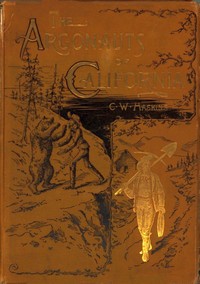
The Argonauts of California: being the reminiscenses of scenes and incidents that occurred in California in the early mining days
Subjects:
Download Formats:
Excerpt
THE ARGONAUTS
OF CALIFORNIA
OF SCENES AND INCIDENTS THAT OCCURRED IN
CALIFORNIA IN EARLY MINING DAYS
_And believing that it will be of some historical value as well
as of interest generally to know the names of those who
were the first to venture forth in the search of gold, and
by whose energy and labor the foundations of a great state
were laid, and also a general prosperity created throughout...
Read the Full Text
— End of The Argonauts of California: being the reminiscenses of scenes and incidents that occurred in California in the early mining days —
Book Information
- Title
- The Argonauts of California: being the reminiscenses of scenes and incidents that occurred in California in the early mining days
- Author(s)
- Haskins, Charles Warren
- Language
- English
- Type
- Text
- Release Date
- January 2, 2025
- Word Count
- 181,802 words
- Library of Congress Classification
- F850.5
- Bookshelves
- Browsing: History - American, Browsing: History - General
- Rights
- Public domain in the USA.
Related Books
The pioneers of Unadilla village, 1784-1840
by Halsey, Francis W. (Francis Whiting), Halsey, Gaius Leonard
English
1301h 45m read
Adobe days
by Bixby Smith, Sarah
English
918 hours read
California illustrated
by Letts, J. M. (John M.)
English
1392h 6m read
The gold hunters
by Borthwick, John David
English
1646h 53m read
Six months in the gold mines
by Buffum, E. Gould (Edward Gould)
English
823h 46m read
The gold seekers of '49
by Webster, Kimball
English
1055h 48m read