The Project Gutenberg EBook of Rocky Mountain [Colorado] National Park, by
United States Dept. of the Interior
This eBook is for the use of anyone anywhere at no cost and with
almost no restrictions whatsoever. You may copy it, give it away or
re-use it under the terms of the Project Gutenberg License included
with this eBook or online at www.gutenberg.org
Title: Rocky Mountain [Colorado] National Park
Author: United States Dept. of the Interior
Release Date: November 4, 2011 [EBook #37918]
Language: English
Character set encoding: ASCII
*** START OF THIS PROJECT GUTENBERG EBOOK ROCKY MOUNTAIN NATIONAL PARK ***
Produced by Juliet Sutherland, Steven Brown and the Online
Distributed Proofreading Team at https://www.pgdp.net
Transcriber's Notes:
Some illustration's captions have been moved out of the paragraph.
Spelling has been made consistent throughout.
Tables on more than one page joined together.
Bold faced text shown as: =abcde=
Italics text shown as: _abcde_
[Illustration: Cover Page]
Rocky Mountain
[COLORADO]
National Park
United States Department of the Interior
_Harold L. Ickes, Secretary_
NATIONAL PARK SERVICE
_Arno B. Cammerer, Director_
[Illustration: Dept of Interior Logo]
UNITED STATES
GOVERNMENT PRINTING OFFICE
WASHINGTON: 1937
DO YOU KNOW YOUR NATIONAL PARKS?
ACADIA, MAINE.--Combination of mountain and seacoast scenery.
Established 1919; 24.08 square miles.
BRYCE CANYON, UTAH.--Canyons filled with exquisitely colored pinnacles.
Established 1928; 55.06 square miles.
CARLSBAD CAVERNS, N. MEX.--Beautifully decorated limestone caverns
believed largest in the world. Established 1930; 15.56 square miles.
CRATER LAKE, OREG.--Astonishingly beautiful lake in crater of extinct
volcano. Established 1902; 250.52 square miles.
GENERAL GRANT, CALIF.--Celebrated General Grant Tree and grove of big
trees. Established 1890; 3.96 square miles.
GLACIER, MONT.--Unsurpassed alpine scenery; 200 lakes; 60 glaciers.
Established 1910; 1,533.88 square miles.
GRAND CANYON, ARIZ.--World's greatest example of erosion.
Established 1919; 1,009.08 square miles.
GRAND TETON, WYO.--Most spectacular portion of Teton Mountains.
Established 1929; 150 square miles.
GREAT SMOKY MOUNTAINS, N.C.-TENN.--Massive mountain uplift covered with
magnificent forests. Established for protection 1930; 617 square miles.
HAWAII: ISLANDS OF HAWAII AND MAUI.--Volcanic areas of great interest,
including Kilauea, famous for frequent spectacular outbursts.
Established 1916; 245 square miles.
HOT SPRINGS, ARK.--Forty-seven hot springs reserved by the Federal
Government in 1832 to prevent exploitation of waters. Made national
park in 1921; 1.58 square miles.
LASSEN VOLCANIC, CALIF.--Only recently active volcano in continental
United States. Established 1916; 163.32 square miles.
MAMMOTH CAVE, KY.--Interesting caverns, including spectacular onyx cave
formation. Established for protection 1936; 38.34 square miles.
MESA VERDE, COLO.--Most notable cliff dwellings in United States.
Established 1906; 80.21 square miles.
MOUNT McKINLEY, ALASKA.--Highest mountain in North America.
Established 1917; 3,030.46 square miles.
MOUNT RAINIER, WASH.--Largest accessible single-peak glacier system.
Established 1899; 377.78 square miles.
PLATT, OKLA.--Sulphur and other springs.
Established 1902; 1.33 square miles.
ROCKY MOUNTAIN, COLO.--Peaks from 11,000 to 14,255 feet in heart of
Rockies. Established 1915; 405.33 square miles.
SEQUOIA, CALIF.--General Sherman, largest and possibly oldest tree in
the world; outstanding groves of Sequoia gigantea. Established 1890;
604 square miles.
SHENANDOAH, VA.--Outstanding scenic area in Virginia section of Blue
Ridge. Established 1935; 275.81 square miles.
WIND CAVE, S. DAK.--Beautiful cavern of peculiar formations.
No stalactites or stalagmites. Established 1903; 18.47 square miles.
YELLOWSTONE: WYO.-MONT.-IDAHO.--World's greatest geyser area, and an
outstanding game preserve. Established 1872; 3,471.51 square miles.
YOSEMITE, CALIF.--Valley of world-famous beauty; spectacular waterfalls;
magnificent high Sierra country. Established 1890; 1,176.16 square miles.
ZION, UTAH--Beautiful Zion Canyon 1,500 to 2,500 feet deep. Spectacular
coloring. Established 1919; 148.26 square miles.
RULES AND REGULATIONS
Briefed
The Park Regulations are designed for the protection of your property.
You, as prudent owners, will help protect the natural beauties and
scenery by warning the careless and reporting infractions of the
regulations. The following synopsis is for the general guidance of
visitors. Full regulations may be seen at the office of the superintendent
and ranger stations.
=_Fires._=--Fires may be lighted only when necessary and in designated
places. Before leaving, know your fire is out. HELP PROTECT this
wonderland so all may enjoy it.
=_Camps._=--Automobile campers must stop in the designated camp grounds.
All must be kept clean and sanitary. Burn your garbage in your camp fire.
Empty cans and residue must be placed in garbage cans. If no can is
provided, bury the refuse.
=_Public property, trees, flowers, and animals._=--The destruction,
injury, or disturbance of public property, trees, flowers, rocks, birds,
or animals, or other life is prohibited.
=_Fishing._=--Fishing is permitted in all lakes and streams except as
closed by order of the superintendent. All fish hooked less than 7
inches long shall be carefully handled with moist hands and returned at
once to the water. Fifteen fish (not exceeding a total of 10 pounds)
shall constitute the limit for a day's catch.
=_Automobiles._=--Obey park traffic rules. Drive carefully at all times.
The SPEED LIMIT is 20 miles per hour on grades and curves, and on straight
stretches of road 35 miles per hour. All roads are patrolled. Automobiles
will be stopped for checking at park entrances. Cars carrying passengers
for profit are subject to restrictions.
=_Dogs and cats._=--Must be kept securely on a leash while in the park. If
you have no leash, keep the animal in your car.
=_Park rangers._=--Are for your protection and guidance. Do not hesitate
to consult them. Accidents, complaints, and suggestions should be reported
to the superintendent's office immediately.
Events
OF HISTORICAL IMPORTANCE
1820 Maj. Stephen H. Long, commanding an exploring party sent out by
President Madison in 1819, first sighted Longs Peak. Park area
frequented by Arapaho and Ute Indians.
1843 Rufus B. Sage, another explorer, visited the area and later
published earliest known description in "Rocky Mountain Life, or
Startling Scenes and Perilous Adventures in the Far West During
an Expedition of Three Years."
1859 Joel Estes, the first white settler, entered the park and in
1860 built the first cabin.
1865 Charles F. Estes, first white child born in the park.
1868 First ascent of Longs Peak. The climb was made by William N.
Byers, Maj. J.W. Powell, and five other men.
1868 Rocky Mountain Jim, adventurer and frontiersman, settled in area.
1869 Earl of Dunraven, famous English sportsman, first visited this
area.
1871 The Hayden Geographical Survey, under Dr. E.V. Hayden, worked in
this region.
1874 First stage established between Longmont and Estes Park.
1874 Albert Bierstadt, famous artist, first visited the region.
1876 First wedding in the park: Anna Ferguson and Richard Hubbell.
1878 First hotel built by Earl of Dunraven.
1881 First public school established and held in Elkhorn Lodge.
1881 The Denver, Utah & Pacific Railroad built to Lyons and projected
to Pacific Ocean through Fall River and Milner Passes by Milner,
chief engineer for the company.
1900 Bear Lake fire.
1904 Big Thompson Canyon road completed.
1907 Automobile stage line established between Estes Park and Loveland.
1909 Automobile stage line established between Estes Park and Lyons.
1912 Fall River road begun. Completed in 1920.
1915 Rocky Mountain National Park Act approved January 26.
1927 Bear Lake road completed.
1929 State of Colorado ceded exclusive jurisdiction to Federal
Government.
1930 Never Summer Range area added to the park.
1932 Trail Ridge road opened.
Contents
Page
Land of Lofty Mountains 1
Easy to Study Glacial Action 4
Longs Peak 4
Natural Beauties 5
Fauna and Flora 7
Automobile Trips 11
Denver Circle Trip 11
Bear Lake Road 14
Loop Trip 14
Longs Peak and Wild Basin Trip 14
Trail Trips 14
The Flattop Trail 15
Lawn Lake 15
Fern and Odessa Lakes 15
Romantic Loch Vale 18
Glacier Gorge 19
The Twin Sisters 19
Ascent of Longs Peak 19
Chasm Lake 20
Wild Basin 21
Grand Lake 21
What to Do 22
Fishing 22
Horseback Riding and Camping 23
Winter Sports 23
Administration 23
Naturalist Service 24
Public Campgrounds 24
Park Season 25
How to Reach the Park 25
All-Expense Circle Trips 26
Transportation in the Park 26
Accommodations and Expenses 27
Hotels and Lodges on Park Lands 27
Private Hotels, Cottages, and Camps 28
Distances to Principal Points of Interest 28
The Park's Mountain Peaks 32
References 35
Government Publications 37
[Illustration: FERN LAKE, FLATTOP, LITTLE MATTERHORN]
ROCKY MOUNTAIN
_National Park_
OPEN ALL YEAR
ROCKY MOUNTAIN NATIONAL PARK includes within its boundaries 405 square
miles, or 259,411 acres, of the Front Range of the Rockies in
north-central Colorado, about 50 miles in a straight line north-west of
Denver. It was established by the act of Congress approved January 26,
1915, and its boundaries adjusted by the acts of Congress approved
February 14, 1917, June 9, 1926, and June 21, 1930. Its eastern gateway
is the beautiful valley village of Estes Park, from which easy and
comfortable access is had up to the noblest heights and into the most
picturesque recesses of the mountains.
Rocky Mountain National Park is by far the most accessible of our
national parks; that is, nearest to the large centers of population in
the East and Middle West.
LAND OF LOFTY MOUNTAINS
For many years the Front Range of the Rockies has been the mecca of the
mountain lovers of this country. The name conjures European ideas of
American mountain grandeur. The selection of this particular section,
with its magnificent and diversified scenic range, for national park
status, met with popular approval.
It is splendidly representative. In nobility, in calm dignity, in the
sheer glory of stalwart beauty, there is no mountain group to excel the
company of snow-capped veterans of all the ages which stands at
everlasting parade behind its grim, helmeted captain, Longs Peak.
There is probably no other scenic neighborhood of the first order which
combines mountain outlines so bold with a quality of beauty so intimate
and refined. Just to live in the valley in the eloquent and
ever-changing presence of these carved and tinted peaks is in itself
satisfaction. But to climb into their embrace, to know them in the
intimacy of their bare summits and their flowered glaciated gorges, is
to turn a new, unforgettable page in human experience.
[Illustration: BEAR LAKE, WITH MASSIVE LONGS PEAK IN THE BACKGROUND]
_Shelk photo._
This national park reaches lofty heights. The summer visitors who live
at the base of the great mountains are 8,000 feet, or more than a mile
and a half, above the level of the sea; while the mountains themselves
rise precipitously nearly a mile, and often even higher. Longs Peak, the
largest of them all, rises 14,255 feet above sea level, and most of the
other mountains in the Snowy Range, as it is sometimes called, are more
than 12,000 feet high; several are nearly as high as Longs Peak.
The valleys on both sides of this range and those which penetrate into
its recesses are dotted with parklike glades clothed in a profusion of
glowing wild flowers and watered with streams from the mountain snows
and glaciers. Forests of evergreens and silver-stemmed aspen separate
them.
This range was once a famous hunting ground for large game. Lord
Dunraven, a famous English sportsman, visited it to shoot its deer,
bear, and bighorn sheep, and acquired large holdings by purchase of
homesteadings and squatters' claims, much of which was reduced in the
contests that followed.
The range lies, roughly speaking, north and south. The gentler slope is
on the west. On the east side the descent from the Continental Divide is
precipitous in the extreme. Sheer drops of two or three thousand feet
into rock-bound gorges carpeted with snow patches and wild flowers are
common. Seen from the east-side valleys this range rises in daring
relief, craggy in outline, snow spattered, awe inspiring.
In the north-east corner lies a spur from the Continental Divide, the
Mummy Range, a tumbled majestic mountain mass which includes some of the
loftiest peaks and one of the finest glaciers.
To the south of Longs Peak the country grows even wilder. The range is a
succession of superb peaks. The southern park boundary unfortunately
cuts arbitrarily through a superlative massing of noble snow-covered
summits.
The west side, gentler in its slopes and less majestic in its mountain
massings, is a region of loveliness and wildness diversified by splendid
mountains, innumerable streams and lakes of great charm. Grand Lake,
which has railroad connections nearby, is one of the largest natural
lakes in Colorado and the deepest lake in this region.
One of the striking features of Rocky Mountain National Park is the easy
accessibility of these mountain tops. One may mount a horse after early
breakfast in the valley, ride up Flattop to enjoy one of the great views
of the world, and be back for late luncheon. The hardy foot traveler may
make better time than the horse on these mountain trails. One may cross
the Continental Divide from the hotels of one side to the hotels of the
other between early breakfast and late dinner or motor between these
points via the Trail Ridge Road in 2 hours.
The Trail Ridge Road, which crosses the Continental Divide, connects
Estes Park on the east side with Grand Lake on the west side. The road
reaches the unusual elevation of 12,183 feet above sea level. Another
road leads from the village of Estes Park up the Thompson River Valley
to the Bear Lake Entrance. It then follows up the valley of Glacier
Creek and ends at Bear Lake at the foot of Hallett Peak and Flattop
Mountain.
EASY TO STUDY GLACIAL ACTION
One of the remarkable features of Rocky Mountain National Park is the
legibility of the record left by the glaciers during the ages when
America was in the making. The evidences of glacial action, in all their
variety make themselves apparent to even the most casual eye.
In fact, there is scarcely any part of the eastern side where some great
moraine does not force itself upon the attention. One enormous moraine
built up by an ancient glacier and rising with sloping sides nearly a
thousand feet above the valley is so prominent that Moraine Park is
named for it. From Longs Peak on the east side the Mills Moraine makes a
bold curve which instantly draws questions from visitors.
There are several remnants of these mighty ice masses which can be seen
at the present time. Three of the largest ice fields, Andrews, Rowe, and
Tyndall Glaciers, are visited by many people each year, while the
smaller glaciers such as Taylor and Spragues have interest and charm.
In short, this park itself is a primer of glacial geology whose lessons
are so simple, so plain to the eye, that they immediately disclose the
key to one of nature's scenic secrets.
LONGS PEAK
The greatest of all the mountains in the park, Longs Peak, has a massive
square head. It is a real architectural structure like an enormous
column of solid rock buttressed up on four sides with long rock ledges.
On the east side a precipice of 1,200 feet drops sheer from the summit
into the wildest lake that one can possibly imagine. It is called Chasm
Lake and there is only one month in the year when its surface is not at
least partially frozen. Mount Meeker and Mount Lady Washington enclose
it on the south and north, and snow fields edge its waters the year
round.
In 1820 Maj. S.H. Long first saw the mountain that now bears his name.
The report of his expedition records that on June 30 of that year his
party caught their first glimpse of the Rocky Mountains, and
particularly noted one peak, which they referred to as "the highest
peak." Long's expedition followed up the valley of the Platte River, and
his closest approach to the peak was at a distance of about 40 miles.
Fremont found that the name Longs Peak was in general use among the fur
hunters and pioneers in 1842. The first recorded ascent was in 1868,
when it was climbed by W.N. Byers, Maj. J.W. Powell (who the following
year made the first passage of the Grand Canyon), and five other men.
NATURAL BEAUTIES
A distinguishing feature of Rocky Mountain National Park is its
profusion of precipice-walled canyons lying between the very feet, so to
speak, of the loftiest mountains. Their beauty is romantic to a high
degree. Like all the other spectacles of this favored region, they are
readily accessible from the valley villages by trail, either afoot or on
horseback.
Usually several lakes are found, rock embedded, in such a gorge.
Ice-cold streams wander from lake to lake, watering wild-flower gardens
of luxuriance and beauty. However, the entire park is a garden of wild
flowers. From early June to late September, even into October, the
gorges and the meadows, the slopes, and even the loftier summits, bloom
with colors that change with the season. Blues, lilacs, and whites are
the earlier prevailing tints; yellow predominates as autumn approaches.
There are few wilder and lovelier spots, for instance, than Loch Vale,
3,000 feet sheer below Taylor Peak. Adjoining it lies Glacier Gorge on
the precipitous western slope of Longs Peak and holding in its embrace a
group of lakelets. These, with lesser gorges cradling romantic Bear
Lake, picturesque Dream Lake, beautiful Fern Lake, and exquisite Odessa
Lake, and still others yet unnamed, constitute the Wild Gardens of the
Rocky Mountain National Park, lying in the angle north of Longs Peak;
while in the angle south lies a little known wilderness of lakes and
gorges called Wild Basin.
At timberline, where the winter temperature and the fierce icy winds
make it impossible for trees to grow tall, the spruces lie flat on the
ground like vines; presently they give place to low birches, which, in
their turn, give place to small piney growths, and finally to tough,
straggling grass, hardy mosses, and tiny alpine flowers. Grass grows in
sheltered spots even on the highest peaks, which is fortunate for the
large curve-horned mountain sheep which seek these high, open places to
escape their special enemies, the mountain lions. Even at the highest
altitudes gorgeously colored wild flowers grow in glory and profusion in
sheltered gorges. Large and beautiful columbines are found in the lee of
protecting masses of snow banks and glaciers.
[Illustration: A HIGH COUNTRY LODGE]
_Grant photo._
Nowhere else is the timberline struggle between the trees and the winds
more grotesquely exemplified or its scene more easily accessible to
visitors of average climbing ability. The first sight of luxuriant
Engelmann spruces creeping close to the ground instead of rising 150
feet or more straight and true as masts arouses keenest interest. Many
trees which defy the winter gales grow bent in half circles. Others,
starting straight in the shelter of some large rock, bend at right
angles where they emerge above. Others which have succeeded in lifting
their heads in spite of winds have not succeeded in growing branches in
any direction except in the lee of their trunks, and suggest big
evergreen dust brushes rather than spruces and firs.
Above timberline the bare mountain masses rise from one to three
thousand feet, often in sheer precipices. Covered with snow in autumn,
winter, and spring, and plentifully spattered with snow all summer long,
the vast, bare granite masses, from which, in fact, the Rocky Mountains
got their name, are beautiful beyond description. They are rosy at
sunrise and sunset. During fair and sunny days they show all shades of
translucent grays and mauves and blues. In some lights they are almost
fairylike in their delicacy. But on stormy days they are cold and dark
and forbidding, burying their heads in gloomy clouds from which
sometimes they emerge covered with snow.
FAUNA AND FLORA
The national park is a sanctuary for wildlife. Animals and birds are
protected from hunting. Living trees may not be cut or injured. Flowers
may not be picked. The cooperation of visitors is requested, in order
that the wildlife of the park may be protected, that the flowers may
continue in their present abundance, and that the forests of the park
may not suffer injury from fire or other cause.
ANIMALS
The lofty rocks are the natural home of the celebrated Rocky Mountain
sheep, or bighorn. This animal is much larger than any domestic sheep.
It is powerful and wonderfully agile. When fleeing from enemies these
sheep, even the lambs, make remarkable descents down seemingly
impossible slopes. They do not land on their curved horns, as many
persons declare, but upon their four feet held closely together. Landing
on some nearby ledge, which breaks their fall, they immediately plunge
downward again to another ledge, and so on till they reach good footing
in the valley below. They also ascend slopes surprisingly steep. They
are more agile even than the celebrated chamois of the Swiss Alps, and
are larger, more powerful, and much handsomer. A flock of a dozen or
more mountain sheep making their way along the volcanic flow which
constitutes Specimen Mountain in Rocky Mountain National Park is an
unforgettable sight.
The beaver, whose dams and other structures, both old and new, found
along most streams at middle altitudes, are rarely seen except at night
or very early morning. Elk occur in numerous places, and deer which are
widely distributed are commonly seen. Coyotes and brown or black bear
are occasionally seen, but these, like the mountain lion, bobcat, and
small carnivorous animals, are not only rare, but so wary that they are
seldom seen by visitors.
Among smaller animals, the most familiar are the marmot or woodchuck,
Freemont or pine squirrel, three kinds of chipmunks, and the interesting
little cony or pika, which lives among the rocks on high mountains and
is more often heard than seen. In all, over 60 species of mammals live
in the park.
[Illustration: ELK HERD GRAZING IN PARK MEADOW]
BIRDS
The commonest species are the western robin, the beautiful mountain
bluebird, and, at middle elevations, the chickadee and junco. The hermit
thrush and the solitaire, generally classed among the finest songbirds
in the world, are both fairly common in suitable localities; and but
little inferior to these in musical performance are the purple finch,
ruby-crowned kinglet, western meadowlark, and rock and canyon wrens. The
graceful violet-green swallow is unsurpassed in beauty of form and
color, and the crested jay, magpie, and nutcracker are conspicuous for
their handsome appearance and vigorous flight. Among birds particularly
interesting because of curious and unusual habits are the broadtailed
hummingbird, water ouzel, campbird, nuthatch, nighthawk, and the
ptarmigan, pipit, and rosy finch of the high peaks.
Although widely distributed through the park, birds are more numerous
along streams and near open marshes and meadows than in the dense forests.
About 100 species are found regularly in summer, and nearly 150 have been
recorded during the whole year.
FLOWERS
This park is especially notable for the presence of the blue columbine
and many beautiful flowers of the gentian and primrose families; for the
profusion of dwarf alpine plants on the meadows above timberline; and for
the brilliance of certain species found in moist glades of the subalpine
zone. Striking examples of the latter are the tall blue larkspur and
monkshood, of many vivid hues, and the curious little red elephant.
Conspicuous and characteristic flowers of the lower altitudes are the
mariposa lily, iris, wallflower, gaillardia, and numerous species of
cinquefoil, pentstemon, and evening primrose. Among the less common
groups, several delicate species of orchid, pyrola, violet, and anemone
will delight the botanist. Over 700 distinct species of flowering plants
have been collected within the park, and doubtless many more await
discovery and identification by the careful student.
TREES
The principal trees are the Engelmann spruce, which forms extensive
primeval forests in the subalpine region, the lodgepole pine, the
prevailing tree of middle elevation, very common in second growth, and the
ponderosa pine, a large spreading tree, occurring mainly in the lower
valleys and foothills. The limber pine is frequent in high rocky places,
assuming picturesque forms at timberline, and the Douglas fir, or false
hemlock, is widely distributed, while the blue spruce and alpine fir are
confined to moist stream banks. In addition to the coniferous trees, there
are three species of poplar, of which the commonest is the well-known
quaking aspen, growing in scattered groves throughout the park.
[Illustration: ICEBERG LAKE FROM TRAIL RIDGE ROAD]
_Clatworthy photo._
AUTOMOBILE TRIPS
DENVER CIRCLE TRIP
The Trail Ridge Road, which crosses the Continental Divide in Rocky
Mountain National Park, offers a grand circuit of Colorado's beauties
that forms one of the most attractive and impressive of the scenic
automobile trips of our country.
The trip starts from Denver, crosses the Continental Divide at Milner
Pass in Rocky Mountain National Park, reaches Grand Lake, crosses the
Continental Divide again at Berthoud Pass, traverses the Denver Mountain
Parks, and returns to Denver, having completed without any duplication
240 miles of comfortable travel through magnificent country, full of
interest and variety; the trip can be made in 2 days or it can be
prolonged to suit individual time and inclination. It combines in one
trip half a dozen features, any one of which by itself would be worth
the journey. The Rocky Mountain Parks Transportation Co. operates daily
scheduled trips over this route during the summer season.
On leaving Denver the road leads out Federal Boulevard, crosses
Westminster Heights, from which point there is an extensive view of the
Great Plains to the east and a panorama of the Front Range of the Rocky
Mountains to the west, stretching out before the eye from Pikes Peak to
Longs Peak, a rampart of mighty mountains, 125 miles from end to end.
The road then passes through a farming section, where irrigation has
turned what was once an arid plain into a richly productive district.
Fields of deep green alfalfa alternate with the waving wheat, and in the
fall of the year the harvesting and threshing add new life to the
landscape. Next is the town of Lafayette, where coal mining is the
principal industry, and then the road traverses a sugar-beet country.
Colorado is the sugar bowl of the United States, and here is one of the
regions where the beets are most successfully grown. At Longmont and
Loveland are large factories, where sugar is extracted from the beets
and refined for table use. At Loveland the road turns westward and soon
plunges into the precipitous canyon of the Thompson River, where it
follows the turns of the dashing stream, walled in by towering cliffs.
Then comes the village of Estes Park at the edge of Rocky Mountain
National Park and half surrounded by it. From the green of the
meadowland the eye follows the slope, up, up, up, over timbered hills
and rocky cliffs, past timberline to the crest of the Continental Divide
where snow lingers, and to Longs Peak.
Continuing the journey, two routes lie open to the motorist. One of
these follows up the valley of Fall River, 2 miles beyond the Fall River
gateway, and then turns left over a portion of the Highdrive to the
beginning of the new Trail Ridge Road.
The other road leads past the Government museum and information office
to Moraine Park and Deer Ridge, with a magnificent view of Longs Peak
and the Continental Divide.
The Trail Ridge Road is the highest continuous automobile road in
America. Its 4-mile section over 12,000 feet in altitude is probably the
longest stretch of road ever built at such a height. The trip to Grand
Lake on this road is a never-to-be-forgotten experience. The road climbs
to the very crest of the range and then follows the ridge. Valleys and
parks lie thousands of feet below, rivers look like tiny silver threads,
and automobiles on the highways of the floor of the valley resemble
minute moving dots.
To the south an unexcelled view of the most rugged portion of the Front
Range is spread out, while to the north, across Fall River Valley, the
view is dominated by the majestic Mummy Range, and the course of the old
Fall River Road may be traced as it zigzags up the slope of Mount Chapin
toward Fall River Pass. Over a 350-foot cliff one may look into
fascinating Iceberg Lake, a rock-bound crystal pool on which float
blocks of ice.
A short distance beyond Iceberg Lake the highest point on the road is
reached, 12,183 feet above sea level; the road descending to Fall River
Pass, elevation 11,797 feet, which divides the waters of the Thompson
River from those of the Cache la Poudre. The view from this point is
unsurpassed. Below lie streams, valleys, forested slopes, and the realms
of civilization. All around are mountains and peaks, no longer towering
above but close at hand or seen across some mighty valley. One can
easily trace the work done by the glaciers during the ice age on these
mountain ranges; the broad U-shaped valleys and precipitous
amphitheaters or cirques at the head of the streams are the typical
glacial signs, written in bold letters on the landscape. To the south is
Trail Ridge. Iceberg Lake, walled in by cliffs, is only a mile distant,
though not in sight. To the west is Specimen Mountain, interesting
because of the variety of color in its volcanic rocks, geodes lined with
crystalline material, volcanic glass, and other curious formations. It
is also the home of the mountain sheep.
Farther to the west lies the Medicine Bow Range, or, as the Indians so
picturesquely named it, the "Never Summer" range. Of its many peaks the
most prominent are Bowen, Nimbus, Red, Cumulus, Howard, Lead, and,
highest of all in this range, Mount Richthofen, 12,953 feet in
elevation. Strange as it may seem, Milner Pass lies below, and one
descends in order to cross the Continental Divide. The road drops down
into the forest zone, passes Poudre Lakes, and crosses Milner Pass at an
elevation of 10,759 feet. The Atlantic slope lies behind and, crossing
the backbone of the continent, one travels down the Pacific slope to the
headwaters of the Colorado River. The valley of the North Fork is hemmed
in by mountains. The Continental Divide makes a loop here and blocks
progress to the west, north, and east. The valley opens to the south,
however, and the road proceeds down the north fork of the Colorado
River.
Grand Lake, the sapphire gem on the western edge of the national park,
is one of the largest and most beautifully situated lakes in the State.
It is a mile and a half in length and nearly a mile in width. Its clear,
cold water is of great depth. The lake lies at an elevation of 8,369
feet and claims the highest yacht club in the world. The annual regatta
is an event of much interest. At the head of the lake Mount Craig rises
to a height of 12,005 feet, while Shadow Mountain, Bryant, Wescott, and
Mount Enentah are nearby.
This is a point of concentration for park visitors where nearly
everybody spends at least one night. Fishing, boating, horseback riding,
and mountain climbing are some of the outdoor attractions.
Leaving the lake, the road follows down the Colorado River, passes the
town of Granby, and commences the climb up a beautifully timbered valley
to Berthoud Pass. Here, close to timberline, the watershed between the
two oceans is again crossed. The road approaches near Georgetown, famed
for its railroad loop, and then passes through Idaho Springs, with its
hot springs and medicinal baths. Soon the valley of Clear Creek is left
behind and the climb to Bergen Park is made where the Denver Mountain
Parks are entered. In this region is Lookout Mountain, where Colonel
Cody, "Buffalo Bill", is buried, overlooking the plains he knew so well.
From Wildcat Point there is a splendid view of foothills and plains,
with Denver some 12 or 14 miles away.
BEAR LAKE ROAD
The Bear Lake Road passes the Glacier Basin public campground, 7 miles
from Estes Park, and then follows up the valley of Glacier Creek,
passing near Sprague's Lodge, and ends at Bear Lake, 12 miles from Estes
Park. This is one of the best roads within the park boundaries. Bear
Lake Lodge, on the eastern shore of the lake, offers good
accommodations. The trail to Loch Vale starts from the Bear Lake Road,
about 10 miles from Estes Park. From this trail or from Bear Lake the
hiker can reach some beautiful and scenic country, including Glacier
Gorge, Loch Vale, Dream Lake, and Tyndall Gorge. The trail to Fern Lake
and the Flattop Trail to Grand Lake may be conveniently reached from
Bear Lake. North Longs Peak Trail also leaves the road at this point.
LOOP TRIP
One may combine portions of several roads by taking what is known as the
loop trip. Starting from Estes Park, the route follows the Fall River
Road up to Chasm Falls and back to Horseshoe Park, then over Deer Ridge
to Beaver and Moraine Parks, then a side trip up the Bear Lake Road and
back, returning to Estes Park by the Moraine Park Road. This loop trip
takes one by many of the hotels and other points of interest and offers
scenic views. The circuit of the Highdrive is 17 miles. Including the
trip to Bear Lake and other points, the distance is about 40 miles.
LONGS PEAK AND WILD BASIN TRIP
The main road to the Longs Peak district comes in just east of the
village of Estes Park, skirting the east boundary of the park to its
south-east corner. It passes between Longs Peak and the Twin Sisters, a
detached area of the park on which a fire lookout is stationed, and
several of the finest foot trips in the park are accessible from this
road.
Continuing in a southerly direction, the road skirts the eastern
boundary of the park and leads to Copeland Lodge on North St. Vrain
Creek. From this point a trail leads into Wild Basin, a very attractive
though less frequented portion of the park.
The road continues to Allens Park, thence to Ward, Nederland, and
Boulder; another road leads down the South St. Vrain to Lyons.
TRAIL TRIPS
Travelers on trails are advised to secure the services of licensed
guides for all except the shortest trips. Besides insuring security, the
guide adds greatly to one's comfort and enjoyment. He knows the country
and its features of interest, and also has a general knowledge of the
trees and wild flowers. Information as to guides can be secured at the
park information office.
THE FLATTOP TRAIL
The Flattop Trail crosses the Continental Divide between Estes Park
Village on the east and Grand Lake Village on the west. The 16-mile trip
may be made on horseback or on foot in 1 day, but it takes a seasoned
trail traveler to do it with pleasure. The trail starts at Bear Lake,
where horses may be rented, and climbs Bierstadt Moraine. It emerges
above timberline, overlooking Emerald Lake and Tyndall Glacier, and
commands spectacular views of Longs Peak and other mountains, both in
the park and in distant ranges. The grassy slopes above timberline,
bedecked with exquisite alpine flowers, afford good summer grazing for
elk and mountain sheep.
After descending to timberline on the western slope, the trail leads
through evergreen forests, along the North Inlet to Grand Lake.
LAWN LAKE
The glories of the Mummy Range, exemplified chiefly in Lawn Lake and
Rowe Glacier, may be seen from a trail starting from Horseshoe Park by
way of Roaring River. There is a shelter on beautiful Lawn Lake. This
lake, which has an area of 65 acres, lies at the bottom of the main
cirque at the head of Roaring River. It is one of the many glacial lakes
of the park, and lies just below timberline at an altitude of 10,950
feet.
The trip from Lawn Lake to Rowe Glacier is difficult but well worth
while. The glacier is the largest in the park. It is a great crescent of
ice partly surrounding a small lake. While the glacier is extremely
impressive, still it is small enough to permit a thorough examination
without undue fatigue. Hagues Peak is a resort of Rocky Mountain sheep
and ptarmigan.
FERN AND ODESSA LAKES
The group of luxuriant canyons east of the Continental Divide and north
of the eastern spur which ends in Longs Peak is known as the "Wild
Gardens" in distinction from the corresponding and scarcely less
magnificent hollow south of Longs Peak, which is known as "Wild Basin."
Of these canyons, one, the most gorgeous, frames two lakes of exquisite
beauty. The upper one, Odessa Lake, lies under the Continental Divide
and reflects snowy monsters in its still waters. The other, Fern Lake, a
mile below, is one of the loveliest examples of forest-bordered waters
in the Rockies.
These lakes are reached by trail from Moraine Park. They constitute a
day's trip of memorable charm. Fern Lodge, located at the edge of the
lake, offers comfortable accommodations. Several splendid trips can be
taken on foot with Fern Lake as a starting point. Winter sports are held
here every year. Forest Inn, a camp located at the Pool, is close to the
Fern Lake trail.
A trail connects Bear Lake with Odessa Lake. One of the finest trail
trips in the park is the circle trip from Bear Lake to Odessa Lake, and
thence to Fern Lake and Moraine Park. The distance from Bear Lake to the
Brinwood by this route is 9 miles, but a day is usually allowed for the
trip.
[Illustration: MAP OF ROCKY MOUNTAIN NATIONAL PARK]
[Illustration: HALLETT PEAK, TYNDALL GLACIER, AND FLATTOP MOUNTAIN,
ACROSS BEAR LAKE]
_Shelk photo._
ROMANTIC LOCH VALE
Within a right-angled bend of the Continental Divide lies a
glacier-watered, cliff-cradled valley which for sheer rocky wildness and
the glory of its flowers has few equals. At its head Taylor Peak lifts
itself precipitously 3,000 feet to a total height of more than 13,000
feet, and from its western foot rises Otis Peak, of nearly equal
loftiness, the two carrying between them broken perpendicular walls
carved by the ages into fantastic shapes. One dent encloses Andrews
Glacier and lets its waters find the Loch. On the eastern side another
giant, Thatchtop, sheltering the Taylor Glacier, walls in the upper end
of Loch Vale. It is easily reached by a trail that leaves the Bear Lake
Road, 10 miles from Estes Park, or 1 mile below Bear Lake.
In this wild embrace lies a valley 2 or 3 miles long ascending from the
richest of forests to the barren glacier. Through it tinkles Icy Brook,
stringing like jewels, three small lakes. Those who love to explore the
undeveloped and less frequented regions will enjoy the wild beauty and
impressive grandeur of Loch Vale. The Lake of Glass and Sky Pond, just
below Taylor Glacier, can be visited in a day's trip. Another wonderful
day can be spent in a trip to the foot of Andrews Glacier.
GLACIER GORGE
One of the noblest gorges in any mountain range the world over lies
south of Loch Vale. It is reached from the Bear Lake Road, by the Loch
Vale trail, although there are no trails in the gorge. Above Lake Mills
the western wall of the gorge is formed by McHenrys Peak and Thatchtop;
its head lies in the hollow between the Continental Divide and Longs
Peak, with Chiefs Head and Pagoda looming on its horizon. Its eastern
wall is the long sharp northern buttress of Longs Peak itself. It is a
gorge of indescribable wildness. Lake Mills lies near the mouth of the
valley, Black Lake is toward the upper end, while Shelf Lake, Blue Lake,
and several others are perched on benches high above the valley floor.
This gorge is magnificent and worth visiting. There is no trail to
Keyhole, on the great shoulder of Longs Peak, but the ascent can be
made. The canyon is luxuriantly covered in places with a large variety
of wild flowers.
THE TWIN SISTERS
Nine miles south of the village of Estes Park, split by the boundary
line of the national park, rises the precipitous, picturesque, and very
craggy mountain called the "Twin Sisters", on which the park maintains a
fire lookout. Its elevation is 2,400 feet above the valley floor, which
is about 9,000 feet high. The trail leads by many zigzags to a peak from
which appears the finest view by far of Longs Peak and its guardians,
Mount Meeker and Mount Lady Washington.
From the summit of the Twin Sisters an impressive view is also had of
the foothills east of the park, with glimpses beyond of the great plains
of eastern Colorado and many of their irrigating reservoirs.
ASCENT OF LONGS PEAK
Of the many fascinating and delightful mountain climbs, the ascent of
Longs Peak is the most inspiring, and it is one of the most strenuous.
The great altitude of the mountain, 14,255 feet above sea level and more
than 5,000 feet above the valley floor, and its position well east of
the Continental Divide, affording a magnificent view back upon the
range, make it much the most spectacular viewpoint in the park. The
difficulty of the ascent also has its attractiveness. Longs Peak is the
big climb of the Rocky Mountain National Park. And yet the ascent is by
no means forbidding. One may go more than half-way by horseback. Over a
thousand men and women, and occasionally children, climb the peak each
season. Those making the Longs Peak trip should have strong, comfortable
shoes, stout warm clothing, and remember that cold or stormy weather is
sometimes encountered.
The peak may be reached by either of two trails which lead to the
Boulder Field, the highest point on the climb to which horses may be
taken. The east trail, which begins near Longs Peak post office, 9 miles
south of Estes Park, winds up the slope of Battle Mountain, passes
timberline at an elevation of more than 11,000 feet, swings to the crest
of Mills Moraine, overlooking Chasm Gorge, then skirts the slope of
Mount Lady Washington, goes through Granite Pass, and leads to the
shelter cabin in the center of the Boulder Field, at an elevation of
12,700 feet, a distance of 6 miles.
From Glacier Gorge Junction on the Bear Lake Road, the north trail winds
its way up the north slope of the peak through the great burn of 1900
and joins the east trail at Granite Pass, a mile and a half below the
Boulder Field cabin. The distance to the Boulder Field by this trail is
9 miles.
From the Boulder Field cabin the ascent to the summit may be made by
either of two routes. The north face route, which is the shorter, climbs
the precipitous north side of the summit, skirting along the rim of the
east precipice, with magnificent views down the sheer drop of 1,200 feet
into Chasm Lake in the gorge below. The Longs Peak climb includes the
hazards usual to any major mountain ascent. Visitors are cautioned that
use of the assisting cables on the North Face route is at their risk and
the Government is in no way responsible. The other route leads across
the Boulder Field to the Keyhole, half a mile distant and some 500 feet
higher, where there is a small storm shelter.
On passing through the Keyhole, one sees the imposing Front Range, and
2,000 feet below the Glacier Gorge. To the left there is a narrow,
steeply inclined ice-filled gulch, called the Trough. Finally, after
what is to the amateur often an exhausting climb, one passes along the
Narrows, up a steep incline known as the Homestretch.
The trip to the Keyhole is well worth while for those who do not care to
climb Longs Peak, but who do wish to see at close range the rugged
grandeur of the mountains. Another splendid foot trip from the Boulder
Field cabin is to Chasm View, half a mile distant, where one sees the
precipitous east face of Longs Peak, from the summit down to Chasm Lake,
2,500 feet below.
CHASM LAKE
One may ride on horseback almost to Chasm Lake. The view from here is
magnificent, and the upper gorge is one of the most impressive in the
park. Both Chasm Lake and the Keyhole may be visited in a day. This is
an exceptionally fine trip, and if horses are used it is not difficult.
WILD BASIN
The splendid Wild Basin area south of Longs Peak and east of the
Continental Divide is dotted with lakes of superb beauty in a sublime
mountain setting. It is entered from Copeland Lake by an unimproved road
up the North Fork of St. Vrain Creek, which soon lapses into a trail.
From mountain tops on the south may be had unsurpassed views of the
snowy mountains. The largest lakes of Wild Basin--Thunder Lake and
Bluebird Lake--are both above timberline but are easily accessible by
trails.
GRAND LAKE
The North and East Inlets are the two principal rivers entering
beautiful Grand Lake. Each flows from cirques under the Continental
Divide. Lake Nokoni and Lake Nanita, among the most romantic of the
park, are reached from a trail connecting with both sides of the park by
the Flattop Trail. Lake Verna and her unnamed sisters are the beautiful
sources of the East Inlet and are reached by trail.
[Illustration: GRAND LAKE ON THE WESTERN EDGE OF THE PARK]
_Grace photo._
While not yet as celebrated as the showier and more populated east side,
the west side of Rocky Mountain National Park has rugged charm. The
Continental Divide, bent from the north and called the "Never Summer
Mountains", rises from the western shore of the Colorado River. On every
side the mountains lift bald peaks, magnificent canyons penetrate the
precipices of the Divide, and beautiful streams rush down the mountain
slopes to the river.
WHAT TO DO
There are few places which offer as many diversions as Rocky Mountain
National Park. The Estes Park Golf and Country Club has an excellent
18-hole golf course and a tennis court. Several hotels have croquet and
tennis courts. There is much motoring, horseback riding, fishing, and
hiking. The motorist may skirt the loftiest of snow-splashed mountains
for miles, or he may motor up the Trail Ridge Road and leave his car to
start afoot on mountain-top tramps and picnics, or across the
Continental Divide to Grand Lake. The horseback rider may find an
infinite variety of valley roads, trails, and cross-country courses, and
the hiker strike up the mountain trails into the rocky fastnesses.
[Illustration: A TYPICAL PARK SCENE]
FISHING
Fishing is permitted in all streams and lakes of the park except as
closed by order of the superintendent. Information regarding closed
areas may be obtained at any ranger station. All of the lower streams
and lakes, and many of the lakes in the higher altitudes, are well
stocked with trout. The State of Colorado stocks the park waters, and,
therefore, a Colorado State license is required for males over 16 years
of age. These may be purchased in the villages of Grand Lake and Estes
Park. Fishing tackle can be purchased or rented from several stores in
the village of Estes Park.
A fish hatchery, operated by the State of Colorado, is located on the
Fall River Road, 4 miles west of Estes Park. This hatchery supplies
about 1,000,000 trout fry every year to the streams and lakes of this
vicinity. The process of hatching and caring for the trout is explained
to visitors, and the hatchery has proved to be of interest to many
thousands each year.
HORSEBACK RIDING AND CAMPING
At Estes Park and the smaller settlements nearby, and at Grand Lake,
horses and complete camping outfits may be had at reasonable rates.
General groceries and suitable equipment, including clothing and shoes,
can be purchased from the general stores in Estes Park Village. Saddle
horses may be rented at many of the hotels. There is much horseback
riding throughout the entire district.
There are many competent guides in the vicinity who will arrange special
trips, either on foot or by saddle horse, and either stopping at hotels
or camping out, according to the preference of the party. A list of
authorized guides can be secured at the park information office.
WINTER SPORTS
Rocky Mountain National Park has unusual advantages for winter sports,
interest in which is steadily increasing. The town of Estes Park is
readily accessible by automobile, and hotel accommodations are available
there every month in the year. The Rocky Mountain National Park Ski Club
has constructed ski courses near Estes Park where tournaments are held
periodically. Cross-country trips may be taken in the high mountainous
country where the snowfall is heavy and where good skiing conditions
prevail during the winter and early spring. Allens Park and Grand Lake
also have ski clubs and ski courses. Skijoring, snowshoeing,
tobogganing, and skating may also be enjoyed.
ADMINISTRATION
Rocky Mountain National Park is under the control and supervision of the
Director of the National Park Service, who is represented in the
administration of the park by a superintendent, assisted by a number of
park rangers who patrol the reservation. Thomas J. Allen, Jr., is
superintendent of the park, and his post office address is Estes Park,
Colo.
Exclusive jurisdiction over the park was ceded to the United States by
act of the Colorado Legislature of February 19, 1929, and accepted by
Congress by act approved March 2, 1929. The United States commissioner
for the park may be reached through the superintendent's office.
An information bureau is maintained at the national park museum building
in Estes Park to supply visitors with desired information regarding
accommodations, transportation schedules, foot trips, guides, and other
information relative to the park.
The post office for the park and many hotels and resorts on the east
side is Estes Park, Colo. There are post offices at Longs Peak and
Allens Park, but letters addressed to Estes Park will be forwarded. The
west-side post office is at Grand Lake, Colo.
NATURALIST SERVICE
Illustrated lectures are given at various points throughout the park and
vicinity each evening. Nature hikes, from a few hours to a day in
length, are conducted regularly.
A museum of natural history containing interesting exhibits is located
near the office. An information office is maintained in the same
building, which dispenses road and general information. A small branch
museum is located at Fall River Pass. A museum of Indian and historical
material is located on the main highway in Moraine Park.
A complete schedule of the week's activities is posted at all hotels,
lodges, and campgrounds. For detailed information inquire at the museum.
There is no charge for any of the above-mentioned activities.
PUBLIC CAMPGROUNDS
The National Park Service maintains six free public campgrounds, as
follows:
Squeaky Bob Campground, located on the Trail Ridge Road, 38 miles west
of Estes Park, and 12 miles north of Grand Lake.
Glacier Basin Campground, located on the Bear Lake Road, 7 miles from
Estes Park.
Aspenglen Campground, located on the Fall River Road, 5 miles from Estes
Park.
Wild Basin Campground, 15 miles south of Estes Park on the North St.
Vrain Creek at the park boundary.
Endovalley Campground, located on the Fall River Road, 9 miles from
Estes Park.
Longs Peak Campground, located at the beginning of the east Longs Peak
Trail near Longs Peak post office.
Motorists and others who bring camping equipment with them will find
that these campgrounds are attractive places in which to enjoy life in
the open. Both wood and water are readily available.
PARK SEASON
From June 15 to September 20 the hotels are open, daily transportation
service through the park is available, and the park may be explored most
conveniently and thoroughly. The roads to Estes Park, by way of Lyons
and the Thompson Canyon, remain open throughout the year and the village
has daily transportation and mail service. Some of the hotels in Estes
Park are open all the year. The national park is never closed to
visitors and every season offers its particular attractions. The autumn
coloring is remarkably beautiful. The aspens start to turn early in
September, and from that time until the middle of October the hillsides
are streaming in golden color. In the winter those who enjoy
snowshoeing, skiing, and other sports will find the park excellently
adapted to these invigorating pleasures. Those portions of the park
having an elevation of 9,000 feet or more are covered with a thick
blanket of snow during most of the winter months. In the spring one may
watch the snow line climb steadily up the slope of the mountains. Birds
and early flowers appear in the valleys while winter still reigns on the
higher mountains.
The Trail Ridge Road remains open to travel until the first heavy
snowfall. This usually occurs in October, and the road is not passable
again before June 15. Other lower roads have a longer season, and even
in mid-winter one may usually go by automobile for 5 or 6 miles beyond
Estes Park Village before finding the roads closed by snow.
HOW TO REACH THE PARK
Denver, the gateway to the western national parks, is reached by the
Atchison, Topeka & Santa Fe; Chicago, Burlington & Quincy; Rock Island &
Pacific; Colorado & Southern; Denver & Rio Grande Western; Denver & Salt
Lake; Union Pacific; and Missouri Pacific railroads. For information
regarding fares, service, etc., apply to railroad ticket agents.
The Rocky Mountain Parks Transportation Co. operates regular daily
automobile service to the park from the following places: Denver,
leaving at 8:45 a.m. and 2:30 p.m.; Greeley, 9:15 a.m.; Fort Collins,
7:45 a.m.; Loveland, 9:50 a.m.; Longmont, 9:45 a.m.; Lyons, 11:30 a.m.;
Boulder, 9:35 a.m. Corresponding return service from Estes Park is
available, return trips for Denver starting from Estes Park at 8:15 a.m.
and 1:45 p.m.
From June 15 to September 20 automobile connection is made at Granby,
Colo., for a tour of the park by way of Grand Lake and Estes Park to
Denver, leaving Granby at 12 noon daily. Auto service is available also,
leaving Grand Lake at 5:35 p.m. and arriving at Granby at 6:05 p.m.
The United Airlines, operating 18-hour transcontinental service through
Cheyenne, connects with Wyoming Air Service for Denver, which in turn
connects at that point with the Rocky Mountain Parks Transportation Co.
service to the Rocky Mountain National Park. From the south, T.W.A.,
Inc., and American Airlines, in their transcontinental services through
Albuquerque and El Paso, respectively, connect with Denver by the Varney
Speed Lines.
ALL-EXPENSE CIRCLE TRIPS
Five special all-expense tours from Denver to the park and return to
Denver are offered by the Rocky Mountain Parks Transportation Co. from
June 15 to September 20. Denver is about 85 miles from the park, and for
$16 (transportation cost only) you can make a 2-day trip, entering the
park through picturesque Big Thompson Canyon, crossing the Front Range
of the Rocky Mountains twice, and stopping at Grand Lake, Estes Park,
Clear Creek Canyon, Idaho Springs, and Lookout Mountain. This tour
affords fine panoramas of the Rocky Mountains from elevations above
12,000 feet. Another 2-day tour follows the same route but includes
lunch at Estes Park, dinner, night's lodging, and breakfast at Grand
Lake Lodge, and lunch the second day at Idaho Springs. The cost is $22.
The 3-day tour is leisurely enough to permit the traveler to spend a
night at Estes Park Chalets and 1 at Grand Lake Lodge. The cost is $27,
including meals and lodging. The 4-day trip includes 2 nights at Estes
Park Chalets and 2 at Grand Lake Lodge; the cost is $32. On the 6-day
trip which costs $44, 3 days are spent at Estes Park Chalets and 3 at
Grand Lake Lodge. These tours are leisurely and permit ample time for
fishing, horseback riding, or hiking.
Tours similar to the above, but connecting with the Denver & Rio Grande
Western Railroad at Granby, are available at the same rates. Special
all-expense tours from Granby, through the park, to Estes Park and
Denver are available also at similar rates.
TRANSPORTATION IN THE PARK
The traveler who has no car available or does not wish to drive his own
machine in the mountains may take advantage of the special trips offered
from June 15 to September 20 by the Rocky Mountain Parks Transportation
Co. at Estes Park. The Trail Ridge, Fall River, and Highdrive loop trip
of about 50 miles costs $5 and requires about 4 hours. One can go in the
morning, leaving at 8:30 o'clock, or in the afternoon at 2. The Estes
Park-Grand Lake trip of about 47 miles costs $5 one way and $8 for a
round trip. One can leave Estes Park at 8:45 a.m. or 2:30 p.m. Two
other daily loop trips are made from Estes Park for $4 a person. Stops
are made at the Fish Hatchery, Horseshoe Park, Fall River Lodge, Fern
Lake Trail, Brinwood Hotel, Stead's Hotel, Glacier Basin, Bear Lake,
Sprague's Lodge, and the Y.M.C.A. Cars leave Estes Park at 8 a.m. and 2
p.m. Proportionate charges are made for anyone not desiring to make the
entire trip. Between September 20 and June 15 these rates apply only
when four or more passengers make the trip.
Touring-car service is also available at 30 cents a mile for two
passengers, 40 cents for three, 50 cents for four, and 10 cents a mile
for each additional passenger. Waiting time costs $3 an hour.
Passenger and freight service within the park is operated by the Rocky
Mountain Parks Transportation Co. under a franchise from the Secretary
of the Interior, with rates approved by him.
ACCOMMODATIONS AND EXPENSES
The seven hotel and lodge operations in Rocky Mountain National Park are
conducted with private capital under franchise from the Secretary of the
Interior at rates subject to his approval.
This booklet is issued once a year and the rates mentioned herein may
have changed slightly since issuance, but the latest rates approved by
the Secretary are on file with the superintendent.
HOTELS AND LODGES ON PARK LANDS
_=Bear Lake Lodge=_, located on Bear Lake, offers cabin accommodations,
ranging in price from $2.50 to $3.50 a day and $15 to $20 a week. Meals:
Breakfast, a la carte; luncheon, 65 cents to $1; dinner, $1 to $1.50.
Rates, American plan, range from $4.25 to $6 a day and $26.50 to $34 a
week.
_=Fern Lodge=_, on Fern Lake, offers cabin accommodations, without bath,
American plan only, at the same rates charged at Bear Lake Lodge.
_=Forest Inn=_, located at "The Pool" on Fern Lake Trail, offers board
and lodging (tents) at prices from $3 to $4 a day and $15 to $20 a week.
For cabin accommodations the charge is from $4 to $5 a day, and $20 to
$25 a week. Single meals are 75 cents each.
_=Grand Lake Lodge=_, near Grand Lake, open from June 15 to September
20, operates on the American plan and rates are from $5 to $7 a day;
weekly rates 10-percent reduction of daily rates. Single meals:
Breakfast, 75 cents; luncheon, $1; dinner, $1.25.
_=Brinwood Hotel=_, at the head of Moraine Park, offers American-plan
service at from $3.50 to $6.50 a day and $21 to $40 a week. Saddle
horses may be rented at $2.50 a half day, $4 a day, $21 a week, and $75
a month.
_=Camp Woods=_, at the junction of Bear Lake and Moraine Park roads
offers housekeeping cottages at from $2.50 a day for two persons to $6 a
day for six persons. By the week: From $14 for two persons to $35 for
six. By the month: From $45 for two persons to $60 for five persons.
_=Sprague's Lodge=_, in the Glacier Basin, provides American-plan
accommodations at the following rates: By the day, $4 to $6; by the
week, from $24.50 to $40; 4 weeks, $84 to $133.
PRIVATE HOTELS, COTTAGES, AND CAMPS
There are many hotels, lodges, and camps located on private lands in or
adjacent to the park. The National Park Service exercises no control
over the rates and operations of these hotels. Furnished cottages may be
rented in Estes Park, Grand Lake, and elsewhere on private lands in or
adjacent to the national park. Information concerning hotels and
cottages not under the control of the National Park Service may be
obtained by writing the Secretary of the Chamber of Commerce, Estes
Park, Colo., or the president of the Grand Lake Commercial Club, Grand
Lake, Colo.
DISTANCES TO PRINCIPAL POINTS OF INTEREST
ONE-HALF-DAY TRIPS FROM ESTES PARK VILLAGE
[Elevation 7,547 feet. No guide needed except for no. 5]
--------------+---------+-----+-----+------------------+----------------------
| |Miles| | |
| |from |Days |Remarks |
Trips |Elevation|Estes|round|(one-way | Description
| |Park |trip |distances) |
--------------+---------+-----+-----+------------------+----------------------
| _Feet_ | | | |
1. Gem Lake | 8,700 | 4 | 1/2| 2 miles by auto, | Good trip with
| | | | by horse or on | distant view of Longs
| | | | foot. | Peak from top.
| | | | |
2. Prospect | 8,896 | 2 | 1/2| 2 miles on foot | Excellent panorama of
Mountain. | | | | | range and Estes Park
| | | | | Valley.
| | | | |
3. Old Man | 8,300 |1-1/2| 1/4| 3/4 mile by auto;| Good snappy climb,
Mountain. | | | -1/2| 3/4 on foot. | with view of village
| | | | | and park.
| | | | |
4. Deer | 10,028 | 4 |1/2-1| 4 miles by horse | Auto can be taken to
Mountain. | | | | or on foot. | top of Deer Ridge
| | | | | and mountain climbed
| | | | | from there.
| | | | |
5. Wonder | 8,600 |5-1/2|1/2-1| 2 miles by auto; | Interesting examples
Basin. | | | | 3-1/2 on foot. | of erosion.
--------------+---------+-----+-----+------------------+----------------------
ONE-DAY TRIPS FROM ESTES PARK VILLAGE
[Elevation 7,547 feet. Guide recommended for all trips, but not necessary
except for no. 14]
--------------+---------+------+-----+------------------+---------------------
| | Miles| | |
| | from |Days |Remarks |
Trips |Elevation| Estes|round|(one-way | Description
| | Park |trip |distances) |
--------------+---------+------+-----+------------------+---------------------
| _Feet_ | | | |
1. Flattop | 12,300 | 15 | 1 | 11 miles by auto;| Excellent horseback
Mountain. | | | | 4-1/2 by horse | or foot-trail trip
| | | | or on foot. | to Continental
| | | | | Divide.
| | | | |
2. Bear Lake. | 9,485 | 11 | 1/2 | 11 miles by auto.| Glacial Lake.
| | | | | Fishing.
| | | | |
3. Mill Creek.| 8,800 | 7 | 1/2 | 6 miles by auto; | Former ranger
| | | | 1 by horse or on| station.
| | | | foot. |
| | | | |
4. Cub Lake | 9,350 | 9-1/2| 1/2 | 6 miles by auto; | Wooded mountain
Trail. | | | | 3-1/2 by horse | trail.
| | | | or on foot. |
| | | | |
5. Fern Lake. | 9,550 |11-1/2| 1 | 6 miles by auto; | Beautiful wooded
| | | | 5-1/2 by horse | trail; heavy forest;
| | | | or on foot. | lake with wonderful
| | | | | setting.
| | | | |
6. Odessa | 10,000 | 12 | 1 or| 6 miles by auto; | Lake of spectacular
Lake. | | | 2 | 6-1/2 by horse | alpine beauty.
| | | | or on foot. | Flowers and snow.
| | | | |
7. Bierstadt | 9,350 | 9-1/2| 1/2 | 8 miles by auto; | On huge moraine in
Lake. | | | | 1-1/2 by horse | heavy timber. View
| | | | or on foot. | of range.
| | | | |
8. Loch Vale. | 10,250 | 12 | 1/2 | 10 miles by auto;| Remarkable glacial
| | | | 2-1/2 by horse | evidence;
| | | | or on foot. | fire-killed forest;
| | | | | lake of unusual
| | | | | alpine beauty.
| | | | |
9. Storm Pass | 10,350 | 11 | 1 | 9 miles by auto; | Moraine; timberline
| | | | 2 by horse or on| growth.
| | | | foot to pass; |
| | | | 6-1/4 miles to |
| | | | Bear Lake road. |
| | | | |
10. Lily Lake | 8,975 | 8 | 1 | 6 miles by auto; | Beautiful aspen and
(via Wind | | | | 2 by horse or on| blue-spruce trail.
River). | | | | foot. |
| | | | |
11. Ypsilon | 10,550 | 12 | 1 | 8 miles by auto; | Wild trail to
Lake. | | | | 4 by horse or on| glacial lake under
| | | | foot. | precipices of Mount
| | | | | Ypsilon.
| | | | |
12. Lawn Lake.| 10,950 |14-1/4| 1 | 8 miles by auto; | Good mountain trip
| | | | 6-1/4 by horse | of varying interest.
| | | | or on foot. | Fall fishing.
| | | | |
13. Crystal | 11,450 | 16 | 1 or| 8 miles by auto; | Timberline; glacial
Lake. | | | 2 | 7-1/2 by horse | lake in glacial
| | | | or on foot; 1/2 | cirque.
| | | | on foot. |
| | | | |
14. Rowe | 13,200 |17-1/2| 1 or| 8 miles by auto; | Largest glacier in
Glacier. | | | 2 | 7-1/2 by horse | park. Great mountain
| | | | or on foot; 2 | view.
| | | | on foot. |
| | | | |
15. Specimen | 12,482 |24 |1 or | 22 miles by auto;| Interesting volcanic
Mountain. | | | 2 | 2 by horse or on | formations. Mountain
| | | | foot. | sheep.
| | | | |
16. Twin | 11,436 |12 | 1 | 8-1/2 miles by | National Park
Sisters | | | | auto; 3-1/2 by | Service fire
and | | | | horse or on foot.| lookout. View of
Lookout. | | | | | entire country.
| | | | |
17. Chasm | 11,850 |14-1/4| 1 | 10 miles by auto;| Timberline; terrific
Lake. | | | | 4 by horse or on | glacial work; high
| | | |foot; 1/4 on foot.| perpendicular
| | | | | precipices.
| | | | |
18. Hallett | 12,725 |15-1/2| 1 | 11 miles by auto;| Short stiff climb.
Peak. | | | | 4-1/2 by horse or| Expansive view of
| | | | on foot; 1/2 on | hundreds of square
| | | | foot. | miles of country.
| | | | |
19. The | 13,214 |17-1/2| 1 | 10 miles by auto;| Spectacular views of
Keyhole. | | | | 7 by horse or | Glacier Gorge and
| | | | on foot; 1/2 on | Longs Peak.
| | | | foot. |
--------------+---------+------+-----+------------------+---------------------
The above trips may be combined as follows: 1, 2, and 3; 1 and 18; 2, 5,
and 6; 3 and 4; 4, 5, and 6; 9 and 10; 11 and 12; 12, 13, and 14; 17 and 19.
[Illustration: MOUNT MEEKER AND LONGS PEAK]
_Grant Photo._
TRIPS FROM GRAND LAKE
--------------------------+---------+-----+-----+-----------------------------
| |Miles|Days |
Trips |Elevation| one |round| Remarks
| | way |trip |
--------------------------+---------+-----+-----+-----------------------------
| Feet | | |
1. Cascade Falls | 9,000 | 4 | 1/2 | 4 miles by horse or on foot.
| | | |
2. Flattop shelter cabin | 10,500 | 10 | 1 | 10 miles by horse or
| | | | on foot.
| | | |
3. Lake Nanita | 10,750 | 10 | 1 | Do.
Lake Nokoni | 10,850 | 11 | 1 | Do.
| | | |
4. Bench Lake | 10,923 | 12 | 1 | 10 miles by horse;
| | | | 2 on foot.
| | | |
5. Flattop Mountain | 12,300 | 12 | 1 | 12 miles by horse or
| | | | on foot.
| | | |
6. Adams Falls | 9,000 | 2 | 1/2 | 2 miles by horse or on foot.
| | | |
7. Shadow Mountain | 10,100 | 3 | 1/2 | 3 miles by horse or on foot.
| | | |
8. Lake Verna | 10,150 | 8 | 1 | 8 miles by horse or on foot.
| | | |
9. Hell Canyon Pass | 11,400 | 13 | 2 | 8 miles by horse; 5 on foot.
| | | |
10. Colorado River trail | 8,500 | 5 | 1/2 | 5 miles by horse or on foot.
| | | |
11. North Fork Road | 9,038 | 13 | 1 | 13 miles by horse, on foot,
| | | | or by auto.
| | | |
12. Phantom Valley Ranch | 9,000 | 13 | 1 | Do.
| | | |
13. Milner Pass | 10,759 | 18 | 1 | 18 miles by horse, on foot,
| | | | or by auto.
| | | |
14. Tonahutu Creek, Big | 9,385 | 5 | 1/2 | 5 miles by horse or on foot.
Meadows | | | |
| | | |
15. Columbine Lake | 8,600 | 3 | 1/2 | 3 miles by horse, on foot,
| | | | or by auto.
| | | |
16. Fall River Road to | 11,797 | 22 | 1/2 | 22 miles by horse, on foot,
Continental Divide | | | | or by auto.
and Fall River Pass | | | |
| | | |
17. Estes Park | 7,547 | 47 | 1 | 47 miles by horse or auto.
| | | |
--------------------------+---------+-----+-----+----------------------------
OTHER TRIPS IN ROCKY MOUNTAIN NATIONAL PARK
[Guide recommended on all these trips]
------------------------------------------------------+-----------------------
Trips | Starting point
------------------------------------------------------+-----------------------
1. Chasm Lake--Longs Peak | Longs Peak post
| office.
|
2. Glacier Gorge--Lakes Mills, Black, Blue, and Shelf | Glacier Basin.
|
3. Glass Lake--Sky Pond--Taylor Glacier | Do.
|
4. Loch Vale--Andrews Glacier--Otis Peak--Otis | Do.
Gorge--Lake Haiyaha--Nymph Lake--Bear Lake |
|
5. Nymph Lake--Dream Lake--Emerald Lake--Tyndall | Bear Lake.
Gorge--Tyndall Glacier--Flattop Mountain |
|
6. Fern Lake--Odessa Lake--Flattop Mountain--Tyndall | Fern Lake.
Glacier--Hallett Peak--Continental |
Divide--Tourmaline Gorge |
|
7. Spruce Lake--Spruce Canyon--Hourglass and Rainbow | Do.
Lakes--Sprague Glacier--Continental |
Divide--Tourmaline Lake and Gorge--Odessa and |
Fern Lakes |
|
8. The Pool--Forest Canyon | The Pool.
|
9. Wild Basin | Copeland Lake.
|
10. Top of road on Continental Divide--Mount | Estes Park.
Ida--Gorge Lakes--Forest Canyon--The Pool |
|
11. Fall River Road--Chapin Pass--Mounts Chiquita, | Do.
Ypsilon, and Chapin--Bill Currence's trail |
|
12. Fall River Pass--Cache la Poudre River--Down to | Do.
mouth of Hague Creek--Up to Chapin Creek to |
Chapin Pass--Fall River Road |
|
13. Horseshoe Park--Lawn Lake--"The Saddle"--Cascade | Horseshoe Park.
Creek--Mouth of Hague Creek back as trip no. 12 |
|
14. Fall River Road to Chapin Pass--Chapin Creek and | Estes Park.
Cache la Poudre to mouth of Hague Creek--Boundary |
of park to La Poudre Pass--Headwaters of Colorado |
River--Phantom Valley Ranch |
|
15. Trail Ridge--Continental Divide--Phantom Valley | Do.
Ranch |
|
16. Phantom Valley Ranch--Headwaters of Colorado | Phantom Valley
River--Thunder Pass and Thunder Mountain | Ranch.
|
17. Mount Richthofen | Do.
|
18. Specimen Mountain | Do.
|
19. Eight or more good climbs in the Never Summer | Do.
Range |
|
20. Flattop Mountain--Tyndall Glacier--Andrews | Estes Park.
Glacier--Flattop shelter cabin--Lakes Nanita |
and Nokoni |
|
21. North Inlet to source--Mount Alice--Wild Basin | Flattop shelter cabin.
|
22. Grand Lake via Phantom Valley Ranch | Estes Park.
|
23. Grand Lake via Flattop | Do.
------------------------------------------------------+-----------------------
THE PARK'S MOUNTAIN PEAKS
PEAKS IN THE GRAND LAKE BASIN
_Altitude in feet_ _Altitude in feet_
Snowdrift Peak 12,280 Mount Cairns 10,800
Nakai Peak 12,221 Mount Wescott 10,400
Mount Patterson 11,400 Shadow Mountain 10,100
Nisa Mountain 10,791 Mount Bryant 11,000
Mount Enentah 10,737 Mount Acoma 10,500
PEAKS IN THE NEVER SUMMER RANGE (CONTINENTAL DIVIDE), NORTH TO SOUTH
_Elevation in feet_ _Elevation in feet_
Thunder Mountain 11,700 Red Mountain 11,505
Mount Richthofen 12,953 Mount Nimbus 12,730
Lead Mountain 12,532 Baker Mountain 12,406
Mount Cirrus 12,804 Parika Peak[1] 12,400
Howard Mountain 12,814 Bowen Mountain[1] 12,541
Mount Cumulus 12,724 Cascade Mountain[1] 12,320
[Footnote 1: Not within park boundaries.]
PEAKS OF THE MUMMY RANGE NORTH-EAST OF THE CONTINENTAL DIVIDE FROM
FALL RIVER NORTH
_Altitude in feet_ _Altitude in feet_
Mount Chapin 12,458 Mount Dunraven 12,548
Mount Chiquita 13,052 Mount Dickinson 11,874
Ypsilon Mountain 13,507 Mount Tileston 11,244
Mount Fairchild 13,502 Bighorn Mountain 11,473
Hagues Peak 13,562 McGregor Mountain 10,482
Mummy Mountain 13,413 The Needles 10,075
FRONT RANGE PEAKS FOLLOWING THE LINE OF THE CONTINENTAL DIVIDE
NORTH TO SOUTH
-----------------+--------------------+-----------------------+-----------
A little west | On the Continental | A little east | Altitude
of the Divide | Divide | of the Divide |
-----------------+--------------------+-----------------------+-----------
| | | _Feet_
| Specimen Mountain | | 12,482
Shipler Mountain | | | 11,400
| | Trail Ridge | 12,400
| Mount Ida | | 12,700
| | Terra Tomah Mountain | 12,686
| | Mount Julian | 12,928
| | Stones Peak | 12,928
| Flattop Mountain | | 12,300
| Hallett Peak | | 12,725
| Otis Peak | | 12,478
| Taylor Peak | | 13,150
| | Thatchtop | 12,600
| McHenrys Peak | | 13,300
| | Storm Peak | 13,335
| | Chiefs Head | 13,579
| | Pagoda | 13,491
| | Longs Peak | 14,255
| | Mount Lady Washington | 13,269
| | Mount Meeker | 13,911
| Mount Alice | | 13,310
Andrews Peak | | | 12,564
| | Tanina Peak | 12,417
Mount Craig | | | 12,005
| | Mahana Peak | 12,629
| Ouzel Peak | | 12,600
Mount Adams | | | 12,115
| | Deer Mountain | 10,028
| | Twin Sisters | 11,436
| | Estes Cone | 11,017
| | Battle Mountain | 11,930
| | Lookout | 10,744
| | Mount Orton | 11,682
| | Meadow Mountain | 11,634
| | Mount Copeland | 13,176
-----------------+--------------------+-----------------------+----------
The tables on the preceding pages show that there are 65 named mountains
within the area of the park that reach altitudes of over 10,000 feet
grouped as follows:
Over 14,000 feet 1
Between 13,000 and 14,000 feet 14
Between 12,000 and 13,000 feet 27
Between 11,000 and 12,000 feet 13
Between 10,000 and 11,000 feet 10
[Illustration: ROMANTIC LOCH VALE]
_Shelk photo._
REFERENCES
ALBRIGHT, HORACE M., and TAYLOR, FRANK J.
Oh, Ranger! A book about the national parks. Illustrated.
BIRD, ISABELLA L. A Lady's Life in the Rocky Mountains.
1890. 296 pp., illustrated. G.P. Putnam's Sons, New York.
BISHOP, MRS. ISABELLA L. (See Bird, Isabella L.)
BOYER, WARREN E. Vanishing Trails of Romance.
1923. 94 pp., illustrated.
CHAPIN, FREDERICK H. Mountaineering in Colorado.
1890. 168 pp., illustrated. W.B. Clark, Boston, Mass.
FARIS, JOHN T.:
Roaming the Rockies. 1930. Farrar & Rinehart. 333 pp., illustrated.
Rocky Mountain National Park on pp. 228-246.
Roaming American Playgrounds. 1934. 331 pp., illustrated.
Farrar & Rinehart. Rocky Mountain National Park on pp. 129-131.
FROTHINGHAM, ROBERT. Trails Through the Golden West. Robert M. McBride,
New York.
HART, JOHN L. JEROME. Fourteen Thousand Feet.
2d ed., 1931. Colorado Mountain Club, Denver. 71 pp.
HEWES, CHARLES EDWIN. Songs of the Rockies.
1914. 129 pp., illustrated. Edgerton.
JACKSON, WILLIAM H., and DRIGGS, H.R. The Pioneer Photographer.
1929. Rocky Mountain National Park on pp. 143-152.
JEFFERS, LE ROY. The Call of the Mountains. 282 pp., illustrated.
Dodd, Mead & Co., New York. Rocky Mountain National Park
on pp. 87-95; 262.
KANE, F.J. Picturesque America, Its Parks and Playgrounds.
Published by Frederick Gumbrecht, Brooklyn, N.Y., 1925. 521 pp.,
illustrated. Rocky Mountain National Park on pp. 157-176.
LONGYEAR, BURTON O.:
Trees and Shrubs of the Rocky Mountain Region. 1927. 244 pp.,
illustrated.
G.P. Putnam's Sons, New York.
Evergreens of Colorado. 1925. 82 pp., illustrated.
Multigraph Service Bureau, Fort Collins, Colo.
MILLS, ENOS A.:
Wild Life on the Rockies. 1909. 263 pp., illustrated. Houghton, Boston.
The Spell of the Rockies. 1911. 348 pp., illustrated. Houghton, Boston.
In Beaver World. 1913. 223 pp., illustrated. Houghton, Boston.
The Story of a Thousand Year Pine. 1914. 38 pp., illustrated.
Houghton, Boston.
Rocky Mountain Wonderland. 1915. 362 pp., illustrated, map.
Houghton, Boston.
The Story of Scotch. 1916. 63 pp., illustrated. Houghton, Boston.
Your National Parks. 1917. 532 pp., illustrated. Houghton, Boston.
The Grizzly, Our Greatest Wild Animal. 1919. 284 pp., illustrated.
Houghton, Boston.
Adventures of a Nature Guide. 1920. 271 pp., illustrated.
Houghton, Boston.
Waiting in the Wilderness. 1921. 241 pp., illustrated. Houghton, Boston.
Watched by Wild Animals. 1922. 243 pp., illustrated. Houghton, Boston.
Wild Animal Homesteads. 1923. 259 pp., illustrated. Houghton, Boston.
The Rocky Mountain National Park. 1924. 239 pp., illustrated.
Houghton, Boston.
Romance of Geology. 1926. 245 pp., illustrated. Houghton, Boston.
Bird Memories of the Rockies. 1931. 263 pp., illustrated.
Houghton, Boston.
MILLS, JOE. A Mountain Boyhood. 286 pp. 1926. Sears.
QUINNE, VERNON. Beautiful America. 333 pp., illustrated.
Frederick A. Stokes Co., New York City. 1923. Rocky Mountain National
Park on pp. 260-262.
RENSCH, H.E. Historical Background for the Rocky Mountain National Park.
1935. 42 pp. Rocky Mountain Nature Association.
ROLFE, MARY A. Our National Parks. Book One.
1927. 320 pp., illustrated. Benj. H. Sanborn Co., Chicago.
YARD, ROBERT STERLING:
The Top of the Continent. 1917. 244 pp., illustrated.
Scribners. Rocky Mountain National Park on pp. 16-43.
The Book of the National Parks. 1926. 444 pp.,
74 illustrations, 14 maps and diagrams.
Scribners. Rocky Mountain National Park on pp. 93-117.
WILBUR, RAY LYMAN, and DU PUY, WILLIAM ATHERTON.
Conservation in the Department of the Interior.
Chapter on national parks, pp. 96-112. Illustrated.
Government Printing Office, Washington, D.C. 1931.
YEAGER, DORR G.:
Bob Flame, Rocky Mountain Ranger. 1935. Illustrated.
Dodd, Mead & Co., New York.
Scarface, the Story of a Grizzly. 1935. Illustrated. Penn, Phila.
YELM, BETTY, and BEALS, RALPH L. Indians of the Park Region.
1934. 52 pp. Rocky Mountain Nature Association.
[Illustration: SHEER PEAKS RISE ABOVE PICTURESQUE DREAM LAKE]
GOVERNMENT PUBLICATIONS
_=Glimpses of Our National Parks.=_ An illustrated booklet containing
descriptions of the national parks. Address the Director, National Park
Service, Washington, D.C. Free.
_=Recreational Map.=_ Shows both Federal and State reservations with
recreational opportunities throughout the United States. Brief
descriptions of principal ones. Address as above. Free.
_=Automobile Road Map of Rocky Mountain National Park.=_ Shows road and
trail system, hotels, camps, garages, superintendent's office, and
approaches to the park. Distributed free in the park only.
_=National Parks Portfolio.=_ By Robert Sterling Yard. Cloth bound and
illustrated with more than 300 beautiful photographs of the national
parks. Superintendent of Documents, Washington, D.C. Price, $1.50.
_=Plants of Rocky Mountain National Park.=_ By Ruth E. Ashton. 157
pages. 100 illustrations. A guide to the flowers of the park with keys
for their identification. Superintendent of Documents, Washington, D.C.
25 cents.
_=The Geologic Story of Rocky Mountain National Park.=_ By Willis T.
Lee. 89 pages. 101 illustrations. Superintendent of Documents,
Washington, D.C. 50 cents.
_=Fauna of the National Parks. Series No. 1.=_ By G.M. Wright, J.S.
Dixon, and B.H. Thompson. Survey of wildlife conditions in the national
parks. Illustrated. Superintendent of Documents, Washington, D.C. 20
cents.
_=Fauna of the National Parks. Series No. 2.=_ By G.M. Wright and B.H.
Thompson. Wildlife management in the national parks. Superintendent of
Documents, Washington, D.C. 20 cents.
Booklets about the national parks listed below may be obtained free of
charge by writing to the Director, National Park Service, Washington,
D.C.:
Acadia, Maine.
Carlsbad Caverns, N. Mex.
Crater Lake, Oreg.
General Grant, Calif.
Glacier, Mont.
Grand Canyon, Ariz.
Grant Teton, Wyo.
Great Smoky Mountains, N.C.-Tenn.
Hawaii, Hawaii.
Hot Springs, Ark.
Lassen Volcanic, Calif.
Mesa Verde, Colo.
Mount McKinley, Alaska.
Mount Rainier, Wash.
National Capital Parks, Washington, D.C.
Platt, Okla.
Sequoia, Calif.
Wind Cave, S. Dak.
Yellowstone, Wyo.-Idaho-Mont.
Yosemite, Calif.
Zion and Bryce Canyon, Utah.
[Illustration: AREAS ADMINISTERED BY THE NATIONAL PARK SERVICE]
End of the Project Gutenberg EBook of Rocky Mountain [Colorado] National Park, by
United States Dept. of the Interior
*** END OF THIS PROJECT GUTENBERG EBOOK ROCKY MOUNTAIN NATIONAL PARK ***
***** This file should be named 37918.txt or 37918.zip *****
This and all associated files of various formats will be found in:
https://www.gutenberg.org/3/7/9/1/37918/
Produced by Juliet Sutherland, Steven Brown and the Online
Distributed Proofreading Team at https://www.pgdp.net
Updated editions will replace the previous one--the old editions
will be renamed.
Creating the works from public domain print editions means that no
one owns a United States copyright in these works, so the Foundation
(and you!) can copy and distribute it in the United States without
permission and without paying copyright royalties. Special rules,
set forth in the General Terms of Use part of this license, apply to
copying and distributing Project Gutenberg-tm electronic works to
protect the PROJECT GUTENBERG-tm concept and trademark. Project
Gutenberg is a registered trademark, and may not be used if you
charge for the eBooks, unless you receive specific permission. If you
do not charge anything for copies of this eBook, complying with the
rules is very easy. You may use this eBook for nearly any purpose
such as creation of derivative works, reports, performances and
research. They may be modified and printed and given away--you may do
practically ANYTHING with public domain eBooks. Redistribution is
subject to the trademark license, especially commercial
redistribution.
*** START: FULL LICENSE ***
THE FULL PROJECT GUTENBERG LICENSE
PLEASE READ THIS BEFORE YOU DISTRIBUTE OR USE THIS WORK
To protect the Project Gutenberg-tm mission of promoting the free
distribution of electronic works, by using or distributing this work
(or any other work associated in any way with the phrase "Project
Gutenberg"), you agree to comply with all the terms of the Full Project
Gutenberg-tm License (available with this file or online at
https://gutenberg.org/license).
Section 1. General Terms of Use and Redistributing Project Gutenberg-tm
electronic works
1.A. By reading or using any part of this Project Gutenberg-tm
electronic work, you indicate that you have read, understand, agree to
and accept all the terms of this license and intellectual property
(trademark/copyright) agreement. If you do not agree to abide by all
the terms of this agreement, you must cease using and return or destroy
all copies of Project Gutenberg-tm electronic works in your possession.
If you paid a fee for obtaining a copy of or access to a Project
Gutenberg-tm electronic work and you do not agree to be bound by the
terms of this agreement, you may obtain a refund from the person or
entity to whom you paid the fee as set forth in paragraph 1.E.8.
1.B. "Project Gutenberg" is a registered trademark. It may only be
used on or associated in any way with an electronic work by people who
agree to be bound by the terms of this agreement. There are a few
things that you can do with most Project Gutenberg-tm electronic works
even without complying with the full terms of this agreement. See
paragraph 1.C below. There are a lot of things you can do with Project
Gutenberg-tm electronic works if you follow the terms of this agreement
and help preserve free future access to Project Gutenberg-tm electronic
works. See paragraph 1.E below.
1.C. The Project Gutenberg Literary Archive Foundation ("the Foundation"
or PGLAF), owns a compilation copyright in the collection of Project
Gutenberg-tm electronic works. Nearly all the individual works in the
collection are in the public domain in the United States. If an
individual work is in the public domain in the United States and you are
located in the United States, we do not claim a right to prevent you from
copying, distributing, performing, displaying or creating derivative
works based on the work as long as all references to Project Gutenberg
are removed. Of course, we hope that you will support the Project
Gutenberg-tm mission of promoting free access to electronic works by
freely sharing Project Gutenberg-tm works in compliance with the terms of
this agreement for keeping the Project Gutenberg-tm name associated with
the work. You can easily comply with the terms of this agreement by
keeping this work in the same format with its attached full Project
Gutenberg-tm License when you share it without charge with others.
1.D. The copyright laws of the place where you are located also govern
what you can do with this work. Copyright laws in most countries are in
a constant state of change. If you are outside the United States, check
the laws of your country in addition to the terms of this agreement
before downloading, copying, displaying, performing, distributing or
creating derivative works based on this work or any other Project
Gutenberg-tm work. The Foundation makes no representations concerning
the copyright status of any work in any country outside the United
States.
1.E. Unless you have removed all references to Project Gutenberg:
1.E.1. The following sentence, with active links to, or other immediate
access to, the full Project Gutenberg-tm License must appear prominently
whenever any copy of a Project Gutenberg-tm work (any work on which the
phrase "Project Gutenberg" appears, or with which the phrase "Project
Gutenberg" is associated) is accessed, displayed, performed, viewed,
copied or distributed:
This eBook is for the use of anyone anywhere at no cost and with
almost no restrictions whatsoever. You may copy it, give it away or
re-use it under the terms of the Project Gutenberg License included
with this eBook or online at www.gutenberg.org
1.E.2. If an individual Project Gutenberg-tm electronic work is derived
from the public domain (does not contain a notice indicating that it is
posted with permission of the copyright holder), the work can be copied
and distributed to anyone in the United States without paying any fees
or charges. If you are redistributing or providing access to a work
with the phrase "Project Gutenberg" associated with or appearing on the
work, you must comply either with the requirements of paragraphs 1.E.1
through 1.E.7 or obtain permission for the use of the work and the
Project Gutenberg-tm trademark as set forth in paragraphs 1.E.8 or
1.E.9.
1.E.3. If an individual Project Gutenberg-tm electronic work is posted
with the permission of the copyright holder, your use and distribution
must comply with both paragraphs 1.E.1 through 1.E.7 and any additional
terms imposed by the copyright holder. Additional terms will be linked
to the Project Gutenberg-tm License for all works posted with the
permission of the copyright holder found at the beginning of this work.
1.E.4. Do not unlink or detach or remove the full Project Gutenberg-tm
License terms from this work, or any files containing a part of this
work or any other work associated with Project Gutenberg-tm.
1.E.5. Do not copy, display, perform, distribute or redistribute this
electronic work, or any part of this electronic work, without
prominently displaying the sentence set forth in paragraph 1.E.1 with
active links or immediate access to the full terms of the Project
Gutenberg-tm License.
1.E.6. You may convert to and distribute this work in any binary,
compressed, marked up, nonproprietary or proprietary form, including any
word processing or hypertext form. However, if you provide access to or
distribute copies of a Project Gutenberg-tm work in a format other than
"Plain Vanilla ASCII" or other format used in the official version
posted on the official Project Gutenberg-tm web site (www.gutenberg.org),
you must, at no additional cost, fee or expense to the user, provide a
copy, a means of exporting a copy, or a means of obtaining a copy upon
request, of the work in its original "Plain Vanilla ASCII" or other
form. Any alternate format must include the full Project Gutenberg-tm
License as specified in paragraph 1.E.1.
1.E.7. Do not charge a fee for access to, viewing, displaying,
performing, copying or distributing any Project Gutenberg-tm works
unless you comply with paragraph 1.E.8 or 1.E.9.
1.E.8. You may charge a reasonable fee for copies of or providing
access to or distributing Project Gutenberg-tm electronic works provided
that
- You pay a royalty fee of 20% of the gross profits you derive from
the use of Project Gutenberg-tm works calculated using the method
you already use to calculate your applicable taxes. The fee is
owed to the owner of the Project Gutenberg-tm trademark, but he
has agreed to donate royalties under this paragraph to the
Project Gutenberg Literary Archive Foundation. Royalty payments
must be paid within 60 days following each date on which you
prepare (or are legally required to prepare) your periodic tax
returns. Royalty payments should be clearly marked as such and
sent to the Project Gutenberg Literary Archive Foundation at the
address specified in Section 4, "Information about donations to
the Project Gutenberg Literary Archive Foundation."
- You provide a full refund of any money paid by a user who notifies
you in writing (or by e-mail) within 30 days of receipt that s/he
does not agree to the terms of the full Project Gutenberg-tm
License. You must require such a user to return or
destroy all copies of the works possessed in a physical medium
and discontinue all use of and all access to other copies of
Project Gutenberg-tm works.
- You provide, in accordance with paragraph 1.F.3, a full refund of any
money paid for a work or a replacement copy, if a defect in the
electronic work is discovered and reported to you within 90 days
of receipt of the work.
- You comply with all other terms of this agreement for free
distribution of Project Gutenberg-tm works.
1.E.9. If you wish to charge a fee or distribute a Project Gutenberg-tm
electronic work or group of works on different terms than are set
forth in this agreement, you must obtain permission in writing from
both the Project Gutenberg Literary Archive Foundation and Michael
Hart, the owner of the Project Gutenberg-tm trademark. Contact the
Foundation as set forth in Section 3 below.
1.F.
1.F.1. Project Gutenberg volunteers and employees expend considerable
effort to identify, do copyright research on, transcribe and proofread
public domain works in creating the Project Gutenberg-tm
collection. Despite these efforts, Project Gutenberg-tm electronic
works, and the medium on which they may be stored, may contain
"Defects," such as, but not limited to, incomplete, inaccurate or
corrupt data, transcription errors, a copyright or other intellectual
property infringement, a defective or damaged disk or other medium, a
computer virus, or computer codes that damage or cannot be read by
your equipment.
1.F.2. LIMITED WARRANTY, DISCLAIMER OF DAMAGES - Except for the "Right
of Replacement or Refund" described in paragraph 1.F.3, the Project
Gutenberg Literary Archive Foundation, the owner of the Project
Gutenberg-tm trademark, and any other party distributing a Project
Gutenberg-tm electronic work under this agreement, disclaim all
liability to you for damages, costs and expenses, including legal
fees. YOU AGREE THAT YOU HAVE NO REMEDIES FOR NEGLIGENCE, STRICT
LIABILITY, BREACH OF WARRANTY OR BREACH OF CONTRACT EXCEPT THOSE
PROVIDED IN PARAGRAPH 1.F.3. YOU AGREE THAT THE FOUNDATION, THE
TRADEMARK OWNER, AND ANY DISTRIBUTOR UNDER THIS AGREEMENT WILL NOT BE
LIABLE TO YOU FOR ACTUAL, DIRECT, INDIRECT, CONSEQUENTIAL, PUNITIVE OR
INCIDENTAL DAMAGES EVEN IF YOU GIVE NOTICE OF THE POSSIBILITY OF SUCH
DAMAGE.
1.F.3. LIMITED RIGHT OF REPLACEMENT OR REFUND - If you discover a
defect in this electronic work within 90 days of receiving it, you can
receive a refund of the money (if any) you paid for it by sending a
written explanation to the person you received the work from. If you
received the work on a physical medium, you must return the medium with
your written explanation. The person or entity that provided you with
the defective work may elect to provide a replacement copy in lieu of a
refund. If you received the work electronically, the person or entity
providing it to you may choose to give you a second opportunity to
receive the work electronically in lieu of a refund. If the second copy
is also defective, you may demand a refund in writing without further
opportunities to fix the problem.
1.F.4. Except for the limited right of replacement or refund set forth
in paragraph 1.F.3, this work is provided to you 'AS-IS' WITH NO OTHER
WARRANTIES OF ANY KIND, EXPRESS OR IMPLIED, INCLUDING BUT NOT LIMITED TO
WARRANTIES OF MERCHANTIBILITY OR FITNESS FOR ANY PURPOSE.
1.F.5. Some states do not allow disclaimers of certain implied
warranties or the exclusion or limitation of certain types of damages.
If any disclaimer or limitation set forth in this agreement violates the
law of the state applicable to this agreement, the agreement shall be
interpreted to make the maximum disclaimer or limitation permitted by
the applicable state law. The invalidity or unenforceability of any
provision of this agreement shall not void the remaining provisions.
1.F.6. INDEMNITY - You agree to indemnify and hold the Foundation, the
trademark owner, any agent or employee of the Foundation, anyone
providing copies of Project Gutenberg-tm electronic works in accordance
with this agreement, and any volunteers associated with the production,
promotion and distribution of Project Gutenberg-tm electronic works,
harmless from all liability, costs and expenses, including legal fees,
that arise directly or indirectly from any of the following which you do
or cause to occur: (a) distribution of this or any Project Gutenberg-tm
work, (b) alteration, modification, or additions or deletions to any
Project Gutenberg-tm work, and (c) any Defect you cause.
Section 2. Information about the Mission of Project Gutenberg-tm
Project Gutenberg-tm is synonymous with the free distribution of
electronic works in formats readable by the widest variety of computers
including obsolete, old, middle-aged and new computers. It exists
because of the efforts of hundreds of volunteers and donations from
people in all walks of life.
Volunteers and financial support to provide volunteers with the
assistance they need are critical to reaching Project Gutenberg-tm's
goals and ensuring that the Project Gutenberg-tm collection will
remain freely available for generations to come. In 2001, the Project
Gutenberg Literary Archive Foundation was created to provide a secure
and permanent future for Project Gutenberg-tm and future generations.
To learn more about the Project Gutenberg Literary Archive Foundation
and how your efforts and donations can help, see Sections 3 and 4
and the Foundation web page at https://www.pglaf.org.
Section 3. Information about the Project Gutenberg Literary Archive
Foundation
The Project Gutenberg Literary Archive Foundation is a non profit
501(c)(3) educational corporation organized under the laws of the
state of Mississippi and granted tax exempt status by the Internal
Revenue Service. The Foundation's EIN or federal tax identification
number is 64-6221541. Its 501(c)(3) letter is posted at
https://pglaf.org/fundraising. Contributions to the Project Gutenberg
Literary Archive Foundation are tax deductible to the full extent
permitted by U.S. federal laws and your state's laws.
The Foundation's principal office is located at 4557 Melan Dr. S.
Fairbanks, AK, 99712., but its volunteers and employees are scattered
throughout numerous locations. Its business office is located at
809 North 1500 West, Salt Lake City, UT 84116, (801) 596-1887, email
[email protected]. Email contact links and up to date contact
information can be found at the Foundation's web site and official
page at https://pglaf.org
For additional contact information:
Dr. Gregory B. Newby
Chief Executive and Director
[email protected]
Section 4. Information about Donations to the Project Gutenberg
Literary Archive Foundation
Project Gutenberg-tm depends upon and cannot survive without wide
spread public support and donations to carry out its mission of
increasing the number of public domain and licensed works that can be
freely distributed in machine readable form accessible by the widest
array of equipment including outdated equipment. Many small donations
($1 to $5,000) are particularly important to maintaining tax exempt
status with the IRS.
The Foundation is committed to complying with the laws regulating
charities and charitable donations in all 50 states of the United
States. Compliance requirements are not uniform and it takes a
considerable effort, much paperwork and many fees to meet and keep up
with these requirements. We do not solicit donations in locations
where we have not received written confirmation of compliance. To
SEND DONATIONS or determine the status of compliance for any
particular state visit https://pglaf.org
While we cannot and do not solicit contributions from states where we
have not met the solicitation requirements, we know of no prohibition
against accepting unsolicited donations from donors in such states who
approach us with offers to donate.
International donations are gratefully accepted, but we cannot make
any statements concerning tax treatment of donations received from
outside the United States. U.S. laws alone swamp our small staff.
Please check the Project Gutenberg Web pages for current donation
methods and addresses. Donations are accepted in a number of other
ways including including checks, online payments and credit card
donations. To donate, please visit: https://pglaf.org/donate
Section 5. General Information About Project Gutenberg-tm electronic
works.
Professor Michael S. Hart was the originator of the Project Gutenberg-tm
concept of a library of electronic works that could be freely shared
with anyone. For thirty years, he produced and distributed Project
Gutenberg-tm eBooks with only a loose network of volunteer support.
Project Gutenberg-tm eBooks are often created from several printed
editions, all of which are confirmed as Public Domain in the U.S.
unless a copyright notice is included. Thus, we do not necessarily
keep eBooks in compliance with any particular paper edition.
Most people start at our Web site which has the main PG search facility:
https://www.gutenberg.org
This Web site includes information about Project Gutenberg-tm,
including how to make donations to the Project Gutenberg Literary
Archive Foundation, how to help produce our new eBooks, and how to
subscribe to our email newsletter to hear about new eBooks.
![Cover of Rocky Mountain National Park [Colorado]](https://www.gutenberg.org/cache/epub/37918/pg37918.cover.medium.jpg)
Rocky Mountain National Park [Colorado]
Subjects:
Download Formats:
Excerpt
The Project Gutenberg EBook of Rocky Mountain [Colorado] National Park, by
United States Dept. of the Interior
This eBook is for the use of anyone anywhere at no cost and with
almost no restrictions whatsoever. You may copy it, give it away or
re-use it under the terms of the Project Gutenberg License included
with this eBook or online at www.gutenberg.org
Read the Full Text
— End of Rocky Mountain National Park [Colorado] —
Book Information
- Title
- Rocky Mountain National Park [Colorado]
- Author(s)
- United States. Department of the Interior
- Language
- English
- Type
- Text
- Release Date
- November 4, 2011
- Word Count
- 14,936 words
- Library of Congress Classification
- F721
- Bookshelves
- Browsing: History - American, Browsing: Travel & Geography
- Rights
- Public domain in the USA.
Related Books
Estes Park, Colorado
by Estes Park Chamber of Commerce
English
24h 17m read
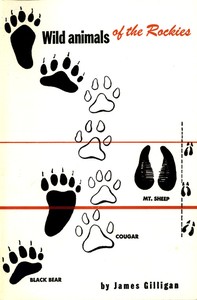
Wild Animals of the Rockies - With a List of Mammals found in Rocky Mountain National Park
by Gilligan, James P. (James Pershing)
English
255h 32m read
![Cover of Sequoia [California] National Park](https://www.gutenberg.org/cache/epub/37483/pg37483.cover.medium.jpg)
Sequoia [California] National Park
by United States. Department of the Interior
English
251h 28m read
![Cover of Glacier National Park [Montana]](https://www.gutenberg.org/cache/epub/36463/pg36463.cover.medium.jpg)
Glacier National Park [Montana]
by United States. Department of the Interior
English
271h 1m read
![Cover of Grand Teton [Wyoming] National Park](https://www.gutenberg.org/cache/epub/36128/pg36128.cover.medium.jpg)
Grand Teton [Wyoming] National Park
by United States. Department of the Interior
English
222h 55m read
![Cover of Mesa Verde [Colorado] National Park](https://www.gutenberg.org/cache/epub/35936/pg35936.cover.medium.jpg)
Mesa Verde [Colorado] National Park
by United States. Department of the Interior
English
328h 58m read