The Project Gutenberg eBook of Picturesque Spain, by Kurt Hielscher
This eBook is for the use of anyone anywhere in the United States and
most other parts of the world at no cost and with almost no restrictions
whatsoever. You may copy it, give it away or re-use it under the terms
of the Project Gutenberg License included with this eBook or online at
www.gutenberg.org. If you are not located in the United States, you will
have to check the laws of the country where you are located before using
this eBook.
Title: Picturesque Spain
Architecture, landscape, life of the people.
Author: Kurt Hielscher
Release Date: Mar 30, 2021 [eBook #64959]
Language: English
Produced by: Chuck Greif and the Online Distributed Proofreading Team at
http://www.pgdp.net (This file was produced from images
available at The Internet Archive)
*** START OF THE PROJECT GUTENBERG EBOOK PICTURESQUE SPAIN ***
PICTURESQUE SPAIN
PICTURESQUE SPAIN
ARCHITECTURE * LANDSCAPE
LIFE OF THE PEOPLE
BY
K. HIELSCHER
T. FISHER UNWIN LTD
LONDON : : ADELPHI TERRACE
MOST HUMBLY DEDICATED
TO
HIS MAJESTY KING ALFONSO XIII.
OF
SPAIN
Spain is one great open-air museum containing the cultural wealth of the
most varied epochs and peoples. On the walls of the Altamira cave is
blazoned that much admired steer painted thousands of years ago by men
of the Ice Age. In Barcelona stand the fantastic buildings of
neo-Castilian present-day art. Celts, Iberians, Romans, Carthaginians,
Moors and Goths have fought and struggled for supremacy in Spain. Of all
this the stones tell us to-day. They are the chronicles. They relate of
bitter strife; of the culture and art aspirations belonging to times
gone by. Much has vanished into dust and ruin. That which has survived
time’s fretting tooth serves as a giant bridge to lead us back to the
past.
Fate was kind enough to let me spend five years in Spain. Caught there
by the war while engaged in studies, I was cut off from home. I made use
of my involuntary stay to become acquainted with the country in its
furthermost corners. I roved to and fro from the pinnacles of the
Pyrenees to the shores of Tarifa, from the palm forest of Elché to the
forgotten Hurdes inhabitants of Estremadura.
On all my lonely wanderings I was accompanied by my faithful camera: we
covered over 45000 kilometres together in Spain. We kept our eyes open
diligently. I say we, for in addition to mine was a precious glass eye
in the shape of the Zeiss lens. Whereas my eyes only made me the
intellectual recipient of what we saw, that of my travelling companion
made it a pictorial permanency. I took over 2000 photographs during our
peregrinations. This volume only presents a small selection. It was not
easy to make the final choice. Many a picture had to be omitted to which
I was attached, either for its peculiarity or its character.
I went at no one’s instigation through Spain but that of my own in
search of the beautiful. I was not guided by any constraining
professional principles. Beautiful art treasures, geographical
peculiarities, enchanting landscapes, interesting customs that attracted
my attention were retained by my camera. I followed the same lines in
making my selections for publication.
I entitle this volume “Picturesque Spain". Much will be unknown to many.
I begin however with a spot famous throughout the world.--And yet I was
bound to. Like the pilgrim who is drawn to the fabled Fontana Trevi once
he has drunk of its waters, so too was I drawn again and again to
Granada in my wanderings. I believe too that I have succeeded in
presenting the Alhambra from one or two different points of view. Who
indeed could exhaust this well of beauty?
Nor could I pass heedlessly by Cordoba, Seville and Toledo, for these
towns are starting points.--Finger-posts to unknown Spain. Without these
monuments of ancient times, those parts of Spain situate far from the
high-roads remain an almost insolvable riddle.
My pictures must speak for me. Those who know how to ask them will find
that they tell much. For this reason I shall limit myself to but a few
initiatory words. They serve to connect the known with the unknown; to
throw light on the paths along which I journeyed in Spain.
=Granada!= Thy name is music; a joyous chord of beauty! To pass the spring
within thy gateways is to walk the heights of life.
Spring has cast a shower of blossoms over the town and woven a delicate
green carpet around the Alhambra. How many many centuries has it not
worshipped thus yearly at the feet of the castle? Long ago passionate
Moorish women decorated their raven hair there with rosy almond
blossoms.--It is long since that the glory of those days has departed.
Perhaps this is why the castle walls look down so sadly at the beauty of
this blissful vernal soil.
Bidding defiance in the grandeur of their strength the towers of the
Alhambra arise. Their fiery red lights skywards like the flames on giant
altars.[A]
Is it possible that these massive cyclopean walls should hide a
fairy-land?
Impatiently we climb the castle mount. Reaching an old stone gateway
ornamented with pomegranates, the noise of the streets is left behind as
we enter a yew grove whose ancient giant stems are ivy-grown; blue
myrtle covers the ground, the lights gleam golden through the foliage,
the wind murmurs among the branches, nightingales sing in the boscage,
swallows dart twittering over the tree tops, water hurries babbling down
the hilly slope.
All this seems like a miracle in Spain so poor in forests. It is as
though another world had opened its gates.
The great Gate of Judgment is passed, and an inconspicuous door leads to
the Court of the Myrtles. Here one feels surrounded by the spirit of the
Orient. Delicate jasper and alabaster columns support the airy arches
which are swung like lace veils from arcade to arcade. The emerald-green
waters of the fountain gaze dreamily skywards and at all the bright
beauty of the scene.
Then there is the Court of the Lions, subject of so many songs, with the
filigreed architecture of its covered walks. Enchanting in its delicate
tracery and beauty, it is a fairy-tale, a poem in stone, infinitely
rhythmic with music. And indeed, music is the only language that can
render such beauty.
The magnificent halls are full of a wealth of ornamentation. The walls
are rainbow-like with the colours of Persian carpets and Cashmere
shawls. Arabic inscriptions are scrolled along these labyrynths of
colour, praising in exalted words the mystic beauty of the halls. One
runs joyously: “God has filled me with such a plentitude of beauty that
even the stars stay in their course enchanted to gaze on me."
Once beautiful sultanas looked out from the “Seat of Admiration" (as the
Arabs called that jewel of the Alhambra, the Mirador de Daraca,) into
the pretty garden filled with the heavy scent of roses, jasmines and
oleanders. A swaying mass of tangled climbing plants are festooned from
laurel to cypress, and from cypress to orange-tree. In the middle there
is a marvellously delicate fountain basin from the edges of which the
water slides and drips with tuneful sound as if it fain would tell of
long forgotten beauteous days.
We leave the glittering fairy-palace full of memories of the Arabian
Nights, and our lips whisper the wish of the Arabic poem writ over a
little niche:
“May Heaven’s blessings rest upon these castle halls
As long as pilgrims wend their way to Mecca’s walls!"
Nay, as long as clouds sail the skies, and seekers after beauty rove on
earth!
This is the mood one is in when climbing further up the mountain to the
Moorish summer palace, the Generalife.
We are met, as it were, and shown the way by a double row of slim
black-green cypress--dark trees of silence.
The Generalife is enthroned far up on the heights, and embedded in
terrace-shaped gardens.
The gardens! In them nature has enfolded all her abounding wealth of
colour. Crimson-ramblers, wistarias, vines and ivy smother the walls.
Mangolias, oleanders, almond trees, laurels, cypresses, araucarias,
olive trees, agaves, palms and mimosa vie with one another for
precedence. Flaming pomegranate blossoms, blood-red roses, violet
mallows, blue fleurs-de-lis, white jasmine, yellow narcissi, and golden
oranges in dark green foliage are a riot of colour. Ball shaped myrtles
surround the little fountain, listening to the babbling of its silver
waters, and in the twigs the song of birds greeting nature in her
holiday garments.
Wondrous peace broods o’er this land. Through trees and halls and wall
arches there is a magnificent view of the Alhambra and the
multi-coloured houses of the town at its feet, and further on to the
picturesque Albaicin, and over cactus-grown Sacromonte with its gypsy
cave-dwellings, and still further to the snow-capped Sierra Nevada.
Another glance shows the fertile plains of the Vega through which the
clear waters of the Genil flow.
However full of radiant happiness the day may have been, it is outshone
by the sinking sun casting a golden halo over the country-side. The
walls of the Alhambra, once so fiercely fought for, stand forth as
though dipped in blood. The distant mountains glitter golden-bronze, and
the snowy sides of the Sierra Nevada scintillate in flames. Slowly the
fair fires die down, and a chill spectral white falls upon the snow
summits. The eventide is there and with it the stars.
The Spaniards have coined a proud sentence: “Quien no ha visto Granada,
no ha visto nada!" He who has not seen Granada has seen nought! And I
should like to add: He who has seen Granada and the Alhambra on sunny
spring days, bears with him a talisman to ward off sorrows in dull days,
and can never be completely unhappy again in life.
* * * * *
The =Mosque, Cordova=. A nation set forth to convert the world to its
faith. Its battle-cry in this holy war was Allah! Victory after victory
was gained, till finally the triumphal march of fanaticism was stopped
by the opposing faith of its religious adversaries. The waves receded,
and the Cross triumphed over the Crescent. This struggle of two faiths
and two continents left indelible marks on the fields of battle.
These wars had been carried on in the name of God. Sacred edifices were
erected to the victor. On the ruins of the mosque arose the most
beautiful cathedral in the world as token of victory. Spain never would
have received the impress she bears to-day without those bitter
religious wars.
Cordova was the jewel among Moorish occidental towns, destined to
outshine the sister cities Damascus and Bagdad in the far Orient. It was
here that all the wealth and pomp of Moorish domination was displayed.
Cordova’s population exceeded a million souls. It was the seat of Arabic
art and profound learning; the centre of religious life. The muezzin
called the faithful to prayers from 3000 minarets. Cordova became a new
Mecca which drew crowds of pilgrims from the East to the West.
What has now become of this metropolis? A shadow! Wandering through
narrow streets of the town one seems to be in Cordova of a thousand
years ago. The old cobbled pavements are probably the same, the houses
too, behind whose trellised windows the harem was hidden. The old
crooked, narrow and confused mass of streets are still there. Once in a
while a palm is seen leaning over white walls across the street; open
doors offer views into pleasant court-yards.
The Mezquita, the Mosque, stands like a dark rock surrounded by the
white trembling light of the sea of houses.
A wonderful gateway leads to the Orange Court. The fruit and flowers of
these trees perfume the air with incense. High up, backed by the blue
sky, the palm trees are waving in the wind. Fountains are plashing. Once
they served to refresh burnoosed dusty and foot-sore pilgrims come from
afar to serve their God here. The faithful bathed in these fountains
before purifying their souls in Allah’s house.--Now the fountains are
perpetually surrounded by the town maidens who come to fetch a cooling
draught in their finely curved earthenware jugs.
The impression on entering the forest of columns that support the mosque
is both unexpected and overpowering. Is this not a petrified palm wood?
And does not this stony grove incorporate the conception of infinity?
There is a mystic dusk among these columns that lends to them an endless
space of silence and eternity: the symbol of belief.
It is to the credit of the victorious Christians that they did not cool
their religious ardour by destroying this Islamitic place of worship. It
is extremely regrettable that their descendants have treated this
monument of Mohammedan culture with such carelessness.
The mosque became a Christian church. Where once the cry of “Allah illah
Allah!" echoed thousandfold, “Praise be the Lord!" is now sung. The
first deed was to erect altars in the door-niches. Then seventy pillars
were laid low, and a choir with the High-Altar erected in their stead: a
church within a church. Charles V. was reluctant to give his permission
for these alterations. When he came to Cordova and saw what had been
done, he exclaimed in perturbation: “What you are building can be seen
anywhere. You have destroyed what was unique in the world."[B]
Untouched in its pristine beauty, hidden in semi-darkness, not far from
the Holy of Holies of the Christian church, stands the Holy of Holies of
the mosque, the Mihrab or prayer-niche in which the Koran was kept. It
is a jewel of Moorish art. Whereas the rest of the mosque columns are
connected by double horse-shoe arches, banded in red and white, here the
beautifully chased dentated arches rise straight to the lovely curved
dome. The niche socle is white marble of lace-like texture above which a
profusion of colours glow: blood-red, rust brown, dark blue violet
interwoven with a sublime sheen of gold. Perhaps the mosaic walls and
lettered scrolls upon them have in some mystical manner caught the light
of the thousand swinging lamps that once had cast their soft rays
through the dim shades of space. For six long centuries all these
glowing colours were hidden. Before Cordova was surrendered to the
Christians the sanctuary was walled up. It was only discovered in 1815.
We pass entranced along the colonnaded aisles, enthraled by the wondrous
beauty of this miracle in stone. It is like awakening from a fantastic
dream to set foot again in the blinding sun of the silent town that has
become the shrine of one of the most precious jewels in the world
(50-60).
* * * * *
=Moorish scenes far from the beaten track=: A burning hot day in
August.--The air trembles in the heat over the olive trees. The day
hangs heavy in the blue vault of heaven. I had been wandering for long
long hours, when all of a sudden my eyes were caught by a fata morgana:
wafted perhaps from the coast of Morocco? No, it was no mirage.
Impossible! Yet it did not disappear as I approached. Strange indeed was
the scene: houses scattered like dice over a mountain (91).
A timid lad of whom I asked the name of the spot, slunk shyly past me.
My map was of no assistance to me. At last I was informed that I had
arrived at “la muy noble y bel ciudad Mochagar, llave y amparo del reino
de Granada". “What," I asked “this hamlet still calls itself the key and
guardian of the kingdom of Granada? But that kingdom was destroyed half
a thousand years ago when the Moors were driven from Granada."
A miracle must have happened here that time should have remained
stationary. Here was the pure Moorish impress. Most of the houses are
windowless. The flat roofs are sometimes the road to the higher houses,
and always their foot-stool. And although the water of baptism has
wetted the women’s hair, they pass veiled in the Moorish fashion along
the streets. With tucked up skirts and naked legs they step lightly
along the steep alleys, returning from the fountains with water
amphorae. They eye the foreign trespasser suspiciously and curiously.
And when I requested the veiled women to let me take their photographs
they stared at me, for they had never even seen a camera. I showed them
a picture, and explained that I wanted to have theirs too. They refused.
Finally one girl agreed. But an old scold hurried up and beat her for
her frowardness: throwing herself away like that! In this Christian
country I found shamefacedness and adherence to the laws of Mohammed.
Let no mortal body serve as an image!
An old man with whom I spoke about this incident told me that if a girl
no longer veiled her face, but hid her legs, there was not much left to
spoil about her.
But I was determined that I would not leave without a picture of one of
the veiled beauties. At last I succeeded, with the consent of the mother
of one of the girls. The eye of my camera winked slyly when I took my
snap-shot. In thanking the girl, I held out my hand, but she seemed
quite taken aback, and hid her hands behind her. I pressed her to shake
hands. I should not do her any harm. But her mother apologized for her
saying: “No, she doesn’t mean to be rude, but it is not the custom in
our country for a girl to let a man touch her hand before marriage."
Perhaps this little incident explains the once much-used expression
employed by wooers “will you give me your daughter’s hand?" (90)
* * * * *
=The Palm Forest of Elché= (100-103). The only palm forest in Europe. It
numbers more than 115000 trees, and is also a Moorish heritage. They
caused the water to flow to this spot from a distance of 5 kilometres in
order to create an oasis here in the desert--for the district is to-day
little else. Palms must grow with their roots in the water and their
crowns in the glaring sun. For years no rain has fallen on this spot.
The view is strange from the church-tower down on white houses over
which the palm tops are spread like a canopy. Beyond the palm forest the
grey-yellow desert plain surrounds this isle of peace. In the far
distance the blue ocean sleeps in proud majesty. Death and life are here
in close juxtaposition.
* * * * *
=Easter in Seville.= The train is rushing southwards over the arid
Castillian high plateaux, which in summer are as empty as a beggar’s
palm. The bare treeless Mancha has put on its modest spring garment
which now shows in the distance like delicate green velvet. A
short-lived joy! In but a few weeks the scorched ground will again be
covered with a yellowish-gray pall.
At present the fresh breeze comes down from the mountains of the Sierra
de Guadarrama. Scarcely, however, has the train wound its way through
the wild cañons of the Sierra Modena, when spring opens wide her gate. A
warm damp hot-house atmosphere is wafted into the carriage windows.
We are soon surrounded by meadows that are like a great flower-garden in
which the blood-red poppy and golden-yellow primrose struggle for
supremacy. Once in a while a village is seen dreaming like Sleeping
Beauty among the flower groves. For a long stretch agaves and cacti
fringe the track. Finally Seville sends forth her messengers in the
shape of blossoming rose-gardens and orange groves laden with their ripe
golden fruit. An ancient mangolia stretches a rosy blossom branch
towards us, lingering on in its old age in this scene so full of
yearning life. Tall slim palms nod to us, and yet new children of Flora
crowd upon us to bring us Seville and spring’s friendly welcome.
Heedlessly the train clatters past all this beauty towards the white
maze of Seville’s houses, above which towers that beautiful emblem of
the town, the Giralda. At last the engine snorts noisily into the
station.
But how different is everything to-day in front of the station. No
yelling hotel porters, no carriages awaiting the passengers, no
electric-car with clanging bell, no hooting of motor-cars.--The square
is lifeless at this early afternoon hour. It is the “Semana santa",
Passion-week, that has cast this almost oppressive spell of silence over
the great city. Even the brazen voices of the church-bells are muffled,
as though that had gone into sacred mourning. The wooden banging of the
Matraca calls hoarsely to prayers with dry and unmelodious voice.
The further you penetrate into the town, the more the sacred holiday
stillness is ousted. All Seville is crowding, chattering and laughing to
the Cathedral to see the procession. At last you have to stop. There is
no getting through the impenetrable human wall. It is a strange
procession that is passing by, as though conjured up from the Middle
Ages. Huddled figures stalk past slowly and stiffly. They appear like
spectres. Old pictures of witches and inquisitionary trials are recalled
to my mind, for nowhere else have I ever seen such terrifying
apparitions; never in life. Black cowls are wrapped around their bodies,
and on their head are huge black conical hats a yard high. Long sable
cloths, in which only two eyelets are pierced, are suspended over their
faces down to their waists. A corded rope is wound round the penitential
garments. The hands of the apparitions clasp rough wooden crosses, or
metal staves, as tall as themselves. These figures march in front of a
portable dais on which a life-like statue of the Virgin Mary is
enthroned clad in magnificent garments thickly encrusted with gold.--The
procession stops. The dais is lowered. A young woman steps from the
crowd, turns her eyes to the Queen of Heaven and sings her praise.
When the twenty or thirty bearers who carry the heavy dais on their
shoulders, and who are hidden by drapery suspended round the frame, have
rested enough, the signal to start is given by knocking on the front of
the dais. A jerk, and the procession moves on a few paces. One religious
body of brethren follows on the heels of the other. Each of them wear
their own distinctive multi-coloured badges. Some have a blue pointed
hat, others white, brown, violet or other coloured garments. Next to a
father his ten-year old son in the same vestments is often seen, as well
as the miniature penitent of fifteen in the procession.
The various brotherhoods are filled with an ardent ambition to outdo the
others in the magnificence of their Pasos as the daises are called. The
whole story of the Passion from Gethsemane to the burial of our Lord, is
shown on them as they pass before our eyes.--Of course the clergy in
full canonicals, as well as the town and state officials are also
represented in the procession. At intervals, groups of Roman legionaries
of Christ’s day appear, then angels, and St. Veronica carrying the
kerchief. Interspersed bands bray and flourish the same march without
cess.
Each brotherhood in the procession is cerimoniously received by the
chief authority of the town in Constitution Square which looks like a
huge theatre auditorium. It is filled with rows of chairs of which not a
single one is empty. The surrounding balconies are a sea of heads.
Hour by hour passes. Night falls. And now hundreds of wax-candles blaze
forth on the daises, and each penitent carries a gigantic taper in his
hand. Thus this endless and mysterious procession of lights moves on to
the cathedral, passes through its magnificent nave, and out again
through the other doors into the streets.
The cathedral has opened its treasure-house for the “Semana santa" and
displayed all its pomp. The candles of the gigantic bronze candelabrum
(the renowned Tenebrario) as well as on the altar the sacred wax-candle
weighing several hundredweight. A huge sepulchre has been erected to the
glory of Christ, in which the Holy of Holies is kept during Passion
week. Hundreds of lamps and candles illuminate the golden-white
four-storey edifice, which is over 30 metres high, and flooded with a
wondrous glowing halo.
The celebrated miserere of Eslava is performed in the cathedral on the
night of Good Friday. But, alas! it is impossible to enjoy the sacred
tunes owing to the general noisy inattention around. Weary forms are
sitting on the steps of the chapels and around the grave of Columbus.
Here a mother is suckling her infant, there an animate heap of rags is
wrapt in sleep, and all the while there is a continual pushing and
elbowing to get to the front.
However we must not judge of all this in the light of serious northern
church festivals. This would only lead us to drawing both severe and
wrong conclusions. Perhaps this manner may be an historical development.
Has not our Teutonic Christianity also wedded itself to much that is
ancient heathenism? For instance Christmas and the winter solstice
festival. Much that is Moorish obtains in Spain to this day. Perhaps
even--unconsciously--the conception of the purpose of a place of
worship. Was not the mosque often enough a secular place of meeting for
the Moslems, and at the same time a university? However, enough of
conjectures. It is a fact that the worship of the Lord and the Virgin
Mary is for the Spaniard a service of love. Whether the occasion be
Trinity or Passion week, it is one of joyful praise of Heaven.
I shall always remember one quiet hour permeated with the holy spirit of
Easter among these joyful and yet pious Easter days.--I had mounted the
Giralda, that jewel of erstwhile Moorish minaret architecture, the
cathedral tower. At my feet lay the white sea of houses. The town was
bathed in sunshine. The beautiful blue dome of heaven spread its mighty
arch over the holiday-making land as though protecting and blessing it.
The faint music of the mass far below was wafted up to me, when suddenly
a booming vibration filled the air, and all the tower bells, which had
been silent so long, peeled out across the sunlit country: Christ is
arisen! The sister bells of all the other towers echoed the message
across the spring clad country.
* * * * *
=The Patio= (40, 42-49). It is a favourite expression to call Seville the
town of bright court-yards. Those court-yards which light and fill the
house with sunshine. The Sevillian house, or rather the Andalusian
house, is not a building such as our houses, fronting on the street, but
one that fronts to an inner court, turning its back on the street. The
outsides of the houses are bare of ornament, almost windowless; a secret
to the passer-by. All their beauty is displayed yardwards. There wealth
obtains in all its pomp, and poverty unfolds its modest ornaments. The
narrow passage--the Zaguan--leading from the street to the court is
closed by a railed gate. The gallery--to which access is gained by steps
leading from the court--is supported by columns. The rooms of the upper
stories lead to the gallery. To cool the air there is a fountain in the
middle of the court surrounded by palms, araucarias, laurels,
orange-trees, oleanders and flowers in pots. The walls are covered with
multi-coloured tiles. Against them brightly up-holstered furniture,
chairs, and sometimes even a piano; the inevitable guitar is in a
corner. Climbing plants festoon the court.
Practically this is the centre of the whole family life. Friends are
received here, hours passed in argument, singing, music and
dancing--whether in company or alone, dreaming away the hours, listening
to the plashing of the fountain, it is in the court--the soul of the
house--that most time is spent.
* * * * *
There is nothing commonplace about Spanish houses. They still retain
their peculiarity impressed on them by the patina of age. Many have
tumbled down under the burden of years. Many are dead; but they “died in
beauty". The period of their prosperity still lingers on in the churches
and ornate façades of deserted squares.
Toledo is the most Spanish of towns. It was once the heart of the
country, pulsating with the great rhythm of epic history. But its heart
no longer beats.
Resting on steep granite hills above the deep Tajo valley stands the
yellow-grey heap of houses as though rooted in the rocks. Two gigantic
bridges span the river. Narrow alleys lead up hill and down dale;
many-cornered and dark. The whole town seems in a fighting mood. Huge
gateways and towers, the houses fort-like, the doors studded with heavy
nails. Indeed, there is hardly a town that has seen so many battles
rounds its walls. Spain’s history has passed over it with heavy steps.
And to-day? Rent walls, ruin and silence: the town the accumulated
wreckage of a thousand years (139-148).
Segovia, Toledo’s sister city is situated similarly on rocks arising
abruptly from the plain. It is dominated by a great cathedral tower, and
guarded by the well-proportioned Alcazar which stands forth like a fairy
castle. A miraculous building, erected one would say to brave eternity
in the days when Christ was born. But otherwise Segovia is different to
Toledo. It is the Nuremberg of Spain, gay in its leafy setting
(157-164).
There are other brave old companions-in-arms of these two veterans,
dating from ancient war days: circumvallated Avila (165-169), Cuenca and
Albarracin with their swallow-nest houses clinging to lofty crags (120,
121, 192-194), Daroca protected by two mountains over which the whole of
the battlemented walls have climbed (195-197), Alquezar in the Pyrenees,
the northern outpost of the Moors in Spain (210-212), Sigüenza, Jerica,
Trujillo, Caceres, Niebla, Carmona, Martos, Antequera, and many bold
castillos.
Ronda is the most boldly situated town lying on a high plateau encircled
by a wide mountain arena (62, 63). Running through the rocky plateau is
a huge crevice which looks as though it had been split in rage by the
mighty fists of giants.
The streams thunder down in all their wild force over the boulders,
hammer threateningly against the rocky walls, break into scintillating
spray, rush round in whirlpools, and hurry on their course. And in close
proximity to all this turmoil, the rocky walls stand unshaken in their
immobility against the sky-line, an emblem of eternity cast in stone by
the hand of God. The rainbow in the spray has been copied by man in the
shape of a bridge high over the abyss joining the rocky heights upon
which the town stands.
Let us pass from these stubborn old battle towns to a more smiling
scene: San Sebastian (286-290) known throughout the world for its
incomparably beautiful situation on the sea. The view from Monte Ulia, a
mountain guarding the entrance to this paradise, is wonderful beyond
words. Here nature has modelled and painted a masterpiece. The sea hugs
the land in two gracefully curved bays and catches the beauties of the
town in the reflection of its waters.
* * * * *
=Cave-dwellings and the simple life.=--This time I decided to leave the
destination of my wanderings to chance. I could have chosen no better
guide. I set out long before the dew was dry, or the sun had risen. The
palm trees were just beginning to shake themselves in the early breeze
when I approached a strange rocky landscape. Dark holes in the rock
stared at me like dead eyes. But nevertheless life was hidden there.
Human forms stepped out of the holes to greet the morn.
What I saw was a towering rock wall with hundreds of cave-dwellings next
to each other and over each other. Some of them were even five storeys
high and approached from the outside (92). Where the rocks were too
steep, the approaches had been dug from the inside, and upper storeys
created with outlook holes and loggias high up in the rocks. Tunnels had
been cut in the soft stone to get from one rock valley to the other.
The children were running about in the costume God had given them. But
it is not to be supposed that they were troglodytes, and as unaware of
culture as those who lived in the ice period. High on the rocks you can
read in large black letters on a white background “El Retiro".
Every Spaniard knows, at least by name, Madrid’s beautiful park the
Retiro. For this reason it seems somewhat of a joke to suddenly come
across the name in such a spot far up on the rocks. El Retiro, like
Sanssouci, means solitude, retreat, place of rest. An enterprising
hotel-keeper has levelled his portion of rocks into roof-terraces where
the favourite gossip hour (tertulla) is spent, skittles played, and
merry dances performed. Hence the alluring words on the wall for the
benefit of passers-by. On another rock is graven the brief significant
inscription: “Dios, Pan y Cultura" (God, Bread, and Culture. 92-95).
During the course of another stroll I was again equally surprised. I saw
smoke arising in the distance from ground that looked like fantastic
mountain erosions. Surely this was not the site of volcanic activity?
Indeed this was out of the question. And on drawing nigh I discerned
human figures moving among the columns of smoke. I then saw to my
astonishment that little smoking towers--not unlike champagne corks in
shape--were chimneys projecting out of the ground. I had again strayed
among cave-dwellers. What Homeric primitiveness was there! The valleys
are the streets, the mountain sides the fronts of the houses, the
pinnacles villas. Front gardens are once and a while supplied by giant
cacti and spiky agaves. My wanderings in this interesting
world-forgotten primitive spot lasted for hours as I passed up and down
the so-called streets (96-99).
My greetings were met with a cheerful response, and I was invited to
enter a cool cave, provided with a drink of fresh water, and shown the
treasures of the modest household: the bed on the ground, the hearth
with a copper kettle, the earthenware pitcher, the stool, the oil-lamp
and the image of the patron saint.
“Now as to work?" I asked. “Well we don’t do too much in that way. We
cultivate what we need over there where the river runs. We make bricks
for the towns where the people live in houses."--Truly a picture of an
enviable state of modest requirements. There are still those who are
satisfied with the tub of Diogenes. Indeed you may find many such all
over Spain. I remember when at a little railway station finding only a
lad deep in his after-dinner nap. For the rest, there was no one else to
take my luggage, so I woke him up and asked him to help me. He stretched
himself in all the bliss of laziness, took a couple of coppers out of
his pocket, and showing them to me said: “I’ve earned 25 centimos to-day
already; that’s all I need," turned over, and went to sleep again. I
continued on my way recalling the words of the Indian philosopher: “He
who is without wants is nearest to God."
There is no cause to shrug one’s shoulders. Diligence and happiness are
but relative conceptions. And just the poorest in Spain understand the
art of doing nothing combined with extracting joy from next to nothing.
They need a little shade in summer, and the sunshine in winter; a piece
of bread, a tomato, a drop of wine. The whole earth with the sky for a
roof is their bed-room; the highroad their field of labour. There is no
master they would exchange positions with; they are their own masters;
masters of their own time--verily a great possession this. Why then
should they not spend it generously? “He whom God helps will go further
than he who rises betimes" runs a Spanish proverb. And the Bible tells
us: “Behold the fowls of the air: for they sow not, neither do they
reap, nor gather into barns; yet your heavenly Father feedeth them."
* * * * *
=Feria in Sepúlveda.=--A bull-fight. There is high holiday in Sepúlveda,
(172, 173) an ancient little town far from the turmoil of the great
world, and far even from the railroad, which indeed is nearly 100
kilometres away. The feria is the greatest day of the whole year. Men
and women crowd into the place on horses and donkeys. Old friends meet
again. Once more they see ‘life’. Above all it is the bull-fight that is
the greatest attraction. It has been for weeks already the only topic
worth speaking about. As however our little town has no arena, the
market-place is used instead. All day the lively rat-tat of hammers is
heard there. The windows of the picturesque dignified old town-hall gaze
smilingly down on the lively scene. At last there is really something
worth looking at again. Another long tedious sleepy year has gone by.
There is hardly any one who does not go the hour’s walk outside the town
to admire the bulls which have come from a long way off, and for the
present are being kept at pasture.
When the great day has come, every one is up with the sun. The arrival
of the savage animals is feverishly expected. The bravest show their
courage by going forth to meet the procession.
A cloud of dust on the highway announces its approach. And finally forms
emerge from it. At the head a picador on horseback with a lance, behind
him the black bodies of the bulls surrounded by tame steers, and
followed by a second picador. As they rush through the narrow streets to
the market-square a mighty cry goes up: “Los toros! Los toros!"
Shouting, whistling, howling, yelling, and a general pandemonium rends
the welkin.
Finally the bulls are secured, and it is only in the afternoon that the
longed-for hour arrives.
The forenoon has its own pleasures. Young men demonstrate their daring
by teasing a young bull specially selected for the purpose, and earn
acclamation or mocking laughter as the case may be. These young heroes
try to put into practice what they have seen at the Torero; only it is
less dangerous. No blood is shed, only torn trousers and bruises are the
honorific mementoes of the great day (174, 175).
My thoughts naturally harked back to the first bull-fight I had seen--in
Madrid. The impression was stupendous: fifteen thousand gay spectators
in the great sweep of the arena all impatient for the nerve-racking
fight to begin. The arena was filled with the babble of voices. It was a
chaos of colours, cloudy lace mantillas, flower-embroidered shawls, fans
swaying nervously, jet-black glowing eyes.--Shouts of applause greeted
the bull-fighters. Yells saluted the great bull as he rushed in. The
game was a risky one for life or death. Deeds of audacity were met with
idolatrous cheers, the timid with desolating laughter. All of a sudden a
coloured form is tossed into the air. A single scream from a thousand
throats.--“Is he dead?" “No!" A sigh of relief.--“Go on!"--The condemned
bull is mad with rage, his opponent cold as steel. He wields the mortal
instrument, the sword flashes, and a hurricane of applause bursts forth
for the victor and his tottering victim. White handkerchiefs flutter
from every seat like pigeons. Hats are waved, a shower of flowers
descends, and the fêted hero returns thanks, nonchalant and proud.--The
trumpets blare and a new fight begins (125, 126).
* * * * *
=Crossing the Picos de Europa.=--Masses of high mountains with peaks about
2700 metres high rise among the Asturian Cantabrian coast range. They
bear the proud name of Picos de Europa (The Peaks of Europe). They are
the Dolomites of Spain. But they exceed these considerably in
inaccessibility.
Tourist facilities in Spain are of a very primitive nature. For this
reason there are no shelter huts for mountaineers in the Picos de
Europa, and there are likewise no trained guides. There are it is true
some game-keepers. Shepherds and miners acquainted with individual parts
of the mountains act once in a while as guides.
I had been at the gateway of the Picos de Europa when at Covadongo the
celebrated place of pilgrimage. Since then the desire had never left me
to become acquainted with this demure mountain beauty so alluring and
yet so stand-offish in her loneliness. Thus I started for the mountains.
My path led me from Unquera through the Deva valley to Potes at the foot
of the Picos. I very soon noticed that my task would be no easy one, for
shortly after leaving Panes the track winds through a mighty and deep
valley known as the Desfiladero de la Hermida. My reception was not a
friendly one. The rocky guardian of the valley looked down and frowned
at me, and the sky treated me at intervals to a cold shower-bath.
In Potes the clouds were low down on the mountain sides on which I was
going to test my prowess the next day. But I was so enchanted with the
spot, that I willingly renounced the view for that day.
The little town is a very ancient spot. It must once have been the seat
of many a knightly family. This is attested to by the various Spanish
coats of arms on the houses. But those times are now no more. Where once
Spanish grandees strutted by with buckled shoes and sword, clodhopping
peasants plod along. And the present generation is hardly aware of the
plentitude of beauty surrounding it. Bold bridges span the glen. Narrow
colonades with overhanging balconies cling to the steep river bank. A
multitude of archways offer innumerable enchanting glimpses. A high
watch-tower guards the houses clustering at its base.
Before the sun had risen on the morrow I had set out. Dark and
dismal-looking clouds hung low over the landscape. But the Picos
pinnacles had rent them asunder, and suddenly they stood forth in the
glory of the rising sun. Dark night lay behind me as I marched towards
the sunlight.
My guide met me by arrangement at Espinama. He was a grey-headed man
with weather-beaten face and smiling eyes. His feet were clad in leather
sandals, and under his arm was an ancient umbrella. We soon discussed
the itinerary, filled our _rucksacks_ and started for the Puerto de
Aliva. The old song came back to me:--
The sun on my way
In his golden array
Is my fellow and guide.
He casts my shadow
O’er flowery meadow.
I wander world-wide.
As we passed on our way, the houses of the village became smaller and
smaller. We soon left the last tree behind, and our path led over sweet
green slopes, till they too were lost under the stony debris of rocky
giants. There was a hunting-lodge close to the foot of the Peña vieja
cliff which the king of Spain visits nearly every year when chamois
hunting.
The day drew slowly to its end. Great streamers curled round the Peña
vieja, pale shadows floated by like silver grey cobwebs, and the mist
rose and fell with every breath of wind. The billowing fog had already
wrapped us in its mighty veil when we reached the miners’ inn at
Lloroza. An overseer invited us to spend the night there. And we were
right glad to find shelter, in spite of the fact that both the hut and
its furniture looked like the first attempts of primitive man to scale
the ladder of civilization. The night we spent on the hard ground was
not a very restful one, and we were glad when the approach of day called
us from our layer.
When we left the hut a surprising spectacle met our eyes. The fog which
had deprived us of any possibility of obtaining a view the evening
before now lay at our feet in the valley. The summits of the mountain
rose like islands in the sea of mist.
The moment had arrived when day struggled with night for predominance.
The full-moon’s silver disc hung in the deep blue of the western sky,
and the morning star held its own for a while against the rising light
in the east. At last both moon and star turned to pale glass when the
sun sent forth his herald rays. The horizon was tinged with pink; long
red streamers fluttered from the windows of heaven to greet us, and then
the sun rose above the misty expanse, gilded the crests, flooded the
eastern pinnacles with the glory of his light, and glowed on the rocky
wall to which our hut clung. O wonderful silence of that hour!
“A new day beckons us to other shores."
For yet a short distance the beaten path used by the king when stalking
showed us the way. Then we bent our steps over pathless boulders, sharp
edged rocks, mounds of debris, snow-fields strewn among the stony desert
with its jagged rock walls and towers.
Whole herds of chamois stared in astonishment at the strange intruders
in their paradise. For the rest, they showed little inclination to run
away. The mountain fastness became progressively more barren and wild in
its aspect. An infinitely dismal mood seemed to brood o’er the scene.
Yet the magnificence of these mountains augmented from minute to minute.
Grotesque stone giants--cast in burning ore by the furnace of high
heaven--stood guarding this great grave of nature.
Woe to the wanderer whose ignorant footsteps err here! Death lies in
ambush in the deep crevices and chasms.
At last we halted in front of the monarch of the magnificent mountain
empire. His throne stands high in everlasting snow; a golden crown is on
his head. His picture is known to all from the most distant mountain
valley to the shores of the restless ocean. All admire his beauty, all
know his name: Naranjo de Balnes.
This huge rock colossus rises 600 metres over its surroundings. Its
perpendicular walls show hardly a crevice. And it seems incredible that
nevertheless that bold mountaineer the Marqués de Villaviciosa de
Asturia climbed to its summit.
On our wanderings round this mighty and stubborn rock tower we seemed to
be lightened of all earthly burdens high up there in the solitude above
the depths of humanity.
We climbed up to the Ceredo tower. The rocks were as sharp as knives.
Again the ghostly mist rose from the valleys and whirled spectrally
around us.
It was 5 o’clock and the Cares valley with Cain to where our steps were
directed were not yet in sight.--I asked my companion: “How far yet?" “A
few hours more" was the not very consoling reply.--The mist, that enemy
of mountaineers was getting thicker. And ere long we could not see
twenty paces ahead. The feeling of insecurity grew apace. And the
sensation of climbing with mist-bound eyes was terrible. Again I
questioned my guide. “Severo, is there no hut or shelter on the
way?"--“I don’t think so." Once more long minutes of silent groping. At
last we were, at any rate for a while, rid of the stony region. Here and
there a rocky projection, but it was quite impossible to tell if we were
not suspended on it hundreds of meters over a yawning abyss. It was
impossible to see anything through that fog. And at a quarter past six
it was pitch dark.
Suddenly we came across a few low rough huts of unhewn stone huts
sheltered by a rock-wall. There at last we could spend the night. But my
guide wanted to go on. “Stop!" I cried. “Can we get to Cain to
night?"--“I don’t know." “Well then we’ll stay here!" Suiting the action
to the word, we crept into one of the huts, crouched down, and slept
fitfully through ten endless hours of night. But even they passed. The
morning meant a dangerous and nasty descent. We waded knee-deep in wet
grass, clambered over ledges with fog all around us. Woe to us had we
slipped! Then we got lost and had to stop and climb back with the
greatest care. Then we slid down a stony gully in which nearly every
step set rocks thundering to the depths below.
At last the moist grey mist began to lift. A rift showed the bed of the
valley far beneath us, and, as we thought, houses. But no, we were
mistaken. They were huge boulders, the wreckage of some avalanche that
filled the upper hollow. Down and down we scrambled till finally we
broke through the foggy screen. Our goal was at our feet. Cain,
strangely walled in by precipitous rocky cliffs rising sheer 1500 metres
high. We were there! And we could rest. Some bread and butter was all we
could find in the whole village to appease our hunger. We would gladly
have rested there a day, but the place was too inhospitable. We had
therefore to shoulder our _rucksacks_ again. The distance we had climbed
down the day before, we had to climb up again on the opposite rocks of
the Peña santa. Hours and hours of strenuous efforts passed till we
reached the ridge. We re-descended valleywards in a drizzling rain. Lake
Enol was the last spot of beauty to be hidden from our view. It was
there we struck the main road, and then marched another 10 kilometres
down to Covadonga which we reached as tired as dogs.
Night had already cast her shadow over the valley, and the stars were
beginning to shine forth. Welcoming lights were seen burning in
Covadonga. But it seemed as though we should never reach them. However
the prospect of a bed lent us strength, and at half past eight we
stumbled painfully over the threshold of a clean hospitable house. I
went to bed exhausted, and my restless dreams were haunted with the
beautiful and terrible wanderings in the Picos de Europa (266-274).
* * * * *
=My pilgrimage to the Yuste Convent (153).=--I left soon after midnight,
for marching is delightful in southern nights when the glittering stars
shed their soft light from the great vault of heaven. In the south the
cool night is succeeded by summer days that are the misery of the
pedestrian.--The hours melted by but slowly in the furnace heat of the
day. I was beset with all possible ills: infernal heat, thirst, and no
water. Not a tree or a shrub was to be seen for miles; no shade; hours
without passing a house; not a soul abroad; the melancholy mood that
comes in the train of solitude. My path was obstructed by a river--at
any rate, water--but nary a bridge! So I had to wade, and continue my
journey. At last I spied a shepherd. What joy to feel that I was no
longer alone!
“Is this the right road to Yuste?" I enquired of him.--“Yes, but where
doest thou come from, and what countryman art thou?" The good fellow
addressed me with the fraternal _tutoyer_, as though we were brothers.
When he heard that I was a German he was quite surprised. He willingly
agreed to accompany me to the next village, and was quite curious to
hear something about my country. The news of the war had penetrated to
this remote part of the world. It was charming to listen to the
questions of this child of nature. He knew nothing of the three Rs; had
never seen a railway, had never left the neighbourhood of his village.
We soon met another shepherd on the mountain-side who was just as
pleased and interested as the other. And I must say, that wherever I was
in Spain, all classes of the population were friendly towards Germans.
It was not long before we encountered other wayfarers who joined us, for
Sunday enticed them into the village. My entrance was therefore almost a
triumphal procession. We entered the inn, ordered some wine, and sat
down to a well-earned rest. When I wanted to pay the landlord, he
refused, telling me that Pepa had settled the bill. However, this
wouldn’t do. And at last he agreed to my paying on condition that the
next time I returned I should be his guest. They all shook hands with me
most-heartily and I continued joyfully on my way.
At last I stood in front of the monastery gates. They were opened, and
the white haired abbot rode out on a little donkey, holding a green
parasol over his head. I saluted the venerable Father and enquired of
him whether I could stay at the monastery for the night. “No", he
replied, “impossible."--Discomfitted I exclaimed: “But where am I to go
to-day? I have travelled fifty kilometres and have come from
Navalmoral."--“What, on foot? Impossible!" “Yes, but I have. I am a
German and want to see the spot which the emperor Charles V. exchanged
for all the crowns in the world, and where he closed his eyes."--“You
are a German? Of course you can’t continue your journey."
I was most kindly and touchingly taken care of.
I was shown the monastery which had once been destroyed by the French.
Decay and mould have continued the work of destruction. But nature’s
eternal youth triumphs victoriously amongst the ruins and beautifies the
decay of age. And yet this is a place to think about the everlastingness
of all things, of the end of all terrestrial happiness.--Once that great
monarch who had fled from the turmoil of the world had paced these
halls.
At supper, I, the infidel sat at the monks’ board and was treated like a
brother.
The next morning I was awakened long hours before sunrise. A lay brother
lit me with a lantern through the dark and ancient park. The monastery
gate swung on its hinges, the latch fell heavily, and I was again out in
the world all silvery with the moonlight. For a moment I stood
entranced.--I heard the mass bell calling the monks to prayers. And the
gates of Paradise were closed behind me.
* * * * *
=The last echoes.=--My wanderings through Spain filled me with the joy of
life. She had become my second home. It was with a heavy heart that I
left.
“O follow me ye southern days
’Neath colder skies and paler stars.
And fill my thoughts with golden rays!"
The hour of departure had arrived.--It was a wonderful moonlight night
in which the little Spanish steamer which was to bear me homewards
sailed slowly out of Ferrol harbour. The moon cast a silver bridge over
the water, and along it my thoughts fled back to other moonlight nights
when she had often shown me the way in picturesque Spain.
The lights along the coast shone like the eyes of anxious friends
looking a last farewell before darkness closed their lids. And then the
little ship ploughed homeward through the eternal waters with the
eternal sky above us, and the old old song of the waves accompanied me
back to my familiar home.
* * * * *
And now that days and weeks of cloudy skies hang heavily over my country
where the sun is not so generous as in southern climes, my heart is
filled with yearning for Spain, with nostalgia for the sun.--Then I look
at my pictures, and we hold converse together, and re-live those
unfettered days spent in wanderings in sun-kissed Spain.
In this volume I send forth my sun harvest. May it cast its light in the
hearts of many! May it tell of my love of Spain, and of my heartfelt
thanks to her chivalrous people for all their kind hospitality!
ALPHABETICAL LIST OF NAMES AND PLACES
Albarracin 192-194
Albufera 116
Alcala de Guadaira 71
Aldeanueva de la Vera 154
Algatocin 76
Alhambra 1-16, 22
Almazan 227
Alquezar 210-212
Andújar 44, 115
Antequera 64-66
Aranjuez 136-138
Arcos de la Frontera 48, 49, 72
Arranda de Duero 240
Autol 224, 225
Avila 165-169
Barcelona 200
Batuecas 260, 261, 263
Bielsa 213
Bilbao 284
Burgo de Osma 226
Burgos 234-238
Butron 277
Brachimañasee 216
Caceres 83, 84
Candelario 252, 253
Cangas de Onis 274
Carmona 43, 70
Castellbó 208
Castellfullit 204
Cave Dwellings 92-99
Cenaruza 282
Cepeda 155
Chorro 73
Ciudad Rodrigo 250, 251
Coca 184-187
Cordoba 50-60
Cuenca 120, 121
Daroca 195-197
Debotes Valley 207
Durango 279, 283
Ecija 68, 69
Elché 101-103
Elorrio 285
Escorial 129-135
Fuenterabia 298
Gerona 202, 203
Granada 1-25
Guadalajara 178-181
Guadalest 118
Guadix 100
Güejar-Sierra 77
Hermida 266
Hurdes 259
Jativa 111-113
Javea 108
Jerez de la Frontera 67
Jerica 191
La Alberca 254, 256, 257
Lagartera 150, 151
Madrid 126-128
Maladeta 219
Mañaria 278
Manzanera 42
Martos 74, 75
Medinaceli 176, 177
Mochagar 91
Mogarraz 258
Mombeltran 183
Monte Agudo 119
Montserrat 201
Niebla 80, 81
Nuria 206
Ondarroa 276
Orihuela 104-107
Oviedo 264, 265
Pancorbo 231-233
Pasages 291-296, 304
Peñafiel 182
Peña Montañesa 214
Pic de Aneto 217, 218
Pic du midi 216
Picos de Europa 266-274
Pontevedra 301
Potes 270-273
Pyrenees 205-219
Ronda 62, 63
Sagunt 109, 110
Salamanca 246-249
San Esteban de Gormaz 229, 230
San Juan de Plan 209
San Sebastian 286-290
Santander 275
Santiago de Campostela 300
Sarragoza 220, 221
Segovia 157-164
Segretal 205
Sepulveda 172-175
Seville 28-41
Sierra Nevada 79
Sigüenza 188-190
Soria 228
Tarifa 45, 46
Tarazona 223
Tarragona 198, 199
Toledo 139-148
Toro 244
Trujillo 85-87
Turrégano 170, 171
Valencia 114, 117
Valladolid 241-243
Vigo 303
Yuste 153
Zafra 82
Zamora 245
Towns: 2, 4, 16, 21, 28, 62-64, 72, 74, 80, 91-99, 120, 128, 139, 157,
166, 172, 191, 192, 195, 202, 204, 210, 223, 226, 227, 232, 246, 276,
286, 287, 290, 293.
Gateways, Towers, Fortified Walls: 5, 29, 75, 80, 81, 85-87, 143,
167-169, 186-188, 193, 196.
Streets, Squares: 24, 25, 31, 60, 65, 66, 75-77, 83, 85, 86, 147, 148,
154, 155, 163, 170, 173, 174, 175, 176, 189, 190, 193, 197, 198, 203,
208, 209, 211-213, 231-233, 247, 251, 253, 270-273, 278, 295, 296.
Churches, Convents, Chapels, Cemeteries, etc.: 23, 31, 41, 50-59, 66,
67, 86, 108, 146, 147, 152, 153, 158, 164, 165, 169, 177, 199, 220, 221,
228, 229, 234-241, 244-246, 260-262, 264, 265, 282-285, 300.
Squares, Public Buildings, Typical Houses: 6-15, 17-21, 30, 32, 33,
36-40, 68, 69, 114, 116, 117, 126, 127, 129, 130, 132, 134-137, 144,
162, 178-181, 250, 279, 280, 298.
Courts (Patios) and Gardens: 6-8, 12-15, 17, 34, 35, 37, 40, 42-49, 58,
69, 82, 90, 131, 138, 145, 179-181, 200, 238, 242, 243, 249, 298.
Stairways, Lattice Windows: 39, 68, 115, 144, 200, 203, 248.
Fountains: 9, 12-15, 20, 37, 49, 60, 197, 232.
Bridges: 63, 140-143, 268, 270, 274, 276.
Castles (Castillos): 1-5, 22, 70, 71, 110-112, 118, 119, 141, 161, 170,
171, 182-186, 277.
Views of Landscapes: 2-4, 21, 62, 63, 72, 73, 79, 88, 92-99, 101-107,
113, 116, 194, 201, 204-207, 214-219, 224, 225, 230, 260, 263, 266-269,
274, 275, 286-289, 291, 292, 294, 299, 301-304.
Costumes and Life of the People: 26, 27, 61, 78, 84, 90, 122-125, 149,
150, 151, 155, 156, 160, 174, 175, 222, 252, 254-259, 262, 281, 296,
297.
[Illustration: Granada-Alhambra.]
[Illustration: Granada
Alhambra and the Vega
Alhambra y la Vega
Alhambra und die Vega
Vue de l’Alhambra et la Vega
L’Alambra e la Vega]
[Illustration: Granada
Alhambra--In the background the Sierra Nevada
Alhambra-Puesta del sol: En el fondo la Sierra Nevada
Alhambra-Abendstimmung: im Hintergrund die Sierra Nevada
Le soir à Grenade: au fond la Sierra Nevada
L’Alambra sul tramonto: In fondo la Sierra Nevada]
[Illustration: Granada-Alhambra.]
[Illustration: Granada
The Alhambra Towers
Torres de la Alhambra
Alhambratürme
Les tours de l’Alhambra
I torrioni dell’Alambra]
[Illustration: Granada-Alhambra
The Myrtle Court
Patio de los Arrayanes
Myrtenhof
La cour des myrtes
La corte dei mirti]
[Illustration: Granada-Alhambra
The Myrtle Court
Patio de los Arrayanes
Myrtenhof
La cour des myrtes
La corte dei mirti]
[Illustration: Granada-Alhambra
The Court of the Lions
Patio de los Leones
Löwenhof
La cour des Lions
La corte dei leoni]
[Illustration: Granada-Alhambra
The Lion Fountain in the Court of the Lions
La fuente en el patio de los Leones
Der Löwenbrunnen im Löwenhof
La Fontaine avec le bassin dans la cour des Lions
La fontana del leoni nella Corte omonima]
[Illustration: Granada-Alhambra
Court of Justice
Sala de la Justicia
Gerichtshalle
La salle de Justice
La sala della Giustizia]
[Illustration: Granada-Alhambra
Bay Windows of the Daraxa
Le pavillion de la Daraxa
Erker der Daraxa
Mirador de Daraxa
Il padiglione di Daraxa]
[Illustration: Granada-Alhambra
The Daraxa Court
Un coin du jardin de la Daraxa
Gartenhof der Daraxa
Patio de Daraxa
Il giardino di Daraxa]
[Illustration: Granada-Alhambra
The Daraxa Court
Un coin du jardin de la Daraxa
Gartenhof der Daraxa
Patio de Daraxa
Il giardino di Daraxa]
[Illustration: Granada-Alhambra
In the Daraxa Garden
Patio de Daraxa
Im Garten der Daraxa
Dans le jardin de la Daraxa
Il giardino di Daraxa]
[Illustration: Granada-Alhambra
The Cypress Court
Patio de los cipreses
Zypressenhof
La cour des cyprès
Il cortile dei cipressi]
[Illustration: Granada-Alhambra
View of the Albaicin from the Queens Boudoir
Vista desde el Peinador de la Reina sobre el Albaicin
Blick aus dem Putzzimmer der Königin nach dem Albaicin
Vue sur l’Albaicin, prise du boudoir de la reine
Veduta di Albalcin presa dallo spogliatola della regina]
[Illustration: Granada
Palace of the Generalife
Palacio del Generalife
Generalifepalast
Palais da Généralife
Palazzo del Generalife]
[Illustration: Granada
Entrance-Hall of the Generalife
Entrade del Generalife
Eintrittshalle im Generalife
Entrée du Généralife
Ingresso nel Generalife]
[Illustration: Granada
Colonnade in the Generalife
En el Generalife
Säulenhalle im Generalife
Colonade dans le Généralife
Colonnato nel Generalife]
[Illustration: Granada
In the Garden of the Generalife
En el jardin del Generalife
Generalifegarten
Un jardin du Généralife
Giardino del Generalife]
[Illustration: Granada
View from one of the Generalife Gardens on the Albaicin
Vista desde un jardincito del Generalife sobre el Albaicin
Blick aus einem Generalifegärtchen nach dem Albaicin
Vue sur l’Albaicin, prise d’un jardin du Généralife
Veduta di Albaicin da un giardino del Generalife]
[Illustration: Granada
View of Alhambra from the Outlook Tower of the Generalife
Vista desde el Mirador del Generalife sobre la Alhambra
Blick aus dem Aussichtsturm des Generalife auf die Alhambra
Vue sur l’Alhambra, prise du belvedère du Généralife
Veduta dell’Alhambra della torre del Generalife]
[Illustration: Granada
The Cathedral--The Royal Chapel--in the Railing the Passion
La Catedral-Capilla real--En la reja la Pasión de Jesucristo
Kathedrale-Capilla real--im Gitter die Leidensgeschichte Christi
A la Cathedrale--La Chapelle royale--Au haut de la grille sont
representées les scènes de la Passion de Jésus-Christ
Cattedrale--Capello Reale--Nel cancello è raffigurata la passione di
Cristo]
[Illustration: Granada
Street on the Darro
Calle del Darro
Straße am Darro
Rue longeant le Darro
Calle del Darro]
[Illustration: Granada
In the Albaicin
En el Albaicin
Im Albaicin
L’Albacin
Nell’Albacina]
[Illustration: Gypsy dancing
Gitana ballando
Tanzende Zigeunerin
Danseuse Gitane
Zingara danzante]
[Illustration: Playing the Guitar
Con la guitarra
Mit der Laute
Une joueuse de guitare
Con la chitarra]
[Illustration: Sevilla
General View of the Town from the Giralda Tower of the Cathedral
Vista general, tomada desde la Giralda
Blick vom Turm der Kathedrale (der Giralda) über die Stadt
Vue générale, prise de la Giralda (tour de la cathédrale)
Veduta dalla citta dalla torre (la Giralda) della Cattedrale]
[Illustration: Sevilla
The Golden Tower and the Cathedral
La torre de Oro y la Catedral
Der Goldturm und die Kathedrale
La tour d’or et la cathédrale
La torre dell’ora e la Cattedrale]
[Illustration: Sevilla
Details of the City-Hall Façade
Detalle de la fachada del Ayuntamiento
Teilstück der Rathausfassade
Détail de la façade de l’hôtel de ville
Dettaglio della facciata del Municipio]
[Illustration: Sevilla
The Giralda (Cathedral Tower)
La Giralda
Die Giralda (Turm der Kathedrale)
La Giralda (Tour de la cathédrale)
La Giralda (la torre della Cattedrale)]
[Illustration: Sevilla-Alcázar
The Ambassadors’ Hall
Sala de Embajadores
Gesandtensaal
Salle des ambassadeurs
La Sala degli Ambasciatori]
[Illustration: Sevilla-Alcázar
The Dolls’ Court
Patio de las Muñecas
Puppenhof
La cour des poupées
La Corte delle bambole]
[Illustration: Sevilla
In the Alcázar Garden
En el jardin del Alcázar
Im Alcázargarten
Au jardin de l’Alcázar
Nel giardino dell’Alcázar]
[Illustration: Sevilla
In the Alcázar Garden
En el jardin del Alcázar
Im Alcázargarten
Au jardin de l’Alcázar
Nel giardino dell’Alcázar]
[Illustration: Sevilla
Pilate’s House
Casa de Pilato
Pilatushaus
La maison de Pilate
La Casa di Pilato]
[Illustration: Sevilla
Court in Pilate’s House
Patio de la Casa de Pilato
Hof im Pilatushaus
Cour intérieure de la maison de Pilate
La Casa di Pilato, Corte] [Illustration: Sevilla
Court Gates, Pilate’s House
Portada de la Casa de Pilato
Tür zum Hof des Pilatushauses
Entrée de la cour de la maison de Pilate
Porta di accesso alla Corte della Casa di Pilato]
[Illustration: Sevilla
Pilate’s House--Grille
Casa de Pilato--Reja
Pilatushaus--Fenstergitter
Fenêtre grillée de la maison de Pilate
Casa di Pilato. Finestra con grata]
[Illustration: Sevilla
Court in Duke Alba’s Palace
Patio en el palacio del duque de Alba
Hof im Palast des Herzogs Alba
Cour intérieure du palais du duc d’Albe
La Corte nel Cortile del Duca d’Alba]
[Illustration: Sevilla
St. Paul’s Convent
Convento de Sta. Paula
Kloster Sta. Paula
Couvent de Sainte Paule
Il Convento di Santa Paola]
[Illustration: In Manzanera
A Manzanera
In Manzanera
Dans la Manzanera
En Manzanera]
[Illustration: Court in Carmona
Patio en Carmona
Hof in Carmona
Une cour de maison à Carmona
Il cortile in una casa di Carmona]
[Illustration: Court in Andújar
Patio en Andújar
Hof in Andújar
Une cour de maison à Andújar
Il cortile in una casa di Andújar]
[Illustration: Court in Tarifa
Patio en Tarifa
Hof in Tarifa
Une cour de maison à Tarifa
Il cortile in una casa di Tarifa]
[Illustration: Court in Tarifa
Patio en Tarifa
Hof in Tarifa
Une cour de maison à Tarifa
Il cortile in una casa di Tarifa]
[Illustration: Court in Vejer
Patio en Vejer
Hof in Vejer
Une cour de maison à Vejer
Il cortile in una casa di Vejer]
[Illustration: Court in Arcos de la Frontera
Patio en Arcos de la Frontera
Hof In Arcos de la Frontera
Une cour de maison à Arcos de la Frontera
Il cortile in una casa di Arcos de la Frontera]
[Illustration: Court in Arcos de la Frontera
Patio en Arcos de la Frontera
Hof in Arcos de la Frontera
Une cour de maison à Arcos de la Frontera
Il cortile di una casa a Arcos de la Frontera]
[Illustration: Cordoba
Facade of the Mosque
Fachada de la Mezquita
Fassade der Moschee
Façade de la mosquée
Facciata della Moschea]
[Illustration: Cordoba
Columns in the Mosque
Columnas en la Mezquita
Säulenwald der Moschee
Le fouillis des colonnes à l’intérieur de la mosquée
La selva delle colonne nell’interno della Moschea]
[Illustration: Cordoba
Mihrab Mosque (Holy of Holies)
Mezquita--Mihrab
Moschee--Mihrab (Allerheiligstes)
La Mosquée: le Mihrab (sanctuaire)
La Moschee: Mihrab (santuario)]
[Illustration: Cordoba
Interior of the Mosque
En la Mezquita
Moscheeinneres
Intérieur de la mosquée
L’interno della Moschee]
[Illustration: Cordoba
Mosque--View of the High Altar
Mezquita--Vista del altar mayor
Moschee--Blick zum Hochaltar
La Mosquée: vue du maître-autel
La Moschea: veduta dell’altar maggiore]
[Illustration: Cordoba
Mosque--View from the Choir
Mezquita--Vista desde el Coro
Moschee--Blick aus dem Choreinbau
La Mosquée vue de choeur
La Moschea: veduta del Coro]
[Illustration: Cordoba
Mosque--Capilla de St. Fernando
Mezquita--Capilla de S. Fernando
Moschee--Capilla S. Fernando
La Mosquée: chapelle de Saint Ferdinand
La Moschea: Cappella di S. Ferdinando]
[Illustration: Cordoba
Mosque--Capilla de St. Fernando
Mezquita--Capilla de S. Fernando
Moschee--Capilla S. Fernando
La Mosquée: chapelle de Saint Ferdinand
La Moschea: Cappella di S. Ferdinando]
[Illustration: Cordoba
Mosque--The Court of Oranges
Mezquita--Patio de las Naranjas
Moschee--Orangenhof
La Mosquée: cour des orangers
La Moschea: La corte degli aranci]
[Illustration: Cordoba
Hermitage
Ermita
Einsiedelei
L’Ermitage
Eremo]
[Illustration: Cordoba
Fountain
Fuente
Brunnen
Une fontaine
Fontana]
[Illustration: Straw Cart
Carro para cargar paja
Karren für Stroh
Une charrette pour le transport da la paille
Una carretta per il trasporto della paglia]
[Illustration: Ronda]
[Illustration: Ronda]
[Illustration: Antequera]
[Illustration: Antequera.--Plaza S. Sebastian] [Illustration: Antequera
Chapel of the Virgin of Succour
Capilla de la Virgen del Socorro
Kapelle der hilfespendenden Jungfrau
Chapelle de Notre-Dame de Bon Secours
Cappella della Madonna del Buon soccorso]
[Illustration: Jerez de la Frontera
Cartuja--Cypress Court
Cartuja--Patio de los cipreses
Cartuja--Zypressenhof
Cartuja: la cour des cyprès
Cartuja: Il cortile del cipressi]
[Illustration: Ecija
Staircase in the Marquis of Peñaflor’s Palace
Escalera en el palacio del Marqués de Peñaflor
Treppenaufgang im Palast des Marqués de Peñaflor
Cage d’escalier au palais du marquis de Peñaflor
Scala nel palazzo del Marchese de Peñaflor]
[Illustration: Ecija
Court In the Marquis of Peñaflor’s Palace
Patio en el palacio del Marqués de Peñaflor
Hof im Palast des Marqués de Peñaflor
Cour Intérieure du palais du marquis de Peñaflor
La Corte nell palazzo del Marchese de Peñaflor]
[Illustration: Carmona--Castillo]
[Illustration: Alcala de Guadaira--Castillo]
[Illustration: Arcos de la Frontera]
[Illustration: El Chorro]
[Illustration: Martos]
[Illustration: Martos]
[Illustration: Algatocin]
[Illustration: Güejar-Sierra (Sierra Nevada)]
[Illustration: In a Wayside Inn (Sierra Nevada)
En una posada (Sierra Nevada)
In einer Wegschenke (Sierra Nevada)
Intérieure d’une posada (auberge) da la Sierra Nevada
In una trattoria. Sierra Nevada]
[Illustration: In the Sierra Nevada (Holm Oak)
En la Sierra Nevada
In der Sierra Nevada (Steineichen)
Chênes rouvres dans la Sierra Nevada
Nella Sierra Nevada. Lecci]
[Illustration: Niebla]
[Illustration: Niebla]
[Illustration: Zafra
Court in St. Miguel’s Hospital
Patio en el hospital de S. Miguel
Hof im Hospital S. Miguel
Cour de l’hopital Saint-Michel
Ospedale di S. Michele. Il cortile]
[Illustration: Cáceres.]
[Illustration: Cáceres
Water-Carriers
Mujeres con jarros de agua
Wasserträgerinnen
Porteuses d’eau
Portatrici d’acqua]
[Illustration: Trujillo
Chief Square
Plaza mayor
Hauptplatz
La grande place
La piazza principale]
[Illustration: Trujillo
Santiago Gate
Puerta de Santiago
Santiagotor
La porte Saint-Jacques
La porta di Santiago]
[Illustration: Trujillo
Old Town-Gate
Puerta antigua
Altes Stadttor
Vieille porte d’entrée
Un’antica porta della città]
[Illustration: Village in South Estremadura
Aldehuela en el sur de Estremadura
Dorf in Süd-Estremadura
Un village de l’Estremadura méridionale
Villagio di capanne nell’ Estremadura meridionale]
[Illustration: Inn (South Estremadura)
Venta (en el sur de Estremadura)
Schenke (Süd-Estremadura)
Une buvette dans l’Estremadure méridionale
Osteria (Estremadura meridionale)]
[Illustration: Moorish women of Christian persuasion who still wear the
veil in Mochagar-Vejer
Mujer en Mochagar-Vejer llevando la cara tapada como las marroquínas
Eine der noch heut maurisch verschleiert gehenden Christenfrauen in
Mochagar-Vejer
Une des femmes chrétiennes qui vont encore voilées aujourd’hui comme au
temps des Maures d’Espagne
Una donna cristiana che va ancor oggi velata all’uso marocchino]
[Illustration: Mochagar]
[Illustration: Cave Dwellings (Province of Almeria) None of the caves
shown in this book are prehistoric. They are still excavated and
inhabited
Cuevas en las rocas (Prov. de Almería)
Höhlenfels (Prov. Almeria) Alle in diesem Werk wiedergegebenen Höhlen
sind nicht vorgeschichtlich; sie werden noch jetzt gegraben und bewohnt
Cavernes dans le roc. (Province d’Almeria) Toutes ces cavernes ne sont
pas des formations préhistoriques; on en creuse maintenant encore pour
les habiter.
Caverne nella roccia (Provincia d’Almeria) Tutte le caverne riprodotte
in quest’opera non sono di formazione preistorica, ma si contina a
scavarle anche al giorno d’oggi]
[Illustration: Cave Dwellings (Province of Almeria)
Cuevas en las rocas (Prov. de Almería)
Höhlenfels (Prov. Almeria)
Cavernes dans le roc (Province d’Almeria)
Caverne nella roccia (Provincia d’Almeria)]
[Illustration: Cave Dwellings (Province of Almeria)
Cuevas en las rocas (Prov. de Almería)
Höhlenfels (Prov. Almeria)
Cavernes dans le roc (Province d’Almeria)
Caverne nella roccia (Provincia d’Almeria)]
[Illustration: Cave Dwellings (Province of Almeria)
Cuevas en las rocas (Prov. de Almería)
Höhlenfels (Prov. Almeria)
Cavernes dans le roc (Province d’Almeria)
Caverne nella roccia (Provincia d’Almeria)]
[Illustration: Cave Town (Sierra de Guadix) The chimneys of the
dwellings are seen projecting out of the rocks
Población de cuevas (Sierra de Guadix) Se ven las chimeneas de las
cuevas, saliendo de tierra
Höhlenstadt (Sierra de Guadix) Aus der Erde ragen die Schornsteine der
Wohnhäuser hervor
Une ville souterraine (Sierra de Guadix) On ne voit surgir de terre que
les cheminées des habitations
Una città di caverne (Sierra de Guadix) Si vedono sorgere dal suolo i
camini delle caverne]
[Illustration: Cave Town (Sierra de Guadix)
Población de Cuevas (Sierra de Guadix)
Höhlenstadt (Sierra de Guadix)
Habitations souterraines (Sierra de Guadix)
(Sierra de Guadix) Città di caverne]
[Illustration: Cave Town (Sierra de Guadix)
Población de Cuevas (Sierra de Guadix)
Höhlenstadt (Sierra de Guadix)
Habitations souterraines (Sierra de Guadix)
Città di caverne (Sierra de Guadix)]
[Illustration: Cave Town (Sierra de Guadix)
Población de Cuevas (Sierra de Guadix)
Höhlenstadt (Sierra de Guadix)
Habitations souterraines (Sierra de Guadix)
Città di caverne (Sierra de Guadix)]
[Illustration: Guadix]
[Illustration: In the Palm Forest of Elche
Las palmeras de Elche
Im Palmenwald von Elche
Elche: au milieu des palmiers
Il palmizio di Elche]
[Illustration: In the Palm Forest of Elche (A date-picker in the
tree-top)
Las palmeras de Elche
Im Palmenwald von Elche (Im Baumwipfel ein Dattelpflücker)
Elche: la récolte des dattes. (L’homme grimpé au sommet du palmier en
détachera les régimes de fruits)
Nel palmizio di Elche (Sulla palma un uomo che coglie datteri)]
[Illustration: Elche
Evening in the Palm Forest
Caia la tarde
Abend im Palmenhain
Effet de soir
Il tramonto nel palmizio]
[Illustration: Orihuela]
[Illustration: Orihuela]
[Illustration: Orihuela
Huerta Hut
Barraca de la huerta
Huertahütte
Barraque de la Huerta
Capanna]
[Illustration: Near Orihuela
Cercanias de Orihuela
Bei Orihuela
Environs d’Orihuela
Presso Orihuela]
[Illustration: Javea (Denia)
Church of Calvary
Iglesia del calvario
Kalvarienbergkirchlein
L’église du calvaire
La chiesetta del Calvario]
[Illustration: Gateway to the Mount of Calvary, Sagunt
Puerta del calvario de Sagunto
Tor zum Kalvarienberg bei Sagunt
Environ de Sagoute: Accès et entrée du Calvaire
La porta del Calvario presso Sagunto]
[Illustration: Sagunto, Roman Castle
Sagunto, Castillo romano
Sagunt, Römische Burg
La citadelle romaine
Castello romano]
[Illustration: Jativa
Castle
Castillo
Burg
Le Château-fort
Castello]
[Illustration: Jativa
View of the Castle
Vista del Castillo
Blick zur Burg
Vue sur le Château-fort
Veduta del Castello]
[Illustration: Jativa
On Mount Calvary
El Calvario
Am Kalvarienberg
Le Calvaire
Il Calvario]
[Illustration: Valencia
Gateway of the Marquis de Dos Aguas Palace
Portada del Palacio del Marqués de Dos Aguas
Portal des Palastes des Marqés de Dos Aguas
Portail du palais du marquis de Dos Aguas
Portale del Palazzo del Marchese de Dos Aguas]
[Illustration: Andújar
Grille
Reja
Fenstergitter
Fenêtre grillée
Una finestra con grata]
[Illustration: Huts on the banks of the Albufera near Valencia
Barracas de La Albufera cerca de Valencia
Albuferahütten bei Valencia
Environs de Valence: Cabanes de l’Albufera
Capanne di Albufera presso Valenza]
[Illustration: Huerta Huts near Valencia
Barracas de la Huerta de Valencia
Huertahütten bei Valencia
Maisons de paysans de la Huerta
Capanne di Huerta presso Valenza]
[Illustration: Guadalest Castle (Prov. of Alicante)
Castillo Guadalest (Prov. de Alicante)
Castillo Guadalest (Prov. Alicante)
Château de Guadalest (Province d’Alicante)
Castello di Guadalest (Provincia di Alicante)]
[Illustration: Monte Agudo (Prov. de Murcia)
Mount Agudo (Prov. of Murcia)]
[Illustration: Cuenca]
[Illustration: Cuenca]
[Illustration: The Jerez mantilla
Con la mantilla jerezana
Im Schmuck der Mantilla von Jerez
Sous la mantille (Femme de Jerez)
Mantiglia jerezana]
[Illustration: With the mantilla
Con la mantilla
Im Schmuck der Spitzenmantilla (als Hintergrund die Manton)
En mantille de dentelle
Mantiglia a merletti]
[Illustration: La Argentinita, Spain’s most celebrated dancer wearing
the Manton (shawl)
La Argentinita
Argentinita, Spaniens berühmteste Tänzerin im Schmuck der Manton
(Schultertuch)
La Argentinita, la plus célèbre danseuse de l’Espagne avec la mante
espagnole sur les épaules
Argentinita, la più celebre ballerina della Spagna, con sulle spalle il
caratteristico Manton spagnole]
[Illustration: Entrance of the bull-fighters into the Madrid Arena
El despejo en la plaza de toros de Madrid
Einzug der Stierkämfer in die Arena von Madrid
Entrée du cortège dans l’arène avant la corrida (Madrid)
Ingresso del toreadori nell’Arena di Madrid]
[Illustration: Madrid
The Throne-Room in the Royal Castle
Sala del Trono en el Palacio Real
Thronsaal des Königlichen Schlosses
La salle du trône au Château royal
La Sala del Trono nel Palazzo Reale]
[Illustration: In the Royal Castle El Pardo near Madrid
En el Pardo
Im Königlichen Schloß El Pardo bei Madrid
Une salle du château royal d’el Pardo près de Madrid
Nel Palazzo Reale El Pardo, presso Madrid]
[Illustration: Madrid]
[Illustration: Escorial]
[Illustration: Escorial]
[Illustration: Escorial
Court of the Evangelists
Patio de los Evangelistas
Evangelistenhof
Cour des evangelistes
La corte degli evangelisti]
[Illustration: Escorial
Throne-Room
Sala del Trono
Thronsaal
La salle du trône
La sala del Trono]
[Illustration: Escorial
The Library
La biblioteca
Die Bibliothek
La Bibliothèque
La Biblioteca]
[Illustration: In the Escorial Palace: on the walls tapestries after
Goya’s paintings
Palacio del Escorial
Im Palast des Escorial: an den Wänden Gobelins nach Goyaschen Gemälden
Le Château de l’Escurial. Tapisseries des Gobelins d’après des peintures
de Goya
Nel Palazzo dell’Escorial. Alle pareti tappeti Gobelins con riproduzione
delle pitture di Goya]
[Illustration: Escorial
Philip II. Study
Despacho de Felipe II
Arbeitszimmer Philips II
Cabinet de travail de Philippe II
Gabinetto da lavoro di Filippo II]
[Illustration: Aranjuez--Casa de Labrador
The Platinum Hall
Sala de Platino
Platinsaal
Maison de Labrador. La salle de platine
Casa de Labrador. Sala del platino]
[Illustration: Aranjuez
In the Casa de Labrador
En la Casa de Labrador
In der Casa de Labrador
Intérieur de la maison de Labrador
Nella Casa de Labrador]
[Illustration: Aranjuez
The Palace Garden
Jardín del Palacio
Schloßgarten
Le jardin du palais
Giardino del Palazzo]
[Illustration: Toledo]
[Illustration: Toledo
Tajo Valley and St. Martin Bridge
Valle del Tajo y puente de S. Martin
Tajotal und San Martinbrücke
La vallée du Tage et le pont St. Martin
La valle del Tajo dal ponte di S. Martino]
[Illustration: Toledo
Alcantara Bridge and St. Servando Castle
Puente Alcantara y Castillo S. Servando
Alcantarabrücke und Castillo S. Servando
Pont d’Alcantara, et château de St. Servando
Il Ponte d’Alcantara e il Castello di S. Servando]
[Illustration: Toledo
Alcantara Bridge with the Alcazar in the background
Puente Alcantara en el fondo el Alcazar
Alcantarabrücke, überragt vom Alcazar
Le Pont d’Alcantara, dominé par l’Alcazar
Il Ponte Alcantara e in alto, in fondo, Alcazar]
[Illustration: Toledo
View through the gateway of the Alcantara Bridge
Vista tomada desde la puerta del puente Alcantara
Blick durch das Brückentor der Alcantarabrücke
Vue de la porte d’entrée du pont d’Alcantara
Veduta del Ponte d’Alcantare dal Portone del Ponte stesso]
[Illustration: Toledo
Staircase in St. Cruz Hospital
Escalera del hospital de Sta. Cruz
Treppe des Hospitals Sta. Cruz
Escalier de l’hôpital Santa-Cruz
Scala dell’ospedale di Santa Cruz]
[Illustration: Toledo
In the court of the Casa Greco
En el patio de la Casa del Greco
Im Hof des Grecohauses
Cour de la maison du Grec
Cortile della Casa del Greco]
[Illustration: Toledo
Cloister of St. Juan de los reyes
Claustro de S. Juan de los reyes
S. Juan de los reyes, Kreuzgang
Cloître de St. Jean de los reyes
Loggiato del Chiostro di S. Juan de los reyes]
[Illustration: Toledo
Cathedral Spire
Torre de la Catedral
Turm der Kathedrale
Tour de la Cathédrale
Il campanile della Cattedrale]
[Illustration: Toledo]
[Illustration: Ox-cart
Carro de bueyes
Ochsenkarren
Chariot attelé de boeufs
Carro tirato da buol]
[Illustration: Lagartera Costume (Prov. of Toledo)
Traje de Lagartera (Prov. de Toledo)
Tracht von Lagartera (Prov. Toledo)
Jeune femme de Lagartera (Province de Tolède)
Costume di Lagartera (Prov. di Toledo)]
[Illustration: Lagartera Wedding Dress (Prov. of Toledo)
Traje de boda de Lagartera (Prov. de Toledo)
Hochzeitstracht von Lagartera (Prov. Toledo)
Une noce à Lagartera (Province de Tolède) Les maries
Veste nuziale di Lagartera (Prov. di Toledo)]
[Illustration: Forest Chapel
Capilla en el bosque
Waldkapelle
Calvaire et chapelle champêtres
Cappella silvestre]
[Illustration: Ruins of the Cloister in Yuste Convent
Ruinas del Claustro de Yuste
Ruinen des Kreuzganges im Kloster Yuste
Ruines du monastère de Yuste
Rovine nel Chiostro di Yuste]
[Illustration: Aldeanueva de la Vera]
[Illustration: In the village-square of Cepeda before the bull-fight
Antes de la novillada en la plaza de la aldea da Cepeda
Vor dem Stierkampf auf dem Dorfplatz von Cepeda
Avant le combat de taureaux sur la place de Cepeda
Prima della Corrida di tori nella piazza del villaggio di Cepeda]
[Illustration: Segovian shepherd
Pastor segoviano
Segovianischer Hirt
Un berger ségovien
Pastore segoviano]
[Illustration: Segovia]
[Illustration: Segovia
The Cathedral
La Catedral
Kathedrale
La Cathédrale
La Cattedrale]
[Illustration: Segovia
The Roman Aqueduct
El acueducto romano
Römischer Aquädukt
L’aqueduc romain
Acquedotti romani]
[Illustration: Segovianian peasant. In the background the Segovia
Alcázar
Aldeano segoviano, en el fondo el Alcázar de Segovia
Segovianischer Bauer, im Hintergrund der Alcazar von Segovia
Un paysan ségovien. A l’arrière-plan: l’Alcazar de Ségovia
Contadino segoviano, e, in fondo, l’Alcazar di Segovia]
[Illustration: Segovia--Alcázar]
[Illustration: Segovia, Casa de los Picos]
[Illustration: Segovia]
[Illustration: Mount of Calvary near Segovia
Calvario de Segovia
Kalvarienberg bei Segovia
La Calvaire de Ségovie
Il Calvario di Segovia]
[Illustration: “My God, how lonely, are the dead" (Becquer)
“Dios mio, que solos se quedan los muertos" (Becquer)
“Mein Gott, wie einsam bleiben doch die Toten" (Becquer)
“Mon Dieu, combien est grande la solitude des morts"! (Becquer)
“Dio mio, in che abbandono riposano i morti"! (Becquer)]
[Illustration: Avila]
[Illustration: Avila
The Town Wall
La muralla
Stadtmauer
Les murailles de la ville
La mura della città]
[Illustration: Avila
St. Vincent Gate
Puerta de S. Vicente
Stadttor S. Vicente
La Porte Saint-Vincent
La porta di S. Vicente]
[Illustration: Avila
The Cathedral apse. The strongest fortified tower of the town with
sheltered passages and machicolations
Apside de la Catedral como torre mas fuerte de defensa con
circunvalación
Apsis der Kathedrale als stärkster Verteidigungsturm der Stadtmauer mit
Wehrgang und Pechnasen
Abside de la cathédrale servant de principale tour de défense, avec
chemin de ronde et mâchicoulis
L’Abside della Cattedrale serve di potente torre di difesa, munita di
cammino di ronda]
[Illustration: Turrégano, Castillo]
[Illustration: Turrégano, Castillo]
[Illustration: Sepúlveda]
[Illustration: Sepúlveda]
[Illustration: Bull-fight in the market-place of Sepúlveda
Becerrada en la plaza mayor de Sepúlveda
Stierkampfspiel auf dem Marktplatz von Sepúlveda
Combat de taureaux sur la place du marché, à Sepúlveda
Giuochi di corrida nella piazza del Mercato di Sepúlveda]
[Illustration: Bull-fight in the market-place of Sepúlveda. (The matador
is about to give the final thrust)
Novillada en la plaza mayor de Sepúlveda.
Stierkampf auf dem Marktplatz von Sepúlveda. (Der Stierkämpfer im
Begriff, den Todesstoß zu tun)
Combat de taureaux sur la place du marché, à Sepúlveda. (Le matador va
porter le coup de mort à l’animal)
Corrida nella Piazza del Mercato di Sepúlveda. (Il Toreador nell’atto di
vibrare il colpo mortale)]
[Illustration: Medinaceli
The Market
Plaza mayor
Marktplatz
La place du marché
La Piazza del Mercato]
[Illustration: Medinaceli, Capilla Humilladero]
[Illustration: Guadalajara
Palace of the Infantado
Palacio del Infantado
Palast del Infantado
Palais de l’Infante
Palazzo del Infantado]
[Illustration: Guadalajara-Palacio del Infantado
Entrance-Hall and view of the Court
Entrada y vista del patio
Eintrittshalle und Blick in den Hof
Vestibule d’entrée et vue dans la cour
Ingresso e veduta della corte]
[Illustration: Guadalajara
In the court of the Palace of the Infantado
En el patio del palacio del Infantado
Im Hof des Palastes del Infantado
Cour du palais de l’Infante
Nella corte del palazzo dell’ Infantado]
[Illustration: Guadalajara
In the court of the Palace of the Infantado
En el patio del palacio del Infantado
Im Hof des Palastes del Infantado
Cour du palais de l’Infante
Nella corte del palazzo dell’ Infantado]
[Illustration: Castillo Peñafiel]
[Illustration: Castillo Mombeltran]
[Illustration: Castillo Coca]
[Illustration: Castillo Coca]
[Illustration: Castillo Coca
Gate and Watch Tower
Puerta y torre del homenaje
Eingangstor und Wartturm
Porte d’entrée et donjon
Porta d’ingresso e torre]
[Illustration: Coca
Old Town Gate
Puerta antigua de la ciudad
Altes Stadttor
Ancienne porte de la ville
Vecchia porta della città]
[Illustration: Sigüenza
Castle Gate
Puerta del castillo
Burgtor
Porte du vieux château-fort
Porta del Castello]
[Illustration: Sigüenza
Great-Square
Plaza mayor
Hauptplatz
La grande place
Piazza principale]
[Illustration: Sigüenza]
[Illustration: Jérica]
[Illustration: Albarracín]
[Illustration: Albarracín]
[Illustration: Albarracín]
[Illustration: Daroca]
[Illustration: City Gate
Puerta de la ciudad
Stadttor
Porte de la ville
Porta della città]
[Illustration: Daroca]
[Illustration: Tarragona
St. Tecia Gate
Puerta de Sta. Tecia
Tor der Santa Tecia
Porte de Sainte Tecia
Porta di Santa Tecia]
[Illustration: Tarragona
Cathedral Cloisters
Claustro de la Catedral
Kreuzgang der Kathedrale
Cloître de la cathédrale
Navata della Cattedrale]
[Illustration: Barcelona
Stairway In the Court of the Damases House
Escalera en el patio de la casa de Damases
Treppe im Hof des Hauses Damases
Escalier dans la cour de la maison Damases
Scala nel cortile del Palazzo Damases]
[Illustration: The Montserrat. Monistrol at the foot
El Montserrat. En primer termino Monistrol
Der Montserrat, im Vordergrund Monistrol
Le Montserrat, avec Monistrol au premier plan
Il Montserrat. Sul davanti Monistrol]
[Illustration: Gerona]
[Illustration: Gerona
Steps of St. Domingo
Escalera de Sto. Domingo
Treppe von S. Domingo
Escalier de Saint Domingue
La scala di S. Domingo]
[Illustration: Castellfullit (Cataluña)
The town is built on basalt columns
El pueblo se levanta sobre columnas de basalto
Der Ort ist auf Säulenbasalt erbaut
La petite ville est bâtie sur des roches de basalte
Il Paese e stato costruito su colonne di basalto]
[Illustration: Pyrenees, Segre Valley
Pirineos, Valle del Segre
Pyrenäen, im Segretal
La vallée de la Sègre dans les Pyrenées
Valle del Segre]
[Illustration: Pyrenees, Road to Nuria
Pirineos, Camino de Nuria
Pyrenäen, Weg nach Nuria
Les Pyrenées: Route de Nuria
Pirenei, Via di Nuria]
[Illustration: Pyrenees, de las Debotas Gorge (Rio Cinca)
Pirineos, Paso de las Debotas (Rio Cinca)
Pyrenäen, Engpaß de las Debotas (Rio Cinca)
Les Pyrenées: Les gorges de las Debotas (Rio Cinca)
Pirenei, Passo de las Debotas (Rio Cinca)]
[Illustration: Pyrenees. Castellbó
Pirineos. En Castellbó
Pyrenäen, in Castellbó
Les Pyrenées: Castellbo
Pirenei. A Castellbó]
[Illustration: Pyrenees St. Juan de Plan
Pirineos. S. Juan de Plan
Pyrenäen. S. Juan de Plan
Les Pyrenées: Saint-Jean de Plan
Pirenei. S. Juan de Plan]
[Illustration: Pyrenees-Alquezar
Pirineos-Alquezar
Pyrenäen-Alquezar
Les Pyrenées: Alquezar
Pirenei-Alquezar]
[Illustration: Alquezar]
[Illustration: Alquezar]
[Illustration: Pyrenees. In Bielsa
Pirineos. En Bielsa
Pyrenäen. In Bielsa
Les Pyrenées: Bielsa
Pirenei. In Bielsa]
[Illustration: Pirineos. Peña Montañesa]
[Illustration: Pyrenees. Pic du midi
Pirineos. Pico del Mediodia
Pyrenäen. Pic du midi
Les Pyrenées: Le pic du midi
Pirenei. Picco del Mezzogiorno]
[Illustration: Pyrenees. Sea of Brachimaña, near Panticosa
Lago da Brachimaña cerca de Panticosa
Pyrenäen. Brachimañasee bei Panticosa
Les Pyrenées: Le lac de Brachimaña, près de Panticosa
Pirenei. Lago di Brachimaña presso Panticosa]
[Illustration: El Aneto
The highest summit of the Pyrenees (3404 m) in the foreground a crevasse
El pico mas alto de los Pirineos (3404 m). En el primer termino un
barranco de hielo
Der höchste Gipfel der Pyrenäen (3404 m) im Vordergrund eine
Gletscherspalte
Le plus haut sommet des Pyrenées (3404 mètres) au premier plan une
crevasse dans le glacier
La più alta vetta del Pirenei (3404 m). Sul davanti la fenditura di un
ghiacciaio]
[Illustration: Pyrenees. View from the Pic de Aneto
Pirineos. Vista tomada desde el Pico de Aneto
Pyrenäen. Blick vom Pic de Aneto
Les Pyrenées: Vue prise du pic d’Aneto
Pirenei. Veduta dei monti dal Picco de Aneto]
[Illustration: Pyrenees. The Maladeta seen from the Pic de Aneto
Pirineos. El Maldeta visto desde el Pico de Aneto
Pyrenäen. Der Maladeta vom Pic de Aneto aus gesehen
Les Pyrenées: La Maladetta, vue du pic d’Aneto
Pirenei. La Maledetta, vista dal Picco de Aneto]
[Illustration: Saragossa. El Pilar Cathedral
Zaragoza, El Pilar
Zaragoza, Kathedrale El Pilar
Nôtre-Dame del Pilar (Cathédrale)
Saragozza, La Cattedrale El Pilar]
[Illustration: Saragossa. El Pilar
Zaragoza. El Pilar
Zaragoza. El Pilar
Saragosse: Effet de crepiscule et Notre-Dame del Pilar
Saragozza. El Pilar]
[Illustration: Aragonese drinking from a wine skin
Aragones, bebiendo de la bota
Aragonese, aus dem Weinschlauch trinkend
Un Aragonais se desaltère en buvant à même au tuyau de conduite du vin
Tipo d’Aragonese in atto di bere]
[Illustration: Tarazona]
[Illustration: Rock formations of Autol
Formaciónes en las rocas de Autol
Felsformationen von Autol
Le tunnel de la route, à Autol
Formazione di roccie ad Autol]
[Illustration: Rock formations of Autol
Formaciónes en las rocas de Autol
Felsformationen von Autol
Bizarres formations rocheuses
Formazione di roccie ad Autol]
[Illustration: Burgo de Osma]
[Illustration: Almazán]
[Illustration: Soria, S. Juan de Duero-Altar]
[Illustration: S. Esteban de Gormaz
Going to church
Camino de la iglesia
Kirchgang
La montée de l’église
Alla Chiesa]
[Illustration: Rock formation of St. Esteban de Gormáz
Formación en las rocas de S. Esteban de Gormáz
Felsformation von S. Esteban de Gormáz
St. Esteban de Gormáz: Le Rocher
Formazione di roccie di S. Esteban de Gormàz]
[Illustration: Pancorbo]
[Illustration: Pancorbo]
[Illustration: Pancorbo]
[Illustration: Burgos
The Cathedral
La Catedral
Kathedrale
La Cathédrale
La Cattedrale]
[Illustration: Burgos
Interior of the Cathedral
Interior de la Catedral
Inneres der Kathedrale
Intérieur de la cathédrale
Interno della Cattedrale]
[Illustration: Burgos, Cartuja Miraflores
High-Altar of the Church
Retablo
Hochaltar der Kirche
Le maître autel de l’église des dominicains
L’Altar Maggiore della Cattedrale]
[Illustration: Burgos, Cartuja Miraflores
Sepulchre of the infante Alfonso
Sepulcro del infante Alfonso
Grabmal des Infanten Alfonso
Tombeau de l’infant Alphonse dans l’église des dominicains
Il sepolcro dell’infante Alfonso]
[Illustration: Burgos
In the Garden of the Cartuja Miraflores
En el jardin de la Cartuja Miraflores
Im Garten der Cartuja Miraflores
Le jardin du convent des dominicains
Nel giardino de la Cartuja Miraflores]
[Illustration: Lonely Chapel
Cappella solitaria
Einsame Kapelle
Une chapelle solitaire
Capilla solitaria]
[Illustration: Arranda de Duero
Doors of St. Maria
Portada de la Iglesia Sta. Maria
Portal der Kirche Santa Maria
Portail de l’église Sainte-Marie
Ingresso della Chiesa di S. Maria]
[Illustration: Valladolid
Facade of St. Pablo (plateresque style)
Fachada de S. Pablo (estilo plateresco)
Fassade der Kirche S. Pablo (im plateresken Stil)
Façade de l’église Saint-Pablo (style en relief)
Facciata della Chiesa di S. Paolo (Stile plateresco)]
[Illustration: Valladolid
Court of St. Gregorio
Patio de S. Gregorio
Hof von S. Gregorio
Cour de Saint-Grégoire
Il Cortile di S. Gregorio]
[Illustration: Valladolid
Gallery of St. Gregorio
Galeria de S. Gregorio
Galerie von S. Gregorio
Galerie de Saint-Grégoire
La Galleria di S. Gregorio]
[Illustration: Toro
The Cathedral-Doorway of the Carmen Chapel (Former entrance of the
Cathedral)
Catedral-Portada de la Capilla del Carmen (antigua entrada de la
catedral)
Kathedrale-Portal der Carmenkapelle (ehemals Eingangstor der Kathedrale)
La cathédrale: portail de la Chapelle des Carmes (ancienne porte
d’entrée de la Cathédrale)
La Cattedrale. Ingresso alla Cappella del Carmine (Antico ingresso alla
Cattedrale)]
[Illustration: Zamora
Sepulchre of Prince D. Juan Vázquez de Acuña in the church of Santa
Magdalena
Sepulcro del principe D. Juan Vázquez de Acuña en la iglesia Santa
Magdalena
Grabmal des Prinzen D. Juan Vásquez de Acuña in der Kirche Santa
Magdalena
Eglise Sainte-Madeleine: Tombeau du prince D. Juan Vásquez d’Acuña
Sepolcro del Principe D. Juan Vázquez de Acuña nella Chiesa di Santa
Magdalena]
[Illustration: Salamanca
The Cathedral
La Catedral
Kathedrale
La Cathédrale
La Cattedrale]
[Illustration: Salamanca
Doorway of the University
Portada de la Universidad
Portal der Universität
Portail de l’Université
Portale dell’Università]
[Illustration: Salamanca
University. Staircase with alto-relievo (the relievos on the upper part
showing knights in a bull-fight)
Universidad. La escalera (en el relieve superior una corrida de toros en
la Edad Media)
Universität. Platereske Treppe (an der oberen Treppenwange Darstellung
eines Ritterstierkampfes)
L’Université: Escalier du style en relief (sur le limon supérieur est
représenté un combat de taureaux au Moyen-âge)
Università. La scalinata. Nella parte superiore della Scala è
raffigurata una corrida di tori]
[Illustration: Salamanca
Inner Doorway in the court of the Escuelas menores (lower school)
Entrada y patio de las Escuelas menores (hospital del estudio)
Inneres Portal im Hof der Escuelas menores (niedere Schule)
Portail intérieur dans la cour des Escuelas menores (écoles mineures)
Portale interno nel cortile della Scuola inferiore]
[Illustration: Ciudad Rodrigo
Door of palace
Portada de un palacio
Portal eines Palastes
Portail d’un palais
Ingresso d’un palazzo]
[Illustration: Ciudad Rodrigo
Market-place
Plaza mayor
Marktplatz
La grande place (Place du marché)
La Piazza del Mercato]
[Illustration: Costumes in Candelario
Traje de Candelario
Tracht von Candelario
Femmes de Candelario
Costumi di Candelario]
[Illustration: Candelario (Prov. Salamanca)]
[Illustration: Costumes in La Alberca (Prov. of Salamanca)
Traje de La Alberca (Prov. de Salamanca)
Tracht von La Alberca (Prov. Salamanca)
Une famille de paysans de la Alberca. (Province de Salamanque)
Costumi di La Alberca (Prov. di Salamanca)]
[Illustration: A Mule-Ride
Paseo en mula
Maultierritt
En route sur la mule
Cavalcata sul mulo]
[Illustration: Festal costume in La Alberca (four-strand gold chain--old
family ornament)
Traje festivo de La Alberca (las cadenas de oro son una joya de familia)
Festtracht von La Alberca (vielreihige Goldketten--alter Familienbesitz)
Femme de la Alberca en costume de cérémonie (Les colliers en or à
plusieurs rangées proviennent d’un très ancien héritage de famille)
Costume festivo a La Alberca (Piu fili de catene d’oro, eredità di
famiglia)]
[Illustration: Festal costume in La Alberca
Traje festivo de la Alberca
Festtracht von La Alberca
Femme de la Alberca en costume de fête
Giovinetta di La Alberca in costume festivo]
[Illustration: In Mogarraz (Prov. of Salamanca)
En Mogarraz (Prov. de Salamanca)
In Mogarraz (Prov. Salamanca)
A Mogarraz (Province de Salamanque)]
A Mogarraz (Provincia die Salamanca)
[Illustration: Hurdanos at the well
Hurdanos en la fuente
Hurdesbewohner am Brunnen
Hurdanos à la fontaine
Hurdani alla fontana]
[Illustration: The Monastery of Las Batuecas
El Monasterio de Las Batuecas
Kloster Batuecas
Le Monastère de Las Batuecas
Il Monastero di Las Batuecas]
[Illustration: Doorway of the Monastery of Las Batuecas
Portada del Monasterio de Las Batuecas
Pforte des Klosters Batuecas
Porte d’entrée du monastère de Las Batuecas
Ingresso del Monastero Las Batuecas]
[Illustration: In the monastery school
En la escuela del monasterio
In der Klosterschule
L’école au monastère
Nella scuola del Monastero]
[Illustration: The beauty of the woods (Batuecas)
Encanto del bosque (Batuecas)
Waldespracht (Batuecas)
Dans la forêt (Batuecas)
Nella foresta (Batuecas)]
[Illustration: Door-post of the chapel of St. Miguel de Lino near Oviedo
(erected by Ramiro I. about 845)
Poste de la Capilla S. Miguel de Lino (Oviedo) (edificada por Ramiro I.
por los años de 845)
Pfosten der Kapelle S. Miguel de Lino bei Oviedo (von Ramiro I. um 845
erbaut)
Un pilier de la Chapelle de St. Michel de Lino (Oviedo) (bâtie par
Ramiro Ier en 845)
Pilastro della Cappella di S. Michele de Lino (Oviedo) (Costruito da
Ramiro I. nell’anno 845)]
[Illustration: Interior of the Chapel of St. Maria de Naranco near
Oviedo (erected about 845)
Interior de la Capilla Sta. Maria de Naranco (Oviedo) (edificada por los
años de 845)
Inneres der Kapelle Santa Maria de Naranco bei Oviedo (um 845 erbaut)
Intérieur de la chapelle de Ste. Marie de Naranco (Oviedo) (bâtie en
845)
Interno della Cappella di Santa Maria de Naranco (Oviedo) (Costruita
nell’ anno 845)]
[Illustration: The Gorge of Hermida in the Picos de Europa (Asturia)
Desfiladero de Hermida en los Picos de Europa (Asturias)
Engpaß von Hermida in den Picos de Europa (Asturien)
Défilé de Hermida à Los Picos de Europa (Asturies)
Passo di Hermida nel Picos d’Europa (Asturie)]
[Illustration: Gorge In the Sella Valley (Picos de Europa)
Desfiladero de Sella (Picos de Europa)
Im Sellafal (Picos de Europa)
Gorge de la Sella (Picos de Europa)
Nella valle del Sella (Pico d’Europa)]
[Illustration: Asturian Bridge (Picos de Europa)
Puente asturiano (Picos de Europa)
Asturianische Brücke (Picos de Europa)
Un pont des Asturies (Picos de Europa)
Ponte asturiano (Pico d’Europa)]
[Illustration: Eucalyptus Avenue near Ribadesella
Alameda de Eucaliptos (Ribadesella)
Eukalyptusallee bei Ribadesella
Allée d’eucalyptus près de Ribadesella
Viale fiancheggiato di eucalitti a Ribadesella]
[Illustration: Potes (Picos de Europa)]
[Illustration: Potes]
[Illustration: Potes (Picos de Europa)]
[Illustration: Potes]
[Illustration: Roman bridge in Cangas de Onis (Asturia)
Puente romano de Cangas de Onis (Asturias)
Römische Brücke in Cangas de Onis (Asturien)
Pont Romain à Cangas de Onis (Asturies)
Ponte romano a Canga de Onis (Asturie)]
[Illustration: The Santander sailing boat harbour
Puerto de veleros de Santander
Segelschiffhafen von Santander
Le port des voiliers à Santander
Porto di velleri a Santander]
[Illustration: Ondárroa (Vizcaya)]
[Illustration: Castillo Butrón (Vizcaya)]
[Illustration: Basque Peasant’s House (Mañaria)
Casita vasca (Mañaria)
Baskisches Bauernhaus (Mañaria)
Maison de paysan basque (Mañaria)
Casetta Basca (Mañaria)]
[Illustration: Basque Peasant’s House near Durángo
Casita vasca cerca de Durángo
Baskisches Bauernhaus bei Durángo
Maison de paysan basque aux environs de Durángo
Casetta di contadini baschi presso Durángo]
[Illustration: Basque Mill
Molino vasco
Baskische Mühle
Un moulin basque
Molini basco]
[Illustration: Typical Basque cart
Carro vasco tipico
Typischer Baskenkarren
Une charrette basque attelée de boeufs
Carro basco con buol]
[Illustration: Biscaya, Ancient gravestone in the Colegiata of Cenarruza
Vizcaya, Lápida sepulcral en la Colegiata de Cenarruza
Vizcaya, Alter Grabstein in der Colegiata von Cenarruza
Pierre tombale à la Collegiale de Cenarruza (Biscaye)
Antica lapide sepolcrale nella Collegiata de Cenarruza]
[Illustration: Stone Crucifix in Durango (Biscaya)
Cruz de piedra de Durango (Viscaya)
Steinkreuz in Durango (Vizcaya)
Le Calvaire de Durango (Biscaye)
Croce di pietra a Durango (Viscaya)]
[Illustration: Entrance to the Mallona Cemetery (Bilbao)
Entrada del cementerio de Mallona (Bilbao)
Friedhofsaufgang Mallona (Bilbao)
Entrée du cimetière de Mallona (Bilbao)
Ingresso al cimitero di Mallona (Bilbao)]
[Illustration: Cemetery with stone sepulchres near Elorrio (Biscaya)
Sepulcros de piedra cerca de Elorria (Vizcaya)
Steinkistenfriedhof bei Elorrio (Vizcaya)
Sépulcres de pierre aux environs d’Elorria (Biscaye)
Sepolcri di pietra cava presso Elorrio (Vizcaya)]
[Illustration: San Sebastian
View from Monte Ulla
Visto desde el Monte Ulla
Vom Mont Ulla gesehen
Vue prise du Mont Ulla
Veduta della città del Monte Ulla]
[Illustration: San Sebastian
View from Monte Igueldo
Visto desde el Monte Igueldo
Vom Monte Igueldo gesehen
Vue prise du Mont Igueldo
Veduta della città dal Monte Igueldo]
[Illustration: San Sebastian
Eventide
Al anochecer
Abendstimmung
Effet de crépuscule à Saint-Sébastien
Tramonto]
[Illustration: San Sebastian. Harbour. Evening
Puerto de San Sebastian. Crepusculo
San Sebastian. Abend im Hafen
Le port de Saint-Sebastien Effet de crépuscule
Porto di San Sebastiano. Crepuscolo]
[Illustration: San Sebastian
The Harbour
El puerto
Hafen
Le port de Saint Sébastien
San Sebastiano. Il Porto]
[Illustration: Entrance to the harbour of Pasages
Entrada del puerto de Pasages (Guipuzcoa)
Einfahrt in den Hafen von Pasages (Guipuzcoa)
Entrée du port de Pasages (Guipuzcoa)
Stretto d’accesso al porto di Pasages (Guipuzcoa)]
[Illustration: Pasages]
[Illustration: Pasages]
[Illustration: Pasages]
[Illustration: Pasages]
[Illustration: Bull-fight in the Market-Place of Pasages
Novillada en la plaza mayor de Pasages
Stierkampf auf dem Marktplatz von Pasages
Un combat de taureaux sur la grande place à Pasages
Corrida sulla piazza del mercato di Pasages]
[Illustration: Boys playing at bull-fighting
Muchachos jugando à los toros
Knaben, Stierkampf spielend
Un jeu d’enfant bien espagnol
Bambini che giuocano alla Corrida]
[Illustration: Fuenterabia
Court in Charles Vth’s Palace
Patio en el Palacio Carlos V.
Hof im Palast Karls V.
Une cour du palais de Charles-Quint
Cortile del Palazzo Carlo V.]
[Illustration: Ruins among the flowers
Ruinas entre flores
Ruinen in Margariten
Ruines et fleurs
Margariten. Rovine]
[Illustration: Santiago de Campostela
The Cathedral
La Catedral
Kathedrale
La Cathédrale
La Cattedrale]
[Illustration: In the Bay of Pontevedra (Galicia)
En la ria de Pontevedra (Galicia)
In der Bucht von Pontevedra (Galicien)
La baie de Pontevedra (Galice)
Nel seno di Pontevedra (Galizia)]
[Illustration: The waves at play
Juego de las olas
Spiel der Wellen
Echappée sur la mer
Giuoco delle onde]
[Illustration: Vigo Harbour (Galicia)
Puerto de Vigo (Galicia)
Hafen von Vigo (Galicien)
Le port de Vigo (Galice)
Porto di Vico (Galizia)]
[Illustration: Eventide at sea (Exit of Pasages)
Penumbra de la tarde en el mar (Salida de Pasages)
Abendfeier auf dem Meere (Ausfahrt von Pasages)
Effet de soir sur la mer à la sortie de Pasages
Tramonto sul mare (Uscita del porto di Pasages)]
FOOTNOTES:
[A] Vide pictures 1-22, 25. Bracketed figures in the text refer to the
respective views.
[B] Cordova was taken soon after the battle of Jerez (711).
Abd-ur-rahman I., the founder of the Omaijaden dynasty began to build
the mosque in 785. The columns (their number is stated at between 1400
and 1500) were collected from buildings in all countries: Byzantium,
Rome, Carthage, Nîmes, Narbonne, etc.; hence their variety of form and
material (marble, porphyry, jasper, alabaster). In 1235 Cordova was
taken by the Christians. The erection of the choir was begun in 1523.
*** END OF THE PROJECT GUTENBERG EBOOK PICTURESQUE SPAIN ***
Updated editions will replace the previous one--the old editions will
be renamed.
Creating the works from print editions not protected by U.S. copyright
law means that no one owns a United States copyright in these works, so
the Foundation (and you!) can copy and distribute it in the United
States without permission and without paying copyright royalties.
Special rules, set forth in the General Terms of Use part of this
license, apply to copying and distributing Project Gutenberg-tm
electronic works to protect the PROJECT GUTENBERG-tm concept and
trademark. Project Gutenberg is a registered trademark, and may not be
used if you charge for an eBook, except by following the terms of the
trademark license, including paying royalties for use of the Project
Gutenberg trademark. If you do not charge anything for copies of this
eBook, complying with the trademark license is very easy. You may use
this eBook for nearly any purpose such as creation of derivative works,
reports, performances and research. Project Gutenberg eBooks may be
modified and printed and given away--you may do practically ANYTHING in
the United States with eBooks not protected by U.S. copyright law.
Redistribution is subject to the trademark license, especially
commercial redistribution.
START: FULL LICENSE
THE FULL PROJECT GUTENBERG LICENSE
PLEASE READ THIS BEFORE YOU DISTRIBUTE OR USE THIS WORK
To protect the Project Gutenberg-tm mission of promoting the free
distribution of electronic works, by using or distributing this work (or
any other work associated in any way with the phrase "Project
Gutenberg"), you agree to comply with all the terms of the Full Project
Gutenberg-tm License available with this file or online at
www.gutenberg.org/license.
Section 1. General Terms of Use and Redistributing Project
Gutenberg-tm electronic works
1.A. By reading or using any part of this Project Gutenberg-tm
electronic work, you indicate that you have read, understand, agree to
and accept all the terms of this license and intellectual property
(trademark/copyright) agreement. If you do not agree to abide by all the
terms of this agreement, you must cease using and return or destroy all
copies of Project Gutenberg-tm electronic works in your possession. If
you paid a fee for obtaining a copy of or access to a Project
Gutenberg-tm electronic work and you do not agree to be bound by the
terms of this agreement, you may obtain a refund from the person or
entity to whom you paid the fee as set forth in paragraph 1.E.8.
1.B. "Project Gutenberg" is a registered trademark. It may only be used
on or associated in any way with an electronic work by people who agree
to be bound by the terms of this agreement. There are a few things that
you can do with most Project Gutenberg-tm electronic works even without
complying with the full terms of this agreement. See paragraph 1.C
below. There are a lot of things you can do with Project Gutenberg-tm
electronic works if you follow the terms of this agreement and help
preserve free future access to Project Gutenberg-tm electronic works.
See paragraph 1.E below.
1.C. The Project Gutenberg Literary Archive Foundation ("the Foundation"
or PGLAF), owns a compilation copyright in the collection of Project
Gutenberg-tm electronic works. Nearly all the individual works in the
collection are in the public domain in the United States. If an
individual work is unprotected by copyright law in the United States and
you are located in the United States, we do not claim a right to prevent
you from copying, distributing, performing, displaying or creating
derivative works based on the work as long as all references to Project
Gutenberg are removed. Of course, we hope that you will support the
Project Gutenberg-tm mission of promoting free access to electronic
works by freely sharing Project Gutenberg-tm works in compliance with
the terms of this agreement for keeping the Project Gutenberg-tm name
associated with the work. You can easily comply with the terms of this
agreement by keeping this work in the same format with its attached full
Project Gutenberg-tm License when you share it without charge with
others.
1.D. The copyright laws of the place where you are located also govern
what you can do with this work. Copyright laws in most countries are in
a constant state of change. If you are outside the United States, check
the laws of your country in addition to the terms of this agreement
before downloading, copying, displaying, performing, distributing or
creating derivative works based on this work or any other Project
Gutenberg-tm work. The Foundation makes no representations concerning
the copyright status of any work in any country other than the United
States.
1.E. Unless you have removed all references to Project Gutenberg:
1.E.1. The following sentence, with active links to, or other immediate
access to, the full Project Gutenberg-tm License must appear prominently
whenever any copy of a Project Gutenberg-tm work (any work on which the
phrase "Project Gutenberg" appears, or with which the phrase "Project
Gutenberg" is associated) is accessed, displayed, performed, viewed,
copied or distributed:
This eBook is for the use of anyone anywhere in the United States
and most other parts of the world at no cost and with almost no
restrictions whatsoever. You may copy it, give it away or re-use it
under the terms of the Project Gutenberg License included with this
eBook or online at www.gutenberg.org. If you are not located in the
United States, you will have to check the laws of the country where
you are located before using this eBook.
1.E.2. If an individual Project Gutenberg-tm electronic work is derived
from texts not protected by U.S. copyright law (does not contain a
notice indicating that it is posted with permission of the copyright
holder), the work can be copied and distributed to anyone in the United
States without paying any fees or charges. If you are redistributing or
providing access to a work with the phrase "Project Gutenberg"
associated with or appearing on the work, you must comply either with
the requirements of paragraphs 1.E.1 through 1.E.7 or obtain permission
for the use of the work and the Project Gutenberg-tm trademark as set
forth in paragraphs 1.E.8 or 1.E.9.
1.E.3. If an individual Project Gutenberg-tm electronic work is posted
with the permission of the copyright holder, your use and distribution
must comply with both paragraphs 1.E.1 through 1.E.7 and any additional
terms imposed by the copyright holder. Additional terms will be linked
to the Project Gutenberg-tm License for all works posted with the
permission of the copyright holder found at the beginning of this work.
1.E.4. Do not unlink or detach or remove the full Project Gutenberg-tm
License terms from this work, or any files containing a part of this
work or any other work associated with Project Gutenberg-tm.
1.E.5. Do not copy, display, perform, distribute or redistribute this
electronic work, or any part of this electronic work, without
prominently displaying the sentence set forth in paragraph 1.E.1 with
active links or immediate access to the full terms of the Project
Gutenberg-tm License.
1.E.6. You may convert to and distribute this work in any binary,
compressed, marked up, nonproprietary or proprietary form, including any
word processing or hypertext form. However, if you provide access to or
distribute copies of a Project Gutenberg-tm work in a format other than
"Plain Vanilla ASCII" or other format used in the official version
posted on the official Project Gutenberg-tm website (www.gutenberg.org),
you must, at no additional cost, fee or expense to the user, provide a
copy, a means of exporting a copy, or a means of obtaining a copy upon
request, of the work in its original "Plain Vanilla ASCII" or other
form. Any alternate format must include the full Project Gutenberg-tm
License as specified in paragraph 1.E.1.
1.E.7. Do not charge a fee for access to, viewing, displaying,
performing, copying or distributing any Project Gutenberg-tm works
unless you comply with paragraph 1.E.8 or 1.E.9.
1.E.8. You may charge a reasonable fee for copies of or providing access
to or distributing Project Gutenberg-tm electronic works provided that:
* You pay a royalty fee of 20% of the gross profits you derive from the
use of Project Gutenberg-tm works calculated using the method you
already use to calculate your applicable taxes. The fee is owed to the
owner of the Project Gutenberg-tm trademark, but he has agreed to donate
royalties under this paragraph to the Project Gutenberg Literary Archive
Foundation. Royalty payments must be paid within 60 days following each
date on which you prepare (or are legally required to prepare) your
periodic tax returns. Royalty payments should be clearly marked as such
and sent to the Project Gutenberg Literary Archive Foundation at the
address specified in Section 4, "Information about donations to the
Project Gutenberg Literary Archive Foundation."
* You provide a full refund of any money paid by a user who notifies you
in writing (or by e-mail) within 30 days of receipt that s/he does not
agree to the terms of the full Project Gutenberg-tm License. You must
require such a user to return or destroy all copies of the works
possessed in a physical medium and discontinue all use of and all access
to other copies of Project Gutenberg-tm works.
* You provide, in accordance with paragraph 1.F.3, a full refund of any
money paid for a work or a replacement copy, if a defect in the
electronic work is discovered and reported to you within 90 days of
receipt of the work.
* You comply with all other terms of this agreement for free
distribution of Project Gutenberg-tm works.
1.E.9. If you wish to charge a fee or distribute a Project Gutenberg-tm
electronic work or group of works on different terms than are set forth
in this agreement, you must obtain permission in writing from the
Project Gutenberg Literary Archive Foundation, the manager of the
Project Gutenberg-tm trademark. Contact the Foundation as set forth in
Section 3 below.
1.F.
1.F.1. Project Gutenberg volunteers and employees expend considerable
effort to identify, do copyright research on, transcribe and proofread
works not protected by U.S. copyright law in creating the Project
Gutenberg-tm collection. Despite these efforts, Project Gutenberg-tm
electronic works, and the medium on which they may be stored, may
contain "Defects," such as, but not limited to, incomplete, inaccurate
or corrupt data, transcription errors, a copyright or other intellectual
property infringement, a defective or damaged disk or other medium, a
computer virus, or computer codes that damage or cannot be read by your
equipment.
1.F.2. LIMITED WARRANTY, DISCLAIMER OF DAMAGES - Except for the "Right
of Replacement or Refund" described in paragraph 1.F.3, the Project
Gutenberg Literary Archive Foundation, the owner of the Project
Gutenberg-tm trademark, and any other party distributing a Project
Gutenberg-tm electronic work under this agreement, disclaim all
liability to you for damages, costs and expenses, including legal fees.
YOU AGREE THAT YOU HAVE NO REMEDIES FOR NEGLIGENCE, STRICT LIABILITY,
BREACH OF WARRANTY OR BREACH OF CONTRACT EXCEPT THOSE PROVIDED IN
PARAGRAPH 1.F.3. YOU AGREE THAT THE FOUNDATION, THE TRADEMARK OWNER, AND
ANY DISTRIBUTOR UNDER THIS AGREEMENT WILL NOT BE LIABLE TO YOU FOR
ACTUAL, DIRECT, INDIRECT, CONSEQUENTIAL, PUNITIVE OR INCIDENTAL DAMAGES
EVEN IF YOU GIVE NOTICE OF THE POSSIBILITY OF SUCH DAMAGE.
1.F.3. LIMITED RIGHT OF REPLACEMENT OR REFUND - If you discover a defect
in this electronic work within 90 days of receiving it, you can receive
a refund of the money (if any) you paid for it by sending a written
explanation to the person you received the work from. If you received
the work on a physical medium, you must return the medium with your
written explanation. The person or entity that provided you with the
defective work may elect to provide a replacement copy in lieu of a
refund. If you received the work electronically, the person or entity
providing it to you may choose to give you a second opportunity to
receive the work electronically in lieu of a refund. If the second copy
is also defective, you may demand a refund in writing without further
opportunities to fix the problem.
1.F.4. Except for the limited right of replacement or refund set forth
in paragraph 1.F.3, this work is provided to you 'AS-IS', WITH NO OTHER
WARRANTIES OF ANY KIND, EXPRESS OR IMPLIED, INCLUDING BUT NOT LIMITED TO
WARRANTIES OF MERCHANTABILITY OR FITNESS FOR ANY PURPOSE.
1.F.5. Some states do not allow disclaimers of certain implied
warranties or the exclusion or limitation of certain types of damages.
If any disclaimer or limitation set forth in this agreement violates the
law of the state applicable to this agreement, the agreement shall be
interpreted to make the maximum disclaimer or limitation permitted by
the applicable state law. The invalidity or unenforceability of any
provision of this agreement shall not void the remaining provisions.
1.F.6. INDEMNITY - You agree to indemnify and hold the Foundation, the
trademark owner, any agent or employee of the Foundation, anyone
providing copies of Project Gutenberg-tm electronic works in accordance
with this agreement, and any volunteers associated with the production,
promotion and distribution of Project Gutenberg-tm electronic works,
harmless from all liability, costs and expenses, including legal fees,
that arise directly or indirectly from any of the following which you do
or cause to occur: (a) distribution of this or any Project Gutenberg-tm
work, (b) alteration, modification, or additions or deletions to any
Project Gutenberg-tm work, and (c) any Defect you cause.
Section 2. Information about the Mission of Project Gutenberg-tm
Project Gutenberg-tm is synonymous with the free distribution of
electronic works in formats readable by the widest variety of computers
including obsolete, old, middle-aged and new computers. It exists
because of the efforts of hundreds of volunteers and donations from
people in all walks of life.
Volunteers and financial support to provide volunteers with the
assistance they need are critical to reaching Project Gutenberg-tm's
goals and ensuring that the Project Gutenberg-tm collection will remain
freely available for generations to come. In 2001, the Project Gutenberg
Literary Archive Foundation was created to provide a secure and
permanent future for Project Gutenberg-tm and future generations. To
learn more about the Project Gutenberg Literary Archive Foundation and
how your efforts and donations can help, see Sections 3 and 4 and the
Foundation information page at www.gutenberg.org
Section 3. Information about the Project Gutenberg Literary
Archive Foundation
The Project Gutenberg Literary Archive Foundation is a non-profit
501(c)(3) educational corporation organized under the laws of the state
of Mississippi and granted tax exempt status by the Internal Revenue
Service. The Foundation's EIN or federal tax identification number is
64-6221541. Contributions to the Project Gutenberg Literary Archive
Foundation are tax deductible to the full extent permitted by U.S.
federal laws and your state's laws.
The Foundation's business office is located at 809 North 1500 West, Salt
Lake City, UT 84116, (801) 596-1887. Email contact links and up to date
contact information can be found at the Foundation's website and
official page at www.gutenberg.org/contact
Section 4. Information about Donations to the Project Gutenberg
Literary Archive Foundation
Project Gutenberg-tm depends upon and cannot survive without widespread
public support and donations to carry out its mission of increasing the
number of public domain and licensed works that can be freely
distributed in machine-readable form accessible by the widest array of
equipment including outdated equipment. Many small donations ($1 to
$5,000) are particularly important to maintaining tax exempt status with
the IRS.
The Foundation is committed to complying with the laws regulating
charities and charitable donations in all 50 states of the United
States. Compliance requirements are not uniform and it takes a
considerable effort, much paperwork and many fees to meet and keep up
with these requirements. We do not solicit donations in locations where
we have not received written confirmation of compliance. To SEND
DONATIONS or determine the status of compliance for any particular state
visit www.gutenberg.org/donate
While we cannot and do not solicit contributions from states where we
have not met the solicitation requirements, we know of no prohibition
against accepting unsolicited donations from donors in such states who
approach us with offers to donate.
International donations are gratefully accepted, but we cannot make any
statements concerning tax treatment of donations received from outside
the United States. U.S. laws alone swamp our small staff.
Please check the Project Gutenberg web pages for current donation
methods and addresses. Donations are accepted in a number of other
ways including checks, online payments and credit card donations. To
donate, please visit: www.gutenberg.org/donate
Section 5. General Information About Project Gutenberg-tm electronic works
Professor Michael S. Hart was the originator of the Project Gutenberg-tm
concept of a library of electronic works that could be freely shared with
anyone. For forty years, he produced and distributed Project Gutenberg-tm
eBooks with only a loose network of volunteer support.
Project Gutenberg-tm eBooks are often created from several printed
editions, all of which are confirmed as not protected by copyright in
the U.S. unless a copyright notice is included. Thus, we do not
necessarily keep eBooks in compliance with any particular paper edition.
Most people start at our website which has the main PG search
facility: www.gutenberg.org
This website includes information about Project Gutenberg-tm, including
how to make donations to the Project Gutenberg Literary Archive
Foundation, how to help produce our new eBooks, and how to subscribe to
our email newsletter to hear about new eBooks.
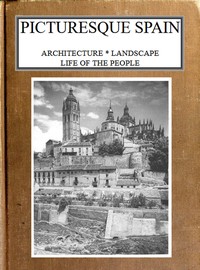
Picturesque Spain: Architecture, landscape, life of the people.
Subjects:
Download Formats:
Excerpt
The Project Gutenberg eBook of Picturesque Spain, by Kurt Hielscher
This eBook is for the use of anyone anywhere in the United States and
most other parts of the world at no cost and with almost no restrictions
whatsoever. You may copy it, give it away or re-use it under the terms
of the Project Gutenberg License included with this eBook or online at
www.gutenberg.org. If you are not located in the United States, you will
have to check the laws of the country where you are located before...
Read the Full Text
— End of Picturesque Spain: Architecture, landscape, life of the people. —
Book Information
- Title
- Picturesque Spain: Architecture, landscape, life of the people.
- Author(s)
- Hielscher, Kurt
- Language
- English
- Type
- Text
- Release Date
- March 30, 2021
- Word Count
- 19,659 words
- Library of Congress Classification
- DP
- Bookshelves
- Browsing: Architecture, Browsing: History - European, Browsing: Travel & Geography
- Rights
- Public domain in the USA.
Related Books
Sac au dos à travers l'Espagne
by France, Hector
French
1457h 27m read
The pillars of Hercules
by Urquhart, David
English
2106h 22m read
Voyage en Espagne du Chevalier Saint-Gervais (2 de 2)
by Lantier, Etienne François de
French
1622h 33m read
Voyage en Espagne du Chevalier Saint-Gervais (1 de 2)
by Lantier, Etienne François de
French
1881h 14m read

Omwandelingen door een gedeelte van Spanje - De Aarde en haar volken, 1868
by Davillier, Ch. (Charles), baron
Dutch
249h 23m read
The pillars of Hercules
by Urquhart, David
English
2038h 7m read