The Project Gutenberg EBook of Mother Goose's Bicycle Tour, by M. A. Bonnell
This eBook is for the use of anyone anywhere at no cost and with
almost no restrictions whatsoever. You may copy it, give it away or
re-use it under the terms of the Project Gutenberg License included
with this eBook or online at www.gutenberg.org/license
Title: Mother Goose's Bicycle Tour
Author: M. A. Bonnell
Release Date: May 5, 2017 [EBook #54664]
Language: English
Character set encoding: UTF-8
*** START OF THIS PROJECT GUTENBERG EBOOK MOTHER GOOSE'S BICYCLE TOUR ***
Produced by deaurider, Brian Wilcox and the Online
Distributed Proofreading Team at http://www.pgdp.net (This
file was produced from images generously made available
by The Internet Archive)
Transcriber’s Note:-
The original spelling, hyphenation, accentuation and punctuation has
been retained, with the exception of apparent typographical errors
which have been corrected.
The transcriber has added a Table of Contents, following the Dedication.
Italic text is denoted _thus_.
Bold text is denoted =thus=.
WRITTEN AND ADAPTED
_by_
M. A. BONNELL
=A=wake, sweet hope! for she who shares the throne
=L=ends her own merit to make dulness bright,
=E=ven as Luna to the insipid drop its light.
=X=anthine yellow might the aster take for hue,
=A=n emerald green the clove carnation crown,
=N=or could fair England’s rose yet learn to frown.
=D=iadems of humble bloom and royal fleur-de-lis,
=R=are crowns of love, have crowned her long ago;
=A=nd ever round her noble brow more intertwined they grow.
—_M. A. BONNELL_
_July 3rd, 1901._
_The above lines accompanied the copy which was graciously accepted
by Queen Alexandra._
MOTHER GOOSE’S BICYCLE
TOUR.
[Illustration: title page]
BY M. S. G.
Toronto:
William Briggs.
With honest pride the rhymer sings
Her ancestress’ renown,—
Oh, proud the day that gave her birth!
And proud her natal town!
Oh, may the theme the verse redeem,
Of meagre wit and rhyming loose,
And win a kind indulgence still
For Mary Susan Goose!
Entered according to Act of the Parliament of Canada, in the year
one thousand nine hundred, by WILLIAM BRIGGS, at the Department of
Agriculture.
Dedicated
By
Permission
To
Miss Liv Nansen
DEDICATION.
1.
Though pure the drifting snows of northern realms,
Dazzling the Aurora of the polar girth,
More stainless still thy fair and childish brow,
More bright the aureole that surrounds thy birth.
2.
Ofttimes a nation bends its tender gaze
To watch the blooming of a royal flower;
Child of heroic blood, genius thy heritage!
The loving interest of a world thy dower!
M. A. B.
CONTENTS.
DEDICATION.
THE DEPARTURE.
PUSSY CAT.
HIGH DIDDLE-DIDDLE.
THE QUEENS OF THE CARDS.
JACK AND JILL.
OLD KING COLE.
THERE WAS AN OLD WOMAN.
BAA-BAA BLACK SHEEP.
OLD MOTHER HUBBARD.
WHERE ARE YOU GOING TO, MY PRETTY MAID?
WHEN I WAS A BACHELOR.
HUMPETY DUMPETY.
TAFFY WAS A WELSHMAN.
THREE WISE MEN OF ST. IVES.
THE FROG AND THE CROW.
THE DONKEY’S REPLY.
FARMER BROWN.
THE CAPTAIN.
THE SHOEMAKER.
THE COOK.
THE GROCER.
THE FARMER.
THE FARMER’S WIFE.
THE TAILOR.
MRS. THOMPKINS AND MR. HOPKINS.
THIS VERY BLACK MAN OF SIAM.
THIS LAZY OLD MAN OF MOSELLE.
CE COCHON, AN INTERESTING PIG.
THIS SHOCKING OLD MAN FROM CAPE RAY.
PETER PRADDLE BOUGHT A SADDLE.
THE MAN FROM HONG KONG.
THE LITTLE BOHEMIAN.
THE KING IS RETURNING TO PARIS.
LE PETIT MARÉCHAL.
LA PETITE ÉTRANGÈRE.
LAY THE TABLE.
TOMMY HAS A GUN.
ENIGMAS.
THE MAID WITH EYES OF BLUE.
THIS STUDIOUS GIRL OF OGONTZ
ENIGMAS.
THE MILLER.
A KING.
LOUIS HAD A SISTER TRÈS-PETITE.
DICK’S POEM.
THE LITTLE NUT TREE.
L’ENFANT TERRIBLE.
ISIDORE ET ISABELLE.
EVERY DOG ON THE STREET.
THE APPLE-PIE PARTY.
GLOSSARY.
Mother Goose’s Bicycle Tour.
[Illustration]
THE DEPARTURE.
1.
Long years ago dear Mother Goose
For little people made, you see,
Of merry rhymes and odd conceits
A veritable pot pourri.
2.
Some riddles hard the brain to puzzle,
Tales that really seemed quite true,
Rhymes with fun just brimming o’er,
For each one something à son goût.
[Illustration: a princess]
3.
Her fame had spread through many lands,—
A princess came from France to see
The tree that bore the golden pear:
At least such was l’on dit.
4.
But years rolled by, the dame grew old,—
Alas, the universal fate!
She found herself almost forgot,
And with her goose left tête à tête.
[Illustration: they plan the journey]
5.
Said Mother Goose: “My faithful bird,
Our friends neglect us, to be sure;
But never mind, we’ll just prepare
And take a pleasant little tour.
6.
Some evenings spent in brushing up
The foreign words we used to know,
Ere setting out upon our trip,
Would now be very à propos.
7.
I’ll order from my milliner
A brand new hat and travelling suit;
And then procure some maps and guides;
We’ll surely need them whilst en route.
8.
’Tis fifty years since you and I
Our journey took the moon to see;
For fear we never should come back
We left our cards with P. P. C.
9.
What crowds there were to see us off!
What merry shout and loud hurrah!
Most certainly we undertook
Our enterprise with great éclat.
10.
And then the journey back again,
And how we made the world to stare
When home we brought the wondrous news—
The moon was made of fromage vert!
11.
But times are changed, and people now
Doubt everything they cannot see;
And men are old before they’re young,
And even children feel ennui.
12.
No fairies now their revels hold,
Nor dare their merry pranks pursue;
The prying eye, the searchlight’s glare,
Have made them bid the land adieu.
13.
Should you in this material age
Your magic powers reveal by chance,
You’d never be a moment free
From scientific surveillance.
14.
Besides, to ride upon your back
Would outrage modern fashion’s code;
To go upon a two-wheeled thing
Is now considered à la mode.”
15.
When thus the dame had spoke her mind,
Her banker first she went to see;
Then purchase made of many things,
Besides a flask of eau-de-vie.
16.
She meant to cross the Channel soon,
And for the future had a care;—
All those who travel on the sea
Provision make for mal de mer.
17.
Two bicycles were ordered then
From Monsieur Brun de Chambray;
To tell the truth, the dame on hers
Looked really most distinguée.
18.
The goose all unaccustomed was
To this most curious gait,
But spite of this her mistress vow’d
She thought her manner was parfaite.
19.
“I am an awkward creature,”
Quoth the goose, “as people say;
But on the water, rest assured,
You’ll find me quite au fait.
20.
“I know you dread the noisy ship,
With all its bustle and to-do;
And for the horrid smell of tar
You have a natural dégoût.
21.
“So let us take an open boat;
The voyage is not very long.
I’m sure we’ll reach the other side
Without the slightest contre-temps.”
22.
With courage rare the dame replied,
“Your plan, I think, is for our weal;
We’ll follow it without delay.”
Her charming nature was facile.
[Illustration: at sea]
23.
The noble, brave, and clever bird,
As one may well perceive,
For new and strange adventures now
Was quite on the qui vive.
24.
Adventures came too soon, alas!
For on that self-same day
A storm arose, and they were wrecked
In that short traversée.
25.
In this extremity most dire
The dame takes off a wooden boot,
And says, “I’ll buoy these precious bikes,
And get them sometime coûte que coûte.”
26.
For string she ravels out her hose,
While briny waters saturate her;
Her plan will surely win success
For is it not a coup de maître!
27.
“Now bind together, mistress dear,
Before they float away,
Those oars of good Canadian pine;
They are our pis aller.
28.
“Your weight, supported by this frame,
I have the power to draw;
Nor danger fear while you retain
Such admirable sang-froid.”
29.
By strength of will, and wing, and web,
They reached a passing man-of-war,
And now to Mother Goose and bird
We must say “au revoir.”
[Illustration]
PUSSY CAT.
“Pussy cat, pussy cat, where have you been?”
“I’ve been to London to see the Queen.”
“Pussy cat, pussy cat, what saw you there?”
“I saw a little mouse under the chair.”
“Pussy cat, pussy cat, what did you do?”
“J’ai mangé la souris tout à coup.”
[Illustration]
HIGH DIDDLE-DIDDLE.
1.
High diddle-diddle, the cat and the fiddle,
The cow jumped over the moon.
Regardez donc cette vache agile,
Qui saute par-dessus la lune.
2.
Je vais au marché à l’instant,
I’m going to the market now,
Pour acheter cette vache surprenante,
To buy that remarkable cow.
3.
The well-known cat and the wonderful cow,
On the picture now you may see,
Ainsi que le chien intelligent,
Qui avait beaucoup ri.
[Illustration: page decoration]
[Illustration]
THE QUEENS OF THE CARDS.
Les dames des cartes,
Elles firent des tartes
All on a summer’s day.
[Illustration]
Les valets des cartes
Volèrent ces tartes,
And took them clean away.
[Illustration]
Les rois des cartes
Cherchèrent les tartes,
And beat the knaves full sore.
[Illustration]
Les valets des cartes
Rapportèrent les tartes,
And vow’d they’d steal no more.
[Illustration]
JACK AND JILL.
1.
Jack and Jill went up the hill,
Ensemble de l’eau y chercher;
Jack fell down and broke his crown,
La pauvre Jille fut renversée.
2.
Up Jack got and home did trot,
En colère et très-pressé;
Dame Jill had the job to plaster his knob,
Quand l’effusion de sang eut cessé.
3.
Jill came in and she did grin,
En voyant cet emplâtre;
Her mother vow’d she’d whip her next,
À cause de ce désastre.
[Illustration]
OLD KING COLE.
Old King Cole was a merry old soul,
Il aimait la compagnie;
He called for his pipe, he called for his bowl,
Singing “Vive la compagnie!”
He shared with his fiddlers the very best cheer,
Singing “Vive la compagnie!”
He drank from his bowl the very best beer,
Singing “Vive la compagnie!”
He never knew sorrow, he never knew fear,
Singing “Vive la compagnie!”
He lived very happy (cela va sans dire),
Singing “Vive la compagnie!”
[Illustration: page decoration]
[Illustration]
THERE WAS AN OLD WOMAN.
1.
There was an old woman
Who lived in a shoe,
Elle avait beaucoup d’enfants,
And she didn’t know what to do.
2.
She gave them some broth,
Without any bread,
Elle les battait très-fort,
And sent them to bed.
Illustration]
BAA-BAA BLACK SHEEP.
“Baa-baa black sheep,
As-tu de la laine?”
“Oui, Monsieur, j’en ai
Deux poches pleines.
“Une pour mon maître,
Une pour ma dame,
Rien pour le garçon
Qui versa des larmes.”
[Illustration]
OLD MOTHER HUBBARD.
1.
Old Mother Hubbard went to the cupboard
Des os d’obtenir pour son chien,
But when she got there, the cupboard was bare,
Hélas! le pauvre chien n’eut rien.
[Illustration: chien mort]
2.
She went to get bread
From the baker next door,
But when she returned
Le chien était mort.
3.
She went for a coffin,
With many a tear,
But the dog was only joking,
Se met donc à rire.
4.
She went for some tripe,
Feeling all in a maze,
But when she returned
Il fumait à l’aise.
5.
“I will get him some ale,”
Mother Hubbard said she,
But when she returned
Le chien était assis.
6.
She went for some wine,
Her favorite to fête,
Returning she found him
Debout sur sa tête.
7.
She went to the hatter’s
To get him a hat,
But when she returned
Il nourrissait la chatte.
8.
She went to the barber’s
To buy him a wig,
But when she returned
Il dansait une gigue.
9.
She went to the fruiterer’s
To get him some fruit,
Returning she found him
Jouant de la flûte.
10.
To buy him a coat
She went to the tailor,
Returning she found him
À cheval sur une chèvre.
[Illustration: dog reads by the fire]
11.
She went to buy shoes,
But, most strange to tell,
Returning, she found him
Lisant les nouvelles.
12.
To buy him some linen
She went one fine day,
Returning, she found
Le chien qui filait.
[Illustration: dog fully dressed]
13.
She went to buy hose
From old Father Drew,
Returning she found him
Paré de son mieux.
14.
The dame made a curtsey,
The dog made a bow;
The dame said, “Your servant,”
Le chien dit, “Bow-wow.”
15.
This wonderful dog
To the dame was most dear,
He could read, sing and dance,
Et il savait écrire.
16.
Whilst living she fed him
With dainties galore,
And built him a tombstone
Quand il était mort.
[Illustration: page decoration]
[Illustration]
WHERE ARE YOU GOING TO, MY PRETTY MAID?
“Où vas-tu, ma belle chérie?”
“I’m going a-milking, sir,” said she.
“Puis-je t’accompagner, belle chérie?”
“Just as you please, kind sir,” said she.
“Que fait ton père, ma belle chérie?”
“My father’s a farmer, sir,” said she.
“Que fait ta mère, ma belle chérie?”
“Wife to my father, sir,” said she.
“Quelle est ta fortune, belle chérie?”
“My face is my fortune, sir,” said she.
“S’il en est ainsi, belle chérie—”
“What do you mean, kind sir,” said she.
“Nous n’aurons jamais de fiançailles.”
“Nobody asked you, sir,” said she.
WHEN I WAS A BACHELOR
1.
Quand j’étais un garçon,
I lived by myself,
Et toute la viande et le fromage
I put upon a shelf.
2.
Les rats et les souris
Did lead me such a life,
Je m’en allai à Londres
To get myself a wife.
3.
Les rues étant grandes,
And the lanes being narrow,
Je dus amener mon épouse,
In a wheel-barrow.
4.
La brouette se cassa,
My wife got a fall,
A terre fut la brouette,
Little wife and all.
[Illustration]
HUMPETY DUMPETY.
Humpety Dumpety sat on a wall;
Humpety Dumpety had a great fall.
All the King’s horses
Et l’armée du roi
Couldn’t make Humpety Dumpety
Ce qu’il était autrefois.
TAFFY WAS A WELSHMAN.
1.
Taffy was a Welshman,
Taffy was a thief,
Taffy coura chez moi
And stole a leg of beef.
2.
I went to Taffy’s house,
Taffy wasn’t at home,
Taffy coura chez moi
And stole a marrow bone.
3.
I went to Taffy’s house,
Taffy was in bed,
Je pris vite le savouret,
And beat him on the head.
[Illustration]
THREE WISE MEN OF ST. IVES.
1.
Said this very wise man of St. Ives,
“I hear that potatoes have eyes;
I’ll shave all my head and dye my clothes red,
I’ve a nervous objection to spies.”
2.
Said the wiser, “I cannot advise
Such a strange and uncommon disguise;
But this is my plan, to eat all we can,
Regardless of shape or of size.”
3.
Said the sagest, “You don’t realize
That your scheme is most truly unwise;
If you eat them at all, either large ones or small,
Every thought of your heart they’ll surmise.
4.
“On the man who successfully tries,
Or some feasible plan can devise,
To grow us a kind that really is blind,
We’ll bestow a magnificent prize.”
[Illustration: page decoration]
[Illustration]
THE FROG AND THE CROW.
[Illustration: musical score
1. Une chère petite grenouille, Lived on the river brink, oh! Un
corbeau noir et gaillard Came there to get a drink, oh! “Come
ashore, Come ashore,” Dit le corbeau à la grenouille, “Come
ashore, come ashore,” Dit le corbeau à la grenouille.
2. “And you shall hear the music On yonder green hill, oh! And you
shall see the dancers All dressed up in yellow.” “Je vous
remercie, Je vous remercie,” Dit la jeune petite grenouille,
“Je vous remercie, Je vous remercie,” Dit la jeune petite
grenouille.]
3.
So the frog began a-jumping,
A-jumping to land, oh!
And the crow began a-hopping,
To give her his hand, oh!
“Je vous remercie, je vous remercie,”
Dit encore la jeune grenouille.
“Miss, you’re welcome; Miss, you’re welcome,”
Dit le corbeau à la grenouille.
4.
“But where is the music
On yonder green hill, oh!
And where are the dancers
All dressed up in yellow—?”
“Yough” (scream).
[Illustration: crow swallows toad]
[Illustration]
THE DONKEY’S REPLY.
1.
“Dear Neddy, I called you long ago,
Are you cold out here in the snow?
I would take you down to the kitchen below,
Only—”
“Frottez le dos.”
2.
“Cook is so cross I’m afraid to go;
When I wanted to help her knead the dough
She sent me away and scolded so,
But—”
“Frottez le dos.”
3.
“But if you are quiet and speak very low,
And try to walk on your very tip-toe,
We might go to the room where sisters sew,
Or—”
“Frottez le dos.”
4.
“Dear old Ned, you are as hoarse as a crow,
And you wobble your long ears to and fro,
But whatever you mean, I would like to know,
By—”
“Frottez le dos.”
FARMER BROWN.
[Illustration: artist at his easel]
I painted a picture of his two cows,
And sent him in the bill;
Old Pogue is there, and Sukie, too,
And Minn’s behind the hill.
1.
Farmer Brown is a sneak,
And Farmer Brown is a rogue!
He said he would give me a pound, and he didn’t,
For painting his cows and Pogue.
2.
He wanted a picture of his two cows,
Sukie and coal-black Minn;
And then for the pound he was to give
Old Pogue must be painted in.
3.
Oh, Farmer Brown is a sneak,
And Farmer Brown is a rogue!
He said he would give me a pound, and he didn’t,
For painting his cows and Pogue.
4.
I painted a picture of his two cows,
Sukie and coal-black Minn;
And then for the pound he was to give,
Old Pogue was painted in.
5.
Oh, Farmer Brown is a sneak,
And Farmer Brown is a rogue!
He said he would give me a pound, and he didn’t,
For painting his cows and Pogue.
6.
I painted a picture of his two cows,
And sent him in the bill;
Old Pogue is there, and Sukie, too,
And Minn’s behind the hill.
7.
Oh, Farmer Brown is a sneak,
And Farmer Brown is a rogue!
He said he would give me a pound, and he didn’t,
For painting his cows and Pogue.
[Illustration]
THE CAPTAIN.
“I’ve finished my ship to the very last nail,
I’ve painted the deck and set the sail,
And now I’m ready to cross the main,
For I will be le capitaine.”
[Illustration]
THE SHOEMAKER.
“I mean to make shoes of the strongest leather,
That boys may go out in any weather.
I’ve got some wax, and I know the way,
So I will be le cordonnier.”
[Illustration]
THE COOK.
“My cakes will be indeed a treat;
I’ll make them of raisins and sugar sweet:
First a story and then a layer,
And I will be la cuisinière.”
[Illustration]
THE GROCER.
“Currants and chocolate, apples as well,
The very things I would like to sell;
In spite of brother Ned’s facetiæ,
I’ll be a prosperous épicier.”[A]
FOOTNOTES:
[A] The exigencies of the language do not admit of a very good rhyme
here.
[Illustration]
THE FARMER.
“You must have horses large and strong,
To drag the heavy plough along;
And go to market and draw the hay,
So I will be le fermier.”
[Illustration]
THE FARMER’S WIFE.
“I’d like to make butter and skim the milk,
And go to church in a nice black silk;
And I like boys with curly hair;
I think I’ll be la fermière.”
[Illustration]
THE TAILOR.
“The stylish suits of cloth I’ll make
The eye of taste will surely take;
And swain, intent on wedding tour,
Will ask, ‘Qui est votre tailleur?’”
[Illustration]
MRS. THOMPKINS AND MR. HOPKINS.
[Illustration: musical score
1. “Oh, here is lit-tle Mrs. Thompkins, In such a frill, in such a
frill!” “Oh, bless me if it isn’t Hopkins, All dressed to
kill, all dressed to kill!”
2. “Good morning to you, Mrs. Thompkins, Pray how d’you do? pray how
d’you do?” “Oh, none the better, Mr. Hopkins, for see-ing you,
for seeing you.”
3. “That sil-ly, sil-ly Mrs. Thompkins, I’m sorry for her, I’m sorry
for her!” “That horrid, horrid Mr. Hopkins, He’s my _bête
noir_, he’s my _bête noir_!”]
[Illustration: they turn their backs]
[Illustration]
THIS VERY BLACK MAN OF SIAM.
Ce jeune homme très-noir de Siam,
Just asked for a slice of good ham;
They said, “If you crave it,
And take affidavit
You’re not a Mohamme-dan-dan,
You can.”
[Illustration]
THIS LAZY OLD MAN OF MOSELLE.
This lazy old man of Moselle
Said, “Indeed, it is all very well;
But to kill flies with pease
Is not taking one’s ease,
‘Le jeu ne vaut pas la chandelle.’”
[Illustration]
CE COCHON, AN INTERESTING PIG.
Ce cochon, an interesting pig,
Always wore a dress coat and a wig,
But his friends looked askance,
And soon took a chance
To ask why he wore that strange rig.
[Illustration]
THIS SHOCKING OLD MAN FROM CAPE RAY.
This shocking old man from Cape Ray
Refusa de mettre son gilet;
They put him to bed,
And everyone said,
“Such men must be made to obey.”
[Illustration]
PETER PRADDLE BOUGHT A SADDLE.
Peter Praddle bought a saddle,
Put it on a pump handle;
When they asked him what for,
He answered, “Je ne sais quoi.”
[Illustration]
THE MAN FROM HONG KONG.
This extraordinary man of Hong Kong
Déclarait la journée trop longue;
They put on his head a poultice of bread,
And told him his views were all wrong.
[Illustration]
THE LITTLE BOHEMIAN.
1.
“Que fais-tu ici, mon petit?
You must be far from home;
It is not right that such a mite
Should be allowed to roam.
2.
“What is your race and country,—
It never could be guessed,—
Your raven locks and Northern bloom
To different climes attest?”
3.
“I had a race, a long one,
Across the river Seine,
Ma mère parle le Français
Et elle est Américaine.
4.
“But I’m going to my own country,
And it’s forty miles away;
I’m walking very fast because
I must be there to-day.
5.
“My father knows the name of it,
Il m’appelle Bohème;
And Victor’s going with me,
For I think he is the same.”
[Illustration]
THE KING IS RETURNING TO PARIS.
Le roi revient à Paris,
La reine est très-heureuse,
Le roi il est le mari,
La reine elle est l’épouse.
[Illustration]
LE PETIT MARÉCHAL.[B]
1.
I was a little sergeant, don’t you see,
And I drilled my soldiers one and twenty-three,
And we all stepped out together,
In fair and stormy weather,
Myself and soldiers one and twenty-three.
2.
I was a little captain, happy me!
Of my chosen band of one and twenty-three,
And we roamed the world together,
In fair and stormy weather,
Myself and soldiers one and twenty-three.
3.
And now I am a marshal, as you see,
With a score and four of soldiers under me,
And we roam the world together
In fair and stormy weather,
Just five and twenty soldiers counting me.
[Illustration: page decoration]
FOOTNOTES:
[B] The answer is “A,” the first letter of the twenty-five that compose
the French alphabet.
[Illustration]
LA PETITE ÉTRANGÈRE.
1.
I met a little foreigner,
All on a walking tour;
She smiled at me and sweetly said,
“Je suis Française, Monsieur.”
2.
She looked so very elegant—
A countess, I am sure—
I quickly lifted off my hat
And said, “Madame, bonjour.”
[Illustration]
LAY THE TABLE.
1.
Mettez donc le couvert
Vite, vite, vite.
Set the plates immediately
To heat, heat, heat.
2.
Jeanne a fait le ragoût,
Anne a fait la tarte,
Sue will place the chairs around
With all her little heart.
[Illustration]
TOMMY HAS A GUN.
Tommy has a gun,
Prenez-garde;
It has bullets made of lead,
Very hard.
He might take you for a bear,
He might take you for a hare,
He might take you for a bird,
Prenez-garde.
ENIGMAS
[Illustration: a bear]
ENIGMA.
I feed all the Summer,
O dear, yes!
You’d better keep out of my way.
I fast all the Winter,
O dear, dear!
In the dark and the cold I stay.
[Illustration: man stoking boiler]
ENIGMA.
I feed all the Winter,
O dear, yes!
I feed both night and day.
I fast all the Summer,
O dear, dear!
In a dark, dreary place I stay.
[Illustration: dog being fed at table]
COMME IL FAUT.
This is a pretty little girl,
And yet I do not know,
It seems to me her manners
Are not quite comme il faut.
[Illustration]
THE MAID WITH EYES OF BLUE.
I met a little maiden
With eyes of lovely blue,
I said in my politest tone,
“Ma chère, que voulez-vous?”
She said, “I’d like a cherry ripe,
Kind sir, or even two.”
Oh, no one could refuse her,
La fille aux beaux yeux doux.
[Illustration]
THIS STUDIOUS GIRL OF OGONTZ
Cette fille studieuse de l’Ogontz[C]
Said, “This child will, I fear, be a dunce;
It’s my place to see that
She is taught to spell cat,
So come here, little sister, at once.”
This lad with compassion was smitten,
Qui vint des environs de Wittin,
He said, “I fear that
She’s too young to spell ‘cat’,
Oh do, please, first try her with ‘kitten.’”
FOOTNOTES:
[C] Ogontz is a college in the United States.
ENIGMAS
[Illustration: rabbits]
ENIGMA.
Connaissez-vous mon père?
Connaissez-vous ma mère?
Connaissez-vous mes frères,
chérie?
[Illustration: more rabbits]
ENIGMA.
They are hiding in the hedge,
They are peeping o’er the ledge,
They are seeking in the grass
For me.
[Illustration: boy serenades girl at window]
CASSANDRE.
À cette fenêtre
Veux-tu paraître?
De tout mon être
Je t’attends.
My heart is ever true,
I wait, dear love, for you,
At this our rendez-vous,
Cassandre.
[Illustration]
THE MILLER
This jolly, fat miller works hard every day,
To grind up the corn in the very best way;
Oh, bright is his smile and friendly his chat,
And on his head always he wears a white hat;
Oh, gay is his whistle and cheery his song.
Et sur sa tête toujours un chapeau très-blanc.
Pourquoi?
Pour se tenir la tête chaude.
[Illustration]
A KING.[D]
A king:—in history my name is surely known;
Their love my subjects by word and deed have shown.
Tho’ grieved to leave the palace of my sires,
Tho’ grieved to leave the land of sunny skies,
Choice of evils bade me leave my tottering throne,—
Should I say more my answer would be known.
FOOTNOTES:
[D] Un certain roi et sa cour furent obligés de laisser leur capital et
partir pour le nouveau monde à cause du tremblement de terre, A.D. 1755.
A certain king and his court were obliged to leave their capital and
set out for the New World on account of an earthquake in A.D. 1755.
[Illustration]
LOUIS HAD A SISTER TRÈS-PETITE.
Louis had a sister très-petite,
He thought that standing up she would look sweet;
But her mother came and sought her,
And caught her little daughter—
Before that he had taught her this new feat.
[Illustration]
DICK’S POEM.
When Benny wasn’t doing something silly he was very wise;
He was bigger than he was small regarding size;
His head was about as large as a piece of chalk,
And when he didn’t run he went in a walk.
Even when he walked it was on his feet,
And he never was greedy when he hadn’t anything to eat.
The way he didn’t behave himself was a disgrace;
But then he never hurt you when he bit you on your false face.
[Illustration: page decoration]
THE LITTLE NUT TREE.
1.
J’avais un noisetier,
Nothing did it bear
Mais une muscade d’argent
And a golden pear.
2.
The King of France’s sister
Came to visit me,
All for the sake
Of my little nut tree.
L’ENFANT TERRIBLE.
1.
I wish that grown-up gentlemen,
And grown-up ladies, too,
Would learn to speak as plainly
As other people do.
2.
Uncle calls me some queer name,
Something “long” I know;
I cannot tell quite what it is,—
He always says it low.
3.
I never call him “long,” although
He’s seven or eight feet high,
Or more, perhaps—at any rate,
He’s longer far than I.
4.
I tried to wait in uncle’s room
To ask him what it meant,
But all my poor dear dollies
Wanted some of uncle’s scent.
5.
They’re very fond of scent, you know,
And so I gave them plenty;
But, oh, dear me! I was surprised
To find the bottle empty.
6.
With sister it is just the same—
She says I am de trop
Whenever there is company,
What’s that, I’d like to know?
7.
To-day (of course to help them)
I just took off the string
From a cunning little parcel
I saw the postman bring.
8.
It was the sweetest ring, although
It did not fit me quite,
So I put it in my pocket
To keep it out of sight.
9.
My birthday cake was getting made
Down stairs that very minute,
And when cook looked the other way
I pushed the ring down in it.
10.
And if the ring should fall to Rose,
I’ll be so glad, you know,
For she is my darling sister
And I really love her so.
[Illustration]
ISIDORE ET ISABELLE.
Isidore et Isabelle
Marchent dessous une grande ombrelle.
Now which is which? If you can tell,
You shall have a candy and kiss as well.
[Illustration]
EVERY DOG ON THE STREET.
Every dog on the street wags its tail when we meet.
Mais voici une autre chose;
This one I dread, for it waggles its head,
And fastens its teeth in my hose.
This very small child on a stool,
Had a bird that her nurse called a Poule;
But the gardener’s son, Ben,
Always called it “An enn,”
Though his parents had sent him to school.
[Illustration]
TWICE ONE ARE TWO.
Twice one are two,
Toujours je l’ai su.
Twice two are four,
J’ai des boutons d’or.
Twice three are six,
Ce fait est vraiment fixe.
Twice four are eight,
La réponse est parfaite.
Twice five are ten,
Les écoliers viennent.
Un, deux, trois, quatre, cinq,
De l’argent dans la banque;
Six, sept, huit, neuf, dix,
J’en donnerai à mon fils.
Apportez-moi du potage,
Apportez-moi du sel,
Apportez-moi une tranche de pain,
And I’ll do very well.
THE APPLE-PIE PARTY.
[Illustration: ornate letters A B]
A was an apple-pie, bitten by Tom;
French people call an apple “une pomme.”
B was the bite, and I really must say,
Tom was sorry that ever he took “la bouchée.”
[Illustration ornate letters C D]
C was the cook; Tom was always quite safe
To get goodies and tarts, when he called him “le chéf.”
D was the dinner got ready that day;
Dinner in France is called “le dîner.”
[Illustration ornate letters E F]
E was the edge (in France called “le bord”)
Of that pie trimmed with pastry to imitate cord.
F was the fun the sight gave to all;
In words of the Frenchman “la gaiété folle.”
[Illustration ornate letter G]
G was the guest Tom was late to receive;
He came looking happy—a merry “convive.”
[Illustration ornate letter H]
H was for Harry, who served the pie in great glee;
In France his name is pronouncéd “Henri.”
[Illustration ornate letters I J]
I was the ivy; the pie with great care
Was entwined with the creeper the French call “lierre.”
J was the juice, well sweetened by the cook;
He flavoured it nicely and called it “le suc.”
[Illustration ornate letters K L]
K was the kitchen, so tidy and clean;
In France it is always called “la cuisine.”
L was the linen beside each place set,
In Anglo, the napkin; in French, “serviette.”
[Illustration ornate letters M N]
M was the music (in French “la musique”)
Aunt played for the game of “lost treasure seek.”
N was the nurse (in France called “la bonne”)
Who brought some small cousins to share in the fun.
[Illustration ornate letters O P]
O was the oven (in French called “le four”);
At ’Xmas it bakes many pies for the poor.
P for the plates (in French “assiettes”),
Kept warm till the table was all nicely set.
[Illustration ornate letters Q R]
Q the quadrille, which I think came from France;
The place where all children learn early to dance.
R was the room where the dancing took place,
In French called “le salon,” or else “la pièce.”
[Illustration ornate letters S T]
S was the sideboard for things stored away;
Cupboard, or sideboard, in French is “buffet.”
T was the tray (in French called “plateau”)
All laden with jellies and cream whipped like snow.
[Illustration ornate letters U V]
U was the urchin, old cook’s “petite peste”;
Of leavings and scraps she was always in quest.
V was the valet; at “dix heures” he came,
His very small master and mistress to claim.
[Illustration ornate letters W X]
W a wrangler, a horrid “mégère”;
Just read the next line, her name will be there.
X Xantippe was not at the party, I’m told;
Such people are always left out in the cold.
[Illustration ornate letters Y Z]
Y was the year (in French called “l’année”),
Which for these happy children had just passed away.
Z was the “zeste” that appetites hearty
Unfailingly give to an apple-pie party.
GLOSSARY.
CODE.
a, fāte, făt, fāll; e, mē, mĕt, hêr; i, pīne, pĭn, fîr; o, nōte, nŏt,
nôr; u, tūbe, tŭb, fûll; tŏĭl; oo, ooze.
Where the letter “g” is added at the end of a syllable in the
pronunciation, it should be sounded very faintly so as to be scarcely
perceptible.
_À cause de ce désastre_ (ă kōs dĕ sĕ dēsăstr), because of this
misfortune.
_À cette fenêtre_ (ā sĕt fĕnātr), at this window.
_À cheval sur une chèvre_ (ă shêvăl soor oon shāvr), riding a goat.
_Adieu_ (ă-dew), farewell.
_Ainsi que le chien intelligent_ (ăn-sē kĕ lĕ shē-ĕn ân-tĕl-ē-jôn),
also the intelligent dog.
_À la mode_ (ă lă mōd), in the fashion.
_Anne a fait la tarte_ (ăn ă fā lă tărt), Anne has made the tart.
_Apportez-moi du potage_ (ă-pōrt-ā mŏá doo pot-ăj, bring me some
soup.
_Apportez-moi du sel_ (ă-pōrt-ā mŏá doo sĕl), bring me some salt.
_Apportez-moi une tranche de pain_ (ă-pōrt-ā mŏà oon transh dĕ
pă-ng), bring me a slice of bread.
_Approchez-vous_ (ă-prō-shā voo), come nearer.
_À propos_ (ă prō-pō), to the purpose, suitable.
_À son goût_ (ă sōng goo), according to his taste.
_Assiettes_ (ăs-sē-ĕt), plates.
_As-tu de la laine?_ (ā too dĕ lă lān) Hast thou any wool?
_À terre fut la brouette_ (ă tār foo lă broo-ĕt), down came the
wheelbarrow.
_Au fait_ (ō fā), expert.
_Au revoir_ (ō rĕv-vôr), good-bye till our next meeting.
_Bête-noir_ (bāt nwôr), bugbear.
_Bonne_ (bŭn), nurse maid, or maid-servant.
_Bouchée_ (boo-shā), mouthful.
_Buffet_ (boo-fā), sideboard.
_Ce cochon_ (sĕ kō-shŏn), this pig.
_Ce fait est vraiment fixe_ (sĕ fāt ā vrā-mŏng fēx), this fact is
truly fixed.
_Ce jeune homme très noir de Siam_ (sĕ joon ŏm trā nwôr dĕ Sē-ăm),
this young man very black of Siam.
_Cela va sans dire_ (sĕ-lă vă sŏng dēr), that goes without saying.
_Cette fille studieuse de l’Ogontz_ (sĕt fēl stoo-dē-oos), this
studious girl of Ogontz.
_Ce qu’il était autrefois_ (sĕ kēl ĕt-ā ōtr-fōy), that which he was
formerly.
_Chef_ (shāf), head cook, man cook.
_Cherchèrent les tartes_ (shĕrsh-ār lā tărt), searched for the
tarts.
_Comme il faut_ (kŭm ēl fō), the correct thing.
_Connaissez-vous ma mère?_ (kŏn-nā-sā voo mă mār), Do you know my
mother?
_Connaissez-vous mes frères?_ (kŏn-nā-sā voo mā frār), Do you know
my brothers?
_Connaissez-vous mon père?_ (kŏn-nā-sā voo mŏng pār), Do you know
my father?
_Contre-temps_ (kŏntr-tŏng), mischance.
_Convive_ (kōng-vēv), companion at table.
_Coup de maĭtre_ (koo de mātr), master-stroke.
_Coûte que coûte_ (koot kĕ koot), cost what it may.
_Cuisine_ (kwē-zēn), kitchen.
_Debout sur sa tête_ (dā-boo soor să tāt), standing on his head.
_Déclarait la journée trop longue_ (dā-klă-rā lă joor-nā trō lŏng),
declared the day was too long.
_De l’argent dans la banque_ (dĕ lăr-jôn dông lă bănk), some money
in the bank.
_De trop_ (dĕ trō), in the way.
_Des os d’obtenir pour son chien_ (dās ō dōb-tĕ-nēr poor sōng
shē-ĕn), some bones to procure for her dog.
_De tout mon être_ (dĕ too mŏng ātr), with all my soul.
_Deux poches pleines_ (doo pōsh plān), two bags full.
_Dégoût_ (dā-goo), disgust.
_Dîner_ (dē-nā), dinner.
_Distinguée_ (dĕs-tāng-ā), distinguished.
_Dit encore la jeune grenouille_ (dēt ŏng-kor lă joon grĕn-oo-ē),
said the young frog again.
_Dit la jeune petite grenouille_ (dē lă joon pĕ-tēt grĕn-oo-ē),
said the young little frog.
_Dit le corbeau à la grenouille_ (dē lĕ kôr-bō ă lă grĕn-oo-ē),
said the crow to the frog.
_Eau-de-vie_ (ō-dĕ-vē), brandy.
_Éclat_ (ā-klă), brilliancy.
_Elle avait beaucoup d’enfants_ (ĕl ă-vā bō-koo dŏng-fŏng), she had
a great many children.
_Elle les battait très-fort_ (ĕl lā băt-tā trā fōr), she beat them
very soundly.
_Elles firent des tartes_ (ĕl fēr dā tărt), they made some tarts.
_En colère et très-pressé_ (ōng ko-lār ā trā prĕssā), in anger and
haste.
_Ennui_ (ŏng-nwē), condition or state of being bored.
_Ensemble de l’eau y chercher_ (ŏng-sômble dĕ lō ē shĕr-shā),
together to get some water there.
_En route_ (ŏng root), on the journey.
_En voyant cet emplâtre_ (ŏng vŏĭ-ŏng sĕt ŏng-plătr), on seeing
this plaster.
_Et elle est Américaine_ (ā ĕl āt ă-mā-rē-kān), and she is an
American.
_Et il savait écrire_ (ā ēl săv-āt ā-krēr), and he knew how to
write.
_Et l’armée du roi_ (ā lăr-mā doo rwŏĭ), and the army of the king.
_Et sur sa tête toujours_ (ā soor să tāt too-joor), and on his head
always.
_Et toute la viande et le fromage_ (ā toot lă vē-ŏnd ā lĕ frō-măj),
and all the meat and cheese.
_Facile_ (fă-sēl), compliant.
_Four_ (foor), oven.
_Fromage vert_ (frō-măj vār), green cheese.
_Frottez le dos_ (frŏt-ā lĕ dō), rub my back.
_Henri_ (ŏng rē), Henry.
_Hélas! le pauvre chien n’eut rien._ (ā-lă lĕ pōvr shē-ĕn noo
rē-ĕn), Alas! the poor dog had nothing.
_Il aimait la compagnie_ (ēl ā-mā lă kŏm-pă-nē), he used to love
company.
_Il dansait une gigue_ (ēl dŏng-sāt oon jē-g), he was dancing a jig.
_Il fumait à l’aise_ (ēl foo-māt ă lāz), he was smoking comfortably.
_Il m’appelle Bohème_ (ēl mă-pĕl bō-ām), he calls me a Bohemian.
_Il nourrissait la chatte_ (ēl noo-rē-sā lă shăt), he was feeding
the cat.
_J’ai des boutons d’or_ (jā dā boo-tŏng dōr), I have some gold
buttons.
_J’ai mangé la souris tout à coup_ (jē mông-jā lă soo-rē toot ă
koo), I ate up the mouse instantly.
_J’avais un noisetier_ (jăv-āz ūn nŏĭ-zĕt-ē-ā), I had a nut-tree.
_Jeanne a fait le ragoût_ (jān ă fā lĕ ră-goo), Jean has made the
stew.
_Je dus amener mon épouse_ (jĕ dooz ămĕn-ā mon ā-pooz), I was
obliged to bring my wife.
_Je m’en allai à Londres_ (jĕ mōn ăl-ā ă Lŏndr), I went away to
London.
_J’en donnerai à mon fils_ (jŏn dŏn-ĕ-rā ă mŏng fēs), I will give
some of it to my son.
_Je ne sais quoi_ (jĕ nĕ sā qàw), I don’t know what.
_Jouant de la flûte_ (joo-ŏng dĕ lă floot), playing the flute.
_Je pris vite le savouret_ (jĕ prē vēt lĕ să-voo-rā), I quickly
took the marrow-bone.
_Je suis Française Monsieur!_ (jĕ swē frŏng-sāz mŏng-sor), I am a
French woman, sir!
_Je t’attends_ (jĕ tă-tŏngd), I wait for thee.
_Je vais au marché à l’instant_ (jĕ vāz ō măr-shā ă lŏng-stŏng), I
am going to the market now.
_Je vous remercie_ (jĕ voo rĕ-mĕr-sē), I thank you.
_La brouette se cassa_ (lă broo-ĕt sĕ kăs-ă), the wheelbarrow broke.
_La cuisinière_ (lă kwē-zē-nē-ār), the cook (woman cook).
_La fermière_ (lă fĕr-mē-ār), the farmer’s wife.
_La fille aux beaux yeux doux_ (lă fēl ō bōz ū doo), the girl with
the lovely soft eyes.
_La fournaise_ (lă foor-nāz), the furnace.
_La gaieté folle_ (lă gā-ā-tā făl), the merriment, the fun.
_L’année_ (lă-nā), the year.
_La pauvre fille fut renversée_ (lă pōvr fēl foo rŏng-vēr-sā), the
poor girl fell down.
_La petite étrangère_ (lă pĕ-tēt ā-trŏng-jār), the little foreigner.
_La reine, elle est l’épouse_ (lă rān ĕl ā lā-poos), the queen, she
is the wife.
_La reine est très-heureuse_ (lă rān ā trā-oo-roo-s), the queen is
very happy.
_La réponse est parfaite_ (lă rā-pŏns ā păr-fāt), the answer is
perfect.
_Le capitaine_ (lĕ kă-pē-tān), the captain.
_Le chien dit_ (lĕ shē-ĕn dē), the dog said.
_Le chien était assis_ (lĕ shē-ĕn ĕtāt ăs-ē), the dog was seated.
_Le chien était mort_ (lĕ shē-ĕn ĕt-ā mōr), the dog was dead.
_Le chien qui filait_ (lĕ shē-ĕn kē fē-lā), the dog who was
spinning.
_Le cordonnier_ (lĕ kŏr-dŭn-ē-ā), the shoemaker.
_L’enfant terrible_ (lŏng-fâng tĕr-ē-bl), the dreadful child.
_Le fermier_ (lĕ fĕr-mē-ā), the farmer.
_Le jeu ne vaut pas la chandelle_ (lĕ joo nĕ vō pă lă shong-del),
the game is not worth the candle.
_L’épicier_ (lā-pē-sē-ā), the grocer.
_Le petit maréchal_ (lĕ pĕ-tē măr-ē-shăl), the little marshal.
_Les dames des cartes_ (lā dăm dā kărt), the queens of the cards.
_Les écoliers viennent_ (lās ā-kō-lē-ā vē-ĕn), the scholars are
coming.
_Les rats et les souris_ (lā ră ā lā soo-rē), the rats and the mice.
_Le roi, il est le mari_ (lĕ rŏĭ ēl ā lĕ mă-rē), the king, he is
the husband.
_Le roi revient à Paris_ (lĕ rŏĭ rĕ-vengt ă pă-rē), the king is
returning to Paris.
_Les rois des cartes_ (lā rŏĭ dā kărt), the kings of the cards.
_Les rues étant grandes_ (lā roo ĕtŏng gránd), the streets being
wide.
_Le suc_ (lĕ sook), the juice.
_Les valets des cartes_ (lā vă-lā dā kărt), the knaves of the cards.
_Le tailleur_ (lĕ tă-ē-oor), the tailor.
_Lierre_ (lē-ār), ivy.
_Lisant les nouvelles_ (lē-zŏng lā noo-vĕl), reading the news.
_L’on dit_ (lŏng dē), the rumour, the saying.
_L’ours_ (loor), the bear.
_Ma chère, que voulez-vous?_ (mă shār kĕ voo-lā voo), My dear, what
do you wish?
_Ma mère parle le Français_ (mă mē-r părl lĕ frāng-sā), my mother
speaks French.
_Madame, bonjour_ (mă-dăm bŏng-joor), Madam, good day.
_Mal de mer_ (măl dĕ mār), sea-sickness.
_Mais voici une autre chose_ (mā vŏĭ-sē oon ōtr shōs), but here is
a different thing.
_Mais une muscade d’argent_ (maz oon moos-kărd dăr-jŏn), except a
silver nutmeg.
_Marchent dessous une grande ombrelle_ (mărsh dĕs-oos oon grŏnd
ŏm-brĕl), walk beneath a wide umbrella.
_Mégère_ (mā-gā-r), a scold.
_Mettez donc le couvert_ (mĕt-ā dŏng lĕ koo-vār), lay the table
then.
_Musique_ (moo-zē-k), music.
_Nous n’aurons jamais des fiançailles_ (noo nō-rōng jă-mā dā
fē-ong-sā-ē), we will never be betrothed.
_Oui, monsieur, j’en ai_ (wē mŏng-soor jŏn ā), yes, sir, I have of
it.
_Où vas-tu, ma belle chérie?_ (oo vă-too mă bĕl shārē), Where are
you going, my pretty dear?
_Parfaite_ (păr-fāt), perfect.
_Paré de son mieux_ (pă-rā dĕ song mū), dressed up in his best.
_Petite peste_ (pĕ-tēt pēst), urchin.
_Pièce_ (pē-ā-s), apartment.
_Pis aller_ (pēs ăl-lā), last resource.
_Plateau_ (plă-tō), tray.
_Pot pourri_ (pō poorē), mixture.
_Poule_ (pool), hen.
_Pour acheter cette vache surprenante_ (poor ăsh-tā sĕt văsh
soor-prĕn-ānt), to buy that remarkable cow.
_Pour se tenir la tête chaude_ (poor sĕ tĕn-ēr lă tāt shōd), to
keep the head warm.
_Pourquoi_, (poor-kwā), why!
_P.P.C., Pour prendre congé_ (poor prŏng-dr kŏng-jā), to take
leave.
_Prenez-garde_ (prĕn-nā-gărd), take care.
_Puis-je t’accompagner?_ (pwē-j tā-kōm-pă-nē-ā), May I go with you?
_Quadrille_ (kwá-drĭl), quadrille.
_Quand il était mort_ (kŏng-d ēl ĕt-ā mōr), when he was dead.
_Quand j’étais un garçon_ (kŏng-d jĕt-ā găr-sŏng), when I was a
bachelor.
_Quand l’effusion de sang eut cessé_ (kŏng-d lĕf-foo-zē-ŏng dè sŏng
oo sĕsa), when the effusion of blood had ceased.
_Que fais-tu ici, mon petit?_ (kĕ fā-too ē-sē mŏng pĕ-tē), What are
you doing here, my little one?
_Que fait ton père, ma belle chérie?_ (kĕ fā tŏng pār mă bĕl
shā-rē), What does your father do, my pretty dear?
_Quelle est ta fortune?_ (kĕl ā tă fŏr-toon), What is your fortune?
_Que voulez-vous?_ (kĕ voo-lā voo), What do you wish?
_Qui avait beaucoup ri_ (kā ă-vā bō-koo rē), Who laughed so much.
_Que fait ta mère, ma belle chérie?_ (kĕ fā tă mār mă bĕl shā-rē),
What does your mother do, my pretty dear?
_Qui est votre tailleur?_ (kē ā vōtr tă-ē-oor), Who is your tailor?
_Qui saute par-dessus la lune_ (kē sōt păr-dēs-oo lă loon), Who
jumped over the moon.
_Qui versa des larmes_ (kē vĕr-să dā lărm), Who shed tears.
_Qui vint des environs de Wittin_ (kē văngt dās ong-vē-rōng dĕ
Vit-tăn), Who came from the neighborhood of Wittin.
_Qui vive_ (kē vēv), state of expectation.
_Rapportèrent les tartes_ (ră-pōr-tār lā tărt), brought back the
tarts.
_Refusa de mettre son gilet_ (rĕ-foo-ză dĭ mĕtr sōng jē-lā),
refused to put on his waistcoat
_Regardez donc cette vache agile_ (rĕ-găr-dā dŏng sĕt văsh ăjel),
look at this active cow.
_Rendez-vous_ (rŏng-dā-voo), appointed place of meeting.
_Rien pour le garçon_ (rē-ĕn poor lĕ găr-sŏng), nothing for the
boy.
_Salon_ (să-lŏng), drawing-room.
_Sang-froid_ (săng-frŏĭd), self-possession.
_Se met donc à rire_ (sĕ mē dŏng ă rēr), began to laugh.
_Serviette_ (sĕr-vē-ĕt), table napkin.
_S’il en est ainsi_ (sēl ŏng āt ăng-sē), if that is the case.
_Six, sept, huit, neuf, dix_ (sēs, sĕt, wēt, noof, dēs), six,
seven, eight, nine, ten.
_Surveillance_ (sŭr-vē-lang-s), overseeing, watchfulness.
_Taffy coura chez moi_ (tă-fē koor-ă shā mŏĭ), Taffy ran to my
house.
_Tête-à-tête_ (tāt-ă-tāt), conversation between two persons alone.
_Toujours je l’ai su_ (too-joor jĕ lā soo), I have always known it.
_Tour_ (toor), journey or trip.
_Traversée_ (tră-vĕr-sā), voyage.
_Très-petite_ (trā-pĕ-tēt), very small.
_Un chapeau très blanc_ (ŭn shă-pō trā blāng), a very white hat.
_Un corbeau noir et gaillard_ (ŭn kŏr-bō nŏĭr ā gă-ē-ărd), a jolly
black crow.
_Un, deux, trois, quatre, cinq_ (ŭn, doo, trwô, kătr, sănk), one,
two, three, four, five.
_Une chère petite grenouille_ (oon shār pĕ-tēt grĕn-oo-ē), a dear
little frog.
_Une pomme_ (oon pôm), an apple.
_Une pour ma dame_ (oon poor mă dăm), one for my lady.
_Une pour mon maître_ (oon poor mŏng mātr), one for my master.
_Valet_ (vă-lā), a gentleman’s body-servant.
_Veux-tu paraître?_ (voo-too pă-rātr), Wilt thou appear?
_Vite_ (vēt), quickly.
_Vive la compagnie!_ (vēv lă kŏm-pă-nē), Long life to the company!
_Volèrent ces tartes_ (vō-lār sē tărt), stole these tarts.
_Zeste_ (zĕst), Zest.
End of Project Gutenberg's Mother Goose's Bicycle Tour, by M. A. Bonnell
*** END OF THIS PROJECT GUTENBERG EBOOK MOTHER GOOSE'S BICYCLE TOUR ***
***** This file should be named 54664-0.txt or 54664-0.zip *****
This and all associated files of various formats will be found in:
http://www.gutenberg.org/5/4/6/6/54664/
Produced by deaurider, Brian Wilcox and the Online
Distributed Proofreading Team at http://www.pgdp.net (This
file was produced from images generously made available
by The Internet Archive)
Updated editions will replace the previous one--the old editions
will be renamed.
Creating the works from public domain print editions means that no
one owns a United States copyright in these works, so the Foundation
(and you!) can copy and distribute it in the United States without
permission and without paying copyright royalties. Special rules,
set forth in the General Terms of Use part of this license, apply to
copying and distributing Project Gutenberg-tm electronic works to
protect the PROJECT GUTENBERG-tm concept and trademark. Project
Gutenberg is a registered trademark, and may not be used if you
charge for the eBooks, unless you receive specific permission. If you
do not charge anything for copies of this eBook, complying with the
rules is very easy. You may use this eBook for nearly any purpose
such as creation of derivative works, reports, performances and
research. They may be modified and printed and given away--you may do
practically ANYTHING with public domain eBooks. Redistribution is
subject to the trademark license, especially commercial
redistribution.
*** START: FULL LICENSE ***
THE FULL PROJECT GUTENBERG LICENSE
PLEASE READ THIS BEFORE YOU DISTRIBUTE OR USE THIS WORK
To protect the Project Gutenberg-tm mission of promoting the free
distribution of electronic works, by using or distributing this work
(or any other work associated in any way with the phrase "Project
Gutenberg"), you agree to comply with all the terms of the Full Project
Gutenberg-tm License (available with this file or online at
http://gutenberg.org/license).
Section 1. General Terms of Use and Redistributing Project Gutenberg-tm
electronic works
1.A. By reading or using any part of this Project Gutenberg-tm
electronic work, you indicate that you have read, understand, agree to
and accept all the terms of this license and intellectual property
(trademark/copyright) agreement. If you do not agree to abide by all
the terms of this agreement, you must cease using and return or destroy
all copies of Project Gutenberg-tm electronic works in your possession.
If you paid a fee for obtaining a copy of or access to a Project
Gutenberg-tm electronic work and you do not agree to be bound by the
terms of this agreement, you may obtain a refund from the person or
entity to whom you paid the fee as set forth in paragraph 1.E.8.
1.B. "Project Gutenberg" is a registered trademark. It may only be
used on or associated in any way with an electronic work by people who
agree to be bound by the terms of this agreement. There are a few
things that you can do with most Project Gutenberg-tm electronic works
even without complying with the full terms of this agreement. See
paragraph 1.C below. There are a lot of things you can do with Project
Gutenberg-tm electronic works if you follow the terms of this agreement
and help preserve free future access to Project Gutenberg-tm electronic
works. See paragraph 1.E below.
1.C. The Project Gutenberg Literary Archive Foundation ("the Foundation"
or PGLAF), owns a compilation copyright in the collection of Project
Gutenberg-tm electronic works. Nearly all the individual works in the
collection are in the public domain in the United States. If an
individual work is in the public domain in the United States and you are
located in the United States, we do not claim a right to prevent you from
copying, distributing, performing, displaying or creating derivative
works based on the work as long as all references to Project Gutenberg
are removed. Of course, we hope that you will support the Project
Gutenberg-tm mission of promoting free access to electronic works by
freely sharing Project Gutenberg-tm works in compliance with the terms of
this agreement for keeping the Project Gutenberg-tm name associated with
the work. You can easily comply with the terms of this agreement by
keeping this work in the same format with its attached full Project
Gutenberg-tm License when you share it without charge with others.
1.D. The copyright laws of the place where you are located also govern
what you can do with this work. Copyright laws in most countries are in
a constant state of change. If you are outside the United States, check
the laws of your country in addition to the terms of this agreement
before downloading, copying, displaying, performing, distributing or
creating derivative works based on this work or any other Project
Gutenberg-tm work. The Foundation makes no representations concerning
the copyright status of any work in any country outside the United
States.
1.E. Unless you have removed all references to Project Gutenberg:
1.E.1. The following sentence, with active links to, or other immediate
access to, the full Project Gutenberg-tm License must appear prominently
whenever any copy of a Project Gutenberg-tm work (any work on which the
phrase "Project Gutenberg" appears, or with which the phrase "Project
Gutenberg" is associated) is accessed, displayed, performed, viewed,
copied or distributed:
This eBook is for the use of anyone anywhere at no cost and with
almost no restrictions whatsoever. You may copy it, give it away or
re-use it under the terms of the Project Gutenberg License included
with this eBook or online at www.gutenberg.org/license
1.E.2. If an individual Project Gutenberg-tm electronic work is derived
from the public domain (does not contain a notice indicating that it is
posted with permission of the copyright holder), the work can be copied
and distributed to anyone in the United States without paying any fees
or charges. If you are redistributing or providing access to a work
with the phrase "Project Gutenberg" associated with or appearing on the
work, you must comply either with the requirements of paragraphs 1.E.1
through 1.E.7 or obtain permission for the use of the work and the
Project Gutenberg-tm trademark as set forth in paragraphs 1.E.8 or
1.E.9.
1.E.3. If an individual Project Gutenberg-tm electronic work is posted
with the permission of the copyright holder, your use and distribution
must comply with both paragraphs 1.E.1 through 1.E.7 and any additional
terms imposed by the copyright holder. Additional terms will be linked
to the Project Gutenberg-tm License for all works posted with the
permission of the copyright holder found at the beginning of this work.
1.E.4. Do not unlink or detach or remove the full Project Gutenberg-tm
License terms from this work, or any files containing a part of this
work or any other work associated with Project Gutenberg-tm.
1.E.5. Do not copy, display, perform, distribute or redistribute this
electronic work, or any part of this electronic work, without
prominently displaying the sentence set forth in paragraph 1.E.1 with
active links or immediate access to the full terms of the Project
Gutenberg-tm License.
1.E.6. You may convert to and distribute this work in any binary,
compressed, marked up, nonproprietary or proprietary form, including any
word processing or hypertext form. However, if you provide access to or
distribute copies of a Project Gutenberg-tm work in a format other than
"Plain Vanilla ASCII" or other format used in the official version
posted on the official Project Gutenberg-tm web site (www.gutenberg.org),
you must, at no additional cost, fee or expense to the user, provide a
copy, a means of exporting a copy, or a means of obtaining a copy upon
request, of the work in its original "Plain Vanilla ASCII" or other
form. Any alternate format must include the full Project Gutenberg-tm
License as specified in paragraph 1.E.1.
1.E.7. Do not charge a fee for access to, viewing, displaying,
performing, copying or distributing any Project Gutenberg-tm works
unless you comply with paragraph 1.E.8 or 1.E.9.
1.E.8. You may charge a reasonable fee for copies of or providing
access to or distributing Project Gutenberg-tm electronic works provided
that
- You pay a royalty fee of 20% of the gross profits you derive from
the use of Project Gutenberg-tm works calculated using the method
you already use to calculate your applicable taxes. The fee is
owed to the owner of the Project Gutenberg-tm trademark, but he
has agreed to donate royalties under this paragraph to the
Project Gutenberg Literary Archive Foundation. Royalty payments
must be paid within 60 days following each date on which you
prepare (or are legally required to prepare) your periodic tax
returns. Royalty payments should be clearly marked as such and
sent to the Project Gutenberg Literary Archive Foundation at the
address specified in Section 4, "Information about donations to
the Project Gutenberg Literary Archive Foundation."
- You provide a full refund of any money paid by a user who notifies
you in writing (or by e-mail) within 30 days of receipt that s/he
does not agree to the terms of the full Project Gutenberg-tm
License. You must require such a user to return or
destroy all copies of the works possessed in a physical medium
and discontinue all use of and all access to other copies of
Project Gutenberg-tm works.
- You provide, in accordance with paragraph 1.F.3, a full refund of any
money paid for a work or a replacement copy, if a defect in the
electronic work is discovered and reported to you within 90 days
of receipt of the work.
- You comply with all other terms of this agreement for free
distribution of Project Gutenberg-tm works.
1.E.9. If you wish to charge a fee or distribute a Project Gutenberg-tm
electronic work or group of works on different terms than are set
forth in this agreement, you must obtain permission in writing from
both the Project Gutenberg Literary Archive Foundation and Michael
Hart, the owner of the Project Gutenberg-tm trademark. Contact the
Foundation as set forth in Section 3 below.
1.F.
1.F.1. Project Gutenberg volunteers and employees expend considerable
effort to identify, do copyright research on, transcribe and proofread
public domain works in creating the Project Gutenberg-tm
collection. Despite these efforts, Project Gutenberg-tm electronic
works, and the medium on which they may be stored, may contain
"Defects," such as, but not limited to, incomplete, inaccurate or
corrupt data, transcription errors, a copyright or other intellectual
property infringement, a defective or damaged disk or other medium, a
computer virus, or computer codes that damage or cannot be read by
your equipment.
1.F.2. LIMITED WARRANTY, DISCLAIMER OF DAMAGES - Except for the "Right
of Replacement or Refund" described in paragraph 1.F.3, the Project
Gutenberg Literary Archive Foundation, the owner of the Project
Gutenberg-tm trademark, and any other party distributing a Project
Gutenberg-tm electronic work under this agreement, disclaim all
liability to you for damages, costs and expenses, including legal
fees. YOU AGREE THAT YOU HAVE NO REMEDIES FOR NEGLIGENCE, STRICT
LIABILITY, BREACH OF WARRANTY OR BREACH OF CONTRACT EXCEPT THOSE
PROVIDED IN PARAGRAPH 1.F.3. YOU AGREE THAT THE FOUNDATION, THE
TRADEMARK OWNER, AND ANY DISTRIBUTOR UNDER THIS AGREEMENT WILL NOT BE
LIABLE TO YOU FOR ACTUAL, DIRECT, INDIRECT, CONSEQUENTIAL, PUNITIVE OR
INCIDENTAL DAMAGES EVEN IF YOU GIVE NOTICE OF THE POSSIBILITY OF SUCH
DAMAGE.
1.F.3. LIMITED RIGHT OF REPLACEMENT OR REFUND - If you discover a
defect in this electronic work within 90 days of receiving it, you can
receive a refund of the money (if any) you paid for it by sending a
written explanation to the person you received the work from. If you
received the work on a physical medium, you must return the medium with
your written explanation. The person or entity that provided you with
the defective work may elect to provide a replacement copy in lieu of a
refund. If you received the work electronically, the person or entity
providing it to you may choose to give you a second opportunity to
receive the work electronically in lieu of a refund. If the second copy
is also defective, you may demand a refund in writing without further
opportunities to fix the problem.
1.F.4. Except for the limited right of replacement or refund set forth
in paragraph 1.F.3, this work is provided to you 'AS-IS' WITH NO OTHER
WARRANTIES OF ANY KIND, EXPRESS OR IMPLIED, INCLUDING BUT NOT LIMITED TO
WARRANTIES OF MERCHANTABILITY OR FITNESS FOR ANY PURPOSE.
1.F.5. Some states do not allow disclaimers of certain implied
warranties or the exclusion or limitation of certain types of damages.
If any disclaimer or limitation set forth in this agreement violates the
law of the state applicable to this agreement, the agreement shall be
interpreted to make the maximum disclaimer or limitation permitted by
the applicable state law. The invalidity or unenforceability of any
provision of this agreement shall not void the remaining provisions.
1.F.6. INDEMNITY - You agree to indemnify and hold the Foundation, the
trademark owner, any agent or employee of the Foundation, anyone
providing copies of Project Gutenberg-tm electronic works in accordance
with this agreement, and any volunteers associated with the production,
promotion and distribution of Project Gutenberg-tm electronic works,
harmless from all liability, costs and expenses, including legal fees,
that arise directly or indirectly from any of the following which you do
or cause to occur: (a) distribution of this or any Project Gutenberg-tm
work, (b) alteration, modification, or additions or deletions to any
Project Gutenberg-tm work, and (c) any Defect you cause.
Section 2. Information about the Mission of Project Gutenberg-tm
Project Gutenberg-tm is synonymous with the free distribution of
electronic works in formats readable by the widest variety of computers
including obsolete, old, middle-aged and new computers. It exists
because of the efforts of hundreds of volunteers and donations from
people in all walks of life.
Volunteers and financial support to provide volunteers with the
assistance they need, are critical to reaching Project Gutenberg-tm's
goals and ensuring that the Project Gutenberg-tm collection will
remain freely available for generations to come. In 2001, the Project
Gutenberg Literary Archive Foundation was created to provide a secure
and permanent future for Project Gutenberg-tm and future generations.
To learn more about the Project Gutenberg Literary Archive Foundation
and how your efforts and donations can help, see Sections 3 and 4
and the Foundation web page at http://www.pglaf.org.
Section 3. Information about the Project Gutenberg Literary Archive
Foundation
The Project Gutenberg Literary Archive Foundation is a non profit
501(c)(3) educational corporation organized under the laws of the
state of Mississippi and granted tax exempt status by the Internal
Revenue Service. The Foundation's EIN or federal tax identification
number is 64-6221541. Its 501(c)(3) letter is posted at
http://pglaf.org/fundraising. Contributions to the Project Gutenberg
Literary Archive Foundation are tax deductible to the full extent
permitted by U.S. federal laws and your state's laws.
The Foundation's principal office is located at 4557 Melan Dr. S.
Fairbanks, AK, 99712., but its volunteers and employees are scattered
throughout numerous locations. Its business office is located at
809 North 1500 West, Salt Lake City, UT 84116, (801) 596-1887, email
[email protected]. Email contact links and up to date contact
information can be found at the Foundation's web site and official
page at http://pglaf.org
For additional contact information:
Dr. Gregory B. Newby
Chief Executive and Director
[email protected]
Section 4. Information about Donations to the Project Gutenberg
Literary Archive Foundation
Project Gutenberg-tm depends upon and cannot survive without wide
spread public support and donations to carry out its mission of
increasing the number of public domain and licensed works that can be
freely distributed in machine readable form accessible by the widest
array of equipment including outdated equipment. Many small donations
($1 to $5,000) are particularly important to maintaining tax exempt
status with the IRS.
The Foundation is committed to complying with the laws regulating
charities and charitable donations in all 50 states of the United
States. Compliance requirements are not uniform and it takes a
considerable effort, much paperwork and many fees to meet and keep up
with these requirements. We do not solicit donations in locations
where we have not received written confirmation of compliance. To
SEND DONATIONS or determine the status of compliance for any
particular state visit http://pglaf.org
While we cannot and do not solicit contributions from states where we
have not met the solicitation requirements, we know of no prohibition
against accepting unsolicited donations from donors in such states who
approach us with offers to donate.
International donations are gratefully accepted, but we cannot make
any statements concerning tax treatment of donations received from
outside the United States. U.S. laws alone swamp our small staff.
Please check the Project Gutenberg Web pages for current donation
methods and addresses. Donations are accepted in a number of other
ways including checks, online payments and credit card donations.
To donate, please visit: http://pglaf.org/donate
Section 5. General Information About Project Gutenberg-tm electronic
works.
Professor Michael S. Hart is the originator of the Project Gutenberg-tm
concept of a library of electronic works that could be freely shared
with anyone. For thirty years, he produced and distributed Project
Gutenberg-tm eBooks with only a loose network of volunteer support.
Project Gutenberg-tm eBooks are often created from several printed
editions, all of which are confirmed as Public Domain in the U.S.
unless a copyright notice is included. Thus, we do not necessarily
keep eBooks in compliance with any particular paper edition.
Most people start at our Web site which has the main PG search facility:
http://www.gutenberg.org
This Web site includes information about Project Gutenberg-tm,
including how to make donations to the Project Gutenberg Literary
Archive Foundation, how to help produce our new eBooks, and how to
subscribe to our email newsletter to hear about new eBooks.
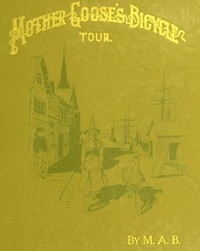
Mother Goose's Bicycle Tour
Download Formats:
Excerpt
The Project Gutenberg EBook of Mother Goose's Bicycle Tour, by M. A. Bonnell
This eBook is for the use of anyone anywhere at no cost and with
almost no restrictions whatsoever. You may copy it, give it away or
re-use it under the terms of the Project Gutenberg License included
with this eBook or online at www.gutenberg.org/license
Read the Full Text
— End of Mother Goose's Bicycle Tour —
Book Information
- Title
- Mother Goose's Bicycle Tour
- Author(s)
- Bonnell, M. A.
- Language
- English
- Type
- Text
- Release Date
- May 5, 2017
- Word Count
- 11,325 words
- Library of Congress Classification
- PZ; PS
- Bookshelves
- Browsing: Children & Young Adult Reading, Browsing: Literature, Browsing: Poetry
- Rights
- Public domain in the USA.
Related Books
The star jewels, and other wonders
by Brown, Abbie Farwell
English
351h 27m read
The flying carpet
English
804h 27m read
Rose buds
by Gerson, Virginia
English
39h 6m read
Fifty Christmas poems for children
English
121h 31m read
Ginevra
by Wallace, Susan E. (Susan Elston)
English
153h 59m read
The juvenile forget-me-not
by Various
English
784h 56m read