The Project Gutenberg EBook of Lodrix the Little Lake Dweller, by
Belle Wiley and Grace Willard Edick
This eBook is for the use of anyone anywhere in the United States and most
other parts of the world at no cost and with almost no restrictions
whatsoever. You may copy it, give it away or re-use it under the terms of
the Project Gutenberg License included with this eBook or online at
www.gutenberg.org. If you are not located in the United States, you'll have
to check the laws of the country where you are located before using this ebook.
Title: Lodrix the Little Lake Dweller
Author: Belle Wiley
Grace Willard Edick
Release Date: December 26, 2018 [EBook #58551]
Language: English
Character set encoding: UTF-8
*** START OF THIS PROJECT GUTENBERG EBOOK LODRIX THE LITTLE LAKE DWELLER ***
Produced by Tim Lindell, Stephen Hutcheson, and the Online
Distributed Proofreading Team at http://www.pgdp.net (This
file was produced from images generously made available
by The Internet Archive/American Libraries.)
[Illustration: (uncaptioned)]
LODRIX
THE LITTLE LAKE DWELLER
BY
BELLE WILEY
AND
GRACE WILLARD EDICK
[Illustration: (uncaptioned)]
D. APPLETON AND COMPANY
NEW YORK MCMV
Copyright, 1904, by
D. APPLETON AND COMPANY
TO
THE CHILDREN
CONTENTS
CHAPTER PAGE
I. The people 1
II. The home 12
III. Preparation for the enemy 18
IV. On shore 25
V. Lodrix lost 36
VI. The capture 45
VII. The message 55
VIII. With the bear people 65
IX. The return 78
[Illustration: (uncaptioned)]
CHAPTER I
THE PEOPLE
Many years ago, there lived in the high regions of Switzerland and
France a people called the Lake-Dwellers.
These people did not live on land, as we do, but on the many lakes
hidden among the high mountains.
The mountain-sides were thick with forests which hid the lake-houses
from the people who lived on the land.
[Illustration: (uncaptioned)]
Lodrix was the chief’s son, and he was a very brave boy though he was
only twelve years old.
This little boy had flaxen hair and blue eyes. His fair skin was very
much tanned, because he was out of doors much of the time.
His clothing was of deerskin and was thrown loosely about him.
[Illustration: (uncaptioned)]
Lodrix looked very much like his mother, but her dress was very
different.
Her waist was of coarse brown cloth fastened under a skirt of deerskin,
and her shoulders and arms were bare.
Her thick light hair was coiled on the top of her head and had many bone
and bronze pins in it.
Around her neck were beads of amber, bone and glass, and a necklace made
from the teeth of wolves.
[Illustration: (uncaptioned)]
On her arms and legs she wore wide bronze bracelets. She was very proud
of them, because not many women among the Lake-Dwellers had bracelets
made of bronze.
Lodrix’s father, the chief of the Dormorants, was a very brave man.
[Illustration: (uncaptioned)]
His people loved him and always obeyed him.
One day, when the chief and his son were on the lake fishing, they heard
the sound of a horn.
Lodrix listened, then said, “That is mother’s call; she must need us.”
In great haste they paddled toward the sound of the horn, and across the
lake they could see the mother waving her hands to them.
[Illustration: (uncaptioned)]
She stood on a platform which was built upon thousands of cedar piles,
driven into the bottom of the lake.
These piles were held in place by stones and rushes that had been let
down into the water.
As they paddled nearer, they could see that something had happened.
[Illustration: (uncaptioned)]
They hurried to climb the notched ladder which led to the platform.
Then they followed the mother into the one-room hut which was their
home.
They sat down on blocks of wood about the stone fire-place, while the
mother told the chief what had happened.
[Illustration: (uncaptioned)]
She said that one of their tribe, who had just returned from hunting,
had told her that the Bear tribe on the land was getting ready to burn
down the Lake-Dweller homes.
When Lodrix heard this, he ran to his father and said, “May I get ready
to fight, father?”
The chief put his hands on his son’s head, saying, “My brave boy.”
Then he told Lodrix to go out and call the people together.
Soon they came, hundreds of them, from the many square huts which were
crowded about the chief’s home.
These houses were built from cedar poles matted together with twigs and
plastered both inside and out with two or three inches of clay.
[Illustration: (uncaptioned)]
There were one or two small windows without shutters and one low door.
The roofs were made of straw or rushes and the floors were often
plastered with clay and gravel.
In the center of the roof was a hole through which the smoke escaped,
and in the floor was a small trap-door that opened over the lake.
The Lake-Dwellers often fished from these doors.
[Illustration: (uncaptioned)]
CHAPTER II
THE HOME
While Lodrix summoned the people, the chief rushed out to pull back the
drawbridge which connected their homes with the land.
The lake people were very much frightened. They knew that the people on
land were their enemies; so they were ready to obey every command of
their chief.
[Illustration: (uncaptioned)]
First he called for the messenger who had brought the news.
A youth with a deer hanging from his shoulder stepped forward.
Laying the deer at the chief’s feet, the boy said, “My chief! As I was
hunting, I met the boy Tevico, whom you once saved from the wolves in
the forest.
“He told me that his tribe was getting ready to make war upon us and to
burn our dwellings.
“So I hurried here to tell you, that we, too, might prepare for war.”
Just then Lodrix, running into the house, shouted, “O father! Come
quickly!”
Out rushed the chief, followed by his people.
What they saw made them tremble with fear.
On the shore of the lake stood hundreds of people waving their stone
axes and shouting in great anger.
The chief had pulled up the drawbridge just in time.
When the Bear people found they could not reach the Lake-Dwellers, they
went away.
The chief of the Dormorants told his people that they must keep close
watch, for their enemies would surely come back.
After choosing men to guard the village, the people went back to their
homes, while the chief and his son went into the house.
[Illustration: (uncaptioned)]
They sat down on the blocks of wood which were the only furniture of
their home; then Lodrix watched his mother skin the deer with the sharp
stone knife, and his father light the fire in the stone fireplace.
The chief was so hungry that he ate the deer meat nearly raw.
Lodrix did not care for the meat, but ate some cakes which had been made
from powdered grain and cooked on the hot stones. He ate some sour
cherries too, and plums which had been picked from the trees on the
shore of the lake and dried.
[Illustration: (uncaptioned)]
[Illustration: (uncaptioned)]
CHAPTER III
PREPARATION FOR THE ENEMY
When the father had finished eating, Lodrix fed the horses, the sheep,
and the goats that were waiting outside for their dinner.
The mother threw the bones of the deer into the lake, through the
trap-door, and laid the skin in the sun to dry.
When he had made sure that everything was secure and had sent Lodrix
with a message to one of the Lake-Dwellers, the chief lay down on a skin
to sleep.
Lodrix hurried off to do his father’s bidding.
He was to say that the drawbridge must not be put down for several days,
for they were afraid the Bear people might enter their village.
As the chief’s son entered the hut where he was to leave his message, he
saw a little baby.
[Illustration: (uncaptioned)]
The baby was tied by a long cord to one of the blocks of wood to keep
her from falling through the trap-door.
He told the baby’s father what the chief had said and then went toward
the child, who stretched out her little hands to him.
Lodrix loved babies and was glad to play with this little one.
He took her to the trap-door, keeping tight hold of her hand. Then he
took a basket made of rushes and lowered it, through the opening, into
the lake.
The baby clapped her hands with glee as she saw the little fish
squirming in the basket when Lodrix drew it up.
Lodrix laughed, too, because the little baby was happy.
The baby’s sister, who sat grinding grain in the stone mortar, looked up
and smiled at the happy children.
[Illustration: (uncaptioned)]
Even the mother smiled as she worked busily at the loom, where she was
weaving coarse cloth from threads of flax which the Lake-Dwellers had
raised on the shore of the lake.
At sunset Lodrix said, “good-by” and started for home.
On his way the beautiful clear moon seemed to speak to him.
[Illustration: (uncaptioned)]
Lodrix stopped a moment and prayed to it; prayed that his people might
be safe from their enemies on the land.
As he walked along, he spoke to many people who were anxiously watching
the opposite shore.
They were straining their eyes for the first glimpse of the people on
the land, because they feared that at nightfall these enemies might come
again.
Lodrix wished to join in the watch, but he was only a little boy and the
chief said that he must stay at home with his mother.
[Illustration: (uncaptioned)]
CHAPTER IV
ON SHORE
So the little boy went into the house and was soon fast asleep.
[Illustration: (uncaptioned)]
The mother lay down on a bearskin and rested her head on a clay
crescent.
The Lake-Dweller women needed these head-rests because they did not take
down their hair when they slept, and the bronze and bone pins made their
heads very heavy.
And now while the men were on guard peace rested upon the village of the
Dormorants.
The next day, the watchers slept while others took their places.
For three days, the Lake-Dwellers looked for signs of the enemy, but the
Bear tribe seemed to have forgotten them and to have returned to their
homes.
If the Lake-Dweller chief had been on land, he might have seen some of
the Bear tribe hiding behind the tall oak and cedar trees in the forest.
[Illustration: (uncaptioned)]
They were watching to see what the lake people would do, and to report
what they saw to their chief.
On the fourth day, when everything seemed quiet, the chief of the
Dormorants ordered the drawbridge to be put in place, and stationed a
man at the end to watch for the enemy. Then he sent a messenger to the
chief of a Lake-Dweller village near by.
The messenger was to ask the chief to be ready at any time to help the
Dormorants, if the Bear tribe should attack them.
[Illustration: (uncaptioned)]
Then the chief ordered his men to be prepared for battle at any moment,
because he was afraid that the enemy would soon try again to reach the
village.
He ordered them to sharpen their swords, lances and axes, and get ready
their bows and arrows.
Lodrix was so excited that he could not keep still, and almost hoped
that the enemy would come back, so that he might have a chance to fight.
The chief’s son had never been in a battle, and he was anxious to take
part in one.
He begged his father to let him take the sword which hung in the bronze
scabbard on the wall.
[Illustration: (uncaptioned)]
But his father gave him another sword, because the one in the scabbard
was too large and heavy for a young boy.
Lodrix was very proud of his sword, and ran about showing it to his
friends.
[Illustration: (uncaptioned)]
Soon the men were ready to start. Some of them lowered their cedar
dugouts, and climbed down the notched poles with their fishing spears in
their hands.
They paddled to that part of the lake where they knew they could catch
some fine fish.
Others crossed the bridge, with their bows and arrows hanging from their
shoulders.
They wished to kill some deer in the forest and cut down some cedar
trees for fire-wood.
Lodrix pleaded so hard to go hunting that his father said he might go,
so he started off with the men.
They stopped to look at the fruit trees growing along the shore.
“Where is the fruit?” asked Lodrix.
[Illustration: (uncaptioned)]
“The Bear people have taken it!” answered one of the men.
“See! They have taken our grain, too!” said another.
This made Lodrix wish more than ever that he might fight these people.
He knew his father would be angry, too, when they told him what had been
done.
They wondered where they would get food for the winter.
They knew they must work very hard to get the soil ready for more grain,
and that they must fish and hunt a great deal or they would have no
dried meat to store away.
These thoughts made them very sad, and they did not say much as they
walked on through the forests.
[Illustration: (uncaptioned)]
[Illustration: (uncaptioned)]
CHAPTER V
LODRIX LOST
“Look!” said Lodrix, darting off toward a deer whose antlers he saw in
the distance.
The men smiled at one another, proud to see their chief’s son fond of
the hunt.
They did not follow, for they wished to see if Lodrix could kill the
deer alone.
They turned toward a mound which held the tomb where their former chiefs
were buried.
[Illustration: (uncaptioned)]
This tomb was a small stone room which the Lake-Dwellers had built, and
then covered with soil.
They thought of the time when they had carried Lodrix’s grandfather to
this stone room. The men had stood about with lighted torches, and the
women with their hair hanging over their faces had shed many bitter
tears for the dead chief.
Then, after they had put the bronze and stone weapons beside their
chief, they had gathered about the hill and chosen a new one.
They always chose for their new chief the bravest and strongest man of
all the tribe. The brave and strong chief they chose that day was
Lodrix’s father.
For a time the men had forgotten Lodrix, then one of them said: “Lodrix
has not come back. Where can he be?”
They looked about, but could see no trace of their chief’s son.
With fear in their hearts, they separated and ran in many directions
through the forest.
[Illustration: (uncaptioned)]
They shouted, “Lodrix! Lodrix!” but their calls were not answered.
They did not stop to shoot the deer, but ran on and on, so anxious were
they to find the boy.
Again and again they called, but no answer came.
They could not find Lodrix, and yet they dared not go home without him.
All day the men hunted for Lodrix, shouting the boy’s name as loudly as
they could.
At nightfall they stood on the shore of the lake looking toward their
village and wondering how they could tell their chief that his son was
lost.
Silently they walked toward the bridge and with bowed heads they crossed
it.
[Illustration: (uncaptioned)]
When they reached the round hut of their chief, they stood quite still,
fearing to go in.
The chief, who had been watching for his son, came out of the low door.
“What is the matter?” he said. “Where is Lodrix?”
The men stood silent. They could not answer.
“My son! Where is my son?”
Then one of the men said, “He is lost in the forest, my chief. We looked
for him all day, but could not find him.”
The chief raised his hands to the moon, praying that his son might be
found.
Then he asked the men for the whole story.
It was but a few minutes before all the men in the village were roused
and a hunting party started out to look for their chief’s son.
Some of the men stayed to guard the homes, but the chief went with the
hunting party.
[Illustration: (uncaptioned)]
CHAPTER VI
THE CAPTURE
Lodrix had no fear as he chased the deer into the thick forest.
He forgot that his father had told him not to stray far from the men.
On and on he ran, thinking of nothing but the deer.
At last he saw the beautiful deer not far away. Softly he knelt down. He
raised his bow and took steady aim.
He did not hear stealthy footsteps coming nearer and nearer behind him.
[Illustration: (uncaptioned)]
Suddenly he was held in strong arms, and looking up, he saw many strange
faces about him.
He was too frightened to call for help, for he knew that these were the
Bear people.
As they carried him away, he struggled, but the arms that held him were
very strong and he could not free himself.
They walked on and on, through the thick forest, farther and farther
away, and Lodrix wondered where he was going and what would happen.
He thought of his father and mother and the men who, he knew, were
looking for him.
Tears came to his eyes, but he did not cry, because he was too brave a
boy.
These people did not talk to him, nor did they talk to one another.
[Illustration: (uncaptioned)]
Lodrix could hear nothing but the cry of the wolves in the distance.
Everything seemed strange, and the boy did not know where he was.
He had never been so far from home before.
On and on they went.
Lodrix could hardly walk, he was so tired.
Just as the sun went down, they came to the village of the Bear people.
The men led Lodrix to one of the huts and gave him food.
When he had eaten some meat, he threw himself on a skin and fell asleep.
While he slept, the Bear people were talking about him and the chief was
deciding what should be done.
Lodrix slept long, and when he wakened the sun was shining through the
doorway.
[Illustration: (uncaptioned)]
The boy looked about him in wonder and for a moment did not know where
he was.
Then he saw Tevico, who was standing near him.
Tevico had been left to guard the prisoner, but the Bear people did not
know that Lodrix’s father had once saved Tevico’s life.
This young watcher felt very friendly toward the Lake-Dweller people,
and he was ready to help the captive boy.
When Lodrix saw Tevico, he said, “Where am I? Why am I here?”
“You have been taken prisoner by the Bear people because they hate your
father and your people.
“I have been left here to guard you, and I will be your friend if you
will let me. I have not forgotten that your father once saved me from
the wolves.
[Illustration: (uncaptioned)]
“You must be very careful not to show my people that we are friends or
they will not let me stay with you.
“When I get a chance I will let your father know where you are and how
he can get you.
“Last night, my people held a council and decided to kill you, but I
told them that your father had much bronze which he would give my tribe
for your safe return.”
Lodrix stood up and grasped Tevico’s hand, for he was glad to find a
friend here, among his enemies.
“My father will give anything your people ask for my freedom,” said the
boy. “Send to him and tell him where I am.”
“I can not go till my chief sends me,” Tevico said. “Do not fear. You
will soon be at home again.
“Here is some deer meat for you. Eat it, for you must be hungry.”
Lodrix tried to eat, but could not, for he was so homesick that he could
scarcely keep from crying.
CHAPTER VII
THE MESSAGE
Tevico had stooped down and was looking through the low doorway.
[Illustration: (uncaptioned)]
“Here comes my chief!” he said. “See! He is coming toward this hut.”
Lodrix looked too, and saw a large man coming toward him.
As the chief came up, Lodrix said to him: “Send to my father; he will
give you and your people all that you ask if you will take me home.”
“We ask bronze,” said the chief. “Will your father give that?”
“The chief of the Dormorants has much bronze,” said Lodrix. “He will
give you all you ask if you will send a messenger to him.”
“Go, Tevico,” said the chief. “Go to the chief of the Dormorants, and
tell him that we hold his son a prisoner. We will not harm him and will
send him home if he will give us all the bronze in his village.”
[Illustration: (uncaptioned)]
Tevico bowed to his chief and ran swiftly away through the forest.
He hurried onward, never stopping to look at the deer as they crossed
his path or to answer the birds as they sang in the tree tops.
[Illustration: (uncaptioned)]
He did not even stop to rest, though he was panting for breath.
As he raced on he saw a man in the distance.
When the man saw Tevico, he called loudly to him.
“Our chief’s son is lost in the forest. Have you seen him?”
Tevico stopped and waited till the man came near him.
“Where is your chief?” the boy asked. “Is he in the forest?”
The man nodded his head and pointed in an opposite direction.
“I must see him. I have news of his son,” said Tevico.
“Come with me, I will take you to him,” said the man eagerly, and away
they both ran to find the chief.
They did not speak as they ran swiftly through the forest.
On their way, they met others of the Lake-Dwellers who had been
searching for Lodrix.
As they came up to the chief, he was looking sadly about him.
All night long they had hunted, but had found no trace of the lost boy.
When Tevico approached, the chief raised his eyes and looked at him with
wonder.
Then Tevico stood before him and said: “I bear a message from the chief
of my people to the chief of the Dormorants. Your son is safe in the
hands of the Bear people.
[Illustration: (uncaptioned)]
“If you will give to my tribe all the bronze of your village, they will
return your son to you.
“If you will not give your bronze, Lodrix will be killed, because the
Bear people are your enemies.”
The chief listened to the words of the boy, then called his men to him.
He told them what the messenger had said, then stood silent, wondering
what their answer would be.
The men wished to fight, but they knew fighting could not save Lodrix,
for the Bear people would surely kill him.
Their bronze was very precious to them and they hated to give it to
their enemies, but they loved their chief and knew that Lodrix must be
saved. So they said:
“Chief, what we have is yours. Take our bronze if it will bring your son
back to us.”
Then the chief said to Tevico: “Hasten back to your chief! Tell him that
the Dormorants will give to him all the bronze of their village for the
safe return of Lodrix.
[Illustration: (uncaptioned)]
“Tell him to send Lodrix to the shore of our lake at sunrise. A
messenger will be there who will give him the bronze he asks.
“Now go, Tevico, and carry my message to your chief.”
CHAPTER VIII
WITH THE BEAR PEOPLE
Tevico turned homeward, leaving the Lake-Dwellers glad that they had
news of Lodrix, but sad that they must give their bronze to their
enemies.
Together they walked through the forest to the shore of the lake and
crossed the bridge to their village.
The women were crowded together, waiting for tidings of Lodrix.
[Illustration: (uncaptioned)]
The chief’s wife rushed toward him crying: “Lodrix, my son! Where is he?
Did you find him?”
“He is safe, but in the hands of our enemy,” said the chief. “He will be
returned to us at sunrise, but we must give to these people all the
bronze in our village.” Turning to his people, he said: “Let us collect
our treasure at once, that it may be ready in time.
“Some day my son shall repay you for this great sacrifice.
“Go, now, to your homes and bring the precious metal to me.”
The men started off to obey the command of their chief.
Slowly they walked to their huts and quietly collected what bronze they
had.
It was only a short time before they were again together at the chief’s
hut.
[Illustration: (uncaptioned)]
They entered and placed their bronze in a pile on the floor.
The chief had collected his bronze too, and motioned to one of the men
to put it with the rest.
There were many kinds of weapons in this pile: bronze scabbards, knives
with bronze handles, bronze hammers, bronze hooks, and bronze bracelets
and pins which the women had given.
The chief had given most of all. He had a great amount, because the
people of other lake villages had often sent him presents of bronze.
The people looked longingly at the treasure for a few moments, then, at
the order of their chief, put it in a large skin bag ready for the
messenger.
[Illustration: (uncaptioned)]
All day long the Lake-Dwellers thought of Lodrix in the hands of the
enemy, and they could hardly wait for the morning when he would return.
In the village of the Bear tribe, Lodrix was watching and waiting for
Tevico.
He hoped that the messenger would find his father, and he knew that his
people would give their precious bronze for his return.
He almost wished that Tevico had stayed and that some other messenger
had been sent, for now he was alone among his enemies.
[Illustration: (uncaptioned)]
As Lodrix sat in the hut, he heard a shout, and looking up, he saw a
little boy standing in the doorway.
“Come out, Lodrix,” said the boy. “I am the chief’s son, and I will show
you our village.”
Lodrix jumped up, very glad to get out of the hut, and the two boys
walked off together through the village.
[Illustration: (uncaptioned)]
As they went along, Lodrix saw many strange things.
He had never seen a land village before, because his people never went
far from the lake.
These huts were not built on piles as the lake huts were, and it seemed
strange to see no water and no boats.
[Illustration: (uncaptioned)]
The sheep and goats that were running about, looked very much like his
own, and as they came toward Lodrix, they seemed friendly.
“Come to my house,” said the little boy. “My father wishes to see you.”
So the boys ran toward the largest hut in the Bear village.
They were out of breath when they reached it and were glad to throw
themselves on the bearskin which lay outside the door.
The chief came out of the hut, and looked kindly at the two boys.
[Illustration: (uncaptioned)]
[Illustration: (uncaptioned)]
He beckoned Lodrix to him, and said:
“How much bronze is there in your father’s village?”
Lodrix answered:
“There is more bronze in the village of the Dormorants than in any other
village on the lake.”
“Is there more than one messenger can carry?” said the chief.
“You must send a strong messenger,” said Lodrix, “for our bronze is very
heavy.”
The chief thought a moment, then turned to his son and said, “You may
take Lodrix about the village, but do not go far, for Tevico will return
at sunset.”
CHAPTER IX
THE RETURN
Just as the moon was rising Tevico came.
[Illustration: (uncaptioned)]
He was very tired, for his journey had been a long one, but he was glad
to bring good news to his people and to Lodrix.
The Bear people had come together and were waiting for Tevico.
They were very glad to hear the message for it meant great wealth for
them.
[Illustration: (uncaptioned)]
They would now have more bronze than any other land tribe.
“Lodrix must be sent home. We must have a messenger,” said the chief.
“He must be very strong, for the bronze is heavy.”
[Illustration: (uncaptioned)]
Then he chose one of the strongest of the men, who started off with
Lodrix.
At sunrise, they reached the shore of the lake.
There the Lake-Dweller messenger was waiting with the bronze.
[Illustration: (uncaptioned)]
Not a word was spoken.
The messenger of the Bear tribe took the bag of bronze, and Lodrix with
the other messenger hurried across the bridge to his home.
There his mother and father and all his tribe were waiting to welcome
him.
They crowded about the chief’s hut and listened, as Lodrix told the
story of his capture.
When Lodrix had finished his story, he went into the hut to rest.
He soon fell asleep, tired from his long journey.
Then the chief sent two men to pull up the drawbridge which had been
down since early morning.
He still feared that the Bear tribe would attack them.
[Illustration: (uncaptioned)]
After this had been done, the chief said to his people: “My son has
returned to us. Now we must think of winter.
“Our fruit-trees have been destroyed by our enemies and we have very
little dried fruit left.
“We will have to hunt and fish every day, that we may have enough food
to last us through the winter.”
As the chief was talking, a messenger, who had been sent by the people
of another Lake village, came up.
He said: “Chief, my people offer help to you and your tribe.
“They know that your fruit-trees have been destroyed.
“They have plenty of food to give you if you need it.
“They are glad that your son has been returned to you.”
[Illustration: (uncaptioned)]
This message made the Lake-Dweller people very happy, and before
separating, they planned to come together that night for a feast of
thanksgiving.
At sunset, as they sat eating and drinking, they made a solemn pledge
that some day they would conquer the Bear tribe and get back their
bronze.
That night the moon shone upon them, as they stood with outstretched
arms, praying to it for strength to fulfil their vow.
THE END
Transcriber’s Notes
--Copyright notice provided as in the original—this e-text is public
domain in the country of publication.
--In the text versions, delimited italics text in _underscores_ (the
HTML version reproduces the font form of the printed book.)
--Silently corrected palpable typos; left non-standard spellings and
dialect unchanged.
End of the Project Gutenberg EBook of Lodrix the Little Lake Dweller, by
Belle Wiley and Grace Willard Edick
*** END OF THIS PROJECT GUTENBERG EBOOK LODRIX THE LITTLE LAKE DWELLER ***
***** This file should be named 58551-0.txt or 58551-0.zip *****
This and all associated files of various formats will be found in:
http://www.gutenberg.org/5/8/5/5/58551/
Produced by Tim Lindell, Stephen Hutcheson, and the Online
Distributed Proofreading Team at http://www.pgdp.net (This
file was produced from images generously made available
by The Internet Archive/American Libraries.)
Updated editions will replace the previous one--the old editions will
be renamed.
Creating the works from print editions not protected by U.S. copyright
law means that no one owns a United States copyright in these works,
so the Foundation (and you!) can copy and distribute it in the United
States without permission and without paying copyright
royalties. Special rules, set forth in the General Terms of Use part
of this license, apply to copying and distributing Project
Gutenberg-tm electronic works to protect the PROJECT GUTENBERG-tm
concept and trademark. Project Gutenberg is a registered trademark,
and may not be used if you charge for the eBooks, unless you receive
specific permission. If you do not charge anything for copies of this
eBook, complying with the rules is very easy. You may use this eBook
for nearly any purpose such as creation of derivative works, reports,
performances and research. They may be modified and printed and given
away--you may do practically ANYTHING in the United States with eBooks
not protected by U.S. copyright law. Redistribution is subject to the
trademark license, especially commercial redistribution.
START: FULL LICENSE
THE FULL PROJECT GUTENBERG LICENSE
PLEASE READ THIS BEFORE YOU DISTRIBUTE OR USE THIS WORK
To protect the Project Gutenberg-tm mission of promoting the free
distribution of electronic works, by using or distributing this work
(or any other work associated in any way with the phrase "Project
Gutenberg"), you agree to comply with all the terms of the Full
Project Gutenberg-tm License available with this file or online at
www.gutenberg.org/license.
Section 1. General Terms of Use and Redistributing Project
Gutenberg-tm electronic works
1.A. By reading or using any part of this Project Gutenberg-tm
electronic work, you indicate that you have read, understand, agree to
and accept all the terms of this license and intellectual property
(trademark/copyright) agreement. If you do not agree to abide by all
the terms of this agreement, you must cease using and return or
destroy all copies of Project Gutenberg-tm electronic works in your
possession. If you paid a fee for obtaining a copy of or access to a
Project Gutenberg-tm electronic work and you do not agree to be bound
by the terms of this agreement, you may obtain a refund from the
person or entity to whom you paid the fee as set forth in paragraph
1.E.8.
1.B. "Project Gutenberg" is a registered trademark. It may only be
used on or associated in any way with an electronic work by people who
agree to be bound by the terms of this agreement. There are a few
things that you can do with most Project Gutenberg-tm electronic works
even without complying with the full terms of this agreement. See
paragraph 1.C below. There are a lot of things you can do with Project
Gutenberg-tm electronic works if you follow the terms of this
agreement and help preserve free future access to Project Gutenberg-tm
electronic works. See paragraph 1.E below.
1.C. The Project Gutenberg Literary Archive Foundation ("the
Foundation" or PGLAF), owns a compilation copyright in the collection
of Project Gutenberg-tm electronic works. Nearly all the individual
works in the collection are in the public domain in the United
States. If an individual work is unprotected by copyright law in the
United States and you are located in the United States, we do not
claim a right to prevent you from copying, distributing, performing,
displaying or creating derivative works based on the work as long as
all references to Project Gutenberg are removed. Of course, we hope
that you will support the Project Gutenberg-tm mission of promoting
free access to electronic works by freely sharing Project Gutenberg-tm
works in compliance with the terms of this agreement for keeping the
Project Gutenberg-tm name associated with the work. You can easily
comply with the terms of this agreement by keeping this work in the
same format with its attached full Project Gutenberg-tm License when
you share it without charge with others.
1.D. The copyright laws of the place where you are located also govern
what you can do with this work. Copyright laws in most countries are
in a constant state of change. If you are outside the United States,
check the laws of your country in addition to the terms of this
agreement before downloading, copying, displaying, performing,
distributing or creating derivative works based on this work or any
other Project Gutenberg-tm work. The Foundation makes no
representations concerning the copyright status of any work in any
country outside the United States.
1.E. Unless you have removed all references to Project Gutenberg:
1.E.1. The following sentence, with active links to, or other
immediate access to, the full Project Gutenberg-tm License must appear
prominently whenever any copy of a Project Gutenberg-tm work (any work
on which the phrase "Project Gutenberg" appears, or with which the
phrase "Project Gutenberg" is associated) is accessed, displayed,
performed, viewed, copied or distributed:
This eBook is for the use of anyone anywhere in the United States and
most other parts of the world at no cost and with almost no
restrictions whatsoever. You may copy it, give it away or re-use it
under the terms of the Project Gutenberg License included with this
eBook or online at www.gutenberg.org. If you are not located in the
United States, you'll have to check the laws of the country where you
are located before using this ebook.
1.E.2. If an individual Project Gutenberg-tm electronic work is
derived from texts not protected by U.S. copyright law (does not
contain a notice indicating that it is posted with permission of the
copyright holder), the work can be copied and distributed to anyone in
the United States without paying any fees or charges. If you are
redistributing or providing access to a work with the phrase "Project
Gutenberg" associated with or appearing on the work, you must comply
either with the requirements of paragraphs 1.E.1 through 1.E.7 or
obtain permission for the use of the work and the Project Gutenberg-tm
trademark as set forth in paragraphs 1.E.8 or 1.E.9.
1.E.3. If an individual Project Gutenberg-tm electronic work is posted
with the permission of the copyright holder, your use and distribution
must comply with both paragraphs 1.E.1 through 1.E.7 and any
additional terms imposed by the copyright holder. Additional terms
will be linked to the Project Gutenberg-tm License for all works
posted with the permission of the copyright holder found at the
beginning of this work.
1.E.4. Do not unlink or detach or remove the full Project Gutenberg-tm
License terms from this work, or any files containing a part of this
work or any other work associated with Project Gutenberg-tm.
1.E.5. Do not copy, display, perform, distribute or redistribute this
electronic work, or any part of this electronic work, without
prominently displaying the sentence set forth in paragraph 1.E.1 with
active links or immediate access to the full terms of the Project
Gutenberg-tm License.
1.E.6. You may convert to and distribute this work in any binary,
compressed, marked up, nonproprietary or proprietary form, including
any word processing or hypertext form. However, if you provide access
to or distribute copies of a Project Gutenberg-tm work in a format
other than "Plain Vanilla ASCII" or other format used in the official
version posted on the official Project Gutenberg-tm web site
(www.gutenberg.org), you must, at no additional cost, fee or expense
to the user, provide a copy, a means of exporting a copy, or a means
of obtaining a copy upon request, of the work in its original "Plain
Vanilla ASCII" or other form. Any alternate format must include the
full Project Gutenberg-tm License as specified in paragraph 1.E.1.
1.E.7. Do not charge a fee for access to, viewing, displaying,
performing, copying or distributing any Project Gutenberg-tm works
unless you comply with paragraph 1.E.8 or 1.E.9.
1.E.8. You may charge a reasonable fee for copies of or providing
access to or distributing Project Gutenberg-tm electronic works
provided that
* You pay a royalty fee of 20% of the gross profits you derive from
the use of Project Gutenberg-tm works calculated using the method
you already use to calculate your applicable taxes. The fee is owed
to the owner of the Project Gutenberg-tm trademark, but he has
agreed to donate royalties under this paragraph to the Project
Gutenberg Literary Archive Foundation. Royalty payments must be paid
within 60 days following each date on which you prepare (or are
legally required to prepare) your periodic tax returns. Royalty
payments should be clearly marked as such and sent to the Project
Gutenberg Literary Archive Foundation at the address specified in
Section 4, "Information about donations to the Project Gutenberg
Literary Archive Foundation."
* You provide a full refund of any money paid by a user who notifies
you in writing (or by e-mail) within 30 days of receipt that s/he
does not agree to the terms of the full Project Gutenberg-tm
License. You must require such a user to return or destroy all
copies of the works possessed in a physical medium and discontinue
all use of and all access to other copies of Project Gutenberg-tm
works.
* You provide, in accordance with paragraph 1.F.3, a full refund of
any money paid for a work or a replacement copy, if a defect in the
electronic work is discovered and reported to you within 90 days of
receipt of the work.
* You comply with all other terms of this agreement for free
distribution of Project Gutenberg-tm works.
1.E.9. If you wish to charge a fee or distribute a Project
Gutenberg-tm electronic work or group of works on different terms than
are set forth in this agreement, you must obtain permission in writing
from both the Project Gutenberg Literary Archive Foundation and The
Project Gutenberg Trademark LLC, the owner of the Project Gutenberg-tm
trademark. Contact the Foundation as set forth in Section 3 below.
1.F.
1.F.1. Project Gutenberg volunteers and employees expend considerable
effort to identify, do copyright research on, transcribe and proofread
works not protected by U.S. copyright law in creating the Project
Gutenberg-tm collection. Despite these efforts, Project Gutenberg-tm
electronic works, and the medium on which they may be stored, may
contain "Defects," such as, but not limited to, incomplete, inaccurate
or corrupt data, transcription errors, a copyright or other
intellectual property infringement, a defective or damaged disk or
other medium, a computer virus, or computer codes that damage or
cannot be read by your equipment.
1.F.2. LIMITED WARRANTY, DISCLAIMER OF DAMAGES - Except for the "Right
of Replacement or Refund" described in paragraph 1.F.3, the Project
Gutenberg Literary Archive Foundation, the owner of the Project
Gutenberg-tm trademark, and any other party distributing a Project
Gutenberg-tm electronic work under this agreement, disclaim all
liability to you for damages, costs and expenses, including legal
fees. YOU AGREE THAT YOU HAVE NO REMEDIES FOR NEGLIGENCE, STRICT
LIABILITY, BREACH OF WARRANTY OR BREACH OF CONTRACT EXCEPT THOSE
PROVIDED IN PARAGRAPH 1.F.3. YOU AGREE THAT THE FOUNDATION, THE
TRADEMARK OWNER, AND ANY DISTRIBUTOR UNDER THIS AGREEMENT WILL NOT BE
LIABLE TO YOU FOR ACTUAL, DIRECT, INDIRECT, CONSEQUENTIAL, PUNITIVE OR
INCIDENTAL DAMAGES EVEN IF YOU GIVE NOTICE OF THE POSSIBILITY OF SUCH
DAMAGE.
1.F.3. LIMITED RIGHT OF REPLACEMENT OR REFUND - If you discover a
defect in this electronic work within 90 days of receiving it, you can
receive a refund of the money (if any) you paid for it by sending a
written explanation to the person you received the work from. If you
received the work on a physical medium, you must return the medium
with your written explanation. The person or entity that provided you
with the defective work may elect to provide a replacement copy in
lieu of a refund. If you received the work electronically, the person
or entity providing it to you may choose to give you a second
opportunity to receive the work electronically in lieu of a refund. If
the second copy is also defective, you may demand a refund in writing
without further opportunities to fix the problem.
1.F.4. Except for the limited right of replacement or refund set forth
in paragraph 1.F.3, this work is provided to you 'AS-IS', WITH NO
OTHER WARRANTIES OF ANY KIND, EXPRESS OR IMPLIED, INCLUDING BUT NOT
LIMITED TO WARRANTIES OF MERCHANTABILITY OR FITNESS FOR ANY PURPOSE.
1.F.5. Some states do not allow disclaimers of certain implied
warranties or the exclusion or limitation of certain types of
damages. If any disclaimer or limitation set forth in this agreement
violates the law of the state applicable to this agreement, the
agreement shall be interpreted to make the maximum disclaimer or
limitation permitted by the applicable state law. The invalidity or
unenforceability of any provision of this agreement shall not void the
remaining provisions.
1.F.6. INDEMNITY - You agree to indemnify and hold the Foundation, the
trademark owner, any agent or employee of the Foundation, anyone
providing copies of Project Gutenberg-tm electronic works in
accordance with this agreement, and any volunteers associated with the
production, promotion and distribution of Project Gutenberg-tm
electronic works, harmless from all liability, costs and expenses,
including legal fees, that arise directly or indirectly from any of
the following which you do or cause to occur: (a) distribution of this
or any Project Gutenberg-tm work, (b) alteration, modification, or
additions or deletions to any Project Gutenberg-tm work, and (c) any
Defect you cause.
Section 2. Information about the Mission of Project Gutenberg-tm
Project Gutenberg-tm is synonymous with the free distribution of
electronic works in formats readable by the widest variety of
computers including obsolete, old, middle-aged and new computers. It
exists because of the efforts of hundreds of volunteers and donations
from people in all walks of life.
Volunteers and financial support to provide volunteers with the
assistance they need are critical to reaching Project Gutenberg-tm's
goals and ensuring that the Project Gutenberg-tm collection will
remain freely available for generations to come. In 2001, the Project
Gutenberg Literary Archive Foundation was created to provide a secure
and permanent future for Project Gutenberg-tm and future
generations. To learn more about the Project Gutenberg Literary
Archive Foundation and how your efforts and donations can help, see
Sections 3 and 4 and the Foundation information page at
www.gutenberg.org
Section 3. Information about the Project Gutenberg Literary Archive Foundation
The Project Gutenberg Literary Archive Foundation is a non profit
501(c)(3) educational corporation organized under the laws of the
state of Mississippi and granted tax exempt status by the Internal
Revenue Service. The Foundation's EIN or federal tax identification
number is 64-6221541. Contributions to the Project Gutenberg Literary
Archive Foundation are tax deductible to the full extent permitted by
U.S. federal laws and your state's laws.
The Foundation's principal office is in Fairbanks, Alaska, with the
mailing address: PO Box 750175, Fairbanks, AK 99775, but its
volunteers and employees are scattered throughout numerous
locations. Its business office is located at 809 North 1500 West, Salt
Lake City, UT 84116, (801) 596-1887. Email contact links and up to
date contact information can be found at the Foundation's web site and
official page at www.gutenberg.org/contact
For additional contact information:
Dr. Gregory B. Newby
Chief Executive and Director
[email protected]
Section 4. Information about Donations to the Project Gutenberg
Literary Archive Foundation
Project Gutenberg-tm depends upon and cannot survive without wide
spread public support and donations to carry out its mission of
increasing the number of public domain and licensed works that can be
freely distributed in machine readable form accessible by the widest
array of equipment including outdated equipment. Many small donations
($1 to $5,000) are particularly important to maintaining tax exempt
status with the IRS.
The Foundation is committed to complying with the laws regulating
charities and charitable donations in all 50 states of the United
States. Compliance requirements are not uniform and it takes a
considerable effort, much paperwork and many fees to meet and keep up
with these requirements. We do not solicit donations in locations
where we have not received written confirmation of compliance. To SEND
DONATIONS or determine the status of compliance for any particular
state visit www.gutenberg.org/donate
While we cannot and do not solicit contributions from states where we
have not met the solicitation requirements, we know of no prohibition
against accepting unsolicited donations from donors in such states who
approach us with offers to donate.
International donations are gratefully accepted, but we cannot make
any statements concerning tax treatment of donations received from
outside the United States. U.S. laws alone swamp our small staff.
Please check the Project Gutenberg Web pages for current donation
methods and addresses. Donations are accepted in a number of other
ways including checks, online payments and credit card donations. To
donate, please visit: www.gutenberg.org/donate
Section 5. General Information About Project Gutenberg-tm electronic works.
Professor Michael S. Hart was the originator of the Project
Gutenberg-tm concept of a library of electronic works that could be
freely shared with anyone. For forty years, he produced and
distributed Project Gutenberg-tm eBooks with only a loose network of
volunteer support.
Project Gutenberg-tm eBooks are often created from several printed
editions, all of which are confirmed as not protected by copyright in
the U.S. unless a copyright notice is included. Thus, we do not
necessarily keep eBooks in compliance with any particular paper
edition.
Most people start at our Web site which has the main PG search
facility: www.gutenberg.org
This Web site includes information about Project Gutenberg-tm,
including how to make donations to the Project Gutenberg Literary
Archive Foundation, how to help produce our new eBooks, and how to
subscribe to our email newsletter to hear about new eBooks.
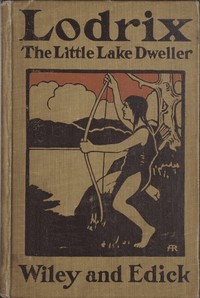
Lodrix, the Little Lake Dweller
Subjects:
Download Formats:
Excerpt
The Project Gutenberg EBook of Lodrix the Little Lake Dweller, by
Belle Wiley and Grace Willard Edick
This eBook is for the use of anyone anywhere in the United States and most
other parts of the world at no cost and with almost no restrictions
whatsoever. You may copy it, give it away or re-use it under the terms of
the Project Gutenberg License included with this eBook or online at
www.gutenberg.org. If you are not located in the United States, you'll have
to check the laws of the...
Read the Full Text
— End of Lodrix, the Little Lake Dweller —
Book Information
- Title
- Lodrix, the Little Lake Dweller
- Author(s)
- Wiley, Belle, Edick, Grace Willard
- Language
- English
- Type
- Text
- Release Date
- December 26, 2018
- Word Count
- 8,221 words
- Library of Congress Classification
- PZ
- Bookshelves
- Browsing: Children & Young Adult Reading, Browsing: Literature, Browsing: Fiction
- Rights
- Public domain in the USA.
Related Books
The X Bar X boys in Thunder Canyon
by Ferris, James Cody
English
783h 22m read
The radio girls of Roselawn
by Penrose, Margaret
English
779h 25m read
Mewanee, the Little Indian Boy
by Wiley, Belle
English
131h 26m read
Frank Merriwell's False Friend; Or, An Investment in Human Nature
by Standish, Burt L.
English
1207h 47m read
Josie O'Gorman
by Sampson, Emma Speed
English
708h 33m read
Rago and Goni, the Tree-Dweller Children
by Wiley, Belle
English
154h 13m read