*** START OF THE PROJECT GUTENBERG EBOOK 61178 ***
+-------------------------------------------------------+
|Several minor typographical errors have been corrected.|
| Many names are spelled several ways in the original.|
| No attempt has been made to correct |
| the various spellings. |
| (etext transcriber's note) |
+-------------------------------------------------------+
[Illustration: TEMPLE AT KANTONUGGUR, DINAJEPORE.]
HISTORY
OF
INDIAN AND EASTERN ARCHITECTURE;
BY JAMES FERGUSSON, D.C.L., F.R.S, M.R.A.S.,
FELLOW OF THE ROYAL INSTITUTE OF BRITISH ARCHITECTS,
MEMBER OF THE SOCIETY OF DILETTANTI,
ETC. ETC. ETC.
[Illustration: Tope at Manikyala.]
FORMING THE THIRD VOLUME OF THE NEW EDITION OF THE
‘HISTORY OF ARCHITECTURE.’
LONDON:
JOHN MURRAY, ALBEMARLE STREET.
1891.
_The right of Translation is reserved._
WORKS BY THE SAME AUTHOR.
ILLUSTRATIONS OF THE ROCK-CUT TEMPLES OF INDIA. 18 Plates in Tinted
Lithography, folio: with an 8vo. volume of Text, Plans, &c. 2_l._
7_s._ 6_d._ London, Weale, 1845.
PICTURESQUE ILLUSTRATIONS OF ANCIENT ARCHITECTURE IN HINDOSTAN. 24
Plates in Coloured Lithography, with Plans, Woodcuts, and
explanatory Text, &c. 4_l._ 4_s._ London, Hogarth, 1847.
AN HISTORICAL INQUIRY INTO THE TRUE PRINCIPLES OF BEAUTY IN ART,
more especially with reference to Architecture. Royal 8vo. 31_s._
6_d._ London, Longmans, 1849.
THE PALACES OF NINEVEH AND PERSEPOLIS RESTORED: An Essay on Ancient
Assyrian and Persian Architecture. 8vo. 16_s._ London, Murray,
1851.
THE ILLUSTRATED HANDBOOK OF ARCHITECTURE. Being a Concise and
Popular Account of the Different Styles prevailing in all Ages and
all Countries. With 850 Illustrations. 8vo. 26_s._ London, Murray,
1859.
RUDE STONE MONUMENTS IN ALL COUNTRIES, THEIR AGE AND USES. With 234
Illustrations. 8vo. London, Murray, 1872.
TREE AND SERPENT WORSHIP, OR ILLUSTRATIONS OF MYTHOLOGY AND ART IN
INDIA, in the 1st and 4th Centuries after Christ, 100 Plates and 31
Woodcuts. 4to. London, India Office; and W. H. Allen & Co. 2nd
Edition, 1873.
THE MAUSOLEUM AT HALICARNASSUS RESTORED, IN CONFORMITY WITH THE
REMAINS RECENTLY DISCOVERED. Plates 4to. 7_s._ 6_d._ London,
Murray, 1862.
AN ESSAY ON THE ANCIENT TOPOGRAPHY OF JERUSALEM; with restored
Plans of the Temple, and with Plans, Sections, and Details of the
Church built by Constantine the Great over the Holy Sepulchre, now
known as the Mosque of Omar. 16_s._ Weale, 1847.
THE HOLY SEPULCHRE AND THE TEMPLE AT JERUSALEM. Being the Substance
of Two Lectures delivered in the Royal Institution, Albemarle
Street, on the 21st February, 1862, and 3rd March, 1865. Woodcuts.
8vo. 7_s._ 6_d._ London, Murray, 1865.
AN ESSAY ON A PROPOSED NEW SYSTEM OF FORTIFICATION, with Hints for
its Application to our National Defences. 12_s._ 6_d._ London,
Weale, 1849.
THE PERIL OF PORTSMOUTH. FRENCH FLEETS AND ENGLISH FORTS. Plan.
8vo. 3_s._ London, Murray, 1853.
OBSERVATIONS ON THE BRITISH MUSEUM, NATIONAL GALLERY, and NATIONAL
RECORD OFFICE; with Suggestions for their Improvement. 8vo. London,
Weale, 1859.
LONDON. WM. CLOWES AND SONS, LIMITED, STAMFORD STREET AND CHARING
CROSS.
PREFACE.
During the nine years that have elapsed since I last wrote on this
subject,[1] very considerable progress has been made in the elucidation
of many of the problems that still perplex the student of the History of
Indian Architecture. The publication of the five volumes of General
Cunningham’s ‘Archæological Reports’ has thrown new light on many
obscure points, but generally from an archæological rather than from an
architectural point of view; and Mr. Burgess’s researches among the
western caves and the structural temples of the Bombay presidency have
added greatly not only to our stores of information, but to the
precision of our knowledge regarding them.
For the purpose of such a work as this, however, photography has
probably done more than anything that has been written. There are now
very few buildings in India--of any importance at least--which have not
been photographed with more or less completeness; and for purposes of
comparison such collections of photographs as are now available are
simply invaluable. For detecting similarities, or distinguishing
differences between specimens situated at distances from one another,
photographs are almost equal to actual personal inspection, and, when
sufficiently numerous, afford a picture of Indian art of the utmost
importance to anyone attempting to describe it.
These new aids, added to our previous stock of knowledge, are probably
sufficient to justify us in treating the architecture of India Proper in
the quasi-exhaustive manner in which it is attempted, in the first 600
pages of this work. Its description might, of course, be easily extended
even beyond these limits, but without plans and more accurate
architectural details than we at present possess, any such additions
would practically contribute very little that was valuable to the
information the work already contains.
The case is different when we turn to Further India. Instead of only 150
pages and 50 illustrations, both these figures ought at least to be
doubled to bring that branch of the subject up to the same stage of
completeness as that describing the architecture of India Proper. For
this, however, the materials do not at present exist. Of Japan we know
almost nothing except from photographs, without plans, dimensions, or
dates; and, except as regards Pekin and the Treaty Ports, we know almost
as little of China. We know a great deal about one or two buildings in
Cambodia and Java, but our information regarding all the rest is so
fragmentary and incomplete, that it is hardly available for the purposes
of a general history, and the same may be said of Burmah and Siam. Ten
years hence this deficiency may be supplied, and it may then be possible
to bring the whole into harmony. At present a slight sketch indicating
the relative position of each, and their relation to the styles of India
Proper, is all that can well be accomplished.
* * * * *
Although appearing as the third volume of the second edition of the
‘General History of Architecture,’ the present may be considered as an
independent and original work. In the last edition the Indian chapters
extended only to about 300 pages, with 200 illustrations,[2] and though
most of the woodcuts reappear in the present volume, more than half the
original text has been cancelled, and consequently at least 600 pages of
the present work are original matter, and 200 illustrations--and these
by far the most important--have been added. These, with the new
chronological and topographical details, present the subject to the
English reader in a more compact and complete form than has been
attempted in any work on Indian architecture hitherto published. It does
not, as I feel only too keenly, contain all the information that could
be desired, but I am afraid it contains nearly all that the materials
at present available will admit of being utilised, in a general history
of the style.
* * * * *
When I published my first work on Indian architecture thirty years ago,
I was reproached for making dogmatic assertions, and propounding
theories which I did not even attempt to sustain. The defect was, I am
afraid, inevitable. My conclusions were based upon the examination of
the actual buildings throughout the three Presidencies of India and in
China during ten years’ residence in the East, and to have placed before
the world the multitudinous details which were the ground of my
generalisations, would have required an additional amount of description
and engravings which was not warranted by the interest felt in the
subject at that time. The numerous engravings in the present volume, the
extended letterpress, and the references to works of later labourers in
the wide domain of Indian architecture, will greatly diminish, but
cannot entirely remove, the old objection. No man can direct his mind
for forty years to the earnest investigation of any department of
knowledge, and not become acquainted with a host of particulars, and
acquire a species of insight which neither time, nor space, nor perhaps
the resources of language will permit him to reproduce in their fulness.
I possess, to give a single instance, more than 3000 photographs of
Indian buildings, with which constant use has made me as familiar as
with any other object that is perpetually before my eyes, and to
recapitulate all the information they convey to long-continued scrutiny,
would be an endless, if not indeed an impossible undertaking. The
necessities of the case demand that broad results should often be given
when the evidence for the statements must be merely indicated or greatly
abridged, and if the conclusions sometimes go beyond the appended
proofs, I can only ask my readers to believe that the assertions are not
speculative fancies, but deductions from facts. My endeavour from the
first has been to present a distinct view of the general principles
which have governed the historical development of Indian architecture,
and my hope is that those who pursue the subject beyond the pages of the
present work, will find that the principles I have enunciated will
reduce to order the multifarious details, and that the details in turn
will confirm the principles. Though the vast amount of fresh knowledge
which has gone on accumulating since I commenced my investigations has
enabled me to correct, modify, and enlarge my views, yet the
classification I adopted, and the historical sequences I pointed out
thirty years since, have in their essential outlines been confirmed, and
will continue, I trust, to stand good. Many subsidiary questions remain
unsettled, but my impression is, that not a few of the discordant
opinions that may be observed, arise principally from the different
courses which inquirers have pursued in their investigations. Some men
of great eminence and learning, more conversant with books than
buildings, have naturally drawn their knowledge and inferences from
written authorities, none of which are contemporaneous with the events
they relate, and all of which have been avowedly altered and falsified
in later times. My authorities, on the contrary, have been mainly the
imperishable records in the rocks, or on sculptures and carvings, which
necessarily represented at the time the faith and feelings of those who
executed them, and which retain their original impress to this day. In
such a country as India, the chisels of her sculptors are, so far as I
can judge, immeasurably more to be trusted than the pens of her authors.
These secondary points, however, may well await the solution which time
and further study will doubtless supply. In the meanwhile, I shall have
realised a long-cherished dream if I have succeeded in popularising the
subject by rendering its principles generally intelligible, and can thus
give an impulse to its study, and assist in establishing Indian
architecture on a stable basis, so that it may take its true position
among the other great styles which have ennobled the arts of mankind.
* * * * *
The publication of this volume completes the history of the
‘Architecture in all Countries, from the earliest times to the present
day, in four volumes,’ and there it must at present rest. As originally
projected, it was intended to have added a fifth volume on ‘Rude Stone
Monuments,’ which is still wanted to make the series quite complete;
but, as explained in the preface to my work bearing that title, the
subject was not, when it was written, ripe for a historical treatment,
and the materials collected were consequently used in an argumentative
essay. Since that work was published, in 1872, no serious examination of
its arguments has been undertaken by any competent authority, while
every new fact that has come to light--especially in India--has served
to confirm me more and more in the correctness of the principles I then
tried to establish.[3] Unless, however, the matter is taken up
seriously, and re-examined by those who, from their position, have the
ear of the public in these matters, no such progress will be made as
would justify the publication of a second work on the same subject. I
consequently see no chance of my ever having an opportunity of taking up
the subject again, so as to be able to describe its objects in a more
consecutive or more exhaustive manner than was done in the work just
alluded to.
[Illustration: Buddha preaching. (From a fresco painting at Ajunta.)]
NOTE.
One of the great difficulties that meets every one attempting to write
on Indian subjects at the present day is to know how to spell Indian
proper names. The Gilchristian mode of using double vowels, which was
fashionable fifty years ago, has now been entirely done away with, as
contrary to the spirit of Indian orthography, though it certainly is the
mode which enables the ordinary Englishman to pronounce Indian names
with the greatest readiness and certainty. On the other hand, an attempt
is now being made to form out of the ordinary English alphabet a more
extended one, by accents over the vowels, and dots under the consonants,
and other devices, so that every letter of the Devanagari or Arabic
alphabets shall have an exact equivalent in this one.
In attempting to print Sanscrit or Persian books in Roman characters,
such a system is indispensable, but if used for printing Indian names in
English books, intended principally for the use of Englishmen, it seems
to me to add not only immensely to the repulsiveness of the subject, but
to lead to the most ludicrous mistakes. According to this alphabet for
instance, ḍ with dot under it represents a consonant we pronounce as r;
but as not one educated Englishman in 10,000 is aware of this fact, he
reads such words as Kattiwaḍ, Chîtoḍ, and Himaḍpanti as if spelt
literally with a d, though they are pronounced Kattiwar, Chittore, and
Himarpanti, and are so written in all books hitherto published, and the
two first are so spelt in all maps hitherto engraved. A hundred years
hence, when Sanscrit and Indian alphabets are taught in all schools in
England, it may be otherwise, but in the present state of knowledge on
the subject some simpler plan seems more expedient.
In the following pages I have consequently used the Jonesian system, as
nearly as may be, as it was used by Prinsep, or the late Professor
Wilson, but avoiding as far as possible all accents, except over vowels
where they were necessary for the pronunciation. Over such words as
Nâga, Râjâ, or Hindû--as in Tree and Serpent worship--I have omitted
accents altogether as wholly unnecessary for the pronunciation. An
accent, however, seems indispensable over the â in Lât, to prevent it
being read as Lath in English, as I have heard done, or over the î in
such words as Hullabîd, to prevent its being read as short bid in
English.
Names of known places I have in all instances tried to leave as they are
usually spelt, and are found on maps. I have, for instance, left
Oudeypore, the capital of the Rajput state, spelt as Tod and others
always spelt it, but, to prevent the two places being confounded, have
taken the liberty of spelling the name of a small unknown village, where
there is a temple, Udaipur--though I believe the names are the same. I
have tried, in short, to accommodate my spelling as nearly as possible
to the present state of knowledge or ignorance of the English public,
without much reference to scientific precision, as I feel sure that by
this means the nomenclature may become much less repulsive than it too
generally must be to the ordinary English student of Indian history and
art.
CONTENTS.
INTRODUCTION Page 3
BOOK I.
BUDDHIST ARCHITECTURE.
CHAP. PAGE
I. INTRODUCTION AND CLASSIFICATION 47
II. STAMBHAS OR LÂTS 52
III. STUPAS--Bhilsa Topes--Topes at Sarnath and in Behar--Amravati
Tope--Gandhara Topes--Jelalabad Topes--Manikyala Tope 57
IV. RAILS--Rails at Bharhut, Muttra Sanchi, and Amravati 84
V. CHAITYA HALLS--Behar Caves--Western Chaitya Halls, &c. 105
VI. VIHARAS OR MONASTERIES--Structural Viharas--Bengal and Western
Vihara Caves--Nassick, Ajunta, Bagh, Dhumnar, Kholvi, and Ellora
Viharas--Circular Cave at Junir 133
VII. GANDHARA MONASTERIES--Monasteries at Jamalgiri, Takht-i-Bahi, and
Shah Dehri 169
VIII. CEYLON--Introductory--Anuradhapura--Pollonarua 185
BOOK II.
JAINA ARCHITECTURE.
I. INTRODUCTORY 207
II. CONSTRUCTION--Arches--Domes--Plans--Sikras 210
III. NORTHERN JAINA STYLE--Palitana--Girnar--Mount
Abu--Parisnath--Gualior--Khajurâho 226
IV. MODERN JAINA STYLE--Jaina Temple, Delhi--Jaina Caves--Converted
Mosques 255
V. JAINA STYLE IN SOUTHERN INDIA--Bettus--Bastis 265
BOOK III.
ARCHITECTURE IN THE HIMALAYAS.
I. KASHMIR--Temples--Marttand--Avantipore--Bhaniyar 279
II. NEPAL--Stupas or Chaityas--Wooden Temples--Thibet--Temples at
Kangra 298
BOOK IV.
DRAVIDIAN STYLE.
I. INTRODUCTORY 319
II. DRAVIDIAN ROCK-CUT TEMPLES--Mahavellipore--Kylas, Ellora 326
III. DRAVIDIAN
TEMPLES--Tanjore--Tiruvalur--Seringham--Chillambaram--Ramisseram--
Mádura--Tinnevelly--Combaconum--Conjeveram--Vellore
and Peroor--Vijayanagar 340
IV. CIVIL ARCHITECTURE--Palaces at Mádura and Tanjore--Garden Pavilion
at Vijayanagar 380
BOOK V.
CHALUKYAN STYLE.
I. INTRODUCTORY--Temple at Buchropully--Kirti Stambha at
Worangul--Temples at Somnathpûr and Baillûr--The Kait Iswara at
Hullabîd--Temple at Hullabîd 386
BOOK VI.
NORTHERN OR INDO-ARYAN STYLE.
I. INTRODUCTORY--Dravidian and Indo-Aryan Temples at Badami--Modern
Temple at Benares 406
II. ORISSA--History--Temples at Bhuvaneswar, Kanaruc, Puri, Jajepur, and
Cuttack 414
III. WESTERN INDIA--Dharwar--Brahmanical Rock-cut Temples 437
IV. CENTRAL AND NORTHERN INDIA--Temples at Gualior, Khajurâho, Udaipur,
Benares, Bindrabun, Kantonuggur, Amritsur 448
V. CIVIL ARCHITECTURE--Cenotaphs--Palaces at Gualior, Ambêr,
Deeg--Ghâts--Reservoirs--Dams 470
BOOK VII.
INDIAN SARACENIC ARCHITECTURE.
I. INTRODUCTORY 489
II. GHAZNI--Tomb of Mahmúd--Gates of Somnath--Minars on the
Plain 494
III. PATHAN STYLE--Mosque at Old Delhi--Kutub Minar--Tomb of
Ala-ud-dîn--Pathan Tombs--Ornamentation of Pathan Tombs 498
IV. JAUNPORE--Mosques of Jumma Musjid and Lall Durwaza 520
V. GUJERAT--Jumma Musjid and other Mosques at Ahmedabad--Tombs and
Mosques at Sirkej and Butwa--Buildings in the Provinces 526
VI. MALWA--The Great Mosque at Mandu 540
VII. BENGAL--Kudam ul Roussoul Mosque, Gaur--Adinah Mosque,
Maldah 545
VIII. KALBURGAH--The Mosque at Kalburgah 552
IX. BIJAPUR--The Jumma Musjid--Tombs of Ibrahim and Mahmúd--The Audience
Hall--Tomb of Nawab Amir Khan, near Tatta 557
X. MOGUL ARCHITECTURE--Dynasties--Tomb of Mohammad Ghaus,
Gualior--Mosque at Futtehpore Sikri--Akbar’s Tomb, Secundra--Palace at
Delhi--The Taje Mehal--The Mûti Musjid--Mosque at Delhi--The Imambara,
Lucknow--Tomb of late Nawab, Junaghur 569
XI. WOODEN ARCHITECTURE--Mosque of Shah Hamadan, Srinugger 608
BOOK VIII.
FURTHER INDIA.
I. BURMAH--Introductory--Ruins of Thatún, Prome, and Pagan--Circular
Dagobas--Monasteries 611
II. SIAM--Pagodas at Ayuthia and Bangkok--Hall of Audience at
Bangkok--General Remarks 631
III. JAVA--History--Boro Buddor--Temples at Mendoet and Brambanam--Tree
and Serpent Temples--Temples at Djeing and Suku 637
IV. CAMBODIA--Introductory--Temples of Nakhon Wat, Ongcor Thom, Paten ta
Phrohm, &c. 663
BOOK IX.
CHINA.
I. INTRODUCTORY 685
II. PAGODAS--Temple of the Great Dragon--Buddhist
Temples--Taas--Tombs--Pailoos--Domestic Architecture 689
* * * * *
APPENDIX 711
INDEX 749
* * * * *
_DIRECTIONS TO BINDER._
Map of Buddhist and Jaina Localities _To face_ 47
Map of Indo-Aryan, Chalukyan, and Dravidian Localities _To face_ 279
LIST OF ILLUSTRATIONS.
NO. PAGE
1. Naga people worshipping the Trisul emblem of Buddha, on a fiery
pillar 46
2. Sri seated on a Lotus, with two elephants pouring water over
her 51
3. Lât at Allahabad 53
4. Assyrian honeysuckle ornament from capital of Lât, at
Allahabad 53
5. Capital of Sankissa 54
6. Capital of Lât in Tirhoot 54
7. Surkh Minar, Cabul 56
8. Relic Casket of Moggalana 62
9. Relic Casket of Sariputra 62
10. View of the Great Tope at Sanchi 63
11. Plan of Great Tope at Sanchi 63
12. Section of Great Tope at Sanchi 63
13. Tee cut in the rock on a Dagoba at Ajunta 64
14. Tope at Sarnath, near Benares 66
15. Panel on the Tope at Sarnath 68
16. Temple at Buddh Gaya with Bo-tree 70
17. Representation of a Tope from the Rail at Amravati 72
18. Tope at Bimeran 78
19. Tope, Sultanpore 78
20. Relic Casket from Tope at Manikyala 80
21. View of Manikyala Tope 81
22. Restored Elevation of the Tope at Manikyala 81
23. Elevation and Section of portion of Basement of Tope at
Manikyala 82
24. Relic Casket, Manikyala 82
25. Tree Worship: Buddh Gaya Rail 86
26. Relic Casket: Buddh Gaya Rail 86
27. Portion of Rail at Bharhut, as first uncovered 88
28. Tree and Serpent Worship at Bharhut 90
29. Rail at Sanchi 92
30. Rail, No. 2 Tope, Sanchi 93
31. Representation of Rail 93
32. Rail in Gautamiputra Cave, Nassick 94
33.[*] Northern Gateway of Tope at Sanchi 96
34. Bas-relief on left-hand Pillar, Northern Gateway 97
35. Ornament on right-hand Pillar, Northern Gateway 97
36. External Elevation of Great Rail at Amravati 100
37. Angle Pillar at Amravati 101
38. Slab from Inner Rail, Amravati 101
39. Dagoba (from a Slab), Amravati 102
40. Trisul Emblem 104
41. Plan of Chaitya Hall, Sanchi 105
42. Nigope Cave, Sat Ghurba group 108
43. Façade of Lomas Rishi Cave 109
44. Lomas Rishi Cave 109
45. Chaitya Cave, Bhaja 110
46. Façade of the Cave at Bhaja 111
47. Front of a Chaitya Hall 111
48. Trisul. Shield. Chakra. Trisul 112
49. Plan of Cave at Bedsa 113
50. Capital of Pillar in front of Cave at Bedsa 114
51. View on Verandah of Cave at Bedsa 114
52. Chaitya Cave at Nassick 115
53. Section of Cave at Karli 117
54. Plan of Cave at Karli 117
55. View of Cave at Karli 118
56. View of Interior of Cave at Karli 120
57. Interior of Chaitya Cave No. 10 at Ajunta 123
58. Cross-section of Cave No. 10 at Ajunta 123
59. Chaitya No. 19 at Ajunta 124
60. View of Façade Chaitya Cave No. 19 at Ajunta 125
61. Rock-cut Dagoba at Ajunta 126
62. Small Model found in the Tope at Sultanpore 126
63. Façade of the Viswakarma Cave at Ellora 128
64. Rail in front of Great Cave, Kenheri 130
65. Cave at Dhumnar 131
66. Great Rath at Mahavellipore 134
67. Diagram Explanatory of the Arrangement of a Buddhist Vihara of Four
Storeys in Height 134
68-69. Square and oblong Cells from a Bas-relief at Bharhut 135
70. Ganesa Cave 140
71. Pillar in Ganesa Cave, Cuttack 140
72. Upper Storey, Rani Gumpha 140
73. Tiger Cave, Cuttack 143
74. Cave No. 11 at Ajunta 145
75. Cave No. 2 at Ajunta 146
76. Caveat Bagh 146
77. Durbar Cave, Salsette 147
78. Nahapana Vihara, Nassick 149
79. Pillar in Nahapana Cave, Nassick 150
80. Pillar in Gautamiputra Cave, Nassick 150
81. Yadnya Sri Cave, Nassick 151
82. Pillar in Yadnya Sri Cave 152
83. Plan of Cave No. 16 at Ajunta 154
84. View of Interior of Vihara No. 16 at Ajunta 154
85. View in Cave No. 17 at Ajunta 155
86. Pillar in Vihara No. 17 at Ajunta 156
87. Great Vihara at Bagh 160
88. Plan of Dehrwarra, Ellora 163
89. Circular Cave, Junir 167
90. Section of Circular Cave, Junir 167
91. Round Temple and part of Palace from a bas-relief at Bharhut 168
92. Plan of Monastery at Jamalgiri 171
93. Plan of Monastery at Takht-i-Bahi 171
94. Corinthian Capital from Jamalgiri 173
95. Corinthian Capital from Jamalgiri 173
96. Plan of Ionic Monastery, Shah Dehri 176
97. Ionic Pillar, Shah Dehri 176
98. Elevation of front of Staircase, Ruanwelli Dagoba 190
99. View of Frontispiece of Stairs, Ruanwelli Dagoba 191
100. Stelæ at the end of Stairs, Abhayagiri Dagoba 192
101. Thuparamaya Tope 192
102. Lankaramaya Dagoba, A.D. 221 194
103. Pavilion with Steps at Anuradhapura 197
104. Moon Stone at Foot of Steps leading to the Platform of the Bo-tree,
Anuradhapura 197
105. The Jayta Wana Rama--Ruins of Pollonarua 201
106. Sat Mehal Prasada 202
107. Round House, called Watté Dajê in Pollonarua 203
108. View of City Gateway, Bijanagur 211
109. Gateway, Jinjûwarra 211
110. Radiating Arch 213
111. Horizontal Arch 213
112. Diagram of Roofing 213
113-114. Diagrams of Roofing 214
115. Diagram of Roofing 214
116. Diagram of Indian construction 215
117. Diagram of the arrangement of the pillars of a Jaina Dome 216
118. Diagram Plan of Jaina Porch 216
119. Diagram of Jaina Porch 217
120. Old Temple at Aiwulli 219
121. Temple at Aiwulli 220
122. Plan of Temple at Pittadkul 221
123. Restored Elevation of the Black Pagoda at Kanaruc 222
124. Diagram Plan and Section of the Black Pagoda at Kanaruc 223
125. The Sacred Hill of Sutrunjya, near Palitana 227
126. Temple of Neminatha, Girnar 230
127. Plan of Temple of Tejpala and Vastupala 232
128. Plan of Temple at Somnath 232
129. Temple of Vimala Sah, Mount Abu 235
130. Temple of Vimala Sah, Mount Abu 236
131. Pendant in Dome of Vimala Sah Temple at Abu 237
132. Pillars at Chandravati 238
133. Plan of Temple at Sadri 240
134. View in the Temple at Sadri 241
135. External View of the Temple at Sadri 242
136.[*] Jaina Temple at Gualior 244
137. Temple of Parswanatha at Khajurâho 245
138. Chaonsat Jogini, Khajurâho 246
139. The Ganthai, Khajurâho 248
140.[*] Temple at Gyraspore 249
141. Porch of Jaina Temple at Amwah, near Ajunta 251
142. Jaina Tower of Sri Allat Chittore 252
143. Tower of Victory erected by Khumbo Rana at Chittore 253
144.[*] View of Jaina Temples Sonaghur, in Bundelcund 256
145. View of the Temple of Shet Huttising at Ahmedabad 257
146. Upper part of Porch of Jaina Temple at Delhi 259
147. Entrance to the Indra Subha Cave at Ellora 262
148. Colossal Statue at Yannûr 268
149. Jaina Basti at Sravana Belgula 270
150. Jaina Temple at Moodbidri 271
151. Jaina Temple at Moodbidri 271
152. Pillar in Temple, Moodbidri 273
153. Pavilion at Gurusankerry 274
154. Tombs of Priests, Moodbidri 275
155. Stambha at Gurusankerry 276
156. Tomb of Zein-ul-ab-ud-din. Elevation of Arches 281
157. Takt-i-Suleiman. Elevation of Arches 282
158. Model of Temple in Kashmir 283
159. Pillar at Srinagar 284
160. Temple of Marttand 286
161. View of Temple at Marttand 287
162. Central Cell of Court at Marttand 288
163. Niche with Naga Figure at Marttand 290
164. Soffit of Arch at Marttand 291
165. Pillar at Avantipore 292
166. View in Court of Temple at Bhaniyar 293
167. Temple at Pandrethan 294
168. Temple at Payech 295
169. Temple at Mûlot in the Salt Range 296
170. Temple of Swayambunath, Nepal 302
171. Nepalese Kosthakar 303
172. Devi Bhowani Temple, Bhatgaon 304
173. Temple of Mahadeo and Krishna, Patan 306
174. Doorway of Durbar, Bhatgaon 307
175. Monoliths at Dimapur 309
176. Doorway of the Temple at Tassiding 313
177. Porch of Temple at Pemiongchi 314
178. Temples at Kiragrama, near Kote Kangra 316
179. Pillar at Erun of the Gupta age 317
180. Capital of Half Column from a Temple in Orissa 317
181. Raths, Mahavellipore 328
182. Arjuna’s Rath Mahavellipore 330
183. Perumal Pagoda, Mádura 331
184. Entrance to a Hindu Temple, Colombo 332
185. Tiger Cave at Saluvan Kuppan 333
186. Kylas at Ellora 334
187. Kylas, Ellora 335
188. Deepdan in Dharwar 337
189. Plan of Great Temple at Purudkul 338
190. Diagram Plan of Tanjore Pagoda 343
191. View of the Great Pagoda at Tanjore 344
192.[*] Temple of Soubramanya, Tanjore 345
193. Inner Temple at Tiruvalur 346
194. Temple at Tiruvalur 346
195.[*] View of the eastern half of the Great Temple at
Seringham 349
196. Plan of Temple of Chillambaram 351
197. View of Porch at Chillambaram 353
198. Section of Porch of Temple at Chillambaram 353
199.[*] Panned Temple or Pagoda at Chillambaram 354
200. Plan of Great Temple at Ramisseram 356
201. Central Corridor, Ramisseram 358
202. Plan of Tirumulla Nayak’s Choultrie 361
203. Pillar in Tirumulla Nayak’s Choultrie 361
204.[*] View in Tirumulla Nayak’s Choultrie, Mádura 363
205. Half-plan of Temple at Tinnevelly 366
206.[*] Gopura at Combaconum 368
207. Portico of Temple at Vellore 371
208. Compound Pillar at Vellore 372
209. Compound Pillar at Peroor 372
210. View of Porch of Temple of Vitoba at Vijayanagar 375
211.[*] Entrance through Gopura at Tarputry 376
212.[*] Portion of Gopura at Tarputry 377
213. Hall in Palace, Mádura 382
214. Court in Palace, Tanjore 383
215. Garden Pavilion at Vijayanagar 384
216. Temple at Buchropully 389
217. Doorway of Great Temple at Hammoncondah 390
218. Kirti Stambha at Worangul 392
219. Temple at Somnathpûr 394
220. Plan of Great Temple at Baillûr 395
221. View of part of Porch at Baillûr 396
222. Pavilion at Baillûr 397
223. Kait Iswara, Hullabîd 398
224. Plan of Temple at Hullabîd 399
225. Restored view of Temple at Hullabîd 400
226. Central Pavilion Hullabîd, East Front 402
227. Dravidian and Indo-Aryan Temples at Badami 411
228. Modern Temple at Benares 412
229. Diagram Plan of Hindu Temple 412
230. Temple of Parasurameswara 418
231. Temple of Mukteswara 419
232. Plan of Great Temple at Bhuvaneswar 421
233. View of Great Temple, Bhuvaneswar 422
234. Lower part of Great Tower at Bhuvaneswar 423
235. Plan of Raj Rani Temple 424
236. Doorway in Raj Rani Temple 425
237. Plan of Temple of Juganât at Puri 430
238. View of Tower of Temple, of Juganât 431
239. Hindu Pillar in Jajepur 433
240. Hindu Bridge at Cuttack 434
241. View of Temple of Papanatha at Pittadkul 438
242. Pillar in Kylas, Ellora 443
243. Plan of Cave No. 3, Badami 444
244. Section of Cave No. 3, Badami 444
245. Dhumnar Lena Cave at Ellora 445
246. Rock-cut Temple at Dhumnar 446
247. Saiva Temple near Poonah 446
248. Temple at Chandravati 449
249. Temple at Barrolli 450
250. Plan of Temple at Barrolli 450
251. Pillar in Barrolli 451
252.[*] Teli ka Mandir, Gualior 453
253.[*] Kandarya Mahadeo, Khajurâho 455
254. Plan of Kandarya Mahadeo, Khajurâho 456
255. Temple at Udaipur 457
256. Diagram explanatory of the Plan of Meera Baie’s Temple,
Chittore 458
257.[*] Temple of Vriji, Chittore 459
258. Temple of Vishveshwar 460
259. Temple of Scindiah’s Mother, Gualior 462
260. Plan of Temple at Bindrabun 463
261. View of Temple at Bindrabun 464
262. Balcony in Temple at Bindrabun 465
263. Temple at Kantonuggur 467
264.[*] The Golden Temple in the Holy Tank at Amritsur 468
265.[*] Cenotaph of Singram Sing at Oudeypore 471
266.[*] Cenotaph in Maha Sâti at Oudeypore 472
267.[*] Tomb of Rajah Baktawar at Ulwar 474
268.[*] Palace at Duttiah 477
269.[*] Palace at Ourtcha, Bundelcund 478
270. Balcony at the Observatory, Benares 481
271. Hall at Deeg 482
272. View from the Central Pavilion in the Palace at Deeg 483
273. Ghoosla Ghât, Benares 485
274. Bund of Lake Rajsamundra 487
275. Minar at Ghazni 495
276. Ornaments from the Tomb of Mahmúd at Ghazni 496
277. Plan of Ruins in Old Delhi 501
278. Section of part of East Colonnade at the Kutub, Old Delhi 503
279. Central Range of Arches at the Kutub 504
280. Minar of Kutub 505
281. Iron Pillar at Kutub 507
282. Interior of a Tomb at Old Delhi 509
283. Mosque at Ajmir 511
284. Great Arch in Mosque at Ajmir 512
285. Pathan Tomb at Shepree, near Gualior 515
286. Tomb at Old Delhi 516
287. Tomb of Shere Shah at Sasseram 516
288. Tomb of Shere Shah 517
289. Pendentive from Mosque at Old Delhi 519
290. Plan of Western Half of Courtyard of Jumma Musjid, Jaunpore 522
291. View of lateral Gateway of Jumma Musjid, Jaunpore 522
292. Lall Durwaza Mosque, Jaunpore 523
293. Plan of Jumma Musjid, Ahmedabad 528
294. Elevation of the Jumma Musjid 528
295. Plan of the Queen’s Mosque, Mirzapore 529
296. Elevation of the Queen’s Mosque, Mirzapore 529
297. Section of Diagram explanatory of the Mosques at Ahmedabad 529
298. Plan of Tombs and Mosque at Sirkej 531
299. Pavilion in front of tomb at Sirkej 532
300. Mosque at Mooháfiz Khan 532
301. Window in Bhudder at Ahmedabad 533
302. Tomb of Meer Abu Touráb 534
303. Plan and Elevation of Tomb of Syad Osmán 534
304. Tomb of Kutub-ul-Alum, Butwa 536
305. Plans of Tombs of Kutub-ul-Alum and his Son, Butwa 536
306. Plan of Tomb of Mahmúd Begurra near Kaira 538
307. Tomb of Mahmúd Begurra, near Kaira 538
308. Plan of Mosque at Mandu 542
309. Courtyard of Great Mosque at Mandu 543
310. Modern curved form of Roof 546
311. Kudam ul Roussoul Mosque, Gaur 548
312. Plan of Adinah Mosque, Maldah 549
313. Minar at Gaur 550
314. Mosque at Kalburgah 554
315. Half-elevation, half-section, of the Mosque at Kalburgah 555
316. View of the Mosque at Kalburgah 555
317. Plan of Jumma Musjid, Bijapur 559
318. Plan and Section of smaller Domes of Jumma Musjid 560
319. Section on the line A B through the Great Dome of the Jumma
Musjid 560
320. Tomb of Rozah of Ibrahim 561
321. Plan of Tomb of Mahmúd at Bijapur 562
322. Pendentives of the Tomb of Mahmúd, looking upwards 563
323. Section of Tomb of Mahmúd at Bijapur 564
324. Diagram illustrative of Domical Construction 565
325. Audience Hall, Bijapur 566
326. Tomb of Nawab Amir Khan, near Tatta, A.D. 1640 568
327. Plan of Tomb of Mohammad Ghaus, Gualior 576
328. Tomb of Mohammad Ghaus, Gualior 577
329. Carved Pillars in the Sultana’s Kiosk, Futtehpore Sikri 579
330. Mosque at Futtehpore Sikri 580
331. Southern Gateway of Mosque, Futtehpore Sikri 581
332. Hall in Palace at Allahabad 583
333. Plan of Akbar’s Tomb at Secundra 584
334. Diagram Section of one-half of Akbar’s Tomb at Secundra,
explanatory of its Arrangements 585
335. View of Akbar’s Tomb, Secundra 586
336. Palace at Delhi 592
337.[*] View of Taje Mehal 596
338. Plan of Taje Mehal, Agra 597
339. Section of Taje Mehal, Agra 597
340. Plan of Mûti Musjid 599
341. View in Courtyard of Mûti Musjid, Agra 600
342. Great Mosque at Delhi from the N.E. 601
343. Plan of Imambara at Lucknow 605
344. Tomb of the late Nawab of Junaghur 606
345. Mosque of Shah Hamadan, Srinugger 609
346. Plan of Ananda Temple 615
347. Plan of Thapinya 615
348. Section of Thapinya 616
349. View of the Temple of Gaudapalen 617
350. Kong Madú Dagoba 620
351. Shoëmadou Pagoda, Pegu 621
352. Half-plan of Shoëmadou Pagoda 621
353. View of Pagoda in Rangûn 623
354. Circular Pagoda at Mengûn 625
355. Façade of the King’s Palace, Burmah 627
356. Burmese Kioum 628
357. Monastery at Mandalé 629
358. Ruins of a Pagoda at Ayuthia 632
359. Ruins of a Pagoda at Ayuthia 633
360. The Great Tower of the Pagoda Wat-ching at Bangkok 634
361. Hall of Audience at Bangkok 635
362. Half-plan of Temple of Boro Buddor 645
363. Elevation and Section of Temple of Boro Buddor 645
364. Section of one of the smaller Domes at Boro Buddor 646
365. Elevation of principal Dome at Boro Buddor 646
366. View of central entrance and stairs at Boro Buddor 649
367. Small Temple at Brambanam 652
368. Terraced Temple at Panataram 655
369. View of the Maha Vihara, Anuradhapura 657
370. Plan of Temple of Nakhon Wat 668
371. Elevation of the Temple of Nakhon Wat 670
372. Diagram Section of Corridor, Nakhon Wat 671
373. View of Exterior of Nakhon Wat 671
374. View of Interior of Corridor, Nakhon Wat 672
375. General view of Temple of Nakhon Wat 675
376. Pillar of Porch, Nakhon Wat 676
377. Lower Part of Pilaster Nakhon Wat 677
378. One of the Towers of the Temple at Ongcor Thom 680
379. Temple of the Great Dragon 690
380. Monumental Gateway of Buddhist Monastery, Pekin 693
381. Temple at Macao 694
382. Porcelain Tower, Nankin 695
383. Pagoda in Summer Palace, Pekin 696
384. Tung Chow Pagoda 697
385. Chinese Grave 699
386. Chinese Tomb 699
387. Group of Tombs near Pekin 700
388. Pailoo near Canton 701
389. Pailoo at Amoy 702
390. Diagram of Chinese Construction 703
391. Pavilion in the Summer Palace, Pekin 705
392. Pavilion in the Summer Palace, Pekin 706
393. View in the Winter Palace, Pekin 707
394. Archway in the Nankau Pass 709
NOTE.--Those woodcuts in the above list marked with an asterisk are
borrowed from ‘L’Inde des Rajahs,’ published by Hachette et Cie,
Paris, translated and republished in this country by Messrs.
Chapman and Hall.
HISTORY
OF
INDIAN ARCHITECTURE.
INTRODUCTION.
It is in vain, perhaps, to expect that the Literature or the Arts of any
other people can be so interesting to even the best educated Europeans
as those of their own country. Until it is forced on their attention,
few are aware how much education does to concentrate attention within a
very narrow field of observation. We become familiar in the nursery with
the names of the heroes of Greek and Roman history. In every school
their history and their arts are taught, memorials of their greatness
meet us at every turn through life, and their thoughts and aspirations
become, as it were, part of ourselves. So, too, with the Middle Ages:
their religion is our religion; their architecture our architecture, and
their history fades so insensibly into our own, that we can draw no line
of demarcation that would separate us from them. How different is the
state of feeling, when from this familiar home we turn to such a country
as India. Its geography is hardly taught in schools, and seldom mastered
perfectly; its history is a puzzle; its literature a mythic dream; its
arts a quaint perplexity. But, above all, the names of its heroes and
great men are so unfamiliar and so unpronounceable, that, except a few
of those who go to India, scarcely any ever become so acquainted with
them, that they call up any memories which are either pleasing or worth
dwelling upon.
Were it not for this, there is probably no country--out of Europe at
least--that would so well repay attention as India. None, where all the
problems of natural science or of art are presented to us in so distinct
and so pleasing a form. Nowhere does nature show herself in such grand
and such luxurious features, and nowhere does humanity exist in more
varied and more pleasing conditions. Side by side with the intellectual
Brahman caste, and the chivalrous Rajput, are found the wild Bhîl and
the naked Gond, not antagonistic and warring one against the other, as
elsewhere, but living now as they have done for thousands of years, each
content with his own lot, and prepared to follow, without repining, in
the footsteps of his forefathers.
It cannot, of course, be for one moment contended that India ever
reached the intellectual supremacy of Greece, or the moral greatness of
Rome; but, though on a lower step of the ladder, her arts are more
original and more varied, and her forms of civilisation present an
ever-changing variety, such as are nowhere else to be found. What,
however, really renders India so interesting as an object of study is
that it is now a living entity. Greece and Rome are dead and have passed
away, and we are living so completely in the midst of modern Europe,
that we cannot get outside to contemplate it as a whole. But India is a
complete cosmos in itself; bounded on the north by the Himalayas, on the
south by the sea, on the east by impenetrable jungle, and only on the
west having one door of communication, across the Indus, open to the
other world. Across that stream, nation after nation have poured their
myriads into her coveted domain, but no reflex waves ever mixed her
people with those beyond her boundaries.
In consequence of all this, every problem of anthropology or ethnography
can be studied here more easily than anywhere else; every art has its
living representative, and often of the most pleasing form; every
science has its illustration, and many on a scale not easily matched
elsewhere. But, notwithstanding all this, in nine cases out of ten,
India and Indian matters fail to interest, because they are to most
people new and unfamiliar. The rudiments have not been mastered when
young, and, when grown up, few men have the leisure or the inclination
to set to work to learn the forms of a new world, demanding both care
and study; and till this is attained, it can hardly be hoped that the
arts and the architecture of India will interest a European reader to
the same extent as those styles treated of in the previous volumes of
this work.
Notwithstanding these drawbacks, it may still be possible to present the
subject of Indian architecture in such a form as to be interesting, even
if not attractive. To do this, however, the narrative form must be
followed as far as is compatible with such a subject. All technical and
unfamiliar names must be avoided wherever it is possible to do so, and
the whole accompanied with a sufficient number of illustrations to
enable its forms to be mastered without difficulty. Even if this is
attended to, no one volume can tell the whole of so varied and so
complex a history. Without preliminary or subsequent study it can hardly
be expected that so new and so vast a subject can be grasped; but one
volume may contain a complete outline of the whole, and enable any one
who wishes for more information to know where to look for it, or how to
appreciate it when found.
Whether successful or not, it seems well worth while that an attempt
should be made to interest the public in Indian architectural art;
first, because the artist and architect will certainly acquire broader
and more varied views of their art by its study than they can acquire
from any other source. More than this, any one who masters the subject
sufficiently to be able to understand their art in its best and highest
forms, will rise from the study with a kindlier feeling towards the
nations of India, and a higher--certainly a correcter--appreciation of
their social status than could be obtained from their literature, or
from anything that now exists in their anomalous social and political
position.
Notwithstanding all this, many may be inclined to ask, Is it worth while
to master all the geographical and historical details necessary to
unravel so tangled a web as this, and then try to become so familiar
with their ever-varying forms as not only to be able to discriminate
between the different styles, but also to follow them through all their
ceaseless changes?
My impression is that this question may fairly be answered in the
affirmative. No one has a right to say that he understands the history
of architecture who leaves out of his view the works of an immense
portion of the human race, which has always shown itself so capable of
artistic development. But, more than this, architecture in India is
still a living art, practised on the principles which caused its
wonderful development in Europe in the 12th and 13th centuries; and
there, consequently, and there alone, the student of architecture has a
chance of seeing the real principles of the art in action. In Europe, at
the present day, architecture is practised in a manner so anomalous and
abnormal that few, if any, have hitherto been able to shake off the
influence of a false system, and to see that the art of ornamental
building can be based on principles of common sense; and that, when so
practised, the result not only is, but must be, satisfactory. Those who
have an opportunity of seeing what perfect buildings the ignorant
uneducated natives of India are now producing, will easily understand
how success may be achieved, while those who observe what failures the
best educated and most talented architects in Europe are constantly
perpetrating, may, by a study of Indian models, easily see why this must
inevitably be the result. It is only in India that the two systems can
now be seen practised side by side--the educated and intellectual
European always failing because his principles are wrong, the feeble and
uneducated native as inevitably succeeding because his principles are
right. The Indian builders _think_ only of what they are doing, and how
they can best produce the effect they desire. In the European system it
is considered more essential that a building, especially in its details,
should be a correct _copy_ of something else, than good in itself or
appropriate to its purpose; hence the difference in the result.
In one other respect India affords a singularly favourable field to the
student of architecture. In no other country of the same extent are
there so many distinct nationalities, each retaining its old faith and
its old feelings, and impressing these on its art. There is consequently
no country where the outlines of ethnology as applied to art can be so
easily perceived, or their application to the elucidation of the various
problems so pre-eminently important. The mode in which the art has been
practised in Europe for the last three centuries has been very
confusing. In India it is clear and intelligible. No one can look at the
subject without seeing its importance, and no one can study the art as
practised there without recognising what the principles of the science
really are.
In addition, however, to these scientific advantages, it will
undoubtedly be conceded by those who are familiar with the subject that
for certain qualities the Indian buildings are unrivalled. They display
an exuberance of fancy, a lavishness of labour, and an elaboration of
detail to be found nowhere else. They may contain nothing so sublime as
the hall at Karnac, nothing so intellectual as the Parthenon, nor so
constructively grand as a mediæval cathedral; but for certain other
qualities--not perhaps of the highest kind, yet very important in
architectural art--the Indian buildings stand alone. They consequently
fill up a great gap in our knowledge of the subject, which without them
would remain a void.
HISTORY.
One of the greatest difficulties that exist--perhaps the greatest--in
exciting an interest in Indian antiquities arises from the fact, that
India has no history properly so called, before the Mahomedan invasion
in the 13th century. Had India been a great united kingdom, like China,
with a long line of dynasties and well-recorded dates attached to them,
the task would have been comparatively easy; but nothing of the sort
exists or ever existed within her boundaries. On the contrary, so far as
our knowledge extends, India has always been occupied by three or four
different races of mankind, who have never amalgamated so as to become
one people, and each of these races have been again subdivided into
numerous tribes or small nationalities nearly, sometimes wholly,
independent of each other--and, what is worse than all, not one of them
ever kept a chronicle or preserved a series of dates commencing from any
well-known era.[4]
The absence of any historical record is the more striking, because India
possesses a written literature equal to, if not surpassing in variety
and extent, that possessed by any other nation, before the invention, or
at least before the adoption and use, of printing. The Vedas themselves,
with their Upanishads and Brahmanas, and the commentaries on them, form
a literature in themselves of vast extent, and some parts of which are
as old, possibly older, than any written works that are now known to
exist; and the Puranas, though comparatively modern, make up a body of
doctrine mixed with mythology and tradition such as few nations can
boast of. Besides this, however, are two great epics, surpassing in
extent, if not in merit, those of any ancient nation, and a drama of
great beauty, written at periods extending through a long series of
years. In addition to those we have treatises on law, on grammar, on
astronomy, on metaphysics and mathematics, on almost every branch of
mental science--a literature extending in fact to some 10,000 or 11,000
works, but in all this not one book that can be called historical. No
man in India, so far as is known, ever thought of recording the events
of his own life or of repeating the previous experience of others, and
it was only at some time subsequent to the Christian Era that they ever
thought of establishing eras from which to date deeds or events.
All this is the more curious because in Ceylon we have, in the
‘Mahawanso,’ and other books of a like nature, a consecutive history of
that island, with dates which may be depended upon within very narrow
limits of error, for periods extending from B.C. 250 to the present
time. At the other extremity of India, we have also in the Raja
Tarangini of Kashmir, a work which Professor Wilson characterised as
“the only Sanscrit composition yet discovered to which the title of
History can with any propriety be applied.”[5] As we at present,
however, possess it, it hardly helps us to any historical data earlier
than the Christian Era, and even after that its dates for some centuries
are by no means fixed and certain.
In India Proper, however, we have no such guides as even these, but for
written history are almost wholly dependent on the Puranas. They do
furnish us with one list of kings’ names, with the length of their
reigns, so apparently truthful that they may, within narrow limits,
be depended upon. They are only, however, of one range of
dynasties--probably, however, the paramount one--and extend only from
the accession of Chandragupta--the Sandrocottus of the Greeks--B.C. 325,
to the decline of the Andra dynasty, about A.D. 400 or 408. It seems
probable we may find sufficient confirmation of these lists as far back
as the Anjana era, B.C. 691, so as to include the period marked by the
life and labours of Sakya Muni--the present Buddha--in our chronology,
with tolerable certainty. All the chronology before that period is
purposely and avowedly falsified by the introduction of the system of
Yugs, in order to carry back the origin of the Brahmanical system into
the regions of the most fabulous antiquity. From the 5th century
onwards, when the Puranas began to be put into their present form, in
consequence of the revival of the Brahmanical religion, instead of
recording contemporary events, they purposely confused them so as to
maintain their prophetic character, and prevent the detection of the
falsehood of their claim to an antiquity equal to that of the Vedas. For
Indian history after the 5th century we are consequently left mainly to
inscriptions on monuments or on copper-plates, to coins, and to the
works of foreigners for the necessary information with which the natives
of the country itself have neglected to supply us. These probably will
be found eventually to be at least sufficient for the purposes of
chronology. Already such progress has been made in the decipherment of
inscriptions and the arrangement of coins, that all the dynasties may be
arranged consecutively, and even the date of the reigns of almost all
the kings in the north of India have been already approximately
ascertained. In the south of India so much has not been done, but this
is more because there have been fewer labourers in the field than from
want of materials. There are literally thousands of inscriptions in the
south which have not been copied, and of the few that have been
collected only a very small number have been translated; but they are
such as to give us hope that, when the requisite amount of labour is
bestowed upon them, we shall be able to fix the chronology of the kings
of the south with a degree of certainty sufficient for all ordinary
purposes.[6]
It is a far more difficult task to ascertain whether we shall ever
recover the History of India before the time of the advent of Buddha, or
before the Anjana epoch, B.C. 691. Here we certainly will find no coins
or inscriptions to guide us, and no buildings to illustrate the arts, or
to mark the position of cities, while all ethnographic traces have
become so blurred, if not obliterated, that they serve us little as
guides through the labyrinth. Yet on the other hand there is so large a
mass of literature--such as it is--bearing on the subject, that we
cannot but hope that, when a sufficient amount of learning is brought to
bear upon it, the leading features of the history of even that period
may be recovered. In order, however, to render it available, it will not
require industry so much as a severe spirit of criticism to winnow the
few grains of useful truth out of the mass of worthless chaff this
literature contains. But it does not seem too much to expect even this,
from the severely critical spirit of the age. Meanwhile, the main facts
of the case seem to be nearly as follows, in so far as it is necessary
to state them, in order to make what follows intelligible.
ARYANS.
At some very remote period in the world’s history--for reasons stated in
the Appendix I believe it to have been at about the epoch called by the
Hindus the Kali Yug, or B.C. 3101--the Aryans, a Sanscrit-speaking
people, entered India across the Upper Indus, coming from Central Asia.
For a long time they remained settled in the Punjab, or on the banks of
the Sarasvati, then a more important stream than now, the main body,
however, still remaining to the westward of the Indus. If, however, we
may trust our chronology, we find them settled 2000 years before the
Christian Era, in Ayodhya, and then in the plenitude of their power. It
was about that time apparently that the event took place which formed
the groundwork of the far more modern poem known as the ‘Ramayana.’ The
pure Aryans, still uncontaminated by admixture with the blood of the
natives, then seem to have attained the height of their prosperity in
India, and to have carried their victorious arms, it may be, as far
south as Ceylon. There is, however, no reason to suppose that they at
that time formed any permanent settlements in the Deccan, but it was at
all events opened to their missionaries, and by slow degrees imbibed
that amount of Brahmanism which eventually pervaded the whole of the
south. Seven or eight hundred years after that time, or it may be about
or before B.C. 1200, took place those events which form the theme of the
more ancient epic known as the ‘Mahabharata,’ which opens up an entirely
new view of Indian social life. If the heroes of that poem were Aryans
at all, they were of a much less pure type than those who composed the
songs of the Vedas, or are depicted in the verses of the ‘Ramayana.’
Their polyandry, their drinking bouts, their gambling tastes, and love
of fighting, mark them as a very different race from the peaceful
shepherd immigrants of the earlier age, and point much more distinctly
towards a Tartar, trans-Himalayan origin, than to the cradle of the
Aryan stock in Central Asia. As if to mark the difference of which they
themselves felt the existence, they distinguished themselves, by name,
as belonging to a Lunar race, distinct from, and generally antagonistic
to, the Solar race, which was the proud distinction of the purer and
earlier Aryan settlers in India.
Five or six hundred years after this, or about B.C. 700, we again find a
totally different state of affairs in India. The Aryans no longer exist
as a separate nationality, and neither the Solar nor the Lunar race are
the rulers of the earth. The Brahmans have become a priestly caste, and
share the power with the Kshatriyas, a race of far less purity of
descent. The Vaisyas, as merchants and husbandmen, have become a power,
and even the Sudras are acknowledged as a part of the body politic; and,
though not mentioned in the Scriptures, the Nagas, or Snake people, had
become a most influential part of the population. They are first
mentioned in the ‘Mahabharata,’ where they play a most important part in
causing the death of Parikshit, which led to the great sacrifice for the
destruction of the Nagas by Janemajaya, which practically closes the
history of the time. Destroyed, however, they were not, as it was under
a Naga dynasty that ascended the throne of Magadha, in 691, that Buddha
was born, B.C. 623, and the Nagas were the people whose conversion
placed Buddhism on a secure basis in India, and led to its ultimate
adoption by Asoka (B.C. 250) as the religion of the State.[7]
Although Buddhism was first taught by a prince of the Solar race, and
consequently of purely Aryan blood, and though its first disciples were
Brahmans, it had as little affinity with the religion of the Vedas as
Christianity had with the Pentateuch, and its fate was the same. The one
religion was taught by one of Jewish extraction to the Jews and for the
Jews; but it was ultimately rejected by them, and adopted by the
Gentiles, who had no affinity of race or religion with the inhabitants
of Judæa. Though meant originally, no doubt, for Aryans, the Buddhist
religion was ultimately rejected by the Brahmans, who were consequently
utterly eclipsed and superseded by it for nearly a thousand years; and
we hear little or nothing of them and their religion till they
reappeared at the court of the great Vicramaditya (490-530), when their
religion began to assume that strange shape which it now still retains
in India. In its new form it is as unlike the pure religion of the Vedas
as it is possible to conceive one religion being to another; unlike
that, also, of the older portions of the ‘Mahabharata’; but a confused
mess of local superstitions and imported myths, covering up and hiding
the Vedantic and Buddhist doctrines, which may sometimes be detected as
underlying it. Whatever it be, however, it cannot be the religion of an
Aryan, or even of a purely Turanian people, because it was invented by
and for as mixed a population as probably were ever gathered together
into one country--a people whose feelings and superstitions it only too
truly represents.
DRAVIDIANS.
Although, therefore, as was hinted above, there might be no great
difficulty in recovering all the main incidents and leading features of
the history of the Aryans, from their first entry into India till they
were entirely absorbed into the mass of the population some time before
the Christian Era, there could be no greater mistake than to suppose
that their history would fully represent the ancient history of the
country. The Dravidians are a people who, in historical times, seem to
have been probably as numerous as the pure Aryans, and at the present
day form one-fifth of the whole population of India. As Turanians, which
they seem certainly to be, they belong, it is true, to a lower
intellectual status than the Aryans, but they have preserved their
nationality pure and unmixed, and, such as they were at the dawn of
history, so they seem to be now.
Their settlement in India extends to such remote pre-historic times,
that we cannot feel even sure that we should regard them as immigrants,
or, at least, as either conquerors or colonists on a large scale, but
rather as aboriginal in the sense in which that term is usually
understood. Generally it is assumed that they entered India across the
Lower Indus, leaving the cognate Brahui in Belochistan as a mark of the
road by which they came, and, as the affinities of their language seem
to be with the Ugrians and northern Turanian tongues, this view seems
probable.[8] But they have certainly left no trace of their migrations
anywhere between the Indus and the Nerbudda, and all the facts of their
history, so far as they are known, would seem to lead to an opposite
conclusion. The hypothesis that would represent what we know of their
history most correctly would place their original seat in the extreme
south, somewhere probably not far from Madura or Tanjore, and thence
spreading fan-like towards the north, till they met the Aryans on the
Vindhya Mountains. The question, again, is not of much importance for
our present purposes, as they do not seem to have reached that degree of
civilisation at any period anterior to the Christian Era which would
enable them to practise any of the arts of civilised life with success,
so as to bring them within the scope of a work devoted to the history of
art.
It may be that at some future period, when we know more of the ancient
arts of these Dravidians than we now do, and have become familiar with
the remains of the Accadians or early Turanian inhabitants of
Babylonia, we may detect affinities which may throw some light on this
very obscure part of history. At present, however, the indications are
much too hazy to be at all relied upon. Geographically, however, one
thing seems tolerably clear. If the Dravidians came into India in
historical times, it was not from Central Asia that they migrated, but
from Babylonia, or some such southern region of the Asiatic continent.
DASYUS.
In addition to these two great distinct and opposite nationalities,
there exists in India a third, which, in pre-Buddhist times, was as
numerous, perhaps even more so, than either the Aryans or Dravidians,
but of whose history we know even less than we do of the two others.
Ethnologists have not yet been even able to agree on a name by which to
call them. I have suggested Dasyus,[9] a slave people, as that is the
name by which the Aryans designated them when they found them there on
their first entrance into India, and subjected them to their sway.
Whoever they were, they seem to have been a people of a very inferior
intellectual capacity to either the Aryans or Dravidians, and it is by
no means clear that they could ever of themselves have risen to such a
status as either to form a great community capable of governing
themselves, and consequently having a history,[10] or whether they must
always have remained in the low and barbarous position in which we now
find some of their branches. When the Aryans first entered India they
seem to have found them occupying the whole valley of the Ganges--the
whole country in fact between the Vindhya and the Himalayan
Mountains.[11] At present they are only found in anything like purity in
the mountain ranges that bound that great plain. There they are known as
Bhîls, Coles, Sontals, Nagas, and other mountains tribes. But they
certainly form the lowest underlying stratum of the population over the
whole of the Gangetic plain.[12] So far as their affinities have been
ascertained, they are with the trans-Himalayan population, and it
either is that they entered India through the passes of that great
mountain range, or it might be more correct to say that the Thibetans
are a fragment of a great population that occupied both the northern and
southern slope of that great chain of hills at some very remote
pre-historic time.
Whoever they were, they were the people who, in remote times, were
apparently the worshippers of Trees and Serpents; but what interests us
more in them, and makes the inquiry into their history more desirable,
is that they were the people who first adopted Buddhism in India, and
they, or their congeners, are the only people who, in historic times, as
now, adhered, or still adhere to, that form of faith. No purely Aryan
people ever were, or ever could be, Buddhist, nor, so far as I know,
were any Dravidian community ever converted to that faith. But in
Bengal, in Ceylon, in Thibet, Burmah, Siam, and China, wherever a
Thibetan people exists, or a people allied to them, there Buddhism
flourished and now prevails. But in India the Dravidians resisted it in
the south, and a revival of Aryanism abolished it in the north.
Architecturally, there is no difficulty in defining the limits of the
Dasyu province: wherever a square tower-like temple exists with a
perpendicular base, but a curvilinear outline above, such as that shown
in the woodcut on the following page, there we may feel certain of the
existence, past or present, of a people of Dasyu extraction, retaining
their purity very nearly in the direct ratio to the number of these
temples found in the district. Were it not consequently for the
difficulty of introducing new names and obtaining acceptance to what is
unfamiliar, the proper names for the style prevailing in northern India
would be Dasyu style, instead of Indo-Aryan or Dasyu-Aryan which I have
felt constrained to adopt. No one can accuse the pure Aryans of
introducing this form in India, or of building temples at all, or of
worshipping images of Siva or Vishnu, with which these temples are
filled, and they consequently have little title to confer their name on
the style. The Aryans had, however, become so impure in blood before
these temples were erected, and were so mixed up with the Dasyus, and
had so influenced their religion and the arts, that it may be better to
retain a name which sounds familiar, and does not too sharply prejudge
the question. Be this as it may, one thing seems tolerably clear, that
the regions occupied by the Aryans in India were conterminous with those
of the Dasyus, or, in other words, that the Aryans conquered the whole
of the aboriginal or native tribes who occupied the plains of northern
India, and ruled over them to such an extent as materially to influence
their religion and their arts, and also very materially to modify even
their language. So much so, indeed, that after some four or five
thousand years of domination we should not be surprised if we have some
difficulty in recovering traces of the original population, and could
probably not do so, if some fragments of the people had not sought
refuge in the hills on the north and south of the great Gangetic plain,
and there have remained fossilised, or at least sufficiently permanent
for purposes of investigation.
[Illustration: Hindu Temple, Bancorah.]
SISUNAGA DYNASTY, B.C. 691 TO 325.
Leaving these, which must, for the present at least, be considered as
practically pre-historic times, we tread on surer ground when we
approach the period when Buddha was born, and devoted his life to rescue
man from sin and suffering. There seems very little reason for doubting
that he was born in the year 623, in the reign of Bimbasara, the fifth
king of this dynasty, and died B.C. 543, at the age of eighty years, in
the eighth year of Ajattasatru, the eighth king. New sources of
information are opening out so rapidly regarding these times, that there
seems little doubt we shall before long be able to recover a perfectly
authentic account of the political events of that period, and as perfect
a picture of the manners and the customs of those days. It is too true,
however, that those who wrote the biography of Buddha in subsequent
ages so overlaid the simple narrative of his life with fables and
absurdities, that it is now difficult to separate the wheat from the
chaff; but we have sculptures extending back to within three centuries
of his death, at which time we may fairly assume that a purer tradition
and correcter version of the Scriptures must have prevailed. From what
has recently occurred, we may hope to creep even further back than this,
and eventually to find early illustrations which will enable us to
exercise so sound a criticism on the books as to enable us to restore
the life of Buddha to such an extent, as to place it among the authentic
records of the benefactors of mankind.
Immense progress has been made during the last thirty or forty years in
investigating the origin of Buddhism, and the propagation of its
doctrines in India, and in communicating the knowledge so gained to the
public in Europe. Much, however, remains to be done before the story is
complete, and divested of all the absurdities which subsequent
commentators have heaped upon it; and more must yet be effected before
the public can be rendered familiar with what is so essentially novel to
them. Still, the leading events in the life of the founder of the
religion are simple, and sufficiently well ascertained for all practical
purposes.[13]
The founder of this religion was one of the last of a long line of
kings, known as the Solar dynasties, who, from a period shortly
subsequent to the advent of the Aryans into India, had held paramount
sway in Ayodhya--the modern Oude. About the 12th or 13th century B.C.
they were superseded by another race of much less purely Aryan blood,
known as the Lunar race, who transferred the seat of power to capitals
situated in the northern parts of the Doab. In consequence of this, the
lineal descendants of the Solar kings were reduced to a petty
principality at the foot of the Himalayas, where Sakya Muni was born
about 623 B.C. For twenty-nine years he enjoyed the pleasures, and
followed the occupations, usual to the men of his rank and position; but
at that age, becoming painfully impressed by the misery incident to
human existence, he determined to devote the rest of his life to an
attempt to alleviate it. For this purpose he forsook his parents and
wife, abandoned friends and all the advantages of his position, and, for
the following fifty-one years, devoted himself steadily to the task he
had set before himself. Years were spent in the meditation and
mortification necessary to fit himself for his mission; the rest of his
long life was devoted to wandering from city to city, teaching and
preaching, and doing everything that gentle means could effect to
disseminate the doctrines which he believed were to regenerate the
world, and take the sting out of human misery.
He died, or, in the phraseology of his followers, obtained Nirvana--was
absorbed into the deity--at Kusinara, in northern Behar, in the 80th
year of his age, 543 years[14] B.C.
With the information that is now fast accumulating around the subject,
there seems no great difficulty in understanding why the mission of
Sakya Muni was so successful as it proved to be. He was born at a time
when the purity of the Aryan races in India had become so deteriorated
by the constant influx of less pure tribes from the north and west, that
their power, and consequently their influence, was fast fading away. At
that time, too, it seems that the native races had, from long
familiarity with the Aryans, acquired such a degree of civilisation as
led them to desire something like equality with their masters, who were
probably always in a numerical minority in most parts of the valley of
the Ganges. In such a condition of things the preacher was sure of a
willing audience who proclaimed the abolition of caste, and taught that
all men, of whatever nation or degree, had an equal chance of reaching
happiness, and ultimately heaven, by the practice of virtue, and by that
only. The subject races--the Turanian Dasyus--hailed him as a deliverer,
and it was by them that the religion was adopted and proclaimed, and
that of the Aryan Brahmans was for a time obliterated, or at least
overshadowed and obscured.
It is by no means clear how far Buddha was successful in converting the
multitude to his doctrines during his lifetime. At his death, the first
synod was held at Rajagriha, and five hundred monks of a superior order,
it is said, were assembled there on that occasion,[15] and if so they
must have represented a great multitude. But the accounts of this, and
of the second convocation, held 100 years afterwards at Vaisali, on the
Gunduck, have not yet had the full light of recent investigation brought
to bear upon them. Indeed the whole annals of the Naga dynasty, from the
death of Buddha, B.C. 543, to the accession of Chandragupta, 325, are
about the least satisfactory of the period. Those of Ceylon were
purposely falsified in order to carry back the landing of Vyjya, the
first conqueror from Kalinga, to a period coincident with the date of
Buddha’s death, while a period apparently of sixty years at least
elapsed between the two events. All this may, however, be safely left to
future explorers. We have annals and coins,[16] and we may recover
inscriptions and sculptures belonging to this period, and, though it is
most improbable we shall recover any architectural remains, there are
evidently materials existing which, when utilised, may suffice for the
purpose.
The kings of this dynasty seem to have been considered as of a low
caste, and were not, consequently, in favour either with the Brahman or,
at that time, with the Buddhist; and no events which seem to have been
thought worthy of being remembered, except the second convocation, are
recorded as happening in their reigns, after the death of the great
Ascetic--or, at all events, of being recorded in such annals as we
possess.
MAURYA DYNASTY, B.C. 325 TO 188.
The case was widely different with the Maurya dynasty, which was
certainly one of the most brilliant, and is fortunately one of the best
known, of the ancient dynasties of India. The first king was
Chandragupta, the Sandrocottus of the Greeks, to whom Megasthenes was
sent as ambassador by Seleucus, the successor of Alexander in the
western parts of his Asiatic empire. It is from his narrative--now
unfortunately lost--that the Greeks acquired almost all the knowledge
they possessed of India at that period. The country was then divided
into 120 smaller principalities, but the Maurya residing in
Palibothra--the modern Patna--seems to have exercised a paramount sway
over the whole. It was not, however, this king, but his grandson, the
great Asoka (B.C. 272 to 236), who raised this dynasty to its highest
pitch of prosperity and power. Though utterly unknown to the Greeks, we
have from native sources a more complete picture of the incidents of his
reign than of any ancient sovereign of India. The great event that made
him famous in Buddhist history was his conversion to that faith, and the
zeal he showed in propagating the doctrines of his new religion. He
did, in fact, for Buddhism, exactly what Constantine did for
Christianity, and at about the same distance of time from the death of
the founder of the faith. From a struggling sect he made it the religion
of the State, and established it on the basis on which it lasted supreme
for nearly 1000 years. In order to render his subjects familiar with the
doctrines of his new faith, he caused a series of edicts embodying them
to be engraved on rocks near Peshawur, in Gujerat, in the valley of the
Dhoon under the Himalayas, in Cuttack, and in several intermediate
places. He held the third and greatest convocation of the faithful in
his capital at Patna, and, on its dissolution, sent missionaries to
spread the faith in the Yavana country, whose capital was Alexandria,
near the present city of Cabul. Others were despatched to Kashmir and
Gandhara; one was sent to the Himawanta--the valleys of the Himalaya,
and possibly part of Thibet; others were despatched to the Maharatta
country, and to three other places in Central and Western India which
have not yet been identified with certainty. Two missionaries were sent
to the Souverna Bhumi, a place now known as Thatun on the Sitang river,
in Pegu, and his own son and daughter were deputed to Ceylon.[17] All
those countries, in fact, which might be called foreign, but which were
inhabited by races who might in any way be supposed to be allied to the
Dasyus of Bengal, were then sought to be converted to the faith. He also
formed alliances with Antiochus the Great, Antigonus, and with Ptolemy
Philadelphus, and Magas of Cyrene, for the establishment of hospitals
and the protection of his co-religionists in their countries. More than
all this, he built innumerable topes and monasteries all over the
country; and, though none of those now existing can positively be
identified as those actually built by him, there seems no reason
whatever for doubting that the sculptured rails at Buddh Gaya and
Bharhut, the caves at Bharabar in Behar, some of those at Udyagiri in
Cuttack, and the oldest of those in the Western Ghâts were all erected
or excavated during the existence of this dynasty, if not by him
himself. These, with inscriptions and coins, and such histories as
exist, make up a mass of materials for a picture of India during this
dynasty such as no other can present; and, above all, they offer a
complete representation of the religious forms and beliefs of the kings
and people, which render any mistake regarding them impossible. It was
Buddhism, but without a personal Buddha, and with Tree and Serpent
worship cropping up in every unexpected corner.
There is certainly no dynasty in the whole range of ancient Indian
history that would better repay the labour of an exhaustive
investigation than that of these Maurya kings. Not only were they the
first in historical times who, so far as we know, united the whole of
India into one great kingdom, but they were practically the first who
came in contact with European civilisation and Western politics. More
than even this, it is probably owing to the action of the third king of
this dynasty that Buddhism, from being the religion of an obscure sect,
became, at one time, the faith of a third of the human race, and has
influenced the belief and the moral feelings of a greater number of men
than any other religion that can be named.
Fortunately, the materials for such a monograph as is required are
abundant, and every day is adding to them. It is to this dynasty, and to
it only, that must be applied all those passages in classical authors
which describe the internal state of India, and they are neither few nor
insignificant. Though the Hindus themselves cannot be said to have
contributed much history, they have given us, in the ‘Mudra
Rakshasa,’[18] a poetical version of the causes of the revolution that
placed the Mauryas on the throne. But, putting these aside, their own
inscriptions give us dates, and a perfectly authentic contemporary
account of the religious faith and feelings of the period; while the
numerous bas-reliefs of the rails at Buddh Gaya and Bharhut afford a
picture of the manners, customs, and costumes of the day, and a gauge by
which we can measure their artistic status and judge how far their art
was indigenous, how far influenced by foreign elements. The dates of the
kings of this dynasty are also perfectly well known,[19] and the whole
framework of their history depends so completely on contemporary native
monuments, that there need be no real uncertainty regarding any of the
outlines of the picture when once the subject is fairly grasped and
thoroughly handled.
It is the firmest standpoint we have from which to judge of Indian
civilisation and history, whether looking to the past or to the future,
and it is one that gives a very high idea of the position at which the
Hindus had arrived before they came practically into contact with the
civilisation of the West.
SUNGA DYNASTY, B.C. 188 TO 76.
KANWA DYNASTY, B.C. 76 TO 31.
History affords us little beyond the dates of the kings’ reigns for the
next two dynasties, but there seems no reason to doubt the general
correctness with which these are recorded in the Puranas, and by degrees
we are collecting inscriptions and finding caves that certainly belong
to their time, so that we may hope to breathe life into what has
hitherto appeared only a dry list of names. Such inscriptions as bear
their names have yet only been discovered on the western caves at Karli,
Nassick, and similar places, but there seems no reason for doubting that
they reigned also in Magadha, and, if so, over Orissa, so that we may
look for further information regarding them on the eastern as well as on
the western side of India. These dynasties were not, however, apparently
known to the Greeks, and, being Buddhist, are passed over in comparative
silence in the Puranas. It is thus only from their monuments that we can
hope to recover their history. Up to the present time, those identified
as belonging to them are few and far between, but they have not yet been
systematically searched for, and till this is done there is no reason to
despair of ultimate success.
ANDRA DYNASTY, B.C. 31 TO A.D. 429.
The dynasty that succeeded to these Rois fainéants is--after the
Mauryas--the most important of all those about this period of Indian
history. To the classical authors they are known as the Andræ, in the
Puranas as Andrabrityas, and in the inscriptions as Satakarnis or
Satavahanas; but under whatever name, notwithstanding occasional periods
of depression, they played a most important part in the history of
India, during more than four centuries and a half. Latterly they have
been very much overlooked in consequence of their leaving no coins
behind them, while it is from numismatic researches, principally, that
precision has been given to much of the history of the period. The
dynasties in India, however, who practically introduced coinage within
her limits, all came across the Indus as strangers bringing with them an
art they had learnt from the Bactrians, or those who succeeded them in
the north-west. The Andras, being a native dynasty of Central India, had
no coinage of importance, and have consequently no place in these
numismatic researches; they have, however, left many and most
interesting inscriptions in the western caves, and traces of their
existence occur in many parts of India.
Architecturally, their history begins with the gateways of the Tope at
Sanchi; the southern or oldest of these was almost certainly erected
during the reign of the first Satakarni in the first quarter of the 1st
century--while Christ was teaching at Jerusalem--and the other three in
the course of that century. It ends with the completion of the rail at
Amravati, which with almost equal certainty was commenced in the first
quarter of the 4th century, and completed about A.D. 450.[20]
Between these two monuments there is no great difficulty in filling up
the architectural picture from the caves, at Nassick and Ajunta, and
other places in western India, and more materials will no doubt
eventually be discovered.
The history of this dynasty is more than usually interesting for our
purposes, as it embraces nearly the whole period during which Buddhism
reigned almost supreme in India. It became the state religion, it is
true, two centuries earlier under Asoka, but there is no reason for
believing that the Vedic religion or Brahmanism vanished immediately.
During the first four centuries, however, of the Christian Era we have
not a trace of a Hindu building or cave, and, so far as any material
evidence goes, it seems that Buddhism at the time was the religion of
the land. It cannot, of course, be supposed that the Hindu faith was
wholly obliterated, but it certainly was dormant, and in abeyance, and,
to use a Buddhist expression, the yellow robes shone over the length and
breadth of the land.
It was during the reign of these Andras, though not by them, that the
fourth convocation was held by Kanishka, in the north of India, and the
new doctrine, the Mahayana, introduced by Nagárjuna--a change similar to
that made by Gregory the Great when he established the Church, as
opposed to the primitive forms of Christianity, at about the same
distance of time from the death of the founder of the religion. My
impression is, that this convocation was held in the last quarter of the
first century of our era, probably 79. Certain at least it is, that it
was about that time that Buddhism was first practically introduced into
China, Thibet, and Burmah, and apparently by missionaries sent out from
this as they were from the third convocation.
It was towards the end of the reign of the Andras that Fa Hian visited
India (A.D. 400). As his objects in doing so were entirely of a
religious nature, he does not allude to worldly politics, nor give us a
king’s name we can identify; but the picture we gather from his
narrative is one of peace and prosperity in so far as the country is
concerned, and of supremacy for his religion. Heretics are, it is true,
mentioned occasionally, but they are few and far between. Buddhism was
then certainly the religion of the north, especially in the north-west
of India; but even then there were symptoms of a change, in the central
provinces and outlying parts of the country.
GUPTAS, 319 TO 465.
BALLABHIS, 465 TO 712 (?).
At the time when Fa Hian was visiting the sacred places in India, the
power of the Andra dynasty was passing away. It had culminated with
Gautamiputra (312 to 333), and they were fast sinking into a
second-class position among Indian princes. The dynasty that superseded
them was that of the Guptas, who, at the end of the fourth century of
our era, seem to have attained to the position of lords paramount in
northern India. They date their inscriptions, which are numerous and
interesting, from an era established by the Andra king Gautamiputra,
four cycles of 60 years each, or 240 years after the Saka era of A.D.
79, or in 319; but it was not apparently till under the third king,
Samudra, about 380, that they really obtained the empire of northern
India, which they retained till the death of Skandagupta, about the year
465, or it may be a little later.
It is during their reign that we first perceive in high places the germs
of that change which was gradually creeping over the religious system of
India. That the Guptas were patrons of Buddhism is evident from the
gifts Chandragupta II. made to the tope at Sanchi in the year 400, and
recorded on the rail of that Monument, but their other inscriptions, on
the lâts at Allahabad and Bhitari, show a decided tendency towards
Hinduism, but a class of Hinduism which was still far removed from the
wild extravagances of the Puranas. There seems little doubt that the
boar at Erun, and the buildings there, belong to this dynasty, and are
consequently among the earliest if not the very oldest temples in India,
dedicated to the new religion, which was then raising its head in
defiance to Buddhism.
From their coins and inscriptions, we may feel certain that the Guptas
possessed when in the plenitude of their power the whole of northern
India with the province of Gujerat, but how far the boasts of Samudra
Gupta on the Allahabad pillar were justified is by no means clear. If
that inscription is to be believed, the whole of the southern country as
far as Ceylon, together with Assam and Nepal, were subject to their
sway. However brilliant it may have been, their power was of short
duration. Gujerat and all the western provinces were wrested from them
by the Ballabhis, about the year 465, and a new kingdom then founded by
a dynasty bearing that name, which lasted till the great catastrophe,
which about two and a half centuries afterwards revolutionised India.
UJJAIN DYNASTY.
Although it was becoming evident in the time of the Guptas that a change
was creeping over the religious belief of India, it was not then that
the blow was struck which eventually proved fatal, but by a dynasty
which succeeded them in Central India. Being Hindus, we know less that
is authentic about their history than about the Buddhist dynasties, who
lived to inscribe their names on rocks and in caves; but there seems
very little doubt that the great Vicramaditya reigned in Malwa from 495
to 530, though the Hindus, in order to connect his name with an era they
thought fit to establish 56 years B.C., have done all they can to
mystify and obscure the chronology of the period. Notwithstanding this,
it seems perfectly clear that about this time there reigned in central
India a king who, by his liberality and magnificence, acquired a renown
among the Hindus, only second to that obtained by Solomon among the
Jews. By his patronage of literature and his encouragement of art, his
fame spread over the length and breadth of the land, and to this day his
name is quoted as the symbol of all that is great and magnificent in
India. What is more to our present purpose, he was an undoubted patron
of the Brahmanical religion, a worshipper of Siva and Vishnu, and no
tradition associates his name directly or indirectly with anything
connected with Buddhism. Unfortunately we have no buildings which can be
attributed to him, and no inscriptions. But the main fact of a
Brahmanical king reigning and acquiring such influence in Central India
at that time is only too significant of the declining position of the
Buddhist religion at that period.
His successor, Siladitya, seems to have returned to the old faith, and
during his long reign of sixty years to have adhered to the Buddhist
doctrines.
In the beginning of the next century, after a short period of anarchy,
we find a second Siladitya seated on the throne of Canouge as lord
paramount in India, and, during a prosperous reign of thirty-eight to
forty years, exercising supreme sway in that country. It was during his
reign that the Chinese pilgrim, Hiouen Thsang visited India, and gave a
much more full and graphic account of what he saw than his predecessor
Fa Hian. Nothing can be more characteristic of the state of religious
feeling, and the spirit of toleration then prevailing, than the fête
given by this king at Allahabad in the year 643, at which the kings of
Ballabhi and Kamarupa (Assam) were present. The king being himself a
Buddhist, the first days were devoted to the distribution, among the
followers of that religion, of the treasures accumulated during the
previous five years, but then came the turn of the Brahmans, who were
treated with equal honour and liberality; then followed the fête of the
other sects, among whom the Jains appear conspicuous. All were feasted
and fêted, and sent away laden with gifts and mementos of the
magnificence and liberality of the great king.
Pleasant as this picture is to look upon, it is evident that such a
state of affairs could hardly be stable, and it was in vain to expect
that peace could long be maintained between a rising and ambitious sect,
and one which was fast sinking into decay; apparently beneath the load
of an overgrown priesthood. Accordingly we find that ten years after the
death of Siladitya troubles supervened as prophesied,[21] and the
curtain soon descends on the great drama of the history of northern
India, not to be raised again for nearly three centuries. It is true, we
can still follow the history of the Ballabhis for some little time
longer, and it would be satisfactory if we could fix the date of their
destruction with precision, as it was the event which in the Hindu mind
is considered the closing act of the drama. If it was destroyed by a
foreign enemy, it must have been by the Moslem, either before or during
the time Mohammed Kasim, A.H. 712, 713. It was a flourishing city in
640, when visited by Hiouen Thsang, and from that time, till the death
of Kasim, the Moslems were in such power on the Indus, and their
historians tell us the events of these years in such detail, that no
other foreigner could have crossed the river during that period. If it
perished by some internal revolution of convulsion, which is more
probable, it only shared the fate that overtook all northern India about
this period. Strange to say, even the Moslems, then in the plenitude of
their power during the Khalifat of Bagdad, retired from their Indian
conquests, as if the seething cauldron were too hot for even them to
exist within its limits.
The more southern dynasty of the Chalukyas of Kalyan seem to have
retained their power down to about 750, and may, up to that time, have
exercised a partial sway to the north of the Nerbudda, but after that we
lose all sight of them; while, as a closing act in the great drama, the
Raja Tarangini represents the King of Kashmir--Lalitaditya--as
conquering India from north to south, and subjecting all the five
kingdoms, into which it was nominally divided, to his imperious sway.
We need not stop now to inquire whether this was exactly what happened
or not. It is sufficient for present purposes to know that about the
middle of the 8th century a dark cloud settled over the north of India,
and that during the next two centuries she was torn to pieces by
internal troubles, which have left nothing but negative evidence of
their existence. During that period no event took place of which we have
any record; no dynasty rose to sufficient distinction to be quoted even
in the lists of the bard; no illustrious name appears whose acts have
been recorded; no buildings were erected of which we have a trace;[22]
and but few inscriptions engraved. Dark night seems to have settled
over the land, and whether we shall ever be able to penetrate into its
mysteries seems more than doubtful.
When light again appears in the middle of the 10th century the scene is
wonderfully changed. Buddhism had practically disappeared in the north
and west at least, though it still lingered on in Bengal, and Jainism
had supplanted it in most places; but the mass of the people had become
followers of Vishnu or Siva. New dynasties had arisen which, though they
try to trace their lineage back to the troublous times when Ballabhi
fell, were new to Indian history. Old India had passed away, and the
history of modern India was about to open. The old dynasties had become
extinct, and the Rajput races were gaily stepping forward to assume
their places--too soon, alas! to be engaged in a life or death struggle
with the most implacable foe to their race and religion that India has
ever known. It was a cruel Nemesis that their victories over the
Buddhists should soon have been followed by the fatal siege at Somnath
in 1024, and the fight on the banks of the Ghaghar in 1193, which
practically laid India at the feet of the Moslem invader, and changed
the whole course of her subsequent career. But, as hinted above, with
the appearance of the Moslem on the scene, our chronological
difficulties cease, and the subject need not therefore be further
pursued in this introduction.
IMMIGRATIONS.
From the above brief sketch of ancient Indian history it may be gathered
that it is doubtful whether we shall ever be able to clothe with solid
flesh the skeleton of history which is all we possess anterior to the
advent of Buddha. It is also possible that pious frauds may have so
confused the sequence of events between his death and the rise of the
Mauryas, that there will be great difficulty in restoring that period to
anything like completeness. But for the thousand years that elapsed
between “the revenge of Chanakya” and the fall of Ballabhi the materials
are ample, and when sufficient industry is applied to their elucidation
there is little doubt that the whole may be made clear and intelligible.
It does not fall within the scope of this work to attempt such a task;
but it is necessary to endeavour to make its outlines clear, as, without
this being done, what follows will be utterly unintelligible; while, at
the same time, one of the principal objects of this work is to point out
how the architecture, which is one important branch of the evidence, may
be brought to bear on the subject.
No direct evidence, however, derived only from events that occurred in
India itself, would suffice to make the phenomena of her history clear,
without taking into account the successive migrations of tribes and
peoples who, in all ages, so far as we know, poured across the Indus
from the westward to occupy her fertile plains.
As mentioned above, the great master fact that explains almost all we
know of the ancient history of India is our knowledge that two or three
thousand years before the birth of Christ a Sanscrit-speaking nation
migrated from the valleys of the Oxus and Jaxartes. They crossed the
Indus in such numbers as to impress their civilisation and their
language on the whole of the north of India, and this to such an extent
as practically to obliterate, as far as history is concerned, the
original inhabitants of the valley of the Ganges, whoever they may have
been. At the time when this migration took place the power and
civilisation of Central Asia were concentrated on the lower Euphrates,
and the Babylonian empire never seems to have extended across the
Carmanian desert to the eastward. The road, consequently, between
Bactria and India was open, and nations might pass and re-pass between
the two countries without fear of interruption from any other people.
If any of the ancient dynasties of Babylonia extended their power
towards the East, it was along the coast of Gedrosia, and not in a
north-easterly direction. It is, indeed, by no means improbable, as
hinted above, that the origin of the Dravidians may be found among the
Accadian or in some of the Turanian peoples who occupied southern
Babylonia in ancient times, and who may, either by sea or land, have
passed to the western shores of India. Till, however, further
information is available, this is mere speculation, though probably in
the direction in which truth may hereafter be found.
When the seat of power was moved northward to Nineveh, the Assyrians
seem to have occupied the country eastward of the Caspian in sufficient
force to prevent any further migration. At least, after that time--say
B.C. 1000--we have no further trace of any Aryan tribe crossing the
Indus going eastward, and it seems mainly to have been a consequence of
this cutting off of the supply of fresh blood that the purity of their
race in India was so far weakened as to admit of the Buddhist reform
taking root, and being adopted to the extent it afterwards attained.
During the period of the Achemænian sway, the Persians certainly
occupied the countries about the Oxus in sufficient strength to prevent
any movement of the peoples. So essentially indeed had Bactria and
Sogdiana become parts of the Persian empire, that Alexander was obliged
to turn aside from his direct route to conquer them, as well as the rest
of the kingdom of Darius, before advancing on India.
Whether it were founded for that purpose or not, the little Greek
kingdom of Bactria was sufficiently powerful, while it lasted, to keep
the barbarians in check; but when about the year 127-126 B.C., the
Yuechi and other cognate tribes invaded Sogdiana, and finally about 120
B.C. conquered the whole of Bactria,[23] they opened a new chapter in
the history of India, the effects of which are felt to the present day.
It is not yet quite clear how soon after the destruction of the Bactrian
kingdom these Turanian tribes conquered Cabul, and occupied the country
between that city and the Indus. Certain it is, however, that they were
firmly seated on the banks of that river before the Christian Era, and
under the great king Kanishka had become an Indian power of very
considerable importance. The date of this king is, unfortunately, one of
those small puzzles that still remain to be solved. Generally, it is
supposed he reigned till about twenty to forty years after Christ.[24]
Evidence, however, has lately been brought to light, which seems to
prove that he was the founder of the Saka era, A.D. 79, and that his
reign must be placed in the last quarter of the first century of our
era, instead of in the earlier half.[25]
Be this as it may, it seems quite certain that the power of these
Turuska kings spread over the whole Punjab, and extended as far at least
as Muttra on the Jumna, in the first century of the Christian Era.
At the same time another horde, known to us only from the coins and
inscriptions in which they call themselves Sahs or Sah kings, crossed
the Indus lower down, and occupied the whole of the province of Gujerat.
It is not quite clear whether the first of them, Nahapana, was only the
Viceroy of one of these northern kings--probably of Kanishka
himself--though he and his successors afterwards became independent, and
founded a kingdom of their own. They seem to date their coins and
inscriptions from the Saka era, A.D. 79, and the series extends from
that date to A.D. 349, or at latest to 371.[26] It thus happens that
though Gautamiputra, the Andra king (312-333), boasts of having humbled
them,[27] they were only in fact finally disposed of by the rise of the
Guptas.
No other foreign race, so far as we know, seems to have crossed the
Lower Indus into India. But the whole external history of northern
India, from the time of Kanishka to that of Ahmed Shah Durani (1761) is
a narrative of a continuous succession of tribes of Scythian origin,
pouring across the Upper Indus into India, each more Turanian than the
one that preceded it, till the whole culminated in the Mogul conquest of
India, in the 15th century, by a people as distinct in blood from the
Aryans as any that exist.
Of the older races, it seems probable that the Yavanas must be
distinguished from the Turanians. It will hardly now be contended that
they were pure Greeks, though their name may be merely a
mispronunciation of Ionian. The term seems to have been applied by
Indian authors to any foreign race coming from the westward who did not
belong to one of the acknowledged kingdoms known to them. As such it
would apply to any western adventurers, who during the existence of the
Bactrian kingdom sought to establish settlements in any part of India,
and would also apply to the expatriated Bactrians themselves when driven
from their homes by the Yuechi, 120 or 130 years B.C. It is only in this
sense that we can explain their presence in Orissa before and about the
Christian Era, but in the west the term may have been more loosely
applied. The Cambojas seem to have been a people inhabiting the country
between Candahar and Cabul, who, when the tide was setting eastward,
joined the crowd, and sought settlements in the more fertile countries
within the Indus.
The Sakas were well known to classical authors as the Sacæ, or
Scythians. They pressed on with the rest, and became apparently most
formidable during the first four centuries of the Christian Era. It was
apparently their defeat by the great Vicramaditya in the battle at
Korûr, on the banks of the Indus, A.D. 524 or 544, that raised the
popularity of that monarch to its highest pitch, and induced the Hindus
at a subsequent age to institute the era known by his name 600 years
before his time, and another called by his other name, Sri Harsha, 1000
years before the date of the battle of Korûr.[28]
Another important horde were the Ephthalites, or White Huns, who came
into India apparently in the 4th century, and one of whose kings, if we
may trust Cosmas Indicopleustes, was the head of a powerful state in
northern India, about the year 535. They, too, seem to have been
conquered about the same time by the Hindus, and, as both the Sakas and
Hunas were undoubtedly Buddhists, it may have been their destruction
that first weakened the cause of that religion, and which led to its
ultimate defeat a little more than a century afterwards.
During the dark ages, 750 to 950, we do not know of any horde passing
the Indus. The Mahomedans were probably too strong on the frontier to
admit of its being done, and after that age they--and they
only--conducted the various invasions which completely changed the face
and character of northern India. For seven centuries they were
continued, with only occasional interruptions, and at last resulted in
placing the Mahomedan power supreme, practically, over the whole of
India, but only to fall to pieces like a house of cards, before the
touch of Western civilisation. All this, however, is written, and
written so distinctly, in so many books, that it need not be
recapitulated here.
SOUTHERN INDIA.
If the records of the ancient history of northern India are
unsatisfactory and untrustworthy, those of the southern part of the
peninsula are at least ten times more so. The Dravidians have no ancient
literature like that of the Vedas. They have no traditions which point
to any seat of their race out of India, or of their having migrated from
any country with whose inhabitants they can claim any kindred. So far as
they know, they are indigenous and aboriginal. The utmost extent to
which even their traditions extend is to claim for their leading race of
kings--the Pandyas--a descent from Arjuna, one of the heroes of the
‘Mahabharata.’ He, it is said, when on his travels, married a princess
of the land, and she gave birth to the eponymous hero of their race, and
hence their name. It is true, indeed, that they produce long lists of
kings, which they pretend stretch back till the times of the Pandus.
These were examined by the late Professor Wilson in 1836, and he
conjectured that they might extend back to the 5th or 6th century before
our era.[29] But all that has since come to light has tended to show
that even this may be an over-estimate of their antiquity. If, however,
as Dr. Kern believes, the Choda, Pada, and Keralaputra of the second
edict of Asoka do really represent the Cholas, Pandyas, Cheras, of
modern times, this triarchy existed in the third century B.C.; but there
are difficulties in the way of this identification which have not yet
been removed. In fact, all we really do know is that, in classical
times, there was a Regio Pandionis in the country afterwards known as
the Pandyan kingdom of Madura, and it has been conjectured that the king
who sent an embassy to Augustus in 27 B.C.[30] was not a Porus, which
would indicate a northern race, but this very king of the south. Be
this, however, as it may, we do know, by the frequent mention of this
country by classical authors, that it was at least sufficiently
civilised in the early centuries of our era to carry on a considerable
amount of commerce with the western nations, and there is consequently
no improbability that at least one powerful dynasty may then have been
established in the south. If so, that dynasty was certainly the Pandyan.
The Chola and the Chera became important states only at a much later
date.
When we turn to their literature we find nothing to encourage any hope
that we may penetrate further back into their history than we have
hitherto been able to do. Dr. Caldwell, the best and latest authority on
the subject, ascribes the oldest work in the Tamil, or any southern
language, to the 8th or 9th century of our era,[31] and that even then
can hardly be called native, as it undoubtedly belongs to the Jains, who
are as certainly a northern sect. According to the same authority, it
was superseded by a Vaishnava literature about the 12th or 13th century,
and that again made way for one of Saiva tendency about the latter date.
There is no trace of any Buddhist literature in the south, and nothing,
consequently, that would enable us to connect the history of the south
with the tolerably well-ascertained chronology of Ceylon or Northern
India, nor am I aware of the existence of any ancient Buddhist monuments
in the south which would help us in this difficulty.[32]
Not having passed through Bactria, or having lived in contact with any
people making or using coins, the Dravidians have none of their own, and
consequently that source of information is not available. Whatever
hoards of ancient coins have been found in the Madras Presidency have
been of purely Roman origin, brought there for the purpose of trade, and
buried to protect them from spoliation.
The inscriptions, which are literally innumerable all over the
Presidency, are the one source from which we can hope that new light may
be thrown on the history of the country, but none of those hitherto
brought to light go further back than the 5th or 6th century, and it is
not clear that earlier ones may be found.[33] It is, at all events, the
most hopeful field that lies open to future explorers in these dark
domains. There is nothing, however, that would lead us to expect to find
any Tamil or native inscription in the country extending so far back as
the age of Constantine. Those on the raths at Mahavellipore, or the
caves at Badami, which may be as old as the age of Justinian, are in
Sanscrit, and consequently look more like an evidence of the northern
races pushing southward than of the southern races extending themselves
northward, or being sufficiently advanced in civilisation to erect for
themselves the monuments on which these inscriptions are found.
From a study of the architecture of the south we arrive at precisely the
same conclusions as to the antiquity of Dravidian civilisation that Dr.
Caldwell arrived at from a study of their literature. The only important
Buddhist monument yet discovered in the Presidency is that at Amravati,
on the Kistnah,[34] but that is avowedly a foreign intrusion. It was a
colony or settlement formed by the northern Buddhists at or near their
port of departure for Java and their eastern settlements. The rock-cut
temples at Mahavellipore and Badami seem to be the works of northern
Hindus advancing southward in the 5th or 6th century, and engraving the
evidence of their religion on the imperishable rock. So far as is yet
known, no indigenous native temple has been brought to light, built by
any native king, or with inscriptions in any southern tongue, whose date
can be carried further back than the 8th century. From that time forward
their building activity was enormous. The style culminated in the 16th
and 17th centuries, to perish in the 18th, under the influence of a
foreign and unsympathetic invader. It is, however, by no means
impossible that future investigation may enable us to fill up a portion
at least of the gap that exists between the 5th and the 8th century.
There may be buildings yet undescribed which are older than any we now
know. But if they do carry us back to the 5th century, which is more
than can reasonably be expected, they are still seven or eight centuries
behind what we know for certainty to have existed in the north. There we
have buildings and caves certainly, extending back to B.C. 250, and it
seems by no means impossible that with sculptures, coins, and
inscriptions, and written documents, we may some day be able to bridge
over the gulf that exists between the death of Buddha and the accession
of the Mauryas. In other words, the materials for history in the North
of India carry us back with the same relative degree of certainty for
more than a thousand years beyond what those found in the south enable
us to trace of her history or her arts.
When the history of the south does acquire something like consistency it
takes the form of a triarchy of small states. The eldest and most
important, that of Mádura--so called after Muttra on the Jumna--was also
the most civilised, and continued longest as a united and independent
kingdom.
The Chola rose into power on the banks of the Cauvery, and to the
northward of it, about the year 1000, though no doubt they existed as a
small state about Conjeveram for some centuries before that time. The
third, the Chera, were located in the southern Mysore country, and
probably extending to the coast as early as the 4th or 5th century, and
gradually worked their way northward, and became so powerful that there
is reason for believing that during the dark ages of the north (750 to
950) their power extended to the Nerbudda, and it may be to them that we
owe the Kylas and other excavations at Ellora, erected in the southern
style about that time. They were, however, superseded, first by the
Cholas, about A.D. 1000, and finally eclipsed by the Hoisala Bellalas, a
century or so afterwards. These last became the paramount power in the
south, till their capital--Hullabîd--was taken, and their dynasty
destroyed by the Mahomedan, in the year 1310.
With the appearance of the Mahomedans on the scene the difficulties of
Indian chronology disappear in the south, as well as in the north. From
that time forward the history of India is found in such works as those
written by Ferishta or Abul Fazl, and has been abstracted and condensed
in numerous works in almost every European language. There are still, it
must be confessed, slight discrepancies and difficulties about the
sequence of some events in the history of the native principalities.
These, however, are not of such importance as at all to affect, much
less to invalidate, any reasoning that may be put forward regarding the
history or affinities of any buildings, and this is the class of
evidence which principally concerns what is written in the following
pages.
SCULPTURES.
In order to render the subject treated of in the following pages quite
complete, it ought, no doubt, to be preceded by an introduction
describing first the sculpture and then the mythology of the Hindus in
so far as they are at present known to us. There are in fact few works
connected with this subject more wanted at the present day than a good
treatise on these subjects. When Major Moor published the ‘Hindu
Pantheon’ in 1810, the subject was comparatively new, and the materials
did not exist in this country for a full and satisfactory illustration
of it in all its branches. When, in 1832, Coleman published his
‘Mythology of the Hindus,’ he was enabled from the more recent
researches of Colebroke and Wilson, to improve the text considerably,
but his illustrations are very inferior to those of his predecessor.
Moor chose his from such bronzes or marbles as existed in our museums.
Coleman’s were generally taken from modern drawings, or the tawdry
plaster images made for the Durga puja of Bengali Babus. By the aid of
photography any one now attempting the task would be able to select
perfectly authentic examples from Hindu temples of the best age. If this
were done judiciously, and the examples carefully engraved, it would not
only afford a more satisfactory illustration of the mythology of the
Hindus than has yet been given to the public, but it might also be made
a history of the art of sculpture in India, in all the ages in which it
is known to us. It is doubtful, however, whether such a work could be
successfully carried through in this country at the present day. The
photographs that exist of the various deities have generally been taken
representing them only as they appear as ornaments of the temples,
without special reference to their mythological character. They are
sufficient to show what the sculptor intended, but not so detailed as to
allow all their emblems or characteristics being distinctly perceived.
To be satisfactory as illustrations of the mythology, it is
indispensable that these points should all be made clear. At the same
time it is to be feared that there is hardly any one in this country so
familiar with all the details of emblems and symbols as to be able to
give the exact meaning of all that is represented. It would require the
assistance of some Pandit brought up in the faith, and who is familiar
with the significance of all the emblems, to convey to others the true
meaning of these innumerable carvings. In India it could easily be
accomplished, and it is consequently hoped it may before long be
attempted there.
* * * * *
From its very nature, it is evident that sculpture can hardly ever be so
important as architecture as an illustration of the progress of the
arts, or the affinities of nations. Tied down to the reproduction of the
immutable human figure, sculpture hardly admits of the same variety, or
the same development, as such an art as architecture, whose business it
is to administer to all the varied wants of mankind and to express the
multifarious aspirations of the human mind. Yet sculpture has a history,
and one that can at times convey its meaning with considerable
distinctness. No one, for instance, can take up such a book as that of
Cicognara,[35] and follow the gradual development of the art as he
describes it, from the first rude carvings of the Byzantine school, till
it returned in the present day to the mechanical perfection of the old
Greek art, though without its ennobling spirit, and not feel that he
has before him a fairly distinct illustration of the progress of the
human mind during that period. Sculpture in India may fairly claim to
rank, in power of expression, with mediæval sculpture in Europe, and to
tell its tale of rise and decay with equal distinctness; but it is also
interesting as having that curious Indian peculiarity of being written
in decay. The story that Cicognara tells is one of steady forward
progress towards higher aims and better execution. The Indian story is
that of backward decline, from the sculptures of the Bharhut and
Amravati topes, to the illustrations of Coleman’s ‘Hindu Mythology.’
When Hindu sculpture first dawns upon us in the rails at Buddh Gaya, and
Bharhut, B.C. 200 to 250, it is thoroughly original, absolutely without
a trace of foreign influence, but quite capable of expressing its ideas,
and of telling its story with a distinctness that never was surpassed,
at least in India. Some animals, such as elephants, deer, and monkeys,
are better represented there than in any sculptures known in any part of
the world; so, too, are some trees, and the architectural details are
cut with an elegance and precision which are very admirable. The human
figures, too, though very different from our standard of beauty and
grace, are truthful to nature, and, where grouped together, combine to
express the action intended with singular felicity. For an honest
purpose-like pre-Raphaelite kind of art, there is probably nothing much
better to be found elsewhere.
The art certainly had declined when the gateways at Sanchi were executed
in the first century of the Christian Era. They may then have gained a
little in breadth of treatment, but it had certainly lost much in
delicacy and precision. Its downward progress was then, however,
arrested, apparently by the rise in the extreme north-west of India of a
school of sculpture strongly impregnated with the traditions of
classical art. It is not yet clear whether this arose from a school of
art implanted in that land by the Bactrian Greeks, or whether it was
maintained by direct intercourse with Rome and Byzantium during the
early centuries of the Christian Era. Probably both causes acted
simultaneously, and one day we may be able to discriminate what is due
to each. For the present it is sufficient to know that a quasi-classical
school of sculpture did exist in the Punjab, and to the west of the
Indus during the first five centuries after Christ, and it can hardly
have flourished there so long, without its presence being felt in India.
Its effects were certainly apparent at Amravati in the 4th and 5th
centuries, where a school of sculpture was developed, partaking of the
characteristics of both those of Central India and of the west. Though
it may, in some respects, be inferior to either of the parent styles,
the degree of perfection reached by the art of sculpture at Amravati
may probably be considered as the culminating point attained by that art
in India.
When we meet it again in the early Hindu temples, and later Buddhist
caves, it has lost much of its higher æsthetic and phonetic qualities,
and frequently resorts to such expedients as giving dignity to the
principal personages by making them double the size of less important
characters, and of distinguishing gods from men by giving them more
heads and arms than mortal man can use or understand.
All this is developed, it must be confessed, with considerable vigour
and richness of effect in the temples of Orissa and the Mysore, down to
the 13th or 14th century. After that, in the north it was checked by the
presence of the Moslems; but, in the south, some of the most remarkable
groups and statues--and they are very remarkable--were executed after
this time, and continued to be executed, in considerable perfection down
to the middle of the last century.
As we shall see in the sequel, the art of architecture continues to be
practised with considerable success in parts of India remote from
European influence; so much so, that it requires a practised eye to
discriminate between what is new and what is old. But the moment any
figures are introduced, especially if in action, the illusion vanishes.
No mistake is then possible, for the veriest novice can see how
painfully low the art of sculpture has fallen. Were it not for this,
some of the modern temples in Gujerat and Central India are worthy to
rank with those of past centuries; but their paintings and their
sculptured decorations excite only feelings of dismay, and lead one to
despair of true art being ever again revived in the East.
To those who are familiar with the principles on which these arts are
practised, the cause of this difference is obvious enough. Architecture
being a technic art, its forms may be handed down traditionally, and its
principles practised almost mechanically. The higher phonetic arts,
however, of sculpture and painting admit of no such mechanical
treatment. They require individual excellence, and a higher class of
intellectual power of expression, to ensure their successful
development. Architecture, may, consequently, linger on amidst much
political decay; but, like literature, the phonetic arts can only be
successfully cultivated where a higher moral and intellectual standard
prevails than, it is feared, is at present to be found in India.
MYTHOLOGY.
Whenever any one will seriously undertake to write the history of
sculpture in India, he will find the materials abundant and the sequence
by no means difficult to follow; but, with regard to mythology, the case
is different. It cannot, however, be said that the materials are not
abundant for this branch of the inquiry also; but they are of a much
less tangible or satisfactory nature, and have become so entangled, that
it is extremely difficult to obtain any clear ideas regarding them; and
it is to be feared they must remain so, until those who investigate the
subject will condescend to study the architecture and the sculpture of
the country as well as its books. The latter contain a good deal, but
they do not contain all the information available on the subject, and
they require to be steadied and confirmed by what is built or carved,
which alone can give precision and substance to what is written.
Much of the confusion of ideas that prevails on this subject no doubt
arises from the exaggerated importance it has of late years been the
fashion to ascribe to the Vedas, as explaining everything connected with
the mythology of the Hindus. It would, indeed, be impossible to
over-estimate the value of these writings from a philological or
ethnological point of view. Their discovery and elaboration have
revolutionised our ideas as to the migrations of races in the remote
ages of antiquity, and establish the affiliation of the Aryan races on a
basis that seems absolutely unassailable; but it cannot be too strongly
insisted upon that the Aryans are a race of strangers in India, distinct
from the Indian people themselves. They may, as hinted above, have come
into India some three thousand years before Christ, and may have
retained their purity of blood and faith for two thousand years; but
with the beginning of the political Kali Yug--or, to speak more
correctly, at the time of the events detailed in the ‘Mahabharata,’ say
1200 years B.C.--they had lost much of both; while every successive wave
of immigration that has crossed the Indus during the last three thousand
years has impaired the purity of their race. From this cause, and from
their admixture with the aborigines, it may probably be with confidence
asserted that there is not now five per cent.--perhaps not one--of pure
Aryan blood in the present population of India, nor, consequently, does
the religion of the Vedas constitute one-twentieth part of the present
religion of the people.
Though this may be absolutely so, it must not be overlooked that there
are few things more remarkable, as bearing on this subject, than the
extraordinary intellectual superiority of the Aryans over the Dasyus, or
whatever we may call the people they found in India when they entered
it. This superiority was sufficient to enable them to subdue the
country, though they were probably infinitely inferior in numbers to the
conquered people, and to retain them in subjection through long ages of
time. Even now, when their purity of blood has become so diluted that
they are almost lost among the people, their intellect, as embalmed in
their writings, has left its impress on every corner of the land, and is
still appealed to as a revelation of the will of God to man.
With the Vedas, however, we have very little to do in the present work.
The worship they foreshadow is of a class too purely intellectual to
require the assistance of the stonemason and the carver to give it
expression. The worship of the Aryans was addressed to the sun and moon.
The firmament and all its hosts; the rain-bearing cloud; the
sun-ushering dawn; all that was beautiful in the heavens above or
beneficent on earth, was sung by them in hymns of elevated praise, and
addressed in terms of awe or endearment as fear or hope prevailed in the
bosom of the worshipper.[36] Had this gone on for some time longer than
it did, the objects worshipped by the Aryans in India might have become
gods, like those of Greece and Rome, endowed with all the feelings and
all the failings of humanity. In India it was otherwise; the deities
were dethroned, but never were degraded. There is no trace in Vedic
times, so far as at present known, of Indra or Varuna, of Agni or Ushas,
being represented in wood or stone, or of their requiring houses or
temples to shelter them. It is true indeed that the terms of endearment
in which they are addressed are frequently such as mortals use in
speaking of each other; but how otherwise can man express his feeling of
love or fear, or address his supplication to the being whose assistance
he implores?
The great beauty of the Veda is, that it stops short before the powers
of nature are dwarfed into human forms, and when every man stood
independently by himself and sought through the intervention of all that
was great or glorious on the earth, or in the skies, to approach the
great spirit that is beyond and above all created things.
Had the Aryans ever been a numerical majority in India, and consequently
able to preserve their blood and caste in tolerable purity, the religion
of India never could have sunk so low as it did, though it might have
fallen below the standard of the Veda. What really destroyed it was,
that each succeeding immigration of less pure Aryan or Turanian races
rendered their numerical majority relatively less and less, while their
inevitable influence so educated the subject races as to render their
moral majority even less important. These processes went on steadily and
uninterruptedly till, in the time of Buddha, the native religions rose
fairly to an equality with that of the Aryans, and afterwards for a
while eclipsed it. The Vedas were only ultimately saved from absolute
annihilation in India, by being embedded in the Vaishnava and Saiva
superstitions, where their inanimate forms may still be recognised, but
painfully degraded from their primitive elevation.
When we turn from the Vedas, and try to investigate the origin of those
religions that first opposed and finally absorbed the Vedas in their
abominations, we find our means of information painfully scanty and
unsatisfactory. As will appear in the sequel, all that was written in
India that is worth reading was written by the Aryans; all that was
built was built by the Turanians, who wrote practically nothing. But the
known buildings extend back only to the 3rd century B.C., while the
books are ten centuries earlier, or possibly even more than that, while,
as might be expected, it is only accidentally and in the most
contemptuous terms that the proud Aryans even allude to the abject
Dasyus or their religion. What, therefore, we practically know of them
is little more than inferences drawn from results, and from what we now
see passing in India.
Notwithstanding the admitted imperfection of materials, it seems to be
becoming every day more and more evident, that we have in the north of
India one great group of native or at least of Turanian religions, which
we know in their latest developments as the Buddhist, Jaina, and
Yaishnava religions. The first named we only know as it was taught by
Sakya Muni before his death in 543 B.C., but no one I presume supposes
that he was the first to invent that form of faith, or that it was not
based on some preceding forms. The Buddhists themselves, according to
the shortest calculation, admit of four preceding Buddhas--according to
the more usual accounts, of twenty-four. A place is assigned to each of
these, where he was born, and when he died, the father and mother’s name
is recorded, and the name, too, of the Bodhi-tree under whose shade he
attained Buddhahood. The dates assigned to each of these are childishly
fabulous, but there seems no reason for doubting that they may have been
real personages, and their dates extend back to a very remote
antiquity.[37]
The Jains, in like manner, claim the existence of twenty-four
Tirthankars, including Mahavira the last. Their places of birth and
death are equally recorded, all are in northern India, and though little
else is known of them, they too may have existed. The series ends with
Mahavira, who was the contemporary--some say the preceptor--of Sakya
Muni.
The Vaishnava series is shorter, consisting of only nine Avatars, but it
too, closes at the same time, Buddha himself being the ninth and last.
Its fifth Avatur takes us back to Rama, who, if our chronology is
correct, may have lived B.C. 2000; the fourth,--Narasinha, or man
lion--points to the time the Aryans entered India. The three first deal
with creation and events anterior to man’s appearance on earth. In this
respect the Vaishnava list differs from the other two. They only record
the existence of men who attained greatness by the practice of virtue,
and immortality by teaching the ways of God to man. The Vaishnavas
brought God to earth, to mix and interfere in mundane affairs in a
manner that neither the Aryan nor the Buddhist ever dreamt of, and so
degraded the purer religion of India into the monstrous system of
idolatry that now prevails in that country.
No attempt, so far as I know, has been made to explain the origin of the
Saiva religion, or even to ascertain whether it was a purely local
superstition, or whether it was imported from abroad. The earliest
authentic written allusion to it seems to be that of the Indian
ambassador to Bardasanes (A.D. 218, 222), who described a cave in the
north of India which contained an image of a god, half-man,
half-woman.[38] This is beyond doubt the Ardhanari form of Siva, so
familiar afterwards at Elephanta and in every part of India. The
earliest engraved representations of this god seem to be those on the
coins of Kadphises (B.C. 80 to 100[39]), where the figure with the
trident and the Bull certainly prefigure the principal personage in this
religion. Curiously enough, however, he or she is always accompanied by
the Buddhist trisul emblem, as if the king, or his subjects at least,
simultaneously professed both religions. Besides all this, it seems now
tolerably well ascertained, that the practice of endowing gods with an
infinity of limbs took an earlier, certainly a greater development in
Thibet and the trans-Himalayan countries than in India, and that the
wildest Tantric forms of Durga are more common and more developed in
Nepal and Thibet than they are even in India Proper. If this is so, it
seems pretty clear, as the evidence now stands, that Saivism is a
northern superstition introduced into India by the Yuechi or some of the
northern hordes who migrated into India, either immediately before the
Christian Era, or in the early centuries succeeding it.
It does not seem at first to have made much progress in the valley of
the Ganges, where the ground was preoccupied by the Vaishnava group, but
to have been generally adopted in Rajputana, especially among the Jats,
who were almost certainly the descendants of the White Huns or
Ephthalites, and it seems also to have been early carried south by the
Brahmans, when they undertook to instruct the Dravidians in the religion
of the Puranas. That of the Vedas never seems to have been known in the
south, and it was not till after the Vedas had been superseded by the
new system, that the Brahmanical religion was introduced among the
southern people. It is also, it is to be feared, only too true that no
attempt has yet been made to ascertain what the religion of the
Dravidians was before the northern Brahmans induced them to adopt either
the Jaina or the Vaishnava or Saiva forms of faith. It is possible that
among the Pandu Kolis, and other forms of ‘Rude Stone Monuments’ that
are found everywhere in the south, we may find the fossil remains of the
old Dravidian faith before they adopted that of the Hindus. These
monuments, however, have not been examined with anything like the care
requisite for the solution of a problem like this, and till it is done
we must rest content with our ignorance.[40]
In the north we have been somewhat more fortunate, and enough is now
known to make it clear that, so soon as the inquirers can consent to put
aside personal jealousies, and apply themselves earnestly to the task,
we may know enough to make the general outline at least tolerably clear.
When I first published my work on ‘Tree and Serpent Worship,’ seven
years ago, no one suspected, at least no one had hinted in type, that
such a form of religion existed in Bengal. Since that time, however, so
much has been written on the subject, and proof on proof has accumulated
with such rapidity, that few will now be bold enough to deny that Trees
were worshipped in India in the earliest times, and that a Naga people
did exist, especially in the north-west, who had a strange veneration
for snakes. It may be too bold a generalisation to assert, at present,
that no people became Buddhists who had not previously been serpent
worshippers, but it certainly is nearer the truth than at first sight
appears. It is, at all events, quite certain that underlying Buddhism we
everywhere find evidence of a stratum of Tree and Serpent Worship.
Sometimes it may be repressed and obscured, but at others it crops up
again, and, to a certain extent, the worship of the Tree and the
Serpent, at some times and in certain places, almost supersedes that of
the founder of the religion himself.
The five, or seven, or one thousand-headed Naga is everywhere present in
the temples of the Jains, and pervades the whole religion of the
Vaishnavas. In the great act of creation the Naga performs the principal
part in the churning of the ocean, and in almost every representation of
Vishnu he appears either as supporting and watching over him, or as
performing some subsidiary part in the scene. It is, in fact, the Naga
that binds together and gives unity to this great group of religions,
and it is the presence of the Tree and Serpent worship underlying
Buddhism, Jainism, and Vishnuism that seems to prove almost
incontestably that there existed a people in the north of India, whether
we call them Dasyus, Nishadhas, or by any other name, who were Tree and
Serpent worshippers, before they adopted any of the Hindu forms of
faith. Nothing can be more antagonistic to the thoughts and feelings of
any Aryan race than such forms of worship, and nothing more completely
ante-Vedic than its rites. It seems also to have no connection with
Saivism.[41] Nor is there any trace of it found among the Dravidians.
There appears, in fact, no solution of the riddle possible, but to
assume that it was an aboriginal superstition in the north of India, and
it was the conversion of the people to whom it belonged that gave rise
to that triarchy of religions that have succeeded each other in the
north during the last two thousand years.
This solution of the difficulty has the further advantage that it steps
in at once clearly to explain what philology is only dimly guessing at,
though its whole tendency now seems in the same direction. If this view
of the mythology be correct, it seems certain that there existed in the
north of India, before the arrival of the Aryans, a people whose
affinities were all with the Thibetans, Burmese, Siamese, and other
trans-Himalayan populations, and who certainly were not Dravidians,
though they may have been intimately connected with one division at
least of the inhabitants of Ceylon.
Both the pre-Aryan races of India belonged, of course, to the Turanian
group; but my present impression is, as hinted above, that the
Dravidians belong to that branch of the great primordial family of
mankind that was developed in Mesopotamia and the countries to the
westward of the Caspian. The Dasyus, on the contrary, have all their
affinities with those to the eastward of that sea, and the two might
consequently be called the Western and the Eastern, or the Scythian and
Mongolian Turanians. Such a distinction would certainly represent our
present knowledge of the subject better than considering the whole as
one family, which is too often the case at the present day.
These, however, are speculations which hardly admit of proof in the
present state of our knowledge, and would consequently be quite out of
place here, were it not that some such theory seems indispensable to
explain the phenomena of the architectural history of India. That of the
north is so essentially different from that of the south that they
cannot possibly belong to the same people. Neither of them certainly are
Aryan; and unless we admit that the two divisions of the country were
occupied by people essentially different in blood, though still
belonging to the building races of mankind, we cannot possibly
understand how they always practised, and to the present employ, styles
so essentially different. Until these various ethnographical and
mythological problems are understood and appreciated, the styles of
architecture in India seem a chaos without purpose or meaning. Once,
however, they are grasped and applied, their history assumes a dignity
and importance far greater than is due to any merely æsthetic merits
they may possess. Even that, however, is in many respects remarkable,
and, when combined with the scientific value of the styles, seem to
render them as worthy of study as those of any other people with whose
arts we are acquainted.
STATISTICS.
It would add very much to the clearness of what follows if it were
possible to compile any statistical tables which would represent with
anything like precision the mode in which the people of India are
distributed, either as regards their religious beliefs or their
ethnographical relations. The late census of 1871-72 has afforded a mass
of new material for this purpose, but the information is distributed
through five folio volumes, in such a manner as to make it extremely
difficult to abstract what is wanted so as to render it intelligible to
the general reader. Even, however, if this were done, the result would
hardly, for several reasons, be satisfactory. In the first place, the
census is a first attempt, and the difficulty of collecting and
arranging such a mass of new materials was a task of the extremest
difficulty. The fault of any shortcomings, however, lay more with the
enumerated than with the enumerators. Few natives know anything of
ethnography, or can give a distinct answer with regard to their race or
descent; and even with regard to religion their notions are equally
hazy. Take for instance the table, page 93 of the Bombay Report. The
compilers there divide the Hindus of that Presidency into three
classes:--
3,465,349 Saivas.
1,419,233 Vaishnavas.
8,029,989 Mixed.
----------
12,914,571
The mixed class they proceed to define as “all who simply worship some
god or goddess, without knowing anything of theology”--a description
that probably applies with equal truth to two-thirds of the Hindu
population of the other presidencies. The upper and educated classes do
know now what sect they belong to, and the sects are so distinctly
marked as to admit of no doubt; but even that was not so clear in former
days.
The great defect, however, of the census is, that it does not include
the population of the Native States, estimated at 46,245,000, or
one-fifth of the whole population of India; and, though it may be fair
to assume that the proportions of races and their beliefs are the same
as those of the adjacent states under British rule, this is only an
assumption, and as such must vitiate any attempt at precision in
statements regarding the whole of India.
Notwithstanding these difficulties or defects, it may be useful to state
here that the population of the whole of India--exclusive, of course, of
British Burmah--was ascertained by the late census to amount to
235,000,000 of souls. Of these, about 7-10ths--or, more nearly,
15-20ths--or 175,000,000, belonged to the various branches of the Hindu
religion; more than 1-5th or 4-20ths or 50,000,000, professed the
Mahomedan faith; and the remaining 1-20th was made up principally of the
uncivilised hill tribes, and various minor sects which cannot correctly
be classified with the followers of Siva and Vishnu. In this last group
of 11,000,000 are the Jains and the Christians, who, though so
influential from their wealth or intellect, form numerically but a very
small fraction of the entire population.
The tables of the census, unfortunately, afford us very little
information that is satisfactory with regard to the distribution of
races among the people. From the new edition of Caldwell’s ‘Dravidian
Grammar,’ we learn that upwards of 45,000,000 are Dravidian or speak
Tamil, or languages allied to that dialect.[42] This may be somewhat of
an over-estimate, but, taking it as it stands, it accounts for only
1-5th of the population; and what are we to say regarding the other
4-5ths, or 190,000,000 of souls? Four or five millions may be put on one
side as Koles, Bhîls, Sontals, Nagas, &c.--hill tribes of various
classes, whose affinities are not yet by any means settled, but whose
ethnic relations are of very minor importance compared with those of the
185,000,000 remaining.
As the census leaves us very much in the dark on this subject, supposing
we assume that one-half, or 90,000,000 more or less, of the inhabitants
of northern India are the descendants of the original inhabitants of the
country--Dasyus, Nishadhas, or whatever we may call them. Let us further
divide the remaining 90,000,000 into three parts, and assume that
one-third are lineal descendants of the Aryans who entered India before
the time of Buddha; one-third the descendants of Yavanas, Sakas, Hunas,
and other Scythian tribes who crossed the Indus between the Christian
Era and the time of the Mahomedan invasion; and that the remainder are
the Moslem races, or their descendants, who have entered India during
the last 800 years. Such a scheme may nearly represent the facts of the
case; but it seems almost certainly to exaggerate the importance of the
foreign immigrant element. Taking, for instance, the last, about which
we know most, it seems hardly probable that since the time of Mahmood of
Guzni any such number of tribes professing the Mahomedan religion could
have entered India so as to be able to procreate a population of
30,000,000 of souls, even supposing they had brought their women with
them--which they certainly did not, except in the most exceptional
cases. Two or three millions of warriors may have crossed the Indus in
that time and settled in India, and, marrying the females of the
country, may have had a numerous progeny; but thirty millions is a vast
population by direct descent, especially as we know how many of the
Moslems of India were recruited from slaves purchased and brought up in
the faith of their masters. In Bengal especially, where they are most
numerous, they are Bengalis pure and simple, many, perhaps most, of whom
have adopted that faith quite recently from motives it is not difficult
to understand or explain. Though there may consequently be 50,000,000 of
Mussulmans in India at the present day, we may feel quite certain that
not one-half of this number are immigrants or the descendants of
emigrants who entered India during the last eight centuries.
The same is probably true of the Turanian races, who entered India in
the first ten centuries after our era. It is most improbable that they
were sufficiently numerous to be the progenitors of thirty millions of
people, and, if they were so, the mothers, in nine cases out of ten,
were most probably natives of India.
Of the Aryans we know less; but, if so great a number as thirty millions
can trace anything like a direct descent from them at the present day,
the amount of pure Aryan blood in their veins must be infinitesimally
small. But, though their blood may be diluted, the influence of their
intellect remains so powerfully impressed on every institution of the
country that, had they perished altogether, their previous presence is
still an element of the utmost importance in the ethnic relations of the
land.
Another census may enable us to speak with more precision with regard to
these various divisions of the mass of the people of Hindustan, but
meanwhile the element that seems to be most important, though the least
investigated hitherto, is the extent of the aboriginal race. It has
hitherto been so overlooked, that putting it at ninety millions may seem
to many an exaggeration. Its intellectual inferiority has kept it in the
background, but its presence everywhere seems to me the only means of
explaining most of the phenomena we meet continually, especially those
connected with the history of the architecture of the country. Except on
some such hypothesis as that just shadowed forth, I do not know how we
are to account for the presence of certain local forms of buildings we
find in the north, or to explain the persistence with which they were
adhered to.
When from these purely ethnographic speculations we turn to ask how far
religion and race coincide, we are left with still less information of a
reliable character. As a rule, the Dravidians are Saiva, and Saiva in
the exact proportion of the purity of their blood. In other words, in
the extreme south of India they are immensely in the majority. In
Tanjore, 7 to 1 of the followers of Vishnu; in Mádura, 5 to 1; in
Trichinopoly, 4 to 1; and Salem, and generally in the south, 2 to 1;[43]
but as we proceed northward they become equal, and in some of the
northern districts of the Madras Presidency the proportions are
reversed.
In Bengal, and wherever Buddhism once prevailed, the Vaishnava sects
are, as might be expected, the most numerous. Indeed if it were not that
so much of the present Hindu religion is an importation into the south,
and was taught to the Dravidians by Brahmans from the north, it would be
difficult to understand how the Vaishnava religion ever took root there,
where Buddhism itself only existed to a slight extent, and where it,
too, was an importation. If, however, it is correct to assume that
Saivism had its origin to the northward of the Himalayas, among the
Tartar tribes of these regions, there is no difficulty in understanding
its presence in Bengal to the extent to which it is found to prevail
there. But, on the other hand, nothing can be more natural than that an
aboriginal Naga people, who worshipped trees and serpents, should become
Buddhists, as Buddhism was originally understood, and, being Buddhists,
should slide downwards into the corruptions of the present Vaishnava
form of faith, which is avowedly that most fashionable and most
prevalent in the north of India.
One of the most startling facts brought out by the last census, is the
discovery that nearly one-third of the population of Eastern Bengal are
Mahomedan--20,500,000 out of 66,000,000--while in the north-west
provinces the Mahomedans are less than 1-6th--4,000,000 among
25,000,000; and in Oude little more than 1-10th. It thus looks more like
a matter of feeling than of race; it seems that as the inhabitants of
Bengal were Buddhists, and clung to that faith long after it had been
abolished in other parts of India, they came in contact with the Moslem
religion before they had adopted the modern form of Vishnuism, and
naturally preferred a faith which acknowledged no caste, and freed them
from the exactions and tyranny of a dominant priesthood. The Mahomedan
religion is in fact much more like Buddhism than are any of the modern
Hindu forms, and when this non-Aryan casteless population came in
contact with it, before they had adopted the new faith, and were free to
choose, after the mysterious evaporation of their old beliefs, they
naturally adopted the religion most resembling that in which they had
been brought up. It is only in this way that it seems possible to
account for the predominance of the Moslem faith in Lower Bengal and in
the Punjab, where the followers of the Prophet outnumber the Hindus, in
the proportion of 3 to 2, or as 9,000,000 to 6,000,000.
Where Buddhism had prevailed the choice seemed to lie between Vishnu or
Mahomet. Where Saivism crept in was apparently among those races who
were Turanians, or had affinities with the Tartar races, who immigrated
from the north between the Christian era, and the age of the Mahomedan
conquest.
To most people these may appear as rash generalisations, and at the
present stage of the inquiry would be so in reality, if no further proof
could be afforded. After reading the following pages, I trust most of
them at least will be found to rest on the firm basis of a fair
induction from the facts brought forward. It might, consequently, have
appeared more logical to defer these statements to the end of the work,
instead of placing them at the beginning. Unless, however, they are read
and mastered first, a great deal that is stated in the following pages
will be unintelligible, and the scope and purpose of the work can be
neither understood nor appreciated.
[Illustration: 1. Naga people worshipping the Trisul emblem of Buddha,
on a fiery pillar. (From a bas-relief at Amravati.)]
[Illustration: Map of
INDIA,
Showing the Principal
BUDDHIST & JAINA
LOCALITIES.]
BOOK I.
BUDDHIST ARCHITECTURE.
CHAPTER I.
INTRODUCTION AND CLASSIFICATION.
It may create a feeling of disappointment in some minds when they are
told that there is no stone architecture in India older than two and a
half centuries before the Christian Era; but, on the other hand, it adds
immensely to the clearness of what follows to be able to assert that
India owes the introduction of the use of stone for architectural
purposes, as she does that of Buddhism as a state religion, to the great
Asoka, who reigned from B.C. 272 to 236.
It is not, of course, meant to insinuate that the people of India had no
architecture before that date; on the contrary it can be proved that
they possessed palaces and halls of assembly, perhaps even temples, of
great magnificence and splendour, long anterior to Asoka’s accession;
but, like the buildings of the Burmese at the present day, they were all
in wood. Stone, in those days, seems to have been employed only for the
foundations of buildings, or in engineering works, such as city walls
and gates, or bridges or embankments; all else, as will appear from the
sequel, were framed in carpentry. Much as we may now regret this, as all
these buildings have consequently perished, it is not so clear, as it
may at first appear, that the Indians were wrong in this, inasmuch as,
in all respects, except durability, wood is a better building material
than stone. It is far more easily cut and carved, larger spaces can be
covered with fewer and less cumbrous points of support than is possible
with stone, and colour and gilding are much more easily applied to wood
than to stone. For the same outlay twice the space can be covered, and
more than twice the splendour obtained by the use of the more perishable
material, the one great defect being that it is ephemeral. It fails also
in producing that impression of durability which is so essential to
architectural effect; while, at the same time, the facility with which
it can be carved and adorned tends to produce a barbaric splendour far
less satisfactory than the more sober forms necessitated by the
employment of the less tractable material.
Be this as it may, it will, if I mistake not, become quite clear when we
examine the earliest “rock-cut temples” that, whether from ignorance or
from choice, the Indians employed wood, and that only in the
construction of their ornamental buildings, before Asoka’s time.[44]
From this the inference seems inevitable that it was in consequence of
India being brought into contact with the western world, first by
Alexander’s raid, and then by the establishment of the Bactrian kingdom
in its immediate proximity, that led to this change. We do not yet know
precisely how early the Bactrian kingdom extended to the Indus, but we
feel its influence on the coinage, on the sculpture, and generally on
the arts of India, from a very early date, and it seems as if before
long we shall be able to fix with precision not only the dates, but the
forms in which the arts of the Western world exerted their influence on
those of the East. This, however, will be made clearer in the sequel. In
the meanwhile it may be sufficient to state here that we know absolutely
nothing of the temples or architecture of the various peoples or
religions who occupied India before the rise of Buddhism,[45] and it is
only by inference that we know anything of that of the Buddhists before
the age of Asoka. From that time forward, however, all is clear and
intelligible; we have a sufficient number of examples whose dates and
forms are known to enable us to write a perfectly consecutive history of
the Buddhist style during the 1000 years it was practised in India, and
thence to trace its various developments in the extra Indian countries
to which it was carried, and where it is still practised at the present
day.[46]
If our ethnography is not at fault, it would be in vain to look for any
earlier architecture of any importance in India before Asoka’s time. The
Aryans, who were the dominant people before the rise of Buddhism, were
essentially a non-artistic race. They wrote books and expressed their
ideas in words like their congeners all the world over, but they nowhere
seem successfully to have cultivated the æsthetic arts, or to have
sought for immortality through the splendour or durability of their
buildings. That was always the aspiration of the less intellectual
Turanian races, and we owe it to this circumstance that we are enabled
to write with such certainty the history of their rise and fall as
evidenced in their architectural productions.
There is no _à priori_ improbability that the Dravidian races of the
south of India, or the indigenous races of the north, may not have
erected temples or other buildings at a very early date, but if so, all
that can be said is that all trace of them is lost. When we first meet
the Buddhist style it is in its infancy--a wooden style painfully
struggling into lithic forms--and we have no reason to suppose that the
other styles were then more advanced. When, however, we first meet them,
some six or seven centuries afterwards, they are so complete in all
their details, and so truly lithic in their forms, that they have
hitherto baffled all attempts to trace them back to their original
types, either in the wood or brick work, from which they may have been
derived. So completely, indeed, have all the earlier examples been
obliterated, that it is now doubtful whether the missing links can ever
be replaced. Still, as one single example of a Hindu temple dating
before the Christian Era might solve the difficulty, we ought not to
despair of such being found, while the central provinces of India remain
so utterly unexplored as they now are. Where, under ordinary
circumstances, we ought to look for them, would be among the ruins of
the ancient cities which once crowded the valley of the Ganges; but
there the ruthless Moslem or the careless Hindu have thoroughly
obliterated all traces of any that may ever have existed. In the remote
valleys of the Himalaya, or of Central India, there may, however, exist
remains which will render the origin and progress of Hindu architecture
as clear and as certain as that of the Buddhist; but till these are
discovered, it is with the architecture of the Buddhist that our history
naturally begins. Besides this, however, from the happy accident of the
Buddhists very early adopting the mode of excavating their temples in
the living rock, their remains are imperishably preserved to us, while
it is only too probable that those of the Hindu, being in less durable
forms, may have disappeared. The former, therefore, are easily
classified and dated, while the origin of the latter, for the present,
seems lost in the mist of the early ages of Indian arts. Meanwhile, the
knowledge that the architectural history of India commences B.C. 250,
and that all the monuments now known to us are Buddhist for at least
five or six centuries after that time, are cardinal facts that cannot be
too strongly insisted upon by those who wish to clear away a great deal
of what has hitherto tended to render the subject obscure and
unintelligible.
CLASSIFICATION.
For convenience of description it will probably be found expedient to
classify the various objects of Buddhist art under the five following
groups, though of course it is at times impossible to separate them
entirely from one another, and sometimes two or more of them must be
taken together as parts of one monument.
1st. _Stambhas, or Lâts._--These pillars are common to all the styles of
Indian architecture. With the Buddhists they were employed to bear
inscriptions on their shafts, with emblems or animals on their capitals.
With the Jains they were generally Deepdans, or lamp-bearing pillars;
with the Vaishnavas they as generally bore statues of Garuda or Hunaman;
with the Saiva they were flag-staffs; but, whatever their destination,
they were always among the most original, and frequently the most
elegant, productions of Indian art.
2nd. _Stupas, or Topes._--These, again, may be divided into two classes,
according to their destination: first, the true Stupas or towers erected
to commemorate some event or mark some sacred spot dear to the followers
of the religion of Buddha: secondly, Dagobas, or monuments containing
relics of Buddha, or of some Buddhist saint.[47] If it were possible,
these two ought always to be kept separate, but no external signs have
yet been discovered by which they can be distinguished from one another,
and till this is so, they must be considered, architecturally at least,
as one.
3rd. _Rails._--These have recently been discovered to be one of the most
important features of Buddhist architecture. Generally they are found
surrounding Topes, but they are also represented as enclosing sacred
trees, temples, and pillars, and other objects. It may be objected that
treating them separately is like describing the peristyle of a Greek
temple apart from the cella. The Buddhist rail, however, in early ages
at least, is never attached to the tope, and is used for so many other,
and such various purposes, that it will certainly tend to the clearness
of what follows if they are treated separately.
4th. _Chaityas,[48] or Assembly Halls._--These in Buddhist art
correspond in every respect with the churches of the Christian
religion. Their plans, the position of the altar or relic casket, the
aisles, and other peculiarities are the same in both, and their uses are
identical, in so far as the ritual forms of the one religion resemble
those of the other.
5th. _Viharas, or Monasteries._--Like the Chaityas, these resemble very
closely the corresponding institutions among Christians. In the earlier
ages they accompanied, but were detached from, the Chaityas or churches.
In later times they were furnished with chapels and altars in which the
service could be performed independently of the Chaitya halls, which may
or may not be found in their proximity.
[Illustration: 2. Sri seated on a Lotus, with two Elephants pouring
water over her. (From a modern sculpture from Indore.)]
CHAPTER II.
STAMBHAS OR LÂTS.
It is not clear whether we ought to claim a wooden origin for these, as
we can for all the other objects of Buddhist architecture. Certain it
is, however, that the lâts of Asoka, with shafts averaging twelve
diameters in height, are much more like wooden posts than any forms
derived from stone architecture, and in an age when wooden pillars were
certainly employed to support the roofs of halls, it is much more likely
that the same material should be employed for the purposes to which
these stambhas were applied, than the more intractable material of
stone.
The oldest authentic examples of these lâts that we are acquainted with,
are those which King Asoka set up in the twenty-seventh year after his
consecration--the thirty-first of his reign--to bear inscriptions
conveying to his subjects the leading doctrines of the new faith he had
adopted. The rock-cut edicts of the same king are dated in his twelfth
year, and convey in a less condensed form the same information--Buddhism
without Buddha--but inculcating respect to parents and priests, kindness
and charity to all men, and, above all, tenderness towards animals.[49]
The best known of these lâts is that set up by Feroze Shah, in his
Kotila at Delhi, without, however, his being in the least aware of the
original purpose for which it was erected, or the contents of the
inscription. A fragment of a second was recently found lying on
[Illustration: 3. Lât at Allahabad.]
the ground near Hindu Rao’s house, north of Delhi.[50] Two others exist
in Tirhoot at Radhia, and Mattiah, and a fragment of another was
recognised utilised as a roller for the station roads, by an utilitarian
member of the Bengal Civil Service. The most complete, however, is that
which, in 1837, was found lying on the ground in the fort at Allahabad,
and then re-erected with a pedestal, from a design by Captain Smith.[51]
This pillar is more than usually interesting, as in addition to the
Asoka inscriptions it contains one by Samudra Gupta (A.D. 380 to 400),
detailing the glories of his reign, and the great deeds of his
ancestors.[52] It seems again to have been thrown down, and was
re-erected, as a Persian inscription tells us, by Jehangir (A.D. 1605),
to commemorate his accession. It is represented without the pedestal
(Woodcut No. 3). The shaft, it will be observed, is more than 3 ft. wide
at the base, diminishing to 2 ft. 2 in. at the summit, which in a length
of 33 ft.[53] looks more like the tapering of the stem of a tree--a
deodar pine, for instance--than anything designed in stone. Like all the
others of this class, this lât has lost its crowning ornament, which
probably was a Buddhist emblem--a wheel or the trisul ornament[54]--but
the necking still remains (Woodcut No. 4), and is almost a literal
[Illustration: 4. Assyrian honeysuckle ornament from capital of Lât, at
Allahabad.]
copy of the honeysuckle ornament we are so familiar with as used by the
Greeks with the Ionic order. In this instance, however, it is hardly
probable that it was introduced direct by the Greeks, but is more likely
to have been borrowed from its native country Assyria, whence the
Greeks also originally obtained it. The honeysuckle ornament, again,
occurs as the crowning member of a pillar at Sankissa, in the Doab,
half-way between Muttra and Canouge (Woodcut No. 5), and this time
surmounting a capital of so essentially Persepolitan a type, that there
can be little doubt that the design of the whole capital came from
Central Asia. This pillar, which is of a much stouter and shorter
proportion than the edict lâts, is surmounted by an elephant, but so
mutilated that even in the 7th century the Chinese traveller Hiouen
Thsang mistook it for a lion, if this is indeed the effigy he was
looking at, as General Cunningham supposes,[55] which, however, is by no
means so clear as might at first sight appear.
[Illustration: 5. Capital at Sankissa. (From a Drawing by Gen.
Cunningham.)]
[Illustration: 6. Capital of Lât in Tirhoot. (From a Drawing by the late
Capt. Kittoe.)]
Another capital of a similar nature to that last described crowns a lât
at Bettiah in Tirhoot--this time surmounted by a lion of bold and good
design (Woodcut No. 6). In this instance, however, the honeysuckle
ornament is replaced by the more purely Buddhist ornament of a flock of
the sacred hansas or geese. In both instances there are cable ornaments
used as neckings, and the bead and reel so familiar to the student of
classical art. The last named form is also, however, found at
Persepolis. These features it may be remarked are only found on the lâts
of Asoka, and are never seen afterwards in India, though common in
Gandhara and in the Indus for long afterwards, which seems a tolerably
clear indication that it was from Persia, though probably on a
suggestion from the Greeks, that he obtained those hints which in India
led to the conversion of wooden architecture into stone. After his
death, these classical features disappear, and wooden forms resume their
sway, though the Persian form of capital long retained its position in
Indian art.
It is more than probable that each of these Asoka lâts stood in front
of, or in connection with some stupa, or building of some sort; but all
these have disappeared, and the lâts themselves have--some of them at
least--been moved more than once, so that this cannot now be proved. So
far, however, as can now be ascertained, one or two stambhas stood in
front of, or beside each gateway of every great tope, and one or two in
front of each chaitya hall. At least we know that six or seven can now
be traced at Sanchi, and nearly an equal number at Amravati,[56] and in
the representation of topes at the latter place, these lâts are
frequently represented both outside and inside the rails.
At Karli, one still stands in front of the great cave surmounted by four
lions, which, judging from analogy, once bore a chakra or wheel,
probably in metal.[57] A corresponding pillar probably once stood on the
opposite side of the entrance bearing some similar emblem. Two such are
represented in these positions in front of the great cave at Kenheri,
which is an exact but debased copy of the great Karli cave.[58]
The two lâts at Erun and the iron pillar at Delhi, though similar in
many respects to those just described, seem certainly to belong to the
era of the Guptas at the end of the fourth or the beginning of the fifth
century of our era, and to be dedicated to the Vaishnava faith, and in
consequence belong to a subsequent chapter. That at Pathari is not
inscribed or is at least unedited, and though it looks old, may also be
of the Gupta times.
This is a meagre account, it must be confessed, of Buddhist lâts, which
probably at one time could be counted by hundreds in the important
Buddhist localities in Bengal; but it is feared we shall hardly be able
to add many more to our list. They are so easily overthrown and so
readily utilised in populous localities, that all trace of most of them
has probably been irrecoverably lost, though one or two more examples
may probably be found in remote, out-of-the-way places.
There is no instance, so far as I am aware, of a built monumental pillar
now standing in India. This is sufficiently accounted for by the ease
with which they could be thrown down and their materials removed, when
they had lost the sanctity which alone protected them. There are,
however, two such pillars among the topes of Cabul, and evidently coeval
with them, now called the Surkh Minar (Woodcut No. 7), and the Minar
Chakri. These are ascribed by the traditions of the place to Alexander
the Great, though they are evidently Buddhist monuments, meant to mark
some sacred spot, or to commemorate some event, the memory of which has
passed away. There can be little doubt that their upper members are
meant to be copies of the tall capitals of the Persepolitan pillars,
which were probably common also in Assyria, and throughout this part of
Asia, but their shape and outline exhibit great degeneracy from the
purer forms with which that architecture commenced in India, and which
were there retained in their purity to a much later period than in this
remote province. No reliable data seem to exist for ascertaining what
the age of these monuments may be. It probably was the third or fourth
century of our era, or it may be even earlier.
[Illustration: 7. Surkh Minar, Cabul. (From a Drawing by Mr. Masson, in
Wilson’s ‘Ariana Antiqua.’)]
CHAPTER III.
STUPAS.
CONTENTS.
Bhilsa Topes--Topes at Sarnath and in Behar--Amravati Tope--Gandhara
Topes--Jelalabad Topes--Manikyala Tope.
There are few subjects of like nature that would better reward the
labour of some competent student than an investigation into the origin
of Relic Worship and its subsequent diffusion over the greater part of
the old world. So far as is at present known, it did not exist in Egypt,
nor in Greece or Rome in classical times, nor in Babylon or Assyria. In
some of these countries the greatest possible respect was shown to the
remains of departed greatness, and the bones and ashes of persons who
were respected in life were preserved with care and affection; but there
was no individual so respected that a hair of his head, a tooth, or a
toe-nail, even a garment or a utensil he had used, was considered as a
most precious treasure after his death. In none of these countries does
it appear to have occurred to any one that a bone or the begging-pot of
a deceased saint was a thing worth fighting for; or that honour done to
such things was a meritorious act, and that prayers addressed to them
were likely to be granted. Yet so ingrained do these sentiments appear
to be among the followers of Buddha, that it is difficult to believe
that the first occasion on which this sentiment arose, was at the
distribution of his remains on his attaining Nirvana at Kusinagara, B.C.
543. On that occasion, eight cities or kingdoms are said to have
contended for the honour of possessing his mortal remains, and the
difficulty was met by assigning a portion to each of the contending
parties, who are said to have erected stupas to contain them in each of
their respective localities.[59] None of these can now be identified
with certainty--everything in future ages being ascribed to Asoka, who,
according to popular tradition, is said to have erected the fabulous
number of 84,000 relic shrines, or towers to mark sacred spots.[60] Some
of these may be those we now see, or are encased within their domes; but
if so, they, like everything else architectural in India, are the
earliest things we find there. It is true, the great pagoda--the Shewé
Dagon--at Rangoon is said to contain relics of all the four Buddhas of
the present Kalpa, the staff of Kakasanda; the water-dipper of
Konagamma; the bathing garment of Kasyapa, and eight hairs from the head
of Gautama Buddha;[61] but supposing this to be true, we only now see
the last and most modern, which covers over the older erections. This is
at least the case with the great Dagoba at Bintenne, near Kandy, in
Ceylon, in which the thorax-bone of the great ascetic lies enshrined.
The ‘Mahawanso,’ or great Buddhist history of Ceylon, describes the mode
in which this last building was raised, by successive additions, in a
manner so illustrative of the principle on which these relic shrines
arrived at completion, that it is well worth quoting:--“The chief of the
Devos, Sumano, supplicated of the deity worthy of offerings for an
offering. The Vanquisher, passing his hand over his head, bestowed on
him a handful of his pure blue locks from the growing hair of the head.
Receiving and depositing it in a superb golden casket, on the spot where
the divine teacher had stood, he enshrined the lock in an emerald
dagoba, and bowed down in worship.
“The thero Sarabhu, at the demise of the supreme Buddha, receiving at
his funeral pile the Thorax-bone, brought and deposited it in that
identical dagoba. This inspired personage caused a dagoba to be erected
12 cubits high to enshrine it, and thereon departed. The younger brother
of King Devenampiatisso (B.C. 259), having discovered this marvellous
dagoba, constructed another encasing it, 30 cubits in height. King
Duttagamini (B.C. 161), while residing there, during his subjugation of
the Malabars, constructed a dagoba, encasing that one, 80 cubits in
height.” This was the “Mahiyangana dagoba completed.”[62] It is possible
that at each successive addition some new deposit was made; at least
most of the topes examined in Afghanistan and the Punjab, which show
signs of these successive increments, seem also to have had successive
deposits, one above the other.
Of all the relics of Buddha, the most celebrated is the left canine
tooth. At the original distribution it is said to have fallen to the lot
of Orissa, and to have been enshrined in a town called from that
circumstance “Dantapura.” This, most probably, was the modern town of
Puri, and the celebrated temple of Juggernath, which now flourishes
there, not only in all probability occupies the same spot, but the
worship now celebrated there is the same, _mutato nomine_, as that which
was once performed in honour of this tooth. Be this as it may, it seems
to have remained there in peace for more than eight centuries, when the
king of the country, being attracted by some miracles performed by it,
and the demeanour of the priests, became converted from the Brahmanical
faith, to which he had belonged, to the religion of Buddha. The
dispossessed Brahmans thereon complain to his suzerain lord, resident at
Palibothra, in the narrative called only by his title Pandu, but almost
certainly the Gautamiputra of the Andrabhitya dynasty. He ordered the
tooth to be brought to the capital, when, from the wonders it exhibited,
he was converted also; but this, and the excitement it caused, led to
its being ultimately conveyed surreptitiously to Ceylon, where it
arrived about the year 311;[63] and in spite of various vicissitudes
still remains in British custody, the Palladium of the kingdom, as it
has done during the last fifteen centuries and a half.[64]
About the same time (A.D. 324[65]) another tooth of Buddha was enshrined
in a tope on the island of Salsette, in Bombay harbour, apparently in
the time of the same Gautamiputra, but what its subsequent fate was is
not known.[66] When the tope was opened for Dr. Bird, it was not there,
but only a copper plate, which recorded its enshrinement, by a noble
layman called Pushyavarman.[67]
Almost as celebrated as these was the begging-pot of Sakya Muni, which
was long kept in a dagoba or vihara erected by Kanishka at Peshawur, and
worshipped with the greatest reverence.[68] After paying a visit to
Benares,[69] it was conveyed to Kandahar, and is still said to be
preserved there by the Mussulmans, and looked upon even by them as a
most precious relic.[70]
All this will become plainer as we proceed, for we shall find every
Buddhist locality sanctified by the presence of relics, and that these
were worshipped apparently from the hour of the death of the founder of
the religion to the present day. Were this the place to do it, it would
be interesting to try and trace the path by which, and the time when,
this belief in the efficacy of relics spread towards the west, and how
and when it was first adopted by the early Christian Church, and became
with them as important an element of worship as with the Buddhists. That
would require a volume to itself; meanwhile, what is more important for
our present purpose is the knowledge that this relic-worship gave rise
to the building of these great dagobas, which are the most important
feature of Buddhist architectural art.
* * * * *
No one can, I fancy, hesitate in believing that the Buddhist dagoba is
the direct descendant of the sepulchral tumulus of the Turanian races,
whether found in Etruria, Lydia, or among the Scyths of the northern
steppes. The Indians, however, never seem to have buried, but always to
have burnt, their dead, and consequently never, so far as we know, had
any tumuli among them. It may be in consequence of this that the
dagobas, even in the earliest times, took a rounded or domical form,
while all the tumuli, from being of earth, necessarily assumed the form
of cones. Not only out of doors, but in the earliest caves, the forms of
dagobas are always rounded; and no example of a straight-lined cone
covering a dagoba has yet been discovered. This peculiarity, being so
universal, would seem to indicate that they had been long in use before
the earliest known example, and that some other material than earth had
been employed in their construction; but we have as yet no hint when the
rounded form was first employed, nor why the conical form of the tumulus
was abandoned when it was refined into a relic shrine. We know, indeed,
from the caves, and from the earliest bas-reliefs, that all the roofs of
the Indians were curvilinear; and if one can fancy a circular chamber
with a domical roof--not in stone, of course--as the original receptacle
of the relic, we may imagine that the form was derived from this.[71]
BHILSA TOPES.
The most extensive, and taking it altogether, perhaps the most
interesting, group of topes in India is that known as the Bhilsa Topes,
from a town of that name in the kingdom of Bhopal, near which they are
situated. There, within a district not exceeding ten miles east and west
and six north and south, are five or six groups of topes, containing
altogether between twenty-five and thirty individual examples. The
principal of these, known as the great tope at Sanchi, has been
frequently described, the smaller ones are known from General
Cunningham’s descriptions only;[72] but altogether they have excited so
much attention that they are perhaps better known than any group in
India. We are not however, perhaps, justified in assuming, from the
greater extent of this group, as now existing, that it possessed the
same pre-eminence in Buddhist times. If we could now see the topes that
once adorned any of the great Buddhist sites in the Doab or the Behars,
the Bhilsa group might sink into insignificance. It may only be, that
situated in a remote and thinly-peopled part of India, they have not
been exposed to the destructive energy of opposing sects of the Hindu
religion, and the bigoted Moslem has not wanted their materials for the
erection of his mosques. They consequently remain to us, while it may be
that nobler and more extensive groups of monuments have been swept from
the face of the earth.
Notwithstanding all that has been written about them, we know very
little that is certain regarding their object and their history. Our
usual guides, the Chinese Pilgrims, fail us here. Fa Hian never was
within some hundreds of miles of the place; and if Hiouen Thsang ever
was there, it was after leaving Ballabhi, when his journal becomes so
wild and curt that it is always difficult, sometimes impossible, to
follow him. He has, at all events, left no description by which we can
now identify the place, and nothing to tell us for what purpose the
great tope or any of the smaller ones were erected. The ‘Mahawanso,’ it
is true, helps us a little in our difficulties. It is there narrated
that Asoka, when on his way to Ujjéni (Ujjain), of which place he had
been nominated governor, tarried some time at Chétyagiri, or, as it is
elsewhere called, Wessanagara, the modern Besnagar, close to Sanchi. He
there married Devi, the daughter of the chief, and by her had twin sons,
Ujjenio and Mahindo, and afterwards a daughter, Sanghamitta. The two
last named entered the priesthood, and played a most important part in
the introduction of Buddhism into Ceylon. Before setting out on this
mission, Mahindo visited his royal mother at Chétyagiri, and was lodged
in “a superb vihara,” which had been erected by herself.[73] In all this
there is no mention of the great tope, which may have existed before
that time; but till some building is found in India which can be proved
to have existed before that age, it will be safe to assume that this is
one of the 84,000 topes said to have been erected by him. Had Sanchi
been one of the eight cities which obtained relics of Buddha at the
funeral pyre, the case might have been different; but it has been dug
into, and found to be a stupa, and not a dagoba. It consequently was
erected to mark some sacred spot or to commemorate some event, and we
have no reason to believe that this was done anywhere before Asoka’s
time.
[Illustration: 8. Relic Casket of Moggalana.]
[Illustration: 9. Relic Casket of Sariputra.]
On the other hand two smaller topes on the same platform contained
relics of an undoubted historical character. That called No. 2 Tope
contained those of ten Buddhist teachers who took part in the third
great convocation held under Asoka, and some of whom were sent on
missions to foreign countries, to disseminate the doctrines then
settled, and No. 3 Tope contained two relic caskets, represented in the
accompanying woodcuts (Nos. 8 and 9). One of these contained relics of
Maha Moggalana, the other of Sariputra, friends and companions of Buddha
himself, and usually called his right and left hand disciples.[74] It
does not of course follow from this that this dagoba is as old as the
time of Buddha; on the contrary, some centuries must elapse before a
bone or rag belonging to any mortal becomes so precious that a dome is
erected to enshrine it. The great probability seems to be that these
relics were deposited there by Asoka himself, in close proximity to the
sacred spot, which the great tope was erected to commemorate. The tope
containing relics of his contemporaries must of course be much more
modern, probably contemporary with the gateways, which are subsequent to
the Christian Era.[75]
[Illustration: 10. View of the great Tope at Sanchi.]
[Illustration: 11. Plan of great Tope at Sanchi.
Scale 100 ft. to 1 in.]
[Illustration: 12. Section of great Tope at Sanchi.
Scale 50 ft. to 1 in.]
The general appearance of the Sanchi Tope will be understood from the
view of it on Woodcut No. 10, and its shape and arrangement from the
plan and section, Nos. 11 and 12. From these it will be observed that
the principal building consists of a dome somewhat less than a
hemisphere, 106 ft. in diameter, and 42 ft. in height.[76]
[Illustration: 13. Tee cut in the rock on a Dagoba at Ajunta.]
On the top of the tope is a flat space about 34 ft. in diameter,
formerly surrounded by a stone railing, some parts of which are still
lying there; and in the centre of this once stood a feature known to
Indian archæologists as a Tee. The woodcut (No. 13), from a rock-cut
example at Ajunta, represents the usual form at this age. The lower part
is adorned with the usual Buddhist rail (to be described hereafter), the
upper by the conventional window, two features which are universal. It
is crowned by a lid of three slabs, and no doubt either was or simulated
a relic casket. No tope, and no representation of a tope--and we have
hundreds--are without this feature, and generally it is or was
surmounted by one or more discs representing the umbrellas of state; in
modern times by as many as nine of these. The only ancient wooden one
now known to exist is that in the cave at Karli (Woodcut No. 56), but
the representations of them in stone and painting are literally
thousands in number.
The dome rests on a sloping base, 14 ft. in height by 120 ft. in
diameter, having an offset on its summit about 6 ft. wide. This, to
judge from the representations of topes on the sculptures, must have
been surrounded by a balustrade, and was ascended by a broad double ramp
on one side. It was probably used for processions round the monument,
which seem to have been among the most common Buddhist ceremonials. The
centre of this great mound is quite solid, being composed of bricks laid
in mud; but the exterior is faced with dressed stones. Over these was
laid a coating of cement nearly 4 inches in thickness, which was, no
doubt, originally adorned either with painting or ornaments in relief.
Beside the group at Sanchi, which comprises six or seven topes, there
are at Sonari, six miles distant, another group of eight topes. Two of
these are important structures, enclosed in square courtyards, and one
of these yielded numerous relics to the explorers.
At Satdhara, three miles further on, is a great tope 101 ft. in
diameter, but which, like that at Sanchi, seems to have been a stupa,
and yielded no relics. No. 2, however, though only 24 ft. in diameter,
was found to contain relics of Sariputra and Moggalana, like No. 3 at
Sanchi. Besides these there are several others, all small, and very much
ruined.
The most numerous group, however, is situated at Bhojpur, seven miles
from Sanchi, where thirty-seven distinct topes are grouped together on
various platforms. The largest is 66 ft. in diameter, but No. 2 is
described as one of the most perfect in the neighbourhood, and, like
several others in this group, contained important relics.
At Andher, about five miles west of Bhojpur, is a fine group of three
small, but very interesting topes. With those above enumerated, this
makes up about sixty distinct and separate topes, in this small
district, which certainly was not one of the most important in India in
a religious point of view, and consequently was probably surpassed by
many, not only in the number but in the splendour of its religious
edifices.[77]
Without more data than we at present possess, it is of course impossible
to speak with certainty with regard to the age of this group of topes,
but, so far as can be at present ascertained, there seems no reason for
assuming that any of them are earlier than the age of Asoka, B.C. 250,
nor is it probable that any of them can be of later date than the era of
Salivahana, A.D. 79, or say after the first century of our era. Their
rails may be later, but the topes themselves seem all to be included
within these three centuries and a half.
TOPES AT SARNATH AND IN BEHAR.
Not only is there no other group of topes in India Proper that can be
compared, either in extent or in preservation, to those of Bhilsa, but
our knowledge of the subject is now so complete that it is probably safe
to assert that only two, or at most three, topes exist between the
Sutlej and the sea, sufficiently perfect to enable their form and
architectural features to be distinguished. There are, of course,
numerous mounds near all the Buddhist cities which mark the site, and
many of which probably hide the remains, of some of the hundreds of
stupas or dagobas mentioned by the Chinese Pilgrims, besides many that
they failed to distinguish. All, however, with the fewest possible
exceptions, have perished; nor is it difficult to see why this should be
so. All, or nearly all, were composed of brick or small stones, laid
either without mortar, or with cement that was little better than mud.
They consequently, when desecrated and deserted, formed such convenient
quarries for the villagers, that nearly all have been utilised for
building huts and houses of the Hindus, or the mosques of the
iconoclastic Mussulmans. Their rails, being composed of larger stones
and not so easily removed, have in some instances remained, and some
will no doubt be recovered when looked for; and as these, in the earlier
ages at least, were the iconostasis of the shrine, their recovery will
largely compensate for the loss of the topes which they surrounded.
[Illustration: 14. Tope at Sarnath, near Benares. (From a Photograph.)]
The best known, as well as the best preserved of the Bengal topes, is
that at Sarnath, near Benares (Woodcut No. 14). It was carefully
explored by General Cunningham in 1835-36, and found to be a stupa:
viz., containing no relics, but erected to mark some spot sanctified by
the presence of Buddha, or by some act of his during his long residence
there. It is situated in the Deer Park, where he took up his residence
with his five disciples when he first removed from Gaya on attaining
Buddhahood, and commencing his mission as a teacher. What act it
commemorates we shall probably never know, as there are several mounds
in the neighbourhood, and the descriptions of the Chinese Pilgrims are
not sufficiently precise to enable us now to discriminate between them.
The building consists of a stone basement, 93 ft. in diameter, and
solidly built, the stones being clamped together with iron to the height
of 43 ft. Above that it is in brickwork, rising to a height of 110 ft.
above the surrounding ruins, and 128 ft. above the plain.[78] Externally
the lower part is relieved by eight projecting faces, each 21 ft. 6 in.
wide, and 15 ft. apart. In each is a small niche, intended apparently to
contain a seated figure of Buddha, and below them, encircling the
monument, is a band of sculptured ornament of the most exquisite beauty.
The central part consists--as will be seen by the cut on the next
page--of geometric patterns of great intricacy, but combined with
singular skill; and, above and below, foliage equally well designed, and
so much resembling that carved by Hindu artists on the earliest
Mahomedan mosques at Ajmir and Delhi, as to make us feel sure they
cannot be very distant in date.
The carvings round the niches and on the projections have been left so
unfinished--in some instances only outlined--that it is impossible to
guess what ultimate form it may have been intended to give them. The
upper part of the tower seems never to have been finished at all, but
from our knowledge of the Afghanistan topes we may surmise that it was
intended to encircle it with a range of pilasters, and then some bold
mouldings, before covering it with a hemispherical dome.
In his excavations, General Cunningham found, buried in the solid
masonry, at the depth of 10½ ft. from the summit, a large stone on
which was engraved the usual Buddhist formula, “Ye dharmma hetu,” &c.,
in characters belonging to the 7th century, from which he infers that
the monument belongs to the 6th century. To me it appears so extremely
improbable that men should carefully engrave such a formula on a stone,
and then bury it ten or twelve feet in a mass of masonry which they must
have hoped would endure for ever, that I cannot accept the conclusion.
It seems to me much more probable that it may have belonged to some
building which this one was designed to supersede, or to have been the
pedestal of some statue which had been disused, but which from its age
had become venerable, and was consequently utilised to sanctify this
new erection. I am consequently much more inclined to adopt the
tradition preserved by Captain Wilford,[79] to the effect that the
Sarnath monument was erected by the sons of Mohi Pala, and destroyed
(interrupted?) by the Mahomedans, in 1017, before its completion.[80]
The form of the monument, the character of its sculptured ornaments, the
unfinished condition in which it is left, and indeed the whole
circumstances of the case, render this date so much the most probable
that I feel inclined to adopt it almost without hesitation.
[Illustration: 15. Panel on the Tope at Sarnath. (From a Photograph.)]
The other Bengal tope existing nearly entire is known as Jarasandha Ka
Baithak. General Cunningham state its dimensions to be 28 ft. in
diameter by 21 ft. in height, resting on a basement 14 ft. high, so that
its total height, when complete, may have been about 55 ft.[81] As it
was not mentioned by Fa Hian, A.D. 400, and is by Hiouen Thsang, A.D.
640, its age is probably, as General Cunningham states, intermediate
between these dates, or about A.D. 500.[82] It is a bold, fine tower,
evidently earlier than that at Sarnath, and showing nothing of the
tendency towards Hindu forms there displayed. It has, too, the remains
of a procession-path, or extended basement, which is wholly wanting at
Sarnath, but which is always found in the earlier monuments. It was
erected, as Hiouen Thsang tells us, in honour of a Hansa--goose--who
devoted itself to relieve the wants of a starving community of
Bhikshus.[83]
The third stupa, if it may be so called, is the celebrated temple at
Buddh Gaya, which stands immediately in front of the celebrated
Bodhi-tree (_Ficus religiosa_)[84] under whose shade Buddha attained
complete enlightenment in the thirty-fifth year of his age, B.C. 588.
Its history is told in such detail by Hiouen Thsang[85] that there seems
little doubt as to the main facts of the case. According to this
authority, Asoka built a small vihara here, but long afterwards this was
replaced by a temple 160 ft. high and 60 ft. (20 paces) wide, which are
the exact dimensions of the present building, according to
Cunningham,[86] and we are further told that it was erected by a
Brahman, who was warned by Maheswara (Siva), in a vision, to execute
this work. In this temple there was a cella corresponding with the
dimensions of that found there, in which the Brahman placed a statue of
Buddha, seated cross-legged, with one hand pointing to the earth. Who
this Brahman was we learn from an inscription translated by Mr. Wilkins
in vol. i. of the ‘Asiatic Researches’ (p. 284), for it can hardly be
doubted that the Brahman of the Chinese pilgrim is identical with the
Amara Deva of the inscription, who was one of the ornaments of the court
of Vicramaditya of Malwa, A.D. 495-530. From a Burmese inscription on
the spot, first translated by Colonel Burney, we further learn that the
place, having fallen into decay, was restored by the Burmese in the year
1306-1309.[87]
From the data these accounts afford us we gather, with very tolerable
certainty, that the building we now see before us (Woodcut No. 16) is
substantially that erected by Amara the Brahman, in the beginning of the
6th century, but the niches Hiouen Thsang saw, containing golden statues
of Buddha, cannot be those now existing, and the sculptures he mentions
find no place in the present design; and the amalakas of gilt copper
that crowned the whole, as he saw it, have disappeared. The changes in
detail, as well as the introduction of radiating arches in the interior,
I fancy must belong to the Burmese restoration in the beginning of the
14th century. Though these, consequently, may have altered its
appearance in detail, it is probable that we still have before us a
straight-lined pyramidal nine-storeyed temple of the 6th century,
retaining all its essential forms--anomalous and unlike anything else we
find in India, either before or afterwards, but probably the parent of
many nine-storeyed towers found beyond the Himalayas, both in China and
elsewhere.
[Illustration: 16. Temple at Buddh Gaya with Bo-tree. (From a Photograph
by Mr. Peppe, C.E.)]
Eventually we may discover other examples which may render this noble
tower less exceptional than it now appears to be; but perhaps its
anomalous features may be due to the fact that it was erected by
Brahmans for Buddhist purposes in an age of extremest toleration,[88]
when it was doubtful whether the balance would incline towards Buddhist
or Brahmanical supremacy. In less than a century and a half after its
erection the storm burst (A.D. 648) which eventually sealed the fate of
Buddhism in Central India, with only a fitful flickering of the lamp
afterwards during lulls in the tempest.
At Keseriah, in Tirhoot, about 20 miles north of Bakra, where one of the
pillars of Asoka mentioned above is found, are the ruins of what appears
to have been a very large tope. It is, however, entirely ruined
externally, and has never been explored, so that we cannot tell what was
its original shape or purpose.[89] All along this line of country
numerous Buddhist remains are found, all more or less ruined, and they
have not yet been examined with the care necessary to ascertain their
forms. This is the more to be regretted as this was the native country
of the founder of the religion, and the place where his doctrines appear
to have been originally promulgated. If anything older than the age of
Asoka is preserved in India, it is probably in this district that it
must be looked for.
AMRAVATI.
Although not a vestige remains _in situ_ of the central dagoba at
Amravati, there is no great difficulty, by piecing together the
fragments of it in the India Museum--as is done in Plate 93 of ‘Tree and
Serpent Worship’--in ascertaining what its dimensions and general
appearance were. It was small, only 30 ft. to 35 ft. in diameter, or
about 100 ft. in circumference, and 50 ft. high. The perpendicular part,
34 ft. high, was covered with sculptures in low relief, representing
scenes from the life of Buddha. The domical part was covered with
stucco, and with wreaths and medallions either executed in relief or
painted. No fragment of them remains by which it can be ascertained
which mode of decoration was the one adopted.
Altogether, there seems no doubt that the representation of a tope on
the following page (Woodcut No. 17), copied from the inner rail at
Amravati, fairly represents the central building there. There were
probably forty-eight such representations of dagobas on this rail. In
each the subject of the sculpture is varied, but the general design is
the same throughout; and, on the whole, the woodcut may be taken as
representing the mode in which a Buddhist dagoba was ornamented in the
4th or 5th century, which is the time at which the style seems to have
reached its highest point of elaboration, in India at least.
[Illustration: 17. Representation of a Tope from the Rail at Amravati.
(From a bas-relief in the India Museum.)]
GANDHARA TOPES.
The extreme paucity of examples retaining their architectural form, in
the valley of the Ganges, is, to some extent, compensated for by the
existence of a very extensive range of examples in Afghanistan and the
western Punjab. In his memoir of these topes, published by Professor
Wilson, in his ‘Ariana Antiqua,’ Mr. Masson enumerates and describes, in
more or less detail, some sixty examples, or almost exactly the same
number which General Cunningham described as existing at Bhilsa. In this
instance, however, they extend over a range of 200 miles, from Cabul to
the Indus, instead of only 16 or 17 miles from Sonari to Andher. To
these must be added some fifteen or twenty examples, found at Manikyala
or in its neighbourhood, and it is probable about the same number still
exist undescribed, making altogether perhaps 100 stupas in this
province.
Notwithstanding this wealth of examples, we miss one, which was probably
the finest of all. When Fa Hian passed through the province in A.D. 400,
he describes the dagoba which King Kanishka had erected at Peshawur as
“more than 470 ft. in height, and decorated with every sort of precious
substance, so that all who passed by, and saw the exquisite beauty and
graceful proportions of the tower and the temple attached to it,
exclaimed in delight that it was incomparable for beauty;” and he adds,
“Tradition says this was the highest tower in Jambudwipa.”[90] When
Hiouen Thsang passed that way more than two hundred years afterwards, he
reports the tower as having been 400 ft. high, but it was then
ruined--“the part that remained, a li and a half in circumference (1500
ft.) and 150 ft. high;” and he adds, in twenty-five stages of the tower
there were a “ho”--10 bushels of relics of Buddha.[91] No trace of this
monument now exists.
These north-western topes are so important for our history, and all have
so much that is common among them, and are distinguished by so many
characteristics from those of India Proper, that it would be extremely
convenient if we could find some term which would describe them without
involving either a theory or a geographical error. The term Afghanistan
topes, by which they are generally designated, is too modern, and has
the defect of not including Peshawur and the western Punjab. “Ariana,”
as defined by Professor Wilson, describes very nearly the correct limits
of the province; for, though it includes Bactria and the valley of the
Upper Oxus, where no topes have yet been found, we know from the Chinese
Pilgrims that in the 5th and 7th centuries these countries, as far as
Khoten, were intensely Buddhist, and monuments must exist, and will, no
doubt, be found when looked for. The name, however, has the defect that
it seems to imply the existence in that region of an Aryan people, and
consequently an Aryan religion. At the time to which he was referring,
that was no doubt the case, and therefore from the Professor’s point of
view the name was correctly applied.
When the Sanscrit-speaking races first broke up from their original
settlements in the valley of the Oxus, they passed through the valley of
the Cabul river on their way to India, and lingered, in all probability,
both there and in the Punjab before reaching their first permanent
position on the Saraswati--the true “Arya Varta”--between the Sutlej
and the Jumna. It is also nearly certain that they remained the dominant
caste in these countries down to the time of Alexander’s invasion, and
during the supremacy of the Bactrian kingdom. About 130 years, however,
before the Christian Era, if we may trust the Chinese accounts,[92] the
Yuechi, and other tribes of Tartar origin, were on the move in this
direction. About that time they struck down the Bactrian monarchy, and
appear from thenceforward to have permanently occupied their country. It
is not clear whether they immediately, or at what interval they
penetrated into the Cabul valley; but between that time and the
Christian Era successive hordes of Yuechi, Sakas, Turuskas, and Hunas,
had poured into the valley and the western Punjab to such an extent as
to obliterate, or at least for the time supersede the Aryan population,
and supplant it by one of Turanian origin, and with this change of race
came the inevitable change of religion. Turania would therefore for our
purposes be a more descriptive name than Ariana; but it is not
sufficiently precise or well defined. No people, so far as is known,
ever adopted and adhered to the Buddhist religion who had not a large
proportion of Turanian blood in their veins, and the name would
consequently include all the people who adopted this faith. Gandhara is,
on the contrary, a local name, which certainly, in early times, included
the best part of this province, and in Kanishka’s time seems to have
included all he reigned over, and, if so, would be the most appropriate
term we could find.
It has, moreover, this advantage, that it is essentially Buddhist. In
the time of Asoka, it was Kashmir and Gandhara to which he sent his
missionaries, and from that time forward Gandhara is the term by which,
in all Buddhist books, that kingdom is described, of which Taxila was
the capital, and which is, as nearly as can now be ascertained,
conterminous with our architectural province.
It is not clear whether Kanishka was or was not the first Buddhist king
of this country; but, so far as is at present known, he seems to have
done for Buddhism in Gandhara exactly what Asoka did for that religion
in central India. He elevated it from its position as a struggling sect
to that of being the religion of the State. We know, however, that Asoka
himself sent missionaries to this country;[93] and, more than this, that
he engraved a complete set of his edicts on a rock at Kapurdigiri, 30
miles north-east from Peshawur, but we do not know what success they or
he attained. Certain it is, as Professor Wilson remarks, that “no coin
of a Greek prince of Bactria has ever been met with in any tope.”[94]
The local coins that are found in them all belong to dynasties
subsequent to the destruction of the Bactrian kingdom, and, according
to the same authority (p. 322), “were selected from the prevailing
currency, which was not of any remotely previous issue;” “while the
Greek Bactrian coins had long ceased to be current, though they had not,
perhaps, become so scarce as to be enshrined as rarities” (p. 44). Under
these circumstances, Professor Wilson arrives at the conclusion that the
topes “are undoubtedly all subsequent to the Christian Era” (p. 322). It
is true that some of the kings whose coins are found in the topes, such
as Hermæus, Azes, Kadphises, and others, may have lived prior to that
epoch, but none of their coins show a trace of Buddhism. On those of the
last-named king, it is also true that we find the trisul emblem of the
Buddhists on the reverse, but it is coupled with the bull and trident of
Siva in so remarkable a manner that it can hardly be doubted that the
monarch was a follower of the Hindu religion, though acknowledging the
presence of Buddhism in his realm.[95] With Kanishka, however, all this
is altered. He was a Buddhist, beyond all doubt; he held the convocation
called the third by the northern Buddhists--the fourth according to the
southern--at which Nagárjuna was apparently the presiding genius. From
that time the Thibetans, Burmese, and Chinese date the introduction of
Buddhism into their countries: not, however, the old simple Buddhism,
known as the Hinayana, which prevailed before, but the corrupt Mahayana,
which was fabled to have been preserved by the Nagas from the time of
Buddha’s death, and from whom Nagárjuna received it, and spread it from
Peshawur over the whole of northern and eastern Asia. It was precisely
the same revolution that took place in the Christian Church, about the
same time after the death of its founder. Six hundred years after
Christ, Gregory the Great established the hierarchical Roman Catholic
system, in supersession of the simpler primitive forms. Six hundred
years after the Nirvana, Nagárjuna introduced the complicated and
idolatrous Mahayna,[96] though, as we learn from the Chinese Pilgrims, a
small minority still adhered in after times to the lesser vehicule, or
Hinayana system.
Although, therefore, we are probably safe in asserting that none of the
Gandhara topes date before the Christian Era, it is not because there is
any inherent, _à priori_ improbability that they should date before
Kanishka, as there is that those of India Proper cannot extend beyond
Asoka. There is no trace of wooden construction here. All is stone and
all complete, and copied probably from Bactrian originals that may have
existed two centuries earlier. Their dates depend principally on the
coins, which are almost invariably found deposited with the relics, in
these topes. No coins so far as I know have been found in any Indian
tope. They are found in hundreds in these north-western ones, and always
fix a date beyond which the tope cannot be carried back, and generally
enable us to approximate very nearly to the true date of the monument in
question. If those of Kanishka are the earliest, which appears to be the
case, the great one which he commenced, at Manikyala, is probably also
the last to be finished in its present form, inasmuch as below 12 ft. of
solid masonry, a coin of Yasoverma of Canouge was found, and his date
cannot be carried back beyond A.D. 720. Between these dates, therefore,
must be ranged the whole of this great group of Buddhist monuments.
There probably were no great Buddhist establishments in Gandhara before
Kanishka, and as few, if any, after Yasoverma, yet we learn that between
these dates this province was as essentially Buddhist as any part of
India. Fa Hian tells us, emphatically, that the law of Buddha is
universally honoured, and enumerates 500 monasteries,[97] and Hiouen
Thsang makes no complaint of heretics, while both dilate in ecstasies on
the wealth of relics everywhere displayed. Part of the skull, teeth,
garments, staffs, pots of Buddha--impressions of his feet, even his
shadow--was to be seen in this favoured district, which was besides
sanctified by many actions which had been commemorated by towers erected
on the spot where these meritorious acts were performed. Many of these
spots have been identified, and more will no doubt reward the industry
of future investigators, but meanwhile enough is known to render this
province one of the most interesting of all India for the study of the
traditions or art of Mediæval Buddhism.
The antiquities of the western part of the province were first
investigated by Dr. Honigberger, in the years 1833-34,[98] and the
result of his numismatic discoveries published in Paris and elsewhere;
but the only account we have of the buildings themselves is that given
by Mr. Masson, who, with singular perseverance and sagacity, completed
what Dr. Honigberger had left undone.[99] Those of the eastern district
and about Manikyala were first investigated by General Ventura and M.
Court, officers in the service of Runjeet Sing, and the result of their
researches published by Prinsep in the third volume of his ‘Journal’ in
1830; but considerably further light has been thrown on them by the
explorations of General Cunningham, and published in his ‘Archæological
Reports’ for 1863-1864.
JELALABAD TOPES.
The topes examined and described by Mr. Masson as existing round
Jelalabad are thirty-seven in number, viz., eighteen distinguished as
the Darunta group, six at Chahar Bagh, and thirteen at Hidda. Of these
about one-half yielded coins and relics of more or less importance,
which proved the dates of their erection to extend from the Christian
Era, or it may be a few years before it, to the 7th or 8th century.
One of the most remarkable of these is No. 10 of Hidda, which contained,
besides a whole museum of gems and rings, five gold solidi of the
emperors Theodosius (A.D. 408), Marcian and Leo (474); two gold Canouge
coins; and 202 Sassanian coins extending to, if not beyond, the
Hegira.[100] This tope, therefore, must belong to the 7th century, and
would be a most convenient landmark in architectural history, were it
not that the whole of its exterior is completely peeled off, so that no
architectural mouldings remain, and, apparently from the difficulty of
ascertaining them, no dimensions are quoted in the text.[101] About
one-half of the others contained relics, but none were found to be so
rich as this.
In general appearance they differ considerably from the great Indian
topes just described, being all taller in proportion to their breadth,
and having a far more tower-like appearance, than any found in India,
except the Sarnath example. They are also smaller, the largest at
Darunta being only 160 ft. in circumference. This is about the usual
size of the first-class topes in Afghanistan, the second class being a
little more than 100 ft., while many are much smaller.
In almost every instance they seem to have rested on a square base,
though in many this has been removed, and in others it is buried in
rubbish. Above this rises a circular base or drum, crowned by a belt
sometimes composed merely of two architectural string-courses, with
different coloured stones disposed as a diaper pattern between them.
Sometimes a range of plain pilasters occupies this space. More generally
the pilasters are joined by arches sometimes circular, sometimes of an
ogee form. In one instance--the Red Tope--they are alternately circular
and three-sided arches. That this belt represents the enclosing rail at
Sanchi and the pilastered base at Manikyala cannot be doubted. It
shows, however, a very considerable change in style to find it elevated
so far up the monument as it here is, and so completely changed from its
original purpose.
[Illustration: 18. Tope at Bimeran. (From a Drawing by Mr. Masson, in
Wilson’s ‘Ariana Antiqua.’)]
Generally speaking, the dome or roof rises immediately above this, but
no example in this group retains its termination in a perfect state.
Some appear to have had hemispherical roofs, some more nearly conical,
of greater or less steepness of pitch; and some (like that represented
in Woodcut No. 18) were probably flat, or with only a slight elevation
in the centre. It seems probable there may have been some connection
between the shape of the roof and the purpose for which the tope was
raised. But we have no evidence to lead us to any decision of this
point.
[Illustration: 19. Tope, Sultanpore. (From a Drawing by Mr. Masson, in
Wilson’s ‘Ariana Antiqua.’)]
One interesting peculiarity was brought to light by Mr. Masson in his
excavation of the tope at Sultanpore, and is shown in the annexed
section (Woodcut No. 19). It is proved that the monument originally
consisted of a small tope on a large square base, with the relic placed
on its summit. This was afterwards increased in size by a second tope
being built over it.
Besides those already mentioned there are about twenty or thirty topes
in the neighbourhood of Cabul, but all much ruined, and few of any
striking appearance. So at least we are led to infer from Mr. Masson’s
very brief notice of them. No doubt many others still remain in spots
hitherto unvisited by Europeans.
In the immediate vicinity of all these topes are found caves and tumuli,
the former being the residences of priests, the latter for the most part
burying-places, perhaps in some instances smaller relic-shrines. Their
exact destination cannot be ascertained without a careful investigation
by persons thoroughly conversant with the subject. There are still,
however, many points of great interest which require to be cleared up by
actual examination. When this has been done we may hope to be able to
judge with some certainty of their affinity with the Indian buildings on
the one hand, and those of Persia on the other.
MANIKYALA.
The most important group, however, of the Gandhara topes is that at
Manikyala in the Punjab, situated between the Indus and the Jelum or
Hydaspes. Fifteen or twenty examples are found at this place, most of
which were opened by General Ventura and M. Court about the year 1830,
when several of them yielded relics of great value, though no record has
been preserved of the greater part of their excavations. In one opened
by M. Court, a square chamber was found at a height of 10 ft. above the
ground level. In this was a gold cylinder enclosed in one of silver, and
that again in one of copper. The inner one contained four gold coins,
ten precious stones and four pearls. These were, no doubt, the relics
which the tope was intended to preserve. The inscription has only
partially been read, but certainly contains the name of Kanishka,[102]
so that we may feel assured it was erected during his reign. Some Roman
coins were found much worn, as if by long use,[103] before they reached
this remote locality; and, as they extend down to a date 33 B.C.,[104]
it is certain the monument was erected after that date. The gold coins
were all those of Kanishka. This tope, therefore, could hardly have been
erected earlier than twenty years before Christ; how much later, we will
be able to say only when we know more of the date and history of the
monarch to whom it owes its origin. To the antiquary the inquiry is of
considerable interest, but less so to the architect, as the tope is so
completely ruined that neither its form nor its dimensions can now be
distinguished.
Another was recently opened by General Cunningham, in the relic chamber
of which he found a copper coin, belonging to the Satrap Zeionises, who
is supposed to have governed this part of the country about the
Christian Era, and we may therefore assume that the tope was erected by
him or in his time. This and other relics were enclosed in a glass
stoppered vessel, placed in a miniature representation of the tope
itself, 4½ in. wide at base, and 8½ in. high (Woodcut No. 20),
which may be considered as a fair representation of what a tope was or
was intended to be, in that day. It is, perhaps, taller, however, than
a structural example would have been; and the tee, with its four
umbrellas, is, no doubt, exaggerated.
[Illustration: 20. Relic casket from Tope at Manikyala. (Found and drawn
by Gen. Cunningham.[105])]
The principal tope of the group is, perhaps, the most remarkable of its
class in India, though inferior in size to several in Ceylon. It was
first noticed by Mountstuart Elphinstone, and a very correct view of it
published by him, with the narrative of his mission to Cabul in 1815. It
was afterwards thoroughly explored by General Ventura, in 1830, and a
complete account of his investigations published by Prinsep in the third
volume of his ‘Journal.’ Since then its basement has been cleared of the
rubbish that hid it to a depth of 12 ft. to 15 ft. all round by the
officers of the Public Works Department. They also made careful plans
and sections of the whole, manuscript copies of which are now before me.
From those it appears that the dome is an exact hemisphere, 127 ft. in
diameter, and consequently, as nearly as may be, 400 ft. in
circumference. The outer circle measures in like manner 159 ft. 2 in.,
or 500 ft. in circumference, and is ascended by four very grand flights
of steps, one in each face, leading to a procession-path 16 ft. in
width, ornamented both above and below by a range of dwarf pilasters,
representing the detached rail of the older Indian monuments. It is,
indeed, one of the most marked characteristics of these Gandhara topes,
that none of them possess, or ever seem to have possessed, any trace of
an independent rail; but all have an ornamental belt of pilasters,
joined generally by arches simulating the original rail. This can hardly
be an early architectural form, and leads to the suspicion that, in
spite of their deposits, their outward casing may be very much more
modern than the coins they contain.
The outward appearance of the Manikyala tope, in its present half-ruined
state, may be judged of from the view (Woodcut No. 21). All that it
really requires to complete its outline is the tee, which was an
invariable adjunct to these buildings; no other feature has wholly
disappeared. The restored elevation, half-section, half-elevation
(Woodcut No. 22), to the usual scale, 50 ft. to 1 in., will afford the
means of comparison with other monuments; and the section and elevation
of the base (Woodcut No. 23, next page) will explain its architectural
details in so far as they can be made out.
[Illustration: 21. View of Manikyala Tope. (From a Photograph.)]
[Illustration: 22. Restored Elevation of the Tope at Manikyala. Scale 50
ft. to 1 in.]
On digging into this monument, General Ventura found three separate
deposits of relics, deposited at apparently equal distances of 25 ft.
from the surface of the finished monument and from each other, and each
apparently increasing in value or importance as it descended. The first
was at the base of a solid cubical mass of squared masonry, and
contained, _inter alia_, some Sassanian coins and one of Yasoverma (A.D.
720), and one of Abdullah ben Hassim, struck at Merv A.H. 66, or A.D.
685.[106] The second, at a depth of 50 ft., contained no coins. The
principal deposit, at a depth of 75 ft., was on the exact level of the
procession-path outside. It consisted of a copper vessel, in which was a
relic casket in brass, represented in the annexed woodcut (No. 24),
containing a smaller vessel of gold, filled with a brown liquid, and
with an inscription on the lid which has not yet been fully deciphered,
but around it were one gold and six copper coins of the Kanishka type.
[Illustration: 23. Elevation and Section of Portion of Basement of Tope
at Manikyala.]
[Illustration: 24. Relic Casket, Manikyala.]
If this were all, it would be easy to assert that the original smaller
tope, as shown in the section (Woodcut No. 22), was erected by Kanishka,
or in his age, and that the square block on its summit was the original
tee, and that in the 8th century an envelope 25 ft. in thickness, but
following the original form, was added to it, and with the extended
procession-path it assumed its present form, which is very much lower
than we would otherwise expect from its age.
Against this theory, however, there is an ugly little fact. It is said
that a fragment[107] or, as it is printed, three Sassanian coins were
found at a depth of 64 ft. (69 ft. from the finished surface); and if
this were so, as the whole masonry was found perfectly solid and
undisturbed from the surface to the base, the whole monument must be of
the age of this coin. As engraved, however, it is such a fragment[108]
that it seems hardly sufficient to base much upon it. Unless the General
had discovered it himself, and noted it at the time, it might so easily
have been mislabelled or mixed up with other Sassanian fragments
belonging to the upper deposits that its position may be wrongly
described. If, however, there were three, this explanation will not
suffice. It may, however, be that the principal deposit was accessible,
as we know was sometimes the case[109] in this instance, at the bottom
of an open well-hole or side gallery, before the time of the rebuilding
in the 8th century, and was then, and then only, built up solid. If,
however, neither of these explanations suffice, the Manikyala tope is a
mystery and a riddle I cannot unravel. If we may disregard this deposit,
its story seems self-evident as above explained. But whatever its
internal arrangements may have been, it seems perfectly certain that its
present external appearance is due to a rebuilding in the early part of
the 8th century.
General Cunningham identifies M. Court’s tope as the Huta Murta, one of
the most celebrated topes in the province, erected to commemorate
Buddha, in a previous stage of existence, offering his body to appease
the hunger of a tiger, and--according to another version--of its seven
famishing cubs;[110] but, as before remarked, nothing of its exterior
coating now remains. Unfortunately, the same is true of all the other
fifteen topes at this place, and, what is worse, of all the fifty or
fifty-five which can still be identified at Taxila. As General
Cunningham remarks, of all these sixty or seventy stupas there is not
one, excepting the great Manikyala tope, that retains in its original
position a single wrought stone of its outer facing;[111] none,
consequently, are entitled to a longer notice in a work wholly devoted
to architecture.
CHAPTER IV.
RAILS.
CONTENTS.
Rails at Bharhut, Muttra, Sanchi, and Amravati.
It is only recently that our rapidly-increasing knowledge has enabled us
to appreciate the important part which Rails play in the history of
Buddhist architecture. The rail of the great Tope at Sanchi has, it is
true, been long known; but it is the plainest of those yet discovered,
and without the inscriptions which are found on it, and the gateways
that were subsequently added to it, presents few features to interest
any one. There is a second rail at Sanchi which is more ornamented and
more interesting, but it has not yet been published in such a manner as
to render its features or its history intelligible. The same is at least
partially true of the great rail at Buddh Gaya, though it is one of the
oldest and finest of its kind. When, however, the Amravati sculptures
were brought to light and pieced together,[112] it was perceived that
the rail might, and in that instance did, become one of the most
elaborate and ornamental features of the style. Since then General
Cunningham has found two or three buried rails at Muttra, and his
crowning discovery of the great rail at Bharhut, has made it clear that
this was the feature on which the early Buddhist architects lavished all
the resources of their art, and from the study of which we may
consequently expect to learn most.
The two oldest rails of which we have any knowledge in India are those
at Buddh Gaya and that recently discovered at Bharhut. The former,
General Cunningham thinks, cannot be of much later date than Asoka.[113]
The latter, in his ‘Memorandum,’[114] he ascribes to the age of that
monarch. These determinations he founds principally on the form of the
characters used in the inscriptions on them, which certainly are nearly
identical with those used on the lâts. From them, and the details of the
sculptures, it is quite evident they cannot be far removed in age from
the dates so assigned to them. On the whole, however, I am inclined to
believe that the Buddh Gaya rail was really erected by Asoka, or during
his reign. At all events, we know from the fifteenth chapter of the
‘Mahawanso’ that even if he did not worship this tree, he certainly
reverenced it to such an extent that when he sent his daughter
Sangamitta to aid in the conversion of Ceylon to the true faith, he cut
off and entrusted her with a branch of this tree planted in a golden
vessel. That tree was replanted with infinite ceremony at Anuradhapura,
and it, or its lineal descendant, remains the principal _numen_ of the
island to this day. Hiouen Thsang tells us that Asoka built a small
vihara to the east of the tree on the spot where the present temple
stands;[115] and nothing is consequently more probable than he should
have added this rail, which is concentric with his vihara, but not with
the tree.
There certainly is no inherent improbability that he should have done
so, for it seems hardly doubtful that this was the tree under whose
shade Sakya Muni attained “complete enlightenment,” or, in other words,
reached Buddhahood; and no spot consequently could be considered more
sacred in the eyes of a Buddhist, or was more likely to be reverenced
from the time forward.
The Bharhut rail, according to the inscription on it, was erected by a
Prince Vâdha Pala, son of Raja Dhanabhuti,--a name we cannot recognise
in any list, but hardly could have been contemporary with the
all-powerful and all-pervading rule of Asoka, and must consequently have
been subsequent, as no such works were, so far as we now know, erected
in India before his day. The ultimate determination of the relative
dates of these two monuments will depend on a careful comparison of
their sculptures, and for that the materials do not exist in this
country. I have, thanks to the kindness of General Cunningham, a nearly
complete set of photographs of the Bharhut sculptures, but not one of
the Buddh Gaya rail. It is true the drawings by Major Kittoe, in the
India House Library, are very much better than those published by
General Cunningham in his report;[116] but they do not suffice for this
purpose. In so far, however, as the evidence at present available
enables us to judge, it seems nearly certain that the Bharhut sculptures
are half a century nearer those of the gateways at Sanchi than those at
Buddh Gaya are; and consequently we may, for the present at least,
assume the Buddh Gaya rail to be 250 B.C., that at Bharhut 200 B.C., and
the gateways at Sanchi to range from 10 to say 70 or 80 A.D.[117]
The Buddh Gaya rail is a rectangle, measuring 131 ft. by 98 ft., and is
very much ruined. Its dimensions were, indeed, only obtained by
excavation. The pillars are apparently only 5 ft. 11 in. in height, and
are generally ornamented with a semi-disc top and bottom, containing a
single figure, or a group of several. They have also a central circular
disc, with either an animal or bust in the centre of a lotus. No part of
the upper rail seems to have been recovered, and none of the
intermediate rails between the pillars are sculptured. As the most
ancient sculptured monument in India, it would be extremely interesting
to have this rail fully illustrated,[118] not so much for its artistic
merit as because it is the earliest authentic monument representing
manners and mythology in India. Its religion, as might be expected, is
principally Tree and Serpent worship, mingled with veneration for
dagobas, wheels, and Buddhist emblems. The domestic scenes represent
love-making, and drinking,--anything, in fact, but Buddha or Buddhism,
as we afterwards come to understand the term.
[Illustration: 25. Tree Worship: Buddh Gaya Rail.]
[Illustration: 26. Relic Casket: Buddh Gaya Rail.]
BHARHUT.
Whatever interest may attach to the rail at Buddh Gaya, it is surpassed
ten times over by that of the newly-discovered rail at Bharhut,
which, taking it all in all, is perhaps the most interesting
monument--certainly in a historical point of view--known to exist in
India. The tope itself, which seems to have been 68 ft. in diameter, has
entirely disappeared, having been utilised by the natives to build their
villages; but about one-half of the rail, which was partly thrown down
and buried in the rubbish, still remains. Originally it was 88 ft. in
diameter, and consequently some 275 ft. in length. It was divided into
four quadrants by the four entrances, each of which was guarded by
statues 4½ ft. high, carved in relief in the corner pillars of
Yakshas and Yakshinis, and Naga Rajas--the representatives, in fact, of
those peoples who afterwards became Buddhists. The eastern gateway only
seems to have been adorned with a Toran--or, as the Chinese would call
it, a “Pailoo”--like those at Sanchi. One pillar of it is shown in the
following woodcut, (No. 27), and sufficient fragments were found in the
excavations to enable General Cunningham to restore it with almost
absolute certainty. From his restoration it appears to have been 22 ft.
6 in. in height from the ground to the top of the chakra, or wheel,
which was the central emblem on the top of all, supported by a
honeysuckle ornament of great beauty. The beams had no human figures on
them, like those at Sanchi. The lower had a procession of elephants,
bringing offerings to a tree; the middle beam, of lions similarly
employed; the upper beam has not been recovered, but the beam-ends are
ornamented with conventional crocodiles, and show elevations of
buildings so correctly drawn as to enable us to recognise all their
features in the rock-cut edifices now existing.
The toran, most like this one, is that which surmounted the southern
entrance at Sanchi, which, for reasons given elsewhere,[119] I believe
to be not only the oldest of the four found there, but to have been
erected in the first quarter of the first century of our era (A.D. 10 to
28). This one, however, is so much more wooden than even that and
constructively so inferior, that I would, on architectural grounds
alone, be inclined to affirm that it was at least a century older, and
see no reason why it should not be two centuries more ancient. The age
of the rail, however, does not depend on this determination, as the
toran may have been added afterwards.
The rail was apparently 9 ft. in height, including the coping, and had
three discs on intermediate rails. The inner side of the upper rail was
ornamented by a continuous series of bas-reliefs, divided from each
other by a beautiful flowing scroll. The inside also of the discs was
similarly ornamented, and some of the pillars had bas-reliefs in three
storeys on three of their sides. Altogether, I fancy not less than one
hundred separate bas-reliefs have been recovered, all representing some
scene or legend of the time, and nearly all inscribed not only with the
names of the principal persons represented, but with the title of the
jataka or legend, so that they are easily recognised in the books now
current in Buddhist countries.
It is the only monument in India that is so inscribed, and it is this
that consequently gives it such value for the history not only of art
but of Buddhist mythology.[120]
[Illustration: 27. Portion of Rail at Bharhut, as first uncovered. (From
a Photograph.)]
If this work professed to be a history of Indian art, including
sculpture, it would be necessary to illustrate this rail to a much
greater extent than is attempted; but as architecturally it is hardly
more important than others, that task may well be left to its
discoverer. Meanwhile, however, it cannot be too strongly insisted upon
that the art here displayed is purely indigenous. There is absolutely no
trace of Egyptian influence. It is, indeed, in every detail antagonistic
to that art; nor is there any trace of classical art; nor can it be
affirmed that anything here exhibited could have been borrowed directly
from Babylonia or Assyria. The capitals of the pillars do resemble
somewhat those at Persepolis, and the honeysuckle ornaments point in the
same direction; but, barring that, the art, especially the
figure-sculpture belonging to the rail, seems an art elaborated on the
spot by Indians, and by Indians only.[121]
Assuming these facts to be as stated, they give rise to one or two
inferences which have an important bearing on our investigations. First,
the architecture of this rail, with its toran, are more essentially
wooden than even those at Sanchi, and, so far as it goes, tends to
confirm the conclusion that, at the period they were erected, the style
was passing from wood to stone. On the other hand, however, the
sculpture is so sharp and clean, and every detail so well and so
cleverly expressed in the hard sandstone in which it is cut, that it is
equally evident the carvers were perfectly familiar with the material
they were using. It is far from being a first attempt. They must have
had chisels and tools quite equal to carving the hardest stone, and must
have been perfectly familiar with their use. How long it may have taken
them to acquire this degree of perfection in stone carving, it is of
course impossible to guess, without further data; but it must have been
centuries. Though, therefore, we may despair of finding any
architectural buildings older than the time of Asoka, it is by no means
improbable that we may find images or bas-reliefs, and inscriptions of a
much earlier date, and for the history of India and her arts they would
be as useful as the larger examples. They, like this rail, are probably
buried under some neglected mound or the ruins of some forsaken city,
and will only be recovered by excavation or by accident.
[Illustration: 28. Tree and Serpent Worship at Bharhut. (From a
Photograph.)]
For the present we must be content with the knowledge, that we now know
perfectly what the state of the arts was in India when the Greeks first
visited it. Neither the Buddh Gaya nor the Bharhut rails were, it is
true, in existence in Alexander’s time; but both were erected within the
limits of the century in which Megasthenes visited the country, as
ambassador from Seleucus, and it is principally from him that we know
what India was at that time. If he did not see these monuments he must
have seen others like them, and at all events saw carvings executed in
the same style, and wooden chaityas and temples similar to those
depicted in these sculptures. But one of the curious points they bring
out is, that the religious observances he witnessed at the courts of the
Brahmanical king, Chandragupta, are not those he would have witnessed
had he been deputed to his Buddhist grandson the great Asoka. There, as
everywhere else at this age, everything is Buddhist, but it is Buddhism
without Buddha. He nowhere appears, either as a heavenly person to be
worshipped, or even as an ascetic. The nearest indication of his
presence is in a scene where Ajatasatra--the king in whose reign he
attained Nirvana--kneels before an altar in front of which are
impressions of his feet. His feet, too, seem impressed on the step of
the triple ladder, by which he descended from Heaven at Sankissa; Maya’s
dream, and the descent of the white Elephant can be recognised, and
other indications sufficient to convince an expert that Buddhism is the
religion indicated. But, as at Sanchi, by far the most numerous objects
to which worship is addressed in these sculptures, are trees, one of
which, the inscription tells us, is the Bodhi-tree of Sakya Muni.
Besides this, the Bo-trees of six or seven of his predecessors are
represented in these sculptures, and both by their foliage and their
inscriptions we can easily recognise them as those known at the present
day as belonging to these previous Buddhas.[122]
Naga people, and kings with their five-headed serpent-hoods are common;
but only one instance has yet been brought to light in which the serpent
can be said to be worshipped. Making love and drinking are not
represented here as at Sanchi--nor are females represented nude as they
are at Muttra. All are decently clothed, from the waist downwards at
least, and altogether the manners and customs at Bharhut are as much
purer as the art is better than it is in the more modern example at
Sanchi.
MUTTRA.
When excavating at Muttra, General Cunningham found several pillars of a
rail, which, judging from the style, is most probably of about the same
age as that at Bharhut, or it may be a little more modern, but still
certainly anterior to the Christian Era. The pillars, however, are only
4½ ft. high, and no trace of the top rail nor of the intermediate
discs has been found. Each pillar is adorned by a figure of a naked
female in high relief, singularly well executed, richly adorned with
necklaces and bangles, and a bead belt or truss round their middles.
Each stands on a crouching dwarf, and above each, in a separate
compartment, are the busts of two figures, a male and female, on a
somewhat smaller scale, either making violent love to each other, or
drinking something stronger than water.[123]
Though the sculptures at Sanchi and Cuttack have made us familiar with
some strange scenes, of what might be supposed an anti-Buddhistical
tendency, this rail can hardly be Buddhist. We do not, indeed, know if
it was straight or circular, or to what class of building it was
attached. If part of a palace, it would be unobjectionable. But if it
belonged to a temple, it ought to have been dedicated to Krishna, not to
Buddha. It is not, indeed, impossible that a form of Vishnuism may have
co-existed with Buddhism in the neighbourhood of Bindrabun, even at this
early age. But these are problems, the existence of which is only just
dawning upon us, and which cannot be investigated in a work like the
present.
SANCHI.
[Illustration: 29. Rail at Sanchi. (From a Drawing by Gen. Cunningham.)]
Though the rails surrounding the topes at Sanchi are not, in themselves,
so interesting as those at Buddh Gaya and Bharhut, still they are useful
in exhibiting the various steps by which the modes of decorating rails
were arrived at, and the torans or gateways of the great rail are quite
unequalled by any other examples known to exist in India. The rail that
surrounds the great tope may be described as a circular enclosure 140
ft. in diameter, but not quite regular, being elliptical on one side, to
admit of the ramp or stairs leading to the berm or procession-path
surrounding the monument. As will be seen from the annexed woodcut (No.
29), it consists of octagonal pillars 8 ft. in height, and spaced 2 ft.
apart. These are joined together at the top by a rail 2 ft. 3 in. deep,
held in its position by a tenon cut on the top of the pillars, as at
Stonehenge; between the pillars are three intermediate rails, which are
slipped into lens-shaped holes, on either side, the whole showing how
essentially wooden the construction is. The pillars, for instance, could
not have been put up first, and the rails added afterwards. They must
have been inserted into the right or left hand posts, and supported
while the next pillar was pushed laterally, so as to take their ends,
and when the top rail was shut down the whole became mortised together
as a piece of carpentry, but not as any stone-work was done, either
before or afterwards.
[Illustration: 30. Rail, No. 2 Tope, Sanchi. (From a Drawing by Colonel
Maisey.)]
The next stage in rail design is exemplified in that of No. 2 Tope,
Sanchi (Woodcut No. 30); there circular discs are added in the centre of
each pillar, and semicircular plates at top and bottom. In carpentry the
circular ones would represent a great nail meant to keep the centre bar
in its place; the half discs, top and bottom, metal plates to strengthen
the junctions--and this it seems most probably may really have been the
origin of these forms.
[Illustration: 31. Representation of Rail. (From a Bas-relief at
Amravati.)]
If from this we attempt to follow the progress made in the ornamentation
of these rails, it seems to have been arrived at by placing a circular
disc in each of the intermediate rails, as shown in the woodcut (No.
31), copied from a representation of the outer face of the Amravati
rail, carved upon it. In the actual rail the pillars are proportionally
taller and the spaces somewhat wider, but in all other respects it is
the same--it has the same zöophorus below, and the same conventional
figures bearing a roll above, both which features are met with almost
everywhere.
[Illustration: 32. Rail in Gautamiputra Cave, Nassick.]
A fourth stage was reached in that shown in the next woodcut (No. 32),
from a representation of a rail in the Gautamiputra cave at Nassick,
A.D. 312 to 333, where there are three full discs on the pillars as well
as on the rails, and no doubt other variations may yet be found; but
these are sufficient to show how the discs were multiplied till the
pillars almost become evanescent quantities in the composition.
The greatest innovation, however, that took place, was the substitution
of figure-sculpture for the lotus or water leaves of the discs, if that
can be called an innovation, which certainly took place in the wooden
age of architecture, before it was thought of translating these things
into stone. The earliest rails we know, those at Buddh Gaya and Bharhut,
show these changes already completed in the manner above described. The
plainness of the rail, or the absence of figure-sculpture, is
consequently no test of its greater or less antiquity, though the
extreme multiplication of discs, as shown in the last example, seems
only to have taken place just before their discontinuance.
* * * * *
To return, however, from this digression. The rail that surrounds the
great tope at Sanchi was probably commenced immediately after its
erection, which, as explained above, was probably in Asoka’s time, B.C.
250; but as each rail, as shown by the inscription on it, was the gift
of a different individual,[124] it may have taken 100 or 150 years to
erect. The age of the torans is more easily ascertained. There is an
inscription on the south gateway, which is certainly integral, which
states that the gateway was erected during the reign of a Sat Karni
king, and it is nearly certain that this applies to a king of that name
who reigned A.D. 10 to 28. As this gateway is certainly the oldest of
the four, it gives us a starting-point from which to determine the age
of the others. The next that was erected was the northern. That was
followed by the eastern--the one of which there is a cast at South
Kensington--and the last erected was the western. The style and details
of all those show a succession and a progress that could hardly have
taken place in less than a century, and, with other reasons, enable us
to assert without much hesitation, that the four gateways were added to
the rail of the great tope during the first century of the Christian
Era, and their execution spread pretty evenly over that period.[125] The
northern gateway is shown in the general view of the building (Woodcut
No. 10), but more in detail in the cut (No. 33) on the following page.
In design and dimensions these four gateways are all very similar to one
another. The northern is the finest,[126] as well as somewhat larger
than the others. Its pillars, to the underside of the lower beam,
measure 18 ft., including the elephant capitals, and the total height to
the top of the emblem is 35 ft. The extreme width across the lower beam
is 20 ft. The other gateways are somewhat less in dimensions, the
eastern being only 33 ft. in height. The other two having fallen, it is
not easy to be sure what their exact dimensions may have been while
standing.
All these four gateways, or torans as they are properly called, were
covered with the most elaborate sculptures both in front and
rear--wherever, in fact, their surface was not hidden by being attached
to the rail behind them. Generally the sculptures represent scenes from
the life of Buddha when he was the Prince Siddharta, rarely, if ever,
after he became an ascetic, and nowhere is he represented in the
conventional forms either standing or seated cross-legged, which
afterwards became universal. In addition to these are scenes from the
jatakas or legends, narrating events or actions that took place during
the five hundred births through which Sakya Muni had passed before he
became so purified as to reach perfect Buddhahood. One of
[Illustration: 33. Northern Gateway of Tope at Sanchi. (From a
Photograph.)]
these, the Wessantara, or “alms-giving Jataka,” occupies the whole of
the lower beam of the northern gateway, and reproduces all the events of
that wonderful tale exactly as it is narrated in Ceylonese books at the
present day. Besides these historical scenes, the worship of trees is
represented at least seventy-six times; of dagobas or relic shrines,
thirty-eight times; of the chakra, or wheel, the emblem of Dharma--the
law--ten times; and of Devi or Sri, the goddess, who afterwards, in the
Hindu Pantheon, became the consort of Vishnu, ten times. The trisul or
trident emblem which crowns the gateways may be, and I am inclined to
believe does, represent Buddha himself. On the left-hand pillar of the
north gateway it crowns a pillar, hung with wreaths and emblems, at the
bottom of which are the sacred feet (Woodcut No. 34). The whole looking
like a mystic emblem of a divinity, it was forbidden to represent it
under a human form. The corresponding face of the opposite pillar is
adorned with architectural scrolls, wholly without any esoteric meaning
so far as can be detected, but of great beauty of design (Woodcut No.
35).
[Illustration: 34. Bas-relief on left-hand Pillar, Northern Gateway.]
[Illustration: 35. Ornament on right-hand Pillar, Northern Gateway.]
Other sculptures represent sieges and fighting, and consequent triumphs,
but, so far as can be seen, for the acquisition of relics or subjects
connected with the faith. Others portray men and women eating and
drinking and making love, and otherwise occupied, in a manner as unlike
anything we have hitherto been accustomed to connect with Buddhism as
can well be imagined. Be this as it may, the sculptures of these
gateways form a perfect picture Bible of Buddhism as it existed in India
in the first century of the Christian Era, and as such are as important
historically as they are interesting artistically.[127]
The small tope (No. 3), on the same platform as the great tope at
Sanchi, was surrounded by a rail, which has now almost entirely
disappeared. It had, however, one toran, the pillars and one beam of
which are still standing. It is only about half the size of those of the
great tope, measuring about 17 ft. to the top of the upper beam, and 13
ft. across its lower beam. It is apparently somewhat more modern than
the great gateways, and its sculptures seem to have reference to the
acts of Sariputra and Moggalana, whose relics, as above mentioned, were
deposited in its womb.
This tope was only 40 ft. in diameter, which is about the same dimension
as No. 2 Tope, containing the relics of the ten apostles who took part
in the third convocation under Asoka, and afterwards in the diffusion of
the Buddhist religion in the countries bordering on India.
As above pointed out, the rails at Buddh Gaya and Bharhut afford a
similar picture of Buddhism at a time from two to three centuries
earlier. At first sight the difference is not so striking as might be
expected, but on a closer examination it is only too evident that both
the art and the morals had degenerated during the interval. There is a
precision and a sharpness about the Bharhut sculptures which is not
found here, and drinking and love-making do not occur in the earlier
sculptures--they do, however, occur at Buddh Gaya--to anything like the
extent they do at Sanchi. There is no instance at Bharhut of any figure
entirely nude; at Sanchi nudity among the females is rather the rule
than the exception. The objects of worship are nearly the same in both
instances, but are better expressed in the earlier than in the later
examples. Till, however, the Bharhut sculptures are published in the
same detail as those of Sanchi, it is hardly fair to insist too strongly
on any comparison that may be instituted between them. I believe I know
nearly all, but till the publication of General Cunningham’s work the
public will not have the same advantage.
Before leaving these torans, it may be well to draw attention again to
the fact of their being, even more evidently than the rails, so little
removed from the wooden originals out of which they were elaborated. No
one can look at them, however carelessly, without perceiving that their
forms are such as a carpenter would imagine, and could construct, but
which could not be invented by any process of stone or brick masonry
with which we are familiar. The real wonder is that, when the new
fashion was introduced of repeating in stone what had previously been
executed only in wood, any one had the hardihood to attempt such an
erection in stone; and still more wonderful is it that, having been
done, three of them should have stood during eighteen centuries, till
one was knocked down by some clumsy Englishmen, and that only one--the
earliest, and consequently the slightest and most wooden--should have
fallen from natural causes.
Although these Sanchi torans are not the earliest specimens of their
class executed wholly in stone, neither are they the last. We have, it
is true, no means of knowing whether those represented at Amravati[128]
were in stone or in wood, but, from their different appearances, some of
them most probably were in the more permanent material. At all events,
in China and Japan their descendants are counted by thousands. The
pailoos in the former country, and the toris in the latter, are copies
more or less correct of these Sanchi gateways, and like their Indian
prototypes are sometimes in stone, sometimes in wood, and frequently
compounded of both materials, in varying proportions. What is still more
curious, a toran with five bars was erected in front of the Temple at
Jerusalem, to bear the sacred golden vine, some forty years before these
Sanchi examples. It, however, was partly in wood, partly in stone, and
was erected to replace one that adorned Solomon’s Temple, which was
wholly in bronze, and supported by the celebrated pillars Jachin and
Boaz.[129]
AMRAVATI.
Although the rail at Bharhut is the most interesting and important in
India in an historical sense, it is far from being equal to that at
Amravati, either in elaboration or in artistic merit. Indeed, in these
respects, the Amravati rail is probably the most remarkable monument in
India. In the first place it is more than twice the dimensions of the
rail at Bharhut, the great rail being 195 ft. in diameter, the inner 165
ft., or almost exactly twice the dimensions of that at Bharhut; between
these two was the procession-path, which in the earlier examples was on
the tope itself. Externally, the total height of the great rail was
about 14 ft.; internally, it was 2 ft. less, while the inner rail was
solid, and only 6 ft. in height.
[Illustration: 36. External Elevation of Great Rail at Amravati.]
The external appearance of the great rail may be judged of from the
annexed woodcut (No. 36), representing a small section of it. The lower
part, or plinth, was ornamented by a frieze of animals and boys,
generally in ludicrous and comic attitudes. The pillars, as usual, were
octagonal, ornamented with full discs in the centre, and half discs top
and bottom, between which were figure sculptures of more or less
importance. On the three rails were full discs, all most elaborately
carved, and all different. Above runs the usual undulating roll
moulding, which was universal in all ages,[130] but is here richly
interspersed with figures and emblems. The inside of the rail was very
much more richly ornamented than the outside shown in the woodcut; all
the central range of discs, both on the pillars and on the rails, being
carved with figured subjects, generally of very great elaboration and
beauty of detail, and the upper rail was one continuous bas-relief
upwards of 600 ft. in length. At the returns of the gateways another
system was
[Illustration: 37. Angle pillar at Amravati.]
[Illustration: 38. Slab from Inner Rail, Amravati.]
adopted, as shown in the above woodcut (No. 37). The pillars being
narrower, and the discs smaller, the principal sculpture was on the
intermediate space: in this instance a king on his throne receives a
messenger, while his army in front defends the walls; lower down the
infantry, cavalry, and elephants sally forth in battle array, while one
of the enemy sues for peace, which is probably the information being
communicated to the king.
The inner rail, though lower, was even more richly ornamented than the
great rail, generally with figures of dagobas--apparently twelve in each
quadrant--most elaborately carved with scenes from the life of Buddha or
from legends. One of these dagobas has already been given (Woodcut No.
17). Between these were pillars and slabs ornamented, either as shown in
Woodcuts Nos. 38 and 39, or with either Buddhist designs or emblems, but
all as rich, at least, as these; the whole making up a series of
pictures of Buddhism, as it was understood in the 4th and 5th centuries,
unsurpassed by anything now known to exist in India. The slab
represented in Woodcut No. 38 (p. 101), though now much ruined, is
interesting as showing the three great objects of Buddhist worship at
once. At the top is the dagoba with its rail, but with the five-headed
Naga in the place usually occupied by Buddha. In the central compartment
is the chakra or wheel, now generally acknowledged to be the emblem of
Dharma, the second member of the Buddhist Trinity; below that the tree,
possibly representing Sanga or the congregation; and in front of all a
throne, on which is placed what I believe to be a relic, wrapt up in a
silken cloth.
[Illustration: 39. Dagoba (from a Slab), Amravati.]
This combination is repeated again and again in these sculptures, and
may be almost designated as the shorter Buddhist catechism, or rather
the confession of faith, Buddha, Dharma, Sanga. The last woodcut (No.
39) is also interesting, as showing, besides the three emblems, the form
of pillars with its double animal capitals so common in structures of
this and an earlier age.
The age of these rails does not seem doubtful.[131] The outer or great
rail seems to have been commenced about A.D. 319, at the time when the
tooth relic paid this place a visit on its way from Puri to Ceylon, and
its erection may have occupied the whole of the rest of that century.
The inner rail is more modern, and seems to have been begun about A.D.
400, and, with some other detached fragments, carry the history of the
monument down, it may be, to 500. At the same time it is clear that an
older monument existed on the spot. The fragments that exist of the
central tope are certainly of an earlier age, and some of the slabs of
the inner rail exhibit sculptures of a much earlier date on their backs.
It seems as if they had belonged to some disused earlier building, and
been re-worked when fitted to their new places.
When Hiouen Thsang visited this place in the year 639 it had already
been deserted for more than a century, but he speaks of its magnificence
and the beauty of its site in more glowing terms than he applies to
almost any other monument in India. Among other expressions he uses one
not easily understood at first sight, for he says, “It was ornamented
with all the magnificence of the palaces of Bactria”[132] (Tahia). Now,
however, that we know what the native art of India was from the
sculptures at Bharhut and Sanchi, and as we also know nearly what the
art of Bactria was from those recently dug up near Peshawur, especially
at Jamalgiri, we see at once that it was by a marriage of these two arts
that the Amravati school of sculpture was produced, but with a stronger
classical influence than anything of its kind found elsewhere in India.
It is now also tolerably evident that the existence of so splendid a
Buddhist establishment so far south must have been due to the fact of
the mouths of the Kistnah and Godavery being ports of departure from
which the Buddhists of the north-west and west of India, in early times,
conquered or colonised Pegu and Cambodia, and eventually the island of
Java.
All this will be clearer as we proceed. Meanwhile it seems probable that
with this, which is certainly the most splendid specimen of its class,
we must conclude our history of Buddhist rails. No later example is
known to exist; and the Gandhara topes, which generally seem to be of
this age or later, have all their rails attached to their sides in the
shape of a row of pilasters. If they had any figured illustrations, they
must have been in the form of paintings on plaster on the panels between
the pilasters. This, indeed, was probably the mode in which they were
adorned, for it certainly was not with sculptures, but we cannot
understand any Buddhist monument existing anywhere, without the jatakas
or legends being portrayed on its walls in some shape or other.
At Sarnath all reminiscences of a rail had disappeared, and a new mode
of ornamentation introduced, which bore no resemblance to anything found
on the earlier topes.
Although, therefore, our history of the rails may finish about A.D. 500,
it by no means follows that many examples may not yet be brought to
light belonging to the seven and a half centuries that elapsed between
that date and the age of Asoka. As they all certainly were sculptured to
a greater or less extent, when they are examined and published we may
hope to have an ancient pictorial history of India for those ages nearly
as complete as that possessed by any other country in the world. At
present, however, we only know of ten or twelve examples, but they are
so easily thrown down and buried that we may hope to find many more
whenever they are looked for, and from them to learn the whole story of
Buddhist art.
NOTE.--The central crowning ornament in Woodcut No. 33, page 96, is
a chakra or wheel in the centre, with trisul emblems right and
left. On the upper beam, five dagobas and two trees are worshipped;
on the intermediate blocks, Sri and a chakra; on the middle beam
are seven sacred trees, with altars; on the intermediate blocks,
Sri and the chakra again. The lower beam is wholly occupied by the
early scenes in the Wessantara jataka, which is continued in the
rear. The subjects on the pillars have all been described in ‘Tree
and Serpent Worship,’ but are on too small a scale to be
distinguishable in the woodcut.
[Illustration: 40. Trisul Emblem. (From a sculpture at Amravati.)]
CHAPTER V.
CHAITYA HALLS.
CONTENTS.
Behar Caves--Western Chaitya Halls, &c.
Although, if looked at from a merely artistic point of view, it will
probably be found that the rails are the most interesting Buddhist
remains that have come down to our time, still, in an historical or
architectural sense, they are certainly surpassed by the chaitya halls.
These are the temples of the religion, properly so called, and the exact
counterpart of the churches of the Christians, not only in form, but in
use.
Some twenty or thirty of these are known still to exist in a state of
greater or less preservation, but, with one exception, all cut in the
rock. In so far as the interior is concerned this is of little or no
consequence, but it prevents our being able to judge of their external
form or effect,[133] and, what is perhaps worse, it hides from us
entirely the mode in which their roofs were constructed. We know that
they were formed with semicircular ribs of timber, and it is also nearly
certain that on these ribs planks in two or three thicknesses were laid,
but we cannot even guess what covered the planks externally. It could
hardly have been metal, or any kind of felt, and one is unwilling to
believe that they were thatched with grass, though I confess, as the
evidence at present stands, this seems to me the most probable
suggestion.[134]
[Illustration: 41. Plan of Chaitya Hall, Sanchi. Scale 30 ft. to 1 in.]
The only structural one is at Sanchi, and is shown in plan in the
accompanying woodcut (No. 41). It does not however, suffice to show us
how the roofs of the aisles were supported externally. What it does
show, which the caves do not, is that when the aisle which surrounded
the apse could be lighted from the exterior, the apse was carried up
solid. In all the caves the pillars surrounding the dagoba are different
from and plainer than those of the nave. They are, in fact, kept as
subdued as possible, as if it was thought they had no business there,
but were necessary to admit light into the circumambient aisle of the
apse.
* * * * *
As almost all our information regarding these chaityas, as well as the
viharas, which form the next group to be described, is derived from the
rock-cut examples in Western India, it would be convenient, if it were
possible, to present something like a statistical account of the number
and distribution of the groups of caves found there. The descriptions
hitherto published do not, however, as yet admit of this.
I have myself visited and described all the most important of them;[135]
and in an interesting paper, communicated to the Bombay branch of the
Asiatic Society by the Rev. Dr. Wilson, he enumerated thirty-seven
different groups of caves, more or less known to Europeans.[136] This
number is exclusive of those in Bengal and Madras, and new ones are
daily being discovered; we may therefore fairly assume that certainly
more than forty, and probably nearly fifty, groups of caves exist in
India Proper.
Some of these groups contain as many as 100 different and distinct
excavations, many not more than ten or a dozen; but altogether I feel
convinced that not less than 1000 distinct specimens are to be found. Of
these probably 100 may be of Brahmanical or Jaina origin; the remaining
900 are Buddhist, either monasteries or temples, the former being
incomparably the more numerous class; for of the latter not more than
twenty or thirty are known to exist. This difference arose, no doubt,
from the greater number of the viharas being grouped around structural
topes, as is always the case in Afghanistan and Ceylon; and,
consequently, they did not require any rock-cut place of worship while
possessed of the more usual and appropriate edifice.
The façades of the caves are generally perfect, and form an exception to
what has been said of our ignorance of the external appearance of Indian
temples and monasteries, since they are executed in the rock with all
the detail that could have graced the buildings of which they are
copies. In the investigation of these objects, the perfect immutability
of a temple once hewn out of the living rock is a very important
advantage. No repair can add to, or indeed scarcely alter, the general
features of what is once so executed; and there can be no doubt that we
see them now, in all essentials, exactly as originally designed. This
advantage will be easily appreciated by any one who has tried to grope
for the evidence of a date in the design, afforded by our much-altered
and often reconstructed cathedrals of the Middle Ages.
The geographical distribution of the caves is somewhat singular, more
than nine-tenths of those now known being found within the limits of the
Bombay Presidency. The remainder consist of two groups in Bengal; those
of Behar and Cuttack, neither of which is important in extent; one only
is known to exist in Madras, that of Mahavellipore; and two or three
insignificant groups, which have been traced in Afghanistan and the
Punjab.
At one time some were inclined to connect this remarkable local
distribution with the comparative proximity of the west side of India to
the rock-cutting Egyptians and Ethiopians. But the coincidence can be
more simply accounted for by the existence in both countries of rocks
perfectly adapted to such works. The great cave district of western
India is composed of horizontal strata of amygdaloid and other cognate
trap formations, generally speaking of very considerable thickness and
great uniformity of texture, and possessing besides the advantage that
their edges are generally exposed in perfectly perpendicular cliffs. No
rock in any part of the world could either be more suited for the
purpose or more favourably situated than these formations. They were
easily accessible and easily worked. In the rarest possible instances
are there any flaws or faults to disturb the uniformity of the design;
and, when complete, they afford a perfectly dry temple or abode,
singularly uniform in temperature, and more durable than any class of
temple found in any other part of the world.
From the time of Asoka, who, two hundred and fifty years before Christ,
excavated the first cave at Rajagriha, till the great cataclysm in the
8th century, the series is uninterrupted; and, if properly examined and
drawn, the caves would furnish us with a complete religious and artistic
history of the greater part of India during ten or eleven centuries, the
darkest and most perplexing of her existence. But, although during this
long period the practice was common to Buddhists, Hindus, and Jains, it
ceased before the Mahomedan conquest. Hardly any excavations have been
made or attempted since that period, except, perhaps, some rude Jaina
monoliths in the rock at Gualior, and it may be one or two in southern
India.
BEHAR CAVES.
As might be expected from what we know of the history of the localities,
the oldest caves in India are situated in Behar, in the neighbourhood of
Rajagriha, which was the capital of Bengal at the time of the advent of
Buddha. There is, indeed, one cave there which claims to be the
Satapanni cave, in front of which the first convocation was held B.C.
543. It is, however, only a natural cave very slightly improved by art,
and of no architectural importance.
[Illustration: 42. Nigope Cave, Sat Ghurba group.]
The most interesting group is situated at a place called Barabar,
sixteen miles north of Gaya. One there, called the Karna Chopar, bears
an inscription which records the excavation of the cave in the
nineteenth year of Asoka (B.C. 245).[137] It is very simple, and, except
in a doorway with sloping jambs, has no architectural feature of
importance. A second, called the Sudama or Nigope cave (Woodcut No. 42),
bears an inscription by Asoka in the twelfth year of his reign, the same
year in which most of his edicts are dated, 260 or 264 B.C., and,
consequently, is the oldest architectural example in India. It consists
of two apartments: an outer, 32 ft. 9 in. in length, and 19 ft. 6 in. in
breadth, and beyond this a circular apartment, 19 ft. in diameter, in
the place usually occupied by the solid dagoba;[138] in front of which
the roof hangs down and projects in a manner very much as if it were
intended to represent thatch. The most interesting of the group is that
called Lomas Rishi, which, though bearing no contemporary inscription,
certainly belongs to the same age. The frontispiece is singularly
interesting as representing in the rock the form of the structural
chaityas of the age. These, as will be seen from the woodcut (No. 43),
were apparently constructed with strong wooden posts, sloping slightly
inwards, supporting a longitudinal rafter morticed into their heads,
while three small blocks on each side are employed to keep the roof in
form. Between the pillars was a framework of wood, which served to
support five smaller rafters. Over these lies the roof, apparently
formed of three thicknesses of plank, or probably two of timber planks
laid reverse ways, and one of metal or some other substance externally.
The form of the roof is something of a pointed arch, with a slight ogee
point on the summit to form a watershed. The door, like all those of
this series, has sloping jambs[139]--a peculiarity arising, as we shall
afterwards see, from the lines of the openings following, as in this
instance, those of the supports of the roof.
[Illustration: 43. Façade of Lomas Rishi Cave. (From a Photograph by Mr.
Peppe, C.E.)]
The interior, as will be seen from the annexed plan (No. 44), is quite
plain in form, and does not seem to have been ever quite completed. It
consists of a hall 33 ft. by 19 ft., beyond which is an apartment of
nearly circular form, evidently meant to represent a tope or dagoba, but
at that early age the architects had not quite found out how to
accomplish this in a rock-cut structure.
[Illustration: 44. Lomas Rishi Cave.]
Judging from the inscriptions on these caves, the whole were excavated
between the date of the Nigope and that of the Milkmaid’s Cave, so
called (which was excavated by Dasaratha, the grandson of Asoka),
probably within fifty years of that date. They appear to range,
therefore, from 260 to 200 B.C., and the Lomas Rishi is probably the
most modern[140]--it certainly is the most richly ornamented. No great
amount of elaboration, however, is found in these examples, inasmuch as
the material in which they are excavated is the hardest and most
close-grained granite; and it was hardly to be expected that a people
who so recently had been using nothing but wood as a building material
would have patience sufficient for labours like these. They have
polished them like glass in the interior, and with that they have been
content.
WESTERN CHAITYA HALLS.
[Illustration: 45. Chaitya Cave, Bhaja. (From a Plan by Mr. Burgess.)
Scale 50 ft. to 1 in.]
There are in the Western Ghâts in the Bombay Presidency five or six
important chaitya caves whose dates can be made out, either from
inscriptions, or from internal evidence, with very fair approximate
certainty, and all of which were excavated, if I am not very much
mistaken, before the Christian Era. The oldest of these is situated at a
place called Bhaja, four miles south of the great Karli cave in the
Bhore Ghât. There is no inscription upon it, but I have a plan and
several photographs. From the woodcut (No. 45), it will be perceived
that it is a chaitya hall of the usual plan, but of no great dimensions,
being only 60 ft. from the back of the apse to the mortices (_a_ _a_),
in which the supports of the wooden screen once stood. From the woodcut
(No. 46), taken from one of these photographs, it will be perceived that
the pillars of the interior slope inwards at a considerable and most
unpleasing angle. The rood-screen which closes the front of all other
caves of this class is gone. In all other examples it is in stone, and
consequently remains; but in this instance, being in wood, it has
disappeared, though the holes to receive its posts and the mortices by
which it was attached to the walls are still there. The ogee fronton was
covered with wooden ornaments, which have disappeared; though the
pin-holes remain by which they were fastened to the stone. The
framework, or truss that filled the upper part of the great front
opening, no longer exists, but what its appearance was may be judged of
by the numerous representations of itself with which it is covered, or
[Illustration: 46. Façade of the Cave at Bhaja. (From a Photograph.)]
[Illustration: 47. Front of a Chaitya Hall. (From a Bas-relief at Buddh
Gaya.)]
from the representation of a chaitya façade from the contemporary rail
at Buddh Gaya (Woodcut No. 47), and there are several others on the rail
at Bharhut, which are not only correct elevations of such a façade as
this, but represent the wooden carved ornaments which--according to that
authority--invariably adorned these façades. The only existing example
of this wooden screen is that at Karli, but the innumerable small
repetitions of it, not only here but in all these caves, shows not only
its form, but how universal its employment was. The rafters of the roof
were of wood, and many of them, as may be seen in the woodcut, remain to
the present day. Everything, in fact, that could be made in wood
remained in wood, and only the constructive parts necessary for
stability were executed in the rock.
It is easy to understand that, the first time men undertook to repeat in
stone forms they had only been accustomed to erect in wood, they should
have done so literally. The sloping inwards of the pillars was requisite
to resist the thrust of the circular roof in the wooden building, but it
must have appeared so awkward in stone that it would hardly be often
repeated. As, however, it was probably almost universal in structural
buildings, the doorways and openings naturally followed the same lines,
hence the sloping jambs. Though these were by no means so objectionable
in practice, they varied with the lines of the supports, and, as these
became upright, the jambs became parallel. In like manner, when it was
done, the architects could hardly fail to perceive that they had wasted
both time and labour in cutting away the rock to make way for their
wooden screen in front. Had they left it standing, with far less expense
they could have got a more ornamental and more durable feature. This was
so self-evident that it never, so far as is known, was repeated, but it
was some time before the pillars of the interior got quite
perpendicular, and the jambs of the doors quite parallel.
There is very little figure-sculpture about this cave; none in the
interior, and what there is on the façade seems to be of a very domestic
character. But on the pillars in the interior at _g_ and _h_ in the plan
(Woodcut No. 45), we find two emblems, and at _a_, _e_, and _f_ three
others are found somewhat rudely formed, but which occur again so
frequently that it may be worth while to quote them here. They are known
as the trisul, or trident, the central point being usually more
important than here shown, the shield, and the chakra, or wheel. The two
first are generally found in combination, as in Woodcut No. 33, and the
wheel is frequently found edged with trisul ornaments, as in the central
compartment of Woodcut No. 38 from Amravati. The fourth emblem here is
the trisul, in combination with a face, and the fifth is one which is
frequently repeated on coins and elsewhere, but to which no name has yet
been given.
[Illustration: 48. Trisul. Shield. Chakra. Trisul.]
The next group of caves, however, that at Bedsa, ten or eleven miles
south of Karli, shows considerable progress towards lithic construction.
The screen is in stone; the pillars are more upright,
[Illustration: 49. Plan of Cave at Bedsa. (From a Plan by Mr. Burgess.)
Scale 50 ft. to 1 in.]
[Illustration: 50. Capital of Pillar in front of Cave at Bedsa. (From a
Photograph.)]
though still sloping slightly inwards, the jambs more nearly parallel,
and in fact we have nearly all the features of a well-designed chaitya
cave. The two pillars in front, however, as will be seen from the plan
(Woodcut No. 49), are so much too large in proportion to the rest, that
they are evidently stambhas, and ought to stand free instead of
supporting a verandah. Their capitals (Woodcut No. 50, p. 113) are more
like the Persepolitan than any others in India, and are each surmounted
by horses and elephants bearing men
[Illustration: 51. View on Verandah of Cave at Bedsa. (From a
Photograph.)]
and women of bold and free execution. From the view (Woodcut No. 51) it
will be seen how much the surface is covered with the rail decoration, a
repetition on a small scale of the rails described in the last section,
and which it may here be mentioned is a fair test of the age of any
building. It gradually becomes less and less used after the date
[Illustration: 52. Chaitya Cave at Nassick. (From a Photograph.)]
of these two chaitya caves, and disappears wholly in the 4th or 5th
centuries, but during that period its greater or less prevalence in any
building is one of the surest indications we have of the relative age of
any two examples. In this cave, as will be observed, nearly the whole of
the ornamentation is made up of miniature rails, and repetitions of
window fronts or façades. It has also a semicircular open-work moulding,
like basket-work, which is only found in the very oldest caves, and is
evidently so unsuited for stone-work that it is no wonder it was dropped
very early. No example of it is known after the Christian Era. There is
an inscription in this cave in an ancient form of letter, but not
sufficiently distinct to fix its age absolutely without further
evidence.
The third cave is the chaitya at Nassick. Its pillars internally are so
nearly perpendicular that their inclination might escape detection, and
the door jambs are nearly parallel.
The façade, as seen in the woodcut (No. 52, p. 115), is a very perfect
and complete design, but all its details are copied from wooden forms,
and nothing was executed in wood in this cave but the rafters of the
roofs internally, and these have fallen down.
Outside this cave, over the doorway, there is an inscription, stating
that the cave was the gift of a citizen of Nassick,[141] in the reign of
King Krishna, the second of the Andrabritya kings, who reigned just
before the Christian Era,[142] and inside, on the pillars, another in an
older form of character, stating that it was excavated in honour of King
Badrakaraka,[143] who was almost certainly the fifth king of the Sunga
dynasty, and who ascended the throne about B.C. 129. It may be possible
that a more critical examination of these inscriptions may render their
testimony less absolute than it now appears, but, taking them in
conjunction with the architecture, the age of this cave hardly seems
doubtful. For myself, I see no reason for hesitating to accept B.C. 129
as the date of its inception, though its completion may be a century
later, and, if this is so, it carries back the caves of Bhaja and Bedsa
to a period considerably before that time, while, on the other hand, it
as certainly is older than the Karli cave, which appears to come next to
it in age.
KARLI.
The fourth cave mentioned above, known as that at Karli, is situated on
the road between Bombay and Poonah, and is the finest of all--the
finest, indeed, of its class. It is certainly the largest as well as the
most complete chaitya cave hitherto discovered in India, and was
excavated at a time when the style was in its greatest purity. In it all
the architectural defects of the previous examples are removed; the
pillars of the nave are quite perpendicular. The screen is ornamented
with sculpture--its first appearance apparently in such a position--and
the style had reached a perfection that was never afterwards surpassed.
[Illustration: 53. Section of Cave at Karli. Scale 50 ft. to 1 in.]
[Illustration: 54. Plan of Cave at Karli.]
In this cave there is an inscription on the side of the porch, and
another on the lion-pillar in front, which are certainly integral, and
ascribe its excavation to the Maharaja Bhuti or Deva Bhuti,[144] who,
according to the Puranas, reigned B.C. 78, and, if this is so, they fix
the age of this typical example beyond all cavil.
The building, as will be seen by the annexed illustrations (Nos. 53, 54,
55), resembles, to a very great extent, an early Christian church in its
arrangements: consisting of a nave and side-aisles, terminating in an
apse or semidome, round which the aisle is carried. The general
dimensions of the interior are 126 ft. from the entrance to the back
wall, by 45 ft. 7 in. in width. The side-aisles, however, are very much
narrower than in Christian churches, the central one being 25 ft. 7 in.,
so that the others are only 10 ft. wide, including the thickness of the
pillars. As a scale for comparison, it may be mentioned that its
[Illustration: 55. View of Cave at Karli. (From a Drawing by Mr. Salt,
corrected by the Author.)]
arrangement and dimensions are very similar to those of the choir of
Norwich Cathedral, or of the Abbaye aux Hommes at Caen, omitting the
outer aisles in the latter buildings. The thickness of the piers at
Norwich and Caen nearly corresponds to the breadth of the aisles in the
Indian temple. In height, however, Karli is very inferior, being only 42
ft. or perhaps 45 ft. from the floor to the apex, as nearly as can be
ascertained.
Fifteen pillars on each side separate the nave from the aisles; each
pillar has a tall base, an octagonal shaft, and richly ornamented
capital, on which kneel two elephants, each bearing two figures,
generally a man and a woman, but sometimes two females, all very much
better executed than such ornaments usually are. The seven pillars
behind the altar are plain octagonal piers, without either base or
capital, and the four under the entrance gallery differ considerably
from those at the sides. The sculptures on the capitals supply the place
usually occupied by frieze and cornice in Grecian architecture; and in
other examples plain painted surfaces occupy the same space. Above this
springs the roof, semicircular in general section, but somewhat stilted
at the sides, so as to make its height greater than the semi-diameter.
It is ornamented even at this day by a series of wooden ribs, probably
coeval with the excavation, which prove beyond the shadow of a doubt
that the roof is not a copy of a masonry arch, but of some sort of
timber construction which we cannot now very well understand.
Immediately under the semidome of the apse, and nearly where the altar
stands in Christian churches, is placed the dagoba, in this instance a
plain dome slightly stilted on a circular drum. As there are no
ornaments on it now, and no mortices for woodwork, it probably was
originally plastered and painted, or may have been adorned with
hangings, which some of the sculptured representations would lead us to
suppose was the usual mode of ornamenting these altars. It is surmounted
by a Tee, the base of which is similar to the one shown on Woodcut No.
13, and on this still stand the remains of an umbrella in wood, very
much decayed and distorted by age.
Opposite this is the entrance, consisting of three doorways, under a
gallery exactly corresponding with our roodloft, one leading to the
centre, and one to each of the side-aisles; and over the gallery the
whole end of the hall is open as in all these chaitya halls, forming one
great window, through which all the light is admitted. This great window
is formed in the shape of a horseshoe, and exactly resembles those used
as ornaments on the façade of this cave, as well as on those of Bhaja,
Bedsa, and at Nassick described above, and which are met with everywhere
at this age. Within the arch is a framework or centering of wood
standing free (Woodcut No. 55). This, so far as we can judge, is, like
the ribs of the interior, coeval with the building;[145] at all events,
if it has been renewed, it is an exact copy of the original form, for it
is found repeated in stone in all the niches of the façade, over the
doorways, and generally as an ornament everywhere, and with the Buddhist
“rail,” copied from Sanchi, forms the most usual ornament of the style.
[Illustration: 56. View of Interior of Cave at Karli. (From a
Photograph.)]
The presence of the woodwork is an additional proof, if any were wanted,
that there were no arches of construction in any of these Buddhist
buildings. There neither were nor are any in any Indian building
anterior to the Mahomedan Conquest, and very few indeed in any Hindu
building afterwards.
To return, however, to Karli, the outer porch is considerably wider
than the body of the building, being 52 ft. wide, and is closed in front
by a screen composed of two stout octagonal pillars, without either base
or capital, supporting what is now a plain mass of rock, but which was
once ornamented by a wooden gallery forming the principal ornament of
the façade. Above this a dwarf colonnade or attic of four columns
between pilasters admitted light to the great window, and this again was
surmounted by a wooden cornice or ornament of some sort, though we
cannot now restore it, since only the mortices remain that attached it
to the rock.
In advance of this screen stands the lion-pillar, in this instance a
plain shaft with thirty-two flutes, or rather faces, surmounted by a
capital not unlike that at Kesariah (Woodcut No. 6), but at Karli
supporting four lions instead of one, and, for reasons given above (p.
55), they seem almost certainly to have supported a chakra or Buddhist
wheel. A similar pillar probably stood on the opposite side, but it has
either fallen or been taken down to make way for the little temple that
now occupies its place.
The absence of the wooden ornaments of the external porch, as well as
our ignorance of the mode in which this temple was finished laterally,
and the porch joined to the main temple, prevents us from judging what
the effect of the front would have been if belonging to a free-standing
building. But the proportions of such parts as remain are so good, and
the effect of the whole so pleasing, that there can be little hesitation
in ascribing to such a design a tolerably high rank among architectural
compositions.
Of the interior we can judge perfectly, and it certainly is as solemn
and grand as any interior can well be, and the mode of lighting the most
perfect--one undivided volume of light coming through a single opening
overhead at a very favourable angle, and falling directly on the altar
or principal object in the building, leaving the rest in comparative
obscurity. The effect is considerably heightened by the closely set
thick columns that divide the three aisles from one another, as they
suffice to prevent the boundary walls from ever being seen, and, as
there are no openings in the walls, the view between the pillars is
practically unlimited.
These peculiarities are found more or less developed in all the other
caves of the same class in India, varying only with the age and the
gradual change that took place from the more purely wooden forms of
these caves to the lithic or stone architecture of the more modern ones.
This is the principal test by which their relative ages can be
determined, and it proves incontestably that the Karli cave was
excavated not very long after stone came to be used as a
building-material in India.
There are caves at Ajunta and probably at Junir which are as old as the
four just described, and, when the history of cave architecture comes
to be written _in extenso_, will supply details that are wanting in the
examples just quoted. Meanwhile, however, their forms are sufficient to
place the history on a firm basis, and to explain the origin and early
progress of the style with sufficient distinctness.
From the inscriptions and literary evidence, it seems hardly doubtful
that the date of the Karli cave is about 78 B.C., and that at Nassick
about 129 B.C. We have no literary authority for the date of the two
earlier ones, but the archæological evidence appears irresistible. The
Bhaja cave is so absolutely identical in style with the Lomas Rishi cave
at Behar (Woodcut No. 43) that they must be of very nearly the same age.
Their pillars and their doorways slope so nearly at the same angle, and
the essential woodenness--if the expression may be used--of both is so
exactly the same, that, the one being of the age of Asoka, the other
cannot be far removed from the date of his reign. The Bedsa cave
exhibits a degree of progress so nearly halfway between the Bhaja and
Nassick examples, that it may safely be dated 150 to 200 B.C., and the
whole four thus exhibit the progress of the style during nearly two
centuries in the most satisfactory manner, and form a basis from which
we may proceed to reason with very little hesitation or doubt.
AJUNTA.[146]
There are four chaitya caves in the Ajunta series which, though not so
magnificent as some of the four just mentioned, are nearly as important
for the purposes of our history. The oldest there (No. 9) is the lowest
down on the cliff, and is of the smallest class, being only 45 ft. by 23
ft. in width. All its woodwork has perished, though it would not be
difficult to restore it from the mortices left and the representations
of itself on the façade. There are several inscriptions, but they do not
seem integral. They are painted on the walls, and belong, from the form
of their characters, to the 2nd or 3rd century of our era, when the
frescoes seem to have been renewed, so that the real tests of its age
are, first, its position in the series, which make it, with its
accompanying vihara (No. 12), undoubtedly the oldest there; the other
test is the architecture of its façade, which so much resembles that of
the Nassick chaitya (B.C. 129) that it cannot be far off in date. It
may, however, be somewhat earlier, as the pillars in the interior slope
inwards at a somewhat greater angle, and, in so far as that is a test of
age, it indicates a greater antiquity in the Ajunta example.
[Illustration: 57. Interior of Chaitya Cave No. 10 at Ajunta. (From a
Sketch by the Author.)]
The next chaitya (No. 10) is situated very near to the last, a little
higher up in the rock, however, and of nearly twice its dimensions. It
is 94 ft. 6 in. in depth by 41 ft. 3 in. in width internally. As may be
seen from the annexed view (Woodcut No. 57), the nave is separated from
the aisles by a range of plain octagonal shafts, perfectly upright, but
without capitals or bases. The triforium belt is of unusual height, and
was originally plastered and painted. Traces of this can still be seen,
though the design cannot be made out (Woodcut No. 58). One of the most
remarkable characteristics of the cave is that it shows signs of
transition from wood to stone in its architectural details. The ribs of
the aisle are in stone cut in rock, but copied from the wooden forms of
previous examples. The vault of the nave was adorned with wooden ribs,
the mortices for which are still there, and their marks can still be
traced in the roof, but the wood itself is gone.
[Illustration: 58. Cross-Section of Cave No. 10 at Ajunta. No scale.]
There are two inscriptions in this cave which seem to be integral, but
unfortunately neither of them contain names that can be identified; but
from the form of their characters a palæographist would almost
certainly place them anterior to the Christian Era.[147] Taking,
however, all the circumstances of the case into consideration, and so as
to avoid stretching any point too far, it would, perhaps, be better to
assume for the present that the cave belongs to the 1st century of our
era.
The façades of both these caves are so much ruined by the rock falling
away that it is impossible to assert that there was no sculpture on the
lower parts. None, certainly, exists in the interior, where everything
depends on painting; and it is, to say the least of it, very improbable
that any figure-sculpture ever adorned the oldest, while it seems likely
that even No. 10 depended wholly on conventional architectural forms for
its adornment.
[Illustration: 59. Chaitya No. 19 at Ajunta. Scale 50 ft. to 1 in.]
The next chaitya cave in this series (No. 19) is separated from these
two by a very long interval of time. Unfortunately, no inscription
exists upon it which would assist in assigning it any precise date; but
it belongs to a group of viharas, Nos. 16 and 17, whose date, as we
shall afterwards see, can be fixed with tolerable certainty as belonging
to the 5th century of our era. The cave itself, as will be seen from the
plan (Woodcut No. 59), is of the smallest size, nearly the same as No.
9, or 46 ft. 4 in. by 23 ft. 7 in., and its arrangements do not differ
much, but its details belong to a totally different school of art. All
trace of woodwork has disappeared, but wooden forms are everywhere
repeated in stone, like the triglyphs and mutules of the Doric order,
long after their original meaning was lost. More than this, painting in
the interval had to a great extent become disused as a means of
decoration, both internally and externally, and sculpture substituted
for it in all monumental works; but the greatest change of all is that
Buddha, in all his attitudes, is introduced everywhere. In the next
woodcut (No. 60)--the view of the façade--it will be seen how completely
figure-sculpture had superseded the plainer architectural forms of the
earlier caves. The rail ornament, too, has entirely disappeared; the
window heads have been dwarfed down to mere framings for masks; but,
what is even more significant than these, is that from a pure theism or
rather atheism we have passed to an overwhelming idolatry. At Karli, the
eight figures that originally adorned the porch are chiefs with their
wives, in pairs. All the figures of Buddha that appear there now are
long subsequent additions. None but mortals were sculptured in the
earlier caves, and among these mortals Sakya Muni nowhere appears. Here,
on the contrary, he is Bhagavat--the Holy One--the Deity--the object of
worship, and occupies a position in the front of the dagoba or altar
itself (Woodcut No. 61, p. 126), surmounted by the triple umbrella and
as the Numen of the place.
[Illustration: 60. View of Façade, Chaitya Cave No. 19 at Ajunta. (From
a Photograph.)]
At a future stage of our inquiries we may be able to fix more nearly the
time in which this portentous change took place in Buddhist ritual. For
the present it is sufficient to remark that images of Buddha, and their
worship, were not known in India in the 1st century of our era, and that
the revolution was complete in the 5th century.
Before leaving this cave, however, it may be well to remark on the
change that had taken place in the form of the dagoba during these 500
years. If Woodcut No. 61 is compared with the dagobas in Nos. 56 and 57,
it will be seen how much the low rounded form of the early examples had
been conventionalised into a tall steeple-like object. The drum had
become more important than the dome, and was ornamented with
architectural features that have no meaning as applied. But more curious
still is the form the triple umbrella had assumed. It had now become a
steeple reaching to the roof of the cave, and its original form and
meaning would hardly be suspected by those who were not familiar with
the intermediate steps.
I am not aware of more than three umbrellas being found surmounting any
dagoba in the caves, but the annexed representation of a model of one
found at Sultanpore, near Jelalabad (Woodcut No. 62), probably of about
the same age, has six such discs; and in Behar numerous models are found
with seven, making with the base and finial nine storeys,[148] which
afterwards in China became the conventional number for the nine-storeyed
towers of that land.
[Illustration: 61. Rock-cut Dagoba at Ajunta. (From a Drawing by the
Author.)]
[Illustration: 62. Small Model found in the Tope at Sultanpore. (From
Wilson’s ‘Ariana Antiqua.’)]
The last chaitya at Ajunta (No. 26) is of a medium size, 66 ft. by 36,
and has a long inscription, but which unfortunately contains nothing to
enable us to fix its date with certainty. It is certainly more modern
than the last-named, its sculptures are coarser, and their meaning more
mythological. We shall probably not err in assuming that it was
excavated towards the end of the 6th or beginning of the 7th century;
and that the year 600 is not far from its true date. Its chief interest
is in showing how nearly Buddhism was approximating to Brahmanism when
the catastrophe took place which expelled the former from the country of
its birth.
ELLORA.
The celebrated Viswakarma cave at Ellora is a chaitya of the first
class, intermediate in age between the two last-described caves at
Ajunta, or it may be as modern as the last. There are unfortunately no
inscriptions nor any traditions[149] that would assist in fixing its
age, which must consequently depend wholly on its position in the series
and its architectural peculiarities.
The dimensions of this cave are considerable, 85 ft. by 43 ft., and the
inner end is entirely blocked up by the dagoba which, instead of being
circular as in all the older examples, has a frontispiece attached to it
larger than that in cave No. 19 at Ajunta, which, as shown in Woodcut
No. 60, makes it square in front. On this addition is a figure of Buddha
seated with his feet down, and surrounded by attendants and flying
figures in the latest style of Buddhist art. In the roof, all the ribs
and ornaments are cut in the rock, though still copied from wooden
prototypes, and the triforium has sculptured figures as in Nos. 19 and
26 of Ajunta. Its most marked characteristic, however, is the façade,
where for the first time we miss the great horseshoe opening, which is
the most marked feature in all previous examples. We can still trace a
reminiscence of it in the upper part of the window in the centre
(Woodcut No. 63, p. 128); but it was evidently considered necessary, in
this instance, to reduce the size of the opening, and it is easy to see
why this was the case. At Bedsa, Karli, Kenheri and elsewhere, there was
a verandah or porch with a screen in front of the great window, which
prevented the direct rays of the sun from reaching it, and all the older
caves had wooden screens, as at Karli, from which curtains could be hung
so as to modify the light to any desired extent. At Ellora, no screen
could ever have existed in front, and wooden additions had long ceased
to be used, so that it consequently became necessary to reduce the size
of the opening. In the two later chaityas at Ajunta, this is effected by
simply reducing their size. At Ellora it was done by dividing it. If we
had the structural examples in which this change was probably first
introduced, we might trace its progress; but, as this one is the only
example we have of a divided window, we must accept it as one of the
latest modifications of the façades of these chaityas. Practically, it
may be an improvement, as it is still sufficiently large to light the
interior in a satisfactory manner; but artistically it seems rather to
be regretted. There is a character and a grandeur about the older design
which we miss in this more domestic-looking arrangement, though it is
still a form of opening not destitute of beauty.
[Illustration: 63. Façade of the Viswakarma Cave at Ellora. (From a
Photograph.)]
Owing to the sloping nature of the ground in which it is excavated this
cave possesses a forecourt of considerable extent and of great elegance
of design, which gives its façade an importance it is not entitled to
from any intrinsic merit of its own.
KENHERI.
One of the best known and most frequently described chaityas in India is
that on the island of Salsette, in Bombay Harbour, known as the great
Kenheri cave. In dimensions it belongs to the first rank, being 88 ft. 6
in. by 39 ft. 10 in., and it has the advantage that its date is now
almost absolutely fixed. In the verandah there is an inscription
recording that the celebrated Buddhaghosha dedicated one of the
middle-sized statues in the porch to the honour of the lord
Bhagawan,[150] and in the same porch another inscription records the
execution of the great statues of Buddha by “Gotamiputra’s imperial
descendant Sri Yadnya Sat Karni.”[151] Now we know that the first-named,
Buddhaghosha, went on his mission to Ceylon, B.C. 410,[152] and he is
not known ever to have returned to India; and Yadnya Sri has always been
assumed to have lived 408-428, generally it must be confessed on the
mistaken etymology of confounding his name with that of Yuegai of the
Chinese. That, however, is apparently only a translation of the “Moon
beloved king,” and more applicable, consequently, to Chandra Sri or
Chandragupta, who was his contemporary. The true basis for the
determination of his date is the Puranic chronology, which, for this
period seems indisputable.[153] Be all this as it may, the conjunction
of these two names here in this cave settles their date, and settles
also the age of the cave as belonging to the early years of the 5th
century, at the time when Fa Hian was travelling in India.
This being so, one would naturally expect that the architecture of the
cave should exhibit some stage of progress intermediate between cave No.
10 and cave No. 19 of Ajunta, but nothing of the sort is apparent here;
the Kenheri cave is a literal copy of the great cave at Karli, but in so
inferior a style of art that, when I first saw it, I was inclined to
ascribe it to an age of Buddhist decrepitude, when the traditions of
true art had passed away, and men were trying by spasmodic efforts to
revive a dead art. This being now proved not to be the case, the
architecture of this cave can only be looked upon as an exceptional
anomaly, the principles of whose design are unlike anything else to be
found in India, emanating probably from some individual caprice, the
origin of which we may probably never now be able to recover.
Internally the roof was ornamented with timber rafters, and though these
have fallen away, the wooden pins by which they were fastened to the
rock still remain; and the screen in front has all the mortices and
other indications, as at Karli, proving that it was intended to be
covered with wooden galleries and framework. What is still more curious,
the figures of chiefs with their wives, which adorn the front of the
screen at Karli, are here repeated literally, but copied so badly as not
at first sight to be easily recognisable. This is the more strange as it
occurred at an age when their place was reserved for figures of Buddha,
and when, at Karli itself, they were cutting away the old sculptures and
old inscriptions, to introduce figures of Buddha, either seated
cross-legged, or borne on the lotus, supported by Naga figures at its
base.[154]
In front of this cave is a dwarf rail which, with the knowledge we now
have, would in itself be almost sufficient to settle the age, in spite
of these anomalies (Woodcut No. 64). Unfortunately it is so weather-worn
that it is difficult to make out all its details; but comparing it with
the Gautamiputra rail (Woodcut No. 32) and the Amravati rail (Woodcut
No. 36), it will be seen that it contains all those complications that
were introduced in the 3rd and 4th centuries, but which were
discontinued in the 5th and 6th, when the rail in any shape fell into
disuse as an architectural ornament.[155]
[Illustration: 64. Rail in front of Great Cave, Kenheri. (From a Drawing
by Mr. West.)]
The evidence in fact seems complete that this cave was excavated in the
early years of the 5th century; but, admitting this, it remains an
anomaly, the like of which only occurs once again so far as I know in
the history of Indian architecture, and that in a vihara at Nassick of
the same age, to be described hereafter.
DHUMNAR.
About half way between Kotah and Ujjain, in Rajputana, there exists a
series of caves at a place called Dhumnar which are of considerable
extent, but the interest that might be felt in them is considerably
diminished by their being cut in a coarse laterite conglomerate, so
coarse that all the finer architectural details had to be worked out in
plaster, and that, having perished with time, only their plans and
outlines can now be recognised. Among the sixty or seventy excavations
here found one is a chaitya of some extent, and presenting peculiarities
of plan not found elsewhere. It is practically a chaitya cella situated
in the midst of a vihara (Woodcut No. 65). The cell in which the dagoba
is situated is only 35 ft. by 13 ft. 6 in., but to this must be added
the porch, or ante-chapel, extending 25 ft. further, making the whole 60
ft. On two sides, and on half the third, it is surrounded by an open
verandah leading to the cells. The third side never was finished, but in
two of the side cells are smaller dagobas--the whole making a confused
mass of chambers and chaityas in which all the original parts are
confounded, and all the primitive simplicity of design and arrangement
is lost, to such an extent that, without previous knowledge, they would
hardly be recognisable.
[Illustration: 65. Cave at Dhumnar. (From a Plan by Gen. Cunningham.)
Scale 50 ft. to 1 in.]
There are no exact dates for determining the age of this cave, but like
all of the series it is late, probably between the years 500 and 600
A.D., or even later, and its great interest is that, on comparing it
with the chaitya and vihara at Bhaja or Bedsa (Woodcuts Nos. 46 and 49),
we are enabled to realise the progress and changes that took place in
designing these monuments during the seven or eight centuries that
elapsed between them.
KHOLVI.
Not far from Dhumnar is another series of caves not so extensive, but
interesting as being probably the most modern group of Buddhist caves in
India. No very complete account of them has yet been published,[156] but
enough is known to enable us to feel sure how modern they are. One,
called Arjun’s House, is a highly ornamented dagoba, originally
apparently some 20 ft. in height, but the upper part being in masonry
has fallen away. Inside this is a cell open to the front, in which is a
cross-legged seated figure of Buddha, showing an approach to the Hindu
mode of treating images in their temples, which looks as if Buddhism was
on the verge of disappearing.
The same arrangement is repeated in the only excavation here which can
be called a chaitya hall. It is only 26 ft. by 13 ft. internally; but
the whole of the dagoba, which is 8 ft. in diameter, has been hollowed
out to make a cell, in which an image of Buddha is enshrined. The
dagobas, in fact, here--there are three standing by themselves--have
become temples, and only distinguishable from those of the Hindus by
their circular forms.[157]
It is probably hardly necessary to say more on this subject now, as most
of the questions, both of art and chronology, will be again touched upon
in the next chapter when describing the viharas which were attached to
the chaityas, and were, in fact, parts of the same establishments. As
mere residences, the viharas may be deficient in that dignity and unity
which characterises the chaityas, but their number and variety make up
to a great extent for their other deficiencies; and altogether their
description forms one of the most interesting chapters in our history.
CHAPTER VI.
VIHARAS,[158] OR MONASTERIES.
CONTENTS.
Structural Viharas--Bengal and Western Vihara Caves--Nassick, Ajunta,
Bagh, Dhumnar, Kholvi, and Ellora Viharas--Circular Cave at Junir.
STRUCTURAL VIHARAS.
We are almost more dependent on rock-cut examples for our knowledge of
the Viharas or monasteries of the Buddhists than we are for that of
their Chaityas or churches: a circumstance more to be regretted in this
instance than in the other. In a chaitya hall the interior is naturally
the principal object, and where the art of the architect would be
principally lavished. Next would come the façade. The sides and apse are
comparatively insignificant and incapable of ornament. The façades and
the interior can be as well expressed in the rock as when standing free;
but the case is different with the viharas. A court or hall surrounded
with cells is not an imposing architectural object. Where the court has
galleries two or three storeys in height, and the pillars that support
these are richly carved, it may attain an amount of picturesqueness we
find in our old hostelries, or of that class of beauty that prevails in
the courts of Spanish monasteries.[159] Such was, I believe, the form
many of the Indian structural viharas may have taken, but which could
hardly be repeated in the rock; and, unless some representations are
discovered among the paintings or sculptures, we shall probably never
know, though we may guess, what the original appearances may have been.
[Illustration: 66. Great Rath at Mahavellipore. (From a Photograph.)]
[Illustration: 67. Diagram Explanatory of the Arrangement of a Buddhist
Vihara of Four Storeys in Height.]
There was, however, I believe, another form of Vihara even less capable
of being repeated in the rock. It was pyramidal, and is the original of
all the temples of southern India. Take, for instance, a description of
one mentioned both by Fa Hian and Hiouen Thsang,[160] though neither of
them, it must be confessed, ever saw it, which accounts in part for some
absurdities in the description:--“The building,” says Fa Hian, “has
altogether five storeys. The lowest is shaped into the form of an
elephant, and has 500 stone cells in it; the second is in the form of a
lion, and has 400 chambers; the third is shaped like a horse, and has
300 chambers; the fourth is in the form of an ox, and has 200 chambers;
and the fifth is in the shape of a dove, and has 100 chambers in
it”--and the account given of it by Hiouen Thsang is practically the
same.[161] At first sight this looks wild enough; but if we substitute
the assertion that the several storeys were adorned with elephants,
lions, horses, &c., we get a mode of decoration which began at Karli,
where a great range of elephants adorn the lower storey, and was
continued with variations to Hullabîd, where, as we shall see further
on, all these five animals are, in the 13th century, superimposed upon
one another exactly as here recounted.
[Illustration:
68. 69.
Square and oblong Cells from a Bas-relief at Bharhut.]
The opposite woodcut (No. 66), taken from one of the raths at
Mahavellipore, probably correctly represents such a structure, and I
believe also the form of a great many ancient viharas in India. The
diagram (No. 67) is intended to explain what probably were the internal
arrangements of such a structure. As far as it can be understood from
the rock-cut examples we have, the centre was occupied by halls of
varying dimensions according to height, supported by wooden posts above
the ground-floor, and used as the common day-rooms of the monks. The
sleeping-cells (Woodcuts Nos. 68, 69) were apparently on the terraces,
and may have been such as are frequently represented in the bas-reliefs
at Bharhut and elsewhere. Alternately they seem to have been square and
oblong, and with smaller apartments between. Of course we must not take
too literally a representation of a monastery, carried out solidly in
the rock for a different purpose, as an absolutely correct
representation of its original. The importance, however, of this form,
as explaining the peculiarities of subsequent Buddhist and Dravidian
architecture, is so great that it is well worth quoting here, though
this will be more evident in the sequel than it can be at present. In
construction the breadth, in a structural building, would probably have
been greater in proportion to the height than in this example, but that
is of little consequence for our present purposes.
It is, of course, always difficult, sometimes impossible, to realise the
form of buildings from verbal descriptions only, and the Chinese
Pilgrims were not adepts at architectural definitions. Still Hiouen
Thsang’s description of the great Nalanda monastery is important, and so
germane to our present subject that it cannot well be passed over.
This celebrated monastery, which was the Monte Cassino of India for the
first five centuries of our era, was situated thirty-four miles south of
Patna, and seven miles north of the old capital of Rajagriha. If not
founded under the auspices of the celebrated Nagárjuna in the 1st
century, he at all events resided there, introducing the Mahayana or
great translation, and making it the seat of that school for Central
India. After his time six successive kings had built as many viharas on
this spot, when one of them surrounded the whole with a high wall, which
can still be traced, measuring 1600 ft. north and south, by 400 ft., and
enclosing eight separate courts. Externally to this enclosure were
numerous stupas or tower-like viharas, ten or twelve of which are easily
recognised, and have been identified, with more or less certainty, by
General Cunningham, from the Pilgrim’s description.[162] The general
appearance of the place may be gathered from the following:--“In the
different courts the houses of the monks were each four storeys in
height. The pavilions had pillars ornamented with dragons, and had beams
resplendent with all the colours of the rainbow--rafters richly
carved--columns ornamented with jade, painted red and richly chiselled,
and balustrades of carved open work. The lintels of the doors were
decorated with elegance, and the roofs covered with glazed tiles of
brilliant colours, which multiplied themselves by reflection, and varied
the effect at every moment in a thousand manners.” Or as he
enthusiastically sums up:--“The Sangharamas of India are counted by
thousands, but there are none equal to this in majesty or richness, or
the height of their construction.”[163]
From what we know of the effects of Burmese monasteries at the present
day this is probably no exaggeration; and with its groves of
Mango-trees, and its immense tanks, which still remain, it must have
been, as he says, “an enchanting abode.” Here there resided in his
time--within and without the walls--10,000 priests and neophytes, and
religion and philosophy were taught from a hundred chairs, and here
consequently our Pilgrim sojourned for five years, imbibing the
doctrines of the Law of Buddha. What Cluny and Clairvaux were to France
in the Middle Ages, Nalanda was to Central India, the depository of all
true learning, and the foundation from which it spread over all the
other lands of the faithful; but still, as in all instances connected
with that strange parallelism which existed between the two religions,
the Buddhists kept five centuries in advance of the Christians in the
invention and use of all the ceremonies and forms common to both
religions.
It would indeed be satisfactory if the architecture of this celebrated
monastery could be restored and its arrangements made clear. Something
has been done by Cunningham[164] towards this, and excavations have been
made by Mr. Broadley and Captain Marshall. The former it is feared has
destroyed more than he has restored, and his drawings are so imperfect
as to be utterly unintelligible. The latter has not yet published his
discoveries. Nothing, however, would probably better repay a systematic
exploration than this celebrated spot, if undertaken by some one
accustomed to such researches, and capable of making detailed
architectural drawings of what is found.
If, however, it should turn out, as hinted above, that the whole of the
superstructure of these viharas was in wood, either fire or natural
decay may have made such havoc among all that remains of them, as to
leave little to reward the labours of the explorer. What has been done
in this direction certainly affords no great encouragement to hope for
much. At Sultangunge, near Monghyr, a large vihara was cut through by
the railway, but except one remarkable bronze statue of Buddha[165]
nothing was found of importance. The monastery apparently consisted of
two large courtyards surrounded by cells. What was found, however, could
only have been the foundations, as there were no doorways to the
apartments or means of communication between each other or with the
exterior.[166]
The vihara excavated by Captain Kittoe and Mr. Thomas, at Sarnath, seems
certainly to have been destroyed by fire. All that remained was a series
of some twenty cells and four larger halls surrounding a pillared court
50 ft. square. On one side were three cells evidently forming a
sanctuary, as is frequently found in the later rock-cut examples.[167]
The excavations conducted by General Cunningham, at the same place, are
hardly more satisfactory in their result. The two buildings he explored
seem to bear the relation to one another of a vihara 60 ft. square over
all, and a temple of little more than half these dimensions with a
projecting porch on each face.[168] Only the foundation of these
buildings now remains, and nothing to indicate how they were originally
finished.
We may eventually hit on some representation which may enable us to form
definite ideas on this subject, but till we do this we probably must be
content with the interiors as seen in the rock-cut examples.
BENGAL CAVES.
None of the Behar caves can, properly speaking, be called viharas, in
the sense in which the word is generally used, except perhaps the Son
Bhandar, which, as before mentioned, General Cunningham identifies with
the Sattapanni cave, in front of which the first convocation was held
543 B.C. It is a plain rectangular excavation, 33 ft. 9 in. long by 17
ft. wide, and 11 ft. 7 in. to the springing of the curved roof.[169] It
has one door and one window, but both, like the rest of the cave,
without mouldings or any architectural features that would assist in
determining its age. The jambs of the doorway slope slightly inwards,
but not sufficiently to give an idea of great antiquity. In front there
was a wooden verandah, the mortice holes for which are still visible in
the front wall.
The other caves, at Barabar and Nagárjuna, if not exactly chaityas in
the sense in which that term is applied to the western caves, were at
least oratories, places of prayer and worship, rather than residences.
One Arhat or ascetic may have resided in them, but for the purpose of
performing the necessary services. There are no separate cells in them,
nor any division that can be considered as separating the ceremonial
from the domestic uses of the cave, and they must consequently, for the
present at least, be classed as chaityas rather than viharas.
The case is widely different when we turn to the caves in Orissa, which
are among the most interesting, though at the same time the most
anomalous, of all the caves in India. They are situated in two isolated
hills of sandstone rock, about twenty miles from Cuttack and five from
Bhuvaneswar. The oldest are in the hill called Udayagiri; the more
modern in that portion designated Khandagiri. They became Jaina about
the 10th or 11th century, and the last-named hill is crowned by a Jaina
temple, erected by the Maharattas in the end of the last century.
What we know of the age of the older caves is principally derived from a
long inscription on the front of the oldest, known as the Hathi Gumpha,
or Elephant Cave.[170] From it we learn that it was engraved by a king
called Aira, who ascended the throne of Kalinga in his twenty-fourth
year, and spread his power by conquest over neighbouring rajas. He seems
at first to have vacillated between the Brahmanical and Buddhist faiths,
but finally to have adopted the latter and distributed infinite alms.
Among other good works, he is said “to have constructed subterranean
chambers--caves containing a chaitya temple, and pillars.”
Palæographically, the forms of the letters used in this inscription are
identical with those used by Asoka in the copy of his edicts on the
Aswatama rock close by, and that recently found at Aska, near the
northern corner of the Chilkya lake. The first presumption, therefore,
is that they may be of about the same date. This is justified by the
mention of Nanda in the past tense, while there seems no reason for
doubting that he was one of the kings of that name who immediately
preceded the revolution that placed Chandragupta on the throne. Beside
these, there are other indications in this inscription which seem to
make it almost certain that Aira was contemporary with the great Mauryan
dynasty of Magadha; but whether he preceded or followed Asoka is not
quite so clear. Still it appears unlikely that Asoka would have been
allowed to set up two copies of his edicts in the dominions of such
powerful kings as Aira and his father seem to have been, and as unlikely
that Aira should make such a record without some allusion to the
previously promulgated edicts, had they then existed. On the whole, I am
inclined to believe that Aira lived before Asoka, and, if so, that this
is the oldest inscription yet found in India. Be this as it may, the
cave in which it is found is certainly the oldest here. It is a great
natural cavern, the brow of which has been smoothed to admit of this
inscription, but all the rest remains nearly in a state of nature. Close
to it is a small cave, the whole “fronton” of which over the doorway is
occupied by a great three-headed Naga, and may be as old as the Hathi
cave. The inscription on it merely says that it is the unequalled
chamber of Chulakarma, who seems also to have excavated another cave,
here called the Pawan Gabha,[171] or Purification Cave.
Besides these, and smaller caves to be noticed hereafter, the great
interest of the Udayagiri caves centres in two--the so-called Ganesa
cave, and that called the Raj Rani, or Rani Hanspur, from a
tradition--Hindu--that it was excavated by the Rani of Lelat Indra
Kesari, the celebrated builder of the Bhuvaneswar temple in the 7th
century.
[Illustration: 70. Ganesa Cave. (From a Plan by Mr. Locke.) Scale 50 ft.
to 1 in.]
The former is a small cave, consisting of two cells, together 30 ft.
long by 10 ft. wide, in front of which is a verandah, slightly longer,
that was once adorned with five pillars, though only three are now
standing (Woodcut No. 70). There is an inscription on this cave in the
Kutila characters, dedicating it to Jaganath; but this is evidently an
addition in modern times.[172] The style of the architecture may be
judged of from the annexed woodcut, representing one of its pillars
(Woodcut No. 71). They are of extreme simplicity, being square piers,
changing into octagons in the centre only, and with a slight bracket of
very wooden construction on each face. The doorways leading into the
cells are adorned with the usual horseshoe formed canopies copied from
the fronts of the chaitya halls, and which we are now so familiar with
from the Bharhut sculptures, and from the openings common to all wooden
buildings of that age.
[Illustration: 71. Pillar in Ganesa Cave, Cuttack. (From a Sketch by the
Author.)]
[Illustration: 72. Upper Storey, Rani Gumpha. (From a Plan by H. H.
Locke.) Scale 50 ft. to 1 in.]
The other cave is very much larger, being two storeys in height, both of
which were originally adorned by verandahs: the upper 62 ft. long,
opening into four cells (Woodcut No. 72), the lower, 44 ft., opening
into three. All the doors leading into these cells have jambs sloping
slightly inwards, which is itself a sufficient indication that the cave
is anterior to the Christian Era, it may be, by a century or
thereabouts. Of the nine pillars of the upper verandah only two remain
standing, and these much mutilated, while all the six of the lower
storey have perished. It seems as if from inexperience the excavators
had not left sufficient substance to support the mass of rock above; and
probably, in consequence of some slight shocks of an earthquake, the
mass above fell in, bearing everything before it. Either then, or at
some subsequent period, an attempt has been made to restore the lower
verandah in wood, and for this purpose a chase has been cut through the
sculptures that adorned its back wall, and they have been otherwise so
mutilated that it is almost impossible to make out their meaning.
Fortunately, those of the upper verandahs are tolerably entire, though
in some parts they, too, have been very badly treated.
Besides this, which may be called the main body of the building, two
wings project forward; that on the left 40 ft., that on the right 20
ft.; and, as these contained cells on both storeys, the whole afforded
accommodation for a considerable number of inmates.
The great interest of these two caves, however, lies in their
sculptures. In the Ganesa cave there are two bas-reliefs. The first
represents a man asleep under a tree, and a woman watching over him. To
them a woman is approaching leading a man by the hand, as if to
introduce him to the sleeper. Beyond them a man and a woman are fighting
with swords and shields in very close combat, and behind them a man is
carrying off a naked female in his arms.[173]
The second bas-relief comprises fifteen figures and two elephants. There
may be in it two successive scenes, though my impression is, that only
one is intended, while I feel certain this is the case regarding the
first. In the Raj Rani cave the second bas-relief is identical, in all
essential respects, with the first in the Ganesa, but the reliefs that
precede and follow it represent different scenes altogether. It is,
perhaps, in vain to speculate what episode this rape scene represents,
probably some local tradition not known elsewhere; its greatest interest
for our present purposes is that the first named is singularly classical
in design and execution, the latter wilder, and both in action and
costume far more purely Indian. Before the discovery of the Bharhut
sculptures, it is hardly doubtful that we would have pronounced those in
the Ganesa cave the oldest, as being the most perfect. The Bharhut
sculptures, however, having shown us how perfect the native art was at a
very early date, have considerably modified our opinions on this
subject; and those in the Rani cave, being so essentially Indian in
their style, now appear to me the oldest. Those in the Ganesa Gumpha, as
more classical, may have been executed by some Yavana artist at a
subsequent age, but still both seem anterior to the Christian Era.[174]
The other bas-reliefs in the Raj Rani cave represent scenes of hunting,
fighting, dancing, drinking, and love-making--anything, in fact, but
religion or praying in any shape or form. From the sculptures at Sanchi
and Bharhut, we were prepared to expect that we should not find any
direct evidence of Buddhism in any sculptures anterior to the first
century of the Christian Era; but those at this place go beyond these in
that respect. Nothing here can be interpreted as referring to any scenes
in the life of Sakya Muni, or to any known jataka, and it is by no means
clear whether we shall ever discover the legends to which they refer.
Besides these bassi-relievi, there is in the Rani cave a figure, in high
relief, of a female (?) riding on a lion. Behind him or her, a soldier
in a kilt, or rather the dress of a Roman soldier, with laced boots
reaching to the calf of the leg--very similar, in fact, to those
represented Plate 28, fig. 1, of ‘Tree and Serpent Worship,’ as
strangers paying their addresses to the three-storeyed dagoba--and
behind this, again, a female of very foreign aspect.
In another cave of the same group, called the Jodev Garbha, and of about
the same age, between the two doorways leading to the cell, a sacred
tree is being worshipped. It is surrounded by the usual rail, and
devotees and others are bringing offerings.[175]
In another, probably older than either of the two last-mentioned, called
Ananta Garbha, are two bassi-relievi over the two doorways: one is
devoted, like the last, to Tree worship, the other to the honour of Sri
(_vide ante_, p. 51). She is standing on her lotus, and two elephants,
standing likewise on lotuses, are pouring water over her.[176] The same
representation occurs once, at least, at Bharhut, and ten times at
Sanchi, and, so far as I know, is the earliest instance of honour paid
to god or man in Indian sculptures.
One other cave deserves to be mentioned before leaving Udayagiri. It is
a great boulder, carved into the semblance of a tiger’s head, with his
jaws open, and his throat, as it should be, is a doorway leading to a
single cell (Woodcut No. 73). It is a caprice, but one that shows that
those who conceived it had some experience in the plastic arts before
they undertook it. From the form of the characters which are engraved
upon it, it is undoubtedly anterior to the Christian Era, but how much
earlier it is difficult to say.
* * * * *
[Illustration: 73. Tiger Cave, Cuttack.]
From whatever point of view they are looked at, these Orissan caves are
so unlike anything that we have previously been in the habit of
considering Buddhist, that it may well be asked whether we are justified
in ascribing their excavation to the followers of that religion at all.
Not only is there no figure of Buddha, in the conventional forms and
attitudes by which he was afterwards recognised, but there is no scene
which can be interpreted as representing any event in his life, nor any
of the jatakas in which his future greatness was prefigured. There is no
dagoba in the caves[177] or represented in the sculptures, no chaitya
cave, no wheel emblem, nor anything in fact that is usually considered
emblematical of that religion.
When we look a little more closely into it, however, we do detect the
Swastica and shield emblem attached to the Aira inscription, and the
shield and trisul ornament over the doorways in the older caves, and
these we know, from what we find at Bharhut and Sanchi, and at Bhaja
(_ante_, p. 112), were considered as Buddhist emblems in these places.
But were they exclusively so? The trisul ornament is found on the coins
of Kadphises, in conjunction with the bull and trident of Siva,[178] and
we have no reason for assuming that the Swastica, and it may be even the
shield, were not used by other and earlier sects.
The truth of the matter appears to be that hitherto our knowledge of
Buddhism has been derived almost exclusively from books, which took
their present form only in the fourth or fifth century of our era, or
from monuments erected after the corruptions of the Mahayana introduced
by Nagárjuna, and those who assisted at the fourth convocation held by
Kanishka in the first century of our era. We now are able to realise
from the sculptures of Bharhut, of these caves, and of the Sanchi
gateways, and the older western caves, what Buddhism really was between
the ages of Asoka and Kanishka, and it is a widely different thing from
anything written in the books we possess, or represented afterwards in
sculptures or paintings. Whether we shall ever recover any traces of
what Buddhism was between the death of Sakya Muni and Asoka, is more
than doubtful. If found, it would probably be even more unlike the
present Buddhism than that of the intermediate period. Judging from what
we have hitherto found, it looks as if it would turn out to be a pure
worship of trees by a Naga or serpent-reverencing race, on whose
primitive faith Asoka engrafted the teachings of Sakya Muni. There were
Buddhists, of course, in India before Asoka’s time, but it seems
doubtful if they were sufficiently powerful to dig caves or erect
monuments. None at least have yet been discovered, and till they are we
must be content to stop our backward researches with such a group of
monuments as these Udayagiri caves.
WESTERN VIHARA CAVES.
There are at least four Viharas which we know for certainty were
excavated before the Christian Era. There are probably forty, but they
have not yet been edited with such care as to enable us to feel
confident in affixing dates to them. The four that are known are those
attached to the chaityas at Bhaja and Bedsa (Woodcuts Nos. 45, 49), and
the two oldest at Ajunta, Nos. 12 and 11. Those at Karli are probably
coeval with the great chaitya itself, but, strange to say, they have
never been drawn or investigated, so that we really know little or
nothing about them. At Junir there are several, which are very old, and
at Sana and Tulaja, in Gujerat, there are several of very ancient date,
but they, like those at Junir, are too imperfectly known to be quoted as
authenticated examples of the period.
The oldest of these is that attached to the chaitya at Bhaja (_ante_,
Woodcut No. 45). It is five-celled; three of these have single stone
beds in them, one is double-bedded, and one, apparently the residence of
the superior, is without that uncomfortable piece of furniture. In front
of these are two long stone benches at either end of a hall 33 ft. in
length. It is not clear whether this hall was always open as at present,
but, if it was closed, it was by a wooden screen like the chaitya beside
it, which is undoubtedly of the same age. They are indeed parts of one
design. The same may be said of the Bedsa vihara, though placed a little
further apart. In this case, however, there are three cells with stone
beds in the verandah of the chaitya, and a fourth was commenced when
apparently it was determined to remove the residence a little further
off, and no instance, I believe, occurs afterwards in which they were so
conjoined, till at least a very late date, when, as at Dhumnar (Woodcut
No. 65), all the parts got again confounded together. As will be seen
from the plan (Woodcut No. 49) it is exceptional in form, being apsidal
like the chaitya itself. It is not clear whether this is a copy of any
existing wooden erection, or whether it was that, being the first
attempt at an independent vihara in the rock, they thought it ought to
resemble a chaitya in plan. My impression is that the latter is the true
explanation; such an arrangement in a free-standing structure intended
for a residence would be absurd, but we are here assisting at the
“incunabula” of the style, and must not be surprised at anomalies.
Number 12 at Ajunta is merely a square hall, measuring 36 ft. 7 in. each
way. It has no pillars, and its only ornament consists of seven
horseshoe arches, four of which are over the doors of cells, the other
three only ornamental. Unfortunately, the rock over its front has given
way, and carried with it the façade, which probably was the most
ornamental part of the design.
[Illustration: 74. Cave No. 11, at Ajunta. (From a Plan by the Author.)
Scale 50 ft. to 1 in.]
Number 11 is a step in advance of this one, there being four pillars in
its centre (Woodcut No. 74). It has nine cells, but is without any
sanctuary or ritual arrangement. In age, it seems to be contemporary
with the chaitya No. 10, to which it evidently belongs, and like it may
be considered as a transitional example, dating about the Christian Era,
or rather before that time.
The most marked characteristic of these early viharas on the western
side of India, is that unlike their eastern contemporaries, they are
wholly devoid of figure-sculpture: no bassi-relievi, not even an emblem,
relieves the severity of their simplicity. Over the doorways of the
cells there are the usual horseshoe arches, copied from the windows of
the great chaityas, and the invariable Buddhist rail repeated everywhere
as a stringcourse, with an occasional pillar or pilaster to relieve the
monotony.
There do not at present seem to exist any data sufficient to account
satisfactorily for this curious difference between the exuberance of
figure-sculpture in the east, and its total absence in the west in the
pre-Christian Era caves, and the problem must be relegated for further
inquiries. Looking, however, at the progress made of late years in these
subjects, there is little doubt that its solution is not far off, and
will, when reached, throw fresh light on the early history of Buddhism.
Meanwhile, it may be worthy of remark, that the only living
representation that is common to both sides of India, is the presence of
the three-headed Naga on the façade of the Nassick chaitya (Woodcut No.
52), and its appearance in a similar position on the Chulakarma and
Ananta caves at Udayagiri in Orissa. It points to an important feature
in early Buddhist history, but not exactly what we are now looking for.
Besides this the three, five, or seven-headed Naga occurs so frequently
at Bharhut, Sanchi and elsewhere, that his presence here can hardly be
called a distinctive peculiarity.
[Illustration: 75. Cave No. 2, at Ajunta. (From a Plan by the Author.)
Scale 50 ft. to 1 in.]
The next step after the introduction of four pillars to support the
roof, as in cave No. 11 at Ajunta (Woodcut No. 74), was to introduce
twelve pillars to support the roof, there being no intermediate number
which would divide by four, and admit of an opening in the centre of
every side. This arrangement is shown in the woodcut (No. 75),
representing the plan of the cave No. 2 at Ajunta. Before this stage of
cave architecture had been reached, the worship had degenerated
considerably from its original purity; and these caves always possess a
sanctuary containing an image of Buddha. There are frequently, besides
this, as in the instance under consideration, two side chapels, like
those in Catholic churches, containing images of subordinate saints,
sometimes male, sometimes female.
[Illustration: 76. Cave at Bagh. (From a Plan, by Captain Dangerfield,
in the ‘Transactions of the Bombay Literary Society.’) Scale 50 ft. to 1
in.]
The next and most extensive arrangement of these square monastery-caves
is that in which twenty pillars are placed in the floor, so as to
support the roof, six on each side, counting the corner pillars twice.
There are several of these large caves at Ajunta and elsewhere; and one
at Bagh, on the Tapty, represented in the last woodcut (No. 76), has,
besides the ordinary complement, four additional pillars in the centre;
these were introduced evidently in consequence of the rock not being
sufficiently homogeneous and perfect to support itself without this
additional precaution.
These--which might be classed, according to the terms used in Greek
architecture, as astyle, when having no pillars; distyle, when with two
pillars in each face; tetrastyle, with four; and hexastyle with
six--form the leading and most characteristic division of these
excavations, and with slight modification are to be found in all the
modern series.
The forms, however, of many are so various and so abnormal, that it
would require a far more extended classification to enable us to
describe and include them all. In many instances the great depth of the
cave which this square arrangement required was felt to be inconvenient;
and a more oblong form was adopted, as in the Durbar cave at Salsette
(Woodcut No. 77), where, besides, the sanctuary is projected forward,
and assists, with the pillars, to support the roof. In some examples
this is carried even further, and the sanctuary, standing boldly forward
to the centre of the hall, forms in reality the only support. This,
however, is a late arrangement, and must be considered more as an
economical than an architectural improvement. Indeed by it the dignity
and beauty of the whole composition are almost entirely destroyed.
[Illustration: 77. Durbar Cave, Salsette. (From a Plan by the Author.)
Scale 50 ft. to 1 in.]
NASSICK VIHARAS.
The two most interesting series of caves for the investigation of the
history of the later developments of the Vihara system, are those at
Nassick and Ajunta. The latter is by far the most extensive, consisting
of twenty-six first-class caves, four of which are chaityas. The latter
group numbers, it is true, seventeen excavations, but only six or seven
of these can be called first-class, and it possesses only one chaitya.
The others are small excavations of no particular merit or interest.
Ajunta has also the advantage of retaining the greater portion of the
paintings which once adorned the walls of all viharas erected
subsequently to the Christian Era, while these have almost entirely
disappeared at Nassick, though there seems very little doubt that the
walls of all the greater viharas there were once so ornamented. This
indeed was one of the great distinctions between them and the earlier
primitive cells of the monks before the Christian Era. The Buddhist
church between Asoka and Kanishka was in the same position as that of
Christianity between Constantine and Gregory the Great. It was the
last-named pontiff who inaugurated the Middle Ages with all their pomp
and ceremonial. It might, therefore, under certain circumstances be
expedient to describe the Ajunta viharas first; but they are singularly
deficient in well-preserved inscriptions containing recognisable names.
Nassick, on the other hand, is peculiarly rich in this respect, and the
history of the series can be made out with very tolerable approximative
certainty.[179]
The only difficulty is at the beginning of the series. If the chaitya
cave was, as above stated, commenced 129 years before Christ, there
ought to have been a vihara of the same age attached to it, but such
does not seem to exist. There is indeed a small vihara close to it, and
on a lower level than those now on each side of it, and consequently
more likely to be what we are looking for, than they are. It is a simple
square hall measuring 14 ft. each way, with two square cells in three of
its sides, the fourth opening on a verandah with two octagon pillars in
front. The only ornament of the interior is a horseshoe arch over each
opening, connected with a simple Buddhist rail. In every detail it is in
fact identical with the two old viharas Nos. 12 and 11 Ajunta, and
certainly anterior to the Christian Era; but it bears an inscription of
Krishna Raja, and he seems almost certainly to be the second of the
Andrabritya race, and he ascended the throne B.C. 8, or 120 years after
the time we are looking for.[180] But for this the architectural
details would accord perfectly with those of the chaitya, and the age
ascribed to it; but the inscriptions may have been added afterwards. If
this is not so, the only suggestion that occurs to me is that, as
originally executed, the chaitya had a forecourt, and that the cells
were in this, as at Bedsa and Sana, but that having fallen away, from
some flaw in the rock, was entirely removed, and at a subsequent time
that on the right was added at a height of 6 ft. above the level of the
floor of the chaitya, that on the left at 12 ft., about the same
datum,[181] which could hardly have been the case if they were part of
the original conception.
Turning from these, which practically belong to the last chapter rather
than to this, the interest is centred in three great viharas, the oldest
of which bears the name of Nahapana (Woodcut No. 78), the second that of
Gautamiputra, and the third that of Yadnya Sri--if my chronology is
correct, their dates are thus fixed, in round numbers, as A.D. 100, 300,
and 400.
[Illustration: 78. Nahapana Vihara, Nassick. (From a Plan by Mr.
Burgess.) Scale 50 ft. to 1 in.]
The two principal viharas at Nassick, Nos. 3 and 8, are so similar in
dimensions and in all their arrangements, that it is almost impossible
to distinguish between their plans on paper. They are both square halls
measuring more than 40 ft. each side, without any pillars in the centre,
and are surrounded on three sides by sixteen cells of nearly the same
dimensions. On the fourth side is a six-pillared verandah, in the one
case with a cell at each end, in the other with only one cell, which is
the most marked distinction between the two plans. The architecture,
too, is in some respects so similar that we can hardly hesitate in
assuming that the one is an intentional copy of the other. It is in fact
the problem of the great cave at Kenheri, being a copy of that at Karli
repeated here.[182] Only the difference in age between the two chaityas
being five centuries, the degradation in style is greater than here,
where it appears to be little more than two.
The pillars in the verandah of cave No. 8 (Woodcut No. 79, p. 150) are
so similar to those in the great Karli chaitya, that if it should turn
out, as Justice Newton[183] supposes, that Nahapana was the founder of
the Samvat era, 56 B.C., there would be nothing in the architecture to
contradict such a date. According to Mr. West, “the pillars are shorter
in proportion, and the human figures more rudely designed;”[184] but
whether to such an extent as to justify an interval of nearly two
centuries is not quite clear. On the other hand no vihara I know of on
this side of India has a facade so richly ornamented as this. Those at
Bhaja and Bedsa are quite plain, and those around Karli, though richer,
are far inferior to this, so that on the whole the architectural
evidence tends strongly to a date subsequent to the Christian Era.
The inscription on this cave says, that it was excavated by Ushavadata,
son-in-law of Nahapana, viceroy under King Kshaharatra,[185] evidently a
foreigner, whose proper name has not yet been discovered, but for
reasons given in the Appendix, there seems little doubt but that the
Saka era (A.D. 78-9) dates from his coronation, and as some years must
have elapsed before the son-in-law of the viceroy could have been in a
position to undertake such a work as this, I presume A.D. 100 is not far
from the date of the cave.
[Illustration: 79. Pillar in Nahapana Cave, Nassick. (From a
Photograph.)]
[Illustration: 80. Pillar in Gautamiputra Cave, Nassick. (From a
Photograph.)]
The pillars of the Gautamiputra cave No. 3 have, as will be seen from
the last woodcut (No. 80), lost much of the elegance of those last
described. Instead of the graceful bell-shaped Persian capitals, we have
the pudding forms that afterwards became so prevalent. The shafts are
straight posts, and have no bases, and the whole shows an inferiority
not to be mistaken. The richly carved and sculptured doorway also
belongs to a much more modern age. Besides this, there are three things
here which prove almost incontestably that it belongs to the same age as
the Amravati tope erected in the 4th century--the rail in front, already
given (Woodcut No. 36), the pilaster at the end of the verandah,[186]
and the bas-relief of a dagoba, which occupies the same position on the
back wall in this cave that the man with the club occupies in No. 8. It
has the same attendants, and the same superfluity of umbrellas, as are
found there,[187] so that altogether the age of the excavation can
hardly be considered doubtful.
Cave No. 12 is a small vihara, the central hall being 30 ft. by 23 ft.,
and with only four cells on one side. Considerable alterations have been
attempted in its interior at some date long subsequent to its first
excavation, to adapt it apparently to Hindu worship. Its verandah,
however, consisting of two attached and two free-standing columns, is
undoubtedly of the same age as the Nahapana cave No. 8. An inscription
upon it states that it was excavated by Indragnidatta, prince regnant
under Patamitraka of the northern region.[188] None of these names can
be recognised, but they point to an age when foreign kings, possibly of
the Punjab, ruled this country by satraps.
[Illustration: 81. Yadnya Sri Cave, Nassick. (From a Plan by Mr.
Burgess.) Scale 50 ft. to 1 in.]
The great vihara beyond the chaitya cave, and 12 ft. above its level, is
one of the most important of the series, not only from its size, but
from its ordinance and date (Woodcut No. 81). The hall is 60 ft. in
depth by 40 ft. wide at the outer end, increasing to 45 ft. at the
inner, and with eight cells on either side. The most marked peculiarity,
however, is that it has a regular sanctuary at its inner end, with two
richly-carved pillars in front (Woodcut No. 82, p. 152), and within, a
colossal figure of Buddha, seated, with flying and standing attendants,
dwarpals, dwarfs, and all the usual accompaniments usually found in the
fifth and subsequent centuries, but never, so far as I know, before.
Fortunately we have in this cave an inscription containing a well-known
name. It is said to have been excavated by the wife of the
commander-in-chief of the Emperor Yadnya Sri, Sat Karni, descendant of
King Gautamiputra, in the seventh year.[189] We are not able to fix the
exact year to which this date refers; probably it was only regnal, but
it does not seem doubtful that this king reigned in the first quarter of
the 5th century, and we consequently have in this cave a fixed point on
which to base our calculations for the period about the time.
[Illustration: 82. Pillar in Yadnya Sri Cave. (From a Drawing by Mr.
Burgess.)]
Beyond this there is still another excavation, No. 17--it can hardly be
called a vihara--of very irregular shape, and covered with sculpture of
a date at least a century more modern than that of the cave last
described. Buddha is there represented in all his attitudes, standing or
sitting, accompanied by chowrie bearers, flying figures, dwarfs, &c. On
one side is a colossal recumbent figure of him attaining Nirvana, which
is a sure sign of a very modern date. Besides these, there are Dyani
Buddhas, Bodhisatwas, and all the modern pantheon of Buddhism, arranged
in most admired confusion, as in all the most modern caves. There is no
inscription, but from its sculpture and the form of its pillars we may
safely ascribe it to the last age of Buddhist art, say about the year
600 or later. The pillars approximate closely in style to those found at
Elephanta, and in the Brahmanical caves at Ellora, which from other
evidence have been assigned to dates varying from 600 to 800 years of
our era.
More has perhaps been said about the Nassick caves than their
architectural importance would seem at first sight to justify, but they
are one of the most important of the purely Buddhist groups, and they
have hardly yet been alluded to in European books. Their great merit,
however, is that they belong to one of the most important of the older
Indian dynasties, known as the Andrabrityas, Sata Karnis, or
Satavahanas. Being of purely Indian extraction, they, however, did not
coin money like the Punjab dynasties, nor their contemporaries and
rivals the Sah kings of Gujerat, who brought the art with them when they
came as conquerors from the north-west, where they had learnt the art
from the Greeks. This dynasty has, consequently, been overlooked by
numismatists and others, and can only be rehabilitated by their
inscriptions and their architectural work, on which these are found
inscribed.
AJUNTA VIHARAS.
As before mentioned, the central group of the four oldest caves at
Ajunta forms the nucleus from which the caves radiate north and
south--eight in one direction, and fourteen in the other. It seems,
however, that there was a pause in the excavation of caves after the
first great effort, and that they were then extended, for some time at
least, in a southern direction. Thus caves Nos. 13 to 20 form a
tolerably consecutive series, without any violent break. After that, or
it may be contemporaneously with the last named, may be grouped Nos. 8,
7, and 6; and, lastly, Nos. 21 to 26 at one end of the series, and Nos.
1 to 5 at the other, form the latest and most ornate group of the whole
series.[190]
As above explained of the central four, three are certainly anterior to
the Christian Era. One, No. 10, being transitional in some of its
features, may belong to the 1st century, and be consequently
contemporary with the gateways at Sanchi. After this first effort,
however, came the pause just alluded to, for Nos. 13, 14, and 15, which
are the only caves we can safely assign to the next three centuries, are
comparatively insignificant, either in extent or in richness of detail.
Leaving these, we come to two viharas, Nos. 16 and 17, which are the
most beautiful here, and, taken in conjunction with their paintings,
probably the most interesting viharas in India.
No. 16 is a twenty-pillared cave, measuring about 65 ft. each way
(Woodcut No. 83, p. 154), with sixteen cells and a regular sanctuary, in
which is a figure of Buddha, seated, with his feet down. The general
appearance of the interior may be judged of by the following woodcut
(No. 84) in outline, but only a coloured representation in much
[Illustration: 83. Plan of Cave No. 16, at Ajunta. (From a Plan by Mr.
Burgess.) Scale 50 ft. to 1 in.]
[Illustration: 84. View of Interior of Vihara No. 16, at Ajunta. (From a
Sketch by the Author.)]
greater detail could give an idea of the richness of effect produced by
its decoration. All the walls are covered with frescoes representing
scenes from the life of Buddha, or from the legends of saints, and the
roof and pillars by arabesques and ornaments, generally of great beauty
of outline, heightened by the most harmonious colouring.
[Illustration: 85. View in Cave No. 17, at Ajunta. (From a Photograph.)]
No. 17, which is very similar in plan, is generally known as the Zodiac
cave, from the figure of a Buddhist chakra or wheel painted at one end
of its verandah, which was mistaken by early visitors for a celestial
emblem. The general effect of its architecture internally may be
gathered from the above woodcut (No. 85) from a photograph, or from the
next woodcut (No. 86) representing one of its pillars to a larger scale,
from which the curiously wooden construction of the roof will be better
observed than from the photograph. It is, in fact, the usual mode of
forming flat or terraced roofs at the present day throughout India, and
which consequently does not seem to have
[Illustration: 86. Pillar in Vihara No. 17, at Ajunta. (From a Sketch by
the Author.)]
varied from the 5th century at all events. As may be gathered from these
illustrations the pillars in these caves are almost indefinitely varied,
generally in pairs, but no pillars in any one cave are at all like those
in any other. In each cave, however, there is a general harmony of
design and of form, which prevents their variety from being unpleasing.
The effect on the contrary is singularly harmonious and satisfactory.
The great interest of these two caves lies, however, in their frescoes,
which represent Buddhist legends on a scale and with a distinctness
found nowhere else in India. The sculptures of Amravati--some of which
may be contemporary, or only slightly earlier--are what most nearly
approach them; but, as in most cases, painting admits of greater freedom
and greater variety of incident than sculpture ever does, and certainly
in this instance vindicates its claim to greater phonetic power. Many of
the frets and architectural details painted on the roofs and pillars of
these and in viharas are also of great elegance and appropriateness,
and, when combined with the architecture, make up a whole unrivalled in
India for its ethnographic as well as for its architectural beauty.
Fortunately the age of these two caves is not doubtful; there is a long
inscription on each, much mutilated it must be confessed, but of which
enough can be made out to show that they were excavated by kings of the
Vindhyasacti race, one of whom, Pravarasena, whose name appears in the
inscription on No. 16, married a daughter of Maharaja Deva, alias
Chandra-gupta.[191] We have inscriptions of the last king dated 82 and
93 of the Gupta era, or in A.D. 400 and 411, and his son-in-law may
probably have reigned a few years later. We may consequently safely
place these two caves in the first half of the 5th century. They are
thus slightly more modern than the Yadnya Sri cave, No. 15, at Nassick,
which is exactly the result we would expect to arrive at from their
architecture and the form of their sanctuaries.
Their great interest, therefore, from a historical point of view,
consists in their being almost unique specimens of the architecture and
arts of India during the great Gupta period, when Theodosius II. was
emperor of the East, and at a time when Bahram Gaur, the Sassanian, is
said to have visited India. He reigned 420 to 440; if he did visit
India, it must have been while they were in course of being
excavated.[192]
Nos. 18, 19, and 20 succeed this group, both in position and in style,
and probably occupied the remaining half of the 5th century in
construction, bringing down our history to about A.D. 500.
Before proceeding further in this direction, the cave-diggers seem to
have turned back and excavated Nos. 8, 7, and 6. The last named is the
only two-storeyed cave at Ajunta, and would be very interesting if it
were not so fearfully ruined by damp and decay, owing to the faulty
nature of the rock in which it is excavated. No. 7 has a singularly
elegant verandah, broken by two projecting pavilions.[193] Internally,
it is small, and occupied by a whole pantheon of Buddhas. It resembles,
in fact, in almost every respect, No. 17 at Nassick, with which it is,
no doubt, contemporary.
There still remain the five first caves at the northern end, and the six
last at the southern: one of these is a chaitya, the other ten are
viharas of greater or less dimensions. Some are only commenced, and
two, Nos. 4 and 24, which were intended to have been the finest of the
series, are left in a very incomplete state: interesting, however, as
showing the whole process of an excavation from its commencement to its
completion. Both these were intended to be 28-pillared caves, and the
hall of No. 4 measures 84 ft. by 89 ft.
Caves Nos. 1 and 2 are among the most richly-sculptured of the caves.
The façade, indeed, of No. 1 is the most elaborate and beautiful of its
class at Ajunta, and with the corresponding caves at the opposite end
conveys a higher idea of the perfection to which decorative sculpture
had attained at that age than anything else at Ajunta. With the last
chaitya, which belongs to this group, these caves carry our history down
certainly into the 7th century. The work in the unfinished caves, I
fancy, must have been arrested by the troubles which took place in
Central India about the year 650, or shortly afterwards, when, I fancy,
the persecution of the Buddhists commenced, and after which it is hardly
probable that any community of that faith would have leisure or means to
carry out any works, on such a scale at least, as these Ajunta viharas.
* * * * *
It is, of course, impossible, without a much greater amount of
illustration than is compatible with the nature of this work, to convey
to those who have not seen them any idea of the various points of
interest found in these caves; but it is to be hoped that a complete
series of illustrations of them may be one day given to the world. The
materials for this nearly existed when the disastrous fire at the
Crystal Palace, in 1860, destroyed Major Gill’s facsimiles of the
paintings, which can hardly now be replaced.[194] A good deal, however,
may be, and it is hoped will be, done, as they afford a complete series
of examples of Buddhist art without any admixture from Hinduism, or any
other religion extending from 200 years before Christ to 600 or 700
years after his era; and besides illustrating the arts and feelings of
those ages, they form a chronometric scale by which to judge of, and
synchronise other known series with which, however, they differ in
several important particulars. For instance, at Ajunta there is no
single example of those bell-shaped Persian capitals to pillars, with
waterpot bases; nor is there any example of animals with riders crowning
the capitals, such as are found at Bedsa, Karli, Nassick, Salsette, and
elsewhere in the Ghâts. These differences seem to point to a western
influence, Persian, Saka, or Scythian, or by whatever name we like to
designate it, which did not penetrate so far inland as Ajunta or Ellora,
but was confined to those regions where we know the foreign influence
prevailed.
These, and many more ethnographic distinctions in architecture will, no
doubt, be brought out by careful examination and comparisons, from
which, when made, it can hardly be doubted that the most important
results will be derived.
BAGH.
At a distance about 150 miles a little west of north from Ajunta, and
thirty miles west of Mandu, near a little village of the name of Bagh,
there exists a series of viharas only little less interesting than the
later series at Ajunta. They are situated in a secluded ravine in the
side of the range of hills that bounds the valley of the Nerbudda on the
north, and were first visited or at least first described by Lieutenant
Dangerfield, in the second volume of the ‘Transactions of the Literary
Society of Bombay.’ They have since been described more in detail by Dr.
Impey in the fifth volume of the ‘Journal Bombay Branch of the Royal
Asiatic Society.’ Unfortunately the plates that were to accompany that
paper were not published with it, but being deposited by the author in
the library of the India Office, they are now before me, and from them
and from this paper the principal details that follow have been gleaned.
The series consists of eight or nine viharas, some of them of the very
first class, but no chaitya hall, nor does any excavation of that class
seem ever to have been attempted here. On the other hand, the larger
viharas seem to have had a shala or schoolroom attached to them, which
may also have been employed for divine service. The fact, however, that
the sanctuaries of the viharas generally have a dagoba in them, instead
of an image of Buddha, points to a distinction which may hereafter prove
of value. On the whole they are purer and simpler than the latest at
Ajunta, though most probably of about the same age.
The plan of one has already been given, but it is neither so large nor
architecturally so important as the great vihara, shown in plan, Woodcut
No. 87. Its great hall is 96 ft. square, and would at Ajunta rank as a
twenty-eight pillared cave, like No. 4 there, but inside this are eight
pillars ranged octagonally; and at a later age, apparently in
consequence of some failure of the roof, four structural
pillars--shaded lighter--were introduced. It is not clear from Dr.
Impey’s description how the central octagon was originally roofed. He
seems to have believed that a dagoba originally stood in the centre, and
having been destroyed brought down the roof with it. As, however, there
is a dagoba in the sanctuary, this is hardly probable, and it seems much
more likely that it was a copy of a structural octagonal dome, such as
we find the Jains invariably employing a few centuries afterwards. If
this is so, it would be highly interesting that it should be examined by
some architect capable of restoring it constructively from such
indications as remain. We have hundreds, almost thousands, of these
domes supported on eight pillars after the revival in the 10th century,
but not one before. If this is one, it might help to restore a missing
link in our chain of evidence.
[Illustration: 87. Great Vihara, at Bagh. (From a Plan by Dr. Impey.)]
The shala connected with this vihara measures 94 ft. by 44 ft., and the
two are joined together by a verandah measuring 220 ft. in length,
adorned by twenty free-standing pillars. At one time the whole of the
back wall of this gallery was adorned with a series of frescoes,
equalling in beauty and in interest those of Ajunta. As in those at
Ajunta, the uninitiated would fail to trace among them any symptoms of
Buddhism as generally understood. The principal subjects are processions
on horseback, or on elephants. In the latter the number of women exceeds
that of the men. Dancing and love-making are as usual prominently
introduced, and only one small picture, containing two men, can be said
to be appropriated to worship.
With one exception, no man or woman has any covering on their heads, and
the men generally have the hair cropped short, and with only very small
moustaches on the face. Some half-dozen are as dark as the Indians of
the present day. The rest are very much fairer, many as fair as
Spaniards, and nearly all wear coloured dresses.
We are not at present in a position to say, and may not for a long time
be able to feel sure, who the races are that are represented in these
frescoes or in those at Ajunta. Negatively we may probably be justified
in asserting that they are not the ancestors of the present inhabitants
of Rajputana, nor of any of the native races--Bhîls, Gonds, or such
like. Are they Sakas, Yavanas, or any of the trans-Indus tribes who, in
the first centuries of the Christian Era flowed into India across that
river, bringing with them their arts and religious forms? The style of
art, especially at Bagh, is very similar to that of Persia at about the
same date.
The date of this group of caves seems hardly doubtful. The earliest
could not well have been commenced much before A.D. 500; the date of the
latest, if our chronology is correct, could not well be carried down
beyond 650 or 700, unless it was, that the troubles that convulsed the
rest of India after that date did not reach those remote valleys in
Rajputana till some time afterwards.
SALSETTE.
One of the most extensive, but one of the least satisfactory of all the
groups of Indian caves, is that generally known as the Kenheri Caves on
the Island of Salsette in Bombay Harbour. The great chaitya cave there,
as mentioned above, is only a bad copy of the Karli cave, and was
excavated in the beginning of the 5th century, and none of the viharas
seem to be earlier. The place, however, must have had some sanctity at
an earlier date, for there seems no doubt that a tooth of Buddha was
enshrined here in the beginning of the 4th century, when these relics
were revolutionising the Buddhist world at least at two diametrically
opposite points of the coast of India, at Puri, and in this island.[195]
It may have been in consequence of the visit of this relic that the
island became holy, and it may have been because it was an island, that
it remained undisturbed by the troubles of the mainland, and that the
practice of excavating caves lasted longer here than in any series above
described. Be this as it may, the caves here go straggling on till they
fade by almost imperceptible degrees into those of the Hindu religion.
The Hindu caves of Montpezir, Kundoty, and Amboli are so like them, and
the change takes place so gradually, that it is sometimes difficult to
draw the line between the two religions.
Although, therefore, we have not at Salsette any viharas that can
compare with those of Nassick, Ajunta, or Bagh, and they nowhere form a
series which might assist us in guessing their dates, yet, just because
they are so late, and because they do fade so gradually into the next
phase, are they worthy of more attention than has been bestowed upon
them.
As these caves are so near Bombay, and so easily accessible, it seems
strange that they have lately been so much neglected, and no one seems
to have visited, or at least described, the outlying groups. What we
know of those of Montpezir or Amboli is derived from Daniell’s
drawings,[196] made at the end of the last century, or from the travels
of Lord Valentia or Niebuhr.[197] The Kenheri group is better known, and
I can speak of them from personal knowledge.
A plan of one has already been given (Woodcut No. 77). It is a
two-storeyed vihara, and one of the finest here, though it would not be
considered remarkable anywhere else. Another, of which a representation
is given in my ‘Rock-cut Temples,’ plate 19, represents Avalokiteswara
with ten heads,--the only instance I know of in India, though it is
common in Thibet in modern times.[198] The others are generally mere
cells, or natural caverns slightly improved by art, and hardly worthy of
illustration in a general history, though a monograph of these caves
would be a most valuable addition to our scanty stock of knowledge.
DHUMNAR AND KHOLVI.
There are no viharas at either of these places which can at all compare,
either in dimensions or in interest, with those already described. The
largest, at Dhumnar, is that already given in combination with the
chaitya, Woodcut No. 65, and, though important, is evidently
transitional to another state of matters. Next to this is one called the
Great Kacheri; but it is only a six-celled vihara, with a hall about 25
ft. square, encumbered by four pillars on its floor; and near the
chaitya above alluded to is a similar hall, but smaller and without
cells. At Kholvi there is nothing that can correctly be called a vihara
at all. There is, indeed, one large hall, called Bhim’s home, measuring
42 ft. by 22 ft.; but it has no cells, and is much more like what would
be called a shala at Bagh than a vihara. The others are mere cells, of
no architectural importance.[199]
The fact seems to be that when these two groups of caves were being
excavated Buddhism was fast losing its original characteristics, and
fading into the bastard Brahmanism that succeeded it. When that took
place, we cannot at present exactly say; but I cannot help fancying that
this religion may have lingered on, and flourished in the remote wilds
of Rajputana[200] or in the island of Salsette long after it had been
driven from the neighbourhood of the great cities and from the populous
and well-cultivated plains; and these caves, especially those of Kholvi,
may have been excavated in the 8th or even in the 9th century of our
era.
ELLORA.
At Ellora there are numerous viharas attached to the Viswakarma, or the
great chaitya above described (p. 128). Like it, however, they are all
modern, but on that very account interesting, as showing more clearly
than elsewhere the steps by which Buddhist cave-architecture faded into
that of the Hindus. Every step of the process can be clearly traced
here, though the precise date at which the change took place cannot yet
be fixed with certainty.
[Illustration: 88. Plan of Dehrwarra, Ellora. (From Daniel’s ‘Views.’)
Scale 50 ft. to 1 in.]
The great vihara, which is also evidently contemporary with the chaitya,
is known as the Dehrwarra, and, as will be seen from the plan (Woodcut
No. 88), differs considerably from any of those illustrated above. Its
dimensions are considerable, being 110 ft. in depth by 70 ft. across the
central recesses, its great defect being the lowness of its roof. Its
form, too, is exceptional. It looks more like a flat-roofed chaitya,
with its three aisles, than an ordinary vihara; and such it probably was
intended to be, and, if so, it is curious to observe that at Bedsa
(Woodcut No. 49) we had one of the earliest complete viharas, looking
like a chaitya in plan; and here we have one of the latest, showing the
same confusion of ideas; a thing very common in architectural history,
where a new style or a new arrangement generally hampers itself with
copying some incongruous form, which it casts off during its vigorous
manhood, but to which it returns in its decrepitude--a sure sign that it
is passing away.
Close to the Viswakarma is a small and very pretty vihara, in which the
sanctuary stands free, with a passage all round it, as in some of the
Saiva caves further on; and the appearance of the warders on each side
of the door would lead one rather to expect an image of Siva inside than
the Buddha which actually occupies it. The details, however, of its
architecture are the same as in the great cave.
Communicating with this one is a small square vihara, the roof of which
is supported by four pillars of the same detail as the Dookya Ghur,
which is the cave next it on the north; but though surrounded by cells
it has no sanctuary or images.
Higher up the hill than these are two others containing numerous cells,
and one with a very handsome hall, the outer half of which has
unfortunately fallen in; enough, however, remains to show not only its
plan, but all the details, which very much resemble those of the last
group of viharas at Ajunta.
In the sanctuaries of most of these caves are figures of Buddhas sitting
with their feet down. On each side of the image in the principal one are
nine figures of Buddhas, or rather Bodhisatwas, seated cross-legged, and
below them three and three figures, some cross-legged, and others
standing, probably devotees, and one of them a woman.
Neither of these caves have been entirely finished.
There is still another group of these small viharas, called the
Chumarwarra, or (if I understand correctly) the Chumars’ (or
‘shoe-makers’) quarter. The first is square, with twelve pillars on the
same plan as those at Ajunta, though the detail is similar to the
Viswakarma. There are cells, and in the sanctuary Buddha sitting with
the feet down; it never has been finished, and is now much ruined.
The second is similar in plan, though the pillars are of the cushion
form of Elephanta and the Dehrwarra, but the capitals are much better
formed than in the last example, and more ornamented; the lateral
galleries here contain figures of Buddha, all like the one in the
sanctuary, sitting with their feet down, and there are only two cells on
each side of the sanctuary.
The last is a small plain vihara with cells, but without pillars, and
much ruined.
The whole of the caves in this group resemble one another so much in
detail and execution that it is difficult to make out any succession
among them, and it is probable that they were all excavated within the
same century as the Viswakarma.
The next three temples are particularly interesting to the antiquarian,
as pointing out the successive steps by which the Buddhistical caves
merged into the Brahmanical.
The first is the Do Tal, or Dookya Ghur, a Buddhist vihara of two
storeys; most of its details are so similar to those above described
that it may be assumed to be, without doubt, of the same age. It is
strictly Buddhistic in all its details, and shows no more tendency
towards Brahmanism than what was pointed out in speaking of the
Viswakarma. It apparently was intended to have had three storeys, but
has been left unfinished.
The next, or Teen Tal, is very similar to the last in arrangement and
detail, and its sculptures are all Buddhistical, though deviating so far
from the usual simplicity of that style as almost to justify the
Brahmans in appropriating them as they have done.
The third, the Das Avatar, is another two-storeyed cave, very similar in
all its architectural details to the two preceding, but the sculptures
are all Brahmanical. At first sight, it seems as if the excavation had
been made by the Buddhists, and appropriated and finished by their
successors. This may be true to a certain extent, but on a more careful
examination it appears more probable that we owe it entirely to the
Brahmans. It is evidently the earliest Brahmanical temple here, and it
is natural to suppose that when the Saivites first attempted to rival
their antagonists in cave-temples they should follow the only models
that existed, merely appropriating them to their own worship. The
circumstance, however, that makes this most probable, is the existence
of a pseudo-structural mantapa, or shrine of Nundi, in the courtyard;
this evidently must have been a part of the original design, or the rock
would not have been left here for it, and it is a model of the usual
structural building found in Saiva temples in different parts of India.
This is a piece of bad grammar the Buddhists never were guilty of; their
excavations always are caves, whilst the great characteristic of
Brahmanical excavations, as distinguished from that of their
predecessors, is that they generally copied structural buildings: a
system that rose to its greatest height in the Kylas, to be described
further on. The Buddhist excavations, on the contrary, were always caves
and nothing else.
It is not easy, in the present state of our knowledge, to determine
whether the Ellora Buddhist group is later or earlier than those of
Dhumnar and Kholvi. It is certainly finer than either, and conforms more
closely with the traditions of the style in its palmiest days; but that
may be owing to local circumstances, of which we have no precise
knowledge. The manner, however, in which it fades into the Hindu group
is in itself sufficient to prove how late it is. If we take A.D. 600 as
the medium date for the Viswakarma and its surroundings, and A.D. 750 as
a time when the last trace of Buddhism had disappeared from western
India, we shall probably not err to any great extent; but we must wait
for some inscriptions or more precise data before attempting to speak
with precision on the subject.
A great deal more requires to be done before this great cartoon can be
filled up with anything like completeness; but in the meanwhile it is
satisfactory to know that in these “rock-cut temples,” eked out by the
few structural examples that exist, we have a complete history of the
arts and liturgies of the Buddhists for the thousand years that ranged
from B.C. 250 to A.D. 750; and that, when any one with zeal and
intelligence enough for the purpose will devote himself to the task, he
will be able to give us a more vivid and far more authentic account of
this remarkable form of faith than can be gathered from any books whose
existence is now known to us.
JUNIR.
When the history of the cave-temples of western India comes to be
written in anything like a complete and exhaustive manner, the groups
situated near and around the town of Junir, about half-way between
Nassick and Poonah, will occupy a prominent position in the series.
There are not, it is true, in this locality any chaityas so magnificent
as that at Karli, nor any probably so old as those at Bhaja and Bedsa;
but there is one chaitya, both in plan and dimensions, very like that at
Nassick and probably of the same age, and one vihara, at least, quite
equal to the finest at that place. The great interest of the series,
however, consists in its possessing examples of forms not known
elsewhere. There are, for instance, certainly two, probably three,
chaitya caves, with square terminations and without internal pillars,
and one circular cave which is quite unique so far as we at present
know.
These caves have long been known to antiquarians. In 1833 Colonel Sykes
published a series of inscriptions copied from them, but without any
description of the caves themselves.[201] In 1847, Dr. Bird noticed them
in his ‘Historical Researches,’ with some wretched lithographs, so bad
as to be almost unintelligible; in 1850, Dr. Wilson described them in
the ‘Bombay Journal;’ and in 1857 Dr. Stevenson republished their
inscriptions, with translations, in the eighth volume of the same
journal; and lastly Mr. Sinclair of the Bombay Civil Service, wrote an
account of them in the ‘Indian Antiquary’ for February, 1874.
Notwithstanding all this, we are still without drawings or photographs
which would enable us to understand their peculiarities. The late Dr.
Bhau Daji had a set of negatives taken, but never would allow any prints
to be made from them; and, when Mr. Burgess visited the caves last
autumn, he did not take a photographic apparatus with him, as he
depended on obtaining, through Government, the use of Dr. Bhau Daji’s
negatives. This has not yet been effected, and till it is this series is
hardly available for the purposes of our history, yet it can hardly be
passed over in silence.
The great peculiarity of the group is the extreme simplicity of the
caves composing it. They are too early to have any figures of Buddha
himself, but there are not even any of these figures of men and women
which we meet with at Karli and elsewhere. Everything at Junir wears an
aspect of simplicity and severity, due partly to the antiquity of the
caves of course, but, so far as at present known, unequalled elsewhere.
One exception--but it is in the most modern cave here--is that Sri, with
her two elephants pouring water over her, occupies the frontispiece of a
chaitya cave.[202] Though so ubiquitous and continuous through all ages,
it is seldom this goddess occupies so very important a position as she
does here; but her history has still to be written.
[Illustration: 89. Circular Cave, Junir. (From a Plan by Mr. Burgess.)
Scale 50 ft. to 1 in.]
[Illustration: 90. Section of Circular Cave, Junir. (From a Drawing by
Mr. Burgess.) Scale 25 ft. to 1 in.]
The annexed plan and section (Woodcuts Nos. 89, 90) will explain the
form of the circular cave above alluded to. It is not large, only 25 ft.
6 in. across, while its roof is supported by twelve plain octagonal
pillars which surround the dagoba. The tee has been removed from the
dagoba to convert it into a lingam of Siva, in which form it is now
worshipped; a fact that suggests the idea--I fancy a very probable
one--that the lingam is really a miniature dagoba, though bearing a
different meaning now, and that it was really originally copied from
that Buddhist emblem. The interest of the arrangement of this cave will
be more apparent when we come to describe the dagobas at Ceylon, which
were encircled with pillars in the same manner as this one. Meanwhile
the annexed representation (Woodcut No. 91) of a circular temple from
the Buddhist sculptures at Bharhut may enable us to realise, to some
extent at least, the external form of these temples, which probably were
much more common in ancient times than any remains we now possess would
justify us in assuming.
[Illustration: 91. Round Temple and part of Palace, from a bas-relief at
Bharhut.]
Besides this group at Junir, there is one apparently equally extensive
near Aurungabad, and two others, still more extensive, at Daraseo, or
Darasinha, and at Hazar Kotri, in the Nizam’s territories; but they are
even less known than the Junir group, and there are several others whose
existence is only known to us by hearsay. If Mr. Burgess is enabled to
continue his explorations a few years longer, they may be brought within
the domain of history. At present, like those at Junir, they are not
available for any historical or scientific purpose.
CHAPTER VII.
GANDHARA MONASTERIES.
CONTENTS.
Monasteries at Jamalgiri, Takht-i-Bahi, and Shah Dehri.
Few of the recent discoveries in India promise to be more fruitful of
important results for the elucidation of the archæology of India than
those obtained from the recent excavations of ruined monasteries in the
neighbourhood of Peshawur. A great deal still remains to be done before
we can speak with certainty with regard either to their age or origin,
but enough is known of them to make it certain that the materials there
exist for settling not only the question of the amount of influence
classical art exercised on that of India, but also for solving many
problems of Buddhist archæology and art.
As mentioned above, it is from their coins, and from them only, that the
names of most of the kings of Bactria and their successors have been
recovered; but we have not yet found a vestige of a building that can be
said to have been erected by them or in their age, nor one piece of
sculpture that, so far as we now know, could have been executed before
their downfall, about B.C. 130. This, however, may be owing to the fact
that Bactria proper has long been inhabited by fanatic Moslems, who
destroy any representations of the human form they meet with, and no
excavations for hidden examples have yet been undertaken in their
country; while it is still uncertain how far the influence of the true
Bactrians extended eastward, and whether, in fact, they ever really
possessed the valley of Peshawur, where all the sculptures yet
discovered have been found. No one, in fact, suspected their existence
in our own territory till Lieutenants Lumsden and Stokes, in 1852,
partially explored the half-buried monastery at Jamalgiri, which had
been discovered by General Cunningham in 1848. It is situated about
thirty-six miles north-east from Peshawur, and from it these officers
excavated a considerable number of sculptures, which afterwards came
into the possession of the Hon. E. Clive Bayley. He published an account
of them in the ‘Journal of the Bengal Asiatic Society,’ in 1853, and
brought the collection itself over to this country. Unfortunately, they
were utterly destroyed in the disastrous fire that occurred at the
Crystal Palace, where they were being exhibited in 1860, and this
before they had been photographed, or any serious attempt made to
compare them with other sculptures.
Since that time other collections have been dug out of another monastery
eight miles further westward, at a place called Takht-i-Bahi, and by Dr.
Bellew at a third locality, ten miles southward, called Sahri Bhalol,
some of which have found their way to this country; and two years ago
Dr. Leitner brought home an extensive collection, principally from
Takht-i-Bahi. The bulk of the sculptures found in these places have been
deposited in the Lahore Museum, where upwards of 800 specimens of this
class of art now exist, and many are being added every season. Some of
these have been photographed,[203] and these representations, together
with the specimens brought home, are sufficient to enable a student to
obtain a fair general idea of the art they represent. The worst thing
is, that the excavations have been so unsystematically carried on that
it is impossible to ascertain in most instances where the sculptures
came from,[204] and in almost no instance can the position of any one
piece of sculpture be fixed with anything like certainty.[205]
* * * * *
The following plans (Woodcuts Nos. 92, 93), of the two principal
monasteries which have been excavated in the vicinity of Peshawur, will
explain their arrangements in so far as they have yet been made out. As
will be seen at a glance, they are very similar to each other,
[Illustration: 92. Plan of Monastery at Jamalgiri. Scale 50 ft. to 1
in.]
[Illustration: 93. Plan of Monastery at Takht-i-Bahi. Scale 50 ft. to 1
in.]
or at least consist of the same parts. First a circular or square court,
AA, surrounded by cells, too small for residence, and evidently intended
to contain images, though none were found _in situ_. In the centre of
each stands a circular or square platform or altar, approached by steps.
The circular one at Jamalgiri is adorned with cross-legged,
conventional, seated figures of Buddha, the square one at Takht-i-Bahi
by two rows of pilasters one over the other.[206] Beyond this is an
oblong court, BB, called the pantheon, from the number of images, small
models of topes, and votive offerings of all sorts, that are found in
it. It, like the last court, is surrounded by niches for images. Beyond
this again the vihara or residence, CC, with the usual residential
cells. At Takht-i-Bahi there is a square court, D, surrounded by a high
wall with only one door leading into it. A corresponding court exists at
Jamalgiri; but so far detached that it could not be included in the
woodcut. It is called the cemetery, and probably not without reason, as
Turner in his ‘Embassy to Thibet’[207] describes a similar enclosure at
Teshoo Loomboo in which the bodies of the deceased monks were exposed to
be devoured by the birds, and what happened there in 1800 may very well
have been practised at Peshawur at a much earlier age.
When we attempt to compare these plans with those of our rock-cut
examples in India, we at once perceive the difficulty of comparing
structural with rock-cut examples. The monastery or residential parts
are the only ones readily recognised. The pantheon does not apparently
exist at Ajunta, nor is anything analogous to it attached to other
series of caves, but a group of small rock-cut dagobas exists just
outside the cave at Bhaja, and a much more extensive one at
Kenheri,[208] and similar groups may have existed elsewhere. Numbers of
small models of topes and votive offerings are found in the
neighbourhood of all Buddhist establishments, and were originally no
doubt deposited in some such place as this. The circular or square altar
is, however, a feature quite new to us, and takes the place of the
dagoba in all the rock-cut chaitya halls. From its having steps to
ascend to it, it seems as if it was intended either for a platform from
which either a congregation could be addressed, or a prayer offered up
to a deity. If, however, it was really a dagoba, as General Cunningham
supposes, that difficulty disappears, and on the whole I am inclined to
believe he may be right in this decision.
One of the most remarkable ornamental features that adorn this monastery
is a series of bas-reliefs that adorn the front of the steps of the
stairs leading from the so-called Pantheon to the circular court at
Jamalgiri. They are sixteen in number, and each is adorned with a
bas-relief containing twenty, thirty, or forty figures according to the
subject.[209] Among these the Wessantara and Sama jatakas can easily be
recognised,[210] and so may others when carefully examined. Besides
these there are representations of the chase, processions, dancing, and
domestic scenes of various kinds.
[Illustration: 94. Corinthian Capital from Jamalgiri. (From a
Photograph.)]
[Illustration: 95. Corinthian Capital from Jamalgiri. (From a
Photograph.)[211]]
In fact such a series of sixteen bas-reliefs, one over another, is
hardly known to exist anywhere else, but is here only an appropriate
part of an exuberance of sculptural ornamentation hardly to be matched,
as existing in so small a space, in any other building of its class.
The architecture of this monastery seems to have been of singular
richness. General Cunningham brought away a dozen of capitals of the
Corinthian order, and others exist in the Lahore Museum. As will be seen
from the last two illustrations (Nos. 94, 95), they are unmistakably
classical, but of a form to which it is not at first sight easy to
assign a date. They are more Greek than Roman in the character of their
foliage, but more Roman than Greek in the form of their volutes and
general design. Perhaps it would be correct to say they are more
Byzantine than either, but, till we have detailed drawings and know more
of their surroundings, it is difficult to give a positive opinion as to
their age.
Not one of these was found _in situ_, nor, apparently, one quite entire,
so that their use or position is not at first sight apparent. Some of
them were square, and it is consequently not difficult to see they may
have formed the caps of the antæ on each side of the cells, and are so
represented in General Cunningham’s plate (15). If this is so, the
circular ones must have been placed on short circular pillars, one on
each side, forming a porch to the cells. One at least seems to have
stood free--like a stambha--and, as the General represents it on plate
48, may have carried a group of elephants on its head.
All these capitals were apparently originally richly gilt, and most of
them, as well as some of the best of the sculptures, show traces of
gilding at the present day,[212] and, as others show traces of colour,
the effect of the whole must have been gorgeous in the extreme. From the
analogy of what we find in the contemporary caves at Ajunta and Bagh, as
well as elsewhere, there can be little doubt that fresco-painting was
also employed: but no gilding, as far as I know, has been found in
India, nor indeed any analogue to the Corinthian capital. All the
capitals found in India are either such as grew out of the necessities
of their own wooden construction, or were copied from bell-shaped forms
we are familiar with at Persepolis, where alone in Central Asia they
seem to have been carried out in stone. There is little doubt, however,
that before the time of the Achæmenians the same forms were used in wood
by the Assyrians;[213] and they may have been so employed down to the
time of Alexander, if not later. Certain it is, at all events, that this
was the earliest form we know of employed in lithic architecture in
India, and the one that retained its footing there certainly till long
after the Christian Era, and also among the Gandhara sculptures probably
to a very late date.
It is not difficult to restore, approximately, the front of the cells in
these monasteries, from the numerous representations of them found
among the ruins, where they are used as conventional frames for
sculptures. It probably was owing to the fact that their fronts may have
been adorned with paintings representing scenes from the life of Buddha,
or emblems of various sorts, that these miniature representations of
them were used to convey the same design in sculpture. The form of the
wooden framework which filled the upper part of all the great windows of
the chaitya halls, from the earliest known examples, is also used for
the same purpose in these Gandhara monasteries. Few things among these
sculptures are more common than these semicircular frames, filled with
sculpture of the most varied design. They are in fact the counterparts
of what would have been carried out in painted glass had they possessed
such a material.
It is to be feared that it is hardly likely we shall now recover one of
these cells or chapels in so perfect a state as to feel sure of its form
and ornamentation. It would, however, be an immense gain to our
knowledge of the subject if one were found, for it is hardly safe to
depend on restorations made from conventional representations.
Meanwhile there is one monument in India which--_mutatis
mutandis_--reproduces them with considerable exactness. The small
detached rath at Mahavellipore is both in plan and dimensions, as well
as in design, an almost exact reproduction of these Jamalgiri cells. Its
lower front is entirely open, flanked by two detached pillars. Above
this are two roofs, with a narrow waist between them--somewhat
differently arranged it must be confessed, but still extremely similar.
In the Jamalgiri representations of these cells everything is simplified
to admit of the display of sculpture. At Mahavellipore all the
architectural features are retained, but they are still marvellously
alike, so much so, that there seems no doubt this little rath (Woodcut
No. 181, p. 328), with its circular termination, is as exact a copy of
what a Buddhist chaitya hall was at the time it was carved, as that the
great rath (Woodcut No. 66) is a correct reproduction of a Buddhist
vihara at the same period.
If this is so, these Gandhara sculptures and these raths represent the
chaitya hall of the Buddhists in a much more complicated and elaborate
form than we find it in the simple but majestic examples at Karli,
Nassick, or Ajunta. The Jamalgiri cells need not be so modern as the
rath at Mahavellipore, but they are certainly approaching to it[214] as
nearly in date as they are in form.
Quite recently, General Cunningham has dug out a small vihara at Shah
Dehri, the ancient Taxila, which seems more ancient than these Peshawur
monasteries. As will be seen from the plan (Woodcut No. 96), it is not
only small in dimensions, but simple in its arrangements--as simple,
indeed, as any of those at Cuttack or in the western Ghâts. Like them it
has a raised bench, not however divided into beds as there, but more
like a continuous seat. It no doubt, however, was used for both
purposes. Its most remarkable peculiarity, however, is its Ionic order.
As will be seen, the bases of the pillars are of the usual form, and as
correct as any that could be found in Greece or Rome, from before the
Christian Era to the age of Constantine, and, though the capital is not
fully made out, there can be little doubt what was intended (Woodcut No.
97); twelve coins of Azes were found close by, from which it may be
inferred the building was of his age, or belonging to the first century
B.C.,[215] and there is nothing in the architecture to militate against
this idea. It seems the oldest thing yet found in this province.
[Illustration: 96. Plan of Ionic Monastery, Shah Dehri. (From a Plan by
General Cunningham.) Scale 50 ft. to 1 inch.]
[Illustration: 97. Ionic Pillar, Shah Dehri. (From a Drawing by General
Cunningham.)]
* * * * *
The extraordinary classical character and the beauty of the sculptures
found in these Gandhara monasteries is of such surpassing interest for
the history of Indian art, that it is of the utmost importance their age
should be determined, if it is possible to do so. At present, sufficient
materials do not exist in this country to enable the general public to
form even an opinion on any argument that may be brought forward on the
subject; nor will they be in a position to do so till the Government can
be induced to spend the trifling sum required to bring some of them
home. They are quite thrown away where they now are; here, they would
hardly be surpassed in interest by any recent discoveries of the same
class. Pending this, the reader must be content with such a statement
of the argument as may be put forward by those who have access to
photographs and such materials as are not available to the general
public.[216] It it is understood that General Cunningham intends to
publish photographs of the 165 objects in his collection. When this is
done, it will supply the want to a certain extent, but a really correct
judgment can only be formed on an actual inspection of the objects
themselves.
Among Indian antiquaries there are two different views as to the age of
these sculptures, regarding either of which a great deal may be urged
with a considerable degree of plausibility. The first is, that the
Bactrian Greeks carried with them into Asia the principles of Grecian
sculpture and the forms of Grecian architecture, and either during their
supremacy or after their expulsion from Bactria established a school of
classical art in the Peshawur valley. It further assumes that, when
Buddhism was established there under Kanishka and his successors, it
bloomed into that rich and varied development we find exhibited in these
Gandhara monasteries. This is the view adopted by General Cunningham,
who, however, admits that, as all the sculptures are Buddhist, the
earliest must be limited to the age of Kanishka, which he assumes to be
about B.C. 40,[217] and that they extend to A.D. 100, or thereabouts.
The other theory equally admits the presence of the classical element,
derived from the previous existence of the Bactrian Greeks, but spreads
the development of the classical feeling through Buddhist art over the
whole period during which it existed in the valley, or from the 1st to
the 7th or 8th century of our era, and ascribes its peculiar forms as
much, if not more, to constant communication with the West, from the age
of Augustus to that of Justinian, rather than to the original seed
planted there by the Bactrians.
Confining the argument as much as possible to the instances above
quoted, either it is that these Corinthian capitals are a local
development of forms the Greeks took with them to Bactria, or they were
executed under Western influence when the classical orders had lost
their original form, after the age of Constantine. We know perfectly the
history of the Corinthian capitals in Italy, in Greece, and in Syria,
between the ages of Augustus and Aurelian at all events (A.D. 270); and
we know that it requires a practised and well-educated eye to
distinguish between the capitals of the Pantheon of Agrippa and those
last executed at Baalbec or Palmyra. The entablatures show considerable
progress, but the capitals were so stereotyped that it is evident, if
any Greek or Roman artists had designed capitals in Gandhara during the
period just alluded to, we could predicate exactly what they would have
been. After Constantine, however, the design of the capitals went wild,
if the expression may be used. The practice of springing arches from
them, instead of their supporting horizontal architraves, required a
total change, and in the West it produced exactly the same effects that
we find in Gandhara. The capitals, for instance, in the churches of St.
Demetrius and that now known as the Eski Jouma at Salonica, both built
in the early part of the 5th century, are almost identical in design
with these;[218] and many in the churches in Syria and Asia Minor[219]
show the same “abandon” of design, though frequently in another
direction.
The presence of little cross-legged figures of Buddha among the foliage
of the capitals is another sign of a comparatively modern age. The first
prominent example of the practice, I believe, in classical art, seems to
be found in the Baths of Caracalla, at Rome (A.D. 312-330);[220] but it
certainly did not become common till long afterwards, and only general
in what may be called mediæval art.[221] It is not, however, so much in
the presence of figures of Buddha on these capitals that I would insist
on as an indication of age, as on their presence in the monastery at
all.
In the first place, I believe it is correct to state that no statue of
Buddha, in any of his conventional attitudes, has been found in India
executed as early as the Christian Era. Those on the façade at Karli and
in the western caves are avowedly insertions of the 4th or 5th centuries
or later. There are none belonging to the eastern caves; nor any found
at Buddh Gaya, Bharhut, or Sanchi; nor do I know of any one in India
that can be dated before A.D. 100. In these Gandhara monasteries they
are very frequent, and of a type which in India would be assumed to be
certainly as late as the 4th or 5th century; some of them very much
later.
It is true Buddhist books tell us frequently of statues of Buddha
having been made at much earlier dates.[222] But Indian books have this
fatal defect, that they represent facts and beliefs at the time they
were written, or acquired the forms in which we now find them, without
much reference to contemporary authorities or facts at the time at which
they are supposed to have happened. Consequently, till we get some book
that assumed its present shape before A.D. 400,[223] their testimony is
of very little avail in the controversy.
Besides these figures of Buddha, there are a great number of figures
which General Cunningham supposes represent kings. This can hardly be
the case, as they have all got nimbuses or glories at the back of their
heads. All have the tika on their foreheads, as Buddha has, and none
have any kingly attributes, but all wear the same ornaments and amulets.
The first impression was, they may represent Bodhisatwas, or Buddhist
saints; but, as no similar figures occur anywhere in India, it is not
easy to feel certain on this point. If I may be allowed to hazard a
guess, I would suggest that they may represent the patriarchs who
presided over the Church from the time of Amanda till it ceased to be a
living institution in India. Nagárjuna was one of the most important of
these, and, if this theory is correct, his statue will certainly be
found among the series; but this is, I fear, a point that must be left
for future investigation.[224] The misfortune is, that no inscribed
statue has yet been found in Gandhara, and, till it is, all
identification must be more or less guess-work or conjecture.
A more important point than the mere presence of these conventional
figures of Buddha or of saints in these monasteries, is their excessive
reduplication, which renders it probable that they are very much more
modern than is generally assumed.
In India, no building or cave is known with a date anterior to, say,
A.D. 300 or 400, in which more than one such figure is represented.
Even at Amravati they do not occur on the great rail which was erected
in the beginning of the 4th century (_ante_, p. 100), but appear first
on the inner rail which was added a century afterwards: and they first
occur in such caves as No. 19 and No. 26 at Ajunta, and in the later
caves in the island of Salsette, none of which seem to be earlier than
A.D. 500, if so early.
In the Gandhara monasteries they exist literally in hundreds--on the
base of the altars or stupas, on the walls, and in the cells. The latter
is, indeed, the most remarkable peculiarity of any. In no Buddhist
monument in India, so far as is known, have the monks been thrust out of
their cells to make way for images. The practice is universal with the
Jains, and in the latest Buddhist monuments the cells are ignored; but
here we have what in all earlier Buddhist monuments would be cells
surrounding courts or halls, but all filled with images of Buddha or
saints. To such an extent is this carried, that if the plans of these
monasteries had been submitted to me, with merely a verbal or written
description of their sculptures, I would unhesitatingly have pronounced
them to be Jaina temples of the 9th or 10th century. The sculptures, of
course, negative any such adscription, but the similarity of their plans
is most striking.
Considerable allowance must also be made for the fact that the Mahayana,
or Greater Translation, introduced in the north of India by Nagárjuna,
was considerably in advance of the Hinayana school of Central India in
all complications of ritual observances. Making, however, an allowance
of one or even two centuries for this, it is difficult to believe that
any of these monasteries yet brought to light are earlier than the 4th
or 5th century.
If I am correct in assigning the outer casing of the Manikyala tope to
the beginning of the 8th century (_ante_, p. 83), there is certainly no
_à priori_ improbability in this view. The pilasters that surround its
base are so similar to those represented in the bas-reliefs of the
monasteries[225] that they must belong nearly to the same age. Those of
the tope are less classical, it is true, than those of the bas-reliefs,
and may, therefore, be more modern; but they cannot be very far apart.
All these statues of Buddha, or of Buddhist saints, in the Gandhara
monasteries, have a peculiarity which will interest the Christian
archæologist. Without exception, they have a nimbus or circular disc
behind their heads. This does not occur at Sanchi in the 1st century of
our era, nor, so far as is known, in any sculpture, on any rail, or in
any cave, before it appears at Amravati on the great rail, in the 4th
century of our era. Earlier examples may be found, but till they are,
its presence militates against the idea that these sculptures can be so
early as the 1st century after Christ, and, with the other evidence,
would seem to indicate a much more modern date.
One other argument seems to bear directly on this point. From what has
been said above (_ante_, p. 76), it appears that the erection of the
topes in Gandhara was spread pretty evenly over the whole time that
elapsed from the Christian Era till Buddhism ceased to be the religion
of the country, in the 7th or 8th century; and that the most flourishing
period was about the year A.D. 400, when Fa Hian visited the country. It
seems reasonable to suppose that the erection of the monasteries would
follow the same course, and that we might expect their greatest
development to be simultaneous. To compress the monasteries and their
sculptures within the limits of the first century after Christ would
seem to violate all the probabilities of the case.
In addition to all this local evidence, when we come to compare these
sculptures with those of the western world, especially with those of
sarcophagi or the ivories of the lower empire, it seems impossible not
to be struck with the many points of resemblance they present. There are
many of the Gandhara bas-reliefs which, if transferred to the Lateran
Museum, and labelled as “Early Christian,” would pass muster with
ninety-nine people out of one hundred who visit that collection. There
may be one or two that might be described as belonging to as early an
age as that of Hadrian, but generally they would seem of later date.
Among the ivories, those about the time of Constantine present about the
same jumble of the classical orders, the same reminiscence of classical
art in the figure-sculpture, mixed up with the incongruities borrowed
from extraneous sources which it is difficult to account for; but both
in their perfections and their faults they seem so distinctly to belong
to the same class of art that it is difficult to believe they do not
belong to the same age. The great difficulty here is to know what
equation we ought to allow for distance in space which may have the same
effect as time in producing apparent differences; but this hardly seems
to have been of much importance here.
Against all this may be urged the difficulty of understanding how such
direct and important influence could have been exercised by the
Byzantines in this remote province without its leaving any trace of its
existence on the arts of the Parthians or Sassanians, whose kingdom lay
between, and without our having any written record of such intimate
relations. It is difficult, of course, but, if the facts are as stated
above, such negative inferences must make way before the positive
testimony of the sculptures themselves. Till within the last very few
years no one dreamt of classical art having any such influence at any
age on the arts of Gandhara. That being established in contradiction of
all previously conceived ideas, the time at which it took place ought to
be ascertainable with comparative facility; and, in so far as any
written evidence is concerned, may have been as probably at or after the
time of Constantine, as at or after that of Augustus.
It would be easy to extend this argument to any length; but without
producing the data on which it is based, or giving references to
drawings and photographs which have not been published, it would hardly
carry conviction to the minds of those who have not access to means of
information not yet made public.[226] To avoid, therefore, being
tedious, perhaps I may be allowed to state that, having given the best
attention to the materials at my command, the conclusion I have arrived
at is, that though some of these Gandhara sculptures probably are as
early as the 1st century of the Christian Era, the bulk of those at
Jamalgiri and more especially those at Takht-i-Bahi, are subsequent to
the 3rd and 4th, and that the series extends down to the 8th--till, in
fact, the time when Buddhism was obliterated in these countries.
The discovery of some new fact, or of an inscription on a piece of
sculpture either with a date or a king’s name that can be recognised,
may any day settle beyond dispute which of these views is the correct
one. Meanwhile, however, as the evidence at present stands, it seems
hardly doubtful that the theory which assigns the more modern date to
these sculptures, is that which accords best with all that has hitherto
been brought to light, or with the history of the Buddhist religion as
at present known.
If this is so, it is evident that the term Græco-Bactrian, or
Græco-Buddhist, which has been applied to these sculptures, is a
misnomer. The Bactrians may have sown the seeds of a classical style in
these parts, but the art we now find there would be more properly called
Indo-Roman or Indo-Byzantine, and must have been nourished and kept up
by constant communication between the East and the West during the
period at which it was most flourishing, which may be described as that
intervening between the age of Constantine and that of Justinian.
From what has been said above regarding the sculptures of Bharhut and
Sanchi, it appears evident that the Indians had a school of art of their
own before they knew anything of the arts of the western world; but that
native art seems to have had very little influence on the arts of
Gandhara. The western arts, on the contrary, acting through that
country, seem to have had considerable influence on those of India at
periods subsequent to the Christian Era. It seems at least almost
impossible to escape the conviction that the arts of Amravati and the
later caves, say of the Gupta period, betray most marked evidence of
Western influence, and it seems that it is only through Gandhara that it
can have reached them.
So strongly marked is all this that it may become a subject of an
interesting investigation to inquire whether the Greeks were not the
first who taught the Indians idolatry. There is no trace of images in
the Vedas or in the laws of Manu, or any of the older books or
traditions of the Hindus. As repeatedly mentioned, there is as little
trace of any image of Buddha or Buddhist figures being set up for
worship before the Christian Era, or for a century after it. But the
earliest, the finest, and the most essentially classical figures of
Buddha are to be found in Gandhara, and, so far as we at present know,
of an earlier date there than any found in India Proper.
If General Cunningham’s sculptures or the contents of the Lahore Museum
could only be made available to the learned in Europe, with the
requisite local information, they would, I fancy, at once supersede the
meagre and most unsatisfactory written details which have alone come
down to us, and would throw a flood of light on one of the most
interesting but most obscure chapters of the history of the commerce and
of the early intercourse between the western and the eastern world.
Pending this being done, we already know enough to open our eyes to many
things that promise to result in the most interesting discoveries, and
to teach us to cease to wonder at many things which hitherto appeared
inexplicable. If, for instance, it is not true that the King of Taxila,
in the first century, spoke good Greek, as Apollonius of Tyana would
persuade us he did, we know at least that he practised Greek
architecture. If St. Thomas did not visit Gondophares, king of Gandhara,
in the same century, many, at least, of his countrymen did, and there is
no _à priori_ reason why he should not have done so also. If there are
traces of Christian doctrine in the ‘Bhagavat Gita,’ and of classical
learning in other poetic works of the Hindus, we now know at least where
they may have come from. In short, when we realise how strongly European
influence prevailed in Gandhara in the first five or six centuries after
Christ, and think how many thousands, it may be millions, crossed the
Indus, going eastward during that period, and through that country, we
ought not to be surprised at any amount of Western thought or art we
may find in India. These, however, are problems that are only just
dawning upon us, and which are certainly not yet ripe for solution,
though it may be most important they should be stated as early as
possible, as it seems evident that the materials certainly exist from
which an early answer may be obtained.
In the meanwhile the question that bears most directly on the subject
now in hand is the inquiry, how far the undoubted classical influence
shown in these Gandhara sculptures is due to the seed sown by the
Bactrian Greeks during the existence of their kingdom there, and how
much to the direct influence of Rome and Byzantium between the times of
Augustus and Justinian? Both, most probably, had a part in producing
this remarkable result; but, so far as we at present know, it seems that
the latter was very much more important than the former cause, and that
in the first centuries of the Christian Era the civilisation of the West
exercised an influence on the arts and religion of the inhabitants of
this part of India far greater than has hitherto been suspected.
[Illustration: Feet of Buddha. (From a bas-relief at Amravati.)]
CHAPTER VIII.
CEYLON.
CONTENTS.
Introductory--Anuradhapura--Pollonarua.
INTRODUCTORY.
If the materials existed for writing it in anything like a complete and
satisfactory manner, there are few chapters in this history that ought
to be so interesting or instructive as that which treats of the
architecture of Ceylon. It alone, of all known countries, contains a
complete series of Buddhist monuments extending from the time of Asoka
to the present day, and in the ‘Mahawanso’ it alone possesses a history
so detailed and so authentic, that the dates and purposes of the earlier
buildings can be ascertained with very tolerable precision. Besides its
own intrinsic interest, if it were possible to compare this unbroken
series with its ascertained dates with the fragmentary groups on the
continent of India, its parallelisms might throw much light on many
questions that are obscure and uncertain, and the whole acquire a
consistency that is now only too evidently wanting. Unfortunately, no
one has yet visited the island who was possessed of the necessary
qualifications to supply the information necessary for these purposes.
Sir Emerson Tennent’s book, published in 1859, is still the best work on
the subject. He had, however, no special qualifications for the task,
beyond what were to be expected from any well-educated gentleman of
talent, and his description of the buildings[227] is only meant for
popular reading.
The two papers by Captain Chapman, in the third volume of the
‘Transactions,’ and thirteenth volume of the ‘Journal of the Asiatic
Society,’ are still the best account of the ruins of Anuradhapura, and
beyond these a few occasional notices are nearly all the printed matter
we have to depend upon. Some seven or eight years ago, a series of
photographs, by the late Mr. Lawton, threw some light on the matter, and
quite recently a second series by Captain Hogg, R.E., have added
something to our knowledge. But photographs without plans or dimensions
or descriptions are most deceptive guides, and, as none of these have
been supplied, they add little to our scientific knowledge of the
subject. This is the more to be regretted, as quite recently some
excavations have been undertaken at Anuradhapura which are calculated to
throw considerable light on the structure of the great dagobas there,
but regarding which no information, except what is afforded by these
photographs, has reached this country.[228]
One of the most striking peculiarities of Ceylonese art, as compared
with that of the continent, is the almost total absence of sculpture
which it exhibits, and may be a peculiarity that may render it much less
useful for comparison than might at first sight appear. The most obvious
suggestion to meet this difficulty is to assume that the sculptures are
buried in the accumulated ruins, in the cities where the great monuments
are found, and will be discovered when excavations are made. It is to be
feared, however, that this theory is hardly tenable; Ceylon has never
been occupied by Mahomedans, or other hostile races, and there is no
reason to suppose that at any time statues would be thrown down, or
bas-reliefs destroyed; besides this, such excavations as have been
made--and they are in the most likely places--have revealed nothing that
would lead us to hope for better results elsewhere. Perhaps this ought
not to surprise us, as nearly the same thing occurs in Burmah. In that
country there is an unlimited amount of painting and carving, but no
sculpture properly so called; and the same thing may have occurred in
Ceylon. So far as we can now see, all the great topes were covered with
chunam, which may have been painted to any extent, and all the viharas,
as in Burmah, were in wood, and consequently unfitted for permanent
sculpture. Besides this, such information as we have would lead us to
suppose that painting was a more favoured art with the islanders than
sculpture. When Fa Hian, for instance, visited the island in 412-413,
he describes an accompaniment to the procession of the tooth relic as
follows:--“The king next causes to be placed on both sides of the road
representations of the 500 bodily forms which Bôdisatwa assumed during
his successive births” (the jataka in fact). “These figures,” he adds,
“are all beautifully painted in divers colours, and have a very
life-like appearance.”[229] It was not that they could not sculpture in
stone, for, as we shall presently see, some of their carvings are of
great delicacy and cleverness of execution, but they seem to have
preferred colour to the more permanent forms of representation. If this
is so, it certainly is remarkable, when we think of the wealth of
sculpture exhibited by such monuments as Bharhut, Sanchi, or Amravati.
In so far as our present information goes, one single monastery in
Gandhara, such as Jamalgiri, for instance, possessed more sculpture than
is to be found in the whole island of Ceylon. The form, too, of such
sculptures as have been discovered, is almost as curious as its rarity.
Only one ancient figure of Buddha has yet been discovered at
Anuradhapura. It may be of the 3rd or 4th century, and is placed
unsymmetrically in a chapel in front of the Ruanwelli dagoba.
Everywhere, however, there are statues of five or seven-headed serpents,
or of men with serpent-hoods, which may be of any age, and at the foot
of every important flight of steps there are two dwarpals or doorkeepers
with this strange appendage,[230] and attached to each flight of steps
of all the larger and older dagobas are figures of the great Naga
himself. In fact, in so far as the testimony of the sculptures alone is
concerned, we would be forced to conclude that all the great monuments
of the capital were devoted to Serpent worship instead of that of
Buddha, with one exception, however; that one is dedicated to the
Bo-tree, which is supposed to be the tree originally sent by Asoka from
Buddh Gaya more than 2000 years ago. We know, of course, that all this
is not so, but it is a testimony to the early prevalence of Tree and
Serpent worship in the island, as strange as it was unexpected.
Another peculiarity of the Ceylonese monuments is their situation in the
two capitals of the island, for, it will have been observed, none of the
remains of Buddhist architecture described in the previous chapters are
found in the great capital cities of the Empire. They are detached
monuments, spared by accident in some distant corner of the land, or
rock-cut examples found in remote and secluded valleys. Buddhist
Palibothra has entirely perished--so has Sravasti and Vaisali; and it is
with difficulty we can identify Kapilawastu, Kusinara, and other famous
cities, whose magnificent monasteries and stupas are described by the
Chinese travellers in the fifth or seventh century of our era. In a
great measure, this may be owing to their having been built of brick and
wood; and, in that climate, vegetation is singularly destructive of the
first, and insects and decay of the second. But much is also due to the
country having been densely peopled ever since the expulsion of the
Buddhists. It may also be remarked that the people inhabiting the plains
of Bengal since the expulsion of the Buddhists, were either followers of
the Brahmanical or Mahomedan religions--both inimical to them, or, at
least, having no respect for their remains.
In Ceylon the case is different. Though the great capitals were early
deserted, the people are now Buddhists, as they have been for the last
2000 years, and there, consequently, cities are still found adorned with
monuments, which, though in ruins, convey a sufficient impression of
what those of India must have been in the days of her glory.
Anuradhapura seems to have become the capital of Ceylon about 400 years
before Christ, or about a century and a half after the death of Buddha,
and the fabled introduction of his religion into the island. It was not,
however, till after the lapse of another 150 years that it became a
sacred city, and one of the principal capitals of Buddhism in the East,
which it continued to be till about the year 769, when, owing to the
repeated and destructive invasions of the Malabars, the capital was
removed to Pollonarua. That city reached its period of greatest
prosperity and extension, apparently in the reign of Prakrama Bahu,
1153-1186, and then sank during a long and disastrous period into decay.
The seat of government was afterwards moved hither and thither, till the
country fell into the hands of the Portuguese and Dutch, and finally
succumbed to our power.
ANURADHAPURA.
The city of Anuradhapura is now totally deserted in the midst of an
almost uninhabited jungle. Its public buildings must have suffered
severely from the circumstances under which it perished, exposed for
centuries to the attacks of foreign enemies. Besides this, the rank
vegetation of Ceylon has been at work for 1000 years, stripping off all
traces of plaster ornaments, and splitting the masonry in many places.
The very desolation, however, of its situation has preserved these
ancient monuments from other and greater dangers. No bigoted Moslem has
pulled them down to build mosques and monuments of his own faith; no
indolent Hindu has allowed their materials to be used for private
purposes or appropriated as private plunder; and no English magistrate
has yet rendered them available for mending station roads and bridges.
We may be sure, therefore, that these ruins deserve the greatest
attention from the student of Buddhist architecture, and that a vast
fund of information may be drawn from them when sufficiently explored
and described.
The peculiar fortune of Anuradhapura is that it continued the capital of
Ceylon for ten centuries; and, alone of all Buddhist cities, it retains
something like a complete series of the remains of its greatness during
that period. We possess, moreover, in the ‘Mahawanso’ and other
Ceylonese scriptures, a tolerably authentic account of the building of
all these monuments, and of the purposes to which they were dedicated.
Among the vestiges of its former grandeur still to be found, are the
ruins of seven dome-shaped topes or dagobas, of one monastery, of a
building erected to contain the sacred Bo-tree, and several other ruins
and antiquities. Among these is the great mound called the tomb of the
usurper Elaala, but more probably it is a tope erected by the king
Duttagaimuni to commemorate the victory over that intruder which he
gained on this spot about the year B.C. 161. As it is now a mere mound,
without any distinguishable outline, it will not be again alluded to.
Two of the topes are of the largest size known: one, the Abhayagiri, was
erected B.C. 88; its dome is exactly hemispherical, and described with a
radius of 180 ft., being thus more than 1100 ft. in circumference, and
with the base and spire making up a total elevation of 244 ft., which is
only 16 ft. less than the traditional height of 120 cubits assigned to
it in the ‘Mahawanso.’[231] It was erected by a king Walagambahu, to
commemorate his reconquest of his kingdom from a foreign usurper who had
deposed him and occupied his throne for about sixteen years.
The second tope is the Jetawana, erected by a king Mahasena A.D. 275. In
form and dimensions it is almost identical with the last described,
though somewhat more perfect in outline, and a few feet higher, owing
probably to its being more modern than its rival. These two were
commemorative monuments, and not relic shrines.
Next to these, but far more important from its sacredness, is the
Ruanwelli dagoba, erected by king Duttagaimuni, between the years 161
and 137 B.C., over a very imposing collection of relics, of which a full
account is given in the 31st chapter of the ‘Mahawanso.’ Its dimensions
are very similar to those of the two last described, but it has been so
much defaced, partly by violence, and partly, it seems, from a failure
of the foundations, that it is not easy to ascertain either its original
shape or size. The same king erected another smaller tope, 260 ft. in
diameter. It is now known as the Mirisiwellya. Like the last described
it is very much ruined, and not particularly interesting either from its
form or history.
[Illustration: 98. Elevation of front of Staircase, Ruanwelli Dagoba. No
scale.]
Some excavations that have recently been undertaken have disclosed the
fact that the Ruanwelli dagoba had at its base three offsets, or
procession paths, rising like steps, one behind and above the other, but
with no ornament now apparent, except a plain Buddhist rail of two bars
on the outer edge of the two lower ones, and of an elephant cornice to
the upper. It can hardly, however, be doubted that the inner faces were
originally plastered, and painted with historical scenes. On each of the
four fronts of this dagoba was an ornamental projection containing and
partially concealing the flights of steps by which access was had to
these galleries.[232] From the photographs, it is not clear where the
steps were that lead to the first, but those leading from the first to
the second and third were arranged like those at Sanchi (Woodcut No. 11)
behind this frontispiece. Without a plan, however, it is difficult to
make out exactly what the arrangement may have been.
A precisely similar arrangement of stairs exists on the four faces of
the Abhayagiri and Jetawana dagobas, to that shown in the two Woodcuts
Nos. 98, 99, and consists first of a plain base, above which is a frieze
of elephants’ heads with pateræ between them, very like those used in
the metopes of the Roman Doric order; above this are three plain faces
divided by ornamental string courses. Then a bracket cornice with pateræ
again, and above this two or three more cornices. Above this there was
probably a parapet simulating a Buddhist rail.
At each end of this projecting arrangement were two stelæ--at the
Ruanwelli the inner covered by a foliaged pattern, the outer by a
seven-headed Naga, as will be observed in the Woodcut No. 99; at the
Abhayagiri, the inner stele is adorned with a pattern so nearly
identical with that on the pillars of the western gateway at
Sanchi,[233] that we have no difficulty in recognising them as belonging
to about the same age; though this one, of course, is the older of the
two (B.C. 104). On the other stele in this tope (Woodcut No. 100), we
recognise the shield, the Swastica, the trisul, the conch (of Vishnu?)
and all the other Buddhist emblems with which we are already familiar.
The Naga here has a stele of his own and detached from the other two.
[Illustration: 99. View of Frontispiece of Stairs, Ruanwelli Dagoba.
(From a Photograph.)]
All this is architecturally so unlike anything we find of the same age
on the continent of India, while its sculptured details are so nearly
identical, that, when we come to know more about it, these differences
and similarities may lead to most important inferences; but we must at
present wait for the requisite information to enable us to see the
bearing of these peculiarities.
Besides these four large buildings there are two smaller ones, known as
the Thuparamaya and Lankaramaya, very similar to one
[Illustration: 100. Stelæ at the end of Stairs, Abhayagiri Dagoba. (From
a Photograph.)]
[Illustration: 101. Thuparamaya Tope. (From an unpublished Lithograph by
the late James Prinsep.)]
another in size and arrangement. The first-named is represented in
Woodcut No. 101. The tope itself, though small and somewhat ruined, is
of a singularly elegant bell-shaped outline.[234] Its diameter and
height are nearly the same, between 50 ft. and 60 ft., and it stands on
a platform raised about 9 ft. from the ground, on which are arranged
three rows of pillars, which form by far the most important
architectural ornament of the building. The inner circle stands about 2
ft. from the dagoba, and the other two about 10 ft. from each other. The
pillars themselves are monoliths 26 ft. in height, of which the lower
part, to the height of 9 ft., is left square, each side being about 1
ft. The next division, 14 ft. 6 in. in length, has the angles cut off,
as is usual in this style, so as to form an octagon; the two parts being
of one piece of granite. These sustain a capital of the same material, 2
ft. 6 in. in height.
Accounts differ as to the number of the pillars, as Mr. Knighton says
they were originally 108;[235] whereas Captain Chapman counted 149, and
states the original number to have been 184.[236]
This relic-shrine was erected by the celebrated king Devenampiatissa,
about 250 years B.C., to contain the right jawbone of Buddha, which--say
the Buddhist chroniclers--descending from the skies, placed itself on
the crown of the monarch. As contemporary with Asoka it belongs to the
most interesting period of Buddhist history, and is older, or, at least,
as old, as anything now existing on the continent of India; and there is
every reason to suppose it now exists, as nearly as may be, in the form
in which it was originally designed, having escaped alteration,[237]
and, what is more unusual in a Buddhist relic-shrine, having escaped
augmentation. When the celebrated tooth relic was brought hither from
India at the beginning of the 4th century, it was deposited in a small
building erected for the purpose on one of the angles of the platform of
this building, instead of being placed, as seems generally to have been
the case, in a shrine on its summit, and eventually made the centre of a
new and more extended erection. Perhaps it was an unwillingness to
disturb the sacred circle of pillars that prevented this being done, or
it may have been that the tooth relic, for some reason we do not now
understand, was destined never to be permanently hid from the sight of
its adorers. It is certain that it has been accessible during the last
2000 years, and is the only relic of its class that seems to have been
similarly preserved and exhibited.
The Lankaramaya (Woodcut No. 102) is extremely similar to the
last--though considerably more modern, having been erected A.D.
221--and looks of even more recent date than it really is, in
consequence of a thorough repair some time ago, which has nearly
obliterated its more ancient features.
[Illustration: 102. Lankaramaya Dagoba, A.D. 221. (From a Photograph.)]
As will be observed the two last-mentioned dagobas present us with a
peculiarity not found on any example we have yet met with, inasmuch as
they are surrounded by three circles of slender monolithic columns, of
very elegant design. It can hardly be doubted that these represent, and
take the place of, the rail of the northern topes, and subserve the same
purpose, but in what manner is not at first sight very apparent.
Referring, however, to what was said above, about the Ceylonese
preferring painting to sculpture, it does not seem difficult to explain
the anomaly. These pillars were originally, I fancy, connected with one
another by beams of wood on their capitals, and from these, frames or
curtains may have been suspended covered with the paintings which are so
indispensable a part of Buddhist decoration. But it may be objected why
three? or, as I believe, the Lankaramaya had originally, four such
ranges of pillars? It is true the northern dagobas had generally only
one rail, but that at Amravati had two, and as the great dagobas here
had three procession-paths, while none of the northern ones had more
than one, we should not be surprised if the smaller dagobas had three
paths also, though differently arranged, and even then hardly capable of
displaying the same amount of painting. When we come to describe the
great temple of Boro Buddor in Java it will be seen that it had five
procession-paths, and that their walls were sculptured, both inside and
outside, with an amount of stone decoration which none of these
Ceylonese topes could display, even in painting, by any arrangement we
can now understand.
There is still another--the Saila dagoba--within the limits of the city,
but so ruined that its architectural features are undistinguishable,
though tradition would lead us to suppose it was the oldest in the
place, belonging to a period even anterior to Sakya Muni. The spot at
all events is said to have been hallowed by the presence of Kasyapa, the
preceding Buddha.
Besides these, there are on the hill of Mehentele, a few miles to the
north-east of the city, two important relic-shrines: one of the first
class, erected on its summit to cover a hair that grew on the forehead
of Buddha over his left eyebrow. The other, on a shoulder of the hill
immediately below this, is of the same class as the Thuparamaya; a small
central building surrounded by concentric rows of granite pillars,
which, as appears to have been usual when this mode of decoration was
employed, rose to half the height of the central mound.
There are, in addition to these, a great number of topes of various
sorts scattered over the plain, but whether any of them are particularly
interesting, either from their architecture or their history, has not
been ascertained, nor will it be till the place is far more carefully
surveyed than it has yet been.
There is another ruin at Anuradhapura, which, if a little more perfect,
would be even more interesting than those topes. It goes by the name of
the Lowa Maha Paya, or Great Brazen Monastery. We have a full account in
the ‘Mahawanso’ of its erection by the pious king Duttagaimuni (B.C.
161),[238] according to a plan procured from heaven for the purpose--as
well as a history of its subsequent destruction and rebuildings.
When first erected it is said to have been 100 cubits or 225 ft. square,
and as high as it was broad; the height was divided into nine storeys,
each containing 100 cells for priests, besides halls and other
indispensable apartments. Nearly 200 years after its erection (A.D. 30)
it required considerable repairs, but the first great disaster occurred
in the reign of Mahasena, A.D. 285, who is said to have destroyed it
utterly.[239] It was re-erected by his son, but with only five storeys
instead of nine; and it never after this regained its pristine
magnificence, but gradually fell into decay even before the seat of
government was removed to Pollonarua. Since that time it has been
completely deserted, and all that now remains are the 1600 pillars which
once supported it. These generally consist of unhewn blocks of granite
about 12 ft. high; some of the central ones are sculptured, and many
have been split into two, apparently at the time of the great rebuilding
after its destruction by Mahasena; as it is, they stand about 6 ft.
apart from centre to centre in a compact phalanx, forty on each face,
and covering a space of 250 ft. or 260 ft. each way. Upon the pillars
must have been placed a strong wooden framing from which the remaining
eight storeys rose, as in the modern Burmese monasteries, in a manner to
be explained in a subsequent chapter.
There is only one difficulty, so far as I can see, in understanding the
arrangement of the superstructure of this building, and that is the
assertion of the ‘Mahawanso’ that it consisted of nine
storeys--afterwards of five--each containing 100 apartments. For myself
I have no hesitation in rejecting this statement as impossible, not only
from the difficulty of constructing and roofing such a building, but
because its form is so utterly opposed to all the traditions of Eastern
art. If we turn back to Fa Hian or Hiouen Thsang’s description of the
great Dekhani monastery (page 135) or to the great rath at Mahavellipore
(Woodcut No. 66), or, indeed, to any of the 1001 temples of southern
India, all of which simulate three, five, or nine-storeyed residences,
we get a distinct idea of what such a building may have been if erected
in the Indian style. It would, too, be convenient and appropriate to the
climate, each storey having its terrace for walking or sleeping in the
open air, and the whole easily constructed and kept in order. All this
will be clearer in the sequel, but in the meanwhile it hardly appears
doubtful that the Lowa Maha Paya was originally of nine, and
subsequently of five storeys, each less in dimension than the one below
it. The top one was surmounted as at Mahavellipore by a dome, but in
this instance composed of brass--whence its name; and, gilt and
ornamented as it no doubt was, it must have been one of the most
splendid buildings of the East. It was as high as the topes, and, though
not covering quite so much ground, was equal, in cubical contents, to
the largest of our English cathedrals, and the body of the building was
higher than any of them, omitting of course the spires, which are mere
ornaments.
* * * * *
Besides these there are scattered about the ruins of Anuradhapura some
half dozen, it may be a dozen, groups of pillars, whose use and purpose
it would be extremely interesting to know something about. They all seem
raised on a platform or stylobate, and approached by one or more flights
of steps, of a highly ornamental character. One of these, leading to a
group of pillars attached to the Ruanwelli dagoba, will convey some idea
of their general character (Woodcut No. 103). At the foot of the flight
of steps is a semicircular stone, popularly known in Ceylon as a moon
stone (Woodcut No. 104). At least a dozen of these are known to exist at
Anuradhapura and as many probably at Pollonarua. Some are large and some
smaller than others, but they
[Illustration: 103. Pavilion with Steps at Anuradhapura. (From a
Photograph.)]
[Illustration: 104. Moon Stone at Foot of Steps leading to the Platform
of the Bo-tree, Anuradhapura. (From a Photograph.)]
are all nearly identical in design and quite peculiar to Ceylon--nothing
of the sort having yet been found on the continent of India or
elsewhere. Inside an outer ornamental ring is a procession of animals,
divided from the next compartment by a richly elaborated scroll; within
that again a row of birds bearing lotus buds, and then a lotus flower
with a disc ornamented with circles. The animals are always elephants,
lions, horses, and bulls, the birds either hansas, or sacred geese, or
it may be pigeons. These, it will be recollected, are the animals which
Fa Hian and Hiouen Thsang describe as ornamenting the five storeys of
the great Dekhani monastery, and which, as we shall afterwards see, were
also arranged at Hullabîd in the 13th century in precisely the same
manner. For 1500 years they, and they only, seem to have been selected
for architectural purposes, but why this was so we are yet unable to
explain.[240]
The risers of these stairs, though not adorned with storeyed
bas-reliefs, like those of the Jamalgiri monastery in Gandhara, are all
richly ornamented, being divided generally into two panels by figures of
dwarfs and framed by foliaged borders, while the jambs or flanking
stones are also adorned by either figures of animals or bas-reliefs.
If we had plans or any architectural details of the pavilions to which
these steps led, it probably would be easy to say to what purpose they
were dedicated and how they were roofed. The photographs do not enable
us to do either, but from them we gather that some of these halls were
certainly enclosed by walls, as the outer side of the pillars is left
rough and unsculptured, while those in the centre are sculptured all
round. Meanwhile my impression is that they are the buildings Fa Hian
describes as preaching halls--the chaitya or ceremonial halls attached
to the great dagobas. In India the form these take is that of halls with
simulated dagobas inside them, towards which the worship was addressed,
but when a real dagoba existed 200 ft. to 400 ft. in diameter, what was
wanted was a hall in which the priests could assemble to chant their
liturgies, and from which to address their prayers to the great object
of their reverence. If this were so, the axis of these halls ought to be
turned towards the dagobas, but whether this was so or not is not yet
ascertained.[241]
Besides these there is at Anuradhapura a temple called Isurumuniya,
partly cut in the rock, partly structural, regarding which some
information would be extremely interesting. Till within the last few
years the pillars of its porch still carried the wooden beams of a roof,
but whether it was the original one or a subsequent addition is by no
means clear. From the mortises in the face of the rock I would be
inclined to believe that it was at least in the original form, but the
building has been so knocked about and altered in modern times, that it
is impossible to speak with certainty regarding it. So far as can be
judged from such photographs as have come home, I would be inclined to
ascribe the original excavation to the 6th or 7th century. The
architecture of the steps and the Naga dwarpals are all of the old
pattern, but coarser and showing unmistakable signs of decadence.
To us these are the most interesting of the remains of the ancient city,
but to a Buddhist the greatest and most sacred of the vestiges of the
past is the celebrated Bo-tree. This is now reverenced and worshipped
even amidst the desolation in which it stands, and has been worshipped
on this spot for more than 2000 years; and thus, if not the oldest, is
certainly among the most ancient of the idols that still command the
adoration of mankind.
When Asoka sent his son Mahindo, and his daughter Sangamitta, to
introduce Buddhism into Ceylon, one of the most precious things which
they brought was a branch of the celebrated tree which still grows at
Gaya[242] (Woodcut No. 16). The branch, so says the legend,
spontaneously severed itself from the parent stem, and planted itself in
a golden vase prepared for its reception. According to the prophecy, it
was to be “always green, never growing nor decaying,” and certainly
present appearances would go far to confirm such an assertion, for,
notwithstanding its age, it is small, and, though healthy, does not seem
to increase. Its being evergreen is only a characteristic of its
species, the _Ficus religiosa_; our acquaintance with it, however, must
extend over a longer series of years than it yet does, before we can
speak with certainty as to its stationary qualities.
It grows from the top of a small pyramid, which rises in three terraces,
each about 12 ft. in height, in the centre of a large square enclosure
called the Maha Vihara. But though the place is large, sacred, and
adorned with gates of some pretension, none of the architectural
features which at present surround it are such as to require notice in a
work like the present.
POLLONARUA.[243]
Although very much more modern in date, and consequently less pure in
style, the ruins at Pollonarua are scarcely less interesting than those
of the northern capital to which it succeeded. They form a link between
the ancient and modern styles at a time when the Buddhists had ceased to
exist, or at least to build, on the continent of India, and, when
properly illustrated, will enable us to speak with confidence of much
that we find beyond the Ganges. Almost all we know at present of these
ruins is due to the publications of Sir Emerson Tennent,[244] which,
though most valuable contributions, are far from exhausting the subject.
According to this authority, the principal ruins extend in a line nearly
north and south for about a mile and a half from the palace to the Gal
Vihara, and comprise two dagobas, besides a number of smaller edifices.
The greater part seem to have been erected during the reign of Prakrama
Bahu, 1153-86, though, as the city became the capital of the kingdom in
the 8th century, it is probable that an intelligent search would reveal
some of earlier date; while, as it was not deserted till 1235, some of
them may also be more modern.
If not the oldest, certainly the most interesting group at Pollonarua is
that of the rock-cut sculptures known as the Gal Vihara. They are not
rock-cut temples in the sense in which the term is understood in India,
being neither residences nor chaitya halls. On the left, on the face of
the rock, is a figure of Buddha, seated in the usual cross-legged
conventional attitude, 16 ft. in height, and backed by a throne of
exceeding richness: perhaps the most elaborate specimen of its class
known to exist anywhere. Next to this is a cell, with two pillars in
front, on the back wall of which is another seated figure of Buddha, but
certainly of a more modern aspect than that last described; that
appearance may, however, be owing to whitewash and paint, which have
been most liberally applied to it. Beyond this is a figure of Buddha,
standing in the open air; and still further to the right another of him,
lying down in the conventional attitude of his attaining Nirvana. This
figure is 45 ft. long, while the standing one is only 25 ft. high.[245]
These Nirvana figures are rare in India, but there is one in the most
modern cave at Ajunta, No. 26, and others in the latest caves at Nassick
and Salsette. None of these, however, so far as I know, ever attained in
India such dimensions as these. In another century or two they might
have done so, but the attainment of such colossal proportions is a sure
sign of their being very modern.
In front of the Gal Vihara stands the principal religious group of
[Illustration: 105. The Jayta Wana Rama--Ruins of Pollonarua. (From
Tennent’s ‘Christianity in Ceylon.’)]
the city, consisting first of the Jayta Wana Rama Temple, 170 ft. long
by 70 ft. wide (Woodcut No. 105), containing an erect statue of Buddha
58 ft. in height. On one side of it is the Kiri dagoba--on the right of
the woodcut--with two smaller topes, standing on raised platforms, the
whole space measuring 577 ft. by 500 ft., and was apparently at one time
entirely filled with objects of religious adoration. The whole
certainly belongs to the age of Prakrama-Bahu. It was, however, built of
brick, and plastered, which gives it an appearance of inferiority even
beyond what is due to the inferior style of that age.
Next in importance to this is the Rankot Dagoba, 180 ft. in diameter.
This, though only half that of some of those in the older capital, is
still larger than any known to exist on the continent of India. Its base
is surrounded, like those in Burmah, by a number of small shrines, which
at this age supplied the place of the pillars or of the rails which
formed so important a part of the structure of the older examples.
[Illustration: 106. Sat Mehal Prasada. (From Sir J. E. Tennent’s
‘Ceylon.’)]
At some distance from this, and near the palace, stands the Sat Mehal
Prasada (Woodcut No. 106), which is one of the most interesting
buildings of the place, as it is one of the most perfect representations
existing of the seven-storeyed temples of Assyria already described,
vol. i. page 152, _et seqq._ That this is a lineal descendant of the
Birs Nimroud can hardly be doubted. It is also interesting as affording
a hint as to the appearance of the five or nine-storeyed monasteries
mentioned in a previous page (196). This one, however, never was a
residence, nor does it simulate one, like the raths at Mahavellipore or
other buildings in the Dravidian style, which will be described in a
subsequent chapter.
In front of it lies a splendid dolmen, or stone table, 26 ft. long, 4
ft. broad, and 2 ft. thick. It would be interesting to know if the
dolmen rests on the ground, or is supported on three or more upright
stones--most probably the latter. Like most of the Indian examples, it
appears to be a squared and carved repetition of what in Europe we find
only rough and unhewn. The carving on its border represents a number of
hansas or sacred geese--always a favourite subject of the Buddhist
sculptors.[246] At one end of this stone is engraved a representation of
Sri, with her two elephants with their water-pots (Woodcut No. 2); and I
fancy I can detect her also in other photographs elsewhere in Ceylon,
but not so distinctly as to feel sure.
[Illustration: 107. Round House, called Watté Dajê, in Pollonarua. (From
Sir J. E. Tennent.)]
Close to the Sat Mehal is a circular building, which, so far as is at
present known, is unique. It may almost be described as a hollow dagoba,
being a circular enclosure surrounded by a wall, but empty in the
centre, at least containing nothing now. Originally, it may have had a
shrine in its centre, or tabernacle of some sort, containing a relic or,
more probably, a sacred Tree. It is surrounded by a procession-path,
enclosed by a highly-ornamental screen, and beyond this by a second
gallery adorned with a range of slender pillars, like those which
surround the dagobas at Anuradhapura (Woodcut No. 107); below this,
again, is a richly-carved stylobate.
Four flights of steps lead up to its procession-paths, more magnificent
and elaborate than any others that have yet been discovered in Ceylon.
They all have most elaborate moon stones to start from. Their risers are
each adorned with twelve figures of dwarfs, and their side-pieces, or
jambs, are also of exceptional richness, and each has a pair of
Naga-headed dwarpals on each side of its upper flight. The photographs
are sufficient to show that this is one of the most interesting
buildings in Ceylon, as well as one of the richest in sculptural
decorations; but unless the antiquities of Java throw some light on the
subject, we must be content with ignorant admiration till some one
capable of investigating its history visits the place.[247]
Besides these, there are in Pollonarua several of those groups of
pillars, without roofs or walls, which we tried to describe in speaking
of Anuradhapura. One, called the Audience Hall, seems to be very similar
to those of the northern capital; another, known as the Hetti Vihara, is
more extensive, and may really be the foundation of a vihara; but till
we have plans and more details it is needless speculating on what they
may or may not have been.
Although built in brick, and very much ruined, there still exist in
Pollonarua a palace and a vihara--the Abhayagiri--which was really a
residence, and whose examination would, no doubt, throw considerable
light on the arrangement of similar buildings in India. That information
might, however, be difficult to obtain, and, till the simpler and more
monumental buildings are examined and drawn, its investigation may well
be postponed.
Besides these, Pollonarua possesses another point of interest of
considerable importance, though hardly germane to our present subject.
Among its ruins are several buildings in the Dravidian style of
architecture, whose dates could easily, I fancy, be at least
approximately ascertained. One of these is called the Dalada Maligawa,
apparently from its possessing at one time the tooth relic; for it is
hardly probable that when migrating southward for fear of the Tamils
they would have left their cherished palladium behind them. If it was
sheltered here, and this was the first building erected to receive it,
it would be a most important landmark in the very vague chronology of
that style. Another, though called the Vishnu Deyanne Dewala, was
certainly either originally, or is now, dedicated to the worship of
Siva, as is testified by the presence of the bull alongside of it, and
also apparently on its roof. But be this as it may, it is the lowest and
flattest of those buildings I have yet met with, and more like a direct
literal copy from a constructive vihara than even the raths at
Mahavellipore (Woodcut No. 181). This may arise either from its being a
copy of an actual vihara existing at the time it was built, or to its
being very old. Those at Mahavellipore, even if older than this one,
may have gone through certain stages towards their present conventional
forms before they were cut in the rock. But more of this hereafter.
* * * * *
It is unfortunate for the history of architecture in Ceylon that the
oldest and finest of her rock-cut temples--as those, for instance, at
Dambul and Dunumadala Kanda--are only natural caverns, slightly improved
by art; and those mentioned above, as the Isurumuniya at Anuradhapura,
and Gal Vihara at Pollonarua, besides being comparatively modern, have
very little architecture about them, and that little by no means of a
good class. Generally speaking, what architecture these Ceylonese caves
do possess is developed on applied façades of masonry, never of the same
age as the caves themselves, and generally more remarkable for
grotesqueness than beauty. Besides, the form of these caves being
accidental, they want that interest which attaches so strongly to those
of India, as illustrating the religious forms and ceremonies of the
early Buddhists. Indeed, their only point of interest seems to consist
in their being still used for the celebration of the same rites to which
they were originally dedicated 2000 years ago.
CONCLUSION.
Although the above sketch cannot pretend to be anything like a complete
and exhaustive treatise on the subject, it may probably be accepted, as
far as it goes, as a fairly correct and intelligible description of
Buddhist architecture in India. We certainly know the beginning of the
style, and as certainly its end. The succession of the buildings hardly
admits of doubt, and their dates are generally ascertained within very
narrow limits of error. A great deal more must, of course, be done
before all the examples are known and all the _lacunæ_ filled up; but
this is being rapidly done, and in a few years from this time all that
is necessary to complete the history may be available for the purpose.
It is hardly probable, however, that anything will be now discovered in
India which will materially alter the views put forward in the preceding
pages. Another discovery like General Cunningham’s at Bharhut may reward
the industry of explorers; but even that, though it has given breadth
and precision to our inquiries, and added so much to our stores of
knowledge, has altered little that was known before. What was written in
my work on ‘Tree and Serpent Worship’ before the discovery was made,
has, in almost every instance, been confirmed, and in no important
particular modified or changed; and our knowledge is now so extended, it
probably will be the same in other cases. It is difficult, however, to
form an opinion on the chances of any such discoveries being now made.
The one important building we miss of which accounts have reached us, is
the rock-cut monastery described by the Chinese Pilgrims (_ante_, p.
135). If it was rock-cut, it almost certainly exists, and may yet be
found in some of the unexplored parts of the Nizam’s territory. If it is
discovered, it will throw more light on Buddhist architecture in the
first century of our era than anything yet brought to light. That it did
exist seems hardly doubtful, inasmuch as we have in the great rath at
Mahavellipore (Woodcut No. 66) a literal copy of it--on a small scale,
it is true--but so perfect that it certainly is not a first attempt to
repeat, in a monolithic form, a class of building that must have been
very common at the time this was attempted.
Be this as it may, even such a sketch as that contained in the preceding
pages is sufficient to prove that it is almost impossible to overrate
the importance of architecture and its associated arts in elucidating
and giving precision to our knowledge of Buddhist history and mythology,
from the time when it became the religion of the state till it perished
in so far as India was concerned. In the rails at Buddh Gaya and
Bharhut, with the eastern caves, we have a complete picture of Buddhism
as it existed during the great Mauryan dynasty (B.C. 325 to B.C. 188).
At Sanchi and the western caves we have as complete a representation of
the form it took from the first century before our era to the third or
fourth after it. At Amravati, and from the Gandhara monasteries, we
learn what modifications had been introduced before and during the 4th
century; and from the Ajunta and later caves we trace its history
downward through its period of decay till it became first almost Jaina
and then faded away altogether.
During the first half of this thousand years we have no contemporary
records except those written in stone, and during the latter we have no
books we can depend upon; but the architecture, with its sculptures and
paintings, remain, and bear the indelible impress of the thoughts, the
feelings, and the aspirations of those who executed them, and supply us
with a vast amount of exact knowledge on the subject which is not
attainable by any other means now known to us.
BOOK II.
JAINA ARCHITECTURE.
CHAPTER I.
INTRODUCTORY.
There are few of the problems connected with this branch of our subject
so obscure and so puzzling as those connected with the early history of
the Architecture of the Jains. When we first practically meet with it in
the early part of the 11th century at Abu, or at Girnar, it is a style
complete and perfect in all its parts, evidently the result of long
experience and continuous artistic development. From that point it
progresses during one or two centuries towards greater richness, but in
doing so loses the purity and perfection it had attained at the earlier
period, and from that culminating point its downward progress can be
traced through abundant examples to the present day. When, however, we
try to trace its upward progress the case is widely different. General
Cunningham has recently found some Jaina statues at Muttra, with dates
upon them apparently of 99 and 177 A.D.[248] If this is so, it is the
earliest material trace of Jainism that has yet been discovered, and
they must have been associated with buildings which may yet reward the
explorer. From this time forward, till the 11th century, we have only
fragments of temples of uncertain origin and date, and all in so very
ruined a condition that they hardly assist us in our researches. Yet we
cannot doubt that the Jains did exist in India, and did build temples,
during the whole of this interval, and the discovery of some of them may
yet reward the industry of some future investigator.
Meanwhile one thing seems tolerably clear, that the religions of the
Buddhists and that of the Jains were so similar to one another both in
their origin, and their development and doctrines, that their
architecture must also at one time have been nearly the same. In
consequence of this, if we could trace back Jaina art from about the
year 1000, when practically we first meet it, to the year 600 or 700,
when we lose sight of Buddhist art, we should probably find the two very
much alike. Or if, on the other hand, we could trace Buddhist art from
A.D. 600 to A.D. 1000, we should as probably find it developing itself
into something very like the temples on Mount Abu, and elsewhere, at
that period of time.
A strong presumption that the architecture of the two sects was similar
arises from the fact of their sculptures being so nearly identical that
it is not always easy to distinguish what belongs to the one and what to
the other; and in all instances it requires some experience to do this
readily. The Tirthankars are generally represented seated in the same
cross-legged attitude as Buddha, with the same curly hair, and the same
stolid contemplative expression of countenance. Where, however, the
emblems that accompany the Jaina saints can be recognised, this
difficulty does not exist. Another, but less certain test arises from
the fact that the Jaina saints are generally represented as
naked--Digambaras or Sky-clad, which in ancient times seems to have been
the most numerous sect, though another division or the Swetambaras, or
White-robed, were clothed much like the Buddhist. When, therefore, a
figure of the class is represented as naked it may certainly be assumed
to belong to the sect of the Jains, but the converse is by no means so
certain. If clad it may belong to either, and in consequence it is
frequently difficult to distinguish between late Buddhist and early
Jaina bas-reliefs and sculptures.
So far as we can at present see, the most hopeful source of information
regarding Jaina architecture seems to be the ruined monasteries of the
Gandhara country (Woodcuts Nos. 92, 93, 96). The square or polygonal
court of these viharas surrounded by cells containing images is what is
found in all Jaina temples. The square or circular altar, or place of
worship, may easily be considered as the prototype of the Sikra
surrounded by cells of the Jains; and altogether these viharas, though
probably as early as the fourth or fifth century of our era, are more
like the temples at Abu and Girnar than anything intermediate. It is
indeed every day becoming more and more apparent that, in consequence of
our knowledge of Buddhist architecture being derived almost exclusively
from rock-cut examples, we miss a great deal which, if derived from
structural buildings, would probably solve this among other problems
that are now perplexing us.
The same remarks apply equally to the Jaina caves. Those at Ellora and
Badami do not help us in our investigation, because they are not copies
of structural buildings, but are imitations of the rock-cut examples of
the Hindus, which had grown up into a style of their own, distinct from
that of structural edifices. These, being interposed between the
Buddhist and Jaina styles, separate the two as completely as if no
examples existed, and prevent our tracing any connexion that may have
existed between the two forms of art.
The earliest hint we get of a twelve-pillared dome, such as those
universally used by the Jains, is in a sepulchre at Mylassa,[249]
probably belonging to the 4th century. A second hint is found in the
great cave at Bagh (Woodcut No. 87) in the 6th or 7th century, and there
is little doubt that others will be found when looked for--but where? In
the valley of the Ganges, and wherever the Mahomedans settled in force,
it would be in vain to look for them. These zealots found the slender
and elegant pillars, and the richly carved horizontal domes of the
Jains, so appropriate and so easily re-arranged for their purposes, that
they utilised all they cared not to destroy. The great mosques of Ajmir,
Delhi, Canouge, Dhar and Ahmedabad, are all merely reconstructed temples
of the Jains. There is, however, nothing in any of them that seems to
belong to a very remote period--nothing in fact that can be carried back
to times long, if at all, anterior to the year 1000. So we must look
further for the cause of their loss.
As mentioned in the introduction the curtain drops on the drama of
Indian history about the year 650, or a little later, and for three
centuries we have only the faintest glimmerings of what took place
within her boundaries. Civil wars seem to have raged everywhere, and
religious persecution of the most relentless kind. When the curtain
again rises we have an entirely new scene and new dramatis personæ
presented to us. Buddhism had entirely disappeared, except in one corner
of Bengal, and Jainism had taken its place throughout the west, and
Vishnuism had usurped its inheritance in the east. On the south the
religion of Siva had been adopted by the mass of the people, and these
three religions had all assumed new and complex forms from the adoption
of local superstitions, and differed widely from the simpler forms of
the earlier faiths. My impression is that it was during these three
centuries of misrule that the later temples and viharas of the Buddhists
disappeared, and the earlier temples of the Jains; and there is a gap
consequently in our history which may be filled up by new discoveries in
remote places,[250] but which at present separates this chapter from the
last in a manner it is by no means pleasant to contemplate.
CHAPTER II.
CONSTRUCTION.
CONTENTS.
Arches--Domes--Plans--Sikras.
ARCHES.
Before proceeding to describe the arrangements of Jaina or Hindu
temples, it may add to the clearness of what follows if we first explain
the peculiar modes of constructing arches and domes which they
invariably employed.
As remarked above, although we cannot assert with absolute certainty
that the Buddhists never employed a true arch, this at least is
certain--that no structural example has yet been found in India, and
that all the arched or circular forms found in the caves are without one
single exception copies of wooden forms, and nowhere even simulate stone
construction. With the Hindus and Jains the case is different: they use
stone arches and stone domes which are not copied from wooden forms at
all; but these are invariably horizontal arches, never formed or
intended to be formed with radiating voussoirs.
It has already been explained, in speaking of Pelasgic art,[251] how
prevalent these forms were in ancient Greece and Asia Minor, and how
long they continued to be employed even after the principles of the true
arch were perfectly understood. In India, however, the adherence to this
form of construction is even more remarkable. As the Hindus quaintly
express it, “an arch never sleeps;” and it is true that a radiating arch
does contain in itself a _vis viva_ which is always tending to thrust
its haunches outwards, and goes far to ensure the ultimate destruction
of every building where it is employed: while the horizontal forms
employed by the Hindus are in stable equilibrium, and, unless disturbed
by violence, might remain so for ever.
There can be no doubt that the Hindus carried their horror of an arch to
an excess which frequently led them to worse faults on the other side.
In city walls for instance, where there is a superabundant abutment on
either hand to counteract any thrust, the horizontal principle is
entirely misplaced. If we take, for instance, one of the city gates at
Bijanagur (Woodcut No. 108), we cannot help perceiving that with much
smaller stones and less trouble a far more stable construction could
have been obtained, so long as the wall on either hand remained entire.
What the Hindu feared was that if the wall were shattered, as we now
find it, the arch would have fallen, though the horizontal layers still
remain in their places.
[Illustration: 108. View of City Gateway, Bijanagur. (From a
Photograph.)]
[Illustration: 109. Gateway, Jinjûwarra. (From Kinloch Forbes’ ‘Ras
Mala.’)]
Instead of a continuous bracket like that shown in the last example, a
more usual form, in modern times at least, is that of several detached
brackets placed a little distance apart the one from the other. When
used in moderation this is the more pleasing form of the two, and in
southern India it is generally used with great success. In the north
they are liable to exaggerate it, as in the gateway from Jinjûwarra in
Gujerat (Woodcut No. 109, p. 211), when it becomes unpleasing, though
singularly characteristic of the style.
It is this horizontal or bracket mode of construction that is the
formative principle of the Dravidian or Southern style of Hindu
architecture, every form and every ornament depending almost wholly upon
it. In the north, however, another development of the same principle is
found in the horizontal dome, which is unknown in the south, but which
has given a new character to the style, and, as one of its most
beautiful features, demands a somewhat detailed explanation.
DOMES.
It is to be regretted that, while so much has been written on the
history of the pointed arch, so little should have been said regarding
the history of domes: the one being a mere constructive peculiarity that
might very well have been dispensed with; the other being the noblest
feature in the styles in which it prevails, and perhaps the most
important acquisition with which science has enriched the art of
architecture.
The so-called Treasuries of Mycenæ and Orchomenos, as well as the
chambers in Etruscan tombs, prove that as early as ten or twelve
centuries before Christ the Pelasgic races had learned the art of
roofing circular chambers with stone vaults, not constructed, as we
construct them, with radiating vaults, on the principle of the common
arch, but by successive layers of stones converging to a point, and
closed by one large stone at the apex.
Whoever invented the true or radiating arch, the Romans were the first
who applied it as a regular and essential architectural feature, and who
at the same time introduced its complement, the radiating dome, into
architectural construction; at what period it is not now known. The
earliest example, the Pantheon, is also the finest and largest; but we
have lost entirely the innumerable steps by which the architects must
have slowly progressed to so daring an experiment.
There is, however, a vast difference between these two classes of domes,
which it is necessary to bear in mind in order to understand what
follows.
The Roman arch and Roman dome are always constructed (Woodcut No. 110)
on the principle of voussoirs, or truncated wedges, radiating from a
centre. This enabled the Romans to cover much larger spaces with their
domes than perhaps was possible on the horizontal principle; but it
involved the inconvenience of great lateral thrusts, continually tending
to split the dome and tear the building in pieces, and requiring immense
and massive abutments to counteract their destructive energy.
[Illustration: 110. Radiating Arch.]
[Illustration: 111. Horizontal Arch.]
The Indian or horizontal dome never can be made circular in section,
except when used on the smallest scale, but almost always takes a form
more or less pointed (Woodcut No. 111). From the time of the building of
the Treasury of Mycenæ[252] to the birth of Christ we have a tolerably
complete series of arches and vaults constructed on this principle, but
few domes properly so called. After the Christian Era the first example
is found in a singular tomb at Mylassa,[253] near Halicarnassus,[254]
where the dome exhibits all the peculiarities of construction found in
the Jaina temples of India. After this we lose the thread of its history
till the form reappears in porches like those of the 11th century on
Mount Abu, where it is a perfectly established architectural feature,
that must have been practised long before it could be used as we find it
in that building. Whether we shall ever be able to recover the lost
links in this chain is more than doubtful, but it would be deeply
interesting to the history of art if it could be done. In the meantime,
there is no difficulty in explaining the constructive steps by which the
object is now attained in India. These may also throw some light on the
history of the invention, though this is not, of course, capable of
direct proof.
[Illustration: 112. Diagram of Roofing.]
The simplest mode of roofing a small square space supported by four
pillars is merely to run an architrave or stone beam from each pillar,
and cover the intermediate opening by a plain stone slab. Unless,
however, slabs of great dimensions are available, this mode of
construction has a limit very soon arrived at. The next step therefore
is to reduce the extent of the central space to be covered by cutting
off its corners; this is done by triangular stones placed in each angle
of the square, as in Woodcut No. 112, thus employing five stones
instead of one. By this means, the size of the central stone remaining
the same, the side of the square space so roofed is increased in the
ratio of ten to seven, the actual area being doubled. The next step in
the process (Woodcut No. 113) is by employing three tiers and nine
stones instead of two tiers and five stones, which quadruples the area
roofed. Thus, if the central stone is 4 ft., by the second process the
space roofed will be about 5 ft. 8 in.; by the third 8 ft. square; by a
fourth process (Woodcut No. 114)--with four tiers and thirteen
stones--the extent roofed may be 9 ft. or 10 ft., always assuming the
central stone to remain 4 ft. square. All these forms are still
currently used in India, but with four pillars the process is seldom
carried further than this; with another tier, however, and eight pillars
(as shown in Woodcut No. 115), it may be carried a step further--exactly
the extent to which it is carried in the tomb at Mylassa above referred
to. In this, however, as in all instances of octagonal domes in this
style, instead of the octagonal form being left as such, there are
always four external pillars at the angles, so that the square shape is
retained, with twelve pillars, of which the eight internal pillars may
be taken as mere insertions to support the long architrave between the
four angular pillars.
[Illustration:
113. Diagrams of Roofing. 114.
]
[Illustration: 115. Diagram of Roofing.]
It is evident that here again we come to a limit beyond which we cannot
progress without using large and long stones. This was sometimes met by
cutting off the angles of the octagon, and making the lower course of
sixteen sides. When this has been done an awkwardness arises in getting
back to the square form. This was escaped from, in all the instances I
am acquainted with, by adopting circular courses for all above that with
sixteen sides. In many instances the lower course with sixteen sides is
altogether omitted, and the circles placed immediately on the octagon,
as in the temple at Vimala Sah (Woodcut No. 130, p. 236). It is
difficult to say how far this system might be carried constructively
without danger of weakness. The Indian domes seldom exceed 30 ft. in
diameter, but this may have arisen more from the difficulty of getting
architraves above 12 ft. or 13 ft. in length to support the sides, than
from any inability to construct domes of larger diameter in themselves.
This last difficulty was to some extent got over by a system of
bracketing, by which more than half the bearing of the architrave was
thrown on the capital of the column, as shown in Woodcut No. 116. Of
course this method might have been carried to any extent, so that a very
short architrave would suffice for a large dome; but whether this could
be done with elegance is another matter. The Indians seem to have
thought not; at least, so far as I know, they never carried it to any
extent. Instead of bracketing, however, they sometimes used struts, as
shown in Woodcut No. 116, but it is questionable whether that could ever
be made a really serviceable constructive expedient in stone
architecture.
[Illustration: 116. Diagram of Indian construction.
B. Form of bracket capital in the angle of an octagonal dome.]
The great advantage to be derived from the mode of constructing domes
just described was the power it gave of placing them on pillars without
having anything to fear from the lateral thrust of the vault. The Romans
never even attempted this, but always, so to speak, brought their vaults
down to the ground, or at least could only erect them on great
cylinders, which confined the space on every side. The Byzantine
architects, as we have seen, cut away a great deal of the substructure,
but nevertheless could never get rid of the great heavy piers they were
forced to employ to support their domes, and in all ages were forced to
use either heavy abutments externally, or to crowd their interiors with
masses of masonry, so as in a great measure to sacrifice either the
external effect or the internal convenience of their buildings to the
constructive exigencies of their domes. This in India never was the
case; all the pressure was vertical, and to ensure stability it only
required sufficient strength in the support to bear the downward
pressure of the mass--an advantage the importance of which is not easily
over-estimated.
One of the consequences of this mode of construction was, that all the
decoration of the Indian domes was horizontal, or, in other words, the
ornaments were ranged in concentric rings, one above the other, instead
of being disposed in vertical ribs, as in Roman or Gothic vaults. This
arrangement allows of far more variety without any offence to good
taste, and practically has rendered some of the Indian domes the most
exquisite specimens of elaborate roofing that can anywhere be seen.
Another consequence of this mode of construction was the employment of
pendants from the centres of the domes, which are used to an extent that
would have surprised even the Tudor architects of our own country. With
them, however, the pendant was an architectural _tour de force_,
requiring great constructive ingenuity and large masses to
counterbalance it, and is always tending to destroy the building it
ornaments; while the Indian pendant, on the contrary, only adds its own
weight to that of the dome, and has no other prejudicial tendency. Its
forms, too, generally have a lightness and elegance never even imagined
in Gothic art; it hangs from the centre of a dome more like a lustre of
crystal drops than a solid mass of marble or of stone.
[Illustration: 117. Diagram of the arrangement of the pillars of a Jaina
Dome.]
[Illustration: 118. Diagram Plan of Jaina Porch.]
As before remarked, the eight pillars that support the dome are almost
never left by themselves, the base being made square by the addition of
four others at the angles. There are many small buildings so constructed
with only twelve pillars, as shown in the annexed diagram (No. 117), but
two more are oftener added on each face, making twenty altogether, as
shown on the upper side of the annexed diagram (No. 118); or four on
each face, making twenty-eight; or again, two in front of these four, or
six on each face, so as to make thirty-six; and the same system of
aggregation is carried on till the number of pillars reaches fifty-six
(Woodcut No. 119), which is the largest number I ever saw surrounding
one dome; but any number of these domes may surround one temple, or
central dome, and the number consequently be multiplied _ad infinitum_.
When so great a number of pillars is introduced as in the last instance,
it is usual to make the outmost compartment on each face square, and
surmount it with a smaller dome. This is occasionally though rarely done
even with the smallest number.
[Illustration: 119. Diagram of Jaina Porch.]
The first result of this arrangement is, that the Hindus obtained
singularly varied outline in plan, producing the happiest effects of
light and shade with every change in the sun’s position. Another result
was, that by the accentuation of the salient and re-entering angles,
they produced those strongly-marked vertical lines which give such an
appearance of height to Gothic designs. To accomplish this, however, the
Western architects were obliged to employ buttresses, pinnacles, and
other constructive expedients. The Hindus obtained it by a new
disposition of the plan without anywhere interrupting the composition.
This form of outline also expresses the internal arrangements of the
porch better than could be done by the simpler outline of either a
square or circle, such as is usually employed in Europe. Its greatest
merit, however, is, that the length of the greater aisles is exactly
proportioned to their relative width as compared with that of the
subordinate aisles. The entrance being in the angle, the great aisle
forms the diagonal, and is consequently in the ratio of 10 to 7, as
compared to what it would be if the entrance were in the centre of the
side, where we usually place it. From the introduction of the octagonal
dome in the centre the same proportion (correctly 707 to 1000) prevails
between the central and side aisles, and this again is perhaps the most
pleasing that has yet been introduced anywhere. In Gothic churches the
principal aisles are generally twice as wide as the side ones, but they
are also twice as high, which restores the proportion. Here, where the
height of all is the same, or nearly so, this gradation just suffices to
give variety, and to mark the relative importance of the parts, without
the one overpowering the other: and neither has the appearance of being
too broad nor too narrow.
It is, of course, difficult for those who have never seen a building of
the class just described to judge of the effect of these arrangements;
and they have seldom been practised in Europe. There is, however, one
building in which they have accidentally been employed to a considerable
extent, and which owes its whole beauty to the manner in which it
follows the arrangement above described. That building is Sir
Christopher Wren’s church of St. Stephen’s, Walbrook. Internally its
principal feature is a dome supported on eight pillars, with four more
in the angles, and two principal aisles crossing the building at right
angles, with smaller square compartments on each side. This church is
the great architect’s masterpiece, but it would have been greatly
improved had its resemblance to a Hindu porch been more complete. The
necessity of confining the dome and aisles within four walls greatly
injures the effect as compared with the Indian examples. Even the Indian
plan of roofing, explained above, might be used in such a building with
much less expense and less constructive danger than a Gothic vault of
the same extent.
PLANS.
Up to the present time only one temple has been discovered in India
which gives us even a hint of how the plans of the Buddhist Chaitya
Halls became converted into those of the Jaina and Hindu temples.
Fortunately, however, its evidence is so distinct that there can be very
little doubt about the matter. The temple in question is situated in the
village of Aiwulli, in Dharwar, in western India, not far from the place
where the original capital of the Chalukyan sovereigns is supposed to
have been situated, and near the caves of Badami on the one hand and the
temples of Pittadkul on the other. Its date is ascertained by an
inscription on its outer gateway, containing the name of Vicramaditya
Chalukya, whom we know from inscriptions certainly died in A.D. 680, and
with less certainty that he commenced to reign A.D. 650.[255] The temple
itself may possibly be a little older, but the latter may fairly be
taken as a medium date representing its age. It is thus not only the
oldest structural temple known to exist in western India, but in fact
the only one yet discovered that can with certainty be said to have been
erected before the great cataclysm of the beginning of the 8th century.
Mr. Burgess is of opinion that it was originally dedicated to
Vishnu,[256] but this does not seem quite clear. There certainly are
Jaina figures among those that once adorned it;[257] and it seems to be
a fact that though the Jains admitted Siva, Vishnu, and all the gods of
the Hindu Pantheon into their temples, there is no evidence of the
reverse process. The Hindus never admitted the human Tirthankars of the
Jains among their gods. Its original dedication is fortunately, however,
of very little importance for our present purposes. The religions of the
Jains and Vaishnavas, as pointed out above (p. 40), were, in those days
and for long afterwards, so similar that it was impossible to
distinguish between them.[258] Besides this, the age when this temple
was erected was the age of toleration in India. The Chinese traveller
Hiouen Thsang has left us a most vivid description of a great
quinquennial festival, at which he was present at Allahabad in A.D. 643,
at which the great King Siladitya presided, and distributed alms and
honours, on alternate days, to Buddhists, Brahmans, and heretics of all
classes, who were assembled there in tens of thousands, and seem to have
felt no jealousy of each other, or rivalry that led, at least, to any
disturbance.[259] It was on the eve of a disruption that led to the most
violent contests, but up to that time we have no trace of dissension
among the sects, nor any reason to believe that they did not all use
similar edifices for their religious purposes, with only such slight
modifications as their different formulæ may have required (Woodcut No.
120).
[Illustration: 120. Old Temple at Aiwulli. (From a Plan by Mr. Burgess.)
Scale 50 ft. to 1 in.]
Be this as it may, any one who will compare the plan of the chaitya at
Sanchi (Woodcut No. 40), which is certainly Buddhist, with that of this
temple at Aiwulli, which is either Jaina or Vaishnava, can hardly fail
to perceive how nearly identical they must have been when complete. In
both instances, it will be observed, the apse is solid, and it appears
that this always was the case in structural free-standing chaityas. At
least, in all the rock-cut examples, so far as is known, the pillars
round the apse are different from those that separate the nave from the
aisles; they never have capitals or bases, and are mere plain
makeshifts. From the nature of their situation in the rock, light could
not be admitted to the aisle behind the apse from the outside, but must
be borrowed from the front, and a solid apse was consequently
inadmissible; but in free-standing examples, as at Aiwulli, it was easy
to introduce windows there or anywhere. Another change was necessary
when, from an apse sheltering a relic-shrine, it became a cell
containing an image of a god; a door was then indispensable, and also a
thickening of the wall when it was necessary it should bear a tower or
sikra to mark the position of the cella on the outside. Omitting the
verandah, the other changes introduced between the erection of these two
examples are only such as were required to adapt the points of support
in the temple to carry a heavy stone roof, instead of the light wooden
superstructure of the Buddhist chaitya. (Woodcut No. 121.)
[Illustration: 121. Temple at Aiwulli. (From a Photograph.)]
It may be a question, and one not easy to settle in the present state of
our knowledge, whether the Buddhist chaityas had or had not verandahs,
like the Aiwulli example. The rock-cut examples naturally give us no
information on this subject, but the presumption certainly is, looking
at their extreme appropriateness in that climate, that they had this
appendage, sometimes at least, if not always.
If from this temple at Aiwulli we pass to the neighbouring one at
Pittadkul, built probably a couple of centuries later, we find that we
have passed the boundary line that separates the ancient from the
mediæval architecture of India, in so far at least as plans are
concerned (Woodcut No. 122). The circular forms of the Buddhists have
entirely disappeared, and the cell has become the base of a square
tower, as it remained ever afterwards. The nave of the chaitya has
become a well defined mantapa or porch in front of, but distinct from,
the cell, and these two features in an infinite variety of forms, and
with various subordinate adjuncts, are the essential elements of the
plans of the Jaina and Hindu temples of all the subsequent ages.
[Illustration: 122. Plan of Temple at Pittadkul. (From a Plan by Mr.
Burgess.) Scale 50 ft. to 1 in.]
The procession-path round the cell--called Pradakshina--as that round
the apse, remained for some centuries as a common but not a universal
feature. The verandah disappeared. Round a windowless cell it was
useless, and the pillared porches contained in themselves all the
elements of shelter or of shadow that were required.
SIKRAS.
There is one other peculiarity common to both Jaina and Hindu
architecture in the north of India that requires notice, before
proceeding to describe particular examples. It is the form of the towers
or spires called Sikras, or Vimanas, which invariably surmount the cells
in which the images are placed. It is probably correct to assert that
the images of the Tirthankars or of the Hindu deities are invariably
placed in square, generally cubical cells, of no great dimension, and
that these cells receive their light from the doorway only. It seems
also an invariable rule that the presence and position of the cell
should be indicated externally by a tower or spire, and that these
towers, though square or nearly so in plan, should have a curvilinear
outline in elevation. If the tower at Buddh Gaya (_ante_, p. 70) retains
unaltered the original form given to it when erected in the 5th or 6th
century, this dictum would not apply to Buddhist architecture. As it is,
however, the only Buddhist sikra yet discovered it is hardly fair to
draw any decided inference from one single example, while with Jaina or
Hindu towers I know of no exception. Take for instance the tower
represented in the following woodcut (No. 123), which purports to be an
elevation of the celebrated Black Pagoda at Kanaruc in Orissa, and may
be looked upon as a typical example of the style, and of which it may be
considered as a fair medium example. The upper part of the tower, to
some extent, overhangs its base. It bends inward towards the summit, and
is surmounted by what is called an Amalaka from its supposed resemblance
to a fruit of the name--_Phyllanthus emblica_. This, however, is
certainly a mistake. Had it been said it was copied from a melon or any
large gourd that was divided into pips externally--if there are any
such--there are some early examples that might seem to countenance such
an idea; but the _Phyllanthus_ is so insignificant a berry that it could
hardly ever have been adopted as an architectural model. Besides this
its peculiar nicked form occurs frequently in old examples as a sort of
blocking course dividing the sikras horizontally into numerous small
compartments, and it seems as if what is used there in a straight-lined
form, was employed as a circular ornament at the summit. It is a very
beautiful architectural device, and was, as far as I can see, adopted
only because it was so, and contrasted brilliantly with the flat
ornaments with which it was employed. At present we do not seem to be in
a position to explain its origin, or that of a great many other details
that are frequently met with in Hindu architecture.
[Illustration: 123. Restored Elevation of the Black Pagoda at Ranaruc.
(From a Drawing by the Author.) No scale.]
Whatever its origin, this amalaka is generally surmounted by a flat dome
of reverse curvature, in the centre of which stands the kullus, or
pinnacle, in the form of a vase, generally of very beautiful and
graceful design.
[Illustration: 124. Diagram Plan and Section of the Black Pagoda at
Kanaruc, designed to explain the construction of Hindu Temples.]
The great and at first sight puzzling question is, from what original is
this curious combination of forms derived? It is like nothing found
anywhere out of India, and like no utilitarian form in India that we now
know of. It cannot be derived from the dome-like forms of the topes.
They are circular both in plan and elevation. The sikras are
straight-lined in plan, and their section is never a segment of a
circle; it is not derived from any many-storeyed buildings, as the
sikras or vimanas of the Dravidian architecture of the south of India,
which seem certainly to have been copied from the many-storeyed viharas
of the Buddhists, and we cannot fancy any class of domestic building
which could have formed a model out of which they could have been
elaborated. One curious thing we do know, which is that all the ancients
roofs in India, whether represented in the bas-reliefs or copied in the
caves, were invariably curvilinear--generally circular or rather
ogee--having a ridge added externally to throw off the rain from that
weakest part; but nothing on any bas-relief or painting gives us a hint
of any building like these sikras.
Another curious and perplexing circumstance regarding the sikras is that
when we first meet them, at Bhuvaneswar for instance, or the Bay of
Bengal, or at Pittadkul in the 7th century, on the west coast of India,
the style is complete and settled in all its parts. There was no
hesitation then, nor has there been any since. During the twelve or
thirteen centuries that have elapsed since the erection of these
earliest known examples, they have gone on becoming more and more
attenuated, till they are almost as pointed as Gothic spires, and their
degree of attenuation is no bad test of their age; but they never
changed in any essential feature of the design. All the parts found in
the oldest examples are retained in the most recent, and are easily
recognisable in the buildings of the present century.
The one hypothesis that occurs to me as sufficient to account for this
peculiarity is to assume that it was a constructive necessity. If we
take for instance an assumed section of the diagram (Woodcut No. 124, p.
223), it will be seen how easily a very tall pointed horizontal arch,
like that of the Treasury at Mycenæ (Woodcut No. 122, vol. i.), would
fit its external form. In that case we might assume that the tower at
Buddh Gaya took a straight-lined form like that represented in Woodcuts
Nos. 128, 129, vol. i., while the Hindus took the more graceful
curvilinear shape, which certainly was more common in remote classical
antiquity,[260] and as it is found in Assyria may have reached India at
a remote period.
This hypothesis does not account for the change from the square to the
circular form in the upper part, nor for its peculiar ornamentation; but
that may be owing to our having none of the earlier examples. When we
first meet with the form, either in Dharwar or Orissa, it is complete in
all its parts, and had evidently reached that state of perfection
through long stages of tentative experience. The discovery of some
earlier examples than we now know may one day tell us by what steps that
degree of perfection was reached, but in the meanwhile I fear we must
rest content with the theory just explained, which, on the whole, may be
considered sufficient for present purposes at least.[261]
CHAPTER III.
NORTHERN JAINA STYLE.
CONTENTS.
Palitana--Girnar--Mount Abu--Parisnath--Gualior--Khajurâho.
PALITANA.
The grouping together of their temples into what may be called “Cities
of Temples” is a peculiarity which the Jains practised to a greater
extent than the followers of any other religion in India. The Buddhists
grouped their stupas and viharas near and around sacred spots, as at
Sanchi, Manikyala, or in Peshawur, and elsewhere; but they were
scattered, and each was supposed to have a special meaning, or to mark
some sacred spot. The Hindus also grouped their temples, as at
Bhuvaneswar or Benares, in great numbers together; but in all cases, so
far as we know, because these were the centres of a population who
believed in the gods to whom the temples were dedicated, and wanted them
for the purposes of their worship. Neither of these religions, however,
possess such a group of temples, for instance, as that at Sutrunjya, or
Palitana, as it is usually called, in Gujerat, about thirty miles from
Gogo, on its eastern coast (Woodcut No. 125). No survey has yet been
made of it, nor have its temples been counted; but it covers a very
large space of ground, and its shrines are scattered by hundreds over
the summits of two extensive hills and in the valley between them. The
larger ones are situated in tûks, or separate enclosures, surrounded by
high fortified walls; the smaller ones line the silent streets. A few
yatis, or priests, sleep in the temples and perform the daily services,
and a few attendants are constantly there to keep the place clean, which
they do with the most assiduous attention, or to feed the sacred
pigeons, which are the sole denizens of the spot; but there are no human
habitations, properly so called, within the walls. The pilgrim or the
stranger ascends in the morning, and returns when he has performed his
devotions or satisfied his curiosity. He must not eat, or at least must
not cook his food, on the sacred hill, and he must not sleep there. It
is a city of the gods, and meant for them only, and not intended for the
use of mortals.
Jaina temples and shrines are, of course, to be found in cities, and
[Illustration: 125. The Sacred Hill of Sutrunjya, near Palitana.]
where there are a sufficient number of votaries to support a temple, as
in other religions; but, beyond this, the Jains seem, almost more than
any sect, to have realised the idea that to build a temple, and to place
an image in it, was in itself a highly meritorious act, wholly
irrespective of its use to any of their co-religionists. Building a
temple is with them a prayer in stone, which they conceive to be
eminently acceptable to the deity and likely to secure them benefits
both here and hereafter.
It is in consequence of the Jains believing to a greater extent than the
other Indian sects in the efficacy of temple-building as a means of
salvation, that their architectural performances bear so much larger a
proportion to their numbers than those of other religions. It may also
be owing to the fact that nine out of ten, or ninety-nine in a hundred,
of the Jaina temples are the gifts of single wealthy individuals of the
middle classes, that these buildings generally are small and deficient
in that grandeur of proportion that marks the buildings undertaken by
royal command or belonging to important organised communities. It may,
however, be also owing to this that their buildings are more elaborately
finished than those of more national importance. When a wealthy
individual of the class who build these temples desires to spend his
money on such an object, he is much more likely to feel pleasure in
elaborate detail and exquisite finish than on great purity or grandeur
of conception.
All these peculiarities are found in a more marked degree at Palitana
than at almost any other known place, and, fortunately for the student
of the style, extending through all the ages during which it flourished.
Some of the temples are as old as the 11th century, and they are spread
pretty evenly over all the intervening period down to the present
century. But the largest number and some of the most important are now
erecting or were erected in the present century or in the memory of
living men. Fortunately, too, these modern examples by no means disgrace
the age in which they are built. Their sculptures are inferior, and some
of their details are deficient in meaning and expression; but, on the
whole, they are equal, or nearly so, to the average examples of earlier
ages. It is this that makes Palitana one of the most interesting places
that can be named for the philosophical student of architectural art,
inasmuch as he can there see the various processes by which cathedrals
were produced in the Middle Ages, carried on on a larger scale than
almost anywhere else, and in a more natural manner. It is by watching
the methods still followed in designing buildings in that remote
locality that we become aware how it is that the uncultivated Hindu can
rise in architecture to a degree of originality and perfection which has
not been attained in Europe since the Middle Ages, but which might
easily be recovered by following the same processes.
GIRNAR.
The hill of Girnar, on the south coast of Gujerat, not far from Puttun
Somnath, is another shrine of the Jains, as sacred, but somehow not so
fashionable in modern times as that at Palitana. It wants, consequently,
that bewildering magnificence arising from the number and variety of
buildings of all ages that crowd that temple city. Besides this, the
temples themselves at Girnar lose much of their apparent size from being
perched on the side of a hill rising 3500 ft. above the level of the
sea, composed of granite rocks strewn about in most picturesque
confusion.
Although we have no Girnar Mahatmya to retail fables and falsify dates,
as is done at Sutrunjya, we have at Girnar inscriptions which prove that
in ancient times it must have been a place of great importance. On a
rock outside the town at its foot, called _par excellence_ Junaghar--the
Old Fort--Asoka, B.C. 250, carved a copy of his celebrated edicts.[262]
On the same rock, in A.D. 151, Rudra Dama, the Sah king of Saurastra,
carved an inscription, in which he boasted of his victories over the Sat
Karni, king of the Dekhan, and recorded his having repaired the bridge
built by the Maurya Asoka.[263] The embankment of the Sudarsana lake
again burst and carried away this bridge, but was again repaired by
Skanda, the last of the great Guptas, in the year A.D. 457,[264] and
another inscription on the same rock records this event.
A place where three such kings thought it worth while to record their
deeds or proclaim their laws must, one would think, have been an
important city or place at that time; but what is so characteristic of
India occurs here as elsewhere. No material remains are found to testify
to the fact.[265] There are no remains of an ancient city, no temples or
ruins that can approach the age of the inscriptions, and but for their
existence we should not be aware that the place was known before the
10th century. There are, it is true, some caves in the Uparkot which may
be old; but they have not yet been examined by any one capable of
discriminating between ancient and modern things, and till so visited
their evidence is not available.[266] My impression is that they may
belong to the age of the Guptas, which was a great age for excavating
caves of this class in India, but we must await further information
before deciding.
[Illustration: 126. Temple of Neminatha, Girnar. (From a Plan by Mr.
Burgess.) Scale 50 ft. to 1 in.]
The principal group of temples at Girnar, some sixteen in number, is
situated on a ledge about 600 ft. below the summit, and still
consequently nearly 3000 ft. above the level of the sea. The largest,
possibly also the oldest of these, is that of Neminatha (Woodcut No.
120). An inscription upon it records that it was repaired in A.D. 1278,
and unfortunately a subsequent restorer has laid his heavy hand upon it,
so that it is difficult now to realise what its original appearance may
have been. This unfortunately is only too often the case with Jaina
temples. If a Hindu temple or Mahomedan mosque is once deserted and goes
to decay, no one ever after repairs it, but its materials are ruthlessly
employed to build a new temple or mosque according to the newest fashion
of the day. With the Jains it is otherwise. If a man is not rich enough
to build a new fane, he may at least be able to restore an old one, and
the act with them seems equally meritorious, as it usually is considered
to be with us; but the way they set about it generally consists in
covering up the whole of the outside with a thick coating of chunam,
filling up and hiding all the details, and leaving only the outline. The
interior is generally adorned with repeated coats of whitewash, as
destructive to artistic effect, but not so irreparable.
The plan and the outline are generally, however, left as they were
originally erected, and that is the case with the temple of Neminatha.
It stands in a courtyard measuring 195 ft. by 130 ft. over all
externally. The temple itself has two porches or mantapas, one of which
is called by Hindu architects the Maha Mantapa, the other the Ard’ha
Mantapa,[267] though it is not quite clear to which of the two the term
Maha, or great, should be applied in this instance; I would say the
inner, though that is certainly not the sense in which the term is
usually understood.
Around the courtyard are arranged seventy cells with a covered and
enclosed passage in front of them, and each of these contains a
cross-legged seated figure of the Tirthankar to whom the temple is
dedicated, and generally with a bas-relief or picture representing some
act in his life. But for the fall of the rock there would have been nine
or ten more cells, and indeed this repetition of the images of the
saint, like the multiplication of temples, seems to have been the great
aim of the Jaina architects. As we shall presently see in a Jaina temple
at Brambanam in Java, there were 236 small temples or cells surrounding
the great one, and there, as here, each of them was intended to contain
a similar image of one of the Tirthankars.
Immediately behind the temple of Neminatha is a triple one erected by
the brothers Tejpala and Vastupala, who also erected one of the
principal temples in Abu. From inscriptions upon its walls it seems to
have been erected in A.D. 1177. The plan is that of three temples joined
together, an arrangement not unfrequently found in the south, but rare
in the north, which is to be regretted, as it is capable of great
variety of effect, and of light and shade to a greater extent than
plainer forms. In this instance there is an image of Mallinatha, the
19th Tirthankar, in the central cell, but the lateral ones each contain
a remarkable solid pile of masonry called a Samosan, that on the north
side named Mera or Sumera--a fabled mountain of the Jains and
Hindus--having a square base (Woodcut No. 127); that on the south,
called Samet Sikhara--Parisnath, in Bengal--with a nearly circular base.
Each rises in four tiers of diminishing width, nearly to the roof, and
is surmounted by a small square canopy over the images.[268] From this
it would appear that with the Jains, the Mounts Girnar, Sutrunjya, Abu,
&c., were not only holy places, but holy things, and that with them--as
with the Syrians--the worship of high places was really a part of their
religion.
[Illustration: 127. Plan of Temple of Tejpala and Vastupala. (From a
Plan by Mr. Burgess.) Scale 50 ft. to 1 in.]
Some of the other temples at Girnar are interesting from their history,
and remarkable from fragments of an ancient date that have survived the
too constant repairs; but without illustrating them it would only be
tedious to recapitulate their names, or to attempt to describe by words
objects which only the practised eye of the Indian antiquary can
appreciate. Not far from the hill, however, on the sea-shore, stands the
temple of Somnath, historically perhaps the most celebrated in India,
from the campaign which Mahmood of Gazni undertook for its destruction
in 1025, and the momentous results that campaign had eventually on the
fate of India.
[Illustration: 128. Plan of Temple at Somnath. (From a Plan by Mr.
Burgess.) Scale 50 ft. to 1 in.]
As will be seen from the annexed plan (Woodcut No. 128) the temple
itself never could have been remarkable for its dimensions, probably it
never exceeded about 130 ft. over all, but the dome of its porch, which
measures 33 ft. across, is as large as any we know of its age. From the
accounts, however, which we have of the siege, it is evident that it was
enclosed like the temple of Neminatha (Woodcut No. 126) in a courtyard,
and that may have been of surpassing magnificence. Though very similar
in plan, it is nearly twice the dimensions of that of Neminatha, and if
its court was proportionately large, it may really have justified all
that has been said regarding its splendour. From what fragments of its
sculptured decorations remain, they too must have been of great beauty,
quite equal to anything we know of this class, or of their age. It has
not yet been determined, however, whether what we now see are fragments
of the temple attacked by Mahmood, and consequently whether they belong
to the 10th or even the 9th century, or whether they may be due to a
repair which was effected in the 12th. As the story is now told, after
Mahmood’s departure it was restored by Bhima Deva of Anhilwarra Puttun,
who reigned 1021-1073, and adorned by Siddha Raja, 1093-1143, and lastly
by Kumara Pala in 1168. Generally it is thought that what we now see
belongs to the last-named king. Any one on the spot, thoroughly
acquainted with the subject, might discriminate among these and tell us
its story. In so far as photographs enable us to judge, it would appear
that a considerable portion of what we now see belongs to the original
fane, though very much altered and knocked about by subsequent
restorers.
Another point of dispute is the name of the god to whom the temple was
dedicated when the Moslem marched against it. From the name Someswara,
it is generally assumed to have been Siva. If, however, that had been
the case, the image in the sanctuary would almost certainly have been a
lingam. The Mahomedan historians, however, represent it distinctly as
having a head with eyes, arms, and a belly.[269] In that case it must
either have been Vishnu or one of the Tirthankars. I can find no trace
of Vishnuism in Gujerat at this period, but what seems to me to settle
the case is, that all the kings above mentioned, who took part in the
repairs after the departure of Mahmood, were undoubtedly Jains, and they
would hardly have repaired or rebuilt a temple belonging to another
sect.
MOUNT ABU.
It is hardly to be wondered at that Mount Abu was early fixed upon by
the Hindus and Jains as one of their sacred spots. Rising from the
desert as abruptly as an island from the ocean, it presents on almost
every side inaccessible scarps 5000 ft. or 6000 ft. high, and the summit
can only be approached by ravines cut into its sides. When the summit is
reached, it opens out into one of the loveliest valleys imaginable, six
or seven miles long by two or three miles in width, cut up everywhere by
granite rocks of the most fantastic shapes, and the spaces between them
covered with trees and luxuriant vegetation. The little Nucki Talao, or
Pearl Lake, is one of the loveliest gems of its class in all India, and
it is near to it, at Dilwarra, that the Jains selected a site for their
Tirth, or sacred place of rendezvous. It cannot, however, be said that
it has been a favourite place of worship in modern times. Its distance
and inaccessibility are probably the causes of this, and it consequently
cannot rival either Palitana or Girnar in the extent of its buildings;
but during the age of Jaina supremacy it was adorned with several
temples, two of which are unrivalled for certain qualities by any
temples in India. They are built wholly of white marble, though no
quarries of that material are known to exist within 300 miles of the
spot, and to transport and carry it up the hill to the site of these
temples must have added immensely to the expense of the undertaking.
The more modern of the two was built by the same brothers, Tejpala and
Vastupala, who erected the triple temple at Girnar (Woodcut No. 127).
This one, we learn from inscriptions, was erected between the years 1197
and 1247, and for minute delicacy of carving and beauty of detail stands
almost unrivalled even in the land of patient and lavish labour.[270]
The other, built by another merchant prince, Vimala Sah, apparently
about the year A.D. 1032,[271] is simpler and bolder, though still as
elaborate as good taste would allow in any purely architectural object.
Being one of the oldest as well as one of the most complete examples
known of a Jaina temple, its peculiarities form a convenient
introduction to the style, and among other things serve to illustrate
how complete and perfect it had already become when we first meet with
it in India.
The annexed plan (Woodcut No. 129) will suffice to explain the general
arrangements of the temple of Vimala Sah, which, as will be observed,
are similar to some we have already met, though of course varying
considerably in extent and detail.
[Illustration: 129. Temple of Vimala Sah, Mount Abu. (From a Plan by the
Author.) Scale 50 ft. to 1 in.]
The principal object here, as elsewhere, is a cell lighted only from the
door, containing a cross-legged seated figure of the saint to whom the
temple is dedicated, in this instance Parswanatha. The cell, as in all
other examples, terminates upwards in a sikra, or pyramidal spire-like
roof, which is common to all Hindu and Jaina temples[272] of the age in
the north of India. To this, as in almost all instances, is attached a
portico, generally of considerable extent, and in most examples
surmounted by a dome resting on eight pillars, which forms indeed the
distinguishing characteristic of the style, as well as its most
beautiful feature. In this example the portico is composed of
forty-eight free-standing pillars, which is by no means an unusual
number; and the whole is enclosed in an oblong courtyard, about 140 ft.
by 90 ft., surrounded by a double colonnade of smaller pillars, forming
porticos to a range of cells, fifty-five in number, which enclose it on
all sides, exactly as they do in Buddhist viharas. In this case,
however, each cell, instead of being the residence of a monk, is
occupied by one of those cross-legged images which belong alike to
Buddhism and Jainism, and between which so many find it difficult to
distinguish. Here they are, according to the Jaina practice, all
repetitions of the same image of Parswanatha, and over the door of each
cell, or on its jambs, are sculptured scenes from his life.
In other religions there may be a great number of separate similar
chapels attached to one building, but in no other would fifty-five be
found, as in this example, or the seventy that surround the temple of
Neminatha at Girnar (Woodcut No. 126), each containing an image of the
same saint, and all so identical as to be undistinguishable. With the
Jains it seems to be thought the most important point that the deity or
saint is honoured by the number of his images, and that each image
should be provided with a separate abode. In other examples, however, it
is only a separate niche. On some Jaina monuments the image of the
Tirthankar is repeated hundreds, it may almost be said a thousand times
over, all the images identical, and the niches arranged in rows beside
and above each other, like pigeon-holes in a dovecote.
[Illustration: 130. Temple of Vimala Sah, Mount Abu. (From a Sketch by
the Author.)]
Externally the temple is perfectly plain, and there is nothing to
indicate the magnificence within, except the spire of the cell peeping
over the plain wall, though even this is the most insignificant part of
the erection.
[Illustration: 131. Pendant in Dome of Vimala Sah Temple at Abu. (From a
Photograph.)]
The woodcut (No. 130) will give some idea of the arrangement of the
porch, but it would require a far more extensive and elaborate drawing
to convey a correct impression of its extreme beauty of detail and
diversity of design. The great pillars, as will be seen, are of the same
height as those of the smaller external porticos; and like them they
finish with the usual bracket-capital of the East; upon this an upper
dwarf column or attic, if it may be so called, is placed to give them
additional height, and on these upper columns rest the great beams or
architraves which support the dome; as, however, the bearing is long, at
least in appearance, the weight is relieved by the curious angular strut
or truss of white marble, mentioned above (p. 215), which, springing
from the lower capital, seems to support the middle of the beam.
That this last feature is derived from some wooden or carpentry
original, can, I think, scarcely be doubted; but in what manner it was
first introduced into masonry construction is unknown; probably it might
easily be discovered by a more careful examination of the buildings in
this neighbourhood. It continues as an architectural feature down almost
to the present day, but gradually becoming more and more attenuated,
till at last, except in one example at Delhi, to be mentioned hereafter,
it loses all its constructive significance as a supporting member, and
dwindles into a mere ornament.
[Illustration: 132. Pillars at Chandrávati. (From Tod’s ‘Western
India.’)]
On the octagon so formed rests the dome, the springing of which is shown
in Woodcut No. 130 (p. 236). In this instance a single block in the
angles of the octagon suffices to introduce the circle. Above the second
row of ornaments sixteen pedestals are introduced supporting statues,
and in the centre is a pendant of the most exquisite beauty; the whole
is in white marble, and finished with a delicacy of detail and
appropriateness of ornament which is probably unsurpassed by any similar
example to be found anywhere else. Those introduced by the Gothic
architects in Henry VII.’s chapel at Westminster, or at Oxford, are
coarse and clumsy in comparison. It is difficult, by any means of
illustration, to convey a correct idea of the extreme beauty and
delicacy of these pendant ornaments, but the woodcut on page 237 (No.
131) from a photograph will explain their form, even if it cannot
reflect their beauty.
As before hinted, there never seems to have been any important town on
Mount Abu. It was too inaccessible for that purpose; but a few miles to
the southward on the plain are the remains of an extensive city, called
Chandrávati, where there are extensive remains of Jaina temples of the
same age and style as those on the mount, some of them probably more
modern, but still all of the best age. The place, however, was destroyed
at the time of the Mahomedan conquest in the middle of the 14th century,
and has since remained wholly deserted. It has in consequence been used
as a quarry by the neighbouring towns and villages, so that few of its
buildings remain in a perfect state. The fragment, however, shown in
Woodcut No. 132, may serve to illustrate the style in which they were
erected, but as no two pillars are exactly alike, it would require
hundreds to represent their infinite variety of detail.
PARISNATH.
The highest point of the Bengal range of hills, south of Rajmahal, has
characteristically been appropriated by the Jains as one of their most
favourite Tirths. Its original name apparently was Mount Síkhar, and no
less than nineteen of their twenty-four Tirthankars are said to have
died and been buried there, among others Parswanatha, the last but one,
and he consequently gave the hill the name it now bears.
Unfortunately, no photographer has yet visited the hill, nor any one who
was able to discriminate between what was new and what old. Such
accounts, however, as we have are by no means encouraging, and do not
lead us to expect any very remarkable architectural remains. The temples
on the hill are numerous, but they seem all modern, or at least to have
been so completely repaired in modern times that their more ancient
features cannot now be discerned. Something may also be due to the fact
that, since the revival of that religion, Bengal has never been
essentially a Jaina country. The Pala dynasty of Bengal seem to have
remained Buddhist nearly to the Mahomedan conquest (A.D. 1203), when
they seem suddenly to have dropped that religion and plunged headlong
into the Vaishnava and Saiva superstitions. Whether from this, or from
some other cause we cannot now explain, Jainism never seems to have
taken root in Bengal. At the time that it, with Buddhism, took its rise
in the 6th century B.C., Behar was the intellectual and the political
centre of India, and Buddhism long held its sway in the country of its
birth. Before, however, Jainism became politically important, the centre
of power had gravitated towards the West, and Jainism never seems to
have attained importance in the country where it first appeared. Were it
not for this, there seems little doubt but that Parisnath would have
been more important in their eyes than Palitana or Girnar; but it is not
so, and it consequently occupies only a very slight corner in an
architectural history of India.
Besides the effect the Jains sought to obtain by grouping their temples
on hill-tops, the love of the picturesque, which they seem to have
cultivated more than any other sect in India, led them to seek it in an
exactly opposite direction. Some of their favourite Tirths are found in
deep and secluded valleys. One at Muktagiri, for instance, near
Gawelghur, is situated in a deep well-wooded valley, traversed by a
stream that breaks in its course into numerous picturesque waterfalls.
Another example of this love of the picturesque is found at Sadri. In a
remote valley piercing the western flank of the Aravulli, there is a
group of temples, neither so numerous nor perhaps so picturesquely
situated as those at Muktagiri, but of more interest architecturally,
and situated in a spot evidently selected for its natural beauties.
The principal temple here was erected by Khumbo Rana of Oudeypore. He
seems to have been a zealous promoter of the Jaina religion, and during
his long and prosperous reign filled his country with beautiful
buildings, both civil and ecclesiastical. Amongst others, he built this
temple of Sadri, situated in a lonely and deserted glen, running into
the western slope of the Aravulli, below his favourite fort of
Komulmeer. Notwithstanding long neglect, it is still nearly perfect, and
is the most complicated and extensive Jaina temple I have myself ever
had an opportunity of inspecting.
[Illustration: 133. Plan of Temple at Sadri. (From a Plan by the
Author.) Scale 100 ft. to 1 in.]
From the plan (Woodcut No. 133) it will be perceived that it is nearly
a square, 200 ft. by 225 ft., exclusive of the projections on each face.
In the centre stands the great shrine, not, however, occupied, as usual,
by one cell, but by four; or rather four great niches, in each of which
is placed a statue of Adinatha, or Rishabdeva, the first and greatest of
the Jaina saints. Above this are four other niches, similarly occupied,
opening on the terraced roofs of the building. Near the four angles of
the court are four smaller shrines, and around them, or on each side of
them, are twenty domes, supported by about 420 columns; four of these
domes--the central ones of each group--are three storeys in height, and
tower over the others; and one--that facing the principal entrance--is
supported by the very unusual number of sixteen columns, and is 36 ft.
in diameter, the others being only 24 ft. Light is admitted to the
building by four uncovered courts, and the whole is surrounded by a
range of cells, many of them now unoccupied, each of which has a
pyramidal roof of its own.
[Illustration: 134. View in the Temple at Sadri. (From a sketch by the
Author.)]
The internal effect of this forest of columns may be gathered from the
view (Woodcut No. 134) taken across one of its courts; but it is
impossible that any view can reproduce the endless variety of
perspective and the play of light and shade which results from the
disposition of the pillars, and of the domes, and from the mode in which
the light is introduced. A wonderful effect also results from the
number of cells, most of them containing images of the Tirthankar, which
everywhere meet the view. Besides the twelve in the central sikras there
are eighty-six cells of very varied form and size surrounding the
interior, and all their façades more or less adorned with sculpture.
[Illustration: 135. External View of the Temple at Sadri.]
The general external effect of the Sadri Temple may be judged of by
Woodcut No. 135; owing to its lofty basement, and the greater elevation
of the principal domes, it gives a more favourable impression of a Jaina
temple than is usually the case--the greatest defect of these buildings
as architectural designs being the want of ornament on their exterior
faces; this, however, is more generally the case in the older than in
the more modern temples.
The immense number of parts in the building, and their general
smallness, prevents its laying claim to anything like architectural
grandeur; but their variety, their beauty of detail--no two pillars in
the whole building being exactly alike--the grace with which they are
arranged, the tasteful admixture of domes of different heights with flat
ceilings, and the mode in which the light is introduced, combine to
produce an excellent effect. Indeed, I know of no other building in
India, of the same class, that leaves so pleasing an impression, or
affords so many hints for the graceful arrangement of columns in an
interior.
Besides its merits of design, its dimensions are by no means to be
despised; it covers altogether about 48,000 sq. ft., or nearly as much
as one of our ordinary mediæval cathedrals, and, taking the basement
into account, is nearly of equal bulk; while in amount of labour and of
sculptural decorations it far surpasses any.
GUALIOR.
The rock at Gualior is, and must always have been, one of the most
remarkable high places in Central India, and seems, as such, early to
have been appropriated by the Jains. Its position and its scarps,
however, led to its being fortified, and, as one of the strongest places
in India, it was attacked and taken by storm by Altumsh, the first
Moslem emperor of Delhi, in A.D. 1232; and from that time till the fall
of the Mogul empire it was held by the Mahomedans, or by Hindu kings
subject to their suzerainty. Under these circumstances, we should hardly
expect to find any extensive ancient Hindu remains in the place. There
are, however, two very remarkable temples: one, known as the Sas Bahu,
is generally understood to be a Jaina erection, and seems to be so
designated and dedicated to Padmanatha, the sixth Tirthankar. General
Cunningham doubts this adscription,[273] in consequence of the walls
being adorned with bas-reliefs, belonging certainly to the Vaishnava and
Saiva sects. As in the case of the Aiwulli temple, it is extremely
difficult sometimes to say for what sect a temple was originally
erected. In the times of which we are now speaking the sects had not
become distinct and antagonistic as they afterwards were. The different
deities were, like those of the Greeks and Romans, parts of one
religion, which all shared in, and the temples were frequently of a most
pantheistic character. Be this as it may, this temple was finished
apparently in A.D. 1093, and, though dreadfully ruined, is still a most
picturesque fragment. What remains is the cruciform porch of a temple
which, when complete, measured 100 ft. from front to rear, and 63 ft.
across the arms of the porch. Of the sanctuary, with its sikra, nothing
is left but the foundation; but the porch which is three storeys in
height, is constructively entire, though its details--and principally
those of its roof--are very much shattered (Woodcut No. 136, next page).
An older Jaina temple is described by General Cunningham, but as it was
used as a mosque it is more likely that it is a Mahomedan building
entirely, though made up of Jaina details.[274] The most striking part
of the Jaina remains at Gualior are a series of caves or rock-cut
sculptures that are excavated in the rock on all sides, and amount, when
taken together, to hardly less than a hundred, great and small. They
are, however, very unlike the chaityas or viharas of the Buddhists,
still less do they resemble the Brahmanical caves, to be mentioned
hereafter. Most of them are mere niches to contain statues, though some
are cells that may have been originally intended
[Illustration: 136. Jaina Temple at Gualior. (From a Photograph.)]
for residences. One curious fact regarding them is, that, according to
inscriptions, they were all excavated within the short period of about
thirty-three years, between A.D. 1441 and A.D. 1474. Some of the figures
are of colossal size: one, for instance, is 57 ft. high, which is
greater than any other in the north of India, though in the south there
are several which equal or surpass it, and, as free-standing figures are
more expressive and more difficult to execute.
KHAJURÂHO.
The city of Khajurâho, the ancient capital of the Chandels, is situated
about 125 miles W.S.W. from Allahabad, and about 150 miles S.E. from
Gualior. It is now a wretched deserted place, but has in and around it a
group of some thirty temples, which, so far as is at present known, are
the most beautiful in form as well as the most elegant in detail of any
of the temples now standing in India.[275]
[Illustration: 137. Temple of Parswanatha at Khajurâho. (From a
Photograph.)]
So far as can be made out from such inscriptions as exist, as well as
from their style, it appears that all these temples, with two
unimportant exceptions, were executed simultaneously and within the
limits of the 11th century: and, what is also curious, they seem to be,
as nearly as possible, equally divided between the three religions. In
each group there is one greater than the rest--a cathedral in
fact--round which the smaller ones are clustered. In the Saiva group it
is the Kandarya Mahadeva, of which a representation will be given
further on; in the Vaishnava group it is the Ramachandra; and in the
Jaina the Jinanatha: all three so like one another that it requires very
great familiarity with the photographs to distinguish the temple of one
religion from those of the others. It looks as if all had been built by
one prince, and by some arrangement that neither sect should surpass or
be jealous of the other. Either from this, or from some cause we do not
quite understand, we lose here all the peculiarities we usually assign
to Jaina temples of this age. The vimana or sikra is more important than
the porch. There are no courtyards with circumambient cells; no
prominent domes, nor, in fact, anything that distinguishes Jaina from
Hindu architecture. If not under the sway of a single prince, they must
have been erected in an age of extreme toleration, and when any rivalry
that existed must only have been among the architects in trying who
could produce the most beautiful and most exquisitely adorned building.
As an illustration of one of the three great temples will be given
further on, a view of one of the smaller Jaina temples, that of
Parswanatha (Woodcut No. 137), will suffice to illustrate the style of
art here employed. Its porch either never was added or has been removed
and replaced in modern times by a brick abomination with pointed arches.
This, however, hardly interferes with the temple itself. There is
nothing probably in Hindu architecture that surpasses the richness of
its three-storeyed base combined with the extreme elegance of outline
and delicate detail of the upper part.
* * * * *
[Illustration: 138. Chaonsat Jogini, Khajurâho. (From a Plan by Gen.
Cunningham.) Scale 50 ft. to 1 in.]
The two exceptional temples above alluded to are, first, one called the
Chaonsat Jogini, or sixty-four female demons. It consists merely of a
courtyard, measuring 105 ft. by 60 ft. and surrounded by sixty-four
small cells each of which is surmounted by a small spire, as shown in
the woodcut (No. 138). This is so essentially a Jaina arrangement (see
Temple of Neminatha, for instance--Woodcut No. 126), that I have very
little doubt this was originally a temple belonging to that religion.
The temple itself it is true has gone, but if it was as old as I
believe it is,[276] nothing is more probable than that it was of wood,
like the old chaityas of the Buddhists, and has perished. If this view
is correct it is probably the oldest Jaina temple yet discovered.
The other exceptional building is one of totally different character,
and is as remarkable for its extreme elegance, even at Khajurâho, as the
other is for its rudeness. It is called Ganthai, either from the bells
sculptured on its pillars, or for some other cause unknown.
Unfortunately it is only a fragment--a skeleton without flesh--a few
pillars of a double portico now standing alone without the walls that
once enclosed them (Woodcut No. 139, next page).
From the form of several letters in an inscription, found among these
ruins, General Cunningham is inclined to believe that this temple may
belong to the sixth or seventh century of our era; which is, as near as
may be, the date I would ascribe to it, from the character of its
architectural details. But when at the same time from finding a Buddhist
statue and a short Buddhist inscription near them (p. 431), he is
inclined to assign them to that religion, I beg leave to differ. Till,
however, we know more than we now do of what the differences or
similarities between the architecture of the Jains and Buddhists were at
the age when the temple was erected, it is impossible to argue the
question. Almost all we know of Buddhist art at that time being derived
from rock-cut examples, we have no pillars so slender as these, but it
by no means follows that they may not have existed. They are not known
however, while many Jaina examples are known so nearly like these as to
establish a strong presumption that they belong to that religion. The
plan too of the building, so far as it can be made out, is utterly
unlike anything we know that is Buddhist, but very similar to many that
certainly are Jaina.[277]
Be this as it may, these pillars are singularly graceful in their form,
and elegant in their details, and belong to a style which, if there were
more examples of it, I would feel inclined to distinguish as the “Gupta
style.” Except, however, some fragments at Erun and these pillars, we
have very little we can ascribe with anything like certainty to their
age, 400 to 600. It would be most interesting, however, if something
more could be discovered, as it is the age when the great Vicramaditya
lived, and when Hindu literature reached its highest point of
perfection, and one Hindu temple of that age would consequently throw
light on many problems. Some Buddhist caves
[Illustration: 139. The Ganthai, Khajurâho. (From a Photograph.)]
and these Jaina fragments are all, however, that have yet come to light.
There seems, nevertheless, very little doubt that more exist in
Rajputana and Central India. At Gyraspore, near Bhilsa, 140 miles
south-west from this, there is a group of columns arranged like these,
[Illustration: 140. Temple at Gyraspore. (From a Photograph.)]
and like them deprived of their walls (Woodcut No. 140). In the Mokundra
pass there is a third example.[278] Was it that their walls were of
sun-burnt bricks? or merely of small square stones which, being easily
removed, were utilised? My impression is, the latter was the case; but
be this as it may, these Gyraspore pillars are undoubtedly the remains
of a Jaina edifice, but of an age considerably more modern than the
Ganthai. They can hardly under any circumstances be ascribed to an age
anterior to the great civil war which commenced A.D. 650; but they are
almost certainly anterior to the great revival in the 10th century. In
the same town of Gyraspore is a very grand old temple apparently of
about the same age as these pillars. Its details at least are old, but
it has been so ruined and repaired, and almost rebuilt, that it is
extremely difficult to say what the form or purpose of the original
erection may have been. There is also a toran of great beauty in the
village, probably of the 11th century, and in fact throughout this
region there are numberless remains partially made known to us by
photography, but which if scientifically examined would probably suffice
to fill up some of the largest gaps in our history, and especially in
that of Jaina architecture.
At Bhanghur for instance, in the Alwar territory, there are some very
beautiful Jaina temples. One in that neighbourhood, photographed by
Captain Impey, belongs to the 10th or 11th century, and is as beautiful
as any of its class, either at Khajurâho or elsewhere, and near it again
is a colossal Jaina image, called Nan Gûngi, some 20 ft. in height,
which is apparently of the same age as the temples, and consequently
superior to any of the colossi at Gualior or in the south of India.[279]
The Jains as a sect are hardly now known in Rajputana, and their temples
are consequently neglected and falling into decay; though some of them,
being of the best age and unrestored, are of extreme interest to the
investigator of Indian art.
Among these, few are more pleasing than the little temple at Amwah, near
Ajunta (Woodcut No. 141). It is only a fragment. The sanctuary with its
spire are gone, only the portico remaining; and its roof externally is
so ruined, that its design can with difficulty be made out. Yet it
stands so well on its stylobate, and the thirty-two small columns that
support the roof externally are so well proportioned and so artistically
arranged, as to leave little to be desired.
The great feature of the interior is a dome 21 ft. in diameter,
supported on twelve richly carved pillars, with eight smaller ones
interspersed. Like all Indian domes, it is horizontal in construction,
and consequently also in ornamentation, but as that is done here, it is
as elegant or more so than the ribbed domes of western art. This one is
plain in the centre, having no pendant--which, however, is one of the
most marked and pleasing features of Jaina domes, as may be gathered
from the example in the temple of Vimala Sah at Mount Abu (Woodcut No.
131).
As before mentioned, the Buddhists, though always employing circular
roofs, and in all ages building topes with domical forms externally,
never seem to have attempted an internal dome, in stone at least. The
Hindus occasionally essayed a timid imitation of those of the Jains, but
in no instance with much success. It is essentially a feature of Jaina
architecture, and almost exclusively so among the northern Indians,
though, why this particular sect should have adopted it, and why they,
and they only, should have persevered in using it through so long a
period, are questions we are not yet in a position to answer. It was an
essential feature in the architecture of the Moslems before they came
into India, and they consequently eagerly seized on the domes of the
Jains when they first arrived there, and afterwards from them worked out
that domical style which is one of the most marked characteristics of
their art in India.
[Illustration: 141. Porch of Jaina Temple at Amwah, near Ajunta. (From a
Photograph by Major Gill.)]
One of the most interesting Jaina monuments of the age is the tower of
Sri Allat,[280] which still adorns the brow of Chittore (Woodcut No.
142, next page), and is one probably of a great number of similar
monuments that may at one time have existed. From their form, however,
they are frail, and trees and human violence so easily overthrow them,
that we ought not to wonder that so few remain. This one is a singularly
elegant specimen of its class, about 80 ft. in height, and adorned with
sculpture and mouldings from the base to the summit.[281] An inscription
once existed at its base, which gave its date as A.D. 896, and though
the slab was detached this is so nearly the date we would arrive at from
the style that there seems little doubt that it
[Illustration: 142. Jaina Tower of Sri Allat, Chittore. (From a
Photograph.)]
was of that age. It was dedicated to Adnath, the first of the Jaina
Tirthankars, and his figure is repeated some hundreds of times on the
face of the tower, but, so far as I could perceive, not that of any of
the other Jaina saints.
The temple in the foreground is of a more modern date, being put
together principally of fragments of older buildings which have
disappeared.
[Illustration: 143. Tower of Victory erected by Khumbo Rana at Chittore.
(From a Photograph.)]
Most of the buildings above described belong to the first or great age
of Jaina architecture, which extended down to about the year 1300, or
perhaps a little after that. There seems then to have been a pause, at
least in the north of India, but a revival in the 15th century,
especially under the reign of Khumbo, one of the most powerful of the
kings of the Mewar dynasty whose favourite capital was Chittore. His
reign extended from 1418 to 1468, and it is to him that we owe the other
of the two towers that still adorn the brow of Chittore. The older one
has just been described and illustrated. This one was erected as a
pillar of victory to commemorate his victory over Mahmúd of Malwa, in
the year 1439. It is therefore in Indian phraseology a _Jaya Stambha_,
or pillar of victory, like that of Trajan at Rome, but in infinitely
better taste as an architectural object than the Roman example, though
in sculpture it may be inferior. As will be seen from the last woodcut
(No. 143), it is nine storeys in height, each of which is distinctly
marked on the exterior. A stair in the centre communicates with each,
and leads to the two upper storeys, which are open, and more ornamental
than those below. It is 30 ft. wide at the base, and more than 120 ft.
in height; the whole being covered with architectural ornaments and
sculptures to such an extent as to leave no plain parts, while at the
same time this mass of decoration is kept so subdued, that it in no way
interferes either with the outline or the general effect of the
pillar.[282]
The Mahomedans, as we shall afterwards see, adopted the plan of erecting
towers of victory to commemorate their exploits, but the most direct
imitation was by the Chinese, whose nine-storeyed pagodas are almost
literal copies of these Jaina towers, translated into their own peculiar
mode of expression.
Other examples of this middle style of Jaina architecture are to be
found at Palitana, Girnar, and all the fashionable tirths of the Jainas,
but they have not yet been described or illustrated to that extent that
enables us always to feel sure that what we see really belongs to this
date, and may not be a repair or a modification of some pre-existing
building. The Chaumúk--or Four-faced--at Palitana seems certainly to
have been erected in its present form in 1618, and is a very grand and
beautiful example of the style.[283] The temple too of Ardishur Bagavan,
which is the largest single temple on that hill, seems to have assumed
its present form in 1530,[284] though parts of it may be older. At
least, it is certain that an older temple stood on the spot, though not
with the fabulous antiquity ascribed to it by the priests, and
credulously repeated by Colonel Tod.[285]
Though deficient in the extreme grace and elegance that characterised
the earlier examples, those of the middle style are bold and vigorous
specimens of the art, and still show an originality and an adherence to
the traditions of the style, and a freedom from any admixtures of
foreign elements, which cannot be predicated of the modern style that
succeeded it.
CHAPTER IV.
MODERN JAINA STYLE.
CONTENTS.
Jaina Temple, Delhi--Jaina Caves--Converted Mosques.
The two places in northern India where the most modern styles of Jaina
architecture can probably be studied to most advantage are Sonaghur,
near Dutteah, in Bundelcund, and Muktagiri, near Gawelghur, in Berar.
The former is a granite hill, covered with large loose masses of
primitive rock, among which stand from eighty to one hundred temples of
various shapes and sizes (Woodcut No. 144, p. 256). So far as can be
made out from photographs or drawings,[286] not one of these temples
assumed its present form more than one hundred years ago. Their original
foundation may be earlier, but of that we know nothing, no traveller
having yet enlightened us on the subject, nor explained how and when
this hill became a sacred mount.
Like most Hindu buildings of the period, all these temples show very
distinctly the immense influence the Mahomedan style of architecture had
on that of the native styles at this age. Almost all the temples here
are surmounted by the bulbous dome of the Moguls. The native sikra
rarely appears, and the openings almost invariably take the form of the
Mahomedan foliated pointed arch. The result is picturesque, but not
satisfactory when looked closely into, and generally the details want
the purity and elegance that characterised the earlier examples.
Muktagiri, instead of being situated on a hill, as the tirths of the
Jains usually are, is in a deep romantic valley, and the largest group
of temples are situated on a platform at the foot of a waterfall that
thunders down from the height of 60 ft. above them. Like those of
Sonaghur, they are all of the modern domed style, copied from Moslem
art, and none of them, so far as can be ascertained from such
illustrations as exist, remarkable for beauty of design. It would,
however, be difficult to find another place in India where
[Illustration: 144. View of Jaina Temples, Sonaghur, in Bundelcund.
(From a Photograph.)]
[Illustration: 145. View of the Temple of Shet Huttising at Ahmedabad.
(From a Photograph by Colonel Biggs.)]
architecture is so happily combined with the beauties of nature, and
produces so pleasing an impression on the lover of the picturesque,
though nearer acquaintance may result in disappointment to the
antiquarian student of the style.
In remote parts of the empire, and especially in the immediate vicinity
of the older shrines, this Mahomedan influence was much less felt than
in the places just mentioned. The modern temples, for instance, at
Palitana have domes, it is true, but they are much more directly the
lineal descendants of the old Jaina domes than copies of those of the
Moguls, and the foliated pointed arch rarely, if ever, occurs in the
walls of that old city. It requires, indeed, a practised eye to
discriminate between what is old and what is new, and without the too
manifest inferiority of modern sculpture this would not always be easy
even to the most accomplished antiquary.
One example must for the present suffice to show the effect aimed at by
this style in recent times, as well as to illustrate how little it has
degenerated from its ancient excellence. For, though this woodcut (No.
145) does not prove it, there are photographs in this country which do
exhibit the marvellous details of this temple in a manner not to be
mistaken. It was erected about thirty years ago by Huttising, a rich
Jaina merchant, and dedicated to Dharmanath, the 15th Tirthankar. In
this instance the external porch between two circular towers is of great
magnificence and most elaborately ornamented, and leads to an outer
court with sixteen cells on either side. In the centre of this is a
domed porch of the usual form, with twenty pillars (see Woodcut No.
117). This leads to an inner porch of twenty-two pillars, two storeys in
height, and with a roof of a form very fashionable in modern Jaina
temples, though by no means remarkable for beauty, and difficult to
render intelligible without more illustration than it merits. This leads
to a triple sanctuary, marked by three sikras, or spires, externally.
Behind this is a smaller court with two groups of eight cells, one in
each angle, with a larger cell in the centre, and two, still more
important, at the point of junction between it and the first court. To
the eye of a European, unaccustomed to its forms, some of them may seem
strange; but its arrangement, at least, will probably be admitted to be
very perfect. Each part goes on increasing in dignity as we approach the
sanctuary. The exterior expresses the interior more completely than even
a Gothic design; and whether looked at from its courts or from the
outside, it possesses variety without confusion, and an appropriateness
of every part to the purpose for which it was intended.
JAINA TEMPLE, DELHI.
[Illustration: 146. Upper part of Porch of Jaina Temple at Delhi. (From
a Photograph.)]
There is one other example that certainly deserves notice before leaving
this branch of the subject, not only on account of its beauty, but its
singularity. In the preceding pages it has frequently been necessary to
remark upon that curious wooden strut by which the Jains sought to
relieve the apparent weakness of the longer beams under their domes. It
occurs at Abu (Woodcut No. 129), at Girnar, at Oudeypore, and many other
places we shall have to remark upon in the sequel; everywhere, in fact,
where an octagonal dome was used. It was also employed by the Hindus in
their torans, and so favourite an ornament did it become that Akbar used
it frequently both at Agra and Futtehpore Sikri. For centuries it
continued without much alteration, but at last, in such an example as
the great Bowli at Bundi,[287] we find it degenerating into a mere
ornament. It was left, however, for a Jaina architect of the end of the
last or beginning of this century, in the Mahomedan city of Delhi, to
suggest a mode by which what was only conventionally beautiful might
really become an appropriate constructive part of lithic architecture.
As will be observed in the last cut (No. 146), the architect has had the
happy idea of filling in the whole of the back of the strut with pierced
foliaged tracery of the most exquisite device--thus turning what, though
elegant, was one of the feeblest parts of Jaina design into a thoroughly
constructive stone bracket; one of the most pleasing to be found in
Indian architecture, and doing this while preserving all its traditional
associations. The pillars, too, that support these brackets are of great
elegance and constructive propriety, and the whole makes up as elegant a
piece of architectural design as any certainly of its age. The weak part
of the composition is the dome. It is elegant, but too conventional. It
no longer has any constructive propriety, but has become a mere
ornament. It is not difficult, however, to see why natives should admire
and adopt it. When the eyes of a nation have been educated by a gradual
succession of changes in any architectural object, persevered in through
five or six centuries, the taste becomes so accustomed to believe the
last fashion to be the best, the change has been so gradual, that people
forget how far they are straying from the true path. The European, who
has not been so educated, sees only the result, without having followed
the steps by which it has been so reached, and is shocked to find how
far it has deviated from the form of a true dome of construction, and,
finding it also unfamiliar, condemns it. So, indeed, it is with
nine-tenths of the ornaments of Hindu architecture. Few among us are
aware how much education has had to do with their admiration of
classical or mediæval art, and few, consequently, perceive how much
their condemnation of Indian forms arises from this very want of gradual
and appropriate education.
JAINA CAVES.
The Jains never were great cave-diggers; the nature of their religion
did not require great assembly halls like the chaityas of the Buddhists,
nor was it necessary that their priests should live apart in monasteries
like those of their predecessors, and their ceremonial affected light
and air rather than gloom or mystery. Like the Brahmans, however, during
the stage of transition they could hardly refuse entirely to follow a
fashion set by the Buddhists, to which all India had been accustomed for
nearly 1000 years, and which was in reality a singularly impressive form
of temple-building. We find them, consequently, excavating caves at
Khandagiri, near Cuttack, in succession to the older ones in the
Udayagiri. At Ellora they followed immediately after the Buddhists; and
elsewhere there are caves which may be claimed by either religion, so
like are they to each other in their transitional state.
Great light has recently been thrown on the history of these excavations
by the discovery of a Jaina cave at Badami, in Dharwar, with a
well-ascertained date.[288] There is no inscription on the cave itself,
but there are three other Brahmanical caves in the same place, one of
which has an inscription with an undoubted date, 500 Saka or A.D. 579;
and all four caves are so like one another in style that they must have
been excavated within the same century. The Jaina cave is probably the
most modern; but if we take the year A.D. 650 as a medium date, we may
probably consider it as certain within an error of twenty years either
way.
The cave itself is very small, only 31 ft. across and about 19 ft. deep,
and it is a little uncertain whether the groups of figures at either end
of the verandah are integral, or whether they may not have been added at
some subsequent period. The inner groups, however, are of the age of the
cave, and the architecture is unaltered, and thus becomes a fixed
standing-point for comparison with other examples; and when we come to
compare it with the groups known as the Indra Subha and Jaganât Subha at
Ellora, we cannot hesitate to ascribe them to about the same age.
Hitherto, the Jaina group at Ellora has been considered as the most
modern there: an impression arising partly from the character of the
sculptures themselves, which are neither purely Jaina nor purely
Hindu--more, however, from the extreme difficulty of comparing rock-cut
examples with structural ones. Our knowledge of the architecture of
temples is, in nine cases out of ten, derived from their external forms,
to which the interiors are quite subordinate. Cave-temples, however,
have practically no exteriors, and at the utmost façades modified to
admit more light than is usual in structural edifices, and then
strengthened and modified so as to suit rock-cut architecture. As no
ancient Jaina temple hitherto known had a dated inscription upon it, nor
a tolerably authenticated history, it is no wonder that guesses might be
wide of the truth. Now, however, that we know positively the age of one
example, all this can be rectified, and there seems no doubt that all
the Indra Subha group were finished before the cataclysm--say before
A.D. 750.
[Illustration: 147. Entrance to the Indra Subha Cave at Ellora. (From a
Photograph.)]
When with this new light we come to examine with care the architecture
of these façades, we find the Ellora group exhibits an extraordinary
affinity with the southern style. The little detached shrine in the
courtyard of the Indra Subha, and the gateway shown in the above woodcut
(No. 147), are as essentially Dravidian in style as the Kylas itself,
and, like many of the details of these caves, so nearly identical that
they cannot possibly be distant in date. May we, therefore, assume from
this that the Chalukyan kingdom of Kalian, in the 7th century of our
era, extended from Ellora on the north to Badami on the south, and that
all these rock-cut examples, with the temple at Aiwulli (Woodcut No.
120), were excavated or erected under their auspices?
To this we shall have occasion to revert presently, when describing the
Dravidian style; but meanwhile it may be assumed that this theory
represents the facts of the case more nearly than any hitherto brought
forward. The Chalukyas of Kalian were situated on the border-line,
halfway between the north and the south, and they, or their subjects,
seemed to have practised the styles of architecture belonging to those
two divisions indiscriminately--it might almost be said alternately--and
we consequently find them mixed up here and at Dhumnar in a manner that
is most puzzling.
The last king of this race, Vicramaditya II., ascended the throne A.D.
733,[289] and died probably in or about the year A.D. 750. It was
probably, therefore, before that date that these Dravidian temple-forms
were introduced by the Jains at Ellora. The Kylas and other great Saiva
temples were, I believe, excavated by the Cheras or Cholas, who were the
Dravidian races, and, if I mistake not, superseded the Chalukyas on the
death of Vicramaditya, their last king, and carried their power, as will
presently be explained, up to the Nerbudda. The Jains, however, seem to
have been earlier in the field, and this little shrine in the court of
the Indra Subha looks very much as if it may have been the model that
suggested the Kylas, the greatest of all Indian rock-cut examples of its
class.
CONVERTED MOSQUES.
Another form in which we can study the architecture of the Jains in the
north of India is the courtyards of the early mosques which the
Mahomedans erected on their first entry into India. So essentially do
some of these retain their former features that it might be convenient
to describe them here. It is doubtful, however, in some instances
whether the pillars are--some or all of them--in their original
position, or to what extent they have been altered or eked out by the
conquerors. Be this as it may, for our present purposes the one fact
that is certain is, that none of them are now Jaina temples. All are
Mahomedan mosques, and it will, therefore, be more logical, as well as
more convenient, to group them with the latter rather than with the
former class of buildings.
Were it not for this, the Arhaí-dín-ka Jomphra, at Ajmir--so
called--might be, and has been, described as a Jaina temple.[290] So
might a great part of the mosque at the Kutub, Delhi. That at Canouge,
however, was originally a rearrangement, and has been much altered since
I knew it; that at Dhar, near Mandu, is of comparatively recent date;
while the Jaina pillars, so frequently used at Ahmedabad in the 15th
century, are all imported, and used in positions for which they never
were intended.
The astylar temples of the Hindus were useless to the Moslems except as
quarries--a purpose to which they were frequently applied; but the light
columnar style of the Jains not only supplied materials more easily
adapted to their purposes, but furnished hints of which the Moslem
architects were not slow to avail themselves. The architecture of
Ahmedabad, for instance (A.D. 1396 to 1572), is derived far more
directly from the Jaina than from any style familiar to their
co-religionists in any other part of the world. The same may be said of
that of Juanpore, though in the last-named city there is hardly a stone
that can be said to be derived direct from any previously existing
building.
The process by which this conversion of a Jaina temple to a Moslem
mosque was effected will be easily understood by referring to the plan
of that of Vimala Sah, on Mount Abu (Woodcut No. 129, p. 235). By
removing the principal cell and its porch from the centre of the court,
and building up the entrances of the cells that surround it, a courtyard
was at once obtained, surrounded by a double colonnade, which always was
the typical form of a mosque. Still one essential feature was wanting--a
more important side towards Mecca; this they easily obtained by removing
the smaller pillars from that side, and re-erecting in their place the
larger pillars of the porch, with their dome in the centre; and, if
there were two smaller domes, by placing one of them at each end. Thus,
without a single new column or carved stone being required, they
obtained a mosque which, for convenience and beauty, was unsurpassed by
anything they afterwards erected from their own original designs.
CHAPTER V.
JAINA STYLE IN SOUTHERN INDIA.
CONTENTS.
Bettus--Bastis.
A good deal has been done lately in the way of photographing the
monuments of the Jains in southern India, but nothing, so far as I am
aware, has recently been written that gives any statistical account of
their present position in the country, nor any information when their
establishments were first formed in Mysore and Canara.[291] What is even
more to be regretted for our present purposes is, that no plans have
been made of their buildings and no architectural details drawn, so that
altogether our knowledge of the subject is somewhat superficial; but it
is interesting from its extent, and curious from the unexpected
relationship it reveals with other styles and countries.
Mr. Burgess’s report has proved that Jains did exist at Aiwulli and
Badami (_supra_, p. 261) as early as the end of the 6th, or certainly in
the 7th century; but after that there is a pause or break of four or
five centuries, when the style reappears in strength at Belgaon and in
that neighbourhood in the 11th and 12th centuries. In the same manner
southern Jains seem to have pressed northward as far as Ellora in the
7th or 8th century, taking their Dravidian style with them (_supra_, p.
261); but there again we stop, in so far as any direct evidence has been
found, till the great outburst of Jaina magnificence at the end of the
10th century, which then seems to have continued in the north till
disturbed by the Mahomedan invasion. It is by no means clear whether the
destruction of their temples, as at Ajmir and Delhi, and the persecution
of their faith generally, may not have been the cause that induced the
Jains to migrate southward. It certainly was about that time when its
greatest development in the south took place. Of course it existed there
before, and some of the early kings of Hoisala Bellalas were Jains
nominally at least. All their buildings, however, so far as we know
them, either at Somnathpur, Bellûr, or Hullabîd, belong to the Vaishnava
or Saiva faiths.
Another circumstance which is perplexing, or at least unusual, is, that
the Jainism of the south does not seem to be founded on any pre-existing
Buddhism. No important Buddhist remains have yet been discovered south
of Poona, with the single exception of the Amravati tope and a few caves
in its immediate neighbourhood. More may probably exist, or have
existed; but the rapid manner in which Hiouen Thsang passes through
these countries, and the slight mention he makes of Buddhist
establishments,[292] render it doubtful if any important communities
belonging to that faith existed in Dravida-desa.[293] In the capital,
indeed, Konkanapura, which seems to have been situated somewhere in
Northern Mysore, there may have been some extensive Buddhist
establishments; but as they have left no memorials on the spot, and no
monuments, we may be allowed to suspect they were not so important as he
describes them to be in the 7th century.
If, however, there was no Buddhism in the south on which Jainism could
be based, there are everywhere traces of the prevalence of Serpent
worship in those districts where the religion of Jaina now prevails.
Sculptured serpents, with many heads and in all their conventional
forms, are found everywhere about and in the temples; and Subramuni,
below the Ghâts, is still one of the principal seats of Serpent worship
in southern India. It is not, unfortunately, easy to say how far Tree
worship was mixed up with the latter faith. Trees perish more easily and
quickly than sculptured stones, and when the worship ceases its traces
disappear more readily. There are some indications that it did prevail
here also, but, till purposely inquired after, it is impossible to say
to what extent or how far the indications can be relied upon. Enough,
however, is known, even now, to justify the assertion that Tree and
Serpent worship did exist antecedently in those districts in which
Jainism prevailed in the south, but did not appear in the more purely
Dravidian countries where the people are now devoted to the worship of
Siva and the Hindu Pantheon.
The truth of the matter appears to be, that until the numerous Jaina
inscriptions which exist everywhere in the south are collected and
translated, and until plans are made of their buildings, and statistics
collected about them, it is idle to speculate either about the time of
the introduction of Jainism into the south, or its vicissitudes during
its existence there. It is a task which, it is to be feared, few in that
Presidency are capable of undertaking, and that fewer still are willing
to devote the time and labour requisite for its successful
accomplishment; but it is worthy of being attempted, for, if
successfully carried out, it would add to our scant stores of knowledge
one of the most interesting chapters still available for the religious
and artistic history of the people of India.
BETTUS.
The first peculiarity that strikes one as distinguishing the Jaina
architecture of the south from that of the north, is the division of the
southern temples into two classes, called Bastis and Bettus.[294] The
former are temples in the usual acceptance of the word, as understood in
the north, and, as there, always containing an image of one of the
twenty-four Tirthankars, which is the object there worshipped. The
latter are unknown in the north; and are courtyards open to the sky and
containing images, not of a Tirthankar, but of a Gômati or Gômata Raja
so called, though who he was, and why worshipped, no one seems exactly
to know. He is not known to the Jains in the north. All the images on
the rock at Gualior are of one or other of the Tirthankars, and even the
Ulwar colossus, Nan Gûngi, can hardly be identified with these southern
images. It looks almost as if some vague tradition of Gautama Buddha the
prince, as distinguished from Mahavira the last of the Tirthankars, and
who is said to have been his preceptor, had in late times penetrated to
the south, and given rise to this peculiar form. Be this, however, as it
may, the images of this king or Jaina saint are among the most
remarkable works of native art in the south of India. Three of them are
known, and have long been known to Europeans,[295] and it is doubtful if
any more exist. They are too remarkable objects not to attract the
attention of even the most indifferent Saxon. That at Sravana Belgula
attracted the attention of the late Duke of Wellington when, as Sir A.
Wellesley, he commanded a division at the siege of Seringapatam. He,
like all those who followed him, was astonished at the amount of labour
such a work must have entailed, and puzzled to know whether it was a
part of the hill or had been moved to the spot where it now stands. The
former is the more probable theory. The hill called Indra Giri is one
mass of granite about 400 ft. in height, and probably had a mass or Tor
standing on its summit--either a part of the subjacent mass or lying on
it. This the Jains undertook to fashion into a statue 70 ft. 3 in. in
height, and have achieved it with marvellous success. The task of
carving a rock standing in its place the Hindu mind never would have
shrunk from, had it even been twice the size; but to move such a mass up
the steep smooth side of the hill seems a labour beyond their power,
even with all their skill in concentrating masses of men on a single
point. Whether, however, the rock was found _in situ_ or was moved,
nothing grander or more imposing exists anywhere out of Egypt, and even
there no known statue surpasses it in height, though, it must be
confessed, they do excel it in the perfection of art they exhibit.
The image at Kârkala, which is next--its size being 41 ft. 5 in. in
height, and weighs about 80 tons[296]--was moved certainly to the place
where it now stands, and its date luckily is engraved upon it, A.D.
1432, and it is so like that at Belgula, that there can hardly be much
difference between their ages.
The third at Yannûr is smaller, about 35 ft. high apparently,[297] but
from the style of art in which it is executed it is probably the oldest
of the three (Woodcut No. 148).
[Illustration: 148. Colossal Statue at Yannûr. (From a Photograph.)]
All these three figures belong to the Digambara sect of Jains, being
entirely naked; and all possess the peculiarity of having twigs of the
Bo-tree of Sakya Muni--the _Ficus religiosa_--twisted round their arms
and legs in a manner found nowhere else, and in having serpents at
their feet. In the Jaina cave at Badami a similar figure has two
serpents wound round its arms and legs precisely as these twigs are
here, and the Bo-tree is relegated to the background.[298] This figure,
though probably not so old as the cave in which it is found--say A.D.
600--is certainly much older than the three great monoliths, and with
other indications renders it probable that the greater prominence of the
serpent or the tree is no unfair indication of the relative age of any
two statues. In that at Yannûr, the serpents are three-headed and very
prominent beside the statue, on steles alongside the legs. At Kârkala
they are less so,[299] and at Belgula they are relegated to the base,
while the tree with its leaves is there thickly spread over the whole
figure.
BASTIS.
The principal group of the Bastis of the Jains, at present known at
least, above the Ghâts, is that at Sravana Belgula. There are there two
hills--the Indragiri, on whose summit the colossal image just described
stands, and dominates the plain. On a shoulder of the other, called
Chandragiri, stand the Bastis, fifteen in number. As might be expected
from their situation, they are all of the Dravidian style of
architecture, and are consequently built in gradually receding stories,
each of which is ornamented with small simulated cells, as was explained
above, p. 134, and will be more fully described presently. No instance
occurs among them of the curvilinear sikra or spire, which is universal
with the northern Jains, except in the instance of Ellora above alluded
to.
Unfortunately, no one has yet thought it worth while to make a plan of
any of these temples, nor even to describe them in detail, so that it is
difficult to feel sure of anything regarding them. The following woodcut
(No. 149) conveys, however, an idea of the general external appearance,
which is more ornamental than that of the generality of northern Jaina
temples. The outer wall of those in the north is almost always quite
plain. The southern ones are as generally ornamented with pilasters and
crowned with a row of ornamental cells. Inside is a court probably
square and surrounded by cloisters, at the back of which rises the
vimana over the cell, which contains the principal image of the
Tirthankar. It always is surmounted by a small dome, as is universally
the case with every vimana in Dravidian architecture, instead of with
the mysterious amalaka ornament of northern sikras.
It may be a vain speculation, but it seems impossible to look at this
woodcut, and not be struck with its resemblance to the temples of
southern Babylonia (Woodcuts Nos. 47 and 48 of vol. i.). The same
division into stories, with their cells; the backward position of the
temple itself; the panelled or pilastered basement, are all points of
resemblance it seems difficult to regard as purely accidental. The
distance of time would seem to bar such an idea, but the combinations of
men with bulls and lions, and the many similarities between the
Pantheons of Babylonia and India, render the fact of the architecture of
the one country influencing that of the other, far from being
impossible, though by some it may be considered improbable. I have long
tried to shake off the idea as an untenable hypothesis, but every time I
return to the study of the subject, its likelihood recurs with
increasing strength. Its verification, however, or refutation must
depend on our possessing greater knowledge of the subject than we do at
present.
[Illustration: 149. Jaina Basti at Sravana Belgula. (From a
Photograph.)]
* * * * *
When we descend the Ghâts into Canara, or the Tulava country, we come on
a totally different state of matters. Jainism is the religion of the
country, and all or nearly all the temples belong to this sect, but
their architecture is neither the Dravidian style of the south, nor that
of northern India, and indeed is not known to exist anywhere else in
India Proper, but recurs with all its peculiarities in Nepal.
[Illustration: 150. Jaina Temple at Moodbidri. (From a Photograph.)]
The annexed two views (Woodcuts Nos. 150-51) of one of the largest of
these temples, found at a place called Moodbidri,[300] in Canara, will
give a fair idea of the general aspect of these temples externally. They
are much plainer than Hindu temples usually are. The pillars look like
logs of wood with the angles partially chamfered off, so as to make them
octagons, and the sloping roofs of the verandahs are so evidently
wooden that the style itself cannot be far removed from a wooden
original. In many places, indeed, below the Ghâts the temples are still
wholly constructed in wood without any admixture of stone, and almost
all the features of the Moodbidri temples may be found in wood at the
present day. The blinds between the pillars, which are there executed in
stone, are found in wood in every city in India, and with very little
variation are used by Europeans in Calcutta to a greater extent,
perhaps, than they were ever used by the natives.
[Illustration: 151. Jaina Temple at Moodbidri. (From a Photograph.)]
The feature, however, which presents the greatest resemblance to the
northern styles, is the reverse slope of the eaves above the verandah. I
am not aware of its existence anywhere else south of Nepal, and it is so
peculiar that it is much more likely to have been copied than
re-invented.
The interiors of the Canarese temples are in marked contrast with the
plainness of the exteriors. Nothing can exceed the richness or the
variety with which they are carved. No two pillars seem alike, and many
are ornamented to an extent that may seem almost fantastic. This again
seems an indication of their recent descent from a wooden
[Illustration: 152. Pillar in Temple, Moodbidri. (From a Photograph.)]
original. Long habit of using stone would have sobered their forms, and
they are now of great thickness--it may even be said massiveness--and
this is just such an excess of strength as a people accustomed to wooden
architecture would employ when first called upon to replace in stone
supports which in wood would have appeared necessary to carry a heavy
stone roof (Woodcut No. 152, p. 273).
Their plans, as far as can be made out from photographs, are those usual
in Jaina temples--spacious, well-lighted porches, leading to a dark cell
in which the image of one of the Tirthankars is placed, naked of course,
as all the southern Jains seem to have belonged to the Digambara sect.
Their age has not yet been determined with certainty, as no inscriptions
from them have yet been published or translated, but, in so far as
information can be gathered from the various sources available, three or
four hundred years seems to be about the limit of their age. Some may go
back as far as 1300, but it looks as if the kingdom of the Zamorin was
at the height of its prosperity about the time it was first visited by
the Portuguese, and that the finest temples may belong to that age.
[Illustration: 153. Pavilion at Gurusankerry. (From a Photograph.)]
Besides the greater temples, there are several varieties of smaller ones
which seem peculiar to the style--such, for instance, as the
five-pillared shrine at Gurusankerry (Woodcut No. 153). Four-pillared
pavilions are not uncommon in front of Hindu temples in the south. There
is a very famous one, for instance, on the opposite shore of India at
Mahavellipore, but not one, that I know of, with five pillars, or with
access to the upper chambers. There are three of these upper chambers in
this instance--the two lower now closed, but apparently originally open;
but to what use they were devoted, or what purpose they were intended to
subserve, is by no means clear. At the base of the temple are a number
of stones bearing images of serpents; seven or eight are now there, and
the serpents themselves are some with one, others three, five, or seven
heads. It may be that this is a serpent temple, and that the living form
of this strange divinity, when alive, inhabited the upper storey. But
it may also be, that the stones were brought there in modern times, so
that till some one on the spot will take the trouble to ascertain the
facts of the case, it is not safe to speculate regarding them.
[Illustration: 154. Tombs of Priests, Moodbidri. (From a Photograph.)]
A third feature, even more characteristic of the style, is found in the
tombs of the priests, a large number of which are found in the
neighbourhood of Moodbidri. Three of these are illustrated in the
annexed Woodcut (No. 154). They vary much in size and magnificence, some
being from three to five or seven storeys in height, but they are not,
like the storeys of Dravidian temples, ornamented with simulated cells
and finishing with domical roofs. The division of each storey is a
sloping roof, like those of the pagodas at Katmandhu, and in China or
Thibet. In India they are quite anomalous. In the first place, no tombs
of priests are known to exist anywhere else, and their forms, too, are
quite unlike any other building now known to be standing in any other
part of India.
Though not the grandest, certainly the most elegant and graceful objects
to be found in Canara belonging to the Jaina style of architecture are
the stambhas, which are found attached to almost every temple. These are
not, however, peculiar to the place or style. They are used sometimes by
the Hindus, but then generally as deepdans, or lamp-bearing pillars, and
in that case have some arrangement for exhibiting light from their
summit. With the Jains this does not appear ever to have been the case.
Their pillars are the lineal descendants of those of the Buddhists,
which bore either emblems or statues--generally the former--or figures
of animals; with the Jains or Vaishnavas they as generally bore statues.
Be this as it may, they seem nowhere to have been so frequent or so
elaborately adorned as among the Jains in the south, and especially in
Canara. The example here given of one at Gurusankerry is a fair average
specimen of its class (Woodcut No. 155). The sub-base is square and
spreading; the base itself square, changing into an octagon, and thence
into a polygonal figure approaching a circle; and above a wide-spreading
capital of most elaborate design. To many this may at first sight appear
top-heavy, but it is not so in reality. If you erect a pillar at all, it
ought to have something to carry. Those we erect are copied from pillars
meant to support architraves, and are absurd solecisms when merely
supporting statues; we have, however, got accustomed to them, and our
eye is offended if anything better proportioned to the work to be done
is proposed; but, looking at the breadth of the base and the strength of
the shaft, anything less than here exhibited would be found
disproportionately small.
[Illustration: 155. Stambha at Gurusankerry. (From a Photograph.)]
On the lower or square part of these stambhas, as well as on the pillars
inside the temples at Moodbidri (Woodcut No. 152) and elsewhere in
Canara, we find that curious interlaced basket-pattern, which is so
familiar to us from Irish manuscripts or the ornaments on Irish crosses.
As pointed out in a former volume (ii. p. 475), it is equally common in
Armenia, and can be traced up the valley of the Danube into central
Europe; but how it got to the west coast of India we do not know, nor
have we, so far as I know, any indication on which we can rely for its
introduction. There was at all times for the last fifteen centuries a
large body of Christians established on this coast who were in
connection with Persia and Syria, and are so now. It would be strange,
indeed, if it were from them the Jains obtained this device. But
stranger things have happened than even this in the history of
architecture, and few things can be more interesting when the means
exist of tracing any connection that may be detected between them.
If any one wished to select one feature of Indian architecture which
would illustrate its rise and progress, as well as its perfection and
weakness, there are probably no objects more suited for this purpose
than these stambhas, or free-standing pillars. They are found of all
ages, from the simple and monolithic lâts which Asoka set up to bear
inscriptions or emblems, some 250 years B.C. down to the seventeenth or
perhaps even eighteenth century of our era. During these 2000 years they
were erected first by the Buddhists, then by the Jains, and occasionally
by the other sects in all parts of India; and notwithstanding their
inherent frailty, some fifty--it may be a hundred--are known to be still
standing. After the first and most simple, erected by Asoka, it may be
safely asserted that no two are alike though all bear strongly the
impress of the age in which they were erected, and all are thoroughly
original and Indian in design.
It may be owing to the styloclastic propensities of the Moslems that
these pillars are not found so frequently where they have held sway, as
in the remoter parts of India; but, whether from this cause or not, they
seem to be more frequent in Canara and among the southern Jains than in
any other part of India. In the north we depend mainly on the rock-cut
examples for their forms, but they are so usual there that it seems
hardly doubtful they were relatively as frequent in connection with
structural examples, though these have generally disappeared.
It has been suggested that there may be some connection between these
stambhas and the obelisks of the Egyptians. The time that elapsed,
however, between the erection of the monoliths in the valley of the Nile
and those in India seems to render this doubtful, though they were
certainly erected for similar purposes and occupied the same position
relatively to the temples. When, however, we look at the vast difference
between their designs, it is evident, even assuming a connection, that
vast ages must have elapsed before the plain straight-lined forms of the
obelisks could have been changed into the complicated and airy forms of
the Jaina stambhas. The two are the Alpha and Omega of architectural
design--the older, simple and severe, beyond any other examples of
purely ornamental objects; the latter, more varied and more highly
ornamented than almost any others of their class that can be named.
We are hardly yet in a position to push these speculations to their
legitimate issue, and must wait for further information before any
satisfactory conclusion can be derived from them; but meanwhile it may
be pointed out how curiously characteristic of Indian art it is that
this little remote province of Tulava, or Canara, should have a style of
its own, differing essentially from that found in any other part of the
Indian continent, but still having affinities with outlying and distant
countries, with which one would hardly suspect any connection but for
the indications derived from their architecture.
I cannot offer even a plausible conjecture how or at what time a
connection existed between Nepal and Thibet and Canara; but I cannot
doubt that such was the case, and that some one with better
opportunities will hereafter explain what now seems so mysterious. It is
less difficult to conjecture how early and frequent intercourse may have
existed between the Persian Gulf and the western shores of India, and
how the relations between these two countries may have been so intimate
as to account for the amount of Assyrian, or, as we now call them
Armenian, forms we now find in the Jaina architecture of southern India,
especially in that below the Ghâts. It will require, however, that the
Indian branch of the subject should be much more fully and more
scientifically investigated than has hitherto been the case before it is
worth while to do more than indicate how rich a field lies open to
reward the industry of any future explorer.
[Illustration: Map of
INDIA,
Shewing the Principal
INDO-ARYAN
CHALUKYAN & DRAVIDIAN
LOCALITIES.
Vincent Brooks, Day & Son lith.]
BOOK III.
ARCHITECTURE IN THE HIMALAYAS.
CHAPTER I.
KASHMIR.
CONTENTS.
Temples--Marttand--Avantipore--Bhaniyar.
Although neither so beautiful in itself, nor so interesting either from
an artistic or historical point of view as many others, the architecture
of the valley of Kashmir has attracted more attention in modern times
than that of any other styles in India, and a greater number of special
treatises have been written regarding it than are devoted to all the
other styles put together. This arises partly from the beauty of the
valley in which the Kashmiri temples are situated. The beauty of its
scenery has at all times attracted tourists to its verdant
snow-encircled plains, and the perfection of its climate has induced
them to linger there, and devote their leisure to the investigation of
its treasures, natural and artistic. In this respect their fate is
widely different from that of temples situated on the hot and dusty
plains of India, where every official is too busy to devote himself to
such a task, and travellers too hurried to linger for a leisurely and
loving survey of their beauties.
Apart, however, from this adventitious advantage, the temples of Kashmir
do form a group well worthy of attention. When one or two spurious
examples are got rid of, they form a complete and homogeneous group,
extending through about six centuries (A.D. 600 to A.D. 1200),
singularly uniform in their development and very local, being unlike any
other style known in India. They have besides this a certain classical
element, which can hardly be mistaken, and is sufficient in itself to
attract the attention of Europeans who are interested in detecting their
own familiar forms in this remote valley in the Himalayas.
The earliest of the modern investigators of the subject were Messrs.
Moorcroft and Trebeck, who visited the valley in 1819-25.[301] They were
both acute and intelligent observers, but, having no special knowledge
of the subject, their observations on the architecture of the valley do
not add much to our knowledge of its history.
They were followed by G. T. Vigne in 1833, who being an artist drew the
buildings with wonderful correctness, so as to bring out the
peculiarities of the style, and also to approximate their history with
very tolerable exactness.[302] About the same time Baron Hügel gave his
impression on the subject to the public, but in a manner much less
critical than his predecessors.[303]
In 1848, Captain (now General) A. Cunningham published in the September
number of the ‘Journal of the Royal Asiatic Society’ an essay on what he
called the Aryan order of architecture, but which was wholly devoted to
that of Kashmir. It was illustrated by fifteen folding plates,
containing plans, elevations, and views, and in fact all that was
required for settling the history of the style, and, but for one or two
unfortunate mistakes, would have left little to be done by his
successors in this field of inquiry.
In 1866, the Rev. W. C. Cowie, Chaplain on duty in Kashmir, published in
the same journal an essay on the same subject, as a supplement to
General Cunningham’s paper, describing several temples he had not
visited, and adding considerably to our knowledge of those he had
described. This paper was also extensively illustrated.
In consequence of all this wealth of literature, very little remained to
be done, when in 1868 Lieutenant Cole, R.E., obtained an appointment as
superintendent of the Archæological Survey of India, and proceeded to
Kashmir with a staff quite sufficient to settle all the remaining
outstanding questions.[304] Unfortunately, however, Lieutenant Cole had
no previous knowledge of Indian antiquities in general, and had not
qualified himself by any special study for the investigation he was
deputed to undertake. All, therefore, he could do was to adopt blindly
General Cunningham’s dates, and in this there would have been no great
harm, but, when he came across a temple which had escaped his
predecessor’s attention, he arbitrarily interpolated it, with a date of
his own, into the General’s series. As all these dates are given as if
perfectly ascertained without any of the reasoning on which they are
based, they would, if accepted, lead to the most erroneous conclusions.
Putting these, however, aside, Lieutenant Cole’s plans and architectural
details are a valuable contribution to our knowledge of the subject, and
with his photographs and those now available by others, enable those who
have not had an opportunity of visiting the valley to form an opinion of
their own, and with all these lights there seems little difficulty in
ascertaining all the really important facts connected with this style.
* * * * *
The first and most misleading mistake that has been made with reference
to Kashmiri architecture, was the assumption by General Cunningham that
the enclosure to Zein-ul-ab-ud-dín’s tomb in Srinagar originally
belonged to an ancient Kashmiri temple. Lieutenant Cole boldly prints on
his plates, “probable date A.D. 400 to 500,” a mistake as nearly as may
be of 1000 years, as it is hardly doubtful that it was erected for or by
the prince whose name it bears, and who in A.D. 1410 succeeded his
father Sikandar, who bore the ill-omened nickname of Butshikan, the
idol-breaker. As will be seen from the woodcut (No. 156), it consists of
a series of small pointed arches in rectangular frames, such as are very
frequently found in Mahomedan art, and the peculiarities of the gateways
and other parts are just such as are found in all contemporary Moslem
art in India. All the mosques and tombs for instance at Ahmedabad, A.D.
1396-1572, are made up of details borrowed from the architecture of the
Jains, and the bases of their minarets and their internal pillars can
only be distinguished from those of the heathen by their position, and
by the substitution of foliage for human figures in the niches or places
where the Hindus would have introduced images of their gods.
[Illustration: 156. Tomb of Zein-ul-ab-ud-dín. Elevation of Arches.
(From a drawing by Lieut. Cole.)]
In this instance there is no incongruity, no borrowed features; every
stone was carved for the place where it is found. There are niches it is
true on each side of the gateway, like those found at Marttand and other
Pagan temples; but like those at Ahmedabad they are without images, and
the arch in brick which surmounts this gateway is a radiating arch,
which appears certainly to be integral, but, if so, could not possibly
be erected by a Hindu.[305] When General Cunningham visited the valley
in 1848, he was not so familiar as he has since become with the ruins of
Gour, Juanpore, Ahmedabad, and other Moslem cities where the
architectural forms adopted by the Moslems are with difficulty
distinguished from those of the Hindus. With the knowledge we now
possess it is not likely that any one can mistake the fact, that this
enclosure was erected by the prince whose name it bears to surround his
tomb, in the Mahomedan cemetery of the city in which it is found.
[Illustration: 157. Takt-i-Suleiman. Elevation of Arches.
(From a drawing by Lieut. Cole.)]
Assuming this for the present, it gives us a hint as to the age of the
other anomalous building in Kashmir--the temple that crowns the hill,
called the Takt-i-Suleiman, near the capital. Inside the octagonal
enclosure that surrounds the platform on which the temple stands is a
range of arches (Woodcut No. 157), similar to those of the tomb of
Zein-ul-ab-ud-dín (Woodcut No. 156), not so distinctly pointed, nor so
Saracenic in detail, but still very nearly resembling them, only a
little more debased in style. At the bottom of the steps is a
round-headed doorway, not it is true surmounted by a true arch, but by a
curved lintel of one stone, such as are universal in the Hindu
imitations of Mahomedan architecture in the 17th and 18th centuries. The
same is the case in the small temples alongside, which are evidently of
the same age.[306] The temple too, itself, is far from having an ancient
look. The one most like it, that I am acquainted with, is that erected
by Cheyt Sing at Rannuggur, near Benares, at the end of the last
century. I know of no straight-lined pyramid of a much older date than
that, and no temple with a polygonal plan, combined with a circular
cell, as is the case here, that is of ancient date. The four pillars in
the cell, with the Persian inscriptions upon them, are avowedly of the
17th century. It is suggested, however, that they belong to a repair; my
conviction, however, is, from a review of the whole evidence, that the
temple, as it now stands, was commenced by some nameless Hindus, in
honour of Siva, during the tolerant reign of Jehangir, and that the
building was stopped at the date engraved on the staircase, A.H. 1069
(A.D. 1659), the first year of the reign of the bigot Aurungzebe. It was
then unfinished, and has consequently remained a ruin ever since, which
may give it an ancient look, but not such as to justify any one putting
it 1879 years before what seems to be its true date, as is done by
General Cunningham and his follower Lieutenant Cole.
If we may thus get rid of these two anomalous and exceptional examples,
the history of all the remaining temples in the valley is more than
usually homogeneous and easily intelligible. The date of the principal
example--the temple at Marttand--is hardly doubtful (A.D. 750); and of
the others, some may be slightly older, but none can be carried further
back than the reign of Ranaditya, A.D. 578 to 594. Nor can any one be
brought down below, say 1200, which is probably the date of that of
Payech. Between these dates, with a very little local knowledge, the
whole might easily be arranged. Such a classification is, however, by no
means necessary at present. The style during these six centuries is so
uniform that it may be taken as one, for the purposes of a general
history.
TEMPLES.
Before proceeding to speak of the temples themselves, it may add to the
clearness of what follows if we first explain what the peculiarities of
the styles are. This we are able to do from a small model in stone of a
Kashmiri temple (Woodcut No. 158), which was drawn by General
Cunningham; such miniature temples being common throughout India, and in
all instances exact copies of their larger prototypes.
The temple in this instance is surmounted by four roofs (in the built
examples, so far as they are known, there are only two or three), which
are obviously copied from the usual wooden roofs common to most
buildings in Kashmir, where the upper pyramid covers the central part of
the building, and the lower a verandah, separated from the centre either
by walls or merely by a range of pillars.[307] In the wooden examples
the interval between the two roofs seems to have been left open for
light and air; in the stone buildings it is closed with ornaments.
Besides this, however, all these roofs are relieved by dormer windows,
of a pattern very similar to those found in mediæval buildings in
Europe; and the same steep, sloping lines are used also to cover
doorways and porches, these being virtually a section of the main roof
itself, and evidently a copy of the same wooden construction.
[Illustration: 158. Model of Temple in Kashmir.]
The pillars which support the porticoes and the one on which the model
stands are by far the most striking peculiarity of this style, their
shafts being almost identical with those of the Grecian Doric, and
unlike anything of the class found in other parts of India. Generally
they are from three to four diameters in height, diminishing slightly
towards the capital, and adorned with sixteen flutes, rather shallower
than those of the Grecian order. Both the bases and capitals are, it is
true, far more complicated than would have been tolerated in Greece, but
at Pæstum and in Rome we find with the Doric order a complexity of
mouldings by no means unlike that found here. These peculiarities are
still more evident in the annexed representation of a pillar found in
Srinagar (Woodcut No. 159), which is a far more highly ornamented
example than the last, but equally classical in its details, and, if
anything, more unlike any known examples of true Hindu architecture.
Nowhere in Kashmir do we find any trace of the bracket capital of the
Hindus, nor of the changes from square to octagon, or to the polygon of
sixteen sides, and so on. Now that we are becoming familiar with the
extent of classical influence that prevailed in Gandhara (_ante_, p.
176) down to the 7th or 8th century, we have no difficulty in
understanding whence these quasi-Grecian forms were derived, nor why
they should be found so prevalent in this valley. It adds, however, very
considerably to our interest in the subject to find that the
civilization of the West left so strong an impress on the arts of this
part of India that its influence can be detected in all the Kashmiri
buildings down to the time when the local style perished under Mahomedan
influence in the beginning of the 14th century. Although, therefore,
there can be no mistake about the principal forms of the architecture of
Kashmir being derived from the classical styles of the West, and as
little doubt as to the countries through which it was introduced into
the valley, it must not be overlooked that the classical influence is
fainter and more remote from its source in Kashmir than in Gandhara.
Nothing resembling the Corinthian capitals of the Jamalgiri monastery
are found in the valley. The classical features in Kashmir are in degree
more like those of the Manikyala tope and the very latest examples in
the Peshawur valley. The one style, in fact, seems to commence where the
other ends, and to carry on the tradition for centuries after it had
been lost in the country from which it was introduced.
[Illustration: 159. Pillar at Srinagar. (From a drawing by W. Carpenter,
Esq.)]
The fact, however, of a quasi-Doric order being currently used in the
valley from the 8th to the 12th century is one of the many arguments
that tend to confirm the theory that the Corinthian order of the
Gandhara monasteries is not so ancient as might at first sight appear.
At all events, if a Doric order was the style of the Kashmiri valley at
so late a date, there is no _à priori_ improbability in a Corinthian
order being used at Peshawur in the 5th or 6th century. On the contrary,
as both were evidently derived from the same source, it seems most
unlikely that there should be any break in the continuity of the
tradition. Strange though it may at first sight appear, it seems as if
the impulse first given by Bactria three centuries before the Christian
Era continued without a break to influence the architecture of that
corner of India for twelve centuries after that epoch.
No example of the Doric order has yet been found in Gandhara, but, as
both Ionic and Corinthian capitals have been found there, it seems more
than probable that the Doric existed there also; but as our knowledge,
up to this date, is limited practically to two monasteries out,
probably, of a hundred, we ought not to be surprised at any deficiencies
in our series that may from time to time become apparent.
There is still one other peculiarity of this style which it is by no
means easy to account for. This is the trefoiled arch, which is
everywhere prevalent, but which in our present state of knowledge cannot
be accounted for by any constructive necessity, nor traced to any
foreign style from which it could have been copied. My own impression
is, that it is derived from the façades of the chaitya halls of the
Buddhists. Referring, for instance, to Woodcut No. 46 or to No. 58,[308]
it will be perceived that the outline of the section of the cave at
Ajunta, which it represents, is just such a trefoil as is everywhere
prevalent in Kashmir; and, as both there and everywhere else in India,
architectural decoration is made up of small models of large buildings
applied as decorative features wherever required, it is by no means
improbable that the trefoiled façade may have been adopted in Kashmir as
currently as the simple horse-shoe form was throughout the Buddhist
buildings of India Proper. All these features, however, mark a local
style differing from anything else in India, pointing certainly to
another race and another religion, which we are not as yet able to trace
to its source.
MARTTAND.
By far the finest and most typical example of the Kashmiri style is the
temple of Marttand, situated about five miles east of Islamabad, the
ancient capital of the valley. It is the architectural lion of Kashmir,
and all tourists think it necessary to go into raptures about its beauty
and magnificence, comparing it to Palmyra or Thebes, or other wonderful
groups of ruins of the old world. Great part, however, of the admiration
it excites is due to its situation. It stands well on an elevated
plateau, from which a most extensive view is obtained, over a great part
of the valley. No tree or house interferes with its solitary grandeur,
and its ruins--shaken down apparently by an earthquake--lie scattered as
they fell, and are unobscured by vegetation, nor are they vulgarised by
any modern accretions. Add to this the mystery that hangs over their
origin, and a Western impress on its details unusual in the East, but
which calls back the memory of familiar forms and suggests memories that
throw a veil of poetry over its history more than sufficient to excite
admiration in the most prosaic spectators. When, however, we come to
reduce its dimensions to scale (Woodcut No. 160), and to examine its
pretensions to rank among the great examples of architectural art, the
rhapsodies of which it has been the theme seem a little out of place.
[Illustration: 160. Temple of Marttand. (From a drawing by General A.
Cunningham.) Scale 100 feet to 1 inch.]
The temple itself (Woodcut No. 161) is a very small building, being only
60 ft. in length by 38 ft. in width. The width of the façade, however,
is eked out by two wings or adjuncts, which make it 60 ft. As General
Cunningham estimates that its height, when complete, was 60 ft. also, it
realises the problem the Jews so earnestly set themselves to solve--how
to build a temple with the three dimensions equal, but yet should not be
a cube. Small, however, as the Jewish temple was, it was more than twice
as large as this one. At Jerusalem the temple was 100 cubits, or 150 ft.
in length, breadth, and height.[309] At Marttand these dimensions were
only 60 ft. But it is one of the points of interest in the Kashmiri
temple that it reproduces in plan, at least, the Jewish temple more
nearly than any other known building.
The roof of the temple has so entirely disappeared that Baron Hügel
doubted if it ever possessed one.[310] General Cunningham, on the other
hand, has no doubts on the subject, and restores it in stone on his
plate No. 14. The absence, however, of any fragments on the floor of the
temple that could have belonged to the roof, militates seriously against
this view; and, looking at the tenuity of the walls and the large voids
they include, I doubt extremely if they ever could have supported a
stone roof of the usual design. When, too, the plan is carefully
examined, it will be seen that none of the masses are square; and it is
very difficult to see how the roof of the porch could, if in stone, be
fitted to that over the cella. Taking all these things into
consideration, my impression is, that its roof--it certainly had
one--was in wood; and knowing how extensively the Buddhists used wooden
roofs for their chaitya halls, I see no improbability of this being the
case here at the time this temple was erected.
[Illustration: 161. View of Temple at Marttand. (From a Photograph.)]
The courtyard that surrounds and encloses this temple is, in its state
of ruin, a more remarkable object than the temple itself. Its internal
dimensions are 220 ft. by 142 ft.,[311] which are respectable, though
not excessive; they are not much more than those of the temple of
Neminatha at Girnar (Woodcut No. 126), which are 165 ft. and 105 ft.,
though that is by no means a large Jaina temple. On each face is a
central cell, larger and higher than the colonnade in which it is placed
(Woodcut No. 162), but even then only 30 ft. in height to the summit of
the roof, supposing it to be completed, and the pillars on each side of
it are only 9 ft. high, which are not dimensions to go wild about,
though their strongly-impressed Grecian aspect is certainly curious and
interesting.
[Illustration: 162. Central Cell of Court at Marttand. (From a drawing
by General A. Cunningham.) No scale.]
One of the most remarkable features of the courtyard, though it is
common to all true Kashmiri temples, is thus described by General
Cunningham:--“I have a suspicion also that the whole of the interior of
the quadrangle was originally filled with water to a level within one
foot of the bases of the columns, and that access to the temple was
gained by a raised pathway of slabs, supported on solid blocks at short
intervals, which connected the gateway flight of steps with that leading
to the temple. The same kind of pathway must have stretched right across
the quadrangle from one side doorway to the other. Similar pathways
still exist in the Shalimar gardens, as passages across the different
reservoirs and canals. On the outside of the quadrangle, and close by
the northern side of the gateway, there is a drain by which the surplus
water found its exit, thus keeping the surface always at the same level.
The temples at Pandrethan Ledari, and in the Barahmula Pass, are still
standing in the midst of water. A constant supply of fresh water was
kept up by a canal or watercourse from the River Lambadari, which was
conducted alongside of the mountain for the service of the neighbouring
village of Sinharotsika,” &c. “The only object,” the General goes on to
remark, “of erecting temples in the midst of water must have been to
place them more immediately under the protection of the Nagas, or
human-bodied and snake-tailed gods, who were zealously worshipped for
ages throughout Kashmir.”[312]
There are no inscriptions on this temple which would enable us to fix
its date with certainty, but all authorities are agreed that the
enclosure at least was erected by Lalitaditya,[313] who reigned A.D. 725
to 761; and my conviction is that he also erected the temple itself.
General Cunningham, however, on the strength of a passage in the ‘Raja
Tarangini,’ ascribes the building of the temple to Ranaditya,[314] who
reigned A.D. 578 to 594. He may have local information which enables him
to identify the village Sinharotsika with this place which he has not
given to the public; but even then it is only said he erected a temple
to the sun at that place,[315] but nothing to show that it was this
temple. Whether also it was dedicated to the sun is not clear. I never
saw a sun temple, or a drawing of one, and can, therefore, give no
opinion on that head. Be this, therefore, as it may, it seems to me
extremely improbable that the temple should have stood naked for 150
years, and then that a far greater king than its founder should have
added the indispensable adjunct of a court. If, like all Kashmiri
temples, it was intended to stand in the water, something of the sort
must have existed from the beginning, and very little have been left for
the great Lalitaditya to add. In addition to this, many of the details
of the temple itself are so nearly identical with those of the temple at
Avantipore, erected A.D. 852 or 853, that it is very much more likely
that only 100 instead of 250 years intervened between the dates of the
Marttand and Avantipore temples.
The question as to what deity this temple was dedicated to is more
difficult to determine than its date. According to the ‘Raja
Tarangini,’[316] especially as summarised by Wilson,[317] Lalitaditya
was at the same time Buddhist, Jaina, or Vaishnava--three religions that
were undistinguishable in that time of tolerance, but which, after 200
years of persecution and wars, came out distinct and antagonistic in the
10th century. If only the plan were submitted to me, I would
unhesitatingly declare it Jaina; when its water arrangements were
explained, it would as clearly appear Naga[318] (Woodcut No. 163), but
not at all necessarily antagonistic to either Buddhism or Vishnuism at
that age. As I have just said, I know nothing of sun temples, and
cannot, therefore, say whether this resembles them or not.
[Illustration: 163. Niche with Naga Figure at Marttand.
(From a Photograph.)]
Unfortunately, the stone of which the temple is built is of so friable a
nature that the sculptures are now barely recognisable, but, so far as
can be made out from such photographs as exist, all the principal
figures in the niches have snake-hoods--are Nagas, in fact, with three
or five-headed snakes at the backs of their heads. Any one on the spot,
with his attention turned to this, could easily determine in a few
minutes how far this was the case or not; but no one has yet visited it
with the preparation necessary to settle this and many other uncertain
points regarding the architecture and mythology of the place. A
monograph, however, of this temple would be a work well worthy of any
pains that might be bestowed upon it by any Indian archæologist; for,
besides its historical and mythological importance, many of its details
are of great beauty, and they have never been drawn with the care they
so well merit. (Woodcut No. 164.) As the typical example of a
quasi-classical style, a perfect knowledge of its peculiarities would be
a landmark in the history of the style both before and after its date.
[Illustration: 164. Soffit of Arch at Marttand. (From a Sketch by the
late Mr. Wilson, B.C.S.)]
AVANTIPORE.
Next in importance to Marttand, among Kashmiri temples, are those of
Avantipore, all erected certainly within the limits of the reign of
Avantiverma, the first king of the Utpala dynasty, and who reigned from
A.D. 875 to A.D. 904. The stone with which they are erected is so
friable, and the temples themselves are so ruined, that there might be a
difficulty in ascertaining to what religion they were dedicated if the
‘Raja Tarangini’ were not so distinct in describing this monarch as a
devoted follower of Siva,[319] and naming these temples as dedicated to
various forms of that god.
The two principal ruins stand in courtyards of nearly the same size,
about 200 ft. by 100 ft. or 170 ft. internally. One, called Avantiswami,
has pillars all round, like Marttand, and almost identical in design and
dimensions. The other is astylar, but the temple itself was much more
important than in the first example.[320]
The characteristic that seems most clearly to distinguish the style of
the temples at Marttand from that of those at Avantipore is the greater
richness of detail which the latter exhibit; just such a tendency, in
fact, towards the more elaborate carvings of the Hindu style as one
might expect from their difference in date. Several of these have been
given by the three authors to whose works I have so often had occasion
to allude, and to which the reader is referred; but the annexed fragment
(Woodcut No. 165) of one of its columns is as elegant in itself, and
almost as interesting historically, as the Doric of the examples quoted
above, inasmuch as if it is compared with the pillars of the tomb of
Mycene (Woodcut No. 117, vol. i.) it seems difficult to escape the
conviction that the two forms were derived from some common source. At
all events, there is nothing between the Peloponnesus and Kashmir, so
far as we now know, that so nearly resembles it.
[Illustration: 165. Pillar at Avantipore. (From a drawing by Mr. Wilson,
C.S.)]
BHANIYAR.
At a place near the remote village of Bhaniyar, on the road between Uri
and Naoshera, there stands one of the best-preserved temples in the
valley. Like all the older temples, it was supplied with the means of
keeping its courtyard full of water, and during the long ages of neglect
these brought down silt and mud sufficient to half bury the place. It
was recently, however, excavated by order of the Raja of Kashmir, and
hence its nearly perfect state.[321] Its dimensions are less than those
of the temples last described, being only 145 ft. by 120 ft., but,
except from natural decay of the stone, it is nearly perfect, and gives
a very fair idea of the style of these buildings. The trefoiled arch,
with its tall pediment, the detached column and its architrave, are as
distinctly shown here as in any other existing example of a Kashmiri
colonnade, and present all those quasi-classical features which we now
know were inherited from the neighbouring province of Gandhara. The
central temple is small, only 26 ft. square, and its roof is now covered
with wooden shingles; but whether that was the original covering is not
certain. Looking, however, at the central side-cell of the colonnade
(Woodcut No. 166), it seems to me extremely doubtful whether General
Cunningham is justified in restoring the roof of the temple, or of the
central cell at Marttand in stone. My impression rather is, as hinted
above, that the temple-roof was in wood; that of the side-cell in stone,
but flat.
[Illustration: 166. View in Court of Temple at Bhaniyar. (From a
Photograph.)]
At a place called Waniyat are two groups of temples, which were
carefully examined and described by the Rev. Mr. Cowie,[322] and plans
and photographs are found in Lieutenant Cole’s book.[323] They differ
somewhat from those we have been describing, inasmuch as they do not
seem to have been enclosed in colonnaded courts, and consist each of one
large and several smaller temples, unsymmetrically arranged. The larger
ones are 30 ft. and 32 ft. square in plan over all; the smaller 10 ft.
or 12 ft.
There are no inscriptions, nor any historical indications that would
enable us to fix the date of the Waniyat temples with certainty, and the
stone has decayed to such an extent that the details cannot be defined
with the precision necessary for comparison with other examples; but
whether this decay arises from time or from the nature of the stone
there are no means of knowing. Lieutenant Cole, basing his inferences on
certain similarities he detects between them and the temple of the
Takt-i-Suleiman, which he believes was erected B.C. 220, ascribes their
erection to the first century after Christ. Reasoning from the same
basis, if the temple on the Takt belongs to the 17th century, I would
infer that they were among the most modern temples in this style in the
valley. Besides this, they are purely Hindu temples, without any of
those Naga or Jaina peculiarities that distinguish the older ones, and
almost certainly, therefore, may be placed after the year A.D. 1000. How
much more modern they may be must be left for future inquiry.
Among the remaining examples, perhaps the one that most clearly exhibits
the characteristics of the style is that at Pandrethan (Woodcut No.
167). It still stands, as it has always stood, in the centre of its
tank; but the overflow drains, which originally served to keep the water
at the same level, having become choked by neglect, it can now only be
approached by swimming or in a boat. Originally, it seems to have had a
third storey or division to its roof, but that has fallen; the lower
part of the building, however, exhibits all the characteristic features
of the style in as much perfection as almost any other known example.
[Illustration: 167. Temple at Pandrethan.
(From a Drawing by General Cunningham.)]
One last example must conclude our illustrations of Kashmiri
architecture. The temple at Payech, though one of the smallest, is among
the most elegant, and also one of the most modern examples of the style
(Woodcut No. 168). Its dimensions are only 8 ft. square for the
superstructure, and 21 ft. high, including the basement; but with even
these dimensions it acquires a certain dignity from being erected with
only six stones--four for the walls and two for the roof.[324] It stands
by itself on a knoll, without any court, or any of the surroundings of
the older temples, and, being dedicated wholly to the gods of the Hindu
Pantheon, it certainly belongs to an age when their worship had
superseded the older faiths of the valley. It would be interesting if
its date could be ascertained, as it carries with it that of the caves
of Bhaumajo and of several other temples. So far as can at present be
made out, it seems to belong to the 13th century of our era, but is
probably of a more modern rather than of a more ancient date.
In order to write a complete monography of the Kashmiri style, we ought
to be able to trace it very much further back than anything in the
previous pages enables us to do, and by some means to connect it with
the other styles of India. In order to do this, however, we must
discover some Buddhist remains in Kashmir. We know from history that
Asoka, B.C. 250, sent missionaries to convert the inhabitants of the
valley to the Buddhist faith, and that in the 1st century Kanishka, a
Buddhist king, reigned here absolutely;[325] and we know that in the 7th
century Hiouen Thsang found Buddhism, if not the only religion, at least
one of the dominant faiths of the people. The details he mentions, and
the fact of his lingering here for two whole years (A.D. 633 to A.D.
634) to study its forms and scriptures, proves how important this
religion then was.[326] But not one vestige of a chaitya or of a vihara
has yet come to light; and though there are mounds which may contain
stupas, it is most improbable that they will contain any architectural
forms that may be of any use for our purposes.
[Illustration: 168. Temple at Payech. (From a Photograph.)]
When we know more of the forms and ages of the Gandhara monasteries
(_ante_, pages 169, _et seqq._), they may supply some of the missing
links required to connect the Kashmiri style to that of the outer world;
but till the temples in Salt Range, and other little-frequented parts of
the Punjab are examined, we shall not know all that we desire.
Meanwhile the annexed woodcut (No. 169), representing a temple at Mûlot,
shows how nearly the Punjabi style resembled that of Kashmir. There are
the same trefoil-headed openings; the fluted pillars, with
quasi-classical bases and capitals; and a general similarity of style
not to be mistaken. There is another temple very similar, but smaller,
at Kathwai; both are near Pind Dadan Khan, and from what I can learn
there are others which may form a connecting link between the Gandhara
monasteries and the Kashmiri temples. It may be that Mahomedan bigotry
has defaced them all; but, looking at the immense strides that have been
made during the last few years in this direction, I feel confident that
so soon as they are looked for all that is still wanting will certainly
be found.
[Illustration: 169. Temple at Mûlot, in the Salt Range. (From a
Photograph.)]
* * * * *
So many and so various are the points of interest connected with the
style of the ancient buildings in Kashmir, that they deserve much fuller
illustration than is compatible with the scope of the present work.
Though not magnificent, they are very pleasing and appropriate examples
of art, and they have this advantage over most of the Indian styles,
that Kashmir possesses, in the ‘Raja Tarangini,’ what may be said to be
the only Indian history in existence. Any one familiar with that work,
and with the actual buildings, could without much difficulty fix their
dates, and from the buildings illustrate the history. This has not yet
been accomplished, but there is no doubt that it can be done.
Another point of interest connected with this style is the strange but
undoubted affinity which exists between it and the architectural forms
of ancient Greece. This, when fully investigated, may reveal to us
relations between the two countries or their outlying dependencies which
are not now suspected.
But the greatest point of interest is that arising out of the connexion
which at one time seems to have existed between Kashmir and Cambodia,
which will form the subject of a subsequent chapter. Between the two we
shall probably be able to gather up the threads of the long-lost form of
Serpent superstition, and learn to know what were the arrangements of
the temples, and what the worship addressed to that mysterious deity.
I have already, in my work on Tree and Serpent worship, and in the
Introduction, entered so fully into this subject, and said all that I
have at present to say about it, that I need not do more here than
recapitulate the results, but they can hardly be too often repeated in
order to render the context intelligible. So far as I can ascertain, the
people who adopted Buddhism in India were neither the Aryans nor the
Dravidians, but a native aboriginal race in the north, whom the Aryans
called Dasyus. Before their conversion they worshipped trees and
serpents, and after their adoption of the higher and purer form of
worship they continually relapsed to their old faith and old feelings
whenever the influence of Buddhism became weak, or its discipline
relaxed. This was especially the case in Kashmir, with Taxila, and
Gandhara; it was the head-quarters of Naga worship in northern India;
and though the inhabitants embraced Buddhism with avidity, there are
everywhere signs of their backslidings. In Kashmir the oldest temples,
if not exclusively Naga, certainly show an unmistakable tendency in that
direction, and continued to do so till the Hindu revival in the 11th
century. After that they were dedicated to Siva and Vishnu, and the
people of the valley seem to have been completely converted to the Hindu
religion, when they fell under the influence of the followers of
Mahomet, and adopted the faith of the Arabian Prophet in or about the
14th century.
It is between the fall of Buddhism and the rise of Mahomedanism that all
the temples in the true Kashmiri style must be ranged. Before that we
have nothing--after that, only the tomb of Zein-ul-ab-ud-dín and the
temple on the Takt-i-Suleiman can be classed as examples of the style,
though the latter can hardly even claim a title to that affiliation.
CHAPTER II.
NEPAL.
CONTENTS.
Stupas or Chaityas--Wooden Temples--Thibet--Temples at Kangra.
Any one looking at the map, and the map only, would probably be inclined
to fancy that, from their similarity of situation and surroundings, the
arts and archæology of Nepal must resemble those of Kashmir. It would
not, however, be easy to make a greater mistake, for there are no two
provinces of India which are more diametrically opposed to one another
in these respects than these two Himalayan states. Partly this is due to
local peculiarities. The valley of Nepal proper--in which the three
capitals, Patan, Bhatgaon, and Khatmandu, are situated--is only twelve
miles north and south, by nine in width east and west. It is true, the
bulk of the population of the Gorkha state live in the valleys that
surround this central point; but they are sparse and isolated
communities, having very little communication with each other. Kashmir,
on the other hand, is one of the most beautiful and fertile valleys in
the world, measuring more than one hundred miles in one direction and
more than seventy in another, without any ridges or interruptions of any
sort, and capable of maintaining a large population on one vast,
unbroken, fertile plain.
Another point of difference is, that Kashmir never was a thoroughfare.
The population who now possess it entered it from the south, and have
retained possession of it--in all historical times, at least--in
sufficient numbers to keep back any immigration from the north. In
Nepal, on the contrary, the bulk of the population are Thibetans, a
people from the north, left there apparently in their passage southward;
and, so far as we can gather from such histories as exist, the southern
races who are found there only entered the valley in the beginning of
the 14th century, and never in such numbers as materially to modify the
essentially Turanian character of the people.
Nepal also differs from Kashmir from the fact that the Mahomedans never
had possession of their valley, and never, consequently, influenced
their arts or their religions. The architectural history of the two
valleys differs, consequently, in the following particulars:--In Kashmir
we have a Buddhist period, superseded in the 8th century by an original
quasi-classical style, that lasted till it, in its turn, was supplanted
by that of the Moslem in the 15th century. In Nepal we have no
succession of styles--no history in fact--for we do not know when any of
the three religions was introduced; but what we find is the Vaishnava,
Saiva, and Buddhist religions existing side by side at the present day,
and flourishing with a rank luxuriance unknown on the plains of Bengal,
where probably their exuberance was checked by the example of the
Moslems, who, as just remarked, had no influence in the valley.
Owing to all the principal monuments in Nepal being modern--all,
certainly, subsequent to the 14th century--and to the people being too
poor to indulge in such magnificence as is found on the plains, the
buildings of Nepal cannot compare, as architectural objects, with those
found in other parts of India. But, on the other hand, the very fact of
their being modern gives them an interest of their own, and though it is
an exaggeration, it is a characteristic one, when it is said that in
Nepal there are more temples than houses, and more idols than men; it is
true to such an extent that there is an unlimited field for inquiry, and
even if not splendid, the buildings are marvellously picturesque.
Judging from photographs and such materials as are available, I have no
hesitation in asserting that there are some streets and palaces in
Khatmandu and Bhatgaon which are more picturesque, and more striking as
architectural compositions, than are to be found in any other cities in
India. The style may be called barbarous, and the buildings have the
defect of being principally in wood; but their height, their variety of
outline, their wealth of carving and richness of colour, are such as are
not to be found in Benares or any other city of the plains.
The real point of interest in the architecture of Nepal to the true
student of the art lies in its ethnographic meaning. When fully
mastered, it presents us with a complete microcosm of India as it was in
the 7th century, when Hiouen Thsang visited it--when the Buddhist and
Brahmanical religions flourished side by side; and when the distinctive
features of the various races were far more marked than they have since
become under the powerful solvent of the Mahomedan domination.
From all these causes I believe that if the materials existed, and it
were possible to write an exhaustive history of the architecture of the
valley of Nepal, it would throw more light on most of the problems that
are now perplexing us than that of any other province in India. It only,
however, can be done by some one on the spot, and perfectly familiar not
only with the Nepalese buildings but with all the phases of the
question;[327] but even then its value would be more ethnographic than
æsthetic. If this were an ethnographic history of architecture, to which
the æsthetic question were subordinate, it would be indispensable that
it should be attempted, however incomplete the materials might be; but
the contrary being the case, it must suffice here to point out the forms
of the architecture, merely indicating the modes in which the various
styles are divided among the different races.
* * * * *
Like that of so many other countries of India, the mythic history of
Nepal commences with that of the heroes of the ‘Mahabarata,’ but with
some more reasons in this case than in most others, for it seems
probable that it was through the Himalayas that the Pandus entered
India, and certain, at all events, that the poem represents the
survivors of the great war returning to their homes, accompanied by
their dogs, across these mountains, through the dominion of the Gorkhas,
if not actually through the valley of Nepal. The long lists of names,
however, that connect these events with modern events, if not purely
fabulous, are at least barren of all interest, and no event is recorded
between 1300 years B.C. and A.D. 1300 that need arrest attention. What
we do gather is, that at some remote period, probably the first century
of our era, Buddhism did penetrate into the valley, and, finding it
inhabited by a people of Thibetan origin, it was, of course, easily
adopted, and has since remained the religion of that section of the
population.[328]
There are two accounts of the mode in which the Hindu or Rajput element
was introduced into the valley. The favourite one is, that after the
sack of Chittore by Ala-u-dîn, in 1306, the conqueror sought the hand of
the proud Rajput’s daughter, and to avoid the contamination he and his
followers fled and sought refuge in Nepal.[329] Another account
represents the Rajas of Mithila and Semrun--descendants of the Surya
Vansa kings of Ayodhya--and the Rajputs of Canouge flying in like
manner, in 1326, to avoid the tyranny of the Delhi emperors; and that it
was these tribes, and not the fugitives from Chittore, who conquered and
colonised a part of the valley.[330] Both accounts are probably to some
extent true, and they and their followers form the Parbuttya or Hindu
element in the population at the present day, and make up the bulk of
those who profess the Hindu religion and worship Siva and Vishnu and the
other gods of the Hindu Pantheon.
Before they entered the valley, however, it seems to have been occupied
by Kiratas, Bhotyas, Newars, and other tribes of impure origin,[331]
according to the Hindu idea of purity--in other words, Tartars or
Thibetans--and they are those who had early adopted the doctrines of
Buddha and still adhere to them. The Newars seem to have been the
governing caste till the year 1768, when a weak sovereign having called
in the assistance of a neighbouring Gorkha Raja, he seized the kingdom,
and his successors still rule in Nepal. They apparently were originally
of the Magar tribe,[332] but having mixed with the immigrant Hindus call
themselves Rajputs, and have adopted the Hindu religion, though in a
form very different from that known in the plains, and differing in a
manner we would scarcely be inclined to expect. When the religion of the
destroyer was introduced into a country that professed the mild religion
of Buddha, it might naturally be supposed that its most savage features
would be toned down, so as to meet, to some extent at least, the
prejudices of the followers of the religion it was superseding. So far
from this being the case in this instance, it is said that when first
introducing the religion the Gorkhas propitiated the deity with human
sacrifices, till warned in a dream to desist and substitute
animals.[333] Besides this, the images of Durga or Kali, though hideous
and repulsive enough in the plains, are ten times more so in Nepal; and,
in fact, throughout there is an exaggeration of all the most prominent
features of the religion, that would lead to the belief that it found a
singularly congenial soil in the valley and blossomed with unusual
exuberance there. This, in fact, is one of the reasons that lead to the
belief that the religion of Siva is a northern Tartar superstition,
which, when introduced into India, was softened and modified to suit the
milder genius of the people; but among the hill tribes, with northern
affinities, it was practised with all the Tantric devil-worshipping
peculiarities that characterise its original birthplace. So far, too, as
the architecture of the Saiva temples in Nepal is concerned, it seems to
indicate that the worship came into the valley from the north, and not
from the plains of Bengal. The architecture of the temples of Vishnu, on
the contrary, seems evidently to be an offshoot of the art of the
plains.
STUPAS OR CHAITYAS.
The two oldest and most important Buddhist monuments in the valley of
Nepal are those of Swayambunath and Bouddhama:[334] the former,
beautifully situated on a gentle eminence about a mile from Khatmandu,
the latter at Kasachiel, at some distance off.
[Illustration: 170. Temple of Swayambunath, Nepal. (From a Drawing in
the Hodgson Collection.)]
No very precise information is to be had about the date of either, but,
in their present form at least, they are not the oldest in the valley.
According to Brian Hodgson, there are several low, flat, tumuli-like
chaityas, with very moderate tees, which are older, and may be of any
age; but, as will be seen from the previous woodcut (No. 170), that at
Swayambunath is of an irregular clumsy form, and chiefly remarkable for
the exaggerated form of its tee. This is, in fact, the most marked
characteristic of the modern Thibetan dagoba, which in China is carried
frequently to such an extent that the stupa becomes evanescent, and the
tee changes into a nine or thirteen storeyed tower. According to
Kirkpatrick (p. 151), “this temple is chiefly celebrated for its
perpetual fire, the two principal wicks having preserved their flames
from time immemorial.” The continual presence of the fire-altar, in
connexion with statues of Buddha in Gandhara, would lead us to suspect a
connexion between fire-worship and Buddhism in that province, but hardly
so intimate as this would seem to indicate.
[Illustration: 171. Nepalese Kosthakar. No scale.]
In Mr. Hodgson’s collection there are nearly one hundred drawings of
chaityas in Nepal, all different, most of them small, and generally
highly ornamented; but none of them grand, and none exhibiting that
elegance of form or beauty of detail which characterises the buildings
of the plains. From a low, flat mound, one-tenth of its diameter in
height, they rise to such a tall building as this, which is a common
form, bearing the name of Kosthakar (Woodcut No. 171), in which the
dagoba is only the crowning ornament, and between these there is every
conceivable variety of shape and detail. Among others, there is the
four-faced lingam of Siva, with a corresponding emblem with four
Buddhas; and altogether such a confusion of the two
[Illustration: 172. Devi Bhowani Temple, Bhatgaon. (From a Photograph.)]
religions as to confirm the idea hinted at above, that the lingam is
really a diminutive dagoba, and not the emblem it is usually supposed
to represent, though, no doubt, in modern times understood to have that
meaning.
By far the most characteristic and beautiful temples of the Nepalese are
those possessing many storeys divided with sloping roofs. They are
unlike anything found in Bengal, and all their affinities seem with
those in Burmah or China. Usually, they seem to be dedicated to the
Saiva faith, but Mr. Hodgson mentions one at Patan, where “Sakya
occupies the basal floor, Amitabha the second storey, a small stone
chaitya the third, the Dharmadatu Mandala the fourth; the fifth, or apex
of the building, externally consisting of a small churamani, or
jewel-headed chaitya.”
One of the most elegant of this class is the Bhowani temple at Bhatgaon,
represented in the previous woodcut (No. 172). It is five storeys in
height, but stands particularly well on a pyramid of five steps, which
gives it a greater dignity than many of its congeners. Another,
dedicated to Mahadeo, is seen in the centre of the next woodcut (No.
173). It is only two storeys in height, but has the same characteristic
form of roof, which is nearly universal in all buildings, civil or
ecclesiastical, which have any pretension to architectural design. The
temple on the left of the last cut is dedicated to Krishna, and will be
easily recognised by any one familiar with the architecture of the
plains from its sikra or spire, with the curvilinear outline, and its
clustering pavilions, not arranged quite like the ordinary types, but
still so as to be unmistakably Bengali.
One other example must complete our illustration of the architecture of
Nepal. It is a doorway leading to the durbar at Bhatgaon, and is a
singularly characteristic specimen of the style, but partaking much more
of China than of India in the style of its ornaments (Woodcut No. 174,
p. 307). It is indeed so like an archway in the Nankau Pass, near
Pekin--given further on--that I was at first inclined to ascribe them to
the same age. The Chinese example, however, is dated in 1345;[335] this
one, according to Mr. Hodgson, was erected as late as 1725, yet their
ornamentation is the same. In the centre is Garuda, with a seven-headed
snake-hood; and on either hand are Nagas, with seven-headed hoods also;
and the general character of the foliaged ornaments is so similar that
it is difficult to believe in so great a lapse of time between them; but
I dare not question Mr. Hodgson’s evidence. Since he was in Nepal the
building on the left-hand side of the cut has been “improved.” His
drawings show it to have been one of the most picturesque buildings in
the valley. It certainly is not so now.
It may be remembered that in speaking of the architecture of Canara
(_ante_, p. 272), I remarked on the similarity that existed
[Illustration: 173. Temple of Mahadeo and Krishna, Patan. (From a
Photograph.)]
between that of that remote province and the style that is found in this
Himalayan valley; and I do not think that any one can look at the
illustrations quoted above, especially Woodcuts Nos. 150 and 153, and
not perceive the similarity between them and the Nepalese examples,
though it might require a familiarity with all the photographs
[Illustration: 174. Doorway of Durbar, Bhatgaon. (From a Photograph.)]
to make it evident, without its being pointed out. This being the case,
it is curious to find Colonel Kirkpatrick stating, more than seventy
years ago, that “it is remarkable enough that the Newar women, like
those among the Nairs, may, in fact, have as many husbands as they
please, being at liberty to divorce them continually on the slightest
pretence.”[336] Dr. Buchanan Hamilton also remarks that “though a small
portion of the Newars have forsaken the doctrine of Buddha and adopted
the worship of Siva, it is without changing their manners, which are
chiefly remarkable for their extraordinary carelessness about the
conduct of their women;” and he elsewhere remarks on their
promiscuousness and licentiousness.[337] In fact, there are no two
tribes in India, except the Nairs and Newars, who are known to have the
same strange notions as to female chastity, and that, coupled with the
architecture and other peculiarities, seems to point to a similarity of
race which is both curious and interesting; but how and when the
connexion took place I must leave it to others to determine. I do not
think there is anything in the likeness of the names, but I do place
faith in the similarity of their architecture combined with that of
their manners and customs.
WOODEN TEMPLES.
In the Himalayan districts between Kashmir and Nepal, in Kulû, Kangra,
and Kumaon, there are a vast number of temples, regarding which it would
be extremely interesting to have more information than we now possess.
They are all in wood, generally Deodar pine, and, like most buildings in
that material, more fantastic in shape, but at the same time more
picturesque and more richly carved than buildings in more permanent and
more intractable materials. What we now know of them, however, is mainly
derived from photographs, taken without any system, only as pictures,
because the buildings were either picturesque in themselves or so
situated as to improve the landscape. No one yet has thought of
measuring them, nor of asking to what divinities they are dedicated, and
still less of inquiring into their age or traditions; and till this is
done it is impossible to treat of them in anything like a satisfactory
manner.
Whenever this chapter of Indian architectural history comes to be
written, it will form a curious pendant to that of the wooden
architecture of Sweden and Norway, the similarities between the two
groups being both striking and instructive. It can hardly be expected
that any ethnographical or political connexion can be traced between
peoples so remote from one another which could influence their
architectural forms; but it is curious, if this is so, to observe how
people come independently to adopt the same forms and similar modes of
decoration when using the same materials for like purposes, and under
similar climatic influences. Although it may, consequently, be
impossible to trace any influence that the people of the Himalayas could
have exerted on the peoples of the north-west of Europe, it is by no
means clear that in these wooden structures we may not find the germ of
much that is now perplexing us with regard to the earlier forms of Hindu
stone architecture. Like Buddhist architecture, there can hardly be a
doubt that much of it was derived from wooden originals, and it is
difficult to see any locality where wooden styles were likely to be
earlier adopted and longer practised than in those valleys where the
Deodar pine is abundant, and forms so excellent and so lasting a
building material.
* * * * *
[Illustration: 175. Monoliths at Dimapur. (From a Drawing by Major
Godwin Austen.)]
An exploration of these valleys, would, no doubt, bring to light many
curious monuments, which would not only be interesting in themselves,
but might throw considerable light on many now obscure points of our
inquiries. One monument, for instance, has recently been discovered by
Major Godwin Austen near the foot of the Naga hills in Assam, which is
unlike any other known to exist anywhere else.[338] The temple--if
temple it may be called--consists of a long corridor, about 250 ft. in
length and 21 ft. wide, the roof of which was supported by pillars
richly carved, spaced 15 ft. to 21 ft. apart; but its most remarkable
features are two rows--one of sixteen, the other of seventeen
monoliths--standing in front of this. The tallest is 15 ft., the
smallest 8 ft. 5 in., the general range being from 12 to 13 ft. in
height, and 18 ft. to 20 ft. in circumference. No two are exactly alike,
though all have a general similarity of design to those represented in
the preceding woodcut (No. 175), which may be considered as typical of
the style. Another similar monolith was found a small distance off,
measuring 16 ft. 8 in. in height, and 23 ft. in circumference.
The natives were quite unable to give any account of these curious
monuments, nor is it easy to guess why they were placed where they are.
So far as I know, no similar monument exists anywhere, for the pillars
seem perfectly useless, though attached to two rows of stones that may
have borne a roof; otherwise they look like those rows of rude stone
monuments which we are familiar with in this country and in Brittany,
but which a more artistic people may have adorned with rude carvings,
instead of leaving them quite plain, as our forefathers did. As for
their carving, the only things the least like them, so far as I know, in
India, are the pillars in the temple at Moodbidri (Woodcut No. 152), and
in other places in Canara, but there the pillars are actual supports of
roofs; these are round-headed, and evidently never were intended for any
utilitarian purpose.
Judging from the gateway and other remains of the town of Dimapur, in
which these pillars are found, they cannot be of any great age. The
gateway is of the Gaur type, with a pointed arch, probably of the 16th
or 17th century; and, if Major Austen’s observation is correct, that the
sandstone of which they are composed is of a friable and perishable
nature, they cannot be of any remote antiquity.
It would be very interesting if a few more similar monuments could be
found, and Assam is one of the most promising fields in India for such
discoveries. When Hiouen Thsang visited it, in the 7th century, it was
known as the kingdom of Kamrup, one of the three principal states of
Northern India, and continued populous and important till the Pathan
sovereigns of Delhi attempted its conquest in the 15th century. Owing to
the physical difficulties of the country, they never were able to
succeed in this attempt; but they blockaded the country for many years,
and, cut off from the rest of the world, the savage hill tribes on
either hand, aided by famine, so depopulated the country that the jungle
overpowered the feeble remnant that survived, and one of the richest
valleys in the world is now one of the most sparsely inhabited. A good
and liberal government might, in a few years, go far to remedy this
state of affairs, and, if so blessed, the jungle might again be cleared
and rendered fit for human population. When this is done there can be no
doubt but that the remains of many ancient cities will be found. Already
Captain Dalton has given an account of the ruins of Gohati, which was
almost certainly the ancient capital of the province. “Its former
importance,” the Commissioner says, “is well attested by the immense
extent of its fortifications, and the profusion of carved stones which
every excavation of the modern town brings to light. The remains of
stone gateways and old stone bridges are found both within and without
the old city walls.”[339] Captain Hannay gives a view of one of these
bridges. Like all the rest, it is constructed without arches, on the
horizontal principle,[340] but it may be as old as the time of the
Chinese Pilgrims. Besides these, other ruins have been found and
described, in more or less detail, in the pages of the ‘Journal of the
Asiatic Society of Bengal.’ When more fully known they will certainly be
of considerable historic and ethnographic value, though they hardly can
compare with the vast monuments of such provinces as Orissa or Gujerat,
and other parts of India Proper.
THIBET.
It would be extremely interesting if, before leaving this part of the
world, it were possible to compile anything like a satisfactory account
of the Buddhist style in Thibet, for it is there that Buddhism exists in
its greatest purity at the present moment, and there only is it entirely
and essentially a part of the system of the people. We would gladly,
therefore, compare the existing state of things in Thibet with our
accounts of India in the days of the supremacy of the same religion. The
jealousy of the Chinese, however, who are now supreme over that nation
of priests, prevents free access to the country, and those who have
penetrated beyond its forbidden barriers have either done so in the
disguise of mendicants, and, consequently, dared neither to draw nor
examine minutely what they saw, or else had little taste for portraying
what was unintelligible, and, consequently, of very little interest to
them.[341]
So far as can be made out from such narratives as we have, there does
not seem to be in Thibet a single relic-shrine remarkable either for
sanctity or size, nor does relic-worship seem to be expressed either in
their architecture or their religious forms. But as no country in the
world possesses a larger body of priests in proportion to its
population, and as all these are vowed to celibacy and live together,
their monasteries are more extensive than any we know of elsewhere--some
containing 2000 or 3000 lamas, some, if we may trust M. Huc, as many as
15,000.[342] The monasteries do not seem to be built with any
regularity, or to be grouped into combinations of any architectural
pretension, but to consist of long streets of cells, mostly surrounding
small courtyards, three or four on each side, and sometimes two or even
three storeys high; generally, perhaps always, with a small shrine or
altar in the centre. The monastery of Bouddha La, outside the city of
Lassa, where the Delai Lama resides, seems to be of more magnificence
than all the rest--the centre being occupied by a building four storeys
high, crowned by a dome (making the fifth) covered entirely with sheets
of gold (rather, perhaps, merely gilt), and surrounded by a peristyle of
columns, which are gilt also. Around this central palace are grouped a
number of smaller ones, where the inferior members of this great
ecclesiastical order reside; but of all this it is difficult to form a
distinct idea without some better drawings than the native ones, which
are at present alone available.
The Delai Lama, who resides in this palace, is believed by the Thibetans
to be the living incarnation of the Deity, and, in consequence, is the
principal, if not the only, object of worship in Lassa. There are,
however, four or five subordinate incarnations in different parts of
Thibet and Mongolia, who, though inferior to this one, are still objects
of worship in the places where they reside, and by particular sects of
Buddhists.
It is this worship of a living rather than of a dead deity that seems to
be the principal cause of the difference of the architectural forms of
India and Thibet. In the countries we have hitherto been describing no
actual incarnation of the Deity is believed to have taken place since
the death of Sakya Muni, though the spirit of God has descended on many
saints and holy men; in India, therefore, they have been content to
worship images of the departed deity, or relics which recall His
presence. In Thibet, where their deity is still present among them,
continually transmigrating, but never dying, of course such a form of
worship would be absurd; no relic of a still living god can exist, nor
is the semblance or the memory of any past manifestation thought worth
preserving. _A priori_, therefore, we should scarcely look here for the
same class of sacred edifices as we find in India or Ceylon.
Owing to the jealousy with which the country is guarded against the
intrusion of Europeans, we may probably have to wait some time before
Thibet itself, or even the valleys dependent upon it in the Himalayas,
are so accessible to European travellers as to enable them to supply the
data requisite for the purpose. In the meanwhile, however, the view
(Woodcut No. 176) of the doorway of the temple at Tassiding is curious
as showing a perseverance in the employment of sloping jambs, which we
do not meet with in the plains. It will be recollected that this feature
is nearly universal in the Behar and early western caves (Woodcuts Nos.
43, 45, and 50), but there we lose it. It may have continued to be
commonly employed during the Middle Ages, though the examples have
perished; but it is curious to find it cropping up here again after a
lapse of 2000 years.[343]
[Illustration: 176. Doorway of the Temple at Tassiding. (From Dr.
Hooker’s ‘Himalayan Journals.’)]
Another view in the porch of the temple at Pemiongchi is also
interesting, as showing the form of roof which we are familiar with in
the rock examples, and also as illustrating the extent to which the
bracket capital of India may be carried under the influence of wooden
architecture (Woodcut No. 177). It hardly seems doubtful that the idea
was originally derived from wooden construction, but was equally
appropriate to masonic forms, and is used in masonry so judiciously by
Indian architects that we lose sight of its origin in most instances
altogether.
Interesting as these minor styles undoubtedly are from their variety,
and valuable though they may be for the hints they afford us in
understanding the history of the other styles, they never can be so
important as the greater architectural groups that are found on the
plains of India itself. A monograph of the styles of Kashmir or Nepal,
or of the intermediate valleys, would be an invaluable addition to our
knowledge; but hardly more is required in a general history than that
their places should be indicated, and their general characteristics so
defined as to render them recognisable. Even these minor styles,
however, will become more intelligible when studied in connexion with
the Dravidian and northern styles, which are those it is next proposed
to define and describe.
[Illustration: 177. Porch of the Temple at Pemiongchi. (From Hooker.)]
TEMPLES AT KANGRA.
Though a little out of their place in the series, there are two small
temples in one of the Himalayan valleys which it may be expedient to
describe here before leaving this part of the subject, as their
peculiarities will assist us in understanding much that has just been
said, or that will be presently advanced. Besides this, they do not
exactly fit into any other series, but they can hardly be passed over,
as they possess what is so rare in Indian temples--a well-ascertained
date.
The temples are situated in the village of Kiragrama, not far from Kote
Kangra, and, as an inscription on them records, were built by two
brothers, Baijnath and Siddhnath, in the year 804 A.D.[344] Neither of
them are large. The larger has a porch 20 ft. square inside by 28 ft.
(not 48 ft.) over all externally, and the whole length of the temple,
from front to rear, is 50 ft. The smaller one is only 33 ft. over all,
including the sanctuary. In 1786, the large temple underwent a thorough
repair at the hands of a Raja Sinsarchand, which has obliterated many of
its features; but it is easy to see at a glance what was done in the
beginning of the 9th century, and what 1000 years afterwards. The small
temple, though ruinous, is more interesting, because it has escaped the
hand of the spoiler. As will be seen from the woodcut (No. 178), it has
all the features of a very old temple--great simplicity of outline, no
repetitions of itself, and the whole surface of the upper part covered
with that peculiar horseshoe diaper which was so fashionable in those
early days. It looks here as if it must be copied from some brick or
terra-cotta construction; otherwise its repetition over a whole surface
seems unaccountable. The amalaka stringcourses are subdued and in good
taste, and the crowning ornament well proportioned.[345]
There is little doubt that the sikra of the larger temple was similarly
adorned, but all its details are so completely obliterated by the
coating of plaster it has received that it has lost its interest. The
pillars, however, of its porch retain their forms up to their capitals,
at least. The architraves, as may be seen from the woodcut, belong to
the repair in 1786. The shafts of the pillars are plain cylinders, of
very classical proportions, and the bases also show that they are only
slightly removed from classical design. The square plinth, the two
toruses, the cavetto, or hollow moulding between, are all classical, but
partially hidden by Hindu ornamentation, of great elegance, but unlike
anything found afterwards. The capitals are, however, the most
interesting parts, though their details are considerably obliterated by
whitewash. They belong to what may be styled the Hindu-Corinthian order,
though the principles on which
[Illustration: 178. Temples at Kiragrama, near Kote Kangra. (From a
Photograph.)]
they are designed is diametrically opposed to those of the classical
order of the same name. The object of both--as is well-known--is to
convert a circular shaft into a square architrave-bearing capital in a
graceful and pleasing manner. We all know the manner in which the Ionic
and Corinthian capitals effect this; pleasingly, it is true, but not
without effort and some little clumsiness, which it required all the
skill and taste of classical architects to conquer. To effect this
object, the Hindus placed a vase on the top of their column, the bowl of
which was about the same diameter as that of the pillar on which it was
placed, or rather larger; but such an arrangement was weak, because the
neck and base of the vase were necessarily smaller than the shaft of the
pillar, and both were still circular. To remedy these defects, they
designed a very beautiful class of foliaged ornament, which appears to
grow out of the vase, on each of its four faces, and, falling downwards,
strengthens the hollows of the neck and leg of the vase, so as to give
them all the strength they require, and at the same time to convert the
circular form of the shaft into the required square for the abacus of
the capital. The Hindus, of course, never had sufficient ability or
constructive skill to enable them to produce so perfect a form as the
Corinthian or Ionic capitals of the Greeks or Romans; but it is probable
that if this form were taken up at the present day, a capital as
beautiful as either of these might even now be produced. It is, indeed,
almost the only suggestion that Indian architecture seems to offer for
European use.
[Illustration: 179. Pillar at Erun of the Gupta age.]
[Illustration: 180. Capital of Half Column from a temple in Orissa.
(From a Lithograph.)]
It is by no means clear when this form of capital was first introduced.
It first appears, but timidly it must be confessed, in such late
Buddhist caves as were excavated after the beginning of the 5th
century:--as, for instance, in the Yadnya Sri cave at Nassick (Woodcut
No. 81); in the courtyard of the Viswakarma, at Ellora (Woodcut No. 63);
and in some of the later caves at Ajunta--the twenty-fourth for
instance. It is found at Erun (Woodcut No. 179), among some fragments
that I believe to be of the age of the Guptas, about A.D. 400, and it is
currently employed in the middle group of Hindu caves at Ellora, such as
the Ashes of Ravana, and other caves of that age, say about A.D. 600. It
afterwards became frequent, almost universal, with the Jains, down to
the time of the Mahomedan conquest. The preceding representation of one
(Woodcut No. 180), from a half column of a temple in Orissa, shows it in
a skeleton form, and therefore more suited to explain its construction
than a fuller capital would do. On its introduction, the bell-shaped or
Persepolitan capital seems to have gone out of fashion, and does not
again appear in Indian art.
To return from this digression: there can be no doubt that the temple of
Baijnath is dedicated to Siva, not only from the presence of the bulls
in front of it, in pavilions of the same architecture as the porch, but
also because Ganesa appears among its integral sculptures; yet, strange
to say, the back niche, is occupied by a statue of Mahavira, the last
Jaina Tirthankar, with a perfectly legible inscription, dated in A.D.
1240.[346] It looks as if the age of toleration had not passed even
them.
BOOK IV.
DRAVIDIAN STYLE.
CHAPTER I.
INTRODUCTORY.
The limits within which the Dravidian style of architecture prevailed in
India are not difficult to define or understand. Practically they are
those of the Madras Presidency, or, to speak more correctly, they are
identical with the spread of the people speaking Tamil, or any of the
cognate tongues. Dr. Caldwell, in his ‘Grammar,’ estimates these at
forty-five or forty-six millions,[347] but he includes among them a
number of tribes, such as the Tudas and Gonds, who, it is true, speak
dialects closely allied to the Tamil tongues, but who may have learnt
them from the superior races, in the same manner that all the nations of
the south-west of Europe learnt to speak Latin from the Romans; or as
the Cornish men have adopted English, and the Irish and northern Scots
are substituting that tongue for their native Gaelic dialects. Unless we
know their history, language is only a poor test of race, and in this
instance architecture does not come to our aid. It may do so hereafter,
but in so far as we at present know, these tribes are in too rude a
state to have any architecture of their own in a sufficiently advanced
state for our purposes. Putting them aside, therefore, for the present,
we still have, according to the last census, some thirty millions of
people speaking Tamil, Telugu, Canarese, and Malayalam, whom we have no
reason for doubting are practically of the same race, and who, in so far
as they are Hindus--not Jains, but followers of Siva and
Vishnu--practise one style of architecture, and that known as the
Dravidian. On the east coast the boundaries of the style extend as far
north as the mouth of the Kistnah, and it penetrates sporadically and
irregularly into the Nizam’s territories, but we cannot yet say to what
extent, nor within what limits.
On the west coast its natural boundary northwards is the Kistnah, but it
did at one time (A.D. 700?) reach as far as Ellora, in latitude 20°; but
it seems to have been a spasmodic effort, and it took no permanent root
there, while the reflex wave brought the northern styles into the Mysore
or other southern countries, where their presence was as little to be
expected as that of the Dravidian so far north.
* * * * *
Although considerable progress has lately been made in the right
direction, no satisfactory solution has yet been arrived at of the
problem of the origin of the Dravidians. The usual theory is that,
coming from the westward, they crossed the Lower Indus, passed through
Scinde and Gujerat, and, keeping to the right, sought the localities in
which we now find them; or rather, that they were pushed into that
corner, first by the Aryans, who almost certainly crossed the Upper
Indus, and passed through the Punjab into the valley of the Ganges, and
afterwards by the Rajputs, who followed nearly in their footsteps.
In favour of this view is the fact first pointed out by Dr.
Caldwell,[348] that the Brahuis in Belochistan speak a Dravidian tongue,
and may consequently be considered as a fragment of the race dropped
there _in transitu_. But against this view it may be urged that between
the Brahuis and the northern Tamils we have a tract of civilized country
extending over 1000 miles in which we have no evidence of the passage of
the Dravidians, and where it is nearly certain, if it were a national
migration, we should find their traces.
So far as history is concerned, in such glimmerings of tradition as we
possess, they certainly do not favour this view of matters. Not only to
they fail to afford us any trace of such a migration or conquest, but at
the earliest time at which we find any mention of them the most
civilized and important of their communities occupied the extreme
southern point of the peninsula.[349] North of them all was forest, but
between the Christian Era and the Mahomedan invasion we find the jungle
gradually disappearing, and the southern races pushing northwards, till,
in the 14th century, they were checked and driven back by the Moslems.
But for their interference it looks as if, at that time, the Dravidians
might eventually have driven the Aryans through the Himalayas back to
their original seats, as the Maharattas, who are half Dravidians, nearly
did at a subsequent period.
If any clear or direct relationship could be discovered between the
Tamil and the Median or Accadian languages of Turanian origin, which the
decipherment of arrow-headed inscriptions is revealing to us, it might
help a good deal in explaining the original introduction of the
Dravidians into India, and the numerous Assyrianisms that exist in the
mythology and architecture of southern India. Till, however, more
progress is made in that direction, it seems it would be more expedient
for the present to assume that the Tamil-speaking races are practically
aboriginal, and that the evidences of connexion between them and
Babylonia are due to continued and close commercial intercourse between
the Persian Gulf and the Malabar coast. That such did exist from very
remote ages we may feel certain, and its extent seems such as to justify
and explain any similarities that are now found existing in southern
India.
* * * * *
Be all this as it may, as far back as their traditions reach, we find
the Dravida Desa, or southern part of India, divided into three kingdoms
or states, the Pandyas, the Cholas, and the Cheras, forming a little
triarchy of powers, neither interfered with by the other nations of the
earth, nor interfering with those beyond their limits. During the
greater part of their existence all their relations of war and peace
have been among themselves, and they have grown up a separate people, as
unlike the rest of the world as can well be conceived.
Of the three, the most southern was called the Pandyan kingdom; it was
the earliest civilized, and seems to have attained sufficient importance
about the time of the Christian Era to have attracted the special
attention of the Greek and Roman geographers. How much earlier it became
a state, or had a regular succession of rulers, we know not,[350] but it
seems certainly to have attained to some consistency as early as five or
six centuries before the Christian Era, and maintained itself within its
original boundaries till in the middle of the last century, when it was
swallowed up in our all-devouring aggression.
During this long period the Pandyas had several epochs of great
brilliancy and power, followed by long intervening periods of depression
and obscurity. The 1st century, and afterwards the 5th or 6th, seem to
have been those in which they especially distinguished themselves. If
buildings of either of these epochs still exist, which is by no means
improbable, they are utterly unknown to us as yet, nor have we any
knowledge of buildings of the intervening periods down to the reign of
Tirumulla Nayak, A.D. 1624. This prince adorned the capital city of
Mádura with many splendid edifices, some of which have been drawn by
Daniell and others. What more ancient remains there may be will not be
known till the place has been carefully and scientifically explored.
The Chola kingdom extended northwards from the valley of the Cauvery and
Coleroon rivers, whose banks seem always to have been its principal
seat, nearly to Madras, all along the eastern coast, called after them
Cholomandalam or Coromandel. The date of the origin of their kingdom is
not known, but their political relations with Kashmir can be traced as
early as the 6th century, and probably earlier.[351] Their epoch of
greatest glory, however, was between the 10th and 12th centuries, when
they seem to have conquered not only their neighbours the Pandyas and
Cheras, but even to have surpassed the bounds of the triarchy, and
carried their arms into Ceylon, and to have maintained an equal struggle
with the Chalukyas in the north. After this period they had no great
revival like that of the Pandyas under Tirumulla Nayak, but sank step by
step under the Mahomedans, Mahrattas, and English, to their present
state of utter political annihilation.
The Cheras occupied the country northward of the kingdom of Pandya, and
westward of Chola, including a considerable part of what is now known as
Mysore. Their rise according to their own annals took place nearly at
the time of the Christian Era, but this most probably is an
exaggeration; but there are inscriptions which prove that they were
powerful in the 4th and 5th centuries. From this time they seem
gradually to have extended their conquest northwards. Their sixteenth
king boasts of having conquered Andhra and Kalinga,[352] and their
twentieth king, Kongani Raya III., boasts of having conquered Chola,
Pandya, Dravida, Andhra, Kalinga, Varada, and Maharastra desas as far as
the Nerbudda river.[353] According to the dates in the Kongadesa
Rajakal, this must have taken place in the 7th century, but from what we
know of history, it could not have taken place till after the overthrow
of the Chalukyan dynasty, and consequently hardly before 750. That a
southern conquest did take place about that time seems almost certain
from the eclipse of the Chalukyas between 750 and 1000,[354] and from
the excavation of the Kylas and other temples of Dravidian architecture
at Ellora about that time, and there seems no race but the Cheras who
could have effected this.
Vira Chola (A.D. 927-977) seems first to have checked their victorious
career, and Ari Vara Deva, another Chola king (1004), to have completed
their destruction. He also boasts of having carried his victorious
standard to the Nerbudda, and to have been a benefactor to Chillambaram,
the then famed temple of his race.
This was the last great effort of the early triarchy; after this the
rise of the Bellalas in Mysore, and the revival of the Chalukyas in
central India, seem to have checked them to such an extent, that they
never regained a perfect independence, though at times wealthy and
powerful and capable of embarking in the most splendid architectural
undertakings.[355]
Although, politically, these three states always remained distinct, and
generally antagonistic, the people belonged to the same race. Their
architecture is different from any other found in India, but united in
itself, and has gone through a process of gradual change from the
earliest times at which we become acquainted with it, until we lose
sight of it altogether in the last century. This change is invariably
for the worse, the earlier specimens being in all instances the most
perfect, and the degree of degradation forming, as mentioned above, a
tolerably exact chronometric scale, by which we may measure the age of
the buildings.
Buddhism, as before hinted, does not seem to have ever gained a footing
of much importance among any of the Dravidian races of India, and as
early as the 7th century the few votaries of Buddha that existed in the
south of India were finally expelled.[356] So completely was it
extirpated that I do not know of one single Buddhist monument south of
the Kistnah, except the tope at Amravati described above, and am
inclined very much to doubt if any really important ones ever existed.
The Jaina religion, on the contrary, continued to nourish at Conjeveram
and in the Mysore, and seems to have succeeded Buddhism in these places,
and to have attracted to itself whatever tendency there may have been
towards the doctrines of Buddhism on the part of the southern people.
Though influential from their intelligence, the Jains never formed more
than a small numerical fraction of the people among whom they were
located.
The Hindu religion, which thus became supreme, is now commonly
designated the Brahmanical, in order to distinguish it from the earlier
Vedic religion, which, however, never seems to have been known in the
south. The two sects into which it is divided consist of the worshippers
of Siva and of Vishnu, and are now quite distinct and almost
antagonistic; but both are now so overloaded with absurd fables and
monstrous superstitions, that it is very difficult to ascertain what
they really are or ever were. Nor are we yet in a position to speak
confidently of their origin.
Recent discoveries in Assyria seem, however, to point to that country as
the origin of much that we find underlying the local colouring of the
Vaishnava faith. Garuda, the eagle-headed Vahana, and companion of
Vishnu, seems identical with the figure now so familiar to us in
Assyrian sculpture, probably representing Ormazd. The fish-god of the
Assyrians, Dagon, prefigures the “Fish-Avatar,” or incarnation of
Vishnu. The man-lion is not more familiar to us in Assyria than in
India, and tradition generally points to the West for the other figures
scarcely so easily recognised--more especially Bali, whose name alone is
an index to his origin; and Maha Assura, who, by a singular inversion,
is a man with a bull’s head,[357] instead of a bull with a man’s head,
as he is always figured in his native land. It is worthy of remark that
the ninth Avatar of Vishnu is always Buddha himself, thus pointing to a
connexion between these two extremes of Indian faith; and we are told by
inscriptions of the 14th century that there was then no appreciable
difference between the Jains and Vaishnavas.[358] Indeed, as pointed out
in the introduction, it seems impossible to avoid considering these
three faiths as three stages of one superstition of a native
race--Buddhism being the oldest and purest; Jainism a faith of similar
origin, but overlaid with local superstitions; and Vishnuism a third
form, suited to the capacity of the natives of India in modern times,
and to compete with the fashionable worship of Siva.
Both these religions have borrowed an immense amount of nomenclature
from the more abstract religions of the Aryan races, and both profess to
venerate the Vedas and other scriptures in the Sanscrit language. Indeed
it is all but impossible that the intellectual superiority of that race
should not make itself felt on the inferior tribes, but it is most
important always to bear in mind that the Sanscrit-speaking Aryan was a
stranger in India. It cannot indeed be too often repeated that all that
is intellectually great in that country--all, indeed, which is
written--belongs to them; but all that is built--all, indeed, which is
artistic--belongs to other races, who were either aboriginal or
immigrated into India at earlier or subsequent periods, and from other
sources than those which supplied the Aryan stock.
* * * * *
There does not seem to be any essential difference either in plan or
form between the Saiva and Vaishnava temples in the south of India. It
is only by observing the images or emblems worshipped, or by reading
the stories represented in the numerous sculptures with which a temple
is adorned, that we find out the god to whom it is dedicated. Whoever he
may be, the temples consist almost invariably of the four following
parts, arranged in various manners, as afterwards to be explained, but
differing in themselves only according to the age in which they were
executed:--
1. The principal part, the actual temple itself, is called the _Vimana_.
It is always square in plan, and surmounted by a pyramidal roof of one
or more storeys; it contains the cell in which the image of the god or
his emblem is placed.
2. The porches or _Mantapas_, which always cover and precede the door
leading to the cell.
3. Gate pyramids, _Gopuras_, which are the principal features in the
quadrangular enclosures which always surround the _Vimanas_.
4. Pillared halls or _Choultries_, used for various purposes, and which
are the invariable accompaniments of these temples.
Besides these, a temple always contains tanks or wells for water--to be
used either for sacred purposes or the convenience of the priests,---
dwellings for all the various grades of the priesthood attached to it,
and numerous other buildings designed for state or convenience.
CHAPTER II.
DRAVIDIAN ROCK-CUT TEMPLES.
CONTENTS.
Mahavellipore--Kylas, Ellora.
Although it may not be possible to point out the origin of the Dravidian
style, and trace its early history with the same precision as we can
that of Buddhist architecture, there is nothing so mysterious about it,
as there is regarding the styles of northern India, nor does it burst on
us full blown at once as is the case with the architecture of the
Chalukyas. Hitherto, the great difficulty in the case has been, that all
the temples of southern India have been found to be of so modern a date.
The great building age there was the 16th and 17th centuries of our era.
Some structural buildings, it is true, could be traced back to the 12th
or 13th with certainty, but beyond that all was to a great extent
conjecture; and if it were not for rock-cut examples, we could hardly go
back much further with anything like certainty. Recent investigations,
however, combined with improved knowledge and greater familiarity with
the subject, have now altered this state of affairs to a great extent.
It seems hardly doubtful now that the Kylas at Ellora, and the great
temples at Purudkul (Pattadkul), are anterior to the 10th century.[359]
It may, in fact, be that they date from the 8th or 9th, and if I am not
very much mistaken the “raths,” as they are called, at Mahavellipore are
as early, if not indeed earlier, than the 5th or 6th, and are in reality
the oldest examples of their class known, and the prototypes of the
style.
One circumstance which has prevented the age of the Mahavellipore raths
being before detected is, that being all cut in granite and in single
blocks, they show no sign of wearing or decay, which is so frequently a
test of age in structural buildings, and being all in the same material
produces a family likeness among them, which makes it at first sight
difficult to discriminate between what is old and what new. More than
this, they all possess the curious peculiarity of being unfinished,
whether standing free, as the raths, or cut in the rock, as caves, or on
its face, as the great bas-relief; they are all left with one-third or
one-fourth merely blocked out, and in some instances with the intention
merely indicated. It looks as if the workmen had been suddenly called
off while the whole was in progress, and native traditions, which always
are framed to account for what is otherwise most unintelligible, have
seized on this peculiarity, and make it the prominent feature in their
myths. Add to this that it is only now we are acquiring that knowledge
of the subject and familiarity with its details, which will enable us to
check the vagaries of Indian speculation. From all these causes it is
not difficult to understand how easily mistakes might be made in
treating of such mysterious objects.
If we do not know all we would wish about the antiquities of
Mahavellipore, it is not because attempts have not been made to supply
the information. Situated on an open sea-beach, within one night’s easy
dâk from Madras, it has been more visited and oftener described than any
other place in India. The first volume of the ‘Asiatic Researches’
(1788) contained an exhaustive paper on them by W. Chambers. This was
followed in the fifth (1798) by another by Mr. Goldingham. In the second
volume of the ‘Transactions of the Royal Asiatic Society’ there appeared
what was then considered a most successful attempt to decipher the
inscriptions there, by Dr. Guy Babington, accompanied by views of most
of the sculptures. The ‘Madras Journal,’ in 1844, contained a guide to
the place by Lieutenant Braddock, with notes by the Rev. W. Taylor and
Sir Walter Elliot; and almost every journal of every traveller in these
parts contains some hint regarding them, or some attempt to describe and
explain their peculiarities or beauties. Most of these were collected in
a volume in 1869 by a Lieutenant Carr, and published at the expense of
the Madras Government, but unfortunately the editor selected had no
general knowledge of the subject, nor had he apparently any local
familiarity with the place. His work in consequence adds little to our
previous stores.
In addition to all this, Colonel Mackenzie undertook to illustrate the
place, and employed his staff to make detailed drawings of all the
sculptures and architectural details, and a volume containing
thirty-seven drawings of the place is in his collection in the India
Office, and Daniell has also published some faithful representations of
the place. Quite recently it has been surveyed by the revenue surveyors,
and photographed by Dr. Hunter, Captain Lyon, and others, so that the
materials seem ample; but the fact is, they have been collected at such
distant times, and by individuals differing so essentially in capability
or instruction, that it is almost impossible, except on the spot, to
co-ordinate the whole. Any accomplished architect or archæologist could
do it easily in a month, and tell us the whole story. Meanwhile,
however, the main features seem tolerably distinct, and ascertained
within limits sufficient for our present purposes.
The oldest and most interesting group of monuments at Mahavellipore, are
the so-called five raths or monolithic temples standing on the
sea-shore--one of these, that with the apsidal termination in the centre
of the annexed woodcut (No. 181), stands a little detached from the
rest. The other four stand in a line north and south, and look as if
they had been carved out of a single stone or rock, which originally, if
that were so, must have been between 85 ft. and 40 ft. high at its
southern end, sinking to half that height at its northern extremity, and
its width diminishing in a like proportion.
The first on the north is a mere Pansala or cell 11 ft. square
externally, and 16 ft. high. It is the only one too that seems finished
or nearly so, but it has no throne or image internally from which we
might guess its destination.
[Illustration: 181. Raths, Mahavellipore. (From a Sketch by the
Author.)]
The next is a small copy of the last to the southward, and measures 11
ft. by 16 ft. in plan, and 20 ft. in height. The third, seen partially
in the above woodcut, is very remarkable: it is an oblong building with
a curvilinear shaped roof with a straight ridge. Its dimensions are 42
ft. long, 25 ft. wide, and 25 ft. high. Externally, it seems to have
been completely carved, but internally only partially excavated, the
works being apparently stopped by an accident. It is cracked completely
through, so that daylight can be seen through it, and several masses of
the rock have fallen to the ground--this has been ascribed to an
earthquake and other causes. My impression is, the explanation is not
far to seek, but arose from unskilfulness on the part of workmen
employed in a first attempt. Having completed the exterior, they set to
work to excavate the interior so as to make it resemble a structural
building of the same class, leaving only such pillars and supports as
were sufficient to support a wooden roof of the ordinary construction.
In this instance it was a mass of solid granite which, had the
excavation been completed, would certainly have crushed the lower storey
to powder. As it was, the builders seem to have taken the hint of the
crack and stopped the further progress of the works.
The last, however, is the most interesting of the series. A view of it
has already been given (Woodcut No. 66), and it is shown on the right
hand of the last woodcut. Its dimensions are 27 ft. by 28 ft. in plan,
34 ft. in height. Its upper part is entirely finished with its
sculptures, the lower merely blocked out. It may be, that frightened by
the crack in the last-named rath, or from some other cause, they
desisted, and it still remains in an unfinished state.
The materials for fixing the age of this rath are, first, the
palæographical form of the characters used in the numerous inscriptions
with which it is covered.[360] Comparing these with Prinsep’s alphabets,
allowing for difference of locality, they seem certainly to be anterior
to the 7th century.[361] The language, too, is Sanscrit, while all the
Chola inscriptions of the 10th and subsequent centuries are in Tamil,
and in very much more modern characters.[362] Another proof of antiquity
is the character of the sculpture. We have on this rath most of the
Hindu Pantheon, such as Brahma and Vishnu; Siva too appears in most of
his characters, but all in forms more subdued than are to be found
elsewhere. The one extravagance is that the gods generally have four
arms--never more--to distinguish them from mortals; but none of these
combinations or extravagances we find in the caves here, or at Ellora or
Elephanta. It is the soberest and most reasonable version of the Hindu
Pantheon yet discovered, and consequently one of the most interesting,
as well, probably, as the earliest.
None of the inscriptions on the raths have dates, but from the mention
of the Pallavas in connexion with this place, I see no reason for
doubting the inference drawn by Sir Walter Elliot from their
inscriptions--“that the excavations could not well have been made later
than the 6th century.”[363] Add to all this, that these raths are
certainly very like Buddhist buildings, as we learn to know them from
the early caves, and it seems hardly to admit of doubt that we have
here petrifactions of the last forms of Buddhist architecture,[364] and
of the first forms of that of the Dravidians.
The want of interiors in these raths makes it sometimes difficult to
make this so clear as it might be. We cannot, for instance, tell whether
the apsidal rath in the centre of woodcut No. 181 was meant to reproduce
a chaitya hall, or a vihara like that of woodcut No. 48. From its being
in several storeys I would infer the latter, but the whole is so
conventionalised by transplantation to the south, and by the different
uses to which they are applied for the purposes of a different religion,
that we must not stretch analogies too far.[365]
[Illustration: 182. Arjuna’s Rath, Mahavellipore. (From a Photograph.)]
There is one other rath, at some distance from the others, called
Arjuna’s rath, represented in the above woodcut (No. 182), which,
strange to say, is finished, or nearly so, and gives a fair idea of the
form these oblong temples took before we have any structural buildings
[Illustration: 183. Perumal Pagoda, Mádura. (From a MS. Drawing in the
possession of the late General Monteith, Madras Engineers.) No scale.]
of the class. This temple, though entering in the side, was never
intended to be pierced through, but always to contain a cell. The large
oblong rath, on the contrary, was intended to be open all round, and
whether, consequently, we should consider it as a choultrie or a gopura
is not quite clear. One thing, at all events, seems certain--and it is
what interests us most here--that the square raths are copies of
Buddhist viharas, and are the originals from which all the vimanas in
southern India were copied, and continued to be copied nearly unchanged
to a very late period. Woodcut No. 183, for instance, represents one
from Mádura, erected in the 18th century. It is changed, it is true, and
the cells and some of the earlier features are hardly recognisable; but
the wonder rather is that twelve centuries should not have more
completely obliterated all traces of the original. There is nothing,
however, in it which cannot be easily recognised in intermediate
examples, and their gradual transformation detected by any one familiar
with the subject. On the other hand, the oblong raths were halls or
porticoes with the Buddhists, and became the gopuras or gateways which
are frequently--indeed generally--more important parts of Dravidian
temples than the vimanas themselves. They, too, like the vimanas, retain
their original features very little changed to the present day, as may
be seen from the annexed example from a modern Tamil temple on the
opposite shore of the Gulf of Manaar (Woodcut No. 184). To all this,
however, we shall have frequent opportunities of referring in the
sequel, and it will become much plainer as we proceed.
[Illustration: 184. Entrance to a Hindu Temple, Colombo. (From Sir J. E.
Tennent’s ‘Ceylon.’)]
The other antiquities at Mahavellipore, though very interesting in
themselves, are not nearly so important for our history as the raths
just described. The caves are generally small, and fail architecturally,
from the feebleness and tenuity of their supports. The southern cave
diggers had evidently not been grounded in the art, like their northern
compeers, by the Buddhists. The long experience of the latter in the art
taught them that ponderous masses were not only necessary to support
their roofs, but for architectural effect; and neither they nor the
Hindus who succeeded them in the north ever hesitated to use pillars of
two or three diameters in height, or to crowd them together to any
required extent. In the south, on the contrary, the cave diggers tried
to copy literally the structural pillars used to support wooden roofs.
Hence, I believe, the accident to the long rath, and hence certainly the
poor and modern look of all the southern caves, which has hitherto
proved such a stumbling-block to all who have tried to guess their age.
Their sculpture is better, and some of their best designs rank with
those of Ellora and Elephanta, with which they were, in all
probability, contemporary. Now, however, that we know that the
sculptures in cave No. 3 at Badami were executed in the 6th century[366]
(A.D. 579), we are enabled to approximate the date of those in the
Mahavellipore caves with very tolerable certainty. The Badami sculptures
are so similar in style with the best examples there that they cannot be
far distant in date, and if placed in the following century it will not
probably be far from the truth.
The great bas-relief on the rock, 90 ft. by 40 ft., is perhaps the most
remarkable thing of its class in India. Now that it is known to be
wholly devoted to Serpent worship,[367] it acquires an interest it had
not before, and opens a new chapter in Indian mythology.[368] There
seems nothing to enable us to fix its age with absolute certainty; it
can hardly, however, be doubted that it is anterior to the 10th century,
and may be a couple of centuries earlier.
[Illustration: 185. Tiger Cave at Saluvan Kuppan. (From a Photograph.)]
There is one other antiquity in a place called Saluvan Kuppan, two miles
north of Mahavellipore, which has not yet been drawn or described, but
deserves notice as a lineal descendant of the tiger cave at Cuttack
(Woodcut No. 73). Here not one but a dozen of tiger heads welcome the
anchorite to his abode. Here, too, they are conventionalised as we
always find them in Chalukyan art; and this example serves, like every
other, to show how the Hindu imagination in art runs wild when once
freed from the trammels of sober imitation of natural things, which we
find to be its characteristic in the early stages of Buddhist art.
KYLAS, ELLORA.
From the raths at Mahavellipore to the Kylas at Ellora the transition is
easy, but the step considerable. At the first-named place we have
manifest copies of structures intended originally for other purposes,
and used at Mahavellipore in a fragmentary and disjointed manner. At
Ellora, on the contrary, the whole is welded together, and we have a
perfect Dravidian temple, as complete in all its parts as at any future
period, and so far advanced that we might have some difficulty in
tracing the parts back to their originals without the fortunate
possession of the examples on the Madras shore.
[Illustration: 186. Kylas at Ellora. (Corrected from a Plan in Daniell’s
‘Views in Hindostan.’) Scale 100 ft. to 1 in.]
Independently, however, of its historical or ethnographical value, the
Kylas is in itself one of the most singular and interesting monuments of
architectural art in India. Its beauty and singularity always excited
the astonishment of travellers, and in consequence it is better known
than almost any other structure in that country, from the numerous views
and sketches of it that have been published. Unlike the Buddhist
excavations we have hitherto been describing, it is not a mere interior
chamber cut in the rock, but is a model of a complete temple, such as
might have been erected on the plain. In other words, the rock has been
cut away, externally as well as internally. The older caves are of a
much more natural and rational design than this temple, because, in
cutting away the rock around it to provide an exterior, the whole has
necessarily been
[Illustration: 187. Kylas, Ellora. (From a Sketch by the Author.)]
placed in a pit. In the cognate temples at Mahavellipore (Woodcut No.
181) this difficulty has been escaped by the fact that the boulders of
granite out of which they are hewn were found lying free on the shore;
but at Ellora, no insulated rock being available, a pit was dug around
the temple in the sloping side of the hill, about 100 ft. deep at its
inmost side, and half that height at the entrance or gopura, the floor
of the pit being 150 ft. wide and 270 ft. in length. In the centre of
this rectangular court stands the temple, as shown in the preceding plan
(Woodcut No. 186), consisting of a vimana, between 80 ft. and 90 ft. in
height, preceded by a large square porch, supported by sixteen columns
(owing probably to the immense weight to be borne); before this stands a
detached porch, reached by a bridge; and in front of all stands the
gateway, which is in like manner connected with the last porch by a
bridge, the whole being cut out of the native rock. Besides these there
are two pillars or deepdans (literally lamp-posts) left standing on each
side of the detached porch, and two elephants about the size of life.
All round the court there is a peristylar cloister with cells, and some
halls not shown in the plan, which give to the whole a complexity, and
at the same time a completeness, which never fail to strike the
beholder with astonishment and awe.
As will be seen from the view (Woodcut No. 187) the outline of the
vimana is at first sight very similar to that of the raths at
Mahavellipore, but on closer inspection we find everything so modified
at Ellora as to make up a perfect and well understood design. The vimana
with its cells, and the porch in front of it with its side cells, make a
complete Hindu temple such as are found in hundreds in southern India,
and instead of the simulated cells that surround the hall in the Madras
example, they again become realities, but used for widely different
purposes. Instead of being the simulated residences of priests, the five
or rather seven cells that surround the central object here are each
devoted to a separate divinity of the Hindu Pantheon, and group most
pleasingly with the central vimana. It is, however, so far as is now
known, the last reminiscence of this Buddhist arrangement in Hindu
architecture; after the year 1000 even these cells disappear or become
independent erections, wholly separated from the temple itself.
Though considerably damaged by Moslem violence, the lower part of the
gopura shows a considerable advance on anything found at Mahavellipore,
and a close approach to what these objects afterwards became, in so far,
at least, as the perpendicular parts are concerned; instead, however, of
the tall pyramids which were so universal afterwards, the gopura in the
Kylas exhibits only what may be called the germ of such an arrangement.
It is only the upper member of a gopura placed in the flat roof of the
gateway, and so small as not to be visible except from above. In more
modern times from five to ten storeys would have been interposed to
connect these two parts. Nothing of the kind however exists here.[369]
On either side of the porch are the two square pillars called deepdans,
or lamp-posts, before alluded to, the ornament at the top of which
possibly represents a flame, though it is difficult to ascertain what it
really is, while the temptation to consider them as representatives of
the lion pillars of the Buddhists (Woodcut No. 6) is very great (Woodcut
No. 188).
In the south of India, however, among the Jains, as mentioned above (p.
276), such pillars are very common, standing either singly or in pairs
in front of the gopuras, and always apparently intended to carry lamps
for festivals. They generally consist of a single block of granite,
square at base, changing to an octagon, and again to a figure of sixteen
sides, with a capital of very elegant shape. Some, however, are
circular, and, indeed, their variety is infinite. They range from 30
ft. to 40 ft. and even 50 ft. in height, and, whatever their dimensions,
are among the most elegant specimens of art in southern India.
[Illustration: 183. Deepdan in Dharwar. (From a Photograph.)]
Unfortunately, there is no inscription or other date from which the age
of the Kylas can be ascertained with precision. It is safe, however, to
assert that it was erected by the southern Dravidians, either the Cheras
or the Cholas who held sway here during the eclipse of the Chalukyas, or
between A.D. 750 and 950; and Mr. Burgess’s recent researches in Dharwar
enable us to assert with tolerable confidence that its age must be
nearer the first than the second of these dates. The great temple at
Purudkul--his Pattadkal--is covered with inscriptions, none of which
unfortunately are dated, but from their import and the form of their
characters, both Bhau Daji[370] and himself ascribe to the 8th or 9th
century,[371] and I see no reason for doubting the correctness of the
date assigned by Mr. Burgess to this temple, which, according to him was
erected during the 8th century. In plan it is almost exactly a duplicate
of the Kylas, as may be gathered from the annexed woodcut (No. 189), but
there is some little difficulty in instituting such a comparison of
their architecture as would enable us to feel sure of their relative
dates[372]--in the first place, because the one is structural the other
rock-cut, but also because we hardly know what allowance to make for
distance of locality. On the whole, however, I am inclined to believe
the southern temple is the elder of the two, but certainly not distant
in date. If, consequently, it were necessary to fix on a date which
should correctly represent our present knowledge of the age of the
Kylas, I would put down A.D. 800, with considerable confidence that it
was not many years from the truth either way, allowing, of course, some
thirty to fifty years for the execution of so important a monument.
[Illustration: 189. Plan of Great Temple at Purudkul. (From a Plan by Mr
Burgess.) Scale 100 ft. to 1 in.]
Considerable misconception exists on the subject of cutting temples in
the rock. Almost every one who sees these temples is struck with the
apparently prodigious amount of labour bestowed on their excavation, and
there is no doubt that their monolithic character is the principal
source of the awe and wonder with which they have been regarded, and
that, had the Kylas been an edifice of masonry situated on the plain, it
would scarcely have attracted the attention of European travellers. In
reality, however, it is considerably easier and less expensive to
excavate a temple than to build one. Take, for instance, the Kylas, the
most wonderful of all this class. To excavate the area on which it
stands would require the removal of about 100,000 cubic yards of rock,
but, as the base of the temple is solid and the superstructure massive,
it occupies in round numbers about one-half of the excavated area, so
that the question is simply this--whether it is easier to chip away
50,000 yards of rock, and shoot it to spoil (to borrow a railway term)
down a hillside, or to quarry 50,000 cubic yards of stone, remove it,
probably a mile at least to the place where the temple is to be built,
and then to raise and set it. The excavating process would probably cost
about one-tenth of the other. The sculpture and ornament would be the
same in both instances, more especially in India, where buildings are
always set up in block, and the carving executed _in situ_. Nevertheless
the impression produced on all spectators by these monolithic masses,
their unalterable character, and appearance of eternal durability, point
to the process as one meriting more attention than it has hitherto
received in modern times; and if any rock were found as uniform and as
easily worked as the Indian amygdaloidal traps, we might hand down to
posterity some more durable monument than many we are now erecting at
far greater cost.
Before leaving this branch of the subject there is one other rock-cut
example which deserves to be quoted, not either for its size or
antiquity, but from the elegance of its details. It is situated at a
place called Kûmûlûlû,[373] thirty-five miles south-west from
Shivelliputtun, and consequently twice that distance north from Cape
Comorin. Like the examples at Mahavellipore, this one never was
finished, probably because the person who commenced it did not live to
complete it, and it was nobody’s business to finish what was of no use,
and intended only to glorify him who made it. It is not cut out of a
separate boulder, but out of a ridge, as I fancy those at Mahavellipore
to have been, and if successful, any number of others of any dimensions
might have followed. The other side of the hill had been occupied by the
Jains, and numerous images of their Tirthankars are carved upon it, with
inscriptions that could easily be read if any one cared to do so. It was
evidently to mark the triumph of Siva over Mahavira that this little
shrine was undertaken, probably in the 10th or 11th century, and if it
had been completed it would have been one of the most perfect gems of
the style. For some reason unexplained it was only blocked out, and the
upper part only carved, when it was abandoned, and is now entirely
forsaken. From its details, it certainly is more modern than the
Kylas--how much we cannot yet say with certainty.
CHAPTER III.
DRAVIDIAN TEMPLES.
CONTENTS.
Tanjore--Tiruvalur--Seringham--Chillambaram--Ramisseram--
Mádura--Tinnevelly--Combaconum--Conjeveram--Vellore
and Peroor--Vijayanagar.
When we turn from these few scattered rock-cut examples to the great
structural temples of the style, we find their number is so great, their
extent so vast, and their variety so perplexing, that it is extremely
difficult to formulate any distinct ideas regarding them, and still more
so, as a matter of course, to convey to others any clear idea on the
subject. To any one at all familiar with the present status of the
population of the province, the greatest wonder is how such a people
could ever have conceived, much less carried out, such vast undertakings
as these, and that so recently that some of the greatest and boldest
were only interrupted by our wars with the French little more than a
century ago. The cause of this, however, is not far to seek. Ever since
we took possession of the country, our countrymen have been actuated by
the most beneficent intentions of protecting the poor against the
oppression of the rich. By every means we have sought to secure the ryot
in his holding, and that he should not be called on to pay more than his
fair share of the produce of his land; while to the landowner we have
offered a secure title to what belonged to him, and a fixed income in
money in lieu of his portion of the produce. To a people, however, in
the state of civilization to which India has reached, a secure title and
a fixed income only means the power of borrowing on the occasion of a
marriage, a funeral, or some great family festival, ten times more than
the borrower can ever pay, and our courts as inevitably give the lender
the power of foreclosing his mortgage and selling the property. During
the century in which this communistic process has been going on the
landed aristocracy have gradually disappeared. All the wealth of the
country has passed into the hands of the money-lenders of the cities,
and by them dissipated in frivolities. If the aim of the government is
to reduce the whole population to the condition of peasant proprietors,
occupying the land without capital, and consequently on the verge of
starvation, they have certainly succeeded. It may be beneficent, and
may produce the greatest happiness to the greatest number; but in such a
community neither science, nor literature, nor art have any place, and
religion itself becomes degraded by the status of its votaries.
Before we interfered, the condition of things was totally different. The
practical proprietorship of the land was then in the hands of a few
princes or feudal lords, who derived from it immense revenues they had
no means of spending, except in works of ostentation, which in certain
stages of civilization are as necessary for the employment of the masses
as for their own glorification. In such a country as India the
employment of one-half of the population in agriculture is sufficient to
produce food for the whole, while the other half are free for any
employment that may be available. We in this country employ our
non-agricultural half in manufactures and commerce. The southern Indians
had neither, and found no better occupation for the surplus population
than in temple-building. Whether this was more profitable or beneficial
than hammering iron or spinning cotton is not a question it is necessary
to enter on here. It is enough to know the fact, and to mark its
consequences. The population of southern India in the 17th and 18th
century was probably hardly less than it is now--some thirty
millions--and if one-third or one-fourth of such a population were to
seek employment in building, the results, if persevered in through
centuries, would be something astonishing. A similar state of affairs
prevailed apparently in Egypt in the time of the Pharaohs, but with very
different results. The Egyptians had great and lofty ideas, and a
hankering after immortality, that impressed itself on all their works.
The southern Indians had no such aspirations. Their intellectual status
is, and always was, mediocre; they had no literature of their own--no
history to which they could look back with pride, and their religion
was, and is, an impure and degrading fetishism. It is impossible that
anything very grand or imposing should come out of such a state of
things. What they had to offer to their gods was a tribute of labour,
and that was bestowed without stint. To cut a chain of fifty links out
of a block of granite and suspend it between two pillars, was with them
a triumph of art. To hollow deep cornices out of the hardest basalt, and
to leave all the framings, as if of the most delicate woodwork, standing
free, was with them a worthy object of ambition, and their sculptures
are still inexplicable mysteries, from our ignorance of how it was
possible to execute them. All that millions of hands working through
centuries could do, has been done, but with hardly any higher motive
than to employ labour and to conquer difficulties, so as to astonish by
the amount of the first and the cleverness with which the second was
overcome--and astonished we are; but without some higher motive true
architecture cannot exist. The Dravidians had not even the constructive
difficulties to overcome which enabled the mediæval architects to
produce such noble fabrics as our cathedrals. The aim of architects in
the Middle Ages was to design halls which should at the same time be
vast, but stable, and suited for the accommodation of great multitudes
to witness a lofty ritual. In their struggle to accomplish this they
developed intellectual powers which impress us still through their
works. No such lofty aims exercised the intellectual faculties of the
Hindu. His altar and the statue of his god were placed in a dark cubical
cell wholly without ornament, and the porch that preceded that was not
necessarily either lofty or spacious. What the Hindu architect craved
for, was a place to display his powers of ornamentation, and he thought
he had accomplished all his art demanded when he covered every part of
his building with the most elaborate and most difficult designs he could
invent. Much of this ornamentation, it is true, is very elegant, and
evidences of power and labour do impress the human imagination, often
even in defiance of our better judgment, and nowhere is this more
apparent than in these Dravidian temples. It is in vain, however, we
look among them for any manifestation of those lofty aims and noble
results which constitute the merit and the greatness of true
architectural art, and which generally characterise the best works in
the true styles of the western world.
* * * * *
Turning from these generalities to the temples themselves, the first
great difficulty experienced in attempting either to classify or
describe them is that no plans of them exist. I know myself upwards of
thirty great Dravidian temples, or groups of temples, any one of which
must have cost as much to build as an English cathedral, some a great
deal more; but of all these there are only three, or it may be four, of
which even a moderately trustworthy plan is available. Two-thirds of
these have been sufficiently photographed by Dr. Hunter, Capt.
Lyon,[374] and others; the remaining third I know either from personal
inspection or from drawings and descriptions. This is, of course,
irrespective of village temples, and, it may be, of some extensive
groups which have been overlooked. If these temples had been built like
those of the Greeks, or even as the Christian churches in the Middle
Ages, on one uniform plan, changing only with the progress of time, one
or two plans might have sufficed; but the fact is that, in nine cases
out of ten, Dravidian temples are a fortuitous aggregation of parts,
arranged without plan, as accident dictated at the time of their
erection; and, without plans, no adequate idea can be conveyed to those
who have not seen them. The one great exception to this rule is to be
found at Tanjore. The great Pagoda there was commenced on a well-defined
and stately plan, which was persevered in till its completion. As will
be seen from the annexed diagram (Woodcut No. 190) it consists of two
courts,[375] one a square of about 250 ft., originally devoted to minor
shrines and residences; but when the temple was fortified by the French
in 1777[376] it was converted into an arsenal, and has not been
re-appropriated to sacred purposes. The temple itself stands in a
courtyard extremely well proportioned to receive it, being about 500 ft.
long by half that in width, the distance between the gateway and the
temple being broken by the shrine of the Bull Nundi,[377] which is
sufficiently important for its purpose, but not so much so as to
interfere with the effect of the great vimana, which stands near the
inner end of the court. The perpendicular part of its base measures 82
ft. square, and is two storeys in height, of simple outline, but
sufficiently relieved by niches and pilasters. Above this the pyramid
rises in thirteen storeys to the summit, which is crowned by a dome said
to consist of a single stone, and reaching a height of 190 ft. The porch
in front is kept low, and as will be seen from the woodcut (No. 191) the
tower dominates over the gopuras and surrounding objects in a manner
that imparts great dignity to the whole composition.
[Illustration: 190. Diagram Plan of Tanjore Pagoda. (From a Sketch by
the Author.) Scale 200 ft. to 1 in.]
Besides the great temple and the Nundi porch there are several other
smaller shrines in the enclosure, one of which, dedicated to
Soubramanya, a son of Siva’s, is as exquisite a piece of decorative
architecture as is to be found in the south of India, and though small,
almost divides our admiration with the temple itself (Woodcut No. 192).
It is built behind an older shrine, which may be coeval with the great
temple as originally designed.
[Illustration: 191. View of the Great Pagoda at Tanjore. (From a
Photograph by Middleton Rayne, Esq., C.E.)]
One of the peculiarities of the Tanjore temple is that all the
sculptures on the gopuras belong to the religion of Vishnu, while
everything in the courtyard is dedicated to the worship of Siva. At
first I felt inclined to believe it had been erected wholly in honour of
the first-named divinity, but am now more inclined to the belief that it
is only an instance of the extreme tolerance that prevailed at the age
at which it was erected, before these religions became antagonistic.
[Illustration: 192. Temple of Soubramanya, Tanjore. (From a
Photograph.)]
What, then, was that age? Strange to say, though so complete and
uniform, and standing, as it does, almost alone, its date is not known.
Mr. Norman, a competent authority, in the text that accompanied Tripe’s
photographs, says it was erected by Kadu Vettiya Soran, or Cholan,[378]
a king reigning at Conjeveram in the beginning of the 14th century. At
one time I hoped it was earlier, but on the whole I am now convinced
that this must be very nearly the truth.
The Soubramanya is certainly one century, probably two centuries, more
modern. The Bull itself is also inferior in design, and therefore more
modern than those at Hullabîd, which belong probably to the 13th
century, and the architecture of his shrine cannot be carried back
beyond the 15th century. It may even be considerably more modern. It is
disappointing to find the whole so recent in date, but there seems no
excuse for ascribing to this temple a greater antiquity than that just
mentioned.
TIRUVALUR.
The temple at Tiruvalur, about thirty miles west of Madras, contrasts
curiously with that at Tanjore in the principles on which it was
designed, and serves to exemplify the mode in which, unfortunately, most
Dravidian temples were aggregated.
[Illustration: 193. Inner Temple at Tiruvalur.
Scale 200 ft. to 1 in.]
[Illustration: 194. Temple at Tiruvalur. (From a Drawing in Ram Raz’s
‘Hindu Architecture’.)]
The nucleus here was a small village temple (Woodcut No. 193), drawn to
the same scale as the plan of Tanjore in Woodcut No. 190. It is a double
shrine, dedicated to Siva and his consort, standing in a cloistered
court which measures 192 ft. by 156 ft. over all, and has one gopura in
front. So far there is nothing to distinguish it from the ordinary
temples found in every village. It, however, at some subsequent period
became sacred or rich, and a second or outer court was added, measuring
470 ft. each way, with two gopuras, higher than the original one, and
containing within its walls numberless little shrines and porches.
Additions were again made at some subsequent date, the whole being
enclosed in a court 940 ft. by 701 ft.--this time with five gopuras, and
several important shrines. When the last addition was made, it was
intended to endow the temple with one of those great halls which were
considered indispensable in temples of the first class. Generally they
had--or were intended to have--1000 columns; this one has only 688, and
only about one-half of these carry beams or a roof of any sort. There
can, however, be very little doubt that, had time and money been
available, it would have been completed to the typical extent. As it is,
it is probably owing to our management of the revenues of the country
that the requisite funds were not forthcoming, and the buildings stopped
probably within the limits of the present century.
The general effect of such a design as this may be gathered from the
bird’s-eye view (Woodcut No. 194). As an artistic design, nothing can be
worse. The gateways, irregularly spaced in a great blank wall, lose half
their dignity from their positions; and the bathos of their decreasing
in size and elaboration, as they approach the sanctuary, is a mistake
which nothing can redeem. We may admire beauty of detail, and be
astonished at the elaboration and evidence of labour, if they are found
in such a temple as this, but as an architectural design it is
altogether detestable.
SERINGHAM.
The temple which has been most completely marred by this false system of
design is that at Seringham, which is certainly the largest, and, if its
principle of design could be reversed, would be one of the finest
temples in the south of India (Woodcut No. 195, p. 349). Here the
central enclosure is quite as small and as insignificant as that at
Tiruvalur, and except that its dome is gilt has nothing to distinguish
it from an ordinary village temple. The next enclosure, however, is more
magnificent. It encloses the hall of 1000 columns, which measures some
450 ft. by 130 ft. The number of columns is, I believe, sixteen in front
by sixty in depth, or 960 altogether; but I do not feel sure there is
not some mistake in my observations, and that the odd forty are to be
found somewhere. They consequently are not spaced more than 10 ft. apart
from centre to centre; and as at one end the hall is hardly over 10 ft.
high, and in the loftiest place only 15 ft. or 16 ft., and the pillars
spaced nearly evenly over the floor, it will be easily understood how
little effect such a building really produces. They are, however, each
of a single block of granite, and all carved more or less elaborately. A
much finer portico stretches across this court from gopura to gopura;
the pillars in it are much more widely spaced, and the central aisle is
double that of those on the sides, and crosses the portico in the
centre, making a transept; its height, too, is double that of the side
aisles. It is a pleasing and graceful architectural design; the other is
only an evidence of misapplied labour. The next four enclosures have
nothing very remarkable in them, being generally occupied by the
Brahmans and persons connected with the temple. Each, however, has, or
was intended to have, four gopuras, one on each face, and some of these
are of very considerable magnificence. The outer enclosure is,
practically, a bazaar, filled with shops, where pilgrims are lodged, and
fed, and fleeced. The wall that encloses it measures 2475 ft. by 2880
ft.,[379] and, had its gopuras been finished, they would have surpassed
all others in the south to the same extent as these dimensions exceed
those of any other known temple. The northern gopura, leading to the
river and Trichinopoly, measures 130 ft. in width by 100 ft. in depth;
the opening through it measures 21 ft. 6 in., and twice that in height.
The four jambs or gateposts are each of a single slab of granite, more
than 40 ft. in height, and the roofing-slabs throughout measure from 23
ft. to 24 ft. Had the ordinary brick pyramid of the usual proportion
been added to this, the whole would have risen to a height of nearly 300
ft. Even as it is, it is one of the most imposing masses in southern
India, and probably--perhaps because it never was quite finished--it is
in severe and good taste throughout.[380] Its date, fortunately, is
perfectly well known, as its progress was stopped by its being occupied
and fortified by the French during our ten years’ struggle with them for
the possession of Trichinopoly; and if we allow fifty years for its
progress, even this would bring the whole within the limits of the 18th
century. The other three gopuras of this enclosure are in the same
style, and were commenced on the same scale, but not being so far
advanced when we stopped the work, their gateposts project above their
walls in a manner that gives them a very singular appearance, and has
led to some strange theories as to their design.
Looked at from a distance, or in any direction where the whole can be
grasped at once, these fourteen or fifteen great gate towers cannot fail
to produce a certain effect, as may be gathered from the view in Woodcut
No. 195; but even then it can only be by considering them as separate
buildings. As parts of one whole, their arrangement is exactly that
which enables them to produce the least possible effect that can be
obtained either from their mass or ornament. Had the four great outer
gopuras formed the four sides of a central hall, and the others gone on
diminishing, in three or four directions, to the exterior, the effect of
the whole would have been increased in a surprising degree. To
accomplish this, however, one
[Illustration: 195. View of the eastern half of the Great Temple at
Seringham. (From a Photograph.)]
other defect must have been remedied: a gateway even 150 ft. wide in a
wall nearly 2000 ft. in extent is a solecism nothing can redeem; but had
the walls been broken in plan or star-shaped, like the plans of
Chalukyan temples, light and shade would have been obtained, and due
proportions of parts, without any inconvenience. But if the Dravidians
ever had it in them to think of such things, it was not during the 17th
and 18th centuries, to which everything in this temple seems to belong.
CHILLAMBARAM.
The temple at Chillambaram is one of the most venerated, and has also
the reputation of being one of the most ancient, temples in southern
India. It was there, therefore, if anywhere, that I at one time hoped to
find some remains that would help to elucidate the history of the style.
It was, besides, so far removed from any capital city or frequented
haunt of man that one might hope to find its original form unaltered.
It is old, but I am afraid the traditions that connect its foundation
with Hiranya Verma of Kashmir, in the beginning of the 6th century, on
which I was at one time inclined to rely,[381] are of too impalpable a
nature to be depended upon. I see no great reason for doubting that
there may have been a connexion between the kings of Chola and those of
Kashmir at the period; but I cannot see anything in this temple either
of so early an age, or any feature in the style of Kashmiri
architecture. On the other hand, the foundation of the temple appears to
be clearly described in the following passage of the Kongadesa Raja
Kal:--“Vira Chola Raya (A.D. 927 to 977) one day saw on the sea-shore
the Sabhápati of Chillambara (Siva), attended by Parvati, dancing and
beating the damaraka (a kind of drum); he therefore expended great sums
of money in building the Kanaka, or Golden Sabha.”[382] A little further
on, it is said, “Ari Vari Deva (A.D. 1004), observing that his
grandfather had built only a Kanaka Sabhá to the Chillambara deity, he
built gopuras, maddals (enclosures), madapanas (image-houses), sabhás
(holy places or apartments), and granted many jewels to the deity.” If
this last could be applied to the great enclosure, it would be a most
important date; but on a careful examination of the whole circumstances
of the case I feel convinced that these passages refer only to the two
inner enclosures, B B, at the west end of the tank (Woodcut No. 196).
They, indeed, measuring about 320 ft. square, appear to have been the
whole of the original temple, at least in the 10th and 11th centuries,
always supposing
[Illustration: 196. Plan of Temple of Chillambaram.
(From a Plan by Admiral Paris, in ‘Tour du Monde,’ vol. xvi. p. 35.)]
that any part of the building is really as old as this. On the whole,
however, I am inclined to believe that this inner temple is really the
one referred to in the above extract. The temple of Parvati, C, on the
north of the tank, was added afterwards, most probably in the 14th or
15th century, and to that age the great gopuras and the second enclosure
also belong. The hall of 1000 columns, E, was almost certainly erected
between 1595 and 1685, at which time, we learn from the Mackenzie MSS.,
the kings of the locality made many donations to the fane.[383] It was
then, also, in all probability, the outer enclosure was commenced; but
it never was carried out, being in most places only a few feet above the
foundation.
The oldest thing now existing here is a little shrine in the inmost
enclosure (opposite A in the plan), with a little porch of two pillars,
about 6 ft. high, but resting on a stylobate, ornamented with dancing
figures, more graceful and more elegantly executed than any other of
their class, so far as I know, in southern India. At the sides are
wheels and horses, the whole being intended to represent a car, as is
frequently the case in these temples. Whitewash and modern alterations
have sadly disfigured this gem, but enough remains to show how
exquisite, and consequently how ancient, it was. It was dedicated to
Verma, the god of dancing, in allusion, probably, to the circumstance
above mentioned as leading to the foundation of the temple.
In front of it is a shrine of very unusual architecture, with a tall
copper roof, which, I have no doubt, represents or is the golden sabhá
above referred to, and in front of this is a gopura and pillared porch,
making up what seems to have been the temple of Vira Deva. The outer
enclosure, with the buildings it contains, are, it appears, those of Ari
Vari.
The temple of Parvati, C, is principally remarkable for its porch, which
is of singular elegance. The following woodcut (No. 197) gives some idea
of its present appearance, and the section (Woodcut No. 198) explains
its construction. The outer aisles are 6 ft. in width, the next 8 ft.,
but the architect reserved all his power for the central aisle, which
measures 21 ft. 6 in. in width, making the whole 50 ft. or thereabouts.
In order to roof this without employing stones of such dimensions as
would crush the supports, recourse was had to vaulting, or rather
bracketing, shafts, and these brackets were again tied together by
transverse purlins, all in stone, and the system was continued till the
width was reduced to a dimension that could easily be spanned. As the
whole is enclosed in a court surrounded by galleries two storeys in
height, the effect of the whole is singularly pleasing.
Opposite to this, across the tank, is the hall of 1000 columns, similar
in many respects to that at Seringham, above described, but probably
slightly more modern. Here the pillars are arranged twenty-four in front
by forty-one in depth, making 984; but in order to get a central space,
four in the porch, then twenty-eight, then two, and again twenty-four,
have been omitted, altogether fifty-eight; but, on the other hand, those
of the external portico must be added, which nearly balances the loss,
and makes up the 1000.[384] It must be
[Illustration: 197. View of Porch at Chillambaram. (From Drawings by the
Author.)]
[Illustration: 198. Section of Porch of Temple at Chillambaram. (From a
Sketch by the Author.) No Scale.]
[Illustration: 199. Ruined Temple or Pagoda at Chillambaram. (From a
Photograph.)]
confessed this forest of granite pillars, each of a single stone, and
all more or less carved and ornamented, does produce a certain grandeur
of effect, but the want of design in the arrangement, and of
subordination of parts, detract painfully from the effect that might
have been produced. Leaving out the pillars in the centre is the one
redeeming feature, and that could easily have been effected without the
brick vaults, formed of radiating arches, which are employed
here--another certain proof of the modern age of the building. These
vaults are certainly integral, and as certainly could not have been
employed till after the Mahomedans had settled in the south, and taught
the Hindus how to use them.
Although this temple has been aggregated at different ages, and grown by
accident rather than design like those at Tiruvalur and Seringham just
described, it avoids the great defect of these temples, for though like
them it has no tall central object to give dignity to the whole from the
outside, internally the centre of its great court is occupied by a tank,
round which the various objects are grouped without at all interfering
with one another. The temple itself is one important object, to the
eastward of it; the Parvati temple another, on the north, and forms a
pleasing pendant to the 1000-columned choultrie on the south. Alongside
the Parvati another temple was commenced (Woodcut No. 199), with a
portico of square pillars, four in front, and all most elaborately
ornamented, but in such a manner as not to interfere with their outline
or solidity.
From its unfinished and now ruined state, it is not easy to say to whom
this temple was dedicated--most probably Soubramanya--nor to feel sure
of its age. From its position, however, and the character of its
ornamentation, there seems little doubt that it belongs to the end of
the 17th and first half of the 18th century. From its style, I would be
inclined to ascribe it to the earlier date, but in that case it is
difficult to understand its not being finished. When they had money to
erect the great hall, and to commence a new enclosure, they might
certainly have spared enough to complete this solitary shrine.
RAMISSERAM.
If it were proposed to select one temple which should exhibit all the
beauties of the Dravidian style in their greatest perfection, and at the
same time exemplify all its characteristic defects of design, the choice
would almost inevitably fall on that at Ramisseram, in the island of
Paumben (Woodcut No. 200). In no other temple has the same amount of
patient industry been exhibited as here, and in none, unfortunately, has
that labour been so thrown away for want of a design appropriate for its
display. It is not that this temple has grown by successive increments
like those last described; it was begun and finished on a previously
settled plan, as regularly and as undeviatingly carried out as that at
Tanjore, but on a principle so diametrically opposed to it, that while
the temple at Tanjore produces an effect greater than is due to its
mass or detail, this one, with double its dimensions and ten times its
elaboration, produces no effect externally, and internally can only be
seen in detail, so that the parts hardly in any instance aid one another
in producing the effect aimed at.
[Illustration: 200. Plan of Great Temple at Ramisseram. Scale 170 ft. to
1 in.]
The only part of the temple which is of a different age from the rest is
a small vimana, of very elegant proportions, that stands in the garden,
on the right hand of the visitor as he enters from the west[385] (D). It
has, however, been so long exposed--like the temple on the shore at
Mahavellipore--to the action of the sea-air, that its details are so
corroded they cannot now be made out, and its age cannot consequently be
ascertained from them. It is safe, however, to assert that it is more
modern than any of the rock-cut examples above quoted; possibly it may
be of the 11th or 12th century. Its dimensions may be guessed as 50 ft.
in height, by 30 ft. or 40 ft. in plan, so that it hardly forms a
feature in so large a temple. From the four bulls that occupy the
platform under the dome, it is evident it was originally dedicated to
Siva, as the whole temple now apparently is, though the scene of Rama’s
most celebrated exploit, and bearing his name.
Externally the temple is enclosed by a wall 20 ft. in height, and
possessing four gopuras, one on each face, which have this peculiarity,
that they alone, of all those I know in India, are built wholly of stone
from the base to the summit. The western one (D) alone, however, is
finished, and owing apparently to the accident of its being in stone, it
is devoid of figure-sculpture--some half-dozen plaster casts that now
adorn it having been added quite recently. Those on the north and south
(A and C) are hardly higher than the wall in which they stand, and are
consequently called the ruined gateways. Such a thing is, however, so
far as I know, unknown in southern India. Partly from their form, and
more from the solidity of their construction, nothing but an earthquake
could well damage them, and their age is not such as would superinduce
ruin from decay of material. These, in fact, have never been raised
higher, and their progress was probably stopped in the beginning of the
last century, when Mahomedan, Mahratta, and other foreign invaders
checked the prosperity of the land, and destroyed the wealth of the
priesthood. The eastern façade has two entrances and two gopuras. The
smaller, not shown in the plan, is finished. The larger one (B in the
plan) never was carried higher than we now see it. Had it been
finished,[386] it would have been one of the largest of its class, and
being wholly in stone, and consequently without its outline being broken
by sculpture, it would have reproduced more nearly the effect of an
Egyptian propylon than any other example of its class in India.
The glory, however, of this temple resides in its corridors. These, as
will be seen by the plan, extend to nearly 4000 feet in length. The
breadth varies from 20 ft. to 30 ft. of free floor space, and their
height is apparently about 30 ft. from the floor to the centre of the
roof. Each pillar or pier is compound, and richer and more elaborate in
design than those of the Parvati porch at Chillambaram (Woodcut No.
197), and are certainly more modern in date.
[Illustration: 201. Central Corridor, Ramisseram. (From a Photograph.)]
The general appearance of these corridors may be gathered from the
annexed woodcut (No. 201), but no engraving, even on a much more
extended scale, can convey the impression produced by such a display of
labour when extended to an uninterrupted length of 700 ft. None of our
cathedrals are more than 500 ft., and even the nave of St. Peter’s is
only 600 ft. from the door to the apse. Here the side corridors are 700
ft. long, and open into transverse galleries as rich in detail as
themselves. These, with the varied devices and modes of lighting,
produce an effect that is not equalled certainly anywhere in India. The
side corridors are generally free from figure-sculpture, and
consequently, from much of the vulgarity of the age to which they
belong, and, though narrower, produce a more pleasing effect. The
central corridor leading from the sanctuary is adorned on one side by
portraits of the rajas of Ramnad in the 17th century, and opposite them,
of their secretaries. Even they, however, would be tolerable, were it
not that within the last few years they have been painted with a
vulgarity that is inconceivable on the part of the descendants of those
who built this fane. Not only they, however, but the whole of the
architecture has first been dosed with repeated coats of whitewash, so
as to take off all the sharpness of detail, and then painted with blue,
green, red, and yellow washes, so as to disfigure and destroy its effect
to an extent that must be seen to be believed. Nothing can more
painfully prove the degradation to which our system has reduced the
population than this profanity. No upper class, and consequently no
refinement, now remains, and the priesthood, instead of being high bred
and intellectual Brahmans, must be sunk into a state of debasement from
which nothing can now probably redeem them.
Assuming, however, for the nonce, that this painting never had been
perpetrated, still the art displayed here would be very inferior to that
of such a temple as, for instance, Hullabîd, in the Mysore, to be
described further on. The perimeter, however, of that temple is only 700
ft.; here we have corridors extending to 4000 ft., carved on both sides,
and in the hardest granite. It is the immensity of the labour here
displayed that impresses us, much more than its quality, and that,
combined with a certain picturesqueness and mystery, does produce an
effect which is not surpassed by any other temple in India, and by very
few elsewhere.
The age of this temple is hardly doubtful. From first to last its
style--excepting the old vimana--is so uniform and unaltered that its
erection could hardly have lasted during a hundred years, and if this is
so, it must have been during the 17th century, when the Ramnad rajas
were at the height of their independence and prosperity, and when their
ally or master, Tirumulla Nayak, was erecting buildings in the same
identical style at Mádura. It may have been commenced fifty years
earlier (1550), and the erection of its gopuras may have extended into
the 18th century, but these seem the possible limits of deviation. Being
so recent, any one on the spot could easily ascertain the facts. They
could indeed be determined very nearly from the photographs, were it not
for the whitewash and paint, which so disfigure the details as to make
them almost unrecognisable.
MÁDURA.
If the native authorities consulted by the late Professor Wilson in
compiling his Historical sketch of the Kingdom of Pándya could be relied
upon, it would seem that the foundation of the dynasty ought to be
placed some five or six centuries before the Christian Era.[387] Even,
however, if this is disputed, the fact of the southern part of the
Peninsula being described as the “Regio Pandionis” by classical
authorities is sufficient to prove that a kingdom bearing that name did
exist there in the early centuries of the Christian Era. Their first
capitals, however, seem to have been Kurkhi, possibly the Kolkhi of the
Periplus, near Ramnad, and Kalyana, near Cape Comorin. The story of Kula
Sekhara founding Mádura, and the fabulous incidents with which the tale
is adorned, is one of the favourite legends of the south, and is
abundantly illustrated in sculptures of Tirumulla Nayak’s choultrie and
in other buildings of the capital.
For our present purposes it is hardly worth while to attempt to
investigate the succession of the dates of the seventy-three kings who
are said to have succeeded one another before the accession of the Nayak
or Naik dynasty, in 1532, inasmuch as no building is now known to exist
in the kingdom that can claim, even on the most shadowy grounds, to have
been erected by any of these kings. It may have been that, anterior to
the rise of the great Chola dynasty, in the 10th and 11th century, that
of Mádura may have had a long period of prosperity and power; but
certain it is, that if they did build anything of importance, its
existence cannot now be identified. After that, for a while they seem to
have been subjected to the Bellala dynasty of the Mysore, and the same
Mahomedan invasion that destroyed that power in 1310 spread its baneful
influence as far as Ramnad, and for two centuries their raids and
oppressions kept the whole of southern India in a state of anarchy and
confusion. Their power for evil was first checked by the rise of the
great Hindu state of Vijayanagar, in the Tongabhadra, in the 14th
century, and by the establishment, under its protection, of the Nayak
dynasty by Viswanath Nayak, in the beginning of the 16th. After lasting
210 years, the last sovereign of the race--a queen--was first aided, and
then betrayed, by Chanda Sahib the Nawaub of the Carnatic, who plays so
important a part in our wars with the French in these parts.
It may be--indeed, probably is the case--that there are temples in the
provinces that were erected before the rise of the Nayak dynasty, but
certain it is that all those in the capital, with the great temple at
Seringham, described above, were erected during the two centuries of
their supremacy, and of those in the capital nine-tenths at least were
erected during the long and prosperous reign of the tenth king of this
dynasty, Tirumulla Nayak, or as he is more popularly known, Trimul Naik,
who reigned from 1621 to 1657.[388]
Of his buildings, the most important, for our purposes[389] at least,
is
[Illustration: 202. Plan of Tirumulla Nayak’s Choultrie. (From a Drawing
in the possession of the Royal Asiatic Society.) Scale 100 ft. to 1 in.]
[Illustration: 203. Pillar in Tirumulla Nayak’s Choultrie. (From a
Drawing in the possession of the Royal Asiatic Society.)]
the celebrated choultrie which he built for the reception of the
presiding deity of the place, who consented to leave his dark cell in
the temple and pay the king an annual visit of ten days’ duration, on
condition of his building a hall worthy of his dignity, and where he
could receive in a suitable manner the homage of the king and his
subjects. As will be seen from the plan (Woodcut No. 202) the hall is
333 ft. long by 105 ft. in width, measured on the stylobate, and
consists of four ranges of columns, all of which are different, and all
most elaborately sculptured. An elevation of one is given (Woodcut No.
203), but is not so rich as those of the centre, which have life-sized
figures attached to them, and are even more elaborate in their details.
In this instance it will be observed that the detached bracketing shaft
at Chillambaram has become attached to the square central pier, and
instead of the light elegance that characterised that example, has
become a solid pier, five or six feet in depth--richer certainly, but
far from being either so elegant or so appropriate as the earlier
example.
The view of the interior (Woodcut No. 204) gives some, but only a faint,
idea of the effect. The sides are now closed with screens, and it is
difficult to procure good photographs; but in effect, as in detail, it
is identical with the corridors at Ramisseram, where the light is
abundant.
As the date of this hall is perfectly well known--it took twenty-two
years to erect it, 1623 to 1645--it becomes a fixed point in our
chronology of the style. We can, for instance, assert with perfect
certainty that the porch to Parvati’s shrine at Chillambaram (Woodcut
No. 197) is certainly anterior to this, probably by a couple of
centuries, and, with equal certainty that the corridors at Ramisseram
are contemporary. From the history of the period we learn that the rajas
of Ramnad were at times independent, at others at war with the Nayaks;
but in Tirumulla Nayak’s time either his allies or dependants; and the
style and design of the two buildings are so absolutely identical that
they must belong to the same age. It is, indeed, most probable that the
king of Mádura may have assisted in the erection of the temple. If he
had indeed been allowed any share in making the original design, the
temple would probably have been a nobler building than it is; for,
though the details are the same, his three-aisled hall leading to the
sanctuary would have been a far grander feature architecturally than the
singled-aisled corridors that lead nowhere. The expense of one of the
single-aisled corridors at Ramisseram, 700 ft. long, would have been
about the same as the triple-aisled choultrie at Mádura, which is half
their length. If, consequently, the choultrie cost a million
sterling--as is confidently asserted--the temple must have cost between
three and four millions; and such an estimate hardly seems excessive
when we consider the amount of labour expended on it, and that the
material in both is the hardest granite.
The façade of this hall, like that of almost all the great halls in the
south of India, is adorned either with Yalis--monsters of the lion type
trampling on an elephant--or, even more generally, by a group consisting
of a warrior sitting on a rearing horse, whose feet are supported on the
shields of foot soldiers, sometimes slaying men, sometimes tigers. These
groups are found literally in hundreds in southern India, and, as works
exhibiting difficulties overcome by patient labour, they are unrivalled,
so far as I know, by anything found elsewhere. As works of art, they are
the most barbarous, it may be said the most
[Illustration: 204. View in Tirumulla Nayak’s Choultrie, Mádura. (From a
Photograph.)]
vulgar, to be found in India, and do more to shake one’s faith in the
civilization of the people who produced them than anything they did in
any other department of art. Where these monstrosities are not
introduced, the pillars of entrances are only enriched a little more
than those of the interior, when the ornamentation is in better taste,
and generally quite sufficiently rich for its purpose.
Immediately in front of his choultrie, Tirumulla Nayak commenced a
gopura, which, had he lived to complete it, would probably have been the
finest edifice of its class in southern India. It measures 174 ft. from
north to south, and 107[390] ft. in depth. The entrance through it is 21
ft. 9 in. wide; and if it be true that its gateposts are 60 ft. (Tripe
says 57 ft.) in height, that would have been the height of the
opening.[391] It will thus be seen that it was designed on even a larger
scale than that at Seringham, described above, and it certainly far
surpasses that celebrated edifice in the beauty of its details. Its
doorposts alone, whether 57 ft. or 60 ft. in height, are single blocks
of granite, carved with the most exquisite scroll patterns of elaborate
foliage, and all the other carvings are equally beautiful. Being
unfinished, and consequently never consecrated, it has escaped
whitewash, and alone, of all the buildings of Mádura, its beauties can
still be admired in their original perfection.
The great temple at Mádura is a larger and far more important building
than the choultrie; but, somehow or other, it has not attracted the
attention of travellers to the same extent that the latter has. No one
has ever attempted to make a plan of it, or to describe it in such
detail as would enable others to understand its peculiarities. It
possesses, however, all the characteristics of a first-class Dravidian
temple, and, as its date is perfectly well known, it forms a landmark of
the utmost value in enabling us to fix the relative date of other
temples.
The sanctuary is said to have been built by Viswanath, the first king of
the Nayak dynasty, A.D. 1520, which may possibly be the case; but the
temple itself certainly owes all its magnificence to Tirumulla Nayak,
A.D. 1622-1657, or to his elder brother, Muttu Virappa, who preceded
him, and who built a mantapa, said to be the oldest thing now existing
here. The Kalyana mantapa is said to have been built A.D. 1707, and the
Tatta Suddhi in 1770. These, however, are insignificant parts compared
with those which certainly owe their origin to Tirumulla Nayak.
The temple itself is a nearly regular rectangle, two of its sides
measuring 720 ft. and 729 ft., the other two 834 ft. and 852 ft. It
possessed four gopuras of the first class, and five smaller ones; a very
beautiful tank, surrounded by arcades; and a hall of 1000 columns, whose
sculptures surpass those of any other hall of its class I am acquainted
with. There is a small shrine, dedicated to the goddess Minakshi, the
tutelary deity of the place, which occupies the space of fifteen
columns, so the real number is only 985; but it is not their number but
their marvellous elaboration that makes it the wonder of the place, and
renders it, in some respects, more remarkable than the choultrie about
which so much has been said and written. I do not feel sure that this
hall alone is not a greater work than the choultrie; taken in
conjunction with the other buildings of the temple, it certainly forms a
far more imposing group.
As mentioned above, the great Vaishnava temple at Seringham owes all its
magnificence to buildings erected during the reign of the Nayak dynasty,
whose second capital was Trichinopoly, and where they often resided.
Within a mile, however, of that much-lauded temple is another, dedicated
to Siva, under the title of Jumbúkeswara, which, though not so large as
that dedicated to Sri Rangam, far surpasses it in beauty as an
architectural object. The first gateway of the outer enclosure is not
large, but it leads direct to the centre of a hall containing some 400
pillars. On the right these open on a tank fed by a perpetual spring,
which is one of the wonders of the place.[392] The corresponding space
on the left was intended to be occupied by the 600 columns requisite to
make up the 1000, but this never was completed. Between the two gopuras
of the second enclosure is a very beautiful portico of cruciform shape,
leading to the door of the sanctuary, which, however, makes no show
externally, and access to its interior is not vouchsafed to the
profane.[393] The age of this temple is the same as that of its great
rival, except that, being all of one design, it probably was begun and
completed at once, and from the simplicity of its parts and details may
be earlier than the great buildings of Tirumulla Nayak. If we assume
A.D. 1600, with a margin of ten or fifteen years either way, we shall
probably not err much in its date.
One of the great charms of this temple, when I visited it, was its
purity. Neither whitewash nor red nor yellow paint had then sullied it,
and the time-stain on the warm-coloured granite was all that relieved
its monotony; but it sufficed, and it was a relief to contemplate it
thus after some of the vulgarities I had seen. Now all this is altered.
Like the pagodas at Ramisseram, and more so those at Mádura, barbarous
vulgarity has done its worst, and the traveller is only too fully
justified in the contempt with which he speaks of these works of a great
people which have fallen into the hands of such unworthy successors.
TINNEVELLY.
[Illustration: 205. Half-plan of Temple at Tinnevelly. (From a Plan in
the possession of the Royal Asiatic Society.)
Scale 100 ft. to 1 in.]
Though neither among the largest nor the most splendid temples of
southern India, that at Tinnevelly will serve to give a good general
idea of the arrangement of these edifices, and has the advantage of
having been built on one plan, and at one time, without subsequent
alteration or change. Like the little cell in the Tiruvalur temple
(Woodcut No. 193), it has the singularity of being a double temple, the
great square being divided into equal portions, of which one is
dedicated to the god Siva, the other to his consort Parvati. The
preceding plan (Woodcut No. 205) represents one of the halves, which,
though differing in arrangement from the other, is still so like it as
to make the representation and description of one sufficient for both.
The general dimensions of the whole enclosure are 508 ft. by 756 ft.,
the larger dimension being divided into two equal portions of 378 ft.
each. There are three gateways to each half, and one in the wall
dividing the two; the principal gateway faces the entrance to the
temple, and the lateral ones are opposite each other. An outer portico
precedes the great gateway, leading internally to a very splendid porch,
which, before reaching the gateway of the inner enclosure, branches off
on the right to the intermediate gateway, and on the left to the great
hall of 1000 columns--10 pillars in width by 100 in depth.
The inner enclosure is not concentric with the outer, and, as usual, has
only one gateway. The temple itself consists of a cubical cell,
surmounted by a vimana or spire, preceded by two porches, and surrounded
by triple colonnades. In other parts of the enclosure are smaller
temples, tanks of water, gardens, colonnades, &c., but neither so
numerous nor so various as are generally found in Indian temples of this
class.
The great 1000-pillared portico in the temple is one of the least poetic
of its class in India. It consists of a regiment of pillars 10 deep and
extending to 100 in length, without any break or any open space or
arrangement. Such a forest of pillars does, no doubt, produce a certain
effect; but half that number, if arranged as in some of the Chalukyan or
Jaina temples, would produce a far nobler impression. The aim of the
Dravidians seems to have been to force admiration by the mere exhibition
of inordinate patient toil.
COMBACONUM.
If the traditions of the natives could be trusted, Combaconum--one of
the old capitals of the Chola dynasty--is one of the places where we
might hope to find something very ancient. There are fragments of older
temples, indeed, to be found everywhere, but none _in situ_. All the
older buildings seem to have been at some time ruined and rebuilt,
probably on the same site, but with that total disregard to antiquity
which is characteristic of the Hindus in all ages. One portico, in a
temple dedicated to Sri Rama, is very like that leading
[Illustration: 206. Gopura at Combaconum. (From a Photograph.)]
from the second to the third gopura in the temple of Jumbúkeswara,
described above, but, if anything, it is slightly more modern. There is
also one fine gopura in the town, represented in the last woodcut (No.
206). It is small, however, in comparison with those we have just been
describing, being only 84 ft. across and about 130 ft. in height. Those
of Seringham and Mádura have, or were intended to have, at least double
these dimensions.
It is, however, a richly-ornamented example of its class, and the
preceding woodcut conveys a fair impression of the effect of these
buildings generally. It is not old enough to be quite of the best age,
but it is still not so modern as to have lost all the character and
expression of the earlier examples.
CONJEVERAM.
Conjeveram is another city where tradition would lead us to expect more
of antiquity than in almost any city of the south. It is said to have
been founded by Adondai, the illegitimate son of Kolotunga Chola, in the
11th or 12th century, and to have succeeded Combaconum as the capital of
the Chola Mandalam. Even before this, however, it is supposed to have
been inhabited by Buddhists,[394] and that they were succeeded by Jains.
If this is so, all that can be said is, that neither of these religions
have left any traces of their existence on the spot, and many passages
in the Mackenzie MSS. would lead us to suppose that it was a jungle
inhabited by savage Kurumbars when the Cholas took possession of it.
Be this as it may, the two towns, Great and Little Conjeveram, possess
groups of temples as picturesque and nearly as vast as any to be found
elsewhere. The great temple at the first-named place possesses some
first-class gopuras, though no commanding vimana. It has, too, a hall of
1000 columns, several large and fine mantapas, large tanks with flights
of stone steps, and all the requisites of a first-class Dravidian
temple, but all thrown together as if by accident. No two gopuras are
opposite one another, no two walls parallel, and there is hardly a right
angle about the place. All this creates a picturesqueness of effect
seldom surpassed in these temples, but deprives it of that dignity we
might expect from such parts if properly arranged.
There may be some part I did not see[395] which may be older, but
certainly none of the principal buildings are so old as Parvati’s shrine
at Chillambaram, but all seem equally to be anterior to the great
building epoch of the Nayak dynasty. They probably are the last efforts
of the Cholas; but here, again, whitewash and red paint have done so
much to obliterate the record, that it is not safe to dogmatise
regarding the age of any buildings in either of the two Conjeverams.
VELLORE AND PEROOR.
Although the temples at Vellore and at Peroor, near Coimbatore, can only
rank among the second class as regards size, they possess porticos of
extreme interest to architectural history, and are consequently worthy
of more attention than has been bestowed upon them. That at Vellore,
however, is unfortunately situated in the fort occupied by the British,
and has consequently been utilised as a store. Walls have been built
between its piers, and whitewash and fittings have reduced it to that
condition which we think appropriate for the noblest works of art in
India. Enough, however, still remains to enable us to see that it is one
of the most elegant as well as one of the oldest porches or mantapas in
the south. As will be seen from the woodcut (No. 207), the Yalis and
rearing horsemen are clearly and sharply cut, and far from being so
extravagant as they sometimes are. The great cornice too, with its
double flexures and its little trellice-work of supports, is not only
very elegant in form, but one of those marvels of patient industry, such
as are to be found hardly anywhere else. There are many such cornices,
however, in the south: one at Avadea Covill is deeper and more elaborate
than even this one. The outer facing there is said to be only about an
inch in thickness, and its network of supports is more elaborate and
more delicate than those at Vellore, though it is difficult to
understand how either was ever executed in so hard a material. The
traditions of the place assign the erection of the Vellore porch to the
year 1350, and though this is perhaps being too precise, it is not far
from the truth. The bracket shafts (Woodcut No. 208) are similar but
even more elegant than those in Parvati’s porch at Chillambaram; but
they are--some of them at least--attached to the pier by very elegant
open-work, such as is found in Pratapa Rudra’s temple at Worangul
(Woodcut No. 217) or in the windows at Hullabîd. As both these examples
are earlier than 1300, it might seem that this one was so also, but it
is difficult to feel certain when comparing buildings so distant in
locality, and belonging to different styles of art. On the whole,
however, I am inclined to believe that between 1300 and 1400 will be
found the true date of this porch.
The date of the porch at Peroor is ascertained within narrow limits by
the figure of a Sepoy loading a musket being carved on the base of one
of its pillars, and his costume and the shape of his arm are exactly
those we find in contemporary pictures of the wars of Aurungzebe, or the
early Mahrattas, in the beginning of the 18th century. As shown in
Woodcut No. 209, the bracket shafts are there attached to the piers as
in Tirumulla Nayak’s buildings, and though the general character of the
architecture is the same, there is a coarseness in the details, and a
marked inferiority in the figure-sculpture, that betrays the distance of
date between these two examples.
[Illustration: 207. Portico of Temple at Vellore.]
Slight as the difference may appear to the unpractised eye, it is within
the four centuries that include the dates of these two buildings (1350
to 1750) that practically the whole history of the Dravidian
[Illustration: 208. Compound Pillar at Vellore. (From a Photograph.)]
[Illustration: 209. Compound Pillar at Peroor. (From a Photograph.)]
temple architecture is included. There are rock-cut examples before the
first date, and some structural buildings in Dharwar on a smaller scale,
which are older, but it is safe to assert that nine-tenths, at least, or
more, of those which are found south of the Tongabhadra, were erected
between these dates.
Of course it is not meant to assert that, before the first of these
dates, there were not structural temples in the south of India. So far
from this being the case, it seems nearly certain that during the six or
seven centuries that elapsed between the carving of the rocks at
Mahavellipore and the erection of the Vellore pagoda, numerous buildings
must have been erected in order that a style should be elaborated and so
fixed that it should endure for five centuries afterwards, with so
little change, and with only that degradation in detail, which is the
fatal characteristic of art in India.
It seems impossible that the horsemen, the Yalis, and above all, the
great cornice of double curvature, shown in the woodcut (No. 207), could
have been brought to these fixed forms without long experience, and the
difficulty is to understand how they could ever have been elaborated in
stone at all, as they are so unlike lithic forms found anywhere else;
yet they are not wooden, nor is there any trace in them of any of their
details being derived from wooden architecture, as is so evidently the
case with the Buddhist architecture of the north. The one suggestion
that occurs to me is that they are derived from terra-cotta forms.
Frequently, at the present day, figures of men on horseback larger than
life, or of giants on foot, are seen near the village temples made of
pottery, their hollow forms of burnt clay, and so burnt as to form a
perfect terra-cotta substance. Most of the figures also on the gopuras
are not in plaster as is generally said, but are also formed of clay
burnt. The art has certainly been long practised in the south, and if we
adopt the theory that it was used for many ornamental purposes before
wood or stone, it will account for much that is otherwise unintelligible
in the arts of the south.
VIJAYANAGAR.
The dates just quoted will no doubt sound strange and prosaic to those
who are accustomed to listen to the childish exaggerations of the
Brahmans in speaking of the age of their temples. There is, however,
luckily a test besides the evidence above quoted, which, if it could be
perfectly applied, would settle the question at once.
When in the beginning of the 14th century the Mahomedans from Delhi
first made their power seriously felt in the south, they struck down the
kingdom of the Hoisala Bellalas in 1310, and destroyed their capital of
Hullabîd; and in 1322 Worangul, which had been previously attacked, was
finally destroyed, and it is said they then carried their victorious
arms as far as Ramnad. The Mahomedans did not, however, at that time
make any permanent settlement in the south, and the consequence was,
that as soon as the Hindus were able to recover from the panic, Bukka
and Harihara, princes it is said of the deposed house of Worangul,
gathered around them the remnants of the destroyed states, and founded a
new state in the town of Vijayanagar on the Tongabhadra. An earlier city
it is said had been founded there in 1118, by a Vijaya Rayal, but only
as a dependency of the Mysore Raj, and there is consequently no reason
for supposing that any of the buildings in the city belong to that
period, nor indeed till the new dynasty founded by Bukka had
consolidated its power, which was certainly not before the beginning of
the 15th century.
The city was finally destroyed by the Mahomedans in 1565, but during the
two previous centuries it maintained a gallant struggle against the
Bahmuny and Adil Shahi dynasties of Kalburgah and Bijapur, and was in
fact the barrier that prevented the Moslems from taking possession of
the whole country as far as Cape Comorin.
Its time of greatest prosperity was between the accession of Krishna
Deva, 1508, and the death of Achutya Rayal, 1542, and it is to their
reigns that the finest monuments in the city must be ascribed. There is,
perhaps, no other city in all India in which ruins exist in such
profusion or in such variety as in Vijayanagar, and as they are all
certainly comprised within the century and a half, or at the utmost the
two centuries, that preceded the destruction of the city, their
analogies afford us dates that hardly admit of dispute.
Among those in the city the most remarkable is that dedicated to Vitoba,
a local manifestation of Vishnu. It was erected by Achutya Rayal, A.D.
1529-1542, and never was finished; and if it were not that no successor
ever cares in India to complete the works begun by his predecessor, we
might fancy the works were interrupted by the siege. The principal part
of the temple consists of a porch, represented in the annexed woodcut
(No. 210). It is wholly in granite, and carved with a boldness and
expression of power nowhere surpassed in the buildings of its
class.[396] As will be observed, it has all the characteristic
peculiarities of the Dravidian style: the bold cornice of double
flexure, the detached shafts, the Yalis, the richly-carved stylobate,
&c. But what interests us most here is that it forms an exact half-way
house in style between such porches as those at Vellore and
Chillambaram, and that of Tirumulla Nayak at Mádura. The bracket shafts
are detached here, it is true, but they are mere ornaments, and have
lost their meaning. The cornice is as bold as any, but has lost its
characteristic supports, and other changes have been made, which would
inevitably have led in a short time to the new style of the Nayak
dynasty.
[Illustration: 210. View of Porch of Temple of Vitoba at Vijayanagar.
(From a Photograph by Mr. Neill.)]
The little building on the right is the car of the god, formed of a
single block of granite, with movable wheels, but they are the only
parts that move. There are, besides, either one or two pavilions,
smaller, but similar in design to that represented in the woodcut, a
gopura, and other adjuncts, which would be interesting, if we had the
means of comparing and describing them.
Although the temple of Vitoba is certainly one of the most remarkable
ruins in India, and there are other temples of great beauty and extent
in the capital, it is not quite clear that it is there the
_chefs-d’œuvre_ of this dynasty are to be found, but rather at a place
called Tarputry, about one hundred miles a little east of south from the
capital. There are two temples there: the one now in use, dedicated to
Vishnu, is the elder, and in so far as whitewash and paint will allow
one to judge, ranges with the works of the earliest kings of the
Vijayanagar dynasty; but the wonders of the place are two gopuras
belonging to a now deserted temple on the banks of the river, about a
quarter of a mile from the others. One of these was apparently quite
finished, the other never carried higher than the perpendicular part. In
almost all the gopuras of India this part is comparatively plain, all
the figure-sculpture and ornament being reserved for the upper or
pyramidal part. In this instance, however, the whole of the
perpendicular part is covered with the most elaborate sculpture, cut
with exquisite sharpness and precision, in a fine close-grained
hornblende (?) stone, and produces an effect richer, and on the whole
perhaps in
[Illustration: 211. Entrance through Gopura at Tarputry. (From a
Photograph.)]
[Illustration: 212. Portion of Gopura at Tarputry. (From a
Photograph.)]
better taste, than anything else in this style (Woodcuts Nos. 211, 212).
It is difficult of course to institute a comparison between these
gopuras and such works as Tirumulla Nayak’s choultrie, or the corridors
at Ramisseram; they are so different that there is no common basis of
comparison but the vulgar one of cost; but if compared with Hullabîd or
Baillûr, these Tarputry gopuras stand that test better than any other
works of the Vijayanagar Rajas. They are inferior, but not so much so as
one would expect from the two centuries of decadence that elapsed
between them, and they certainly show a marked superiority over the
great unfinished gopura of Tirumulla Nayak, which was commenced, as
nearly as may be, one century afterwards.
About fifty miles still further east, at a place called Diggu Hublum,
there is a large unfinished mantapa, in plan and design very like that
of the temple of Vitoba at Vijayanagar, but its style and details are so
much more like those of the Nayaks, that it must be at least a century
more modern, and could not therefore have been erected before the
destruction of that capital in A.D. 1565. The dynasty, however,
continued to exist for one or two centuries after that time, till the
country was finally conquered by Tipu Sultan. It must have been by one
of the expatriated rajas that this temple was erected, but by whom even
tradition is silent. Whoever may have built it, it is a fine bold
specimen of architecture, and if the history of the art in the south of
India is ever seriously taken up, it will worthily take a place in the
series as one of the best specimens of its age, wanting the delicacy and
elegance of the earlier examples, but full of character and merit.[397]
CONCLUSION.
The buildings mentioned, and more or less perfectly described, in the
preceding pages are in number rather more than one-third of the great
Dravidian temples known to exist in the province. In importance and
extent they certainly are, however, more than one-half. Of the
remainder, none have vimanas, like that of Tanjore, nor corridors, like
those of Ramisseram; but several have gopuras quite equal to or
exceeding those mentioned above, and many have mantapas of great beauty
and extent. Several--such as Avadea Covill, Veeringepuram, Taramungulam,
and others--possess features unsurpassed by any in the south, especially
the first-named, which may, perhaps, be considered as one of the most
elegant of its class, as well as one of the oldest. It would, however,
be only tedious to attempt to describe them without plans to refer to,
or more extensive illustrations than are compatible with a work of this
class. They are, however, worthy of more attention than has been paid to
them, and of more complete illustration than has hitherto been bestowed
upon them. Taken altogether, they certainly do form as extensive, and in
some respects as remarkable, a group of buildings as are to be found in
provinces of similar extent in any part of the world--Egypt, perhaps,
alone excepted; but they equal even the Egyptian in extent, and though
at first sight so different, in some respects present similarities which
are startling. Without attempting to enumerate the whole, it may be
mentioned that the gopuras, both in form and purpose, resemble the
pylons of the Egyptian temples. The courts with pillars and cloisters
are common to both, and very similar in arrangement and extent. The
great mantapas and halls of 1000 columns reproduce the hypostyle halls,
both in purpose and effect, with almost minute accuracy. The absence of
any central tower or vimana over the sanctuary is universal in Egypt,
and only conspicuously violated in one instance in India. Their mode of
aggregation, and the amount of labour bestowed upon them for labour’s
sake, is only too characteristic of both styles. There are, besides,
many similarities that will occur to any one familiar with both styles.
Is all this accidental? It seems strange that so many coincidences
should be fortuitous, but, so far as history affords us any information,
or as any direct communication can be traced, we must for the present
answer that it is so. The interval of time is so great, and the mode in
which we fancy we can trace the native growth of most of the features in
India seem to negative the idea of an importation; but there certainly
was intercourse between Egypt and India in remote ages, and seed may
then have been sown which fructified long afterwards.
If we were to trust, however, to either tradition or to mythological or
ethnological coincidences, it is rather to Babylonia than to Egypt that
we should look for the _incunabula_ of what are found in southern India.
But here the architectural argument is far from having the same
distinctness; and, in fact, whichever way we turn, we are forced to
confess that these problems are not yet ripe for solution, though enough
is known to encourage the hope that the time is not distant when
materials will be gathered that will make all clear.
CHAPTER IV.
CIVIL ARCHITECTURE.
CONTENTS.
Palaces at Mádura and Tanjore--Garden Pavilion at Vijayanagar.
Although, like all nations of Turanian race, the Dravidians were
extensive and enthusiastic builders, it is somewhat singular that till
they came in contact with the Mahomedans all their efforts in this
direction should have been devoted to the service of religion. No trace
of any civil or municipal building is to be found anywhere, though from
the stage of civilization that they had attained it might be expected
that such must have existed. What is, however, even more remarkable is,
that kingdoms always at war with one another, and contending for
supremacy within a limited area, might have been expected to develop
some sort of military architecture. So far, however, as is now known, no
castle or fortification of any sort dates from the Pandya, Chera, or
Chola days. What is still more singular in a people of Turanian blood
is, that they have no tombs. They seem always to have burnt their dead,
and never to have collected their ashes or raised any mounds or
memorials to their departed friends or great men. There are, it is true,
numberless “Rude stone monuments” all over the south of India, but, till
they are more thoroughly investigated, it is impossible to say whether
they belong to the Dravidians when in a lower stage of civilization than
when they became temple builders, or whether they belong to other
underlying races who still exist, in scattered fragments, all over the
south of India, in a state bordering on that of savages.[398] Whoever
these Dolmens or stone circles may have belonged to, we know, at least,
that they never were developed into architectural objects, such as would
bring them within the scope of this work. No Dravidian tomb or cenotaph
is known to exist anywhere.
When, however, the Dravidians came in contact with the Mussulmans this
state of affairs was entirely altered, in so far, at least, as civil
buildings were concerned. The palaces, the kutcherries, the
elephant-stables, and the dependencies of the abodes of the rajas at
Vijayanagar and Mádura, rival in extent and in splendour the temples
themselves, and are not surpassed in magnificence by the Mahomedan
palaces of Bijapur or Bidar.
One of the most interesting peculiarities of these civil buildings is,
that they are all in a new and different style of architecture from that
employed in the temples, and the distinction between the civil and
religious art is kept up to the present day. The civil buildings are all
in what we would call a pointed-arched Moorish style--picturesque in
effect, if not always in the best taste, and using the arch everywhere
and for every purpose. In the temples the arch is never used as an
architectural feature. In some places, in modern times, when they wanted
a larger internal space than could be obtained by bracketing without
great expense, a brick vault was introduced,--it may be said
surreptitiously--for it is always concealed. Even now, in building
gopuras, they employ wooden beams, supported by pillars, as lintels, to
cover the central openings in the upper pyramidal part, and this having
decayed, many of the most modern exhibit symptoms of decay which are not
observable in the older examples, where a stone lintel always was
employed. But it is not only in construction that the Dravidians adhere
to their old forms in temples. There are, especially, some gopuras
erected within the limits of this century, and erecting even now, which
it requires a practised eye to distinguish from older examples; but with
the civil buildings the case is quite different. It is not, indeed,
clear how a convenient palace could be erected in the trabeate style of
the temples, unless, indeed, wood was very extensively employed, both in
the supports and the roofs. My conviction is, that this really was the
case, and its being so, to a great extent, at least, accounts for their
disappearance.
The principal apartments in the palace at Mádura are situated round a
courtyard which measures 244 ft. east and west by 142 ft. north and
south, surrounded on all sides by arcades of very great beauty. The
pillars which support the arches are of stone, 40 ft. in height, and are
joined by foliated brick arcades of great elegance of design. The whole
of the ornamentation is worked out in the exquisitely fine stucco called
“chunan,” or shell lime, which is a characteristic of the Madras
Presidency.[399] On one side of the court stands the Swerga Vilasam, or
Celestial Pavilion, formerly the throne-room of the palace, now used by
the High Court of
[Illustration: 213. Hall in Palace, Mádura. (From Daniell’s ‘Views in
Hindostan.’)]
Justice. It is an arcaded octagon, covered by a dome 60 ft. in diameter
and 60 ft. in height. On another side of this court is placed the
splendid hall shown in the annexed woodcut (No. 213), the two
corresponding with the Dewanni Khas and Dewanni Aum of Mahomedan
palaces. This one, in its glory, must have been as fine as any, barring
the material. The hall itself is said to be 120 ft. long by 67 ft.
wide,[400] and its height to the centre of the roof is 70 ft.; but, what
is more important than its dimensions, it possesses all the structural
propriety and character of a Gothic building. It is evident that if the
Hindus had persevered a little longer in this direction they might have
accomplished something that would have surpassed the works of their
masters in this form of art. In the meanwhile it is curious to observe
that the same king who built the choultries (Woodcuts Nos. 202, 203 and
204) built also this hall. The style of the one is as different from
that of the other as Classic Italian from Mediæval Gothic: the one as
much over ornamented as the other is too plain for the purposes of a
palace, but both among the best things of their class which have been
built in the country where they are found.
[Illustration: 214. Court in Palace, Tanjore. (From a Photograph.)]
The modern dynasty of Tanjore was founded by Eccoji, a brother of
Sivagi, the great Máhratta chief, during the decline of the Mádura
dynasty in 1675. The palace was probably commenced shortly afterwards,
but the greater part of its buildings belong to the 18th century, and
some extend even into the 19th.
It is not unlike the Mádura palace in arrangement--is, indeed, evidently
copied from it--nor very different in style; but the ornamentation is
coarser and in more vulgar taste, as might be expected from our
knowledge of the people who erected it (Woodcut No. 214). In some of the
apartments this is carried so far as to become almost offensive. One of
the most striking peculiarities of the palace is the roof of the great
hall externally. As you approach Tanjore, you see two great vimanas, not
unlike each other in dimensions or outline, and at a distance can hardly
distinguish which belongs to the great temple. On closer inspection,
however, that of the palace turns out to be made up of dumpy pilasters
and fat balusters, and ill-designed mouldings of Italian architecture,
mixed up with a few details of Indian art! A more curious and tasteless
jumble can hardly be found in Calcutta or Lucknow.
[Illustration: 215. Garden Pavilion at Vijayanagar. (From a
Photograph.)]
The palace buildings at Vijayanagar are much more detached and scattered
than those either at Tanjore or Mádura, but they are older, and probably
reproduce more nearly the arrangements of a Hindu prince’s residence,
before they fell completely under the sway of Moslem influence.
Practically the palace consists of a number of detached pavilions,
baths, hareems, and other buildings, that may have been joined by wooden
arcades. They certainly were situated in gardens, and may consequently
have had a unity we miss in their present state of desolation. One of
these pavilions is represented in the preceding woodcut (No. 215). It is
a fair specimen of that picturesque mixed style which arose from the
mixture of the Saracenic and Hindu styles.
Even this mixed style, however, died out wherever the Europeans settled,
or their influence extended. The modern palaces of the Nawabs of the
Carnatic, of the Rajas of Ramnad or Travancore, are all in the bastard
Italian style, adopted by the Nawabs of Lucknow and the Babus of
Calcutta. Sometimes, it must be confessed, the buildings are imposing
from their mass, and picturesque from their variety of outline, but the
details are always detestable, first from being bad copies of a style
that was not understood or appreciated, but also generally from their
being unsuited for the use to which they were applied. To these defects
it must be added, that the whole style is generally characterised by a
vulgarity it is difficult to understand in a people who have generally
shown themselves capable of so much refinement in former times.
In some parts of the north of India matters have not sunk so low as in
the Madras Presidency, but in the south civil architecture as a fine art
is quite extinct, and though sacred architecture still survives in a
certain queer, quaint form of temple-building, it is of so low a type
that it would hardly be a matter of regret if it, too, ceased to exist,
and the curtain dropped over the graves of both, as they are arts that
practically have become extinct.
BOOK V.
CHALUKYAN STYLE.
CHAPTER I.
INTRODUCTORY.
CONTENTS.
Temple at Buchropully--Kirti Stambha at Worangul--Temples at Somnathpûr
and Baillûr--The Kait Iswara at Hullabîd--Temple at Hullabîd.
Of the three styles into which Hindu architecture naturally divides
itself, the Chalukyan is neither the least extensive nor the least
beautiful, but it certainly is the least known. The very name of the
people was hardly recognised by early writers on Indian subjects, and
the first clear ideas regarding them were put forward, in 1826, in a
paper by Sir Walter Elliot, in the fourth volume of the ‘Journal of the
Royal Asiatic Society.’ To this he added another paper, in the twentieth
volume of the ‘Madras Journal:’ and since then numerous inscriptions of
this dynasty and of its allied families have been found, and translated
by General Le Grand, Jacob and others, in the ‘Bombay Journal,’ and by
Professor Dowson in the ‘Journal of the Royal Asiatic Society’
here.[401]
From all this we gather that early in the sixth century of our era[402]
this family rose into importance at Kalyan--in what is now the Nizam’s
territory--and spread eastward as far as the shores of the Bay of
Bengal, in the neighbourhood of the mouths of the Kistnah and Godavery.
They extended, in fact, from shore to shore, right across the peninsula,
and occupied a considerable portion of the country now known as Mysore,
and northward extended as far, at least, as Dowlutabad.
Beyond this, they seem to have been closely allied with the Ballabhi
dynasty of Gujerat, and afterwards to be the parent stems from which the
Hoisala Bellalas of Dwarasamudra took their rise.
Their affiliations and descents are more easily traced than their
origin. Jaya Singa, the founder of the Kalyan dynasty (A.D. 500?),
claims to be of the Solar race of Rajputs, and descended from kings
reigning in Ayodhya 1000 years (fifty-nine generations) before his time.
This, however, seems as likely to be a reminiscence of the origin of
their religion as of their race; for, though we are not yet in a
position to prove it, it seems likely that the Chalukyas were originally
Jains. At all events, it seems clear that the extension of the Jaina
religion is nearly conterminous with that of Chalukyan sway, and the
time at which the religion spread over India was also coincident with
their rise and fall.
It would, of course, be too much to assert that the Chalukyas were
either the revivors of the Jaina faith or even its principal
propagators; but, during the early part of their history, this form of
faith is inextricably mixed up with the more orthodox religions as
practised by them, and prevails to the present day, in the countries
where they ruled. The style of architecture which they invented when
Jains was, it is true, practised afterwards by them both as Vaishnavas
and Saivas; but it seems to have had its origin in the earlier form of
faith.
Like all dynasties of Central and Northern India, the Chalukyas suffered
eclipse in the dark ages that intervened between A.D. 750 and 950;[403]
and the difficulty is to know whether we have any temples in their style
before that period. Those at Aiwulli and Purudkul described above
(Woodcuts Nos. 121 and 189), belong to their age, and may have been
erected by early kings of this race; but they do not belong to their
style. Their sikras, or towers, either show the curvilinear outline of
the northern style, or the storeyed pyramids of the Dravidians. It is as
if this intrusive race adopted hesitatingly the styles of earlier
inhabitants of the country, but that it was not till they had
consolidated their power, and developed peculiar institutions of their
own, that they expressed them in the style to which their name has been
affixed.
It is more than probable that the materials exist for settling these and
all other questions connected with this style; but, unfortunately, if it
is so, they exist in the Nizam’s territory, and that is _terra
incognita_ to us in so far as architecture is concerned. No one has yet
passed through it who had any knowledge of the art, or was even aware
that any interest attached to the forms or age of the buildings. It thus
happens that, but for a few stray photographs, it must have been passed
over as a style less known, from an artistic point of view, than that of
almost any civilized country in the world. The rulers of the Hydrabad
territory being bigoted Mahomedans, it is to be feared that great
destruction of native temples may have taken place; but the real cause
of our ignorance on the subject is the indifference and apathy to such
matters in those who rule the rulers, and who, if they chose, could
clear up the whole mystery in a few months or years, and with little
expense to themselves, beyond expressing a wish that it should be done.
It may be, however, that the remains have perished. The line of
Mahomedan capitals--Bijapur, Kalburgah, Bidar, and Hydrabad--which have
long occupied the native country of the Chalukyas, is painfully
suggestive of the destruction of Hindu temples; but still the wealth of
remains that exists in Dharwar on the south and west, and the Berars on
the north of the Nizam’s territories, is so great that all certainly
cannot have perished, and many will probably be found to solve the
historical enigmas, though they may not be sufficient to restore the
style in its integrity.
Whether Kalyani itself has escaped is by no means clear. In a list of
remains in the Bombay Presidency, prepared by Mr. Burgess, dated 1873,
there are the following entries:--“Three miles to the south-east of
town, some fine temples and other ruins;” and further on, on the
authority of the late Bhau Daji, it is stated, “has extensive ruins for
miles around. There are caves in the hills, called Hazar Khotri, or
Thousand Chambers. Pir Padshah Musjid is probably part of a Hindu
temple.” If this is so, the history of the style is probably all there,
and only awaits the advent of some one capable of reading it.
The simplest and most typical example of the style that I know, and the
one, consequently, which will serve best to explain its peculiarities,
is at a place called Buchropully, not far from Hydrabad. It probably is
also one of the oldest, and may even date before the cataclysm; but this
is only a guess. I have no such real knowledge of the early form of the
style as would enable me to feel sure on such a subject. As will be
observed, the temple itself is polygonal, or star-shaped, of twenty-four
sides (Woodcut No. 216). These, however, are not obtained, as in the
northern style, by increments added flatly to a square, as will be
explained hereafter, but are points touching a circle, in this instance
apparently right angles, but afterwards were either more acute or
flatter than a right angle. There are four principal faces, however,
larger than the others: three occupied by niches, the fourth by the
entrance. The roof is in steps, and with a flat band on each face in
continuation of the larger face below. The summit ornament is a flower
or vase, in this instance apparently incomplete. The porch is simple,
consisting only of sixteen pillars, disposed equidistantly, without any
attempt at the octagonal dome of the Jains or the varied arrangements
subsequently attempted.
[Illustration: 216. Temple at Buchropully. (From a Photograph.)]
Although of no great magnificence in itself, this temple is interesting
as possessing all the features which distinguish the Chalukyan style
from those that surround it either on the north or south. Instead of
their square plans, this one is practically star-shaped. The sikra is a
straight-lined cone, and its decorations in steps is as unlike the
Dravidian spire in storeys as it is to the curvilinear outline of the
Jaina or northern temples. The porch, too, is open, and consists of
columns spaced equidistantly over its floor, without either the
bracketing arrangements of the southern or the domical forms of the
northern styles. Situated as it was locally, half-way between the
Dravidian and northern styles, the Chalukyan borrowed occasionally a
feature or form from one or from the other, but never to such an extent
as to obliterate its individuality, or to prevent its being recognised
as a separate and distinct style of architecture.
When the Nizam’s territory is examined, we shall probably be able to
trace all the steps by which this simple village example developed into
the metropolitan temple of Hammoncondah, the old capital, six miles
north of Worangul. According to an inscription on its walls, this temple
was erected, in A.D. 1163, by Pratapa Rudra,[404]
[Illustration: 217. Doorway of Great Temple at Hammoncondah. (From a
Photograph.)]
who, though not exactly himself a Chalukya in blood, succeeded to their
possessions and their style. The temple itself is triple, having three
detached cells of very considerable dimensions, in front of which is a
portico, supported by between 240 or 300 pillars, disposed in a varied
and complicated pattern,[405] but without any sign, so far as I can
trace, of the Jaina octagonal arrangement for a dome. Like most of these
late temples, this one was never finished. It was too extensive for one
king’s reign, even for one so powerful as he was who undertook it, and
before it was heartily taken up again the Mahomedans were upon them (in
A.D. 1309), and there was an end of Hindu greatness and of Hindu art.
Some of its details, however, are of great beauty, especially the
entrances, which are objects on which the architects generally lavished
their utmost skill. The preceding woodcut (No. 217) will explain the
form of those of the great temple, as well as the general ordinances of
the pillars of the great portico. Nothing in Hindu art is more pleasing
than the pierced slabs which the Chalukyas used for windows. They are
not, so far as I recollect, used--certainly, not extensively--in any
other style, but as used by them are highly ornamental and appropriate,
both externally and internally.
The pillars, too, are rich, without being overdone; and as it is only in
pairs that they are of the same design, the effect of the whole is
singularly varied, but at the same time pleasing and elegant.
There are at Hammoncondah or Worangul a great number of smaller temples
and shrines, in the same style as the great temple, and, like it,
apparently all dedicated to Siva, from the constant presence of his bull
everywhere. Most are ruined; but whether this is owing to Moslem bigotry
or faulty construction, it is difficult to say. Judging from
appearances, I am inclined to believe the latter was the true cause. The
mode of building is without mortar, and the joints are by no means well
fitted. The style is also remarkably free from figure-sculpture, which
is generally the thing that most easily excites the iconoclastic
feelings of the followers of the Prophet.
In Worangul there are four Kirti Stambhas, as they are called, facing
one another, as if they formed the entrances to a square enclosure
(Woodcut No. 218). No wall is there, however, nor is there anything
inside; so the object of their erection is by no means apparent. They
were set up by the same Pratapa Rudra who built the great temple in the
old capital, and built several others in this new city. It cannot be
said they are particularly elegant specimens of art. Their main interest
lies in their being the lineal descendants of the four gateways at
Sanchi (Woodcut No. 33), and they may have been erected to replace some
wooden or frailer structure which had fallen into decay. Whether this is
so or not, they are curious as exemplifying how, in the course of a
thousand years or thereabouts, a wooden style of building may lose all
traces of its origin and become as essentially lithic as these, but
still betray its origin as clearly as they do; for it seems most
unlikely that any such form could have been invented by any one using
stone constructions, and that only.
[Illustration: 218. Kirti Stambha at Worangul. (From a Photograph.)]
MYSORE.
It is in the province of Mysore, however, that the Chalukyan style
attained its fullest development and highest degree of perfection during
the three centuries--A.D. 1000 to 1300--in which the Hoisala Bellalas
had supreme sway in that country. Three temples, or rather groups of
temples, were erected by them--the first at a place called Somnathpûr,
south of Mysore, by Vinaditya Bellala, who ascended the throne A.D.
1043; the second at Baillûr, in the centre of the province, owed its
origin apparently to Vishnu Verddhana, in or about A.D. 1114; the last
and greatest at a place they called Dwarsamudra--the Gate of the
Sea--now known as Hullabîd, not far from the last-named, from which the
capital was removed by Vijaya Narsinha, in 1145. It continued to be the
metropolis of the kingdom, till it was destroyed and the building of
the great temple stopped by the Mahomedan invasion in A.D.
1310-1311.[406]
Even in this short series we see evidence of that downward progress of
art, especially in sculpture, which is everywhere the characteristic of
Hindu art. Though the design is the grandest, the sculpture and details
of Hullabîd are inferior to those of Baillûr, and Somnathpûr seems
superior to both. We consequently long to trace back the history of the
style to some more distant date, when we might find it emerging in
purity and elegance from some unknown prototype. Unfortunately, we are
not at present able to do this. We are obliged to leap over the dark
ages to the caves and temples of Badami and Aiwulli, and have no
intermediate examples to connect the two. It is more than probable that
they do exist, and will be found when looked for. Meanwhile, however, we
can only assume that the star-like plans and peculiar details of the
style were elaborated between the 6th and the 10th centuries in Central
and Western India, but where and by whom remains still to be discovered.
Like the great temple at Hammoncondah, that at Somnathpûr is triple, the
cells, with their sikras, being attached to a square pillared hall, to
the fourth side of which a portico is attached, in this instance of very
moderate dimensions.[407] The whole stands in a square cloistered court,
and has the usual accompaniments of entrance-porches, stambhas, &c.
The following illustration (No. 219) will give an idea--an imperfect
one, it must be confessed--of the elegance of outline and marvellous
elaboration of detail that characterises these shrines. Judging from the
figure of a man in one of the photographs, its height seems to be only
about 30 ft., which, if it stood in the open, would be almost too small
for architectural effect; but in the centre of an enclosed court, and
where there are no larger objects to contrast with it, it is sufficient,
when judiciously treated, to produce a considerable impression of
grandeur, and apparently does so in this instance.
The temple at Somnathpûr is a single but complete whole; that at
Baillûr, on the other hand, consists of one principal temple, surrounded
by four or five others and numerous subordinate buildings, enclosed in a
court by a high wall measuring 360 ft. by 440 ft., and having two very
fine gateways or gopuras in its eastern front. As will be seen from the
following plan (Woodcut No. 220), the great temple consists of a very
solid vimana, with an anterala, or porch; and in front of this a porch
of the usual star-like form, measuring 90 ft. across. The whole length
of the temple, from the east door to the back of cell, is 115 ft., and
the whole stands on a terrace about 3 ft. high, and from 10 ft. to 15
ft. wide. This is one of the characteristic features of Chalukyan
design, and adds very considerably to the effect of their temples.
[Illustration: 219. Temple at Somnathpûr. (From a Photograph.)]
The arrangements of the pillars have much of that pleasing
subordination and variety of spacing which is found in those of the
Jains, but we miss here the octagonal dome, which gives such poetry and
meaning to the arrangements they adopted. Instead of that, we have only
an exaggerated compartment in the centre, which fits nothing, and,
though it does give dignity to the centre, it does it so clumsily as to
be almost offensive in an architectural sense.
[Illustration: 220. Plan of Great Temple at Baillûr. Scale 50 ft. to 1
in.]
It is not, however, either to its dimensions, or the disposition of its
plan, that this temple owes its pre-eminence among others of its class,
but to the marvellous elaboration and beauty of its details. The effect
of these, it is true, has been, in modern times, considerably marred by
the repeated coats of whitewash which the present low order of priests
consider the most appropriate way of adding to the beauty of the most
delicate sculptures. Notwithstanding this, however, their outline can
always be traced, and where the whitewash has not been applied, or has
been worn off, their beauty comes out with wonderful sharpness.
The following woodcut (No. 221) will convey some idea of the richness
and variety of pattern displayed in the windows of the porch. These are
twenty-eight in number, and all are different. Some are pierced with
merely conventional patterns, generally star-shaped, and with foliaged
bands between; others are interspersed with figures and mythological
subjects--the nearest one, for instance, on the left, in the woodcut,
represents the Varaha Avatar, and others different scenes connected
with the worship of Vishnu, to whom the temple is dedicated. The pierced
slabs themselves, however, are hardly so remarkable as the richly-carved
base on which they rest, and the deep cornice which overshadows and
protects them. The amount of labour, indeed, which each facet of this
porch displays is such as, I believe, never was bestowed on any surface
of equal extent in any building in the world; and though the design is
not of the highest order of art, it is elegant and appropriate, and
never offends against good taste.
[Illustration: 221. View of part of Porch at Baillûr. (From a
Photograph.)]
The sculptures of the base of the vimana, which have not been
whitewashed, are as elaborate as those of the porch, in some places more
so; and the mode in which the undersides of the cornices have been
elaborated and adorned is such as is only to be found in temples of this
class. The upper part of the tower is anomalous. It may be that it has
been whitewashed and repaired till it has assumed its present discordant
appearance, which renders it certainly a blot on the whole design. My
own impression rather is, that, like many others of its class, it was
left unfinished, and the upper part added at subsequent periods. Its
original form most probably was that of the little pavilions that adorn
its portals, one of which is represented in the following woodcut (No.
222), which has all the peculiar features of the style--the flat band on
each face, the three star-like projections between, and the peculiar
crowning ornament of the style. The plan of the great tower, and the
presence of the pavilions where they stand, seems to prove almost beyond
doubt that this was the original design; but the design may have been
altered as it progressed, or it may, as I suspect, have been changed
afterwards.
There seems to be little or no doubt about the date of this temple. It
was erected by Vishnu Verddhana, the fourth king of the race, to
commemorate his conversion by the celebrated Rama Anuja from the Jaina
to the Hindu faith. He ascended the throne A.D. 1114, and his conversion
took place soon afterwards; but it is possible he did not live to finish
the temple, and as the capital was removed by the next king to Hullabîd,
it is possible that the vimana of the great temple, and the erection of
some at least of the smaller shrines, may belong to a subsequent period.
[Illustration: 222. Pavilion at Baillûr. (From a Photograph.)]
HULLABÎD.
The earliest temple known to exist at Hullabîd is a small detached
shrine, known by the inexplicable name of Kait Iswara, dedicated to
Siva, and probably erected by Vijaya, the fifth king of the Bellala
dynasty. Its general appearance will be understood from the next woodcut
(No. 223). It is star-shaped in plan, with sixteen points, and had a
porch, now so entirely ruined and covered up with vegetation that it is
difficult to make out its plan. Its roof is conical, and from the
basement to the summit it is covered with sculptures of the very best
class of Indian art, and these so arranged as not materially to
interfere with the outlines of the building, while they impart to it an
amount of richness only to be found among specimens of Hindu art.[408]
If it were possible to illustrate this little temple in anything like
completeness, there is probably nothing in India which would convey a
better idea of what its architects were capable of accomplishing.
[Illustration: 223. Kait Iswara, Hullabîd. (From a Photograph by Capt.
Tripe.)]
It is, however, surpassed in size and magnificence by its neighbour, the
great temple at Hullabîd, which, had it been completed, is one of the
buildings on which the advocate of Hindu architecture would desire to
take his stand. Unfortunately, it never was finished, the works having
been stopped by the Mahomedan conquest in 1310 A.D., after they had been
in progress apparently for eighty-six years. It is instructive to
observe that the single century that elapsed between the execution of
the sculpture of the Kait Iswara and of this temple, was sufficient to
demonstrate the decay in style which we have already noticed as an
inherent characteristic of Indian art. The sculptures of Hullabîd are
inferior to those of the Kait Iswara, and those of that temple, again,
to those at Baillûr.
[Illustration: 224. Plan of Temple at Hullabîd. Scale 50 ft. to 1 in.]
The general arrangements of the building are given on the annexed plan
(Woodcut No. 224), from which it will be perceived that it is a double
temple. If it were cut into halves, each part would be complete with a
pillared porch of the same type as that at Baillûr, above referred to,
an anterala or intermediate porch, and a sanctuary containing a lingam,
the emblem of Siva. Besides this, each half would have in front of it a
detached, pillared porch as a shrine for the Bull Nundi, which, of
course, was not required in a Vaishnava temple. Such double temples are
by no means uncommon in India, but the two sanctuaries usually face each
other, and have the porch between them. Its dimensions may roughly be
stated as 200 ft. square over all, including all the detached pavilions.
The temple itself is 160 ft. north and south, by 122 ft. east and west.
Its height, as it now remains, to the cornice is about 25 ft. from the
terrace on which it stands. It cannot, therefore, be considered by any
means as a large building, though large enough for effect. This,
however, can hardly be judged of as it now stands, for there is no doubt
but that it was intended to raise two pyramidal spires over the
sanctuaries, four smaller ones in front of these, and two more, one over
each of the two central pavilions. Thus completed, the temple would have
assumed something like the outline shown in the woodcut (No. 225), and
if carried out with the richness of detail exhibited in the Kait Iswara
(Woodcut No. 223) would have made up a whole which it would be difficult
to rival anywhere.
[Illustration: 225. Restored View of Temple at Hullabîd.]
The material out of which this temple is erected is an indurated
potstone, of volcanic origin, found in the neighbourhood. This stone is
said to be soft when first quarried, and easily cut in that state,
though hardening on exposure to the atmosphere. Even this, however, will
not diminish our admiration of the amount of labour bestowed on the
temple, for, from the number of parts still unfinished, it is evident
that, like most others of its class, it was built in block, and carved
long after the stone had become hard. As we now see it, the stone is of
a pleasing creamy colour, and so close-grained as to take a polish like
marble. The pillars of the great Nundi pavilion, which look as if they
had been turned in a lathe, are so polished as to exhibit what the
natives call a double reflection--in other words, to reflect light from
each other. The enduring qualities of the stone seem to be unrivalled,
for, though neglected and exposed to all the vicissitudes of a tropical
climate for more than six centuries, the minutest details are as clear
and sharp as the day they were finished. Except from the splitting of
the stone arising from bad masonry, the building is as perfect as when
its erection was stopped by the Mahomedan conquest.
It is, of course, impossible to illustrate completely so complicated and
so varied a design; but the following woodcut (No. 226) will suffice to
explain the general ordonnance of its elevation. The building stands on
a terrace ranging from 5 ft. to 6 ft. in height, and paved with large
slabs. On this stands a frieze of elephants, following all the
sinuosities of the plan and extending to some 710 ft. in length, and
containing not less than 2000 elephants, most of them with riders and
trappings, sculptured as only an Oriental can represent the wisest of
brutes. Above these is a frieze of “shardalas,” or conventional
lions--the emblems of the Hoisala Bellalas who built the temple. Then
comes a scroll of infinite beauty and variety of design; over this a
frieze of horsemen and another scroll; over which is a bas-relief of
scenes from the ‘Ramayana,’ representing the conquest of Ceylon and all
the varied incidents of that epic. This, like the other, is about 700
ft. long. (The frieze of the Parthenon is less than 550 ft.) Then come
celestial beasts and celestial birds, and all along the east front a
frieze of groups from human life, and then a cornice, with a rail,
divided into panels, each containing two figures. Over this are windows
of pierced slabs, like those of Baillûr, though not so rich or varied.
These windows will be observed on the right and left of the woodcut. In
the centre, in place of the windows, is first a scroll, and then a
frieze of gods and heavenly apsaras--dancing girls and other objects of
Hindu mythology. This frieze, which is about 5 ft. 6 in. in height, is
continued all round the western front of the building, and extends to
some 400 ft. in length. Siva, with his consort Parvati seated on his
knee, is repeated at least fourteen times; Vishnu in his nine Avatars
even oftener. Brahma occurs three or four times, and every great god of
the Hindu Pantheon finds his place. Some of these are carved with a
minute elaboration of detail which can only be reproduced by
photography, and may probably be considered as one of the most
marvellous exhibitions of human labour to be found even in the patient
East.
It must not, however, be considered that it is only for patient industry
that this building is remarkable. The mode in which the eastern face is
broken up by the larger masses, so as to give height and play of light
and shade, is a better way of accomplishing what the Gothic architects
attempted by their transepts and projections. This, however, is
surpassed by the western front, where the variety of outline, and the
arrangement and subordination of the various facets in which it is
disposed, must be considered as a masterpiece of design in its class. If
the frieze of gods were spread along a plain surface it
[Illustration: 226. Central Pavilion, Hullabîd, East Front. (From a
Photograph.)]
would lose more than half its effect, while the vertical angles, without
interfering with the continuity of the frieze, give height and strength
to the whole composition. The disposition of the horizontal lines of the
lower friezes is equally effective. Here again the artistic combination
of horizontal with vertical lines, and the play of outline and of light
and shade, far surpass anything in Gothic art. The effects are just what
the mediæval architects were often aiming at, but which they never
attained so perfectly as was done at Hullabîd.
Before leaving Hullabîd, it may be well again to call attention to the
order of superposition of the different animal friezes, alluded to
already, when speaking of the rock-cut monastery described by the
Chinese Pilgrims (_ante_, p. 135). There, as here, the lowest were the
elephants; then the lions; above these came the horses; then the oxen;
and the fifth storey was in the shape of a pigeon. The oxen here is
replaced by a conventional animal, and the pigeon also by a bird of a
species that would puzzle a naturalist. The succession, however, is the
same, and, as mentioned above, the same five genera of living things
form the ornaments of the moonstones of the various monuments in Ceylon.
Sometimes in modern Hindu temples only two or three animal friezes are
found, but the succession is always the same, the elephants being the
lowest, next above them are the lions, and then the horses, &c. When we
know the cause of it, it seems as if this curious selection and
succession might lead to some very suggestive conclusions. At present we
can only call attention to it in hopes that further investigation may
afford the means of solving the mystery.
If it were possible to illustrate the Hullabîd temple to such an extent
as to render its peculiarities familiar, there would be few things more
interesting or more instructive than to institute a comparison between
it and the Parthenon at Athens. Not that the two buildings are at all
like one another; on the contrary, they form the two opposite poles--the
alpha and omega of architectural design; but they are the best examples
of their class, and between these two extremes lies the whole range of
the art. The Parthenon is the best example we know of pure refined
intellectual power applied to the production of an architectural design.
Every part and every effect is calculated with mathematical exactness,
and executed with a mechanical precision that never was equalled. All
the curves are hyperbolas, parabolas, or other developments of the
highest mathematical forms--every optical defect is foreseen and
provided for, and every part has a relation to every other part in so
recondite a proportion that we feel inclined to call it fanciful,
because we can hardly rise to its appreciation. The sculpture is
exquisitely designed to aid the perfection of the masonry--severe and
godlike, but with no condescension to the lower feelings of humanity.
The Hullabîd temple is the opposite of all this. It is regular, but with
a studied variety of outline in plan, and even greater variety in
detail. All the pillars of the Parthenon are identical, while no two
facets of the Indian temple are the same; every convolution of every
scroll is different. No two canopies in the whole building are alike,
and every part exhibits a joyous exuberance of fancy scorning every
mechanical restraint. All that is wild in human faith or warm in human
feeling is found portrayed on these walls; but of pure intellect there
is little--less than there is of human feeling in the Parthenon.
It would be possible to arrange all the buildings of the world between
these two extremes, as they tended toward the severe intellectual purity
of the one, or to the playful exuberant fancy of the other; but
perfection, if it existed, would be somewhere near the mean. My own
impression is, that if the so-called Gothic architects had been able to
maintain for two or three hundred years more the rate of progress they
achieved between the 11th and the 14th century, they might have hit upon
that happy mean between severe constructive propriety and playful
decorative imaginings which would have combined into something more
perfect than the world has yet seen. The system, however, as I have
endeavoured to point out elsewhere, broke down before it had acquired
the requisite degree of refinement, and that hope was blighted never to
be revived. If architecture ever again assumes an onward path, it will
not be by leaning too strongly towards either of the extremes just
named, but by grasping somewhere the happy mean between the two.
For our present purpose, the great value of the study of these Indian
examples is that it widens so immensely our basis for architectural
criticism. It is only by becoming familiar with forms so utterly
dissimilar from those we have hitherto been conversant with, that we
perceive how narrow is the purview that is content with one form or one
passing fashion. By rising to this wider range we shall perceive that
architecture is as many-sided as human nature itself, and learn how few
feelings and how few aspirations of the human heart and brain there are
that cannot be expressed by its means. On the other hand, it is only by
taking this wide survey that we appreciate how worthless any product of
architectural art becomes which does not honestly represent the thoughts
and feelings of those who built it, or the height of their loftiest
aspirations.
* * * * *
To return, however, from this digression. There are some eight or nine
different temples in this style illustrated by photographs in the great
work on the ‘Architecture of Dharwar and Mysore,’[409] which exhibit the
peculiarities of this style in more or less detail; but none of these
plates are accompanied by plans or details that throw new light on the
subject, and none of the temples are either so large or so beautiful as
those just described, so that the enumeration of their unfamiliar names
would add very little to the interest of the subject.
It would be very interesting, however, if we could adduce some northern
examples of the style from either the capital city of the Ballabhis, or
some town in their kingdom. For about two centuries--A.D. 500 to
700--they were a leading power in India, and closely allied to the
Chalukyas; and their style, if any examples could be found, would throw
great light on that of their southern allies just at the period when it
is most wanted. Unfortunately, however, even the site of their capital
is unknown. If it were at Wulleh, near Gogo, on the shores of the Gulf
of Cambay, as is generally supposed, it has perished root and branch.
Not one vestige of its architecture now remains, and what antiquities
have been found seem all to belong to a much more modern period, when a
city bearing that name may have existed on the spot. If it were situated
near Anhulwarra Puttun, which seems far more probable, it has been
quarried to supply materials for the successive capitals which from that
time forward have occupied that favoured neighbourhood, and it would
require the keen eye of a practised archæologist to detect Chalukyan
details in the temples and mosques that have been erected there during
the last 800 years. Nothing of the sort has yet been attempted, and no
materials consequently exist for the elucidation of one of the most
interesting chapters in the history of Indian art.
BOOK VI.
NORTHERN OR INDO-ARYAN STYLE.
CHAPTER I.
INTRODUCTORY.
CONTENTS.
Introductory--Dravidian and Indo-Aryan Temples at Badami--Modern Temple
at Benares.
Of the three styles into which Hindu architecture naturally divides
itself, the northern is found spread over a far larger portion of the
country than either of the other two. It wants, however, the compactness
and strongly-marked individuality of the Dravidian, and never was
developed with that exuberance which characterised the southern style
from the 15th to the 18th century. In many respects it resembles more
the Chalukyan style, the examples being small and elegant, and found
dispersed over the face of the country, where wanted, without any
apparent massing together in particular spots.
Unfortunately, we have no name which would describe the style in its
ethnographical and geographical relations without being open to the
objection of expressing either too much or too little. In this respect
the southern style is singularly fortunate: Dravidian correctly limits
it to people speaking Tamil, Telugu, or some cognate dialect; and the
country where the people speaking those tongues are to be found is
generally and correctly known as Dravida Desa, or country of the
Dravidians.
The term Chalukyan, applied to the second style, is not so expressive;
but it is unobjectionable, as it cannot mislead any one. It is only a
conventional term, derived from the principal known dynasty ruling in
that country, applied to a style occupying a borderland between the
other two, but a land that has not yet been fully surveyed, and whose
boundaries cannot now be fixed with precision. Till they are, a
conventional name that does not mislead is all that can be hoped for.
If it were allowable to adopt the loose phraseology of philological
ethnography, the term Aryan might be employed, as it is the name by
which the people practising this style are usually known in India, and
it would be particularly convenient here, as it is the correct and
direct antithesis of Dravidian. It is evident, however, that any such
term, if applied to architecture, ought to be descriptive of some style
practised by that people, wherever they settled, all across Europe and
Asia, between the shores of the Atlantic and the Bay of Bengal;[410] and
it need hardly be said that no such style exists. If used in conjunction
with the adjective Indian or Indo, it becomes much less objectionable,
and has the advantage of limiting its use to the people who are
generally known as Aryans in India--in other words, to all those parts
of the country where Sanscrit was ever spoken, or where the people now
speak tongues so far derived from Sanscrit as to be distinguishable as
offsets of that great family of languages. Its use, in this respect, has
the great convenience that any ordinary ethnographical or linguistic map
of India is sufficient to describe the boundaries of the style. It
extends, like the so-called Aryan tongues, from the Himalayas to the
Vindhya mountains. On the east, it is found prevalent in Orissa; and on
the west in Maharastra. Its southern boundary between these two
provinces will only be known when the Nizam’s territory is
architecturally surveyed; but meanwhile we may rest assured that
wherever it is traced the linguistic and architectural boundary-lines
will be found coincident.
Another reason why the term Aryan should be applied to the style is,
that the country just described, where it prevails, is, and always has
been, called Aryavarta by the natives themselves. They consider it as
the land of the pure and just--meaning thereby the Sanscrit-speaking
peoples--as contradistinguished from that of the casteless Dasyus, and
other tribes, who, though they may have adopted Brahmanical
institutions, could not acquire their purity of race.
The great defect of the term, however, is that the people inhabiting the
north of India are not Aryans in any reasonable sense of the term,
whatever philologists may say to the contrary. The Sanscrit-speaking
people, who came into India 2000 or it may be 3000 years B.C., could
never have been numerically one-half of the inhabitants of the country,
except, perhaps, in some such limited district as that between the
Sutlej and the Jumna; and since the Christian Era no Aryan race has
migrated eastward across the Indus, but wave after wave of peoples of
Turanian race, under the names of Yavanas, Sakas, Hunas, or Mongols,
have poured into India. This, combined with the ascendancy of the
aboriginal races during the period when Buddhism was the religion of the
country, has so completely washed out Aryanism from northern India
during the building ages, that there is probably no community there
which could claim one-tenth of pure Aryan blood in its veins, and with
nine-tenths of impurity the term is certainly a misnomer. If it were
not, we would certainly find some trace of external Aryan affinities in
their style; but this is not the case. In fact, no style is so purely
local, and, if the term may be used, so aboriginal, as this. The origin
of the Buddhist style is obvious and unmistakeable; that of the
Dravidian and Chalukyan nearly as certain, though not quite so obvious;
but the origin of the northern Hindu style remains a mystery, unless,
indeed, the solution suggested above (_ante_, p. 224) be considered an
explanation. It may be so, to some extent; but I confess it is to my
mind neither quite satisfactory nor sufficient.
The style was adopted by the Jains, who, as the successors of the
Buddhists, certainly were not Aryans, and several examples of the
peculiar forms of their vimanas, or sikras have already been given
(Woodcuts Nos. 137, 145, &c.); but it still remains to be ascertained
from what original form the curvilinear square tower could have arisen.
There is nothing in Buddhist, or any other art, at all like it. It does
not seem to have been derived from any wooden form we know, nor from any
brick or stone, or tile mode of roofing found anywhere else. I have
looked longer, and, perhaps, thought more, on this problem than on any
other of its class connected with Indian architecture, but I have no
more plausible suggestion to offer than that hinted at above. The real
solution will probably be found in the accidental discovery of old
temples--so old as to betray in their primitive rudeness the secret we
are now guessing at in vain. Meanwhile we probably may remain sure that
it was not an imported form, but an indigenous production, and that it
has no connection with the architecture of any other people Aryan, or
others outside of India.
The view above proposed for the origin of the style derives considerable
support from the mode in which the temples are now found distributed.
There are more temples now in Orissa than in all the rest of Hindustan
put together. They are very frequent in Maharastra, and, if we admit the
Jains, who adopted this style, they are ten times more frequent in
Gujerat and the valley of the Nerbudda than in the valley of the Ganges,
or in Aryavarta, properly so called. The first and most obvious
explanation of this fact might be that the last-named country has for
600 years been occupied by a Mahomedan empire, and they, hating idolatry
and idol temples, have destroyed them wherever they were so absolutely
in possession of the country as to be able to do so with impunity. This
may be so, and it is an argument which, with our present materials, it
is difficult to disprove. My impression, however, is that it does not
correctly represent the true state of the case. That the Moslems did
ruthlessly destroy Jaina temples at Ajmir, Delhi, Canouge, and
elsewhere, may be quite true, but then it was because their columns
served so admirably for the construction of their mosques. The astylar
temples of the followers of Siva or Vishnu could only have served as
quarries, and no stones that had been previously used in Hindu temples
have been traced to any extent in Moslem buildings. Even admitting that
at Delhi or Allahabad, or any of their capitals, all Hindu buildings
have been utilised, this hardly would have been the case at such a
provincial capital as Fyzabad, once Ayodhya, the celebrated capital of
Dasaratha, the father of the hero of the ‘Ramayana,’ but where not one
carved stone or even a foundation can be discovered that belongs to any
ancient building.[411] The most crucial instance, however, is the city
of Benares, so long the sacred city, _par excellence_, of the Hindus,
yet, so far as is known, no vestige of an ancient Hindu temple exists
within its precincts. James Prinsep resided there for ten years, and
Major Kittoe, who had a keener eye than even his great master for an
architectural form, lived long there as an archæologist and architect.
They drew and measured everything, yet neither of them ever thought that
they had found anything that was ancient; and it was not till Messrs.
Horne and Sherring[412] started the theory that the buildings around the
Bakariya Kund were ancient Buddhist or Hindu remains, that any one
pretended to have discovered any traces of antiquity in that city. They
certainly, however, are mistaken. Every building about the Bakariya Kund
was not only erected by the Mahomedans, but the pillars and
roofing-stones, with the fewest possible exceptions, were carved by them
for the purposes for which they were applied. They may have used the
stones of some deserted monasteries, or other Buddhist buildings, in the
foundations or on their terraces, or for little detached pavilions; but
all the architecture, properly so called, is in a style invented, or at
least introduced by the Pathans, and brought to perfection under Akbar.
That the Moslems did destroy Hindu temples may be admitted, but it is
not clear that this was done wantonly. In all the instances which are
authenticated, it was to gain ready-made materials for their mosques,
and it was not till the time of Aurungzebe that any of their monarchs
felt himself sufficiently powerful or was so bigoted as to dare the
power and enmity of the Brahmans of Benares, by erecting a mosque on the
site of one of the most sacred temples as an insult and a defiance to
the Hindus. Even then, had such a temple as the great one at Bhuvaneswar
ever existed in Benares, every stone of which, from the ground to the
kullus, is covered with carving, it seems impossible that all these
carved stones should be hid away and not one now to be found. I am
myself personally tolerably familiar with Benares, and the conviction
such knowledge as I have forces on my mind is, that though the city was
the earliest and most important settlement of the Vedic Brahmans--the
sacred city of the Aryan Hindus from the remotest ages--yet just from
that cause it had fewer temples than any of the cities inhabited by less
pure races. What few fragments remain are Buddhist or Jaina, and we must
consequently ascribe the absence of anything really ancient more to the
non-building instincts of the Brahmanical Aryans than the iconoclastic
bigotry of the Moslems.
All this will be clearer as we proceed; but meanwhile it may be well to
point to one or two other instances of this. The rock at Gualior was one
of the earliest conquests of the Moslems, and they held it more or less
directly for five centuries. They built palaces and mosques within its
precincts, yet the most conspicuous objects on the hill are Hindu
temples, that were erected before they obtained possession of it. In
like manner Chittore was thrice besieged and thrice sacked by the
Mahomedans, but its numerous buildings are intact, and I do not
recollect observing a single instance of wanton destruction in the
place. An even more striking instance is found at Ellora. Though
Aurungzebe, the most bigoted of his race, built his capital in its
neighbourhood, and lies buried within sight of the caves, there is no
proof that he or any of his race were the authors of any of the damage
that has been done to the idols there. Practically, they are intact, or
have only received such mutilation as is easily accounted for from other
causes.
It would be tedious to attempt it, but, fortunately, it is not necessary
for our present purposes to go into the whole evidence; but I may state
that the impression I have derived from such attention as I have been
able to give to the subject is, that the absence of old temples in
northern India is more owing to ethnographic than to religious causes.
It seems more probable that they never existed than that they were
destroyed. No temples are mentioned in the Vedas or the older Indian
writings, and none were required for the simple quasi-domestic rites of
their worship; and so long as they remained pure no temples were built.
On the other hand, it appears as if between the fall of Buddhism and the
advent of the Moslems the Jains had stepped in with a ready-made
religion and style, and the followers of Siva and Vishnu had not time to
develope anything very important in these northern provinces before it
was too late.
[Illustration: 227. Dravidian and Indo-Aryan Temples at Badami. (From a
Photograph.)]
If these views are correct, it is evident that though we may use the
term Indo-Aryan as the most convenient to describe and define the limits
of the northern style, the name must not be considered as implying that
the Aryans, as such, had anything to do either with its invention or its
use. All that it is intended to convey is, that it was invented and used
in a country which they once occupied, and in which they have left a
strong impress of their superior mental power and civilization.
If this reservation is always borne in mind, I know of no term that more
conveniently expresses the characteristics of this style, and it is
consequently proposed to adopt it in the following pages as the name of
the style that prevailed among the Hindus in northern India, between the
Vindhya and Himalayan mountains, from the 7th century to the present
day.
The general appearance of the northern temples, and the points of
difference between them and those of the south, will be appreciated from
the above woodcut (No. 227), representing two very ancient temples,
built in juxtaposition, at Badami, in Dharwar. That on the left is a
complete specimen of Dravidian architecture. There is the same pyramidal
form, the same distinction of storeys, the same cells on each, as we
find at Mahavellipore (Woodcut No. 181), at Tanjore (Woodcut No. 191),
or at Mádura (Woodcut No. 183). In the right-hand temple, the
Indo-Aryan, on the contrary, the outline of the pyramid is curvilinear;
no trace of division of storeys is observable, no reminiscence of
habitations, and no pillars or pilasters anywhere. Even in its modern
form (Woodcut No. 228), it still retains the same characteristics, and
all the lines of the pyramid or sikra are curvilinear, the base
polygonal. No trace of utilitarianism is visible anywhere. If Woodcut
No. 228 is compared with that at page 331 (Woodcut No. 183), the two
styles will be exhibited in their most modern garbs, when, after more
than 1000 years’ practice, they have receded furthest from the forms in
which we first meet them Yet the Madras temple retains the memory of its
storeys and its cells. The Bengal example recalls nothing known in civil
or domestic architecture.
[Illustration: 228. Modern Temple at Benares.]
[Illustration: 229. Diagram Plan of Hindu Temple.]
Neither the pyramid nor the tumulus affords any suggestion as to the
origin of the form, nor does the tower, either square or circular; nor
does any form of civil or domestic architecture. It does not seem to be
derived from any of these; and, whether we consider it as beautiful or
otherwise, it seems certainly to have been invented principally at least
for æsthetic purposes, and to have retained that impress from the
earliest till the present day.
The plan of a northern temple is always a square internally, and
generally the same form is retained in the exterior; but very rarely, if
ever, without some addition. In some instances it is only a thin
parallel projection, as at A in the diagram (No. 229). Sometimes it has
two such slices added, as at B; but in the oldest examples these are
only half the thickness shown here. From this they proceeded to three
projections, as at C, the oldest examples being the thinnest. In more
modern times the thickness of the projections became equal to their
distance from each other, as at D; so that the temple became in plan
practically a square, the sides of which were parallel to the diagonal
of the original square or to the line E F G. Even, however, when this
was the case, the cell always retained its original form and direction,
and the entrance and windows kept their position on what had thus
practically become the angles of the building. This is the case with the
temple at Benares, shown in Woodcut No. 228, and generally also with the
Jaina temples, and especially the case with the temple on the
Takht-i-Suleiman at Kashmir. Although the depth and width of these
offsets vary considerably even in the same design, the original square
is never lost sight of; the four central angles, as at F, being always
larger and more strongly accentuated than the others, and their line is
always carried through to the summit of the pyramid.
It will be observed that by this process we have arrived at the same
form or plan for a solid building that was attained by the arrangement
of pillars described above, page 216. In fact, the two forms were
elaborated simultaneously, and were afterwards constantly used together.
My impression is, that the pillared arrangement is the oldest, and led
to the deepening of the additions to the solid square till the two
became identical in plan. Whether this were so or not, it is one of the
most distinguishing features of northern Hindu architecture.
In the very centre of India, near a place marked Adjmîrghur on the map,
is a sacred tank, from which it is said that the Soane flows to the
north, the Mahanuddi to Cuttack in the Bay of Bengal, and the Nerbudda
to the Indian Ocean. All these rivers certainly have their sources in
the hill. The spot has always been held sacred, and is surrounded by
temples--as far as can be gathered from the imperfect accounts
available--of great age. On the south and east of this hill extends the
great and fertile table-land of Chutteesghur. This is now, and has
always been, so far as our knowledge extends, one of the principal seats
of the native tribes. My conviction is, that if that country and the
surrounding valleys could be examined, much older forms of these temples
might be discovered--some perhaps so old as to betray the secret of
their origin; but, till this is done, the Bengali devala must be
relegated--like the Irish round towers[413]--to the category of
unexplained architectural puzzles.
CHAPTER II.
ORISSA.
CONTENTS.
History--Temples at Bhuvaneswar, Kanaruc, Puri, Jajepur, and Cuttack.
The two provinces of India, where the Indo-Aryan style can be studied
with the greatest advantage, are Dharwar on the west, and Orissa on the
east coast. The former has the advantage of being mixed up with the
Dravidian style, so as to admit of synonyms and contrasts that are
singularly interesting, both from an ethnological and historical point
of view. In Orissa, on the contrary, the style is perfectly pure, being
unmixed with any other, and thus forms one of the most compact and
homogeneous architectural groups in India, and as such of more than
usual interest, and it is consequently in this province that the style
can be studied to the greatest advantage.
One of the most marked and striking peculiarities of Orissan
architecture is the marked and almost absolute contrast it presents to
the style of the Dravidian at the southern end of the peninsula. The
curved outline of the towers or vimanas has already been remarked upon,
but, besides this, no Orissan towers present the smallest trace of any
storeyed or even step-like arrangement, which is so universal further
south, and the crowning member is never a dome, nor a reminiscence of
one. Even more remarkable than this, is the fact that the Orissan style
is almost absolutely astylar. In some of the most modern examples, as
for instance in the porches added to the temples at Bhuvaneswar and Puri
in the 12th and 14th centuries, we do find pillars, but it is probably
correct to state that, among the 500 or 600[414] original shrines at
Bhuvaneswar, not one pillar is to be found. This is the more remarkable,
because, within sight of that capital, the caves in the Udayagiri
(_ante_, p. 140) are adorned with pillars to such an extent as to show
that their forms must have been usual and well known in the province
before any of the temples were constructed. When we recollect that no
great temple in the south was considered complete without its hall of
1000 columns, and many besides this had hundreds dispersed about the
place, and used for every conceivable purpose, the contrast is more
striking, and shows what a complete barrier the Chalukyas, whoever they
were, interposed between the two races on this side of India, though not
on the other. As a rule, every Orissan temple consists of two
apartments, similar in plan, as shown in the diagram (Woodcut No. 124).
The inner one is generally a cube, surmounted by a tower, here called
Bara Deul, or Dewul, corresponding with the vimana of the south, and in
it the image or images of the gods are enshrined; in front of this is a
porch, called Jagamohan, equally a cube or approaching it, and
surmounted by a pyramidal roof of varying pitch. The peculiarities are
illustrated in the diagram (Woodcut No. 124) just referred to, which
purports to be an elevation of the celebrated Black Pagoda at Kanaruc.
It is only, however, an eye-sketch, and cannot be depended upon for
minute detail and correctness, but it is sufficient to explain the
meaning of the text. Sometimes one or two more porches were added in
front of this one, and called Nât and Bhog mandirs (mantapas), but
these, in almost every instance, are afterthoughts, and not parts of the
original design. Be this as it may, in every instance in Orissa the
tower with its porch forms the temple. If enclosed in a wall, they are
always to be seen outside. There are gateways, it is true, but they are
always subordinate, and there are none of those accretions of enclosures
and gopuras that form so marked a characteristic of the southern style.
There generally are other shrines within the enclosures of the great
temples, but they are always kept subordinate, and the temple itself
towers over everything to even a greater extent than that at Tanjore
(Woodcut No. 191), giving a unity and purpose to the whole design, so
frequently wanting in the south.
Other contrasts will come out as we proceed, but, in the meanwhile, few
examples bring out more clearly the vast importance of ethnography as
applied to architecture. That two people, inhabiting practically the
same country, and worshipping the same gods under the guidance of the
same Brahmanical priesthood, should have adopted and adhered to two such
dissimilar styles for their sacred buildings, shows as clearly as
anything can well do how much race has to do with these matters, and how
little we can understand the causes of such contrasts, unless we take
affinities or differences of race into consideration.
HISTORY.
Thanks to the industry of Stirling and others, the main outlines of the
history of Orissa have been ascertained with sufficient accuracy to
enable us to describe its architecture without the fear of making any
important chronological blunders. It is true that the dates of only two
of its temples have been ascertained with tolerable certainty. The great
one at Bhuvaneswar is said to have been erected in or about A.D. 637,
and that at Puri in A.D. 1174, nearly the first and the last of the
series. My impression is that the series may be carried back to about
the year 500, but in the other direction it can hardly be extended
beyond the year 1200, but within these limits it seems possible to
arrange the sequence of all the temples in the province without much
difficulty, and to ascertain their dates with at least a fair
approximate certainty.[415]
With the exception of the great temple of Juganât at Puri, all the
buildings described in this chapter were erected under the great Kesari
dynasty, or “Lion line,” as Hunter calls them. Few of the particulars of
their history have been recorded, but we know at least the date of their
accession, A.D. 473, and that in A.D. 1131 they were succeeded by a new
dynasty, called Ganga Vansa, the third of whom was the builder of the
great Puri Temple.
As mentioned in a previous part of this work, Orissa was principally
Buddhist, at least from the time of Asoka, B.C. 250, till the Gupta era,
A.D. 319, when all India was distracted by wars connected with the tooth
relic, which was said to have been preserved at Puri--then in
consequence called Danta Pura--till that time. If the invaders came by
sea, as it is said they did, they probably were either Mughs from
Arrakan, or the Burmese of Pegu, and if their object was to obtain
possession of the tooth, they as probably were Buddhists; but as they
have left no buildings that have yet been identified as theirs, it is
impossible now to determine this. Whoever they were, they were driven
out, after 146 years’ possession, and were succeeded in or about A.D.
473 by Yayati, the first of the Kesari line.[416] The annals of the race
unfortunately do not tell us who the Kesaris were, or whence they came.
From the third king before the Yavana invasion being called Bato Kesari,
it seems probable it may have been only a revival of the old dynasty;
and from the circumstances narrated regarding the expulsion of these
strangers, it looks as if it were due more to a local rising than to
extraneous aid. If they came from the interior, it was from the
north-west, where a similar style seems to have prevailed. Their story,
as told in their own annals, states that the first, or one of the first
kings of the race, imported, about the year A.D. 500, a colony--10,000
Brahmans--from Ayodhya, and they being all bigoted Saivites, introduced
that religion into the province, and rooted it so firmly there, that it
was the faith of the land so long as the Kesaris ruled.[417] If we read
100 as the number of the Brahmans, and A.D. 600 as the date of their
advent, we shall probably be nearer the truth; but be this as it may,
these Brahmans were settled at Jajepur, not at Bhuvaneswar, and soon
came into conflict with a class of “Old Brahmans,” who had been
established in the province long before their arrival. Mr. Hunter
supposes them to have been Buddhists--Brahmans converted to the Buddhist
faith--which seems probable, but if this were so, they would certainly
have become Vaishnavas on the decline of that religion, and such, I
fancy, was certainly the case in this instance.
The architecture of the province seems to me to confirm this view of the
case, for, unless I am very much mistaken, the oldest temple in the city
of Bhuvaneswar is that called Parasurameswara (Woodcut No. 230), which
from its name, as well as the subjects portrayed on its walls, I would
take to be certainly Vaishnava. It may, however, belong to the preceding
dynasty. Its style is certainly different from the early Kesari temples,
and more like what we find in Dharwar and at other places outside the
province. If, indeed, it were not found in a city which there seems
every reason for thinking was founded by the Lion kings, I would not
hesitate to give it a date of A.D. 450, instead of A.D. 500. It is not
large, being only 20 ft. square[418] at its base; but its sculptures
are cut with a delicacy seldom surpassed, and there is an
appropriateness about the ornaments greater than is seen in most of the
temples.
[Illustration: 230. Temple of Parasurameswara. (From a Photograph.)]
The temple itself is apparently 38 ft. in height, and from the summit to
the base it is covered with sculptures of the most elaborate character,
but still without detracting from the simplicity and vigour of its
outline.
If I am correct in assigning so early a date to the tower of this
temple, it is evident that the porch must be a subsequent addition: in
the first place, because it fits badly to the tower, but more because
the necessities of its construction require pillars internally, and they
do not occur in Orissan architecture till a long subsequent date. It
may, however, be that if this is really the oldest temple of its class
in Orissa, its design may be copied from a foreign example, and
borrowed, with all its peculiarities, from a style practised elsewhere.
Be that as it may, it is interesting as showing the mode by which light
was sometimes introduced into the porches of these temples between the
ends of the beams of the stone roof. As the sloping roofing-stones
project considerably beyond the openings, a subdued light is introduced,
without either the direct rays of the sun, or the rain being able to
penetrate.
[Illustration: 231. Temple of Mukteswara. (From a Photograph.)]
The temple of Mukteswara (Woodcut No. 231) is very similar in general
design to that of Parasurameswara, but even richer and more varied in
detail, and its porch partakes more of the regular Orissan type. It has
no pillars internally, and the roof externally exhibits at least the
germ of what we find in the porches of the great temple at Bhuvaneswar
and the Black Pagoda. Its dimensions are somewhat less than those of the
last temple described, but in its class it may be considered the gem of
Orissan architecture.
The style of these temples differs so much from that of the next group,
of which the great temple is the typical example, that I was at one time
inclined to believe they may have belonged to different religions--this
one to the Vaishnava, that to the Saiva. I have no means, however, of
verifying this conjecture, and it is not always easy to do so even on
the spot, for in India there is nothing so common as temples originally
destined for the worship of one deity being afterwards devoted to that
of another. Whatever may be the case in this instance, it is well to
bear this in mind, as, whenever we have a complete history of Orissan
architecture, these distinctions may lead to most important historical
deductions.
Besides these, there are several other temples which, from the style of
their architecture, I would feel inclined to place as earlier than the
great temple. One is known as Sari Dëul, near the great temple, and
another, a very complete and beautiful example, is called Moitre
(_query_ Mittra) Serai, which is almost a duplicate, on a small scale,
of the great temple, except that it has no repetition of itself on
itself. As above pointed out, almost all the ornaments on the façades of
Buddhist temples are repetitions of themselves; but the Hindus do not
seem to have adopted this system so early, and the extent to which it is
carried is generally a fair test of the age of Hindu temples. In the
great Pagoda there are eight copies of itself on each face, and in the
Raj Rani the system is carried so far as almost to obliterate the
original form of the temple.
GREAT TEMPLE, BHUVANESWAR.
The great temple at Bhuvaneswar is one of the landmarks in the style. It
seems almost certainly to have been built by Lelat Indra Kesari, who
reigned from A.D. 617 to A.D. 657, and, taking it all in all, it is
perhaps the finest example of a purely Hindu temple in India.
Though not a building of the largest class, the dimensions of this
temple in plan are, so far as I can make out, far from contemptible. The
whole length is nearly 300 ft., with a breadth varying from 60 ft. to 75
ft. The original temple, however, like almost all those in Orissa,
consisted only of a vimana, or Bara Dewul, and a porch or Jagamohan,
shaded darker in the plan (Woodcut No. 232), and they extend only to 160
ft. The Nat and Bhog-mandirs, shaded lighter, were added in the
beginning of the 12th century. Though several temples have all these
four apartments, so far as I can make out, none were originally erected
with them. The true Orissan temple is like that represented in Woodcut
No. 124, a building with two apartments only, and these astylar, or
practically so: the pillars were only introduced in the comparatively
modern additions.
The outline of this temple in elevation is not, at first sight,
[Illustration: 232. Plan of Great Temple at Bhuvaneswar. (Compiled
partly from Plan in Babu Rajendra’s work, but corrected from
Photographs. (Scale 50 ft. to 1 in.)]
pleasing to the European eye; but when once the eye is accustomed to it,
it has a singularly solemn and pleasing aspect. It is a solid, and would
be a plain square tower, but for the slight curve at the top, which
takes off the hardness of the outline and introduces pleasingly the
circular crowning object (Woodcut No. 233). As compared with that at
Tanjore (Woodcut No. 191), it certainly is by far the finer design of
the two. In plan the southern example is the larger, being 82 ft.
square. This one is only 66 ft.[419] from angle to angle, though it is
75 ft. across the central projection. Their height is nearly the same,
both of them being over 180 ft., but the upper part of the northern
tower is so much more solid, that the cubic contents of the two are
probably not very different. Besides, however, greater beauty in form,
the northern example excels the other immeasurably in the fact that it
is wholly in stone from the base to the apex, and--what, unfortunately,
no woodcut can show--every inch of the surface is covered with carving
in the most elaborate manner. It is not only the divisions of the
courses, the roll-mouldings on the angles, or the breaks on the face of
the tower: these are sufficient to relieve its flatness, and with any
other people they would be deemed sufficient; but every individual stone
in the tower has a pattern carved upon it, not so as to break its
outline, but sufficient to relieve any idea of monotony. It is, perhaps,
not an exaggeration to say that if it would take a sum--say a lakh of
rupees or pounds--to erect such a building as this, it would take
[Illustration: 233. View of Great Temple, Bhuvaneswar. (From a
Photograph.)]
three lakhs to carve it as this one is carved. Whether such an outlay is
judicious or not, is another question. Most people would be of opinion
that a building four times as large would produce a greater and more
imposing architectural effect; but this is not the way a Hindu ever
looked at the matter. Infinite labour bestowed on every detail was the
mode in which he thought he could render his temple most worthy of the
deity; and, whether he was right or wrong, the effect of the whole is
certainly marvellously beautiful. It is not, however, in those parts of
the building shown in the woodcut that the greatest amount of carving or
design was bestowed, but in the perpendicular parts seen from the
courtyard (Woodcut No. 234). There the sculpture is of a very high order
and great beauty of design. This, however, ought not to surprise when we
recollect that at Amravati, on the banks of the Kistnah, not far from
the southern boundary of this kingdom, there stood a temple more
delicate and elaborate in its carvings than any other building in
India,[420] and that this temple had been finished probably not more
than a century before the Kesari dynasty was established in Orissa; and
though the history of art in India is written in decay, there was not
much time for decline, and the dynasty was new and vigorous when this
temple was erected.
[Illustration: 234. Lower part of Great Tower at Bhuvaneswar. (From a
Photograph.)]
Attached to the Jagamohan of this temple is a Nat-mandir, or
dancing-hall, whose date is, fortunately, perfectly well known, and
enables us to measure the extent of this decay with almost absolute
certainty. It was erected by the wife of Salini between the years 1099
and 1104.[421] It is elegant, of course, for art had not yet perished
among the Hindus, but it differs from the style of the porch to which it
is attached more than the leanest example of Tudor art differs from the
vigour and grace of the buildings of the early Edwards. All that power
of expression is gone which enabled the early architects to make small
things look gigantic from the exuberance of labour bestowed upon them. A
glance at the Nat-mandir is sufficient for the mastery of its details.
A week’s study of the Jagamohan would every hour reveal new beauties.
The last woodcut may convey some idea of the extent to which the older
parts were elaborated: but even the photograph hardly enables any one
not familiar with the style to realise how exquisite the combination of
solidity of mass with exuberance of ornament really is.
* * * * *
During the four centuries and a half which elapsed between the erection
of these two porches, Bhuvaneswar was adorned with some hundreds of
temples, some dozen of which have been photographed, but hardly in
sufficient detail to enable the student to classify them according to
their dates. On the spot[422] it probably would be easy for any one
trained to this class of study, and it would be a great gain if it were
done. The group nearest in richness and interest is that at Khajurâho,
mentioned above (p. 245); but that group belongs to an age just
subsequent[423] to that of the Bhuvaneswar group, and only enables us to
see that some of the most elaborate of the Cuttack temples may extend to
the year 1000 or thereabouts. It is to this date that I would ascribe
the erection of the Raj Rani temple. The names of those of which I have
photographs, with their approximate data, are given in the list at the
end of this chapter; but I refrain from burdening the text with their
unpronounceable names, as I despair, by any reasonable number of
woodcuts, of illustrating their marvellous details in anything like a
satisfactory manner.
[Illustration: 235. Plan of Raj Rani Temple. (Compiled from a Plan by
Babu Rajendra, and corrected from Photographs.) Scale 50 ft. to 1 in.]
The Raj Rani temple, as will be seen from the woodcut (No. 235), is
small; but the plan is arranged so as to give great variety and play of
light and shade, and as the details are of the most exquisite beauty, it
is one of the gems of Orissan art. The following woodcut (No. 236),
without attempting to illustrate the art, is quoted as characteristic of
the emblems of the Kesari line. Below the pillar are three kneeling
elephants, over which domineer three lions, the emblems of the race.
Above this a Nagni, or female Naga, with her seven-headed snake-hood,
adorns the upper part of the pillar. They are to be found, generally in
great numbers, in almost all the temples of the province. Over the
doorway are the Nava
[Illustration: 236. Doorway in Raj Rani Temple. (From a Photograph.)]
Graha, or nine planets, which are almost more universal, both in temples
dedicated to Vishnu and in those belonging to the worship of Siva.
Indeed, in so far as any external signs are concerned, there does not
seem to be any means by which the temples of the two religions can be
distinguished from one another. Throughout the province, from the time
we first meet it, about A.D. 500, till it dies out about A.D. 1200, the
style seems to be singularly uniform in its features, and it requires
considerable familiarity with it to detect its gradual progress towards
decay. Notwithstanding this, it is easy to perceive that there are two
styles of architecture in Orissa, which ran side by side with one
another during the whole course. The first is represented by the temples
of Parasurameswara and Mukteswara (Woodcuts No. 230, 231); the second by
the great temple (Woodcut No. 233). They are not antagonistic, but
sister styles, and seem certainly to have had at least partially
different origins. We can find affinities with that of the Mukteswara
group in Dharwar and most parts of northern India: but I know of nothing
exactly like the great temple anywhere else. It seems to be quite
indigenous, and if not the most beautiful, it is the simplest and most
majestic of the Indo-Aryan styles. It may look like riding a hobby to
death, but I cannot help suspecting a wooden origin for it--the courses
look so much more like carved logs of wood laid one upon another than
courses of masonry, and the mode and extent to which they are carved
certainly savours of the same material. There is a mosque built of
Deodar pine in Kashmir, to be referred to hereafter, which certainly
seems to favour this idea; but till we find some older temples than any
yet discovered in Orissa this must remain in doubt. Meanwhile it may be
well to point out that about one-half of the older temples in Orissa
follow the type of the great temple, and one-half that of Mukteswara;
but the two get confounded together in the 8th and 9th centuries, and
are mixed together into what may almost be called a new style in the
Raj Rani and temples of the 10th and 11th centuries.
KANARUC.
With, perhaps, the single exception of the temple of Juganât at Puri,
there is no temple in India better known and about which more has been
written than the so-called Black Pagoda at Kanaruc; nor is there any one
whose date and dedication is better known, if the literature on the
subject could be depended upon. Stirling does not hesitate in asserting
that the present edifice, “as is well known, was built by the Raja
Langora Narsingh Deo, in A.D. 1241, under the superintendence of his
minister Shibai Sautra;”[424] and every one who has since written on the
subject adopts this date without hesitation,[425] and the native records
seem to confirm it. Complete as this evidence, at first sight, appears,
I have no hesitation in putting it aside, for the simple reason that it
seems impossible--after the erection of so degraded a specimen of the
art as the temple of Puri (A.D. 1174)--the style ever could have
reverted to anything so beautiful as this. In general design and detail
it is so similar to the Jagamohan of the great temple at Bhuvaneswar
that at first sight I should be inclined to place it in the same
century; but the details of the tower exhibit a progress towards modern
forms which is unmistakeable,[426] and render a difference of date of
two or possibly even three centuries more probable. Yet the only written
authority I know of for such a date is that given by Abul Fazl. After
describing the temple, and ascribing it to Raja Narsingh Deo, in A.D.
1241, with an amount of detail and degree of circumstantiality which has
deceived every one, he quietly adds that it is said “to be a work of 730
years’ antiquity.”[427] In other words, it was erected in A.D. 850 or
A.D. 873, according to the date we assume for the composition of the
Ayeen Akbery. If there were a king of that name among the Rois fainéants
of the Kesari line, this would suffice; but no such name is found in the
lists.[428] This, however, is not final; for in an inscription on the
Brahmaneswar temple the queen, who built it, mentions the names of her
husband, Udyalaka, and six of his ancestors; but neither he nor any of
them are to be found in the lists except the first, Janmejaya, and it is
doubtful whether even he was a Kesari king or the hero of the
‘Mahabharata.’[429] In all this uncertainty we have really nothing to
guide us but the architecture, and its testimony is so distinct that it
does not appear to me doubtful that this temple really belongs to the
latter half of the 9th century.
Another point of interest connected with this temple is, that all
authors, apparently following Abul Fazl, agree that it was like the
temple of Marttand, in Kashmir (_ante_, p. 287), dedicated to the sun. I
have never myself seen a Sun temple in India, and being entirely
ignorant of the ritual of the sect, I would not wish to appear to
dogmatise on the subject; but I have already expressed my doubts as to
the dedication of Marttand, and I may be allowed to repeat them here.
The traces of Sun worship in Bengal are so slight that they have escaped
me, as they have done the keen scrutiny of the late H. H. Wilson.[430]
In the Vedas it appears that Vishnu is called the Sun, or it may be the
sun bears the name of Vishnu;[431] and this may account, perhaps, for
the way in which the name has come to be applied to this temple, which
differs in no other respect from the other temples of Vishnu found in
Orissa. The architectural forms are identical; they are adorned with the
same symbols. The Nava Graha, or nine planets, adorn the lintel of this
as of all the temples of the Kesari line. The seven-headed serpent-forms
are found on every temple of the race, from the great one at Bhuvaneswar
to this one, and it is only distinguishable from those of Siva by the
obscenities that disfigure a part of its sculptures. This is,
unfortunately only too common a characteristic of Vaishnava temples all
over India, but is hardly, if ever, found in Saiva temples, and never
was, so far as I know, a characteristic of the worship of the Sun god.
Architecturally, the great beauty of this temple arises from the form of
the design of the roof of the Jagamohan, or porch--the only part now
remaining. Both in dimensions and detail, it is extremely like that of
the great temple at Bhuvaneswar, but it is here divided into three
storeys instead of two, which is an immense improvement, and it rises at
a more agreeable angle. The first and second storeys consist of six
cornices each, the third of five only, as shown in the diagram Woodcut
No. 124. The two lower ones are carved with infinite beauty and variety
on all their twelve faces, and the antefixæ at the angles and breaks are
used with an elegance and judgment a true Yavana could hardly have
surpassed. There is, so far as I know, no roof in India where the same
play of light and shade is obtained with an equal amount of richness and
constructive propriety as in this instance, nor one that sits so
gracefully on the base that supports it.
Internally, the chamber is singularly plain, but presents some
constructive peculiarities worthy of attention. On the floor it is about
40 ft. square, and the walls rise plain to about the same height. Here
it begins to bracket inwards, till it contracts to about 20 ft., where
it was ceiled with a flat stone roof, supported by wrought-iron
beams--Stirling says nine, nearly 1 ft. square by 12 ft. to 18 ft.
long.[432] My measurements made the section less--8 in. to 9 in., but
the length greater, 23 ft.; and Babu Rajendra points out that one, 21
ft. long, has a square section of 8 in. at the end, but a depth of 11
in. in the centre,[433] showing a knowledge of the properties and
strength of the material that is remarkable in a people who are now so
utterly incapable of forging such masses. The iron pillar at Delhi
(Woodcut No. 281) is even a more remarkable example than this, and no
satisfactory explanation has yet been given as to the mode in which it
was manufactured. Its object, however, is plain, while the employment of
these beams here is a mystery. They were not wanted for strength, as the
building is still firm after they have fallen, and so expensive a false
ceiling was not wanted architecturally to roof so plain a chamber. It
seems to be only another instance of that profusion of labour which the
Hindus loved to lavish on the temples of their gods.
PURI.
When from the capital we turn to Puri, we find a state of affairs more
altered than might be expected from the short space of time that had
elapsed between the building of the Black Pagoda and the celebrated one
now found there. It is true the dynasty had changed. In 1131, the Kesari
Vansa, with their Saiva worship, had been superseded by the Ganga Vansa,
who were apparently as devoted followers of Vishnu; and they set to work
at once to signalise their triumph by erecting the temple to Juganât,
which has since acquired such a world-wide celebrity.
It is not, of course, to be supposed that the kings of the Ganga line
were the first to introduce the worship of Vishnu to Orissa. The whole
traditions, as recorded by Stirling, contradict such an assumption, and
the first temple erected on this spot to the deity is said to have been
built by Yayati, the founder of the Kesari line.[434] He it was who
recovered the sacred image of Juganât from the place where it had been
buried 150 years before, on the invasion of the Yavanas, and a “new
temple was erected by him on the site of the old one, which was found to
be much dilapidated and overwhelmed with sand.”[435] This, of course,
was before the arrival of the Ayodhya Brahmans alluded to above, who,
though they may have retained possession of the capital during the
continuance of the dynasty, did not apparently interfere with the rival
worship in the provinces.
It would indeed be contrary to all experience if, in a country where
Buddhism once existed, those who were followers of that faith had not
degenerated first into Jainism and then into Vishnuism. At Udayagiri we
have absolute proof in the caves of the first transition, and that it
continued there till the time when the Mahrattas erected the little
temple on the southern peak. In like manner, there seems little doubt
that the tooth relic was preserved at Puri till the invasion of the
Yavanas, apparently, as before mentioned, to obtain possession of it.
According to the Buddhist version, it was buried in the jungle, but dug
up again shortly afterwards, and conveyed to Ceylon.[436] According to
the Brahmanical account, it was the image of Juganât, and not the tooth,
that was hidden and recovered on the departure of the Yavanas, and then
was enshrined at Juganât in a new temple on the sands. The tradition of
a bone of Krishna being contained in the image[437] is evidently only a
Brahmanical form of Buddhist relic worship, and, as has been frequently
suggested, the three images of Juganât, his brother Balbhadra, and the
sister Subhadhra, are only the Buddhist trinity--Buddha, Dharma,
Sanga--disguised to suit the altered condition of belief among the
common people. The pilgrimage, the Rât Jutra, the suspension of caste
prejudices, everything in fact at Puri, is redolent of Buddhism, but of
Buddhism so degraded as hardly to be recognisable by those who know that
faith only in its older and purer form.
The degradation of the faith, however, is hardly so remarkable as that
of the style. Even Stirling, who was no captious critic, remarks that it
seems unaccountable, in an age when the architects obviously possessed
some taste and skill, and were in most cases particularly lavish in the
use of sculptural ornament, so little pains should have been taken with
the decoration and finishing of this sacred and stupendous edifice.[438]
It is not, however, only in the detail, but the outline, the
proportions, and every arrangement of the temple, show that the art in
this province at least had received a fatal downward impetus from which
it never recovered.
[Illustration: 237. Plan of Temple of Juganât at Puri. (From a Plan by
R. P. Mukerji.)
Scale 200 fᵗ. to the Inch]
As will be seen from the annexed plan[439] (Woodcut No. 237), this
temple has a double enclosure, a thing otherwise unknown in the north.
Externally it measures 670 ft. by 640 ft., and is surrounded by a wall
20 ft. to 30 ft. high, with four gates. The inner enclosure measures 420
ft. by 315 ft., and is enclosed by a double wall with four openings.
Within this last stands the Bara Dewul, A, measuring 80 ft. across the
centre, or 5 ft. more than the great temple at Bhuvaneswar; with its
porch or Jagamohan, B, it measures 155 ft. east and west, while the
great tower rises to a height of 192 ft.[440] Beyond this two other
porches were afterwards added, the Nat-mandir, C, and Bhog-mandir, D,
making the whole length of the temple about 300 ft., or as nearly as may
be the same as that at Bhuvaneswar. Besides this there are, as in all
great Hindu temples, numberless smaller shrines within the two
enclosures, but, as in all instances in the north, they are kept
subordinate to the principal one, which here towers supreme over all.
[Illustration: 238. View of Tower of Temple of Juganât. (From a
Photograph.)]
Except in its double enclosure, and a certain irregularity of plan, this
temple does not differ materially in arrangement from the great ones at
Bhuvaneswar and elsewhere; but besides the absence of detail already
remarked upon, the outline of its vimana is totally devoid either of
that solemn solidity of the earlier examples, or the grace that
characterised those subsequently erected; and when we add to this that
whitewash and paint have done their worst to add vulgarity to forms
already sufficiently ungraceful, it will easily be understood that
this, the most famous, is also the most disappointing of northern Hindu
temples.[441] As may be seen from the preceding illustration (Woodcut
No. 238), the parts are so nearly the same as those found in all the
older temples at Bhuvaneswar, that the difference could hardly be
expressed in words; even the woodcut, however, is sufficient to show how
changed they are in effect, but the building itself should be seen fully
to appreciate the degradation that has taken place.
JAJEPUR AND CUTTACK.
Jajepur, on the Byturni, was one of the old capitals of the province,
and even now contains temples which, from the squareness of their forms,
may be old, but, if so, they have been so completely disguised by a
thick coating of plaster, that their carvings are entirely obliterated,
and there is nothing by which their age can be determined. The place was
long occupied by the Mahomedans, and the presence of a handsome mosque
may account for the disappearance of some at least of the Hindu remains.
There is one pillar, however, still standing, which deserves to be
illustrated as one of the most pleasing examples of its class in India
(Woodcut No. 239). Its proportions are beautiful, and its details in
excellent taste; but the mouldings of the base, which are those on which
the Hindus were accustomed to lavish the utmost care, have unfortunately
been destroyed. Originally it is said to have supported a figure of
Garuda--the Vahana of Vishnu--and a figure is pointed out as the
identical one. It may be so, and if it is the case, the pillar is of the
12th or 13th century. This also seems to be the age of some remarkable
pieces of sculpture which were discovered some years ago on the brink of
the river, where they had apparently been hidden from Mahomedan bigotry.
They are in quite a different style from anything at Bhuvaneswar or
Kanaruc, and probably more modern than anything at those places.
Cuttack became the capital of the country in A.D. 989-1006, when a
certain Markut Kesari built a stone revêtement to protect the site from
encroachment of the river.[442] It too, however, has suffered, first
from the intolerant bigotry of the Moslem, and afterwards from the
stolid indifference[443] of the British rulers, so that very little
remains; but for this the nine-storeyed palace of Mukund Deo, the
contemporary of Akbar, might still remain to us in such a state at least
as to be intelligible. We hear so much, however, of these nine-storeyed
palaces and viharas, that it may be worth while quoting Abul Fazl’s
description of this one, in order to enable us to understand some of the
allusions and descriptions we afterwards may meet with:--“In Cuttack,”
he says, “there is a fine palace, built by Rajah Mukund Deo, consisting
of nine storeys. The first storey is for elephants, camels, and horses;
the second for artillery and military stores, where also are quarters
for the guards and other attendants; the third is occupied by porters
and watchmen; the fourth is appropriated for the several artificers; the
kitchens make the fifth range; the sixth contains the Rajah’s public
apartments; the seventh is for the transaction of private business; the
eighth is where the women reside; and the ninth is the Rajah’s sleeping
apartment. To the south,” he adds, “of this palace is a very ancient
Hindu temple.”[444]
[Illustration: 239. Hindu Pillar in Jajepur.
(From a Photograph.)]
As Orissa at the period when this was written was practically a part of
Akbar’s kingdom, there seems little doubt that this description was
furnished by some one who knew the place. There are seven-storeyed
palaces at Jeypur and Bijapur still standing, which were erected about
this date, and one of five storeys in Akbar’s own palace at Futtehpore
Sikri, but none, so far as I know, of nine storeys, though I see no
reason for doubting the correctness of the description of the one just
quoted.
[Illustration: 240. Hindu Bridge at Cuttack. (From a Photograph.)]
Although it thus consequently happens that we have no more means of
ascertaining what the civil edifices of the Indo-Aryans of Orissa were
like, than we have of those of the contemporary Dravidians, there is a
group of engineering objects which throw some light on the arts of the
period. As has been frequently stated above, the Hindus hate an arch,
and never will use it except under compulsion. The Mahomedans taught
them to get over their prejudices and employ the arch in their civil
buildings in later times, but to the present day they avoid it in their
temples in so far as it is possible to do so. In Orissa, however, in the
13th century, they built numerous bridges in various parts of the
province, but never employed a true arch in any of them. The Atarah
Nullah bridge at Puri, built by Kebir Narsingh Deo, about 1250, has been
drawn and described by Stirling, and is the finest in the province of
those still in use. Between the abutments it is 275 ft. long, and with a
roadway 35 ft. wide. That shown in the above woodcut (No. 240) is
probably older, and certainly more picturesque, though constructed on
the same identical plan. It may be unscientific, but many of these old
bridges are standing and in use, while many of those we have constructed
out of the ruins of the temples and palaces have been swept away as if a
curse were upon them.
CONCLUSION.
The above may be considered as a somewhat meagre account of one of the
most complete and interesting styles of Indian architecture. It would,
however, be impossible to do it justice without an amount of
illustration incompatible with the scope of this work, and with details
drawn on a larger scale than its pages admit of. It is to be hoped that
Babu Rajendra’s work may, to some extent, at least, supply this
deficiency. The first volume can only, however, be considered as
introductory, being wholly occupied with preliminary matters, and
avoiding all dates or descriptions of particular buildings. The second,
when it appears, may remedy this defect, and it is to be hoped will do
so, as a good monograph of the Orissan style would convey a more correct
idea of what Indian art really is than a similar account of any other
style we are acquainted with in India. From the erection of the temple
of Parasurameswara, A.D. 500, to that of Juganât at Puri, A.D. 1174, the
style steadily progresses without any interruption or admixture of
foreign elements, while the examples are so numerous that one might be
found for every fifty years of the period--probably for every
twenty--and we might thus have a chronometric scale of Hindu art during
these seven centuries that would be invaluable for application to other
places or styles. It is also in Orissa, if anywhere that we may hope to
find the _incunabula_ that will explain much that is now mysterious in
the forms of the temples and the origin of many parts of their
ornamentation. An examination, for instance, of a hundred or so of the
ruined and half-ruined temples of the province would enable any
competent person to say at once how far the theory above enunciated
(Woodcut No. 124)--to account for the curved form of the towers--was or
was not in accordance with the facts of the case, and, if opposed to
them, what the true theory of the curved form really was. In like
manner, it seems hardly doubtful that a careful examination of a great
number of examples would reveal the origin of the amalaka crowning
ornament. I feel absolutely convinced, as stated above, that it did not
grow out of the berry of the _Phyllanthus emblica_, and am very doubtful
if it had a vegetable origin at all. But no one yet has suggested any
other theory which will bear examination, and it is only from the
earliest temples themselves that any satisfactory answer can be
expected.
It is not only, however, that these and many other technical questions
will be answered when any competent person undertakes a thorough
examination of the ruins, but they will afford a picture of the
civilization and of the arts and religion of an Indian community during
seven centuries of isolation from external influences, such as can
hardly be obtained from any other source. So far as we at present know,
it is a singularly pleasing picture, and one that will well repay any
pains that may be taken to present it to the English public in a
complete and intelligible form.
TENTATIVE LIST OF DATES AND DIMENSIONS OF THE PRINCIPAL ORISSAN TEMPLES.
External Internal
Dimensions Dimensions
Dates. of Towers. of Cells.
ft. ft. ft. ft.
500-600 { Parasurameswara 20 × 20 11 × 9
{ Mukteswara 14 × 14 6 × 6
600-700 { Sari Dewala 24 × 22 12 × 12
{ Moitre Serai
{ Ananta Vasu Deva 26 × 26 16 × 14
657 Bhuvaneswar 66 × 60 42 × 42
{ Sideswara
700-850 { Vitala Devi
{ Markandeswara in Puri
{ Brahmeswara
873 Kanaruc 60 × 60 40 × 40 (?)
900-1000 { Kedareswar
{ Raj Rani 32 × 25 12 × 12
1104 Nat Mandir at Bhuvaneswar
1198 Juganât, Puri 73 × 73 29 × 29[445]
CHAPTER III.
WESTERN INDIA.
CONTENTS.
Dharwar--Brahmanical Rock-cut Temples.
DHARWAR.
If the province of Orissa is interesting from the completeness and
uniformity of its style of Indo-Aryan architecture, that of Dharwar, or,
more correctly speaking of Maharastra, is almost equally so from exactly
the opposite conditions. In the western province, the Dravidian style
struggles with the northern for supremacy during all the earlier stages
of their growth, and the mode in which the one influenced the other will
be one of the most interesting and instructive lessons we can learn from
their study, when the materials exist for a thorough investigation of
the architectural history of this province. In magnificence, however,
the western can never pretend to rival the eastern province. There are
more and far finer buildings in the one city of Bhuvaneswar alone than
in all the cities of Maharastra put together, and the extreme
elaboration of their details gives the Orissan examples a superiority
that the western temples cannot pretend to rival.
Among the oldest and most characteristic of the Dharwar temples is that
of Papanatha, at Purudkul, or Pittadkul, as it is now spelt. As will be
seen from the plan of this temple given above (Woodcut No. 122, page
221), the cell, with its tower, has not the same predominating
importance which it always had in Orissa; and instead of a mere
vestibule it has a four-pillared porch, which would in itself be
sufficient to form a complete temple on the eastern side of India.
Beyond this, however, is the great porch, Mantapa, or Jagamohan--square,
as usual, but here it possesses sixteen pillars, in four groups, instead
of the astylar arrangements so common in the east. It is, in fact, a
copy, with very slight alterations, of the plan of the great Saiva
temple at the same place (Woodcut No. 189), or the Kylas at Ellora
(Woodcut No. 186). These, with others recently brought to light, form a
group of early temples wholly Dravidian in style, but having no
affinity, except in plan, with the Temple of Papanatha, which is as
essentially Indo-Aryan in all its architectural arrangements. This, in
fact, may be looked upon as the characteristic difference between the
styles of Dharwar and Orissa. The western style, from its proximity to
the Dravidian and admixture with it, in fact, used pillars freely and
with effect whenever wanted; while their use in Orissa is almost unknown
in the best ages of the style, and their introduction, as it took place
there, showed only too clearly the necessity that had arisen in the
decay of the style, to supply with foreign forms the want of originality
of invention.
[Illustration: 241. View of Temple of Papanatha at Pittadkul. (From a
Photograph.)]
The external effect of the building may be judged of from the above
woodcut (No. 241). The outline of the tower is not unlike that of the
Parasurameswara temple at Bhuvaneswar, with which it was probably
contemporary--circa A.D. 500--but the central belt is more pronounced,
and always apparently was on the west side of India. It will also be
observed in this tower that every third course has on the angle a form
which has just been described as an amalaka in speaking of the crowning
members of Orissan temples. Here it looks as if the two intermediate
courses simulated roofs, or a roof in two storeys, and then this
crowning member was introduced, and the same thing repeated over and
over again till the requisite height was obtained. In the
Parasurameswara there are three intermediate courses (Woodcut No. 230);
in the great tower at Bhuvaneswar, five; and in the more modern temples
they disappear from the angles, but are supplied by the miniature
temple-forms applied to the sides. In the temple at Buddh Gaya the same
form occurs (Woodcut No. 16) on the angle of each storey; but there it
looks more like the capital of a pillar, which, in fact, I believe to be
its real original. But from whatever form derived, this repetition on
the angles is in the best possible taste; the eye is led upwards by it,
and is prepared for the crowning member, which is thus no longer
isolated and alone, but a part of a complete design.
The frequency of the repetition of this ornament is, so far as is now
known, no bad test of the age of a temple. If an example were found
where every alternate course was an amalaka, it probably would be older
than any temple we have yet known. It would then represent a series of
roofs, five, seven, or nine storeys, built over one another. It had,
however, passed into conventionalities before we meet with it.
Whenever the temples of this district are thoroughly investigated, they
will, no doubt, throw immense light on the early history of the
style.[446] As the case now stands, however, the principal interest
centres in the caves of Badami, which being the only Brahmanical caves
known that have positive dates upon them, they give us a fixed point
from which to reason in respect of other series such as we have never
had before. For the present, they must make way for other examples
better known and of more general architectural interest.
BRAHMANICAL ROCK-CUT TEMPLES.
Although the structural temples of the Badami group[447] in Dharwar are
of such extreme interest, as has been pointed out above, they are
surpassed in importance, for our present purposes at least, by the
rock-cut examples.
At Badami there are three caves, not of any great dimensions, but of
singular interest from their architectural details and sculptures, and
more so from the fact that one of them, No. 3, contains an inscription
with an undoubted date upon it. There are, as pointed out above,
innumerable Buddhist inscriptions on the western caves, but none with
dates from any well-ascertained era, and none, unfortunately, of the
Brahmanical caves at Ellora or elsewhere have inscriptions that can be
called integral, and not one certainly with a date on it. The
consequence is, that the only mode by which their ages could be
approximated was by arranging them in sequences, according to our
empirical or real knowledge of the history of the period during which
they were supposed to have been excavated. At Ellora, for instance, it
was assumed that the Buddhist preceded the Brahmanical excavations, and
that these were succeeded by the Jaina; and various local and
architectural peculiarities rendered this hypothesis extremely probable.
Arguing on this basis, it was found that the one chaitya cave there, the
Viswakarma, was nearly identical in style with the last of the four
chaityas at Ajunta (No. 26), and that cave, for reasons given above, was
placed at the end of the 6th century, say A.D. 600. The caves next it
were assumed to occupy the 7th century, thus leading on to the Rameswara
group, about A.D. 700, and the Jaina group would then have occupied the
next century. The age of the Kylas or Dravidian group, being
exceptional, could only be determined by extraneous evidence, and, as
already pointed out, from its extreme similarity with the great temple
at Pittadkul, belongs almost certainly to the 8th century; and from a
similar chain of reasoning the Jaina group is brought back to about the
same age, or rather earlier, say A.D. 650.
The inscription on the No. 3 cave at Badami is dated in the twelfth year
of the reign of a well-known king, Mangaliswara, in the 500th year after
the inauguration of the Saka king, or in 79; the date therefore is A.D.
579. Admitting, which I think its architecture renders nearly certain,
that it is the earliest of the three, still they are so like one
another, that the latest must be assumed to have been excavated within
the limits of the next century, say A.D. 575-700. Comparing the
architecture of this group with that known as the central or Rameswara
group at Ellora, it is so nearly identical, that though it may be
slightly more modern, it can hardly now be doubted they too, including
perhaps the cave known as the Ashes of Ravana, must have been excavated
in the 7th century. Instead, therefore, of the sequence formerly
adopted, we are forced to fall back on that marvellous picture of
religious toleration described by the Chinese Pilgrim as exhibited at
Allahabad in the year A.D. 643. On that occasion the King Siladitya
distributed alms or gifts to 10,000 priests (_religieux_), the first day
in honour of Buddha, the second of Aditya the Sun (Vishnu?), and the
third in honour of Iswara or Siva;[448] and the eighteen kings who
assisted at this splendid quinquennial festival seem promiscuously to
have honoured equally these three divinities. With this toleration at
head-quarters, we ought not to be surprised if we find the temples of
the three religions overlapping one another to some extent.
The truth of the matter is, that one of the greatest difficulties an
antiquary experiences before the 8th century, is to ascertain to what
divinity any temple or a cave is dedicated. In the three caves, for
instance, at Badami, the sculptures are wholly Vaishnava, and no one
would doubt that they were dedicated to that deity, but in the
sanctuaries of all is the lingam or emblem of Siva. It has been
suggested that this may have been an afterthought, but if so the cave
must have been without meaning. There is no sinhasan or throne on which
an image of a deity could be placed, nor is the cell large enough for
that purpose.
Unfortunately there are no Buddhist buildings or caves so far south as
Badami, and we are consequently deprived of that means for comparison;
and before anything very definite can be laid down, it will require that
some one familiar with the subject should go over the whole of the
western caves, and institute a rigid comparison of their details.
Meanwhile, however, the result of the translations of the inscriptions
gathered by Mr. Burgess, and of his plans and views,[449] is that we
must compress our history of the western caves within narrower limits
than originally seemed necessary.[450] The buildings in the Dharwar
district seem all to be comprised between the years 500 and 750 A.D.,
with probably a slight extension either way, and those at Ellora being
certainly synchronous, must equally be limited to the same period of
time.
Pending a more complete investigation, which I hope may be undertaken
before long, I would propose the following as a tentative chronology of
the far-famed series of caves at Ellora:--
Buddhist:--Viswakarma to Das Avatara A.D. 500-600
Jaina:--Indra, Juganât, Subhas, &c. 550-650
Hindu:--Rameswara to Dhumnar Lena 600-750
Dravidian:--Kylas 725-800
The cave at Elephanta follows of course the date here given for the
Dhumnar Lena, and must thus date after the middle of the 8th
century.[451]
These dated caves and buildings have also rendered another service to
the science of archæology, inasmuch as they enable us to state with
confidence that the principal caves at Mahavellipore must be
circumscribed within the same limits. The architecture there being so
lean and poor, is most misleading, but, as hinted above, I believe it
arose from the fact that it was Dravidian, and copied literally from
structural buildings, by people who had not the long experience of the
Buddhists in cave architecture to guide them, for there seems to have
been no Buddhists so far south. But be that as it may, a comparison of
the Hindu sculptures at Badami with those of Ellora on the one hand, and
Mahavellipore on the other, renders it almost absolutely certain that
they were practically contemporary. The famous bas-relief of Durga, on
her lion, slaying Mahasura, the Minotaur,[452] is earlier than one very
similar to it at Ellora; and one, the Viratarupa,[453] is later by
probably a century than the sculpture of the same subject in cave 3 at
Badami.[454] Some of the other bas-reliefs are later, some earlier, than
those representing similar subjects in the three series, but it seems
now impossible to get over the fact that they are practically
synchronous. Even the great bas-relief, which I was inclined to assign
to a more modern period, probably belongs to the 7th or 8th century. The
great Naga king, whom all the world are there worshipping, is
represented as a man whose head is shaded by a seven-headed
serpent-hood, but also with a serpent-body from the waist downwards.
That form was not known in the older Buddhist sculptures, but has now
been found on all the Orissan temples (for instance Woodcut No. 236),
and nearly as frequently at Badami.[455] This difficulty being removed,
there seems no reason why this gigantic sculpture should not take the
place, which its state of execution would otherwise assign to it--say
A.D. 700--as a mean date, subject to subsequent adjustment.
In a general work like the present it is of course impossible to
illustrate so extensive a group as that of the Brahmanical caves to such
an extent as to render their history or affinities intelligible to those
who have not by other means become familiar with the subject.
Fortunately, however, in this instance the materials exist by which any
one may attain the desired information with very little difficulty.
Daniell’s drawings--or rather Mr. Wales’--made in 1795, have long made
the public acquainted with the principal caves at Ellora; Sir Charles
Malet’s paper in the sixth volume of the ‘Asiatic Researches;’ Seely’s
‘Wonders of Ellora,’ published in 1820, and numerous other works, with
the photographs now available, supply nearly all that can be desired in
that direction. The same may be said of Elephanta, which has been
exhaustively treated by Mr. Burgess in the work above referred to.
Chambers’ paper in the second volume of the ‘Transactions of the Royal
Asiatic Society,’ supplies, with Dr. Hunter’s photographs, a vast amount
of information regarding the Mahavellipore antiquities; and Mr.
Burgess’s recent report on the Dharwar caves completes, to a great
extent, the information wanted to understand the peculiarities of the
group. Notwithstanding this, it is well worthy of a monograph, insomuch
as it affords the only representation of the art and mythology of the
Hindus on the revival of their religion, which was commenced by the
Guptas A.D. 318-465, but really inaugurated by the great Vicramaditya,
A.D. 495-530, and which, when once started, continued to nourish till
the great collapse in the 8th century.
[Illustration: 242. Pillar in Kylas, Ellora.
(From a Drawing by the Author.)]
After all, however, the subject is one more suited to the purposes of
the mythologist and the sculptor than to the architect. Like all
rock-cut examples, except the Dravidian, the caves have the intolerable
defect of having no exteriors, and consequently no external
architectural form. The only parts of them which strictly belong to
architectural art are their pillars, and though a series of them would
be interesting, they vary so much, from the nature of the material in
which they are carved, and from local circumstances, that they do not
possess the same historical significance that external forms would
afford. Such a pillar, for instance, as this one from the cave called
Lanka, on the side of the pit in which the Kylas stands (Woodcut No.
242), though in exquisite taste as a rock-cut example, where the utmost
strength is apparently required to support the mass of rock above, does
not afford any points of comparison with structural examples of the same
age. In a building it would be cumbersome and absurd; under a mass of
rock it is elegant and appropriate. The pillars in the caves at
Mahavellipore fail from the opposite fault: they retain their structural
form, though used in the rock, and look frail and weak in consequence;
but while this diversity in practice prevailed, it prevents their use as
a chronometric scale being appreciated, as it would be if the practice
had been uniform. As, however, No. 3 at Badami is a cave with a positive
date, A.D. 579, it may be well to give a plan and section (Woodcuts Nos.
243 and 244) to illustrate its peculiarities, so as to enable a
comparison to be made between it and other examples. Its details will be
found fully illustrated in Mr. Burgess’s report.
[Illustration: 243. Plan of Cave No. 3, Badami. (From a Plan by Mr.
Burgess.) Scale 50 ft. to 1 in.]
[Illustration: 244. Section of Cave No. 3, Badami. (From a Drawing by
Mr. Burgess.) Scale 25 ft. to 1 in.]
Though not one of the largest, it is still a fine cave, its verandah
measuring 70 ft., with a depth of 50 ft., beyond which is a simple plain
cell, containing the lingam. At one end of the verandah is the
Narasingha Avatar; at the other end Vishnu seated on the five-headed
serpent Ananta. The front pillars have each three brackets, of very
wooden design, all of which are ornamented by two or three figures,
generally a male and female, with a child or dwarf--all of considerable
beauty and delicacy of execution. The inner pillars are varied, and more
architectural in their forms, but in the best style of Hindu art.
Compared with the style of art found at Amravati, on the opposite coast,
it is curious to observe how nearly Buddha, seated on the many-headed
Naga,[456] resembles Vishnu on Ananta in the last woodcut, and though
the religion is changed, the art has hardly altered to such an extent as
might be expected, considering that two centuries had probably elapsed
between the execution of these two bas-reliefs. The change of religion,
however, is complete, for though Buddha does appear at Badami, it is in
the very subordinate position of the ninth Avatar of Vishnu.[457]
Sometimes the Hindus successfully conquered one of the main difficulties
of cave architecture by excavating them on the spur of a hill, as at
the Dhumnar Lena at Ellora, or by surrounding them by courts, as at
Elephanta; so that light was introduced on three sides instead of only
one, as was too often the case both with Buddhist and Hindu excavations.
These two, though probably among the last, are certainly the finest
Hindu excavations existing, if looked at from an architectural point of
view. The Ellora example is the larger and finer, measuring 150 ft. each
way (Woodcut No. 245). That at Elephanta, though extremely similar in
general arrangement, is less regular in plan, and also somewhat smaller,
measuring only 130 ft. by 120 ft. It is easy to see that if these
temples stood in the open they would only be porches, like that at
Baillûr (Woodcut No. 221), and numberless other examples, which are
found everywhere; but the necessities of rock-cut architecture required
that the cella should be placed inside the mantapa, or porch, instead of
externally to it, as was always the case in structural examples. This,
perhaps, was hardly to be regretted; but it shows how little the
practice of cutting temples in the rock was suited to the temple-forms
of the Hindus, and we need not, therefore, feel surprised how readily
they abandoned it when any idea of rivalling the Buddhists had ceased to
prompt their efforts in this direction.
[Illustration: 245. Dhumnar Lena Cave at Ellora. (From Daniell’s ‘Views
in Hindostan.’) Scale 100 ft. to 1 in.]
So far as I know, there is only one example where the Indo-Aryan
architects attempted to rival the Dravidian in producing a monolithic
exterior. It is at a place called Dhumnar, in Rajputana, where, as
already mentioned (_ante_, p. 162), there is an extensive series of late
Buddhist excavations. In order to mark their triumph over that fallen
faith, the Hindus, apparently in the 8th century, drove an open cutting
into the side of the hill, till they came to a part high enough for
their purpose. Here they enlarged this cutting into a pit 105 ft. by 70
ft., leaving a temple of very elegant architecture standing in the
centre, with seven small cells surrounding it, precisely as was done in
the case of the Kylas at Ellora. The effect, however, can hardly be said
to be pleasing (Woodcut No. 246). A temple standing in a pit is always
an anomaly, but in this instance it is valuable as an unaltered example
of the style, and as showing how small shrines--which have too often
disappeared--were originally grouped round the greater shrines. The
value of this characteristic we shall be better able to appreciate when
we come to describe the temples at Brambanam and other places in Java.
When the Jains adopted the architecture of the Buddhists, they filled
their residential cells with images, and made them into little temples,
and the Hindus seem to some extent to have adopted the same practice as
here exemplified, but never carried it to the same extent.
[Illustration: 246. Rock-cut Temple at Dhumnar. (From a plan by Gen.
Cunningham.) Scale 50 ft. to 1 in.]
[Illustration: 247. Saiva Temple near Poonah. (From a Sketch by
Daniell.)]
With a sufficient number of examples, it would be easy to trace the rise
and fall of this cellular system, and few things would be more
interesting; for now that we find it in full force in the Buddhist
monasteries at Gandhara (_ante_, p. 171), it would be most important to
be able to say exactly when the monk made way to the image. In India
Proper there is no instance of this being done in Buddhist times, or
before A.D. 650, and hitherto we have been in the habit of considering
it a purely Jaina arrangement. This must now be modified, but the
question still remains--to what extent should this be done?
One more illustration must conclude what we have at present to say of
Hindu rock-cut temples. It is found near Poonah, and is very little
known, though much more appropriate to cave architecture than most
examples of its class. The temple itself is a simple pillared hall, with
apparently ten pillars in front, and probably had originally a
structural sikra built on the upper plateau to mark the position of the
sanctuary. The most original part of it, however, is the Nundi pavilion,
which stands in the courtyard in front of the temple (Woodcut No. 247).
It is circular in plan, and its roof--which is a great slab of rock--is
supported by, apparently, sixteen square pillars of very simple form.
Altogether it is as appropriate a bit of design as is to be found in
Hindu cave architecture. It has, however, the defect only too common in
those Hindu excavations--that, being in a pit, it can be looked down
upon; which is a test very few buildings can stand, and to which none
ought to be exposed.
CHAPTER IV.
CENTRAL AND NORTHERN INDIA.
CONTENTS.
Temples at Gualior, Khajurâho, Udaipur, Benares, Bindrabun, Kantonuggur,
Amritsur.
There are certainly more than one hundred temples in Central and
Northern India which are well worthy of being described in detail, and,
if described and illustrated, would convey a wonderful impression of the
fertility in invention of the Hindu mind and of the elegance with which
it was capable of expressing itself. None of these temples can make the
smallest pretension to rival the great southern examples in scale; they
are all, indeed, smaller even than the greater of Orissan examples; and
while some of them surpass the Orissan temples in elegance of form, many
rival them in the profuse elaboration of minute ornamental details.
None of these temples--none, at least, that are now complete--seem to be
of any great antiquity. At Erun, in the Saugor territory, are some
fragments of columns, and several sculptures that seem to belong to the
flourishing age of the Guptas, say about A.D. 450; and in the Mokundra
Pass there are the remains of a choultrie that may be as old, or older,
but it is a mere fragment,[458] and has no inscription upon it.
Among the more complete examples, the oldest I know of, and consequently
the most beautiful, is the porch or temple at Chandravati, near Jahra
Puttun, in Rajputana. In its neighbourhood Colonel Tod found an
inscription, dated A.D. 691,[459] which at one time I thought might have
been taken from this temple, and consequently might give its date, which
would fairly agree with the style,[460] judged from that of some of the
caves at Ellora, which it very much resembles. As recent discoveries,
however, have forced us to carry their dates further back by at least a
century, it is probable that this too must go back to about the year
600, or thereabouts. Indeed, with the Chaöri in the Mokundra Pass, and
the pillars at Erun, this Chandravati fragment completes the list of all
we at present can feel sure of having been erected before the dark ages.
There may be others, and, if so, it would be well they were examined,
for this is certainly one of the most elegant specimens of architecture
in India (Woodcut No. 248). It has not the poetry of arrangement of the
Jaina octagonal domes, but it approaches very nearly to them by the
large square space in the centre, which was covered by the most
elegantly designed and most exquisitely carved roof known to exist
anywhere. Its arrangement is evidently borrowed from that of Buddhist
viharas, and it differs from them in style because their interiors were
always plastered and painted; here, on the contrary, everything is
honestly carved in stone.[461]
[Illustration: 248. Temple at Chandravati.]
Leaving these fragments, one of the oldest, and certainly one of the
most perfect, in Central India is the now desecrated temple at Barrolli,
situated in a wild and romantic spot, not far from the falls of the
Chumbul, whose distant roar in the still night is the only sound that
breaks the silence of the solitude around them. The principal temple,
represented in the Woodcut No. 249, may probably be added to the list of
buildings enumerated above as erected before 750 A.D. It certainly is at
least a century more modern than that at Chandravati, and, pending a
more precise determination, may be ascribed to the 8th or 9th century,
and is one of the few of that age now known which were originally
dedicated to Siva. Its general outline is identical with that of the
contemporary Orissan
[Illustration: 249. Temple at Barrolli. (From a Drawing by the Author.)]
[Illustration: 250. Plan of Temple at Barrolli. (From Drawings by the
Author.)]
temples. But instead of the astylar enclosed porch, or mantapa, it has a
pillared portico of great elegance, whose roof reaches half-way up the
temple, and is sculptured with a richness and complexity of design
almost unrivalled, even in those days of patient prodigality of labour.
It will be observed in the plan (Woodcut No. 250) that the dimensions
are remarkably small, and the temple is barely 60 ft. high, so that its
merit consists entirely in its shape and proportions, and in the
elegance and profusion of the ornament that covers it.
In front of the temple is a detached porch, here called a Chaöri, or
nuptial hall (the same word, I believe, as Choultrie in the south), in
which tradition records the marriage of a Huna (Hun) prince to a
Rajputni bride, for which purpose it is said to have been erected;[462]
but whether this is so or not, it is one of the finest examples of such
detached halls known in the north. We miss here the octagonal dome of
the Jains, which would have given elegance and relief to its ceiling,
though the variety in the spacing of the columns has been attained by a
different process. The dome was seldom if ever employed in Hindu
architecture, but they seem to have attempted to gain sufficient relief
to their otherwise monotonous arrangement of columns by breaking up the
external outline of the plan of the mantapa, and by ranging the aisles
diagonally across the building, instead of placing them parallel to the
sides.
The other two temples here are somewhat taller and more pointed in their
form, and are consequently either more modern in date, or if of the same
age--which may possibly be the case--would bring the date of the whole
group down to the 10th century, which, after all, may be their true
date, though I am at present inclined to think the more ancient date
more consistent with our present knowledge.
[Illustration: 251. Pillar in Barrolli. (From a Plate in Tod’s ‘Annals
of Rajastan.’)]
A little way from the great temple are two pillars, one of which is here
represented (Woodcut No. 251). They evidently supported one of those
torans, or triumphal archways, which succeeded the gateways of the
Buddhist topes, and form frequently a very pleasing adjunct to Hindu
temples. They are, however, frail edifices at best, and easily
overthrown, wherever the bigotry of the Moslems came into play.
GUALIOR.
One temple, existing in the fortress of Gualior, has been already
described under the title of the Jaina Temple (_ante_, p. 244), though
whether it is Jaina or Vaishnava is by no means easily determined. At
the same place there is another, bearing the not very dignified name of
the Teli ka Mandir, or Oilman’s Temple (Woodcut No. 252). It is a square
of 60 ft. each way, with a portico on the east projecting about 11 ft.
Unlike the other temples we have been describing, it does not terminate
upwards in a pyramid, nor is it crowned by an amalaka, but in a ridge of
about 30 ft. in extent, which may originally have had three amalakas
upon it. I cannot help believing that this form of temple was once more
common than we now find it. There are several examples of it at
Mahavellipore (Woodcuts Nos. 181, 182), evidently copied from a form
common among the Buddhists, and one very beautiful example is found at
Bhuvaneswar,[463] there called Kapila Devi, and dedicated to Siva. The
Teli ka Mandir was originally dedicated to Vishnu, but afterwards
converted to the worship of Siva. There is no inscription or any
tradition from which its date can be gathered, but on the whole I am
inclined to place it in the 10th or 11th century.
KHAJURÂHO.
As mentioned above, the finest and most extensive group of temples
belonging to the northern or Indo-Aryan style of architecture is that
gathered round the great temple at Bhuvaneswar. They are also the most
interesting historically, inasmuch as their dates extend through five or
six centuries, and they alone consequently enable us to bridge over the
dark ages of Indian art. From its remote situation, Orissa seems to have
escaped, to a great extent at least, from the troubles that agitated
northern and western India during the 8th and 9th centuries; and though
from this cause we can find nothing in Central India to fill up the gap
between Chandravati and Gualior, in Orissa the series is complete, and,
if properly examined and described, would afford a consecutive history
of the style from say 500 to 1100 or 1200 A.D.
Next in interest and extent to the Bhuvaneswar group is that at
Khajurâho,[464] in Bundelcund, as before mentioned (p. 245). At
[Illustration: Teli ka Mandir, Gualior. (From a Photograph.)]
this place there are now to be found some thirty important temples, all
of which, with the exception of the Chaonsat Jogini and the Ganthai,
described when treating of Jaina architecture, are of the same or nearly
the same age. Nor is it difficult, from their style and from the
inscriptions gathered by General Cunningham, to see what that age was.
The inscriptions range from A.D. 954 to A.D. 1001; and though it is not
clear to what particular temple they apply, we shall not probably err
much if we assign the whole twenty-eight temples he enumerates to the
century beginning 950 and ending 1050, with a margin of a few years
either way. What renders this group more than usually interesting is,
that the Khajurâho temples are nearly equally divided between the three
great Indian religions: one-third being Jaina, one-third Vaishnava, and
the remainder Saiva; and all being contemporary, it conveys an
impression of toleration we were hardly prepared for after the struggles
of the preceding centuries, though it might have been expected three
centuries earlier.
A curious result of this toleration or community of feeling is, that the
architecture of all the three groups is so similar that, looking to it
alone, no one could say to which of the three religions any particular
temple belonged. It is only when their sculptures are examined that
their original destination becomes apparent, and even then there are
anomalies which it is difficult to explain. A portion, for instance, of
the sculptures of the principal Saiva temple--the Kandarya Mahadeo--are
of a grossly indecent character;[465] the only instance, so far as I
know, of anything of the sort being found in a Saiva temple, that bad
pre-eminence being reserved to temples belonging to the worshippers of
Vishnu. It is possible that it may originally have belonged to the
latter sect; but, taking all the circumstances into consideration, this
is most unlikely, and the fact must be added to many others to prove how
mixed together the various sects were even at that time, and how little
antagonistic they then were to each other.
The general character of these temples may be gathered from the annexed
representation (Woodcut No. 253) of the principal Saiva temple, the
Kandarya Mahadeo. As will be seen from the plan (Woodcut No. 254), it is
109 ft. in length, by 60 ft. in breadth over all, and externally is 116
ft. above the ground, and 88 ft. above its own floor. Its basement, or
perpendicular part, is, like all the great temples here, surrounded by
three rows of sculptured figures. General Cunningham counted 872 statues
on and in this temple, ranging from 2½ ft. to 3 ft. in height, or
about half life-size, and they are mixed up with a profusion of
vegetable forms and conventional details which defy description. The
vimana, or tower, it will be observed, is built
[Illustration: 253. Kandarya Mahadeo, Khajurâho. (From a Photograph.)]
up of smaller repetitions of itself, which became at this age one of the
favourite modes of decoration, and afterwards an essential feature of
the style. Here it is managed with singular grace, giving great variety
and play of light and shade, without unnecessarily breaking up the
outline. The roof of the porch, as seen in front, is a little confused,
but as seen on the flank it rises pleasingly step by step till it abuts
against the tower, every part of the internal arrangement being
appropriately distinguished on the exterior.
[Illustration: 254. Plan of Kandarya Mahadeo, Khajurâho. (From a Plan by
Gen. Cunningham.) Scale 50 ft. to 1 in.]
If we compare the design of the Jaina temple (Woodcut No. 136) with that
of this building, we cannot but admit that the former is by far the most
elegant, but on the other hand the richness and vigour of the Mahadeo
temple redeem its want of elegance and fascinates in spite of its
somewhat confused outline. The Jaina temple is the legitimate outcrop of
the class of temples that originated in the Great Temple at Bhuvaneswar,
while the Kandarya Mahadeo exhibits a complete development of that style
of decoration which resulted in continued repetition of itself on a
smaller scale to make up a complete whole. Both systems have their
advantages, but on the whole the simpler seems to be preferable to the
more complicated mode of design.
UDAIPUR.
The examples already given will perhaps have sufficed to render the
general form of the Indo-Aryan temple familiar to the reader, but as no
two are quite like one another, their variety is infinite. There is one
form, however, which became very fashionable about the 11th century, and
is so characteristic that it deserves to be illustrated. Fortunately a
very perfect example exists at a place called Udaipur, near Bhilsa, in
the Bhopal territory.
As will be seen from the Woodcut (No. 255) the porch is covered with a
low pyramidal roof, placed diagonally on the substructure, and rising in
steps, each of which is ornamented with vases or urns of varying shapes.
The tower is ornamented by four flat bands, of great beauty and elegance
of design, between each of which are thirty-five little repetitions of
itself, placed one above the other in five tiers, the whole surmounted
by an amalaka, and an urn of very elegant design. As every part of this
is carved with great precision and delicacy, and as the whole is quite
perfect at the present day, there are few temples of its class which
give a better idea of the style than this one. Fortunately, too, its
date is perfectly well known. From an inscription copied by Lieutenant
Burt, it appears it was erected by a king who was reigning at Malwa, in
the year 1060 of our era.[466]
[Illustration: 255. Temple at Udaipur.]
At Kallian, in Bombay harbour, there is a temple called Ambernath, very
similar to this, on making drawings and casts from which the Bombay
government has lately spent a good deal of money.[467] It is, however,
in a very ruinous state, and even when perfect could never have been
equal to this one at Udaipur, and to many others on which the money
might have been better laid out. In it there is a slab with an
inscription, dated in the Saka year 782, or A.D. 860.[468] It is not
quite clear, however, whether this inscription belongs to the temple
which we now see, or to an earlier one, fragments of which are found
built into the vimana of the present one. If the date of the temple is
that just quoted, as Dr. Bhau Daji would have us believe, all that can
be said is that it is utterly anomalous. If it is in A.D. 1070, as
another inscription he quotes found near the place might lead us to
infer,[469] it accords with all else we know of the style.
One other illustration must complete what we now have to say regarding
these Indo-Aryan temples. It is one of the most modern of the style,
having been erected by Meera Baie, the wife of Khumbo Rana of Chittore
(A.D. 1418-1468). Khumbo was, as is well known, devoted to the Jaina
faith, having erected the temple at Sadri (Woodcut No. 133), and the
Pillar of Victory (Woodcut No. 143); yet here we find him and his wife
erecting in their capital two temples dedicated to Vishnu. The king’s
temple, which is close by, is very much smaller than this one, for which
his wife gets credit. In plan, the only peculiarity is that the
pradakshina, or procession-path round the cell, is here an open
colonnade, with four little pavilions at the four corners, and this is
repeated in the portico in the manner shown in the annexed diagram
(Woodcut No. 256).
[Illustration: 256. Diagram explanatory of the Plan of Meera Baie’s
Temple, Chittore. No scale.]
The roof of the portico, in the form of a pyramid, is placed diagonally
as at Udaipur, while the tower itself is of so solid and unbroken an
outline, that it might at first sight be ascribed to a much earlier date
than the 15th century (Woodcut No. 257). When, however, it is closely
looked at, we miss the frequent amalaka bands and other ornamental
features of earlier times, and the crowning members are more unlike
those of ancient temples. The curve, too, of its outline is regular from
base to summit, and consequently feebler than that of the older
examples; but taking it all in all, it certainly is more like an ancient
temple than any other of its age I am acquainted with. It was a revival,
the last expiring effort of a style that was dying out, in that form at
least.
[Illustration: 257. Temple of Vriji, Chittore. (From a Photograph.)]
VISHVESHWAR, BENARES.
If you ask a Brahman of Benares to point out to you the most ancient
temple of his city, he inevitably leads you to the Vishveshwar, as not
only the most holy, but the oldest of its sacred edifices. Yet it is
known, and cannot be disputed, that the temple, as it now stands, was
erected from the foundation in the last century, to replace one that had
been thrown down and desecrated by the bigot Aurungzebe. This he did in
order that he might erect on the most venerated spot of the Hindus his
mosque, whose tall minarets still rear their heads in insult over all
the Hindu buildings of the city. The strange thing is, that in this
assertion the Brahmans are not so very
[Illustration: 258. Temple of Vishveshwar. (From Prinsep’s ‘Views in
Benares.’) No scale.]
far from representing the true state of the case. There is hardly any
great city in Hindustan that can show so few evidences of antiquity as
Benares. The Buddhist remains at Sarnath hardly can be said to belong to
the city, and even there they are, as above explained, the most modern
examples of their class in India. The fact is, that the oldest buildings
in the city are the Moslem tombs and buildings about the Bukariya Kund,
and they almost certainly belong to the 15th century. Even the temple of
Vishveshwar, which Aurungzebe destroyed, was not erected before the
reign of his predecessor Akbar. The style is so nearly identical with
that of known buildings of his reign, at Muttra and elsewhere, that
there can be no doubt on this head. When desecrated it was the
principal, and probably the most splendid, edifice of its class in the
city. It may be, and probably is true, that the Vedic Brahmans erected
their fire altars, and worshipped the sun, and paid adoration to the
elements on this spot 4000 years ago. It may be also that the emblem of
Siva has attracted admiring crowds to this spot for the last 1000 years;
but there is no material evidence that before the time of Akbar (A.D.
1556-1605) any important permanent building was ever erected there to
dignify the locality.
The present temple is a double one: two towers or spires almost exactly
duplicates of each other. One of these is represented in the preceding
woodcut (No. 258), and they are connected by a porch, crowned by a dome
borrowed from the Mahomedan style, which, though graceful and pleasing
in design, hardly harmonises with the architecture of the rest of the
temple. The spires are each 51 ft. in height, and covered with ornament
to an extent quite sufficient even in this style. The details too are
all elegant, and sharply and cleanly cut, and without any evidence of
vulgarity or bad taste; but they are feeble as compared with the more
ancient examples, and the forms of the pyramidal parts have lost that
expression of power and of constructive propriety which were so evident
in the earlier stages of the art. It is, however, curiously
characteristic of the style and place, that a building, barely 50 ft. in
length, and the same in height, should be the principal temple in the
most sacred city of the Hindus, and equally so that one hardly 150 years
old should be considered as the most ancient, while it is only that
which marks this most holy spot in the religious cosmogony of the
Hindus.
TEMPLE OF SCINDIAH’S MOTHER, GUALIOR.
One more example must suffice to explain the ultimate form which the
ancient towers of the Orissan temples have reached in the present
century. It is just finished, having been erected by the mother of the
present reigning Maharajah of Gualior, and to it has been added a tomb
or cenotaph either by herself or her son. As will be seen from the
woodcut (No. 259) it is elegant, though feeble as compared with ancient
examples. The Mahomedan dome appears in the background, and the curved
Bengali roof in the pavilion in front. The most striking peculiarity of
the style is, that the sikras have nearly lost the graceful curved form,
which is the most marked peculiarity of all the ancient examples. As has
already been remarked, the straight-lined pyramid first appears in the
Takht-i-Suleiman’s temple in Kashmir, where its introduction was
probably hastened by the wooden straight-lined roofs of the original
native style. It is equally evident, however, in a temple which Cheyt
Sing, the Raja of Benares, erected at Ramnugger in the end of the last
or beginning of the present century. Since that time the tendency has
been more and more in that direction, and if not checked, the
probability is that the curve will be entirely lost before the century
is out. To an European eye, accustomed only to our straight-lined
spires, that may seem hardly a matter for regret; but to any one
educated in Eastern forms it can scarcely appear doubtful that these
spires will lose half their charm if deprived of the graceful curved
outline they have so long retained.
[Illustration: 259. Temple of Scindiah’s Mother, Gualior. (From a
Photograph.)]
BINDRABUN.
In order not to interrupt the story of the gradual development of the
style, the history has been brought down to the present day in as nearly
a consecutive manner as possible, thus anticipating the dates of several
temples. It seems expedient, however, in any history that this should be
done, for few things of its class are more interesting than to trace the
progressive changes by which the robust form of the Parasurameswara
temple at Bhuvaneswar, or of the great temple there, became changed into
the feeble elegance of the Vishveshwar or Gualior temples. The few
examples that can be adduced in such a work as this may not suffice to
make this so clear to others as it is to myself. With twenty or thirty
examples it could be made self-evident, and that may one day be done,
and this curious chapter in architectural history be thus added to the
established sequences which every true style of art affords. Meanwhile,
however, it is necessary to go back a little to mention one or two
aberrant types which still are not without interest.
As mentioned above, it does not appear proven that the Moslems did
wantonly throw down the temples of the Hindus, except when they wanted
the materials for the erection of mosques or other buildings. But,
whether this was so or not, it is evident that the first three centuries
of Mahomedan rule in India were singularly unfavourable for the
development of Hindu art in any part of the country where their rule was
firmly established. With the tolerant reign of Akbar, however, a new
state of affairs was inaugurated. Not only was he himself entirely
devoid of religious bigotry, but most--or at least the most eminent--of
his ministers and friends were Hindus, and he lent an attentive ear to
the Christian missionaries who frequented his court. But, besides its
tolerance, his reign was marked by a degree of prosperity and
magnificence till then unknown during that of any other Indian sovereign
of his faith. Not only are his own buildings unrivalled in their extent
and magnificence, but he encouraged all those around him to follow his
example, and found, among others, a most apt imitator in the celebrated
Man Singh of Ambêr, afterwards of Jeypore, who reigned A.D. 1592-1615.
He erected at Bindrabun a temple, which either he left unfinished at his
death, or the sikra of which may have been thrown down by Aurungzebe. It
is one of the most interesting and elegant temples in India, and the
only one, perhaps, from which an European architect might borrow a few
hints.
[Illustration: 260. Plan of Temple at Bindrabun. (By the Author.) Scale
100 ft. to 1 in.]
The temple, as it now stands, consists of a cruciform porch, internally
nearly quite perfect, though externally it is not clear how it was
intended to be finished (Woodcuts Nos. 260, 261). The cell, too, is
perfect internally--used for worship--but the sikra is gone; possibly it
may never have been completed. Though not large, its dimensions are
respectable, the porch measuring 117 ft. east and west, by 105 ft. north
and south, and is covered by a true vault, built with radiating
arches--the only instance, except one, known to exist in a Hindu temple
in the north of India. Over the four arms of the cross the vault is
plain, and only 20 ft. span, but in the centre it expands to 35 ft., and
is quite equal in design to the best Gothic vaulting known. It is the
external design of this temple, however, which is most remarkable. The
angles are accentuated with singular force and decision, and the
openings, which are more than sufficient for that climate, are
picturesquely arranged and pleasingly divided. It is, however, the
combination of vertical with horizontal lines, covering the whole
surface, that forms the great merit of the design. This is, indeed, not
peculiar to this temple; but at Bhuvaneswar, Hullabîd, and elsewhere,
the whole surface is so overloaded with ornament as to verge on bad
taste. Here the accentuation is equal, but the surfaces are
comparatively plain, and the effect dependent on the elegance of the
profile of the mouldings rather than on the extent of the ornamentation.
Without elaborate drawings, it would be difficult to convey a correct
impression of this; but the annexed view (Woodcut No. 262) of a balcony,
with its accompaniments, will suffice to illustrate what is meant. The
figures might as well be omitted: being carved where Moslem influences
had long been strong, they are the weakest part of the design.
[Illustration: 261. View of Temple at Bindrabun. (From a Photograph.)]
The other vaulted temple, just alluded to, is at Goverdhun, not far off,
and built under the same tolerant influence during the reign of Akbar.
It is a plain edifice 135 ft. long by 35 ft. in width externally, and
both in plan and design singularly like those early Romance churches
that are constantly met with in the south of France, belonging to the
11th and 12th centuries. If, indeed, the details are not too closely
looked into, it might almost pass muster for an example of Christian art
at that age,[470] while except in scale the plan of the porch at
Bindrabun bears a most striking resemblance to that of St. Front at
Perigeux (Woodcut No. 328, vol. i.). The similarity is accidental, of
course; but it is curious that architects so distant in time and place
should hit so nearly on the same devices to obtain certain desired
effects.
[Illustration: 262. Balcony in Temple at Bindrabun. (From a
Photograph.)]
KANTONUGGUR.
In addition to the great Indo-Aryan style of temple-building described
above, there are a number of small aberrant types which it might be
expedient to describe in a more extensive work; but, except one, none of
them seem of sufficient importance to require illustration in a work
like the present. The exceptional style is that which grew up in Bengal
proper on the relaxation of the Mahomedan severity of religious
intolerance, and is practised generally in the province at the present
day. It may have existed earlier, but no examples are known, and it is
consequently impossible to feel sure about this. Its leading
characteristic is the bent cornice, copied from the bambu huts of the
natives. To understand this, it may be as well to explain that the roofs
of all the huts in Bengal are formed of two rectangular frames of
bambus, perfectly flat and rectangular when formed, but when lifted from
the ground and fitted to the substructure they are bent so that the
elasticity of the bambu, resisting the flexure, keeps all the fastenings
in a state of tension, which makes a singularly firm roof out of very
frail materials. It is the only instance I know of elasticity being
employed in building, but is so singularly successful in attaining the
desired end, and is so common, that we can hardly wonder when the
Bengalis turned their attention to more permanent modes of building they
should have copied this one. It is nearly certain that it was employed
for the same purposes before the Mahomedan sovereignty, as it is found
in all the mosques at Gaur and Malda; but we do not know of its use in
Hindu temples till afterwards, though now it is extremely common all
over northern India.
One of the best examples of a temple in this style is that at
Kantonuggur, twelve miles from the station at Dinajepore. It was
commenced in A.D. 1704 and finished in 1722.[471] As will be seen from
the annexed illustration (Woodcut No. 263), it is a nine-towered temple,
of considerable dimensions, and of a pleasingly picturesque design. The
centre pavilion is square, and, but for its pointed form, shows clearly
enough its descent from the Orissan prototypes; the other eight are
octagonal, and must, I fancy, be derived from Mahomedan originals. The
pointed arches that prevail throughout are certainly borrowed from that
style, but the building being in brick their employment was inevitable.
No stone is used in the building, and the whole surface is covered with
designs in terra-cotta, partly conventional, and these are frequently
repeated, as they may be without offence to taste; but the bulk of them
are figure-subjects, which do not ever seem to be repeated, and form a
perfect repository of the manners, customs, and costumes of the people
of Bengal at the beginning of the last century. In execution they
display an immeasurable inferiority to the carvings on the old temples
in Orissa or the Mysore, but for general effect of richness and
prodigality of labour this temple may fairly be allowed to compete with
some of the earlier examples.
[Illustration: 263. Temple at Kantonuggur. (From a Photograph.)]
There is another and more ornate temple, in the same style, at Gopal
Gunge,[472] in the same district, but in infinitely worse taste; and
one known as the Black Pagoda, at Calcutta, and many others all through
Lower Bengal; but hardly any so well worthy of illustration as this one
at Kantonuggur.
AMRITSUR.
[Illustration: 264. The Golden Temple in the Holy Tank at Amritsur.]
One other example may serve for the present to complete what we have at
present to say regarding the temples of modern India. This time,
however, it is no longer an idol-shrine, but a monotheistic place of
prayer, and differs, consequently, most essentially from those we have
been describing. The religion of the Sîkhs appears to have been a
protest alike against the gross idolatry of the Hindus and the
inflexible monotheism of the Moslems. It does not, however, seem that
temples or gorgeous ceremonial formed any part of the religious system
propounded by its founders. Reading the ‘Granth’ and prayer are what
were insisted upon, but even then not necessarily in public. We, in
consequence, know nothing of their temples, if they have any; but
Runjeet Singh was too emulous of the wealth of his Hindu and Moslem
subjects in this respect not to desire to rival their magnificence, and
consequently we have the Golden Temple in the Holy Tank at Amritsur--as
splendid an example of its class as can be found in India, though
neither its outline nor its details can be commended (Woodcut No. 264).
It is useful, however, as exemplifying one of the forms which Indian
temple-architecture assumed in the 19th century, and where, for the
present, we must leave it. The Jains and Hindus may yet do great things
in it, if they can escape the influence of European imitation; but now
that the sovereignty has passed from the Sîkhs we cannot expect their
priests or people to indulge in a magnificence their religion does not
countenance or encourage.
CHAPTER V.
CIVIL ARCHITECTURE.
CONTENTS.
Cenotaphs--Palaces at Gualior, Ambêr, Deeg--Ghâts--Reservoirs--Dams.
CENOTAPHS.
As remarked above, one of the most unexpected peculiarities of the art,
as practised by the inhabitants of southern India, is the absence of any
attempt at sepulchral magnificence. As the Dravidians were undoubtedly
of Turanian origin, and were essentially builders, we certainly would
expect that they should show some respect for the memories of their
great men. It is, however, even uncertain how far the cromlechs,
dolmens, or sepulchral circles found all over the south of India can be
said to belong to the Dravidians in a ruder stage of society, or whether
they belong to some aboriginal tribes who may have adopted the language
of the superior races without being able to change the instincts of
their race. Even after they had seen how much respect the Mahomedans
paid to departed greatness, they failed to imitate them in this
peculiarity. It was otherwise in the north of India--not among the pure
Aryans, of course; but in the Rajput states, where blood is less pure,
they eagerly seized the suggestion offered by Mahomedan magnificence in
this respect, and erected chuttries on the spots where their bodies had
been burnt. Where, too, their widows, with that strange devotion which
is the noblest trait in the Hindu female’s character, had sacrificed
themselves to what they conceived to be their duty.
In Rajputana every native capital has its Maha Sâti, or place where the
sovereigns of the state and their nearest relatives are buried with
their wives. Most of these are appropriately situated in a secluded spot
at some little distance from the town, and, the locality being generally
chosen because it is rocky and well-wooded, it forms as picturesque a
necropolis as is to be found anywhere. Of these, however, the most
magnificent, and certainly among the most picturesque, is that of
Oudeypore, the capital of Mewar and the chief of all the Rajput states
still existing. Here the tombs exist literally in hundreds, of all
sizes, from the little domical canopy supported by
[Illustration: 265. Cenotaph of Singram Sing at Oudeypore. (From a
Photograph.)]
four columns to the splendid chuttry whose octagonal dome is supported
by fifty-six, for it has been the burying-place of the race ever since
they were expelled from the ancient capital at Chittore by Akbar in
1580. All are crowned by domes, and all make more or less pretensions to
architectural beauty; while as they are grouped together as accident
dictated, and interspersed with noble trees, it would be difficult to
point out a more beautiful cemetery anywhere. Among the finest is that
of Singram Sing, one of the most illustrious of his race, who was buried
on this spot, with twenty-one of his wives, in A.D. 1733. As will be
seen from the annexed Woodcut (No. 265), it is a fifty-six pillared
portico, with one octagonal dome in the centre (_vide ante_, Woodcut No.
119). The dome itself is supported on eight dwarf pillars, which,
however, hardly seem sufficient for the purpose. The architect seems to
have desired to avoid all appearances of that gloom or solemnity which
characterise the contemporary tombs of the Moslems, but, in doing this,
to have erred in the other direction. The base here is certainly not
sufficiently solid for the mass it has to support; but the whole is so
elegant, and the effect so pleasing, that it seems hypercritical to find
fault with it, and difficult to find, even among Mahomedan tombs,
anything more beautiful.
[Illustration: 266. Cenotaph in Maha Sâti at Oudeypore. (From a
Photograph.)]
He it was, apparently, who erected the cenotaph to the memory of his
predecessor Amera Sing II., for the Hindus do not appear to have gone so
far in their imitation of the Moslems as to erect their own tombs. In
style it is very similar to that last described, except that it
possesses only thirty-two columns instead of fifty-six. It has, however,
the same lofty stylobate, which adds so much to the effect of these
tombs, but has also the same defect--that the dome is raised on eight
dwarf columns, which do not seem sufficient for the purpose.[473]
Woodcut No. 266 represents a cenotaph in this cemetery with only twelve
columns, which, _mutatis mutandis_, is identical with the celebrated
tomb at Halicarnassus.[474] The lofty stylobate, the twelve columns, the
octagonal dome, and the general mode of construction are the same; but
the twelve or thirteen centuries that have elapsed between the
construction of the two, and the difference of locality, have so altered
the details that the likeness is not at first sight easily recognisable.
From the form of its dome it is evidently considerably more modern than
that last described; it may, indeed, have been erected within the limits
of the present century.
To the right of the same woodcut is another cenotaph with only eight
pillars, but the effect is so weak and unpleasing that it is hardly to
be wondered at that the arrangement is so rare. The angle columns seem
indispensable to give the design that accentuation and firmness which
are indispensable in all good architecture.
These last two illustrations, it will be observed, are practically in
the Jaina style of architecture; for, though adopting a Mahomedan form,
the Ranas of Oudeypore clung to the style of architecture which their
ancestors had practised, and which Khumbo Rana had only recently
rendered so famous. This gives them a look of greater antiquity than
they are entitled to, for it is quite certain that Oudeypore was not the
capital of the kingdom before the sack of Chittore in 1580; and nearly
equally so that the Hindus never thought of this mode of commemorating
their dead till the tolerant reign of Akbar. He did more than all that
had been done before or since to fuse together the antagonistic feelings
of the two religions into at least a superficial similarity.
* * * * *
Further north, where the Jaina style never had been used to the same
extent at least as in the south-west, the Hindus adopted quite a
different style in their palaces and cenotaphs. It was much more of an
arched style, and though never, so far as I know, using a true arch,
they adopted the form of the foliated arch, which is so common in the
palaces of Agra and Delhi, and all the Mogul buildings. In the palace at
Deeg, and in the cenotaphs of Goverdhun, this style is seen in great
perfection. It is well illustrated, with all its peculiarities, in the
next view of the tomb of Baktawar Sing at Ulwar,
[Illustration: 267. Tomb of Rajah Baktawar at Ulwar. (From a
Photograph.)]
erected within the limits of the present century (Woodcut No. 267). To a
European eye, perhaps the least pleasing part will be the Bengali curved
cornices alluded to in the last chapter; but to any one familiar with
the style, its employment gets over many difficulties that a straight
line could hardly meet, and altogether it makes up with its domes and
pavilions as pleasing a group of its class as is to be found in India,
of its age at least. The tombs of the Bhurtpore Rajahs at Goverdhun are
similar to this one, but on a larger scale, and some of them being
older, are in better taste; but the more modern ones avoid most of the
faults that are only too characteristic of the art in India at the
present day, and some of them are very modern. One was in course of
construction when I was there in 1839, and from its architect I learned
more of the secrets of art as practised in the Middle Ages than I have
learned from all the books I have since read. Another was commenced
after the time of my visit, and it is far from being one of the worst
buildings of its class. If one could only inspire the natives with a
feeling of pride in their own style, there seems little doubt that even
now they could rival the works of their forefathers.
PALACES.
Another feature by which the northern style is most pleasingly
distinguished from the southern, is the number and beauty of the
palaces, which are found in all the capitals of the native states,
especially in Rajputana. These are seldom designed with much reference
to architectural symmetry or effect, but are nevertheless always
picturesque and generally most ornamental objects in the landscape where
they are found. As a rule, they are situated on rocky eminences, jutting
into or overhanging lakes or artificial pieces of water, which are
always pleasing accompaniments to buildings of any sort in that climate;
and the way they are fitted into the rocks, or seem to grow out of them,
frequently leads to the most picturesque combinations. Sometimes their
bases are fortified with round towers or bastions, on whose terraces the
palace stands; and even when this is not the case, the basement is
generally built up solid to a considerable height, in a manner that
gives a most pleasing effect of solidity to the whole, however light the
superstructure may be, and often is. If to these natural advantages you
add the fact that the high caste Hindu is almost incapable of bad taste,
and that all these palaces are exactly what they profess to be, without
any affectation of pretending to be what they are not, or of copying any
style, ancient or modern, but that best suited for their purposes--it
will not be difficult to realise what pleasing objects of study these
Rajput palaces really are. At the same time it will be easily understood
how difficult it must be in such a work as this to convey any adequate
idea of their beauty; without plans explaining their arrangements, and
architectural details of their interior, neither their elegance nor
appropriateness can be judged of. A palace is not like a temple--a
simple edifice of one or two halls or cells, almost identical with
hundreds of others; but a vast congeries of public and private
apartments grouped as a whole more for convenience than effect.
* * * * *
Few of the palaces of India have escaped the fate of that class of
edifice all the world over. Either they must be deserted and left to
decay, which in India means rapid obliteration, or they must be altered
and modified to suit the requirements of subsequent occupants, till
little if anything remains of the original structure. This fate, so far
as is known, has overtaken all the royal abodes that may have existed
before the dark ages; so much so, indeed, that no trace of them has been
found anywhere. Even after that we look in vain for anything important
before the 13th century. At Chittore, for instance, where one of the
earliest Rajput dynasties was established, there are buildings that bear
the name of the Palace of the Mori, but so altered and remodelled as to
be unrecognisable as such; nor can the palace of the Khengar at Girnar
exhibit any feature that belongs to the date to which it is assigned.
At Chittore the oldest building of this class which can with certainty
be said to have existed anterior to the sack of the place by Alla-u-dîn
in 1305, is the palace of Bhîm and Pudmandi, which remains unaltered,
and is, though small, a very pleasing example of the style.[475] The
palace of Khumbo Rana (A.D. 1418-1468) in the same place is far more
grandiose, and shows all that beauty of detail which characterises his
buildings in general.
The palaces at Chittore belonging to this dynasty were however far
surpassed, in extent at least, by those which Udya Sing commenced at
Udyapur or Oudeypore, to which place he removed his capital after the
third sack of Chittore by Akbar in 1580. It has not unfrequently been
compared with the Castle at Windsor, and not inaptly, for both in
outline and extent it is not unlike that palace, though differing so
wonderfully in detail and in situation. In this latter respect the
Eastern has the advantage of the Western palace, as it stands on the
verge of an extensive lake, surrounded by hills of great beauty of
outline, and in the lake are two island palaces, the Jug Newas and Jug
Mundir, which are more beautiful in their class than any similar objects
I know of elsewhere.[476] It would be difficult to find any scene where
art and nature are so happily blended together and produce so fairy-like
an effect. Certainly nothing I know of so modern a date equals it.
The palace at Boondi is of about the same modern age as that at
Oudeypore, and almost equals it in architectural effect. It is smaller
however, and its lake is less in extent, and has only temples standing
on its islets, instead of palaces with their pavilions and gardens.
Still, the mode in which it is placed on its hill, and the way in which
its buildings gradually fade into the bastions of the hill above, are
singularly picturesque even for this country, and the hills being
higher, and the valleys narrower, the effect of this palace is in some
respects even more imposing than that at Oudeypore.
[Illustration: 268. Palace at Duttiah. (From a Photograph.)]
There are, however, some twenty or thirty similar royal residences in
Central India, all of which have points of interest and beauty: some for
their extent, others for their locality, and some for their beauty in
detail, but every one of which would require a volume to describe in
detail. Two examples, though among the least known, must at present
suffice to illustrate their general appearance.
That at Duttiah (Woodcut No. 268), in Bundelcund, is a large square
block of building, more regular than such buildings generally are, but
still sufficiently relieved both in outline, and in the variety of
detail applied to the various storeys, to avoid monotony, and with its
gardens leading down to the lake, and its tombs opposite, combine to
make up an architectural scene of a singularly pleasing character.
The other is even less known, as it belongs to the little Bundelcund
[Illustration: 269. Palace at Ourtcha Bundelcund. (From a Photograph.)]
state of Ourtcha (Woodcut No. 269), but is of a much more varied outline
than that at Duttiah, and with its domes and gateways makes up as
picturesque a combination as can well be found anywhere. It is too
modern for much purity of detail, but that in a residence is less
objectionable than it would be in a temple, or in an edifice devoted to
any higher purpose.
GUALIOR.
Perhaps the most historically interesting of these Central Indian
palaces is that of Gualior. The rock on which that fortress stands is of
so peculiar a formation, and by nature so strong, that it must always
have been occupied by the chiefs of the state in which it is situated.
Its temples have already been described, but its older palaces have
undergone the fate of all similar edifices; it, however, possesses, or
possessed, in that built by Mân Sing (A.D. 1486-1516), the most
remarkable and interesting example of a Hindu palace of an early age in
India. The external dimensions of this palace are 300 ft. by 160 ft.,
and on the east side it is 100 ft. high, having two underground storeys
looking over the country. On all its faces the flat surface is relieved
by tall towers of singularly pleasing design, crowned by cupolas that
were covered with domes of gilt copper when Baber saw them in 1527.[477]
His successor, Vicramaditya, added another palace, of even greater
extent, to this one in 1516;[478] and Jehangir and Shah Jehan added
palaces to these two, the whole making up a group of edifices unequalled
for picturesqueness and interest by anything of their class that exists
in Central India.[479] Among the apartments in the palace was one called
the Baradurri, supported on twelve columns, and 45 ft. square, with a
stone roof, which was one of the most beautiful apartments of its class
anywhere to be found. It was, besides, singularly interesting from the
expedients to which the Hindu architect was forced to resort to imitate
the vaults of the Moslems. They had not then learned to copy them, as
they did at the end of that century, at Bindrabun and elsewhere, under
the guidance of the tolerant Akbar.
Of these buildings, which so excited the admiration of the Emperor
Baber, probably little now remains. The Moslems added to the palaces of
the Hindus, and spared their temples and the statues of the Jains. We
have ruthlessly set to work to destroy whatever interferes with our
convenience, and during the few years we have occupied the fort, have
probably done more to disfigure its beauties, and obliterate its
memories, than was caused by the Moslems during the centuries they
possessed or occupied it. Better things were at one time hoped for, but
the fact seems to be, the ruling powers have no real heart in the
matter, and subordinates are allowed to do as they please, and if they
can save money or themselves trouble, there is nothing in India that can
escape the effect of their unsympathising ignorance.
AMBÊR.
The palace at Ambêr, the original capital of the Jeypore states, ranks
next after that of Gualior as an architectural object among the Rajput
palaces. It is, however, a century more modern, having been commenced by
another Mân Singh, who ascended the throne in 1592, and was completed by
Siwai Jey Sing, who added the beautiful gateway which bears his name
before he removed the seat of government to Jeypore in 1728. In
consequence of this more modern date it has not that stamp of Hindu
originality that is so characteristic of the Gualior example, and
throughout it bears a strong impress of that influence which Akbar’s
mind and works stamped on everything that was done in India during his
reign. Its situation, too, is inferior to that of Gualior for
architectural effect. Instead of standing on a lofty rocky pedestal, and
its pinnacles being relieved boldly against the sky, the Ambêr palace is
situated in a valley--picturesque, it is true, but where the masonry
competes with the rocks in a manner which is certainly unfavourable to
the effect of the building. Nothing, however, can be more picturesque
than the way in which the palace grows, as it were, out of a rocky base
or reflects itself in the mirror of the deep lake at its base, and
nothing can be happier than the mode in which the principal apartments
are arranged, so as to afford views over the lake and into the country
beyond.
The details, too, of this palace are singularly good, and quite free
from the feebleness that shortly afterwards characterised the style. In
some respects, indeed, they contrast favourably with those of Akbar’s
contemporary palace at Futtehpore Sikri. There the second commandment
confined the fancy of the decorator to purely inanimate objects; here
the laxer creed of the Hindus enabled him to indulge in elephant
capitals and figure-sculpture of men and animals to any extent. The
Hindus seem also to have indulged in colour and in mirrors to an extent
that Akbar did not apparently feel himself justified in employing. The
consequence is that the whole has a richer and more picturesque effect
than its Mahomedan rival, but the two together make up a curiously
perfect illustration of the architecture of that day, as seen from a
Hindu, contrasted with that from a Mahomedan, point of view.
It was the same Mân Sing who erected the Observatory at Benares which
still bears his name, and though not very architectural in its general
appearance, has on the river-face a balconied window, which is a fair
and pleasing specimen of the architecture of his age (Woodcut No. 270).
He also was the king who erected the temple at Bindrabun, which has been
illustrated above (pp. 463, 464).
[Illustration: 270. Balcony at the Conservatory, Benares. (From a
Drawing by the late James Prinsep.)]
DEEG.
All the palaces above described are more or less irregular in their
disposition, and are all situated on rocky and uneven ground. That at
Deeg, however, is on a perfectly level plain, and laid out with a
regularity that would satisfy the most fastidious Renaissance architect.
It is wholly the work of Sûraj Mull, the virtual founder of the
Bhurtpore dynasty, who commenced it, apparently in 1725, and left it as
we now see it, when he was slain in battle with Nudjiff Khan in 1763. It
wants, it is true, the massive character of the fortified palaces of
other Rajput states, but for grandeur of conception and beauty of detail
it surpasses them all.
The whole palace was to have consisted of a rectangular enclosure twice
the length of its breadth, surrounded with buildings, with a garden in
the centre, divided into two parts by a broad terrace, intended to carry
the central pavilion. Only one of these rectangles has been completed,
measuring about 700 feet square,[480] crossed in the centre by ranges of
the most beautiful fountains and parterres, laid out in the formal style
of the East, and interspersed with architectural ornaments of the most
elaborate finish.
[Illustration: 271. Hall at Deeg. (From a Plan by the Author.) Scale 100
ft. to 1 in.]
The pavilion on the north side contains the great audience-hall, 76 ft.
8 in. by 54 ft. 7 in., divided in the centre by a noble range of
arcades, behind which are the principal dwelling apartments, two, and in
some parts three, storeys in height. Opposite this is a pavilion
occupied principally by fountains. On one side stands a marble hall,
attached to an older palace facing the principal pavilion, which was
meant to occupy the centre of the garden. As will be seen by the plan
(Woodcut No. 271), it is a parallelogram of 152 ft. by 87 ft., each end
occupied by a small but very elegant range of apartments, in two
storeys; the central hall (108 ft. by 87 ft.) is supported on four rows
of columns, and open at both sides; at each end is a marble reservoir
for fountains, and a similar one exists externally on each side. The
whole is roofed with stone, except the central part, which, after being
contracted by a bold cove, is roofed with a flat ceiling of timber
exquisitely carved. This wooden ceiling seems to have been considered a
defect, nothing but stone being used in any other part of the palace.
The architect, therefore, attempted to roof the corresponding pavilion
of the unfinished court with slabs of stone 34 ft. in length, and 18 in.
square. Some of these still exist in their places, but their weight was
too great for the arcades, which are only 18 in. thick, and not of solid
stone, but of two facings 4 in. or 5 in. thick, and the intermediate
spaces filled in with rubble. Besides this, though the form of the arch
is literally copied from the Mahomedan style, neither here, nor
elsewhere throughout the palace, is there a single true arch, the
openings being virtually covered by two brackets meeting in the centre.
[Illustration: 272. View from the Central Pavilion in the Palace at
Deeg. (From a Photograph.)]
The general appearance of the arcades of these buildings may be gathered
from the annexed view (Woodcut No. 272), and may be characterised as
more elegant than rich. The glory of Deeg, however, consists in the
cornices, which are generally double, a peculiarity not seen elsewhere,
and which for extent of shadow and richness of detail surpass any
similar ornaments in India, either in ancient or modern buildings. The
lower cornice is the usual sloping entablature, almost universal in such
buildings. This was adopted apparently because it took the slope of the
curtains, which almost invariably hang beneath its projecting shade, and
which, when drawn out, seem almost a continuation of it. The upper
cornice, which was horizontal, is peculiar to Deeg, and seems designed
to furnish an extension of the flat roof, which in Eastern palaces is
usually considered the best apartment of the house; but whether designed
for this or any other purpose, it adds singularly to the richness of the
effect, and by the double shadow affords a relief and character seldom
exceeded even in the East.
Generally speaking, the bracket _arcades_ of Deeg are neither so rich
nor so appropriate as the bold bracket _capitals_ of the older styles.
That the bracket is almost exclusively an original Indian form of
capital can, I think, scarcely be doubted; but the system was carried
much further by the Moguls, especially during the reign of Akbar, than
it had ever been carried by its original inventors, at least in the
North. The Hindus, on receiving it back, luxuriated in its picturesque
richness to an extent that astonishes every beholder; and half the
effect of most of the modern buildings of India is owing to the bold
projecting balconies and fanciful kiosks that diversify the otherwise
plain walls.
The greatest defect of the palace is that the style, when it was
erected, was losing its true form of lithic propriety. The form of its
pillars and their ornaments are better suited for wood or metal than for
stone architecture; and though the style of the Moguls, in the last days
of their dynasty, was tending in that direction, it never threw off the
solidity and constructive propriety to such an extent as is done in
these modern palaces of the Hindus. It is not at Deeg carried so far as
to be offensive, but it is on the verge of good taste, and in some more
modern buildings assumes forms more suited for upholstery than for stone
architecture.
Since the time when Sûraj Mull completed this fairy creation, the
tendency, not only with the Rajput princes, but the sovereigns of such
states as Oude, and even as Delhi, has been to copy the bastard style of
Italian architecture we have introduced into India. It was natural,
perhaps, that they should admire the arts of a race who had shown
themselves in war and policy superior to themselves; but it was fatal to
their arts, and whether a revival is now possible remains to be seen. It
might be so, if their rulers showed the smallest possible appreciation
of the works of their ancestors, but can hardly be hoped for while a
department of the state is organised, as they must believe, for the
express purpose of destroying and obliterating all traces of what was
once noble and beautiful in the land.
GHÂTS OR LANDING-PLACES.
Another object of architectural magnificence peculiar to northern
Hindustan, is the construction of the _ghâts_ that everywhere line the
river-banks in most of the great cities, more especially those which are
situated on the Ganges. Benares possesses perhaps the greatest number of
edifices of this class; but from Calcutta to Hurdwar no city is without
some specimens of this species of architectural display. The Ghoosla
Ghât at Benares (Woodcut No. 273), though one of the most modern, may be
taken as a fair specimen of the class, although many are richer and much
more elaborately adorned. Their object being to afford easy access to
bathers, the flight of steps in front is in reality the _ghât_, and the
main object of the erection. These are generally broken, as in this
instance, by small projections, often crowned by kiosks, which take off
the monotony inherent in long lines of narrow steps. The flight of
stairs is always backed by a building, which in most instances is merely
an object of architectural display without any particular destination,
except to afford shelter from the rays of the sun to such of the idle as
choose to avail themselves of it. When the bank is high, the lower part
of these buildings is solid, and when, as in this instance, it is nearly
plain, it affords a noble basement to an ornamental upper storey, with
which they are generally adorned, or to the temple which frequently
crowns them.
[Illustration: 273. Ghoosla Ghât, Benares. (From Prinsep’s Views.)]
Though the Ganges is, _par excellence_, the river of ghâts, one of the
most beautiful in India is that erected by Ahalya Baiee (Holkar’s widow)
at Maheswar, on the Nerbudda; and Ujjain and other ancient cities almost
rival Benares in this respect. Indeed, there is scarcely a tank or
stream in all India that is without its flight of steps, and it is
seldom indeed that these are left without some adornment or an attempt
at architectural display, water being always grateful in so hot a
climate, and an especially favourite resort with a people so fond of
washing and so cleanly in their habits as the Hindus.
RESERVOIRS.
The same fondness for water has given rise to another species of
architectural display peculiar to India, in the great reservoirs or
_bowlees_, which are found wherever the wells are deep and water far
from the surface. In design they are exactly the reverse of the ghâts,
since the steps are wholly below the ground, and descend to the water
often at a depth of 80 ft. or 100 ft. Externally they make no display,
the only objects usually seen above ground being two pavilions to mark
the entrance, between which a bold flight of steps, from 20 ft. to 40
ft. in width, leads down to the water. Facing the entrance is a great
screen, rising perpendicularly from the water to the surface of the
ground, and dividing the stairs from a circular shaft or well, up which
the water is drawn by pulleys by those who prefer that mode of obtaining
it instead of descending the steps. The walls between which the steps
descend are ornamented by niches, or covered with galleries leading to
the great screen. Where the depth is great, there is often a screen
across the stairs about half-way down.
To persons not familiar with the East such an architectural object as a
bowlee may seem a strange perversion of ingenuity, but the grateful
coolness of all subterranean apartments, especially when accompanied by
water, and the quiet gloom of these recesses, fully compensate, in the
eyes of the Hindu, for the more attractive magnificence of the ghâts.
Consequently, the descending flights of which we are now speaking, have
often been made more elaborate and expensive pieces of architecture than
any of the buildings above ground found in their vicinity.
DAMS.
In the same manner the bunds or dams of the artificial lakes, or great
tanks, which are so necessary for irrigation, are often made works of
great architectural magnificence, first by covering them with flights of
steps, like those of the ghâts, and then erecting temples or pavilions,
and kiosks, interspersed with fountains and statues in breaks between
these flights. Where all these are of marble, as is sometimes the case
in Rajputana, the whole make up as perfect a piece of architectural
combination as any the Hindus can boast of.
One of the most beautiful of these is that erected by Raj Sing, who
ascended the throne of Oudeypore, in 1653, to form the lake of
Rajsamundra (Woodcut No. 274), which is one of the most extensive in his
dominions. This bund is 376 paces in length, and wholly covered with
white marble steps; and with its beautiful kiosks projecting into the
water, and the palaces which crown the hills at either end, it makes up
a fairy scene of architectural beauty, with its waters and its woods,
which is hardly surpassed by any in the East.
[Illustration: 274. Bund of Lake Rajsamundra. (From a Sketch by the
Author.)]
It would be tedious, however, to enumerate, without illustrating them,
which the limits of this work will not permit, all the modes of
architectural magnificence of the Hindus. Like all people untrammelled
by rules derived from incongruous objects, and gifted with a feeling for
the beautiful, they adorn whatever they require, and convert every
object, however utilitarian in its purposes, into an object of beauty.
They long ago found out that it is not temples and palaces alone that
are capable of such display, but that everything which man makes may
become beautiful, provided the hand of taste be guided by sound
judgment, and that the architect never forgets what the object is, and
never conceals the constructive exigences of the building itself. It is
simply this inherent taste and love of beauty, which the Indians seem
always to have possessed, directed by unaffected honesty of purpose,
which enables those who are destitute of political independence, or
knowledge, or power, to erect, even at the present day, buildings that
will bear comparison with the best of those erected in Europe during the
Middle Ages. It must be confessed that it would require far more
comprehensive illustration than the preceding slight sketch of so
extensive a subject can pretend to be, to make this apparent to others.
But no one who has personally visited the objects of interest with which
India abounds can fail to be struck with the extraordinary elegance of
detail and propriety of design which pervades all the architectural
achievements of the Hindus; and this not only in buildings erected in
former days, but in those now in course of construction in those parts
of the country to which the bad taste of their European rulers has not
yet penetrated.
BOOK VII.
INDIAN SARACENIC ARCHITECTURE.
CHAPTER I.
INTRODUCTORY.
From a very early period in the world’s history a great group of
civilized nations existed in Central Asia between the Mediterranean and
the Indus. They lived apart, having few relations with their neighbours,
except of war and hatred, and served rather to separate than to bring
together the Indian and European communities which flourished beyond
them on either hand.
Alexander’s great raid was the first attempt to break through this
barrier, and to join the East and West by commercial or social
interchanges. The steady organisation of the Roman empire succeeded in
consolidating what that brilliant conqueror had sketched out. During the
permanence of her supremacy the space intervening between India and
Europe was bridged over by the order she maintained among the various
communities established in Central Asia, and there seemed no reason why
the intercourse so established should be interrupted. Unsuspected,
however, by the Roman world, two nomade nations, uninfluenced by its
civilization, hung on either flank of this great line of communication,
ready to avail themselves of any moment of weakness that might occur.
The Arabs, as the most impetuous, and nearest the centre, were the first
to break their bounds; and in the course of the 7th century Syria,
Persia, Egypt, and the north of Africa became theirs. Spain was
conquered, and India nearly shared the same fate. Under Muawiah, the
first Khalif of the Ommiahs, two attempts were made to cross the Indus
by the southern route--that which the Scythians had successfully
followed a short time before. Both these attempts failed, but under
Walid, Muhamed Kasim, A.H. 99, did effect a settlement in Scinde. It
proved a barren conquest, however; for though a Mahomedan dynasty was
established there, it soon became independent of the Khalifat, and
eventually died out.
The supremacy of the Khalifat was as brief as it was brilliant. Its hour
of greatest glory was about the year A.D. 800, in the reign of Haroun al
Rashid. From that time decay set in; and after two centuries more the
effeminacy and corruption inherent in Eastern dynasties had so far
progressed as to encourage the Northern hordes to move.
During the course of the 11th century the Tartar hordes, who were
hitherto only known as shepherds pasturing their herds on the steppes of
Northern Asia, first made their appearance south of the Paropamisan
range as conquerors; and for six centuries their progress was steadily
onwards, till, in the year A.D. 1683, we find the Turks encamped under
the walls of Vienna, and the Mogul Aurungzebe lord paramount of the
whole of India Proper, while Egypt and all the intervening countries
owned the rule of sovereigns of Turanian race.
The architecture of the nations under the Arab Khalifat has already been
described, and is of very minor importance.[481] The ruling people were
of Semitic race, and had no great taste for architectural magnificence;
and unless where they happened to govern a people of another stock, they
have left few traces of their art.
With the Northern hordes the case was widely different; they were,
without an exception, of Turanian blood, more or less pure, and wherever
they went their mosques, and especially their tombs, remain to mark
their presence, and to convey an idea of their splendour. In order to
understand what follows, it is necessary to bear in mind that the
Semitic conquest, from Mecca as a centre, extended from the mouths of
the Guadalquivir to those of the Indus, and left but little worthy of
remark in architecture. The Turanian conquest, from Bokhara and Balkh as
centres, extended from Constantinople to Cuttack, and covered the whole
intervening space with monuments of every class. Those of the west and
centre have already been described in speaking of Turkey and Persia; the
Eastern branch remains to be discussed, and its monuments are those of
which this division of the work purports to be a description.
The Saracenic architects showed in India the same pliancy in adopting
the styles of the various people among whom they had settled which
characterised their practice in the countries already described. It thus
happens that in India we have at least twelve or fifteen different
styles of Mahomedan architecture: and if an attempt were made to exhaust
all the examples, it would be found necessary to enumerate even a
greater number. Meanwhile, however, the following thirteen divisions
will probably be found sufficient for present purposes:--
1. The first of these is that of _Ghazni_, which, though not, strictly
speaking, in India, had without doubt the most important influence on
the Indian styles, and formed in fact the stepping-stone by means of
which the architecture of the West was introduced into India, and it
long remained the connecting link between the styles of the Eastern and
those of the Western world. It would consequently be of the greatest
importance in enabling us to understand the early examples of the style
in India Proper, if we could describe this one with anything like
precision, but for that we must wait till some qualified person visits
the province.
2. Next to this comes the _Pathan_ style of northern India (A.D.
1193-1554), spreading over the whole of Upper India, and lasting for
about three centuries and a half. After the death, however, of Ala
ud-dîn (A.D. 1316) the central power was at times so weak, that the
recently conquered outlying provinces were frequently enabled to render
themselves independent, and when this was the case, exhibited their
individuality everywhere, by inventing a style of architecture
expressive of their local peculiarities.
3. One of the first to exhibit this tendency was the brilliant but
short-lived Sharki dynasty of _Jaunpore_ (A.D. 1394-1476). Though
existing for less than a century, they adorned their capital with a
series of mosques and other buildings which are hardly surpassed by
those of any city in India for magnificence, and by none for a
well-marked individuality of treatment.
4. The style adopted by the kings of _Gujerat_ during their period of
independence (A.D. 1396-1572) was richer and more varied than that of
Jaunpore, though hardly so original or marked by such individuality.
They borrowed too much, physically as well as intellectually, from the
architecture of the Jains, among whom they were located, to be entirely
independent; but the richness of their style is in proportion to the
Hindu details they introduced.
5. _Malwa_ became independent in A.D. 1401, and between that date and
A.D. 1568, when they were absorbed in the Mogul empire, her kings
adorned their capital at Mandu with palaces and mosques of great
magnificence, but more similar to the parent style at Delhi than the two
last-named styles, and wanting, consequently, in the local
individuality.
6. Bengal was early erected into a separate kingdom--in A.D. 1203--more
or less independent of the central power; and during its
continuance--till A.D. 1573--the capitals, _Gaur_ and Maldah, were
adorned with many splendid edifices. Generally these were in brick, and
are now so overgrown by jungle as to be either ruined or nearly
invisible. They are singularly picturesque, however, and display all the
features of a strongly-marked individuality of style.
These six divisions are probably sufficient to characterise the
Mahomedan styles north of the Nerbudda. To the south of that river there
are three well-marked styles.
7. First that of the _Bahmani_ dynasty. First at Kalbergah, A.D. 1347,
and afterwards at Bidar, A.D. 1426, they adorned their capitals with
edifices of great magnificence and well-marked individuality, before
they were absorbed, in A.D. 1525, in the great Mogul empire.
8. Next to these was the still more celebrated Adil Shahi dynasty of
_Bijapur_ (A.D. 1489-1660). Their style differed most essentially from
all those above enumerated, and was marked by a grandeur of conception
and boldness in construction unequalled by any edifices erected in
India.
9. The third southern style is that of the Kutub Shahi dynasty of
_Golconda_, A.D. 1512-1672. Their tombs are splendid, and form one of
the most striking groups in India, but show evident signs of a decadence
that was too surely invading art at the age when they were erected.
10. One by one all these brilliant individualities were absorbed in the
great _Mogul_ empire, founded by Baber, A.D. 1494, and which, though
practically perishing on the death of Aurungzebe, A.D. 1706, may be
considered as existing till the middle of the last century, A.D. 1750.
It is to this dynasty that Agra, Delhi, and most of the towns in
northern India owe their most splendid edifices.
11. Before leaving this branch of the subject, it may be expedient to
enumerate the style of Moslem art existing in _Scinde_. Practically, it
is Persian both in its form and the style of decoration, and must have
existed in this province from a very ancient time. All the examples,
however, now known of it are comparatively modern, and bring us back,
curiously enough, to the neighbourhood of Ghazni, from which we started
in our enumeration.
12. Leaving these, which may be called the true styles of Mahomedan
architecture, we have two which may be designated as the bastard styles.
The first of these is that of _Oude_ (A.D. 1756-1847). In its capital
there are ranges of building equal in extent and richness to those of
any of the capitals above enumerated, but degraded in taste to an extent
it is hardly possible to credit in a people who so shortly before had
shown themselves capable of such noble aspirations.
13. The style adopted by the short-lived dynasty of _Mysore_ (A.D.
1760-1799), being further removed from the influences of European
vulgarity, is not so degraded as that of Lucknow, but is poor and
inartistic when compared with earlier styles.
In an exhaustive treatise on the subject, the styles of Ahmednugger and
Arungabad, A.D. 1490-1707, ought, perhaps, to be enumerated, and some
minor styles elsewhere. These have not, however, sufficient
individuality to deserve being erected into separate styles, and the
amount of illustration that can be introduced into a work like the
present is not sufficient to render the differences sensible to those
who are not personally acquainted with the examples.
Even as it is, it would require a much more extensive series of
illustrations than that here given to make even their most marked merits
or peculiarities evident to those who have no other means than what such
a work as this affords of forming an opinion regarding them. Each of
these thirteen styles deserves a monograph; but, except for Bijapur[482]
and Ahmedabad,[483] nothing of the sort has yet been attempted, and even
the two works in which this has been attempted for these two capitals by
no means exhaust the materials available for the purpose. Let us hope
that these deficiencies will be supplied, and the others undertaken
before long and before it is too late, for the buildings are fast
perishing from the ravages of time and climate and the still more
destructive exigences of the present governing power in India.
CHAPTER II.
GHAZNI.
CONTENTS.
Tomb of Mahmúd--Gates of Somnath--Minars on the Plain.
CHRONOLOGY.
Sabuktagin, founder A.D. 975
Mahmúd 977
Masúd 1030
Abdul-rashid 1048
Ibrahim 1054
Shahab ud-dîn (first of Ghori dynasty) 1139
Towards the latter part of the 9th century the power of the Khalifs of
Bagdad was sinking into that state of rapid decline which is the fate of
all Eastern dynasties. During the reign of Al Motamed, A.D. 870-891,
Egypt became independent, and the northern province of Bokhara threw off
the yoke under the governor appointed by the Khalif, Nasr ben Ahmed, a
descendant of Saman, a robber chief, who declared and maintained his
independence, and so formed the Samanian dynasty. After the dynasty had
existed about a century, Sabuktagin, a Tûrkish slave belonging to a
general of one of the last of the Samanian kings, rendered himself also
independent of his master, and established himself in Ghazni, of which
he was governor, founding the well-known dynasty of Ghaznavides. His
successor, Mahmúd, A.D. 977-1030, is one of the best-known kings in
Indian history owing to his brilliant campaigns in India, and more
especially that in which he destroyed the celebrated temple of Somnath.
On his return from an earlier campaign, in which he had sacked the town
of Muttra, we learn from Ferishta that the king ordered a magnificent
mosque to be built of marble and granite, afterwards known by the name
of the Celestial Bride. Near it he founded a university. When the
nobility of Ghazni perceived the taste of their king in architecture,
they also endeavoured to vie with one another in the magnificence of
their palaces, as well as in the public buildings which were raised for
the embellishment of the city. “Thus,” continues the historian, “the
capital was in a short time ornamented with mosques, porches, fountains,
aqueducts, reservoirs, and cisterns, beyond any city in the East.”[484]
[Illustration: 275. Minar at Ghazni. (From a Drawing by G. T. Vigne,
Esq.)]
The plain of Ghazni still shows the remains of this splendour; and, in
the dearth of information regarding Persian art of that age, an account
of it would be one of the most interesting and valuable pieces of
information we could receive. These ruins, however, have not been as yet
either examined or described;[485] and even the tomb of the Great
Mahmúd is unknown to us except by name,[486] notwithstanding the
celebrity it acquired from the removal of its gates to India at the
termination of our disastrous campaigns in that country.
The gates are of Deodar pine,[487] and the carved ornaments on them are
so similar to those found at Cairo, on the mosque of Ebn Touloun and
other buildings of that age, as not only to prove that they are of the
same date, but also to show how similar were the modes of decoration at
these two extremities of the Moslem empire at the time of their
execution.
[Illustration: 276. Ornaments from the Tomb of Mahmúd at Ghazni.]
At the same time there is nothing in their style of ornamentation that
at all resembles anything found in any Hindu temple, either of their age
or at any other time. There is, in fact, no reason for doubting that
these gates were made for the place where they were found.[488] If any
other parts of the tomb are ornamented in the same style, it would be of
great interest to have them drawn. It probably is, however, from the
Jumma Musjid that we shall obtain the best picture of the arts of that
day, when any one will take the trouble of examining it.
Two minars still adorn the plain outside the city, and form, if not the
most striking, at least the most prominent of the ruins of that city.
Neither of them was ever attached to a mosque; they are, indeed, pillars
of victory, or _Jaya Stambhas_, like those at Chittore and elsewhere in
India, and are such as we might expect to find in a country so long
Buddhist. One of them was erected by Mahmúd himself; the other was
built, or at least finished, by Masúd, one of his immediate
successors.[489]
The lower part of these towers is of a star-like form--the plan being
apparently formed by placing two squares diagonally the one over the
other. The upper part, rising to the height of about 140 ft. from the
ground, is circular; both are of brickwork, covered with ornaments of
terra-cotta of extreme elaboration and beauty, and retaining their
sharpness to the present day.
Several other minars of the same class are found further west, even as
far as the roots of the Caucasus,[490] which, like these, were pillars
of victory, erected by the conquerors on their battle-fields. None of
them have the same architectural merit as those of Ghazni, at least in
their present state, though it may be that their ornaments, having been
in stucco or some perishable material, have disappeared, leaving us now
only the skeleton of what they were.
The weakness of Mahmúd’s successors left the Indians in repose for more
than a century and a half; and, like all Eastern dynasties, the
Ghaznavides were gradually sinking to inevitable decay, when their fall
was precipitated by the crimes of one of them, which were fearfully
avenged by the destruction of their empire and capital by Ala ud-dîn,
and their race was at length superseded by that of the Ghori, in the
person of Shahab ud-dîn, in the year 1183.
Though centuries of misrule have weighed on this country since the time
of the Ghaznavides, it is scarcely probable that all traces of their
magnificence have passed away; but till their cities are examined by
some one competent to discriminate between what is good or bad, or old
or new, we must be content merely to indicate the position of the style,
leaving this chapter to be written hereafter when the requisite
information shall have been obtained. In the meanwhile it is
satisfactory to know that between Herat and the Indus there do exist a
sufficient number of monuments to enable us to connect the styles of the
West with those in the East. They have been casually described by
travellers, but not in such a manner as to render them available for our
purposes; and in the present unsettled state of the country it may be
some time yet before their elucidation can be accomplished.
CHAPTER III.
PATHAN STYLE.
CONTENTS.
Mosque at Old Delhi--Kutub Minar--Tomb of Ala ud-dîn--Pathan
Tombs--Ornamentation of Pathan Tombs.
CHRONOLOGY.
Shahab ud-dîn Ghori A.D. 1192
Kutub ud-dîn Ibek 1206
Shum ud-dîn Altumsh 1210
Ala ud-dîn Khilji 1295
Tugluck Shah 1321
Nasar ud-dîn last of the Khiljis 1393
Khyer Khan under Tamerlane 1414
Behloli Lodi 1450
Shere Shah 1510
Sekunder defeated by Akbar 1554
With all the vigour of a new race, the Ghorians set about the conquest
of India. After sustaining a defeat in the year 1191, Shahab ud-dîn
again entered India in A.D. 1193, when he attacked and defeated
Prithiraj of Delhi. This success was followed by the conquest of Canouge
in A.D. 1194; and after the fall of these two, the capitals of the
greatest empires in the peninsula, India may be said to have been
conquered before his death, which happened in A.D. 1206.
At his death his great empire fell to pieces, and India fell to the
share of Kutub ud-dîn Ibek. This prince was originally a Tûrkish slave,
who afterwards became one of Shahab ud-dîn’s generals and contributed
greatly by his talents and military skill to the success of his master.
He and his successor, Altumsh, continued nobly the work so successfully
begun, and before the death of the latter, in A.D. 1235, the empire of
northern India had permanently passed from the hands of the Hindus to
those of their Mahomedan conquerors.
For a century and a half after the conquest the empire continued a
united whole, under Tûrkish, or, as they are usually called, Pathan
dynasties. These monarchs exhibited a continued vigour and energy very
unusual in the East, and not only sustained and consolidated, but
increased by successive conquests from the infidels, that newly-acquired
accession to the dominions of the faithful, and during that time Delhi
continued practically the capital of this great empire. In the latter
half, however, of the 14th century, symptoms of disintegration
manifested themselves. One after another the governors of distant
provinces reared the standard of revolt, and successfully established
independent kingdoms, rivalling the parent state in power and in the
splendour of their capitals. Still Delhi remained the nominal head at
least of this confederation of states--if it may be so called--till the
time when Baber (A.D. 1494), the fourth in descent from Tamerlane,
invaded Hindustan. He put an end to the Pathan sway, after it had lasted
for three centuries and a half, and finally succeeded in establishing
the celebrated dynasty of the Moguls, which during six successive
reigns, extending over the extraordinary period of more than two
centuries (A.D. 1494-1707), reconsolidated the Moslem empire into one
great whole, which reached a degree of splendour and of power almost
unknown in the East.
Nothing could be more brilliant, and at the same time more
characteristic, than the commencement of the architectural career of
these Pathans in India. So soon as they felt themselves at all sure of
their conquest, they set to work to erect two great mosques in their two
principal capitals of Ajmir and Delhi, of such magnificence as should
redound to the glory of their religion and mark their triumph over the
idolators. A nation of soldiers equipped for conquest, and that only,
they had of course brought with them neither artists nor architects,
but, like all nations of Turanian origin, they had strong architectural
instincts, and having a style of their own, they could hardly go wrong
in any architectural project they might attempt. At the same time, they
found among their new subjects an infinite number of artists quite
capable of carrying out any design that might be propounded to them.
In the first place, they found in the colonnaded courts of the Jaina
temples nearly all that was wanted for a ready-made mosque. All that was
required was the removal of the temple in its centre, and the erection
of a new wall on the west side, adorned with niches--mihrabs--to point
out to the faithful the direction in which Mecca lay, towards which, as
is well known, they were commanded in the Koran to turn when they
prayed. It is not certain, however, that they were ever in India content
with this only. In the two instances at least to which we are now
referring, they determined in addition to erect a screen of arches in
front of the Jaina pillars, and to adorn it with all the richness and
elaboration of carving which their Indian subjects were capable of
executing. Nothing could be more successful than the results. There is a
largeness and grandeur about the plain simple outline of the Mahomedan
arches which quite overshadows the smaller parts of the Hindu fanes, and
at the same time the ornamentation, though applied to a greater extent
than in any other known examples, is kept so flat as never to interfere
with or break the simple outlines of the architectural construction.
There may be other examples of surface-decoration as elaborate as this,
but hardly anywhere on such a scale. Some parts of the interior of Sta.
Sophia at Constantinople are as beautiful,[491] but they are only a few
square yards. The palace at Meshita, if completed, might have rivalled
it, but it is a fragment;[492] and there may be--certainly
were--examples in Persia between the times of Chosroes and Harun
al-Rashid, which may have equalled these, but they have perished, or at
least are not known to us now; and even if they ever existed, must have
been unlike these mosques. In them we find a curious exemplification of
some of the best qualities of the art, as exhibited previously by the
Hindus, and practised afterwards by their conquerors.
DELHI.
Of the two mosques at Delhi and at Ajmir, the first named is the
earlier, having been begun some seven or eight years before the other,
and is also very much the larger.[493] It is, besides, associated with
the Kutub Minar, and some of the most beautiful tombs of the age, which
altogether make up a group with which nothing at Ajmir can compare. The
situation, too, of the Delhi ruins is singularly beautiful, for they
stand on the gentle slope of a hill, overlooking a plain that had once
apparently been a lake, but which afterwards became the site of three
successive capitals of the East. In front are the ruins of Tugluckabad,
the gigantic fort of an old Pathan chief; and further north the plain is
still covered with the ruins of Old Delhi, the capital of the later
Pathans and earlier Moguls. Beyond that, at the distance of nine or ten
miles, are seen the towers of Shahjehanabad, the modern capital, and
till recently the seat of the nominal monarchy of the Great Mogul. Still
further north are situated the civil stations and cantonments of the
British rulers of the country. It is a fortunate circumstance that the
British station was not, as at Agra, placed in the midst of the ruins,
since it is to this that we owe their preservation. But for the
distance, marble columns would doubtless have been taken for all
purposes for which they might have been available, with a total
disregard to their beauty, and the interest of the ruins thereby
annihilated. Even as it is, the buildings belonging to the celebrated
Shahlimar gardens, which were the only buildings of importance in the
neighbourhood of the English station, have disappeared; but these are
of slight importance as compared with the ruins further south.
The general arrangement of the principal ruins will be understood from
the plan (Woodcut No. 277), which was taken with great care, though the
scale to which it has been necessary to reduce it prevents all its
peculiarities from being seen. To understand it, it is necessary to bear
in mind that all the pillars are of Hindu, and all the walls of
Mahomedan, architecture.
[Illustration: 277. Plan of Ruins in Old Delhi. (From a Plan by the
Author.) Scale 100 ft. to 1 in.]
It is a little difficult to determine to what extent the pillars now
stand as originally arranged by the Hindus, or how far they have been
taken down and re-arranged by the conquerors. Even supposing them to be
undisturbed, it is quite evident that the enclosing walls were erected
by the Moslems, since all the stringcourses are covered with ornaments
in their style, and all the openings possess pointed arches, which the
Hindus never used. On the whole the probability seems to be that the
entire structure was re-arranged in the form we now see it by the
Mahomedans. The celebrated mosque at Canouge is undoubtedly a Jaina
temple, re-arranged on a plan precisely similar to that of the mosque of
Amrou at Old Cairo (Woodcut No. 921, vol. ii.). The roof and domes are
all of Jaina architecture, so that no trace of the Moorish style is to
be seen internally; but the exterior is as purely of Mahomedan
architecture. There is another mosque at Dhar, near Mandu, of more
modern date, and, without doubt, a re-arrangement of a Jaina temple.
Another, in the fort at Jaunpore, as well as many other mosques at
Ahmedabad and elsewhere, all show the same system of taking down and
re-arranging the materials on a different plan. If, therefore, the
pillars at the Kutub were _in situ_, the case would be exceptional;[494]
but I cannot, nevertheless, help suspecting that the two-storeyed
pavilions in the angles, and those behind the screen may be as
originally erected, and some of the others may be so also; but to this
we will return when speaking of the Ajmir mosque, where the Jaina
pillars are almost certainly as first arranged. It is quite certain,
however, that some of the pillars at the Kutub are made up of dissimilar
fragments, and were placed where they now stand by the builders of the
mosque. The only question--and it is not a very important one--is, how
many were so treated? It may, however, be necessary to explain that
there could be no difficulty in taking down and rebuilding these
erections, because the joints of the pillars are all fitted with the
precision that Hindu patience alone could give. Each compartment of the
roof is composed of nine stones--four architraves, four angular and one
central slab (as explained in diagram No. 114, p. 214), all so exactly
fitted, and so independent of cement, as easily to be taken down and put
up again. The same is true of the domes, all which being honestly and
fairly fitted, would suffer no damage from the process of removal and
re-erection.
The section (Woodcut No. 278) of one half of the principal colonnade
(the one facing the great series of arches) will explain its form
better than words can do. It is so purely Jaina, that it should,
perhaps, have been mentioned in speaking of that style; but as forming a
part of the earliest mosque in India, it is more appropriately
introduced in this place. The pillars are of the same order as those
used on Mount Abu (Woodcut No. 130), except that those at Delhi are much
richer and more elaborate. Most of them probably belong to the 11th or
12th century, and are among the few specimens to be found in India that
seem to be overloaded with ornament. There is not one inch of plain
surface from the capital to the base, except the pillars behind the
screen and some others which may belong to older buildings. Still the
ornament is so sharp and so cleverly executed, and the effect, in their
present state of decay and ruin so picturesque, that it is very
difficult to find fault with what is so beautiful. In some instances the
figures that were on the shafts of the pillars have been cut off, as
offensive to Mahomedan strictness with regard to idolatrous images; but
on the roof and less seen parts, the cross-legged figures of the Jaina
saints, and other emblems of that religion, may still be detected.
[Illustration: 278. Section of part of East Colonnade at the Kutub, Old
Delhi. Scale 25 ft. to 1 in.]
The glory of the mosque, however, is not in these Hindu remains, but in
the great range of arches on the western side, extending north and south
for about 385 ft., and consisting of three greater and eight smaller
arches; the central one 22 ft. wide and 53 ft. high; the larger
side-arches 24 ft. 4 in., and about the same height as the central arch;
the smaller arches, which are unfortunately much ruined, are about half
these dimensions (Woodcut No. 279). Behind this, at the distance of 32
ft., are the foundations of another wall; but only intended, apparently,
to be carried as high as the roof of the Hindu pillars it encloses. It
seems probable that the Hindu pillars between the two screens were the
only part proposed to be roofed, since some of them are built into the
back part of the great arches, and all above them is quite plain and
smooth, without the least trace of any intention to construct a vault or
roof of any sort. Indeed, a roof is by no means an essential part of a
mosque; a wall facing Mecca is all that is required, and in India is
frequently all that is built, though an enclosure is often added in
front to protect the worshippers from interruption. Roofed colonnades
are, of course, convenient and ornamental accompaniments, yet far from
being indispensable.
[Illustration: 279. Central Range of Arches at the Kutub. (From a Sketch
by the Author.)]
The history of this mosque, as told in its construction, is as curious
as anything about it. It seems that the Afghan conquerors had a
tolerably distinct idea that pointed arches were the true form for
architectural openings; but, being without science sufficient to
construct them, they left the Hindu architects and builders whom they
employed to follow their own devices as to the mode of carrying out the
form. The Hindus up to this time had never built arches--nor, indeed,
did they for centuries afterwards. Accordingly, they proceeded to make
the pointed openings on the same principle upon which they built their
domes. They carried them up in horizontal courses as far as they could,
and then closed them by long slabs meeting at the top, the construction
being, in fact, that of the arch of the aqueduct at Tusculum, shown in
Woodcut No. 178, vol. i.[495] The same architects were employed by
their masters to ornament the faces of these arches; and this they did
by copying and repeating the ornaments on the pillars and friezes on the
opposite sides of the court, covering the whole with a lace-work of
intricate and delicate carving, such as no other mosque except that at
Ajmir ever received before or since; and which--though perhaps in a
great measure thrown away when used on such a scale--is, without
exception, the most exquisite specimen of its class known to exist
anywhere. The stone being particularly hard and good, the carving
retains its freshness to the present day, and is only destroyed above
the arches, where the faulty Hindu construction has superinduced
premature decay.
[Illustration: 280. Minar of Kutub.
(From a Sketch by the Author.)]
The Kutub Minar, or great minaret, is 48 ft. 4 in. in diameter at the
base, and, when measured in 1794, was 242 ft. in height.[496] Even then,
however, its capital was ruined, so that some 10 ft., or perhaps 20 ft.,
must be added to this to complete its original elevation. It is
ornamented by four boldly-projecting balconies; one at 97 ft., the
second at 148 ft., the third at 188 ft., and the fourth at 214 ft. from
the ground; between which are richly-sculptured raised belts containing
inscriptions. In the lower storey the projecting ribs which form the
flutes are alternately angular and circular; in the second circular and
in the third angular only. Above this the minar is plain, and
principally of white marble, with belts of the same red sandstone of
which the three lower storeys are composed (Woodcut No. 280).
It is not clear whether the angular flutings are copied from some
peculiarity found in the minarets at Khorasan and further westward, or
whether they are derived from the forms of the temples of the Jains. The
forms of the bases of the minarets at Ghazni appear to lend probability
to the first hypothesis; but the star-like form of many
temples--principally Jaina--in Mysore and elsewhere (_ante_, p. 394, _et
seqq._) would seem to countenance the idea of their being of Hindu
origin. No star-like forms have yet, however, been found so far north,
and their destruction has been too complete for us to hope that they may
be found now. Be this as it may, it is probably not too much to assert
that the Kutub Minar is the most beautiful example of its class known to
exist anywhere. The rival that will occur at once to most people is the
campanile at Florence, built by Giotto. That is, it is true, 30 ft.
taller, but it is crushed by the mass of the cathedral alongside; and,
beautiful though it is, it wants that poetry of design and exquisite
finish of detail which marks every moulding of the minar. It might have
been better if the slope of the sides had been at a higher angle, but
that is only apparent when seen at a distance; when viewed from the
court of the mosque its form is perfect, and, under any aspect, is
preferable to the prosaic squareness of the outline of the Italian
example.
The only Mahomedan building known to be taller than this is the minaret
of the mosque of Hassan, at Cairo (p. 389 and Woodcut No. 928, vol.
ii.); but as the pillar at Old Delhi is a wholly independent building,
it has a far nobler appearance, and both in design and finish far
surpasses not only its Egyptian rival, but any building of its class
known to me in the whole world. This, however, must not be looked at as
if erected for the same purposes as those usually attached to mosques
elsewhere. It was not designed as a place from which the müeddin should
call the prayers, though its lower gallery may have been used for that
purpose also, but as a Tower of Victory--a Jaya Stambha, in fact--an
emblem of conquest, which the Hindus could only too easily understand
and appreciate.
At the distance of 470 ft. north of this one a second minar was
commenced, by Ala ud-dîn, of twice its dimensions, or 297 ft. in
circumference. It was only carried up to the height of 40 ft., and
abandoned probably in consequence of the removal of the seat of
government to the new capital of Tugluckabad.
The date of all these buildings is known with sufficient exactness from
the inscriptions which they bear,[497] from which it appears that the
inner court was enclosed by Shahab ud-dîn. The central range of arches
(Woodcut No. 279) was built by Kutub ud-dîn; the wings by Altumsh,
whose tomb is behind the northern range, and the Kutub Minar was either
built or finished by the same monarch; they extend, therefore, from A.D.
1196-1235, at which date they were left incomplete in consequence of the
death of the last-named king.
[Illustration: 281. Iron Pillar at Kutub. (From a Photograph.) The
dotted line shows the extent below the ground.]
One of the most interesting objects connected with this mosque is the
iron pillar which stands--and apparently always has stood--in the centre
of its courtyard (Woodcut No. 281). It now stands 22 ft. above the
ground, and as the depth under the pavement is now ascertained to be
only 20 in., the total height is 23 ft. 8 in.[498] Its diameter at the
base is 16·4 in., at the capital 12·05 in. The capital is 3½ ft.
high, and is sharply and clearly wrought into the Persian form that
makes it look as if it belonged to an earlier period than it does; and
it has the amalaka moulding, which is indicative of considerable
antiquity. It has not, however, been yet correctly ascertained what its
age really is. There is an inscription upon it, but without a date. From
the form of its alphabet, Prinsep ascribed it to the 3rd or 4th
century;[499] Bhau Daji, on the same evidence, to the end of the 5th or
beginning of the 6th century.[500] The truth probably lies between the
two. My own conviction is that it belongs to one of the Chandra Rajas of
the Gupta dynasty, either consequently to A.D. 363 or A.D. 400.
Taking A.D. 400 as a mean date--and it certainly is not far from the
truth--it opens our eyes to an unsuspected state of affairs to find the
Hindus at that age capable of forging a bar of iron larger than any that
have been forged even in Europe up to a very late date, and not
frequently even now. As we find them, however, a few centuries
afterwards using bars as long as this lât in roofing the porch of the
temple at Kanaruc (_ante_, p. 222), we must now believe that they were
much more familiar with the use of this metal than they afterwards
became. It is almost equally startling to find that, after an exposure
to wind and rain for fourteen centuries, it is unrusted, and the capital
and inscription are as clear and as sharp now as when put up fourteen
centuries ago.[501]
As the inscription informs us the pillar was dedicated to Vishnu, there
is little doubt that it originally supported a figure of Garuda on the
summit which the Mahomedans of course removed; but the real object of
its erection was as a pillar of victory to record the “defeat of the
Balhikas,[502] near the seven mouths of the Sindhu,” or Indus. It is, to
say the least of it, a curious coincidence, that eight centuries
afterwards men from that same Bactrian country should have erected a
Jaya Stambha ten times as tall as this one, in the same courtyard, to
celebrate their victory over the descendants of those Hindus who so long
before had expelled their ancestors from the country.
Immediately behind the north-west corner of the mosque stands the tomb
of Altumsh, the founder. Though small, it is one of the richest examples
of Hindu art applied to Mahomedan purposes that Old Delhi affords, and
is extremely beautiful, though the builders still display a certain
degree of inaptness in fitting the details to their new purposes. The
effect at present is injured by the want of a roof, which, judging from
appearance, was never completed, if ever commenced. In addition to the
beauty of its details it is interesting as being the oldest tomb known
to exist in India. He died A.D. 1236.
[Illustration: 282. Interior of a Tomb at Old Delhi. (From a Sketch by
the Author.)]
A more beautiful example than even this is the other, shown on the left
hand of the plan (Woodcut No. 277). It was erected by Ala ud-dîn Khilji,
and the date 1310 is found among its inscriptions. It is therefore
about a century more modern than the other buildings of the place, and
displays the Pathan style at its period of greatest perfection, when the
Hindu masons had learned to fit their exquisite style of decoration to
the forms of their foreign masters. Its walls are decorated internally
with a diaper pattern of unrivalled excellence, and the mode in which
the square is changed into an octagon is more simply elegant and
appropriate than any other example I am acquainted with in India. The
pendentives accord perfectly with the pointed openings in the four other
faces, and are in every respect appropriately constructive.[503] True,
there are defects. For instance, they are rather too plain for the
elaborate diapering which covers the whole of the lower part of the
building both internally and externally; but ornament might easily have
been added; and their plainness accords with the simplicity of the dome,
which is indeed by no means worthy of the substructure. Not being
pierced with windows, it seems as if the architect assumed that its
plainness would not be detected in the gloom that in consequence
prevails.
This building, though small--it is only 53 ft. square externally, and
with an internal apartment only 34 ft. 6 in. in plan--marks the
culminating point of the Pathan style in Delhi. Nothing so complete had
been done before, nothing so ornate was attempted by them afterwards. In
the provinces wonderful buildings were erected between this period and
the Mogul conquest, but in the capital their edifices were more marked
by solemn gloom and nakedness than by ornamentation or any of the higher
graces of architectural art. Externally it is a good deal damaged, but
its effect is still equal to that of any building of its class in India.
AJMIR.
The mosque at Ajmir (Woodcut No. 283) was commenced apparently in the
year 1200 and was certainly completed during the reign of Altumsh, A.D.
1211-1236.[504] According to tradition, it was finished in two days and
a half; hence the only name by which it is now known--the “Arhai dîn ka
Jhompra,” which, if it means anything, can only apply to the clearing
away of the Pagan temples and symbols, and the dedication of a heathen
shrine to purposes of the Faithful. In this instance it seems almost
certain, whatever may be the case at Delhi, that the pillars are _in
situ_. At all events, if they were taken down by the Mahomedans, they
certainly have been re-erected exactly as they were originally designed
to stand.[505] The pillars, their architraves, the roofing stones, and
the domes, are all of a piece, and so exactly what we find at Abu and
Girnar as to leave no doubt that we see before us a part of the
courtyard of a Jaina Temple, which probably had been used by the
followers of that religion for a couple of centuries at least before it
was appropriated by the conquerors. It is only the west side, with its
nine domes, that is now standing. The cloisters on the other three sides
are in ruins, though their plan can easily be traced even now. What
remains, however, is sufficient to show that it must originally have
been a singularly elegant specimen of its class. The pillars are taller
and more slender than those of the mosque at Delhi, but purer and more
elegant in design.
[Illustration: 283. Mosque at Ajmir. (Compiled from a Plan by Gen.
Cunningham.) Scale 100 ft. to 1 in.]
The glory, however, of this mosque, as of that of the Kutub, is the
screen of seven arches with which Altumsh adorned the courtyard (Woodcut
No. 284). Its dimensions are very similar to those of its rival. The
central arch is 22 ft. 3 in. wide; the two on either side 13 ft. 6 in.,
and the outer one at each end 10 ft. 4 in. In the centre the screen
rises to a height of 56 ft., and on it are the ruins of two small
minarets 10½ ft. in diameter, ornamented with alternate circular and
angular flutes, as in the lower storey of the Kutub. It is not clear
[Illustration: 284. Great Arch in Mosque at Ajmir. (From a Photograph.)]
whether anything of the same sort existed at Delhi--probably not, as the
great minar may have served for that purpose, and their introduction
here looks like an afterthought, and the production of an unpractised
hand working in an unfamiliar style. Wherever and whenever minars were
afterwards introduced, preparations for them were always made from the
foundations, and their lines are always carried down to the ground, in
some shape or other, as in true art they ought to be. This solecism, if
it may be so called, evidently arose from the architects being Hindus,
unfamiliar with the style; and to this also is due the fact that all the
arches are constructed on the horizontal principle. There is not a true
arch in the place; but, owing to their having the command of larger
stones than were available at Delhi, the arches are not here crippled,
as they were there before the late repairs.
It is neither, however, its dimensions nor design that makes this screen
one of the most remarkable architectural objects in India, but the mode
in which it is decorated. Nothing can exceed the taste with which the
Cufic and Togra inscriptions are interwoven with the more purely
architectural decorations, or the manner in which they give life and
variety to the whole, without ever interfering with the constructive
lines of the design. As before remarked, as examples of
surface-decoration, these two mosques of Altumsh at Delhi and Ajmir are
probably unrivalled. Nothing in Cairo or in Persia is so exquisite in
detail, and nothing in Spain or Syria can approach them for beauty of
surface-decoration. Besides this, they are unique. Nowhere else would it
be possible to find Mahomedan largeness of conception, combined with
Hindu delicacy of ornamentation, carried out to the same extent and in
the same manner. If to this we add their historical value as the first
mosques erected in India, and their ethnographic importance as bringing
out the leading characteristics of the two races in so distinct and
marked a manner, there are certainly no two buildings in India that
better deserve the protecting care of Government; the one has received
its fair share of attention; the other has been most shamefully
neglected, and latterly most barbarously ill-treated.[506]
LATER PATHAN STYLE.
After the death of Ala ud-dîn (A.D. 1316) a change seems to have come
over the spirit of the Pathan architects, and all their subsequent
buildings, down to the time of Shere Shah, A.D. 1539, exhibit a stern
simplicity of design, in marked contrast to the elaborate ornamentation
with which they began. It is not clear whether this arose from any
puritanical reaction against the quasi-Hinduism of the earlier examples,
or from any political causes, the effect of which it is now difficult to
trace: but, certain it is, that when that stern old warrior Tugluck
Shah, A.D. 1321, founded the New Delhi, which still bears his
name--Tugluckabad--all his buildings are characterised by a severe
simplicity, in marked contrast with those which his predecessors erected
in the capital that overlooks the plain in which his citadel is
situated. His tomb, which was finished at least, if not built, by his
successor, instead of being situated in a garden, as is usually the
case, stands by itself in a strongly-fortified citadel of its own,
surrounded by an artificial lake. The sloping walls and almost Egyptian
solidity of this mausoleum, combined with the bold and massive towers of
the fortifications that surround it, form a model of a warrior’s tomb
hardly to be rivalled anywhere, and in singular contrast with the
elegant and luxuriant garden-tombs of the more settled and peaceful
dynasties that succeeded.
The change, however, of most interest from a historical point of view
is, that by the time of Tugluck Shah’s reign, the Moslems had worked
themselves entirely free from Hindu influence. In his buildings all the
arches are true arches; all the details invented for the place where
they are found. His tomb, in fact, would be as appropriate--more so,
indeed--if found in the valley of the Nile than on the banks of the
Jumna; and from that time forward Mahomedan architecture in India was a
new and complete style in itself, and developed according to the natural
and inevitable sequences of true styles in all parts of the world.
It is true, nevertheless, that in their tombs, as well as in their
mosques, they frequently, to save themselves trouble, used Hindu
materials when they were available, and often with the most picturesque
effect. Many of these compound edifices are composed of four pillars
only, surmounted by a small dome; but frequently they adopt with the
pillars the Jaina arrangement of twelve pillars, so placed as to support
an octagonal framework, easily moulded into a circular basement for a
dome. This, as before observed, is the arrangement of the tomb at
Mylassa, and the formative idea of all that is beautiful in the plans of
Jaina buildings in India.
One example must suffice to explain the effect of these buildings
(Woodcut No. 285). At first sight the dome looks rather heavy for the
substructure; but the effect of the whole is so picturesque that it is
difficult to find fault with it. If all the materials were original, the
design would be open to criticism; but, when a portion is avowedly
borrowed, a slight want of balance between the parts may be excused.
[Illustration: 285. Pathan Tomb at Shepree, near Gualior. (From a Sketch
by the Author.)]
There are several examples of tombs of this sort at the Bakaraya Kund in
Benares, evidently made up from Jaina materials;[507] and, indeed,
wherever the Mahomedans fairly settled themselves on a site previously
occupied by the Jains, such combinations are frequent; but no attempt is
ever made to assimilate the parts that are Mahomedan with those
belonging to the Hindu style which they are employing; they are of the
age in which the tomb or mosque was built, and that age, consequently,
easily recognisable by any one familiar with the style.
The usual form of a Pathan tomb will be better understood from the
following woodcut (No. 286), representing a nameless sepulchre among the
hundreds that still strew the plains of Old Delhi. It consists of an
octagonal apartment, about 50 ft. in diameter, surrounded by a verandah
following the same form, each face being ornamented by three arches of
the stilted pointed form generally adopted by the Pathans, and it is
supported by double square columns, which are almost as universal with
them as this form of arch.
[Illustration: 286. Tomb at Old Delhi. (From a Sketch by the Author.)]
It is a form evidently borrowed from the square pier of the Jains, but
so altered and so simplified, that it requires some ingenuity to
recognise its origin in its new combination.
* * * * *
[Illustration: 287. Tomb of Shere Shah at Sasseram. No scale.]
The series of Pathan tombs closes with that of Shere Shah (Woodcut No.
287), the last but one and the most illustrious of his race. It is
situated on a square terrace in the middle of a large tank, near
Sasseram, in Shahabad, and, from its locality and its design, is now a
singularly picturesque object (Woodcut No. 288). Its dimensions too are
considerable.[508] Its base is an octagon, 54 ft. on each side
externally. In the interior a gallery, 10 ft. wide, surrounds the
central apartment, which is surmounted by a dome 65 ft. in diameter,
beneath which stands the tomb of the founder and of some of his
favourite companions in arms.
[Illustration: 288. Tomb of Shere Shah. (From a Photograph.)]
On the exterior, the terrace on which it stands is ornamented by bold
octagonal pavilions in the angles, which support appropriately the
central dome, and the little bracketed kiosks between them break
pleasingly the outline. In the same manner the octagonal kiosks that
cluster round the drum of the dome, and the dome itself, relieve the
monotony of the composition without detracting from its solidity or
apparent solemnity. Altogether, as a royal tomb of the second class,
there are few that surpass it in India, either for beauty of outline or
appropriateness of detail. Originally it was connected with the mainland
by a bridge, which fortunately was broken down before the grand trunk
road passed near. But for this, it would probably have been utilised
before now.
The mosques of the Pathans bore the same aspect as their tombs. The
so-called Kala Musjid in the present city of Delhi, and finished,
according to an inscription on its walls, in A.D. 1389, is in a style
not unlike the tomb (Woodcut No. 286), but more massive, and even less
ornamented. This severe simplicity seems to have been the characteristic
of the latter part of the 14th century, and may have been a protest of
the more puritanical Moslem spirit against the Hindu exuberance which
characterised both the 13th and the 15th centuries. A reaction, however,
took place, and the late Pathan style of Delhi was hardly less rich, and
certainly far more appropriate for the purposes to which it was devoted
than the first style, as exhibited in the buildings at the Kutub.
This, however, was principally owing to the exceptional splendour of the
reign of Shere Shah, who, however, is so mixed up both in date and in
association with the earlier Moguls, that it is difficult to
discriminate between them. Though Baber practically conquered India in
A.D. 1494, his successor, Humayun, was defeated and driven from the
throne by Shere Shah in A.D. 1540, and it was only in A.D. 1554 that the
Mogul dynasty was finally and securely established at Delhi. The style
consequently of the first half of the 16th century may be considered as
the last expiring effort of the Pathans, or the first dawn of that of
the great Moguls, and it was well worthy of either.
At this age the façades of these mosques became far more ornamental, and
more frequently encrusted with marbles, and always adorned with
sculpture of a rich and beautiful character; the angles of the buildings
were also relieved by little kiosks, supported by four richly bracketed
pillars, but never with minarets, which, so far as I know, were not
attached to mosques during the Pathan period. The call to prayer was
made from the roof; and, except the first rude attempt at Ajmir, I do
not know a single instance of a minaret built for such a purpose, though
they were, as we know, universal in Egypt and elsewhere long before this
time, and were considered nearly indispensable in the buildings of the
Moguls very shortly afterwards. The Pathans seem to have regarded the
minar as the Italians viewed the Campanile, more as a symbol of power
and of victory than as an adjunct to a house of worship.
The body of the mosque became generally an oblong hall, with a central
dome flanked by two others of the same horizontal dimensions, but not so
lofty, and separated from it by a broad bold arch, the mouldings and
decorations of which formed one of the principal ornaments of the
building.
The pendentives were even more remarkable than the arches for
elaborateness of detail. Their forms are so various that it is
impossible to classify or describe them; perhaps the most usual is that
represented in Woodcut No. 289, where the angle is filled up with a
number of small imitations of arches, bracketing out one beyond the
other. It was this form that was afterwards converted into the honeycomb
work of the Arabs in Spain.
[Illustration: 289. Pendentive from Mosque at Old Delhi. (From a Sketch
by the Author.)]
If it were not that the buildings of the Pathans are so completely
eclipsed by the greater splendour of those of the Mogul dynasty, which
succeeded them in their own capitals, their style would have attracted
more attention than has hitherto been bestowed upon it; and its
monograph would be as interesting as any that the Indian-Saracenic
affords. In its first period the style was characterised by all the
richness which Hindu elaboration could bestow; in the second by a stern
simplicity and grandeur much more appropriate, according to our ideas,
to the spirit of the people; and during the latter part of its
existence, by a return to the elaborateness of the past; but at this
period every detail was fitted to its place and its purpose. We forget
the Hindu except in his delicacy, and we recognise in this last
development one of the completed architectural styles of the world.
CHAPTER IV.
JAUNPORE.
CONTENTS.
Mosques of Jumma Musjid and Lall Durwaza.
CHRONOLOGY.
Khoja Jehan assumes independence at Jaunpore A.D. 1397
Mubarick, his son 1400
Shems ud-dîn--Ibrahim Shah 1401
Mahmúd 1441
Husain Shah 1451
---- deposed and seeks refuge at Gaur 1478
It was just two centuries after the conquest of India by the Moslems
that Khoja Jehan, the Soubahdar or governor of the province in which
Jaunpore is situated, assumed independence, and established a dynasty
which maintained itself for nearly a century, from A.D. 1397 to about
1478, and though then reconquered by the sovereign of Delhi, still
retained a sort of semi-independence till finally incorporated in the
Mogul empire by the great Akbar. During this period Jaunpore was adorned
by several large mosques, three of which still remain tolerably entire,
and a considerable number of tombs, palaces, and other buildings,
besides a fort and bridge, all of which are as remarkable specimens of
their class of architecture as are to be found anywhere in India.
Although so long after the time when under Ala ud-dîn and Tugluck Shah
the architecture of the capital had assumed something like completeness,
it is curious to observe how imperfect the amalgamation was in the
provinces at the time when the principal buildings at Jaunpore were
erected. The principal parts of the mosques, such as the gateways, the
great halls, and the western parts generally, are in a complete arcuate
style. Wherever indeed wide openings and large internal spaces were
wanted, arches and domes and radiating vaults were employed, and there
is little in those parts to distinguish this architecture from that of
the capitals. But in the cloisters that surround the courts, and in the
galleries in the interior, short square pillars are as generally
employed, with bracket capitals, horizontal architraves, and roofs
formed of flat slabs, as was invariably the case in Hindu and Jaina
temples. Instead of being fused together, as they afterwards became, the
arcuate style of the Moslems stands here, though in juxtaposition, in
such marked contrast to the trabeate style of the Hindus, that some
authors have been led to suppose that the pillared parts belonged to
ancient Jaina or Buddhist monuments, which had been appropriated by the
Mahomedans and converted to their purposes.[509] The truth of the matter
appears to be, that the greater part of the Mahomedans in the province
at the time the mosques were built were Hindus converted to that
religion, and who still clung to their native forms when these did not
clash with their new faith; and the masons were almost certainly those
whose traditions and whose taste inclined them much more to the old
trabeate forms than to the newly-introduced arched style.
As we shall presently see at Gaur, on the one hand, the arched style
prevailed from the first, because the builders had no other material
than brick, and large openings were then impossible without arches. At
Ahmedabad, on the other hand, in an essentially Jaina country, and where
stone was abundant, the pillared forms were not only as commonly
employed, as at Jaunpore, but were used for so long a time, that before
the country was absorbed in the Mogul empire, the amalgamation between
the trabeate and arcuate forms was complete.
* * * * *
The oldest mosque at Jaunpore is that in the fort, which we learn from
an inscription on it, was completed in A.D. 1398. It is not
large--barely 100 ft. north and south--and consists of a central block
of masonry, with a large archway, of the usual style of the Mahomedan
architecture of the period, and five openings between pillars on either
hand. The front rows of these pillars are richly sculptured, and were
evidently taken from some temple that existed there, or in the
neighbourhood, before the Moslem occupation, but they seem to have
exhausted the stock, as no other such are found in any of the mosques
built subsequently.[510]
There are three great mosques still standing in the city; of these the
grandest is the Jumma Musjid (Woodcuts Nos. 290, 291), or Friday
[Illustration: 290. Plan of Western Half of Courtyard of Jumma Musjid,
Jaunpore. (From a Plan by the Author.) Scale 100 ft. to 1 in.]
[Illustration: 291. View of lateral Gateway of Jumma Musjid, Jaunpore.
(From a Drawing by the Author.)]
Mosque, which was commenced by Shah Ibrahim, A.D. 1419, but not
completed till the reign of Husain, A.D. 1451-1478. It consists of a
courtyard 220 ft. by 214 ft., on the western side of which is situated a
range of buildings, the central one covered by a dome 40 ft. in
diameter,
[Illustration: 292. Lall Durwaza Mosque, Jaunpore. (From a Drawing by
the Author.)]
in front of which stands a gate pyramid or _propylon_,[511] of almost
Egyptian mass and outline, rising to the height of 86 ft. This gate
pyramid by its elevation supplied the place of a minaret, which is a
feature as little known at Jaunpore, as it was, at the same age, in the
capital city of Delhi. On each side of the dome is a compartment divided
into two storeys by a stone floor supported on pillars; and beyond this,
on each side, is an apartment 40 ft. by 50 ft., covered by a bold
pointed vault with ribs, so constructed that its upper surface forms the
external roof of the building, which in Gothic vaults is scarcely ever
the case. The three sides of the courtyard were surrounded by double
colonnades, two storeys in height internally, but with three on the
exterior, the floor of the courtyard being raised to the height of the
lower storey. On each face was a handsome gateway; one of which is
represented in Woodcut No. 291, which gives a fair idea of the style:
the greater part of the eastern side of the court has been taken down
and removed by the English to repair station-roads and bridges, for
which in their estimation these pillars are admirably adapted.
The smallest of the mosques in the city is the Lall Durwaza or Red Gate.
It is in the same style as the others; and its propylon--represented in
Woodcut No. 292--displays not only the bold massiveness with which these
mosques were erected, but shows also that strange admixture of Hindu and
Mahomedan architecture which pervaded the style during the whole period
of its continuance.
Of all the mosques remaining at Jaunpore, the Atala Musjid is the most
ornate and the most beautiful. The colonnades surrounding its court are
four aisles in depth, the outer columns, as well as those next the
court, being double square pillars. The three intermediate rows are
single square columns, supporting a flat roof of slabs, arranged as in
Jaina temples. Externally, too, it is two storeys in height, the lower
storey being occupied by a series of cells opening outwardly. All this
is so like a Hindu arrangement that one might almost at first sight be
tempted, like Baron Hügel, to fancy it was originally a Buddhist
monastery. He failed to remark, however, that both here and in the Jumma
Musjid the cells open outwardly, and are below the level of the
courtyard of the mosque--an arrangement common enough in Mahomedan, but
never found in Buddhist buildings. Its gateways, however, which are the
principal ornaments of the outer court, are purely Saracenic, and the
western face is adorned by three propylons similar to that represented
in the last woodcut, but richer and more beautiful, while its interior
domes and roofs are superior to any other specimen of Mahomedan art I am
acquainted with of so early an age. They are, too, perhaps, more
striking here, because, though in juxtaposition with the quasi-Hinduism
of the court, they exhibit the arched style of the Saracenic architects
in as great a degree of completeness as it exhibited at any subsequent
period.
The other buildings hardly require particular mention, though, as
transition specimens between the two styles, these Jaunpore examples are
well worthy of illustration, and in themselves possess a simplicity and
grandeur not often met with in this style. An appearance of strength,
moreover, is imparted to them by their sloping walls, which is foreign
to our general conception of Saracenic art, though at Tugluckabad and
elsewhere it is carried even further than at Jaunpore. Among the Pathans
of India the expression of strength is as characteristic of the style as
massiveness is of that of the Normans in England. In India it is found
conjoined with a degree of refinement seldom met with elsewhere, and
totally free from the coarseness which in other countries usually besets
vigour and boldness of design.
The peculiarities of this style are by no means confined to the capital;
they prevail at Gazeepore, and as far north as Canouge, while at Benares
the examples are frequent. In the suburbs of that city, at a place
called the Bakaraya Kund,[512] there is a group of tombs, as mentioned
above, and other buildings belonging to the Moslems, which are
singularly pleasing specimens of the Jaunpore style, and certainly
belong to the same age as those just described.
The kingdom of Jaunpore is also rich in little tombs and shrines in
which the Moslems have used up Hindu and Jaina pillars, merely
rearranging them after their own fashion. These, of course, will not
bear criticism as architectural designs, but there is always something
so indescribably picturesque about them as fairly to extort admiration.
The principal example of this compound style is a mosque at Canouge,
known popularly as “Sita ka Rasui,” “Sita’s kitchen.” It is a Jaina
temple, rearranged as a mosque, in the manner described at pp. 263-4. It
measures externally 133 ft. by 120 ft. The mosque itself has four rows
of fifteen columns each, and three domes. The cloisters surrounding the
court are only two rows in depth, and had originally sixty-eight
pillars, smaller than those of the mosque. Externally it has no great
beauty, but its pillared court is very picturesque and pleasing.
According to an inscription over its principal gateway, its conversion
was effected by Ibrahim Shah, of Jaunpore, A.D. 1406.[513]
At a later age, and even after it had lost its independence, several
important buildings were erected in the capital and in other towns of
the kingdom in the style of the day; but none of these, so far as is now
known, are of sufficient importance to require notice in such a work as
the present.
CHAPTER V.
GUJERAT.
CONTENTS.
Jumma Musjid and other Mosques at Ahmedabad--Tombs and Mosques at Sirkej
and Butwa--Buildings in the Provinces.
CHRONOLOGY.
Muzaffar Shah, a Rajput, appointed Viceroy A.D. 1391
Ahmed Shah, his grandson, founds Ahmedabad 1411
Mohammed Shah the Merciful 1443
Kutub Shah; war with Rana Khumbo 1454
Mahmúd Shah Begurra 1459
Muzaffar Shah II. 1511
Bahadur Shah murdered by Portuguese 1526
Muzaffar Shah III. 1561
Gujerat becomes a province of Akbar’s kingdom 1583
Of the various forms which the Saracenic architecture assumed in India,
that of Ahmedabad may probably be considered as the most elegant, as it
certainly is the most characteristic of all. No other form is so
essentially Indian, and no one tells its tale with the same unmistakable
distinctness.
As mentioned above, the Mahomedans, in the first century of the Hejira,
made a brilliant attempt to conquer Scinde and Gujerat, and apparently
succeeded; but the country was so populous, and its civilization so
great, that the invaders were absorbed, and soon disappeared from the
scene.
Mahmúd of Ghazni next overran the province, but left no permanent mark;
and even after the fall of Delhi (A.D. 1196) Gujerat maintained the
struggle for independence for nearly two centuries longer, till Feroze
Tugluck, in A.D. 1391, appointed Muzaffar, a converted Rajput, of the
Tak clan, to be his viceroy. This, however, was only on the eve of the
troubles caused by the invasion of Tamerlane, and, _mutato domino_,
Gujerat remained as independent as before.
The next two centuries--during which the Ahmed Shahi dynasty occupied
the throne--were spent in continual wars and struggles with their
refractory vassals and the neighbouring chiefs. On the whole, however,
their power may be said to have been gradually on the increase till the
death of Bahadur, A.D. 1536, but they never wholly subdued the
rebellious spirit of their subjects, and certainly never converted the
bulk of them to their faith. As a consequence of this, the principal
buildings with which this chapter is concerned are to be found in the
capital and its immediate proximity. Beyond that the Hindus followed
their old faith and built temples as before; though in such large cities
as Cambay or Baroach the Mahomedans, of course, possessed places of
worship, some of them of considerable importance, and generally made up
from pillars borrowed from Hindu buildings.
In Ahmedabad itself, however, the Hindu influence continued to be felt
throughout. Even the mosques are Hindu, or rather Jaina, in every
detail; only here and there an arch is inserted, not because it was
wanted constructively, but because it was a symbol of the faith, while
in their tombs and palaces even this is generally wanting. The truth of
the matter is, the Mahomedans had forced themselves upon the most
civilized and most essentially building race at that time in India, and
the Chalukyas conquered their conquerors, and forced them to adopt forms
and ornaments which were superior to any the invaders knew or could have
introduced. The result is a style which combines all the elegance and
finish of Jaina or Chalukyan art, with a certain largeness of conception
which the Hindu never quite attained, but which is characteristic of the
people who at this time were subjecting all India to their sway.
The first seat of the Mahomedan power was Anhilwarra, the old capital of
the Rajputs, and which, at the time it fell into their power, must have
been one of the most splendid cities of the East. Little now remains of
all its magnificence, if we may trust what is said by recent travellers
who have visited its deserted palaces. Ahmed, the second king, removed
the seat of power to a town called Kurnawutti, afterwards known as
Ahmedabad, from the name of its second founder, and which, with
characteristic activity, he set about adorning with splendid edifices.
Of these the principal was the Jumma Musjid, which, though not
remarkable for its size, is one of the most beautiful mosques in the
East. Its arrangement will be understood from the next plan (Woodcut No.
293). Its dimensions are 382 ft. by 258 ft. over all externally; the
mosque itself being 210 ft. by 95 ft., covering consequently about
20,000 sq. ft. Within the mosque itself are 260 pillars, supporting
fifteen domes arranged symmetrically, the centre three alone being
somewhat larger and considerably higher than the others. If the plan is
compared with that of the temple at Sadri (Woodcut No. 133), which was
being erected at the same time by Khumbo Rana within 160 miles of
Ahmedabad, it will afford a fair means of comparison between the Jaina
and Mahomedan arrangements of that day. The form of the pillars and the
details generally are practically the same in both buildings, the Hindu
being somewhat richer and more elaborate. In plan, the mosque looks
monotonous as compared with the temple; but this is redeemed, to some
extent, by the different heights of the domes, as shown in the elevation
(Woodcut No. 294), and by the elevation of each division being
studiously varied. My own feeling is in favour of the poetry of the
temple, but there is a sobriety about the plan of the mosque which,
after all, may be in better taste. Both plans, it need hardly be
remarked, are infinitely superior to the monotony of the southern halls
of 1000 pillars. The latter are remarkable for their size and the amount
of labour bestowed upon them, but it requires more than this to
constitute good architecture.
[Illustration: 293. Plan of Jumma Musjid, Ahmedabad. Scale 100 ft. to 1
in.]
[Illustration: 294. Elevation of the Jumma Musjid. Scale 50 ft. to 1
in.]
The general character of the elevation will be understood from the
woodcut No. 294, but unfortunately its minarets are gone. When
Forbes[514] drew it, they were still standing, and were celebrated in
Eastern story as the shaking minarets of Ahmedabad; an earthquake in
A.D. 1818 shook them too much, but there are several others still
standing in the city from which their form can easily be restored.
[Illustration: 295. Plan of the Queen’s Mosque, Mirzapore. Scale 50 ft.
to 1 in.]
[Illustration: 296. Elevation of the Queen’s Mosque, Mirzapore. Scale 50
ft. to 1 in.]
[Illustration: 297. Section of Diagram explanatory of the Mosques at
Ahmedabad.]
The plan and lateral extension of the Jumma Musjid are exceptional. The
usual form taken by the mosques at Ahmedabad was that of the Queen’s
Mosque at Mirzapore, and consists of three domes standing on twelve
pillars each, with the central part so raised as to admit light to the
interior. The mode in which this was effected will be understood from
the annexed diagram (Woodcut No. 297). The pillars which support the
central domes are twice as high as those of the side domes, and two rows
of dwarf columns stand on the roof to make up the height. In front of
these internally is a solid balustrade, which is generally most richly
ornamented by carving. Thus arranged, it will be perceived that the
necessary amount of light is introduced, as in the drum of a Byzantine
dome, but in a more artistic manner. The sun’s rays can never fall on
the floor, or even so low as the head of any one standing there. The
light is reflected from the external roof into the dome, and perfect
ventilation is obtained, with the most pleasing effect of illumination
without glare. In order further to guard against the last dreaded
contingency, in most of these mosques a screen of perforated stonework
was introduced between the outer dwarf columns. These screens were
frequently of the most exquisite beauty, and in consequence have very
generally been removed.
There are three or four mosques at Ahmedabad, built on the same pattern
as that last described, but as the style progressed it became more and
more Indian. The arches in front were frequently omitted, and only a
screen of columns appeared, supported by two minarets, one at each
angle. This system was carried to its greatest extent at Sirkej, about
five miles from the city. Mohammed Shah, in A.D. 1445, commenced
erecting a tomb (A on Woodcut No. 298) here, in honour of Ahmed Gunj
Buksh, the friend and adviser of his father. The style of these
buildings may be judged of from the woodcut (No. 299, page 532),
representing the pavilion of sixteen pillars in front of this tomb (I in
Woodcut No. 298). They are of the usual simple outline of the style--a
tall, square base; the shafts square, and with no ornament except a
countersinking on the angles, and crowned with a moderately projecting
bracket-capital. The building is roofed with nine small domes,
insignificant in themselves, but both internally and externally forming
as pleasing a mode of roofing as ever was applied to such a small
detached building of this class. The mosque (D) was completed in A.D.
1451, and Mahmúd Begurra added afterwards a tomb for himself (B) and one
for his wife Rajbaie (C). With their accompanying palaces and tombs
these make up one of the most important groups in the neighbourhood. The
whole are constructed without a single arch; all the pillars have the
usual bracket capitals of the Hindus, and all the domes are on the
horizontal principle. In the large tomb an attempt has been made to get
a larger dome than the usual octagonal arrangement would admit of, but
not quite successfully. The octagon does not accord with the
substructure, and either wider spaces ought to have been introduced or a
polygon of a greater number of sides employed. The mosque is the
perfection of elegant simplicity, and is an improvement on the plan of
the Jumma Musjid. There are five domes in a line, as there, but they are
placed nearer to one another, and though of greater diameter the width
of the whole is less, and they are only two ranges in depth. Except the
[Illustration: 298. Plan of Tombs and Mosque at Sirkej. (From a Sketch
by T. C. Hope, Esq.) Scale 100 Ft. to 1 in.
REFERENCES.
A. Tomb of Gunj Buksh.
B. Tomb of Mahmúd Begurra and his Sons.
C. Tomb of Beebee Rájbaie, his Queen.
D. The Mosque.
E. Covered Gateway.
F. Covered Hall overlooking the Tank.
G. Well and Fountain.
H. Portico leading to Terrace and Steps down to the Tank.
I. Pavilion.
J. Portions of the Steps surrounding the Tank.]
Mootee Musjid at Agra, to be described hereafter, there is no mosque in
India more remarkable for simple elegance than this.
[Illustration: 299. Pavilion in front of Tomb at Sirkej.]
[Illustration: 300. Mosque at Mooháfiz Khan. Scale 25 ft. to 1 in.]
Besides these larger mosques there are several smaller ones of great
beauty, of which two--those of Mooháfiz Khan and the Rani Sîpri--are
pre-eminent. The elevation of the first is by no means happy, but its
details are exquisite, and it retains its minarets, which is too seldom
the case. As will be seen from the woodcut, as well as from those of the
Jumma and Queen’s Mosques (Nos. 294, 296), the lower part of the
minarets is of pure Hindu architecture; all the bases at Ahmedabad are
neither more nor less than the perpendicular parts of the basement of
Hindu or Jaina temples elongated. Every form and every detail may be
found at Chandravati or Abu, except in one particular--on the angles of
all Hindu temples are niches containing images. This the Moslem could
not tolerate, so he filled them with tracery. We can follow the progress
of the development of this form, from the first rude attempt in the
Jumma Musjid, through all its stages to the exquisite patterns of the
Queen’s Mosque at Mirzapore. After a century’s experience they produced
forms which as architectural ornaments will, in their own class, stand
comparison with any employed in any age or in any part of the world; and
in doing this they invented a class of window-tracery in which they were
also unrivalled. The specimen below (Woodcut No. 301), from a window in
a desecrated mosque in the palace (the Bhudder) will convey an idea of
its elaborateness and grace. It would be difficult to excel the skill
with which the vegetable forms are conventionalised just to the extent
required for the purpose. The equal spacing also of the subject by the
three ordinary trees and four palms, takes it out of the category of
direct imitation of nature, and renders it sufficiently structural for
its situation; but perhaps the greatest skill is shown in the even
manner in which the pattern is spread over the whole surface. There are
some exquisite specimens of tracery in precious marbles at Agra and
Delhi, but none quite equal to this.
[Illustration: 301. Window in Bhudder at Ahmedabad. (From a Photograph
by Colonel Biggs.)]
Above the roof of the mosques the minarets are always round towers
slightly tapering, as in the mosque of Mooháfiz Khan (Woodcut No. 300),
relieved by galleries displaying great richness in the brackets which
support them as well as in the balustrades which protect them. The tower
always terminates in a conical top relieved by various disks. They are,
so far as I know, the only minarets belonging to mosques which surpass
those of Cairo in beauty of outline or richness of detail, excepting
those of the Rani Sîpri mosque, which are still more beautiful. Indeed,
that mosque is the most exquisite gem at Ahmedabad, both in plan and
detail. It is without arches, and every part is such as only a Hindu
queen could order, and only Hindu artists could carve.[515]
TOMBS.
[Illustration: 302. Tomb of Meer Abu Touráb. Scale 50 ft. to 1 in.]
Knowing the style, it would not be difficult to predicate the form of
the tombs. The simplest would be that of Abu Touráb; an octagonal dome
supported on twelve pillars, and this extended on every side, but always
remaining a square, and the entrances being in the centre of the faces.
The difference between this and the Jaina arrangement is that the latter
is diagonal (Woodcut No. 119), while these are square. The superiority
of the Hindu mode is apparent at a glance. Not, it is true, in so small
an arrangement as that last quoted, but in the tombs at Sirkej (Woodcut
No. 298), the effect is so monotonous as almost to become unpleasing.
With the Jains this never is the case, however numerous the pillars may
be.
[Illustration: 303. Plan and Elevation of Tomb of Syad Osmán. Scale 50
ft. to 1 in.]
Besides the monotony of the square plan, it was felt at Sirkej--as
already pointed out--that the octagonal dome fitted awkwardly on to its
supports. This was remedied, to a great extent, in the tomb of Syad
Osmán, built in A.D. 460 by Mahmúd Begurra. In this instance the base
of the dome is a dodecagon, and a very considerable amount of variety is
obtained by grouping the pillars in twos and fours, and by the different
spacing. In elevation the dome looks heavy for the substructure, but not
so in perspective; and when the screens were added to inclose the
central square, it was altogether the most successful sepulchral design
carried out in the pillared style at Ahmedabad.
Towards the end of their career, the architects of Ahmedabad evinced a
strong tendency to revert to the arched forms generally used by their
brethren in other countries. Mahmúd Begurra built himself a tomb near
Kaira, which is wholly in the arched style, and remains one of the most
splendid sepulchres in India.[516] He also erected at Butwa, near
Ahmedabad, a tomb over the grave of a saint, which is in every respect
in the same style. So little, however, were the builders accustomed to
arched forms, that, though the plan is judiciously disposed by placing
smaller arches outside the larger, so as to abut them, still all those
of the outer range have fallen down, and the whole is very much
crippled, while the tomb without arches, that stands within a few yards
of it, remains entire. The scale of the two, however (Plan No. 305),
reveals the secret of the preference accorded to the arch as a
constructive expedient. The larger piers, the wider spacing, the whole
dimensions, were on a grander scale than could be attained with beams
only, as the Hindus used them. As the Greeks and Romans employed these
features, any dimensions that were feasible with arches could be
attained by pillars; but the Hindus worked to a smaller modulus, and do
not seem to have known how to increase it. It must, however, be remarked
that they generally used pillars only in courts, where there was nothing
to compare them with but the spectator’s own height; and there the forms
employed by them were large enough. It was only when the Moslems came to
use them externally, and in conjunction with arches and other larger
features, that their diminutive scale became apparent.
It is perhaps the evidence of a declining age to find size becoming the
principal aim. But it is certainly one great and important ingredient in
architectural design, and so thought the later architects of Ahmedabad.
In their later mosques and buildings they attained greater dimensions,
but it was at the expense of all that renders their earlier style so
beautiful and so interesting.[517]
[Illustration: 304. Tomb of Kutub-ul-Alum, Butwa. Scale 50 ft. to 1 in.]
[Illustration: 305. Plans of Tombs of Kutub-ul-Alum and his Son, Butwa.
Scale about 50 ft. to 1 in.]
Besides the buildings of the classes above enumerated, there are several
smaller objects of art at Ahmedabad which are of extraordinary beauty.
Among these are several bowlees, or deep wells, with broad flights of
steps leading down to them, and ornamented with pillars and galleries to
as great an extent as some of the largest buildings above ground. It
requires a personal experience of the grateful coolness of a
subterranean apartment in a hot climate to appreciate such a class of
buildings, and in the rainy West we hardly know how valuable water may
become.
Another object of architectural beauty is found in the inflow and
outflow sluices of the great tanks which abound everywhere around the
city. Nowhere did the inhabitants of Ahmedabad show how essentially they
were an architectural people, as in these utilitarian works. It was a
necessity of their nature that every object should be made ornamental,
and their success was as great in these as in their mosques or palaces.
BUILDINGS IN THE PROVINCES.
In addition to the numerous edifices that adorn the capital, there are,
as hinted above, several in the provincial capitals that are well worthy
of notice. Among these the Jumma Musjid at Cambay is perhaps the most
splendid. It was erected in A.D. 1325, in the time of Mohammed Shah
Gori, and is only inferior to that of the capital in size. It measures
over all 200 ft. by 210 ft., and its internal court 120 ft. by 135 ft.
Except being somewhat smaller in scale, its plan and arrangements are
almost identical with those of the Altumsh Mosque (Woodcut No. 283) at
Ajmir: but, when it is looked into, it would be difficult to conceive
two buildings more essentially different than these two are. The screen
of arches at Cambay, only three in number, are plain even to baldness,
and low, in order to fit the dimensions of the Jaina pillars of the
interior. These latter are all borrowed from desecrated temples, and in
this instance certainly rearranged without much attention to congruity
or architectural effect. Still the effect is picturesque, and the parts
being employed for the purposes for which they were designed, there is
no offensive incongruity anywhere.
One of the most remarkable features in this mosque is the tomb, which
its founder, Imrar ben Ahmed Kajerani erected for himself. It is wholly
composed of Hindu remains, and is two storeys in height, and was crowned
with a dome 28 ft. in diameter. The parts, however--borrowed,
apparently, from different buildings--were so badly fitted together
that, after standing some three centuries, it fell in, and has since
remained a ruin, singularly picturesque in form and exquisite in detail,
but a monument of the folly of employing building materials for any
purpose but that for which they were designed.[518]
There is another mosque at Baroach, not unlike this one in design but
smaller, being only 135 ft. over all north and south, and it has--now,
at least--no courtyard; but some of its details, borrowed from Hindu
temples, are very beautiful.
There are also two very beautiful mosques at Dolka, a city twenty-two
miles south-west from Ahmedabad, almost identical in size and plan,
being each of them squares of about 150 ft., and the mosque-front
covered with five domes and the screen-wall with three arches each.[519]
[Illustration: 306. Plan of Tomb of Mahmúd Begurra, near Kaira. Scale 50
ft. to 1 in.]
[Illustration: 307. Tomb of Mahmúd Begurra, near Kaira. (From a
Photograph.)]
The most beautiful, however, of these provincial examples is the tomb at
Mahmúdabad, of its class one of the most beautiful in India (Woodcut No.
306). It was erected by the same Mahmúd Begurra, A.D. 1484, who erected
the tomb of Kutub-ul-Alum at Butwa, described above (Woodcut No. 304),
and is said to have been designed by the same architect. This is,
however, a far more successful example, and though small--it is only 94
ft. square, exclusive of the porch--there is a simplicity about its
plan, a solidity and balance of parts in the design, which is not always
found in these tombs, and has rarely, if ever, been surpassed in any
tomb in India. The details, too, are all elegant and appropriate, so
that it only wants somewhat increased dimensions to rank among the very
first of its class. Its constructive arrangements, too, are so perfect
that no alterations in them would be required, if the scale had been
very much increased.
The tomb itself is surrounded by a screen of perforated stonework, of
the very finest tracery, and with its double verandah aids in giving the
sepulchral chamber that seclusion and repose so indispensable in a
mausoleum.[520]
CHAPTER VI.
MALWA.
CONTENTS.
The Great Mosque at Mandu.
CHRONOLOGY.
Sultan Dilawar Ghori A.D. 1401
Sultan Hoshang Ghori 1405
Ghazni Khan 1432
Mahmúd Khan, cotemp. Rana Khumbo of Chittore 1435
Sultan Ghias ud-dîn 1469
Sultan Mahmúd II 1512
Malwa incorporated with Gujerat 1534
---- annexed by Akbar 1568
The Ghori dynasty of Mandu attained independence about the same time as
the Sharkis of Jaunpore--Sultan Dilawar, who governed the province from
A.D. 1387, having assumed the title of Shah in A.D. 1401. It is,
however, to his successor Hoshang, that Mandu owes its greatness and all
the finest of its buildings. The state continued to prosper as one of
the independent Moslem principalities till A.D. 1534, when it was
incorporated with Gujerat, and was finally annexed to Akbar’s dominion
in A.D. 1568.
The original capital of the state was Dhar, an old Hindu city, twenty
miles northward of Mandu, to which the seat of government was
transferred after it became independent. Though an old and venerated
city of the Hindus, Dhar contains no evidence of its former greatness,
except two mosques erected wholly of Jaina remains. The principal of
these, the Jumma Musjid, has a courtyard measuring 102 ft. north and
south, by 131 ft. in the other direction. The mosque itself is 119 ft.
by 40 ft. 6 in., and its roof is supported by sixty-four pillars of
Jaina architecture, 12 ft. 6 in. in height, and all of them more or less
richly carved, and the three domes that adorn it are also of purely
Hindu form. The court is surrounded by an arcade containing forty-four
columns, 10 ft. in height, but equally rich in carving. There is here no
screen of arches, as at the Kutub or at Ajmir. Internally nothing is
visible but Hindu pillars, and, except for their disposition and the
prayer-niches that adorn the western wall, it might be taken for a Hindu
building. In this instance, however, there seems no doubt that there is
nothing _in situ_. The pillars have been brought from desecrated temples
in the town, and arranged here by the Mahomedans as we now find them,
probably before the transference of the capital to Mandu.
The other mosque is similar to this one, and only slightly smaller. It
has long, however, ceased to be used as a place of prayer, and is sadly
out of repair. It is called the Lât Musjid, from an iron pillar now
lying half-buried in front of its gateway. This is generally supposed to
have been a pillar of victory, like that at the Kutub; but this can
hardly be the case. If it were intended for an ornamental purpose, it
would have been either round or octagonal, and had some ornamental form.
As it is, it is only a square bar of iron, some 20 ft. or 25 ft. in
height, and 9 in. section, without any ornamental form whatever. My
impression is, that it was used for some useful constructive purpose,
like those which supported the false roof in the Pagoda at Kanaruc
(_ante_, page 428). There are some holes through it, which tend further
to make this view of its origin probable. But, be this as it may, it is
another curious proof of the employment of large masses of wrought-iron
by the Hindus at a time when they were supposed to be incapable of any
such mechanical exertion. Its date is probably that of the pillars of
the mosques where it is found, and from their style they probably belong
to the 10th or 11th centuries.
* * * * *
The site on which the city of Mandu is placed is one of the noblest
occupied by any capital in India. It is an extensive plateau, detached
from the mainland of Malwa by a deep ravine about 300 to 400 yards
across, where narrowest, and nowhere less than 200 ft. in depth. This is
crossed by a noble causeway, defended by three gateways, and flanked by
tombs on either hand. The plateau is surrounded by walls erected on the
brink of the cliff--it is said 28 miles in extent. This, however,
conveys a very erroneous idea of the size of the place, unless qualified
by the information that the walls follow the sinuosities of the ravines
wherever they occur, and many of these cut into the hill a mile or two,
and are only half a mile across. The plateau may be four or five miles
east and west, and three miles north and south, most pleasingly
diversified in surface, abounding in water, and fertile in the highest
degree, as is too plainly evidenced by the rank vegetation, which is
tearing the buildings of the city to pieces or obscuring them so that
they can hardly be seen.
The finest building in the city is the Jumma Musjid, commenced and
nearly completed by Hoshang, the second king, who reigned from A.D. 1405
to A.D. 1432, which, though not very large, is so simple and grand in
outline and details, that it ranks high among the monuments of its
class. Its dimensions are externally 290 ft. by 275 ft., exclusive of
the porch.
Internally, the courtyard is almost an exact square of 162 ft., and
would be quite so, were it not that two of the piers on the east and
west faces are doubled. In other respects the four sides of the court
are exactly similar, each being ornamented by eleven great arches of
precisely the same dimensions and height, supported by piers or pillars,
each of one single block of red sandstone. The only variety attempted
is, that the east side has two arcades in depth, the north and south
three: while the west side, or that facing Mecca, has five, besides
being ornamented by three great domes, each 42 ft. in diameter.
As will be seen on the plan (Woodcut No. 308), these large domes are
supported each by twelve pillars. The pillars are all equally spaced,
the architect having omitted, for the sake of uniformity, to widen the
central avenues on the intersection of which the domes stand. It follows
from this that the four sides of the octagon supporting the dome, which
are parallel to the sides of the court, are shorter than the four
diagonal sides. Internally, this produces a very awkward appearance; but
it could not have been avoided except by running into another
difficulty--that of having oblong spaces at the intersections of the
wider aisles with the narrower, to which the smaller domes must have
been fitted. Perhaps, on the whole, the architect took the less
inconvenient course of the two.
[Illustration: 308. Plan of Mosque at Mandu. No scale.]
The interior of the court is represented in Woodcut No. 309, and for
simple grandeur and expression of power it may, perhaps, be taken as one
of the very best specimens now to be found in India. It is, however,
fast falling to decay, and a few years more may deprive it of most of
that beauty which so impressed me when I visited it in 1839.
The tomb of the founder, which stands behind the mosque, though not
remarkable for size, is a very grand specimen of the last resting-place
of a stern old Pathan king. Both internally and externally it is reveted
with white marble, artistically, but not constructively, applied, and
consequently in many places peeling off. The light is only admitted by
the doorway and two small windows, so that the interior is gloomy, but
not more so than seems suitable to its destination.
[Illustration: 309. Courtyard of Great Mosque at Mandu. (From a Sketch
by the Author.)]
On one side of the mosque is a splendid Dharmsala, or hall, 230 ft.
long, supported by three ranges of pillars, twenty-eight in each row.
These are either borrowed from a Hindu edifice, or formed by some native
architect from stones originally Hindu, and on the north side is a
porch, which is avowedly only a re-erection of the pillars of a Jaina
dome.
The palaces of Mandu are, however, perhaps even more remarkable than its
mosques. Of these the principal is called Jehaj Mehal, from its being
situated between two great tanks--almost literally in the water, like a
“ship.” It is so covered with vegetation that it is almost impossible to
sketch or photograph it,[521] but its mass and picturesque outline make
it one of the most remarkable edifices of its date; very unlike the
refined elegance afterwards introduced by the Moguls, but well worthy of
being the residence of an independent Pathan chief of a warrior state.
The principal apartment is a vaulted hall, some 24 ft. wide by twice
that length, and 24 ft. in height, flanked by buttresses massive enough
to support a vault four times its section. Across the end of the hall is
a range of apartments three storeys in height, and the upper ones
adorned with rude, bold, balconied windows. Beyond this is a long range
of vaulted halls, standing in the water, which were apparently the
living apartments of the palace. Like the rest of the palace they are
bold, and massive to a degree seldom found in Indian edifices, and
produce a corresponding effect.
On the brink of the precipice overlooking the valley of the Nerbudda is
another palace, called that of Baz Bahadur, of a lighter and more
elegant character, but even more ruined than the northern palace, and
scattered over the whole plateau are ruins of tombs and buildings of
every class and so varied as almost to defy description. In their
solitude, in a vast uninhabited jungle, they convey as vivid an
impression of the ephemeral splendour of these Mahomedan dynasties as
anything in India, and, if illustrated, would alone suffice to prove how
wonderfully their builders had grasped the true elements of
architectural design.
CHAPTER VII.
BENGAL.
CONTENTS.
Kudam ul Roussoul Mosque, Gaur--Adinah Mosque, Maldah.
CAPITAL--GAUR.
It is not very easy to understand why the architects of Malwa should
have adopted a style so essentially arcuate as that which we find in the
capital, while their brethren, on either hand, at Jaunpore and
Ahmedabad, clung so fondly to a trabeate form wherever they had an
opportunity of employing it. The Mandu architects had the same
initiation to the Hindu forms in the mosques at Dhar; and there must
have been innumerable Jaina temples to furnish materials to a far
greater extent than we find them utilised, but we neither find them
borrowing nor imitating, but adhering steadily to the pointed-arch
style, which is the essential characteristic of their art in foreign
countries. It is easy to understand, on the other hand, why in Bengal
the trabeate style never was in vogue. The country is practically
without stone, or any suitable material for forming either pillars or
beams. Having nothing but brick, it was almost of necessity that they
employed arches everywhere, and in every building that had any
pretensions to permanency. The Bengal style being, however, the only one
wholly of brick in India Proper, has a local individuality of its own,
which is curious and interesting, though, from the nature of the
material, deficient in many of the higher qualities of art which
characterise the buildings constructed with larger and better materials.
Besides elaborating a pointed-arched brick style of their own, the
Bengalis introduced a new form of roof, which has had a most important
influence on both the Mahomedan and Hindu styles in more modern times.
As already mentioned in describing the chuttrie at Alwar (_ante_, p.
474), the Bengalis, taking advantage of the elasticity of the bambu,
universally employ in their dwellings a curvilinear form of roof, which
has become so familiar to their eyes, that they consider it beautiful
(Woodcut No. 310). It is so in fact when bambu and thatch are the
materials employed, but when translated into stone or brick
architecture, its taste is more questionable. There is, however, so
much that is conventional in architecture, and beauty depends to such an
extent on association, that strangers are hardly fair judges in a case
of this sort. Be this as it may, certain it is, at all events, that
after being elaborated into a feature of permanent architecture in
Bengal, this curvilinear form found its way in the 17th century to
Delhi, and in the 18th to Lahore, and all the intermediate buildings
from, say A.D. 1650, betray its presence to a greater or less extent.
[Illustration: 310. Modern Curved Form of Roof.]
It is a curious illustration, however, of how much there is in
architecture that is conventional and how far familiarity may render
that beautiful which is not so abstractedly, that while to the European
eye this form always remains unpleasing, to the native eye--Hindu or
Mahomedan--it is the most elegant of modern inventions.[522]
* * * * *
Even irrespective, however, of its local peculiarities, the architecture
of Gaur, the Mahomedan capital of Bengal, deserves attention for its
extent and the immense variety of detail which it displays. Bengal,
apparently because it was so distant from the capital, was erected into
a separate kingdom almost simultaneously with Delhi itself. Mahommad
Bakhtiar Khilji, governor of Berar under Kutub ud-dîn, became first king
of the dynasty in A.D. 1203, and was succeeded by a long line of
forty-eight kings, till the state was absorbed into Akbar’s vast kingdom
in A.D. 1573, under Daud Khan ben Suleiman. Though none of these kings
did anything that entitles them to a place in general history, they
possessed one of the richest portions of India, and employed their
wealth in adorning their capital with buildings, which, when in a state
of repair, must have been gorgeous, even if not always in the best
taste. The climate of Bengal is, however, singularly inimical to the
preservation of architectural remains. If the roots of a tree of the fig
kind once find a resting-place in any crevice of a building, its
destruction is inevitable; and even without this, the luxuriant growth
of the jungle hides the building so completely, that it is sometimes
difficult to discover it--always to explore it. Add to this that Gaur is
singularly well suited to facilitate the removal of materials by
water-carriage. During the summer inundation, boats can float up to any
of the ruins, and after embarking stones or bricks, drop down the
stream to any new capital that may be rising. It thus happens that
Moorshedabad, Hoogly, and even Calcutta, are rich in spoils of the old
Pathan capital of Bengal, while it has itself become only a mass of
picturesque but almost indistinguishable ruins.
The city of Gaur was a famous capital of the Hindus long before it was
taken possession of by the Mahomedans. The Sên and Bellala dynasties of
Bengal seem to have resided here, and no doubt adorned it with temples
and edifices worthy of their fame and wealth. These, however, were
probably principally in brick, though adorned with pillars and details
in what used to be called black marble, but seems to be an indurated
potstone of very fine grain, and which takes a beautiful polish. Many
fragments of Hindu art in this material are found among the ruins; and
if carefully examined might enable us to restore the style. Its
interest, however, principally lies in the influence it had on the
Mahomedan style that succeeded it. It is neither like that of Delhi, nor
Jaunpore, nor any other style, but one purely local, and not without
considerable merit in itself; its principal characteristic being heavy
short pillars of stone supporting pointed arches and vaults, in
brick--whereas at Jaunpore, for instance, light pillars carried
horizontal architraves and flat ceilings.
The general character of the style will be seen in the example from a
mosque called the Kudam ul Roussoul at Gaur, and is by no means devoid
of architectural merit (Woodcut No. 311). The solidity of the supports
go far to redeem the inherent weakness of brick architecture, and by
giving the arches a firm base to start from, prevents the smallness of
their parts from injuring the general effect. It also presents, though
in a very subdued form, the curvilinear form of the roof, which is so
characteristic of the style.
In Gaur itself there are two very handsome mosques--the Golden and the
Barah Durwaza, or twelve-doored. Both their façades are in stone, and
covered with foliaged patterns in low-relief, borrowed evidently from
the terra-cotta ornaments which were more frequently employed, and
continued a favourite mode of adorning façades down to the time of the
erection of the Kantonuggur temple illustrated above (Woodcut No. 263).
In the interior their pillars have generally been removed, and the
vaults consequently fallen in, so that it is not easy to judge of their
effect, even if the jungle would admit of the whole area being grasped
at once. Their general disposition may be judged of, however, by the
plan on page 549 (Woodcut No. 312) of the Adinah mosque at Maldah, which
formed at the time it was erected the northern suburb of the capital.
From inscriptions upon it, it appears that this mosque was erected by
Sikander Shah, one of the most illustrious of his race (A.D. 1358-1367),
with the intention of being himself buried within its precincts, or in
its immediate neighbourhood. Its dimensions are considerable, being
nearly 500 ft. north and south, and nearly 300 ft. east and west. In the
centre it contains a courtyard, surrounded on all sides by a thick wall
of brick, divided by eighty-eight similar arched openings, only one of
which, that in the centre of the west side facing Mecca, is wider and
more dignified than the rest. The roof in like manner is supported by
266 pillars of black hornblende, similar in design to those represented
in Woodcut No. 311. They are bold and pleasing in design, but it must be
confessed wanting in variety. These with the walls support no less than
385 domes, all similar in design and construction. The only variation
that is made is where a platform, called the Padshah ka Takht, or King’s
Throne, divides a part of the building into two storeys.[523]
[Illustration: 311. Kudam ul Roussoul Mosque, Gaur. (From a
Photograph.)]
A design, such as that of the Adinah mosque, would be appropriate
[Illustration: 312. Plan of Adinah Mosque, Maldah. Scale 100 ft. to 1
in.]
for a caravanserai; but in an edifice where expression and beauty were
absolutely required it is far too monotonous. The same defect runs
through the whole group; and though their size and elegance of details,
joined with the picturesque state of richly foliaged ruin in which they
are now found, make them charming subjects for the pencil, they possess
all the defects of design we remarked in the great halls of a thousand
columns in the south of this country.[524] It seems, indeed, almost as
if here we had again got among the Tamil race, and that their
peculiarities were reappearing on the surface, though dressed in the
garb of a foreign race.
One of the most interesting of the antiquities of the place is a minar,
standing in the fort (Woodcut No. 313). For two-thirds of the height it
is a polygon of twelve sides; above that circular, till it attains the
height of 84 ft. The door is at some distance from the ground, and
altogether it looks more like an Irish round-tower than any other
example known, though it is most improbable that there should be any
connexion between the two forms. It is evidently a pillar of victory--a
Jaya Stambha--such as the Kutub Minar at Delhi, and those at Coel,
Dowlutabad, and elsewhere. There is, or was, an inscription on this
monument which ascribed its erection to Feroze Shah. If this is so, it
must be the king of that province who reigned in Gaur A.H. 702-715, or
A.D. 1302-1315,[525] and the character of the architecture fully bears
out this adscription.[526] The native tradition is, that a saint, Peer
Asa, lived, like Simon Stylites, on its summit!
[Illustration: 313. Minar at Gaur. (From a Photograph by J. H.
Ravenshaw, B.C.S.)]
Besides these, there are several of the gateways of Gaur which are of
considerable magnificence. The finest is that called Dhakhal, which,
though of brick, and adorned only with terra-cotta ornaments, is as
grand an object of its class as is to be found anywhere. The gate of the
citadel, and the southern gate of the city, are very noble examples of
what can be done with bricks, and bricks only. It is not, however, in
the dimensions of its buildings or the beauty of their details that the
glory of Gaur resides; it is in the wonderful mass of ruins stretching
along what was once the high bank of the Ganges, for nearly twenty
miles, from Maldah to Maddapore--mosques still in use, mixed with mounds
covering ruins--tombs, temples, tanks and towers, scattered without
order over an immense distance, and half buried in a luxuriance of
vegetation which only this part of India can exhibit. What looks poor,
and may be in indifferent taste, drawn on paper and reduced to scale,
may give an idea of splendour in decay when seen as it is, and in this
respect there are none of the ancient capitals of India which produce a
more striking, and at the same time a more profoundly melancholy,
impression than these ruins of the old Pathan capital of Bengal.
CHAPTER VIII.
KALBURGAH.
CONTENTS.
The Mosque at Kalburgah.
CHRONOLOGY.
Ala ud-dîn Bahmani, a servant in Mahamud Tugluck’s court A.D. 1347
Muhammad Shah. Ghazi 1358
Mujahid Shah 1375
Mahmúd Shah 1378
Feroze Shah married daughter of Vijayanagar raja 1397
Ahmad Shah, capital Bidar 1422
Nizam Shah 1461
Kullam Ullah, last of Bahmani dynasty 1525
Kasin Berid, founder of Berid Shahi dynasty 1492
Ala Rena Shah assumes royalty 1549
Amir Berid Shah, last of his race 1609
The campaigns of Ala ud-dîn and of Tugluck Shah in the beginning of the
14th century extended the fame and fear of the Moslem power over the
whole peninsula of India, as far as Cape Comorin and the Straits of
Manaar. It was almost impossible, however, that a state in the
semi-barbarous condition of the Pathans of that day could so organise a
government as to rule so extensive and varied an empire from one central
point, and that as remote as Delhi. Tugluck Shah felt this, and proposed
to establish the capital at Dowlutabad. If he had been able to
accomplish this, the whole of the south might have been permanently
conquered. As it was, the Bellala dynasty of Hullabîd was destroyed in
A.D. 1311,[527] and that of Worangul crippled but not finally conquered
till some time afterwards,[528] while the rising power of Vijayanagar
formed a barrier which shielded the southern states--the Chera, Chola,
Pandya--against Mahomedan encroachment for some centuries after that
time; and but for the establishment of Mahomedan kingdoms independent of
the central power at Delhi, the Dekhan might have been lost to the
Moslems, and the Hindus held their own for a long time, perhaps for
ever, to the south of the Vindhya range.
The first of those dynasties that successfully established its
independence was that called the Bahmani, from its founder, Hasan Ganju,
being the servant of a Brahman in Mahamud Tugluck’s court, and owing his
rise to his master, he adopted his name as a title in gratitude. He
established himself at Kalburgah, an ancient Hindu city of the Dekhan,
and with his immediate successors not only held in check the Hindu
sovereigns of Worangul and Vijayanagar, but actually forced them to pay
him tribute. This prosperous state of affairs lasted for nearly a
century, when Ahmad Shah I. (A.D. 1422-1425), for some reason not
explained, transferred the seat of power to Bidar. They lingered on for
another century or more, latterly known as the Berid Shahis, till they
were absorbed in the great Mogul empire in A.D. 1609. Long before that,
however, their place in the Dekhan had been taken by the Bijapur Adil
Shahis, who established themselves there A.D. 1489.
During the short supremacy of Kalburgah as capital of the Dekhan (A.D.
1347-1435), it was adorned with several important buildings, among which
was a mosque, one of the most remarkable of its class in India (Woodcuts
Nos. 314, 315). Its dimensions are considerable, though not excessive:
it measures 216 ft. east and west, and 176 ft. north and south, and
consequently covers 38,016 sq. ft. Its great peculiarity, however, is
that, alone of all the great mosques in India, the whole of the area is
covered over. Comparing it, for instance, with the mosque at Mandu,
which is the one in other respects most like it, it will be observed
that the greater part of its area is occupied by a courtyard surrounded
by arcades. At Kalburgah there is no court, the whole is roofed over,
and the light is admitted through the side walls, which are pierced with
great arches for this purpose on all sides except the west (Woodcut No.
316).
Having only one example of the class, it is not easy to form an opinion
which of the two systems of building is the better. There is a repose
and a solemnity which is singularly suited to a place of prayer, in a
courtyard enclosed by cloisters on all sides, and only pierced by two or
three doors; but, on the other hand, the heat and glare arising from
reflection of the sun’s rays in these open courts is sometimes most
painful in such a climate as India, and nowhere, so far as I know, was
it ever even attempted to modify this by awnings. On the Kalburgah plan,
on the contrary, the solid roof covering the whole space afforded
protection from the sun’s rays to all worshippers, and every aisle being
open at one or both ends, prevented anything like gloom, and admitted of
far freer ventilation than was attainable in the enclosed courts, while
the requisite privacy could easily have been obtained by a low enclosing
wall at some distance from the mosque itself. On the whole, my
impression is that the Kalburgah plan is the preferable one of the two,
both for convenience and for architectural effect, so much so indeed,
that it is very difficult to understand why, when once tried, it was
never afterwards repeated. Probably the cause of its being abandoned was
the difficulty of draining so extensive a flat roof during the rains.
Any settlement or any crack must have been fatal; yet this mosque stands
in seemingly good repair, after four centuries of comparative neglect.
Whichever way the question is decided, it must be admitted that this is
one of the finest of the old Pathan mosques of India, at least among
those which are built wholly of original materials--and in the arcuate
style--of Mahomedan art. Those at Delhi and Ajmir are more interesting
of course, but it is from adventitious circumstances. This owes its
greatness only to its own original merits of design.[529]
[Illustration: 314. Mosque at Kalburgah. (From a Plan by the Hon. Sir
Arthur Gordon.) Scale 50 ft. to 1 in.]
[Illustration: 315. Half elevation half section of the Mosque at
Kalburgah. Scale 50 ft. to 1 in.]
[Illustration: 316. View of the Mosque at Kalburgah. (From a
Photograph.)]
Besides the mosque, there is in Kalburgah a bazaar, 570 ft. long by 60
ft. wide, over all, adorned by a range of sixty-one arches on either
hand, supported by pillars of a quasi-Hindu character, and with a block
of buildings of a very ornamental character at either end. I am not
aware of anything of its class more striking in any part of India. The
arcades that most resemble this are those that line the street called
the Street of the Pilgrims, at Vijayanagar, which may be contemporary
with this bazaar.[530]
There are other buildings, especially one gigantic archway, in the city
of Kalburgah, the use of which is not apparent, and some very grand old
tombs, with sloping walls; but we must wait for further information
before they can be utilised in a history of Indian architecture.
* * * * *
After the seat of government was removed to Bidar by Ahmad Shah, A.D.
1422-1435, the new capital was adorned by edifices worthy of the
greatness of the dynasty, but now all apparently ruined. Among these the
most magnificent appears to be the madrissa erected by Mahomet Gaun, the
faithful but unfortunate minister of the tyrant Mahmúd II. It appears to
have been finished two years before his death, in A.D. 1481, and in
Ferishta’s time was one of the most complete and flourishing
establishments of its class in India.[531] Unfortunately, when the place
was besieged by Aurungzebe, a quantity of gunpowder was stored in its
vaults, and exploded, either accidentally or by design, so as to ruin
one wing. Since then the building has been disused, but so far as can be
judged from such imperfect information as is available, it must have
been one of the most splendid buildings of its day.[532] The tombs too
of the Berid Shahi dynasty, which reigned in Bidar from A.D. 1492-1609,
are of considerable splendour, and rival those of Golcondah in extent.
Bidar, however, has not yet been visited by anyone who has had the power
or opportunity of drawing or describing its monuments in such a manner
as to enable another to utilise them for historical purposes, and till
this is done, a knowledge of them must remain among the many desiderata
in Indian art.
CHAPTER IX.
BIJAPUR.
CONTENTS.
The Jumma Musjid--Tombs of Ibrahim and Mahmúd--The Audience Hall--Tomb
of Nawab Amir Khan, near Tatta.
CHRONOLOGY.
Yusaf Khan Adil Shah A.D. 1501
Ismail Adil Shah 1511
Mullu Adil Shah 1534
Ibrahim Adil Shah I. 1535
Ali Adil Shah 1557
Ibrahim Adil Shah II. 1579
Muhammad 1626
Ali Adil Shah II. 1660
If the materials existed for the purpose, it would be extremely
interesting, from a historical point of view, to trace the various
styles that grew out of each other as the later dynasties of the Dekhan
succeeded one another and strove to surpass their predecessors in
architectural magnificence in their successive capitals. With the
exception, however, of Bijapur, none of the Dekhani cities produced any
edifices that, taken by themselves irrespective of their surroundings
and historical importance, seem to be of any very great value in an
artistic sense.
Burhampur, which was the capital of the Faruki dynasty of Kandeish, from
A.D. 1370-1596, does possess some buildings remarkable for their extent
and picturesque in their decay, but of very little artistic value, and
many of them--especially the later ones--in very questionable taste.
Ahmednugger, the capital of the Nizam Shahi dynasty, A.D. 1490-1607, is
singularly deficient in architectural grandeur, considering how long it
was the capital of an important dynasty; while if Golcondah, the chosen
seat of the Kutub Shahi dynasty, A.D. 1512-1672, has any buildings that
are remarkable, all that can be said is that they have not yet been
drawn or described. The tombs of the kings of this dynasty, and of their
nobles and families, do form as extensive and as picturesque a group as
is to be found anywhere; but individually they are in singularly bad
taste. Their bases are poor and weak, their domes tall and exaggerated,
showing all the faults of the age in which they were executed, but still
not unworthy of a place in history if the materials existed for
illustrating them properly.
* * * * *
As mentioned above, the Bahmani dynasty of Kalburgah maintained the
struggle against the Hindu principalities of the south for nearly a
century and a half, with very little assistance from either the central
power at Delhi or their cognate states in the Dekhan. Before the end of
the 15th century, however, they began to feel that decay inherent in all
Eastern dynasties; and the Hindus might have recovered their original
possessions, up to the Vindhya at least, but for the appearance of a new
and more vigorous competitor in the field in the person of Yusaf Khan, a
son of Amurath II. of Anatolia. He was thus a Turk of pure blood, and,
as it happens, born in Constantinople, though his mother was forced to
fly thence while he was still an infant. After a varied career he was
purchased for the body-guard at Bidar, and soon raised himself to such
pre-eminence that on the defeat of Dustur Dinar, in 1501, he was enabled
to proclaim his independence and establish himself as the founder of the
Adil Shahi dynasty of Bijapur.
For the first sixty or seventy years after their accession, the struggle
for existence was too severe to admit of the Adil Shahis devoting much
attention to architecture. The real building epoch of the city commences
with Ali, A.D. 1557, and all the important buildings are crowded into
the 100 years which elapsed between his accession and the wars with
Aurungzebe, which ended in the final destruction of the dynasty.
During that period, however, their capital was adorned with a series of
buildings as remarkable as those of any of the Mahomedan capitals of
India, hardly excepting even Agra and Delhi, and showing a wonderful
originality of design not surpassed by those of such capitals as
Jaunpore or Ahmedabad, though differing from them in a most marked
degree.
It is not easy now to determine how far this originality arose from the
European descent of the Adil Shahis and their avowed hatred of
everything that belonged to the Hindus, or whether it arose from any
local circumstances, the value of which we can now hardly appreciate. My
impression is, that the former is the true cause, and that the largeness
and grandeur of the Bijapur style is owing to its quasi-Western origin,
and to reminiscences of the great works of the Roman and Byzantine
architects.
Like most Mahomedan dynasties, the Adil Shahis commenced their
architectural career by building a mosque and madrissa in the fort at
Bijapur out of Hindu remains. How far the pillars used there by them are
_in situ_, or torn from other buildings, we are not informed. From
photographs, it would appear that considerable portions of them are used
at least for the purposes for which they were intended; but this is not
incompatible with the idea that they were removed from their original
positions and readapted to their present purposes. Be this as it may, as
soon as the dynasty had leisure to think really about the matter, they
abandoned entirely all tendency to copy Hindu forms or Hindu details,
but set to work to carry out a pointed-arched, or domical style of their
own, and did it with singular success.[533]
The Jumma Musjid, which is one of the earlier regular buildings of the
city, was commenced by Ali Adil Shah (A.D. 1557-1579), and, though
continued by his successors on the same plan, was never completely
finished, the fourth side of the courtyard with its great gateway not
having been even commenced when the dynasty was overthrown. Even as it
is, it is one of the finest mosques in India.
[Illustration: 317. Plan of Jumma Musjid, Bijapur. (From a Drawing by A.
Cumming, C.E.) Scale 100 ft. to 1 in.]
As will be seen from the plan (Woodcut No. 317), it would have been, if
completed, a rectangle of 331 ft. by 257 ft. The mosque itself is
perfect, and measures 257 ft. by 145 ft., and consequently covers about
37,000 sq. ft. It consequently is in itself only a very little less than
the mosque at Kalburgah; but this is irrespective of the wings, which
extend 186 ft. beyond, so that if complete it would have covered about
50,000 sq. ft. to 55,000 sq. ft., or about the usual size of a mediæval
cathedral. It is more remarkable, however, for the beauty of its details
than either the arrangement or extent of its plan. Each of the squares
into which it is divided is roofed by a dome of very beautiful form, but
so flat (Woodcut No. 318) as to be concealed externally in the thickness
of the roof. Twelve of these squares are occupied in the centre by the
great dome, 57 ft. in diameter in the circular part, but standing on a
square measuring 70 ft. each way. The dimensions of this dome were
immensely exceeded afterwards by that which covers the tomb of Mahmúd,
constructed on the same plan and 124 ft. in diameter; but the smaller
dimensions here employed enabled the architect to use taller and more
graceful outlines, and if he had had the courage to pierce the niches at
the base of his dome, and make them into windows, he would probably have
had the credit of designing the most graceful building of its class in
existence.
[Illustration: 318. Plan and section of smaller Domes of Jumma Musjid.
Scale 50 ft. to 1 in.]
[Illustration: 319. Section on the line A B through the Great Dome of
the Jumma Musjid. (From a Drawing by Mr. Cumming.) Scale 50 ft. to 1
in.]
If the plan of this mosque is compared with that of Kalburgah (Woodcut
No. 314), it will be seen what immense strides the Indian architects had
made in constructive skill and elegance of detail during the century and
a half that elapsed between the erection of these two buildings. If they
were drawn to the same scale this would be more apparent than it is at
first sight; but on half the present scale the details of the Kalburgah
mosque could hardly be expressed, while the largeness of the parts, and
regularity of arrangement can, in the scale adopted, be made perfectly
clear in the Bijapur example. The latter is, undoubtedly, the more
perfect of the two, but there is a picturesqueness about the earlier
building, and a poetry about its arrangements, that go far to make up
for the want of the skill and the elegance exhibited in its more modern
rival.
The tomb which Ali Adil Shah commenced for himself was a square,
measuring about 200 ft. each way, and had it been completed as designed
would have rivalled any tomb in India. It is one of the disadvantages,
however, of the Turanian system of each king building his own tomb, that
if he dies early his work remains unfinished. This defect is more than
compensated in practice by the fact that unless a man builds his own
sepulchre, the chances are very much against anything worthy of
admiration being dedicated to his memory by his surviving relatives.
[Illustration: 320. Tomb or Rozah of Ibrahim. (From a Plan by Mr.
Cumming.) Scale 50 ft. to 1 in.]
His successor Ibrahim, warned by the fate of his predecessor’s tomb,
commenced his own on so small a plan--116 ft. square--that as he was
blessed by a long and prosperous reign, it was only by ornament that he
could render it worthy of himself. This, however, he accomplished by
covering every part with the most exquisite and elaborate carvings. The
ornamental inscriptions are so numerous that it is said the whole Koran
is engraved on its walls. The cornices are supported by the most
elaborate bracketing, the windows filled with tracery, and every part so
richly ornamented that had his artists not been Indians it might have
become vulgar. The principal apartment in the tomb is a square of 40 ft.
each way, covered by a stone roof, perfectly flat in the centre, and
supported only by a cove projecting 10 ft. from the walls on every
side. How the roof is supported is a mystery which can only be
understood by those who are familiar with the use the Indians make of
masses of concrete, which, with good mortar, seems capable of infinite
applications unknown in Europe. Above this apartment is another in the
dome as ornamental as the one below it, though its only object is to
obtain externally the height required for architectural effect, and
access to its interior can only be obtained by a dark narrow stair in
the thickness of the wall.
Besides the tomb there is a mosque to correspond; and the royal garden,
in which these are situated, is adorned, as usual, internally with
fountains and kiosks, and externally with colonnades and caravansaries
for strangers and pilgrims, the whole making up a group as rich and as
picturesque as any in India, and far excelling anything of the sort on
this side of the Hellespont.
[Illustration: 321. Plan of Tomb of Mahmúd at Bijapur. Scale 100 ft. to
1 in.]
The tomb of his successor, Mahmúd, was in design as complete a contrast
to that just described as can well be conceived, and is as remarkable
for simple grandeur and constructive boldness as that of Ibrahim was for
excessive richness and contempt of constructive proprieties. It is
constructed on the same principle as that employed in the design of the
dome of the great mosque (Woodcut No. 319), but on so much larger a
scale as to convert into a wonder of constructive skill what, in that
instance, was only an elegant architectural design.
As will be seen from the plan, it is internally a square apartment, 135
ft. each way; its area consequently is 18,225 sq. ft., while that of the
Pantheon at Rome is, within the walls, only 15,833 sq. ft.; and even
taking into account all the recesses in the walls of both buildings,
this is still the larger of the two.
At the height of 57 ft. from the floor-line the hall begins to contract,
by a series of pendentives as ingenious as they are beautiful, to a
circular opening 97 ft. in diameter. On the platform of these
pendentives the dome is erected, 124 ft. in diameter, thus leaving a
gallery more than 12 ft. wide all round the interior. Internally, the
dome is 175 ft. high, externally 198 ft., its general thickness being
about 10 ft.
The most ingenious and novel part of the construction of this dome is
the mode in which its lateral or outward thrust is counteracted. This
was accomplished by forming the pendentives so that they not only cut
off the angles, but that, as shown in the plan, their arches intersect
one another, and form a very considerable mass of masonry perfectly
stable in itself; and, by its weight acting inwards, counteracting any
thrust that can possibly be brought to bear upon it by the pressure of
the dome. If the whole edifice thus balanced has any tendency to move,
it is to fall inwards, which from its circular form is impossible; while
the action of the weight of the pendentives being in the opposite
direction to that of the dome, it acts like a tie, and keeps the whole
in equilibrium, without interfering at all with the outline of the dome.
[Illustration: 322. Pendentives of the Tomb of Mahmúd, looking upwards.
(From a Drawing by Mr. Cumming.) Scale 50 ft. to 1 in.]
In the Pantheon and most European domes a great mass of masonry is
thrown on the haunches, which entirely hides the external form, and is a
singularly clumsy expedient in every respect compared with the elegant
mode of hanging the weight inside.
Notwithstanding that this expedient gives the dome a perfectly stable
basis to stand upon, which no thrust can move, still, looking at the
section (Woodcut No. 323), its form is such that it appears almost
paradoxical that such a building should stand. If the section
represented an arch or a vault, it is such as would not stand one hour;
but the dome is itself so perfect as a constructive expedient, that it
is almost as difficult to build a dome that will fall as it is to build
a vault that will stand. As the dome is also, artistically, the most
beautiful form of roof yet invented, it may be well, before passing from
the most extraordinary and complex example yet attempted anywhere, to
pause and examine a little more closely the theory of its construction.
Let us suppose the diagram to represent the plan of a perfectly flat
dome 100 ft. in diameter, and each rim consequently 10 ft. wide.
[Illustration: 323. Section of Tomb of Mahmúd at Bijapur. Scale 50 ft.
to 1 in.]
Further assuming for convenience that the whole dome weighs 7850 tons,
the outer rim will weigh 2826 tons, or almost exactly as much as the
three inner rims put together; the next will weigh 2204, the next 1568,
the next 942, and the inner only 314; so that a considerable extra
thickness might be heaped on it, or on the two inner ones, without their
preponderance at all affecting the stability of the dome; but this is
the most unfavourable view to take of the case. To understand the
problem more clearly, let us suppose the semicircle A A A (Woodcut No.
324) to represent the section of a hemispherical dome. The first
segment of this, though only 10 ft. in width, will be 30 ft. in height,
and will weigh 9420 tons; the next, 10 ft. high and 10 ft. wide, will
weigh 3140; the third, 10 ft. by 6 ft., will weigh only 1884; the fourth
will weigh 942; and the central portion, as before, 316.
[Illustration: 324. Diagram illustrative of Domical Construction.]
Now it is evident that the first portion, A B, being the most
perpendicular, is the one least liable to disturbance or thrust, and,
being also two-thirds of the whole weight of the dome, if steady and
firmly constructed, it is a more than sufficient abutment for the
remaining third, which is the whole of the rest of the dome.
It is evident from an inspection of the figure, or from any section of
the dome, how easy it must be to construct the first segment from the
springing; and if this is very solidly built and placed on an immoveable
basis, the architect may play with the rest; and he must be clumsy
indeed if he cannot make it perfectly stable. In the East they did play
with their domes, and made them of all sorts of fantastic forms, seeking
to please the eye more than to consult the engineering necessities of
the case, and yet it is the rarest possible contingency to find a dome
that has fallen through faults in the construction.
In Europe architects have been timid and unskilled in dome-building; but
with our present engineering knowledge it would be easy to construct far
larger and more daring domes than even this of Mahmúd’s tomb, without
the smallest fear of accident.
* * * * *
The external ordonnance of this building is as beautiful as that of the
interior. At each angle stands an octagonal tower eight storeys high,
simple and bold in its proportions, and crowned by a dome of great
elegance. The lower part of the building is plain and solid, pierced
only with such openings as are requisite to admit light and air; at the
height of 83 ft. a cornice projects to the extent of 12 ft. from the
wall, or nearly twice as much as the boldest European architect ever
attempted. Above this an open gallery gives lightness and finish to the
whole, each face being further relieved by two small minarets.
[Illustration: 325. Audience Hall, Bijapur. (From a Photograph.)]
The same daring system of construction was carried out by the architects
of Bijapur in their civil buildings. The great Audience Hall, for
instance (Woodcut No. 325), opens in front with an arch 82 ft. wide,
which, had it been sufficiently abutted, might have been a grand
architectural feature; as it is, it is too like an engineering work to
be satisfactory. Its cornice was in wood, and some of its supports are
still in their places. Indeed, it is one of the peculiarities of the
architecture of this city that, like the English architects in their
roofs, those of Bijapur clung to wood as a constructive expedient long
after its use had been abandoned in other parts of India. The Ashur
Moobaruk, one of the most splendid palaces in the city, is entirely open
on one side, the roof being supported only by two wooden pillars with
immense bracket-capitals; and the internal ornaments are in the same
material. The result of this practice was the same at Bijapur as in
England--far greater depth of framing and greater richness in
architectural ornamentation, and an intolerance of constructive
awkwardness which led to the happiest results in both countries.
Among the principal edifices in the city is one of those seven-storeyed
palaces which come across us so strangely in all out-of-the-way corners
of the world. Add to this that the Ashur Moobaruk has been converted by
the Mahomedans into a relic-shrine to contain some hairs of the
Prophet’s beard, and we have a picture of the strange difficulty of
weaning a Tartar from the innate prejudices of his race.
Besides these two there are five other palaces within the walls, some of
them of great splendour, and numberless residences of the nobles and
attendants of the court. But perhaps the most remarkable civil edifice
is a little gateway, known as the Mehturi Mehal (“the Gate of the
Sweeper”)--with a legend attached to it too long to quote here. It is in
a mixed Hindu and Mahomedan style, every part and every detail covered
with ornament, but always equally appropriate and elegant. Of its class
it is perhaps the best example in the country, though this class may not
be the highest.
The gigantic walls of the city itself, 6¼ miles in circumference, are
a work of no mean magnitude, and, combined with the tombs of those who
built them, and with the ruins of the suburbs of this once great city,
they make up a scene of grandeur in desolation, equal to anything else
now to be found even in India.
SCINDE.
Among the minor styles of Mahomedan art in India there is one that would
be singularly interesting in a historical sense if a sufficient number
of examples existed to elucidate it, and they were of sufficient
antiquity to connect the style with those of the West. From its
situation, almost outside India, the province of Scinde must always have
had a certain affinity with Persia and the countries lying to the
westward of the Indus, and if we knew its architectural history we might
probably be able to trace to their source many of the forms we cannot
now explain, and join the styles of the East with those of the West in a
manner we cannot at present pretend to accomplish.
It is doubtful, however, whether the materials are in existence for
doing this. The buildings in this province were always in brick, no
stone being available; and though they are not exposed to the
destructive agencies of vegetation like those of Bengal, the mortar is
bad, and the bricks are easily picked out and utilised by the natives to
build their huts or villages.
All we at present know belongs to a series of tombs in the neighbourhood
of Tatta, which were erected under the Mogul dynasty by the governors or
great men of the province, during their sway. At least the oldest now
known is that of Amir Khalleel Khan, erected in or about A.D. 1572, the
year in which Akbar deposed the Jami dynasty and annexed Scinde to his
empire. No tombs or mosques of the earlier dynasties have yet been
edited, though they may exist. The known series extends from A.D.
1572-1640, and all show a strongly-marked affinity to the Persian style
of the same or an earlier age. One example must for the present suffice
to explain their general appearance, for they are all very much alike.
It is the tomb of the Nawab Amir Khan, who was governor of the province
in the reign of Shah Jehan, from A.D. 1627-1632, and afterwards A.D.
1641-1650. The tomb was built apparently about A.D. 1640 (Woodcut No.
326). It is of brick, but was, like all the others of its class,
ornamented with coloured tiles, like those of Persia generally, of great
beauty of pattern and exquisite harmony of colouring. It is not a very
monumental way of adorning a building, but, as carried out on the dome
of the Rock at Jerusalem, in the middle of the 16th or in the mosque at
Tabreez in the beginning of the 13th century,[534] and generally in
Persian buildings, it is capable of producing the most pleasing effects.
[Illustration: 326. Tomb of Nawab Amir Khan, near Tatta, A.D. 1640.
(From a Photograph.)]
Like the other tombs in the province, it is so similar to Persian
buildings of the same age, and so unlike any other found at the same age
in India Proper, that we can have little doubt as to the nationality of
those who erected them.
CHAPTER X.
MOGUL ARCHITECTURE.
CONTENTS.
Dynasties--Tomb of Mohammad Ghaus, Gualior--Mosque at Futtehpore
Sikri--Akbar’s Tomb, Secundra--Palace at Delhi--The Taje Mehal--The
Mûti Musjid--Mosque at Delhi--The Imambara, Lucknow--Tomb of late
Nawab, Junaghur.
CHRONOLOGY.
Baber A.D. 1494
Humayun 1531
Shere Shah 1539
Selim 1545
---- dies 1553
Akbar 1556
Jehangir 1605
Shah Jehan 1628
Aurungzebe 1658
Bahadûr Shah 1707
Till very recently, a description of the style introduced by the Mogul
emperors would have been considered a complete history of Mahomedan
architecture in India. It is the style which was described by Roe and
Bernier, and all subsequent travellers. It was rendered familiar to the
public in Europe by the drawings of Daniell in the beginning of this
century, and, since Agra and Delhi became practically British cities,
their buildings have been described, drawn, and photographed till they
have become almost as well known as any found in Europe. It will take a
very long time before even photography will render the mosques or tombs
of such cities as Ahmedabad or Bijapur as familiar or as easily
understood. Yet it is, perhaps, true to assert that the buildings of
other dynasties, commencing with the mosques at the Kutub and at Ajmir,
and continuing till the last Dekhani dynasty was destroyed by
Aurungzebe, make up a whole as extensive and more interesting, in a
historical point of view, than even all that was done by the Moguls. On
the other hand, however, there is a unity in the works of that dynasty,
and a completeness in their history, which makes the study of their art
peculiarly fascinating, and some of their buildings will bear
comparison, in some respects, with any architectural productions in any
part of the world. Their buildings, however, are so original, and so
unlike any of the masterpieces of art that we are generally acquainted
with, that it is almost impossible to institute any comparison between
them which shall be satisfactory. How, for instance, can we compare the
Parthenon with the Taje? They are buildings of nearly equal size and
magnificence, both in white marble, both admirably adapted for the
purposes for which they were built; but what else have they in common?
The one is simple in its outline, and depending on pillars for its
external adornment; the other has no pillars, and owes its greatest
effects to its singularly varied outline and the mode in which its
various parts are disposed, many of them wholly detached from the
principal mass. The Parthenon belongs, it is true, to a higher class of
art, its sculptures raising it into the region of the most intellectual
branch of phonetic art; but, on the other hand, the exquisite inlay of
precious stones at the Taje is so æsthetically beautiful as, in a merely
architectural estimate, almost to bring it on a level with the Grecian
masterpiece.[535]
Though their value, consequently, may be nearly the same, their forms
are so essentially different that they hardly look like productions of
the same art; and in an art so essentially conventional as architecture
always is and must be, it requires long familiarity with any new form,
and a knowledge of its origin and use, that can only be acquired by
constant study, which makes it very difficult for a stranger to realise
the real beauty that often underlies even the strangest forms. When,
however, these difficulties are conquered, it will probably be found
that there are few among the Eastern styles that deserve more attention,
and would better repay any study that might be bestowed upon them, than
the architecture of the Moguls.
* * * * *
Some little interruptions are experienced at the beginning of the
narrative from the interpolation of the reigns of Shere Shah and his son
Selim in the reign of Humayun. He was an Afghan by descent and an Indian
by birth, and, had he been left to follow his own devices, would, no
doubt, have built in the style of architecture used at Agra and Delhi
before his countrymen were disturbed by the Mogul invasion. We have, it
is true, very little to tell us what that style was during the 170 years
that elapsed between the death of Tugluck Shah and the first invasion of
Baber, but it seems to have been singularly plain and solid, and very
unlike the florid art introduced by the Moguls, and practised by Shere
Shah and his son apparently in rivalry to the new master of Hindustan.
So little difference is there, however, between the architecture of
Shere Shah and of Akbar that they must be treated as one style,
beginning in great sobriety and elegance, and ending in something nearly
approaching to wildness and exuberance of decoration, but still very
beautiful--in some respects superior to the chaste but feeble elegance
of the later Mogul style that succeeded it.
There is, again, a little difficulty and confusion in our having no
examples of the style as practised by Baber and Humayun. The well-known
tomb of the latter king was certainly built by his son Akbar; Baber was
buried near Cabul, and no building known to be his has yet been
identified in India. Yet that he did build is certain. In his own
‘Memoirs’ he tells us, “In Agra alone, and of the stone-cutters
belonging to that place only, I every day employed on my palaces 680
persons; and in Agra, Sikri, Biana, Dhulpur, Gualior, and Koel, there
were every day employed on my works 1491 stone-cutters.”[536] In the
following pages he describes some of these works, and especially a
Bowlee of great magnificence he excavated in the fort of Agra.[537] This
was in the year 1526, and he lived to carry on these works for five
years longer. During the ten years that his son retained the empire, we
learn from Ferishta and other sources that he adorned his capital with
many splendid edifices: one, a palace containing seven pavilions or
audience-halls--one dedicated to each of the planets, in which he gave
audience on the day of the week dedicated to the planet of the day.[538]
There are traditions of a mosque he is said to have built on the banks
of the Jumna, opposite where the Taje now stands; and his name is so
frequently mentioned in connexion with buildings both at Agra and Delhi
that there can be little doubt that he was a builder to as great an
extent as the troubled character of his reign would admit of. But his
buildings have perished, so that practically the history of Mogul
architecture commences with the buildings of an Afghan dynasty who
occupied the throne of India for sixteen years during the last part of
Humayun’s reign.
It is probable that before long very considerable light will be thrown
upon the origin of the style which the Moguls introduced into India,
from an examination of the buildings erected at Samarcand by Timur a
hundred years before Baber’s time (A.D. 1393-1404). Now that the city is
in the hands of the Russians, it is accessible to Europeans. Its
buildings have been drawn and photographed, but not yet described so as
to be available for scientific purposes, but sufficiently so to indicate
the direction in which light may be expected. Though a frightful savage
in most respects, Timur was possessed of a true Turki love for noble
architecture; and though he generally massacred the inhabitants of any
town that resisted him, he always spared the architects and artists, and
sent them to work on the embellishment of his capitals. Samarcand was
consequently filled with splendid edifices, but, so far as can be judged
from the materials available, more resembling in style those of Persia
than anything now known to exist in India. The bulbous dome appears
everywhere, and was not known at that time in India, unless it was in
the quasi-Persian province of Scinde. Coloured tiles were the favourite
mode of decoration, and altogether their style was gorgeous in the
extreme as compared with the sobriety of the later Pathan buildings in
India. A few years hence all this may be made quite clear and
intelligible, meanwhile we must pass on to
SHERE SHAH, A.D. 1539-1545.
Certainly one of the most remarkable men who ever ruled in northern
India, though his reign was limited to only five years’ duration; and
during that brief space, disturbed by all the troubles incident to a
usurpation, he left his impress on every branch of the administration.
The revenue system, the police, the army administration, all the great
reforms, in fact, which Akbar so successfully carried out, were
commenced, and to some extent perfected, by this usurper, as the Moguls
call him. In architecture, too, which most concerns us here, he
certainly pointed out the path by which his successor reached such
eminence.
The most perfect of his buildings that I am acquainted with is the
mosque in the Purana Kìlah at Delhi. The walls of this place were
repaired by Humayun in A.D. 1533, and I do not feel quite sure he had
not something to do with the mosque. According to the latest
authorities, however, it is said to have been built--I have no doubt it
was finished--by Shere Shah in A.D. 1541.[539] It is a single hall, with
five openings in front through pointed arches of what we would call
Tudor form, but beautifully varied in design, and arranged in panels
carved with the most exquisite designs and ornamented with
parti-coloured marbles. One important dome, pierced with twelve small
windows, crowns the centre; it has, however, no minarets and no
courtyard, but even without these adjuncts it is one of the most
satisfactory buildings of its class in India.[540]
In the citadel at Agra there stands--or at least stood when I was
there--a fragment of a palace built by Shere Shah, or his son Selim,
which was as exquisite a piece of decorative art as anything of its
class in India. Being one of the first to occupy the ground, this palace
was erected on the highest spot within the fort; hence the present
Government, fancying this a favourable site for the erection of a
barrack, pulled it down, and replaced it by a more than usually hideous
brick erection of their own. This is now a warehouse, and looms, in
whitewashed ugliness, over the marble palaces of the Moguls--a fit
standard of comparison of the tastes of the two races.[541]
Judging from the fragment that remains, and the accounts received on the
spot, this palace must have gone far to justify the eulogium more than
once passed on the works of these Pathans--that “they built like giants,
and finished like goldsmiths:” for the stones seem to have been of
enormous size, and the details of most exquisite finish. It has passed
away, however, like many another noble building of its class, under the
ruthless barbarism of our rule. Mosques we have generally spared, and
sometimes tombs, because they were unsuited to our economic purposes,
and it would not answer to offend the religious feelings of the natives.
But when we deposed the kings and appropriated their revenues, there was
no one to claim their now useless abodes of splendour. It was
consequently found cheaper either to pull them down, or use them as
residences or arsenals, than to keep them up, so that very few now
remain for the admiration of posterity.
The tomb of Shere Shah has been already described (_ante_, p. 516), as
it is essentially Pathan in style. It was erected at his native place in
Behar, to the south of the Ganges, far from Mogul influence at that
time, and in the style of severe simplicity that characterised the works
of his race between the times of Tugluck and those of Behlol Lodi (A.D.
1450-1488), the last really independent king of his line.
It is not quite clear how much of the tomb was built by himself, or how
much by his son Selim, who certainly finished it. Selim also built the
Selimghur on an island in the Jumna, to which Shah Jehan afterwards
added his palace in New Delhi. Whether, however, he erected any
buildings inside is not certain--nothing at least now remains of any
importance. Generally he seems to have carried on and completed his
father’s buildings, and between them they have left a group of
architectural remains which, if collected together and illustrated,
would form an interesting chapter in the history of Indian-Mahomedan
styles.[542]
AKBAR, 1556-1605.
It would require a volume to describe all the buildings erected by this
remarkable man during his long reign of forty-nine years, and a hundred
plates would hardly suffice to make known all their peculiarities. Had
Akbar been content to follow in the lines of the style invented by the
Pathans and perfected by Shere Shah, it might be easy enough to follow
the sequence, but nothing in his character is so remarkable as the
spirit of tolerance that pervaded all his acts. He seems to have had as
sincere a love and admiration for his Hindu subjects as he had for those
of his own faith, and whether from policy or inclination, to have
cherished their arts as much as he did those that belonged exclusively
to his own people. The consequence is a mixture throughout all his works
of two styles, often more picturesque than correct, which might, in the
course of another half century, have been blended into a completely new
style if persevered in. The spirit of tolerance, however, died with him.
There is no trace of Hinduism in the works of Jehangir or Shah Jehan,
and Aurungzebe would have been horrified at the suggestion that arts of
the infidels could influence anything he did.
One probably of his earliest works was the mausoleum, which he erected
over the remains of his father, Humayun, at Delhi. Though it certainly
was finished by Akbar, it most probably was designed and commenced by
his father; for, as frequently remarked in the previous pages of this
work, the great architectural peculiarity of the Tartar or Mongolian
races is their tomb-building propensity, in which they are so strongly
distinguished from the Aryan, and also from the great Semitic families,
with whom they divide the greater part of the habitable globe. Nowhere
is this more forcibly illustrated than in India--where the tombs of the
Pathans and Moguls form a complete and unbroken series of architectural
monuments from the first years of the Moslem invasion to the present
hour.
The tombs of the Pathans are less splendid than those of the Moguls; but
nevertheless the whole series is singularly interesting, the tombs being
far more numerous than the mosques. Generally speaking, also, they are
more artistic in design, and frequently not only larger but more
splendidly decorated than the buildings exclusively devoted to prayer.
The princes of the Tartar races, in carrying out their love of tombs,
made it the practice to build their own in their lifetime, as all
people must who are really desirous of sepulchral magnificence. In
doing this they rejected the Egyptian mode of preparing dark and deep
chambers in the heart of the rock, or of the massive pyramid. The
Tartars, on the other hand, built their sepulchres of such a character
as to serve for places of enjoyment for themselves and their friends
during their lifetime, and only when they could enjoy them no longer
they became the solemn resting-places of their mortal remains.
The usual process for the erection of these structures is for the king
or noble who intends to provide himself a tomb to enclose a garden
outside the city walls, generally with high crenellated walls, and with
one or more splendid gateways; and in the centre of this he erects a
square or octagonal building, crowned by a dome, and in the more
splendid examples with smaller and dome-roofed apartments on four of the
sides or angles, the other four being devoted to entrances. This
building is generally situated on a lofty square terrace, from which
radiate four broad alleys, generally with marble-paved canals ornamented
with fountains; the angular spaces are planted with cypresses and other
evergreens and fruit-trees, making up one of those formal but beautiful
gardens so characteristic of the East. During the lifetime of the
founder, the central building is called a Barrah Durrie, or festal hall,
and is used as a place of recreation and feasting by him and his
friends.
At his death its destination is changed--the founder’s remains are
interred beneath the central dome. Sometimes his favourite wife lies
beside him; but more generally his family and relations are buried
beneath the collateral domes. When once used as a place of burial, its
vaults never again resound with festive mirth. The care of the building
is handed over to priests and cadis, who gain a scanty subsistence by
the sale of the fruits of the garden, or the alms of those who come to
visit the last resting-place of their friend or master. Perfect silence
takes the place of festivity and mirth. The beauty of the surrounding
objects combines with the repose of the place to produce an effect as
graceful as it is solemn and appropriate.
Though the tombs, with the remains of their enclosures, are so numerous
throughout all India, the Taje Mehal, at Agra, is almost the only tomb
that retains its garden in anything like its pristine beauty, and there
is not perhaps in the whole world a scene where nature and art so
successfully combine to produce a perfect work of art as within the
precincts of this far-famed mausoleum.
The tomb of Humayun Shah, the first of the Moguls who was buried in
India, still stands tolerably entire among the ruins of Old Delhi, of
which indeed it forms the principal and most striking object. It stands
well on a lofty square platform, adorned with arches, whose piers are
ornamented with an inlay of white marble. The tomb itself is an
octagonal apartment, of considerable dimensions, crowned by a dome of
white marble, of very graceful contour externally. Four sides of the
octagon are occupied by the entrances; to the other four smaller
octagonal apartments are attached, making up a building nearly a square
in plan, with only the angles slightly cut away.[543] Its plan is in
fact that afterwards adopted at the Taje (Woodcut No. 338), but used
here without the depth and poetry of that celebrated building. Its most
marked characteristic, however, is its purity--it might almost be called
poverty--of design. It is so very unlike anything else that Akbar ever
built, that it is hardly possible it could have been designed by him. It
has not even the picturesque boldness of the earlier Pathan tombs, and
in fact looks more like buildings a century at least more modern than it
really is. It is, however, a noble tomb, and anywhere else must be
considered a wonder.
Humayun’s tomb, however, is so well known from drawings and photographs,
that, in order to illustrate the architecture of the day, it may be
preferable to take the contemporary tomb of Mohammad Ghaus at Gualior,
which certainly was erected during the early part of Akbar’s reign, and
is a singularly interesting example of the tombs of the period. It is a
square, measuring 100 ft. each way, exclusive of the hexagonal towers,
which are attached to the angles (Woodcut No. 327). The chamber of the
tomb itself is a hall 43 ft. square, with the angles cut off by pointed
arches so as to form an octagon, on which the dome rests. Around this
square building is a gallery, 20 ft. wide between the piers, enclosed on
all sides by a screen of the most exquisite tracery in pierced
stone-work with a projecting porch on each face (Woodcut No. 328).[544]
[Illustration: 327. Plan of Tomb of Mohammad Ghaus, Gualior. Scale 50
ft. to 1 in.]
On comparing this with the tomb of Shere Shah at Sasseram, which in many
respects it resembles to a considerable extent, it will be seen that it
marks a considerable progress in tomb-building during even the short
period that elapsed between the erection of the two. There is an
inherent weakness in an octagonal form as compared with the square, that
even the Pathans never quite successfully conquered; and the outward
screen of trellis-work is far more elegant than the open arcade of the
Sasseram tomb. Something may be due to the fact that Gualior was a city
where building of an ornamental character had long been going on, and
where consequently a superior school of masons and architects may always
have existed, while Sasseram was a remote country village, where these
advantages were unknown. But be this as it may, the progress is such in
so short a time, that we can only ascribe it to the invigorating touch
of Akbar’s genius, which was afterwards to work such wonders.
[Illustration: 328. Tomb of Mohammad Ghaus, Gualior. (From a
Photograph.)]
One of the most remarkable and characteristic of Akbar’s buildings is
the old or Red Palace in the fort, so called from being constructed
entirely of red sandstone, unfortunately not a very good quality, and
consequently much of its ornament has peeled off. It is a square
building, measuring 249 ft. by 260 ft. In the centre is a courtyard, 71
ft. by 72 ft., on either side of which are two halls facing one another.
The largest, 62 ft. by 37 ft., has a flat ceiling of stone, divided into
panels, and supported by struts of purely Hindu design, very similar to
those used in the palaces of Mân Sing and Vicramaditya at Gualior. Every
feature around this court is indeed of pure Hindu architecture. No
arches appear anywhere, but the horizontal style of construction
everywhere. The ornamentation, too, which is carved on all the flat
surfaces, is of a class used by Akbar, but not found in the buildings of
others. Indeed, throughout this palace arches are used so sparingly, and
Hindu forms and Hindu construction prevail to such an extent, that it
would hardly be out of place at Chittore or Gualior, though it still
bears that impress of vigour and originality that he and he only knew
how to impress on all his works.[545]
It is, however, at Futtehpore Sikri that Akbar must be judged of as a
builder. During the whole of his reign it was his favourite residence.
He apparently was the first to occupy the spot, and apparently the last,
at least, to build there, no single building being identified as having
been erected by any of his successors.
Akbar seems to have had no settled plan when he commenced building
there. The original part of the building seems to be the Khas Mehal, a
square block of building measuring about 260 ft. each way, and therefore
of about the same dimensions as the Red Palace in the fort at Agra. Its
courtyard, however, is larger, about 170 ft. each way, and the buildings
that surround it very inferior in richness of design and ornamentation.
This, however, is far more than compensated for by the courts and
pavilions that he added from time to time. There is the Dewanni Khas, or
throne-room, a square building with a throne consisting of an enormous
flower-like bracket, supported on a richly-carved pillar;[546] a
peristylar building, called his office, very similar to one he erected
at Allahabad, to be mentioned hereafter; a five-storeyed open pavilion,
all the pillars of which are most richly carved, and long colonnades and
walls connecting these with one another. The richest, the most
beautiful, as well as the most characteristic of all his buildings here
are three small pavilions, said to have been erected to please and
accommodate his three favourite sultanas: hence called Bîr Bul ka Beti
ka Mehal, for his Hindu wife, the daughter of his favourite minister,
Bîr Bul; Miriam’s House, appropriated to his Christian consort; and the
palace of the Roumi Sultana. They are small, but it is impossible to
conceive anything so picturesque in outline, or any building carved and
ornamented to such an extent, without the smallest approach to being
overdone or in bad taste. The two pillars shown in the annexed woodcut,
are from a cast from the last-named pavilion, which is now in the South
Kensington Museum. It is, perhaps, the most elaborate of the three; but
the other two are generally in better taste.
[Illustration: 329. Carved Pillars in the Sultana’s Kiosk, Futtehpore
Sikri. (From a Photograph.)]
The glory, however, of Futtehpore Sikri is its mosque, which is hardly
surpassed by any in India (Woodcut No. 330). It measures 550 ft. east
and west, by 470 ft. north and south over all. The mosque itself, 290
ft. by 80 ft., is crowned by three domes. In its courtyard, which
measures 350 ft. by 440 ft., stand two tombs: that of Selim Chisti,
wholly in white marble, and the windows with pierced tracery of the most
exquisite geometrical patterns--flowing tracery is a subsequent
invention. It possesses besides a deep cornice of marble supported by
brackets of the most elaborate design, so much so indeed as to be almost
fantastic--the only approach to bad taste in the place; the other tomb,
that of Islam Khan, is soberer and in excellent taste, but quite
eclipsed by its surroundings. Even these parts, however, are surpassed
in magnificence by the southern gateway, measuring 130 ft. by 85 ft. in
plan, and of proportionate dimensions in height (Woodcut No. 331). As it
stands on a rising ground, when looked at from below, its appearance is
noble beyond that of any portal attached to any mosque in India, perhaps
in the whole world. This gateway may also be quoted as a perfectly
satisfactory solution of a problem which has exercised the ingenuity of
architects in all ages, but was more successfully treated by the
Saracenic architects than by any others.
[Illustration: 330. Mosque at Futtehpore Sikri. (From a Plan by Lieut.
Cole, R.E.)]
[Illustration: 331. Southern Gateway of Mosque, Futtehpore Sikri. (From
a Photograph.)]
It was always manifest that to give a large building a door at all in
proportion to its dimensions was, to say the least of it, very
inconvenient. Men are only 6 ft. high, and they do not want portals
through which elephants might march. The Greeks never ventured,
however, to reduce the proportionate size of their portals, though it
may be they only opened the lower half, and they covered them, in almost
all instances, with porticos to give them a dignity that even their
dimensions failed to impart.
The Gothic architects tried, by splaying their deeply-embowed doorways,
and by ornamenting them richly with carving and sculpture, to give them
the dignity that was indispensable for their situation without
unnecessarily increasing the size of the openings. It was left, however,
for the Saracenic architects completely to get over the difficulty. They
placed their portals--one, or three, or five, of very moderate
dimensions--at the back of a semi-dome. This last feature thus became
the porch or portico, and its dimensions became those of the portal,
wholly irrespective of the size of the opening. No one, for instance,
looking at this gateway can mistake that it is a doorway and that only,
and no one thinks of the size of the openings which are provided at its
base. The semi-dome is the modulus of the design, and its scale that by
which the imagination measures its magnificence.
The same system pervades almost all the portals of the age and style,
and always with a perfectly satisfactory result--sometimes even more
satisfactory than in this instance, though it may be in less
proportionate dimensions. The principle seems the best that has yet been
hit upon, and, when that is right, failure is as difficult, as it is to
achieve success when the principle of the design is wrong.
Taking it altogether, this palace at Futtehpore Sikri is a romance in
stone, such as few--very few--are to be found anywhere; and it is a
reflex of the mind of the great man who built it more distinct than can
easily be obtained from any other source.[547]
Allahabad was a more favourite residence of this monarch than Agra,
perhaps as much so as even Futtehpore Sikri; but the English having
appropriated the fort, its glories have been nearly obliterated. The
most beautiful thing was the pavilion of the Chalîs Sitûn, or forty
pillars, so called from its having that number on the principal floor,
disposed in two concentric octagonal ranges, one internal of sixteen
pillars, the other outside of twenty-four. Above this, supported by the
inner colonnade, was an upper range of the same number of pillars
crowned by a dome. This building has entirely disappeared, its materials
being wanted to repair the fortifications. The great hall, however,
still remains, represented in the annexed woodcut (No. 332). It is now
the arsenal; a brick wall has been run up between its outer colonnades
with windows of English architecture, and its curious pavilions and
other accompaniments removed; and internally, whatever could not be
conveniently cut away is carefully covered up with plaster and
whitewash, and hid by stands of arms and deal fittings. Still its plan
can be made out; a square hall supported by eight rows of columns, eight
in each row, thus making in all sixty-four, surrounded by a deep
verandah of double columns, with groups of four at the angles, all
surmounted by bracket capitals of the most elegant and richest design,
and altogether as fine in style and as rich in ornament as anything in
India.
[Illustration: 332. Hall in Palace at Allahabad. (From a Drawing by
Daniell.)]
Perhaps, however, the most characteristic of Akbar’s buildings is the
tomb he commenced to erect for himself at Secundra, near Agra, which is
quite unlike any other tomb built in India either before or since, and
of a design borrowed, as I believe, from a Hindu, or more correctly,
Buddhist, model. It stands in an extensive garden, still kept up,
approached by one noble gateway. In the centre of this garden, on a
raised platform, stands the tomb itself, of a pyramidal form. The lower
storey measures 320 ft. each way, exclusive of the angle towers. It is
30 ft. in height, and pierced by ten great arches on each face, and with
a larger entrance adorned with a mosaic of marble in the centre
(Woodcuts Nos. 333, 334).[548]
On this terrace stands another far more ornate, measuring 186 ft. on
each side, and 14 ft. 9 in. in height. A third and fourth, of similar
design, and respectively 15 ft. 2 in. and 14 ft. 6 in. high, stand on
this, all these being of red sandstone. Within and above the last is a
white marble enclosure 157 ft. each way, or externally just half the
length of the lowest terrace, its outer wall entirely composed of marble
trellis-work of the most beautiful patterns. Inside it is surrounded by
a colonnade or cloister of the same material, in the centre of which, on
a raised platform, is the tombstone of the founder, a splendid piece of
the most beautiful arabesque tracery. This, however, is not the true
burial-place; but the mortal remains of this great king repose under a
far plainer tombstone in a vaulted chamber in the basement 35 ft.
square, exactly under the simulated tomb that adorns the summit of the
mausoleum.
[Illustration: 333. Plan of Akbar’s Tomb at Secundra. (From a Plan by
the Author.) Scale 100 ft. to 1 in.]
At first sight it might appear that the design of this curious and
exceptional tomb was either a caprice of the monarch who built it, or an
importation from abroad (Woodcut No. 335). My impression, on the
contrary, is, that it is a direct imitation of some such building as the
old Buddhist viharas which may have existed, applied to other purposes
in Akbar’s time. Turning back, for instance, to Woodcuts Nos. 66 and
181, representing the great rath at Mahavellipore, it will be seen that
the number and proportion of the storeys is the same. The pavilions that
adorn the upper storeys of Akbar’s tomb appear distinct reminiscences of
the cells that stand on the edge of each platform of the rock-cut
example. If the tomb had been crowned by a domical chamber over the
tombstone, the likeness would have been so great that no one could
mistake it, and my conviction is, that such a chamber was part of the
original design. No such royal tomb remains exposed to the air in any
Indian mausoleum; and the raised platform in the centre of the upper
cloister, 38 ft. square, looks so like its foundation that I cannot help
believing it was intended for that purpose. As the monument now stands,
the pyramid has
[Illustration: 334. Diagram Section[549] of one-half of Akbar’s Tomb at
Secundra, explanatory of its Arrangements. Scale 50 ft. to 1 in.]
a truncated and unmeaning aspect. The total height of the building now
is a little more than 100 ft. to the top of the angle pavilions; and a
central dome 30 or 40 ft. higher, which is the proportion that the base
gives, seems just what is wanted to make this tomb as beautiful in
outline and in proportion as it is in detail. Had it been so completed,
it certainly would have ranked next the Taje among Indian
mausolea.[550]
[Illustration: 335. View of Akbar’s Tomb, Secundra. (From a
Photograph.)]
JEHANGIR, A.D. 1605-1628.
When we consider how much was done by his father and his son, it is
rather startling to find how little Jehangir contributed to the
architectural magnificence of India. Partly this may be owing to his not
having the same passion for building which characterised these two great
monarchs; but partly also to his having made Lahore the capital during
his reign, and to his having generally resided there in preference to
Agra or Delhi. The great mosque there, however, which was built by him,
seems to be equal in magnificence to that built by Shah Jehan at Delhi.
This mosque, however, seems to have been surpassed by one erected in the
city of Lahore by his vizir. It is in the Persian style, covered with
enamelled tiles, and resplendent in colours, but not very graceful in
form. His tomb, in which he lies buried with his queen, the imperious
Nurjehan, was worthy of its builder, but has been used as a quarry by
the Sikhs, and half the splendour of the temple at Amritsir is due to
marbles plundered from this mausoleum. The palace, too, which he
erected, was worthy of his other buildings, but it has suffered as much
as the rest. It has been used as a habitation from that time to this,
and so altered, to adapt it to the wants of its successive occupants,
that little of its original form remains.
We have, however, no measurements and no information about these
monuments which would enable us to speak with any confidence either
regarding them, or the other buildings of that city, which seems to owe
its principal splendour to the reign of this monarch.
At the other end of his dominions also he built a splendid new capital
at Dacca, in supersession to Gaur, and adorned it with several buildings
of considerable dimensions. These, however, were principally in
brick-work, covered with stucco, and with only pillars and brackets in
stone. Most of them, consequently, are in a state of ruinous decay;
marvellously picturesque, it must be confessed, peering through the
luxuriant vegetation that is tearing them to pieces, but hardly worthy
to be placed in competition with the stone and marble buildings of the
more northern capitals.
There is one building--the tomb known as that of Eti-mad-Doulah--at
Agra, however, which certainly belongs to this reign, and, though not
erected by the monarch himself, cannot be passed over, not only from its
own beauty of design, but also because it marks an epoch in the style to
which it belongs. It is situated on the left bank of the river, in the
midst of a garden surrounded by a wall measuring 540 ft. on each side.
In the centre of this, on a raised platform, stands the tomb itself, a
square measuring 69 ft. on each side. It is two storeys in height, and
at each angle is an octagonal tower, surmounted by an open pavilion. The
towers, however, are rather squat in proportion, and the general design
of the building very far from being so pleasing as that of many less
pretentious tombs in the neighbourhood. Had it, indeed, been built in
red sandstone, or even with an inlay of white marble like that of
Humayun, it would not have attracted much attention. Its real merit
consists in being wholly in white marble, and being covered throughout
with a mosaic in “pietro duro”--the first, apparently, and certainly one
of the most splendid, examples of that class of ornamentation in India.
It seems now to be ascertained that in the early part of the 17th
century Italian artists, principally, apparently from Florence, were
introduced into India, and taught the Indians the art of inlaying marble
with precious stones.[551] No instance of this mode of decoration
occurs, so far as I know, in the reign of Akbar; but in that of Shah
Jehan it became the leading characteristic of the style, and both his
palaces and his tombs owe their principal distinction to the beauty of
the mode in which this new invention was employed.
It has been doubted whether this new art was really a foreign
introduction, or whether it had not been invented by the natives of
India themselves. The question never, probably, would have arisen had
one of the fundamental principles of architecture been better
understood. When we, for instance, having no art of our own, copy a
Grecian or Roman pillar, or an Italian mediæval arch in detail, we do so
literally, without any attempt to adapt it to our uses or climate; but
when a people having a style of their own wish to adopt any feature or
process belonging to any other style, they do not copy but adapt it to
their uses; and it is this distinction between adopting and adapting
that makes all the difference. We would have allowed the Italians to
introduce with their mosaics all the details of their Cinque-cento
architecture. The Indians set them to reproduce, with their new
materials and processes, the patterns which the architects of Akbar had
been in the habit of carving in stone or of inlaying in marble. Every
form was adapted to the place where it was to be used. The style
remained the same, so did all the details; the materials only were
changed, and the patterns only so far as was necessary to adapt them to
the smaller and more refined materials that were to be used.[552]
As one of the first, the tomb of Eti-mad-Doulah was certainly one of the
least successful specimens of its class. The patterns do not quite fit
the places where they are put, and the spaces are not always those best
suited for this style of decoration. Altogether I cannot help fancying
that the Italians had more to do with the design of this building than
was at all desirable, and they are to blame for its want of grace. But,
on the other hand, the beautiful tracery of the pierced marble slabs of
its windows, which resemble those of Selim Chisti’s tomb at Futtehpore
Sikri, the beauty of its white marble walls, and the rich colour of its
decorations, make up so beautiful a whole, that it is only on comparing
it with the works of Shah Jehan that we are justified in finding fault.
SHAH JEHAN, A.D. 1628-1658.
It would be difficult to point out in the whole history of architecture
any change so sudden as that which took place between the style of Akbar
and that of his grandson Shah Jehan--nor any contrast so great as that
between the manly vigour and exuberant originality of the first, as
compared with the extreme but almost effeminate elegance of the second.
Certainly when the same people, following the same religion, built
temples and palaces in the same locality, nothing of the sort ever
occurred in any country whose history is now known to us.
Nowhere is the contrast between the two styles more strongly marked than
in the palace of Agra--from the red stone palace of Akbar, with its rich
sculptures and square Hindu construction, a door opens into the white
marble court of the hareem of Shah Jehan, with all its feeble
prettiness, but at the same time marked with that peculiar elegance
which is found only in the East. The court is not large, 170 ft. by 235
ft., but the whole is finished with the most elaborate care. Three sides
of this are occupied by the residences of the ladies, not remarkable for
size, nor, in their present state, for architectural beauty; but the
fourth, overhanging the river, is occupied by three white marble
pavilions of singular elegance, though it is not easy now to see them,
some English officer having pitched upon the principal one as a
residence, and having in consequence covered the polished marble and
elegant arabesques of flowers inlaid in precious stones with thick
coatings of that whitewash which was indispensable to his idea of
comfort and elegant simplicity.
As in most Moorish palaces, the baths on one side of this court were the
most elegant and elaborately decorated apartments in the palace. The
baths have been destroyed, but the walls and roofs still show the
elegance with which they were adorned.[553]
Behind this, in the centre of the palace, is a great court, 500 ft. by
370 ft. surrounded by arcades, and approached at the opposite ends
through a succession of beautiful courts opening into one another by
gateways of great magnificence. One one side of this court is the great
hall of the palace--the Dewanni Aum--208 ft. by 76 ft., supported by
three ranges of arcades of exquisite beauty. It is open on three sides,
and with a niche for the throne at the back. This, like the hall at
Allahabad, is now an arsenal, and reduced to as near a similarity as
possible to those in our dockyards.[554] Behind it are two smaller
courts, the one containing the Dewanni Khas, or private hall of
audience, the other the hareem. The hall in the former is one of the
most elegant of Shah Jehan’s buildings, being wholly of white marble
inlaid with precious stones, and the design of the whole being in the
best style of his reign.
One of the most picturesque features about this palace is a marble
pavilion, in two storeys, that surmounts one of the circular bastions on
the river face, between the hareem and the Dewanni Khas. It looks of an
earlier style than that of Shah Jehan, and if Jehangir built anything
here it is this. On a smaller scale, it occupies the same place here
that the Chalîs Sitûn did in the palace at Allahabad; and exemplifies,
even more than in their larger buildings, the extreme elegance and
refinement of those who designed these palaces.[555]
PALACE AT DELHI.
Though the palace at Agra is perhaps more picturesque, and historically
certainly more interesting, than that of Delhi, the latter had the
immense advantage of being built at once, on one uniform plan, and by
the most magnificent, as a builder, of all the sovereigns of India. It
had, however, one little disadvantage, in being somewhat later than
Agra. All Shah Jehan’s buildings there, seem to have been finished
before he commenced the erection of the new city of Shah Jehanabad with
its palace, and what he built at Agra is soberer, and in somewhat better
taste than at Delhi. Notwithstanding these defects, the palace at Delhi
is, or rather was, the most magnificent palace in the East--perhaps in
the world--and the only one, at least in India, which enables us to
understand what the arrangements of a complete palace were when
deliberately undertaken and carried out on one uniform plan (Woodcut No.
336).
The palace at Delhi, which is situated like that at Agra close to the
edge of the Jumna, is a nearly regular parallelogram, with the angles
slightly canted off, and measures 1600 ft. east and west, by 3200 ft.
north and south, exclusive of the gateways. It is surrounded on all
sides by a very noble wall of red sandstone, relieved at intervals by
towers surmounted by kiosks. The principal entrance faces the Chandni
Chowk, a noble wide street, nearly a mile long, planted with two rows of
trees, and with a stream of water running down its centre. Entering
within its deeply-recessed portal, you find yourself
[Illustration: 336. Palace at Delhi. (From a native Plan in the
possession of the Author.)]
beneath the vaulted hall, the sides of which are in two storeys, and
with an octagonal break in the centre. This hall, which is 375 ft. in
length over all, has very much the effect of the nave of a gigantic
Gothic cathedral, and forms the noblest entrance known to belong to any
existing palace. At its inner end this hall opened into a courtyard, 350
ft. square, from the centre of which a noble bazaar extended right and
left, like the hall, two storeys in height, but not vaulted. One of
these led to the Delhi gate, the other, which I believe was never quite
finished, to the garden. In front, at the entrance, was the Nobut Khana
(A), or music hall, beneath which the visitor entered the second or
great court of the palace, measuring 550 ft. north and south, by 385 ft.
east and west. In the centre of this stood the Dewanni Aum (B), or great
audience hall of the palace, very similar in design to that at Agra, but
more magnificent. Its dimensions are, as nearly as I can ascertain, 200
ft. by 100 ft. over all. In its centre is a highly ornamental niche, in
which, on a platform of marble richly inlaid with precious stones,[556]
and directly facing the entrance, once stood the celebrated peacock
throne, the most gorgeous example of its class that perhaps even the
East could ever boast of. Behind this again was a garden-court; on its
eastern side was the Rung Mehal (C), or painted hall, containing a bath
and other apartments.
This range of buildings, extending 1600 ft. east and west, divided the
palace into two nearly equal halves. In the northern division of it were
a series of small courts, surrounded by buildings apparently
appropriated to the use of distinguished guests; and in one of them
overhanging the river stood the celebrated Dewanni Khas (D), or private
audience hall--if not the most beautiful, certainly the most highly
ornamented of all Shah Jehan’s buildings. It is larger certainly, and
far richer in ornament than that at Agra, though hardly so elegant in
design; but nothing can exceed the beauty of the inlay of precious
stones with which it is adorned, or the general poetry of the design. It
is round the roof of this hall that the famous inscription runs: “If
there is a heaven on earth it is this, it is this,” which may safely be
rendered into the sober English assertion, that no palace now existing
in the world possesses an apartment of such singular elegance as this.
Beyond this to the northward were the gardens of the palace, laid out in
the usual formal style of the East, but adorned with fountains and
little pavilions and kiosks of white marble, that render these so
beautiful and so appropriate to such a climate.
The whole of the area between the central range of buildings to the
south, and eastward from the bazaar, measuring about 1000 ft. each way,
was occupied by the hareem and private apartments of the palace,
covering, consequently, more than twice the area of the Escurial, or, in
fact, of any palace in Europe. According to the native plan I possess,
which I see no reason for distrusting, it contained three garden courts,
and some thirteen or fourteen other courts, arranged some for state,
some for convenience; but what they were like we have no means of
knowing. Not one vestige of them now remains. Judging from the
corresponding parts of the palace at Agra, built by the same monarch,
they must have vied with the public apartments in richness and in beauty
when originally erected, but having continued to be used as an abode
down to the time of the mutiny, they were probably very much disfigured
and debased. Taste was, no doubt, at as low an ebb inside the walls of
the palace during the last hundred years as it was outside, or as we
find it at Lucknow and elsewhere; but all the essential parts of the
structure were there, and could easily have been disencumbered from the
accretions that had been heaped upon it. The idea, however, of doing
this was far from entering into the heads of our governors. The whole of
the hareem courts of the palace were swept off the face of the earth to
make way for a hideous British barrack, without those who carried out
this fearful piece of Vandalism thinking it even worth while to make a
plan of what they were destroying, or preserving any record of the most
splendid palace in the world.
Of the public parts of the palace all that now remains is the entrance
hall, the Nobut Khana, the Dewanni Aum and Khas, and the Rung Mehal--now
used as a mess-room--and one or two small pavilions. They are the gems
of the palace, it is true, but without the courts and corridors
connecting them they lose all their meaning and more than half their
beauty.[557] Being now situated in the middle of a British barrack-yard,
they look like precious stones torn from their settings in some
exquisite piece of Oriental jeweller’s work and set at random in a bed
of the commonest plaster.[558]
TAJE MEHAL.
It is a pleasure to turn from this destroyed and desecrated palace to
the Taje Mehal, which even more, perhaps, than the palace was always the
chef-d’œuvre of Shah Jehan’s reign (Woodcut No. 337). It, too, has been
fortunate in attracting the attention of the English, who have paid
sedulous attention to it for some time past, and keep it now, with its
gardens, in a perfect state of substantial repair.
No building in India has been so often drawn and photographed as this,
or more frequently described; but, with all this, it is almost
impossible to convey an idea of it to those who have not seen it, not
only because of its extreme delicacy, and beauty of material employed in
its construction, but from the complexity of its design. If the Taje
were only the tomb itself, it might be described, but the platform on
which it stands, with its tall minarets, is a work of art in itself.
Beyond this are the two wings, one of which is a mosque, which anywhere
else would be considered an important building. This group of buildings
forms one side of a garden court 880 ft. square; and beyond this again
an outer court, of the same width but only half the depth. This is
entered by three gateways of its own, and contains in the centre of its
inner wall the great gateway of the garden court, a worthy pendant to
the Taje itself.[559] Beautiful as it is in itself, the Taje would lose
half its charm if it stood alone. It is the combination of so many
beauties, and the perfect manner in which each is subordinated to the
other, that makes up a whole which the world cannot match, and which
never fails to impress even those who are most indifferent to the
effects produced by architectural objects in general.
The plan and section (Woodcuts Nos. 338, 339) explain sufficiently the
general arrangement and structural peculiarities of the tomb or
principal building of the group. The raised platform on which it stands
is 18 ft. high, faced with white marble, and exactly 313 ft. square. At
each corner of this terrace stands a minaret 133 ft.
[Illustration: 337. View of Taje Mehal. (From a Photograph.)]
[Illustration: 338. Plan of Taje Mehal, Agra. (From a Plan by the
Author.) Scale 100 ft. to 1 in.]
[Illustration: 339. Section of Taje Mehal, Agra. Scale 110 ft. to 1
in.]
in height, and of the most exquisite proportions, more beautiful,
perhaps, than any other in India. In the centre of this marble platform
stands the mausoleum, a square of 186 ft., with the corners cut off to
the extent of 33 ft. 9 in. The centre of this is occupied by the
principal dome, 58 ft. in diameter and 80 ft. in height, under which is
an enclosure formed by a screen of trellis-work of white marble, a
chef-d’œuvre of elegance in Indian art.[560] Within this stand the
tombs--that of Mûmtaz-i-Mehal in the centre, and that of Shah Jehan on
one side. These, however, as is usual in Indian sepulchres, are not the
true tombs--the bodies rest in a vault, level with the surface of the
ground (as seen in the section) beneath plainer tombstones, placed
exactly underneath those in the hall above.
In every angle of the building is a small domical apartment of two
storeys in height, 26 ft. 8 in. in diameter, and these are connected, as
shown in the plan, by various passages and halls.
The light to the central apartment is admitted only through double
screens of white marble trellis-work of the most exquisite design, one
on the outer, and one on the inner face of the walls. In our climate
this would produce nearly complete darkness; but in India, and in a
building wholly composed of white marble, this was required to temper
the glare that otherwise would have been intolerable. As it is, no words
can express the chastened beauty of that central chamber, seen in the
soft gloom of the subdued light that reaches it through the distant and
half-closed openings that surround it. When used as a Barrah Durrie, or
pleasure palace, it must always have been the coolest and the loveliest
of garden retreats, and now that it is sacred to the dead it is the most
graceful and the most impressive of the sepulchres of the world.
This building, too, is an exquisite example of that system of inlaying
with precious stones which became the great characteristic of the style
of the Moguls after the death of Akbar. All the spandrils of the Taje,
all the angles and more important architectural details, are heightened
by being inlaid with precious stones, such as agates, bloodstones,
jaspers, and the like. These are combined in wreaths, scrolls, and
frets, as exquisite in design as beautiful in colour; and, relieved by
the pure white marble in which they are inlaid, they form the most
beautiful and precious style of ornament ever adopted in architecture;
though, of course, not to be compared with the intellectual beauty of
Greek ornament, it certainly stands first among the purely decorative
forms of architectural design. This mode of ornamentation is lavishly
bestowed on the tombs themselves and the screen that surrounds them,
though sparingly introduced on the mosque that forms one wing of the
Taje, or on the fountains and surrounding buildings. The judgment,
indeed, with which this style of ornament is apportioned to the various
parts is almost as remarkable as the ornament itself, and conveys a high
idea of the taste and skill of the Indian architects of that age.
The long rows of cypresses, which line the marble paths that intersect
the garden at right angles, are now of venerable age; and, backed up by
masses of evergreen foliage, lend a charm to the whole which the founder
and his children could hardly have realised. Each of the main avenues
among these trees has a canal along its centre studded with marble
fountains, and each vista leads to some beautiful architectural object.
With the Jumna in front, and this garden with its fountains and gateways
behind; with its own purity of material and grace of form, the Taje may
challenge comparison with any creation of the same sort in the whole
world. Its beauty may not be of the highest class, but in its class it
is unsurpassed.
* * * * *
[Illustration: 340. Plan of Mûti Musjid. (From a Plan by Gen.
Cunningham.) Scale 100 ft. to 1 in.]
Though neither so magnificent nor so richly ornamented as some of his
other buildings, the Mûti Musjid, or Pearl Mosque, which Shah Jehan
erected in the fort of Agra, is one of the purest and most elegant
buildings of its class to be found anywhere (Woodcut No. 340). It is not
large, measuring only 187 ft. by 234 ft. over all externally; and though
raised on a lofty stylobate, which ought to give it dignity, it makes no
pretentions to architectural effect on the outside; but the moment you
enter by the eastern gateway the effect of its courtyard is surpassingly
beautiful. The whole is of white marble, and the forms all graceful and
elegant. The only ornament introduced which is not strictly
architectural, is an inscription in black marble, inlaid in the frieze
of the mosque itself. The courtyard is nearly a square, 154 ft. by 158
ft. On three sides it is surrounded by a low colonnade 10 ft. 10 in.
deep; but on the west, by the mosque itself, 159 ft. by 56 ft.
internally. It opens on the court by seven arches of great beauty, and
is surmounted by three domes of the bulbous form that became universal
about this time (Woodcut No. 341). The woodcut cannot do it justice, it
must be seen to be appreciated; but I hardly know, anywhere, of a
building so perfectly pure and elegant, or one that forms such a
wonderful contrast with the buildings of Akbar in the same palace.
[Illustration: 341. View in Courtyard of Mûti Musjid, Agra. (From a
Photograph.)]
The Jumma Musjid at Delhi is not unlike the Mûti Musjid in plan, though
built on a very much larger scale, and adorned with two noble minarets,
which are wanting in the Agra example; while from the somewhat
capricious admixture of red sandstone with white marble, it is far from
possessing the same elegance and purity of effect. It is, however, one
of the few mosques, either in India or elsewhere, that is designed to
produce a pleasing effect externally. As will be seen from the woodcut
(No. 342), it is raised on a lofty basement, and its three gateways,
combined with the four angle-towers and the frontispiece and domes of
the mosque itself, make up a design where all the parts are pleasingly
subordinated to one another, but at the same time produce a whole of
great variety and elegance. Its principal gateway cannot be compared
with that at Futtehpore Sikri (Woodcut No. 331); but it is a noble
portal, and from its smaller dimensions more in harmony with the objects
by which it is surrounded.
It is not a little singular, looking at the magnificent mosque
[Illustration: 342. Great Mosque at Delhi from the N.E. (From a Sketch
by the Author.)]
which Akbar built in his palace at Futtehpore Sikri, and the Mûti
Musjid, with which Shah Jehan adorned the palace at Agra, that he should
have provided no place of worship in his palace at Delhi. The little
Mûti mosque that is now found there was added by Aurungzebe, and, though
pretty enough in itself, is very small, only 60 ft. square over all, and
utterly unworthy of such a palace. There is no place of prayer, within
the palace walls, of the time of Shah Jehan, nor, apparently, any
intention of providing one. The Jumma Musjid was so near, and so
apparently part of the same design, that it seems to have been
considered sufficient to supply this apparently anomalous deficiency.
AURUNGZEBE, A.D. 1658-1707.
There are few things more startling in the history of this style than
the rapid decline of taste that set in with the accession of Aurungzebe.
The power of the Mogul empire reached its culminating point in his
reign, and there were at least no external signs of decay visible before
the end of his reign. Even if his morose disposition did not lead him to
spend much money on palaces or civil buildings, his religious fanaticism
might, one would think, have led him to surpass his predecessors in the
extent or splendour of their mosques or religious establishments. This,
however, is far from being the case. He did, indeed, as mentioned above,
pull down the temple of Vishveshwar, at Benares, in order to erect a
mosque, whose tall and graceful minarets still form one of the most
prominent features in every view of the city. It was not, however, from
any love of architectural magnificence that this was done, but to insult
his Hindu subjects and mark the triumph of Islam over Hinduism. The
mosque itself is of no great magnificence, but none more important was
erected, so far as I know, during his reign.
Few things can show how steadily and rapidly the decline of taste had
set in than the fact that when that monarch was residing at Aurungabad
between the years 1650-70, having lost his favourite daughter, Rabia
Dûranee, he ordered his architects to reproduce an exact copy of his
father’s celebrated tomb, the Taje Mehal, in honour of her memory. They
believed they were doing so, but the difference between the two
monuments, even in so short an interval, is startling. The first stands
alone in the world for certain qualities all can appreciate; the second
is by no means remarkable for any qualities of elegance or design, and
narrowly escapes vulgarity and bad taste. In the beginning of the
present century a more literal copy of the Taje was erected in Lucknow
over the tomb of one of its sovereigns. In this last, however, bad taste
and tawdriness reign supreme. It is difficult to understand how a thing
can be so like in form and so unlike in spirit; but so it is, and these
three Tajes form a very perfect scale by which to measure the decline of
art since the great Mogul dynasty passed its zenith and began its rapid
downward career.
Aurungzebe himself lies buried in a small hamlet just above the caves of
Ellora. The spot is esteemed sacred, but the tomb is mean and
insignificant beyond what would have sufficed for any of his nobles. He
neglected, apparently, to provide for himself this necessary adjunct to
a Tartar’s glory, and his successors were too weak, even had they been
inclined, to supply the omission. Strange to say, the sacred Tulsi-tree
of the Hindus has taken root in a crevice of the brickwork, and is
flourishing there as if in derision of the most bigoted persecutor the
Hindus ever experienced.
We have scarcely any remains of Aurungzebe’s own works, except, as
before observed, a few additions to the palace at Delhi; but during his
reign many splendid palaces were erected, both in the capital and
elsewhere. The most extensive and splendid of these was that built by
his aspiring but unfortunate son Dara Shekoh. It, however, was converted
into the English residency; and so completely have improvements, with
plaster and whitewash, done their work, that it requires some ingenuity
to find out that it was not wholly the work of the Anglo-Saxons.
In the town of Delhi many palaces of the age of Aurungzebe have escaped
this profanation, but generally they are either in ruins or used as
shops; and with all their splendour show too clearly the degradation of
style which had then fairly set in, and which is even more apparent in
the modern capitals of Oude, Hydrabad, and other cities which have risen
into importance during the last hundred years.
Even these capitals, however, are not without edifices of a palatial
class, which from their size and the picturesqueness of their forms
deserve attention, and to an eye educated among the plaster glories of
the Alhambra would seem objects of no small interest and beauty. Few,
however, are built of either marble or squared stone: most of them are
of brick or rubble-stone, and the ornaments in stucco, which, coupled
with the inferiority of their design, will always prevent their being
admired in immediate proximity with the glories of Agra and Delhi.
In a history of Mahomedan art in India which had any pretensions to be
exhaustive, it would be necessary to describe before concluding many
minor buildings, especially tombs, which are found in every corner of
the land. For in addition to the Imperial tombs, mentioned above, the
neighbourhoods of Agra and Delhi are crowded with those of the nobles of
the court, some of them scarcely less magnificent than the mausolea of
their masters.
Besides the tombs, however, in the capitals of the empire, there is
scarcely a city of any importance in the whole course of the Ganges or
Jumna, even as far eastward as Dacca, that does not possess some
specimens of this form of architectural magnificence. Jaunpore and
Allahabad are particularly rich in examples; but Patna and Dacca possess
two of the most pleasing of the smaller class of tombs that are to be
met with anywhere.
OUDE AND MYSORE.
If it were worth while to engrave a sufficient number of illustrations
to make the subject intelligible, one or two chapters might very easily
be filled with the architecture of these two dynasties. That of Mysore,
though only lasting forty years--A.D. 1760-1799--was sufficiently far
removed from European influence to practise a style retaining something
of true architectural character. The pavilion called the Deriah Doulut
at Seringapatam resembles somewhat the nearly contemporary palace at
Deeg in style, but is feebler and of a much less ornamental
character.[561] The tomb, too, of the founder of the dynasty, and the
surrounding mausolea, retain a reminiscence of former greatness, but
will not stand comparison with the Imperial tombs of Agra and Delhi.
On the other hand, the tomb of Saftar Jung, the founder of the Lucknow
dynasty, situated not far from the Kutub at Delhi, is not quite unworthy
of the locality in which it is found. Though so late in date (A.D.
1756), it looks grand and imposing at a distance, but it will not bear
close inspection. Even this qualified praise can hardly be awarded of
any of the buildings in the capital in which his dynasty was finally
established.
If mass and richness of ornamentation were in themselves sufficient to
constitute architecture, few capitals in India could show so much of it
as Lucknow. It is, in fact, amazing to observe to what an extent this
dynasty filled its capitals with gorgeous buildings during the one short
century of its existence, but all--or with the fewest possible
exceptions--in the worst possible taste. Whatever may be said of the
Renaissance, or revival of classical architecture in Europe in the 16th
century, in India it was an unmitigated misfortune. The unintelligent
vulgarity with which the “Orders” are there used, by a people who were
capable of such noble things in their own styles, is one of the most
startling phenomena in the history of architecture. The subject hardly
belongs to this work, and has already been treated of in the ‘History of
Modern Architecture.’[562]
Even at Lucknow, however, there are some buildings into which the
European leaven has not penetrated, and which are worthy of being
mentioned in the same volume as the works of their ancestors. Among
these is the great Imambara, which, though its details will not bear too
close an examination, is still conceived on so grand a scale as to
entitle it to rank with the buildings of an earlier age.
As seen by the plan of the Imambara (Woodcut No. 343), the principal
apartment is 162 ft. long by 53 ft. 6 in. wide. On the two sides are
verandahs, respectively 26 ft. 6 in. and 27 ft. 3 in. wide, and at each
end an octagonal apartment, 53 ft. in diameter, the whole interior
dimensions being thus 263 ft. by 145 ft. This immense building is
covered with vaults of very simple form and still simpler construction,
being of a rubble or coarse concrete several feet in thickness, which is
laid on a rude mould or centering of bricks and mud, and allowed to
stand a year or two to set and dry. The centering is then removed, and
the vault, being in one piece, stands without abutment or thrust,
apparently a better and more durable form of roof than our most
scientific Gothic vaulting; certainly far cheaper and far more easily
made, since it is literally cast on a mud form, which may be moulded
into any shape the fancy of the architect may dictate.
[Illustration: 343. Plan of Imambara at Lucknow. (From Measurements by
the Author.) Scale 100 ft. to 1 in.]
* * * * *
It would be a curious and instructive subject of speculation to try to
ascertain what would have been the fate of Mahomedan architecture in
India had no European influence been brought to bear upon it. The
materials for the inquiry are not abundant, but we can perceive that the
decadence had set in long before the death of Aurungzebe. It is also
evident that in such buildings as were erected at Agra or Delhi during
the lapse of the 18th century, even where no European influence can be
traced, there is a feebleness and want of true perception, though
occasionally combined with a considerable degree of elegance. There,
however, the inquiry fails, because European influence made itself felt
before any actual change had developed itself, but in remote
[Illustration: 344. Tomb of the late Nawab of Junaghur. (From a
Photograph.)]
corners the downward progress became apparent without any extraneous
assistance. This is partially the case, as just mentioned, in the
Mysore; but there is a cemetery at Junaghur, in Gujerat, where there
exists a group of tombs, all erected within this century, some within
the last twenty or thirty years, which exhibit more nearly than any
others I am acquainted with the forms towards which the style was
tending. The style is not without a certain amount of elegance in detail
(Woodcut No. 344). The tracery of the windows is frequently fascinating
from its beauty, and all the carving is executed with precision and
appropriateness--but it is all wooden, or, in other words, every detail
would be more appropriate for a sideboard or a bedstead, or any article
of upholstery, than for a building in stone. The domes especially can
hardly be traced back to their grand and solemn form as used by the
Pathan architects. The pinnacles are fanciful, and the brackets designed
more for ornament than work. It is a style, in fact, broken loose from
the true principles of constructive design, and when this is the case,
no amount of ornament, however elegant it may be, will redeem the want
of propriety it inevitably exhibits.
It is curious, however, and instructive, in concluding our history of
architecture as practised within the limits of India properly so called,
to observe how completely we have been walking in a circle. We began by
tracing how, two hundred years before Christ, a wooden style was
gradually assuming lithic forms, and by degrees being elaborated into a
style where hardly a reminiscence of wood remained. We conclude with
finding the style of Hullabîd and Bijapur, or Delhi, returning to forms
as appropriate to carpentry but as unsuited to masonry as the rails or
gateways at Bharhut or Sanchi. It might some time ago have been a
question worth mooting whether it was likely it would perish by
persevering in this wrong direction. That enquiry, however, seems idle
now, as it is to be feared that the death-blow will be given, as at
Lucknow and elsewhere, by the fatal imitation of a foreign style.
CHAPTER XI.
WOODEN ARCHITECTURE.
CONTENTS.
Mosque of Shah Hamadan, Srinugger.
KASHMIR.
Turning for the nonce from this quasi-wooden style--which is only an
indication of decadence and decrepitude--it would be pleasing if we
could finish our narrative with the description of a true wooden style
as it exists in Kashmir. The Jumma Musjid, in the city of Srinugger, is
a large and important building, and if not so magnificent as some of
those described in the preceding pages, is of great interest from being
designed to be constructed in wood, and wood only. A knowledge of its
peculiarities would, consequently, help us much in understanding many
problems that arise in investigating the history of architecture in
India. Unfortunately it is not a fashionable building, and of the 1001
tourists who visit the valley no one mentions it, and no photographer
has yet set up his camera within its precincts.[563]
Its plan apparently is the usual one: a courtyard surrounded by
cloisters, longer and loftier on the side towards Mecca, its peculiarity
being that all the pillars that support its roofs are of Deodar
pine--not used, of course, to imitate stone or stone construction, but
honest wooden forms, as in Burmese monasteries and elsewhere. The
carving on them is, I believe, rich and beautiful, and though
dilapidated, the effect is said to be still singularly pleasing.
There is one other mosque in the same city, known as that of Shah
Hamadan (Woodcut No. 345), which is equally erected wholly in wood, and
though very much smaller than the Jumma Musjid, is interesting, in the
first place, because its roof is probably very similar to that which
once covered the temple at Marttand (Woodcut No. 161), and the crowning
ornament is evidently a reminiscence of a Buddhist Tee, very much
altered, it must be confessed, but still not so very unlike some found
in Nepal, as at Swayambunath (Woodcut No. 170), for instance, and
elsewhere.
[Illustration: 345. Mosque of Shah Hamadan, Srinugger. (From a
Photograph.)]
The walls, too, are of interest to us, because the mode in which the
logs are disposed and ornamented resembles the ornamentation of the
Orissan temples more clearly than any stone forms we can call to mind.
The courses of the stone work in the tower of the great temple at
Bhuvaneswar (Woodcut No. 233), the Moitre Serai, and other temples
there, produce so nearly the same effect, that it does not seem
improbable they may have been derived from some such original. The mode,
too, in which the Orissan temples are carved, and the extent to which
that class of ornamentation is carried, is much more suggestive of a
wooden than of a lithic origin.
These, however, are questions that can only be profitably discussed when
we have more knowledge of this Kashmiri style than we now possess. When
the requisite materials are available for the purpose, there are few
chapters that will be of greater interest, or that will more worthily
conclude the Architectural History of India than those that treat of the
true and false styles of wooden art, with which the narrative begins,
and with which it also ends.
BOOK VIII.
FURTHER INDIA.
CHAPTER I.
BURMAH.
CONTENTS.
Introductory--Ruins of Thatún, Prome, and Pagan--Circular
Dagobas--Monasteries.
INTRODUCTORY.
The styles of architecture described in the preceding chapters of this
volume practically exhaust the enumeration of all those which were
practised in India Proper, with its adjacent island of Ceylon, from the
earliest dawn of our knowledge till the present day. It might,
therefore, be possible to treat their description as a work complete in
itself, and to conclude without reference to other styles practised in
neighbouring countries. It will add, however, immensely not only to the
interest but to the completeness of the work, if the history is
continued through the architectural forms of those countries which
adopted religions originating in India, and borrowed with them
architectural forms which expressed, with more or less distinctness, how
far their religious beliefs differed from, or agreed with, those of the
country from which they were derived.
The first of these countries to which we naturally turn is Burmah, which
adopted the religion of Sakya Muni at a very early period, and borrowed
also many of the Indian forms of architecture, but with differences we
are now at a loss to account for. It may be, that, as we know nothing
practically of the architectural forms of the Lower Bengal provinces
before the beginning of the 6th century, these forms may have been taken
to Prome and Pegu before that time; or it may be that a northern or
Thibetan element crept into Burmah across the northern mountains by some
route we cannot now follow. These are interesting problems we shall not
be able to solve till we have a more critical knowledge than we now
possess of Burmese buildings. Thanks to the zeal and intelligence of
some recent English travellers, we do know a great deal about Burmese
art. The works of Symes,[564] Crawfurd,[565] and, above all, of Colonel
Yule,[566] are replete with information; but what they did was done in
the intervals they were able to snatch from pressing public duties. What
is really wanted is, that some qualified person should take up the
subject specially, and travel through the country with no other object
than to investigate its antiquities. With the knowledge we now have, six
months spent on such a mission ought to tell us all, or nearly all, we
now want to know.[567] Pending that being done, we must be content to
leave a good deal still to be explained by future investigators.
THATÚN.
The earliest really authentic notice we have of these countries is in
the ‘Mahawanso.’ It is there related that, after the third
convocation--B.C. 246--Asoka despatched two missionaries, Sono and
Uttaro, to Souverna Bhumi, the Golden Land, to carry the glad tidings of
the religion of the Vanquisher.[568] It is now perfectly ascertained
that this place was almost certainly the Golden Chersonese of classical
geographers, situated on the Sitang river, and now called Thatún, about
forty miles’ travelling distance north from Martaban.[569] Since it
ceased to be a place of importance, either by the silting up from the
river or the elevation of the land, it is now no longer a port; but
there can be little doubt that for some centuries before and after the
Christian Era it was the emporium through which a very considerable
portion of the trade between China and the western world was carried on.
The line of passage was apparently across the Bay of Bengal from the
delta of the Kistnah and Godavery; and it was to this trade route that
we probably owe the rise and importance of Amravati till it was
superseded by the direct sea-voyage from Gujerat and the west coast of
India in the 6th century. The place was sacked and entirely destroyed,
according to Sir A. Phayre, in A.D. 1080, by Anauratha, king of Pegu;
but long before that time it had been dwindling, from the growing
importance of Pegu, which was founded in A.D. 517 or A.D. 573.[570]
The only description of its ruins is by St. Andrew St. John, in the
second volume of the ‘Phœnix’ above referred to; but they seem even now
to be very extensive, in spite of neglect and consequent decay. The
walls can still be traced for 7700 ft. in one direction by 4000 ft. in
another, enclosing a regular oblong of more than 700 acres. In this
enclosure are several old pagodas, some, unfortunately, recently
repaired, but all of a form we have not yet met with, though we shall
presently when we come to speak of Java.
The principal pagoda here, like all the others, is built of hewn
laterite. Its base is a square, measuring 104 ft. each way, and 18 ft.
high; the second storey is 70 ft. square and 16½ ft. high; the third
48 ft. square and 12 ft. high. On this now stands a circular pagoda,
making up the whole height to 85 ft. Mr. St. John fancies this circular
part may be much more modern than the rest, but he adds, “the whole face
of the pagoda has been carved in patterns; but the most remarkable part
is the second storey, to which access is given by four flights of steps,
one in the centre of each face. The whole was apparently adorned with
sculptures of the most elaborate character.”
There seem to be no data to enable us to fix with certainty the date of
this or of other similar pagodas in this place, and no photographs to
enable us to speak with certainty as to their details, which is to be
regretted, as it is just in such an old city as this that we may expect
to find those early forms which may explain so much that is now
unintelligible in subsequent examples. Thatún was coeval with
Anuradhapura in Ceylon, and if examined with care, might do as much for
the square form of temple as the island capital may do for the round
form. Their greatest interest would, however, arise from the light they
might throw on the square temples of Pagan and other Burmese cities,
whose origin it has hitherto been impossible to explain. Meanwhile it is
a fact worth bearing in mind that we find here square three-storeyed
pagodas, which certainly were erected before A.D. 1080, when the city
was destroyed, and probably before the 6th century, when it was
practically superseded by the rise of the new city and kingdom of Pegu.
PROME.
If we might trust the Burmese annals, Prome was a capital city as early
as the year 101 of Faith, or after the Nirvana of Buddha.[571] In other
words, it seems probable that Buddhist missionaries from the second
convocation held under Kalasoka, in the previous year (B.C. 433),
established themselves here, and introduced the new religion into the
country.[572] The real political capital of the country at that time
seems to have been Tagoung, half-way between Ava and Bhamo, on the Upper
Irawaddi.[573] Prome, however, seems to have continued the religious
capital till A.D. 107, when the two capitals were amalgamated, under the
name of Old Pagan on the northern site, to be again transferred to New
Pagan, below Ava, about the year 847.[574] Upper Pagan seems to have
been visited by Captain Hannay, in A.D. 1835, and by others
subsequently, and the remains are described as extensive, but too much
ruined and obscured by jungle to admit of any scientific investigation.
Those of Prome would probably be even more interesting; but I know of no
description that enables us to ascertain what they really are. I have
photographs of some dagobas--rather too tall to be very old--but,
without some mouldings or architectural details, it is impossible to
guess even what their age may be; so that practically the architectural
history of Burmah begins with the foundation of Pagan in the middle of
the 9th century, and as it was destroyed by the Chinese, or rather the
Tartar army of Kublai Khan, in 1284,[575] its glory lasted little more
than four centuries. During that period, however, it was adorned by a
very extensive series of monuments, most of which still remain in a
state of very tolerable preservation.
It will thus be observed that the rise and fall of Pagan are, as nearly
as may be, coincident with that of Pollonarua, in Ceylon; but the
Burmese city seems to have excelled the Ceylonese capital both in the
extent of its buildings and in their magnificence. Their differences,
too, both in form and detail, are very remarkable, but, if properly
investigated, would throw light on many religious and ethnographical
problems that are now very obscure.
PAGAN.
The ruins of Pagan extend about eight miles in length along the river,
with an average breadth of about two miles, and within that space
Colonel Yule estimates there may still be traced the remains of 800 or
1000 temples. Several of these are of great magnificence, and are kept
in a state of repair; but the bulk of them are in ruins, and the forms
of the greater part hardly distinguishable.
[Illustration: 346. Plan of Ananda Temple. (From Yule.) Scale 100 ft. to
1 in.]
Of these, one of the most remarkable is that of Ananda. As will be seen
from the annexed plan (Woodcut No. 346), it is a square of nearly 200
ft. on each side, with projecting porticos on each face, so that it
measures 280 ft. across each way. Like all the great pagodas of the
city, it is seven storeys in height; six of these are square and flat,
each diminishing in extent, so as to give the whole a pyramidal form;
the seventh, which is or simulates the cell of the temple, takes the
form of a Hindu or Jaina temple, the whole in this instance rising to
the height of 183 ft.
[Illustration: 347. Plan of Thapinya. (From Yule.) Scale 100 ft. to 1
in.]
Internally, the building is extremely solid, being intersected only by
two narrow concentric corridors; but in rear of each projecting transept
is a niche most artificially lighted from above, in which stands a
statue of Buddha more than 30 ft. in height. This is the arrangement we
find in the Chaumuk temple at Palitana and at Sadri (Woodcut No. 133),
both Jaina temples of the 15th century, and which it is consequently
rather surprising to find here as early as the 11th century (A.D.
1066[576]); but the form and the whole of the arrangement of these
temples are so unlike what we find elsewhere that we must be prepared
for any amount of anomalies.
[Illustration: 348. Section of Thapinya. (From Yule.) Scale 50 ft. to 1
in.]
Next in rank to this is the Thapinya--the Omniscient--erected about the
year 1100 by the grandson of the king who built the Ananda. It is very
similar to the Ananda both in dimensions and in plan, except that it has
only one porch instead of four, and consequently only one great statue
in its cell instead of four standing back to back. Its height is 201
ft., and it is the highest in the place (Woodcuts Nos. 347, 348).
The third in importance is called the Gaudapalen, built in 1160. This
temple is smaller than those just mentioned, but makes up in richness
and beauty of detail for its more diminutive dimensions.
The Dhamayangyee, now in ruins, is quite equal in dimensions to the
Ananda, and very much resembles it in plan and design; while one called
the Sem Byo Koo, is, in its details, the most beautiful of any.
[Illustration: 349. View of the Temple of Gaudapalen. (From Yule.)]
The general appearance of these temples will be understood from the
annexed view (Woodcut No. 349) of that called Gaudapalen, and their
general arrangements from the section of the Thapinya, of which a plan
is given (Woodcut No. 347). They are all so similar that it is needless
to multiply illustrations, the only real difference being in the greater
or less amount of ornament in stucco which has been applied to each.
The first thing that strikes the inquirer on examining these temples is
their remarkable dissimilarity with anything on the continent of India.
They are not topes in any sense of the term, nor are they viharas. The
one building we have hitherto met with which they in any way resemble is
the seven-storeyed Prasada at Pollonarua (Woodcut No. 106), which, no
doubt, belongs to the same class. It is possible that the square
pagodas at Thatún, when properly examined, may contain the explanation
we are searching for. They evidently were not alone, and many other
examples may still be found when looked for. On the whole, however, I am
inclined to believe, improbable as it may at first sight appear, that
their real synonyms are to be found in Babylonia, not in India. The Birs
Nimroud is, like them, a seven-storeyed temple, with external stairs,
leading to a crowning cell or sanctuary. Of course, during the seventeen
centuries which elapsed between the erection of the two buildings,
considerable changes have taken place. The lowest stairs in Burmah have
become internal; in Babylonia they were apparently external. At the head
of the third flight at the Birs, Sir Henry Rawlinson found the remains
of three recesses. At Pagan these had been pushed into the centre of the
third storey. The external flights were continued on the upper three
storeys at both places; but in Babylonia they lead to what seems to have
been the real sanctuary, in Burmah to a simulated one only, but of a
form which, in India, always contained a cell and an image of the deity
to whom the temple was dedicated.
It may be asked, How is it possible that a Babylonian form should reach
Burmah without leaving traces of its passage through India? It is hardly
a sufficient answer to say it must have come _viâ_ Thibet and Central
Asia; because, in the present state of our knowledge, we do not know of
such a route being used. It is a more probable explanation to say that
such monuments may have existed in the great Gangetic cities, but, like
these Burmese examples, in brick and plaster; and have perished, as they
would be sure to do in that climate, and where hostile races succeeded
the Buddhists. But, however it may be eventually accounted for, it
hardly appears to me doubtful that these Burmese seven-storeyed temples
are the lineal descendants of the Babylonian examples, and that we shall
some day be able to supply the gaps which exist in their genealogy.
Meanwhile one thing must be borne in mind. The earliest capital of the
Burmese was Tagoung in the north, and their real affinities are with the
north. They got their religion by the southern route from Bengal, but it
was engrafted on a stem of which we know very little, and all whose
affinities have yet got to be traced to their source.
* * * * *
Before leaving these square temples, it may be well to point out some
peculiarities which are new to us. In the first place it is a purely
brick style, and, as such, using true radiating arches, not only to span
the openings but to roof their passages and halls. This is so unlike
what we find in any part of India Proper, that it seems to point with
certainty to some foreign--most probably a northern--country for its
origin. As frequently mentioned above, no Buddhist arch is known to
exist in India,[577] and, except in the reign of Akbar, hardly a Hindu
one, in any temple down to the present day. It could hardly, in
consequence, be derived from that country, but there is no reason for
believing that the Chinese or Tartar nations ever showed any aversion to
these forms. We know, at all events, that the Assyrians and Babylonians
used brick arches long before the Christian Era, and the art may have
been communicated by them to the nations of Northern Asia, and from them
it may have come down the Irawaddi.
It would be a curious speculation to try and find out what the Jains in
western India would have done had they been forced to use brick instead
of stone during the 11th and 12th centuries, which was the great
building epoch on the Irawaddi and in Gujerat. Possibly they would have
arrived at the same conclusion, in which case we can only congratulate
ourselves that the westerns were not tempted with the fatal facility of
bricks and mortar.
Another peculiarity is, that these square Burmese pagodas adopt the
curvilinear sikra of the Indo-Aryan style. This may be considered a
sufficient indication that they derived some, at least, of their
architectural features, as well as their religion, from India; but as
this form was adopted by both Jains and Hindus in the north of India,
from the mouths of the Indus to the Bay of Bengal in that age, it hardly
enables us to point out the particular locality from which it was
derived, or the time at which it was first introduced. It is, however,
so far as we at present know, the only instance of its being found out
of India Proper.
CIRCULAR DAGOBAS.
Leaving these square quasi-Jaina temples, which are clearly exceptional,
the dagobas of Burmah are found to be generally much more like those
which are found in India and Ceylon, though many, having been erected
only in the present century, are of forms more complex and attenuated
than those in India Proper.
The one most like the Indian type is that known as the Kong Madú, not
far from Mengûn, on the same side of the river. The mass of the dome,
according to Colonel Yule,[578] is about 100 ft. diameter. It is taller
than a semicircle--which would indicate a modern date--and stands on
three concentric bases, each wider than the other. Round the whole is a
railing, consisting of 784 stone pillars, each standing about 6 ft. out
of the ground, and divided into four quadrants by four stone gateways
(Woodcut No. 350). An inscription, on a white marble slab, records the
erection of this pagoda between the years 1636 and 1650. I, at one time,
thought it must be older; but the evidence of recent explorations
renders this date more probable than it formerly appeared. If correct,
it is curious as showing how little real change had occurred during the
sixteen centuries which elapsed between the erection of the tope at
Sanchi (Woodcuts Nos. 10-12) and the seventeenth century.
[Illustration: 350. Kong Madú Dagoba. (From Yule.)]
Perhaps the most important pagoda in the Burmese empire is the great
Shoëmadu[579] at Pegu, of which a plan and elevation are given from
those published by Colonel Symes in his account of his embassy to Ava.
As will be seen from the woodcuts (Nos. 351, 352), the plan deviates
considerably from the circular form, which is exclusively used in the
edifices of this class hitherto described, and approaches more nearly to
those elaborately polygonal forms which are affected by all the Hindu
builders of modern date. It returns, however, to the circular form
before terminating, and is crowned, like all Burmese buildings of this
class, by an iron spire or tee richly gilt.
Another peculiarity is strongly indicative of its modern date: namely,
that instead of a double or triple range of pillars surrounding its
base, we have a double range of minute pagodas--a mode of ornamentation
that subsequently became typical in Hindu architecture--their temples
and spires being covered, and, indeed, composed of innumerable models of
themselves, clustered together so as to make up a whole. As before
remarked, something of the same sort occurs in Roman art, where every
window and opening is surmounted by a pediment or miniature temple end,
and in Gothic art, where a great spire is surrounded by pinnacles or
spirelets; but in these styles it is never carried to the same excess as
in Hindu art. In the present instance it is interesting, as being one of
the earliest attempts at this class of decoration.
[Illustration: 351. Shoëmadu Pagoda, Pegu. (From Col. Symes’ ‘Embassy to
Ava.’)]
[Illustration: 352. Half-plan of Shoëmadu Pagoda. (From Symes.) Scale
100 ft. to 1 in.]
The building stands on two terraces, the lower one about 10 ft. high,
and 1391 ft. square; the upper one, 20 ft. in height, and 684 ft.
square; from the centre rises the pagoda, the diameter of whose base is
395 ft. The small pagodas are 27 ft. high, and 108 or 110 in number;
while the great pagoda itself rises to the height of 331 ft. above its
terrace, or 361 ft. above the country, thus reaching a height about
equal to that of St. Paul’s Cathedral: while the side of the upper
terrace is only 83 ft. less than that of the great Pyramid.
Tradition ascribes its commencement to two merchants, who raised it to
the height of 12 cubits, at an age slightly subsequent to that of Buddha
himself. Successive kings of Pegu added to it from time to time, till at
last it assumed its present form, most probably about three or four
centuries ago.
The next in importance, so far as we know, is the more generally known
Shoëdagong pagoda at Rangûn, a building very similar in dimensions to
the last named, and by no means unlike it, except that the outline of
the base is cut up to even a greater extent, and the spire more
attenuated--both signs of a comparatively modern date. The base is even
more crowded by little temples than that at Pegu, and its whole height
is somewhat less. There is, however, no essential difference between the
two buildings, and this is principally interesting as leading us one
step further in the series from the solid hemispherical mound to the
thin spire, which, both in Burmah and Siam, is the modern form usually
assumed by these edifices, till they lose all but a traditional
resemblance to the buildings from which they originally sprang.
The general appearance of their spires may be gathered from the three
shown on the left of the annexed woodcut (No. 353), which is precisely
that of the Great Pagoda. This illustration is also valuable as showing
the last lineal descendant of these great human-headed winged lions that
once adorned the portals of the palaces at Nineveh; but after nearly
3000 years of wandering and ill-treatment have degenerated into these
wretched caricatures of their former selves.
The Shoëdagong pagoda, like all the more important ones, is fabled to
have been commenced about 2300 years ago, or about the era of Buddha
himself; its sanctity, however, is owing to its containing relics, not
only of the last Buddha, but also of his three predecessors--Buddha
having vouchsafed eight hairs of his head to its two founders, on the
understanding that they were to be enshrined with the relics of the
three former Buddhas, where and when found.[580] After numerous
miraculous indications, on this spot were discovered the staff of
Kakusanda, believed to have lived some 3000 years before Christ, the
water-dipper of Konagamma, and the bathing garment of Kasyapa, which,
with the eight hairs above mentioned, are enshrined within this great
pagoda.[581] Originally, however, notwithstanding the value of its
deposit, the building was small, and it is probably not more than a
century since it assumed its present form.
[Illustration: 353. View of Pagoda in Rangûn. (From a Photograph.)]
A crowd of smaller pagodas surrounds the larger one, of all sizes, from
30 ft. to 200 ft. in height, and even more. There is scarcely a village
in the country that does not possess one or two, and in all the more
important towns they are numbered by hundreds; indeed, they may almost
be said to be innumerable. They are almost all quite modern, and so much
alike as not to merit any distinct or separate mention. They indicate,
however, a great degree of progressive wealth and power in the nation,
from the earliest times to the present day, and an increasing prevalence
of the Buddhistical system. This is a direct contrast to the history of
Ceylon, whose glory was greatest in the earliest centuries of the
Christian Era, and was losing its purity at the time when the
architectural history of Burmah first dawns upon us. Thus the buildings
of one country supplement those of the other, and present together a
series of examples of the same class, ranging over more than 2000 years,
if we reckon from the oldest topes in Ceylon to the most modern in
Burmah.
At a place called Mengûn, about half-way between the former capital of
Amîrapura and the present one at Mandalé, are two pagodas, which are not
without considerable interest for our present purposes; if for no other
reason, at least for this--that both were erected within the limits of
the present century, and show that neither the forms nor aspirations of
the art were wholly extinguished even in our day. The first is circular
in form, and was erected in the year 1816, in the reign of a king of
Burmah called Bodo Piyah, who is also the author of the second. As will
be seen from the woodcut (No. 354), it is practically a dagoba, with
five concentric procession-paths. Each of these is ornamented by a
curious serpent-like balustrade, interspersed with niches containing, or
intended to contain, statues of Buddha, and is accessible by four
flights of steps facing the four cardinal points. The whole is
surrounded by a low circular wall, 750 ft. in diameter, said to
represent the serpent Ananta. Within this is a basement, measuring about
400 ft. across, and this, with the procession-paths and dagoba on the
summit, make up seven storeys, intended, it is said, to symbolise the
mythical Mount Meru.[582]
It will be recollected that, when speaking of the great dagobas of
Anuradhapura in Ceylon, it was pointed out (_ante_, p. 190) that they
had three procession-paths round their bases, ascended in like manner by
flights of steps opposite the four cardinal points of the compass. It is
interesting to observe here, after a lapse of 2000 years, and at a
distance of nearly 1500 miles, the changes have been so small. It is
true the number of procession-paths has increased from three to five,
and the terraces become relatively much more important than in the older
examples; but, barring this and some changes in detail, the
[Illustration: 354. Circular Pagoda at Mengûn. (From a Photograph.)]
monuments are practically the same, notwithstanding all the curious
varieties that have sprung up in the interval.
The other pagoda at this place was commenced by the same king, called
Mentara Gyé, or Bodo Piyah, who died in 1819, and seems to have been an
attempt to revive the old square forms of Pagan, in the same manner as
the other was intended to recall memories of the older forms of early
Indian Buddhism. “It stands on a basement of five successive terraces,
of little height, the lower terrace forming a square of 450 ft. From the
upper terrace starts the vast cubical pile of the pagoda, 230 ft. square
in plan, and rising, in a solid mass, to the height of about 100 ft.,
with slightly sloping walls. Above this it contracts in successive
terraces, three of which had been completed, raising the mass to a
height of 165 ft., at the time the work was abandoned.”[583] From a
model standing near, it is inferred that, if completed, it would have
risen to the height of 500 ft.; it is even now a solid mass containing
between 6,000,000 and 7,000,000 cubic feet of brickwork. Had it been
carried out, it would have been the tallest building in the world. It
was, however, shattered by an earthquake in 1839; but, even in its
ruined state, is as large and imposing a mass of brickwork as is to be
found anywhere.[584] Since the pyramids of Egypt, nothing so great has
been attempted, and it belongs to the 19th century!
MONASTERIES.
As Burmah is a country in which the monastic system of Buddhism
flourishes at the present day to the fullest extent, if we had more
information regarding its monasteries, or _kioums_ as they are called,
it might enable us to understand the arrangement of the older ones. The
travellers who have visited the country have been silent on the subject,
principally because the monasteries are, in almost all instances, less
magnificent than the pagodas to which they are attached, and are, with
scarcely an exception, built of wood--a practice destructive of their
architectural character, and also depriving them wholly of that
monumental appearance of stability which is so essential to true
architectural expression.
This peculiarity is not confined to the monasteries; all residences,
from that of the poorest peasant to the palace of the king, having been
constructed from time immemorial of this perishable material. The custom
has now passed into a law, that no one shall have the power of erecting
buildings of stone or brick, except it be the king himself, or unless
the edifices be of a purely religious character. Even this exception is
not always taken advantage of, for the king’s palace itself is as
essentially a wooden erection as the dwelling of any of his subjects. It
is, however, not the less magnificent on this account--rather, perhaps,
more so--immense sums being spent on the most elaborate carvings, and
the whole being lacquered, painted, and gilt, to an extent of which we
have no conception in our more sober clime.
[Illustration: 355. Façade of the King’s Palace, Burmah. (From a Sketch
by Col. Yule.)]
The general appearance of the façade may be realised from the annexed
view (Woodcut No. 355); but its real magnificence consists in the
profusion of gilding and carving with which every part is covered, and
to which it is impossible to do justice on so small a scale.
The same profuse decorations are bestowed upon the monasteries, one of
which is represented in the annexed woodcut (No. 356), showing a
building in which all the defects arising from the use of so easily
carved a material, are carried to excess. If the colouring and gilding
could be added, it would represent a building such as the West never
saw, and, let us hope, never will see; for, however dazzling its
splendour, such barbaric magnificence is worthy only of a half-civilized
race.
[Illustration: 356. Burmese Kioum. (From Col. Symes’ ‘Embassy to Ava.’)]
The naked form of these monasteries--if the expression may be used--will
be understood from the following woodcut (No. 357) of one recently
erected at Mandalé, and, though inhabited, not quite finished. It is
five storeys in height, and, if I mistake not, as nearly reproduces the
Lowa Maha Paya of Anuradhapura, as the circular Mengûn pagoda does the
Abhayagiri or Ruanwelli dagobas there. Here, however, the storeys have
lost their meaning; only one storey is used as a residence[585]--the
first, or “piano nobile,” as we would call it. The upper storeys are
only ornamental reminiscences of past utilitarian forms, but which
evidently once had a meaning. Had the building been completed--perhaps
it is now--it would have been ornamented with carving as richly as that
represented in the preceding woodcut, for it is one of the advantages
of wooden architecture, that its decorative features may be added after
the fabric is practically complete in all essential points.
[Illustration: 357. Monastery at Mandalé. (From a Photograph.)]
These many-storeyed kioums, with the tall seven-storeyed spires (shown
in Woodcuts Nos. 353 and 356), bring us back to the many-storeyed
temples in Nepal, which are in all essential respects so nearly
identical, that it can hardly be doubted they had a common origin. We
are not yet in a position to point out the connecting links which will
fuse the detached fragments of this style into a homogeneous whole, but
it is probably in China that they must be looked for, only we know so
little of the architectural history of the western portion of that great
country, that we must wait for further information before even venturing
on this subject.
The fact that all the buildings of Burmah are of wood, except the
pagodas, may also explain how it is that India possesses no
architectural remains anterior to the age of Asoka. Except the
comparatively few masonry pagodas, none of which existed prior to his
era, there is nothing in Burmah that a conflagration of a few hours
would not destroy, or the desertion of a few years entirely obliterate.
That the same was the practice of India is almost certain, from the
essentially wooden forms still found prevailing in all the earlier cave
temples; and, if so, this fully accounts for the disappearance of all
earlier monuments.
We know that wooden architecture was the characteristic of Nineveh,
where all the constructive parts were formed in this perishable
material; and from the Bible we learn that Solomon’s edifices were
chiefly so constructed. Persepolis presents us with the earliest
instance in Asia of this wooden architecture being petrified, as it
were--apparently in consequence of the intercourse its builders
maintained with Egypt and with Greece.
In Burmah these wooden types still exist in more completeness than,
perhaps, in any other country. Even if the student is not prepared to
admit the direct ethnographic connexion between the buildings of Burmah
and Babylon--which seems hardly to admit of doubt--he will at any rate
best learn in this country to appreciate much in ancient architecture,
which, without such a living illustration, it is hard to understand.
Solomon’s House of the Cedars of Lebanon is, with mere difference of
detail, reproduced at Ava or Amîrapura; and the palaces of Nineveh and
Persepolis are rendered infinitely more intelligible by the study of
these edifices. Burmah is almost equally important in enabling us to
understand what an active, prosperous Buddhist community may have been
in India at a time when that religion flourished there; and altogether,
if means were available for its full elucidation, it would form one of
the most interesting chapters in the History of Architecture in Asia.
CHAPTER II.
SIAM.
CONTENTS.
Pagodas at Ayuthia and Bangkok--Hall of Audience at Bangkok--General
Remarks.
Although the architecture of Siam is very much less important than that
of Burmah on the one hand, or Cambodia on the other, it is still
sufficiently so to prevent its being passed over in a general summary of
styles. Its worst feature, as we now know it, is, that it is so
extremely modern. Up to the 14th century the capital of the country was
Sokotay, a city on the Menam, 200 miles from the sea in a direct line,
and situated close to the hills. This city has not been visited by any
traveller in modern times, so we do not know what buildings it may
contain. About the year 1350 the Siamese were successful in their wars
with the Cambodians, and eventually succeeded in capturing their
capital, Intha patha puri, or Indra prestha (Delhi), and practically
annexing Cambodia to their kingdom.
Having accomplished this, they moved their capital down to Ayuthia, a
little more than fifty miles from the sea; and three centuries
afterwards Bangkok succeeded it, and is now the capital. It is by no
means certain whether this migration downwards was caused by political
events and increasing commerce, or from the country gradually becoming
drier and more fit for human habitation. Judging from what happened in
Bengal in historical times, I should fancy it was the latter.
In India we find civilized nations first established in the Punjab and
on the watershed between the Sutlej and the Jumna. Between 2000 and 3000
years B.C. Oude seems to have become dry enough for human habitation,
and Ayodhya[586] (from which the Siamese capital took its name) became
the chief city. Between 1000 and 500 B.C. Janakpore on the north, and
Rajagriha on the south, were the capital cities of Bengal; but both
being situated on the hills, it was not till Asoka’s time (250 B.C.)
that Patna on the Soane and Vaisali on the Gunduck, became capitals; and
still another 1000 years elapsed before Gaur and Dacca became important,
while Moorshedabad, Hooghly, and Calcutta, are cities of
yesterday.[587] The same phenomenon seems to have occurred in Siam, and,
what is of still more interest, as we shall presently see, in Cambodia.
* * * * *
[Illustration: 358. Ruins of a Pagoda at Ayuthia.]
As Ayuthia was for three centuries the flourishing capital of one of the
great building races of the world, we should, of course, look for
considerable magnificence having been displayed in its architecture.
From the accounts of the early Portuguese and Dutch travellers who
visited it in the days of its glory, it seems to have merited the title
they bestowed upon it of the “Venice of the East,” and the remains
justify their eulogiums. The buildings, however, seem to have been
principally constructed of brick and wood; and as the city has now been
practically deserted for more than a century, the wild fig-trees have
everywhere inserted their roots into the masonry, and decay has
progressed rapidly among the wooden erections. As described by recent
visitors, nothing can be more wildly picturesque than this once splendid
city, now overgrown with jungle; but such a stage of decay is, of all
conditions, the least favourable to the researches of the antiquary.
* * * * *
The form which the older pagodas took at Ayuthia differs in many
essential respects from those which we find either in India or in
Burmah. The top or upper part has a rounded domical shape, which we can
easily fancy to be derived from the tope, but the upright part looks
more like the sikra of a Hindu temple than anything Buddhist. If we had
a few earlier examples, perhaps we might trace the steps by which the
one passed into the other; at present the gaps in the series are too
great to be bridged over with anything approaching certainty. One link,
however, seems to be supplied by the temples of Nakhon Wat in Cambodia,
of which more hereafter.
[Illustration: 359. Ruins of a Pagoda at Ayuthia. (From Mouhot.)]
The same outline is found in the crowning members of the pagodas of
Bangkok, but they are covered with an elaboration of detail and
exuberance of coloured ornament that has seldom been surpassed, nor is
it desirable it should be, for it is here carried to an extent truly
barbarous (Woodcut No. 360).
Notwithstanding the bad taste which they display, these Bangkok pagodas
are interesting in the history of architecture as exemplifying the
instinctive mode in which some races build, and the innate and
irrepressible love of architecture they display. But it also shows how
easily these higher aspirations degenerate into something very
[Illustration: 360. The Great Tower of the Pagoda Wat-ching at Bangkok.
(From Mouhot.)]
like vulgarity, when exercised by a people in so low a stage of
civilization as the modern Siamese.
[Illustration: 361. Hall of Audience at Bangkok. (From Mouhot.)]
The same remarks apply to their civic buildings: palaces and porticos,
and even dwelling-houses, are all as rich as carving and gilding, and
painting, can make them; but, as in the pagodas, it is overdone, and
fails to please, because it verges on vulgarity.
The typical design of all these halls and minor buildings will be
understood from the preceding woodcut, representing the Hall of Audience
at Bangkok. Like all the others, it has two roofs intersecting one
another at right angles, and a spire of greater or less elevation on the
intersection. Sometimes one, two, or three smaller gables are placed in
front of the first, each lower than the one behind it, so as to give a
pyramidal effect to the whole. Generally, the subordinate gables are of
the same width as those in the centre; but sometimes the outer one is
smaller, forming a porch. In the audience hall just quoted there are
three gables each way. These may be seen on the right and left of the
central spire in the view, but the first and second towards the front
are hidden by the outer gable. The point of sight being taken exactly in
front, it looks in the view as if there were only one in that direction.
The Burmese adopt the same arrangement in their civil buildings, and in
Siam and Burmah the varieties are infinite, from the simple pavilion
with four gables, supported on four pillars,[588] to those with twelve
and sixteen gables, combined with a greater complication of walls and
pillars for their support.
As the Siamese are certainly advancing in civilization, it may be asked,
Will not their architecture be improved and purified by the process? The
answer is, unfortunately, too easy. The new civilization is not
indigenous, but an importation. The men of progress wear hats, the
ladies crinolines, and they build palaces with Corinthian porticos and
sash-windows. It is the sort of civilization that is found in the Bazar
in Calcutta, and it is not desirable, in an architectural point of view,
at all events, if, indeed, it is so in any other respect.
CHAPTER III.
JAVA.
CONTENTS.
History--Boro Buddor--Temples at Mendoet and Brambanam--Tree and Serpent
Temples--Temples at Djeing and Suku.
There is no chapter in the whole history of Eastern art so full of
apparent anomalies, or which so completely upsets our preconceived ideas
of things as they ought to be, as that which treats of the architectural
history of the island of Java. In the Introduction, it was stated that
the leading phenomenon in the history of India was the continued influx
of race after race across the Indus into her fertile plain, but that no
reflex wave had ever returned to redress the balance.[589] This seems
absolutely true as regards the west, and practically so in reference to
the north, or the neighbouring countries on the east. Thibet and Burmah
received their religion from India, not, however, either by conquest or
colonisation, but by missionaries sent to instruct and convert. This
also is true of Ceylon, and partially so at least of Cambodia. These
countries being all easily accessible by land, or a very short sea
passage, it is there that we might look for migrations, if any ever took
place, but it is not so. The one country to which they overflowed was
Java, and there they colonised to such an extent as for nearly 1000
years to obliterate the native arts and civilization, and supplant it by
their own. What is still more singular is, that it was not from the
nearest shores of India that these emigrants departed, but from the
western coast. We have always been led to believe that the Indians hated
the sea, and dreaded long sea voyages, yet it seems almost certain that
the colonists of Java came not from the valley of the Ganges, but from
that of the Indus, and passed round Ceylon in thousands and tens of
thousands on their way to their distant sea-girt home. The solution of
this difficulty may perhaps be found in the suggestion that the
colonists were not Indians after all, in the sense in which we usually
understand the term, but nations from the north-west--the inhabitants in
fact of Gandhara and Cambodia, who, finding no room for new settlements
in India Proper, turning to their right, passed down the Indus, and
sought a distant home on this Pearl of Islands.
Whoever they were, they carried with them the bad habit of all their
cognate races, of writing nothing, so that we have practically no
authentic written record of the settlement and of its subsequent
history, and were it not that they made up for this deficiency to a
great extent by their innate love of building, we should hardly know of
their existence in the island. They did, however, build and carve, with
an energy and to an extent nowhere surpassed in their native lands, and
have dignified their new home with imperishable records of their art and
civilization--records that will be easily read and understood, so soon
as any one will take the trouble to devote to them the attention with
which they deserve to be studied.
* * * * *
It has been said, and not without reason, that the English did more for
the elucidation of the arts and history of Java during the five years
they held the island (1811 to 1816) than the Dutch had done during the
previous two centuries they had practically been in possession. The work
of the governor, Sir Stamford Raffles, is a model of zealous energy and
critical acumen, such as is rarely to be found of its class in the
English language, and is the storehouse from which the bulk of our
knowledge of the subject must still be derived. His efforts in this
direction were well seconded by two Scotchmen, who took up the cause
with almost equal zeal. One of these, John Crawfurd, noted down
everything he came across with patient industry, and accumulated vast
stores of information--but he could not draw, and knew nothing of
architecture or the other arts, with which he had no sympathy. The
other, Colin Mackenzie--afterwards Surveyor-General of India--drew
everything he found of any architectural importance, and was the most
industrious and successful collector of drawings and manuscripts that
India has ever known; but he could not write. The few essays he
attempted are meagre in the extreme, and nine-tenths of his knowledge
perished with him. Had these two men been able to work together to the
end, they would have left little for future investigation. There was,
however, still a fourth labourer in the field--Dr. John Leyden--who, had
his life been spared, could have easily assimilated the work of his
colleagues, and with his own marvellous genius for acquiring languages
and knowledge of all sorts, would certainly have lifted the veil that
now shrouds so much of Javan history in darkness, and left very little
to be desired in this respect. He died, however, almost before his work
was begun, and the time was too short, and the task too new, for the
others to do all that with more leisure and better preparation they
might have accomplished.
During the last sixty years the Dutch have done a good deal to redeem
the neglect of the previous centuries, but, as has happened in the
sister island of Ceylon, it has been without system, and no master mind
has arisen to give unity to the whole, or to extract from what is done
the essence, which is all the public care to possess. The Dutch
Government have, however, published, in four great folio volumes, 400
plates, from Mr. Wilsen’s drawings, of the architecture and sculptures
of Boro Buddor; and the Batavian Society[590] have published sixty-five
photographic plates of the same monument; and as Dr. Leemans of Leyden
has added a volume of text, historical and descriptive, there is no
monument in the East so fully and so well illustrated as this one, and
probably none that better deserves the pains that have been bestowed
upon it.[591] The same Society have also published 332 photographs of
other Javan antiquities and temples, but, unfortunately, for the most
part without any accompanying text. A thoroughly well qualified
antiquary, Heer Brumund, was employed to visit the localities, and write
descriptions, but unfortunately he died before his task was half
complete. A fragment of his work is published in the 33rd volume of the
‘Transactions’ of the Society, but it is only a fragment, and just
sufficient to make us long for more. At the same time an Oriental
scholar, Dr. Friederich, was employed by Government to translate the
numerous inscriptions that abound in the island, and which, without
doubt, would explain away all the difficulties in the history of the
island and its monuments. Some of these were published in the 26th
volume of the ‘Verhandelingen’ in 1856, and more were promised, but
ill-health and accidents have hitherto prevented this being done, and if
he should happen to die before publishing the results, the accumulations
of half a century may perish with him.
From the above it may be gathered that a considerable amount of
information exists in English and Dutch publications regarding the
antiquities of Java, but it is _rudis indigestaque moles_--descriptions
without illustration, and drawings and photographs without description,
very few plans, and, except for Boro Buddor, very few architectural
details; no statistical account, and no maps on which all the places can
be recognised. It is provoking to think when so much has been done, how
little more is required to bring order out of chaos, and fuse the whole
into one of the most interesting and most easily intelligible chapters
of architectural history.
HISTORY.
Amidst the confusion of their annals, it is rather fortunate that the
Javans make no claim to more remote political history than the fabled
arrival in the island of Adji Saka, the founder of the Saka era of the
Buddhists, in A.D. 79. It is true that in the 8th or 9th century they
obtained an abridged translation of the ‘Mahabharata,’ and, under the
title of the ‘Brata Yudha,’ adopted it as a part of their own history,
assigning sites on the island for all the principal scenes of that
celebrated struggle which took place in the neighbourhood of Delhi and
Hastinapura, adding only their own favourite Gendara Desa (Gandhara), to
which they assigned a locality on the north of the island.[592] It is
thus, unfortunately, that history is written in the East, and because it
is so written, the Javans next thought it necessary to bring Salivahana,
the founder of the Saka era, to their island also. Having, as Buddhists,
adopted his era, their childish vanity required his presence there, but
as it is certain he never saw the island, his visit is fabled to have
resulted in failure, and said to have left no traces of his presence.
The next person who appears on the scene is one of the most mysterious
in Indian history. In the annals of Siam,[593] of Cambodia,[594] of
Java,[595] and at Amravati,[596] a prince of Rom, or Rum, coming from
Taxila, plays a most important part, but without apparently any very
permanent result. Nowhere is his name given, nor any particulars; most
probably it is only a reminiscence of King Commerce. Nothing is more
likely than that the ships of the Roman or Byzantine emperors, with
their disciplined crews, should have made an impression on the
semi-civilized communities of these remote lands, and the memory be
perpetuated in fabled exploits to modern times.[597]
Leaving these fabulous ages, we at last come to a tradition that seems
to rest on a surer foundation. “In the year 525 (A.D. 603), it being
foretold to a king of Kuj’rat, or Gujerat, that his country would decay
and go to ruin, he resolved to send his son to Java. He embarked with
about 5000 followers in six large and about 100 small vessels, and after
a voyage of four months, reached an island they supposed to be Java; but
finding themselves mistaken, re-embarked, and finally settled at
Matarem, in the centre of the island they were seeking.” “The prince
now found that men alone were wanting to make a great and flourishing
state; he accordingly applied to Gujerat for assistance, when his
father, delighted at his success, sent him a reinforcement of 2000
people.” “From this period,” adds the chronicle, “Java was known and
celebrated as a kingdom; an extensive commerce was carried on with
Gujerat and other countries, and the bay of Matarem was filled with
adventurers from all parts.”
During the sovereignty of this prince and his two immediate successors,
“the country advanced in fame and prosperity. The city of Mendang
Kumulan, since called Brambanan, increased in size and splendour:
artists, particularly in stone and metals, arrived from distant
countries, and temples, the ruins of which are still extant, were
constructed both at this place and at Boro Buddor, in Kedu, during this
period by artists invited from India.”[598]
All this is fully confirmed by an inscription found at Menankabu, in
Sumatra, wherein a king, who styles himself Maha Raja Adiraja
Adityadharma King of Prathama--the first or greatest Java--boasts of his
conquests and prowess, and he proclaims himself a Buddhist, a worshipper
of the five Dyani Buddhas, and records his having erected a great
seven-storeyed vihara in honour of Buddha.[599] This inscription is
dated fifty years later, or in A.D. 656, but its whole tone is so
completely confirmatory of the traditions just quoted from Sir S.
Raffles, that there seems little doubt the two refer to events occurring
about the same time.
The only other event of importance in these early times bearing on our
subject is Fa Hian’s visit to the island in A.D. 414, on his way from
Ceylon to China by sea. The more, however, I think of it, the more
convinced I am that Java the Less, or Sumatra, was really the island he
visited. It certainly was the Iabadius, or Yavadwipa, of Ptolemy, and
the Java the Less of the Arab geographers and of Marco Polo;[600] and
all the circumstances of the voyage seem to point rather to this island
than to Java proper. His testimony is, however, valuable, as they seem
to have been united under one emperor in A.D. 656, and may have been so
two centuries earlier. “In this country,” he says, “Heretics and
Brahmans flourish; but the Law of Buddha is not much known.”[601] As he
resided there five months, and had been fourteen years in India, he knew
perfectly what he was speaking about.
That there were Brahmans in these islands before the advent of the
Buddhist emigrants in the 7th century seems more than probable from the
traditions about Tritrésta collected by Sir S. Raffles[602] and others;
but, if so, they were Aryan Brahmans, belonging to some of the
non-building races, who may have gone there as missionaries, seeking
converts, but hardly as colonists or conquerors. Indeed, all over the
island circles of stone are found, either wholly unfashioned or carved
into rude representations of Hindu deities--so rude that even Ganesa can
hardly sometimes be recognised; and it frequently requires an almost
Hindu trustfulness to believe that these rude stones sometimes represent
even Siva and Vishnu and other gods of the Hindu Pantheon.[603] It seems
as if the early Brahmans tried to teach their native converts to fashion
gods for themselves, but, having no artistic knowledge of their own to
communicate, failed miserably in the attempt. The Buddhists, on the
contrary, were artists, and came in such numbers that they were able to
dispense with native assistance, nearly if not altogether.
The next recorded event that seems to bear on our investigations is the
mission of the children of Dewa Kusuma to Kling or India, in order that
they might be educated in the Brahmanical religion.[604] This event took
place in A.D. 924, and seems to point distinctly to a time when the
Buddhist religion, as evidenced by the erection of Boro Buddor, had died
out, and the quasi-Hindu temples of Brambanam and Singa Sari had
superseded those of the Buddhists. Those at Brambanam are said to have
been completed in A.D. 1097, which seems an extremely probable date for
the Chandi Sewa, or “1000 temples,” which, however, are much more Jaina
than Hindu. From that period till the beginning of the 15th century, the
series of monuments--many of them with dates upon them[605]--are
tolerably complete, and there will be no difficulty in classifying them
whenever the task is fairly undertaken.
At this time we find the island divided into two kingdoms; one, having
its capital at Pajajaram, about forty miles east of Batavia, occupied
the whole of the western or Sunda part of the island. The Sundas,
however, were not a building race, and the portion occupied by them
need not be again referred to here. It contains no buildings except the
rude Hindu remains above referred to.
The eastern portion of the island was occupied by the kingdom of
Majapahit, founded, apparently, about the year 1300. It soon rose to a
higher pitch of power and splendour than any of the preceding kingdoms,
and the capital was adorned with edifices of surpassing magnificence,
but mostly in brick, so that now they are little more than a mass of
indistinguishable ruins. When, however, it had lasted little more than a
century, Mahomedan missionaries appeared on the island, and
gradually--not by conquest or the sword, but by persuasion--induced the
inhabitants of the island to forsake the religion of their forefathers
and adopt that of the Arabian Prophet. In the year 1479 the Mahomedans
had become so powerful that the city of Majapahit was taken by them by
storm, and the last Hindu dynasty of the island overthrown, and those
that remained of the foreign race driven to take refuge in the island of
Bali.[606]
Then occurred what was, perhaps, the least-expected event in all “this
strange eventful history.” It is as if the masons had thrown away their
tools, and the chisels had dropped from the hands of the carvers. From
that time forward no building was erected in Java, and no image carved,
that is worth even a passing notice. At a time when the Mahomedans were
adorning India with monuments of surpassing magnificence no one in Java
thought of building either a mosque, or a tomb, or a palace that would
be deemed respectable in any second-class state in any part of the
world.
For nearly nine centuries (A.D. 603-1479) foreign colonists had
persevered in adorning the island with edifices almost unrivalled
elsewhere of their class; but at the end of that time, as happened so
often in India, their blood had become diluted, their race impure, their
energy effete, and, as if at the touch of a magician’s wand, they
disappear. The inartistic native races resumed their sway, and art
vanished from the land, never, probably, again to reappear.
BORO BUDDOR.
There may be older monuments in the island of Java than Boro Buddor,
but, if so, they have not yet been brought to light. The rude stone
monuments of the western or Sunda end of the island may, of course, be
older, though I doubt it; but they are not architectural, and of real
native art we know nothing.
When Sir S. Raffles and J. Crawfurd wrote their works, no means existed
of verifying dates by comparison of styles, and it is, therefore, little
to be wondered at if the first gives A.D. 1360,[607] and the second A.D.
1344,[608] as the date of this building. The former, however, was not
deceived by this date, inasmuch as at page 67 he says, “The edifices at
Singa Sari were probably executed in the 8th or 9th century. They nearly
resemble those of Brambanam and Boro Boddor. It is probable the whole
were constructed about the same period, or within the same century; at
any rate, between the sixth and ninth century of the Christian Era.”
This, perhaps, errs a little the other way. Heer Brumund, on historical
grounds, places Boro Buddor “in the ninth, perhaps even in the eighth
century of the Christian Era.”[609] On architectural grounds I would
almost unhesitatingly place it a century earlier. The style and
character of its sculptures are so nearly identical with those of the
latest caves at Ajunta (No. 26, for instance), and in the western Ghâts,
that they look as if they were executed by the same artists, and it is
difficult to conceive any great interval of time elapsing between the
execution of the two. If I am correct in placing the caves in the first
half of the 7th century, we can hardly be far wrong in assigning the
commencement, at least, of the Javan monument to the second half of that
century. This being so, I am very much inclined to believe that Boro
Buddor may be the identical seven-storeyed vihara, mentioned by Aditya
Dharma in his inscription at Menankabu.[610] Its being found in Sumatra
does not appear to me to militate against this view. Asoka’s
inscriptions are found in Gandhara, Saurastra, and Orissa, but not in
Behar. At home he was known: but it may be that he desired to place a
permanent record of his greatness in the remote portions of his
dominions. The date of the inscription, A.D. 656, accords so exactly
with the age I would assign to it from other sources, that it may at
least stand for the present. Of course, it was not completed at once, or
in a few years. The whole group, with Chandi Pawon and Mendout, may
probably extend over a century and a half--down, say, to A.D. 800, or
over the whole golden age of Buddhism in the island.
It certainly is fortunate for the student of Buddhist art in India that
Boro Buddor (Woodcuts Nos. 362 and 363) has attracted so much attention;
for, even now, the five folio volumes of plates recently devoted to its
illustration do not contain one figure too many for the
[Illustration: 362. Half-plan of Temple of Boro Buddor. (From a Plate in
the second edition of Sir Stamford Raffles’ ‘History of Java.’) Scale
100 ft. to 1 in.]
[Illustration: 363. Elevation and Section of Temple of Boro Buddor.
(From an unpublished Plate intended for Sir Stamford Raffles’ ‘History
of Java.’)]
purpose of rendering its peculiarities available for scientific
purposes: the fact being that this monument was erected just at the time
when the Buddhist system attained its greatest development, and just
before its fall. It thus contains within itself a complete epitome of
all we learn from other sources, and a perfect illustration of all we
know of Buddhist art or ritual. The 1000 years were complete, and the
story that opened upon us at Bharhut closes practically at Boro Buddor.
The fundamental formative idea of the Boro Buddor monument is that of a
dagoba with five procession-paths. These, however, have become square in
plan instead of circular; and instead of one great domical building in
the centre we have here seventy-two smaller ones, each containing the
statue of a Buddha (Woodcut No. 364), visible through an open cage-like
lattice-work; and one larger one in the centre, which was quite solid
externally (Woodcut No. 365), but had a cell in its centre, which may
have contained a relic or some precious object. There is, however, no
record of anything being found in it when it was broken into. All this
is, of course, an immense development beyond anything we have hitherto
met with, and a sort of half-way house between the majestic simplicity
of the Abhayagiri at Anuradhapura, and the somewhat tawdry complexity of
the pagoda at Mengûn (Woodcut No. 354).
[Illustration: 364. Section of one of the smaller Domes at Boro Buddor.]
[Illustration: 365. Elevation of principal Dome at Boro Buddor. (From
Sir S. Raffles’ ‘History of Java.’)]
With the idea of a dagoba, however, Boro Buddor also combines that of a
vihara, such as that illustrated by Woodcuts Nos. 66, 67. There the
cells, though only copied solid in the rock, still simulated the
residences of the monks, and had not yet advanced to the stage we find
in the Gandhara monasteries, where the cells of monks had become niches
for statues. Here this is carried further than in any example found in
India. The cells of the Mahavellipore example are here repeated on every
face, but essentially as niches, and are occupied by 436 statues of
Buddha, seated in the usual cross-legged attitude. In this respect Boro
Buddor is in advance of the Takht-i-Bahi, which is the monument in India
that most nearly approaches to it in mythological significance. So
great, indeed, is the similarity between the two, that whatever date we
assign to the one drags with it that of the other. It would, indeed, be
impossible to understand how, in the 7th century, Buddhism had been so
far developed towards the modern Nepalese and Thibetan systems if we had
not these Gandhara monasteries to fall back upon. On the other hand,
having so similar a Buddhist development in Java in the 7th century, it
seems difficult to separate the monuments of the north-west of India
from it by any very long interval of time.
As will be observed from the plan and elevation (Woodcuts Nos. 362, 363,
page 645), the monument may be described either as a seven or a
nine-storeyed vihara, according as we reckon the platform on which the
seventy-two small dagobas stand as one or three storeys. Its basement
measures over 400 ft. across, but the real temple is only 300 ft. from
angle to angle either way. It is not, however, either for its dimensions
or the beauty of its architectural design that Boro Buddor is so
remarkable, as for the sculptures that line its galleries. These extend
to nearly 5000 ft.--almost an English mile--and as there are sculptures
on both faces, we have nearly 10,000 lineal ft. of bas-reliefs; or, if
we like to add those which are in two storeys, we have a series of
sculptures, which, if arranged consecutively in a row, would extend over
nearly three miles of ground. Most of them, too, are singularly well
preserved; for when the Javans were converted to Mahomedanism it was not
in anger, and they were not urged to destroy what they had before
reverenced; they merely neglected them, and, except for earthquakes,
these monuments would now be nearly as perfect as when first erected.
The outer face of the basement, though extremely rich in architectural
ornaments and figure-sculptures, is of comparatively little historical
importance. The first enclosed--or, as the Dutch call it, the
second--gallery is, of all the five, the most interesting historically.
On its inner wall the whole life of Sakya Muni is pourtrayed in 120
bas-reliefs of the most elaborate character. The first twenty-four of
these are occupied with scenes in the Tusita heavens, or events that
took place before the birth. In the twenty-fifth we have Maya’s dream,
depicted exactly as it is at Bharhut or Sanchi, 700 or 800 years
earlier. In the following sculptures it is easy to recognise all the
familiar scenes of his life, his marriage, and domestic happiness, till
he meets the four predictive signs; his subsequent departure from home,
and assumption of the ascetic garb; his life in the forest; his
preaching in the Deer-garden at Benares--the whole Lalita Vistara, in
short, pourtrayed, with very few variations from the pictures we already
possess from Gandhara to Amravati, with this singular exception: in all
Indian examples the birth and the Nirvana are more frequently repeated
than any other events; for some reason, not easily guessed, they are
omitted here, though all the events that preceded and followed them are
minutely detailed.[611] Below these bas-reliefs depicting the life of
Buddha is an equally extensive series of 120 bas-reliefs of subjects
taken from the Jataka, all of which might, no doubt, be easily
identified, though this has not yet been attempted.
In the three galleries above this Buddhism is represented as a religion.
Groups of Buddhas--three, five or nine--are repeated over and over
again, mixed with Bodhisatwas and saints of all sorts. Among these, the
five Dhyani Buddhas are conspicuous in all, perhaps more than all, the
variety of manifestations which are known in Nepal and Thibet,[612]
which, as Lassen points out, almost inevitably leads to the conclusion
that this form of faith was introduced from Nepal or Western
Thibet.[613]
Whether this is exactly so or not, no one probably who is familiar with
Buddhist art in its latest age on the western side of India will
probably doubt that it was from these parts that the builders of Boro
Buddor migrated. The character of the sculptures, and the details of the
ornamentation in cave 26 at Ajunta, and 17 at Nassick, and more
especially in the later caves at Salsette, at Kondoty, Montpezir, and
other places in that neighbourhood, are so nearly identical with what is
found in the Javan monument, that the identity of the workmen and
workmanship is unmistakeable. It is true we have no monument in that
part of India to which we can point that at all resembles Boro Buddor in
design, but then it must be borne in mind that there is not a single
structural Buddhist building now existing within the limits of the cave
region of Western India. It seems absurd, however, to suppose that so
vast a community confined themselves to caves, and caves only. They must
have had structural buildings of some sort in their towns and elsewhere,
but not one fragment of any such now exists, and we are forced to go to
Gandhara, in the extreme north-west, for our nearest examples. As
already pointed out, there are many points of similarity between
Jamalgiri, and more especially between Takht-i-Bahi and Boro Buddor; and
if any architect, who was accustomed to such work, would carefully draw
and restore these northern monasteries, many more might become
apparent.[614] We know enough even now to render this morally certain,
though hardly sufficient to prove it in the face of much that may be
brought forward by those who care to doubt it. Meanwhile, my impression
is, that if we knew as much of these Gandhara monasteries as we know of
Boro Buddor, we could tell the interval of time that separated them,
probably within half a century at least.
[Illustration: 366. View of Central Entrance and Stairs at Boro Buddor.
(From a Lithographic Plate.)]
Stretching such evidence as we at present have, as far as it will bear,
we can hardly bring the Takht-i-Bahi monastery within one century of
Boro Buddor. It may be two--and Jamalgiri is still one or two centuries
more distant in time. But, on the other hand, if we had not these
Gandhara monasteries to refer to, it would be difficult to believe that
the northern system of Buddhism could have been so completely developed,
even in the 8th century, as we find it at Boro Buddor. It is this
wonderful progress that has hitherto made the more modern date of that
monument probable--it looks so much in advance of anything we know of in
Indian Buddhism. But all this we must now revise by the light these
Javan monuments throw on the subject.
Being merely a pyramid, situated on the summit of a hill, there were no
constructive difficulties encountered in the erection of Boro Buddor,
and it is consequently no wonder that it now remains so entire, in spite
of its being, like all Javan buildings, erected wholly without mortar.
It is curious to observe, however, how faithfully its architects adhered
to the Indian superstition regarding arches. They did not even think it
necessary to cut off the angles of the corbel-stones, so as to simulate
an arch, though using the pointed-arched forms of the old chaitya caves
of the west. The two systems are well exemplified in the preceding
Woodcut (No. 366), but it runs throughout. All the niches are surmounted
by arch forms--circular, elliptical, or pointed--but all are constructed
horizontally, and it may be added that, in nine cases out of ten, the
keystones are adorned with a mask, as in this last example.
MENDOET.
At a place called Mendoet, about two and a half miles from Boro Buddor,
there is a temple of a very different class, which, though small, is of
extreme interest for the history of Javan architecture. It stands on a
basement 70 ft. square, and 15 ft. to 16 ft. high. The temple itself is
about 45 ft. square, including a projection on each face, which gives it
a slightly cruciform shape. Inside is a cell, about 20 ft. square,
roofed by an inverted pyramid of steps, in which are three colossal
images seated, and about 11 ft. high each. The central one is Buddha,
curly headed of course, and clad in a diaphanous robe.[615] The two
other colossi, though having only two arms each, are almost certainly
intended for Vishnu and Siva. On one of the faces, externally, is
Laksmi, eight-armed, seated on a lotus, with attendants. On another face
is a figure, four-armed, seated cross-legged on a lotus, the stem of
which is supported by two figures with seven-headed snake-hoods. It is
in fact a slightly altered repetition of a group inserted among the
older sculptures on the façade of the cave at Karli.[616] That insertion
I have always believed to be of the 6th or 7th century; this group is
certainly slightly more modern. The curious part of the matter is, that
the Mendoet example is so very much more refined and perfect than that
at Karli. The one seems the feeble effort of an expiring art; the Javan
example is as refined and elegant as anything in the best ages of Indian
sculpture. The same remarks apply to the sacred tree under which the
figure is seated. Like all the similar conventional trees at Boro
Buddor, they are complicated and refined beyond any examples known in
India.
The great interest, however, of this little temple arises from the fact
that it almost certainly succeeded immediately to Boro Buddor. If it is
correct to assume A.D. 650-750 as the period during which that temple
was erected, this one must have been built between A.D. 750 and A.D.
800. It shows, too, a progress in design at a time when Buddhist art in
India was marked by decay; and it exhibits such progress in mythology,
that though there can be no doubt as to the purity of the Buddhism of
Boro Buddor, anyone might fairly argue that this temple belonged either
to that religion or to Hinduism. It is in fact one of those compromises
that in India would be called Jaina; in other words, one of those
transitional examples of which we have many in Java, but the want of
which leaves such a gap in our history of architecture in India.
BRAMBANAM.
At a distance of twenty miles south-east from Boro Buddor is a group of
temples, marking the site of the old Hindu capital of the island, which
are almost as interesting as that great temple itself. They are
unfortunately much less known, or, at all events, have not been
illustrated to anything like the same extent. They are, however, so much
more ruined, that it may be owing to this that their details have not
been so completely made out; but from whatever cause, we cannot speak of
them with the same confidence as of Boro Buddor.
The oldest group at Brambanam seems to be that known as Loro Jongram,
consisting of six larger temples, enclosed in a wall, and surrounded by
fourteen smaller cells.[617] They may be of the age of Deva Kosuma, or
of the beginning of the 9th century, and possibly are not the earliest
Hindu temples here, but till we have more illustrations it is impossible
to speak of this with confidence.
The great interest of the place centres in a temple known as the Chandi
Siwa, or, “thousand temples,” which is, or was, when complete, only
second to Boro Buddor in interest. The general character of the great
temple will be understood from the annexed plan of a smaller one at the
same place (Woodcut No. 367). Both consist of a central temple,
surrounded by a number of smaller detached cells. In this instance there
are only sixteen such, each of which is supposed to have contained an
image--Buddha--Jaina, or Saiva, according to the dedication of the
central cell.
[Illustration: 367. Small Temple at Brambanam. (From a Drawing at the
India Office.) No scale.]
In the great temple the central cell measured 45 ft. each way, and with
the four attached cells, one of which served as an entrance porch, it
formed a cross 90 ft. each way, the whole being raised on a richly
ornamented square base. This building is richly and elaborately
ornamented with carving, but with a singular absence of
figure-sculpture, which renders its dedication not easy to be made out;
but the most remarkable feature of the whole group is the multitude of
smaller temples which surround the central one, 238 in number.
Immediately beyond the square terrace which supports the central temple
stand twenty-eight of these--a square of eight on each side, counting
the angular ones both ways. Beyond these, at a distance of 35 ft., is
the second square, forty-four in number; between this and the next row
is a wide space of above 80 ft., in which there are only six temples,
two in the centre of the north and south faces, and one on each of the
others. The two outer rows of temples are situated close to one another,
back to back, and are 160 in number, and form a square, each face of
which is about 525 ft. All these 238 temples are similar to one another,
about 12 ft. square at the base, and 22 ft. high,[618] all richly
carved and ornamented, and in every one is a small square cell, in which
was originally placed a cross-legged figure, probably of one of the
Jaina saints, though the drawings which have been hitherto published do
not enable us to determine whom they represent--the draughtsmen not
being aware of the distinction between Buddhist and Jaina images.
When looked a little closely into, it is evident that the Chandi Siwa is
neither more nor less than Boro Buddor taken to pieces, and spread out,
with such modifications as were necessary to adapt it to that compromise
between Buddhism and Brahmanism which we call Jaina.
Instead of a central dagoba, with its seventy-two subordinate ones, and
its five procession-paths, with their 436 niches containing figures of
Buddha, we have here a central cell, with four subordinate ones, each
containing no doubt similar images, and surrounding these 236 cells,
containing images arranged in five rows, with paths between, but not
joined together with sculpture-bearing screens, as in the earlier
examples, nor joined side by side with the sculpture on their fronts, or
inside, as was invariably the case in similar temples in Gujerat of the
same age.
Sir Stamford Raffles states A.D. 1098[619] for the completion of this
temple which, from the internal evidence, I fancy cannot be far from the
truth. It would, however, be extremely interesting if it could be fixed
with certainty, as these Javan monuments will probably be found to be
the only means we have of bridging over the dark ages in India. Already
we can see that Takht-i-Bahi, Boro Buddor, and Chandi Siwa form
landmarks in a series extending over at least 500 years, which we may
hope some day to fill up, though the materials for it do not at present
exist. We have not even correct drawings of the pickle-bottle-like cells
of the Gandhara monasteries, and those at Chandi Siwa are so ruined,
that it is difficult to make out their form. It seems, however, quite
clear that they, with the domes and spires that crown the cells of the
Boro Buddor façade, form parts of one connected series. They are, in
fact, merely developments of one form which, with a little information,
it would be very easy to trace back to its original source.
TREE AND SERPENT TEMPLES.
There is still another class of temples in Java which, when properly
investigated, promises to throw great light on some vexed questions of
Indian mythology and art. They are found principally in the provinces
of Kediri and Malang, in the eastern part of the island, and, from dates
on some of them, seem to be among the most modern examples of Javan art,
all hitherto known being dated in the century preceding the overthrow of
Majapahit in A.D. 1479.
Four of these are described by Heer Brumund,[620] but only one, so far
as I know, that of Panataram in Kediri, has been photographed, and no
plans or architectural details of any have yet been published. It is
consequently difficult to speak with certainty regarding them, but they
are too interesting to be passed over in silence. The annexed woodcut
will convey some idea of that at Panataram, though necessarily on too
small a scale to render all its details recognisable. Generally they may
be described as three-storeyed pyramids, having a flat platform on the
top, with a well-hole in its centre open to the sky. In this instance
the lower platform, so far as I can make out, is about 100 ft. square,
with a projection or bastion on each face, behind which the stairs
leading to its summit are arranged, as in the great Ceylonese dagobas
(_ante_, p. 190). From this a flight of sixteen steps leads direct to
the platform of the second, and a similar flight to that of the third
storey. The basement here is ornamented with numerous bas-reliefs on
panels, representing subjects, taken principally from the ‘Ramayana,’
but many also from local legends. Each of these is separated from that
next it, by a panel, with a circular medallion, containing a
conventional animal, or a foliaged ornament. The bas-reliefs of the
second storey are better executed, and, from their extent, more
interesting; their subjects, however, seem to be all taken from local
legends not yet identified. The third is ornamented by panels, with
winged figures, griffons, Garudas, and flying monsters, more spirited
and better executed than any similar figures are in any examples of
Hindu art I am acquainted with.
According to Heer Brumund, the temple of Toempang is quite equal to
this. “It is,” he says, “the most beautiful in Melang. It leaves those
of Singa Sari far behind, and may be called the Boro Buddor of
Melang.”[621] Unfortunately we have nothing but verbal descriptions of
these temples, and of those on the mountain of Sangraham, so it is
impossible to feel quite sure about their arrangement or appearance; but
as those who have seen them, all describe them as similar, we must be
content with this assurance till some photographer visits the place, or,
what would be better, till some one goes there who is capable of making
a plan and drawing and a few architectural details.
The most remarkable peculiarity of these terraced temples is that all
have a well-hole in the centre of their upper platform, extending
apparently to their basement. Sometimes it appears to be square, at
[Illustration: 368. Three-storeyed Terraced Temple at Panataram. (From a
Photograph.)]
others circular, and enlarging as it descends, being 7 ft. or 10 ft.
wide at top.
Both Heer Brumund and Dr. Leemans expend a considerable amount of
ingenuity in trying to explain the mystery of these well-temples.[622]
Both assume that the wells were covered with pavilions or cell-temples
(Kamer tempels), but without any warrant, so far as I can make out. At
Panataram, for instance, the parapet of the upper terrace is a frail
structure, that any man with a crowbar might destroy in a morning, or
any earthquake would certainly shake down; yet neither it nor a single
stone elsewhere in this temple has been displaced; but of this central
pavilion not one vestige now remains, either _in situ_ or strewn around.
Besides this, a temple without a floor, and with nothing inside but a
_facilis descensus_ of 20 ft. or 30 ft., and no means _revocare gradum_,
does not seem likely to have been popular either with priests or people,
and in fact no form of worship can be suggested that would be suitable
to them. Neither here nor elsewhere does there seem anything to
controvert the theory that these wells were always open to the upper
air.
The only suggestion that occurs to me as at all likely to meet the case
is that they were Tree-temples; that a sacred tree was planted in these
well-holes, either on the virgin soil, or that they were wholly or
partially filled with earth and the tree planted in them. The Bo-tree at
Buddh Gaya is planted on a terrace, and raised 30 ft. above the plain,
ascended on one side by steps; but no excavations have been made, or at
least published, which would show whether or not there were three
storeys on the three other sides. The Naha Vihara at Ceylon, or the
temple of the Bo-tree, is, in reality, just such a temple as that at
Panataram. It is apparently in five--practically, in three--storeys,
with the tree planted in a well-hole on its summit. We have,
unfortunately, no plan of it or of the Javan temples; but if any one
will read Captain Chapman’s description of the Maha Vihara,[623] and
compare it with Heer Brumund’s of temples in Malang and Kediri,
abstracted by Dr. Leemans,[624] I do not think he can fail to see the
resemblance. No plan has yet been made of the Ceylonese vihara, and such
photographs as exist have been taken with no higher aim than to make
pretty pictures; so that it is extremely difficult to arrive at any
correct notions as to its form. Meanwhile the following woodcut (No.
369), copied literally from one in Sir Emerson Tennent’s book, will
convey an idea of its general appearance. The structure is wholly in
brick, and its ornamentation was consequently painted on plaster, which
has wholly[625] disappeared, so that no means of comparison exist
between the two modes of decoration. With regard to the Javanese
sculptures on these temples, it is safe to assert that not one of them
shows any trace of Buddhism--none even that could be called Jainism--nor
any trace of the Hindu religion as now known to us. We are, for
instance, perfectly familiar with the Hindu Pantheon, as illustrated by
the sculptures of the nearly contemporary temple of Hullabîd (_ante_, p.
402); but not a trace of these gods or goddesses, nor of any of the
myths there pourtrayed, is to be found in these well-temples. Whatever
they are, they belong to a religion different from any whose temples we
have hitherto met with in this volume, but one whose myths pervade the
whole story of Indian mythology. The worship of trees seems to have been
taken up in succession by the Buddhists, Jainas, and Vaishnavas, but may
be earlier than either, and may, in like manner, have survived all
three.
[Illustration: 369. View of the Maha Vihara, Anuradhapura. (From Sir E.
Tennent’s ‘Ceylon.’)]
In India, at the present day, there is nothing so common as to see in
the villages of Bengal little three-storeyed pyramids of mud--exact
models of these Javan temples--on the top of which is planted the Tulsi
shrub, the sacred plant of the Vaishnavas (_Ocymum sanctum_, or Sweet
Basil), which succeeded the _Ficus religiosa_ in the affections of the
Hindus. Frequently, however, this emblem is planted in vases, or little
models of ordinary temples, the top of which is hollowed out for the
purpose. Numbers of these exist also in Java; but no one--at least in
recent times--having visited the island who was familiar with the
ordinary domestic religion of the Hindus, the Dutch antiquarians have
mistaken every model of a dagoba--of which thousands exist in India--and
described it as a lingam, and every Tulsi vase as a Yoni. In most cases
they are neither the one nor the other. Even this mistake, however, is
instructive, as it shows how much of their emblems, at least, these
religions interchanged in the ages of toleration. They are distinct
enough now, but before A.D. 750 it is difficult to draw a line anywhere.
At Panataram there is another temple, which, if any one in the island is
entitled to be called a Serpent temple, certainly merits that
appellation. The Batavian Society have devoted twenty-two photographs to
the illustration of its sculptures, but have given no plan and not one
syllable of description. There is not even a general view from which its
outline might be gathered, and no figure is introduced from which a
scale might be guessed. Its date appears to be A.D. 1416. The figures,
however, from which this is inferred are not on the temple itself but on
a bath or tank attached to it, though, from the character of its
sculptures, it is almost certainly coeval.
The reason why it is called a Serpent temple is, that the whole of the
basement-moulding is made up of eight great serpents, two on each face,
whose upraised heads in the centre form the side pieces of the steps
that lead up to the central building, whatever that was. These serpents
are not, however, our familiar seven-headed Nagas that we meet with
everywhere in India and Cambodia, but more like the fierce crested
serpents of Central America. The seven-headed serpent does occur very
frequently among the sculptures at Boro Buddor--never independently,
however, nor as an object to be worshipped, but as adorning the heads of
a Naga people who come to worship Buddha or to take a part in the
various scenes represented there. Even then they are very unlike the
Indian Naga, whose hood is unmistakably that of an expanded cobra. Those
at Boro Buddor and Panataram are crested snakes, like that represented
in the Japanese woodcut in ‘Tree and Serpent Worship,’ page 56.
The sculptures on these monuments are not of a religious or mythological
character, but either historical or domestic. What they represent may
easily be ascertained, for above each scene is a short descriptive
inscription, quite perfect, and in a character so modern that I fancy
any scholar on the spot might easily read them. It, probably, has been
done, but our good friends the Dutch are never in a hurry, and we must,
consequently, wait.
Meanwhile it is curious to observe that we know of only two monuments in
our whole history which are so treated, and these the earliest and the
last of the great school:[626] that at Bharhut, so often alluded to
above, erected two centuries before Christ; and this one, erected in
the 15th century, while the struggle with the Mahomedan religion was
gathering around it that strength, which, within half a century from
that time, finally extinguished the faith to which it belonged.
There is one other temple of this class at a place called Matjanpontih,
regarding which some more information would be interesting. It is
described by Heer Brumund as partly of brick, partly of stone, but
singularly rich in ornamentation. “The sub-basement,” he says, “is
composed of a tortoise and two serpents; the heads of these three
animals unite on the west face and form the entrance.”[627]
This and many others of the description are nearly unintelligible
without illustrations, but many of them seem to point to a class of
Serpent temples, which, if better known, might throw considerable light
on the mystery that still shrouds that form of faith in India.
DJEING PLATEAU.
On an elevated plateau, near the centre of the island, on the back of
Mount Prahu, there exists a group of some five or six small temples.
They are not remarkable either for the size or the beauty of their
details, when compared with those of the buildings we have just been
describing; but they are interesting to the Indian antiquary, because
they are Indian temples pure and simple and dedicated to Indian gods. So
far, we feel at home again; but what these temples tell us further is,
that if Java got her Buddhism from Gujerat and the mouths of the Indus,
she got her Hinduism from Telingana and the mouths of the Kistnah. These
Djeing temples do not show a trace of the curved-lined sikras of Orissa
or of the Indo-Aryan style. Had the Hindus gone to Java from the valley
of the Ganges, it is almost impossible they should not have carried with
them some examples of this favourite form. It is found in Burmah and
Siam, but no trace of it is found anywhere in Java.
Nor are these temples Dravidian in any proper sense of the word. They
are in storeys, but not with cells, nor any reminiscences of such; but
they are Chalukyan, in a clear and direct meaning of the term. The
building most like these Javan temples illustrated in the preceding
pages is that at Buchropully (Woodcut No. 216), which would pass
without remark in Java if deprived of its portico. It, however, like all
the Chalukyan temples we know of in India, especially in the Nizam’s
territory, is subsequent to the 10th century. Most of them belong to the
13th century, and pillars may probably have been less frequently used at
the time of Deva Kosuma’s visit in A.D. 816. Be this as it may, it is a
remarkable fact that there is not a single pillar in Java: at least no
book I have had access to, no drawing, and no photograph gives a hint of
the existence of even one pillar in the island. When we think of the
thousands that were employed by the Dravidians in the south of India,
and the Jains in the north-west, it is curious they escaped being
introduced here. The early style of Orissa, as mentioned above, is
nearly astylar; but in Java this is absolutely so, and, so far as I
know, is the only important style in the world of which this can be
predicated. What is not so curious, but is also interesting, is, that
there is not a true arch in the whole island. In the previous pages, the
Hindu horror of an arch has often been alluded to; but then they
frequently got out of the difficulty by the use of wood or iron. There
is no trace of the use of these materials in the island, and no
peculiarly Javan feature can be traced to a wooden original. All is in
stone, but without either the pillars or the arches which make up
nine-tenths of the constructive expedients of the mediæval architects,
and figure so largely in all the western styles of architectural art.
It may also be mentioned here, while describing the negative
characteristics of Javan art, that no mortar is ever used as a cement in
these temples. It is not that they were ignorant of the use of lime, for
many of their buildings are plastered and painted on the plaster, but it
was never employed to give strength to construction. It is owing to this
that so many of their buildings are in so ruinous a state. In an island
where earthquakes are frequent, a very little shake reduces a tall
temple to a formless heap in a few seconds. If cemented, they might have
been cracked, but not so utterly ruined as they now are.[628]
Be this as it may, the Javan style of architecture is probably the only
one of which it can be said that it reached a high degree of perfection
without using either pillars, or arches, or mortar in any of its
buildings.
SUKU.
At a place called Suku, not far from Mount Lawu near the centre of the
island, there is a group of temples, which, when properly illustrated,
promises to be of great importance to the history of architecture in
Java.[629] They are among the most modern examples of the style, having
dates upon them of A.D. 1435 and A.D. 1440,[630] or less than forty
years before the destruction of Majapahit and the abolition of the Hindu
religion of Java. So far as can be made out, they are coarser and more
vulgar in execution than any of those hitherto described, and belonged
to a degraded form of the Vaishnava religion. Garuda is the most
prominent figure among the sculptures; but there is also the tortoise,
the boar, and other figures that belong to that religion. The
sculptures, too, are said, many of them, to be indecent, which is only
too characteristic a feature of Vishnuism.[631]
The most interesting feature connected with the remains at Suku, as well
as of all the later buildings in Java, is their extraordinary likeness
to the contemporary edifices in Yucatan, and Mexico. It may be only
accidental, but it is unmistakable. No one, probably, who is at all
familiar with the remains found in the two provinces, can fail to
observe it, though no one has yet suggested any hypothesis to account
for it. When we look at the vast expanse of ocean that stretches between
Java and Central America, it seems impossible to conceive that any
migration can have taken place eastward--say after the 10th
century--that could have influenced the arts of the Americans; or, if it
had taken place, that the Javans would not have taught them the use of
alphabetical writing, and of many arts they cultivated, but of which the
Americans were ignorant when discovered by the Spaniards. It seems
equally improbable or impossible that any colonists from America could
have planted themselves in Java so as to influence the arts of the
people. But there is a third supposition that may be possible, and, if
so, may account for the observed facts. It is possible that the building
races of Central America are of the same family as the native
inhabitants of Java. Many circumstances lead to the belief that the
inhabitants of Easter Island belong to the same stock,[632] and, if this
is so, it is evident that distance is no bar to the connexion. If this
hypothesis may be admitted, the history of the connexion would be
this:--The Javans were first taught to build monumental edifices by
immigrants from India, and we know that their first were their finest
and also the most purely Indian. During the next five centuries (A.D.
650-1150) we can watch the Indian influence dying out; and during the
next three (A.D. 1150-1450) a native local style developing itself,
which resulted at last in the quasi-American examples at Panataram and
Suku. It may have been that it was the blood and the old faith and
feelings of these two long dissevered branches of one original race that
came again to the surface, and produced like effects in far distant
lands. If this or something like it were not the cause of the
similarity, it must have been accidental, and, if so, is almost the only
instance of its class known to exist anywhere; and, strangely enough,
the only other example that occurs is in respect to the likeness that is
unmistakable between certain Peruvian buildings and the Pelasgic remains
of Italy and Greece. These, however, are even more remote in date and
locality, so the subject must remain in its present uncertainty till
some fresh discovery throws new light upon it.
This, however, is not the place, even if space were available, to
attempt to investigate and settle such questions; but it is well to
broach them even here, for, unless attention is directed to the subject,
the phænomena are not observed with that intelligent care which is
indispensable for the elucidation of so difficult a problem.
* * * * *
The above is, it must be confessed, only a meagre outline of what might
be made one of the most interesting and important chapters in the
History of Indian Architecture. To do it justice, however, it would
require at least 100 illustrations and 200 pages of text, which would
swell this work beyond the dimensions within which it seems at present
expedient to restrict it. Even, however, were it determined to attempt
this, the materials do not exist in Europe for performing it in a
satisfactory manner. We know all we want, or are ever likely to know,
about Boro Buddor and one or two other monuments, but with regard to
most of the others our information is most fragmentary, and in respect
to some, absolutely deficient. Any qualified person might, by a six
months’ tour in the island, so co-ordinate all this as to supply the
deficiencies to such an extent as to be able to write a full and
satisfactory History of Architecture in Java. But it is not probable
that the necessary information for this purpose will be available in
Europe for some years to come, and it may be many--very many--unless the
work is undertaken on a more systematic plan than has hitherto been the
case. Both in this island and in Ceylon the intentions have been good,
but the performance disappointing and unsatisfactory. The Dutch have,
however, far outstripped our colonial authorities, not only in the care
of their monuments, but in the extent to which they have published them.
It is only to be hoped that a wholesome rivalry will, before long,
render the architectural productions of both islands available for the
purposes of scientific research.
CHAPTER IV.
CAMBODIA.
CONTENTS.
Introductory--Temples of Nakhon Wat, Ongcor Thom, Paten ta Phrohm, &c.
INTRODUCTORY.
Since the exhumation of the buried cities of Assyria by Mons. Botta and
Mr. Layard nothing has occurred so startling, or which has thrown so
much light on Eastern art, as the discovery of the ruined cities of
Cambodia. Historically, they are infinitely less important to us than
the ruins of Nimroud and Nineveh; but, in an architectural point of
view, they are more astonishing; and, for the elucidation of certain
Indian problems, it seems impossible to overrate their importance.
The first European who visited these ruins in modern times was M.
Mouhot, a French naturalist, who devoted the last four years of his life
(1858-1861) to the exploration of the valleys of the Mekong and Menam
rivers. Though the primary object of his travels was to investigate the
natural productions of the country, he seems to have been so struck with
the ruins of Ongcor Wat that he not only sketched and made plans of
them, but wrote descriptions of all the principal buildings.
Unfortunately for science and art he never returned to Europe, being
struck down by fever while prosecuting his researches in the northern
part of the country; and, though his notes have been published both in
this country[633] and in France, they were not prepared for publication
by himself, and want the explanatory touches which only an author can
give to his own work. Though his melancholy death prevented M. Mouhot
from obtaining all the credit he was entitled to for his discovery, it
has borne rich fruit as far as the public are concerned.
The next person who visited these ruins was the very learned Dr. Adolph
Bastian;[634] who has written a most recondite but most unsatisfactory
work on the Indo-Chinese nations, in five volumes. He has also written
an account of the ruins in the ‘Journal of the Royal Geographical
Society’ (Vol. xxxv.), and four papers in the ‘Ausland’ (Nos. 47-50). It
is impossible to find out from all these whether Dr. Bastian has
satisfied himself who built these temples, what their age is, or to what
worship they are dedicated. If he does know anything about these
matters, he has carefully concealed it from the uninitiated, under a
confused mass of undigested learning that it is impossible to fathom.
His visit to these ruins was followed by that of Mr. J. Thomson, a
professional photographer at Singapore, who, at considerable expense and
risk, carried his photographic apparatus to the spot, and brought away a
plan of the great temple of Nakhon Wat, with some thirty photographs of
it, besides views of other places in the neighbourhood.
Since that time the French have sent two thoroughly well equipped
expeditions to the place: the first under a Captain Doudart de la Grée
in 1866, the second in 1873. As the main object of the first was the
exploration of the Mekong river, they were able to devote only a portion
of their time to antiquarian researches, and the unfortunate death of
their chief on the frontiers of China prevented his ever working out his
results to the extent he no doubt would have done had he lived to return
home. They were, however, published as he left them, by Lieutenant J.
Garnier, the second in command of the expedition, with notes and
additions of his own.[635]
As they, however, could not complete the investigation, a second
expedition was fitted out, under Captain Delaporte, who had taken part
in the previous expedition.
They returned to France in 1874, bringing with them not only detailed
plans of most of the temples, but copies of nearly all the inscriptions
they could find, and a large collection of antiquities and casts. The
latter are now arranged in the Château of Compiègne, and accessible to
the public. The drawings and inscriptions are in course of publication,
and, when available, they will supply materials from which we may reason
with confidence, not only as to the arts but as to the history of this
wonderful people.[636] At present we are hardly in a position to do so.
What has hitherto been collected has been got together in too
fragmentary a manner, and it has not yet gone through the sifting
process which is indispensable before it is possible to separate the
wheat from the chaff.
In addition to these sources of information there is a most interesting
account, written by a Chinese traveller, who spent two years in the
country when the kingdom was in its most flourishing state, between the
years 1295-97. He was a Buddhist, and, like his predecessors in India,
Fa Hian and Hiouen Thsang, sees things a little too much through
Buddhist spectacles; but, with this slight defect, nothing can be more
graphic than his account of the country and the people.[637]
There are also two papers, by Col. James Low, in the ‘Journal of the
Asiatic Society of Bengal’ (Vol. xvii.), which are replete with
traditional information extracted from Siamese books.
* * * * *
The first assertion in the traditions of the Cambodians, as gathered by
Dr. Bastian, is sufficiently startling. “In the country of Rome or
Romaveisei, not far from Takkhasinla (Taxila), reigned a great and wise
king. His son, the Vice King--Phra Thong by name--having done wrong, was
banished, and, after many adventures, settled in Cambodia,” &c.[638] The
time is not indicated, but we gather from the context that it must have
been about the 4th century. It may, at first sight, look like catching
at a nominal similarity, but the troubles which took place in Kashmir in
the reign of Tungina, and generally in western India about the year 319,
look so like what is recorded further east, that, at present, that seems
the most probable date for the migration, assuming it to have taken
place. Many would be inclined to doubt the possibility of any
communication between the two countries; but it must be borne in mind,
that the country around Taxila in ancient times was called Camboja; that
it was the head-quarters of Serpent-worship; that the architecture of
Kashmir bears very considerable resemblance to that of Cambodia; while
there is a general consent that the Cambodians came from India. If this
were so, it seems certain that it was not from the east coast that they
migrated. As pointed out above, the Indians who introduced Buddhism and
Buddhist architecture into Java went there from Gujerat or the countries
on the west coast. This hardly seems doubtful, and there is no greater
improbability of a migration from the Indus to Cambodia than of one from
Gujerat to Java.
Ceylon was always addicted to Snake-worship, and may have formed a
half-way house. On the other hand, it is by no means improbable that the
communication may have taken place behind the Himalayas; in fact, that
the religion of the two countries was derived from some common centre in
Northern Asia.
All this will require careful elaboration hereafter, in some place where
it can be more fully treated than is possible here. All that is wanted
now is to insist on the fact that there must have been a connexion
between the two countries, and that the traditions of Cambodia point to
Taxila as their parent seat.
For six centuries from this time we have nothing but stories of
dragon-kings and their beautiful but troublesome daughters; of the
treasures and relics they guarded; and of the spells and enchantments
which were had recourse to to vanquish and rob them. All this is common
to all the nations between Cambodia and the North Cape of Norway, but
does not concern us here.
At last we come to a fact. “In the year 957 Inthapathapuri was founded
by King Pathummasurivong.”[639] In the same manner as the name of the
old capital of Siam was the mispronunciation of Ayodhya, so this is only
the Cambodian way of spelling Indraprastha, or the old Delhi of the
‘Mahabharata.’
Leaping over the intermediate space from this initial date we have a
final one in the conquest of the country by the Siamese (A.D.
1351-1374), after which time the old capital was deserted, and no more
temples were erected there. Our architectural history is thus confined
to the four centuries which elapsed between 951 and 1357. For the first
three of these, at least, Nakhon[640] Thom--the Great City--was the
capital. About the middle, however, of the 13th century, the king was
afflicted with leprosy “because he had forsaken the Snake-worship of his
forefathers,” and taken to the Brahmanical or Buddhist heresy, it is not
quite clear which; and the capital was then transferred to a site some
fifteen miles further east, and a city built, known as Paten ta Phrohm
(the City of Brahma?).
Meanwhile we have at least three centuries during which Naga-worship
prevailed--giving rise to the erection of a series of temples as large
and as richly ornamented as any to be found in any other part of the
world. The last of these--that known as Nakhon Wat--was, if not the
greatest, at least the best from an architectural point of view, and is
the only one of which we have at present sufficient information to speak
with confidence.
From the little we know of the others it does not seem that there would
be any difficulty in arranging them all in a chronological series, from
the gradations of style they exhibit; nor of ascertaining their dates,
since they are covered with inscriptions in a character that could be
read without serious trouble; and these probably contain the names of
the kings, which would enable this to be done, approximatively at least,
even if there should be no dates.
The buildings of Paten ta Phrohm (the Brahmanical) are of a much more
varied but less perfect style. They seem, from the descriptions of M.
Mouhot and Dr. Bastian, to be Buddhist, Jaina, or Hindu, or all these
styles mixed up together as in Java. In fact, they seem very much to
resemble the buildings in that island, and their date is about the same,
omitting only the Buddhist series, which does not seem to occur here;
but, as no detailed drawings or good photographs of them have yet been
published, there is very little to be said about them now. For the
present our attention must be principally confined to the city of
Ongcor--or Ongon, as it is popularly named, but more correctly known as
Nakhon Thom--the great city--and especially to the suburban monastery of
Nakhon Wat.
It is now not difficult to point out the situation of this city, as the
lake near which it is situated and the hills that approach it have
generally now found their way into most atlases. Generally it may be
said that about half-way between the great rivers of Siam and Cambodia
is a lake, the Tali Sab, about 120 miles long, and varying in width from
30 to 60. In the dry weather its average depth is only 4 ft., but in the
rains it is fed by the Mekong, of which it is a backwater, and rises 30
ft. or 40 ft. more, so that it is easily navigable for large boats. At a
little distance from the northern shore of this lake, in 103° 50´ East
longitude and 13° 30´ North latitude, the ruins are to be found,
situated in a great plain extending some fifty miles in width between
the lake and the hills on its northern boundary.[641]
TEMPLE OF NAKHON WAT.
The temple of Nakhon Wat, literally “the temple of the city,” or “of the
capital,” as it is now called by the Siamese, is situated in a sandy
plain, about four miles to the southward of the city of Ongcor itself,
and between it and the lake Tali Sab. As will be seen from the small
plan (figure 2, Woodcut No. 370) it is almost an exact square, and
measures nearly an English mile each way. The walled
[Illustration: 370. Plan of Temple of Nakhon Wat. (From a Survey by Mr.
J. Thomson.) Scale 155 ft. to 1 in.]
enclosure of the temple measures 1080 yards by 1100, and is surrounded
by a moat or ditch 230 yards wide. The moat is crossed on the west by a
splendid causeway, adorned by pillars on either side. This leads to the
great gateway, not unlike the gopura of a Dravidian temple, five storeys
in height, but extended by lateral galleries and towers to a façade more
than 600 ft. in extent. Within this a second raised causeway, 370 yards
long, leads to a cruciform platform in front of the temple (shown in
figure 1, Woodcut No. 370). On either side of this, about half-way down,
is a detached temple, which anywhere else would be considered of
importance, but here may be passed over.
The general plan of the temple will be understood from the woodcut (No.
370). It consists of three enclosures, one within the other, each raised
from 15 ft. to 20 ft. above the level of that outside it, so as to give
the whole a pyramidal form. The outer enclosure measures 570 ft. by 650
ft., and covers, therefore, about 370,000 sq. ft. The great temple at
Karnac (Thebes) covers 430,000 sq. ft. There are three portals, adorned
with towers on each face, and on either side of these are open galleries
or verandahs, which, with their bas-reliefs, are probably the most
remarkable features of this temple. Their external appearance will be
understood from the Woodcut No. 373; that of the interior from Woodcut
No. 374; though these illustrations are on too small a scale to do
justice to their magnificence.
Its appearance in elevation may be gathered from Woodcut No. 371, which
shows it to be a pyramid more than 600 ft. in breadth across its
shortest width north and south, and rising to 180 ft. at the summit of
the central tower. It is, consequently, both larger and higher than Boro
Buddor, and notwithstanding the extraordinary elaboration of that temple
it is probably surpassed by this one, both in the extent of its
ornamentation as well as in the delicacy of its carvings. There may have
been as much, or nearly as much, labour bestowed on the colonnades at
Ramisseram as on this temple; but otherwise the Indian example cannot
compare with either of these two. It has literally no outline, and
practically no design; while both Nakhon Wat and Boro Buddor are as
remarkable for their architectural designs as for their sculptural
decorations.
The mechanical arrangements of the galleries or colonnades above
referred to are as perfect as their artistic design. These will be
understood from the diagram, Woodcut No. 372. On one side is a solid
wall of the most exquisite masonry, supporting the inner terrace of the
temple. It is built of large stones without cement, and so beautifully
fitted that it is difficult to detect the joints between two stones. At
a distance of 10 ft. 6 in. in front of this stands a range of square
piers, very much in the proportion of the Roman Doric order, with
capitals also similar to the classical examples, but more ornamented.
These pillars have no bases, but on each face is carved a figure of a
devotee or worshipper, surmounted by a canopy of incised ornament, which
is also carried along the edge of the shafts. The pillars carry an
architrave and a deep frieze, which, in the inner part of the temple, is
ornamented with bas-reliefs of the most elaborate character, and above
this is a cornice of very classical outline. Above the cornices is a
pointed arch, not formed with voussoirs, but of stones projecting one
beyond the other, as with the old Pelasgi and the Indians to the present
day. This is quite plain, and was probably originally intended to be
hidden by a wooden ceiling, as indicated in the diagram; at least, Mr.
Thomson discovered the mortises which were intended to secure some such
adornment, and in one place the remains of a teak-wood ceiling
beautifully and elaborately carved.
[Illustration: 371. Elevation of the Temple of Nakhon Wat. (From a
drawing by Lieutenant Garnier.)]
Outside this gallery, as shown in the Woodcuts Nos. 372, 373, is a
second, supported by shorter pillars, with
[Illustration: 372. Diagram Section of Corridor, Nakhon Wat.]
[Illustration: 373. View of Exterior of Nakhon Wat. (From a Photograph
by Mr. J. Thomson.)]
both base and capital. This outer range supports what may be called a
tie-beam, the one end of which is inserted into the inner column just
below the capital. So beautifully, however, is this fitted that M.
Mouhot asserts the inner columns are monoliths, and, like the other
joints of the masonry, the junction cannot be detected even in the
photograph unless pointed out. The beauty of this arrangement will at
once strike anyone who knows how difficult it is to keep the sun out and
let in the light and air, so indispensable in that climate. The British
have tried to effect it in India for 100 years, but never hit on
anything either so artistic or convenient as this. It is, in fact, the
solution of a problem over which we might have puzzled for centuries,
but which the Cambodians resolved instinctively. The exterior cornice
here, as throughout the temple, is composed of infinite repetitions of
the seven-headed snake.
[Illustration: 374. View of Interior of Corridor, Nakhon Wat. (From a
Photograph by Mr. J. Thomson.)]
The most wonderful parts, however, of these colonnades of Nakhon Wat,
are the sculptures that adorn their walls, rather than the architecture
that shelters them. These are distributed in eight compartments, one on
each side of the four central groups of entrances, measuring each from
250 ft. to 300 ft. in length, with a height of about 6½ ft. Their
aggregate length is thus at least 2000 ft., and assuming the parts
photographed to be a fair average, the number of men and animals
represented extends from 18,000 to 20,000. The relief is so low that in
the photograph it looks at first sight as if incised--_intagliato_--like
the Egyptian sculptures; but this is not the case. Generally speaking,
these reliefs represent battle-scenes of the most animated description,
taken from the ‘Ramayana,’ or ‘Mahabharata,’ which the immigrants either
brought with them, or, as the Siamese annals say, received from India in
the 4th or 5th century. These, Pathammasurivong, the founder of the
city, caused to be translated into Cambodian, with considerable
variations, and here they are sculptured almost _in extenso_.[642]
One bas-relief, however, is occupied by a different subject--popularly
supposed to represent heaven, earth, and hell. Above is a procession so
closely resembling those in Egyptian temples as to be startling. The
king is borne in a palanquin very like those seen in the sculptures on
the banks of the Nile, and accompanied by standards and emblems which go
far to complete the illusion. In the middle row sits a judge, with a
numerous body of assessors, and the condemned are thrown down to a lower
region, where they are represented as tortured in all the modes which
Eastern ingenuity has devised. It is not clear, however, that this is a
theological hell; it seems more probable that it represents the mode in
which the Indian immigrants “improved” the natives. One subject alone
can be called mythological, and it wears an old familiar face; it
represents the second Avatar of Vishnu, the world-supporting tortoise,
and the churning of the ocean with the great snake Naga. No legend in
Hindu mythology could be more appropriate for a snake-temple; but,
notwithstanding this, it is out of place, and I cannot help fancying
that it was his choice of this subject that gave rise to the tradition
that the king was afflicted with leprosy because he had deserted the
faith of his forefathers. This relief is evidently the last attempted,
and still remains unfinished.
The only other temples that I am aware of where sculpture is used in
anything like the same profusion are those at Boro Buddor in Java and
that at Hullabîd, described above, page 401. In the Indian example,
however, the principles on which it is employed are diametrically
opposed to those in vogue in Cambodia. There all the sculptures are in
high relief, many of the figures standing free, and all are essential
parts of the architecture--are, in fact, the architecture itself. Here,
however, the two arts are kept quite distinct and independent, each
mutually aiding the other, but each perfect by itself, and separate in
its aim. The Gothic architects attempted to incorporate their sculpture
with the architecture in the same manner as the Indian architects. The
Greeks, on the contrary, kept them distinct; they provided a plain wall
outside the cella of the temple for their paintings and sculpture, and
protected it by screens of columns precisely as the Cambodians did; and
it is difficult to say which was the best principle. A critic imbued
with the feelings of mediæval art would side with the Indians; but if
the Greeks were correct in their principle, so certainly were the
Cambodians.
Leaving these outer peristyles for the present, and entering by the west
door, we find ourselves in an ante-naos measuring 180 ft. by 150 ft.,
supported by more than 100 columns, and lighted by four small courts
open to the sky above; but the floors, as in all Naga temples, are tanks
or reservoirs for water. The whole of this part is arranged most
artistically, so as to obtain the most varied and picturesque effects,
and is as well worthy of study as any part of the temple. Beyond this,
on either hand, is a detached temple, similar in plan to those that
stand on either side of the causeway, half-way between the entrance and
the temple.
Ascending from this we enter the middle court, in the centre of which
stands what may be considered as the temple itself. It measures 200 ft.
by 213 ft., and is crowned by five towers or spires, one on each angle,
and one, taller than the others, in the centre, rising to a height of
180 ft. The central tower has four cells, like that at Sadri, one facing
each way. The general appearance of these towers may be gathered from
the elevation (Woodcut No. 371), and from Woodcut No. 375. They are very
Indian in character and outline, but, when looked closely into, are
unlike anything known in that country. The building which resembles the
inner temple most, so far as at present known, is that at Sadri (Woodcut
No. 133). Its dimensions are nearly the same, 200 ft. by 225 ft.; like
this, it has five spires similarly disposed, and four open courts; and
at Sadri, as here, there are a certain number of snake-images, which
suggest a connexion between the two. But there the similarity ceases.
The extraordinary amount of richness and exuberance of detail in the
Cambodian temple far surpasses that of the Indian example; and the
courts at Nakhon Wat are not courts but water-tanks. How far the lower
courts were also capable of being flooded is not clear, nor whether the
whole area, 1100 yards square, in which the temple stands, was not also
capable of being turned into a lake.[643] Judging from the analogy of
the Kashmiri temples, it would seem probable that this may have been the
case. If it were, it is difficult to conceive a more fairy-like scene
than this temple would have presented, rising from the lake which
reflected its forms in the calm stillness of a tropical sunset.
* * * * *
One of the most curious circumstances connected with the architecture of
this temple is, that all its pillars are as essentially of the Roman
Doric order, as those of Kashmir are of the Grecian Doric.
[Illustration: 375. General View of Temple of Nakhon Wat. (From a
Photograph by Mr. J. Thomson.)]
Even if this is disputed, one thing at least is certain, that no such
pillars occur anywhere in India. At Nakhon Wat there is not a single
bracket-capital nor an Indian base. The pillars nowhere change into
octagons or polygons of sixteen or thirty-two sides,[644] and all the
entablatures are as unlike Indian forms as can well be conceived. At
Nakhon Wat, also, there are intersecting vaults and ingenious
roofing-contrivances of all sorts, but no dome, and no hint that the
architects were aware of the existence of such a form. On the contrary,
take such a pillar as that shown in Woodcut No. 376: the proportion of
diameter to height; the entasis; the proportion between the upper and
lower diameter; the capital with its abacus; the base with its plinth;
the architrave, &c., are so like the Roman order that it is difficult to
conceive the likeness being accidental.
But whoever gave the design for these pillars--and, according to M.
Mouhot, there are 1532 of them in this single building--we have abundant
evidence to show that the people for whom it was erected were of pure
Turanian blood. Without insisting on other facts, there are in every
part of the building groups of female figures in alto-relievo. They are
sometimes in niches or in pairs, as in the Woodcut No. 377, attached to
pilasters, or in groups of four or more. There are a hundred or more in
various parts of the building, and all have the thick lips and the flat
noses of true Tartars, their eyes forming an angle with one another like
those of the Egyptians, or any other of the true building-races of the
world. Unfortunately, no statues of men are so attached, though there
are several free-standing figures which tell the same tale. The
bas-reliefs do not help in the inquiry, as the artist has taken pains to
distinguish carefully the ethnographic peculiarities of all the nations
represented, and, till the inscriptions are read, and we know who are
intended for Indians or who for Chinese or Cambodians, we cannot use the
evidence they supply.
[Illustration: 376. Pillar of Porch, Nakhon Wat.
(From a Photograph by Mr. J. Thomson.)]
It is a well-known fact that, wherever Serpent-worship prevailed in any
part of the world, it was the custom to devote the most beautiful young
girls to the service of the temple. This would not only account for
these numerous female statues, but their presence affords a hint of the
worship to which it was dedicated. This, however, is not required; for,
though the god is gone, and the Buddhists have taken possession of the
temple, everywhere the Snake-god appears. Every angle of every roof is
adorned with an image of the seven-headed snake, and there are hundreds
of them; every cornice is composed of snakes’ heads; every convolution
of the roofs, and there are thousands, terminates in a five or
seven-headed snake. The balustrades are snakes, and the ridge of every
roof was apparently adorned with gilt dragons. These being in metal,
have disappeared, but the holes into which they were fixed can still be
seen on every ridge.
There is no image in the sanctuary, of course, because it is the
peculiarity of this religion that the god is a living god, and dies, or
is eaten up by his fellow divinities, so that no trace of him remains.
But, beyond all this, the water-arrangements which pervade every part of
the great temple are such as belong to the worship of the Serpent, and
to that only.
[Illustration: 377. Lower Part of Pilaster, Nakhon Wat. (From a
Photograph by Mr. F. J. Thomson.)]
At present this temple has been taken possession of by Siamese bonzes,
who have dedicated it to the worship of Buddha. They have introduced
images of him into the sanctuaries and other places, and, with the usual
incuriousness of people of their class, assert that it was always so;
while, unfortunately, no one who has yet visited the place has been so
familiar with Buddhist architecture as to be able to contradict them.
If, however, there is one thing more certain than another in this
history, it is that Nakhon Wat was not originally erected by Buddhists
or for Buddhist purposes. In the first place, there is no sign of a
dagoba or of a vihara, or of a chaitya hall in the whole building, nor
anything that can be called a reminiscence of any feature of Buddhist
architecture. More than this, there is no trace of Buddha, of any scene
from his life, or from the jatakas to be found among the sculptures. In
former days it might be excusable to doubt this; but it is not so now
that any man may make himself familiar with the sculptures at Bharhut,
at Sanchi, or Amravati, or with those from the Gandhara monasteries or
at Boro Buddor. It is just as easy to recognise a Buddhist scene or
legend in these representations, as it is to identify a Christian scene
in the Arena chapel at Padua, or at Monreale near Palermo. What may
hereafter turn up I do not know, but meanwhile I most unhesitatingly
assert that there is not a trace of Buddhism in any of the bas-reliefs
yet brought to light from Nakhon Wat, nor an integral statue of Buddha
or of any Buddhist saint about the place.
I am, of course, aware that there are traditions of Asoka having sent
missionaries there, and of Buddhaghosha having visited the place,[645]
but they are the merest of traditions, imported, apparently, from Siam,
and resting on no authenticated basis. Had Buddhists ever come here _en
masse_, or the country ever been converted to that religion, as was the
case in Java, it seems impossible the fact should not be observable in
the buildings. But there seems no trace of it there. There is no Eastern
country, in fact, where that religion seems to have been so little known
in ancient times. The testimony of the Chinese traveller, who visited
the country in A.D. 1295,[646] is sufficient to prove it did exist in
his time; but, like his predecessors Fa Hian and Hiouen Thsang, he saw
his own faith everywhere, and, with true Chinese superciliousness, saw
no other religion anywhere.
So far as can be at present ascertained, it seems as if the migrations
of the Indians to Java and to Cambodia took place about the same time
and from the same quarter; but with this remarkable difference: they
went _en masse_ to Java, and found a _tabula rasa_--a people, it may be,
numerous, but without arts or religion, and they implanted there their
own with very slight modifications. In Cambodia the country must have
been more civilized, and had a religion, if not an art. The Indians seem
slowly, and only to a limited extent, to have been able to modify their
religion towards Hinduism, probably because it was identical, or at
least sympathetic; but they certainly endowed the Cambodians with an art
which we have no reason to suppose they before possessed. Now that we
know to what an extent classical art prevailed in the country these
Indians are reputed to have come from, and to how late a date that art
continued to be practised in the north-west, we are no longer puzzled to
understand the prevalence of classical details in this temple; but to
work out the connexion in all its variations is one of the most
interesting problems that remain to exercise the ingenuity of future
explorers.
BAION.
There is a temple within the city walls which, when as well known, may
prove to be a grander and more splendid temple than Nakhon Wat itself.
When Mr. Thomson visited the place, it was so overgrown with jungle that
he could not make out its plan or even count its towers. Garnier could
only form a diagram of its plan (plate 21), but he gave two views--one a
woodcut in the text (page 67), the other a lithograph in his atlas. It
is understood, however, that M. Delaporte has cleared out the place, and
made careful plans and drawings of the whole, so that in a short time we
may expect to know all about it. It is a rectangle, measuring about 400
ft. by 433 ft., and its general appearance may be gathered by imagining
the effect of Nakhon Wat with fifty-two towers instead of nine, and the
whole perhaps more richly and elaborately ornamented than even that
temple. It certainly appears to be older--probably it belongs to the
11th or 12th century; and its sculptures are consequently better in
execution, though whether they are equal in design we have yet to learn.
The most remarkable feature in the design is, that each of the towers is
adorned by four great masks. One of the smaller of these is shown in the
next woodcut (No. 378), and gives an idea of the style of their
decorations, but cannot of the larger towers, nor of the effect of a
great number of them grouped together, and dominated by one in the
centre 60 ft. in diameter, and of proportionate height.
The question still remains, to what deity, or for what form of worship,
was this strange temple erected? We know of nothing like it elsewhere.
It certainly is not Buddhist, nor Jaina, nor, so far as known, is it
Hindu. Neither Siva nor Vishnu, nor any of the familiar gods of that
Pantheon, appear anywhere. It may turn out to be otherwise, but at
present there seems no escape from the hypothesis that it was dedicated
to Brahma. We have no temple belonging to this god in India Proper, but
he does appear with the other two in sculptures at Hullabîd, and in
other places, completing the trinity. His images are found much more
frequently in Java than in India, though I am not aware that any temple
has yet been found in the island dedicated to him. In Cambodia, however,
he plays a most important part in all the local traditions. When, for
instance, the sovereign who married the Snake-king’s daughter got tired
of his father-in-law, he set up an image of the four-faced Brahma over
the gates of the city, which so terrified the old man that he fled to
his dark abode cursing his ungrateful children. Such an image does still
exist over the principal gate of the city; but the Chinese traveller,
who visited the place in 1295,[647] calls it a five-faced image of
Buddha! The traveller was a Buddhist, and, as before mentioned, saw his
own religion everywhere, and that only in every temple and in every
place.
[Illustration: 378. One of the Towers of the Temple at Ongcor Thom.
(From a Photograph by Mr. J. Thomson.)]
All the traditions collected by Bastian, and the numerous images of Ta
Phrohm or Brahma found by the French at Mount Kromi and elsewhere, fully
bear out this assignment of the temple to Brahma. But if it should
eventually prove to be correct, what a wide door it opens for
speculation, and what a flood of light it would throw on many questions
that are now perplexing us. Is it that a worship of Brahma really
existed in the north-west, in the original seats of the immigrant races
before they passed into India, and that it was left to vegetate there
while the settlers adopted the more fashionable religious of Siva and
Vishnu in the countries of their adoption? If this were so, a later
migration may have taken place by a northern route through Yunan, taking
with them the older form of the faith and planting it in this far-off
land.
It was not by accident that the knowledge either of Brahma or of these
strangely classical forms of art were imported into this country. We
cannot yet explain how all this happened, but we see enough to feel sure
that in a very few years the solution will be possible--perhaps easy. It
would indeed be a triumph if we could track Brahma back to the cave
where he has been so long hidden, and connect his worship with some of
the known religions of the world.
* * * * *
Rather more than a mile to the eastward of the city is another
first-class temple, called Ta Proum, or Paten ta Phrohm, the residence
of Phrohm or Brahma.[648] It is a square, measuring about 400 ft. each
way, and, so far as can be made out from M. Mouhot’s plan, was of the
same class as Nakhon Wat; but, as Lieutenant Garnier says, it is so
ruined that its plan can hardly be made out,[649] and it is so choked
with vegetation, that in a few years not one stone of it will remain
upon another.
About twenty miles further eastward is another temple of the same class,
but much more perfect, called Melea, and at seventy miles a third,
called Preacan. These were only imperfectly explored by the first French
expedition, but have been thoroughly investigated by the second,[650]
and we may hope soon to have plans and all the details necessary to
enable us to speak with confidence with regard to this curious but most
interesting group of temples. They are evidently very numerous, and all
most elaborately adorned, and, it need hardly be added, very unlike
anything we have met with in any part of India described in the previous
chapters of this work. They certainly are neither Buddhist, Jaina, nor
Hindu, in any sense in which we have hitherto understood these terms,
and they as certainly are not residences or buildings used for any civil
purposes. It is possible that, when we become acquainted with the
ancient architecture of Yunan, or the provinces of Central and Western
China, we may get some hints as to their origin. At present I am
inclined to look further north and further west for the solution of the
riddle; but, till we are in possession of the results of the French
expedition, it is premature to speculate.
* * * * *
These great galleried temples may be considered as the most typical, as
they certainly are the most magnificent, of the temples of the
Cambodians; but, besides these, there are ten or twelve great temples in
Ongcor Thom and its neighbourhood, which anywhere else would be
considered worthy of attention. Of these, one at Mount Bakeng, to the
south of the city, is a five-storeyed pyramid, with sixty small
pavilions on its steps, and a platform on its summit, which is now only
encumbered with some débris; but whether they are the remains of a
Sikra, or whether it was a well-temple like those in Java, is by no
means clear.
To the east of the city is another somewhat similar--a pyramid, with
three storeys, rising to a height of about 50 ft. It, however, is
enclosed in a gallery, measuring 250 ft. each way, and seems to have had
five pavilions on its summit.[651]
The other temples are not of such magnificence as to justify their being
described here; their interest would be great in a monograph of the
style, but, without illustrations, their dimensions, coupled with their
unfamiliar names, would convey very little information to the
reader.[652]
CIVIL ARCHITECTURE.
The palaces and public buildings of Ongcor seem to be quite worthy of
its temples, either as regards extent or richness of decoration. They
are, however, as might be expected, in a more ruinous state; being less
monumental in their mode of construction, and, what is more to our
present purpose, they have neither been drawn nor photographed to such
an extent as to render them intelligible.
A view of one of the gates of Ongcor Thom is given by Lieutenant
Garnier, Plate 8; and as it is as remarkable as anything about the
place, it is to be hoped that full details will be brought home by the
present expedition. Fortunately, it is the gateway described by the
Chinese visitor, in 1295,[653] as at the end of the great bridge, which
was, and is, adorned by fifty-two giants, bearing on their arms the
great seven-headed Naga that formed the parapet of the bridge.
On each side of the gate are three elephants, and on each angle the head
of a great seven-headed Naga. Above these are figures of men and women,
but the great feature is the four-faced mask of Brahma, as on the spires
of the Baion (Woodcut No. 378). The details of the upper part also so
far resemble those of that temple that they must be nearly the same age.
This, therefore, cannot well be the four-faced figure of Brahma, which
his ungrateful children set up to frighten their parent when they were
tired of him (_ante_, page 680); but it is curious to find the legend
repeated in stone and standing at this day. It may, however, be that the
stone gave rise to the legend; but, whichever way it arose, it is
equally interesting as material evidences of a history and of a religion
of which, up to this time, we know little or nothing.
The walls of the cities were also of very great extent, and of
dimensions commensurate with their importance. They seem generally to
have been constructed of a coarse ferruginous stone in large blocks, and
only the gates and ornamental parts were of the fine-grained sandstone
of which the temples and palaces are built. Wonderful as these temples
and palaces are, the circumstance that, perhaps, after all gives the
highest idea of the civilization of these ancient Cambodians is the
perfection of their roads and bridges. One great trunk road seems to
have stretched for 300 miles across the country from Korat, in a
south-easterly direction, to the Mekong river. It was a raised causeway,
paved throughout like a Roman road, and every stream that it crossed was
spanned by a bridge, many of which remain perfect to the present day.
Dr. Bastian describes two of these: one, 400 ft. in length, and 50 ft.
in breadth, richly ornamented by balustrades and cornices, and
representations of snakes and the Snake king.[654] The extraordinary
thing is, that it is constructed without radiating arches, but like
every structure in the place, by a system of bracketing or horizontal
arches, and without cement. Yet it has withstood, for five centuries at
least, the violence of the tropical torrent which it spans.
Even if no vestiges of these roads or bridges remained, the sculptures
of Nakhon Wat are sufficient to prove the state of perfection which the
art of transport had reached in this community. In these there are
numerous representations of chariots, all with wheels from 3 ft. to 5
ft. in height, and with sixteen spokes, which must be of metal, for no
London coachmaker at the present day could frame anything so delicate in
wood. The rims, too, are in metal, and, apparently, the wheel turns on
the axle. Those who are aware how difficult a problem it is to make a
perfect wheel will appreciate how much is involved in such a perfect
solution of the problem as is here found. But it requires a knowledge of
the clumsiness of the Romans and our mediæval forefathers in this
respect, and the utter barbarism of the wheels represented in Indian
sculptures and still used in India, to feel fully its importance as an
index of high civilization.
If, however, the Cambodians were the only people who before the 13th
century made such wheels as these, it is also probably true that their
architects were the only ones who had sufficient mechanical skill to
construct their roofs wholly of hewn stone, without the aid either of
wood or concrete, and who could dovetail and join them so beautifully
that they remain watertight and perfect after five centuries of neglect
in a tropical climate. Nothing can exceed the skill and ingenuity with
which the stones of the roofs are joggled and fitted into one another,
unless it is the skill with which the joints of their plain walls are so
polished and so evenly laid without cement of any kind. It is difficult
to detect their joints even in a sun-picture, which generally reveals
flaws not to be detected by the eye. Except in the works of the old
pyramid-building Egyptians, I know of nothing to compare with it.
When we put all these things together, it is difficult to decide whether
we ought most to admire the mechanical skill which the Cambodian
architects displayed in construction or the largeness of conception and
artistic merit which pervades every part of their designs. These alone
ought to be more than sufficient to recommend their study to every
architect. To the historian of art the wonder is to find temples with
such a singular combination of styles in such a locality--Indian temples
constructed with pillars almost purely classical in design, and
ornamented with bas-reliefs so strangely Egyptian in character. To the
ethnologist they are almost equally interesting, in consequence of the
religion to which they are dedicated. Taken together, these
circumstances render their complete investigation so important that it
is hoped it will not now be long delayed.
BOOK IX.
CHINA.
CHAPTER I.
INTRODUCTORY.
CHRONOLOGY.
Period of Hea B.C. 2100
Woo Wong period of Chow 1100
Confucius died 477
Chy hoang-ty built Great Wall 240
Han dynasty 201
Hoty, seventeenth king; Buddhism introduced A.D. 90
Tsin dynasty 260
Wootae dynasty; China divided into two kingdoms 416
China reunited, capital Honan 585
Tang dynasty 897
Northern China conquered by Mongols 1234
Kublai Khan 1281
Ming dynasty; Mongol expelled 1366
Manchow Tartar dynasty; now on the throne 1644
It is extremely difficult, in the present state of our knowledge, to
write anything, either conclusive or satisfactory, about the
architecture of China. This may arise partly from the incuriousness of
travellers, and partly because there really are no buildings in the
country worthy of the people or their civilization. Till very recently,
the latter would have appeared to be the true cause of our ignorance;
but lately the photographic camera has penetrated even within the walls
of the imperial city of Pekin, and has brought away impressions which go
some way to modify this opinion. Unfortunately, the camera has not been
accompanied by the measuring-tape or the notebook, and our information
is therefore, in some respects, vague; but it seems certain that there
are buildings worthy of more attention than has hitherto been bestowed
upon them. Even these, however, are not such as we might expect to find
among a people whose history and whose civilization seems so exact a
counterpart of that of Egypt. In both countries we have the same long
succession of dynasties with dates, extending through 3000 or 4000
years, interrupted only by shepherd invasions which in both countries
lasted about five centuries, when the words of Manetho are as literally
applicable to the Taeping rebellion as they are to the overthrow of the
Hyksos by the uprising of the native Egyptian races. During all this
long period the same patriarchal form of government prevailed in both
countries--the king being not only the head of the secular government,
but the chief priest of the people. Both people early attained a certain
stage of civilization, and maintained it without change or progress
during the whole period of their existence. The syllabic symbols of the
Chinese are the exact counterpart of the hieroglyphic writing of the
Egyptians, as clumsy and as unlike that of any other contemporary
nation, and as symbolic of their exclusive segregation from the rest of
mankind. In both countries there was always the same calm contemplation
of death, the same desire for an honourable funeral and a splendid tomb,
and the same reverence for the dead. In these and fifty other
particulars, the manners and customs of the two peoples seem identical,
and the perfect parallelism only breaks down when we come to speak of
their buildings. There are no tombs in China to be compared with the
Pyramids, and no temples that approach those of Thebes in dimensions or
in splendour.
If the Chinese were as closely allied to the Tartar or Mongolian tribes
on their north-eastern frontier as is generally supposed, this
difference could not have existed. It may therefore be, as has been
suspected, that the true Chinese are more closely allied to the
Polynesian races, especially on the sea-board, which is the only part of
the country we are really acquainted with. When the inner country has
been more carefully examined, it is probable that we may see cause to
modify our opinion as to the architectural character of the Chinese
people.
This will be especially the case if, as is highly probable, the
so-called Indo-Chinese inhabitants of Cambodia are very much more
closely allied in blood to the Chinese than they are to any of the races
inhabiting India; since, by the erection of the buildings described in
the last division of this work, the Cambodians have nobly vindicated
their title to be considered as one of the great building races of the
world. Considering the short time of their existence and the limited
area they occupied, they may in fact lay claim to having surpassed even
the Egyptians in this respect.
It will be strange if in Honan and Quang-si we do not eventually find
the links which will confirm the connexion of the two races of Cambodia
and China, and explain what at present can only be regarded as one of
the unsolved problems of architectural history.
A little well-directed industry on the spot would very soon clear all
this doubt away. Meanwhile there are other minor causes which may have
contributed to the absence of monumental buildings in China, and which
it may be as well to allude to before proceeding further. In the first
place, the Chinese never had either a dominant priesthood or a
hereditary nobility. The absence of the former class is a very important
consideration, because, in all countries where architecture has been
carried to anything like perfection, it is to sacred art that it has
owed its highest inspiration, and sacred art is never so strongly
developed as under the influence of a powerful and splendid hierarchy.
Again, religious and sectarian zeal is often a strong stimulus to sacred
architecture, and this is entirely wanting in this remarkable people.
Though the Chinese are bigoted to a greater extent than we can well
conceive in all political matters, they are more tolerant than any other
nation we know of in all that concerns religion. At the present moment
three great religious sects divide the empire nearly equally between
them. For though Buddhism is the religion of the reigning family, and
perhaps numbers more followers than either of the other two, still the
followers of the doctrines of Confucius--the contemporary and rival of
Sakya Sinha--are a more purely Chinese sect than the other, and hold an
equal place in public estimation; while, at the present time, the sect
of Laou Tse, or the Doctors of Reason, is more fashionable, and
certainly more progressive, than the others.[655] Christianity, too,
might at one time have encroached largely on either of these, and become
a very prevalent religion in this tolerant empire, had the Jesuits and
Dominicans understood that the condition of religious tolerance here is
a total abstinence from interference in political matters. This,
however, the Roman Catholic priesthood never could be brought to
understand; hence their expulsion from the realm, and the proscription
of their faith, which otherwise would not only have been tolerated like
all others, but bid fair to find more extensive favour than any. Such
toleration is highly laudable in one point of view; but the want of
fervour and energy from which it arises is fatal to any great exertions
for the honour of religion.
In the same manner the want of an hereditary nobility, and indeed of any
strong family pride, is equally unfavourable to domestic architecture of
a durable description. At a man’s death his property is generally
divided equally among his children. Consequently the wealthiest men do
not build residences calculated to last longer than their own lives. The
royal palaces are merely somewhat larger and more splendid than those
of the mandarins, but the same in character, and erected with the same
ends.
There is no country where property has hitherto been considered so
secure as China. Private feuds and private wars were till lately
unknown; foreign invasion was practically impossible, and little
dreaded. Hence they have none of those fortalices, or fortified
mansions, which by their mass and solidity give such a marked character
to a certain class of domestic edifices in the western world. Equality,
peace, and toleration, are blessings whose value it would be difficult
to overestimate; but on the dead though pleasing level where they exist,
it is in vain to look for the rugged sublimity of the mountain, or the
terrific grandeur of the storm. The Chinese have chosen the humbler path
of life, and with singular success. There is not perhaps a more
industrious or, till the late wars, happier people on the face of the
globe; but they are at the same time singularly deficient in every
element of greatness, either political or artistic.
Notwithstanding all this, it certainly is curious to find the oldest
civilized people now existing on the face of the globe almost wholly
without monuments to record the past, or any desire to convey to
posterity a worthy idea of their present greatness. It is no less
remarkable to find the most populous of nations, a nation in which
millions are always seeking employment, never thinking of any of those
higher modes of expression which would serve as a means of multiplying
occupation, and which elevate while feeding the masses; and still more
startling to find wealth, such as the Chinese possess, never invested in
self-glorification, by individuals erecting for themselves monuments
which shall astonish their contemporaries, and hand down their names to
posterity.
From these causes it may be that Chinese architecture is not worthy of
much attention. In one respect, however, it is instructive, since the
Chinese are the only people who now employ polychromy as an essential
part of their architecture: indeed, with them, colour is far more
essential than form; and certainly the result is so far pleasing and
satisfactory, that for the lower grades of art it is hardly doubtful
that it should always be so. For the higher grades, however, it is
hardly less certain that colour, though most valuable as an accessary,
is incapable of that lofty power of expression which form conveys to the
human mind.
CHAPTER II.
PAGODAS.
CONTENTS.
Temple of the Great Dragon--Buddhist
Temples--Taas--Tombs--Pailoos--Domestic Architecture.
If we had the requisite knowledge, or if the known examples of Chinese
temples were sufficiently numerous, we ought, before describing them, to
classify the buildings, apportioning each to that one of the three
religions to which it belongs. For the present this must be left to some
one on the spot. Meanwhile there is no difficulty in recognising those
which belong to the religion of Fo or Buddha. These are generally the
nine-storeyed towers or taas, which, as will be explained hereafter, are
merely exaggerated tees of the Indian dagobas. The temples, properly
so-called, of this religion, are not very magnificent, nor are they
generally built in a permanent style of architecture. This is still more
the case, apparently, with the temples of Confucius. The only one that
has been carefully described and photographed is that at Pekin, which is
also probably the most magnificent. Judging from our present
information, it more resembles a university than a temple. There are
neither images nor altars, but great halls, on which are hung up the
names of the emperors and of the most distinguished literates of the
kingdom. There are no priests; and though ceremonies are there performed
annually by the emperor in honour of the great philosopher, these
scarcely can be called worship, or the hall a temple.
TEMPLE OF THE GREAT DRAGON.
The most magnificent temple in the capital, so far as we know in the
empire, is that known as the Temple of Heaven, or the Great Dragon.[656]
It is situated close to the southern wall of the city in a square
[Illustration: 379. Temple of the Great Dragon. (From a Photograph by
Beato.)]
enclosure measuring about a mile each way. From the outer gate a raised
causeway leads to the temple, on either side of which are numerous
buildings for the accommodation of the priests, which are approached by
frequent flights of steps leading down to a park beautifully planted. At
its inner extremity stands the temple itself, a circular building, three
storeys in height, with broad projecting roofs, the upper terminating in
a gilt ball, directly under which stands the altar.
The temple is raised on a circular pyramid, the three terraces of which
are seen in the woodcut. There are several handsome gateways at
intervals across the causeway, so arranged that from the entrance the
circular temple itself can be seen through the long vista, framed as it
were by them; and as the whole of the upper part is covered with blue
tiles and gilding, the effect is said to be very pleasing.
In the same enclosure is another temple called that of the Earth, where
sacrifices of animals are annually offered to the gods, whoever they may
be, to whom this temple is dedicated.
These temples are said to have been erected about the year 1420, and, if
so old, seem to be in a very fair state of preservation, considering the
manner in which they are now neglected.
In reading Mr. Michie’s, or any other description of the Dragon Temple
of Pekin, it seems impossible to avoid feeling that there are so many
points of resemblance between it and the Serpent Temple of Nakhon Wat,
that the coincidence can hardly be accidental. The variations are hardly
greater than might be expected from difference of age, and the fact that
the one was erected by Chinese at the northern extremity of their
empire, the other by Cambodians near the southern limit of theirs. All
the links, however, which connect the two temples are still wanting;
yet, as we have the assertion of the Chinese traveller in 1295 that the
Tao-tze religion[657] existed in Cambodia while he was there, we should
not feel surprise at any similarity that may be traced between the
temples of the two countries.
BUDDHIST TEMPLES.
The only Buddhist temple in China of which any plans have been made, or
which I have myself had an opportunity of inspecting, is that at Honan,
opposite Canton. Unfortunately it is very modern, and by no means
monumental. It is a parallelogram enclosed by a high wall, measuring 306
ft. by 174 ft. In the shorter front facing the river is a gateway of
some pretension. This leads to a series of halls opening into each
other, and occupying the whole of the longer axis of the internal court.
The first and second of these are porches or antechapels. The central
one is the largest, and practically the choir of the building. It
contains the altar, adorned by gilt images of the three precious
Buddhas, with stalls for the monks and all arrangements necessary for
the daily service. Behind this, in the next compartment, is a dagoba,
and in its rear another apartment devoted to the goddess Kuan yin,
principally worshipped by women--in fact, the Lady Chapel of the church.
Around the court are arranged the cells of the monks, their kitchen,
refectory, and all the necessary offices of the convent. These are
generally placed against the outer wall, and open into the court.
Any person familiar with the rock-cut examples in India will easily
recognise in this temple all the features he is accustomed to in the
earlier Chaityas and Viharas, though strangely altered by their Chinese
disguise. The figure which stood in front of the dagoba (Woodcut No. 61)
is moved forward and placed on an altar by itself, with two companions
added, in accordance with modern Chinese theology; but the general
arrangements remain the same. The most interesting part, however, is the
arrangement of the cells, &c., relatively to the temple. In one of the
caves at Dhumnar (Bhim ka Bazar) something like this has been attempted,
but it is evidently so difficult of execution in the rock, that we are
not surprised to find it not repeated. It is evidently what was intended
to be represented on the central rath of Mahavellipore (Woodcut No.
181), and must indeed have been the general arrangement of Buddhist
ecclesiastical establishments. What is now wanted is, that some one
should supply information regarding the earlier temples of the Chinese,
say of the 12th to the 16th centuries. They no doubt exist, and would
throw great light on the earlier Indian examples. In the meanwhile,
however, it is curious to refer back to the Woodcut No. 129. From it it
will be perceived that as early as the 11th century the Buddhist Chaitya
in India, standing in the centre of its Vihara, had already been
sublimated into an idol temple, surrounded by a series of idol niches,
since there cannot be a doubt that the Jaina temple of Vimala Sah is a
reproduction for another purpose of an old Buddhist monastery. The
curious point is, that the 18th-century temple of Honan reproduces, for
their original purpose, forms which in India had, seven centuries
earlier, passed away to another faith, and became wholly conventional.
It is still more strange that, if we leap over the intermediate period,
and go seven centuries further back, we shall find in India the same
ceremonies performed in the same form of temples as those at which any
one may assist in China at the present day.
At Pekin there are several Lamaseries or Buddhist monasteries, of a much
more monumental character than that at Honan, but it is very difficult
indeed to guess at their arrangement from mere verbal descriptions
without dimensions. The gateway of one, represented in Woodcut No. 380,
gives a fair idea of the usual mode of constructing gateways in China.
[Illustration: 380. Monumental Gateway of Buddhist Monastery, Pekin.
(From a Photograph by Beato.)]
It has three openings of pleasing proportions, and is as well designed
as any to be found in China. Behind it is to be seen the dagoba, to
which it leads: a tall form, with a reverse slope, and an exaggerated
tee, so altered from those we are accustomed to in the earlier days of
Indian architecture, that it requires some familiarity with the
intermediate forms in Nepal and Burmah to feel sure that it is the
direct lineal descendant of the topes at Sanchi or Manikyala. Around it
are minarets, with a cross-legged seated figure of Buddha on each face.
But without a plan or description it is impossible to say whether they
come down to the ground, or on what kind of basement they rest.
The ordinary form of a temple, as seen in the villages or towns in
China, is extremely simple, and seems to be the same, whether dedicated
to Buddha, or to the Queen of Heaven, or to any other deity of the
strange pantheon of the Celestial Empire. It generally consists of a
square apartment with a highly ornamented roof, and with one of the
side-walls removed. The entrance is never at the end, nor the end wall
ever removed, as would be the case in the West, but always the side; and
it is by no means clear that this is not the right and reasonable way of
arranging matters. In very small temples a single beam supports the
eaves, and a screen inside forms the back of the porch and the front of
the temple. In larger temples two or more pillars are introduced, but
the other arrangements remain the same. Both these may be seen in the
annexed woodcut (No. 381), and when arranged as picturesquely as in this
group, and with their gateways and subsidiary adjuncts, they become very
pleasing features in the landscape. As architectural objects, they
depend for their effect principally on colour, which is applied with an
unsparing hand in the form of glazed tiles, painted ornaments, and
frequently also paintings, such as landscapes and figure subjects.
Gilding is also employed to a great extent, and with good effect.
[Illustration: 381. Temple at Macao. (From a Sketch by the Author.)]
TAAS.
The objects of Chinese architecture with which the European eye is most
familiar are the taas, or nine-storeyed pagodas, as they are usually
called. In the south they generally have that number of storeys, but not
always, and in the north it ranges from three to thirteen. As before
hinted, these are nothing but exaggerated tees of dagobas, and it is
easy to trace them through all the stages of the change. In India we can
easily trace the single wooden chattah or umbrella of Karli (Woodcut No.
56) to the nine-storeyed tower at Chittore (Woodcut No. 143), and from
that the transition is easy to the Chinese examples, although the
elaboration of the two was simultaneous, and the Chinese had probably
erected tall towers as early as the Jains.
[Illustration: 382. Porcelain Tower, Nankin.]
Of those which existed in China in our own time the best known is the
celebrated porcelain tower at Nankin.[658] Commenced in the year 1412,
and finished in 1431, it was erected as a monument of gratitude to an
empress of the Ming family, and was, in consequence, generally called
the Temple of Gratitude. It was octagonal in form, 236 ft. in height, of
which, however, about 30 ft. must be deducted for the iron spire that
surmounted it, leaving little more than 200 ft. for the elevation of the
building, or about the height of the Monument of London. From the summit
of the spire eight chains depended, to each of which were attached nine
bells, and a bell was also attached to each angle of the lower roofs,
making 144 bells in all, which, when tinkling in harmony to the evening
breeze, must have produced an effect as singular as pleasing. It was
not, however, either to its dimensions or its bells that the tower owed
its celebrity, but to the coating of porcelain which clothed its brick
walls, as well as the upper and under sides of the projecting roofs,
which mark the division of each storey. The porcelain produced a
brilliancy of effect which is totally lost in all the representations of
it yet published, but which was, in fact, that on which the architect
almost wholly relied for producing the effect he desired, and without
which his design is a mere skeleton.
[Illustration: 383. Pagoda in Summer Palace, Pekin. (From a Photograph
by Beato.)]
Another celebrated pagoda is that known as “Second Bar Pagoda,” on the
Canton river. It is a pillar of victory, erected to commemorate a naval
battle which the Chinese claim to have gained near the spot. It is, in
design, nearly identical with that of Nankin, but of smaller dimensions,
and is now fast falling to ruin.
[Illustration: 384. Tung Chow Pagoda. (From a Photograph by Beato.)]
These two are of the usual and most typical form, and so like hundreds
of others, that it is impossible to deduce any sequence from them with
such representations as we now possess. Though pleasing and purposelike,
as well as original, they are somewhat monotonous in design. A tower
divided into nine equal and similar storeys is a very inferior design to
that of the minars of the Mahomedans, or the ordinary spires of
Christian churches; and, if all were like these, we should be forced to
deny the Chinese the faculty of invention in architecture. In the north,
however, the forms seem much more various. One in the Summer Palace
(Woodcut No. 383) is divided into either three or seven storeys, as you
choose to count them. Four of the sides of the octagon are longer than
the other four, and altogether there is a play of light and shade, and a
variety about the ornaments in this tower, which is extremely pleasing.
It is much more like an Indian design than any other known in China, and
with the circle of pillars round its base, and the Lât or Stambha, which
usually accompany these objects further west, it recalls the original
forms as completely as any other object in this country.
In direct contrast to this is the Pagoda of Tung Chow (Woodcut No. 384).
Its thirteen storeys are almost more monotonous than those of the Nankin
Pagoda; but they are merely architectural ornaments, string-courses, in
fact; and as the tower is not pierced with windows above the base, it
becomes, like an Orissan temple, an imposing object of architectural art
without any apparent utilitarian object. It thus escapes the charge of
littleness in design, which only too justly applies to most of its
compeers.
It is extremely difficult to form a correct estimate of the artistic
merits of these towers. Edifices so original and so national must be
interesting from that circumstance alone, and it seems almost impossible
to build anything in a tower-like form of great height, whether as a
steeple, a minar, or a pagoda, which shall not form a pleasing object
from its salience and aspiring character alone, even without any real
artistic merit in itself. Besides these qualifications, I cannot but
think that the tapering octagonal form, the boldly-marked divisions, the
domical roof, and general consistence in design and ornament of these
towers, entitle them to rank tolerably high among the tower-like
buildings of the world.
TOMBS.
Like all people of Tartar origin, one of the most remarkable
characteristics of the Chinese is their reverence for the dead, or as it
is usually called, their ancestral worship. In consequence of this,
their tombs are not only objects of care, but have frequently more
ornament bestowed upon them than graces the dwellings of the living.
Their tombs are of different kinds; often merely conical mounds of
earth, with a circle of stones round their base, like those of the
Etruscans or ancient Greeks, as may be seen from the woodcut (No. 385)
borrowed from Fortune’s ‘China’--which would serve equally well for a
restoration of those of Tarquinia or Vulci. More generally they are of a
hemispherical shape, surmounted with a spire, not unlike the Indian and
Ceylonese examples, but still with a physiognomy peculiarly Chinese. The
most common arrangement is that of a horseshoe-shaped platform, cut out
of the side of a hill. It consequently has a high back, in which is the
entrance to the tomb, and slopes off to nothing at the entrance to the
horseshoe, where the wall generally terminates with two lions or
dragons, or some fantastic ornament common to Chinese architecture. When
the tomb is situated, as is generally the case, on a hillside, this
arrangement is not only appropriate, but elegant. When the same thing is
imitated on a plain, it is singularly misplaced and unintelligible. Many
of the tombs are built of granite, finely polished, and carved with a
profusion of labour that makes us regret that the people who can employ
the most durable materials with such facility should have so great a
predilection for ephemeral wooden structures.
[Illustration: 385. Chinese Grave. (From Fortune’s ‘Wanderings in
China.’)]
[Illustration: 386. Chinese Tomb. (From Fortune’s ‘Wanderings in
China.’)]
When the rock is suitable for the purpose, which, however, seems to be
rarely the case in China, their tombs are cut in the rock, as in Etruria
and elsewhere; and tombs of the class just described seem to be a device
for converting an ordinary hillside into a substitute for the more
appropriate situation.
Occasionally, however, the Chinese do erect tombs, which, though
ornamental, are far from being in such good taste as the two forms just
quoted. A tumulus is considered appropriate for this purpose all the
world over, and so is the horseshoe form under the circumstances in
which the Chinese employ it; but what can be said in favour of such an
array of objects as those shown in the Woodcut No. 387? Judged by the
standard of taste which prevails in China at the present day, they may
be considered by the natives as both elegant and ornamental, but it
would be difficult to conceive anything which spoke less of the
sepulchre, even from a Chinaman’s point of view; while, on the other
hand, their dimensions are such as to deprive them of all dignity as
architectural objects.
[Illustration: 387. Group of Tombs near Pekin. (From a Photograph by
Beato.)]
PAILOOS.
The Pailoos, or “triumphal gateways,” as they are most improperly
called, are another class of monument almost as frequently met with in
Chinese scenery as the nine-storeyed pagodas, and consequently nearly as
familiar to the European eye. Their origin is as distinctly Indian as
the other, though, from their nature, being easily overthrown, but few
examples can be found in a country that has so long ceased to be
Buddhist. Fortunately, however, we still possess in the gateway of
Sanchi (Woodcut No. 10) the typical example of the whole class; and we
find them afterwards represented in bas-reliefs and in frescos in a
manner to leave no doubt of the frequency of their application.
In China they seem almost universally to be employed as honorific
monuments of deceased persons--either men of distinction, or widows who
have not married again, or virgins who have died unmarried. Frequently
they are still constructed in wood, and when stone is used they retain
to this hour the forms and details of wooden construction. Whatever the
material, they consist of either two or four posts, set either on the
ground, so as to allow a passage through, or on a platform, as in
Woodcut No. 388. This is as usual a form as the other, and shows how
inapplicable the term gateway is to these monuments. The posts always
carry a rail or frieze, bearing an inscription, which is, in fact, the
object for which the monument was erected. Above this are various
architectural details, which complete the design in a manner both
original and artistic.
[Illustration: 388. Pailoo near Canton. (From a Sketch by the Author.)]
One serving as the portal to a dagoba has already been given (Woodcut
No. 380), and though rich, can hardly be considered as superior to that
in Woodcut No. 389, which spans a street in Amoy. Instead of leading to
a dagoba, as was the case at Sanchi, and generally in India, we have, in
this instance, what appears to be a simulated coffin placed under a
canopy, and above the principal cornice, which is an essentially Chinese
idea. With them a handsome coffin is an object of the highest ambition,
and is, consequently, a luxury which the rich take care to provide
themselves with during their lifetime. So far as we know, no great
structural dagobas ever existed in China, so that their form is
generally unfamiliar to the people.
Probably the Chinese would have spent more pains on their tombs had they
not hit on the happy device of separating the monument from the
sepulchre. We do so in exceptional cases, when we erect statues and
pillars or other monuments to our great men on hill-tops or in
market-places; but as a rule, a man’s monument is placed where his body
is laid, though it would probably be difficult to assign a good logical
reason for the practice. The great peculiarity of China is that in nine
cases out of ten they effect these objects by processes which are
exactly the reverse of those of Europe, and in most cases it is not easy
to decide which is best. In erecting the Pailoo, or monument, in a
conspicuous place apart from the sepulchre, they seem to have shown
their usual common sense, though an architect must regret that the
designs of their tombs suffered in consequence, and have none of that
magnificence which we should expect among a people at all times so
addicted to ancestral worship as the Chinese.
[Illustration: 389. Pailoo at Amoy. (From Fisher’s ‘China
Illustrated.’)]
In an historical point of view, the most curious thing connected with
these Pailoos seems to be, that at Sanchi, about the Christian Era, we
find them used as gateways to a simulated tomb. In India both the
tumulus and the Pailoo had at that time passed away from their original
sepulchral meaning; the one had become a relic-shrine, the other an
iconostasis. Two thousand years afterwards in China we find them both
still used for the purposes for which they were originally designed.
DOMESTIC ARCHITECTURE.
It is in their domestic architecture, if in any, that the Chinese excel;
there we do not look either for monumental grandeur or for durability,
and it is almost impossible to resist being captivated by the gaiety and
brilliancy of a Chinese dwelling of the first class, and the exuberant
richness and beauty of the carvings and ornaments that are heaped on
every part of it.
One of the most remarkable peculiarities of their houses is the almost
universal concave form of roof, which writers on the subject have
generally referred to as a reminiscence of the tent of the Tartars, who
are supposed to have introduced it. The authors of this theory, however,
forgot that the Chinese have been longer out of tents, and know less of
them, than any other people now on the face of the globe. The Tartar
conquest, like our Norman one, has long been a fusion rather than a
subjection, and does not seem to have produced any visible effect on the
manners or customs of the original inhabitants of China. It may also be
observed that the typical form of the roof of a Tartar tent was and is
domical, like those represented in the Assyrian sculptures, and seldom,
if ever, constructed with a hollow curve; so that the argument tells the
other way. Be this as it may, the form of roof in question arose from a
constructive exigence, which others would do well to imitate. In a
country like China, where very heavy rains fall at one season of the
year, tiled roofs, such as they almost universally use, require a high
pitch to carry off the water; but the glaring sunshine of another season
renders shade to walls and windows absolutely necessary. If (as on the
left of the annexed diagram) the slope of the roof is continued so far
out as to be effective for the last purpose, the upper windows are too
much darkened, and it is impossible to see out of them. To remedy this
defect, the Chinese carry out their eaves almost horizontally from the
face of the walls, where a leak becomes of slight importance; and then,
to break the awkward angle caused by the meeting of these two slopes,
they ease it off with a hollow curve, which not only answers the double
purpose of the roof more effectually, but produces what the Chinese
think--and perhaps rightly--the most pleasing form of roof.
[Illustration: 390. Diagram of Chinese construction.]
The only parts of such a roof that admit of decoration by carving are
evidently either the central or angular ridges; and here they exaggerate
their favourite hollow curve to an extent unpleasing to a European
eye--the angles being, in some instances, actually turned back, and the
ridge being also ornamented by upturned ornaments at its ends, to an
extent we cannot reconcile with our notions; nor indeed is it possible
we should, when they are overloaded with grotesque ornaments to the
extent too often found.
Another peculiarity that gives a very local character to their
architecture is their mode of framing a roof, so unlike that of any
other people. This arises from the timber most easily available for the
purpose being a small pine, which has the peculiarity of being soft and
spongy in the inside, while the outer rims of wood, just under the bark,
retain their hardness and strength; it is thus practically a hollow
wooden cylinder, which, if squared to form a framing as we do, would
fall to pieces; but merely cleaned and used whole, it is a very strong
and durable building-material, though one which requires all a
Chinaman’s ingenuity and neatness to frame together with sufficient
rigidity for the purposes of a roof.
The uprights which support these roofs are generally formed of the same
wood, though not unfrequently they are granite posts--they cannot be
called pillars--of the same dimensions, and strengthened, or rather
steadied, by transverse pieces of wood, the space between which and the
roof is generally filled with open-work carving, so as to form a species
of frieze.
The roof is usually constructed (as shown in diagram No. 390) by using
three or four transverse pieces or tie-beams, one over the other, the
ends of each beam being supported on that below it by means of a framed
piece of a different class of wood. By this method, though to us it may
look unscientific, they make up a framing that resists the strongest
winds uninjured. Sometimes, as shown in the dotted lines of the same
woodcut, they carry the curve across the top of the roof; but, when this
is done, they are obliged to have recourse to metal roofing, or to tiles
of a greater length than are usually found or easily made.
As before remarked, however, it is not so much on its forms that Chinese
architecture depends as on its colours--the pillars being generally
painted red, the friezes and open work green; blue marks the floors and
stronger lines, and gilding is used profusely everywhere. Whether this
would improve a finer or more solid style of art may admit of doubt; but
it is certainly remarkably pleasing in China, and singularly appropriate
to the architecture we have been describing; and grouped as these
buildings usually are around garden courts, filled with the gayest
flowers, and adorned with rock-work and fountains more fantastic than
the buildings themselves, the fancy may easily be charmed with the
result, though taste forbids us to approve of the details.
The same ephemeral system of construction which prevailed in dwellings
of the rich merchants and mandarins was carried out in the royal palaces
without any increase of monumental character, but, of course, with
greater richness of ornament, and upon a larger scale. Like most
Oriental palaces, however, those at Pekin consist of a number of
detached pavilions, rather than of numerous suites of apartments grouped
under one roof, as is usually the case in Europe; and they consequently
never attain the magnitude essential to architectural dignity. In the
Summer Palace at Pekin there were many detached pavilions similar to
that represented in Woodcut No. 391, which, when interspersed with trees
and water and rocky scenery, aid in making up a very fairy-like
landscape, but in themselves can hardly be considered as objects of
dignified architecture.
[Illustration: 391. Pavilion in the Summer Palace, Pekin. (From a
Photograph by Beato.)]
[Illustration: 392. Pavilion in the Summer Palace, Pekin. (From a
Photograph by Beato.)]
Occasionally, however, the Chinese attempted something more monumental,
but without much success. Where glass is not available of sufficient
size and in sufficient quantities to glaze the windows, there is a
difficulty in so arranging them that the room shall not be utterly dark
when the shutters are closed, and that the rain shall not penetrate when
they are open. In wooden construction these difficulties are much more
easily avoided; deep projecting eaves, and light screens, open at the
top, obviate most of them: at least, so the Chinese always thought, and
they have consequently so little practice, that when they tried solid
architecture in a palace they could only produce such a pavilion as that
figured in Woodcut No. 392, which, though characteristic of the style,
cannot be praised either for the elegance of its form or the
appropriateness of its ornamentation.
Perhaps their most successful efforts in this direction were when they
combined a solid basement of masonry with a light superstructure of
wood, as in the Winter Palace at Pekin (Woodcut No. 393). In this
instance the height and solidity of the basement give sufficient dignity
to the mass, and the light superstructure is an appropriate termination
upwards.
[Illustration: 393. View in the Winter Palace, Pekin. (From a
Photograph.)]
This last illustration is interesting, because it enables us to realise
more distinctly than any other example yet known, what must have been
the effect of the palaces of Nineveh and Khorsabad in the days of their
splendour. Like this palace, they were raised on a solid basement of
masonry, and were themselves composed of pavilions of light and
ornamental woodwork; the great difference being that they had
flat-terraced roofs instead of those covered with tiles, as in snowy
Pekin; but the resemblance is curious, and examples even more nearly
akin might probably be found if looked for.
The engineering works of the Chinese have been much extolled by some
writers, but have less claim to praise as works of science than their
buildings have as works of art. Their canals, it is true, are extensive;
but with 300 millions of inhabitants this is small praise, and their
construction is most unscientific. Their bridges, too, are sometimes of
great length, but generally made up of a series of small arches
constructed on the horizontal-bracket principle, as nine-tenths of the
bridges in China are, and consequently narrow and unstable. When they
do use the true arch, it is timidly, and without much knowledge of its
principles.
Their most remarkable engineering work is certainly the Great Wall,
which defends the whole northern frontier of the country, extending over
hill and dale for more than 1200 miles as the crow flies. It is,
however, of very varying strength in different places, and seems to be
strongest and highest in the neighbourhood of Pekin, where it has
generally been seen by Europeans. There it is 20 ft. in height, and its
average thickness is 25 ft. at the base, tapering to 15 ft. at the
summit. There are also towers at short distances whose dimensions are
generally about double those just quoted for the wall.
However absurd such a wall may be as a defensive expedient, it proves
that 200 years B.C. the Chinese were capable of conceiving and executing
works on as great a scale as any ever undertaken in Egypt. The wonder
is, that a people who 2000 years ago were competent to such undertakings
should have attempted nothing on the same scale since that time. With
their increasing population and accumulating wealth we might have
expected their subsequent works to have far surpassed those of the
Egyptians. It, however, remains a problem to be solved, why nothing on
so grand a scale was ever afterwards attempted.
In the rear of the Great Wall, in the Nankau Pass, there is an archway
of some architectural pretension, and which is interesting as having a
well-ascertained date, A.D. 1345.[659] Its dimensions are considerable,
and it is erected in a bold style of masonry (Woodcut No. 394). The
upper part is a true arch, though it was thought necessary to disguise
this by converting its form into that of a semi-octagon, or three-sided
arch. On the keystone is a figure of Garuda, and on either side of him a
Naga figure, with a seven-headed snake hood, and beyond that a class of
flowing tracery we are very familiar with in India about the period of
its erection. Its similarity to the Nepalese gateway at Bhatgaon
(Woodcut No. 174) has already been remarked upon, and altogether it is
interesting, as exemplifying a class of Indian ornamentation that came
into China from the North. If we had a few specimens of art penetrating
from the south, we might find out the secret of the history of Buddhist
art in China.
* * * * *
A few years hence it may be possible to attempt to write a history of
architecture in China. At present, all that can be done is to describe
the style as practised at the present day, and to point out in what
respect it differs from the styles prevailing in neighbouring countries.
Beyond this we shall not be able to advance till some qualified person,
accompanied by a photographer, is enabled to visit the central and
western provinces of the empire. Even then his visit will be of very
little use, unless he is sufficiently familiar with the style as now
known, to be able to discriminate between what is new and what is old,
and by an extended series of inductions to check the absurdities of
native tradition, and form his own opinion on the facts presented to
him. Assuming all this, it is still doubtful whether the materials exist
in China for any extended history of the art. Such facts as have come to
light are not encouraging. Wood has been far too extensively used
throughout for any very permanent style of architecture ever having been
employed. But there are things in Cambodia, and other neighbouring
states, which seem to have come neither from India, nor from any other
country we are acquainted with, but are nevertheless of foreign origin,
and must have been imported from some extraneous land; and it is
difficult to say where we are to look for their originals if not in
central or western China.
[Illustration: 394. Archway in the Nankau Pass. (From a Photograph.)]
The same remarks apply to Japan. So far as our knowledge at present
extends, there is not a single permanent building in the island of so
monumental a character to deserve being dignified by being classed among
the true architectural examples of other countries. It may be that the
dread of earthquakes has prevented them raising their buildings to more
than one or two storeys in height, or constructing them of more solid
materials than wood. It may be, however, that the Japanese do not belong
to one of the building races of mankind, and have no taste for this mode
of magnificence. It is the same story as in China; we shall not know
whether it is true that there are no objects worthy to be styled
architecture in Japan till the island is more scientifically explored
than it has been; nor, if they do not exist, shall we till then be able
to say to which of the two above causes their absence is to be ascribed.
Such information as we have is very discouraging; and it is to be feared
that, though quaint and curious in itself, and so far worthy of
attention, it is of little interest beyond the shores of the islands
themselves. On the other hand, it is to be feared that the extent of our
knowledge is sufficient to make it only too clear that the art, as
practised in Japan, has no title to rank with that already described in
the preceding pages, and consequently no claim to a place in a general
history of architectural art.
However admirable and ingenious the modern Chinese may be, it is in the
minor arts--such as carving in wood and ivory, the manufacture of
vessels of porcelain and bronze, and all that relates to silk and cotton
manufactures. In these they certainly excel, and reached a high degree
of perfection while Europe was still barbarous, but in all the higher
branches of art they take a very low position, and seem utterly
unprogressive.
They have no poetry, properly so called, and no literature worthy of the
name. Their painting never rose much above the scale of decoration,
their sculpture is more carving than anything we know by the higher
name, and their architecture stands on the same low level as their other
arts. It is rich, ornamental, and appropriate for domestic purposes, but
ephemeral and totally wanting in dignity and grandeur of conception.
Still it is pleasing, because truthful; but after all, its great merit
in the eyes of the student of architecture will probably turn out to
rest on the light it throws on the earlier styles, and on the
ethnographic relations of China to the surrounding nations of Eastern
Asia.
APPENDIX.
APPENDIX A.
ON SOME DISPUTED POINTS OF INDIAN CHRONOLOGY.
Throughout the preceding pages the dates of kings’ reigns, where quoted,
have been assumed as known, and the eras from which they are calculated
as ascertained. This has been done in order not to interrupt the
narrative of events by introducing a chronological disquisition at every
point where a date occurs; but no one at all familiar with the subject
needs to be told that the dates of mediæval dynasties in India are far
from settled, and that few are universally acquiesced in. Great progress
has, it is true, been made in the last ten or twenty years in clearing
away the difficulties that surround the subject. So much is this the
case, that there are only one or two dates of sufficient importance to
affect our reasoning which still remain in doubt; but though this may be
true, there are many others about which the world in general feel
considerable hesitation. It consequently becomes almost indispensable to
state briefly the grounds on which the chronology used throughout this
work is based, in order that the correctness of most of the inductions
stated in it may be estimated at their true value.[660]
* * * * *
The earliest reasonable statement bearing on the subject which we
possess is in the 9th chapter of Arrian’s ‘Indica.’ It is there
stated--quoting from Megasthenes--“That from Bacchus (Ixwaku) to
Sandrocottus (Chandragupta), the Indians reckon one hundred and
fifty-three monarchs, who reigned during the space of six thousand and
forty-two years.”
The first part of this statement is eminently satisfactory, as it seems
clear from it that we possess in the Puranas the same lists as were
submitted to the Greeks in the fourth century B.C. In the Solar lists,
we have in the Treta Yug sixty-two reigns, from Ixwaku to Rama.[661]
There is no complete Lunar list in that age. For the Dwapar age we have
three Solar lists: one for Kusha to Vrihadsana, thirty-five reigns;
another from Dishta to Janamejaya, thirty-three reigns; and a third,
from the son of Swadhaja, the father of Sita, wife of Rama, to Mahabasi,
thirty-four reigns. In the Kali Yug we have no complete Solar list, but
the Lunar list gives fifty descents from Jarasandha to the last Nanda.
This gives 145 or 146 reigns, or rather too few. But the Lunar lists,
from the Dwapar Yug, give forty-four from Puru to Yudhishihira, and
fifty from Yadu to Krishna, so that the average is as nearly as may be
that stated by Megasthenes.
The second part of the statement, giving these kings’ reigns an average
duration of nearly forty years, must of course be rejected, but it is
satisfactory to find that, at that early age, the falsification of the
chronology had only gone to the extent of duplication, and that the
monstrous system of Yugs, with all their attendant absurdities, had not
then been invented.
Though it may not at present be capable of direct proof, I have myself
no doubt that the date assigned by the Hindus for the Kali Yug (3101
B.C.) is a true date, though misapplied. It either was the date when the
Aryans assumed that their ancestors had first crossed the Indus, or when
they had first settled on the banks of the Saraswati or the Ghoghra. It
forms no part of any subsequently invented system, and seems the only
one fixed point in a sea of falsification. Assuming it for the present,
and deducting Chandragupta’s date from it, we have 3101-325 = 2776 years
from Ixwaku to Chandragupta, which, divided by 153, gives the reasonable
number of eighteen years for the duration of each king’s reign. Of
course it is not contended that these lists are absolutely to be
depended upon--many names may be lost, and many misplaced, from the
carelessness of copyists, or from other causes; but, on the whole, when
treated in this manner, they afford a reasonable framework for the
reconstruction of the ancient history of India, and one that accords
perfectly with all we at present know about the ancient history of the
immigrant Aryans.
If this view can be sustained, the events which are described in the
Ramayana--not of course the poem, which is comparatively modern--took
place about 2000 years before Christ. Adhering to the above average, we
gather that the events described in the ‘Mahabharata,’ in like manner,
occurred 900 years before Chandragupta, or 1225, or more precisely,
according to the Puranic chronology, thus--
B.C.
Chandragupta 325
Sisunagas, 360 years 360
Sunakas 128
Sabadeva to Ripunjaya, 23 reigns at 18 years 414
----
1227
----
which may probably be taken as very near the true date.
It must for the present remain an open question whether the dates just
quoted can be so established as to stand the test of the exigencies of
modern critical acumen. It would be very satisfactory if this could be
so accomplished. In the first place, because it would afford a firm
basis for all our reasoning regarding the ancient history and
ethnography of India, but also because it would prove that the Puranas
do contain the germs of truths which, when properly investigated, may
lead to the most important deductions. My own impression is entirely in
favour of the existence of the requisite materials for the purpose; but
the fashion has been lately to pooh-pooh the whole thing, and no attempt
has been made--so far as I know--by any competent scholar, to
investigate the matter on scientific principles.
Be this as it may, when we come to the Anjana era, 691 B.C.,[662] and
the life of Buddha, we tread on surer ground; and it is fortunate for
our purposes that it so, as with the life of Buddha the mediæval history
of India may be said to commence, and unless his date and that of his
successors can be established with at least approximate certainty, the
history of architecture in India must remain unintelligible. In this
instance, however, the materials, I believe, exist in abundance. They
have not, it is true, been as yet investigated to such an extent as to
render any point certain, but the difficulties are daily disappearing,
and as every point gained adds materially in throwing light on others
that have hitherto been considered unsettled, we may hope before long to
see the whole satisfactorily resolved.
* * * * *
There is perhaps no single point in the whole early history of India on
which the chronicles of Ceylon and Further India are so distinct and
unanimous than that Buddha died--as they express it, attained
Nirvana--at the age of eighty years, in the year 543 B.C., or in the
year 148 of the Eetzana[663] or Anjana epoch.[664]
Attempts have recently been made, it appears to me on the most illogical
and insufficient data, to invalidate this conclusion. There is an
admitted falsification in the Ceylonese annals, as set forth in the
‘Mahawanso,’ of sixty years about this date; but as Turnour, who first
pointed it out, explained also the reason for it,[665] the rectification
is easy, and the result clear. It seems that Vijaya, the first Indian
immigrant or conqueror of Ceylon, landed in the island 483 years B.C.,
or thereabout; and the reigns of his successors, down to
Devenampiyatisso, the contemporary of Asoka, when added together, amount
to only 236 years. When the annals came to be expounded in the
‘Mahawanso,’ it was thought expedient, for the good of religion, that
the coming of Vijaya should be coincident with the death of Buddha; and
as the sacred era could not be disturbed, Asoka’s reign was carried back
so as to admit of the adjustment. This was effected principally by
reducing the epoch of the nine Nandas from 100 years, at which the
Puranas place them, to forty-four, and by other slight alterations. The
sixty years was afterwards recovered by small increments to subsequent
reigns, not of much consequence, but injuriously affecting the
correctness of the whole chronology of the ‘Mahawanso,’ down to about
A.D. 400, when it was compiled in its present form. As the date of
Asako’s reign is perfectly well known (272-236 B.C.), we have only to
reject the most improbable coincidence of Vijaya landing on the day of
Buddha’s Nirvana, which there is nothing to support, and the whole
becomes clear, and everything falls into its place.[666]
Besides the Ceylonese lists, and those quoted by Crawfurd from the
Burmese annals,[667] the Puranas afford us two, quoted below, which are
of great interest to us, and the whole are so marvellously coincident,
that there seems very little doubt of their general authenticity.
SOLAR LIST. | LUNAR LIST.
|
|_Saisunaga Dynasty reigned 360 years._
|
B.C. | B.C.
Kritanjaya 691 | Sisunaga 685
Rananjaya -- | Kakavarna --
Sanjaya -- | Kshemadharman --
Sakya -- | Kshetranjas --
Suddhodana -- | Bimbisara 603
| _Kanwapana_, 9.
| _Bhumiputra_, 14.
Ratula -- | Ajatasatru 551
Prasenajit -- | Udayaswa 519
Kshudraka -- | Dasaka 503
Kundaka -- | Nagadasoka 495
Suratha -- | Sisunaga 471
Sumitra 451? | Kalasoka 453
| Maha Nanda 425
| Sumalya --
| 7 Nandas --
| _Interregnum Kautilya ending_ 325
With regard to the first or Solar list, Professor Wilson remarks, that
“Sakya is no doubt the name of the author or reviver of Buddhism, but is
out of place, as he was the son and not the father of Suddhodana.”[668]
This, however, is only one of the numerous instances in which the
grandson takes his grandfather’s name, and which is an interminable
cause of confusion in Indian chronological inquiries.[669] Gautama, as
we know, never ascended the throne, but devoted himself to his religious
duties, but his son Ratula succeeded his grandfather. In like manner,
the Prasenajit in the list is not the cousin and companion of Buddha,
but the grandson, or grand-nephew of that earlier king of the same name.
Sumitra, the last name mentioned in the Bhagavat Purana, seems to have
ascended the throne about 451. There are no exact dates for fixing this
event, and with him perished the long line of Solar monarchs, who for
more than twenty-six centuries--if our chronology is correct--had
influenced in so marked a manner the destinies of India.
It was during the reign of Kalasoka, the eleventh king of this dynasty,
that the second convocation was held, 100 years after the Nirvana. This,
too, it has recently become the fashion to doubt. The accounts, however,
in the ‘Mahawanso,’ and the pointed mode in which it is referred to in
the Burmese annals, seem sufficient to settle the point. Like Vijaya’s
landing in Ceylon on the day of Buddha’s Nirvana, Prome is said to have
been founded 443, the year of this convocation.[670] They must have
believed strongly, or they would not have attempted the adjustment.
As before mentioned, we have neither buildings, nor coins, nor
inscriptions belonging to this period, nor indeed any material facts
that would enable us to verify the chronological data. It is, however,
so near the time when these became abundant, that it does not seem
unreasonable to hope that some such evidences may turn up. Till
something is found, the absence of all such materials must remain as a
curious piece of evidence regarding the important influence that the
contact of the nations of the West had on the arts and civilization of
India at the time.
MAURYA, SUNGA, AND KANWA DYNASTIES.
CHRONOLOGY. BUILDINGS.
_Maurya Dynasty, 130 years._
B.C. |
Chandragupta 325 |
Bimbisara 301 | Hathi Gumpha, Udayagiri.
Asoka 276 | Caves at Barabhar, Inscriptions, Lâts, &c.
Suyasas 240 |
Dasaratha 230? | Cave at Barabhar.
Sangata 220? |
Indrapalita 212? | Cave at Bhaja?
Somasarman 210 |
Sasadharman 203 | Caves at Udayagiri.
Vrihadratha 195 | Rail at Bharhut.
|
_Sunga Dynasty, 112 years._ |
Pushpamitra 188 | Cave at Bedsa.
Agnimitra 152 |
Sujyeshtha 144 | Caves 9 and 12, Ajunta.
Vasumitra 137 |
Badraka, or Ardraka 129 | Chaitya Cave, Nassick.
Pulindaka 127 |
Ghoshavasu 124 |
Vajramitra 121 |
Bhagavata 112 |
Devabhuti 86 | Cave at Karli.
|
_Kanwa Dynasty, 45 years._ |
Vasudeva 76 |
Bhumimitra 67 | Raj Rani cave, Udayagiri?
Narayana 53 |
Susarman 41 |
“ died 31 |
The chronology of these three dynasties, as recorded in the Puranas, may
admit of some adjustment in detail; but the whole is so reasonable and
consistent that it can hardly be to any great extent. The whole, too, is
now found to be so perfectly in accord with the architecture of their
age, and with such inscriptions as have been found, that I see no reason
whatever for doubting its general correctness.
The cardinal point on which the whole hinges is the twelfth year of
Asoka’s reign after his consecration--the sixteenth from his
inauguration. In that year he published his rock-cut edicts, in which he
mentions his allies, Antiochus and Antigonus, Ptolemy (Philadelphus),
Magas (of Cyrene), and Alexander (of Macedonia).[671] As it happens, all
these five names are mentioned together in Justin’s abridgment of Trogus
Pompeius (xxvi. 2, 3 and xxvii. 1), though without giving any date. As
Magas, however, died B.C. 257, and the only year in which all five were
alive together was either that year or the preceding, we may safely
assume that the sixteenth of Asoka was B.C. 256 or B.C. 257. If that is
so it seems impossible to bring down the date of the accession of
Chandragupta to a time more modern than one or two years after B.C. 325.
The Ceylonese annals allow him thirty-four years,[672] but our knowledge
of what happened in India in Alexander’s time forbids any such
extension. On the other hand, his accession happening in the year, or
the year after, the defeat of Porus, is not exactly what we would expect
from the context; but there is nothing, so far as I know, to controvert
it.
Even if it were not so certain as it appears to be from the statements
just quoted, there can be no doubt that the chronology of this period
can easily be settled from the numerous inscriptions found in the
rock-cut excavations quoted in the table, as well as from coins and
other materials that exist. These dynasties thus become a fixed
starting-point for all our inquiries, either backwards or forwards.
ANDRA, OR ANDRABRITYA DYNASTY.
CHRONOLOGY. BUILDINGS.
B.C.
Sipraka 31 |
Krishna A.D. 8 | Cave at Nassick.
Satakarni I. 10 | South gateway, Sanchi.
Purnotsanga 28 | Caves 10 and 11 Ajunta.
Srivaswami 46 |
Satakarni II. A.D. 64 | Saka Era established A.D. 79.
Lambodara 120 | Nahapana cave, Nassick.
Apitaka 138 |
Sangha 150 |
Satakarni III. 168 | Rudra Dama, bridge inscription, A.D. 151.
Skandhaswati 186 |
Mrigendra 193 |
Kuntaluswati 196 |
Swatikarna 204 |
Pulomavit 205 |
Gorakshaswasri 241 |
Hala 266 |
Mantalaka 271 |
Purindra sena 276 |
Sindara 381 |
Rajadaswati 6 ms. |
Sivaswati 284 |
Gautamiputra 312 | Gupta Era established A.D. 319; cave at
| Nassick, outer rail Amravati.
_Vasithi putra_ 333 |
Pulomat 335 |
Sivasri 363 |
Skandaswati 370 |
Yajnasri 377 | Cave at Nassick.
Vijaya 406 | Great cave Kenheri.
Chandrasri 412 |
Pulomat 422 |
“ died 429 |
or 436 | Caves 16, 17, and 19 Ajunta.
For this dynasty, as for the preceding three, we are dependent on the
Puranas; but its chronology, like theirs, is so reasonable and so
consistent with what we learn from other sources that I see no reason
whatever for doubting its general correctness. There are slight
discrepancies of course, not only as to names but as to the duration of
this dynasty in the different Puranas. Thus the Vishnu Parana, according
to Wilson, enumerates thirty kings, reigning 456 years; the Vayu and
Bhagavat the same. The Matsya gives only twenty-nine kings, but makes
them reign 460 years; but none of them give all the names, nor does the
addition of the longest list extend beyond 435 years.[673] The whole,
from Chandragupta to the last, are also added together (p. 232), and
make up 751 years, or bringing the last of the Andras down to A.D. 426.
The actual fixation of these dates will probably be found in Nassick
cave inscriptions. Two of these bear dates: one, apparently in the reign
of Pulomavi, or Padma, is dated nineteen from an unspecified era; the
other is in the twenty-fourth year of the “modern era,” and the act
recorded is, apparently, by order of Gautamiputra.[674] As it is,
however, almost certain that the Gupta era, A.D. 319, was established in
the reign of the last-named king, it seems probable that when these
inscriptions are more carefully examined than they hitherto have been,
they will fix these reigns with even greater certainty than we obtain
from the Puranic dates; the one element of uncertainty being that the
new era does not seem to be dated either from the accession of the king
or from any great event, but four cycles of sixty years, or 240 years
from the Saka era it was intended to supersede.[675]
However this may be settled, it cannot disturb either the initial or the
final dates of this dynasty, nor affect to a greater extent than say ten
or twelve years the period of 751, which extended from the accession of
Chandragupta to the final overthrow of the Andras in or about A.D. 426.
This being so, it is evident that these four dynasties form the backbone
of our mediæval chronology of India to which all minor events must be
fitted, and fortunately most of them do so without any difficulty. It
was the great period of Buddhist supremacy in India. There were, it is
true, Buddhists in India before Asoka, but they were then only a sect,
and Buddhism was a religion for two centuries after the fall of the
Andras. It was then, however, a struggling faction. The modern Hindu
religion was gradually raising its head under the Gupta and Ujjain
princes, and in the 8th century it superseded Buddhism in most parts of
India.
A great part of the uncertainty that of late years has crept into the
chronology of this period is owing to the neglect with which these
dynasties have been treated by modern investigators. This has arisen
principally from the extreme rarity of their coins, while it has been
principally from numismatic researches that progress has been made in
the elucidation of many dark passages of Indian history. Coinage was,
however, a most distinctly foreign importation into India. The Bactrian
Greeks were the coiners _par excellence_, and it is through their coins,
and those only, that complete lists of their kings down to 130 B.C. have
been compiled. It is only from their coins also that we know the names
of the barbarian kings who succeeded them, or those of the Sah kings,
who appear next in our list. But the four dynasties from Chandragupta
to Chandrasri were of native kings, who had only indirectly, if at all,
come in contact with the Greeks, and had never learnt the art of
coining, or, at least, used it to a sufficient extent to enable us to
identify their names or succession from their coins. Their caves, and
the inscriptions with which they covered their walls, are fast supplying
the information their coins, if they had existed, would have afforded;
but the investigation has not been taken up by those who have the ear of
the public to the same extent as the numismatists. Enough, however, has
been done to show that the materials exist for establishing the history
of these dynasties on a sure basis; and when this is done from
inscriptions combined with architecture, the results are more
satisfactory than when dependent on numismatic evidence alone.
SAH KINGS OF SAURASTRA.
COIN DATES. A.D.
Nahapana 79 --
Ushavadata -- --
Swami Chastana -- --
Jaya Dama -- --
Jiva Dama -- --
Rudra Daman 72 151
Rudra Sinha 102 181
Rudra Sah 104 183
Sri Sah -- --
Sangha Daman -- --
Daman Sah 144 223
Yasa Daman -- --
Damajata Sri -- --
Vira Daman -- --
Isvara Datta -- --
Vijaya Sah 170 249
Damajata Sri -- --
Rudra Sah 197 276
Visva Sinha -- --
Atri Daman -- --
Visva Sah 200 279
22. Rudra Sinha 270 --
Asa Daman 271 280
Swami Rudra Sah 292 371[676]
Swami Rudra Sah II. -- --
The evidence on which the dates in the above list are founded is in
curious contrast with that on which those of the previous dynasties
rest. It is almost wholly numismatic. The founder of the dynasty,
Nahapana, describes himself as the viceroy or satrap of King
Kshaharata,[677] certainly a foreigner, who conquered the country and
held it in subjection for nearly 300 years.
The one point that interests us here is to ascertain from what era the
dates on the coins are to be calculated. When I previously wrote on the
subject,[678] I felt inclined to adopt a suggestion that Nahapana was
the founder of the era known afterwards as that of Vicramaditya, B.C.
56. I did this principally because I felt certain that no king of that
name reigned in the first century B.C., and I could discover no event
occurring about that time so important as to deserve to be commemorated
by an era.
On the other hand, a foreign conquest and the foundation of a new
dynasty were just such events as would be so celebrated; and, pending
further evidence, this assumption seemed to account for what was
otherwise inexplicable in the foundation of this era. Since then,
however, a more careful study of Rudra Daman’s Bridge inscription,[679]
and the architectural evidence detailed in the preceding pages, have
convinced me that such a theory was untenable. The Bridge inscription is
dated in the year 72, from the same era from which all the coins of
these kings are dated. In it he boasts “that, after twice conquering the
Sata Karni, Lord of Dakshinapatha, he did not completely destroy him on
account of their near connexion, and thus obtained glory.” And he boasts
of conquering, among other countries, Anupa, Saurastra, Asva Kutcha,
Kukura, Aparanta, &c.[680]
A little further on in our history, Gautamiputra, in whose reign the era
was established which was afterwards adopted by the Guptas and
Ballabhis, boasts, in an inscription in a cave at Nassick, that he had
conquered, among others, all the countries above enumerated, and as
having re-established the glory of the Satavahana dynasty, and destroyed
the race of Khagarata.[681] All this reveals a state of matters that
will not accord with the Vicramaditya era, but does perfectly agree with
that of Salivahana.
Assuming that the Sata Karni dynasty is correctly represented in the
Puranas, as enumerated above, Rudra Dama would, on the assumption that
the dates were Samvat, have been reigning A.D. 16 (72-56), immediately
after the establishment of the dynasty, and before the long and
prosperous reign of Sata Karni II., which could hardly have taken place
had his family been smitten so early in their career. But if we assume
that it was A.D. 151 (79+72), it would coincide with the reign of the
third king of that name, and at a time when, so far as we can judge from
the length of the reigns, and the careless way they are enumerated in
the Puranas, the fortunes of the family were considerably depressed; and
it is little more than a century and a half after this time that
Gautamiputra restored the fortunes of his family. Had 300 years elapsed
between these two events, the family could hardly ever have attained the
position it did.
Another point of more importance is, that the dates on the Sah
coins--from whatever era calculated--extend only to 270-271, or
doubtfully to 292.[682] If these are calculated from the Vicramaditya
Samvat, they must have ceased to reign in A.D. 214, or at the latest
A.D. 236, and there would have been no Khagaratas for Gautamiputra to
humble after A.D. 312. On the other hand, if calculated from A.D. 79,
their final extinction would have been in A.D. 349, or at latest A.D.
371. So that, though humbled by Gautamiputra, they overlap the Gupta era
to some extent, which it seems is almost indispensable to account for
the mode in which the Sah coins overlap and run into those of the Gupta
series, on which Mr. Thomas so strongly and, it appears to me, so
correctly insists.[683]
One of two things seems necessary: either that the Guptas shall be
carried back so as to overlap the Sahs, dating either from the
Vicramadityan or Selucidan eras, or that the Sahs be brought down so as
to overlap them, if dating from the era bearing their name. Mr. Thomas
and General Cunningham prefer the former hypothesis. For the reasons
just stated, and others to be given further on, I feel convinced that
the latter hypothesis is the only one that is in accordance with the
facts of the case as we now know them.
This substitution of the Saka era for the Samvat brings what we know of
the history, with what we learn from the inscriptions, and gather from
the coins, so completely into accordance, that I can hardly doubt now
that it is the correct view of the matter, and certainly more in
accordance with the facts than that I previously adopted.
GUPTAS.
Although the Puranas conduct us in so reasonable and satisfactory a
manner to the end of the Andrabritya dynasty, their guidance forsakes us
there. After that, all the subsequent contemporary dynasties were thrown
into hotch-pot--to use a legal expression--and a system of fraud and
falsification commenced which is the reproach of Indian history. It is
not, however, difficult to see the causes of this new and monstrous
invention. For six centuries and a half Buddhism had reigned supreme in
India, and the system of the Brahmans, though probably never extinct,
was at least subdued and subordinate. With the decline of the Andras
this state of affairs was altered. The Guptas, who immediately succeeded
them, are shown, both by their coins and inscriptions, to have been
followers of Vishnu and Siva,[684] and their buildings at Erun tell the
same story.[685]
Though the Guptas may have inaugurated the new system, it was by the
great Vicramaditya of Ujjain that it was established, A.D. 515-550. He
did for the new religion what Asoka had done for Buddhism some seven and
a half centuries before his time. He made a state religion in India, and
established it so firmly that little more than a century after his death
it seems to have superseded Buddhism altogether. It is in his reign,
apparently, that the Puranic system was invented--not that the Puranas
were written or all the falsifications of history invented in his day,
but a commencement was then made, and by the 10th or 11th century of our
era it was brought to the complete perfection of fraud in which it is
now found.
One of the first necessities of the new system was to throw back the
period when India was Buddhist, and to place a gulf between them and
their successors. To effect this, the Puranas enumerate the
following:--“After these” (the Andrabrityas) “various races will
reign--seven Abhiras, ten Gardabhilas, sixteen Sakas, eight Yavanas,
fourteen Tusharas, thirteen Mandas, eleven Maunas or
Hunas[686]--seventy-nine princes will be sovereigns of the earth for
1399 years. Then eleven Pauras will be kings for 300 years; when they
are destroyed, Kailakila Yavanas will be kings, the chiefs of whom will
be Vindhya Sacti, &c.--106 years.” After various others: “The nine Nagas
will reign in Padmavati, Kantipura, and Mathura; and the Guptas of
Magadha along the Ganges to Pryaga.”[687] Although we cannot identify
all these dynasties with certainty, we know, at all events, that,
instead of succeeding one another during more than 2000 years, they were
all more or less contemporary--certainly that none were earlier than the
Gupta era (A.D. 319)--and that none of them survived Vicramaditya (A.D.
550). The Sakas and Maunas, or Hunas, may be those destroyed by him, but
of this hereafter. The Vindhya Sactis were contemporary with the Guptas,
and the Gardabhilas are somehow connected with Bahram Gaur the
Sassanian; and others we recognise dimly, but they are not sufficiently
important to be discussed here.
* * * * *
Of all these the most important are the Guptas, and fortunately their
date is one of the most clearly established facts in mediæval Indian
chronology.[688]
DYNASTY. COINS AND DATES ON INSCRIPTIONS. A.D.
Sri or Raja Gupta -- --
Maharaja Ghatotkacha -- --
M. R. adhiraja Chandra Gupta I. 82, 93+319 = 401, 412. Caves 16 to
20 Ajunta. Buildings
at Erun.
“ Samudra “ -- --
“ Chandra Gupta II. -- --
“ Kumara “ 124+ “ = 443
“ Skanda “ 130, 137, 141, 146+ “ = 449, 456, 460, 465
Mahendra a minor -- --
Maharaja Sri Hastina 163+ “ = 482
Raja Buddha 165+ “ = 484
M. R. adhiraja Toramana 182+ “ = 501
The three last named can hardly be considered as belonging to the great
dynasty, though they date from the same era, and the two first were
comparatively insignificant characters. It was only Chandra Gupta I.,
A.D. 401, who assumed the title of Maharaja adhiraja, and founded the
greatness of his race on the ruins of that of the Andrabrityas.
In addition to the above chronology, compiled from coins and dated
inscriptions, Major Watson has recently supplied a most important item
to their history from written records existing in Gujerat.
From this we learn that Chandra Gupta II. reigned twenty-three years
after the conquest of Saurastra by his son; that Kumara Pal Gupta
reigned twenty years; and that Skanda Gupta succeeded him, but lost
Saurastra by the rebellion of his Senapati Bhatarka, the founder of the
Ballabhi family. Two years after this event Skanda Gupta died, and, as
we are informed, “at this time the Gupta race were dethroned by foreign
invaders.”[689]
The era from which these dates are taken never appeared to me doubtful;
and this confirms more and more the conviction that it was from the era
that bears their name, A.D. 319. It could not be from the Saka era, as
has generally been assumed, from the fact that Albiruni asserts that the
era that bears their name, was “apparently” that of their
destruction,[690] because in that case Skanda Gupta must have lived and
reigned for ninety-four years in addition to the sixteen we already
know, from inscriptions, he occupied the throne. A reign of 110 years
seems impossible; and, if it is not so, it seems certain, for the
reasons stated in my previous paper, that the Gupta era, 319, is that
from which their coins and inscriptions are dated.
Besides this, there is an inscription on the rock at Junaghar, engraved
by the same Skanda, the last of the great Guptas. This was not
translated by Prinsep, though a copy of it was in his hands before his
last illness.[691] Had he lived to translate it, my impression is that
the controversy as to the age of the Guptas never would have arisen--its
evidence seems so absolute. Be this as it may, it never appeared, so far
as I know, in a complete form and translated, till this was accomplished
by the late Bhau Daji in the sixth volume of the Bombay Journal of 1862.
In it we have three dates--the Sadarsana lake is said to have burst its
banks in 130, to have been repaired in 137, and a temple to Vishnu built
in 138, and twice it is repeated “_counting from the era of the Guptas_”
(Guptasya Kala). The stone is worn where the middle date occurs, but
there is just space enough for these words. The same king, on the Kuhaon
pillar, dates his inscription in 141,[692] but without mentioning the
era, which seems to have been so usual in Bengal as not to require being
specified.
Besides this, the 146[693] years from 319, which we know from their
dated inscriptions that they reigned, is just the interval that is
required to fill up the gap between the Ballabhis and their era which
they adopted on usurping the inheritance of the Guptas, two years before
Skanda Gupta’s death.[694]
One other point of considerable importance to Indian history which
arises from the fixation of this date (A.D. 465-70) for the destruction
of the Guptas is, that it was almost certainly the White Huns who were
the “foreign invaders” that struck the blow that stopped their career.
At least, we learn from Cosmas Indicopleustes, writing seventy years
after this time, that the Huns were a powerful nation in the north of
India in his day, and we may infer, from what he says of them, had been
settled there some time.[695]
On the Bhitari Lât, Bhau Daji reads--somewhat doubtfully, it must be
confessed--the fact that Skanda Gupta had fought, apparently with
success, against the Hunas.[696] But the great point is that it was just
about this time that the White Huns broke loose and extended their
incursions east and west, so that there is not only no improbability of
their being the “foreign invaders” alluded to, but every likelihood they
were so. No one, indeed, can, I believe, with the knowledge we now
possess, read De Guignes’ chapter on the White Huns,[697] without
perceiving that it contains the key to the solution of many mysterious
passages in Indian history. It is true India is not mentioned there; but
from the time of Bahram Gaur in 420, till the defeat of Feroze in 475,
the Persians were waging an internecine war with these Huns, and nothing
can be more likely than that the varying fortunes of that struggle
should force them to seek the alliance of the then powerful Guptas, to
assist them against their common foe.
Precisely the same impression is conveyed by what is said by Ferishta
and the Persian historians[698] of the history of that time. Nothing can
now, however, be more easily intelligible than the visit of Bahram Gaur
to India when first attacked by the White Huns. His marriage with an
Indian (? Gupta) princess of Canouge; the tribute or assistance claimed
by Feroze and his successors on the Persian throne, are all easily
explicable, on the assumption that the two nations were at that time
engaged in a struggle against a common enemy. This, too, explains the
mention of the Shah in Shahi on Samudra Gupta’s Allahabad
inscription.[699] Hence, too, the decided Persian influence on the gold
coinage of the Canouge Guptas,[700] and the innumerable Sassanian coins
of that period found in all parts of the north of India.[701] In all
this the Sassanians seem inseparably mixed with the Guptas. The
Persians, however, came eventually victorious out of the war. The great
Guptas were struck down at some date between 465-70, or very shortly
afterwards. The struggle, however, was apparently continued for some
time longer by a subordinate branch of their successors; inasmuch as we
learn from an inscription found at Aphsar in Behar,[702] that the fourth
of that dynasty, Damodara Gupta, “successfully encountered, at the
battle of Maushari, the fierce army of the Western Huns.” This event may
have stopped the career of the Huns in India, in which case it could not
well have taken place before the year 535, when Cosmas Indicopleustes is
supposed to have written his ‘Topographia Christiana;’ but it is by no
means clear that he was not describing events that took place when he
was himself in India some time previously. But be this as it may, it
brings us to the time when the battles of Korûr--of which more
hereafter--and Maushari freed India from the Sakas and Hunas, who had
long held her in hated subjection. As I shall presently attempt to show,
it appears to me hardly doubtful that these two battles were fought
between 524 and 544; and they thus fix one of the most important epochs
in mediæval Indian history. Indeed, so near each other are these two
events in date, that I sometimes feel almost inclined to fancy they may
be only different names for the same battle. At all events, they almost
certainly represent parts of the same campaign which freed India in that
age from the Yavanas; and that it was to commemorate the glories of
these struggles that the Vicramaditya Samvat was instituted. This
expulsion of the Yavanas was, too, the first serious blow that was
struck at Buddhist supremacy, and from the effects of which it never
afterwards completely recovered.
BALLABHI DYNASTY.
DATES ON INSCRIPTIONS. A.D.
Bhatarka Senapati -- 465 or 470
Dharasena “ -- --
Dronasinha -- --
Dhruvasena Maharaja -- } Cotem. Vicramaditya
Dharapatta -- } Dynasty
Grihasena -- } of Ujjain,
Sridhara Sena -- } 470 to 550.
Siladitya I. -- --
Charagriha I. -- --
Sridhara Sena II. 272 591
Dhruvasena II. -- Cotem. Hiouen Thsang
Sridharasena III. -- --
Siladitya II. 356 675
Charagriha II. -- --
Siladitya III. -- --
Siladitya Musalli 400 718
However mistaken Albiruni may be in his dates, there is little doubt
that he is quite correct in his statement to the effect that “L’ère de
Ballabha est postérieure à celle de Saca de 241 ans. Apparemment
Ballabha suivit immédiatement les Gouptas, car l’ère des Gouptas
commence aussi 241 de l’ère de Saca.”[703] This we learn also, with the
particulars how it happened, from Colonel Watson’s account of the
transaction; while Colonel Tod’s celebrated Puttun Somnath inscription
makes it also certain that the Ballabhi era commenced A.D. 319.[704]
This being so, it seems difficult to understand why the era should have
been called that of Ballabhi as well as that of the Guptas, unless it
were that it was adopted by the first-named dynasty, and that they dated
from it their acts and inscriptions, which are extremely numerous. There
may be reasons why this should be otherwise; but, though the point has
been generally and fiercely contested by eminent Indian chronologists, I
fail to appreciate the arguments brought forward in favour of either the
Vicramaditya or Saka eras,[705] and look upon their own era (A.D. 319)
as certainly the one from which all the Gupta inscriptions are dated.
My impression is, that this would never have been considered doubtful
but for an incautious statement by Colonel Tod that Ballabhi was
destroyed by the Parthians A.D. 524,[706] in the reign of a Siladitya,
its last king. Its inhabitants were, according to this account,
slaughtered with the usual romantic incidents; but after a while a
remnant established themselves in Sidhapore, and finally built a new
capital, which they called Anhilwarra.
The utter falsity of the information so supplied to Colonel Tod is
proved by the fact that when Ballabhi was visited by Hiouen Thsang, 115
years after its reputed destruction, he found it not only standing, and
neither Sidhapore nor Anhilwarra thought of, but the old capital still
remaining one of the richest and most prosperous cities of India, and
its king one of the three greatest kings of northern India. The king’s
name was Dhruvapaton, and he was a nephew or grand-nephew of Siladitya
of Malwa, and the son-in-law of Siladitya, the reigning king of
Canouge.[707] Lastly, we have the dates in copper-plates of a
Dhruvasena, one in 310+319=629; the other 322+ 319, or 641,[708] the
very year that Hiouen Thsang met him at Allahabad, if we assume them
dated from the Ballabhi Samvat.
It would be satisfactory if we could determine the date of the
destruction of Ballabhi with precision, as it is one of these events
that mark an epoch in Indian history. It was one of the concluding acts
of the old drama that closed the mediæval period of Indian history, and
ushered in the dark ages which lasted more than two centuries from that
time.
The materials for this hardly exist at present, though it may be
approximated. We have numerous inscriptions of this dynasty, dated 310,
326, 338, 348, &c.,[709] or A.D. 629, 645, 657, 667 respectively, if the
figures are all correctly read, which is not quite clear; and lastly,
Mr. Burgess reports one dated 400, or A.D. 719, belonging to the last
Siladitya, and consequently approaching very nearly to the event. Two
accounts are current as to the mode in which the destruction was
effected: one, that it was caused by an earthquake, which may have
happened at any time;[710] the other (by Tod), that the city was
destroyed by the Parthians. If it was by a foreign foe, it could only
have been by the Mahomedans. They were on the Indus in strength in 22
Hegira,[711] or A.D. 644, or before Hiouen Thsang had left India, and no
foreigner could have crossed the Indus or attacked Ballabhi after that
time, or for some years before it, without being noticed by Mahomedan
historians. They remained there in strength till after Mahomed Kasim,
711-715,[712] and it was to him that I was at one time inclined to
ascribe the destruction. If, however, Mr. Burgess’s date is correct, his
death was three years too early. But I do not think it at all improbable
that Ballabhi is one of the cities--Barus and Uzain--said to be
plundered by Junaid in A.D. 725 or 726.[713] Barus looks very like
Baroach, and Uzain is almost certainly Ujjain--but whether Maliba is
Ballabhi, I must leave others to determine.
All the accounts agree that Anhilwarra Puttun was founded Samvat 802, or
A.D. 746,[714] which may be correct within a year or two; but from the
accounts we have, it is clear that an interval of from twenty to thirty
years must have elapsed between the two events, during which the
inhabitants of the destroyed city sought refuge at Punchâsur and
Sidhapore before they undertook the building of their new capital. If,
therefore, we assume 725 as the date of the destruction of Ballabhi, we
shall probably not err more than a year or two either way.
The earliest date of this family yet discovered is one on a copperplate
of Dharasena II., which has been read by Professor Bhandarkar as
272,[715] or, according to the views here adopted, 591. It is hardly
probable that any much earlier will be found; for it must be borne in
mind that though the Ballabhis wrested the sovereignty of Gujerat from
the Guptas two years before Skanda’s death (_ante_, p. 724), neither the
first nor second of the race ventured to assume even the modest title of
Raja; they were content to remain Senâpatis, or Generals. The third
calls himself Maharaja; but their greatness only culminated in or about
A.D. 650, when one of them, Sri Dharasena III., became Maharaja
Adhiraja--King of kings or Emperor of Northern India.[716] The reason of
this, as we shall presently see, was that the family that really
succeeded the Guptas in the place of supreme authority in India was that
of Ujjain, the second or third monarch of this race being the celebrated
Vicramaditya, whose date, for reasons to be given hereafter, seems
almost certainly to have been from 515 to 550. Be this as it may, as we
shall presently see, it seems quite certain that a great Brahmanical
revival took place in the beginning of the 6th century, which quite
overshadowed all the Buddhist dynasties in northern India. For a while
these were again eclipsed by a reflex wave of Buddhism, which for a
century--A.D. 550-650--again illumined India. It was a last expiring
effort, however, and after the last-named date it was only a struggle
for existence on the part of the Buddhists, and in another century they
are known no longer in those central countries where they had so long
reigned supreme.
CHALUKYA DYNASTIES.
WESTERN BRANCH. | EASTERN BRANCH.
CAPITAL KALYAN. | CAPITAL RAJMEHENDRI.
1. Jaya Sinha Vijayaditya. |
2. Raja Sinha, Rana Raga, Vishnu Vardhana.|
3. Vijayaditya II. |
4. Pulakesi, A.D. 489? |
5. Kirtti Varma I. |
6. Mangalisa. |
7. Satyasraya began to reign 609. |1. Vishnu Vardhana II., or Kubja
| Vishnu Vardhana, conquered
| Vengi A.D. 605.
8. Amara. |2. Jaya Sinha I.
9. Aditya. |3. Indra Raja, his brother.
10. Vikramadiya I. |4. Vishnu Vardhana III.
11. Vinayaditya, Yuddha Malla, began |5. Manga Yuva Raja.
to reign A.D. 680. |6. Jaya Sinha III. }
12. Vijayaditya III. began to reign A.D. |7. Kokkili. } brothers.
695. |8. Vishnu Vardhana IV. }
13. Vikramaditya II. began to reign |9. Vijayaditya I.
A.D. 733. |10. Vishnu Vardhana V.
|11. Narendra Mriga Raja.
14. Kirtti Varma II. |12. Vishnu Vardhana VI., or Kali
| Vishnu Vardhana.
15. Kirtti Varma III., cousin of the |13. Vijayaditya II., or Guna Gunanka
last, A.D. 799. | Vijayaditya, conquered Kalinga.
|14. Chalukya Bhima I., his brother.
16. Tailapa. |15. Vijayaditya III., or Kollabhiganda
| Vijaya.
17. Bhima Raja. |16. Amma Raja.
|17. Vijayaditya IV., or Kaudagachita
18. Ayya, or Kirtti Varma IV. | Vijaya.
|18. Talapa. Usurper.
19. Vijayaditya IV. |19. Vikramaditya V., the son of a brother
| of Amma Raja I.
20. Taila Bhupa II. or Vikramaditya III., |20. Yuddha Malla.
in A.D. 973 restored the monarchy |
which had been for some time |
usurped by the Ratta Kula. He |
died A.D. 997. |
21. Satyasraya II. Irivi Bhujanga Deva, |21. Raja Bhima II.
A.D. 997. |
22. Vikramaditya V. began to reign |22. Amma Raja II.
about A.D. 1008 (?) |
23. Jaya Sinha Deva, Jagadeka Malla, |23. Dhanarnava. Interregnum of
| twenty-seven years.
about A.D. 1018 (?) |
24. Someswara Deva I., Trailokya |24. Kirtti Varma, son of Dhanarnava.
Malla Ahawa Malla, about A.D. |
1040. |
25. Someswara Deva II., Bhuneka Malla |25. Vimaladitya, his brother.
A.D. 1099, expelled by his brother. |
26. Vikramaditya VI., Kali Vikrama, |26. Raja Raja Narendra.
Tribhuvana Malla, in A.D. 1076. |
27. Someswara Deva III., Bhuloka |27. Rajendra Chola.
Malla, A.D. 1127. |
28. Jagadeka Malla, A.D. 1138. |28. Vikrama Deva Kulottunga Chola.
29. Tailapa Deva III., Trailokya Malla, |29. Raja Raja Chola, viceroy for one year.
A.D. 1150. |
30. Someswara Deva IV., Tribhuvana |30. Vira Deva Kulottunga Chola, or
Malla, A.D. 1182. Dethroned by | Saptama Vishnu Vardhana. Viceroy
Bijjala Deva of the Kalabhuriya line. | from A.D. 1079 to 1135.
After this the southern part of these |After Vira Deva Kulottunga Chola the country
dominions fell under the sway of the |fell under the sway of the Kakatya dynasty of
Hoisala Bellalas, whose rise in the | Worangul, of whom Pratapa Rudra was the chief
Mysore dates from A.D. 984; their |(A.D. 1162). The latest of their inscriptions is
destruction by the Mahomedans in 1310. |dated A.D. 1336.
The two lists in the preceding page are among the most interesting and
most important of those we possess, inasmuch as they contain the
backbone of all we know regarding the Chalukyas, and are, in fact, what
justify us, historically, in erecting their style into a separate
division, different from the other forms of architecture known in India.
What we know of these dynasties is almost wholly due to the intelligent
zeal of Sir Walter Elliot, who, during his residence in India, made a
collection of 595 inscriptions from various parts of the Dekhan. From
these he abstracted the lists he first published in the fourth volume of
the Royal Asiatic Society; but afterwards much more in detail in the
‘Madras Journal,’ in 1858, from which these lists are copied
verbatim.[717] Some of the inscriptions were translated and published
with those papers, and others by Major--now General--- Le Grand Jacob,
in the Bombay Journal (vol. iii. p. 206, _et seqq._), and other notices
of them are found among Mr. Wathen’s inscriptions in various volumes of
the ‘Journal of the Royal Asiatic Society.’ But we shall not know more
than a fraction of what we ought to, and might know, till Sir Walter
Elliot’s inscriptions are translated and published.[718] When this is
done, and the architecture of the Nizam’s territory explored, the
Chalukyan style will take its place worthily between the Dravidian and
Indo-Aryan styles, and will, if I mistake not, be found equal to either,
both in importance and in artistic merit.
* * * * *
Fortunately there is no mistake or doubt about the era from which the
Chalukyan inscriptions are dated: the Ballabhi branch succeeding to the
possessions of the Guptas in Gujerat, naturally adopted their era, but
the southern branch being entirely detached from any such association,
adopted the Saka era (A.D. 79), which was then, so far as is known, the
only other era at that time in use in India. What is equally important
is, that there seems only one doubtful date among all those quoted in
the lists--that of 411 Saka (A.D. 490), attached to the name of Pulakesi
I. In his first paper,[719] Sir Walter Elliot thought it so improbable,
that he rejected it altogether; and Professor Eggeling tells me he has
strong reasons for suspecting the copperplate on which it is found to be
a forgery.
As an initial date it does not appear impossible, if my views are
correct, though certainly improbable. If Bhatarka Senapati wrested
Gujerat from Skanda Gupta two years before his death, or in 463 or 468,
it is by no means impossible that the fourth from him may have been
reigning in A.D. 490, but the difficulty is the other way. There seems
no doubt, from Mr. Burgess’s Badami inscriptions,[720] that Mangalisa
succeeded his brother Kirtti Varma in 567, and it does seem impossible
that he should have been the son of one who was reigning in 490,
especially if he continued to reign till 609. If Mangalisa was the son
of Pulakesi, which there seems no reason for doubting, it is evident
that the central figure of his date must be altered to a higher number;
but to what extent we shall not know till it is ascertained whether
Vijaya was the son or grandson of Bhatarka Senapati. In the meanwhile,
however, if we, as an hypothesis, add fifty years to the date of 411,
and make it 461, or A.D. 540, it will allow Pulakesi a reign of
twenty-seven years before the accession of Mangalisa in 567, which will
bring the whole within the limits of probability, and seems perfectly
consistent with the context.
With the seventh king we tread on surer ground. He was the king who,
when bearing his grandfather’s name, Pulakesi, Hiouen Thsang visited in
640,[721] and was, as his inscriptions tell us,[722] the hero of those
wars with Harsha Verddhana, or Siladitya of Malwa, which Ma-twan-lin so
graphically describes as occurring in 618 to 627. From that time the
dynasty seems to have flourished till the death of Vicramaditya II. He
ascended the throne 733, and died about 750, or twenty-five years more
or less after the destruction of the Ballabhi branch. After this, as Sir
Walter Elliot expresses it, “the power of the Chalukyas was alienated
for a time, or had suffered a partial obscuration, till the time of
Teila, who is described as restoring the monarchy in 973.”[723] After
this it enjoyed two centuries of prosperity, till it was finally
extinguished--their northern possessions passing to the
Kalabhuryas--their southern to the Hoisala Bellalas of Dwarasamudra or
Hullabîd.
The history of the younger branch of this family will be more
interesting to some future historian of Indian architecture than it is
to us at the present day. Their possessions lay principally below the
Eastern Ghâts, on the shores of the Bay of Bengal, in what are generally
known as the three Circars, extending from Gangam--in their day I
believe--to Mahavellipuram; but of their architecture we know nothing.
No traveller educated in architectural matters has yet visited that
country; and though it sounds like a paradox to say so, what we do know
of it we learn from buildings not erected by them, and in a country they
never seem to have possessed. It is only from the buildings of Pratapa
Rudra at Worangul and elsewhere above the Ghâts that we can appreciate
the perfection to which they had brought their style.
From the meagre extracts from the inscriptions of Pulakesi I., which Sir
Walter Elliot gives in his first essay on this subject,[724] there seems
little doubt that he was the king who, 100 years before Hiouen Thsang’s
time, harried the monastery at Amravati,[725] and abolished Buddhism in
those parts. It seems also more than probable, as he conquered the
Chola, and burnt Conjeveram, that he also expelled the Pallavas, and
commenced the works at Mahavellipur. If the rock-cut monastery mentioned
by Fa Hian and Hiouen Thsang, and so often referred to above, existed at
all, it was in his territories, and may still exist in the Nizam’s. If
it did so, nothing seems more probable than that he should seek to mark
the boundary of his southern conquest by similar works. Knowing all
this, we see also why there should be so much similarity between
Mangalisa’s cave at Badami, and the nearly contemporary caves at
Mahavellipur. We know, too, that there is a vast tract of country in
Central India, extending east and west from shore to shore, and north
and south from Sadras to Ellora, which is covered with buildings of
great beauty and interest, but which nobody cares to explore. We know
also that there exists in the Asiatic Society’s rooms a volume which
contains their history, and that of the dynasties who built them, but
which nobody cares to read. Knowing how easily all this could be
remedied, it is tantalising to close this history with so meagre a
sketch of the Chalukyan style as that contained in the preceding pages,
but as the principles of the Indian Council seem fixed, its description
must in all probability be relegated to a subsequent generation.
UJJAIN AND CANOUGE DYNASTIES.
------------------------------------+-------+------------
|REIGN. | DATE.
+-------+--------
Vasu Deva | |
Vicramaditya I. of Ujjain | 25 | 470?
Sri Harsha | 20 | 495?
Vicramaditya II. the Great | 35 | 515
Siladitya I. of Malwa | 30 | 550
Prabhukara | 25 | 580
Raja Verddhana | 5 | 605
Siladitya II. of Canouge | 40 | 610
Died and troubles commenced | -- | 648-650
------------------------------------+-------+------------
Although the Ballabhis wrested the province of Gujerat from the failing
hands of Skanda, the last of the Great Guptas, two years before his
death, in or about 470, they remained long in a subordinate position.
Their earliest inscription yet found dates only in 593, and their one
Emperor or Raja Adhiraja, Sri Dharasena III., only ascended the throne
after the Canouge dynasty were struck down in 648-50.
The interval between these two events we are now happily able to fill up
with two of the most illustrious dynasties of India--the first including
the reign of the great Vicramaditya of Ujjain, who is to the Hindus what
Solomon is to the Jews, or Asoka to the Buddhists. The last-named
religion, as mentioned above, was becoming effete about the middle of
the 5th century, and the Guptas were introducing the modern Brahmanical
faith in its place. What, however, they were only feebly attempting, the
Ujjain dynasty accomplished with a brilliancy that has eclipsed
everything that happened before or since in India, in the eyes of the
Hindus at least. All that is great in science, or in poetry, or the
arts, shone forth around his wonderful throne--the exact counterpart of
Solomon’s--and all that subsequently took place in India bears the stamp
of his greatness. It seems, however, to have been too bright to last.
The four succeeding monarchs were Buddhists--of a singularly tolerant
type it is true--but still certainly favourers of that religion. The
last of them, Siladitya, was the king at whose court Hiouen Thsang
sojourned in 636, and afterwards in 642, and where he witnessed the
festival of the distribution of alms so often alluded to above. Hiouen
Thsang gives the date of his death categorically, 650, and adds, though
in the form of a prophecy, that after that, “l’Inde entière sera en
proie à des troubles affreux--et des hommes pervers se feront une guerre
acharnée.”[726] This is more than confirmed by Ma-twan-lin, but with an
apparent discrepancy of date, to the extent, it may be, of two
years.[727] It was in fact the commencement of those troubles which
extinguished Buddhism, then in Central India, and a century later
abolished it wholly, except in some remote corners of the land.
Whether he died in 648 or 650, there is no doubt, from the numerous
incidents our Chinese traveller recounts, that this Siladitya ascended
the throne 610, one year after his great rival, Pulakesi II., of Kalyan,
who, as pointed out above, began to reign in 609, and fought with him
with varying success in 618-627.
For the chronology of the four preceding reigns we have nothing but the
assertion of Hiouen Thsang, that “suivant la tradition”[728]--and in
another place, “on lit dans l’histoire de ce royaume,[729] que le trône
était occupé il y a soixante ans par un roi nommé Siladitya;” and
further, that he reigned fifty years, which would carry us back to 530
for the accession of this king, supposing the passage was written in
640.
Notwithstanding the confidence with which it is stated, I have no
hesitation in rejecting as excessive 110 for the length of the reign of
three kings, two of whom were brothers. I do so with the more
confidence, as our author, though so exact a geographer, and recorder of
things he saw, is in no one instance to be depended upon for his dates.
He resided, for instance, for five years at Nalanda, and must have had
access to its records, yet he tells us that the convent existed for 700
years,[730] and then gives the names of the five kings by whom the
various parts were built from that time to his day, but sees no
absurdity in representing these in all instances as the son of the one
next named previously. Each, according to his account, must have reigned
more than 100 years! To what extent this date of the accession of
Siladitya must be curtailed can only be ascertained from subsequent
discoveries or investigations. For the present it will suffice to
abridge it by twenty years, which will bring it in accord with all that
we at present know from other sources.[731]
When we turn to the other end of our list, we have certainly
three--probably four kings--for whom we must find room in eighty years
and one of the three, the great Vicramaditya, must have had a long
reign. Professor Wilson ascribes to him thirty-five years,[732] and I
know of no authority better than his, especially for the history or
chronology of this period. The Hindus themselves, with their usual
carelessness, have forgotten to record it; and though there are certain
dates in the Puranas and elsewhere, there are no means of testing their
accuracy; for his accession, however, there are one or two that are
worth recording. Thus, Wilford reports that this Vicramaditya ascended
the throne of Malwa 441,[733] reckoning from the first of Salivahana,
or, 520; or, according to the Agni Purana, 437 years after the same
epoch, or 516,[734] which, I believe, may be the exact year; and there
are several other dates which might be used to confirm this assumption,
but there are no means of testing the genuineness.
Assuming this for the present, it leaves only forty-five years for the
two or three preceding reigns; and it seems hardly sufficient for the
purpose, for, as we shall presently see from the ‘Raja Tarangini,’ there
were nine descents between Pratapaditya, the friend of the first
Vicramaditya, and Matrigupta, the protégé of the second. Of course there
may be considerable overlapping among the first and last of these nine
kings, but it seems impossible to compress the whole within a shorter
period than has been allowed.
However the small discrepancies of this dynasty may hereafter be
adjusted, it is satisfactory to know that there is probably no date that
will admit of a greater correction than say ten years, if so much, and
the age of the last king, Hiouen Thsang’s friend, enables us to feel
perfectly certain as to the dates of his son-in-law, Dhruvasena, of
Ballabhi, of Sasanka, of Pundra Verddhana, of Kumara, of Kamarupa, and
of Pulakesi II. of Kalyan. We have thus at least one fixed point in our
mediæval history which is quite certain, and from which we can calculate
backwards and forwards without difficulty, and is also an interesting
one, as its final date, 650, is the beginning of the end which was
consummated, as we shall see in the next section, by Laladitya just one
century later.
KASHMIR.
Asoka, 276 to 240 B.C.
Jaloka.
Damodara.
Hushka }
Jushka } Tartar Princes established Buddhism.
Kanishka}
Abhimanu, 79 A.D.?
GONARDYA DYNASTY.
Gonarda. _Naga worship restored._
Vibhishana.
Indrajita.
Ravana.
Vibhishana.
Nara.
Siddha.
Utpalaksha.
Hiranyaksha.
Hiranyakula.
Vasukulo.
Mihirakula, invaded Ceylon 250?
Vaka.
Kshitinanda.
Vasunanda.
Nara.
Aksha.
Gopaditya, 330?
Gokarna.
Narendraditya.
Yudhishthira.
ADITYA DYNASTY.
Pratapaditya, kinsman of Vicramaditya I., 390.
Jalaukas.
Tunjina.
Vijaya.
Jayendra.
Arya Raja.
GONARDYA LINE _restored_.
Meghavahana invaded Ceylon, 472.
Pravarasena I.
Hiranya }
Toramana} Contemporaries of Vicramaditya.
Matrigupta, viceroy under Vicramaditya II., 515.
Pravarasena II., invaded Siladitya of Gujerat, 560.
Yudhishthira II.
Nandravat.
Ranaditya.
Vikramaditya.
Baladitya.
NAGA OR KARKOTA DYNASTY.
Durlabhaverddhana, 627.
Pratapaditya, 663.
Chandrapira, 713.
Parapira, 721.
Lalataditya, 725; died 761. Conquered
Yasoverna of Kanouje, and overran India.
When the ‘Raja Tarangini’ is spoken of, in a real Indian history, it is
only in the sense of the French proverb--“Parmi les aveugles les borgnes
sont rois.” It may be the best, but it is a very indifferent specimen of
its class. Some of the few events it narrates are interesting and
important, but they lose much of their value from the chronology to
which they are attached being wilfully and systematically falsified.
Even they, however, may become more valuable than they now appear, when
the work is better edited than it has been hitherto. The earliest and
best account we have of it is that of Professor Wilson, in the fifteenth
volume of the ‘Asiatic Researches.’ The translation, afterwards
published by Troyer in French, is fuller, no doubt, but is made from a
less perfect manuscript, and is far less critical. Dr. Geo. Bühler, who
is now in the valley, is said to have collected several additional and
more complete MSS., from which it is understood he is preparing a new
edition of the work. When this is done, we may be able to use it more
profitably; meanwhile, for chronological purposes, we can only try and
find an initial and final date, and with one or two intermediate
synchronisms, try to bring the whole into an intelligible sequence; but
so hopelessly is the chronology confused by its author, that this at
present can only be effected by the application of a system of averages,
which is, and always must be, a most unsatisfactory mode of procedure.
* * * * *
Rejecting at once as worthless or hopelessly lost all those parts of the
history before the third century B.C., the first name we come to is the
familiar one of Asoka, but here placed 1394 B.C., or more than 1000
years too early. It was in order to recover what was lost by this first
error that Kalhana Pandit was forced to falsify all the dates up to the
accession of the Karkota dynasty (A.D. 627), when they were known, even
in his day, as certain within ten or twenty years. To effect this, he
added ten, twenty, or thirty years here and there, as caprice dictated,
till at last, losing patience, he gave one king, Ranaditya, in the 6th
century, 300 years, instead of a possible thirty, and so made both ends
meet! So history is written in the East!
After Asoka’s, the next name we meet in the lists with which we are
familiar is that of Kanishka, and he plays so important a part in the
history of Kashmir and Gandhara, that it would be of extreme interest if
his date could be fixed with even approximate certainty. The ‘Raja
Tarangini’ gives us no help in this matter. Generally, it has been
assumed, principally on numismatic evidence, that he reigned either
immediately before or immediately after the Christian Era;[735] but
between him and Asoka our lists afford only two names. If, therefore, we
are to apply to this history the same logic the very learned have
attempted to apply to dates of the Nirvana in the ‘Mahawanso,’ we must
either bring down Asoka to the first century B.C., or take back Kanishka
to the third. As neither process is admissible, nothing remains to be
done but to admit that the record is imperfect, and that it is only from
external evidence that these dates can be fixed with anything like
certainty.
Even admitting that Hushka and Jushka were the father and grandfather of
Kanishka, which I am inclined to think may be the case, instead of his
brothers, as is usually supposed, it will hardly help us much--four
reigns of insignificant princes in 200 years is nearly equally
inadmissible, and will not help us to fix Kanishka’s date from Asoka’s.
Recently the question has been very much narrowed by the discovery of a
number of dated inscriptions at Muttra and elsewhere, in which the name
of Kanishka and his successor Huvishka frequently occur--the latter
always following, never preceding, the former name. It is this that
makes me believe that the Hushka of the chronicle was the father of
Kanishka, and nothing in that case is so probable as that his successor
should take his grandfather’s name. It is almost impossible he should
take his uncle’s, and as the name of Jushka appears nowhere in the
inscriptions, it is natural to assume that he had passed away some time
before they were written.
Be this as it may, the following table gives the inscriptions as they
were found by General Cunningham:[736]--
_In the Indo-Pali Alphabet._
{ KANISHKA. Maharaja Kanishka. Samvat 9.
{ HUVISHKA. Maharaja Devaputra Huvishka. Samvat 39.
{ Maharaja Rajatiraja Devaputra Huvishka. Samvat 47.
_Mathura._{ Maharaja Huvishka. Samvat 48.
{ VASUDEVA. Maharaja Rajatiraja Devaputra Vasu (deva). Samvat 44.
{ Maharaja Vasudeva. Samvat 83.
{ Maharaja Rajatiraja, Shahi, Vasudeva. Samvat 87.
{ Raja Vasudeva. Samvat 98.
_In the Bactrian-Pali Alphabet._
{Bahawalpur. Maharaja Rajadiraja Devaputra Kanishka.
{ Samvat 11, on the 28th of the (Greek)
month of Dæsius.
_Other {Manikyala Tope. Maharaja Kaneshka, Gushana vasa
samvardhaka.
localities._{ “Increaser of the dominion of the Gushans”
(Kushans). Samvat 18.
{Wardak Vase. Maharaja rajatiraja Huveshka.
Samvat 51, 15th of Artemisius.
In addition to these Bactrian-Pali inscriptions, we have a record
of a king called Moga (Moa?), on a copper plate from Taxila,
wherein the Satrap Liako Kusuluko (Kozola?) speaks of the 78th year
of the “great king, the great Moga,” on the 5th of the month of
Panæmus.
In addition to the inscriptions bearing these names, General Cunningham
quotes a great number of others, with dates in the same Samvat era,
extending from the year 5 to the year 281, but without any kings’ names
in them. Their purport, however, and the form of the characters used, he
considers sufficient to show that they form a connected series dating
from one and the same era, whatever that may be.
Here, therefore, we have an era, which we may safely assume was
established by Kanishka, either from the beginning of his reign, or to
mark some important event in it, and which was used after his time for
two or three centuries at least. The question is, was that the era since
known as that of Vicramaditya, dating from 56 B.C., or was it the Saka
era of King Salivahana, dating 135 years after that? General Cunningham
unhesitatingly adopts the former; and though it is not a subject to
dogmatise upon, I am much more inclined to adopt the latter.
In the first place, because I can find no trace of any such era being in
use before the cataclysm in A.D. 750. Bhau Daji states that he knows no
inscription dated in it before the 11th century.[737] General Cunningham
says it was not used as early as 826,[738] but, in another place, quotes
an inscription in 754.[739] I know of none earlier; and can trace no
allusion to any king of the name of Vicramaditya in the first century
B.C., and no events that could have given rise to an era in 56 B.C. No
trace of it is found in Thibet, in Burmah, or Cambodia, and it never was
heard of in Ceylon or Java. In all these countries the Saka era is known
and was used, and it seems strange that an era established by so
powerful a Buddhist king as Kanishka should have endured for two or
three centuries, and then perished, without leaving a trace in any
Buddhist country, and then, after the 8th century, been revived and
adopted by the Brahmans for their chronology. It may be so; but it is so
strange, it seems to require some strong evidence to make it credible,
and none such has yet been advanced.
Hitherto Kanishka’s date has been assumed almost wholly on numismatic
evidence, but it seems to me without sufficient grounds. In all the
lists hitherto published,[740] there are at least a dozen barbarian
kings, several of whom, from the extent of their mintages, must have had
long and prosperous reigns. To compress the whole into the sixty-four
years that elapsed for the destruction of the Bactrian kingdom (120
B.C.), and the era of Vicramaditya (56 B.C.), seems to me a very strong
measure, for which I can see no justification. To allow each, on an
average, sixteen years’ reign, seems very much more probable, especially
as many more names may yet be discovered--and even without them this
would take us on to the Saka era (A.D. 79) without difficulty. One of
them, Gondophares, as we shall presently see, reigned for twenty-six
years at least.
The Roman consular coins found by M. Court, above referred to (_ante_,
p. 79), were so worn as to be hardly legible, and though, therefore,
they limit the antiquity of his reign certainly to this side of 44 B.C.,
they by no means prove that he was so early. On the contrary, the coins
being worn, seems to prove that they were old before being buried; the
probability is that they may have belonged to some pilgrim, or
missionary, in the West, and had become sacred relics before they were
enshrined. If Kanishka had merely wanted foreign coins, Greek or Roman,
he might have had hundreds of perfect ones at his command. There must
have been some other and holier motive for their deposit than merely to
mark a date.
Every one has heard of the legend of St. Thomas the Apostle visiting the
court of Gondophares, and, some add, being beheaded by his order. It may
be a legend, and not one word of truth in it, but those who invented it
in the second or third century must at least have had the means of
knowing what was the name of the king who was on the throne of Gandhara
at, or immediately after, the time of the Crucifixion. This name appears
frequently on coins and inscriptions, and, from the numismatic evidence,
has been placed by all as anterior to Kanishka, and I fancy that no one
looking at the coins can well arrive at any other conclusion. If this is
so, and he was reigning at any time between A.D. 33 and 50, Kanishka
certainly belongs to the latter half of that century.
Against this it must be stated that both General Cunningham and
Professor Dowson read an inscription of this king found at Takht-i-Bahi,
as dated in his twenty-sixth year--one says in the 103rd,[741] the other
100th,[742] of the same Samvat as the inscription of Kanishka--a date
which would answer perfectly for the legend. If this is so, there is an
end of the controversy; but the stone is so worn, and the writing so
indistinct, that I cannot see in the photographs of it what these
gentlemen find there, and others are equally unable to do so; and
besides this, it is such a wrench to all numismatic evidence to place
the coins of Gondophares 100 years after those of Kanishka, that we must
have more evidence than this imperfect inscription affords before we
adopt its epochal date. The regnal date seems quite clear.
There is one other point of view from which this question may be
regarded, but which it is difficult to express clearly without going to
a greater length than our limits will admit of. It is the date of the
third convocation, as the northern Buddhists call it--the fourth,
according to the southern. It was held certainly under Kanishka’s
auspices, and I cannot help fancying about the year 70 or 80 A.D. At
that time, at least, Buddhism seems to have made a great stride in
Thibet, in Burmah, and the East generally. It was about this time that
it was fabled to have been first carried to Java, and about the time
when it was first introduced in China.[743] It looks so like one of
those outbursts of missionary zeal that followed all the three previous
convocations, that I cannot help fancying that this one was held in the
latter half of the first century, and that the era of the king who held
it was allowed in all Buddhist countries to supersede that of the
Nirvana, which, as far as I can see, was the only one that had existed
previously in India.
To argue this out fully would require more space than its importance for
architectural purposes would justify; but its bearing on the age of the
Gandhara monasteries is in some respects considerable. If they are as
modern as I suspect them to be, the more modern date for Kanishka would
accord better with the known facts than carrying his date up before the
Christian era.
* * * * *
Proceeding onward, the next name we come to of any importance is
Mahiracula, who is said to have invaded Ceylon. There is, however, no
trace of any such invasion at that time, which, by the application of
averages would be about 180 A.D., if Kanishka ruled before, and 250 if
after, the Christian Era. His date would be interesting if it could be
ascertained from his connexion with Baladitya, the king of Magadha,
whose story Hiouen Thsang tells in such minute detail.[744]
The Aditya dynasty opens with a king who is said to have been a kinsman
of Vicramaditya, and is evidently the grandfather of the great king of
that name, who figures prominently in the next dynasty as the patron of
Matrigupta. The story of the latter is told in great detail in the ‘Raja
Tarangini,’ and is one of the most curious episodes in the history. He
was sent to Kashmir four years before the death of Vicramaditya (550),
and on hearing of his patron’s decease, resigned his viceroyalty, and
retired to Benares, leaving the throne to his successor, Pravarasena.
In speaking of the dynasty of Malwa, only twenty or twenty-five years
were allowed for the reign of Sri Harsha, and only eighty for the whole
duration, from the fall of the Guptas, 470, to the death of the great
Vicramaditya, 550, a period, it seems from the evidence of the ‘Raja
Tarangini,’ it is impossible to contract. Pratapaditya, the kinsman of
the first, was, we are told, the great-grandfather of Megavahana, the
first king of the next dynasty, and then we have one more king before we
reach Hiranya, who is said to have been contemporary with the second
Vicramaditya. Of course there may have been considerable overlapping at
both ends, and the lives of the Kashmiri kings may have been short; but
as we have six intermediate kings in the one list between the two
Vicramadityas, and only one in the other, it seems that the last could
hardly have ascended the throne before 515, if so early.
One of the acts of Pravarasena was to invade Siladitya, the first
Ballabhi king of that name ruling in Gujerat. We have not, it is true,
any dated coins or inscriptions belonging to him, but we have of his
next successor but one, Sri Dharasena II., 593 (_ante_, p. 730), so that
any date between 550 and 570 would answer perfectly well for this war,
and the fact of its being so is in itself almost sufficient to establish
the correctness of the chronology we are now trying to explain.
Since I wrote last on the subject, a passage has been pointed out to
me[745] in Rémusat’s ‘Nouveaux Mélanges Asiatiques’ (vol. i. p. 197),
which enables us to fix the chronology of the Naga dynasty within a year
or two for extreme deviation. It seems that the third king, Chandrapira,
applied to the Chinese Emperor for assistance against the Arabs in 713,
and that the Emperor conferred the title of King on him in or about 720.
As he was on the throne only eight years and eight months, there is no
room for deviation in this date, and it carries with it those of his
predecessors and followers. It thus becomes clear that Durlabha I. was
the king who was on the throne when Hiouen Thsang resided in the valley,
631-633, and also when he passed near it on his return home in 643, all
which is perfectly consonant with what we find in his text; and it also
fixes the date of Lalitaditya, one of the most important kings in the
list, with almost absolute certainty, as 725-762.[746]
Without placing implicit reliance on all that is said in the ‘Raja
Tarangini,’ with regard to the exploits of this king, or of his having
overrun and conquered all India, from beyond the Himalayas to Cape
Comorin, still a sufficient residuum of fact must remain to enable us to
see that the troubles which had begun in 650, on the death of Siladitya
of Canouge, had laid India prostrate at the feet of any daring
adventurer.
From whatever side we approach it, we can hardly fail to perceive that a
great revolution took place in India about the year 750. All the old
dynasties are then swept away, and for 200 years we have nothing but
darkness, and when light again dawns, about two centuries afterwards,
the map is re-arranged, and new dynasties and new religions have taken
the place of the old.
This reign, too, forms a most appropriate termination to the principal
division of our architectural history. The coins of his rival,
Yasoverman of Canouge, found in the great Tope at Manikyala, prove the
completion of that great Buddhist monument, just 1000 years after the
style had been inaugurated by the great Asoka, and in that thousand
years all that is important in Buddhist architecture is included. The
fact, too, of his being the builder of the great Naga temple at
Marttand, the earliest, so far as I know, in Kashmir, marks the
commencement of a new architectural era, the fruits of which we see when
the curtain again rises. The Jaina religion, with its new style of
temples, had entirely replaced Buddhist forms over the greater part of
India, and the Vaishnava and Saiva religions reigned supreme everywhere
else, in the forms in which we now find them, after the lapse of nearly
another 1000 years’ duration. As, however, there are no chronological
difficulties with regard to these later dynasties, the discussion of the
dates of the kings’ reigns who built them has evidently no place in this
Appendix.[747]
ERA OF VICRAMADITYA.
Before concluding this Appendix, I would like to be allowed to explain
an hypothesis which, if it can be sustained, not only clears up what has
hitherto been a great mystery, but gets rid of a quantity of rubbish
which obscures the chronology of the period. It does not, however, alter
any date, nor affect them further than, if true, it confirms some,
which, if it prove groundless, are deprived of its support.
No one has yet been able to point to the name of Vicramaditya as
belonging to any king in the first century B.C., or to any event likely
to give rise to an era being dated from it.[748] What, then, was the
origin of the era dating from 56 B.C., and how did it arise and obtain
its name?
My belief is that the solution of the mystery will be found in a passage
in Albiruni, the meaning of which he did not profess to understand,
combined with two or three passages in the ‘Raja Tarangini.’
The passage in Albiruni is to the following effect:--“L’ère de Saca,
nommée par les Indiens Sacakala, est postérieure à celle de Vicramaditya
de 135 ans. Saca est le nom d’un prince qui a régné sur les contrées
situées entre l’Indus et la mer (le Golfe du Bengale). Sa résidence
était placée au centre de l’Empire (Muttra?), dans la contrée nommée
Aryavartha. Les Indiens le font naître dans une classe autre que celle
des (Kchatrias?): quelques-uns prétendent qu’il était Soudra et
originaire de la ville de Mansoura. Il y en a même qui disent qu’il
n’était pas de race indienne, et qu’il tirait son origine des régions
occidentales. Les peuples eurent beaucoup à souffrir de son despotisme,
jusqu’à ce qu’il leur vînt du secours de l’Orient. Vicramaditya marcha
contre lui, mit son armée en déroute, et le tua sur le territoire de
Korour, situé entre Moultan et le Château de Louny. Cette époque devint
célèbre, à cause de la joie que les peuples ressentirent de la mort de
Saca, et on la choisit pour ère, principalement chez les
astronomes.”[749]
It seems impossible to apply this narrative to any events happening in
the first century B.C., not to mention the inherent absurdity of
Vicramaditya establishing an era 56 B.C., and then 135 years afterwards
defeating the Saka king on the banks of the Indus. If it meant anything,
it might point to the origin of the Saka era, not that of Vicramaditya.
Turning from this to the ‘Raja Tarangini,’ we find the following
passages in Troyer’s translation:--
“Ayant fait venir ensuite, d’un autre pays, Pratapaditya, parent du roi
Vicramaditya, ils le sacrèrent souverain de l’Empire.
“D’autres induits en erreur ont écrit que ce Vicramaditya fut le même
qui combattit les Çakas; mais cette version est rejetée.”[750]
A little further on we have: “Dans le même temps--the death of
Hiranya--l’heureux Vicramaditya, appelé d’un autre nom Harcha, réunit
comme empereur à Udjdjayini l’Empire de l’Inde sous un seul parasol....
“Employant la fortune comme moyen d’utilité, il fit fleurir les talents:
c’est ainsi qu’encore aujourd’hui les hommes de talent se trouvent la
tête haute au milieu des riches.
“Ayant d’abord détruit les Çakas, il rendit léger le fardeau de l’œuvre
de Hari, qui doit descendre sur la terre pour exterminer les
Mletchhas.”[751]
Before going further, it may be as well to point out what appears to be
a fair inference from the above. That the first Vicramaditya, the friend
of Pratapaditya, was so near in date to the second--he, in fact, appears
to have been his grandfather--as to be confounded with him, and to have
the name of Sakari applied to him, which in fact belonged to his
grandson, the real destroyer of the Sakas.
My conviction is, that these paragraphs refer to one and the same event;
and, assuming that the battle of Korûr was fought 544--the year before
Vicramaditya sent Matrigupta to be his viceroy in Kashmir--what I
believe happened was this: Some time after 750, when the Hindus were
remodelling their history and their institutions, so as to mark their
victory over the Buddhists, they determined on establishing two eras,
which should be older than that of the Buddhists, A.D. 79, and for this
purpose instituted one, ten cycles of sixty years each, before the
battle of Korûr, and called it by the name of the hero of that battle,
the most illustrious of their history; the other ten centuries, or 1000
years before the same date, and called it by the name of his father, Sri
Harsha--a title he himself often bore in conjunction with his own
name--the first consequently dated for 56 B.C., the second from 456. It
need hardly be added that no Sri Harsha existed in the fifth century
B.C., any more than a Vicramaditya in the first.
The co-existence of these eras may be gathered from the following
passage in Albiruni:--
“On emploie ordinairement les ères de Sri Harscha, de Vicramaditya, de
Saca, de Ballabha, et des Gouptas.” “D’après cela, en s’en tenant à l’an
400 de l’ère de Yezderdjed, on se trouve sous l’année 1488 de l’ère de
Sri Harscha--l’an 1088 de l’ère de Vicramaditya--l’an 953 de l’ère de
Saca--l’an 712 de l’ère de Ballabha, et de celle des Gouptas (A.D.
1032).”--‘Journal Asiatique,’ series iv. vol. iv. pp. 280, 286.
The Sri Harsha era, exactly 400 years before that of Vicramaditya, was
avowedly conventional, and seems never to have come into use, and no
further mention is made of it afterwards.
* * * * *
If this view of the matter can be sustained, the advantage will be not
only that the date of the battle of Korûr, and of the expulsion of the
Sakas, Hunas, Yavanas, &c., from India will be fixed with mathematical
precision in 544, but that one of the greatest mysteries connected with
the history of the period will be cleared up, and the revival of the
Hindu religion relegated to a much later period. If, on the other hand,
it can be shown that this view of the matter is not tenable, we shall
lose these advantages, but it will require a great deal more than that
to prove that Vicramaditya, or any Hindu king, reigned in the first
century B.C. Buddhism was then in its palmiest state, and there is no
trace of the Hindu religion then existing, and the expulsion of Sakas,
Yavanas, and Hunas did not take place for long afterwards.
* * * * *
Be this as it may, having now cursorily run through the whole
chronology, in so far as it admits of controversy, I feel very
confident, on a calm review of the whole, that none of the important
dates quoted above can be disturbed to a greater extent than say ten, or
at the utmost twenty years--except, perhaps, that of Kanishka. From the
Anjana epoch, 691 B.C., to the death of Lalitaditya, A.D. 761, all seems
now tolerably clear and fixed, and, with a very little industry, minor
blemishes might easily be swept away. If this were done, the chronology
of mediæval India for the Buddhist period might be considered as fixed
on a secure and immoveable basis of ascertained facts. The advantages of
this being done can hardly be over-estimated for improving our knowledge
of India generally, while, among other things, it would give a precision
and solidity to all our speculations about that country, which, for want
of it, have hitherto been generally so vague and unsatisfactory.
APPENDIX B.
The following are the last of the twenty-four Buddhas, beginning with
Dipankara I., who appeared to instruct and enlighten mankind, and to
whom Sakya Muni succeeds in the present Kalpa:
22. Kakusanda, born at Khémawatinagara.
His Bo-tree the Sirisia (_Sirisa accasia_).
23. Kanagamma, born at Sobhawatinagara.
His Bo-tree the Udambara (_Ficus
glomerata_).
24. Kassyapa, born at Baranasi-nagara, Benares.
His Bo-tree the Nigrodha (_Ficus
Indica_).
Gautama, born 623 B.C., at Kapilawasta.
His Bo-tree Pipphala (Ficus
religiosa).[752]
APPENDIX C.
THE TWENTY-FOUR TIRTHANKARAS OF THE JAINS.
---+----------------------+-------------------+-------------+-------------------
| NAME. | DISTINCTIVE SIGN. | BORN. | DIED.
---+----------------------+-------------------+-------------+-------------------
1 | Adinatha or Vrishabha| Bull | Ayodhya | Gujerat
| Ajitanatha | Elephant | “ | Mt. Sikhar, Chodri
3 | Sambhunatha | Horse | Sawanta | “ Parisnath
4 | Abhainandanatha | Monkey | Ayodhya | “
5 | Sumatinatha | Chakwa (Red Goose)| “ | “
6 | Supadmanatha | Lotus | Kausambhi | “
7 | Suparswanatha | Swastika | Benares | “
8 | Chandraprabha | Crescent Moon | Chandripur | “
9 | Pushpadanta | Crocodile | Kakendrapur | “
10 | Sitalanatha | Tree or Flower | Bhadalpur | “
11 | Sri Ansanatha | Rhinoceros | Sindh | “
12 | Vasupadya | Buffalo | Champapuri | Champapuri
13 | Vimalanatha | Boar | Kumpatapuri | Mt. Sikhar
14 | Anantanatha | Porcupine | Ayodhya | “
15 | Dharmmanatha | Thunderbolt | Ratanpuri | “
16 | Santanetha | Antelope | Hastinapura | “
17 | Kunthanatha | Goat | “ | “
18 | Aranatha | Fish | “ | “
19 | Mallinatha | Pinnacle | Mithila | “
20 | Munisuvrata | Tortoise | Rajgriha | “
21 | Naminatha | Lotus, with stalk | Mithila | “
22 | Neminatha | Shell | Dwarika | Mt. Girnara
23 | Parswanatha | Snake | Benares | Mt. Sikhar
24 | Vardhamana or | | |
| Mahavira | Lion | Chitrakot | Pawapuri
---+----------------------+-------------------+-------------+-------------------
INDEX.
Abhayagiri dagoba, 192.
Abu, Mount, ancient Jaina temples on, 234.
Temple of Vimala Sah, 235-237.
Adinah mosque, Gaur, 547.
Afghanistan, topes at, 72.
Caves, 107.
Agra, 572.
The Taje Mehal, 596-599.
Akbar’s mosque, 602.
Ahmedabad, temple of Shet Huttising at, 257.
Style and character of the architecture, 527.
Aiwulli, old temple at, 218.
Plan, 219.
View, 220.
Ajmir, temple at, 263.
Mosque at, 510.
Plan, 512.
Great arch, 512.
Ajunta, rock-cut Tee at, 64.
Chaitya cave, 122.
View of interior, 123.
Cross-section, 123.
Plan, 124.
View of façade, 125.
Rock-cut dagoba, 126.
Caves at, 145, 146.
Viharas, 153-159.
Akbar, architectural glories of, 574-586.
Alexander the Great, pillars ascribed to, 56.
Allahabad, lât or pillar at, 53.
Palace at, 583.
Altumsh, tomb of, 509.
Amara Deva, temple erected by, 69.
Ambêr, palace at, 480.
Amoy, pailoo at, 702.
Amravati, tope at, 71, 72.
Rail at, 93, 99-101.
Dagoba, 102.
Amritsur, golden temple at, 468.
Amwah, Jaina temple at, 250.
View of porch, 251.
Ananda, temple at, Pagan, 615.
Andher, topes at, 65.
Andra dynasty, the, 20.
Anuradhapura, ancient capital of Ceylon, 188.
The sacred Bo-tree, 189.
Foundation and present state of the city, 188, 189.
Topes, dagobas, &c., 189-195.
Great Brazen Monastery, 195.
Pillars, 196.
The Maha vihara, 657.
Arch, objection of the Hindus to the, 210.
Indian examples, 211.
_See_ Gateways.
Architecture, Buddhist, 44.
Stambhas, or lâts, 52-56.
Stupas, 57-60.
Topes, 60-83.
Rails, 84-104.
Chaitya halls, caves, 105-144.
Vihara caves, 144-168.
Gandhara monasteries, 169-184.
Ceylon, 185-206.
Architecture, Chalukyan, 386.
Temples 388-405.
Architecture, Civil: Dravidian, 380.
Northern, or Indo-Aryan, 470-475.
Architecture, domestic, in China, 702-710.
Architecture, Dravidian, 319.
Rock-cut temples, 326-339.
Raths, 328-330.
Kylas, 334.
Temples, 340.
Palaces, 381-385.
Architecture in the Himalayas, 279.
Kashmiri temples, 283-318.
Architecture, Indian Saracenic: Ghazni, 494-500.
Pathan, 498.
Delhi, 500, 510-514.
Later Pathan, 514-519.
Jaunpore, 520-525.
Gujerat, 526-539.
Malwa, 540-544.
Bengal, 545-551.
Kalburgah, 553-556.
Bijapur, 557-567.
Scinde, 567, 568.
Mogul, 569.
Wooden, 608-610.
Architecture, Further Indian: Burmah, 611-620.
Siam, 631-636.
Java, 637-662.
Cambodia, 663-684.
Architecture, Indo-Aryan, or Northern, 406.
Temples, 411-436.
Brahmanical rock-cut temples, 437-447.
Temples, 448-464.
Architecture, Jaina, 207.
Arches, 210-212.
Domes and roofing, 212-218.
Plans, 218-221.
Sikras, 221-225.
Northern: temples, 226-251.
Towers, 252-254.
Modern: Temples, 255-260.
Caves, 261, 262.
Converted mosques, 263.
Southern Indian: colossal statues, 267, 268.
Aryans, their migration into India, and position among the Brahmans, 9-11.
The dominant people before the rise of Buddhism, 48.
Asoka, Buddhist king, his connexion with Indian architecture, 47, 52.
His missionaries into Ceylon, 199.
His edicts at Girnar, 229.
His missionaries into Burmah, 612, _see_ 61, 65.
Atala Musjid, the, 524.
Audience hall at Bijapur, 566.
Aurungabad, mosque at, 602.
Aurungzebe, 602.
His copy of the Taje Mehal, 602.
His burial-place, 603.
Ava, modern temple at, 659, _note_.
Avantipore, temples at, 291.
Fragment of pillar at, 292.
Ayodhya, 631.
Ayuthia, ancient capital of Siam, ruins of pagoda at, 632, 633.
Babylonia, architectural synonyms in Burmah, 618.
Ethnographical connexion, 630.
Badami, in Dharwar, Jaina cave, 261.
Dravidian and Indo-Aryan temples at, 411.
Contrast of style, 411.
Caves at, 439-441.
Plan and section, 444.
Bagh, cave at, 146.
Great vihara, 159.
Plan, 160.
Baillûr, in Mysore, great temple at, 393.
Plan, 395.
View of porch, 396.
View of pavilion, 397.
Baion, Cambodia, temples at, 679-681.
Bakeng, Mount, ruined temple at, 682.
Bancorah, Hindu temple at, 14.
Bangkok, Great Tower, 634.
Hall of audience, 635.
Barabar, Behar caves at, 108.
Baroach, mosque at, 537.
Barrolli, temple at, 449.
View and plan, 450.
Ornamented pillar, 451.
Bastian, Dr. Adolphe, Cambodian explorations of, 663.
Bayley, E. C., sculpture brought from Jamalgiri by, 169.
Bedsa, Chaitya cave, 112.
Plan and capital of pillar, 113.
View on verandah, 114.
Behar caves, 108.
Bengal, 138-144.
Benares, view and diagram of temples at, 412, 460.
View of balcony at the observatory, 481.
Bengal, caves, 138.
Its architecture and local individuality of its style, 491, 545.
Type of the modern roof, 546.
Bettu temples, 267.
Bhaja, Chaitya cave, plan, 110.
Façade, 111.
Bhaniyar, near Naoshera, temple at, 292.
View of court, 293.
Bharhut, rail at, 85-91.
Square and oblong cells, from a bas-relief at, 135.
Round temple and part of palace, 168.
Bhatgaon, Devi Bhowani temple at, 304.
Doorway of Durbar, 307.
Bhilsa Topes, 60-65.
Bhojpur, Topes at, 65.
Bhuvaneswar, great temple at, 420;
plan, 421;
view of, 422.
Great Tower, 423.
Raj Rani temple at, 424;
doorway in, 425.
Bijanagur, gateway, 211.
Bijapur, 557;
its architecture, 558.
Jumma Musjid at, 559.
Sections, 560.
Tomb of Ibrahim, 561.
Of Mahmûd, 562.
Ancient Hall, 566.
Bimeran, Tope at, 78.
Bindrabun, 462.
Plan of temple at, 463.
View, 464.
Balcony in temple, 465.
Bintonne, relic of Buddha at, 58.
Bombay, number of caves at, 107.
Boondi, palace at, 476.
Boro Buddor, Java, 643.
Plan, elevation, and section, 645.
Sections of domes, 646.
View of central entrance and stairs, 649.
Bo-tree, the sacred, 189.
Branch of it in Ceylon, 199.
At Buddh Gaya, 656.
Buddha La Monastery, Thibet, 312.
Bowlees or Reservoirs, use and architectural features of, 486.
Brahma, numerous images of, in Cambodia, 680.
Brahmanism, 323.
Brambanam, Java, group of temples at, 651.
Brazen Monastery, Anuradhapura, 195.
Buchropully, 388.
View of temple, 389.
Buddh Gaya, stupa, 69, 70.
Temple, 70.
Rail, 85.
Bas-relief from, 111.
The Sacred Tree, 199.
Buddha, period of his birth, 14.
Apportionment of his remains, 57-59.
Relic of, at Bintenne, 58.
Colossal statue of, 200, _note_.
His tooth, its sanctity, shrines, migrations, 58, 59, 161.
Relics of, at Rangûn, 622.
Buddhism, its founder, 15.
Secret of his success, 16.
Buddhist architecture, earliest traceable date, 48-50.
Religion dominated by it, 49.
Classification, 50.
Temple in China, 691.
Monastery at Pekin, 693.
_See_ Architecture.
Bunds, or Dams, 486, 487.
Buribun, sculptures at, 682, _note_.
Burmah, architecture in, 611.
Thatún, 612.
Prome, 613.
Pagan, 614.
Circular dagobas, 619-626.
Monasteries, 626-630.
Non-use of mortar, 660.
Butwa, tomb at, 536.
Cabul, topes near, 72.
Cambay, Jumma Musjid at, 537.
Cambodia, M. Mouhot’s researches in, 663.
Labours of Dr. Bastian, 663;
of Mr. Thomson, 664;
of Captains Doudart de la Grée and Delaporte, 664.
Traditions, original immigrants, history, 665, 666.
Temple of Nakhon Wat, 666.
Temple of Baion, 679;
of Ongcor Thom, 680;
other temples, 681.
Civil architecture, 682.
Remarkable evidences of mechanical skill and civilization, 684.
Canara, stambhas at, 263.
Canouge, Jaina temple at, 263.
Mosque at, 525.
Canton, pailoo near, 700.
Canton river, “Second Bar Pagoda” on the, 696.
Capitals and columns, Tirhoot and Sankissa, 54.
Jamalgiri, 173, 176.
Caves, 106.
Geographical distribution of, 107.
Ajunta, 122, 127, 153.
Badami, 439.
Bagh, 146, 159.
Barabar, 108.
Bedsa, 112.
Behar, 108.
Bengal, 138-144.
Bhaja, 110.
Dhumnar, 131.
Ellora, 127.
Junir, 166.
Karli, 116.
Kenheri, 129.
Kholvi, 132.
Salsette, 161.
Satapanni, 108.
Mode of ornamentation, 133.
Cenotaphs, 470-475.
Ceylon: Buddhist relics in, 58.
Its ancient architecture, 185-206.
_See_ Anuradhapura.
Chaitya Halls: Buddhist temples, 105.
Examples, 109-132.
_See_ Caves.
Chalukyans, the, 386.
Early identity of the Jains with the, 387.
Peculiarity of their style, 387.
_See_ Architecture.
Chandragupta, the Sandrocottus of the Greeks, 17.
Chandravati, pillars at, 238.
Temple or porch, 448.
Plan, 449.
Cheras, territory occupied by the, 322.
Chillambaram, temple at, 350.
Plan, 351.
Porch of hall, 353.
Section of porch, 353.
View of ruined temple, or pagoda, 354.
China, deficiency of information, 685.
Point of divergence between its people and the Egyptians, 686.
Causes of the absence of certain classes of buildings, 686-688.
Pagodas: Temple of the Great Dragon, 689.
Buddhist temples, 691.
Taas, or towers, 695.
Tombs, 698.
Pailoos, 700.
Domestic architecture, 702-710.
Chittore, diagram of Meera Baie’s temple at, 458.
Temple of Vriji, 459.
Palace of Bhîm and Pudmandi, 476.
Chola, region forming the kingdom of, 322.
Choultrie, Tirumulla Nayak’s, 361.
Chuttries, or Cenotaphs, 470.
Civil Architecture, 470.
Cambodia, 682.
China, 702.
Cole, Lieut., explorations in Kashmir, 280.
Colombo, Hindu temple at, 332.
Combaconum, 367.
Gopura or gate pyramid at, 368.
Confucius, temples of, 689.
Conjeveram, temples and hall, 369.
Court, M., Topes opened by, 79.
Cowie, Rev. A., Kashmirian explorations of, 280.
Crystal Palace, Sydenham, Gill’s copies of Indian frescoes, 158, _note_.
Sculptures, 169.
Cunningham, Gen., Eastern Archæological explorations of, 54, _et seqq._
Cuttack, caves at, 140, 143.
Nine-storeyed palace, 433.
Hindu bridge at, 434.
Dagobas: Amravati, 102.
Rock-cut, at Ajunta, 126.
Anuradhapura, 190-196.
Circular, of Burmah, 619.
Kong Madú, 619.
Shoëmadu, 621.
Rangûn, 623.
Mengûn, 624-626.
Dams, or bunds, 486-487.
Darunta, Jelalabad, topes at, 77.
Das Avatar, Buddhist vihara, Ellora, 165.
Dasyus, the slave people, 12.
Their architecture, 13.
Deeg, garden palace of, 481.
Hall, 482.
View from the Central Pavilion, 483.
Deepdans, or lamp pillars in the East, 336, 337.
Dehrwarra vihara, Ellora, plan of, 163.
Delai Lama, worship paid to him, 312.
Delaporte, Captain, explorations in Cambodia, 664.
Delhi, Lât at, 52.
Jaina Temple, 259.
Palace, 591.
Plan, 592.
Jumma Musjid, 601.
Delhi, Old, section, arches, and minar of the Kutub, 503-509.
Iron pillar, 507.
Interior of tomb, 509.
View of tomb, 516.
Pendentive from mosque, 519.
Deriah Doulut, the pavilion of, at Seringapatam, 604.
Dhar, mosque at, 540.
Dharwar, deepdans in, 337.
Brahmanical rock-cut temples, 437.
Dhumnar, caves at, 131, 162.
Dhumnar Lena, Ellora, Rock-cut temple at, 445.
Plan, 446.
Diggu Hublum, unfinished Mantapa at, 378.
Dimapur, monoliths at, 309.
Djeing Plateau, Java, group of small temples at, 659.
Do Tal, or Dookya Ghur, Ellora, a Buddhist vihara, 165.
Dolka, mosque at, 537.
Domes: Hindu, 212.
Indian Saracenic, 560.
Constructive diagram, 565;
Boro Buddor, 616.
Domestic architecture, Chinese, 702.
Doorways: Nepal, 305.
Hammoncondah, 390.
Bhuvaneswar, 425.
Doudart de la Grée, Captain, explorations in Cambodia, 664.
Dravidian style, 319.
Its extent, 319.
Historical notice, 320.
Religious, 323.
_See_ Architecture.
Dravidians, the, 11.
Durbar, Bhatgaon, doorway of, 307.
Duttiah, palace at, 477.
Elaala, so-called tomb of, 189.
Ellora, caves at, 127.
Viharas, 163.
Indra Subha Cave, 262.
Kylas at, 334-337.
Dhumnar Lena Cave, 445.
Erun, lâts at, 55.
Pillar, 317.
Façades: Behar, 109, 111.
Burmah, 627.
Feroze Shah, lât rebuilt by, 52.
Futtehpore Sikri, 578.
Carved pillars in, 579.
Mosque at, 580.
Southern gateway, 581.
Gal Vihara sculptures, 200.
Ganesa Cave, Cuttack, 140.
Pillar in, 140.
Gandhara Topes, 72-76.
Monasteries, 169-184.
Ganges, the, and its ghâts, 484.
Gate-pyramid at Combaconum, 368.
Gateways or Torans, 95.
Sanchi, 96.
Bijanagur, 211.
Jaunpore, 522.
Gaur, 550.
Futtehpore Sikri, 581.
Pekin, 693.
Gaudapalen, temple at, Pagan, 617.
Gaur, peculiar form of roof in, 545, 546.
Mosques, 547;
their defects, 549.
Ancient Minar, 550.
Gateways, 550.
Gautamiputra Cave, Nassick, rail at, 94.
Pillar in, 150.
Ghâts, or landing-places, 484.
Ghoosla, Benares, 485.
Ghazni, buildings of Mahmúd and his nobles, 494.
Minar at, 495.
Ornaments from the tomb of Mahmúd at, 496.
Ghoosla Ghât, the, Benares, 485.
Gill, Major, Oriental drawings by, 158, _note_.
Girnar, the Hill of, shrine of the Jains, 228.
Temple of Neminatha, 230.
Gopal Gunge, temple at, 467.
Gopura at Combaconum, 368.
Gualior, temple at, 244.
Teli ka Mandir temple, 452.
View, 453.
Temple of Scindiah’s mother, 461.
View, 462.
Palace, 479.
Tomb of Mahommad Ghaus, 576.
View, 577.
Gujerat, 526.
Historical account, 526, 527.
Gurusankerry, pavilion at, 274.
Stambha, 276.
Gyraspore, temple at, 249.
Hammoncondah, Metropolitan temple of, 389.
View of great doorway, 390.
Himalayas, the, architecture in, 279.
Hindu temple at Bancorah, 14
Hiouen Thsang at Amravati, 103;
at Assam, 310.
Honan, China, Buddhist temple at, 691.
Hullabîd, in Mysore, temple at, 397.
The Kait Iswara, 398.
Plan, 399.
Restored view of the temple, 400.
Its varied design, 401.
View of central pavilion, 402.
Succession of animal friezes, 403.
Humayun Shah, tomb of, at Old Delhi, 575.
Ibrahim Shah, Mosque of, at Bijapur, 559.
Imambara, the, at Lucknow, 605.
Immigrations, 25.
India, Northern, inducements to the study of its architecture, 4.
Its history, 6-29.
India, Southern, unsatisfactory records, 29.
Sculptures, 32.
Mythology, 35.
Statistics, 42.
India, Western, its architecture, 437-447.
India, Central and Northern, 448.
India, Further, 611-684.
Indian Saracenic style, 489.
Divisions of styles and their boundaries, 491-493.
_See_ Architecture.
Indo-Aryan or Northern style, 406.
Reasons for the term, 406.
_See_ Architecture.
Iron pillar at Kutub, 507.
Jaina Architecture, 207.
Identical with Buddhist, 207.
Region dominated by its style, 208.
_See_ Architecture.
Jajepur on the Byturni, pillar at, 432.
Jamalgiri, plan of monastery at, 171.
Corinthian capitals from, 173.
Jarasandha Ka Baithak tope, 68.
Jaunpore, style adopted at, 520.
Plan and view of the Jumma Musjid, 522.
The Lall Durwaza Mosque, 523.
The Atala Musjid, 524.
Tombs and shrines, 525.
Java, 637.
Its history, 640.
Boro Buddor, 643-650.
Mendoet, 650.
Brambanam, 651.
Tree and Serpent temples, 653-659.
Djeing plateau, 659.
Suku, 660.
Jehangir, desecration of his tomb, 587.
Jelalabad topes, 77, 79.
Jinjûwarra, gateway, 211.
Juganât, temple of, 430.
Tower, 431.
Jumma Musjid, Jaunpore, 521.
Section and view, 522.
Ahmedabad, 527.
Plan and elevation, 528.
Malwa, 541.
Plan, 542.
Courtyard, 543.
Junaghur, tomb of the late Nawab of, 606.
Junir, caves at, 167.
Plan and section of circular, 167.
Kait Iswara, temple at Hullabîd, 397.
View, 398.
Kakusanda, one of the Buddhas, discovery of a relic of, 622.
Kalburgah, 552.
Mosque, 553.
Plan, 554.
Half elevation and view, 555.
Kallian, in Bombay harbour, Ambernath temple, 457.
Kanaruc, Orissa, Black Pagoda at, 221.
Restored elevation, 222.
Diagram, plan and section, 223.
History, 426.
Kangra, 314.
_See_ Kote.
Kantonuggur, 465.
View, 467.
Kanwa dynasty, 19.
Kârkala, colossal statue at, 268.
Karli, cave at, 55, 116.
Section and plan, 117.
View of exterior, 118.
View of interior, 120.
Lion-pillar, 121.
Karna Chopar Cave, 108.
Kasachiel, temple of Bouddhama at, 302.
Kashmir, its architecture, 279.
Writers thereon, 280.
Peculiar form of temples and pillars, 283.
Starting-point of its architectural history, 285.
Temple of Marttand, 285-291.
Other examples, 292-297.
The ‘Raja Tarangini,’ or native history, 297.
Kasyapa, one of the Buddhas, discovery of a relic of, 622.
Kenheri Cave, the Great, near Bombay, 129.
View of rail in front, 130.
Keseriah, Tirhoot, capital of, lât at, 71.
Khajurâho, temples at, 245-248, 452.
Kandarya Mahadeo, temple at, 454.
View, 455.
Plan, 456.
Kholvi, caves at, 132, 162.
Kioums, Burmese, 628.
Kiragrama, 314.
_See_ Kote Kangra.
Kirti Stambha at Worangul, 392.
Konagamma, one of the Buddhas, relic of, 622.
Kondooty, near Bombay, chaitya cave, 108, _note_.
Kong Madú Dagoba, details of the, 619.
View, 620.
Kosthakar, or Nepalese temple, 303.
Kote Kangra, temples, 313.
View of temple at Kiragrama, near, 314.
Kûmûlûlû, rock-cut temple at, 339.
Kutub, the, Old Delhi, 503.
Section of colonnade at, 503.
Central range of arches, 504.
Minar, 505, 506.
Iron pillar at, 507.
Kylas at Ellora, 334-337.
Pillar in, 443.
Lahore, Jehangir’s buildings at, 587.
Lall Durwaza Mosque, Jaunpore, 523.
Lassa, monastery of Bouddha La at, 312.
Lâts, or Buddhist inscription-pillars, 52.
Examples, 53, 54.
Lomas Rishi, Behar cave, 108.
Façade and plan, 109.
Lucknow, the Imambara at, 605.
Macao, temple at, 694.
Mackenzie, Col., Indian researches and drawings by, 638.
Madras, temple on the hill of Tripetty at, 378, _note_.
Prevailing style in the presidency of, 385.
Mádura, Perumal pagoda at, 331.
Plan of Tirumulla Nayak’s choultrie, 361.
Pillar in, 361.
View of the hall, 363.
Great temple, 364.
The Jumbúkeswara temple, 365.
Maha vihara, the, Anuradhapura, 657.
Mahavellipore, raths of, 134, 175, 326, 330.
Pavilion at, 274.
Tiger cave at Saluvan Kuppan, 333.
Mahawanso, or Buddhist history of Ceylon, accounts of Oriental
structures in the, 58, 185, 189, 195, 196, 612.
Maheswar, ghât at, 485.
Mahmúd Begurra, tomb of, near Kaira, 538.
Mahmúd of Ghazni, temple of Somnath destroyed by, 494.
Mahomedanism, migration into, and dealings with the architecture
of India, 380, 526, 527.
Malwa, 540.
_See_ Mandú.
Mandalé, monastery at, 629.
Mandú, capital of Malwa, 540.
The Jumma Musjid, 541.
Palace, 543.
Manikyala topes, 79-83.
Relic casket, 80.
Marttand, temple of, 285.
Plan, 286.
View, 287.
Central cell of court, 288.
Date, 289.
Niche with Naga figure, 290.
Soffit of arch, 291.
Masson, Mr., exploration of the Jelalabad topes by, 77-79.
Matjanpontih, serpent-temple at, 659.
Maurya dynasty, 17.
Mechanical skill of the Cambodians, 684.
Mehturi Mehal, “the Gate of the Sweeper,” 567.
Mendoet, Java, temple at, 650.
Mengûn, circular pagoda at, 624.
View, 625.
Michie, Mr. A., information derived from, 689, _note_.
Milkmaid’s Cave, Behar, 109.
Minars and minarets: Surkh and Chakri, Cabul, 56.
Ghazni, 495.
Kutub, 505.
Gaur, 550.
Mirzapore, Queen’s mosque at, 529.
Moggalana, relic casket of, 62.
Mogul architecture, 569.
Originality of the buildings, 569.
Works of Shere Shah, 572.
Akbar, 574-586.
Jehangir, 587-589.
Shah Jehan, 589.
Aurungzebe, 602-604.
Oude and Mysore, 604-607.
Mohammad Ghaus, tomb of, at Gualior, 576.
View, 577.
Monasteries, or viharas, 133.
Gandhara, 169.
Burmese, 626-630.
Thibetan, 312.
Pekin, 693.
Monoliths at Dimapur, 309.
Moodbidri, Jaina temple at, 271, 272.
Pillar, 273.
Tomb of priests, 275.
Mooháfiz Khan, mosque of, 532.
Mortar, non-users of, 660.
Mosques: Adinah, 549.
Agra, 596.
Ahmedabad, 527.
Ajmir, 511.
Baroach, 537.
Bijapur, 559.
Cambay, 537.
Canouge, 525.
Delhi, 601.
Dhar, 540.
Dolka, 537.
Futtehpore, 581.
Gaur, 547.
Kala Musjid, 518.
Kalburgah, 553.
Kashmir, 609.
Kutub Minar (Old Delhi), 501.
Jaunpore, 521.
Mandu, 543.
Mirzapore, 529.
Mooháfiz Khan, 532.
Sirkej, 531.
Mosques, converted, 263, 264.
Mouhot, M., researches in Cambodia, 663.
Muktagiri, Jaina temples at, 240.
Mukteswara, Orissa, temple of, 419.
Mûlot in the Salt Range, temple at, 296.
Mûti Musjid, the, or pearl mosque, 599.
View in courtyard, 600.
Muttra, rail at, 91.
Mysore, 392, 604.
Mythology of the Hindus, 35-42.
Nagas, or Snake worshippers, 10.
Head-quarters, 297.
_See_ Kashmir, Cambodia, Nakhon Wat, Ongcor Thom.
Nahapana vihara, Nassick, 149.
Pillar in, 150.
Nakhon Thom (the Great City), Cambodia, 666.
Nakhon Wat (Cambodian temple), its grand dimensions, 667.
Plan, 668.
Uncemented masonry, 669.
Elevation, 670.
Corridors, 671, 672.
General view, 675.
Pillars, 676, 677.
Multiplicity of snake-sculptures, 677.
Nankau Pass, archway in, near the Great Wall, China, 709.
Nankin, porcelain tower at, 695.
Nassick, chaitya cave at, 115.
Nat-mandir, or dancing-hall at Bhuvaneswar, 423.
Neminatha, Girnar, temple of, 230.
Nepal, 298.
Its architecture, 299.
History, 300-302.
Stupas or chaityas, 302.
Kosthakar, 303.
Temples, 304-318.
Nigope Behar cave, 108.
Ongcor Thom, temple of, 679.
Tower and sculptured masks, and tradition relating thereto, 680.
Palaces and public buildings, 682.
Orissa, fragment of a column from a temple in, 317.
History, 415.
Architecture, 417.
Earliest authentic building, 417.
Temples, 418-420.
Ornament, honeysuckle, at Allahabad, 53.
From the tomb of Mahmúd at Ghazni, 496.
Oudeypore, cenotaph of Singram Sing, 471.
In Maha Sâti at, 473.
Ourtcha, Bundelcund, palace at, 478.
Pagan, ruins of, 614.
Ananda temple, 615.
Thapinya, plan, 615.
Section, 616.
Temple of Gaudapalen and Sem Byo Koo, 617.
Pagodas, Hindu, 221, 344.
Burmese, 619-626.
Siamese, 632.
Chinese, 697.
Pailoos, or “Triumphal Gateways” of the Chinese, 700.
Near Canton, 701.
At Amoy, 702.
Palaces, 475.
Allahabad, 583.
Ambêr, 480.
Chittore, 476.
Deeg, 481.
Delhi, 591.
Duttiah, 477.
Gualior, 479.
Ourtcha, 478.
Pekin, 705.
Palitana, the Sacred Hill of Sutrunjya, near, 227.
Panataram, three-storeyed temple at, 654.
View, 655.
Serpent temple, 658.
Pandrethan, temple at, 294.
Pandyas, the, 321.
Parasurameswara, Orissa, temple of, 418.
Parisnath, 239.
Patan, temple of Mahadeo and Krishna, 306.
Paten ta Prohm, Cambodia, character of the buildings of, 667.
Temple, 681.
Pathan style, 498-513.
Later Pathan, 514-519.
Pathans, the, 498.
Historical summary, 498.
Their architectural glories and career, 499.
Examples, 503-519.
_See_ Delhi.
Pavilions: Ceylon, 167.
Gurusankerry, 274.
Baillûr, 397.
Vijayanagar, 385.
Hullabîd, 403.
Sirkej, 532.
Pekin, 705.
Payech, Kashmiri temple at, 294.
View, 295.
Pegu, Shoëmadu pagoda at, 620.
Pekin, temple of Confucius, 689.
Temple of the Great Dragon, 689.
Gateway of monastery, 698.
Tombs, 700.
Summer palace, 705.
Winter palace, 707.
Pemiongchi, Nepal, porch of temple at, 313.
View, 314.
Pendants to domes, 216.
At Vimala Sah, 237.
Pendentive from mosque at Old Delhi, 519.
Bijapur, 564.
Peroor, near Coimbatore, date of porch, 370.
Compound pillar at, 372.
Perumal pagoda, Mádura, 331.
Pillars: Ajunta, 156.
Amravati, 101.
Avantipore, 293.
Barrolli, 451.
Ceylon, 196.
Chandravati, 238.
Cuttack, 140.
Delhi, 507.
Ellora, 443.
Erun, 317.
Futtehpore Sikri, 579.
Gautamiputra, 150.
Jajepur, 432.
Kashmir, 283.
Mádura, 361.
Moodbidri, 273.
Nahapana, 150.
Peroor, 372.
Srinagar, 284.
Vellore, 372.
Yadnya Sri, 152.
Pittadkul, plan of temple at, 221.
Temple of Papanatha at, 437.
View, 438.
Pollonarua, Ceylon, 199.
Extent and epoch of its temples, 200.
Examples, 201-203.
Poonah, Saiva temple near, 447.
Porches: Anwah, 251.
Chillambaram, 351.
Delhi, 259.
Jaina, 216.
Prome, early capital of Burmah, 613.
Provincial building, Gujerat, 537-539.
Puri, 428.
Plan of Juganât, temple at, 430.
View of tower, 431.
Purudkul, or Pittadkul, great temple of, 338.
Queen’s mosque, Mirzapore, 529.
Raffles, Sir Stamford, 638.
Rails: Amravati, 93.
Bharhut, 86.
Buddh Gaya, 85.
Dhumnar, 131.
Gautamiputra, 94.
Kenheri, 130.
Kholvi, 132.
Muttra, 91.
Sanchi, 92.
‘Raja Tarangini,’ the, or native History of Kashmir, 289, 297.
Rajputana, bund of, 486.
Rajsamundra, bund of Lake, 487.
Ramisseram, great temple at, 355.
Plan, 356.
Its dimensions, 357.
Corridors, 358.
View of central corridor, 358.
Rangûn, the Shoëdagong pagoda at, 622.
View, 623.
Rani Gumpha cave, the, 140.
Rath at Mahavellipore, 134, 175, 326, 328.
Relic worship, Buddhist, origin of, 57.
Distribution and depositaries of the relics, 58, 59, 66, 189, 195.
Discoveries of, 622.
Reservoirs, or bowlees, scope for architectural display in, 486.
Roads and bridges of the Cambodians, 683.
Rock-cut temples, 437-447.
Roofing, diagrams, 213-215.
Modern curved style, 546.
Chinese, 703.
Ruanwelli dagoba, Anuradhapura, 190, 191.
Sadri, Khumbo Rana’s temple at, 240.
View, 241.
External view, beauty of details, &c., 242.
Saftar Jung, tomb of, near the Kutub, 604.
Sakya Muni, founder of Buddhism, 15.
His early life and subsequent self-mortification, 15.
Result of his appeal to his countrymen, 16.
Salsette, Durbar cave at, 147.
Kenheri caves, 161.
Saluvan Kuppan Tiger Cave, 333.
Sanchi, great tope, 61, 63.
View, plan, section, and details, 63.
Rails at, 92, 93.
Gateways, 95-97.
Small tope, 98.
Torans, 99.
Chaitya hall, 105.
Sankissa, capital of a lât at, 54.
Sariputra, relic-casket of, 62.
Sarnath, tope at, 65-68.
Vihara, 173.
Satapanni cave, 108.
Satdhara topes, 64.
Sat Ghurba cave, 108.
Scinde, tombs in, 567.
Sculptures, 32-35.
In the Gandhara monasteries, 176, 177.
Secundra, Akbar’s tomb at, 583.
Plan, 584.
Diagram section, 585.
View, 586.
Seringham, pillared hall at, 347.
View of temple, 349.
Serpent temples, 653.
Serpent-worship, 266.
Shah Dehri, plan of Ionic monastery at, 176.
Ionic pillar, 176.
Shah Hamadan, mosque of, Srinugger, 608.
Shah Jehan, 589.
Palace at Delhi, 591.
Taje Mehal, 595.
The Mûti Musjid, 599.
Shepree, near Gualior, Pathan tomb at, 515.
Shere Shah, works of, 572.
Tomb, 573.
Shoëdagong Pagoda at Rangûn, 622.
Shoëmadu, Pegu, the Great Pagoda at, 620.
View and plan, 621.
Siam, early and present capitals, 631.
Ayuthia, 632.
Bangkok, 634.
Sikras, or Vimanas, 221-225.
Sirkej, tombs and mosque at, 531.
Pavilion, 532.
Sisunaga dynasty, 14.
Siva, serpent of, 41, _note_.
Snake sculptures, 676, 677.
Somnath, Girnar, temple, 232.
Somnathpûr in Mysore, temple at, 393.
View, 394.
Sonaghur, Bundelcund, Jaina temple at, 256.
Sonari topes, 64.
Soubramanya, temple at Tanjore, 345.
Sravana Belgula, colossal statue at, 267.
Bastis, 269.
View, 270.
Sri Allat, tower of, at Chittore, 251.
View, 252.
Srinagar, Kashmir, pillar at, 284.
Srinugger, Jumma Musjid at, 608.
Shah Hamadan Mosque, 608.
View, 609.
Stambhas, 52.
At Gurusankerry, 276.
They illustrate the rise and progress of Indian architecture, 277.
_See_ Lâts.
Statues: Seperawa, 200.
Sravana Belgula, 267.
Kârkala, 268.
Yannûr, 268.
St. Stephen’s, Walbrook, resemblance to Hindu plans, 218.
Stupas, or Topes, 57.
_See_ Topes.
Stupas, or Chaityas, Nepal, 302.
Sudama, or Nigope Cave, 108.
Suku, Java, group of temples, 660.
Their likeness to contemporary edifices in Yucatan and Mexico, 661.
Sultangunge, near Monghyr, vihara at, 137.
Sultanpore, tope at, 78.
Small model found in the tope, 126.
Sunga dynasty, 19.
Surkh Minar, Cabul, 56.
Swayambunath, Nepal, temple, 302.
Taas of the Chinese, 695.
Taje Mehal, the, 595.
View, 596.
Plan and section, 597.
Details, inlayings of precious stones, &c., 598.
Takht-i-Bahi, plan of monastery at, 171.
Takt-i-Suleiman, Kashmir, Hindu temple at, 282.
Tanjore, diagram plan of pagoda at, 343.
View of Great Pagoda, 344.
Temple of Soubramanya, 345.
Tarputry, temples at, 375.
Views of gopura, 376, 377.
Tassiding, doorway of Nepalese temple at, 313.
Tatta, tomb of Nawab Amir Khan near, 568.
Teen Tal, a Buddhist vihara, at Ellora, 165.
Tees in rock-cut temples, 64.
At Ajunta, 64.
Tejpala and Vastupala, triple temple at, Girnar, 232.
Temples: Abu, 234.
Ahmedabad, 257.
Aiwulli, 218.
Ajmir, 263.
Amritsur, 468.
Amwah, 250.
Avantipore, 292.
Badami, 411.
Baillûr, 393.
Bakeng (Mount), 682.
Bancorah, 14.
Barrolli, 449.
Benares, 412, 459.
Bhanghur, 250.
Bhaniyar, 292.
Bharput, 168.
Bhatgaon, 304.
Bhuvaneswar, 418.
Bindrabun, 464.
Boro Buddor, 643.
Brambanam, 651.
Buchropully, 389.
Cambodia, 666.
Canouge, 263.
Chandravati, 448.
Chillambaram, 350.
Chinese, 689, 694.
Chittore, 459.
Colombo, 332.
Combaconum, 367.
Delhi, 259.
Djeing Plateau, 659.
Gaudapalen, 617.
Girnar, 230.
Gualior, 244, 453, 462.
Gyraspore, 249.
Hammoncondah, 390.
Hullabîd, 397.
Java, 650.
Kanaruc, 426.
Kantonuggur, 467.
Khajurâho, 245, 455.
Kiragrama, 316.
Mádura, 359.
Marttand, 285.
Mendoet, 650.
Moodbidri, 271.
Mûlot, 297.
Nepal, 302.
Pagan, 615.
Pandrethan, 294.
Patan, 306.
Payech, 295.
Pemiongchi, 314.
Pittadkul, 221, 438.
Poonah, 446.
Puri (Juganât), 431.
Ramisseram, 355.
Sadri, 240.
Seringham, 347.
Sonaghur, 256.
Somnathpûr, 394.
Sravana Belgula, 270.
Suku, 660.
Tanjore, 344.
Tassiding, 313.
Tinnevelly, 366.
Tiruvalur, 346.
Udaipur, 457.
Vellore, 371.
Vijayanagar, 375.
Tennent, Sir Emerson, works on Ceylon by, 185, 200.
Thapinya, temple of, at Pagan, 615.
Section, 616.
Thatún, pagoda at, 613.
Thibet, exclusion of travellers, number and character of its monasteries, 311.
The Delai Lama, and the worship paid to him, 312.
_See_ Nepal.
Thomson, Mr. J., his photographs of the Great Temple of
Nakhon Wat, 671, 672, 675-677.
Thuparamaya Tope, Buddhist relic-shrine, 192.
Tiger-cave at Cuttack, 143.
At Saluvan Kuppan, 333.
Tinnevelly, temple at, 366.
Dimensions, details, &c., 367.
Tirhoot, lâts, or inscribed pillars at, 53.
Capital, 54.
Tirthankars, Jaina Saints, 208, 331.
Tirumulla Nayak’s choultrie, 361.
Dimensions, cost, and ornamentation, 362.
View, 363.
Tombs: Bijapur, 561.
Butwa, 536.
Chinese, 698.
Delhi (Old), 509, 516.
Gualior, 577.
Gujerat, 534.
Lucknow, 606.
Moodbidri, 275.
Secundra, 584.
Shepree, near Gualior, 515.
Sirkej, 531.
Tatta, 568.
Tooth of Buddha, its sanctity, shrines, migrations, &c., 58, 59, 161.
Topes or stupas of the Buddhists, their form and purpose, 58.
Bhilsa group, 61.
Example at Sanchi, 63.
Invariable accompaniments to these structures, 64.
Sarnath and Behar, 66-68.
The Jarasandha Ka Baithak, 68, 69.
Buddh Gaya, 69, 70.
Amravati, 71, 72.
Gandhara, 72-76.
Jelalabad group, 77.
Bimeran, 78.
Sultanpore, 78.
Manikyala, 79-83.
Torans, 95.
_See_ Gateways.
Towers: Bangkok, 653.
Chittore, 253.
Nankin, 695.
Ongcor Thom, 680.
Tree and Serpent temples, 653.
Tree-worship, 266.
Trisul emblem at Amravati, 104.
Tung Chow pagoda, 697.
Udaipur, temple at, 456.
View, 457.
Udayagiri, Cuttack, caves at, 138.
Ujjain dynasty, 22.
Ulwar, tomb of Rajah Baktawar at, 474.
Umbrella ornaments on topes, 64, 80, 125, 126.
Vellore, near Coimbatore, 370.
View of portico of temple, 371.
Compound pillar, 372.
Ventura, General, topes opened by, 79, 81.
Victory, Tower of, at Chittore, 253.
Vigne’s travels in Kashmir, 280.
Viharas, or monasteries, 133.
Diagram, 134.
Nalanda, 136.
Sultangunge, 137.
Sarnath, 137.
Viharas, 144-147.
Nassick, 147-151.
Ajunta, 153-159.
Bagh, 159, 160.
Ellora, 163.
Vijayanagar, 373.
Destroyed by the Mahomedans, 374.
View of temple of Vitoba at, 375.
Garden pavilion, 384.
Palace, 385.
Vimala Sah, temple of, 235.
Vimanas, or Sikras, 221-225.
Vishveshwar temple, Benares, 459.
View, 460.
Viswakarma Cave, Ellora, 128.
Vitoba, temple of, at Vijayanagar, 375.
Wall, Great, in China, 708.
Waniyat, Kashmir, group of temples at, 293.
Well-holes in temples, 654, 656.
Window at Ahmedabad, 533.
Wooden architecture, Kashmir, 608.
Mosques at Srinugger, 608.
Wooden temples, similarity to the wooden architecture
of Sweden and Norway, 308.
Worangul, Kirti Stambhas in, 391.
View, 392.
Yadnya Sri cave, Nassick, 151.
Pillar in, 152.
Yannûr, colossal statue at, 268.
Zein-ul-ab-ud-dín, tomb of, 281.
FOOTNOTES:
[1] ‘History of Architecture in all Countries.’ 2nd ed. Murray, 1867.
[2] ‘History of Architecture,’ vol. ii. pp. 445-756, Woodcuts 966-1163.
[3] A distinguished German professor, Herr Kinkel of Zürich, in his
‘Mosaik zur Kunstgeschichte, Berlin, 1876,’ has lately adopted my views
with regard to the age of Stonehenge without any reservation, though
arriving at that conclusion by a very different chain of reasoning from
that I was led to adopt.
[4] The following brief résumé of the principal events in the ancient
history of India has no pretensions to being a complete or exhaustive
view of the subject. It is intended only as such a popular sketch
as shall enable the general reader to grasp the main features of
the story to such an extent as may enable him to understand what
follows. In order to make it readable, all references and all proofs
of disputed facts have been postponed. They will be found in the body
of the work, where they are more appropriate, and the data on which
the principal disputed dates are fixed will be found in an Appendix
especially devoted to their discussion. Unfortunately no book exists
to which the reader could with advantage be referred; and without some
such introductory notice of the political history and ethnography the
artistic history would be nearly, if not wholly, unintelligible.
[5] ‘Asiatic Researches,’ vol. xv. p. i.
[6] Almost the only person who has of late done anything in this
direction is Sir Walter Elliot. His papers in the ‘Journal of the Royal
Asiatic Society’ and the ‘Madras Journal’ throw immense light on the
subject, but to complete the task we want many workers instead of only
one.
[7] All this has been so fully gone into by me in my work on ‘Tree and
Serpent Worship,’ pp. 63, _et seqq._, that it will not be necessary to
repeat it here.
[8] Dr. Caldwell, the author of the ‘Dravidian Grammar,’ is the
greatest and most trustworthy advocate of this view.
[9] ‘Tree and Serpent Worship,’ pp. 244-247.
[10] In Arrian there is a curious passage which seems certainly to
refer to this people. “During the space,” he says, “of 6042 years in
which the 153 monarchs reigned, the Indians had the liberty of being
governed by their own laws only twice, once for about 200 years, and
after that for about 120 years.”--‘Indica,’ ch. ix. The Puranas, as may
be supposed, do not help us to identify these two periods.
[11] I cannot help fancying that they occupied some part of southern
India, and even Ceylon, before the arrival of the Dravidians. It seems
difficult otherwise to account for the connection between Behar and
Ceylon in early ages, and the spread of Buddhism in that island leaping
over the countries which had been Dravidianised.
[12] I cannot help suspecting that the Gonds also belong to this
northern race. It is true they speak a language closely allied to the
Tamil; but language, though invaluable as a guide, is nearly useless
as a test of affinity. The Romans imposed their language on all the
diverse nationalities of Italy, France, and Spain. We have imposed ours
on the Cornish, and are fast teaching the Irish, Welsh, and Highlanders
of Scotland to abandon their tongue for ours, and the process is
rapidly going on elsewhere. The manners and customs of the Gonds are
all similar to those of the Coles or Khonds, though, it is true, they
speak a Dravidian tongue.
[13] The most pleasing of the histories of Buddha, written wholly from
a European point of view, is that of Barthélemy St. Hilaire, Paris. Of
those partially native, partly European, are those of Bishop Bigandet,
from the Burmese legends, and the ‘Romantic History of Buddha,’
translated from the Chinese by the Rev. S. Beal. The ‘Lalita Vistara,’
translated by Foucaud, is more modern than these, and consequently more
fabulous and absurd.
[14] There may possibly be an error of forty to sixty years in this
date; but, on the whole, that here given is supported by the greatest
amount of concurrent testimony, and may, after all, prove to be
minutely correct.
[15] ‘Foé Koué Ki,’ xxv. ch. 11; ‘Mahawanso,’ v. p. 20; ‘Journal of the
Asiatic Society of Bengal,’ vol. vi. 527.
[16]
[Illustration]
One coin at least of the period is well known. It belongs to a king
called Kunanda or Krananda, generally assumed to be one of the nine
Nandas with whom this dynasty closed. In the centre, on one side, is
a Dagoba with the usual Buddhist Trisul emblem over it, and a serpent
below it; on the right the Sacred Tree, on the left a Swastica with
an altar? on the other side a lady with a lotus (Sri?) with an animal
usually called a deer, but from its tail more probably a horse, with
two serpents standing on their tails over its head, which have been
mistaken for horns. Over the animal is an altar, with an umbrella over
it. In fact, a complete epitome of emblems known on the monuments of
the period, but savouring much more of Tree and Serpent worship than of
Buddhism, as it is now known. ‘Journal of the Koyal Asiatic Society,’
vol. i. (N.S.) p. 447, _et seqq._
[17] All these particulars, it need hardly be said, are taken from
the 12th and 15th chapters of the ‘Mahawanso,’ confirmed by the
inscriptions themselves and the relics found at Sanchi, to all which
reference will be made hereafter.
[18] Wilson’s ‘Hindu Drama,’ vol. xii. p. 151, _et seqq._, edition 1871.
[19] Lassen, it is true, brings these dates down by ten years below
where I have placed it. But he overlooks the fact that according to his
hypothesis Asoka, in the sixteenth year of his reign, would claim Magas
as his ally ten or twelve years after his death, which is improbable.
[20] For complete details of these two monuments and the dates,
the reader is referred to my ‘Tree and Serpent Worship,’ which is
practically devoted to a description of these two monuments.
[21] ‘Vie et Voyages de Hiouen Thsang,’ i. p. 215. It need hardly
be said that all these particulars are taken from the three volumes
relating his Indian experiences, translated by Stanislas Julien.
[22] This does not apply to Orissa, which, from its remote situation,
and having at that time no resident Buddhist population, seems to have
escaped being drawn into the vortex of these troubles.
[23] The best and most accepted account of these events is found in
Vivien de St. Martin’s ‘Les Huns blancs,’ Paris, 1849.
[24] Cunningham’s ‘Numismatic Chron.,’ viii. 175; ‘Journal of the
Asiatic Society of Bengal,’ vii. 704; Lassen’s ‘Indische Alterth.,’ ii.
p. 24.
[25] I wrote a paper stating the evidence in favour of this last view,
which I intended should appear in the ‘Journal of the Asiatic Society.’
The evidence being, however, incomplete, it has only been printed for
private circulation.
[26] ‘Journal Bombay Branch of the Royal Asiatic Society,’ vol. viii.
p. 28.
[27] Ibid., vol. v. p. 42.
[28] The argument on which these assertions are founded is stated at
length in the privately printed pamphlet alluded to on preceding page.
It is too long to insert here, but, if not published before this work
is complete, an abstract will be inserted in the Appendix.
[29] ‘Journal of the Koyal Asiatic Society,’ vol. iii. p. 202.
[30] For an exhaustive description of this subject see Priaulx, ‘India
and Rome,’ London, 1873. My own impressions are, I confess, entirely in
favour of the northern origin of the embassy. We are now in a position
to prove an intimate connection between the north of India and Rome at
that time. With the south it seems to have been only trade, but of this
hereafter.
[31] ‘Dravidian Grammar,’ second edition, London, 1875, p. 129, _et
seqq._
[32] Sir Walter Elliot and others frequently speak of Buddhist
monuments in the south. I have never, however, been able to see
a photograph or drawing of any one except at Amravati and its
neighbourhood.
[33] In his ‘Elements of South Indian Palæography,’ Mr. Burnell, the
last and best authority on the subject, divides the South Indian
alphabet into Chera, Chalukya, and Vengi. The first, he states, appears
in Mysore in the second half of the 5th century. The oldest specimen of
the second he dates from the first half of that century. The third is
more modern.
[34] I am, of course, aware of the existence of a so-called Buddhist
pagoda at Negapatam. It was, however, utilised by the British--for
railway purposes, I believe--before it was photographed, so its history
may for ever remain a mystery. On the spot it was apparently known as
the Jaina (hence China) pagoda, which it may have been. To me it looks
like the gopura of a small Hindu temple, but I have no real knowledge
on the subject. See Yule’s ‘Marco Polo,’ vol. ii. p. 320, second
edition.
[35] ‘Storia della Scultura, dal suo risorgimento in Italia sino al
secolo di Napoleone,’ Venezia, 1813.
[36] “The ritual of the Veda is chiefly, if not wholly, addressed
to the elements, particularly to fire.”--H. H. Wilson, ‘Asiatic
Researches,’ xvii. p. 194; ibid., p. 614.
[37] A list of the twenty-four Buddhas, with these particulars,
is given in the introduction to Tumour’s ‘Mahawanso,’ p. 32.
Representations of six or seven of these Bodhi-trees, with the names
attached, have been found at Bharhut, showing at least that more than
four were recognised in the time of Asoka. If the rail there were
entire, it is probable representations of the whole might be found.
[38] Stobæus, ‘Physica,’ Gaisford’s edition, p. 54. See also Priaulx,
‘India and Rome,’ p. 153.
[39] Wilson’s ‘Ariana Antiqua,’ plates 10, 11.
[40] A book has recently been published by the late Mr. Breeks, of the
Madras Civil Service, on the primitive tribes of the Nilagiris, which
gives a fuller account of these ‘rude stone monuments’ than any other
yet given to the public. It can hardly, however, be accepted as a
solution of the problem, which requires a wider survey than he was able
to make.
[41] The serpent of Siva is always a cobra, or poisonous snake, and
used by him as an awe-inspiring weapon, a very different animal from
the many-headed tutelary Naga, the guardian angel of mankind, and
regarded only with feelings of love and veneration by his votaries. It
may also be remarked that no tree is appropriated to Siva, and no trace
of tree worship mingled with the various forms of adoration paid to
this divinity--a circumstance in itself quite sufficient to distinguish
this form of faith from that of the Dasyu group which pervaded the
valley of the Ganges.
[42] Page 41. Dr. Cornish, in the introduction to the ‘Madras
Statistical Tables,’ p. 67, states this at only 30,000,000--a very
considerable difference; but on the whole I am inclined to place faith
in Dr. Caldwell’s figures.
[43] ‘Madras Report,’ p. 90.
[44] These remarks must not be taken as applying to sculpture also.
It is quite true that no stone sculptures have yet been found in
India of an earlier date than the age of Asoka; but, as will be
seen in the sequel, the perfection the Indian artists had attained
in stone sculpture when they executed the bas-reliefs at
Bharhut (B.C. 200), shows a familiarity with the material that
could only be attained by long practice.
[45] No mention of temples, or, indeed, of buildings is, I believe,
found in the Vedas, and though both are frequently alluded to, and
described in the Epic Poems and the Puranas, this hardly helps us;
first because, like all verbal descriptions of buildings, they are
too vague to be intelligible, and secondly, because there is no proof
that the passages containing these descriptions may not have been
interpolated after--probably long after--the Christian Era.
[46] I believe I was the first to ascertain these facts from a personal
inspection of the monuments themselves. They were communicated to the
Royal Asiatic Society in a paper I read on the ‘Rock-cut Temples of
India,’ in 1842. Every subsequent research, and every increase of our
knowledge, has tended to confirm those views to such an extent that
they are not now disputed by any one acquainted with the literature of
the subject, though some writers do still indulge in rhapsodies about
the primæval antiquity of the caves, and their connection with those
of Egypt, &c. Till all this is put on one side, no clear idea can be
obtained of the true position of the art in India.
[47] From two Sanscrit words, Dhatu, a relic, and Garbha (Pali,
Gabbhan), the womb, receptacle, shrine of a relic. (Turnour,
‘Mahawanso,’ p. 5.) The word Pagoda is probably a corruption of Dagoba.
[48] In Nepal, according to Hodgson, and, I believe, in Thibet, the
monuments which are called Stupas in India are there called Chaityas.
Etymologically, this is no doubt the correct designation, as Chaitya,
like Stupa, means primarily a heap or tumulus, but it also means a
place of sacrifice or religious worship--an altar from Chíta, a heap,
an assemblage, a multitude, &c. (Monier Williams’ ‘Sanscrit Dictionary’
_sub voce_). Properly speaking, therefore, these caves ought perhaps to
be called “halls containing a chaitya,” or “chaitya halls,” and this
latter term will consequently be used wherever any ambiguity is likely
to arise from the use of the simple term Chaitya.
[49] These inscriptions have been published in various forms and
at various times by the Asiatic Societies of Calcutta and London
(‘Journal of the Asiatic Society of Bengal,’ vol. vi. p. 566, _et
seqq._; ‘Journal of the Royal Asiatic Society,’ vol. xii. p. 153, _et
seqq._) and in various other publications, but always mixed up with
extraneous matters. It is, however, very much to be regretted that
a carefully-edited translation is not issued in some separate form
easily accessible to the general public. An absolutely authentic and
unaltered body of Buddhist doctrine, as it stood 250 years before
the birth of Christ, would be one of the most valuable contributions
possible to the religious history of the modern world, and so much has
been already done that the task does not seem difficult. Among other
things, they explain to us negatively why we have so little history
in India in these days. Asoka is only busied about doctrines. He does
not even mention his father’s name; and makes no allusion to any
historical event, not even those connected with the life of the founder
of the religion. Among a people so careless of genealogy, history is
impossible.
[50] ‘Journal of the Asiatic Society of Bengal,’ vol. vi. p. 794.
[51] Ibid., plate 40.
[52] Ibid., p. 969, _et seqq._
[53] These dimensions are taken from Capt. Burt’s drawings published in
the ‘Journal of the Asiatic Society of Bengal,’ vol. iii. plate 3.
[54] ‘Tree and Serpent Worship,’ plates 9, 10, 10a, _et passim_.
[55] ‘Archæological Reports,’ vol. i. p. 274, plate 46.
[56] ‘Tree and Serpent Worship,’ plates 1 and 5, and plates 89 and 90.
[57] Ibid., plate 42.
[58] In the description accompanying Daniell’s view of this cave he
says: “On the pillars to the right, above the capital, is a group of
lions, from the centre of which a few years since arose the chacra, or
war disk of Vichnou, though not the least appearance of it at present
remains.” On the left he remarked a figure of Buddha, which he mistook
for Mahadeva, and in another part a row of bulls, and he adds: “The
Chacra of Vichnou, the Mahadeva, and the bulls, seem not to favour the
opinion of its being a temple of the Bhoods.” He was not aware how
inextricably these religions were mixed up at the time when this cave
was excavated, about A.D. 400.
[59] Turnour in ‘Journal of the Asiatic Society of Bengal,’ vol. vii.,
p. 1013.
The fame of this distribution seems to have reached Europe at least as
early as the 1st century of the Christian Era, inasmuch as Plutarch
(‘Moralia,’ p. 1002, Dübner edition, Paris, 1841) describes a similar
partition of the remains of Menander, among eight cities who are said
to have desired to possess his remains; but as he does not hint that it
was for purposes of worship, the significance of the fact does not seem
to have been appreciated.
[60] ‘Mahawanso,’ p. 26, ‘Hiouen Thsang,’ vol. ii. p. 417.
[61] Account of the great bell at Rangoon, Hough, ‘Asiatic Researches,’
vol. xiv. p. 270.
[62] Abstracted from Turnour’s ‘Mahawanso,’ p. 4.
[63] There may be an error in this date to the extent of its being from
fifteen to twenty years too early.
[64] The principal particulars of this story are contained in a
Cingalese work called the ‘Daladavamsa,’ recently translated by Sir
Mutu Comara Swamy. I have collected the further evidence on this
subject in a paper I read to the Asiatic Society, and published in
their ‘Journal’ (N.S.), vol. iii p. 132, _et. seqq._, and again in
‘Tree and Serpent Worship,’ p. 174, _et. seqq._
[65] The date being given as 245, Samvat has generally been assumed to
be dated from the era of Vicramaditya. I am not aware, however, of any
inscription of so early an age being dated from that era, nor of any
Buddhist inscription in which it is used either then or thereafter.
[66] The same fate had overtaken another tooth relic at Nagrak in
northern India. Fa Hian, B.C. 400, describes it as perfect in his 13th
chapter. ‘Hiouen Thsang,’ vol. ii. p. 97, describes the stupa as ruined,
and the tooth having disappeared.
[67] For a translation, &c., see ‘Journal Bombay Branch of the
Royal Asiatic Society,’ vol. v. p. 33. See also Bird, ‘Historical
Researches,’ Bombay, 1847.
[68] ‘Foé Koué Ki,’ ch. xii. p. 77.
[69] ‘Hiouen Thsang,’ vol. i. p. 83.
[70] ‘Foé Koué Ki,’ p. 353. A detailed account of its transference from
the true Gandhara--Peshawur--to the new Gandhara in Kandahar will be
found in a paper by Sir Henry Rawlinson, ‘Journal of the Royal Asiatic
Society,’ vol. xi. p. 127.
[71] Among the bas-reliefs of the Bharhut tope is one representing just
such a domical roof as this (Woodcut No. 90). It is not, however, quite
easy to make out its plan, nor to feel sure whether the object on the
altar is a relic, or whether it may not be some other kind of offering.
[72] ‘Bhilsa Topes, or Buddhist Monuments in Central India,’ Smith,
Elder, and Co., 1854. One half of my work on ‘Tree and Serpent
Worship,’ and forty-five of its plates, besides woodcuts, are devoted
to the illustration of the great Tope; and numerous papers have
appeared on the same subject in the ‘Journal of the Asiatic Society’
and elsewhere. A cast of the eastern gateway is in the South Kensington
Museum.
[73] ‘Mahawanso,’ p. 76. See also ‘Tree and Serpent Worship,’ p. 99,
_et seqq._, where all this is more fully set out than is necessary here.
[74] Cunningham, ‘Bhilsa Topes,’ p. 299, _et seqq._
[75] The Chandragupta inscription on the rail near the eastern
gateway (‘Journal of the Asiatic Society of Bengal,’ vol. ii. p.
454) is evidently a subsequent addition, and belongs to the year
A.D. 400.
[76] These views, plans, &c., are taken from a Memoir by Capt. J. D.
Cunningham, ‘Journal of the Asiatic Society of Bengal,’ August, 1847.
[77] As all the particulars regarding all these topes, except the great
one and No. 3 of Sanchi, are taken from Gen. Cunningham’s work entitled
‘Bhilsa Topes,’ published by Smith and Elder, in one volume 8vo., in
1854, it has not been thought necessary to repeat the reference at
every statement.
[78] These dimensions and details are taken from Gen. Cunningham’s
‘Archæological Reports,’ vol. i. p. 107, _et seqq._
[79] ‘Asiatic Researches,’ vol. ix. p. 203.
[80] See also paper by Vesy Westmacott, ‘Calcutta Review,’ 1874, vol.
lix. p. 68.
[81] ‘Archæological Reports,’ vol. i. p. 17.
[82] Ibid., p. 19.
[83] ‘Hiouen Thsang,’ vol. iii. p. 60.
[84] Buchanan Hamilton was told by the priests on the spot, in
1811, that it was planted there 2225 years ago, or B.C. 414,
and that the temple was built 126 years afterwards, or in 289. Not a
bad guess for Asoka’s age in a locality where Buddhism has been so long
forgotten. Montgomery Martin’s ‘Eastern India,’ vol. i. p. 76.
[85] ‘Hiouen Thsang,’ vol. ii. pp. 464-468.
[86] ‘Archæological Reports,’ vol. i. p. 5.
[87] ‘Journal of the Asiatic Society of Bengal,’ 1834, vol. iv. p. 214.
See also Cunningham, ‘Archæological Reports,’ vol. i. p. 5, _et seqq._
[88] ‘Hiouen Thsang, Festival of the three Religions at Allahabad in
643,’ vol. i. p. 254.
[89] A view of it is given, ‘Journal of the Asiatic Society of Bengal,’
vol. iv. p. 122.
[90] Beal’s ‘Fa Hian,’ p. 35.
[91] ‘Vie et Voyages de Hiouen Thsang,’ vol. i. p. 83.
[92] De Guigne’s ‘Histoire des Huns,’ vol. ii. p. 40, _et seqq._
[93] ‘Mahawanso,’ p. 71.
[94] ‘Ariana Antiqua,’ p. 43.
[95] ‘Ariana Antiqua,’ plate 10.
[96] Vassilief, ‘Le Bouddhisme, ses Dogmes,’ &c., Paris, 1865, p. 31,
_et passim_. He spells the words Makhaiana and Khinaiana.
[97] Beal’s translation, p. 26.
[98] Honigberger, ‘Reise.’
[99] Mr. Masson’s account was communicated to Professor Wilson, and
by him published in his ‘Ariana Antiqua,’ with lithographs from Mr.
Masson’s sketches which, though not so detailed as we could wish, are
still sufficient to render their form and appearance intelligible.
[100] The length of time over which these coins range--more than 200
years--is sufficient to warn us what caution is requisite in fixing the
date of buildings from their deposits. A tope cannot be earlier than
the coins deposited in it, but, as in this case, it may be one or two
hundred years more modern.
[101] ‘Ariana Antiqua,’ p. 109.
[102] Thomas in ‘Prinsep,’ vol. i. p. 144.
[103] ‘Journal of the Asiatic Society of Bengal,’ vol. iii. p. 559.
[104] Thomas in ‘Prinsep,’ p. 148.
[105] ‘Archæological Reports,’ vol. ii. p. 167, plate 65.
[106] Thomas’s ‘Prinsep,’ vol. i. p. 94.
[107] In the text it is certainly printed “three” with a reference to
19 in the plate 21 of vol. iii. The latter is undoubtedly a misprint,
and I cannot help believing the former is so also, as only one fragment
is figured; and Prinsep complains more than once of the state of the
French MS. from which he was compiling his account. I observe that
General Cunningham, in his volume just received, adopts the same views.
At p. 78, vol. v., he says: “I have a strong suspicion that General
Ventura’s record of three Sassanian coins having been found below
deposit B may be erroneous.”
[108] ‘Journal of the Asiatic Society of Bengal,’ vol. iii. plate 21,
fig. 18.
[109] ‘Foé Koué Ki,’ chap. xiii.
[110] ‘Fa Hian,’ Beal’s translation, p. 32. ‘Hiouen Thsang,’ vol. i. p.
89.
[111] ‘Archæological Reports,’ vol. ii. p. 172.
[112] ‘Tree and Serpent Worship,’ Preface to the First Edition.
[113] ‘Archæological Reports,’ vol. i. p. 10.
[114] ‘Memorandum,’ dated 13th April, 1874, printed by the Bengal
Government, but not published.
[115] ‘Voyages dans les Contrées Occidentales,’ vol. i. p. 465.
[116] ‘Archæological Reports,’ vol. i. plates 8 to 11.
[117] For this last determination, see ‘Tree and Serpent Worship,’ p.
99, _et seqq._
[118] It is to be hoped that when Gen. Cunningham publishes the volume
he is preparing on the Bharhut Tope, he will add photographs of the
pillars of this rail. It would add immensely to the value of his work
if it afforded the means of comparing the two. Some illustrations of
the sculpture from Major Kittoe’s drawings will be found in ‘Tree and
Serpent Worship,’ woodcuts 7, 20, 24. Two of them are reproduced here,
the first representing a man on his knees before an altar worshipping
a tree, while a flying figure brings a garland to adorn it. The other
represents a relic casket, over which a seven-headed Naga spreads
his hood, and over him an umbrella of state. There are, besides, two
trees in a sacred enclosure, and another casket with three umbrellas
(Woodcuts Nos. 25, 26). They are from drawings by Major Kittoe.
[119] ‘Tree and Serpent Worship,’ p. 99, _et seqq._
[120] When I wrote my work on ‘Tree and Serpent Worship’ nothing was
practically known as to the age of the jatakas, or the early form in
which they were represented; much, therefore, that was then advanced
was, or at least appeared to others to be, mere guess work, or daring
speculation. It is, consequently, no small satisfaction to me to find
that this subsequent discovery of a monument 200 years earlier does
not force me to unsay a single word I then said. On the contrary,
everything I then advanced is confirmed, and these inscriptions render
certain what before their discovery was necessarily sometimes deficient
in proof.
[121] The following outline (Woodcut No. 28, on the next page) of
one of the bas-reliefs on a pillar at Bharhut may serve to convey an
idea of the style of art and of the quaint way in which the stories
are there told. On the left, a king with a five-headed snake-hood is
represented, kneeling before an altar strewn with flowers, behind
which is a tree (_Sirisa Accasia_?) hung with garlands. Behind him is
an inscription to this effect, “Erapatra the Naga Raja worships the
Divinity (Bhagavat).” Above him is the great five-headed Naga himself,
rising from a lake. To its right a man in the robes of a priest
standing up to his middle in the water, and above the Naga a female
genius, apparently floating in the air. Below is another Naga Raja,
with his quintuple snake-hood, and behind him two females with a single
snake at the back of their heads--an arrangement which is universal
in all Naga sculpture. They are standing up to their waists in water.
If we may depend on the inscription below him, this is Erapatra twice
over, and the females his two wives. I should, however, rather be
inclined to fancy there were two Naga Rajas represented with their two
wives.
This bas-relief is further interesting as being an epitome of my work
on ‘Tree and Serpent Worship.’ As expressing in the shortest possible
compass nearly all that is said there at length, it will also serve
to explain much that is advanced in the following pages. As it is 200
years older than anything that was known when that book was written, it
is a confirmation of its theories, as satisfactory as it is complete.
[122] ‘Mahawanso,’ Introduction, p. 32.
[123] Outlines of these sculptures are given in General Cunningham’s
third volume of his ‘Reports,’ plate 6. I have photographs of the
whole, which represent what is omitted in the lithographs.
[124] General Cunningham collected and translated 196 inscriptions from
this tope, which will be found in his work on the Bhilsa Topes, p. 235,
_et seqq._, plates 16-19.
[125] The details from which these determinations are arrived at
will be found in ‘Tree and Serpent Worship,’ p. 98, _et seqq._ It is
consequently not necessary to repeat them here.
[126] It is very much to be regretted that when Lieut. Cole had the
opportunity he did not take a cast of this one instead of the eastern.
It is far more complete, and its sculptures more interesting.
[127] For details of these sculptures and references, I must refer the
reader to my work on ‘Tree and Serpent Worship,’ where they are all
represented and described in great detail. Sculptures do not, strictly
speaking, belong to this work, and, except for historical purposes, are
not generally alluded to.
[128] They must certainly have been very common in India, for, though
only one representation of them has been detected among the sculptures
at Sanchi (‘Tree and Serpent Worship,’ plate 27, fig. 2), at least ten
representations of them are found at Amravati, plates 59 (fig. 2), 60
(fig. 1), 63 (fig. 3), 64 (fig. 1), 69, 83 (fig. 2), 85 (figs. 1 and
2), 96 (fig. 3), 98 (fig. 2), and no doubt many more may yet be found.
[129] ‘Tree and Serpent Worship,’ Appendix I. p. 270.
[130] In Burmah at the present day a roll precisely similar to this,
formed of coloured muslin, distended by light bamboo hoops, is borne
on men’s shoulders in the same manner as shown here, on each side of
the procession that accompanies a high priest or other ecclesiastical
dignitary to the grave.
[131] For the reasons of the following determination and other
particulars, the reader is referred to my work on ‘Tree and Serpent
Worship,’ where the whole are set out at length. A short account of the
tope will also be found in the ‘Journal of the Royal Asiatic Society,’
vol. iii. (N. S.) p. 132, _et seqq._
[132] ‘Histoire de Hiouen Thsang,’ traduite par Julien, vol. i. p. 188.
[133] It is probable that a tolerably correct idea of the general
exterior appearance of the buildings from which these caves were copied
may be obtained from the _Raths_ (as they are called) of Mahavellipore
(described further on, p. 328). These are monuments of a later
date, and belonging to a different religion, but they correspond so
nearly in all their parts with the temples and monasteries now under
consideration, that we cannot doubt their being, in most respects,
close copies of them. Curiously enough, the best illustrations of some
of them are to be found among the unpublished sculptures of the Bharhut
Tope.
[134] The only buildings in India I know of that gave the least hint of
the external forms or construction of these halls are the huts of the
Todas on the Nilgiri Hills. In a work recently published by the late
Mr. Breeks, of the Madras Civil Service, he gives two photographs of
these dwellings, plates 8 and 9. Their roofs have precisely the same
elliptical forms as the chaitya with the ridge, giving the ogee form
externally, and altogether, whether by accident or design, they are
miniature chaitya halls. Externally they are covered with short thatch,
neatly laid on. Such forms may have existed in India two thousand years
ago, and may have given rise to the peculiarities of the chaitya halls,
but it is, of course, impossible to prove it.
[135] ‘Illustrations of the Rock-cut Temples of India,’ 1 vol., text
8vo., with folio plates. Weale, London, 1845.
[136] ‘Journal Bombay Branch of the Royal Asiatic Society,’ vol. iii.
pt. ii. p. 36, _et seqq._, and vol. iv. p. 340, _et seqq._
[137] Cunningham, ‘Archæological Reports,’ vol. i. p. 45.
[138] At Kondooty, near Bombay, there is a chaitya cave of much more
modern date, which possesses a circular chamber like this. In the older
examples it is probable a relic or some sacred symbol occupied the
cell; in the later it may have been an image of Buddha. No plans or
details of the Kondooty temple have, so far as I know, been published.
I speak from information derived from MS. drawings.
[139] General Cunningham (‘Archæological Reports,’ vol. i. p. 45) and
others are in the habit of calling this an Egyptian form. This it
certainly is not, as no Egyptian doorway had sloping jambs. Nor can it
properly be called Pelasgic. The Pelasgi did use that form, but derived
it from stone constructions. The Indians only obtained it from wood.
[140] A very detailed account of all these caves will be found in Gen.
Cunningham’s ‘Archæological Report’ for 1861-62.
[141] From a photograph and an unpublished paper by Professor
Bhandarkur, read before the Oriental Congress.
[142] From Bhandarkur’s paper, _ubi supra_.
[143] ‘Journal Bombay Branch of the Royal Asiatic Society,’ vol. v. p.
55.
[144] ‘Journal Bombay Branch of the Royal Asiatic Society,’ vol. v. pp.
152-3.
[145] A few years ago it was reported that this screen was in danger
of falling outwards, and I wrote repeatedly to India begging that
something might be done to preserve it; but I have never been able
to learn if this has been attended to. Only a small portion of the
original ribbing of the Bhaja cave now remains. That of the Bedsa cave
has been destroyed within the last ten or twelve years (‘Journal Bombay
Branch of the Royal Asiatic Society,’ vol. ix. p. 223); and it would be
a thousand pities if this, which is the only original screen in India,
were allowed to perish when a very small outlay would save it. Like the
Iron pillar at Delhi which never rusts, teak wood that does not decay
though exposed to the atmosphere for 2000 years, is a phenomenon worth
the attention not only of antiquaries, but of natural philosophers.
[146] For further particulars regarding the Ajunta caves, the reader
is referred to a paper I wrote in the ‘Journal of the Royal Asiatic
Society,’ 1842, and republished afterwards with a folio volume of
plates to illustrate it.
[147] These inscriptions are translated in Bhau Dajis’ paper on the
Ajunta inscriptions, ‘Journal Bombay Branch of the Royal Asiatic
Society,’ vol. viii. p. 63, as if found in cave 2. On the accompanying
plate they are described as one on cave 10, the other on cave 12.
[148] Kittoe in ‘Journal of the Asiatic Society of Bengal,’ March,
1847, plate 6.
[149] Sir Charles Mallet, in the second volume of the ‘Bombay Literary
Transactions,’ quotes a tradition that the Ellora caves were excavated
by a Raja Eelu, 1000 years before his day. This might be true if
applied to the Brahmanical Kailas, but hardly to any Buddhist cave in
the series.
[150] ‘Journal Bombay Branch of the Royal Asiatic Society,’ vol. v. p.
14.
[151] Loc. cit. p. 25.
[152] Introduction to ‘Mahawanso,’ p. 30.
[153] See Appendix.
[154] A tolerably correct representation of these sculptures is
engraved in Langle’s ‘Hindostan,’ vol. ii. p. 81, after Niebuhr. The
curious part of the thing is, that the Buddhist figures of the Karli
façade are not copied here also, from which I would infer, as well as
from their own intrinsic evidence, that they were more modern than even
this cave.
[155] For further particulars regarding this cave, the reader is
referred to my work on the ‘Rock-cut Temples of India,’ p. 36, plates
11 and 12.
[156] The plates in Gen. Cunningham’s ‘Archæological Reports,’ vol. ii.
pl. 70 and 74, are on too small a scale to be of much use. I have not
myself visited these caves.
[157] The particulars of the architecture of these caves are taken from
Gen. Cunningham’s report above alluded to. I entirely agree with him as
to their age, and am surprised Dr. Impey could be so mistaken regarding
them. ‘Journal Bombay Branch of the Royal Asiatic Society,’ vol. v. p.
336, _et seqq._
[158] Throughout this work the term “Vihara” is applied only to
monasteries, the abodes of monks or hermits. It was not, however, used
in that restricted sense only, in former times, though it has been so
by all modern writers. Hiouen Thsang, for instance, calls the Great
Tower at Buddh Gaya a vihara, and describes similar towers at Nalanda,
200 and 300 feet high, as viharas. The ‘Mahawanso’ also applies the
term indiscriminately to temples of a certain class, and to residences.
My impression is that all buildings designed in storeys were called
viharas, whether used for the abode of priests or to enshrine relics or
images. The name was used to distinguish them from stupas or towers,
which were always relic shrines, or erected as memorials of places or
events, and never were residences or simulated to be such, or contained
images, till the last gasp of the style, as at Kholvi. At present this
is only a theory; it may, before long, become a certainty. Strictly
speaking, the residences ought probably to be called Sangharamas,
but, to avoid multiplication of terms, vihara is used in this work as
the synonym of monastery, which is the sense in which it is usually
understood by modern authors.
[159] Vol. iv., Woodcuts Nos. 89, 90.
[160] Beal’s ‘Fa Hian,’ p. 139, ‘Hiouen Thsang,’ vol. iii. p. 102.
[161] ‘Journal of the Royal Asiatic Society,’ vol. vi. (N.S.) p. 257,
_et seqq._
[162] ‘Archæological Reports,’ vol. i. p. 28, plate 16.
[163] ‘Hiouen Thsang,’ vol. i. p. 151.
[164] ‘Archæological Reports,’ vol. i. pp. 28-36, plate 16.
[165] Now in private hands in Birmingham.
[166] ‘Journal of the Asiatic Society of Bengal,’ vol. xxxiii. p. 360,
_et seqq._
[167] Ibid., vol. xxiii. p. 469, _et seqq._
[168] For this and the other Sarnath remains see Cunningham’s
‘Archæological Reports,’ vol. i. p. 114, _et seqq._, plates 32-34.
[169] These dimensions are from plate 42, ‘Journal of the Asiatic
Society of Bengal,’ for 1847, by the late Capt. Kittoe.
[170] This inscription first attracted the attention of Stirling, and
a plate representing it very imperfectly is given in the 15th volume
of the ‘Asiatic Researches.’ It was afterwards copied by Kittoe, and a
translation, as far as its imperfection admitted, made by Prinsep, with
the assistance of his pundits, and published. ‘Journal of the Asiatic
Society of Bengal,’ vol. vi. p. 1080, _et seqq._
[171] ‘Journal of the Asiatic Society of Bengal,’ vol. vi. p. 1073,
plate 54.
[172] ‘Journal of the Asiatic Society of Bengal,’ vol. vi. p. 1075.
[173] There is a very faithful drawing of this bas-relief by Kittoe in
the ‘Journal of the Asiatic Society of Bengal,’ vol. vii. plate 44.
But casts of all these sculptures were taken some three years ago by
Mr. Locke, of the School of Design, Calcutta, and photographs of these
casts, with others of the caves, are now before me. Reduced copies of
some of these were published on plate 100, ‘Tree and Serpent Worship,’
2nd edition, 1873.
[174] That there were Yavanas in Orissa about this time is abundantly
evident, from the native authorities quoted by Stirling--‘Asiatic
Researches,’ vol. xv. p. 258, _et seqq._ These represent them as
coming from Kashmir, and Babul Des, or Persia, and one account
names the invader as Hangsha Deo, which looks very like Hushka, or
Huvishka (the brother of Kanishka), whose inscriptions are found at
Muttra.--Cunningham, ‘Archæological Reports,’ vol. ii. p. 32, _et seqq._
[175] ‘Journal of the Asiatic Society of Bengal,’ vol. vii. plate 42.
‘Tree and Serpent Worship,’ plate 100.
[176] ‘Tree and Serpent Worship,’ plate 100, p. 105.
[177] There may have been a structural dagoba attached to the series,
which may have disappeared.
[178] Wilson, ‘Ariana Antiqua,’ plate 10.
[179] These inscriptions were first published by Lieut. Brett, with
translations by Dr. Stevenson, in the fifth volume of the ‘Journal
Bombay Branch of the Royal Asiatic Society,’ p. 39, _et seqq._, plates
1 to 16. They were afterwards revised by Messrs. E. W. and A. A. West
in the eighth volume of the same journal, p. 37, _et seqq._, and
translated by Professor Bhandarkar in a paper not yet published, but to
which I have had access. I have also been assisted by manuscript plans
and notes by Mr. Burgess; and, though I have not seen the caves myself,
I fancy that I can realise all their main features without difficulty.
[180] Professor Bhandarkar, in his paper on these inscriptions, passes
over the inscriptions in the interior of the chaitya, without alluding
to them in any way. Is it that there is any mistake about them? and
that the cave is a century more modern than they would lead us to
suppose? The answer is probably to be obtained on the spot, and there
only.
[181] ‘Journal Bombay Branch of the Royal Asiatic Society,’ vol. viii.
p. 40.
[182] _Ante_, p. 129. See also plate 11 of my folio work on the
‘Rock-cut Temples,’ where the pillars of the two caves are contrasted
as here.
[183] ‘Journal Bombay Branch of the Royal Asiatic Society,’ vol. ix. p.
16.
[184] ‘Journal Bombay Branch Royal Asiatic Society,’ vol. viii. p. 42.
[185] Ib., vol. v. p. 49.
[186] ‘Tree and Serpent Worship,’ woodcut 12, p. 92.
[187] Ibid., plates 81, 91, 97, _et passim_.
[188] ‘Journal Bombay Branch of the Royal Asiatic Society,’ vol. v. p.
55.
[189] ‘Journal Bombay Branch of the Royal Asiatic Society,’ vol. viii.
p. 56.
[190] The caves, it may be explained, were numbered consecutively, like
houses in a street, beginning at the north end, the first cave there
being No. 1, the last accessible cave at the southern end being No. 26.
[191] ‘Journal Bombay Branch of the Royal Asiatic Society,’ vol. viii.
p. 56. See also, ‘Journal of the Asiatic Society of Bengal,’ vol. v. p.
726.
[192] Curiously enough, on the roof of this cave there are four square
compartments representing the same scene, in different manners--a
king, or very important personage, drinking out of a cup with male and
female attendants. What the story is, is not known, but the persons
represented are not Indians, but Persians, and the costumes those of
the Sassanian period. Copies of these pictures by Mr. Griffith are now
exhibited in the India Museum at Kensington.
[193] ‘Rock cut Temples,’ pl. 8.
[194] Eight large lithographic plates illustrating these caves will
be found in my work on the ‘Rock-cut Temples of India,’ 1843. In
1864 I published a small volume containing fifty-eight photographic
illustrations of the same series. Reductions of some of the more
important frescoes, copied by Major Gill, were fortunately published
by Mrs. Speir in her ‘Life in Ancient India,’ in 1856; and since then
Mr. Griffith, of the School of Arts at Bombay, has been employed to
recover, as far as it can now be done, the frescoes destroyed in the
Crystal Palace fire. If he is successful, these curious paintings
may still be made available for the history of art in India. It is
feared, however, that the means taken by Major Gill to heighten their
colour before copying them, and the destructive tendencies of British
tourists, have rendered the task to a great extent a hopeless one.
[195] _Ante_, p. 59.
[196] I possess a large collection of MS. drawings of these caves, made
for Daniell by his assistants in 1795-6.
[197] ‘Voyage en Arabie et d’autres pays circonvoisins,’ 1776-80. Most
of the plates referring to these caves were reproduced by Langles in
his ‘Monuments d’Hindostan,’ vol. ii., plates 77, _et seqq._
[198] Schlagintweit, ‘Buddhismus in Thibet,’ plate 3.
[199] Plans of these caves, with descriptions and some architectural
details, will be found in Gen. Cunningham’s ‘Archæological Reports,’
vol. ii. pp. 270-288, plates 77-84. Those of Dhumnar I have seen
myself, but till those of Kholvi are photographed we shall not be able
to speak positively regarding them; the General’s drawings are on too
small a scale for that purpose.
[200] The Kholvi group is situated more than sixty miles north of
Ujjain, that of Dhumnar about twenty-five further north, and deeper
into the Central Indian jungles.
[201] ‘Journal of the Royal Asiatic Society,’ vol. iv. pp. 287-291.
[202] There is a representation of this cave in Dr. Bird’s book, plate
16, but so badly done that it requires being told what is intended in
order to find it out.
[203] I have for some time possessed photographs of about one hundred
objects obtained in these excavations, principally those in the Lahore
Museum; and latterly I have received from Gen. Cunningham twenty
large photographic plates, representing 165 separate objects recently
obtained in a more methodical manner by himself, principally from
Jamalgiri. These plates are, as I understand, to form part of the
illustrations of a work he intends publishing on the subject. When it
is in the hands of the public there will be some data to reason upon.
At present there is scarcely anything to which a reference can be made.
[204] When Gen. Cunningham was selecting specimens in the Lahore
Museum, to be photographed for the Vienna Exhibition, he complains
that he could only ascertain the “find spot” of five or six out of the
whole number--500 or 600. It is therefore to be regretted that, when
publishing a list with descriptions of the 165 objects discovered by
himself (‘Archæological Reports,’ vol. v. pp. 197-202), he does not
mention where they came from, and gives the dimensions of a few only.
[205] The mode in which the excavations have recently been conducted by
Government has been to send out a party of sappers in the cold weather
to dig, but the officer in charge of the party has been the subaltern
who happened to be in command of the company at the time. A new
officer is consequently appointed every year, and no one has ever been
selected because he had any experience in such matters or any taste
for such pursuits. What has been done has been done wonderfully well,
considering the circumstances under which it was undertaken; but the
result on the whole is, as might be expected, painfully disappointing.
Quite recently, however, it is understood that Gen. Cunningham has
taken charge of the excavations, and we may consequently hope that in
future these defects of arrangement will be remedied.
[206] In the fifth volume of his ‘Archæological Reports’ just
received, Gen. Cunningham assumes that both these were stupas of the
ordinary character. They may have been so, but both having steps up
to them would seem to militate against that assumption. The circular
one is only 22 ft., the square one 15 ft. in diameter, and there is
consequently no room on either for a procession-path round the dome, if
it existed; and, if this is so, of what use could the steps be? Lieut.
Crompton, who excavated the Jamalgiri monastery, is clearly of opinion
that it was a platform--see page 2 of his report, published in the
‘Lahore Gazette,’ 30th August, 1873. To prevent misunderstanding, I may
mention that Gen. Cunningham, in his plate No. 14, by mistake, ascribes
the plan to Sergt. Wilcher, instead of to Lieut. Crompton.
[207] ‘Embassy to Thibet,’ p. 317.
[208] ‘Journal Bombay Branch of the Royal Asiatic Society,’ vol. vii.,
No. 21, p. 116, _et seqq._
[209] These have been removed, and are now in Gen. Cunningham’s
possession at Simla, I believe. He has sent me photographs of twelve of
them.
[210] ‘Tree and Serpent Worship,’ plates 24 (fig. 3) and 36 (fig. 1).
[211] The modillion cornice, though placed on the capital in the
photograph, belongs in reality to another part of the building.
[212] ‘Archæological Reports,’ vol. v. pp. 49 and 196.
[213] ‘The Palaces of Nineveh and Persepolis Restored.’ By the Author.
Part II. sect. i., _et passim_.
[214] One curious peculiarity of these Gandhara sculptures is that they
generally retain the sloping jamb on each side of their openings. In
India and in a structural building this peculiarity would certainly
fix their age as anterior to the Christian Era. In Gandhara it is
only found in decorative sculpture, and retained apparently from
association. It does not, at all events, appear as if any argument
could be based on its use as there employed.
[215] Assuming that his age has been correctly ascertained, which I am
beginning, however, to doubt exceedingly.
[216] I possess photographs of about 300 objects from the Lahore and
other museums, and have had access to about as many actual examples--of
an inferior class, however--in collections in this country, but even
they barely suffice for the purpose.
[217] ‘Archæological Reports,’ vol. v., Introduction, p. vi. See also
Appendix to the same volume, pp. 193-4.
[218] Texier and Pullan, ‘Byzantine Architecture,’ London, 1864, pls.
22-25 and pl. 44.
[219] De Voguë, ‘Syrie Centrale,’ _passim_.
[220] By a curious slip of the pen General Cunningham (‘Archæological
Reports,’ vol. v. p. 193) places “These Roman examples in the baths of
Caracalla in the beginning of the first century of the Christian Era,
almost contemporary,” he adds, “with that which I assign to the finest
Indo-Corinthian examples just described, namely, the latter half
of the first century B.C.” This is so evidently a mere slip
that I would not allude to it were it not that much of his argument for
the early age of these sculptures is based upon this coincidence.
[221] There is a capital at Siah, in Syria, on which a bust is
introduced, which may be as early as the Christian Era, but it is a
solitary example not repeated afterwards, so far as I know. See ‘Syrie
Centrale,’ by De Voguë, plate 3.
[222] In Beal’s introduction to ‘Fa Hian,’ p. 18, he mentions, on
Chinese authority, which is much more reliable than Indian, that a
statue of Buddha was brought to China from Kartchou (?) in B.C. 121. On
asking Mr. Beal to look carefully into the authorities for this
statement, he reports them to be hazy in the extreme, and not to be
relied upon.
[223] I believe it is generally admitted that the _rédaction_ of the
‘Mahawanso,’ and other Ceylonese scriptures made in Buddhaghosha’s time,
A.D. 408-420, is the oldest authentic Buddhist work we now possess.
They, like the ‘Lalita Vistara,’ and other works, are founded on older
works of course, but the earlier forms have been lost, and what we have
is what the writers of the 5th and subsequent centuries thought they
ought to be.
[224] Unfortunately no Indian list of these patriarchs has yet come
to light. Those we have are derived from Japanese or Chinese sources,
and are all tainted with the falsification which the Chinese made
in Buddhist chronology by putting Buddha’s date back to
about 1000 B.C., in order that he might have precedence of
Confucius in antiquity! for so it is that history is written in the
East. For a list of the twenty-eight known patriarchs, see Lassen,
‘Indische Alterthumskunde,’ vol. ii., Beilage ii. p. 1004.
[225] The capitals of these pillars are so ruined that it is difficult
to speak very confidently about them. I have drawings of them by Col.
Yule and by Mr. W. Simpson, and latterly Gen. Cunningham has published
drawings of them, ‘Archæological Reports,’ vol. v. pl. 24. None of them
are quite satisfactory, but this must arise from the difficulty of the
task.
[226] No complete history of the ivories has been published which is
sufficient for reference on this subject. Gori’s are too badly engraved
for this purpose; but the first twelve plates in Labarte’s ‘Histoire de
l’Art’ are perfect as far as they go. So are the plates in Maskell’s
‘Catalogue of the South Kensington Museum,’ and those published by
the Arundel Society; but it is to the collection of casts in these
two last-named institutions that the reader should refer for fuller
information on the subject.
[227] I purchased from his artist, Mr. Nicholl, and possess all the
original sketches from which the illustrations of his book were
engraved.
[228] When the present governor was appointed hopes ran high that this
unsatisfactory state of our knowledge would be cleared away. The stars,
however, in their courses have warred against archæology in Ceylon
ever since he assumed sway over the island, and the only residuum of
his exertions seems to be that a thoroughly competent German scholar,
Herr Goldsmidt, is occupied now in copying the inscriptions, which
are numerous, in the island. These, however, are just what is least
wanted at present. In India, where we have no history and no dates,
inscriptions are invaluable, and are, in fact, our only sources of
correct information. In Ceylon, however, they are, for archæological
purposes, comparatively unimportant. What is there wanted are plans and
architectural details, and these, accompanied by general descriptions
and dimensions, would, with the photographs we possess, supply all we
now want. Any qualified person accustomed to such work could supply
nearly all that is wanted in twelve months, for the two principal
cities at least; but I despair of seeing it done in my day.
[229] Beal’s translation, p. 157.
[230] The artist who made the drawings for Sir E. Tennent’s book, not
knowing what a serpent-hood was, has in almost all instances so drawn
it as to be unrecognisable. The photographs, however, make it quite
clear that all had serpent-hoods.
[231] The cubit of Ceylon is nearly 2 ft. 3 in.
[232] In the photographs it is called an altar, which it certainly was
not.
[233] ‘Tree and Serpent Worship,’ pl. 19. In some respects it resembles
the Woodcuts Nos. 34 and 35.
[234] Since the drawing was made from which this cut is taken, it has
been thoroughly repaired and made as unlike what it was as can well be
conceived.
[235] ‘Journal of the Asiatic Society of Bengal’ for March, 1847, p.
218.
[236] ‘Transactions of the Royal Asiatic Society,’ vol. iii. p. 474,
and ‘Journal of the Royal Asiatic Society,’ vol. xiii. p. 168.
[237] I am afraid this is no longer true. From what I learn, I fear it
has been repaired.
[238] ‘Mahawanso,’ Turnour’s translation, p. 163.
[239] Loc. cit., p. 235.
[240] At Amravati the Zoophorus (Woodcut No. 36) consisted of the same
animals, I believe, but it is not complete, no fragment of the horse
having been brought home, and generally, it seems that this limited
menagerie is to be found in all Buddhist works.
[241] Any architect of ordinary ability could in a week easily make the
plans and drawings requisite to give us all the information required
respecting these halls in Anuradhapura. I am not sure that Capt.
Hogg has not already done all that is wanted, but he was sent off so
suddenly to St. Helena that no time was allowed him to communicate his
information to others, even if he had it.
[242] Singularly enough, the natives of Behar ascribe the planting of
their Bo-tree to Duttagaimuni, the pious king of Ceylon.--See Buchanan
Hamilton’s ‘Statistics of Behar,’ p. 76, Montgomery Martin’s edition.
[243] According to Mr. Rhys Davids, the proper name of the city is
Pulastipura (‘Journal of the Royal Asiatic Society,’ vol. vii. (N.S.)
p. 156), and its modern name Topawœwa or Topawa. As, however, that here
given is the only one by which it is known in English literature, it is
retained.
[244] ‘Christianity in Ceylon,’ Murray, 1850; ‘An Account of the Island
of Ceylon,’ 2 vols., Longmans, 1859. Since then Mr. Lawton’s and Capt.
Hogg’s photographs have added considerably to the precision but not
to the extent of our knowledge. Not one plan or dimension, and no
description, so far as I know, have reached this country.
[245] Among Capt. Hogg’s photographs are two colossal statues of
Buddha, one at Seperawa, described as 41 ft. high, the other at a place
called Aukana, 40 ft. high; but where these places are there is nothing
to show. They are extremely similar to one another, and, except in
dimensions, to that at the Gal Vihara.
[246] They occur also on Asoka’s pillars in the earliest known
sculptures in India (Woodcut No. 6). It was the cackling of these
sacred geese which is said to have saved the Capitol at Rome from being
surprised by the Gauls.
[247] The preceding woodcut, from Sir E. Tennent’s book, is far from
doing justice to the building or to Mr. Nicholl’s drawings, which
are before me; but among the half dozen photographs I possess of it
not one is sufficiently explanatory to convey a correct idea of its
peculiarities, and, after all, without plans or dimensions, it is in
vain to attempt to convey a correct idea of it to others.
[248] ‘Archæological Reports,’ vol. iii. p. 31, _et seqq._, plates 13
and 15. As neither photographs nor even drawings of these figures are
yet available, we are still unable to speak of their style of art, or
to feel sure of their authenticity; nor has the era from which these
dates are to be calculated been fixed with anything like certainty. The
evidence, however, as it now stands, is strongly in favour of their
being what they are represented to be.
[249] Vol. i. p. 359, Woodcut No. 241.
[250] The antiquities of Java will probably, to some extent at least,
supply this deficiency, as will be pointed out in a subsequent chapter.
[251] Vol. i. p. 212, _et seqq._
[252] Vol. i. p. 213.
[253] Ibid., p. 334.
[254] Fully illustrated in vol. ii. of the Dilettanti Society’s
‘Antiquities of Ionia.’
[255] ‘Journal of the Royal Asiatic Society,’ vol. iv. p. 1, _et
seqq._; ‘Madras Journal,’ vol. xx. p. 78, _et seqq._; ‘Journal Bombay
Branch of the Royal Asiatic Society,’ vol. iii. p. 206, _et seqq._
[256] ‘Archæological Reports,’ 1874, pp. 41 and 42.
[257] Loc. cit., plate 54.
[258] ‘Asiatic Researches,’ vol. ix. p. 270, vol. xvii. p. 285.
[259] ‘Hiouen Thsang, Vie et Voyages,’ vol. i. p. 253, _et seqq._
[260] See Woodcuts Nos. 99, 112, 122, 124, 127, 172, 177 and 178 of
vol. i. of this work.
[261] In his work on the ‘Antiquities of Orissa,’ Babu Rajendra Lalâ
Mittra suggests at page 31 something of this sort, but if his diagram
were all that is to be said in favour of the hypothesis, I would feel
inclined to reject it.
[262] No really satisfactory translation of these Asoka edicts has yet
been published. The best is that of Professor Wilson, in vol. xii.
‘Journal of Royal Asiatic Society.’ Mr. Burgess has, however, recently
re-copied that at Girnar, and General Cunningham those in the north of
India. When these are published it may be possible to make a better
translation than has yet appeared.
[263] ‘Journal Bombay Branch of the Royal Asiatic Society,’ vol. viii.
p. 120.
[264] Ibid., vol. vii. p. 124.
[265] Lieut. Postans’ ‘Journey to Girnar,’ ‘Journal of the Asiatic
Society of Bengal,’ vol. vii. p. 865, _et seqq._ This, with most of the
facts here recorded, is taken either from Mr. Burgess’s descriptions of
the photographs in his ‘Visit to Somnath, Girnar, and other places in
Kathiawar,’ or Lieut. Postans’ ‘Journey,’ just referred to. Col. Tod’s
facts are too much mixed up with poetry to admit of their being quoted.
[266] Mr. Burgess visited this place during the spring of the present
year, and has brought away plans and sections, from which it appears
these caves are old, but till his materials are published it is
impossible to state exactly how old they may be. I am afraid this work
will be published long before his Report.
[267] Ram Raj, ‘Architecture of the Hindus,’ p. 49.
[268] Burgess, ‘Visit to Girnar,’ &c., p. 3.
[269] ‘Ferishta,’ translated by General Briggs, vol. i. p. 72.
Wilson, however (‘Asiatic Researches,’ vol. xvii. p. 194), is clearly
of opinion that it was a lingam. One slight circumstance mentioned
incidentally by Ferishta (p. 74) convinces me as clearly it was Jaina.
After describing the destruction of the great idol, he goes on to say,
“There were in the temple some thousands of small images, wrought
in gold and silver, of various shapes and dimensions.” I know of no
religion except that of the Jains--and the very late Buddhists--who
indulged in this excessive reduplication of images.
[270] A view of this temple, not very correct but fairly illustrative
of the style, forms the title-page to Col. Tod’s ‘Travels in Western
India.’
[271] See ‘Illustrations of Indian Architecture,’ by the Author, p. 30,
from which work the plan and view are taken.
[272] See _ante_, p. 221.
[273] ‘Archæological Reports,’ vol. ii. p. 357.
[274] Ibid., plate 90.
[275] The only person who has described these temples in any detail is
Gen. Cunningham, ‘Archæological Reports,’ vol. ii. p. 412, _et seqq._,
from which consequently all that is here said is taken. I am also
indebted to the General for a very complete set of photographs of these
temples, which enables me to speak of their appearance with confidence.
[276] General Cunningham hesitates to adopt its extreme simplicity
and rudeness as a test of its age, because it is built of granite,
the other in the exquisite stone of the neighbourhood. Its plan,
however, and the forms of its sikras, induce me to believe it to be
exceptionally old.
[277] For plans of similar Jaina temples, see Mr. Burgess’s Report on
Belgâm and Kuladgi, pls. 2, 10 and 45. These, however, are more modern
than this one.
[278] ‘Picturesque Illustrations of Indian Architecture,’ by the
Author, plate 5.
[279] Impey, ‘Views in Delhi, Agra, and Rajpootana,’ London, 1865,
frontispiece and plate 60.
[280] Sri Allat, to whom the erection of this tower is ascribed, is the
12th king, mentioned in Tod’s Aitpore inscriptions (‘Rajastan,’ vol. i.
p. 802).
[281] ‘Picturesque Illustrations of Ancient Architecture in Hindostan,’
by the Author, pl. 8, p. 38.
[282] The dome that now crowns this tower was substituted for the old
dome since I sketched it in 1839.
[283] Burgess, ‘Sutrunjya,’ p. 20. A plan of this temple is given by
him and several photographs.
[284] Burgess, loc. cit., p. 25.
[285] Tod’s ‘Travels in Western India,’ pp. 280, 281.
[286] L. Rousselet, in ‘L’Inde des Rajahs,’ devotes three plates, pp.
396-8, to these temples. I possess several photographs of them.
[287] ‘Picturesque Illustrations of Indian Architecture,’ pl. 17.
[288] Burgess, ‘Report on Belgâm and Kuladji Districts,’ 1875, p. 25,
plates 36 and 37.
[289] ‘Journal of the Royal Asiatic Society,’ vol. iv. p. 7; ‘Madras
Journal,’ vol. xx. p. 78, _et seqq._
[290] Tod’s ‘Rajastan,’ vol. i. p. 778, and plate facing it.
[291] Unfortunately the census of 1872 did not extend to the Mysore,
where the principal Jaina establishments are situated, nor to any of
the native states of southern India. The figures thus given do not
consequently at all represent the facts of the case.
[292] ‘Vie et Voyages,’ vol. i. p. 201, _et seqq._, vol. iii. p. 146,
_et seqq._
[293] Sir Walter Elliot and others have told me there are Buddhist
remains in the south, and I know the general opinion is that this is
so. I have never myself seen any, nor been able to obtain photographs
or detailed information regarding them. When they are brought forward
these assertions may be modified. They, however, express in the
meanwhile our present knowledge of the subject.
[294] ‘Asiatic Researches,’ vol. ix. p. 285.
[295] These three were engraved in ‘Moor’s Pantheon,’ plates 73 and 74,
in 1810. I have photographs of them, but not of any others, nor have I
been able to hear of any but these three.
[296] ‘Asiatic Researches,’ vol. ix. p. 285; ‘Indian Antiquary,’ vol.
ii. p. 353.
[297] Moor’s ‘Pantheon,’ plate 73.
[298] Burgess, ‘Archæological Reports,’ 1875, p. xxxvii., plate 25.
[299] The artist who drew the lithographs for the ‘Indian Antiquary,’
vol. ii. plate on p. 353, not knowing that serpents were intended, has
supplied their place with an ornamentation of his own design.
[300] Among the photographs of the ‘Architecture of Dharwar and
Mysore,’ plates 74 and 75, there labelled Hirpouhully. When writing
the descriptions of these plates, I was struck with, and pointed out,
the curiously exceptional nature of the style of that temple, and its
affinities with the style of Nepal; but I had no idea then that it was
below, and not above, the Ghâts, and far from being exceptional in the
country where it was situated. In fact, one of the great difficulties
in writing a book like the present is to avoid making mistakes of this
sort. Photographers are frequently so careless in naming the views they
are making, and mounters frequently more so, in transferring the right
names to the mounts, that in very many instances photographs come to me
with names that have no connexion with the subjects; and it is only by
careful comparison, aided with extraneous knowledge, that grave errors
can be avoided.
[301] ‘Travels in the Himalayan Provinces and in Ladakh and Kashmir,’
London, Murray, 1841.
[302] ‘Travels in Kashmir, Ladak,’ &c., two vols. 8vo., London,
Colburn, 1842.
[303] ‘Travels in Kashmir and the Punjab.’ Translated by Major Jervis,
London, 1845.
[304] ‘Illustrations of the Ancient Buildings in Kashmir,’ &c.,
prepared, under the authority of the Secretary of State for India in
Council, by Lieut. H. H. Cole, R.E., quarto, Allen and Co., London,
1869.
[305] I cannot make out the span of this arch. According to the rods
laid across the photograph, it appears to be 15 feet; according to the
scale on the plan, only half that amount.
[306] Lieut. Cole’s plates, 1-68 to 4-68.
[307] See drawing of mosque by Vigne, vol. i. p. 269; and also ‘Journal
of the Asiatic Society of Bengal,’ 1848, p. 253, containing General A.
Cunningham’s paper on the subject, from which this woodcut is taken.
[308] On the Toran attached to the rail at Bharhut are elevations of
chaitya halls, shown in section, which represent this trefoil form with
great exactness.
[309] Josephus, ‘Bell. Jud.,’ v. v. 4, Middoth, iv. 6. I have written a
work I hope one day to publish, ‘On the temples of the Jews,’ in which
all these dimensions will be drawn to scale.
[310] ‘Journal of the Asiatic Society of Bengal,’ Sept. 1848, p. 267.
[311] Cunningham in the ‘Journal of the Asiatic Society of Bengal,’
Sept. 1848, p. 269.
[312] ‘Journal of the Asiatic Society of Bengal,’ Sept. 1848, p. 273.
[313] Cunningham, loc. cit., p. 263; Vigne, ‘Travels in Kashmir,’ vol.
i. p. 384.
[314] It is not a little singular, however, that the only temple I know
of in India that resembles this one, either in plan or arrangement, is
the smaller temple of Conjeveram in the Chola country, near Madras; and
it is curious that both the ‘Raja Tarangini,’ the Kashmiri history, and
that of the Chola country, mention that Ranaditya of Kashmir married a
daughter of the Chola king, and assisted in forming an aqueduct from
the Cauvery--showing at least an intimacy which may have arisen from
that affinity of race and religion, which, overleaping the intruded
Aryans, united the two extremities of India in one common bond. True,
the style of the two temples is different; but when I saw the one I did
not know of the existence of the other, and did not, as I now should,
examine the details with that care which alone would enable any one to
pronounce definitely regarding their affinities.
[315] Troyer’s ‘Translation,’ lib. iii., v. 462.
[316] Troyer’s ‘Translation,’ lib. iv., v. 126-371.
[317] ‘Asiatic Researches,’ vol. xv. p. 49.
[318] ‘Tree and Serpent Worship,’ p. 47.
[319] ‘Asiatic Researches,’ vol. xv. p. 61. Troyer’s ‘Translation,’
lib. v., c. 128.
[320] Plans of these temples with details are given by Cunningham,
plates 17 and 18, and by Lieut. Cole with photographs, plates 20 to
27, and 2 to 5 for details. Mr. Cowie also adds considerably to our
information on the subject. The dimensions quoted in the text are from
Lieut. Cole, and are in excess of those given by General Cunningham.
[321] Lieut. Cole, ‘Illustrations of Ancient Buildings in Kashmir,’ p.
23, plates 37 and 38.
[322] ‘Journal of the Asiatic Society of Bengal,’ 1866, p. 101, _et
seqq._
[323] ‘Illustrations of Ancient Buildings in Kashmir,’ p. 11, plates 6
to 11.
[324] Cunningham, ‘Journal of the Asiatic Society of Bengal,’ Sept.
1848, p. 256.
[325] ‘Raja Tarangini,’ vol. i. verse 170.
[326] ‘Vie et Voyages,’ vol. i. p. 96.
[327] Nepal is fortunate in having possessed in Mr. Brian H. Hodgson
one of the most acute observers that ever graced the Bengal Civil
Service. At the time, however, when he was Resident in the valley, none
of the questions mooted in this work can be said to have been started;
and he was mainly engrossed in exploring and communicating to others
the unsuspected wealth of Buddhist learning which he found in Nepal,
and the services he rendered to this cause are incalculably great. Nor
did he neglect the architecture. I have before me a short manuscript
essay on the subject, only four sheets foolscap, with about one hundred
illustrations, which, if fully worked out, would be nearly all that is
required. Unfortunately there are neither dates nor dimensions, and the
essay is so short, and the drawings, made by natives, so incomplete,
that it does not supply what is wanted; but, if worked out on the spot
and supplemented by photographs, it might be all that is required.
[328] A curious mistake occurs in Buchanan Hamilton’s ‘Account of the
Kingdom of Nepal.’ At page 57 he says: “Gautama, according to the best
authorities, lived in the sixth century B.C., and Sakya
in the first century A.D. The doctrines of Sakya Singha
differ most essentially from those of Gautama.” In the writings of any
other man this would be put down as a stupid mistake, but he was so
careful an observer that it is evident that his informers confounded
the founder of the Saka era--whether he was Kanishka or not--with the
founder of the religion, though they seem to be perfectly aware of
the novelty of the doctrines introduced by Nagárjuna and the fourth
convocation. He adds, page 190, that Buddhism was introduced into Nepal
A.D. 33, which is probably, however, fifty years too early--if, at
least, it was consequent on the fourth convocation.
[329] Buchanan Hamilton, ‘Account of the Kingdom of Nepal,’ p. 12.
[330] Ibid., p. 49.
[331] Buchanan Hamilton, ‘Account of the Kingdom of Nepal,’ p. 190.
[332] Ibid., p. 22.
[333] Ibid., pp. 35 and 211.
[334] A view of this temple from the frontispiece of Buchanan
Hamilton’s volume.
[335] ‘Journal of the Royal Asiatic Society,’ vol. v. (N.S.) p. 18.
[336] ‘Nepaul,’ p. 187.
[337] Buchanan Hamilton, ‘Account of the Kingdom of Nepal,’ pp. 29, 42,
51, &c.
[338] The following particulars are taken from a paper by Major Austen
in the ‘Journal of the Asiatic Society of Bengal,’ vol. xliii. part i.,
1874.
[339] ‘Journal of the Asiatic Society of Bengal,’ vol. xxiv. p. 1. _et
seqq._
[340] Ibid., vol. xx. p. 291, _et seqq._
[341] Capt. Turner, it is true, who was sent to Teeshoo Lomboo by
Warren Hastings, has published with his interesting narrative a number
of very faithful views of what he saw, but they are not selected from
that class of monuments which is the subject of our present inquiry.
[342] ‘Voyage dans le Thibet,’ vol. ii. p. 289. The monastery referred
to is that of Séra, in the neighbourhood of Lassa, the capital.
[343] It is found currently employed in the decorative sculpture of the
Gandhara monasteries, but never as a constructive feature.
[344] Cunningham, ‘Archæological Reports,’ vol. v. p. 178, _et seqq._,
from which the following particulars are abstracted.
[345] I hope no one will mistake the elevation, pl. 44, vol. v. of
Cunningham’s ‘Archæological Reports’ for a representation of this
temple. It does not in the least resemble it.
[346] Cunningham, ‘Archæological Reports,’ vol. v. p. 183.
[347] ‘Comparative Grammar of the Dravidian Languages,’ London, second
edition, 1875, p. 42.
[348] ‘Grammar,’ p. 44.
[349] The best account of the Pandyan kingdom--the Regio Pandionis of
the classical authors--is Wilson’s historical sketch in the ‘Journal of
the Royal Asiatic Society,’ vol. iii. p. 199, _et seqq._ 1736.
[350] Besides the account of this state given by Professor Wilson, in
vol. iii. of the ‘Journal of the Royal Asiatic Society,’ there are many
scattered notices found in Taylor’s ‘Analysis of the Mackenzie MSS.,’
and elsewhere.
[351] ‘Asiatic Researches,’ vol. xv. p. 40.
[352] ‘Journal of the Royal Asiatic Society,’ vol. viii. p. 5.
[353] Ibid.
[354] Ibid., vol. iv. p. 10.
[355] The particulars are abstracted from Sir Walter Elliot’s paper in
the fourth, and Mr. Dowson’s paper on the Cheras in the eighth, volume
of the ‘Journal of the Royal Asiatic Society.’
[356] The documents collected by Colonel Mackenzie are full of the
disputes which ended in the persecution, and these extended apparently
from the 5th to the 7th century.
[357] See Dr. Babington, Plate 4, vol. ii. of ‘Transactions of the
Royal Asiatic Society,’ for the sculpture at Maha Balipuram.
[358] ‘Asiatic Researches,’ vol. ix. p. 270, and vol. xvii. p. 285.
[359] Burgess, ‘Report on Belgam and Kaladgi,’ 1875, plates 39, 40.
[360] Most of these were copied by Dr. Babington, and published with
the papers above referred to, but others are given in the volume on the
Mackenzie collection in the India Office.
[361] ‘Journal of the Asiatic Society of Bengal,’ vol. vii. plate 13.
[362] Sir Walter Elliot in Lieut. Carr’s compilation, p. 127.
[363] Ibid.
[364] Among the recently discovered ruins at Bharhut is a bas-relief
representing a building so exactly like the long rath here, that there
can be no doubt that such buildings were used in the north of India two
centuries at least before Christ, but to what purpose they were applied
is not so clear. The one at Bharhut seems to have contained the thrones
or altars of the four last Buddhas.
[365] Among the sculptures of the Gandhara monasteries are several
representing façades of buildings. They may be cells or chaitya halls,
but, at all events, they are almost exact reproductions of the façade
of this rath. Being used as frameworks for sculpture, the northern
examples are, of course, conventionalised; but it is impossible to
mistake the identity of intention. They may probably be of about the
same age.
[366] Burgess, ‘Report on Belgam,’ &c., p. 24.
[367] ‘Tree and Serpent Worship,’ p. 73.
[368] If it were possible to rouse the Madras Government to take any
interest in such matters, it might be hoped they would replace the head
of the great Naga on his body before it is destroyed by being made a
cockshy for idle Britishers.
[369] In Daniell’s plates, No. 16, the upper part of this is shown.
Being cut in the rock no addition or alteration could afterwards have
been intended.
[370] ‘Journal Bombay Branch of the Royal Asiatic Society,’ vol. ix. p.
314, _et seqq._
[371] ‘Report on Belgam and Kaladji,’ 1874, p. 31, _et seqq._
[372] There are four photographs of this temple in the ‘Architectural
Antiquities of Dharwar and Mysore,’ plates 54-57. One of these is
repeated in Mr. Burgess’s book, plate 38.
[373] Several photographs of it will be found in Capt. Lyon’s
collection.
[374] Capt. Lyon was employed by Government for this purpose, and made
276 photographs of these temples. Fourteen sets were furnished to
Government, but, owing to difficulties which occurred in bringing them
out, they can hardly be said to be published--in this country at least.
[375] As the plan is only an eye-sketch, and the dimensions obtained by
pacing, it must not be too much relied on. It is sufficient to explain
the text, and that is all that is at present required.
[376] Inscription on gateway.
[377] The dimensions of this image are 16 ft. from muzzle to rump, by
above 7 ft. across, 12 ft. 2 in. to top of head, 10 ft. 4 in. to top
of hump, and 7 ft. 5 in. to top of back. It is composed of a single
block of stone, I believe granite, but it has been so frequently and so
thoroughly coated with oil, which is daily applied to it, that it looks
like bronze. I tried to remove a portion of this epidermis in order to
ascertain what was beneath, but was not successful. No other kind of
stone, however, is used in any other part of the temple.
[378] Though so very important in Dravidian history, we have not even
now a correct list of the Chola kings from the year 1000 downwards.
There certainly is not one among the Mackenzie MSS. The late Mr.
Ellis, it is said, had one, but he determined not to publish anything
before he was forty years of age, and before that time he swallowed a
bottleful of laudanum by mistake, and was found dead in his bed one
morning. His papers served his successor’s cook to light fires for some
years afterwards.
[379] Except this dimension, which is from a survey, and those of the
gopuras, the dimensions above quoted must be taken _cum grano_. They
were obtained only by pacing and eye-sketching.
[380] A drawing of it was published in my ‘Picturesque Illustrations of
Indian Architecture.’ It has since been frequently photographed.
[381] ‘Picturesque Illustrations of Ancient Architecture in Hindustan,’
p. 60.
[382] ‘Journal of the Royal Asiatic Society,’ vol. viii. p. 7.
[383] ‘Madras Journal,’ No. 20, p. 15.
[384] Its dimensions, as nearly as can be ascertained from my paces,
and Admiral Paris’ plans, are 340 ft. by 180 ft.
[385] The plan of this temple (Woodcut No. 200) is taken from one in
the ‘Journal of the Geographical Society of Bombay,’ vol. vii., and may
be depended upon in so far as dimensions and general arrangements are
concerned. The officers who made it were surveyors, but, unfortunately,
not architects, and photographs since made reveal certain discrepancies
of detail which prove it to require revision by some one on the spot.
[386] There is a view of it in the Atlas of plates that accompanies
Lord Valentia’s travels; not very correct, but conveying a fair idea of
its proportions.
[387] ‘Journal of the Royal Asiatic Society,’ vol. iii. p. 202.
[388] ‘Journal of the Royal Asiatic Society,’ vol. iii. p. 230, _et
seqq._
[389] Fortunately this choultrie is also one of the best known of
Indian buildings. It was drawn by Daniell in the end of the last
century, and his drawings have been repeated by Langles and others. It
was described by Mr. Blackadder in the ‘Archæologia,’ vol. x. p. 457;
and by Wilson, ‘Journal of the Royal Asiatic Society,’ vol. iii. p.
232. Volumes of native drawings exist in some collections containing
representations of every pillar. A model in bronze of a porch exists at
South Kensington Museum, and it has been abundantly photographed.
[390] In the description of Tripe’s photograph this dimension is given
as 117 ft.
[391] Most of these particulars, with those that follow regarding the
temples, are taken from Capt. Lyon’s description of his photographs of
the places. He devotes twenty-six photos. to this temple alone.
[392] The view in this temple in my ‘Picturesque Illustrations of
Indian Architecture,’ No. 21, is taken from the corner of this tank.
[393] There is a native plan of this temple in the India Museum, which
makes it very much more extensive than my inspection of the part I was
allowed access to would have led me to suppose. I do not know, however,
how far the plan can be depended upon.
[394] It is supposed, erroneously, I believe (‘Journal of the Royal
Asiatic Society,’ (N.S.) vol. vi. p. 265), to be the Kanchipuram
visited by Hiouen Thsang in 640. Nagapatam was more probably the place
he indicated.
[395] I was too unwell when I visited Conjeveram to make so careful a
survey of its temples as I would have wished to have done.
[396] I have never been able to ascertain even approximately its
dimensions. Hundreds visit it, many have photographed, some written
descriptions, but to measure dimensions and make even a sketch plan
seems beyond the educational capacity of our countrymen.
[397] When I was in Madras, and indeed up to the present year, the
temple on the hill of Tripetty or Tirupetty was reputed to be the
richest, the most magnificent, as it was certainly the most sacred
of all those in the Presidency. So sacred, indeed, was it, that no
unbelieving foreigner had ever been allowed to climb the holy hill
(2500 ft. high) or profane its sacred precincts. In 1870, a party of
police forced their way in, in pursuit of a murderer who had taken
refuge there, and a Mr. Gribble, who accompanied them, published this
year (1875) an account of what they saw in the ‘Calcutta Review.’ As he
exclaims, “Another of the illusions of my youth destroyed.” The temple
is neither remarkable for its size nor its magnificence. In these
respects it is inferior to Conjeveram, Seringham, and many others; and
whatever may be done with its immense revenues, they certainly are not
applied to its adornment. It is a fair specimen of a Dravidian temple
of the second class, but in a sad state of dilapidation and disrepair.
[398] What I know on this subject I have already said in my work on
‘Rude Stone Monuments,’ p. 455, _et seqq._
[399] Some money was, I believe, expended during Lord Napier’s
administration on the repairs of this court and its appurtenances, but
it was quite beyond the purview of an Anglo-Saxon to make a plan of the
place. It is, consequently, very difficult to describe it.
[400] Description attached to Tripe’s Photographs.
[401] Vol. i. (N.S.) p. 247, _et seqq._
[402] Professor Eggeling tells me he has great reason for suspecting
the date 411 for Palakesi I. (‘Journal of the Royal Asiatic Society,’
vol. iv. p. 8) to be a forgery. There is something certainly wrong
about it, but how the error arose is not yet clear. It seems at least a
century too early. See the ‘Journal of the Royal Asiatic Society,’ vol.
iv. p. 12; ibid., vol. iv. (N.S.) p. 93.
[403] ‘Journal of the Royal Asiatic Society,’ vol. iv. p. 10, _et seqq._
[404] Prinsep’s ‘Useful Tables,’ re-edited by Thomas, pp. 267-268.
[405] If all the quadrants of this portico were equal the numbers ought
to be 300, or 75 in each, but I fancy a considerable portion of two
of them was cut off by the site of the temple. As I have nothing but
photographs to go by, and they only show the exterior, even this is
uncertain, and the dimensions I cannot even guess at. They are very
large, however, for a Hindu temple.
[406] These dates are taken from a list of this dynasty among the
Mackenzie MSS., quoted by Prinsep, ‘Useful Tables,’ xli., and are
confirmed by the architectural evidence and other indications.
[407] I regret that I have been unable to get a plan of this temple or,
indeed, of any triple temple. That at Girnar (Woodcut No. 127) belongs
to another religion, and is too far distant in locality to assist us
here. An imperfect one might be compiled from the photographs, but I
have not even an approximate dimension.
[408] In a very few years this building will be entirely destroyed by
the trees, which have fastened their roots in the joints of the stones.
In a drawing in the Mackenzie collection in the India Office, made in
the early part of this century, the building is shown entire. Twenty
years ago it was as shown at p. 398. A subsequent photograph shows it
almost hidden; a few years more, if some steps are not taken to save
it, it will have perished entirely. A very small sum would save it;
and, as the country is in our charge, it is hoped that the expenditure
will not be grudged.
[409] Plates 1 and 32-40. Published by Murray, 1864.
[410] In 1848 Gen. Cunningham applied the term Aryan to the
architecture of Kashmir, apparently on the strength of a pun (‘Journal
of the Asiatic Society of Bengal,’ September, 1848, p. 242). This,
however, was limiting a term that belongs to two continents to an
insignificant valley, in one of them. It was, besides, wholly uncalled
for. The term Kashmiri was amply sufficient, and all that was wanted
for so strictly local a style.
[411] ‘Historical Sketch of Tahsil Fyzabad,’ by P. Carnegy, Lucknow,
1870. Gen. Cunningham attempts to identify the various mounds
at this place with those described as existing in Saketu by the
Buddhist Pilgrims (‘Ancient Geography of India,’ p. 401, _et seqq._;
‘Archæological Reports,’ vol. i. p. 293, _et seqq._) The truth of the
matter, however, is, that neither Fa Hian nor Hiouen Thsang were ever
near the place. The city they visited, and where the Toothbrush-tree
grew, was the present city of Lucknow, which was the capital of the
kingdom in Sakya Muni’s time.
[412] ‘Sacred City of the Hindus,’ London, 1868, p. 271, _et seqq._;
‘Journal of the Asiatic Society of Bengal,’ vol. xxxiv. p. 1, _et seqq._
[413] Curiously enough they make their appearance on the stage about
the same time, and both then complete and perfect in all their details.
[414] ‘Hunter’s Orissa,’ vol. i. p. 233.
[415] I regret very much being obliged to send this chapter to press
before the receipt of the second volume of Babu Rajendra Lala Mittra’s
‘Antiquities of Orissa.’ He accompanied a Government expedition to
that province in 1868 as archæologist, and being a Brahman and an
excellent Sanscrit scholar, he has had opportunities of ascertaining
facts such as no one else ever had. Orissa was the first province
I visited in India for the purposes of antiquarian research, and
like every one else, I was then quite unfamiliar with the forms and
affinities of Hindu architecture. Photographs have enabled me to supply
to some extent the deficiency of my knowledge at that time; but unless
photographs are taken by a scientific man for scientific purposes,
they do not supply the place of local experience. I feel confident
that, on the spot, I could now ascertain the sequence of the temples
with perfect certainty; but whether the Babu has sufficient knowledge
for that purpose remains to be seen. His first volume is very learned,
and may be very interesting, but it adds little or nothing to what we
already knew of the history of Orissan architecture.
I have seen two plates of plans of temples intended for the second
volume. They are arranged without reference either to style or dates,
so they convey very little information, and the photographs prove them
to be so incorrect that no great dependence can be placed upon them.
The text, which I have not seen, may remedy all this, and I hope will,
but if he had made any great discoveries, such as the error in the date
of the Black Pagoda, they most probably would have been hinted at in
the first volume, or have leaked out in some of the Babu’s numerous
publications during the last seven or eight years.
Mr. Hunter, who was in constant communication with the Babu, adds
very little in his work on Orissa to what we learnt long ago from
Stirling’s, which up to this hour remains the classical work on the
province and its antiquities.
[416] These particulars are taken, of course, from Stirling, ‘Asiatic
Researches,’ vol. xv. pp. 263, 264. The whole evidence was embodied in
a paper on the Amravati tope, ‘Journal of the Royal Asiatic Society,’
vol. iii. (N.S.), p. 149, _et seqq._
[417] Hunter’s ‘Orissa,’ vol. i. p. 238.
[418] This dimension is from Babu Rajendra’s ‘Orissan Antiquities,’
vol. i. p. 41, but I don’t like it.
[419] This and the dimensions in plan generally are taken from a
table in Babu Rajendra’s work, p. 41. I am afraid they are only round
numbers, and certainly incorrect, but they suffice for comparison.
[420] ‘Tree and Serpent Worship,’ plates 48-98.
[421] Hunter’s ‘Orissa,’ vol. i. p. 237.
[422] It is to be hoped that Babu Rajendra’s book may to some extent
remedy this deficiency. In the part, however, now published, he does
not promise that this will be the case.
[423] Cunningham’s ‘Reports,’ vol. ii. p. 416.
[424] ‘Asiatic Researches,’ vol. xv. p. 327.
[425] Myself included in the number! but, as explained above, I had no
knowledge of the style when I visited Orissa, and had no photographs to
illustrate the architecture of temples to which I was not then allowed
access.
[426] When I visited Orissa in 1837 and sketched this temple, a great
part of the tower was still standing. See ‘Picturesque Illustrations
of Indian Architecture,’ part iii. It has since fallen entirely,
but whether from stress of weather or by aid from the Public Works
Department is by no means clear.
[427] ‘Ayeen Akbery,’ Gladwin’s translation, vol. ii. p. 16.
[428] Hunter’s ‘Orissa,’ Appendix vii. p. 187, _et seqq._
[429] ‘Journal of the Asiatic Society of Bengal,’ vol. vii. p. 557.
[430] ‘Asiatic Researches,’ vol. xvi. p. 25.
[431] In his ‘Antiquities of Orissa’ (p. 151), Babu Rajendra sums up
exhaustively the argument for and against Vishnu being considered the
same as the Sun in the Vedas, and, on the whole, makes out a strong
case in favour of the identification. Even, however, if the case were
much less strong than it appears to be, it by no means follows that
what was only dimly shadowed forth in the Vedas may not have become an
accepted fact in the Puranas, and an established dogma in Orissa in the
9th century, when this temple was erected.
[432] ‘Asiatic Researches,’ vol. xv. p. 330.
[433] These discrepancies arise from the fact that the beams lie on the
floor buried under the ruins of the stone roof they once supported,
and it is extremely difficult to get at them so as to obtain correct
measurements.
[434] ‘Asiatic Researches,’ vol. xv. p. 316.
[435] Loc. cit., p. 265.
[436] Tournour’s abstract of the Dalawanso in the ‘Journal of the
Asiatic Society of Bengal,’ vol. vi. p. 856, _et seqq._
[437] ‘Asiatic Researches,’ v. 1. xv. p. 320.
[438] ‘Asiatic Researches,’ vol. xv. p. 315.
[439] The plan is reduced from one to a scale of 40 feet to 1 in., made
by an intelligent native assistant to the Public Works Department,
named Radhica Pursâd Mukerji, and is the only plan I ever found done by
a native sufficiently correct to be used, except as a diagram, or after
serious doctoring.
[440] Hunter, ‘Orissa,’ vol. i. p. 128.
[441] News has just reached this country of a curious accident having
happened in this temple. Just after the gods had been removed from
their Sinhasan to take their annual excursion to the Gundicha Nûr, some
stones of the roof fell in, and would have killed any attendants and
smashed the gods had they not fortunately all been absent. Assuming
the interior of the Bara Dewul to be as represented (Woodcut No. 124),
it is not easy to see how this could have happened. But in the same
woodcut the porch or Jagamohan of the Kanaruc pagoda is represented
with a flat false roof, which has fallen, and now encumbers the floor
of the apartment. That roof, however, was formed of stone laid on iron
beams, and looked as if it could only have been shaken down by an
earthquake. I have little doubt that a similar false roof was formed
someway up the tower over the altar at Puri, but formed probably of
stone laid on wooden beams and either decay or the white ants having
destroyed the timber, the stones have fallen as narrated.
A similar roof so supported on wooden beams still exists in the
structural temple on the shore at Mahavellipore, and, I have no doubt,
elsewhere, but it is almost impossible to get access to these cells
when the gods are at home, and the places are so dark it is equally
impossible to see, except when in ruins, how they were roofed.
[442] ‘Asiatic Researches,’ vol. xv. p. 367.
[443] Ibid., p. 335; Hunter’s ‘Orissa,’ vol. i. p. 266.
[444] ‘Ayeen Akbery,’ Gladwin’s translation, vol. ii. p. 13.
[445] These dimensions, except those of Kanaruc, are taken from a table
in Babu Rajendra’s ‘Antiquities of Orissa,’ vol. i. p. 41, and are
sufficient to give an idea of the relative size of the building. So far
as I can make out they are taken from angle to angle of the towers, but
as they all have projections on their faces, when cubed, as is done
in the table referred to, they are much too small. I may also observe
that I know of no instance in which the two dimensions differ. The four
faces are always, I believe, alike. The dates are my own; none are
given, except for the great temple, in the Babu’s first volume.
[446] The two works on this subject are the ‘Architectural History of
Dharwar and Mysore,’ fol., 100 plates, Murray, 1866, and Burgess’s
‘Report on the Belgam and Kuladgi Districts,’ 1874. Considering the
time available and the means at his disposal, Mr. Burgess did wonders,
but it is no dispraise to say that he has not, nor could any man in his
place, exhaust so vast a subject.
[447] For architectural purposes the three places may be considered
as one. Aiwulli is five or six miles north of Badami, and Purudkul or
Pittadkul as far south. Ten miles covers the whole, which must have
been in the 6th or 7th century a place of great importance--possibly
Watipipura, the capital of the Chalukyas in the 5th or 6th century. See
‘Journal of the Royal Asiatic Society,’ vol. iv. p. 9.
[448] ‘Histoire de Hiouen Thsang,’ p. 255; ‘Vie et Voyages,’ vol. i. p.
280.
[449] ‘Report on the District of Belgam and Kuladgi.’ 1874.
[450] When I originally wrote on the subject I thought I had the 9th
and 10th centuries at my disposal. It now appears they must be blotted
out as non-existent for any historical or artistic purpose.
[451] This is the date given by Mr. Burgess in his description in ‘The
Caves at Elephanta,’ Bombay, 1871, p. 5.
[452] ‘Transactions of the Royal Asiatic Society,’ vol. ii. pl. 4.
[453] Loc. cit., pl. 6.
[454] Burgess, ‘Report on Belgam,’ &c. pl. 31.
[455] Loc. cit., pls. 20, 23, 40.
[456] ‘Tree and Serpent Worship,’ pl. 76.
[457] Burgess, ‘Report on Belgam and Kuladji,’ pl. 31.
[458] A view of this was published in my ‘Picturesque Illustrations of
Indian Architecture,’ pl. 5.
[459] Tod’s ‘Annals of Rajastan,’ vol. ii. p. 734.
[460] ‘Picturesque Illustrations of Ancient Architecture in Hindostan,’
pl. 6, with description. Gen. Cunningham (‘Archæological Reports,’ vol.
ii. p. 264) agrees with me as to the date, but inadvertently adds a
scale to his plan which makes the building ten times larger than I made
it, or than it really is.
[461] Tod (loc. cit.) gives several plates of the details of the porch
by a native artist--fairly well drawn, but wanting shadow to render
them intelligible.
[462] Tod’s ‘Annals of Rajastan,’ vol. ii. p. 712.
[463] A view of this temple will be found in my ‘Picturesque
Illustrations of Indian Architecture,’ pl. 4.
[464] We are indebted to Gen. Cunningham for almost all we know about
this place, and it is from his ‘Reports’ and photographs that the
following account has been compiled.
[465] Cunningham, ‘Archæological Reports,’ vol. ii. p 420.
[466] ‘Journal of the Asiatic Society of Bengal,’ vol. ix. p. 548.
The date is given from four different epochs, so that there can be no
mistake about it.
[467] A portion of the casts are in the South Kensington Museum.
Transcripts from the drawings were published in the ‘Indian Antiquary,’
vol. iii. p. 316.
[468] ‘Journal Bombay Branch of the Royal Asiatic Society,’ vol. ix. p.
219.
[469] Ibid., vol. ix. p. 221.
[470] Both these temples are illustrated to a considerable extent in
Lieut. H. H. Cole’s illustrations of buildings near Muttra and Agra,
published by the India Office, 1873, to which the reader is referred
for further information.
[471] Buchanan Hamilton, ‘Eastern India,’ edited by Montgomery Martin,
1837, vol. ii. p. 628.
[472] Frontispiece to Buchanan Hamilton’s ‘Eastern India.’
[473] A view of this temple is given in my ‘Picturesque Illustrations
of Ancient Architecture in Hindostan,’ pl. 14.
[474] _Ante_, vol. i., Woodcut No. 241.
[475] A view of it is given in Tod’s ‘Rajastan,’ vol. i. p. 267. Some
parts have been misunderstood by the engraver, but on the whole it
represents the building fairly.
[476] A view of one of these is given in my ‘Illustrations of Ancient
Architecture in India,’ plate 15. Other illustrations will be found in
‘L’Inde des Rajahs,’ p. 187, _et seqq._
[477] Erskine’s ‘Memoirs of Baber,’ p. 384.
[478] These particulars are taken from Cunningham’s ‘Archæological
Reports,’ vol. ii. p. 346, _et seqq._, plates 87 and 88.
[479] How far anything of all this now exists is by no means clear. We
occupied the fort during the mutiny, and have retained it ever since.
The first thing done was to occupy the Barradurri as a mess-room: to
fit up portions of the palace for military occupation; then to build a
range of barracks, and clear away a lot of antiquarian rubbish to make
a parade ground. What all this means is only too easily understood.
M. Rousselet--no unfriendly critic--observes:--“Les Anglais sont
très-activement occupés à simplifier la besogne de l’archéologue, et
à faire disparaître ce précieux document de l’histoire de l’Inde;
déjà toutes les constructions à la gauche de la porte de l’est sont
livrées à la pioche et le même sort est réservé au reste” (‘L’Inde des
Rajahs,’ p. 362). And, again: “Mais, hélas! l’Ourwahaï lui aussi a
vécu. Quand j’y revins en Décembre, 1867, les arbres étaient coupés,
les statues volaient en éclats, sous les pics des travailleurs, et le
ravin se remplissait des talus d’une nouvelle route construite par les
Anglais--talus dans lesquels dorment les palais des Chandelas et des
Tomars, les idoles des Bouddhistes et des Jainas.”--Loc. cit. p. 366.
[480] A plan of it is given in Lieut. Cole’s ‘Report on the Buildings
near Agra’--correct as far as it goes, but not complete.
[481] Egypt showed little taste for architectural display till she fell
under the sway of the Memlook Sultans, and Saracenic architecture in
Persia practically commences with the Seljukians.
[482] ‘Architecture of Beejapore. Photographed from Drawings by Capt.
Hart and A. Cumming, C.E., and on the spot by Col. Biggs and Major
Loch, with text by Col. Meadows Taylor and J. Fergusson.’ Folio,
Murray, 1866.
[483] ‘Architecture of Ahmedabad. 120 Photographs by Col. Biggs, with
Text by T. C. Hope, B.C.S., and Jas. Fergusson.’ Small folio, Murray,
1866.
[484] Brigg’s translation, vol. i. p. 61.
[485] It is very much to be regretted that not a single officer
accompanied our armies, when they passed and repassed through Ghazni,
able or willing to appreciate the interest of these ruins; and it is to
be hoped, if an opportunity should again occur, that their importance
to the history of art in the East will not be overlooked.
[486] The sketch of the tomb published by Mr. Vigne in his ‘Travels in
Afghanistan,’ gives too confined a portion of it to enable us to judge
either of its form or detail. The gate in front is probably modern, and
the foiled arches in the background appear to be the only parts that
belong to the 11th century.
[487] The tradition that these gates were of sandal-wood, and brought
from Somnath, is entirely disproved by the fact of their being of the
local pine-wood, as well as by the style of decoration, which has no
resemblance to Hindu work.
[488] An excellent representation of the gates will be found in the
second edition of ‘Marco Polo’s Travels,’ by Col. Yule, vol. ii. p. 390.
[489] See translation of the inscription on these minars, ‘Journal of
the Asiatic Society of Bengal,’ No. 134, for 1843.
[490] Two are represented by Dubois de Montpéreux, ‘Voyage autour du
Caucase.’
[491] _Vide ante_, vol. ii. p. 444, _et seqq._
[492] _Vide ante_, vol. i. p. 387, _et seqq._
[493] I do not know why Gen. Cunningham should go out of his
way to prove that the Ajmir mosque is larger than that at Delhi
(‘Archæological Reports,’ vol. ii. p. 260). His remarks apply only
to the inner court at Delhi, which may have been the whole mosque as
originally designed; but before the death of Altumsh, who was the real
builder of both, the screen of arches at Delhi had been extended to 380
ft. as compared with the 200 ft. at Ajmir, and the courtyards of the
two mosques are nearly in the same proportion, their whole superficial
area being 72,000 ft. at Ajmir, as compared with 152,000 ft. at Delhi.
[494] Gen. Cunningham found an inscription on the wall recording that
twenty-seven temples of the Hindus had been pulled down to provide
materials for this mosque (‘Archæological Reports,’ vol. i. p. 176).
This, however, proves little, unless we know what the temples were like
which were destroyed for this purpose. Twenty-seven temples like those
at Khajurâho, excepting the Ganthai, would not provide pillars for one
half the inner court. One temple like that at Sadri would supply a
sufficiency for the whole mosque, and though the latter is more modern,
we have no reason for supposing that similar temples may not have
existed before Mahomedan times.
[495] This mode of construction is only feasible when much larger
stones are used than were here employed. The consequence was that
the arch had become seriously crippled when I saw and sketched it.
It has since been carefully restored by Government under efficient
superintendence, and is now as sound and complete as when first
erected. The two great side arches either were never completed, or have
fallen down in consequence of the false mode of construction.
[496] ‘Asiatic Researches,’ vol. iv. p. 313. Its present height,
according to Gen. Cunningham, is (after the removal of the modern
pavilion) 238 ft. 1 in. (‘Archæological Reports,’ vol i. p. 196).
[497] Translated by Walter Ewer, ‘Asiatic Researches,’ vol. xiv. p.
480. See also Cunningham, ‘Archæological Reports,’ vol. i. p. 132, _et
seqq._
[498] It is a curious illustration how difficult it sometimes is
to obtain correct information in India, that when Gen. Cunningham
published his ‘Reports’ in 1871, he stated, apparently on the authority
of Mr. Cooper, Deputy Commissioner, that an excavation had been carried
down to a depth of 26 ft., but without reaching the bottom. “The man
in charge, however”--_témoin oculaire_--“assured him that the actual
depth reached was 35 ft.”--Vol. i. p. 169. He consequently estimated
the whole length at 60 ft., but fortunately ordered a new excavation,
determined to reach the bottom--_coûte qui coûte_--and found it at
20 inches below the surface.--Vol. iv. p. 28, pl. 5. At a distance
of a few inches below the surface it expands in a bulbous form to a
diameter of 2 ft. 4 in., and rests on a gridiron of iron bars, which
are fastened with lead into the stone pavement.
[499] ‘Journal of the Asiatic Society of Bengal,’ vol. vii. p. 629.
[500] ‘Journal Bombay Branch of the Royal Asiatic Society,’ vol. x. p.
64. These two translations are painfully discrepant in detail, though
agreeing sufficiently as to the main facts. On the whole, I am inclined
to think Bhau Daji’s the most correct, though I agree with Prinsep in
believing that the more archaic form of the letters is owing to their
being punched with a cold chisel on the iron, instead of being engraved
as those on stone always were.
[501] There is no mistake about the pillar being of pure iron. Gen.
Cunningham had a bit of it analysed in India by Dr. Murray, and another
portion was analysed in the School of Mines here by Dr. Percy. Both
found it pure malleable iron without any alloy.
[502] Can these Balhikas be the dynasty we have hitherto known as the
Sah kings of Saurastra? They certainly were settled on the lower Indus
from about the year A.D. 79, and were expelled, according to their own
dates, A.D. 264 or 371. (See ‘Journal Bombay Branch of the Royal Asiatic
Society,’ vol. viii. p. 28.) My impression is, that this may ultimately
prove to be the true solution of the riddle.
[503] The same form of pendentive is found at Serbistan (Woodcut No.
946, vol. ii.), nearly ten centuries before this time.
[504] Cunningham, ‘Archæological Reports,’ vol. ii. p. 261.
[505] I am sorry to differ from Gen. Cunningham on this matter. He has
seen the mosque--I have not; but I have photographs and drawings of it,
and directed Mr. Burgess’s attention especially to this point when he
visited it, and the result is a conviction on my mind that the pillars
now standing are unaltered in arrangement.
Tod, in his ‘Annals,’ treats it simply as a Jaina temple, without
referring to any possible alterations, except additions made by Moslem
architects, vol. i. p. 779, see also his plate, which is singularly
correct.
[506] Owing to the Hindu part being undisturbed, and the Mahomedan part
better built and with larger materials, the mosque is not in the same
ruinous condition as that at the Kutub was before the late repairs.
It is, however, in a filthy and neglected state, and might at a very
slight outlay be preserved from further dilapidation, and its beauties
very much enhanced. There is, so far as I can judge, no building in
India more worthy of the attention of Government than this. The kind
of care, however, that is bestowed upon it may be gathered from the
following extract from a private letter from a gentleman high in the
Government service in India, and one perfectly well informed as to
what he was writing about: “Have you ever heard that some of the Hindu
pillars of the great mosque at Ajmir were dragged from their places (I
presume they were fallen pillars), and set up as a triumphal arch on
the occasion of Lord Mayo’s visit? and have you heard that they were so
insecurely converted that nobody dared to go under them, and that Lord
Mayo and the inspired---- of architects went round it?” This is more
than confirmed in a public letter by Sir John Strachey, Lieut.-Governor
of the North-West Provinces, addressed to Lord Northbrook, on 25th
August last. In this he speaks of “an over zealous district officer
who, not long ago, actually pulled down the sculptured columns of a
well-known temple of great antiquity”--the Arhai din ka Jhompra--“with
the object of decorating a temporary triumphal arch through which the
Viceroy was to pass.” He then proceeds to quote what Rousselet says
regarding our neglect of such monuments, which is not one whit too
severe.
[507] ‘Journal of the Asiatic Society of Bengal,’ vol. xxxiv. p. 1, _et
seqq._, pls. 1-8. It is to me inconceivable that any one looking at
these plates, especially the plans, pls. 7 and 8, can see anything in
them but the usual tomb of a Mahomedan noble of the 15th century with
its accompanying mosque.
[508] These dimensions are taken from the text and a plan of the
building in Montgomery Martin’s edition of Buchanan Hamilton’s
‘Statistical Account of Shahabad,’ vol. i. p. 425. The plan is,
however, so badly drawn that it can hardly be reproduced.
[509] The first to suggest this was the Baron Hügel, though his
knowledge of the subject was so slight that his opinion would not have
had much weight. The idea was, however, taken up afterwards and warmly
advocated by the late Mr. Horne, B.C.S., and the Rev. Mr. Sherring, in
a series of papers in the ‘Journal of the Asiatic Society of Bengal,’
vol. xxxiv. p. 1, _et seqq._, and by the latter in his work on ‘The
sacred city of the Hindus,’ p. 283, and elsewhere. They have hitherto
failed to adduce a single example of similar pillars existing in any
authentic Buddhist or Jaina building--they mean Jaina, though they say
Buddhist--or any historical or other evidence that will bear a moment’s
examination. There may have been some Jaina or Hindu buildings at
Jaunpore of the 13th or 14th centuries that may have been utilised by
the Mahomedans, but certainly nine-tenths at least of the pillars in
these mosques were made at the time they were required for the places
they now occupy.
[510] A view of this mosque will be found in Kittoe’s ‘Indian
Architecture,’ but, unfortunately, no plan or dimensions. That quoted
in the text is from memory.
[511] A view of it, but not a good one, is given in Daniell’s plates.
It is partially seen in Woodcut No. 291.
[512] If the buildings of the Bakaraya Kund had been found within
twenty miles of Ahmedabad, where there are dozens exactly like them,
they would hardly have deserved a passing remark. Any one familiar
with the style would have assigned them a date--A.D. 1450,
or thereabouts--and would hardly have troubled himself to inquire who
built them, they are so like all others of the same age.
[513] General Cunningham’s ‘Reports’ for 1862-63, vol. i. p. 287. From
this I learn that the pillars surrounding the court on three sides have
been removed since I saw them in 1836--this time, however, not by the
English.
[514] See plate in Forbes’ ‘Oriental Memoirs,’ vol. iii. ch. xxx.
[515] As it is impossible by a woodcut to convey an impression of the
beauty of these mosques, the reader is referred to the photographs of
‘Architecture of Ahmedabad,’ &c.
[516] Described further on, p. 538, Woodcuts Nos. 306 and 307.
[517] I understand from Mr. Burgess that, during his recent visit
to Ahmedabad, he copied a number of inscriptions from the mosques
there which prove that some of the names given to the buildings are
erroneous. When these are published new names and dates must in some
instances be given to several of the buildings, but the alterations, as
I understand it, are not very important.
[518] All the particulars above quoted regarding that mosque are
derived from a work published in Bombay in 1868, entitled, ‘Surat,
Baroach, and other old Cities of Goojerat.’ By T. C. Hope, B.C.S.
Illustrated by photographs, plans, and with descriptive text.
[519] Plans of these are in Mr. Hope’s work.
[520] There is a very good view of the tomb in Mr. Grindlay’s ‘Views
of the East’; but the plan and details here given are from Mr. Hope’s
work, sup. cit.
[521] A view of this palace, but not from the best point of view, will
be found in Elliot’s ‘Views in the East.’
[522] In this respect it is something like the curvilinear pediments
which Roman and Italian architects employed as window heads. Though
detestable in themselves, yet we use and admire them because we are
accustomed to them.
[523] These particulars are taken principally from Buchanan Hamilton’s
‘Statistics of Dinajepore,’ published by Montgomery Martin in his
‘Eastern India,’ 1838, vol. ii. p. 649, _et seqq._
[524] Page 347, _et seqq._
[525] Initial coinage of Bengal, by Edward Thomas, B.C.S. 1866.
[526] In the woodcut, though not so clearly as in the photograph, will
be observed the long pendent root of the tree which has been planted by
some bird in the upper gallery. In another year or two it will reach
the ground, and then down comes the minar. Any one with a pocket-knife
might save it by five minutes’ work. But _Cui bono?_ says the Saxon.
[527] _Ante_, p. 393.
[528] Elphinstone’s ‘India,’ vol. ii. p. 57.
[529] For the plan and section of this mosque, and all indeed I know
about it, I am indebted to my friend the Hon. Sir Arthur Gordon, at
present governor of the Fiji Islands. He made the plans himself, and
most liberally placed them at my disposal.
[530] I have photographs, but no measurements, of this street.
[531] Brigg’s translation of Ferishta, vol. ii. p. 510.
[532] There is a view of it from a sketch by Col. Meadows Taylor, in
the ‘Oriental Annual’ for 1840.
[533] Bijapur has been singularly fortunate, not only in the
extent, but in the mode in which it has been illustrated. A set
of drawings--plans, elevations, and details--were made by a Mr.
A. Cumming, C.E., under the superintendence of Capt. Hart, Bombay
Engineers, which, for beauty of drawing and accuracy of detail, are
unsurpassed by any architectural drawings yet made in India. These
were reduced by photography, and published by me at the expense of
the Government in 1859, in a folio volume with seventy-four plates,
and afterwards in 1866 at the expense of the Committee for the
Publication of the Antiquities of Western India, illustrated further by
photographic views taken on the spot by Col. Biggs, R.A.
[534] _Ante_, vol. ii. p. 553.
[535] Adopting the numerical scale described in the introduction to the
‘True Principles of Beauty in Art,’ p. 140, I estimated the Parthenon
as possessing 4 parts of technic value, 4 of æsthetic, and 4 phonetic,
or 24 as its index number, being the highest known. The Taje I should
on the contrary estimate as possessing 4 technic, 5 æsthetic, and 2
phonetic, not that it has any direct phonetic mode of utterance, but
from the singular and pathetic distinctness with which every part of it
gives utterance to the sorrow and affection it was erected to express.
Its index number would consequently be 20, which is certainly as high
as it can be brought, and near enough to the Parthenon for comparison
at least.
[536] ‘Memoirs,’ translated by Erskine, p. 334.
[537] Loc. cit., pp. 341-2.
[538] Brigg’s translation, vol. ii. p. 71.
[539] Cunningham, ‘Reports,’ vol. i. p. 222.
[540] A description of this mosque is given in Mr. Carllyle’s ‘Report
on the Buildings of Delhi,’ forming part of Cunningham’s fourth
volume, but like everything else most unsatisfactory. Neither plan nor
dimensions are given, mere verbiage conveying no distinct meaning.
[541] As I cannot find any trace of this building in Keene’s
description of the fort in his third book on Agra, I presume it must
have been utilised since my day. Unless it is the building he calls
the Nobut Khana of Akbar’s palace (26). I have never seen it in any
photograph of the place.
[542] It is not quite clear how much Rhotasgur owes its magnificence
to Shere Shah, how much to Akbar; both certainly built there, and
on the spot it might easily be ascertained how much belongs to
each. Unfortunately, the part that belongs to the British is too
easily ascertained. “They converted the beautiful Dewan Khand,
of which Daniell published a drawing, into a stable for breeding
horses.”--Hamilton’s ‘Gazetteer,’ _sub voce_.
[543] I have mislaid the measurements and plan I made of this building;
and, as neither Gen. Cunningham nor his assistants give either plan or
dimensions, I am unable to quote any figures in the text.
[544] The plan is taken from one by Gen. Cunningham (‘Reports,’ vol.
ii., plate 91). He omits, however, these square projections. I have
added them from the photographs.
[545] An attempt has lately been made by Gen. Cunningham and his
assistants (‘Reports,’ vol. iv. p. 124), to ascribe this palace to
Jehangir. On what authority is not stated; but unless it is very clear
and distinct, I must decline to admit it. The whole evidence, so far as
I can judge, is directly opposed to such an hypothesis. There is a plan
of this palace, in his ‘Reports,’ vol. iv., plate 8.
[546] A cast of this throne is in the South Kensington Museum.
[547] Photographs of this palace are now common, and can be obtained
anywhere; and recently Lieut. Cole’s ‘Report on Buildings in the
Neighbourhood of Agra’ supplies some very interesting new ones with
plans, from which the dimensions in the text are quoted.
[548] No plan or section of this tomb has ever, so far as I know, been
published, though it has been in our possession for nearly a century.
Those here given are from my own measurements, and, though they may
be correct as far as they go, are not so detailed as those of such a
monument ought to be, and would have been, had it been in the hands of
any other European nation.
[549] The diagram is probably sufficient to explain the text, but must
not be taken as pretending to be a correct architectural drawing.
There were parts, such as the height of the lower dome and upper angle
kiosks, I had no means of measuring, and after all, I was merely making
memoranda for my own satisfaction.
[550] After the above was written, and the diagram drawn (Woodcut No.
334), I was not a little pleased to find the following entry in Mr.
Finch’s journal. He resided in Agra for some years, and visited the
tomb for the last time apparently in 1609, and after describing most
faithfully all its peculiarities up to the upper floor, as it now
stands, adds: “At my last sight thereof there was only overhead a rich
tent with a Semaine over the tomb. But it is to be _inarched_ over with
the most curious white and speckled marble, and to be seeled all within
with pure sheet gold richly inwrought.”--‘Purchas, his Pilgrims,’ vol.
i. p. 440.
[551] Although the fact seems hardly now to be doubted, no very
direct evidence has yet been adduced to prove that it was to
foreign--Florentine--artists that the Indians owe the art of inlaying
in precious stones generally known as work in “pietro duro.” Austin
or Augustin de Bordeaux, is the only European artist whose name can
positively be identified with any works of the class. He certainly was
employed by Shah Jehan at Delhi, and executed that mosaic of Orpheus
or Apollo playing to the beasts, after Raphael’s picture, which once
adorned the throne there, and is now in the Indian Museum at South
Kensington.
It is, however, hardly to be expected that natives should record the
names of those who surpassed them in their own arts; and needy Italian
adventurers were even less likely to have an opportunity of recording
the works they executed in a strange and foreign country. Had any
Italian who lived at the courts of Jehangir or Shah Jehan written a
book, he might have recorded the artistic prowess of his countrymen,
but none such, so far as I am aware, has yet seen light.
The internal evidence, however, seems complete. Up to the erection of
the gates to Akbar’s tomb at Secundra in the first ten years of
Jehangir’s reign, A.D. 1605-1615, we have infinite mosaics of coloured
marble, but no specimen of “inlay.” In Eti-mad-Doulah’s tomb, A.D.
1615-1628, we have both systems in great perfection. In the Taje and
palaces at Agra and Delhi, built by Shah Jehan, A.D. 1628-1668, the
mosaic has disappeared, being entirely supplanted by the “inlay.” It was
just before that time that the system of inlaying called “pietro duro”
was invented, and became the rage at Florence and, in fact, all
throughout Europe; and we know that during the reign of the two
last-named monarchs many Italian artists were in their service quite
capable of giving instruction in the new art.
[552] Something of the same sort occurred when the Turks occupied
Constantinople. They adapted the architecture of the Christians to
their own purposes, but without copying. _Vide ante_, vol. ii. p. 528,
_et seqq._
[553] The great bath was torn up by the Marquis of Hastings with the
intention of presenting it to George IV., an intention apparently never
carried out; but it is difficult to ascertain the facts now, as the
whole of the marble flooring with what remained of the bath was sold by
auction by Lord William Bentinck, and fetched probably 1 per cent. of
its original cost; but it helped to eke out the revenues of India in a
manner most congenial to the spirit of its governors.
[554] Since the appointment of Sir John Strachey, the present
enlightened Governor of the North West Provinces, I understand that
this state of affairs is entirely altered. Both care and money are
now expended liberally for the protection and maintenance of such old
buildings that remain in the province.
[555] Perfect plans of this palace exist in the War Department of
India. It is a great pity the Government cannot afford the very few
rupees it would require to lithograph and publish them. Without such
plans it is very difficult to make any description intelligible. That
in Keene’s ‘Handbook of Agra,’ though useful as far as it goes, is
on too small a scale and not sufficiently detailed for purposes of
architectural illustration.
[556] When we took possession of the palace every one seems to have
looted after the most independent fashion. Among others, a Captain
(afterwards Sir John) Jones tore up a great part of this platform, but
had the happy idea to get his loot set in marble as table tops. Two of
these he brought home and sold to the Government for £500, and they
are now in the India Museum. No one can doubt that the one with the
birds was executed by Florentine, or at least Italian artists; while
the other, which was apparently at the back of the platform, is a bad
copy from Raphael’s picture of Orpheus charming the beasts. As is well
known, that again was a copy of a picture in the Catacombs. There
Orpheus is playing on a lyre, in Raphael’s picture on a violin, and
that is the instrument represented in the Delhi mosaic. Even if other
evidence were wanting, this would be sufficient to set the question at
rest. It certainly was not put there by the bigot Aurungzebe, nor by
any of his successors.
[557] It ought in fairness to be added that, since they have been in
our possession, considerable sums have been expended on the repair of
these fragments.
[558] The excuse for this deliberate act of Vandalism was, of course,
the military one, that it was necessary to place the garrison of Delhi
in security in the event of any sudden emergency. Had it been correct
it would have been a valid one, but this is not the case. Without
touching a single building of Shah Jehan’s there was ample space within
the walls for all the stores and matériel of the garrison of Delhi,
and in the palace and Selim Ghur ample space for a garrison, more than
doubly ample to man their walls in the event of an émeute. There was
ample space for larger and better ventilated barracks just outside
the palace walls, where the Sepoy lines now are, for the rest of the
garrison, who could easily have gained the shelter of the palace walls
in the event of any sudden rising of the citizens. It is, however,
ridiculous to fancy that the diminished and unarmed population of the
city could ever dream of such an attempt, while any foreign enemy with
artillery strong enough to force the bastioned enceinte that surrounds
the town would in a very few hours knock the palace walls about the
ears of any garrison that might be caught in such a trap.
The truth of the matter appears to be this: the engineers perceived
that by gutting the palace they could provide at no trouble or expense
a wall round their barrack-yard, and one that no drunken soldier could
scale without detection, and for this or some such wretched motive of
economy the palace was sacrificed!
The only modern act to be compared with this is the destruction of the
summer palace at Pekin. That, however, was an act of red-handed war,
and may have been a political necessity. This was a deliberate act of
unnecessary Vandalism--most discreditable to all concerned in it.
[559] A plan of this garden, with the Taje and all the surrounding
buildings, will be found in the ‘Journal of the Royal Asiatic Society,’
vol. vii. p. 42.
[560] From its design I cannot help fancying that this screen was
erected after Shah Jehan’s death. It certainly looks more modern.
[561] There are eight photographs of it in Capt. Lyon’s collection, and
many also by others.
[562] Page 478, _et seqq._
[563] If Lieut. Cole, instead of repeating plans and details of
buildings which had already been published by Gen. Cunningham, had
given us a plan and details of this unknown building, he might have
rendered a service all would have been grateful for. What I know of it
is principally derived from verbal communication with Col. Montgomerie,
R.E.
[564] ‘Embassy to Ava in 1795.’ London, 1800, 4to., 27 plates.
[565] ‘Journal of Embassy to Court of Ava,’ 1827. 4to., plates.
[566] ‘Mission to Court of Ava in 1855.’ 4to., numerous illustrations.
[567] If any of our 1001 idle young men who do not know what to do with
themselves or their money would only qualify themselves for, and carry
out such a mission, it is wonderful how easily and how pleasantly they
might add to our stores of knowledge. I am afraid it is not in the
nature of the Anglo-Saxon to think of such a thing. Fox-hunting and
pheasant-shooting are more congenial pursuits.
[568] ‘Mahawanso,’ p. 71.
[569] R. F. St. John, in the ‘Phœnix,’ vol. ii. p. 204, _et seqq._ Sir
Arthur Phayre, in ‘Journal of the Asiatic Society of Bengal,’ vol.
xlii. p. 23, _et seqq._
[570] Sir A. Phayre, loc. cit.
[571] Crawfurd’s ‘Embassy to Ava,’ vol. ii. p. 277.
[572] It has recently become the fashion to doubt the holding of this
convocation 100 years after the death of Buddha; but this very pointed
allusion to it, in the early Burmese annals, so completely confirms
what is said in the ‘Mahawanso,’ that the fact of its being held does
not appear to me doubtful.
[573] Yule, ‘Mission to Ava,’ p. 30.
[574] Loc. cit., p. 32.
[575] Yule’s ‘Marco Polo,’ vol. ii. p. 84, _et seqq._
[576] Yule, ‘Mission to Ava,’ p. 36. As almost all the particulars here
mentioned are taken from this work as the latest and best, it will not
be necessary to repeat references on every page.
[577] I of course except the arches in the tower at Buddh Gaya, which,
I believe, were introduced by these very Burmese in 1305. See _ante_,
p. 69.
[578] ‘Mission to Ava,’ p. 65.
[579] Literally “Golden great god.” Madu is the Burmese for Maha Deva.
[580] See p. 58.
[581] See account of the Great Bell at Rangûn, by the Rev. G. H. Hough,
‘Asiatic Researches,’ vol. xiv. p. 270.
[582] The above particulars are abstracted from a paper by Col. Sladen
in the ‘Journal of the Royal Asiatic Society,’ vol. iv. (N.S.) p. 406,
with remarks by Col. Yule and others. It is curious that there is a
discrepancy between the native and the European authorities as to the
number of storeys--not mechanical, of course, but symbolical; whether,
in fact, the basement should be counted as a storey, or not. The above
I believe to be the correct enumeration. We shall presently meet with
the same difficulty in describing Boro Buddor in Java.
[583] ‘Mission to the Court of Ava,’ p. 169.
[584] A view of this ruin will be found in Yule’s ‘Mission to Ava,’
plate 23.
[585] Yule’s ‘Mission to Ava,’ p. 163.
[586] The Siamese invariably change the Indian _d_ into _th_.
[587] For the particulars of this desiccation of the Valley of the
Ganges, see the ‘Journal of the Geological Society,’ April, 1863.
[588] This form is interesting to us as it is that adopted for the
Albert Memorial in Hyde Park, the style of decoration of which is also
much more like that employed in Siam than anything yet attempted out of
doors in Europe.
[589] “As for the Indian kings none of them ever led an army out of
India to attempt the conquest of any other country, lest they should be
deemed guilty of injustice.”--Arrian, ‘Indica,’ ch. ix.
[590] ‘Bataviaasch Genootschap van Kunsten en Wetenschappen.’ They
have done me the honour of electing me an honorary member of their
Society--an honour I feel all the more as it was quite unsolicited and
unexpected.
[591] There are twelve plates illustrating the same monument in Sir
Stamford Raffles’ ‘History of Java.’
[592] Sir S. Raffles’ ‘History of Java,’ pl. 24; text, vol. i. p. 465,
8vo. edition.
[593] ‘Journal of the Asiatic Society of Bengal,’ vol. xvii. pp. 86, 87.
[594] Bastian, ‘Die Völker der Oestlichen Asien,’ vol. i. p. 393.
[595] Sir S. Raffles, vol. ii. p. 73.
[596] ‘Journal of the Royal Asiatic Society’ (N.S.), vol. iii. p. 153.
[597] There is little doubt that if the South Sea Islanders had at some
distant epoch become civilized without European assistance, Captain
Cook and the early explorers would have figured in their annals as
English or French princes.
[598] Sir S. Raffles’ ‘History of Java,’ vol. ii., 8vo. edition, p. 87,
_et seqq._
[599] I am perfectly aware that this is not borne out by the
translation of this inscription given by Dr. Friederich in vol. xxvi.
of the ‘Verhandelingen;’ but being dissatisfied with its unmeaningness,
I took it to my friend, Professor Eggeling, who is perhaps a better
Sanscrit scholar than Friederich, and he fully confirms my view as
above expressed.
[600] Yule’s ‘Marco Polo,’ vol. ii. p. 264, _et seqq._
[601] Beal’s translation, p. 169.
[602] Raffles, vol. ii. p. 77, _et seqq._
[603] About half of the photographs of the Batavian Society are filled
with representations of these rude deities, which resemble more the
images of Easter Island than anything Indian.
[604] Raffles, ‘History of Java,’ vol. ii. p. 93.
[605] The compilers of the catalogue of the photographs of the Batavian
Society use 53 instead of 78 or 79 as the factor for converting Saka
dates into those of the Christian Era. As, however, they give no reason
for this, and Brumund, Leemans and all the best modern authors use the
Indian index, it is here adhered to throughout.
[606] These latter dates are taken from Raffles and Crawfurd, but as
they are perfectly well ascertained, no reference seems needful.
[607] ‘History of Java,’ vol. ii. p. 85.
[608] ‘Dictionary of Indian Archipelago,’ p. 66.
[609] ‘Boro Boudour,’ par Dr. C. Leemans. Leyden, 1874, p. 536. I quote
from the French translation, having lent my original Dutch copy to Dr.
Mayo of New College, Oxford. It was inadvertently packed among his
baggage when he went to Fiji.
[610] _Ante_, p. 641. Also ‘Verhandelingen,’ &c., vol. xxvi. p. 31, _et
seqq._ One of his inscriptions--the fourth--was found in Java proper.
[611] All these, or nearly all, have been identified by Dr. Leemans in
the text that accompanies the plates.
[612] If Brian Hodgson would attempt it, he perhaps alone could
explain all this vast and bewildering mythology. At present our means
of identification is almost wholly confined to his representation in
the second volume of the ‘Transactions’ of the Royal Asiatic Society,
plates 1-4, and to the very inferior work of Schlagintweit, ‘Buddhismus
in Thibet.’
[613] ‘Indische Alterthumskunde,’ vol. iv. p. 467.
[614] General Cunningham’s drawings, though nearly sufficient for
anyone as familiar with all the styles as I have become, are not enough
for anyone who is a stranger to the subject. I do not, indeed, know any
Englishman who has the knowledge, combined with the powers of drawing,
to be entrusted with this task. A Frenchman might be found who could do
it, if he would be content to restrain his imagination.
[615] Col. Yule, from whose account most of these particulars are taken
(‘Journal of the Asiatic Society of Bengal,’ 1862), calls it “nearly
naked;” but a drawing by Wilsen (‘Verhandelingen,’ vol. xix. p. 166) I
think settles the question, that he is intended to be represented as
clothed.
[616] An imperfect representation of this sculpture will be found in
the ‘Journal of the Asiatic Society of Bengal,’ vol. vi. plate 53.
[617] Sir S. Raffles’ ‘History of Java,’ vol. ii. plate 32.
[618] The information here given is taken from Sir Stamford Raffles’
‘History of Java,’ second edition, vol. ii. p. 17, _et seqq._ His
plans, however, do not quite agree with the measurements in the
text, a mistake arising, I believe, from the scales in the original
drawings--now before me--being in Rheinland roods, which are not always
converted into English feet.
[619] ‘History of Java,’ vol. ii. p. 85. Crawfurd makes it 1266 to
1296; but no confidence can be placed on his dates for buildings.
[620] ‘Boro Boeddoer,’ p. 433.
[621] ‘Verhandelingen,’ &c., vol. xxxiii. p. 222.
[622] ‘Boro Boeddoer,’ p. 439. ‘Verhandelingen,’ vol. xxxiii. p. 222.
[623] ‘Journal of the Royal Asiatic Society,’ vol. xiii. p. 166.
[624] ‘Boro Boeddoer,’ pp. 433-439.
[625] This is by no means so certain; but till some one capable of
observing visits the place, we must assume it.
[626] Not however, of the more modern class of temples, inasmuch as
when John Crawfurd visited Ava in 1826, he describes (p. 162, 2nd ed.)
his visit to a temple just finished by the reigning monarch, which was
adorned with a series of paintings on plaster representing scenes from
the life of Buddha. Each of these had a legend in the modern Burmese
character written over it; and it is curious to observe how nearly
identical the descriptions are with those which might be written over
any Buddhist series. All the scenes there depicted are not perhaps to
be found at Bharhut or Sanchi, but all are at Amravati, and in the
Gandhara monasteries, or are to be found among the sculptures at Boro
Buddor.
[627] ‘Boro Boeddoer,’ p. 433.
[628] Col. Yule’s visit to Java, ‘Journal of the Asiatic Society of
Bengal,’ 1861-1862, p. 3.
[629] Sir S. Raffles’ ‘History of Java,’ plates 31 and 61, vol. ii. p.
49, _et seqq._
[630] Crawfurd, ‘Dict. Indian Archipelago,’ _sub voce_.
[631] Both Sir S. Raffles and Crawfurd seem to be mistaken in ascribing
them to the Saivites; they seem to have been misled by the appearance
of a Phallus, but there is no lingam.
[632] In the first three volumes of the photographs published by the
Batavian Society are numerous examples of rude sculptures, which are
indistinguishable from those of Easter Island. Crawfurd and other
ethnologists do not seem to feel the least difficulty in extending
the Malay race from Easter Island to Madagascar; and if this is so,
it diminishes the improbabilities of another nearly allied family,
extending through the Pacific Islands from Java to the American
continent.
[633] ‘Travels in Indo-China, Cambodia, and Laos,’ by Henri Mouhot. 2
vols. 8vo. Murray, 1864.
[634] ‘Die Völker der Oestlichen Asien,’ von Dr. A. Bastian. Leipzig,
1866.
[635] ‘Voyage d’Exploration en Indo-Chine,’ 2 vols. quarto and folio,
Atlas of plates. Paris, 1873.
[636] Few things are more humiliating to an Englishman than to compare
the intelligent interest and liberality the French display in these
researches, contrasted with the stolid indifference and parsimony of
the English in like matters. Had we exercised a tithe of the energy and
intelligence in the investigation of Indian antiquities or history,
during the 100 years we have possessed the country, that the French
displayed in Egypt during their short occupation of the valley of the
Nile, or now in Cambodia, which they do not possess at all, we should
long ago have known all that can be known regarding that country.
Something, it is true, has been done of late years to make up for past
neglect. General Cunningham’s appointment to the post of Archæological
Surveyor of India, and that of Mr. Burgess to a similar office in
the Bombay Presidency, are steps in the right direction, which, if
persevered in, may lead to most satisfactory results. Many years must,
however, elapse before the good work can be brought up to the position
in which it ought to have been long ago, and meanwhile much that was
most important for the purpose has perished, and no record of it now
remains.
[637] The work is translated _in extenso_ in Abel Rémusat’s ‘Nouveaux
Mélanges Asiatiques,’ vol. i. p. 78, _et seqq._
[638] Bastian, _loc cit._, vol. i. p. 393.
[639] Bastian, vol. i. p. 429.
[640] Nakhon is only the Siamese pronunciation of the Indian Nagara,
Nuggur. Thom means “great.”
[641] The French have navigated the lake in a large steamer, and
published detailed charts of the river. Maps are also found in Mouhot’s
‘Travels;’ but the best are those which are found in the Atlas of
Lieut. Garnier’s work above referred to.
[642] Bastian, vol. i. p. 402.
[643] Mr. Thomson was informed that during the rains the whole was
flooded, and the temple could be reached in boats.
[644] Outside the temple the sides of the causeways are in places
ornamented with dwarf columns of circular form. They seem to simulate a
bundle of eight reeds, and have tall capitals.
[645] Garnier, loc. cit., vol. i. p. 120. Bastian, vol. i. pp. 400,
415, 438, &c.
[646] In the extracts from the ‘Chinese Annals,’ translated by Abel
Rémusat, in the first volume of the ‘Nouveaux Mélanges Asiatiques,’ he
finds the earliest mention of the Cambodian kingdom in A.D. 616. From
that period the accounts are tolerably consecutive to A.D. 1295, but
before that nothing.
[647] ‘Nouveaux Mélanges Asiatiques,’ vol. i. p. 103.
[648] Bastian, vol. i. p. 404.
[649] Garnier, ‘Voyage,’ &c., vol. i. p. 74.
[650] ‘L’Art Khmer,’ p. 38.
[651] It would be interesting if among these we could identify that one
of which the Chinese traveller gives the following description:--“A
l’est de la ville est un autre temple de l’esprit nommé _Pho-to-li_,
auquel on sacrifie des hommes. Chaque année le roi va dans ce temple
faire lui-même un sacrifice humain pendant la nuit.”--‘Nouveaux
Mélanges Asiatiques,’ vol. i. p. 83.
[652] At Buribun, on the other side of the lake, Dr. Bastian informs
me there is a complete copy of the Nakhon Wat sculptures, carved in
wood in the 16th century. The place was the residence of the kings of
Cambodia after the fall of the capital, and as original art had then
perished, they took this mode of adorning their palace. What a prize
for any European museum!
[653] ‘Nouveaux Mélanges Asiatiques,’ vol. i. p. 103. Garnier, woodcuts
pp. 61 and 62.
[654] ‘Journal of the Royal Geographical Society,’ vol. xxxv. p. 75.
[655] The population of China is generally estimated at 400 millions of
souls. This I believe to be a gross exaggeration, and would feel very
much more inclined to put it at 300 millions, and of that number to
estimate the Buddhists at 100 millions of souls. This, however, in the
present state of our knowledge, is, and must be, mere guess-work. If we
put down 50 millions for the Buddhist population of Thibet, Manchuria,
Burmah, Siam, Cambodia, and Ceylon, we shall probably not err on the
side of underestimating them, making 150 millions the total number
of followers of this religion in the whole world, or one-eighth or
one-tenth of the human race--not one-third or one-fourth, at which they
are usually estimated.
[656] The following description is abridged from that by Mr. A. Michie
in his work entitled ‘The Siberian Overland Route,’ Murray, 1864. It
is by far the most distinct I have met with. The larger woodcuts in
this chapter are generally borrowed from his work. It must, however, be
observed that his descriptions differ sometimes essentially from those
hitherto current in European books, which were generally derived from
the accounts of the Jesuits, who probably obtained their information
from Chinese sources. It is generally safer to trust to the account of
an educated gentleman describing what he saw, than to the essay of a
mere scholar compiling from information conveyed in a foreign tongue.
[657] ‘Nouveaux Mélanges Asiatiques,’ vol. i. p. 110.
[658] The tower was destroyed in the recent Taeping rebellion.
[659] ‘Journal of the Royal Asiatic Society,’ vol. vii. p. 331 (N.S.),
vol. v. p. 14, _et. seqq._
[660] In the year 1870 I published in the ‘Journal of the Royal
Asiatic Society’ (N.S.), vol. iv. p. 81, _et seqq._, an article on
Indian chronology, in which my views on the subject were stated at
greater length and more detail than it is proposed to do here. Being
addressed to those who were supposed to be more or less familiar with
the subject, the paper took the form of an argument, rather than of a
statement, and is, consequently, difficult to follow by those to whom
the subject is new. The following is an abstract of that paper, with
such corrections as have occurred to me in the meanwhile, and stated in
a consecutive form, and with only those details that seem necessary to
render it intelligible. For further particulars on special points the
reader is referred to the article itself.
[661] The lists used for this statement of pre-Buddhist chronology are
those compiled by James Prinsep, and published in his ‘Useful Tables’
in 1836. They were afterwards revised and republished by Ed. Thomas,
in his edition of Prinsep’s works, in 1858. In a regular treatise
on chronology it would be indispensable to refer to the Puranas
themselves; in a mere statement of results these tables are amply
sufficient.
[662] Crawfurd’s ‘Embassy to Ava,’ vol. ii. p. 274.
[663] Bigandet’s ‘Life of Gaudama,’ p. 323.
[664] ‘Embassy to Ava,’ loc. cit.
[665] ‘Journal of the Asiatic Society of Bengal,’ vol. vi. p. 715.
[666] Unfortunately the Chinese annals, to which we generally look for
assistance in our difficulties, are not likely to afford us any in this.
Confucius was born 551 B.C., and died 478; he was consequently only
eight years old when Buddha died, and in order to give Buddha the
necessary precedence in date, the Buddhists boldly added five centuries
to this, placing him about 1000 B.C. This struggle between truth and
falsehood led to such confusion that in the 7th century Hiouen Thsang
wrote: “Depuis le Nirvana jusqu’aujourd’hui les uns comptent 1200 ans,
les autres 1500 ans: il y en a qui affirment qu’il s’est écoulé plus de
900, mais que le nombre de 1000 n’est pas encore complet.” (‘Histoire,’
p. 131. ‘Vie et Voyages,’ i. 335.) The first is the nearest, according
to our ideas. He was writing apparently in 1190 A.B. It may be 1200, if
it was written after his return to China; but from this confusion it is
evident no reliance can be placed on any dates he may quote from the
Nirvana.
[667] ‘Embassy to Ava.’ Appendix.
[668] Vishnu Purana, p. 463.
[669] ‘Journal of the Royal Asiatic Society,’ vol. iv. (N.S.) p. 85.
[670] Crawfurd’s ‘Embassy to Ava,’ vol. ii. p. 277.
[671] ‘Journal of the Asiatic Society of Bengal,’ vol. vii. p. 261;
‘Journal of the Royal Asiatic Society,’ vol. xii. p. 232; Cunningham’s
‘Archæological Reports,’ vol. v. p. 20, &c., &c.
[672] ‘Journal of the Asiatic Society of Bengal,’ vol. vi. p. 714.
[673] Wilson’s ‘Vishnu Purana,’ Second Edition, vol. iv. p. 200; see
also p. 232.
[674] ‘Journal Bombay Branch of the Royal Asiatic Society,’ vol. v. p.
42 and 47.
[675] As the commencement of this era is not coincident with the years
we employ, but about half-way between 78 and 79, either of these
figures may be employed in converting years of the Christian Era into
those of the Saka or Ballabhi, or Gupta Samvats. Throughout this work I
have used the latter figure as that more generally in use.
[676] This list is abstracted principally from one in vol. viii. p. 27,
‘Journal Bombay Branch of the Royal Asiatic Society,’ quoting only such
dates as appear certain. The earlier names are taken from a paper by
Bhau Daji, vol. ix. p. 243 of the same journal.
[677] ‘Journal Bombay Branch of the Royal Asiatic Society,’ vol. v. p.
49.
[678] ‘Journal of the Royal Asiatic Society,’ vol. iv. (N.S.) p. 129.
[679] ‘Journal Bombay Branch of the Royal Asiatic Society,’ vol. viii.
p. 119.
[680] Ibid.
[681] Ibid., vol. ix. p. 238; see also Bhandarkar, MS. translation.
[682] ‘Journal Bombay Branch of the Royal Asiatic Society,’ vol. viii.
p. 28.
[683] Essay on the Sah Kings of Saurastra, ‘Journal of the Royal
Asiatic Society,’ vol. xii. p. 16; and ‘Journal of the Asiatic Society
of Bengal,’ vol. xxiv. p. 503; see also Thomas’s ‘Prinsep,’ vol. ii. p.
95.
[684] Thomas’s edition of ‘Prinsep,’ vol. i. p. 242, _et seqq._; see
also p. 365, _et seqq._
[685] ‘Journal of the Asiatic Society of Bengal,’ vol. vii. p. 634.
[686] The Vishnu Purana has Maunas, the Vayu and Matsya, Hunas.
Wilson’s ‘Vishnu Purana,’ vol. iv. p. 209.
[687] Wilson’s ‘Vishnu Purana,’ vol. iv. pp. 201-218.
[688] I need hardly say that this is not universally admitted by Indian
archæologists. Some indeed of the most eminent among them place the
Guptas considerably earlier. My conviction, however, is that they
never would have done so, had it not been that they place a mistaken
confidence on a passage in a foreign author of the 11th century,
translated by Rémusat to the following effect: “Quant au Goupta Kala
(ère des Gouptas), on entend par le mot Goupta des gens qui, dit-on,
étaient méchants et puissants, et l’ère qui porte leur nom est l’époque
de leur extermination. Apparemment Ballabha suivit immédiatement les
Gouptas, car l’ère des Gouptas commence aussi l’an 241 de l’ère de
Saca.” (‘Journal Asiatique,’ 4me série, tom. iv. p. 286.)
Albiruni, from whom this passage is taken, lived at the court of Mahmúd
of Ghazni, in the 11th century, and was learned beyond his compeers in
the learning of the Hindus. He collected facts and dates with industry,
and recorded them faithfully. But he would have been a magician if he
could have unravelled the tangled meshes with which the Hindus had
purposely obscured their chronology, and could have seen through all
the falsifications invented six centuries earlier. We could not do
so now without the aid of coins, dated inscriptions, and buildings.
None of these were available in his day, and without their aid, the
wonder is, not that he blundered in his inductions, but that he went
so near the truth as he did. His facts and figures are valuable, and
may generally be relied upon. His mode of putting them together and his
inductions are, as generally, worthless--not from any fault of his, but
because they had been purposely falsified by those who presented them
to him.
[689] ‘Indian Antiquary,’ vol. ii. p. 312.
[690] ‘Journal Asiatique,’ series iv. vol. iv. p. 285.
[691] ‘Journal of the Asiatic Society of Bengal,’ vol. vii. p. 634.
[692] Thomas’s ‘Prinsep,’ i. p. 250.
[693] This date is from an unpublished copper-plate grant, in the
possession of Gen. Cunningham, and is in addition to the three others
of the same reign quoted in my previous paper, p. 112.
[694] ‘Indian Antiquary,’ vol. ii. p. 312; see also vol. iii. p. 344.
[695] ‘Topographia Christiana,’ lib. xi. p. 338, edit. Paris, 1707.
[696] ‘Journal Bombay Branch of the Royal Asiatic Society,’ vol. x. p.
60.
[697] ‘Histoire des Huns,’ vol. i. part ii. lib. iv. pp. 325, _et seqq._
[698] Malcolm’s ‘Persia,’ vol. i. p. 118. Briggs’s translation of
Ferishta, introd. lxxvii. _et seqq._; Dow’s translation, p. 13.
[699] ‘Journal of the Asiatic Society of Bengal,’ vol. vi. 1837, p.
963; also Thomas’s ‘Prinsep,’ vol. i. p. 234.
[700] Ibid., vol. v. plates 36 and 37; also Thomas’s ‘Prinsep,’ vol. i.
p. 277, plate 23.
[701] Thomas’s ‘Prinsep,’ vol. i. p. 407, _et passim_.
[702] ‘Journal of the Asiatic Society of Bengal,’ 1866, p. 273. See
also Cunningham’s ‘Archæological Reports,’ vol. iii. p. 136.
[703] ‘Journal Asiatique,’ 4me série, tom. iv. p. 286.
[704] Tod’s ‘Annals of Rajputana,’ vol. i. p. 801.
[705] Lassen’s ‘Ind. Alt.’, vol. ii. p. 752, _et seqq._ to 987;
Dowson, ‘Journal of the Royal Asiatic Society’ (N.S.), vol. i. p.
247, _et seqq._; Thomas’s ‘Prinsep,’ vol. i. p. 270-276; Cunningham’s
‘Archæological Reports,’ vol. iii. p. 56; Babu Rajendra Mittra,
‘Journal of the Asiatic Society of Bengal,’ vol. xliii. p. 372, &c., &c.
[706] ‘Annals,’ vol. i. p. 216, _et seqq._ At p. 230 he quotes another
account, which places the destruction of the Ballabhi era at 305,
instead of 205, as in the previous statement. These are evidently
clerical errors. If he had found another 405, it would probably have
been correct within a year or so--405+319=724.
[707] ‘Vie et Voyages,’ pp. 206, 254, 260; ‘Relations,’ &c., vol. ii.
p. 163.
[708] ‘Journal Bombay Branch of the Royal Asiatic Society,’ vol. viii.
p. 245.
[709] Ibid., vol. viii. p. 245.
[710] Forbes’ ‘Ras Mala,’ vol. i. p. 18; Tod, ‘Annals,’ vol. i. p. 230.
[711] Elliot, ‘Historians of India,’ vol. i. p. 417.
[712] Loc. cit., 432, _et seqq._
[713] Loc. cit., 441-42.
[714] ‘Ras Mala,’ vol. i. p. 24; Tod’s ‘Travels,’ p. 149.
[715] ‘Journal Bombay Branch of the Royal Asiatic Society,’ vol. x. p.
70.
[716] ‘Journal of the Asiatic Society of Bengal,’ vol. vii. p. 972.
[717] These lists were republished by Professor Dowson in the new
series of the ‘Journal of the Royal Asiatic Society,’ vol. i. p. 253,
_et seqq._, but with chronological additions that are by no means
improvements.
[718] The advantage of their publication was to strongly felt by the
Council of the Royal Asiatic Society that in 1873 they, backed by a
letter from Sir Walter, appealed to Her Majesty’s Secretary of State
for India in Council, to sanction an expenditure not exceeding £200
for the purpose. It seems, however, that the finances of India could
not bear the strain, for in August last a reply was received to the
effect that “His Lordship regrets that he cannot consent to charge the
public revenues of India with the cost of such an undertaking.” As the
Indian Council are responsible, and know best what should be done and
what refused, there is no more to be said about the matter, though to
outsiders this seems slightly inconsistent with their grant of £2000 to
Max Müller for doing nothing that he had not been well paid for doing
beforehand. As no other means are available in this country, it is to
be hoped that either the French or German Governments will take it up.
They have always abundance of funds for such purposes; and had these
inscriptions been collected by one of their countrymen, they would have
been published without a year’s delay after having been brought home,
although they have no interest in India that can for one moment be
compared with ours.
[719] ‘Journal of the Royal Asiatic Society,’ vol. iv. p. 12.
[720] ‘Report on Belgam and Kuladgi.’ p. 24.
[721] ‘Mémoires des Contrées,’ &c., vol. ii. p. 150.
[722] ‘Journal Bombay Branch of the Royal Asiatic Society,’ vol. iii.
p. 206, _et seqq._
[723] ‘Journal of the Asiatic Society of Bengal,’ vol. vi. p. 68.
[724] ‘Journal of the Royal Asiatic Society,’ vol. iv. p. 9.
[725] ‘Vie et Voyages,’ p. 188.
[726] ‘Vie et Voyages,’ p. 215.
[727] ‘Journal of the Asiatic Society of Bengal,’ vol. vi. p. 69.
[728] ‘Vie et Voyages,’ p. 204.
[729] ‘Relations,’ &c., vol. ii. p. 156.
[730] Loc. cit., vol. ii. p. 42.
[731] When I wrote last on the subject (‘Journal of the Royal Asiatic
Society,’ vol. iv. N.S.) I assumed the figures as they stand, as it
did not then appear to me of much importance, and as this is the only
arbitrary adjustment I have had occasion to make in the chronology,
I have let this stand in the text, leaving the correction to be made
when authority is found for it. The twenty years, more or less, do not
affect any architectural question mooted in the preceding pages.
[732] ‘Asiatic Researches,’ vol. xv. p. 87.
[733] ‘Asiatic Researches,’ vol. ix. p. 150.
[734] Loc. cit. p. 161.
[735] General Cunningham hesitates between 17 and 24
A.D. for his death (‘Numis. Chron.,’ vol. viii. p. 175);
Lassen brings him down to 40 A.D. (‘Ind. Alt.,’ vol. ii.
p. xxiv).
[736] ‘Archæological Reports,’ vol. iii. p. 29, _et seqq._ Ed. Thomas’s
Introduction to ‘Marsden,’ p. 46, _et seqq._
[737] ‘Journal Bombay Branch of the Royal Asiatic Society,’ vol. ix. p.
242.
[738] ‘Archæological Reports,’ vol. ii. p. 266.
[739] Loc. cit. p. 68.
[740] They are all given in Thomas’s edition of ‘Prinsep,’ vol. ii. p.
173, _et seqq._, to which the reader is referred.
[741] ‘Archæological Reports,’ vol. v. p. 59.
[742] ‘Journal of the Royal Asiatic Society,’ vol. vii. (N.S.) p. 376,
_et seqq._
[743] Beal’s ‘Life of Fa Hian,’ Introduction, p. xx.
[744] ‘Relations des Contrées,’ &c., vol. i. p. 190, _et seqq._
[745] I am indebted for this to Cunningham’s ‘Geography of India,’ p.
91.
[746] Cunningham’s ‘Ancient Geography of India,’ p. 92.
[747] One of the most useful manuals ever published for the use of
students of Indian history and chronology was Prinsep’s ‘Useful
Tables of Indian Dynasties, &c.’ They were republished by Mr. Thomas
in his edition of ‘Prinsep,’ with considerable additions and many
improvements by himself, but the edition is exhausted. There could
hardly be any better service done for the cause, than if he or some
one would republish them in a separate form, so as to render them
generally available. It is a pity Government has no funds available for
such a purpose, for I am afraid it would hardly pay as a bookseller’s
speculation.
[748] ‘Journal of the Royal Asiatic Society,’ vol. iv. (N.S.) p. 131,
_et seqq._
[749] ‘Journal Asiatique,’ 4me série, tom. iv. p. 282.
[750] Troyer’s translation of the ‘Raja Tarangini,’ vol. ii. p. 43.
In Wilson’s translation it is said, “A different monarch from the
Saccari Vicramaditya, though sometimes erroneously identified with that
prince.”--‘Asiatic Researches’, vol. xv. p. 32.
[751] Loc. cit. p. 76.
[752] From Introduction to Turnour’s ‘Mahawanso,’ p. xxxiii., where the
names, places of birth, and Bo-trees of the whole twenty-four are given.
End of the Project Gutenberg EBook of History of Indian and Eastern
Architecture, by James Fergusson
*** END OF THE PROJECT GUTENBERG EBOOK 61178 ***
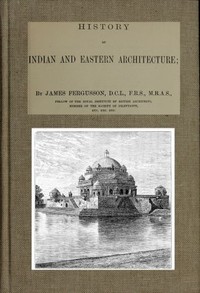
History of Indian and Eastern Architecture
Subjects:
Download Formats:
Excerpt
+-------------------------------------------------------+
|Several minor typographical errors have been corrected.|
| Many names are spelled several ways in the original.|
| No attempt has been made to correct |
| the various spellings. |
| (etext transcriber's note) |
+-------------------------------------------------------+
[Illustration: TEMPLE AT KANTONUGGUR,...
Read the Full Text
— End of History of Indian and Eastern Architecture —
Book Information
- Title
- History of Indian and Eastern Architecture
- Author(s)
- Fergusson, James
- Language
- English
- Type
- Text
- Release Date
- January 15, 2020
- Word Count
- 274,489 words
- Bookshelves
- Browsing: Architecture, Browsing: Culture/Civilization/Society
- Rights
- Public domain in the USA.
Related Books
Die altindische Säule: Ein Beitrag zur Säulenkunde
by Sohrmann, Hans
German
294h 23m read
A History of Architecture in All Countries, Volume 2, 3rd ed. - From the Earliest Times to the Present Day
by Fergusson, James
English
3413h 47m read
A History of Architecture in all Countries, Volume 1, 3rd ed. - From the Earliest Times to the Present Day
by Fergusson, James
English
3857h 27m read
A History of Architecture in all Countries, Volumes 1 and 2, 3rd ed. - From the Earliest Times to the Present Day
by Fergusson, James
English
7268h 18m read
Rude Stone Monuments in All Countries: Their Age and Uses
by Fergusson, James
English
3402h 46m read
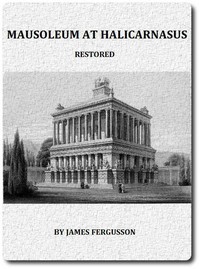
The Mausoleum at Halicarnassus Restored in Conformity With the Recently Discovered Remains
by Fergusson, James
English
328h 31m read