The Project Gutenberg EBook of Georgie’s Present, by Miss Brightwell
This eBook is for the use of anyone anywhere at no cost and with
almost no restrictions whatsoever. You may copy it, give it away or
re-use it under the terms of the Project Gutenberg License included
with this eBook or online at www.gutenberg.org
Title: Georgie’s Present
Author: Miss Brightwell
Release Date: November, 2005 [EBook #9332]
This file was first posted on September 23, 2003
Last Updated: November 1, 2016
Language: English
Character set encoding: UTF-8
*** START OF THIS PROJECT GUTENBERG EBOOK GEORGIE’S PRESENT ***
Produced by Juliet Sutherland, David Widger and PG
Distributed Proofreaders from images generously made
available by the Canadian Institute for Historical
Microreproductions
GEORGIE’S PRESENT;
OR TALES OF NEWFOUNDLAND.
By Miss Brightwell
_Author of “Annals of Industry and Genius,” etc. etc._ [Blank Page]
Contents.
CHAPTER I.
CHAPTER II.
CHAPTER III.
CHAPTER IV.
GEORGIE’S PRESENT;
OR,
TALES OF NEWFOUNDLAND.
CHAPTER I.
It was a beautiful May-day morning when George Green rose at an early
hour; for it was his birthday, and he had not been able to sleep so long
as usual, for counting of the joyful anniversary.
“Ten years old, are you indeed, my boy?” said his father, who found
Master George eagerly awaiting him in the breakfast parlour. “Yes, papa;
and I am to have a whole holiday, and mamma has promised to take me to
spend the afternoon at Aunt Baker’s, and--but I must not tell you that
now, for it is a secret!”
[Illustration]
The afternoon visit was evidently the great treat in George’s esteem;
and pleased indeed did he look, as he started with his mother for the
Parsonage-house in which his aunt lived. Mrs. Baker was the daughter
of Mr. Ward, an excellent clergyman, who had for several years been a
missionary in Newfoundland. After his death, his widow and daughter
returned to England, and found a home in the country village where some
of their family lived, and where Maria Ward soon married the clergyman
of the parish, her widowed mother consenting to become one of her
household.
Mrs. Ward was a charming old lady, lively and intelligent, and full of
goodness. Her heart seemed always overflowing with love, and though no
longer able to labour in the missionary field as she had done in the
days of her early womanhood, she was at heart a missionary still,
regarding with delight the progress of that great and glorious
cause--the advancement of the Redeemer’s kingdom upon earth.
On the afternoon of the fair May-day, when little George and his mother
paid their visit to the Parsonage, Mrs. Ward was sitting in her best bib
and tucker, prepared to do honour to the occasion. Close by her side,
upon the hearth, lay a splendid Newfoundland dog, which every now and
then looked up at her with affectionate eyes that seemed to say, “How
much I love you.”
“Ah, Boxa!” said the old lady, fondly caressing the head of the animal,
“I don’t know what you’ll say to me I have actually given away one of
your pups: at all events, I have promised it, which is the same thing.”
At that moment Master George popped his merry face in at the open
window, and greeted Mrs. Ward with a shout of joyous laughter. “Dear
Granny, you didn’t know you were talking aloud; and how indeed were you
to guess that I was so close at hand to overhear you? Ah! how glad I am
that you mean really to let me have the beautiful pup. I have chosen a
name for it already: it shall be called Newfy, because its mother came
from Newfoundland.”
“Its grandmother you should say, my dear,” replied Mrs. Ward; “Boxa’s
mother came over with me from Newfoundland, and a wonderful animal she
was for cleverness and beauty; but after all, she could not compare with
dear old Box, her sire. He was a marvel of sagacity, and did feats which
I really believe have never been surpassed.”
While the old lady was speaking, her grandson had jumped in at the
window, and was standing beside her, eagerly listening.
“You know, dear grandmamma,” he said, “this is my birthday, and I have
come to spend half of it with you and aunt; and, first, we are to have a
walk, then to take tea together, and, to finish up, you will tell me all
about Newfoundland and what you have seen there, ending with the history
of the wonderful dog.”
“Stay, stay, my love,” said Mrs. Ward; “it is impossible that I should
tell you all I have seen in Newfoundland. I can, however, give you an
account of some of your dear grandfather’s missionary journeys, in which
he met with many adventures, and, at the close of one trip, fell in with
the good man to whom the wonderful dog Box belonged.”
“That’s just what I should like,” said George; and immediately he
hastened to find his grandmother’s bonnet and shawl, in which she was
quickly arrayed for the walk. [Illustration]
It was a bright sunshiny afternoon, and as the little party strolled
through the village street, they found half the women and children of
the place, sitting in the doorways, or playing about on the roadside.
By-and-by they came to the green, where there was a crowd of boys just
turned out of school, a large knot of them clustering round a little
Italian boy, who had found his way to the village with his hurdy-gurdy,
upon which he was playing, while, tied to a string, he carried a little
monkey, perched upon his shoulder. George was eager to join the group
and see the antics of Jacko, who sat grinning and holding a little
cap for money, into which a boy flung a halfpenny, and then asked the
Italian where he came from. But the answer was unintelligible to him,
for it was given in a strange tongue, and George was soon tired of
listening to the music and watching the monkey.
In the meantime his grandmother had walked on, accompanied by her
daughter, and they were now slowly crossing the common. A few minutes’
brisk run brought George to their side, when he began chatting about the
boy and his monkey.
“I have no liking for those animals,” said Mrs. Ward; “indeed, the very
sight of a monkey makes me shudder with a feeling of aversion. I once
saw a trick played by one of them which made a lasting impression upon
my mind.”
“Tell me about it, dear grandma,” said George, “while you rest for a
while under this warm hedge upon your camp-stool which I have brought
for you.”
“Well,” she said, seating herself at her grandson’s request, “it is a
strange story, but quite true. It happened many long years ago, when I
was a young married woman, voyaging to Newfoundland, in the good ship
_Sarah Ann_, with your grandfather, who was then starting for the
missionary station to which he had been appointed. We were drawing near
to land; and after a long and weary voyage, you may imagine how eagerly
all eyes were strained to catch the first sight of the yet distant
shore.
“Among the passengers was one young lady, a sweet, gentle creature,
who quite won my heart by her winning manners. She had with her her
first-born child, an infant at the breast, and was going to Quebec to
join her husband, a military man there. She had come with the rest of us
on deck when the glad summons was heard, ‘Land in sight!’ and was seated
upon a sofa, with the child in her lap. The captain very politely handed
his glass to the ladies who stood near him, and directed them how to
catch a glimpse of the shore, which they were just able to discern.
When they had all had a peep, he turned to the young lady whom I have
mentioned, and asked if she would like to look. She thanked him, and
rose for the purpose, first cautiously laying her sleeping baby upon the
sofa. She then advanced a few steps, and took the glass he presented to
her; but scarcely had she raised it to her eye when a shout was heard
from one of the sailors--‘Stop him! stop the monkey; he’s got the
child!’ Every eye was turned in the direction to which the man pointed;
and there we saw the ship’s monkey, a favourite animal with the sailors,
of which they made a great pet, climbing up a rope which he held in one
hand, while with the other he hugged close to him the helpless infant!
Up, up, to a towering height the wretched brute climbed, while we
followed him with our eyes in breathless alarm. Suddenly a loud scream
was heard: it was the voice of the poor agonized mother, who would have
fallen senseless to the ground, had not one of the gentlemen caught her
in his arms. She was carried down in a state of unconsciousness to the
cabin, and left to the care of the stewardess.”
[Illustration: desc. Ship’s rigging in night storm]
“No one on deck had moved an inch. Indeed, they scarcely seemed to
breathe, so intense was the excitement felt in watching the movements of
the animal. Presently, a faint cry was heard,--the child was evidently
frightened; perhaps hurt by the pressure of the brute’s arm. At once the
monkey paused: he seemed to perceive there was something amiss; for,
taking his station in some part of the rigging, he tried to act the part
of nurse, rocking the baby to and fro, and patting its back. In the
meantime the captain was at his wits’ end to know what course was the
best to pursue. At first he ordered one or two of the men to go aloft in
pursuit. But this only increased the evil, for the animal, seeing itself
chased, hastened to climb a still higher spar; and the terrible fear
was suggested that, if driven too closely, he might drop his precious
burden, in order thus to secure the use of both his arms.”
“Oh, grandmamma, how shocking!” cried George, his interest evidently
reaching a climax at this point of the tale.
“Shocking indeed,” said Mrs. Ward; “the very idea was enough to make
one’s blood run cold. What was to be done? There was, happily, present a
very experienced old seaman, who now ventured to suggest a plan which he
thought might possibly turn out successful: at all events, as he said,
it could do no harm. His advice was, that everybody should be ordered to
quit the deck, sailors and all, so that not a creature should be visible
on board. The few men whose presence was necessary to manage the ship
were alone suffered to remain at their post, and they were directed to
keep quiet, and to conceal themselves as much as possible from view of
the monkey. The captain determined to try this scheme, and his orders
were immediately obeyed. We all hastened down accordingly, and waited
the issue in suspense. For some minutes a profound silence reigned.
By-and-by the captain, who had placed himself at a point where he could
watch unseen what was going forward, announced that the monkey was
descending cautiously from his perch. By his actions it seemed as though
the creature felt at a loss to account for the unwonted solitude on
deck. His curiosity was awakened, and he must needs come down and see
what it meant.
“Slowly and cautiously he slipped from yardarm to yardarm, approaching
nearer and nearer to the deck; at last he reached it, still carrying the
child with a firm grasp. In a moment he was seized by two lusty sailors
who were lying in wait behind a coil of rope; and the precious freight
he carried was borne in triumph down to the cabin. What a scene it was!
The poor mother was just recovering from the long death-like swoon in
which she had lain, when the infant was placed in her arms, perfectly
uninjured, although cold, and its little face blanched as if with
terror. At first it seemed as though the sudden revulsion of feeling was
too much for her, and she appeared about to sink once more into a state
of insensibility; but the next moment, feeling the little creature
nestling close to her bosom, she clasped it to her, while the tears
trickled down her cheeks.”
“I wonder whether they punished the monkey for playing such a trick,”
said George. “I really think, my dear,” said Mrs. Ward, “that the
mischievous brute escaped the flogging which he richly deserved: one
thing is certain, he never had the chance of playing nurse to Mrs. Ray’s
baby again.”
[Illustration]
CHAPTER II.
The rays of the evening sun were now sinking beneath the horizon,
shedding a golden glory over the landscape, and speaking in fair promise
of a fine day on the morrow. “It is time we went home again, before the
dews begin to fall,” said Mrs. Ward, as she rose from her seat; and
then, pointing to the western sky, she added: “How beautiful!--‘These
are thy glorious works, Parent of good. Let us praise God, whose glory
is shown in the works of His hands; for day unto day uttereth speech;
night unto night showeth knowledge.’ I hope you, my dear George, will
never be one of those who have eyes that see not, and ears that cannot
hear. Your dear grandfather was only a little boy when he began to think
of the great things of another world, and at the age of fifteen he
solemnly devoted himself to the service of God his Saviour.”
“Dear Grandmamma, I should like to know more about him. You promised to
tell me about one of his journeys in Newfoundland; and now here we are,
home again, and tea is set out in readiness, as I can see through the
open window.” The little party was soon comfortably seated at the social
meal, when Master George’s health was pledged in the cup “that cheers
but not inebriates;” and he regaled himself on choice plum-cake made by
the dear old lady herself for that special occasion, taking care, every
now and then, to break off a bit and throw it to Boxa, who sat by his
side, wagging her tail, in evident expectation of tit-bits.
“Shall we have candles?” asked Mrs. Ward, when the tea-things were
being removed, “or would you like best to sit in the twilight and watch
the rising moon?”
“I vote for twilight and the moon,” said George, placing his
grandmother’s arm-chair in a cozy nook, from which she could see abroad;
and then, seating himself on the stool at her feet, he waited till she
should begin the promised story.
“It was in the spring of the year, 1835, when your grandfather undertook
a tour of visitation to the southern and western shores of Newfoundland,
for the purpose of ministering to the scattered families in the remote
settlements of that region. He left me at St. John’s in the month of
March, as travelling over the snow in the island is considered less
difficult in that month than walking overland is at any other season of
the year. When we parted I knew that he was going on a laborious and
painful journey, but I had formed no idea of the dangers to which he
would be exposed, or my heart would indeed have sunk within me. He
took with him a guide to pilot him through the country; a man who was
reckoned very skilful and experienced, and who had lived some time with
the Micmac Indians, one of the aboriginal tribes. They had not advanced
far on their way when they missed the route, and could only ascertain
the points of the compass by observing the inclination of the topmost
branches of the juniper or larch trees.”
“How could they know by that means, grandmamma?”
“Because the juniper or larch always points to the east, thus affording
them a secure indication, by means of which they regained the path some
time after night-fall.
“This was rather a bad start, and as it turned out, seemed ominous of
evil to the travellers. As they proceeded on their way, your grandfather
stopped at various places to preach, administer the sacraments, and
visit the sick; and, in many instances, the poor people received him
gladly, being like sheep scattered without a shepherd in solitary
places, far from the means of grace. In one house which he visited he
was moved with compassion at the sight of the poor ailing mother of the
family. ‘Ah sir!’ said she, ‘if any of us be sick or sore, there is no
one to come near us, or to care for our souls.’
“I doubt not you have often heard the saying, ‘One half the world little
knows how the other half lives;’ and, indeed, we have but little idea
of the shifts to which thousands of our fellow men are put, and of the
discomforts and troubles of their daily life. These people lived, for
the most part, in wretched cabins, which swarmed with men, women, and
children, while every nook and corner not thus occupied was filled with
pigs, fowls, sheep, or dogs; and the thick smoke, or, as the people
emphatically call it, ‘cruel steam,’ is most distressing to the
eyesight, which suffers greatly in consequence.”
“But, why don’t they make chimneys, and let it out grandma?”
“They have a sort of rude chimney constructed of upright planks stuffed
between with moss; but the danger of the fire is great; indeed it is
always a necessary to have buckets of water at hand ready to throw upon
the flames. In some places the chimneys were fortified against this
danger by being lined all the way up with a coating of tin, which is
found to last some years.”
“I should be very sorry to have to live with the Newfoundlanders if
they have such houses as these; it seems more like what we read of the
savages in their wigwams.”
“Well, George, your grandfather fell in with some of these people, a
party of Indians from Canada; and, as it was late at night when he
reached their wigwams, the guide begged to be allowed to pass the night
with them. This they courteously permitted, and showed every hospitality
to their unexpected guests. It was a curious sight, the whole party,
men, women, and children, lying around the fire in the middle of the
tent, upon spruce boughs, spread like feathers, to form the couch. The
softest and cleanest deer skin was most courteously offered to the
guest, and he passed the night very comfortably, truly thankful for the
accommodation thus afforded him, and without which he must have suffered
greatly from exposure to the weather, for the snow fell fast during
several hours.”
At this point of her narrative Mrs. Ward rang for a candle, and desired
the servant to bring her writing desk. “I shall find there,” she said,
“the original MS. given me by my dear husband on his return from this
journey. He wrote it amid much difficulty, for very frequently the ink
would freeze in spite of all the precautions he took. Paper, too, was
very scanty, and had it not been for boxes, containing a supply of this
article, which had been washed on shore from different wrecks, he would
have found it impossible to procure enough for the purpose. Anxious,
however, to preserve a diary of each day’s proceedings, he persevered to
the best of his power, and the result was this scroll, now discoloured
by age, and some of the leaves a good deal torn, but the hand is clear
and legible throughout. I think you will like to have me read you
a short extract, giving an account of a very dangerous part of his
expedition. But, in the first place, I should mention that, when
travelling into the interior, he was obliged to walk in Indian rackets,
or snow-shoes, a very difficult matter to one unaccustomed to their
use.”
“Why difficult, grandma? I thought snow-shoes kept you from slipping,
and made it much easier to walk in winter.”
[Illustration]
“The snow-shoes of which I speak, my dear, are very different from
anything you have ever seen; nor could you imagine it possible to travel
in them if you had a pair now before you. The racket is a machine
consisting of a sort of net-work stretched upon ledges made of very hard
wood. They are about two feet and a half long, and fourteen inches
broad; and in the middle is fitted a kind of shoe, lined with wool or
hair, which is tied on to the ankle. By means of these strange
snow-shoes, the feet are prevented from sinking into the soft, deep snow.
Even the Indians, shod in this fashion, occasionally meet with heavy
falls, especially when descending very steep hills; and a foreigner
feels terribly awkward and at a loss when first he attempts to use them.
They are exceedingly fatiguing, too, as they become very heavy when wet;
and the wearer is compelled to walk with long and rapid strides, in
order to prevent the rackets from striking against each other.
Sometimes, when the day’s journey was a long one, the faithful terrier
which accompanied your grandfather throughout the whole route would howl
for very exhaustion; and whenever his master stopped to look about him,
or to set his compass, the poor brute would scratch about and make
himself a bed for a few minutes’ rest in the soft snow.”
“Poor Doggy!” said George, “I can pity him for I remember once when I
walked some miles through the snow, and my shoes got clogged up, I was
so tired, what Uncle Tom called ‘dead beat,’ that I could not help
crying the last mile before I reached home.”
“Imagine, then, your grandfather starting and making the best of his way
over the snow-clad country until the afternoon began to warn him that he
must make a halt. At about four o’clock the traveller has to begin his
preparation for the night’s lodging, and this he does by clearing away
the snow (which is sometimes ten feet deep) from a square space; for
which purpose he makes a rude shovel, cut out of the side of some
standing tree; and, as snow does not adhere to wood as it does to iron,
this is the best thing to be used in removing the snow. When the ground
is quite cleared, the wood for the fire is laid in the centre, about
a foot of loose snow being left round the space in which it is to be
kindled. Upon this, the spruce or fir branches, which easily break off
when bent sharply backwards, are laid all one way, with the lower part
of the bough upwards. Thus the bed is made. The excavated snow forms
a lofty wall round the square; and here the traveller lies, with no
covering from the weather, nor any other shelter than the walls of snow
on each side of his cavern, and the surrounding trees, may afford.”
“I wonder,” said George, “how they got a light to make the fire with;
perhaps by rubbing two pieces of wood together.”
“Your guess, though ingenious, is not correct, my dear,” said Mrs. Ward,
“there is a certain yellow fungus which grows on the hazel tree that
supplies tinder to the Indian, who is never without flint and steel; and
he has a very expert method of rapidly whirling moss and dry leaves and
bark in his hands, so as to cause a draught, and in a wonderfully short
time he succeeds in making a cheerful blaze.”
“And what has he to eat?”
“Plenty of venison, for there are large flocks of deer in the country.
You will wonder where these creatures find pasture; I will tell you. At
the time when your grandfather travelled, the whole land was covered
with snow, excepting on the tops of some of the hills, from which the
snow had melted. These lofty, bare spots are called ‘naps,’ and they
resemble island meadows in an ocean of snow. Upon these, the deer were
grazing leisurely, like cattle, in numerous herds. They go in quest of
food from one of these naps to another, in places near water, which
after long frost becomes exceedingly scarce; in the interior, the tracks
of the deer were as thick as of cattle in the snow in a well-stocked
farmyard. There were, beside, plenty of ptarmigan, which abounded on
these hills, searching for a species of cranberry, a food of which they
are very fond.”
“Vension and grouse! dainty dishes, indeed, dear granny; after all, that
is not quite a land of barrenness.”
“Nay, child! there is provision made in all places of our heavenly
Father’s dominions for the supply of the necessities both of man and
beast. But I must hasten on, or you will be weary of my tale.”
[Illustration]
CHAPTER III.
“In addition to the first guide, your grandfather now engaged one of the
Indians with whom they had passed the night, to accompany him. The three
cheerfully proceeded on their route, and for the first few days enjoyed
very brilliant weather, and made so much progress upon the hard snow,
that I believe they had nearly traversed a third of their destined route
across to St. George’s Bay.
“But now they began to suffer severely from the state of their eyes
which became exceedingly painful, and no wonder; for by day they were
exposed to the full glare of the sun upon the wide expanse of snow,
and all night to the red glare of the fire, together with the pungent
wood-smoke, which proved a constant trial to the sight. At length they
became almost blind, and to add to their distress, provisions began to
fail them. They had counted on securing plenty of game as they went
along, and no one ever thinks of carrying provisions for more than a day
or two into the interior with them. Now, unhappily, this resource was at
an end; for not one of the three could see well enough to use a gun, or,
indeed, bear to look upwards.
“What follows is very sad; it is touchingly told in the journal, and I
will read the account as it is there given:--‘The atmosphere now became
so thick, that, had we not been troubled with snow-blindness, we could
not have seen more than a few yards, and could not possibly have made
our way in an unknown country.
“‘These Newfoundland fogs are fearful things; they surpass, indeed, the
imagination of Europeans. You seem to be actually in cloud-land; for
nothing but cloud is visible above, around, and beneath. This state of
things lasts often for days; now it is a bright white, as though the day
were struggling through; now it becomes shaded, and now almost night.
Sometimes there are little openings, and you catch a clean vista between
two walls of vapour, but it is presently shut out by the rolling masses
of fog. I could compare it to nothing but ghost-land; nothing is real
except the danger!”
“Were you ever in such a fog as that, grandmamma?” asked George.
“Yes, George; once at sea we were overtaken by a most fearful and
prolonged fog; never in my life did I experience such feelings of awe
and alarm as during that weary week.
“But I must tell you of that another time. Your grandfather often used
to recall his emotions when travelling in that thick cloud. One day they
rested in the icy chamber they had dug for the night’s resting-place,
and he said, ‘That was indeed an oratory;’ and fervently did we pray,
‘Give us our daily bread,’ and ‘Lighten our darkness we beseech Thee, O
Lord.’
“The tears dropped fast when he thought of my anxiety on his account,
and of the probability that his usefulness was at an end, and that we
should meet no more on earth.
“At length he came to the resolution to retrace his steps, hoping to
make the scanty supply of biscuit which still remained hold out until
they could regain the spot where the Indians had encamped, and where
they had buried some venison. Of the three travellers, he suffered least
from snow-blindness, which he thought was owing to the fact that he had
kept a black gauze veil over his face at mid-day, and had resolutely
adhered to his purpose of not rubbing his eyes. He was, therefore, best
able to guide his companions. He thus describes the plan on which he
proceeded:--‘Maurice, the Indian, would open his eyes now and then to
look at my compass;--we could not see for fog more than one hundred
yards; he would fix on some object as far as the eye could reach, and
then shut his eyes again, when I would lead him up to it. On reaching it
he would take another look, and we then started for the next point. It
was literally a case of the blind leading the blind.
“In this manner, by forced marches, we were enabled to reach, by seven
or eight in the evening, the same spots at which we had halted on our
outward march at four each day. Thus we were spared the labour of
digging and clearing away the snow, to which, in our enfeebled
condition, we were quite unequal. The stint of food was now so small
that I advised my companions not to eat any quantity at a time, but
to take a piece the size of a nutmeg when hunger was most craving. We
gathered also each day, on our return, about as many partridge berries
as would fill a wine glass apiece, and these we found both refreshing
and nutritive. They had ripened in the autumn, and had been buried under
the snow all the winter, so that they resembled preserved fruit in
flavour, and reminded me of a rich, clarety grape.
“One great privation in this winter travelling is the want of water. We
were obliged to content ourselves with the supply gotten from the snow,
melted by the smoky fire. This water, together with the wind, had the
effect of parching and cracking my swollen lips to such a degree, that
when, after an interval of eight days, I had an opportunity of surveying
my face in a piece of broken glass, I was at a loss to recognise my own
features. The most scorching heat of summer is not so injurious to the
skin as the effect of travelling in the snow at this season.’
“After this tedious fashion, stage by stage, the wanderers slowly
proceeded, until at length, by God’s mercy, they reached the place where
the Indian wigwams had been left. During the latter part of their route
they heard continually the noise of the woodpeckers upon the bark of
the trees, which is considered a certain sign of approaching rain, a
downfall of which they much feared. The weather was beginning to soften,
and consequently the ice lost its firmness, and it became both difficult
and dangerous to get so far as this place, but by great effort they
accomplished it. Nor was your grandfather satisfied to trust to the
imperfect shelter the tents afforded, but persevered in journeying on
to the hut built for the winter crew, and which he knew was at no great
distance from thence.
“Scarcely had he reached this spot when the rain fell in torrents, and
truly thankful did he feel that he had a roof to protect him, instead of
being in one of those miserable un-roofed snow-caves, which had for so
many nights been his only retreat during all weathers. For a time
he suffered greatly both in his eyes and from the smarting of his
cold-blistered face, which, together with the fatigue he had endured,
rendered it necessary that he should repose for some days before
venturing on his journeyings again. I shall not trace his onward
progress, which continued to be attended with much difficulty and
danger. His nerves became at length so shattered by his great exertions,
that, when travelling along the coast, where he had to pass over very
lofty cliffs, the sight of these dizzy precipices would so affect
him that he burst into tears, and experienced all the symptoms of
fainting. Once when clinging by his hands and knees upon the edge of a
steep cliff, he felt as though he must inevitably loose his hold, in
which case the fall would have been certain death. Closing his eyes, he
breathed an earnest ejaculatory prayer, and supported by an invisible
arm, and strengthened with new vigour, he felt empowered to maintain his
hold, and, gradually advancing, reached the bottom in safety.”
[Illustration]
“Oh, how glad you must have felt when you saw him home again, safe and
sound, dear granny.”
“I did, indeed, my love, and with thankful heart acknowledged the
goodness of our heavenly Father. Nothing but the strong sense of duty
can sustain the heart under such anxiety as falls to the lot of the
faithful missionary and his family. Love divine is the constraining
and blessed principle that bears the fainting spirit up. ‘We love Him
because He first loved us.’ Let that, my own dear boy, be your motto;
and then if you lose your life in the service of your Lord, you will
find it again in eternal joy.”
CHAPTER IV.
After a short pause, Mrs. Ward said, with a smile, “You will be wishing
to hear the story of Boxa’s ancestor, a dog, as I have said, deserving
of renown. It chanced, in one of his official journeys, your grandfather
visited a part of the coast peculiarly fatal to European vessels,
especially to those outward bound to Quebec in the spring; the shore in
the neighbourhood being very low, and the ledges of rock extending far
out to sea. On one of the islands which he visited, he took up his abode
in a neat cabin belonging to a planter, where he found welcome shelter,
and a cheerful fire made from the wreckwood scattered abundantly upon
the shore. There was a family of children, a merry group of boys and
girls, who kept jingling in their hands some sort of playthings.
“What have you got there, my boys?’ he asked. They showed him their
treasures, which proved to be bunches of small desk and cabinet keys,
that had been picked up from the wrecks--a melancholy kind of toy, he
could not help thinking. By-and-bye the good wife spread the hospitable
board, at which he was invited to take his seat. He looked with surprise
at the plates which she placed upon the deal table. They were very
beautiful old china ware, and several pieces of a modern elegant
breakfast set of dragon china, which had been ranged upon the shelves of
the cabin alongside of the most common earthen crockery. These also had
been cast ashore by the waves in boxes. When he asked to wash his hands,
a fine huckaback towel, neatly marked with initial letters, was handed
him. On inquiry, he learned that it had come from a wreck in which there
were several ladies.
“There was something inexpressibly painful to the sensitive heart of
my dear husband, in being thus surrounded by tokens of calamity. He
inquired, with a sigh, whether any efforts had been made to help the
sufferers?
“‘Oh, yes!’ said his host, a worthy man, though rough in his address and
appearance. ‘Yes! we do our best, but it is very seldom our help comes
in time to be worth much. Once or twice we have saved a solitary seaman
by throwing a rope, or by sending in our dogs to drag others ashore; and
some years ago there were seven men wrecked in the night, unknown to us.
When the morning came, I was out early and discovered footmarks along
the shore, which told me a tale I could read plain enough. I knew there
had been a fearful gale some hours before, and my mind misgave me that
these poor creatures, whose footsteps I saw, would perish of hunger in
the interior, where they could find nothing to eat, and where there was
not a solitary cottage at which they could get help.
“‘Well; I determined to track them, and I called up my brother, who was
a strong, active young fellow; and we followed them, and found them at
last, just as they had given up all hope, and had laid down to die. For
three days and nights they had tasted neither food nor drink. When first
they caught sight of us, I shall never forget their faces. Haggard and
starved, as they looked, they cried for joy, and kissed our hands, and
bade God bless us!’”
“And would they really have died, do you think, grandmamma, if the two
men had not overtaken them?” said Georgie, eagerly.
“No doubt, my love, such would have been their fate. After hearing this
tale, your grandfather retired early to rest, being weary with the
fatigues of a long and exhausting day’s journey. He slept soundly, and
though the wind, which had blown a strong gale when he landed, increased
during the night to a hurricane, his slumbers were undisturbed for
several hours. At length he was aroused by a loud uproar, for which at
first he could not account. When he had quite regained consciousness, he
found that, in addition to the noise of a raging tempest, there were
the shouts and cries of men outside the cabin, and loud talking in the
chamber beneath.
“It was evident that something unusual had occurred to disturb the
household. Hastily rising and dressing himself, he made the best of his
way downstairs, and there he found the wife of his host busily engaged
in chafing the hands and arms of a poor half-drowned lad who had just
been brought into the cabin and laid upon the floor. He, it appeared,
had been cast ashore by a heavy swell, but there were others beside him
who were still in danger.
“‘Could you manage, sir, to stand against the wind, perhaps you could
carry this coil of rope; they may be wanting it,’ said the woman. In
another minute your grandfather was battling against the storm, making
his way along the rugged shore in the direction of a small group of men
who proved to be his host, with a younger brother and the two men who
had manned the boat in which he had himself come to the island.
“It was a fearful sight. The sea was in a white foam, the whole air
filled with spray, and the wind blowing heavily. Not far from shore was
a boat with a part of the exhausted crew from a vessel wrecked in the
offing. The breakers made it impossible that the poor fellows should
effect a landing. A terrible death seemed their inevitable fate. Just at
the moment your grandfather reached the point, he saw his host leap into
the sea, his object being to give the men a rope. It was at the peril of
his life he took that desperate leap. His favourite dog, Boxa, saw and
instantly followed his master. The two rose in a moment, and were borne
by the swell toward the boat. They had nearly reached it when it
capsized. Moir--that was the name of the gallant man--seized one of the
seamen, and, wonderful to tell, succeeded in bringing him safe to shore.
In the meantime, Boxa, following his master’s example, caught hold of
another of the poor drowning creatures, and began to drag him along. It
proved, however, that the dog’s hold had fastened upon the seaman’s
south-wester cap, which came off in the water. The animal evidently was
not aware of what had happened, and, not perceiving the diminution in
the weight of his burden, was proceeding to make his way to land with
the cap only.
[Illustration] “‘The poor fellow is lost!’ cried the bystanders on the
point.
“But no! they presently saw the sailor clutch hold of the dog’s
tail,---it was a fine, handsome, large tail, George;--and in this manner
he was towed to land in safety. Imagine how glad he must have been when
he found himself on terra firma! His first act was to give thanks to
God, and then he threw his arms around Boxa, caressing him again and
again, and loading him with fond epithets, part in English, part in
Swedish. He was a young Swede, a fine, handsome youth, about twenty
years of age. Without loss of time he was conducted to the house, where
he shared the kind attentions of the mistress; but she had soon another
and a more difficult case in hand.
“The master of the wrecked vessel, who was one of the boat’s crew, was
rescued from a watery grave by the further exertions of Moir and his
companions, and was carried in a perfectly insensible state to the
house. Some hours elapsed before he was conscious of anything that
was passing around him. He seemed, indeed, so completely gone, that
every one had given him over, when some faint symptoms of returning life
appeared.
“In the meantime the day wore on, and your grandfather, feeling that he
caused additional trouble to the family by his prolonged stay under
such circumstances, was very desirous to leave the island as soon as
possible. The state of the weather, however, continued such as to render
it impossible he should attempt to put to sea, and he passed another
night and a part of the following day with the friendly planter, whose
heroic exertions on behalf of the shipwrecked crew had greatly exalted
him in the opinion of his visitor.
“During the early part of the night the two sat up together, there being
a dearth of sleeping accommodation, for the beds were all given up to
the sailors; and for some hours they conversed together on topics of
mutual interest.
“Moir was a pious man, and his early history had been one of striking
adventure. As he sat by the fireside, quietly narrating various passages
of his past life, his faithful dog crouched close beside him, dozing and
evidently dreaming at intervals; for he made strange noises, and paddled
with his fore-feet, as though he were still struggling with the waves.
His master looked fondly on the animal, and said,--
“‘You’d hardly credit, sir, the surprising sagacity of these dogs. Some
of them are perfect wonders. They have more sense, really, it seems,
than many so-called Christians, and I have sometimes thought they must
reason.
“‘Boxa is a fair specimen of the race, and I could tell you some of his
doings which would make you ask--Is it possible? I have known him help
to carry to shore some light spars which the captain of a vessel in the
harbour desired him to convey to the land-wash, in order that a boat’s
crew might be saved the trouble of taking them. Another dog belonging
to the same wharf, whether of his own accord, or being pressed into the
service, took to helping him at this work for a time; he soon tired,
however, and, in the middle of his second turn, thought proper to swim
to shore without his spar.
“‘When Boxa saw what he was up to, he quietly made his way to land with
his own turn, and then went in search of the runaway, and gave him
a sound thrashing; in short, his arguments were so unanswerable and
convincing that the culprit returned to his work, and without more
ado, set to and persevered at it, till every spar that had been thrown
overboard was rafted to shore by the combined labour of the two dogs.’
“‘That was certainly a very sagacious and knowing proceeding,’ said your
grandfather, ‘and I do not wonder you are so much attached to your dog.’
“‘O sir, that’s only a sample I give you of his sense and clever
ways. What I value him so much for it his fidelity to myself, and his
attachment to the whole family. As to the children, be they never so
small, we can always leave them without fear in his charge for hours;
and to crown his good deeds, I must tell you he saved the life of the
youngest of the fry. The child was playing close to the water-side, and
fell in. There was nobody near, and how the dog found it out we never
could tell; he was some distance off, and a few minutes before, when my
wife passed that way, she saw him lying asleep, to all appearance as
sound as a church door. But he must have heard the little one cry; for,
certain it is, he had dragged her out, and was licking her little face
and hands when the mother came back from her errand. You’ll not wonder
after that to hear that we would one and all of us share our last crust
with Boxa.’
“‘I do not, indeed, my good friend,’ said your grandfather; ‘and I must
say I should be heartily glad to possess a dog of the breed having the
same admirable qualities; for I have just lost my good old terrier, a
tried and faithful animal, which I brought with me from England. He died
of old age, about a month ago, and sadly shall I miss him.’
“Moir made no answer at the time, but the next day, shortly before his
guest departed, the worthy man made his appearance alongside the boat as
it was pushing off, and handed in a hamper which, he said, contained a
pup of the right sort, if his reverence would please to accept of it.
This pup was no other than the mother of Boxa, and an excellent animal
she proved to be--faithful, sagacious, and patient; in short, a worthy
scion of such a stock.
“I need not, I am sure, by way of conclusion, sing the praises of Boxa
herself, for you know as well as I can tell you her many good qualities;
and therefore I have only further to say that I hope Newfy--as you have
named him--will turn out all that could be wished.”
“Thank you, thank you, dear grandmamma,” said George, who had listened
with such fixed attention to the last part of Mrs. Ward’s narrative,
that he had not once moved upon his stool; “I am so pleased with my pet,
I shall not know how I can thank you enough. I think, if you please, I
will run and fetch him out of the kennel, and put him into the basket I
brought, hoping you would let me carry him home with me to-night.”
[Illustration]
“Do so, George,” said his mother, folding up the handkerchief she had
been embroidering, “and in the meantime I will put on my bonnet, for it
is time we were on our way home.”
No sooner said than done. In five minutes George and Mrs. Green had said
good-bye and were crossing the common in the direction of their own
home.
“What a happy day it has been, mamma,” said our little friend, “and how
glad I am I have such a nice birthday present;” and he bent down to take
a peep through the wicker-work of the basket.
“And I am so glad, dear boy, that you have enjoyed your treat,” replied
his mother. “May you see many happy, returns of this day; and may each
succeeding year find you wiser and happier.”
Here ends the story of Georgie’s Present; but, as I think my young
readers may like to know how the Newfoundland pup turned out, I will
just tell them that he is now a full-grown, handsome young dog,--the
great favourite and inseparable companion of my friend George, who
assured me, not long ago, that of all his possessions there is none he
prizes more highly than Newfy.
End of the Project Gutenberg EBook of Georgie’s Present, by Miss Brightwell
*** END OF THIS PROJECT GUTENBERG EBOOK GEORGIE’S PRESENT ***
***** This file should be named 9332-0.txt or 9332-0.zip *****
This and all associated files of various formats will be found in:
http://www.gutenberg.org/9/3/3/9332/
Produced by Juliet Sutherland, David Widger and PG
Distributed Proofreaders from images generously made
available by the Canadian Institute for Historical
Microreproductions
Updated editions will replace the previous one--the old editions
will be renamed.
Creating the works from public domain print editions means that no
one owns a United States copyright in these works, so the Foundation
(and you!) can copy and distribute it in the United States without
permission and without paying copyright royalties. Special rules,
set forth in the General Terms of Use part of this license, apply to
copying and distributing Project Gutenberg-tm electronic works to
protect the PROJECT GUTENBERG-tm concept and trademark. Project
Gutenberg is a registered trademark, and may not be used if you
charge for the eBooks, unless you receive specific permission. If you
do not charge anything for copies of this eBook, complying with the
rules is very easy. You may use this eBook for nearly any purpose
such as creation of derivative works, reports, performances and
research. They may be modified and printed and given away--you may do
practically ANYTHING with public domain eBooks. Redistribution is
subject to the trademark license, especially commercial
redistribution.
*** START: FULL LICENSE ***
THE FULL PROJECT GUTENBERG LICENSE
PLEASE READ THIS BEFORE YOU DISTRIBUTE OR USE THIS WORK
To protect the Project Gutenberg-tm mission of promoting the free
distribution of electronic works, by using or distributing this work
(or any other work associated in any way with the phrase “Project
Gutenberg”), you agree to comply with all the terms of the Full Project
Gutenberg-tm License available with this file or online at
www.gutenberg.org/license.
Section 1. General Terms of Use and Redistributing Project Gutenberg-tm
electronic works
1.A. By reading or using any part of this Project Gutenberg-tm
electronic work, you indicate that you have read, understand, agree to
and accept all the terms of this license and intellectual property
(trademark/copyright) agreement. If you do not agree to abide by all
the terms of this agreement, you must cease using and return or destroy
all copies of Project Gutenberg-tm electronic works in your possession.
If you paid a fee for obtaining a copy of or access to a Project
Gutenberg-tm electronic work and you do not agree to be bound by the
terms of this agreement, you may obtain a refund from the person or
entity to whom you paid the fee as set forth in paragraph 1.E.8.
1.B. “Project Gutenberg” is a registered trademark. It may only be
used on or associated in any way with an electronic work by people who
agree to be bound by the terms of this agreement. There are a few
things that you can do with most Project Gutenberg-tm electronic works
even without complying with the full terms of this agreement. See
paragraph 1.C below. There are a lot of things you can do with Project
Gutenberg-tm electronic works if you follow the terms of this agreement
and help preserve free future access to Project Gutenberg-tm electronic
works. See paragraph 1.E below.
1.C. The Project Gutenberg Literary Archive Foundation (“the Foundation”
or PGLAF), owns a compilation copyright in the collection of Project
Gutenberg-tm electronic works. Nearly all the individual works in the
collection are in the public domain in the United States. If an
individual work is in the public domain in the United States and you are
located in the United States, we do not claim a right to prevent you from
copying, distributing, performing, displaying or creating derivative
works based on the work as long as all references to Project Gutenberg
are removed. Of course, we hope that you will support the Project
Gutenberg-tm mission of promoting free access to electronic works by
freely sharing Project Gutenberg-tm works in compliance with the terms of
this agreement for keeping the Project Gutenberg-tm name associated with
the work. You can easily comply with the terms of this agreement by
keeping this work in the same format with its attached full Project
Gutenberg-tm License when you share it without charge with others.
1.D. The copyright laws of the place where you are located also govern
what you can do with this work. Copyright laws in most countries are in
a constant state of change. If you are outside the United States, check
the laws of your country in addition to the terms of this agreement
before downloading, copying, displaying, performing, distributing or
creating derivative works based on this work or any other Project
Gutenberg-tm work. The Foundation makes no representations concerning
the copyright status of any work in any country outside the United
States.
1.E. Unless you have removed all references to Project Gutenberg:
1.E.1. The following sentence, with active links to, or other immediate
access to, the full Project Gutenberg-tm License must appear prominently
whenever any copy of a Project Gutenberg-tm work (any work on which the
phrase “Project Gutenberg” appears, or with which the phrase “Project
Gutenberg” is associated) is accessed, displayed, performed, viewed,
copied or distributed:
This eBook is for the use of anyone anywhere at no cost and with
almost no restrictions whatsoever. You may copy it, give it away or
re-use it under the terms of the Project Gutenberg License included
with this eBook or online at www.gutenberg.org
1.E.2. If an individual Project Gutenberg-tm electronic work is derived
from the public domain (does not contain a notice indicating that it is
posted with permission of the copyright holder), the work can be copied
and distributed to anyone in the United States without paying any fees
or charges. If you are redistributing or providing access to a work
with the phrase “Project Gutenberg” associated with or appearing on the
work, you must comply either with the requirements of paragraphs 1.E.1
through 1.E.7 or obtain permission for the use of the work and the
Project Gutenberg-tm trademark as set forth in paragraphs 1.E.8 or
1.E.9.
1.E.3. If an individual Project Gutenberg-tm electronic work is posted
with the permission of the copyright holder, your use and distribution
must comply with both paragraphs 1.E.1 through 1.E.7 and any additional
terms imposed by the copyright holder. Additional terms will be linked
to the Project Gutenberg-tm License for all works posted with the
permission of the copyright holder found at the beginning of this work.
1.E.4. Do not unlink or detach or remove the full Project Gutenberg-tm
License terms from this work, or any files containing a part of this
work or any other work associated with Project Gutenberg-tm.
1.E.5. Do not copy, display, perform, distribute or redistribute this
electronic work, or any part of this electronic work, without
prominently displaying the sentence set forth in paragraph 1.E.1 with
active links or immediate access to the full terms of the Project
Gutenberg-tm License.
1.E.6. You may convert to and distribute this work in any binary,
compressed, marked up, nonproprietary or proprietary form, including any
word processing or hypertext form. However, if you provide access to or
distribute copies of a Project Gutenberg-tm work in a format other than
“Plain Vanilla ASCII” or other format used in the official version
posted on the official Project Gutenberg-tm web site (www.gutenberg.org),
you must, at no additional cost, fee or expense to the user, provide a
copy, a means of exporting a copy, or a means of obtaining a copy upon
request, of the work in its original “Plain Vanilla ASCII” or other
form. Any alternate format must include the full Project Gutenberg-tm
License as specified in paragraph 1.E.1.
1.E.7. Do not charge a fee for access to, viewing, displaying,
performing, copying or distributing any Project Gutenberg-tm works
unless you comply with paragraph 1.E.8 or 1.E.9.
1.E.8. You may charge a reasonable fee for copies of or providing
access to or distributing Project Gutenberg-tm electronic works provided
that
- You pay a royalty fee of 20% of the gross profits you derive from
the use of Project Gutenberg-tm works calculated using the method
you already use to calculate your applicable taxes. The fee is
owed to the owner of the Project Gutenberg-tm trademark, but he
has agreed to donate royalties under this paragraph to the
Project Gutenberg Literary Archive Foundation. Royalty payments
must be paid within 60 days following each date on which you
prepare (or are legally required to prepare) your periodic tax
returns. Royalty payments should be clearly marked as such and
sent to the Project Gutenberg Literary Archive Foundation at the
address specified in Section 4, “Information about donations to
the Project Gutenberg Literary Archive Foundation.”
- You provide a full refund of any money paid by a user who notifies
you in writing (or by e-mail) within 30 days of receipt that s/he
does not agree to the terms of the full Project Gutenberg-tm
License. You must require such a user to return or
destroy all copies of the works possessed in a physical medium
and discontinue all use of and all access to other copies of
Project Gutenberg-tm works.
- You provide, in accordance with paragraph 1.F.3, a full refund of any
money paid for a work or a replacement copy, if a defect in the
electronic work is discovered and reported to you within 90 days
of receipt of the work.
- You comply with all other terms of this agreement for free
distribution of Project Gutenberg-tm works.
1.E.9. If you wish to charge a fee or distribute a Project Gutenberg-tm
electronic work or group of works on different terms than are set
forth in this agreement, you must obtain permission in writing from
both the Project Gutenberg Literary Archive Foundation and Michael
Hart, the owner of the Project Gutenberg-tm trademark. Contact the
Foundation as set forth in Section 3 below.
1.F.
1.F.1. Project Gutenberg volunteers and employees expend considerable
effort to identify, do copyright research on, transcribe and proofread
public domain works in creating the Project Gutenberg-tm
collection. Despite these efforts, Project Gutenberg-tm electronic
works, and the medium on which they may be stored, may contain
“Defects,” such as, but not limited to, incomplete, inaccurate or
corrupt data, transcription errors, a copyright or other intellectual
property infringement, a defective or damaged disk or other medium, a
computer virus, or computer codes that damage or cannot be read by
your equipment.
1.F.2. LIMITED WARRANTY, DISCLAIMER OF DAMAGES - Except for the “Right
of Replacement or Refund” described in paragraph 1.F.3, the Project
Gutenberg Literary Archive Foundation, the owner of the Project
Gutenberg-tm trademark, and any other party distributing a Project
Gutenberg-tm electronic work under this agreement, disclaim all
liability to you for damages, costs and expenses, including legal
fees. YOU AGREE THAT YOU HAVE NO REMEDIES FOR NEGLIGENCE, STRICT
LIABILITY, BREACH OF WARRANTY OR BREACH OF CONTRACT EXCEPT THOSE
PROVIDED IN PARAGRAPH 1.F.3. YOU AGREE THAT THE FOUNDATION, THE
TRADEMARK OWNER, AND ANY DISTRIBUTOR UNDER THIS AGREEMENT WILL NOT BE
LIABLE TO YOU FOR ACTUAL, DIRECT, INDIRECT, CONSEQUENTIAL, PUNITIVE OR
INCIDENTAL DAMAGES EVEN IF YOU GIVE NOTICE OF THE POSSIBILITY OF SUCH
DAMAGE.
1.F.3. LIMITED RIGHT OF REPLACEMENT OR REFUND - If you discover a
defect in this electronic work within 90 days of receiving it, you can
receive a refund of the money (if any) you paid for it by sending a
written explanation to the person you received the work from. If you
received the work on a physical medium, you must return the medium with
your written explanation. The person or entity that provided you with
the defective work may elect to provide a replacement copy in lieu of a
refund. If you received the work electronically, the person or entity
providing it to you may choose to give you a second opportunity to
receive the work electronically in lieu of a refund. If the second copy
is also defective, you may demand a refund in writing without further
opportunities to fix the problem.
1.F.4. Except for the limited right of replacement or refund set forth
in paragraph 1.F.3, this work is provided to you ‘AS-IS’, WITH NO OTHER
WARRANTIES OF ANY KIND, EXPRESS OR IMPLIED, INCLUDING BUT NOT LIMITED TO
WARRANTIES OF MERCHANTABILITY OR FITNESS FOR ANY PURPOSE.
1.F.5. Some states do not allow disclaimers of certain implied
warranties or the exclusion or limitation of certain types of damages.
If any disclaimer or limitation set forth in this agreement violates the
law of the state applicable to this agreement, the agreement shall be
interpreted to make the maximum disclaimer or limitation permitted by
the applicable state law. The invalidity or unenforceability of any
provision of this agreement shall not void the remaining provisions.
1.F.6. INDEMNITY - You agree to indemnify and hold the Foundation, the
trademark owner, any agent or employee of the Foundation, anyone
providing copies of Project Gutenberg-tm electronic works in accordance
with this agreement, and any volunteers associated with the production,
promotion and distribution of Project Gutenberg-tm electronic works,
harmless from all liability, costs and expenses, including legal fees,
that arise directly or indirectly from any of the following which you do
or cause to occur: (a) distribution of this or any Project Gutenberg-tm
work, (b) alteration, modification, or additions or deletions to any
Project Gutenberg-tm work, and (c) any Defect you cause.
Section 2. Information about the Mission of Project Gutenberg-tm
Project Gutenberg-tm is synonymous with the free distribution of
electronic works in formats readable by the widest variety of computers
including obsolete, old, middle-aged and new computers. It exists
because of the efforts of hundreds of volunteers and donations from
people in all walks of life.
Volunteers and financial support to provide volunteers with the
assistance they need are critical to reaching Project Gutenberg-tm’s
goals and ensuring that the Project Gutenberg-tm collection will
remain freely available for generations to come. In 2001, the Project
Gutenberg Literary Archive Foundation was created to provide a secure
and permanent future for Project Gutenberg-tm and future generations.
To learn more about the Project Gutenberg Literary Archive Foundation
and how your efforts and donations can help, see Sections 3 and 4
and the Foundation information page at www.gutenberg.org
Section 3. Information about the Project Gutenberg Literary Archive
Foundation
The Project Gutenberg Literary Archive Foundation is a non profit
501(c)(3) educational corporation organized under the laws of the
state of Mississippi and granted tax exempt status by the Internal
Revenue Service. The Foundation’s EIN or federal tax identification
number is 64-6221541. Contributions to the Project Gutenberg
Literary Archive Foundation are tax deductible to the full extent
permitted by U.S. federal laws and your state’s laws.
The Foundation’s principal office is located at 4557 Melan Dr. S.
Fairbanks, AK, 99712., but its volunteers and employees are scattered
throughout numerous locations. Its business office is located at 809
North 1500 West, Salt Lake City, UT 84116, (801) 596-1887. Email
contact links and up to date contact information can be found at the
Foundation’s web site and official page at www.gutenberg.org/contact
For additional contact information:
Dr. Gregory B. Newby
Chief Executive and Director
[email protected]
Section 4. Information about Donations to the Project Gutenberg
Literary Archive Foundation
Project Gutenberg-tm depends upon and cannot survive without wide
spread public support and donations to carry out its mission of
increasing the number of public domain and licensed works that can be
freely distributed in machine readable form accessible by the widest
array of equipment including outdated equipment. Many small donations
($1 to $5,000) are particularly important to maintaining tax exempt
status with the IRS.
The Foundation is committed to complying with the laws regulating
charities and charitable donations in all 50 states of the United
States. Compliance requirements are not uniform and it takes a
considerable effort, much paperwork and many fees to meet and keep up
with these requirements. We do not solicit donations in locations
where we have not received written confirmation of compliance. To
SEND DONATIONS or determine the status of compliance for any
particular state visit www.gutenberg.org/donate
While we cannot and do not solicit contributions from states where we
have not met the solicitation requirements, we know of no prohibition
against accepting unsolicited donations from donors in such states who
approach us with offers to donate.
International donations are gratefully accepted, but we cannot make
any statements concerning tax treatment of donations received from
outside the United States. U.S. laws alone swamp our small staff.
Please check the Project Gutenberg Web pages for current donation
methods and addresses. Donations are accepted in a number of other
ways including checks, online payments and credit card donations.
To donate, please visit: www.gutenberg.org/donate
Section 5. General Information About Project Gutenberg-tm electronic
works.
Professor Michael S. Hart was the originator of the Project Gutenberg-tm
concept of a library of electronic works that could be freely shared
with anyone. For forty years, he produced and distributed Project
Gutenberg-tm eBooks with only a loose network of volunteer support.
Project Gutenberg-tm eBooks are often created from several printed
editions, all of which are confirmed as Public Domain in the U.S.
unless a copyright notice is included. Thus, we do not necessarily
keep eBooks in compliance with any particular paper edition.
Most people start at our Web site which has the main PG search facility:
www.gutenberg.org
This Web site includes information about Project Gutenberg-tm,
including how to make donations to the Project Gutenberg Literary
Archive Foundation, how to help produce our new eBooks, and how to
subscribe to our email newsletter to hear about new eBooks.
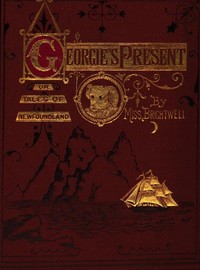
Georgie's Present, or, Tales of Newfoundland
Subjects:
Download Formats:
Excerpt
The Project Gutenberg EBook of Georgie’s Present, by Miss Brightwell
This eBook is for the use of anyone anywhere at no cost and with
almost no restrictions whatsoever. You may copy it, give it away or
re-use it under the terms of the Project Gutenberg License included
with this eBook or online at www.gutenberg.org
Release Date: November, 2005 [EBook #9332]
This file was first posted on September 23, 2003
Last Updated: November 1, 2016
Read the Full Text
— End of Georgie's Present, or, Tales of Newfoundland —
Book Information
- Title
- Georgie's Present, or, Tales of Newfoundland
- Author(s)
- Brightwell, C. L. (Cecilia Lucy)
- Language
- English
- Type
- Text
- Release Date
- November 1, 2005
- Word Count
- 11,079 words
- Library of Congress Classification
- PR
- Bookshelves
- Browsing: Culture/Civilization/Society, Browsing: Literature, Browsing: Fiction
- Rights
- Public domain in the USA.
Related Books
Dorymates: A Tale of the Fishing Banks
by Munroe, Kirk
English
1334h 9m read

Palissy the Huguenot Potter: A True Tale
by Brightwell, C. L. (Cecilia Lucy)
English
695h 27m read
Brothers of Peril: A Story of old Newfoundland
by Roberts, Theodore Goodridge
English
1116h 32m read
Harbor Jim of Newfoundland
by Bartlett, Alden Eugene
English
433h 56m read

Every Man for Himself
by Duncan, Norman
English
1108h 24m read

The Cruise of the Shining Light
by Duncan, Norman
English
1439h 48m read