*** START OF THE PROJECT GUTENBERG EBOOK 75367 ***
Horace E. Scudder
JAMES RUSSELL LOWELL; A Biography. With portraits and other
illustrations, an Appendix, and a full Bibliography. 2 vols. crown 8vo,
$3.50, net.
MEN AND LETTERS. Essays in Characterization and Criticism. 12mo, gilt
top, $1.25.
CHILDHOOD IN LITERATURE AND ART: With some Observations on Literature for
Children, 12mo, gilt top, $1.25.
NOAH WEBSTER. In American Men of Letters. With Portrait. 16mo, $1.25.
GEORGE WASHINGTON. An Historical Biography. 16mo, 75 cents. In Riverside
School Library, 60 cents, net.
THE DWELLERS IN FIVE SISTERS COURT. A Novel. 16mo, $1.25.
STORIES AND ROMANCES. 16mo, $1.25.
DREAM CHILDREN. Illustrated. 16mo, $1.00.
SEVEN LITTLE PEOPLE AND THEIR FRIENDS. Illustrated. 16mo, $1.00.
STORIES FROM MY ATTIC. For Children. Illustrated. 16mo, $1.00.
BOSTON TOWN. The Story of Boston told to Children. Illustrated. Square
8vo, $1.50.
THE CHILDREN’S BOOK. A Collection of the Best Literature for Children.
Illustrated. Small 4to, $2.50.
THE BOOK OF FABLES. 16mo, 50 cents.
THE BOOK OF FOLK STORIES. 16mo, 60 cents.
THE BOOK OF LEGENDS. 16mo, 50 cents.
THE BODLEY BOOKS. Including Doings of the Bodley Family in Town and
Country, The Bodleys Telling Stories, The Bodleys on Wheels, The Bodleys
Afoot, Mr. Bodley Abroad, The Bodley Grandchildren and their Journey in
Holland, The English Bodleys, and The Viking Bodleys. Illustrated. Eight
vols. square 8vo, $1.50 per volume; the set, $12.00.
HOUGHTON, MIFFLIN AND COMPANY
BOSTON AND NEW YORK
CHILDHOOD
IN LITERATURE AND ART
_WITH SOME OBSERVATIONS ON
LITERATURE FOR CHILDREN_
A Study
BY
HORACE E. SCUDDER
[Illustration: The Riverside Press]
BOSTON AND NEW YORK
HOUGHTON, MIFFLIN AND COMPANY
The Riverside Press, Cambridge
Copyright, 1894,
BY HORACE E. SCUDDER
_All rights reserved._
_The Riverside Press, Cambridge, Mass. U. S. A._
Electrotyped and Printed by H. O. Houghton & Co.
TO
S · C · S ·
WHO WAS A CHILD WHEN THIS BOOK WAS WRITTEN
CONTENTS
PAGE
I. INTRODUCTION 3
II. IN GREEK AND ROMAN LITERATURE 6
III. IN HEBREW LIFE AND LITERATURE 39
IV. IN EARLY CHRISTIANITY 53
V. IN MEDIÆVAL ART 81
VI. IN ENGLISH LITERATURE AND ART 104
VII. IN FRENCH AND GERMAN LITERATURE 180
VIII. HANS CHRISTIAN ANDERSEN 201
IX. IN AMERICAN LITERARY ART 217
INDEX 247
CHILDHOOD IN LITERATURE AND ART
I
INTRODUCTION
There was a time, just beyond the memory of men now living, when the
Child was born in literature. At the same period books for children
began to be written. There were children, indeed, in literature before
Wordsworth created Alice Fell and Lucy Gray, or breathed the lines
beginning,
“She was a phantom of delight,”
and there were books for the young before Mr. Day wrote Sandford
and Merton; especially is it to be noted that Goldsmith, who was an
_avant-courier_ of Wordsworth, had a very delightful perception of the
child, and amused himself with him in the Vicar of Wakefield, while he or
his double entertained his little friends in real life with the Renowned
History of Goody Two Shoes. Nevertheless, there has been, since the day
of Wordsworth, such a succession of childish figures in prose and verse
that we are justified in believing childhood to have been discovered at
the close of the last century. The child has now become so common that
we scarcely consider how absent he is from the earlier literature. Men
and women are there, lovers, maidens, and youth, but these are all with
us still. The child has been added to the _dramatis personæ_ of modern
literature.
There is a correlation between childhood in literature and a literature
for children, but it will best be understood when one has considered the
meaning of the appearance and disappearance of the child in different
epochs of literature and art; for while a hasty survey certainly assures
one that the nineteenth century regards childhood far more intently
than any previous age, it is impossible that so elemental a figure as
the child should ever have been wholly lost to sight. A comparison of
literatures with reference to this figure may disclose some of the
fundamental differences which exist between this century and those which
have preceded it; it may also disclose a still deeper note of unity,
struck by the essential spirit in childhood itself. It is not worth while
in such a study to have much recourse to the minor masters; if a theme
so elemental and so universal in its relations is not to be illustrated
from the great creative expositors of human nature, it cannot have the
importance which we claim for it.
II
IN GREEK AND ROMAN LITERATURE
I
When Dr. Schliemann with his little shovel uncovered the treasures of
Mycenæ and Ilium, a good many timid souls rejoiced exceedingly over
a convincing proof of the authenticity of the Homeric legends. There
always will be those who find the proof of a spiritual fact in some
corresponding material fact; who wish to see the bones of Agamemnon
before they are quite ready to believe in the Agamemnon of the Iliad; to
whom the Bible is not true until its truth has been confirmed by some
external witness. But when science has done its utmost, there still
remains in a work of art a certain testimony to truth, which may be
illustrated by science, but cannot be superseded by it. Agamemnon has
lived all these years in the belief of men without the aid of any cups,
or saucers, or golden vessels, or even bones. Literature, and especially
imaginative literature, is the exponent of the life of a people, and
we must still go to it for our most intimate knowledge. No careful
antiquarian research can reproduce for us the women of early Greece as
Homer has set them before us in a few lines in his pictures of Helen and
Penelope and Nausikaä. When, therefore, we ask ourselves of childhood in
Greek life, we may reconstruct it out of the multitudinous references
in Greek literature to the education of children, to their sports and
games; and it is no very difficult task to follow the child from birth
through the nursery to the time when it assumes its place in the active
community: but the main inquiries must still be, What pictures have we
of childhood? What part does the child play in that drama which is set
before us in a microcosm by poets and tragedians?
The actions of Homer’s heroes are spiritualized by reflection. That is,
as the tree which meets the eye becomes a spiritual tree when one sees
its answering image in the pool which it overhangs, so those likenesses
which Homer sets over against the deeds of his heroes release the souls
of the deeds, and give them wings for a flight in the imagination. A
crowd of men flock to the assembly: seen in the bright reflection of
Homer’s imagination, they are a swarm of bees:—
“Being abroad, the earth was overlaid
With flockers to them, that came forth, as when of frequent bees
Swarms rise out of a hollow rock, repairing the degrees
Of their egression endlessly, with ever rising new
From forth their sweet nest; as their store, still as it faded, grew,
And never would cease sending forth her clusters to the spring,
They still crowd out so; this flock here, that there, belaboring
The loaded flowers.”[1]
So Chapman, in his Gothic fashion, running up his little spires and
pinnacles upon the building which he has raised from Homer’s material;
but the idea is all Homer’s, and Chapman’s “repairing the degrees of
their egression endlessly,” with its resonant hum, is hardly more
intentionally a reflex of sound and motion than Homer’s αἰεὶ νέον
ἐρχομενάων.
We look again at Chapman’s way of rendering the caressing little passage
in the fourth book of the Iliad, where Homer, wishing to speak of the
ease and tenderness with which Athene turns aside the arrow shot at
Menelaos, calls up the image of a mother brushing a fly from the face of
her sleeping child:—
“Stood close before, and slack’d the force the arrow did confer
With as much care and little hurt as doth a mother use,
And keep off from her babe, when sleep doth through his powers diffuse
His golden humor, and th’ assaults of rude and busy flies
She still checks with her careful hand.”[2]
Here the Englishman has caught the notion of ease, and emphasized that;
yet he has missed the tenderness, and all because he was not content to
accept the simple image, but must needs refract it into “assaults of
rude and busy flies.” Better is the rendering of the picturesque figure
in which Ajax, beset by the Trojans, is likened to an ass belabored by a
pack of boys:—
“As when a dull mill ass comes near a goodly field of corn,
Kept from the birds by children’s cries, the boys are overborne
By his insensible approach, and simply he will eat
About whom many wands are broke, and still the children beat,
And still the self-providing ass doth with their weakness bear,
Not stirring till his paunch be full, and scarcely then will steer.”[3]
Apollo, sweeping away the rampart of the Greeks, does it as easily as a
boy, who has heaped a pile of sand upon the seashore in childish sport,
in sport razes it with feet and hands. Achilles half pities, half chides,
the imploring, weeping Patroclos, when he says,—
“Wherefore weeps my friend
So like a girl, who, though she sees her mother cannot tend
Her childish humors, hangs on her, and would be taken up,
Still viewing her with tear-drowned eyes, when she has made her
stoop.”[4]
Chapman’s “hangs on her” is hardly so particular as Homer’s εἱανοῦ
ἀπτομένη, plucks at her gown; and he has quite missed the picture
offered by the poet, who makes the child, as soon as she discovers her
mother, beg to be taken up, and insistently stop her as she goes by on
some errand. Here again the naïve domestic scene in Homer is charged in
Chapman with a certain half-tragic meaning.
This, we think, completes the short catalogue of Homer’s indirect
reference to childhood, and the comparison with the Elizabethan poet’s
use of the same forms brings out more distinctly the sweet simplicity and
native dignity of the Greek. When childhood is thus referred to by Homer,
it is used with no condescension, and with no thought of investing it
with any adventitious property. It is a part of nature, as the bees are
a part of nature; and when Achilles likens his friend in his tears to a
little girl wishing to be taken up by her mother, he is not taunting him
with being a “cry-baby.”
Leaving the indirect references, one recalls immediately the single
picture of childhood which stands among the heroic scenes of the Iliad.
When Hector has his memorable parting with Andromache, as related in the
sixth book of the Iliad, the child Astyanax is present in the nurse’s
arms. Here Chapman is so careless that we desert him, and fall back on a
simple rendering into prose of the passage relating to the child:—
“With this, famous Hector reached forth to take his boy, but back into
the bosom of his fair-girded nurse the boy shrank with a cry, frightened
at the sight of his dear father; for he was afraid of the brass,—yes,
and of the plume made of a horse’s mane, when he saw it nodding
dreadfully at the helmet’s peak. Then out laughed his dear father and his
noble mother. Quick from his head famous Hector took the helmet and laid
it on the ground, where it shone. Then he kissed his dear son and tossed
him in the air, and thus he prayed to Zeus and all the gods.... These
were his words, and so he placed the boy, his boy, in the hands of his
dear wife; and she received him into her odorous bosom, smiling through
her tears. Her husband had compassion on her when he saw it, and stroked
her with his hand, spoke to her, and called her by her name.”[5]
Like so many other passages in Homer, this at once offers themes
for sculpture. Flaxman was right when he presented his series of
illustrations to the Iliad and Odyssey in outline, and gave a statuesque
character to the groups, though his interpretation of this special scene
is commonplace. There is an elemental property about the life exhibited
in Homer which the firm boundaries of sculpture most fitly inclose.
Thus childhood, in this passage, is characterized by an entirely simple
emotion,—the sudden fear of an infant at the sight of his father’s
shining helmet and frowning plume; while the relation of maturity to
childhood is presented in the strong man’s concession to weakness, as he
laughs and lays aside his helmet, and then catches and tosses the child.
It is somewhat perilous to comment upon Homer. The appeal in his poetry
is so direct to universal feeling, and so free from the entanglements
of a too refined sensibility, that the moment one begins to enlarge
upon the sentiment in his epic one is in danger of importing into it
subtleties which would have been incomprehensible to Homer. There is
preserved, especially in the Iliad, the picture of a society which is
physically developed, but intellectually unrefined. The men weep like
children when they cannot have what they want, and the passions which
stir life are those which lie nearest the physical forms of expression.
When we come thus upon this picture of Hector’s parting with Andromache,
we are impressed chiefly with the fact that it is human life in outline.
Here are great facts of human experience, and they are so told that not
one of them requires a word of explanation to make it intelligible to a
child. The child, we are reminded in a later philosophy, is father of the
man, and Astyanax is a miniature Hector; for we have only to go forward a
few pages to find Hector, when brought face to face with Ajax, confessing
to a terrible thumping of fear in his breast.
There is one figure in early Greek domestic life which has frequent
recognition in literature. It helps in our study of this subject to find
the nurse so conspicuous; in the passage last quoted she is given an
epithet which is reserved for goddesses and noble women. The definite
regard paid to one so identified with childhood is in accord with the
open acceptance of the physical aspect of human nature which is at the
basis of the Homeric poems. The frankness with which the elemental
conditions of life are made to serve the poet’s purpose, so that eating
and drinking, sleeping and fighting, weeping and laughing, running and
dancing, are familiar incidents of the poem, finds a place for the nurse
and the house-dog. Few incidents in the Odyssey are better remembered by
its readers than the recognition of the travel-worn Odysseus by the old
watch-dog, and by the nurse who washes the hero’s feet and discovers the
scar of the wound made by the boar’s tusk when the man before her was a
youth.
The child, in the Homeric conception, was a little human creature
uninvested with any mystery, a part of that society which had itself
scarcely passed beyond the bounds of childhood. As the horizon which
limited early Greece was a narrow one, and the world in which the heroes
moved was surrounded by a vast _terra incognita_, so human life, in
its Homeric acceptance, was one of simple forms; that which lay beyond
tangible and visible experience was rarely visited, and was peopled with
shapes which brought a childish fright. There was, in a word, nothing in
the development of man’s nature, as recorded by Homer, which would make
him look with questioning toward his child. He regarded the world about
him with scarcely more mature thought than did the infant whom he tossed
in the air, and, until life should be apprehended in its more complex
relations, he was not likely to see in his child anything more than an
epitome of his own little round. The contrast between childhood and
manhood was too faint to serve much of a purpose in art.
The difference between Homer and the tragedians is at once perceived
to be the difference between a boy’s thought and a man’s thought. The
colonial growth, the Persian war, the political development, the commerce
with other peoples, were witnesses to a more complex life and the quick
causes of a profounder apprehension of human existence. It happens that
we have in the Œdipus Tyrannus of Sophocles an incident which offers a
suggestive comparison with the simple picture of the parting of Hector
and Andromache. In the earlier poem, the hero, expecting the fortunes
of war, disdains all suggestions of prudence, and speaks as a brave man
must, who sets honor above ease, and counts the cost of sacrifice only
to stir himself to greater courage and resolution. He asks that his
child may take his place in time, and he dries his wife’s tears with the
simple words that no man can separate him from her, that fate alone can
intervene; in Chapman’s nervous rendering:—
“Afflict me not, dear wife,
With these vain griefs. He doth not live that can disjoin my life
And this firm bosom but my fate; and fate, whose wings can fly?
Noble, ignoble, fate controls. Once born, the best must die.”
Here, the impending disaster to Troy, with the inclusion of Hector’s
fortune, appears as one fact out of many, an incident in life, bringing
other incidents in its train, yet scarcely more ethical in its relations
than if it followed from the throw of dice. In the Œdipus, when the
king, overwhelmed by his fate, in the supreme hour of his anguish takes
vengeance upon his eyes, there follows a passage of surpassing pathos. To
the mad violence has succeeded a moment of tender grief, and the unhappy
Œdipus stretches out his arms for his children, that he may bid them
farewell. His own terrible fate is dimmed in his thought by the suffering
which the inevitable curse of the house is to bring into their lives. He
reflects; he dismisses his sons,—they, at least, can fight their battles
in the world; he turns to his defenseless little daughters, and pours
out for them the tears of a stricken father. The not-to-be-questioned
fate of Homer, an inexplicable incident of life, which men must set aside
from calculation and thought because it is inexplicable, has become in
Sophocles a terrible mystery, connecting itself with man’s conduct, even
when that is unwittingly in violation of divine decree, and following
him with such unrelenting vigilance that death cannot be counted the end
of perilous life. The child, in the supreme moment of Hector’s destiny,
is to him the restoration of order, the replacement of his loss; the
children, in the supreme moment of the destiny of Œdipus, are to him
only the means of prolonging and rendering more murky the darkness which
has fallen upon him. Hector, looking upon Astyanax, sees the world
rolling on, sunlight chasing shadow, repeating the life he has known;
Œdipus, looking upon Antigone and Ismene, sees new disclosures of the
possibilities of a dread power under which the world is abiding.
In taking one step more from Sophocles to Euripides, there is food for
thought in a new treatment of childhood. Whatever view one may choose
to take of Euripides and his art in its relation to the heroic tragedy,
there can be no question as to the nearness in which Euripides stands
to the characters of his dramas, and this nearness is shown in nothing
more than in the use which he makes of domestic life. With him, children
are the necessary illustrations of humanity. Thus, in the Medea, when
Medea is pleading with Creon for a respite of a day only from banishment,
the argument which prevails is that which rests on pity for her little
ones, and in the very centre of Medea’s vengeance is that passion for her
children which bids her slay them rather than leave them
“Among their unfriends, to be trampled on.”
Again, in Alkestis, the last words of the heroine before she goes to her
sacrifice are a demand of Admetus that the integrity of their home shall
be preserved, and no step-dame take her place with the children. Both
Alkestis and Admetus, in that wonderful scene, are imaged to the eye as
part of a group, and, though the children themselves do not speak, the
words and the very gestures are directed toward them.
_Alkestis._ My children, ye have heard your father’s pledge
Never to set a step-dame over you,
Or thrust me from the allegiance of his heart.
_Admetus._ What now I say shall never be unsaid.
_Alkestis._ Then here our children I entrust to thee.
_Admetus._ And I receive them as the gage of love.
_Alkestis._ Be thou a mother to them in my place.
_Admetus._ Need were, when such a mother has been lost.
_Alkestis._ Children, I leave you when I fain would live.
_Admetus._ Alas! what shall I do, bereft of thee?
_Alkestis._ Time will assuage thy grief: the dead are nought.
_Admetus._ Take, take me with thee to the underworld.
_Alkestis._ It is enough that I must die for thee.
_Admetus._ O Heaven! of what a partner I am reft!
_Alkestis._ My eyes grow dim and the long sleep comes on.
_Admetus._ I too am lost if thou dost leave me, wife.
_Alkestis._ Think of me as of one that is no more.
_Admetus._ Lift up thy face, quit not thy children dear.
_Alkestis._ Not willingly; but, children, fare ye well.
_Admetus._ Oh, look upon them, look!
_Alkestis._ My end is come.
_Admetus._ Oh, leave us not.
_Alkestis._ Farewell.
_Admetus._ I am undone.
_Chorus._ Gone, gone; thy wife, Admetus, is no more.[6]
A fragment of Danaë puts into the mouth of Danaë herself apparently lines
which send one naturally to Simonides:—
“He, leaping to my arms and in my bosom,
Might haply sport, and with a crowd of kisses
Might win my soul forth; for there is no greater
Love-charm than close companionship, my father.”[7]
It cannot have escaped notice how large a part is played by children
in the spectacular appointments of the Greek drama. Those symbolic
processions, those groups of human life, those scenes of human passion,
are rendered more complete by the silent presence of children. They
serve in the temples; their eyes are quick to catch the coming of the
messenger; they suffer dumbly in the fate that pulls down royal houses
and topples the pillars of ancestral palaces. It was impossible that it
should be otherwise. The Greek mind, which found expression in tragic
art, was oppressed by the problems, not alone of individual fate, but of
the subtle relations of human life. The serpents winding about Laokoön
entwined in their folds the shrinking youths, and the father’s anguish
was for the destiny which would not let him suffer alone. Yet there is
scarcely a child’s voice to be heard in the whole range of Greek poetic
art. The conception is universally of the child, not as acting, far less
as speaking, but as a passive member of the social order. It is not its
individual life so much as its related life which is contemplated.
We are related to the Greeks not only through the higher forms of
literature, but through the political thought which had with them both
historical development and speculative representation. It comes thus
within the range of our inquiry to ask what recognition of childhood
there was in writings which sought to give an artistic form to political
thought. There is a frequent recurrence by Plato to the subject of
childhood in the state, and we may see in his presentation not only
the germinal relation which childhood bears, so that education becomes
necessarily one of the significant functions of government, but also what
may not unfairly be called a reflection of divinity.
The education which in the ideal state is to be given to children is
represented by him, indeed, as the evolution from the sensations of
pleasure and pain to the perception of virtue and vice. “Pleasure and
pain,” he says,[8] “I maintain to be the first perceptions of children,
and I say that they are the forms under which virtue and vice are
originally present to them. As to wisdom and true and fixed opinions,
happy is the man who acquires them, even when declining in years; and
he who possesses them, and the blessings which are contained in them,
is a perfect man. Now I mean by education that training which is given
by suitable habits to the first instincts of virtue in children; when
pleasure and friendship and pain and hatred are rightly implanted in
souls not yet capable of understanding the nature of them, and who find
them, after they have attained reason, to be in harmony with her. This
harmony of the soul, when perfected, is virtue; but the particular
training in respect of pleasure and pain which leads you always to
hate what you ought to hate, and love what you ought to love, from the
beginning to the end, may be separated off, and, in my view, will be
rightly called education.”
In the Republic, Plato theorizes at great length upon a possible
selection and training of children, which rests for its basis upon a too
pronounced physical assumption, so that one in reading certain passages
might easily fancy that he was considering the production of a superior
breed of colts, and that the soul was the product of material forces
only; but the fifth book, which contains these audacious speculations,
may fairly be taken in the spirit in which Proudhon is said to have
thrown out some of his extravagant assertions,—he expected to be beaten
down in his price.
There are other passages, especially in the Laws, in reading which one
is struck by a certain reverence for childhood, as that interesting one
where caution is given against disturbing the uniformity of children’s
plays on account of their connection with the life of the state. The
modern theories of the Kindergarten find a notable support in Plato’s
reasoning: “I say that in states generally no one has observed that
the plays of childhood have a great deal to do with the permanence or
want of permanence in legislation. For when plays are ordered with a
view to children having the same plays and amusing themselves after the
same manner and finding delight in the same playthings, the more solemn
institutions of the state are allowed to remain undisturbed. Whereas,
if sports are disturbed and innovations are made in them, and they
constantly change, and the young never speak of their having the same
likings or the same established notions of good and bad taste, either
in the bearing of their bodies or in their dress, but he who devises
something new and out of the way in figures and colors and the like is
held in special honor, we may truly say that no greater evil can happen
in a state; for he who changes the sports is secretly changing the
manners of the young, and making the old to be dishonored among them,
and the new to be honored. And I affirm that there is nothing which is a
greater injury to all states than saying or thinking thus.”[9]
It is, however, most germane to our purpose to cite a striking passage
from the Laws, in which Plato most distinctly recognizes the power
resident in childhood to assimilate the purest expression of truth. The
Athenian, in the dialogue, is speaking, and says: “The next suggestion
which I have to offer is that all our three choruses [that is, choruses
representing the three epochs of life] shall sing to the young and tender
souls of children, reciting in their strains all the noble thoughts of
which we have already spoken, or are about to speak; and the sum of them
shall be that the life which is by the gods deemed to be the happiest is
the holiest, and we shall affirm this to be a most certain truth; and the
minds of our young disciples will be more likely to receive these words
of ours than any others which we might address to them....
“First will enter, in their natural order, the sacred choir, composed of
children, which is to sing lustily the heaven-taught lay to the whole
city. Next will follow the chorus of young men under the age of thirty,
who will call upon the God Pæan to testify to the truth of their words,
and will pray to him to be gracious to the youth and to turn their
hearts. Thirdly, the choir of elder men, who are from thirty to sixty
years of age, will also sing. There remain those who are too old to sing,
and they will tell stories illustrating the same virtues, as with the
voice of an oracle.”[10]
Plato used human society as material from which to construct an
organization artistically perfect and representing political order,
just as Pheidias or Praxiteles used clay as a material from which to
construct the human being artistically perfect and representing the soul
of man. With this fine organism of the ideal state Plato incorporated
his conception of childhood in its two relations of singing and being
sung to. He thought of the child as a member of the three-fold chorus
of life: and when he set these choirs hymning the divine strain, he made
the recipients of the revelation to be themselves children, the forming
elements of the growing, organic state. Certainly it is a wide arc which
is spanned by these three great representatives of Greek art, and in
passing from Homer to Sophocles, and from Sophocles to Plato, we are not
merely considering the epic, the tragic, and the philosophic treatment
of childhood in literature; we are discovering the development of the
conception of childhood in a nation which has communicated to history
the eidolon of the fairest humanity. It is scarcely too much to speak of
it as the evolution of a soul, and to find, as one so often finds in his
study of Greece, the outline of the course of the world’s thought.
The old, formal view of antiquity, which once placed Grecian life almost
beyond the pale of our human sympathy, and made the men and women cold
marble figures in our imagination, has given place to a warmer regard.
Through literary reproduction, which paraphrases Greek life in the
dramatic art of Browning and Fitzgerald, gives us Spencerian versions of
Homer, or, better still, the healthy childlike recital in Mr. Palmer’s
version of the Odyssey, and enables us to sit down after dinner with
Plato, Mr. Jowett being an idiomatic interpreter; through the discoveries
of Schliemann and others, by which the mythic and heroic ages of Greece
are made almost grotesquely familiar,—we are coming to read Grecian
history, in Niebuhr’s felicitous phrase, as if it really happened, and
to lay aside our artificial and distant ways of becoming familiar with
Greek life. Yet the means which have led to this modern attitude toward
classic antiquity are themselves the product of modern life; the secrets
of Greek life are more open to us now because our own life has become
freer, more hospitable, and more catholic. It is a delight to us to turn
from the marble of Pheidias to the terra cotta of the unknown modelers
of the Tanagra figurines, while these homelike, domestic images serve as
interpreters, also, of the larger, nobler designs. So we have recourse to
those fragments of the Greek Anthology which give us glimpses of Greek
interiors, and by means of them we find a side-light thrown upon the more
majestic expressions of poetic and dramatic art.
The Anthology gathers for us the epigrams, epitaphs, proverbs, fables,
and little odds and ends which have been saved from the ruins of
literature, and in turning its leaves one is impressed by the large
number of references to childhood. It is as when, rambling through the
streets of the uncovered Pompeii, one comes upon the playthings of
children dead nigh two thousand years. Here are tender memorials of lost
babes in inscriptions upon forgotten tombs, and laments of fathers and
mothers for the darkness which has come upon their dwellings. We seem to
hear the prattle of infancy and the mother’s lullaby. The Greeks, as we,
covered their loss with an instinctive trust in some better fortune in
store for the child, and hushed their skepticism with the song of hope
and the remembrance of stories which they had come in colder hours to
disbelieve. Here, for example, is an anonymous elegy:—
“Thou hast not, O ruler Pluto, with pious intent, stolen for thy
underground world a girl of five years, admired by all. For thou hast
cut, as it were, from the root, a sweet-scented rose in the season of
a commencing spring, before it had completed its proper time. But
come, Alexander and Philtatus; do not any longer weep and pour forth
lamentations for the regretted girl. For she had, yes, she had a rosy
face which meant that she should remain in the immortal dwellings of
the sky. Trust, then, to stories of old. For it was not Death, but the
Naiads, who stole the good girl as once they stole Hylas.”[11]
Perhaps the most celebrated of these tender domestic passages is to be
found in the oft-quoted lines from Simonides, where Danaë sings over the
boy Perseus:—
“When in the ark of curious workmanship
The winds and swaying waters fearfully
Were rocking her, with streaming eyes, around
Her boy the mother threw her arms and said:
“‘O darling, I am very miserable;
But thou art cosy-warm and sound asleep
In this thy dull, close-cabin’d prison-house,
Stretched at full ease in the dark, ebon gloom.
Over thy head of long and tangled hair
The wave is rolling; but thou heedest not;
Nor heedest thou the noises of the winds,
Wrapt in thy purple cloak, sweet pretty one.
“‘But if this fearful place had fear for thee,
Those little ears would listen to my words;
But sleep on, baby, and let the sea-waves sleep,
And sleep our own immeasurable woes.
O father Zeus, I pray some change may come;
But, father, if my words are over-bold,
Have pity, and for the child’s sake pardon me.’”[12]
II
As before we stopped in front of the charming group which Homer gives us
in the parting of Hector and Andromache, with the child Astyanax set in
the midst, so in taking the poet who occupies the chief place in Latin
literature we find a significant contrast. The picture of Æneas bearing
upon his shoulders the aged Anchises and leading by the hand the young
Ascanius is a distinct Roman picture. The two poems move through somewhat
parallel cycles, and have adventures which are common to both; but the
figure of Odysseus is essentially a single figure, and his wanderings
may easily be taken to typify the excursions of the human soul. Æneas,
on the other hand, seems always the centre of a family group, and his
journeyings always appear to be movements toward a final city and nation.
The Greek idea of individuality and the Roman of relationship have signal
illustration in these poems. Throughout the Æneid the figure of Ascanius
is an important one. There is a nice disclosure of growth in personality,
and one is aware that the grandson is coming forward into his place as
a member of the family, to be thereafter representative. The poet never
loses sight of the boy’s future. Homer, in his shield of Achilles, that
microcosm of human life, forgets to make room for children. Virgil, in
his prophetic shield, shows the long triumphs from Ascanius down, and
casts a light upon the cave wherein the twin boys were suckled by the
wolf. One of the most interesting episodes in the Æneid is the childhood
of Camilla, in which the warrior maid’s nature is carried back and
reproduced in diminutive form. The evolutions of the boys in the fifth
book, while full of boyish life, come rather under the form of mimic
soldiery than of spontaneous youth. In one of the Eclogues, Virgil has
a graceful suggestion of the stature of a child by its ability to reach
only the lowest branches of a tree.
Childhood, in Roman literature, is not contemplated as a fine revelation
of nature. In the grosser conception, children are reckoned as scarcely
more than cubs; but with the strong hold which the family idea had
upon the Roman mind, it was impossible that in the refinement which
came gradually upon life childhood should not play a part of its own in
poetry, and come to represent the more spiritual side of the family life.
Thus Catullus, in one of his nuptial odes, has a charming picture of
infancy awaking into consciousness and affection:—
“Soon my eyes shall see, mayhap,
Young Torquatus on the lap
Of his mother, as he stands
Stretching out his tiny hands,
And his little lips the while
Half open on his father’s smile.
“And oh! may he in all be like
Manlius, his sire, and strike
Strangers when the boy they meet
As his father’s counterfeit,
And his face the index be
Of his mother’s chastity.”[13]
The epitaphs and the elegies of the Greek Anthology have their
counterpart in Latin. Mr. Thompson has tried his hand at a passage from
Statius:[14]—
ON THE DEATH OF A CHILD.
Shall I not mourn thee, darling boy? with whom,
Childless I missed not children of my own;
I, who first caught and pressed thee to my breast,
And called thee mine, and taught thee sounds and words,
And solved the riddle of thy murmurings,
And stoop’d to catch thee creeping on the ground,
And propp’d thy steps, and ever had my lap
Ready, if drowsy were those little eyes,
To rock them with a lullaby to sleep;
Thy first word was my name, thy fun my smile,
And not a joy of thine but came from me.
There is, too, that epitaph of Martial on the little girl Erotion,
closing with the lines which may possibly have been in Gray’s mind when
he wrote the discarded verse of his Elegy, Englished thus:—
“Let not the sod too stiffly stretch its girth
Above those tender limbs, erstwhile so free;
Press lightly on her form, dear Mother Earth,
Her little footsteps lightly fell on thee.”[15]
In the literature which sounds the deeper waters of life, we find
references to childhood; but the child rarely, if ever, draws the thought
outside of the confines of this world. As near an approach as any to a
perception of the mystery of childhood is in a passage in Lucretius,
where the poet looks down with compassion upon the new-born infant as
one of the mysteries of nature: “Moreover, the babe, like a sailor cast
ashore by the cruel waves, lies naked on the ground, speechless, in need
of every aid to life when first nature has cast him forth by great throes
from his mother’s womb, and he fills the air with his piteous wail, as
befits one whose doom it is to pass through so much misery in life.”[16]
Lucretius displayed a profound reverence for human affection. Scattered
through his great poem are fine lines in which childhood appears. “Soon,”
he says, in one mournful passage,—“soon shall thy home receive thee no
more with glad welcome, nor thy dear children run to snatch thy first
kiss, touching thy heart with silent gladness.”[17]
Juvenal, with the thought of youth as the possible restoration of a
sinking world, utters a cry, which has often been taken up by sensualists
even, when he injects into his pitiless satire the solemn words, “the
greatest reverence is due to the boy.”[18]
Any survey of ancient Greek and Roman life would be incomplete which left
out of view the supernatural element. We need not inquire whether there
was a conscious materialization of spiritual forces, or an idealization
of physical phenomena. We have simply to do with certain shapes and
figures which dwelt in the mind and formed a part of its furniture;
coming and going like shadows, yet like shadows confessing a forming
substance; embodying belief and symbolizing moods. In that overarching
and surrounding world, peopled by the countless personages of Greek and
Roman supernaturalism, we may discover, if we will, a vague, distorted,
yet sometimes transcendent reflection of the life which men and women
were living upon the more palpable and tangible earth.
What, then, has the childhood of the gods to tell us? We have the playful
incident of Hermes, or Mercurius, getting out of his cradle to steal the
oxen of Admetos, and the similar one of Herakles strangling the snakes
that attacked him just after his birth; but these are simply stories
intended to carry back into childhood the strength of the one and the
cunning of the other. It is more to our purpose to note the presence in
the Pantheon of the child who remains always a child, and is known to us
familiarly as Eros, or Cupid, or Amor. It is true that the myth includes
the union of Cupid and Psyche; nevertheless, the prevailing conception
is of a boy, winged, armed with bow and arrows, the son and messenger
of Venus. It may be said that the myth gradually adapted itself to this
form, which is not especially apparent in the earlier stories. The
figure of Love, as thus presented, has been more completely adopted into
modern poetry than any other in the old mythology, and it cannot be said
that its characteristics have been materially altered. It is doubtful
whether the ancient idea was more simple than the same when reproduced in
Thorwaldsen’s sculpture, or in Ben Jonson’s Venus’ Runaway. The central
conception is essentially an unmoral one; it knows not right or wrong,
good or evil; the mischief-making is capricious, and not malicious.
There is the idea only of delight, of an innocence which is untutored,
of a will which is the wind’s will. It would seem as if, in fastening
upon childhood as the embodiment of love, the ancients, as well as their
modern heirs, were bent upon ridding life of conscience and fate,—upon
making love to have neither memory nor foresight, but only the joy of
the moment. This sporting child was a refuge, in their minds, from the
ills of life, a residence of the one central joy of the world. There is
an infinite pathos in the erection of childhood into a temple for the
worship of Love. There was, indeed, in the reception of this myth, a
wide range from purity to grossness, as the word “love” itself has to do
service along an arc which subtends heaven and hell; but when we distill
the poetry and art which gather about the myth of Cupid, the essence will
be found in this conception of love as a child,—a conception never wholly
lost, even when the child was robbed of the purity which we recognize as
its ideal property. It should be noted, also, that the Romans laid hold
of this idea more eagerly than did the Greeks; for the child itself,
though more artistically set forth in Greek literature, appears as a more
vital force in Roman literature.[19]
III
IN HEBREW LIFE AND LITERATURE
The literature of Greece and Rome is a possession of the modern world.
For the most part it has been taken as an independent creation, studied
indeed with reference to language as the vehicle of thought, but after
all chiefly as an art. It is within a comparatively recent time that the
conception of an historical study of literature has been prominent, and
that men have gone to Greek and Roman poetry with an eager passion for
the discovery of ancient life. The result of these new methods has been
to humanize our conception of the literature under examination.
Singularly enough, while the modern world has been influenced by the
classic world chiefly through its language, literature, and institutions,
the third great stream of influence which has issued from ancient sources
has been one in which literature as such has been almost subordinated
to the religious and ethical ideas of which it was the vehicle; even
the strong institutional forces inherent in it have had only exceptional
attention. There was a time, indeed, when the history of the Jews, as
contained in the books of the Old Testament, was isolated from the
history of mankind and treated in an artificial manner, at its best made
to illustrate conduct, somewhat as Latin literature was made to exemplify
syntax. The old distinction of sacred and profane history did much to
obscure the human element in what was called sacred history, and to blot
out the divine element in what was called profane history. There are many
who can remember the impression made upon their minds when they learned
for the first time of the contemporaneousness of events in Jewish and
Grecian history; and it is not impossible that some can even recall a
period in their lives when Bible people and the Bible lands were almost
as distinct and separate in their conception as if they belonged to
another planet.
Nevertheless, the reality of Old Testament history, while suffering from
lack of proportion in relation to other parts of human history, has been
impressed upon modern civilization through its close identification
with the religious life. The inheritance of these scriptures of the
ancient Hebrew has been so complete that the modern Jew is regarded
almost as a pretender when he sets up a claim to special possession. We
jostle him out of the way, and appropriate his national documents as the
old title-deeds of Christianity. There is, indeed, an historic truth
involved in this; but, however we may regard it, we are brought back to
the significant fact that along with the Greek and the Roman influence
upon modern life has been the mighty force of Hebraism. The Greek has
impressed himself upon our modes and processes of thought, the Roman upon
our organization, the Hebrew upon our religious and social life.[20]
It is certain that the Bible has been a storehouse from which have been
drawn illustrations of life and character, and that these have had an
authority beyond anything in classic history and literature. It has been
the book from which youth with us has drawn its conceptions of life
outside of the limited circle of human experience; and the geographical,
historical, and archæological apparatus employed to illustrate it has
been far more considerable than any like apparatus in classical study.
The Bible has been the university to the person of ordinary culture; it
has brought into his life a foreign element which Greece and Rome have
been powerless to present; and though the images of this remote foreign
life often have been distorted, and strangely mingled with familiar
notions, there can be no doubt that the mind has been enlarged by this
extension of its interests and knowledge.
It is worth while, therefore, to ask what conceptions of childhood are
discoverable in the Old Testament literature. The actual appearances of
children in the narrative portions are not frequent. We have the incident
of the exposure of Moses as a babe in the bulrushes; the sickness and
death of Bathsheba’s child, with the pathetic story of the erring
father’s fasting and prayer; the expulsion of Ishmael; the childhood
of Samuel in the temple; the striking narrative of the restoration of
the son of the widow of Zarephath by Elijah; and the still more graphic
and picturesque description of the bringing back to life by Elisha
of the child who had been born at his intercession to the Shunamite,
and had been sunstruck when in the field with his father. Then there
is the abrupt and hard to be explained narrative of the jeering boys
who followed the prophet Elisha with derisive cries, as they saw how
different he was in external appearance from the rugged and awe-inspiring
Elijah. Whatever may be the interpretation of the fearful retribution
which befell those rude boys, and the indication which was shown of the
majesty of the prophetic office, it is clear that the Jew of that day
would not have felt any disproportion between the guilt of the boys and
their dire and speedy punishment; he would have been impressed by the
sanctity of the prophet, and the swiftness of the divine demonstration.
Life and death were nothing before the integrity of the divine ideal,
and the complete subordination of children to the will of their parents
accustomed the mind to an easy assent to the exhibition of what seems to
us almost arbitrary will.
No attentive reader of the Old Testament has failed to remark the
prominence given to the preservation of the family succession, and to
the birth of male children. That laugh of Sarah—at first of scorn, then
of triumph—sounds out from the early records with a strange, prophetic
voice; and one reads the thirtieth chapter of the book of Genesis with
a sense of the wild, passionate rivalry of the two wives of Jacob, as
they bring forth, one after another, the twelve sons of the patriarch.
The burst of praise also from Hannah, when she was freed from her bitter
shame and had brought forth her son Samuel, has its echo through history
and psalm and prophecy until it issues in the clear, bell-like tones of
the Magnificat, thenceforward to be the hymn of triumph of the Christian
church. The voice of God, as it uttered itself in commandment and
prophetic warning, was for children and children’s children to the latest
generation. It is not the person so much as the family that is addressed,
and the strongest warnings, the brightest promises to the fathers, are
through the children. The prophet Hosea could use no more terrible word
to the people than when, speaking as the mouthpiece of God, he says:
“Seeing thou hast forgotten the law of thy God, I will also forget thy
children;”[21] and Zechariah, inspiriting the people, declares: “They
shall remember me in far countries; and they shall live with their
children.”[22] The promise of the golden age of peace and prosperity
has its climax in the innocence of childhood. “There shall yet old men
and old women dwell in the streets of Jerusalem, and every man with his
staff in his hand for very age. And the streets of the city shall be full
of boys and girls playing in the streets thereof;”[23] while the lofty
anticipation of Isaiah, in words which still serve as symbols of hopeful
humanity, reaches its height in the prediction of a profound peace among
the very brutes, when the wolf and the lamb, the leopard and the kid,
the calf, the young lion, and the fatling shall not only lay aside their
mutual hate and fear, but shall be obedient to the tender voice and
gentle hand of a little child, and even the noxious reptiles shall be
playmates for the infant.[24] In the Greek fable, Hercules in his cradle
strangled the snakes by his might; in the Jewish picture, the child
enters fearlessly the very dens of the asp and the adder, secure under
the reign of a perfect righteousness.
Milton, in his Ode on the Morning of Christ’s Nativity, has pointed out
this parallel:—
“He feels from Judah’s land
The dreaded infant’s hand,
The rays of Bethlehem blind his dusky eyne;
Nor all the gods beside
Longer dare abide,
Not Typhon huge ending in snaky twine;
Our babe, to show his Godhead true,
Can in his swaddling bands control the damnëd crew.”
To the Jew, childhood was the sign of fulfillment of glorious promises.
The burden of psalm and prophecy was of a golden age to come, not of one
that was in the dim past. A nation is kept alive, not by memory, but
by hope. The God of Abraham and of Isaac and of Jacob was the God of a
procession of generations, a God of sons and of sons’ sons; and when we
read, in the last words of the last canonical book of the Old Testament,
that “he shall turn the heart of the fathers to the children, and the
heart of the children to their fathers,”[25] we are prepared for the
opening, four centuries later, of the last chapter in the ancient history
of this people. In the adoration there of the child we seem to see the
concentration of Jewish hope which had for centuries found expression in
numberless ways. The Magnificat of Mary is the song of Hannah, purified
and ennobled by generations of deferred hope, and in all the joy and
prophecy of the shepherds, of Simeon and of Anna, we listen to strains
which have a familiar sound. It is indeed the expectation of what this
child will be and do which moves the pious souls about it, but there is
a direct veneration of the babe as containing the hope of the people.
In this supreme moment of the Jewish nation, age bows itself reverently
before childhood, and we are able by the light which the event throws
backward to perceive more clearly how great was the power of childhood,
through all the earlier periods, in its influence upon the imagination
and reason. We may fairly contend that the apprehension of the sanctity
of childhood was more positive with the Jew than with either the Greek or
the Roman.
It remains, however, that this third great stream of humanity passes out,
in the New Testament, from its Hebraic limitations, and we are unable,
except by a special effort, to think of it as Jewish at all. The Gospels
transcend national and local and temporal limits, and we find ourselves,
when considering them, reading the beginnings of modern, not the close
of Jewish history. The incidents lying along the margin of the Gospels
and relating to the birth of the Christ do, as we have seen, connect
themselves with the earlier national development, but the strong light
which comes at the dawn of Christianity inevitably draws the mind forward
to the new day.
The evangelists record no incidents of the childhood of Jesus which
separate it from the childhood of other of the children of men. The
flight into Egypt is the flight of parents with a child; the presence
of the boy in the temple is marked by no abnormal sign, for it is a
distorted imagination which has given the unbiblical title to the
scene,—Christ disputing with the Doctors, or Christ teaching in the
Temple. But as the narrative of the Saviour’s ministry proceeds, we are
reminded again and again of the presence of children in the multitudes
that flocked about him. The signs and wonders which he wrought were more
than once through the lives of the young, and the suffering and disease
of humanity which form the background in the Gospels upon which we see
sketched in lines of light the outline of the redeeming Son of Man are
shown in the persons of children, while the deeper life of humanity is
disclosed in the tenderness of parents. It is in the Gospels that we have
those vignettes of human life,—the healing of the daughter of Jairus, the
delivery of the boy possessed with devils, that striking antithesis to
the transfiguration which Raphael’s genius has served to fix in the mind,
the healing of the nobleman’s son, and the blessing of children brought
to the Master by their fond mothers. Most notable, too, is the scene of
the final entry into Jerusalem, when the Saviour appeared to accept from
children the tribute which he shunned when it came from their elders.
Here, as in other cases, we ask what was the attitude of the Saviour
toward children, since the literature of the New Testament is so
confessedly a revelation of life and character that we instinctively
refuse to treat it otherwise. In vain do we listen to those who point out
the ethical beauty of the Sermon on the Mount, or the pathos of this or
that incident; our minds break through all considerations of style and
form, to seize upon the facts and truths in their relation to life. We
do not ask, what is the representation of childhood to be found in the
writings of certain Jews known as Matthew, Mark, Luke, and John; we ask,
what is there between children and the central figure disclosed in those
writings. We ask purposely, for, when we leave behind this ancient world,
we enter upon the examination of literature and art which are never
beyond the horizon lying under the rays of the Sun of Righteousness. The
attitude which Christ took toward children must contain the explanation
of the attitude which Christianity takes toward the same, for the
literature and art of Christendom become the exponents of the conception
had of the Christ.
There are two or three significant words and acts which leave us in no
doubt as to the general aspect which childhood wore to Jesus Christ.
In the conversation which he held with the intellectual Nicodemus,
he asserted the necessity of a new birth for mankind; in the rite of
baptism he symbolized the same truth; he expanded this word again,
accompanying it by a symbolic act, when he placed a child in the midst
of his disciples and bade them begin life over again; he illustrated the
truth by an acted parable, when he called little children to him with
the words, “Of such is the kingdom of heaven;” he turned from the hard,
skeptical men of that generation with the words of profound relief: “I
thank thee, O Father, Lord of heaven and earth, that thou hast hid these
things from the wise and prudent, and hast revealed them unto babes;” he
symbolized the charity of life in the gift of a cup of cold water to a
child.
The eyes of this Jesus, the Saviour of men, were ever upon the new
heavens and the new earth. The kingdom of heaven was the burden of his
announcement; the new life which was to come to men shone most plainly in
the persons of young children. Not only were the babes whom he saw and
blessed to partake of the first entrance into the kingdom of the spirit,
but childhood possessed in his sight the potency of the new world; it
was under the protection of a father and mother; it was fearless and
trusting; it was unconscious of self; it lived and did not think about
living. The words of prophets and psalmists had again and again found in
the throes of a woman in labor a symbol of the struggle of humanity for a
new generation. By a bold and profound figure it was said of the great
central person of humanity: “He shall see of the travail of his soul and
be satisfied.” A foregleam of that satisfaction is found in his face as
he gazes upon the children who are brought to him. There is sorrow as he
gazes upon the world, and his face is set toward Jerusalem; there is a
calm joy as he places a child before him and sees in his young innocence
the promise of the kingdom of heaven; there is triumph in his voice as he
rebukes the men who would fain shut the mouths of the shouting children
that run before him.
The pregnant words which Jesus Christ used regarding childhood, the new
birth, and the kingdom of heaven become indicative of the great movements
in life and literature and art from that day to this. The successive
gestations of history have their tokens in some specific regard of
childhood. There have been three such periods, so mighty that they mark
each the beginning of a new heaven and a new earth. The first was the
genesis of the Christian church; the second was the Renaissance; the
third had its great sign in the French Revolution.
IV
IN EARLY CHRISTIANITY
The parabolic expression, “Destroy this temple, and in three days I
will raise it up,” has been applied with force to the destruction of
Judaism, and the reconstruction upon its ruins of a living Christianity.
It may be applied with equal justice, though in more recondite sense,
to the death of the old literature and art, and the resurrection of the
beautiful creations of the human mind in new form. The three days were
more than a thousand years, and during that long sleep what had become
of those indestructible forces of imagination and reason which combine
in literature and art? Roughly speaking, they were disjoined, and only
when reunited did they again assert themselves in living form. The power
which kept each in abeyance was structural Christianity, and only when
that began to be burst asunder by the vital force inherent in spiritual
Christianity was there opportunity for the free union of the imagination
and reason. As the Jewish temple could no longer inclose divinity, but
was thrust apart by the expansive power of the Christianity which was
fostered within it, so the Christian church, viewed as an institution
which aimed at an inclosure of humanity, was in its turn disrupted by the
silent growth of the human spirit which had fed within its walls upon
the divine life. After the birth of Christianity the parallel continuity
of the old world was broken. The Greek, the Roman, and the Hebrew no
longer carried forward their separate movements. Christianity, professing
to annul these forces, had taken their place in history. Again, at the
Renaissance, it was found that the three great streams of human thought
had been flowing underground; they reissued to the light in a generous
flood, each combining with the others.
It was during this long period of apparent inaction in literature and
art that the imagination, dissevered from reason, was in a state of
abnormal activity. The compression of its field caused the faculty to
find expression through forms which were very closely connected with the
dominant sphere of human life. Before religious art and ecclesiastical
architecture had become the abundant expression of Christian imagination,
there was generated a great mass of legend and fable, which only by
degrees became formally embodied in literature or perpetuated in art
and symbol. The imaginative faculty had given it, for material in which
to work the new life, the soul of man as distinctly related to God.
An ethical principle lay at the foundation of Christianity, and the
imagination, stimulated by faith, built with materials drawn from ethical
life. The germinal truth of Christianity, that God had manifested himself
to men in the person of Jesus Christ, however it might be obscured or
misunderstood, was the efficient cause of the operations of the Christian
imagination. This faculty set before itself the perfect man, and in that
conceived not the physical and intellectual man of the Greek conception,
nor the Cæsar of the Roman ideal, nor even the moral man of the Jewish
light, but a man whose perfection was the counterpart of the perfection
of God and its great exemplar, the man Jesus Christ. In his life the
central idea of service, of victory through suffering and humiliation,
of self-surrender, and of union with God was perceived with greater or
less clearness, and this idea was adumbrated in that vast gallery of
saints constructed by Christianity in its ceaseless endeavor to reproduce
the perfect type. Through all the extravagance and chaotic confusion
of the legendary lore of the mediæval church, one may discover the
perpetually recurring notes of the perfect life. The beatitudes—those
spiritual witnesses of the redeemed human character—are ever floating
before the early imagination, and offering the standards by which it
measures its creations. It was by no fortuitous suggestion, but by a
profound sense of fitness, that the church made the gospel of All Saints’
Day to consist of those sentences which pronounce the blessedness of the
poor in spirit, the meek, and the persecuted for righteousness sake;
while the epistle for the same day is the roll-call of the saints who are
to sit on the thrones of the twelve tribes, and of the multitudes who
have overcome the world.
It is not strange, therefore, that the imagination, busying itself about
the spiritual life of man, should have dwelt with special emphasis upon
those signs of the new life brought to light in the Gospels, which
seemed to contain the promise of perfection. It seized upon baptism as
witnessing to a regeneration; it traced the lives of saints back to a
childhood which began with baptism; it invested the weak things of the
world with a mighty power; and, keeping before it the pattern of the
Head of the church, it traced in the early life of the Saviour powers
which confounded the common wisdom of men. It dwelt with fondness upon
the adoration of the Magi, as witnessing to the supremacy of the infant
Redeemer; and, occupied as it was with the idea of a suffering Saviour,
it carried the cross back to the cradle, and found in the Massacre of the
Innocents the type of a substitution and vicarious sacrifice.
The simple annals of the Gospels shine with great beauty when confronted
by the ingenuity and curious adornment of the legends included in the
so-called Apocryphal Gospels. Yet these legends illustrate the eagerness
of the early Christian world to invest the person of Jesus with every
possible charm and power; and since the weakness of infancy and childhood
offers the strongest contrast to works of thaumaturgy, this period is
very fully elaborated. A reason may also be found in the silence of the
evangelists, which needed to be broken by the curious. Thus, when, in
the flight into Egypt, the Holy Family was made to seek rest in a cave,
there suddenly came out many dragons; and the children who were with the
family, when they saw the dragons, cried out in great terror.
“Then Jesus,” says the narrative, “went down from the bosom of his
mother, and stood on his feet before the dragons; and they adored Jesus,
and thereafter retired.... And the young child Jesus, walking before
them, commanded them to hurt no man. But Mary and Joseph were very much
afraid lest the child should be hurt by the dragons. And Jesus said to
them; ‘Do not be afraid, and do not consider me to be a little child;
for I am and always have been perfect, and all the beasts of the field
must needs be tame before me.’ Lions and panthers adored him likewise,
and accompanied them in the desert. Wherever Joseph and the blessed Mary
went, these went before them, showing them the way and bowing their
heads, and showing their submission by wagging their tails; they adored
him with great reverence. Now at first, when Mary saw the lions and the
panthers, and various kinds of wild beasts coming about them, she was
very much afraid. But the infant Jesus looked into her face with a joyful
countenance, and said: ‘Be not afraid, mother; for they come not to do
thee harm, but they make haste to serve both thee and me.’ With these
words he drove all fear from her heart. And the lions kept walking with
them, and with the oxen and the asses and the beasts of burden which
carried their baggage, and did not hurt a single one of them; but they
were tame among the sheep and the rams which they had brought with them
from Judæa, and which they had with them. They walked among wolves and
feared nothing, and no one of them was hurt by another.”[26]
So, too, when Mary looked helplessly up at the fruit of a palm-tree
hanging far out of her reach, the child Jesus, “with a joyful
countenance, reposing in the bosom of his mother, said to the palm, ‘O
tree, bend thy branches, and refresh my mother with thy fruit.’ And
immediately at these words the palm bent its top down to the very
feet of the blessed Mary; and they gathered from its fruit, with which
they were all refreshed. And after they had gathered all its fruit, it
remained bent down, waiting the order to rise from him who had commanded
it to stoop. Then Jesus said to it, ‘Raise thyself, O palm-tree, and be
strong, and be the companion of my trees which are in the paradise of my
Father; and open from thy roots a vein of water which has been hid in the
earth, and let the waters flow, so that we may be satisfied from thee.’
And it rose up immediately, and at its root there began to come forth a
spring of water, exceedingly clear and cool and sparkling. And when they
saw the spring of water they rejoiced with great joy, and were satisfied,
themselves and all their cattle and their beasts. Wherefore they gave
thanks to God.”
The legends which relate to the boyhood of Jesus carry back with
a violent or confused sense the acts of his manhood. Thus he is
represented more than once as willing the death of a playmate, and then
contemptuously bringing him to life again. A favorite story grossly
misconceives the incident of Christ with the Doctors in the temple, and
makes him turn his schoolmaster into ridicule. There are other stories,
the incidents of which are not reflections of anything in the Gospels,
but are used to illustrate in a childish way the wonder-working power of
the boy. Here is one which curiously mingles the miraculous power with
the Saviour’s doctrine of the Sabbath:—
“And it came to pass, after these things, that in the sight of all
Jesus took clay from the pools which he had made, and of it made twelve
sparrows. And it was the Sabbath when Jesus did this, and there were
very many children with him. When, therefore, one of the Jews had seen
him doing this, he said to Joseph, ‘Joseph, dost thou not see the child
Jesus working on the Sabbath at what it is not lawful for him to do? For
he has made twelve sparrows of clay.’ And when Joseph heard this, he
reproved him, saying, ‘Wherefore doest thou on the Sabbath such things as
are not lawful for us to do?’ And when Jesus heard Joseph he struck his
hands together, and said to his sparrows, ‘Fly!’ and at the voice of his
command they began to fly. And in the sight and hearing of all that stood
by he said to the birds, ‘Go and fly through the earth, and through all
the world, and live.’ And when those that were there saw such miracles
they were filled with great astonishment.”
It is interesting to note how many of these stories connect the child
with animals. The passage in Isaiah which prophesied the great peace in
the figure of a child leading wild beasts had something to do with this;
so had the birth of Jesus in a manger, and the incident of the entry
into Jerusalem: but I suspect that the imagination scarcely needed to
hunt very far or very curiously for suggestions, since the world over
childhood has been associated with brute life, and the writers of the
Apocryphal Gospels had only to make these animals savage when they would
illustrate the potency of the childhood of Jesus.
“There is a road going out of Jericho,” says the Pseudo-gospel of
Matthew, “and leading to the river Jordan, to the place where the
children of Israel crossed; and there the ark of the covenant is said to
have rested. And Jesus was eight years old, and he went out of Jericho
and went towards the Jordan. And there was beside the road, near the
banks of the Jordan, a cave, where a lioness was nursing her cubs; and
no one was safe who walked that way. Jesus, then, coming from Jericho,
and knowing that in that cave the lioness had brought forth her young,
went into it in the sight of all. And when the lions saw Jesus they ran
to meet him, and adored him. And Jesus was sitting in the cavern, and
the lion’s cubs ran hither and thither round his feet, fawning upon him
and sporting. And the older lions, with their heads bowed down, stood at
a distance and adored him, and fawned upon him with their tails. Then
the people, who were standing afar off, not seeing Jesus, said, ‘Unless
he or his parents had committed grievous sins, he would not of his own
accord have offered himself up to the lions.’ And when the people were
thus reflecting within themselves, and were lying under great sorrow,
behold, on a sudden, in the sight of the people, Jesus came out of the
cave, and the lions went before him, and the lion’s cubs played with each
other before his feet. And the parents of Jesus stood afar off, with
their heads bowed down, and watched; likewise, also, the people stood at
a distance, on account of the lions; for they did not dare to come close
to them. Then Jesus began to say to the people, ‘How much better are the
beasts than you, seeing that they recognize their Lord and glorify him;
while you men, who have been made after the image and likeness of God,
do not know him! Beasts know me, and are tame; men see me, and do not
acknowledge me.’”
To the mind of these early Christians the life of Jesus was compounded
of holiness and supernatural power; so far as they distinguished these,
the holiness was the cause of the power, and hence, when the imagination
fashioned saints out of men and women, it followed the same course
which it had taken with the Master. The childhood of the saints was an
anticipation of maturer virtues and powers, rather than a manifestation
of ingenuous innocence. There was a tendency to explain exceptional
qualities in lives by extending them backward into youth, thereby gaining
for them an apparent corroboration. The instances of this in the legends
are frequent. Mothers, like the Virgin Mary, have premonitions that
their children are to be in some special manner children of God, and the
characteristics of later life are foreshadowed at birth. The Virgin
herself was thus dealt with. The strong human feeling which subsequently,
when the tenderness of Christ had been petrified into judgment,
interposed the Virgin as mediator, found gratification in surrounding
Mary’s infancy and childhood with a supernatural grace and power, the
incidents in some cases being faint reflections of incidents in the life
of her son; as when we are told that Joachim and Anna carried Mary, then
three years old, to place her among the virgins in the temple of God.
“And when she was put down before the doors of the temple, she went up
the fifteen steps so swiftly that she did not look back at all; nor did
she, as children are wont to do, seek for her parents. Whereupon her
parents, each of them anxiously seeking for the child, were both alike
astonished until they found her in the temple, and the priests of the
temple themselves wondered.”
In like manner a halo of light played about S. Catherine’s head when
she was born. The year of the birth of S. Elizabeth of Hungary was full
of blessings to her country; the first words she uttered were those of
prayer, and when three years old she gave signs of the charity which
marked her life by giving her toys and garments to those less fortunate
than herself. A pretty story is told of her betrothal to Prince Louis of
Thuringia. Herman of Thuringia sent an embassy to the king of Hungary,
desiring the little Elizabeth, then only four years old, for his son; and
the maiden accompanied the embassy, carrying with her a silver cradle
and silver bath, which her father had given her. She was betrothed to
Louis, and the little pair played happily together in the same cradle. S.
Genevieve of Paris was a maiden of seven, who tended a flock of sheep at
the village of Narterre. Hither came S. Germain, and when the inhabitants
were assembled to receive his benediction his eyes rested on the little
shepherdess, and seeing her saintliness he set her apart as a bride of
Christ. S. Gregory Nazianzen had a dream when he was a boy, in which two
heavenly virgins of celestial beauty visited him: they were Chastity
and Temperance, and so captivating was their presence, so winning were
their words, that he awoke to take perpetual vows of continence. S. John
Chrysostom was a dull boy at school, and so disturbed was he by the
ridicule of his fellows that he went into a church to pray to the Virgin
for help. A voice came from the image: “Kiss me on the mouth, and thou
shalt be endowed with all learning.” He did this, and when he returned
to his school-fellows they saw a golden circle about his mouth, and his
eloquence and brilliancy astounded them. Martyrdom was the portion of
these saintly children as well as of their elders. The story is told of
Hilarion, one of the four children of Saturninus the priest, that when
the proconsul of Carthage thought to have no difficulty in dealing with
one of tender age, the child resisted all cajolings and threats. “I am
a Christian,” said the little fellow. “I have been at the collect [that
is, assisted as an acolyte], and it was of my own voluntary choice,
without any compulsion.” Thereupon the proconsul, who was probably a
father, threatened him, as the story runs, “with those little punishments
with which children are accustomed to be chastised,” but the child only
laughed at the idea of giving up his faith for fear of a whipping. “I
will cut off your nose and ears!” shouted the exasperated inquisitor.
“You may do it, but I shall be a Christian still,” replied the undaunted
boy; and when he was ordered off to prison with the rest, he was heard
to pipe forth, “God be thanked,” and so was led away.
These random incidents are, for the most part, mainly anticipatory of
mature experience. They can be matched with the details of Protestant
hagiology as recorded in a class of books more common forty years ago
than now. It is their remoteness that lends a certain grace and charm to
them. The life of a little Christian in the fourth century is invested
with an attraction which is wanting in the circumstance of some juvenile
saint living in the midst of indifferent scoffers of the early part of
the nineteenth century.
Occasionally, however, the legends inclose the saintly attributes in some
bit of romance, or betray a simple, ingenuous sympathy with childish
nature. The legend of S. Kenelm has a faint suspicion of kinship with the
story of the babes in the wood. King Kenwulf of Wessex died, and left
two daughters, Cwendrida and Burgenilda, and a son of seven years, named
Kenelm. The elder of the daughters wished the child out of the way, that
she might reign; so she gave money to Askbert, his guardian, the wicked
uncle of the story, and bade him privily slay the boy. So Askbert took
Kenelm into a wood, as if for a hunt, and by and by the child, tired with
the heat, fell asleep under the shade of a tree. Askbert, seeing his time
had come, set to work to dig a grave, that all might be in readiness; but
Kenelm woke, and said, “It is in vain that you think to kill me here. I
shall be slain in another spot. In token whereof, see this rod blossom;”
and so saying, he stuck a stick into the ground, and it instantly took
root and began to flower. In after days it was a great ash-tree, known
as S. Kenelm’s ash. Then Askbert took the little king to another spot,
and the child, now wide awake, began to sing the Te Deum. When he came to
the verse, “The noble army of martyrs praise Thee,” Askbert cut off his
head, and then buried him in the wood. Just as he did this, a white dove
flew into the church of S. Peter in Rome, and laid on the high altar a
letter, which it bore in its beak. The letter was in English, and it was
some time before any one could be found who could read it. Then it was
discovered that Kenelm had been killed and his body hidden away. The Pope
thereupon wrote letters into England telling of this sorry affair, and
men went forth to find the body of the little king. They were led by a
pillar of light, which stood over the place where the body lay. So they
bore it off and buried it; but they built a chapel over the spot where
they had found the body, which is known as S. Kenelm’s chapel to this
day. There the chapel stands near Hales Owen; how else did it get its
name? and as Mr. Freeman sagely remarks, “It is hard to see what should
have made anybody invent such a tale, if nothing of the kind had ever
happened.”
Another of the stories which has a half fairy-tale character is that of
the martyrdom of the little S. Christina, who was shut up in a high tower
by her father, and bidden spend her time before gold and silver gods; his
private purpose being to keep her out of the way of troublesome lovers.
Christina tired of her divine playthings, and in spite of her father’s
indulgence, since he obligingly took away all the images but three,
would have nothing to do with false gods. She was visited by angels and
instructed in Christianity. She combined courage in her new faith with a
fine spirit of adventure; for she is represented as smashing the idols,
letting herself down by a rope from her tower-prison, distributing the
fragments of the idols among the poor, and clambering up again before
morning. Her martyrdom showed various ingenious inventions of torture,
but the odd part of the story is the manner in which the gold and silver
idols always suggest a girl’s playthings. We are told that when she was
taken into the temple of Apollo she bade the idol step down and walk
about the temple until she sent it back to its place. Then, proceeds the
story gravely, she was put in a cradle filled with boiling pitch and oil,
and four soldiers were set to rocking her.
In these and similar stories which abound in the Acta Sanctorum, the
simple attributes of childish nature rarely shine through the more formal
covering of churchly investiture. Nature could not always be expelled,
but the imagination, busy with the construction of the ideal Christian
life, was more concerned, as time went on, to make that conform to an
ecclesiastical standard. It is pathetic to see the occasional struggle
of poor humanity to break through the meshes in which it was entangled.
The life of S. Francis of Assisi is full of incidents which illustrate
this. His familiar intercourse with birds and beasts was but one of the
signs of an effort to escape from the cage in which he was an unconscious
prisoner. One night, we are told, he rose suddenly from the earthen floor
which made his bed and rushed out into the open air. A brother monk, who
was praying in his cell, looked through his window and saw S. Francis,
under the light of the moon, fashion seven little figures of snow. “Here
is thy wife,” he said to himself: “these four are thy sons and daughters;
the other two are thy servant and handmaid: and for all these thou art
bound to provide. Make haste, then, and provide clothing for them, lest
they perish with cold. But if the care of so many trouble thee, be thou
careful to serve the Lord alone.” The injunction to give up father and
mother and family for the Lord’s sake, when obeyed by one so tremulously
alive to human sympathy as was S. Francis, had in it a power suddenly to
disclose the depths of the human soul; nor can it be doubted that those
who, like S. Francis, were eagerly thrusting aside everything which
seemed to stand between them and the realization of the divine life paid
heed to the significant words of the Lord which made a child the symbol
of that life. In practical dealing with the evils of the world the early
church never lost sight of children. Orphans, especially the orphans of
martyrs, were a sacred charge, and when monasteries arose and became,
at least in the West, centres of civilization, they were refuges for
foundlings as well as schools for the young. It is one of the distinct
signs of the higher life which Christianity was slowly bringing into the
world that the church adopted and protected children as children, for
their own sakes. Foundlings had before been nurtured for the sake of
profit, and we can easily do poor human nature the justice to believe in
instances where pity and love had their honest sway; but it certainly was
left to the church to incorporate in its very constitution that care of
helpless childhood which springs from a profound sense of the dignity of
life, and a growing conviction of the rights which pertain to personality.
For the history of Christianity is in the development of personality,
and childhood has, from the beginning, come under the influence of a
power which has been at work lifting the world into a recognition of
its relation to God. It was impossible that the few significant words
spoken by Christ should be forgotten; nevertheless, they do not seem
to have impressed themselves upon the consciousness of men. At least it
may be said that in the growth of Latin Christianity they do not come
forward specifically as furnishing the ground and reason for a regard
for childhood. The work to be done by the Latin church was largely one
of organizing human society under an anthropomorphic conception of God.
It gave a certain fixed objectivity to God, placed him at a distance
from the world, and made the approach to him to be by a succession of
intermediary agents. Nevertheless, the hierarchy which resulted rested
upon ethical foundations. The whole grand scheme did, in effect, rivet
and fix the sense of personal responsibility and personal integrity.
It made each man and woman aware of his and her relation to law in the
person of its ministers, and this law was a law which reached to the
thoughts of the heart.
The system, as such, had little to do with childhood. It waited for its
close, but it pushed back its influence over the line of adolescence,
making as early as might be the day when the child should come into
conscious relation with the church. Through the family, however, it
powerfully affected the condition of childhood, for by its laws and its
ritual it was giving religious sanction to the family, even while it was
gradually divorcing itself from humanity under plea of a sanctity which
was more than human. Its conception of a religious devotedness which was
too good for this world, whereby contempt of the body was put in place of
redemption of the body, and celibacy made more honorable than marriage,
undermined its hold upon the world, which it sought to govern and to
furnish with ideals.
Inasmuch as this great system dealt with persons in relations which
could be exactly defined and formulated, it would be idle to seek in
the literature which reflects it for any considerable representation of
that period of human life in which the forms are as yet undetermined.
Nevertheless, childhood exercises even here its subtle power of recalling
men to elemental truths. Dante was the prophet of a spiritual Rome, which
he saw in his vision outlined against the background of the existing
hierarchy. It would be in vain to search through the Divine Comedy for
many references to childhood. As he says himself in the Inferno,—
“For this is not a sportive enterprise
To speak the universe’s lowest hold,
Nor suits a tongue that Pa and Mammy cries.”[27]
And the only picture of childhood in that vision is the melancholy one
of the horrid sufferings of Count Ugolino and his children in the Tower
of Hunger. In the Paradiso there are two passages of interest. Near
the close of the twenty-seventh canto, Beatrice, breaking forth into a
rapt utterance of the divine all in all, suddenly checks herself as she
remembers how the curse of covetousness shuts men out from entrance into
the full circle of divine movement, and then, with a swift and melancholy
survey of the changes in human life, cries bitterly:—
“Faith, Art, and Innocence are found alone
With little children; then they scatter fast
Before the down across the cheek have grown.
There is that lispeth, and doth learn to fast,
Who afterward, with tongue untied from May
To April, down his throat all meats will cast.
There is that, lisping, loveth to obey
His mother, and he’ll wish her in the tomb,
When sentences unbroken he can say.”
Again, in the thirty-second canto, S. Bernard is pointing out the circles
of the Rose, and after denoting the degrees of saints before Christ and
after, proceeds:—
“And from the seats, in midway rank, that knit
These double files, and downwards, thou wilt find
That none do for their own deserving sit,
But for another’s under terms assigned;
For every one of these hath been set free
Ere truly self-determined was the mind.
This by the childish features wilt thou see,
If well thou scan them, and if well thou list
Wilt hear it by the childlike symphony.”
Dante is perplexed by the difference even in these innocent babes, but S.
Bernard reminds him that there is difference in endowment, but that all
are subject to the divine all-embracing law:—
“And therefore these, who took such hasty flight,
Into the true life not without a cause
Are entered so, these more, and those less, bright,”—
an interpretation of the vision which is really less scholastic than
suggested by the deeper insight of the poetic mind.
The most significant passage, however, is found in the famous words
at the beginning of the Vita Nuova, which fix Dante’s first sight of
Beatrice when he was nine years old. “And since,” he closes, “to dwell
upon the passions and actions of such early youth seems like telling an
idle tale, I will leave them, and, passing over many things which might
be drawn from the original where these lie hidden, I will come to those
words which are written in my memory under larger paragraphs.”[28] In
these last words is apparent Dante’s own judgment upon the worth of his
recollections of childhood: one page only in that book of his memory he
deems worthy of regard,—the page upon which fell the image of Beatrice.
It will be said with truth that the childhood of Dante and Beatrice is
in reality the beginning of maturity, for it is counted only as the
initiation of a noble passion. The time, indeed, had not yet come in
the history of human life when the recollection of that which is most
distinctive of childhood forms the basis of speculation and philosophic
dream.
The absence of childhood from the visions of Dante is a negative witness
to the absence from the world, in the age prior to the Renaissance, of
hope and of simple faith and innocence. Dante’s faint recognition of
these qualities throws them back into a quickly forgotten and outgrown
childhood. The lisping child becomes the greedy worldling, the cruel and
unloving man, and the tyranny of an empire of souls is hinted at in the
justification by the poet of the presence of innocent babes in Paradise;
they are there by the interposition of a sacrificial act. The poet argues
to still the doubts of men at finding these children in Paradise. It
would almost seem as if the words had been forgotten which characterized
heaven through the very image of childhood.
Indeed, it is not to be wondered at that childhood was little regarded
by an age which found its chief interest in a thought of death. “Even
the gay and licentious Boccaccio,” we are reminded by Mr. Pater,
“gives a keener edge to his stories by putting them in the mouths of
a party of people who had taken refuge from the plague in a country
house.”[29] The great Florentine work was executed under this dominant
thought; nevertheless, an art which is largely concerned about tombs and
sepulchral monuments implies an overweening pride in life and a weightier
sense of the years of earth. The theology which had furnished the panoply
within which the human soul was fighting its battle emphasized the idea
of time, and made eternity itself a prolongation of human conditions.
The imagination, at work upon a future, constructed it out of the hard
materials of the present, and was always looking for some substantial
bridge which should connect the two worlds; seeing decay and change here,
it transferred empires and powers to the other side of the gulf, and
sought to reërect them upon an everlasting basis.
Such thought had little in common with the hope, the fearlessness, the
faith, of childhood, and thus childhood as an image had largely faded
out of art and literature. One only great exception there was,—the
representation in art of the child Jesus; and in the successive phases of
this representation may be read a remarkable history of the human soul.
V
IN MEDIÆVAL ART
The power of Christianity lies in its prophecy of universality, and the
most significant note of this power is in its comprehension of the poor
and the weak, not merely as the objects of a benediction proceeding from
some external society, but as themselves constituent members of that
society, sharing in all its rights and fulfilling its functions. When
the last great prophet of Israel and forerunner of Judaic Christianity
sent to inquire what evidence Jesus of Nazareth could give that he was
the Christ, the answer which came back had the conclusive words, “To
the poor the gospel is preached.” The same Jesus, when he would give
his immediate followers the completest type of the kingdom which was to
prevail throughout the world, took a child, and set him in the midst of
them. There is no hardly gained position in the development of human
society which may not find its genetic idea in some word or act of the
Son of Man, and the proem to the great song of an expectant democracy is
in the brief hour of the first Christian society, which held all things
in common.
The sketch of a regenerated human society, contained in the New
Testament, has been long in filling out, and the day which the first
generation of Christians thought so near at hand has thus far had only
a succession of proleptic appearances; but from the first the note of
the power of Christianity, which lies in the recognition of poverty
and weakness, has never been wanting, and has been most loudly struck
in the great epochs of Christian revival. In the struggle after purity
of associated life, which had its witness in the orders of the church,
poverty was accepted as a necessary condition, and the constructive
genius of the human mind, dealing with the realities of Christian
faith, rose to its highest point in presenting, not the maturity, but
the infancy of Jesus Christ. Each age offers its contribution to the
perfection of the Christian ideal, and while, in the centuries lying on
either side of the Renaissance, the church as an ecclesiastical system
was enforcing the dogma of mediatorial sacrifice as something outside
of humanity, the spirit of God, in the person of great painters, was
drawing the thoughts of men to the redemption of the world, which lies
in the most sacred of human relations. The great efflorescence of art,
which we recognize as the gift of these centuries, has left as its most
distinctive memorial the type of Christianity expressed in the Madonna.
I
In the Holy Family the child is the essential figure. In the earliest
examples of the mother and child, both Mary and Jesus are conceived as
symbols of religious faith, and the attitude of the child is unchildlike,
being that of a dispenser of blessings with uplifted hand. The group
is not distinctly of the mother and child, but of the Virgin and the
Saviour, the Saviour being represented as a child in order to indicate
the ground of the adoration paid to the Virgin. They stand before one
as possessed of coördinate dignity. It is a curious and suggestive fact
that the Byzantine type of the Madonna, which rarely departed much from
this symbolic treatment, has continued to be the preference of those
whose conceptions of the religious life are most closely identified with
a remote sacramentarianism. The Italian lemonade-seller has a Byzantine
Madonna in his booth: the Belgian churches abound in so-called sacred
pictures: the Russian merchant salutes an icon of the same type; and the
ritualistic enthusiast of the Anglican revival modifies his æsthetic
views by his religious sympathy, and stops short in his admiration with
Cimabue and Giotto.
In the development of the Madonna from its first form as a rigid symbol
to its latest as a realistic representation of motherhood, we are aware
of a change in the minds of the people who worship before the altars
where the pictures are placed, and in the minds of the painters who
produce the almost endless variations on this theme. The worshipper,
dispossessed of a belief in the fatherhood of God, came to take refuge in
the motherhood of Mary. Formally taught the wrath of God, he found in the
familiar relation of mother and child the most complete type vouchsafed
to him of that love which the church by many informal ways bade him
believe lay somewhere in the divine life.
Be this as it may, the treatment of the subject in a domestic and
historical form followed the treatment in a religious and ecclesiological
mode. In the earlier representations of the Madonna there was a twofold
thought exhibited. The mother was the queen of heaven, and she derived
her dignity from the child on her knee. Hence she is sometimes shown
adoring the child, and the child looks up into the mother’s face with
his finger on his lip, expressive of the utterance, I am the Word. This
adoration of the child by the mother was, however, but a transient phase:
the increasing worship paid to the Virgin forbade that she should be so
subordinated; and in the gradual expansion of the theme, by which saints
and martyrs and angels were grouped in attendant ministry, more and more
importance was attached to the person of the Virgin. The child looks up
in wonder and affectionate admiration. He caresses her, and offers her a
child’s love mingled with a divine being’s calm self-content.
For throughout the whole period of the religious presentation of the
Madonna, even when the Madonna herself is conspicuously the occasion of
the picture, we may observe the influence of the child,—an influence
sometimes subtle, sometimes open and manifest. It is not enough to say
that this child is Jesus, as it is not enough to say that the mother
is the Virgin Mary. The divine child is the sign of an ever-present
childhood in humanity; the divine mother the sign of a love which the
religion of Christianity never wholly forgot. The common imagination was
perpetually seeking to relieve Mary and Jesus of all attributes which
interfered with the central and inhering relation of mother and child:
through this type of love the mind apprehended the gospel of Christianity
as in no other way.
Indeed, this apotheosis of childhood and maternity is at the core of the
religion of hope which was inclosed in the husk of mediæval Christianity,
and it was made the theme of many variations. Before it had ceased to
be a symbol of worship, it was offering a nucleus for the expression of
a more varied human hope and interest. The Holy Family in the hands of
painters and sculptors, and the humbler class of designers which sprang
into notice with the introduction of printing and engraving, becomes more
and more emblematic of a pure and happy domestic group. Joseph is more
frequently introduced, and John Baptist appears as a playmate of the
child Jesus; sometimes they are seen walking in companionship. Certain
incidents in later life are symbolically prefigured in the realistic
treatment of homely scenes, as in the Madonna by Giulio Romano, where
the child stands in a basin, while the young S. John pours water upon
him, Mary washes him, S. Elizabeth stands by holding a towel, and S.
Joseph watches the scene,—an evident prefigurement of the baptism in
the Jordan. Or again, Mary, seated, holds the infant Christ between her
knees; Elizabeth leans over the back of the chair; Joseph rests on his
staff behind the Virgin; the little S. John and an angel present grapes,
while four other angels are gathering and bringing them. By such a scene
Ippolito Andreasi would remind people that Jesus is the true vine.
II
The recognition of childhood as the heart of the family is discoverable
even more emphatically in the art of the northern people, among whom
domestic life always had greater respect. It may seem a trivial reason,
but I suspect nature holds the family more closely together in cold
countries, which compel much indoor and fireside life, than in lands
which tempt to vagrancy. At any rate, the fact remains that the Germanic
peoples have been home-cultivating. It did not need the Roman Tacitus to
find this out, but his testimony helps us to believe that the disposition
was a radical one, which Christianity reinforced rather than implanted.
Lord Lindsay makes the pregnant observation, “Our Saviour’s benediction
of the little children as a subject [is] from first to last Teutonic,—I
scarcely recollect a single Italian instance of it;”[30] and in the
revival of religious art, at which Overbeck and Cornelius assisted, this
and similar subjects, by their frequency, mark a differentiation from art
south of the Alps, whose traditions, nevertheless, the German school was
consciously following.
Although of a period subsequent to the Renaissance, an excellent
illustration of the religious representation of the childhood of Jesus in
northern art is contained in a series of twelve prints executed in the
Netherlands, and described in detail by Mrs. Jameson.[31] The series is
entitled The Infancy of our Lord God and Saviour Jesus Christ, and the
title-page is surrounded by a border composed of musical instruments,
spinning-wheels, distaffs, and other implements of female industry,
intermixed with all kinds of masons’ and carpenters’ tools. In the first
of the prints, the figure of Christ is seen in a glory, surrounded by
cherubim. In the second, the Virgin is seated on the hill of Sion; the
infant in her lap, with outspread arms, looks up to a choir of angels,
and is singing with them. In the third, Jesus slumbering in his cradle is
rocked by two angels, while Mary sits by, engaged in needlework. Beneath
is a lullaby in Latin which has been translated:—
“Sleep, sweet babe! my cares beguiling,
Mother sits beside thee, smiling,
Sleep my darling, tenderly!
If thou sleep not, mother mourneth
Singing as her wheel she turneth,
Come soft slumber, balmily!”
The fourth shows the interior of a carpenter’s shop: Joseph is plying
his work, while Joachim stands near him; the Virgin is measuring linen,
and S. Anna looks on; two angels are at play with the infant Christ,
who is blowing soap-bubbles. In the fifth picture, Mary prepares the
family meal, while Joseph is in the background chopping wood; more in
front, Jesus sweeps together the chips, and two angels gather them. In
the sixth, Mary is seen reeling off a skein of thread; Joseph is squaring
a plank; Jesus is picking up chips, again assisted by two angels. The
seventh shows Mary seated at her spinning-wheel; Joseph, aided by Jesus,
is sawing through a large beam, the two angels standing by. The eighth
is somewhat similar: Mary holds her distaff, while Joseph saws a beam on
which Jesus stands, and the two angels help in the work. In the ninth
print, Joseph is busy building the framework of a house, assisted by
one of the angels; Jesus is boring with a large gimlet, the other angel
helping him; and Mary winds thread. In the next, Joseph is at work
roofing the house; Jesus, in company with the angels, carries a beam up
the ladder; while below, in front, Mary is carding wool or flax. The
eleventh transfers the work, with an apparent adaptation to Holland, to
the building of a boat, where Joseph is helped by Jesus, who holds a
hammer and chisel, still attended by the angels; the Virgin is knitting
a stocking, and the newly built house is seen in the background. In the
last of the series, Joseph is erecting a fence round a garden; Jesus,
with the help of the angels, is fastening the palings together; while
Mary is weaving garlands of roses.
Here is a reproduction of the childhood of the Saviour in the terms of
a homely Netherland family life, the naturalistic treatment diversified
by the use of angelic machinery. The prints were a part of the apparatus
used by the priests in educating the people. However such instruction may
have fallen short of the highest truths of Christianity, its recognition
of the simple duties of life and its enforcement of these by the example
of the Son of Man make us slow to regard such interposition of the church
as remote from the spirit of Christ. If, as is quite possible, these
prints were employed by the Jesuits, then their significance becomes
doubly noticeable. In that vigorous attempt by Loyola and his order to
maintain an organic Christian unity against the apparent disruption of
Christianity, such a mode as this would find a place as serving to
emphasize that connection between the church and the family which the
Jesuits instinctively felt to be essential to the supremacy of the former.
III
Whatever light the treatment of the Madonna subject may throw upon the
ages in which it is uppermost in men’s thoughts, the common judgment is
sound which looks for the most significance in the works of Raphael.
Even those who turn severely away from him, and seek for purer art in
his predecessors, must needs use his name as one of epochal consequence.
So many forces of the age meet in Raphael, who was peculiarly open to
influences, that no other painter can so well be chosen as an exponent
of the idea of the time; and as one passes in review the successive
Madonnas, one may not only detect the influence of Perugino, of Leonardo,
of Michelangelo, and other masters, but may see the ripening of a mind,
upon which fell the spirit of the age, busy with other things than
painting.
Of the early Madonnas of Raphael, it is noticeable how many present the
Virgin engaged in reading a book, while the child is occupied in other
ways, sometimes even seeking to interrupt the mother and disengage her
attention. Thus in one in the Berlin museum, which is formal, though
unaffected, Mary reads a book, while the child plays with a goldfinch; in
the Madonna in the Casa Connestabile, at Perugia, the child plays with
the leaves of the book; in the Madonna del Cardellino, the little S. John
presents a goldfinch to Jesus, and the mother looks away from her book to
observe the children; in that at Berlin, which is from the Casa Colonna,
the child is held on the mother’s knee in a somewhat struggling attitude,
and has his left hand upon the top of her dress, near her neck, his right
upon her shoulder, while the mother, with a look of maternal tenderness,
holds the book aside. In the middle period of Raphael’s work this motive
appears once at least in the St. Petersburg Madonna, which is a quiet
landscape-scene, where the child is in the Madonna’s lap: she holds a
book, which she has just been reading; the little S. John kneels before
his divine companion with infantine grace, and offers him a cross, which
he receives with a look of tender love; the Madonna’s eyes are directed
to the prophetic play of the children with a deep, earnest expression.
The use of the book is presumably to denote the Madonna’s piety; and
in the earlier pictures she is not only the object of adoration to the
worshipper, who sees her in her earthly form, yet endowed with sinless
grace, but the object also of interest to the child, who sees in her
the mother. This reciprocal relation of mother and child is sometimes
expressed with great force, as in the Madonna della Casa Tempi, in the
Pinacothek at Munich, where the Virgin, who is standing, tenderly presses
the child’s head against her face, while he appears to whisper words of
endearment. In these and other of the earlier Madonnas of Raphael, there
is an enthusiasm, and a dreamy sentiment which seems to seek expression
chiefly through the representation of holy womanhood, the child being a
part of the interpretation of the mother. The mystic solemnity of the
subject is relieved by a lightness of touch, which was the irrepressible
assertion of a strong human feeling.
Later, in what is called his middle period, a cheerfulness and happy
contemplation of life pervade Raphael’s work, as in the Bridgewater
Madonna, where the child, stretched in the mother’s lap, looks up with a
graceful and lively action, and fixes his eyes upon her in deep thought,
while she looks back with maternal, reverent joy. The Madonna of the
Chair illustrates the same general sentiment, where the mother appears
as a beautiful and blooming woman, looking out of the picture in the
tranquil enjoyment of motherly love; the child, full and strong in form,
leans upon her bosom in a child’s careless attitude, the picture of trust
and content.
The works of Raphael’s third period, and those executed by his pupils
in a spirit and with a touch which leave them sometimes hardly
distinguishable from the master’s, show a profounder penetration of
life, and at the same time a firmer, more reasonable apprehension
of the divinity which lies inclosed in the subject. Mary is now
something more than a young man’s dream of virginal purity and maternal
tenderness,—she is also the blessed among women; the infant Christ is
not only the innocent, playful child, but the prophetic soul, conscious
of his divinity and his destiny. These characteristics pervade both
the treatment which regards them as historic personages and that which
invests them with adorable attributes as having their throne in heaven.
The Holy Family is interpreted in a large, serious, and dignified manner,
and in the exalted, worshipped Madonna there is a like vision of things
eternal seen through the human form.
To illustrate this an example may be taken of each class. The Madonna
del Passegio, in the Bridgewater gallery, is a well-known composition,
which represents the Madonna and child walking through a field; Joseph
is in advance, and has turned to look for the others. They have been
stopped by the infant S. John Baptist, clad in a rough skin, who presses
eagerly forward to kiss Jesus. The mother places a restraining hand upon
the shoulders of S. John, and half withdraws the child Jesus from his
embrace. A classic grace marks Jesus, who looks steadfastly into the
eyes of the impassioned John. The three figures in the principal group
are conceived in a noble manner: S. John, prophesying in his face the
discovery of the Lamb of God; Mary, looking down with a sweet gravity
which marks the holy children, and would separate Jesus as something more
than human from too close fellowship with John; Jesus himself, a picture
of glorious childhood, with a far-reaching look in his eye, as he gently
thrusts back the mother with one hand, and with the other lays hold of
the cross which John bears.
On the other hand, an example of the treatment of the adorable Madonna
is that of San Sisto, in the Dresden gallery. It is not necessary to
dwell on the details of a picture which rises at once to every one’s
mind. The circumstance of innumerable angels’ heads, of the attendant S.
Sixtus and S. Barbara, the sweep of cloud and drapery, the suggestion
of depths below and of heights above, of heaven itself listening at the
Madonna’s feet,—all these translate the mother and babe with ineffable
sweetness and dignity into a heavenly place, and make them the centre
of the spiritual universe. Yet in all this Raphael has rested his art
in no elaborate use of celestial machinery. He has taken the simple,
elemental relation, and invested it with its eternal properties. He gives
not a supernatural and transcendent mother and child, but a glorified
humanity. Therefore it is that this picture, and with it the other great
Madonnas of Raphael, may be taken entirely away from altar and sanctuary,
and placed in the shrine of the household. The universality of the
appeal is seen in the unhesitating adoption of the Sistine Madonna as an
expression of religious art by those who are even antagonistic to the
church which called it forth.
IV
The concentration of Raphael’s genius to so large an extent upon the
subject of the Madonna was not a mere accident of the time, nor, when
classic forms were renewing their power, was it a solecism. The spirit of
the Renaissance entered profoundly into Raphael’s work, and determined
powerfully the direction which it took. When he was engaged upon purely
classic themes, it is interesting to see how frequently he turned to the
forms of children. His decorative work is rich with the suggestion which
they bring. One may observe the graceful figures issuing from the midst
of flower and leaf; above all, one may note how repeatedly he presents
the myth of Amor, and recurs to the Amorini, types of childhood under a
purely naturalistic conception.
The child Jesus and the child Amor appear side by side in the creations
of Raphael’s genius. In the great Renaissance, of which he was so
consummate an exponent, the ancient classic world and the Christian met
in these two types of childhood: the one a childhood of the air, unmixed
with good or evil; the other a childhood of heaven and earth, proleptic
of earthly conflict, proleptic also of heavenly triumph. The coincidence
is not of chance. The new world into which men were looking was not, as
some thought, to be in the submersion of Christianity and a return to
Paganism, nor, as others, in a stern asceticism, which should render
Christianity an exclusive church, standing aloof from the world as from
a thing wholly evil. There was to be room for truth and love to dwell
together, and the symbol of this union was the child. Raphael’s Christ
child drew into its features a classic loveliness; his Amor took on a
Christ-like purity and truthfulness.
Leslie, in his Handbook for Young Painters, makes a very sensible
reflection upon Raphael’s children, as distinguished from the
unchildlike children of Francia, for example. “A fault of many painters,”
he says, “in their representations of childhood is, that they make it
taking an interest in what can only concern more advanced periods of
life. But Raphael’s children, unless the subject requires it should be
otherwise, are as we see them generally in nature, wholly unconcerned
with the incidents that occupy the attention of their elders. Thus the
boy, in the cartoon of the Beautiful Gate, pulls the girdle of his
grandfather, who is entirely absorbed in what S. Peter is saying to the
cripple. The child, impatient of delay, wants the old man to move on.
In the Sacrifice at Lystra, also, the two beautiful boys placed at the
altar, to officiate at the ceremony, are too young to comprehend the
meaning of what is going on about them. One is engrossed with the pipes
on which he is playing, and the attention of the other is attracted by a
ram brought for sacrifice. The quiet simplicity of these sweet children
has an indescribably charming effect in this picture, where every other
figure is under the influence of an excitement they alone do not partake
in. Children, in the works of inferior painters, are often nothing else
than little actors; but what I have noticed of Raphael’s children is
true, in many instances, of the children in the pictures of Rembrandt,
Jan Steen, Hogarth, and other great painters, who, like Raphael, looked
to nature for their incidents.”
There was one artist of this time who looked to nature not merely for
the incidents of childhood, but for the soul of childhood itself. It is
impossible to regard the work of Luca della Robbia, especially in that
ware which receives his name, without perceiving that here was a man who
saw children and rejoiced in their young lives with a simple, ingenuous
delight. The very spirit which led this artist to seek for expression in
homely forms of material, to domesticate art, as it were, was one which
would make him quick to seize upon, not the incidents alone, but the
graces, of childhood. Nor is it straining a point to say that the purity
of his color was one with the purity of this sympathy with childhood. The
Renaissance as a witness to a new occupation of the world by humanity
finds its finest expression in the hope which springs in the lovely
figures of Luca della Robbia.
It is significant of this Renaissance—it is significant, I think we
shall find, of every great new birth in the world—that it turns its
face toward childhood, and looks into that image for the profoundest
realization of its hopes and dreams. In the attitude of men toward
childhood we may discover the near or far realization of that supreme
hope and confidence with which the great head of the human family saw,
in the vision of a child, the new heaven and the new earth. It was when
his disciples were reasoning among themselves which of them should be
the greatest that Jesus took a child, and set him by him, and said unto
them, “Whosoever shall receive this child in my name receiveth me.” The
reception of the Christ by men, from that day to this, has been marked
by successive throes of humanity, and in each great movement there has
been a new apprehension of childhood, a new recognition of the meaning
involved in the pregnant words of the Saviour. Such a recognition lies in
the children of Raphael and of Luca della Robbia. There may have been no
express intimation on their part of the connection between their works
and the great prophecy, but it is often for later generations to read
more clearly the presence of a thought by means of light thrown back upon
it. The course of Christianity since the Renaissance supplies such a
light.
VI
IN ENGLISH LITERATURE AND ART
I
To hunt through English literature and art for representations of
childhood would seem to be like looking for the persons of children in
any place where people congregate. How could there be any conspicuous
absence, except under conditions which necessarily exclude the very
young? Yet it is impossible to follow the stream of English literature,
with this pursuit in mind, without becoming aware that at one point in
its course there is a marked access of this force of childhood. There is,
to be sure, a fallacy lurking in the customary study of the development
of literature. We fall into the way of thinking of that literature as an
organism proceeding from simpler to more complex forms; we are attent
upon the transition of one epoch into another; we come to regard each
period as essentially anticipatory of the succeeding period. We make the
same mistake often in our regard of historical sequence, looking at all
past periods simply and exclusively with reference to the present stand
from which we take our observations. A too keen sensibility to the logic
which requires time for its conclusion, a too feeble sense of the logic
which dwells in the relation between the seen and the unseen,—these stand
in the way of a clear perception of the forces immanent in literature and
life.
The distinction is worth bearing in mind when one surveys English
literature with the purpose of recognizing the child in it. There are
certain elemental facts and truths of which old and new cannot be
predicated. The vision of helpless childhood is no modern discovery; it
is no ancient revelation. The child at play was seen by Homer and by
Cowper, and the latter did not derive his apprehension from any study of
the former. The humanism which underlies all literature is independent
of circumstances for its perception of the great moving forces of life;
it is independent of the great changes in human history; even so great a
change as the advent of Christianity could not interfere with the normal
expression of elemental facts in life.
Wherein, then, lies the difference between an antique and a modern
apprehension of childhood? For what may one look in a survey of English
literature that he would not find in Greek or Roman authors? Is there
any development of human thought in relation to childhood to be traced
in a literature which has reflected the mind of the centuries since the
Renaissance? The most aggressive type of modern Christianity, at any rate
the most free type, is to be found amongst English-speaking people; and
if Christianity has in any way modified the course of thought regarding
the child, the effect will certainly be seen in English literature and
art.
* * * * *
A recollection of ballad literature, without critical inquiry of the
comparative age of the writings, brings to light the familiar and
frequent incident of cruelty to children in some form: of the secret
putting away of babes, as in the affecting ballad of the Queen’s
Marie; of the cold and heartless murder, as in the Cruel Mother, and
in the tragic tale of The Child’s Last Will, where a sudden dramatic
and revealing turn is given, after the child has willed its various
possessions, in the lines,—
“‘What wish leav’st thou thy step-mother
Little daughter dear?’
‘Of hell the bitter sorrow
Sweet step-mother mine
For ah, all! I am so ill, ah!’
“‘What wish leav’st thou thy old nurse
Little daughter dear?’
‘For her I wish the same pangs
Sweet step-mother mine
For ah, ah! I am so ill, ah!’”
That grewsome story of Lamkin, with its dripping of blood in almost
every stanza, gets half its curdling power from the slow torture of the
sensibilities, as the babe is slain and then rocked in its cradle, and
the mother, summoned by its cries, meets her own fate at the hands of the
treacherous nurse and Lamkin, whose name is a piece of bald irony:—
“Then Lamkin’s ta’en a sharp knife
That hang down by his gaire,
And he has gi’en the bonny babe
A deep wound and a sair.
“Then Lamkin he rocked,
And the fause nourice sang
Till frae ilkae bore o’ the cradle
The red blood out sprang.
“Then out it spak the ladie
As she stood on the stair,
‘What ails my bairn, nourice,
That he’s greeting sae sair?
“‘O still my bairn, nourice
O still him wi’ the pap!’
‘He winna still, lady,
For this nor for that.’
“‘O still my bairn, nourice;
O still him wi’ the wand!’
‘He winna still, lady,
For a’ his father’s land.’
“‘O still my bairn, nourice,
Oh still him wi’ the bell!’
‘He winna still, lady,
Till ye come down yoursel.’
“O the firsten step she steppit,
She steppit on a stane;
But the neisten step she steppit,
She met him, Lamkin.”
Another early and significant illustration is found in the popular story
of Hugh of Lincoln; but instead of turning to the ballad of that name,
one may better have recourse to Chaucer’s version as contained in the
Canterbury tale of the Prioress. In the prologue to this tale appear
the words of Scripture, “Out of the mouths of babes and sucklings,” in
a paraphrase, and the Prioress turns to the Virgin, beseeching her to
give words for the telling of the piteous tale. The story of Hugh of
Lincoln—that in the reign of Henry III., the Jews of Lincoln stole a
boy of eight years, named Hugh, tortured and crucified him—was received
with great credit, for it concentrated the venomous enmity with which
Christians regarded the Jews, and by a refinement of cruelty pictured
the Jews in a solitary instance as behaving in a Christian-like
manner. Chaucer tells the story with exquisite pathos, lingering upon
the childish ways of Hugh, and preparing the tears of his readers by
picturing the little boy as a miniature saint. It can scarcely be called
a picture of artless childhood; for though touches here and there bring
out the prattler, Chaucer appears to have meant that his readers should
be especially impressed by the piety of this “litel clergeoun,” or
chorister boy:—
“A litel clergeoun, seven yeer of age,
That day by day to scole was his wone;
And eek also, whereas he saugh thymage
Of Cristes mooder, he hadde in usage,
As hym was taught, to knele adoun and seye
His _Ave Marie_, as he goth by the weye.”
And so we are told of the little fellow eager to learn the Alma
Redemptoris of his elders, and conning it as he went to and from school,
his way leading through the Jews’ quarter:—
“As I have seyd, thurgh-out the Jewerie
This litel child, as he cam to and fro,
Ful murily wolde he synge and crie
O _Alma redemptoris_ evere-mo
The swetnesse hath his herte perced so
Of Cristes mooder, that to hire to preye
He kan nat stynte of syngyng by the weye.”
The wicked Jews, vexed by his singing, kill him, and cast his body into
a pit. His weeping mother seeks him, and, happening by the pit, is made
aware of his presence by the miracle of his dead lips still singing the
Alma Redemptoris.
In two other stories has Chaucer dwelt upon the pathos of childhood and
bereft or suffering motherhood. In the Man of Law’s tale of Custance,
there is a touching passage where Custance and her babe are driven away
from the kingdom, and exposed to the sea in the ship which had brought
them. The mother kneels upon the sand before embarking, and puts her
trust in the Lord.
“Her litel child lay wepying in hir arm,
And knelynge, pitously to hym she seyde,
‘Pees litel sone, I wol do thee noon harm!’
With that hir kerchief of hir heed she breyde,
And over hise litel eyen she it leyde,
And in hir arm she lulleth it ful faste
And in-to hevene hire eyen up she caste.”
Then she commits herself and her child to Mary by the love of Mary’s
child.
“And up she rist, and walketh doun the stronde
Toward the ship,—hir folweth al the prees,—
And evere she preyeth hire child to hold his pees.”
Again, in the Clerk’s tale of Patient Griselda, the effect of the story
is greatly heightened by the narrative of the successive partings of the
mother with her child; and the climax is reached in the burst of gladness
and pent-up feeling which overtakes Griselda at the restoration of her
son and daughter. It is noticeable that in these and other instances
childhood appears chiefly as an appeal to pity, rarely as an object of
direct love and joy. This is not to be wondered at when one considers the
character of the English race, and the nature of the redemption which
it has been undergoing in the slow process of its submission to the
spirit of Christ. We say the English race, without stopping to make nice
distinctions between the elements which existed at the time of the Great
Charter, just as we may properly speak of the American people of the time
of the Constitution.
This character is marked by a brutality, a murderous spirit, which
lies scarcely concealed, to-day, in the temper of every English crowd,
and has left its mark on literature from the ballads to Oliver Twist.
This brutal instinct, this rude, savage, northern spirit, is discovered
in conflict with the disarming power of the spirit of Christ, and the
stages of the conflict are most clearly indicated in poetry, which is to
England what pictorial and sculpturesque art is to the south, the highest
exponent of its spiritual life. More comprehensively, English literature
affords the most complete means of measuring the advance of England in
humanity.
It belongs to the nature of this deep conflict that there should
appear from time to time the finest exemplars of the ideals formed by
the divine spirit, side by side with exhibitions of the most willful
baseness. English literature abounds in these contrasts; it is still
more expressive of tides of spiritual life, the elevation of thought and
imagination succeeded by almost groveling animalism. And since one of
the symbols of a perfected Christianity is the child, it is not unfair
to seek for its presence in literature, nor would it be a rare thing to
discover it in passages which hint at the conflict between the forces of
good and evil so constantly going on.
It is not strange, therefore, that the earliest illustrations of
childhood should mainly turn, as we have seen, upon that aspect which is
at once most natural and most Christian. Pity, like a naked, new-born
babe, does indeed ride the blast in those wild, more than half-savage
bursts of the English spirit which are preserved for us in ballad
literature; and in the first springs of English poetic art in Chaucer,
the child is as it were the mediator between the rough story and the
melody of the singer. One cannot fail to see how the introduction of the
child by Chaucer, in close union with the mother, is almost a transfer of
the Madonna into English poetry,—a Madonna not of ritual, but of humanity.
* * * * *
There are periods in the history of every nation when the inner life
is more completely exposed to view, and when the student, if he be
observant, may trace most clearly the fundamental arteries of being. Such
a period in England was the Elizabethan era, when the tumultuous English
spirit manifested itself in religion, in politics, in enterprise, in
adventure, and in intellectual daring,—that era which was dominated by
the great master of English speech. It is the fashion of every age to
write its characteristics in forms which have become obsolete, and to
resort to masquerade for a display of its real emotions. It was because
chivalry was no longer the every-day habit of men that Spenser used it
for his purposes, and translated the Seven Champions of Christendom
into a profounder and more impassioned poem, emblematical of that great
ethical conflict which has been a significant feature of English history
from the first. In that series of knightly adventures, The Faery Queen,
wherein the field of human character is traversed, sin traced to its
lurking-place, and the old dragon of unrighteousness set upon furiously,
there is a conspicuous incident contained in the second book. In each
book Spenser conceives the antagonist of the knight, in some spiritual
form, to have wrought a mischief which needs to be repaired and revenged.
Thus a dragon occasions the adventures of the Red Cross knight, and in
the legend of Sir Guyon the enchantress Acrasia, or Intemperance, has
caused the death of a knight and his lady; the latter slays herself
because of her husband’s death, and plunges her babe’s innocent hands
into her own bloody breast for a witness. Sir Guyon and the Palmer,
standing over the dead bodies, hold grave discourse upon the incident;
then they bury the dead, and seek in vain to cleanse the babe’s hands in
a neighboring fountain. The pure water will not be stained, and the child
bears the name Ruddymane,—the Red-Handed,—and shall so bear the sign of a
vengeance he is yet to execute.
It is somewhat difficult to see into the full meaning of Spenser’s
allegory, for the reason that the poet breaks through the meshes of his
allegoric net and soars into a freer air; but there are certain strong
lines running through the poem, and this of the ineradicable nature
of sin is one of them. To Spenser, vexed with problems of life, that
conception of childhood which knit it closely with the generations was a
significant one, and in the bloody hand of the infant, which could not
be suffered to stain the chaste fountain, he saw the dread transmission
of an inherited guilt and wrong. The poet and the moralist struggle for
ascendency, and in this conflict one may see reflected the passion for
speculation in divinity which was already making deep marks in English
literature.
But the Elizabethan era had its share of light-heartedness. The songs
of the dramatists and other lyrics exhibit very clearly the influence
upon literature of the revival of ancient learning. As the art of Italy
showed the old poetic grace risen again under new conditions, so the
dominant art of England caught a light from the uncovered glory of Greece
and Rome. It was the time of the great translations of Phaer, Golding,
North, and Chapman; and as those translations are bold appropriations
of antiquity, not timid attempts at satisfying the requisitions of
scholarship, so the figures of the old mythology are used freely and
ingenuously; they are naturalized in English verse far more positively
than afterwards in the _elegantia_ of the Queen Anne and Georgian
periods. Ben Jonson’s Venus’ Runaway is an exquisite illustration of
this rich, decorative use of the old fable. It was partly through this
sportive appropriation of the myth of Amor, so vital in all literature,
that the lullabies of the time came to get their sweetness. The poet,
in putting songs into the mother’s mouth, is not so much reflecting the
Virgin and Child as he is possessed with the spirit of Greek beauty,
and his delicate fancy plays about the image of a little Love. Thus may
we read the Golden Slumbers of Dekker, in his Patient Grissel. By a
pretty conceit George Gascoigne, in his Lullaby of a Lover, captures the
sentiment of a mother and babe, to make it tell the story of his own love
and content. There is a touching song by Robert Greene in his Menaphon,
where Sephestia puts into her lullaby the story of her parting with the
child’s father:—
“Weep not, my wanton, smile upon my knee,
When thou art old, there’s grief enough for thee.
The wanton smiled, father wept,
Mother cried, baby leapt,
More thou crowed, more he cried,
Nature could not sorrow hide;
He must go, he must kiss
Child and mother, baby bless;
For he left his pretty boy,
Father’s sorrow, father’s joy.
Weep not, my wanton, smile upon my knee,
When thou art old, there’s grief enough for thee.”
We are apt to look for everything in Shakespeare, but in this matter of
childhood we must confess that there is a meagreness of reference which
almost tempts us into constructing a theory to account for it. So far
as dramatic representation is concerned, the necessary limitations of
the stage easily account for the absence of the young. Girls were not
allowed to act in Shakespeare’s time, and it is not easy to reduce boys
capable of acting to the stature of young girls. More than this, boys and
girls are not themselves dramatic in action, though in the more modern
drama they are sometimes used, especially in domestic scenes, to heighten
effects, and to make most reasonable people wish them in bed.
Still, within the limits enforced by his art, Shakespeare more than once
rested much on youthful figures. The gay, agile Moth has a species of
femineity about him, so that we fancy he would be most easily shown on
the stage by a girl; but one readily recalls others who have distinct
boyish properties. In Coriolanus, when the mother and wife go out to
plead with the angry Roman, they take with them his little boy. Volumnia,
frantic with fear, with love, and with a woman’s changing passion, calls
upon one and another to join her in her entreaty. Virgilia, the wife,
crowds in a word at the height of Volumnia’s appeal, when the voluble
grandmother has been rather excitedly talking about Coriolanus treading
on his mother’s womb, that brought him into the world. Virgilia strikes
in,—
“Ay, and mine
That brought you forth this boy, to keep your name
Living to time.”
Whereupon young Marcius, with delicious boyish brag and chivalry:—
“A’ shall not tread on me;
I’ll run away till I am bigger, but then I’ll fight.”
In the same play there is a description of the boy which tallies exactly
with the single appearance which he makes in person. Valeria drops in
upon the mother and grandmother in a friendly way, and civilly asks after
the boy.
“_Vir._ I thank your ladyship; well, good madam.
“_Vol._ He had rather see the swords, and hear a drum, than look
upon his schoolmaster.
“_Val._ O’ my word, the father’s son: I’ll swear, ’tis a very
pretty boy. O’ my troth, I looked upon him o’ Wednesday half an
hour together: has such a confirmed countenance. I saw him run
after a gilded butterfly; and when he caught it, he let it go
again; and after it again: and over and over he comes, and up
again; catched it again; or whether his fall enraged him, or
how ’twas, he did so set his teeth and tear it; O, I warrant,
how he mammocked it!
“_Vol._ One on ’s father’s moods.
“_Val._ Indeed, la, ’tis a noble child.
“_Vir._ A crack, madam.”
The most eminent example in Shakespeare of active childhood is
unquestionably the part played by young Arthur in the drama of King
John. It is the youth of Arthur, his dependence, his sorry inheritance of
misery, his helplessness among the raging wolves about him, his childish
victory over Hubert, and his forlorn death, when he leaps trembling from
the walls, which impress the imagination. “Stay yet,” says Pembroke to
Salisbury,—
“I’ll go with thee
And find the inheritance of this poor child,
His little kingdom of a forced grave.”
Shakespeare, busy with the story of kings, is moved with deep compassion
for this child among kings, who overcomes the hard heart of Hubert by his
innocent words, the very strength of feeble childhood, and falls like a
poor lamb upon the stones, where his princedom could not save him.
In that ghastly play of Titus Andronicus, which melts at last into
unavailing tears, with what exquisite grace is the closing scene
humanized by the passage where the elder Lucius calls his boy to the side
of his dead grandsire:—
“Come hither, boy; come, come, and learn of us
To melt in showers: thy grandsire loved thee well:
Many a matter hath he told to thee,
Meet and agreeing with thine infancy;
In that respect, then, like a loving child,
Shed yet some small drops from thy tender spring,
Because kind nature doth require it so.”
The relentless spirit of Lady Macbeth is in nothing figured more acutely
than when the woman and mother is made to say,—
“I have given suck, and know
How tender ’tis to love the babe that milks me.
I would, while it was smiling in my face,
Have plucked my nipple from his boneless gums
And dashed the brains out, had I sworn as you
Have done to this.”
In the witch’s hell-broth one ingredient is “finger of birth-strangled
babe,” while in the portents which rise to Macbeth’s vision a bloody
child and a child crowned, with a tree in his hand, are apparitions of
ghostly prophecy. Then in that scene where Ross discloses slowly and with
pent-up passion the murder of Macduff’s wife and children, and Macduff
hears as in a dream, waking to the blinding light of horrid day, with
what a piercing shriek he cries out,—
“He has no children!”
and then surges back to his own pitiful state, transformed for a moment
into an infuriated creature, all instinct, from which a hell-kite has
stolen his mate and pretty brood.
By what marvelous flash of poetic power Shakespeare in this mighty
passage lifts that humblest image of parental care, a hen and chickens,
into the heights of human passion. Ah! as one sees a hen with a brood of
chickens under her,—how she gathers them under her wings, and will stay
in the cold if she can but keep them warm,—one’s mind turns to those
words of profound pathos spoken over the unloving Jerusalem; there was
the voice of a nature into which was gathered all the father’s and the
mother’s love. In these two passages one sees the irradiation of poor
feathered life with the glory of the image of the highest.
How important a part in the drama of King Richard III. do the young
princes play; as princes, indeed, in the unfolding of the plot, yet
as children in the poet’s portraiture of them. We hear their childish
prattle, we see their timid shrinking from the dark Tower, and then we
have the effect of innocent childhood upon the callous murderers, Dighton
and Forrest, as related in that short, sharp, dramatic account which
Tyrrel gives:—
“Dighton and Forrest, whom I did suborn
To do this ruthless piece of butchery,
Although they were flesh’d villains, bloody dogs,
Melting with tenderness and kind compassion
Wept like two children in their deaths’ sad stories.
‘Lo, thus,’ quoth Dighton, ‘lay those tender babes:’
‘Thus, thus,’ quoth Forrest, ‘girdling one another
Within their innocent alabaster arms:
Their lips were four red roses on a stalk,
Which in their summer beauty kiss’d each other.
A book of prayers on their pillow lay;
Which once,’ quoth Forrest, ‘almost changed my mind;
But O! the devil’—there the villain stopp’d;
Whilst Dighton thus told on: ‘We smothered
The most replenished sweet work of nature,
That from the prime creation e’er she framed.’
Thus both are gone with conscience and remorse;
They could not speak.”
The glances at infancy, though infrequent, are touched with strong human
feeling. Ægeon, narrating the strange adventures of his shipwreck, tells
of the
“Piteous plainings of the pretty babes
That mourned for fashion, ignorant what to fear;”
and scattered throughout the plays are passages and lines which touch
lightly or significantly the realm of childhood: as,—
“Pity like a naked, new-born babe;”
“’Tis the eye of childhood
That fears a painted devil,”
in Macbeth;
“Love is like a child
That longs for every thing that he can come by;”
“How wayward is this foolish love
That like a testy babe will scratch the nurse,
And presently all humble kiss the rod,”
in Two Gentlemen of Verona;
“Those that do teach young babes
Do it with gentle means and easy tasks,”
says Desdemona; and Cleopatra, when the poisonous asp is planting its
fangs, says with saddest irony,—
“Peace! peace!
Dost thou not see my baby at my breast
That sucks the nurse asleep?”
There is a charming illustration of the blending of the classic myth of
Amor with actual childhood in these lines of A Midsummer-Night’s Dream,
where Helena says,
“Love looks not with the eyes, but with the mind;
And therefore is winged Cupid painted blind:
Nor hath Love’s mind of any judgment taste:
Wings and no eyes figure unheedy haste:
And therefore is Love said to be a child,
Because in choice he is so oft beguiled.
As waggish boys in games themselves forswear,
So the boy Love is perjured everywhere.”
In the noonday musing of Jaques, when the summer sky hung over the
greenwood, and he fell to thinking of the round world and all that dwell
therein, the Seven Ages of Man passed in procession before him:—
“At first the infant
Muling and puking in the nurse’s arms.
And then the whining school-boy, with his satchel
And shining morning face, creeping like snail
Unwillingly to school,”
until the last poor shambling creature is borne off in second childhood.
There are doubtless other passages which might be gleaned, but the
survey is full enough to show how scantily, after all, Shakespeare has
made use of the figure and the image of childhood. The reflection has
led an ingenious writer to explain the fact by the circumstances of
Shakespeare’s life, which hindered his study of children. “He was clearly
old for his age when still a boy, and so would have associated, not
with children, but with young men. His marriage as a mere lad and the
scanty legends of his youth all tend in the same direction. The course
of his life led him to live apart from his children in their youth; his
busy life in London brought him into the interior of but few families;
his son, of whom he saw but little, died young. If our supposition be
true, it is a pathetic thought that the great dramatist was shut out
from the one kind of companionship which, even while it is in no degree
intellectual, never palls. A man, whatever his mental powers, can take
delight in the society of a child, when a person of intellect far more
matured, but inferior to his own, would be simply insufferable.”[32]
The explanation is rather ingenious than satisfying. Where did
Shakespeare get his knowledge of the abundant life which his dramas
present? He had the privilege of most people of remembering his own
boyhood, and the mind which could invent Hamlet out of such stuff
as experience and observation furnished could scarcely have missed
acquaintance enough with children to enable him to portray them whenever
the exigencies of his drama required. No, it is simpler to refer the
absence of children as actors to the limitations of the stage, and to
ascribe the infrequent references to childhood to the general neglect
of the merely domestic side of life in Shakespeare’s art. Shakespeare’s
world was an out-of-doors, public world, and his men, women, and lovers
carried on their lives with no denser concealment than a wood or an arras
could afford.
The comprehensiveness of Shakespeare found some place for children; the
lofty narrowness of Milton, none. The word _child_, even, can scarcely
be found on a page of Milton’s verse. In his Ode on the Morning of
Christ’s Nativity, with its Hymn, how slight is the mention of the child
Jesus! How far removed is the treatment from that employed in the great
procession of Madonnas!
“Say, heavenly Muse, shall not thy sacred vein
Afford a present to the Infant God?”
The Infant God!—that is Milton’s attitude, more than half pagan. In
L’Allegro and in Comus the lightness, which denotes the farthest swing
of Milton’s fancy, is the relief which his poetic soul found from the
high themes of theology, in Greek art. One is aware that Milton’s fine
scholarship was the salvation of his poetry, as his Puritan sense of
personality held in check a nature which else might have run riot in
sportiveness and sensuousness. When he permitted himself his exquisite
short flights of fancy, the material in which he worked was not the fresh
spring of English nature, human or earthly, but the remote Arcadian
virginity which he had learned of in his books. Not dancing children,
but winged sprites, caught his poetic eye.
The weight of personal responsibility which rests upon the Puritan
conception of life offers small play for the wantonness and spontaneity
of childhood. Moreover, the theological substratum of Puritan morality
denied to childhood any freedom, and kept the life of man in waiting upon
the conscious turning of the soul to God. Hence childhood was a time of
probation and suspense. It was wrong, to begin with, and was repressed
in its nature until maturity should bring an active and conscious
allegiance to God. Hence, also, parental anxiety was forever earnestly
seeking to anticipate the maturity of age, and to secure for childhood
that reasonable intellectual belief which it held to be essential to
salvation; there followed often a replacement of free childhood by an
abnormal development. In any event, the tendency of the system was to
ignore childhood, to get rid of it as quickly as possible, and to make
the state contain only self-conscious, determinate citizens of the
kingdom of heaven. There was, unwittingly, a reversal of the divine
message, and it was said in effect to children: Except ye become as
grown men and be converted, ye cannot enter the kingdom of heaven.
Nevertheless, though Puritanism in its excessive anxiety may have robbed
childhood of its freedom, the whole spirit of the movement was one
conservative of family relations, and the narratives of domestic life
under Puritanic control are often full of a grave sweetness. Indeed, it
may almost be said that the domestic narrative was now born into English
literature. Nor could the intense concern for the spiritual well-being
of children, a religious passion reinforcing natural affection, fail to
give an importance to the individual life of the family, and prepare the
way for that new intelligence of the scope of childhood which was to come
later to an England still largely dominated by Puritan ideas.
Milton expressed the high flight of the soul above earthly things.
He took his place upon a summit where he could show the soul all the
confines of heaven and earth. Bunyan, stirred by like religious impulses,
made his soul trudge sturdily along toward an earthly paradise. The
realism of his story often veils successfully the spiritual sense,
and makes it possible for children to read the Pilgrim’s Progress
with but faint conception of its religious import. In the second
part of the allegory, Christian’s wife and children set out on their
ramble, in Christian’s footsteps. There is no lack of individuality in
characterization of the persons. The children are distinctly conceived
as children; they are, to be sure, made to conform occasionally to the
demands of the spiritual side of the allegory, yet they remain children,
and by their speech and action betray the childish mind.
They come in sight of the lions, and “the boys that went before were glad
to cringe behind, for they were afraid of the lions, so they stepped back
and went behind.” When they come to the Porter’s Lodge, they abide there
awhile with Prudence, Piety, and Charity; Prudence catechizes the four
children, who return commendably correct answers. But Matthew, the oldest
boy, falls sick of the gripes; and when the physician asks Christiana
what he has been eating lately, she is as ignorant as any mother can be.
“Then said Samuel,” who is as communicative as most younger brothers,
“‘Mother, mother, what was that which my brother did gather up and eat,
so soon as we were come from the Gate that is at the head of this way?
You know that there was an orchard on the left hand, on the other side of
the wall, and some of the trees hung over the wall, and my brother did
plash and did eat.’
“‘True, my child,’ said Christiana, ‘he did take thereof and did eat,
naughty boy as he was. I did chide him, and yet he would eat thereof.’”
So Mr. Skill, the physician, proceeds to make a purge. “You know,” says
Bunyan, in a sly parenthesis, “physicians give strange medicines to
their patients.” “And it was made up,” he goes on, “into pills, with a
promise or two, and a proportionable quantity of salt. Now he was to take
them three at a time, fasting, in half a quarter of a pint of Tears of
Repentance. When this Portion was prepared and brought to the boy, he was
loth to take it, though torn with the gripes as if he should be pulled in
pieces. ‘Come, come,’ said the physician, ‘you must take it.’ ‘It goes
against my stomach,’ said the boy. ‘I must have you take it,’ said his
mother. ‘I shall vomit it up again,’ said the boy. ‘Pray, sir,’ said
Christiana to Mr. Skill, ‘how does it taste?’ ‘It has no ill taste,’ said
the doctor, and with that she touched one of the pills with the tip of
her tongue. ‘O Matthew,’ said she, ‘this Portion is sweeter than honey.
If thou lovest thy mother, if thou lovest thy brothers, if thou lovest
Mercy, if thou lovest thy life, take it.’ So with much ado, after a
short prayer for the blessing of God upon it, he took it, and it wrought
kindly with him. It caused him to purge, it caused him to sleep and rest
quietly, it put him into a fine heat and breathing sweat, and did quite
rid him of his gripes.”
The story is dotted with these lifelike incidents, and the consistency
is rather in the basis of the allegory than in the allegory itself. In
truth, we get in the Pilgrim’s Progress an inimitable picture of social
life in the lower middle class of England, and in this second part a very
vivid glimpse of a Puritan household. The glimpse is corrective of a too
stern and formal apprehension of social Puritanism, and in the story
are exhibited the natural charms and graces which not only could not be
expelled by a stern creed, but were essentially connected with the lofty
ideals which made Puritanism a mighty force in history. Bunyan had a
genius for story-telling, and his allegory is very frank; but what he
showed as well as what he did not show in his picture of Christiana and
the children indicates the constraint which rested upon the whole Puritan
conception of childhood. It is seen at its best in Bunyan, and this great
Puritan poet of common life found a place for it in his survey of man’s
estate; nature asserted itself in spite of and through Puritanism.
* * * * *
Milton’s Christmas Hymn has the organ roll of a mind moving among high
themes, and making the earth one of the golden spheres. Pope’s sacred
eclogue of the Messiah is perhaps the completest expression of the
religious sentiment of an age which was consciously bounded by space and
time. In Pope’s day, the world was scarcely a part of a greater universe;
eternity was only a prolongation of time, and the sense of beauty, acute
as it was, was always sharply defined. Pope’s rhymed couplets, with their
absolute finality, their clean conclusion, their epigrammatic snap, are
the most perfect symbols of the English mind of that period. When in the
Messiah we read,—
“Rapt into future times the bard begun,
A Virgin shall conceive, a Virgin bear a son!
...
Swift fly the years and rise the expected morn!
O spring to light, auspicious babe, be born!”
we remember Milton’s Infant God. The two poets touch, with a like
faintness, the childhood of Jesus, but the one through awe and grandeur
of contemplation, the other through the polite indifference of a man
of the world. Or take Pope’s mundane philosophy, as exhibited most
elaborately in his Essay on Man, and set it beside Shakespeare’s Seven
Ages of Man:—
“Behold the child, by Nature’s kindly law
Pleased with a rattle, tickled with a straw:
Some livelier plaything gives his youth delight,
A little louder, but as empty quite:
Scarfs, garters, gold, amuse his riper stage,
And beads and prayer-books are the toys of age:
Pleased with this bauble still, as that before;
Till tired he sleeps and life’s poor play is o’er.”
This is the only passage in the Essay hinting at childhood, and suffices
to indicate how entirely insignificant in the eyes of the philosophy
underlying Pope and his school was the whole thought of childhood. The
passage, while not perhaps consciously imitative of Shakespeare, suggests
comparison, and one finds in Jaques under the greenwood a more human
feeling. Commend us to the tramp before the drawing-room philosopher!
* * * * *
The prelusive notes of a new literature were sounded by Fielding, Gray,
Goldsmith, and Cowper. It was to be a literature which touched the
earth again, the earth of a common nature, the earth also of a national
inheritance.
Fielding, though painting contemporary society in a manner borrowed in
a measure from the satiric drama, was moving constantly into the freer
domain of the novelist who is a critic of life, and when he would set
forth the indestructible force of a pure nature in a woman who is placed
in a loose society, as in Amelia, he instinctively hedges the wife about
with children, and it is a mark of his art that these children are not
mere pawns which are moved about to protect the queen; they are genuine
figures, their prattle is natural, and they are constantly illustrating
in the most innocent fashion the steadfastness of Amelia.
It is significant that Gray, with his delicate taste and fine classical
scholarship, when he composed his Elegy used first the names of eminent
Romans when he wrote:—
“Some village Cato, who with dauntless breast
The little tyrant of the fields withstood;
Some mute, inglorious Tully here may rest,
Some Cæsar, guiltless of his country’s blood.”
He changed these names for those of English heroes, and in doing so broke
away from traditions which still had a strong hold in literature. It is a
pity that for a reason which hardly convinces us he should have thought
best to omit the charming stanza,—
“There, scattered oft, the earliest of the year,
By hands unseen are showers of violets found:
The Red-breast loves to build and warble there,
And little footsteps lightly print the ground.”
When Gray wrote this he doubtless had in mind the ballad of the Children
in the Wood. In the succession of English pictures which he does give is
that lovely one,—
“For them no more the blazing hearth shall burn,
Or busy housewife ply her evening’s care;
No children run to lisp their sire’s return,
Or climb his knees the evening kiss to share.”
In his poem On a Distant Prospect of Eton College he has lines which are
instinct with a feeling for childhood and youth. There is, it is true, a
touch of artificiality in the use made of childhood in this poem, as a
foil for tried manhood, its little life treated as the lost golden age of
mankind; but that sentiment was a prevailing one in the period.
Goldsmith, whose Bohemianism helped to release him from subservience to
declining fashions in literature, treats childhood in a more genuine and
artless fashion. In his prose and poetry I hear the first faint notes of
that song of childhood which in a generation more was to burst from many
lips. The sweetness which trembles in the Deserted Village finds easy
expression in forms and images which call up childhood to memory, as in
those lines,—
“The playful children just let loose from school,”
“E’en children followed with endearing wile,
And plucked his gown, to share the good man’s smile,”—
and in the quaint picture of the village school.
It is in the Vicar of Wakefield, however, that one finds the freest
play of fancy about childish figures. Goldsmith says of his hero that
“he unites in himself the three greatest characters upon earth,—he is
a priest, a husbandman, and the father of a family;” and the whole of
the significant preface may lead one to revise the estimate of Goldsmith
which his contemporaries have fastened upon English literary history.
The waywardness and unconventionality of this man of genius and his
eager desire to be accepted by the world, which was then the great
world, were the characteristics which most impressed the shallower minds
about him. In truth, he had not only an extraordinary sympathy with the
ever-varying, ever-constant flux of human life, but he dropped a deeper
plummet than any English thinker since Milton.
It was in part his loneliness that threw him upon children for complete
sympathy; in part also his prophetic sense, for he had an unerring vision
of what constituted the strength and the weakness of England. After the
portraiture of the Vicar himself, there are no finer sketches than those
of the little children. “It would be fruitless,” says the unworldly
Vicar, “to deny exultation when I saw my little ones about me;” and from
time to time in the tale, the youngest children, Dick and Bill, trot
forward in an entirely natural manner. They show an engaging fondness for
Mr. Thornhill. “The whole family seemed earnest to please him.... My
little ones were no less busy, and fondly stuck close to the stranger.
All my endeavors could scarcely keep their dirty fingers from handling
and tarnishing the lace on his clothes, and lifting up the flaps of his
pocket holes to see what was there.” The character of Mr. Burchell is
largely drawn by its association with the children. The account given by
little Dick of the carrying off of Olivia is full of charming childish
spirit, and there is an exquisite passage where the Vicar returns home
with the news of Olivia’s recovery, and discovers his house to be on
fire, while in a tumult of confusion the older members of the family rush
out of the dwelling.
“I gazed upon them and upon it by turns,” proceeds the Vicar, “and then
looked round me for my two little ones; but they were not to be seen. O
misery! ‘Where,’ cried I, ‘where are my little ones?’ ‘They are burnt to
death in the flames,’ says my wife calmly, ‘and I will die with them.’
That moment I heard the cry of the babes within, who were just awaked
by the fire, and nothing could have stopped me. ‘Where, where are my
children?’ cried I, rushing through the flames, and bursting the door
of the chamber in which they were confined. ‘Where are my little ones?’
‘Here, dear papa, here we are!’ cried they together, while the flames
were just catching the bed where they lay. I caught them both in my arms,
and snatching them through the fire as fast as possible, just as I was
got out the roof sunk in. ‘Now,’ cried I, holding up my children, ‘now
let the flames burn on, and all my possessions perish. Here they are. I
have saved my treasure. Here, my dearest, here are our treasures, and
we shall yet be happy.’ We kissed our little darlings a thousand times;
they clasped us round the neck, and seemed to share our transports, while
their mother laughed and wept by turns.”
Cowper was more secluded from his time and its influence than Goldsmith,
but like him he felt the instinct for a return to the elemental in life
and nature. The gentleness of Cowper, combined with a poetic sensibility,
found expression in simple themes. His life, led in a pastoral country,
and occupied with trivial pleasures, offered him primitive material,
and he sang of hares, and goldfish, and children. His Tirocinium, or a
Review of Schools, though having a didactic intention, has some charming
bits of descriptive writing, as in the familiar lines which describe the
sport of
“The little ones, unbuttoned, glowing hot.”
The description melts, as do so many of Cowper’s retrospections, into
a tender melancholy. A deeper note still is struck in his Lines on the
Receipt of my Mother’s Picture.
* * * * *
The new birth which was coming to England had its premonitions in
literature. It had them also in art. In this period appeared Sir Joshua
Reynolds and Gainsborough: the one preëminently a painter of humanity,
the other of nature, and both of them moved by a spirit of freedom, under
well-recognized academic rules. There is in their work a lingering of
the old formal character which took sharp account of the diversities
of rank, and separated things common from things choice; yet they both
belong to the new world rather than to the old, and in nothing is this
more remarkable than in the number and character of the children pieces
painted by Reynolds. They are a delight to the eye, and in the true
democracy of art we know no distinction between Master Crewe as Henry
VIII. and a Boy with a Child on his back and cabbage nets in his hand.
What a revelation of childhood is in this great group! There is the
tenderness of the Children in the Wood, the peace of the Sleeping Child,
where nature itself is in slumber, the timidity of the Strawberry Girl,
the wildness of the Gypsy Boy, the shy grace of Pickaback, the delightful
wonder of Master Bunbury, the sweet simplicity and innocence in the
pictures so named, and the spiritual yet human beauty of the Angels’
heads. Reynolds studied the work of the mediæval painters, but he came
back to England and painted English children. Goldsmith’s Vicar, Cowper’s
Lines on his mother’s portrait, and Reynolds’ children bring us close to
the heart of our subject.
II
It was the saying of the Swedish seer Count Swedenborg, that a Day of
Judgment was to come upon men at the time of the French Revolution. Then
were the spirits to be judged. In whatever terms we may express the fact,
clear it is to us that the close of the last century marks a great epoch
in the history of Christendom, and the farther we withdraw from the
events which gather about our own birth as an organized nation, and those
which effected such enormous changes in European life, the more clearly
do we perceive that the movements of the present century are mainly along
lines which may be traced back to genetic beginnings then. There was
indeed a great awakening, a renaissance, a new birth.
The French Revolution was a sign of the times: it furnishes a convenient
name for an epoch, not merely because important changes in Christendom
were contemporaneous with it, but because they were intimately associated
with it. Then appeared the portent of Democracy, and the struggle of
humanity has ever since been for the realization of dreams which came as
visions of a great hope. Then began that examination of the foundation
of things in science and philosophy which has become a mighty passion in
intellectual life.
I have said that every great renaissance has left its record in the
recognition which childhood receives in literature and art. I add that
the scope and profundity of that renaissance may be measured by the form
which this recognition takes. At the birth of Christianity the pregnant
sentences, “Except ye become as little children ye shall not enter the
kingdom of heaven,” “For of such is the kingdom of heaven,” “Verily I
say unto you, their angels do always behold the face of my Father in
heaven,” sound a depth unreached before. They were, like other words from
the same source, veritable prophecies, the perfect fulfillment of which
waits the perfect manifestation of the Son of Man. At the Renaissance,
when mediævalism gave way before modern life, art reflected the hopes of
mankind in the face of a divine child. At the great Revolution, when,
amidst fire and blood, the new life of humanity stood revealed, an unseen
hand again took a little child and placed him in the midst of men. It was
reserved for an English poet to be the one who most clearly discerned the
face of the child. Himself one of the great order of angels, he beheld in
the child the face of God. I may be pardoned, I trust, for thus reading
in Western fashion the meaning of that Oriental phrase which I find has
perplexed theologians and Biblical critics. Was it any new disclosure
which the Christ made if he merely said that the attendant ministers of
children always beheld the face of the Father in heaven? Was it not the
very property of such angelic nature that it should see God? But was it
not rather a revelation to the crass minds of those who thrust children
aside, that the angels who moved between the Father of spirits and these
new-comers into the world saw in their faces a witness to their divine
origin? They saw the Father repeated in the child.
When Wordsworth published his Lyrical Ballads, a storm of ridicule fell
upon them. In that age, when the old and the new were clashing with
each other on every hand, so stark a symbol of the new as these ballads
presented could not fail to furnish an objective point for criticism
which was born of the old. Wordsworth, in his defensive Preface,
declares, “The principal object proposed in these Poems was to choose
incidents and situations from common life, and to relate or describe
them throughout, as far as was possible, in a selection of language
really used by men, and, at the same time, to throw over them a certain
coloring of imagination, whereby ordinary things should be presented to
the mind in an unusual aspect; and further, and above all, to make these
incidents and situations interesting, by tracing in them, truly though
not ostentatiously, the primary laws of our nature; chiefly as far as
regards the manner in which we associate ideas in a state of excitement.
Humble and rustic life was generally chosen, because, in that condition,
the essential passions of the heart find a better soil in which they can
attain their maturity, are less under restraint, and speak a plainer and
more emphatic language; because in that condition of life our elementary
feelings coexist in a state of greater simplicity, and, consequently, may
be more accurately contemplated and more forcibly communicated; because
the manners of rural life germinate from those elementary feelings,
and, from the necessary character of rural occupations, are more easily
comprehended, and are more durable; and, lastly, because in that
condition the passions of men are incorporated with the beautiful and
permanent forms of nature.”
Every one of these reasons, unless the last, which I do not understand,
be excepted, applies with additional force to the use of forms and
images and incidents drawn from childhood; and though Wordsworth takes
no account of this in his Preface, it is more to the point that he does
freely and fully recognize the fact in his poetry. The Preface, with its
dry formality, was like much of Wordsworth’s poetry,—Pegasus on a walk,
his wings impeding free action. It is one of the anomalies of nature
that a poet with such insight as Wordsworth should never apparently
have discovered his own pragmatical dullness. It seems to me that
Wordsworth’s finer moods were just those of which he never attempted to
give a philosophic account, and that he did not refer to childhood in his
Preface is an evidence of his inspiration when dealing with it.
Be this as it may, his treatment of childhood accords with his manifesto
to the British public. Could anything be more trivial, as judged by the
standards of the day, than his ballad of Alice Fell, or Poverty?—of
which he has himself said, “The humbleness, meanness if you like, of the
subject, together with the homely mode of treating it, brought upon me
a world of ridicule by the small critics, so that in policy I excluded
it from many editions of my Poems, till it was restored at the request
of some of my friends, in particular my son-in-law, Edward Quillinan.”
What is the motive of a poem which excited such derision that the poet in
a moment of alarm withdrew it from publication, and when he restored it
held his son-in-law responsible? Simply the grief of a poor child, who
had stolen a ride behind the poet’s post-chaise, upon finding that her
tattered cloak had become caught in the wheel and irretrievably ruined.
The poet makes no attempt to dignify this grief; the incident is related
in poetic form, but without any poetic discovery beyond the simple worth
of the grief. It is, perhaps, the most audaciously matter of fact of
all Wordsworth’s poems; and yet, such is the difference in the audience
to-day from what it was in Wordsworth’s time that Alice Fell appears as
a matter of course in all the anthologies for children, and is read by
men and women with positive sympathy, with a tenderness for the forlorn
little girl, and without a question as to the poem’s right of existence.
The misery, the grief of childhood, is conceived of as a real thing,
measured by the child’s mind into which we enter, and not by our own
standards of pain and loss.
Again, recall the poem of Lucy Gray, or Solitude. The story is far more
pathetic, and has an appeal to more catholic sensibility: a child, sent
with a lantern to town from the moor on which she lives, that she may
light her mother back through the snow, is lost among the hills, and her
footsteps are traced at last to the fatal bridge through which she has
fallen. The incident was one from real life; Wordsworth seized upon it,
reproducing each detail, and with a touch or two of genius made a wraith.
He discovered, as no one before had done, the element of solitude in
childhood, and invested it with a fine spiritual, ethereal quality, quite
devoid of any ethical property,—a subtle community with nature.
How completely Wordsworth entered the mind of a child and identified
himself with its movements is consciously betrayed in his pastoral, The
Pet Lamb. He puts into the mouth of Barbara Lewthwaite the imaginary song
to her lamb, and then says for himself,—
“As homeward through the lane I went with lazy feet,
This song to myself did I oftentimes repeat;
And it seemed, as I retraced the ballad line by line,
That but half of it was hers, and one half of it was mine.
Again and once again did I repeat the song;
Nay, said I, more than half to the damsel must belong,
For she looked with such a look and she spake with such a tone
That I almost received her heart into my own.”
His second thought was best: more than half did belong to the child, for
he himself was but the wise interpreter.
Wordsworth’s incidents of childhood are sometimes given a purely
objective character, as in Rural Architecture, The Anecdote for Fathers,
The Idle Shepherd Boys; but more often childhood is to him the occasion
and suggestion of the deeper thought of life. A kitten, playing with
falling leaves before the poet and his child Dora, leads him on by
exquisite movement to the thought of his own decay of life. But what
impresses us most is the twofold conception of childhood as a part of
nature, and as containing within itself not only the germ of human life,
but the echo of the divine. There are poems of surpassing beauty which so
blend the child and nature that we might almost fancy, as we look upon
the poetical landscape, that we are mistaking children for bushes, or
bushes for children. Such is that one beginning
“Three years she grew in sun and shower,”
and
“Wisdom and Spirit of the universe!”
He drew images from his children and painted a deliberate portrait of his
daughter Catharine, solemnly entitled, Characteristics of a Child Three
Years Old.
Yet, though Wordsworth drew many suggestions from his own children and
from those whom he saw in his walks, it is remarkable how little he
regards children in their relation to parents in comparison of their
individual and isolated existence. Before Wordsworth, the child, in
literature, was almost wholly considered as one of a group, as a part
of a family, and only those phases of childhood were treated which
were obvious to the most careless observer. Wordsworth—and here is the
notable fact—was the first deliberately to conceive of childhood as a
distinct, individual element of human life. He first, to use a truer
phrase, apprehended the personality of childhood. He did this and gave it
expression in artistic form in some of the poems already named; he did it
methodically and with philosophic intent in his autobiographic poem The
Prelude, and also in The Excursion. Listen how he speaks of his infancy
even, giving it by anticipation a life separate from mother and nurse.
“Was it for this?” he asks,—
“Was it for this
That one, the fairest of all rivers, loved
To blend his murmurs with my nurse’s song,
And, from his alder shades and rocky falls,
And from his fords and shallows, sent a voice
That flowed along my dreams? For this, didst thou,
O Derwent! winding among grassy holms
Where I was looking on, a babe in arms,
Make ceaseless music that composed my thoughts
To more than infant softness, giving me
Amid the fretful dwellings of mankind
A foretaste, a dim earnest, of the calm
That Nature breathes among the hills and groves.”
Still more minutely does he disclose the consciousness of childhood in
his record of the mind of the Wanderer in The Excursion, in the lines
beginning:—
“From his sixth year, the Boy of whom I speak
In summer tended cattle on the hills.”
It may be said that in all this Wordsworth is simply rehearsing and
expanding an exceptional experience; that his recollection of his own
childhood passed through the alembic of a fervid poetic imagination. Be
it so; we are not so much concerned to know how the poet came by this
divination, as to know that he should have treated it as universal and
common to the period of childhood. Again and again in descriptive poem,
in direct address, in indirect allusion, he so uses this knowledge as
to forbid us to regard it as peculiar and exceptional in his own view;
and a poet’s attestation to a universal experience is worth more than any
negation which comes from our individual blurred recollection. Wordsworth
discovers in childhood the germ of humanity; he sees there thoughts,
emotions, activities, sufferings, which are miniatures of the maturer
life,—but, he sees more than this and deeper. To him the child is not
a pigmy man; it has a life of its own, out of which something even may
pass, when childhood is left behind. It is not the ignorant innocence of
childhood, the infantile grace, which holds him, but a certain childish
possession, in which he sees a spiritual presence obscured in conscious
youth. Landor in one of his Imaginary Conversations stoutly asserts a
similar fact when he says, “Children are not men or women; they are
almost as different creatures, in many respects, as if they never were to
be one or the other; they are as unlike as buds are unlike flowers, and
almost as blossoms are unlike fruits.”[33]
In all this again, in this echo of the divine which Wordsworth hears in
the voice of childhood, there is reference, psychologically, to his
own personal experience. Yet why should we treat that as ruled out of
evidence, which only one here and another there acknowledges as a part of
his history? Is it not fairer, more reasonable, to take the experience
of a profound poet as the basis of spiritual truth than the negative
testimony of those whose eyes lack the wondrous power of seeing? In the
preface to his ode, Intimations of Immortality from the Recollections of
Early Childhood, Wordsworth declares with great earnestness:—
“To the attentive and competent reader the whole sufficiently explains
itself; but there may be no harm in adverting here to particular feelings
or experiences of my own mind, on which the structure of the poem partly
rests. Nothing was more difficult for me in childhood than to admit
the notion of death as a state applicable to my own being. I have said
elsewhere—
‘A simple child
That lightly draws its breath,
And feels its life in every limb,
What should it know of death!’
But it was not so much from feelings of animal vivacity that my
difficulty came, as from a sense of the indomitableness of the spirit
within me. I used to brood over the stories of Enoch and Elijah, and
almost to persuade myself that, whatever might become of others, I should
be translated, in something of the same way, to heaven. With a feeling
congenial to this, I was often unable to think of external existence,
and I communed with all that I saw as something not apart from, but
inherent in my own immaterial nature. Many times, while going to school,
have I grasped at a wall or tree to recall myself from the abyss of
idealism to the reality. At that time I was afraid of such processes. In
later periods of life I have deplored, as we all have reason to do, a
subjugation of an opposite character.”
Here Wordsworth defends the philosophy of the poem by making it an
induction from his own experience. There will be found many to question
its truth, because they have no recollections which correspond with
the poet’s; and others who will claim that the poem is but a fanciful
argument in behalf of the philosophic heresy of a preëxistent state. In
my judgment, Wordsworth’s preface is somewhat misleading by its reference
to this theory, although he has furnished hints in the same preface
of his more integral thought. As I have noticed before, his artistic
presentation is truer and more final than his exegesis. Whoever reads
this great ode is aware of the rise and fall of the tide of thought; he
hears the poet reasoning with himself; he sees him passing in imagination
out of childhood into age, yet constantly recovering himself to fresh
perception of the immortality which transcends earthly life. It is
visible childhood with its intimation of immortality which brings to
the poet, not regret for what is irretrievably lost, but firmer faith
in the reality of the unseen and eternal. The confusion into which some
have been cast by the ode arises from their bringing to the idea of
immortality the time conception; they conceive the poet to be hinting
of an indefinite time antedating the child’s birth, an indefinite time
extending beyond the man’s death, whereas Wordsworth’s conception of
immortality rests in the indestructibility of spirit by any temporal or
earthly conditions,—an indestructibility which even implies an absence of
beginning as well as of ending.
“Heaven lies about us in our infancy,”
he declares. It is the investment of this visible life by an unseen,
unfelt, yet real spiritual presence for which he contends, and he
maintains that the inmost consciousness of childhood bears witness to
this truth; this consciousness fades as the earthly life penetrates the
soul, yet it is there and recurs in sudden moments.
“Hence in a season of calm weather,
Though inland far we be,
Our Souls have sight of that immortal sea
Which brought us hither,
Can in a moment travel thither,
And see the Children sport upon the shore,
And hear the mighty waters rolling evermore.”
In thus connecting childhood with the highest hope of the human race,
Wordsworth was repeating the note which twice before had been struck in
great epochs of history. This third renaissance was the awaking of the
human soul to a sense of the common rights and duties of humanity, the
dignity and worth of the Person.
* * * * *
The poetic form, while most perfectly inclosing these divinations of
childhood, and especially suited to the presentation of the faint and
elusive elements, is less adapted to the philosophic and discursive
examination of the subject of childhood. It is, then, an indication of
the impression which the idea had made upon men that a prose writer of
the period, of singular insight and subtlety, should have given some
of his most characteristic thought to an examination of the essential
elements of childhood. De Quincey was undoubtedly strongly affected
by Wordsworth’s treatment of the subject; he has left evidence upon
this point. Nevertheless, he appears to have sounded his own mind and
appealed to his own memory for additional and corroborative testimony.
In his Suspiria de Profundis, a sequel to the Confessions of an English
Opium-Eater, he offers an account of his recollections of infancy,
together with many reflections upon the experience which he then
underwent. If it be said that the opium-eater was an untrustworthy
witness, since his dreaming might well lead him to confuse the subtle
workings of a mature mind with the vivid remembrance of one or two
striking events of childhood, we may consider that De Quincey’s
imagination was a powerful one, and capable of interpreting the incidents
and emotions brought to it by memory, as a more prosaic mind could not.
We are compelled, of course, in all such cases, to submit the testimony
of such a man to the judgment of our own reason, but that reason ought,
before pronouncing a final verdict, to be educated to perceive the
possibilities of a wider range of observation than may have fallen to
us individually, and to submit the results to a comparison with known
operations of the human mind. Above all, it should be borne in mind that
a distinction clearly exists between a child’s consciousness and its
power of expression. De Quincey himself in a note says with acuteness and
justice:—
“The reader must not forget in reading this and other passages that
though a child’s feelings are spoken of, it is not the child who speaks.
I decipher what the child only felt in cipher. And so far is this
distinction or this explanation from pointing to anything metaphysical
or doubtful, that a man must be grossly unobservant who is not aware of
what I am here noticing, not as a peculiarity of this child or that, but
as a necessity of all children. Whatsoever in a man’s mind blossoms and
expands to his own consciousness in mature life must have preëxisted
in germ during his infancy. I, for instance, did not, as a child,
consciously read in my own deep feelings these ideas. No, not at all; nor
was it possible for a child to do so. I, the child, had the feelings; I,
the man, decipher them. In the child lay the handwriting mysterious to
him; in me, the interpretation and the comment.”
Assuredly this is reasonable, and since we are looking for the
recognition of childhood in literature, we may wisely ask how it presents
itself to a man like De Quincey, who had peculiar power in one form of
literature—the autobiographic-imaginative. He entitles the first part of
his Suspiria, The Affliction of Childhood. It is the record of a child’s
grief, interpreted by the man when he could translate into speech the
emotion which possessed him in his early suffering; and near its close,
De Quincey, partially summing up his philosophy of the subject, declares:—
“God speaks to children, also, in dreams and by the oracles that lurk
in darkness. But in solitude, above all things when made vocal by the
truths and services of a national church, God holds communion undisturbed
with children. Solitude, though silent as light, is like light the
mightiest of agencies; for solitude is essential to man. All men come
into this world alone; all leave it alone. Even a little child has a
dread, whispering consciousness that if he should be summoned to travel
into God’s presence, no gentle nurse will be allowed to lead him by the
hand, nor mother to carry him in her arms, nor little sister to share his
trepidations. King and priest, warrior and maiden, philosopher and child,
all must walk those mighty galleries alone. The solitude, therefore,
which in this world appalls or fascinates a child’s heart, is but the
echo of a far deeper solitude, through which already he has passed, and
of another solitude, deeper still, through which he has to pass; reflex
of one solitude, prefiguration of another.
“Deeper than the deepest of solitudes is that which broods over
childhood, bringing before it, at intervals, the final solitude which
watches for it, within the gates of death. Reader, I tell you in truth,
and hereafter I will convince you of this truth, that for a Grecian child
solitude was nothing, but for a Christian child it has become the power
of God and the mystery of God. O mighty and essential solitude, that
wast and art and art to be! thou, kindling under the touch of Christian
revelations, art now transfigured forever, and hast passed from a blank
negation into a secret hieroglyphic from God, shadowing in the hearts of
infancy the very dimmest of his truths!”
I must refer the reader to the entire chapter for a full exposition of De
Quincey’s views on this subject. Despite the bravura style, which makes
us in our soberer days listen a little incredulously to these far-fetched
sighs and breathings, the passage quoted bears testimony to that
apprehension of childhood which De Quincey shared with Wordsworth. Both
of these writers were looked upon in their day as somewhat reactionary in
their poetical philosophy; so much the more valuable is their declaration
of a poetical and philosophical faith which was fundamentally in unison
with the political faith that lay behind the outburst of the French
Revolution. The discovery of this new continent of childhood by such
explorers of the spiritual world marks the age as distinctly as does the
discovery of new lands and explorations in the earlier renaissance. It
was indeed one of the great signs of the period ushered in by the French
Revolution and the establishment of the American republic, that the
bounds of the spiritual world were extended. When poverty and childhood
were annexed to the poet’s domain, the world of literature and art
suddenly became larger.
* * * * *
At such times there are likely to be singular exhibitions of genius,
which are ill-understood in contemporary life, but are perceived by later
observers to be part and parcel of the age in which they occur. Something
like this may be said of the pictures and poems of William Blake, who
was a visionary in a time when a red flame along the horizon made his
spiritual fires invisible. He has since been rediscovered, and has been
for a generation so potent an influence in English art that we may wisely
attend to him, not merely as a person of genius, but as furnishing an
illustration of some of the deep things of our subject.
No one acquainted with Blake’s work has failed to observe the recurrence
of a few types drawn from elemental figures. The lamb, the child, the old
man,—these appear and reappear, carrying the prevalent ideas in this
artist’s imagination. Of all these the child is the most central and
emphatic, even as the Songs of Innocence is the most perfect expression
of Blake’s vision of life. It may be said that in his mind childhood was
largely resolvable into infancy, and that when he looked upon a babe,
he saw life in its purest form, and that most suggestive of the divine,
as in the exquisite cradle song, into which is woven the weeping of the
child Jesus for all the human race. The two short antithetical poems, The
Little Boy Lost and The Little Boy Found, reveal the depths which Blake
penetrated when engaged in his solitary voyage of discovery to the little
known shores of childhood. They have, to be sure, the teasing property
of parables, and it would be hard to render them into the unmistakable
language of the understanding; but they could be set to music, and like
the Duke we exclaim:—
“That strain again! it had a dying fall.”
It must always be borne in mind that Blake’s contribution to the
literature of childhood is through highly idealized forms. It is
spiritual or angelic childhood which floats before his eyes, so that the
little creatures who dance on the green, the little chimney sweep, the
children filing into St. Paul’s, are translated by his visionary power
into the images of an essential childhood; they cease to be individual
illustrations.
* * * * *
We are told that in the fearful days of the French Revolution there was
an eruption from the secret places of Paris of a vast horde of poor,
ignorant, and vicious people, who had been kept out of sight by lords and
ladies. One may accept the fact as symbolical of that emergence into the
light of Christianity of poverty and degradation. The poor had always
been with the world, but it is not too much to say that now for the first
time did they begin to be recognized as part and parcel of humanity.
Wordsworth’s poems set the seal upon this recognition. Dickens’s novels
naturalized the poor in literature, and, as in the case of Wordsworth,
poverty and childhood went hand in hand.
Dickens, however, though he made a distinct addition to the literature
of childhood, rather registered a presence already acknowledged than
acted as a prophet of childhood. The great beneficent and humanitarian
movement of the century was well under way, and had already found
abundant expression in ragged schools and Sunday-schools and in education
generally, when Dickens, with his quick reporter’s sight, seized upon
salient features in this new exhibition of humanity. He was quite aside
from the ordinary organized charities, but he was moved by much the same
spirit as that which was briskly at work among the poor and the young. He
was caught by the current, and his own personal experience was swift to
give special direction to his imagination.
Besides innumerable minor references, there are certain childish figures
in the multitude of the creations of Dickens, which at once rise to
mind,—Paul Dombey, Little Nell, Tiny Tim, Oliver Twist, David Copperfield
in his earliest days, and the Marchioness. Dickens found out very soon
that the power to bring tears into the eyes of people was a surer road
to success than even the power to amuse. When he was drawing the figures
of children, their tenderness, their weakness, their susceptibility,
presented themselves as the material in which he could skillfully work.
Then he used the method which had served him so well in his larger
portraiture; he seized upon the significant feature and emphasized it
until it became the unmistakable mark of the person. Childhood suggests
weakness, and weakness is more apparent when there is a foil of mental
prematurity; so he invented the hydrocephalic Paul Dombey. It suggests
tenderness; he appealed to an unhesitating sympathy and drew for us
Little Nell, intensifying her nature by bringing her into contrast and
subtle companionship with her imbecile grandfather. It is the defect
of Dickens that by such characters he displayed his skill in morbid
conceptions. The little old man in Paul Dombey is not without its
prototype in real life, but Dickens appears to have produced it as a
type of tender childhood, much as one might select a consumptive for an
illustration of extreme refinement. Tiny Tim is a farther illustration
of this unhealthy love, on Dickens’s part, of that which is affecting
through its infirmity. That art is truest which sees children at play
or in their mother’s arms, not in hospitals or graveyards. It is the
infirmity of humanitarianism and of Dickens, its great exponent, that
it regards death as the great fact of life; that it seeks to ward it
off as the greatest of evils, and when it comes, hastens to cover it
out of sight with flowers. This conception of death is bound up with an
overweening sense of the importance of these years of life. There is a
nobler way, and literature and art are slowly confessing it, as they
devote their strength to that which is eternal in life, not to that which
is perishable. Wordsworth’s maiden in We are Seven, with her simple,
unhesitating belief in the continuity of life, the imperishability of the
person, holds a surer place in literature than Paul Dombey, who makes the
ocean with its tides wait for him to die.
It is only fair to say, however, that the caricature to be found in
Dickens is scarcely more violent an extreme to some minds than is the
idealism to be found in Wordsworth, De Quincey, and Blake an opposite
extreme to minds otherwise constituted. The early life of Wordsworth,
passed, as he tells us, in the solitude of nature, explains much of his
subsequent attitude toward childhood and youth. It is out of such an
experience that Lucy Gray was written. In like manner the early life of
Dickens discloses something of a nature which reappears afterward in
his pictures of childhood. A wounded sensibility is unquestionably the
pathetic history of many, and Dickens has contributed to the natural
history of childhood a distinct account of this feature.
The first appearance of a new form in literature produces an impression
which can never be repeated. However freshly readers in this decade may
come to the works of Dickens, it is impossible that they should have the
same distinct sensation which men and women had who caught up the numbers
of The Old Curiosity Shop as they fell from the press for the first time.
There can never again be such a lamentation over Little Nell, when men
like Jeffrey, a hardened old critic, made no concealment of their tears.
Yet I am disposed to think that this does not give a complete account
of the phenomenon. Just as Wordsworth’s Alice Fell is now but one of a
procession of forlorn maidens, though at the head of it, so the children
of Dickens are merely somewhat more vivid personages in a multitude of
childish creation. The child is no longer a novelty either in poetry or
in fiction. It is an accepted character, one of the _dramatis personæ_ of
literature.
For, when all is said of Dickens’s work, taken only as the product of a
mind singularly gifted with reporting what it has seen, there remains the
noticeable fact that scarcely had the echoes died away from the voice of
Wordsworth, who ushered in the literature of the new age, when a great
man of the people came forward, in the person of Dickens, and found it
the most natural thing in the world to give men pictures of child-life,
and that after the first surprise attendant upon novelty was over,
writers of all sorts were busy modeling these small figures.
* * * * *
The child once introduced into literature, the significance of its
appearance thereafter is not so much in individual instances as in the
general and familiar acceptance of the phenomenon. At least, so it
appears from our near view. It is not impossible that later students may
perceive notes in our literature of more meaning than we now surmise.
They may understand better than we why Tennyson should have made a babe
the heroine of The Princess, as he acknowledges to Mr. Dawson that he
did, though only one or two critics had discovered the fact, and why
Mr. Swinburne, who is supposed to scoff at a literature _virginibus
puerisque_, should have devoted so much of his lyric energy to childhood.
The stream which ran with so broken a course down to Wordsworth has
spread now into a broad, full river. Childhood is part and parcel of
every poet’s material; children play in and out of fiction, and readers
are accustomed to meeting them in books, and to finding them often as
finely discriminated by the novelist as are their elders.
Meanwhile, from the time when childhood was newly discovered, that is to
say, roughly, in the closing years of the last century, there has been a
literature in process of formation which has for its audience children
themselves. I called attention briefly, at the beginning of this study,
to the interesting fact that there was a correlation in time, at least,
between childhood in literature and a literature for children. A nearer
study of the literature of this century shows very clearly that while
the great constructive artists have been making room for the figures of
infancy and youth, and even consciously explaining their presence, a host
of minor writers, without much thought of art, have been busy over the
same figures for other purposes. Not only so, but in several instances
the great artists themselves have distinctly turned aside from their
ordinary audience and appealed directly to children.
Where was the child in English literature before Goldsmith? and where
before Goldsmith’s time was there a book for children? There have been,
it is true, nursery tales in all ages: ditties, and songs, and lullabies;
unwritten stories, which mothers in England told when they themselves
could have read nothing; but there came a time when children were
distinctly recognized as the occasion of formal literature, when authors
and publishers began to heed a new public. It was impossible that there
should be this discovery of childhood without a corresponding effort on
the part of men and women to get at it, and to hold direct intercourse
with it.
By a natural instinct, writers for children began at once to write
about children. They were moved by educational rather than by artistic
impulses, so that their creations were subordinate to the lessons which
they conveyed. During the period when Wordsworth, Lamb, De Quincey, and
Blake were idealizing childhood, and seeing in it artistic possibilities,
there flourished a school of writing for the young which also dealt with
childhood, but with a sturdy realism. This school had its representatives
in Mrs. Barbauld, Mr. Day, the Aikens, Maria Edgeworth, Ann and Jane
Taylor, and holds a place still with Evenings at Home, The Parent’s
Assistant, Hymns in Prose for Children, Hymns for Infant Minds, Frank,
and Sandford and Merton. The characteristics of this literature are
simple, and will be recalled by many who dwell with an affectionate and
regretful regard upon books which they find it somewhat difficult to
persuade their children to read.
These books were didactic; they assumed in the main the air of wise
teachers; they were sometimes condescending; they appealed to the
understanding rather than to the imagination of the child, and they
abounded in stores of useful information upon all manner of subjects.
They contained precursors of a long series of juvenile monitors, and
the grandfathers who knew Mr. Barlow had children who knew Mr. Holiday,
Rollo, Jonas, and Mr. George, and grandchildren who may be suspected
of an acquaintance with Mr. Bodley and his much traveled and very
inquisitive family.
Yet, the earlier works, though now somewhat antiquated, were not
infrequently lively and even humorous in their portraiture of children.
They were written in the main out of a sincere interest in the young,
and by those who were accustomed to watch the unfolding of childish
nature. If they reflected a somewhat formal relation between the old and
the young, it must be remembered that the actual relation was a formal
one: that the young had not yet come into familiar and genial relation
with the old. Indeed, the books themselves were somewhat revolutionary
in a small way. Much that seems stiff and even unnatural to us now was
quite easy and colloquial to their first readers, and in their eagerness
to lure children into ways of pleasant instruction, the authors broke
down something of the reserve which existed between fathers and sons in
the English life which they portrayed. Yet we cannot help being struck
by the contrast between the sublimated philosophy of Wordsworth and the
prosaic applications of the Edgeworth school. Heaven lies about us in our
infancy? Oh, yes, a heaven that is to be looked at through a spy-glass
and explained by means of a home-made orrery. It would seem as if the
spirit of childhood had been discerned with all its inherent capacity,
but that the actual children of this matter-of-fact world had not yet
been fairly seen by the light of this philosophy.
The literature which we are considering was indeed a serious attempt
at holding intercourse with childish minds. It had the embarrassment
of beginnings; there was about it an uncertain groping in the dark of
childhood, and it was desperately theory-ridden. But it had also the mark
of sincerity, and one feels in reading it that the writers were genuinely
indifferent in most cases to the figure they might be cutting before the
world; they were bent upon reaching this audience, and were unobservant
of the larger world behind. In most cases, I say. I suspect that Mrs.
Barbauld, with her solemn dullness, was the victim of a notion that she
was producing a new order of literature, and in this she was encouraged
by a circle of older readers; the children probably stared at her with
sufficient calmness to keep her ignorant of their real thoughts.
How real literature looked upon the dusty high-road laid out across the
fields by some of these writers may be read in the letters of the day.
Coleridge jibed at that “pleonasm of nakedness,” Mrs. Bare-bald, and
Lamb in a letter to Coleridge speaks his mind with refreshing frankness:
“Goody Two Shoes,” he says, “is almost out of print. Mrs. Barbauld’s
stuff has banished all the old classics of the nursery; and the shopman
at Newberry’s hardly deigned to reach them off an old exploded corner of
a shelf when Mary asked for them. Mrs. B.’s and Mrs. Trimmer’s nonsense
lay in piles about. Knowledge insignificant and vapid as Mrs. B.’s books
convey, it seems, must come to a child in the _shape of knowledge_, and
his empty noddle must be turned with conceit of his own powers when
he has learned that a horse is an animal, and Billy is better than a
horse, and such like; instead of that beautiful interest in wild tales
which made the child a man, while all the time he suspected himself to
be no bigger than a child. Science has succeeded to poetry no less in
the little walks of children than with men. Is there no possibility of
averting this sore evil? Think of what you would have been now, if,
instead of being fed with tales and old wives’ fables in childhood, you
had been crammed with geography and natural history! Hang them! I mean
the cursed reasoning crew, those blights and blasts of all that is human
in man and child.” Yet Lamb and his sister both took a lively interest
in genuine books for the young, and their own contributions have,
alas! gone the way, for the most part, of other worn-out literature.
It was mainly as a direct educative power that this new interest in
children first found expression; with it, however, was mingled a more
artistic purpose, and the two streams of tendency have ever since been
recognizable, sometimes separate, oftener combined. The Lambs’ own work
was illustrative of this union of the didactic and the artistic. It is
outside the scope of this study to dwell at length upon this phase of
literature. It is enough to point out the fact that there is a distinct
class of books which has grown up quite within the memory of men now
living. It is involved with industrial and commercial interests; it
invites the attention of authors, and the infrequent criticism of
reviewers; it has its own subdivisions like the larger literature; it
boasts of cyclopædias and commentaries; it includes histories, travels,
poems, works in science, theological treatises. It is a distinct
principality of the Kingdom of Letters. It is idle to complain of the
present abundance of children’s books, as if somebody were to blame for
it. There has been no conspiracy of publishers and authors. It is worse
than folly to look with contempt upon the movement; the faithful student
will seek rather to study this new force, and if possible to guide it
into right channels.
* * * * *
The distinction between books for the young and books for the old is a
somewhat arbitrary one, and many have discovered for themselves and their
children that instead of one poor corner of literature being fenced off
for the lamb, planted with tender grass which is quickly devoured, and
with many medicinal but disagreeable herbs which are nibbled at when the
grass is gone, the whole wide pasture land is their native home, and the
grass more tender where fresh streams flow than it possibly can be in
the paddock, however carefully planted and watched. This community of
possession is more recognizable in the higher than in the lower forms
of literature. It is still more clear in pictorial art. Art is by its
nature more closely representative of childhood than literature can
be, and Gainsborough and Reynolds made no innovation when they painted
children, although the latter, by his evident partiality for these
subjects, does indicate a susceptibility to the new knowledge which was
coming upon the world. There are other influences which reinforce the
artistic pleasure, such as the domestic sense, the pride of family,
the ease of procuring unconscious models. No one can visit an English
exhibition of paintings without being struck by the extraordinary number
of subjects taken from childhood. It is in this field that Millais has
won famous laurels, and when the great body of book illustrations is
scanned, what designs have half the popularity of Doyle’s fairies and
Miss Greenaway’s idyllic children? I sometimes wonder why this should be
the case in England, when in America, the paradise of children, there is
a conspicuous absence of these subjects from galleries.
VII
IN FRENCH AND GERMAN LITERATURE
I
French literature before the Revolution was more barren of reference to
childhood than was English literature. Especially is this true of the
eighteenth century, with its superficial disbelief and its bitter protest
against superstition, under which term was comprehended the supernatural
as well as the preternatural. There were exceptions, as in the case of
Fénelon, and the constitutional sentiment of the French was easily moved
by the appeal of dependent childhood. In Rousseau one may read how it
is possible to weep over children, and yet leave one’s own to the cold
mercy of a foundling asylum. It is in Rousseau’s disciple, however,
Bernardin de St. Pierre, that we find the most artistic expression of
pure sentimentalism, and the story of Paul and Virginia is an effort at
representing a world where childhood, in its innocence, is conceived of
as the symbol of ideal human life. St. Pierre thought of childhood and
nature as possessed of strong negative virtues; they were uncontaminated,
they were unsophisticated. To escape from an evil world, he fled in
imagination to an island of the tropics, where all that life required
was readily furnished by lavish nature. He makes his family to consist
chiefly of women and children. The masculine element is avoided as
something disturbing, and except for the harmless old man who acts as
chorus, it is discovered first as a rude, barbaric, and cruel force in
the person of the governor of the island, who has no faith in Madame de
la Tour, and in the person of the planter at the Black River, who has
been an inhuman master to his slave.
The childhood of Paul and Virginia is made to have a pastoral, idyllic
character. Their sorrows and misfortunes come wholly from evils which lie
beyond their control. St. Pierre brought back a golden age by ignoring
the existence of evil in the heart of man; he conceived it possible to
construct an ideal world by what was vaguely expressed in the words
“a return to nature.” As he reflects in the story: “Their theology
consisted in sentiment like that of nature; and their morality in action
like that of the gospel. Those families had no particular days devoted
to pleasure, and others to sadness. Every day was to them a holiday, and
all which surrounded them one holy temple, where they forever adored an
Infinite Intelligence, almighty and the friend of humankind. A sentiment
of confidence in his supreme power filled their minds with consolation
for the past, with fortitude for the present, and with hope for the
future. Behold how these women, compelled by misfortune to return to a
state of nature, had unfolded in their own bosoms, and in those of their
children, the feelings which nature gives us, our best support under
evil!”
However we may discover the limitations of the sentimental philosophy,
and its inadequacy when brought face to face with evil in life, there
is a surface agreement with Christianity in this instinctive turning to
childhood as the hope of the world. Yet the difference is radical. The
child, in the Christian conception, holds the promise of things to come;
in the conception of French sentiment of the Rousseau and St. Pierre
type, the child is a refuge from present evil, a mournful reminiscence
of a lost Paradise. If only we could keep it a child! is the cry of this
school,—keep it from knowing this wicked, unhappy world! But alas! there
are separations and shipwrecks. Virginia is washed ashore by the cruel
waves. Paul, bereft of reason, dies, and is buried in the same grave. The
two, growing like plants in nature, are stricken down by the mysterious,
fateful powers of nature.
The contrast between this unreal recourse to nature and the strong yet
subtle return which characterizes Wordsworth and his school is probably
more apparent to the English and American mind than to the French. Yet
a reasonable comparison betrays the fatal weakness of the one in that
it leaves out of view whatever in nature disturbs a smooth, summer-day
world. When St. Pierre talks of a return to nature, he does not mean
the jungle and the pestiferous swamp; he regards these as left behind
in Paris. Yet the conclusion of his story is the confession wrung from
faithful art that Nature is after all but a step-mother to humanity.
In the great romantic movement which revolutionized French literature,
an immense impetus was given to the mind, and literature thenceforth
reflected a wider range of thought and feeling. In few respects does
this appear more significantly than in the treatment of childhood. There
is a robustness about the sentiment which separates it from the earlier
regard of such writers as we have named. Lamartine, who certainly was
not devoid of sentiment, passes by his own earliest childhood in Les
Confidences with indifference. “I shall not,” he says, “follow the
example of J. J. Rousseau in his Confessions. I shall not relate to
you the trifling events of my early childhood. Man only dates from
the commencement of feeling and thought; until the man is a being, he
is not even a child.... Let us leave, then, the cradle to the nurses,
and our first smiles, our first tears, and our first lisping accents
to the ecstasies of our mothers. I do not wish to inflict on you any
but my earliest recollections, embellished by the light of reason.” He
gives, accordingly, two scenes of his childhood: one an interior, where
his father reads aloud to his mother from Tasso’s Jerusalem Delivered;
the other an outdoor scene, where he engages in the rural sports of
the neighborhood. Each picture is delightfully drawn, with minute
detail, with poetic touch, with affectionate recollection. Encouraged,
apparently, by the warmth which this memory has inspired, Lamartine
continues to dwell upon the images of his childhood, especially as it
has to do with the thought of his mother. He paints the simple garden
attached to his father’s home, and resting a moment reflects:—
“Yes, that is indeed all, and yet that is what sufficed during so many
years for the gratification, for the reveries, for the sweet leisures,
and for the as sweet labors of a father, a mother, and eight children!
Such is what still suffices, even at the present day, for the nourishment
of these recollections. Such is the Eden of their childhood, where their
most serene thoughts take refuge when they wish to receive a little of
that dew of the morning life, a little of that beaming light of early
dawn, which shines pure and radiant for man only amid the scenes of his
birth. There is not a tree, there is not a carnation, there is not a
mossy stone of this garden, which is not entwined in their soul as if it
formed part of it. This nook of earth seems to us immense, such a host
of objects and of recollections does it contain for us in so narrow a
space.”
The fullness with which Lamartine treats the recollection of his youth
partakes of the general spirit of French memoirs,—a spirit, to speak
roughly, which regards persons rather than institutions,—but indicates
also something of the new spirit which informed literature when it
elevated childhood into a place of real dignity. There are passages,
indeed, which have a special significance as intimating a consciousness
of the deeper relations of childhood. Michelet, for instance, in
his philosophy of the unfolding of woman’s life, recognizes the
characteristics of maidenhood as anticipatory of maturity, and does it
with so serious a contemplation that we forget to smile when we discover
him profoundly observant of those instincts of maternity which are shown
in the care of a child for its doll.
This attitude toward the child is observable in the masters of modern
French literature. However far they may be removed from any mere domestic
regard of the subject, they apprehend the peculiar sacredness attaching
to children. Alfred de Musset, for example, though by no means a poet of
the family, can never speak of children without emotion. Not to multiply
instances, it is enough to take the great poet of the period. Victor Hugo
deserves, it has been said, to be called the poet of infancy, not only
for the reason that he has written of the young freely, but has in his
Les Enfants, Livre des Mères, written for them. It is to be observed that
the suggestion comes, with Hugo, chiefly from the children of his family;
from his brother Eugène, who died an early death; from his daughter, whom
he mourns in tender verse; and from his grandchildren. One feels the
sincerity of a great poet when he draws the inspiration for such themes
from his own familiar kind.
It may be said in general of the contribution made to this literature by
the French that it partakes of those qualities of lightness and grace
which mark the greater literature; that the image of childhood is a
joyous, innocent one, and satisfies the eye that looks for beauty and
delicacy. Sentiment predominates, but it is a sentiment that makes little
draught upon thought. There is a disposition now to regard children as
dolls and playthings, the amusement of the hour; now to make them the
object of an attitudinizing sentiment, which is practically wasted unless
there be some one at hand to applaud it.
II
When we pass from France to Germany we are aware that, however we may
use the same terms, and recognize the existence of sentiment as a
strong element in the literature of both countries, there is a radical
difference in tone. It is not merely that French sentiment is graceful
and German sentiment clumsy: the grace of the one connects itself with
a fine art,—we feel an instinctive good taste in its expression; in the
other, the awkwardness, the obtrusiveness, seem to be the issue of an
excess of natural and homely feeling. It would be too much to say that
French sentiment is insincere and German sentiment unpleasantly sincere;
that the one is assumed and the other uncalculating,—we cannot thus
dismiss elementary feeling in two great peoples. But an Englishman or
American, to whom, in his reserve, the sentiment of either nation is apt
to be a little oppressive, is very likely to smile at the French and
feel uncomfortable in the presence of the German; to regard the French
feeling as a temporary mood, the German as a permanent state.
Be this as it may, it is true that the German feeling with regard to
childhood, as it finds expression in life and literature, revolves very
closely about the child in its home, not the child as a charming object
in nature. Childhood, in German literature, is conceived very generally
in its purely domestic relations, and is so positive an element as to
have attracted the attention of other nations, and even to have given
rise to a petty cult. Coleridge, writing from Germany in 1799, reports
to his English readers, as something strange to himself, and of local
significance only, the custom of Christmas gifts from parents to children
and from children to parents. He is especially struck with the custom of
representing these presents as coming from Jesus Christ.
The whole structure of Santa Claus and Kriss Kringle, the Christ Child
and Pelznichel, with the attendant ceremonies of the Christmas tree, is
built into the child life of Germany and the Low Countries; and it is by
the energy of this childish miracle that it has passed over into English,
and especially into American life. All this warmth of domestic feeling
is by no means a modern discovery. It is a prime characteristic of the
Germanic people, and one strong reason for the ascendency of Lutheranism
may be found in the singular exposition of the German character which
Luther presented. He was not merely a man of the people; through his life
and writings and organizing faculty he impressed himself positively on
the German national character, not turning it aside, but deepening the
channels in which it ran. Certain it is that the luxuriance of his nature
was almost riotous on the side of family life. “The leader of the age,”
says Canon Mozley, “and the adviser of princes, affecting no station and
courting no great men, was externally one of the common crowd, and the
plainest of it. In domestic life the same heart and nature appear. There
he overflows with affection, warmth, tenderness; with all the amiable
banter of the husband, and all the sweet arts and pretty nonsense of a
father among his little children. Whether he is joking, lecturing his
‘rib Catharine,’ his ‘gracious dame Catharine,’ or writing a description
of fairyland and horses with silver saddles to his ‘voracious,
bibacious, loquacious,’ little John; or whether he is in the agony of
grief over the death-bed of his favorite daughter, Magdalene, we see the
same exuberant, tender character.”[34]
In this sketch of Luther we may read some of the general characteristics
of the Germanic life, and we are ready, at the first suggestion, to
assent to the proposition that the German people, judged by the apparatus
of childhood, books, pictures, toys, and schools, stands before other
nations. The material for the portraiture of childhood has been abundant;
the social history, the biographies, give constant intimations of the
fullness with which family life, inclosing childhood, has been dwelt upon
in the mind. The autobiographies of poets and novelists almost invariably
give great attention to the period of childhood. A very interesting
illustration of this may be found in the life of Richter, who stands at
the head of the great Germans in his portrayal of childhood.
“Men who have a firm hold on nothing else,” says Richter in his brief
autobiography, “delight in deep, far-reaching recollection of their days
of childhood, and in this billowy existence they anchor on that, far
more than on the thought of later difficulties. Perhaps for two reasons:
that in this retrospection they press nearer to the gate of life guarded
by spiritual existences; and secondly, that they hope, in the spiritual
power of an earlier consciousness, to make themselves independent of
the little, contemptible annoyances that surround humanity.” He then
recites an incident from his second year, and continues: “This little
morning-star of earliest recollection stands yet tolerably clear in its
low horizon, but growing paler as the daylight of life rises higher.
And now I remember only this clearly, that in earlier life I remembered
everything clearly.”
How clearly will be apparent to the reader who follows Richter through
the minute and detailed narrative of his childish life, and in his
writings the images of this early life are constantly reappearing under
different forms. Something is no doubt due to the early birth in Richter
of a self-consciousness, bred in part by the solitude of his life. It
may be said with some assurance that the vividness of early recollection
has much to do with determining the poet and novelist and essayist
in his choice of themes bearing directly upon childhood. The childish
experience of Wordsworth, De Quincey, Dickens, Lamartine, and Richter is
clearly traceable in the writings of these men. If they look into their
own hearts and write, the images which they bring forth are so abundantly
of childhood that they cannot avoid making use of them, especially since
they retain recollections which demand the interpretation of the maturer
mind. That they should so freely draw from this storehouse of childish
experience reflects also the temper of the age for which they write. The
fullness with which the themes of childhood are treated means not that a
few men have suddenly discovered the subject, but that all are sensitive
to these same impressions.
It is not, however, the vividness of recollection alone, but the early
birth of consciousness, which will determine the treatment of the
subject. If one remember the facts of his early years rather than how he
thought and felt about those facts, he will be less inclined to dwell
upon the facts afterward, or make use of them in his work. They will have
little significance to him. A distinction in this view is to be observed
between Richter and Goethe. The autobiographies of the two men reveal the
different impressions made upon them by their childhood. The facts which
Goethe recalls are but little associated with contemporaneous reflection
upon the facts, and they serve but a trifling purpose in Goethe’s art.
The facts which Richter recalls are imbedded in a distinct conception
regarding them, and perform a very positive function in his art.
The character of Mignon may be dismissed from special consideration,
for it is clear that Goethe used Mignon’s diminutiveness and implied
youth only to heighten the effect of her elfish and dwarfish nature.
The most considerable reference to childhood is perhaps in the Sorrows
of Young Werther, where the relations between Werther and Charlotte
comprise a sketchy group of children who act as foils or accompaniments
to the pair. Werther discovers Charlotte, it will be remembered, cutting
slices of bread for her younger brothers and sisters; it is by this
means that Goethe would give a charm to the character, presenting it in
its homely, domestic setting. But his purpose is also to intimate the
exceeding sensibility of Werther, and he represents him as taking a most
affectionate interest in the little children whom he sees on his walks.
I suspect, indeed, that Goethe in this has distinctly borrowed from the
Vicar of Wakefield; at any rate, the comparison is easily suggested,
and one brings away the impression of Goldsmith’s genuine feeling and
of Goethe’s deliberate assumption of a feeling for artistic purposes.
Nevertheless, Goethe makes very positive use of childhood in this novel,
not only through the figures of children, but also through the sentiment
of childhood.
“Nothing on this earth, my dear Wilhelm,” says Werther, “affects my heart
so much as children. When I consider them; when I mark in the little
creatures the seeds of all those virtues and qualities which they will
one day find so indispensable; when I behold in the obstinate all the
future firmness and constancy of a noble character, in the capricious
that levity and gayety of temper which will carry them lightly over the
dangers and troubles of life, their whole nature simple and unpolluted,
then I call to mind the golden words of the Great Teacher of mankind:
‘Except ye become as little children.’ And now, my friend, these
children, who are our equals, whom we ought to consider as our models,
we treat as subjects. They are allowed no will of their own! And have we
then none ourselves? Whence comes our exclusive right? Is it because we
are older and more experienced? Great God! from the height of thy heaven,
thou beholdest great children and little children, and no others; and
thy Son has long since declared which afford the greatest pleasure. But
they believe in him, and hear him not,—that too is an old story; and they
train their children after their own image.”
We must regard this as a somewhat distorted application of the words
of the gospel, but it is interesting as denoting that Goethe also, who
stood so much in the centre of illumination, had perceived the revealing
light to fall upon the heads of young children. It is not, however, so
much by his direct as by his indirect influence that Goethe is connected
with our subject. If Luther was both an exponent of German feeling and a
determining cause of its direction, Goethe occupies a similar relation
as an expression of German intellectualism and a stimulator of German
thought. A hundred years after his birth, when measures were taking
to celebrate the centenary by the establishment of some educational
foundation to bear his name, the enthusiastic supporters of Froebel
sought to divert public interest into the channel of this movement for
the cultivation of childhood. Froebel’s philosophy has affected modern
educational systems even where his method has not been scrupulously
followed. Its influence upon literature and art can scarcely be traced,
except so far as it has tended to give direction and set limits to the
great body of books and pictures, which, made for children, are also
expository and illustrative of the life of children. I mention him simply
as an additional illustration of the grasp which the whole subject of
childhood has obtained in Germany; it has made itself felt in religion
and politics; so revolutionary was Froebel’s philosophy held to be that
his schools were suppressed at one time by the government as tending to
subvert the state. This was not strange, since Froebel’s own view as to
the education of children was radical and comprehensive.
A child’s life finds its chief expression in play, and in play its social
instincts are developed. Now the kindergarten recognizes the fact that
play is the child’s business, not his recreation, and undertakes to guide
and form the child through play. It converts that which would otherwise
be aimless or willful into creative, orderly, and governed action. Out
of the play as governed by the wise kindergartner grows a spirit of
courtesy, self-control, forbearance, unselfishness. The whole force of
the education is directed toward a development of the child which never
forgets that he is a person in harmonious relation to others. Community,
not competition, is the watchword of the school. In this view the
kindergarten has its basis in the same law which lies at the foundation
of a free republic. Obedience, as taught by the system of public schools,
is an obedience to rules; it may be likened to the obedience of the
soldier,—a noble thing, but not the highest form of human subjection of
the will. Obedience as evolved in the true kindergarten is a conscious
obedience to law. The unity of life in the school, with entire freedom of
development in the individual, is the aim of the kindergarten.
* * * * *
The enthusiasm which made itself felt in France in the rise of the
romantic school, with its expression chiefly through poetry, the drama,
and fiction, disclosed its power likewise in Germany. There, however,
other channels offered a course for the new current. The rise of the
school of religious painters, of which Overbeck and Cornelius were
eminent examples, was a distinct issue of the movement of the times. It
was regarded as reactionary by some, but its reaction was rather in form
than in spirit. It ran counter to a Philistinism which was complacent
and indifferent to spiritual life, and it sought to embody its ideas in
forms which not only Philistinism but humanism contemned, yet it was all
the while working in the interest of a higher freedom. It is noticeable,
therefore, that this religious art, in its choice of subjects, not only
resorted to the early ecclesiological type, but struck out into a new
path, choosing themes which imply a subjective view of Christianity.
Thus, Overbeck’s picture of Christ blessing little children, a subject
which is a favorite one of modern religious art, is a distinct
recognition of modern sentiment. Here is the relation borne by the Christ
to little children presented by a religious art, which, however much it
might seek to reinstate the old forms, could not help being affected
by the new life of Christianity. Overbeck went to the early Florentines
for his masters, but he did not find this subject among their works. He
caught it from the new reading of the old gospel.
VIII
HANS CHRISTIAN ANDERSEN
As Overbeck and his school returned to the religious art which preceded
the Renaissance, so Thorwaldsen, like Canova and lesser men, turned back
to Greek art, and was working contemporaneously with Overbeck at Rome
in a very different temper. To him the central figure of Christianity
was not a child in its mother’s arms, but a strong, thoughtful man;
for childhood he turned to the sportive conception of Amor, which he
embodied in a great variety of forms. The myth appealed, aside from the
opportunity which it offered for the expression of sensuous beauty, to
his northern love of fairyland. His countryman, Andersen, tells us how,
when they were all seated in the dusk, Thorwaldsen would come from his
work and beg for a fairy-tale.
It is Andersen himself who has made the most unique contribution not only
to the literature which children read, but to that which is illustrative
of childhood. He attained his eminence sheerly by the exhibition of a
power which resulted from his information by the spirit of childhood. He
was not only an interpreter of childhood; he was the first child who made
a real contribution to literature. The work by which he is best known is
nothing more nor less than an artistic creation of precisely the order
which is common among children.
It is customary to speak of his best known short stories as fairy tales;
wonder-stories is in some respects a more exact description, but the
name has hardly a native sound. Andersen himself classed his stories
under the two heads of _historier_ and _eventyr_; the _historier_
corresponds well enough with its English mate, being the history of
human action, or, since it is a short history, the story; the _eventyr_,
more nearly allied perhaps to the German _abenteuer_ than to the English
_adventure_, presumes an element of strangeness causing wonder, while
it does not necessarily demand the machinery of the supernatural.
When we speak of fairy tales, we have before our minds the existence,
for artistic purposes, of a spiritual world peopled with beings that
exercise themselves in human affairs, and are endowed in the main with
human attributes, though possessed of certain ethereal advantages, and
generally under orders from some superior power, often dimly understood
as fate; the Italians, indeed, call the fairy _fata_. In a rough way we
include under the title of fairies all the terrible and grotesque shapes
as well, and this world of spiritual beings is made to consist of giants,
ogres, brownies, pixies, nisses, gnomes, elves, and whatever other
creatures have found in it a local habitation and name. The fairy itself
is generally represented as very diminutive, the result, apparently,
of an attempted compromise between the imagination and the senses, by
which the existence of fairies for certain purposes is conceded on
condition they shall be made so small that the senses may be excused from
recognizing them.
The belief in fairies gave rise to the genuine fairy tale, which is now
an acknowledged classic, and the gradual elimination of this belief
from the civilized mind has been attended with some awkwardness. These
creations of fancy—if we must so dismiss them—had secured a somewhat
positive recognition in literature before it was finally discovered
that they came out of the unseen and therefore could have no life.
Once received into literature they could not well be ignored, but the
understanding, which appears to serve as special police in such cases,
now has orders to admit no new-comers unless they answer to one of
three classes: either they must be direct descendants of the fairies of
literature, having certain marks about them to indicate their parentage,
or they must be teachers of morality thus disguised, or they may be mere
masqueraders; one thing is certain, they must spring from no belief in
fairy life, but be one and all referred to some sufficient cause,—a
dream, a moral lesson, a chemical experiment. But it is found that
literature has its own sympathies, not always compassed by the mere
understanding, and the consequence is that the sham fairies in the sham
fairy tales never really get into literature at all, but disappear in
limbo; while every now and then a genuine fairy, born of a genuine,
poetic belief, secures a place in spite of the vigilance of the guard.
Perhaps nothing has done more to vulgarize the fairy than its
introduction upon the stage; the charm of the fairy tale is in its
divorce from human experience; the charm of the stage is in its
realization, in miniature, of human life. If the frog is heard to speak,
if the dog is turned before one’s eyes into a prince, by having cold
water dashed over it, the charm of the fairy tale has fled, and in its
place we have only the perplexing pleasure of legerdemain. The effect of
producing these scenes upon the stage is to bring them one step nearer
to sensuous reality, and one step further from imaginative reality; and
since the real life of fairy is in the imagination, a wrong is committed
when it is dragged from its shadowy hiding-place and made to turn into
ashes under the calcium light of the understanding.
By a tacit agreement fairy tales have come to be consigned to the
nursery; the old tools of superstition have become the child’s toys,
and when a writer comes forward, now, bringing new fairy tales, it is
almost always with an apology, not for trespassing upon ground already
occupied, but for indulging in what is no longer belief, but make-belief.
“My story,” he is apt to say, “is not true; we none of us believe it,
and I shall give you good evidence before I am done that least of all do
I believe it. I shall probably explain it by referring it to a strange
dream, or shall justify it by the excellent lesson it is to teach. I
adopt the fairy form as suited to the imagination of children; it is a
childish thing, and I am half ashamed, as a grown person, to be found
engaged in such nonsense.” Out of this way of regarding fairy tales has
come that peculiar monstrosity of the times, the scientific fairy tale,
which is nothing short of an insult to a whole race of innocent beings.
It may be accepted as a foregone conclusion that with a disbelief in
fairies the genuine fairy tale has died, and that it is better to content
ourselves with those stories which sprang from actual belief, telling
them over to successive generations of children, than to seek to extend
the literature by any ingenuity of modern skepticism. There they are,
the fairy tales without authorship, as imperishable as nursery ditties;
scholarly collections of them may be made, but they will have their true
preservation, not as specimens in a museum of literary curiosities,
but as children’s toys. Like the sleeping princess in the wood, the
fairy tale may be hedged about with bristling notes and thickets of
commentaries, but the child will pass straight to the beauty, and awaken
for his own delight the old charmed life.
It is worth noting, then, that just when historical criticism, under the
impulse of the Grimms, was ordering and accounting for these fragile
creations,—a sure mark that they were ceasing to exist as living forms in
literature,—Hans Christian Andersen should have come forward as master
in a new order of stories, which may be regarded as the true literary
successor to the old order of fairy tales, answering the demands of a
spirit which rejects the pale ghost of the scientific or moral or jocular
or pedantic fairy tale. Andersen, indeed, has invented fairy tales
purely such, and has given form and enduring substance to traditional
stories current in Scandinavia; but it is not upon such work that his
real fame rests, and it is certain that while he will be mentioned in
the biographical dictionaries as the writer of novels, poems, romances,
dramas, sketches of travel, and an autobiography, he will be known and
read as the author of certain short stories, of which the charm at first
glance seems to be in the sudden discovery of life and humor in what
are ordinarily regarded as inanimate objects, or what are somewhat
compassionately called dumb animals. When we have read and studied
the stories further, and perceived their ingenuity and wit and humane
philosophy, we can after all give no better account of their charm than
just this, that they disclose the possible or fancied parallel to human
life carried on by what our senses tell us has no life, or our reason
assures us has no rational power.
The life which Andersen sets before us is in fact a dramatic
representation upon an imaginary stage, with puppets that are not
pulled by strings, but have their own muscular and nervous economy. The
life which he displays is not a travesty of human life, it is human
life repeated in miniature under conditions which give a charming and
unexpected variety. By some transmigration, souls have passed into
tin-soldiers, balls, tops, beetles, money-pigs, coins, shoes, leap-frogs,
matches, and even such attenuated individualities as darning-needles;
and when, informing these apparently dead or stupid bodies, they begin
to make manifestations, it is always in perfect consistency with the
ordinary conditions of the bodies they occupy, though the several
objects become by this endowment of souls suddenly expanded in their
capacity. Perhaps in nothing is Andersen’s delicacy of artistic feeling
better shown than in the manner in which he deals with his animated
creations when they are brought into direct relations with human beings.
The absurdity which the bald understanding perceives is dexterously
suppressed by a reduction of all the factors to one common term.
For example, in his story of The Leap-Frog, he tells how a flea, a
grasshopper and a leap-frog once wanted to see which could jump highest,
and invited the whole world “and everybody else besides who chose to
come,” to see the performance. The king promised to give his daughter to
the one who jumped the highest, for it was stale fun when there was no
prize to jump for. The flea and the grasshopper came forward in turn and
put in their claims; the leap-frog also appeared, but was silent. The
flea jumped so high that nobody could see where he went to, so they all
asserted that he had not jumped at all; the grasshopper jumped in the
king’s face, and was set down as an ill-mannered thing; the leap-frog,
after reflection, leaped into the lap of the princess, and thereupon the
king said, “There is nothing above my daughter; therefore to bound up to
her is the highest jump that can be made: but for this, one must possess
understanding, and the leap-frog has shown that he has understanding.
He is brave and intellectual.” “And so,” the story declares, “he won
the princess.” The barren absurdity of a leap-frog marrying a princess
is perhaps the first thing that strikes the impartial reader of this
abstract, and there is very likely something offensive to him in the
notion; but in the story itself this absurdity is so delightfully veiled
by the succession of happy turns in the characterization of the three
jumpers, as well as of the old king, the house-dog, and the old councilor
“who had had three orders given him to make him hold his tongue,” that
the final impression upon the mind is that of a harmonizing of all
the characters, and the king, princess, and councilor can scarcely
be distinguished in kind from the flea, grasshopper, leap-frog, and
house-dog. After that, the marriage of the leap-frog and princess is
quite a matter of course.
The use of speaking animals in story was no discovery of Andersen’s, and
yet in the distinction between his wonder-story and the well-known fable
lies an explanation of the charm which attaches to his work. The end
of every fable is _hæc fabula docet_, and it was for this palpable end
that the fable was created. The lion, the fox, the mouse, the dog, are
in a very limited way true to the accepted nature of the animals which
they represent, and their intercourse with each other is governed by the
ordinary rules of animal life, but the actions and words are distinctly
illustrative of some morality. The fable is an animated proverb. The
animals are made to act and speak in accordance with some intended
lesson, and have this for the reason of their being. The lesson is first;
the characters, created afterward, are, for purposes of the teacher,
disguised as animals; very little of the animal appears, but very much
of the lesson. The art which invented the fable was a modest handmaid
to morality. In Andersen’s stories, however, the spring is not in the
didactic but in the imaginative. He sees the beetle in the imperial
stable stretching out his thin legs to be shod with golden shoes like the
emperor’s favorite horse, and the personality of the beetle determines
the movement of the story throughout; egotism, pride at being proud,
jealousy, and unbounded self-conceit are the furniture of this beetle’s
soul, and his adventures one by one disclose his character. Is there a
lesson in all this? Precisely as there is a lesson in any picture of
human life where the same traits are sketched. The beetle, after all his
adventures, some of them ignominious but none expelling his self-conceit,
finds himself again in the emperor’s stable, having solved the problem
why the emperor’s horse had golden shoes. “They were given to the horse
on my account,” he says, and adds, “the world is not so bad after all,
but one must know how to take things as they come.” There is in this and
other of Andersen’s stories a singular shrewdness, as of a very keen
observer of life, singular because at first blush the author seems to be
a sentimentalist. The satires, like The Emperor’s New Clothes and The
Swiftest Runners, mark this characteristic of shrewd observation very
cleverly. Perhaps, after all, we are stating most simply the distinction
between his story and the fable when we say that humor is a prominent
element in the one and absent in the other; and to say that there is
humor is to say that there is real life.
It is frequently said that Andersen’s stories accomplish their purpose
of amusing children by being childish, yet it is impossible for a mature
person to read them without detecting repeatedly the marks of experience.
There is a subtle undercurrent of wisdom that has nothing to do with
childishness, and the child who is entertained returns to the same story
afterward to find a deeper significance than it was possible for him
to apprehend at the first reading. The forms and the incident are in
consonance with childish experience, but the spirit which moves through
the story comes from a mind that has seen and felt the analogue of the
story in some broader or coarser form. The story of The Ugly Duckling
is an inimitable presentation of Andersen’s own tearful and finally
triumphant life; yet no child who reads the story has its sympathy for
a moment withdrawn from the duckling and transferred to a human being.
Andersen’s nice sense of artistic limitations saves him from making
the older thought obtrude itself upon the notice of children, and his
power of placing himself at the same angle of vision with children is
remarkably shown in one instance, where, in Little Klaus and Big Klaus,
death is treated as a mere incident in the story, a surprise but not a
terror.
The naïveté which is so conspicuous an element in Andersen’s stories was
an expression of his own singularly artless nature. He was a child all
his life; his was a condition of almost arrested development. He was
obedient to the demands of his spiritual nature, and these led him into
a fresh field of fancy and imagination. What separates him and gives him
a distinct place in literature is, as I have said, that he was the first
child who had contributed to literature. His very autobiography discloses
at every turn this controlling genius of childhood, and the testimony of
his friends confirms it.
Now that Andersen has told his stories, it seems an easy thing to do,
and we have plenty of stories written for children that attempt the same
thing, sometimes also with moderate success; for Andersen’s discovery
was after all but the simple application to literature of a faculty
which has always been exercised. The likeness that things inanimate
have to things animate is constantly forced upon us; it remained for
Andersen to pursue the comparison further, and, letting types loose
from their antitypes, to give them independent existence. The result
has been a surprise in literature and a genuine addition to literary
forms. It is possible to follow in his steps, now that he has shown us
the way, but it is no less evident that the success which he attained
was due not merely to his happy discovery of a latent property, but to
the nice feeling and strict obedience to laws of art with which he made
use of his discovery. Andersen’s genius enabled him to see the soul in a
darning-needle, and he perceived also the limitations of the life he was
to portray, so that while he was often on the edge of absurdity he did
not lose his balance. Especially is it to be noted that these stories,
which we regard as giving an opportunity for invention when the series of
old-fashioned fairy tales had been closed, show clearly the coming in of
that temper in novel-writing which is eager to describe things as they
are. Within the narrow limits of his miniature story, Andersen moves us
by the same impulse as the modern novelist who depends for his material
upon what he has actually seen and heard, and for his inspiration upon
the power to penetrate the heart of things; so that the old fairy tale
finds its successor in this new realistic wonder-story, just as the old
romance gives place to the new novel. In both, as in the corresponding
development of poetry and painting, is found a deeper sense of life and a
finer perception of the intrinsic value of common forms.
This, then, may be taken as the peculiar contribution of Andersen: that
he, appearing at a time when childhood had been laid open to view as a
real and indestructible part of human life, was the interpreter to the
world of that creative power which is significant of childhood. The
child spoke through him, and disclosed some secrets of life; childhood
in men heard the speech, and recognized it as an echo of their own
half-forgotten voices. The literature of this kind which he produced has
become a distinct and new form. It already has its imitations, and people
are said to write in the vein of Andersen. Such work, and Andersen’s in
particular, presents itself to us under two aspects: as literature in
which conceptions of childhood are embodied, and as literature which
feeds and stimulates the imagination of children. But this is precisely
the way in which a large body of current literature must be regarded.
IX
IN AMERICAN LITERARY ART
The conditions of life in the United States have been most favorable
to the growth of a special literature for children, but, with one or
two notable exceptions, the literature which is independent of special
audiences has had little to do with childhood as a subject, and art
has been singularly silent. There is scarcely anything in Irving, for
example, which touches upon child life. A sentence now and then in
Emerson shows an insight of youth, as when he speaks of the unerring
instinct with which a boy tells off in his mind the characters of the
company in a room. Bryant has touched the subject more nearly, but
chiefly in a half-fantastic way, in his Little People of the Snow and
Sella. Thoreau could hardly be expected to concern himself with the young
of the human race when he had nearer neighbors and their offspring.
Lowell has answered the appeal which the death of children makes to
the heart, but aside from his tender elegiac verses has scarcely dwelt
on childhood either in prose or verse. Holmes, with his boyishness of
temper, has caught occasionally at the ebullition of youthful spirits, as
in the humorous figure of young Benjamin Franklin in the Autocrat, and in
some of his autobiographic sketches. His School-Boy, also, adds another
to those charming memories of youth which have made Cowper, Goldsmith,
and Gray known to readers who else would scarcely have been drawn to
them; for the one unfailing poetic theme which finds a listener who has
passed his youth is the imaginative rendering of that youth.
Whittier, though his crystalline verse flows through the memory of many
children, has contributed very little to the portrayal of childhood. His
portrait of the Barefoot Boy and his tender recollection In School Days
are the only poems which deal directly with the subject, and neither
of them is wholly objective. They are a mature man’s reflection of
childhood. Snow-Bound rests upon the remembrance of boyish days, but
it deals rather with the circumstance of boyhood than with the boy’s
thoughts or feelings. Yet the poet shows unmistakably his sense of
childhood, although one would not be far wrong who understood him as
never separating the spirit of childhood from the human life at any
stage. His editorial work in the two volumes, Child-Life in Poetry and
Child-Life in Prose, is an indication of his interest in the subject, and
he was quick to catch the existence of the sentiment in its association
with another poet, whose name is more directly connected with childhood.
In his verses, The Poet and the Children, he gave expression to the
thought which occurred to many as they considered how soon Longfellow’s
death followed upon the spontaneous celebration of his birthday by
multitudes of children.
This testimony to Longfellow was scarcely the result of what he had
written either for or of children. It was rather a natural tribute to a
poet who had made himself a household word in American homes. Children
are brought up on poetry to a considerable extent; they are, moreover,
under training for the most part by young women, and the pure sentiment
which forms the unfailing element of Longfellow’s writings finds in such
teachers the readiest response. When one comes to consider the subjects
of Longfellow’s poetry, one finds that the number addressed to children,
or finding their motive in childhood, is not large. Those of direct
address are, To a Child, From my Arm-Chair, Weariness, Children; yet
which of these demands or would receive a response from children? Only
one, From my Arm-Chair, and that chiefly by the circumstance which called
it out, and on which the poet relies for holding the direct attention of
children. He gets far away from most children before he has reached the
end of his poem To a Child, and in the other two poems we hear only the
voice of a man in whom the presence of children awakens thoughts which
lie too deep for their tears, though not for his.
Turning aside from those which appeal in form to children, one finds
several which, like those last named, are evoked by the sentiment which
childhood suggests. Such are The Reaper and the Flowers, Resignation, The
Children’s Hour, and A Shadow, all in the minor key except The Children’s
Hour; and this poem, perfect as it is in a father’s apprehension, yields
only a subtle and half-understood fragrance to a child. One poem partly
rests on a man’s thought of his own childhood, My Lost Youth; The
Hanging of the Crane contains for its best lines a vignette of infancy;
a narrative poem, The Wreck of the Hesperus, has for its chief figure
a child; and Hiawatha is bright with a sketch of Indian boyhood. The
translations show two or three which include this subject.
While, therefore, Longfellow is repeatedly aware of the presence of
children, it is not by the poems which spring out of that recognition
that he especially reaches them. In his poem From my Arm-Chair, he refers
to The Village Blacksmith; that has a single verse in which children
figure, but the whole poem will arrest the attention of children far more
than From my Arm-Chair, and it belongs to them more. It cannot be too
often repeated that books and poems about children are not necessarily
for children. The thoughts which the man has of the child often depend
wholly upon the fact that he has passed beyond childhood, and looks back
upon it; it is impossible for the child to stand by his side. Thus the
poem Weariness contains the reflection of a man who anticipates the after
life of children; there is nothing in it which belongs to the reflection
of childhood itself. Tennyson’s May Queen, which has found its way into
most of our anthologies for the young, is a notable example of a large
class of verses quite unfit for such a place. It may be said in general
that sentiment, when made a part of childhood, is very sure to be morbid
and unnatural. We have a sentiment which rises at the sight of childhood,
but children themselves have none of it; the more refined it is, the more
unfit it is to go into their books.
Here is a collection of poetry for children, having all the marks of a
sound and reputable work. As I turn its leaves, I come upon a long ballad
of The Dying Child, Longfellow’s The Reaper and the Flowers, a poem
called The Little Girl’s Lament, in which a child asks, “Is heaven a long
way off, mother?” and for two or three pages dwells upon a child’s pain
at the loss of her father; Tennyson’s May Queen, who is so unconscionably
long a time dying; Mrs. Hemans’s imitation of Mignon’s song in a poem
called The Better Land; and a poem by Dora Greenwell which I must regard
as the most admirable example of what a poem for a child should not be.
It is entitled A Story by the Fire, and begins,—
“Children love to hear of children!
I will tell of a little child
Who dwelt alone with his mother
By the edge of a forest wild.
One summer eve, from the forest,
Late, late, down the grassy track
The child came back with lingering step,
And looks oft turning back.
“‘Oh, mother!’ he said, ‘in the forest
I have met with a little child;
All day he played with me,—all day
He talked with me and smiled.
At last he left me alone, but then
He gave me this rosebud red;
And said he would come to me again
When all its leaves were spread.’”
Thereupon the child declares that it will put the rosebud in a glass, and
wait eagerly for the friend to come. So the night goes and the morning
comes, and the child sleeps.
“The mother went to his little room.
With all its leaves outspread
She saw a rose in fullest bloom;
And, in the little bed,
A child that did not breathe nor stir,—
A little, happy child,
Who had met his little friend again,
And in the meeting smiled.”
Here is a fantastic conception, extremely puzzling to a healthy-minded
child. Imagine the natural questions of a simple, ingenuous boy or girl
upon hearing this read. Who is this other child? Why was he coming back
when the rose was blown? You explain, as well as you are able, that it
was a phantom of death; or, if that seems too pallid, you try to imagine
that the poet meant Jesus Christ or an angel by this other little child:
but, in whatever way you explain it, you are obliged, if you will satisfy
the downright little inquirer, to say plainly, This little boy died, and
you begin to wish with all your heart that the poet with all her _ed_
rhymes had added _dead_. Then the puzzle begins over again to connect
the blooming rose and the little playmate with death. Do you say that
you will leave the delicate suggestion of the lines to find its way into
the child’s mind, and be the interpreter of the poem? This is what one
might plead in Wordsworth’s We are Seven, for instance. The comparison
suggested by the two poems is a partial answer. Wordsworth’s poem is
a plain, objective narrative, which a child might hear and enjoy with
scarcely a notion of what was implied in it, returning afterward to
the deep, underlying sense. This poem of Dora Greenwell’s has no real
objective character; the incident of the walk in the forest is of the
most shadowy sort, and is used for its subtlety. I object to subtlety in
literature for children. We have a right to demand that there shall be a
clear outward sense, whatever may be the deeper meaning to older people.
Hans Andersen’s story of The Ugly Duckling is a consummate example of a
narrative which is enjoyable by the most matter-of-fact child, and yet
recalls to the older reader a life’s history.
I have been led into a long digression through the natural correlation
which exists between childhood in literature and a literature for
children. Let me get back to my main topic by a similar path. The one
author in America whose works yield the most fruitful examples in
illustration of our subject is Hawthorne, and at the same time he is
the most masterly of all our authors who have aimed at writing for an
audience of children. Whatever may become of the great mass of books for
young people published in America during the past fifty years,—and most
of it is already crumbling in memory,—it requires no heroism to predict
an immortality of fame for the little books which Hawthorne wrote with
so much good nature and evident pleasure, Grandfather’s Chair and the
Wonder Book, with its companion, Tanglewood Tales. Mr. Parkman has given
a new reading in the minds of many people to the troubles in Acadia, but
he has not disturbed the vitality of Evangeline; one may add footnote
after footnote to modify or correct the statements in The Courtship of
Miles Standish, but the poem will continue to be accepted as a picture
of Pilgrim times. So the researches of antiquarians, with more material
at their command than Hawthorne enjoyed, may lead them to different
conclusions from those which he reached in his sketches of early New
England history, but they cannot destroy that charm in the rendering
which makes the book a classic.
More notable still is Hawthorne’s version of Greek myths. Probably he
had no further authority for the stories than Lemprière. He only added
the touch of his own genius. Only! and the old rods blossomed with
a new variety of fruit and flower. It is easily said that Hawthorne
Yankeeized the stories, that he used the Greek stones for constructing a
Gothic building, but this is academic criticism. He really succeeded in
naturalizing the Greek myths in American soil, and all the labors of all
the Coxes will not succeed in supplanting them. Moreover, I venture to
think that Hawthorne’s fame is more firmly fixed by means of the Wonder
Book. The presence of an audience of children had a singular power over
him. I do not care for the embroidery of actual child life which he has
devised for these tales; it is scarcely more than a fashion, and already
strikes one as quaint and out of date. But I cannot read the tales
themselves without being aware that Hawthorne was breathing one air when
he was writing them and another when he was at work on his romances. He
illustrates in a delicate and subtle manner the line of Juvenal which
bids the old remember the respect due to the young. Juvenal uses it to
shame men into decorum; but just as any sensitive person will restrain
himself in expression before children, so Hawthorne appears to have
restrained his thought in their silent presence,—to have done this, and
also to have admitted into it the sunshine which their presence brought.
With what bright and joyous playfulness he repeats the old stories,
and with what a paternal air he makes the tales yield their morsels of
wisdom! There is no opening of dark passages, no peering into recesses,
but a happy, generous spirit reigns throughout.
All this could have been predicated from the delightful glimpses which
we now have of Hawthorne’s relations to his children, glimpses which his
Note-Books, indeed, had already afforded, and which were not wanting also
in his finished work. Nor was this interest in childhood something which
sprang up after he had children of his own. In that lonely period of his
young manhood, when he held converse only with himself, his Note-Books
attest how his observation took in the young and his fancy played about
them. As early as 1836 he makes a note: “To picture a child’s (one of
four or five years old) reminiscences at sunset of a long summer’s
day,—his first awakening, his studies, his sports, his little fits of
passion, perhaps a whipping, etc.” Again, how delicate is the hint
conveyed in a passage describing one of his solitary walks! “Another time
I came suddenly on a small Canadian boy, who was in a hollow place among
the ruined logs of an old causeway, picking raspberries,—lonely among
bushes and gorges, far up the wild valley; and the lonelier seemed the
little boy for the bright sunshine, that showed no one else in a wide
space of view except him and me.” He has elsewhere a quick picture of a
boy running at full speed; a wistful look at a sleeping infant, which
somehow touches one almost as if one had seen a sketch for a Madonna; and
then this passage, significant of the working of his mind,—he is noting a
Mediterranean boy from Malaga whom he saw on the wharf: “I must remember
this little boy, and perhaps I may make something more beautiful of him
than these rough and imperfect touches would promise.”
The relation which Hawthorne held to his own children, as illustrated
both in the memoirs of him and in his Note-Books, was unquestionably a
sign of that profound humanity which was the deep spring of his writings.
But it was not, as some seem to think, a selfish love which he bore
for them; he could show to them, because the relation was one of the
elemental things in nature, a fullness of feeling which found expression
otherwise only as all his nature found outlet,—in spiritual communion
with mankind. How deep this inherent love of childhood lay is instanced
in that passage in Our Old Home which one reads as it were with uncovered
head. It is in the chapter entitled Some Glimpses of English Poverty, and
relates how one of the party visiting an almshouse—Hawthorne himself, as
his wife has since told us—was unexpectedly and most unwillingly made
the object of demonstrative attention on the part of a poor, scrofulous,
repulsive waif of humanity. Nothing that he had done had attracted the
child,—only what he was; and so, moved by compassion, this strange, shy
man took the child in his arms and kissed it. Let any one read the entire
passage, note the mingled emotions which play about the scene like a bit
of iridescent glass, and dare to speak of Hawthorne again except with
reverence.
In the same chapter occurs that delicious little description of children
playing in the street, where the watchfulness of the older children over
the younger is noted, and a small brother, who is hovering about his
sister, is gravely noted as “working a kind of miracle to transport her
from one dust heap to another.” He makes the reflection, “Beholding
such works of love and duty, I took heart again, and deemed it not so
impossible after all for these neglected children to find a path through
the squalor and evil of their circumstances up to the gate of heaven.”
One of the earliest and most ambitious of his short tales, The Gentle
Boy, gathers into itself the whole history of a pathetic childhood, and
there seems to have been an intention to produce in Ilbrahim precisely
those features which mark the childish martyr and confessor. Again, among
the Twice-Told Tales is the winning sketch of Little Annie’s Ramble,
valuable most of all for its unconscious testimony to the abiding sense
of companionship which Hawthorne found with children. In Edward Fane’s
Rosebud, also, is a passage referring to the death of a child, which
is the only approach to the morbid in connection with childhood that I
recall in Hawthorne. Little Daffydowndilly, a quaint apologue, has by
virtue of its unquestionable fitness found its way into all reading-books
for the young.
The story, however, which all would select as most expressive of
Hawthorne’s sympathy with childhood is The Snow Image. In that the
half-conventional figures which served to introduce the stories in the
Wonder Book have passed, by a very slight transformation, into quaint
impersonations. They have the outward likeness of boys and girls, but,
by the alchemy which Hawthorne used chiefly upon men and women, they
are made to have ingenuous and artless converse with a being of other
than flesh and blood. It is the charm of this exquisite tale that the
children create the object in which they believe so implicitly. Would it
be straining a point too far to say that as Andersen managed, whether
consciously or not, to write his own spiritual biography in his tale of
The Ugly Duckling, so Hawthorne in The Snow Image saw himself as in a
glass? At any rate, we can ourselves see him reflected in those childish
figures, absorbed in the creation out of the cold snow of a sprite which
cannot without peril come too near the warm life of the common world,
regarded with half-pitying love and belief by one, good-naturedly scorned
by crasser man.
In his romances children play no unimportant part. It is Ned Higgins’s
cent which does the mischief with Hepzibah, in The House of the Seven
Gables, transforming her from a shrinking gentlewoman into an ignoble
shopkeeper; and thus it becomes only right and proper that Ned Higgins’s
portrait should be drawn at full length with a gravity and seriousness
which would not be wasted on a grown man like Dixey. In The Scarlet
Letter one might almost call Pearl the central figure. Certainly, as she
flashes in and out of the sombre shadows, she contrives to touch with
light one character after another, revealing, interpreting, compelling.
In the deeper lines one reads how this child concentrates in herself
the dread consequences of sin. The Puritan, uttering the wrath of
God descending from the fathers to the children, never spoke in more
searching accents than Hawthorne in the person of Pearl. “The child,”
he says, “could not be made amenable to rules. In giving her existence
a great law had been broken; and the result was a being whose elements
were perhaps beautiful and brilliant, but all in disorder.” When one
stops to think of The Scarlet Letter without Pearl, he discovers suddenly
how vital the child is to the story. The scene in the woods, that moving
passage where Pearl compels her mother to replace the scarlet A, and all
the capricious behavior toward the minister show how much value Hawthorne
placed on this figure in his drama: and when the climax is reached, and
Hester, Arthur, and Pearl stand together on the scaffold, the supreme
moment may fairly be said to be that commemorated in the words, “Pearl
kissed his lips.”
It is noteworthy, also, that when Hawthorne was struggling with fate,
and, with the consciousness of death stealing over him, made ineffectual
efforts to embody his profoundest thoughts of life and immortality, he
should have expended his chief art in loving characterization of Pansie,
in the Dolliver Romance. Whatever might have come of this last effort,
could fate have been conquered, I for one am profoundly grateful that
the two figures of grandsire and grandchild stand thus fully wrought, to
guard the gateway of Hawthorne’s passage out of life.
* * * * *
The advent of the child in literature at the close of the last century
was characterized, as I have pointed out, by a recognition of personality
in childhood as distinct from relationship. The child as one of the
family had always been recognized, and the child also in its more
elemental nature; it was the child as possessed of consciousness, as
isolated, as disclosing a nature capable of independent action, thought,
and feeling, that now came forward into the world’s view, and was added
to the stock of the world’s literature, philosophy, and art.
“The real virtues of one age,” says Mozley, “become the spurious ones
of the next,” and it is hardly strange that the abnormal development of
this treatment of childhood should be most apparent in the United States,
where individualism has had freest play. The discovery appears to have
been made here that the child is not merely a person, but a very free and
independent person indeed. The sixteenth amendment to the constitution
reads, “The rights and caprices of children in the United States shall
not be denied or abridged on account of age, sex, or formal condition
of tutelage,” and this amendment has been recognized in literature, as
in life, while waiting its legal adoption. It has been recognized by
the silence of great literature, or by the kind of mention which it has
there received. I am speaking of the literature which is now current
rather than of that which we agree to regard as standard American
literature; yet even in that I think our study shows the sign of what
was to be. The only picture of childhood in the poets drawn from real
life is that of the country boy, while all the other references are to
an ideal conception. Hawthorne, in his isolation, wrote of a world which
was reconstructed out of elemental material, and his insight as well as
his marvelous sympathy with childhood precluded him from using diseased
forms. But since the day of these men, the literature which is most
representative of national life has been singularly devoid of reference
to childhood. One notable exception emphasizes this silence. Our keenest
social satirist has not spared the children. They are found in company
with the young American girl, and we feel the sting of the lash which
falls upon them.
Again the silence of art is noticeable. There was so little art
contemporaneous with our greater literature, and the best of that was
so closely confined to landscape, that it is all the more observable
how meagre is the show in our picture galleries of any history of
childhood. Now and then a portrait appears, the child usually of the
artist’s patron, but there is little sign that artists seek in the life
of children for subjects upon which to expend thought and power. They are
not drawn to them, apparently, except when they appear in some foreign
guise as beggars, where the picturesqueness of attire offers the chief
motive.
In illustration of this, I may be pardoned if I mention my own experience
when conducting, a few years ago, an illustrated magazine for young
people. I did my best to obtain pictures of child life from painters who
were not merely professional book-illustrators, and the only two that I
succeeded in securing were one by Mr. Lambdin, and Mr. La Farge’s design
accompanying Browning’s poem of The Pied Piper. On the lower ground of
illustrations of text, it was only now and then that I was able to obtain
any simple, unaffected design, showing an understanding of a child’s
figure and face. It was commonly a young woman who was most successful,
and what her work gained in genuineness it was apt to lose in correctness
of drawing.
I shall be told that matters have improved since then, and shall be
pointed to the current magazines of the same grade as the Riverside. I
am quite willing to concede that the demand for work of this kind has
had the effect of stimulating designers, but I maintain that the best
illustrations in these magazines are not those which directly represent
children. And when I say children, I mean those in whom consciousness
is developed, not infants and toddlers, who are often represented with
as much cleverness as other small animals and pets. It is more to the
point that, while the introduction of processes and the substitution
of photography for direct drawing on the wood have greatly enlarged
the field from which wood-cuts may be drawn, there is little, if any,
increase in the number of strong designs illustrative of childhood.
Formerly the painter was deterred from contributing designs by the slight
mechanical difficulties of drawing on boxwood. Unless he was in the way
of such work, he disliked laying his brush down and taking up the pencil.
Now everything is done for him, and his painting is translated by the
engraver without the necessity of any help from him. Yet how rarely, with
the magazines at hand to use his paintings, does the painter voluntarily
seek such subjects!
But if there is silence or scorn in great literature, there is plenty of
expression in that minor literature which has sprung up, apparently, in
the interest of childhood. It is here, in the books for young people,
that one may discover the most flagrant illustration of that spurious
individuality in childhood which I have maintained to be conspicuous in
our country. Any one who has been compelled to make the acquaintance of
this literature must have observed how very little parents and guardians
figure in it, and how completely children are separated from their
elders. The most popular books for the young are those which represent
boys and girls as seeking their fortune, working out their own schemes,
driving railway trains and steamboats it may be, managing farms, or
engaged in adventures which elicit all their uncommon heroism. The
same tendency is exhibited in less exaggerated form: children in the
schoolroom, or at play, forming clubs amongst themselves, having their
own views upon all conceivable subjects, torturing the English language
without rebuke, opening correspondence with newspapers and magazines,
starting newspapers and magazines of their own, organizing, setting up
miniature society,—this is the general spectacle to be observed in books
for young people, and the parent or two, now and then visible, is as much
in the background as the child was in earlier literature.
All this is more or less a reflection of actual life, and as such has
an unconscious value. I would not press its significance too far, but
I think it points to a serious defect in our society life. This very
ephemeral literature is symptomatic of a condition of things, rather
than causative. It has not nearly so much influence on young life as it
is itself the natural concomitant of a maladjustment of society, and
the corrective will be found only as a healthier social condition is
reached. The disintegration of the family, through a feeble sense of the
sacredness of marriage, is an evil which is not to be remedied by any
specific of law or literature, but so long as it goes on it inevitably
affects literature.
I venture to make two modest suggestions toward the solution of these
larger problems into the discussion of which our subject has led me. One
is for those who are busy with the production of books for young people.
Consider if it be not possible to report the activity and comradery of
the young in closer and more generous association with the life of their
elders. The spectacle of a healthy family life, in which children move
freely and joyously, is not so rare as to make models hard to be found,
and one would do a great service to young America who should bring back
the wise mother and father into juvenile literature.
Again, next to a purified and enriched literature of this sort is a
thorough subordination of it. The separation of a class of books for
the use of the young specifically is not now to be avoided, but in the
thoughtlessness with which it has been accepted as the only literature
for the young a great wrong has been inflicted. The lean cattle have
devoured the fat. I have great faith in the power of noble literature
when brought into simple contact with the child’s mind, always assuming
that it is the literature which deals with elemental feeling, thought,
and action which is so presented. I think the solution of the problem
which vexes us will be found not so much in the writing of good books for
children as in the wise choice of those parts of the world’s literature
which contain an appeal to the child’s nature and understanding. It is
not the books written expressly for children so much as it is the books
written out of minds which have not lost their childhood that are to
form the body of literature which shall be classic for the young. As Mr.
Ruskin rightly says, “The greatest books contain food for all ages, and
an intelligent and rightly bred youth or girl ought to enjoy much even in
Plato by the time they are fifteen or sixteen.”
It may fairly be asked how we shall persuade children to read classic
literature. It is a partial answer to say, Read it to them yourself.
If we would only consider the subtle strengthening of ties which comes
from two people reading the same book together, breathing at once its
breath, and each giving the other unconsciously his interpretation of it,
it would be seen how in this simple habit of reading aloud lies a power
too fine for analysis, yet stronger than iron in welding souls together.
To my thinking there is no academy on earth equal to that found in many
homes of a mother reading to her child.
There is, however, a vast organization inclusive of childhood to which
we may justly commit the task of familiarizing children with great
literature, and of giving them a distaste for ignoble books. There is
no other time of life than that embraced by the common-school course so
fit for introduction to the highest, finest literature of the world.
Our schools are too much given over to the acquisition of knowledge.
What they need is to recognize the power which lies in enlightenment.
In the susceptible period of youth we must introduce through the medium
of literature the light which will give the eye the precious power of
seeing. But look at the apparatus now in use. Look at the reading-books
which are given to children in the mechanical system of grading. Is this
feast of scraps really the best we can offer for the intellectual and
spiritual nourishment of the young? What do these books teach the child
of reading? They supply him with the power to read print at sight, to
pronounce accurately the several words that meet the eye, and to know the
time value of the several marks of punctuation; but they no more make
readers of children than an accordeon supplies one with the power to
appreciate and enjoy a sonata of Beethoven.
I do not object to intelligent drill, but I maintain that in our schools
it bears little or no relation to the actual use of the power of reading.
The best of the education of children is not their ability to take up
the daily newspaper or the monthly magazine after they leave school,
but their interest in good literature and their power to read it with
apprehension if not comprehension. This can be taught in school. Not
only so, it ought to be taught, for unless the child’s mind is plainly
set in this direction, it is very unlikely that he will find the way for
himself. I look, therefore, with the greatest interest upon that movement
in our public schools which tends to bring the great literature before
children.
* * * * *
The study of childhood in literature has led insensibly to observations
on literature for children. The two subjects are not far apart, for both
testify to the same fact, that in the growth of human life there has been
an irregular but positive advance, and a profounder perception of the
rights and duties involved in personality.
What may lie in the future I will not venture to predict, but it is
quite safe to say that the form in which childhood is presented will
still depend upon the sympathy of imaginative writers with the ideal
of childhood, and that the form of literature for children will be
determined by the greater or less care with which society guards the
sanctity of childish life.
FOOTNOTES
[1] Chapman’s _The Iliads of Homer_, ii. 70-77.
[2] _Iliads_, iv. 147-151.
[3] _Iliads_, xvi. 5-8.
[4] _Ibid._ xi. 485-490.
[5] _Iliad_, vi. 466-475, 482-485.
[6] Goldwin Smith’s translation.
[7] John Addington Symonds’s translation.
[8] _Laws_, ii. 653. In this and subsequent passages Jowett’s translation
is used.
[9] _Laws_, vii. 797.
[10] _Laws_, ii. 664.
[11] _Epigrammata Despota_, DCCXI.
[12] D’Arcy W. Thompson, in his _Ancient Leaves_.
[13] Theodore Martin’s translation.
[14] _Silvæ_, v. 5, 79-87.
[15] Contributors’ Club, _Atlantic Monthly_, June, 1881.
[16] _De Rerum Natura_, V. 222-227, cited in Sellar’s _The Roman Poets of
the Republic_, p. 396.
[17] _Ibid._ III. 894-896. Sellar, p. 364.
[18] _Satire_ xiv. 47.
[19] A thoughtful writer in _The Spectator_, 3 September, 1887, notes the
absence of representations of childhood in ancient art and literature,
and the following number of the journal contains a note of protest from
Mr. Alfred Austin, in which he says pertinently: “Is it not the foible of
modern art, if I may use a homely expression, to make a fuss over what it
feels, or wants others to feel, whereas an older and a nobler art, which
is by no means extinct among us, prefers to indicate emotion rather than
to dwell on it?”
[20] See an interesting statement of this Biblical force in the preface
to Matthew Arnold’s _The Great Prophecy of Israel’s Restoration_, London,
1872.
[21] _Hosea_ iv. 6.
[22] _Zech._ x. 9.
[23] _Zech._ viii. 4. 5.
[24] _Isa._ xi. 6-8.
[25] _Malachi_ iv. 6.
[26] This and the other passages from the Apocryphal Gospels here cited
are in the translation by Alexander Walker.
[27] Canto xxxii. 7-9, Cayley’s translation.
[28] C. E. Norton’s translation.
[29] _Studies in the History of the Renaissance_, p. 84.
[30] _Sketches of the History of Christian Art_, iii. 270.
[31] _Legends of the Madonna_, Part III.
[32] On Reading Shakespeare Through. _The_ [London] _Spectator_, August
26, 1882.
[33] _Epicurus, Leontion, and Ternissa._
[34] _Essays, Historical and Theological._ By J. B. Mozley, i. 430, 431.
INDEX.
Admetus, 19, 20.
Æneas, 31, 32.
_Æneid_, childhood in the, 31, 32.
Agamemnon, belief in, not dependent on the spade, 6.
_Alice Fell_, 3, 147.
_Alkestis_, a scene from the, 19, 20.
_Amelia_, Fielding’s, 135.
Amor, the myth of, 36-38;
as treated by Raphael, 99;
in the Elizabethan lullabies, 116, 117;
in Shakespeare, 124;
in Thorwaldsen’s art, 201.
Anchises, 31.
_Ancient Leaves_, cited, 31, 33.
Andersen, Hans Christian, the unique contribution of, to literature,
201;
the distinction between his stories and fairy tales, 202;
the basis of his fame, 207;
the life of his creations, 208;
their relation to human beings, 209;
the spring in his stories, 211;
his satires, 212;
the deeper experience in them, 213;
his essential childishness, 214;
his place with novelists, 215;
his interpretation of childhood, 216.
Andromache, the parting of, with Hector, 11, 12;
the scene compared with one in the _Œdipus Tyrannus_, 16-18;
and contrasted with Virgil, 31.
Angels of children, 144, 145.
Anna the prophetess, 47.
Anthology, the Greek, 28-30.
Antigone, 18.
Apocryphal Gospels, the legends of the, 57-64.
Art, American, as it relates to children, 237, 238.
Art, modern, the foible of, 38.
Arthur, in _King John_, 120.
Ascanius, 31, 32.
Askbert, 68, 69.
Astyanax, 11;
a miniature Hector, 14.
_Atlantic Monthly, The_, cited, 34.
Austin, Alfred, cited, 38.
Ballads relating to children, 106-108;
characteristics of, 113.
Barbauld, Mrs., 173;
her relation to the literature of childhood, 175;
Coleridge and Lamb on, 174.
Bathsheba’s child, 42.
Beatrice, first seen by Dante, 77.
_Better Land, The_, 222.
Bible, the truth of the, not dependent on external witness, 6;
the university to many in modern times, 41, 42.
Blake, William, 163-165.
Boccaccio, 79.
Browning, Robert, as an interpreter of Greek life, 27;
his _Pied Piper_, 237.
Bryant, William Cullen, 217.
Bunyan, childhood in, 129-133.
Byzantine type of the Madonna, 83, 84.
Catullus, 33.
Chapman’s translation of Homer, quoted, 8, 9, 10, 16;
the quality of his defects, 9, 10.
Chaucer’s treatment of childhood, 108-111;
compared with the Madonna in art, 113.
Childhood, discovered at the close of the last century, 4;
in literature as related to literature for children, 4;
in Greek life, how attested, 7;
indirect reference to it in Homer, 8-11;
the direct reference, 11, 12;
in the Greek tragedians, 16-21;
in Plato, 22-26;
in the Greek Anthology, 29, 30;
in Virgil, 31, 32;
conception of, in Roman literature, 32, 33;
in Catullus, 33;
in epitaphs, 33, 34;
in Lucretius, 34;
in Juvenal, 35;
in classic conception of the supernatural, 34-36;
in the myth of Amor, 36-38;
in Old Testament literature, 42-46;
in New Testament literature, 48, 49;
attitude of the Saviour toward, 49;
as a sign of history, 52;
in the legends of the Apocryphal Gospels, 57-64;
of saints, 65-71;
under the forming power of Christianity, 73;
in Dante, 75-78;
in the representations of the Holy Family, 83-87;
in the art of the northern peoples, 87-92;
in the Madonnas of Raphael, 92-98;
in Raphael’s Amor, 98, 99;
in his representations of children generally, 100, 101;
in the art of Luca della Robbia, 101, 102;
its elemental force the same in all literatures, 105;
in ballad literature, 106-108;
in Chaucer, 108-111;
its character in early English literature, 112, 113;
in Spenser, 114, 115;
in the lighter strains of Elizabethan literature, 116, 117;
in Shakespeare, 117-126;
its absence in Milton, 127, 128;
how regarded in Puritanism, 128, 129;
in Bunyan, 129-133;
in Pope, 133, 134;
in Fielding, 135;
in Gray, 135-137;
in Goldsmith, 137-140;
in Cowper, 140, 141;
in the art of Reynolds and Gainsborough, 141, 142;
in Wordsworth, 144-157;
in De Quincey, 158-162;
in William Blake, 163-165;
in Dickens, 165-170;
in _Paul and Virginia_, 181-183;
in Lamartine, 184-186;
in Michelet de Musset, and Victor Hugo, 186, 187;
in German sentiment, 189;
illustrated by Luther, 190, 191;
in Richter, 191, 192;
in Goethe, 194-196;
in Froebel’s system, 197, 198;
in Overbeck’s art, 199, 200;
in Hans Christian Andersen, 201-216;
in Emerson, Bryant, Lowell, and Holmes, 217, 218;
in Whittier, 218, 219;
in Longfellow, 219-222;
mistakenly presented in sentimental verse, 222-225;
in Hawthorne, 225-234.
_Child-Life in Poetry_, 219.
_Child-Life in Prose_, 219.
Children, books for, the beginning of, 171, 172;
the characteristics of this beginning, 173;
their revolutionary character, 174;
the sincerity of the early books, 175;
the union of the didactic and artistic in, 177;
a new branch of literature, 177, 178;
art in connection with, 179.
_Children’s Hour, The_, 220.
_Child’s Last Will, The_, 106.
Christ, the childhood of, 48;
his scenes with children, 48, 49;
his attitude toward childhood, 49-52;
an efficient cause of the imagination, 55;
legends of, in the Apocryphal Gospels, 57-64;
his symbolic use of the child, 81;
his infancy the subject of art, 82;
especially in Netherlands, 89;
his words illustrative of human history, 102.
Christianity and French sentiment, 182.
Christianity, living and structural, 53;
its supersedure of ancient life, 54;
its germinal truth, 55;
its operative imagination, 56;
its care of children, especially orphans, 73;
its office of organization, 74;
its influence on the family, 75;
its insistence on death, 79;
in what its power consists, 81;
its ideals, 82;
its type in the Madonna, 83;
does not interfere with elemental facts, 105.
Christmas in Germany, 189.
Cimabue, 84.
Coleridge, Samuel Taylor, on Mrs. Barbauld, 176;
on Christmas in Germany, 189.
_Comus_, 127.
_Confidences, Les_, 184.
_Coriolanus_, 118.
Cornelius, 88.
_Courtship of Miles Standish, The_, 226.
Cowper, William, 140, 141.
_Cruel Mother, The_, ballad of, 106.
Cupid and Psyche, 36.
_Danaë_, the, of Euripides, 20;
of Simonides, 30.
Dante, childhood in, 75-78.
Day, Thomas, author of _Sanford and Merton_, 3.
Death of children, how regarded by Dickens, 167;
by Wordsworth, 168.
Democracy revealed in the French Revolution, 143.
De Quincey, Thomas, reflections of, on his childhood, 158-162.
_Deserted Village, The_, 137.
Dickens, Charles, his naturalization of the poor in literature, 165;
his report of childhood, 166;
the children created by, 166-170;
compared with Wordsworth, 168, 169.
_Distant Prospect of Eton College, On a_, 136.
_Dolliver Romance, The_, 234.
Doyle, Richard, 179.
Drama, children in, 20.
_Dying Child, The_, 222.
Edgeworth, Maria, and Wordsworth, 174.
_Edward Fane’s Rosebud_, 231.
_Elegy_, Gray’s, 135, 136.
Elijah, the prophet, 42;
the incident of the boys and, 43.
Elisha, 43.
Elizabethan era, characteristics of, 113, 116.
Emerson, Ralph Waldo, 217.
English race, characteristics of the, exemplified in literature,
111-113.
Eros, the myth of, 36-38.
Erotion, 34.
_Essay on Man, The_, 134.
Euripides, in his view of children, 19;
examples from, 20.
_Evangeline_, 226.
_Excursion, The_, 151, 152.
Fables, Andersen’s stories distinguished from, 210, 211.
_Faery Queen, The_, 114, 115.
Fairy-tales, Andersen’s stories distinguished from, 202;
the origin of, 203;
fading out from modern literature, 204;
upon the stage, 204, 205;
the scientific fairy-tale, 206.
Fénelon, 180.
Fielding, Henry, in his _Amelia_, 135.
Fitzgerald, Edward, 27.
Flaxman, John, his illustration of Homer in outline, 12.
French literature as regards childhood, 180-188.
French Revolution, the, a sign of regeneration, 52;
a day of judgment, 142;
the name for an epoch, 143;
synchronous with a revelation of childhood, 144;
its connection with English literature, 162;
the eruption of poverty in, 165.
Froebel’s kindergarten system, 197, 198.
_From my Arm Chair_, 220, 221.
Gainsborough, Thomas, 141.
Gascoigne, George, 117.
_Gentle Boy, The_, 231.
Germanic peoples, home-cultivating, 88.
German literature and childhood, 188-198.
Giotto, 84.
Goethe, compared with Richter as regards memory of childhood, 194;
his Mignon, 194;
his indebtedness to the _Vicar of Wakefield_, 195;
his _Sorrows of Werther_, 195;
compared with Luther, 196.
Goldsmith, Oliver, _avant-courier_ of Wordsworth, 3;
the precursor of the poets of childhood, 137;
his position in literature, 138;
his _Vicar of Wakefield_, 138-140.
_Goody Two Shoes_, 3.
_Grandfather’s Chair_, 226.
Gray, Thomas, 135-137.
Gray, Thomas, borrowing possibly from Martial, 34.
Greece, life in ancient, how illustrated, 7;
silence of the child in the art of, 21;
our relation to, 21;
modern interpretations of, 27, 28;
compared with Rome, 31;
compared with Judæa, 42.
Greenaway, Kate, 179.
Greene, Robert, 117.
Greenwell, Dora, her poem, _A Story by the Fire_, an example of
pernicious literature, 222-225.
Grimm, the brothers, 207.
Hannah, the song of, 44, 47.
Hawthorne, Nathaniel, the most abundant of American authors in his
treatment of childhood, 225;
his use of New England history, 226;
his rendering of Greek myths, 226, 227;
his observation of childhood, 228, 229;
his relation to children, 229, 230;
his apologue in _The Snow-Image_, 232;
children in his romances, 232, 233;
his Pearl in _The Scarlet Letter_, 233, 234;
his Pansie in _The Dolliver Romance_, 234.
Hebrew life, in its influence on modern thought, 39-41;
the child in, 46, 47;
its transformation into Christianity, 47, 48, 53.
Hector parting with Andromache, 11, 12;
face to face with Ajax, 14;
comforts his wife, 16, 17.
Hemans, Felicia, 222.
Hen and chickens, in the Bible and Shakespeare, 122.
Herakles, 36.
Hermes, 36.
_Hiawatha_, 221.
Hilarion, 67.
Holmes, Oliver Wendell, 218.
Holy Family, the child in the, 83;
character of the early type of the, 83;
emblematic of domesticity, 86, 87.
Homer, authenticity of the legend of, supposed to be proved by
Schliemann, 6;
a better preserver of Greek womanhood than antiquaries, 7;
the value of his similes, 7, 8;
passages in illustration of his indirect reference to childhood,
8-11;
the elemental character of, 12;
the peril of commenting on, 13;
the nurse in, 14;
his view of childhood, 15;
compared with that of the tragedians, 16-18;
with that of Virgil, 31, 32.
Hosea, quoted, 44.
_House of the Seven Gables, The_, 232, 233.
Hubert, 120.
Hugh of Lincoln, 108.
Hugo, Victor, 187.
_Iliad_, the swarm of bees in the, 8;
the passage describing the brushing away of a fly, 9;
the ass belabored by a pack of boys, 9;
Achilles chiding Patroclos, 10;
Hector parting with Andromache, 11, 12;
statuesque scenes in, 12.
_Imaginary Conversations_, quoted, 153.
Imagination, the, abnormal activity of, in early Christianity, 54;
the direction of its new force, 56, 57.
_Intimations of Immortality_, 154, 156, 157.
Irving, Washington, 217.
Isaiah, quoted, 45.
Ishmael, 42.
Ismene, 18.
Jacob, the two wives of, 44.
James, Henry, alluded to, 236.
Jeffrey, Francis, 169.
Jerusalem, the entry into, 49, 52.
John the Baptist, 81.
Jonson, Ben, 37.
Jonson, Ben, _Venus’ Runaway_ of, 116.
Jowett, Benjamin, translation by, 22-26.
Juvenal, 35, 227.
Kenwulf of Wessex, 68.
Kindergarten, the, fortified by reference to Plato, 24;
in connection with politics, 197, 198.
_King John_, 119, 120.
Kriss Kringle, 189.
La Farge, John, 237.
_L’Allegro_, 127.
Lamartine, Alphonse de, 184-186.
Lamb, Charles, on Mrs. Barbauld’s work, 176, 177;
his and his sister’s books, 177.
Lambdin, George C., 237.
_Lamkin_, the ballad of, 107, 108.
Landor, Walter Savage, remark of, on children, 153.
Laokoön, 21.
_Laws_, Plato’s, cited, 22, 24, 25.
_Legends of the Madonna_, 89.
Leslie, C. R., on Raphael’s children, 100.
Lindsay, Lord, quoted, 88.
_Lines on the Receipt of my Mother’s Picture_, 141, 142.
Literature for children in the United States, 235, 236;
some of its tendencies, 239, 240;
measures for its enrichment, 240.
Literature, the source of knowledge, 7;
of Christendom, the exposition of the conception of the Christ, 50;
inaction in, 54;
fallacy in the study of the development of, 104;
its bounds enlarged, 163.
_Little Annie’s Ramble_, 231.
_Little Daffydowndilly_, 231.
_Little Girl’s Lament, The_, 222.
_Little People of the Snow_, 217.
Longfellow, Henry Wadsworth, childhood in the writings of, 219-221.
Love, the figure of, in classic and modern art, 37.
Lowell, James Russell, 217.
Loyola, 91.
Luca della Robbia, the children of, 101.
Lucretius, 34, 35.
_Lucy Gray_, 3, 148.
Luther, Martin, an exponent of German character, 190;
his treatment of childhood, 190.
_Macbeth_, 121, 123.
Madonna, development of the, 84-87;
treatment of by Raphael, 92-98;
a domestic subject, 98.
_Magnificat, The_, 44, 47.
_Man of Law’s Tale, The_, 110.
Marcius, 118.
Martial, 34.
Martin, Theodore, translation by, 33.
Mary, the Virgin, legends concerning, in the Apocryphal Gospels,
58-60;
her childhood, 65;
her appearance in early art, 83;
her motherhood, 84;
her relation to Jesus, 85.
_May Queen, The_, 222.
_Medea, The_, cited, 19.
_Menaphon_, 117.
Mercurius, 36.
_Messiah_, Pope’s, 133, 134.
Michelet, 186.
_Midsummer Night’s Dream_, 124.
Millais, John Everett, 179.
Milton, John, quoted, 46;
the absence of childhood in, 127, 128;
compared with Bunyan, 129;
with Pope, 133.
Moses, 42.
Moth, Shakespeare’s, 118.
Mozley, T. B., quoted, 190, 191, 235.
Musset, Alfred de, 186.
_My Lost Youth_, 221.
Netherland family life, pictured in the life of our Lord, 89-92.
New Testament, childhood in the, 47-52.
Nicodemus, 50.
Niebuhr, B. G., 28.
Norton, Charles Eliot, translation by, 78.
_Note-Books_, Hawthorne’s, 228, 229.
Nurse, the, in Greek life, 14;
in the _Odyssey_, 14, 15.
_Ode on the Morning of Christ’s Nativity_, 127, 133.
Odysseus and his nurse, 15.
_Odyssey_, memorable incidents in the, 14, 15.
_Œdipus Tyrannus_ contrasted with the _Iliad_, 16-18.
Old Testament, childhood in the, 42-46.
_Our Old Home_, 230.
Overbeck, 88, 199-201.
Palmer, George Herbert, as a translator of Homer, 28.
Parkman, Francis, 226.
Pater, Walter, quoted, 79.
Patient Griselda, 111.
_Paul and Virginia_, representative of innocent childhood, 180;
an escape from the world, 181;
an attempt at the preservation of childhood, 183.
_Pet Lamb, The_, 149.
Pheidias, 26, 28.
_Pied Piper, The_, 237.
_Pilgrim’s Progress, The_, 130-133.
Plato, references of, to childhood, 22-26;
compared with artists, 26;
can be read by children, 242.
Pope, Alexander, 133;
compared with Milton, 133, 134;
with Shakespeare, 134.
_Prelude, The_, 151.
_Princess, The_, 170.
Puritanism, the attitude of, toward childhood, 128, 129.
_Queen’s Marie_, the ballad of the, 106.
Raphael, an exponent of the idea of his time, 92;
the Madonnas of, 92;
in the Berlin Museum, 93;
Casa Connestabile, 93;
del Cardellino, 93;
at St. Petersburg, 93;
della Casa Tempi, 94;
at Bridgewater, 95;
del Passegio, 96;
San Sisto, 97, 98;
treatment by, of Amor, 99;
his children, 100.
_Reaper and the Flowers, The_, 220, 222.
Renaissance, the spirit of the, in Raphael’s work, 98;
childhood in its relation to the, 102.
_Republic_, Plato’s, cited, 23.
_Resignation_, 220.
Reynolds, Sir Joshua, 141, 142.
Richter, Jean Paul Friedrich, autobiography of, 191;
early birth of consciousness in, 192;
compared with Goethe, 194.
_Riverside Magazine for Young People, The_, 237, 238.
Roman literature, childhood in, 31-38.
Rousseau, Jean Jacques, 180, 182, 184.
Ruskin, John, 242.
Samuel, 42.
_Sanford and Merton_, 3.
Sarah, the laugh of, 44.
_Scarlet Letter, The_, 233, 234.
Schliemann, Dr., 6.
School, great literature in, 242.
_Sella_, 217.
Sellar, John Y., quoted, 35.
Sentiment, French and German, as seen by the English and American,
188.
_Shadow, A_, 220.
Shakespeare, childhood in, 117;
limitations of the exhibition, 117, 118;
his Moth, 118;
his _Coriolanus_, 118, 119;
his _King John_, 119, 120;
his _Titus Andronicus_, 120, 121;
his _Macbeth_, 121;
his _Richard III._, 122;
random passages in, relating to childhood, 123-125;
reasons for the scanty reference, 125, 126;
compared with Pope, 134.
Shunamite, the, 43.
Simeon, 47.
Simonides, 20;
quoted, 30.
_Sketches of the History of Christian Art_, 88.
Smith, Goldwin, translation by, 20.
_Snow-Bound_, 218.
_Snow-Image, The_, 232.
Solitude, the, of childhood, 160-162.
_Songs of Innocence_, 164.
Sophocles, the _Œdipus Tyrannus_ of, 16.
Sparrows, the story of the miraculous, 61, 62.
_Spectator, The_, a writer in, quoted, 38.
Spenser, Edmund, his _Faery Queen_, 114, 115.
Statius, 33.
_Story by the Fire, A_, an example of what a poem for a child should
not be, 222-225.
Supernaturalism in ancient literature, 35, 36.
_Suspiria de Profundis_, 158-162.
Swedenborg, a saying of, 142.
Symonds, John Addington, translation by, 20.
S. Bernard, 76, 77.
S. Catherine, 65.
S. Christina, 70.
S. Elizabeth of Hungary, 65, 66.
S. Francis of Assisi, 71, 72.
S. Genevieve, 66.
S. Gregory Nazianzen, 66.
S. John Chrysostom, 66.
S. Kenelm, 68-70.
St. Pierre, Bernardin, 180-183.
Tanagra figurines, 28.
_Tanglewood Tales_, 226.
Tennyson, Alfred, makes a heroine of the babe, 170;
his _May Queen_, 222.
Thompson, D’Arcy W., translation by, 31, 33.
Thoreau, Henry David, 217.
Thorwaldsen, 37, 201.
_Tirocinium_, 140.
_Titus Andronicus_, 120, 121.
_To a Child_, 220.
Translations, the great, of the Elizabethan era, 116.
_Twice-Told Tales_, 231.
_Two Gentlemen of Verona_, 124.
_Ugly Duckling, The_, 213;
compared with _The Snow-Image_, 232.
Ugolino, Count, 76.
_Vicar of Wakefield, The_, 3, 137-140, 142.
_Village Blacksmith, The_, 221.
Virgil, contrasted with Homer, 31, 32;
his treatment of childhood, 32.
Virgilia, 118, 119.
Volumnia, 118, 119.
_We are Seven_, 168-224.
_Weariness_, 220, 221.
Whittier, John Greenleaf, childhood in the writings of, 218, 219.
_Wonder-Book_, Hawthorne’s, 226, 227, 232.
Wordsworth, William, the creator of Alice Fell and Lucy Gray, 3;
quoted, 3;
the ridicule of his _Lyrical Ballads_, 145;
his defensive Preface, 145-147;
his apology for _Alice Fell_, 147, 148;
his poem of _Lucy Gray_, 148, 149;
his poem of _The Pet Lamb_, 149, 150;
his treatment of incidents of childhood, 150;
the first to treat the child as an individual, 151;
his draft on his own experience, 152;
his poetic interpretation of childhood, 153-156;
his ode, _Intimations of Immortality_, 156, 157;
his treatment of death, 168;
his _We are Seven_ contrasted with _A Story of the Fire_, 224, 225.
_Wreck of the Hesperus, The_, 221.
Zarephath, the widow of, 42.
Zechariah, quoted, 45.
*** END OF THE PROJECT GUTENBERG EBOOK 75367 ***
Childhood in literature and art, with some observations on literature for children
Subjects:
Download Formats:
Excerpt
JAMES RUSSELL LOWELL; A Biography. With portraits and other
illustrations, an Appendix, and a full Bibliography. 2 vols. crown 8vo,
$3.50, net.
MEN AND LETTERS. Essays in Characterization and Criticism. 12mo, gilt
top, $1.25.
CHILDHOOD IN LITERATURE AND ART: With some Observations on Literature for
Children, 12mo, gilt top, $1.25.
NOAH WEBSTER. In American Men of Letters. With Portrait. 16mo, $1.25.
GEORGE WASHINGTON. An Historical Biography. 16mo, 75 cents. In Riverside
School...
Read the Full Text
— End of Childhood in literature and art, with some observations on literature for children —
Book Information
- Title
- Childhood in literature and art, with some observations on literature for children
- Author(s)
- Scudder, Horace Elisha
- Language
- English
- Type
- Text
- Release Date
- February 13, 2025
- Word Count
- 51,187 words
- Library of Congress Classification
- NX
- Rights
- Public domain in the USA.
Related Books
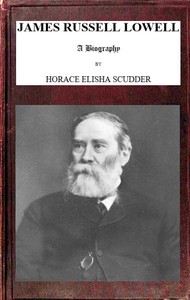
James Russell Lowell, A Biography; vol 2/2
by Scudder, Horace Elisha
English
2317h 25m read
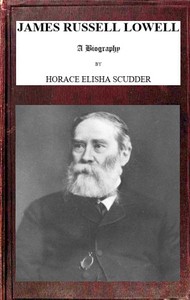
James Russell Lowell, A Biography; vol. 1/2
by Scudder, Horace Elisha
English
2126h 31m read
The Book of Fables and Folk Stories
by Scudder, Horace Elisha
English
560h 27m read
The Seven Ages of Childhood
by Wells, Carolyn
English
53h 16m read

Studies in Mediæval Life and Literature
by McLaughlin, Edward T. (Edward Tompkins)
English
990h 20m read

Noah Webster - American Men of Letters
by Scudder, Horace Elisha
English
999h 51m read