*** START OF THE PROJECT GUTENBERG EBOOK 74528 ***
ON THE
PRESERVATION
OF
SHIPWRECKED MARINERS.
[Illustration: [Coin]]
Printed by J. NICHOLS,
Red-Lion-Passage, Fleet Street.
AN
ESSAY
ON THE
PRESERVATION
OF
SHIPWRECKED MARINERS,
IN ANSWER TO THE PRIZE-QUESTIONS
PROPOSED BY
THE ROYAL HUMANE SOCIETY:
“1. _What are the best Means of preserving Mariners from Shipwreck?_—2.
_Of keeping the Vessel afloat?_—3. _Of giving Assistance to the Crew,
when Boats dare not venture out to their Aid?_”
By _A. FOTHERGILL_, M.D. F.R.S.
Member of the Royal College of Physicians, LOND.
Honorary Member of Medical and Phil. Societies of LOND.
EDINB. PARIS, MANCHEST. PHILADEL. &c.
_Delightful task!—to soften human woe,
“’Tis what the happy to th’ unhappy owe.”_
LONDON:
Printed for the Society by JOHN NICHOLS,
And sold by JOHNSON, DILLY, HOOKHAM;
And at the Libraries in BATH, BRISTOL, &c.
1799.
(_Price Two Shillings and Sixpence._)
TO THE
KING’S MOST EXCELLENT MAJESTY,
_PATRON_
OF THE ROYAL HUMANE SOCIETY:
TO THE
RIGHT HONOURABLE THE PRESIDENT,
THE VICE PRESIDENTS,
THE TREASURER,
AND MEDICAL ASSISTANTS,
_THIS ESSAY_,
IS MOST RESPECTFULLY INSCRIBED,
BY THEIR VERY OBEDIENT,
AND FAITHFUL SERVANT,
THE AUTHOR.
LONDON, MARCH 19, 1799.
At a special Meeting of the Directors of
_THE ROYAL HUMANE SOCIETY_;
Several of the Elder Brethren of the Trinity House being present; the
PRIZE ESSAYS, on preserving Mariners from Shipwreck, were read; when the
following RESOLUTIONS passed unanimously:
I. _That the ingenious Essay which has for its motto, “Delightful
task, to soften human woe,” &c. is a very able and scientific
performance, happily enlisting Philosophy in the cause of Humanity._
II. _That, as the precautions which it so earnestly impresses may tend
to prevent the fatal disasters of shipwreck, and to preserve the
lives of British seamen, its publication, especially at this
eventful period, will be peculiarly interesting; and that,
therefore, the permission of the Author be requested._
III. _That, on opening the sealed packet, annexed to the above
mentioned Essay, the Author appears to be Dr._ FOTHERGILL _of Bath_.
JOHN NICHOLS, _Chairman_.
TO
THE COURT OF DIRECTORS.
GENTLEMEN,
Since you were pleased to crown my former Dissertation with your
HONORARY GOLD MEDAL, I must now, (agreeably to what I long ago hinted,)
beg leave to decline any share in your present pecuniary premium. In
obedience, however, to your second resolution, respecting the
publication of this Essay, I submit to your superior judgement. Since it
has been honoured with your sanction, I have re-touched it throughout,
in hopes of rendering it more worthy of your approbation. In compliance,
therefore, with your obliging request, it now ventures, though not
without diffidence, to meet the public eye.
As the naval force of Great Britain is computed to consist of not less
than eight hundred ships of war; while her commercial fleets, and
trading vessels of various denominations, surpass those of all other
nations, disasters at sea, particularly at this juncture, are most
seriously to be deprecated. So great, indeed, is the aggregate value of
her ships, with their respective cargoes and merchandise, that it can
hardly be estimated. Great as it is, however, it can bear no competition
with the lives of British seamen on board; yet between them and a watery
grave is hourly interposed, only a thin partition of brittle planks!
The present subject, therefore, involving the lives of thousands of our
fellow-subjects, and property to an amount almost incalculable, is
perhaps one of the most momentous that can, at this time, engage our
attention. When, under the signature of a Life Director, I first
submitted this question to your consideration, as perfectly congenial to
your life-saving institution, it was chiefly with a view to call forth
the abilities of ingenious writers and experienced navigators. If the
present Essay should ultimately contribute to so important a purpose, by
opening a new path of inquiry, I shall think the labour well bestowed.
“_Vice fungar cotis._”
No philosophical work written expressly on shipwreck having yet reached
my notice, the subject to me, appears to be novel, and in a manner
untouched.[1] The following sketch, undertaken amidst a variety of
avocations, though much short of what I could wish, is yet the best I
could produce in so short a time, and with so few materials.
Footnote 1:
In contriving various means of forming a line of communication with
the shore, that some of the methods proposed by me may have occurred
to others, is not improbable, as has been hinted respecting Mr. Bell’s
experiment. Had the anonymous writer in a late Morning Chronicle, who
claims it as the discovery of another anonymous writer, and published
eight years ago in an Anonymous French Journal, brought forth any
thing MORE NEW or MORE PRACTICABLE than what originally appeared in
this Essay, when read before the Society in March last, it would
assuredly have afforded me much pleasure to have announced it.
But who the original inventor is, if not Mr. Bell, or in which of the
numerous French Journals the supposed discovery is recorded, “this
_deponent saieth not_.” Therefore,
——“_Si quid novisti rectius istis,
Candidus imperti, si non his utere mecum._”
Doubtless the Author may be accused of rashness, in thus venturing out
of his native element, and in quitting, at once, _terra firma_, to
encounter the dangers of the deep, and to brave the still more stormy
sea—of criticism!
Presuming, however, on your wonted candor, that you, my Lords of the
Admiralty (in other words, my SUPREME JUDGES), will not be extreme to
mark what may seem amiss, I here cheerfully submit to your inspection,
my logbook, charts, and such implements as appear necessary to render
sea-voyages less perilous, and, in case of shipwreck, to save the lives
and property of unfortunate mariners in the hour of distress.
GENERAL CONTENTS.
Page
Shipwreck,—its frequency near shore 3
—— particularly near capes and promontories 6
—— Recent instances affording useful hints for future navigators
respecting various expedients against thirst, famine, want of
water 9
—— Cautions in the treatment 11
—— Accidental causes of shipwreck 12
—— Why influenced by local situations 13
Hurricanes,—prognostic signs of 14
Shipwreck, more often caused by negligence 15
—— Hints for prevention, by new improvements 16
—— by boats incapable of upsetting 18
—— the Shields life-boat, its pre-eminence 20
—— by improved nautical implements 22
—— by curious inventions by foreigners 30
—— by vigilance and intrepidity of the captain 32
—— by precautions against storms 33
—— laws respecting wrecks, and to prevent plunder 36
—— the forming a line of communication with the shore, an
important object 38
—— How best accomplished 40
—— —— by life-boat, projectile forces, &c. 39
—— by impervious air-vessels, a new invention 44
Swimming and Diving, their importance 47
Objection from Human beings swept away by accidents 49
Waste of life,—how reconciled to the laws of the universe,—whether
the mere preservation of the species be only intended 50
Whether swimming ought not to constitute an essential branch of
national education ib.
Swimming and diving, their additional advantages 51
Asylum for shipwrecked mariners 53
—— whether that at Bamborough castle does not afford an excellent
model 56
—— hints for establishing such institutions on a smaller scale 59
—— in situations peculiarly dangerous 60
Conclusion 61
[Illustration: [Fleuron]]
PRELIMINARY OBSERVATIONS
ON THE
FREQUENCY OF SHIPWRECKS,
PARTICULARLY NEAR SHORE.
ILLUSTRATED BY SOME LATE MELANCHOLY EVENTS.
Of all the heavy afflictions incident to a seafaring-life, shipwreck is
the most disastrous. For what can afford a more affecting spectacle than
those poor way-worn mariners, who, on their joyful return from a long
voyage to the bosom of their families, are unhappily cast away at the
very mouth of the harbour! To behold them, in this perilous situation,
conflicting with the merciless waves; clinging to the broken planks, or
with uplifted hands and piercing shrieks imploring aid with all the
eloquence of ineffable woe! among the crowd of spectators on the beach,
see the aged parent, the tender wife, and the helpless children of the
distressed sufferers, bathed in tears, and, in the anguish of their
souls, pouring forth their unavailing cries and supplications! at length
exhausted with ineffectual strugglings, the devoted victims in the agony
of despair, are forced to yield to the all-conquering element, and,
while casting their last look on the shore, are suddenly overwhelmed in
one common undistinguished grave!
Now, this is no feigned picture of imaginary distress, but the genuine
recital of a mournful event, which, alas! is too often realised on the
British coasts!
An affecting instance of this nature happened not long ago, in open day,
and in the face of at least a hundred spectators, to two vessels
belonging to Cardigan Bay, which, during a storm, were unfortunately
wrecked near the coast. One of them, being in a _decayed_ state, sunk
within fifty yards of shore, where the crew, being instantly cast on a
sand bank, miraculously escaped. But the miserable sufferers in the
other vessel, eleven in number, being unable to keep their hold, whilst
immense billows broke over them, were washed off one by one, until only
one man was left, who tenaciously kept his seat for two hours after his
unfortunate companions, when a prodigious wave dashed the wreck to the
shore, where it unhappily struck against a rock which forced him back
into the foaming surge, and he was seen no more!
_Second Case of Shipwreck near Shore._
According to an extract of a letter from Basseterre, of Aug. 3, 1792,
the ship Britannia, captain Woodyear, with thirty persons, including two
women and a child on board, struck on the bar near shore, and soon broke
to pieces, leaving the captain with the female passengers and four men
on the wreck; all the rest being washed off, except a few who escaped by
swimming.
A boat repeatedly attempted to get off to their assistance, but in vain.
The captain having exerted every nerve to save the remaining sufferers,
particularly the women and child, was at length so completely exhausted
as to be utterly unable to prevent their falling a prey to the devouring
waves. He, together with his remaining companions, soon underwent the
same unhappy fate!
The gallant captain might have swam on shore with his brother, but
observed, that his quitting the ship would dispirit his people, and that
he could not think of leaving them, particularly the poor women and
child, in so perilous a situation. Thus did he nobly sacrifice his own
life in a fruitless effort to preserve theirs!
The lamentations of the people on shore most forcibly expressed their
sentiments on this truly distressing event. To increase the horrors of
the scene, the brothers and relations of the unfortunate captain were
among the spectators; while Mrs. Moore, one of the passengers, was also
seen with her child in her lap, and clinging to her other son and her
brother, wringing her hands in the wild agony of despair, while her
disconsolate friends on land were unable to afford them the smallest
assistance! Next morning the beach was covered with dead bodies that had
been cast on shore in the night!
Adieu! ye sons of dire mishap, adieu!
Your toils, and pains, and dangers, are no more;
The tempest now shall howl unheard by you,
While Ocean smites in vain the trembling shore[2].
Footnote 2:
See the “Shipwreck,” a pathetic poem, written _con amore_ by the
ingenious captain Falconer, who, having narrowly escaped from a
similar disaster, paints the affecting scene from nature.
_Attended with peculiar circumstances._
Captain M‘Kay, in a late pamphlet addressed to his father, gives some
interesting particulars respecting the shipwreck of the Juno, of which
he was the second officer. The ship, he remarks, was _crazy_, and
greatly out of repair, before she set out from Rangoon, bound to Madras.
This circumstance appears to have been the source of their subsequent
misfortunes. For the vessel, being unequal to sustain the violence of
the storm which overtook them on their voyage, became leaky, and was
cast away on the coast; when the principal part of the crew miserably
perished. Out of seventy-two persons on board, Captain M‘Kay, with
thirteen companions, only survived. But, strange to relate (for the
fact, were it not so well attested, would appear almost incredible),
this unhappy remnant of the crew, being left on the wreck, subsisted not
less than twenty-three days without food!
In describing their unparalleled sufferings during this forlorn
situation, Captain M‘Kay observes, that the sense of hunger was very
tormenting till the fifth day, when it gave way to the still more
distressing sensation of extreme thirst. These painful sensations,
however, were greatly mitigated whenever rain fell copiously, and wet
them through their clothes. But, finding the relief only temporary, he
had recourse to such other expedients as were at hand.—Sea-water drank
liberally, though it operated as a severe purgative, yet afforded
considerable refreshment. He next chewed pieces of lead, procured from
fragments of the wreck, which, by producing a fresh flow of saliva,
alleviated the intense thirst. To silence the cravings arising from that
aching void produced by long fasting, and which nothing but nutritious
food can fully satisfy, he tried the experiment of forcibly compressing
the region of the stomach with both hands, which always afforded
immediate relief. Hardened and benumbed with their sufferings, his
unhappy comrades seemed to feel very little concern or sympathy one for
another.
The idea every now and then of hearing a gun, or seeing a sail, when
found only to be an illusion, never failed to embitter their distress.
When they gave up life as utterly lost, they expressed less anguish; a
state of cruel suspense being more painful than absolute despair.
The preceding melancholy cases of shipwreck are selected from several
others, if possible, still more deplorable; over which, however, to
spare the sympathetic feelings of the humane Reader, I shall draw the
friendly veil. These already related are sufficient to suggest a variety
of reflections; and it seemed necessary to give them in detail, as they
may afford some useful inferences for the benefit of future navigators.
It appears then, in conformity to what has been already observed, that
accidents from shipwreck happen most frequently near shore; and that
communication between the distressed vessel and the coast being cut off,
prevents that timely aid which might otherwise be administered.
2. That the crazy state of a ship, previous to the voyage, must
inevitably increase the danger, and hasten on the fatal catastrophe.
3. That sailors expert in the art of swimming frequently escape, while
their helpless companions miserably perish.
4. That life may sometimes be supported without food the space of
twenty-three days; a much longer period than is commonly supposed, and
which can only be explained on the principle of absorption. Hence the
refreshment experienced by Captain M‘Kay and his companions from their
bodies being wet with rain. Hence also the relief which Captain Bligh
and his men, in their late surprizing voyage, obtained, not only from
exposure to rain, but also from immersing their clothes in the sea.
The cause of this singular effect seems to be this: The innumerable
lymphatic ducts, opening every where over the whole surface of the skin,
exert their absorbent power in proportion to the demand. Here, the
sailors’ bodies being exhausted by long fasting, and nature reduced to
her _dernier_ resource, the lymphatic system imbibed with avidity the
water, but rejected the salt; otherwise the extreme thirst, instead of
being mitigated, would have been greatly increased.
5. It further appears, from Captain M‘Kay’s observation, that the
painful sensation of extreme hunger may be greatly alleviated by
compressing the region of the stomach.
6. That this distressing symptom goes off about the fifth day, and gives
way to intense thirst, which, in its turn, may also be mitigated by
chewing lead, as practised by sailors, in hot climates, who assuage
their thirst by rolling in their mouths a leaden bullet. The poisonous
quality of the metal, however, renders this a doubtful expedient. To
allay thirst, and support the system, Dr. Franklin, with more propriety,
had recourse to bathing in sea-water several hours every day, and
observed that, however thirsty he was before immersion, he never
continued so afterwards: nor did he ever perceive in his mouth any taste
of saltness.
In case of extreme scarcity of fresh water, in long voyages, sailors, he
remarks, might derive similar advantage by dipping their wearing apparel
in the sea, and that without the least danger of cold.
7. That life may be protracted many weeks by mere water alone, will
appear less wonderful when it is considered, that water consists of
vital and inflammable air, and most probably undergoes a decomposition
in the human frame; that its vital portion renews and invigorates the
living principle, while its inflammable part supplies nutrition. For it
can scarcely be doubted, that marine reptiles and fishes, that can
subsist on water alone, are endowed with a power of decomposing it, and
converting the inflammable part to their nourishment.
Hence, the swarms of insects in hot climates where inflammable air is
copiously generated from putrid substances. Like plants, they thrive
amidst putrefaction; convert the noxious effluvia into sustenance; and
reject the vital air destined to sustain breathing animals. Were it not
for this wise provision, the pernicious effluvia would, in such
climates, prove a fruitful source of pestilence, and render a large
portion of the globe uninhabitable.
On emergencies, therefore, when fresh water is wanting, sea-water, under
proper management, may afford a better substitute than is generally
imagined.
Here it deserves notice, that water may be preserved sweet, during the
longest voyage, by the following simple process. Having filled the cask
with water in which quick-lime is quenched, let it stand till the inside
of the cask has acquired a thin coat of lime; then rinse out the cask,
and re-fill it with fresh water for the voyage, adding a few handfuls of
recent charcoal dust, a portion of which may be also kept for use in a
bottle tight-corked. It not only preserves water sweet, but even
restores putrid or corrupt water, which only requires afterwards to be
filtered. This, and all other extraneous substances contained in water,
not by _solution_, but _diffussion_ only, may be most expeditiously
separated by Mr. Peacock’s Patent Machine, which has been found, by
experiment, to filter 720 gallons of water in twenty-four hours,
divesting it of all such accidental impurities. This invention promises
much utility to persons by land, as well as by sea, and may be seen at
the Surveyor’s Office, Guildhall, London.
8. To prevent in future voyages the terrible calamity of famine at sea,
portable soup and farinaceous vegetables ought to constitute part of the
ship’s provisions. To assuage the sensation of hunger, and enable the
body to bear long fasting, oleaginous substances are well adapted, as
beef and mutton suet, rich cheese, fresh butter, sweet almonds, also
mucilaginous substances, as salop, tapioca, and particularly gum arabic,
which, according to M. Hasselquist, supported more than one thousand
persons in the desarts of Arabia, who, being left destitute of other
provisions, subsisted upon it solely during the space of two months.
9. The treatment of shipwrecked mariners when nearly exhausted by cold
and hunger, demands no small circumspection. At first they loath the
sight of meat; but on a sudden the appetite grows voracious, and prompts
them to devour more food than the digestive organs can assimilate. Their
native warmth also, being greatly impaired, should be very gradually
restored by a tepid bath; and the food should consist of new milk,
barley-water, or weak broth, in very small quantity, which, in this
state of more than infantile debility, will be found sufficiently
powerful; avoiding, at the same time, the common error of pouring down
wine, spirits, or other stimulating cordials, which, instead of
supporting life, too often exhaust the feeble remnant of vitality[3].
Footnote 3:
See Dr. Percival’s affecting narrative of the sufferings of a collier,
who was confined seven days in a coal-pit without sustenance. Memoirs
of the Philosophical Society of Manchester, vol. II. p. 467.
CAUSES OF STORMS AND SHIPWRECKS—_whether influenced by local
circumstances_.—
The most obvious cause of shipwreck, according to the language of
seamen, is a heavy gale of wind with a lee shore.
Though the tides are produced by the joint influence of the sun and
moon, the stormy waves depend wholly on winds of the higher order. Air
possesses not only a chemical but mechanical attraction for water,
superior to that which obtains between the component parts of the
latter. When air, therefore, rapidly sweeps along the surface of water,
it forcibly seizes the upper stratum, and raises it aloft in a
surprizing manner, until the water, by its superior gravity, suddenly
recovers its level. This powerful action and reaction between the
contending elements constitutes a sea storm, which, according to its
violence, raises the billows from twelve to twenty feet, sometimes to a
much greater altitude, as in tornadoes and hurricanes, when the sea (as
the sailors express it) runs mountains high.
Now, hurricanes may proceed from local rarefaction, or whatever suddenly
disturbs the equilibrium of the atmosphere, but principally from an
accumulation of the electrical fluid, which has a powerful tendency
towards pointed or angular bodies to restore the balance. Hence,
perhaps, it is, that lofty promontories, high cliffs, and rocky
projecting shores, are so often infested with violent storms, while the
main sea remains calm and unruffled. In such situations, the effects of
the warring elements are often dreadful, and the disasters produced
amongst the neighbouring vessels truly deplorable.
Of a tempest at sea, Thompson gives the following sublime and
picturesque description:
“Then comes the Father of the Tempest forth
Wrapt in black glooms——
Lash’d into foam, the fierce conflicting brine
Seems o’er a thousand raging waves to burn;
Mean time, the mountain billows to the clouds
In direful tumult swell’d—surge after surge,
Burst into chaos, with tremendous roar!
· · · · ·
They boil and wheel and foam and thunder thro’
And anchor’d navies from their station drive!”
Along the British and other neighbouring coasts, the equinoctial storms
are generally the most formidable. As these are to be expected at their
respective seasons, all prudent navigators ought to provide against
their periodical return.
In tropical climates, and along the abrupt coasts of the Leeward
Islands, the most violent hurricanes prevail between the 25th of July
and the latter end of September, the wind blowing from the N. or N. W.
in direct opposition to the trade winds.
_Prognostic signs of a Hurricane._
The native Carribees of St. Dominica and St. Vincent, from long
observation, can with surprizing accuracy foretell the approach of the
hurricane ten or twelve days before it arrives,—a circumstance of no
small moment to inexperienced navigators.
All hurricanes, they observe, happen about the period of the lunations,
particularly at full moon, and may be predicted from the following
signs:
1st. The sun exhibits a blood-like redness.—The moon surrounded with a
halo, the stars with a bur, and seem larger than usual.—The sky, towards
the N. W. dark and gloomy.—Wells and deep caverns send forth a hollow
sound.—The sea, an unusual rank odor.—Mists disappear on the tops of
mountains—a calm succeeds—when on a sudden the hurricane bursts forth
with incredible impetuosity, twists trees asunder, dismasts ships, and
drives them a-shore, sometimes above twenty yards beyond the water-mark!
As soon as the wind veers from N. W. to E. or S. E. the hurricane
ceases; yet, what is remarkable, the raging of the waves continues and
even increases in proportion to the _momentum_ of the impulse already
acquired, till at length, the tempest having spent its fury, the billows
subside, and the sea gradually resumes its former tranquillity. Hence
may be also understood, why the tide continues to flow at least
forty-eight hours after the full and change; its altitude at Bristol
often amounting to forty-seven feet, or upwards.
Besides tempests at sea, including hurricanes, thunder storms, and
water-spouts, there are still other causes which too often produce
shipwreck.
Sea-faring men, inured to hardships, and taught by example to despise
dangers, are often totally regardless of forecast, and even of the
necessary means of self-preservation. To unpardonable negligence, or
fool-hardiness, therefore, rather than to unavoidable misfortune, may
many of their disasters be justly imputed. To what else can be
attributed the entire loss of the Royal George, and of the Haswell, with
their respective companies? or of the late tremendous explosion of the
La Coquille? and other still more recent disasters?
From the master down to the common tar, the same _nonchallence_, the
same contempt of danger, frequently pervades the whole crew. Thus, when
the master embarks on board a decayed leaky vessel unfit to bear stress
of weather; when the sleepy pilot, dozing at the helm, runs the ship on
some noted rock or lee-shore; or, when the drunken sailor, with a
lighted candle, carelessly approaches too near a cask of spirits, or
gunpowder; what in the name of wonder can be expected but inevitable
ruin! Under such management, can we be surprised that fatal accidents
befal so many of our trading vessels, not only in long voyages, but even
in making a short trip across the channel? It was by a very different
conduct, guided by prudence and marked by unremitting attention, that
Captain Cook, and other expert circum-navigators, performed their
successful voyages round the globe; and that Captain Bligh, in an open
boat amidst frequent storms, traversed the great Pacific Ocean.
_Hints for improving naval architecture.—For rendering boats incapable
of upsetting or sinking.—The Life-Boat at Shields—its singular utility._
Though shipwreck, under certain circumstances, perhaps, cannot by any
human means be prevented; yet there seems reason to hope it may, in
future, be rendered less frequent and less fatal, by observing the
subsequent precautions.
1. Respecting the state of the ship.
2. The conduct of the commander.
1st. From late discoveries respecting floating bodies, and a comparative
view of the ships of different nations, the board of naval architecture
will, it is hoped, be enabled to suggest many useful improvements in the
construction of all kinds of vessels, and by well conducted experiments
to reduce the art of ship-building to a more regular science.
In the interim, let ships of every denomination, previous to the
intended voyage, undergo a more strict examination by competent and
impartial judges, that such as are materially damaged or worn out be
condemned, and none permitted to sail unless they can be safely
warranted.
2dly. Let tall-masted vessels and ships of burthen be well armed with
electrical conductors. For though it be beyond human power to arrest the
rapid lightning in its flight, yet reason, enlightened by experimental
philosophy, has taught us how to divest it of a considerable part of its
terrors, by the use of metallic rods. But, in order to prevent their
being melted by the lightning, let a pointed piece of black lead be
inserted at their tops, projecting about two inches above the metallic
sockets; and to guard them against rust, which would destroy their
conducting power, let the rods be sheathed with tin or copper.
3dly. To render ships more durable with less expence of timber, it has
been lately recommended, by Mr. Bosquet, to fill up all the void spaces
between the planks, lining, and timbers, with a composition of melted
pitch, tar, and glue, adding a certain quantity of cork-shavings and
charcoal dust. This not only prevents rats harbouring in the cavities,
but also the accumulation of bilge water and foul air, so highly
injurious to mariners. Ships thus fortified by his patent invention,
being rendered sound and durable, would, he imagines, rarely be subject
to leakage or foundering at sea[4].
Footnote 4:
The Specification of the invention may be seen in the Repertory of
Arts, Vol. IX. p. 381.
In the construction of ships, for safety as well as swiftness, Sir
George Shee advises to add to their length and width, and to diminish
considerably their height. By reversing this, and by crowding too much
sail, light vessels and pleasure barges become unfit to encounter sudden
gusts of wind, and are frequently upset.
4thly. To prevent accidents of this nature, Mr. Miller of Dalswinton, in
his specification of a patent invention of a vessel for passengers or
parties of pleasure, incapable of being upset, proposes his
flat-bottomed boat, which draws very little water. It moves with wheels
in the water, wrought by capstans; roomy between decks for the
accommodation of numerous passengers, and requires no pumps[5].
Footnote 5:
Repertory, Vol. VI.
The seamen of Trinity House, at Leith, recommend, for safety, a boat
carrying more ballast than necessary for ordinary sailing; over the
ballast, bags filled with cork, rising higher than the gunnels; the
whole properly secured by sailcloth and ropes. By this contrivance, they
alledge, that all persons on board, or even others holding by the boat;
will be carried safe through the most stormy breakers. On similar
principles, and to answer the same end, other boats have been
constructed by ingenious persons in America, in Italy, and in Holland.
The patent boat of Mr. Lukin, coachmaker, in London, which, we are told,
can neither overset, nor sink, though filled with water, is formed with
projecting gunnales, sloping from the top, armed with cork; and secured
with leather or tin. Of which a more full description is given in the
“Repertory of Arts,” vol. III. p. 10.
Count Berchtold, of Tuscany, well known for his zeal in the cause of
humanity, not long ago presented to the Society for the Encouragement of
Arts, in London, a curious model of a boat, with necessary apparatus for
assisting persons in danger of drowning, by the breaking of ice, which
may be viewed at the Society’s rooms, in the Adelphi, by application to
the secretary.
The Greenlanders have invented a boat of a singular construction,
resembling a huge inflated bladder, inveloped with seal skins, and
rendered water-proof, in which they can sit at ease, while they ply
their oars, and thus encounter their stormy seas in perfect safety. One
of these boats may be seen in the British Museum; or an accurate
description with an engraving, in the first volume of Crantz’s History
of Greenland.
_The_ LIFE-BOAT, _at Shields.—Its singular Utility evinced by repeated
Trials._—
This noted boat, by which, within the course of a few years, many lives
and much property have been saved, was built by Mr. Greathead, an able
ship-builder, and generously presented to the inhabitants of South
Shields by his Grace the Duke of Northumberland, by whose beneficence
North Shields has also since been supplied with a boat of a similar
construction.
Mr. Fairless, who furnished some useful hints respecting the original
plan, describes the vessel “as measuring 30 feet by 10; resembling, in
form, a common Greenland boat, only flatter in the bottom. The weight of
cork employed in the construction is about 7 _cwt_, with which the boat
is lined, inside and outside of the gunnales, two feet in breadth; the
seats being also filled with the same: rowed by ten men, double-banked,
and steered by one at each end with oars, being alike at both ends, and
with a contrivance to prevent sinking in the sand.
“She draws very little water, and can carry twenty persons, even when
full of water. Being water-proof, and rendered buoyant by cork, she
keeps afloat, preserving her equilibrium without danger of oversetting,
and is able to contend against the most tremendous sea, having never in
any one instance yet failed of conveying a distressed ship’s crew into
safety.
“In going off with her, in the highest seas and broken water, the men
testify no dread; and, though cork jackets were provided for them, yet
such is their confidence in the boat, that they now refuse to use them.
“Indeed, she has surprised every intelligent seaman that has seen her
contend with the boisterous waves. Any farther description I can give,”
adds Mr. Fairless, “will not be equal to a view of the model kept at
Northumberland House, in London, which, I make no doubt, you may see.
Such a vessel ought to be provided with high wheels, to convey it to the
place where it is immediately wanted.
“The boat complete, and copper-nailed, cost about 150_l._” But, in the
moment of distress, what shipwrecked mariner would not think this a
cheap purchase, and pronounce the value of such a boat as truly
inestimable!
_Other late discoveries for the prevention of Shipwreck, and
preservation of Mariners._
[_From American and Batavian correspondence._]
1. An expert American seaman recommends to mariners the experiment of
hanging out a line of cable over the stern of a small vessel, or boat,
in a rough sea, as this appendage serves to make a long wake, and will
be found to enable the vessel (according to the sea term) to live much
longer in a heavy gale. Little danger, he observes, is to be apprehended
from a long sweeping swell of the sea; the mischief generally arises
from overhanging surges, which at once break in and overwhelm the
vessel. Having often experienced, in stormy weather, the beneficial
effects of a long coil of rope fixed to a flat piece of wood, and
appended to vessels, he thence endeavours to explain the extraordinary
efficacy of the tow-line in balancing the ship, and lowering the
high-swelling surge.
2. From the Transactions of the Philosophical Society, at Philadelphia,
we learn, that Mr. Hopkinson has invented an instrument, with a
graduated tube, which, from the difference of specific gravity between
oil and water, by its rise and fall, accurately measures the ship’s
progress. Also, a curious spring block, by which sailing is greatly
expedited; for which useful invention he obtained the Society’s gold
medal.
3. Mr. Gearson, of York-town, Pennsilvania, has lately obtained a patent
for an important invention, by means of which, we are informed, that a
vessel whose bottom is so shattered, that the ordinary pumps could not,
for one hour, prevent her sinking, will be effectually kept buoyant;
and, though under a press of sail, be incapable of being overset by the
heaviest gale.
4. A gentleman of Rotterdam has invented a new floating machine, which,
though small, is capable of holding four men commodiously, and may be
enlarged sufficiently to accommodate fifty, if required. So curious is
its construction, we are told, as to enable it to withstand the utmost
fury of the winds and seas. It can neither overset, nor sink, and may
therefore, in the most stormy weather, be steered whatever course the
pilot shall see necessary. These last may be considered as different
modifications of the life-boat, constructed with the same humane views,
though probably without any communication between the respective
artists. Were packet-boats destined to convey important dispatches thus
constructed, many unfortunate accidents might be prevented.
The comparative value of these and other laudable inventions, whether
produced by foreigners, or our own countrymen, must rest with their
ingenious authors, at least, till their respective merits be fully
ascertained by actual experiment. Were models of every new and useful
contrivance, of this nature, consigned to the board of Naval
Architecture, for public inspection, the display of such an assemblage
of mechanism would excite emulation, and the result of satisfactory
trials, if communicated from time to time, might prove highly important
to the maritime world.
_To ascertain the ship’s burthen._
5. It is certain, that a ship will carry a weight equal to that of a
quantity of water, of the same bulk with itself, deducting, however, the
weight of metal employed in its construction; for the wood is nearly of
the same weight with water. Were it not for the iron, or other metal, a
ship might float though full of water. However it be loaded, therefore,
it will not entirely sink as long as the weight of its cargo is less
than that of an equal bulk of water.
Now, to ascertain this, the capacity of the ship must be measured.
Suppose it to be 1000 cubical feet, multiply that by 73 pounds, the
average weight of a cubical foot of sea-water (taken at a proper
distance from shore), which gives in the product 73,000 pounds for the
weight of a bulk of water equal to that of the ship, the burthen of the
ship being 73,000 pounds, or 36 ton and a half, reckoning a ton 2000
pounds, that being the weight of a ton of sea-water. If the cargo
exceeds 36 ton and half, the ship will sink; if just 73,000 pounds, she
will swim, though very deep in the water, and on the very point of
sinking. And though she may float at sea, she will sink on entering the
mouth of a river; fresh water being specifically lighter than sea-water,
and in the proportion of about 63 to 73.
Previous to the voyage, therefore, the ship’s burthen ought to be more
carefully ascertained than, perhaps, raw inexperienced navigators have
hitherto imagined.
_The ship’s pumps._
6. The pumps ought to be formed on the most approved plan, and kept in
perfect order. Some prefer Mr. Fulton’s patent pump, worked by a
cylinder, and described in the Repertory of Arts, vol. III.
Mr. Clarke, Surgeon, at Sunderland, proposes an easier and more
expeditious method of working the pumps, by means of a curved lever,
which acts by an easy motion of the body, as in rowing. It has been
found, on trial, to deliver twice the quantity of water, and with far
less labour, than that with the brake—a circumstance of no small
consequence, especially when seamen are almost worn out with sickness or
fatigue[6].
Footnote 6:
See Repertory, Vol. IX.
Mr. Dearborn, an ingenious American mechanic, has accomplished a still
farther improvement, by constructing a new machine to answer the double
purpose of a pump and a fire-engine[7].
Footnote 7:
Ibid. Vol. III.
Mr. Taylor, of Southampton, we are credibly informed, has invented a
ship pump, which, in point of simplicity and ingenuity, surpasses all
others, and bids fair to supersede them in the British navy.
_Ship’s compass._
7. The magnetic power of the mariner’s compass is liable to be disturbed
by various accidents, as the rolling of the ship in a rough sea, the
explosion of the great guns, and particularly lightning. Nay, even the
electricity of the glass cover, when excited by the slightest accidental
friction, is sufficient to alter its direction; but this can be soon
remedied by wetting the glass, which carries off the electricity. In
thunder storms at sea, the polarity of the needle has sometimes been
suddenly reversed, and irreparably damaged, by the North and South
points changing their station, occasioning, at the same time, dangerous
errors. By this accident, a ship has been known to take a retrograde
course, and steer above 100 leagues by a needle, the polarity of which
had thus been totally changed[8].
Footnote 8:
Phil. Trans. Abridged, by Lowthorp, vol. II. p. 180.
The compass, though long known, was imperfect and liable to many
inconveniencies, till at length, by the ingenuity of Dr. Knight, it was
greatly improved; and has since undergone a further emendation by Mr.
Smeaton. The improvement consists in the shape and temper of the needle;
in the discovery of proper means for restoring the loss of magnetism in
a voyage; and, finally, in rendering it less subject to be influenced by
the motions of the ship. These contrivances, though found too delicate
always to sustain with impunity the rude shocks of a tempestuous sea, or
the more violent stroke of lightning, are, however, the best that have
been yet discovered. Therefore, as this improved compass is allowed to
be superior to others, and is now generally used in the royal navy, it
ought certainly to be provided for all merchant ships, particularly on
long voyages.
_Ship’s Rudder._
8. The power of the rudder being reducible to that of the lever, and
oblique action of the water, the most advantageous angle made by the
helm from the keel, mathematicians have fixed at 54° 44′. Euler
recommends an obliquity somewhat less; and establishes this rule, that
an obliquity of 48° will, in general, produce the most powerful effect;
though experience testifies, that a ship steers tolerably well when the
rudder makes an angle of only 35°.
A convenient substitute for the loss of a rudder has been invented by
captain Pakenham, for which useful device the Society of Arts presented
him with a gold medal. The method, being described at large in the
Society’s Transactions, need not be repeated in this place.
_Masts._
9. To the mechanical genius of captain Pakenham, the navy is also
indebted for an easy, cheap, and expeditious, method of restoring a
mast, when injured, or decayed, by simply inverting the mast and turning
the heel to the head; of which the Society, in the 10th volume of their
Transactions, have given a full description, illustrated with an
engraving.
The sudden damage which masts frequently sustain from sea-storms and
naval engagements, and which, in the ordinary way, require from six to
eight weeks to refit, may thus, we are assured, be repaired within
forty-eight hours; and that this method is equally applicable to all
ships, from a first-rate, to the smallest merchantman—a matter of no
small consequence on long voyages, or in time of war.
_Nautical Apparatus._
10. A ship, properly equipped for a long voyage, ought to be provided
with a complete set of nautical instruments, including an accurate
thermometer, barometer, and time-piece. Also, a life-boat, cork jackets,
cords, drags, buoys, and other implements for the prevention of
drowning.
_Thermometer._
From the result of three successive voyages from Europe to America,
captain Williams, under the direction of Dr. Franklin, found the
temperature of the main ocean, out of soundings, at least ten degrees
warmer than in shallower water near the coast. Hence the thermometer may
serve a new and important purpose in pointing out the near approach to
shore; also, in detecting latent rocks, or banks of sand or coral,
concealed under water. Is the decrease of temperature owing to these
solid bodies acting as conductors, and thus conveying off the heat?
_Nautical Time-piece._
A curious and unsuspected cause of inaccuracy in watches, or
time-pieces, has lately been discovered by an ingenious artist, which
well deserves notice. The balance, being made of steel, is very liable
to acquire a polarity, which disturbs the regularity of its movement,
according as the watch happens to be placed North and South, or in the
vicinity of a knife, a key, or other steel utensil. On trying a variety
of steel balances, by floating them on cork, placed on the surface of
water, Mr. Varley could scarcely select one that did not betray some
sign of polarity; nor can this be easily prevented, but by substituting
a balance of gold, or some other metal. May not this be one reason why
that grand _desideratum_, a perfectly correct time-piece for discovering
the longitude at sea, has not yet been produced?
To prevent accidents during long voyages, the Transactions of the Royal
Society of London suggest many important hints; which, however, for the
sake of brevity, must be omitted, by referring the reader to the
respective passages, _viz._
1. To preserve vessels from the worm, by a more cheap and durable method
than that of sheathing; also, to prevent leakage from the same
cause.—See Phil. Trans. vol. VIII. p. 6192.—Vol. XLIII. p. 370.
2. To preserve the health and lives of men crowded in slave ships, and
transports, by ventilators, and other means.—Vols. XLIV, and XLVII. p.
211.
3. To measure the ship’s way more correctly than by the log, &c.—Vols.
XXXIII, and XXXVIII.
Also, a still later method, with improvements. See Memoirs of the
American Philosophical Society, vol. II.
_Hints respecting the Conduct of the Captain and his Mates._
Having briefly discussed the principal objects respecting the state of
the ship, and the precautions necessary to be taken previous to the
voyage, we now proceed humbly to suggest a few hints proper to be
observed by the master and his mates.
1. Having provided all the requisites necessary to the complete
equipment of the vessel, it becomes the master to use every necessary
precaution against disasters, and to be prepared to meet the event
whatever it may be.
2. Like the intrepid captain Riou, and the gallant and humane captain
Woodyear, he should resolve, in case of distress, to preserve discipline
through the whole scene, and to discharge his duty by being the last man
to quit the shattered vessel. By thus manfully preserving his authority,
good order will be kept up till, possibly, some timely aid may be
obtained, or the ship got into harbour. But if in the time of danger he
quit his post, from that moment discipline is at an end, anarchy
prevails, and ruin ensues.
3. His shipmates, and whole company under his command, in their several
departments, must cheerfully obey his orders, and with alacrity give
every possible assistance in the management of the vessel, and in
affording one another mutual aid.
4. In the critical hour of distress, to prevent the additional danger of
strife, or mutiny, let the captain resolve to prevent intoxication.
Should this prove impracticable, let him order every cask of spirits to
be staved.
5. Dr. Franklin’s experiment of smoothing the rough undulations of a
fresh water-lake to the extent of half an acre, by pouring on its
surface a small portion of oil, is extremely curious, though its
efficacy in calming the waves of a troubled sea, as recorded by Pliny,
certainly wants confirmation. By suffering the wind to glide over it, as
over a surface of ice, it seems rather calculated to prevent new waves
forming, than to controul those already formed.
Nevertheless, Count Bentinck, in the sixty-fourth volume of the
Philosophical Transactions, gives a remarkable case, attested by the
officers on board, respecting a Dutch East India ship, which was happily
preserved in a storm by gradually pouring into the sea a considerable
quantity of Olive Oil. Merchant ships, with large cargoes of oil, might
easily put this matter to the test. At all events, empty casks, in case
of shipwreck, being well secured between decks, the air they contain
may, in proportion to the space they occupy, tend to keep the vessel
afloat; or, casks bound to rafts may afford seasonable means of saving
those persons who cannot swim.
6. In tropical climates, and particularly in the Leeward Islands, the
signs already mentioned, which precede the most dreadful hurricanes,
several days before their arrival, if duly attended to in time, may
enable the master not only to foretell the storm, but to ward off the
impending danger. Convinced of this by long observation, that
experienced seaman Captain Langford recommends the following
precautions: “To keep the ship sailable with store of ballast—ports well
barred and caulked—top-masts down—yards a-part laced—doors and windows
well secured. Let all ships at anchor quit the road, or they will be
driven a-shore. As the storm always begins at North and North-West, till
it comes to South-East, when its fury subsides; let them run to the
South for ample sea-room, and for drift of _the_ South West, and there
wait the event.” Observing these cautions, he providentially weathered
out five dreadful hurricanes without the loss of sail, yard, or mast.
Other commanders, he adds, who listened to his predictions and followed
his advice, likewise escaped damage, and returned safe[9].
Footnote 9:
Phil. Trans. Abr. Vol. II. p. 105.
7. Where the violence of the tempest baffles all human forecast, and the
shattered vessel ready to sink becomes totally unmanageable, when
signals of distress have been repeated in vain; and when terror and
dismay hang on every countenance, it requires no common share of
fortitude in the Commander to act with that coolness, prudence, and
promptitude, which the exigency of the case so evidently demands.
Shipwreck being inevitable, it behoves him to exert himself to save as
many lives as he possibly can, by a spirited and impartial conduct, and
by a proper distribution of the cork waistcoats, ropes, implements, and
whatever may seem useful; to guard against the boats being suddenly
over-crowded, and also to be watchful on such critical occasions, that
men apparently dead from drowning, or other accidents, be not hastily
thrown overboard, until suitable means of recovery have failed, or life
be totally extinguished[10].
Footnote 10:
The mode of treatment has been already fully discussed. See New
Inquiry on Vital Suspension, Edit. 3. and Preservative Plan annexed,
page 40. on premature burial.
The Captain having thus discharged his duty, and exerted every effort to
extricate his comrades from their calamity, though without the smallest
prospect of success, nothing now remains but that he, as becomes a
helpless mortal, commit himself and crew to the protection of Him “who
rides in the whirlwind, and directs the storm”—who can say to the raging
sea, “Hitherto shalt thou go, and no farther; and here shall thy proud
waves be stayed.” Impressed with sentiments of this nature, so congenial
to the mind of a dependent being, particularly in the hour of distress,
Captain Falconer, in the true spirit of devotion, bursts forth into the
following beautiful apostrophe:
“O! SOURCE OF LIFE, our Refuge and our Stay!
Whose voice the warring elements obey;
On THY SUPREME assistance we rely,
Thy mercy supplicate,—if doom’d to die:
Perhaps this storm is sent, with healing breath,
From neighb’ring shores—to scourge disease and death.”
_Shipwreck._
8. When a vessel is cast away, within a small distance of shore (as in
the late melancholy accidents, which gave rise to these reflections),
the country people hasten in crowds to view the affecting spectacle;
some with an eager desire to assist the wretched sufferers; others,
(horrible to relate!) for the sole purpose of plunder! In order to
prevent the cruel depredations of those inhuman barbarians, a
peace-officer ought always to be present, attended by the principal
inhabitants; and assisted, if required, by a military force[11]. He
should be empowered to offer premiums for the preservation of life and
property, and to encourage watermen to face the boisterous sea in
life-boats kept ready for the purpose. But on these mournful occasions,
the minds of the more humane and civilized spectators are generally too
much agitated to supply the aid that is so much wanted, or to suggest
any means of succour, but such as are totally inadequate. Nor is this to
be wondered at: the moment of danger is not the moment of reflection,
nor can new resources be struck out without the rare and happy talent of
invention, and the cool reasoning of a mind at ease. From want of a
life-boat, and other necessary expedients, how often are ships and their
cargoes irretrievably lost, which otherwise might have been saved!
Footnote 11:
According to the ancient law, goods cast on shore by the waves
belonged to the King: but the rigour of this law has since been wisely
mitigated in favour of the distressed proprietors: and it is now held,
that, not only if any living animal escape, but if proof can be made
of the property of any of the goods cast on shore, within a year and a
day, they shall not be forfeited as a legal wreck, but kept in the
custody of the Sheriff, during that period, unless previously claimed
by the proprietor. If the goods be of a perishable nature, the Sheriff
may sell them, and the purchase-money shall be liable in their stead.
2. Whoever shall secret any goods from a wreck shall forfeit treble
their value. To steal even a plank from a ship in distress, says Judge
Blackstone, renders the party liable to answer for the whole vessel
and cargo.
3. Whoever perpetrates any wilful act, by which the ship is lost, or
plunders the vessel in distress, or prevents the escape of any of the
sufferers, or hangs out false lights, to decoy a vessel into danger,
is declared by the law to be guilty of a capital felony, without
benefit of clergy.
4. It is also enacted, that all head officers on the coast shall, on
application being made to them, instantly summon as many persons as
are necessary to the relief of any ship in distress, on forfeiture of
one hundred pounds. And, in case of due assistance given, salvage
shall be paid by the owners, to be assessed by the neighbouring
justices.
5. The income of wrecks being generally granted by the King to the
Lord of the Manor, as a royal franchise, is seldom, it is hoped,
rigorously claimed, but rather given up to the distressed sufferers.
Such claims, however, might be easily compromised, as the right owner,
if discovered any time within a full twelvemonth, can supersede the
Lord of the Manor, or any other claimant, and by virtue of this law
recover his property.
_Hints for conveying Assistance to a Ship in distress, by forming a line
of communication with the shore._
With what ease a large log of timber, or other heavy body, may be
floated along the surface of water, by only a moderate-sized cord
attached to it, is well known.
Could means once be contrived of conveying such a cord to or from a ship
in distress, to form a line of communication between the mast and a
fixed point on shore, one grand difficulty would be surmounted. For to
this line of communication might be fixed collateral cords, which being
conveyed to the sufferers, grasping the broken planks, or struggling in
the waves, many lives might probably be saved.
Now, were the line sufficiently strong, and made to pass through a
metallic cylinder, in form of a sliding hoop, the ship’s crew might, one
by one, if placed thereon, slide along the rope from the mast to the
shore, as on an inclined plane. The ship’s stores, buckled to the
sliding hoop, might be conveyed in the same manner; nay, even the ship
itself, drifted on a neighbouring sand bank, or ledge of rocks, might,
by men properly stationed on the beach, be thus towed safely to shore.
That this might be safely accomplished during a calm, can scarcely be
doubted: but how to convey a line to or from the ship when all
communication is cut off by a boisterous sea, and “when not even a boat
dare venture out,” must give us pause, and at first view appear
impracticable.—Dangerous as such an enterprize may seem, yet we now
know, that a life-boat built on scientific principles, and manned with a
few resolute tars, is fully adequate to the task; such a boat, however,
being yet little known, and no where to be met with, except at Shields,
recourse must be had to other measures. Those who have duly considered
the theory of projectiles, will be best qualified to judge how far the
following conjectures, when matured by experience, may bring to light
new modes of deliverance.
1st, Suppose the distance not to exceed two hundred yards, might not a
small cord of that length be transmitted from the ship to the shore by a
powerful sky-rocket properly directed?
2d, By an arrow shot from a large bow of superior force?
3d, By a cord fixed to a perforated bullet, and discharged from a musket
or small piece of ordnance, taking care to first wet the cord to prevent
its being fired by the explosion? To the end of the small cord thus
conveyed to the shore, might be fixed a larger one, or even a rope,
which, by means of the small cord, might be drawn on board the ship.
4. Might not the conveyance of one or more cords be accomplished, with
still more certainty, from the people on shore to the distressed ship,
by means of a stout water-spaniel, or rather by a well-trained
Newfoundland-dog? These sagacious animals are known to delight in
enterprize, and in rescuing persons in the act of drowning. Were they
once brought to encounter a rough sea, and, with cords fastened to their
collars, taught to plunge-in at the word of command, making regular
excursions to and from the wreck, many valuable lives might probably
thus be preserved.
5. In such disasters, not only the sufferers, but spectators, are apt to
lose all presence of mind; otherwise expedients might often be contrived
for rescuing helpless mariners in their distress.
6. Might not Dr. Franklin’s experiment, with a large paper-kite, deserve
a trial, especially in the direction of a fair wind and lee-shore?
7. Might not a courageous rider, mounted on a steady well-trained horse,
sometimes be very useful on these trying occasions? The horse, it ought
to be remembered, swims with his nose and eyes just above water; but, if
imprudently checked by the bridle, it proves fatal both to him and the
rider. The heroic conduct of Cornelius Voltimed, a Dutchman, at the Cape
of Good Hope, can never be sufficiently admired, nor his unhappy fate
too sincerely deplored. In order to assist fourteen persons belonging to
a vessel stranded near the coast, his intrepid philanthropy impelled him
to ride his horse repeatedly into the sea; having at length happily
succeeded in saving all but one, his strength failed, and in his last
generous attempt to rescue that one unfortunately lost his own life!
The Dutch, in order to prevent plunder, ordain that no person shall
approach the ship on pain of death; but this excessive zeal for the
protection of property, so truly characteristic of the nation, generally
damps every zealous effort for rescuing the forlorn sufferers. Had,
therefore, the virtuous, the humane Voltimed even escaped the perils of
the sea, he would, nevertheless, have been tried for his life by his
unfeeling countrymen!
8. Vessels being most frequently cast away on a lee-shore, the
difficulty of sending out assistance is greatly increased by that
circumstance; but, were the sailors to fix a line to an empty cask, or
buoy, the direction of the wind and tide, being favourable, would
forcibly impel it from the wreck towards the beach, where assistance
would be ready to fasten the line to some neighbouring tree or post.
9. But what seems to bid fairest for establishing a line of
communication with the shore, is a late contrivance invented by Mr.
Bell, of the Royal Artillery, which, on reading the account, I am glad
to find, coincides with my own proposal, respecting the transmission of
a cord with a bullet by gun-shot. Concerning the result of the
Experiment, the Society of Arts have published the following favourable
report:
“To ascertain the merit of Mr. Bell’s invention, his Grace the Duke of
Richmond having given directions, proper trials were accordingly made,
by throwing a loaded shell[12] on shore from a small mortar fixed in a
boat, moored in the river Thames, above two hundred yards from the
shore. To the shell was attached a rope, one end of which remained on
board the boat. The shell, falling about a hundred yards within land,
buried itself full eighteen inches in the gravel; when Mr. Bell and
another person, on a raft floated by casks properly ballasted, hauled
themselves on shore in a few minutes, by means of the rope above
mentioned.
Footnote 12:
By which is meant a shell filled with lead, to which, a staple or ring
being fixed, the rope is to be made fast. The shell thus loaded
weighed about seventy pounds, being eight inches in diameter.
“These trials, having been repeated three times successively with the
desired success, and it appearing that the method, proposed by Mr. Bell,
of throwing a line on shore from a ship in distress, either stranded, or
in danger of being so, promises to be of very important advantage to the
maritime world; as by means thereof such vessel may obtain relief, any
person, when landed, being enabled to secure ropes from the ship; or
additional hands may thereby be conveyed from the shore to assist those
on board. In cases of imminent danger, moreover, where all hopes of
saving the vessel may be lost, Mr. Bell’s method offers the most
probable means of saving the crew.
“The Society therefore voted to Mr. Bell a bounty of fifty guineas, on
his leaving with the Society a complete model of his contrivance; which
model is reserved in their Repository, for the inspection and use of the
Public[13].”
Footnote 13:
Transactions of the Society of Arts, &c. Vol. X. p. 203. See also
Raccolta di salvar, l’equipaggio d’un Bastimento, &c. by Count
Berchtold, with an elegant engraving, descriptive of the entire
apparatus.
That this, or other similar inventions may prove useful in time of need,
the apparatus must be provided beforehand; and ought to constitute a
part of the ship’s equipment previous to the voyage.
_New Plan for the Prevention of a Ship’s sinking._
A Philosophical Correspondent has favoured me with the following
communication, which displays much ingenuity, and seems worthy of
further inquiry.
“As you wish, my dear Sir, for further intelligence, respecting the
means I should propose for preventing ships from sinking, I will
endeavour to give you some idea of the power of the apparatus. Its
constituent parts are these:
“A pair of cylindrical flexible vessels, rendered impervious both to air
and water by means of elastic resin, and a four-barrelled pump for
inflating them. As the contents of cylinders increase in proportion to
the squares of their diameters, such may be enlarged or diminished to
equal the power in request; consequently both the pumps and air-vessels
may be readily apportioned to the duty they have to perform. From the
diameter of the cylinders of the pump, to judge of their discharge, we
must consider the length of the stroke within the reach of middle-sized
men, and the number of discharges which may be made in a given time.
With the aid of simple mechanism, I have accomplished a perpendicular
stroke of two feet, capable of being repeated from sixty to seventy
times with ease, and from eighty to an hundred, if requested, in a
minute.
“Air is a fluid of so volatile a nature, that the slightest pressure
impels it forward; four men, therefore, can pump in more air than four
hundred men can pump out water.
“That vessels of canvas may be made, at the same time, both flexible and
air-tight, hath been demonstratively proved already. Such vessels, in
their flaccid state, occupy little more space than a folded sail, and
consequently are stowable in a narrow compass, till wanted. When
immersed and inflated, they remove a quantity of water adequate to the
air which they contain, and, if fixed to a ponderous body, give it a
degree of buoyancy proportionate to the water they displace. If this be
equal to the difference in weight between that body and an equal bulk of
the fluid which surrounds it, the whole will rest suspended even with or
near the surface of the fluid. Enlarge their contents, and turn the
balance in favour of the sinking body, it will rise and float. Fix
sufficient buoyant powers, therefore, to the sides of a ship, in such
manner that they cannot break loose; though a plank should start in her
bottom, she still would float.
“One method, then, of preventing a ship from sinking may be by a brace
of air-vessels occasionally lashed to her sides. Another is, that of
inflating a brace within her. To bring the former to effect requires a
more perfect knowledge of the strength of cordage than the most
experienced rope-maker can boast. Our best calculators egregiously err
in this particular; for, instead of its increasing in proportion to the
square[14] of the diameter of the cordage, it comes far nearer to the
proportion of the simple diameter only, as numerous experiments with the
best new town-made ropes of various sizes have convinced me. In the
first mode, therefore, several difficulties remain to be overcome. The
other is easy, consisting only in the simple operation of inflating
air-vessels within her. Let such be placed in confinement either in the
hold, between the decks, or under lashings in small open sloops (to
which your attention, Sir, seems chiefly paid), and they will operate
with the most certain and powerful effect. For, though water, through
its density, will expel air when at liberty, it can never incroach upon
it when properly confined. Secure, then, but a due portion of the
lighter fluid in eligible situations, and the ingress of the grosser
will be prevented. Consequently, though the sea run mountains high, and
break over the sloop with the most tremendous surge, if the crew can
secure themselves by lashing to the mast or rigging, and can at times
have opportunity to supply the loss of air (which, through the
inaccuracy of valves, air-cocks, &c. will sometimes happen), by a few
additional strokes at the pumps, she will continue buoyant, in spight of
elements, and be safe from the danger of sinking. Small vessels, under
such circumstances, are liable, however, to be driven on shore; but, as
they draw little water, their crews would probably be preserved.
Footnote 14:
See Falconer’s Marine Dictionary, article CABLE.
“As yours, Sir, is the cause of humanity, I have troubled you with these
particulars; and hope, that, as a possibility of relief appears, some
Philanthropic Society or other will be induced to exert their endeavours
for the preservation of the glorious tars of Britain.”
As the preceding scheme is supported, by its ingenious author, on true
philosophical principles, and seems well calculated to keep a packet
boat, or vessel of small size, buoyant, as some successful trials on the
model seem to evince; yet, as the apparatus rests on the instable basis
of air and water, might not some difficulty arise, during a sea storm,
particularly in securing the air-cylinders, when destined to act
externally on a large scale? It ought, therefore, to be subjected to the
test of further experiment, both internally and externally, on vessels
of different rates, as the invention certainly merits the attention of
those who preside over maritime affairs. For, what keeps afloat a
first-rate ship of war, with its immense freight of guns, stores,
ammunition, and men, but the difference of specific gravity between air
and water? What causes the ship to founder, but the accidental ingress
of water, with a proportionate egress of air? Impervious air-vessels,
therefore, properly placed, and inflated within the ship, would prevent
the spaces thus occupied from being filled with water, and consequently
bid fair to keep her buoyant, even though her upper deck became level
with the surface of the sea. It was thus that the ship Guardian was
prevented from foundering, whose packages and stores containing lighter
fluids, such as spirits and air, which the water being unable to expel,
alone kept the vessel afloat. Hence appears the utility even of empty
casks if rendered impervious and immoveably fixed between the decks of a
ship in distress.
_The importance of the Art of Swimming and Diving._
According to the observations of a late able writer, we are assured
that, on board the King’s ships, not half, scarcely a third part, of the
crew can swim; and that, for want of this, several, in the course of a
voyage, have been drowned[15].
Footnote 15:
See Mr. Jeremy Bentham’s Inquiry on Pauper Management, in Young’s
Annals, for 1798, N^o 174.
Hence perhaps may be explained why so many sea-faring persons annually
perish from shipwreck almost close to the shore. If but few escape, even
by swimming, it is because few British mariners are expert swimmers; a
proof that an art so necessary to all ranks of men is too much
neglected, since even those who are destined to a seafaring-life, and to
man our fleets, are often wholly ignorant of it; at a period too when
the life of every brave soldier or sailor is peculiarly valuable. Should
it be asked, What can the art of swimming avail when contending armies
rush to battle with the desperate purpose to slaughter or be
slaughtered? Or, in naval conflicts, when ships and men are at once
blown into the air, or ingulphed in the bosom of the ocean? What can it
profit when Death, thus in various shapes, sweeps away by shoals
unfortunate human beings? Is it not thus that blossoms come forth only
to be blighted? That infants peep into existence, suffer, and die? That
men, like moths, play around the burning taper, and sink into the flame?
In short, does not all this waste of germinating life demonstrate that
it is not individuals, but the human species, that it is not men, but
man, whose preservation is so necessary to the completion of the grand
plan of the universe?
But allowing this argument its full force, it still affords no solid
objection, since it cannot be denied that many individuals have been
preserved by swimming, who otherwise must have perished. But of what do
our fleets and armies, nay, the whole human species consist, but of
individuals? To preserve, therefore, individuals, is virtually to
preserve and perpetuate the species, and consequently to obey the
dictates of nature, in completing the grand system of the creation.
In order, then, to preserve as many individuals as possible, the art of
swimming and diving ought to be established as an essential branch of
national education; and, that our British youth may enjoy the same
advantages which it procured to the ancient Greeks and Romans, it would
be necessary in all sea-ports and towns bordering on large rivers to
institute schools with experienced masters for teaching systematically
the art of swimming and diving. To execute this scheme in the most
speedy and effective manner, the illustrious Count Berchtold recommends
the establishing a law for prohibiting Captains of vessels from engaging
sailors ignorant of swimming; and for nominating commissioners, before
whom, national seamen should be obliged to exhibit proofs of their
progress in this art, previous to their embarkation.
Formed by nature for the watery element, fishes can with wonderful
facility preserve their equilibrium at different depths merely by
contracting or dilating their air-bladders, a curious faculty, which, by
the way, affords a beautiful illustration of the efficacy of impervious
air-vessels.
The young of other Animals also swim spontaneously; and though man, in
consequence of his peculiar structure, cannot swim naturally, yet by
practice he easily acquires the art, and when once learnt, it can never
be forgotten.
Among savage nations, the young of both sexes are inured to this
exercise from early infancy. Hence they soon become adepts in the art,
and, regardless of a rough sea, they buffet the billows, and brave the
dangers of the deep, which would soon swallow up less-experienced
swimmers. From their daily employment in fishing and other aquatic
expeditions, they also become able divers. In the East Indies, the
negroe divers engaged in the pearl fisheries are said by habit to
acquire such a power of retaining their breath as to remain under water
from ten to fifteen, nay even twenty minutes! The expert diver
therefore, in all maritime dangers, has a decided superiority over
ordinary mariners who are novices in the art, being qualified not only
to save his own life, but that of others; and, were it not for this,
disasters from drowning would be far more numerous than they are. The
celebrated Dr. Franklin, a most expert swimmer, declares it to be one of
the most healthy exercises in the world. After using it an hour in the
evening, he found that he enjoyed cool refreshing sleep the whole night,
even during the most sultry heat of summer.
He mentions a curious experiment which he tried by holding the string of
a paper-kite and following its motion whilst he floated on the surface
of the water, by which he was carried on very pleasantly and performed
his uncommon aquatic expedition with great velocity, and without
fatigue. Nay, he thinks it not impossible to cross the sea in this
manner, from Dover to Calais, though the packet boat, as he humourously
adds, is perhaps still preferable.
In short, were swimming and diving regularly practised by our sailors
and marines, it would not only contribute to their health and agility,
but enable them to bear the frequent vicissitudes of heat and cold to
which they are exposed; not to mention its known efficacy in curing
inveterate diarrhœas and other obstinate chronic discharges, to which
they are liable.
It would also qualify them to encounter, without fear, a rough sea, with
a lee-shore, for the purpose of fixing a line of communication with the
coast. In this hazardous enterprize might not a paper-kite help to waft
them through the stormy waves? In case of a naval victory, an
experienced diver is enabled to plunge boldly into the deep to recover
important dispatches thrown overboard in the heat of an engagement, or
with equal alacrity in the moment of victory, to rescue the enemy in the
act of drowning[16]. For it has ever been the glory and delight of an
English seaman, expert in this noble art, to hazard his own life to save
not only a friend but even an enemy, of which our naval history affords
many illustrious examples.
Footnote 16:
In the Philosophical Magazine, vol. III. is described a new diving
machine, in which the diver can, at 60 feet under water, view objects
around him, and go directly to the particular spot. In searching,
therefore, for a person drowned, this would seem far preferable to the
present uncertain mode of using drags or nets.
Such transcendant acts of bravery and disinterested generosity
deservedly render them dear to their country, and the admiration of
their enemies!
_Asylum for Shipwrecked Mariners._
I cannot finally dismiss the present subject without testifying my
surprise that, amid the numerous charitable institutions established in
Great Britain, which at once proclaim the opulence, the generosity, and
the benevolence of the inhabitants, there should still be wanting one
provision, of all others the most necessary, _viz._ a temporary Asylum,
or house of reception for shipwrecked mariners; where, for a few nights,
they might be provided with dry clothes, warm beds, proper diet, and
other necessaries. For what avails it to have escaped the dangers of the
sea, if left to wander friendless and unknown, and at last to perish on
a strange coast?
Therefore such an asylum, ever ready to open its friendly doors to
distressed mariners of all nations, ought to be erected wherever the
coast is peculiarly dangerous, where disasters most frequently happen,
and where accommodations are most difficult to be obtained.
It may not be improper to add that the expence of building and
supporting such asylums, though very considerable, ought in no wise to
be deemed an insuperable objection. This might be defrayed by a small
county rate, that would be scarcely felt by individuals, nay would be
“lighter than the dust of the balance” when put in competition with the
important object of preserving the lives of gallant seamen, and of
administering comfort to unfortunate persons destitute of every thing,
and ready to perish!
An object indeed, whether considered in a moral, a commercial, or a
political view, cannot but be esteemed peculiarly interesting to the
community, and consequently intituled to the attention of the
legislature; since to British seamen this maritime country is
principally indebted not only for its commerce, but its protection.
On whom can the Civic Crown be more properly bestowed than on those
active and humane individuals who, through mechanical ingenuity, or
personal bravery, rescue their distressed fellow-creatures from the
disasters of the deep, and restore them to their families, their friends
and their country? “Nulla enim re homines propius accedunt ad Deos, quam
salutem hominibus dando.”
Since writing the above, I have been favoured with the following letter
concerning an excellent institution of this kind, established, some time
ago, under the auspices of the benevolent Dr. Sharpe, late Archdeacon of
Northumberland. The plan being unique in its kind, and comprehensive in
its nature, bids fair to realize every advantage that could be wished,
and therefore cannot but afford sincere pleasure to every humane reader.
“SIR,
“From the many shipwrecks which have happened on our coasts, during
the last year, and the number of lives and aggregate of property which
must consequently have been lost, it is highly desirable that some
mode should be adopted of lessening the dangers which so frequently
menace such vessels as approach the rocky shores of these kingdoms, in
boisterous and stormy weather. Each succeeding winter swells the
melancholy list of sufferers, and increases the numbers of those who
have to mourn their relatives and friends, torn from them by the fury
of the tempest. For this reason, I am anxious to lay before you, as a
distinguished member of the Humane Society, the following short
account of a very laudable plan that ought to be more generally
known.”
_Humane Institution at Bamborough Castle for the preservation of lives
and property from Shipwreck. Signals from the Castle._
1st, “A great gun, a nine-pounder, placed at the bottom of the tower, to
be fired in case any vessel be observed in distress; and the signal to
be varied according to circumstances, in order that the Custom-house
officers may hasten to give all possible assistance, as well as to
prevent the wreck from being plundered.
2d, In every great storm, two men on horseback are sent from the castle,
to patrole along the coast from sun-set to sun-rise, that, in case of an
accident, one may remain by the vessel, and the other return to alarm
the castle. Whoever brings the first notice of the distress is entitled
to a premium, in proportion to the distance from the castle.
3d, A large flag is hoisted when, on the Fern islands, any vessel is
seen in distress, that the sufferers may have the satisfaction of
knowing their disaster is perceived from the shore, and that relief will
be sent to them as soon as possible. In tempestuous weather, the flag
will be kept up; a gun fired morning and evening, and a sky-rocket
thrown up, every night, from the North turret, till such time as relief
can be sent.
These are also signals to the Holy Island fishermen who, by the
advantage of their situation, can put off for the islands at times when
no boat from the main land can get over the breakers. Premiums are given
to the first boat which puts off for the islands, with suitable
necessaries and provisions.
4th, A bell on the South turret will be rung in every thick fog, as a
signal to the fishing-boats.
5th, A large weathercock is fixed on the top of the flag-staff, for the
use of the pilots.
6th, A large speaking-trumpet is provided to be used when vessels are
stranded, or in distress near the shore, of which there have been many
instances[17].
Footnote 17:
The patent signal trumpet (lately invented by Mr. Fitzgerald), to
which a pistol or piece of ordnance can be screwed, is said to
increase sound to such a pitch as to render the report of a common
cartridge, fired through it, equal to that of a nine-pounder. Such an
instrument therefore may prove highly useful to mariners in distress.
Repertory of Arts, Vol. XI. p. 100.
As might also the Telegraph, which is now so much improved as to give
signals by night, as well as by day.
7th, An observatory is erected at the East turret of the castle, where a
person is stationed every morning at day-break, in the winter season, to
watch the adjacent coast, for vessels in distress.
8th, Masters and commissioners of vessels in distress are requested to
make such signals as are usual among persons in their unhappy
situation.”
The additional accommodations, supplied at this asylum, are
“1st, Rooms and beds for shipwrecked mariners, who will be maintained
in the castle a week, or longer, according to circumstances; and
during the whole time provided with all manner of necessaries.
2d, Cellars for wine and other liquors belonging to shipwrecked
vessels, in which they will be safely deposited for one year, in order
to be claimed by their proper owners.
3d, A store-house for the reception of all manner of goods, stores, or
implements belonging to a ship recovered from the wreck. They will be
entered in a book kept for that purpose, giving the marks and
description of each, with the date when they came on shore.
4. Timber, blocks, tackles, handspikes, rudders, cables, ropes, pumps,
and iron, all in readiness, for the use of wrecked vessels, and
delivered at prime-cost.
5. Various implements for raising and weighing stranded vessels, even
of 1000 tons burthen, when sunk on rocks, or in deep water; to be
lent, gratis, to any person having occasion for them, within forty or
fifty miles along the coast, on giving proper security to re-deliver
them to the trustees.
6. Whenever dead bodies are cast on shore, coffins, and the whole
funeral expences, will be provided, gratis.”
Such a scheme of disinterested benevolence, supported by princely
munificence, and carried on in an obscure corner of the island, without
ostentation, is far above all praise! When more fully known, it surely
cannot fail to awaken emulation, and give birth to similar asylums in
this, and other maritime nations. For the whole community is interested
in promoting it, and particularly all commercial companies, ship-owners,
and insurers.
Now, in order to establish an institution of this sort, two methods
present themselves: Public Benevolence; or, an Act of the Legislature,
levying a small tax upon all vessels. For the execution of so extensive
an undertaking, the latter seems preferable.
By such an act, commissioners should be appointed in London, and in all
the maritime counties, under whose care the management of the different
asylums ought to be conducted. The expence of each building, on a
smaller scale, need not to exceed four hundred pounds. A serjeant’s
guard, drafted from the neighbouring military, should be regularly
quartered at each station, to preserve order, and drive away plunderers.
The neighbouring fishermen and inhabitants might be formed into a
company, to assist on every emergency, and to be rewarded according to
their exertions. The family of one of these might be allowed to reside
in the house, rent-free, to keep every thing in due order. At each
station an exact register ought to be kept of every vessel stranded, the
articles saved, the names and places of abode of the crews and
passengers, &c. This register, at the close of the year, ought to be
transmitted to the Commissioners in London, under whose inspection the
particulars ought to be published, for the satisfaction of parties
concerned, and to enable the public to estimate the utility of the
institution, and induce neighbouring nations to imitate the plan.
Having now extended this voyage of observation beyond its original
destination, behold new objects present themselves to view, which
solicit my attention. Being as yet, however, only a fresh sailor, and my
vessel but indifferently rigged, I must forbear launching into a wider
sea: shall hasten, therefore, to steer my little bark into the friendly
port to which it is bound.
THE END.
[Illustration: [Fleuron]]
CORRIGENDUM.
Page 13, line 22, _after_ expected, _read_ at.
------------------------------------------------------------------------
PUBLICATIONS
_By the same Author_.
I. NEW INQUIRY ON THE CHELTENHAM WATER, containing the Art of
Analyzing Waters, and Remarks on the Mephitic Alkaline Water, 3d.
Edit. (Price 2s. 6d.)
II. CAUTIONS TO FAMILIES, concerning the Poison of Lead, Copper,
Arsenic, &c. with the means of Detection.—Proper Remedies, &c.
(Price 1s. 6d.)
III. ESSAY ON THE ABUSE OF SPIRITUOUS LIQUORS, which obtained the BATH
SOCIETY’s Honorary Premium. (Distributed _gratis_.)
IV. NEW INQUIRY ON THE SUSPENSION OF VITAL ACTION; with critical
Remarks on Irritability, Sensibility, and Vitality, &c. to which was
unanimously adjudged THE ROYAL HUMANE SOCIETY’s Gold Medal. The
Third Edition.
_To which is now added_,
A PRESERVATIVE PLAN for the Prevention of those Accidents which
suddenly suspend or extinguish Vital Action. (Price 4s.)
N.B. Or The PRESERVATIVE PLAN may be had separate. (Price 1s. 6d.)
V. ESSAY on the best Means of preventing the fatal Effects of the Bite
of a Mad Dog, read before the BATH SOCIETY, and published in the
Ninth Volume of their Memoirs.
_Lately Published_,
Dedicated and presented, by permission, to _His Majesty
Embellished with Elegant Engravings_,
executed by the ablest masters,
_Under the Direction of Mr. Alderman BOYDELL_.
_PLATES._
1.—A PORTRAIT OF THE KING,
2.—APPARENT DISSOLUTION,
3.—RETURNING ANIMATION.
_Transactions of the Royal Humane Society, From 1774 to 1784_,
_With an Appendix of Miscellaneous Observations on_
SUSPENDED ANIMATION,
to the year 1794.
By W. HAWES, M. D.
Senior physician to the Surry and London Dispensaries—Honorary Member
of _R. P. S. Ed._ Massachusett’s _H. S._—Manchester _L. P. S._—Bath
and West of England _A. S._ &c.
Printed for the Society;
and sold by Rivington, Dilly, and Johnson.
[Printed by J. NICHOLS, Red-Lion Passage, Fleet Street, London.]
------------------------------------------------------------------------
TRANSCRIBER’S NOTES
Page│ Changed from │ Changed to
xi│—— principle of floating bodies │[Deleted from TOC—no such
│explained │chapter.]
xii│New diving machine,—its peculiar│[Deleted from TOC—no such
│utility 53 │chapter.]
● Applied the correction suggested in the CORRIGENDUM.
● Typos fixed; non-standard spelling and dialect retained.
● Used numbers for footnotes.
● Enclosed italics font in _underscores_.
● The caret (^) serves as a superscript indicator, applicable to
individual characters (like 2^d) and even entire phrases (like
1^{st}).
*** END OF THE PROJECT GUTENBERG EBOOK 74528 ***
An essay on the preservation of shipwrecked mariners
Subjects:
Download Formats:
Excerpt
Printed by J. NICHOLS,
Red-Lion-Passage, Fleet Street.
AN
ESSAY
ON THE
PRESERVATION
OF
SHIPWRECKED MARINERS,
IN ANSWER TO THE PRIZE-QUESTIONS
PROPOSED BY
THE ROYAL HUMANE SOCIETY:
“1. _What are the best Means of preserving Mariners from Shipwreck?_—2....
Read the Full Text
— End of An essay on the preservation of shipwrecked mariners —
Book Information
- Title
- An essay on the preservation of shipwrecked mariners
- Author(s)
- Fothergill, A. (Anthony)
- Language
- English
- Type
- Text
- Release Date
- October 6, 2024
- Word Count
- 14,252 words
- Library of Congress Classification
- VK
- Bookshelves
- Browsing: Engineering & Construction, Browsing: History - General
- Rights
- Public domain in the USA.
Related Books

Wreck of the "London."
by Anonymous
English
479h 16m read
A voyage to South America, with an account of a shipwreck in the river La Plata, in the year 1817
by Fracker, George
English
530h 53m read

Lost ships and lonely seas
by Paine, Ralph Delahaye
English
1592h 37m read

A brief and remarkable narrative of the life and extreme sufferings of Barnabas Downs, Jun.
by Downs, Barnabas
English
107h 23m read
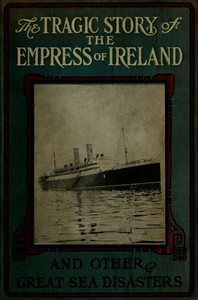
The Tragic Story of the Empress of Ireland, and Other Great Sea Disasters
by Marshall, Logan
English
1278h 8m read
The Loss of His Majesty's Frigate Anson - Which was Wrecked within Three Miles of Helston, December 28, 1807 ... Also, an Authentic Narrative of the Loss of the Sidney, Which Ran upon a Dangerous Rock or Shoal, May 20, 1808
English
204h 40m read